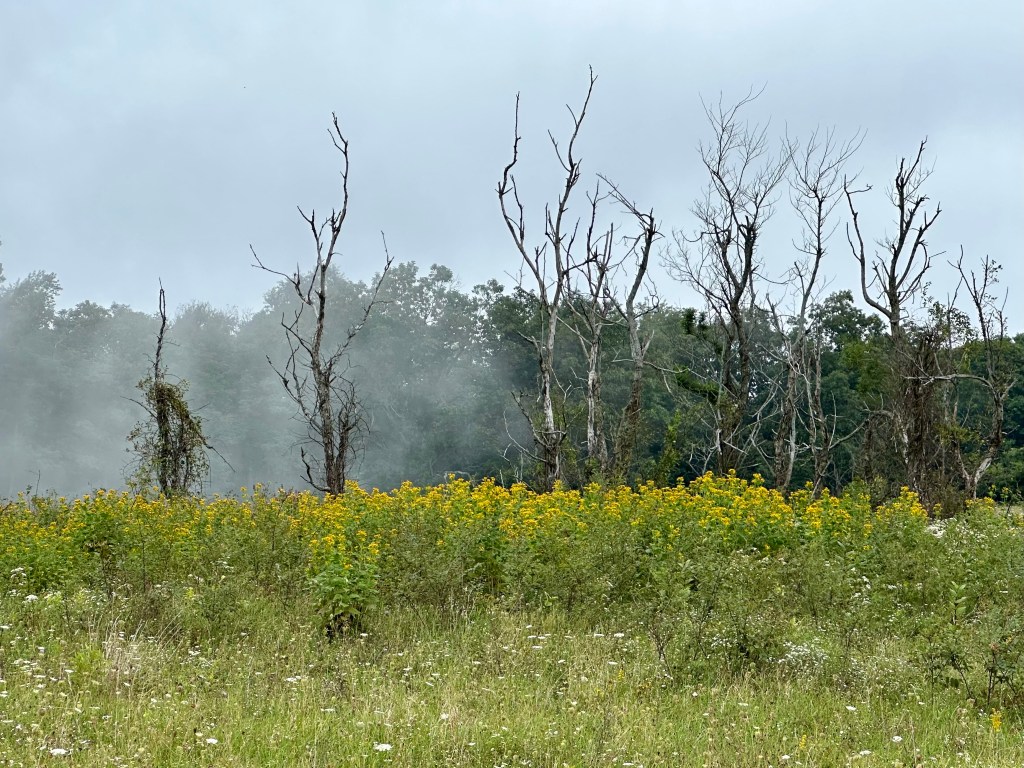
Feeling the Heat

Though we were in Maine, we felt the oppressive summer heat like the rest of the U.S. and even globally. We even had a day of smoky skies from the wildfires. The only reprieve was our host’s cabin, where the ocean breezes kept the temperatures tolerable.

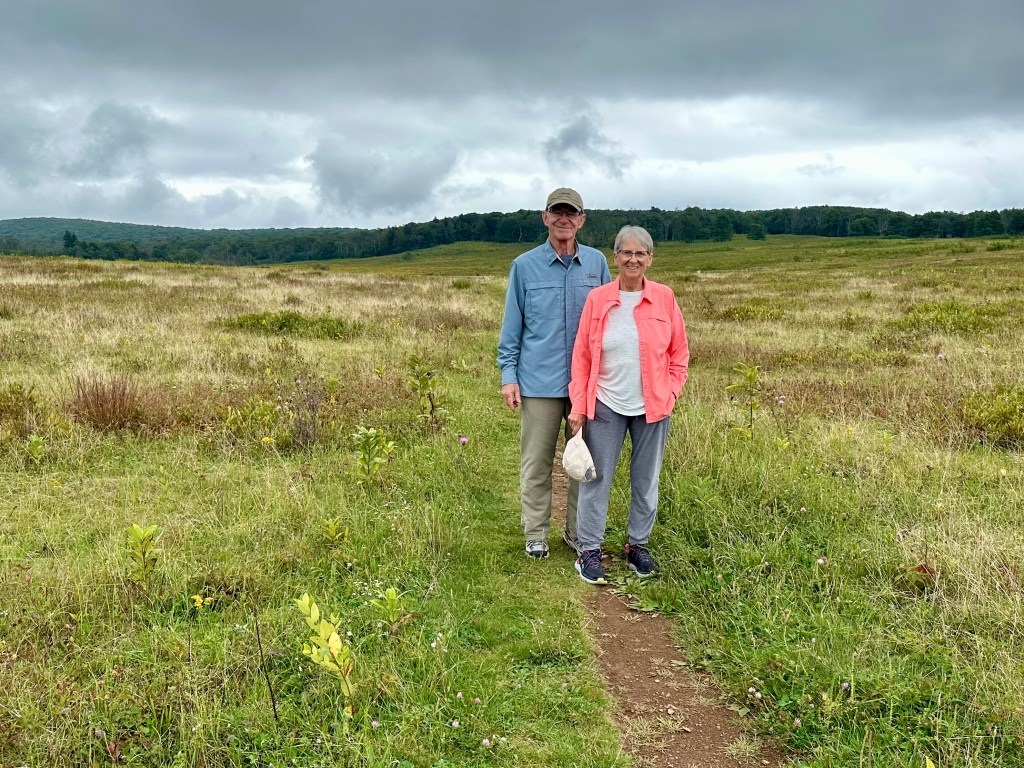
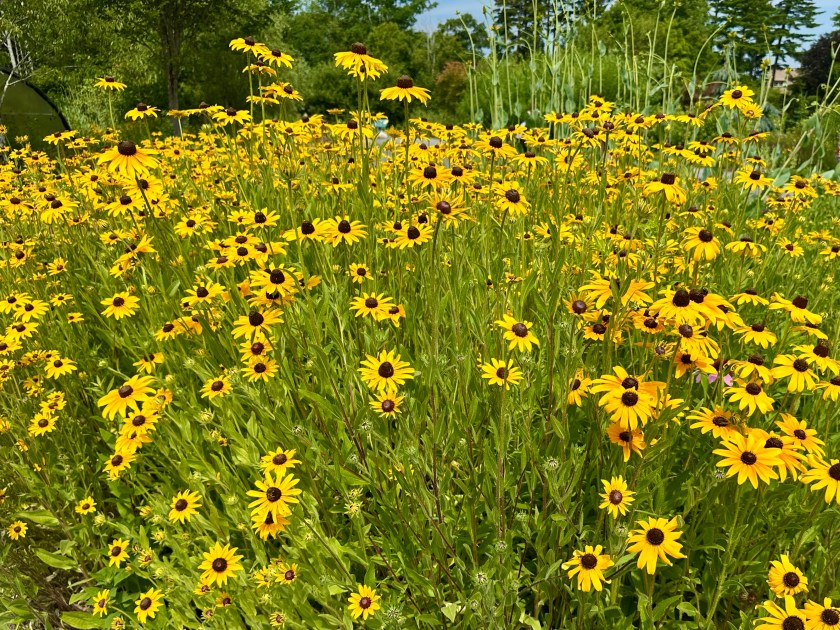
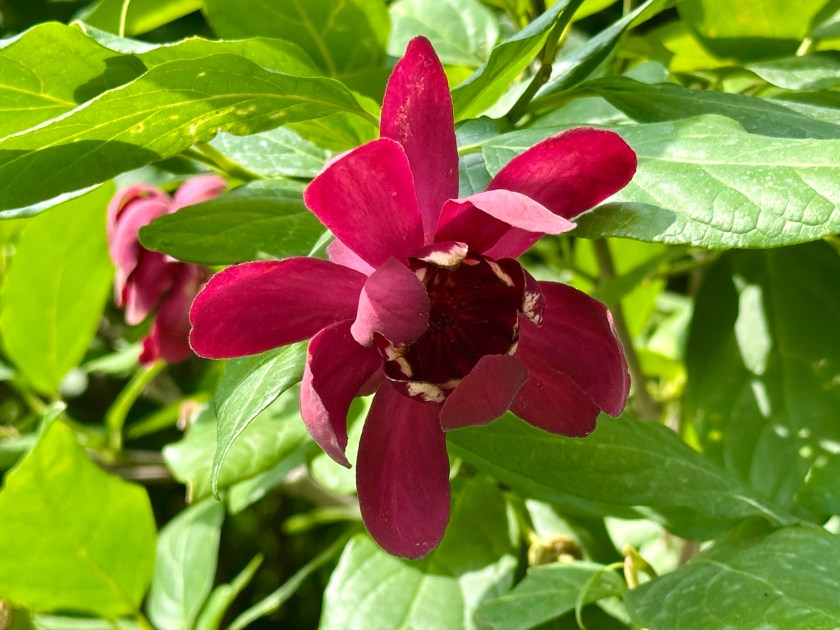
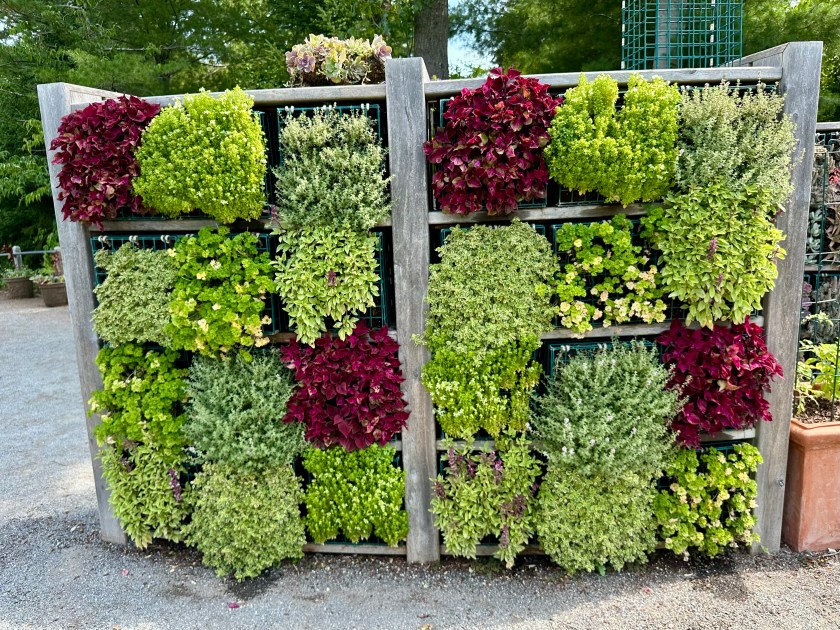
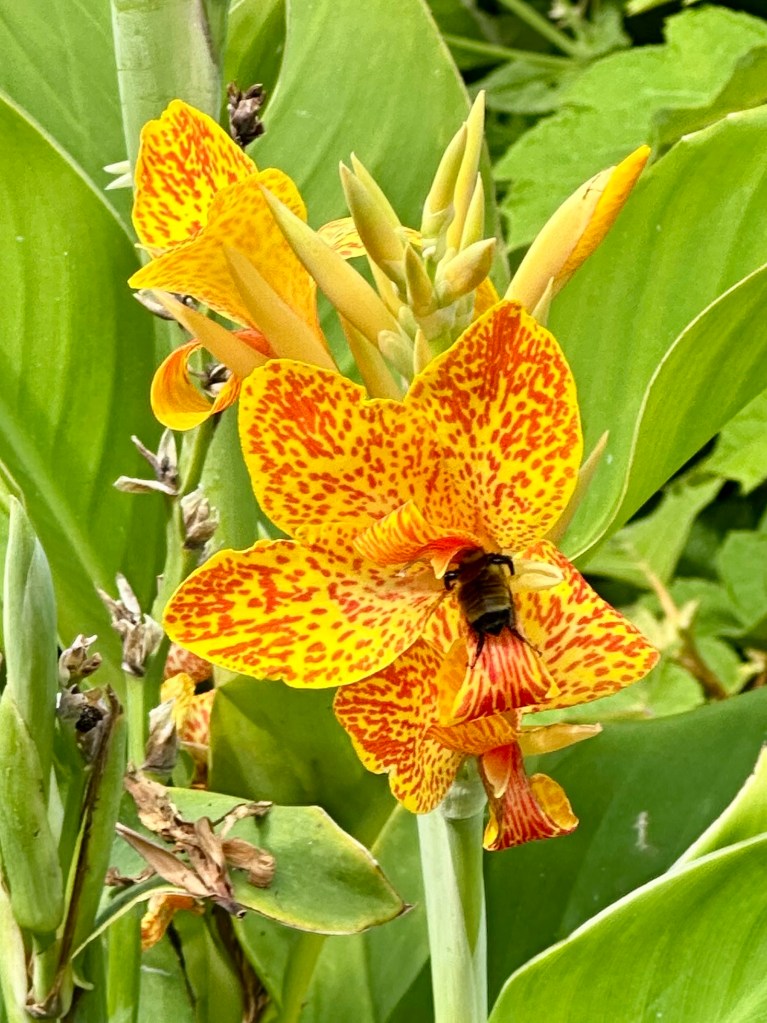
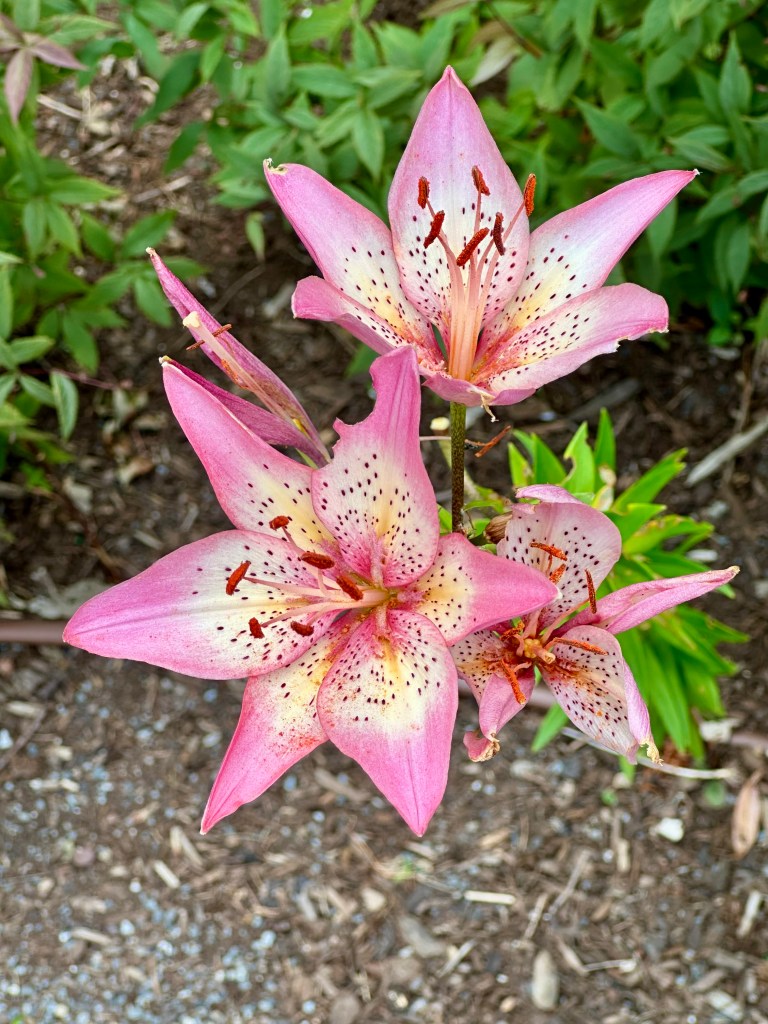
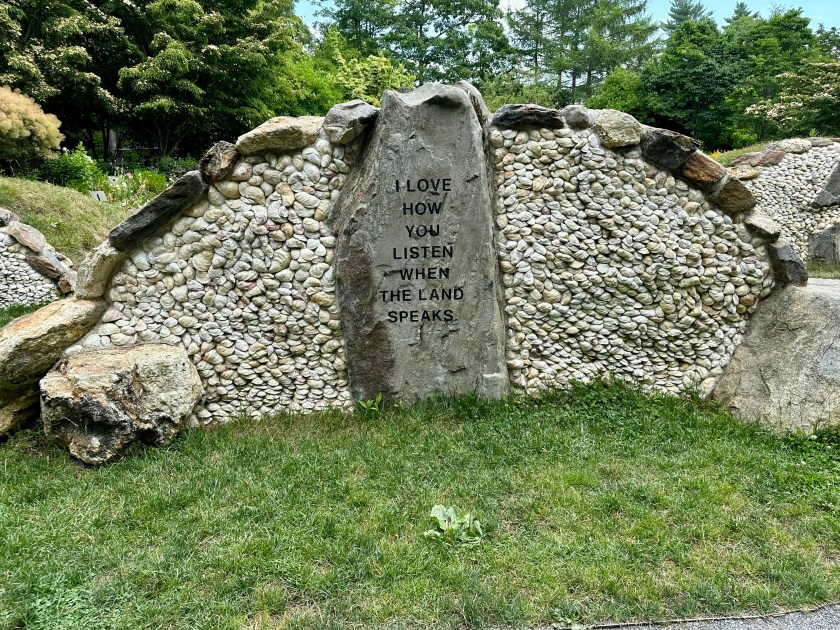
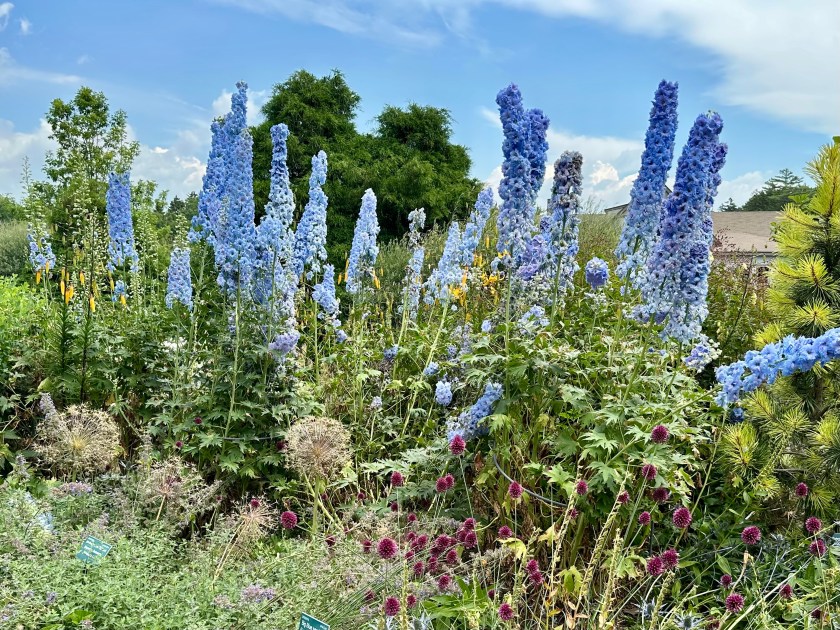
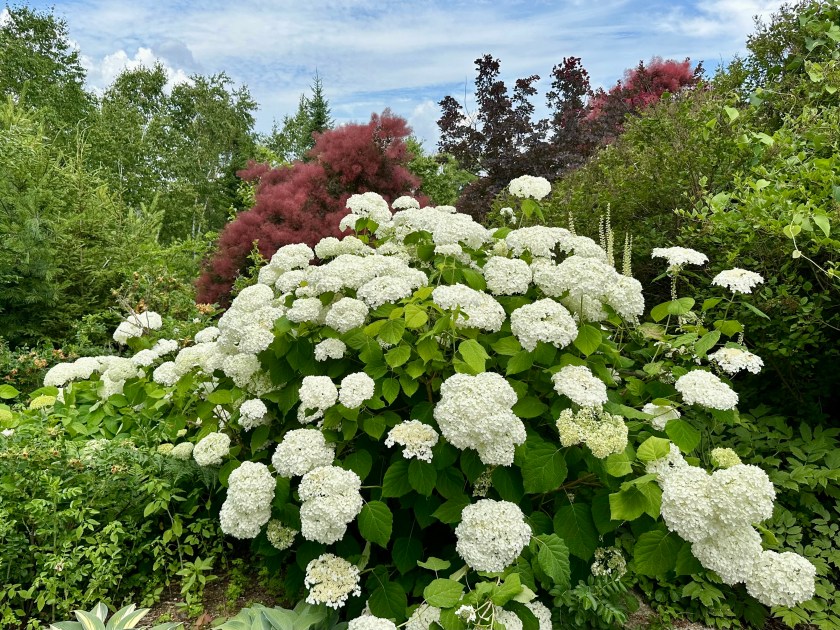
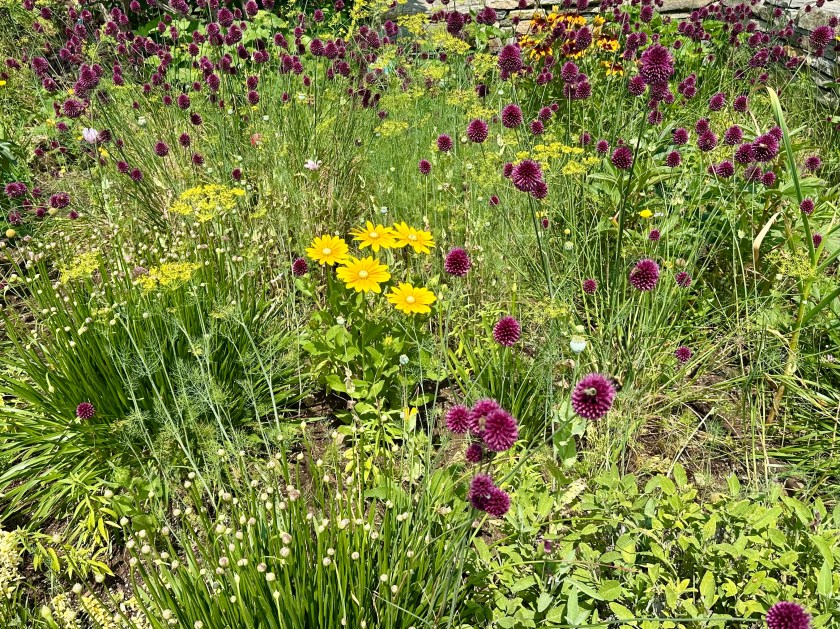
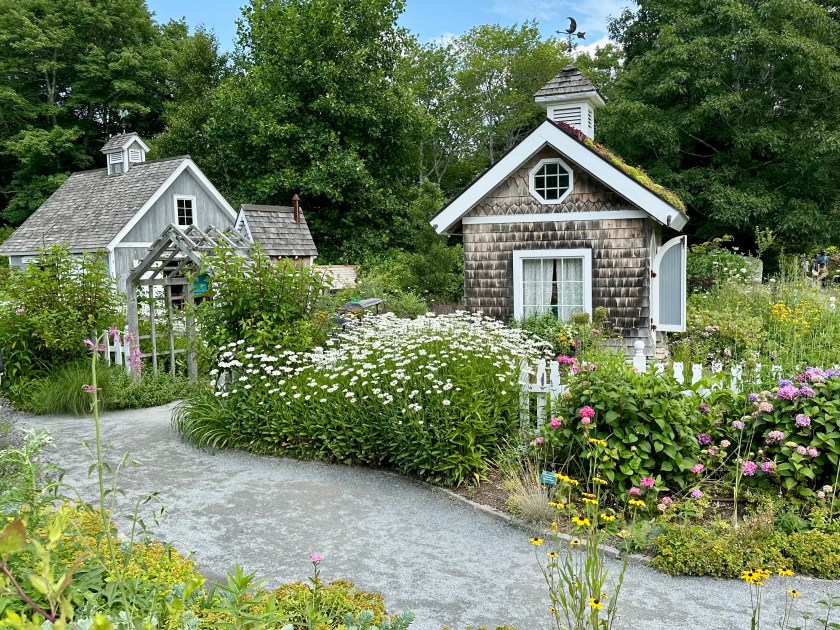
Nevertheless, we wanted to see other attractions, so we headed out despite the heat. Unfortunately, we chose the warmest day of our stay to venture to the Coastal Maine Botanical Garden in Boothbay, Maine.

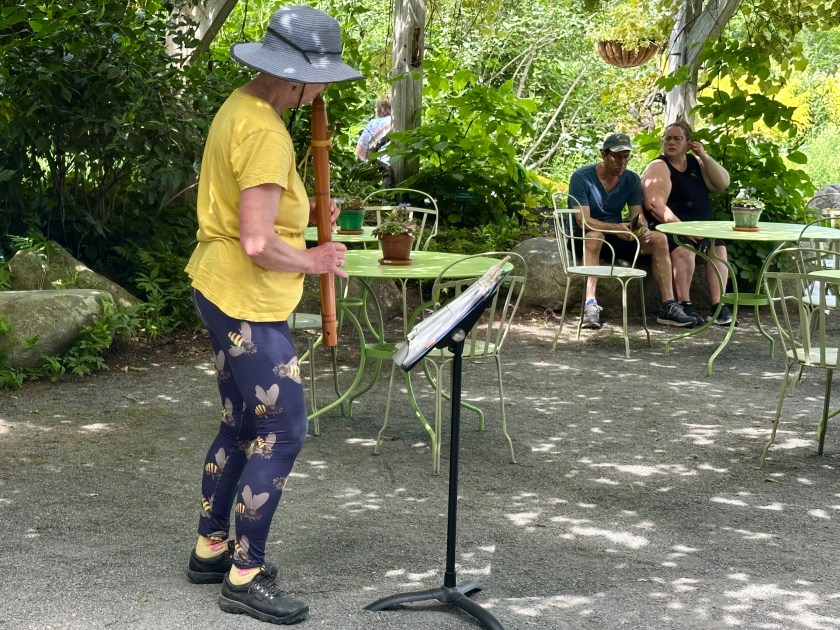
We toured the many lovely gardens, but not all of them. Elder folks that we are, we wilted under the heat and humidity. We sought shelter at lunchtime in the air conditioning of the garden’s cafe.

We continued our walking tour until we found a shuttle cart that drove us into the far reaches of the popular destination. I would have loved to walk those shaded paths down to the ocean, but I wasn’t sure I would make it back. So, our brief riding tour completed our time there.

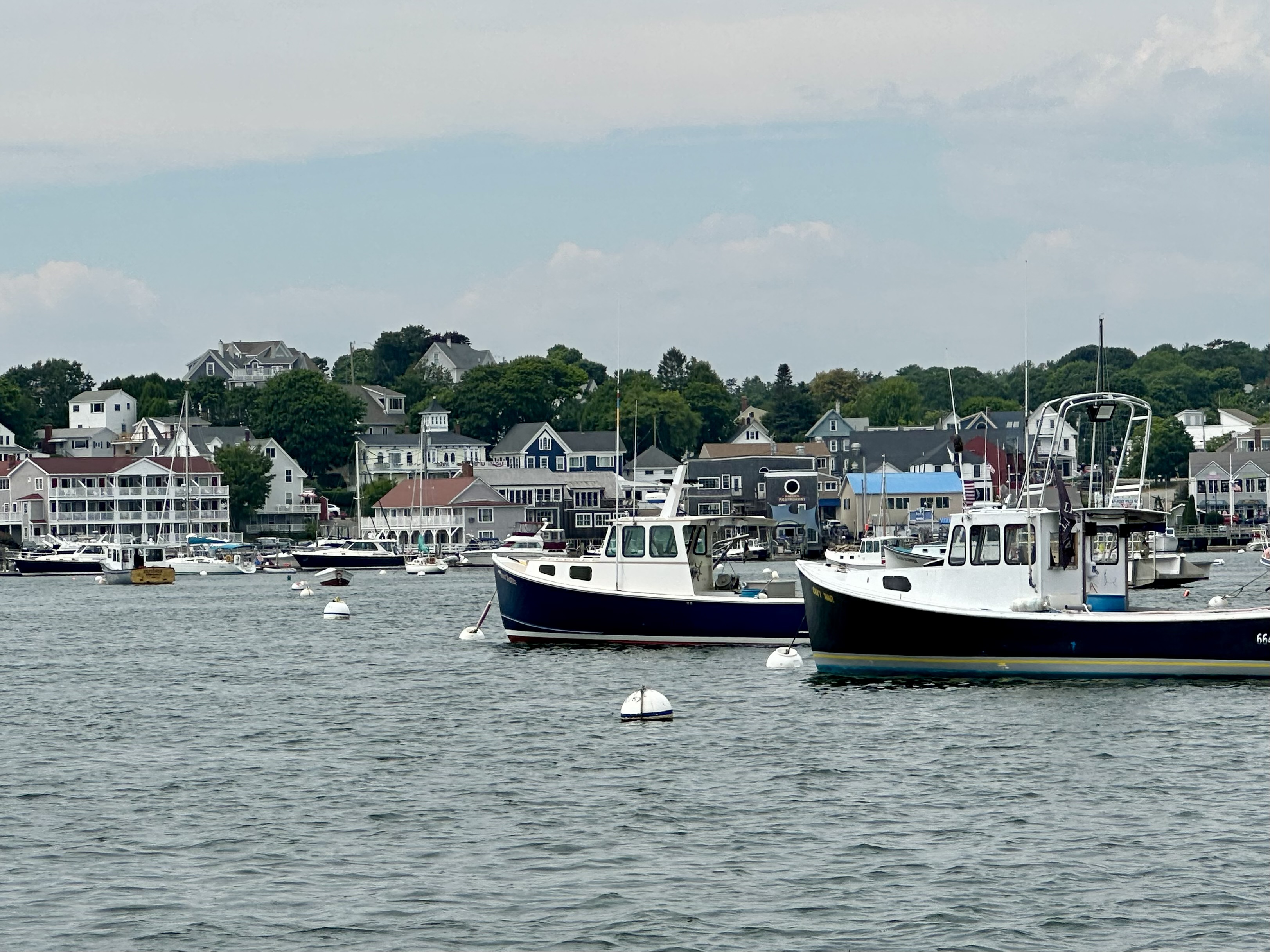
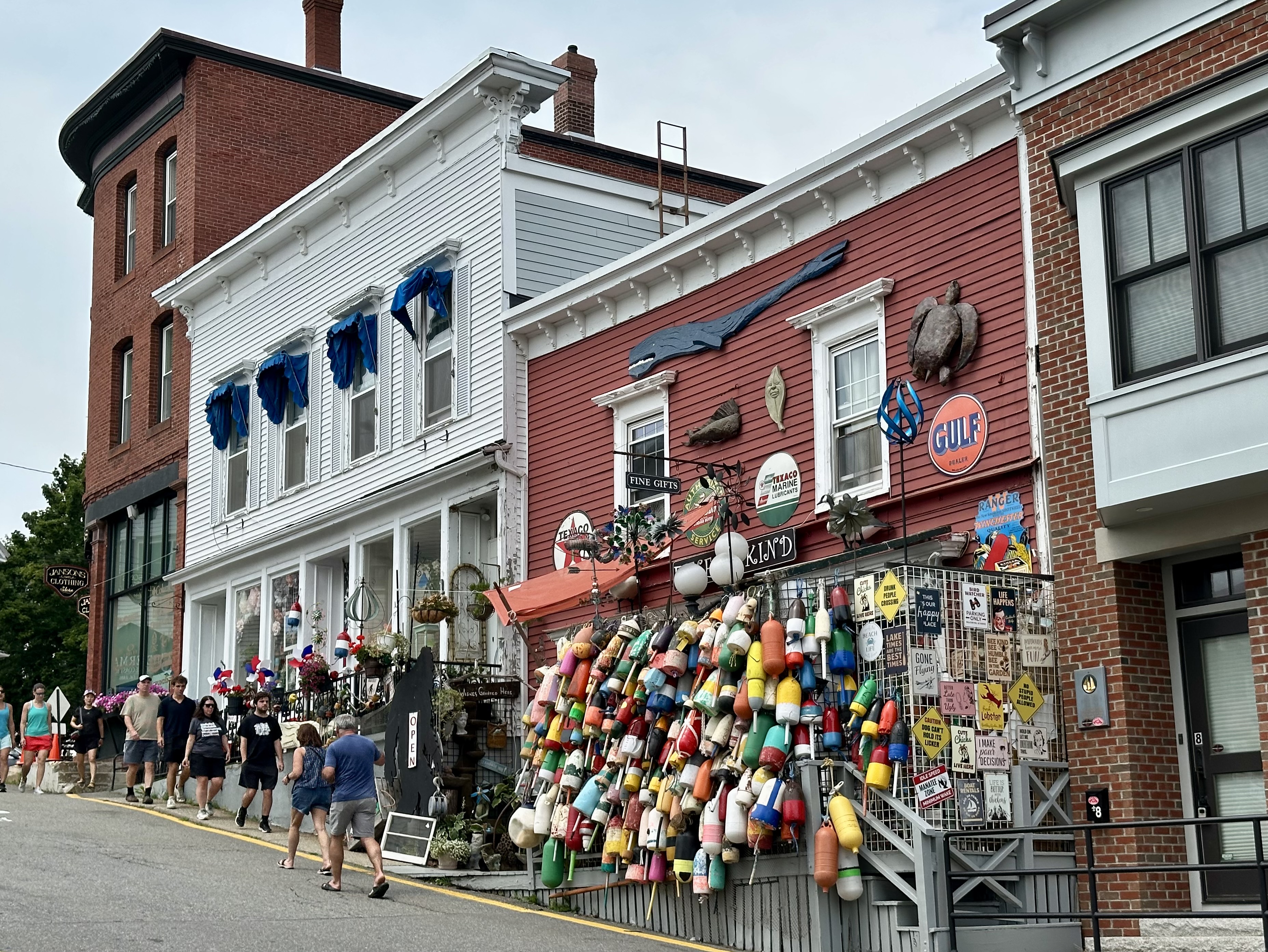
A short drive south brought us to the tourist-popular Boothbay Harbor. Given the crowd, I was fortunate to find a parking spot. We walked along the harbor’s edges where we could until we found an ice cream shop. It was the pause we all needed.

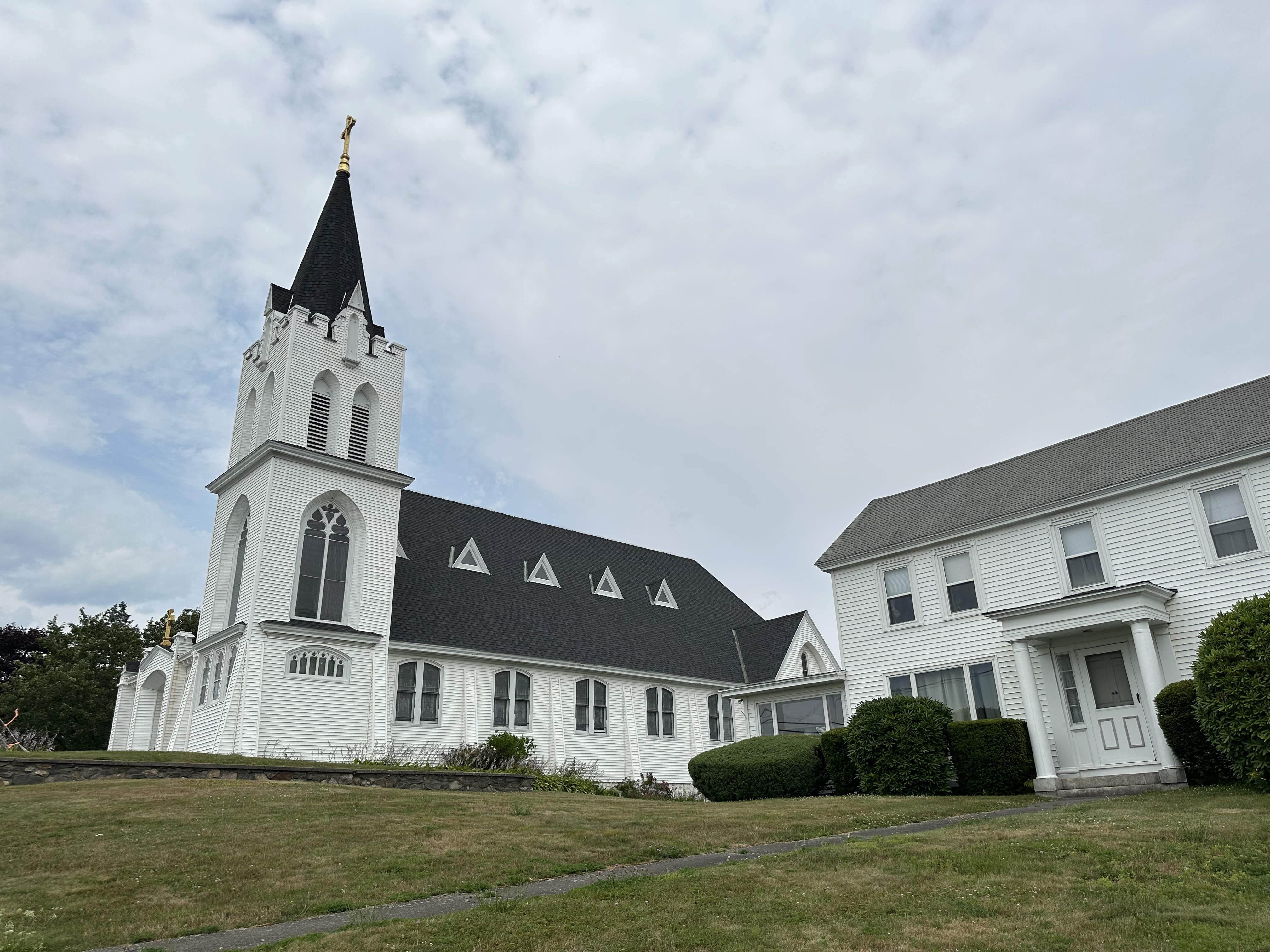
I had spied a large white church across the bay, so we drove around the bay so I could photograph the church and the bay from that location. An engaging dock worker permitted me to enter the private dock to take my photos, but only at my own risk. With a smile, he said he would rescue me if I fell in. I didn’t.

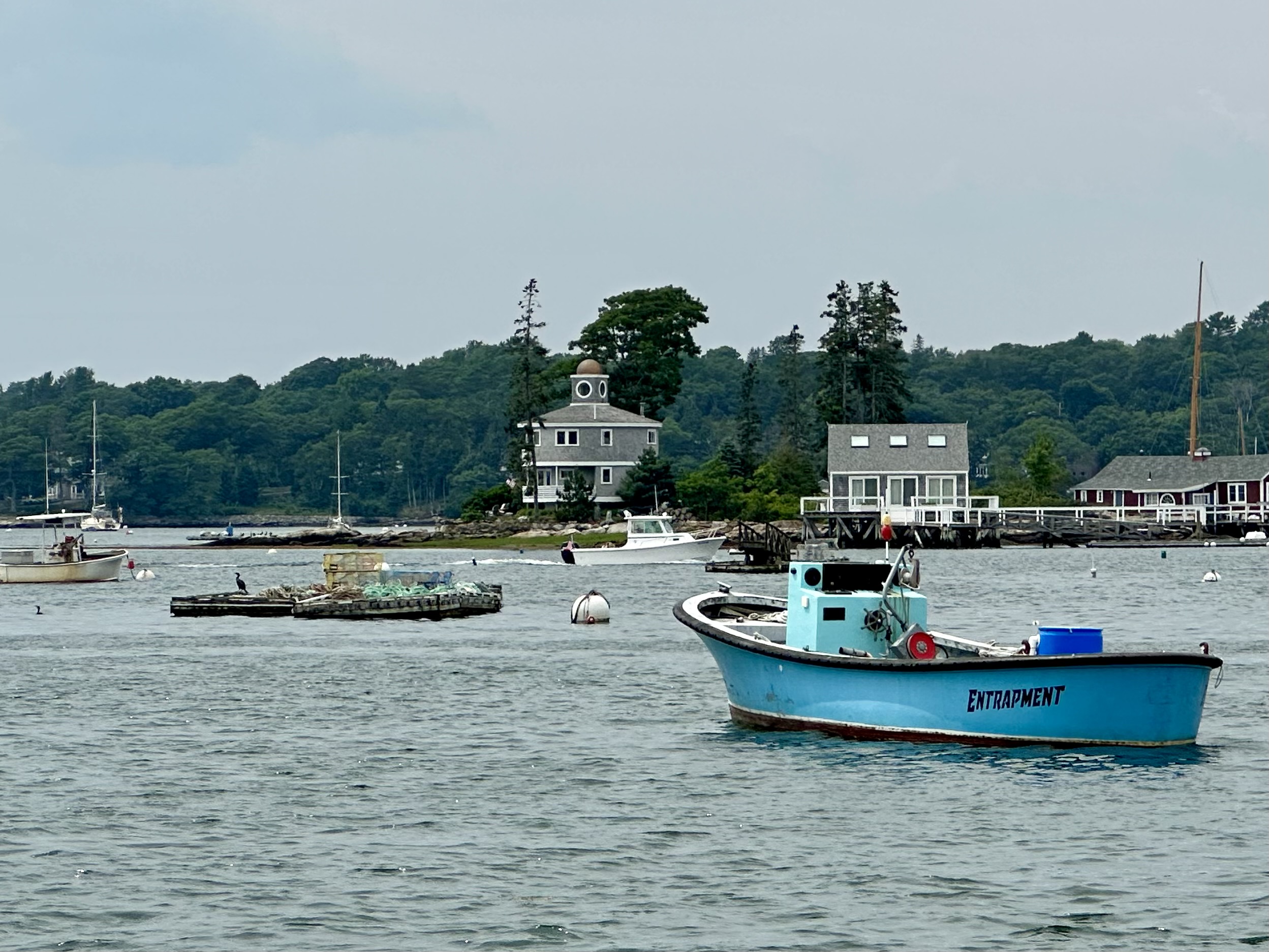
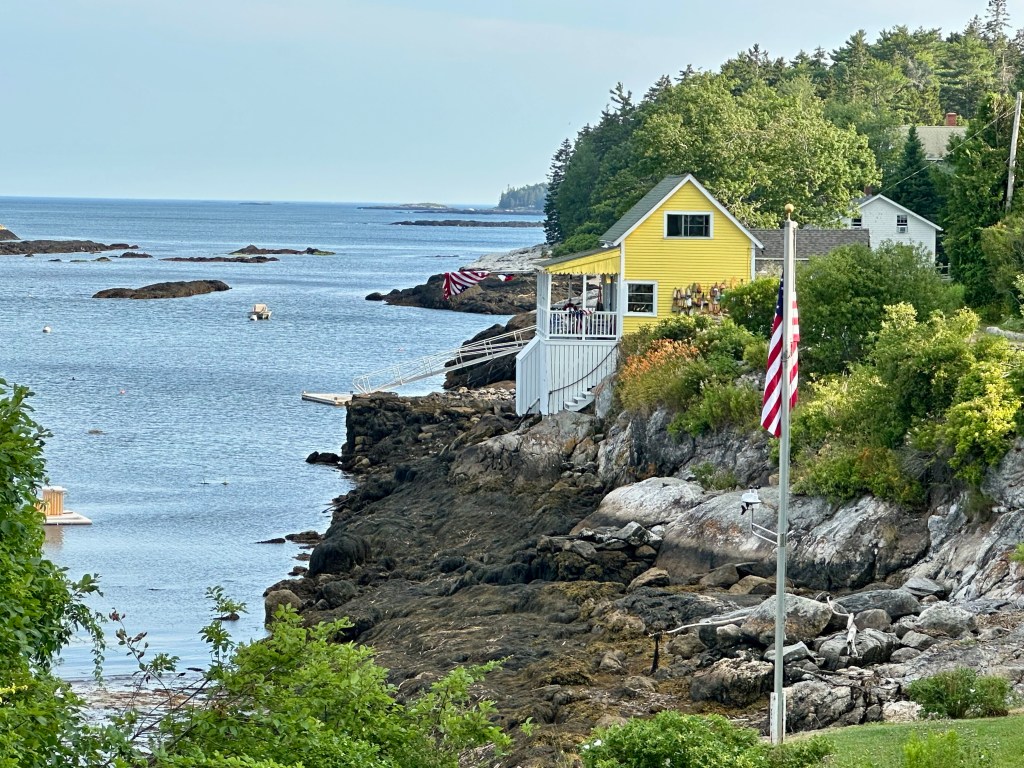
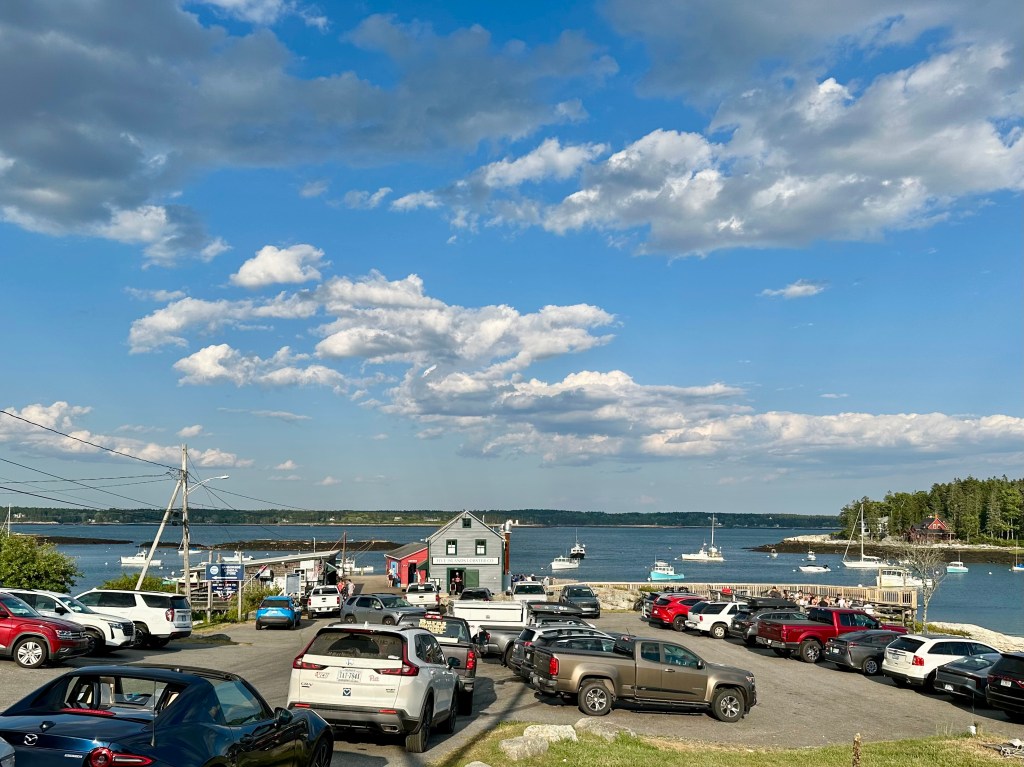
In the evening, my wife and I drove back to Five Islands for another lobster roll before we had to leave in the morning. With the sun’s angle just right, I was more interested in capturing photos of the boats moored in the harbor and near the surrounding islands.

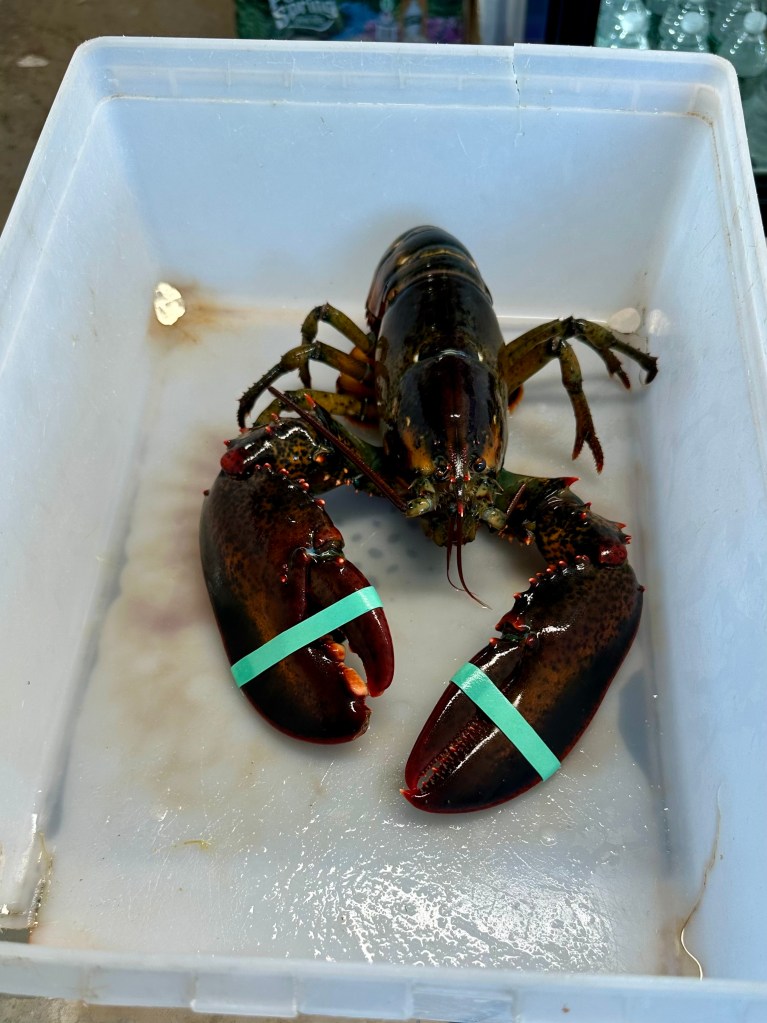
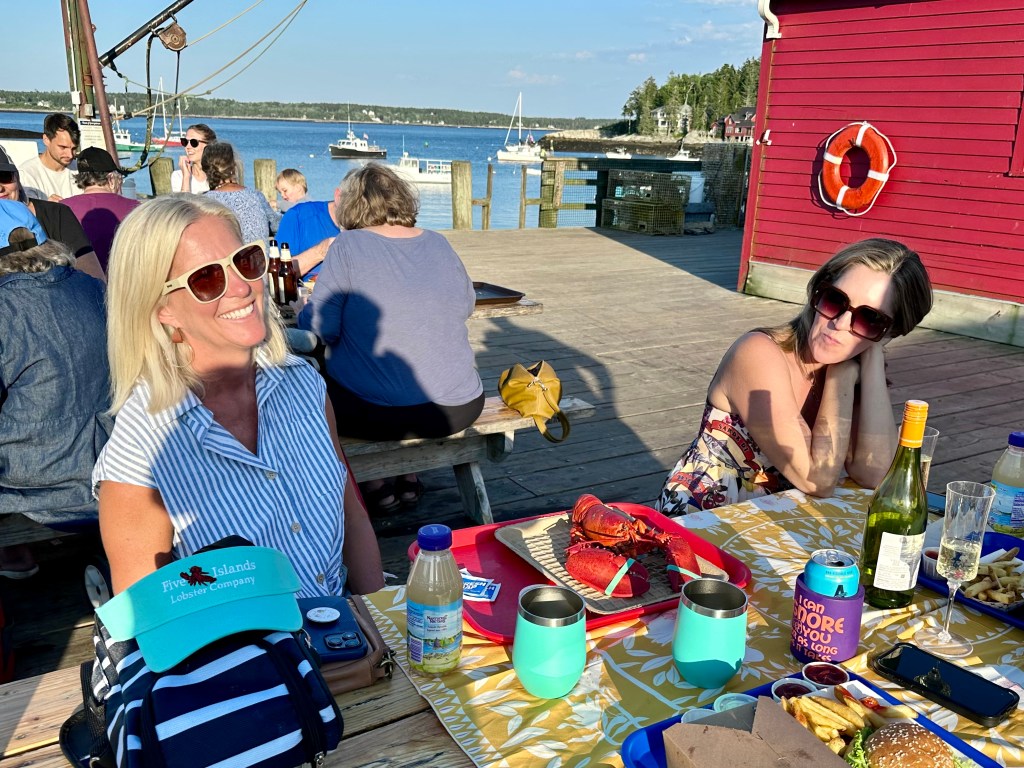
When I ordered our food, I noticed a live lobster, with its claws taped shut, resting in a box on the counter. Perhaps it had been ordered for a cook-it-yourself take-out.

When I returned to our table, two other couples had just sat down with their seafood dinners. They kindly allowed me to photograph a boiled lobster. Clearly, the cooked lobster was much more appetizing than the live one.

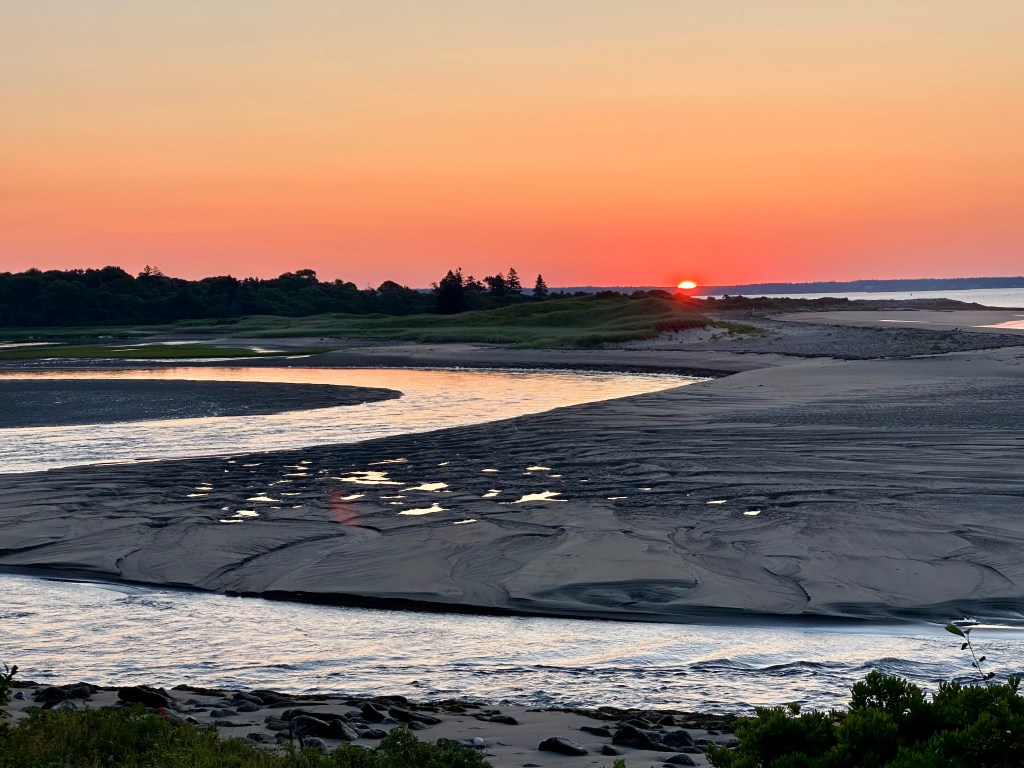
We greatly enjoyed our vacation with family and friends, meeting new people, and exploring new places. The bird outings were fun, too. The next morning’s sunrise served as a nice send-off.

The sunrise served as a lovely send-off for us. Photo by Bruce Stambaugh

© Bruce Stambaugh 2026

On Top of Mt. Washington

This is how the famous mountain looked after we completed our round-trip excursion. From the left, the Mt. Washington Hotel, the cog railway, and the peak itself. Photo by Bruce Stambaugh

We left our friends’ home in Vermont’s Northeast Kingdom for an hour’s drive to the Cog Railway in Bretton Woods, New Hampshire. We arrived in plenty of time and discovered that we could take the 11 o’clock train instead of the noon one.

The other options for getting to the revered mountaintop are to drive up the private road, pay to ride up in a van, or walk up and back via the Appalachian Trail. My wife ruled out the first two, and our age and physical shape ruled out the other.

After receiving the rules for riding the railway, we boarded our car with the biodiesel engine at the rear to push us up the mountain. We followed two other such “trains” up the tracks.

The seats were slanting forward rather than at a 45-degree angle, which was uncomfortable at first. That soon changed as we chugged forward, and our seats felt comfortable as they adjusted to the mountain’s steep incline.

The fastest we clackety-clacked up the cog rails was five miles per hour. So, it took nearly an hour to get to the top.

When we left the station, we could see the mountain’s top with passing clouds. When we arrived atop Mt. Washington, we were in the clouds with only occasional views and a few hints of sunshine.

We had 50 minutes to eat lunch, which we took along, and to explore the historic mountaintop. Sudden bursts of sunshine interrupted my snack lunch. I rushed outside to capture whatever I could see. The view west was a wall of gray.

Please click on the photos to enlarge them.

I could see east and north, however. I saw the Appalachian Trail, which winds up and down the mountain. Cairns marked its path instead of white blazes on trees. A few hikers trekked amid the cloudy mist.

Having been to that area seven years ago, I could identify the Wildcat Ski area and the scenic New Hampshire Route 16 that runs from Gorham south through Pinkham Notch and down the valley to Conway.

So, the $100-a-piece ride wasn’t a complete bust. However, in the hour it took to return to the base station, the sky had cleared. Mt. Washington stood as handsome as ever above all the other presidential peaks.

Proof we made it to the top. Photo by Bruce Stambaugh

© Bruce Stambaugh 2026

The “Flying Cigars”

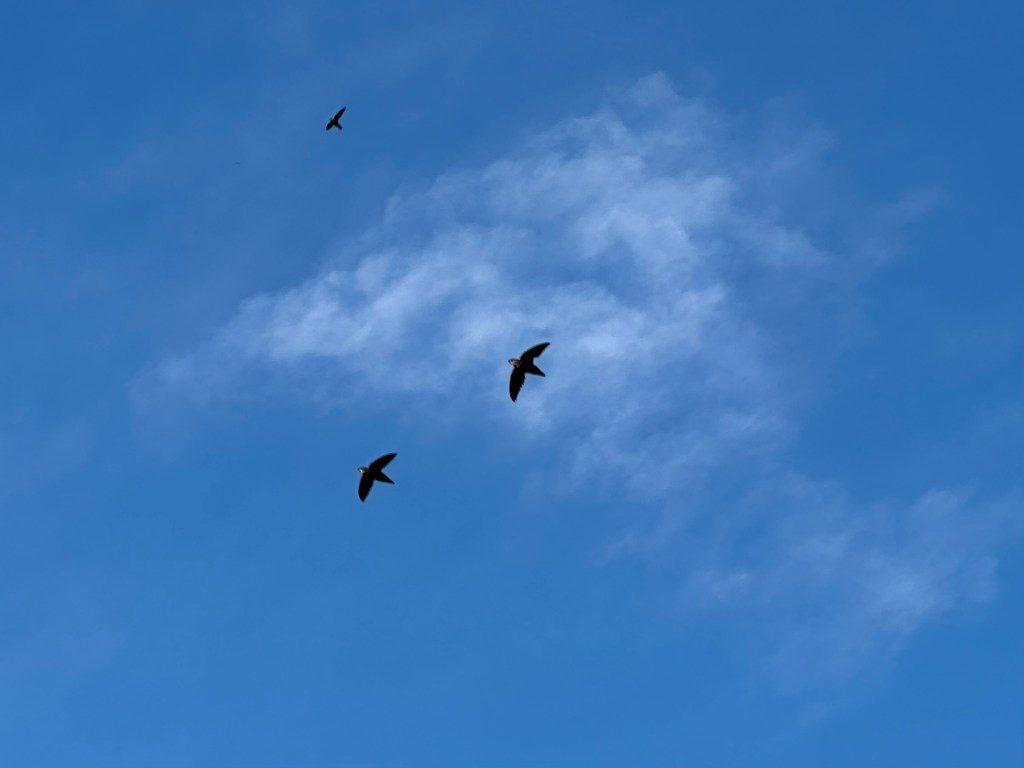
Chimney Swifts in flight. Photo by Bruce Stambaugh

Chimney Swifts are some of my favorite birds. I have adored these magnificent little birds for a long time. Let me count the ways they bring me joy.

More than likely, you’ll hear these gregarious birds before you see them. Their chattering call, while they are furiously flapping their pointy wings, alerts you to their presence.

I find their looping flight patterns intriguing, too. They like to fly overhead, wings furiously flapping, sometimes dipping low, and then back up in a rapid arch.

If you miss them on their first pass, stand still, and they are likely to return, perhaps bringing others with them as they skim the sky for any and all insects. If you have Chimney Swifts in the neighborhood, you likely won’t be bothered much by mosquitoes.

Chimney Swifts are equally at home in cities, suburbs, and rural areas. As long as these chubby-looking birds have a chimney in which to roost, they will make themselves at home.

It’s only appropriate that Chimney Swifts build their nests on the insides of chimneys. Their sooty colored feathers blend perfectly with whatever powdery substances they might pick up as the birds zip in and out of their chosen chimneys.

To clean themselves, Chimney Swifts will zoom over lakes and rivers, suddenly dip into the water’s surface, and then speed off to air-dry themselves.

Before North American colonization, Chimney Swifts originally built their nests in hollowed trees, on cliff faces, and in caves. Once White pioneers built their brick chimneys, the cigar-shaped birds adapted to a new habitat.

They build their nests on the inside of chimneys by using a glue-like saliva secreted from under their tongues. Chimney Swifts use their long claws to cling to the side of chimneys. The birds cannot perch like most other birds.

Some people cap or screen their chimneys to keep birds out. That, coupled with newer chimney designs and sizes, has led to a decline in the Chimney Swift population in recent years.

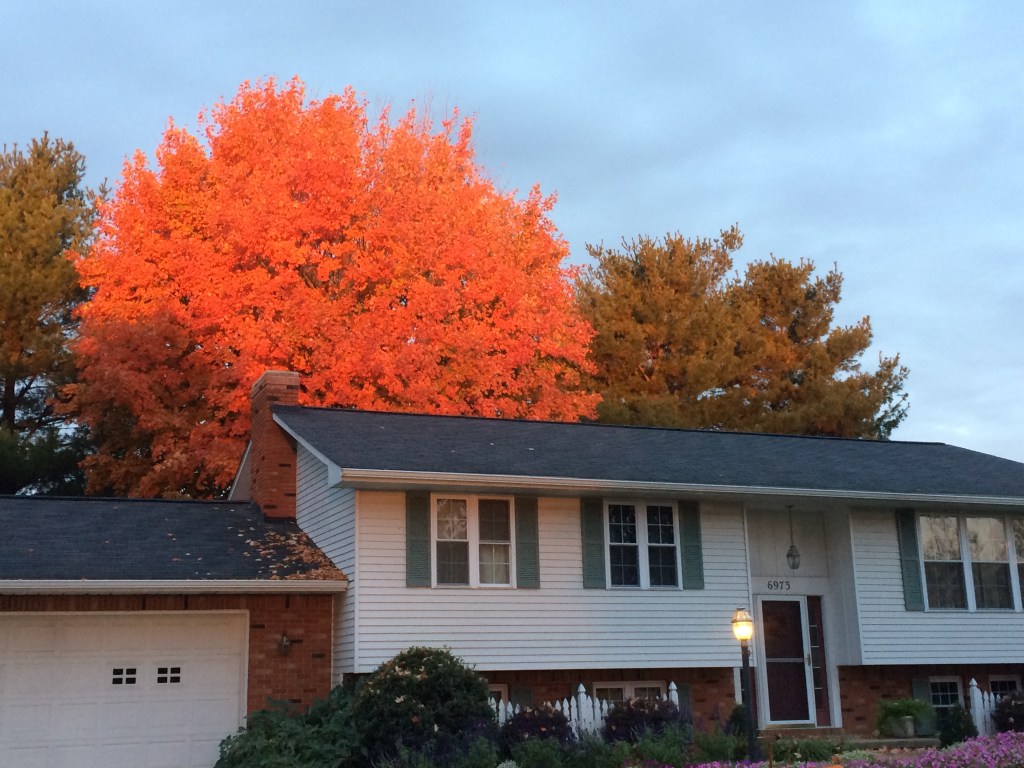
When we lived in Ohio, our home was built on an Amish farm. We had Chimney Swifts every year, and we lived there for 38 years.

The stubby chimney on our former Ohio home. Photo by Bruce Stambaugh

I greatly enjoyed the aerial antics of the chattering Chimney Swifts. In the evenings, I would stand and watch as the birds swirled in loops over the house, dropping closer with every pass until they would dive into our short chimney.

Before we added air conditioning to the house, I would sometimes sleep on the couch in the lower level of our bilevel home on hot, humid summer days. There, the temperature was cooler.

We had a wood-burning fireplace, and when the Chimney Swifts had young in their nests, it seemed like they would feed all night long. The force of their powerful wings, helping them to brake once they entered the chimney, rattled the glass fireplace doors.

An adult bird once fell into the fireplace because I hadn’t secured the damper all the way closed. I donned thick gloves, carefully removed the bird, and let it fly free outside again.

During the colder months, I loved to sit on the raised hearth in front of the firebox and enjoy the radiant heat and the aromatic aroma of seasoned wild cherry, oak, and ash firewood blazing away. The warmth penetrated my shirt, soothing my aching back.

Once the Chimney Swifts arrived in April, however, no more fires were built until the birds left in early October. The birds spend the winter in northwestern South America.

They migrate north over Central America to all areas of the United States east of the Rocky Mountains, where they breed and raise their young. Come October, they begin their extended journey back to South America.

Our Virginia home doesn’t have a fireplace, but several of the close neighbors do. Consequently, I can continue to enjoy the chitter-chatter of the helpful Chimney Swifts as they zoom around the neighborhood.

© Bruce Stambaugh 2026
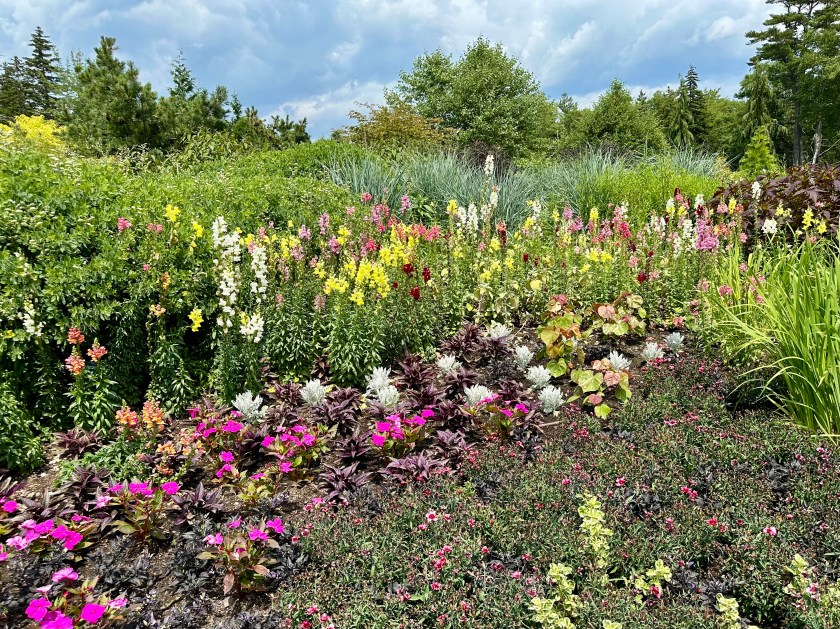
Serenity on Moores Mill Road

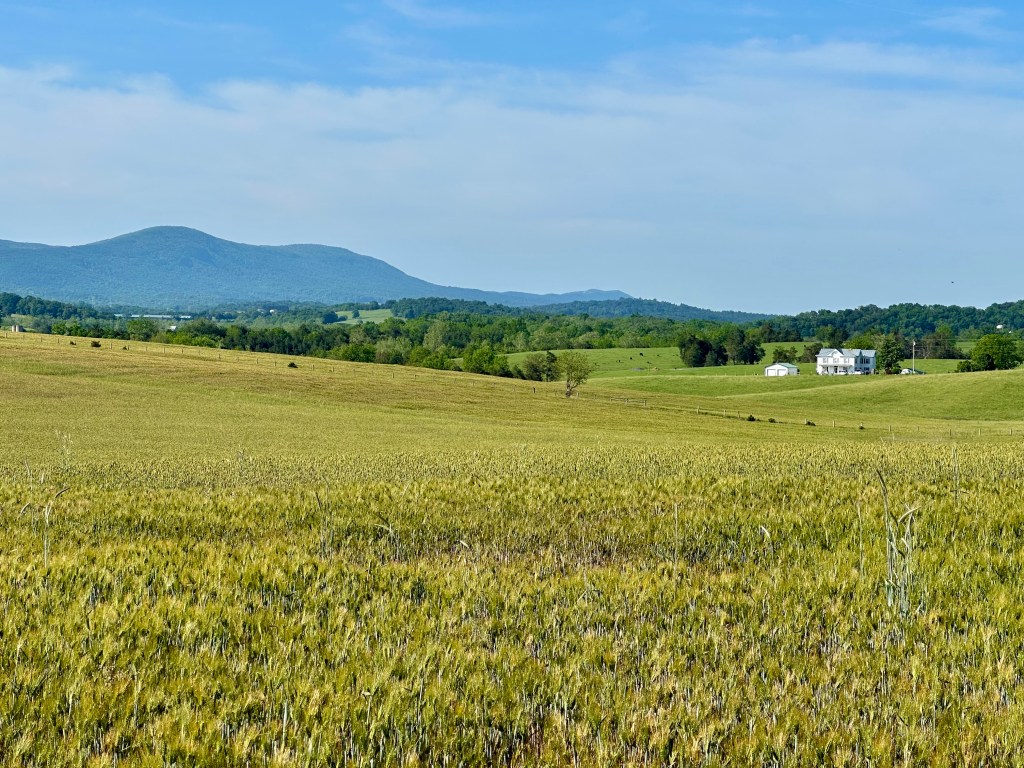
On Moores Mill Road. Photo by Bruce Stambaugh

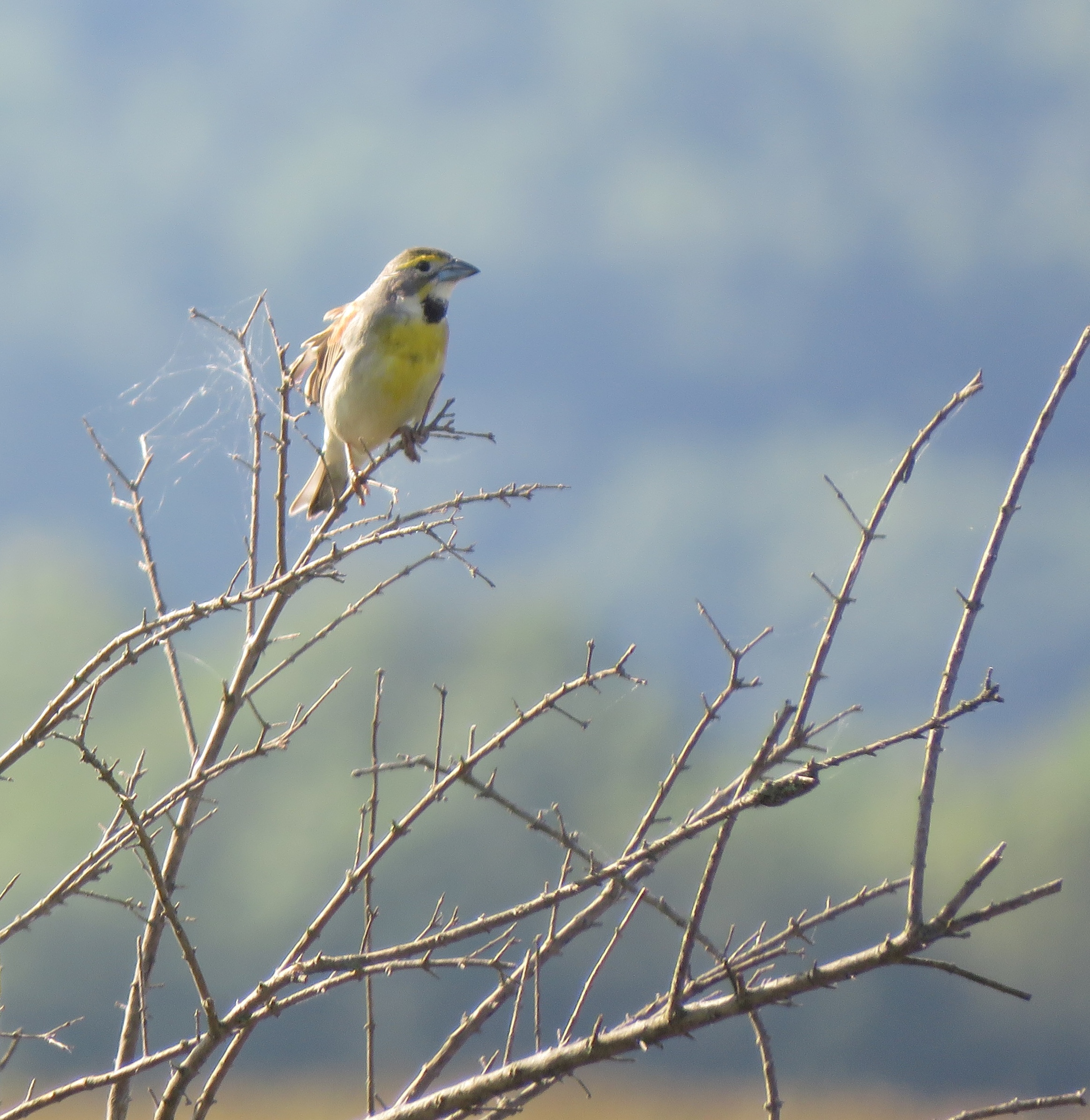
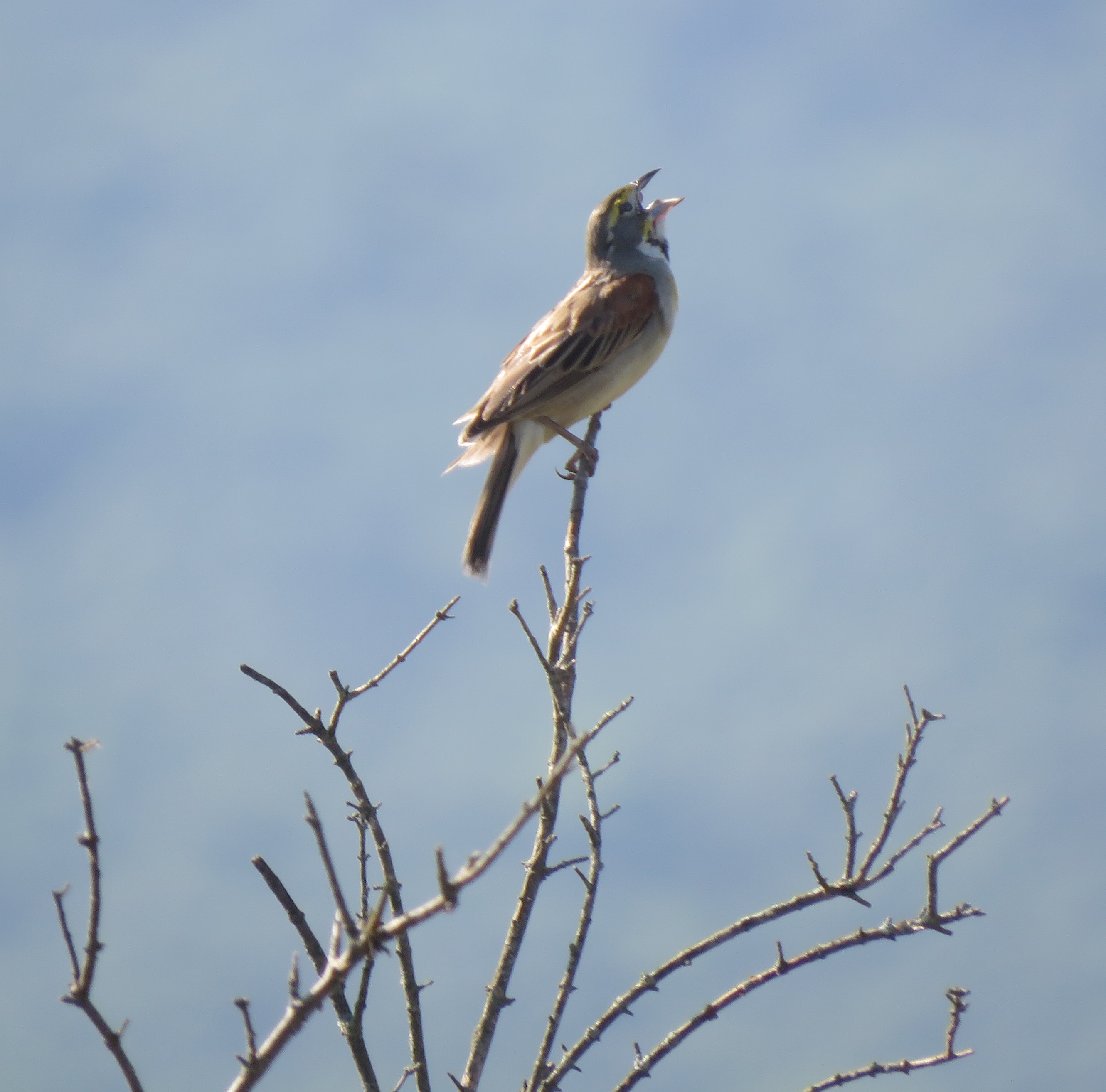
A birding friend of mine messaged me that he had found a Dickcissel singing on a fence post along Moores Mill Road, 20 miles from my home. I had to wait a day to chase the rarity in Virginia’s Shenandoah Valley.

Colored like a miniature Eastern Meadowlark, the chunky grassland bunting occasionally wanders east from its mid-American breeding habitat. I had seen Dickcissels before when we lived in Ohio, but this would be my first in Virginia.

The narrow country road cut through two farm fields, with wire fencing hugging both sides, making it easy to spot the wayward bird. I made sure I left early in the day to see this bird. As it turned out, there was more than one.

To get there, I drove most of the way on the Valley Pike, also known as US 11. The historic roadway was the main route up and down the storied valley until the interstate opened in the 1960s.

Both Confederate and Union troops moved up and down this highway and on May 15, 1864, fought a battle in New Market, only a few miles north of where the Dickcissels were. It was easy to envision soldiers marching along and cavalry horses kicking up dust on what was then a dirt road.

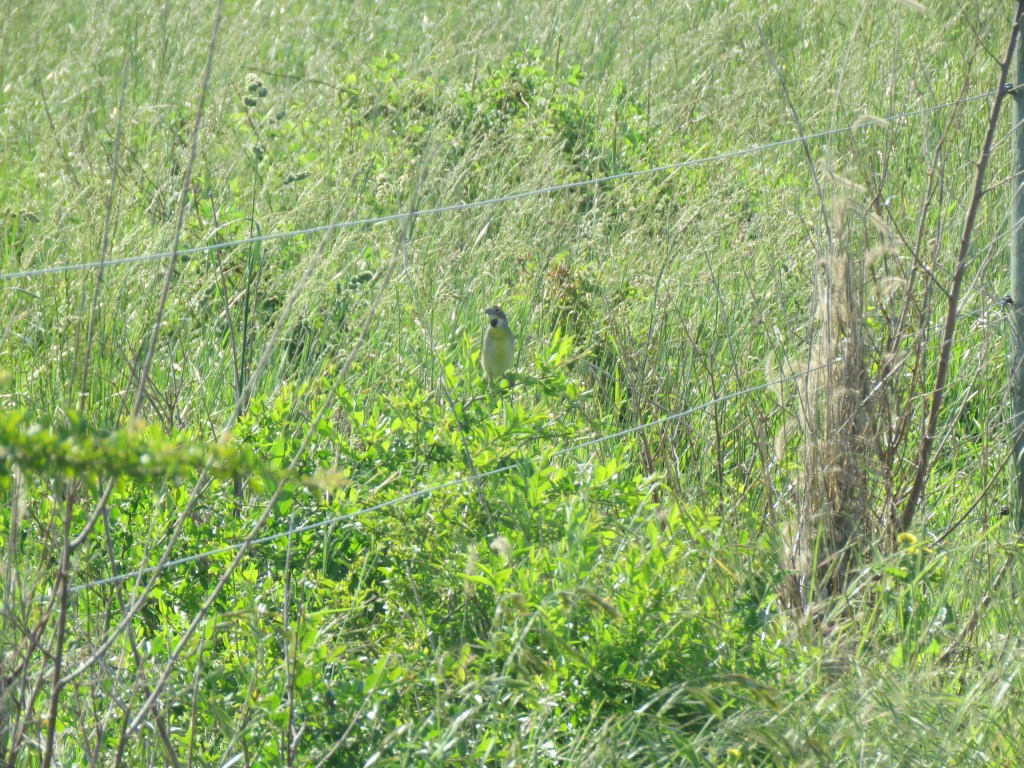
A Dickcissel on a fence wire. Photo by Bruce Stambaugh

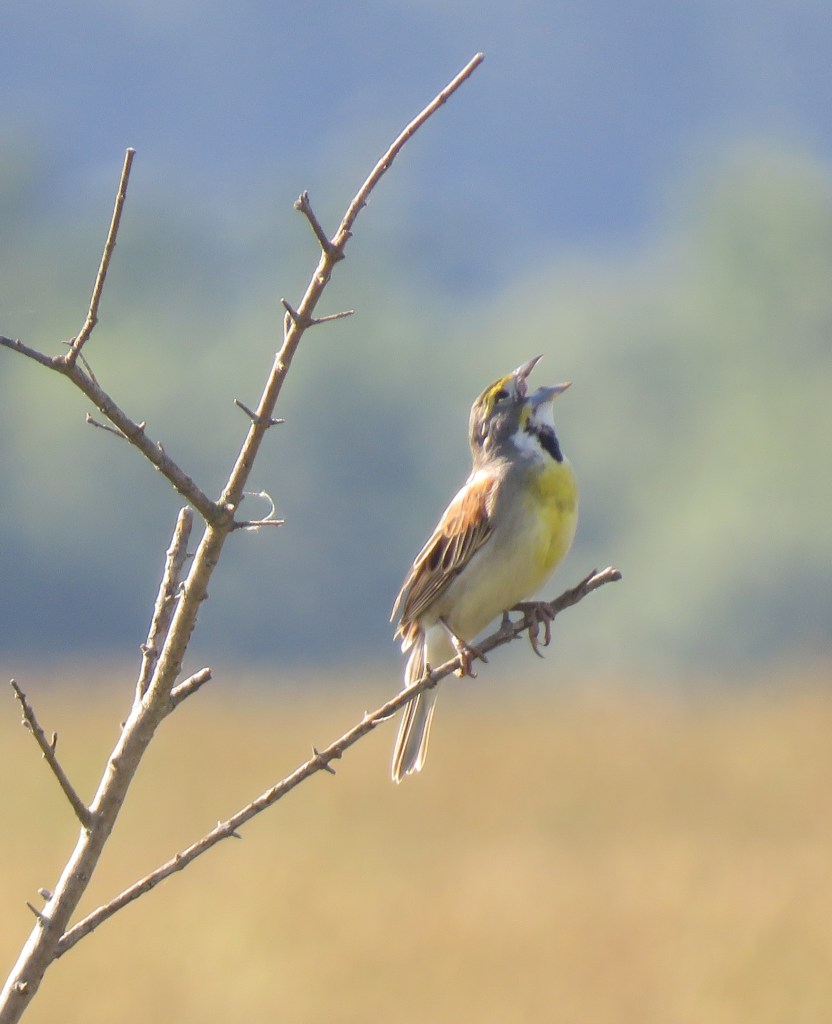
I turned east on Moores Mill Road, stopped a quarter mile off of US 11, stepped out of the car, and listened and looked for the short, buzzy song. AllAboutBirds.org describes the grassland bird’s song as “fairly short but hard to miss, a clicky buzzing dick-dick-ceessa-ceessa.” Thus the bird’s name.

Soon, I heard the bird, and then another calling on the opposite side of the road. One bird perched on a tall weed in a grassy field to the south. A Dickcissel on the north side sang a fence wire. I wasn’t sure which way to look.

I snapped a few photos before a car approached from the west and slowed. The birding vest I wore, the binoculars around my neck, and the camera in my hand were a dead giveaway to the driver about what I was doing.

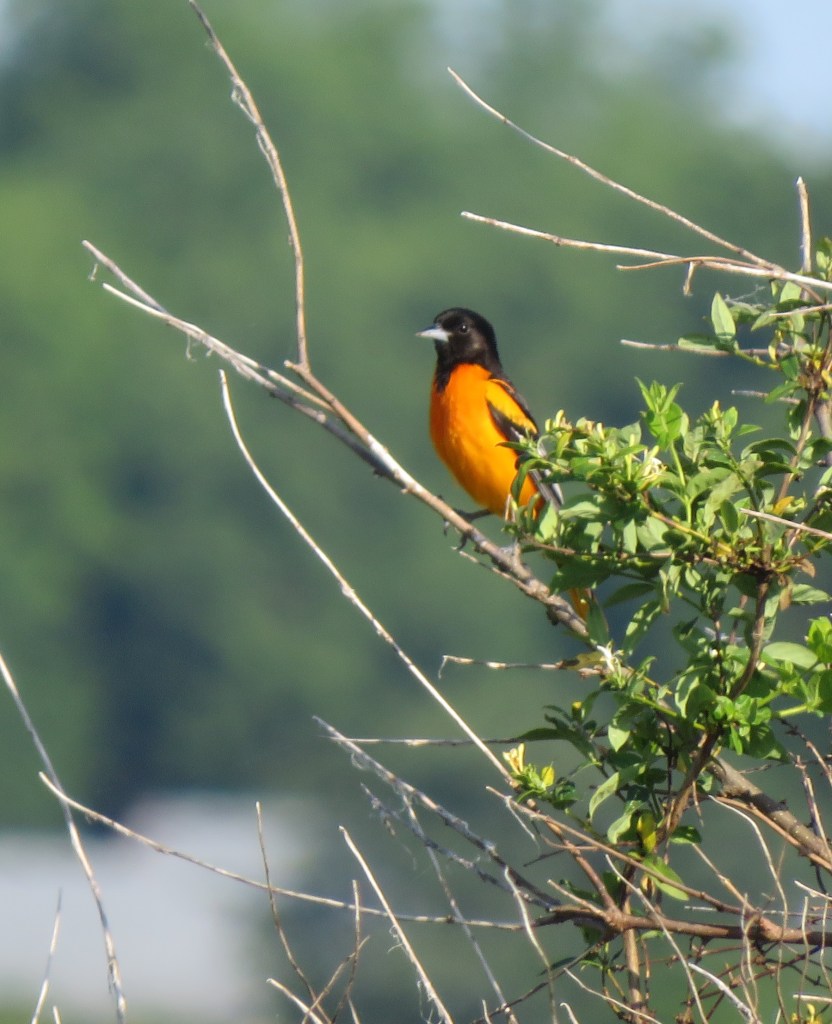
The Baltimore Oriole. Photo by Bruce Stambaugh

At first, I thought the vehicle would pass on by. Instead, it stopped. I had just snapped a photo of a Baltimore Oriole, which didn’t spook as the car passed by.

The driver stopped to see what I was up to. He was a man in his 70s, gaunt, and unshaven. With the driver’s-side window down to talk, I noted piles of clothes, used fast-food cups and wrappers, and other items filled his 10-year-old vehicle. Rather than judge, however, I asked if he lived nearby.

“No,” he said, “I live a few miles west of here. I’m on my way to get breakfast at one of the restaurants in New Market.”

In my head, I questioned why he was driving east when New Market was straight north. Still, the man wanted to know what kind of birds I was seeing.

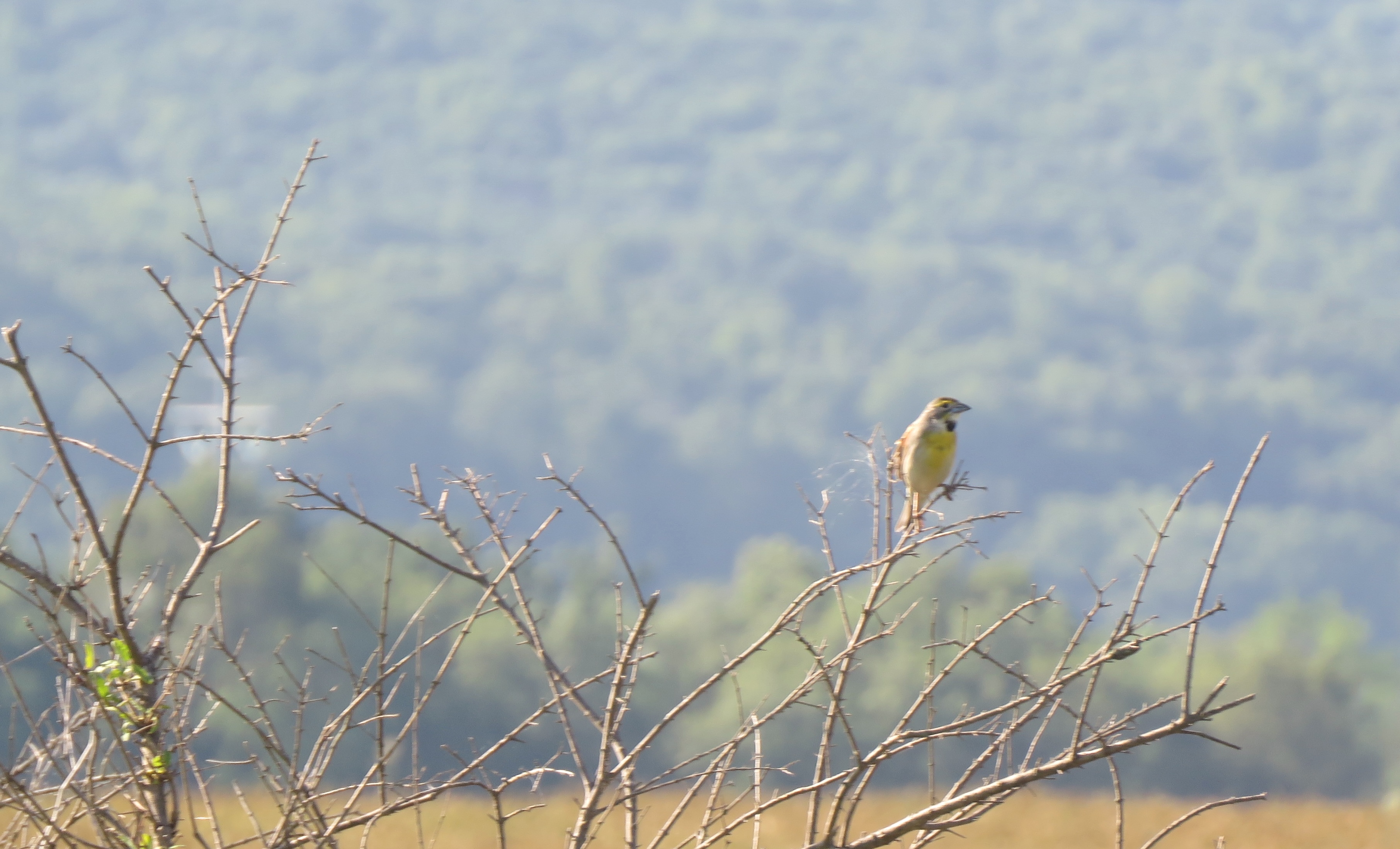
All the while, one of the Dickcissels had perched on a bare, thorny bush 50 feet in front of the car, and the oriole still sang from a tall, leafy bush 50 feet behind.

Not surprisingly, the man had never heard of a Dickcissel, but he perked up when I told him I had seen and heard a Baltimore Oriole.

“Man,” the guy exclaimed, “I haven’t seen one of those birds around here in a long time.”

Rather than pointing out the oriole singing in the bush behind him, I showed him a photo of the bird on the camera’s rear screen. He couldn’t believe it.

I asked him if he knew where the road got its name, and he immediately replied. “Well, a long time ago, a man named Moore owned the land on both sides of the road,” he said. “He had a grist mill on the creek about a quarter of a mile south of the bridge.” He pointed east toward the stream.

I thanked him for the information and, wanting to get back to birding, told him I didn’t want to keep him from his breakfast. He told me he appreciated my showing him the photo of the oriole and continued on his way.

I was intrigued by the man and wondered if he was actually homeless, given the interior of his vehicle. The 15 minutes I spent chatting with him hadn’t really been an interruption at all. I spotted birds even as he talked.

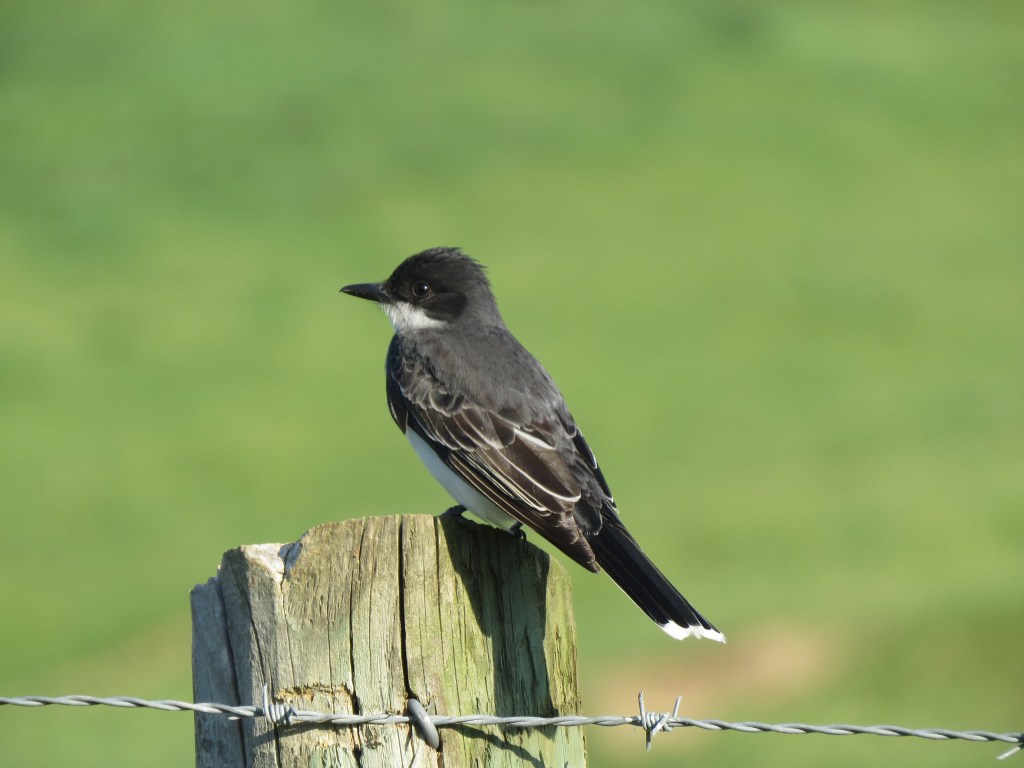
Eastern Kingbird. Photo by Bruce Stambaugh

I continued birding and recorded several species typically found in this grassy habitat. An Eastern Kingbird gave me good looks right from my car. A Savannah Sparrow sang somewhere from the tall grasses. A Gray Catbird practiced its imitations of other birds before dashing for cover.

Curious, I drove east as the road descended to cross the creek. The man was right. The leaves on the sycamore trees growing along both sides of the creek banks obscured my view of the old mill’s remnants.

I turned around to head home when another car approached. Another birder wanted to add the Dickcissel to her yearly list. She already had photos of the birds by the time I stopped to share where I had seen them.

The Dickcissels could have simply been migrating. I’ll return to Moores Mill Road to see for myself. When I do, I’ll be surprised if that day can match the serenity of this morning.

A Dickcissel singing. Photo by Bruce Stambaugh

© Bruce Stambaugh 2026

Feeding the Winter Birds

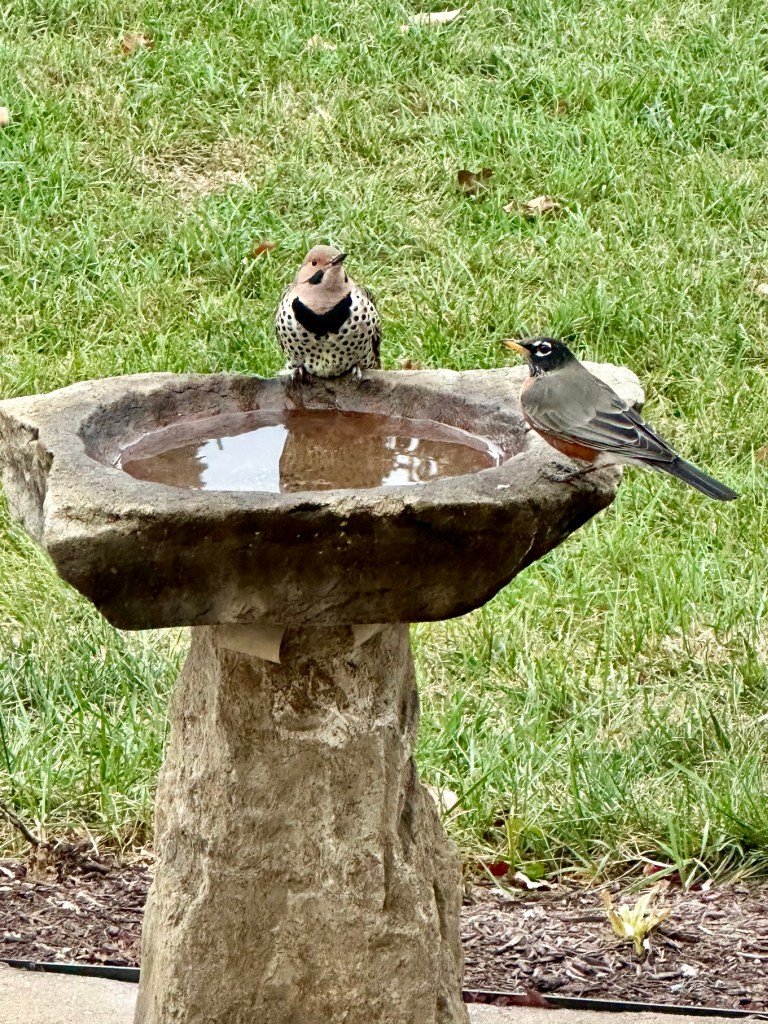
A Northern Flicker at the peanut butter suet feeder. Photo by Bruce Stambaugh

Feeding the birds is one of our favorite winter pastimes. My wife and I enjoy watching college sports, but the colorful birds take precedence over the TV.

Feeding the birds provides us with plenty of entertainment from fall to spring, and we only have to look out our windows. We have done so for all of our nearly 55 years of marriage. We fed birds for the 48 years we lived in Holmes County, Ohio.

Our bird-feeding habit continued when we retired to Virginia’s Shenandoah Valley eight years ago to be close to our daughter’s family. But things were a little different. In Ohio, we lived in the country where natural bird habitats surrounded our property.

Here in Virginia, we live in a suburban setting, just outside the city limits of Harrisonburg. The habitat for birds is much different.

Like many housing developments, homes are close together. Fortunately, our backyard neighbors have mature stands of Colorado Blue Spruce and other evergreens. Plus, we have trees and shrubs around our home that provide cover for the birds.

Besides food and shelter, our avian friends need water, too. So, I added three birdbaths to provide drinking and bathing for the birds. Of course, it’s fun to watch them bathe and drink. It’s amazing how the different species drink.

Please click on the photos to enlarge them.

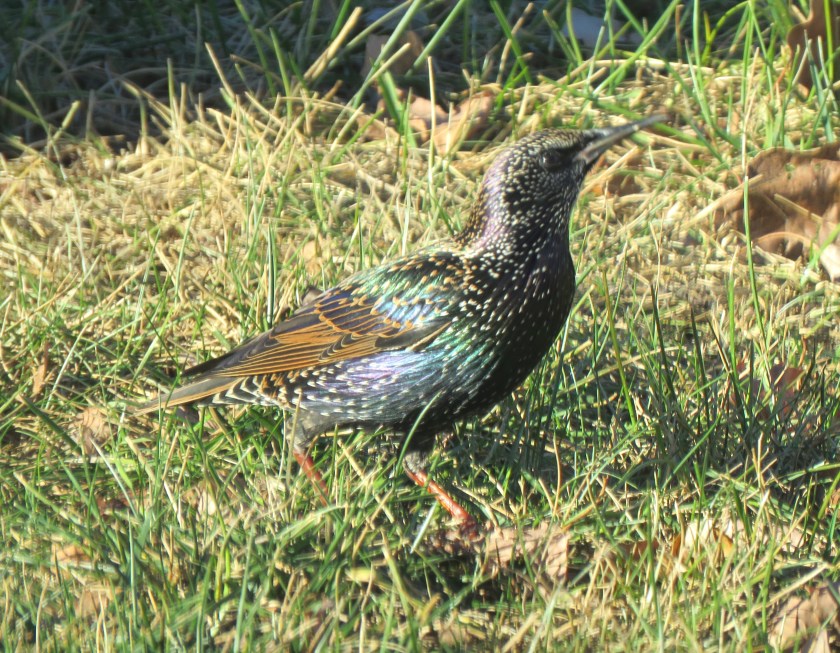
The number of bird species has increased over the eight years that we have lived near Harrisonburg. However, the number of birds has decreased, except for the dreaded European Starlings and the Brown-headed Cowbirds.

Still, I’ve been pleased with the birds that have frequented our feeders. I have four in the front yard, and four in the back. The feed and types of feeders are selected based on the diets and habits of the various species that have frequented our property.

Some bird species are solely ground feeders, so I make sure I spread the feed they eat on the surface near the other feeders. Tube-type feeders allow perching birds to access seeds through holes along the sides. The suet feeder contains cakes of peanut butter suet, encased in a wooden frame with wire-mesh facings on each side.

I place the feeders where the birds feel safe from predators, such as Sharp-shinned and Cooper’s Hawks, which occasionally strafe the neighborhood feeders in hopes of catching a songbird lunch. It’s the way nature works. The feeders and birdbaths are located where we can conveniently view the birds and where they can be easily refilled.

A tube feeder that holds a pound of black-oil sunflower seeds hangs from a limb on the west side of the front yard red maple tree. A suet feeder filled with peanut butter suet dangles from a limb on the east side of the tree. I scatter clean, cracked corn and safflower seeds below them.

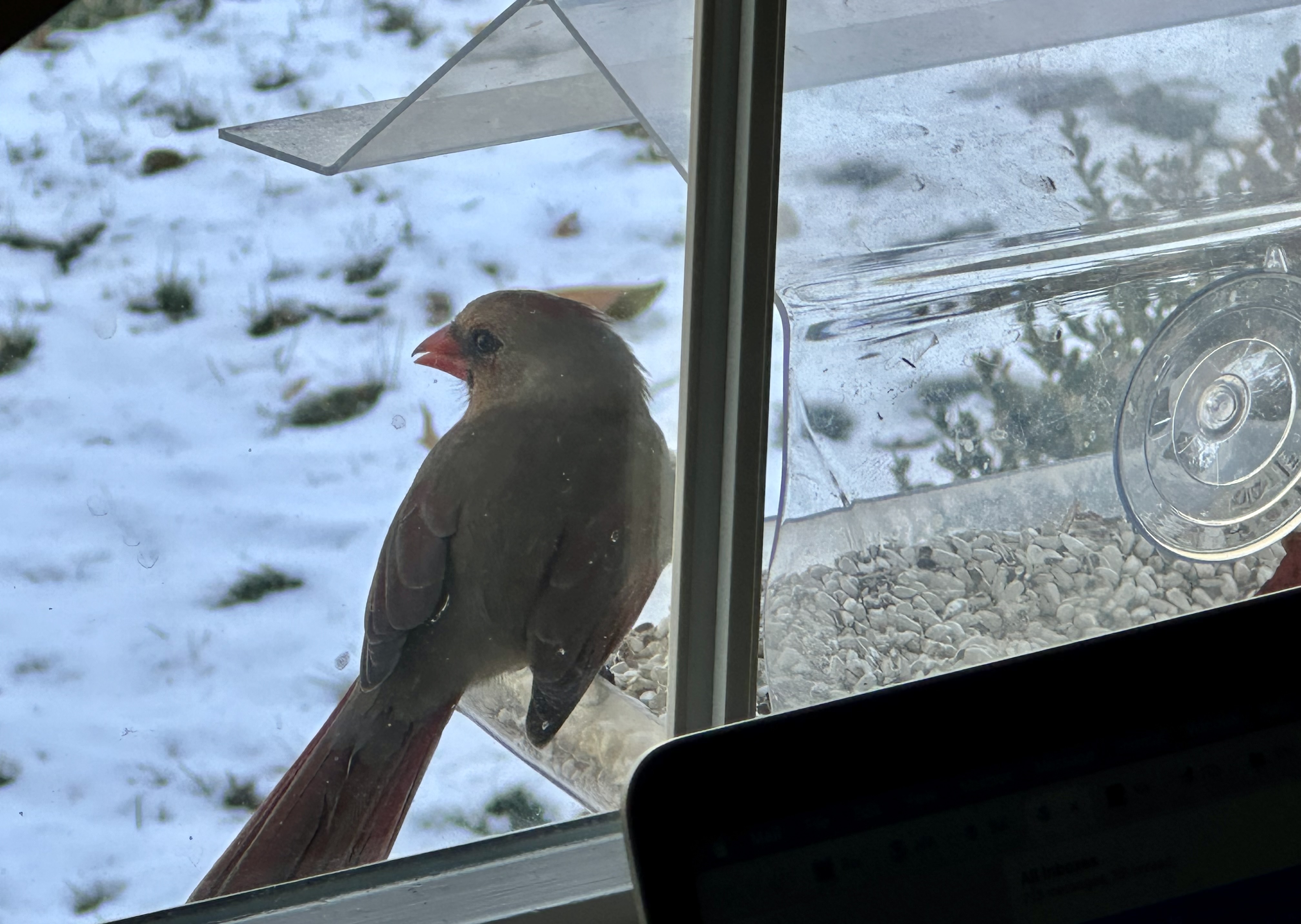
The fourth feeder is suctioned to the window in front of my desk. It’s filled with safflower seeds, which only a few birds will eat. Fortunately, safflower seeds are a second-choice food for Northern Cardinals, which seem to have no fear if I’m at my computer on the inside of the window. If I move too quickly, however, they quickly scatter.

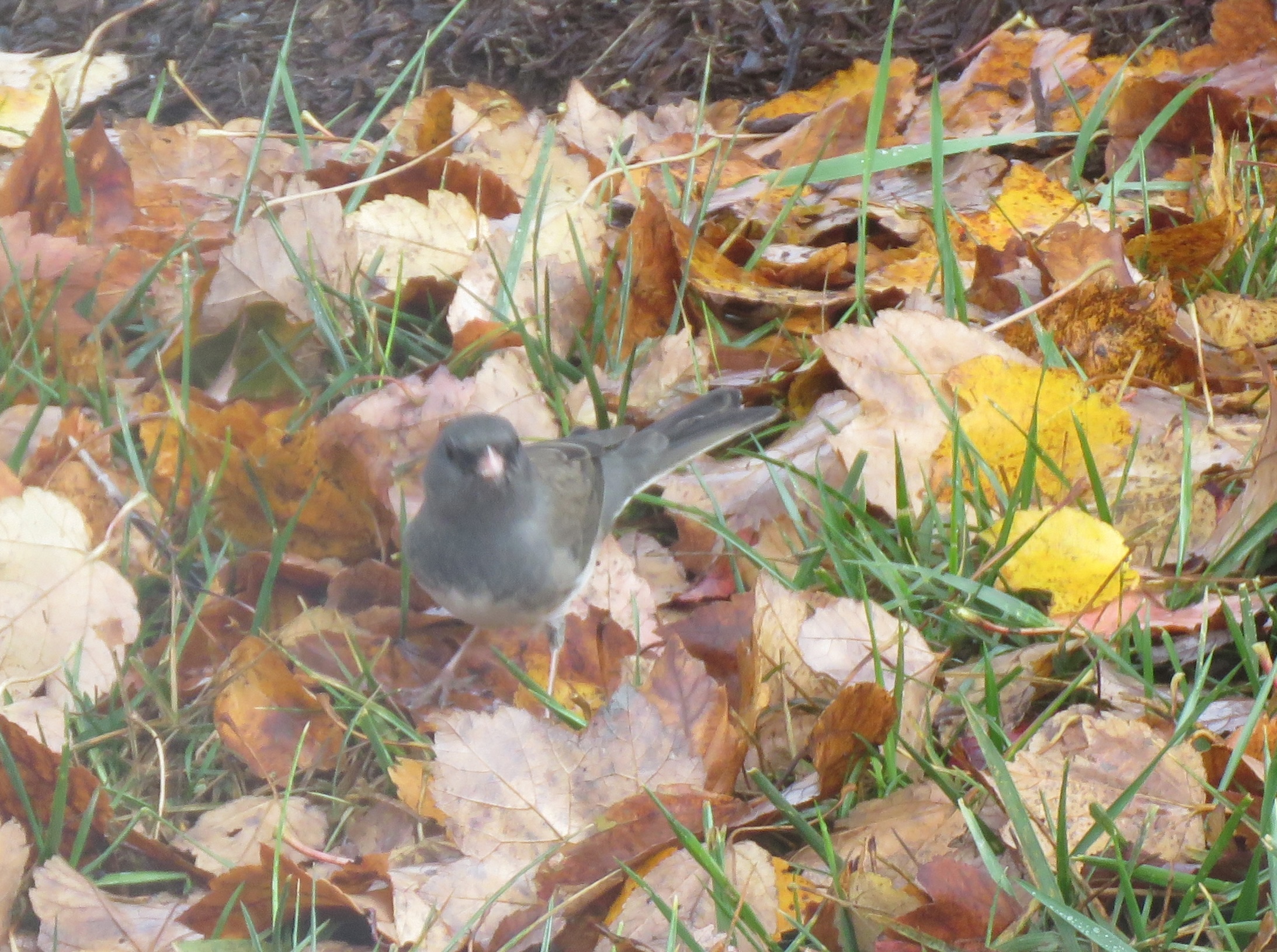
Why do I use these feeds? Black-oil sunflower seeds and hearts attract many species of birds. Northern Cardinals, House Finches, American Goldfinches, Purple Finches, Blue Jays, Dark-eyed Juncos, Downy Woodpeckers, Carolina Wrens, and Carolina Chickadees all choose this seed as a staple to their diet during the winter months.

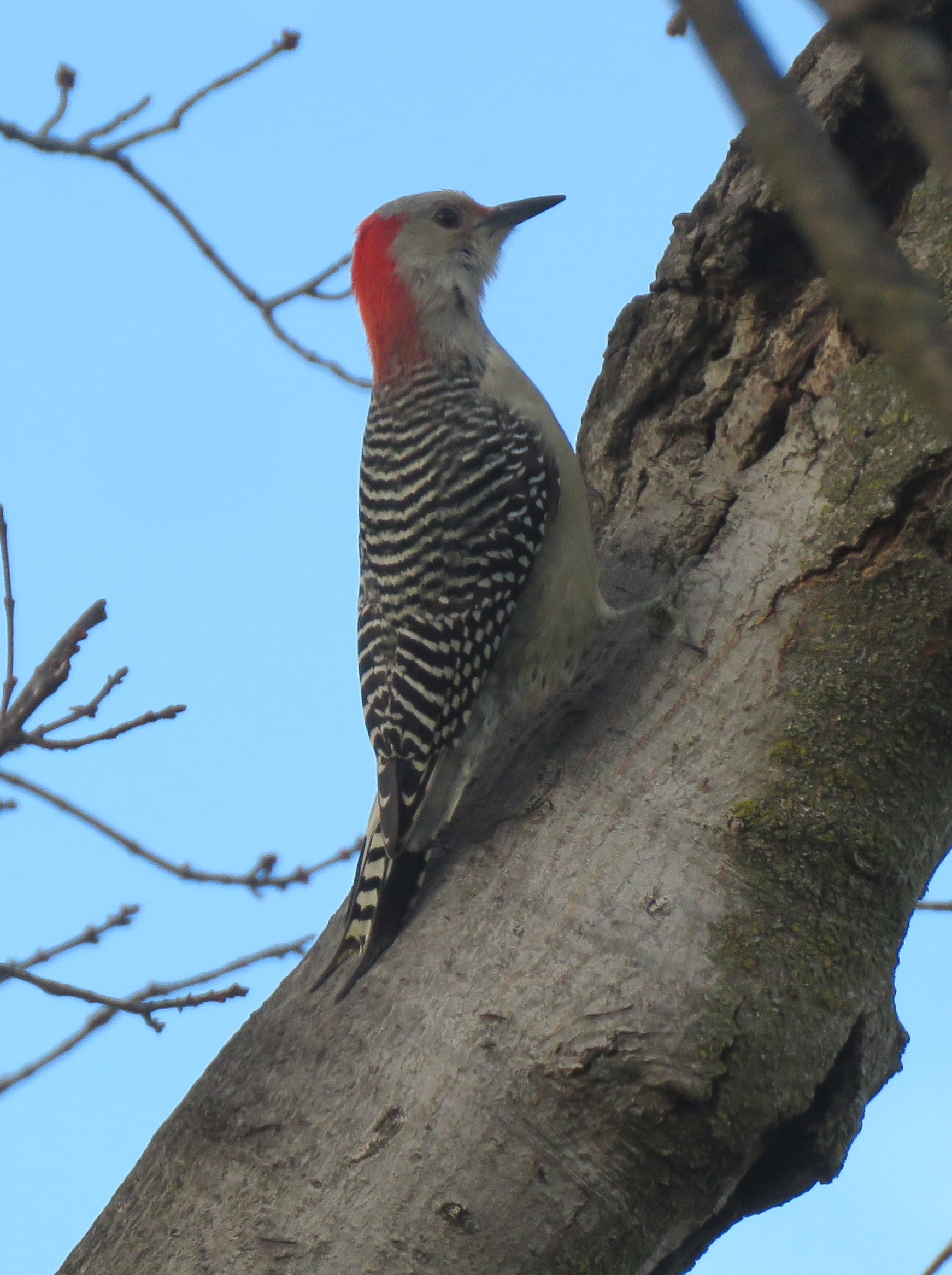
So far this year, Downy, Hairy, and Red-bellied Woodpeckers and Northern Flickers have come to the suet feeder. So have the Carolina Wrens, Carolina Chickadees, and small flocks of European Starlings and Brown-headed Cowbirds.

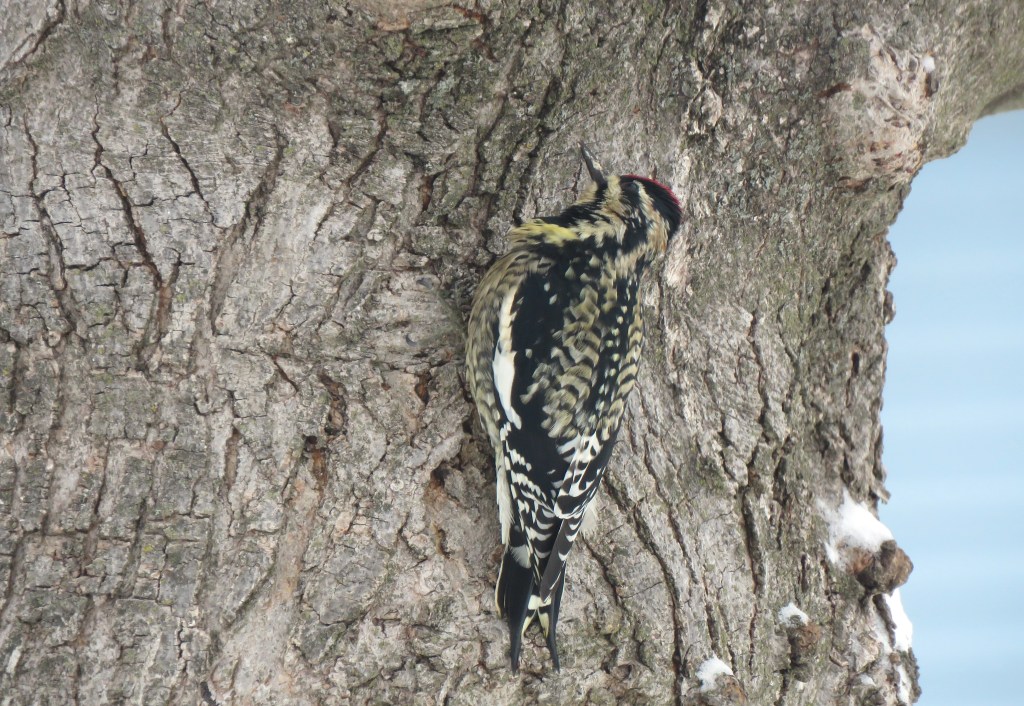
The star of the show, however, has been a Yellow-bellied Sapsucker. Its feeding pattern has been once in the morning and once in the afternoon. I stop what I’m doing and watch the sapsucker, knowing I’m fortunate to have it appear.

Yellow-bellied Sapsucker. Photo by Bruce Stambaugh

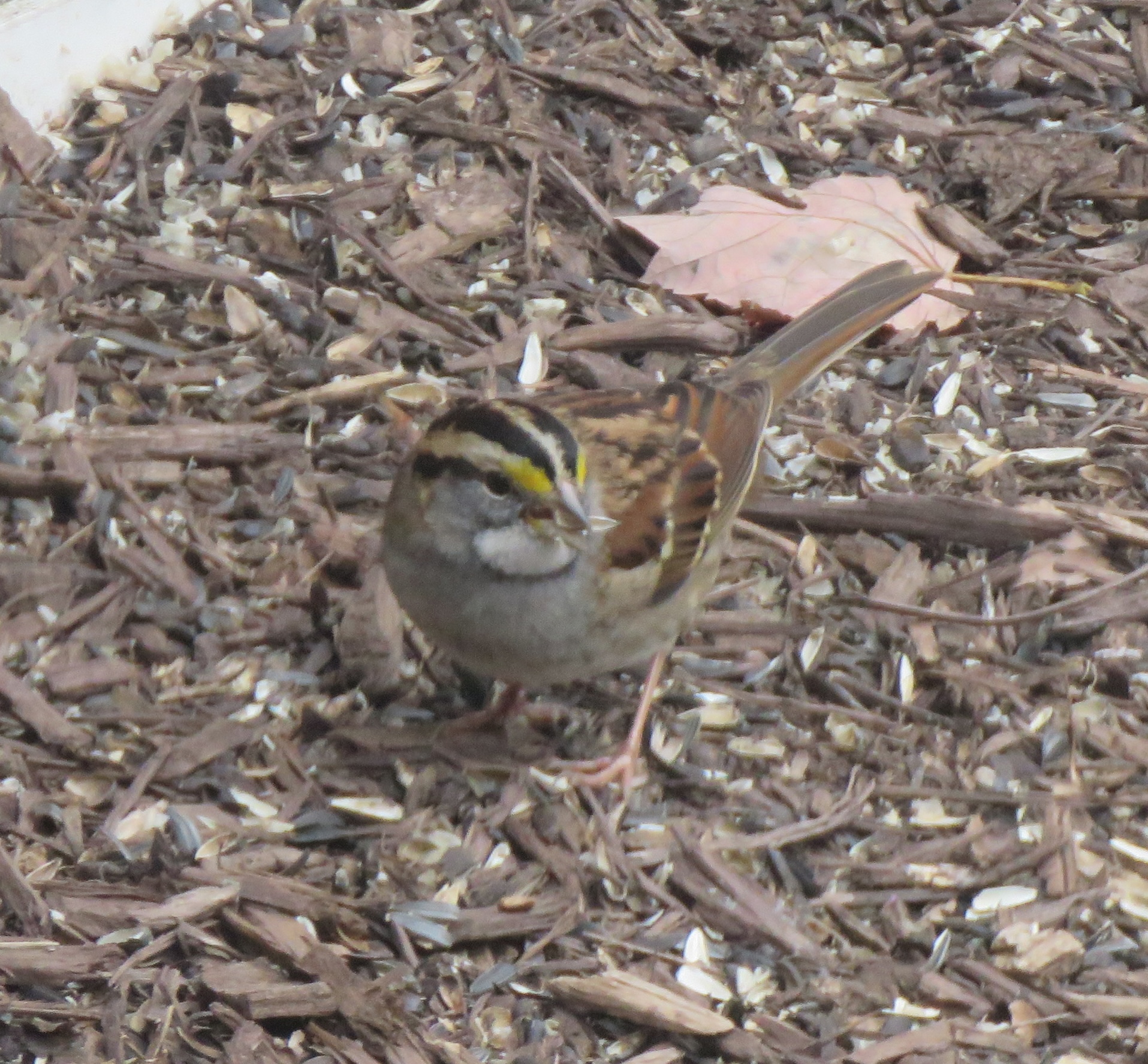
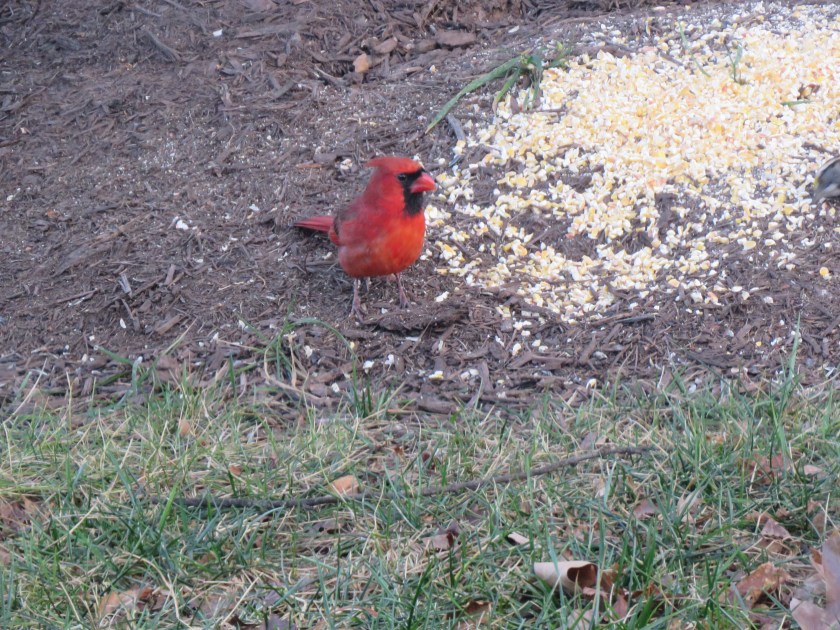
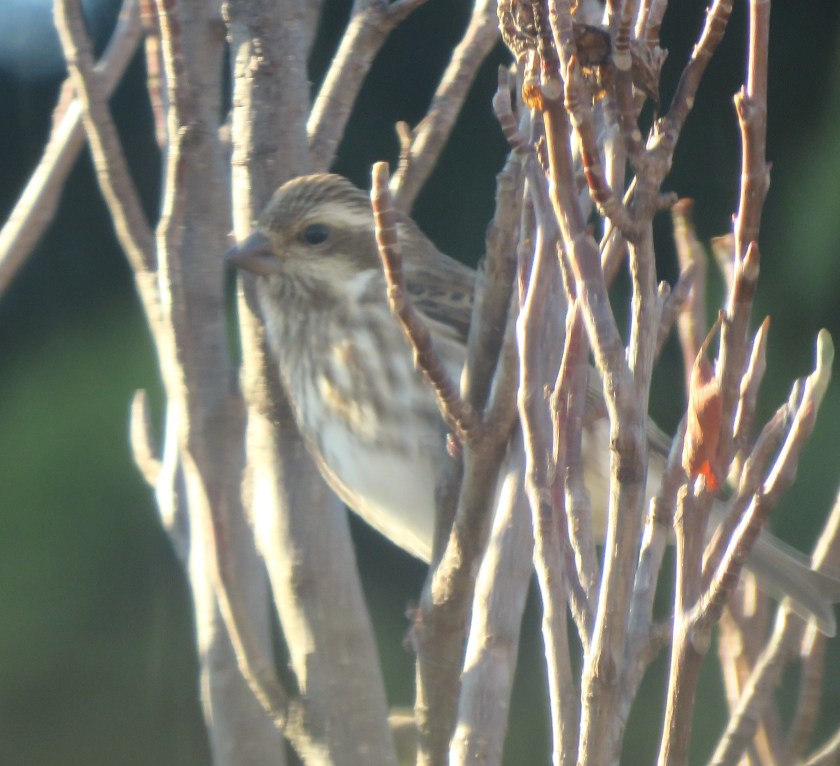
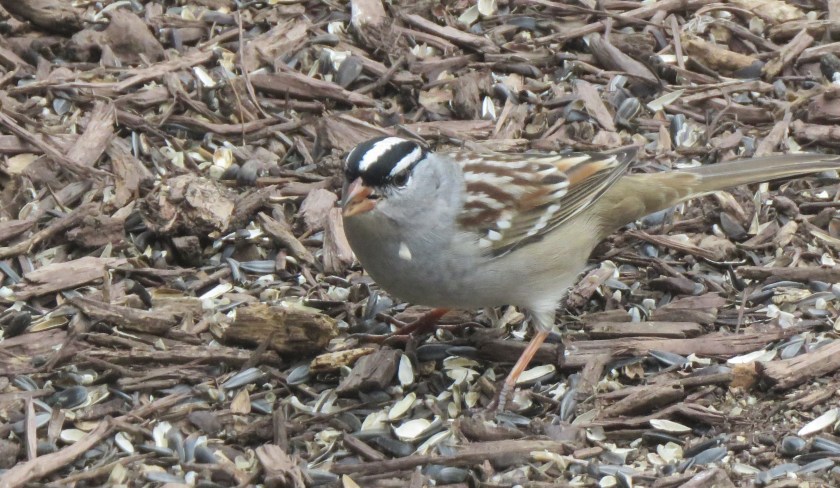
I spread corn to pacify the starlings and cowbirds. Unfortunately, their taste buds prefer the suet. The cardinals, White-throated Sparrows, White-crowned Sparrows, Song Sparrows, House Finches, and Blue Jays ensure the corn doesn’t go to waste.

Our home’s rear windows provide the best view of the feeders and heated birdbaths in the backyard, where most of the cover grows along the property lines. A tubed feeder hangs from the spouting of our screened-in porch, which serves as a shield from strong winds and the strafing hawks.

The hanging feeder holds a mix of black oil sunflower seeds and medium cracked sunflower hearts, which most of the seed-eating songbirds prefer. It’s also the most expensive feed. So, I mix the two seeds to make the precious offerings last longer.

I spread cracked corn on the ground between the feeder and the birdbath. Beyond that, in the yard, I placed a porcelain-topped table and set a homemade wooden feeder on top. More cracked corn goes in that feeder. I also spread some on the ground underneath the table.

Part of the beauty of feeding the birds is the surprises that happen. You never know what will show up at the feeders minute by minute. Like the time I happened to see a Pileated Woodpecker at the nearly empty suet feeder. In a flash, it was gone. But the joy was simply in its appearance, no matter how long it stayed.

In previous years, small flocks of Purple Finches and Pine Siskins have graced the feeders. What a joy it was to see them.

However, I am content with the regular visitors who shelter in the trees, shrubs, and bushes on or near our property. Who wouldn’t love to view a bright red male Northern Cardinal perched in a snow-laden evergreen branch or watch the regal White-crowned Sparrow scratch in the seed only a few feet away?

Of course, I realize that I miss birds when I’m not home or doing other things. I can’t be gazing out of the windows all of the time. Nevertheless, I am thrilled with the ones I do see, and am happy to share them with you.

Male Northern Cardinal. Photo by Bruce Stambaugh

© Bruce Stambaugh 2025

The Perfect Pose

American Goldfinch. Photo by Bruce Stambaugh

My wife and I did our fall cleanup around our house before the colder weather set in. The one item we left in place was a dried-up sunflower stalk near a hanging birdfeeder in our backyard flowerbed.

I hoped that the stalk would serve as a perch for the birds wanting to approach the birdfeeder. That’s precisely what has happened.

Several species of birds use the stalk either before or after going to the feeder filled with chipped and whole black oil sunflower seeds. So far, Northern Cardinals, House Finches, American Goldfinches, Blue Jays, and Carolina Wrens are some of the birds that use the withered stalk to perch.

The stalk is only a few feet from the house and near a window, giving me an excellent view of the stalk. The only drawback is that I have to photograph through the double-paned window with white grids. So, I have to get the right angle to avoid reflections from inside or from the white panes.

I happened to have my camera at the ready when this handsome American Goldfinch in winter plumage landed on the curve of the stalk and posed for several minutes. When the bird looked back at the feeder, I captured its perfect pose..

© Bruce Stambaugh 2025

The Old Oak Tree

Photo by Bruce Stambaugh

Imagine yourself standing on a ridge on a beautiful, temperate fall day. Scattered soft clouds float eastward in a pale blue sky. A gentle east wind mellows the strong afternoon sunshine.

The grass is lush after some long-overdue rain. And a lone, giant red oak, its leaves just now turning to their rusty color, looms over the landscape like it has for a century or more. Battered by winds and lightning strikes, the rugged oak stands as a centennial for all who care to notice.

Miles away, the southern slope of Massanutten Mountain glides to the floor of Virginia’s magnificent Shenandoah Valley. Miles farther southeast, the southern section of Shenandoah National Park marks the horizon.

Fortunately for me, imagination became reality a few days ago. I enhaled the entirety of the precious landscape, not wanting to leave. Of course, I had to. Still, even as I view this photo, nature’s glory fills my soul.

© Bruce Stambaugh 2025

In Search of Mountain Laurel

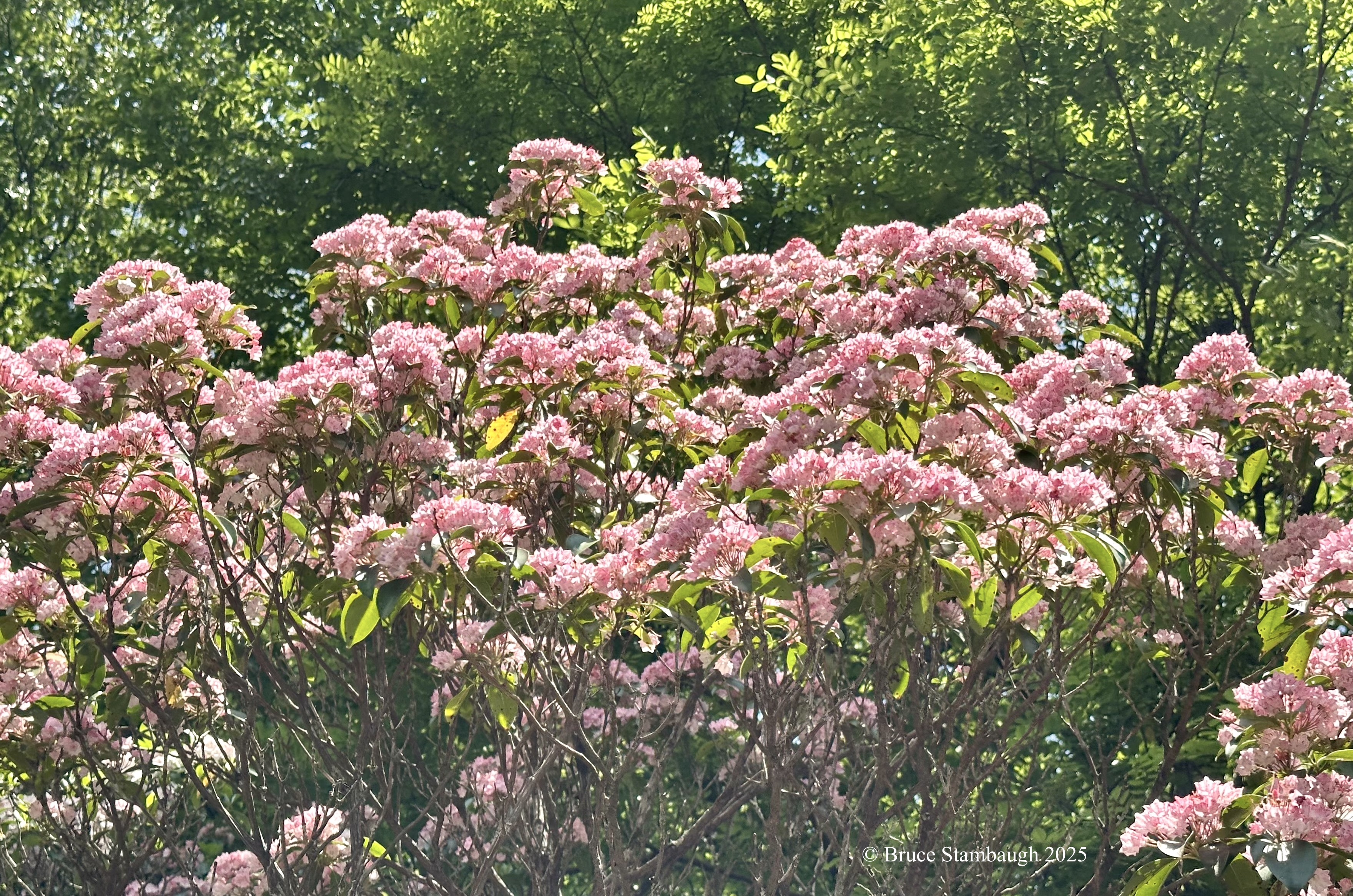
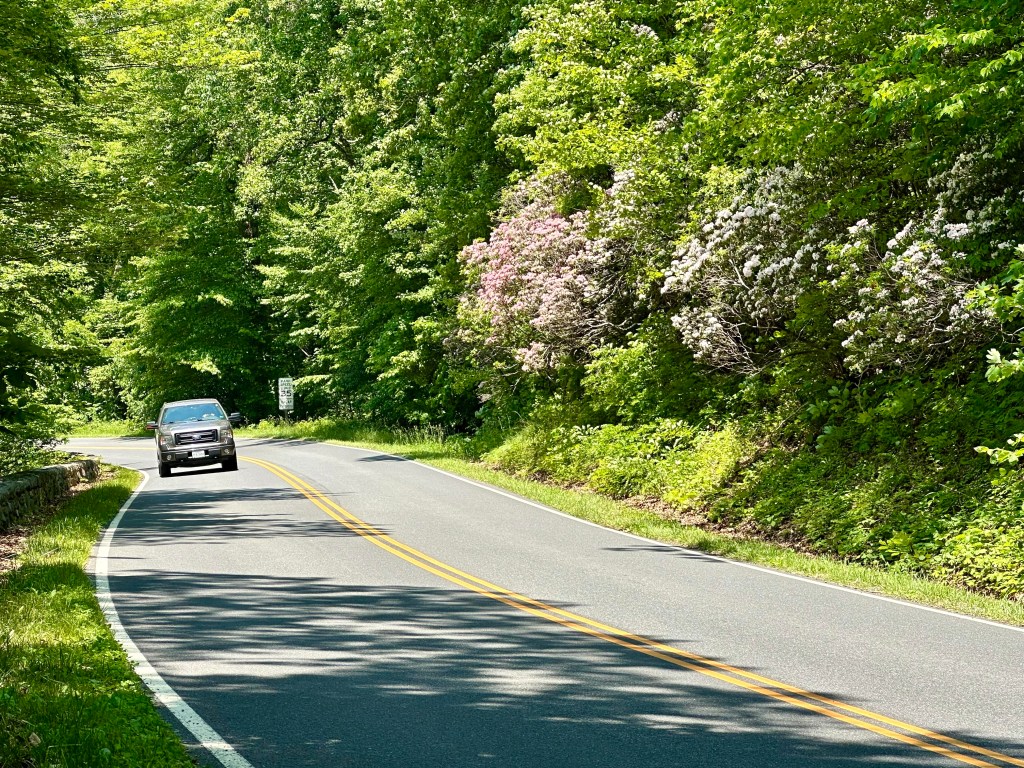
Mountain Laurel blossoms. Photo by Bruce Stambaugh

I went for the birds and the blossoms, but forgot about the bugs. They didn’t deter me, however.

My neighbor had told me that the Mountain Laurel bushes were blooming at various locations in Shenandoah National Park, just a short drive from my home. The laurel blooms from late May into mid-June, depending on elevation.

Of course, I had to see for myself. I fixed a hiker’s lunch, packed my binoculars, camera, and a couple of jackets, and headed out. It’s often 10 degrees or more cooler in the mountains than in the Shenandoah Valley, where I live.

I didn’t need to bother with the jackets. The temperature was 70 degrees when I arrived, and it was humid, with little to no breeze. It was 79 when I left.

A small black bear cub greeted me not long after I entered the park. Fortunately, it scampered back off the old stone wall away from the road and into the forest.

I soon reached my first destination. Just a short distance off Skyline Drive, I reached the Appalachian Trail, which crossed a fire road. I didn’t see any Mountain Laurel, but songbirds were plentiful. So were the knats and mosquitoes.

A male Eastern Towhee. Photo by Bruce Stambaugh

I strolled along the AT, swatting at the pesky bugs and trying to locate the many warblers I was hearing and recording on my smartphone’s birding app. Singing its unmistakable “drink your tea” melody, a male Eastern Towhee posed for a photo on a limb hanging right over the trail.

I met a lone through-hiker from South Carolina. She hoped to reach Mt. Kadadhin in Maine by mid-September. She told me she had passed many stands of Mountain Laurel on her hike so far, which began at the Appalachian Trail’s traditional starting point, Springer Mountain, in Georgia.

She headed north while I retraced my steps to my vehicle. The birdsong was terrific, but the forest’s full foliage made it challenging for this old guy to spot the warblers as they flitted from one branch to another, munching on their insect smorgasbord.

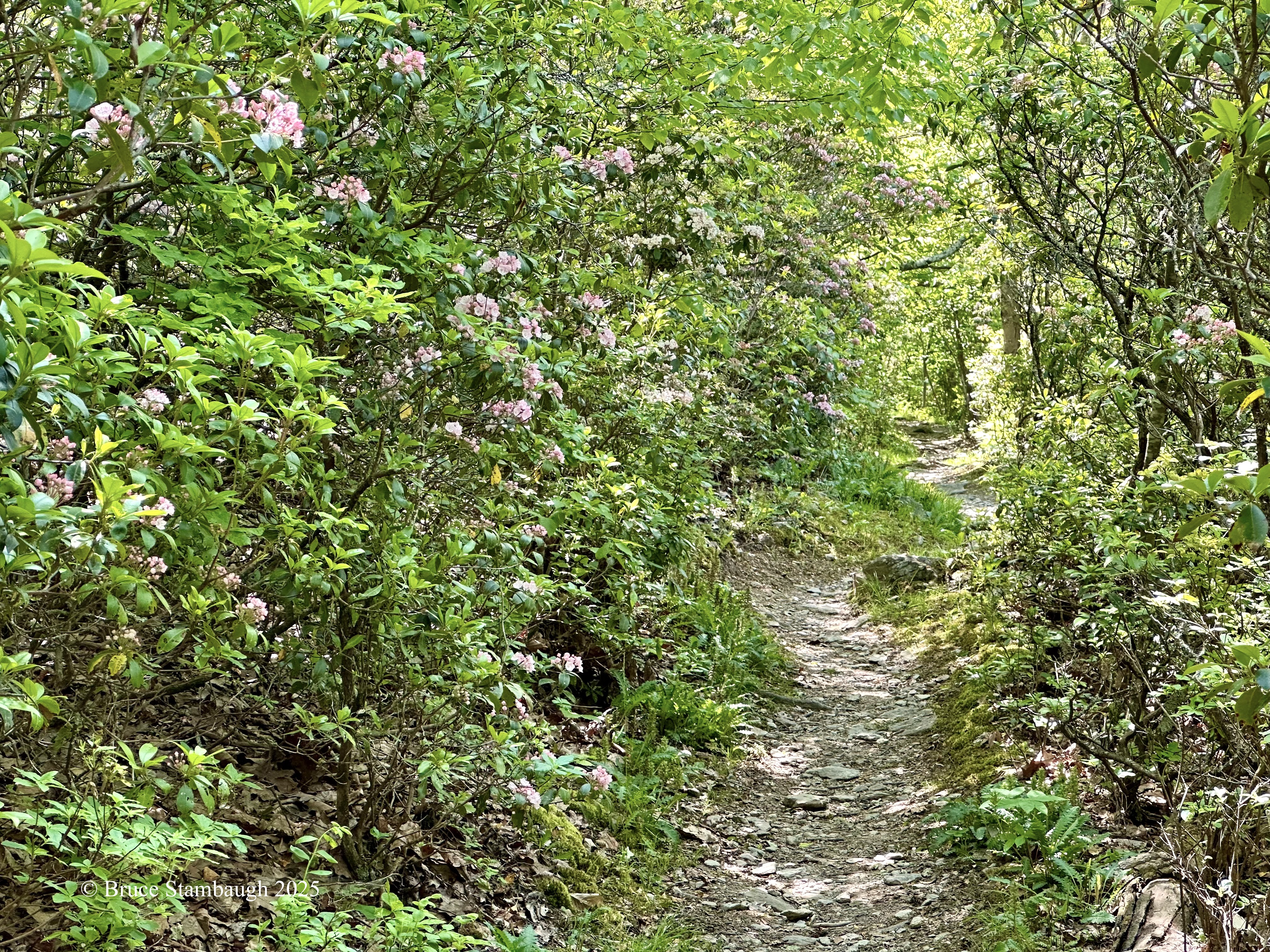
Besides, my main goal was to photograph the blooming Mountain Laurel. I followed my neighbor’s directions to another section of the AT, where the Mountain Laurel was so prolific that it formed a floral tunnel.

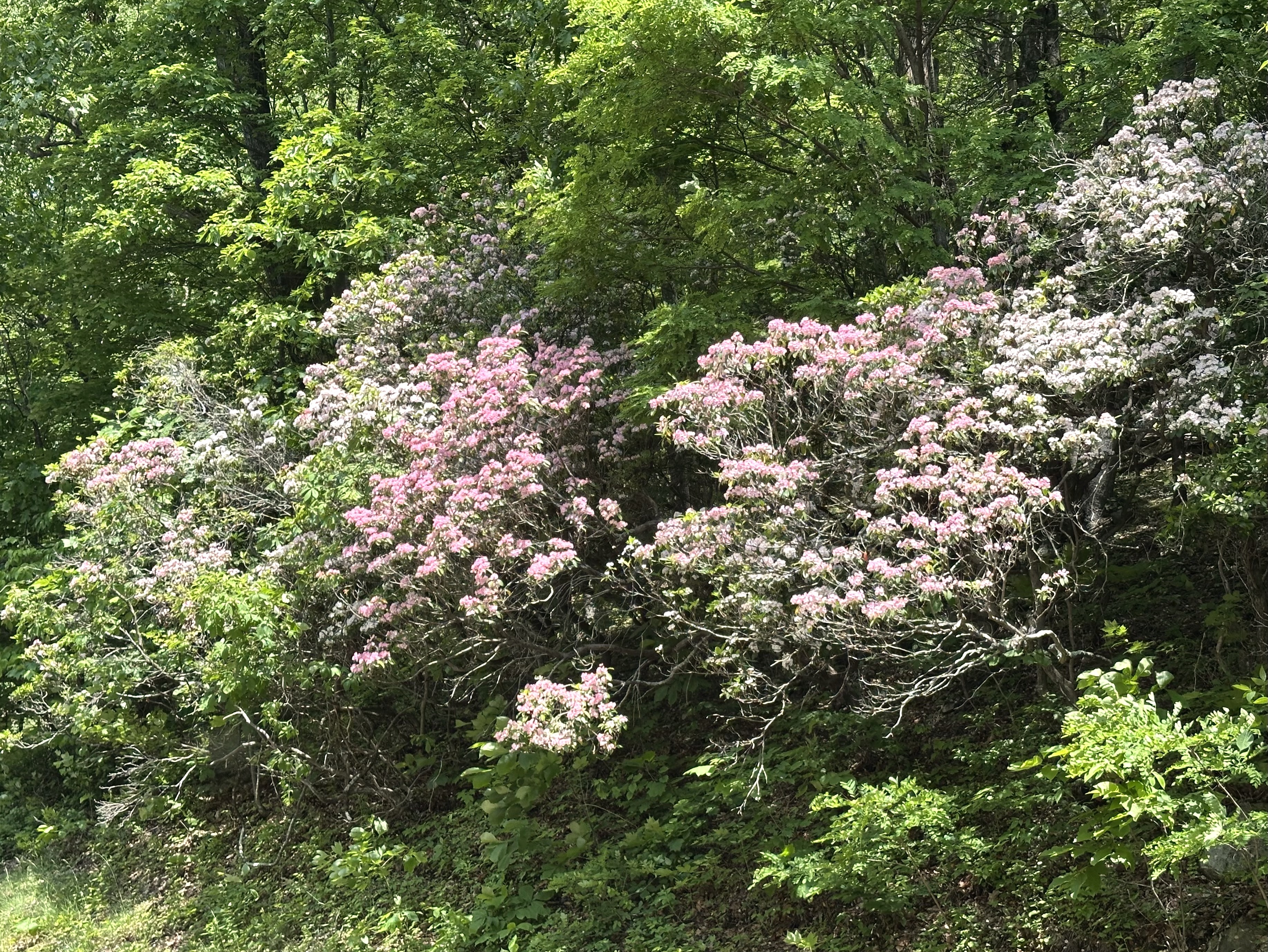
The laurels were in all stages of blooming, from tight pink buds to hexagonal flowers in full bloom. In places, the sun filtered through the forest canopy, highlighting the beauty before me.

The laurel blooms offered no fragrance, and I never saw an insect of any kind on any of the hundreds of blossoms. There was a good reason for that. As pretty as the prized flowers are, they are poisonous to any living creature. Every part of the plant is toxic.

So, if someone offers you Mountain Laurel honey, politely decline. Merely enjoy the flowers with their evergreen leaves. If you go, make sure you take your favorite bug spray.

Mountain Laurel grows along the Skyline Drive in several locations. Photo by Bruce Stambaugh

© Bruce Stambaugh 2025

Birds at My Window

A male Northern Cardinal inspects the safflower seeds at my window feeder. © Bruce Stambaugh

It’s the best of both worlds. I can work on my laptop and watch the birds simultaneously.

I was gifted a clear plastic birdfeeder that sticks to a window via two suction cups. However, with two birdfeeders hanging nearby from the front yard red maple tree, I doubted birds would be attracted to it. The birds proved me wrong.

The hanging feeders held chipped sunflower seed hearts and black oil sunflower seeds. I filled the window feeder’s floor with safflower seeds to keep squirrels and other birds, such as common grackles and European starlings, away. Most bird species don’t like safflower seeds.

Once birds found the feeder, they kept coming, though irregularly. Northern Cardinals, Carolina Wrens, Carolina Chickadees, House Finches, and Purple Finches are among the species that frequent the feeder.

It’s made my days more enjoyable. The Northern Cardinals are often the first and last to enjoy the seeds daily, coming at the first and last light of the day. It’s a good way to start and end the day while writing or reading on my laptop.

I have learned to sit still and let them eat. Any little movement can startle them. The female and male Northern Cardinals eye the seed, pick one, and roll it rapidly with crushing bills until they reach the seed’s meat. The cracked shells fall to the floor of the feeder, which I regularly clean by hand.

Please click on the photos to enlarge them.

The Carolina Wrens seem to be looking more for morsels of the seed and insects that happened to be in the feeder. The beautiful, busy birds are antsy and cautious as they search the feeder. They seldom stay long.

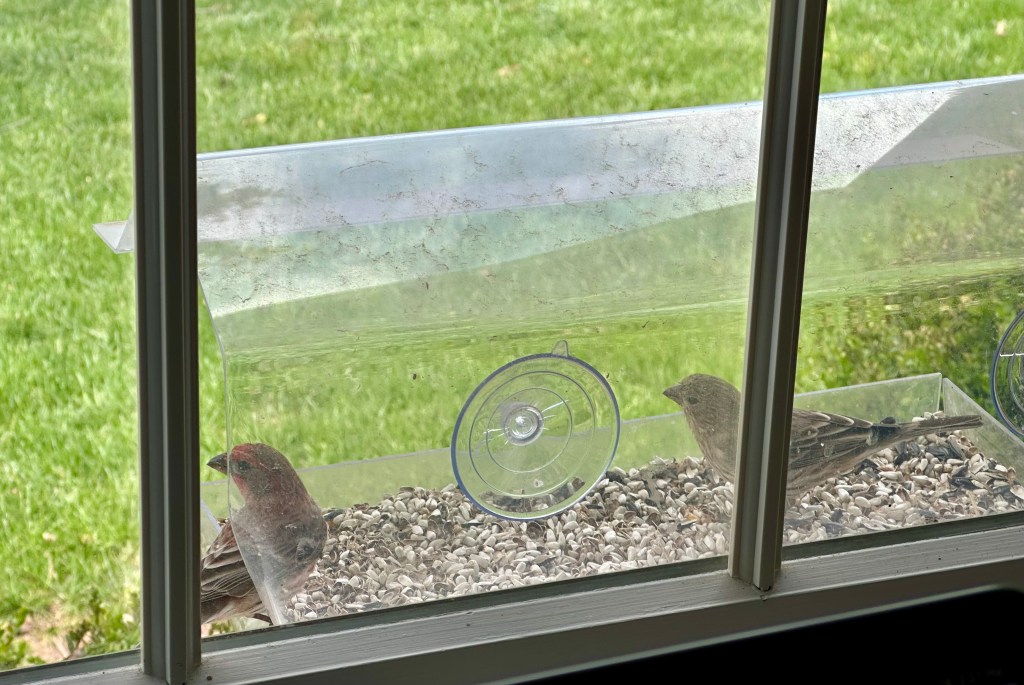
Only the female Purple Finches have come to the window. Even then, they were skittish and spooked at any movement. Consequently, I have learned to roll my office chair away from my desk and raise my phone with the long lens, ready for any shots I can get. That setting works best since the feeder is less than a foot away. Still, I might only get one shot before the birds dart away.

The feeder sits to the right side of the eight-paned window, less than a foot away from my computer. A pencil holder, a small basket with notes, and small notepads serve as a partial shield for me.

Also, I’ve noticed that the birds seem more comfortable in the feeder than in front of the glass window. Perhaps the birds’ visibility is not as sharp due to the plastic feeder’s large suction cups and the bent, molded sides and roof. Plus, the covered feeder keeps the seeds dry from rain and snow. Partially protected by the window sill and frame, even gusty winds don’t shake the feeder.

I am most grateful for these opportunities to observe and record the many bird behaviors and pecking orders exhibited. I enjoy hearing the House Finches twitter to one another as they eat, and other birds quietly enjoy their meals.

The observations teach me to be patient and still, if I genuinely want to learn from my feathered friends.

This pair of House Finches flew as soon as I captured the shot. Photo by Bruce Stambaugh

© Bruce Stambaugh 2025

Shenandoah National Park: Before and After the Peak Leaf Colors

Nature’s beauty reigned even after the peak colors had faded. Photo by Bruce Stambaugh

Fall is a great time to hike, bird, and shoot photos. Shenandoah National Park is my go-to place to combine all three hobbies in one trip.

However, I have learned to avoid the peak color time due to crowds. People from around the world visit the park to admire its autumn glory, which means traffic is also at its peak on the iconic Skyline Drive.

By mid-morning, lines of vehicles form at entrance stations. Overlook parking spaces fill up quickly, forcing people to park along the busy roadway. The same is true for trailhead parking lots.

Before the peak of leaf colors.

So, I chose to catch the leaf colors before and after the peak. The park is still busy, but it is tolerable, and I am satisfied with a stirring hike filled with picturesque views, unexpected wildlife, and migrating birds.

In the mountains, altitude affects the coloring as much as sunshine, cooler nighttime temperatures, and morning frosts. So, the trees might be dull or even bare at the hike’s beginning, and a half mile down the trail, a blaze of color brightens the way.

After the peak. Please click on the photos to enlarge them.

Though I have missed the height of the turning leaves, I enjoy the before-and-after with equal zeal. It’s fun to note the differences I discover and meet friendly folks along the way. The park’s beauty has energized them, too.

Besides, I admired nature’s colorful summit in other locales in Virginia’s lovely Shenandoah Valley. It is the perfect place to enjoy hiking, birding, and photography all in one joyous day trip.

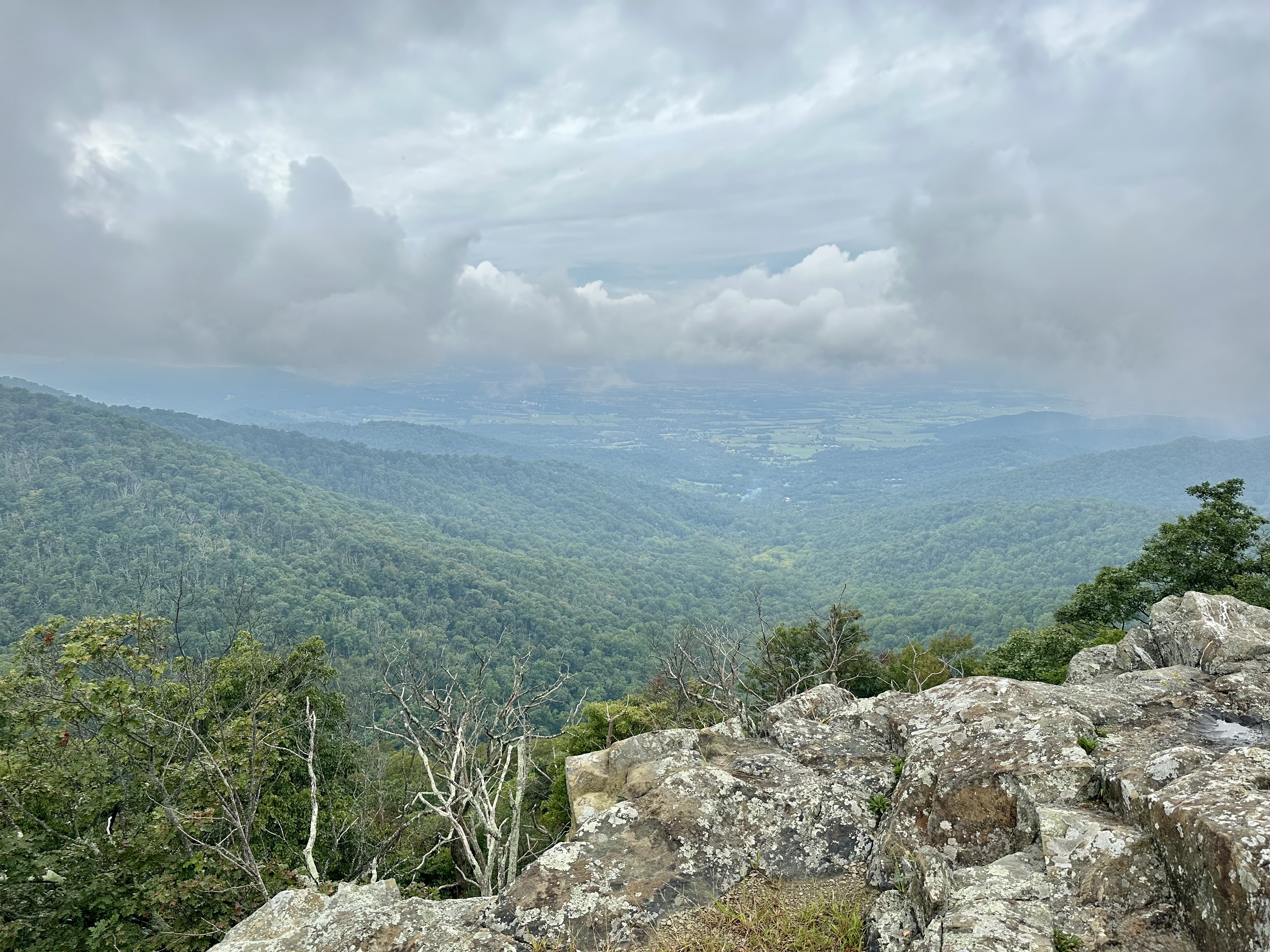
A view west into the Shenandoah Valley. Photo by Bruce Stambaugh

© Bruce Stambaugh 2024

Bay Photos by Donna

Wildlife Photos From The Chesapeake Bay Region

ROAD TO NARA

Culture and Communities at the Heart Of India

K Hertzler Art

Artist and nature journalist in the Shenandoah Valley of Virginia.

Maria Vincent Robinson

Photographer Of Life and moments

Gabriele Romano

Less Noise. More Meaning

Jennifer Murch

Art is the only way to run away without leaving home. -Twyla Tharp

Roadkill Crossing

Writing generated from the rural life

ANJOLI ROY

writer. teacher. podcast cohost.

Casa Alterna

El amor cruza fronteras / Love crosses borders