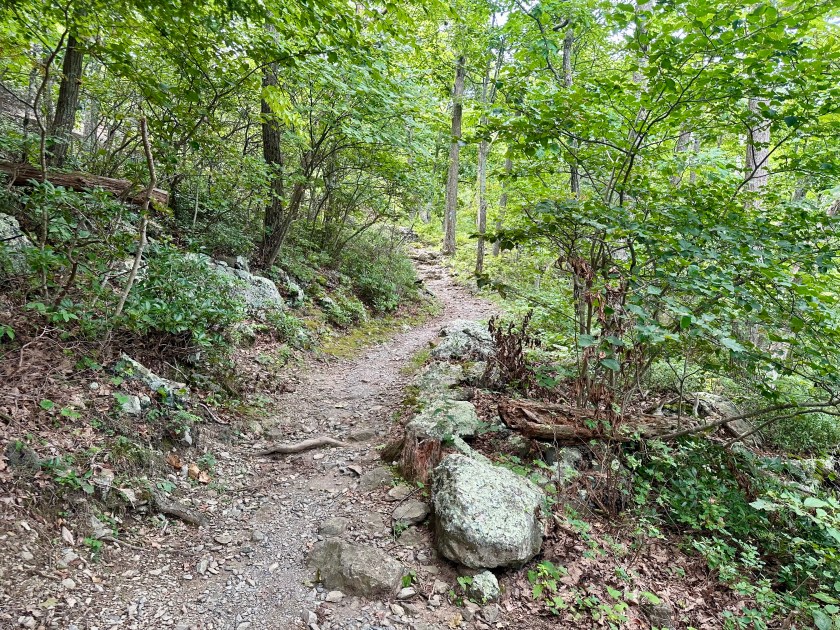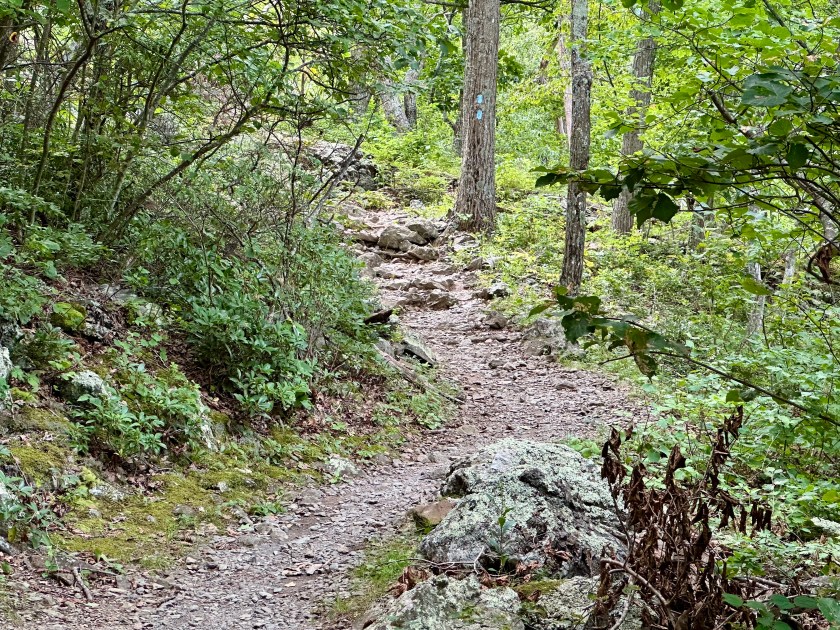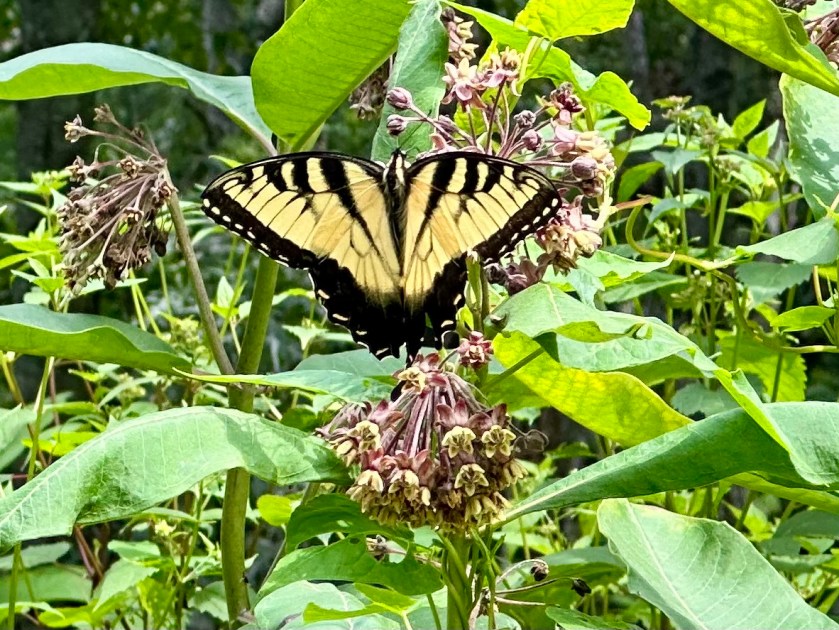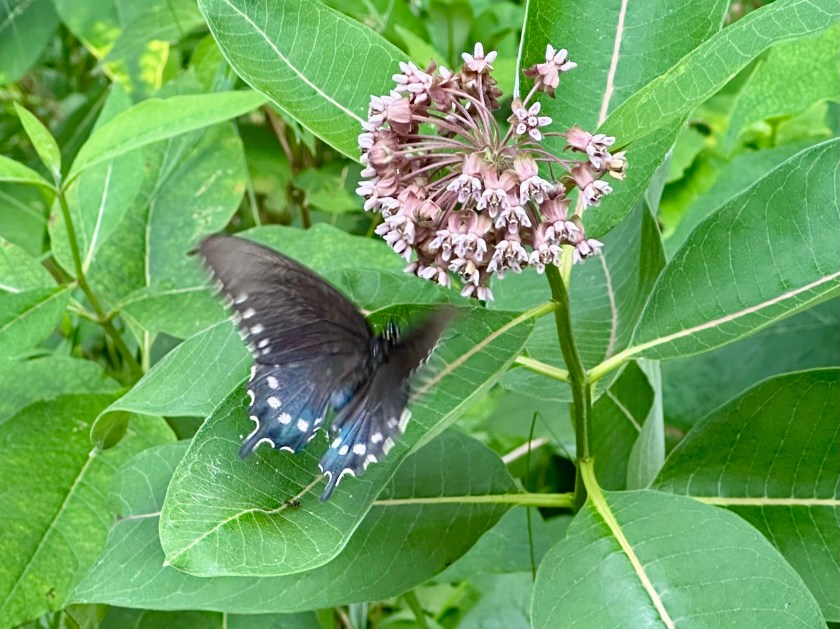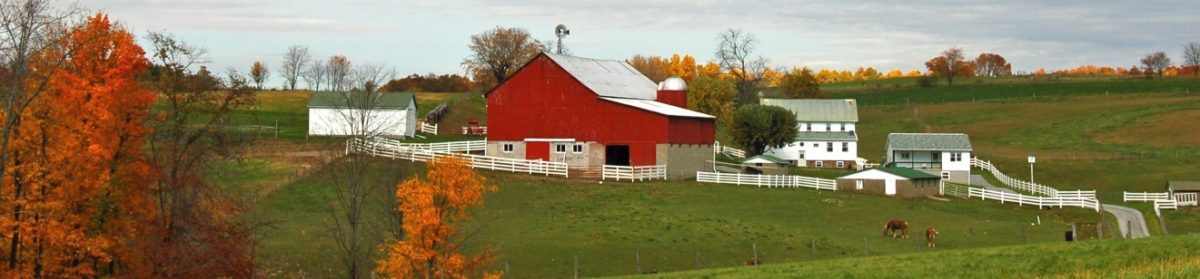
Enjoying Nature’s Many Benefits

You never know what you’ll happen upon in nature. Photo by Bruce Stambaugh

We live in a stress-filled world with lots of artificial noise, annoying distractions, societal expectations, and short deadlines. There are ways to escape the madness, even if only temporarily.

In my almost 79 years of living, I have made a habit of escaping much of life’s static by getting away. Even in retirement, I feel life’s stresses.

Hiking and bird watching are two excellent ways to forget all of the activities that clutter our lives, especially with 21st-century technology constantly hounding us. Combining exercise with enjoyment helps strengthen my body, foster mindfulness, and recharge my spirit for living.

I add in a third complementary hobby: photography. Snapshots of my outings document where I have been and what I have seen. Then I can share the treasures I have found with others, which only enhances the joy of the experience.

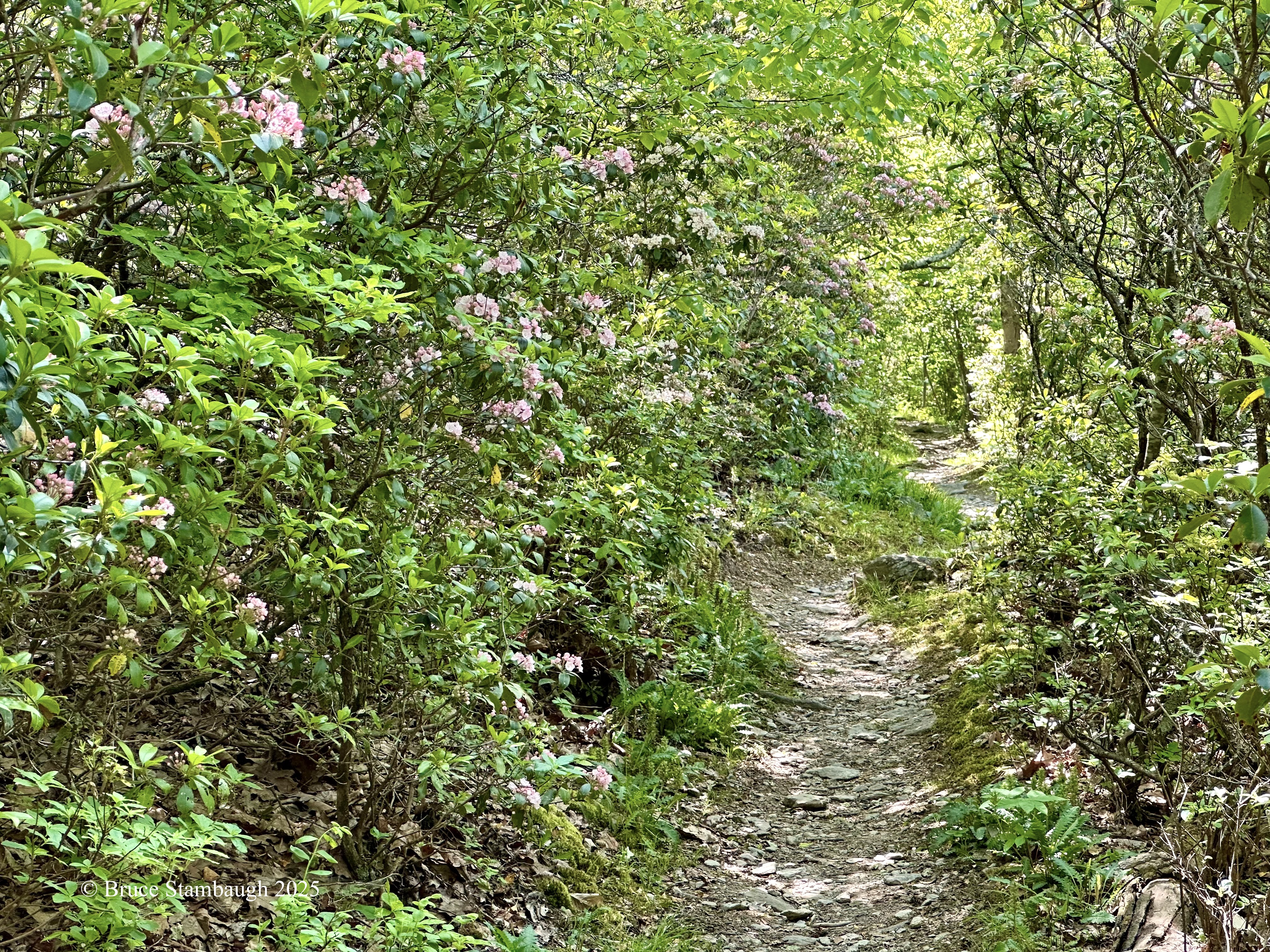
Poet Mary Oliver taught us to “pay attention, be astonished, tell about it.” During my treks, I put this poetic advice into practice. I marvel at a pair of Swallow-tailed Kites foraging for insects over a recently mown field. Walking through a tunnel of blooming Mountain Laurel along the Appalachian Trail stops me in my tracks.

A Swallowtail Kite. Photo by Bruce Stambaugh
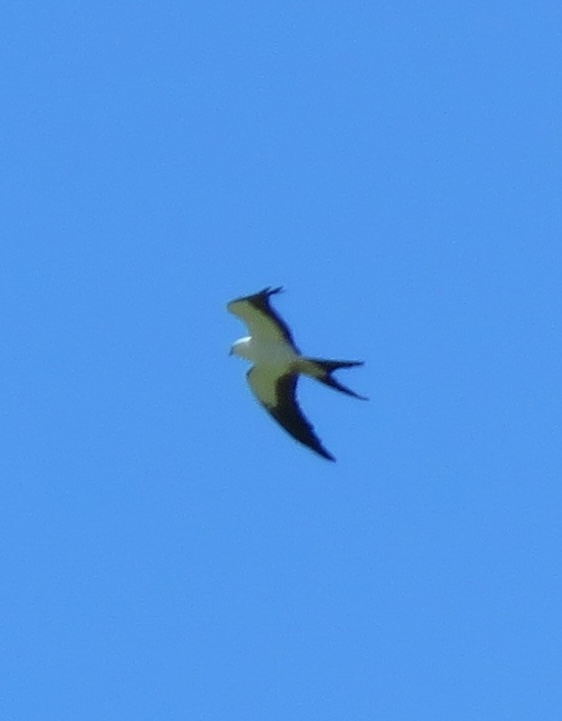
A Swallowtail Kite. Photo by Bruce Stambaugh

A blogger friend of mine who frequents Georgia’s Okefenokee National Wildlife Refuge does so for solitude and renewal by kayaking among alligators. Finding renewal in nature is a personal preference. Making the effort to enjoy the outdoors is what counts.

Recent studies have proven what author Wendell Berry has always known: “For a time, I rest in the grace of the world, and am free.” One study “found evidence for associations between nature exposure and improved cognitive function, brain activity, blood pressure, mental health, physical activity, and sleep.” Another research paper focused on the health benefits of nature in urban areas.

These studies show that everyone, everywhere, should commune with nature. It can be a morning walk in your neighborhood or a long-distance bicycle ride. I walk frequently in our suburban neighborhood in Virginia’s Shenandoah Valley. The melodious bird calls and the fragrance from well-attended flower gardens combine to energize my steps.

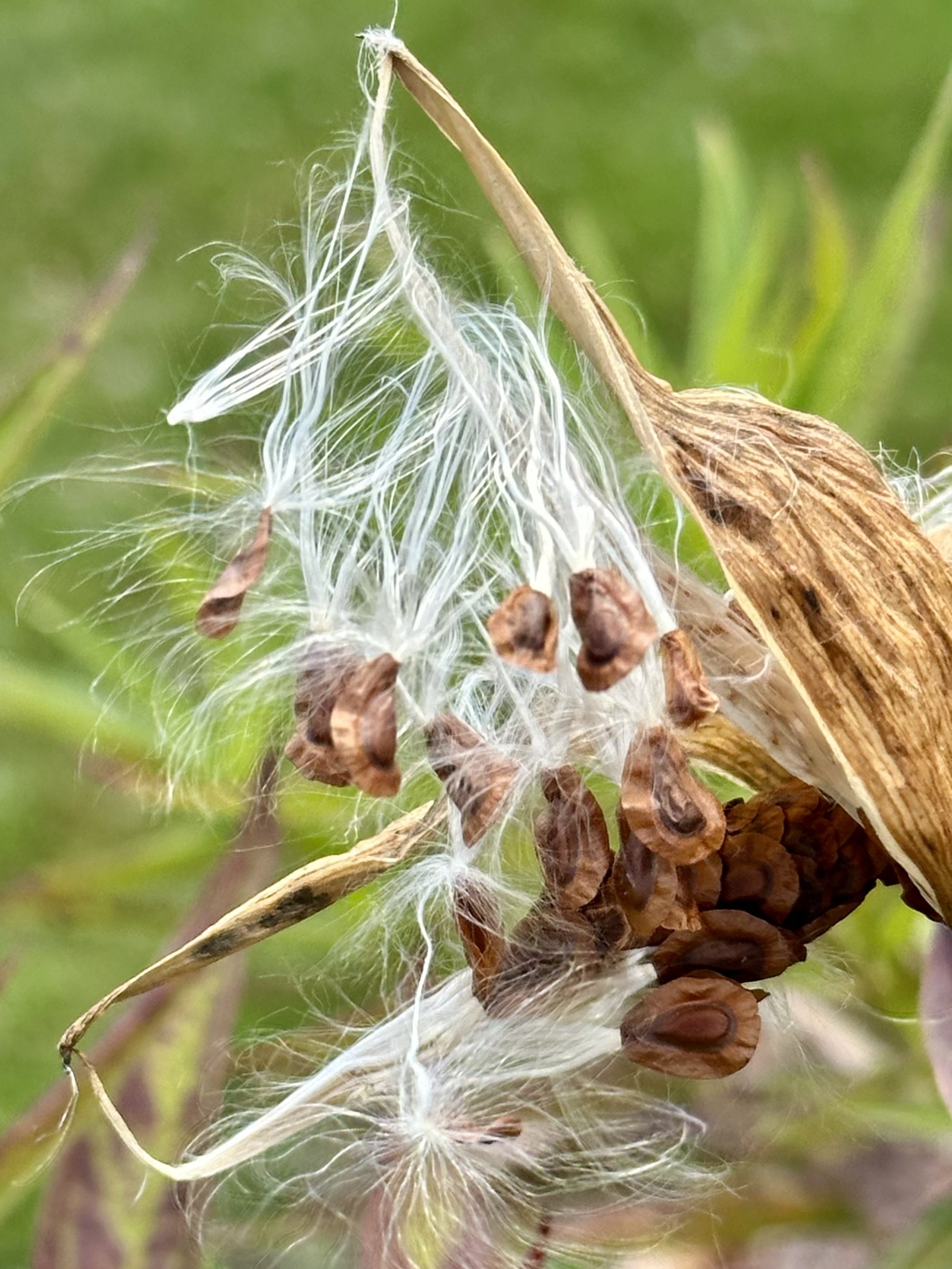
I find Berry’s grace under the shady canopy of towering trees, among stands of colorful wildflowers, while viewing wildlife big and small, and in forever mountaintop vistas. So, whether with friends or solo, I enjoy nature in her many forms. Being retired allows me to do so as time allows.

I keep a steady pace until I spot something pretty or intriguing. I pull out my smartphone and photograph it. That documents the time and place to reinforce my memory. It might be another opportunity to share it as well.

I belong to a local bird club, so I can follow up on any rare bird alerts as I can. I don’t always find the bird in question, but I’m not disappointed. I often encounter other birders in search of the same species. We commiserate and share other birding adventures we’ve had. New friends are made in the process.

I’ll occasionally join a scheduled bird hike in a city park or even in Shenandoah National Park 40 miles away. Having multiple pairs of eyes scanning the sky and peering through thickets and woodlots enhances all our chances of seeing a special bird.

I have the privilege of mentoring a high school junior from our church. He also happens to enjoy bird watching, so we occasionally venture out with small groups or another mentor-mentee pair to enjoy the hiking, camaraderie, and all we encounter along the way.

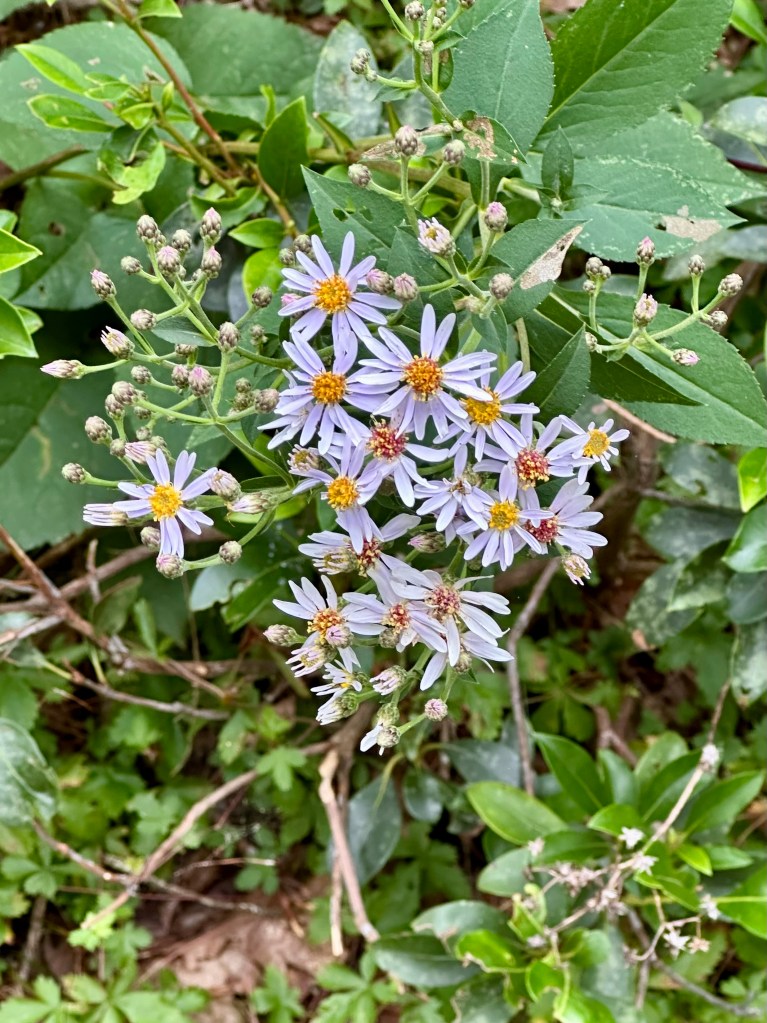
Impatient with our septuagenarian pace, the trustworthy teens forge ahead, exploring on their own. Once, they encountered an unfamiliar rock scramble and rushed back to us, realizing they had missed the turn.

I am most free to enjoy the flora and fauna when I go alone. I travel at my own leisure, stopping to photograph bees and butterflies on flowers, unusual rock formations, and birds if I can spot them in the dense foliage.

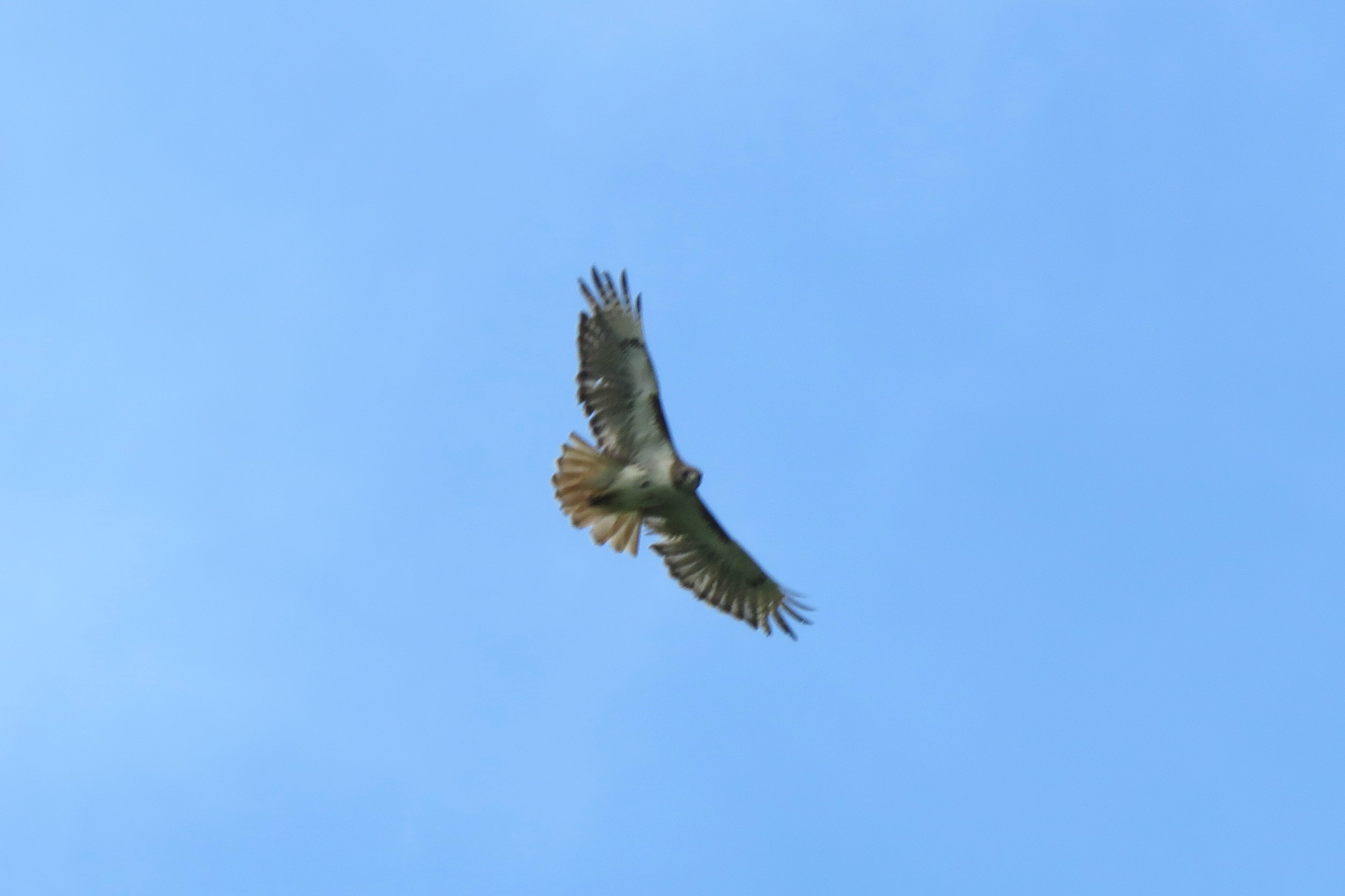
After hiking to a majestic overlook in the Blue Ridge Mountains, I rest a spell, partly to regain my energy and catch my breath, but mostly to inhale the view. The quiet has its rewards: a doe grazing with her fawn, Red-tailed Hawks and Turkey Vultures soaring on thermals with puffy white clouds sailing high overhead in the cerulean sky, a Timber Rattlesnake soaking in the sun on a limestone outcropping.

Hydration and nourishment with water and snacks are essential, especially when hiking at higher altitudes. With binoculars hanging from my neck and a camera slung on my shoulder, a pair of walking sticks keeps me steady even on the rockiest of terrain.

Spending time in nature provides many benefits, especially for seniors as we age. It helps improve cardiovascular health and sleep, and reduce inflammation in the body, according to this study by the Elder Care Alliance. My family physician tells me “to keep moving,” so I do.

The essence of being in nature with the wild things gives me all the peace I need. With no signal in remote areas, the cellphone never interrupts.

The intrepid hiker and bird watcher.

© Bruce Stambaugh 2026

In Search of Mountain Laurel

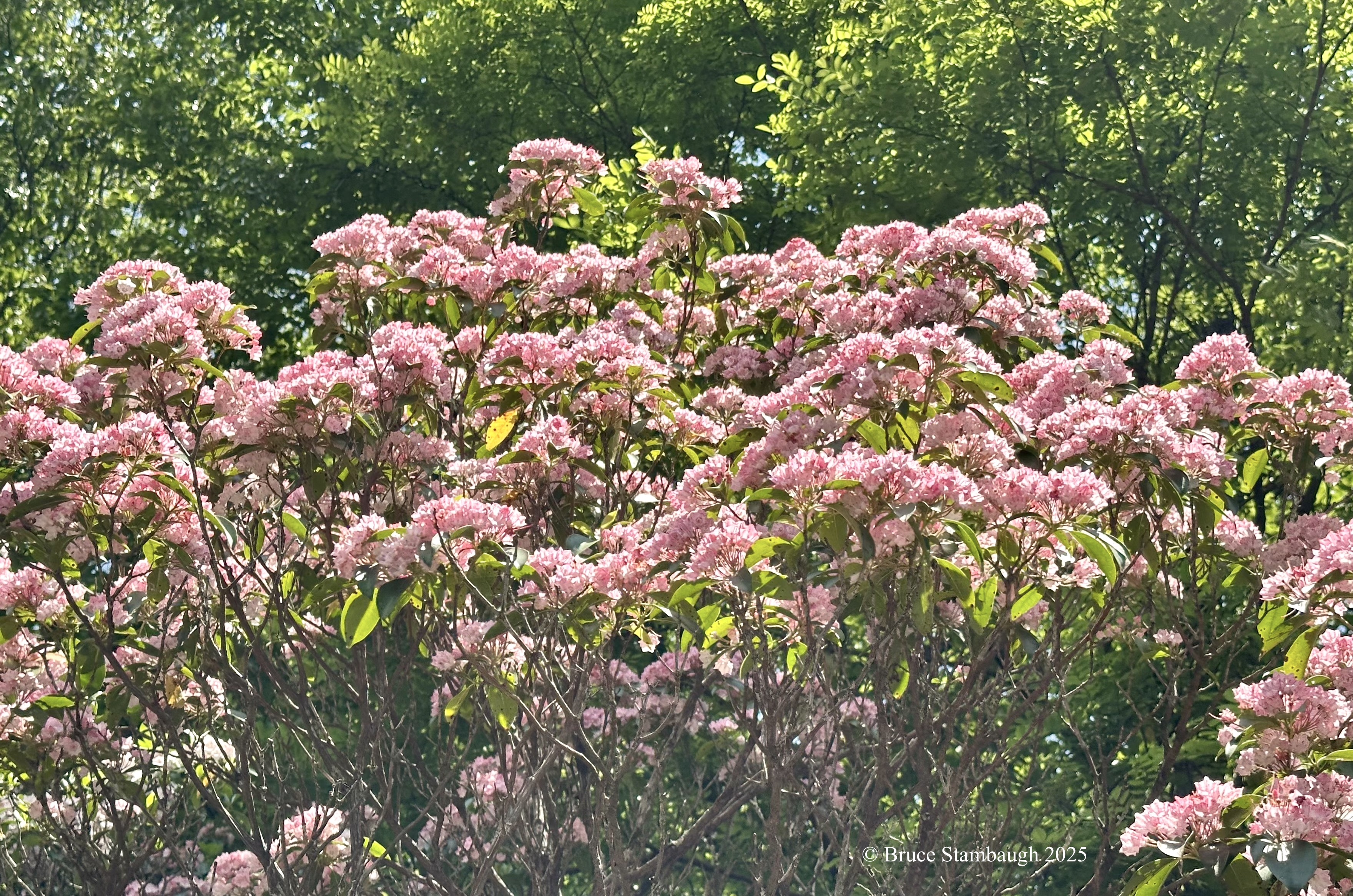
Mountain Laurel blossoms. Photo by Bruce Stambaugh

I went for the birds and the blossoms, but forgot about the bugs. They didn’t deter me, however.

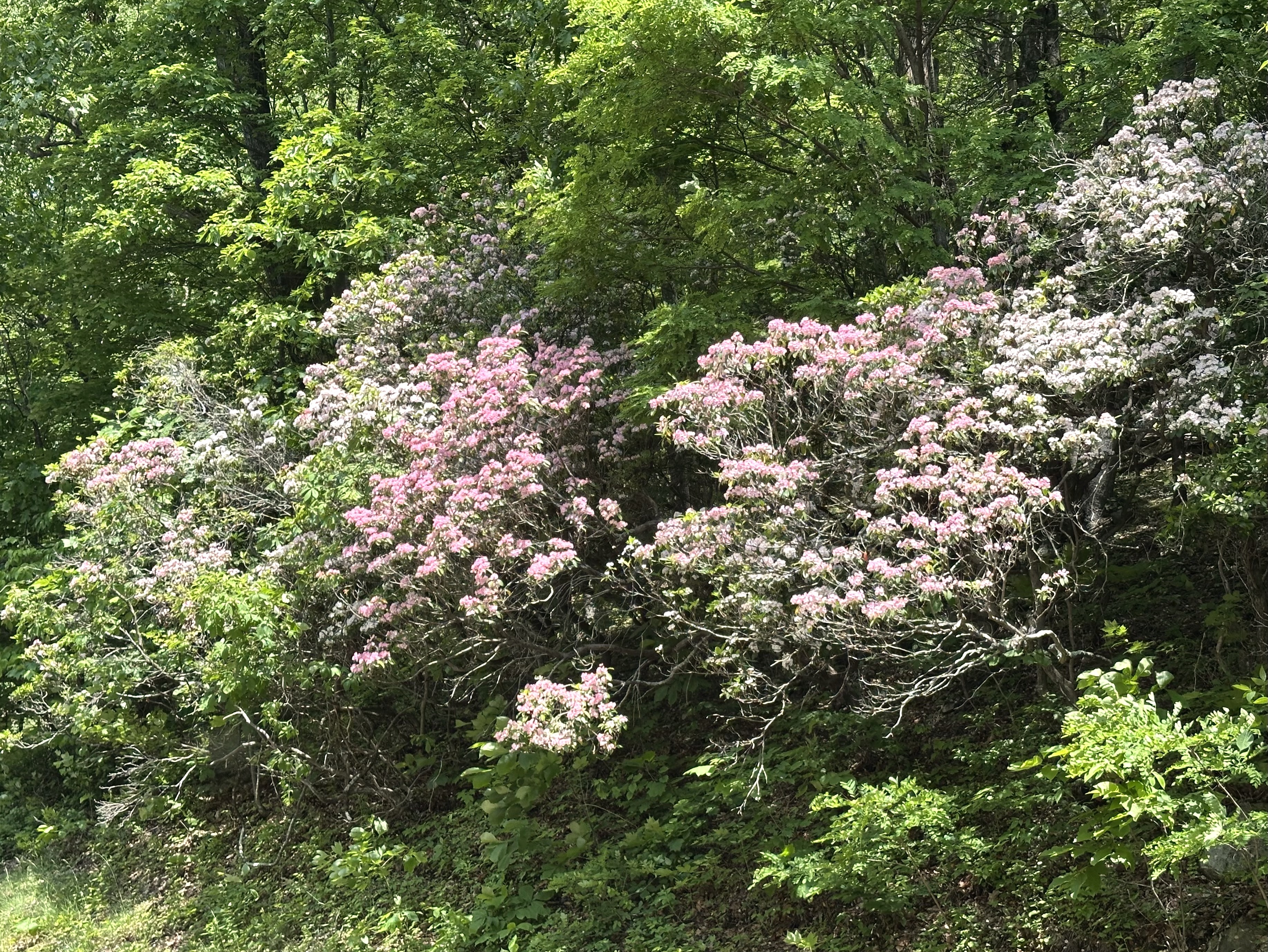
My neighbor had told me that the Mountain Laurel bushes were blooming at various locations in Shenandoah National Park, just a short drive from my home. The laurel blooms from late May into mid-June, depending on elevation.

Of course, I had to see for myself. I fixed a hiker’s lunch, packed my binoculars, camera, and a couple of jackets, and headed out. It’s often 10 degrees or more cooler in the mountains than in the Shenandoah Valley, where I live.

I didn’t need to bother with the jackets. The temperature was 70 degrees when I arrived, and it was humid, with little to no breeze. It was 79 when I left.

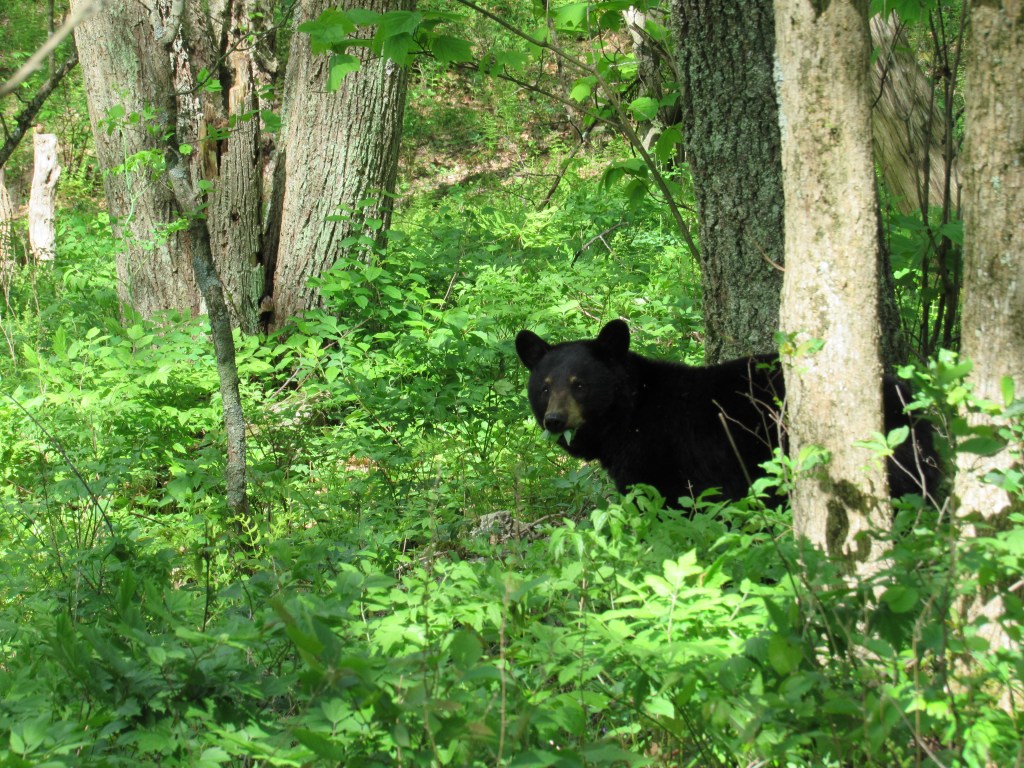
A small black bear cub greeted me not long after I entered the park. Fortunately, it scampered back off the old stone wall away from the road and into the forest.

I soon reached my first destination. Just a short distance off Skyline Drive, I reached the Appalachian Trail, which crossed a fire road. I didn’t see any Mountain Laurel, but songbirds were plentiful. So were the knats and mosquitoes.

A male Eastern Towhee. Photo by Bruce Stambaugh

I strolled along the AT, swatting at the pesky bugs and trying to locate the many warblers I was hearing and recording on my smartphone’s birding app. Singing its unmistakable “drink your tea” melody, a male Eastern Towhee posed for a photo on a limb hanging right over the trail.

I met a lone through-hiker from South Carolina. She hoped to reach Mt. Kadadhin in Maine by mid-September. She told me she had passed many stands of Mountain Laurel on her hike so far, which began at the Appalachian Trail’s traditional starting point, Springer Mountain, in Georgia.

She headed north while I retraced my steps to my vehicle. The birdsong was terrific, but the forest’s full foliage made it challenging for this old guy to spot the warblers as they flitted from one branch to another, munching on their insect smorgasbord.

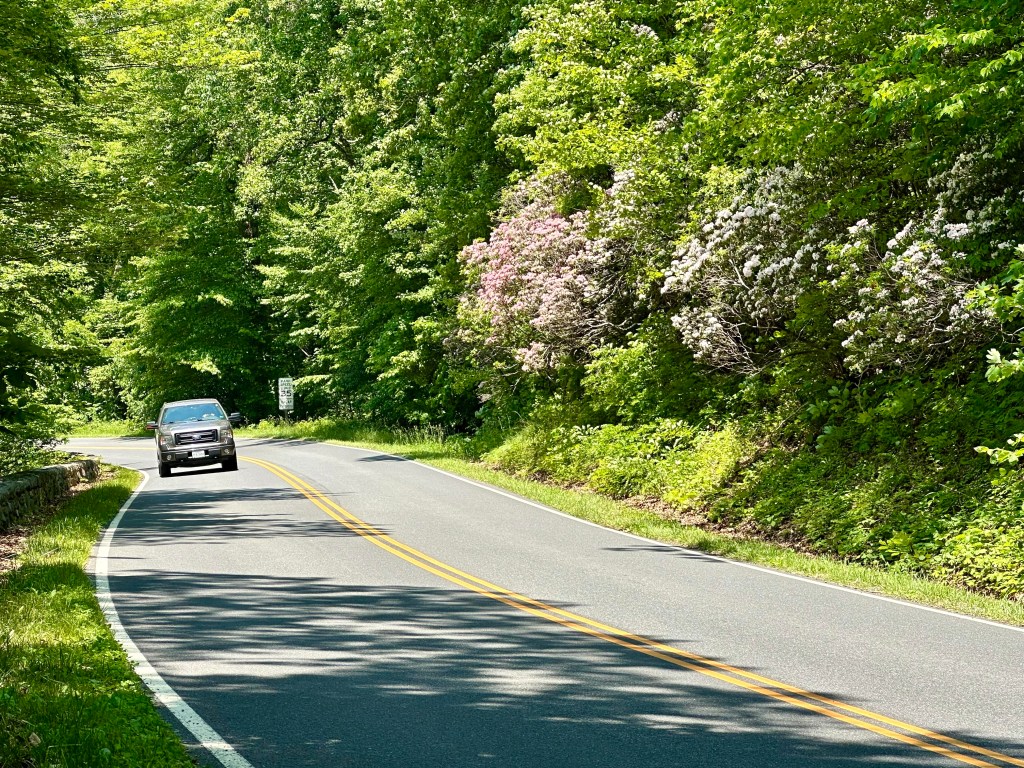
Besides, my main goal was to photograph the blooming Mountain Laurel. I followed my neighbor’s directions to another section of the AT, where the Mountain Laurel was so prolific that it formed a floral tunnel.

The laurels were in all stages of blooming, from tight pink buds to hexagonal flowers in full bloom. In places, the sun filtered through the forest canopy, highlighting the beauty before me.

The laurel blooms offered no fragrance, and I never saw an insect of any kind on any of the hundreds of blossoms. There was a good reason for that. As pretty as the prized flowers are, they are poisonous to any living creature. Every part of the plant is toxic.

So, if someone offers you Mountain Laurel honey, politely decline. Merely enjoy the flowers with their evergreen leaves. If you go, make sure you take your favorite bug spray.

Mountain Laurel grows along the Skyline Drive in several locations. Photo by Bruce Stambaugh

© Bruce Stambaugh 2025

Celebrating National Park Week

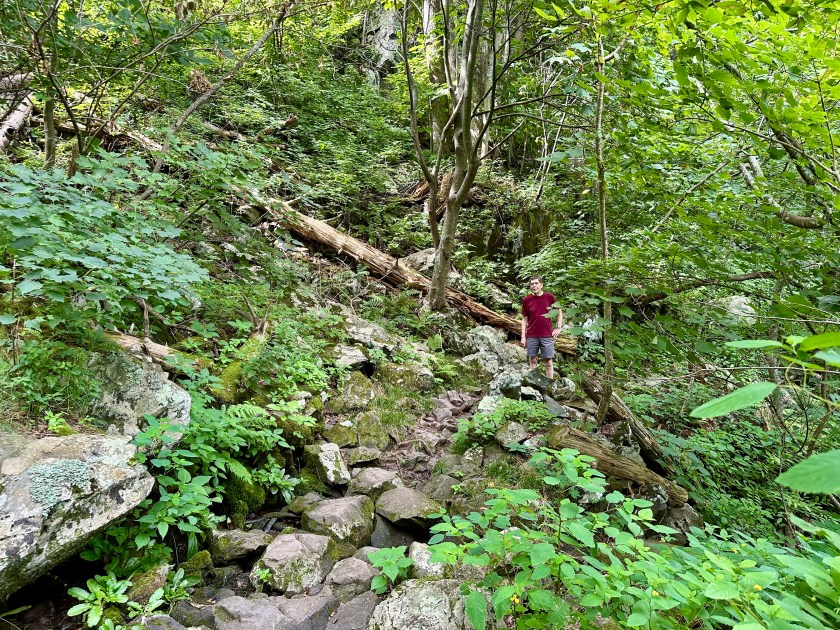
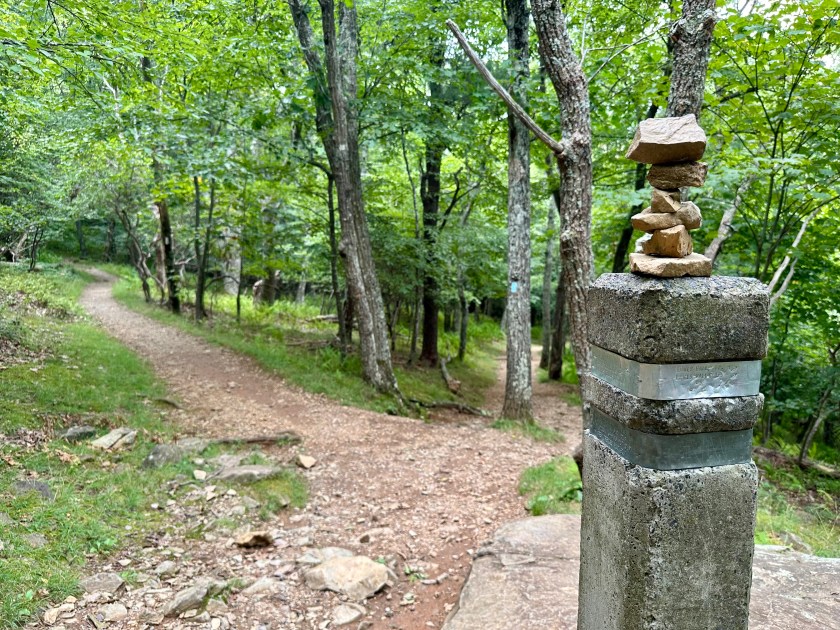
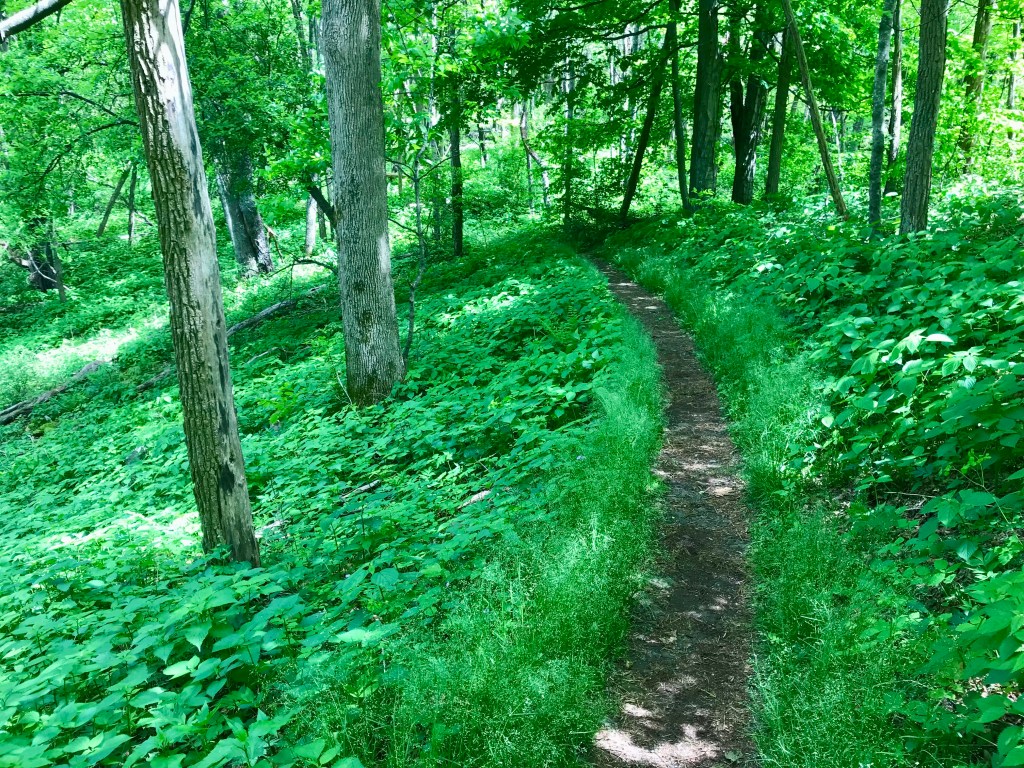
Hiking the Appalachian Trail in Shenandoah National Park. Photo by Bruce Stambaugh

This is National Park Week in the United States. In celebration of our 63 beautiful national parks, this is the first of a series of photos I have taken in Shenandoah National Park.

Shenandoah National Park has a storied and somewhat troublesome history, given how farmers and their hired hands were removed from the park before it was developed starting in late 1935.

Though the land was rugged and steep in many places, over 2,000 folks lived, farmed, and worked on the 198,000 acres that became the first national park in the eastern part of the U.S. Landowners were paid an assessed rate for their property, which the federal government purchased via eminent domain.

Of course, many of the people were tenants who cared for the land, while the property owners lived in the Shenandoah Valley or elsewhere. The tenants received nothing for their inconvenience. Consequently, some of their descendants still have grudges against the government.

Nevertheless, Shenandoah National Park is a popular place to visit since millions of people live within a day’s drive. Plus, the Appalachian Trail (AT) stretches 101 miles through the park, drawing day and overnight hikers. The AT weaves along the crest of the Blue Ridge Mountains, crossing the Skyline Drive several times.

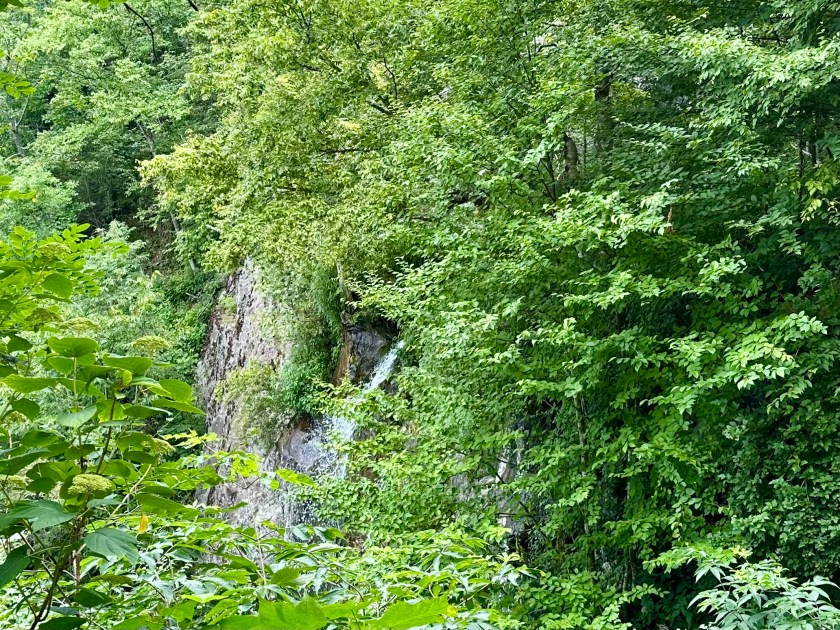
I enjoy day hikes in the park, which often involve hiking sections of the AT to spur trails that lead to waterfalls, rigorous climbs, and scenic overlooks. I especially appreciate the flora and fauna that I encounter.

This photo, taken in late May 2018, represents the lusciousness of the park’s greenery, from ground cover to towering trees. The photo was not altered to enhance the green.

Tomorrow, I’ll post what I saw to the left of where this photo was taken.

© Bruce Stambaugh 2024

Expect the Unexpected

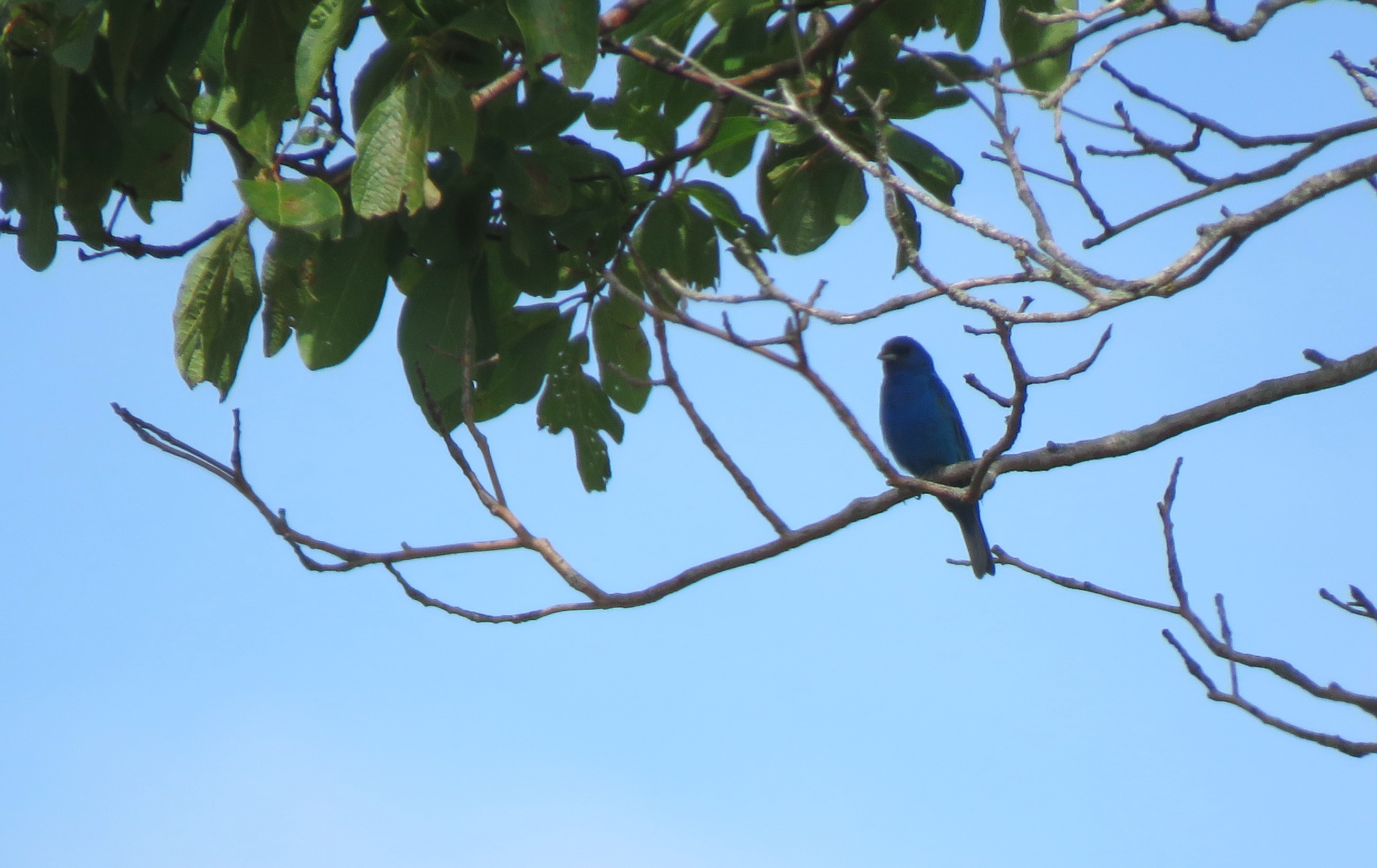
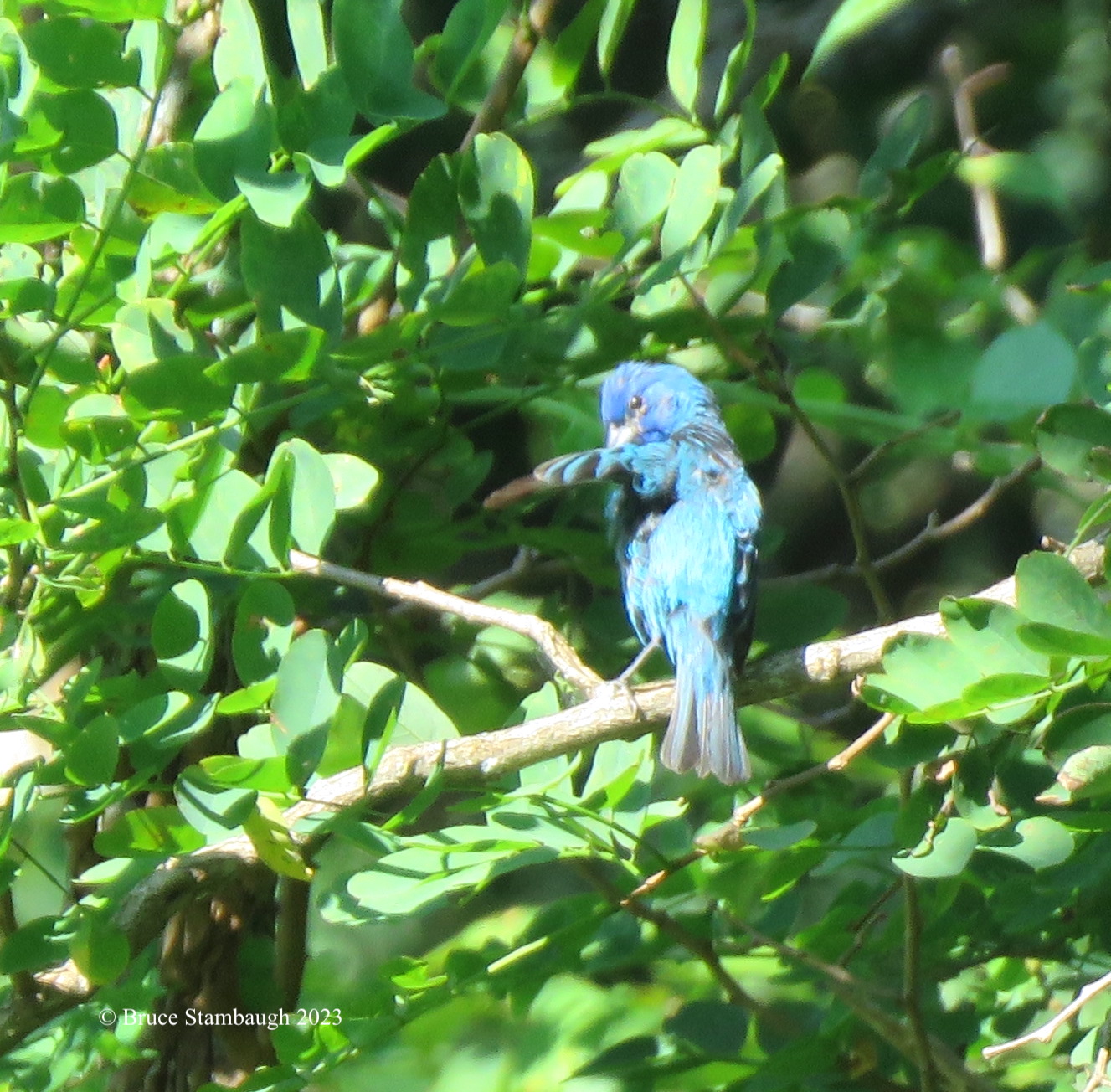
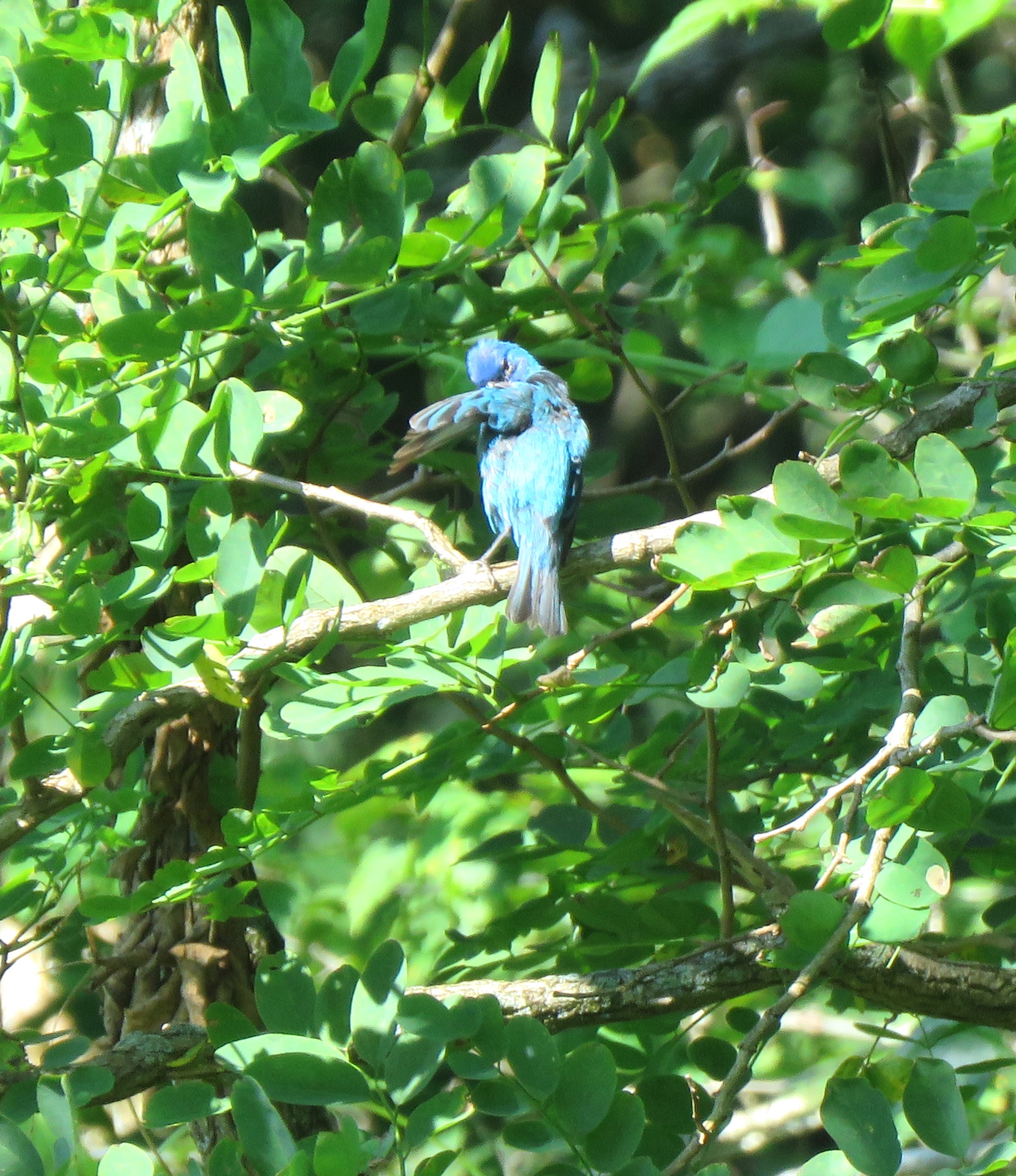
A male Indigo Bunting preening along the Appalachian Trail.

Whenever I go exploring, I can always expect the unexpected. It’s what drives me to get out of doors.

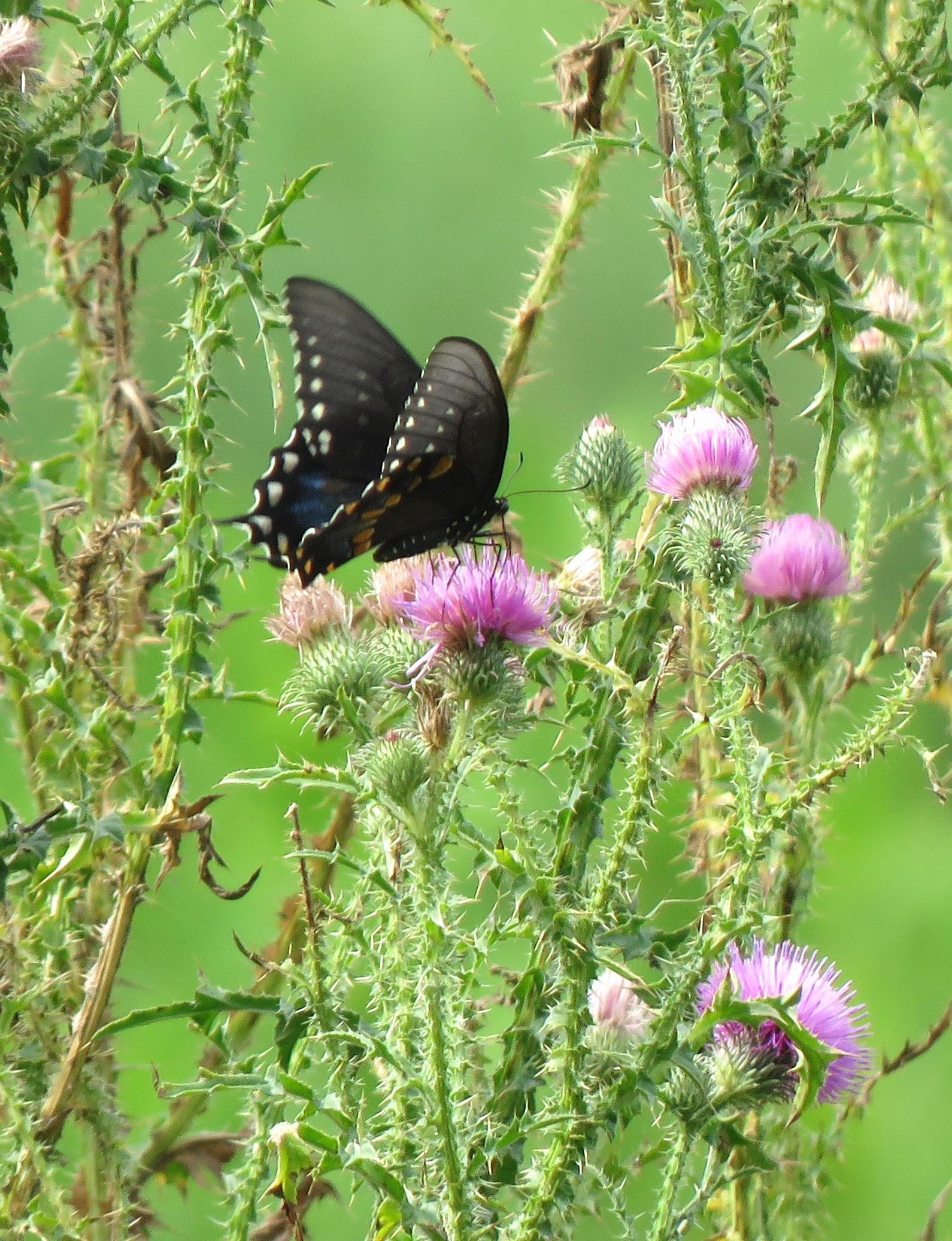
I headed to Shenandoah National Park to mainly photograph butterflies. I had seen photos from the park with Turks Cap Lilies blooming. Those lovely flowers are magnets for butterflies.

I knew a place in the park where I had previously seen butterflies flock to the beautiful lilies. It happened to be where the Appalachian Trail crosses Skyline Drive. The location also had a parking lot designed primarily for day hikers.

I pulled in and was immediately disappointed. No Turks Cap Lilies were to be found. Across the road, other wildflowers were blooming, so I started heading there.

When I go to the park, it should be no surprise that I multitask. My camera is strapped across my left shoulder for easy access, and my binoculars dangle around my neck for wildlife spotting, especially birds.

Just as I reached the crosswalk, a bird flushed out of the undergrowth to a dead tree limb at the forest’s edge. It was a male Indigo Bunting, always a beautiful bird to see.

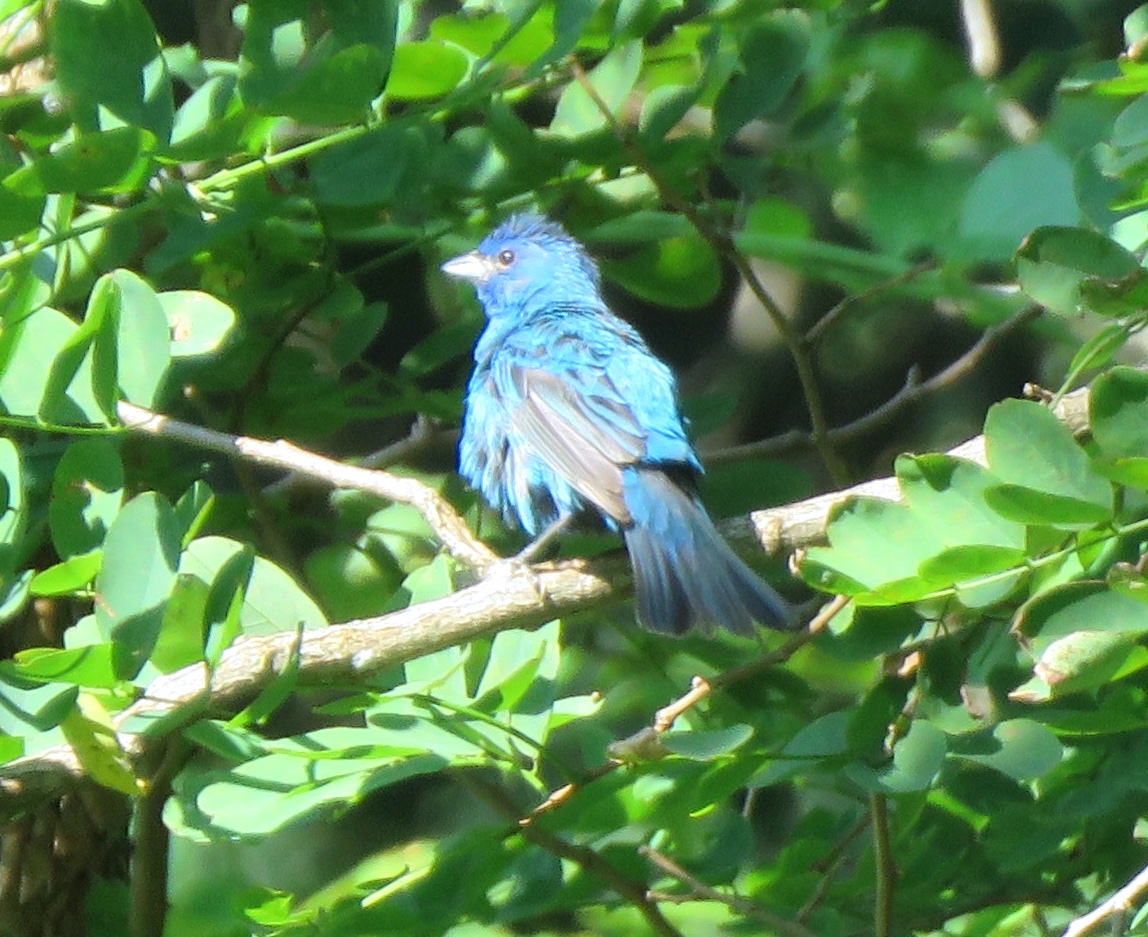
I stopped, swung my camera around, aimed, focused, and clicked away. As I did so, this beautiful bird began to preen in the morning sunshine. The lighting was perfect, and the bird entertained me for several minutes before a passing car caused it to dive for cover.

Butterflies were few and far between as I checked in at different locations in the park. Nevertheless, watching this enchanting bird for those precious minutes made the trip worthwhile.

© Bruce Stambaugh 2023

Bay Photos by Donna

Wildlife Photos From The Chesapeake Bay Region

ROAD TO NARA

Culture and Communities at the Heart Of India

K Hertzler Art

Artist and nature journalist in the Shenandoah Valley of Virginia.

Maria Vincent Robinson

Photographer Of Life and moments

Gabriele Romano

Less Noise. More Meaning

Jennifer Murch

Art is the only way to run away without leaving home. -Twyla Tharp

Roadkill Crossing

Writing generated from the rural life

ANJOLI ROY

writer. teacher. podcast cohost.

Casa Alterna

El amor cruza fronteras / Love crosses borders