
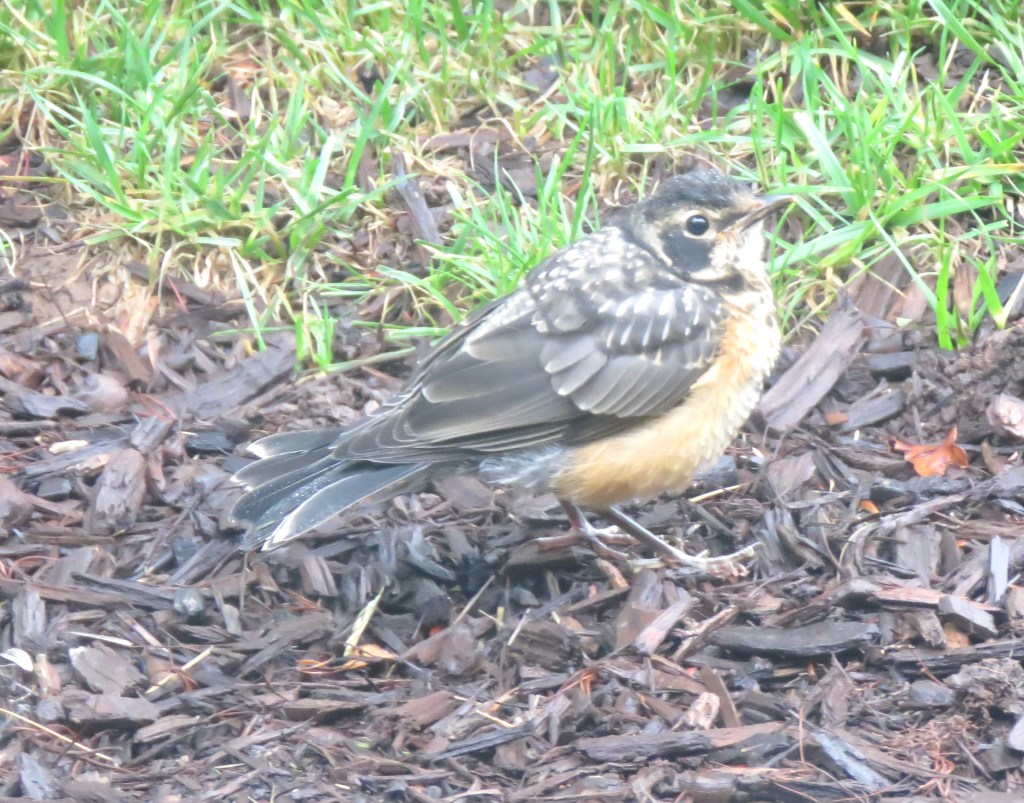
I knew American Robins were nesting in shrubs and trees around our suburban home in Virginia’s Shenandoah Valley.
Early on, I saw them gathering dried grass for nesting, and dipping it into one of the birdbaths I have set out. This softens the material, making it more pliable. Sometimes, during the same trip, they would sweep the wet grass into the soil around the birdbath and fly off to build their nests.
I never followed them for fear of discouraging them from nesting in the giant holly bush or concolor pine tree. Neither did I want the neighborhood cats, who too often roam my yard, to follow my scent to the trees. I learned the hard way.
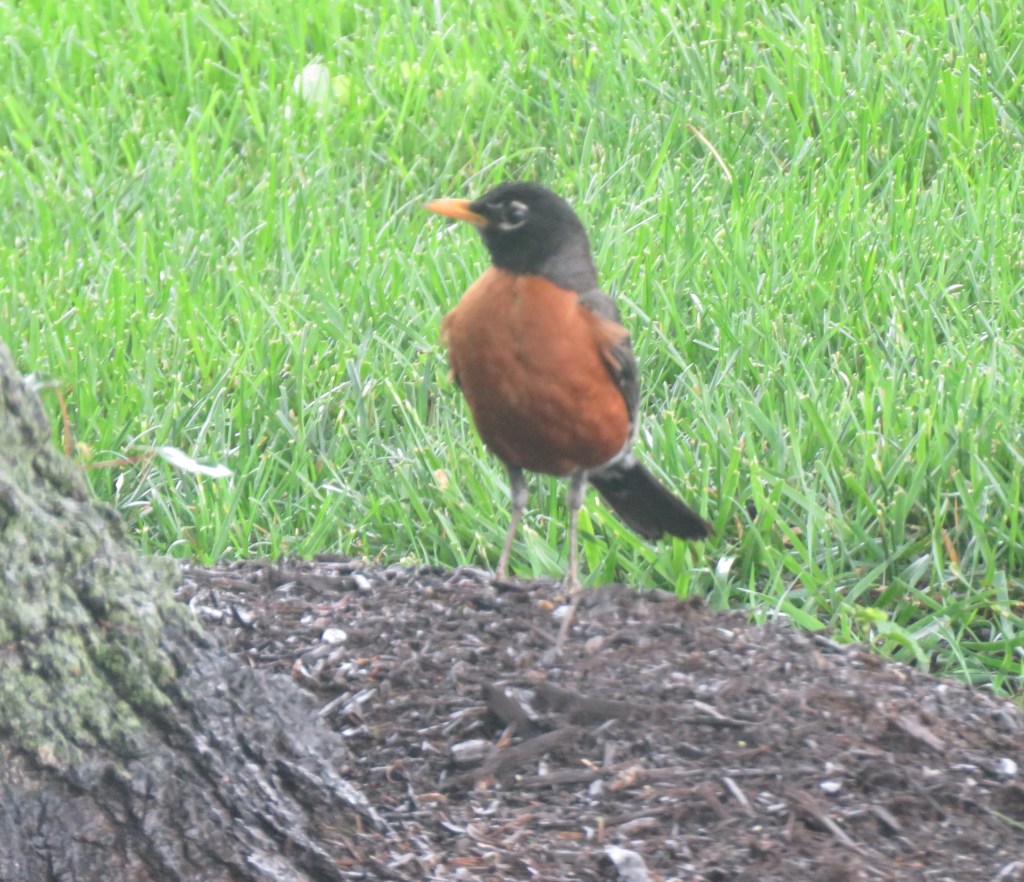
When we lived in Ohio’s Amish country, American Robins, Northern Cardinals, and other songbirds would nest in the many shrubs and trees I had planted on our acre and a half. I would often check the nests I could reach to see the progress from eggs to fledglings.
I stopped doing that when I was on my third or fourth round of curiosity. I discovered the eggs or hatchlings were gone. Everything was fine before, so I wondered if my frequent visits allowed feral cats, raccoons, or other animals to follow my tracks to their lunch.
Consequently, I am more than happy to know that the birds are using the greenery around our property without prying into the state of the incubation. I think that strategy is working.
While doing yardwork, I can sneak a peek at the progress without getting too close. In a matter of days, babyblue eggs transform into fuzzballs with begging beaks, and then into chubby babies, and finally into fledglings.
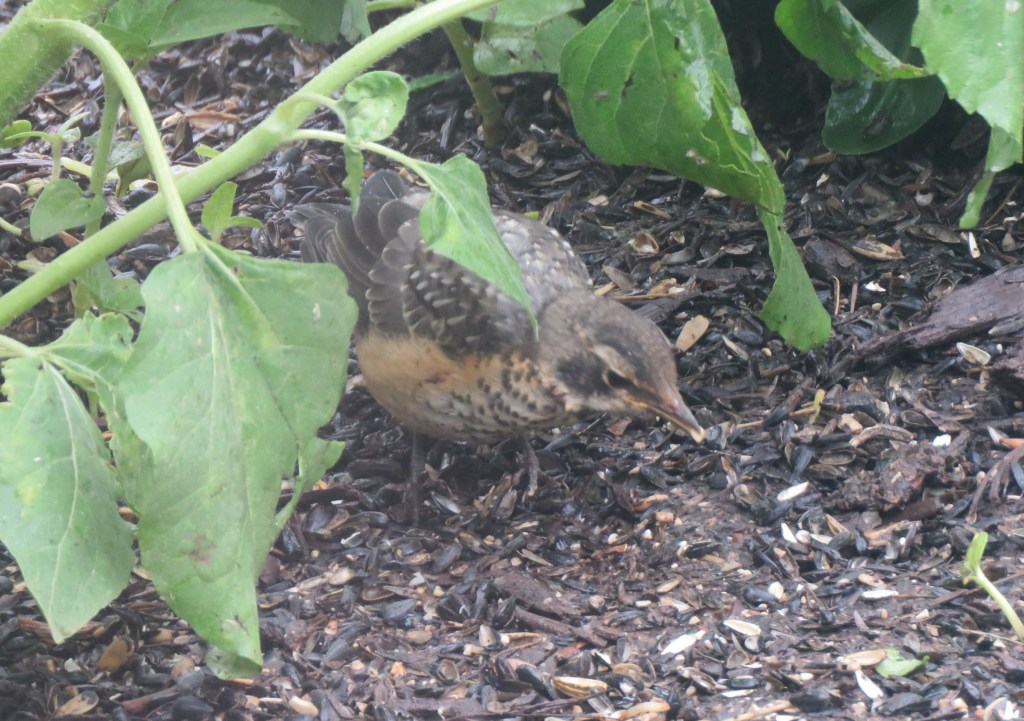
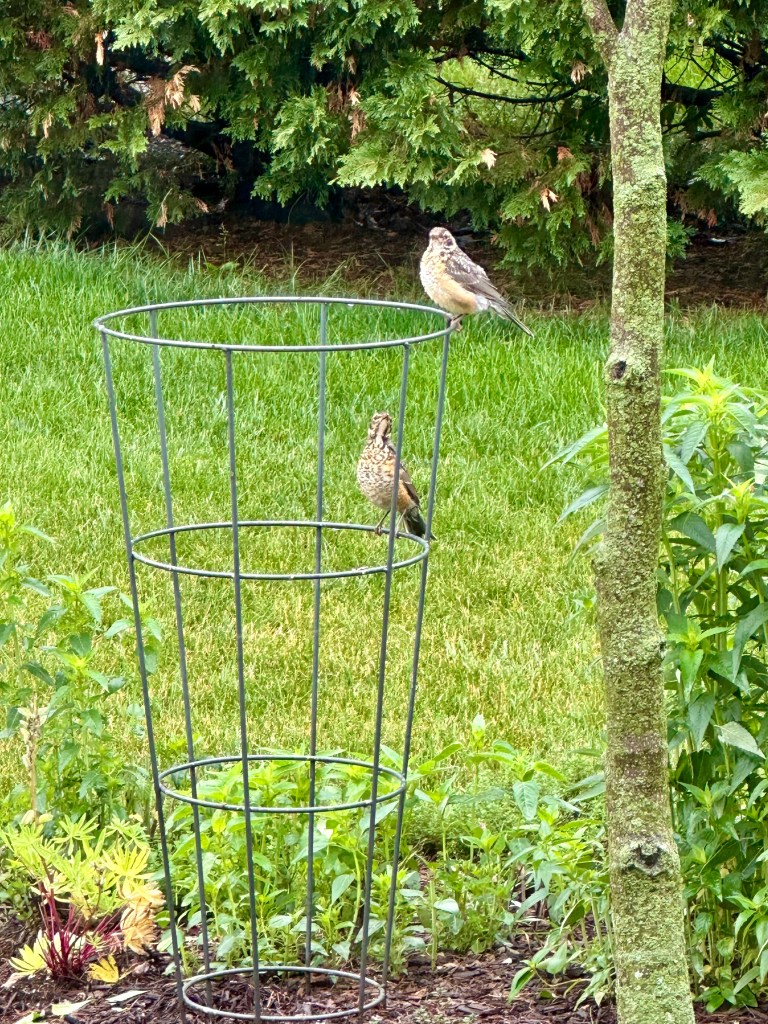
In the case of the robins, that’s when the show begins. Mom brings her surviving babies to the birdbath with the mini-waterfall or to feed beneath the seed-filled feeders for the seeds that sloppy eaters like the Common Grackles drop.
Mother robin shows the pair of juveniles how to peck and scratch for food. She sometimes jabs and overturns the mulch around the flowers and shrubs to uncover insects that provide her youngsters with needed protein.
Though they are nearly the size of their mother, the little buggers beg for food. So, mom obliges until she tires, and flies off to a dense row of evergreens, leaving the young birds to fend for themselves.
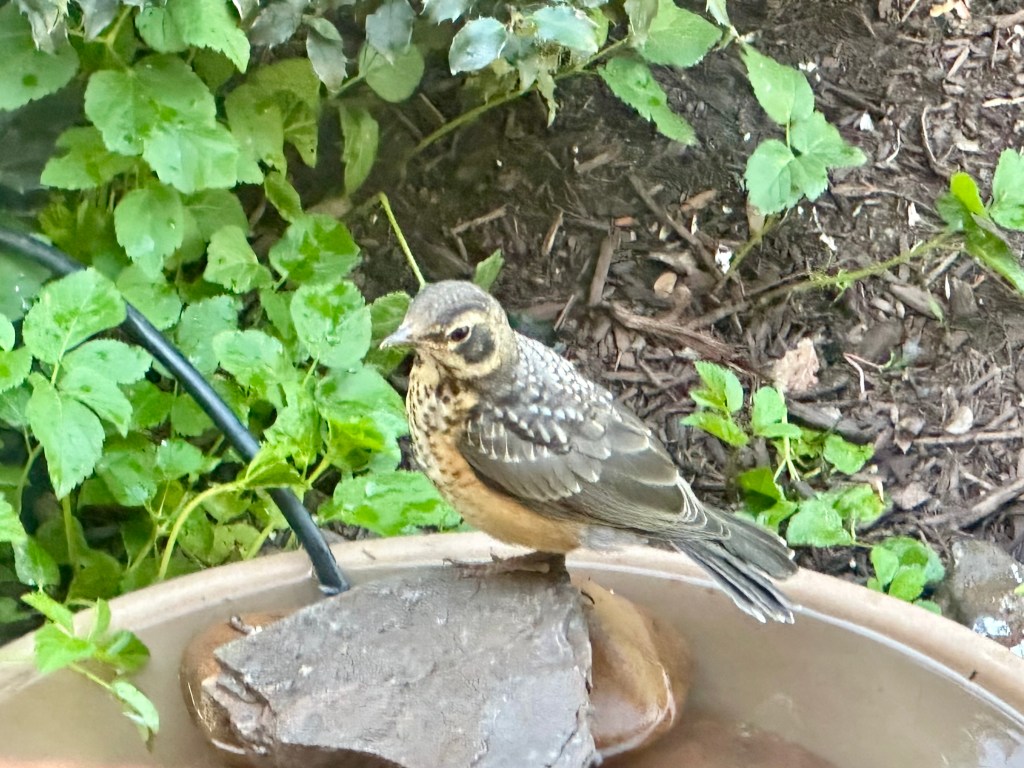
They soon learn. I spot them standing in the birdbath, still as a statue, as if they are listening to the musical sound of water upon water. When a grackle suddenly appears, the young robins scamper for cover beneath the thriving peonies until it’s safe to return.
Though they call and call, neither mother nor father answers. The baby robins get the hint and peck away under the feeders or in the flowerbeds, just as their mother had modeled.
Once they complete their growth to adulthood, the spots on their chests will disappear, and they will begin the cycle all over again.
According to Cornell University’s Ornithology Lab, an American Robin can produce three successful broods in one year. On average, though, only 40 percent of nests successfully produce young. Only 25 percent of those fledged young survive to November.
From that point on, about half of the robins alive in any year will make it to the next. Even though a lucky robin can live to be 14 years old, the entire population turns over on average every six years.
I hope the two young robins in my backyard beat the odds and have long, productive lives.
© Bruce Stambaugh 2026


I hope they do live long and productive life!
LikeLiked by 1 person