Blue Moon Rising

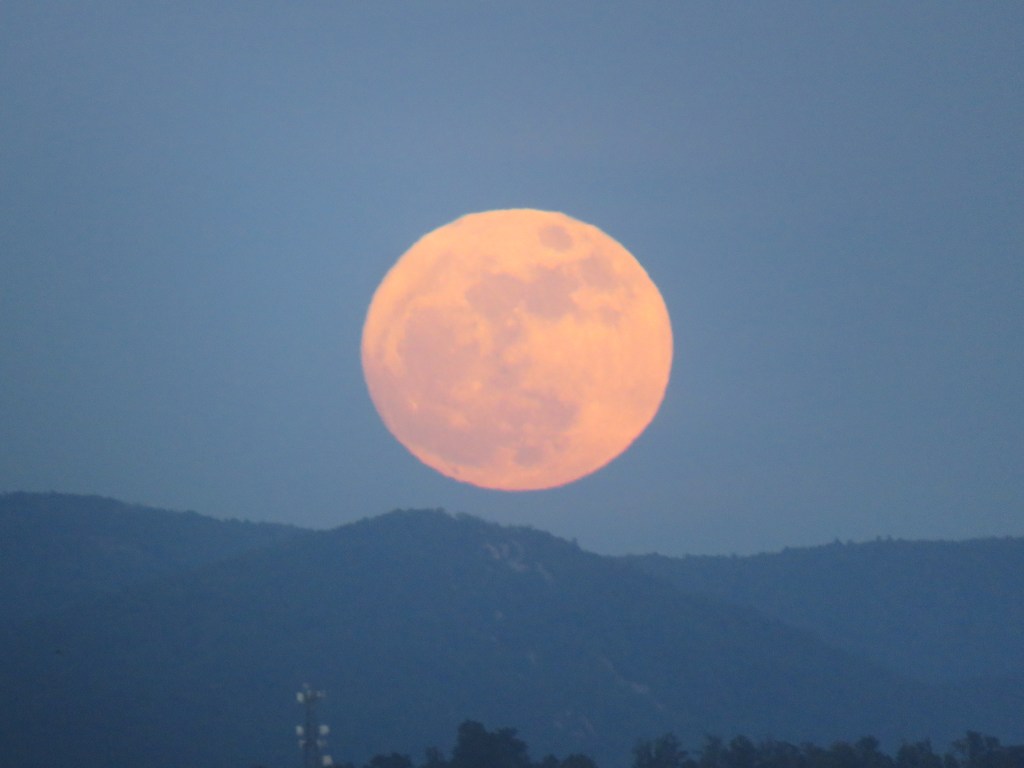
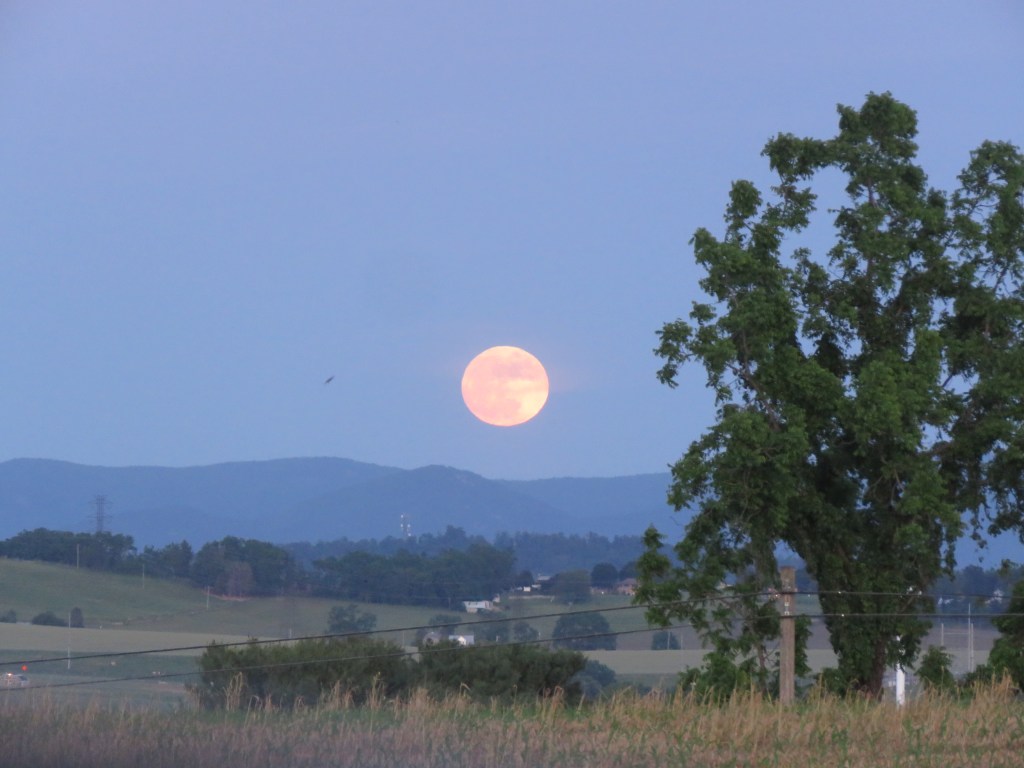
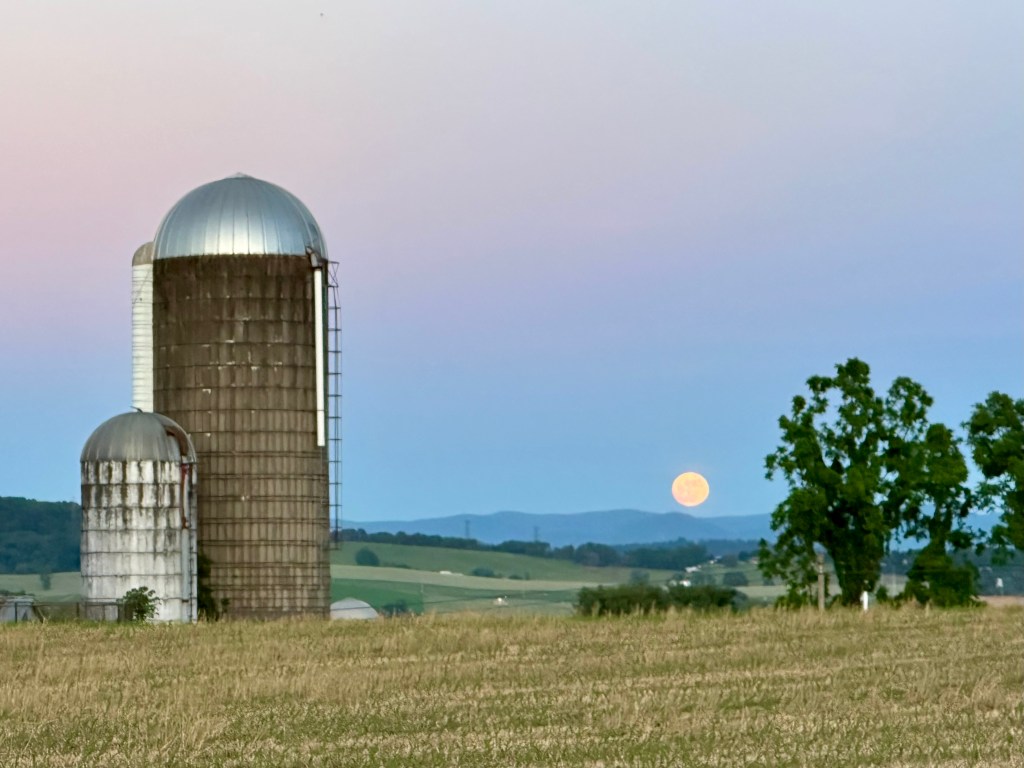
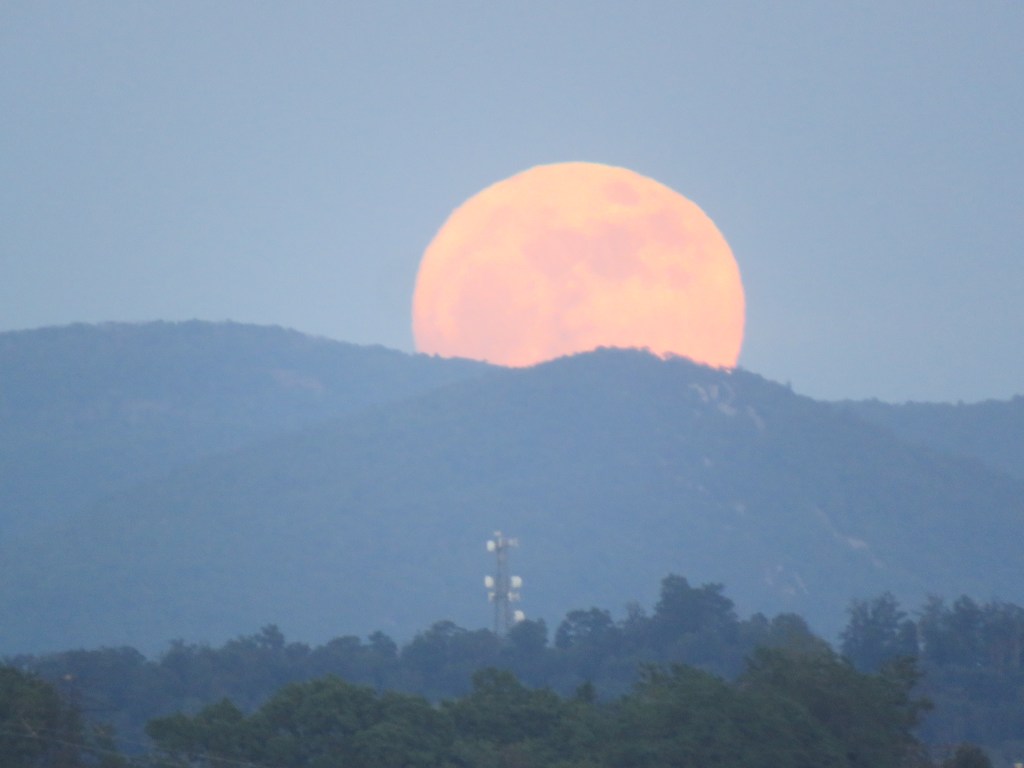
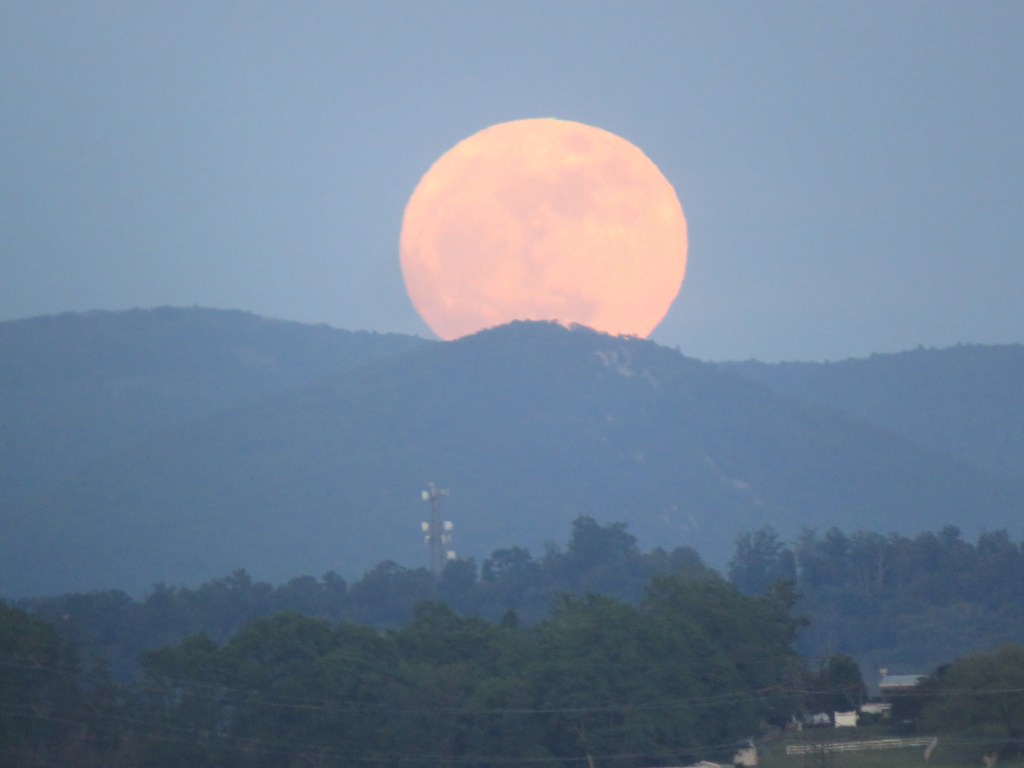
The Blue Moon rose above the Blue Ridge Mountains on May 30, 2026. Photo by Bruce Stambaugh

The only Blue Moon of 2026 was set to rise near Harrisonburg, Virginia, at about 8:30 p.m. Saturday, May 30. Officially, it wouldn’t be 100 percent full until 3:45 a.m. Sunday morning.

So, I chose to try to shoot the moon, so to speak, Saturday evening. I wasn’t getting up at 3 in the morning to take a photo of the full moon. I have a hard enough time sleeping as it is. You’ll understand when you hit 78.

Old as I am, I still thrill at the sight of a full moon peeking over the horizon, whether it’s on the land or at sea. Perhaps the only difference is that a moon rising over the ocean casts a spectacular reflection if the water is calm.
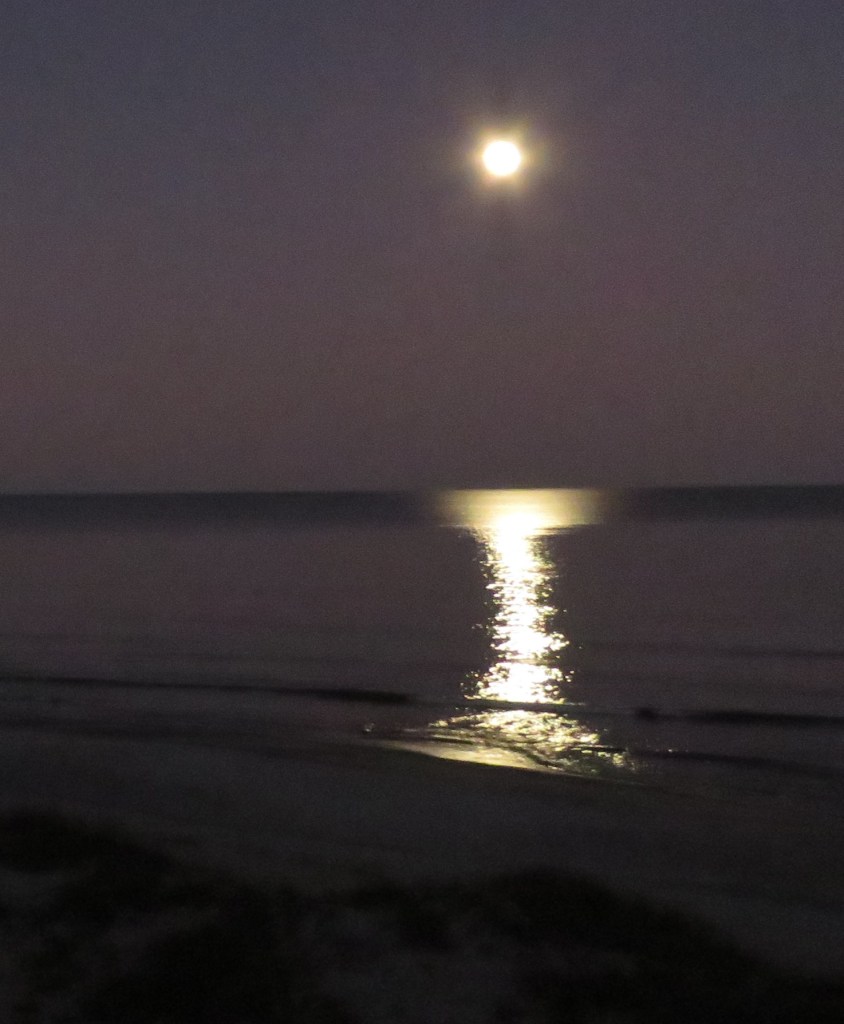
A January full moon rising over the Atlantic Ocean left an hourglass reflection. Photo by Bruce Stambaugh

Since we moved to Virginia’s picturesque Shenandoah Valley from Ohio nine years ago, I’ve learned that the moon evokes just as much magic as it sneaks over the Blue Ridge Mountains, which, in our area, is also Shenandoah National Park.

I checked a website that shows the time and direction of moonrise for any given area. It showed the moon rising in the southeast sky, which made sense as I thought about it. The sun and moon work in tandem. So, with the sun now setting in the northwest, the full moon would rise directly opposite at the same time.

That meant I needed to find a spot with a clear view to the southeast. With all the hills in the valley, that wouldn’t be too hard. However, I also had to account for power lines and cell phone towers. In Virginia, that’s easier said than done.

Unfortunately, I underestimated how far southeast the moon would rise. So, when I spotted its first glow over the park, I needed to drive to a better spot. Even then, I wasn’t clear of the infernal towers and strings of lines.

Nevertheless, I still managed to capture a few frames of the smallest full moon of the year rising above the bucolic valley. Not only was this full moon the only blue moon of the year, but it was also the farthest from the sun, which is appropriately called a micromoon.

As the moon edges over the horizon, whether at sea or on land, it appears bigger than when it is high in the night sky. That is merely an illusion; ironically, science has yet to explain why it occurs.

Dusk is not exactly the best time to photograph objects, especially moving ones. Still, I snap away and enjoy sharing the results with others.
© Bruce Stambaugh 2026
A Study of Juvenile American Robins

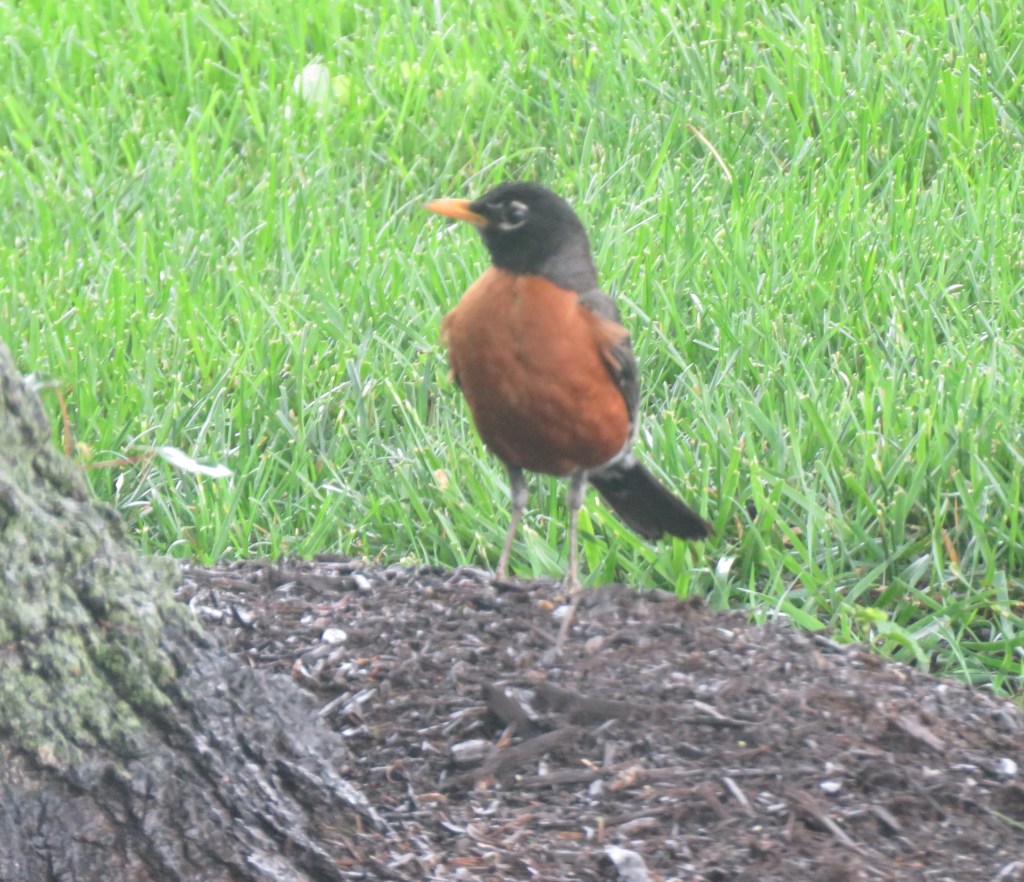
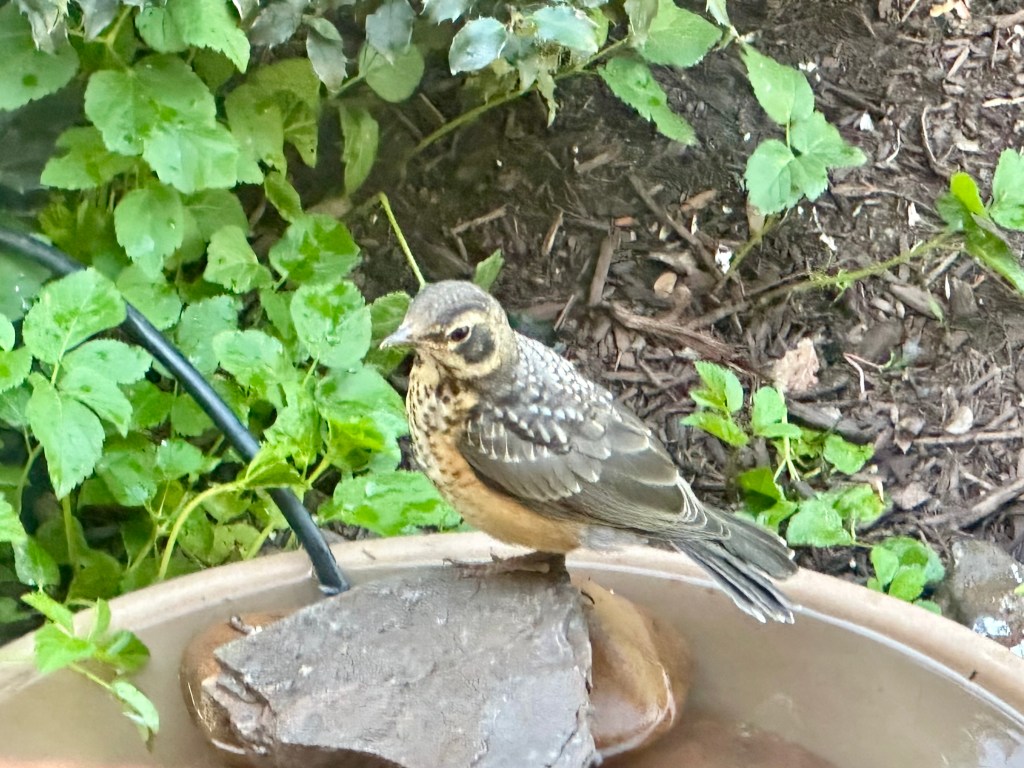
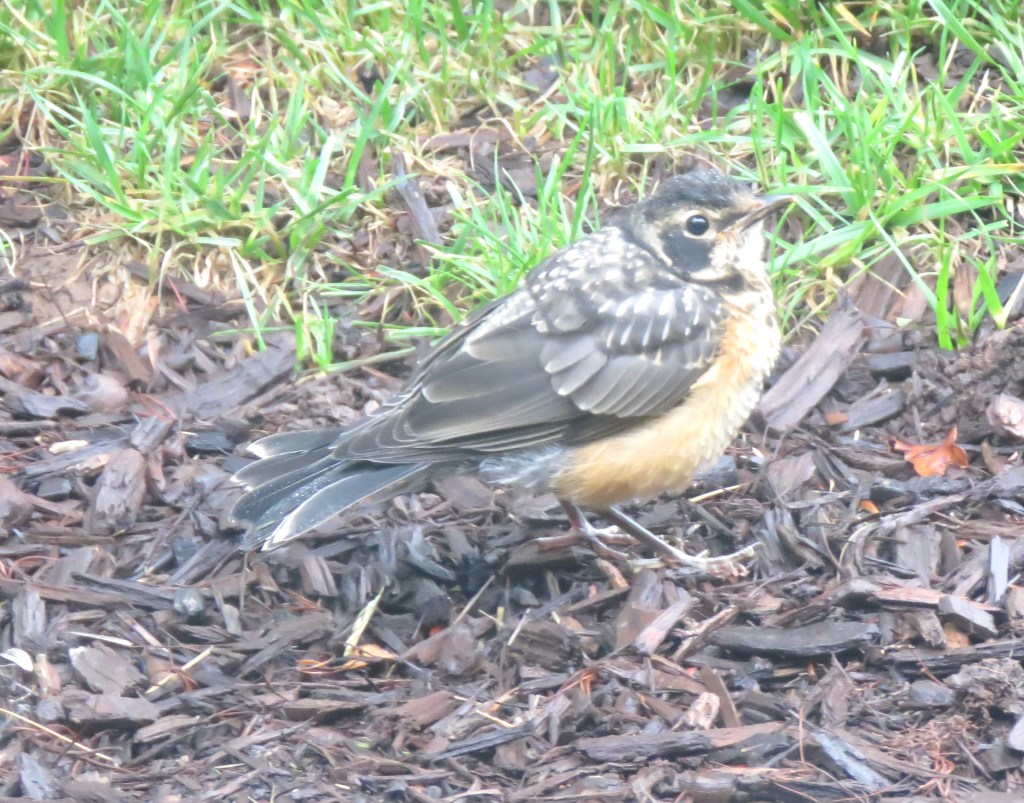
A recently fledged American Robin. Photo Bruce Stambaugh

I knew American Robins were nesting in shrubs and trees around our suburban home in Virginia’s Shenandoah Valley.

Early on, I saw them gathering dried grass for nesting, and dipping it into one of the birdbaths I have set out. This softens the material, making it more pliable. Sometimes, during the same trip, they would sweep the wet grass into the soil around the birdbath and fly off to build their nests.

I never followed them for fear of discouraging them from nesting in the giant holly bush or concolor pine tree. Neither did I want the neighborhood cats, who too often roam my yard, to follow my scent to the trees. I learned the hard way.

An American Robin. Photo by Bruce Stambaugh

When we lived in Ohio’s Amish country, American Robins, Northern Cardinals, and other songbirds would nest in the many shrubs and trees I had planted on our acre and a half. I would often check the nests I could reach to see the progress from eggs to fledglings.

I stopped doing that when I was on my third or fourth round of curiosity. I discovered the eggs or hatchlings were gone. Everything was fine before, so I wondered if my frequent visits allowed feral cats, raccoons, or other animals to follow my tracks to their lunch.

Consequently, I am more than happy to know that the birds are using the greenery around our property without prying into the state of the incubation. I think that strategy is working.

While doing yardwork, I can sneak a peek at the progress without getting too close. In a matter of days, babyblue eggs transform into fuzzballs with begging beaks, and then into chubby babies, and finally into fledglings.

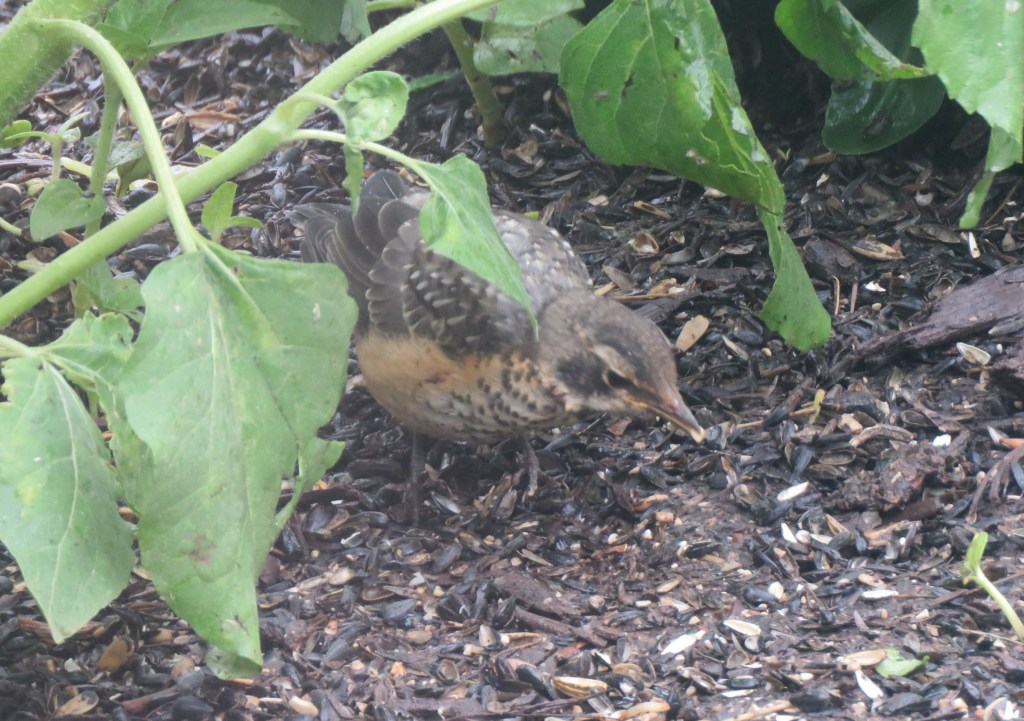
One of the fledglings foraged for food beneath a birdfeeder. Photo by Bruce Stambaugh

In the case of the robins, that’s when the show begins. Mom brings her surviving babies to the birdbath with the mini-waterfall or to feed beneath the seed-filled feeders for the seeds that sloppy eaters like the Common Grackles drop.

Mother robin shows the pair of juveniles how to peck and scratch for food. She sometimes jabs and overturns the mulch around the flowers and shrubs to uncover insects that provide her youngsters with needed protein.

Though they are nearly the size of their mother, the little buggers beg for food. So, mom obliges until she tires, and flies off to a dense row of evergreens, leaving the young birds to fend for themselves.

A young American Robin eyes the birdbath. Photo by Bruce Stambaugh

They soon learn. I spot them standing in the birdbath, still as a statue, as if they are listening to the musical sound of water upon water. When a grackle suddenly appears, the young robins scamper for cover beneath the thriving peonies until it’s safe to return.

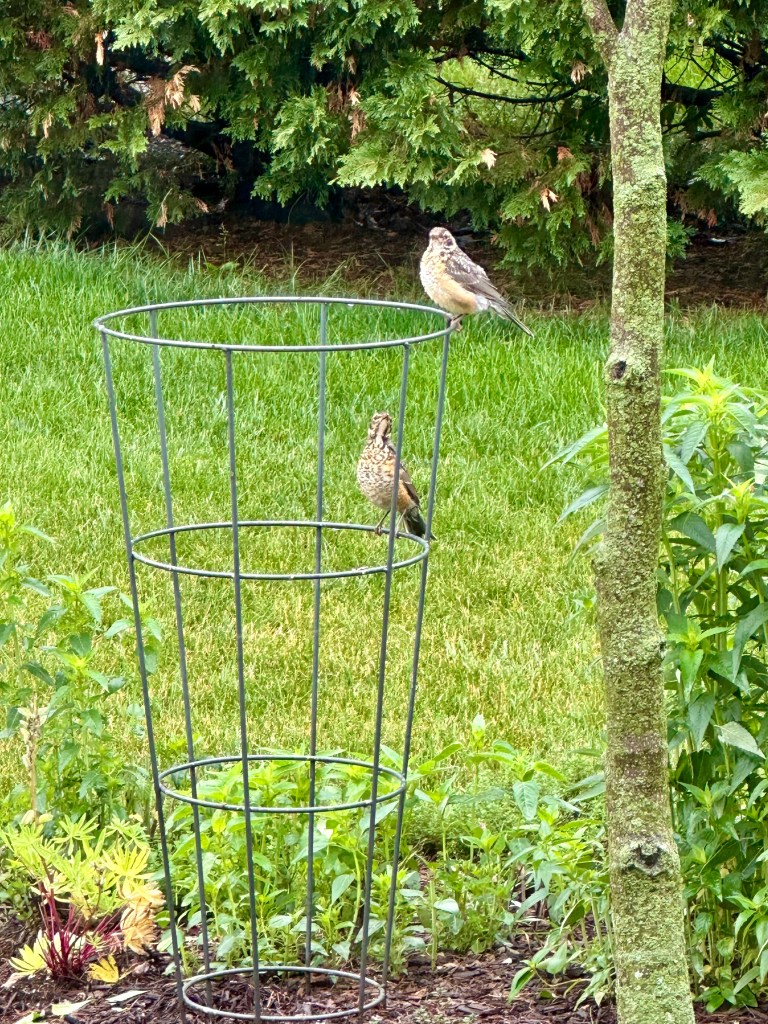
Though they call and call, neither mother nor father answers. The baby robins get the hint and peck away under the feeders or in the flowerbeds, just as their mother had modeled.

Once they complete their growth to adulthood, the spots on their chests will disappear, and they will begin the cycle all over again.

A pair of juvenile American Robins. Photo by Bruce Stambaugh

According to Cornell University’s Ornithology Lab, an American Robin can produce three successful broods in one year. On average, though, only 40 percent of nests successfully produce young. Only 25 percent of those fledged young survive to November.

From that point on, about half of the robins alive in any year will make it to the next. Even though a lucky robin can live to be 14 years old, the entire population turns over on average every six years.

I hope the two young robins in my backyard beat the odds and have long, productive lives.

© Bruce Stambaugh 2026

Hiding in Plain Sight

I always take my camera along on my morning walks in our neighborhood. This time of year, I never know what beauty I will encounter.

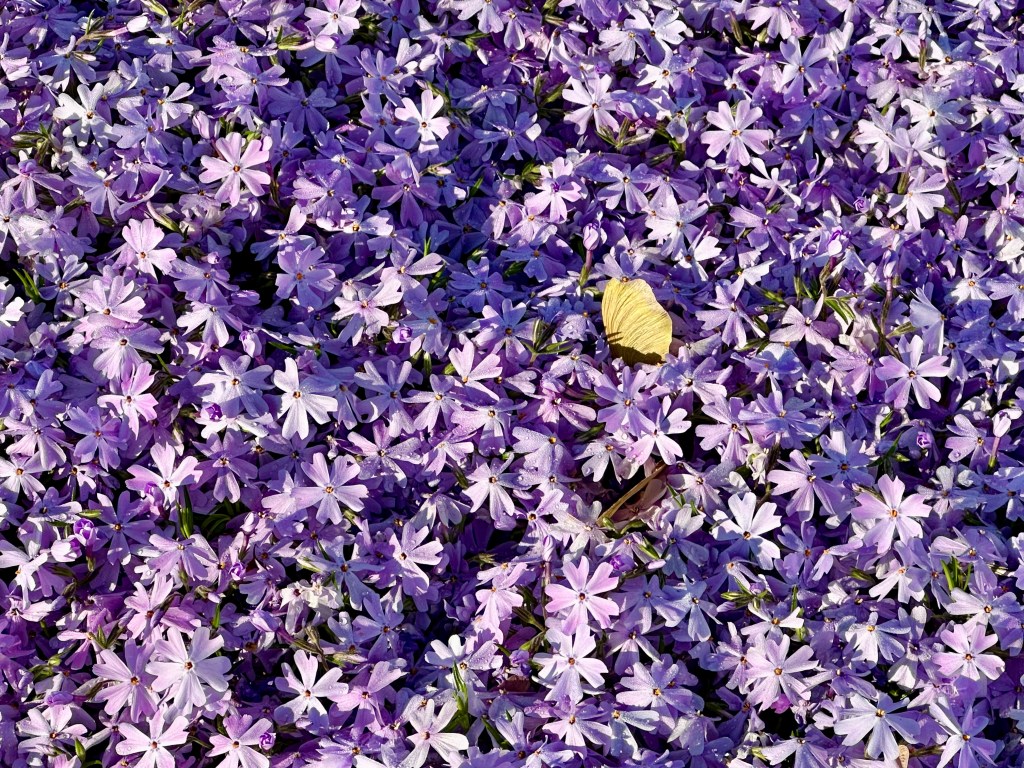
The morning sunshine brings out the truest colors of the various flowers grown in our housing development. These curbside Phlox caught my attention with the lavender glow.

Then I spotted the yellow spot, which I thought was a Sulphur butterfly hiding in plain sight. Upon closer inspection, the out-of-place color was the winded end of a fallen maple seed.

They are referred to locally as helicopter seeds. Even the slightest breeze propels the twirling seeds across the neighborhood landscape. It’s nature’s way of propagating maple trees and providing fresh, nourishing food for squirrels and other critters.

Hiding in plain sight. Photo by Bruce Stambaugh

This particular seed happened to land in a bed of lovely spring flowers that nicely contrasted with the seed’s mode of mobility in the sunlit space.

© Bruce Stambaugh 2026

A Harrowing Experience

I was sorting through some photos, and found this image I took when we lived in Ohio’s Amish country. Our house was built on an Amish farm and set tight against the northwest property lines. So, we were always close to all the farming action.

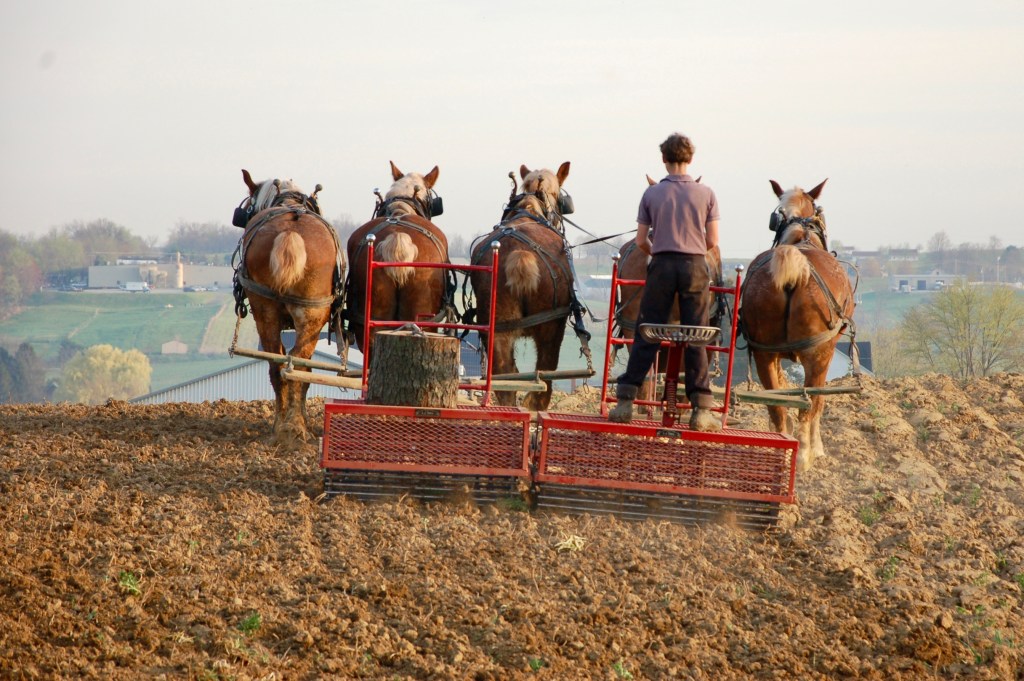
This enabled me to take photos of the family farming in every season. Here, one of the farmer’s sons guided the team of workhorses pulling a new-style harrow to break up the plowed rows of soil, turning it to prepare for planting.

Out of respect to the family, I tried not to take photos of their faces. They knew I was shooting photos because I gave them copies of photos from around their farm.

An Amish teen leads a team of horses harrowing a plowed field. Photo by Bruce Stambaugh

© Bruce Stambaugh 2026

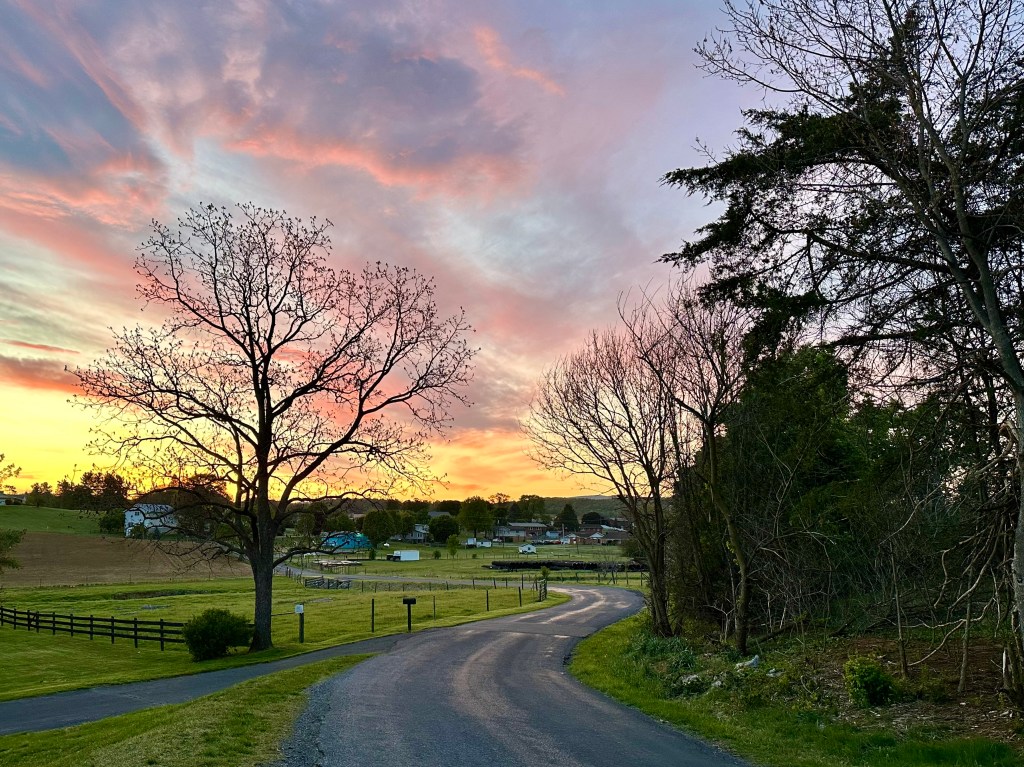
Country Road Sunset

Sunsets are a favorite subject for my photo shoots. I am mesmerized by the ever-changing colors, the illumination of pinks and blues on clouds from the north, south, east, and west. As the colors transform, so do the shapes and the clouds’ hues.

Living in Virginia’s bucolic Shenandoah Valley gives me plenty of opportunities for sunset shots in all four seasons. I try to capture as many sunsets as I can.

I stopped as soon as I saw this one at the bend of a country road, not a mile from my home. The silhouetted, bare walnut tree stood on the left, its arms reaching out in pure awe and appreciation of the unfolding beauty bathing the northwest sky.

Photo by Bruce Stambaugh.

© Bruce Stambaugh 2026

Bay Photos by Donna

Wildlife Photos From The Chesapeake Bay Region

ROAD TO NARA

Culture and Communities at the Heart Of India

K Hertzler Art

Artist and nature journalist in the Shenandoah Valley of Virginia.

Maria Vincent Robinson

Photographer Of Life and moments

Gabriele Romano

Less Noise. More Meaning

Jennifer Murch

Art is the only way to run away without leaving home. -Twyla Tharp

Roadkill Crossing

Writing generated from the rural life

ANJOLI ROY

writer. teacher. podcast cohost.

Casa Alterna

El amor cruza fronteras / Love crosses borders