Railfanning With Friends

Norfolk & Western’s J-Class 611 steam engine. Photo by Bruce Stambaugh

The timing couldn’t have been better. My wife’s cousin and her husband came for a four-day visit from their home in North Carolina.

We consider them dear friends. We all enjoy watching trains, especially old ones. That’s what rainfanning is.

As it happened, the Shenandoah Valley Scenic Railroad planned a series of weekend excursions traveling east from Staunton, Virginia, only 40 minutes south of our home. Rick and Brenda would be here during the first weekend.

Despite the wilting heat and humidity, we ventured out to see Norfolk and Western’s J-Class historic 611 steam engine pull classic rail cars across Virginia’s Shenandoah Valley. We decided to catch the 10 a.m. run.

We weren’t planning on riding the train. We wanted to watch it steam by with its smokestack puffing and iconic whistle blowing. Of course, we would record the day with video and photos.

Built in May 1950 in Roanoke, Virginia, the N & W J-484 Class engine was the last streamlined steam locomotive before the diesel-powered engines gained favor. The Queen of Steam is the only surviving engine of its kind and is housed in the Virginia Transportation Museum in Roanoke, Virginia.

The Queen of Steam. Photo by Bruce Stambaugh

The first location we chose did not afford the view we had hoped for, so we went to plan B. We drove a few miles east along the Jefferson Highway to Jericho Road. Only a quarter of a mile south, the tracks crossed the narrow rural road and gave us a treelined look west to where the train would curve into view.

We heard the train before we saw it. The engine’s chug, chug, chug, accompanied by the deep, resonant sound of its horn, alerted us to scramble into position for good looks and photo opportunities.

I began filming even before the storied 611 came into view. The train’s low-pitched whistle sounded as it crossed another road to the west. Soon it came steaming into view.

Full foliage stands of trees on both sides of the tracks created a tunnel effect as the train rounded the curve. Soon, the whistle sounded again, this time for our crossing. The lights flashed, the warning bells clanged, and the crossing gates came down

At the slight incline before the Jericho crossing, the fireman stoked coal into the firebox and a pillar of inky smoke rose from 611’s stubby stack. It was the shot I had hoped for, although I should have aimed the camera a bit higher.

The engine roared by, and fly ash drifted upon us. That’s what happens when you stand too close to the tracks. Even at 78, I showed my immaturity. Still, I got the shots and experience I wanted for all of us.

We tried for a shot of the train as it passed over the Jefferson Highway a few miles east, but we were too late. The combination of red traffic lights and the train picking up steam outpaced our hopes. Sans photographs, at least we got to see the train glide across the bridge.

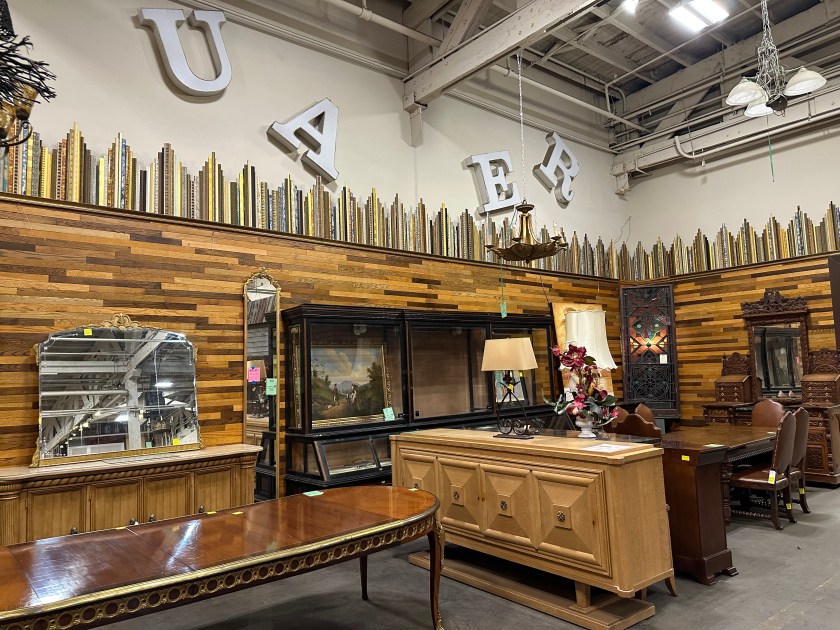
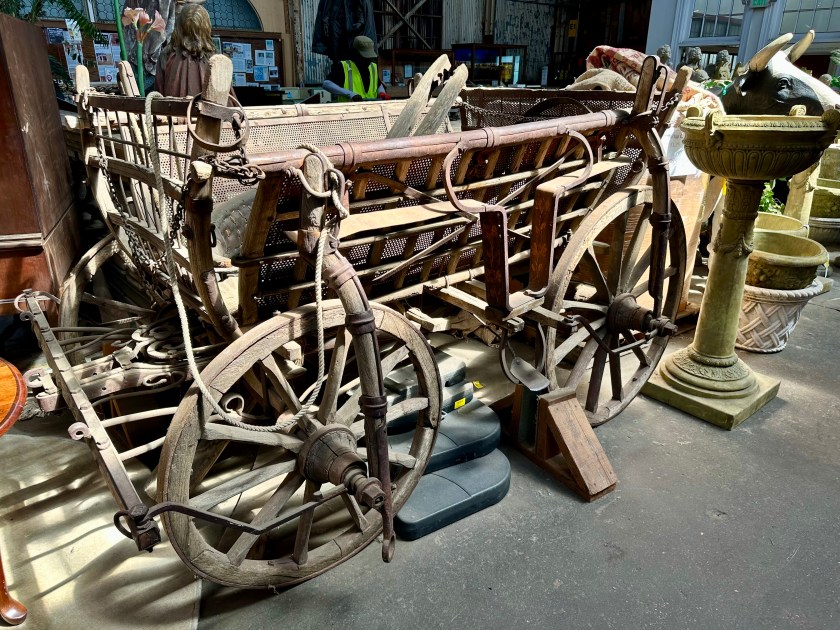
We retreated to the historic small city of Staunton for lunch. First, we wandered and reminisced in a well-stocked antique store. Many of the items were the very same we are trying to pawn off to our children and grandchildren.

That nostalgic trip only increased my hunger for a tasty burger, which awaited just down the street. We arrived ahead of the noontime crowd and relaxed in the coolness of the comfy restaurant, sipping ice water, sodas, and sweet tea.

After enjoying our specialty hamburgers and French fries, we stepped back out into the abusive elements to a surprise. The train was back at the station, so we walked down to take a close look at the old engine before it left for its second excursion.

We inspected the engine in the shade of the station’s arched canopy. A bright red stripe with white stars adorned both sides of the engine and tenders in commemoration of the United States’ 250th Anniversary.

We had expected larger crowds due to the engine’s popularity. But only a few other railfans had gathered along the tracks.

At 1 p.m. sharp, the engineer blew the Queen of Steam’s unique whistle, and the train slowly pulled out of the station. The giant wheels turned slowly at first, then faster and faster as the J-Class 611 once again thundered east toward the Blue Ridge Mountains.

Joyful for our successful day of railfanning, we headed north for home.

A moment to remember. Photo by Bruce Stambaugh

© Bruce Stambaugh 2026

Exploring the Blue Grass Valley

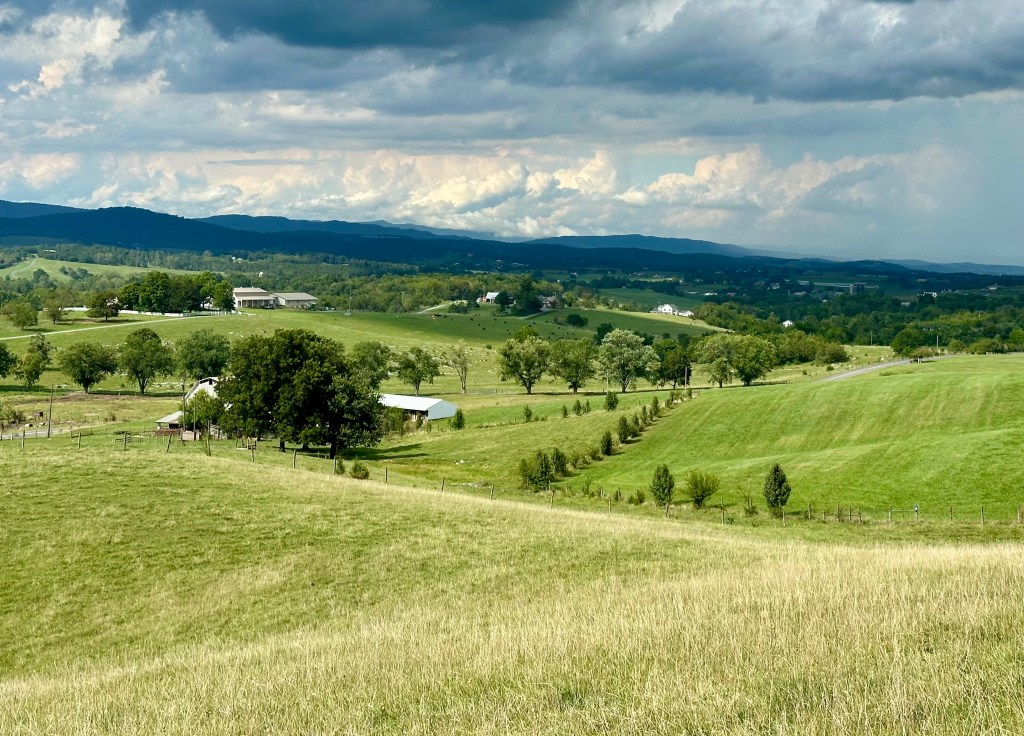
The Blue Grass Valley above the town of Blue Grass, Virginia. Photo by Bruce Stambaugh

My second visit to Blue Grass Valley paid off. The birds and the bucolic scenery lure me. 

This remote Appalachian location serves as the border between Virginia and West Virginia.  According to the Virginia Department of Wildlife and Recreation, the Blue Grass Valley runs for 7.2 miles. But that’s only measuring from the village of Blue Grass down the valley to US 250.

The northernmost section of the agricultural valley, abutted by sharp slopes on either side, is the place I enjoy the most. Besides its natural beauty, it features abundant wildlife, including lots of birds.

In the spring, songbirds and raptors nest amid varied terrain, with steep hillside pastures on one side and thick woodlots on the other. Brushy fencerows and fallow fields entice Golden-winged Warblers and American Kestrels to live as neighbors.

Since I focus on birds, the steep northwesterly part of the valley offers ample opportunities to see my target species, the Golden-winged Warbler. Of course, timing is everything. Once a report confirms the presence of the Golden-winged Warblers, I head for the hills as soon as the opportunity allows me.

The highland forests of the area are one of the few confirmed locations where the sought-after birds nest. Wait too long, and the birds will be heading south again once their babies fledge.

I had only ever seen one Golden-winged Warbler before, and that was during the Biggest Week in Birding festival in northwest Ohio several years ago. The bird came so close to me that I couldn’t get a sharp photo of it with my telephoto lens.

I couldn’t find the bird on my first trip to Blue Grass. But I arrived too late in the day. On this trip, I was determined to arrive early for a better chance of seeing this gorgeous bird with golden wingbars and a yellow crown to match.

There are only three ways to get to Blue Grass Valley from Harrisonburg, Virginia, and none of them are straight or flat. I chose the middle route, which took me along the narrowest mountain roads but also offered the best birding opportunities.

Blue Grass is less than 60 miles from my home, but with multiple mountain passes and horseshoe curves to navigate, the drive takes me two hours with breaks to bird and rest.

My first stop was Shenandoah Mountain, the eastern front range of the Appalachian Mountains. It happens to be the boundary between Virginia and West Virginia in the George Washington National Forest.

Male and female Red Crossbills graveling on Shenandoah Mountain. Photo by Bruce Stambaugh

A couple of birders were exiting their cars when I pulled in. We were there to see the Red Crossbills. That area is one of the few spots in the mountains where they live year-round. 

A flock of the Red Crossbills chattered in the trees overhead before diving down to “gravel” in the deep red clay. The birds apparently desire the minerals in that particular spot. I captured several decent shots of the beautiful birds, and then I continued west down the mountain.

The Virginia/West Virginia lines meander like the fast-flowing streams that have carved out the valleys. So, it’s common in this westernmost part of Virginia to cross into and out of each state numerous times.

In fact, the farmhouse where I birded was in Virginia, while the barn, not 50 yards away, was in West Virginia. The farmlane served as the demarcation.

It was 9:30 by the time I reached the Virginia Ornithological Society farm where the Golden-winged Warblers often nest. Birds were singing away as I headed for the well-marked trails and bathed in the songs, the shade, and nature’s lushness.

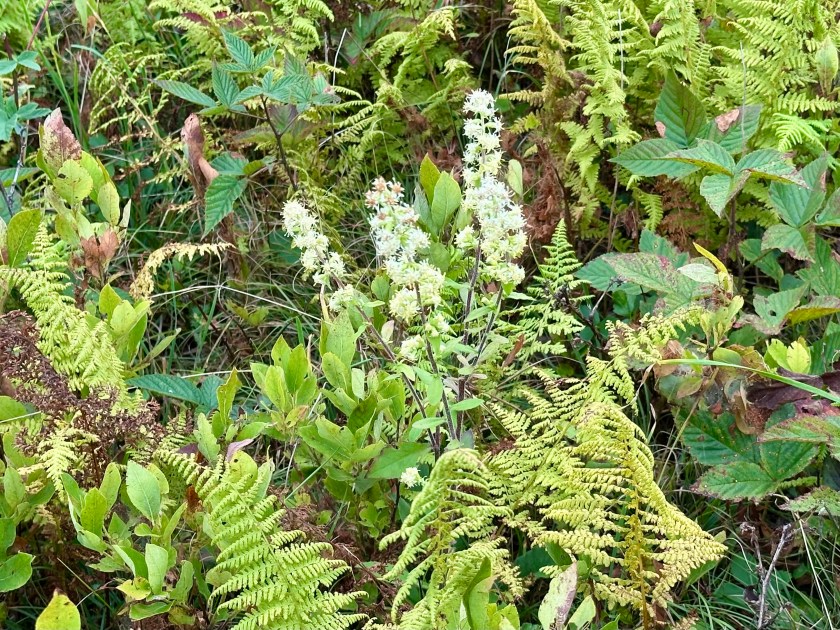
I was in awe of the vibrant ferns beneath the leafed-out trees. A clear-winged moth landed in tall grass right in front of me. A single pink wild rose broke the green palette. Still, birds were my objective.

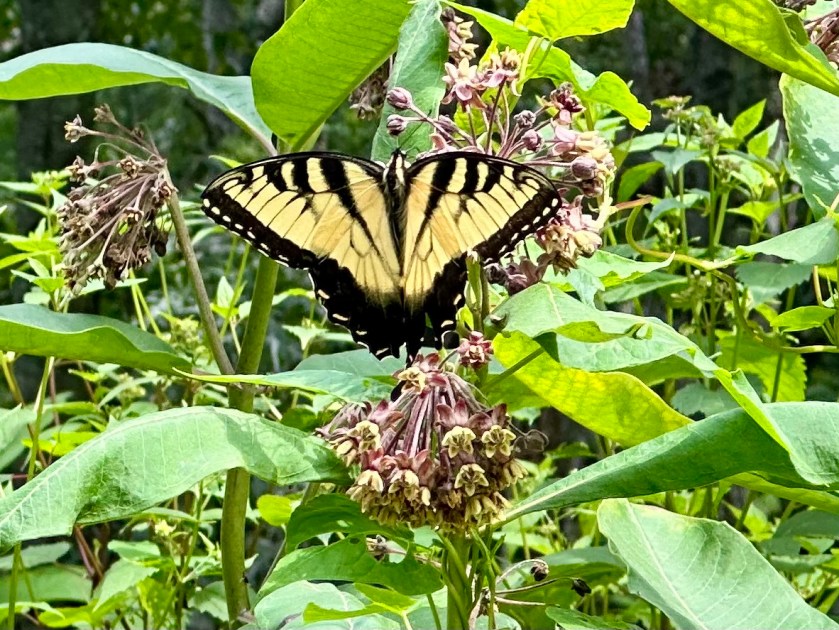
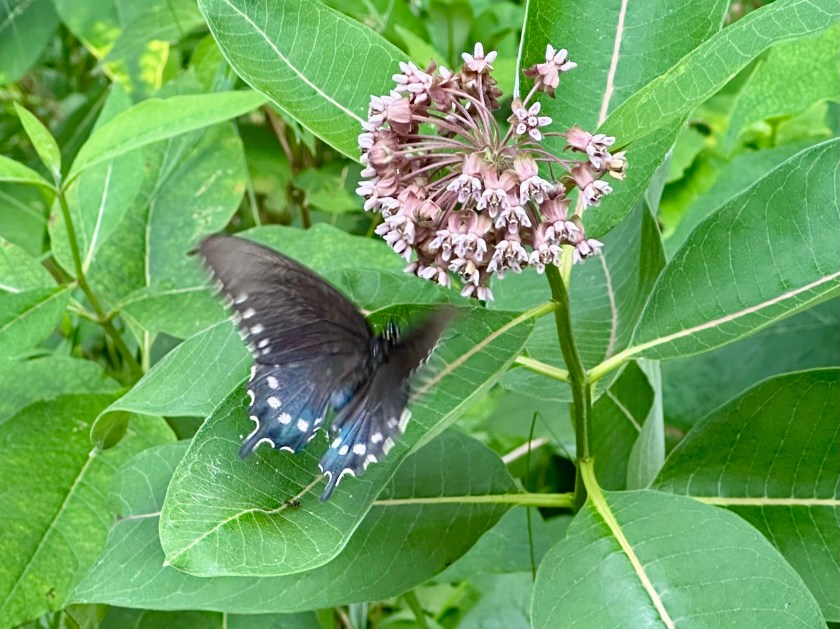
Rose-breasted Grosbeaks, Gray Catbirds, Red-eyed Vireos, and Eastern Towhees sang a concerto for an audience of one. It was music to my ears, nevertheless. Skippers, Tiger Swallowtails, and even an early Monarch butterfly flit and fluttered in the dappled light of the forest.

I saw a flash to my left. It was a Golden-winged Warbler. I raised my camera and snapped a horrible photo of the bird. But the golden wings and head were distinctive despite the fuzzy photo. My phone’s birding app confirmed the bird’s song.

As the sun rose higher, so did the temperatures, and the birdsong diminished. I set my sights on capturing landscape photos of this beloved valley, with its intersecting hollows that make the valley appear wider than it really is.

As I drove toward the town with its ramshackle buildings and a few red-brick and white-clapboard houses, I stopped several times to capture the essence of the rural valley. Knowing these Appalachian folks’ desire for privacy, I tried to be as discreet as possible while capturing the paradise they live in. The few ranging cattle I saw didn’t seem to mind, however.

I marveled at how steep these pastures were, rivaling those I had seen in the Lauterbrunnen Valley in Switzerland. Of course, they weren’t quite as high, averaging 3,000 ft. above sea level.

Wispy cirrus clouds hung high in the cerulean sky. Below, many shades of green ran high and low, broken only by brown fences and farmstead buildings.

As a photographer, I loathed the random stringing of power lines that zigzagged down the valley. Of course, the locals needed their electricity, and the power company always took the path of least resistance.

I marveled at the long dirt lanes that ran far up the hollows and disappeared beneath forested mountaintops. Irregular stands of ancient oak trees guarded weathered hay barns.

Before entering the little burg, I stopped to take a photo of a street sign that revealed the aptly named road, “Hardscrabble.” The nearest farmhouse and bank barn, however, proved to be the contrary.

At the town’s three-way stop sign, I turned left and drove alongside the southern branch of the Potomac River. Its headwaters originate two miles to the south.

When I returned to Shenandoah Mountain, I stopped for a break from the winding switchbacks of US 250. It was a historic Civil War monument commemorating the Confederate defensive breastworks used against advancing Union soldiers.

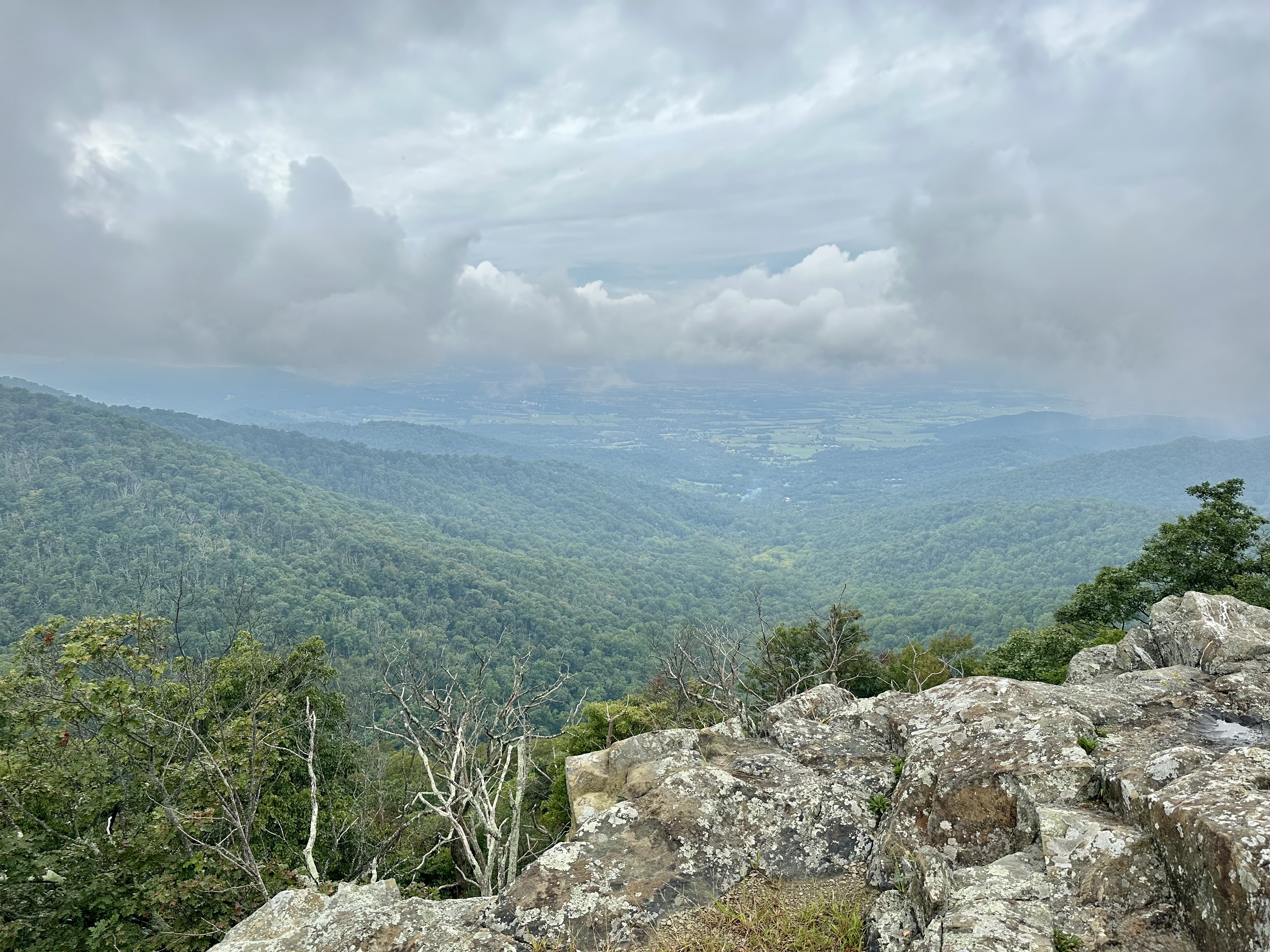
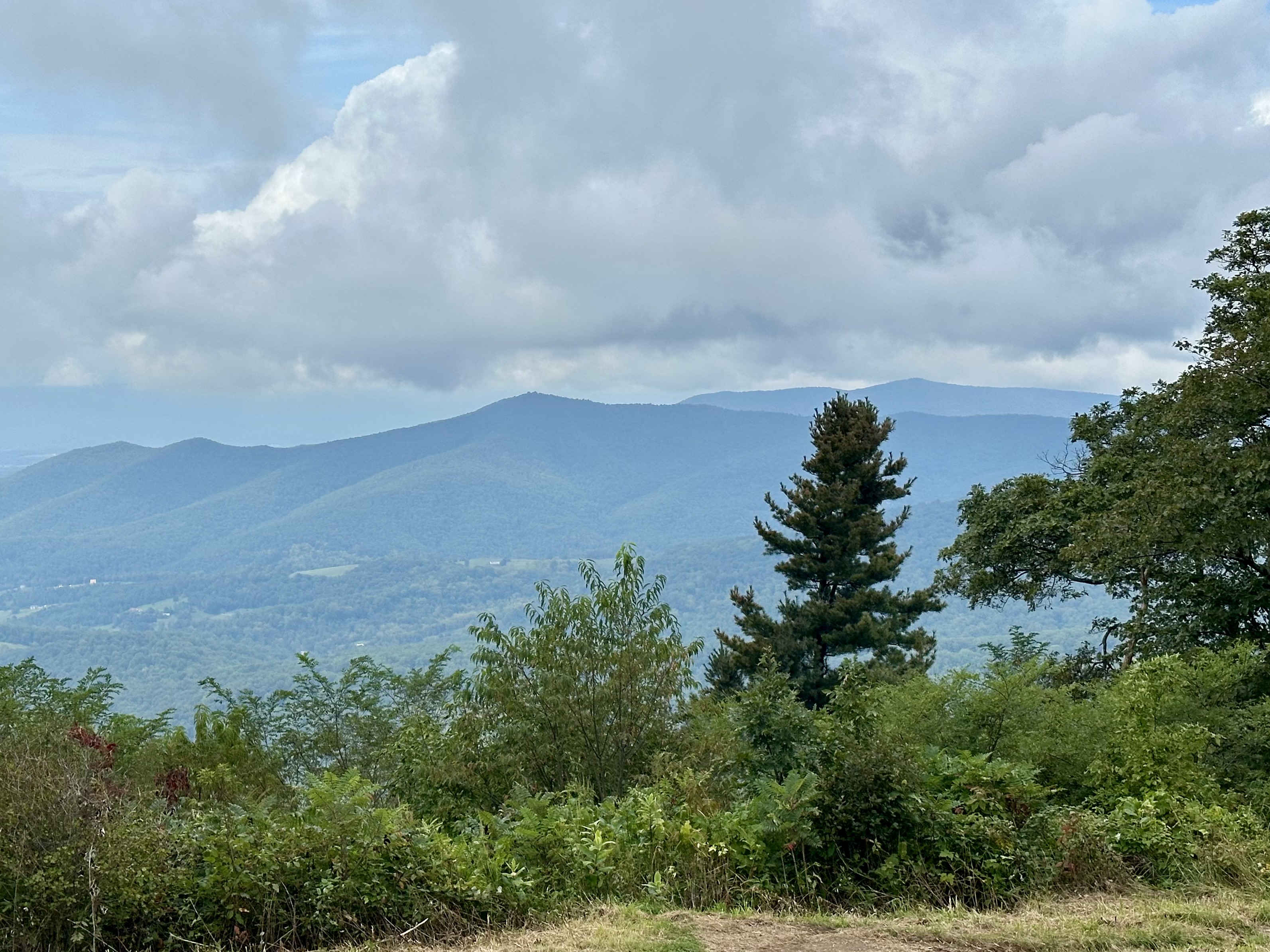
From that vantage point, I could view the mountains from which I had come, and I was only halfway home. Despite the exhausting drive, I’ll return next spring.

Looking west from Shenandoah Mountain on the way home. Photo by Bruce Stambaugh

© Bruce Stambaugh 2026

Serenity on Moores Mill Road

On Moores Mill Road. Photo by Bruce Stambaugh

A birding friend of mine messaged me that he had found a Dickcissel singing on a fence post along Moores Mill Road, 20 miles from my home. I had to wait a day to chase the rarity in Virginia’s Shenandoah Valley.

Colored like a miniature Eastern Meadowlark, the chunky grassland bunting occasionally wanders east from its mid-American breeding habitat. I had seen Dickcissels before when we lived in Ohio, but this would be my first in Virginia.

The narrow country road cut through two farm fields, with wire fencing hugging both sides, making it easy to spot the wayward bird. I made sure I left early in the day to see this bird. As it turned out, there was more than one.

To get there, I drove most of the way on the Valley Pike, also known as US 11. The historic roadway was the main route up and down the storied valley until the interstate opened in the 1960s.

Both Confederate and Union troops moved up and down this highway and on May 15, 1864, fought a battle in New Market, only a few miles north of where the Dickcissels were. It was easy to envision soldiers marching along and cavalry horses kicking up dust on what was then a dirt road.

A Dickcissel on a fence wire. Photo by Bruce Stambaugh

I turned east on Moores Mill Road, stopped a quarter mile off of US 11, stepped out of the car, and listened and looked for the short, buzzy song. AllAboutBirds.org describes the grassland bird’s song as “fairly short but hard to miss, a clicky buzzing dick-dick-ceessa-ceessa.” Thus the bird’s name.

Soon, I heard the bird, and then another calling on the opposite side of the road. One bird perched on a tall weed in a grassy field to the south. A Dickcissel on the north side sang a fence wire. I wasn’t sure which way to look.

I snapped a few photos before a car approached from the west and slowed. The birding vest I wore, the binoculars around my neck, and the camera in my hand were a dead giveaway to the driver about what I was doing.

The Baltimore Oriole. Photo by Bruce Stambaugh

At first, I thought the vehicle would pass on by. Instead, it stopped. I had just snapped a photo of a Baltimore Oriole, which didn’t spook as the car passed by.

The driver stopped to see what I was up to. He was a man in his 70s, gaunt, and unshaven. With the driver’s-side window down to talk, I noted piles of clothes, used fast-food cups and wrappers, and other items filled his 10-year-old vehicle. Rather than judge, however, I asked if he lived nearby.

“No,” he said, “I live a few miles west of here. I’m on my way to get breakfast at one of the restaurants in New Market.”

In my head, I questioned why he was driving east when New Market was straight north. Still, the man wanted to know what kind of birds I was seeing.

All the while, one of the Dickcissels had perched on a bare, thorny bush 50 feet in front of the car, and the oriole still sang from a tall, leafy bush 50 feet behind.

Not surprisingly, the man had never heard of a Dickcissel, but he perked up when I told him I had seen and heard a Baltimore Oriole.

“Man,” the guy exclaimed, “I haven’t seen one of those birds around here in a long time.”

Rather than pointing out the oriole singing in the bush behind him, I showed him a photo of the bird on the camera’s rear screen. He couldn’t believe it.

I asked him if he knew where the road got its name, and he immediately replied. “Well, a long time ago, a man named Moore owned the land on both sides of the road,” he said. “He had a grist mill on the creek about a quarter of a mile south of the bridge.” He pointed east toward the stream.

I thanked him for the information and, wanting to get back to birding, told him I didn’t want to keep him from his breakfast. He told me he appreciated my showing him the photo of the oriole and continued on his way.

I was intrigued by the man and wondered if he was actually homeless, given the interior of his vehicle. The 15 minutes I spent chatting with him hadn’t really been an interruption at all. I spotted birds even as he talked.

Eastern Kingbird. Photo by Bruce Stambaugh

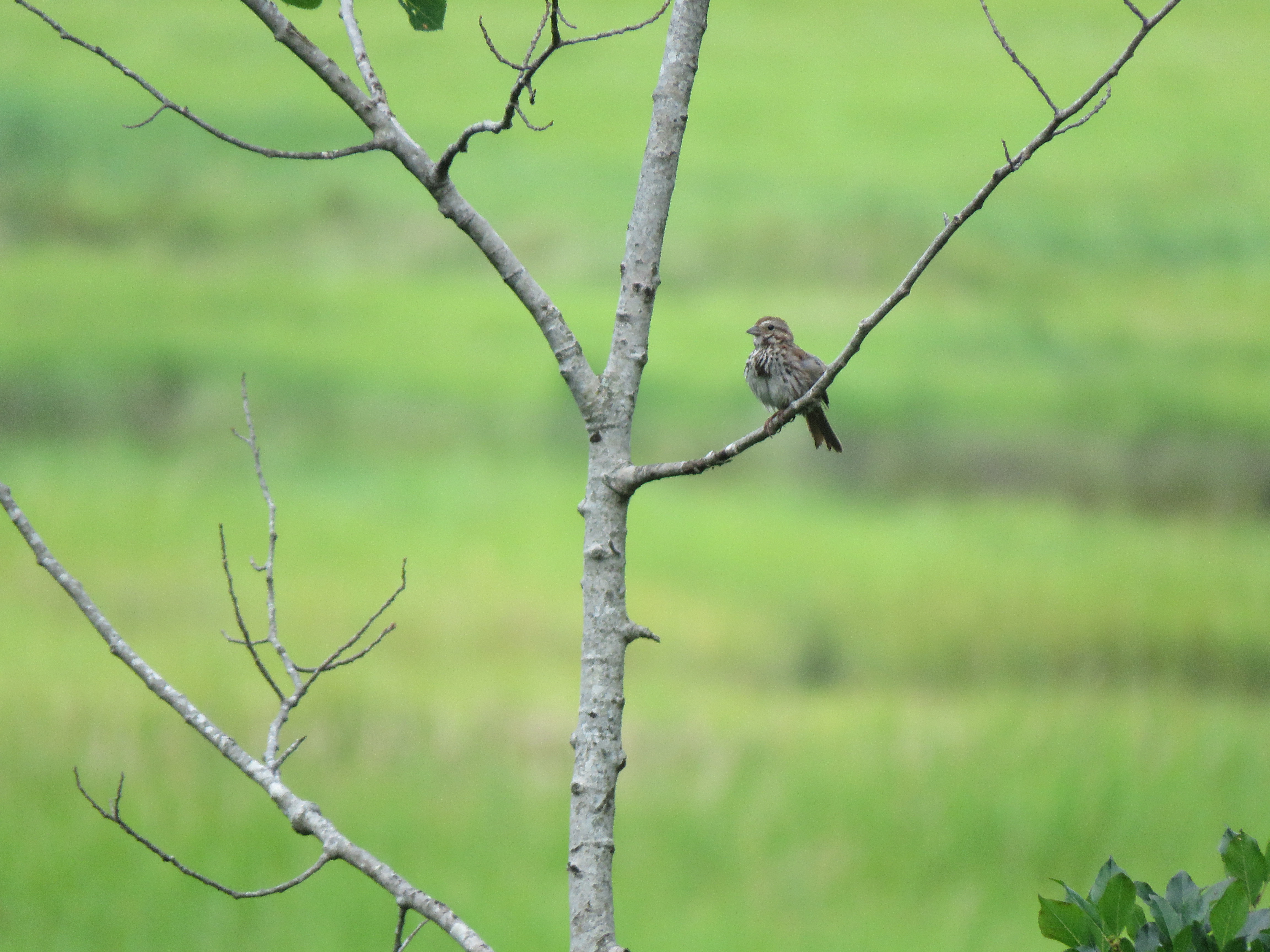
I continued birding and recorded several species typically found in this grassy habitat. An Eastern Kingbird gave me good looks right from my car. A Savannah Sparrow sang somewhere from the tall grasses. A Gray Catbird practiced its imitations of other birds before dashing for cover.

Curious, I drove east as the road descended to cross the creek. The man was right. The leaves on the sycamore trees growing along both sides of the creek banks obscured my view of the old mill’s remnants.

I turned around to head home when another car approached. Another birder wanted to add the Dickcissel to her yearly list. She already had photos of the birds by the time I stopped to share where I had seen them.

The Dickcissels could have simply been migrating. I’ll return to Moores Mill Road to see for myself. When I do, I’ll be surprised if that day can match the serenity of this morning.

A Dickcissel singing. Photo by Bruce Stambaugh

© Bruce Stambaugh 2026

Here’s Looking at You

One of the main reasons I enjoy birding is that I see so much more than birds. This curious steer is one example.

I love being outdoors with nature, absorbing all that she has to offer. I love clouds, farms, trees, mountains, valleys, landscapes, sunrises, and sunsets.

Being one with nature requires paying attention. Quite often, I am astonished at what I see, even though I may have viewed the same scene before. That doesn’t mean it’s the same as last time. Life is full of surprises and continual change.

Lastly, I love to tell about what I have seen, heard, and touched because it has touched me. Consequently, I love to share what I have discovered with all of you. Even a curious cow.

© Bruce Stambaugh 2026
In Search of Warblers, Finding an Eagle

Where the birds were. Photo by Bruce Stambaugh

My wife and I spent the morning of our 55th wedding anniversary birding. That’s about as exciting as it gets for septegenarian celebrations.

Though spring bird migration had been ongoing for a month, the early warblers were only now beginning to be seen and heard in Virginia’s Shenandoah Valley. I wanted to see and literally hear those lovely, high-pitched songs. I know the term “literally” is overused, but this was my first bird outing with hearing aids.

I’m a very curious person, and I wanted to hear what I was missing in my latter years. Previously, I had to depend on the ears of younger birders to know, for example, that a Cape May Warbler was near. The bird’s thin, high-pitched “see, see, see, see” call was beyond my perception.

I knew March 27 was too early for the Cape May. But equipped with my hearing aids, perhaps I could catch the calls of other early-arriving warblers. So, off we went to a noted birding hotspot in Augusta County, Virginia, Bells Lane.

My wife occasionally accompanies me on my birding adventures, but she wouldn’t call herself an avid birder. I appreciate her company and enjoy showing her a particular species when I spot one.

Even though Bells Lane is in the city limits of Staunton, its geography and topography shout country. The narrow road meanders up, down, and around hills and valleys from a US highway to a state road. From its zenith, traffic buzzes north and south along I-81, though the noise barely reaches the beloved birding location.

With its proximity to the city, people use Bells Lane for other reasons. With only a handful of residents along its winding two-mile stretch, the narrow pavement is a safe place to jog, bike, or walk your dog, in addition to birdwatching.

When I pulled off the main highway onto Bells Lane, I opened the moon roof and lowered the windows, and drove at a snail’s pace. The air was cool, but fresh with the scent of apple blossoms and birdsong. I smiled with great pleasure at hearing multiple birds singing, and used the popular Merlin app on my iPhone to confirm my suspicions.

Birders are happy with such technological advances that can affirm or alert you to nearby birds. However, the combination of common sense and location tempers emotions when a rare bird is indicated.

Using their amazing ability to imitate other birds, Northern Mockingbirds are notorious for setting off frenzied searches for birds that aren’t there. I almost got caught doing that this time.

In the thicket of blooming redbuds and serviceberry bushes and old-growth trees, I caught a quick glimpse of a yellow and black bird zipping through the understory. An oriole, I thought, but which one? I didn’t see it long enough to identify it.

Much later on at the summit of Bells Lane, Merlin showed a Scott’s Oriole. I had never seen one, and wondered if that’s what I saw a half hour ago. That was unlikely, since a Scott’s Oriole’s territory is the southwestern United States.

One of several Northern Mockingbirds we saw. Photo by Bruce Stambaugh

Then I saw it. A Northern Mockingbird sat atop a fence post, demonstrating its wide repertoire of songs. I immediately discounted the Scott’s Oriole sighting, but wondered how in the world the mockingbird knew the oriole’s song if it had never heard it.

We saw several Northern Mockingbirds as we wound our way along the bumpy road, with horse and cattle farms dominating the rolling landscape. At one stop, I could only see the top of what appeared to be a rather large house, well situated behind a wooded hillside.

Between the road and the house, birdsongs rang out as clear as day. I stood in awe and joy at being present in that moment, finally able to hear those glorious songs so well.

The underrated Field Sparrows dominated the avian chorus. Unfortunately, I couldn’t locate even one of the birds, though they had to be close to me. That’s the disadvantage of birding alone. My wife enjoyed the bird cacophony while reading in the SUV.

The low, gray clouds made photographing birds difficult.

Several times, I parked the vehicle and walked along the roadway. I met another birder who advised me that a flock of Ruby-Crowned Kinglets was foraging for insects 50 yards ahead on the left side of the road, where the underbrush thickened.

I quickened my pace, only to be stopped by the luxurious liquid sound of an Eastern Towhee. It was a male. The black hood with rusty sides and a white streak down its chest provided protective camouflage as it kicked and scratched among the dead leaves on the forest floor. I finally got a clear shot of it.

Farther up the road, I must have found a stray of the Ruby-crowned Kinglets. The lone bird flitted from limb to limb over my head, devouring insects.

Merlin showed a Pine Warbler calling, but I couldn’t find it. Pine Warblers are often among the first of their species to migrate back north after overwintering in the warmer southern states.

The young Bald Eagle on its perch. Photos by Bruce Stambaugh

As we reached the halfway point, we were at the summit of the ridge. A line of black Angus steers lumbered away from a small red barn down the pasture toward the road.

A snag of a tree stood just beyond the barn, and at the highest perch was a subadult Bald Eagle. Patches of white feathers against black revealed its age. It wasn’t a warbler, but I was thrilled to see it. The proud bird sat perfectly still, overseeing the valleys to its east and west.

Notorious for roosting in one location for hours on end, the young Eagle seemed oblivious to the cattle, the American Crows flying in the distance, and to me. I snapped away before retreating to my SUV.

The forecasted rain began to fall, gently at first and then more steadily. Our morning of birding had come to an end with perfect timing.

We headed back into town for lunch, having heard and or seen 43 bird species in a little over two hours. I anticipated warblers, but saw an eagle instead. It was an unexpected gift on our anniversary morning.

Two curious American Robins checked out the young Bald Eagle. Photo by Bruce Stambaugh

© Bruce Stambaugh 2026
Tree Swallows Have Returned!

A Tree Swallow. Photo by Bruce Stambaugh

Tree Swallows are back! They are usually the first of the swallow family to return north.

With the spring migration in full swing, it’s a joy to see these beautiful, acrobatic birds once again coursing over fields and ponds in Virginia.

Tree Swallows benefit humankind by devouring thousands of insects as they dive and dart over farm fields and wetlands alike. Not only that, their iridescent deep-blue backs and clean, creamy front and undersides make them gorgeous to look at.

These aerolists twist and turn, chasing flying insects. They nest in tree hollows and nest boxes usually meant for Eastern Bluebirds.

Don’t let their beauty or their sweet, chirping sound deceive you. When nesting, Tree Swallows will divebomb anyone who comes close to a box where they are nesting. I can speak from experience.

While searching a local marsh with bluebird boxes fixed to roadside fence posts, I unintentionally got too close to one. Soon, a pair of Tree Swallows took turns buzzing my head. I quickly realized my mistake and moved away.

Tree Swallows are fiercely competitive, too. I once saw a pair of males battling over a hole in an old snag by a canal. The two birds faced off, screeching noisily as their wings flapped frantically.

Soon, one bird forced the other one down toward the canal’s surface, but didn’t stop there. The bird on top forced the upside-down bird underwater, drowning it in less than a minute.

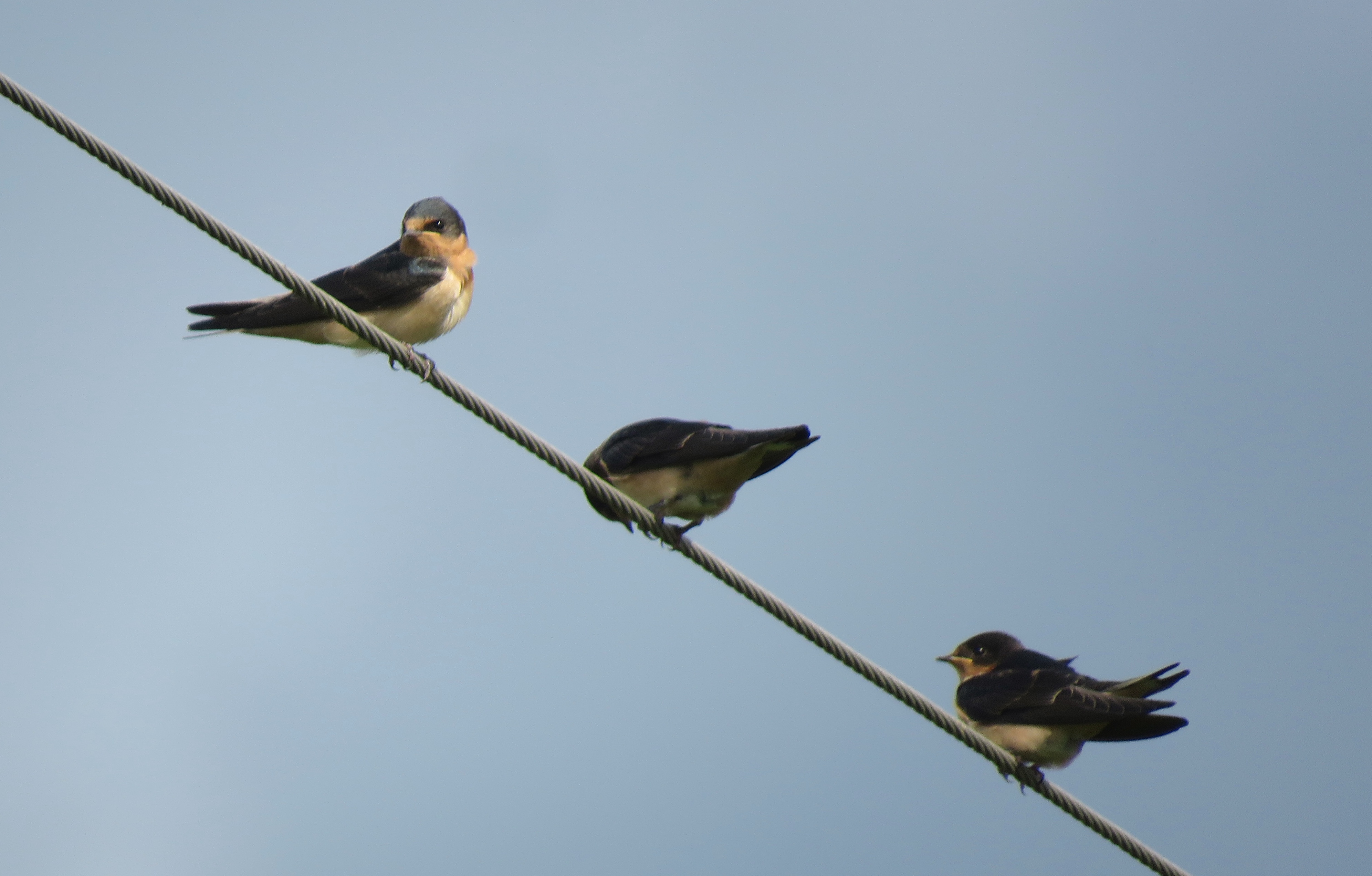
Tree Swallows perch in small to large groups on telephone wires and fence wires. From that perch, they launch into an attack on unseen prey.

During haymaking times, Tree Swallows join Barn Swallows in swooping high and low in circles around the farmer’s mowing machine. They feast on the fleeing insects as the farmer cuts the alfalfa or mows a pasture field.

Come June, Tree Swallows will have taken up nesting from the midsouthern states to near the Arctic tundras. They winter along the southern and western coastlines in the United States and throughout Central America.

So, take heart. If the flashy Tree Swallows haven’t reached your area yet, be patient. Migration continues through early June.

A Tree Swallow preening. Photo by Bruce Stambaugh

© Bruce Stambaugh 2026
Stop and Go!

Photo by Bruce Stambaugh

I was intrigued by this toilet sitting along a curb in China Grove, North Carolina. I have no idea why someone had set it beside the street.

Nevertheless, I thought it made an appropriate photo for April Fool’s Day.

© Bruce Stambaugh 2026
Palm Sunday!

Photo by Bruce Stambaugh.

Another Wedding Anniversary

Tomorrow is our 55th wedding anniversary. I am most grateful to my lovely and loving wife, our son and daughter, and their spouses, to our extended families, and to our many friends we have made over all those years.

Neva and I wouldn’t be where we are today without their wonderful advice, support, and love. Happy 55th, Neva!

Neva, along the Kancamagus Highway in New Hampshire. Photo by Bruce Stambaugh

© Bruce Stambaugh 2026
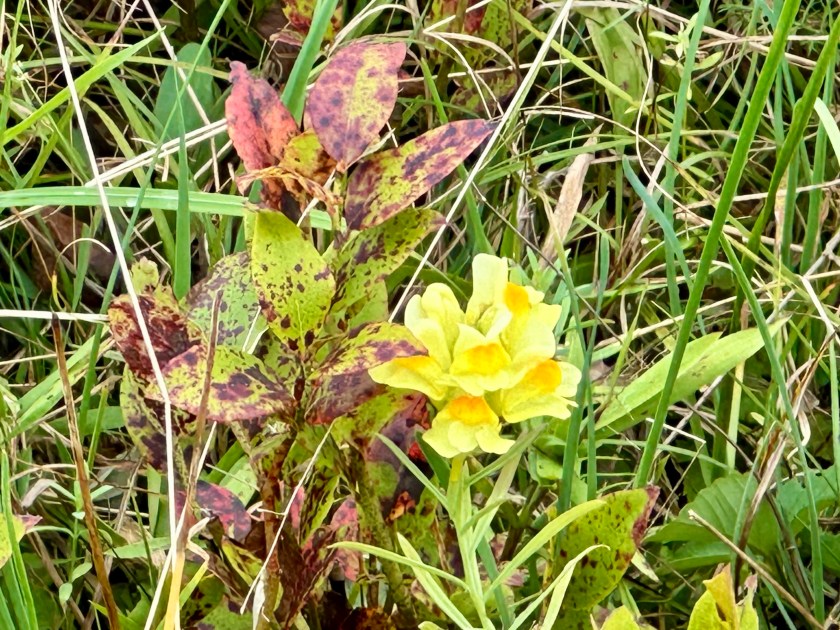
First Daffodil

Photo by Bruce Stambaugh

My wife and I enjoy visiting her cousin and spouse in the Piedmont of North Carolina. They return the favor by visiting us in Virginia’s Shenandoah Valley.

We all enjoy many of the same types of retirement excursions, including the local history of areas we visit. We like antiques and thrift stores. And we all enjoy watching birds.

We ventured out to a state park a few miles from their home. While looking for early songbird migrants, we walked a short loop through a woods with moslty second growth trees.

Sprinkled in among the woods were remnants of former residences and farm buildings. Near them, this clump of daffodils had sprouted up, a spontaneous memorial to the people who planted them.

After all the snow we had, it was a pleasure to find a single blossom in full bloom.

© Bruce Stambaugh 2026
Bay Photos by Donna

Wildlife Photos From The Chesapeake Bay Region

ROAD TO NARA

Culture and Communities at the Heart Of India

K Hertzler Art

Artist and nature journalist in the Shenandoah Valley of Virginia.

Maria Vincent Robinson

Photographer Of Life and moments

Gabriele Romano

Less Noise. More Meaning

Jennifer Murch

Art is the only way to run away without leaving home. -Twyla Tharp

Roadkill Crossing

Writing generated from the rural life

ANJOLI ROY

writer. teacher. podcast cohost.

Casa Alterna

El amor cruza fronteras / Love crosses borders