It’s the plum time of year

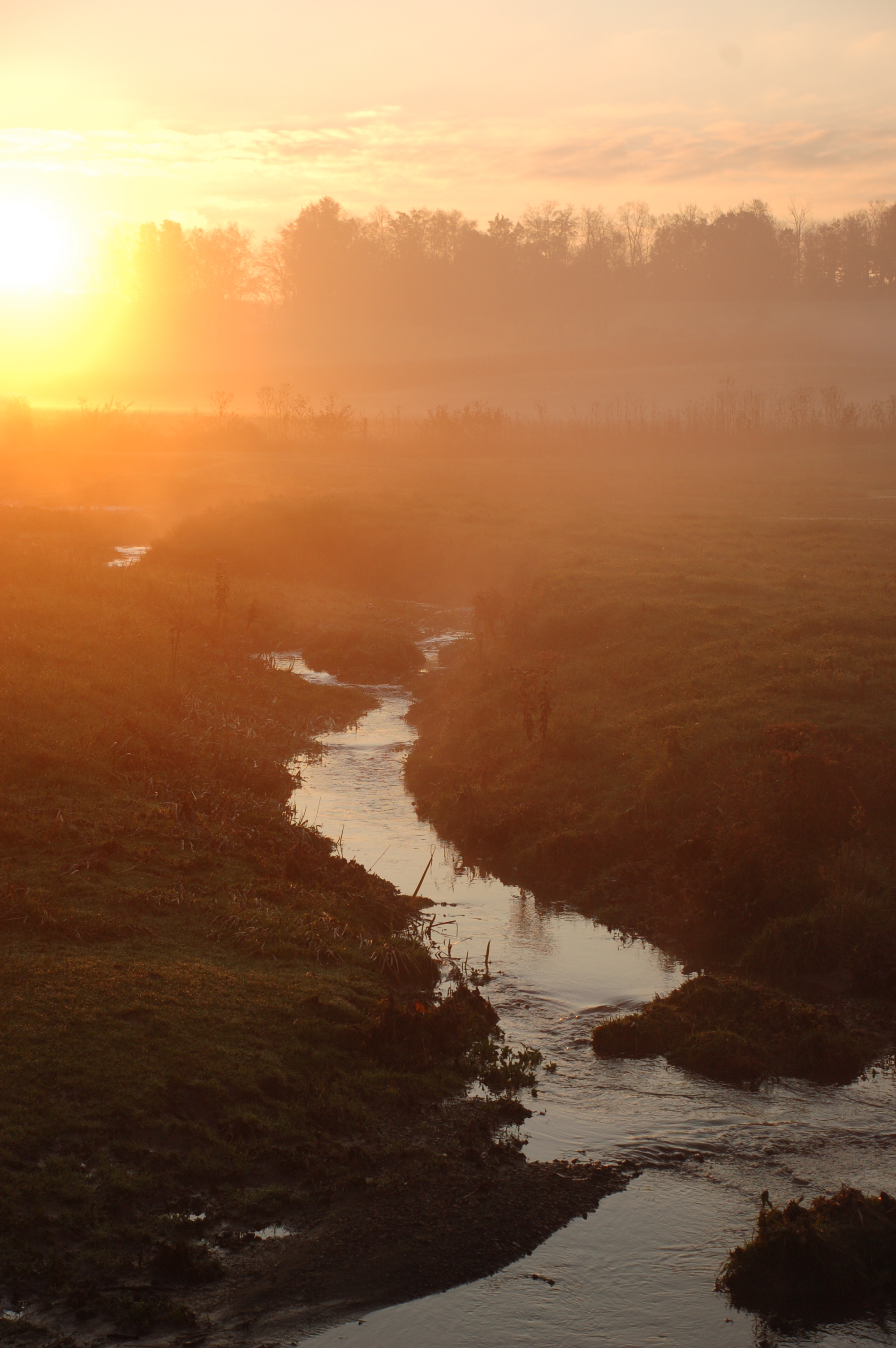
Fall sunset by Bruce Stambaugh
The sunsets in the fall are truly amazing.

By Bruce Stambaugh

For those of us fortunate to live in North America’s temperate zone, this is the plum time of year. I mean that literally and figuratively.

The literal part is that locally grown plums are at the peak of their ripeness. I’m just plum crazy for plums.

I remember traveling with my grandfather, who knew as many people in the world as my gregarious father did. Grandpa Merle loved to stop at roadside produce stands, especially where he knew the proprietors. If they had ripe plums, he always bought a peck or two.

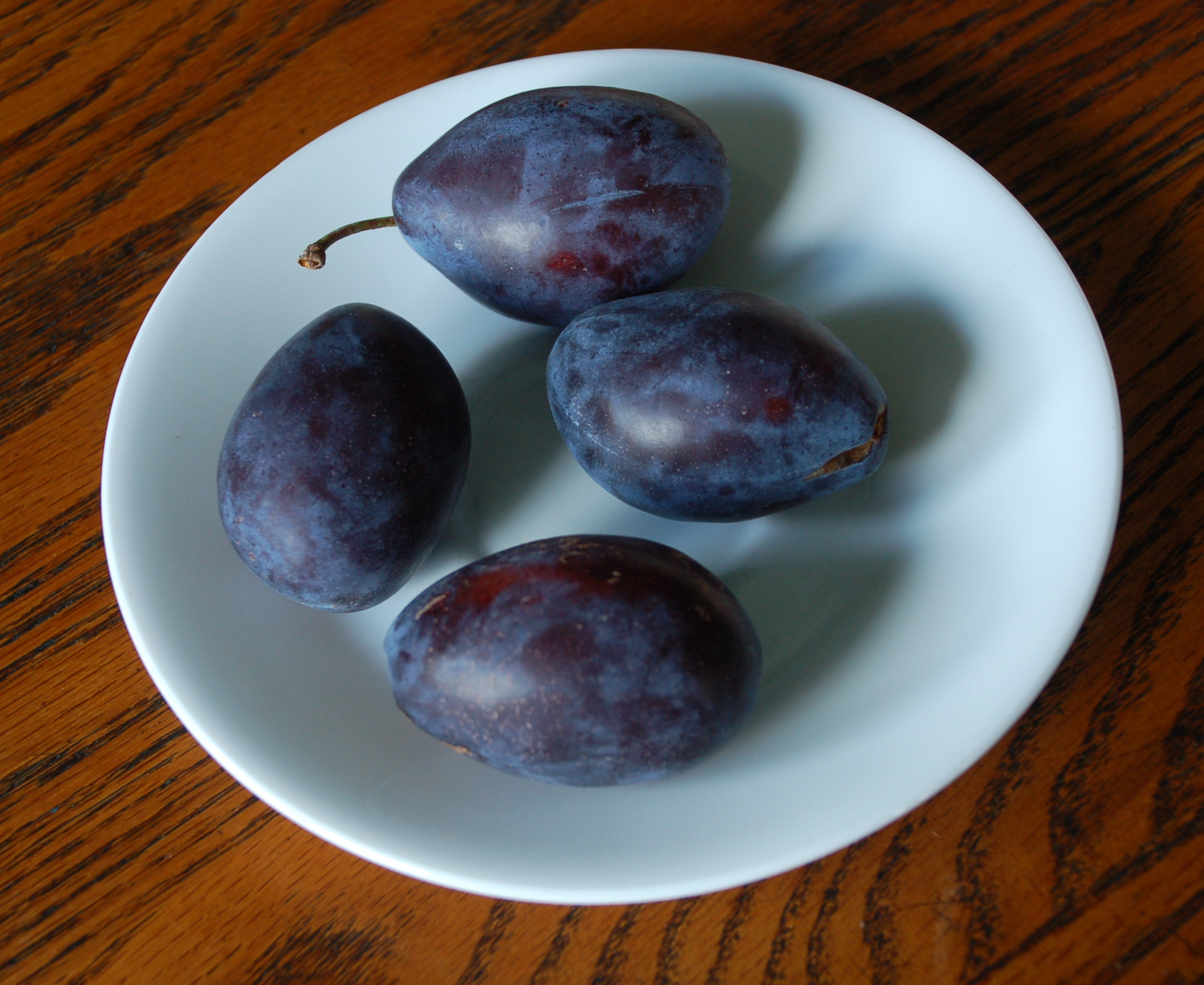
I loved everything about them, their simple size, their football shape, their blue violet sheen, their light greenish-yellow flesh, their sweet tart taste, and even the pit.

Sugar plums by Bruce Stambaugh
The variety of plums locally referred to as sugar plums.

I liked the size because, especially for a kid, they weren’t too big, which meant we could usually eat more than one. I liked their oblong shape because it was easy to bite in to.

I found the plum’s color inviting. The moist sweetness with the tart aftertaste was both delicious and curious. I liked the texture of their meat and the fact that, unlike other fresh fruit, you could bite into them without having juice run down your arm and drip off your elbow.

Much to my mother’s chagrin, I often plopped a whole one in my mouth. My mother highly discouraged my poor manners to no avail. I often eat the lovely plums the same way today.

Once devoured, that left the seed. I didn’t eat it of course. For whatever reason, I tucked the pit, which mirrored the shape of its fruit, into my left cheek and sucked on it for hours. I could play an entire baseball game with a plum seed nestled between my cheek and gum. It seemed to help keep my mouth moist. Besides, it was better than the usual baseball alternative, snuff.

All those memories resurfaced for me when my wife brought home some plums from the local produce stand. They were accompanied by Bartlett pears, squash, zucchini and preserved sugar beets, too. The fall harvest was on, one of the primary symbols of the season.

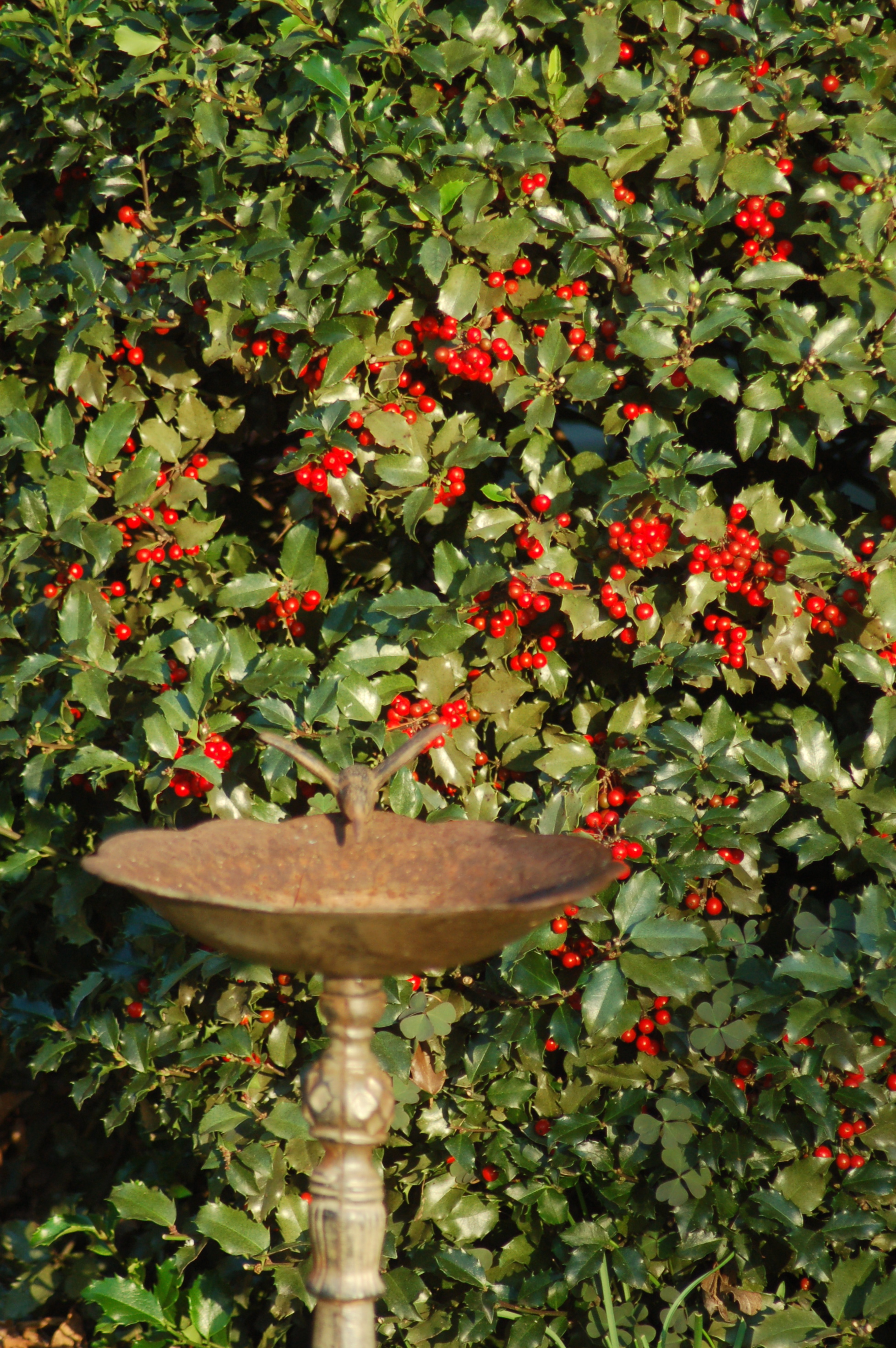
Holly berries by Bruce Stambaugh
The holly berries have turned bright red, a nice contrast against the bush's prickly green leaves.

We are enjoying an abundance of tomatoes that have seemed to ripen in our modest patch all at once. There isn’t one heirloom I don’t enjoy, and they can be eaten in so many different ways, right off the vine, fresh salsa, in sandwiches, sauces, and with pasta.

Our neighbors added to the feast by insisting we help them out by accepting and consuming a sampling of the last of their bumper crop of sweet corn. It was amazingly sweet for this late in the growing season.

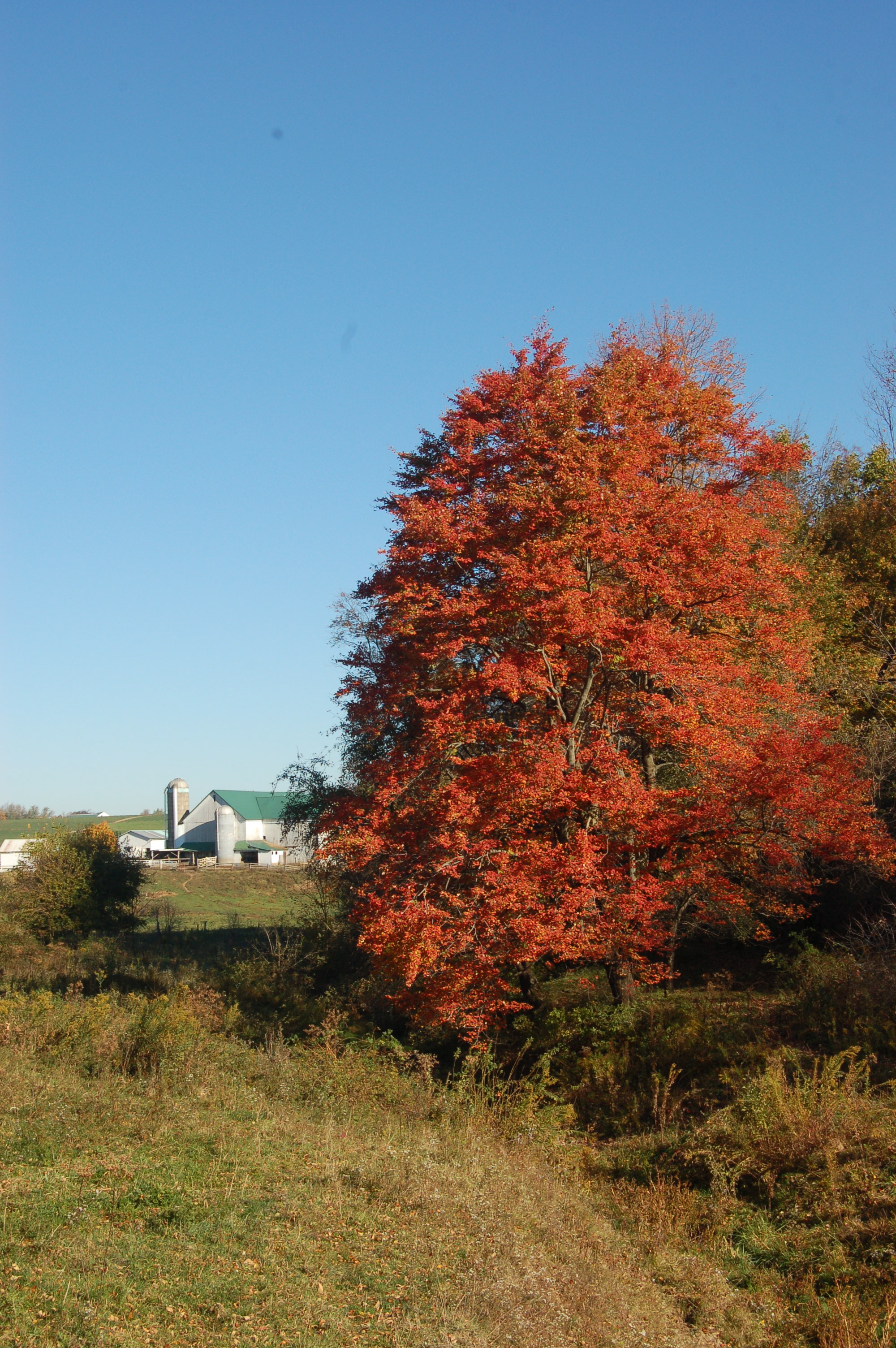
The days have grown shorter and cooler, both daytime and night. The leaves on the deciduous trees have begun to turn. They started falling shortly after Labor Day.

The webs of black and yellow garden spiders catch the frequent morning mist and then sparkle diamonds in the sun’s rays. The sunrises and sunsets are breathtaking, each one picture perfect.

Golden rod by Bruce Stambaugh
Though weed that it is, golden rod brightens even the haziest of mornings.

The dogwood and holly berries are bright red. Yellow jackets are everywhere. Unkempt fields, once purple with ironweed blooms, have morphed to mustard with thousands of goldenrod heads bending from their fullness. Wild tickseed sunflowers brighten the dustiest roadside.

Autumn has arrived. Either metaphorically or realistically, transitioning from summer to fall in northern Ohio is a plum time of year.

A long answer to a simple question

Garden pond by Bruce Stambaugh
The little garden pond in our backyard.

By Bruce Stambaugh

During his last visit to Ohio, my Virginian grandson, Davis, asked me a simple yet rather analytical question, befitting the inquisitive four-year-old, left-handed boy.

Davis and I were outside filling birdfeeders near the little garden pond positioned a few feet away from the back porch and just outside our kitchen window. Davis approached the pond’s edge, lined with mostly flat rocks scavenged from the neighbor’s farm fields.

“Poppy,” Davis queried, “Why do you have a pond?”

The bluntness of the simple question gave me pause. I straightened up, and thought long and hard before I answered him. The tone and intensity of his uncomplicated question told me that Davis really wanted to know.

As I contemplated my answer, Davis waited patiently, searching for the resident frogs and trying to count the darting goldfish. His long, strawberry blonde curls bounced with even the slightest move.

I was impressed with his youthful inquisitiveness. His question piqued my own consciousness regarding the purpose of the pond. I gave Davis the long answer.

I told him that when I retired as a principal, the staff and students at one of my schools gave me a gift certificate to build a garden pond. Apparently, I had let it slip that the pond was one thing I wanted to create once my school days were completed.

Of course, all that was probably too much information for Davis to process. Perhaps it mimicked a politician’s answer to a reporter’s intrusive direct question. Davis looked at me with his big blue eyes and repeated, “But why?”

I changed tactics. I gave him the words I figured he knew and that I loved.

Red-bellied Woodpecker by Bruce Stambaugh
A male Red-bellied Woodpecker enjoyed a sip from the little waterfalls on a cold December day.

I told Davis that the pond attracts life. I itemized a quick catalog of what I meant. The birds I enjoy watching, squirrels, rabbits, deer.

“Deer?” Davis quizzed long and slow, head tilted, hands thrown into the air.

I explained that although I had never actually seen deer drink there, I had found their hoof marks in the mud and snow around the oblong pool. We stepped away, and soon a chipping sparrow flitted to the gurgling little waterfall for a refreshing sip.

Grandson by Bruce Stambaugh
Davis, my inquisitive grandson.

I could almost see Davis’ gears churning beneath those flowing locks. I knew the inquisition would continue.

“Why do you have goldfish?” Davis asked next.

I lovingly touched his curly head and simply said, “So you and your brother can feed them.” Davis looked up at me and smiled, as if he sensed the patronization.

“The fish help keep the pond clean,” I continued. “They eat things that float in the water.” I prayed he didn’t ask for their scientific names.

My grandson’s pointed question helped me step back and appreciate my little garden pond all the more. I enjoy its abundant life, the alluring sound, the attractive and useful greenery in and around the pond, along with the attraction of fur and feathered wildlife year-round.

Those intrinsic pleasures more than compensate for the necessary regular maintenance required to keep the pond in a habitable state. Now, whenever I clean the pump filters, watch birds revel in the water and hear the frogs croak late at night, I’ll remember Davis’ clear question, too.

I know why I have a little pond with a miniature waterfall, brilliant orange goldfish and complementary water plants. “Because I like it,” which is what I should have told Davis in the first place.

Shaking the January blahs

swamp walk by Bruce Stambaugh
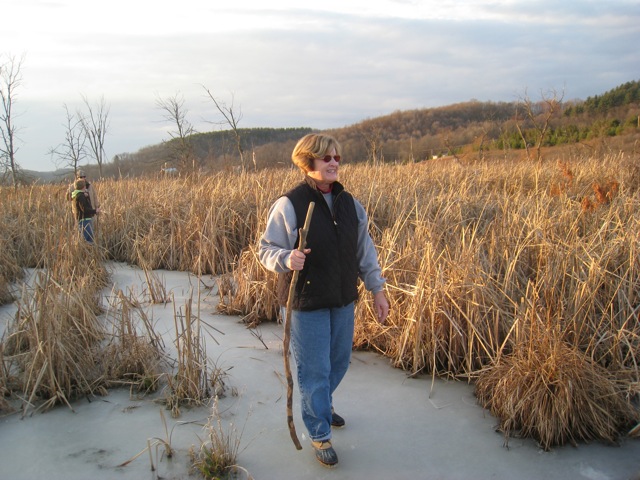
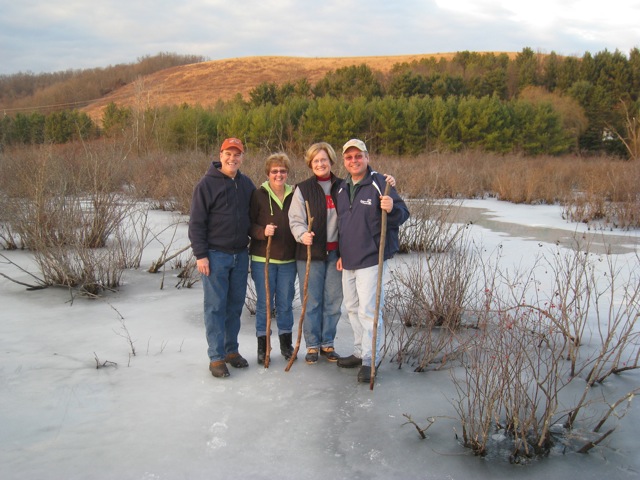
Friends walked the frozen marsh of Killbuck Creek in early January. (Photos provided by Dave and Kate Findley)

By Bruce Stambaugh

Normally, January is not one of Ohio’s more colorful months. I suppose residents all across North America could say that.

White and brown tend to be the dominant January color scheme here. It’s white if it snows, and basic brown on the bare ground if it doesn’t. Not exactly stuff of which calendar pictures are made.

With that introduction, I was going to write about how depressing it is to see the naked landscape during the winter months. I had my list of the usual suspects at the ready. The lack of color, the repetitive cloudy, dull days entombed with hard to breathe frigid air and the proverbial cabin fever all contributed to the annual epidemic of post-holiday let-down.

I had no sooner started to write when I received an email from a friend. She had attached several pictures of a swamp walk they had just taken in the backwaters of the Killbuck Creek near Killbuck, Ohio.

Most of the shots included the smiling couples that made the trek. I had a sneaky feeling their joy wasn’t just flashed for the camera. There seemed a deeper reason for their cheerfulness.

Though I did talk with my friend and her husband about their walk, the pictures really said it all. They revealed abundant beauty amid the wintry habitat of the marsh.

Buttonbush berries in varying auburn colors and stages of fermentation decorated the burnished host shrubs. By winter’s end, numerous types of wildlife, deer, turkey, robins and cedar waxwings among them, will have devoured the nutritious fruit.

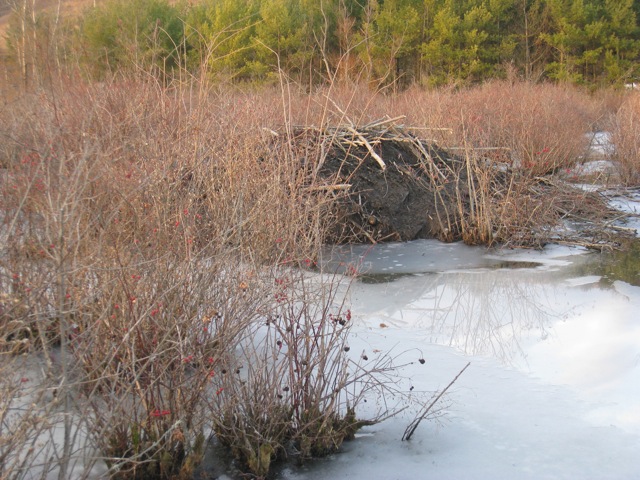
beaver den
A beaver den in the backwaters of Killbuck Creek, near Killbuck, Ohio.

Behind a stand of some of the bushes, a blackish mound covered in tan sticks rose out of the mostly frozen water. The occupants of the beaver’s den were likely deep into their season’s sleep, unaware of their human visitors.

The pictures showed my friends walking on the marsh’s frozen surface, or posing for candid memories to be shared with friends and family. A rainbow of muted colors helped create their smiles.

The ice itself varied both in texture and color, ranging from off-white to clay gray. Nature’s arsenal of elements, wind, temperature, snow, and water flow all play a role in the seemingly dormant, yet ever-changing marshy environment.

swamp walk killbuck oh
My friends were amazed at the colors they found on their frozen wetlands walk.

Behind the low lying swamp, the rounded western foothills of the Appalachian Mountains jutted up like giant loaves of fresh baked bread. Clusters of pines served as a brief but green piedmont between the two.

At that point, a familiar fragrance distracted me from the pictures. I followed my nose into the kitchen to find pan after pan of fresh out of the oven cinnamon rolls cooling on the counter tops. Beside them, tins of golden-topped potato rolls also stood patiently cooling.

In addition, rows of jelly jars filled with cobalt colored blueberry topping for homemade pancakes and waffles sparkled from the light that filtered through the kitchen window. Smaller jars of crimson apple jelly added to the colorful collection next to the stove.

While I had sat sulking listlessly at the computer, bemoaning the dull days and confined activities, my energetic wife and thoughtful friends infused me with unexpected splashes of color. My smile nearly matched those of my friends in the swamp walk photos.

Inspired by digital pictures, picture perfect baked goods and showy glass jars, I realized that the blahs of January were self-induced. If I desired color in my life during the cabin fever time of year, all I really needed to do was to open my eyes.

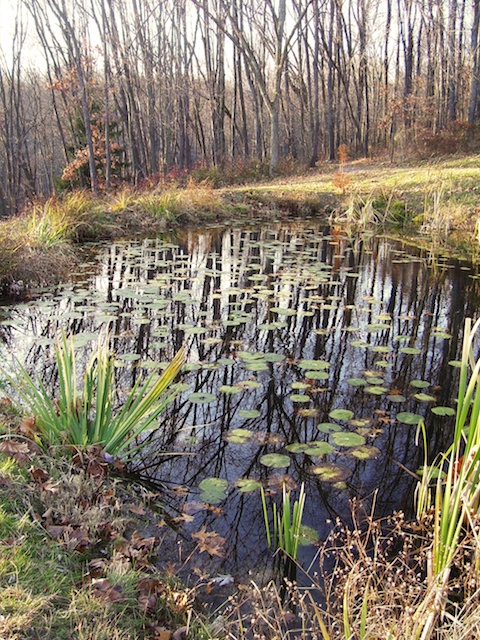
Autumn pond

Fall pond (for Bruce Stambaugh)
The pond that inspired the haiku. (Photo by Melissa Neiderhiser)

Fallen leaves, brown reeds,
Floating on the black water,
lilly pads yet green.

Bruce Stambaugh
Dec. 3, 2010

Enjoying the beauty of the first snow

Snowy lane by Bruce Stambaugh
The first snow of the season decorated the long, steep lane to the cottage.

By Bruce Stambaugh

We awoke on the first Saturday of November to a skiff of snow on the roofs, grassy areas and glued to the trees. The driveway and the road in front of our house were just wet.

Since the temperature hovered right at 32 degrees Fahrenheit, I figured we probably had had more than the dusting that remained. Not one to quibble with the weather, I simply inhaled the beauty as a drab dawn broke.

My wife and I were ready to head for our cottage for a post-election weekend retreat with some friends. After the tiresome multimedia blasts of campaign negativity, we needed a quiet place, and the cottage was it.

Just a few minutes down the road, we caught up to the menacingly low clouds that were still spitting snow. During the 75-minute trip, we were amazed at just how spotty the snow was. We drove in and out of the white stuff several times.

In some places, the snow was two or three inches deep. In most, the ground was bare. The snow had fallen in various depths in a long, narrow band stretching northwest to southeast from Lake Erie to the Ohio River.

When we pulled onto the long steep lane that leads to our cottage, an inch of fresh, fluffy snow welcomed us. Initially the lane goes uphill. At the summit, the road dives into the woods, and quickly curves right, down a steep, straight slope.

Just as I began the decline, the car stopped out of respect. It couldn’t crush the beauty before us, not at least until I had taken some pictures of the virgin snow.

The limestone on the lane must have been warm enough to melt the snow on impact. Everyplace else, the snow stuck undisturbed, beautiful, mesmerizing.

Snowy woods by Bruce Stambaugh
The snow cover made everything appear black and white.

With the concealed sun unable to lessen the early winter grip on the landscape, the panoramic scene seemed basic black and white. The only variation came in the clay colored clouds.

I snapped a few photos and returned to the vehicle. I guided it ever so slowly down the straight slope, around the hard left-hand curve, under slow laden white pine bows, toward the lake that reflected the steely sky.

We made the final zigzag up the lane and into the drive to the cottage. This last leg of the trip adds a faux remoteness to the location. I had brought along a leaf blower to dispense with any remaining natural litter on the cottage deck. I should have tossed in the snow shovel instead.

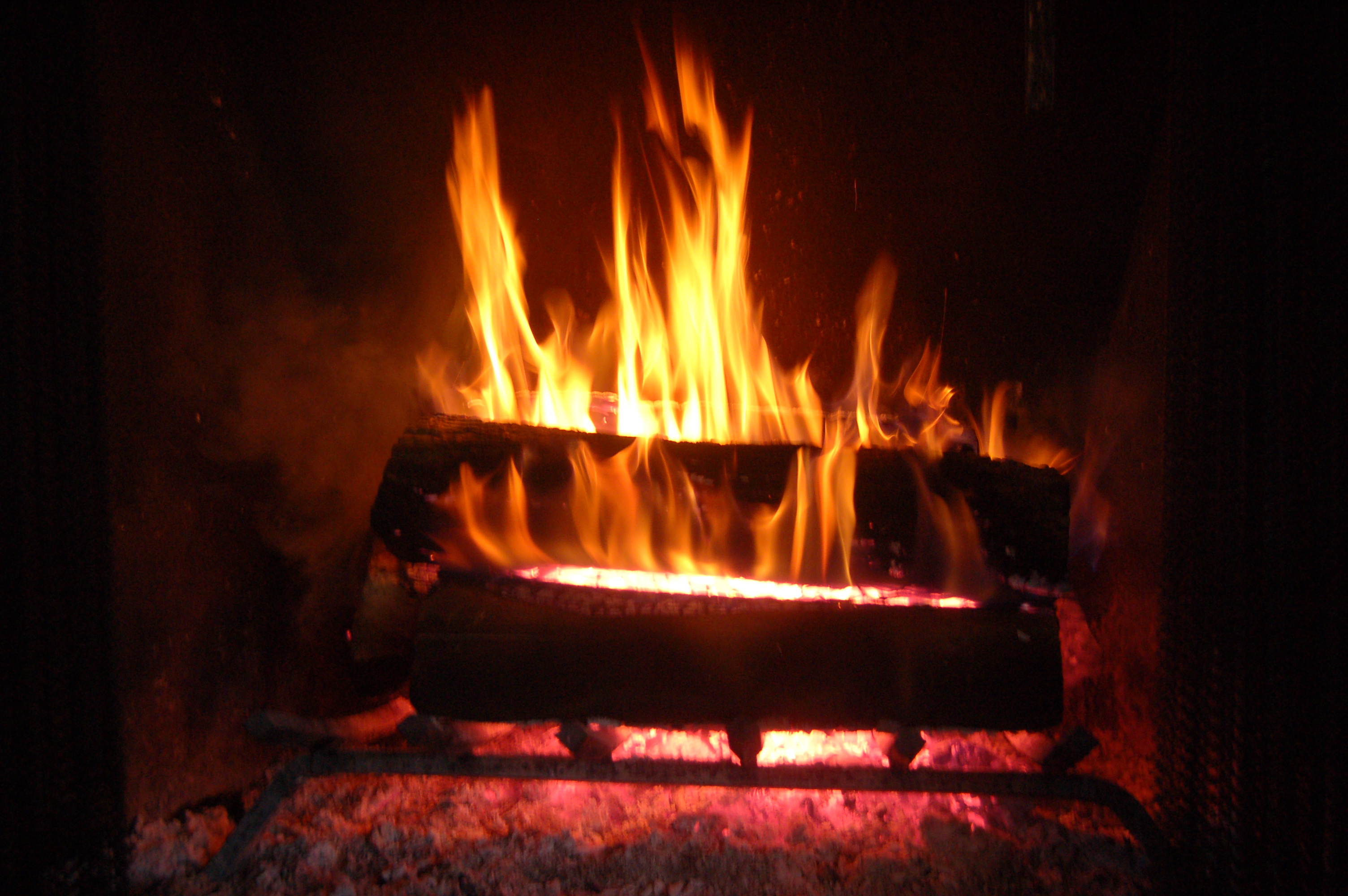
The combination of the snow and the cabin’s chill called for a fire in the impressive sandstone fireplace. I obediently responded.

Snowy scene by Bruce Stambaugh
The snow created picturesque scenes all around our cottage.

With the fire underway, I cranked up the chain saw and headed out into the morning sharpness. Each time I exhaled my glasses steamed up.

There is something about snow, especially the season’s first, that exhilarates me. I have to plunge headlong into it.

The chain saw, which had not run in months, must have liked the snow, too. It purred right along, and the two of us accomplished our woodcutting goal in less than an hour.

The snow was still in place when our friends arrived late morning. They wore the same smiles as my wife and I. I don’t know if it was the snow, the blazing fire, the setting or the combination there of.

No matter how long you live where it snows, there is just something extra special about that first snowfall. This one was breathtaking.

Roaring fire by Bruce Stambaugh
A warming fire is always welcome on a cold, snowy day.

Quaking aspen haiku

Against lazy clouds
and sapphire sky, emeralds
silently quiver.

Bruce Stambaugh
August 18, 2010

In appreciation of Mother Earth

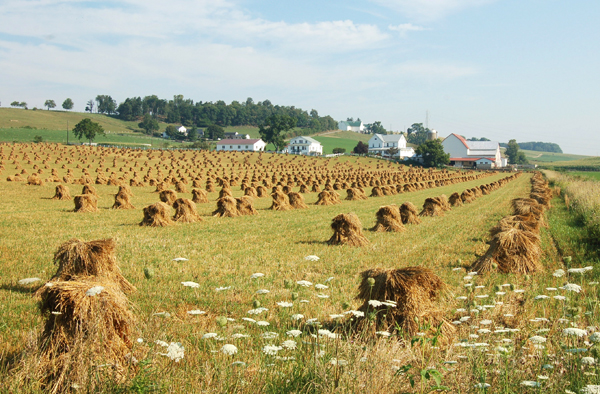
Oat shocks by Bruce Stambaugh
Oat shocks near Mt. Hope, Ohio.

By Bruce Stambaugh

The deep orange crescent moon sat just above the tree line on the dusky horizon. Fanned out high over its tip, Saturn, Mars and Venus sparkled in the late evening sky.

Lightening flashed suddenly and silently interrupting the cloudless scene. Radar indicated the thunderstorm 120 miles southeast near Parkersburg, West Virginia.

The next morning, this natural display of awe and beauty was enthusiastically discussed among those who know the value of such a free show. They were gathered in the shade of a vendor’s tent at the annual Family Farm Field Day event.

Storm approaches by Bruce Stambaugh
A severe thunderstorm near Mt. Hope, Ohio.

It was more than appropriate and not the least bit ironic that such talk should take place at an educational affair celebrating the goodness of the land. These were people who knew the importance of Mother Earth, who knew how to care for her, appreciate her, and affirm her, even profit from her without rendering her useless or sterile.

The venue was as uplifting as the conversation about the storm. Hundreds of black buggies stood side by side against the woods, their unhitched horses now shaded.

Buggies at a hitching rail in Mt. Hope, Ohio
Buggies lined up at a hitching rail in Mt. Hope, Ohio.

Cars, vans and pickup trucks entered at the east gate. Along the drive, dozens of bicycles leaned against chain link fencing that separated yards from right of way and kept children from wandering into the long, graveled lane.

In between these contrasting parking lots, thousands of people milled beneath several large tents searching for information on how to better care for the earth. The slight bluff on which the action took place created a symbolic subliminal significance of man and land over that of man and mobility.

Though most were dressed in homemade denim with suspenders or pastel dresses with coverings and spoke a language I should have learned long ago, I was both at home and in harmony with them. We were all there for the same reason, to learn more about caring for and nurturing the land that provides us sustenance and shelter.

Jr. Burkholder farm by Bruce Stambaugh
A farmstead in Holmes County, Ohio.

Besides the vendors’ displays, tents for keynote speakers, farmsteads and homemakers were erected in a huge horseshoe pattern around the pastured plateau. Of course, there were food tents, too. I couldn’t decide which I liked best, the sugar and cinnamon hot soft pretzel or the salty sweet kettle corn.

With the hot summer sun beating down, shade was at a premium for those seeking relief. That did not deter them from exploring the inescapable interconnection between humankind and our responsibility of caring for the environment.

To be sure, that is serious business. But it was nice to see it presented in such fun and informative ways for multiple generations. To the point, bird, butterfly and nature walks were filled to overflowing.

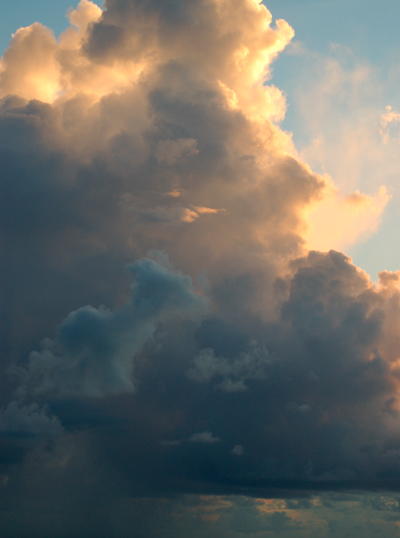
A billowing cloud by Bruce Stambaugh
A storm cloud builds.

But what was really special for me was the dialogue on the previous night’s celestial display. Some of us saw what is erroneously called “heat lightening.”

From the backside of the storm, which is always the safest and prettiest angle, others
saw huge, billowing columns sail through the darkening sky. The higher they rose, the more the lightening sizzled in and out of them, brightly illuminating the swelling clouds.

One in the group had actually been under the building storm and arrived home in time to also watch the stunning electrical display. To hear that enthusiasm, plus see the genuine, cross-generational interest in caring for the ecosystem by so many people stirred my soul.

I left thoroughly uplifted, and with one large bag of kettle corn to go.

In search of the elusive morels

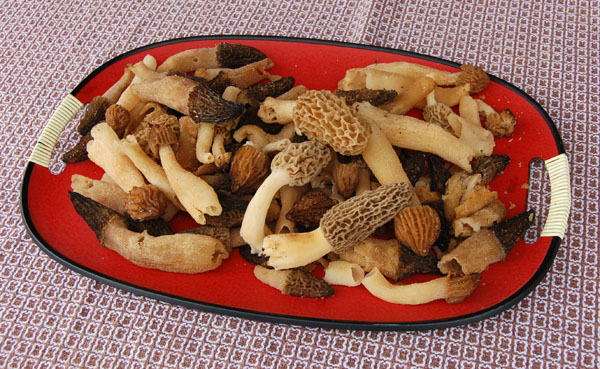
morels
We found this nice assortment of morels "in the woods."

By Bruce Stambaugh

This time of year, where two or more are gathered together in the world’s largest Amish population, there is certain to be a conversation about mushrooms.

Not just any old mushrooms either. We’re talking morel mushrooms, commonly referred to as sponge mushrooms. They can be gray, yellow, brown and even black. Regardless of hue, they’re all good as far as I’m concerned.

After all, once you taste your first morel, you’ll realize they are better than ice cream. That might be because they are harder to find than ice cream. You can’t just go to your local grocery story and buy a pound of nicely packaged morels. Finding them takes effort.

Instead of talking about finding mushrooms, a friend, my son and I put our words into action. We went in search of the elusive, edible fungus. Everyone has their favorite spot to hunt mushrooms. Usually, it boils down to where they were found in previous years. In our case, we headed up a steep hill and into the woods. For the record, it’s a morel sin to ask exactly what woods.

We walked carefully over the spoil bank where my foody son picked wild garlic, across a lane, and down a slope to a deer stand that guarded a placid, clear stream. However, at some point prior to our arrival, the creek had been angry. Rocky, silted debris littered the grassy flats where I had found the largest mushrooms last year. Pretty pink lady’s slippers took their place.

We gingerly made our way through the tangles of downed trees, briars and undergrowth. We headed back up hill, into large sandstone boulders covered with delicately textured lichens and mosses. The last of the spring beauties still blossomed here and there in the sunlit woods, still without its canopy.

The woods grew thicker, the trees taller, and the forest floor more densely laden with last year’s leaves. Emerald patches of new life broke the brownish camouflage. May Apples, lovely lily of the valley and occasional flowering trilliums made refreshing appearances.

I wandered ahead of the others until a pair of unidentified birds winged overhead. Without binoculars, I struggled to identify them against the late afternoon sun. The birds flew off, one after the other.

I looked down, and there against an ancient and fallen, moss-covered elm was my first morel of the season. Before I bent to pick it, I looked all around for others. Mushrooms seldom sprout solo. But this decent gray was the exception.

I hollered to my partners, who were out of sight but within earshot. My shout was promptly returned. They were less than 100 feet away, on hands and knees carefully scouring for mushrooms.

I circled around and joined them. I sat on the leafy debris carpet, straining to find more. Soon I spotted one, but when I reached to pick it my son shouted again. My hand was about to crush another mushroom. That’s how hard these little fellows were to see.

As the even sun faded, woodpeckers still hammered out their territories. After three hours, we heeded their reverberating warnings and retraced our steps. In all that time, we had covered less than a mile.

But the season’s first mess of mushrooms was in hand. Not many, but enough for a luscious meal of the hearty, flavorful morels. Just one taste of these sautéed morsels made all the effort worth it. I tell myself that every spring when the talk of hunting mushrooms in Ohio begins anew.

Bay Photos by Donna

Wildlife Photos From The Chesapeake Bay Region

ROAD TO NARA

Culture and Communities at the Heart Of India

K Hertzler Art

Artist and nature journalist in the Shenandoah Valley of Virginia.

Maria Vincent Robinson

Photographer Of Life and moments

Gabriele Romano

Less Noise. More Meaning

Jennifer Murch

Art is the only way to run away without leaving home. -Twyla Tharp

Roadkill Crossing

Writing generated from the rural life

ANJOLI ROY

writer. teacher. podcast cohost.

Casa Alterna

El amor cruza fronteras / Love crosses borders