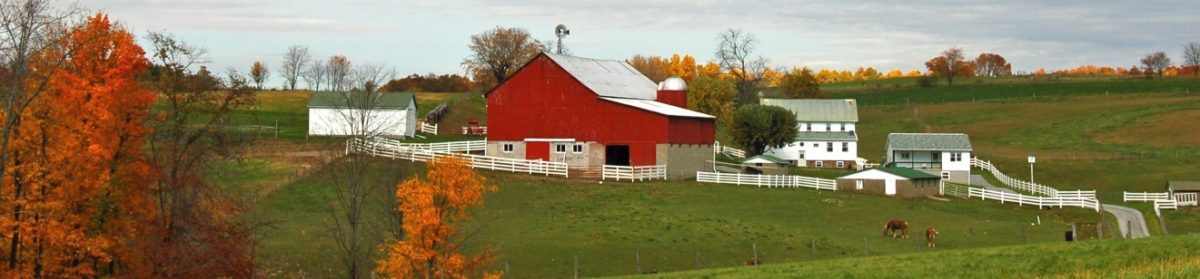
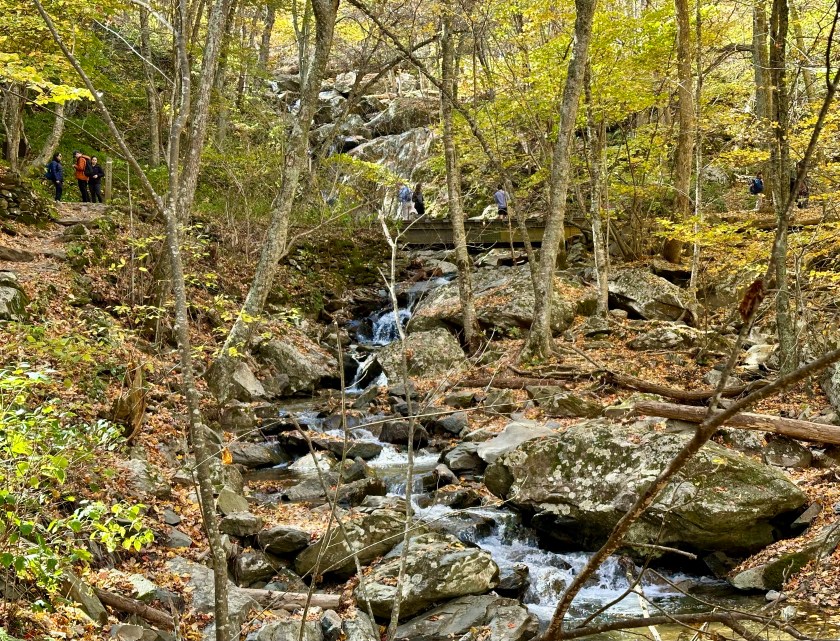
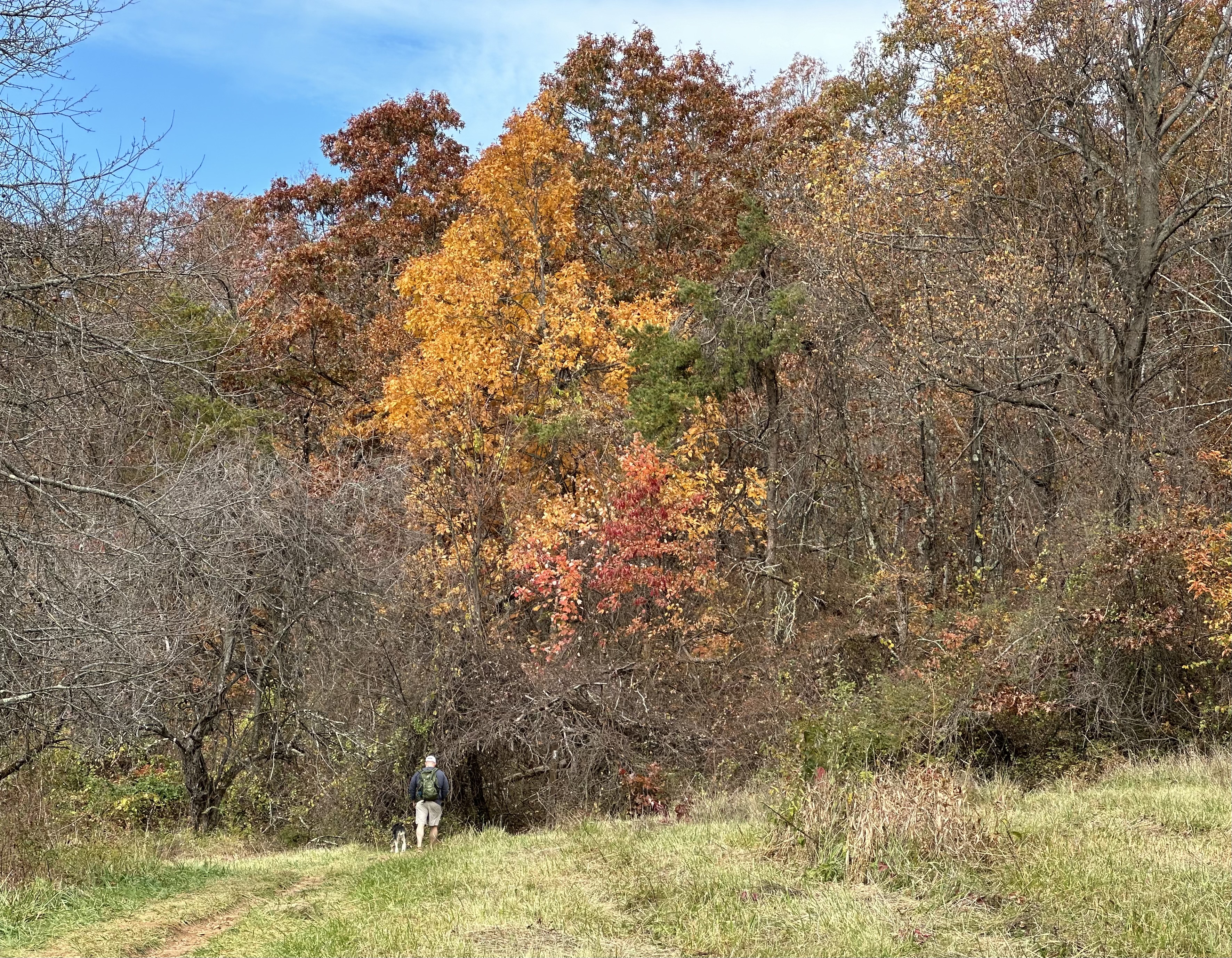
Nature’s beauty reigned even after the peak colors had faded. Photo by Bruce Stambaugh
Fall is a great time to hike, bird, and shoot photos. Shenandoah National Park is my go-to place to combine all three hobbies in one trip.
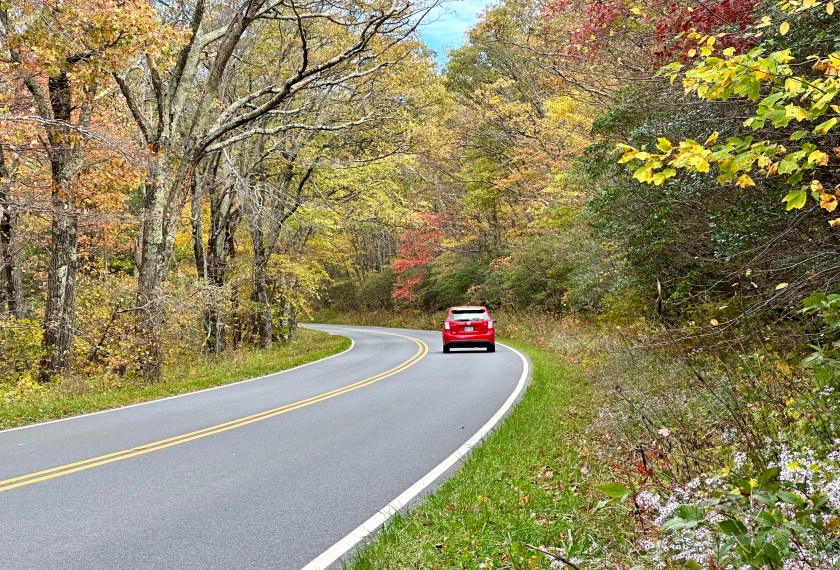
However, I have learned to avoid the peak color time due to crowds. People from around the world visit the park to admire its autumn glory, which means traffic is also at its peak on the iconic Skyline Drive.
By mid-morning, lines of vehicles form at entrance stations. Overlook parking spaces fill up quickly, forcing people to park along the busy roadway. The same is true for trailhead parking lots.
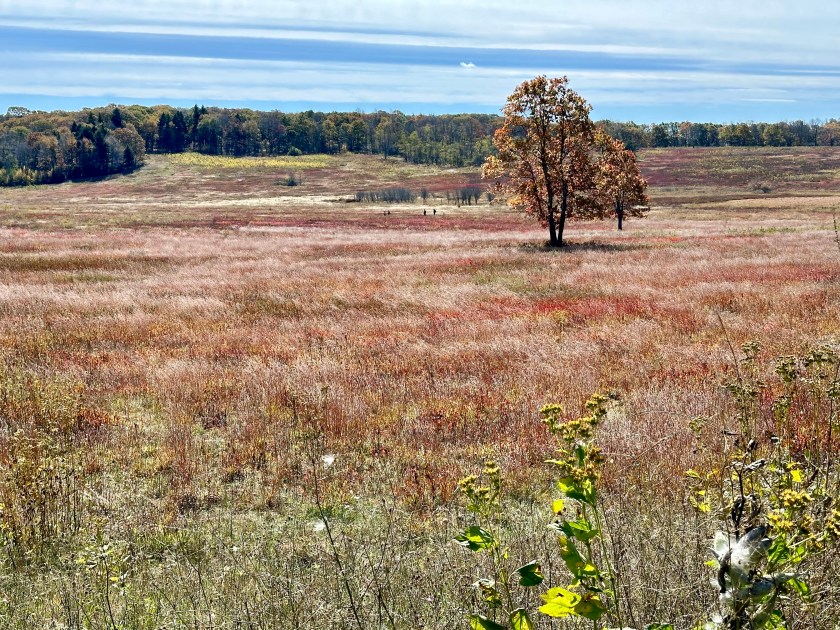
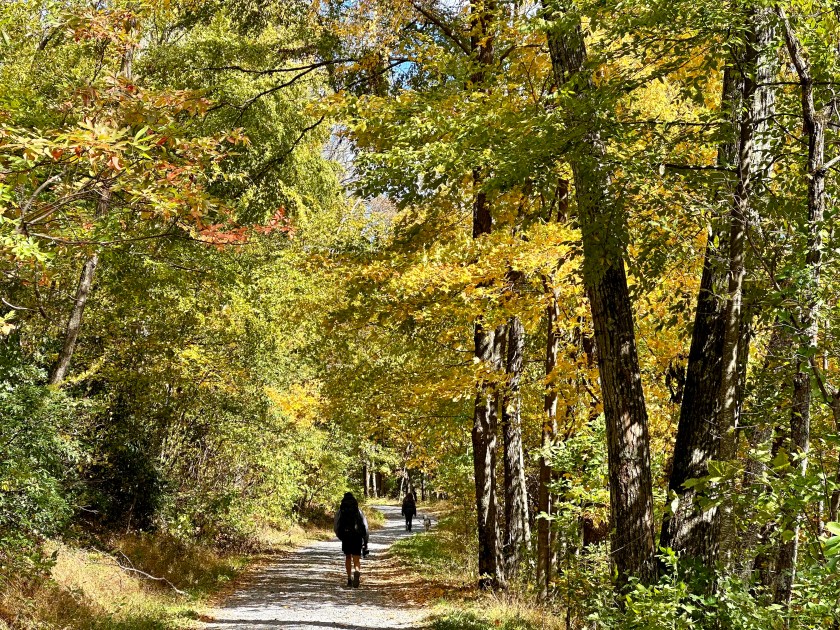
Before the peak of leaf colors.
So, I chose to catch the leaf colors before and after the peak. The park is still busy, but it is tolerable, and I am satisfied with a stirring hike filled with picturesque views, unexpected wildlife, and migrating birds.
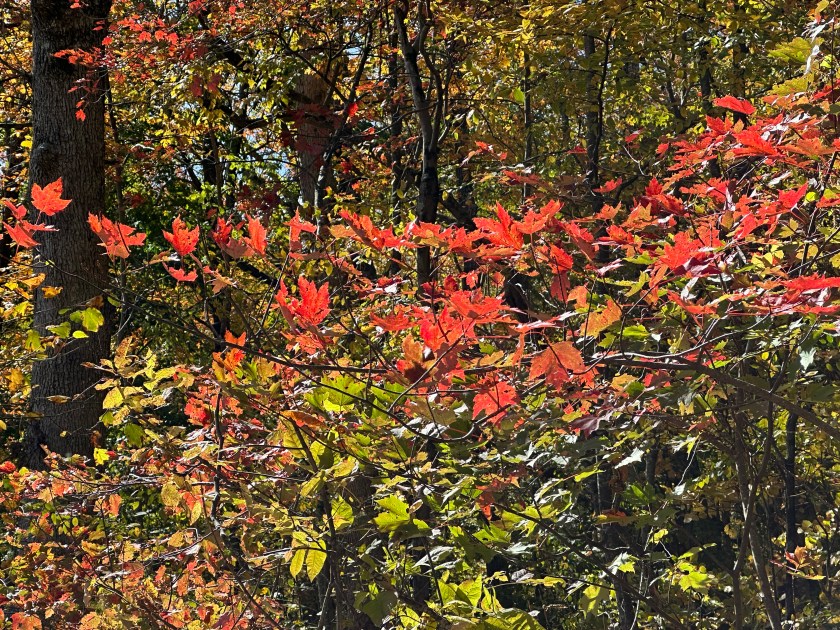
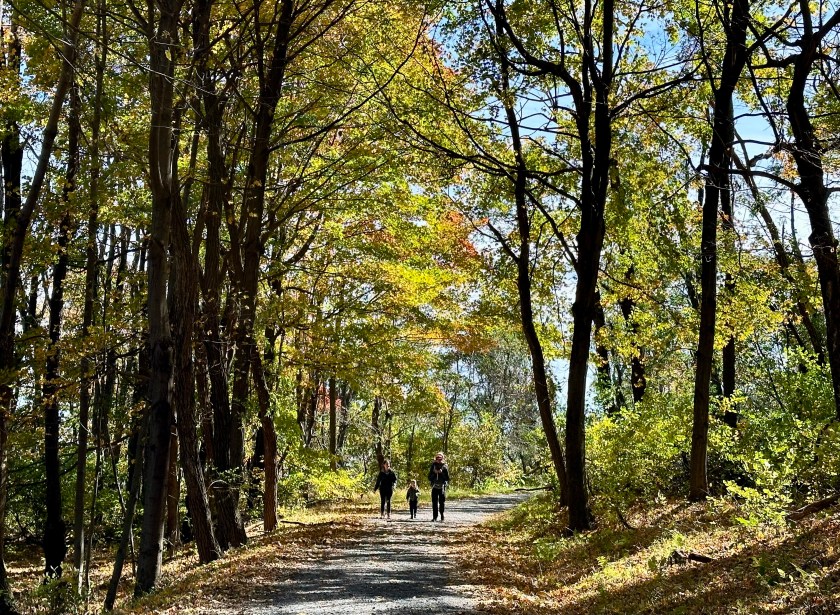
In the mountains, altitude affects the coloring as much as sunshine, cooler nighttime temperatures, and morning frosts. So, the trees might be dull or even bare at the hike’s beginning, and a half mile down the trail, a blaze of color brightens the way.
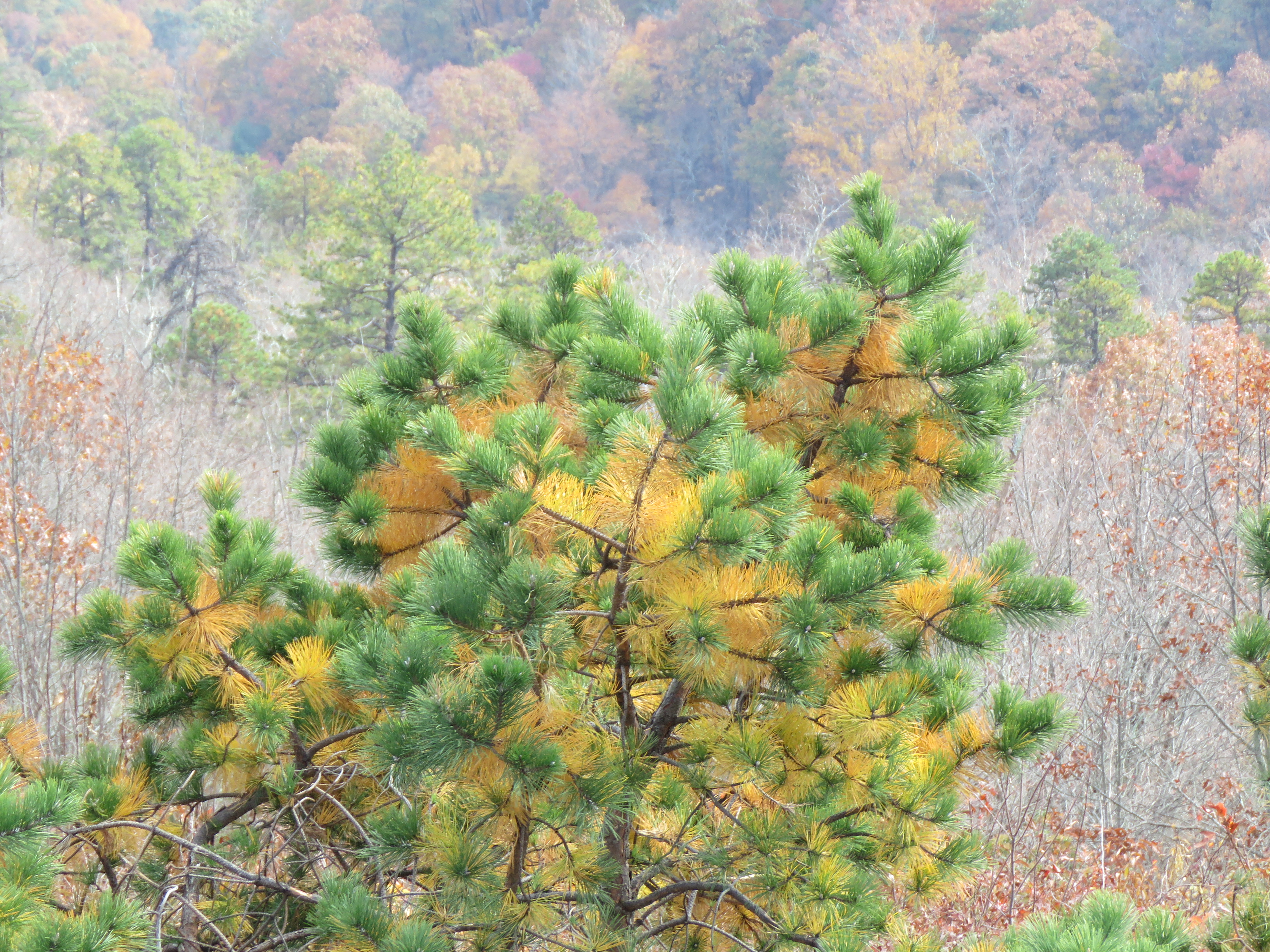
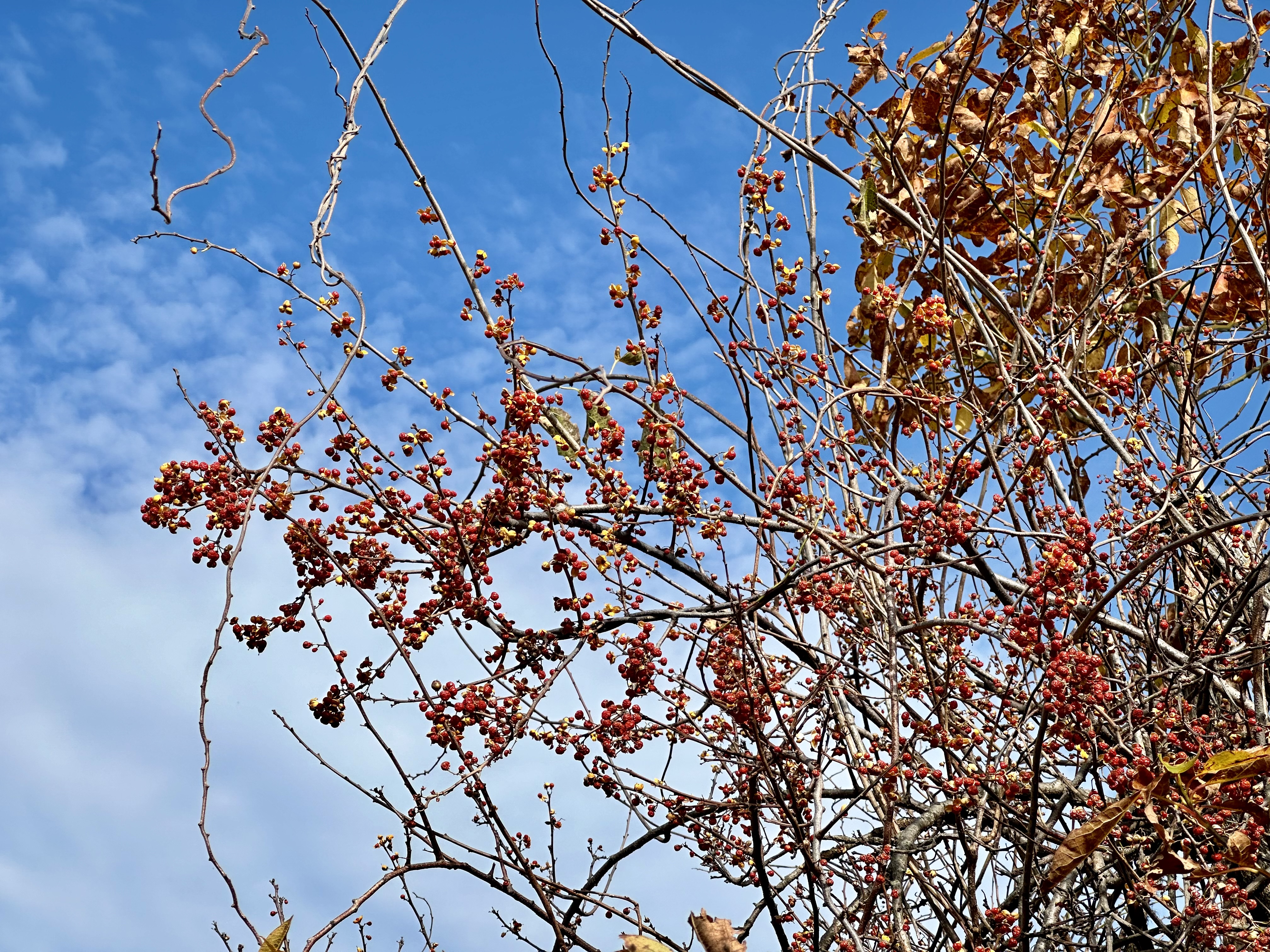
After the peak. Please click on the photos to enlarge them.
Though I have missed the height of the turning leaves, I enjoy the before-and-after with equal zeal. It’s fun to note the differences I discover and meet friendly folks along the way. The park’s beauty has energized them, too.
Besides, I admired nature’s colorful summit in other locales in Virginia’s lovely Shenandoah Valley. It is the perfect place to enjoy hiking, birding, and photography all in one joyous day trip.
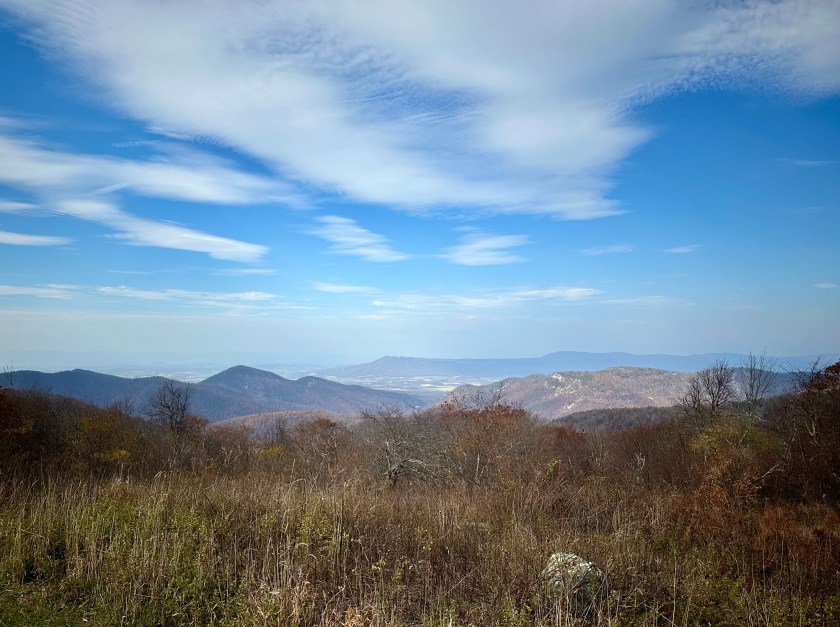
A view west into the Shenandoah Valley. Photo by Bruce Stambaugh
I nearly drove by the two deer. They blended in with the background that well. Fortunately, I spotted them as I passed the old apple tree.
I found the first place to turn around and hoped my hungry subjects would still be there. They were, and I quickly snapped a few shots before they disappeared into the forest.
These two buck deer were on the search for apples. Photo by Bruce Stambaugh
I was on Skyline Drive in Shenandoah National Park. The area between Milam Gap and Big Meadows is peppered with apple trees planted by farmers before the park was established in 1935. The trees still produce apples, and deer forage on them in the fall.
Unfortunately, this pair of bucks was late to the party. All the reachable apples and those on the ground had already been consumed.
Gravity and nature will eventually have their say, enabling the deer to satisfy their taste for bright red apples.
The two bucks before they scampered into the woods. Photo by Bruce Stambaugh
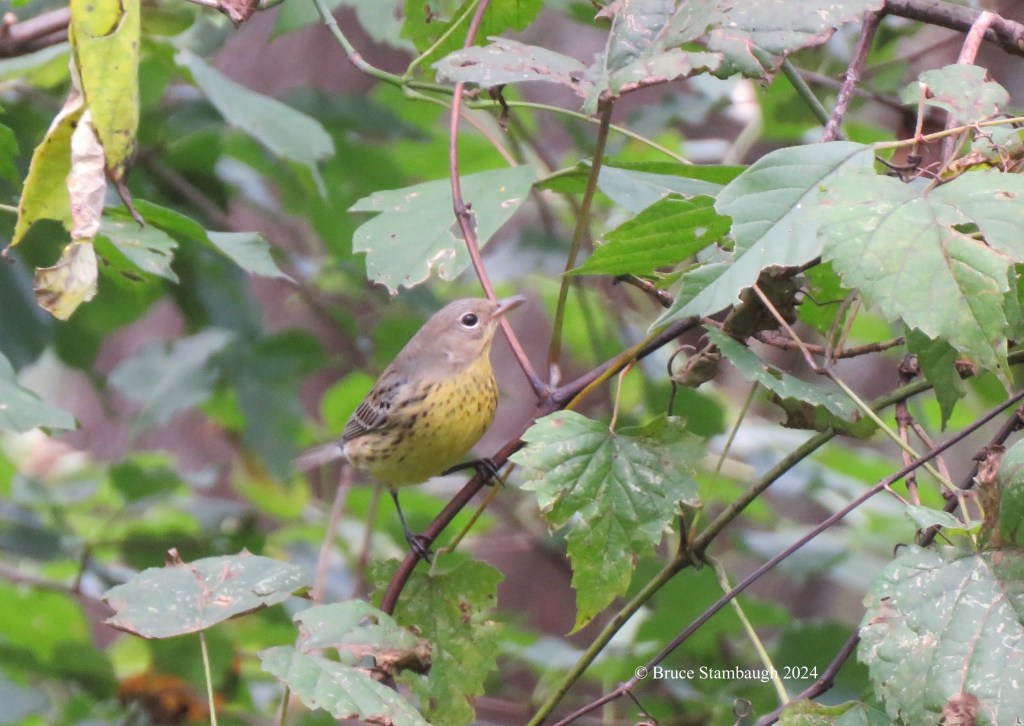
Kirtland’s Warbler, Waynesboro, Virginia. Photo by Bruce Stambaugh
When I opened the email from the birding listserv this morning, I knew I would pursue this rare bird. Fall bird migration was in full swing, and it’s a real rarity when a Kirtland’s Warbler is spotted. Experts estimate that only 1,500 of this species remain today.
It turned out that this bird was in a park only a mile from the wildlife rescue center where I took the injured Cape May Warbler last week. I had never been to the park where the Kirtland’s had been spotted.
My wife and I headed southwest toward Waynesboro, taking familiar back roads. Crossing over I-81 told us we had made the right decision. The busy highway was nearly bumper to bumper in both north and south lanes.
The GPS took us right to the park. The small parking lot was full, but fortunately, a space opened up right after we pulled in. Another birder arrived right after us and wondered where the bird was. I had no idea until we saw a small group emerge from the trees and thicket carrying binoculars and cameras with baseball bat-sized lenses.
They stopped and pointed their cameras and bins toward the thicket as we joined them. They spotted the bird immediately, and as good birders are want to do, they helped newcomers like us find the bird.
My wife had the rare bird in her binoculars before I did. Once it popped into the open, I saw the bird through my binoculars and then tried to capture images on my camera. Documentation is essential in birding, especially rare birds.
The bird darted up and down, in and out of the jungle of vines, saplings, and mature trees. It foraged on insects and berries. The bird finally popped into my viewfinder, and I got this photo and a few other less desirable ones.
Seeing a Kirtland’s Warbler is always exciting, especially if it is a life bird, meaning the first time you have seen the elusive bird. It’s a birder’s dream come true. Indeed, this bird was a lifer for several in the cooperative group.
Birding is all about finding and sharing, which Neva and I experienced today. On our way home, we celebrated with a delicious late lunch at our favorite burger place.
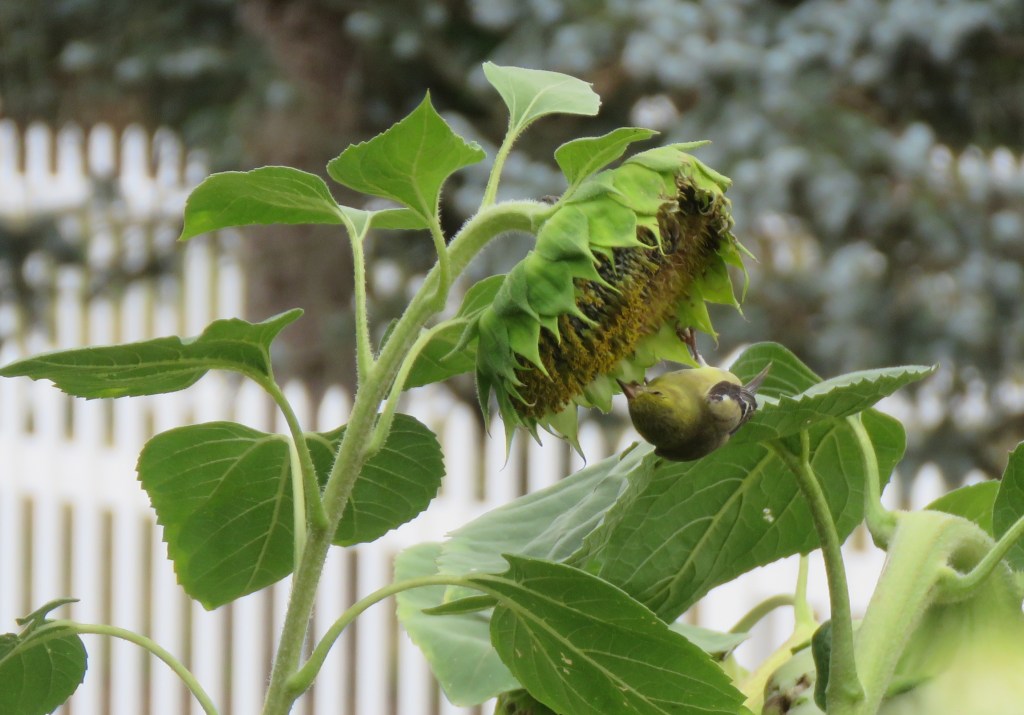
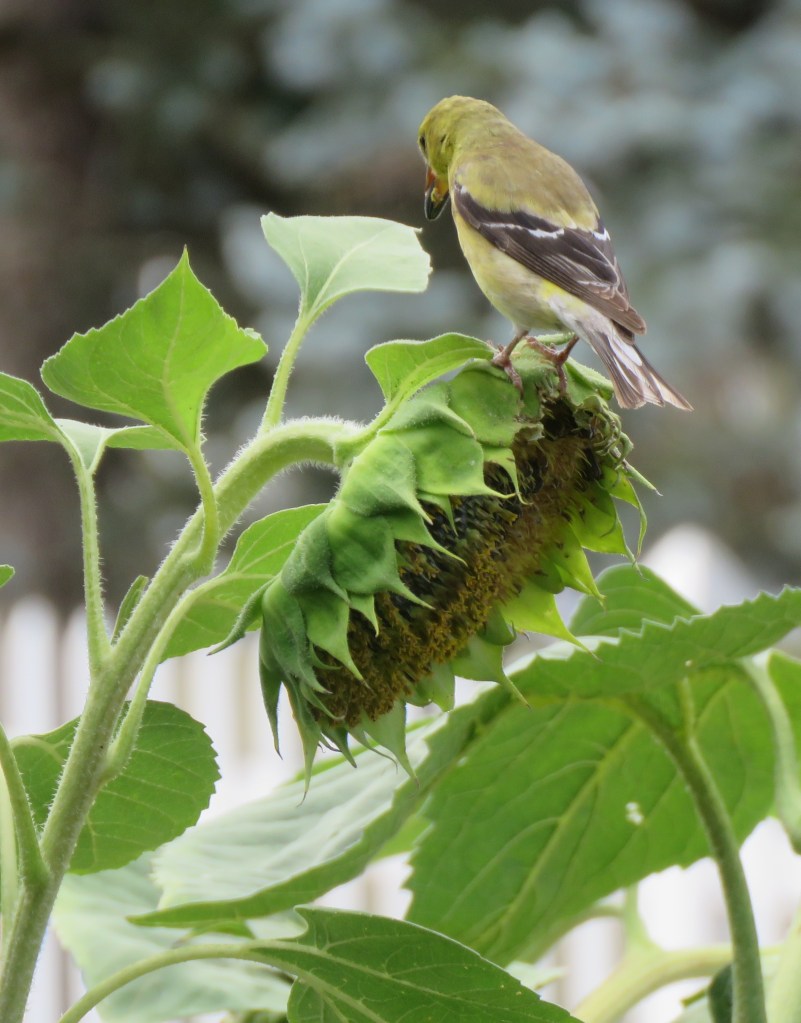
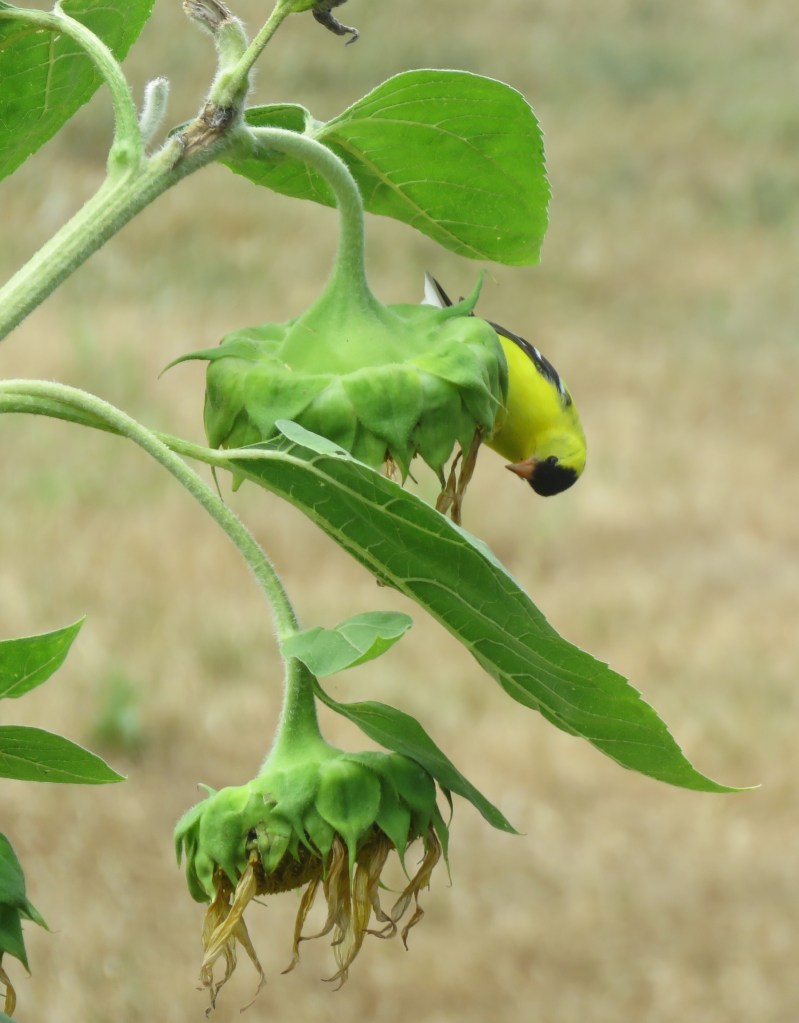
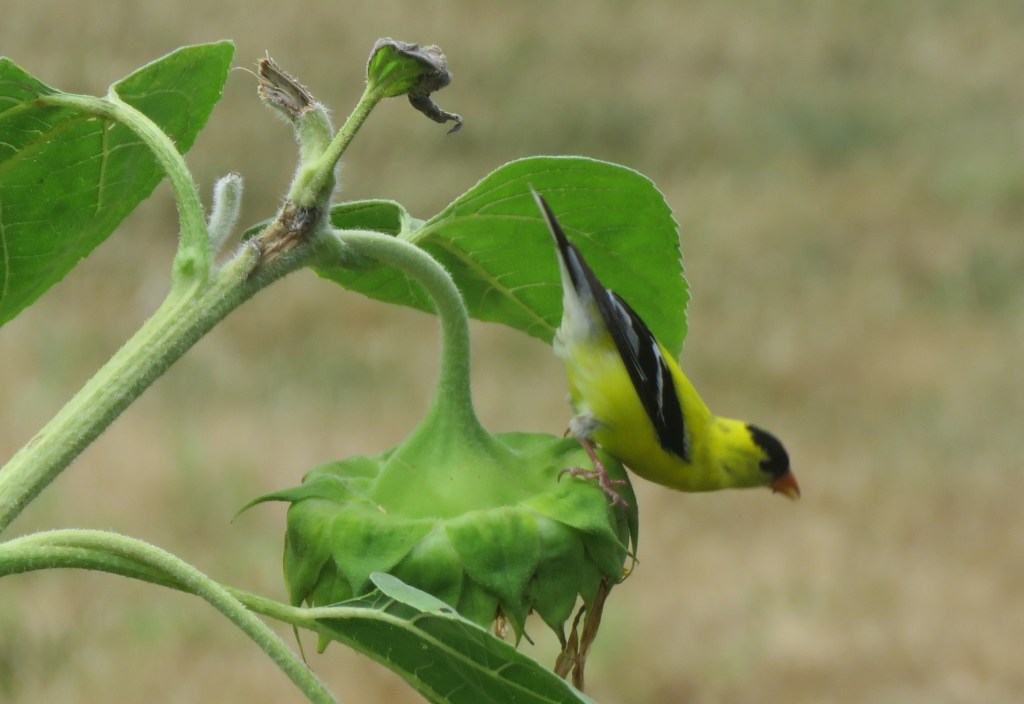
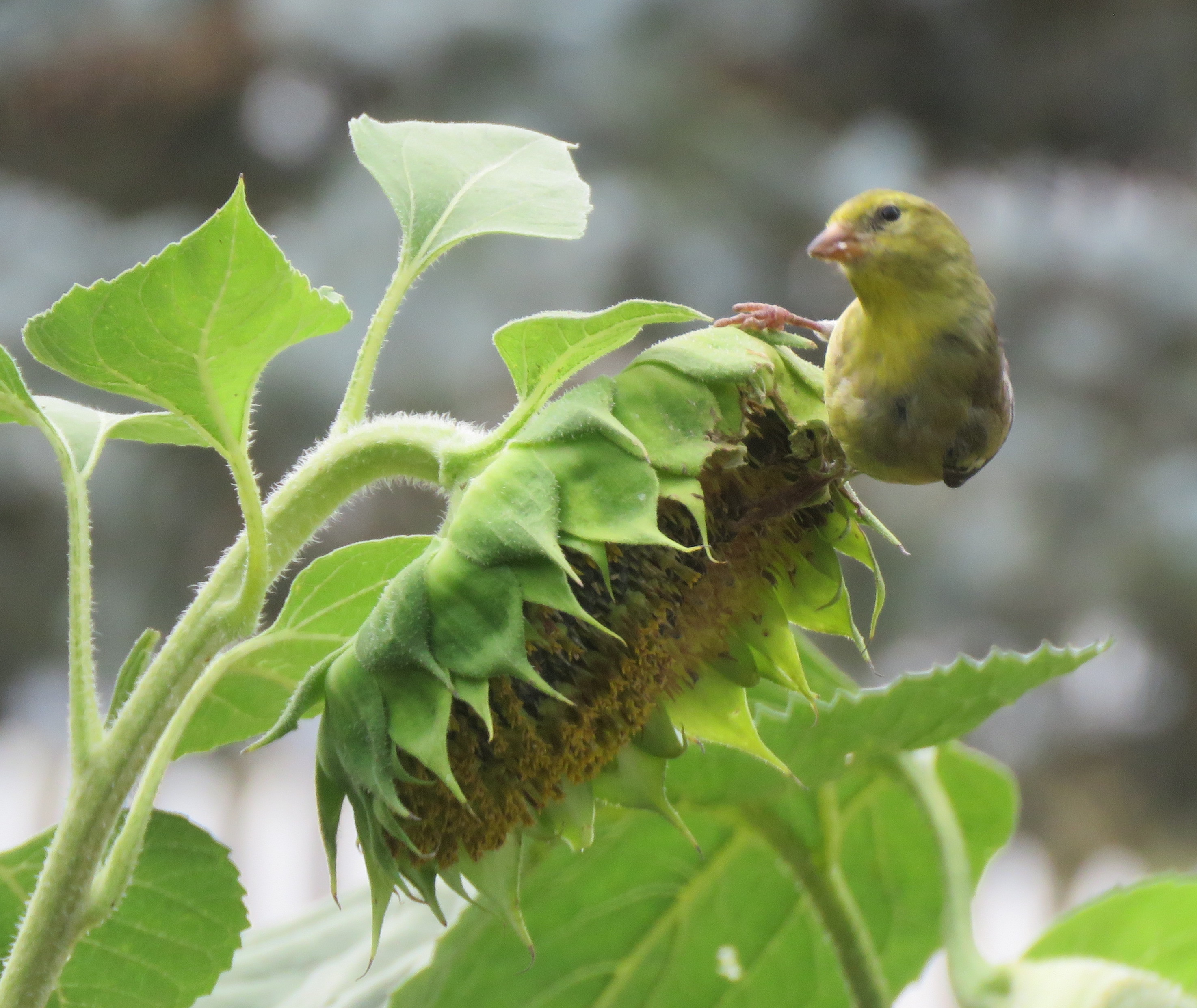
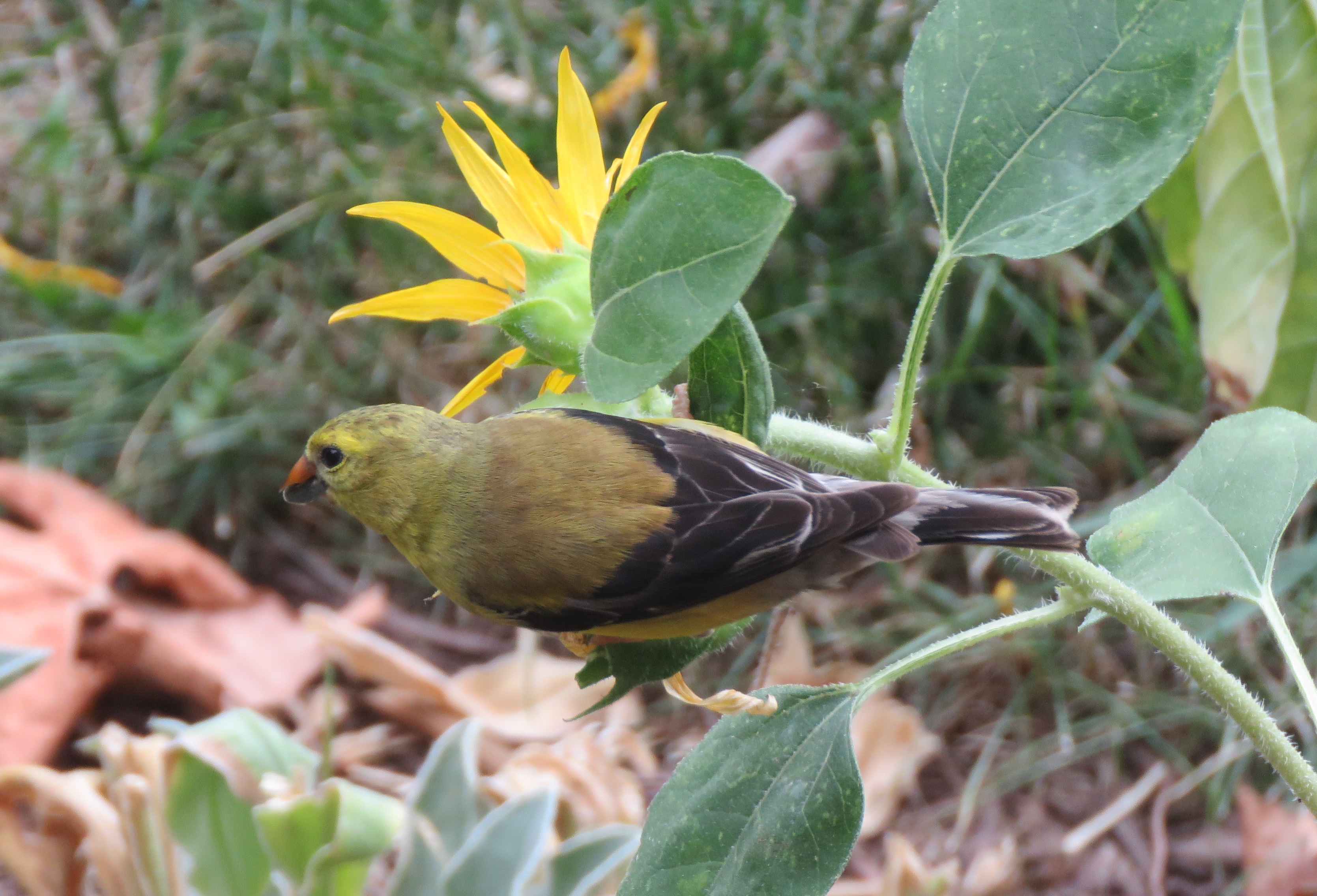
A female American Goldfinch plucks a seed from a sunflower head. Photo by Bruce Stambaugh
Can you eat upside down? American Goldfinches sure can!
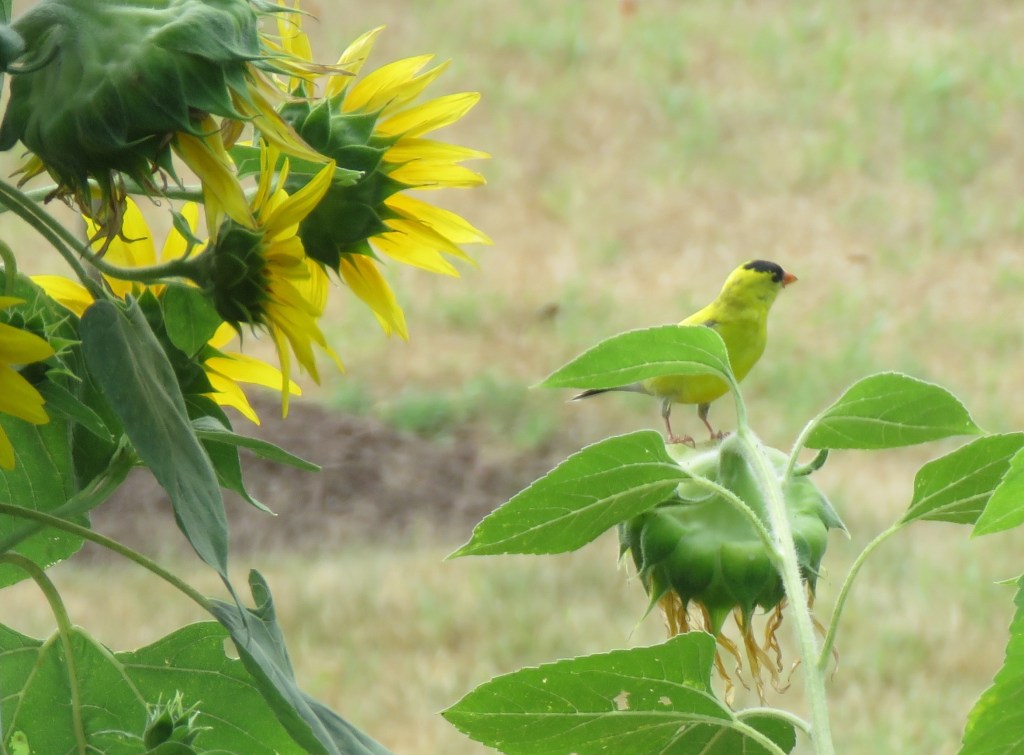
In the summertime, the acrobatic little birds put on a show around sunflowers. Often, they hint at their arrival at a sunflower patch with a distinctive, cheery call. Soon, they land atop a flower and begin their feeding.
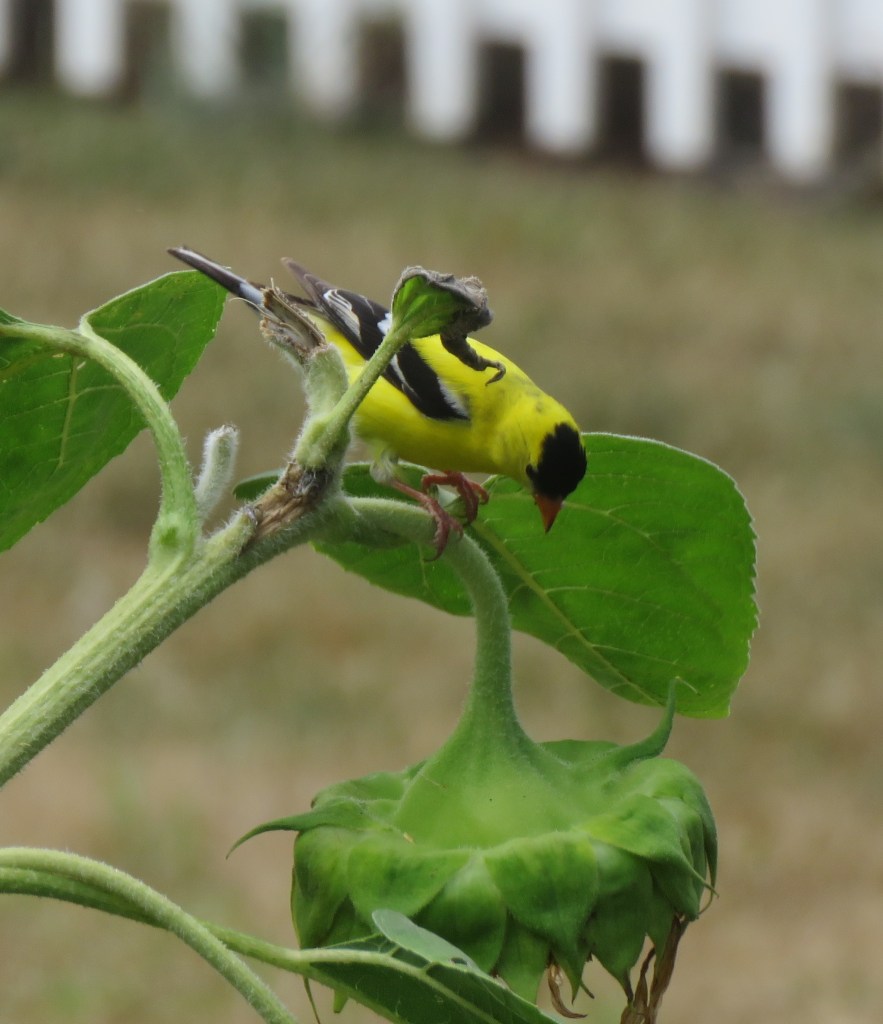
The lively and colorful birds use their short, sharp beaks to pry the juicy new seeds from the flower head. Their sturdy pinkish bill effortlessly cracks open the seed, and the birds devour their reward.
The American Goldfinches seem able to eat in any position: upside down, sideways, or at any angle. Since the laden flower heads bend toward the ground as their seeds mature, the birds have no choice but to attack their target in any way they can. The birds gain needed nutrition and moisture from the fresh seeds.
The male looks regal in its summer mating plumage of bright yellow with jet-black wings, tail, and forehead. A white wing-bar adorns each wing. The female is duller in color year-round. She is feathered more for camouflage than fashion. Her pale yellow-green is much duller to help blend in with the greenery she inhabits. The female’s coloration helps conceal the eggs during incubation and the young when they hatch.
In the winter, both sexes turn dull to protect themselves by blending in with their weedy surroundings. Black oil sunflower seeds draw them to feeders, though the pulp center has to be much drier than the fresh-off-the-flower summer offerings.
Of course, goldfinches aren’t the only species with this feeding trait. Nevertheless, it’s a joy to watch their antics in any season.
Birds aren’t the only animals that prefer fresh sunflower seeds. Photo by Bruce Stambaugh
Teens learning about Big Meadows in Shenandoah National Park. Photo by Bruce Stambaugh
This is the third installment of a series celebrating National Park Week.
I often hike alone. But occasionally, I enjoy sharing my love of nature with others.
The church I attend has a mentor/mentee program for youth. A friend and I each serve as mentors for two teenage boys. Knowing we all enjoy the outdoors, we took them for a day trip to Shenandoah National Park last summer. We had a riot.
These energetic young men enjoyed every aspect of the trip. They loved the hikes and the enthralling views. They also identified birds, flowers, and rocks and occasionally pestered one another. A pair of fawns grazing at the edge of Big Meadows startled us as we walked along the union of the meadow and the forest.
We rested on a rock outcropping overlooking the always lovely Shenandoah Valley. The boys loved scrambling over the ancient rock formation and resting in the warm sunshine, basking in all nature’s glory. Given our generational spans between teens and septuagenarians, I marveled at our common contentment.
But that, in part, is what national parks are for. People of all ages, races, religions, backgrounds, and interests feel at home in our nation’s beautiful national parks.
Our excursion was a perfect example of how to celebrate National Park Week.
I couldn’t help but feel wide-ranging gratitude as I walked with a dozen other nature lovers. Billed as a bird walk, it was so much more than that. I wasn’t surprised by that realization.
Most in the group who took the tour, including the property owners, were in our third third of life. That is to say, most of us had more days behind us than we had ahead of us. That fact only made the pleasant August morning sweeter.
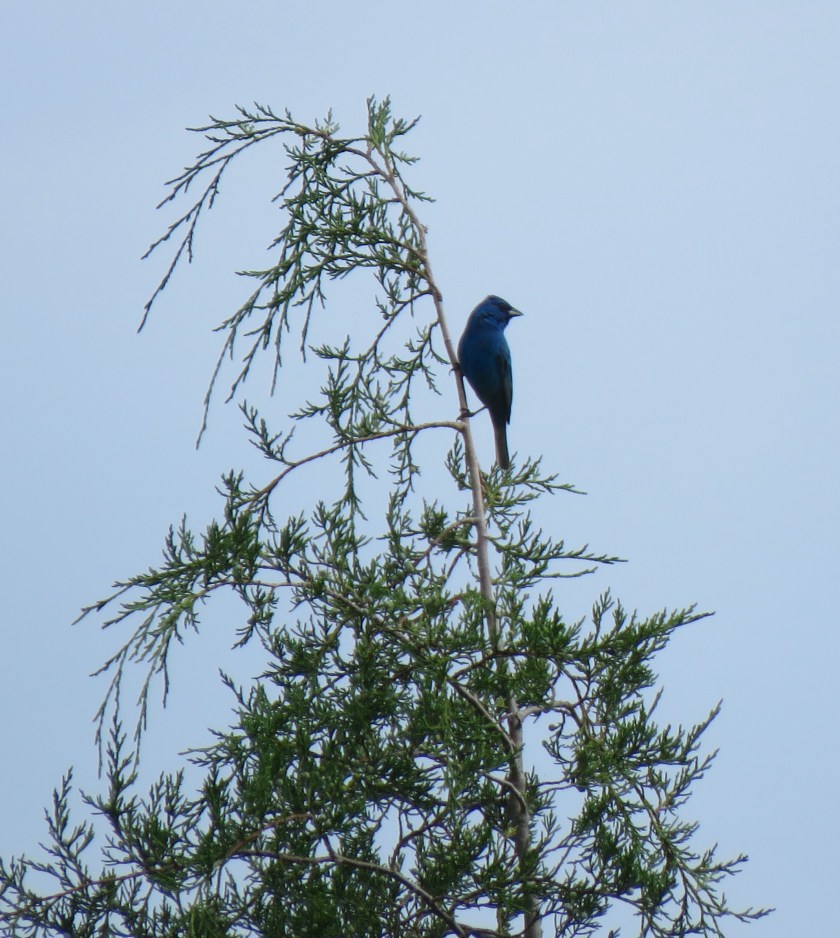
Indigo Bunting.
The landowners invited a noted local birder who tried his best to keep us corralled and informed. But Baby Boomers being who they are, we often overlooked our leader, and most of the group had moved on. Guilty as charged.
I attribute that to being enraptured with our surroundings. We walked the mown paths amid meadows of wildflowers, stands of woodlots, and the buzz of bees, the distraction of beautiful butterflies and plenty of avian species. There were too many times when I simply wanted to stay in place and absorb all that surrounded me. Believe me, there was lots to take in.
But we didn’t want to overstay our welcome. So, like it or not, this grateful group of nature enthusiasts kept moving. There was so much to see in such a short time.
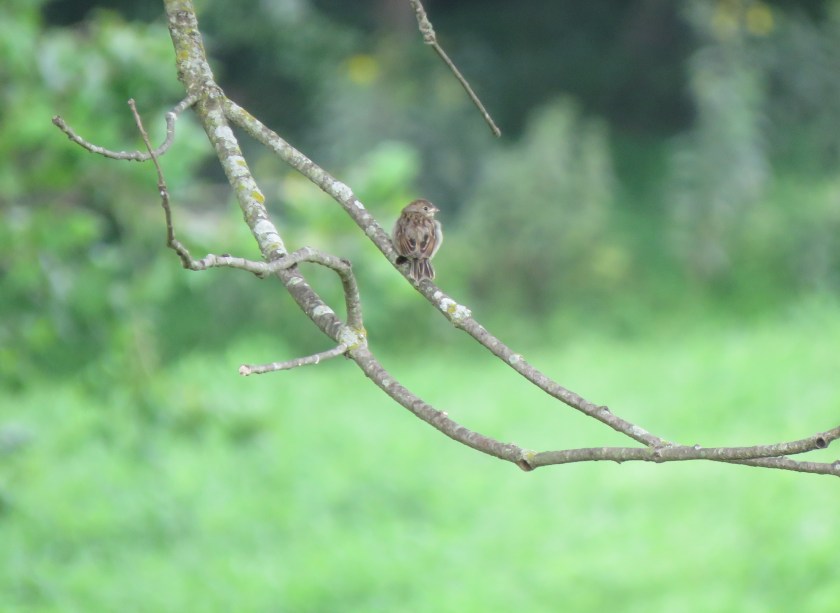
Near the end, I lingered to identify a solitary sparrow that perched in a tree many yards away. My binoculars didn’t help much given the distance. While I waited for the expert birder to verify my find, a Belted Kingfisher zoomed over the rushing creek below me. Just then, an Eastern Meadowlark took flight overhead, and a gang of Barn Swallows abandoned their perches on the big round hale bales in search for breakfast.
The sparrow sat dutifully on the tree limb while the walk’s leader edged closer. Finally, it turned its head, revealing its pinkish bill. Field Sparrow, it was.
We saw 44 species of birds in our limited time. We got some excellent looks at songbirds and others. I was torn between birdwatching, snapping photos of butterflies, and enjoying the many summer wildflowers.
I was grateful for this kind couple to invite us onto their property and allow us to enjoy the fruits of their labor. After all, that’s how gratitude works. Blessings upon blessings create overflowing gratitude that begs to be shared.
I wouldn’t have seen this hidden treasure if it hadn’t been for another photographer. My wife, some friends of ours, and I were driving into Ft. Clinch State Park at the north end of Amelia Island, Florida, when we noticed a woman with a huge lens on a tripod aimed at a tree.
That could mean only one thing: she was photographing a bird. I parked and exited the van, eager to know what her subject was. She had me look through her long lens. This beautiful Great Horned Owl stared back at me.
I quickly pointed my camera at this beautiful bird and carefully snapped away. I quietly thanked the woman for graciously sharing her find with me. Thanks to her, I was also able to view this superb owl resting in the fork of a live oak tree.
How do you mid-summer dream? It’s something we all do but may not recognize it as such. I’m not necessarily channeling Shakespeare’s classic comedy either.
Mid-July is the time of year when we find ourselves drowsing. We can thank the month’s long days of heat and humidity for that. I’m not complaining, mind you.
Summer’s lush and contrasting colors are at their peak before August’s dog days wither and fade them. There is no better time than the present to commune with the out-of-doors. It is summer, after all.
It’s a dreamy time of year. Nature gives us plenty of opportunities to while away our time by gazing at the many varieties of vibrant and verdant scenes that surround us. City, suburban, or country, all we have to do is notice the abundant bold beauty.
There are plenty of options for all ages. Venues like the Wilderness Center offer multiple choices for summer dreaming. Stroll the many trails or take a seat on a bench or a log and just sit and absorb whatever you encounter. Mosquitoes don’t count.
Put on your best summer muse. It could be the initial quiet moments of the dawning day or the cool of the evening as Venus glimmers brightly low in the western sky.
Sit on a porch swing and watch the fireflies flicker in the late evening haze. Cast a keeper-hook into a bed of blooming water lilies and gently reel and wait for that expectant tug on the line.
Swim in a farm pond with your teenage friends, or just lounge on a dock and bask in the ensuing laughter. Sit around a campfire, listening to the snap, crackle, pop, and watch the sparks skitter higher and higher until they fizzle.
Stand at your garden’s edge, and smile at the success of your persistent efforts to keep the weeds at bay. Watch a sunset over a lake or stream. Be awed as the orange, golds, and reds magically meld into pinks and blues as dusk becomes nightfall.
Silently follow a family of chimney swifts as they swoop in wide loops overhead, busily chattering before suddenly dropping into a nearby smokestack. Sit high in a mountain at a scenic overlook for hours and savor the ever-changing view.
Don your skis and skip wave after wave behind a speeding motorboat, laughing in the glorious moment. Share a homemade sour cherry pie with generous scoops of vanilla ice cream with your grandchildren.
Even Britain’s Queen Elizabeth has embraced the dreaming. She recently opened up the Buckingham Palace lawns to the public for picnic lunches. Take your own food, of course.
Studies have shown that spending time outdoors can improve your health. A mere 20 minutes outside three times a week could make a huge difference for you physically and mentally. By month’s end, you will have spent five hours recharging in nature.
Think back on all that has transpired in the last year and a half. Think ahead about what might yet be. Most significantly, dream, observe and appreciate all the goodness around you at this midway spot in our calendar year.
We all have endured a great deal, some more than others. There may be more to come. That’s all the more reason to take time to find a special place of respite outside, a spot where you can reflect and dream.
We can’t change the past, and we can’t know what lies ahead. We can, however, enjoy the moment at hand.
There is no better place to do that than your favorite open-air space. Happy mid-summer dreaming.
Look quickly, or you might miss this lovely spring wildflower. Bloodroot blooms March to mid-April here in Virginia’s Shenandoah Valley.
There is much to like about this aptly named wildflower. This lovely perennial herb with a simple leaf formation blooms across much of the midwest and eastern United States and into several Canadian provinces. As this photo shows, however, the blooms are short-lived. Some are at their peak, while others are beginning to wither, while still others are beginning to unfurl in the full sun. The flowers close at night.
Look for these beautiful wildflowers in the leaf litter of deciduous forests. Their buttery centers are surrounded by multiple frilly white pedals. Native Americans used the blood-red juices produced by their root stems to dye baskets and clothing. They used the coloration for war paint and insect repellent. The juice, however, is poisonous if ingested. The generic name, from Latin sanguinarius, means bleeding.
Why are people drawn to the edge of the sea? It’s not a frivolous question.
Spending the heart of the winter at a rented condo on the beach, I have observed the ocean lure people of all ages to her shore. There seems to be something magical, magnetic to where frothy waters lap at sandy beaches.
People young and old seek that seemingly sacred spot that wavers with every collapsing wave. Even the shorebirds covet that undulating, elusive line in the sand.
The tiny and swift sanderlings poke and prod the moist sand for nutritious crustaceans on the shore’s surface or just below. They always scurry ahead of the washing water as if they are afraid of getting their feet wet.
Willet.
Sanderling.
The larger willets saunter along probing for the same bounty with their sturdy black bills. They, too, avoid the ebb and flow as if their lives depended on it. Perhaps they do, instinctively knowing the consequences of being swept away.
Humans of all ages, however, take a wide variety of approaches while at the shore. Throwing caution to the sea breezes, children rush squealing to the water’s edge. Whether in street clothes or swimsuits, the youngsters wade right in, much to the horrors of their adult overseers.
Jogger at dawn.Are they lulled by the rhythmical sound of the waves? Does the foamy surf beckon them to come to see the sea? Do they thrill at the sensation of surviving the rushing, rolling water?
I suspect all of that and more. Unlike most parents, the children have no fear of undertows or rip currents. The adults quickly catch up and take charge, even at the expense of getting their own feet wet, shoes, or no shoes.
Teens, of course, don’t care. They, too, wade or rush or plunge right in, regardless of attire, or the water’s temperature. In February, it may match the chilly air temperatures, made cooler still by the persistent winds.
The adults also are intrigued by the sea, each in their own way. Some jog while others walk along the water’s edge for exercise and fresh air.
Conversely, the snowbirds take their time. They have earned it, after all. They relish being away from the cold and snow up north. Retirees prefer to traverse the firm, moist sand closest to the water for its support.
This slideshow requires JavaScript.
Many walk with their heads bent forward, searching for colorful shells or sharks teeth. A few long for treasures of a different sort. They sweep the sand with metal detectors seeking what others have lost.
Some beachcombers spend many minutes inspecting one spot before they slowly move on. Others are content to stroll more for the exercise than the shells. All, however, are careful to mind the lapping sea, especially if the tide is coming in.
Other beach walkers have another purpose in mind. Their canine pets demand to be taken on their necessary jaunts. Dogs of all shapes, sizes, and breeds head to the shoreline.
A few folks are content to simply sit and enjoy all their senses in one spot. They watch, read, sleep, or chat with companions for hours.
Hardy souls ply their skills at fishing. I think the dolphins, ospreys, and terns are more successful.
Like all the others, I also answer the sea’s siren call. I join them in their multi-faceted love affair with the seaside.
At dawn, I let my camera document all the unfolding radiance. Nothing beats a dazzling sunrise, except sharing it with others.






























You must be logged in to post a comment.