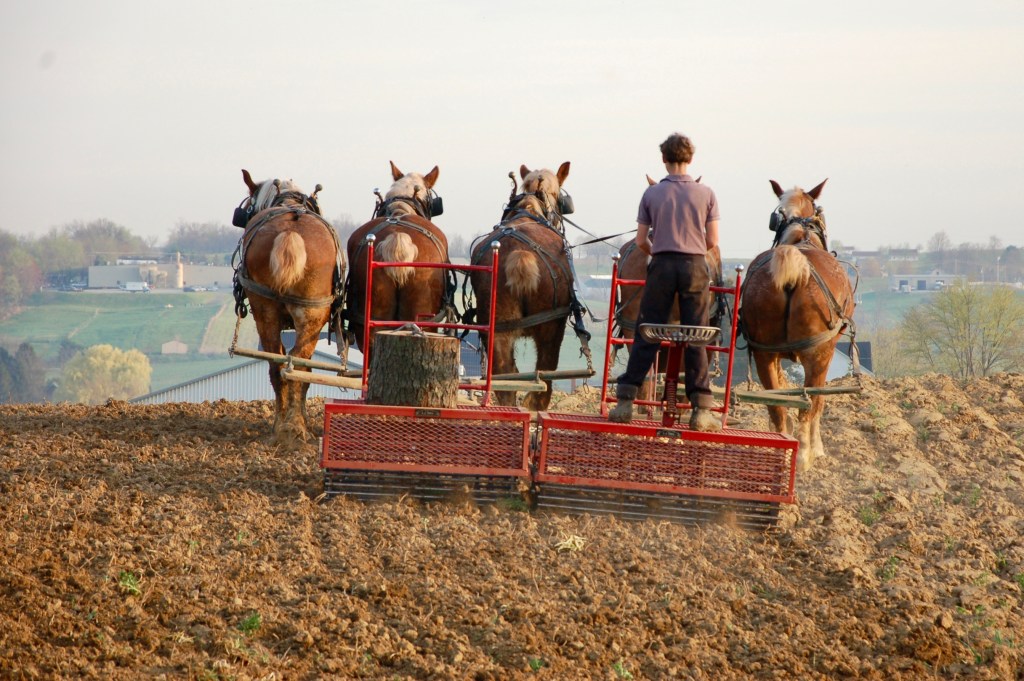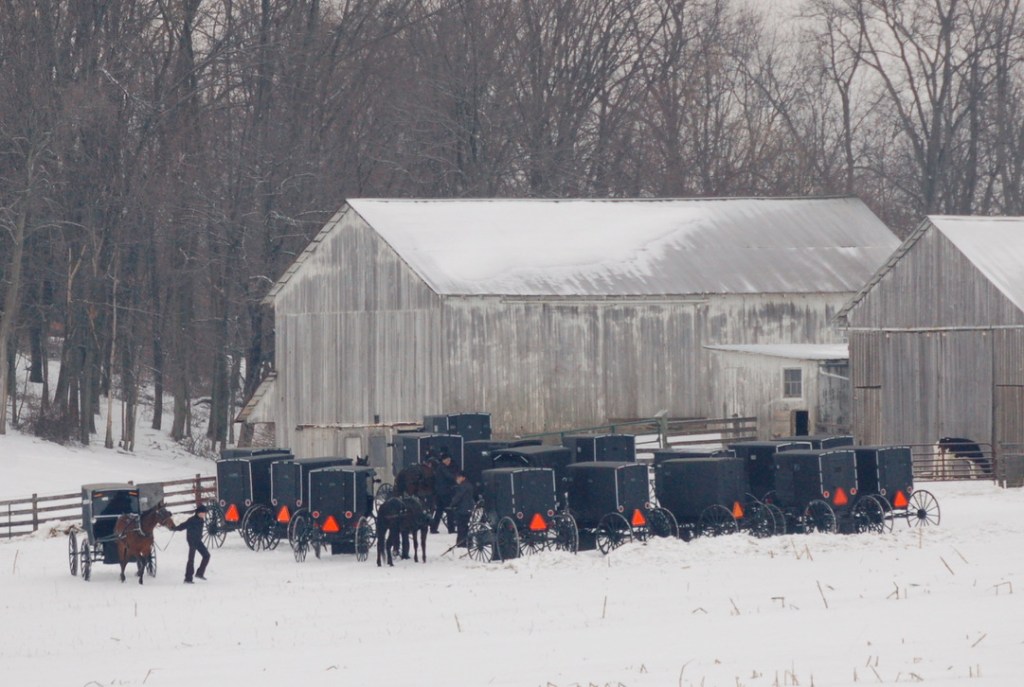
I was sorting through some photos, and found this image I took when we lived in Ohio’s Amish country. Our house was built on an Amish farm and set tight against the northwest property lines. So, we were always close to all the farming action.
This enabled me to take photos of the family farming in every season. Here, one of the farmer’s sons guided the team of workhorses pulling a new-style harrow to break up the plowed rows of soil, turning it to prepare for planting.
Out of respect to the family, I tried not to take photos of their faces. They knew I was shooting photos because I gave them copies of photos from around their farm.
An Amish teen leads a team of horses harrowing a plowed field. Photo by Bruce Stambaugh
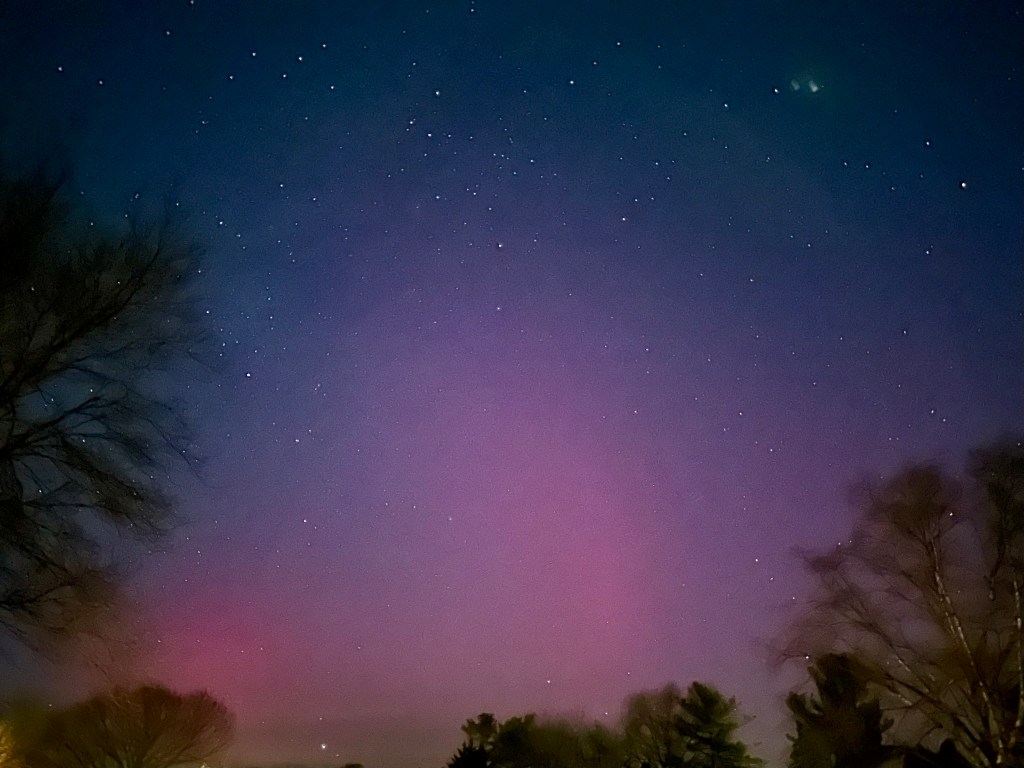
The aurora borealis as seen from my driveway on January 20. Photo by Bruce Stambaugh
I get excited when there’s a chance to see the northern lights or aurora borealis. I suspect I’m not alone. Why shouldn’t we be excited?
After all, the colorful lights are dancing in the sky over the polar north. That’s a long way from the Shenandoah Valley in western Virginia.
I follow social media posts closely for sun flares and alerts on possible northern light events. But being this far south, I keep my expectations in check.
History has shown, however, that seeing these beautiful phenomena is indeed possible in Virginia and points south. In fact, on October 10, 2024, at 10:30 p.m., I walked out the front door, and greens, reds, and pinks danced in the sky over my neighbors’ houses. Of course, the light display was much farther north than that.
The aurora borealis as seen from my front porch on October 10, 2024. Photo by Bruce Stambaugh
I snapped a couple of photos and went back to bed. The app on my cell phone had alerted me to the possibility of seeing the aurora borealis. And there it was.
Looking back on that experience, I wish I had chosen a better viewing location for more photos instead of going back to sleep. Still, I was happy with the pictures I got. They clearly showed the northern lights.
So, when the alert came out for Monday and Tuesday, January 19 and 20, this week, I was ready. However, being a man, and an aging one at that, I easily got distracted.
The NCAA National Championship football game between Indiana University and Miami University was on TV at 7:30. Because the IU coach had led James Madison University’s football team to exciting winning seasons, my wife and I were glued to the TV. JMU is located in Harrisonburg, Virginia.
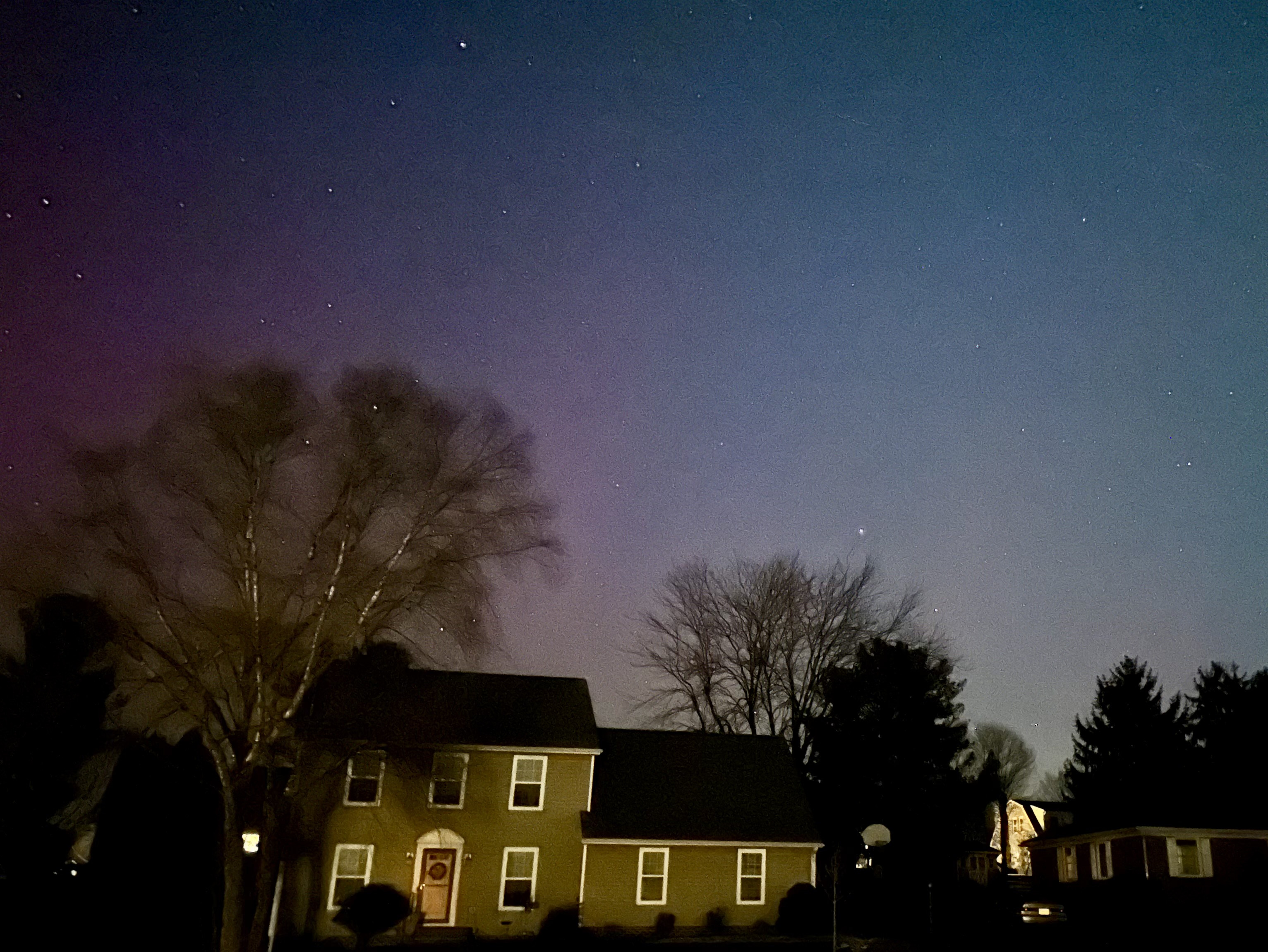
However, my attention shifted when I saw a photo of the aurora borealis posted on Facebook by a friend who lives a few miles away. I walked outside, took a few pictures, and could see a little red in the sky.
So, I diverted my attention from football to photography and went in search of a decent view of the northern sky. It was harder than I thought. Rockingham County, where I live, may be in the Shenandoah Valley, but it certainly is not flat.
The landscape, predominantly agricultural west of the city, is rolling, dotted with high hills, and full of powerlines running every which way. With no moonlight, the night was dark, so even though I was familiar with the roadways, I had difficulty finding a place with a good view, free of light from security lights or buildings.
It didn’t take me long, however, to realize that the colors had faded since my friend took her photo two hours earlier. I headed home with fairly dull images of the night sky.
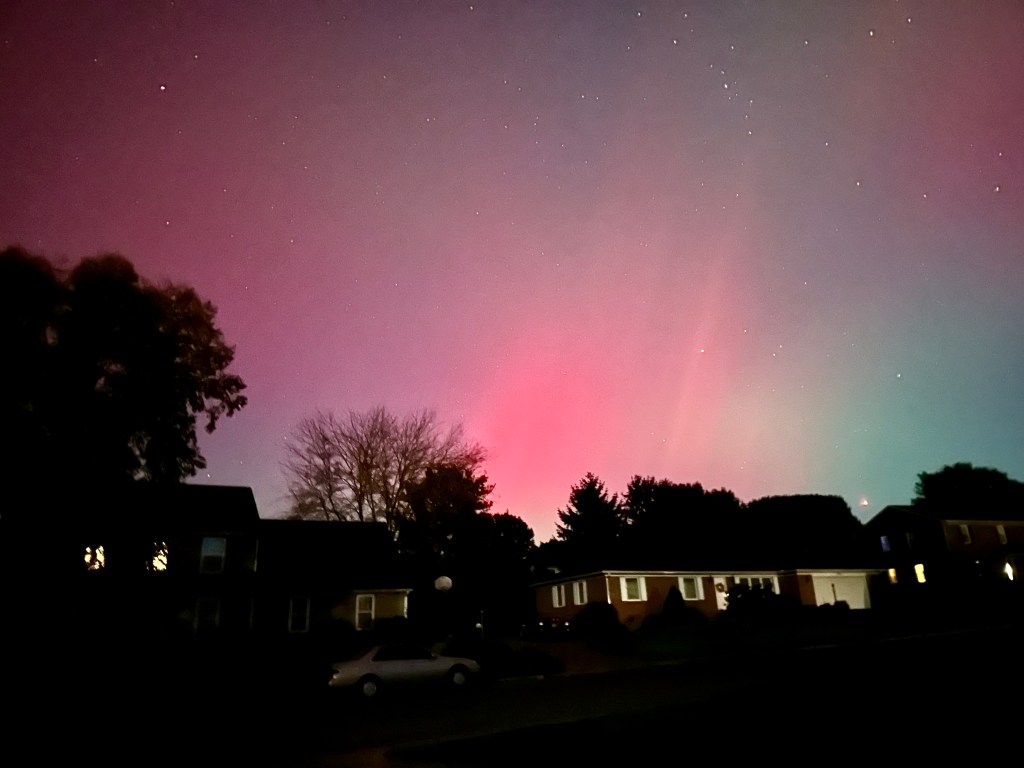
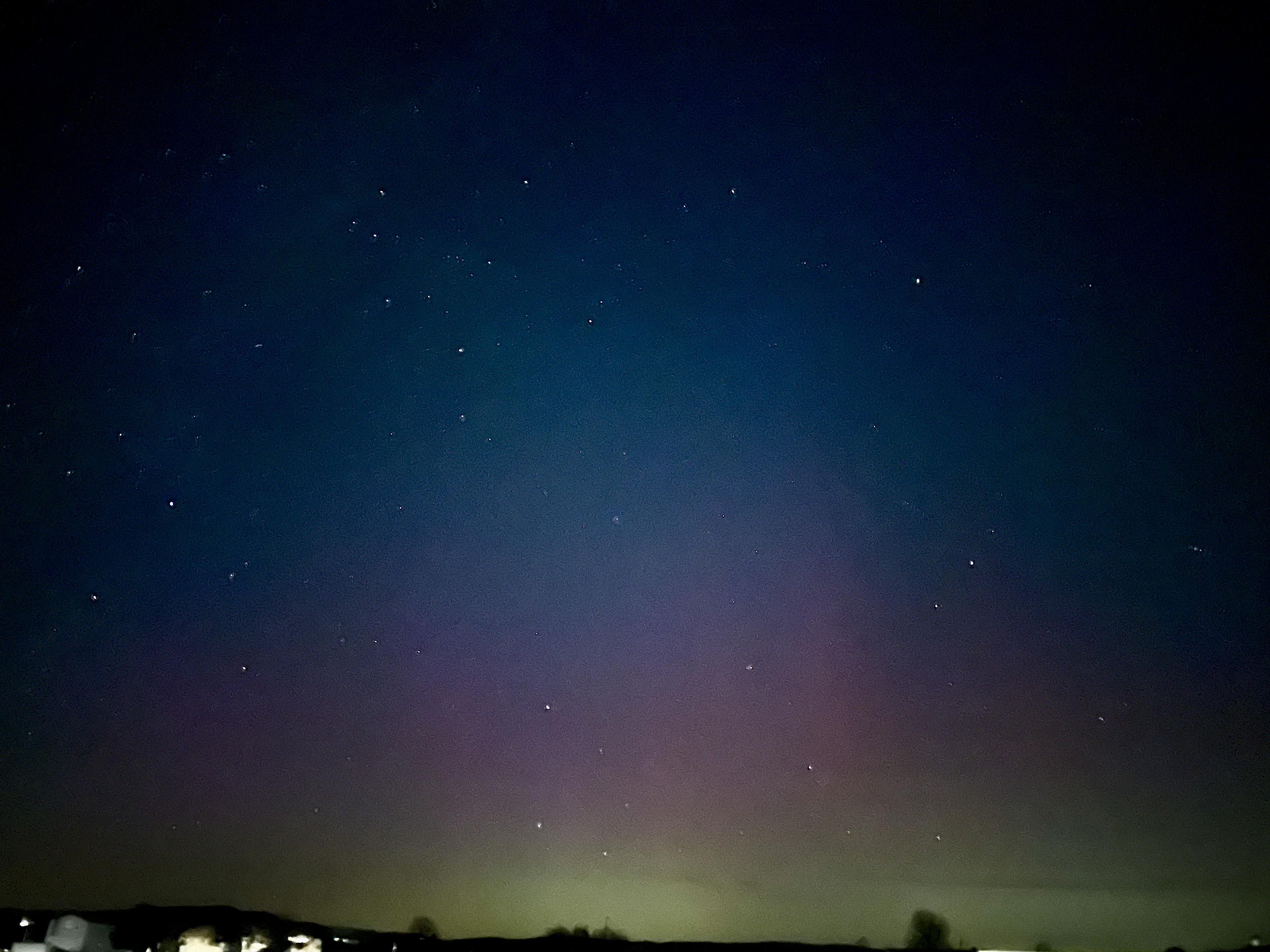
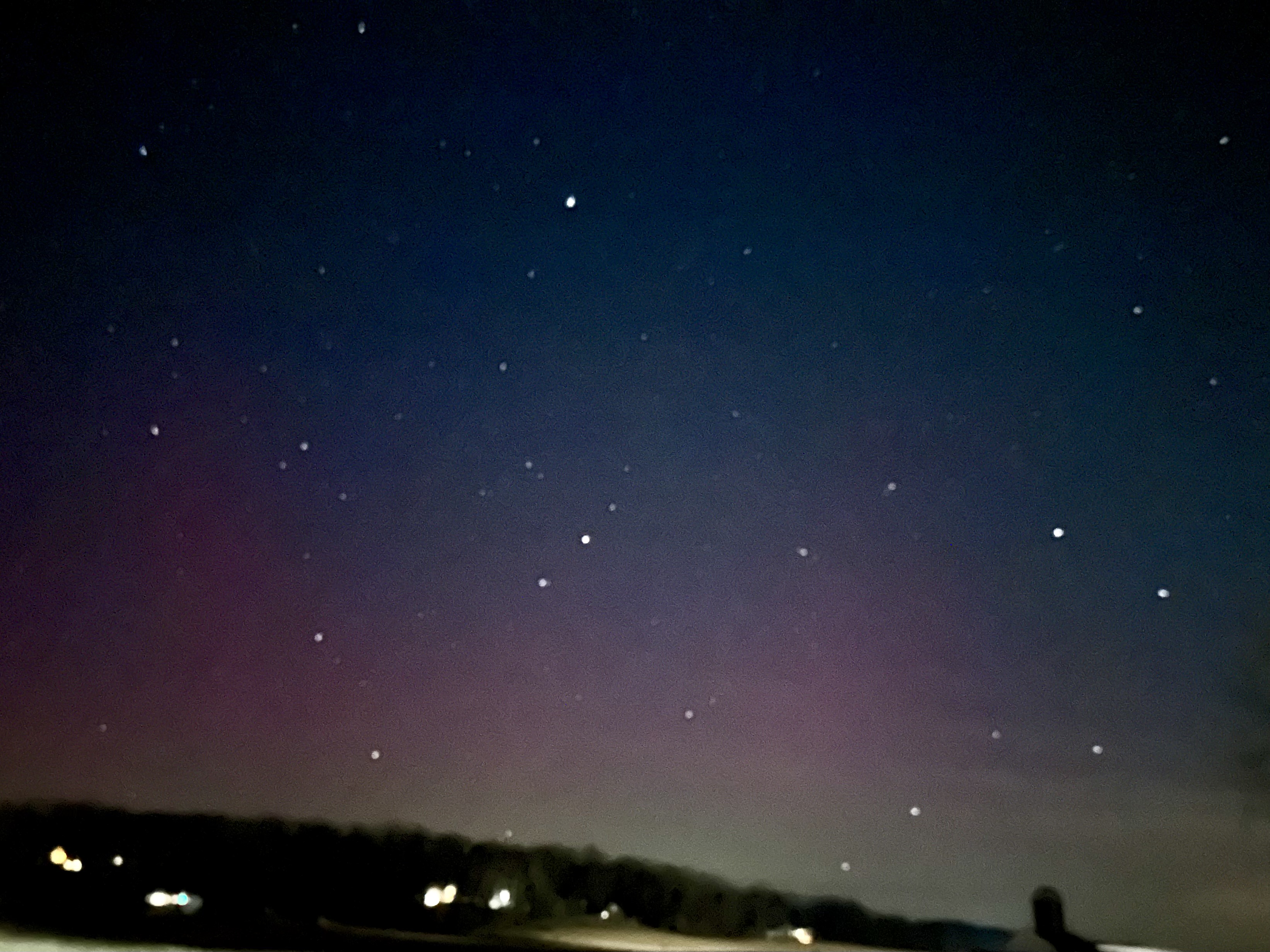
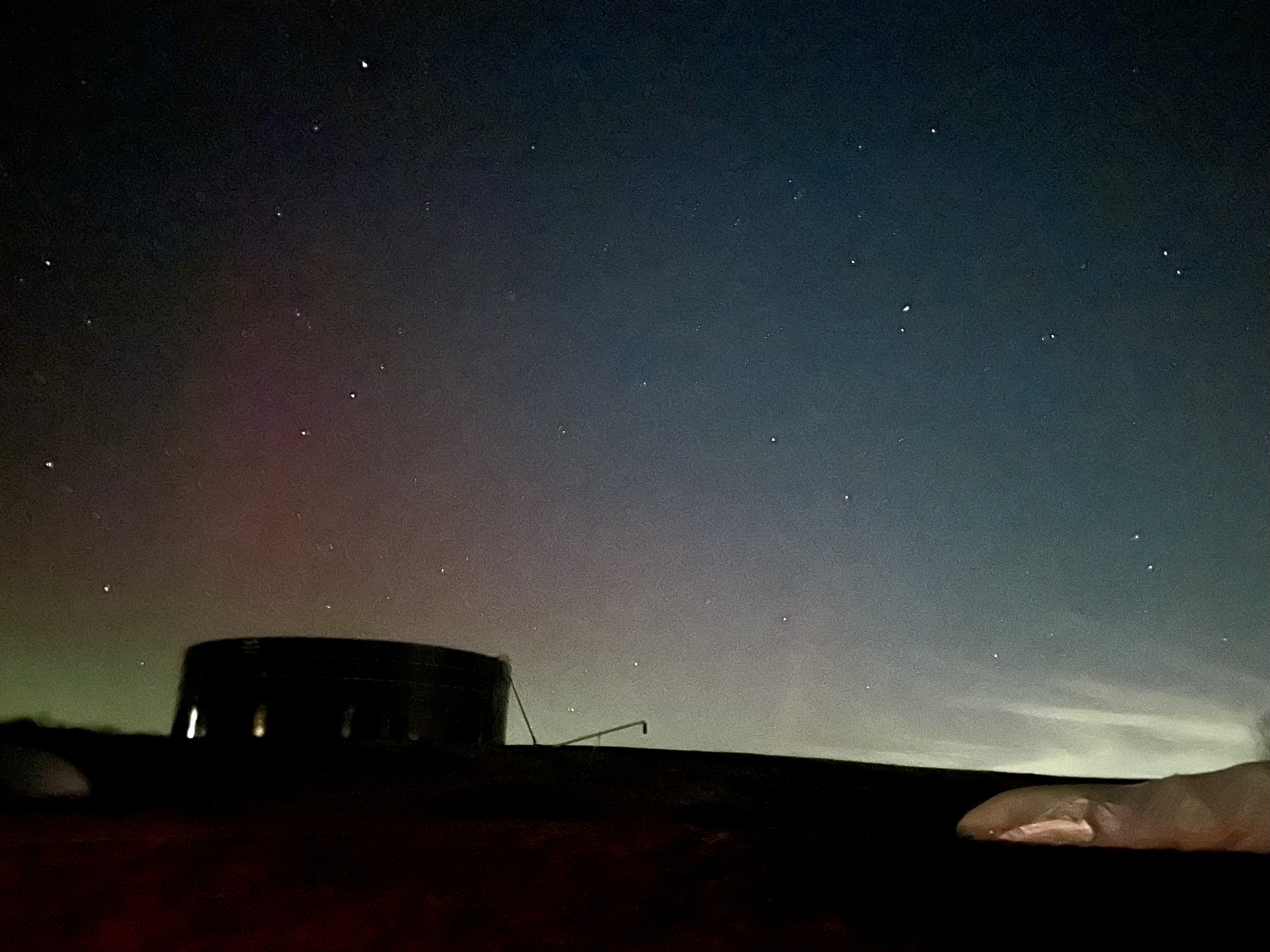
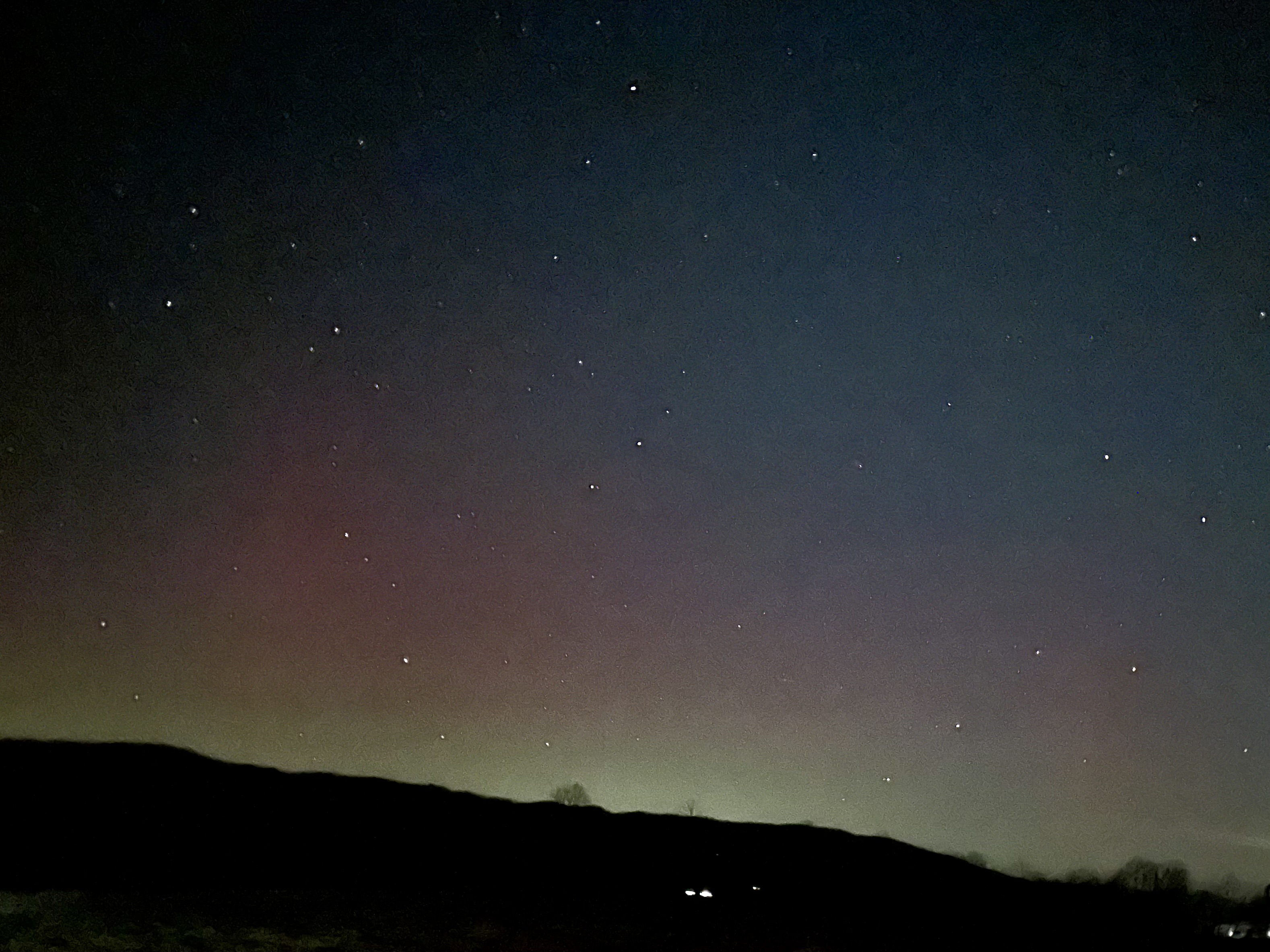
I was determined to make the aurora my priority after dark on Tuesday night. I again stepped into the darkness of our neighborhood and immediately saw reds and pinks in the sky, especially to the northwest. It is one advantage of having no street lights in our housing development. Of course, the colors I saw can’t compare to the amazing shots of curtains of colors dancing in the sky in the northernmost latitudes.
With temperatures below normal in our area, I bundled up and headed out, this time more certain about where I needed to go. But again, once I got out into the open countryside, the aurora colors seemed to dim.
The photo with the house was my first hint of the northern lights. The rest are from my excursion in the county. Please click on the images to enlarge them.
They were brighter than the previous night, but not like I had seen in October 2024 or when I saw my first northern light in Ohio’s Amish country decades ago.
In that case, I was walking out to retrieve the evening paper from its roadside box when I first heard and then saw the northern lights. I stopped in my tracks when I heard a loud crackling sound, like a zap of electrical current.
I looked toward the sound, and in the southern sky, bright green zigzagging flashes danced low in the night sky. They lasted only seconds, but I realized what they were even though they appeared on the wrong horizon.
Soon, bulletins appeared on TV screens across northern Ohio about strange objects appearing in the sky. Witnesses who saw what I saw called the police and TV and radio stations to report the weird noises and lights.
There were all kinds of speculations, aliens included. Even the local weather service put out a special statement. When I saw that, I called the weather office at the Akron-Canton Airport to share what I observed.
I felt obligated to set the record straight, and since I was a trained severe weather spotter for the National Weather Service, they were familiar with where I lived.
Because of that experience, I longed to see the aurora borealis in its proper setting, the northern sky. Consequently, I was very pleased to be able to view them in Virginia, not once, but twice.
You can be assured I’ll remain on the lookout whenever the next aurora alert is issued, regardless of what time of night it is or what’s on TV.
A Northern Flicker at the peanut butter suet feeder. Photo by Bruce Stambaugh
Feeding the birds is one of our favorite winter pastimes. My wife and I enjoy watching college sports, but the colorful birds take precedence over the TV.
Feeding the birds provides us with plenty of entertainment from fall to spring, and we only have to look out our windows. We have done so for all of our nearly 55 years of marriage. We fed birds for the 48 years we lived in Holmes County, Ohio.
Our bird-feeding habit continued when we retired to Virginia’s Shenandoah Valley eight years ago to be close to our daughter’s family. But things were a little different. In Ohio, we lived in the country where natural bird habitats surrounded our property.
Here in Virginia, we live in a suburban setting, just outside the city limits of Harrisonburg. The habitat for birds is much different.
Like many housing developments, homes are close together. Fortunately, our backyard neighbors have mature stands of Colorado Blue Spruce and other evergreens. Plus, we have trees and shrubs around our home that provide cover for the birds.
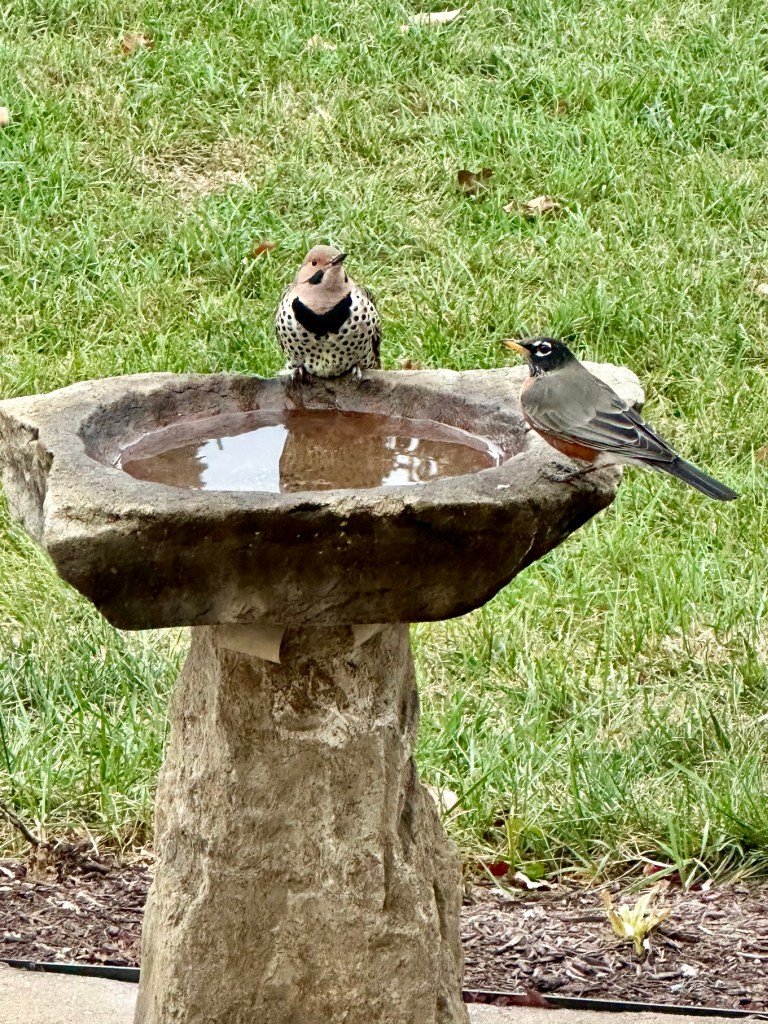
Besides food and shelter, our avian friends need water, too. So, I added three birdbaths to provide drinking and bathing for the birds. Of course, it’s fun to watch them bathe and drink. It’s amazing how the different species drink.
Please click on the photos to enlarge them.
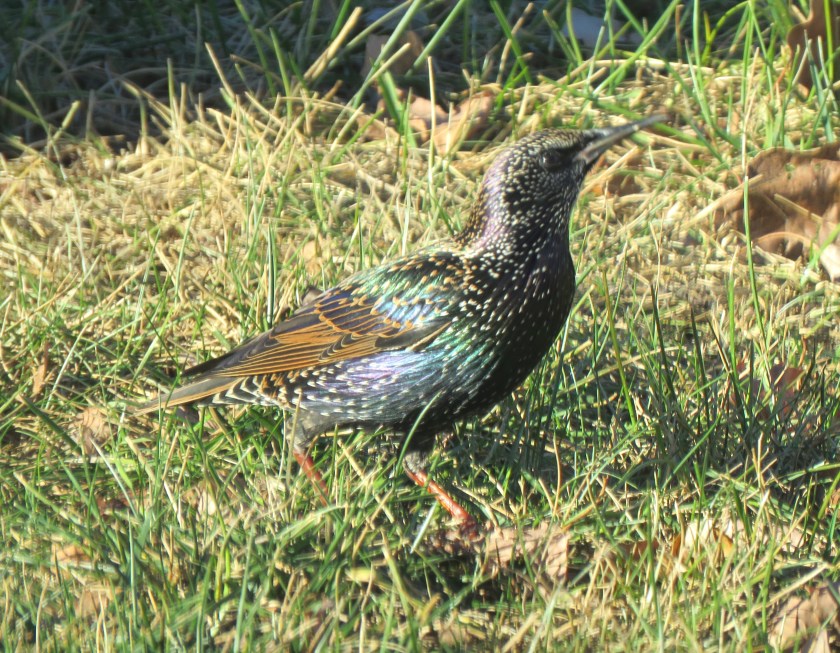
The number of bird species has increased over the eight years that we have lived near Harrisonburg. However, the number of birds has decreased, except for the dreaded European Starlings and the Brown-headed Cowbirds.
Still, I’ve been pleased with the birds that have frequented our feeders. I have four in the front yard, and four in the back. The feed and types of feeders are selected based on the diets and habits of the various species that have frequented our property.
Some bird species are solely ground feeders, so I make sure I spread the feed they eat on the surface near the other feeders. Tube-type feeders allow perching birds to access seeds through holes along the sides. The suet feeder contains cakes of peanut butter suet, encased in a wooden frame with wire-mesh facings on each side.
I place the feeders where the birds feel safe from predators, such as Sharp-shinned and Cooper’s Hawks, which occasionally strafe the neighborhood feeders in hopes of catching a songbird lunch. It’s the way nature works. The feeders and birdbaths are located where we can conveniently view the birds and where they can be easily refilled.
A tube feeder that holds a pound of black-oil sunflower seeds hangs from a limb on the west side of the front yard red maple tree. A suet feeder filled with peanut butter suet dangles from a limb on the east side of the tree. I scatter clean, cracked corn and safflower seeds below them.
The fourth feeder is suctioned to the window in front of my desk. It’s filled with safflower seeds, which only a few birds will eat. Fortunately, safflower seeds are a second-choice food for Northern Cardinals, which seem to have no fear if I’m at my computer on the inside of the window. If I move too quickly, however, they quickly scatter.
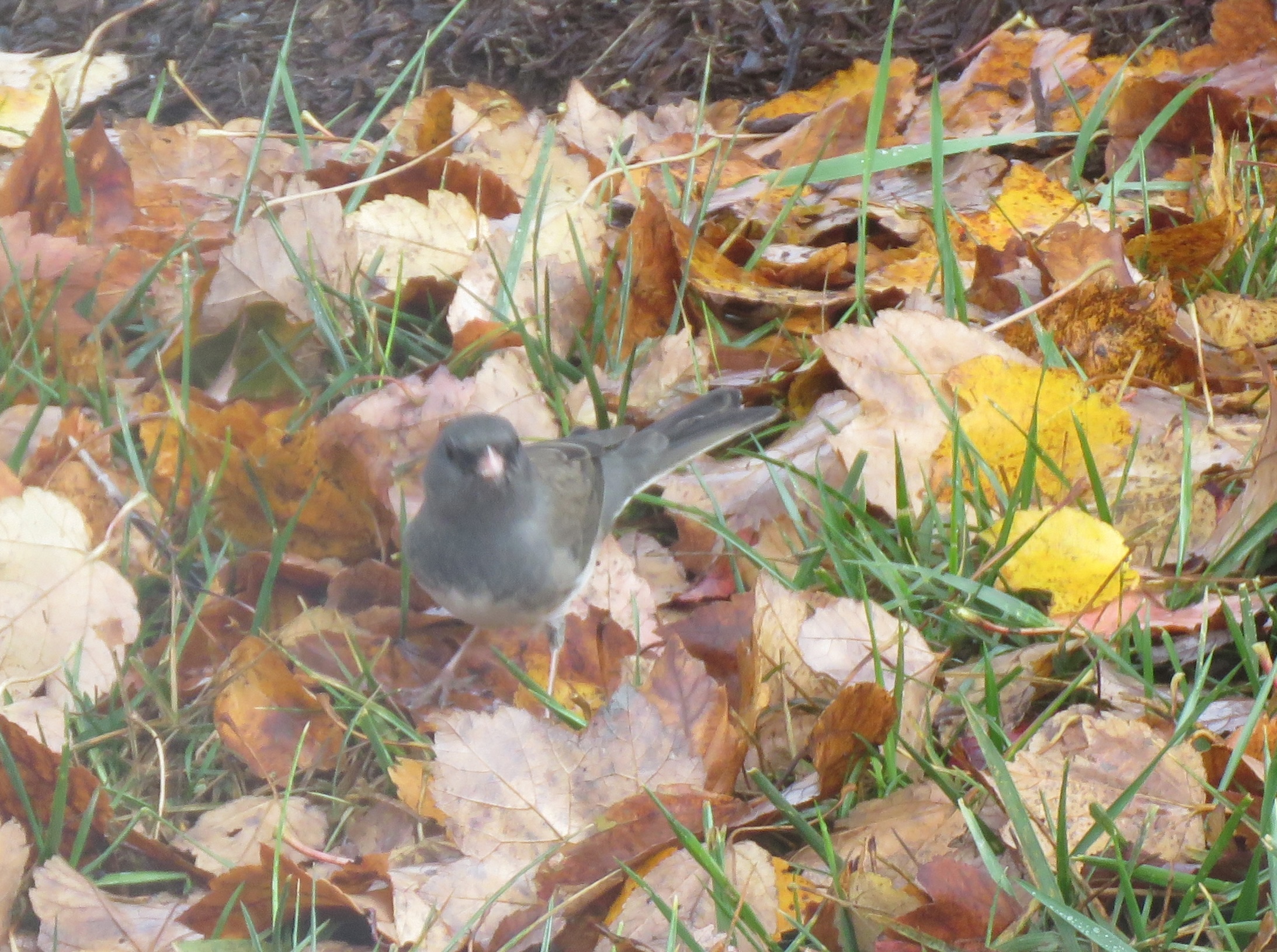
Why do I use these feeds? Black-oil sunflower seeds and hearts attract many species of birds. Northern Cardinals, House Finches, American Goldfinches, Purple Finches, Blue Jays, Dark-eyed Juncos, Downy Woodpeckers, Carolina Wrens, and Carolina Chickadees all choose this seed as a staple to their diet during the winter months.
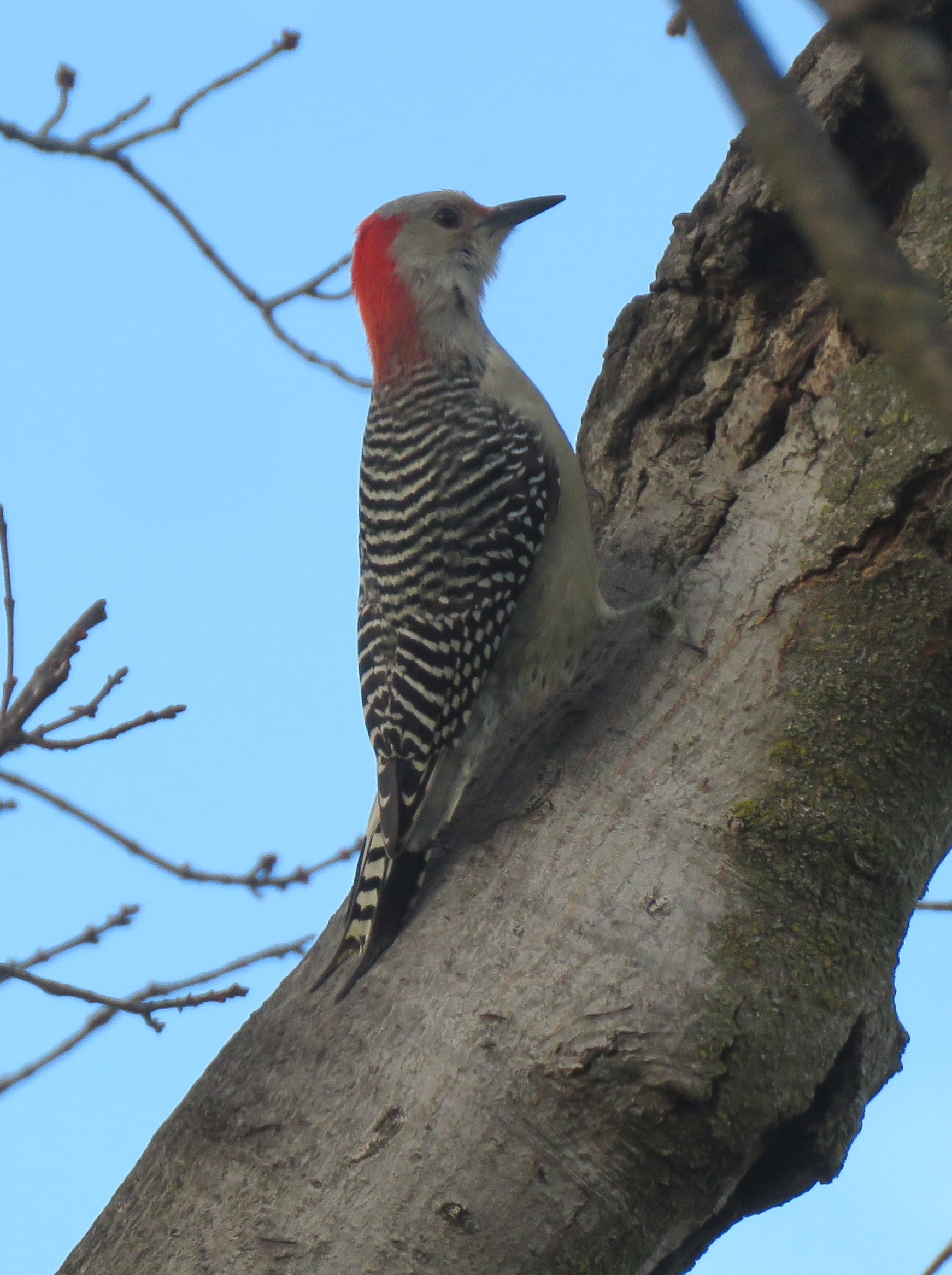
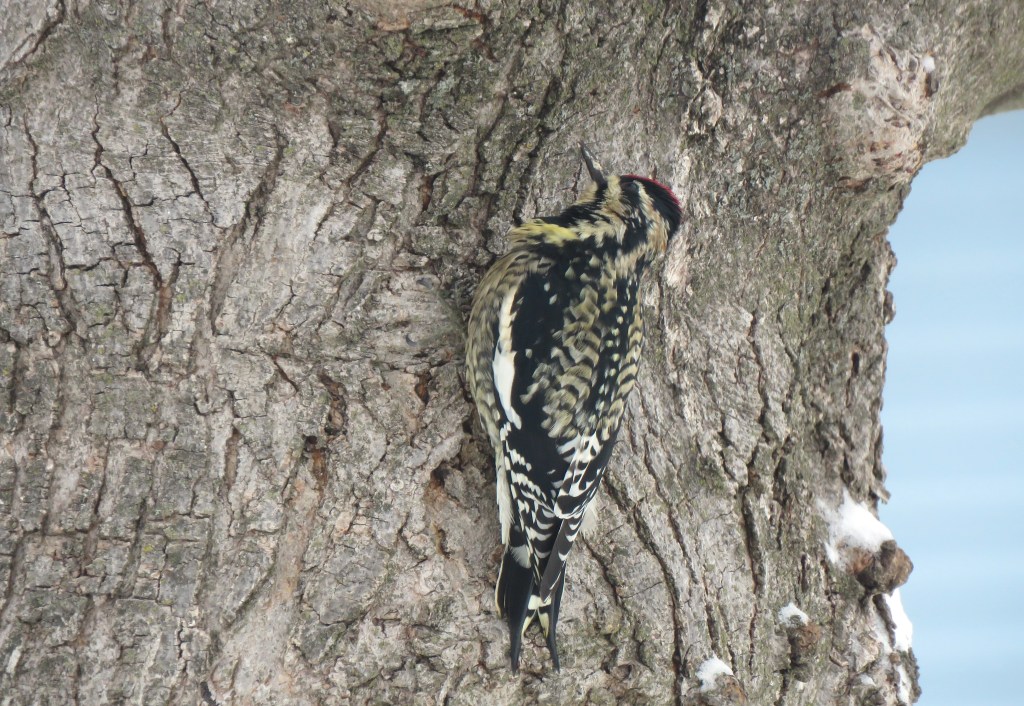
So far this year, Downy, Hairy, and Red-bellied Woodpeckers and Northern Flickers have come to the suet feeder. So have the Carolina Wrens, Carolina Chickadees, and small flocks of European Starlings and Brown-headed Cowbirds.
The star of the show, however, has been a Yellow-bellied Sapsucker. Its feeding pattern has been once in the morning and once in the afternoon. I stop what I’m doing and watch the sapsucker, knowing I’m fortunate to have it appear.
Yellow-bellied Sapsucker. Photo by Bruce Stambaugh
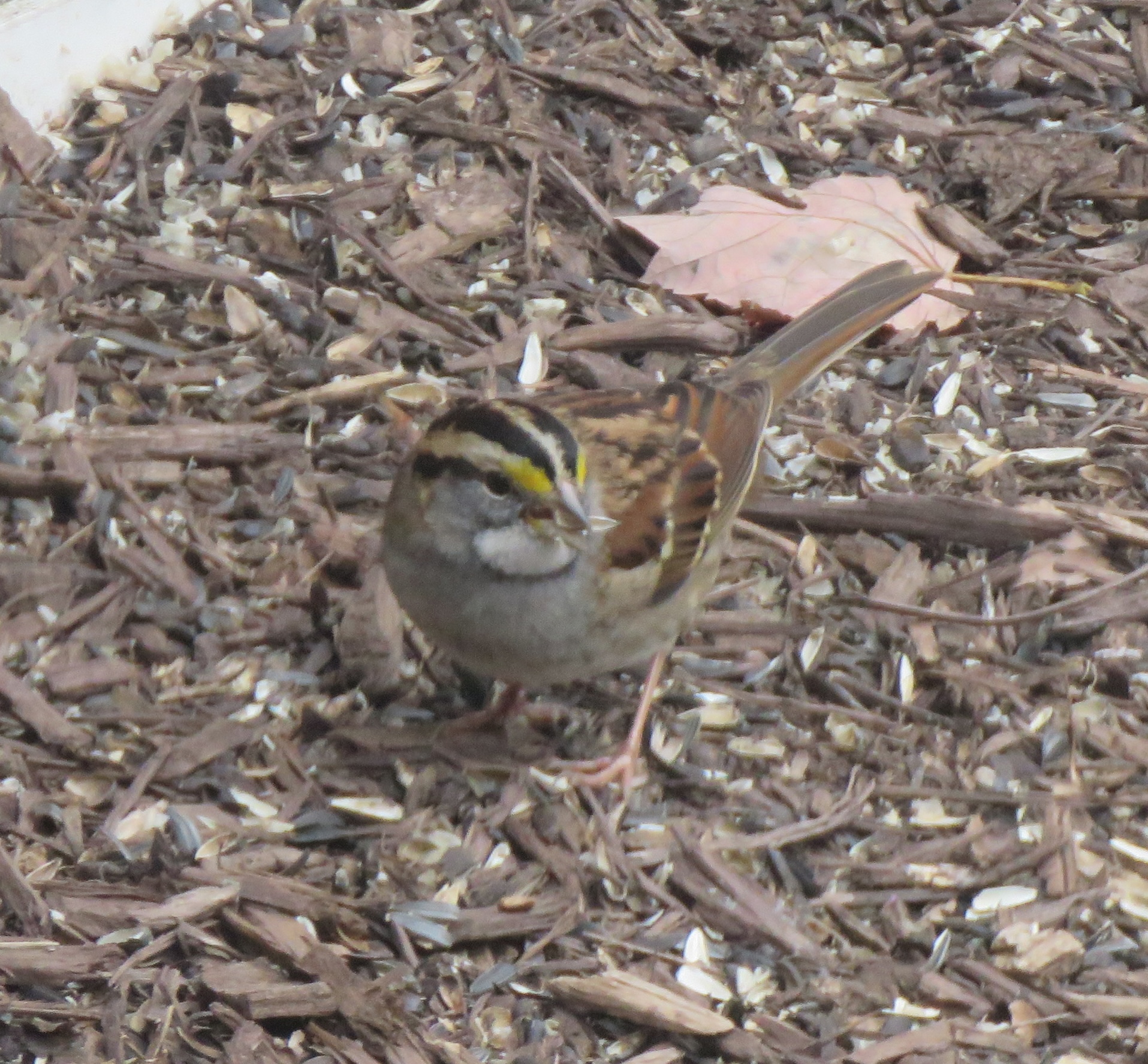
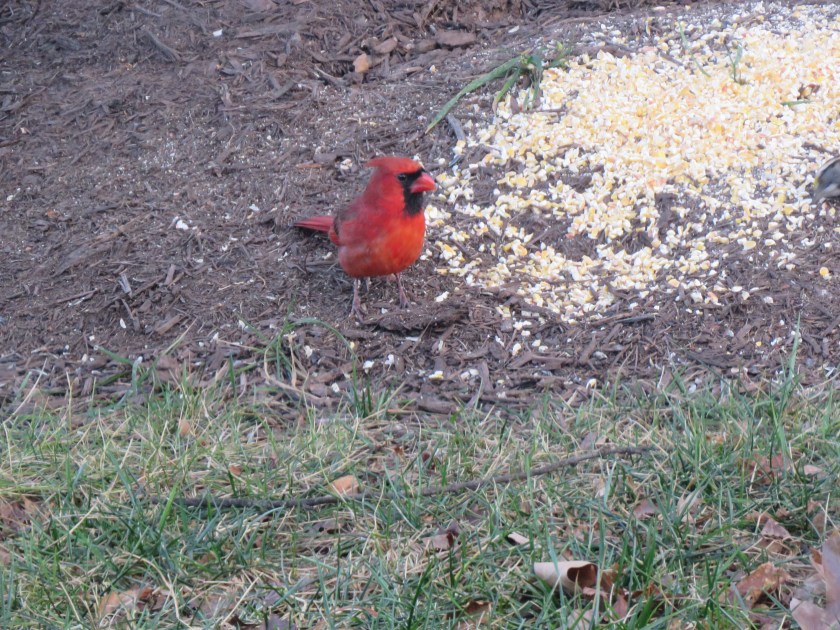
I spread corn to pacify the starlings and cowbirds. Unfortunately, their taste buds prefer the suet. The cardinals, White-throated Sparrows, White-crowned Sparrows, Song Sparrows, House Finches, and Blue Jays ensure the corn doesn’t go to waste.
Our home’s rear windows provide the best view of the feeders and heated birdbaths in the backyard, where most of the cover grows along the property lines. A tubed feeder hangs from the spouting of our screened-in porch, which serves as a shield from strong winds and the strafing hawks.
The hanging feeder holds a mix of black oil sunflower seeds and medium cracked sunflower hearts, which most of the seed-eating songbirds prefer. It’s also the most expensive feed. So, I mix the two seeds to make the precious offerings last longer.
Birds feeding beneath the red maple tree.
Female Northern Cardinal
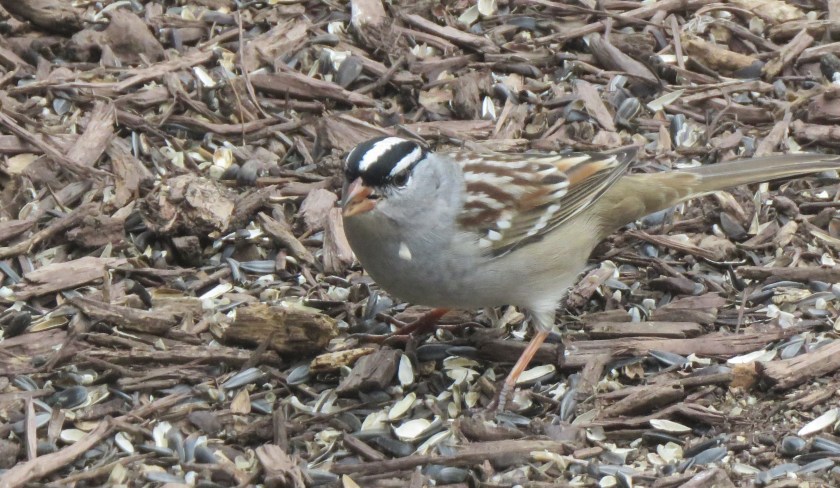
White-crowned Sparrow feeding on cracked corn
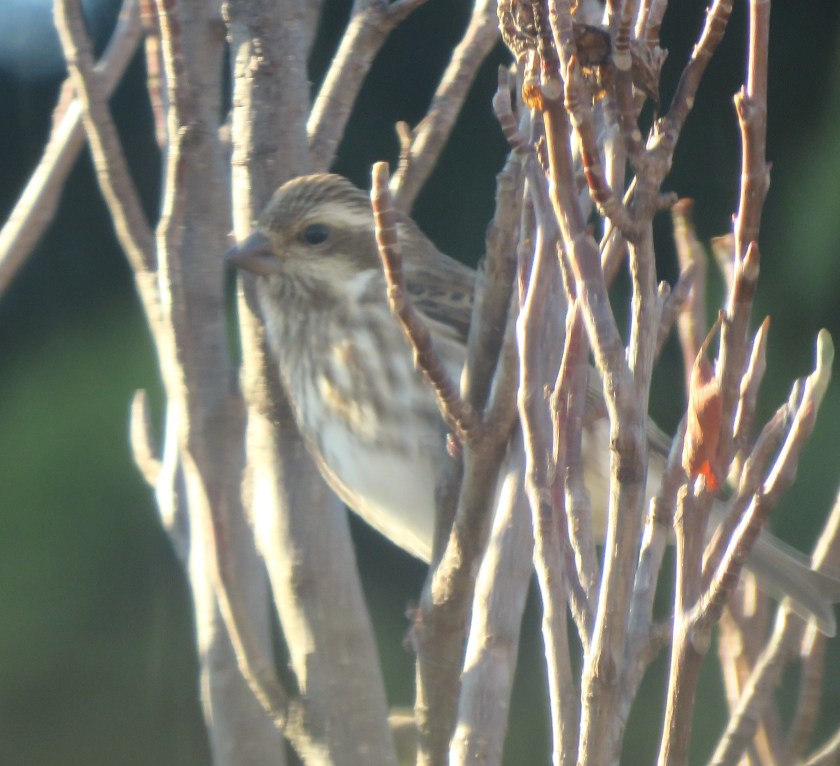
Female Purple Finch
Carolina Chicadee
Male Northern Cardinal
Blue Jay
Female Purple Finch
White-crowned Sparrow
European Starling
Northern Flicker and American Robin
Cape May Warbler
I spread cracked corn on the ground between the feeder and the birdbath. Beyond that, in the yard, I placed a porcelain-topped table and set a homemade wooden feeder on top. More cracked corn goes in that feeder. I also spread some on the ground underneath the table.
Part of the beauty of feeding the birds is the surprises that happen. You never know what will show up at the feeders minute by minute. Like the time I happened to see a Pileated Woodpecker at the nearly empty suet feeder. In a flash, it was gone. But the joy was simply in its appearance, no matter how long it stayed.
In previous years, small flocks of Purple Finches and Pine Siskins have graced the feeders. What a joy it was to see them.
However, I am content with the regular visitors who shelter in the trees, shrubs, and bushes on or near our property. Who wouldn’t love to view a bright red male Northern Cardinal perched in a snow-laden evergreen branch or watch the regal White-crowned Sparrow scratch in the seed only a few feet away?
Of course, I realize that I miss birds when I’m not home or doing other things. I can’t be gazing out of the windows all of the time. Nevertheless, I am thrilled with the ones I do see, and am happy to share them with you.
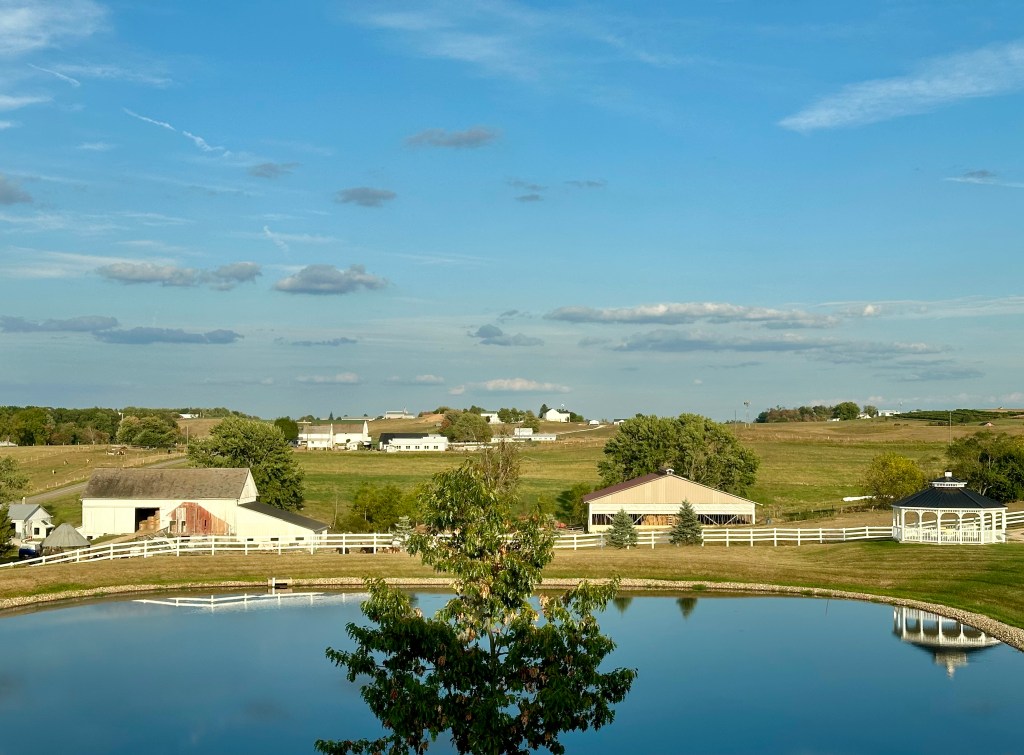
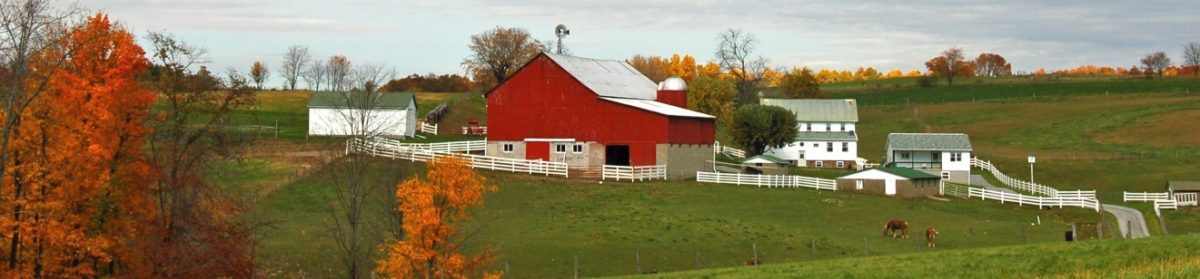
An Amish farmstead near Mt. Hope, Ohio. Photo by Bruce Stambaugh
I recently visited my old stomping grounds in Holmes County, Ohio, home to the world’s largest Amish population. Remnants of snow still covered part of the ground, contrasting with the barren, fallow fields.
I enjoyed finding a few Amish farms, like the one pictured, remaining amid the rapidly expanding tourist businesses scattered throughout the once pristine countryside.
October has blessed us with some fantastic and surprising celestial wonders. The full Hunter Super Moon and the comet Tsuchinshan-ATLAS graced our night skies last week. The comet is still being seen but will soon vanish from sight.
Earlier in the month, the Aurora Borealis danced in the skies across the northern hemisphere, leading the stellar trifecta. Residents in the southernmost regions, like Arizona and Florida, even saw them.
I didn’t have to go far to view any of the trio of events in Virginia’s Shenandoah Valley, where I live. The aurora’s colorful display reminded me of the animated light shows projected onto the American and Canadian Niagara Falls.
However, it’s hard to beat Nature’s heavenly choreography. All I had to do to see the Northern Lights was to step outside my front door. Pinks, reds, and greens played across the sky, dimming and dancing for all to see.
The Aurora Borealis on October 10, Harrisonburg, Virginia. Photo by Bruce Stambaugh
I had only once seen the northern lights as a young man living in Ohio’s Amish Country. The red curtain of zigzagging brilliance danced and sizzled strangely in the southern sky. Yes, I heard an associated zapping sound, but briefly.
I knew the forecasts for the Aurora Borealis were favorable, but I didn’t expect to see such vivid beauty this far south. It was a welcomed surprise that enabled many to cross off seeing the Northern Lights from their bucket list.
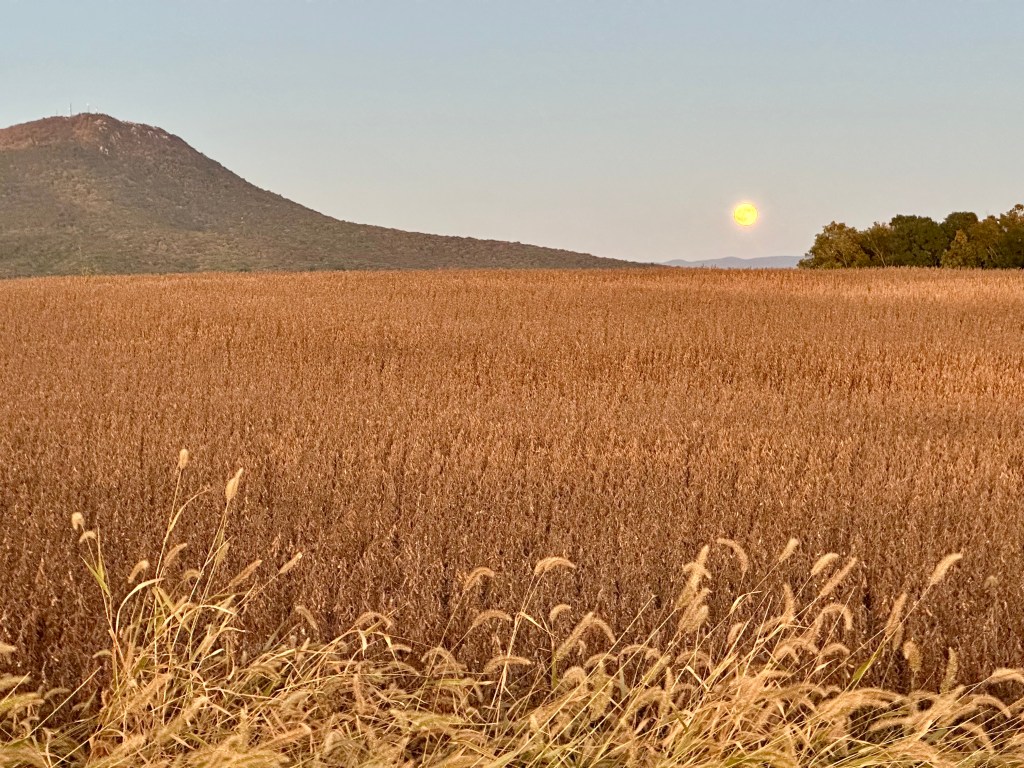
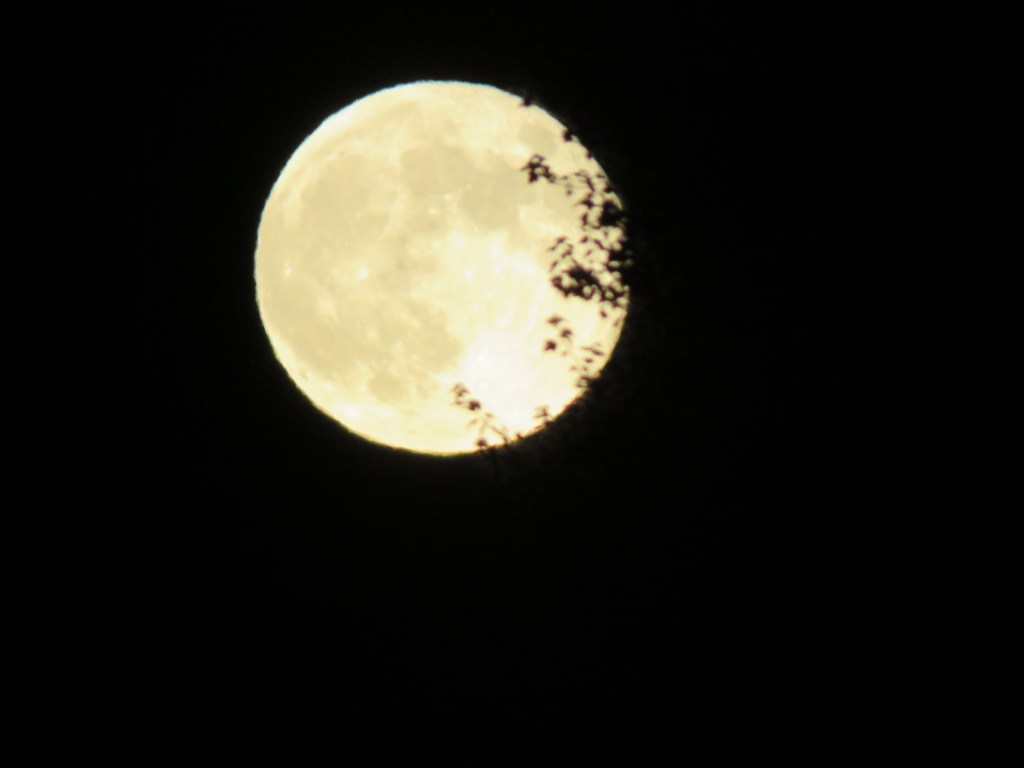
Next up was October’s Hunter Super Full Moon, the fourth consecutive super full moon this year. I like to catch the moon rising over the Blue Ridge Mountains, which also host Shenandoah National Park in central Virginia.
October’s Hunter Super Full Moon over Shenandoah National Park. Photo by Bruce StambaughThe Hunter Super Full Moon followed me home. Photo by Bruce Stambaugh
Because I wasn’t exactly sure where the moon would appear, I was able to snap a few shots just after it rose above the famed mountain range. The rural setting made the picture all the more captivating.
Then came the comet. Like the Northern Lights, the news media informed us of its arrival. The comet was expected to be its brightest on October 14. Unfortunately, fog, haze, and rain clouds obscured our skyward view.
Thursday, October 17, was our first clear night. My wife and I headed to a local landmark, Mole Hill. It’s an extinct volcanic core, long eroded and now covered with farmed fertile soils on its gradual slopes and a thick mixed forest on the steeper portion of the cone.
Mole Hill’s higher elevation didn’t help us find the comet. A hazy sky over the Allegheny Mountains, 30 miles to the west, was the culprit. We looked and looked but returned home disappointed. However, I wasn’t giving up since the comet wouldn’t reappear for 80,000 years.
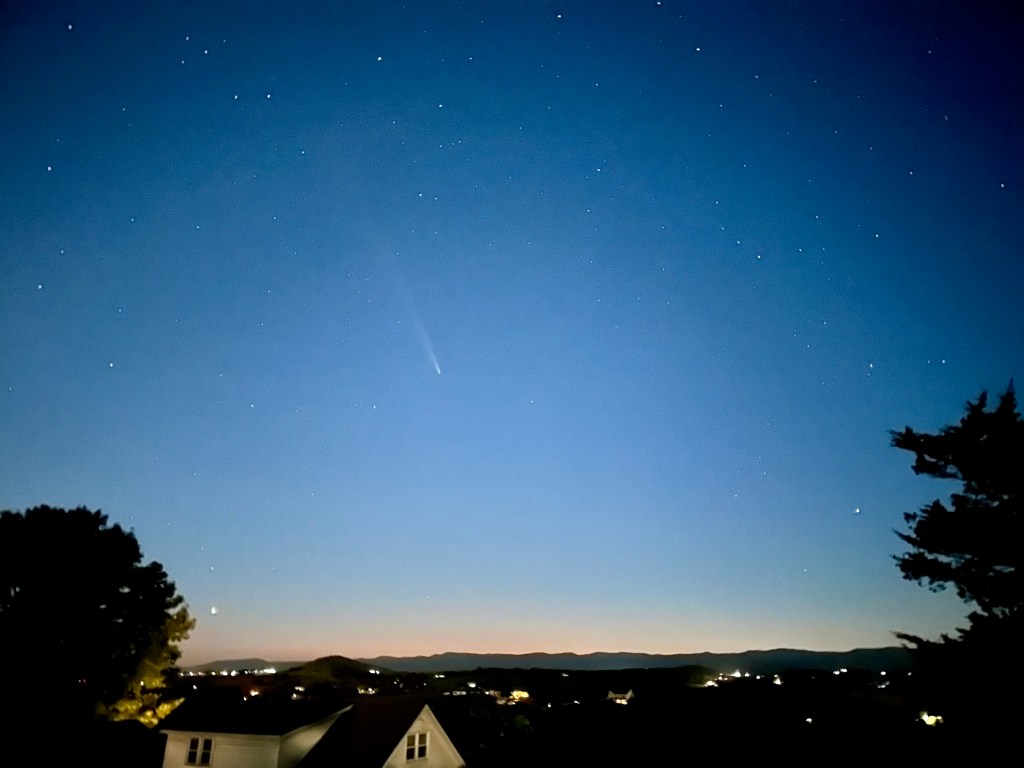
The comet was viewed from Eastern Mennonite University’s hill. Photo by Bruce Stambaugh
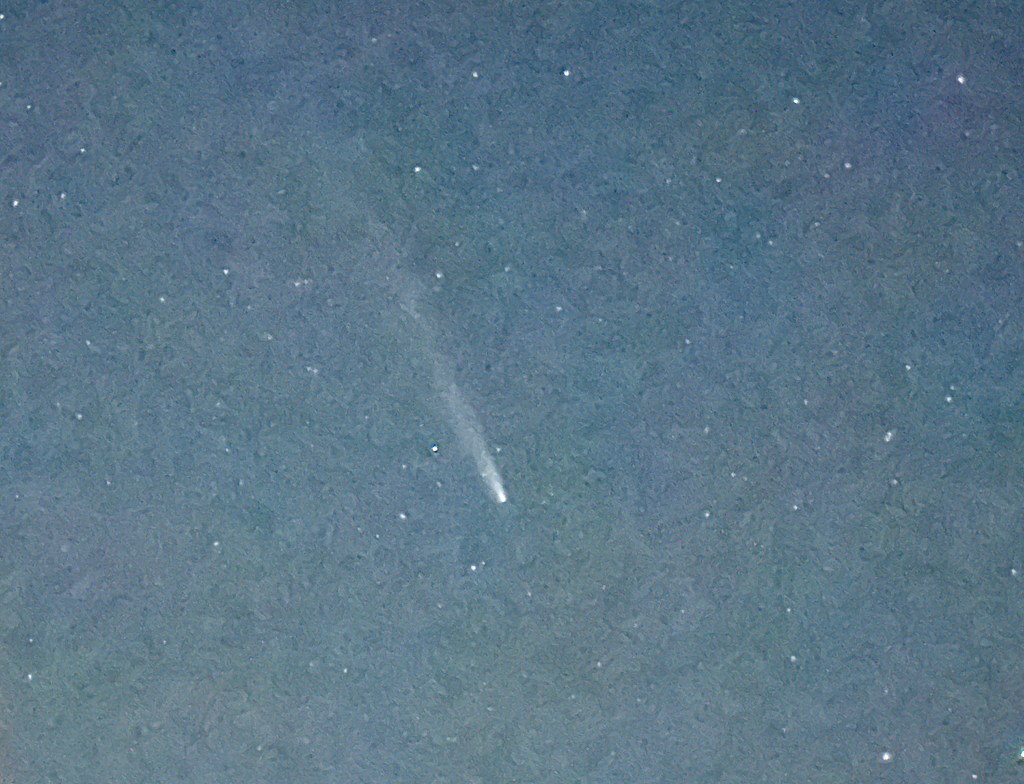
The next night, I had success from the hill behind Eastern Mennonite University in Harrisonburg. After viewing photos from my iPhone 14 Pro taken around 7:30 p.m., I spotted a faint streak in the sky. What I couldn’t see with my old naked eyes, my smartphone easily captured for me. I was ecstatic.
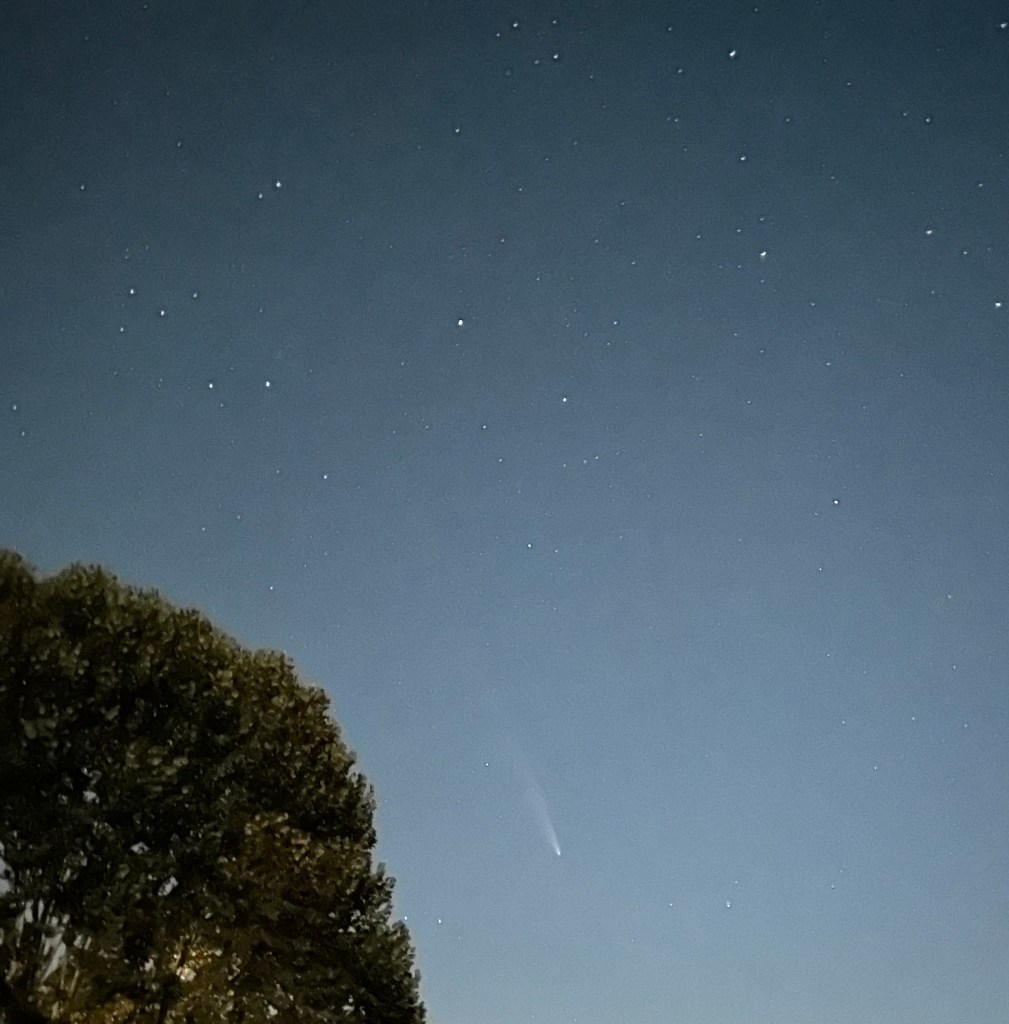
We quickly found the comet standing in the middle of our street. Photo by Bruce Stambaugh
I took a few more photos and returned home to celebrate with my wife by showing her the sequence of images. Afterward, we went outside, stood in our residential street with no street lights, and found the comet about 30 degrees northeast of Venus, which hugged the horizon.
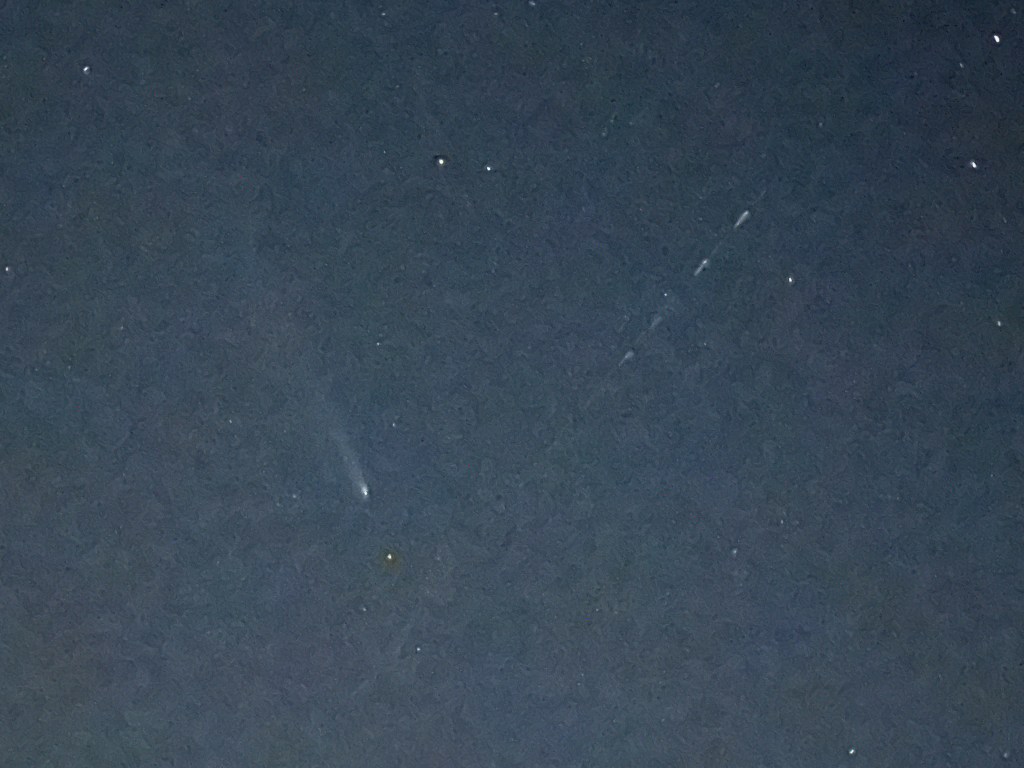
The next night proved even more successful. I zoomed in with the phone’s long lens and captured more than the comet and its long, fuzzy tale. When I looked at the photo, I realized Starlink was streaking across the sky just northeast of the comet.
The Comet and Starlink. Photo by Bruce Stambaugh
October has been good to us so far. I wonder what joyous tricks she’ll offer up by Halloween.
The comet Tsuchinshan-ATLAS. Photo by Bruce Stambaugh
Looking east during the Golden Hour in Berlin, Ohio. Photo by Bruce Stambaugh
This scene caught my attention as my wife and I arrived in Berlin, Ohio, at her sister’s place. The white of the Amish homes and barns glowed in the Golden Hour light.
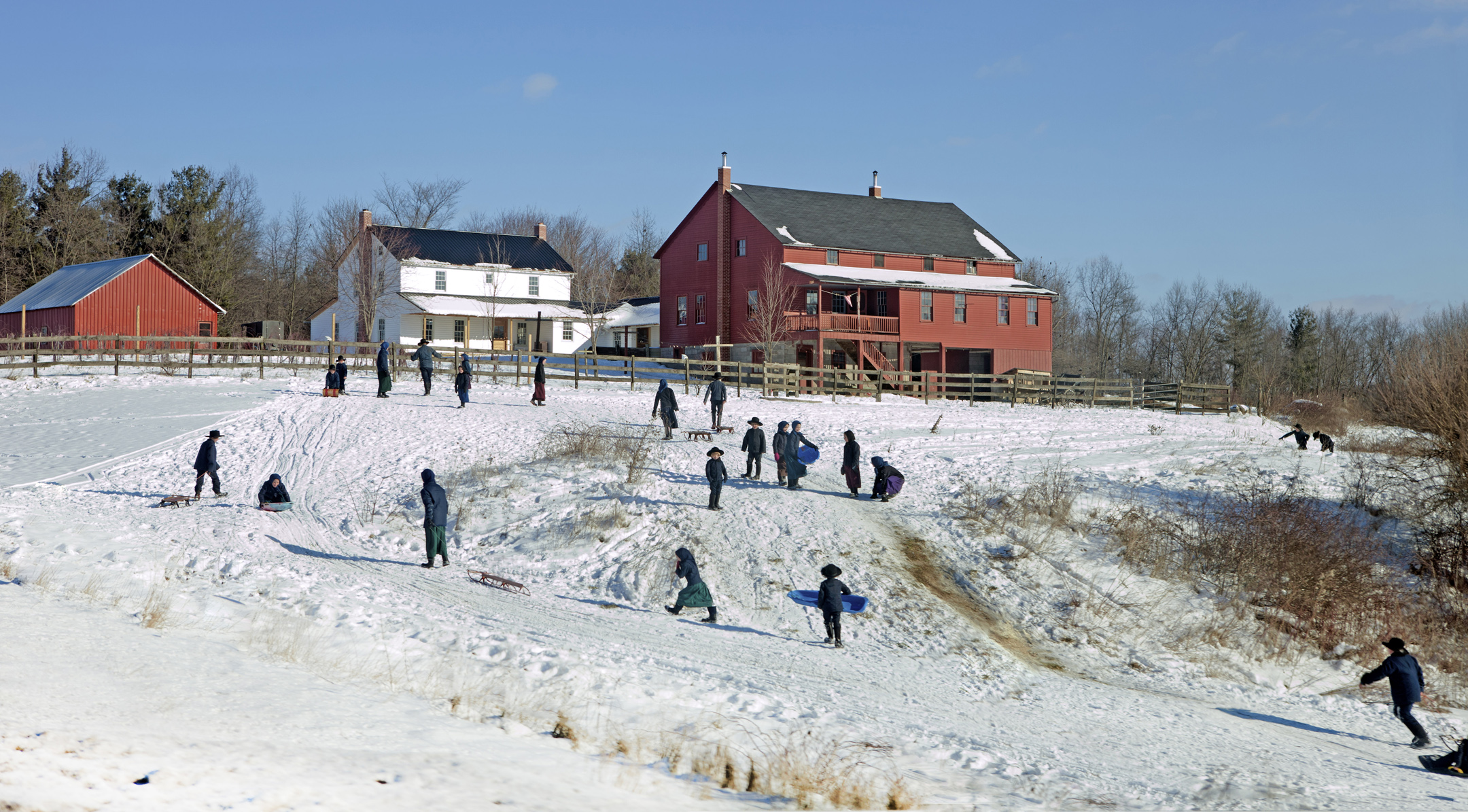
Swartzentruber Amish sled riding at recess in Wayne Co., Ohio.
There is “snow” better way to enjoy the January cold than sledriding. These Swartzentruber Amish students certainly enjoyed their afternoon recess gliding down a slippery hillside near their one-room schoolhouse.
After attending a meeting in Kidron, Ohio, 11 years ago, I decided to take some back roads home. It had snowed a few inches overnight, but the clouds had moved out by afternoon. The clear sky’s bright sun warmed the cold January day.
This scene came into view as I rounded a bend on a narrow township road. I knew I had to get a photo of these Amish schoolchildren sledding at recess. I also knew that I had to be discreet since I always tried to honor the Amish position of no photography.
I secured one photo undetected before moving on. The joyous laughter of the happy scholars made the satisfaction of this photo all the more enjoyable.
You must be logged in to post a comment.