A hundred times I have driven by this rusty-roof outbuilding. What caught my attention this time around?
Was it the fluffy white cumulous clouds that floated above on another warm summer’s day? Was it the way the afternoon light played on the buildings? Was it merely the contrasting touch of green of the silver maple leaves in the background? Perhaps all. Perhaps none of those.
In truth, I think it came down to the fact that I finally took the time to notice the beauty in the familiar scene. I loved the patterns that play out in the photo. The striations of the siding and roofs. The straight lines of the buildings overshadowed by the beautiful randomness of the clouds sailing through the azure sky. And, yes, the verdant green of the tree indeed added just the right touch like a paperclip holding together two separate photos.
A fellow blogger friend of mine hates Monday mornings. I laugh at his social media ranting and memes about having to start a new work week. I laugh because he’s funny, and I’m mostly retired. What “work” I do do, I do from home.
I’m pretty sure my friend would have loved last Monday morning. The sunrise was brilliant, the colors changing by the moment. Of course, I hustled out with my camera. However, it was what I saw in the western sky that caught my fullest attention. Much like beautiful sunsets reflect in the eastern heavens, the morning’s pinks and blues danced off the neighbor’s buildings and the clouds hanging in the west.
The day began as another sleepy sonnet in a series of hot, muggy, midsummer dog days. It turned out to be an inspirational novella.
In keeping with my fair weather routine, I took my morning stroll. I typically immerse myself in the sights, sounds, and morning fragrances of field corn and fresh laundry.
Not this day. The air was thick, moist enough to ring it out and still be left holding a damp rag. Breathing even became a chore.
Already sweated, I dove into necessary yard work back home. I wanted to complete it before the elements became even more oppressive.
I donned my trusty work gloves. Out came the noxious poison ivy. Out went the volunteer walnut and oak seedlings sprouted from the nuts that the squirrels and blue jays had planted in the flowerbeds last fall. They conveniently abandoned them for my birdfeeders.
This slideshow requires JavaScript.
Even with little rain, the shrubs seemed to have grown a foot while we were away. I grabbed the trimmer and snipped the wiry branches.
After cleaning up, I took breakfast in the shade of the back porch. With the high humidity, the chances of rain looked promising.
I checked the progress of the road repair in our rural township, the prettiest in the state. No, I’m not up for reelection. As a trustee, I just enjoy inspecting the roads, conversing with folks, and breathing in the beauty of the picturesque landscape.
My camera is my faithful sidekick on my rounds. I’m mindful of respecting Amish ways when it comes to photography. I focus on the agricultural artistry. The golds and greens are at their peak of brilliance even in this mini-drought.
While away, the neighbor mowed the adjacent alfalfa much to the delight of the swooping swallows and the purple martins. They harvested insects in concentric circles around the sturdy workhorses and their mowing master.
To the east, thunderstorms built fast and furious, their anvil tops reaching 60,000 feet. Our meteorological ingredients fed the liquid fortunes of folks 100 miles away.
In the afternoon heat, I turned to writing in the comfortable air conditioning. I confess to guiltlessly adding my two cents worth to global warming.
Neva worked her magic with dinner. We enjoyed a summer feast of fresh veggies and fruit washed down with freshly brewed garden mint tea.
As the storms moved further east, the air here cleared and cooled, if only because the dew point and humidity took a temporary break. Feeling refreshed, we walked around the parched flower gardens and discovered the season’s first monarch caterpillars.
It was about that time that a friend rode by on his bicycle and waved hello. We returned the gesture and moseyed into the house. We weren’t in long when the doorbell rang. It was Mark. He had turned around, and come for a spontaneous visit, the best kind.
Mark was a former student of mine. With more tea poured, we began a marvelous time of reminiscing on the back porch. He filled us in on his family and former classmates. We happily learned that he is now a grandfather.
We cherished his presence and friendly update, despite the unintentional reminder of how old my wife and I are. It was one of the main perks of living and working in the same community over time.
Rank and location have their privileges. So does having a view to the west. A stunning sunset proved a fitting end to a perfect summer’s day.
At this time of year, I especially like to frequent one particular lofty spot a few miles from home in the township where I live in Ohio’s Amish country. The view alone keeps me inspired, thankful and refreshed.
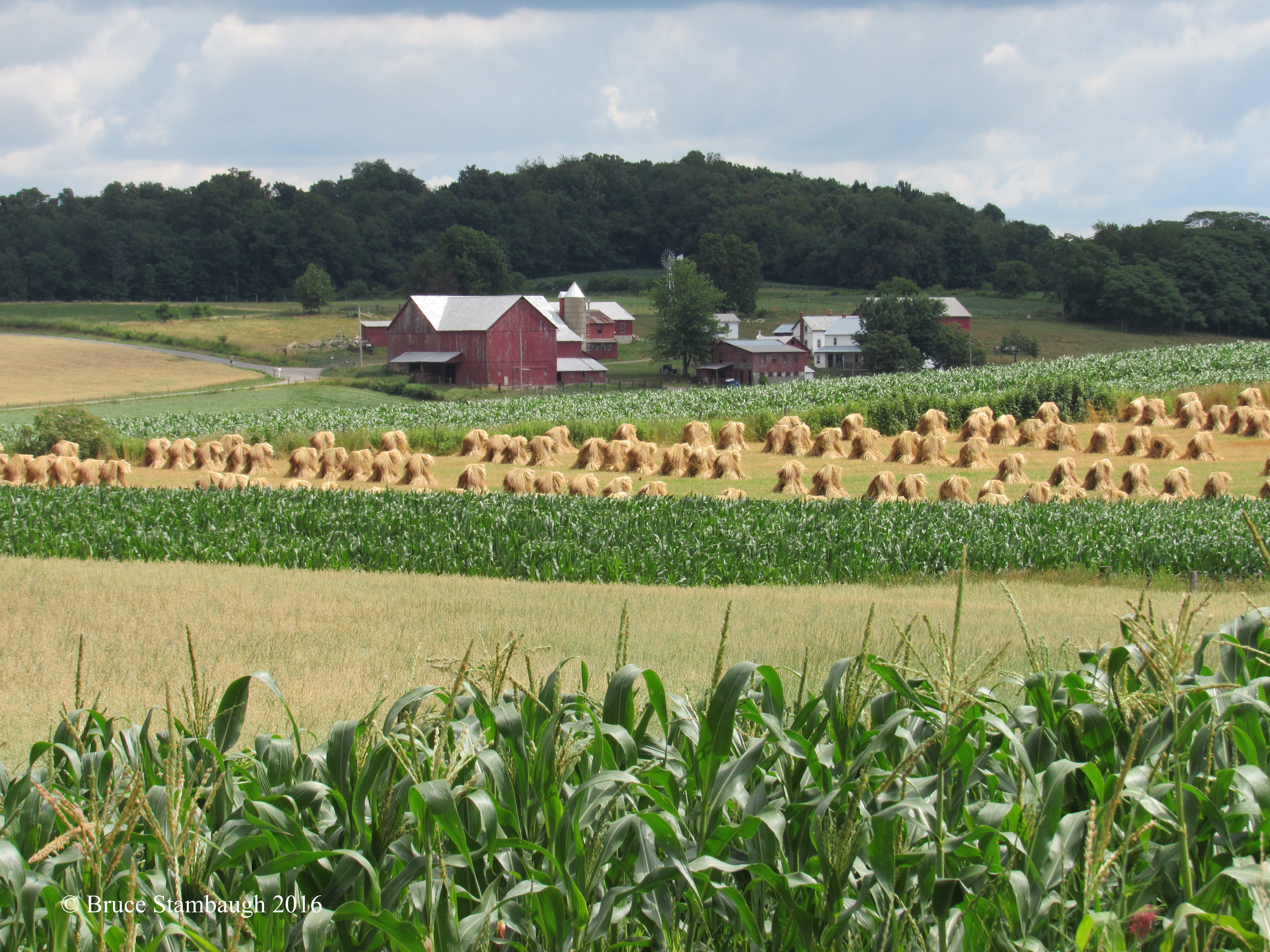
From there I watch the sky dotted with patches of cottony clouds tease the earth. Sun and shadows ripple across golden wheat shocks, lush rows of cornstalks, and ripening honey-colored oats. Green alfalfa already blankets the floor where the shocks stand.
I look west far across the Killbuck Valley to the up sloping hills miles away. Tin topped roofs twinkle in the morning light as the clouds and sun play their game of tag.
Eastern Bluebird eggs.Turning east, Berlin bustles with the business of tourists and locals alike. Even with binoculars, I couldn’t see the money exchanging of course. It just does as cash is traded for fresh peaches and cucumbers and t-shirts.
All the while I unknowingly entertain a family of Barn Swallows teetering and twittering on a power line. Eastern Meadowlarks fly their funny flight from fence post to nest, gurgling all the way.
Back home, the House Wrens begin their second nesting in the ceramic nest bottle hung up for them. The adult Baltimore Orioles lead their fledglings to the grape jelly feeder, encouraging them to partake. The young just squeak and childishly flap their wings.
The Eastern Bluebirds carefully attend their bright blue eggs in the box attached to the old clothesline pole. A bowl of fine grasses and soft pine straw caress the delicate eggs. It’s their second clutch, too.
The Chimney Swifts are as active as any time since they arrived in early April. Their young prattle their pleasure each time the parents swoop into the chimney with a force that rattles the fireplace doors.
The birds made quick work of the ripened black raspberries while we were away for a few days. They left their thank you notes where I was sure to find them, splattered on the sidewalk.
Click on the photos to enlarge them.
Wildflower garden.
Wagon train.
Shiny roofs.
The binder.
Across the valley.
Barn Swallows.
Flower garden.
At my neighbors, the Purple Martins hold court discussing their eventual departure. Too soon, they’ll join the orioles and others on their long journey.
Other symptoms also point to the fact that we indeed are halfway through the summer. Queen Anne’s Lace, bulbous red clover blossoms, and cerulean chicory blooms decorate even the busiest country road.
Well-attended domestic flower gardens are in full bloom. Roses have replaced tulips, and dainty poppies with pastel crepe paper petals wave in gentle summer breezes. Fragrant milkweed flowers sweeten the air, attracting bees, butterflies, and other assorted insects.
The first tomatoes, like green golf balls, swell on the vines. Warm nights and bright sunshine will soon transform them into juicy redheads if the rains return.
I got a surprise verification of summer’s peak from a rare source. I encountered a small wagon train of folks traveling the local roads. They have done so in early July for 22 years now. The troupe from northwest Ohio camps at local farms always energized by the hearty welcome they receive.
Towns and civic organizations hold annual festivals to celebrate the season of plenty. They also try to make a little money while they’re at it.
The heart of summer beats loud, strong, and sure this time of year. I love to take its pulse. Its healthy palpations are life-giving, uplifting, invigorating, and transforming.
This summit of summer enables us to appreciate all of life’s goodness. Let’s enjoy the momentous moments before they wane.
From our rented efficiency apartment in our favorite Ohio retreat, Lakeside Chautauqua, the day seemed gloomy, even overcast. Then I stepped outside into the predawn elements.
High, wispy cirrus clouds tickled the waning half moon. The previous evening’s rainstorms birthed refreshing morning coolness. At first, the stillness surprised me. It shouldn’t have.
The sleepy town was even sleepier on this Sunday morning. On the way to the lakefront, I broke through the waif of freshly made doughnuts at The Patio, the village’s popular eatery, without temptation.
Northern glow.
Hazy half moon.
Breaking through.
Lakeside at dawn.
Sun-kissed cottages.
When I reached the dock, I was stunned. Not a soul could be seen or heard. The day’s early morning dim light glowed along with the Victorian lampposts. Dimpled rivulets, like a sea of golf balls, pockmarked the calm Lake Erie.
Typically this alluring pier is packed with folks, even at sunrise. Walkers, joggers, fisherman share the space. Not today. I had the place to myself. I was both thrilled and awed in the silent twilight.
A pinkish halo hovered over Kelley’s Island five miles across the water. However, a peek to the east dampened my hopes for a sterling sunrise. Still I hoped.
I retreated to the pier’s entrance, mentally adjusting for a morning stroll around the resort town’s parameters. I glanced east again and found paradise. The sun’s bright beauty overrode the clouded horizon.
All glory was bursting through. I chose to exercise my senses rather than my legs. The Sunday morning service was about to begin, and I wanted to participate.
I walked along the rocky reinforced shore toward the call to worship. Using my eyes, ears, heart, soul, and camera, I recorded as much of the sacred ceremony as I could.
Baltimore Orioles picked up the chorus with the robins and purple martins. A lone common nighthawk buzzed overhead, skimming insects attempting to attack the unfolding beauty.
Fish played, jumped, and fed in the shallows near shore, rippling the calm waters that reflected the brightening sky. First pink and red, then orange and yellow added to the heavenly pallet.
Yellow, purple, and white irises dotted with last night’s raindrops joined the congregation. Stone upon stone sculptures added to the outdoor ambiance.
This slideshow requires JavaScript.
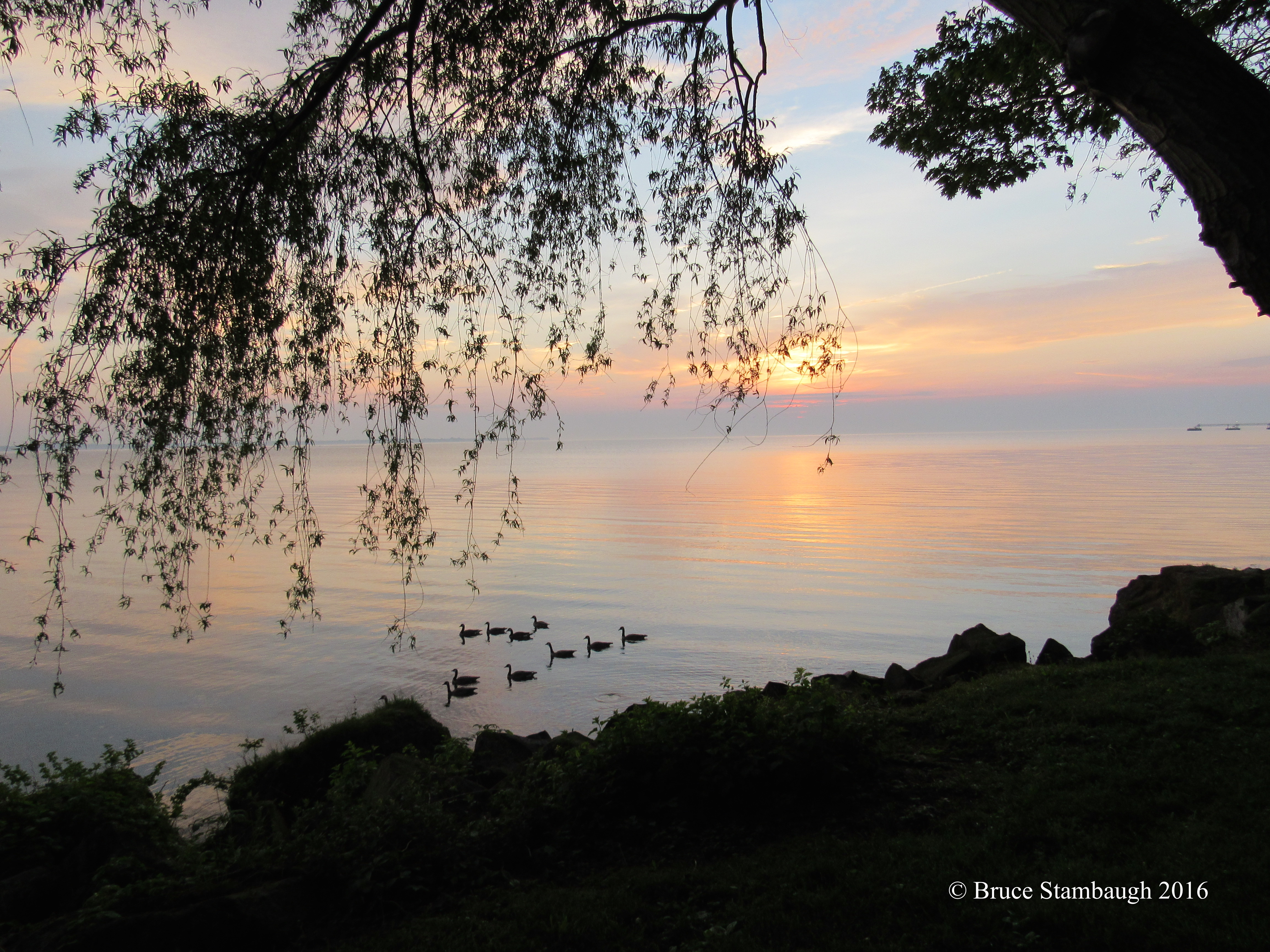
Surrounded by reflected brilliance, a family of Canada geese glided through the still waters without their usual commotion. Unaware of my presence, a pair of young raccoons cooed as they foraged in the oversized rocks for anything edible.
Lakeside daisies, held harmless by earlier cooler days, stood at attention during the offertory. As if rehearsed, the geese honked while the Nighthawk buzzed, forming an inexplicable choir. The sun just smiled its approval.
The shoreline trees expressed their worshipful appreciation, too. The willows gracefully bowed as the geese floated by, while the oaks and ash remained tall, strong and attentive.
Soon other humans were drawn to the splendor. A visiting woman ran past me and asked if lived here. I wish. Even if I did, I still couldn’t begin to own the natural grandeur.
Protect it, preserve it, embrace it, praise it. Yes. Claim it as my own. Never.
This may sound funny, but it’s true. Without a sound, the sky spoke reassuring words, words that calmed and healed and inspired.
The sermon’s message was clear. No earthly power or politician or calamity or chaos could overcome this evolving creation of the Creator.
In that, I was most confident and filled to overflowing. At the benediction, the sun wholly overtook the darkness, and indeed, it was good.
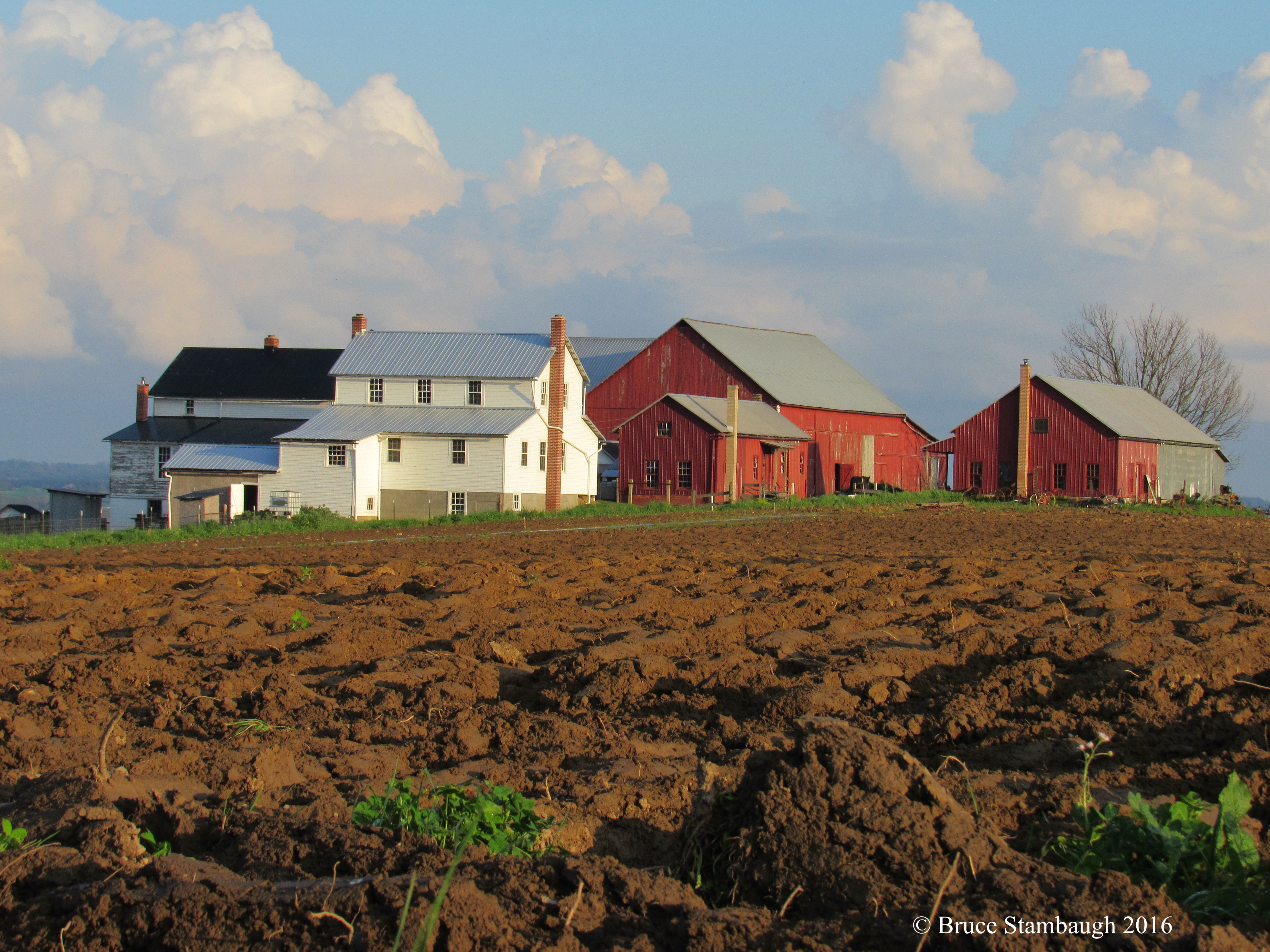
I love to shoot this farm, especially when the setting sun brightens the buildings. On this spring evening, cumulus clouds billowed in the background, adding depth to the photo. I have pictures of this farm in all seasons. But this is the first with the field plowed. However, week-long rains softened the usually firm furrows.
As it turned out, the plowed field became the foreground for the unintended main subject. The family of chimneys on the various farmstead buildings carry the viewer’s eye left to right, a visual tour of this iconic Amish farm.
I love to walk outdoors. Treadmills don’t do it for me.
I guess I’m a multi-sensory walker. I need to exercise my listening, my observing, my sensing, my thinking as well as my muscles and my entire bony being.
Walking is an easy sport unless you’re a fair-weather walker. That’s me. I don’t do well in wet, windy, cold conditions.
My pickiness has its consequences, however. My body complains in multiple ways. My achy bones cry out in rebellion. My hamstrings tighten in protest. My soft tissue succumbs to gravity.
First tulip.Other symptoms sneak up on you, tricking you into sullenness. Blood pressure is one of those conspirators.
All my life people would offer to buy my low blood pressure scores. I never fully appreciated the physicality of high blood pressure or the corrective medicinal ramifications. I do now.
Age apparently has caught up with me. At a routine check-up, my blood pressure was the highest it had ever been. Thinking it an anomaly, the nurse took it again. It went even higher.
I drove straight to the pharmacy and purchased a new digital wrist blood pressure cuff. My old manual one with the stethoscope had given up the ghost. I didn’t want to join it, so I began daily recordings of my blood pressure and pulse.
My good doctor tweaked my medication according to those results and my body’s physical reactions. I wasn’t ready for what followed. I hated the melancholy, lackadaisical feelings, the fuzziness and body fatigue, though I had done little physically.
I had a new appreciation for those with the same condition. I longed to return to my daily walks, but the weather was as uncooperative as my new pills. I brooded beneath the seemingly perpetual steel gray Ohio sky.
Wild phlox.Then, a week after the last snow, spring broke through. Daffodils sprang back. Spring beauties and phlox carpeted woodlots and pastures. The season’s first tulip brightened our yard. It was time to walk again.
The warmth alone drew me outside. I was in heaven again once I got past the roadside dead deer decaying in a woodlot south of our house. When I turned onto the little township road, I hit my stride.
I crested the first knob, and my favorite valley opened before me. The gently undulating and curving road reflected the morning sun. The road resembled a silver ribbon as it ran through the vale beyond the comely farms and up and over the eastern hill that separates one watershed from the other.
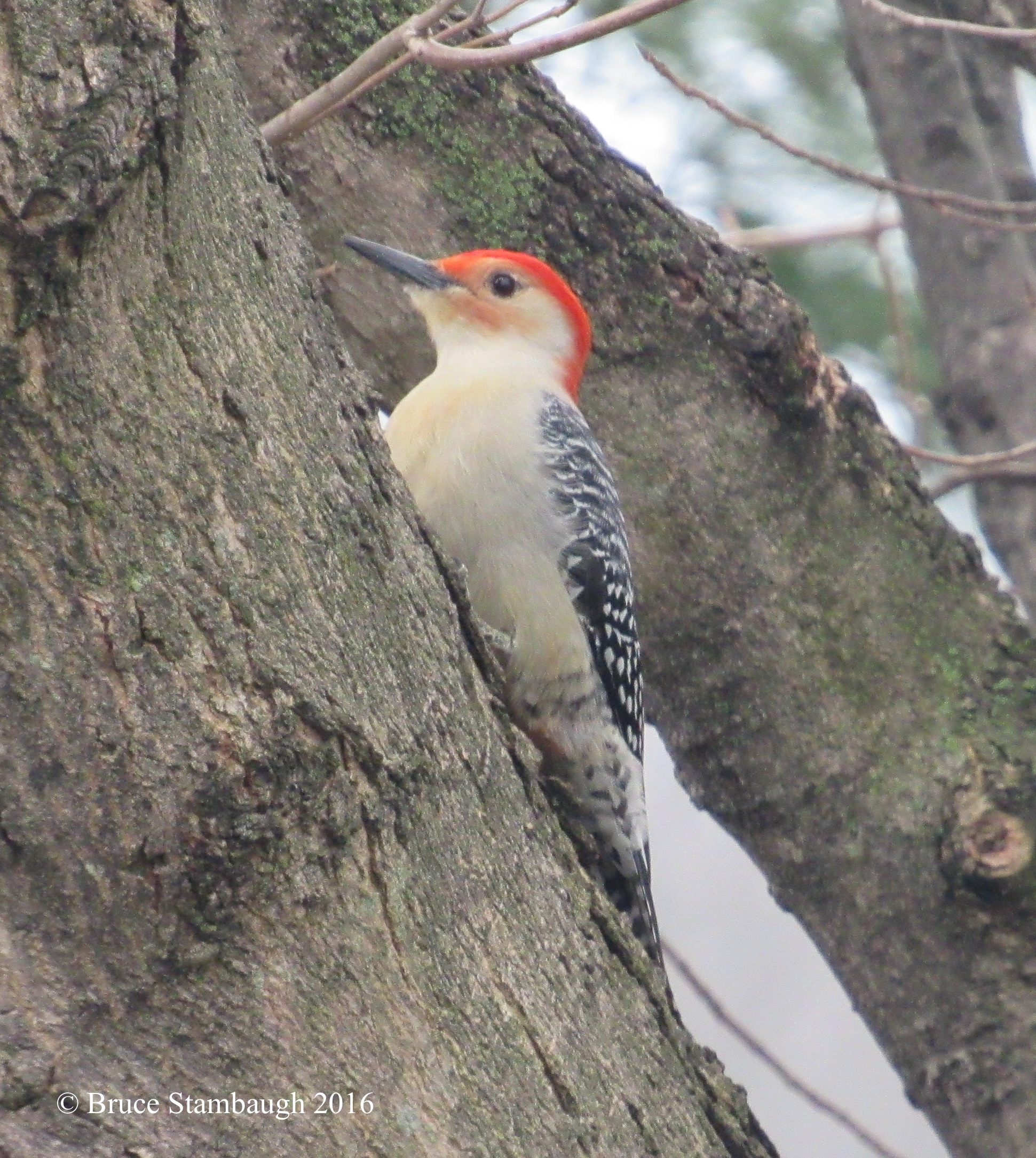
Male Red-bellied Woodpecker.The birds rejoiced with me. A dozen species regaled and entertained me with song and their territorial acrobatics. I rejoiced in the many varieties of the spring birds that had returned to mingle with the year-round residents.
At the halfway mark, the stream gurgled its own refreshing tune, too, though it hadn’t rained for days. The artesian well ran strong into the roadside trough. The willow tree teased yellow with its drooping canopy of leafy buds.
When I reached the little rise at the first farm, a familiar fragrance freshened the morning air. An invigorating mix of soap and cotton wafted all the way to the road from a recently hung line of laundry.
A few more steps and purple martins greeted me with salient salutations and arching flyovers. In contrast, the one-room Amish school stood silent, scholars already having completed another year of studies.
I felt incredible, transformed. My blood pressure was thankful, too.
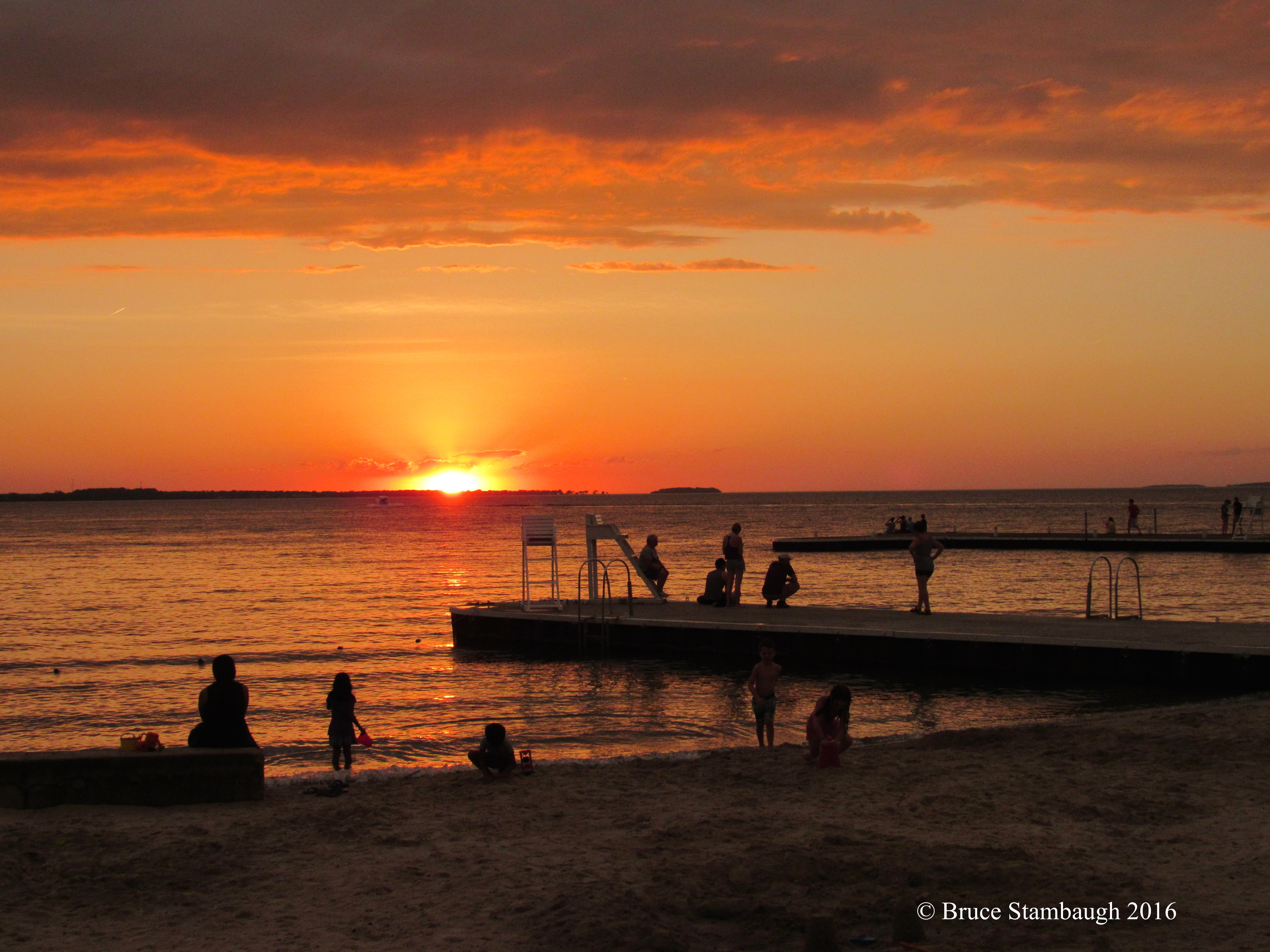
The sunsets just keep getting better and better. Or possibly it’s the string of perpetually gray Ohio days that make the infrequent sunset all the more glorious. Either way, I greatly appreciate the beauty of the evening sky and the radiance that bids the day farewell.
April’s weather in northeast Ohio can be fickle, to say the least. After a tease of springtime in late March, April brings us all back to reality in short order. In the space of a week, it’s not unusual to experience bitter cold and snow, torrential rains, damaging winds, and a beautiful, still, sunny day.
Regardless of the day’s weather, we can often count on an inspiring sunset. Indeed, this week we had our pick.
Severe weather grips me. As a volunteer severe weather spotter for the National Weather Service office in Cleveland, I pay close attention to the weather forecasts. When the potential for severe weather is a possibility, I go on a personal high alert.
I watch radars. I read online weather maps. And I scan the sky. I also take my camera with me.
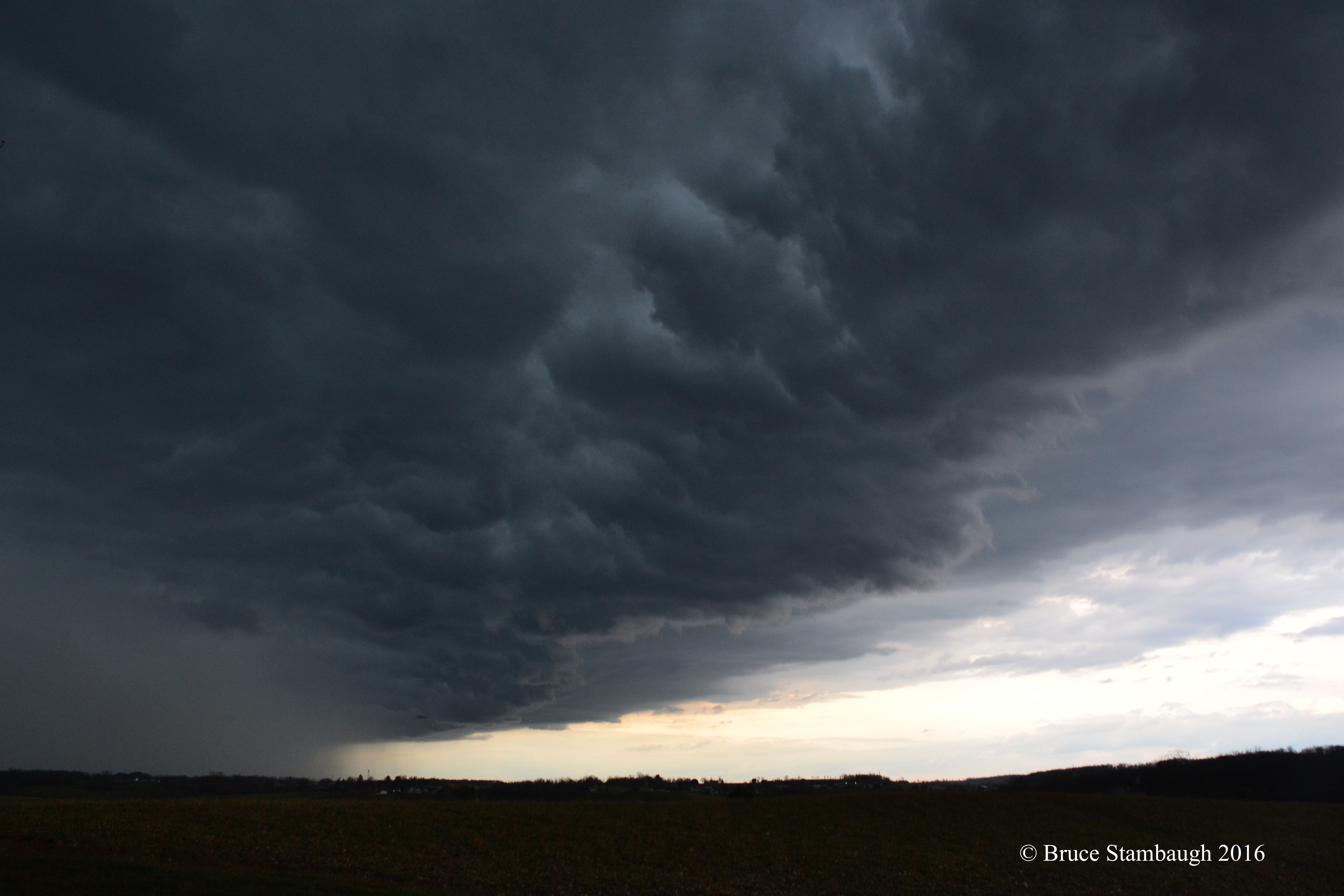
When the season’s first strong thunderstorms approached Monday evening, I was ready. An active weather system had produced a tornado in southwestern Ohio. The cold front weakened a bit as it approached eastern Ohio. But that didn’t keep it from producing some impressive clouds, particularly in the front of the storm system.
The western sky turned dark. I went to the back porch to see what was coming, and this is what I saw looking north. The clouds looked fierce and angry. But fortunately, we only received torrential rains and a few strikes of lightning.












You must be logged in to post a comment.