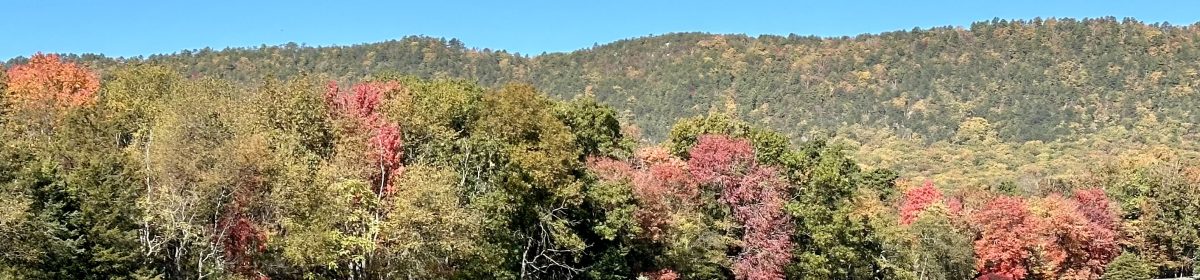
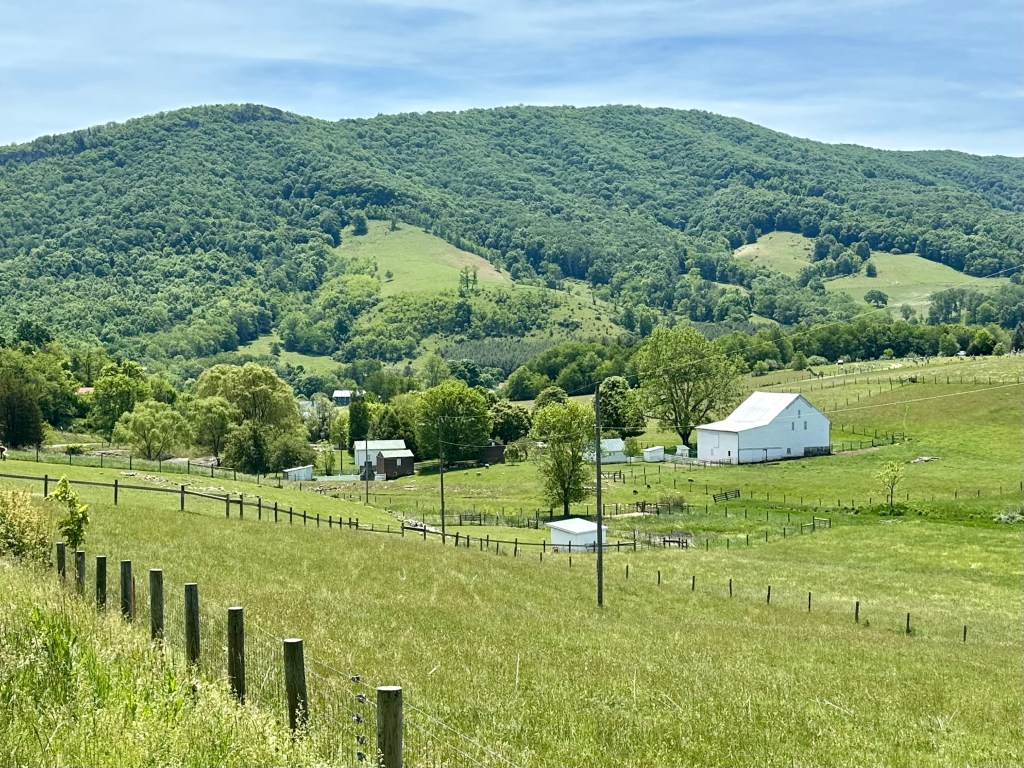
My second visit to Blue Grass Valley paid off. The birds and the bucolic scenery lure me.
This remote Appalachian location serves as the border between Virginia and West Virginia. According to the Virginia Department of Wildlife and Recreation, the Blue Grass Valley runs for 7.2 miles. But that’s only measuring from the village of Blue Grass down the valley to US 250.
The northernmost section of the agricultural valley, abutted by sharp slopes on either side, is the place I enjoy the most. Besides its natural beauty, it features abundant wildlife, including lots of birds.
In the spring, songbirds and raptors nest amid varied terrain, with steep hillside pastures on one side and thick woodlots on the other. Brushy fencerows and fallow fields entice Golden-winged Warblers and American Kestrels to live as neighbors.
Since I focus on birds, the steep northwesterly part of the valley offers ample opportunities to see my target species, the Golden-winged Warbler. Of course, timing is everything. Once a report confirms the presence of the Golden-winged Warblers, I head for the hills as soon as the opportunity allows me.
The highland forests of the area are one of the few confirmed locations where the sought-after birds nest. Wait too long, and the birds will be heading south again once their babies fledge.
I had only ever seen one Golden-winged Warbler before, and that was during the Biggest Week in Birding festival in northwest Ohio several years ago. The bird came so close to me that I couldn’t get a sharp photo of it with my telephoto lens.
I couldn’t find the bird on my first trip to Blue Grass. But I arrived too late in the day. On this trip, I was determined to arrive early for a better chance of seeing this gorgeous bird with golden wingbars and a yellow crown to match.
There are only three ways to get to Blue Grass Valley from Harrisonburg, Virginia, and none of them are straight or flat. I chose the middle route, which took me along the narrowest mountain roads but also offered the best birding opportunities.
Blue Grass is less than 60 miles from my home, but with multiple mountain passes and horseshoe curves to navigate, the drive takes me two hours with breaks to bird and rest.
My first stop was Shenandoah Mountain, the eastern front range of the Appalachian Mountains. It happens to be the boundary between Virginia and West Virginia in the George Washington National Forest.
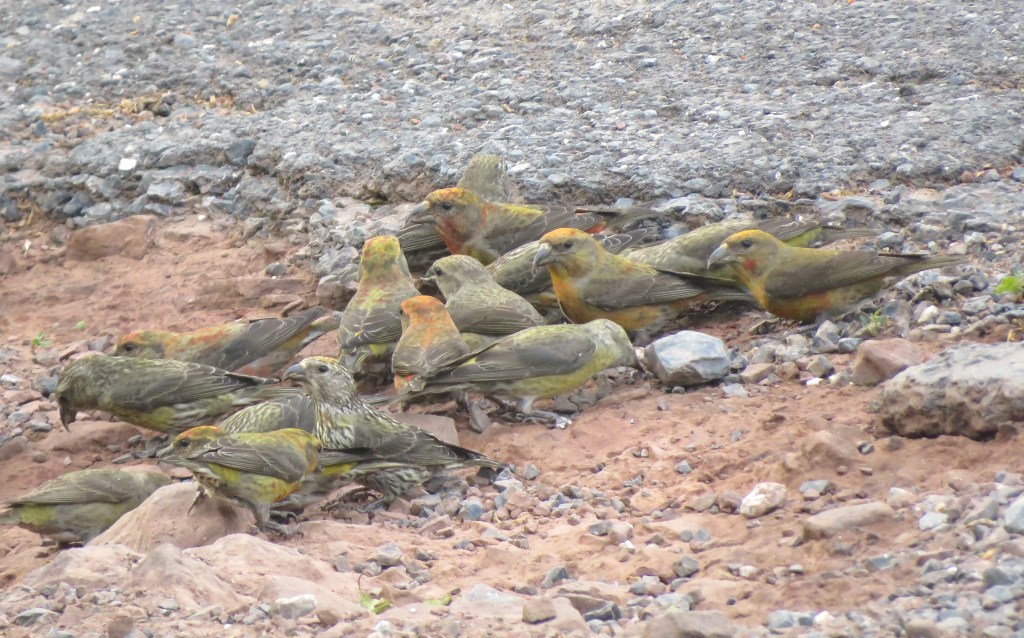
A couple of birders were exiting their cars when I pulled in. We were there to see the Red Crossbills. That area is one of the few spots in the mountains where they live year-round.
A flock of the Red Crossbills chattered in the trees overhead before diving down to “gravel” in the deep red clay. The birds apparently desire the minerals in that particular spot. I captured several decent shots of the beautiful birds, and then I continued west down the mountain.
The Virginia/West Virginia lines meander like the fast-flowing streams that have carved out the valleys. So, it’s common in this westernmost part of Virginia to cross into and out of each state numerous times.
In fact, the farmhouse where I birded was in Virginia, while the barn, not 50 yards away, was in West Virginia. The farmlane served as the demarcation.
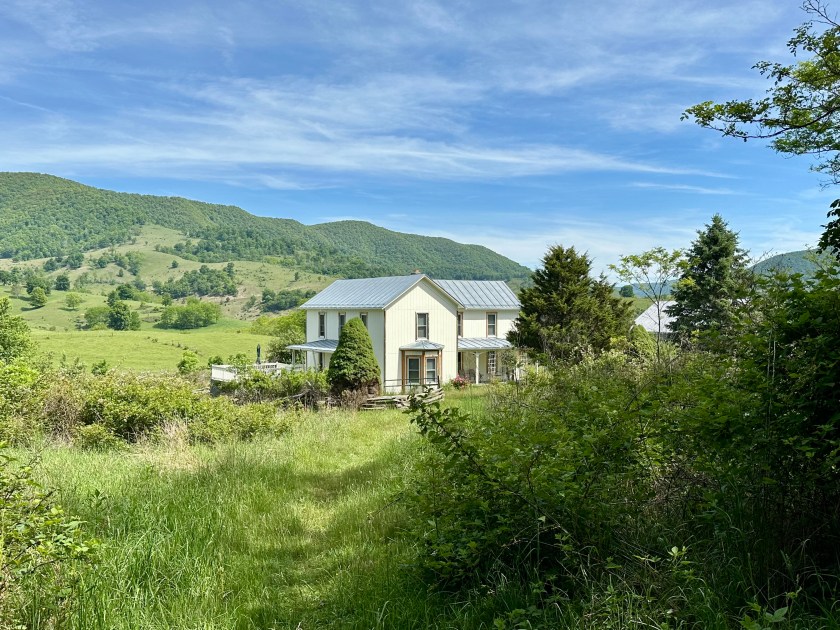
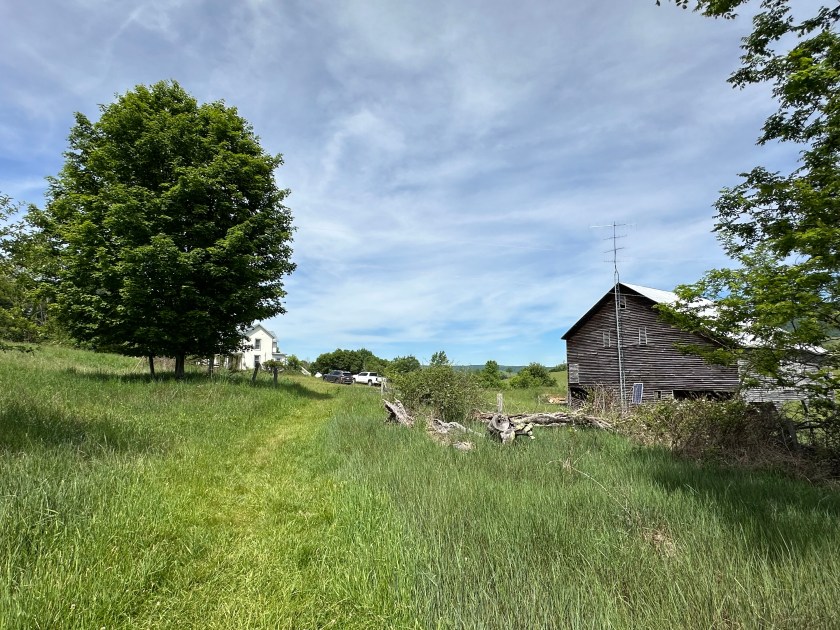
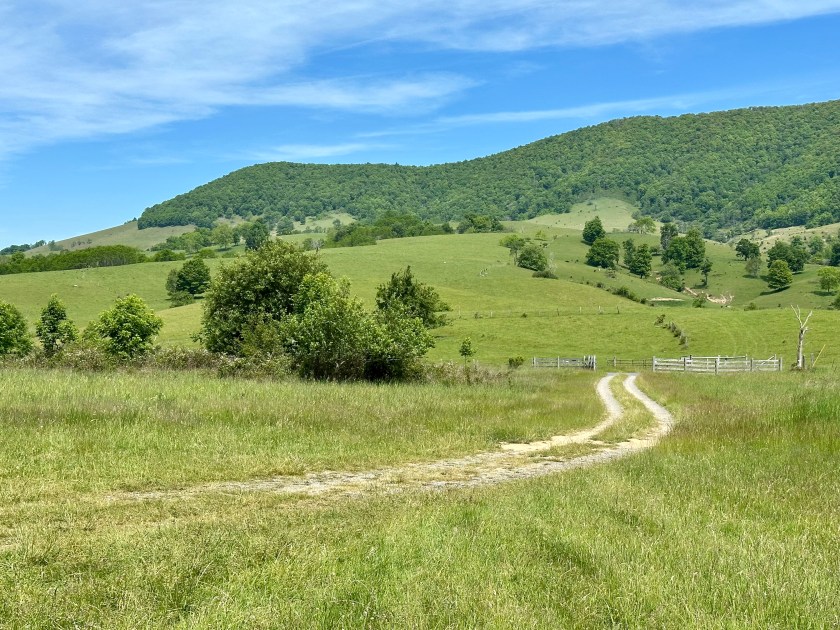
It was 9:30 by the time I reached the Virginia Ornithological Society farm where the Golden-winged Warblers often nest. Birds were singing away as I headed for the well-marked trails and bathed in the songs, the shade, and nature’s lushness.
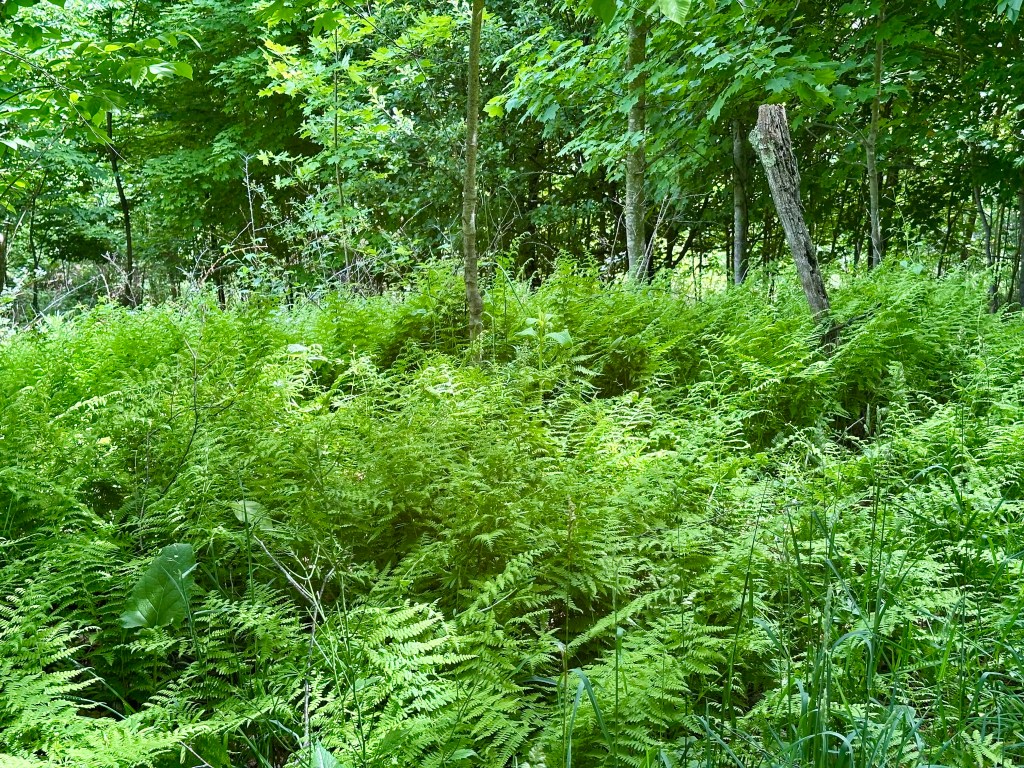
I was in awe of the vibrant ferns beneath the leafed-out trees. A clear-winged moth landed in tall grass right in front of me. A single pink wild rose broke the green palette. Still, birds were my objective.
Rose-breasted Grosbeaks, Gray Catbirds, Red-eyed Vireos, and Eastern Towhees sang a concerto for an audience of one. It was music to my ears, nevertheless. Skippers, Tiger Swallowtails, and even an early Monarch butterfly flit and fluttered in the dappled light of the forest.
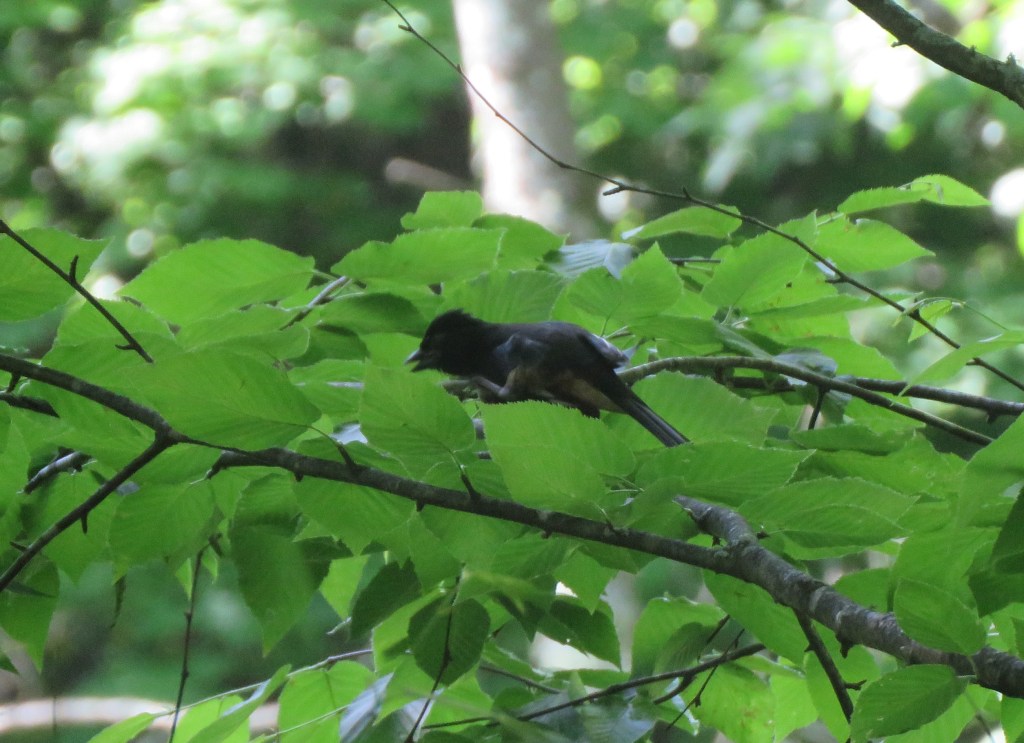
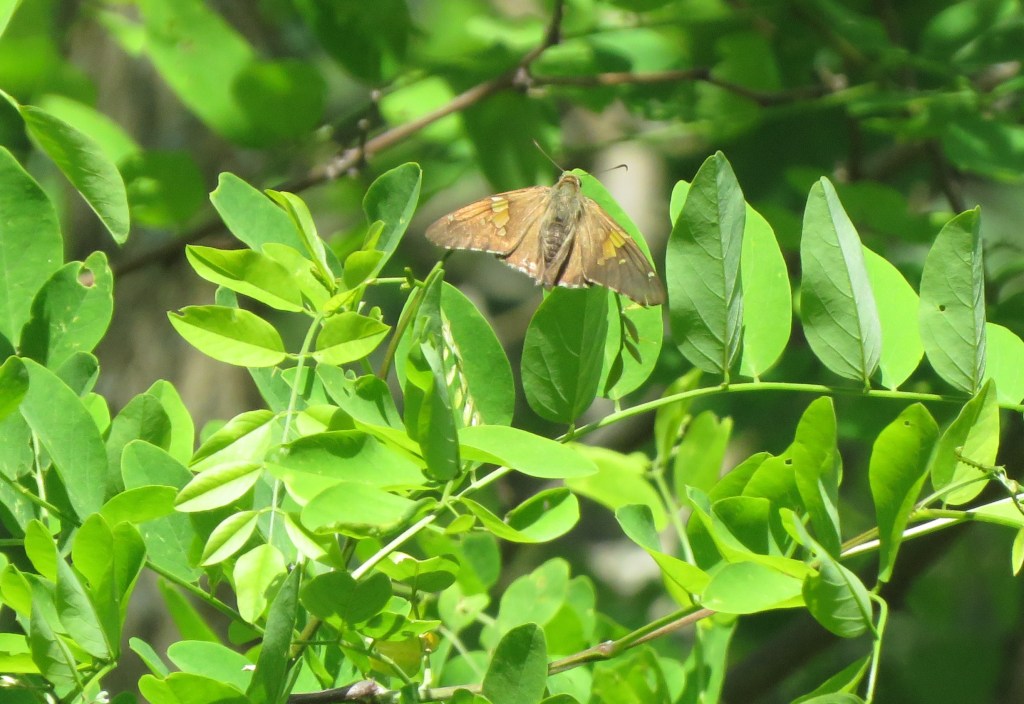
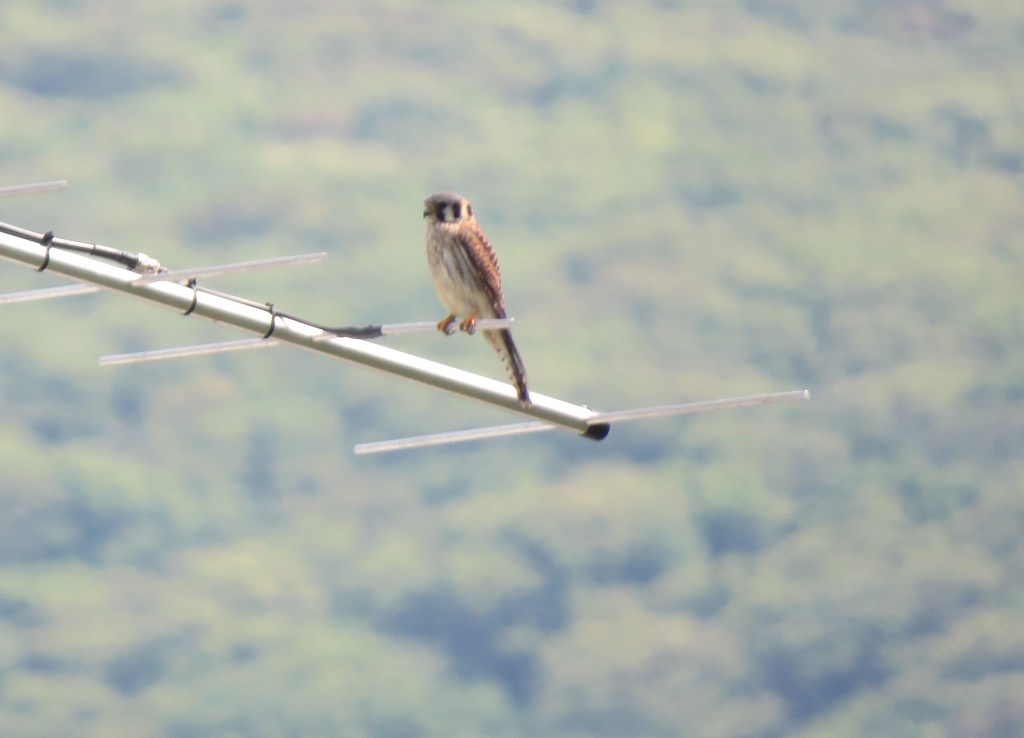
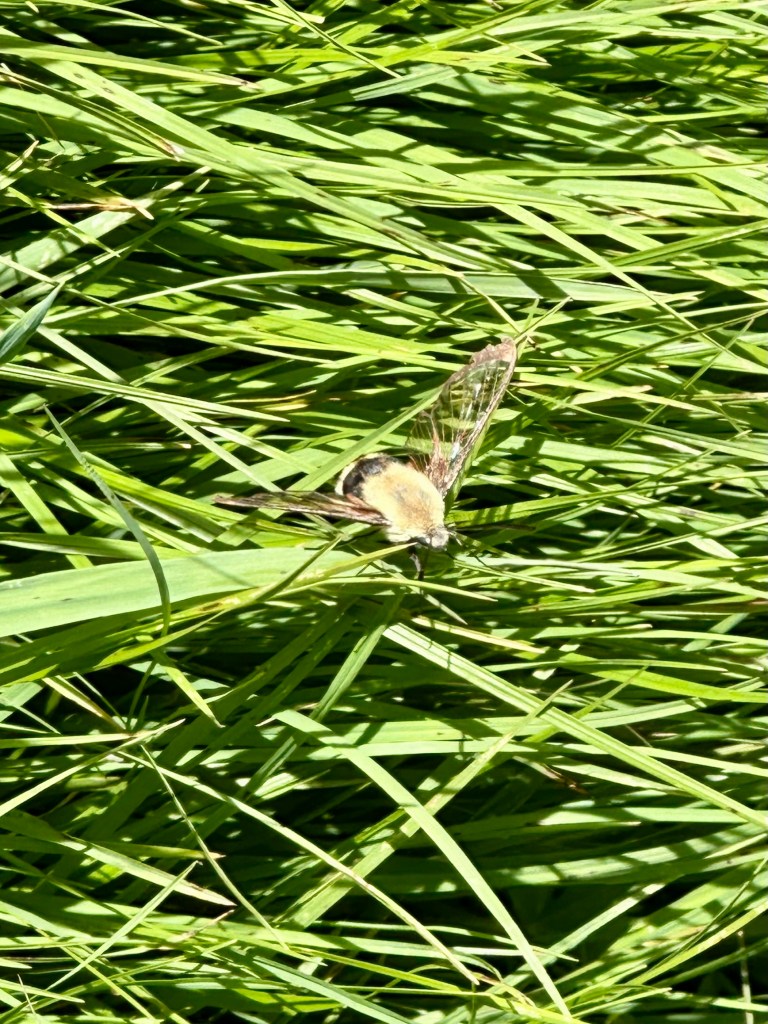
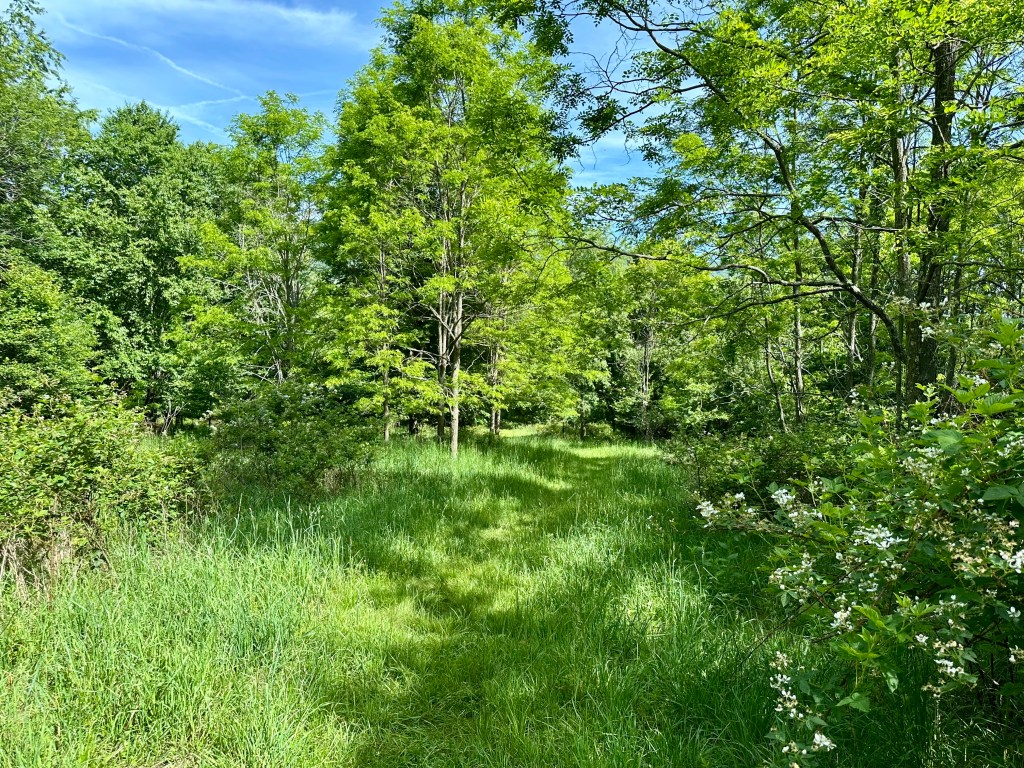
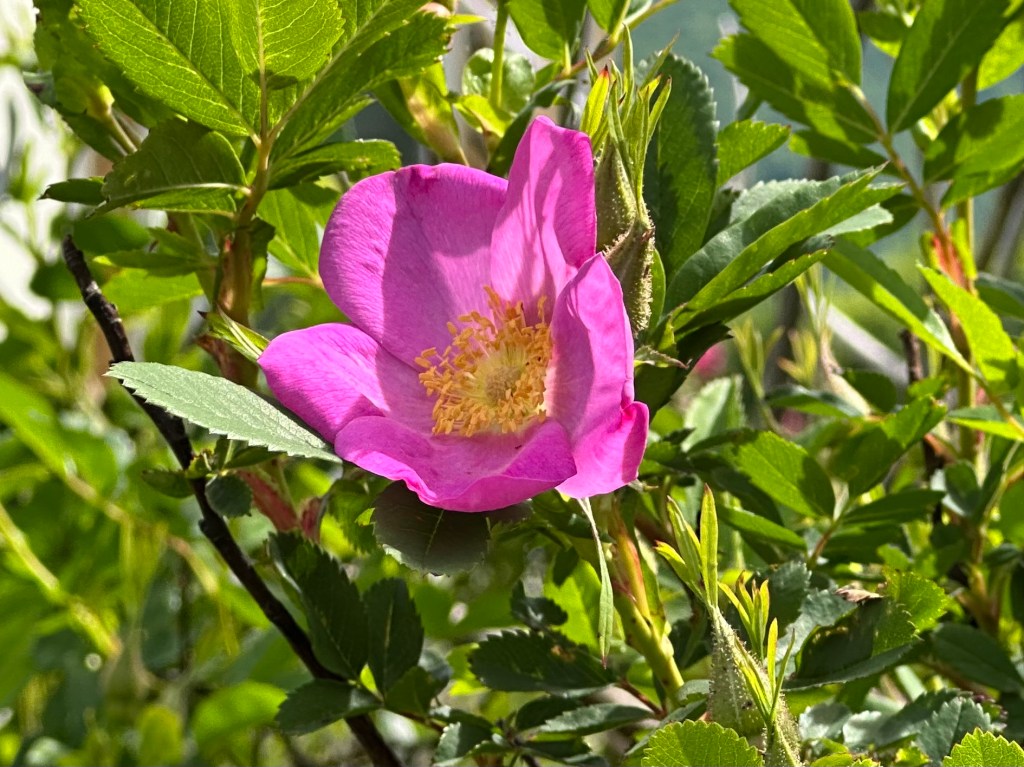
I saw a flash to my left. It was a Golden-winged Warbler. I raised my camera and snapped a horrible photo of the bird. But the golden wings and head were distinctive despite the fuzzy photo. My phone’s birding app confirmed the bird’s song.
As the sun rose higher, so did the temperatures, and the birdsong diminished. I set my sights on capturing landscape photos of this beloved valley, with its intersecting hollows that make the valley appear wider than it really is.
As I drove toward the town with its ramshackle buildings and a few red-brick and white-clapboard houses, I stopped several times to capture the essence of the rural valley. Knowing these Appalachian folks’ desire for privacy, I tried to be as discreet as possible while capturing the paradise they live in. The few ranging cattle I saw didn’t seem to mind, however.
I marveled at how steep these pastures were, rivaling those I had seen in the Lauterbrunnen Valley in Switzerland. Of course, they weren’t quite as high, averaging 3,000 ft. above sea level.
Wispy cirrus clouds hung high in the cerulean sky. Below, many shades of green ran high and low, broken only by brown fences and farmstead buildings.
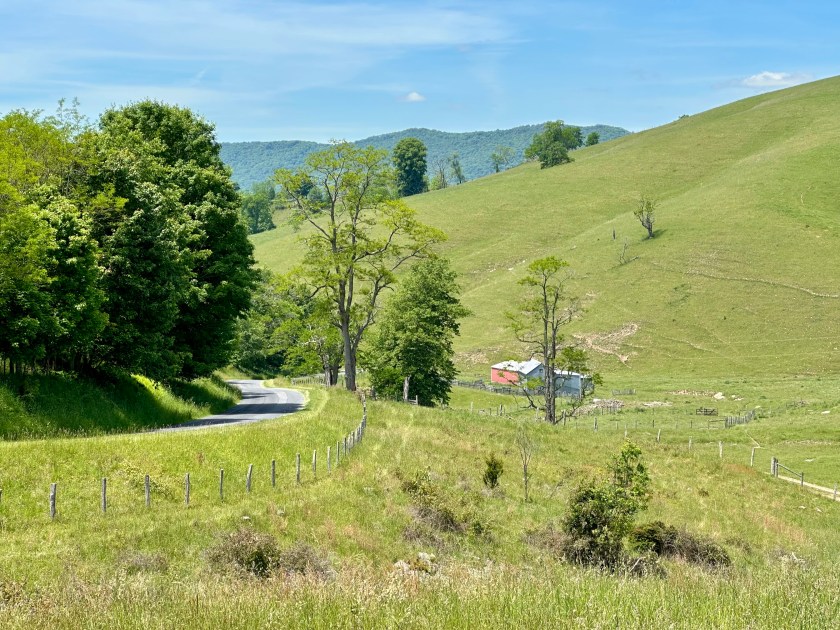
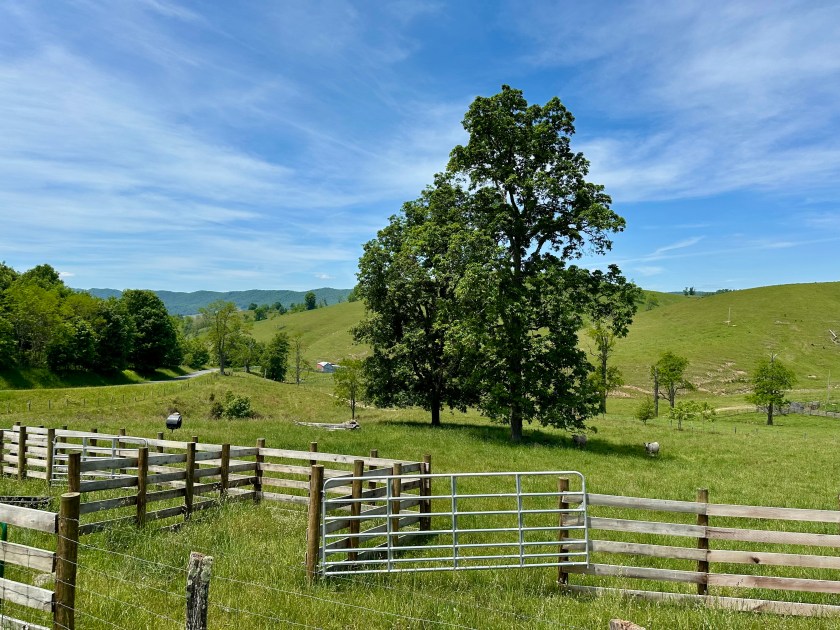
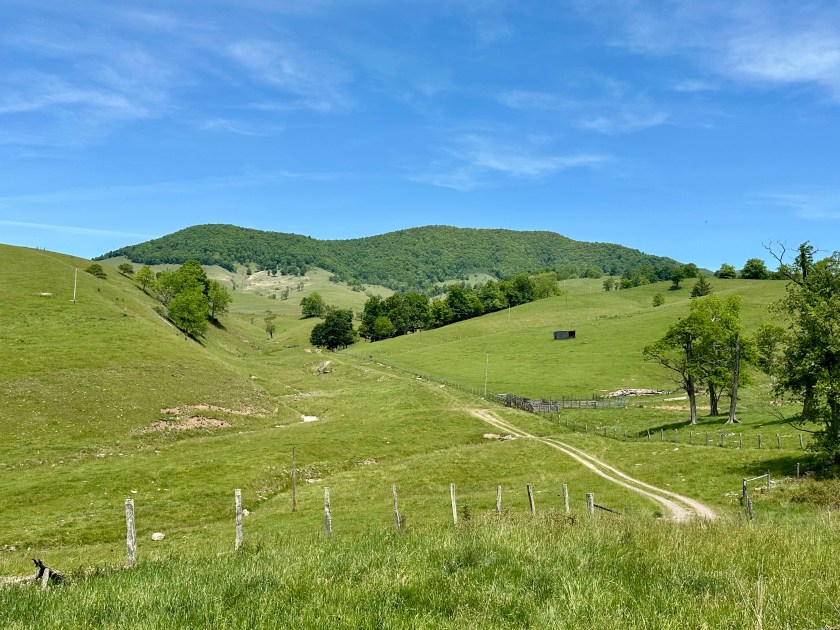
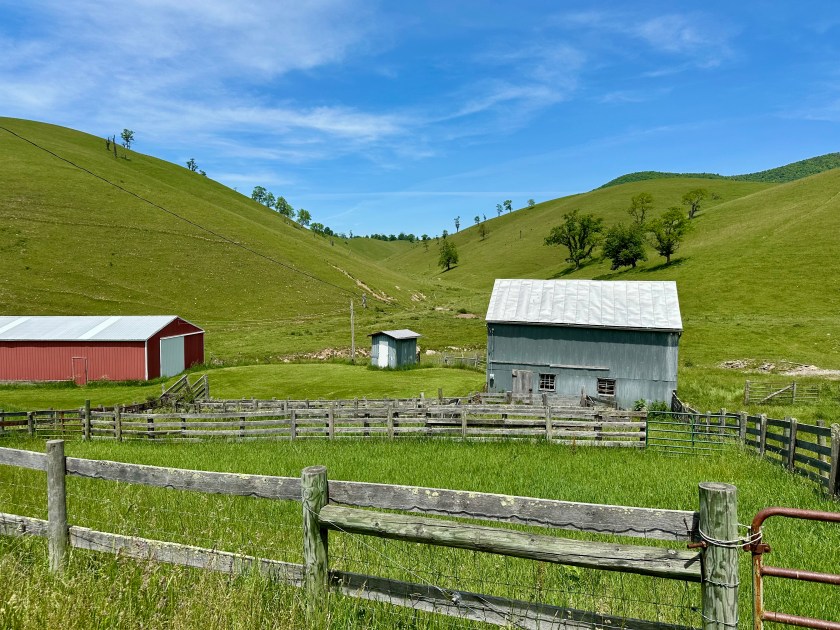
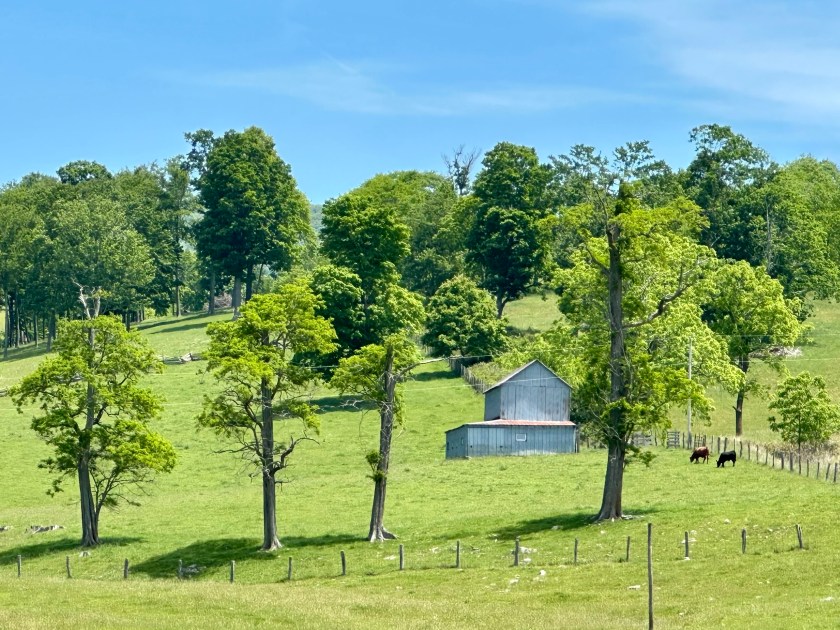
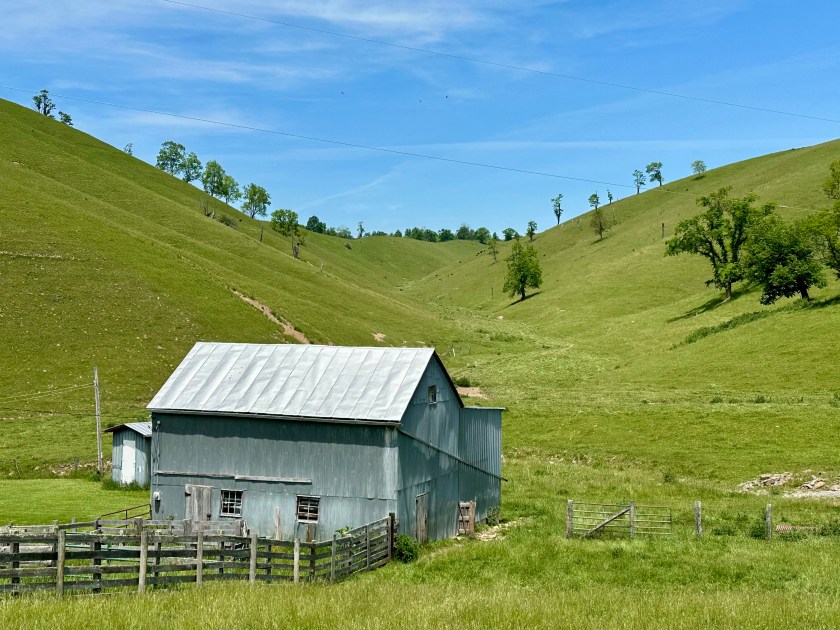
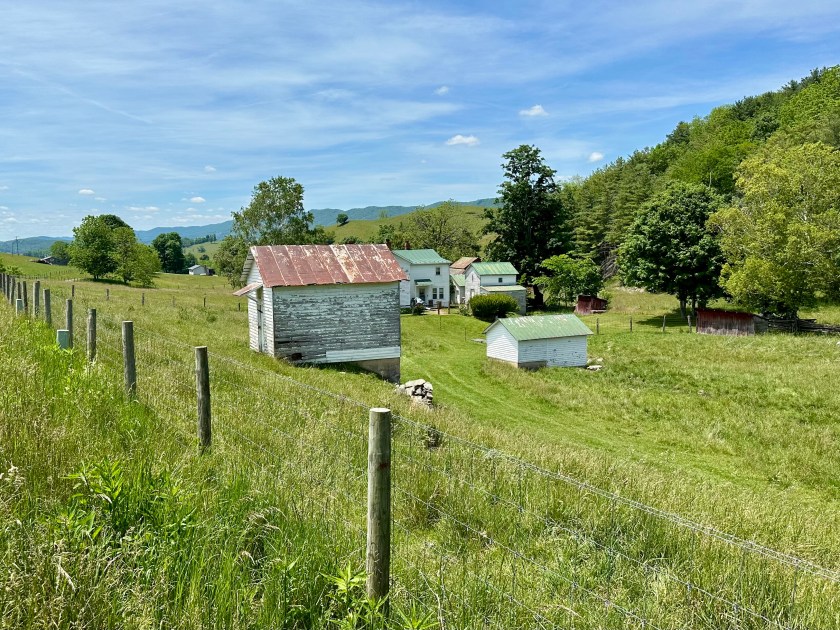
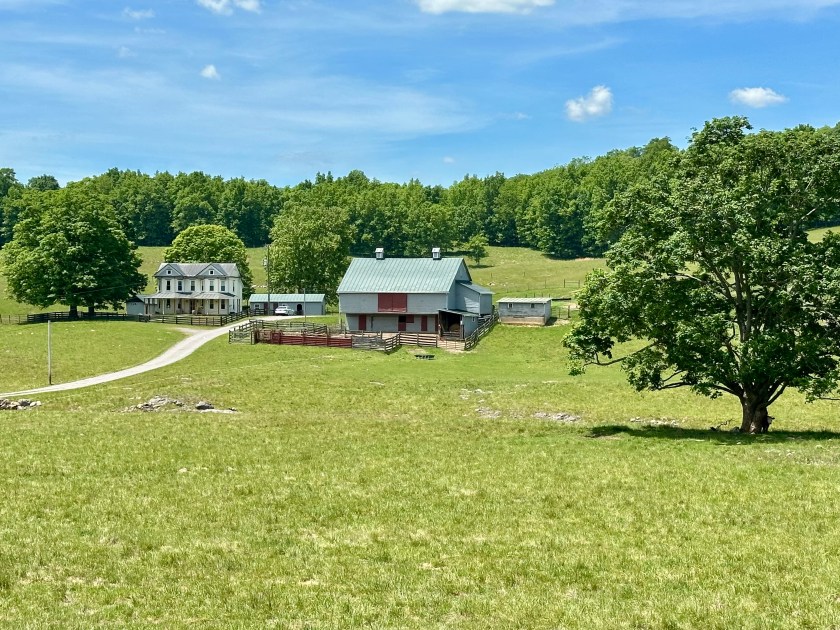
As a photographer, I loathed the random stringing of power lines that zigzagged down the valley. Of course, the locals needed their electricity, and the power company always took the path of least resistance.
I marveled at the long dirt lanes that ran far up the hollows and disappeared beneath forested mountaintops. Irregular stands of ancient oak trees guarded weathered hay barns.
Before entering the little burg, I stopped to take a photo of a street sign that revealed the aptly named road, “Hardscrabble.” The nearest farmhouse and bank barn, however, proved to be the contrary.
At the town’s three-way stop sign, I turned left and drove alongside the southern branch of the Potomac River. Its headwaters originate two miles to the south.
When I returned to Shenandoah Mountain, I stopped for a break from the winding switchbacks of US 250. It was a historic Civil War monument commemorating the Confederate defensive breastworks used against advancing Union soldiers.
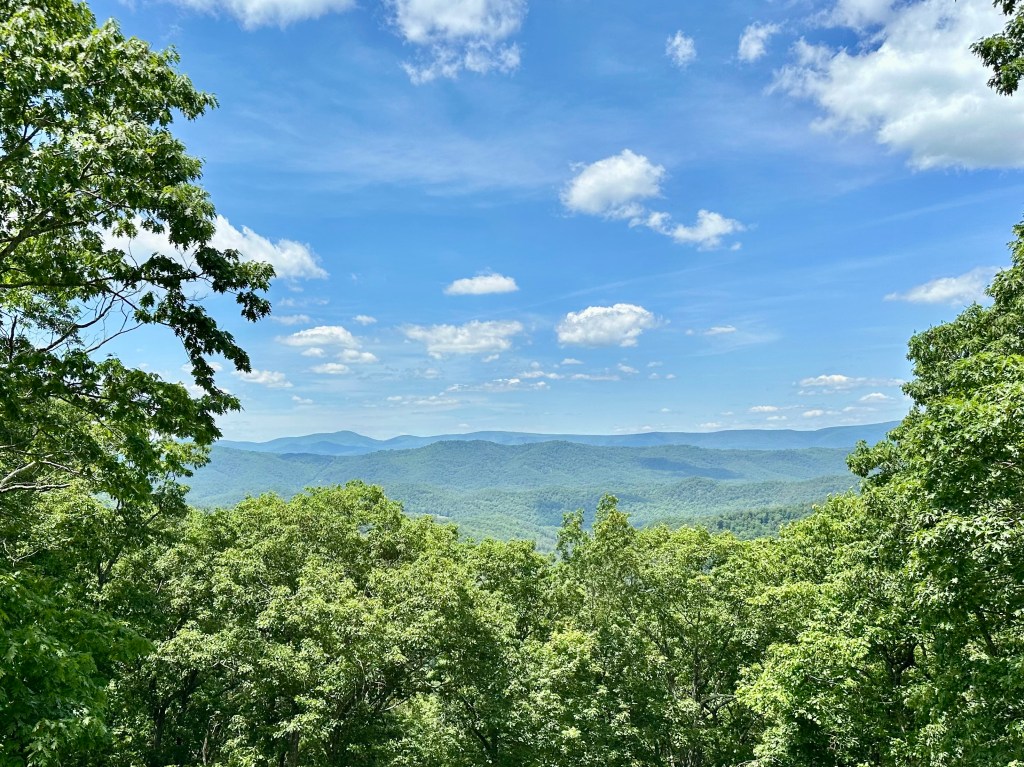
From that vantage point, I could view the mountains from which I had come, and I was only halfway home. Despite the exhausting drive, I’ll return next spring.
© Bruce Stambaugh 2026


perfect name for this beautiful place
LikeLiked by 1 person
Yes, it is!
LikeLiked by 1 person