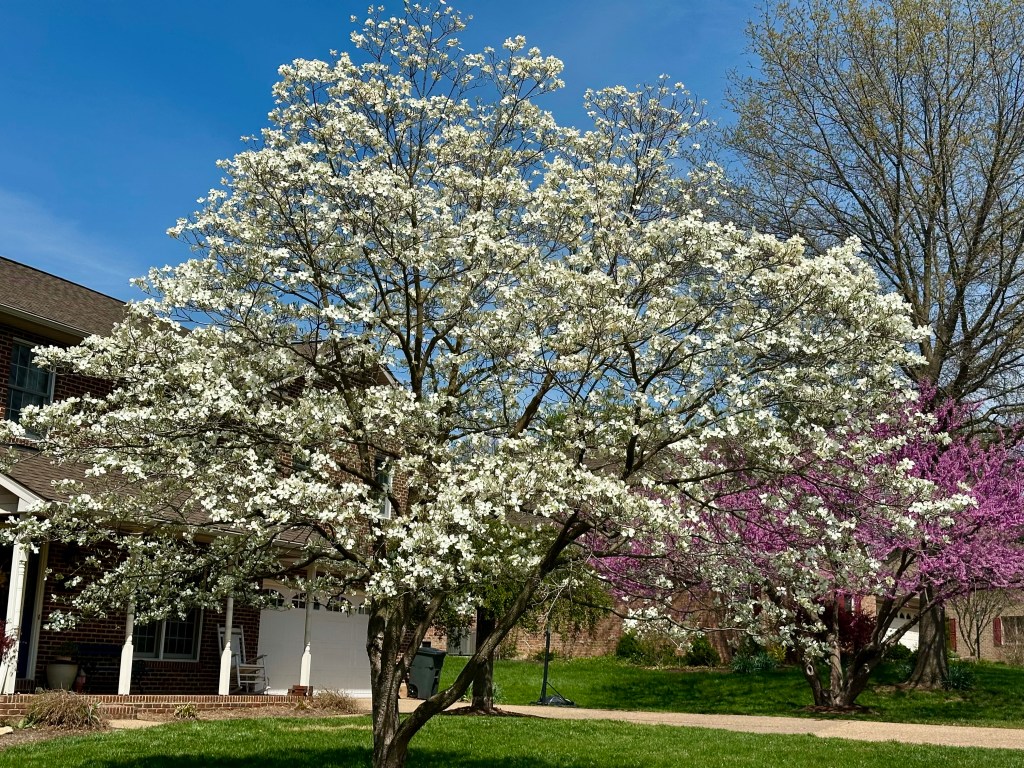
Of all the signs of spring, a blooming dogwood is my favorite. Their crown of beautiful white blossoms is simply stunning, especially in full sunlight. It’s a hallmark of spring for me.
We are fortunate to live in a neighborhood where several white and pink dogwoods adorn homes. I thought this tree was magnificent, so I stopped to capture the beauty and share it with all of you.
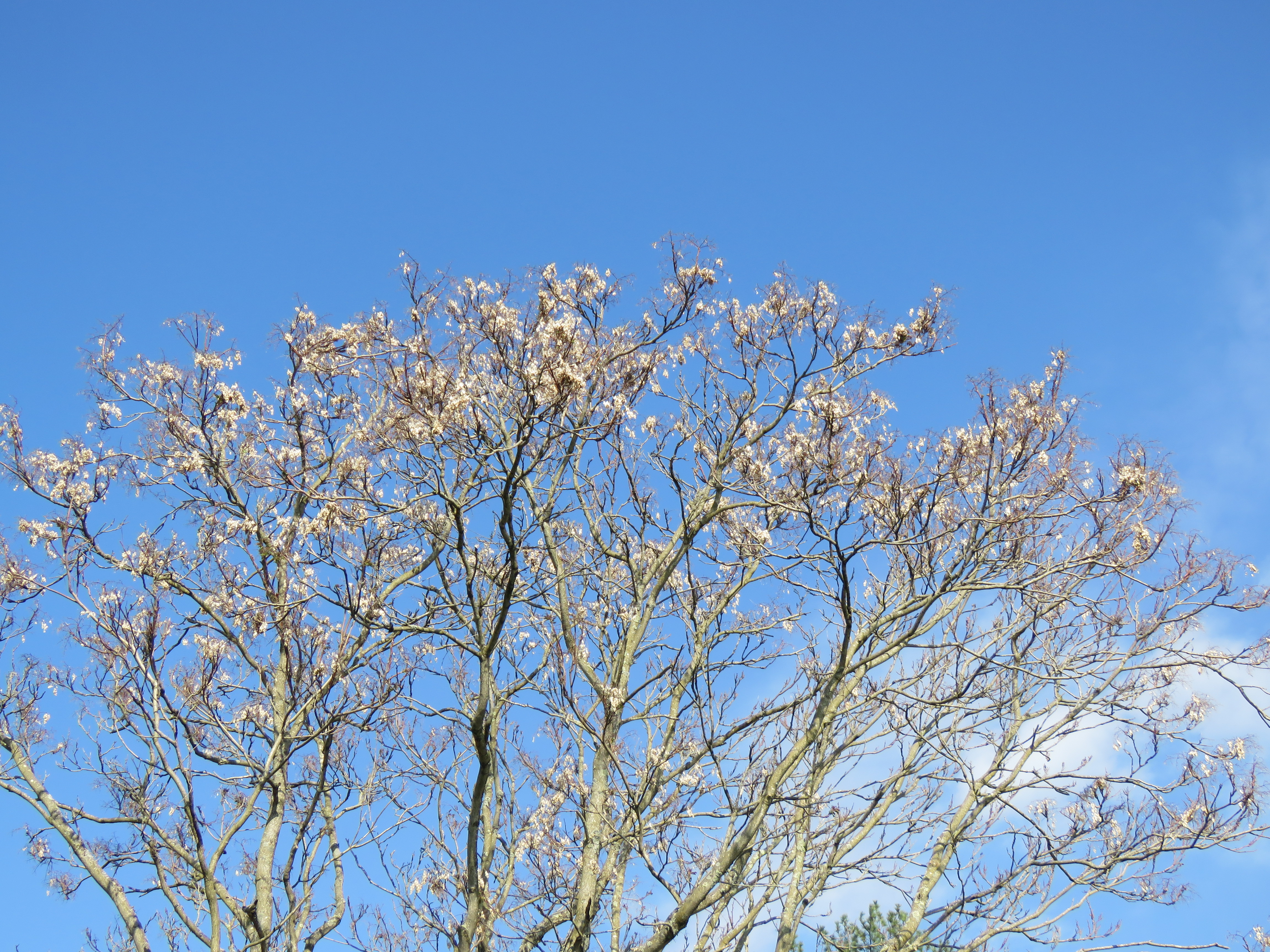
White blossoms fill the branches of this flowering dogwood. Photo by Bruce Stambaugh
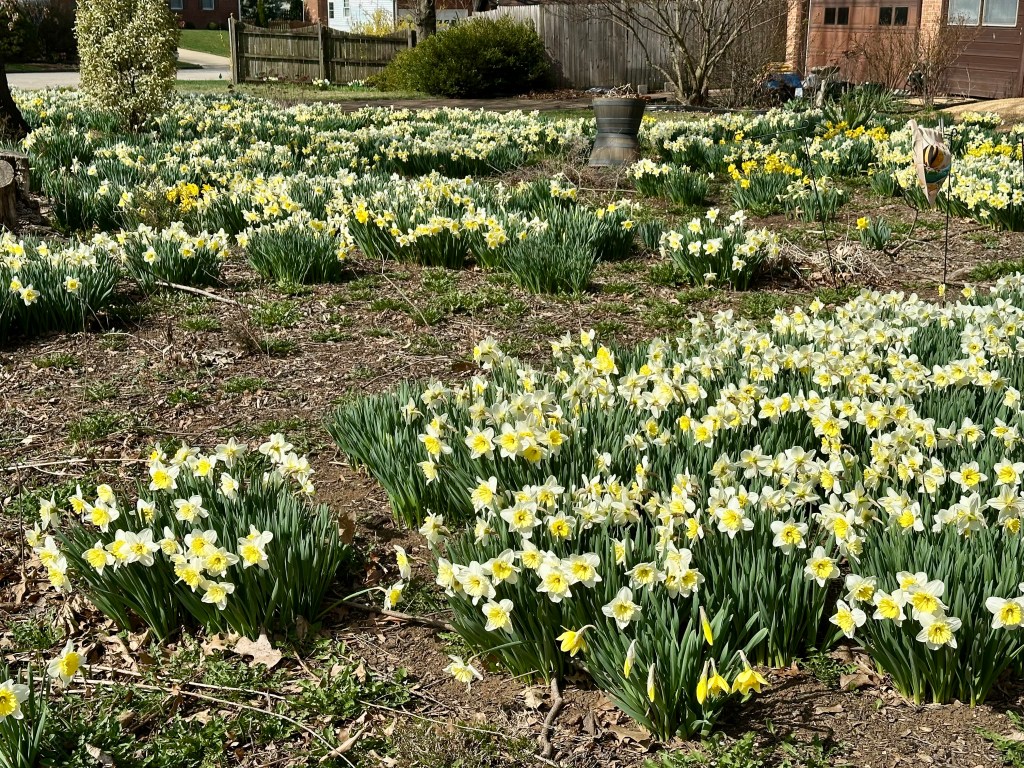
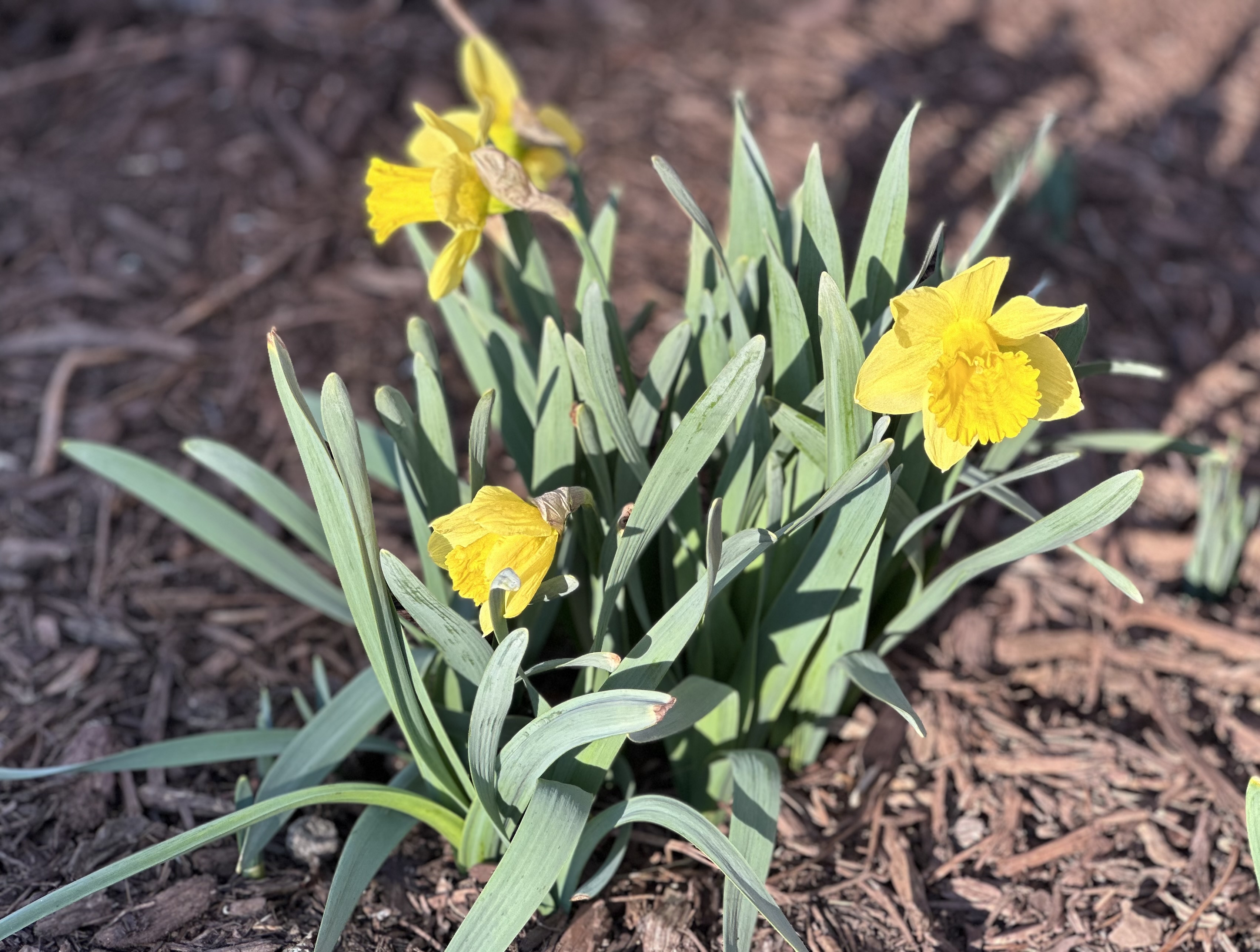
A carpet of daffodils means it’s springtime! Photo by Bruce Stambaugh
Spring officially arrives at 10:46 EDT this morning!
It’s been a long winter in many parts of the world. Virginia has been no exception. We gladly welcome springtime in the Shenandoah Valley. Bring on the warmer weather.
Cloudy or sunny, our neighbor’s daffodils brighten our day. Photo by Bruce Stambaugh
It’s spring! The vernal equinox arrived at 5:01 this morning.
Hopefully, that will put to rest winter’s worst weather. At this time of year, any snowfall won’t last long in Virginia’s Shenandoah Valley.
Of course, nature’s course doesn’t hold to mankind’s arbitrary seasonal demarkations. I have noticed from afar the hint of coloration of the once-dormant trees that populate Mole Hill, a local and revered landmark. The buds of its red maple trees are especially evident.
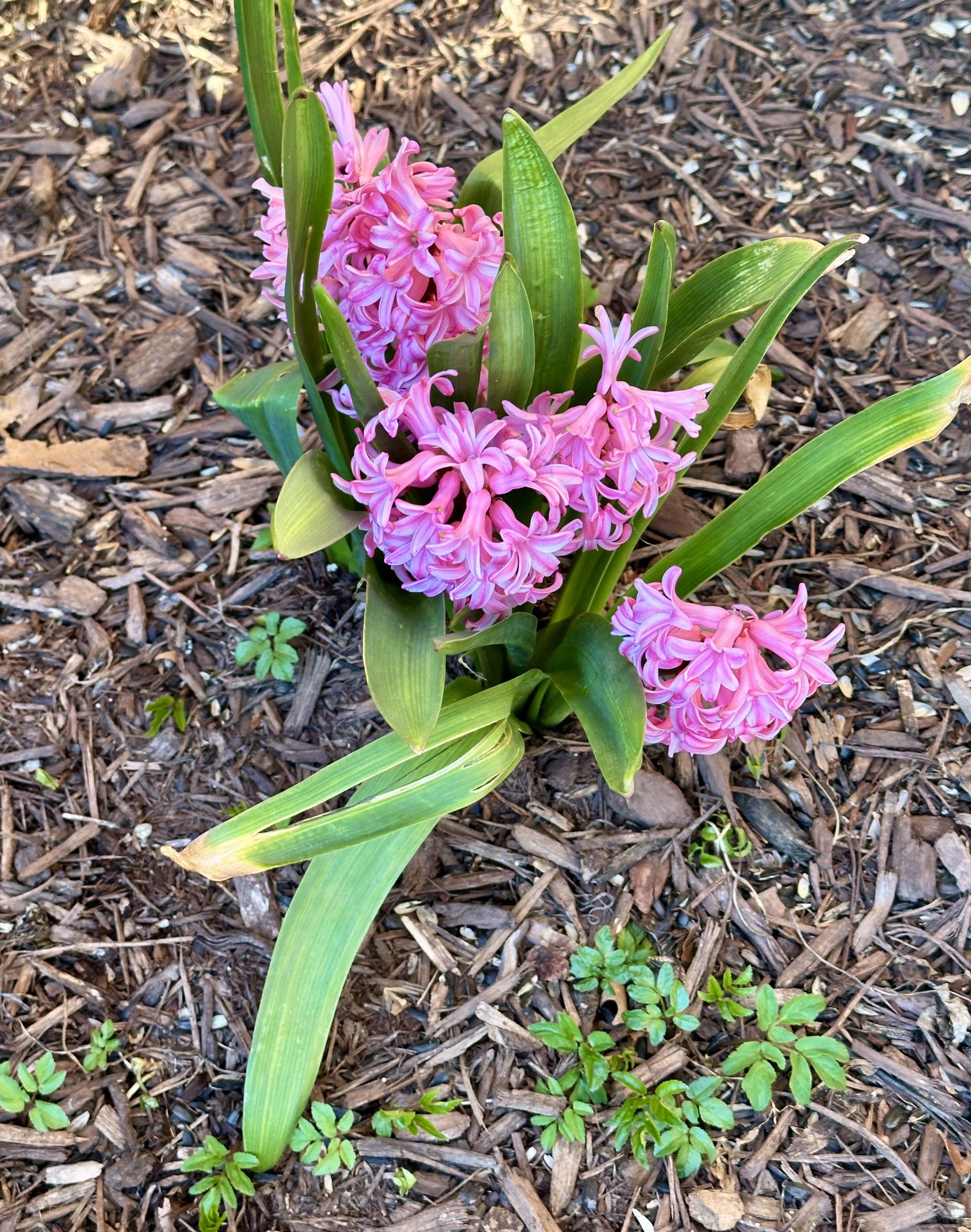
A walk around our yard and neighborhood reveals other signs of springtime. Deciduous tree buds are swelling, if not opening, ornamental trees bloom, and a lone Hyacinth blooms. Lenten Rose plants are also blooming right on time despite their winter-singed leaves. The grass is greening and growing. I’ll have to ready the lawnmower for action.
Tulip leaves have knifed through the chilly soil. Migratory birds are slowly arriving while the year-round residents begin to stake out their nesting territories.
It’s springtime, and I couldn’t be happier as long as my allergy medicines remain effective.
Don’t let those lovely calendar images of spring fool you. The gorgeous photos of tulips, daffodils, dogwoods, and any other flowering plant or tree may last all month in the picture hanging on your wall. But you better hurry outside to see them before they rudely disappear.
That’s Spring in a nutshell. It can be as fickle as the weather because the weather, especially in the age of rapid climate change, affects when things bloom and for how long. Throw in a heavy frost or two, and the blossoms’ purposes are lost until next year.
I don’t mean to be sounding doom and gloom. After the long, dark, and in many places, cold and snowy winter, we celebrate Spring’s arrival. But we need to get out and enjoy it while we can. We can easily take the many blooms and fragrances for granted until they are gone.
I’m as guilty of that as anyone. The older I get, the colder I get. Consequently, I avoid being outside too long on blustery, chilly days. I know. My age is showing.
I’ll admit that I’m a fair-weather kind of guy. I need the sun to keep me warm no matter how many layers of clothing I wear. Still, I love taking in the rapidly changing spring scenes. The leaves start to unfurl once the blossoms fade. Depending on the species and the weather, it is not long until the plant or tree leaves are in their fullness. As the leaves mature on some plants and trees, they darken into a rich green.
We are fortunate here in Virginia’s Shenandoah Valley. The first spring blossoms show themselves in the forests in late winter. Witch Hazel blooms can easily be overlooked. The white snowdrop petals are easier to see against the burnished leaf litter.
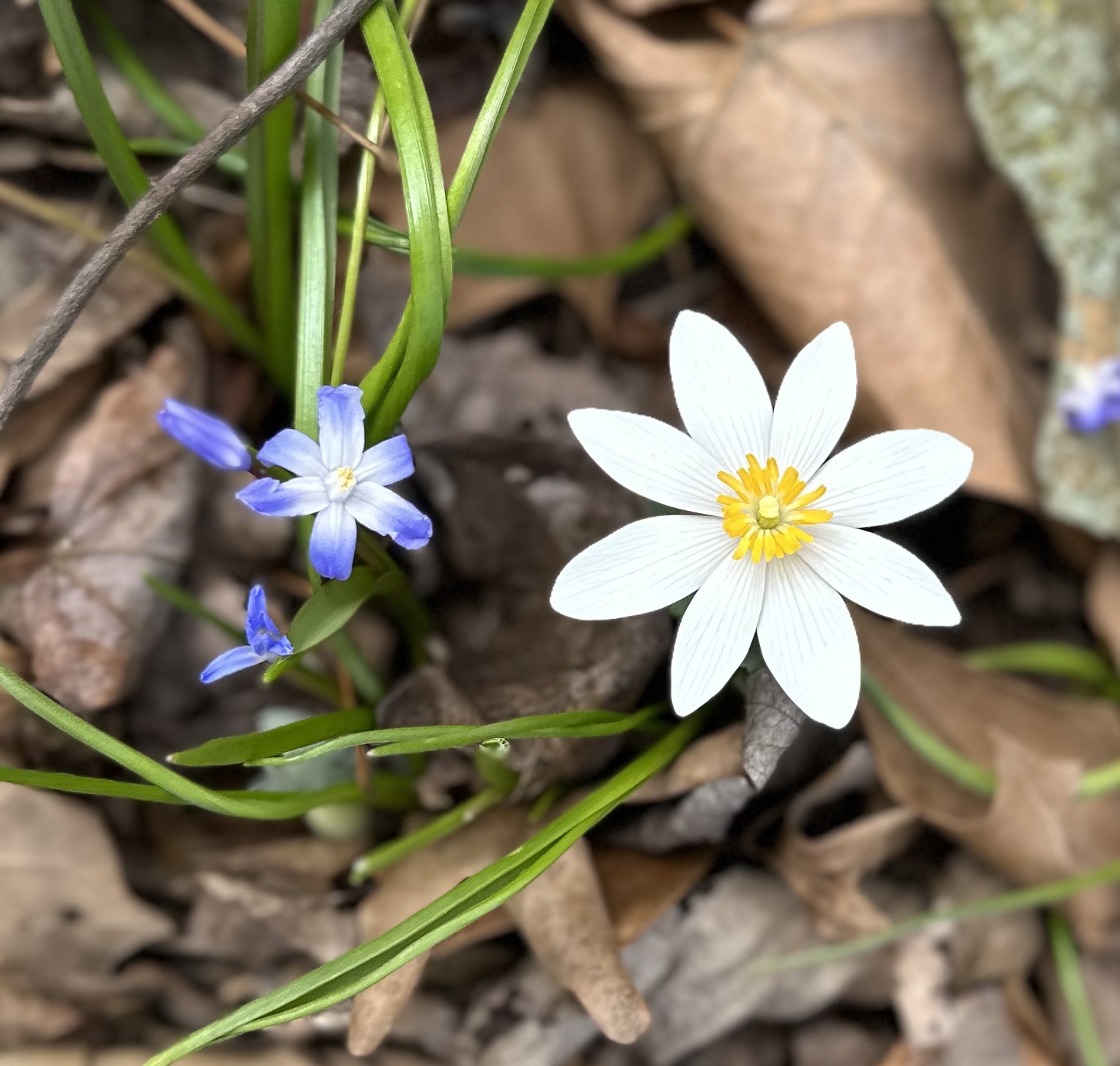
This year, February and March traded their weather. Varieties of daffodils and crocuses bloomed early and stayed late. As Spring progressed and the weather cooled, they became the exception. Pockets of the Glory of the Snow, Spring Beauties, Bloodroot, and Coltsfoot soon joined them.
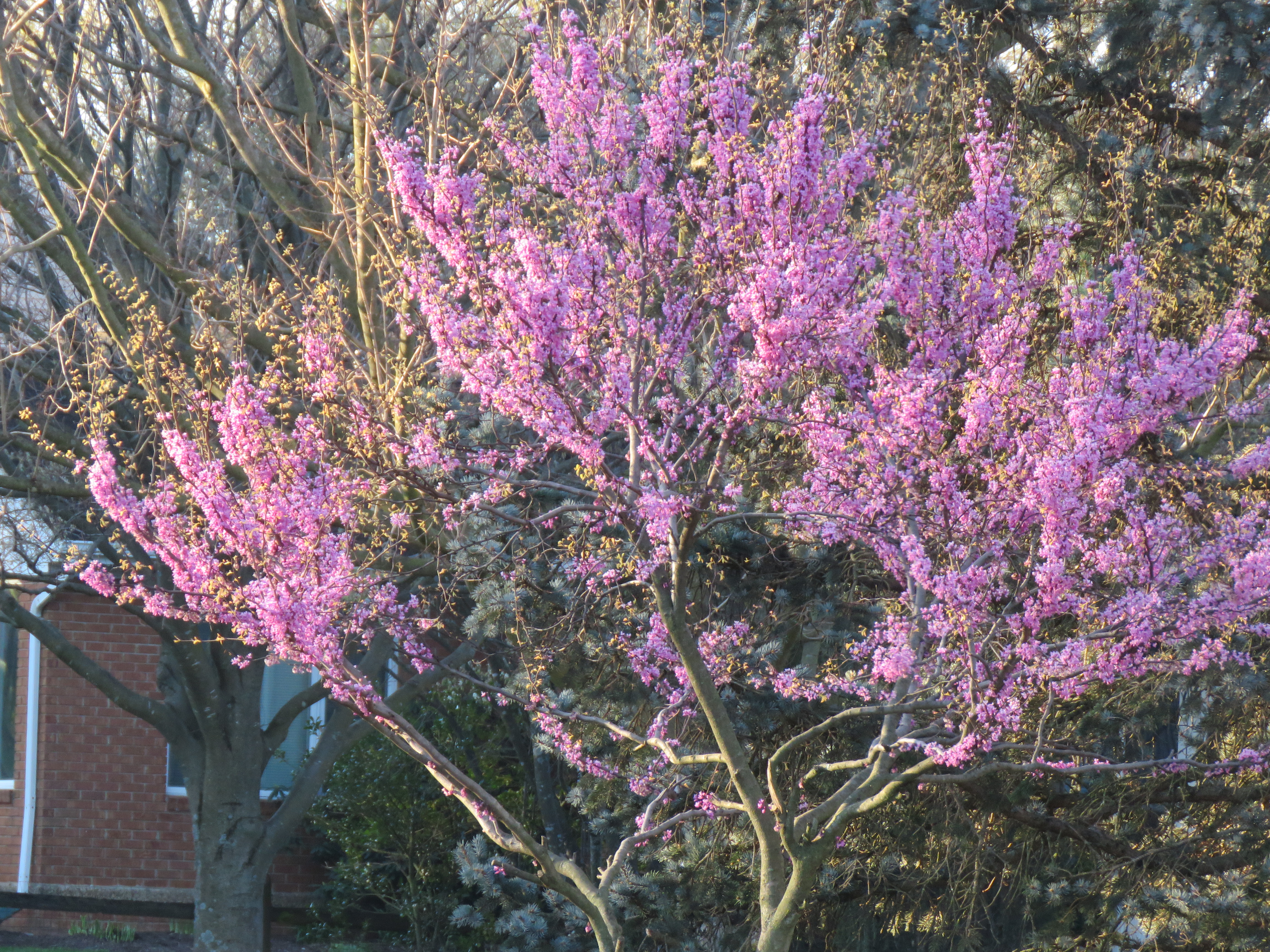
The Redbud trees were gorgeous unless back-to-back freezes nipped their pretty pink blossoms. The impatient leaves soon pushed the petals to carpet the ground. Even the maples were in a hurry to begin their chlorophyll duties.
Soon neighborhoods, roadsides, and forests were ablaze with color in April. The azaleas, rhododendrons, Virginia Bluebells, tulips, wild geraniums, and poppies put on a show. The pollinators buzzed high and low.
So, here we are in May. The dogwood blossoms have faded, while their leaves stand ready, awaiting touches of sunshine and rain. They need both.
Together let’s pledge to get out and enjoy whatever is blooming in our neck of the woods. If we wait too long, we’ll only have the calendars to remind us of what we missed.
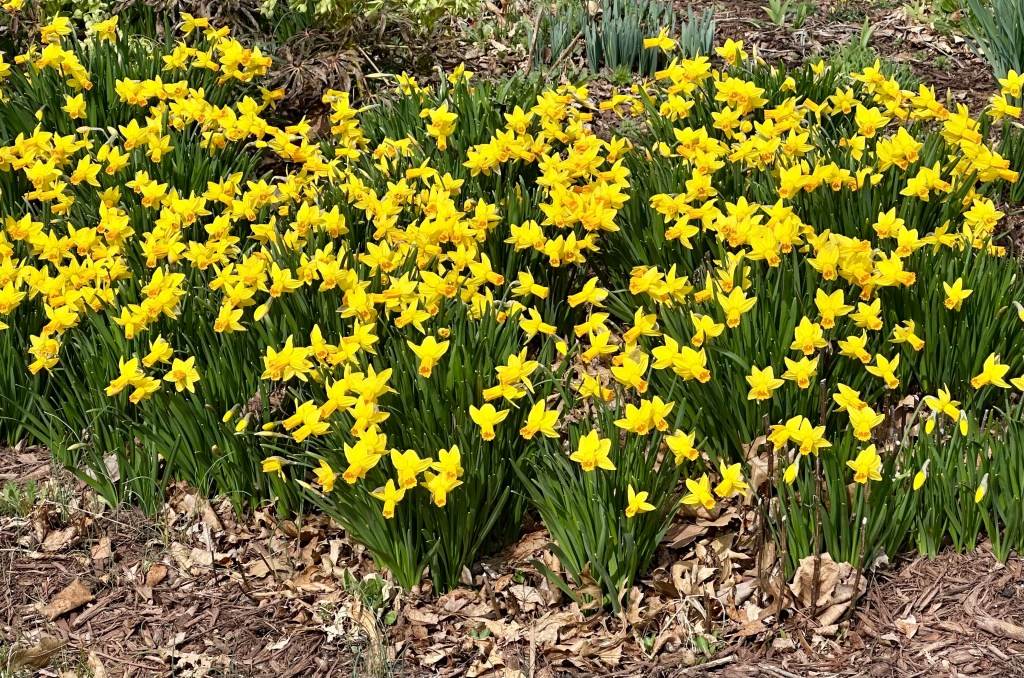
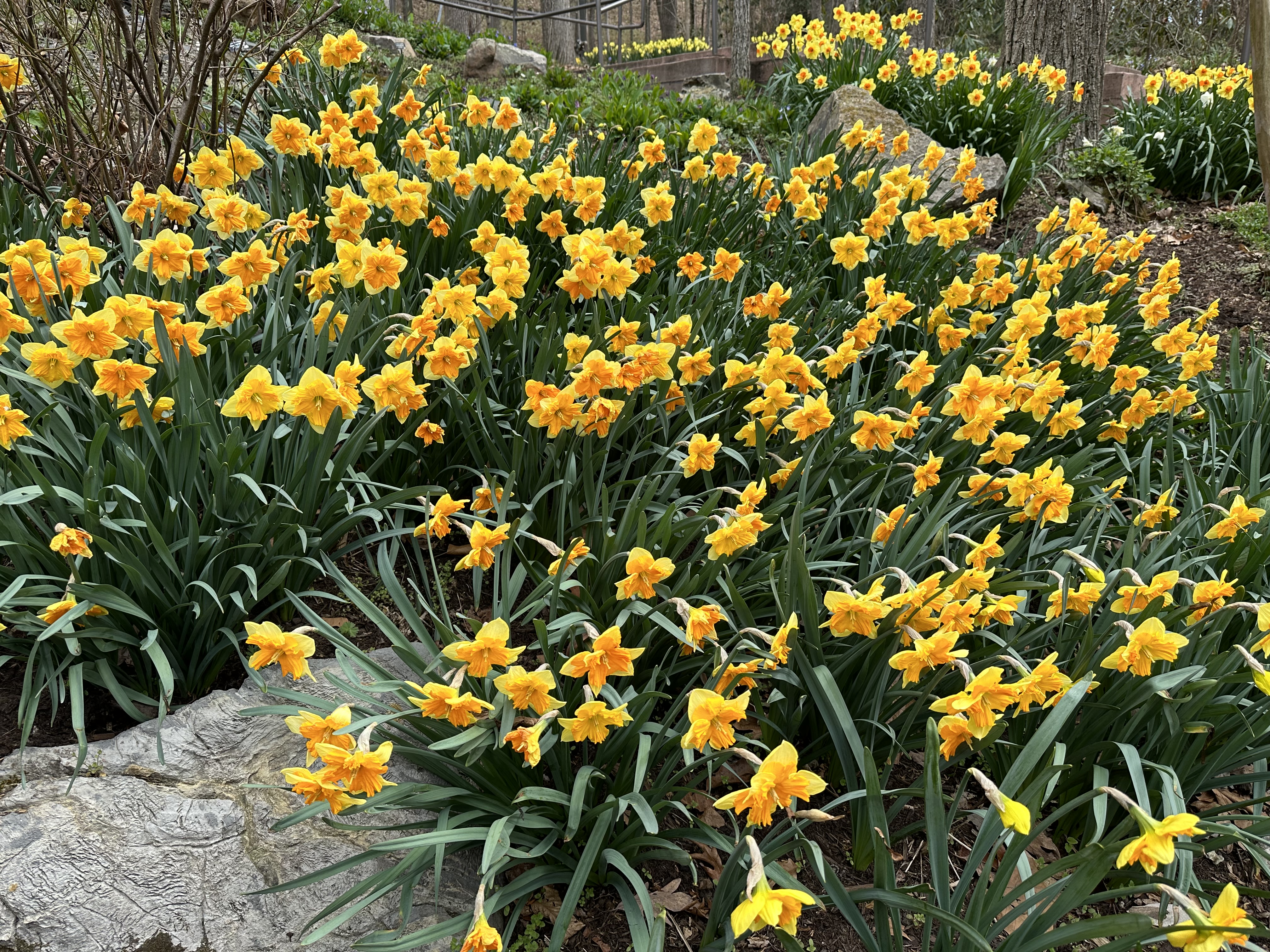
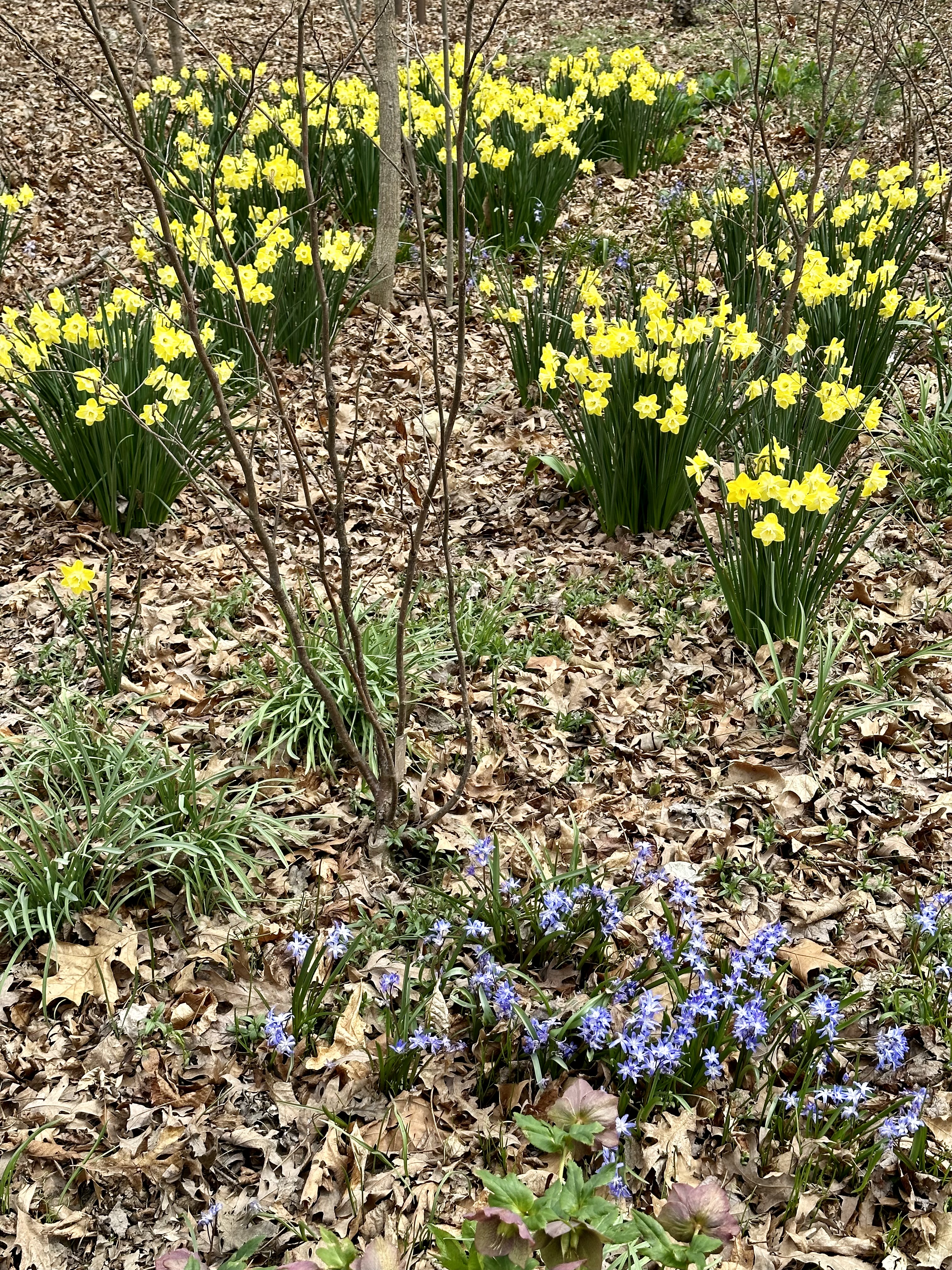
Daffodils at the arboretum. Photo by Bruce Stambaugh.
My wife and I recently celebrated our 52nd anniversary. We did so quietly.
Initially, we considered driving to Washington, D.C., to view the cherry blossoms at their peak. We had never done that, and living only two hours away, we could easily view the iconic flowers and be home before dark. We weighed our options and decided instead to stay close to home, which was my wife’s preference.
That decision paid dividends we didn’t expect. First, we slept in, which is not our routine. We usually awaken at first light. It felt good to start our big day well-rested.
After a quiet, light breakfast, we continued with a habit we started during the pandemic. We played cards and drank our morning decaf coffee. With the temperature hovering slightly above freezing, we were in no hurry to head outside for a few local adventures.
Traffic was light for the 10-minute drive downtown for an early lunch at a favorite restaurant. Since it was a Monday and not yet noon, there was no wait. We enjoyed our meals and the quiet atmosphere. They even had gluten-free bread for my brisket sandwich. It was nice to sit in the serenity of the ordinarily bustling restaurant. Our waitress even took her time bringing the check.
After lunch, we drove to a local arboretum and strolled around the artificial pond. Both buttery yellow and white daffodils colored the forested hillside surrounding the murky pond. Some flowers were already fading, while others were beginning to bud.
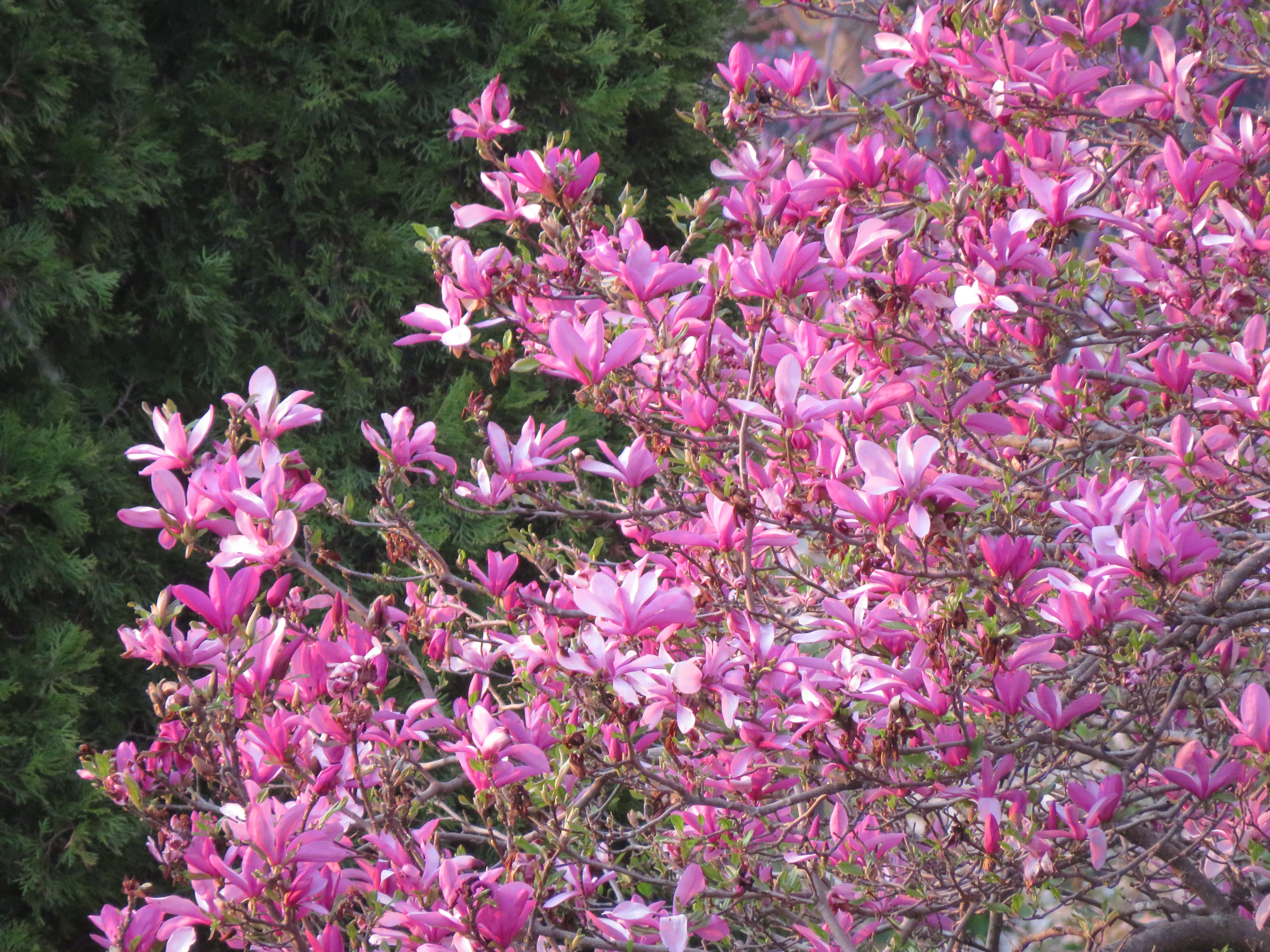
The aptly named star magnolias were also losing their luster. We admired some snappy-looking white and orange daffodils and various wildflowers beginning to grace the forest floor.
A young man approached us as we sniffed the blooms. He was the new marketing person for the arboretum, and we enjoyed an extended conversation with him about photography. My constant snapping of the shutter gave me away.
By then, the sun had taken the chill out of the air. That meant one thing: ice cream. We drove to a local ice cream parlor in a neighboring town. A kid’s cup is suitable for us now. My wife was more adventurous and ordered a caramel salted chocolate chunk while I stuck with my tried and true chocolate. We chose a table outside where my wife sat in the shade while I preferred the sun on my back.
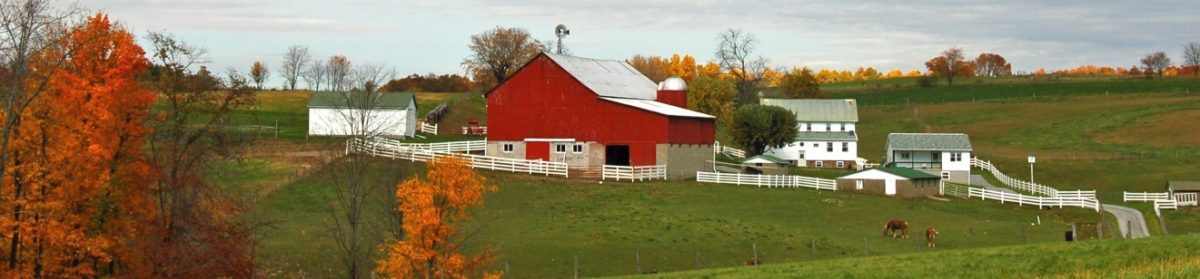
On the way home, we stopped at another smaller arboretum at the north end of the small town. The place is more park than a botanical garden. A small, tree-lined stream called Cooks Creek winds lazily through a green space. Cooks Creek Arboretum is sandwiched between a hillside condo complex and a farmer’s still-fallow field stretching up to a big red barn.
Once the flock of pesky common grackles flew off, we heard a barred owl calling softly from inside an owl box fastened to a giant sycamore on the creek’s bank. The harmony of the owl’s twittering and the silvery gurgling of the stream brought a smile to both of us.
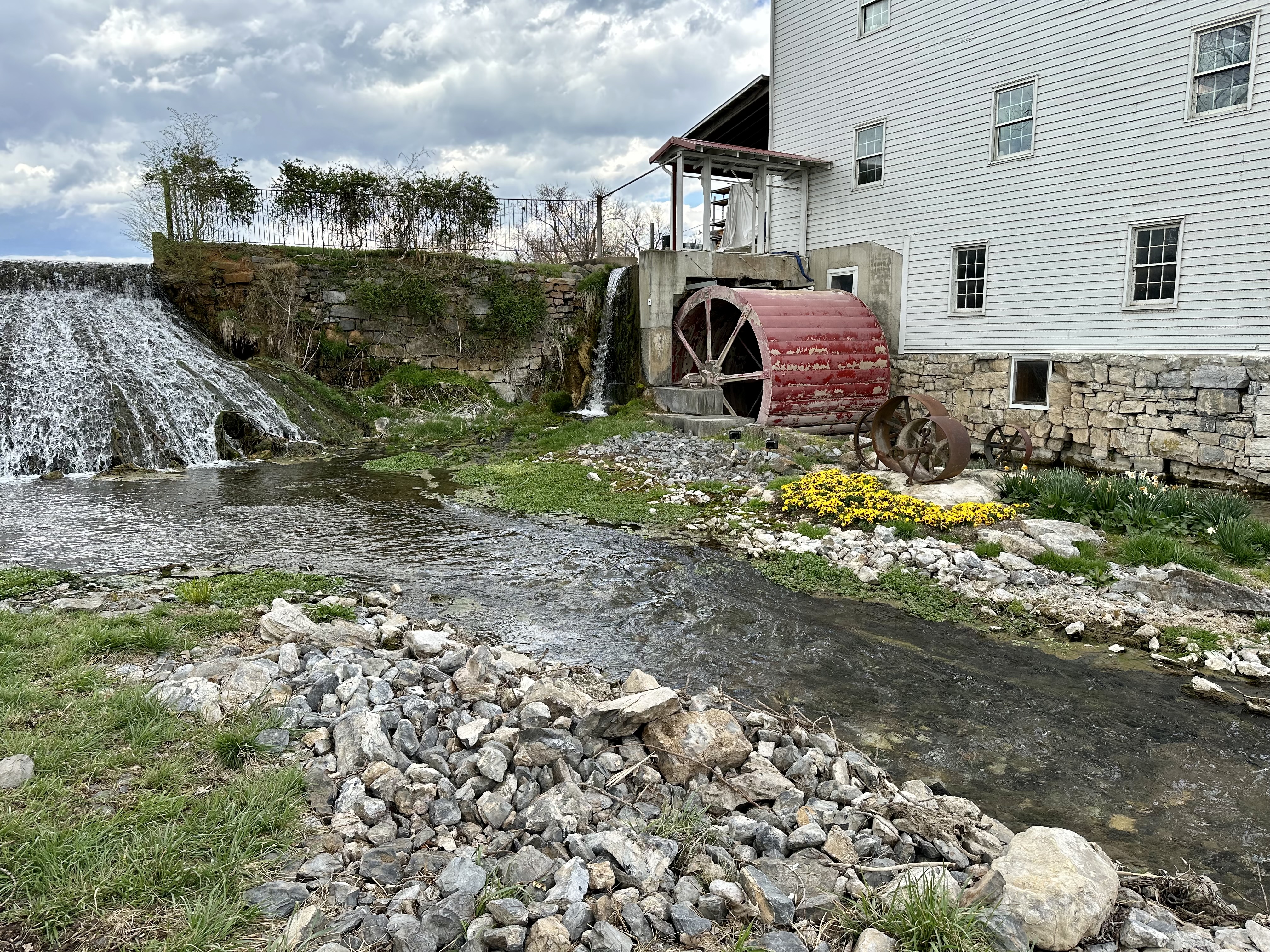
Ring-necked DucksSilver Lake MillThe old waterwheel
Please click on the photos to enlarge them.
With the return of the noisy grackles, we detoured to Silver Lake to check for migrating waterfowl. A quartet of ring-necked ducks floated and dived, floated and dived on the shallow lake’s surface. The lake’s Civil War-era mill attracts people far and wide.
Shortly after we arrived back home, the doorbell rang. A young woman handed my wife a bouquet from her sister and her husband, who live in Ohio. We appreciated their kind and loving gesture.
We snacked for supper, and after sunset, I drove to a high point in the countryside to take photos of three planets. Venus shown bright in the night sky, but I couldn’t find the conjunction of Saturn and Mars near the horizon. An invisible haze hung over the Allegheny Mountains, obscuring any starry beauty.
When I returned home, another kind of darkness fell. We learned of the horrific mass shooting at the Covenant School in Nashville. The sad news snapped us out of our anniversary bliss into the reality of today’s life in the United States. Our peaceful, quiet, and enjoyable anniversary day with my loving wife ended with a tearful thud.
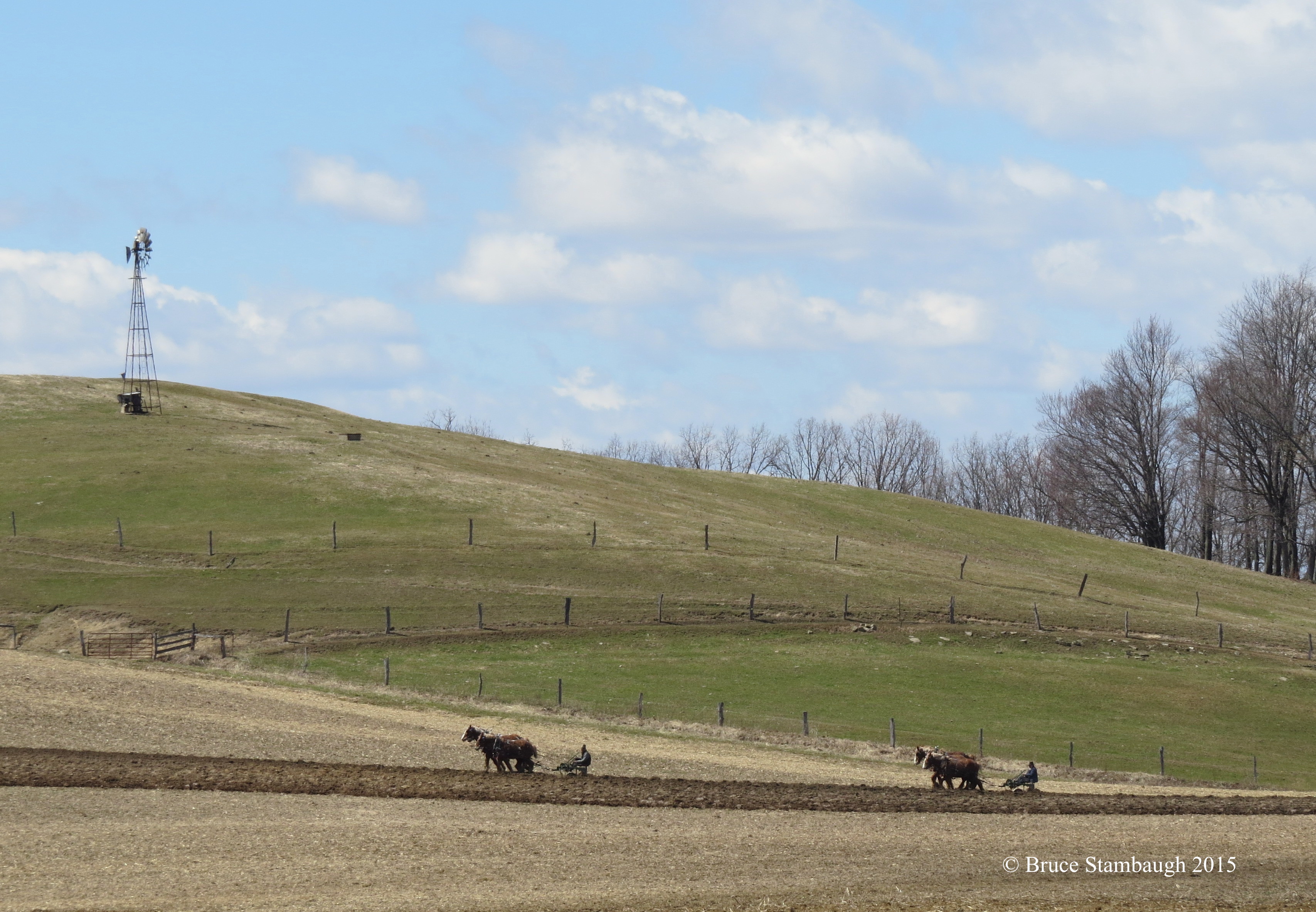
When my wife and I lived in Ohio’s Amish country, there was one sure sign of spring that I always relished. Our Amish neighbors plowing the first furrows of soil always said spring to me.
I never tired of the witnessing the annual tradition. Powerful and beautiful workhorses pulling the farmers seated upon one-bottom plows sealed the spring deal for me.
The jingle of the horses’ harnesses, the smell of freshly turned soil, the encouraging voices of the men calling the names of the horses to keep going created a reassuring feeling. Though the vernal equinox had already passed, this scene always invigorated me. Of course, the longer days, the chorus of songbirds, the pale blue sky, and the budding flowers didn’t hurt either.
Crocuses are some of the very first flowers of spring. They are emerging all around our neighborhood here in the Shenandoah Valley. Of course, spring doesn’t officially arrive until March 20. But we are glad for the floral showy expressions after this long, cold, wet winter.
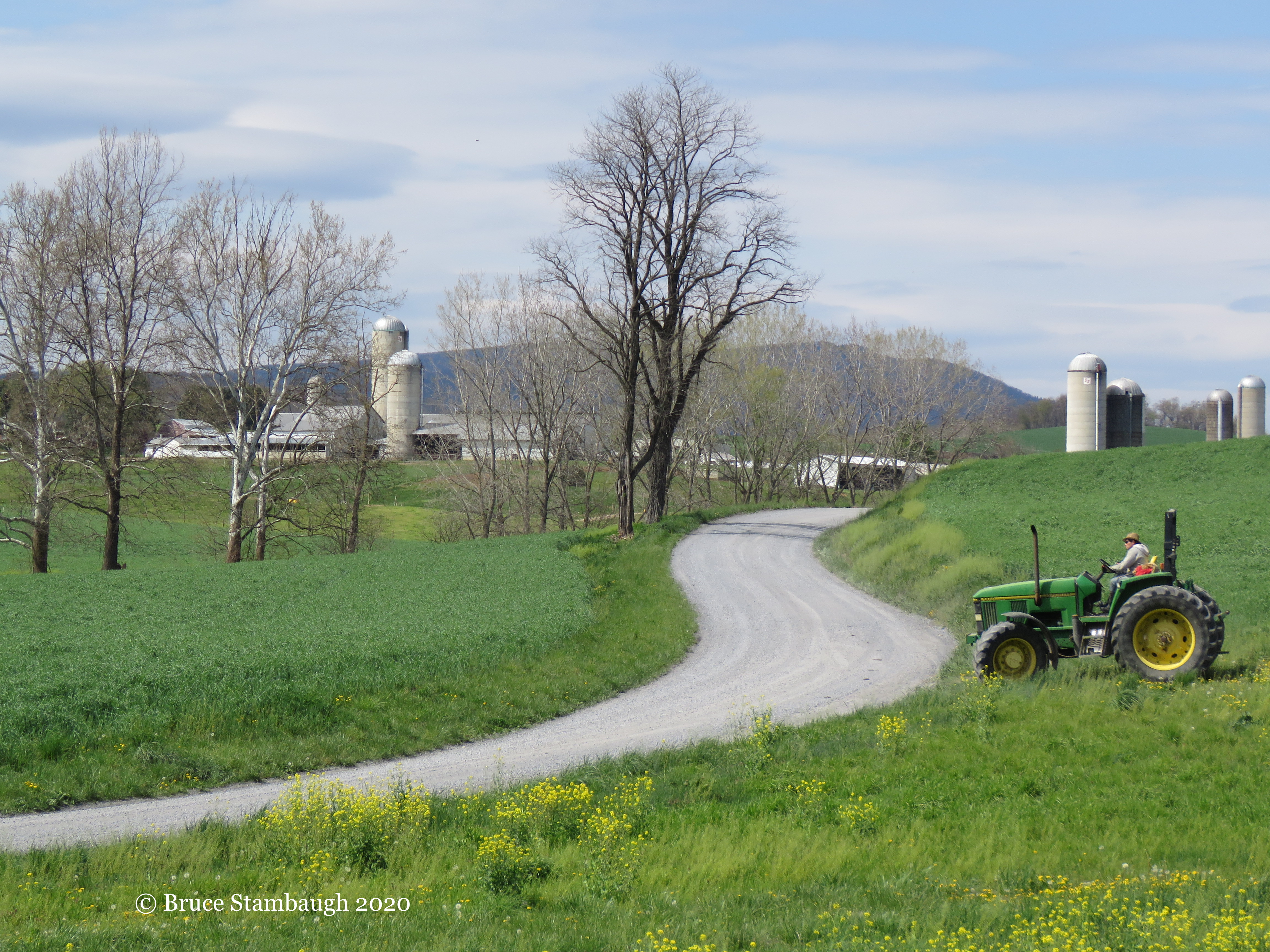
It must be spring! Farmers in Virginia’s pastoral Shenandoah Valley are out and about preparing their fields for this year’s crops. In fact, farmers in Rockingham Co., Virginia, have already made their first cuttings of hay for silage to feed their livestock.
This farmer, riding his ubiquitous John Deere tractor, was heading back to the farm.
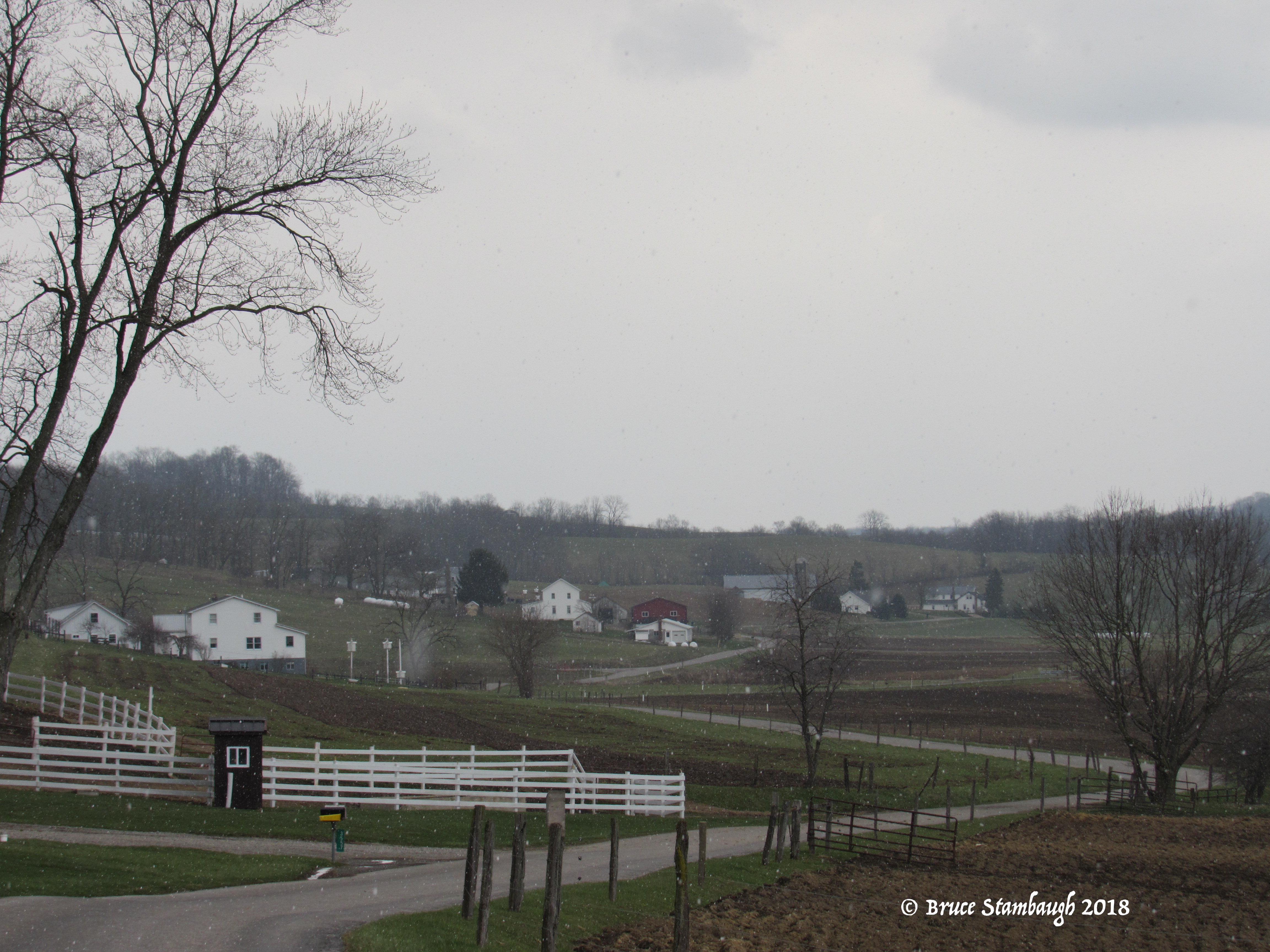
Just another snowy, grey day in April in Ohio’s Amish country.
Compared to other months of the year, April is erratic when it comes to weather.
It’s not that the rest of the months don’t produce variable atmospheric conditions. They do, just not as consistently as April’s predictably unpredictable weather.
Our latest 10-day forecast was proof of that: Sunny, blue skies and 70-degree temperatures one day, and low 20s and snow flurries by week’s end. I’ll keep my birdbath heater going for a while.
That conjecture accurately describes April’s extremes. April uses her versatile weather wand to divulge her bipolar meteorological attributes.
In 30 days, the fourth month throws everything it has at us. Snow, sleet, glorious sunshine, pelting rain, lightning, tornadoes, flooding streams all are April possibilities, though not certainties.
Often the host for both Easter and Passover, April’s assortment of weather takes no holidays. Recall the twin tornadoes of Palm Sunday in April 1965? Do you remember the 20 inches of snow in early April three decades ago?
A puffy, white-cloud day in mid-April in Virginia.When April arrives, we all are more than ready for spring. That is especially true after this extended winter season that ranged far beyond its usual territory.
April’s weather plays games with us, teases us, infuriates us, and beguiles us to the point of hopelessness. Nearly at the breaking point, we relent and grudgingly accept whatever she has to offer. Do we have a choice?
A conciliatory attitude allows us to engage all of our senses into whatever the weather and activities are at hand. It enables us to pause long enough to enjoy the brilliance of forsythia’s yellows before the greening leaves override them.
I watched an American robin mightily tug at the remnants of last year’s plant residue, lying spent and browned in the flowerbed from winter’s bitter harshness. The robin pulled the lifeless strands taut.
I turned away for a second, looked back, and both the robin and the ideal nesting material were gone. Had I witnessed the natural lifecycle in action, the very hope of spring?
Red, yellow, and green.The increasing daylight combines with the warming earth and nourishing moistures to create rapidly changing landscapes. Rembrandt meets Van Gogh.
Deadened lawns seemingly turn dull green to emerald overnight. A heavy frost or soaking rain kills the temptation to even out the irregular grassy clumps posing as a front yard. First, however, winter’s gales and unwelcomed snows require leaf and limb removal before any lawn trimming.
The first dandelions compete with trumpeting daffodils while the last of the crocuses yield to showy tulips. Honeybees celebrate wildly at the cherry blossoms’ coming out parties. They even gorged on the crimson buds of red maples. The little creatures are a welcome sight and the constant humming a glorious symphony, especially given their recent biological life struggles.
Avid birders actually embrace April’s changeable weather. They know strong cold fronts bring more than severe storms or blinding snow squalls. Shorebirds, songbirds, and birds of prey are all on their various lists of birds to check off. They’ll brave April’s worst weather to chase a rare bird.
The good news is that April’s cold, wet weather won’t last long. That’s in keeping with its role as a transition month from winter’s dormant dullness to spring’s brimming vibrancy.
I’m always glad when April rolls around. From month’s beginning to end, she offers up a sampling of weather that’s sure to both please and disappoint most everyone. The challenge is to make the most of whatever comes our way.
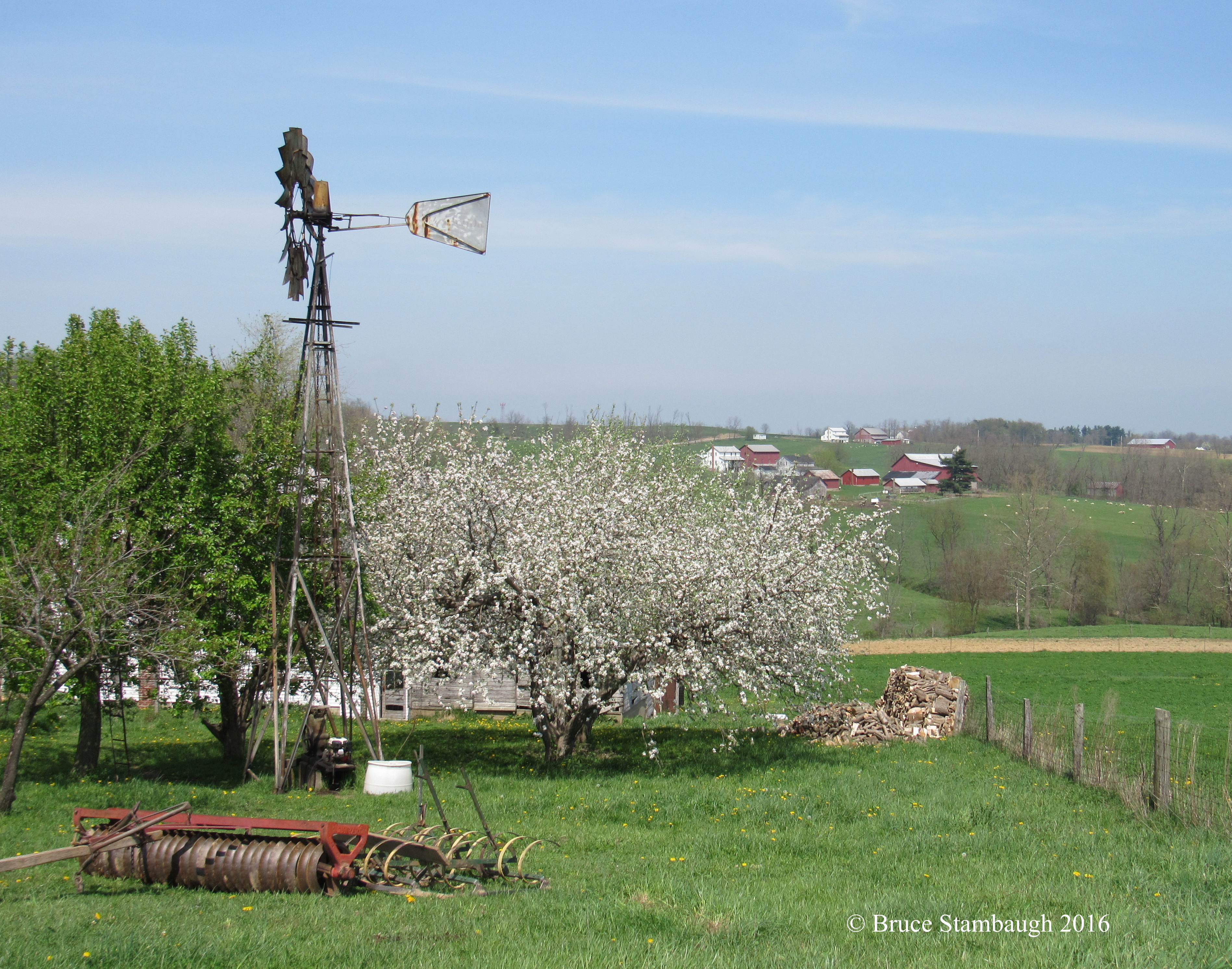
Hopefully by month’s end, pastures will have greened up, fruit trees will be in full bloom, and farmers can once again till the earth.
What more evidence is needed that Spring is finally here? Daffodils blooming in a wooded hillside and a man sleeping on a park bench in the afternoon sunshine pretty much says it all. Spring has arrived indeed.




















You must be logged in to post a comment.