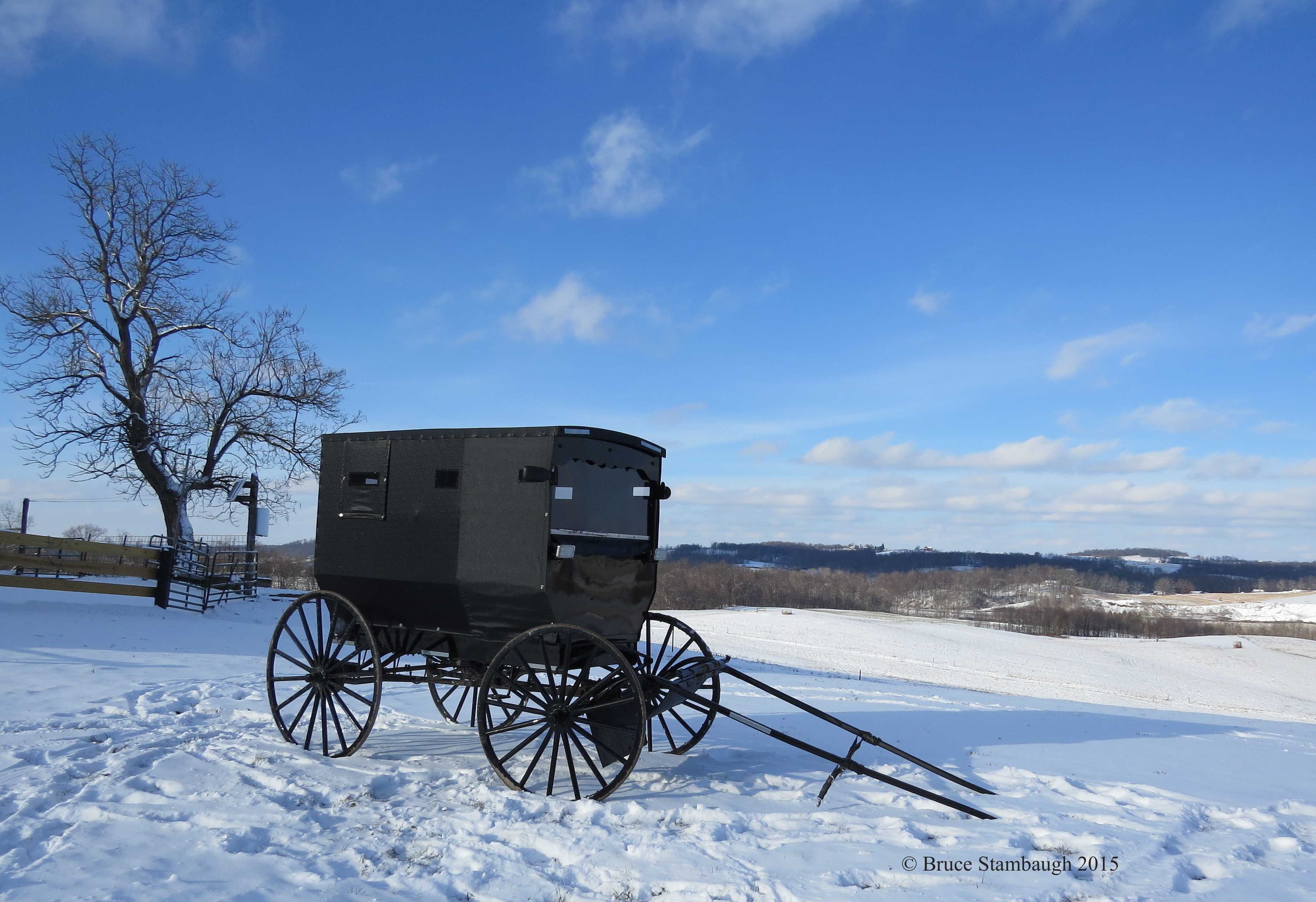
I have lived among “the plain people,” as the Amish are sometimes called, for more than 30 years. Over the years, I have marveled at the groupings of their nondescript buildings, the simple beauty of the textured angles. Of course, I am likely romanticizing their architectural practicality.
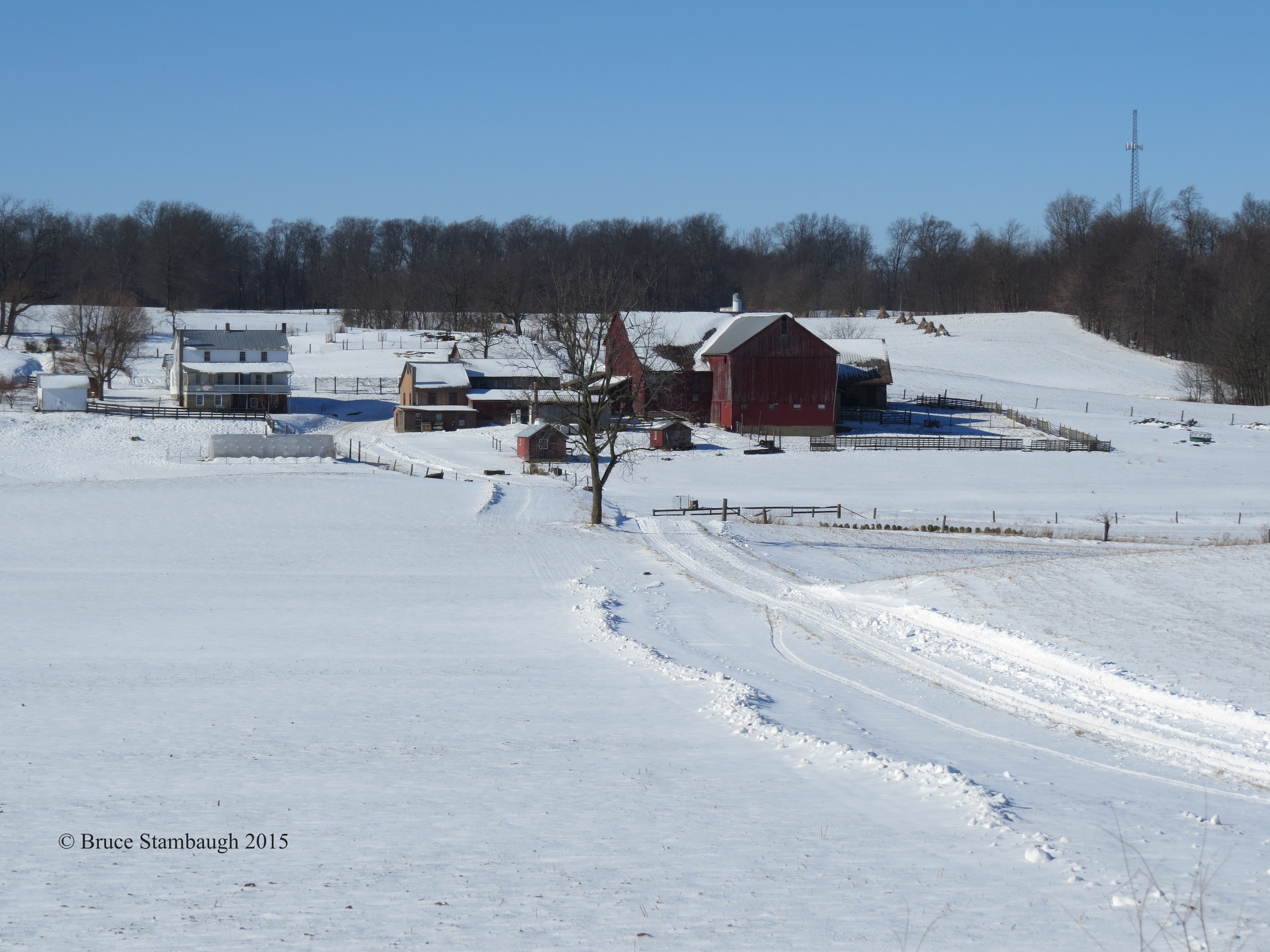
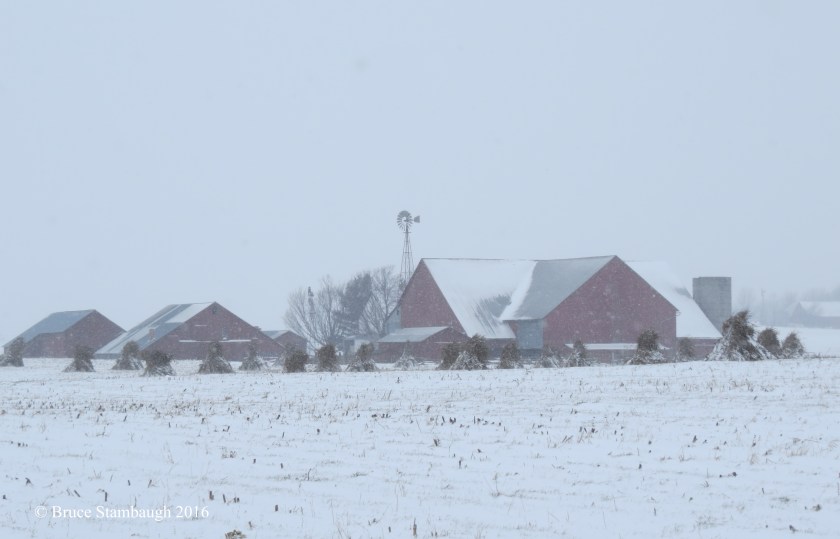
This farmstead is a good example. The combination of a fresh snowfall in the foreground and a bright blue sky in the background nicely framed this cluster of farm buildings at this Old Order Amish homestead.
Winter arrived in earnest this week in Ohio’s Amish country. Once the snow quit, I went out to shoot some snow scenes. This one took the prize for me. And when a friend asked me where he could buy the postcard, I knew I had my Photo of the Week.
This current polar blast is hitting a lot of the country. I hope “Winter Postcard” will at least warm your spirits.
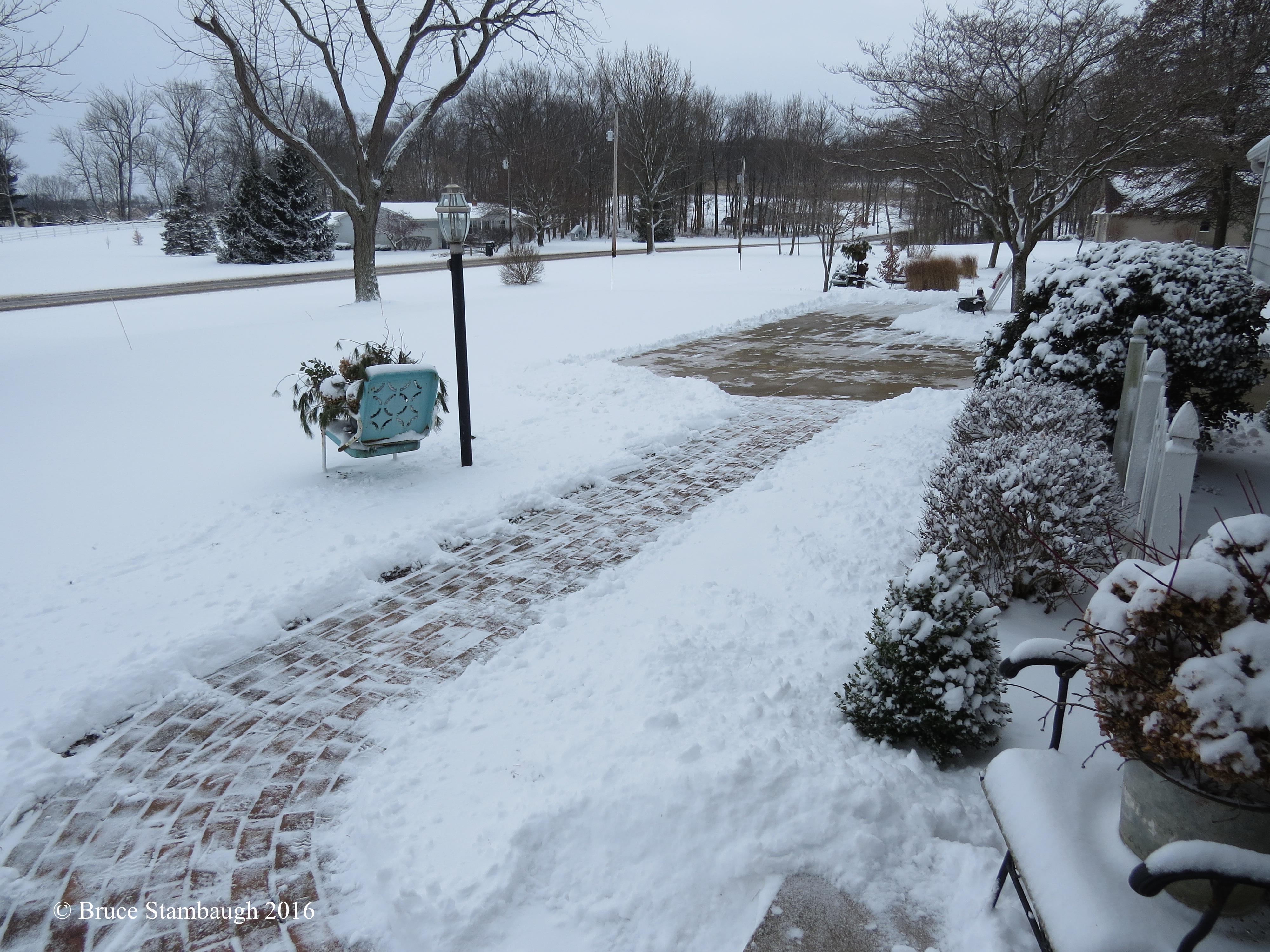
It’s not easy living in the third cloudiest location in the nation. Like it or not, that’s just what the residents of Northeast Ohio have to do.
That’s not good for people with Seasonal Affective Disease (SAD). Recurrent gray days negatively affect their daily outlook. Folks with SAD have to suffer through as best they can. I can’t imagine how they do it. It’s hard enough to wake to one gray day after the other without that affliction.
I speak from experience having been a Buckeye all my life. Strung together like a necklace of discolored pearls, these series of overcast, dull days, can get us all down if we let them. We shouldn’t.
I will be glib and say there is good news anyhow. Minute-by-minute, daylight is increasing. That’s little consolation to all those overcome by the seasonal dreariness.
Winter mornings in Ohio seem darker and colder than ever. A minute of daylight tacked on a day at a time isn’t all that inspiring, helpful or meaningful.
We can always hope for an Alberta Clipper to roll through with a few inches of snow and frigid temperatures. The passage of the front usually brings clear, crisp days.
Indeed, these dreary, damp, cold days are what they are. They don’t have to keep us from keeping on. We have to remember that each day is a gem of a gift to treasure all unto itself.
For me, that is an important reminder. The start of a new year means we enter winter’s hardest times. The season’s coldest temperatures, harshest weather, and often the worst storms are likely yet to come.
All things considered worse scenarios than depressing weather abound in this world. Can we look beyond our personal life space to see them?
A friend of mine has terminal cancer. He unabashedly asks others what they think about each night before they go to sleep. Do they believe they’ll awake in the morning? Are they ready to pass on?
Those are blunt, but necessary questions for each of us at any age, healthy or ill. At the end of another day, what do we contemplate? Can we accept dismal skies or broken relationships, or unsatisfying vocations?
Will we wake in the morning to a new day or a new world? None of us, regardless of our situations, knows. I do know this, however. Time is fleeting, gloomy skies or clear skies.
How will we use each day we are given to the benefit of others no matter our personal station in life? Will we let the weather get us down, or will we radiate sunshine that warms and enlightens others?
Regardless of where we live, that is always a challenge, isn’t it? I’m not one to make New Year’s resolutions. But at this stage in my life, I only want to be helpful to others, those in my household, my family, my community, and even strangers I encounter in my daily duties.
My personal challenge this New Year is not to let the gloomiest weather dim the day at hand. What’s yours?
No matter the season or the weather, Monday is laundry day in Ohio’s Amish country. That’s a given, since the Amish take seriously the scriptural admonition to do no work on the Sabbath. Other than necessary farm chores, the Amish do not “work” on Sunday. Consequently, it’s normal to see freshly washed clothes flapping on a laundry line every Monday. Given the size of their families, averaging about five children, laundry is done other days as well. But you can always count on seeing laundry lines on Monday all around Amish country.
As is evident in this photo, the Amish have become quite adept at stringing the wash so that it does not interfere with children, animals and implements can move freely around the yard. In this case, a sturdy line was affixed to a pulley high on the barn siding. The line connects to a similar pulley on the wall of the outbuilding. This makes it very convenient to hang the laundry without having to endure the wintry elements of a typical northeast Ohio winter. The pulley moves so that clothes are hung one garment at a time.
The pastel pieces of laundry really stand out against the solid red background of the barn. “Wash day” is my Photo of the Week.
My wife and I drove for four hours in a steady to light rain from our home in Ohio on our way to Virginia’s Shenandoah’s Valley. We never saw the sun. We passed through Judy Gap, West Virginia, a low spot in the razorback ridge of the nearly vertical Tuscarora quartzite outcropping, and started up yet another mountain pass. As we rounded a curve, this country chapel stood, basking in the bright sunshine that had broken through the heavy cloud cover.
The contrast between the little church’s illuminated white paint, silver roof, and the dark clouds in the background made this week’s Photo of the Week selection easy. “Country chapel” is it.
The red bricks of this abandoned one room school a few miles from my home stood in sharp contrast to the season’s first snowfall. Long since closed, this little red brick school once served as the incubator for future lawyers, farmers, housewives, teachers and business owners.
The outhouse on the right also played an important part in the school’s history. Right after World War II, the students gathered in the morning for class, but their usually prompt teacher wasn’t in the building. After several minutes, the oldest student, an eighth grader, went looking for the teacher, and found him sitting in the privy dead.
I always think of that story when I pass by the old Beechvale School. “Little red schoolhouse” is my Photo of the Week.
I dream a lot, vivid, colorful, goofy dreams. I often remember details of what I dream, too, including people and places.
Recently, I dreamt that my wife and I were in Florida, Sarasota to be exact. It was a very real and an unusually long, Rip Van Winkle type dream.
I must have lapsed into an uncharacteristically deep sleep. This dream seemed to last a week. At my age, sleeping through the night without waking at least once is rare.
But there I was, snapping photographs at my niece’s picture perfect wedding. The setting was on a lush lawn that separated an old money estate from the placid gulf waters.
At the open-air reception, we enjoyed tasty hors d’oeuvres, and a scrumptious, multi-course meal. A crescent moon hung at the end of a string of soft white party lights that illuminated the revelry.
This slideshow requires JavaScript.
Just like that, the scene switched to the Celery Fields, a popular spot for birders to view beautiful tropical bird species. There I was standing on a platform practically in the middle of the marsh watching colorful species I’d longed to see.
Purple Gallinules, Wood Storks, Ospreys, and Roseate Spoonbills appeared. I saw more shorebirds, hawks, ducks, and even alligators. Only the scene changed again, and I was back at a lovely house where we apparently were staying.
Everything happened so quickly, yet the details were so clear, and the weather so marvelous, I didn’t want to leave. I hoped I never woke up from this surreal fantasy.
As dreams do, one location meddled into another. My wife and I were enjoying a wonderful lunch with my sister and her husband. Eating outdoors in ideal weather conditions just makes the food taste all that much better, even in dreams.
No trip to Sarasota, real or imagined, is complete without tickling your toes in the warm waters lapping onto picturesque Siesta Key Beach. This had to be a dream because the shorebirds out numbered the people on the normally crowded sugary white sands.
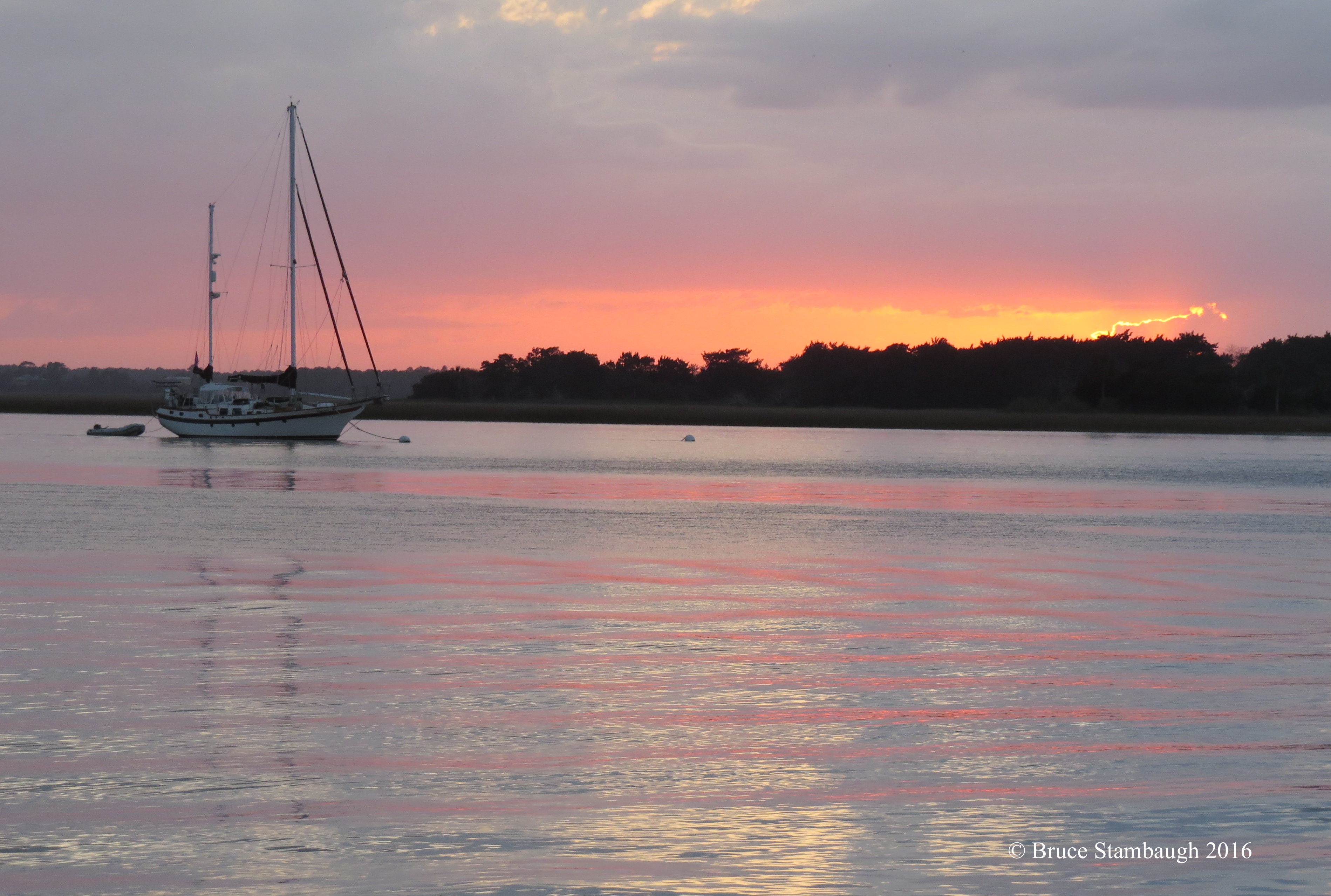
Still on the beach, the scene swiftly switched from the hot overhead sun to a magical sunset with golden rays streaming from behind clouds. Was I in heaven?
No, Pinecraft, the little Amish and Mennonite community in Sarasota. I’d been in the alley before between the Tourist Church and the post office, where the buses deliver the snowbirds from the north. Only the parking lot was empty. No Amish or Mennonite souls could be found.
Now I was in a jungle. Ferns, palms, massive trees with sweeping limbs, and crazy roots, and gorgeous flowers surrounded me. Walkways graced by cooling but strangely shaped canopies beckoned me.
In a blink, there was the bay again, teeming with birds, jumping fish, and boats of all sizes. Everything, sky, water, boats, was awash in some shade of blue, with gleaming white and silver buildings as the backdrop.
It must have been that fright and the harsh elements that jerked me back to reality. All I know is that when I lapsed into my deep sleep, our stunning back yard sugar maple was at its peak color. When I woke up, not a leaf was left.
It looked like another dreary fall day in Holmes County, Ohio. The forecast called for more rain, and chilly temperatures.
I sat sullenly eating my bowl of cereal. To the west, dark storm clouds gathered.
Suddenly things brightened up outside. The sun had broken through the morning haze, and in an instant, the world was full of light. I ran for my camera.
My eyes moved to the horizon a mile northwest of us. A white farmhouse glowed in the low, sharp-angled sun rays. The oaks and maples around the house radiated their peak colors.
Then I noticed Fryburg, the little crossroads that features a cemetery, a white clapboard church building, and a white house. The sun highlighted its deciduous trees, too.
The farmstead behind our house was equally illuminated. I snapped a picture from our back porch. I looked northeast and saw the top of another neighbor’s sugar maple wonderfully lit. I got that one, too.
The closer the storm clouds came, the greater the contrasts. I zoomed in on two maples split by a faded farm gate leading to a pasture high on the hill behind our house.
I thought I was done taking pictures, until I realized I had only just begun. A brilliant, short, stubby rainbow connected the approaching storm clouds with the golden earth below.
I had been so focused on the pretty details all around me that I had failed to see the obvious, a much more beautiful big picture. In my haste to capture specific images, I had overlooked the stunning scene in its entirety.
The complete setting was like a jigsaw puzzle of a lovely landscape. I had been photographing individual pieces of a much prettier picture. Once I saw the countryside as a whole, however, I clicked away, occasionally zooming in on the rainbow itself.
I couldn’t believe how short, wide and brilliant the rainbow was. Just as it began to grow into that familiar arch, the rainbow disappeared altogether. Clouds interfered with the sun’s rays, reducing the refracting light through the raindrops that create the sky’s promise.
Later I went to a local business, and took my camera to share my photos with the staff there. Before I could say anything, one person after the other asked me if I had seen the rainbow.
“Wasn’t it amazing?” I asked. When they began to share what they had seen, it didn’t resemble mine at all. For them, the rainbow was to the left, thin, and arching high into the sky. My short, fat rainbow was to the right of the storm.
This slideshow requires JavaScript.
Their perspective on the rainbow was much different than mine. Yet, we had viewed the exact same thing.
Isn’t that the way with the world though? What we think is absolute and certain turns out not to be that way. All it takes is trustworthy input on the subject from a different perspective.
The two angles of viewing the same grandeur were legitimate, true, and exhilarating. As spectacular as my view was of the rainbow, those captured from a different angle were equally stunning.
Neither perspective was right or wrong. They just were, and both were amazing. What an important life lesson we had learned.
I was overjoyed to see the rainbow from my vantage point. To see the same scene from another’s perspective made it even more spectacular.
Photography keeps you on your toes. It enables you to always be on the lookout for that unexpected moment in time that will change in an instant. It forces you to focus on what’s right in front of you when you really intended to capture something else.
Such was my situation on the evening of Oct. 23, when we could view the beginning of a partial solar eclipse just before sunset. An Amish friend of mine, who is a real stargazer, invited me to watch the partial eclipse with him. I picked him up at his home near Charm, Ohio, and we drove a half mile up to the top of a ridge where a long limestone driveway wound down to an Amish farm. Three strands of barbed wire fence kept the livestock in the pasture west of the drive.
While we waited for the eclipse to begin, we tried to stay warm even though the sun shone brightly. Our ridge top viewing spot also exposed us to a persistent and chilly northwest wind. It was the combination of the sun’s slanting rays and the invisible wind that illuminated an amazing phenomenon. The sun exposed hundreds, if not thousands, of spider web strings that blew horizontally away from the barbed wire. Stitched to their barbed wire anchors, the strings glowed like silver thread in the setting sun.
I began clicking away. However, my first few shots were too close to the fence. The webs stretched out so far that they looked like scratches across the digital photo. I stepped to the left, and lowered the camera to capture my Photo of the Week, “Blowing in the wind.”
Low, thick rain clouds dampened any chance for a pastel sunrise. Overnight, a steady rain silently soothed the dry Ohio countryside.
The precipitation continued on the backside of a cold front that had passed before dawn. No one in the family restaurant when I met a friend for breakfast grumbled about the morning’s sogginess.
The polka dotted landscapes complemented the already picturesque scenery. You would think that red, yellow, crimson and orange spots on green and brown foregrounds would color clash with the soft leafy linear swaths of the rainbow backgrounds. But they didn’t.
One needn’t go out into the mushy elements to inhale the dampened beauty. Leaves cascaded diagonally outside eight-paned rectangles creating natural kaleidoscopes. Out of sight far beyond the windows, a Pileated Woodpecker squawked.
The precipitation regrouped, however, and quickly closed ranks, healing the cracks in the overcast. The quenching rainfall continued off and on the rest of the day.
Strong southerly breezes kept the temperatures tolerable, enough so that windows still stood partially opened to catch what could be the last of autumn’s real warmth. Even when the air chilled in early afternoon and clouds continued the gloominess, fall’s vivid colors boldly splashed bright beauty.
The entire situation seemed improbable, if not impossible. The grayness continued, but the colors radiated as if the dullness invigorated them. Decorative pumpkins glowed more orange. Burgundy mums became potted beacons, like so many buoys, and we were nowhere near a harbor.
Acres of field corn, once rolling waves in emerald oceans, now stood brittle dry and tan, mimicking sandy beaches awaiting high tide. It didn’t rain that much.
Commerce bustled. White-breasted Nuthatches scurried headfirst down a sugar maple’s crackled trunk, hopped to the feeder, and back to the tree satisfied. Blue Jay acorn wars ensued with flashes of blue and clarion victory calls amplified by the dampness.
Nightfall came even sooner than it should have. The persistent cloud deck manufactured more rain. With colder days too soon ahead, any farmer will tell you that it is much better to have the ground well moistened before it freezes.
With no prior killing frosts before this day, I didn’t want to even think that way. But I knew the farmers were right. The rains were welcomed.
It was only one day out of many such fall days. Yet the wet weather, the peeks of sunshine, the brilliant colors, and the lushness of the yards and pastures for this late in the season became a compilation of the cyclical suite we call autumn.
My choice would have been a wind still day filled with fluffy clouds sailing through cobalt skies, a bike ride in short sleeves or a walk in the woods, binoculars and camera in tow. Fortunately, the weather is not yet under human control.
Like my farmer friends love to say, “We’ll take what comes.” It’s what we did, and I was more than grateful to be able to do so.
You must be logged in to post a comment.