I chose this photo of two women watching the sunset on July 3, 2020 to represent the relief of 2020 finally coming to an end. We are universally happy to see this horrific year end. In my 73 years of living, I can’t remember a worse one. Let’s let the sun go down on 2020, and hope upon hope that 2021 will be a better year in every way.
I suspect, however, as President-elect Biden has already stated, that things will get worse before they get better. Of course, he was referring to the pandemic, but that may also play out in other aspects of our lives.
I hope and pray that the New Year will, in the long-run, indeed bring a better life for all of God’s global children. Enjoy the sunset, but cherish the sunrise.
I’m glad this year we would all like to forget is coming to an end.
I know we still have a few days to go in 2020. I figured summing it up early would help us get a head start on the coming New Year.
As is my custom, I recorded some of the newsy pieces that didn’t make the headlines. Consequently, there is no mention of the U.S. presidential election.
January
1 – Soot from raging wildfires in Australia turned glaciers black in New Zealand
5 – The BBC reported that 4 million hectares or 9.9 million acres had burned in Australia’s New South Wales since July 1.
14 – NOAA reported that 2019 was the fifth consecutive year that the U.S. sustained 10 or more $1 billion weather and climate disasters, including fires, flooding, and hurricanes.
15 – NOAA and NASA jointly released a report that showed 2019 to be the second warmest globally since records have been kept in 1880.
16 – The San Francisco Giants became the first Major League Baseball team to hire a female as a full-time coach.
22 – It was so cold in southern Florida that the National Weather Service warned citizens to be alert for stunned iguanas falling from trees.
28 – A team of international scientists discovered four new species of sharks that use their fins to walk off the coast of northern Australia and New Guinea.
February
6 – The temperature in Antarctica reached a record high 65 degrees Fahrenheit, the warmest the continent has ever been.
10 – A scientist from Ohio State University reported finding byproducts of the Industrial Revolution in the Himalaya Mountains deposited long before anyone ever climbed that high.
17 – A pair of armed men robbed a delivery man in Hong Kong of hundreds of rolls of toilet paper due to the coronavirus.
21 – A published study identified a bird found in permafrost in Siberia as a horned lark that lived 46,000 years ago.
24 – After taking an 88-year-old Rochester, Washington man to the hospital with a broken hip, three Emergency Medical Technicians returned to the home and finished mowing the yard where the victim had fallen.
29 – Junior Heaven Fitch became the first female in North Carolina to become a high school state wrestling champion when she defeated seven boys to win the 106-pound division.
March
10 – A driver in Slidell, Louisiana pulled over for license plates that expired in 1997 told police that he was too busy to get them renewed.
12 – Snopes.com reported that the average American uses about 100 rolls of toilet paper a year, with most of it manufactured in Canada, Mexico, and the U.S.
13 – The Museum of the Bible in Washington, D.C. announced that all 16 fragments of scripture that they had on display were discovered to be modern forgeries based on independent research.
29 – Smash-and-grab robbers stole a priceless Van Gogh painting from a Dutch art museum.
April
2 – It was announced that a record 6.6 million people in the U.S. applied for unemployment benefits the previous week due to the coronavirus pandemic.
14 – The organizer of a challenge to sew 1 million face masks for workers on the frontline of the COVID-19 crisis reported that globally volunteers had sewn 20 million masks.
17 – NASA satellite images showed a 30 percent drop in air pollution during the three-weeks of stay-at-home orders on the U.S. east coast.
21 – A team of scientists sailing off the coast of Western Australia discovered the longest animal ever recorded, a 150-foot gelatinous siphonophore.
May
1 – The U.S. Census Bureau reported that one-third of Americans already felt some depression and anxiety from the pandemic.
8 – The U.S. Labor Department reported April’s unemployment rate at 14.7 percent, the highest since the Great Depression.
15 – A new study published in the journal Landscape and Urban Planning found that planting and caring for a garden boosts people’s mood as much as walking and cycling.
18 – Lawrence Brooks, the oldest living U.S. veteran of World War II at 110-years-old, was featured on the cover of National Geographic Magazine.
19 – A study published in Nature Climate Change showed a sudden 17 percent drop globally in greenhouse gases during the lockdowns due to the coronavirus.
June
2 – Irene Triplett, the last person still receiving benefits for being a dependent of a Civil War soldier, died.
3 – Scientists discovered the cleanest water in the world in the Southern Ocean, the body of water that surrounds Antarctica.
5 – A large asteroid swept by the earth closer than the moon is to our planet, and it wasn’t detected until two days later.
9 – Kathryn Sullivan, the first woman to walk in space as a NASA astronaut, became the first woman to reach the deepest part of the Mariana Trench.
11 – It was revealed that a Siberian power plant leaked 20,000 tons of diesel fuel into area rivers on May 29, turning the waters red.
21 – The temperature in Verkhoyansk, Siberia reached 100 degrees Fahrenheit, a record high reading.
24 – After being furloughed from her job because of the pandemic, Michelle Brenner, used her $1,200 stimulus check to buy ingredients to make 1,200 pans of homemade lasagna, which she gave to first-responders, hospital workers, strangers, and single parents.
30 – A report stated that Americans annually shoot off a pound of fireworks for every adult.
July
1 – People in Prague, Czech Republic, one of the first countries to require mask-wearing, celebrated the end of coronavirus restrictions by dining at a 1,600-foot -long table that wound its way through streets and across the Charles Bridge.
9 – Tropical Storm Fay became the earliest “F-named” storm ever recorded when it formed along the eastern Atlantic Coast.
15 – A research study published in Lancet revealed that the global fertility rate had dropped to 2.7 children per family in 2017.
17 – Queen Elizabeth II knighted 100-year-old World War II veteran Tom Moore for raising more than $40 million for National Health Service charities by doing laps in his backyard garden.
26 – Olivia de Havilland, the last surviving star of the classic film “Gone with the Wind,” died at age 104 in Paris, France.
August
3 – Mildred “Gerri” Schappals, 102 of Nashua, New Hampshire, survived COVID-19 after having also survived a severe flu during the 1918 pandemic, in addition to two bouts of cancer
14 – A report said that globally people use 200 billion plastic bottles annually, and most are not recycled.
16 – The National Weather Service in Reno, Nevada issued the first-ever Firenado Warning for a tornado caused by a firestorm near Lake Tahoe, California.
20 – A scientific report showed that Greenland lost 586 billion tons of ice from an extremely warm 2019.
22 – Researchers found pesticides and industrial compounds, likely from the U.S., in the snow atop four high-elevation pristine sites on the Norwegian archipelago, Svalbard.
28 – Guinness World Records declared Julio Mora Tapia, 110, and Waldramina Quinteros, 105, of Quito, Ecuador, as the world’s oldest married couple.
September
1 – Three different airline pilots reported seeing a man in a jetpack flying near their planes as they landed at Los Angeles International Airport.
3 – The production of a new Batman movie was shut down when the actor playing batman tested positive for COVID-19.
7 – A 33-year-old Arkansas man found a 9.07-carat brown diamond at Arkansas’ Crater of Diamonds State Park.
8 – The Pew Institute released a study that showed that for the first time since the Great Depression the majority of young adults ages 18-29 lived at home with their parents.
16 – The National Oceanic and Atmospheric Administration reported that summer 2020 was the warmest ever.
October
2 – The Irish Supreme Court ruled that the sandwiches made by Subway contain too much sugar to be legally considered bread.
5 – British Lincolnshire Wildlife Centre had to separate five gray parrots because they kept swearing at visitors.
14 – NOAA’s National Centers for Environmental Information reported that globally September was the warmest on record.
23 – For the second time, a Dutch researcher correctly guessed the password for President Trump’s Twitter account as “maga2020.”
24 – Anika Cherbrolu, a 14-year-old freshman at Independence High School in Frisco, Texas, discovered a compound that can bind the coronavirus, inhibiting its ability to infect people to win the 3M Young Scientist Challenge and $25,000.
26 – NASA scientists announced that they had discovered water in the form of ice on the moon.
November
2 – The driver of a train was saved from injury near Rotterdam, Netherlands, when the front carriage crashed through an end section of the elevated rails and landed on the tail of a giant whale sculpture.
10 – The National Hurricane Center reported that 2020 was the most active year ever for named tropical storms and hurricanes with 29 named storms.
16 – A 71-year-old Florida man was arrested for grand theft when he strapped a downed steel power pole to the top of his car and drove away, hoping to sell the pole for scrap metal.
18 – A Saw-whet owl, that apparently traveled from upstate New York in a large Christmas tree to midtown Manhattan, was rescued from the pine tree at Rockefeller Center in New York City and taken to a wildlife rescue center.
30 – A report showed that online spending on Black Friday jumped 22 percent from last year.
December
7 – The International Olympic Committee announced that beginning at the 2024 summer Olympics in Paris it would include breakdancing as a medal competition.
8 – Swedish retailer Ikea announced that after 70 years it would no longer print its annual catalog, which was the world’s largest.
9 – A humpback whale made quite a splash in the Hudson River, breaching in front of the Statue of Liberty and other New York City icons.
Here’s hoping that the New Year will be better than the old one in every way. How can 2021 not be?
I’m not sure what Christmas will bring this year, let alone Santa. With the pandemic surging and health guidelines more stringent, it might just be my wife and me enjoying Christmas Day. And that’s okay.
Pandemic or no pandemic, Christmas is still Christmas, whether we are alone or with a gaggle of rowdy relatives. We can still celebrate the sacred day. This year, though, our celebrations will probably be very different since the pandemic is still raging.
Since we likely can’t gather in our traditional ways this Christmas, I have an idea. Let’s enjoy this holiday by joyfully reflecting on Christmases past.
I realize that isn’t always the easiest to do. The holidays bring sad and painful memories for many folks for diverse reasons. Many, like our family, have lost loved ones.
My father and my wife’s father both died just before Christmas. So have close friends, some of them much too young. It’s not hypocritical to miss and mourn as well as celebrate the season, however.
My father loved Christmas. When it came to Christmas, Dad was like a little kid. He couldn’t contain himself.
Dad would overspend on multiple gifts for his two daughters and three sons. I never could figure out how he and Mom afforded what they did for us. They set an example for us that we still follow, though perhaps with more restraint.
It was only appropriate that we celebrated our father’s life well-lived on a cold and snowy December 26. That was 11 years ago already, and it was a Christmastime I will always cherish. The family loved that so many folks took time out during the holidays to pay their respects.
Late one Christmas Eve, I fondly recall delivering the town’s daily newspaper. A fresh six-inches of snow brightened the colorful holiday lights all along my neighborhood route. People seemed extra friendly as I handed them the next day’s paper.
Christmas 1956.
As a youngster, I joined my siblings in excitingly awaiting the appointed early hour of 6 a.m. Christmas morning to bolt downstairs to see what Santa had brought. In minutes, we undid what had taken Mom and Dad hours to assemble and wrap.
Our stockings were always hung with care on the fireplace mantel. We could always count on Santa stuffing it with nuts, candy canes, and an orange at the very bottom. Neva and I continued the same tradition with our own children and grandchildren.
When I was principal at Winesburg Elementary in the real Winesburg, Ohio, the fifth and sixth graders would return to school one evening before Christmas to go caroling to the appreciative elders of quaint Winesburg. The youthful entourage would always end up at the late Mary Ann Hershberger’s house for hot chocolate and yummy cookies. As cold as those nights often were, the memories warm me still.
The weather will determine whether Neva and I can gather with our daughter and her family this year. If it’s fair, we will celebrate adequately distanced on the back porch. If not, connecting using technology will have to suffice.
Besides remembering Christmases past, let’s also reflect on how we can brighten someone else’s holiday today. Connect via letter, email, phone call, or card with someone that you know who finds the holidays especially hard for whatever reasons. It may brighten the season for you both. After all, that’s the true spirit of Christmas in action.
However you celebrate this holiday season, please do so safely and with others in mind. After all, we all want to be around to enjoy many more Christmases to come.
I haven’t been bored during all of these stay-close-to-home pandemic months despite my limited times of being out-and-about. I have had plenty to do, and even then, I haven’t completed everything that I had wanted or needed to do. Just ask my wife.
I did accomplish one important goal, however. I wrote my own obituary. I don’t mean to sound morbid, especially during the holiday season. I don’t want to be a prophetic scribe either. I know my humor can be strange sometimes, but I am not kidding on this solemn note.
I was fortunate to celebrate another trip around the sun recently. I still have a long way to go to match my folks’ longevity. Mom lived to be 90, and Dad died a month short of his 90th.
I have been retired from my first career as a public school principal for 21 years already. Those years zipped by as I toiled in my second career as a writer and marketer.
Where has the time gone? The answer to that question inspired me to get busy on my private to-do list before my final day arrives. Consequently, I took the time to eulogize myself. I wanted to ensure appropriately mentioning all the essential points.
As my friend, author, and naturalist Julie Zickefoose recently wrote, “Life is a limited time offer. We need to make the most of it while we can.” She shared that about having lost her husband, mother-in-law, and brother-in-law all within a year.
Her point was that life is short. We can only live in the present moment. Will we waste away our time worrying, fretting, paranoid about actions and events over which we have no control? Or will we be productive citizens, helpful to others, friends, family, and strangers alike?
Obituaries should summarize a person’s life once they have ended their physical stay here on earth. A good obituary will reflect both the chronological benchmarks of one’s life and the individual’s personality.
Who better to do that than the person themself? We each know the good, the bad, and the ugly of our individual lives. But unlike others, we also know the why of each event, most of which we had no control over.
Besides, I like to write, and I want my obit to tell my story correctly. Don’t we all desire that? After all, I won’t be around to read it if some else writes it.
I love to make people laugh, most often using myself as the butt of the joke. Why shouldn’t that also be the case in my obituary?
I don’t want the litany of my life to read like a biographical resume: seed-seller, newspaper boy, gas station attendant, newspaper stringer, teacher, principal, marketing consultant, blogger, and wannabe photographer. I was and am so much more than that. We all are.
I wanted my obituary to tell the meaningful but less obvious threads of my day-to-day living. The memories that popped up surprised me. Like why I never learned to swim or how growing up near a volunteer fire department influenced the rest of my life. You might have the same experience.
By writing my own obit, I also wanted to make it easy on my survivors. All they have to do is fill in the blanks of when, where, and why. I hope and pray they are in no hurry.
With the pandemic still raging, none of us can be too careful. Daily newspaper death notices tell that tale all too often.
I suspect you indeed want to know some of the stuff that formulated who I became. When the time comes, you can read it in the paper.
I don’t know about you, but I am more than ready for the holidays. It’s been a long year with all that has happened, and we still have a month to go in 2020.
What a month it is, though. Holidays of all sorts fill December. For Christians, Advent marks the beginning of the Christmas season, the four Sundays before the big day on December 25.
For our Jewish friends, Hannukah runs from the evening of December 10 to the evening of the 18th. The winter solstice is December 21.
Orthodox Christians, Amish, and other faiths extend the season into the New Year with the celebration of Epiphany or Old Christmas on January 6. That’s the date fixed for when the three kings found the Christ child by following the bright star.
All of these special days revolve around the idea of light. That is most appropriate in these dark days, figuratively and literally.
Each celebration puts the onus on us. We need to be the light that brightens these bleak times. That is especially true given the resurging coronavirus. The tightened restrictions on group sizes will undoubtedly alter our traditional holiday gatherings. That’s as it should be to keep us all safe.
Consequently, we will all need to be on high alert for ways to brighten the holidays for others. We need to contemplate how to spread that cheer, directly and indirectly.
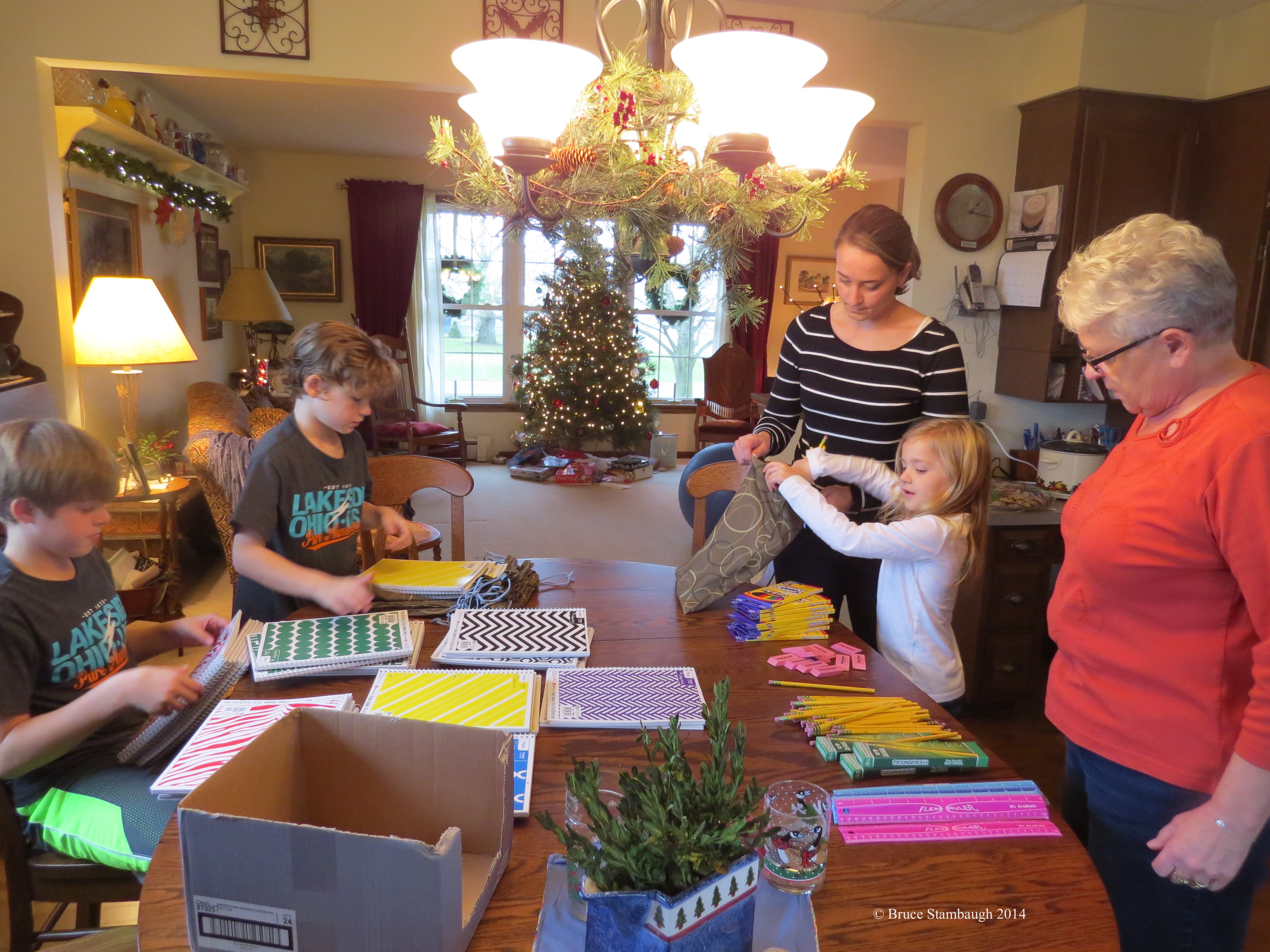
Packing school kids for children overseas sent through Mennonite Central Committee.
I see the holiday season as an opportunity to finish out this unimaginably horrific year on a better note. Amid the gloom and doom that permeates our daily lives, we each have chances to make this holiday season extra special. The secret is in our daily actions.
That’s true every day, of course. But during these next few weeks, we will likely have multiple occasions to overshadow the social angst and dark news with the shining light of kindness, generosity, and compassion.
To keep the cheerful holiday spirit alive throughout the season and into the New Year, we need to stay alert for every opportunity to spread goodness to others. We may not be able to counter all the dark news that swirls around us. We certainly should not add to it, however.
I’ve noticed that some people already have gotten into the spirit. They have their Christmas trees up and doors decorated with wreaths. Towns and cities have erected their holiday banners, lighting, and trees, too.
As a child, I always enjoyed the holiday lights. I suppose I have my father to thank for that outlook. Every Christmastime, he would load his progeny into the family car, and off we would go looking for decorated neighborhoods. Sometimes we would drive to other cities to see the holiday lights and department stores’ decorated display windows.
I’ve never lost that passion. My wife and I have continued our family tradition of displaying candles in our windows. It’s our way of sharing the bright holiday spirit. We intend to leave them up longer than usual this year. You just never know how such little things can positively affect others.
Our sharing the light with others doesn’t have to be extravagant or expensive. Send a card to someone you know but haven’t communicated with for a while. Drop your loose change in the red kettle. Secretly send someone a gift card from a local small business.
In what ways can you help brighten the holiday season and still keep yourself and those around you safe? How can you help others improve their life, even if it’s only a simple gesture?
A bygone Thanksgiving morning in Ohio’s Amish country.
Thanksgiving season is upon us here in the U.S. The day won’t be the same as in years past, with the pandemic still raging. Nevertheless, we can, and we should celebrate.
I have always relished Thanksgiving. The food, the fellowship, the interplay of cross-generational conversation and gaming made the day special.
Growing up in blue-collar northeast Ohio, my four siblings and I had a boatload of first cousins with whom we communed on Thanksgiving Day. Our maternal grandmother graciously oversaw the gathering of her three daughters and their families.
A buffet of all the traditional Thanksgiving goodies filled the long dining room table at our Aunt Vivian and Uncle Kenny’s place, where we usually assembled. Other relatives occasionally joined us.
Besides gorging ourselves, we played football, hide and seek, and sang at the piano. By day’s end, both our stomachs and our souls were more than satisfied. Laughter and familial love will do that.
As the children matured to teens and then to adults, spouses joined in the festivities. Out of necessity, each family began meeting separately.
Thanksgiving Day resembled a progressive supper. It was one house for a noontime holiday spread and then dinner at the in-laws with an equivalent bounty.
Those traditions evolved even further when our children married or moved hours away. Thanksgiving became an extended holiday to accommodate as many attendees as possible. We would eat our way through Thursday to Sunday.
Regardless of the settings and meeting arrangements, fond memories always resulted. That was true even if the mashed potatoes were lumpy or the dressing was too dry.
This year, those memories will have to flavor Thanksgiving Day whatever, however, and wherever we celebrate. The coronavirus will likely alter any large gatherings, even if they include all family members.
As the contagious pandemic continues to spread and spike, we all have to do our part to thwart its invisible advance. It never was going to evaporate, no matter who won the presidential election.
This Thanksgiving, we have to let go of our traditions, our expectations, and our American pride and do what is best for the common good of all. The Center for Disease Control and Prevention advises against any large-group inside gatherings.
The professional advice is that people not be in an enclosed space with the same people for more than 15-minutes. I’ve been known to be a fast eater, but not that fast.
For my wife and me, that means we will be hoping for a warm Thanksgiving Day to meet outside with our daughter, her husband, and our three grandchildren. We’ll connect as we are able with our son and his wife in New York.
This pandemic has been the paradigm shift of a lifetime for all of us. It’s been hard for us, independent-minded citizens, to accept governmental and medical leaders’ guidelines and restrictions.
Trying to provide accurate safety information about a new and dangerous virus can’t be easy. It is incumbent on all of us to follow the advice to help slow this COVID-19 until an effective vaccine arrives.
Nevertheless, virus or no virus, Thanksgiving Day will arrive, and we should express our great gratitude. How that occurs is an individual choice, of course.
I am grateful for the many blessings received over all these many years. If we can’t meet in person with our family like my nostalgic recollections, I will be disappointed. However, we can still express our appreciation virtually.
The principle of being thankful is the very foundation for Thanksgiving. Let us all keep that tradition alive as joyously and safely as possible.
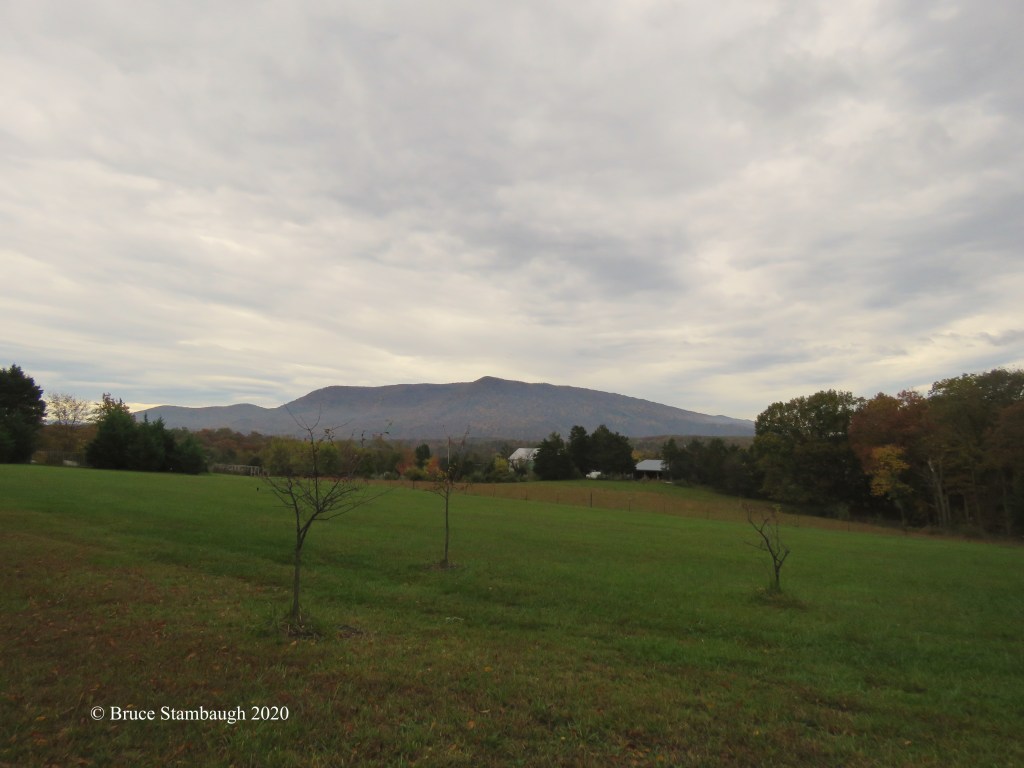
October’s Harvest Moon rises over Massanutten Mountain near Harrisonburg, VA.
Many moons ago, I remember clearly seeing the Milky Way for the first time in ages. I stood starstruck at the twinkling, gem-like brilliance overhead.
In the evening chill, I gazed transfixed, awestruck. Of course, the setting alone provided that opportunity. I had just stepped out of the historic El Tovar Hotel at the Grand Canyon’s edge in northern Arizona.
I felt like a child again, my mind racing back to forgotten summer nights when I would lay on my back in the coolness of the grass and watch the stars and planets. My family lived in a suburb of a blue-collar steel town in northeast Ohio. We could still see the heavens above.
Back then, light pollution was not an issue. Street lights were fewer, and their incandescent bulbs radiated soft light. I even remember being able to track satellites from our front yard.
Somehow, somewhere we North Americans became afraid of the dark. More and brighter street lights and security lights multiplied, all in the name of blotting out the darkness. Now, light pollution prevents 80 percent of the U.S. population from seeing the stars.
The evolution of lighting up streets, buildings, and entire cities has grown exponentially with urban sprawl. In today’s world, most people have to travel out into the country to see the stars.
Residents of cities like Jacksonville, FL, have little chance of seeing the night sky.
Seeing the night sky was one of the benefits of living in a rural area like Holmes County. The air was so clean that Amish buggies rode by at night with no lights on at all until they heard a vehicle coming. Though it wasn’t a safe thing to do, the point was that the horse and driver didn’t need lights to guide them.
We chose the house we now live in near Harrisonburg, Virginia, in the daytime. Being able to see the night sky on a clear night came as a bonus. Our expansive housing development has no street lights.
Light fills our modern night lives, too much of which is bright, blue illumination from all of our electronics. Cell phones, computers, and TV screens stimulate us rather than relax us before bedtime.
Humans need dark nights to get proper sleep. Some people have to use black nightshades to cover their windows to shut out external, artificial light to get some sleep. Sleep deprivation can lead to too many negatives for us humans.
Excessive night lighting disturbs wildlife, too. More than 60% of invertebrates and 30% of vertebrates are nocturnal. Each year, millions of migrating birds die by flying into urban windows illuminated at night long after employees have gone home.
Newly hatched sea turtles crawl to the brightest light, which used to be the stars and moon twinkling over the sea. Now, the turtles turn the wrong way and perish unless the artificial lighting is turned off.
Nighttime photos taken from space of urban areas may look pretty, but such massive lighting causes problems and is extremely expensive. Imagine the money and resources society would save by simply turning off all those unnecessary lights. Plus, too many of the lights point skyward instead of down.
We shouldn’t be afraid of the dark. Nighttime is good for our rest, our bodies, our souls, our ecosystem. As we enter the winter’s season of darkness, we should embrace it, not try to either eliminate or illuminate it.
Yes, darkness arrives early now and will continue to do so into the New Year. Until then, I’ll just steal an opening line from Simon and Garfunkel: “Hello darkness, my old friend…”
Halloween’s Blue Moon and Mars in the abstract, taken from my backyard.
Memorial markers commemorating the Battle of Cedar Creek.
My wife and I moved to the Shenandoah Valley more than three years ago to be closer to our three grandchildren. We also drew closer to the Civil War.
I remember studying about the Civil War in school, of course. But places and battles like Antietam, Gettysburg, Manassas, Petersburg, and Appomattox overshadowed any Civil War engagements that occurred in the breadbasket of the Confederacy.
That agricultural label was apt. The Shenandoah Valley, especially the area where we live near Harrisonburg, played a vital role in keeping the Confederate States Army fed. The valley is still one of the prime agricultural regions of the Commonwealth.
Agriculture continues to be an economic priority in the Shenandoah Valley.
Many of the citizens of the valley joined in fighting for the south. Others from the Rockingham County area remained neutral, however, preferring to tend their farms. When troops from both south and north moved through the valley, they often bought or helped themselves to foodstuffs, produce, corn, and even livestock.
I recently completed an online university course on the Civil War in the Shenandoah Valley. I saw the class as an opportunity to learn more about what some locals still call “The War of Northern Aggression.”
Indeed, the class taught me much about the war, local mores and history, and just how much military action occurred on and along roads we regularly travel. At times, it felt eerie to know the exact number of casualties on both sides in settings we frequent.
I sat up straighter in my chair when the instructor shared a map that showed troop encampments around Harrisonburg, the central city in Rockingham County. When he pointed to where one of George A. Custer’s cavalry divisions camped, I took notice. It was the area where we live. A friend who grew up here told me that he only remembered our housing development as a pasture with lots of limestone outcroppings. He said it had never been plowed.
The most significant battles in the valley took place in the northern section near Winchester, where the photos above were taken. Lesser skirmishes happened in and around Rockingham County.
One such engagement happened near Cootes Store along the north branch of the famed Shenandoah River. I have a new reverence for the place that we occasionally drive by now that I know Confederates chased Custer and his cavalry across the river as Union soldiers forded absconded livestock. For the record, Confederate flags still fly all around that location.
The small historical town of Dayton, five minutes south of where we live, played a defining part in one of the valley’s darkest events of the Civil War. General Phillip Sheridan, commander of the Union Army in the valley campaign, learned that one of his top aides, John Rodgers Meigs, had been murdered near Dayton.
In retaliation, Sheridan ordered the burning of barns, mills, homes, and crops in a five-mile radius around the town. Most of the residents there were Mennonite farmers who had remained neutral during the war. Nor did they own slaves.
Another aide to Sheridan, Lt. Col. Thomas E. Wildes, begged the general to rescind the order because the residents had treated Union troops well. Sheridan relented, but only for the Dayton area. In appreciation, a plague was placed in Dayton honoring Wildes. Elsewhere in the valley, the Union Army implemented the burning. This action devastated the residents and crippled the Confederate food supply.
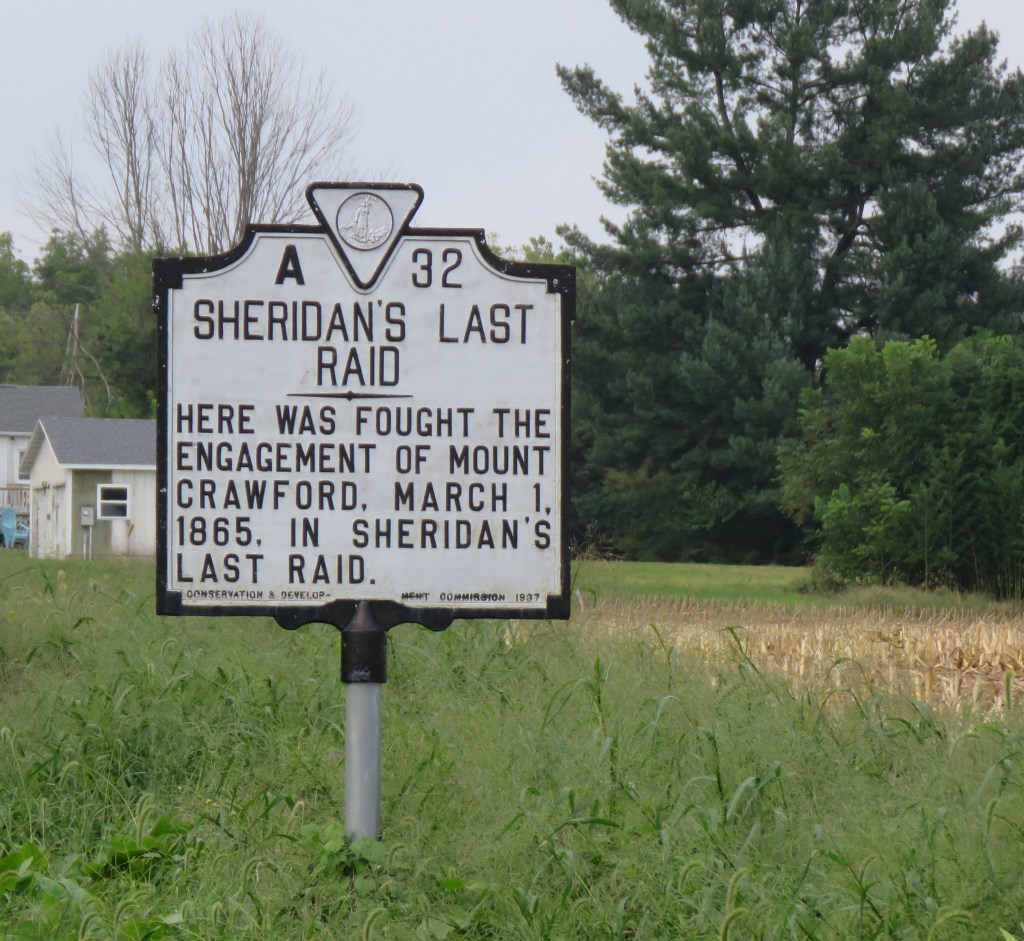
Historical signs like this one dot the Shenandoah Valley landscape, especially along the Valley Pike, the valley’s main north-south highway during the Civil War.
Those events are known as “The Burning.” Not surprisingly, hard feelings remain today. That attitude mirrors the current political animosity in the U.S.
As I viewed some of the local battlefields where thousands of casualties on both sides occurred, I couldn’t help but compare that violence to today’s heated rancor and divisiveness.
So how long should we hang on to hate? Isn’t it time to intentionally be more peaceable with one another?
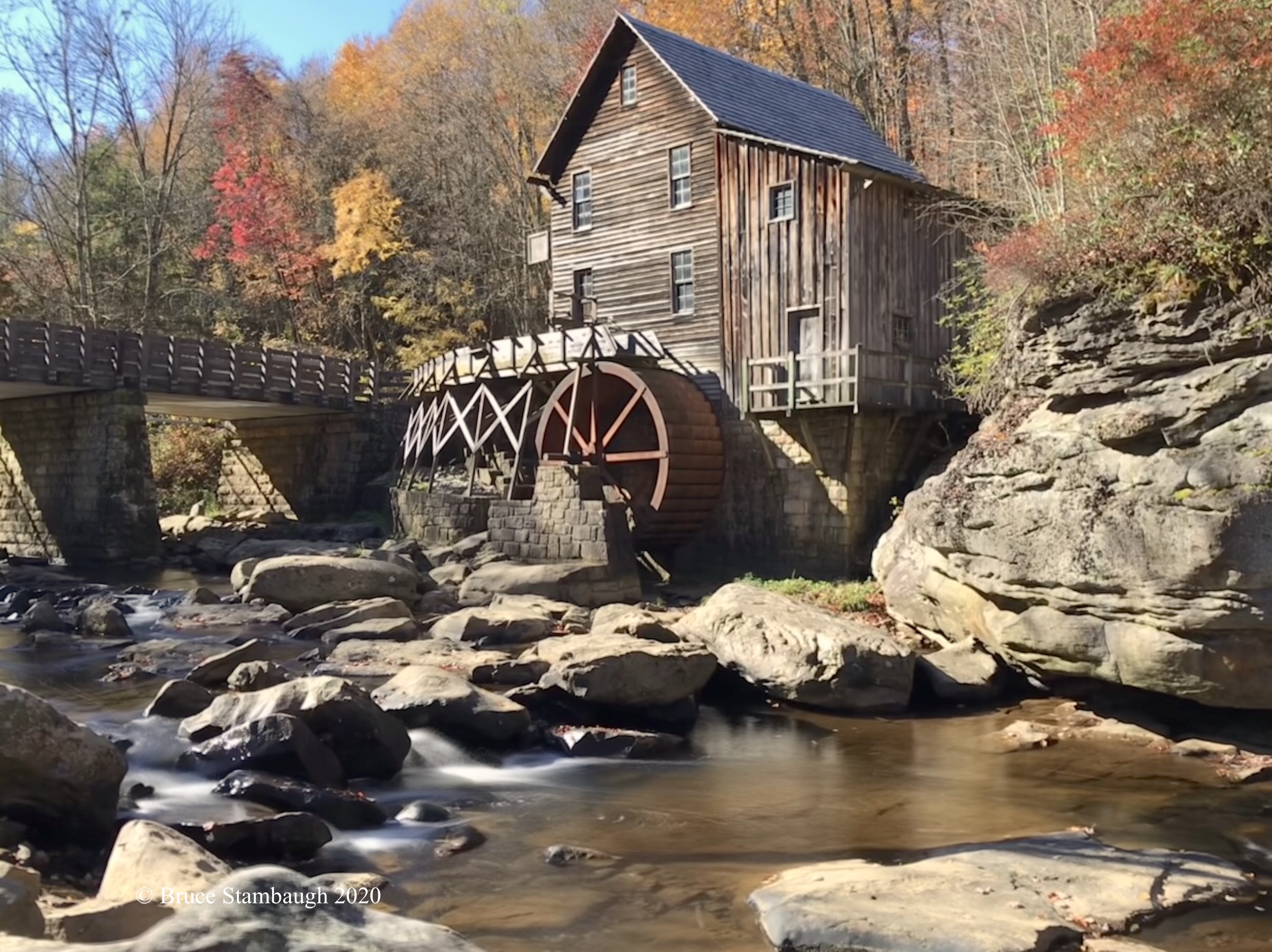
The Glade Creek Grist Mill in West Virginia’s Babcock State Park is on most photographer’s “must do” list. I was no exception, especially since moving to Virginia’s Shenandoah Valley more than three years ago.
The old mill is most often photographed in fall and winter. I missed the peak of the leaf color by just a few days. Still, I was pleased with the residual colors that framed the mill along its namesake stream.
We don’t need a calendar to remind us that Halloween is just around the corner, quickly followed by the U.S. presidential election. Do we get doubly spooked this year?
I can’t decide which is worse, all of the Halloween related commercials or the political campaign ads on television. Sometimes it’s hard to distinguish between the two.
Halloween has had a history of inspiring misbehavior, reference Ichabod Crane. Unfortunately, ghoulish nonsense gradually replaced good-natured orneriness over time.
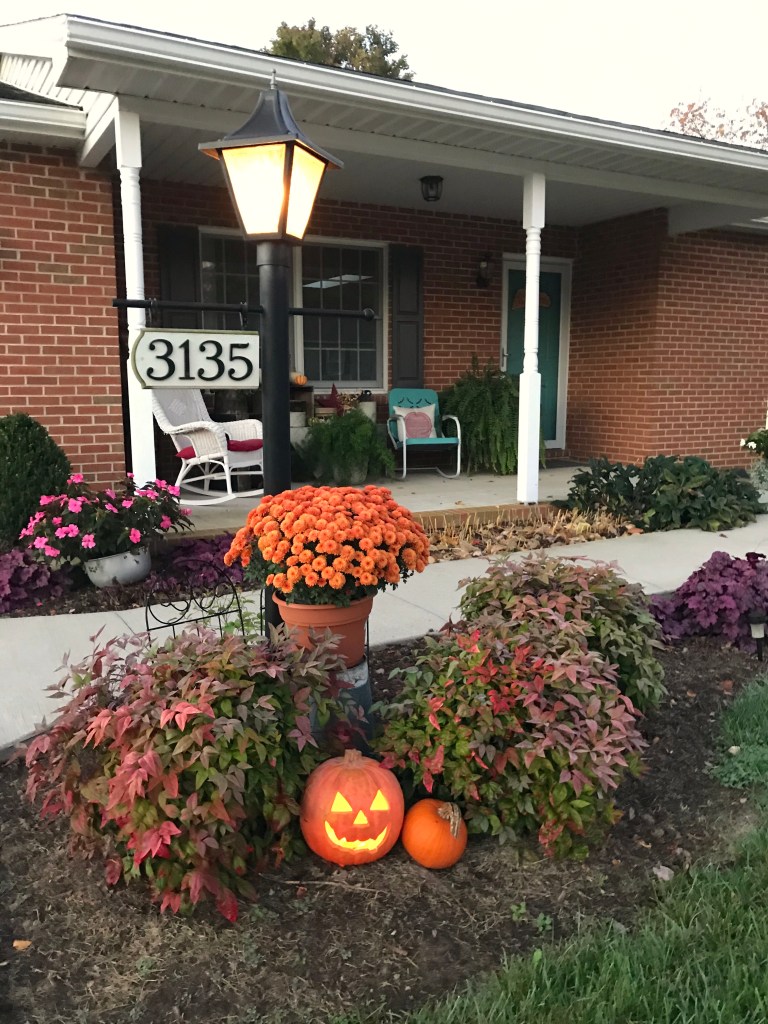
When I was a youngster, a hooligan once stole a pumpkin right off of our front porch. My younger siblings and I happened to see the teenage culprit dashing down Winton Ave. with our jack-o-lantern still flickering with each stride the young man took.
Once we arrived back home after a two-hour trick or treat raid of the neighborhood, we forgot about the lowly pumpkin. Our childish attention turned to comparing who got the most and the best candy.
Our family dentist declared the winner at our next checkups. The one with the fewest cavities won.
Growing up in suburbia in the 1950s and 60s was mild compared to today, however. Usual Halloween tricks included throwing shelled field corn against people’s windows to scare them. Soaping windows was also a common prank. Those who traded soap for paraffin were considered mean.
I found out what real Halloween tomfooleries were when we moved to Holmes County, Ohio, in the heart of Amish country. Torching corn stalks in the middle of the night and burning tires on highways were major annoyances, not to mention illegal and dangerous. The county sheriff added extra patrols to try to quell the orneriness.
I remember one story, vividly. A sheriff’s deputy that I knew was driving his cruiser through dense fog late one night. An egg thrown from a passing Amish buggy hit his vehicle, and a short pursuit ensued. The black buggy with no lights quickly disappeared into the thick fog.
Teens took turns tormenting different towns. It would be Berlin one night, Mt. Hope the next. Then it was Benton, followed by Farmerstown, and on and on it went.
There never seemed to be any rhyme or reason to the order of towns adorned. Toilet paper streaming from trees and utility lines decorated each village. I hope that doesn’t occur during the pandemic, or they’ll be another shortage of toilet paper.
Pranksters would hoist farm equipment atop buildings and corral “borrowed” livestock in town squares. At least they provided hay and straw for the animals. The critters and buggies usually found their way back to the rightful owners.
Trick or treating was more controlled in the rural areas. Community organizations and volunteer fire departments hosted gatherings for children and handed out candy in pre-stuffed bags. Hundreds of costumed kids paraded before judges, who then awarded cash prizes for the funniest, the most creative, and the scariest costumes.
This year community-based parties like those that our children attended will replace trick or treating. With the pandemic still raging, many communities around the country are rightly canceling traipsing door-to-door.
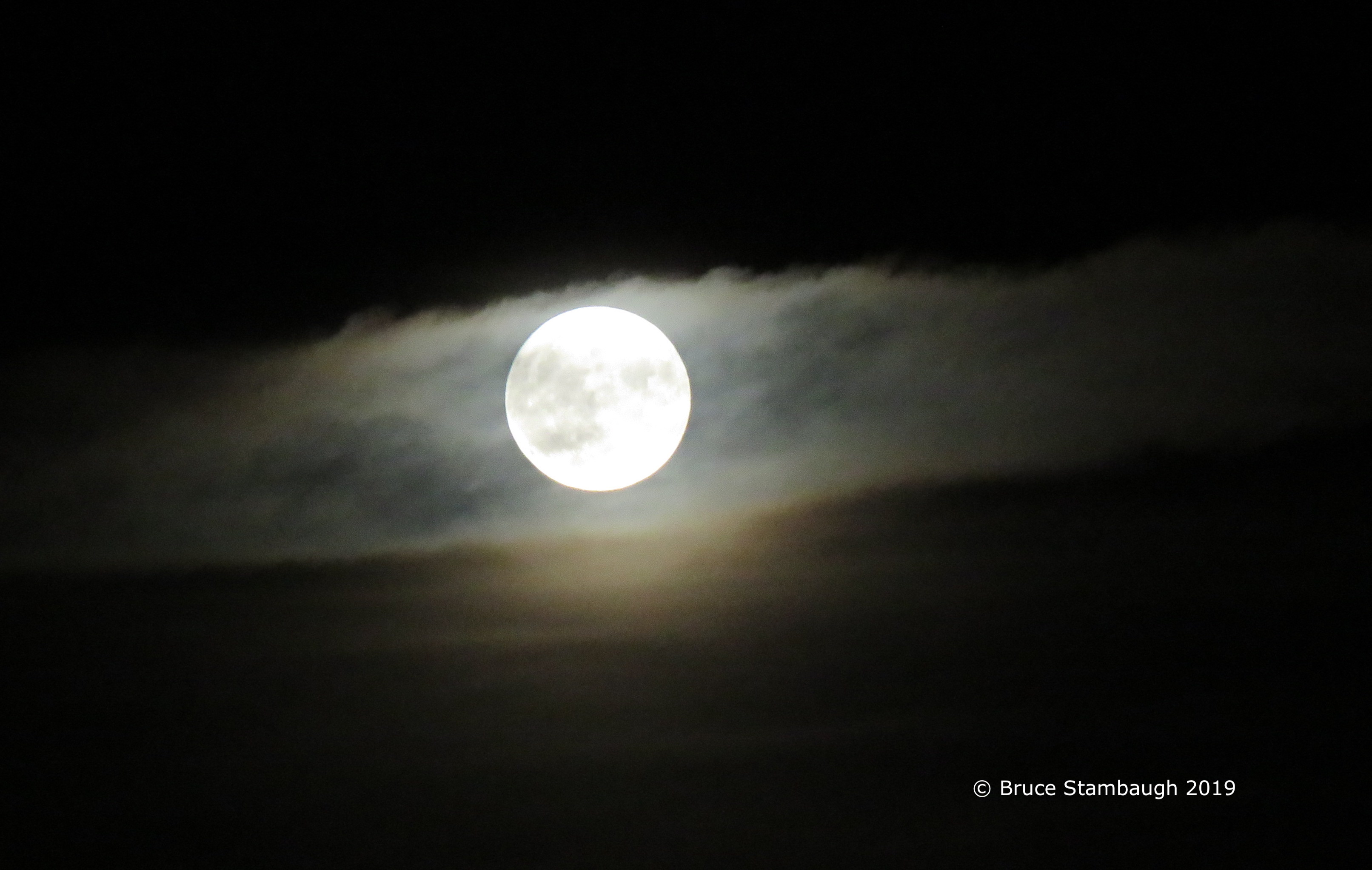
But don’t worry. This year Halloween night has some extra special celestial treats for everyone. The night sky will scare up a Blue Moon. The October 1 Harvest Moon was the month’s first full moon.
There’s more. Mars won’t be this close to Earth again for a long time. The red planet will cozy up to the full Blue Moon on Halloween night.
Let’s hope for a clear sky so that we can enjoy the heavenly show. Just don’t gaze skyward too long. Someone might steal your pumpkin.













You must be logged in to post a comment.