Chimney Swifts are some of my favorite birds. I have adored these magnificent little birds for a long time. Let me count the ways they bring me joy.
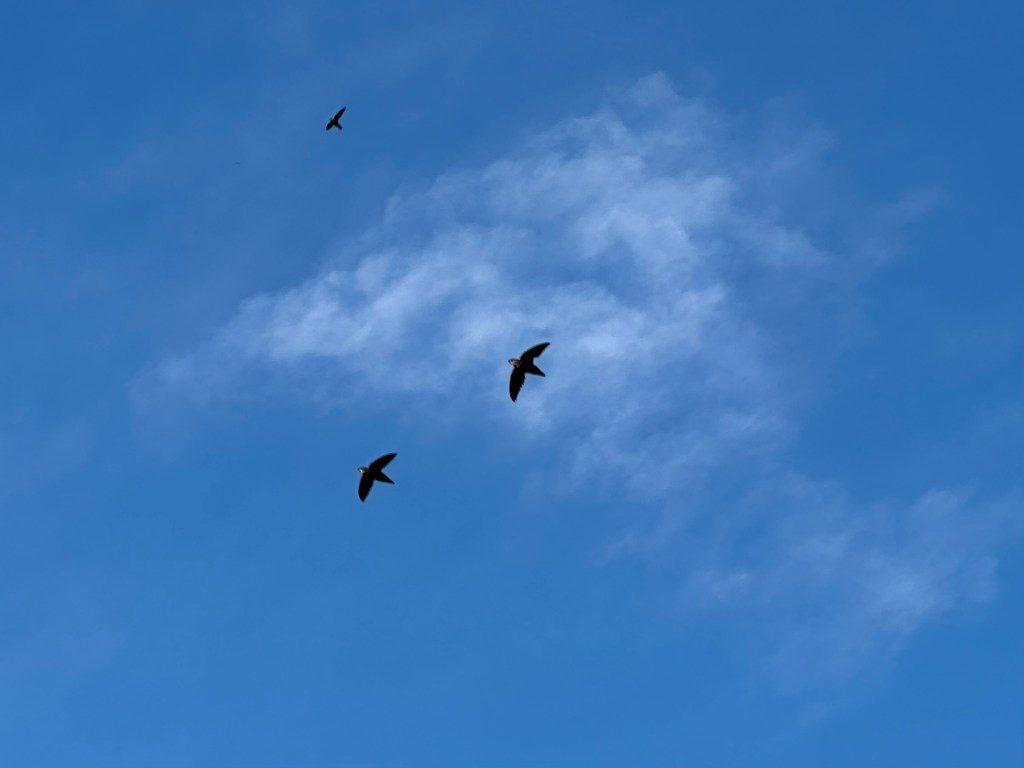
More than likely, you’ll hear these gregarious birds before you see them. Their chattering call, while they are furiously flapping their pointy wings, alerts you to their presence.
I find their looping flight patterns intriguing, too. They like to fly overhead, wings furiously flapping, sometimes dipping low, and then back up in a rapid arch.
If you miss them on their first pass, stand still, and they are likely to return, perhaps bringing others with them as they skim the sky for any and all insects. If you have Chimney Swifts in the neighborhood, you likely won’t be bothered much by mosquitoes.
Chimney Swifts are equally at home in cities, suburbs, and rural areas. As long as these chubby-looking birds have a chimney in which to roost, they will make themselves at home.
It’s only appropriate that Chimney Swifts build their nests on the insides of chimneys. Their sooty colored feathers blend perfectly with whatever powdery substances they might pick up as the birds zip in and out of their chosen chimneys.
To clean themselves, Chimney Swifts will zoom over lakes and rivers, suddenly dip into the water’s surface, and then speed off to air-dry themselves.
Before North American colonization, Chimney Swifts originally built their nests in hollowed trees, on cliff faces, and in caves. Once White pioneers built their brick chimneys, the cigar-shaped birds adapted to a new habitat.
They build their nests on the inside of chimneys by using a glue-like saliva secreted from under their tongues. Chimney Swifts use their long claws to cling to the side of chimneys. The birds cannot perch like most other birds.
Some people cap or screen their chimneys to keep birds out. That, coupled with newer chimney designs and sizes, has led to a decline in the Chimney Swift population in recent years.
When we lived in Ohio, our home was built on an Amish farm. We had Chimney Swifts every year, and we lived there for 38 years.
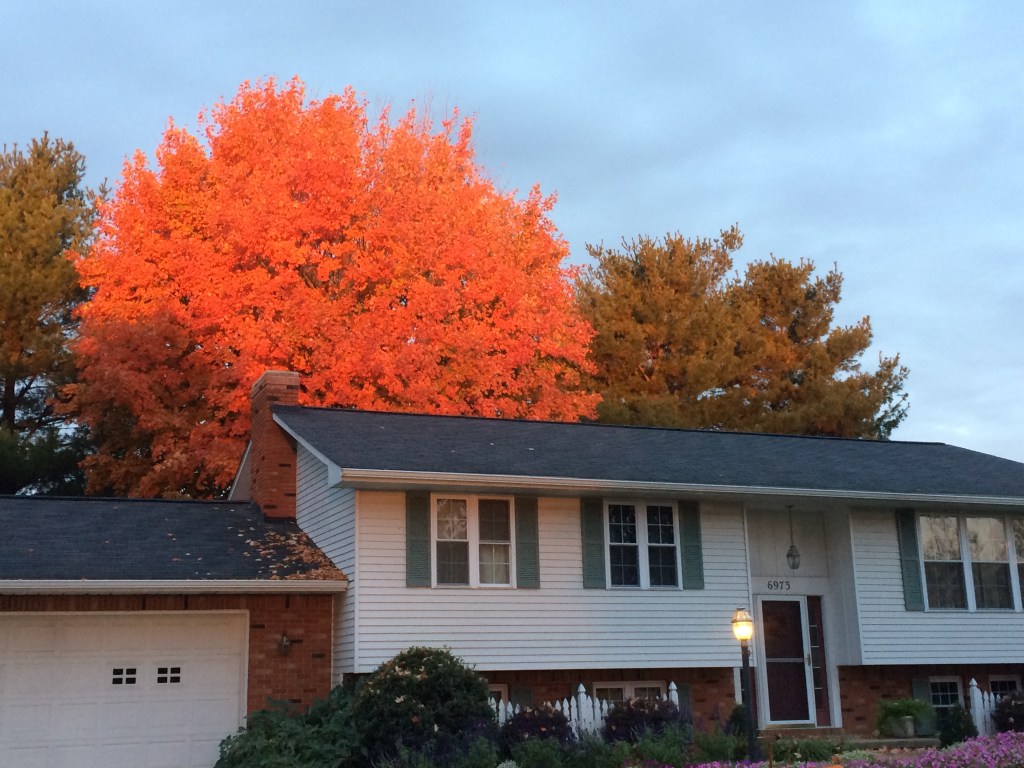
I greatly enjoyed the aerial antics of the chattering Chimney Swifts. In the evenings, I would stand and watch as the birds swirled in loops over the house, dropping closer with every pass until they would dive into our short chimney.
Before we added air conditioning to the house, I would sometimes sleep on the couch in the lower level of our bilevel home on hot, humid summer days. There, the temperature was cooler.
We had a wood-burning fireplace, and when the Chimney Swifts had young in their nests, it seemed like they would feed all night long. The force of their powerful wings, helping them to brake once they entered the chimney, rattled the glass fireplace doors.
An adult bird once fell into the fireplace because I hadn’t secured the damper all the way closed. I donned thick gloves, carefully removed the bird, and let it fly free outside again.
During the colder months, I loved to sit on the raised hearth in front of the firebox and enjoy the radiant heat and the aromatic aroma of seasoned wild cherry, oak, and ash firewood blazing away. The warmth penetrated my shirt, soothing my aching back.
Once the Chimney Swifts arrived in April, however, no more fires were built until the birds left in early October. The birds spend the winter in northwestern South America.
They migrate north over Central America to all areas of the United States east of the Rocky Mountains, where they breed and raise their young. Come October, they begin their extended journey back to South America.
Our Virginia home doesn’t have a fireplace, but several of the close neighbors do. Consequently, I can continue to enjoy the chitter-chatter of the helpful Chimney Swifts as they zoom around the neighborhood.
© Bruce Stambaugh 2026


You must be logged in to post a comment.