We often hear about the harbingers of spring, but seldom do we speak of those of autumn. Yet, they certainly exist.
If we look closely, the signs have begun to appear. The vegetation and animals are already giving us hints of what is to come in fall. After all, the Autumnal Equinox is only six weeks away.
Fall migration has already begun for some of our aviary friends. Those with bold spring mating colors now appear much duller and are harder to identify.
If we take time to notice, some leaves of deciduous trees and climbing vines have already begun to change. Maybe the hot, dry summer we had here in Virginia’s Shenandoah Valley had something to do with the early signs of fall.
Whatever the reasons, the gradual transition helps to accept that autumn is just around the corner.
Some leaves on a Virginia Creeper vine have already turned red. Photo by Bruce Stambaugh
Colors galore as a wildfire burned in the valley below last fall. Photo by Bruce Stambaugh
This is the last in a series celebrating National Park Week.
Autumn is often the best time to visit a national park. The annual coloring of the leaves attracts millions of people to many national parks, including Shenandoah National Park in Virginia.
The Park Service staff do an excellent job of keeping the public informed about the status of the changing of the leaves. From websites to social media to webcams, patrons of the parks can plan their trips accordingly.
Of course, everyone wants to hit the peak colors. The problem is that many factors play into trying to time the peak of coloration. Elevation, weather, temperature, tree species, longitude and latitude, and the sun’s angle all assist the color transformations. People’s schedules add to the leafy puzzle.
Living near a national park makes timing less risky. I closely monitor the weather, social media group photo posts that specialize in leaf watching in Shenandoah National Park, and the park’s weekly livestreaming. When it’s time to go, I head east and am seldom disappointed.
This past fall, much like this spring, was relatively dry. Fire conditions lasted several weeks, and fires did break out. The photo shows smoke from a fire near the Rappadan Camp that started outside park boundaries but quickly burned into the park’s forest.
The fire’s smoke starkly contrasted with the vibrant colors of the ashes, sassafras, hickory, oaks, and poplar trees. It subdued the usual exuberance for the park’s universal beauty.
Over nearly a week, firefighters finally got the upper hand as the leaves began to rain down. Eventually, fall storms helped quench the blazes and brought down the last leaves.
Despite the fire, park visitors still enjoyed the beauty of the changing leaves along Skyline Drive, from overlooks, and walking the trails that remained open.
Given nature’s multiple colors, it’s a good bet everyone left the park with lasting memories and photos to brag about.
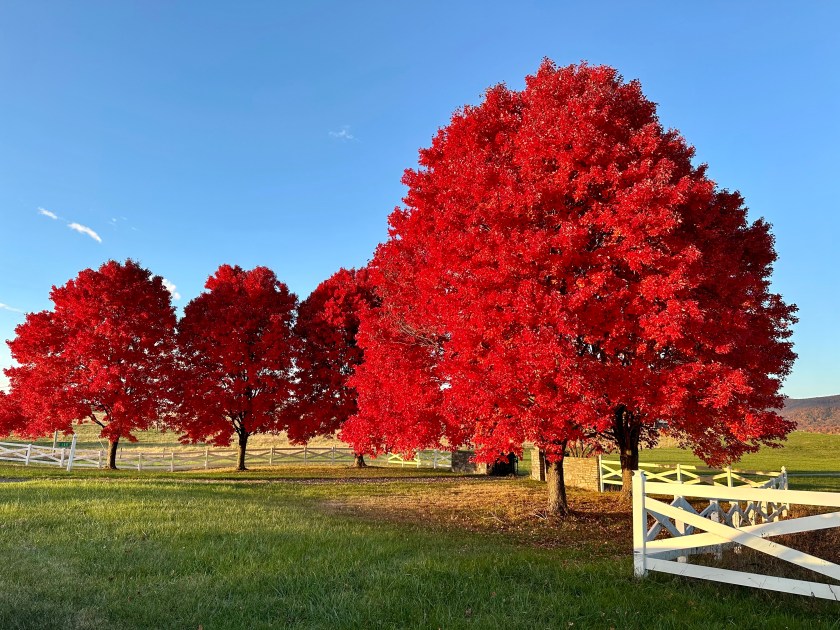
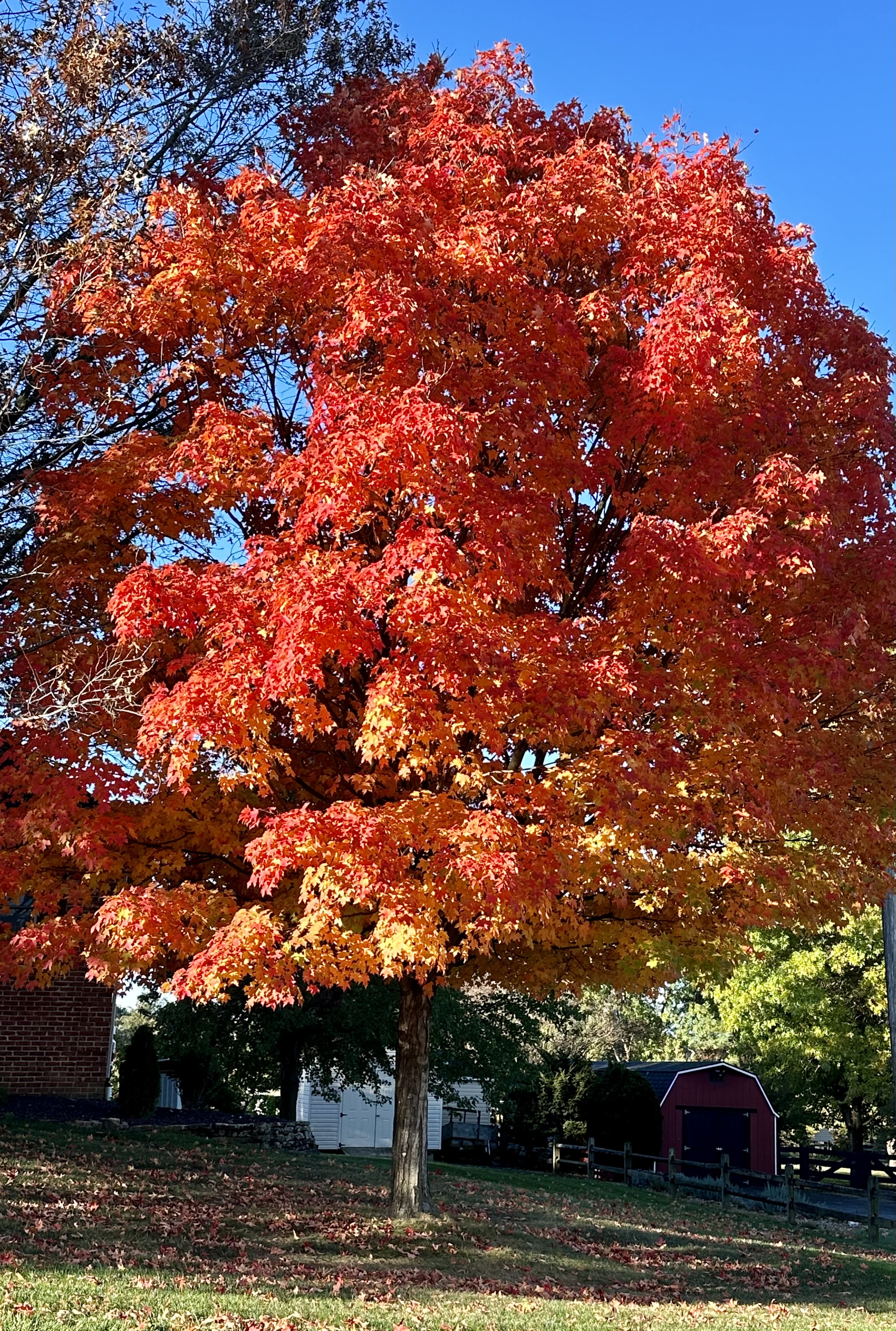
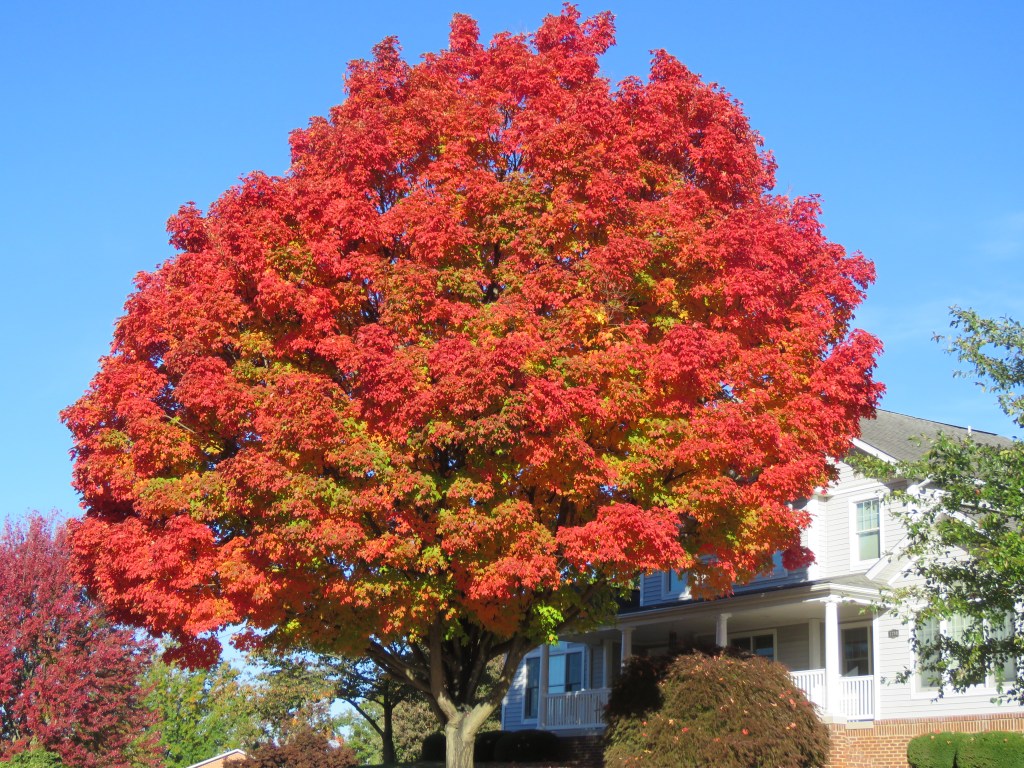
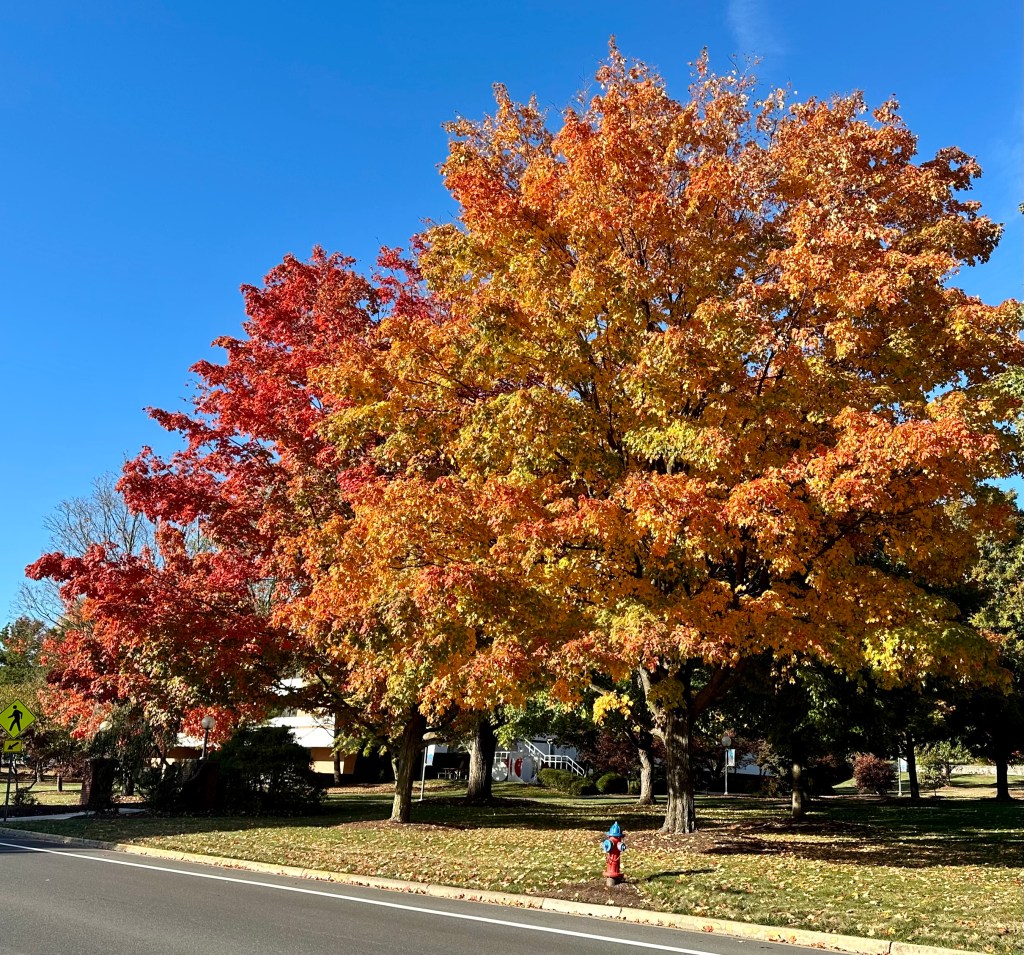
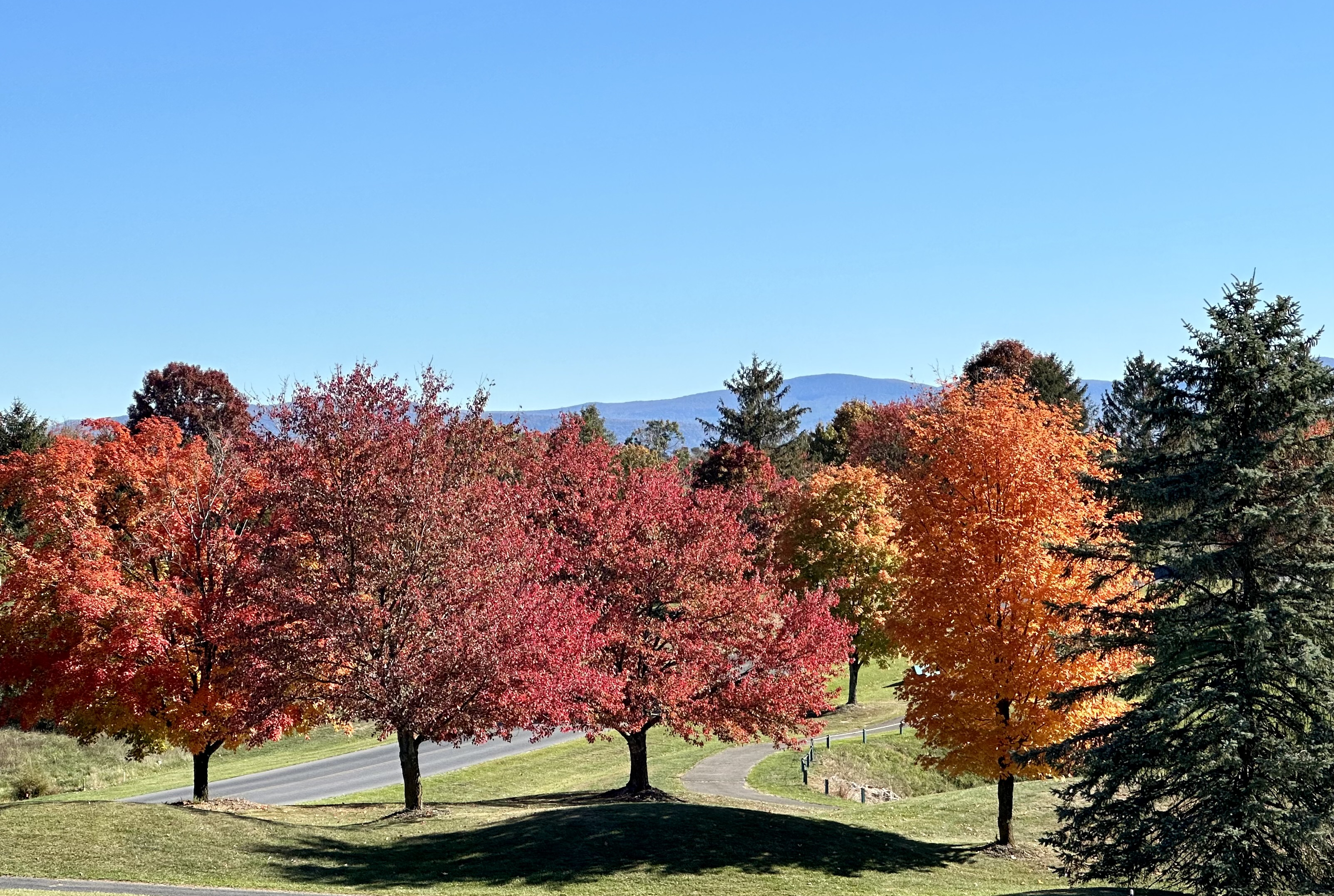
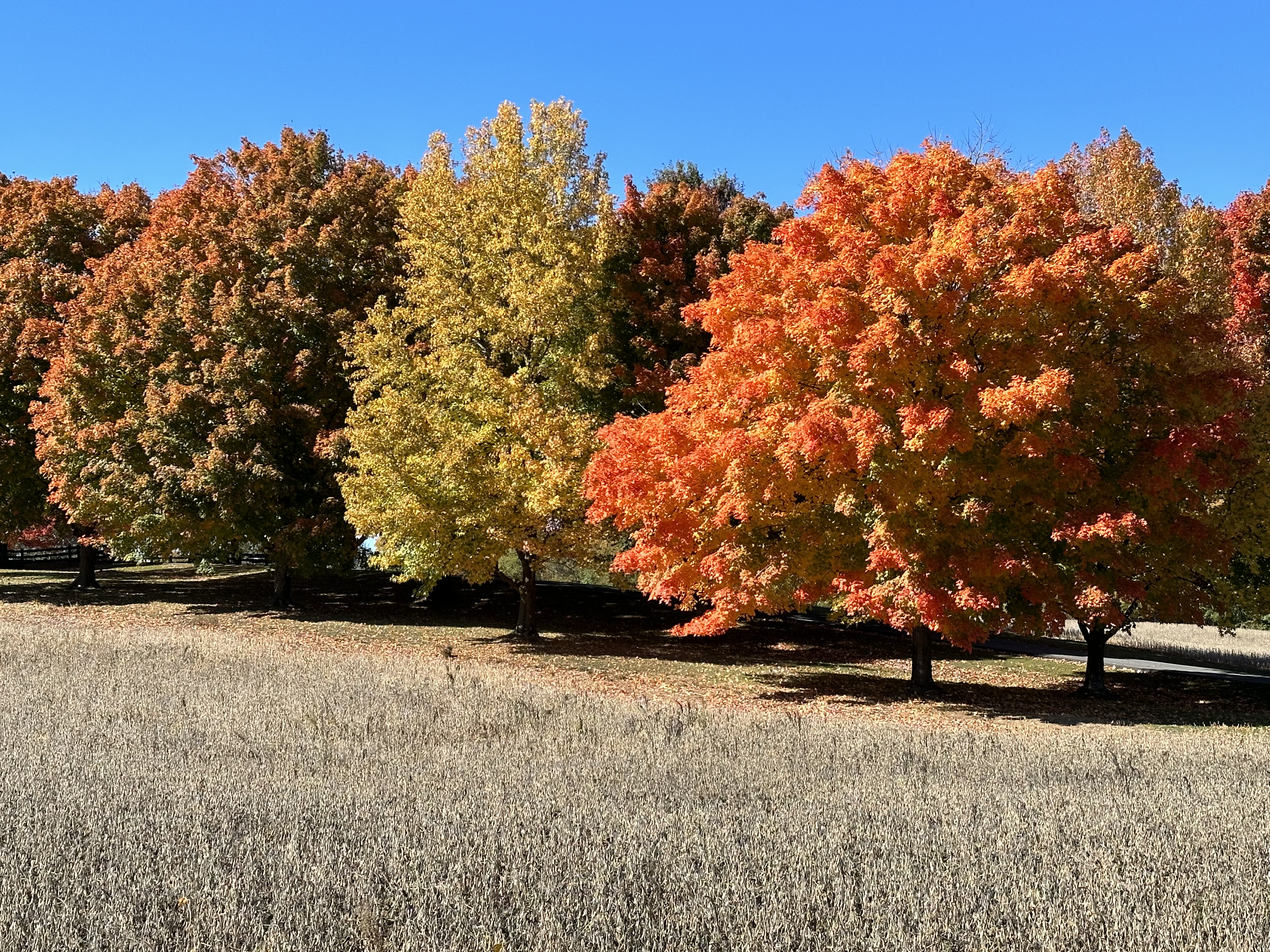
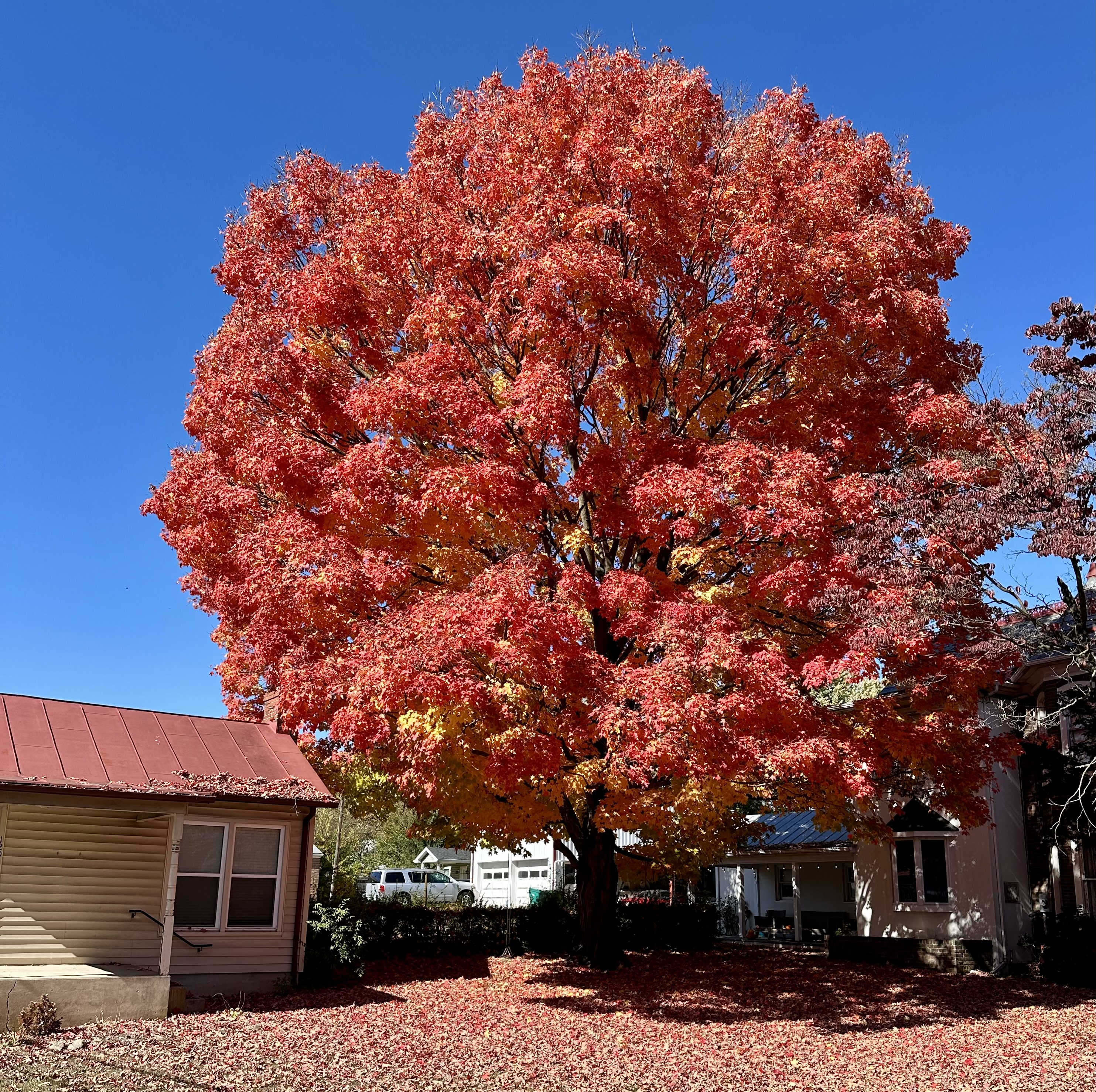
Brilliant Sugar Maples in the Park View neighborhood of Harrisonburg, Virginia.
Following my day in Shenandoah National Park, my wife and I headed south to Augusta County. We had more than colorful leaves on our agenda.
The “Queen of Steam,” Norfolk & Western Railroad’s Old 611 steam engine was running excursions twice a day from Goshen, Virginia, to Staunton, Virginia. Friends had pointed out a perfect place to observe the 611 heading east to Staunton.
So, Neva and I were up early to get a good spot at the bridge over the Buckingham Branch tracks at Swoope, Virginia. I wasn’t familiar with the area, so I wanted to scout different locations, too.
It was another beautiful day in the Shenandoah Valley. Cool temperatures in the morning, but a promised warming into the 60s by afternoon. The drive down to Swoope was nothing less than gorgeous.
Our spot on the bridge where we would have seen the 611 engine pulling the excursion train.
We arrived in Swoope at 8:30, and the train wasn’t scheduled to leave Goshen until 9:30. We didn’t know how long it would take the special train to arrive at our location. Besides a few walkers and joggers, we were the only people around.
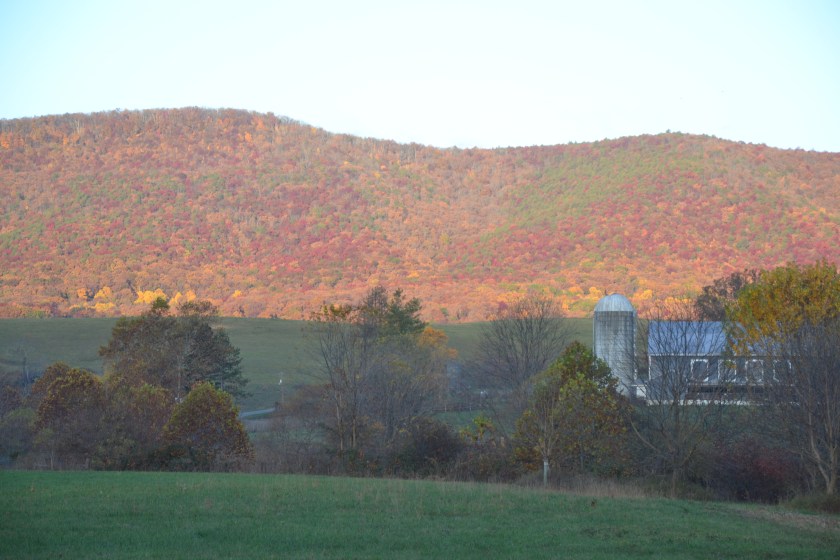
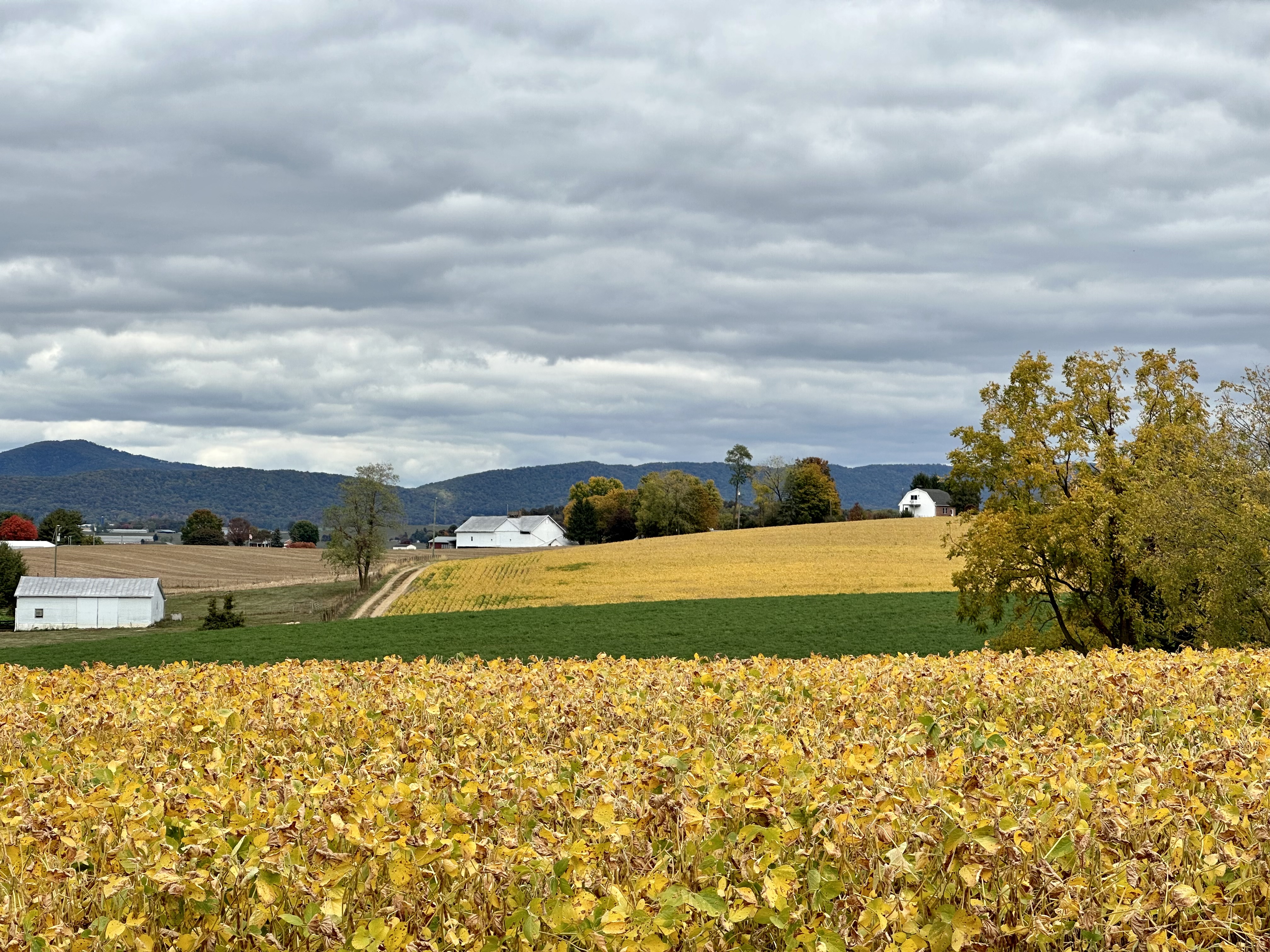
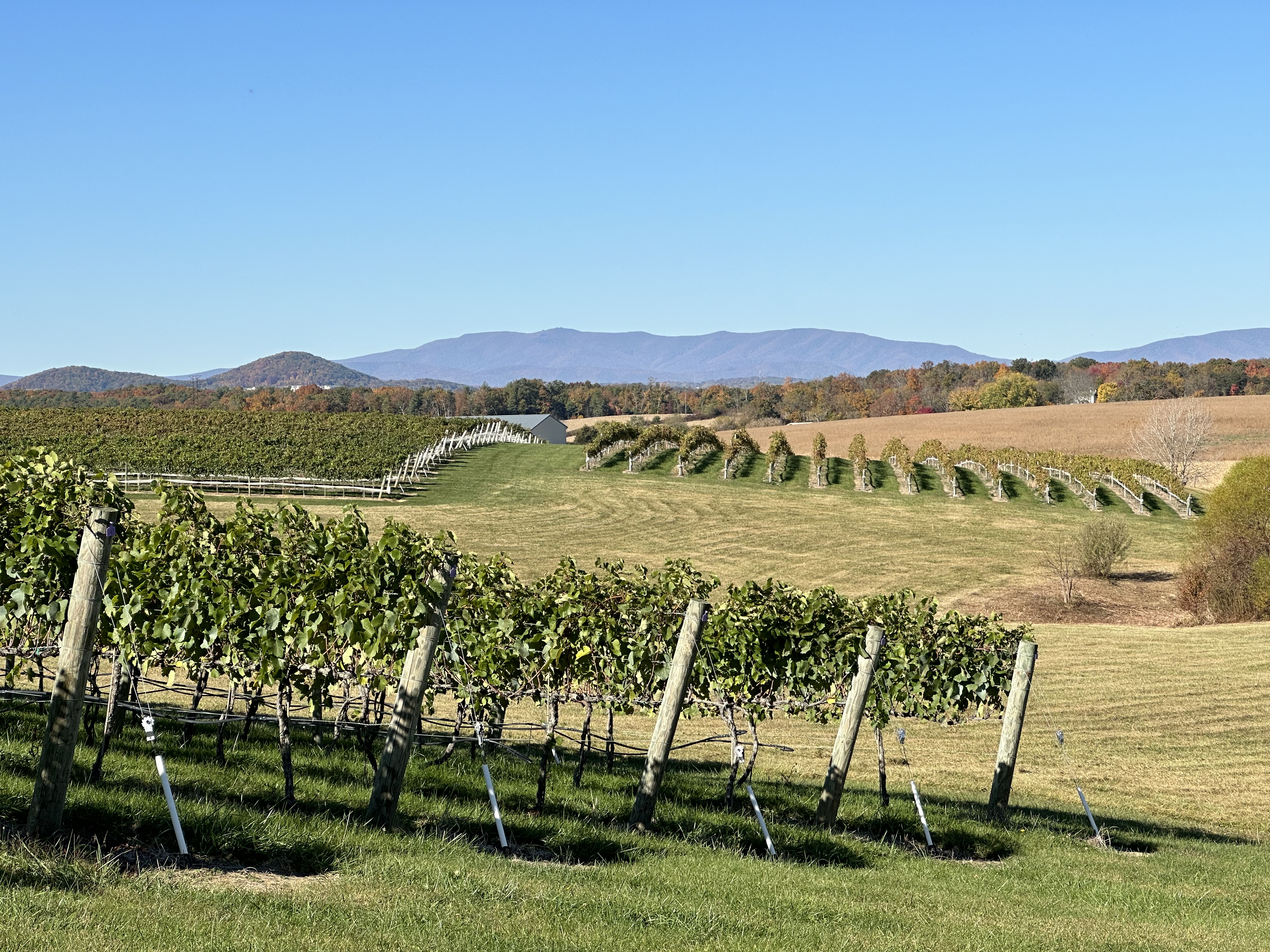
Confident that our spots on the bridge wouldn’t be taken, we drove around the lovely valley dotted with rolling hills, pristine cattle farms, and gorgeous trees. The mixed hardwoods on Little North Mountain and the North Mountain beyond it were at peak color.
I took several shots of trees and farms and returned to the bridge. Soon, other rail fans arrived, and the chatter began. We listened for the train whistle to echo through the valleys. All was still.
Finally, a guy arrived who had information about the 611. It was listed as “static” at Goshen, meaning the engine wasn’t moving. A mechanical problem prevented 611 from running that day. The excursion would be pulled by diesel engines.
Please click on the photos to enlarge them.
My wife and I decided to return home. The morning had already brought much beauty into our lives. We had enjoyed the colorful trees, the well-maintained farms, and the congeniality of strangers.
The next few days, I continued my quest to photograph the beauty around Harrisonburg before the weather changed and brought the leaves down. I am happy to share them with you.
Our backyard when we arrived home from Augusta Co.
The colors of Massanutten Mountain, Massanutten, Virginia. Photo by Bruce Stambaugh.
With our travels to Greece and Rome during the first two weeks of October, I thought we might miss autumn’s peak colors. I need not have worried.
My wife and I could readily see on our drive home from Dulles International Airport to our home near Harrisonburg, Virginia, that most trees still held their leaves, which were only now turning their true colors. I was glad we hadn’t missed the peak.
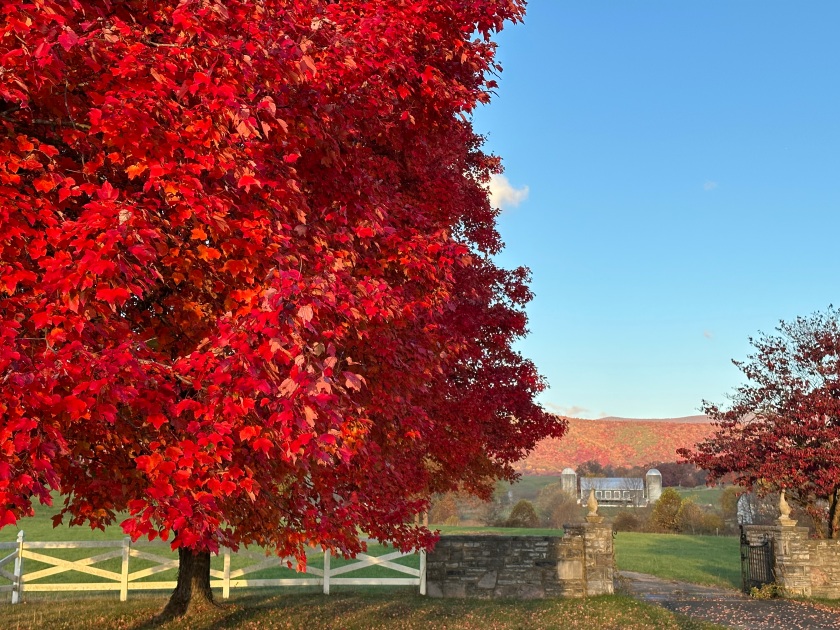
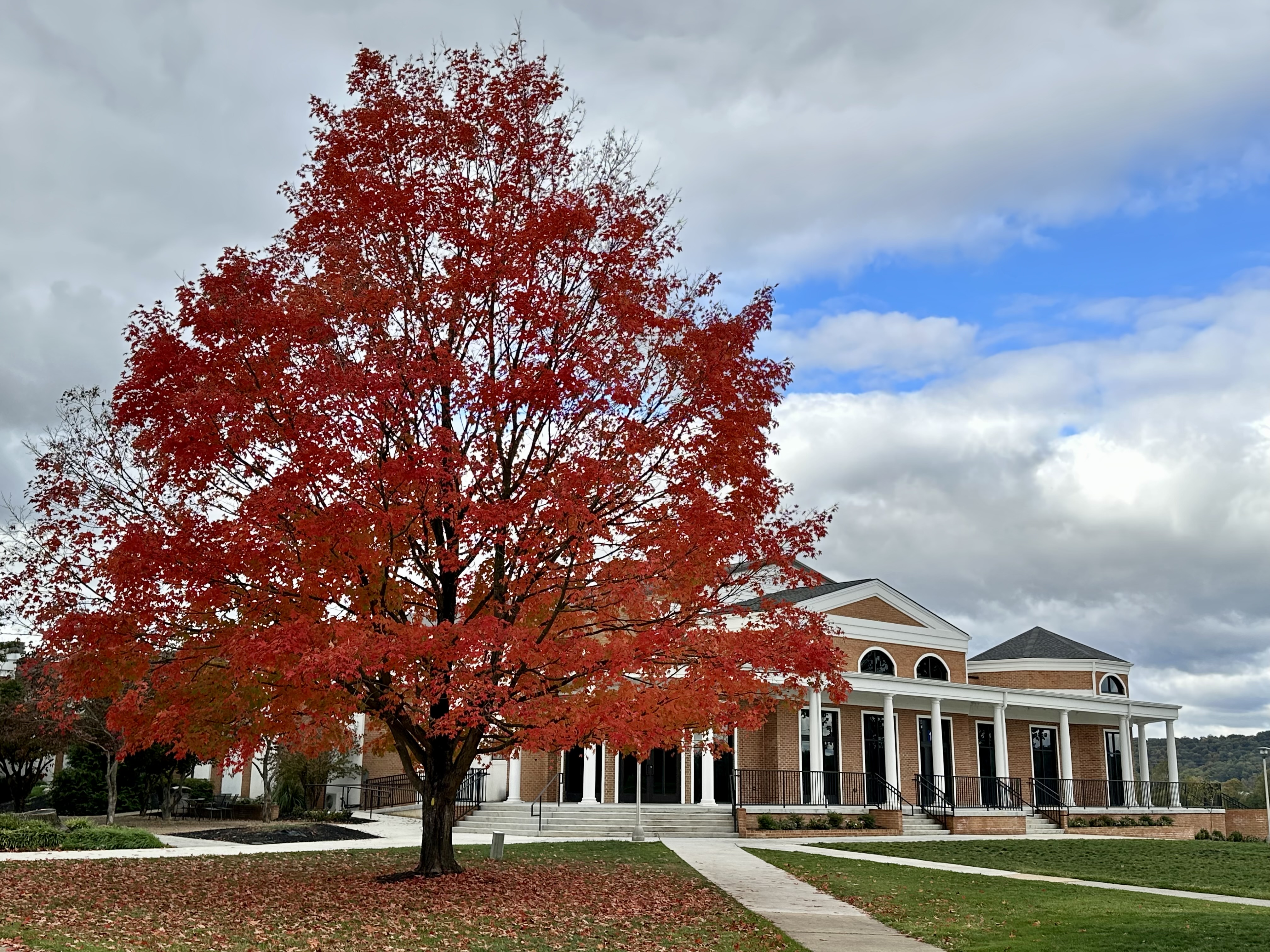
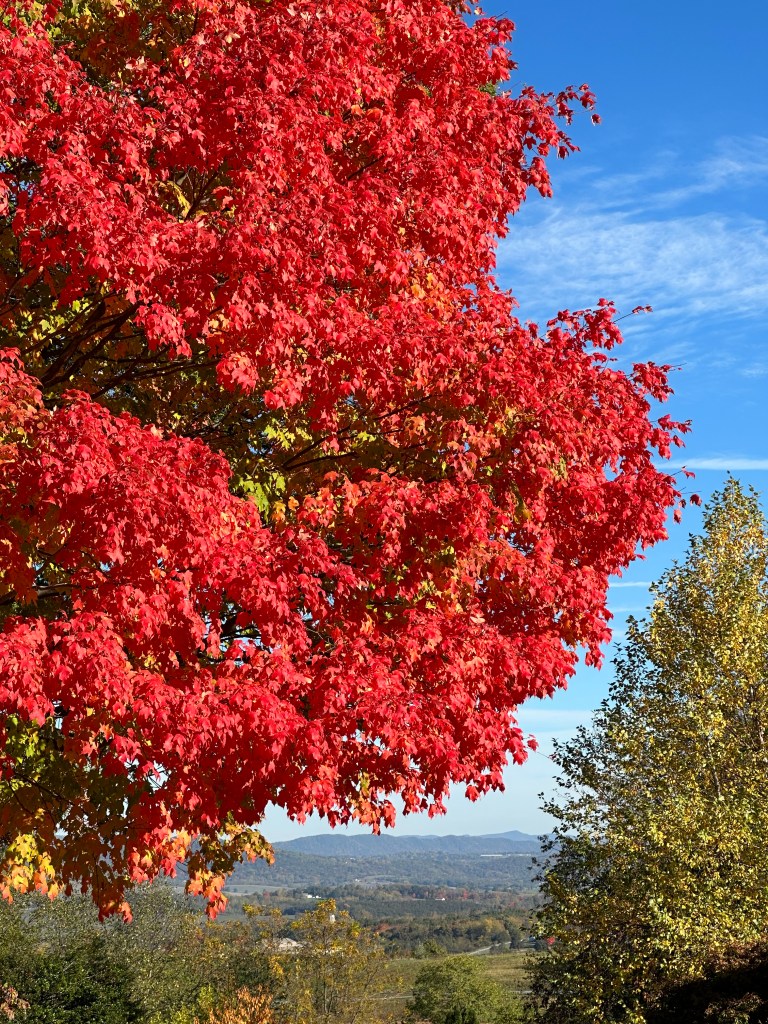
As we exited the Interstate highway at New Market, Virginia, a red maple caught my eye. I stopped to photograph the striking tree that stood center stage on a private school campus. It wouldn’t be my last photograph of the annual changing of the leaves.
A red maple in New Market, Virginia.
I feared that with the ongoing drought, the leaves would be dull and simply fall off out of sheer fatigue. Strangely enough, this has been the most colorful fall yet of the seven autumns we have resided in Virginia’s lovely Shenandoah Valley. In fact, several valley natives told me that this has been the most colorful fall in years.
I delved into why that was. I discovered that the weather indeed influences the intensity of leaf colors. The combination of sunny, warm days and cool (but not freezing) dark nights help create the brilliant colors we have experienced here in the valley. From photos posted by friends on social media, I know the fall colors have been equally vivid in other locales.
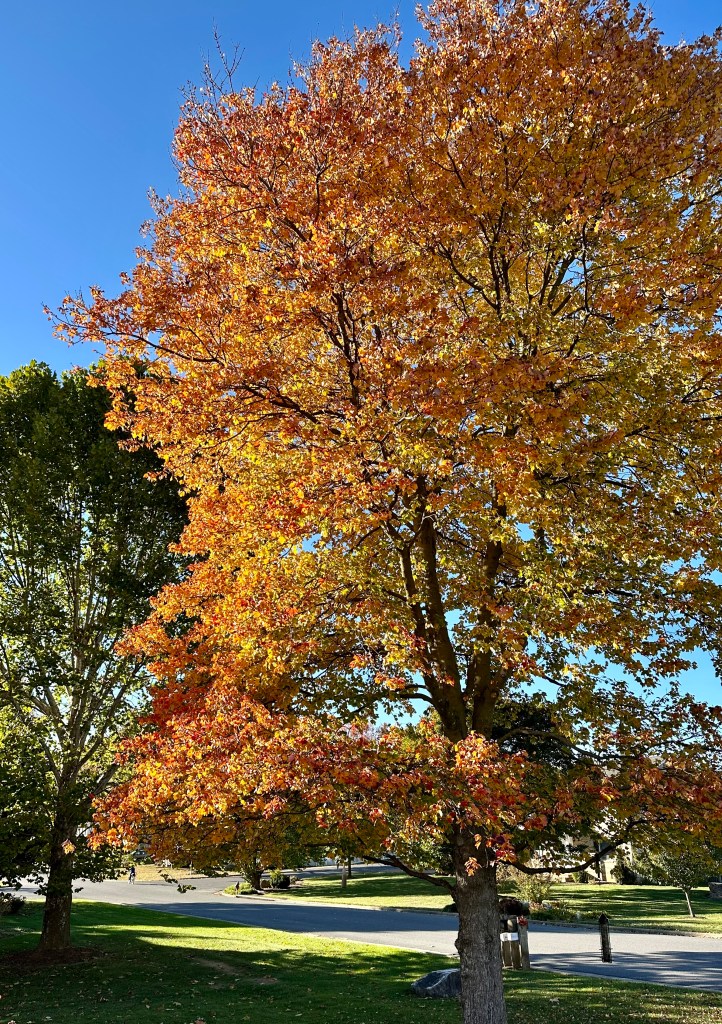
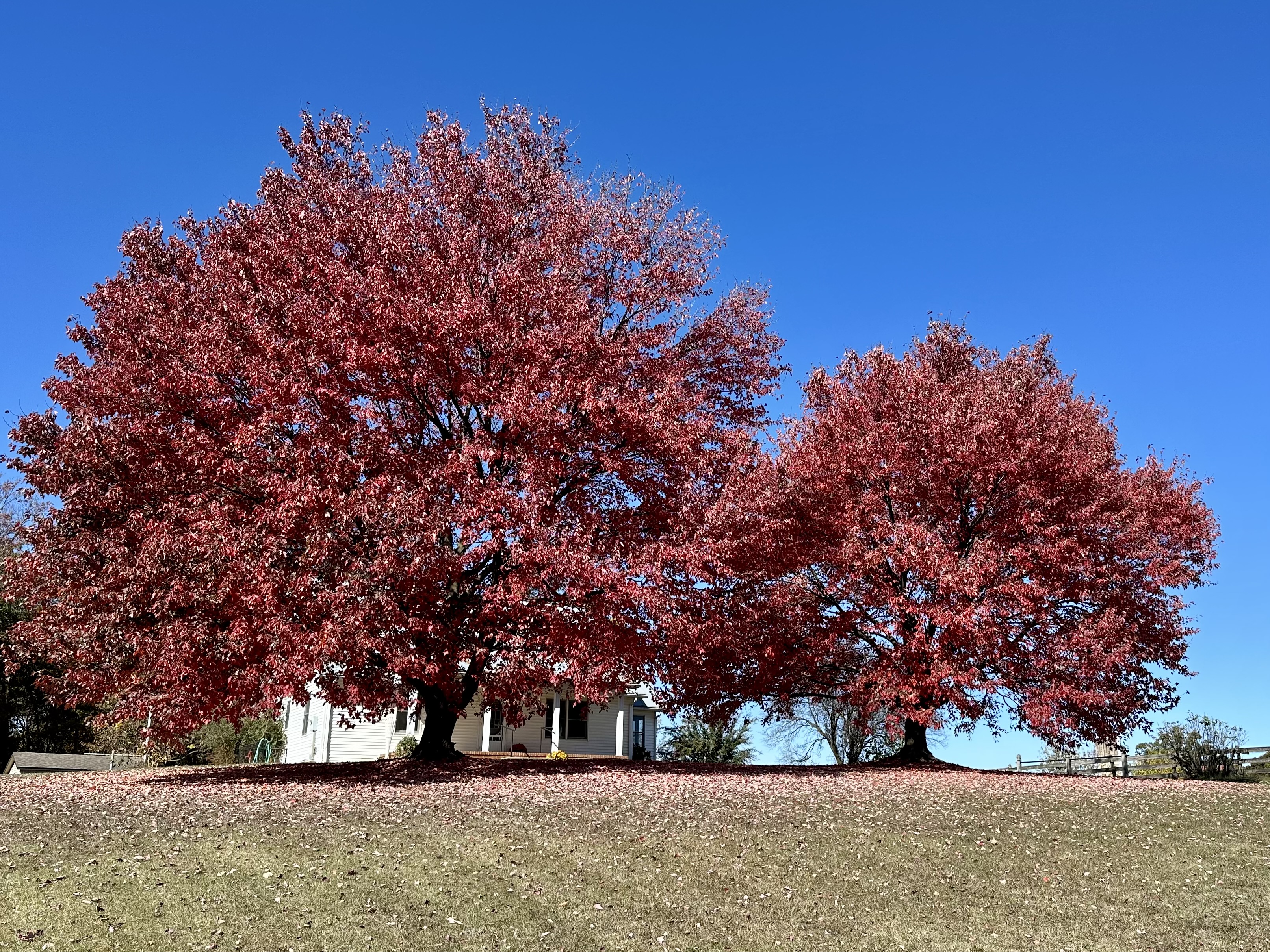
Ironically, I found many of the brightest and most colorful trees in and around the neighborhoods of Harrisonburg. The colors of the trees and shrubs of both the Allegheny and the Blue Ridge Mountains appeared more uniform and consistent in color. Perhaps the lower valley elevations had more extreme temperature differences between the days and nights.
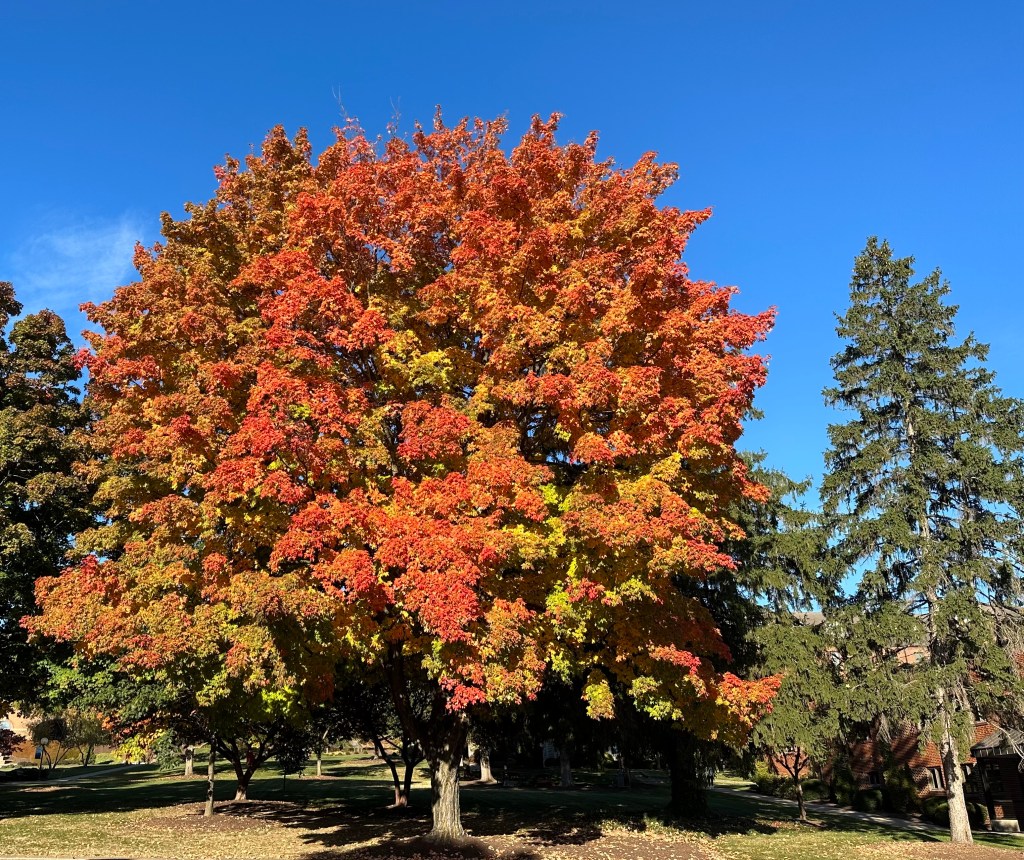
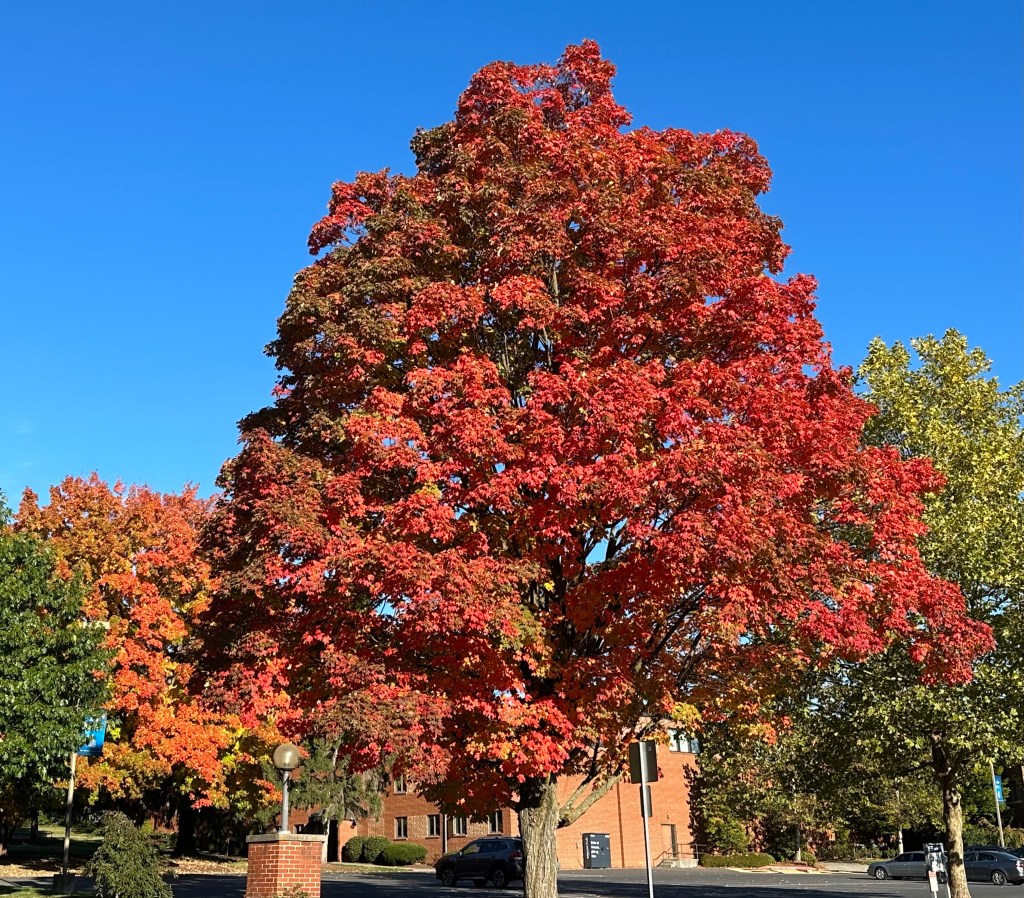
Here, then, are a few of my favorite tree photos I’ve taken between October 17 and October 24. Photos from Shenandoah National Park and Augusta County will follow in a subsequent post.
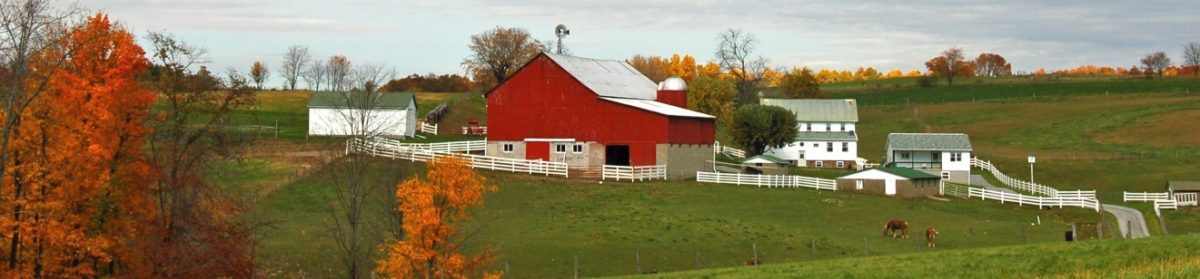
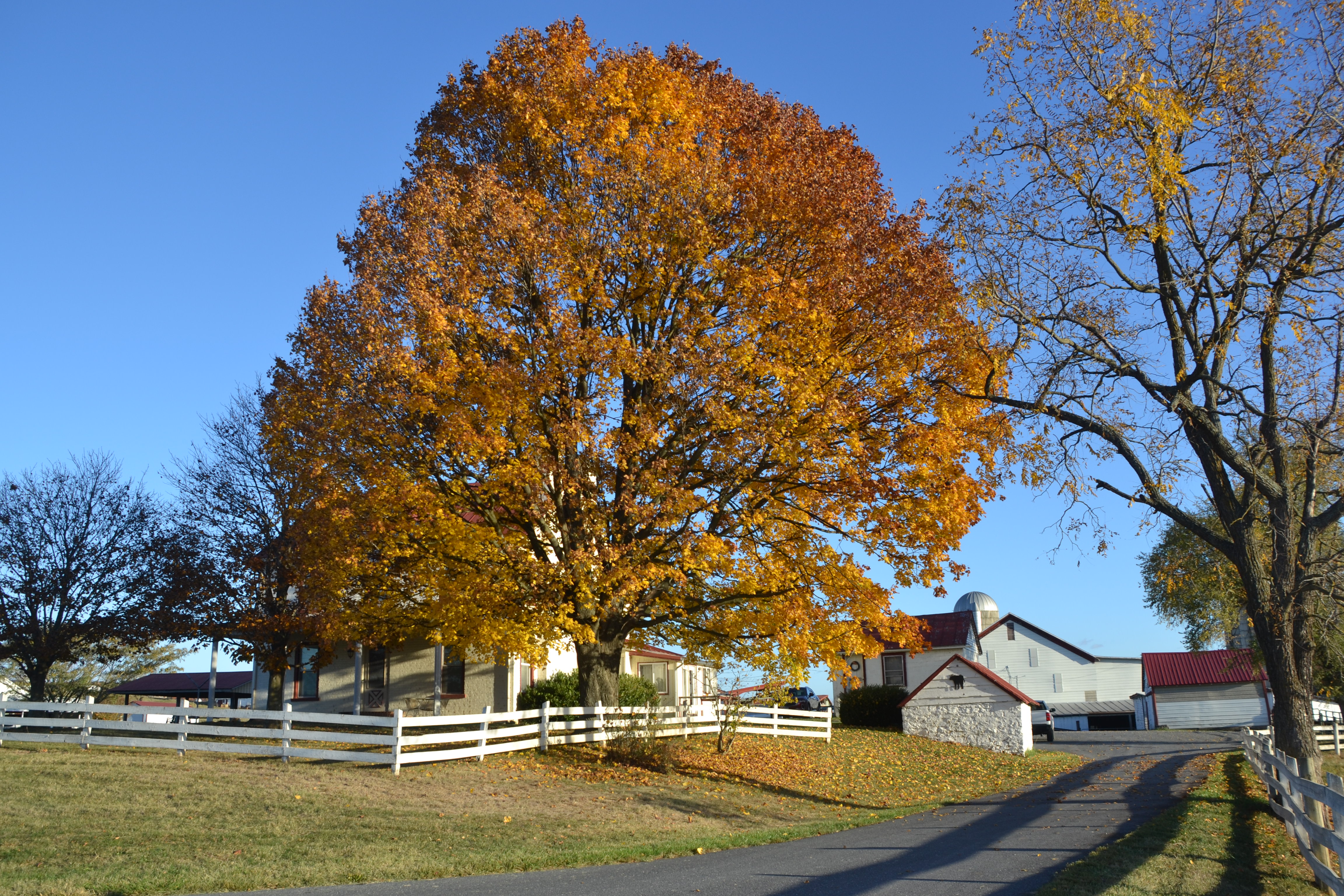
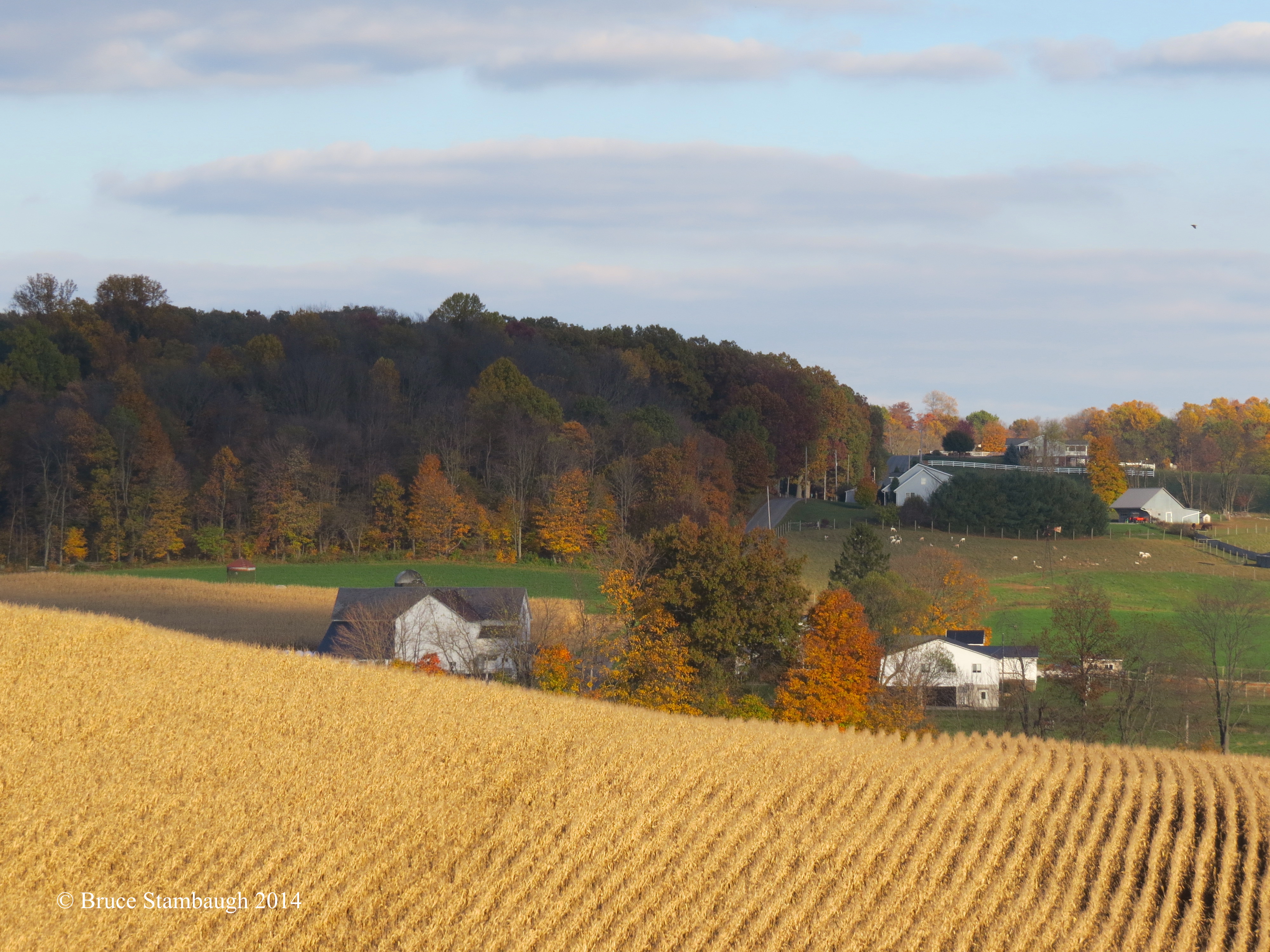
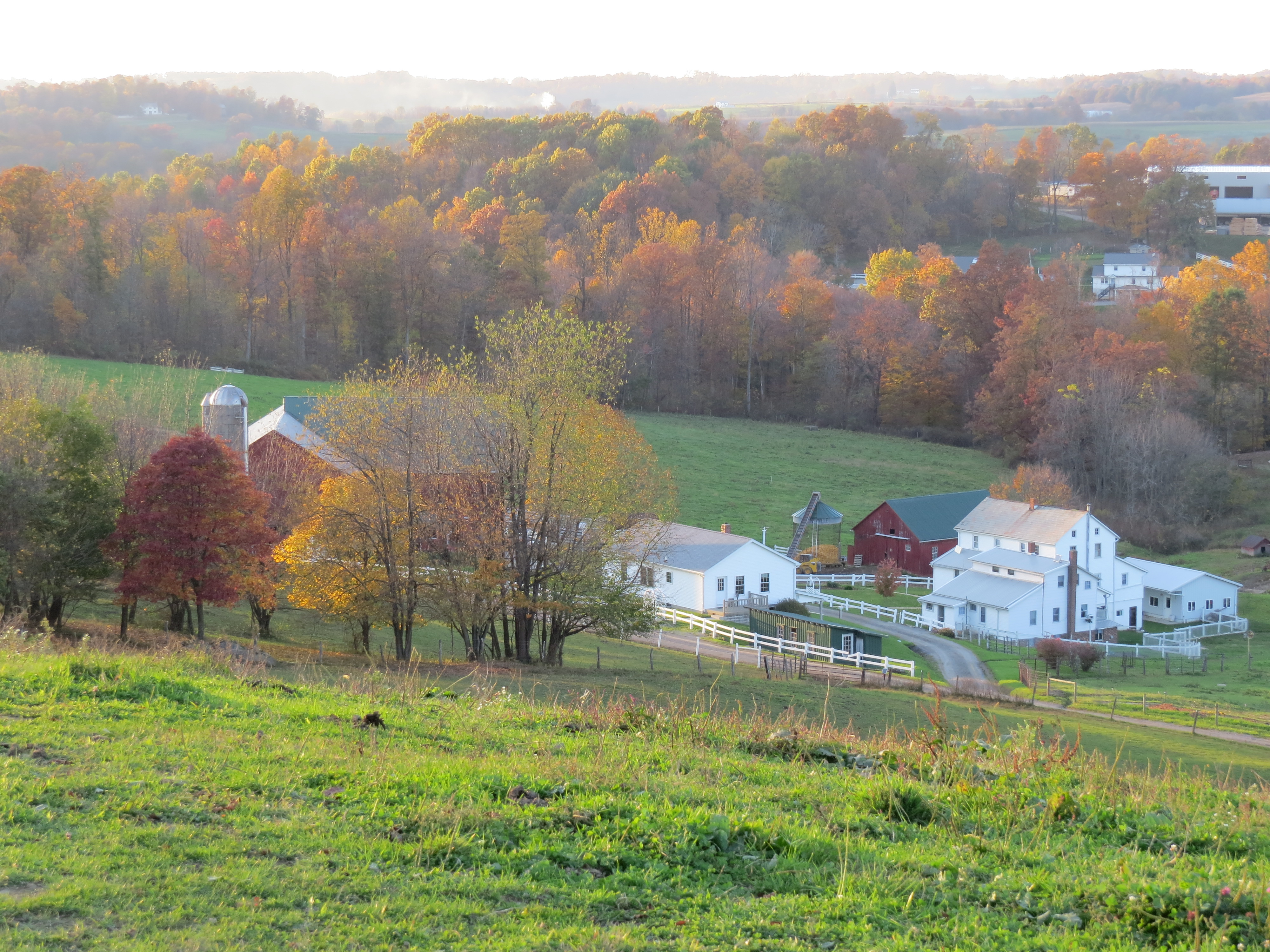
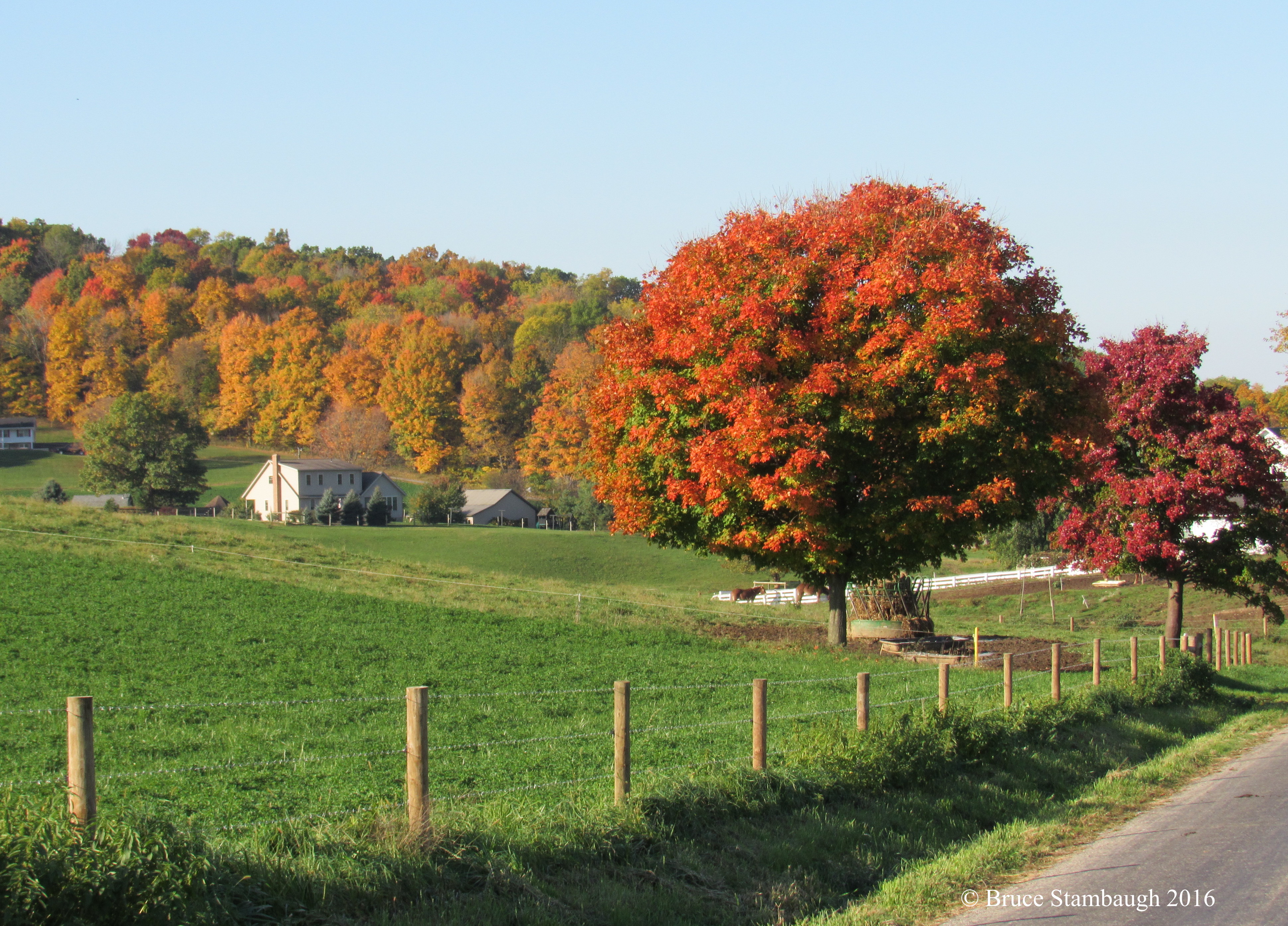
Fall comes to an Amish farmstead in Ohio’s Amish country.
By its very nature, October holds a storehouse of memories for people. It’s a month on nostalgia steroids.
Who doesn’t remember raking leaves into giant piles in the yard and then jumping into them? Guilty as charged.
I have fond memories of our father loading his brood into the family station wagon and heading southwest along the winding, hilly roads to Holmes County, Ohio. That was before the state eliminated the undulating curves between Berlin and Millersburg.
I distinctly remember stopping along the road on the east side of Millersburg at Briar Hill Golf Course to view the vibrant colors of the changing leaves. Dad especially loved a giant sugar maple’s warm oranges and reds.
Years later, when I found myself teaching in Holmes County, I ventured out after school to explore the backroads for scenic views myself. It was a two-fold way to enjoy the colorful landscape and learn my way around.
I always found the hills around Glenmont to be stunning when the leaves were exceptionally bright. I also found them difficult to scale as a volunteer firefighter when a passing train sparked a woods fire up a remote and steep pass.
I remember standing on schoolhouse hill overlooking Killbuck, where I taught. Billowing smoke from burning leaf piles filled the valley from one end of town to the other. My eyes watered from the fragrant stinging. Fortunately, outdoor burning like that is no longer permitted.
Once my wife and I moved to the county’s eastern end, I found the trees were just as beautiful as in the west. Rows upon rows of corn shocks enhanced the bucolic scenes all the more.
When my wife retired 15 years ago, we were freer to explore October’s natural wonders far beyond our limited Holmes County horizons. We discovered our beloved county wasn’t the only pretty place on earth.
Friends invited us to share a condominium with them in Arizona in early October. In locales like Sedona and the Grand Canyon, we discovered vibrant autumn colors in rocky ridges and spires instead of leafy trees. It was gorgeous, just the same.
Of course, October offers more than brilliant colors. I remember hayrides down Panther Hollow with our church youth groups on dark and chilly nights. Hot cider and fresh donuts at the outing’s conclusion sealed the spooky experience.
Not to let nostalgia carry us away, October often brought the first frost and the first snow. I recall embarking on a conservation field trip with a busload of underdressed fifth graders. By the end of our farm tour, we all were tromping through inches of snow.
October highlights come in so many flavors and textures. Various festivals abound celebrating harvest time, including cheese, wine, pumpkins, and apples. It’s all about socializing.
Produce stands and greenhouses hold customer appreciation days before they close for the season. Dodging the yellow jackets can be as challenging as bobbing for apples.
October is in the middle of fall migration for many birds species. Shorebirds and birds of prey use sunny day solar thermals to aid their southern journey. The last of the Monarch butterflies wing it to Mexico.
Halloween, though, seems to overshadow all of the beautiful interactions between humankind and our environment. Entire towns decorate for Halloween comparable to Christmas. I’m not against that, but I simply prefer the daily unfolding natural beauty.
October provides plenty of opportunities to get outside and enjoy the crisp air, golden sunsets, and changing foliage. Consequently, October stirs lots of emotions.
Perhaps the best October memories are the ones we make today.
October offers up some of the year’s best weather. It often claims ownership of the year’s first killing frost, too, and the first snow. Sometimes it’s both.
October and I have a lot in common.
Weather is one of my favorite hobbies. I have satisfied that itch as a volunteer severe weather spotter for half a century for the National Weather Service. However, October is usually one of the quieter weather months unless a tropical storm plays havoc across the eastern U.S. Evidence 2012’s Superstorm Sandy.
The western edge of Superstorm Sandy exits Holmes Co., Ohio.
October tends to be the calendar’s buffer between fairer weather and the more barren, colder months that follow. In other words, the tenth month foretells the winding down of every year. There can be no better year than the present to draw to a close. I doubt that I need to elaborate or provide the gory details.
Enough of the quixotic shenanigans. October and I have much more in common than climatological conditions.
I’ve entered the October of my life. I stay as active as I can, but it’s pitiful to watch me throw a tennis ball for our granddog to fetch. Millie is so unimpressed that she often refuses to give up the retrieved ball I’ve thrown.
Millie.
Millie knows that my toss can’t compare to that of our oldest grandchild, the 16-year-old with a pitcher’s arm. Millie gets to run far beyond one of my feeble efforts.
Before and since my knee replacement a year ago, I have maintained a regular exercise routine. I also do yoga twice a week. I try to walk a mile every day. I ride my bike around and up and down our inclined neighborhood. To look at me, you wouldn’t know that I do any of that.
I have never been a muscular guy. But I usually could hold my own in most physical activities. Not anymore.
I am not ashamed to admit it. I’ve accepted where I am in life. I also kindly relent to any assistance from passersby when I’m toting multiple bags of mulch or birdseed, or anything heavier than a gallon of milk. I’m old, and I want to get older. So I quash my male ego and accept offers to help.
A few years ago, Walter C. Wright wrote a book, “The Third Third of Life: Preparing for Your Future.” It’s a workbook to help you ready for retirement and beyond. It’s an easy, practical read. The hardest part is accepting the fact that you are in that senior citizen-stage of life. For some, it comes sooner than it does for others.
When I was young, I’d spouted off that I would live until I was 100. I have longevity on both sides of the family to back that up. But I also have ancestors who never reached retirement age.
Like leaves on deciduous trees, I want to keep on hanging on as long as I can. However, the leaves, of course, eventually color, fade, and fall.
I also understand that that is where October and I differ. After the foliage tumbles, buds protrude for next year’s crop to unfurl, and once again nurture the growing tree with a thriving canopy.
Humans don’t have that option. We get one shot at life unless you believe in reincarnation. For the record, I don’t. But if I did, I would return either as a chiropractor or a meteorologist.
October is a fine month of the year. I have fond memories of her from childhood to the present. Here’s to many more nostalgic Octobers for everyone.
It’s another quiet morning in Virginia’s Shenandoah Valley. The warming sun has climbed high above Massanutten Mountain to begin evaporating the valley fog and mist wisp by wisp.
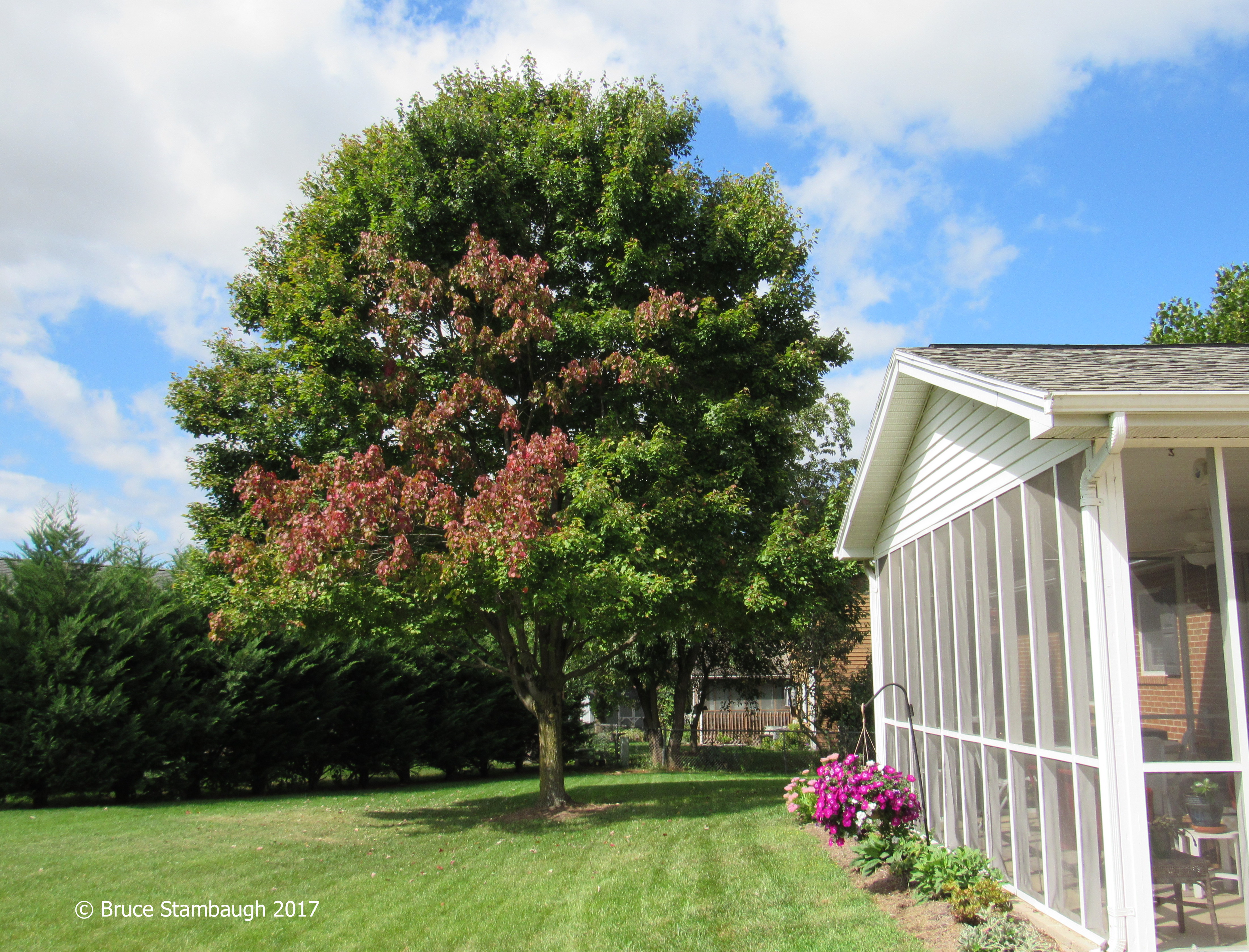
The leaves of the red maples in our yard have started their annual process of revealing their true colors and the reason for their designated nomenclature. Even before they fully blush, a few tumble one by one onto the still luscious grass beneath.
Green to red.The school buses have already made their morning rounds. It’s quiet now, with only the sound of blue jays squawking in the distance. My wife is her busy self, the washing machine already spinning its first load. Still, I can hear the soft sound of the dry mop gliding over the oak floor. Neva is in her realm.
Orange and brown wreaths have replaced the sunny summer ones on neighbors’ front doors. Pumpkins and pots of yellow and scarlet mums beckon visitors from their sidewalk setting.
The signs of autumn’s arrival have been overlapping with those of summer’s waning for weeks now. The outer rows of massive cornfields have long been cut and chopped into harvest bins. The rest will soon follow until the silos are full. The Old Order Mennonites drive horse and buggies to church. They wheel huge tractors down narrow country roads into their sprawling farm fields with no thought of contradiction.
Old Order Mennonite farm.
It was a pleasant summer, our first as residents of the Commonwealth of Virginia. Folks kept saying that this wasn’t a normal one for Virginia. With intense hurricanes brewing and massive wildfires sweeping the west, is there such a thing as normal weather anymore?
The chimney swifts that called our neighbor’s flue home for the summer disappeared days ago. Ohio friends have reported flocks of common nighthawks winging south. Shorebirds, some rather rare, made pit stops in the Funk Wildlife Area, Killbuck Marsh, and Beach City backwaters to the delight of novice and hardcore birders alike. Those, too, are sure signs of fall’s arrival.
Starlings, northern cardinals, and cedar waxwings have already obliterated the bright red dogwood berries even before the trees’ curling leaves have completely transitioned from green to crimson. The Carolina wrens provided the soundtrack to the feeding frenzies.
Down the road.Just as we did the summer, we anticipate with wonder whatever our first Virginia fall delivers. Neva will continue to play chief cook and bottle washer for our daughter’s household until the volleyball season subsides in early November. Just like all the other seasons, I’ll continue to do whatever I’m asked or told to do. Usually, it’s the latter.
Seasons come and seasons go. Life marches on. We embrace each moment of each day with joy no matter the silliness, pettiness, and egotistical disposition of those in more powerful positions than the rest of us.
That, my friends, is the way it is. We must keep on keeping on no matter the season, the situation, and the circumstances in which we find ourselves.
Rake leaves with a smile on your face. Stop and talk with your neighbors who are likely doing the same chore. Share your abundant tomato harvest or a freshly baked apple pie with others. The results will be delicious.
Enjoy the pleasant fall weather, the changing of the leaves, the foggy mornings, the brilliant sunrises, the stunning sunsets, and each moment in between. In the process, autumn will fall most graciously upon you and yours.
With our numerous stands of mixed hardwoods, I always look forward to fall’s colorful leaf display. In our busied lives, however, the transition from green to gold seems to take forever. But in a flash or a persistent wind, the trees all stand leafless.
That realization confronted me as the autumn leaves reached their vibrant peak when I received word of Ivan’s death in the middle of the afternoon. Ivan was a valued member of the cancer support group to which I belong. I had visited with him in the hospital only a week earlier knowing that his time was near.
Still, when I heard the sad news, tears of sorrow flowed for Ivan and his family. Our intimate group had welcomed him in, and he contributed far more than his usually quiet demeanor would have suggested. Later that same evening, joy overcame my sadness as my favorite team, the Cleveland Indians, claimed Major League Baseball’s American League pennant. It was a bittersweet moment, one that Ivan would have relished with me.
Right after the final out, I called my friend Tim, also an avid Indians fan. He was as giddy as I was. When I invited him to the first game of the World Series, I think he fell over.
I was fortunate to have secured tickets for the opening World Series game long before the Cleveland club even began the postseason. I hoped beyond hope that they would make it, and they had. I wanted Tim to share in the joy of seeing a World Series game in Cleveland with me.
The leaves were still coloring up when I left Virginia’s majestic Shenandoah Valley the next day to return home for Ivan’s viewing. Paying my respects to the family became a personal priority.
This slideshow requires JavaScript.
I had traveled the same roads from Ohio to Virginia just after visiting Ivan the previous week. The leaves in the mountains of western Maryland and northern West Virginia were near their peak. Those in both Ohio and Virginia were turning, but still had a ways to go.
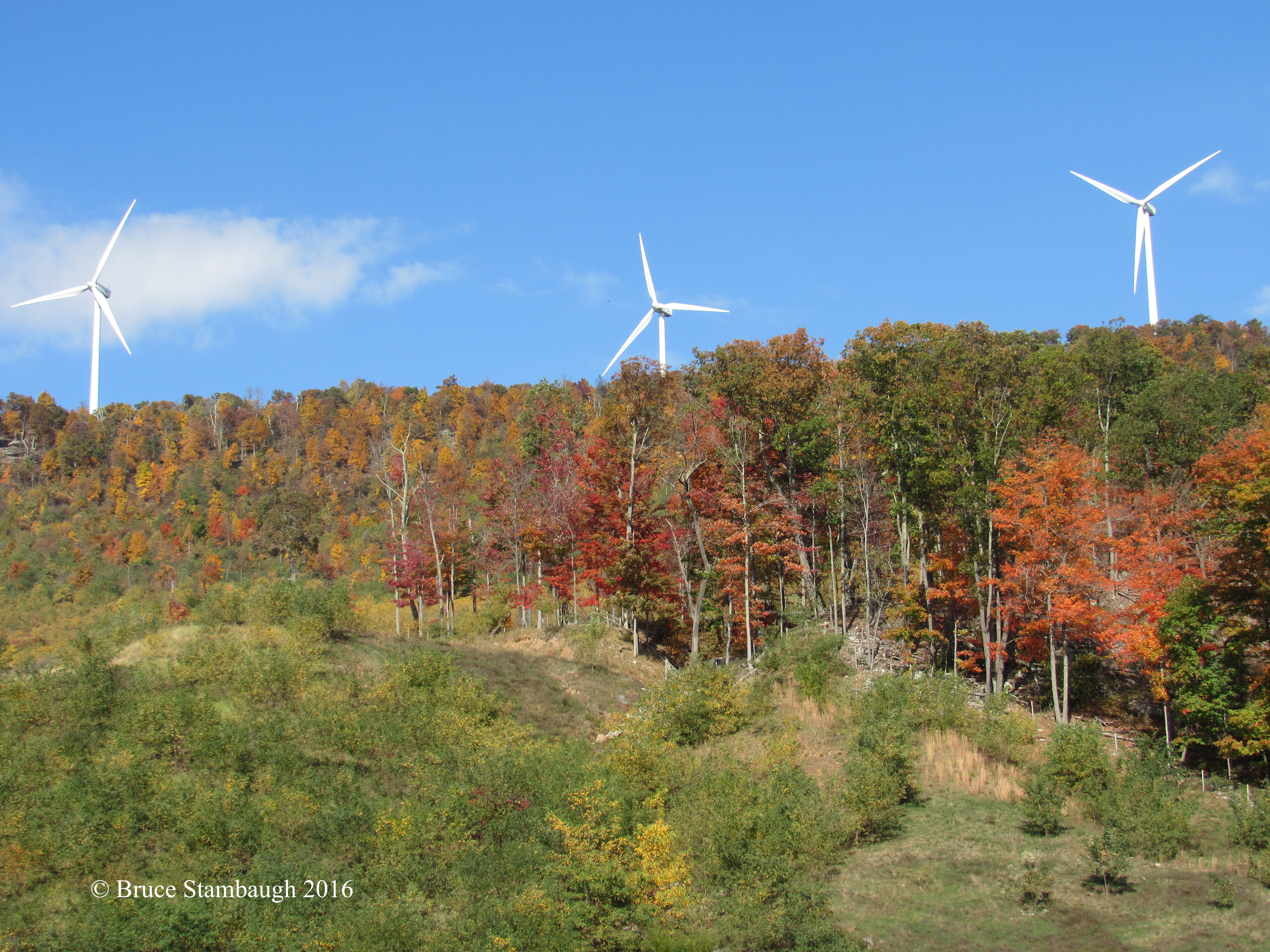
I was amazed at what a difference those few days had made. Patches of red, gold, and burgundy dotted the forested mountain slopes. On the ridges above, giant white windmills twirled in the autumn breezes.
Beauty and the beasts.I thought about Don Quixote jousting with those Dutch windmills. I was satisfied to simply photograph this real live contrast of beauty and the beast and continued on my way.
When I got to Maryland’s mountains highest altitude where I thought the colors would be the brightest, I was disappointed. Many of the leaves had already dropped. Some trees were completely bare.
When I stopped for lunch, I commented to the waiter about my disappointment in missing the peak coloration. I was three days too late, he said.
That happens in life. Our timing just isn’t what it might have been.
It was dark and pelting rain when I arrived at home. But just the illumination from my car’s headlights told me the sturdy sugar maple in my backyard was glowing showy orange.
The combination of rain and wind brought down lots of leaves. But plenty remained for all to enjoy.
Baseball. World Series. Friends. Fall’s coloring contest. I know these precious moments will all wither away like the last leaves of autumn, which passes by us in a vapor.
Life can be like that, too, a hard but applicable metaphorical reality.
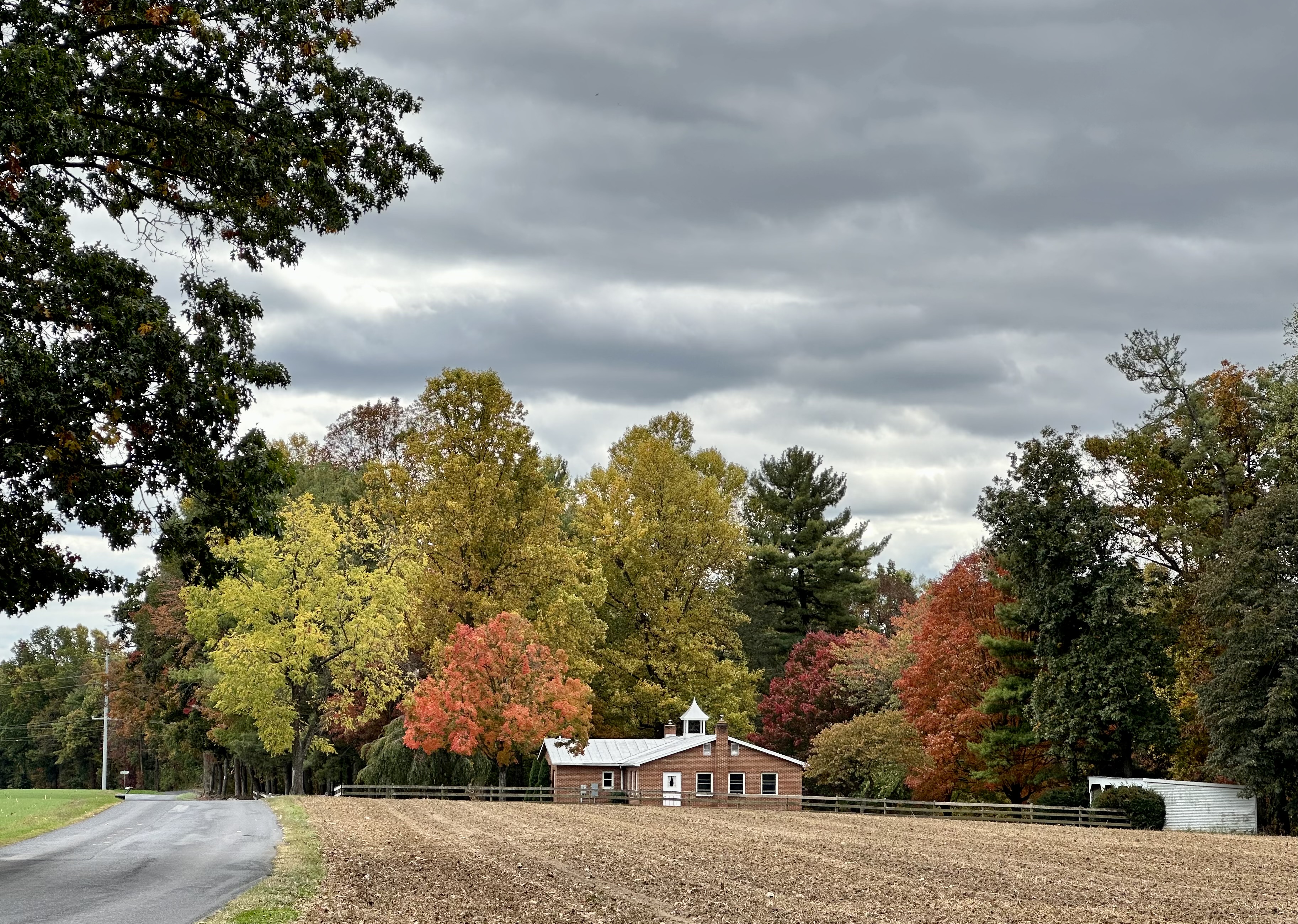
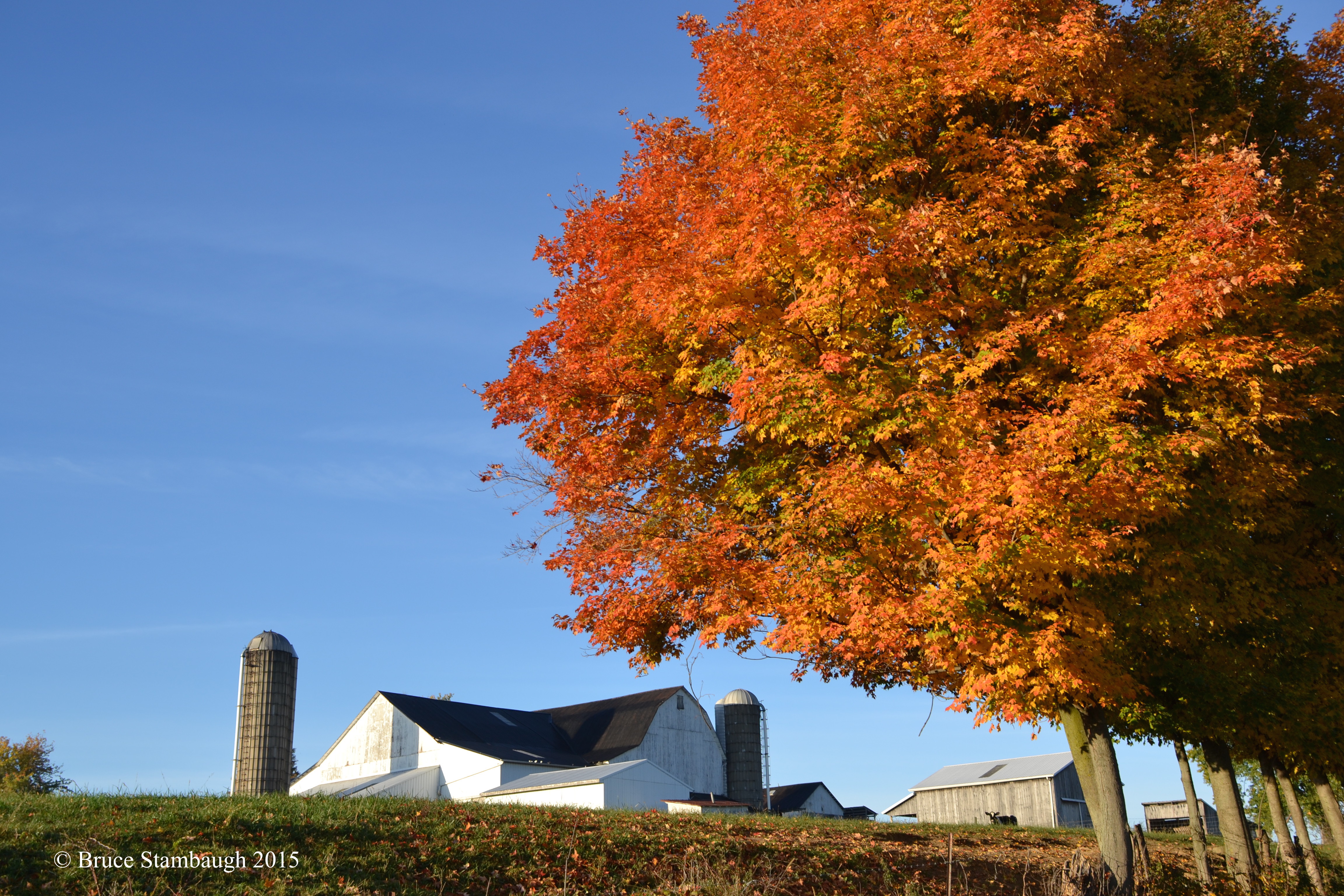
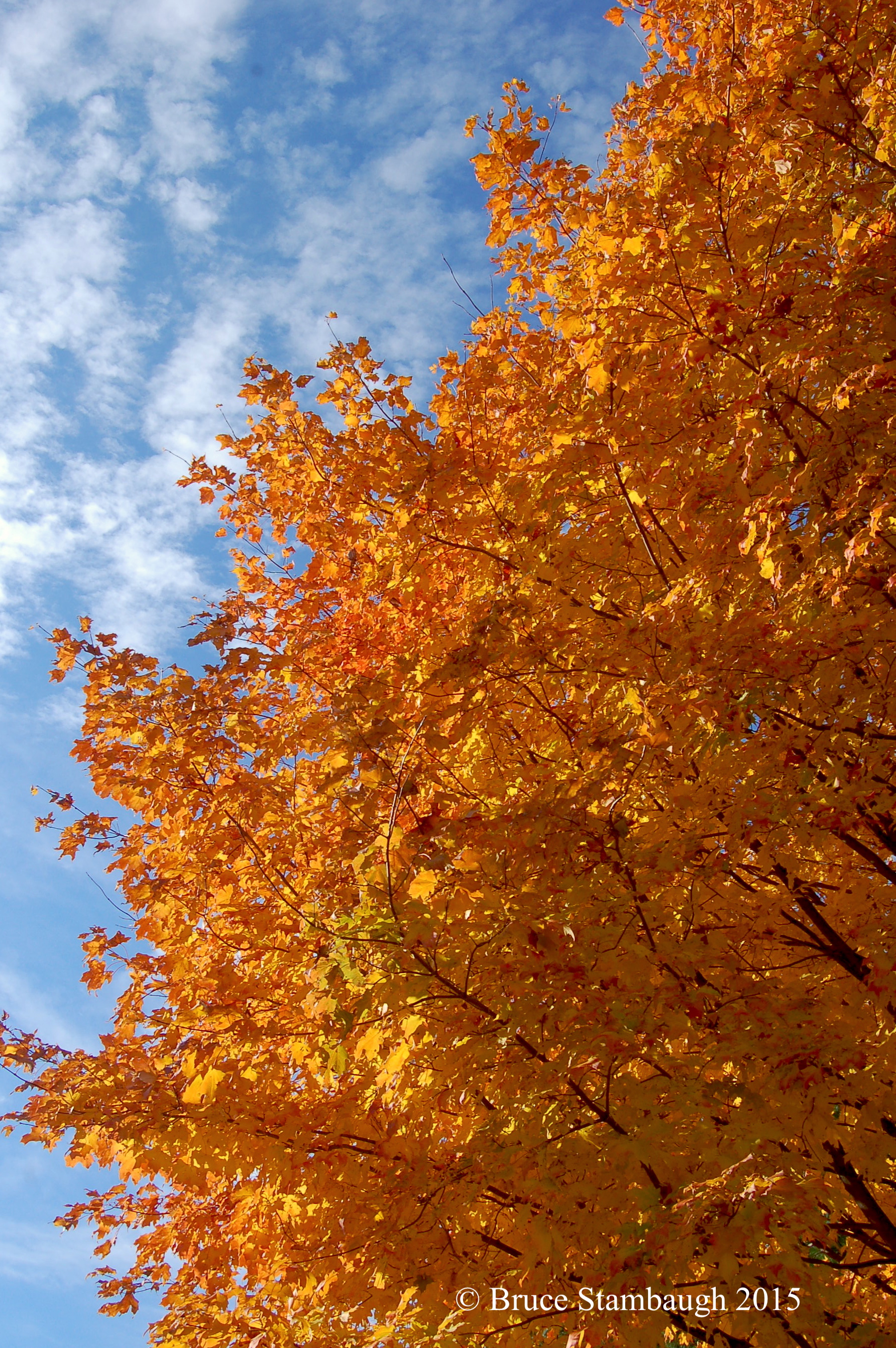
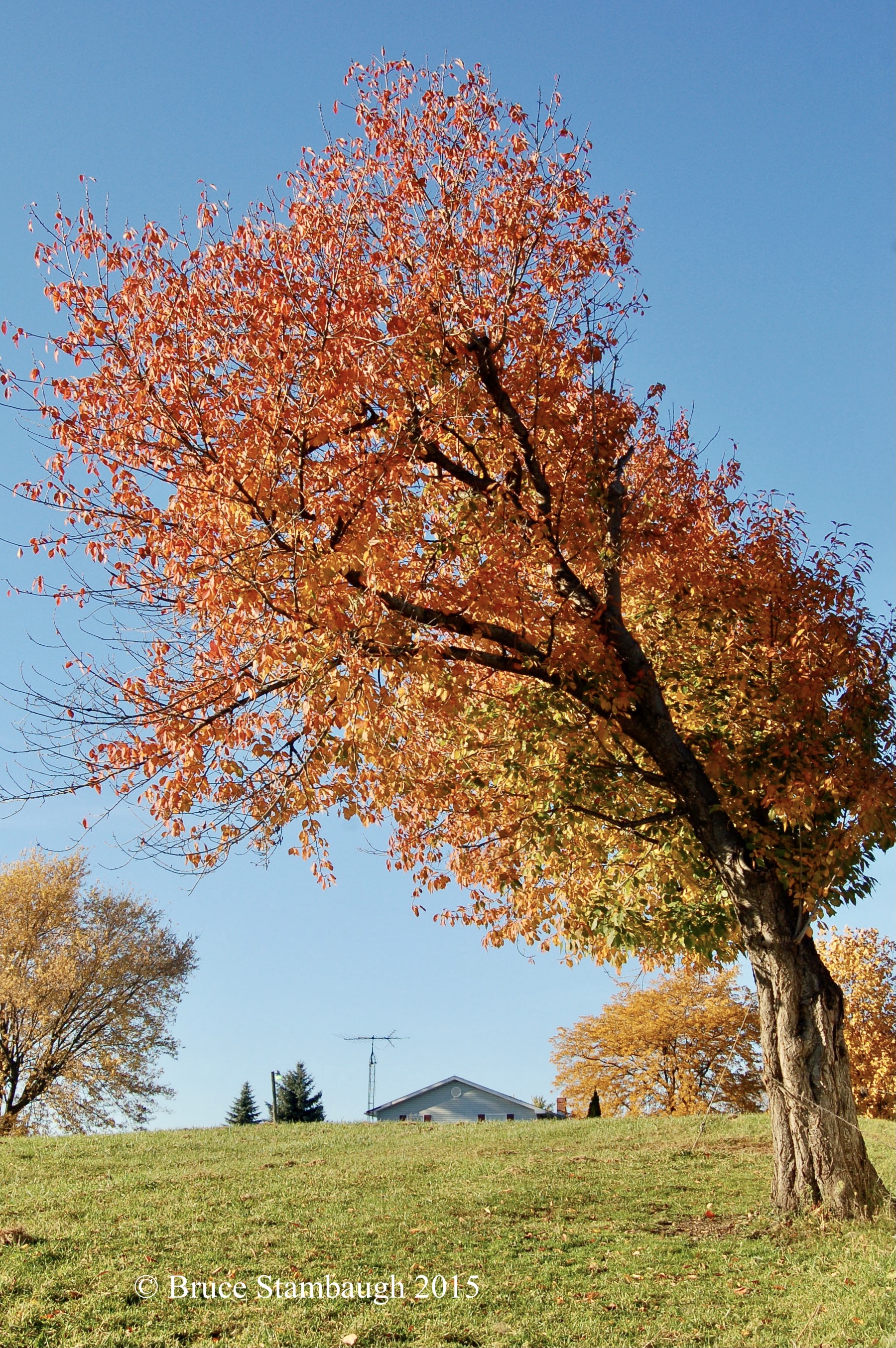
This photo is proof that the leaves are indeed turning into their natural colors once again in Ohio’s Amish country. As I drove around the area yesterday afternoon, I was surprised to see such a wide range in coloration of the leaves. This photo shows it well. Some trees are already near their peak. Others are beginning a tinge of color while many are still mostly green.
When I learned that Holmes County, Ohio ranked third in the world on National Geographic’s list of best places to view fall leaves, I smiled broader than a white oak leaf. I was overjoyed for the national notoriety of our picturesque county.
I’m not sure what criteria they used to rank the global locales to gain such stature. I’d like to think that there was more to it than seasonally colorful leafage.
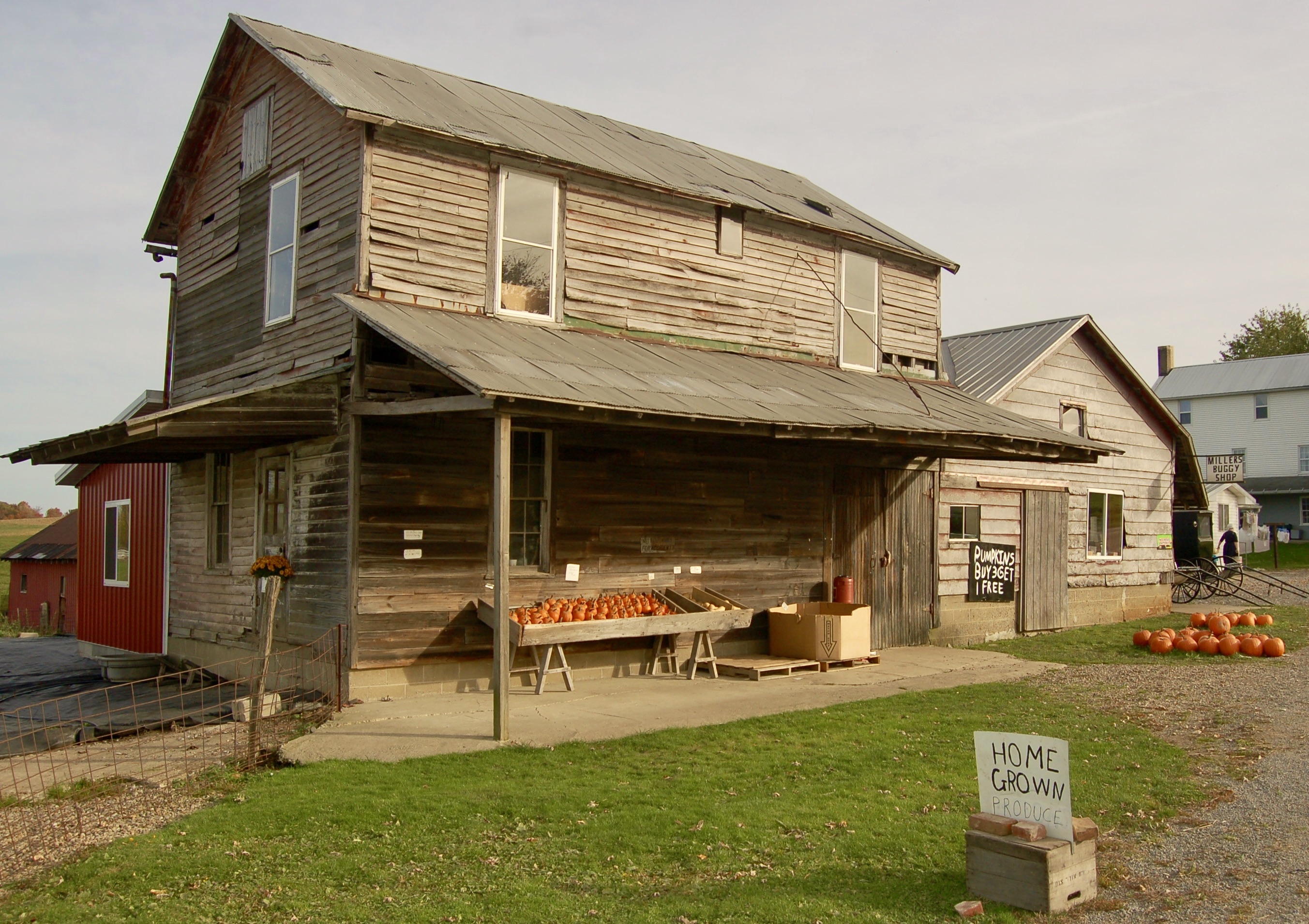
I hoped our fertile fields and comely homesteads, our quaintness and inherent hospitality helped. It’s hard to resist chestnut horses and black buggies driven by friendly, plainly dressed passengers passing sun-drenched woodlots flashing all of autumn’s bright, warm colors.
The area’s fall beauty is ubiquitous. From Glenmont to Winesburg, from Walnut Creek to Lakeville, from Limpytown to Lake Buckhorn, the autumn vistas are amazing.
Then my grateful grin narrowed to a willow leaf’s width. I winced just thinking about our already clogged roads during the fall.
I was glad our bucolic area had received such a high recommendation from such a reputable source. But I found the potential consequences of that distinction a bit intimidating. How in the world would our infrastructure handle the onslaught of additional leaf lookers that were sure to appear?
Though pretty year-round, there’s no arguing that fall is prime time when it comes to the natural beauty here. A bonus is that the scenery is always changing given our varying topography and variable weather. It can be sunny in the highlands, and socked in with soupy fog in the lowlands.
This slideshow requires JavaScript.
In minutes that scenario most likely will change with the wind or the warming of the atmosphere or both. One minute you can barely see your hand in front of your face, and the next the sun is illuminating superb settings.
There’s beauty around every turn no matter where you are exploring, and in Holmes County curves and hills abound. You can circumnavigate the area every day and watch the scenes transform.
Having lived here all of my adult life, I’m likely prejudiced about the splendor of the local landscapes. Given this recognition, forget about the four corners of the world. The four corners of Holmes County are all you need to satisfy your desire for leafy vistas.
There are just too many good spots to view leaves to even think about making a personal list to share. Instead, just grab a map, drive in any direction and look. You’ll see what I mean. You can’t get lost either. All roads lead to somewhere.
A word of caution is in order, however. Our narrow, curvy roads are heavily traveled, with few places to safely pull off for photos. You may have to just take it all in as you go, and only stop where it is safe to do so.
There is an exception to that rule, however. The Holmes County Trail runs diagonally through the heart of the county for 15 miles from Killbuck to Fredericksburg. The photogenic panoramas and outdoor exercise will equally invigorate you.
The trail is for bicyclists, pedestrians, joggers, and horse and buggies only. No motorized vehicles are permitted, which makes for a safer, quieter trek to observe fall’s colors. The trail can be accessed in several locations, too, with vehicle parking provided.
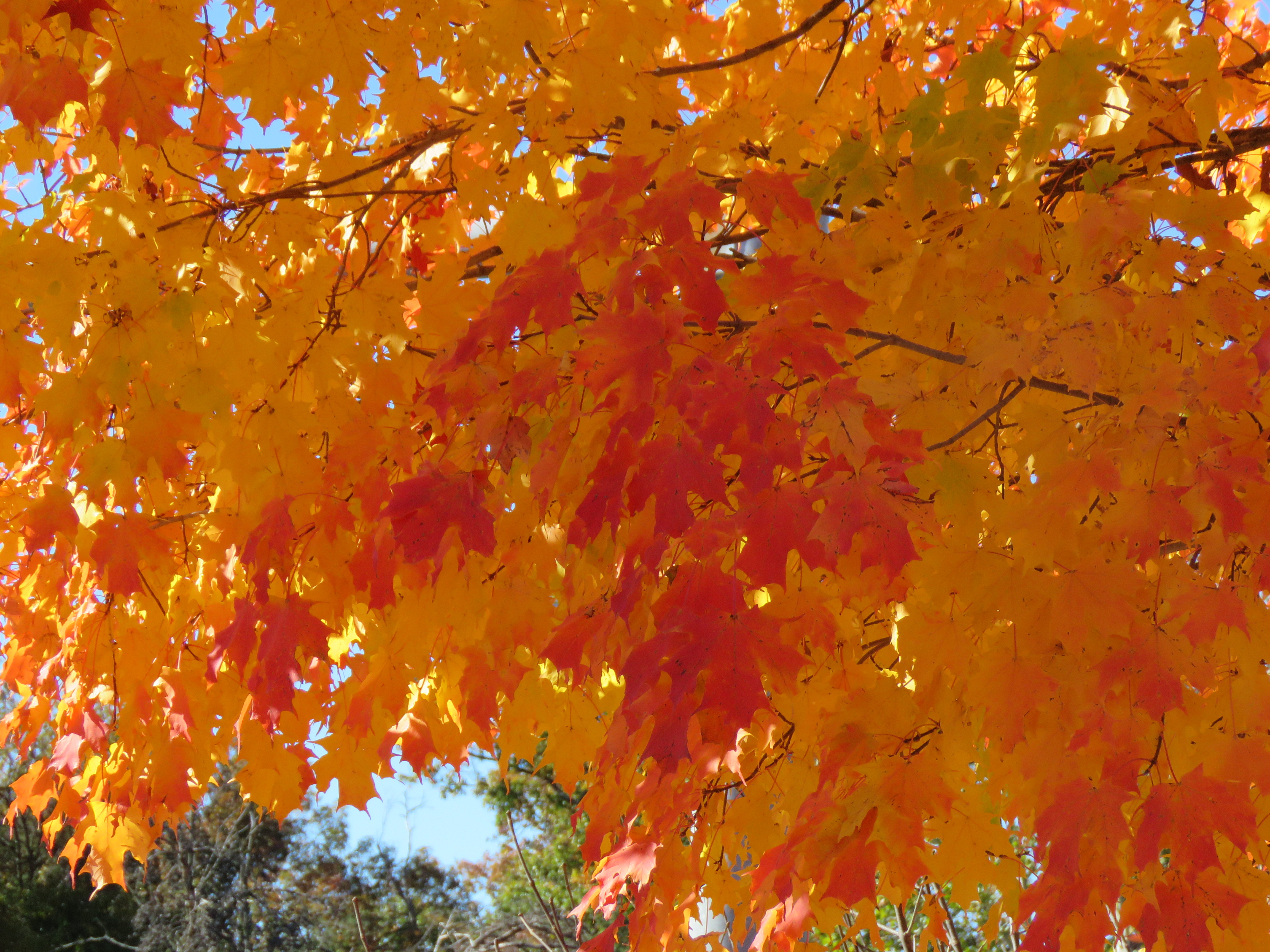
I don’t recall what the first two locations were on National Geographic’s list. I just know that in the fall Holmes County is a giant, multihued maple leaf for all to admire.








































You must be logged in to post a comment.