Hawaii Day 3

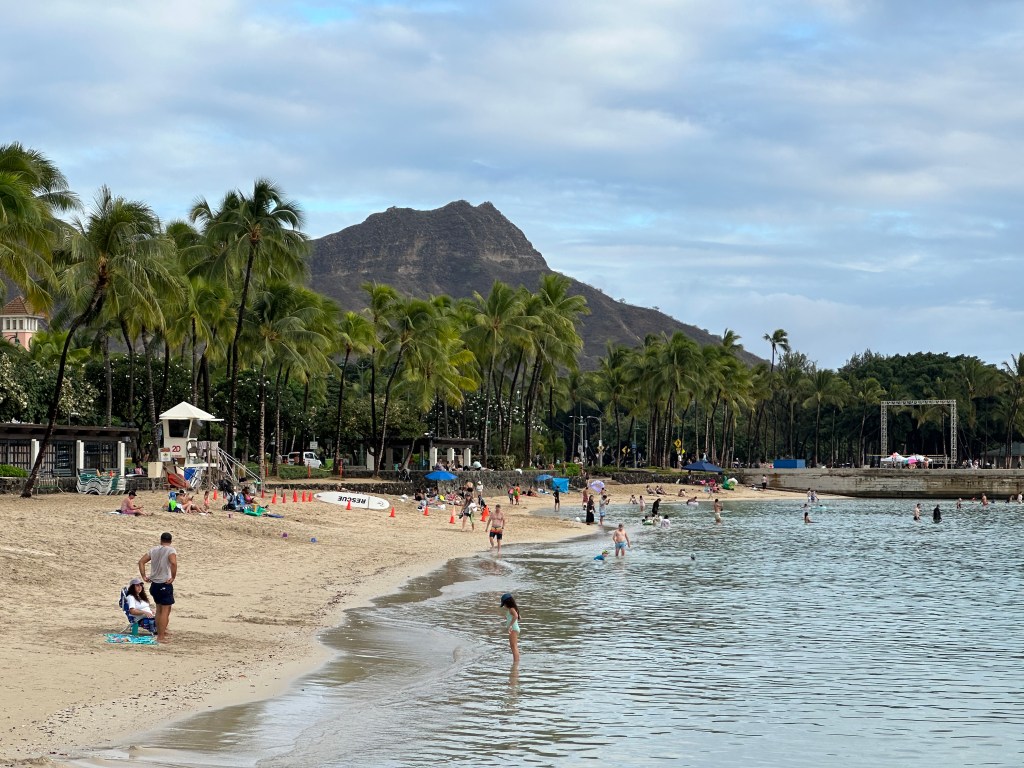
Diamondhead at sunset from Waikiki Beach. Photo by Bruce Stambaugh

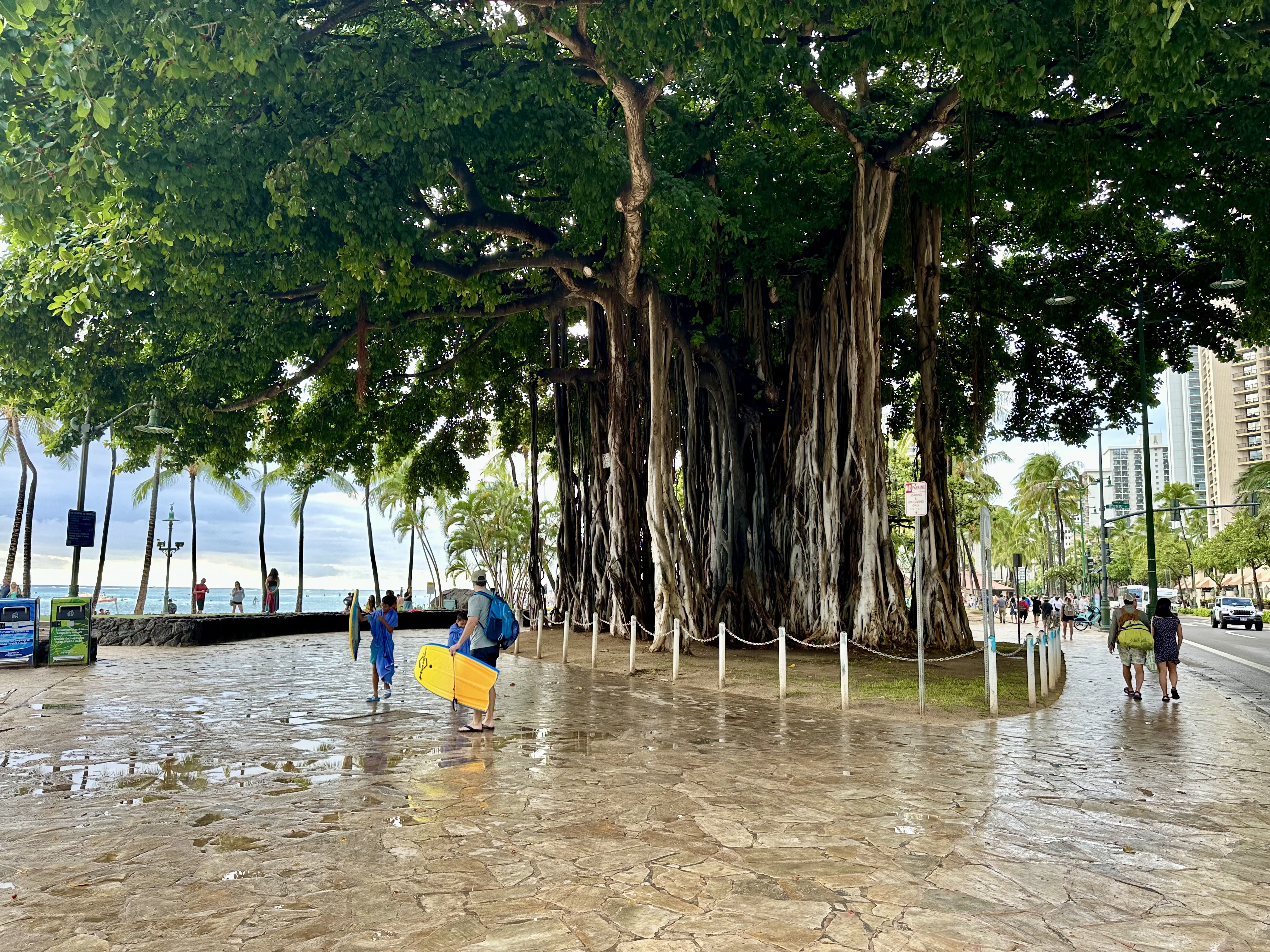
On our last day on Oahu, we signed up for a circle tour of the island. However, thanks to our skilled and knowledgeable bus driver, it was more of an immersion into the Hawaiian culture. We dove in.

A native of Oahu, Lani knew all the places to stop, including a few that weren’t on our official itinerary. She made a lovely tour luscious.

Before we ever boarded the bus, a bright rainbow arched across the early morning sky. It wouldn’t be the last we would see.

Another rainbow to start the day.

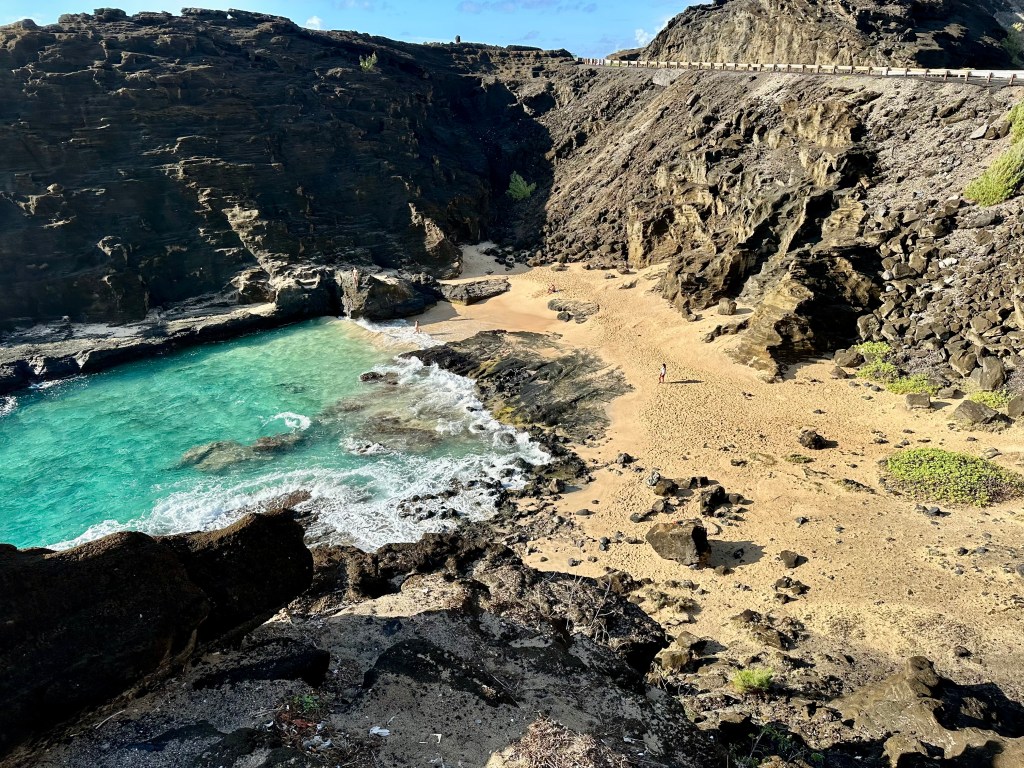
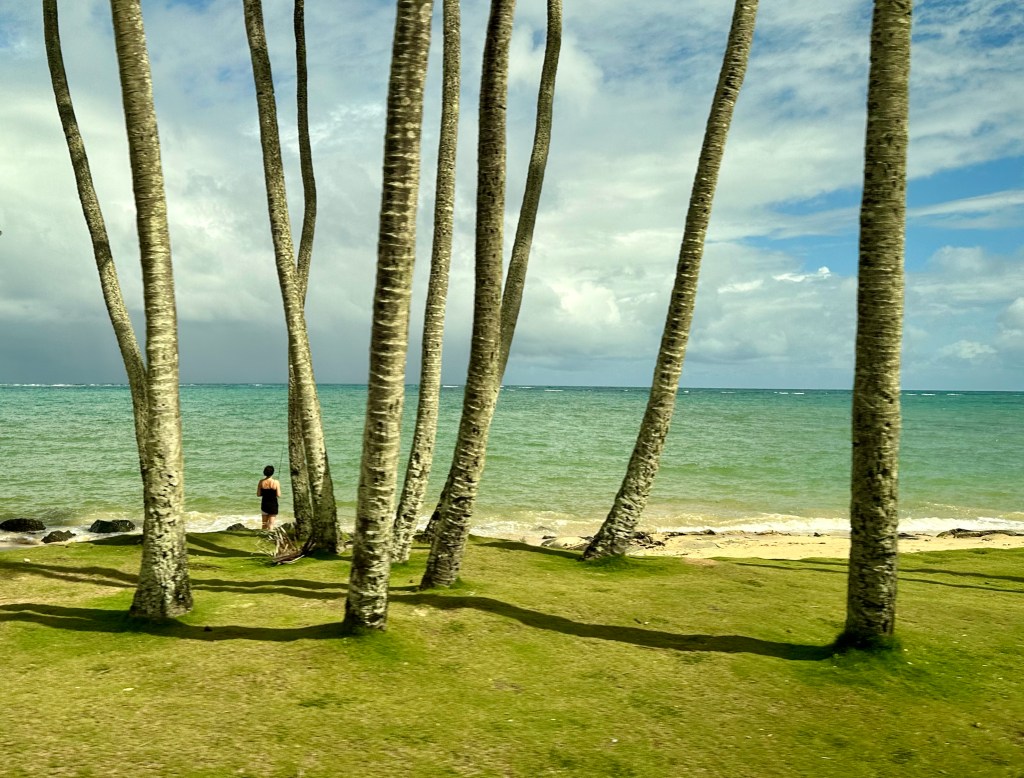
Our first stop was an overlook along the main highway, which offered spectacular views of the Pacific Ocean and a stretch of ancient lava coastline. Unfortunately, the waves weren’t big enough to give us a frothy show at the Halona Blowhole.

Please click on the photos to enlarge them.

However, in a small cove below, a few swimmers braved the steep and rocky descent to a secluded beach, where wave after wave lapped at the small sandy shore. I could have spent hours soaking in the view, the balmy breezes, and the warm sunshine, but Lani had other places to tantalize us.

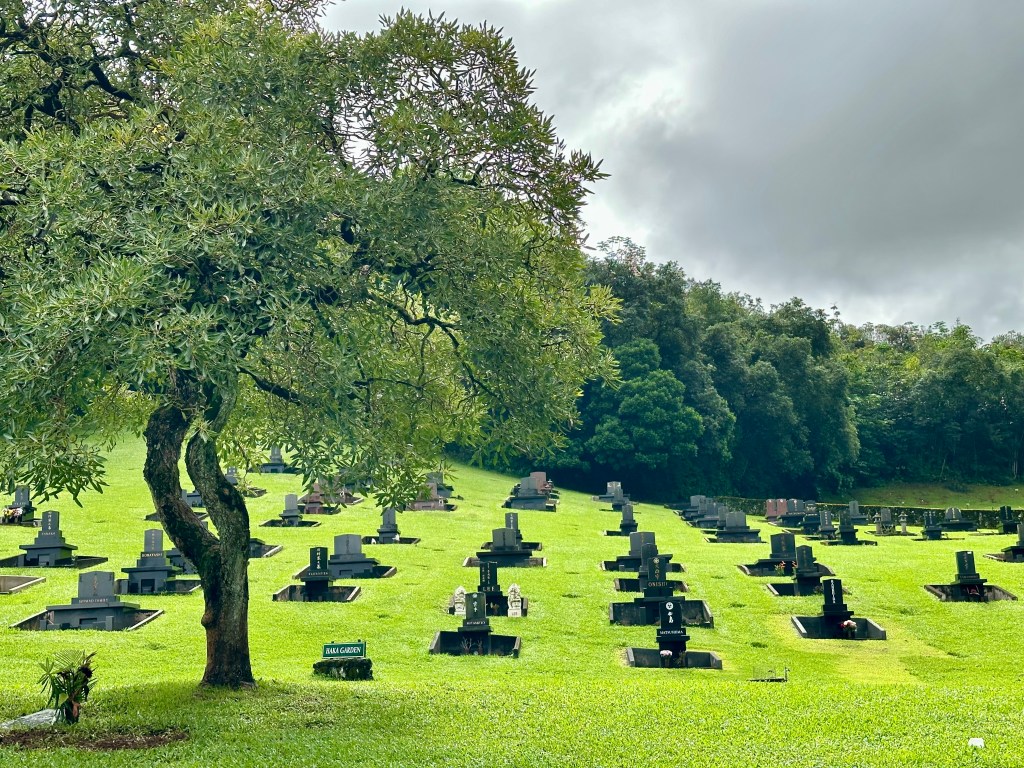
We drove inland and entered the Valley of the Temples Memorial Gardens. Set against curtains of solid lava adorned with lush greenery, a bank of lacy clouds hovered over the temple grounds.

Located at the base of the Ko’olua Mountains, the non-denominational Buddhist temple was surrounded by abundant vegetation, large and small. A sprawling, immaculate cemetery covered the rolling terrain between the highway and the temple.
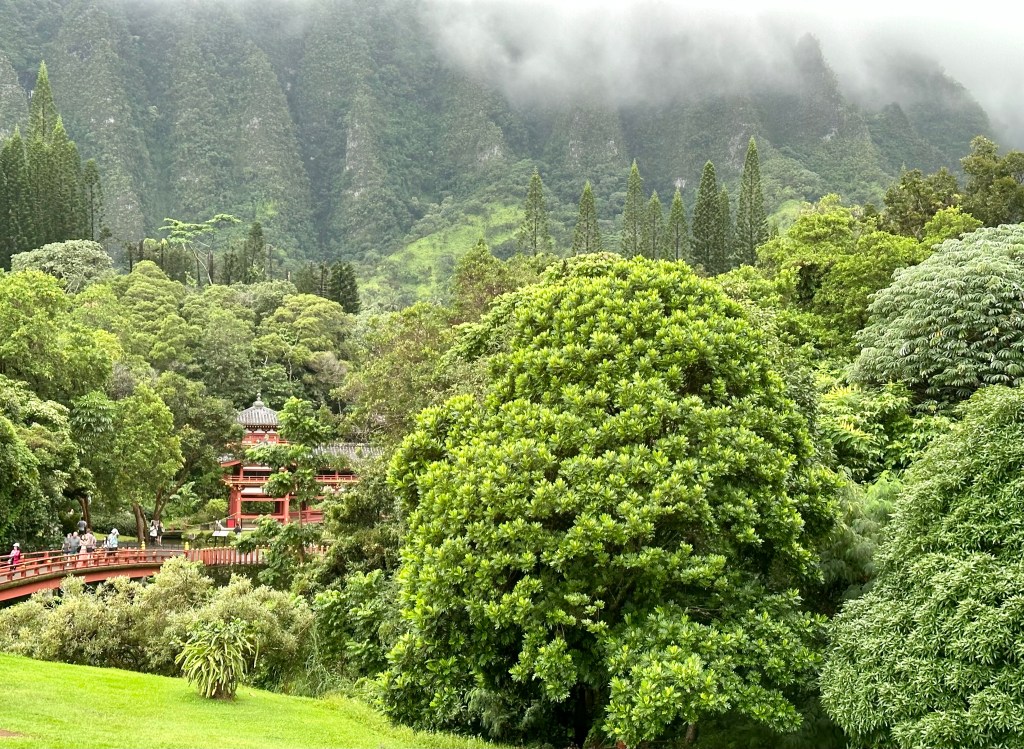
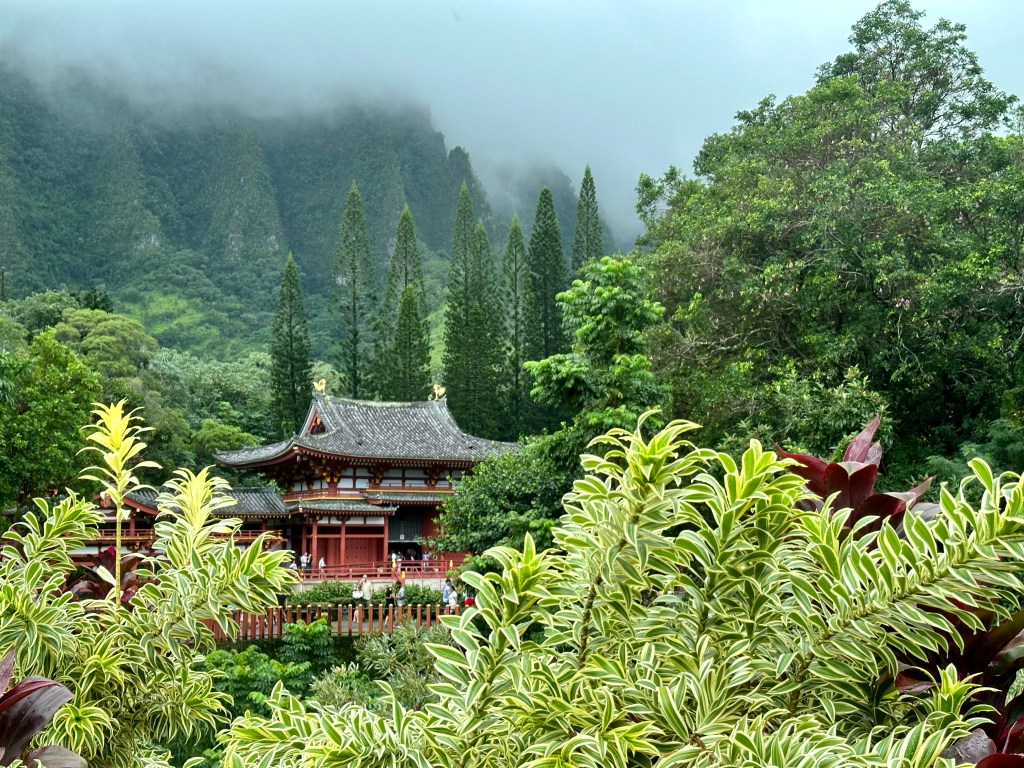
Recent heavy rains had muddied the Swan Temple Lake. Still, the setting drew me in, daring me not to take a photo. I happily succumbed. We also rang the giant gong for good luck. I’d say it worked.

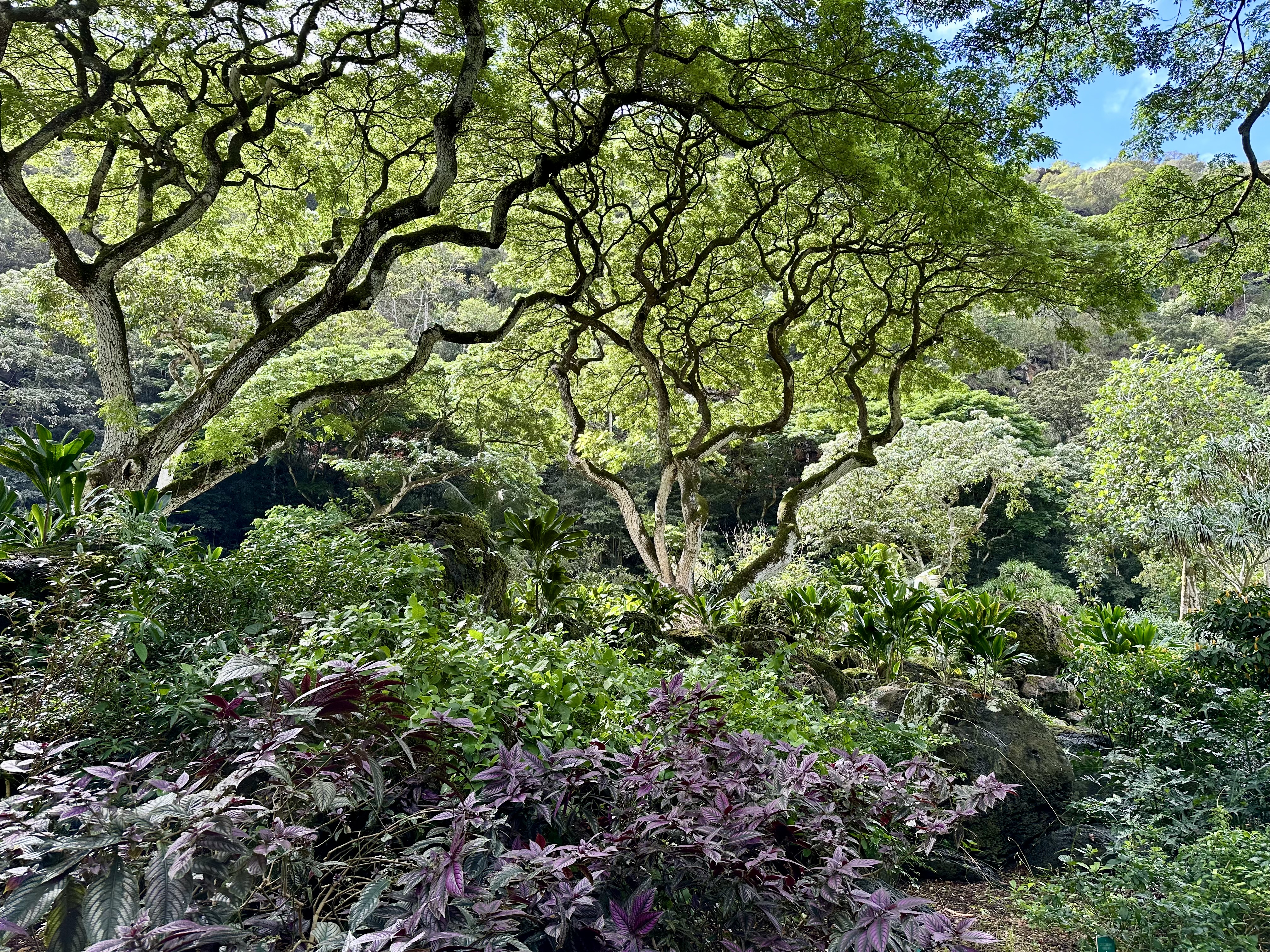
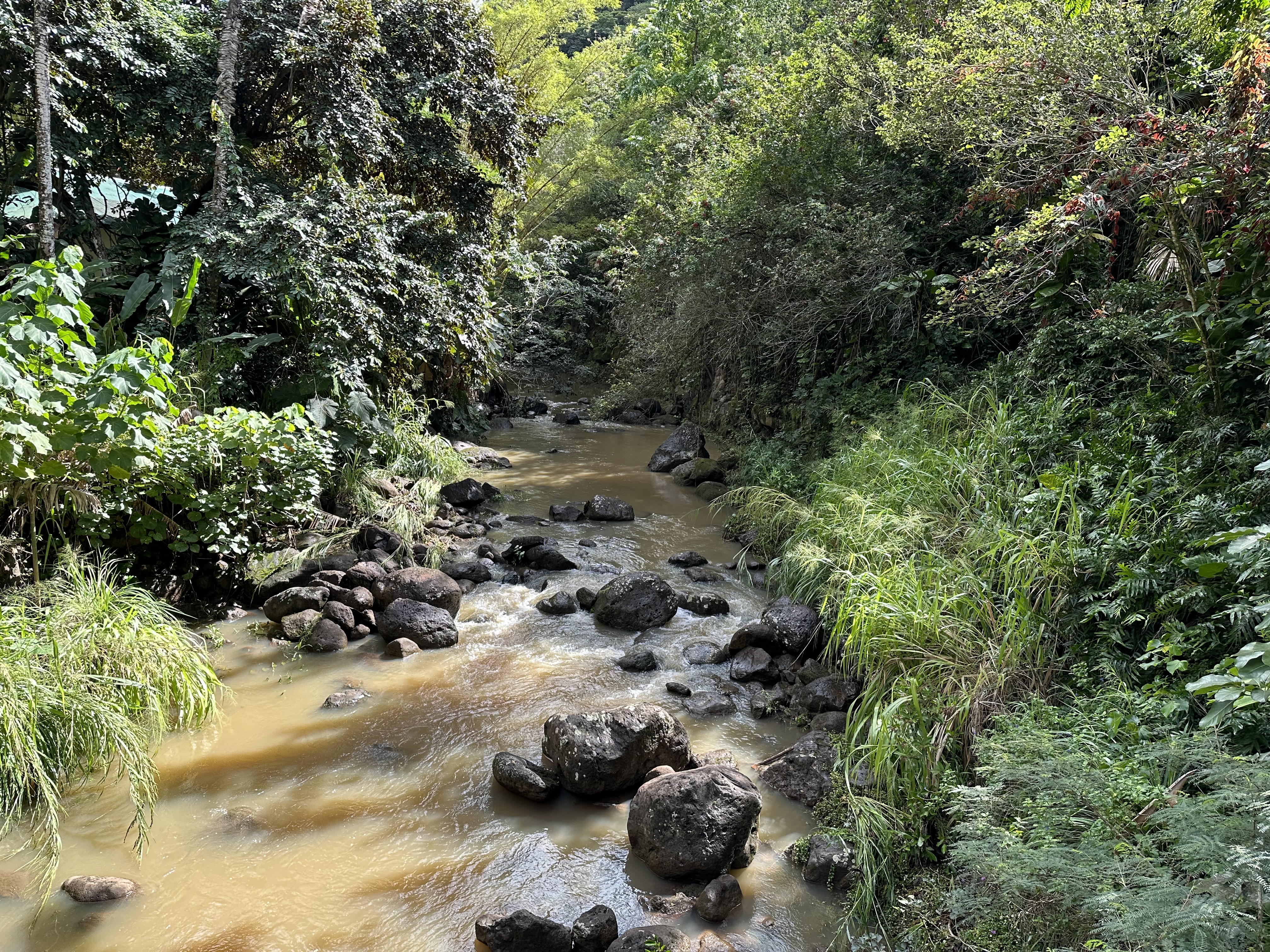
The next stop was Ko’olauloa Waimea Falls. I walked up to the falls, where some high school students enjoyed the cascading water. On its way to the ocean, the stream split the ravine, guarded by heavily wooded steep flanks filled with brilliantly colorful flowers and various songbirds I couldn’t identify. It was as if the incredible environment effortlessly drew me up the slope and back down.
Please click on the photos to enlarge them.

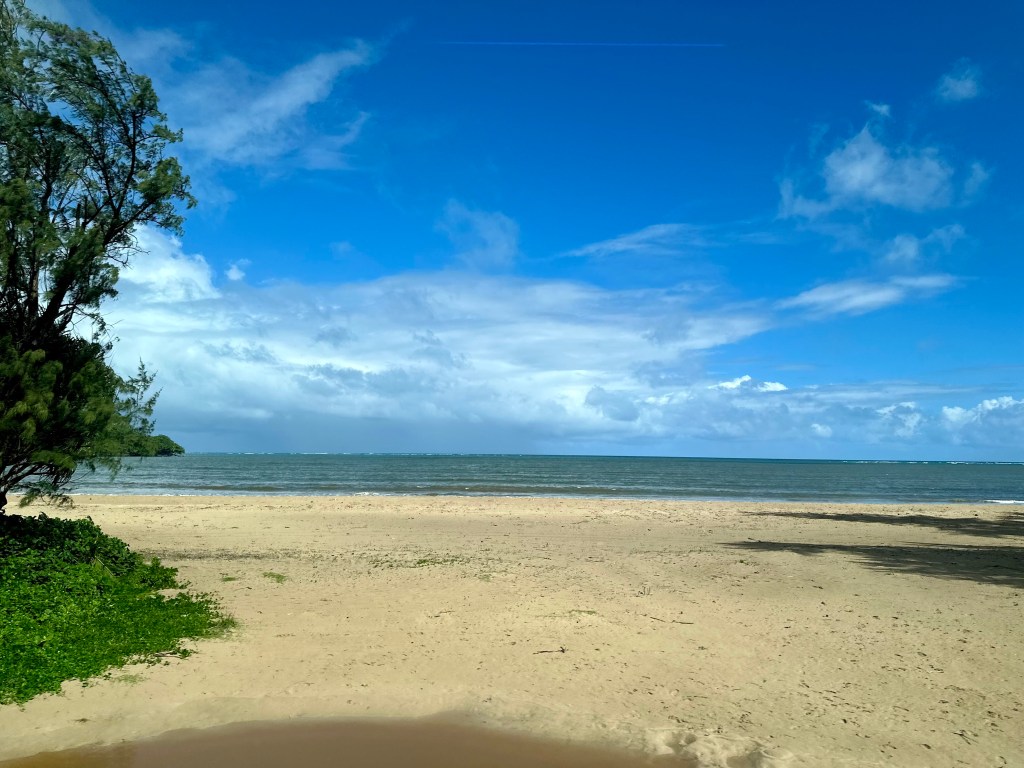
Too soon, it was time to continue our drive along the Kamehameha Highway, which offers beautiful ocean views. We passed multiple local parks, a testament to Hawaii’s commitment to preserving public green spaces. However, due to rising sea levels, shore and beach erosion are ongoing battles.

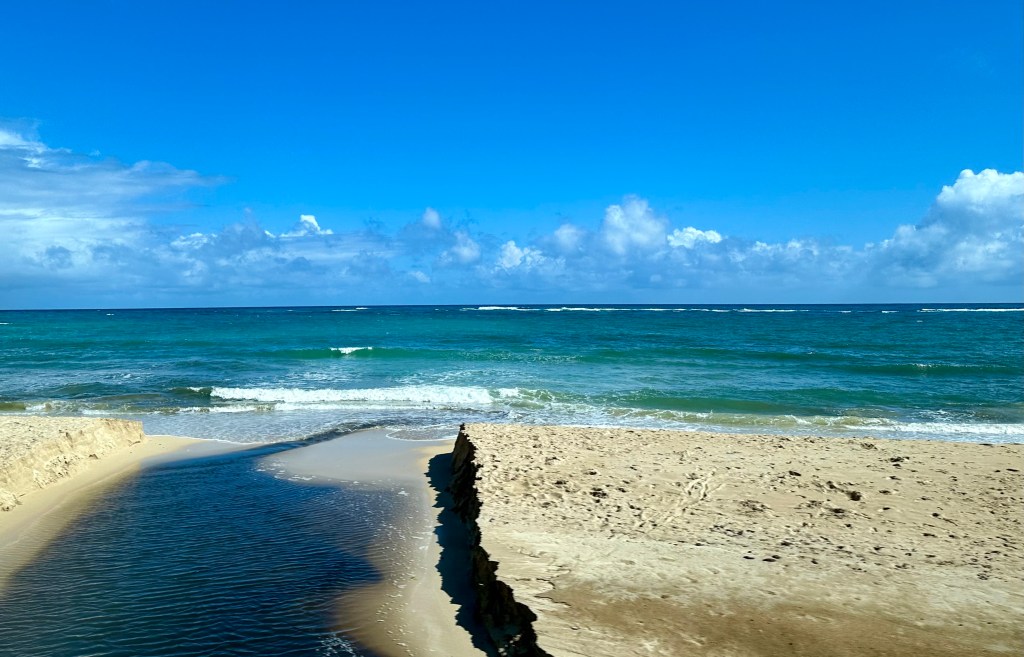
Along the Kamehameha Highway.

Our next stop was the Dole Plantation retail store. There, people enjoyed the famous Dole Whip while others browsed or shopped. Soon after leaving there, we passed acres and acres of agricultural land, some planted with pineapples.

Agricultural fields near a military base. Photo by Bruce Stambaugh

Our knowledgeable bus driver wisely took the counterclockwise route on the circle tour of Oahu. While we were returning, most traffic was headed out of Honolulu. Before we hit the city, we stopped at a pass that overlooks the capital.

Overlooking Honolulu on a windy, rainy day.

We had a 180-degree view of Honolulu and the surrounding mountains. Rain pelted one side of the urban setting while the other was dry. We braved strong wind gusts to enjoy the view and feel the rain.

We snaked our way down through neighborhoods of pagodas, apartments, schools, skyscrapers, unkempt houses, and urban parks to reach sea level. The tour was over, but the best was yet to come.

After dinner, our orange dessert was a spectacular sunset on Waikiki Beach. The next day, we flew to the Big Island.
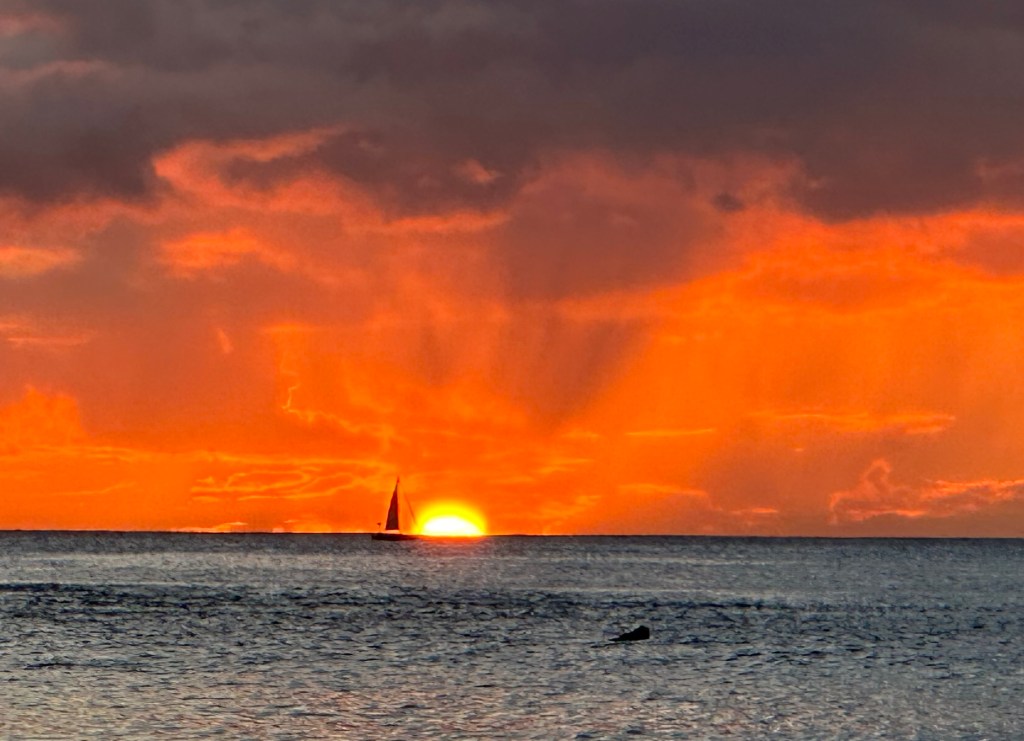
Sunset at Waikiki Beach. Photo by Bruce Stambaugh

© Bruce Stambaugh 2024 

Hawaii Days 1 & 2

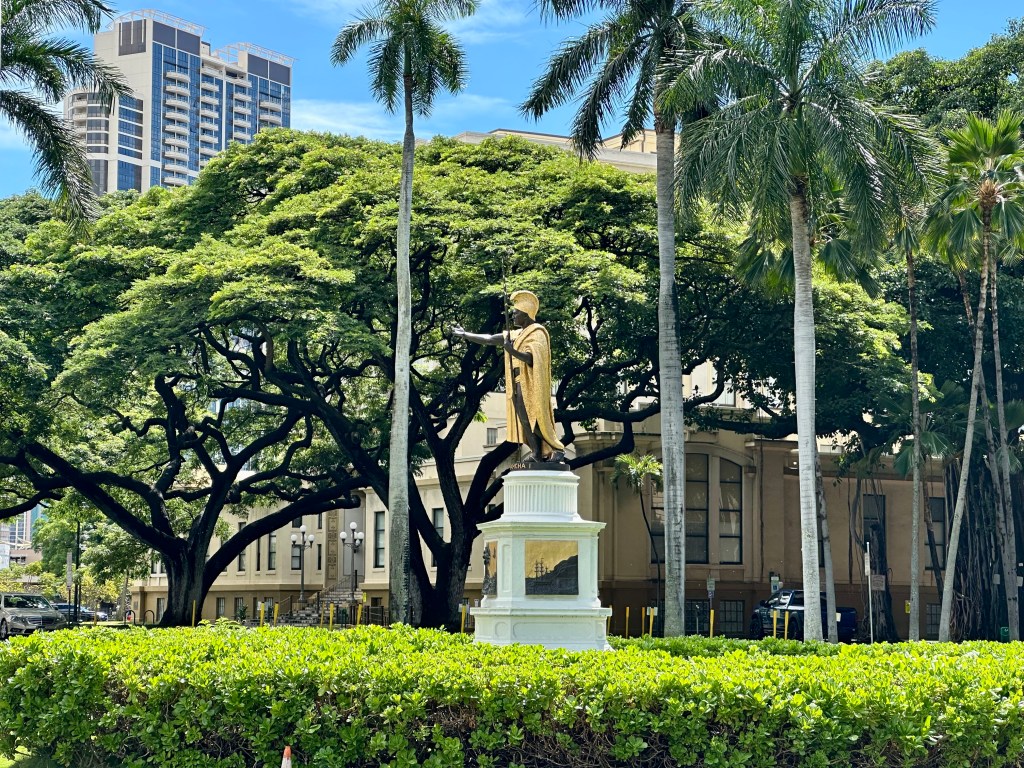
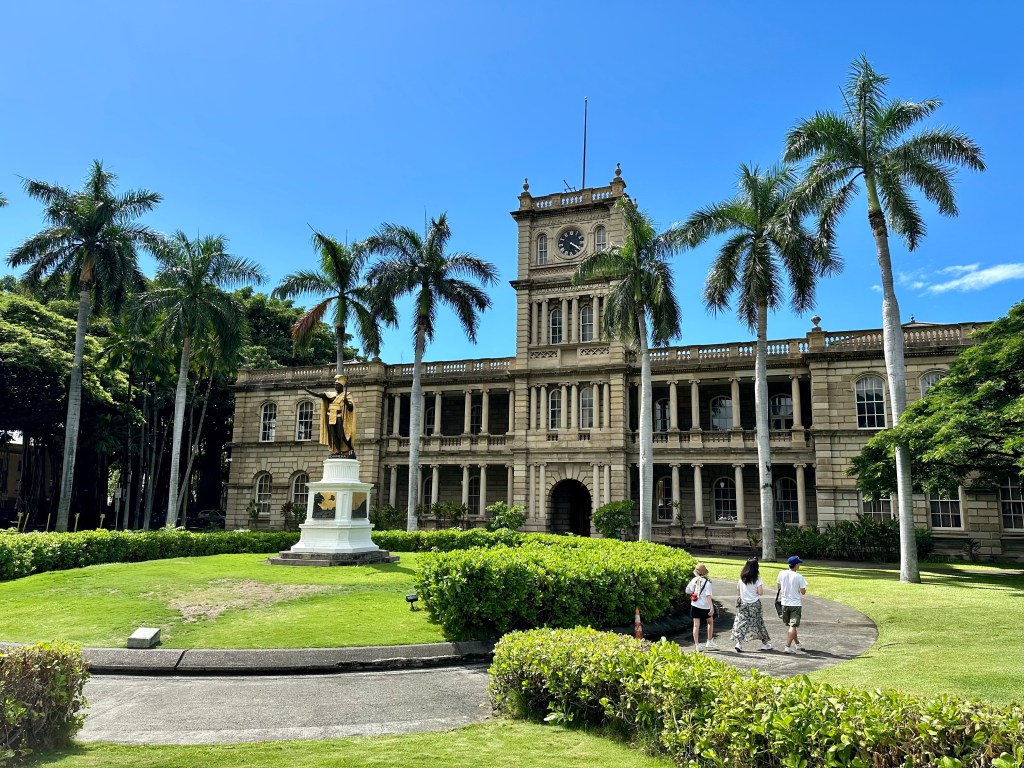
King Kamehameha’s statue near the Hawaiin capitol in Honolulu. Photo by Bruce Stambaugh

My wife and I couldn’t wait to get to Hawaii. Our flight plan took us from Washington, D.C., to Los Angeles, California, to Honolulu. We weren’t looking forward to two long flights.

Little did we know the travel time would become even longer. We rose at 4:30 a.m. for a morning flight to LAX. Despite some turbulence in the west, the flight went well overall. The flight to Honolulu was a different story.

About 10 minutes over the Pacific Ocean, the pilot announced that we were returning to LAX due to a compressor failure that controlled the plane’s hydraulics. Even with the little I knew about commercial aviation, I realized we would be on an emergency return.

One of seven fire trucks met us on the runway on our return to LAX.

We landed fine, but seven fire trucks surrounded the plane to check the brakes and tires for any overheating or fire due to landing heavy. Everything was fine, and we deplaned, wondering what was next.

We waited until another plane and crew arrived. The gate agents announced a later departure time more than once. We were to arrive at our hotel in Honolulu around 6 p.m., but it was actually 11 p.m., so our dream of watching the sunset on Waikiki Beach on our first day was just that—a dream.

There would be other days and sunsets. We were in Hawaii, the 50th state, to join the Union.

Our first full day on Oahu was election day. With all the hype and drama throughout the campaign, I was glad we were far from the mainland. Poor Hawaii. They vote knowing the election has already been called by the time their polls close. That was the case again in 2024.

We met our group and tour guide for an early breakfast. We had chosen a small group tour, meaning the group was limited to 26. However, half of the group had canceled for multiple reasons, so we only had 13, plus Debbie, our guide.

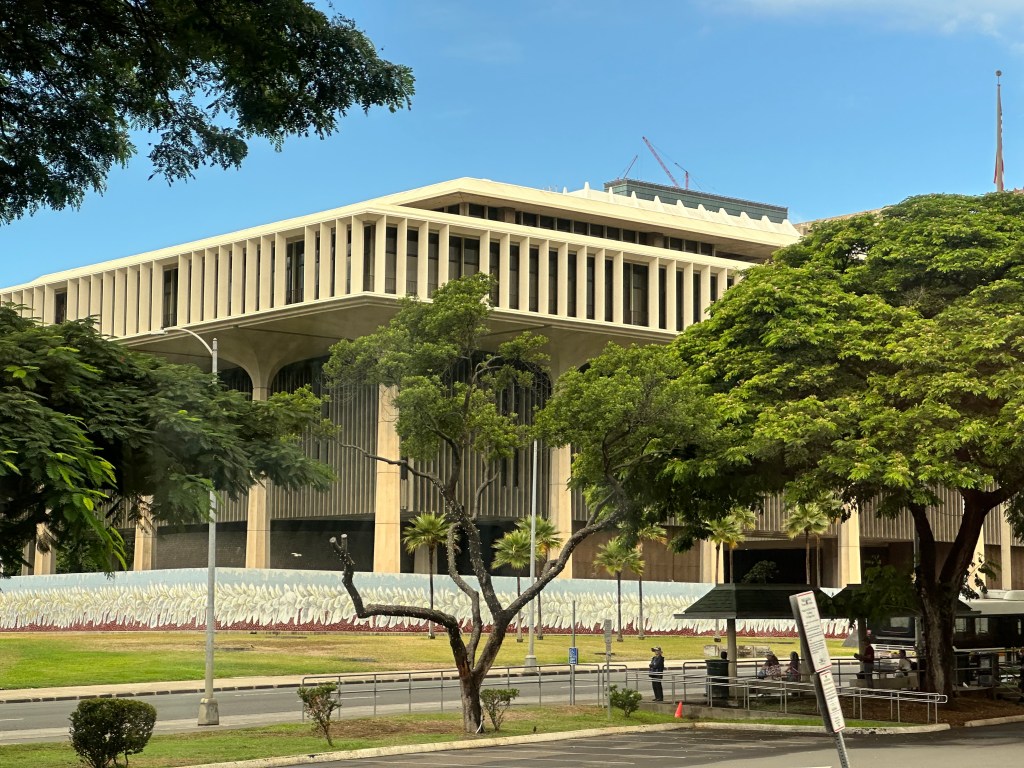
The breakfast was delicious, and our small group climbed onto a 46-passenger bus. We spent significant time touring the Waikiki Beach area of Honolulu, which has many shops, markets, and historic buildings. We saw the Iolani Palace, home of the last reigning Hawaiian royalty. King Kamehameha’s statue was across the street in front of a government office building.

We drove through the Punchbowl Crater, home to the National Memorial Cemetery of the Pacific, which honors U.S. military members who died serving their country. Since commercial vehicles are prohibited from stopping, we could only view it from the bus.

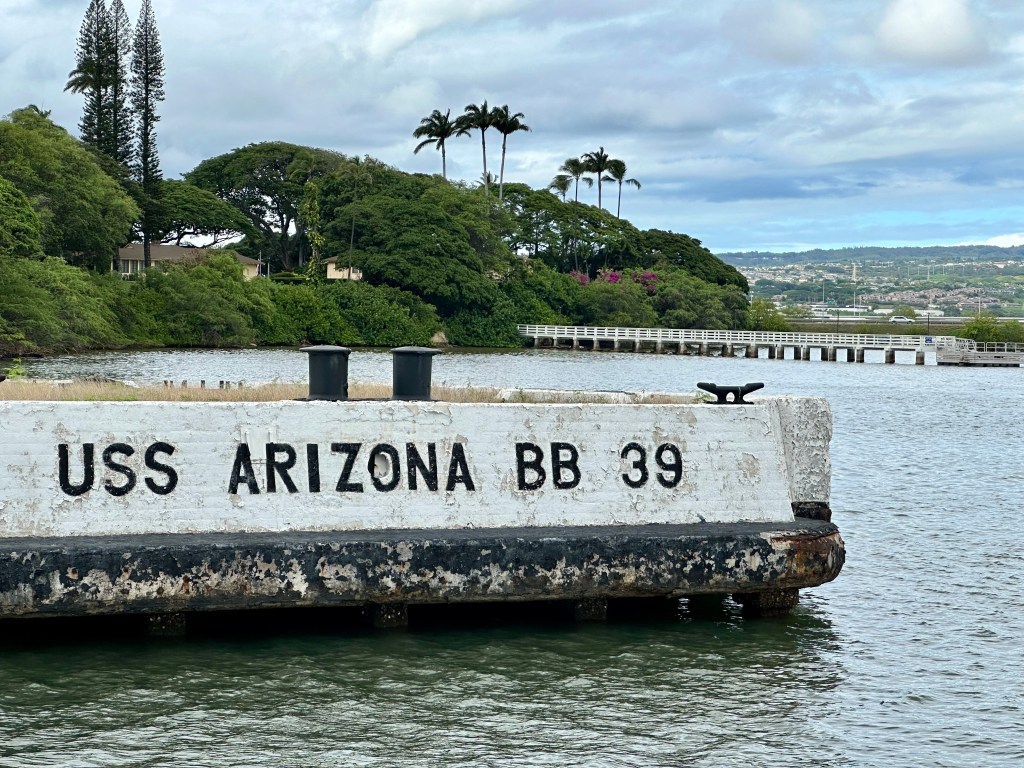
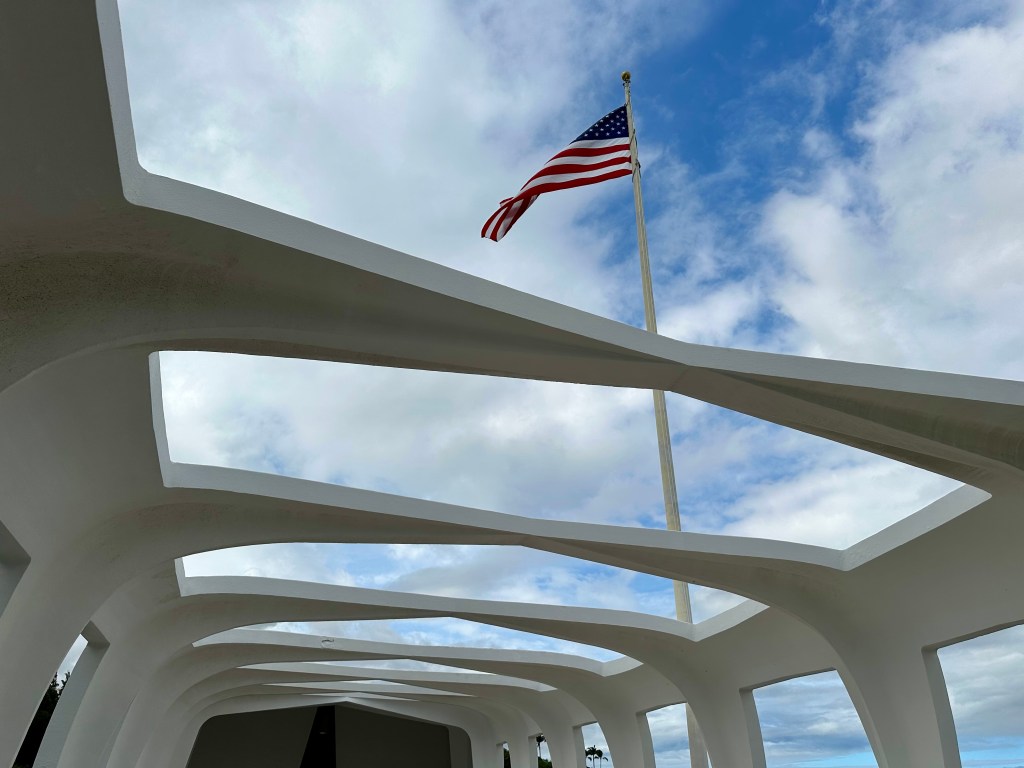
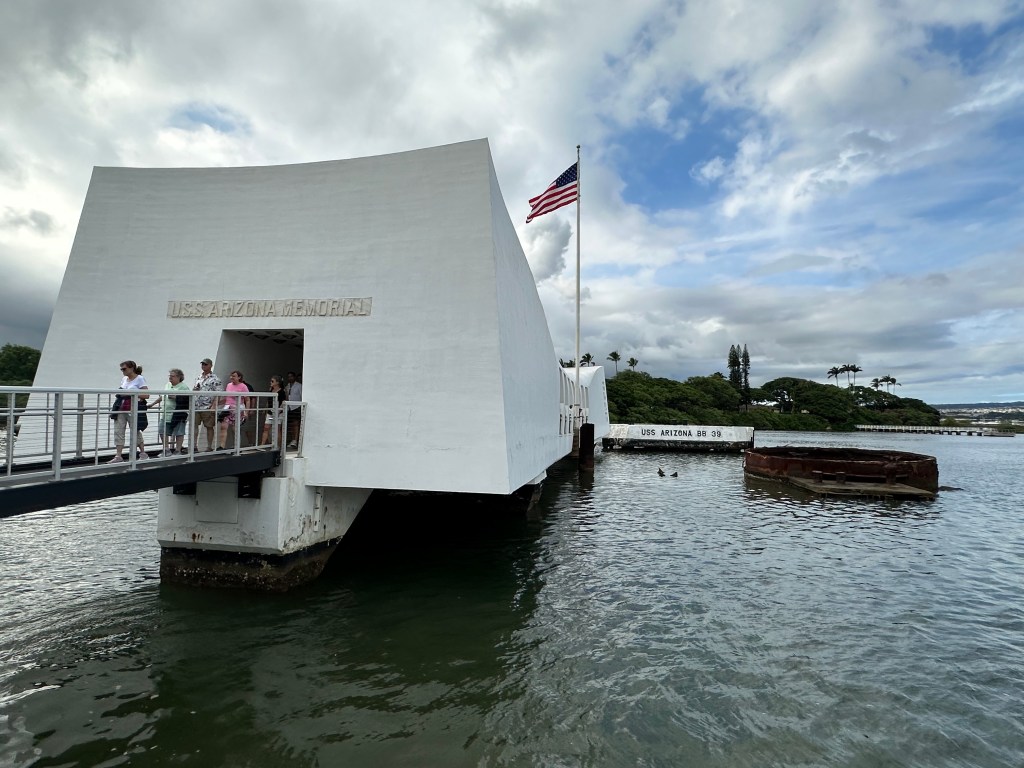
The solemn respect for those who died continued as we visited Pearl Harbor. We boarded small Navy transport boats to see the U.S. Arizona Memorial. The ship sank during the attack on December 7, 1941, and 1,177 sailors and Marines were buried in the rubble of the battleship. Out of respect, visitors were silent as they walked around the memorial. It was a stark reminder of the brutality of war.

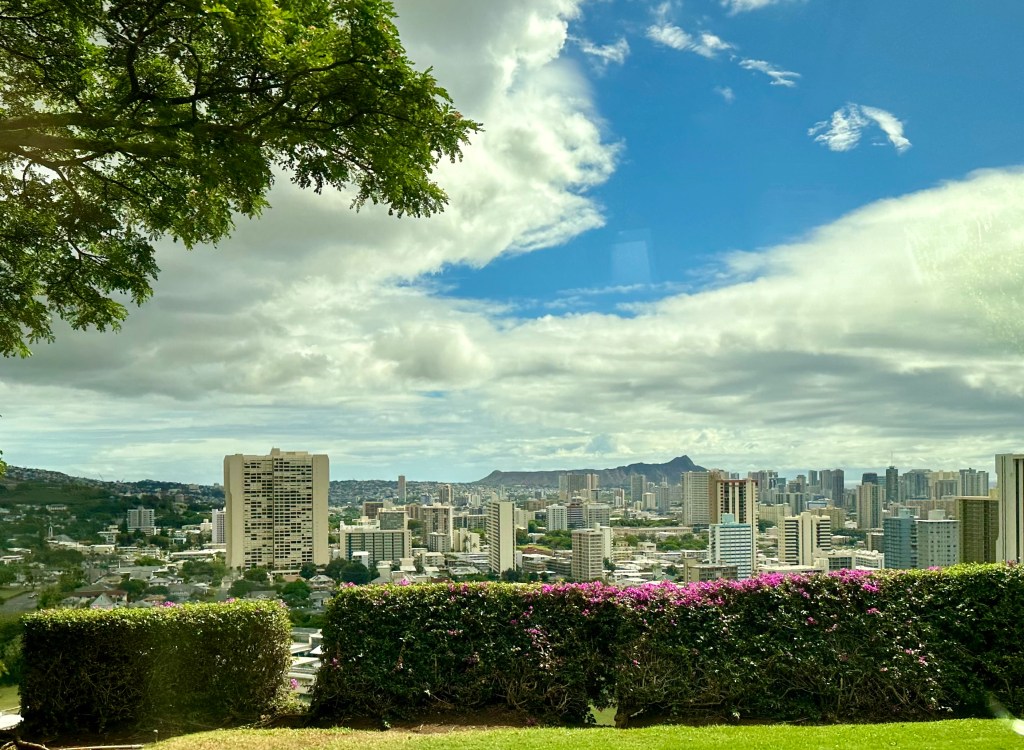
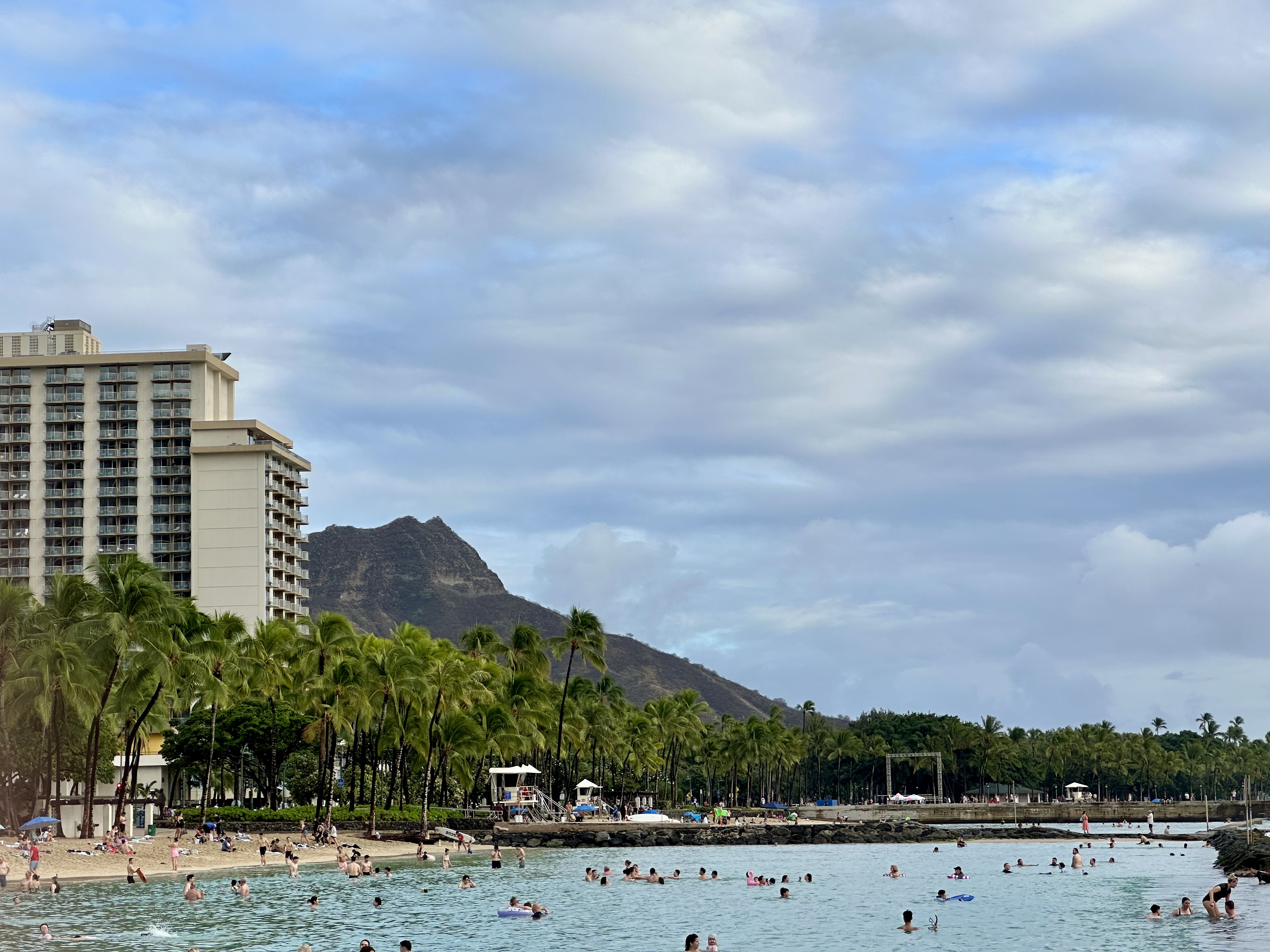
That seemed to drain the strength from us, and I was glad the group headed back to the hotel for the rest of the day. Before dinner, I hustled to get a shot of Diamondhead from the beach before dinner. Hotels are built so close to the beach that it’s hard to get a decent shot of the famous landmark. When I returned to our room, the heat and humidity had soaked my clothes. 

We enjoyed our dinner in the hotel’s open-air lobby. We were supposed to dine around the spacious pool, but with rain a possibility, the staff moved us under shelter. We knew the results of the election before our food arrived.

A better view of Diamondhead. Photo by Bruce Stambaugh

© Bruce Stambaugh 2024

Light into Darkness

Morning light shines into a darkened kitchen on a historical farm. Photo by Bruce Stambaugh

When I walked into the old farmhouse, the tour guide went right. My head, however, looked left, drawn by the stark contrast of the bright morning light shining into the dark kitchen of this century-old farmhouse.

Paula, our 78-year-old guide, worked in the home and on the farm as a child.

Our guide lived and worked in this home, starting at age four. We couldn’t have had a more authentic authority on how this former family coffee farm operated.

Today, Hawaii’s Kona Historical Society welcomes visitors via reservations to explore the Kona Coffee Living History Farm on Hawaii’s Big Island firsthand. Everything is as it was when Paula began helping around the house and on the farm.

I’ll share additional photos from the farm in a future post as I begin a series on a recent trip to Hawaii, our nation’s 50th state.

© Bruce Stambaugh 2024
Shenandoah National Park: Before and After the Peak Leaf Colors

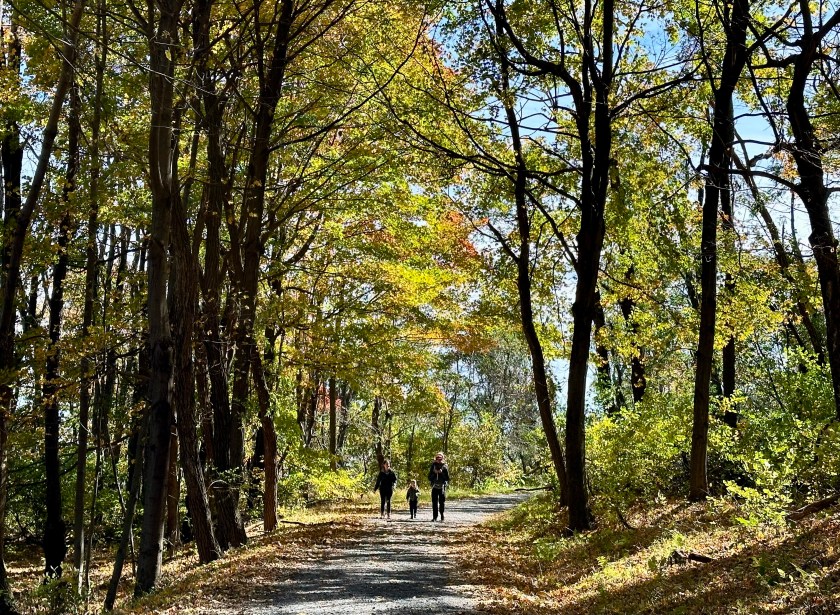
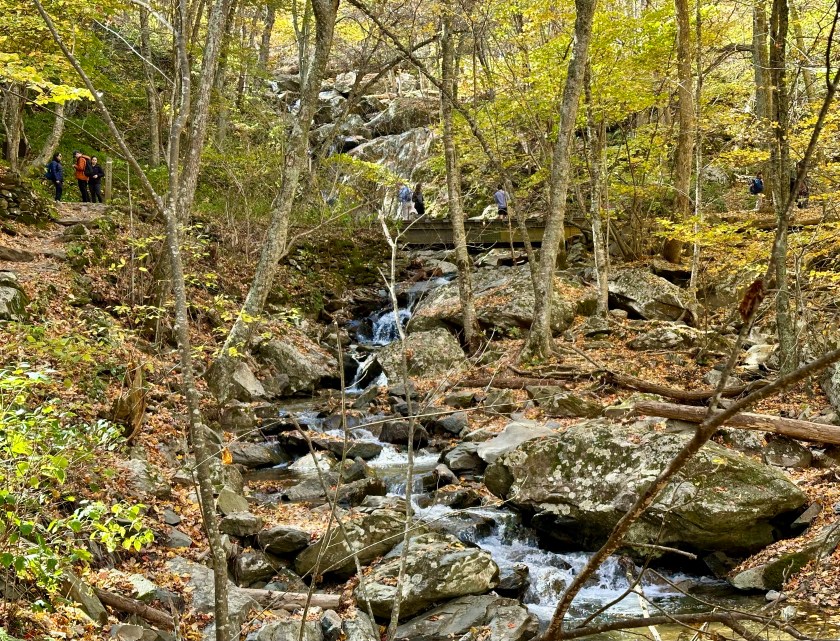
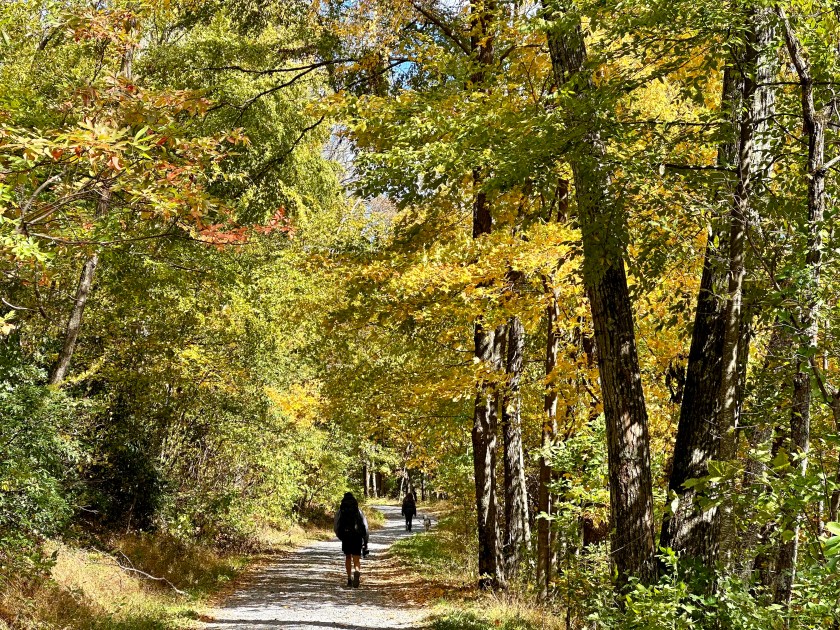
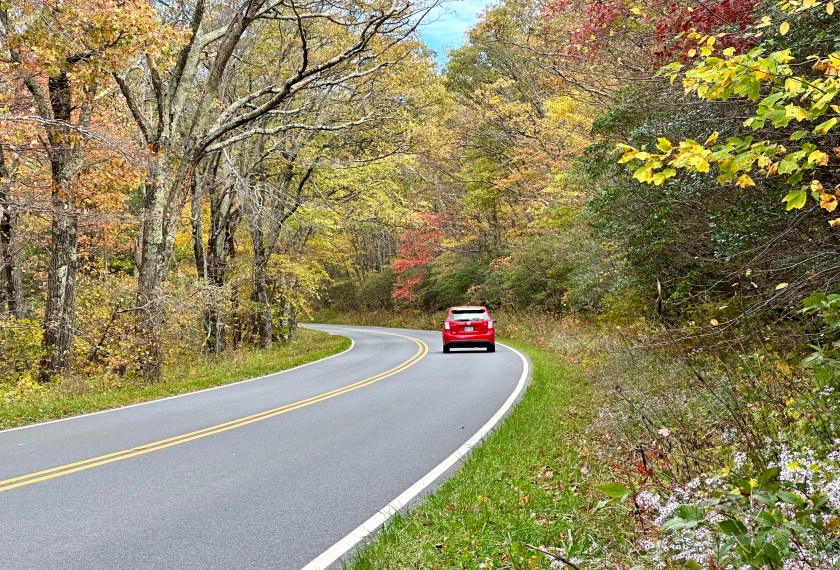
Nature’s beauty reigned even after the peak colors had faded. Photo by Bruce Stambaugh

Fall is a great time to hike, bird, and shoot photos. Shenandoah National Park is my go-to place to combine all three hobbies in one trip.

However, I have learned to avoid the peak color time due to crowds. People from around the world visit the park to admire its autumn glory, which means traffic is also at its peak on the iconic Skyline Drive.

By mid-morning, lines of vehicles form at entrance stations. Overlook parking spaces fill up quickly, forcing people to park along the busy roadway. The same is true for trailhead parking lots.

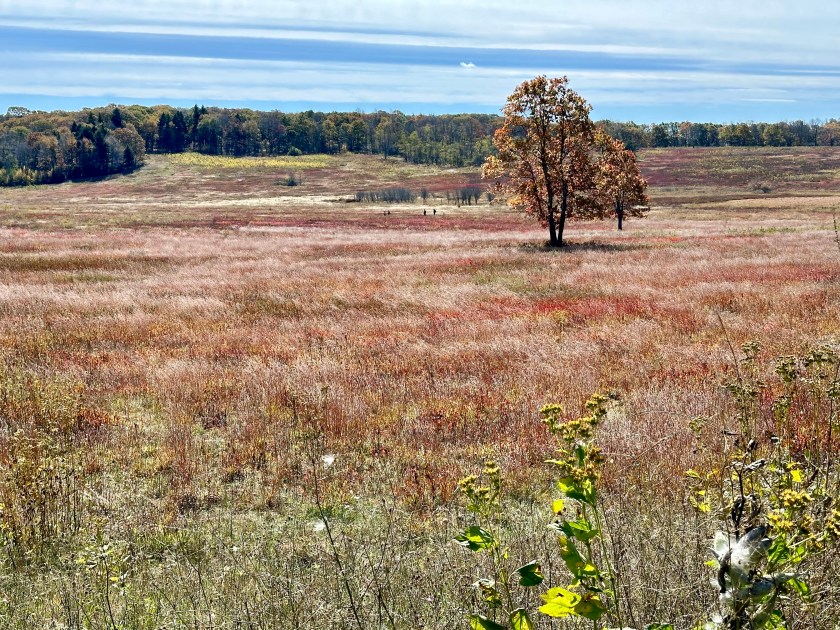
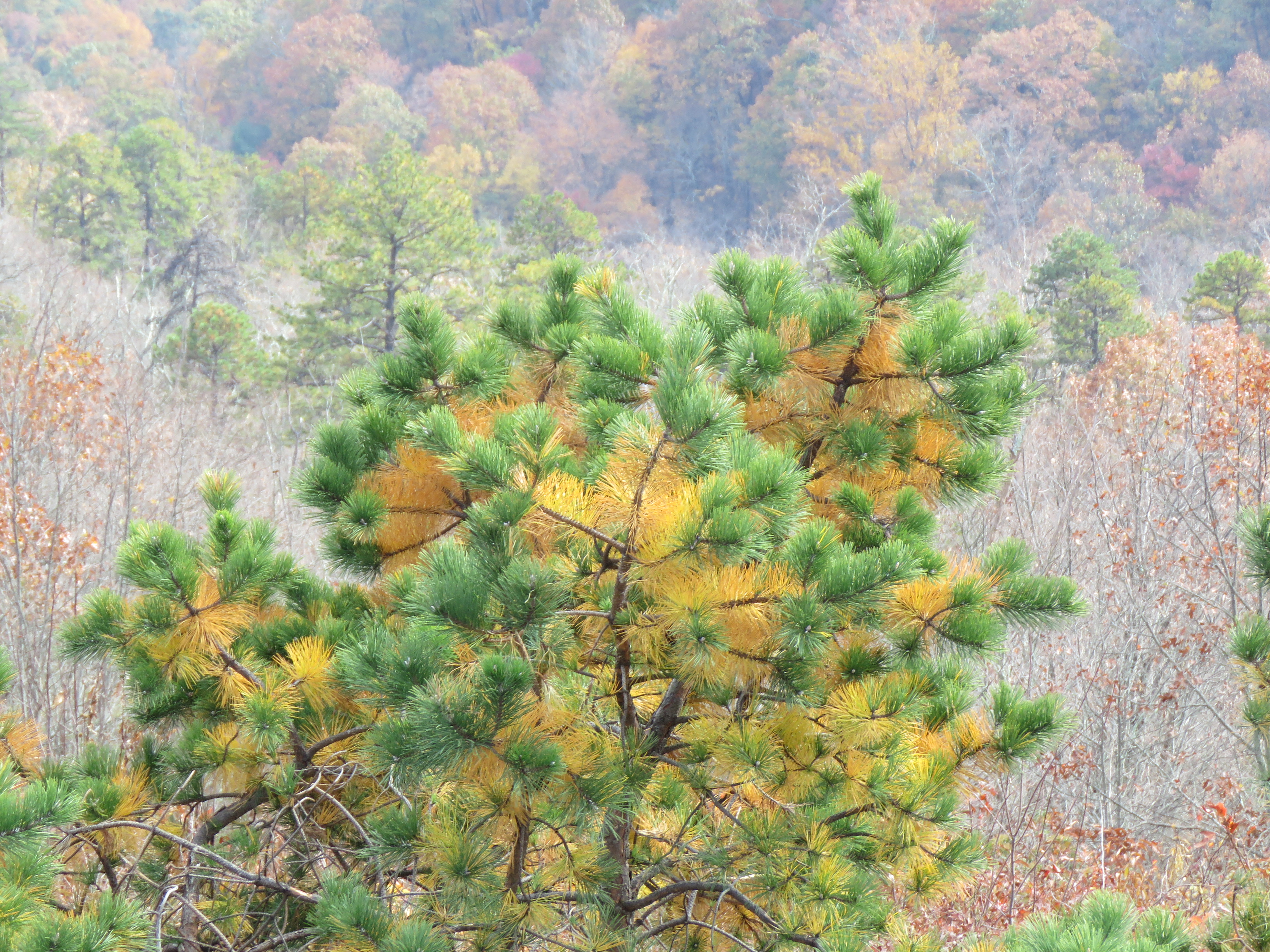
Before the peak of leaf colors.

So, I chose to catch the leaf colors before and after the peak. The park is still busy, but it is tolerable, and I am satisfied with a stirring hike filled with picturesque views, unexpected wildlife, and migrating birds.

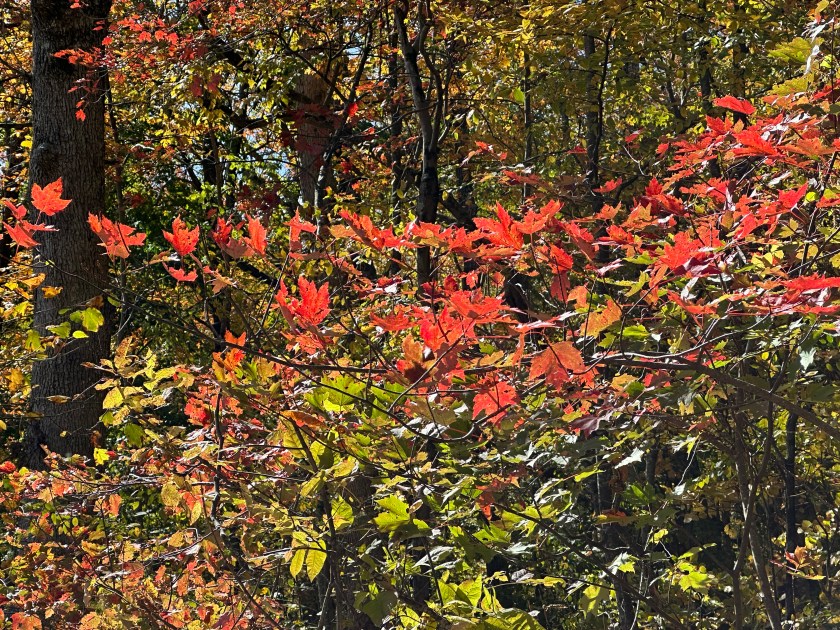
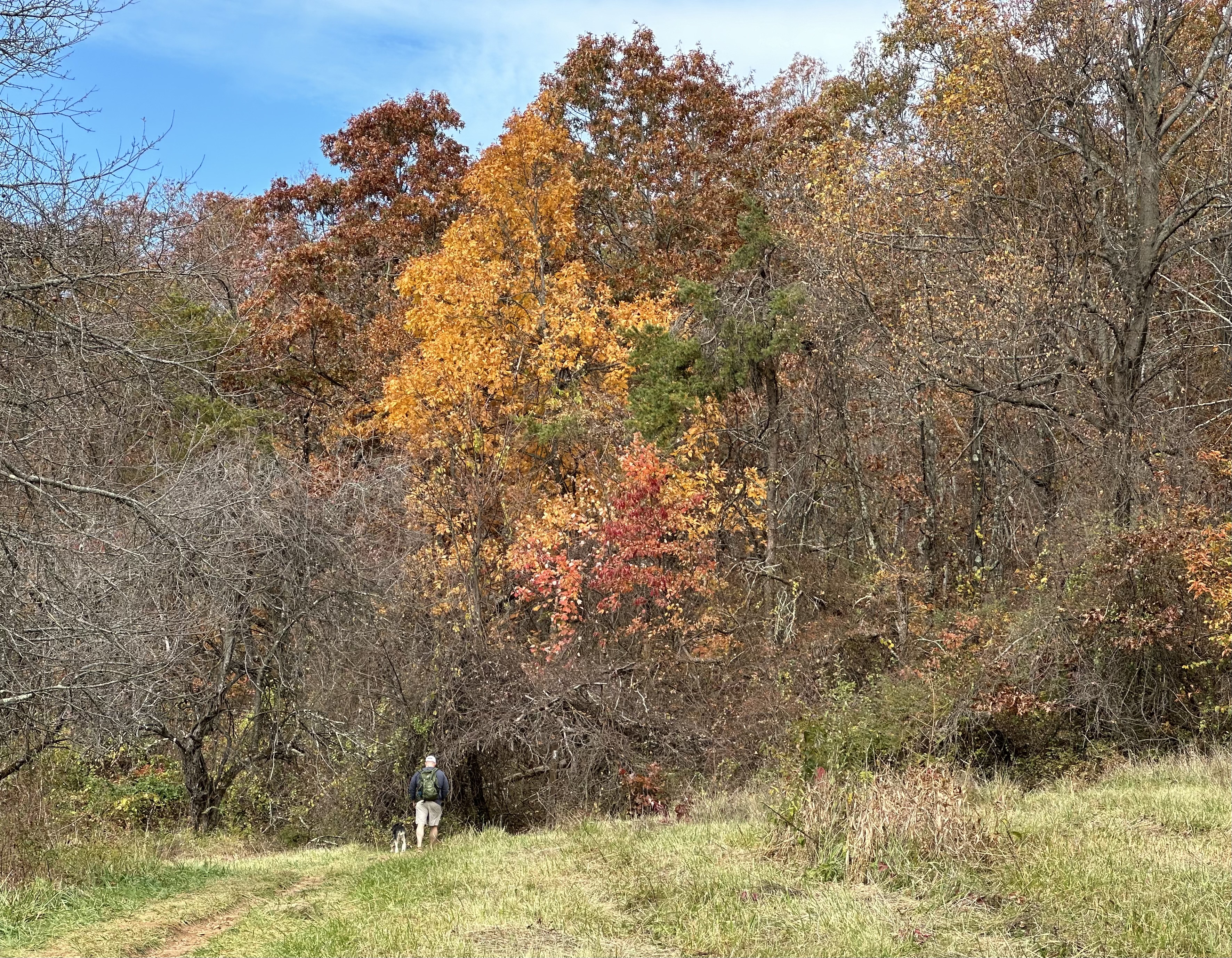
In the mountains, altitude affects the coloring as much as sunshine, cooler nighttime temperatures, and morning frosts. So, the trees might be dull or even bare at the hike’s beginning, and a half mile down the trail, a blaze of color brightens the way.

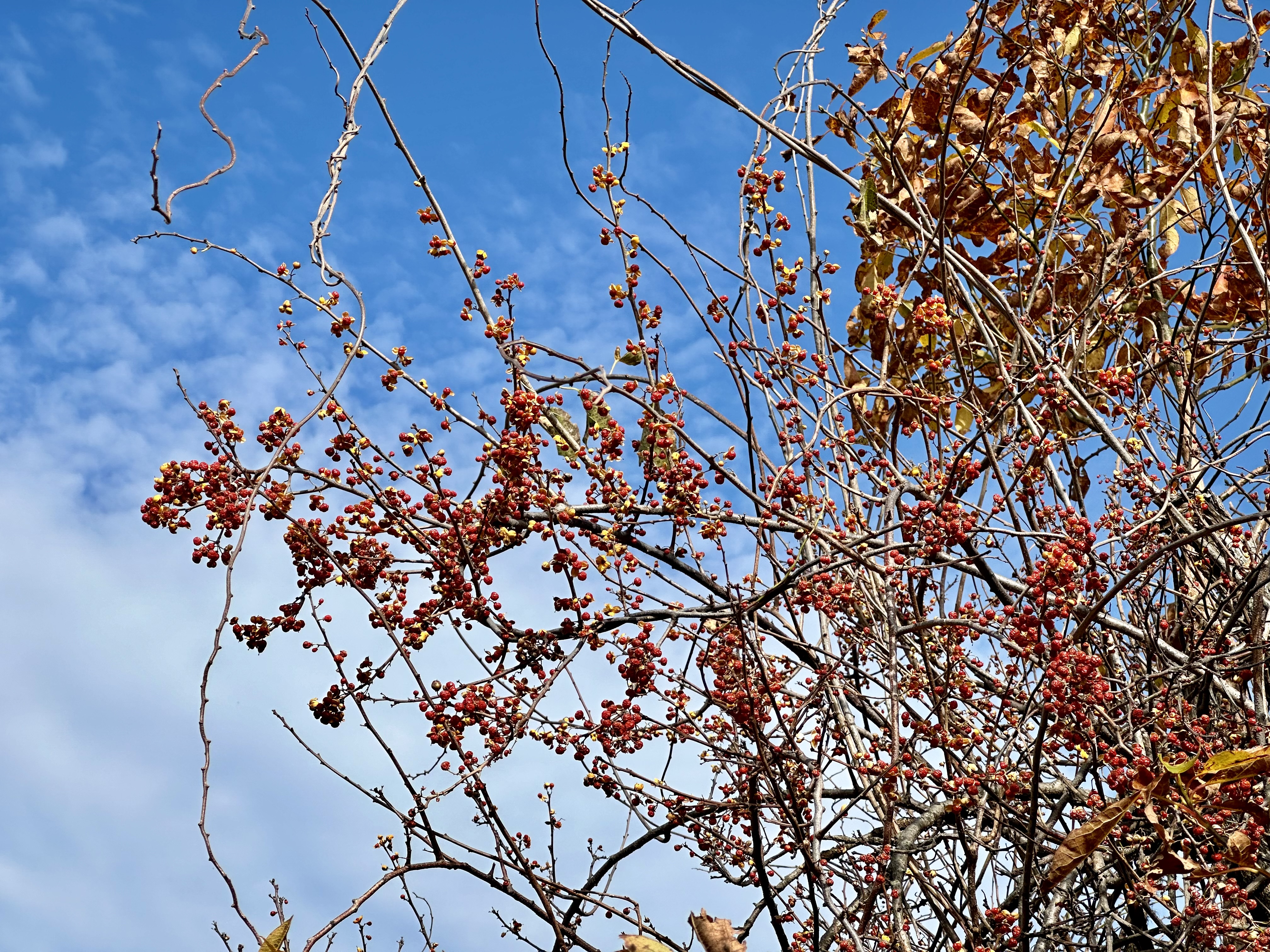
After the peak. Please click on the photos to enlarge them.

Though I have missed the height of the turning leaves, I enjoy the before-and-after with equal zeal. It’s fun to note the differences I discover and meet friendly folks along the way. The park’s beauty has energized them, too.

Besides, I admired nature’s colorful summit in other locales in Virginia’s lovely Shenandoah Valley. It is the perfect place to enjoy hiking, birding, and photography all in one joyous day trip.

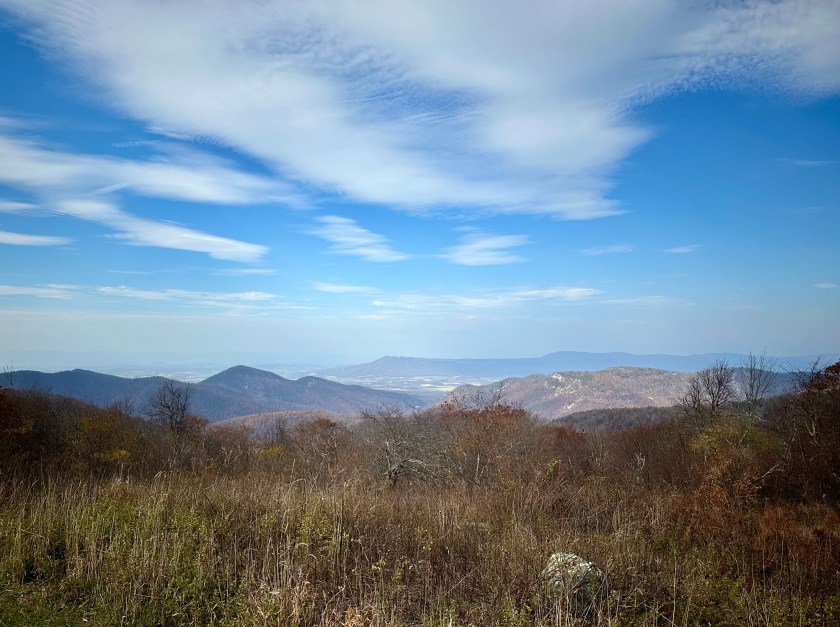
A view west into the Shenandoah Valley. Photo by Bruce Stambaugh

© Bruce Stambaugh 2024

Reality vs. Fantasy

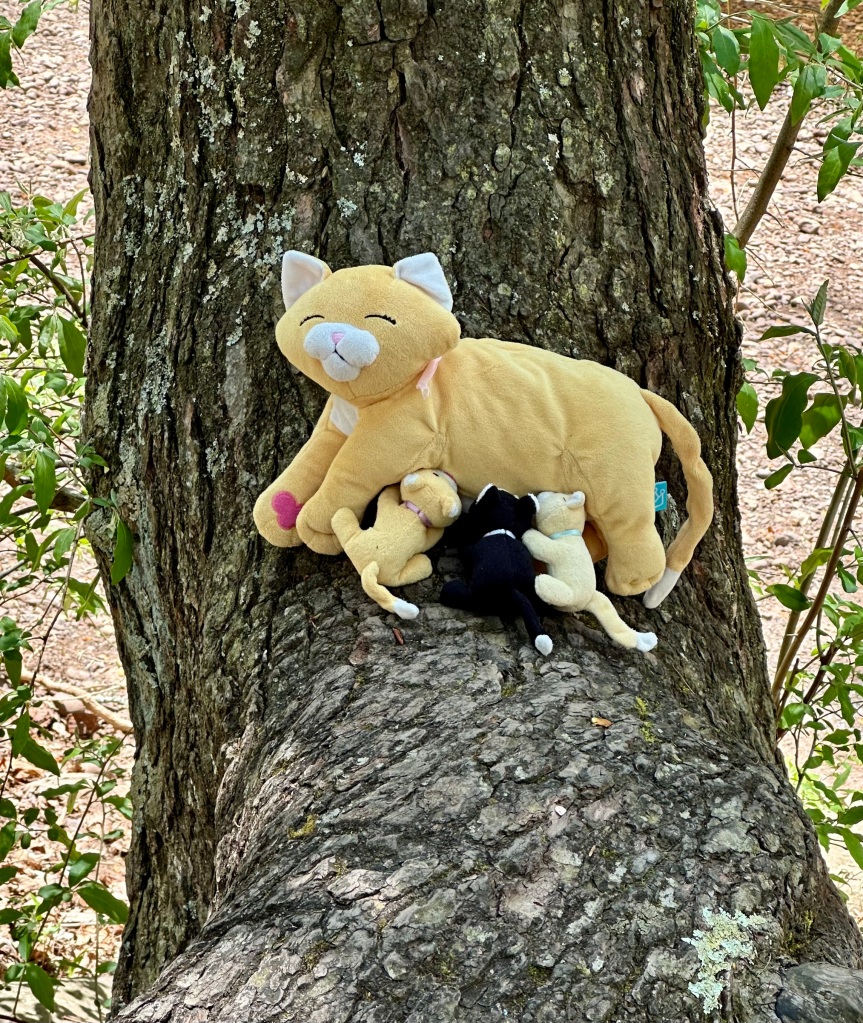
Sometimes, reality is stranger than fantasy. Photo by Bruce Stambaugh

When I happened upon this tender scene, I did a double-take.

My wife and I had joined an entourage from church for a Sunday afternoon of baptisms for three teens in the chilly mountain stream. After the dunkings and the celebratory congratulations shared, I wandered away from the rest of the revelers to see what I could find.

Scores of Pipevine Butterflies and Tiger Swallowtail Butterflies flitted through the woods. They danced carefree from rays of broken sunlight to dense shade, oblivious to the human invaders.

I certainly didn’t expect to find a cat casually nursing three young ones in the forest. And I especially didn’t expect to find a stuffed cat and her young stuffed kittens. But that is exactly what I discovered.

Some children not connected with our group were splashing in the nearby stream. Perhaps one of them thought this wild cherry tree along the banks of the Dry River at the base of Shenandoah Mountain was a lovely and safe haven while romping in the water.

I’ll never know for sure, but this composition of fantasy playthings among nature’s real and evolving habitat was too good not to share.

© Bruce Stambaugh 2024

Celebrating National Park Week

Hiking the Appalachian Trail in Shenandoah National Park. Photo by Bruce Stambaugh

This is National Park Week in the United States. In celebration of our 63 beautiful national parks, this is the first of a series of photos I have taken in Shenandoah National Park.

Shenandoah National Park has a storied and somewhat troublesome history, given how farmers and their hired hands were removed from the park before it was developed starting in late 1935.

Though the land was rugged and steep in many places, over 2,000 folks lived, farmed, and worked on the 198,000 acres that became the first national park in the eastern part of the U.S. Landowners were paid an assessed rate for their property, which the federal government purchased via eminent domain.

Of course, many of the people were tenants who cared for the land, while the property owners lived in the Shenandoah Valley or elsewhere. The tenants received nothing for their inconvenience. Consequently, some of their descendants still have grudges against the government.

Nevertheless, Shenandoah National Park is a popular place to visit since millions of people live within a day’s drive. Plus, the Appalachian Trail (AT) stretches 101 miles through the park, drawing day and overnight hikers. The AT weaves along the crest of the Blue Ridge Mountains, crossing the Skyline Drive several times.

I enjoy day hikes in the park, which often involve hiking sections of the AT to spur trails that lead to waterfalls, rigorous climbs, and scenic overlooks. I especially appreciate the flora and fauna that I encounter.

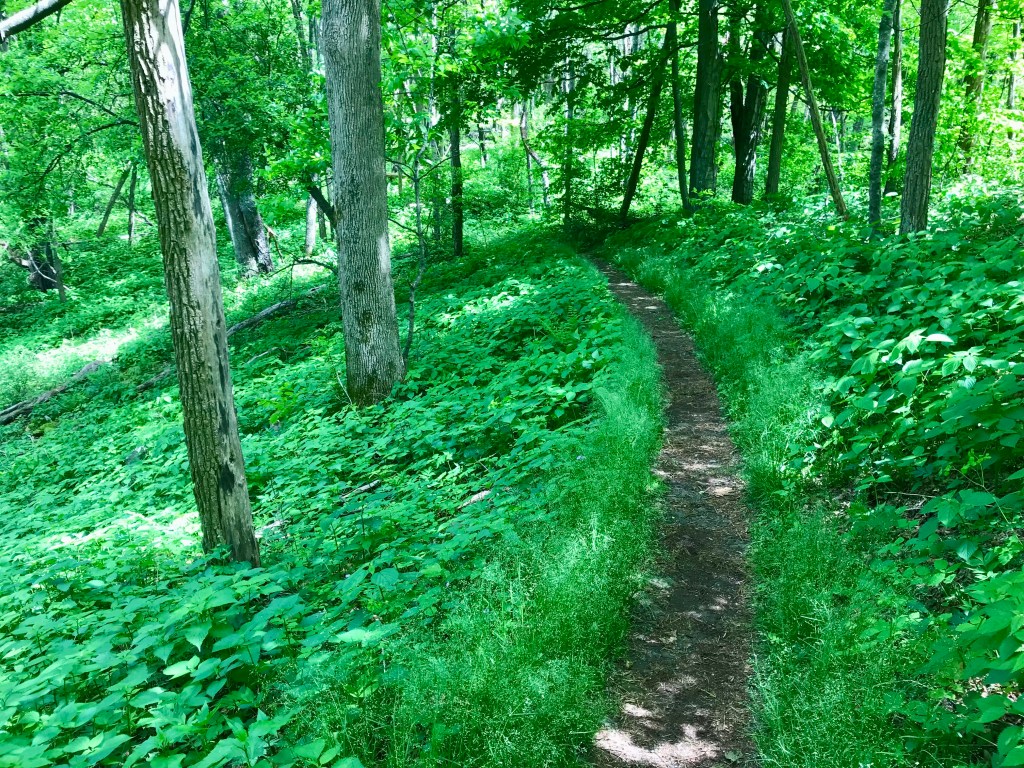
This photo, taken in late May 2018, represents the lusciousness of the park’s greenery, from ground cover to towering trees. The photo was not altered to enhance the green.

Tomorrow, I’ll post what I saw to the left of where this photo was taken.

© Bruce Stambaugh 2024
Street Photography With a Twist

I love photography. It keeps me alert for the extraordinary while doing the ordinary. In this case, I was with my wife, her cousin, and her husband, all septuagenarians.

We get together every so often about halfway between our home in Virginia’s lovely Shenandoah Valley and their abode in central North Carolina. Lynchburg is a handy place to meet up, a two-hour drive for each of us.

We like many of the same activities, like playing cards, dominoes, antiques, and birding. We also enjoy casual strolls along city streets and well-marked biking and hiking paths. Lynchburg offers plenty of both.

Since we are not out to set any speed records on our walks, I can wander ahead and find the unusual among the usual rural or urban landscapes. Occasionally, I charge ahead too fast, and the others call me back to see what they have found. Together, we discover much to appreciate, ponder, and enjoy.

Take our most recent excursion, for example. Lynchburg is a city of hills and valleys, with a rich history, old buildings, waterways, sidewalks, cobblestone alleys, and lazy trails often following the winding creeks and the James River. One trail even had an old railroad tunnel, now lighted for bikers and hikers. The city is a paradise for photographers.

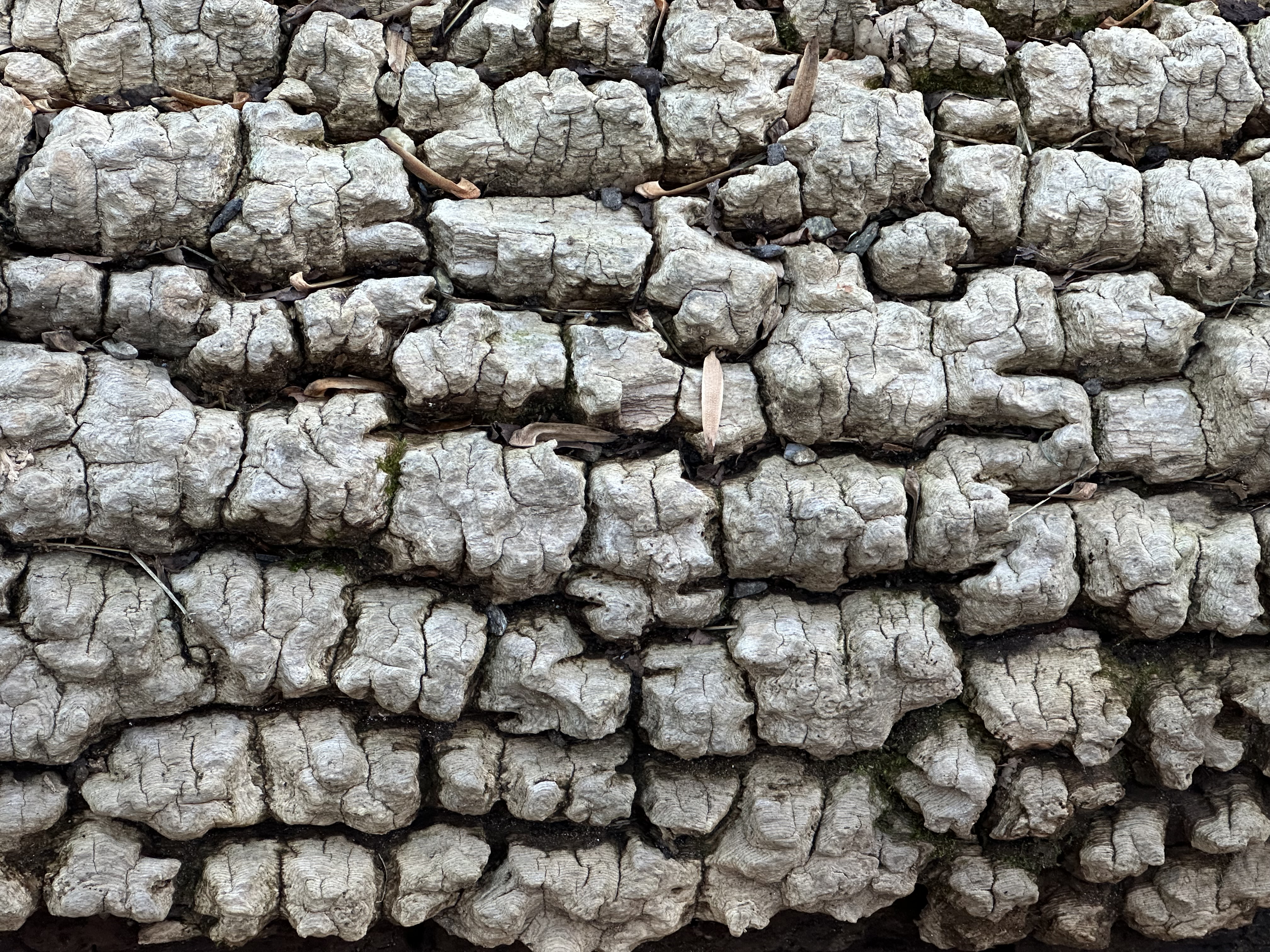
We came upon curious subjects to photograph every path we took. Along a creekside trail, we found this textured object. Any guesses? A tire? An alligator’s back? No to both. There’s a hint in the photo.

This is the closeup of an old fallen tree. The trunk was rotting away while its life-protective bark remained.

Not all photographic opportunities were so secretive. Still, using your imagination is critical. This old snag has stood the test of time, and the elements of four seasons have weathered into a once-living art object. Does anyone else conjure an owl flapping its right wing?

Speaking of living, this diminutive plant waved its once-green leaves red for the holiday season that is upon us. It is a volunteer burning bush, likely deposited by a seed-eating bird. There was no missing the bright color among all the trail-side leaf litter.

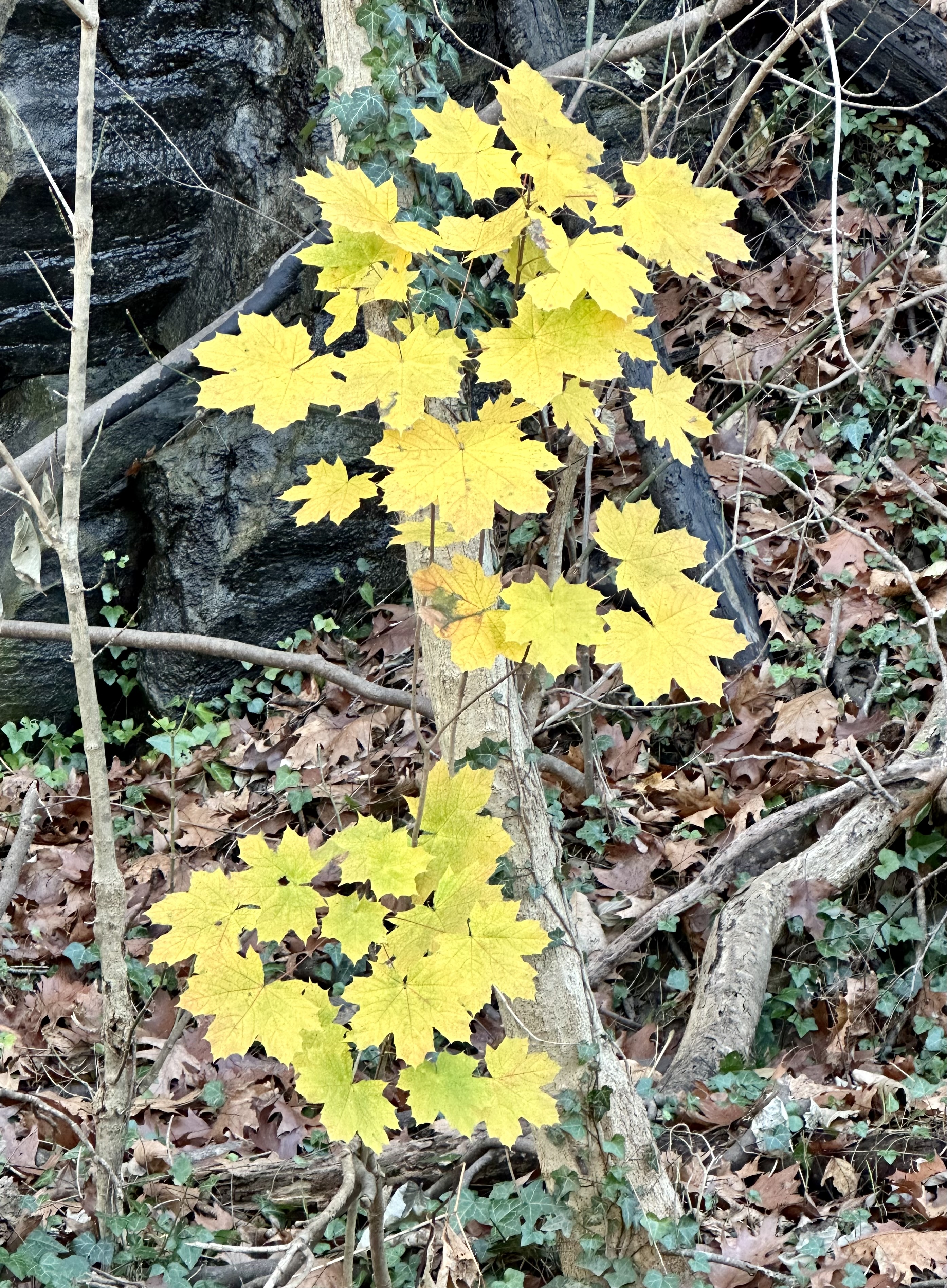
A short distance away, a competitor vied for attention. This sugar maple sapling shown like the sun on this dismal day. It made us all chuckle.

Not everything was so obvious, however. This photo has a complex combination of both natural and human-made actions.

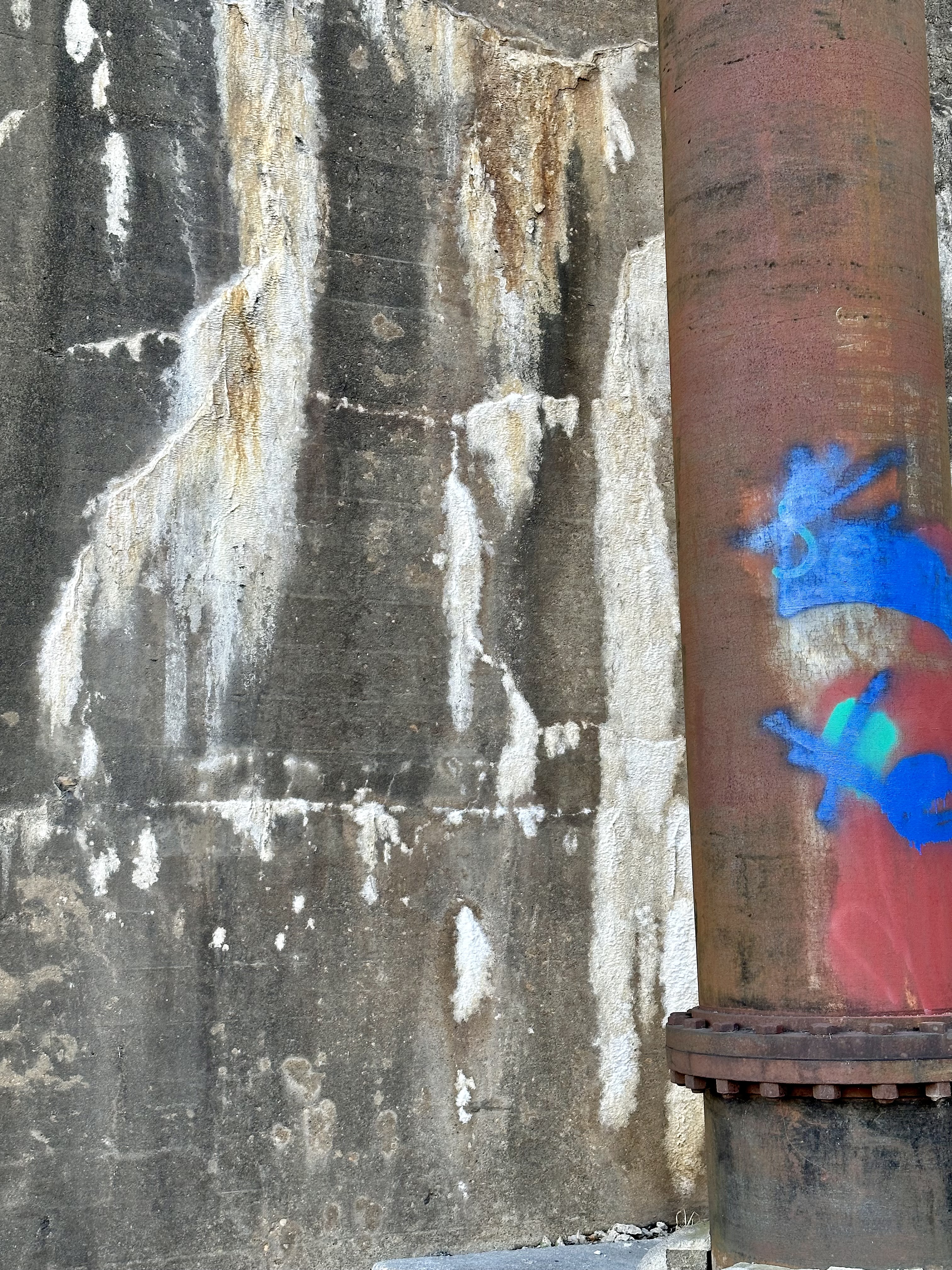
Any idea what this abstract consists of? Look close. What’s on the left side? You are halfway home if you said a rock outcropping leached with calcium-laden groundwater. The right section is an old drainpipe. Some wannabe artists eliminated the plain rusty look by adding some pretty red and blue with a meaning. Those colors covered up some previous graffiti in faded white.

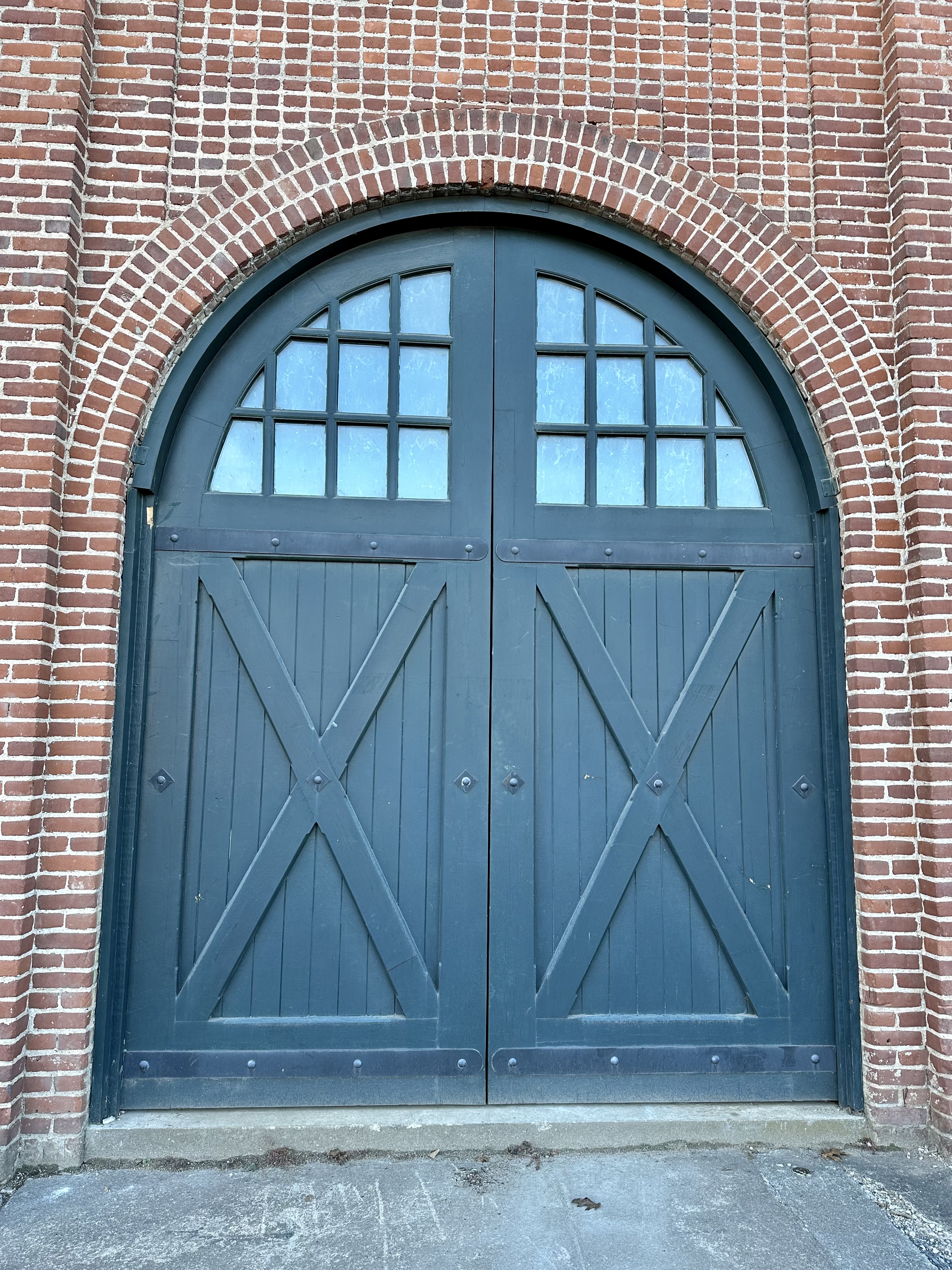
That pipe was a hint for us. The city lay just around the corner. We soon found this intriguing old set of double doors in a two-story brick building, likely once a warehouse during the railroad’s heyday. It faced the James River. The nearby trail was once a rail line.

A few steps away was a nearly block-long mosaic timeline of the history of Lynchburg. The blight of slavery was front and center. It’s an incredible piece of artwork often blocked by parked cars. This photo shows the intricate detail needed to tell the town’s story. I couldn’t imagine the time and effort it took to create this masterpiece.

We headed to the Amtrak train station away from Old Town. The building was magnificently reconstructed and expanded to hold city offices that had nothing to do with trains. We had a look around and came across some interesting finds.

An old luggage hand cart parked against the sturdy brick building caught my eye. No longer used, it can’t help but take train passengers and visitors back in time.

Across the street, an abandoned building seemed frozen in time. Dozens of solar bobbleheads danced behind a window in the late autumn sun. It was a curious collection that seemed abandoned, left to survive without human help.

This wasn’t our first rendezvous in Lynchburg with our friends. Given all there is to do, see, and photograph, it won’t be our last.

© Bruce Stambaugh 2023

A Photo Essay: Following the Path of Apostle Paul – Day 9

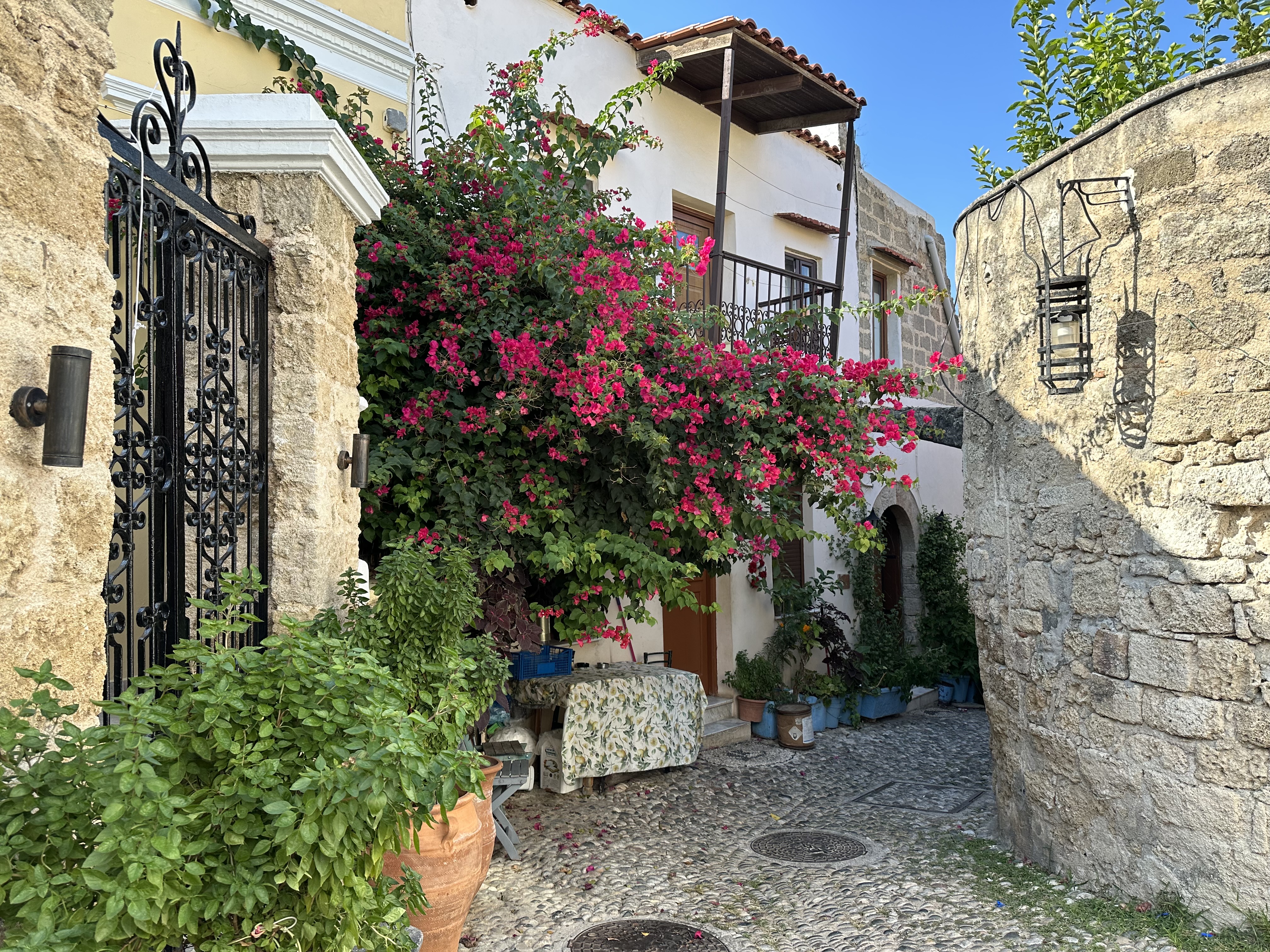
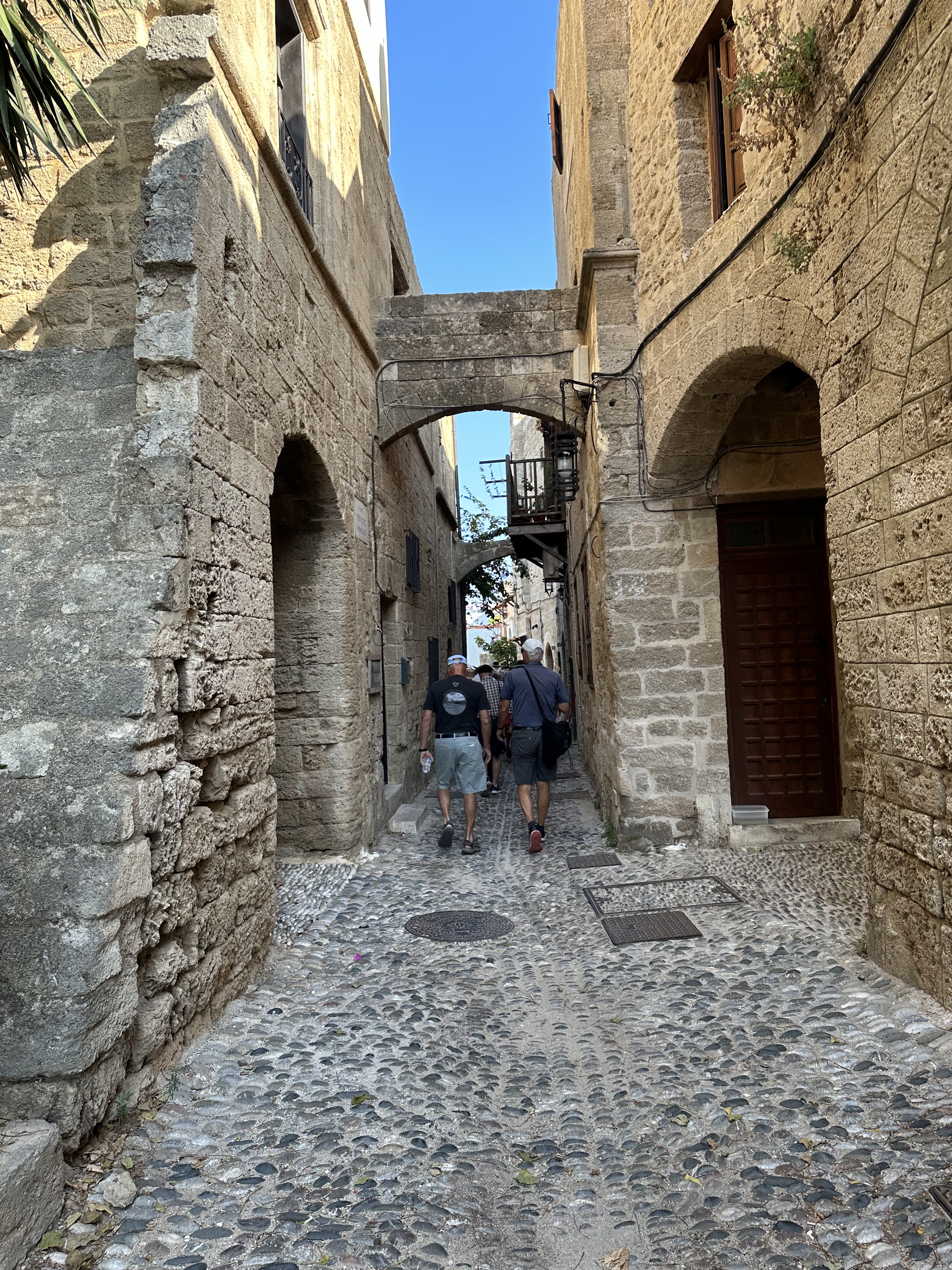
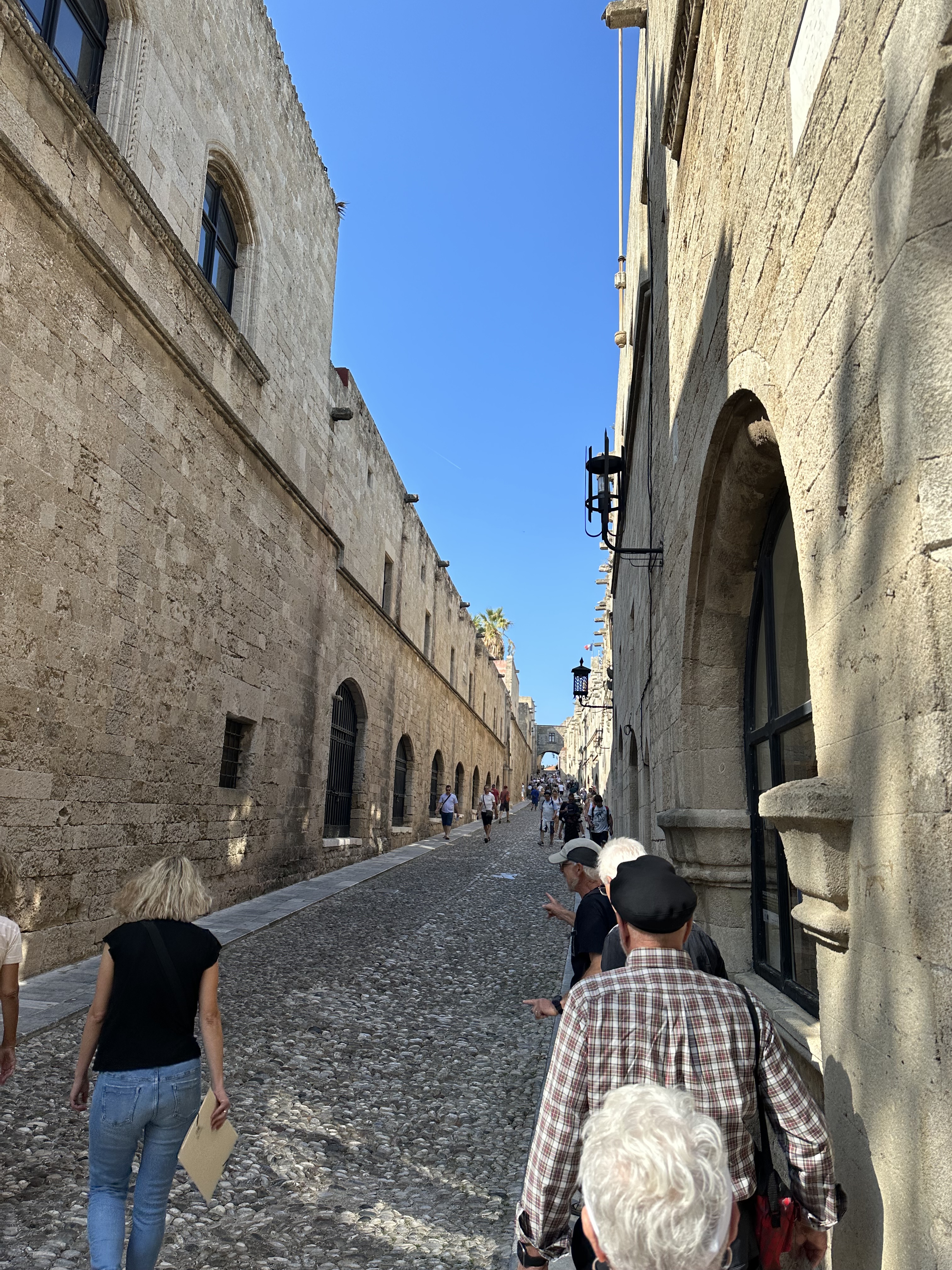
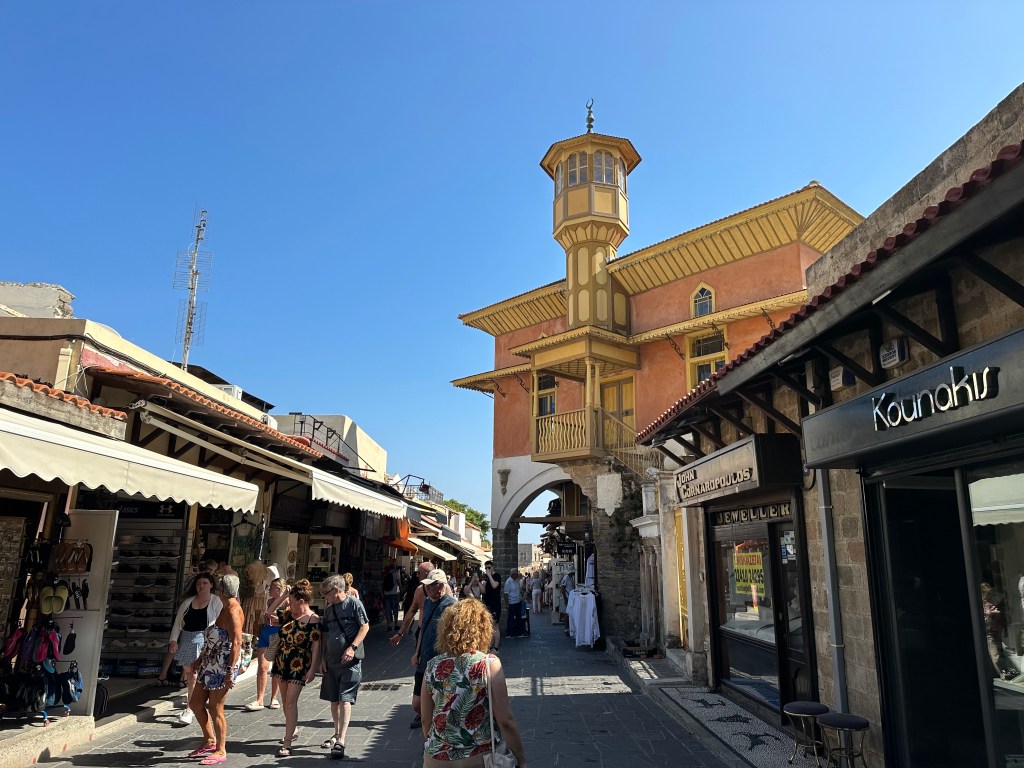
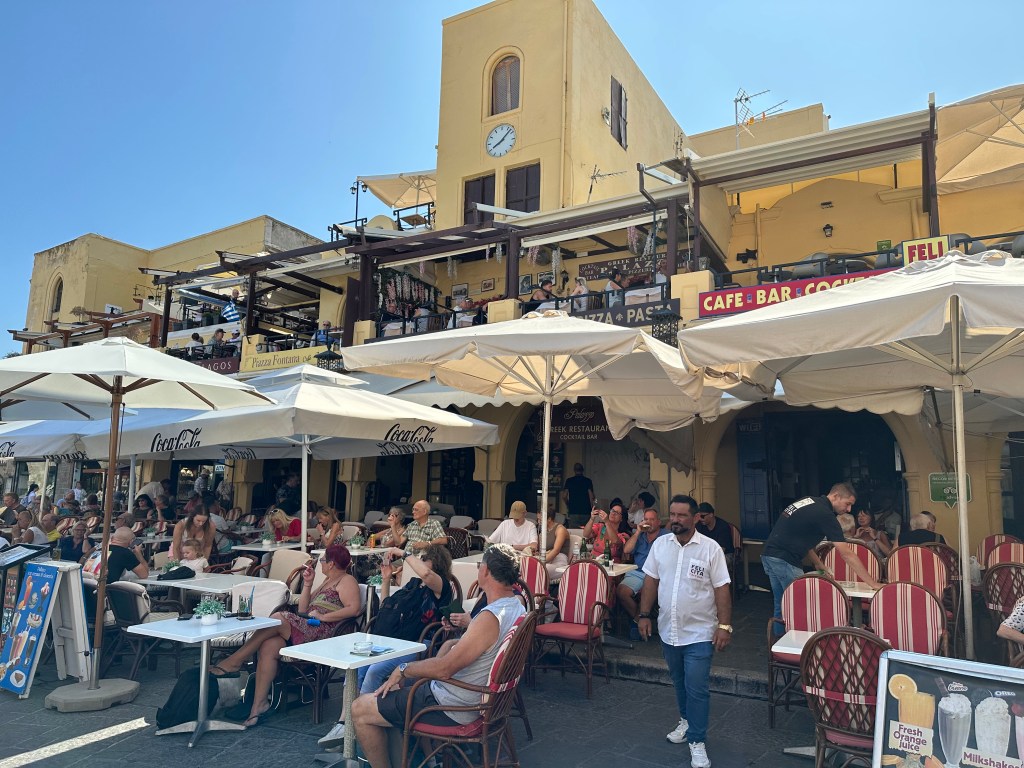
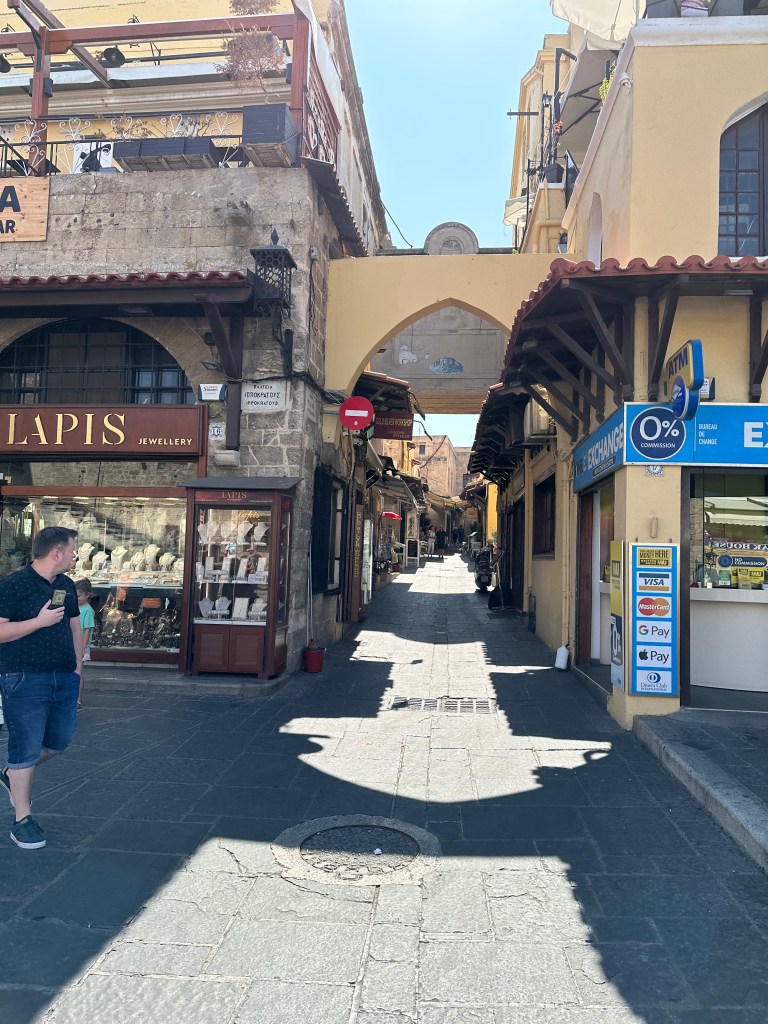
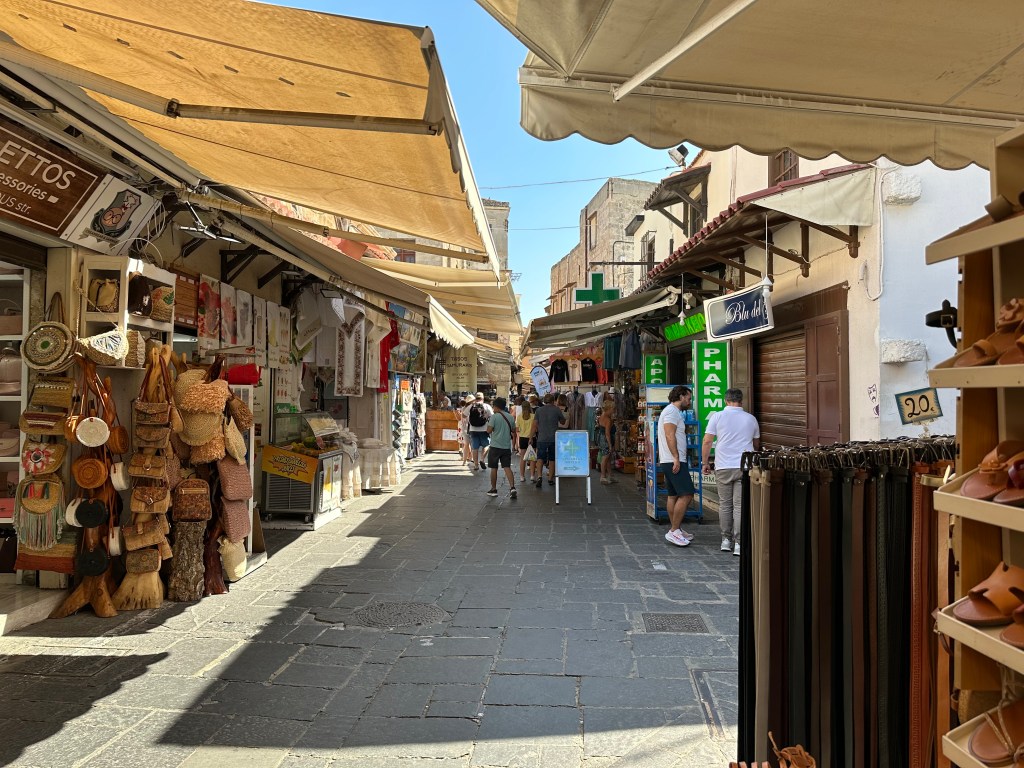
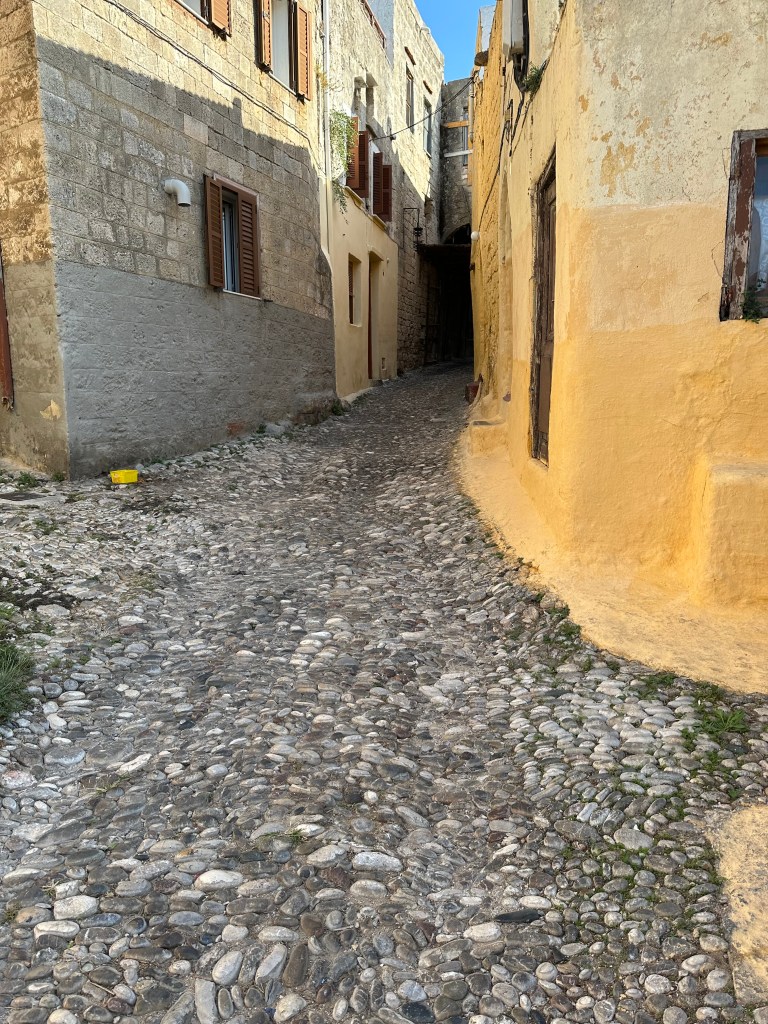
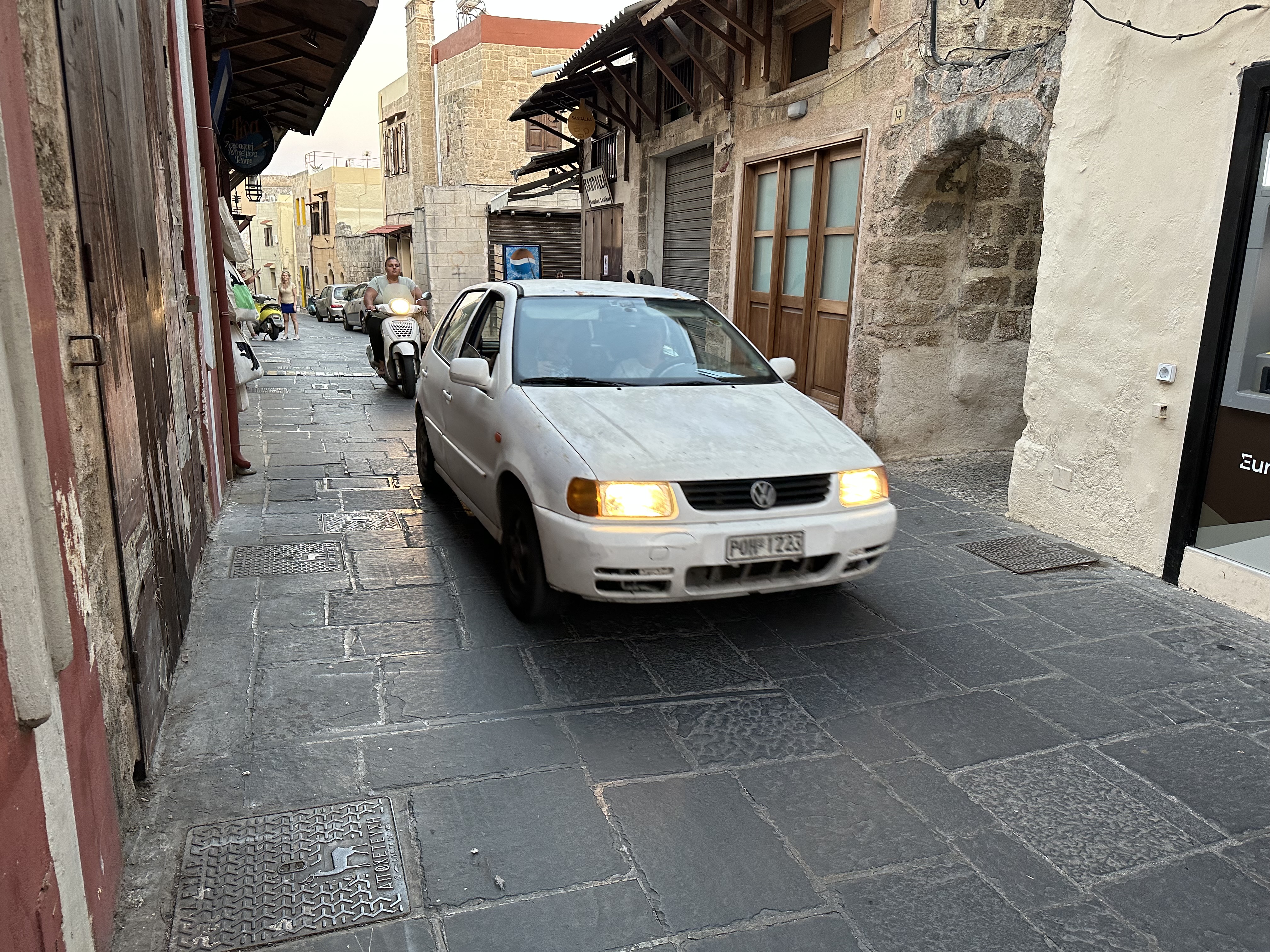
A typical back alley in the Old Medieval city of Rhodes.

We landed in Rhodes well after dark. We hauled our luggage off the ferry, along the Old City wall, through an ancient gate, and along the inside of the wall to our hotel. The medieval city is a UNESCO World Heritage site.

Because the boutique hotel didn’t have enough rooms for our group of 24, some of us were assigned to other properties farther up the hill and around a corner to our little abode for the next two nights. Ironically, we spent only one full day in this walled paradise, much like the Apostle Paul, according to Acts 21: 1.

On this leg of our journey, we followed the exact path of Paul on his third and final missionary trip and return to Jerusalem. After leaving Kos, his ship stopped in Rhodes and then to Patara.

The memorial to the Rhodes Jews killed in World War II.

After breakfast, our group first headed to Hippocratous Square, where a memorial stood to the 1,604 Jews from Rhodes who were murdered by the Nazis in concentration camps near the end of World War II. To me, it also served as a symbol of the history of persecution of peoples throughout history until our current time.

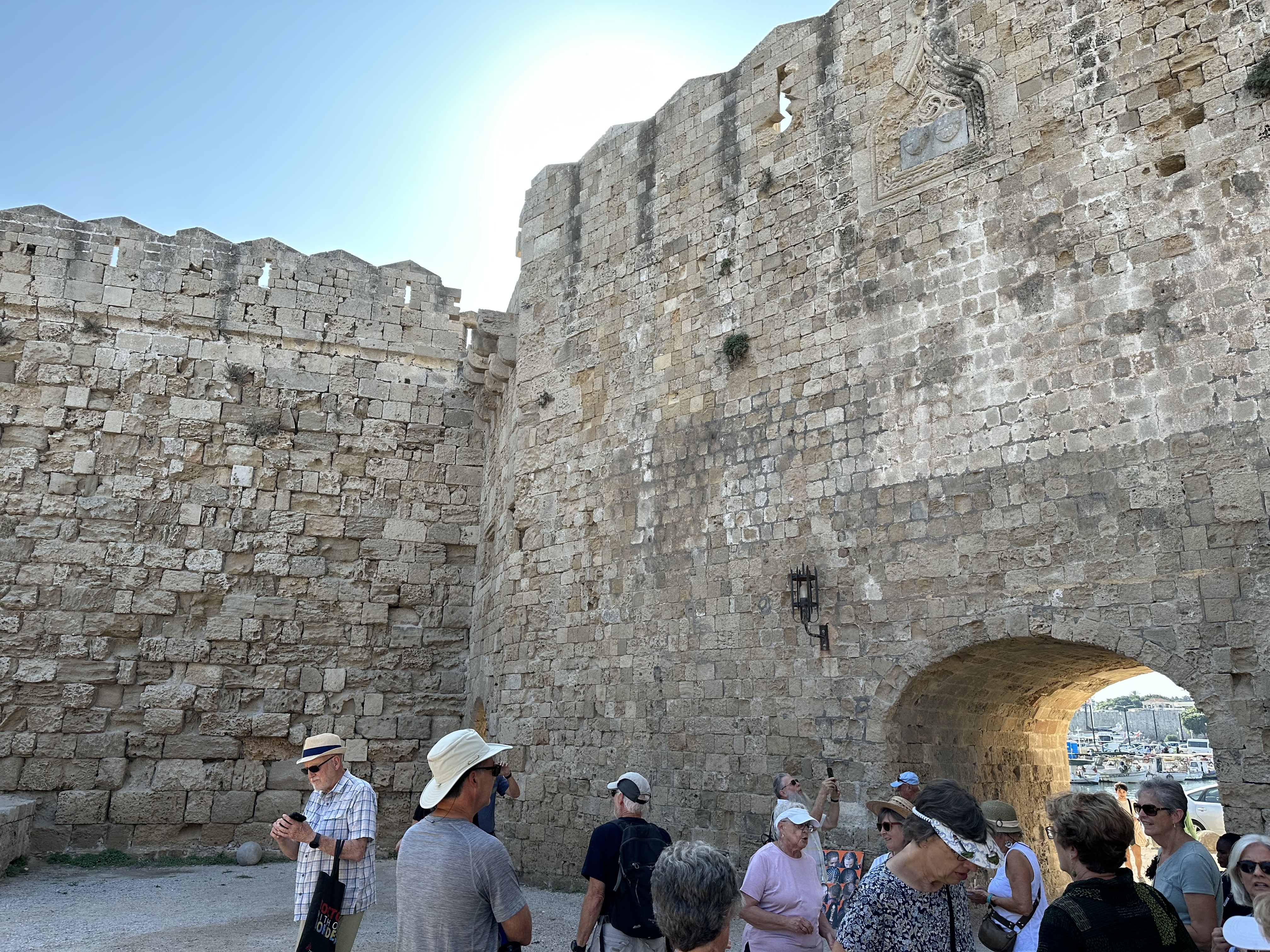
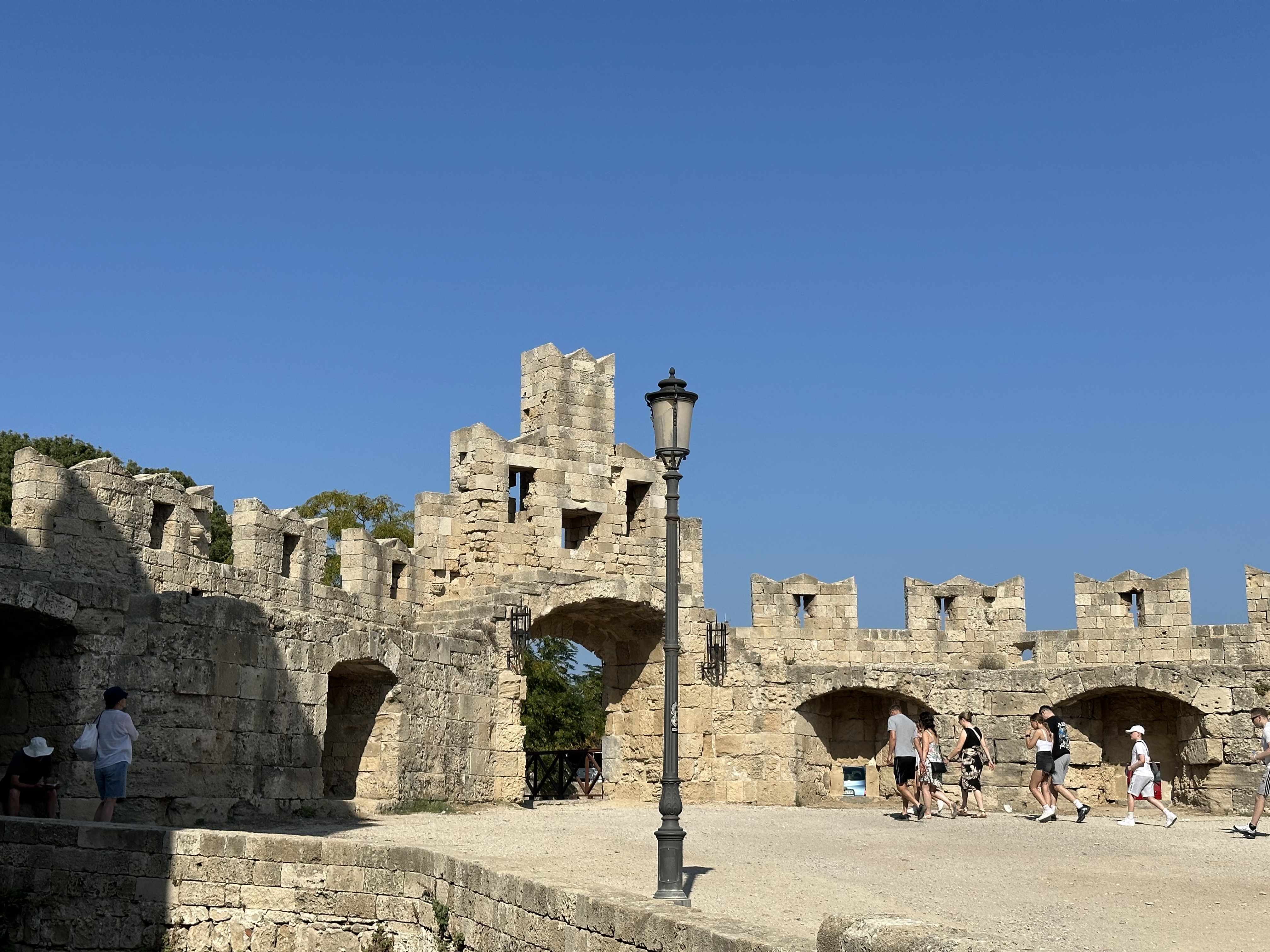
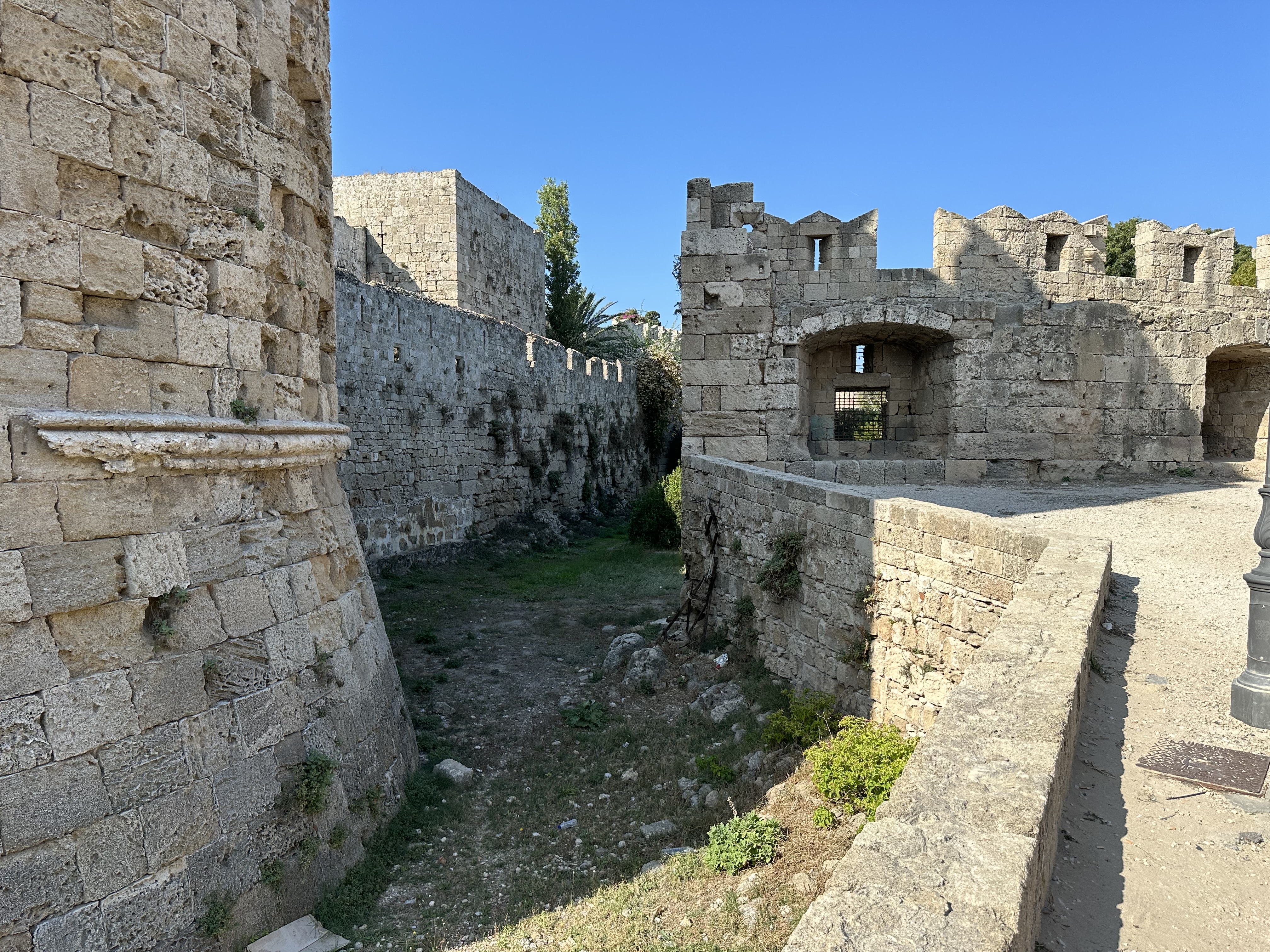
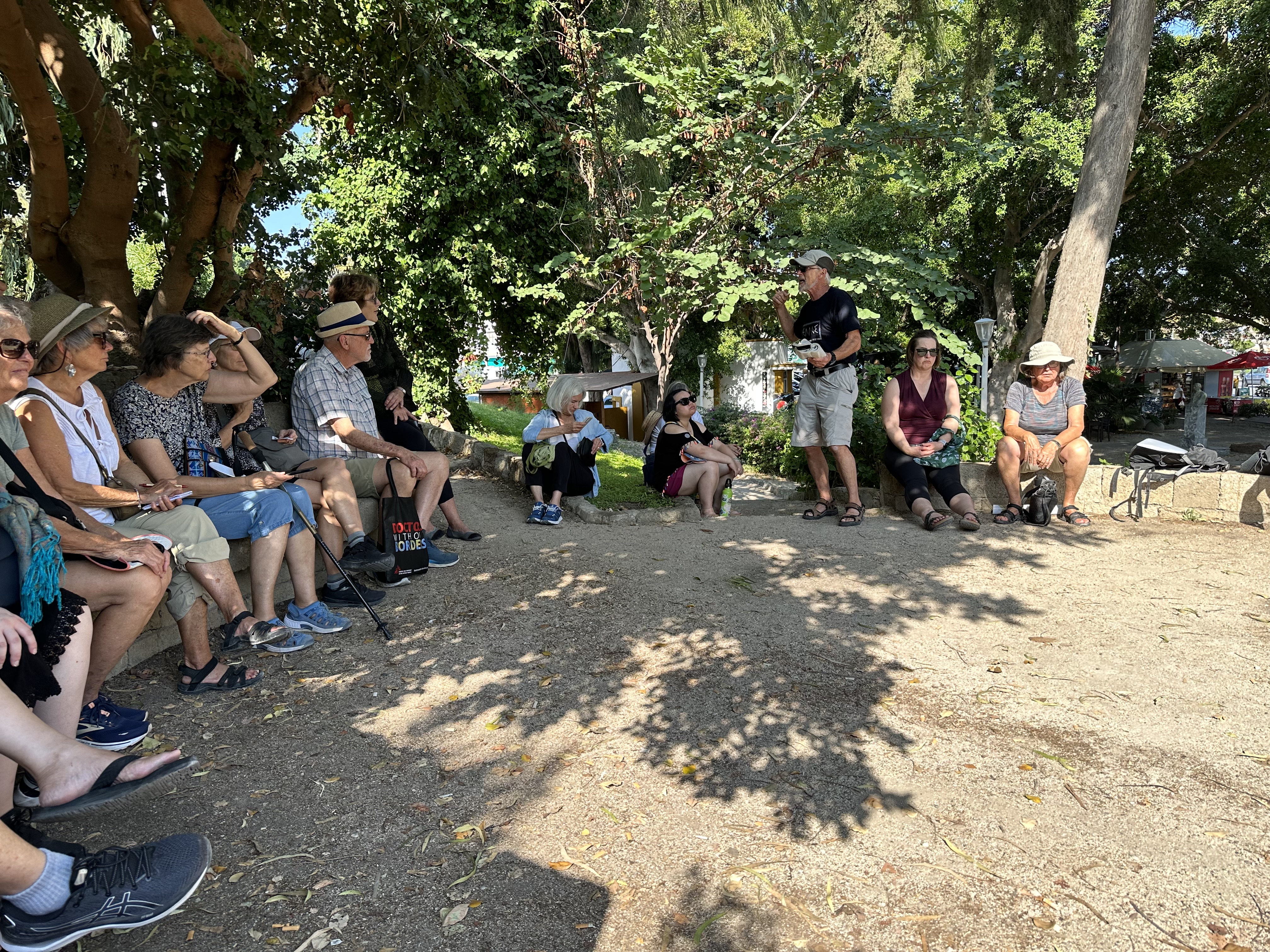
We headed outside the wall along the harbor’s edge to St. Paul’s Gate. On the way, we saw a section of the now-dry moat surrounding the Old City. Beneath the shade of a large tree, Linford focused on the importance of Rhodes during the Crusades. Because of its strategic location in the southern Aegean, Rhodes was an important trading city and a desired military location.

Please click on the photos to enlarge them.

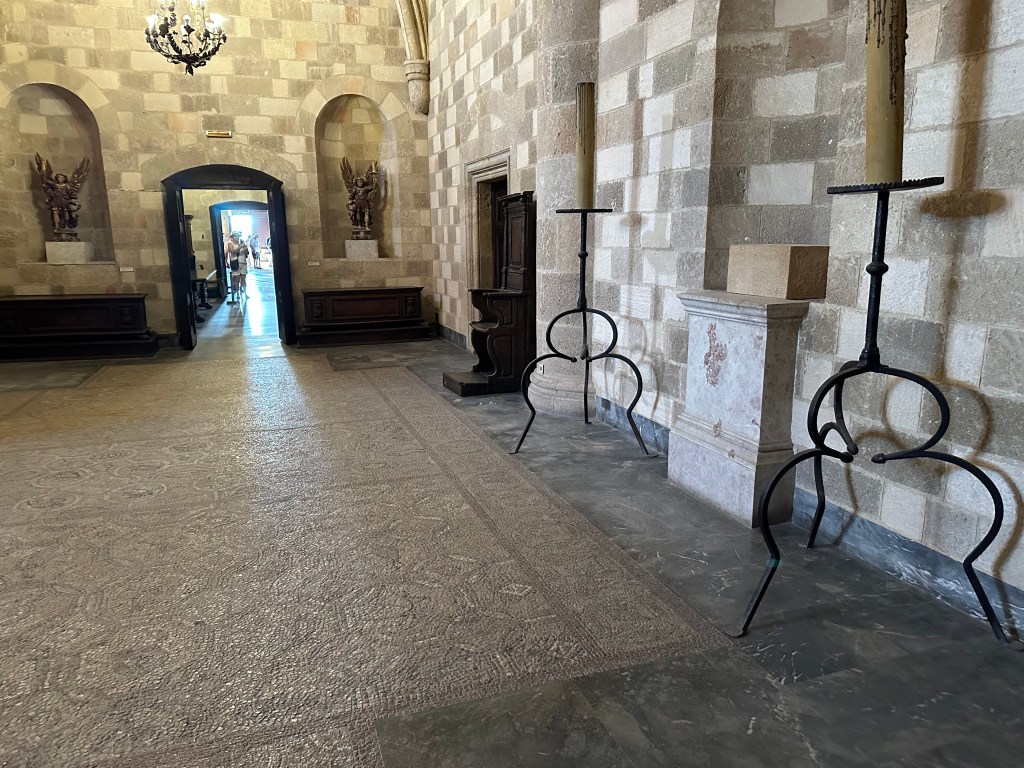
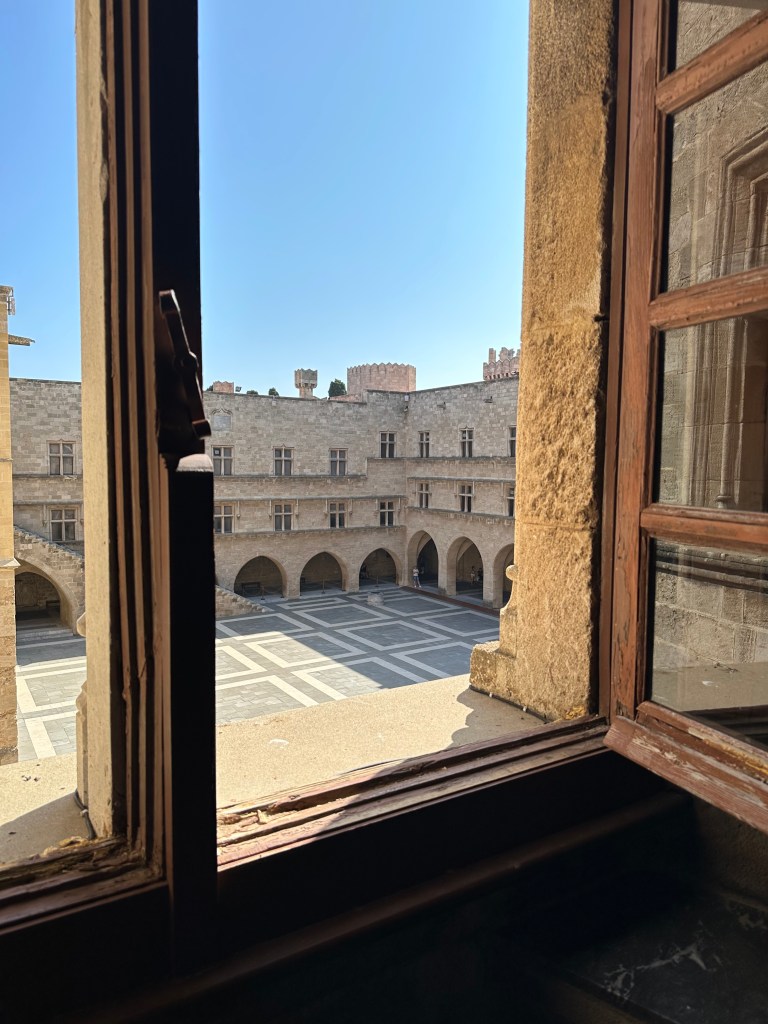
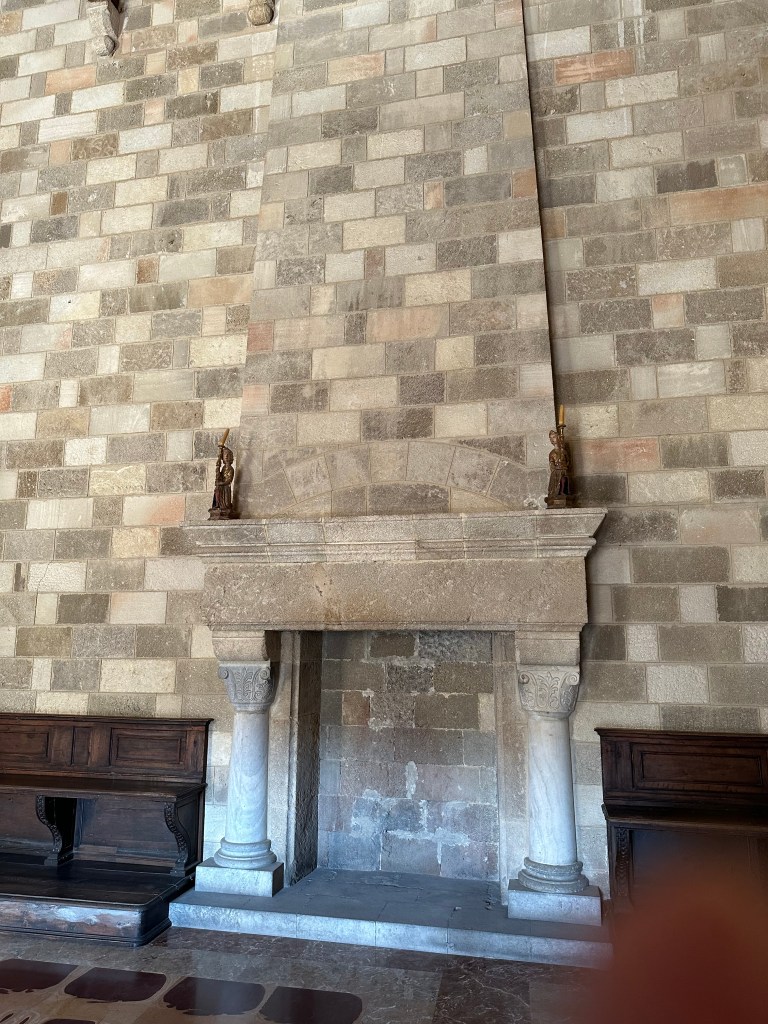
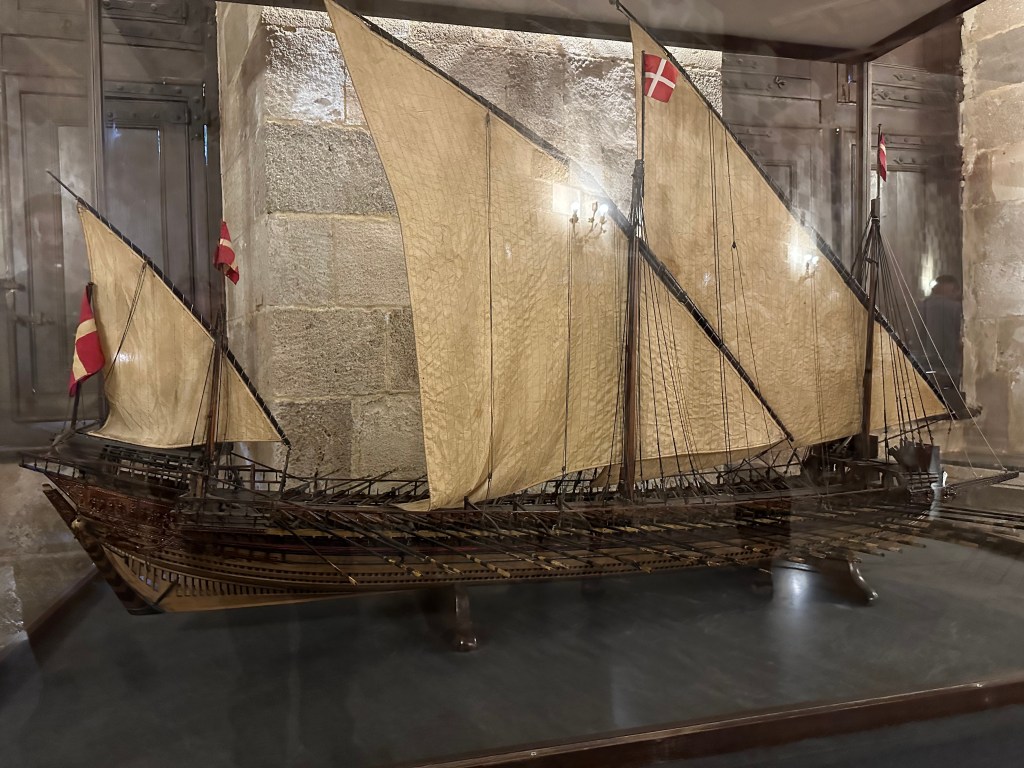
We marched up the steep incline of the Avenue of the Knights, with its pebbled cobblestones, to the Palace of the Grand Master. The Old Town owes its present-day appearance mainly to the Knights of St. John from the 14th and 15th centuries AD. The Knights closely followed the city’s Hippodamean grid plan, and sometimes, some streets follow the exact route of the 5th century BC streets. The main street today, Sokratous Street, was also the main commercial street in the Hellenistic period.

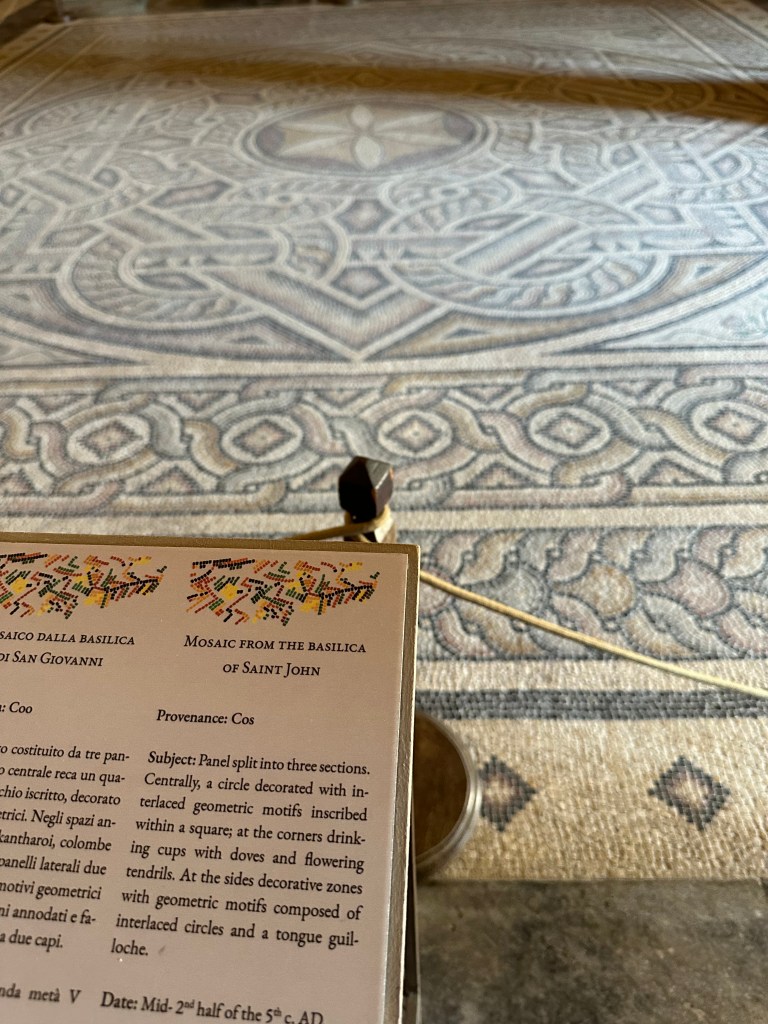
My wife and I toured the castle for an hour, marveling at its many striking mosaics, opulence, and thick stone walls. Unfortunately, by the time we exited, I wasn’t feeling well at all.

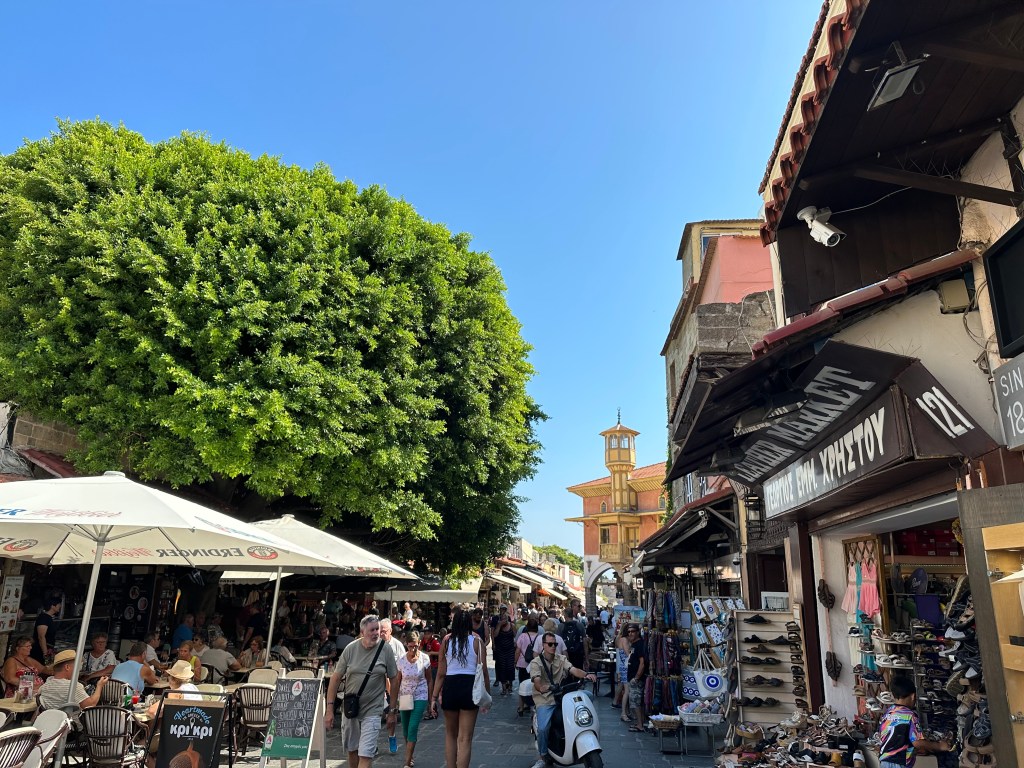
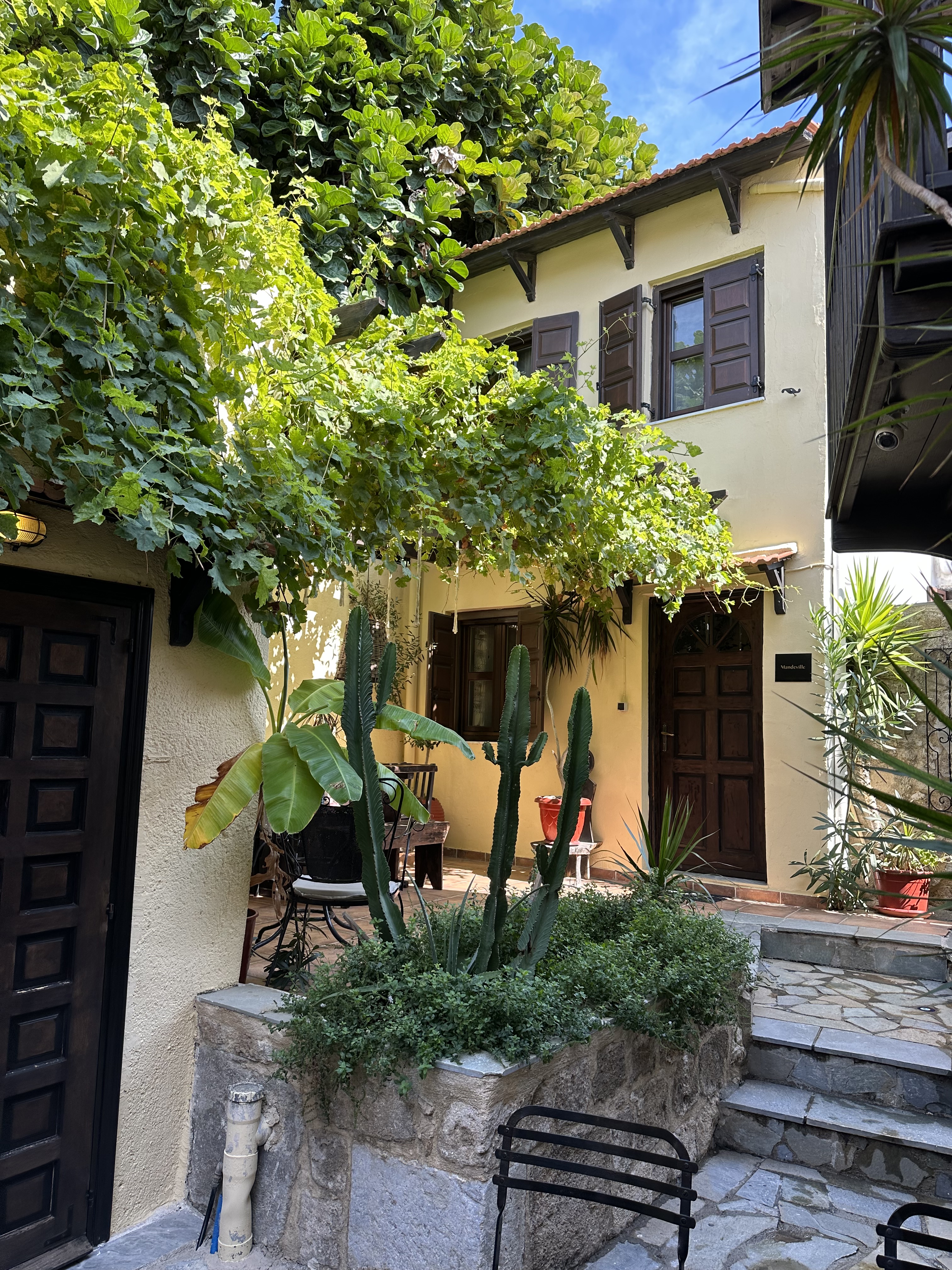
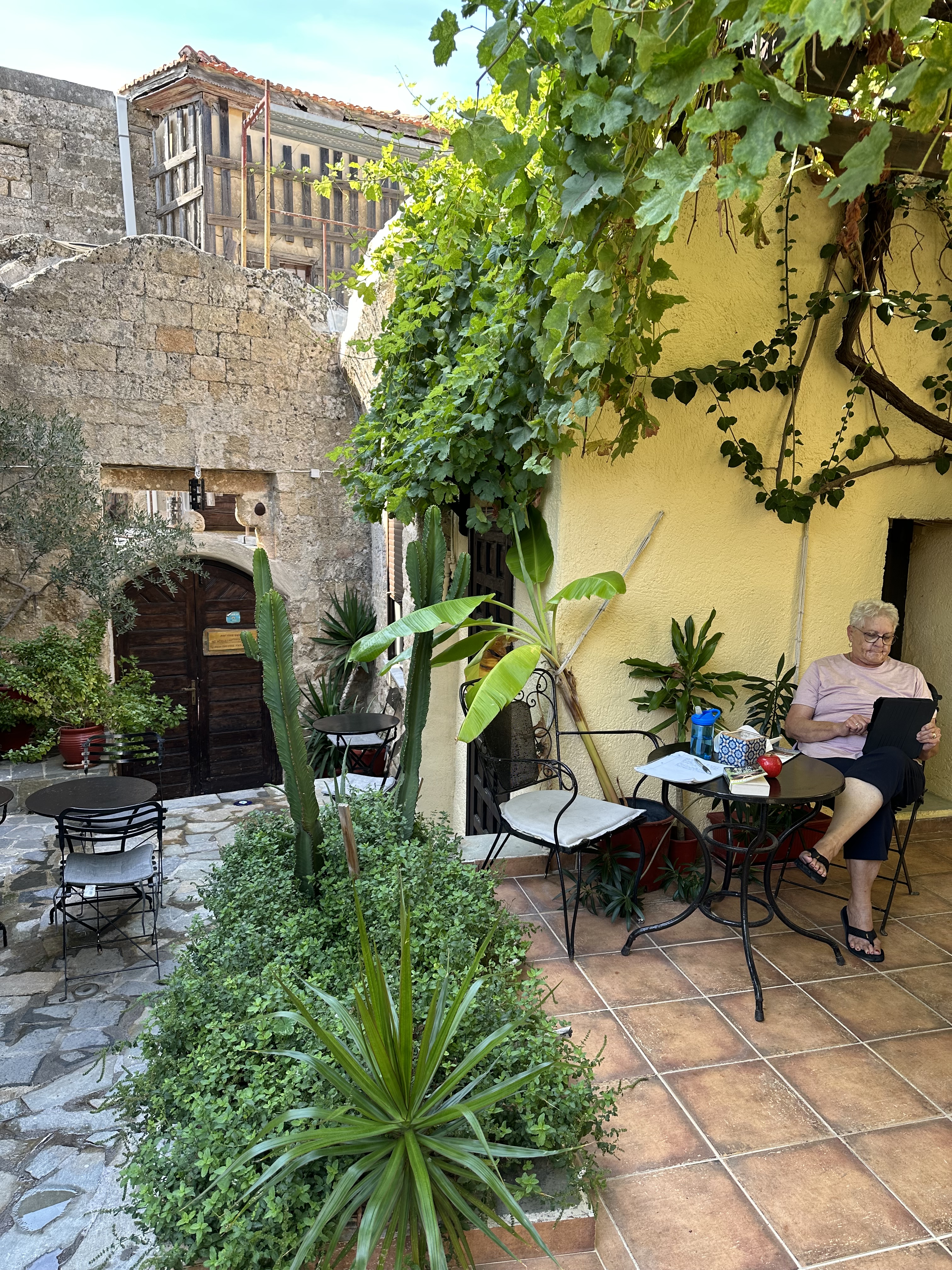
We decided to head back to our apartment. We walked through one marketplace after the other and stopped to rest and have a light lunch and beverage. Returning to our little abode and relaxing in the quiet courtyard was good. We only had to look up to see the old wall surrounding the town.

Please click on the photos to enlarge them.

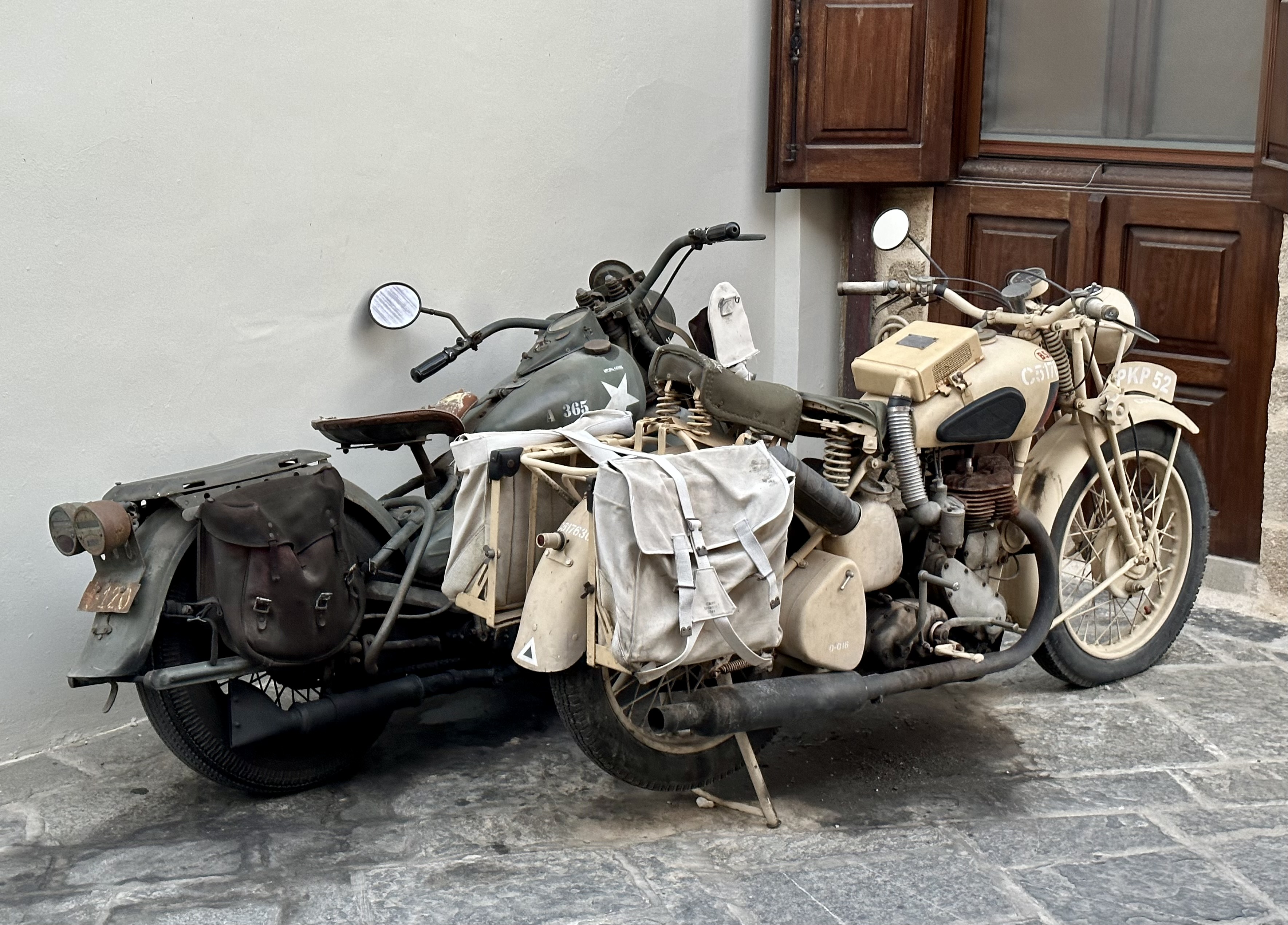
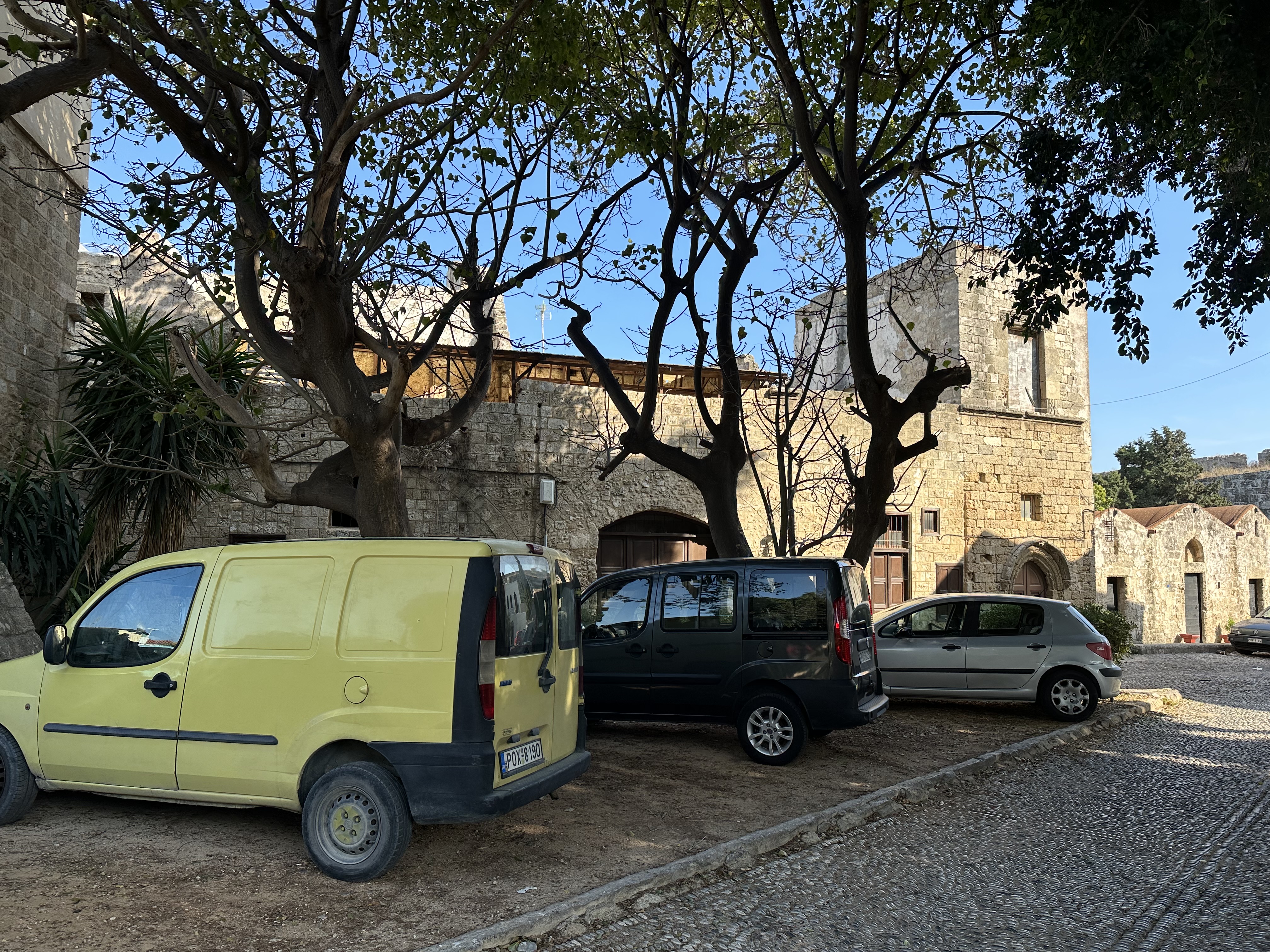
We also had to watch when we exited our little villa. After opening the protective iron gate, we entered a busy, narrow street. We squeezed against the stone walls as motorbikes and cars whizzed by. I was intrigued with where and how the vehicles were parked in a town built long before motor-driven transportation. The answer was they parked where they could and sometimes where they shouldn’t.

We finished our time in Rhodes with a group meal served by the chef at the boutique hotel. We needed to get to bed early since we had an early flight back to Athens and a connecting flight to Rome, our next destination.

Tomorrow: On to Rome.

Trees are greatly appreciated for their cooling shade on a hot afternoon.

© Bruce Stambaugh 2023

Pippi Longstocking comes to life on Amelia Island, Florida

Villa Vilekulla, Pippi Longstocking
The real Villa Villekulla. © Bruce Stambaugh 2015

By Bruce Stambaugh

Art often imitates life. It’s more unusual to have it happen the other way around.

On Amelia Island, Florida, art and life have harmonized, especially for one particular children’s fictional character, Pippi Longstocking.

Pippi Longstocking was the brainchild of Swedish children’s author, Astrid Lindgren. She wrote a series of adventures about Pippi that have been read and reread by adoring youngsters around the world. The books have been translated into 64 languages.
Pippi books have been so popular that Hollywood had to join in the fun, too. Several versions of Pippi Longstocking movies have been made.

In 1988, an Americanized version of the original Swedish story was made into a movie, which was filmed entirely on Amelia Island. Island tour guides like to point out various locales where scenes from “The New Adventures of Pippi Longstocking” were shot.

Lighthouse cottage, Pippi Longstocking, Fernandina Beach FL
The lighthouse cottage where Pippi threw the bottle into the ocean.
Most of the scenes were filmed in or near Historic Downtown Fernandina Beach, Amelia Island’s only city. The only seashore scene, which was very brief, was filmed just down the beach from where we have stayed on vacation.

When our three grandchildren visited us in Florida near the end of January, they wanted to see some of the locations as depicted in the movie. They had seen the movie, thanks to Nana, who had it on videotape from her teaching days.

Nana packed the tape so the kids could review the various locations in the movie. They watched the light-hearted film, and we were off on our Pippi tour.

Since the setting of much of the book and movie was in Pippi’s dilapidated house, the Villa Villekulla, we headed there first. In previous years, the house looked much the way it appeared in the movie, unkempt, disheveled, and badly in need of a fresh coat of white paint.

Imagine our surprise, and the grandkids’ disappointment, when we found the house being remodeled. A distasteful olive green siding replaced the weathered white clapboards so prominently featured in the film.

This slideshow requires JavaScript.

It was evident that the remodeling project was a work in process. The owner had replaced some of the windows of the Victorian-style home. Others were boarded up.

We later learned that the beloved house had been vandalized, purchased, and was being restored with the purpose of giving tours. In the movie, the villain tried repeatedly to obtain the home by deceit so the old house could be demolished and replaced with a moneymaking scheme.

The grandkids were disappointed to learn that the big tree in the side yard where Pippi and her neighbor friends so often played was the convenience of the producer’s imagination. They discovered how movies are produced.

We visited Centre St. in the quaint downtown area, where most of the movie was filmed. The ice cream shop was actually the oldest saloon in Florida. The building Pippi flew her bicycle by just happens to house a toy store named “Villa Villekulla.”

One puzzle remained, however. Where were the orphanage scenes shot? I found the answer after the kids left. Those scenes were filmed at a private school just north of Centre St. Ironically the old brick building originally had been a home for orphans.

When the sun broke through, and the temperatures warmed, our grandchildren’s attention turned from fantasy to reality. They played on the seashore in front of the lighthouse-shaped home where Pippi threw the bottle with a message in it for her father.

Imagination and reality met on the beach. Our grandkids couldn’t have been happier.

Pippi Longstocking, pink sunset
A sunset just the way Pippi would have liked it. © Bruce Stambaugh 2015

© Bruce Stambaugh 2015

Viewing the leaves in Ohio’s Amish country

Fall from my backyard by Bruce Stambaugh

By Bruce Stambaugh

Ohio’s Amish Country, particularly Holmes County, is a great place to be when the autumn leaves are at their finest. With its many stands of mixed hardwoods throughout the area, the colors can be spectacular if all the conditions are right.

The leaves are usually at their colorful peak by mid-October. Though the summer’s drought may have caused some trees to already change, they seem to be on a normal timetable for coloration. Now through the next two weeks will provide marvelous viewing.

Several great routes can be driven to see the rainbow of leaves. Just consider the rolling hills, rows of corn shocks, grazing cows, romping horses, Amish buggies and silvery streams as backdrops to the main event.

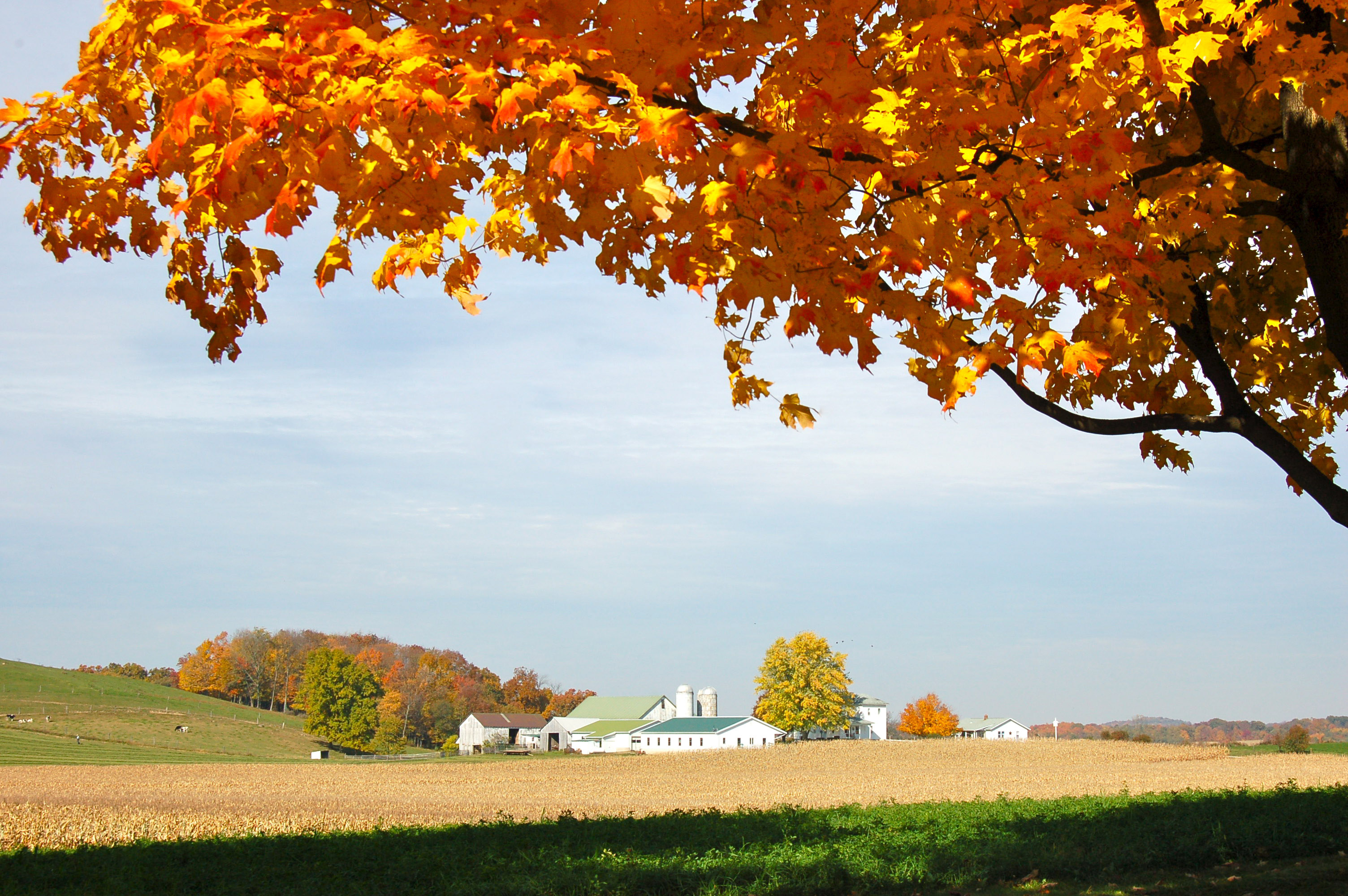
Fall farm by Bruce Stambaugh

Simply traveling the main highways that lead into the Holmes County area and crisscross the county will guarantee beautiful scenery. That’s especially true in the fall.

Trees and shocks by Bruce StambaughState Route 39 cuts Holmes County in half east to west. In many places, the road roughly follows the terminal moraine of the Wisconsin Glacier. To the south, hillsides loaded with maple, oak, walnut, beech and hickory trees are steeper than their counterparts on the opposite side of the road. The glacier filled in the valleys on the north side 10,000 years ago, leaving a gently undulating geography, with rich soil that farmers pamper for excellent crops and lush pasturelands. Stands of woodlots and tree-studded fence lines create magnificent leaf viewing.

Yellow and red by Bruce StambaughState Route 83 bisects Holmes County in half north to south. You will be dazzled by the vistas that change seemingly at every curve. Both north and south of Millersburg, the county seat, the route hugs the eastern edge of the Killbuck Valley. Impressive slopes with ample forests east and west nestle golden marshlands teeming with wildlife in between.

U.S. 62 runs diagonally across the county. From the northeast, pastoral views are aplenty, meandering through Amish farmland on each side. Because the wood industry surpassed agriculture as the number one employer in Holmes County a few years ago, trees are treasured and properly cared for.

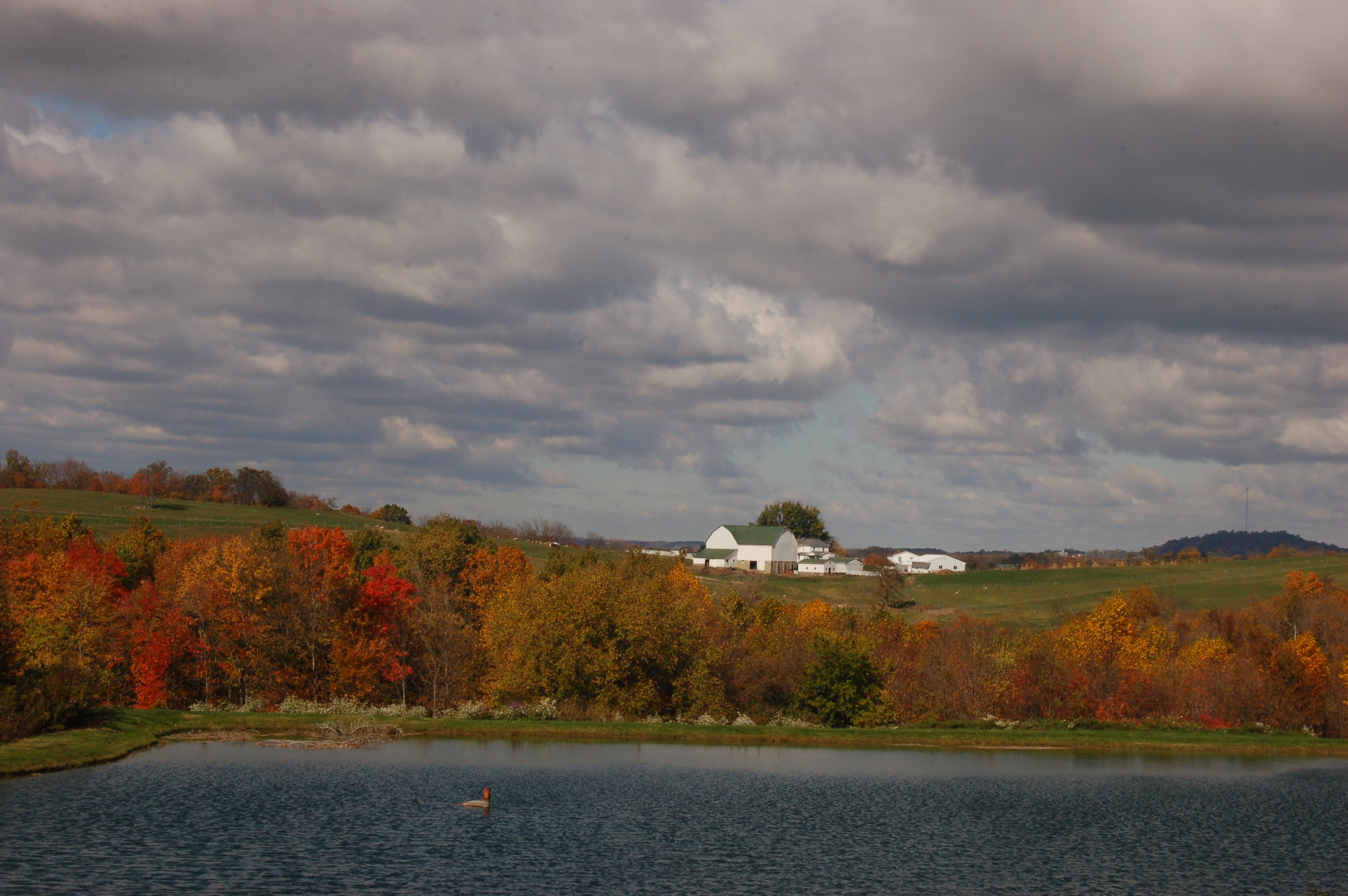
Fall scene by Bruce Stambaugh

Follow U.S. 62 from Millersburg southwest toward Killbuck and on to Danville in Knox County and you might think you are in the foothills of the Appalachian Mountains. In truth, you are. The road follows the area’s main waterway, Killbuck Creek, and then climbs the hills into the Mohican River watershed.

Woods and hills by Bruce Stambaugh

The lesser traveled state, county and township roads provide equal opportunity viewing when it comes to autumn leaves. State Route 520 from Killbuck through Glenmont’s seven hills and on to State Route 514 especially provides a pretty show if the timing is right.

In the east, State Routes 241, 515, 557 and 643 all are winding, hilly and gorgeous in the fall. Farmsteads with white houses and coffin red barns are the norm in any direction on these roads.

Red barn red tree by Bruce Stamaugh

For those who desire more than just riding and looking, the area has plenty to offer. At the Wilderness Center off of U.S. 250 west of Wilmot, you can hike through prairie grass and virgin forests, and explore an education center, where there is fun for all ages.

Mohican State Park near Loudonville affords numerous trails with incredible overlooks to the steep Mohican River gorge. The greens of the thousands of white pines nicely compliment the colorful mixed hardwood forest.

For bicyclists, the Holmes County Trail offers 16 miles of lovely trials from Fredericksburg to Killbuck. Hikers are welcome, too. The trail runs along the Killbuck through the center of the county until it turns southwest toward Killbuck. The wildlife, birding and leaf viewing can all be consumed simultaneously. A note of caution, however. Horse and buggies also use the trail on one side while bikers and hikers are on the other.

Everyone has their favorite spot to view the changing leaves. You’ll enjoy finding yours.

Fall in Amish country by Bruce Stambaugh

This article appeared in Ohio’s Amish Country magazine.

© Bruce Stambaugh 2012

Bay Photos by Donna

Wildlife photos from the Chesapeake Bay region

ROAD TO NARA

Culture and Communities at the Heart Of India

K Hertzler Art

Artist and nature journalist in the Shenandoah Valley of Virginia.

Maria Vincent Robinson

Photographer Of Life and moments

Gabriele Romano

Personal Blog

Jennifer Murch

Art is the only way to run away without leaving home. -Twyla Tharp

Roadkill Crossing

Writing generated from the rural life

ANJOLI ROY

writer. teacher. podcast cohost.

Casa Alterna

El amor cruza fronteras / Love crosses borders