Autumn in the Shenandoah Valley

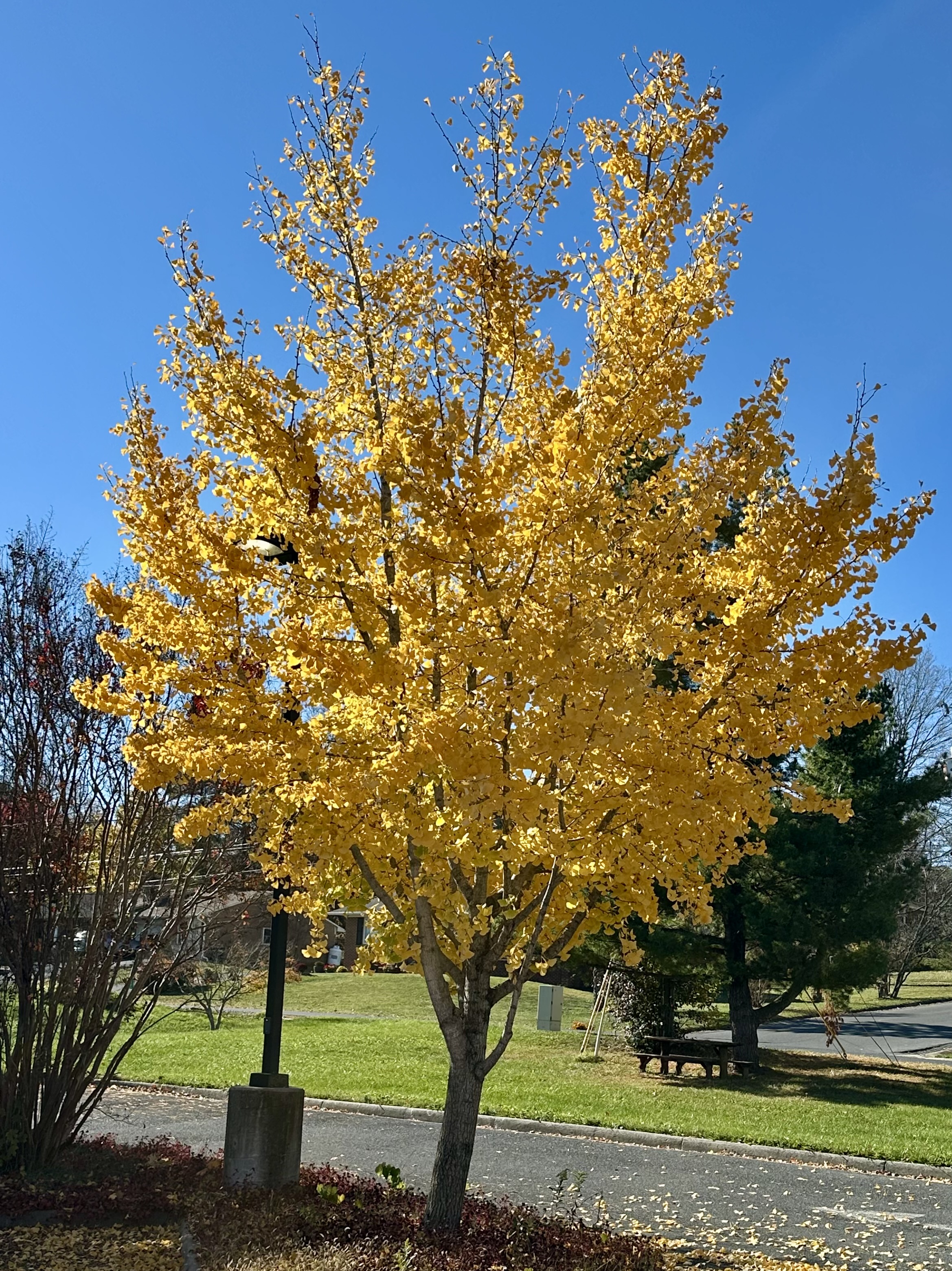
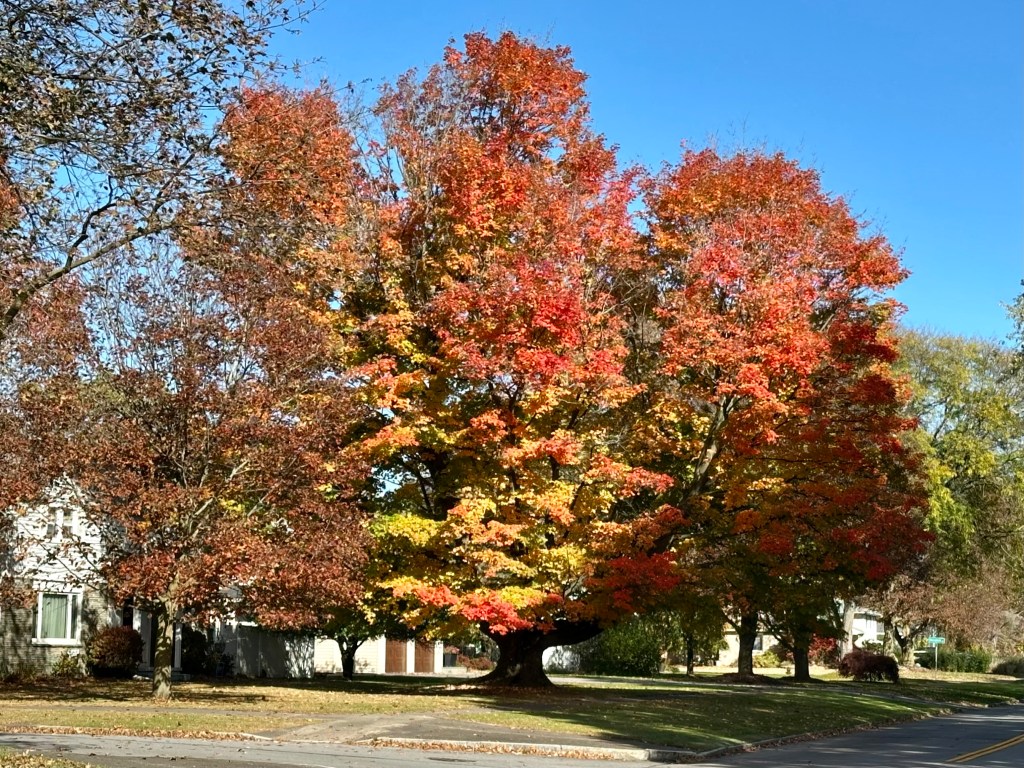
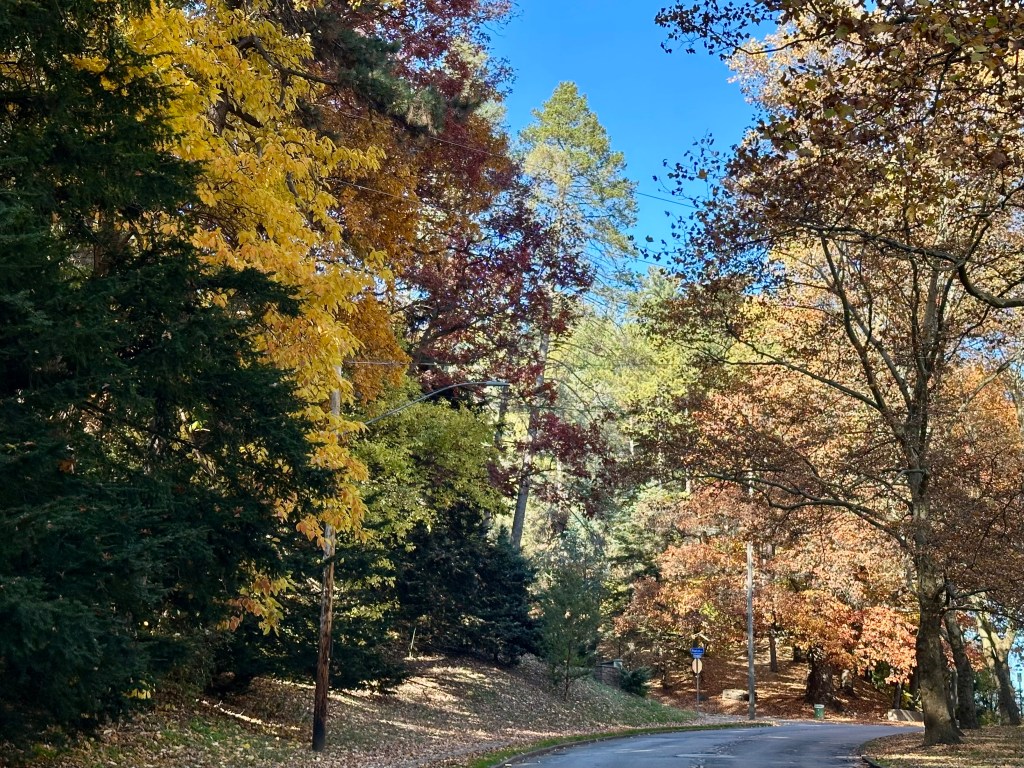
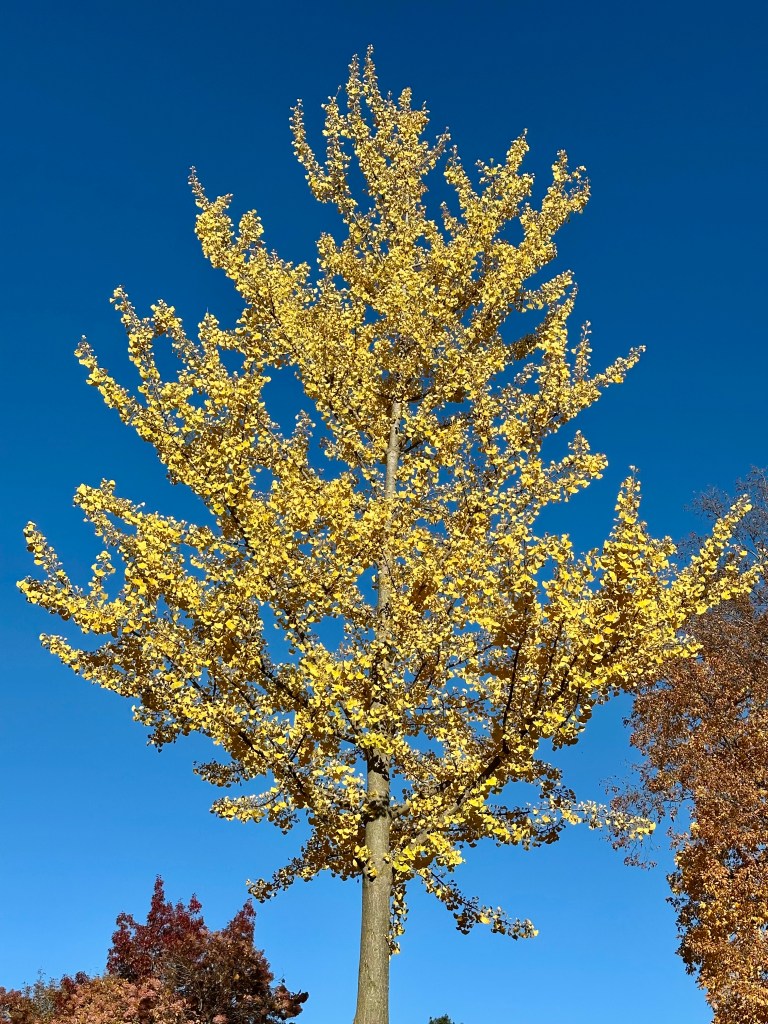
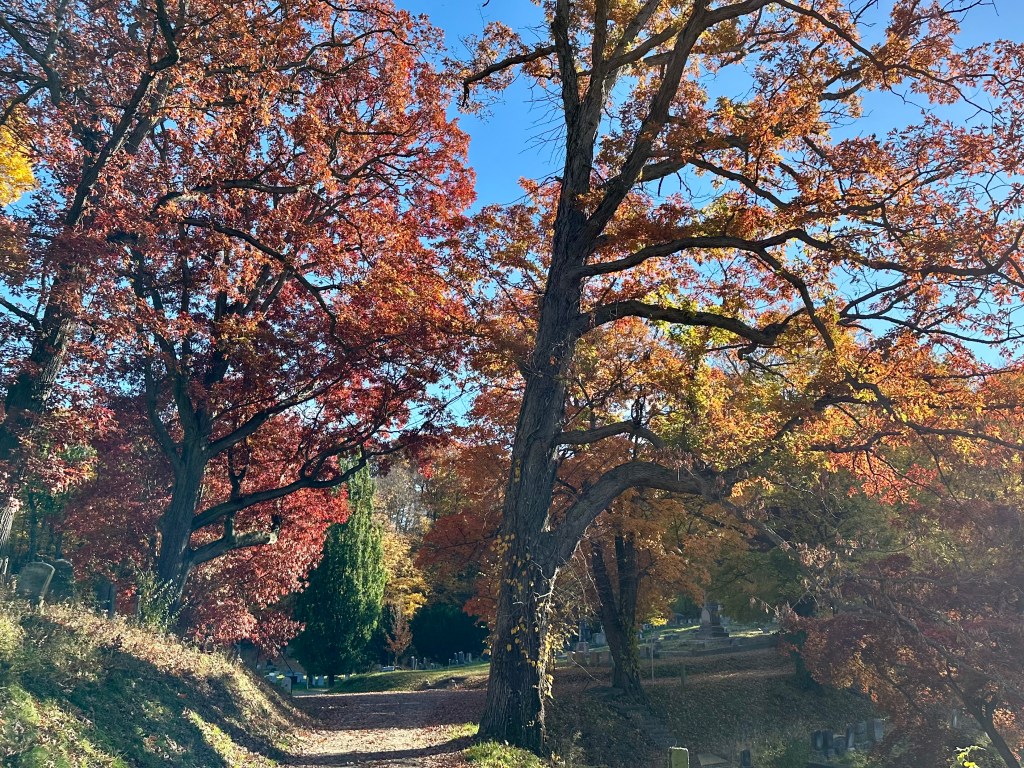
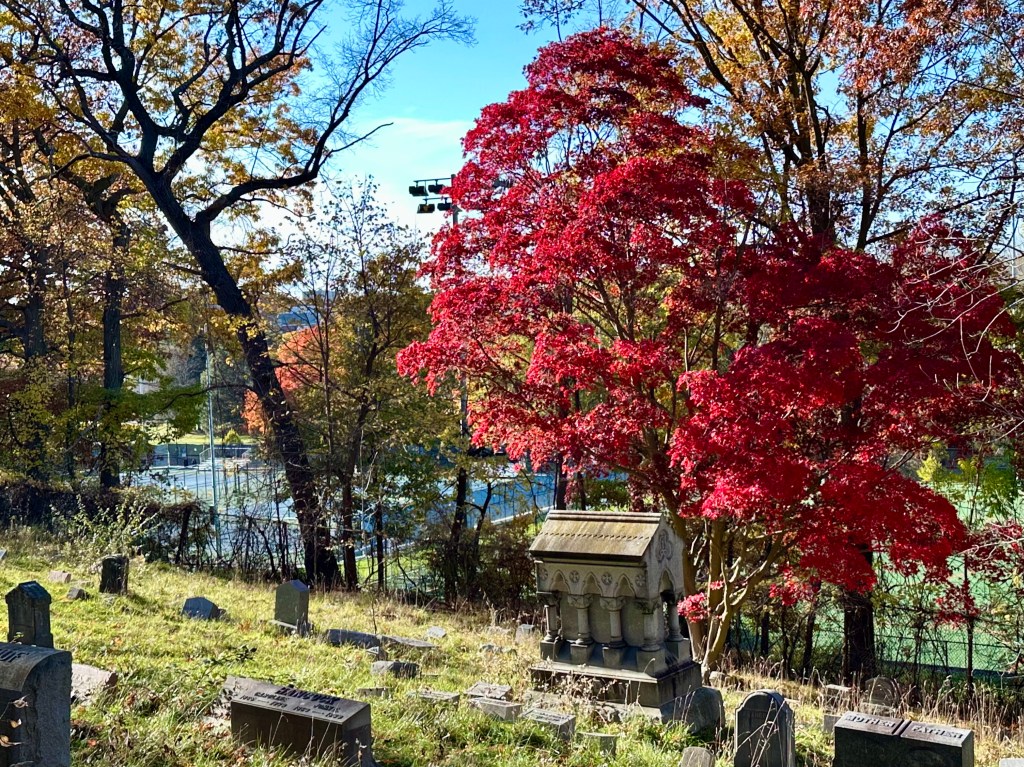
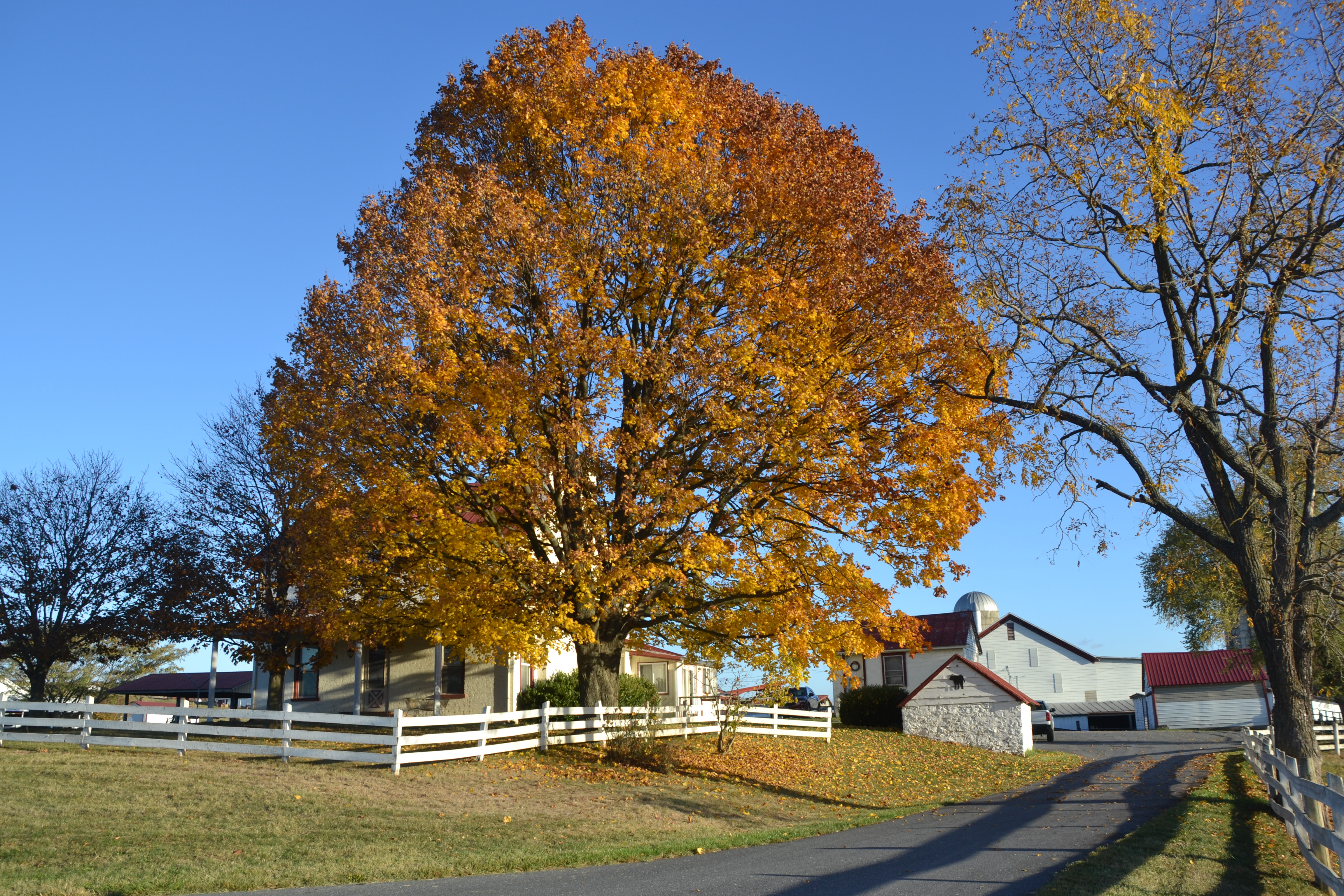
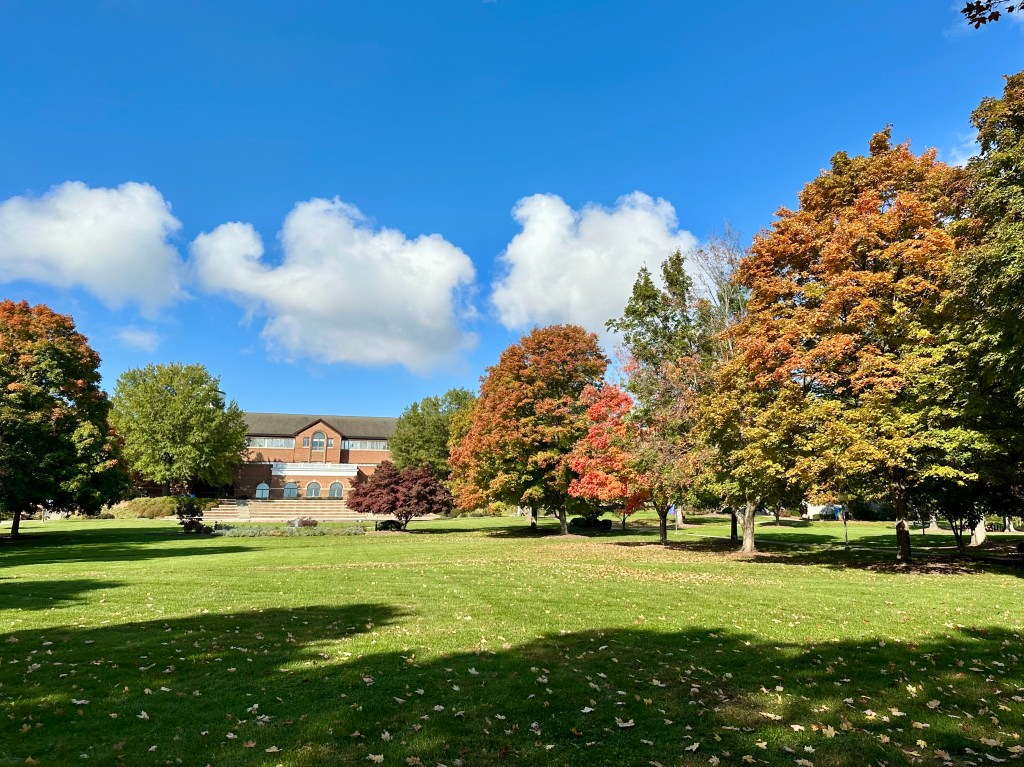
The geen at Eastern Mennonite University, Harrisonburg. Photo by Bruce Stambaugh

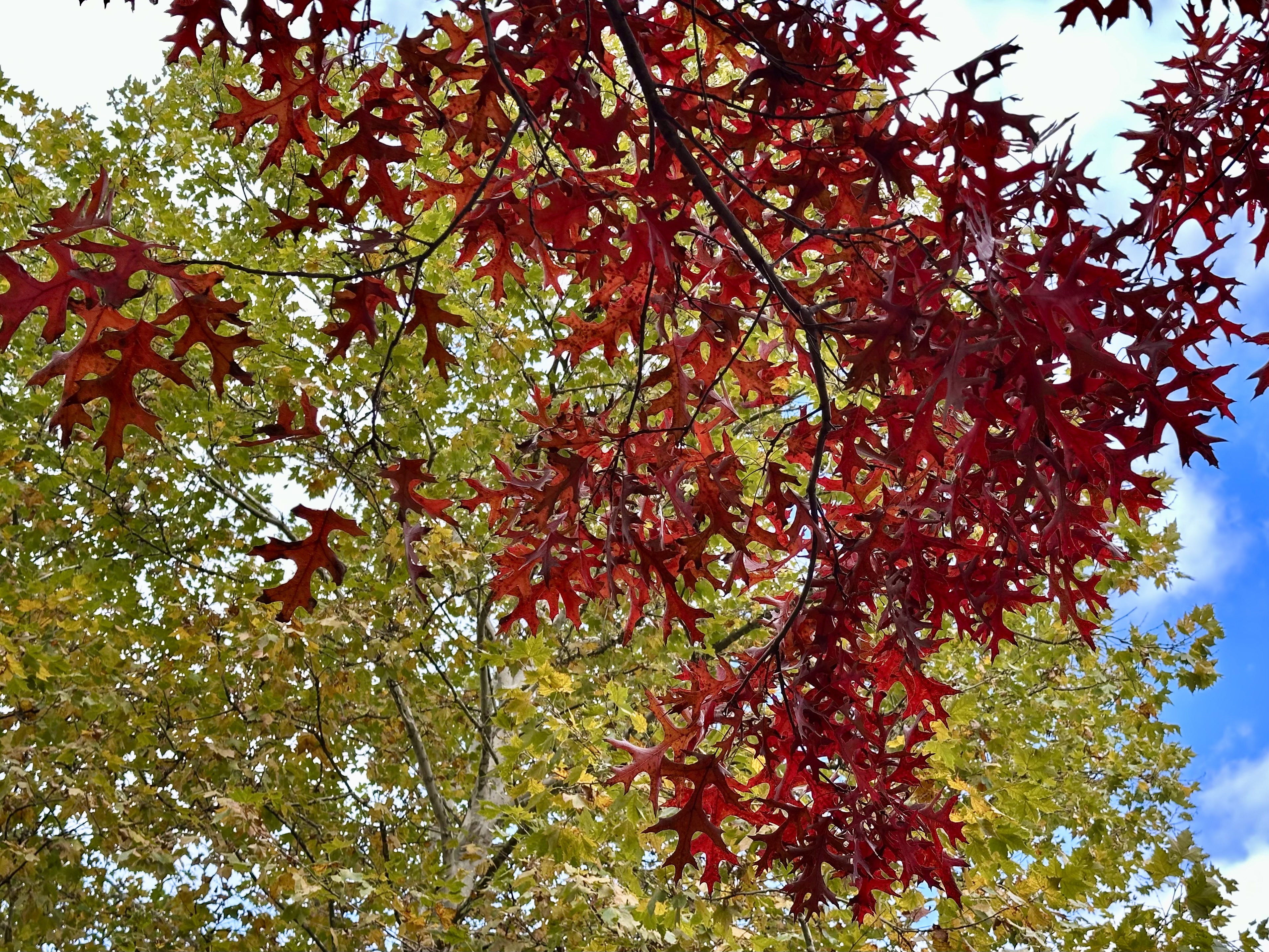
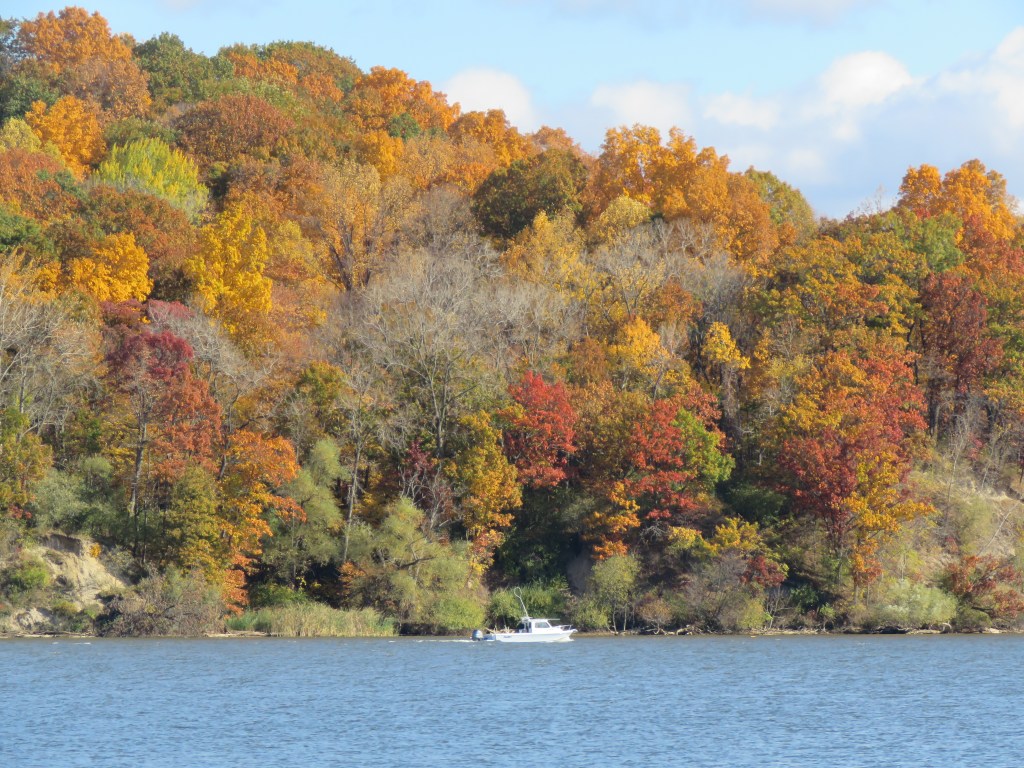
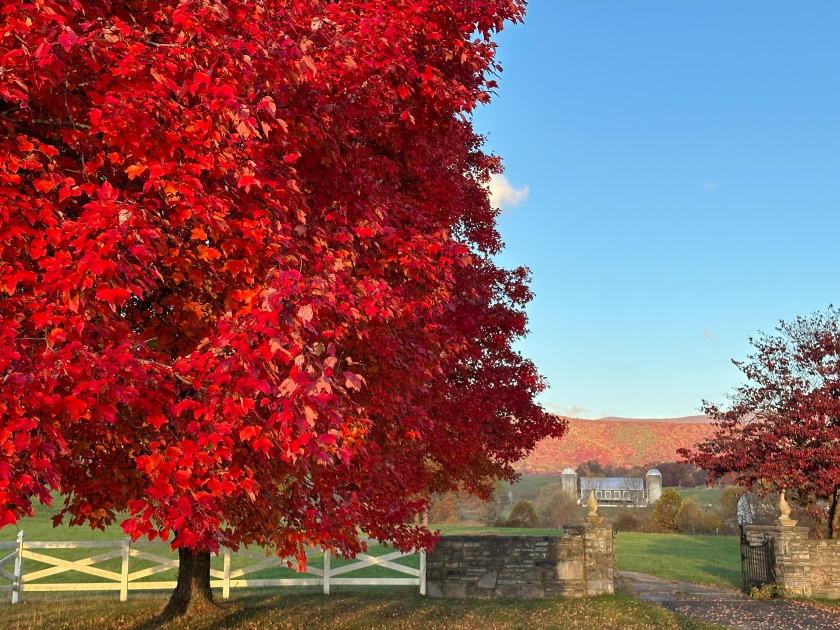
Fall in Virginia’s scenic Shenandoah Valley is always a treat for those who truly embrace the slow transition from summer to winter. Like most locales, however, autumn is hardly the same from year to year.

Summer and early-fall weather strongly influence how vibrant the leaves’ colors are. For much of the summer, the entire Shenandoah Valley was in an extreme drought.

By Labor Day, I wasn’t very hopeful about getting the rich hues of autumn that paint the agricultural valley in a kaleidoscope of warm tones. Then the rains and cool weather arrived, apparently just in time.
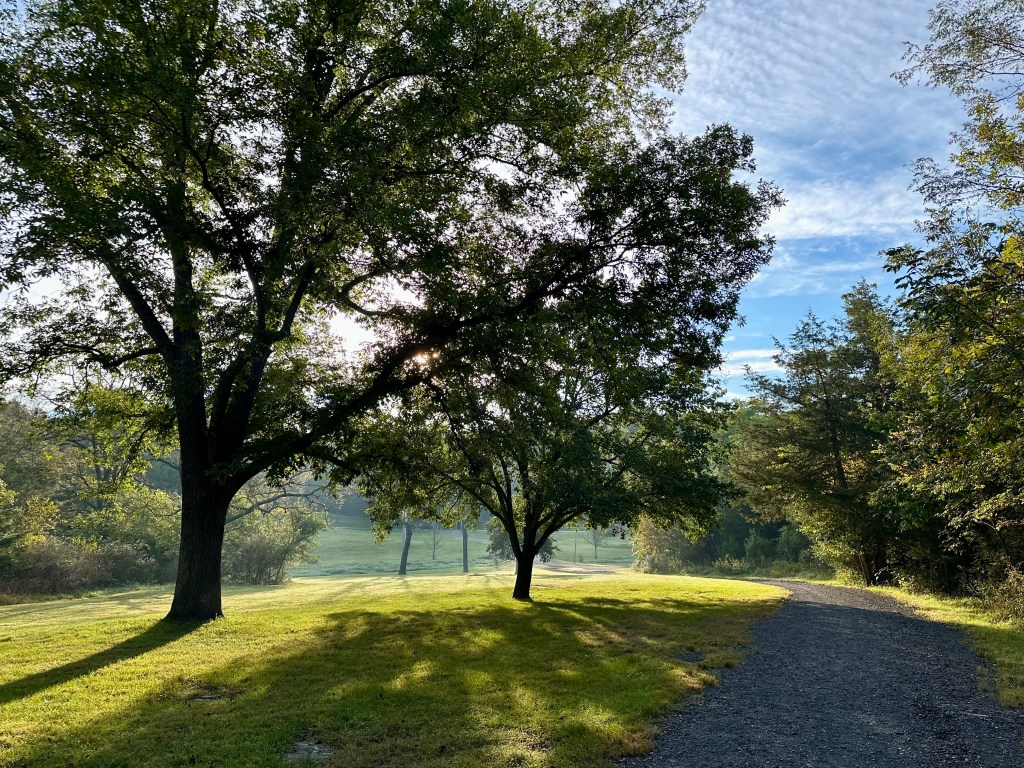
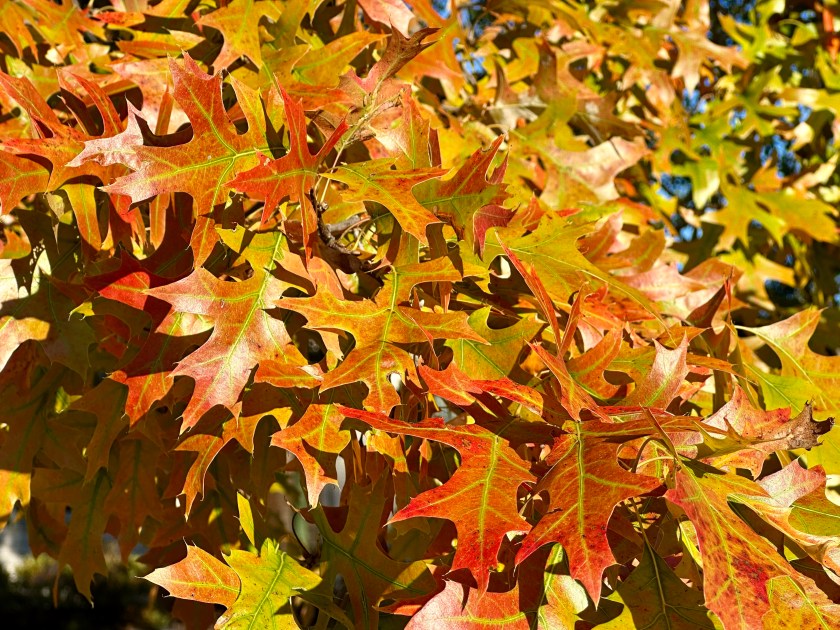
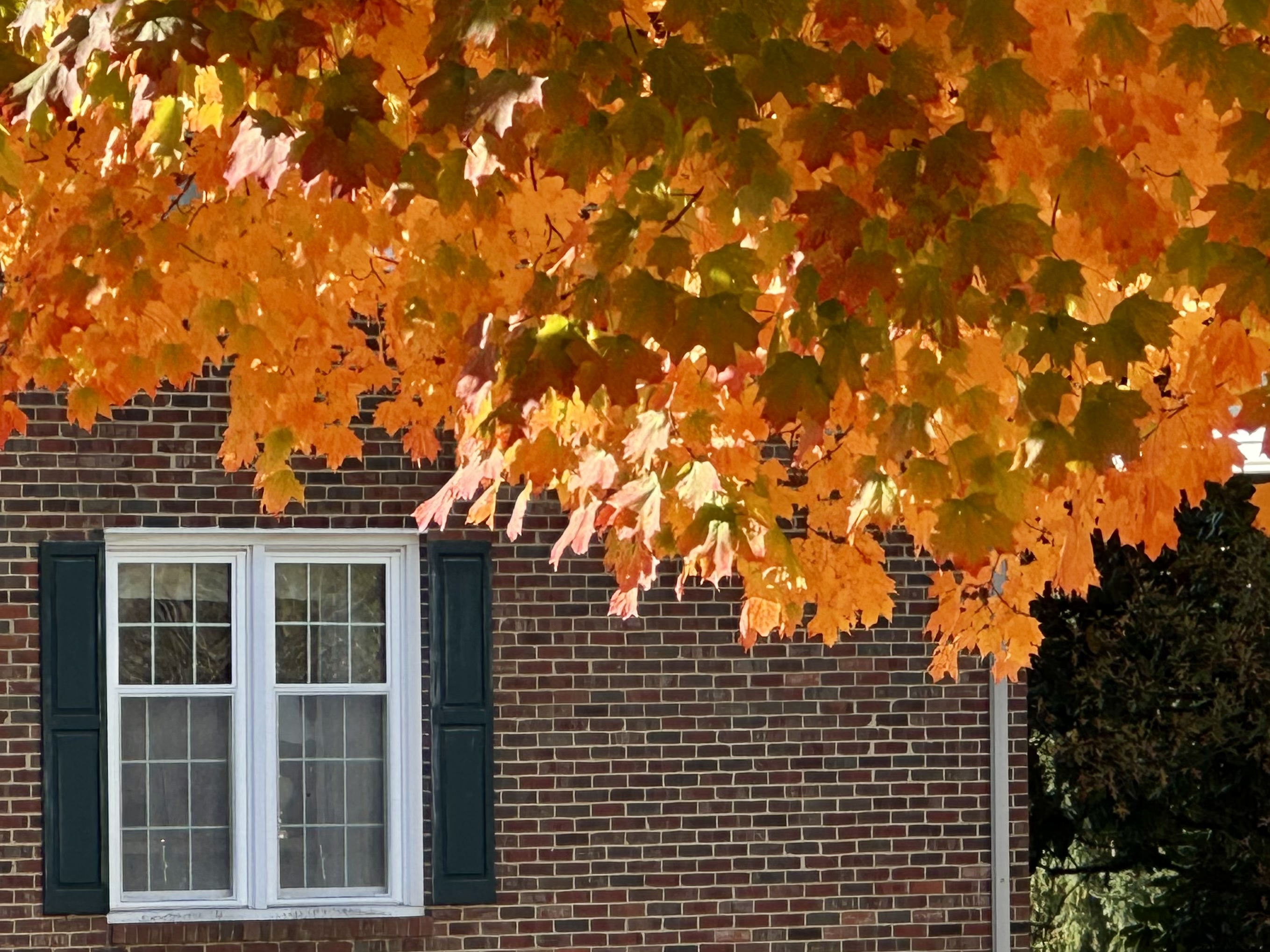
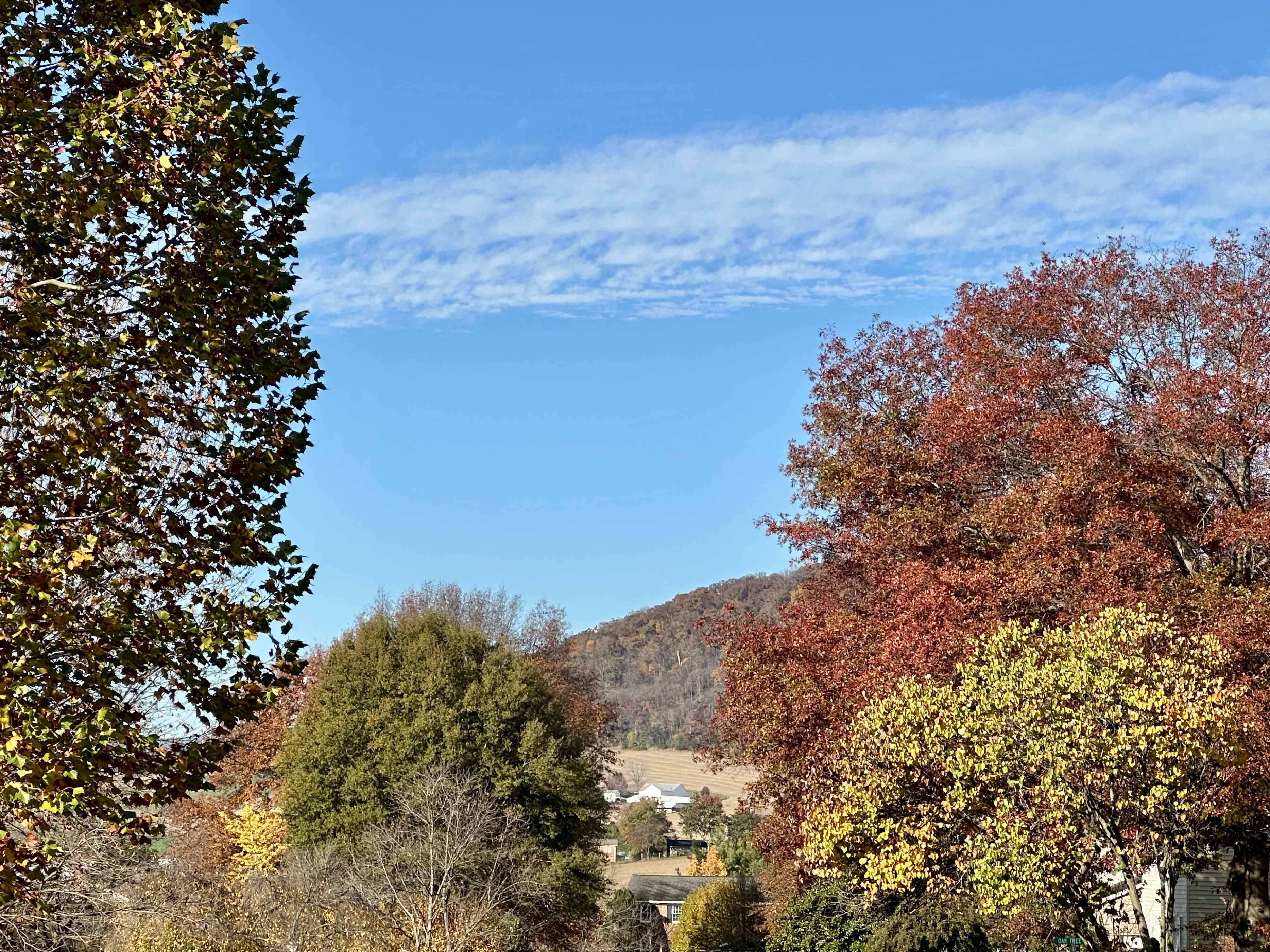
The leaves were still green when October rolled around. Photo by Bruce Stambaugh

The leaves changed colors slowly, as if teasing us until the real show arrived. Impatient, I went looking for any splashes of color I could find.

As the damp weather gave way to sunny and more seasonal temperatures, the natural art show began. I didn’t have to go far to capture the vivid transformations. But that quickly changed.

Unfortunately, acute bronchitis interfered with my plans. Loaded with medication and no longer contagious, my wife and I headed to upstate New York to visit our son, his wife, and our four-year-old grandson.

On the way north, we experienced firsthand the metamorphosis from bright colors to past prime as we reached north-central Pennsylvania, where entire mountainside forests stood naked, ready for winter’s onslaught.

The colors in and around Rochester were right at their peak, which, hopefully, you saw in my previous post. So, five days later, I wasn’t sure what we would find back in the valley. Nature didn’t disappoint.
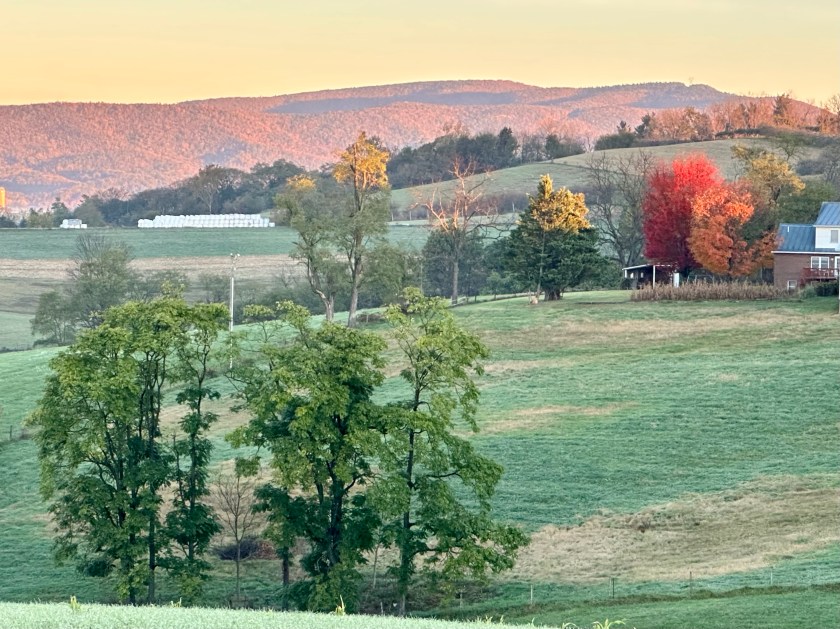
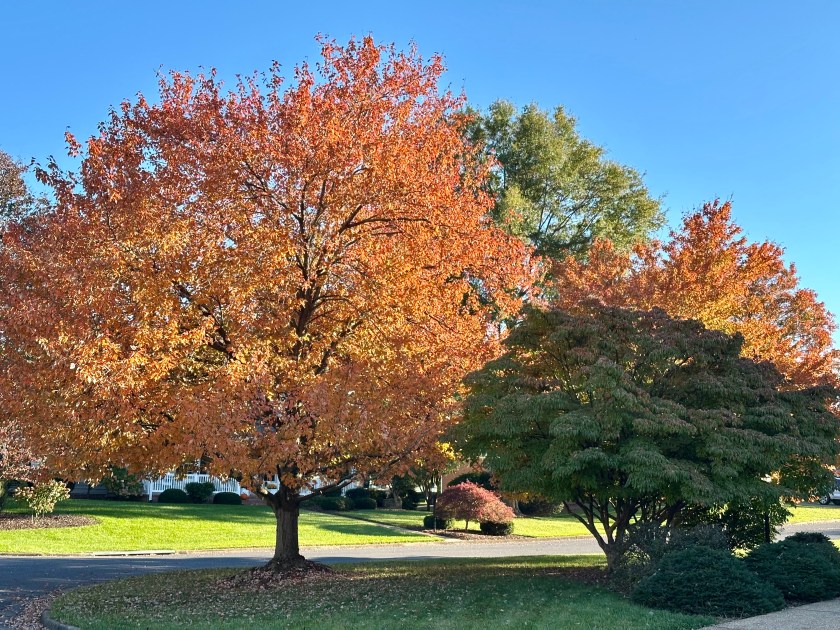
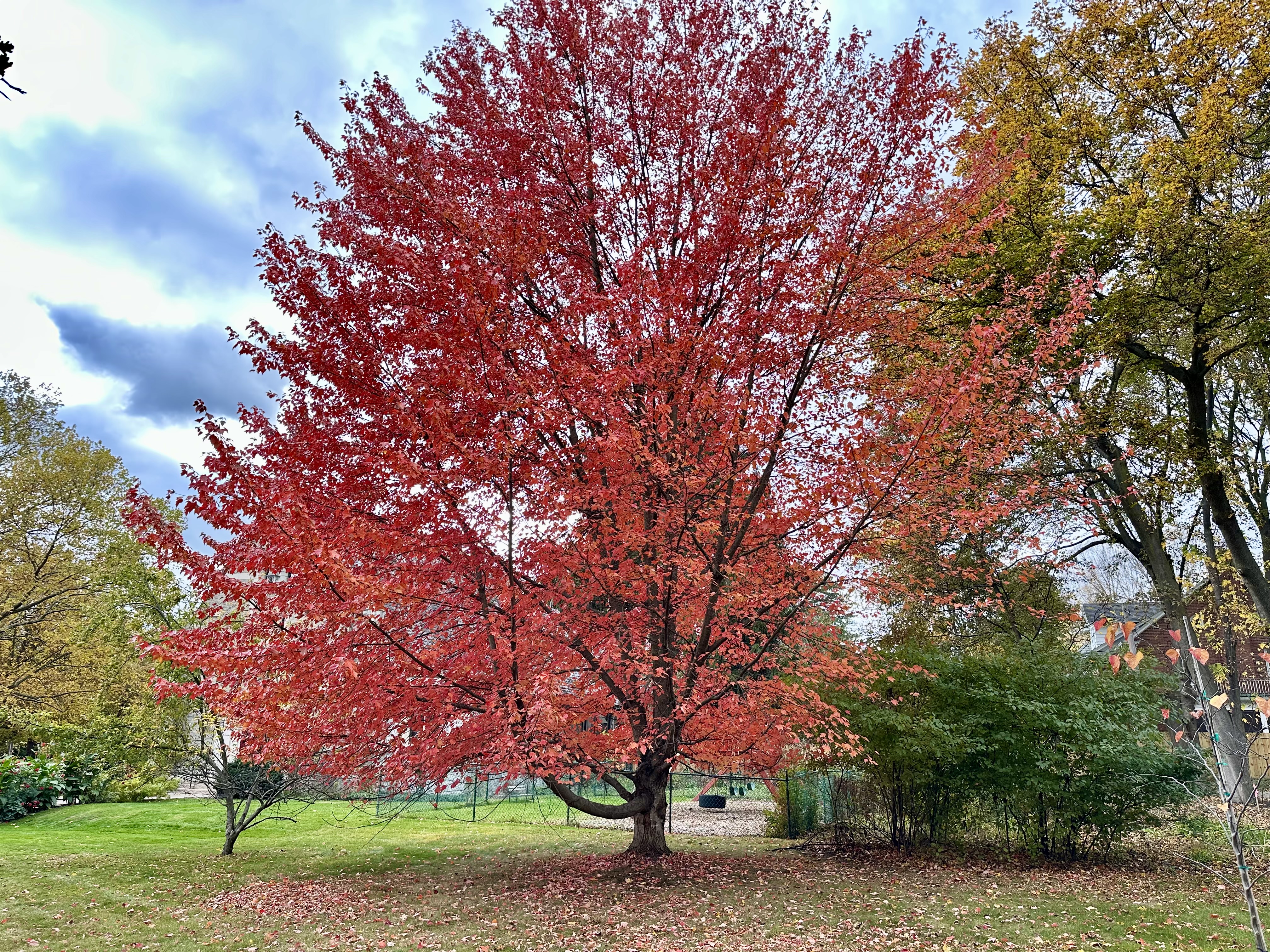
The colors in the higher altitudes of the mountains east and west had faded, but all around the valley, colors popped. On my daily neighborhood walks, I marveled at the overnight changes in the same trees.

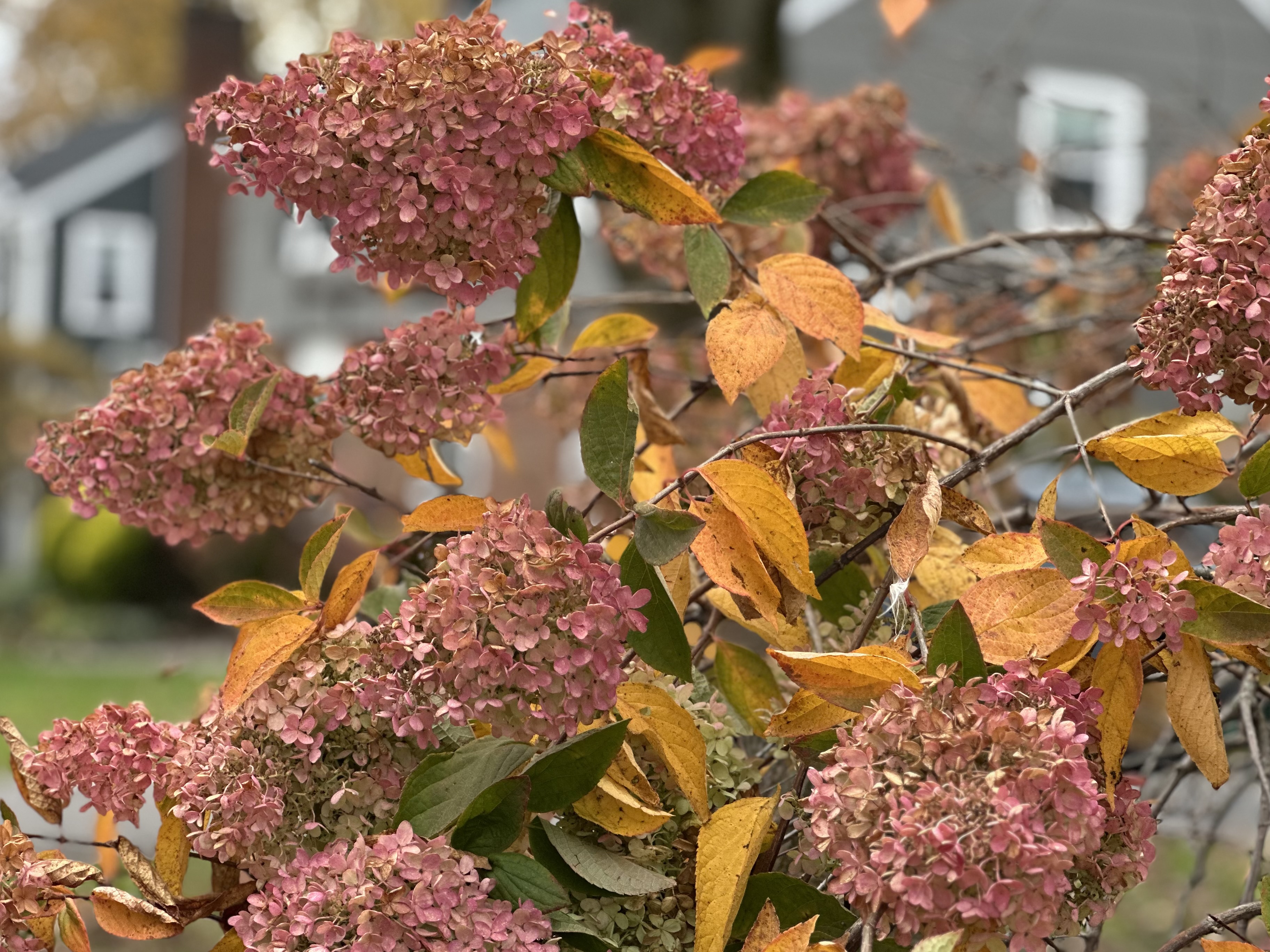
While retrieving the mail, I noticed the contrasting leaves of a pair of seedlings in our front flowerbed. One was bright red, the other school bus yellow, both from the same red maple.
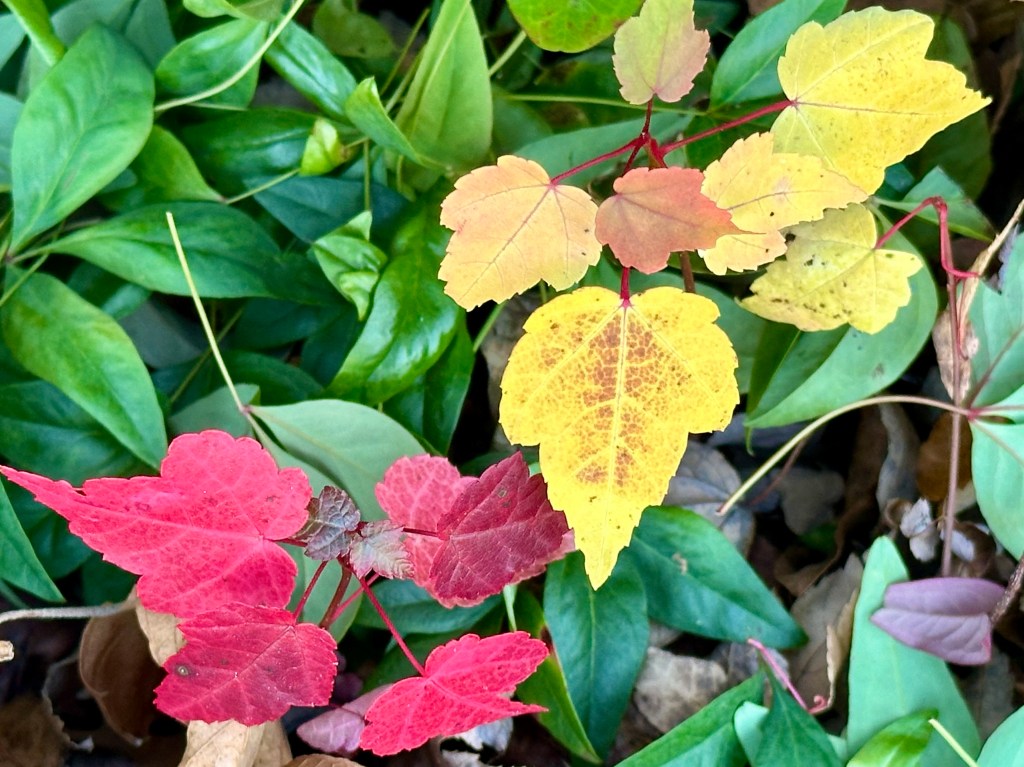
The Red Maple seedlings that found root in our flowerbed. Photo by Bruce Stambaugh

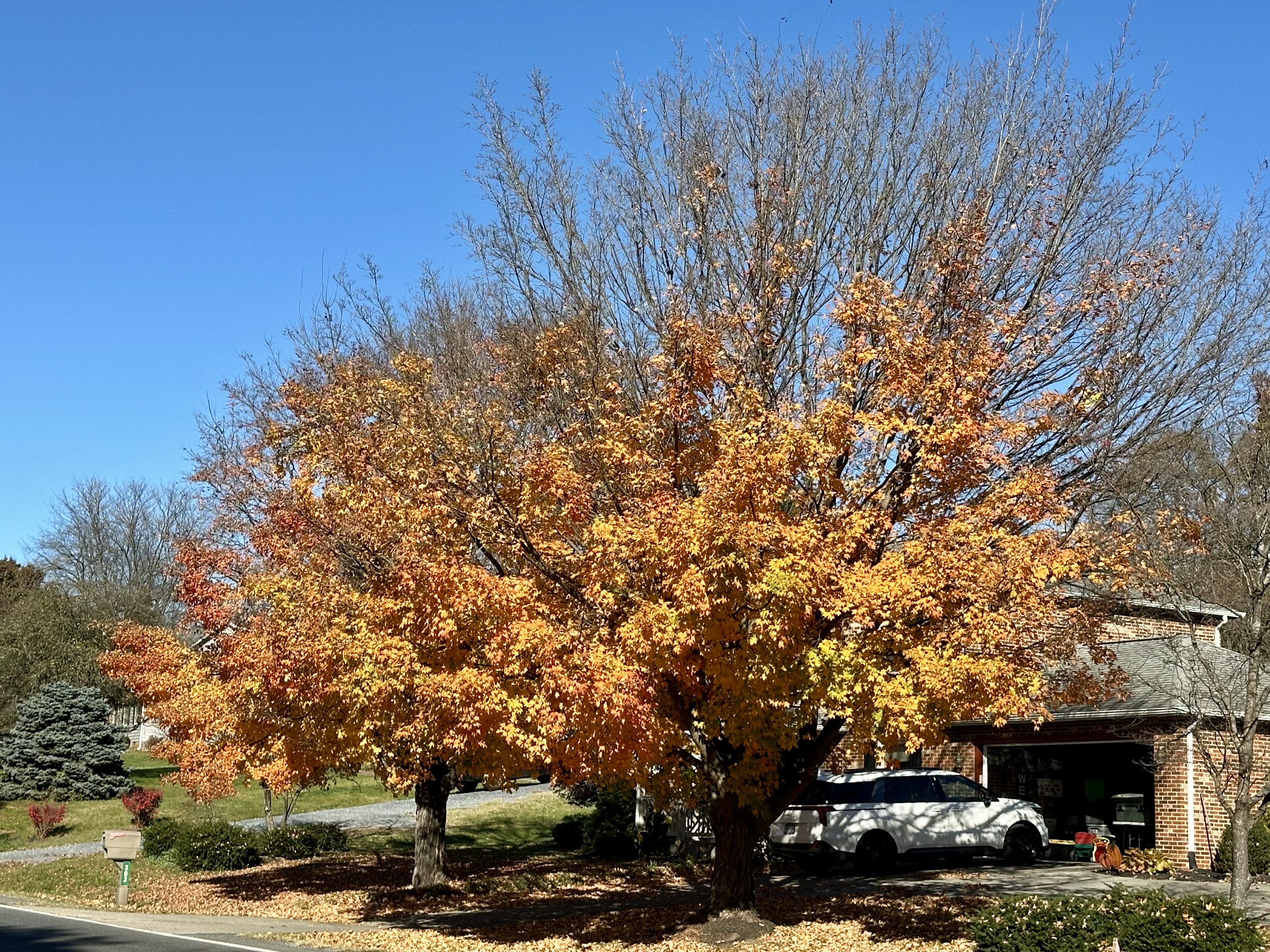
How the trees lost their leaves intrigued me as much as their colors. Most ginkgo trees dropped their leaves all at once, though a few were exceptions.

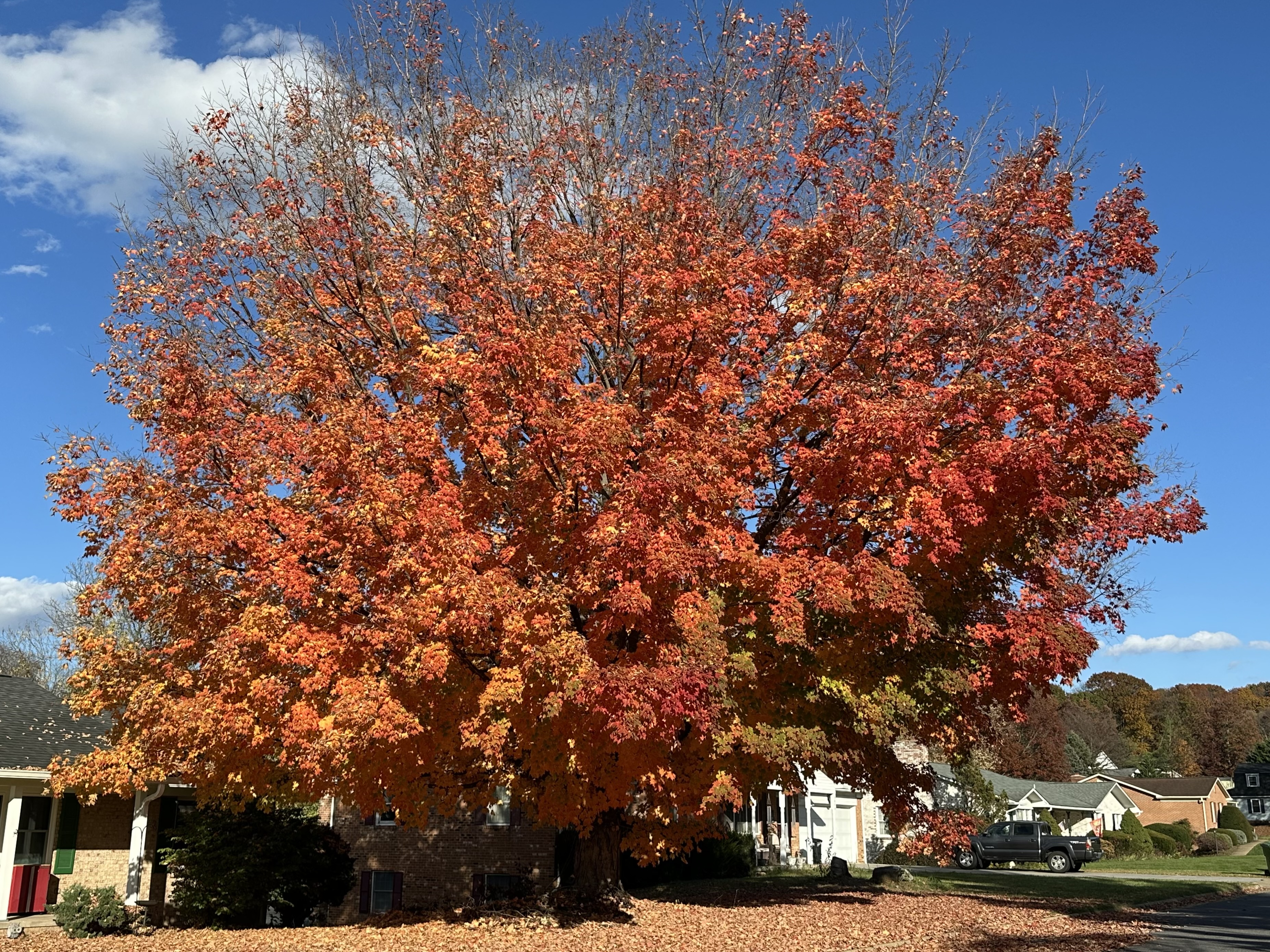
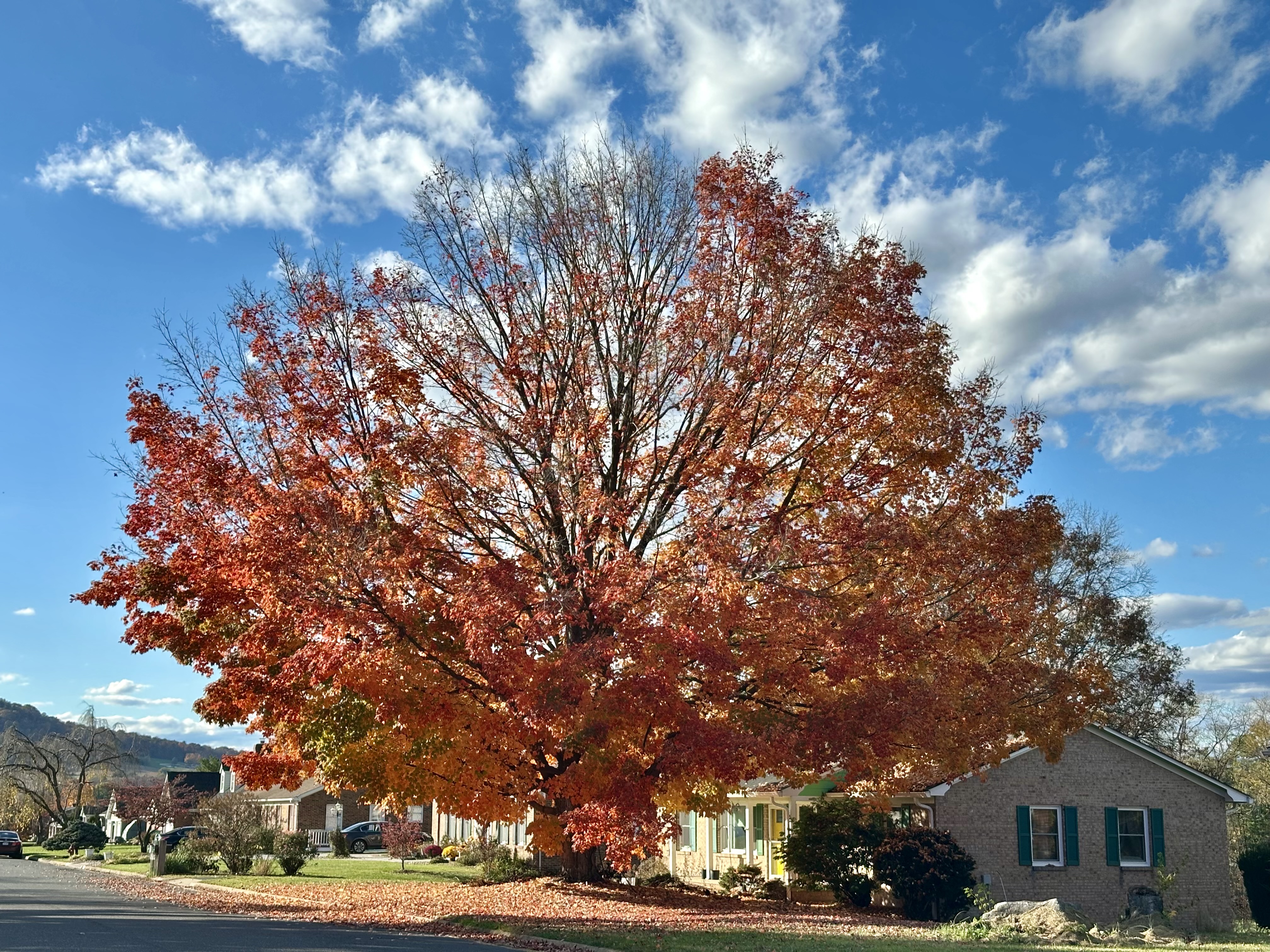
The tops of the sugar maple crowns seemed to fall first, while the lower branches held tight to their leafy offspring. Of course, those eventually fell too, especially when a cold front blew in with windy, rainy conditions. Overall, the trees never had a chance.

With November’s arrival, bright leaves only appear here and there. Most have faded, while countless others have finally fainted from their hard summer’s work and dropped to the forest floor, or are mulched or raked by homeowners picky about their landscape.
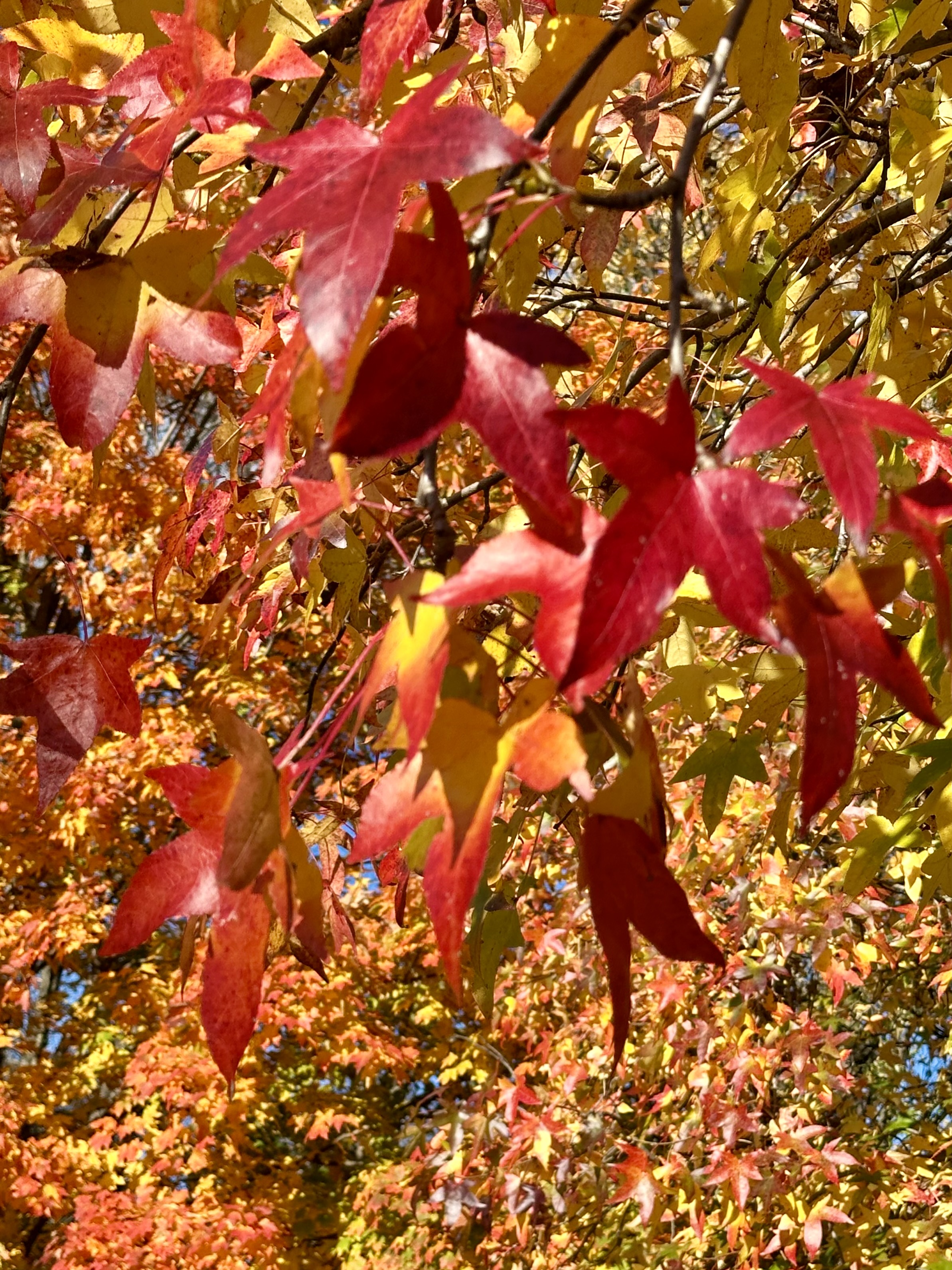
The fragrance of leaves burning in more rural areas, not bound by open-burning restrictions, conjures childhood memories of our smoke-filled neighborhood from decades ago. I’m happy just to hear the rustle of leaves being raked or the shrill of children jumping into leaf piles before they are bagged and recycled as cover for gardens. (The leaves, not the kids.)

Despite my doubts, autumn delivered a most beautiful, living postcard. I couldn’t be happier.
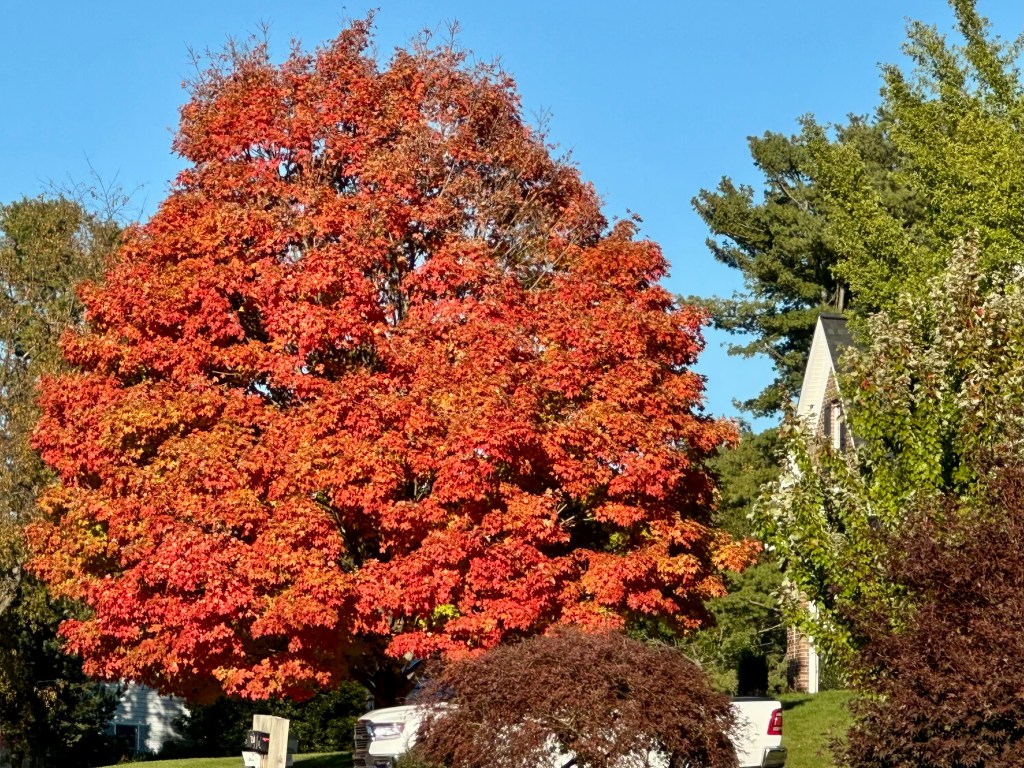
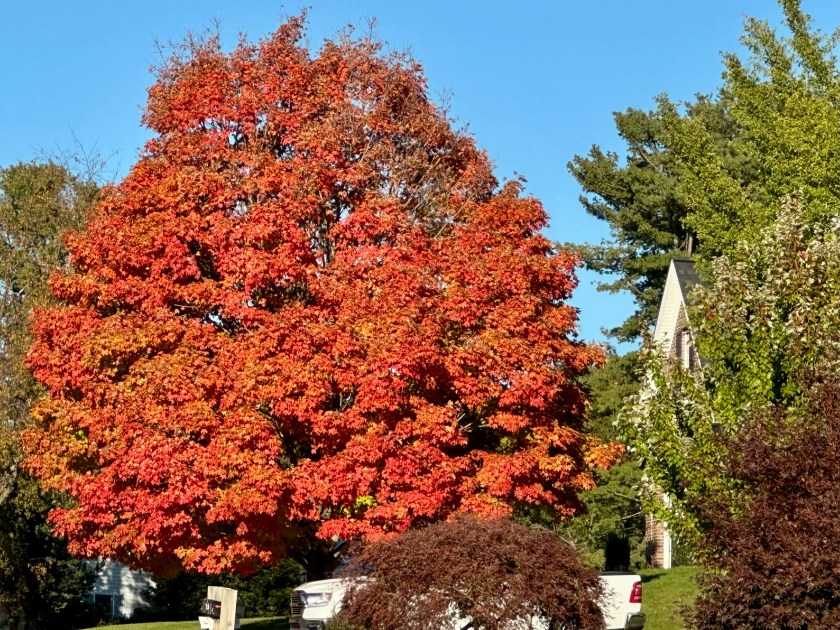
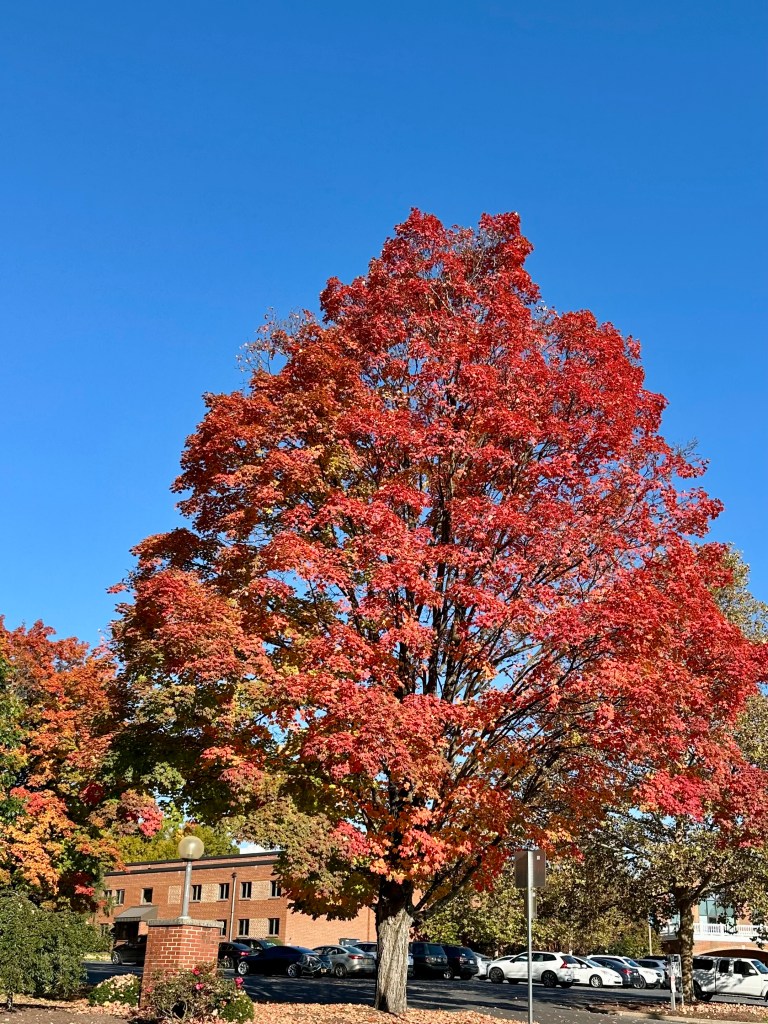
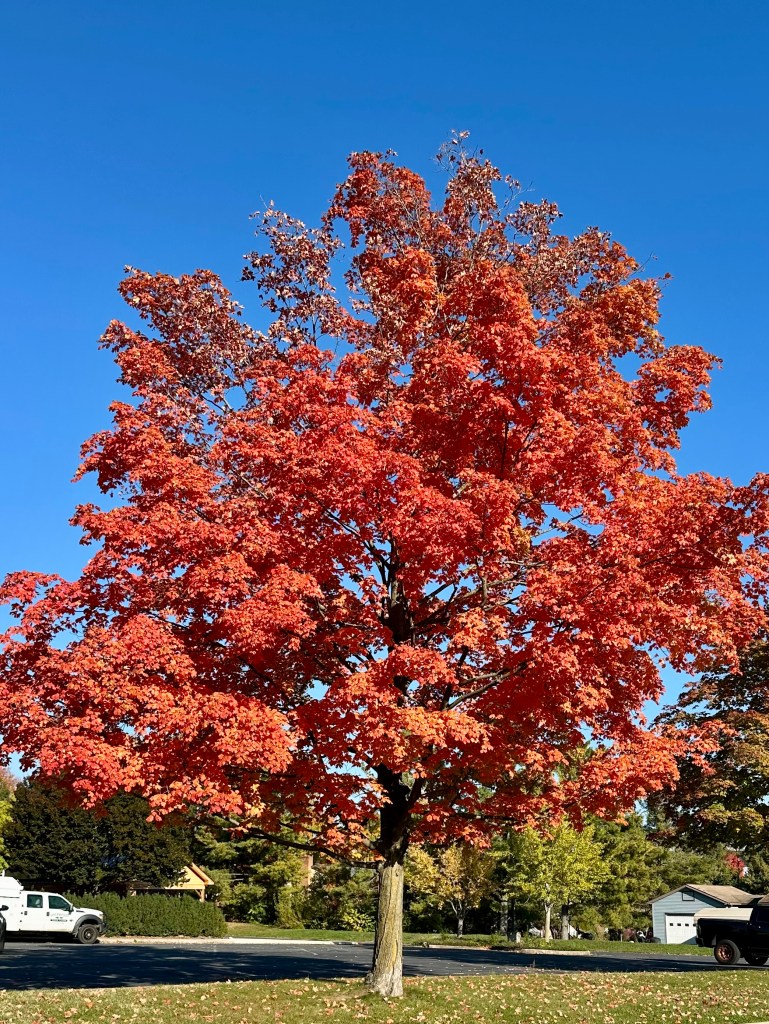
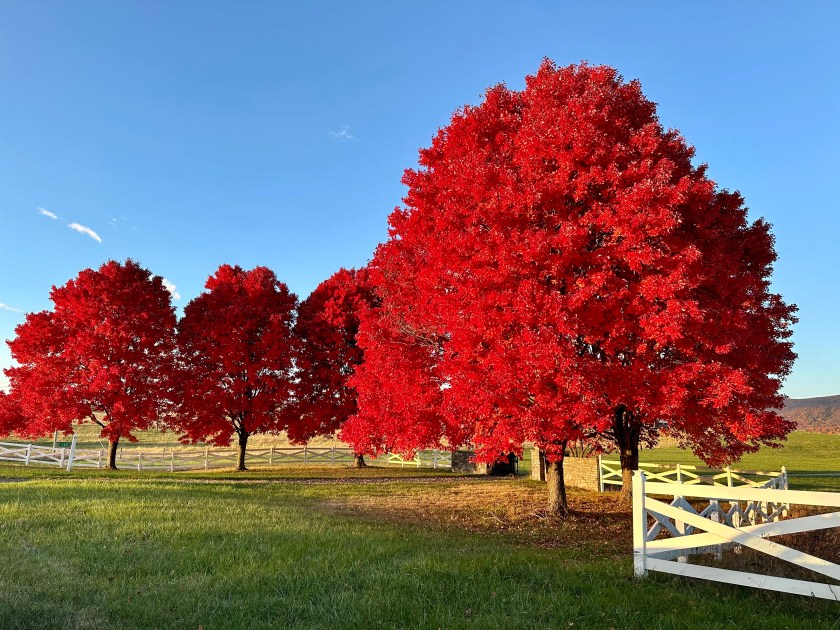
A brilliant Sugar Maple. Photo by Bruce Stambaugh

© Bruce Stambaugh 2026
The Trees of Rochester, NY

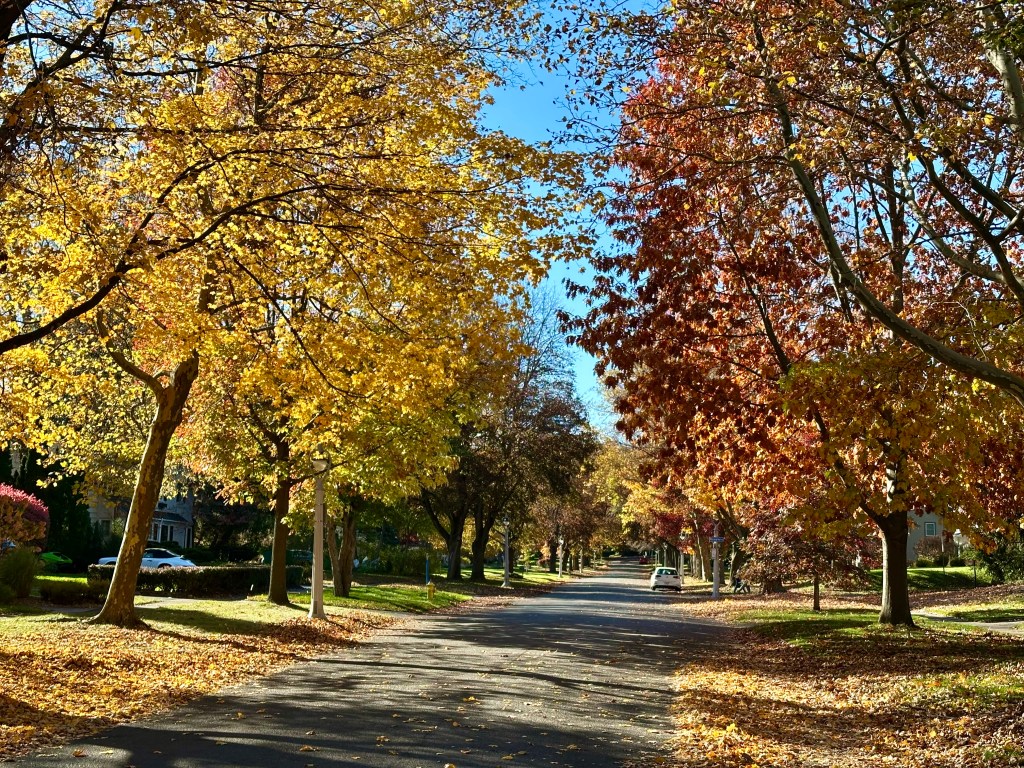
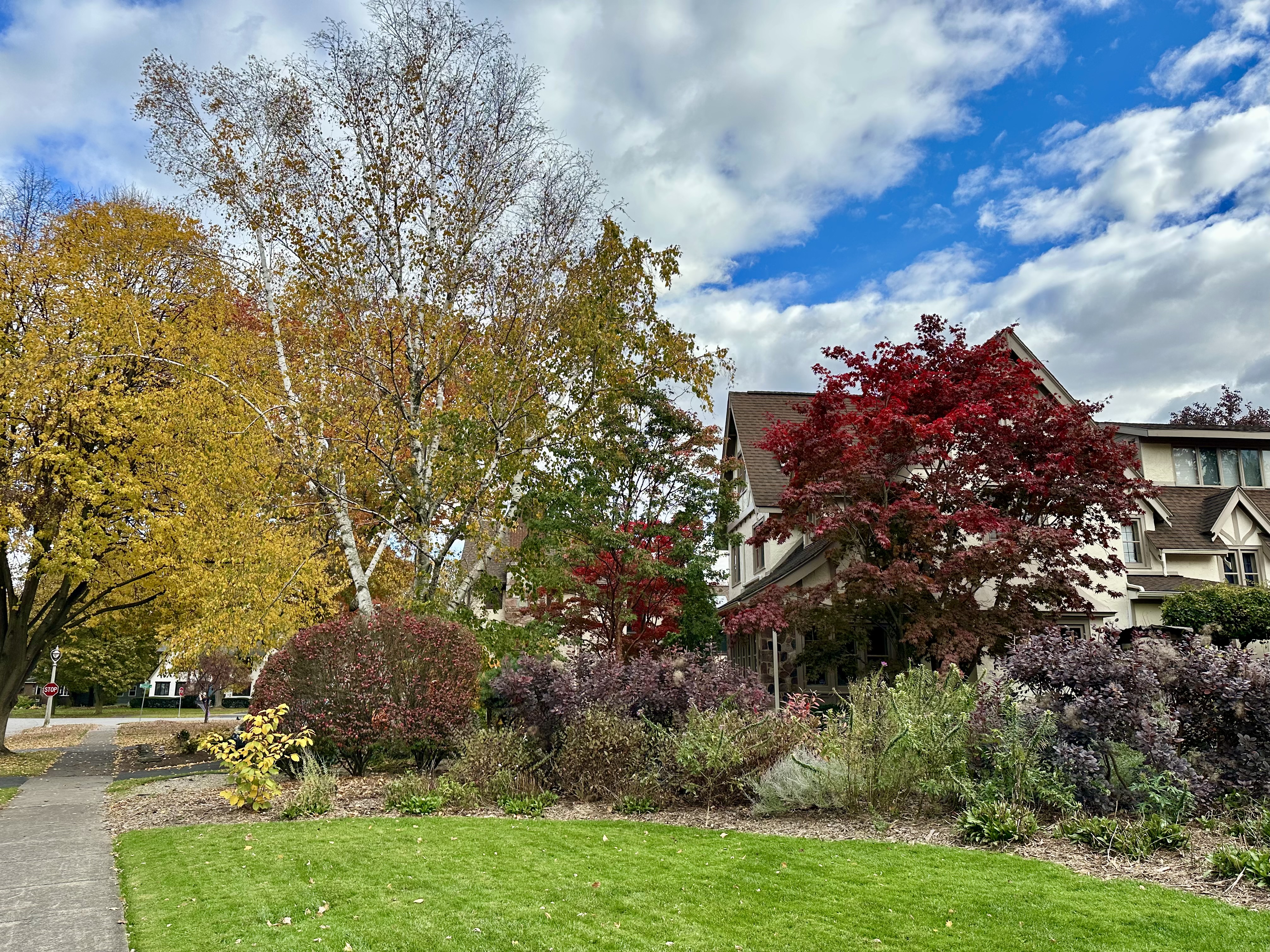
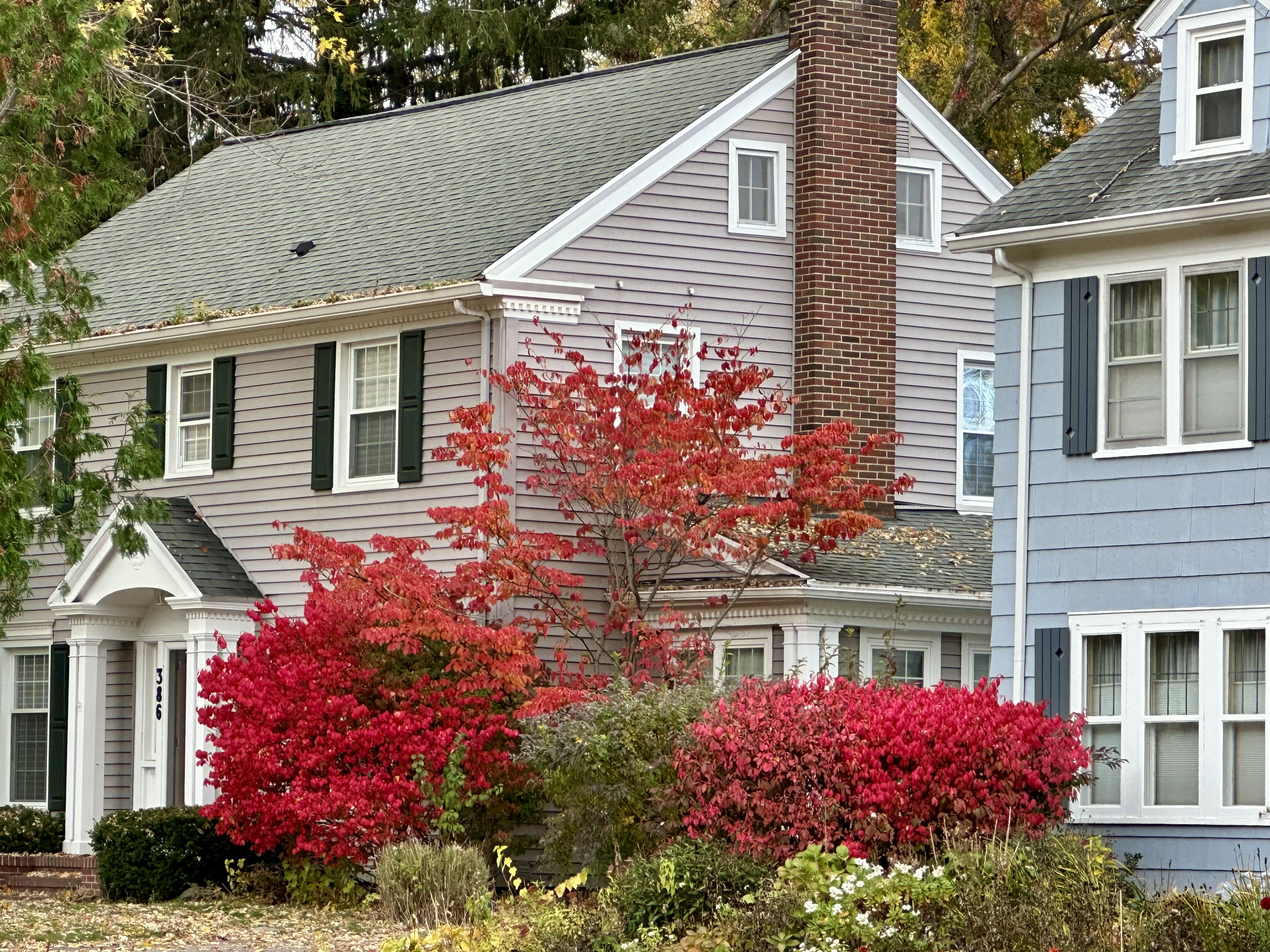
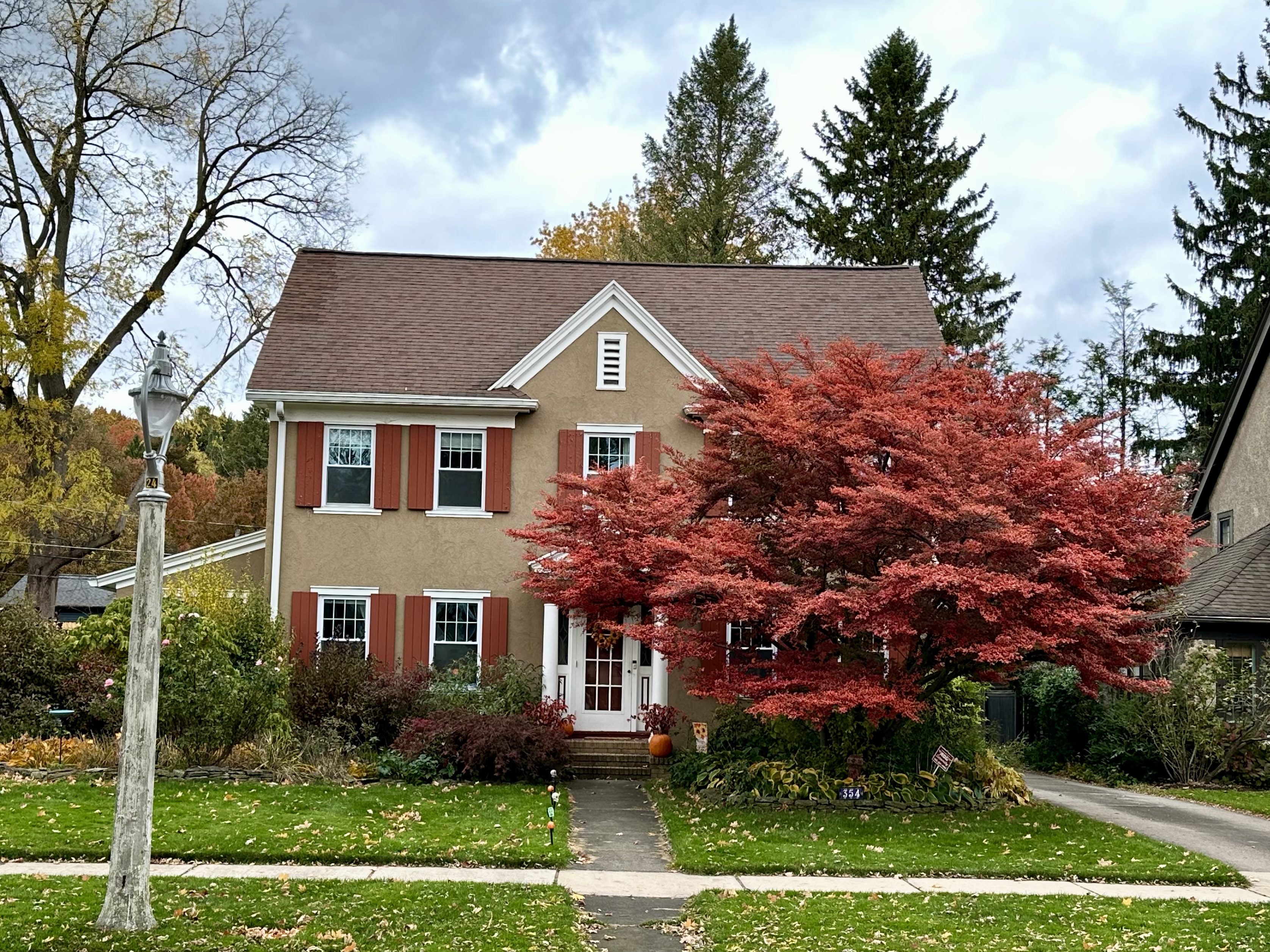
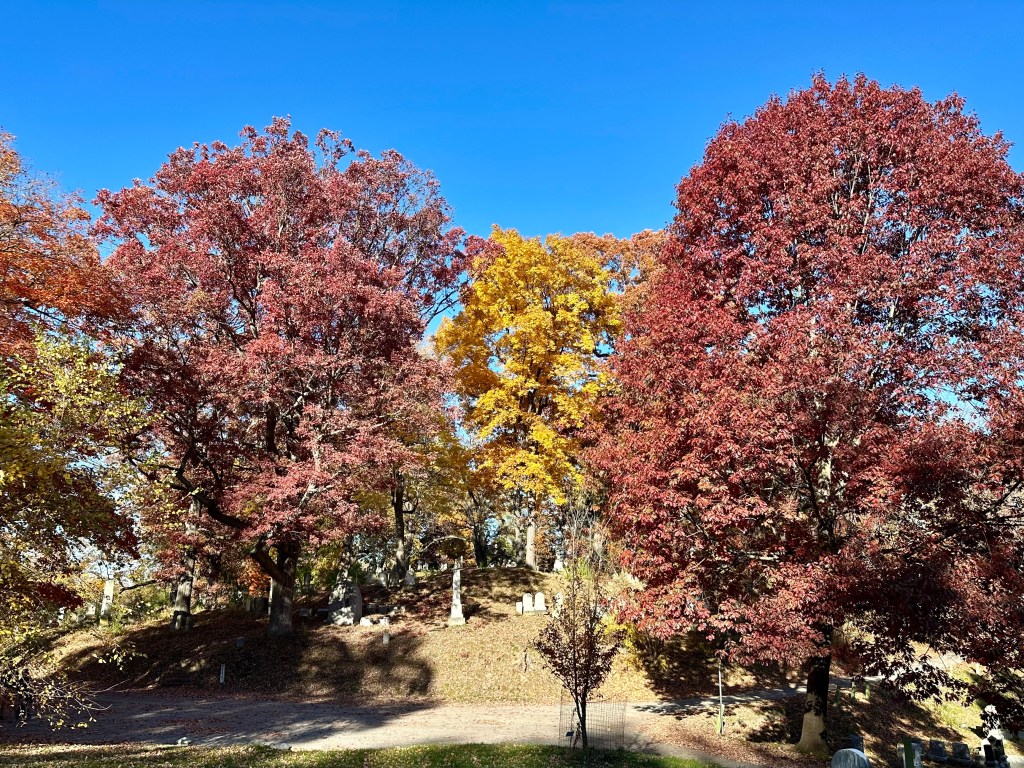
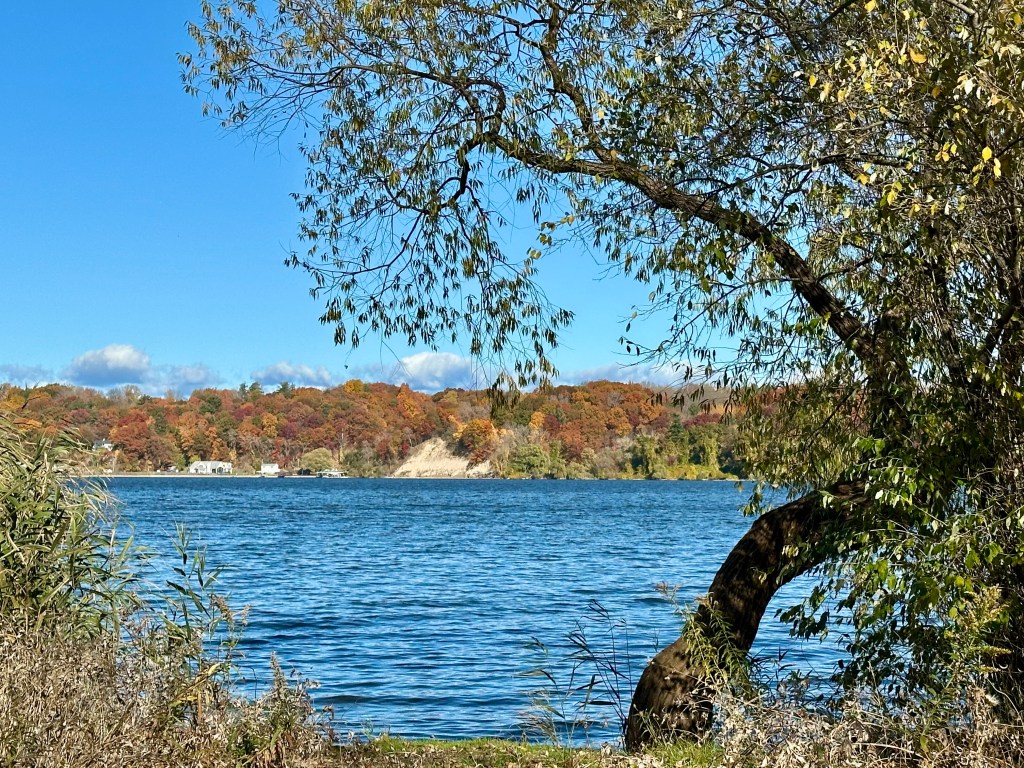
A residential street in Rochester, New York. Photo by Bruce Stambaugh

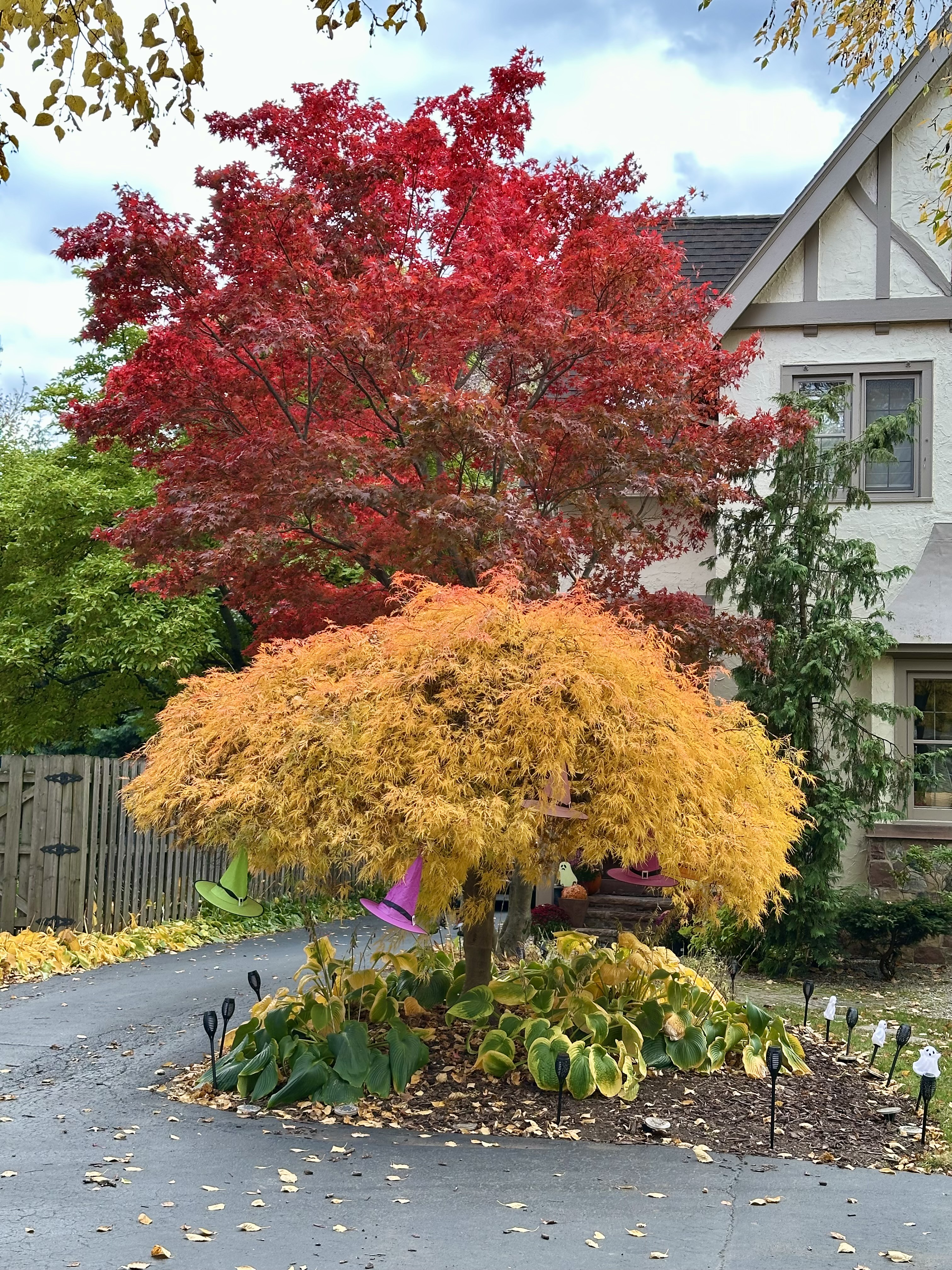
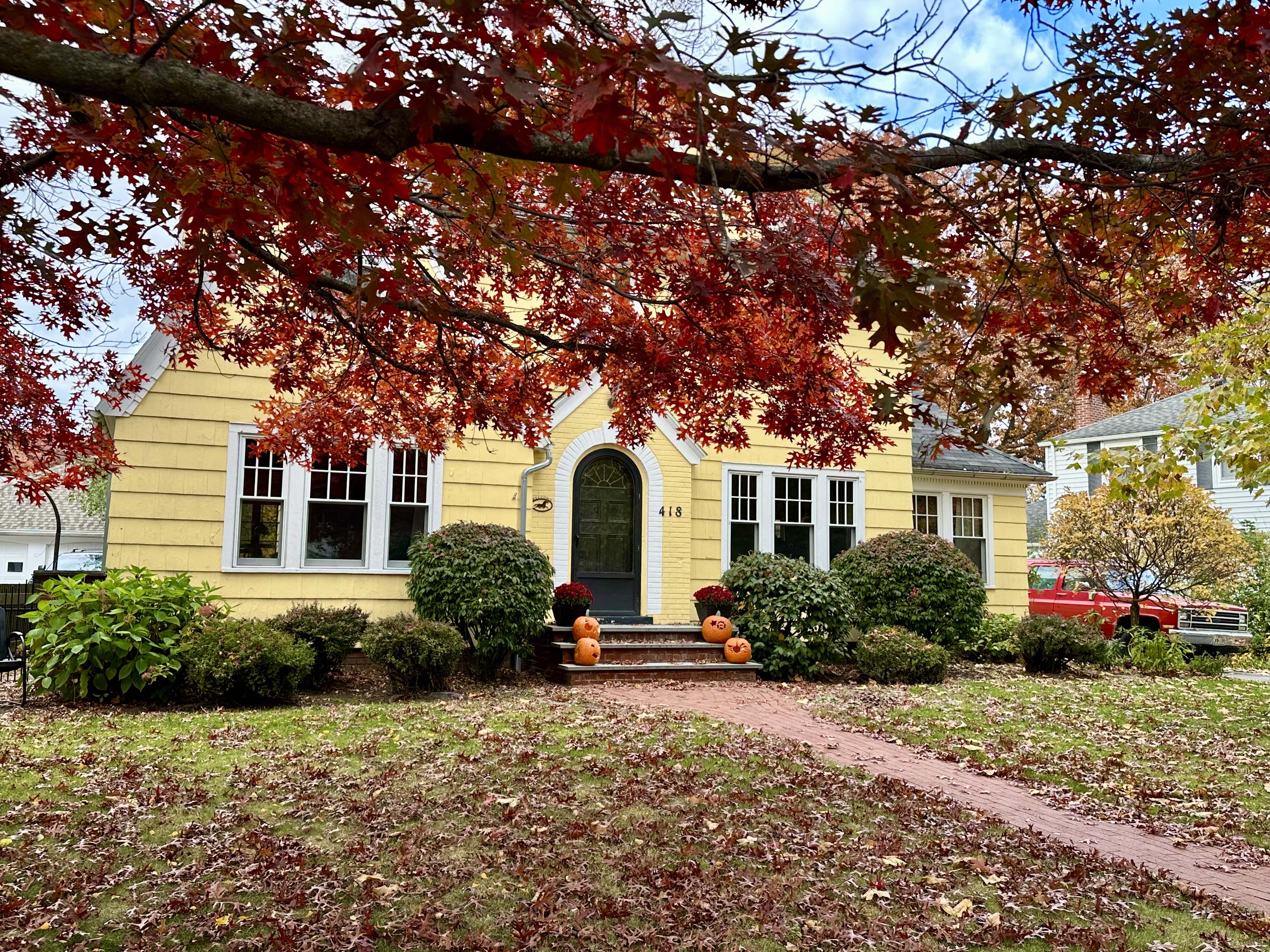
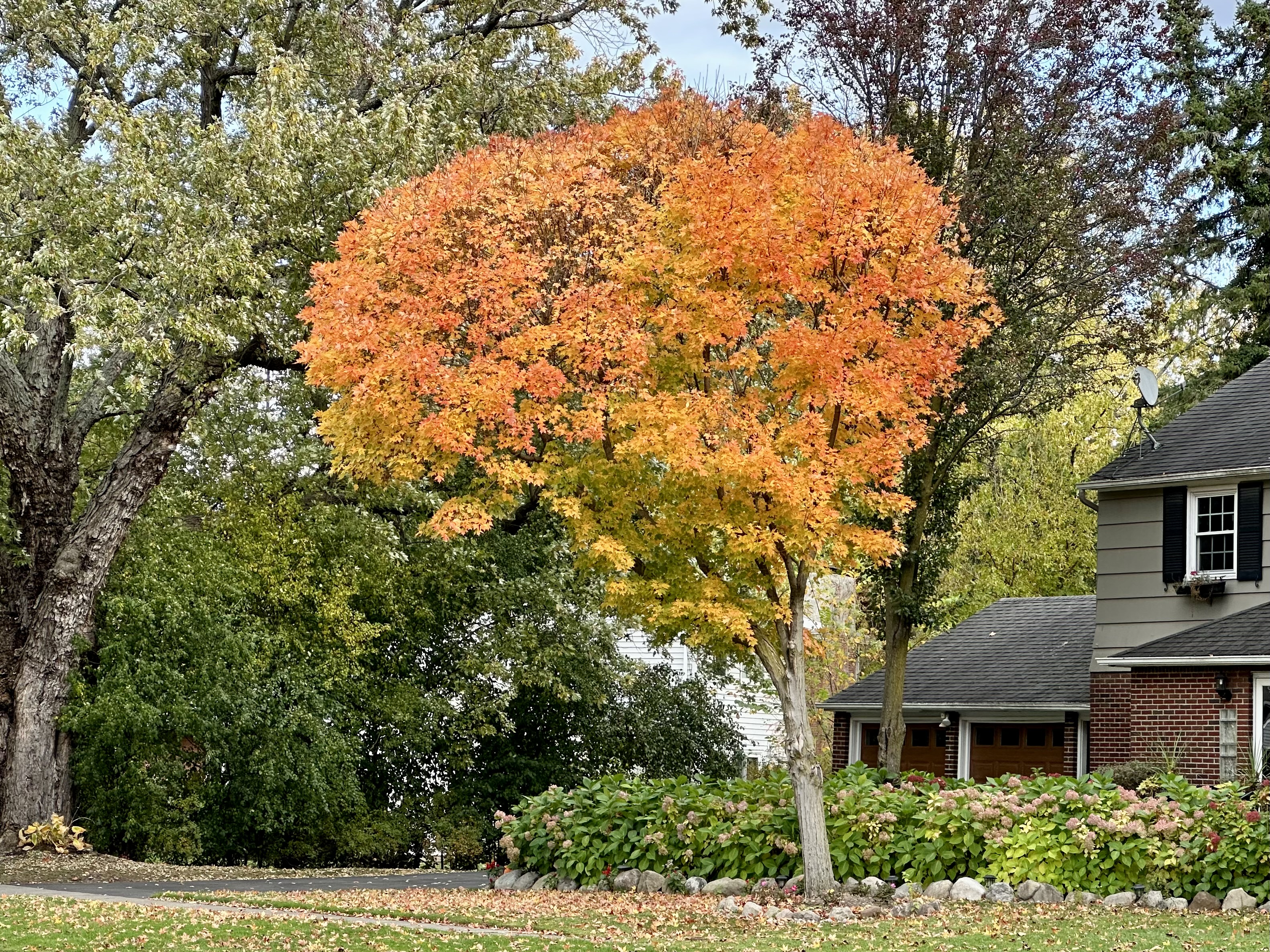
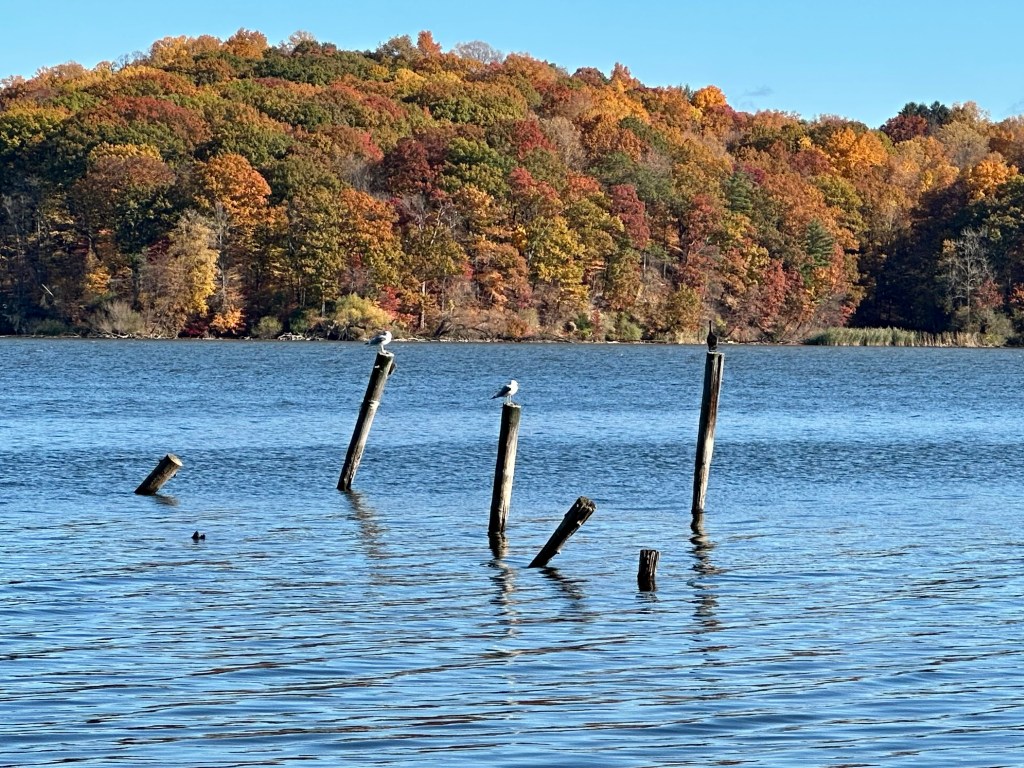
My wife and I finally visited our grandson Teddy and his parents over the Halloween weekend. The trees in and around Rochester, New York, where our son and his family live, were at peak color.

While four-year-old Teddy attended preschool in the morning or napped at home in the afternoon, I explored streets and parks for any colorful trees I could find.

I didn’t have to go far. A walk around their neighborhood provided plenty of autumn splendor.

Click the photos to enlarge them.

I also headed to Irondequoit Bay to do some birding. I spotted a few birds, but the colorful trees became my priority. So, I snapped away.

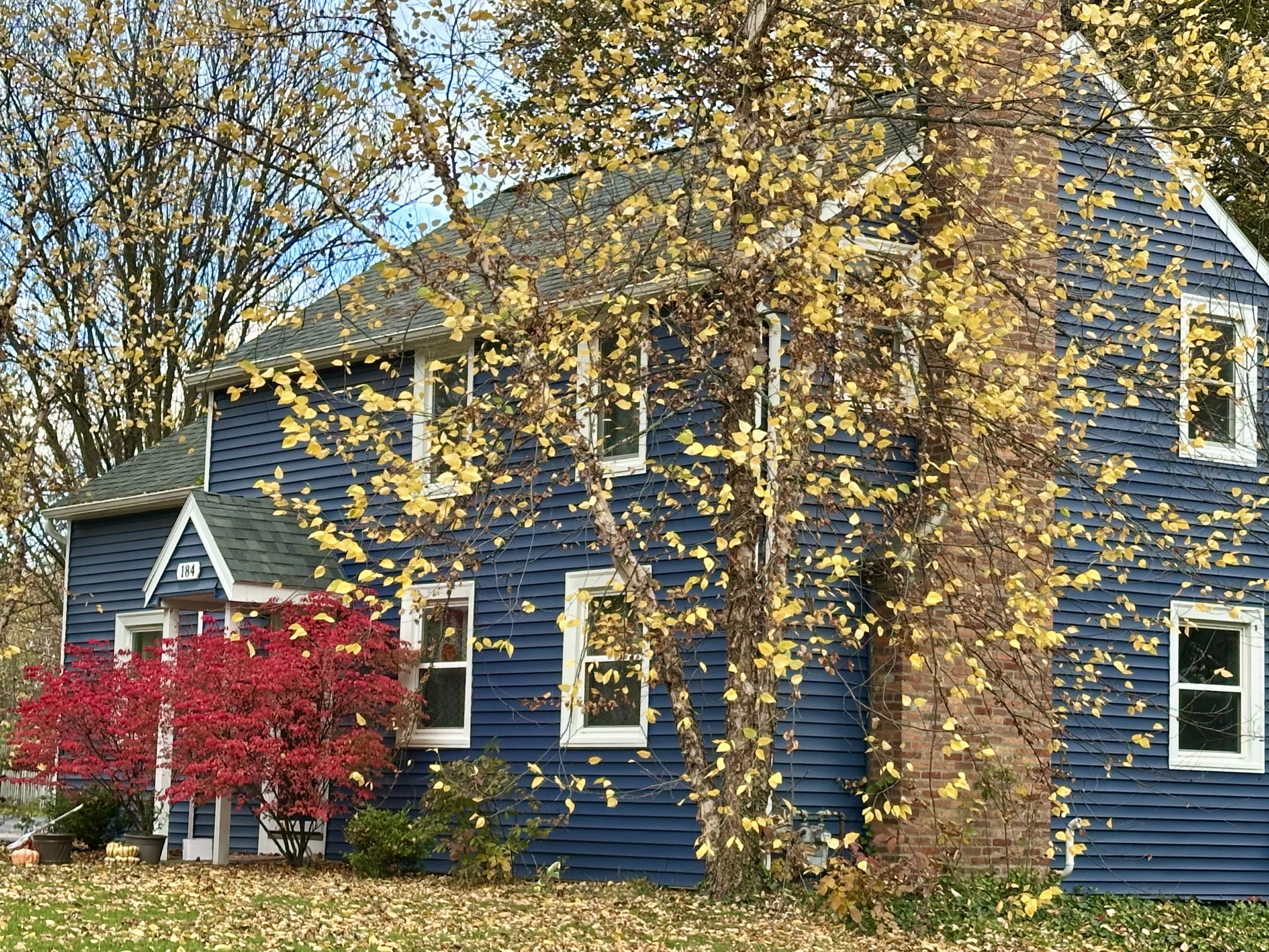
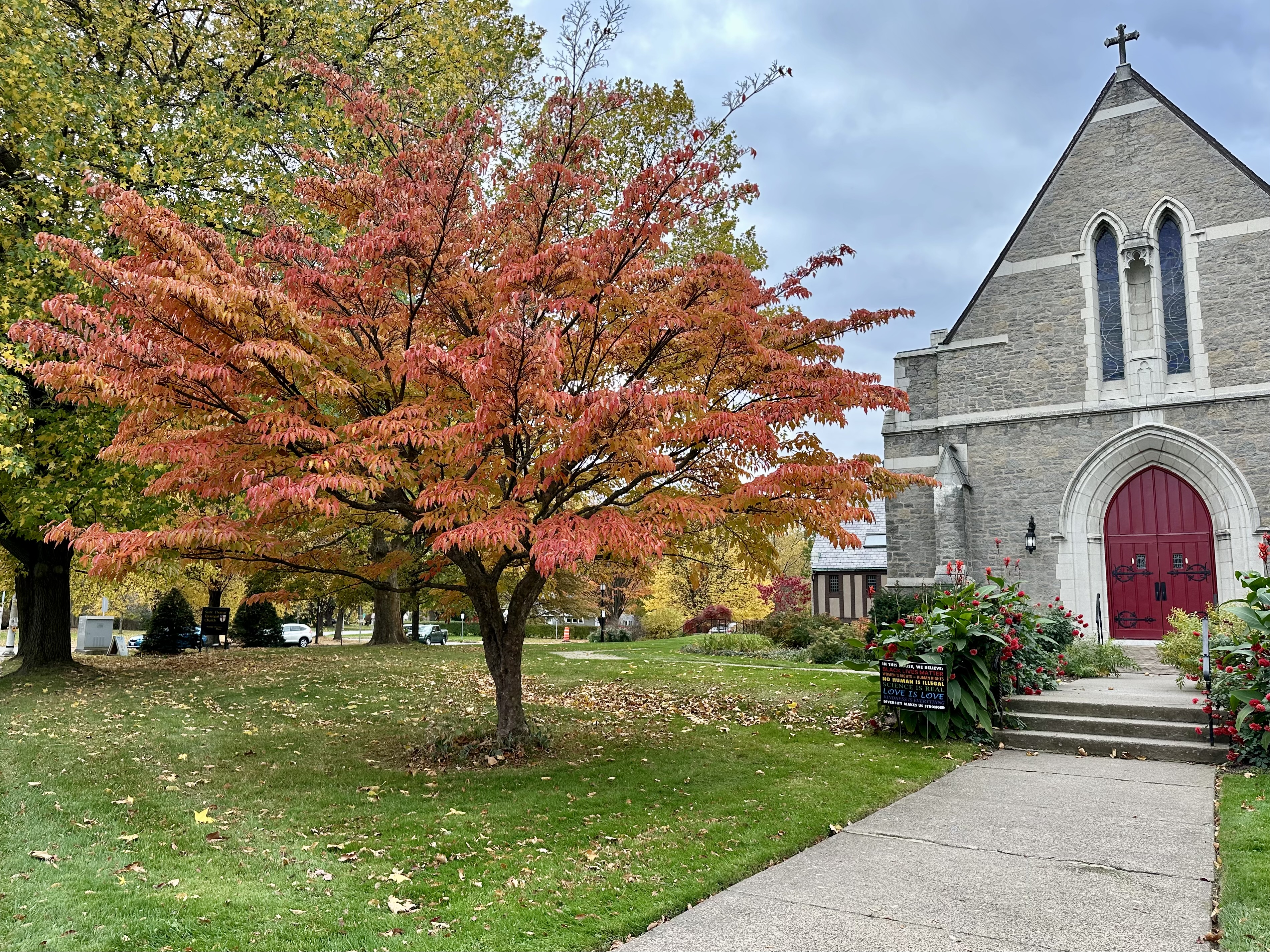
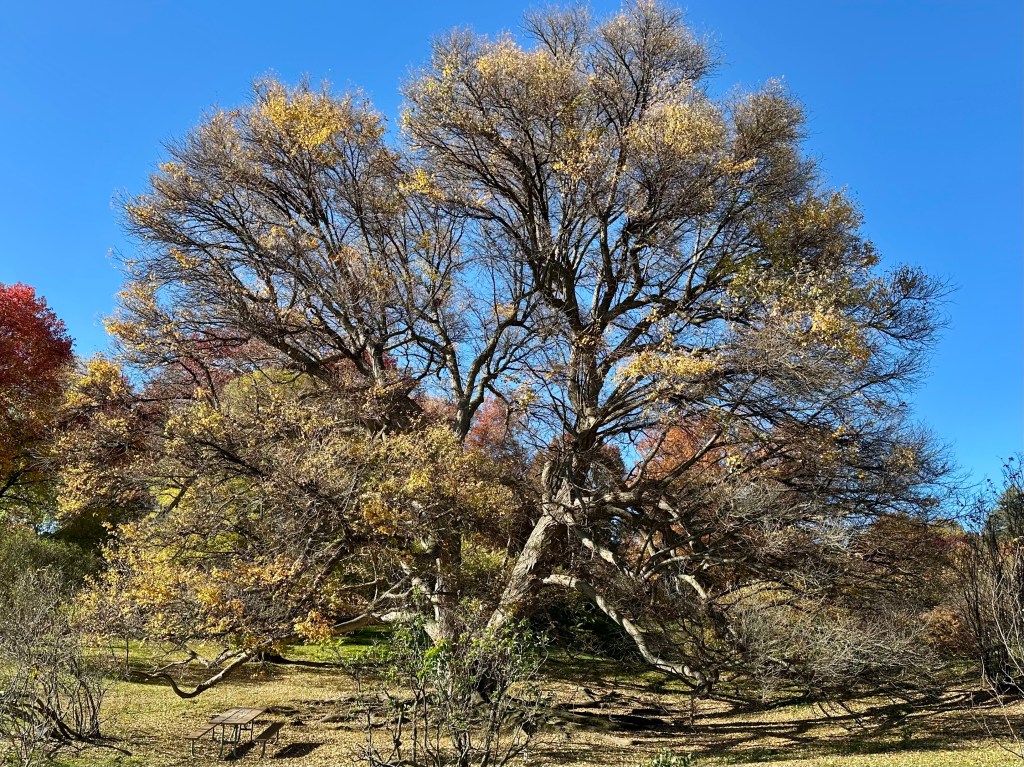
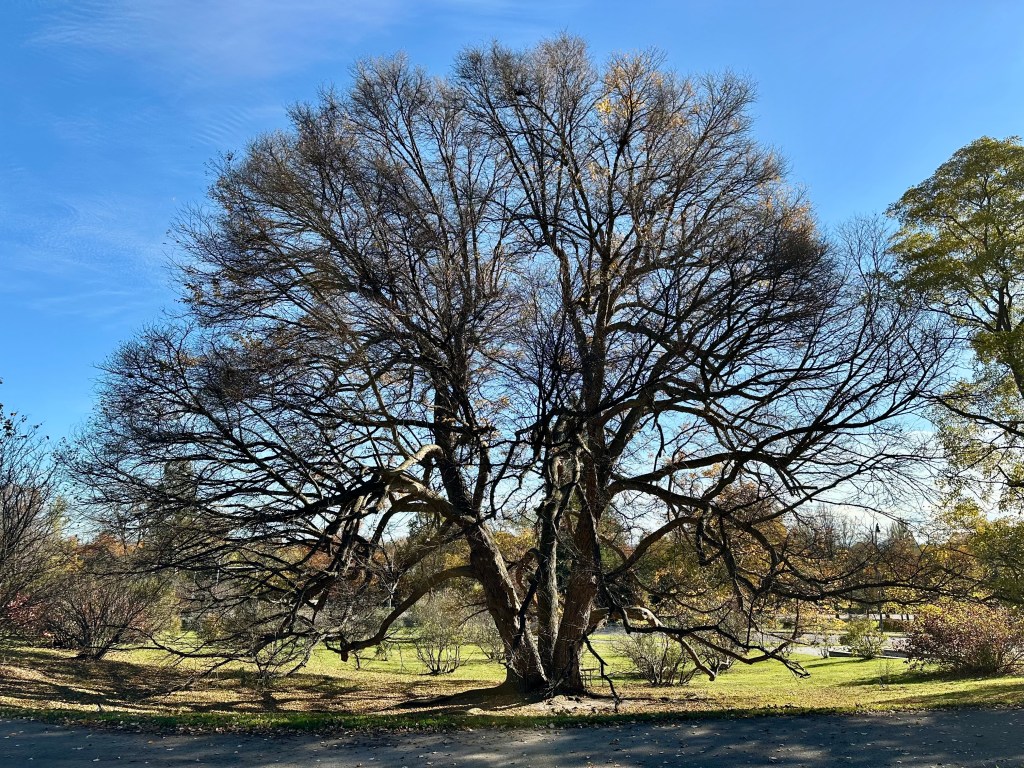
My wife and I easily found the famous Katsura Tree in Highland Park. This native Japanese giant is a 100-year-old specimen and the largest in New York State. Go at the right time, and the tree smells like cotton candy. No wonder it’s a favorite of visitors.

The 100-year-old Katsura Tree in Rochester, NY. Photos by Bruce Stambaugh

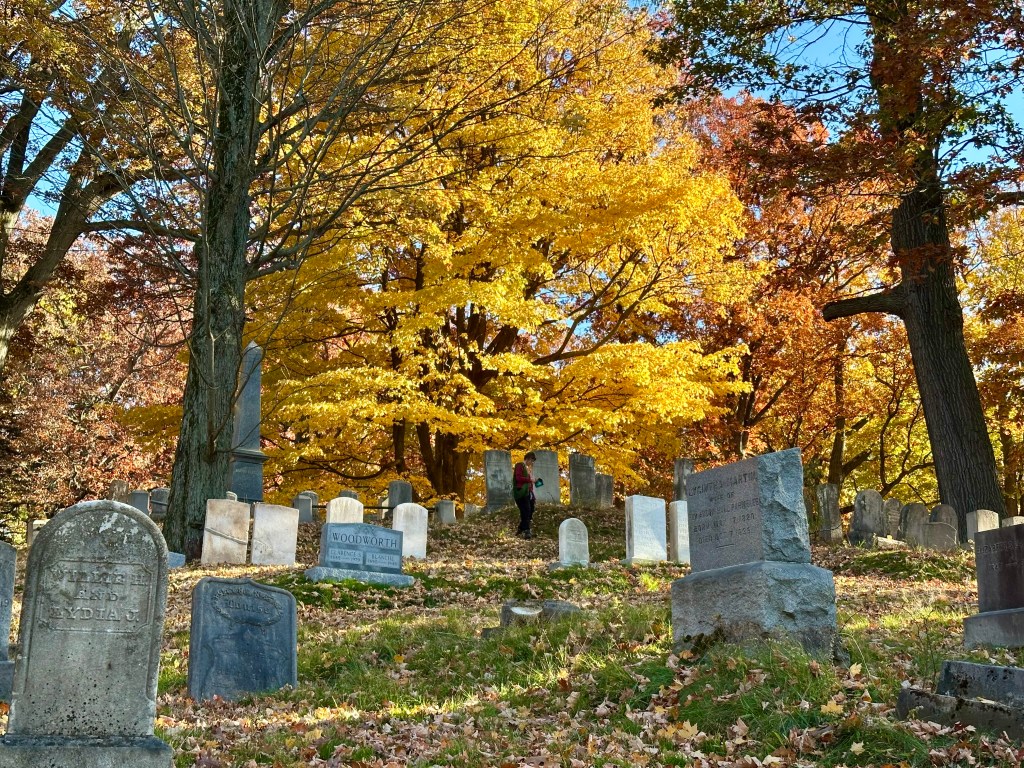
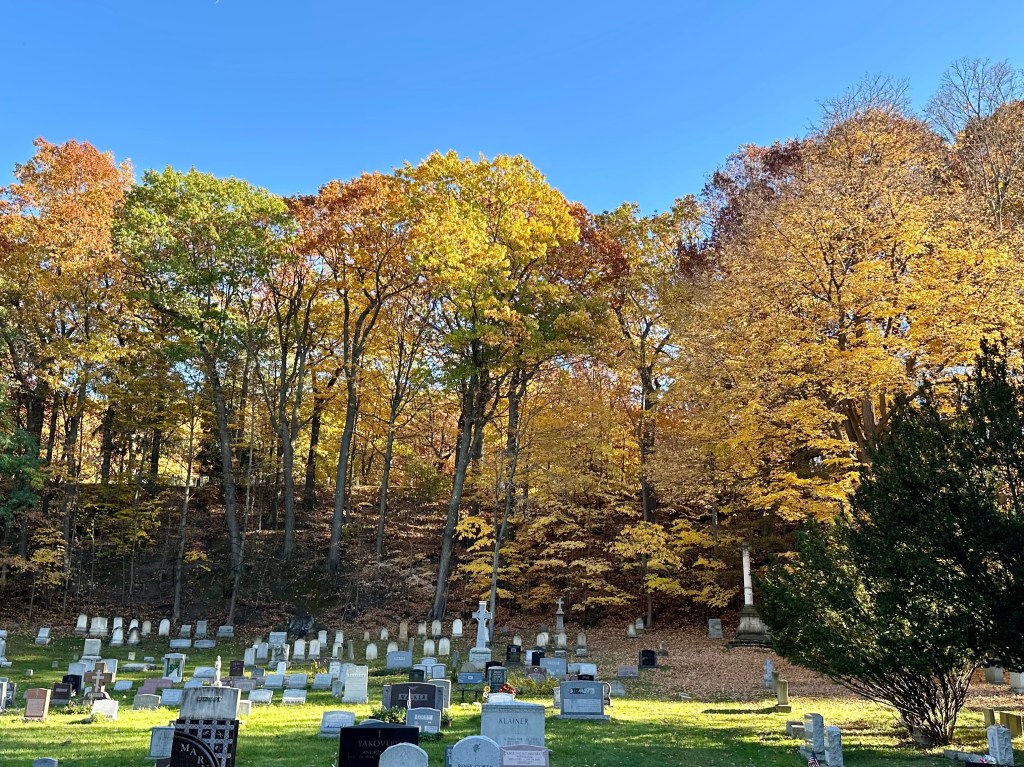
From Highland Park, we drove to Mt. Hope Cemetery in Rochester, where Susan B. Anthony and Fredrick Douglass are buried. There, too, the afternoon light played through the trees, highlighting their magnificent colors.

We also enjoyed watching Teddy march around in his preschool’s Halloween parade. Teddy dressed as a magician, and even pulled a rabbit out of his top hat.

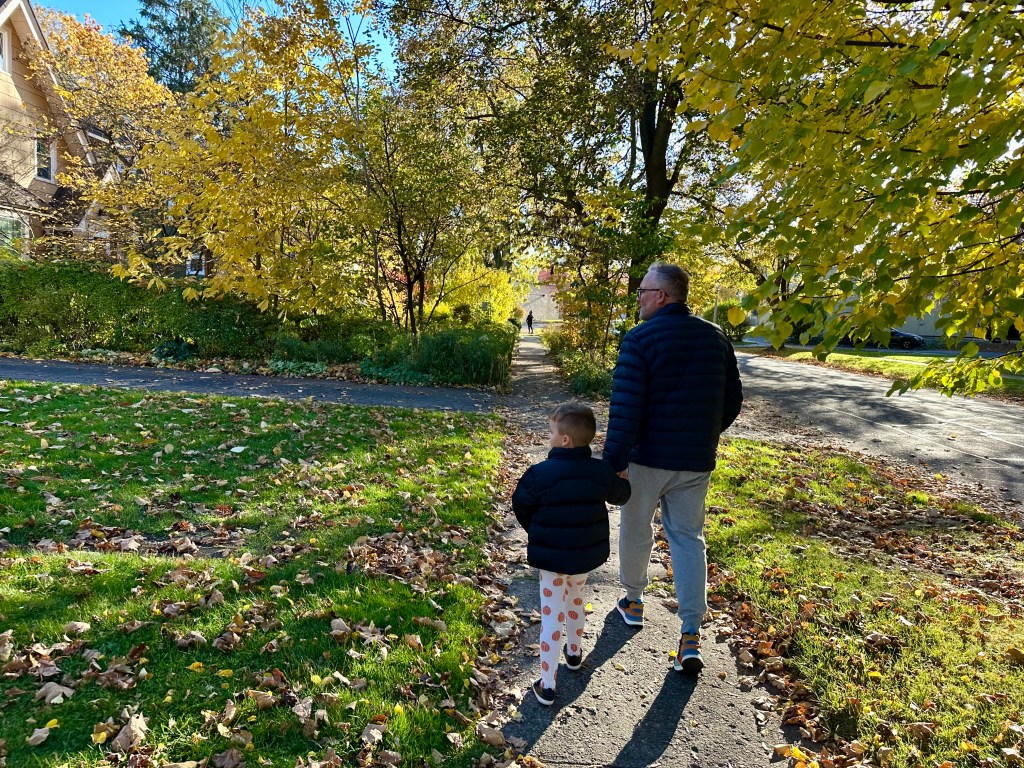
Teddy and his father. Photo by Bruce Stambaugh

© Bruce Stambaugh 2026
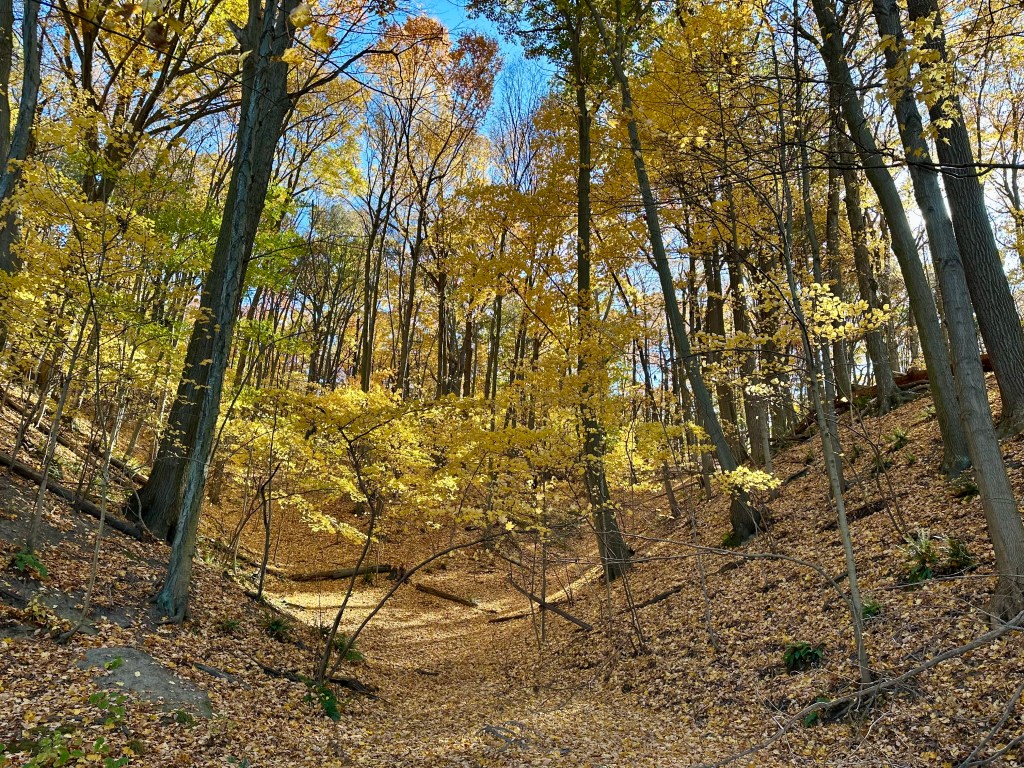
The Seven Sisters

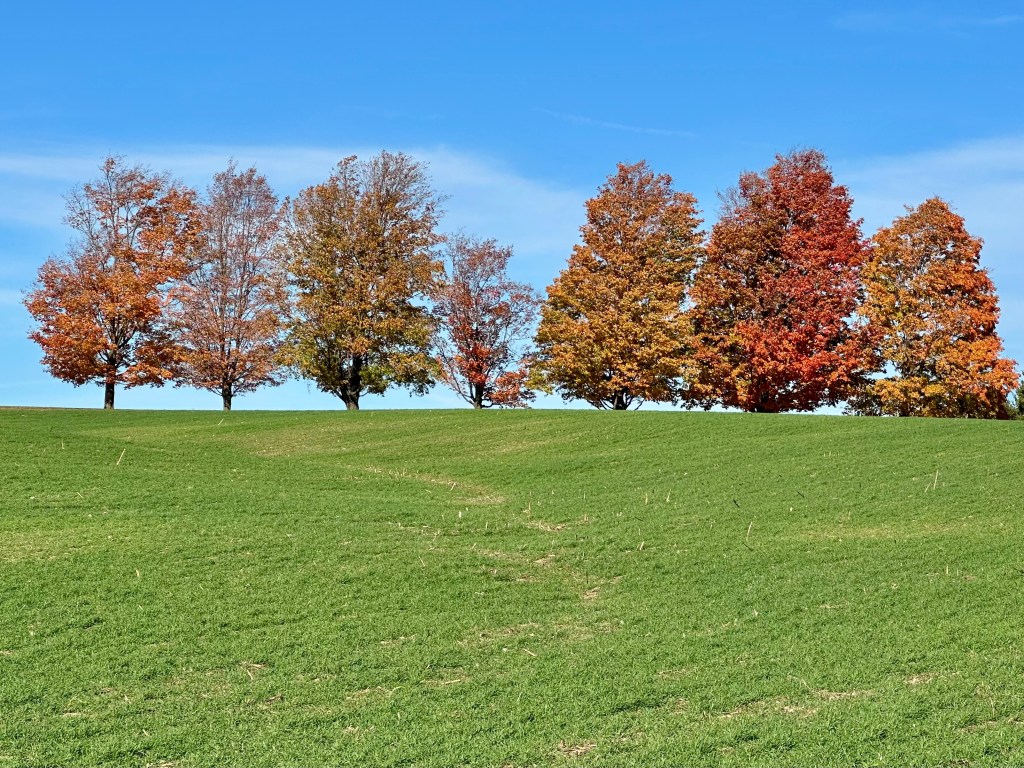
Every fall, I drive by this line of sugar maple trees that mark the driveway to a brick ranch home. They stand atop this knoll and oversee a grain field.

This year’s crop was field corn, already harvested for silage to feed cattle. When I stopped to take this photo from Switchboard Road, the winter wheat was already peeking through the rich soil.

I drive this road regularly, and these trees always catch my eye. But autumn is the season when these Seven Sisters, as I like to call them, really stand out. They consistently paint a colorful scene, but no two are exactly alike.

As for the road’s unusual name, the house that contained the first telephone switchboard for the City of Harrisonburg, Virginia, stands on the east side of the roadway.

The Seven Sisters look down at that historic building, now a resident’s home.

The Seven Sisters. Photo by Bruce Stambaugh

© Bruce Stambaugh 2026
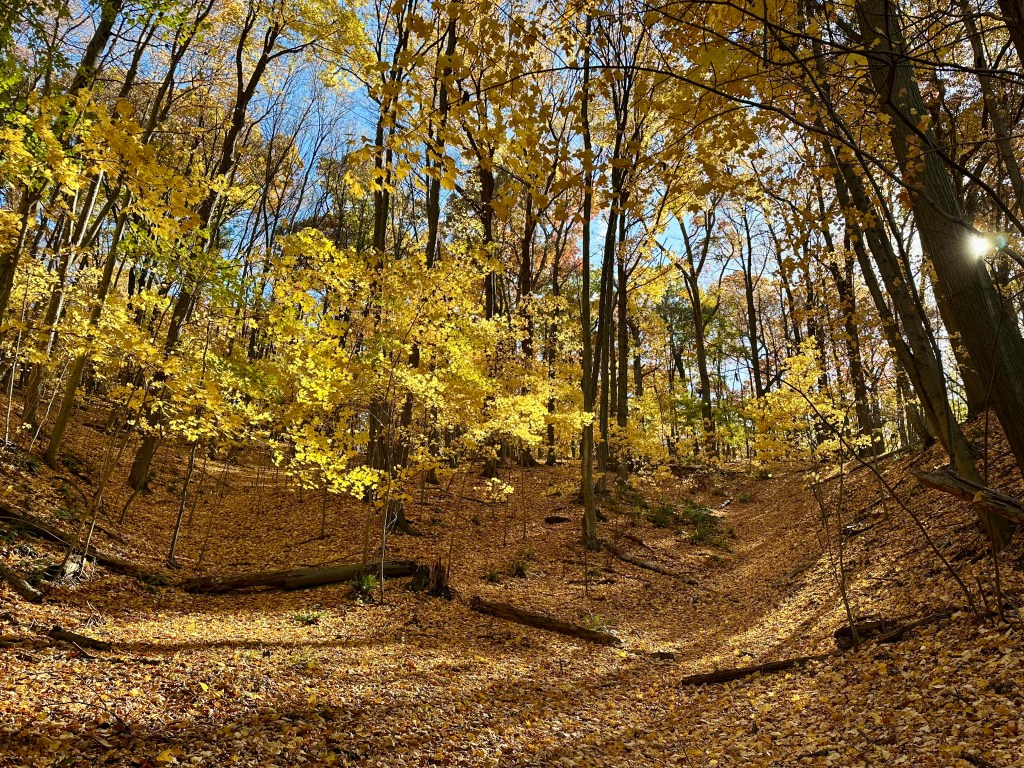
Fall Colors, Finally

Photo by Bruce Stambaugh

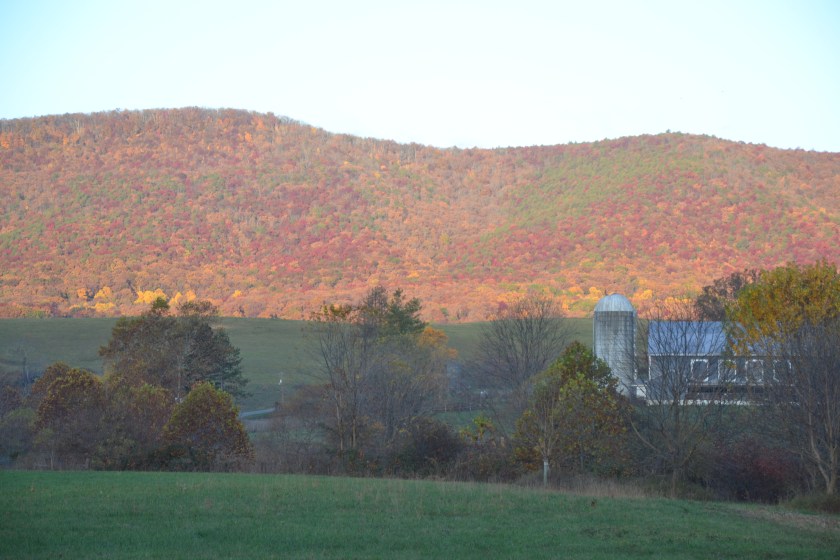
It’s been a dry, dull fall here in Virginia’s Shenandoah Valley. The usual brilliant fall colors of trees and shrubs were only tinged with color, then mostly withered to brown and have fallen to the ground. Only patches of colors have shown brightly instead of entire neighborhoods or mountainsides.

In our recent coming and goings north and back south through the Appalachian Mountains in Virginia, West Virginia, Maryland, and Pennsylvania, much is the same. Dry fields and forest, and mere spots of color could be seen.

This farmstead south of Friendsville, Maryland, was the exception. Autumn’s warm hues of the deciduous tree leaves surrounded all the buildings, with a splash of green thrown in by the evergreen.

I was grateful the morning sunshine highlighted this lovely scene.

© Bruce Stambaugh 2025

Beauty and the Beast

Colors galore as a wildfire burned in the valley below last fall. Photo by Bruce Stambaugh

This is the last in a series celebrating National Park Week.

Autumn is often the best time to visit a national park. The annual coloring of the leaves attracts millions of people to many national parks, including Shenandoah National Park in Virginia.

The Park Service staff do an excellent job of keeping the public informed about the status of the changing of the leaves. From websites to social media to webcams, patrons of the parks can plan their trips accordingly.

Of course, everyone wants to hit the peak colors. The problem is that many factors play into trying to time the peak of coloration. Elevation, weather, temperature, tree species, longitude and latitude, and the sun’s angle all assist the color transformations. People’s schedules add to the leafy puzzle.

Living near a national park makes timing less risky. I closely monitor the weather, social media group photo posts that specialize in leaf watching in Shenandoah National Park, and the park’s weekly livestreaming. When it’s time to go, I head east and am seldom disappointed.

This past fall, much like this spring, was relatively dry. Fire conditions lasted several weeks, and fires did break out. The photo shows smoke from a fire near the Rappadan Camp that started outside park boundaries but quickly burned into the park’s forest.

The fire’s smoke starkly contrasted with the vibrant colors of the ashes, sassafras, hickory, oaks, and poplar trees. It subdued the usual exuberance for the park’s universal beauty.

Over nearly a week, firefighters finally got the upper hand as the leaves began to rain down. Eventually, fall storms helped quench the blazes and brought down the last leaves.

Despite the fire, park visitors still enjoyed the beauty of the changing leaves along Skyline Drive, from overlooks, and walking the trails that remained open.

Given nature’s multiple colors, it’s a good bet everyone left the park with lasting memories and photos to brag about.

© Bruce Stambaugh 2024

Autumn’s Amazing Colors – The Last

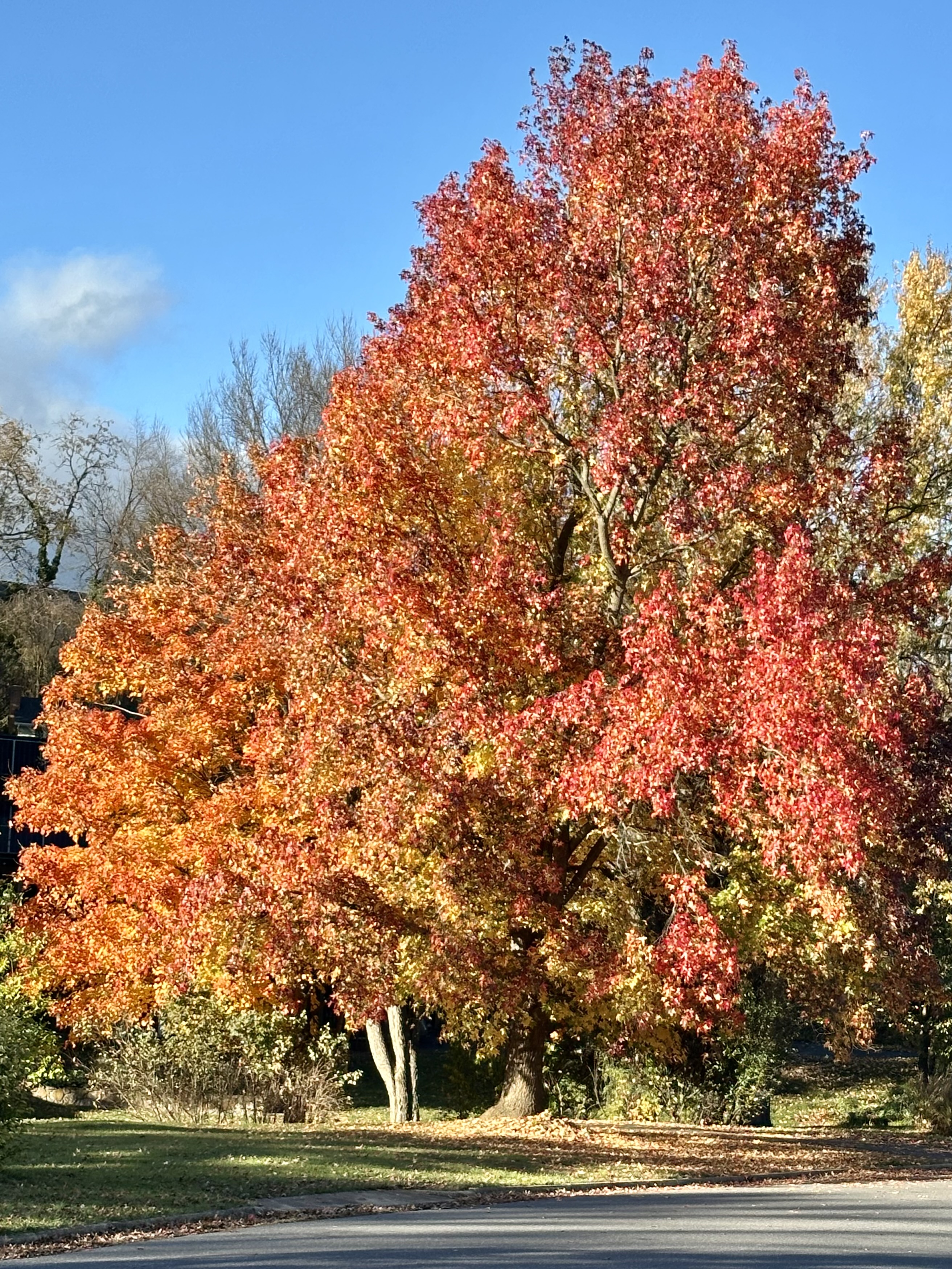
Brilliant Sugar Maples in the Park View neighborhood of Harrisonburg, Virginia.

Following my day in Shenandoah National Park, my wife and I headed south to Augusta County. We had more than colorful leaves on our agenda.

The “Queen of Steam,” Norfolk & Western Railroad’s Old 611 steam engine was running excursions twice a day from Goshen, Virginia, to Staunton, Virginia. Friends had pointed out a perfect place to observe the 611 heading east to Staunton.

So, Neva and I were up early to get a good spot at the bridge over the Buckingham Branch tracks at Swoope, Virginia. I wasn’t familiar with the area, so I wanted to scout different locations, too.

It was another beautiful day in the Shenandoah Valley. Cool temperatures in the morning, but a promised warming into the 60s by afternoon. The drive down to Swoope was nothing less than gorgeous.

Our spot on the bridge where we would have seen the 611 engine pulling the excursion train.

We arrived in Swoope at 8:30, and the train wasn’t scheduled to leave Goshen until 9:30. We didn’t know how long it would take the special train to arrive at our location. Besides a few walkers and joggers, we were the only people around.

Confident that our spots on the bridge wouldn’t be taken, we drove around the lovely valley dotted with rolling hills, pristine cattle farms, and gorgeous trees. The mixed hardwoods on Little North Mountain and the North Mountain beyond it were at peak color.

I took several shots of trees and farms and returned to the bridge. Soon, other rail fans arrived, and the chatter began. We listened for the train whistle to echo through the valleys. All was still.

Finally, a guy arrived who had information about the 611. It was listed as “static” at Goshen, meaning the engine wasn’t moving. A mechanical problem prevented 611 from running that day. The excursion would be pulled by diesel engines.

Please click on the photos to enlarge them.

My wife and I decided to return home. The morning had already brought much beauty into our lives. We had enjoyed the colorful trees, the well-maintained farms, and the congeniality of strangers.

The next few days, I continued my quest to photograph the beauty around Harrisonburg before the weather changed and brought the leaves down. I am happy to share them with you.

Our backyard when we arrived home from Augusta Co.

© Bruce Stambaugh 2023

Leaves

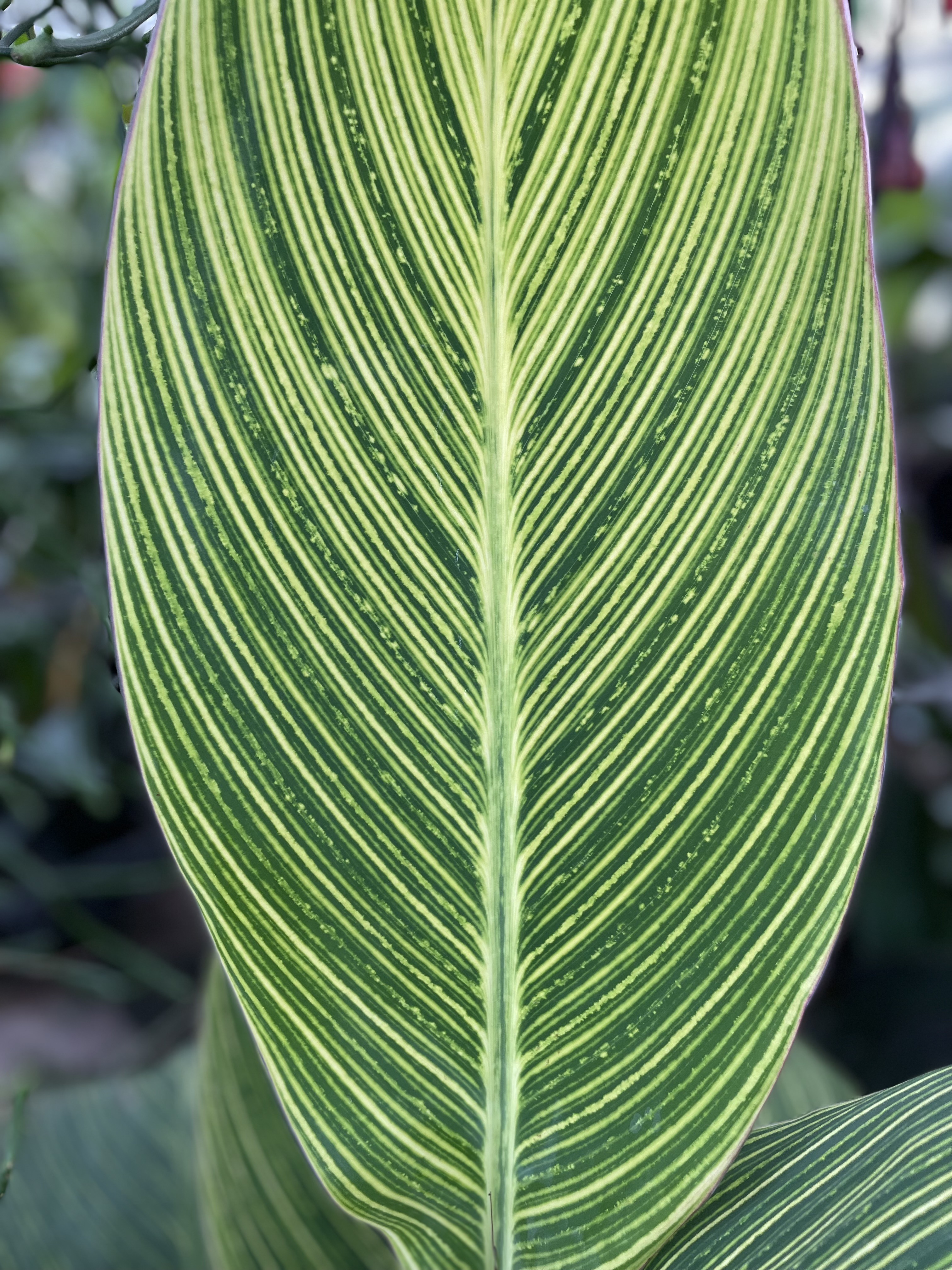
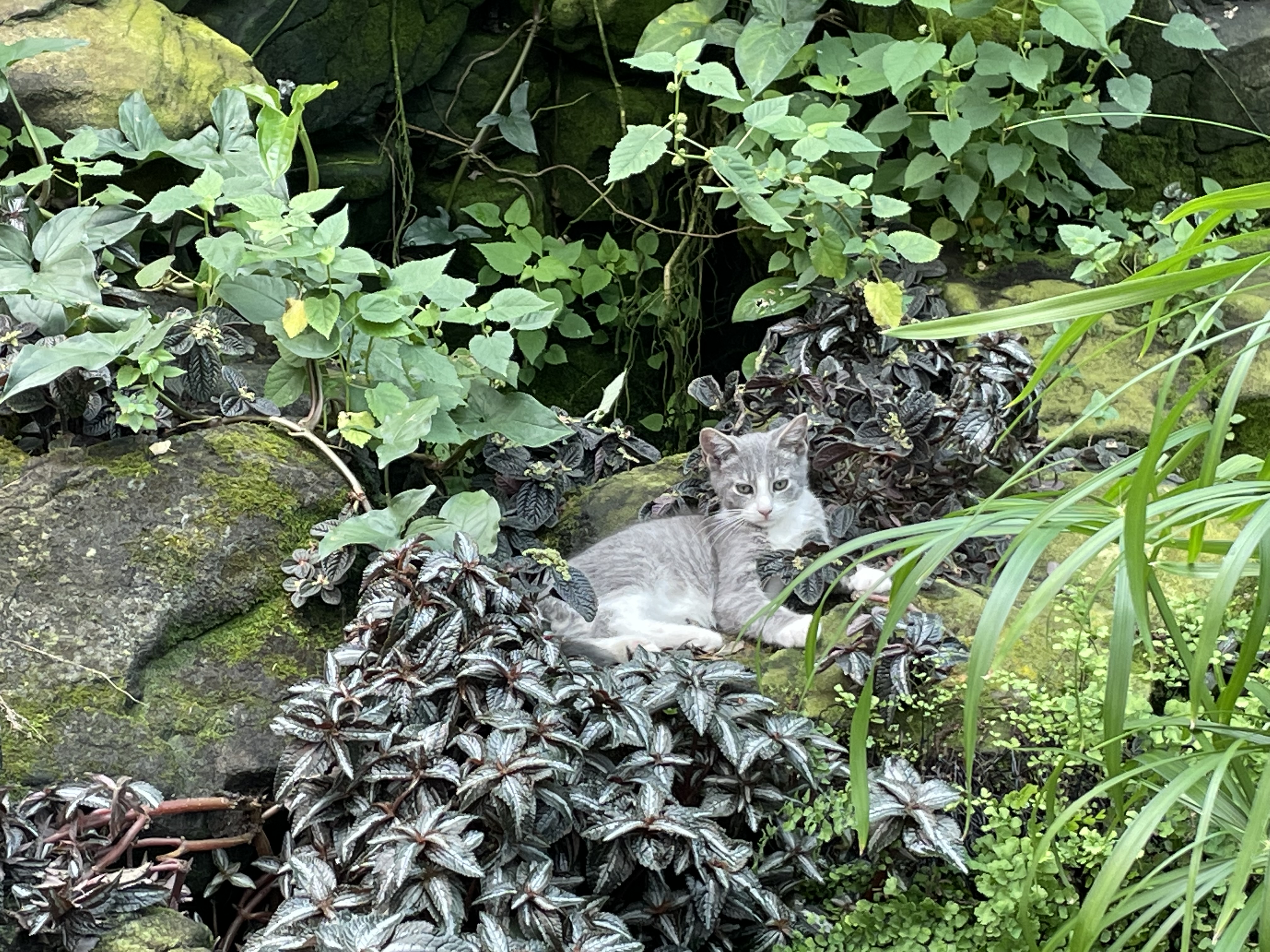
My wife and I recently visited some friends in eastern Pennsylvania. Since we all love flowers, they took us to a local greenhouse that was more like an arboretum.

The wide variety of leaves attracted my attention. The Rising Sun Redbud leaves, however, are from a tree in our backyard.

© Bruce Stambaugh 2022

View from the Campfire

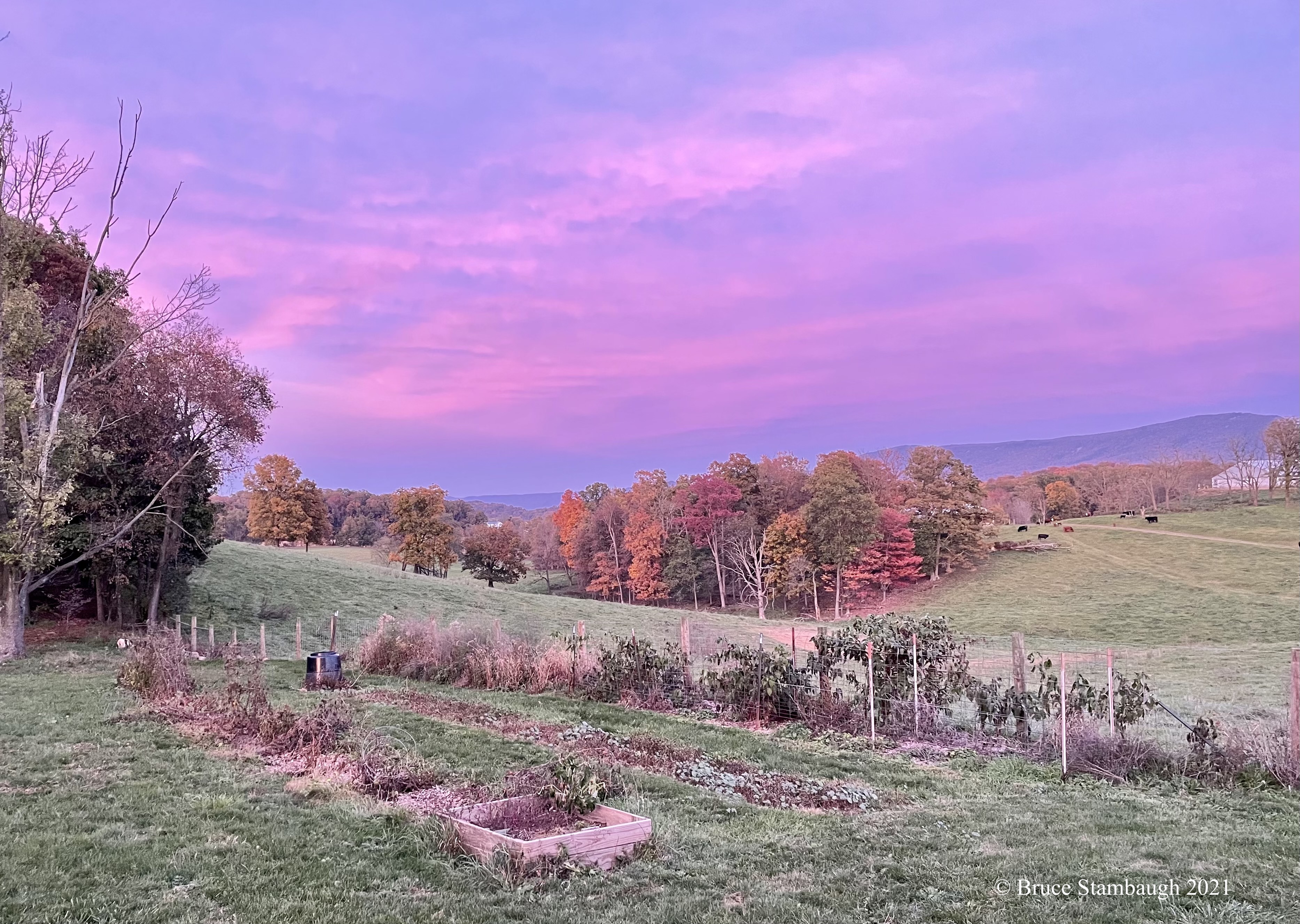
My wife and I were sitting around a roaring campfire with friends when the clouds to the north began to reflect the rays of the setting sun. I slipped away from the genial conversation and snapped this photo at the peak of the lavender sky above this glorious autumn landscape.

From that point on, the conversation freely flowed, the radiant fire grew warmer, shaking off the evening chill. It was an evening to remember, most grateful for the all-sensory experiences.

© Bruce Stambaugh 2021

What a view!

My wife and I had heard of Blackwater Falls State Park near Davis, West Virginia. But we had never been there. When our neighbors told us that the leaves were at peak color, we did a day trip to check it out. We weren’t disappointed.

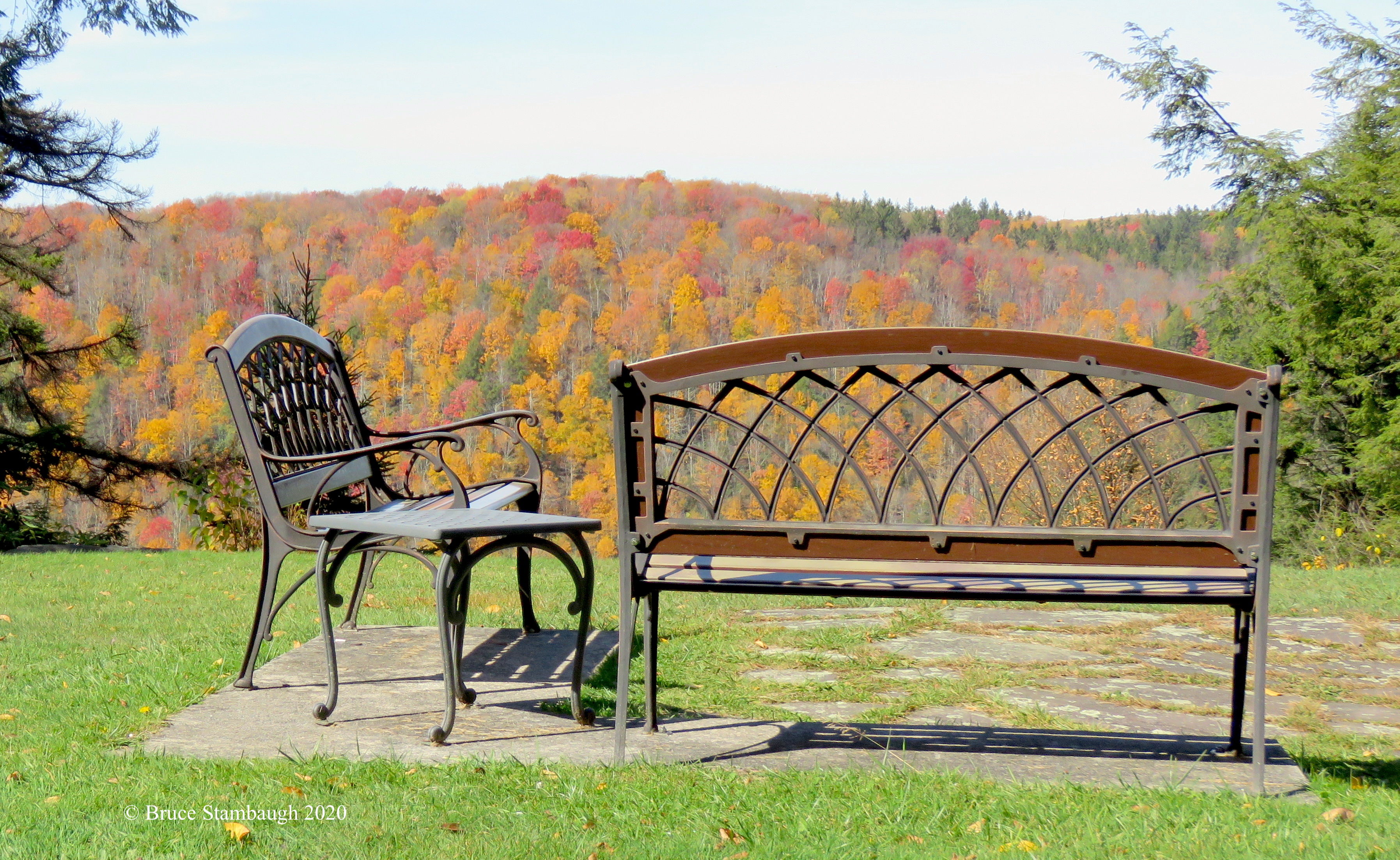
It had rained the previous day, so some of the trees had dropped a few leaves. Still, the Blackwater River valley was gorgeous from every angle. This was the view from our lunch table outside the lodge. The scalloped designs and curves of the pair of love seats and the end table in front of us created an intriguing foreground for the lovely leaves beyond.

“What a view!” is my Photo of the Week.

© Bruce Stambaugh 2020

Pure Gold

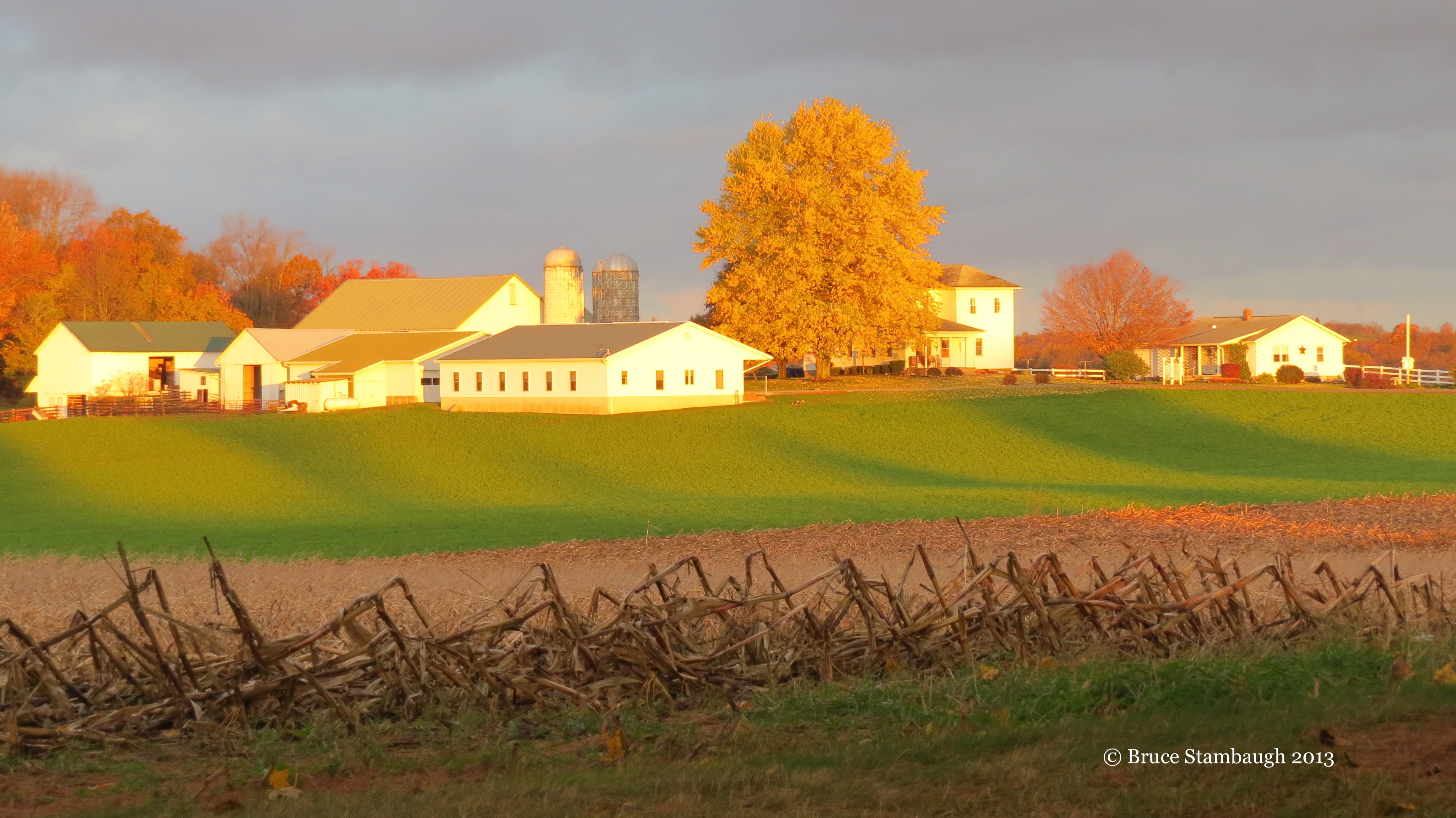
This was our view every fall when we lived in Ohio’s Amish country. I took this shot from our backyard. The sun had just risen above the hills to our east, bathing everything, including the already colorful leaves, in pure gold.

“Pure Gold” is my Photo of the Week.

© Bruce Stambaugh 2020

Bay Photos by Donna

Wildlife Photos From The Chesapeake Bay Region

ROAD TO NARA

Culture and Communities at the Heart Of India

K Hertzler Art

Artist and nature journalist in the Shenandoah Valley of Virginia.

Maria Vincent Robinson

Photographer Of Life and moments

Gabriele Romano

Less Noise. More Meaning

Jennifer Murch

Art is the only way to run away without leaving home. -Twyla Tharp

Roadkill Crossing

Writing generated from the rural life

ANJOLI ROY

writer. teacher. podcast cohost.

Casa Alterna

El amor cruza fronteras / Love crosses borders