Trouble in a peaceable pond

Feeding fish by Bruce Stambaugh
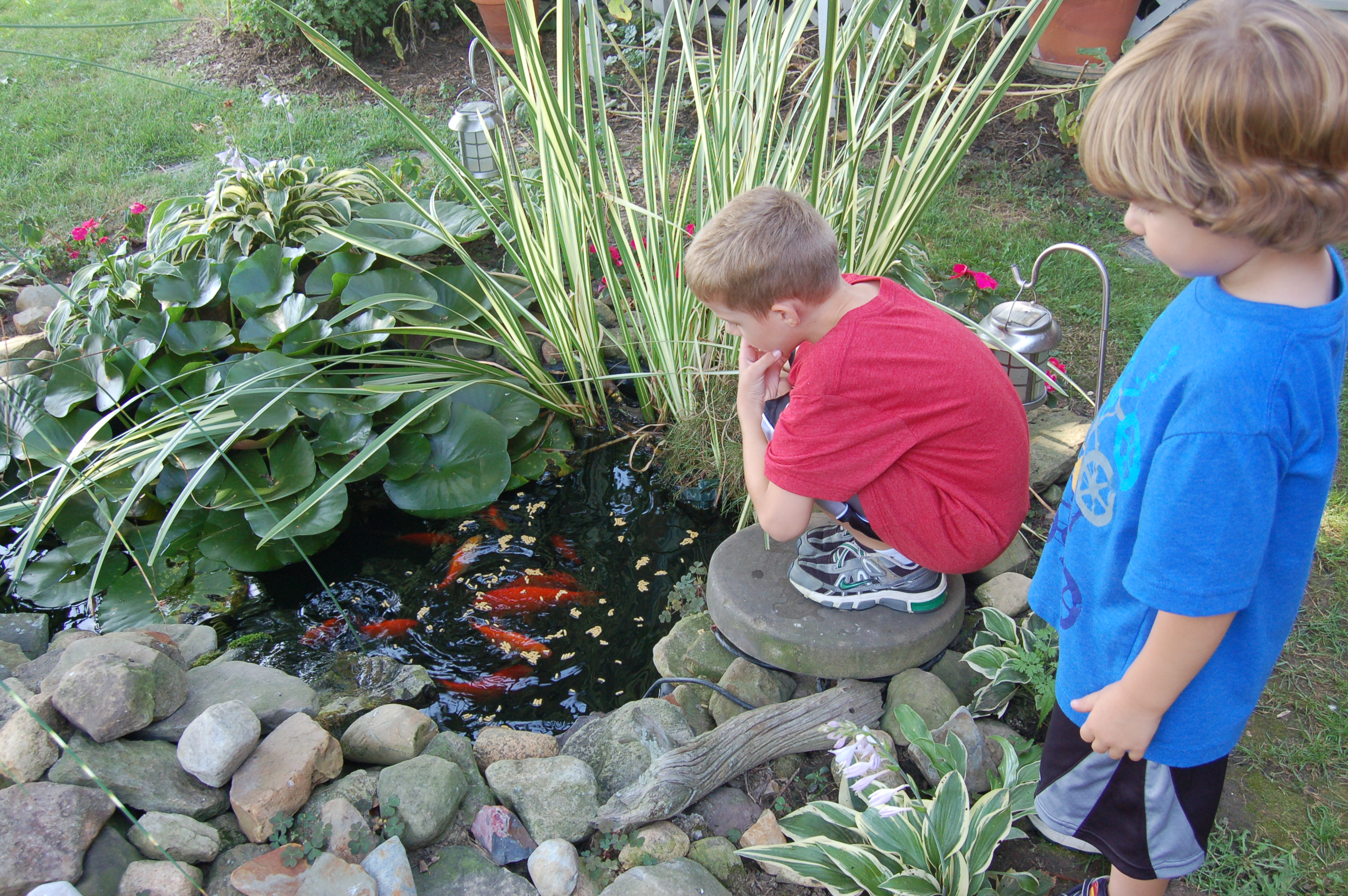
The grandchildren love to feed the goldfish in the little garden pond.

By Bruce Stambaugh

I have greatly enjoyed the little garden pond that students and staff gave me when I retired as their elementary principal 13 years ago. It was fun building the pond and the little waterfall that gurgles night and day.

The pond, visible from all rear windows and our open back porch, has multiple benefits. The mini falls’ mesmerizing tinkling of water on water lulls me to sleep on pleasant nights. An assortment of wildlife has ventured to the pond, including deer and a Great Blue Heron.

Goldfish, snails and aqua plants help keep the pond’s water in proper equilibrium. A family of green frogs just showed up on their own. They have been a welcome addition, until recently that is.

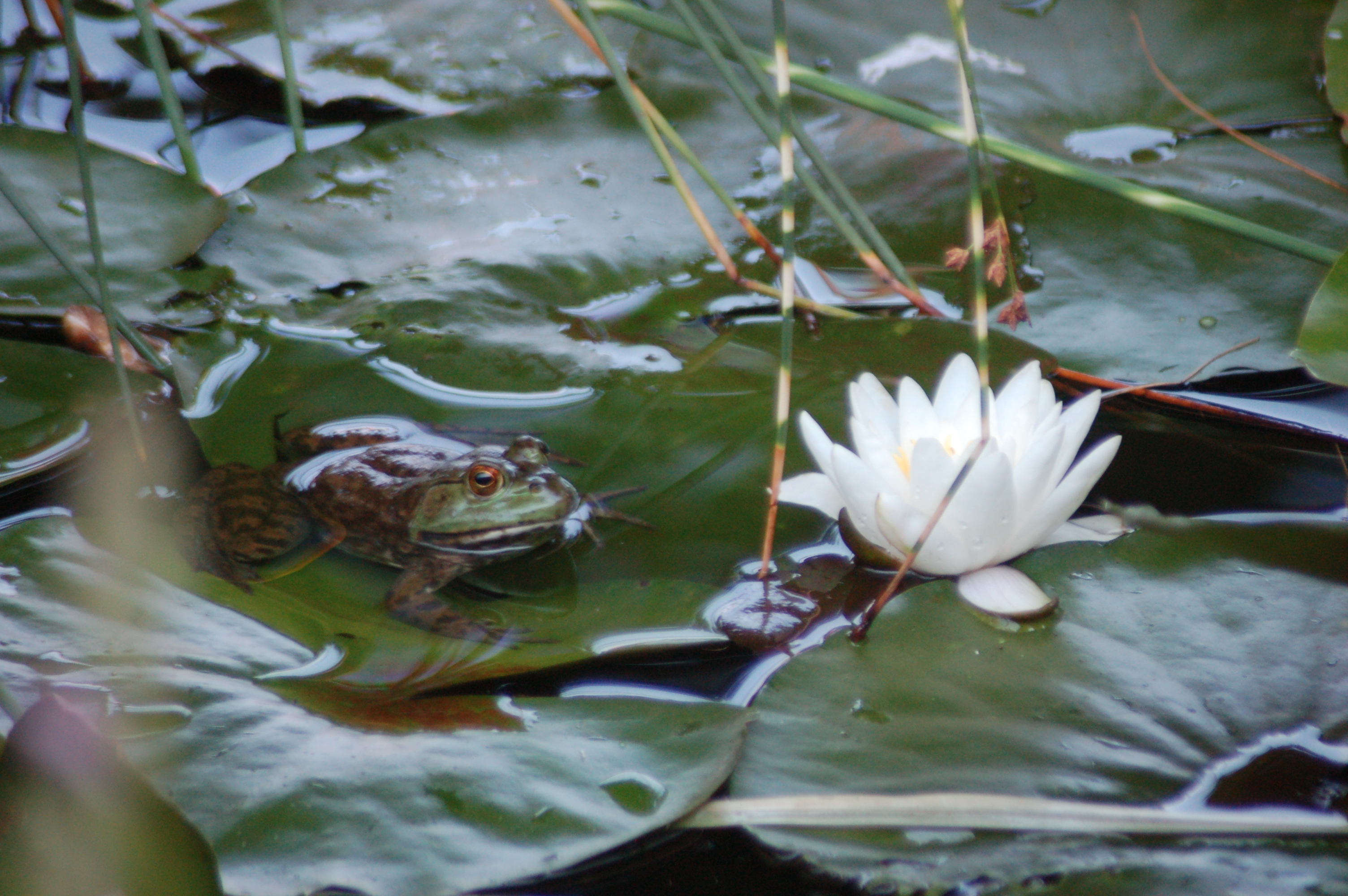
Frog and flower by Bruce StambaughSummer, of course, is when the pond is most popular. Songbirds drink the cool water and bathe in shallow pools. The green frogs station themselves at the pond’s perimeters waiting for insects. Blooming white lily blossoms enhance their chances.

The pond also attracts the grandkids when they visit. It’s one of the first places they explore. They particularly enjoy feeding the goldfish and hunting for the frogs.

Davis, the middle grandchild, is especially inquisitive. Last time here, he wanted to know where the frog nests were. Davis bent over visually surveying the pond, intently looking for the frogs.

Lucky frog by Bruce Stambaugh
Perhaps this green frog was hoping for a little Irish luck in finding lunch.
It was during his investigation that we discovered something very unusual. The largest of the green frogs was resting atop something dark, wet and balled up. I recognized the clump as a dead bird.

As I approached the crime scene, the murder suspect made a quick getaway with one giant plop into the water and hid under the lily pad leaves. From what I could discern, the poor bird was a female House Finch.

I could hardly believe it. I knew that bullfrogs ate birds. But green frogs? I wondered if it wasn’t just a coincidence that the frog came to rest upon the dead bird.

Still, the lifeless bird showed every indication that a frog had tried to swallow it. I distracted the grandkids by playing ball. When I went back later to retrieve the victim, it was gone.

A few days later, while cleaning the pond and feeding the fish, I discovered yet another dead bird. Curious, I contacted Julie Zickefoose, a noted author, artist, and lover of all things nature. She had never heard of a green frog snatching birds either. Julie suggested that I had a troublemaker in my peaceful pond, and that the perpetrator be removed to a farm pond if for no other reason than the safety and welfare of the birds that come to enjoy our pond’s refreshing water.

Fall pond by Bruce Stambaugh
The pond in the fall.
As long as those frogs had been there, I really hated to pin the fowl play on one of the green gang. I decided I needed conclusive rather than circumstantial evidence before I removed the big guy.

I decided to be vigilant, and watch and wait to see if the frog really did go after birds. On sunny days, it usually claims an easily visible grassy pad at water’s edge waiting for a free lunch.

Either the frog has had a change of heart, or perhaps diet, or I’m not a very good detective. So far, I haven’t found anymore carcasses.

I’ll keep watching, and if I catch the frog green-handed, I’ll let you know. In the meantime, let’s hope peace and tranquility reign in our little pond of paradise.

Bird bath by Bruce Stambaugh
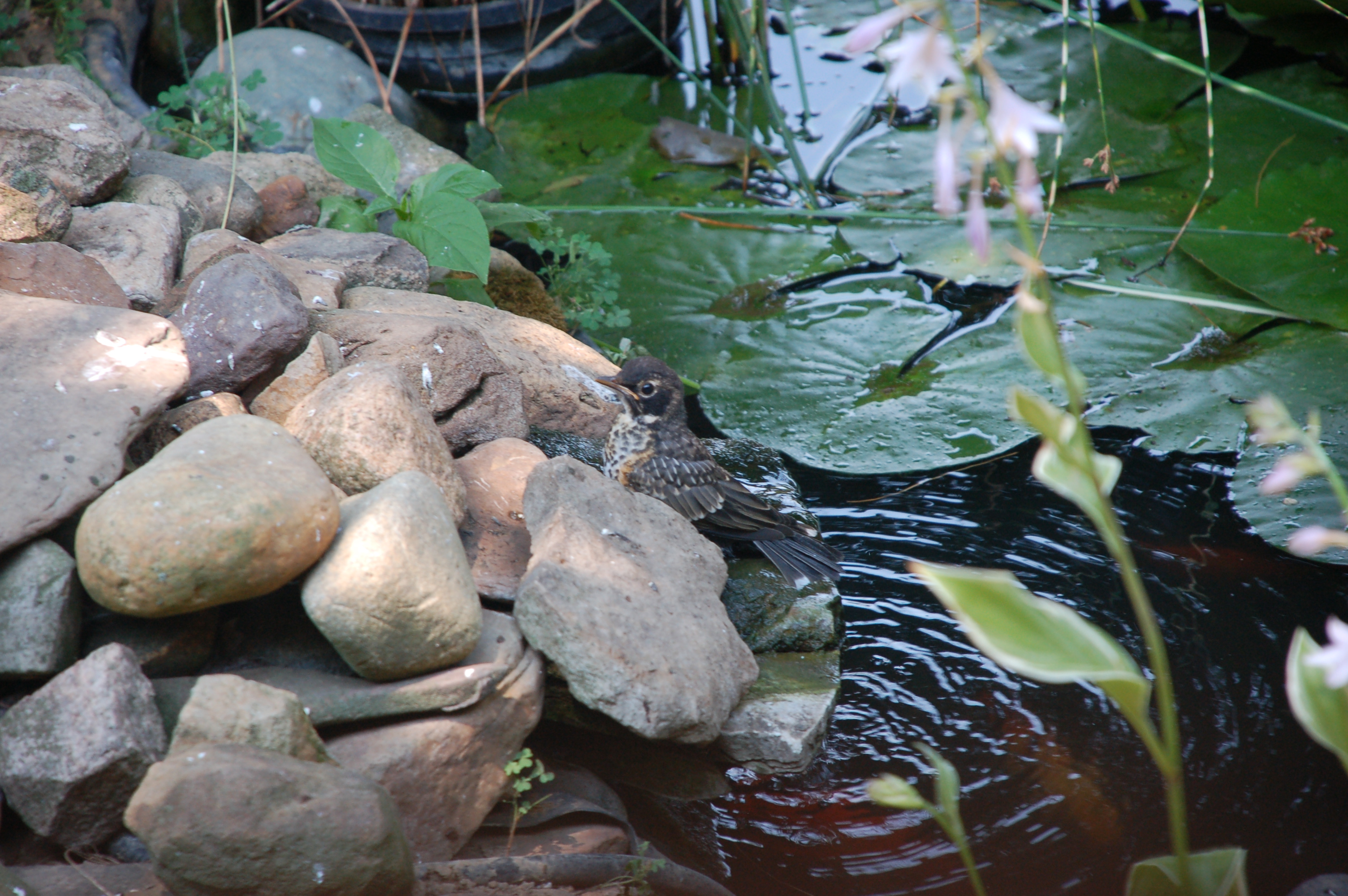
A juvenile American Robin enjoyed a refreshing bath in the little waterfalls.

This column appeared in The Bargain Hunter, Millersburg, OH.

© Bruce Stambaugh 2012
After this June and July, do we really need August?

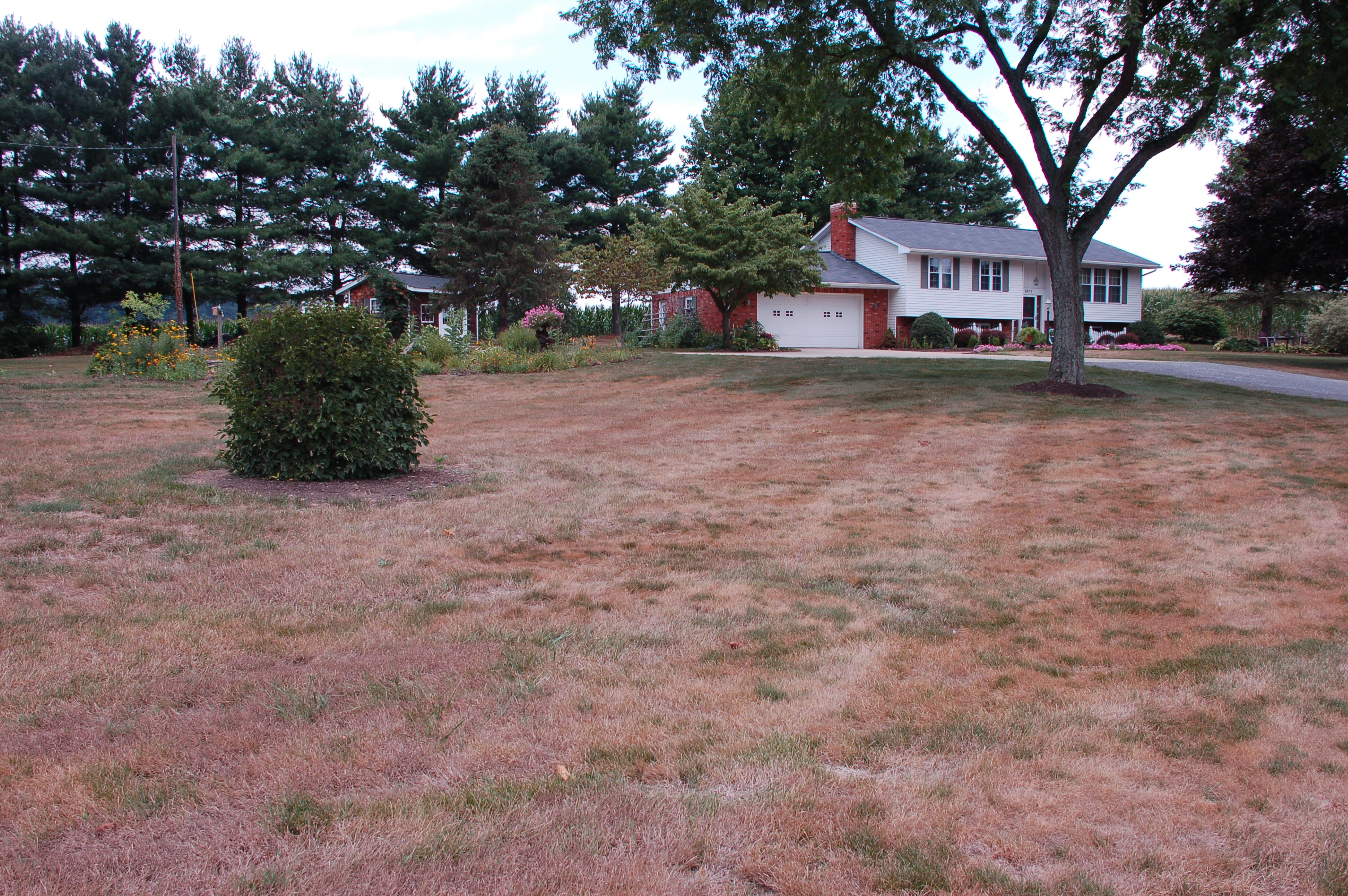
Ohio chaparral by Bruce Stambaugh
Parched pastures in Ohio more resembled California chaparral.

By Bruce Stambaugh

The dog days of August are upon us. The month is notorious for hot, humid and mostly dry weather. Haven’t we already experienced enough of that without adding to the enduring misery?

Once June arrived, the lovely spring weather we had enjoyed literally evaporated. The weather turned unusually warm and dry, not just in Ohio, but also across much of North America. Many record high temperatures were recorded. Geographic areas that had been moist quickly joined other regions that have had ongoing, long-term drought conditions.

Artesian well by Bruce Stambaugh
This artesian well normally runs steady year-round. It dried up by the end of July.
Water became a precious commodity. Wells were taxed. Perpetual springs slowed to a trickle. Local streams, normally gurgling with water from occasional rains, displayed more creek bed than flow.

I pitied those who had to work outside for a living. Many businesses had their employees arrive early to take advantage of the morning coolness, and then let them leave mid-afternoon at the height of the heat.

National Weather Service offices all across the country regularly posted heat advisories and excessive heat warnings. In the cities, where concrete and steel intensified the heat, people sweltered.

It was bad enough here in the country. Lawn care services, usually swamped for work or used to rushing to beat the rain to complete their jobs, simply lost business. They were used to mowing green, not brown. Indeed, there was no need to do so.

Brown lawn by Bruce Stambaugh
Lawns that were mowed short took a beating from the heat.

Farmers watched helplessly as their corn curled and parched pastures more resembled California chaparral. In America’s breadbasket, farm animals were sold off since feed and hay prices soared. By July’s end, two-thirds of the country was in some stage of drought.

Wild animals sought cooler climes, too. Groundhogs abandoned their normal burrows in hayfields and ranged outside their normal habitat for scarce food and water. A young one dug a hole under our back porch for protection from predators. It munched on our herbs and flowers, and boldly drank from our little garden pond in broad daylight.

Curled corn by Bruce Stambaugh
Field corn was so stressed from the heat and drought that it curled.

A pose of raccoons was more cautious. Being nocturnal, they regularly fished and splashed at night. The groundhog and seven of the masked bandits were captured in live traps baited with a gourmet meal of apple slices and marshmallows.

What really stood out though was how people seemed to adjust to the oppressive conditions. Sure complaints were lodged to nobody in particular. The only moisture to fall on some farmland was from farmers’ tears. Still I found people overall to be as congenial as ever. They seemed determined not to let the heat get the best of them.

One exception to that was on the highway. Drivers appeared more aggressive than usual, perhaps incited by the blazing sun and warm car interiors. In my various road trips, I noticed an unusually high number of vehicles, large and small, abandoned along highways or sitting with their hoods up. Their operators peered into the engines or talked on cell phones while waiting for help to arrive.

Brown grass by Bruce Stambaugh
Burned out lawns and parched flowerbeds like these were common all across the midwest part of the United States.

Trees and flowers, too, were stressed. Leaves turned yellow or brown. Some gave up the ghost altogether. When I walked to the mailbox to get the mail, the grass crunched beneath my feet like snow. Right now, I’d rather have the snow. Can’t we just skip the dog days of August and sashay right into a normal fall?

Given such a notion, maybe the heat has gotten to me after all.

This column appeared in The Bargain Hunter, Millersburg, OH.

© Bruce Stambaugh 2012
Walking by myself, but never alone

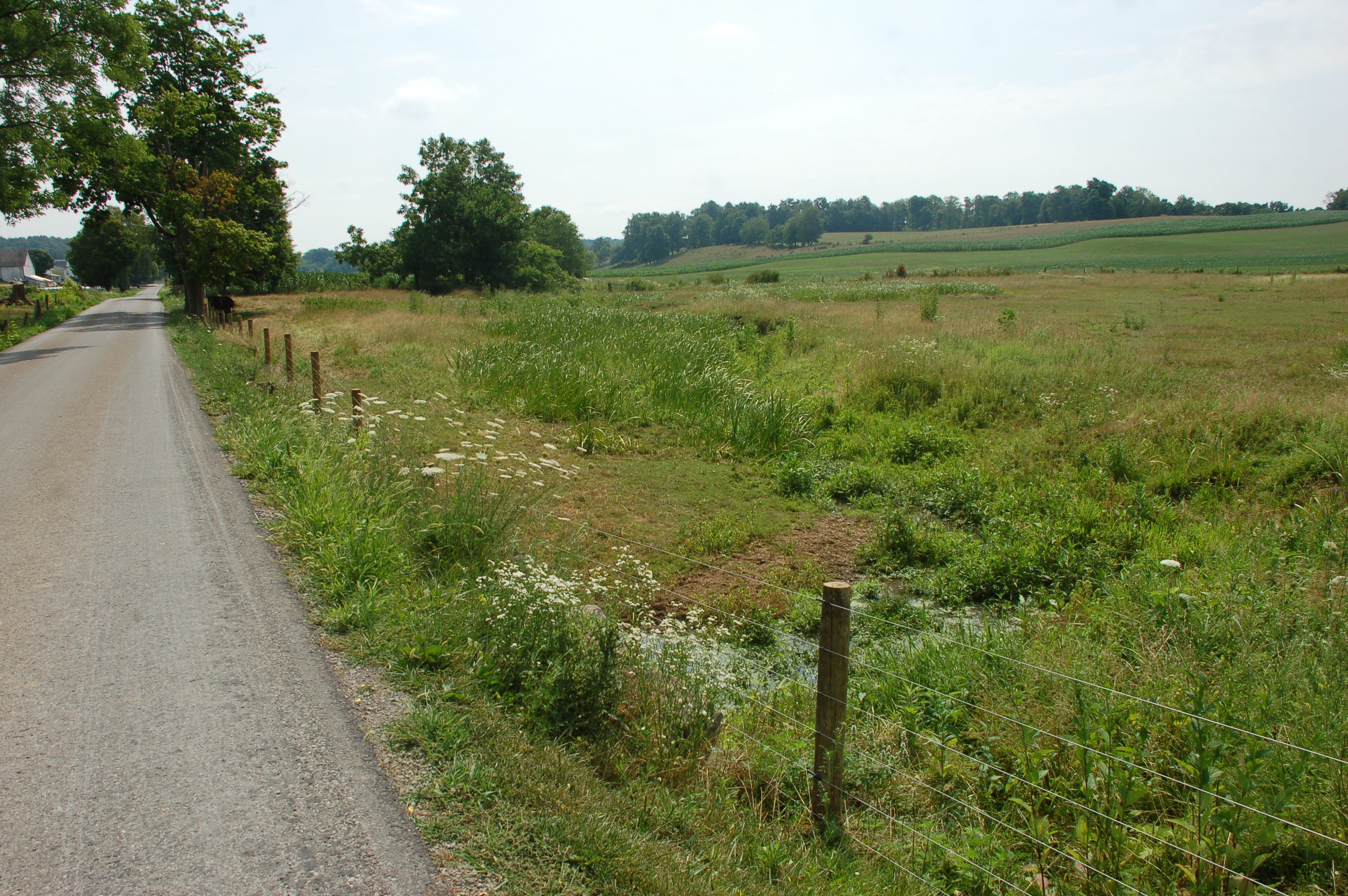
Countryside by Bruce Stambaugh

By Bruce Stambaugh

Even though I am usually alone, I always have plenty of company on my regular morning walk on the township road near our home.

I walk for the exercise of course, but the benefits far exceed staying physically fit. On these hot and humid summer days, I like to get an early start if my schedule permits.

If I can survive the tricky first tenth of a mile on our busy county highway to get to the road less traveled, I can relish the rest of the walk. Common sense tells me to stay alert for oncoming traffic and dodge the fleet of various vehicles by stepping to the side.

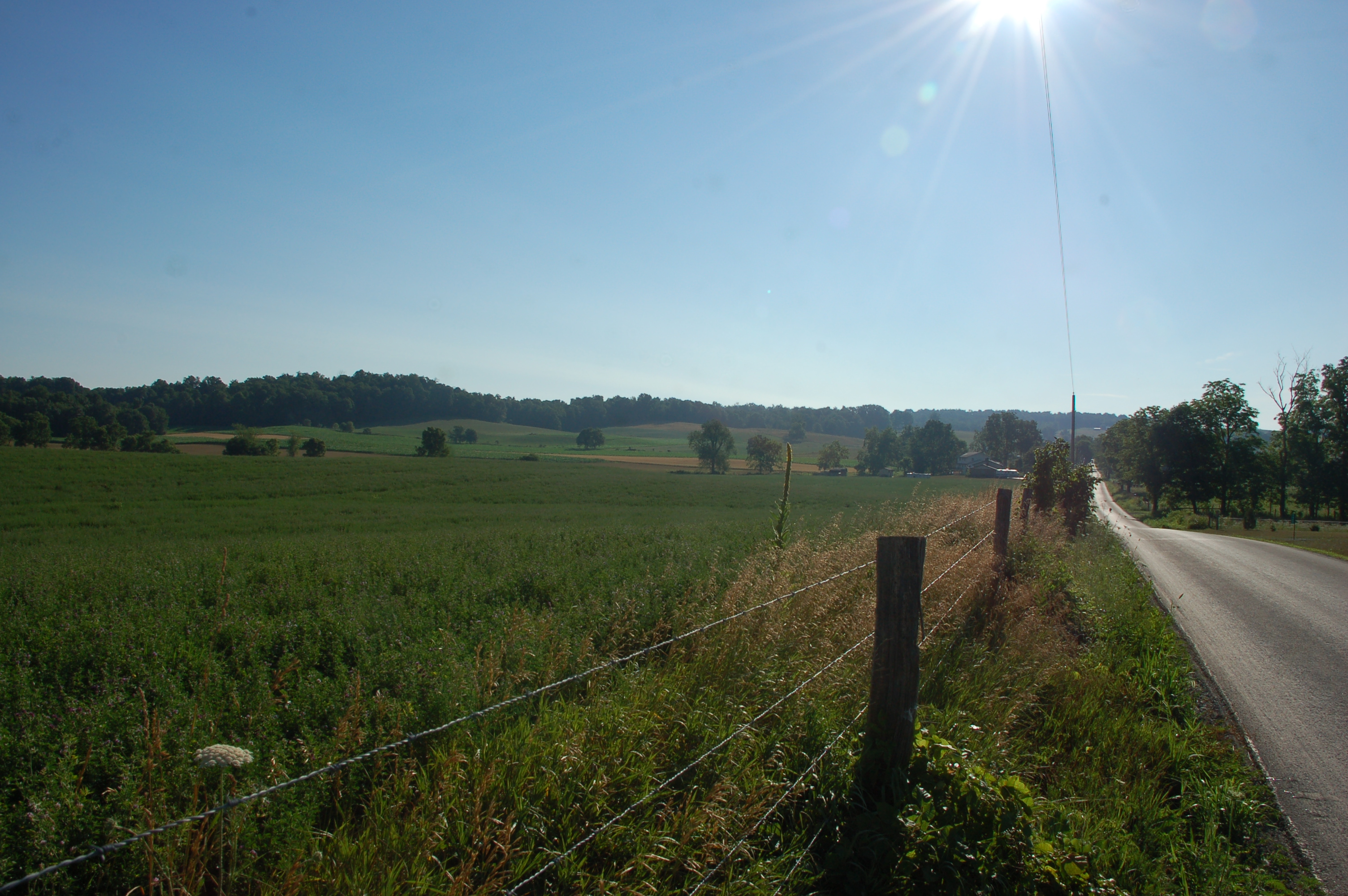
Sunny walk by Bruce Stambaugh

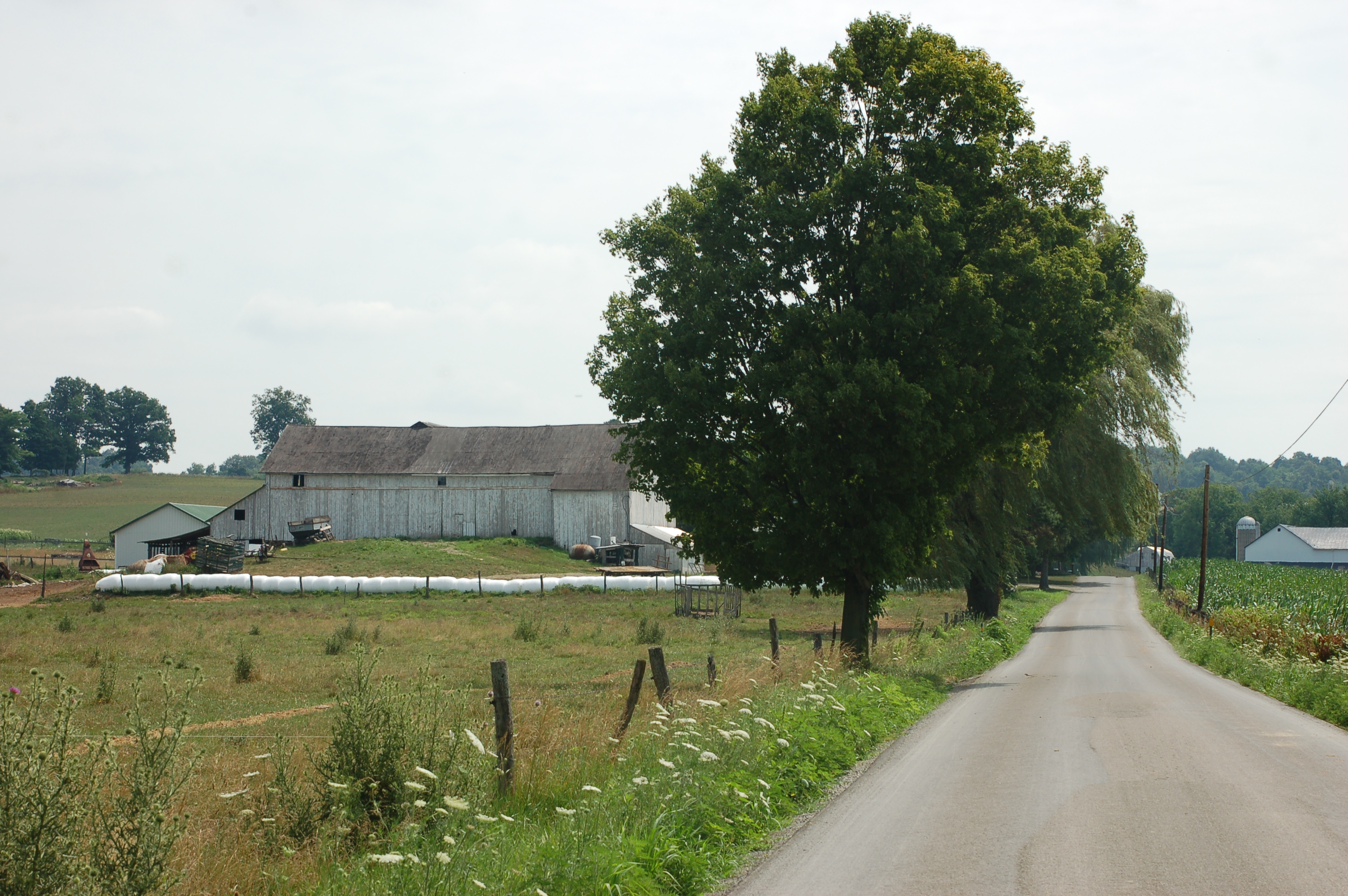
Once I’ve completed the macadam gauntlet to the safety of the township road, I turn east into the morning sun. After a few steps uphill, the road unfolds before me, rolling gradually down into a low, sweeping valley formed by the Wisconsin Glacier 10,000 years ago. Farm fences on both sides squeeze against the chip and seal roadway, making it seem even narrower than it already is.

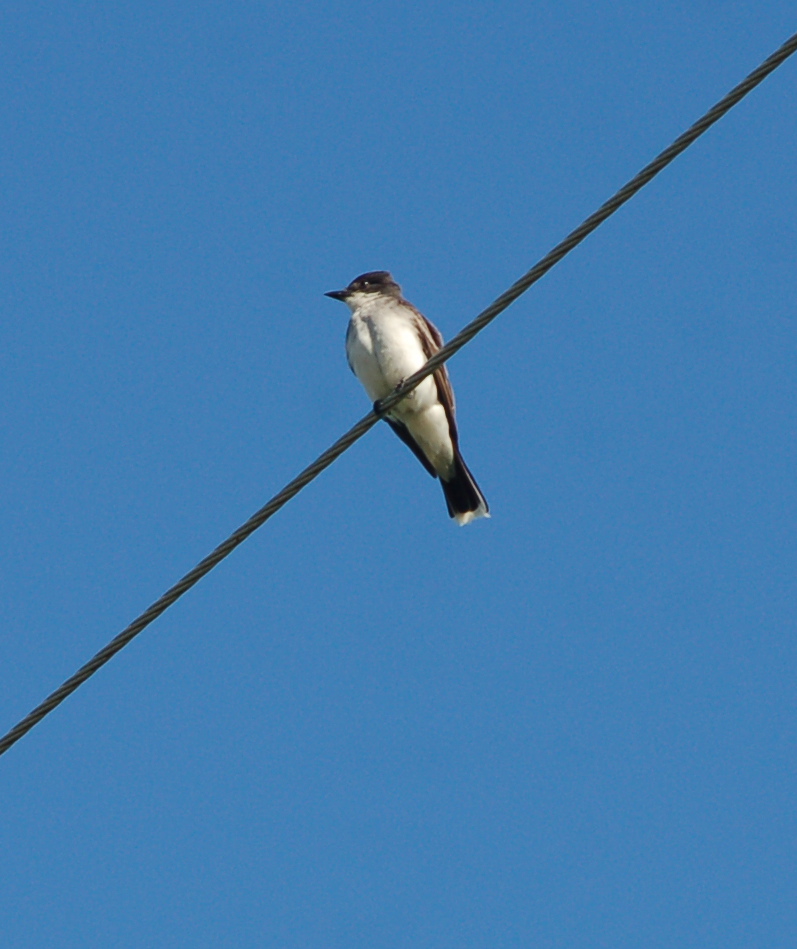
Eastern Kingbird by Bruce Stambaugh
This Eastern Kingbird and it’s mate often greet me as I walk along the township road.
I fondly anticipate these next moments. It’s the same road, but never the same walk. My audience waits, and every crowd is different. It’s not the Olympics by any means. In fact, it more closely resembles a circus.

I especially enjoy the high wire acts. The Eastern Bluebirds, including the juveniles still testing their wings, play their own version of leapfrog with me from the roadside power lines. Greeting me with melodious songs, the furtive birds wait until I nearly reach them before they flutter a few yards down the lines and land again.

I walk some more. They fly some more. The pattern is repeated a quarter-mile until the power lines run out. At that point, the beautiful birds make an arch over the hayfield and light upon the wires behind me to await my return trip.

Heifers by Bruce Stambaugh

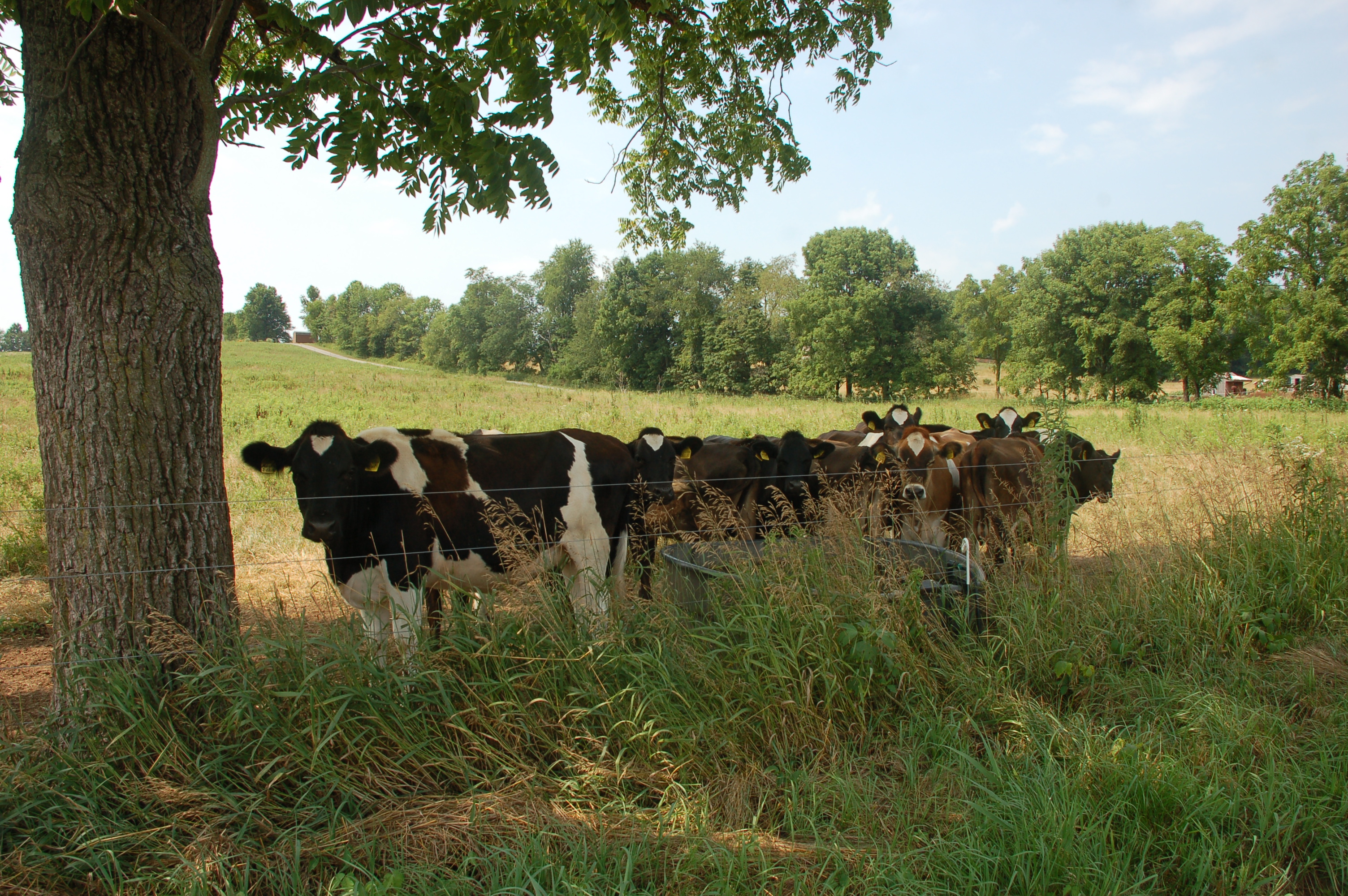
Once the road flattens out, a congregation of Holstein heifers crowded head to tail beneath a black walnut tree suspiciously eye me. As I stroll, their heads turn as one, ears twitching, tails swatting pesky flies. Sensing a potentially easier prey, a few of the flies follow me.

Thankfully, a flashy yellow ball cap saved my baldhead. Still, I flail away at the persistent insects. I’m glad no other humans are around to witness my comical machinations. By the time I reach the valley’s shallow brook, the flies relent.

Jonas Yoder farm by Bruce Stambaugh
I usually turn around and head back home at the Jonas Yoder farm a mile east of my home.

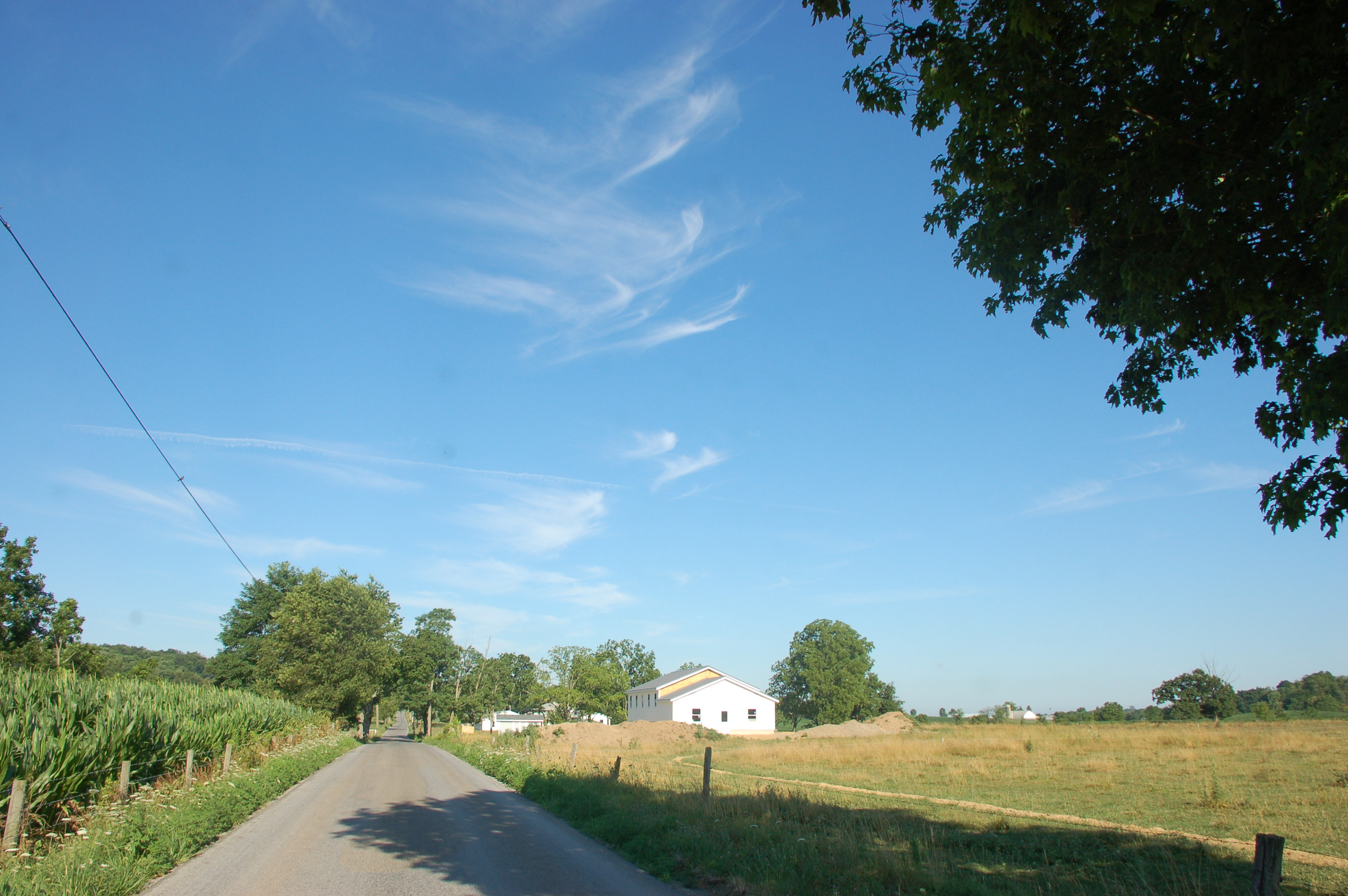
Continuing east past the newly built Amish schoolhouse, the Barn Swallows, Tree Swallows and Purple Martins all start chattering to me at once, circling overhead as if they were asking me to follow.

Buggy by Bruce Stambaugh

At Jonas Yoder’s farm, I break the law. A U-turn begins my return trip. I usually walk down the center of the road until I hear a vehicle or buggy. On average, only one or the other passes me on the township road.

Song Sparrow by Bruce Stambaugh
One of several Song Sparrows that I see on my walk.
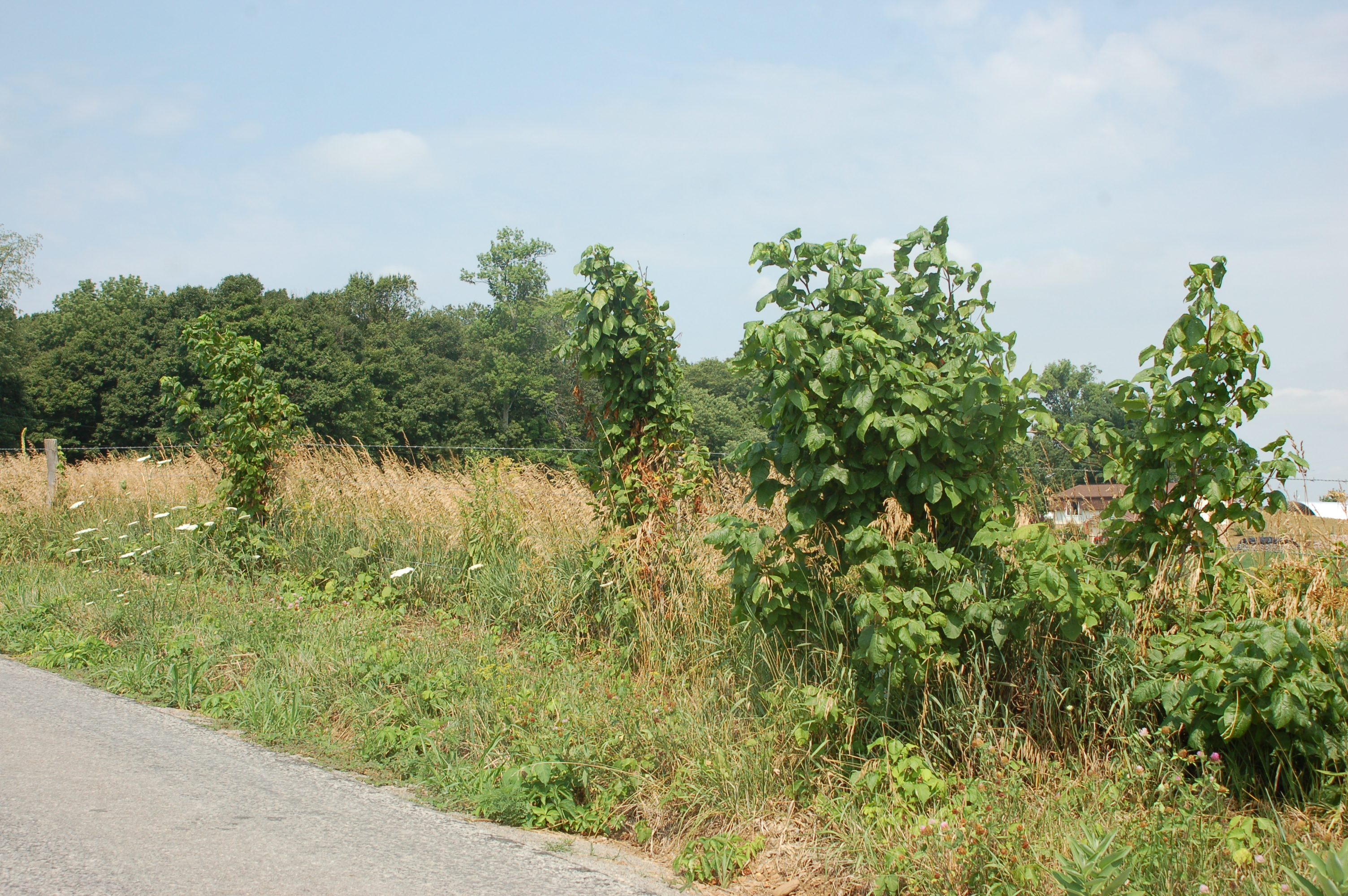
The American Robins and Song Sparrows are all used to me by now, and keep on singing in place. A young flicker, still with no brilliant red on the back of its head, flits from fence post to tree to utility pole. Poison ivy vines, leaves shiny as Christmas holly, have nearly over grown every locust post. A Green Heron escorts me back up the incline until it settles atop the tallest tree in a dense woodlot.

Down the arduous homestretch again, my next-door neighbor’s dogs unceremoniously announce my arrival. I hit the trifecta. I feel welcomed, renewed and refreshed.

Purple Martins by Bruce Stambaugh
Young Purple Martins wait patiently on a dead tree limb while being fed.
Poison ivy by Bruce Stambaugh
Poison ivy vines have over run many of the locust fence posts along the roadway.
Female Mallard by Bruce Stambaugh
This female Mallard, and sometimes its male mate, is often swimming in a pool of the small stream when I walk by.

Amish school by Bruce Stambaugh
An Amish school is being built in the pasture of Jonas Yoder’s farm.

This column appeared in The Bargain Hunter, Millersburg, OH.

© Bruce Stambaugh 2012

Lunch on the porch includes more than just good food

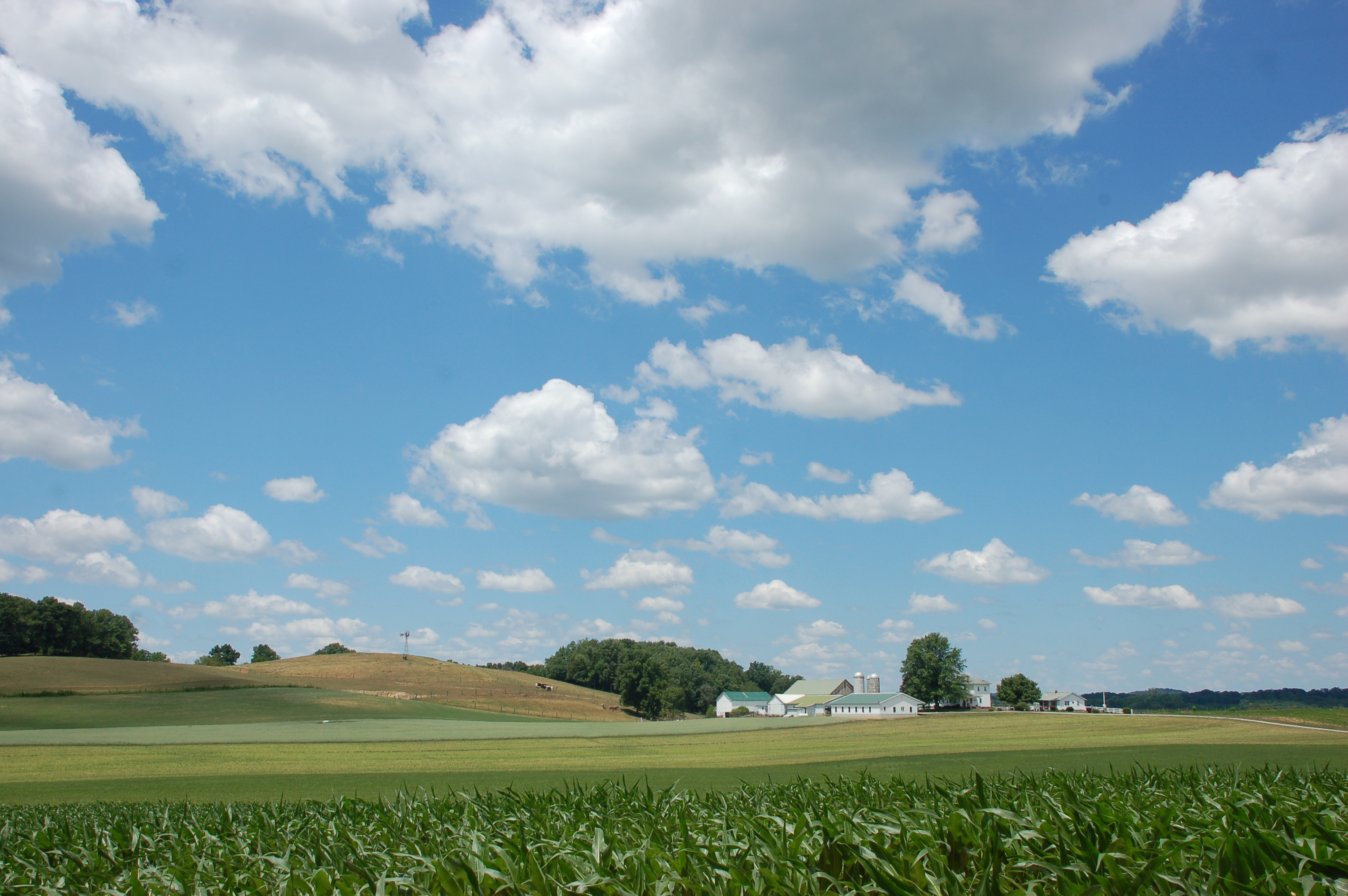
Porch view by Bruce Stambaugh

By Bruce Stambaugh

Everyone needs a sanctuary. For my wife and me, our back porch is our quick retreat from life’s demands. A few short steps and we are in a special place. Over the years our back porch has given us many marvelous memories.

We recognize that we are fortunate to live where we do. Our home, built three decades ago off an Amish farm, is situated between Benton, Berlin and Mt. Hope, all in Holmes County, Ohio. Our back porch provides panoramic, inspiring scenes.
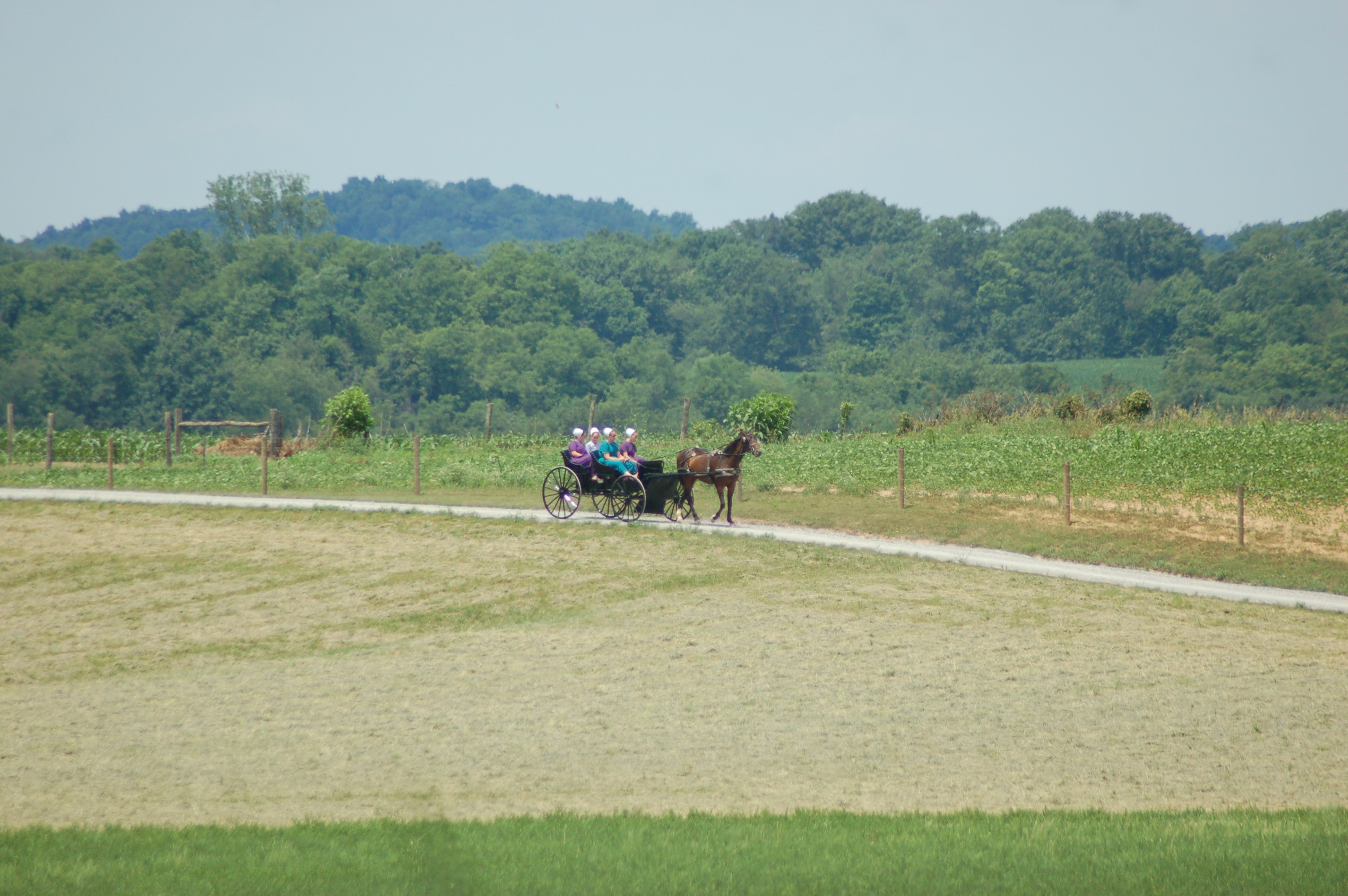
Girls in buggy by Bruce Stambaugh
The open-air porch was added to our modest home several years ago. We wanted a quiet place to relax during Ohio’s warmer climes. When the weather does cooperate, we especially enjoy lunches together there. It helps to have a wife who is a great cook. I’m no chauvinist, but I’m no chef either. Neva rules the kitchen and I reap the rewards and help clean up.

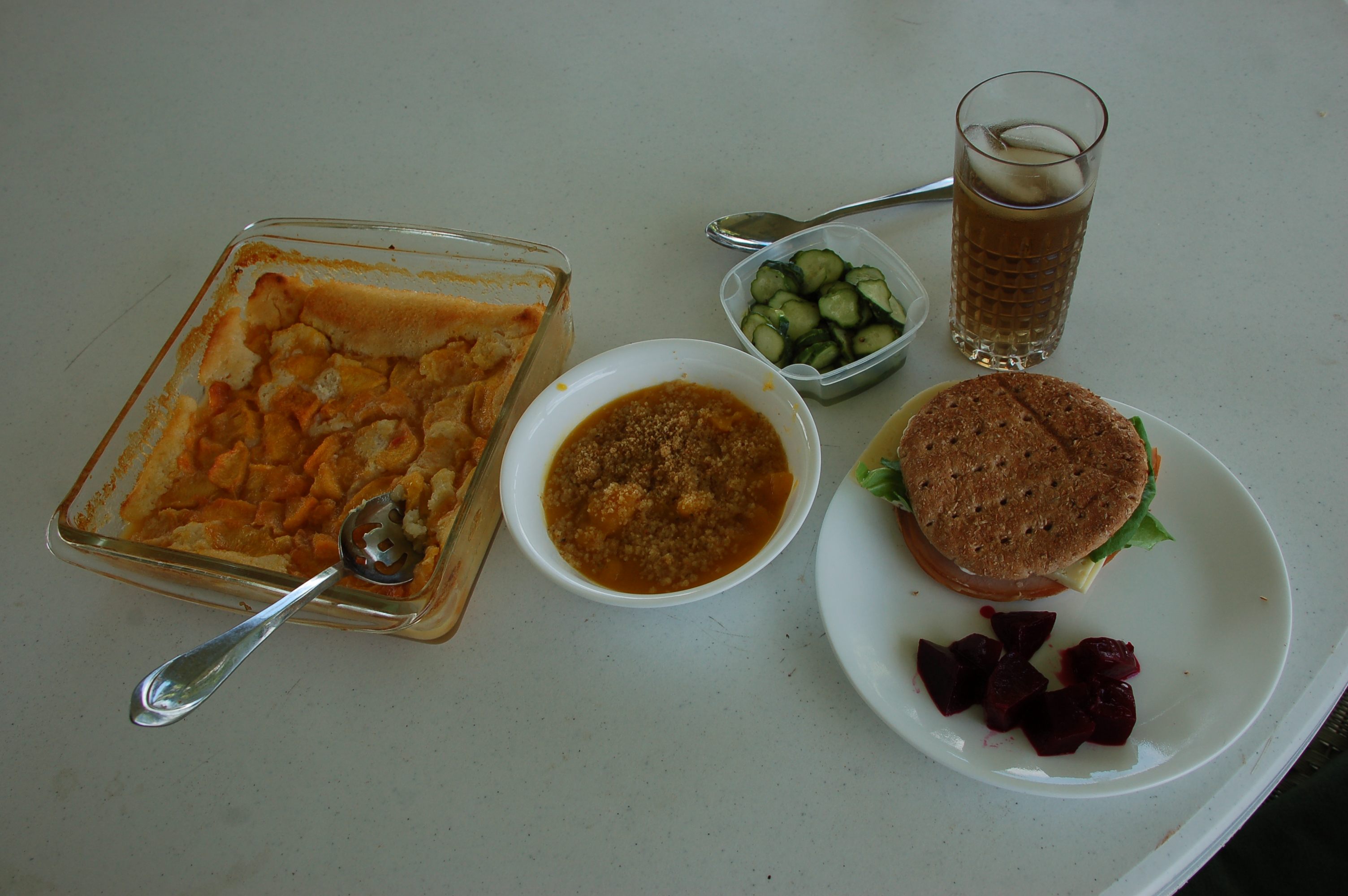
Lunch by Bruce Stambaugh
A recent lunch that we enjoyed on the porch.
Somehow the food tastes even better on the porch. One recent lunch featured her homemade butternut squash soup, sprinkled lightly with toasted bread crumbs. A fresh spinach salad with crasins and vinaigrette nicely complemented the soup.

A simple dessert of sweet cherries was washed down with fresh sweet peppermint tea, spiked with basil, giving the tea a sweet-tart taste. The mint was picked just minutes before being doused in boiling water. Other than the tea, no seconds were needed. A single course of each was plenty.
Mowing hay by Bruce Stambaugh
The house serves as a buffer between our busy highway and the backyard, minimizing the traffic noise. We love the quiet.

Well, perhaps quiet isn’t the proper word. Abundant backyard activity breaks any hint of silence. While we dined, we heard the undulating hum of a mower and the rattle of horse harnesses as our Amish neighbor completed his second cutting of hay before taking his own lunch break.

Downy by Bruce StambaughIn the meantime, the birds and wildlife kept us entertained as they also dined. With the porch open on the sides, it’s not unusual for birds to zip over our heads to the feeders. That is especially true for the acrobatic hummingbirds. Their feeder hangs from the edge of the porch near the kitchen window. It is fun to watch the territorial hummers chatter and chase each other away from their own version of lunch. They wouldn’t have to do that. There are several places to perch.

If we stay immobile, even the woodpeckers light upon the peanut butter suet feeder that dangles next to a hanging basket of flowers. The little downys, however, are the only ones that aren’t spooked off by our presence. Still, they nervously but needlessly chip and jerk their heads warily as they jab at the rich mixture, making sure we keep our distance.

Wildflowers by Bruce StambaughA green frog, one of six that inhabit our little garden pond, waits patiently for lunch to fly by. The green frogs that patrol our little garden pond adjacent to the porch patiently wait in the sun for their own lunch to fly by. When I hear a plop, I know they are as satisfied as we are.

Beyond the pond, monarch, swallowtail and red admiral butterflies partake in their own flowery buffet on the patch of ever-changing wildflowers. Along with volunteer sunflowers, the coneflowers, Black-eyed Susan’s, daisies, gaillardia and bachelor buttons paint a colorful palette in the shade of the canopy of pines and giant sugar maple.

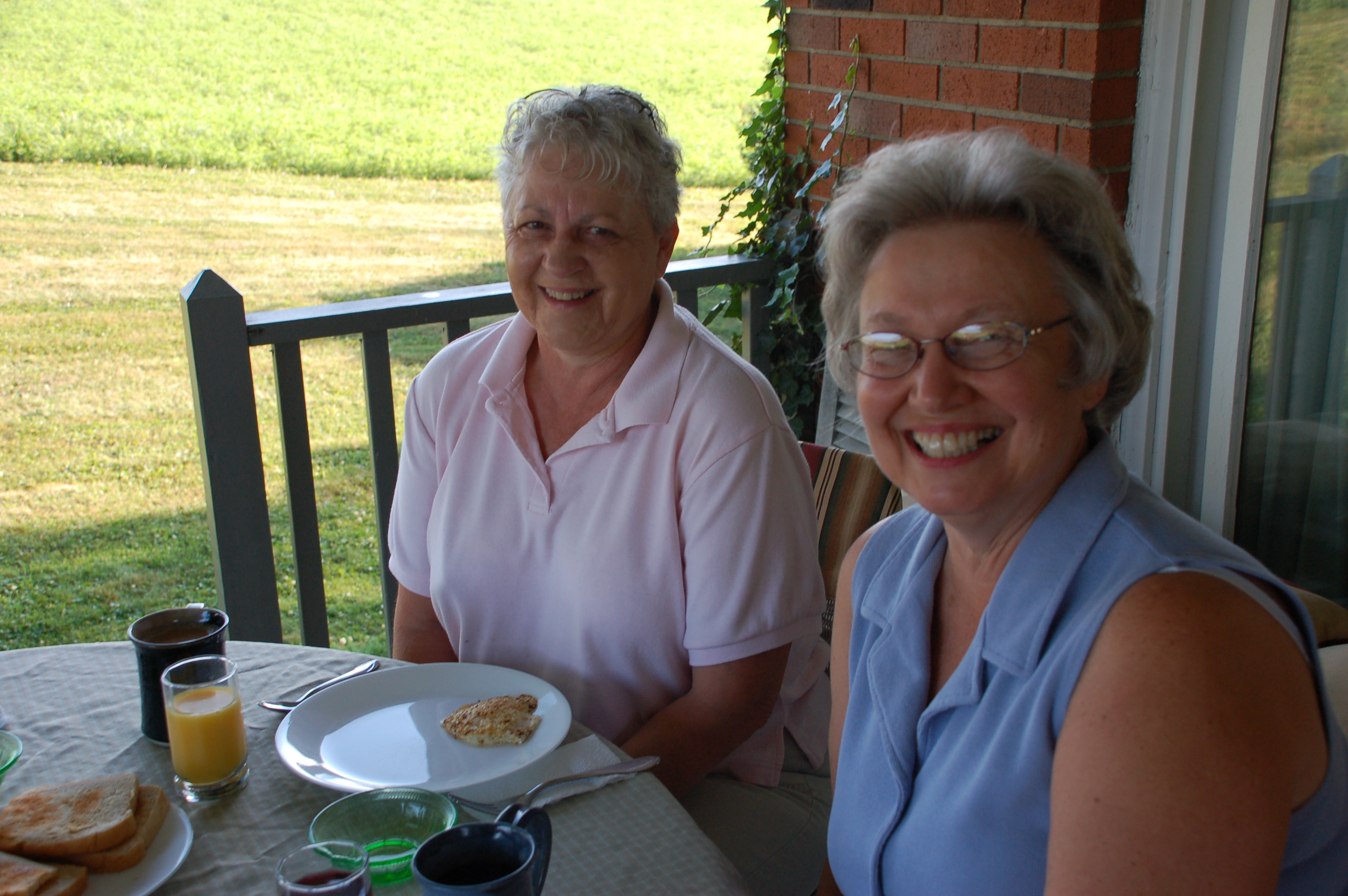
When human guests arrive, their smiles reveal their appreciation for our sanctuary. Added together these pure and pleasurable ingredients always make for enjoyable and hardy gatherings. I’m more than happy to share the recipe.

Guests by Bruce Stambaugh

© Bruce Stambaugh 2012

Enjoying spring’s aviary adventures

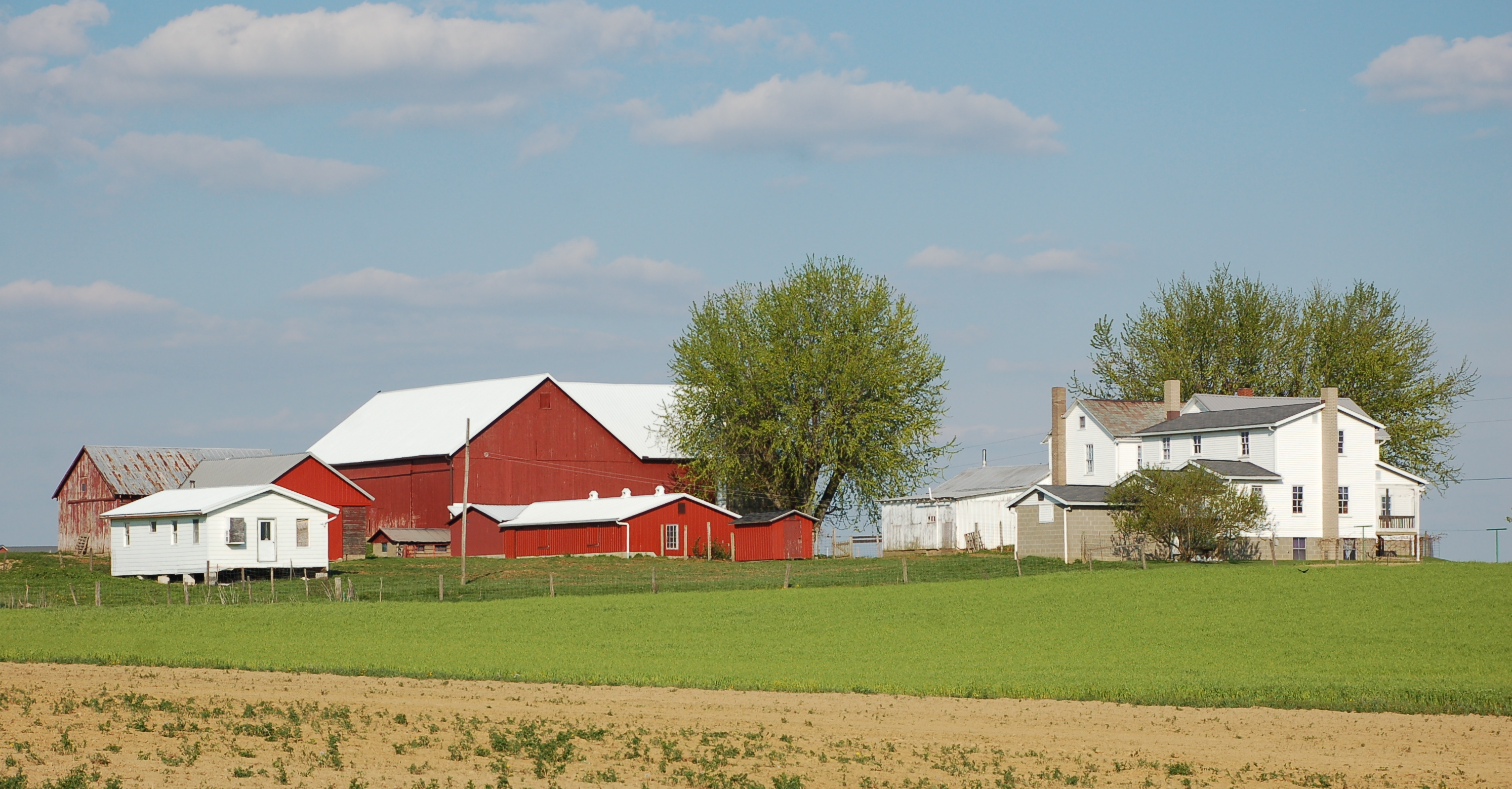
Amish farm by Bruce Stambaugh
A typical springtime scene in the heart of Ohio’s Amish country near Mt. Hope, OH.

By Bruce Stambaugh

We are fortunate to live where we do here in northern Ohio, especially in the Holmes County area. Our manicured farmlands, brushy fencerows, dense woodlots, numerous lakes and the wetlands of the Killbuck Valley provide an abundant variety of habitats that attract an equal abundance and variety of birds.

In our busyness, we should stop, look and listen to the free show that is all around us. The many birds, some just passing through, others that will make their summer home here, can fill our senses with amazing music, incredible color, and entertaining activity. No admission charge is needed.

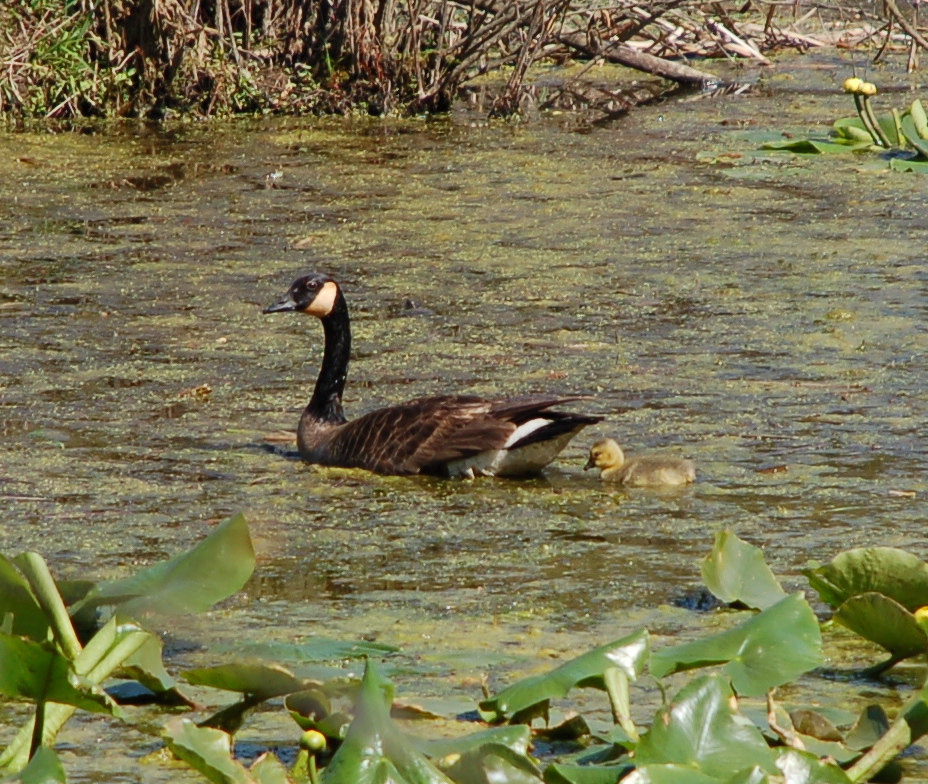
canadagoosebybrucestambaugh
A Canada Goose and a lone gosling glide in the marshy Killbuck Valley north of Millersburg, OH.

Even before sunrise, the chorus of songbirds begins to warm up like a pre-concert symphony. Usually the American Robins are first to welcome the new dawn with their varying songs. Soon others like the Northern Cardinals and Song Sparrows join in. By first light, a cacophony of warbling fills the morning air. Everyday brings a new chorus.

Once the morning brightens, the birds mix a paint palette of colors into the recital. Now at their height of intensity for procreation purposes, the colors of the birds are positively stunning. Their appointed markings are a pleasure to behold.

White-crowned Sparrow by Bruce Stambaugh
A White-crowned Sparrow stopped for fuel on its way north.
The male White-crowned Sparrow, with its alternating bold black and white stripes atop its head, could serve as a referee amid all the commotion and scramble for seeds at the backyard feeders. Instead, it is intent on fueling up for its long flight deep into the Canadian northlands.

Pairs of Cardinals forage for their breakfast of cracked corn and oil sunflower seeds. Like two teenagers in love, the bright red male feeds his adoring but duller mate in their courting ritual.

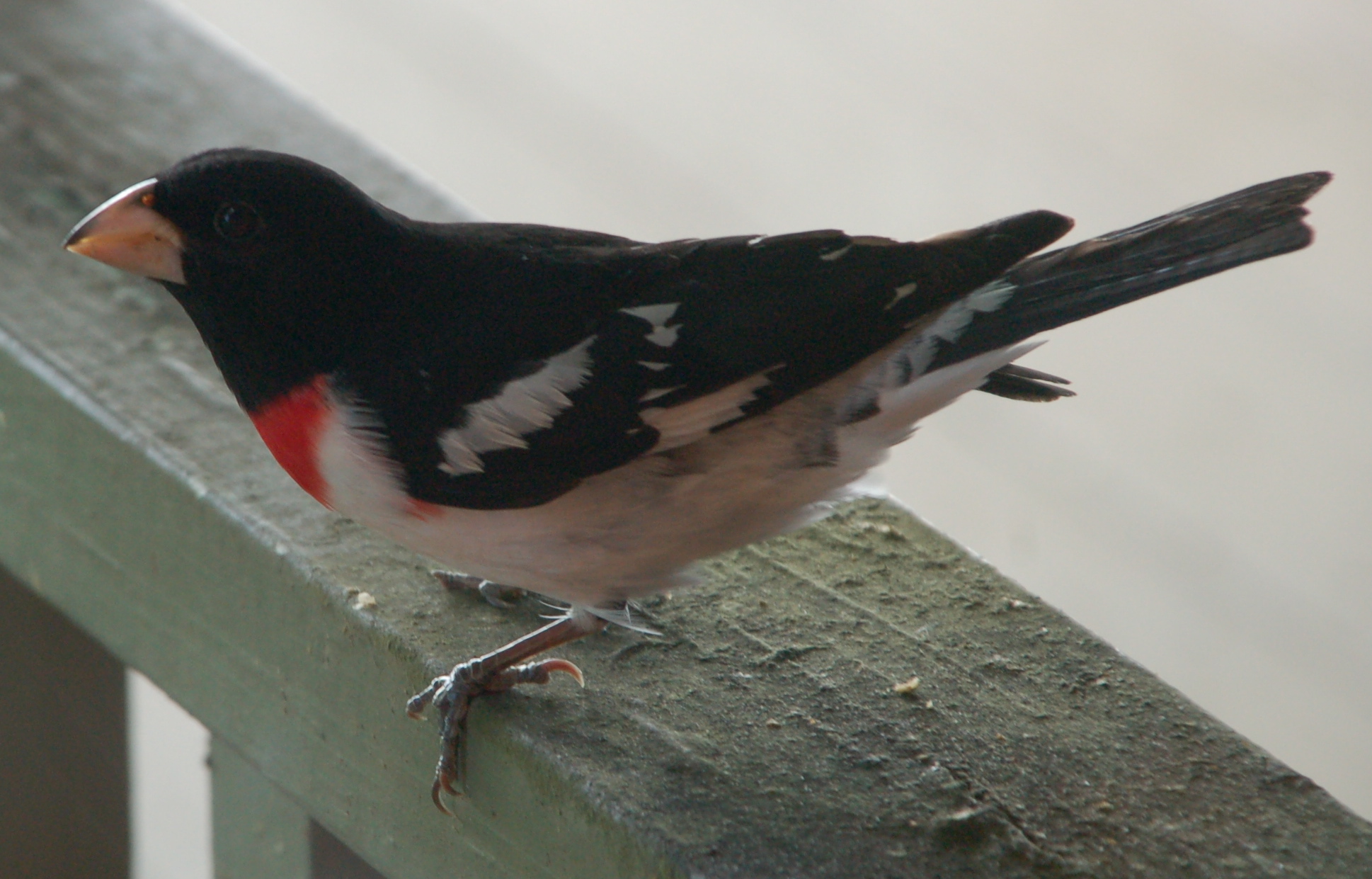
Rose-breasted Grosbeak by Bruce Stambaugh
Rose-breasted Grosbeaks are regular visitors to backyard feeders.
Without hesitation, the impressive Rose-breasted Grosbeak sallies onto the feeder hanging only inches from the kitchen window. Even in a brief glimpse it is easy to see how this bird got its name, its rosy breastplate all too obvious. The female, on the other hand, is awash in rich creams and browns, all for protection against hungry predators.

Baltimore Oriole by Bruce Stambaugh
A female Baltimore Oriole enjoys frequent visits to the bird grape jelly feeder.
The Baltimore and Orchard Orioles enjoy quick snatches of a grape jelly concoction housed in upside down bottle caps on the porch railing. A couple of quick gulps and they are gone, but never far away. Their liquid warbling says they’ll be back later for more.

The regal Red-headed Woodpeckers command attention from humans and aviary audiences alike. Without being bossy, they clear the feeders all to themselves. No doubt their brilliant red, white and black attire and their size have a lot to do with that.

Red-headed Woodpecker by Bruce Stambaugh
A male Red-headed Woodpecker visits the peanut butter suet feeder several times per day.

The Red-bellied Woodpeckers are bolder, both in sound and behavior, their iridescent red head stripes as flashy as strobe lights on patrol cars. Their noisy chatter serves as a warning siren announcing their arrival.

Even the little Black-capped Chickadees come dressed for the dinner party. Their tuxedo-like coloration is fresh and ready for the spring prom. They zip back and forth from tree branch to feeder, neatly holding the seed with their feet, while their tiny beak chisels for the main course, the sunflower heart.

Chipping Sparrow by Bruce Stambaugh
Even the little Chipping Sparrow is a joy to observe.

One hates to turn away from the aviary activity to see what might be passing overhead. An American Eagle, a Great Blue Heron, flocks of Mallards? It’s springtime in Ohio. All options are open in this intermingled habitat.

It is amazing what we can observe, especially when our feathered friends enter our life space. We just need to stop, look and listen.

© Bruce Stambaugh 2012

Lakeside daisies are in early bloom

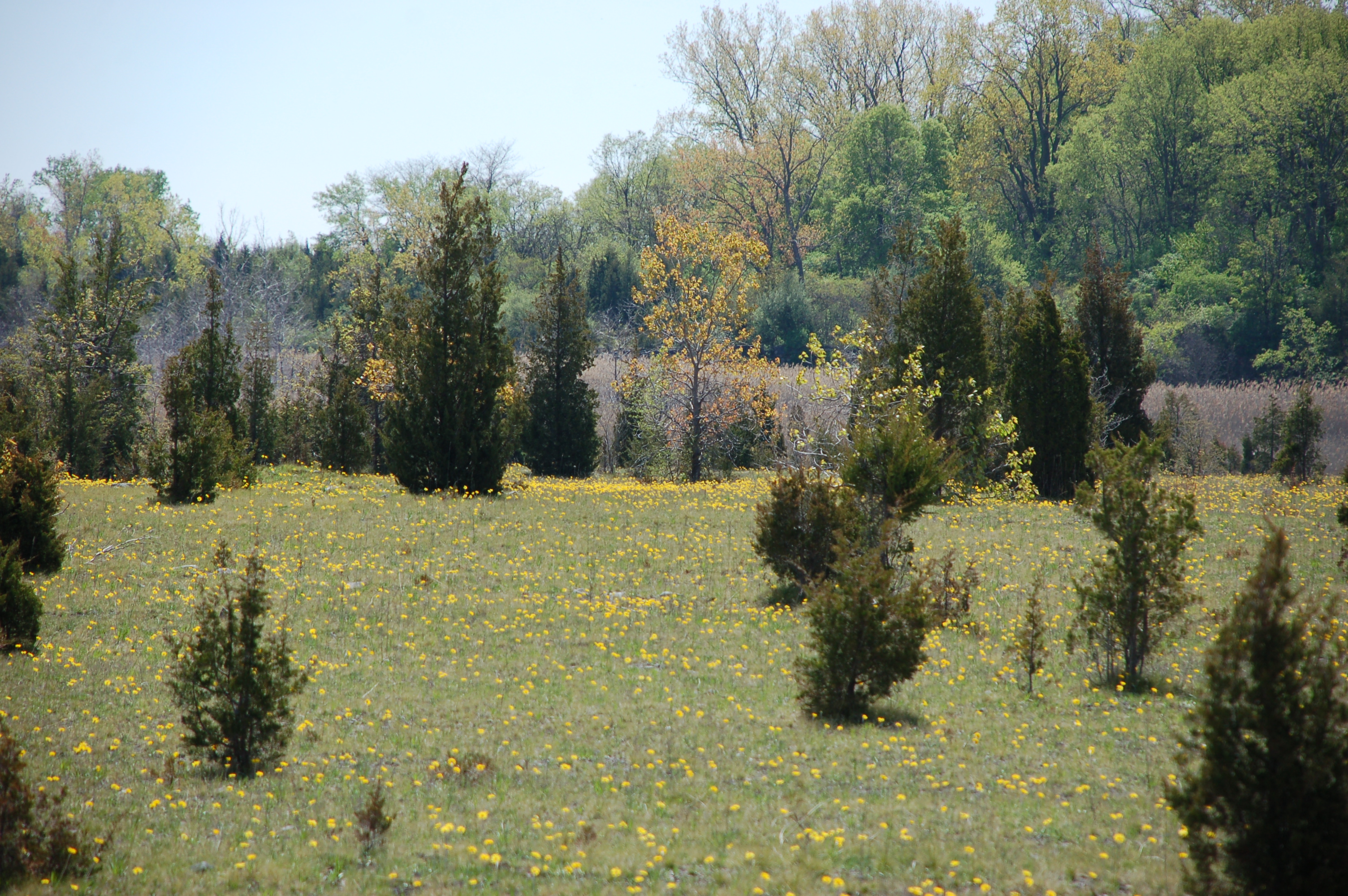
Lakeside Daisy Nature Preserve by Bruce Stambaugh
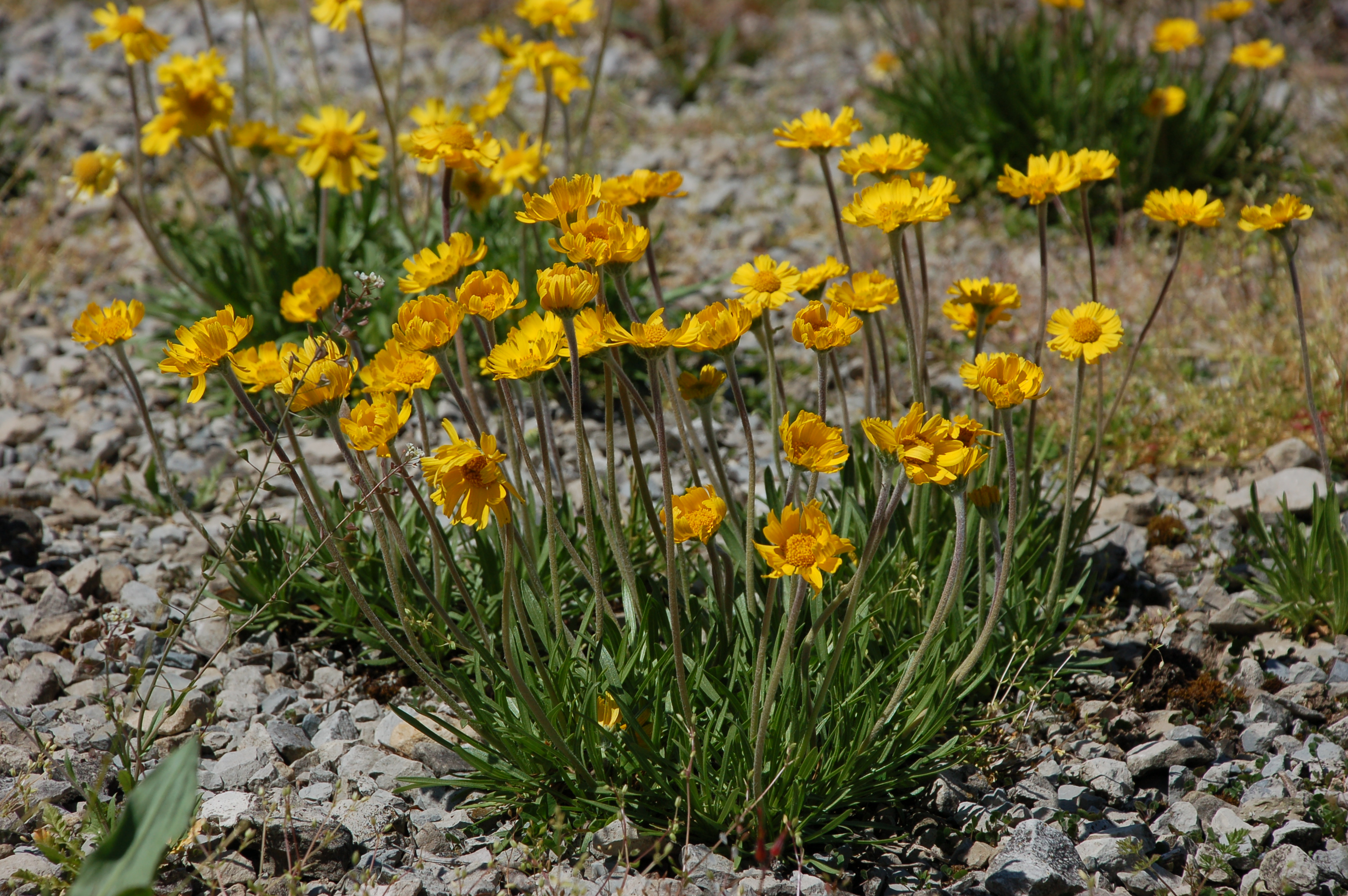
Daisies in full bloom at the Lakeside Daisy Nature Preserve near Marblehead, OH.

By Bruce Stambaugh

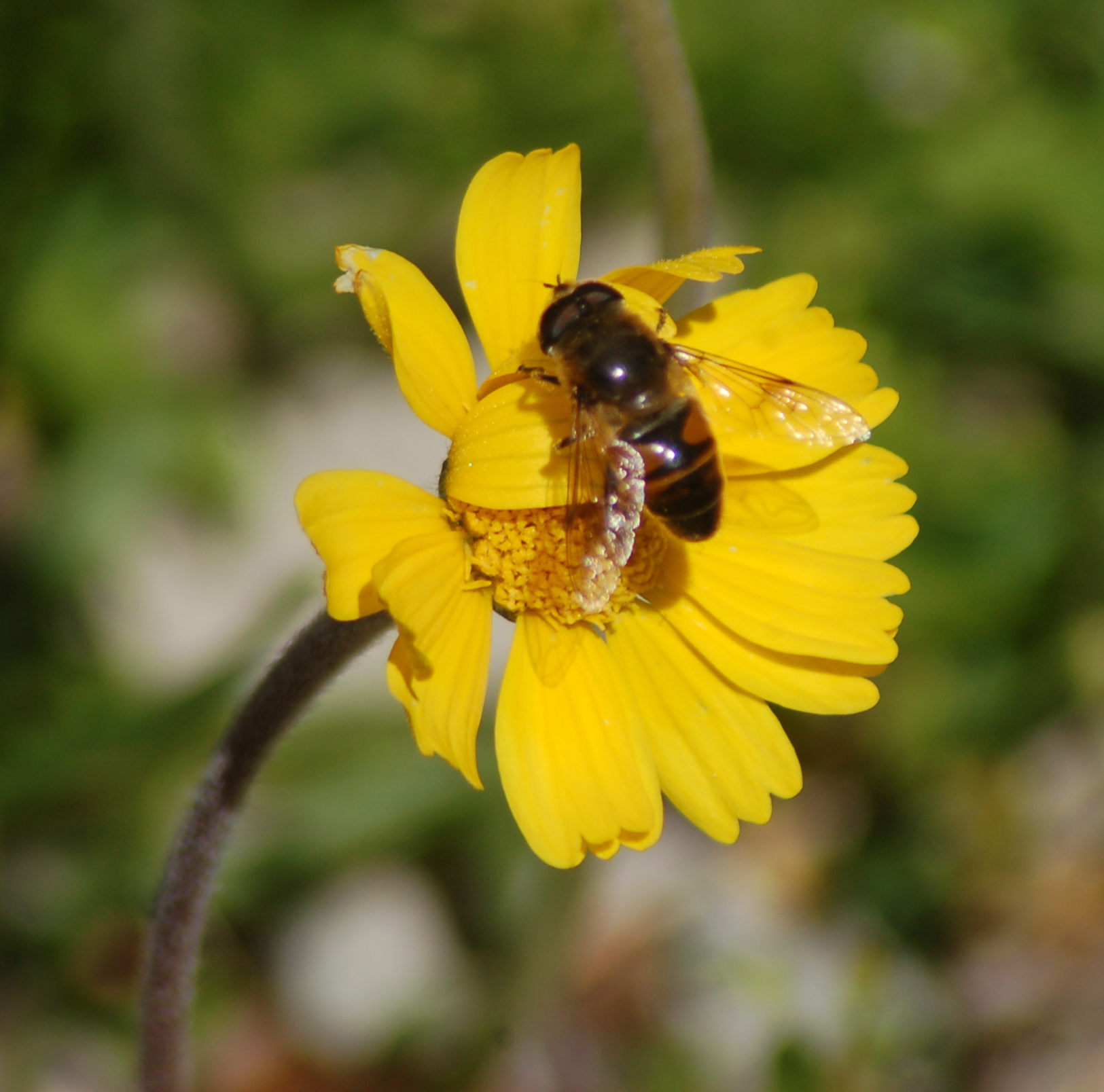
Bee and daisy by Bruce StambaughThe Lakeside daisies are in full bloom. That may not sound like earth-shattering news. But apparently due to the unusually warm winter here in Ohio, the daisies, like most other flowers, plants and trees, are blooming early. Plus, if you are a lover of all things nature, and especially wildflowers, you don’t want to miss this yellowy exhibition.

The Lakeside daisies are particularly special. They only bloom in a limited number of locations on or near the Marblehead Peninsula in northwest Ohio. In addition, their buttery blooms only last a week before they begin to fade. If you want to see them in person, you had better make tracks to the Lakeside Daisy Nature Preserve near Marblehead. My wife and I were there Sunday, and the preserve was a splash of yellow against the dull limestone gray ground.

The daisies growing in a small patch inside Lakeside were beautiful, too. They’re located right along the Lake Erie shore at the east end of Lakeside near Perry Park.

Lakeside daisies by Bruce Stambaugh
A bee enjoys one of the daisies in a clump of Lakeside daisies in a small preserve in flower’s namesake, Lakeside, OH.

Unfortunately it looks like the blooms will be gone before Marblehead’s annual Daisy Days scheduled for Mother’s Day weekend. Naturalists will lead walks through the preserve, so you can still learn a lot about the lovely little flower even if they aren’t blooming.

The Lakeside daisy (Hymenoxys herbacea) has been listed as an endangered species by Ohio since 1980. If you can’t make it to see this beautiful flower in person, enjoy the photos I took Sunday. If you look closely, you’ll notice some of the petals on the flowers are already starting to wilt.
Nature Preserve sign by Bruce Stambaugh

Lakeside Nature Preserve blooms by Bruce Stambaugh

Clump at Lakeside by Bruce Stambaugh

Daisies at Lakeside by Bruce Stambaugh

Daisies at Lakeside, OH by Bruce Stambaugh
© Bruce Stambaugh 2012
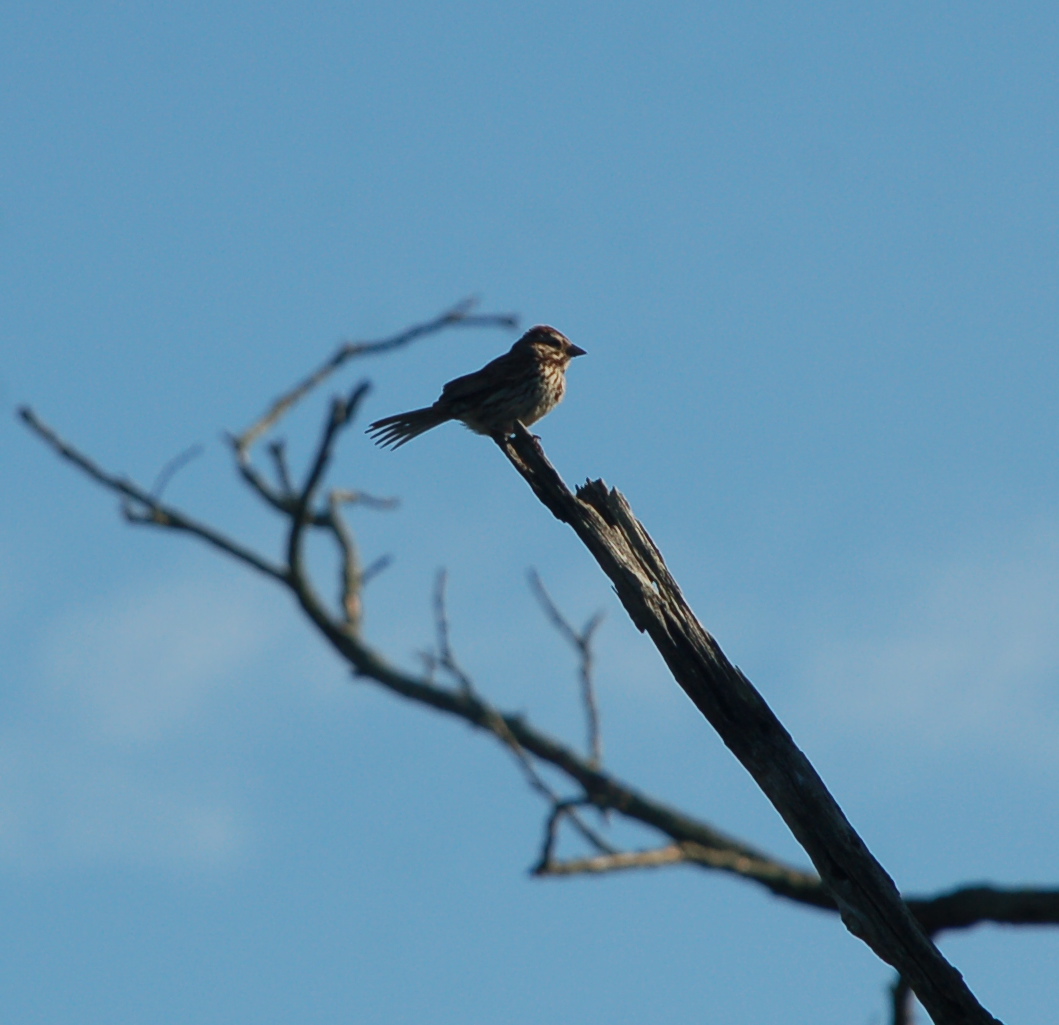
Keep on the sunny side of life no matter what

Sunset rays by Bruce Stambaugh
By Bruce Stambaugh

In this dog eat dog world of ours, it’s easy to get down on others and yourself. I’m much too guilty of that. Just ask my wife.

An email from a friend reminded me of that the other day. My friend, a man 14 years my senior, three decades ago survived a serious illness and now is in a pitched battle against lymphoma.

If anyone had a reason to be down, he did. Yet, he wasn’t. He has had a very successful life, one filled with both professional and personal achievements, most in service to others.

My friend wrote this email in reference to celebrating spring, the newness of life that is bursting forth all around us here in the northern hemisphere. He gratefully reflected on the lovely spring day on which he arrived home after his near brush with death 27 years ago.
Dogwood blossoms by Bruce Stambaugh
He championed the simplest things, a blooming flower, the green grass, a whiff of a refreshing scent, a tender touch of a loved one, and how we all are interconnected to all that is around us. His concluding comment of gratitude was, “And I almost missed this.”

I immediately replied by thanking him for the reminder to celebrate life in the present. We can’t change the past, and we can’t control the future. We can be positive in each and every opportunity in which we find ourselves daily.

Cockeyed optimist or bully pulpit preaching? Perhaps. But consider the alternative, a life of grumpy complaining that dulls everyone’s spirits. What fun is there in that? My friend’s note was looking life right in the eye and saying I’m glad to be here. We were all glad he was, too, and still are for that matter.

When I read that brief message, the song, “Keep on the sunny side of life,” instantly came to mind. Now, I’m no singer, but I like that song for its lyrics and its meaning. Stay positive. Life can be a bummer at times. Hardly anyone could deny that.
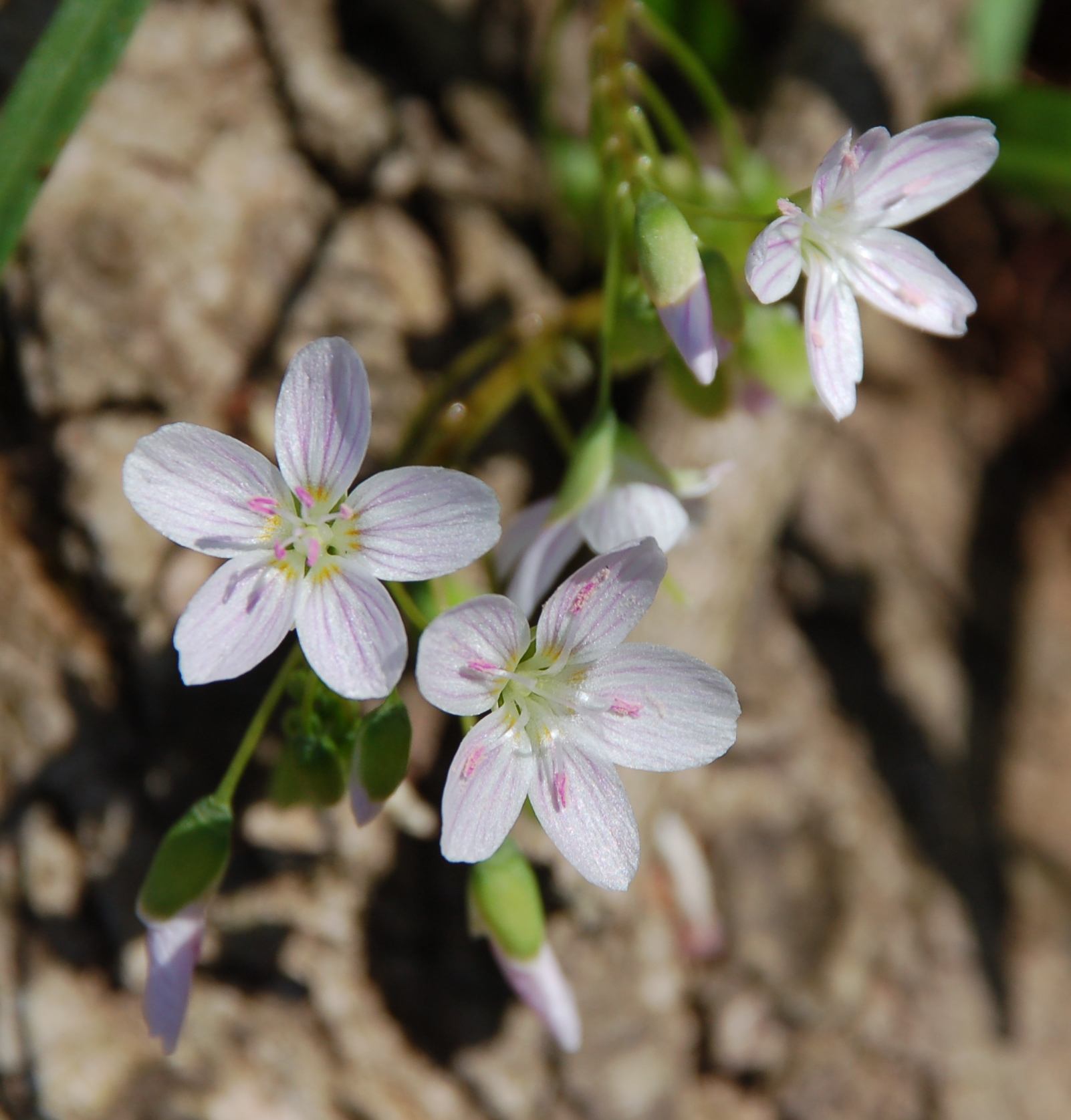
Spring Beauties by Bruce Stambaugh
With the temperatures warming, the grass growing, the leaves unfurling, the flowers blooming, some birds already feeding their young, and the ability to be out and about without fear of frostbite, it’s simply great to be alive.

I know times are tough for many, especially financially. There is too much illness in the world, too much injustice, too many wars, too much hatred. Yet, we are alive, and we can do something about all that if we put our mind and energy to whatever productive cause we support to help counter those woes.

I need to take on the spirit of my friend. Live life fully, completely, honestly, purely, truly, compassionately, thankfully. To do otherwise is a simple waste of the precious time we have left on this earth.
Workhorses by Bruce Stambaugh
A long time ago a lady called a school superintendent’s office. It was a miserable, cold and rainy day, and the woman was notorious for complaining. The superintendent took the call anyhow. He answered cheerfully by saying, “Good morning. It’s a beautiful day to be alive, isn’t it?”

When the lady recoiled at the positive greeting and asked how the school official could be so upbeat, he simply replied, “It sure beats the alternative.”

Yes, it does. I hope you can keep on the sunny side of life today, even if you are in the midst of a personal storm.
Wildflowers by Bruce Stambaugh
© 2012 Bruce Stambaugh
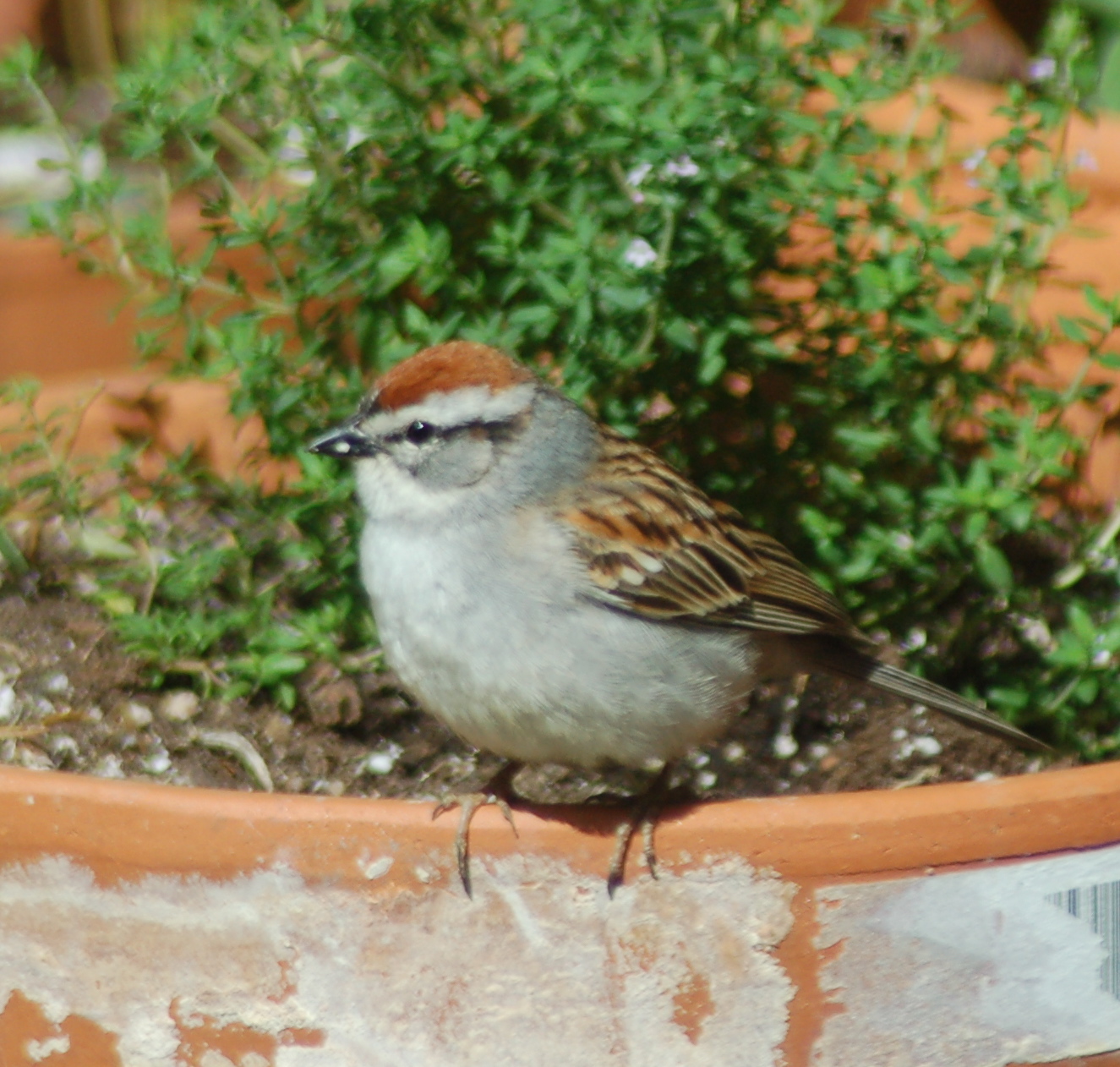
Celebrate all of spring’s colors, trees included

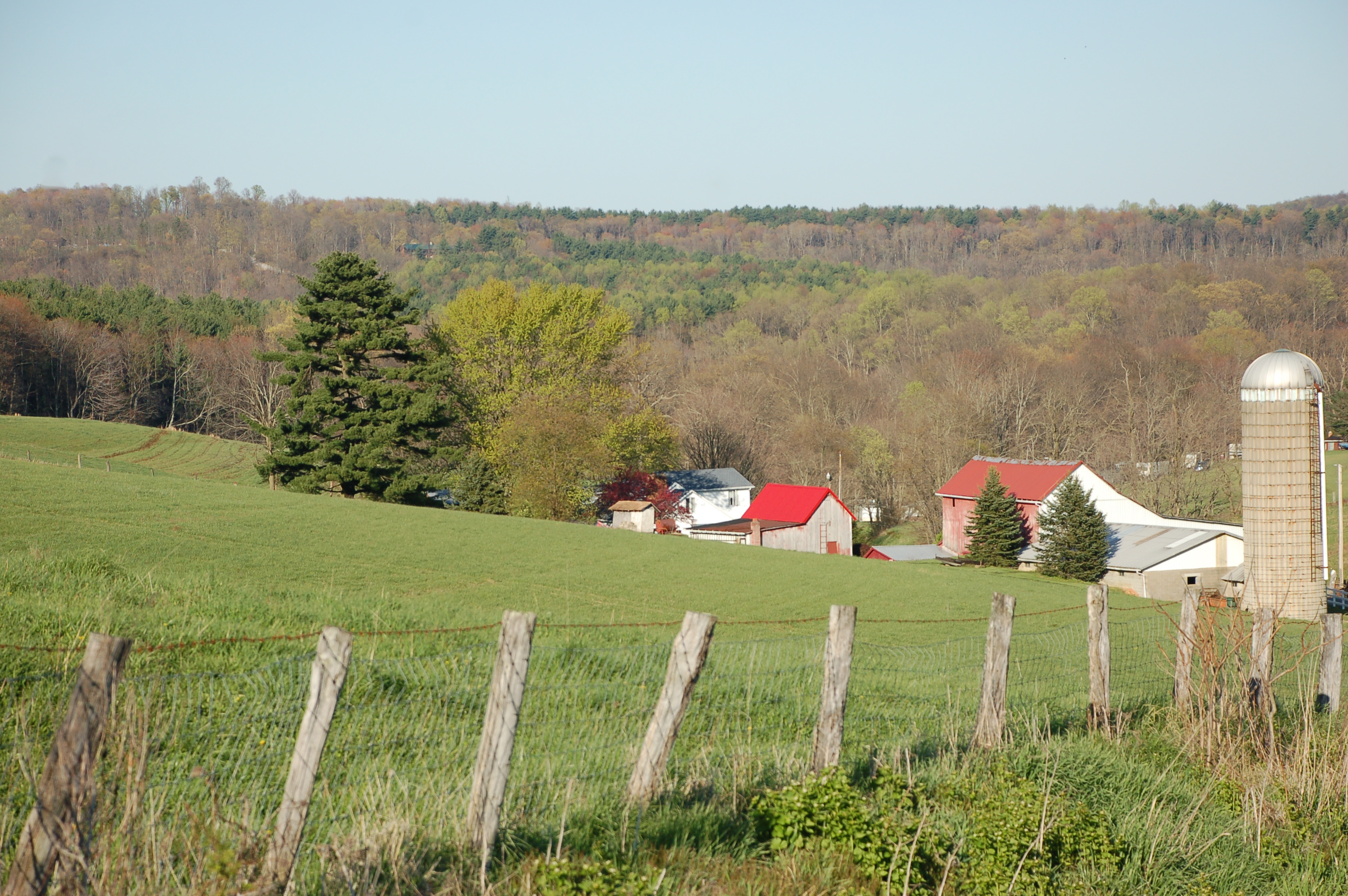
Red roof barn by Bruce Stambaugh
By Bruce Stambaugh

I feel a touch sorry for the budding leaves of the many varieties of deciduous trees. My sympathetic compassion isn’t confined to the recent series of frosty morning temperatures either.

As my wife and I drove home from Virginia’s beautiful Shenandoah Valley after visiting our daughter and her family, we were in awe of the rainbow of colors that exploded before us at every turn. Traversing the old wrinkled mountains of Virginia and West Virginia, there are more turns and twists than in a pretzel factory. In the spring, the mountains are loaded with colors.
Redbuds by Bruce Stambaugh
The most obvious were the amazing redbud trees, which were in full bloom, a lavender testimony to spring’s arrival. Against the dull gray, brown and black trunks of towering oaks, maples, wild cherry and ash, the diminutive redbuds’ beautiful blooms radiated glory on the steep hillsides.

We drove for miles and occasionally only saw a loner blooming as robustly as it could, like a child demanding adult attention. Without warning we would round a corner or top another hill and a burst of redbuds greeted us on both sides of the highway, as if a purple curtain had been drawn for us to pass.

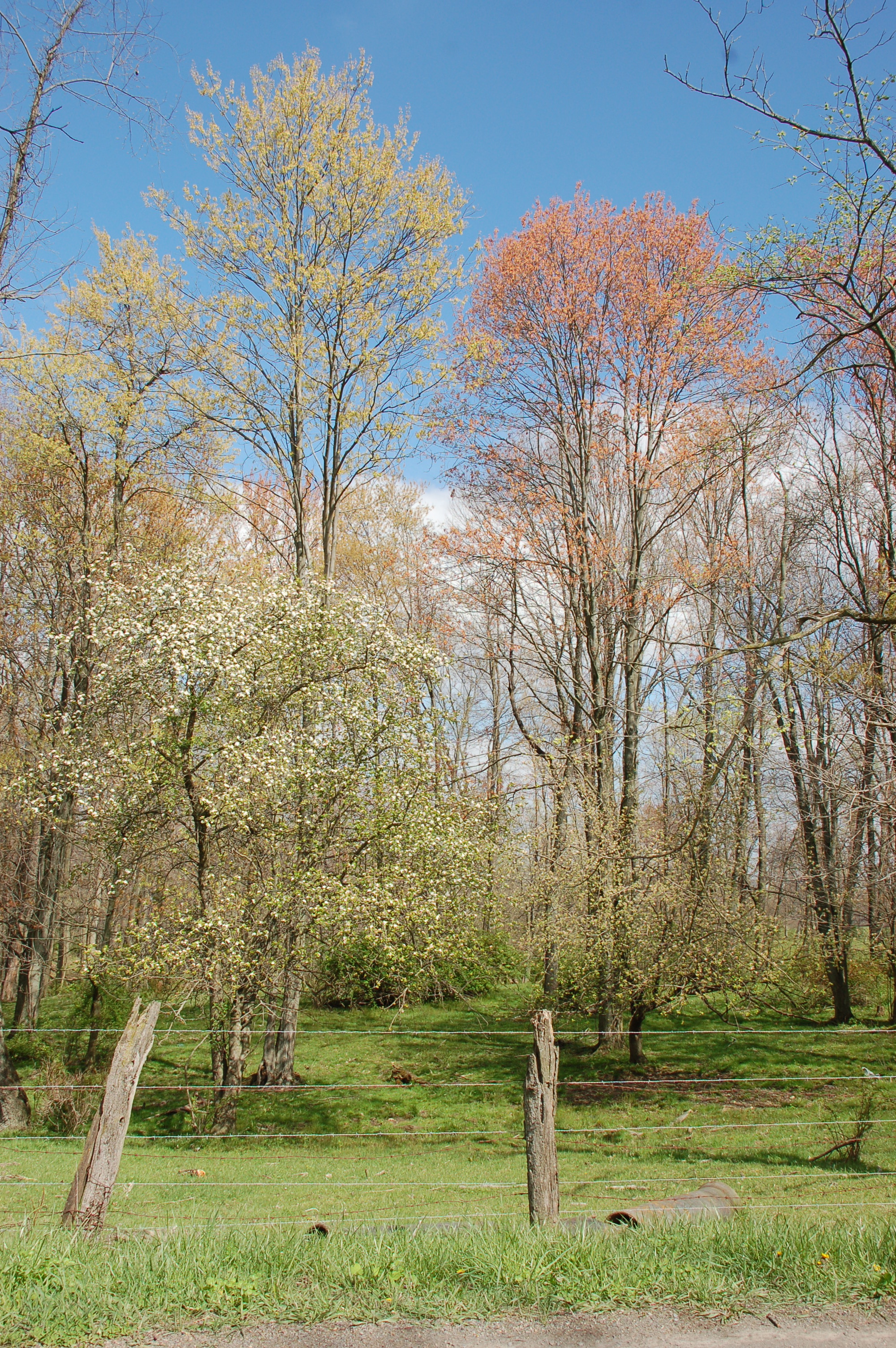
As much as I appreciated that kindness, I couldn’t help but notice streaks and blotches of background colors, more muted, but rich nonetheless. After months of dormancy, the leafy buds of stately hardwoods were just beginning to unfurl.

Though subdued and understated, they too added to nature’s ever-changing paint palette. Hints of lemon, lime, russet, auburn, scarlet, gold, orange and brown were bursting forth. At wood’s edge, the branches reached out from top to bottom. At the thick forest canopy, the trees stood as freshly dabbed artists’ bristles awaiting application to canvas.
Budding trees by Bruce Stambaugh
In the valleys, the dogwoods and wild apples were beginning to compete with the redbuds. They added a lacy texture to the purple hue where the species cohabitated. In towns and villages, ornamentals were well ahead of schedule in blooming their reds, whites and crimsons.

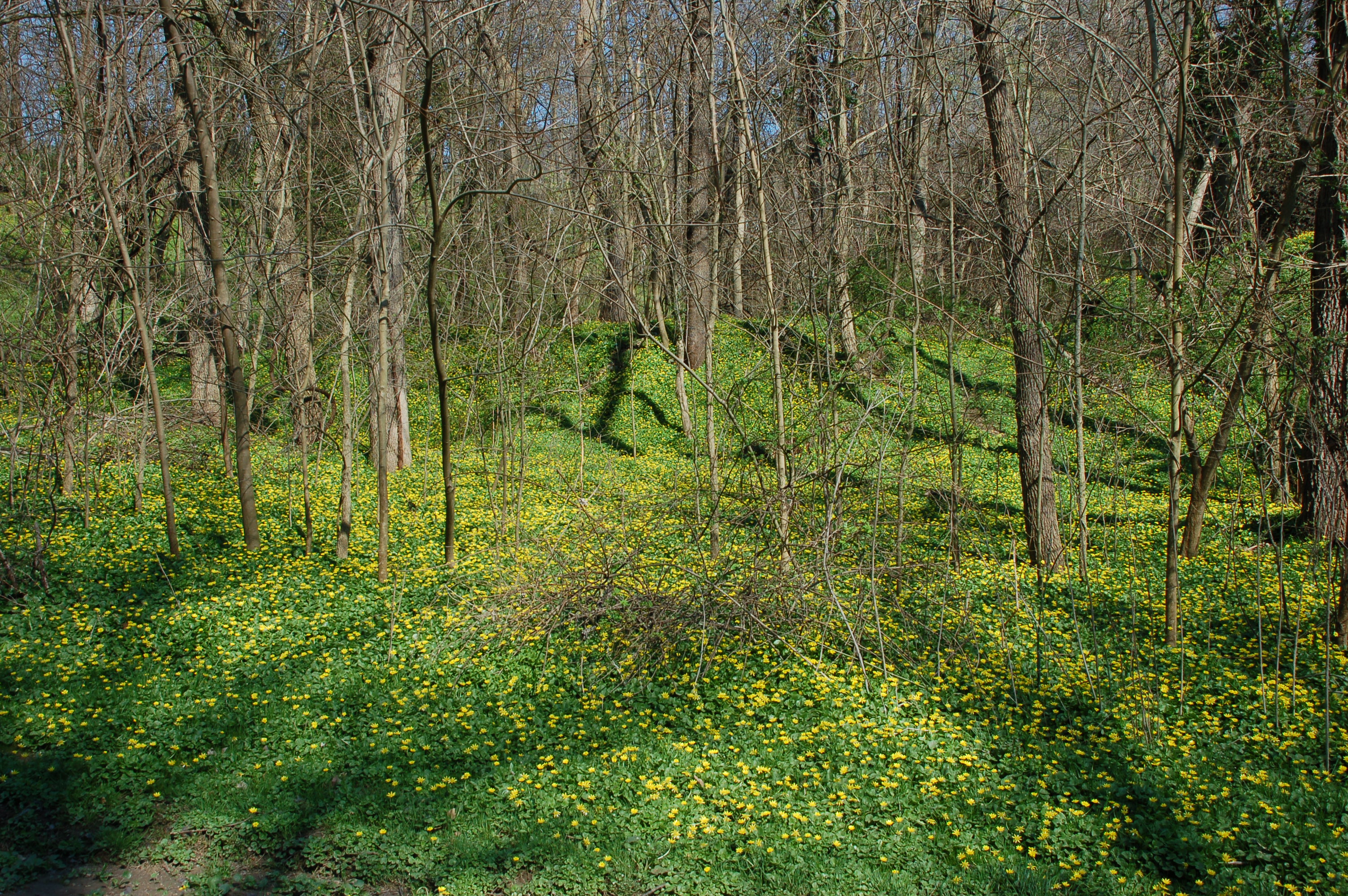
The further north we drove the trees and flowers were less showy, but still emerging. Buttery daffodils and jonquils were in various stages along our route, from dying in Virginia to perfect bloom in Ohio. Every now and then, congregations of coltsfoot and dwarf dandelions lined either side of the road brighter than the yellow centerline striping.
Dwarf dandelions by Bruce Stambaugh
The flowers of spring get photographed, picked, and adorn coffee tables, bringing the outside inside. The unfolding leaves, rich in their own hues, tend to take a back seat to the flora extravaganza. For me, that’s the injustice.

It’s the fall when people generally start to pay attention to the kaleidoscope of colorful leaves. It was intriguing that these emerging spring beauties mimicked the same colors exhibited in the fall.

Just like autumn, the spring’s natural art display will disappear all too quickly. Only instead of falling, the leaves magically transform to various shades of green.

I was fearful these picturesque landscapes would go unnoticed or even unappreciated. I need not have worried.

When friends of ours arrived for a visit shortly after we returned, they proclaimed, “Did you see the leaves coming out? It looks like fall.” Yes indeed it does.

At winter’s end, it wasn’t much of one

Cold creek by Bruce Stambaugh
By Bruce Stambaugh

Here we are at winter’s end. Spring officially arrives March 20.

In reality, winter here in our area has hardly been winter at all, especially when compared to the past two. In case this mild winter has dulled your memory, the winters of 2009-2010 and 2010-2011 were bears, both fit more for polar bears than humans.

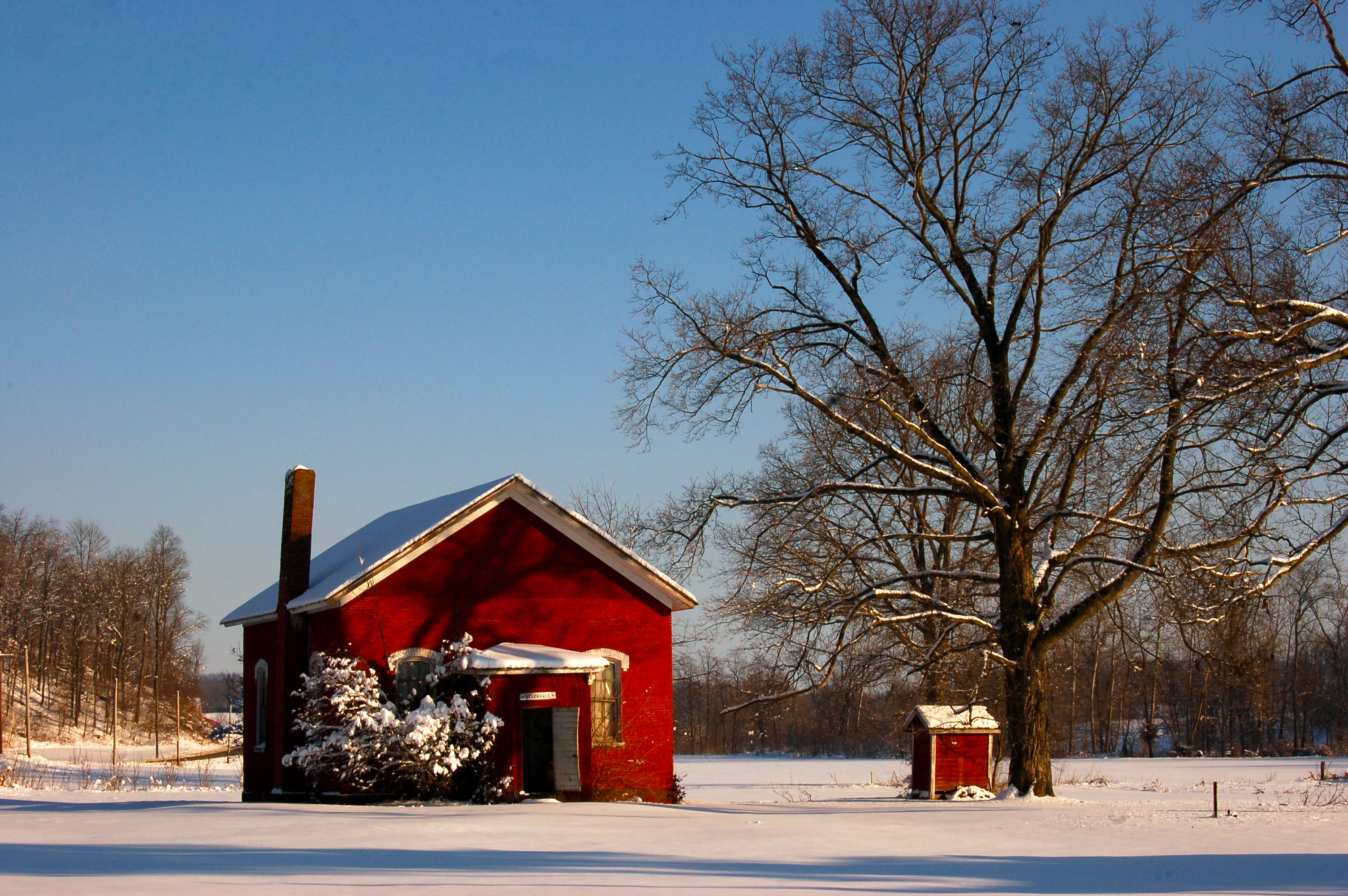
All of Ohio, and much of the Midwest for that matter, got dumped on. We measured snow by the foot instead of inches. Schools were closed, factories shut, roads declared impassable.
Patriotic snow by Bruce Stambaugh
Several snowfall records were set all across the Great Lakes region. They were winters of which children can only dream, and adults refer to, accurately or imaginatively, as snows like “when I was growing up.”

The snows were relentless. Once the snow from one big storm was cleaned up, another and sometimes bigger snow buried us again. Those winters never seemed to end. They began in November with below normal temperatures and above average precipitation and lasted into April.

Frozen crocus by Bruce StambaughEven the springs that followed were damp and cold. It really wasn’t until we had reached June in northeastern Ohio that spring’s fair weather had begun in earnest.

This winter, on the other hand, was indeed a different story. Old man winter never really showed his face. Yes, we had snow, but only a few times did it deposit enough to measure in inches, and even then, it was often a half an inch here and a quarter of an inch there.

Records were broken for precipitation this winter. The moisture was mostly rain, driven along by strong winds.

Those who cherish the winters of the previous two years had to hate this one. Snow skiing, ice skating, sled riding were all shelved for the most part. In Wisconsin, the vehicles of desperate ice fishermen sunk into a lake because the ice was so thin.
Birds galore by Bruce Stambaugh
The previous two winters brought birds galore to backyard feeders. This year, the birds were far and few between, preferring their natural foraging to human offerings. Sure the usual faithfuls appeared, but not in the numbers or frequency of harsher winters.

earlycrocusesbybrucestambaughThis winter was so mild that the first crocuses bloomed in February instead of March. The long slender stems of the weeping willow trees showed their pencil yellow early too. I even heard of one woman who planted sweet potatoes in February.

All the rain kept the dull, ugly brown of dormant yards at bay. Instead, lawns stayed some shade of vibrancy all winter long. From the looks of things, moles may have enjoyed the winter most of all. Their unsightly mounds dotted the prettiest of landscapes indiscriminately throughout the area.

Busy bee by Bruce StambaughAt my age, I was ready for an easygoing winter, although a weeklong cold snap would have been nice to help keep the insects in check. I’m fearful of the buggy consequences of not having a sustained cold spell. Perhaps the flycatchers, swifts and swallows will thrive if such an outbreak does occur.

I hear people saying that we may pay for the mild winter with a cold and snowy spring. That could happen, although the National Weather Service has forecast a warmer and wetter than normal March through May.

We’ll have to wait and see. In the meantime, we can rejoice that winter’s end is near, and that spring, whatever she may bring, is at hand.

Hunting deer and finding memories

Cows and trees by Bruce Stambaugh
By Bruce Stambaugh

Deer season is at hand. It couldn’t come soon enough for avid deer slayers. Thousands around the state will be out in force trying their best to cull the herds of white-tails that roam all across Ohio.

I won’t be one of them. I’m not against hunting, mind you. I would just rather shoot deer with my camera instead of a gun. Besides, my family and I have bagged our share of Bambies the expensive way, with our vehicles.

As a young boy, I went hunting often with my outdoor sportsman father. Squirrel hunting was my favorite. I especially enjoyed a rolling farm far from our suburban home.
Creek at sunrise by Bruce Stambaugh
I loved the slow, quiet walk among the pastured hardwoods. An amenable creek, really the headwaters of a major river in eastern Ohio, meandered through the giant beeches, oaks, maples, walnuts and wild cherries.

Holsteins grazed the natural grasses that grew beneath the impressive stand of tall trees. It made for easy walking and great visibility. My father and I could be distantly separated and still stay in eyesight of one another.

I shot rabbits and pheasants, too. But those were found more in open, overgrown fields, thickets and fencerows than in the woods. It was among the graceful trees where I felt most comfortable. Even in a gentle breeze, their creaking limbs spoke to me. I could dream and hunt simultaneously.
Fungus on stump by Bruce Stambaugh
Dad never invited me along to deer hunt. He probably sensed my romanticizing or lollygagging while on the prowl. Lord knows there’s no room for either when driving for deer. Dad was too antsy to occupy a deer stand.

I always said that the deer were safe as long as Dad was after them. In all the years he hunted, I think he only ever shot two, and one was a fluke. Dad told that story like a Dickens novel.

He was in southeast Ohio where the hills are high and the valleys steep, and the landscape was thickly populated with mixed, second growth hardwoods. Occasional meadows broke the tree monopoly.

Young buck by Bruce Stambaugh
A young buck in the woods.
Dad had been tracking a deer for a while and finally spotted a big buck across the valley, loping up the opposite hillside. Dad took aim with his trusty 20-gauge and fired just as the buck leaped over a fence.

Dad said he saw the deer drop. He hustled down the hill, crossed a small stream and lumbered up the other slope. When he reached the fencerow at the spot where he had shot, Dad leaned over the vine-infested barrier and got a shock. There was a dead deer all right; only it was a doe, not the buck.

Of course Dad took a lot of ribbing from his hunting buddies. But he always insisted that he had shot at a buck. All he could figure was that the doe was lying out of view beyond the fence. His slug must have missed the buck and hit the doe.
Fall farm by Bruce Stambaugh
Dad loved to tell the “I shot at a buck and hit a doe” story time and again. I had no reason to doubt his word whatsoever. I saw the joy that it brought him as he laughed through the details that never changed.

I don’t have to go hunting to enjoy deer season. I’m satisfied to recall my father’s true tall tale. It makes me as happy as if I had shot a 12-point buck myself. Or was it a doe in disguise?

Bay Photos by Donna

Wildlife Photos From The Chesapeake Bay Region

ROAD TO NARA

Culture and Communities at the Heart Of India

K Hertzler Art

Artist and nature journalist in the Shenandoah Valley of Virginia.

Maria Vincent Robinson

Photographer Of Life and moments

Gabriele Romano

Less Noise. More Meaning

Jennifer Murch

Art is the only way to run away without leaving home. -Twyla Tharp

Roadkill Crossing

Writing generated from the rural life

ANJOLI ROY

writer. teacher. podcast cohost.

Casa Alterna

El amor cruza fronteras / Love crosses borders