From my perspective, there is nothing particularly dynamic or unusual about this photo. As soon as I saw this scene, I knew I had to capture it. Driving back roads in Virginia’s Shenandoah Valley, the contrasting, vibrant colors jumped out at me.
As soon as I exited my vehicle, the cows stopped their grazing and stood posed for the photo op as if they had done this several times before. They might have. Because right after I snapped this photograph, most of the Holsteins charged the fence to scare off the paparazzi. I obliged them.
I love to walk outdoors. Treadmills don’t do it for me.
I guess I’m a multi-sensory walker. I need to exercise my listening, my observing, my sensing, my thinking as well as my muscles and my entire bony being.
Walking is an easy sport unless you’re a fair-weather walker. That’s me. I don’t do well in wet, windy, cold conditions.
My pickiness has its consequences, however. My body complains in multiple ways. My achy bones cry out in rebellion. My hamstrings tighten in protest. My soft tissue succumbs to gravity.
First tulip.Other symptoms sneak up on you, tricking you into sullenness. Blood pressure is one of those conspirators.
All my life people would offer to buy my low blood pressure scores. I never fully appreciated the physicality of high blood pressure or the corrective medicinal ramifications. I do now.
Age apparently has caught up with me. At a routine check-up, my blood pressure was the highest it had ever been. Thinking it an anomaly, the nurse took it again. It went even higher.
I drove straight to the pharmacy and purchased a new digital wrist blood pressure cuff. My old manual one with the stethoscope had given up the ghost. I didn’t want to join it, so I began daily recordings of my blood pressure and pulse.
My good doctor tweaked my medication according to those results and my body’s physical reactions. I wasn’t ready for what followed. I hated the melancholy, lackadaisical feelings, the fuzziness and body fatigue, though I had done little physically.
I had a new appreciation for those with the same condition. I longed to return to my daily walks, but the weather was as uncooperative as my new pills. I brooded beneath the seemingly perpetual steel gray Ohio sky.
Wild phlox.Then, a week after the last snow, spring broke through. Daffodils sprang back. Spring beauties and phlox carpeted woodlots and pastures. The season’s first tulip brightened our yard. It was time to walk again.
The warmth alone drew me outside. I was in heaven again once I got past the roadside dead deer decaying in a woodlot south of our house. When I turned onto the little township road, I hit my stride.
I crested the first knob, and my favorite valley opened before me. The gently undulating and curving road reflected the morning sun. The road resembled a silver ribbon as it ran through the vale beyond the comely farms and up and over the eastern hill that separates one watershed from the other.
Male Red-bellied Woodpecker.The birds rejoiced with me. A dozen species regaled and entertained me with song and their territorial acrobatics. I rejoiced in the many varieties of the spring birds that had returned to mingle with the year-round residents.
At the halfway mark, the stream gurgled its own refreshing tune, too, though it hadn’t rained for days. The artesian well ran strong into the roadside trough. The willow tree teased yellow with its drooping canopy of leafy buds.
When I reached the little rise at the first farm, a familiar fragrance freshened the morning air. An invigorating mix of soap and cotton wafted all the way to the road from a recently hung line of laundry.
A few more steps and purple martins greeted me with salient salutations and arching flyovers. In contrast, the one-room Amish school stood silent, scholars already having completed another year of studies.
I felt incredible, transformed. My blood pressure was thankful, too.
There are some definite benefits to living the rural life. The perks will make your life rich, but you won’t necessarily become wealthy.
I recently had a week’s worth of devotions published in a church periodical, Rejoice!. I received an honorarium for my efforts, but that wasn’t the real motivator. I just enjoyed sharing personal and pertinent stories.
What happened after the devotions published became the real reward. A few folks who know me expressed their appreciation for my daily commentaries. An elderly man from Bern, Indiana even sent a nice handwritten note.
He thanked me for my writing and then spent the rest of the letter telling me about his car dealership, now in its fifth generation. That was fun. But it was amazing I received the letter at all.
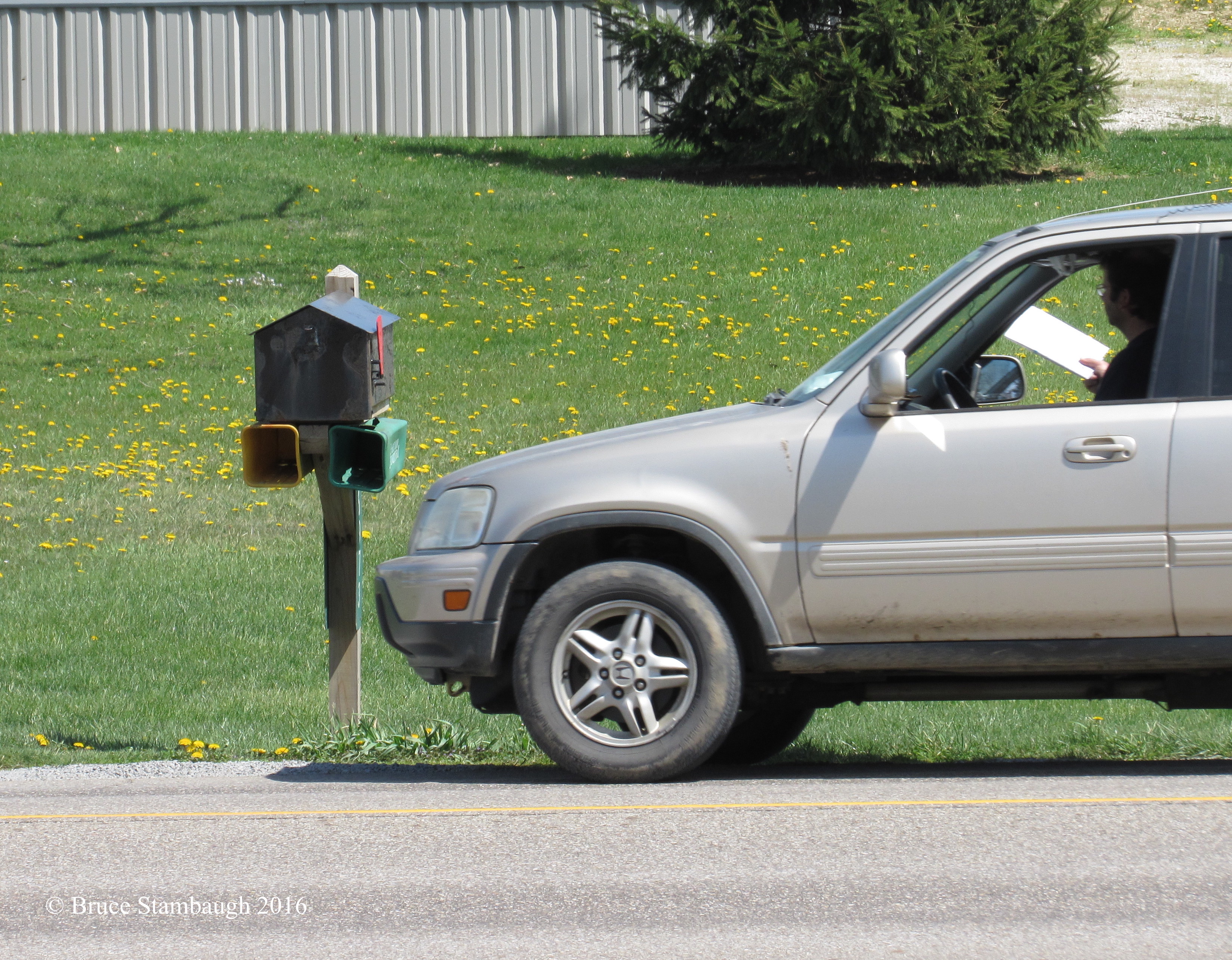
The mail cometh.
The kind man simply mailed the envelope with only my full name and Millersburg, Ohio written on the front. No street address. No zip code. And I got it.
The truth is, I wasn’t surprised at all that the letter arrived in our mailbox. It’s not that I’m famous. The fact that my wife and I happen to be the only Stambaughs in the county had to help. However, this was the United States Postal Service, a federal government institution that has had its share of lumps and negative publicity.
That reputation of bigness doesn’t necessarily hold true in Holmes County, Ohio. This isn’t the first time we’ve received a skimpily addressed letter.
Once we had a card from a friend with our name, town and zip on the envelope accompanied by a note scribbled on the envelope that said, “The same road as the restaurant.” When you don’t know the road number, improvise. It worked.
It gets better. Years ago when we lived in the southwest section of the county my ornery older brother sent a letter addressed with only the first names of my wife and me and 44637. That’s the zip code for Killbuck, Ohio. Once again, we got it. My brother couldn’t believe it.
Rural defined.
It was a perk of personally knowing the postmaster. A lot of people in the area could say that. In fact, when we moved east to our current location our mail was forwarded far beyond the required time. It stopped the day Bob House retired as Killbuck postmaster.
Bob went above and beyond the call of duty. Not because he had to, but because he wanted to do so. He exemplified the personal consideration and dedication of many folks we have met over our lifetime in this marvelous rural county.
Folks welcomed us into the Amish culture, too, when we relocated to the eastern end of the county. Neighbors invited us to picnics and Amish weddings.
We especially appreciated the invitations to Amish church services. Though we didn’t understand most of what was said, we got the message in the spirit of being treated with kindness and respect.
As educators in the local public schools, my wife and I were shown the highest regard of reverence for our responsibilities with the children of Amish and English alike. Families invited us for meals and visits. We felt more than welcome in both East Holmes and West Holmes.
It’s not always easy living in a county with a population that is less than that of a small city. But as you can see, there are distinct advantages to residing in a locale where everybody knows your name, including the mail carrier.
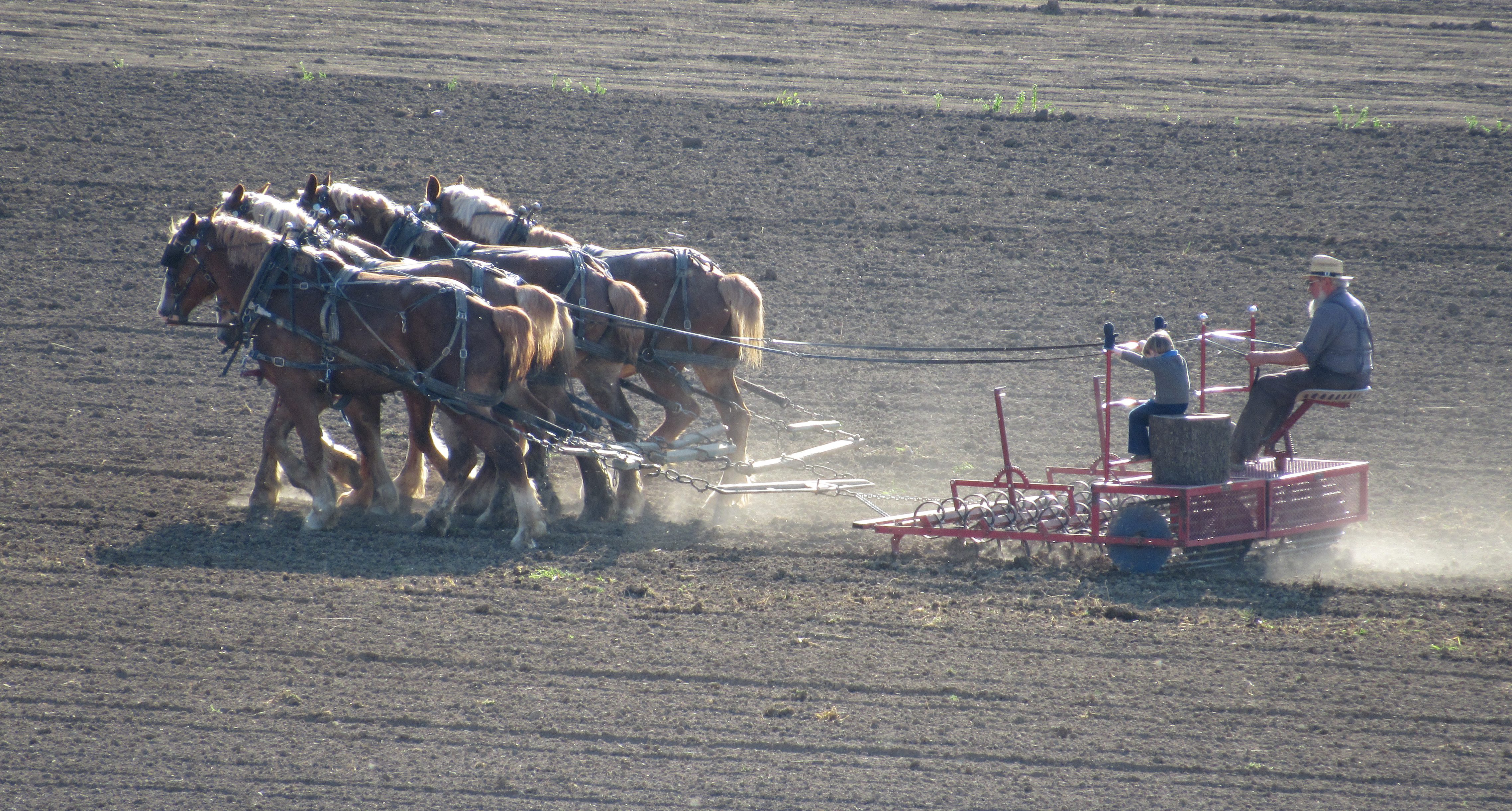
Cute as it looks, this photo shows much more than a grandson riding along as his grandfather encourages a team of workhorses across a farm field. This exemplifies the hands-on part of an Amish education. Children learn at a young age how the work gets done, whether on a farm or in a shop or the house. It is practical, productive learning at its finest.
The sunsets just keep getting better and better. Or possibly it’s the string of perpetually gray Ohio days that make the infrequent sunset all the more glorious. Either way, I greatly appreciate the beauty of the evening sky and the radiance that bids the day farewell.
At first, I was a bit taken aback when the Amish man asked me the question. Pointing to my business card, he wanted to know what the term “blogger” meant.
I tried to explain it verbally before a light went on in my head. I pulled out my iPhone and brought up my blog so Joe (not his real name) could see for himself. He was sincerely intrigued, and genuinely thankful for the first-hand explanation.
His world was dissimilar from mine. In the larger scope of things, however, we weren’t that different at all. In fact, we probably had more in common than we realized. I like to think that applies to most folks. We just need to set aside our biases, listen and look at what is before us.
With his question, we had connected. I had opened a curtain into my world that this inquisitive man would not have otherwise even known to pull back.
Then I realized the magic of the moment. He had just done the same for me.
I had driven a dozen miles south into the unglaciated hills and valleys of Holmes Co., Ohio to shoot some photos of one of the several products Joe makes.
Cameras and Amish usually don’t mix. However, I assured Joe that I respected his beliefs regarding not being personally photographed. I was there to capture the process of creating the shoulder yoke that he made for Lehman’s in Kidron, Ohio.
In today’s hyper-suspicious world, Lehman’s customers had requested proof that Amish indeed make specific items and were not imported from some third-world country. The wooden yoke was one of them.
This slideshow requires JavaScript.
I arrived early at Joe’s shop, a lesson I learned long ago from my prompt wife. Joe was ready for me and got right to work. He had all the production steps organized for me to photograph.
He trusted me to shoot only the materials, machines, and tools that he used. Out of respect for his beliefs, I was careful not to include his face in the photos. We moved smoothly from station to station.
In less than half an hour, Joe had taken raw wood and produced his useful yoke. I had to stay alert to keep up with him. Joe was that efficient and prepared.
I was mightily impressed with his skills. Only after we had finished the assignment did I realize the significance of his yoke product.
What he makes both eases a difficult job and provides more comfort for off-the-grid people everywhere. They sling the yoke onto their shoulders, which distributes the weight of the heavy items they have to carry.
If it’s two buckets of water, they balance on opposite ends of the yoke. It’s a simple method and old tradition. Joe’s skilled hands, which show the scars of his years of woodworking, help to make life a little easier for the yoke purchasers scattered across several states.
I couldn’t help but mentally compare the maker and the buyers of these yokes. Like Joe and his family, they probably don’t have electricity or any electronics like my smartphone to make life simpler for them.
Perhaps those who use the yoke ride a horse-drawn cart or raise livestock, too. Maybe they hang their laundry out to dry on a clothesline just like Joe’s wife.
Geography and cultures might separate us. Purpose and priorities unite us.
April’s weather in northeast Ohio can be fickle, to say the least. After a tease of springtime in late March, April brings us all back to reality in short order. In the space of a week, it’s not unusual to experience bitter cold and snow, torrential rains, damaging winds, and a beautiful, still, sunny day.
Regardless of the day’s weather, we can often count on an inspiring sunset. Indeed, this week we had our pick.
Good Friday is a sacred day in the life of Amish. Most Amish church districts hold a long church service, usually for adults only. The focus is to remember Christ dying on the cross for humankind.
As a kid, I loved when Daylight Saving Time (DST) arrived, mostly. At first, school days began in the dark. The upside was that we had more daylight time in the evening to play and do chores.
That seemed like a fair trade to me. Excuse the pun, but times have changed since the origin of DST. I’m not sure humanity has, however.
Believe it or not, DST originated in ancient times before clocks existed. Various civilizations adjusted their schedules, not their clocks, to the natural lengthening of warmer months.
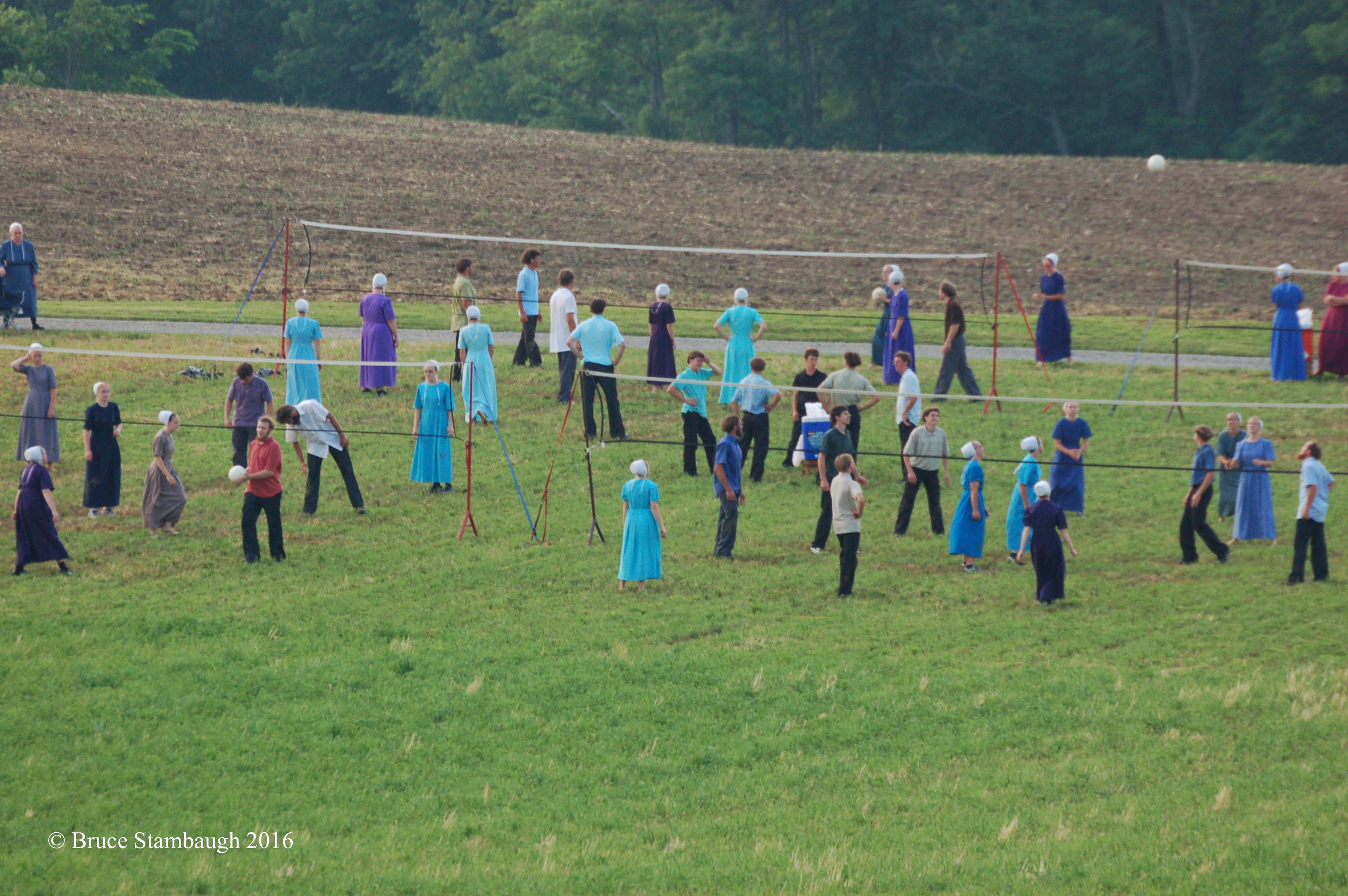
Evening recreation.Ben Franklin’s humor accidentally credited him with the suggestion of DST. When awakened by the sun at 6 a.m. in France in 1784, Franklin jokingly suggested in an essay that the French could save a lot of money by getting up earlier in the morning. That would result in fewer candles burned in the evening.
Folks in Thunder Bay, Ontario, Canada were the first to use DST in 1908. The idea didn’t catch on until the onslaught of World War I when Germany resorted to using DST to save fuel for the war effort. Great Britain soon followed suit.
The same thing happened when the United States entered World War II. To save fuel, DST ran from April 30 to Oct. 31. In one form or another, DST has been around ever since.
Today’s use of DST in the U.S. dates to the 1973 oil crisis in the Middle East. DST now runs from the second Sunday in March and ends the first Sunday in November. Altogether, 70 countries use some form of DST.
Despite its semi-annual adjustments, folks still get confused by the change of time. A simple rule is spring forward an hour in March and fall back an hour in November. Note the cheeky references to “spring” and “fall.”
Farmers often get the blame for initiating DST. In fact, the farmers I talk to hate it, especially if they milk cows.
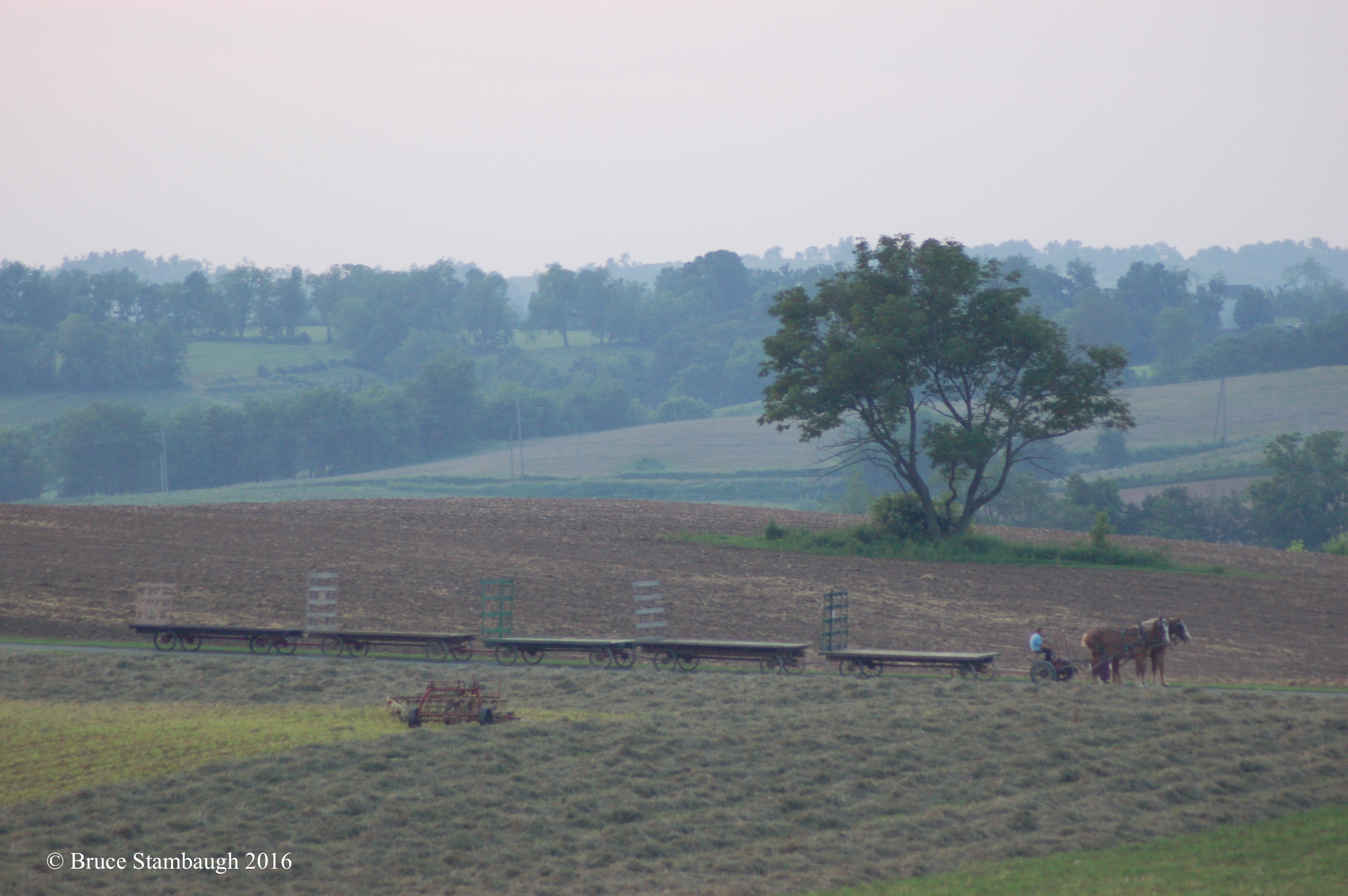
Late evening wagon train.When I was an elementary school principal, I often made home visits. In some Amish homes, I noticed that the household clocks remained on standard time.
Others apparently used the art of compromise. Clocks were set back a half an hour. Perhaps these methods were mild forms of protest. Whatever the reasons, people always seemed to know what time it was regardless of what the clocks said.
That’s more than others could say. This simple idea led to some chaotic timekeeping. In 1965, the state of Iowa had 23 different start and end dates for DST. Even the Twin Cities of Minneapolis and St. Paul, Min. didn’t change time equally.
To bring order to all of the chaotic clocks, Congress passed the Energy Policy Act of 2005 making DST uniform. Well, mostly. Arizona and Hawaii still don’t use DST, along with several U.S. territories.
For good or for ill, the intent of this checkered history of playing with time was to save energy. Research has shown that concept is flawed.
I can see both sides. Earlier risers would just as soon avoid manipulating the clocks twice a year. Those who desire extra playtime after work or school are happy for the extended daylight.
That remains the justification for DST. It doesn’t save time. The tactic merely adjusts the clock to accommodate more daylight for more citizens.
My less than nimble fingers protest resetting the many digital devices that don’t self-correct. The child in my heart, however, still enjoys the adjusted daylight.
This pair of Canada Geese was none too happy about my early morning intrusion on their quiet solitude. Their harsh honking wasn’t the only thing that caught my attention. I couldn’t believe the color of the predawn sky’s reflection on the farm pond. The lavender and mauve beautifully accented these noisy birds.













You must be logged in to post a comment.