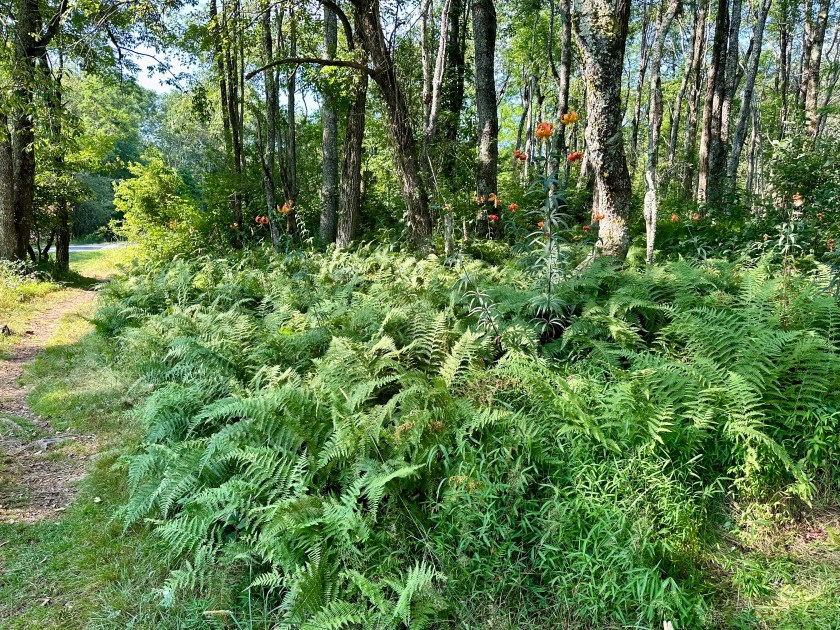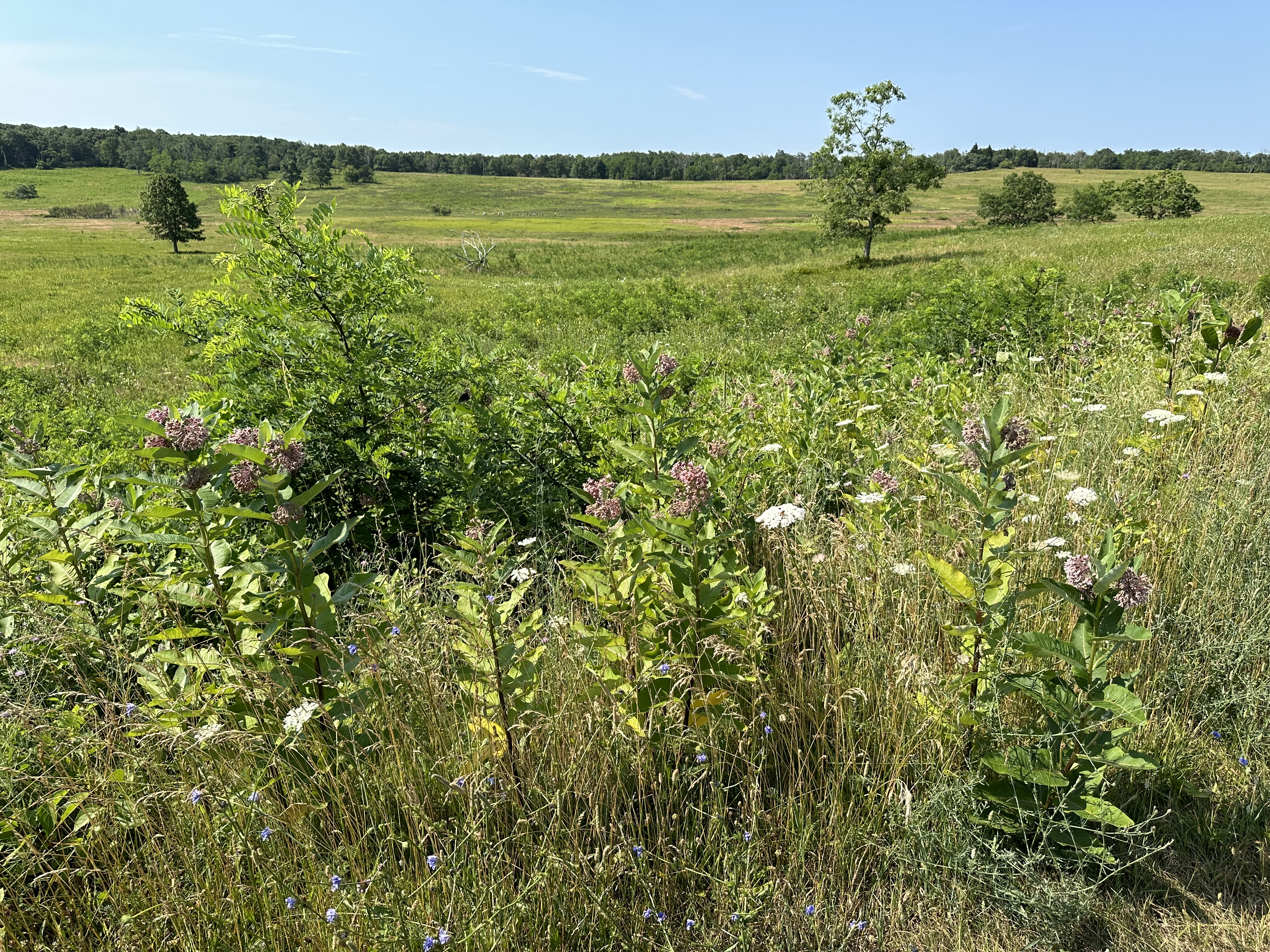
Wild Lupine growing along a fire road in Shenandoah National Park. Photo by Bruce Stambaugh
This is the fifth post in a series celebrating National Park Week.
When you are in a national park, don’t forget to look down. You don’t want to miss the many wildflowers prolific in all but the winter. Even Death Valley is currently having a superbloom. I would love to see that sometime.
In the meantime, spring is the perfect time to look for wildflowers in national parks. I photographed the wild lupines along a fire road in Shenandoah National Park.
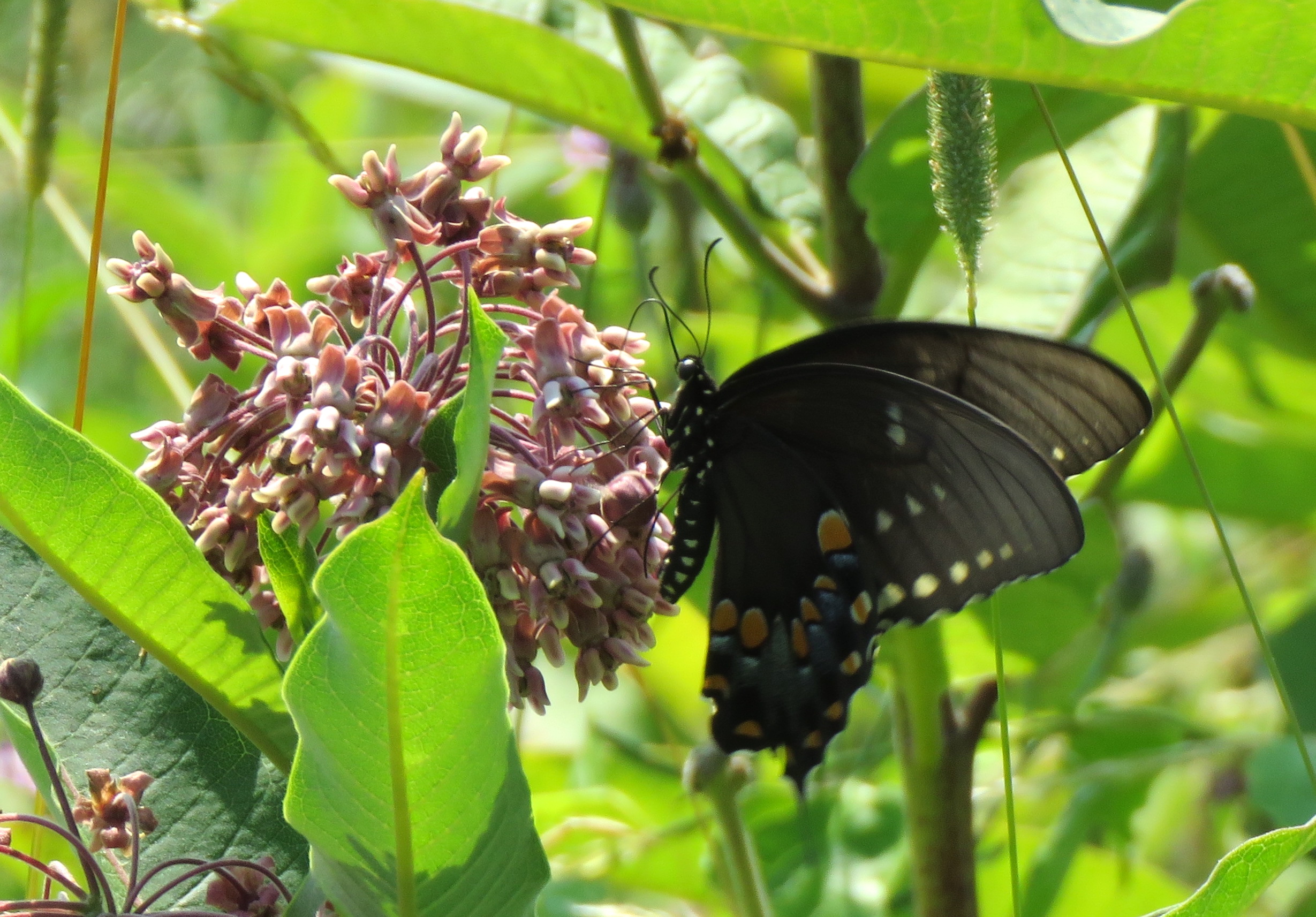
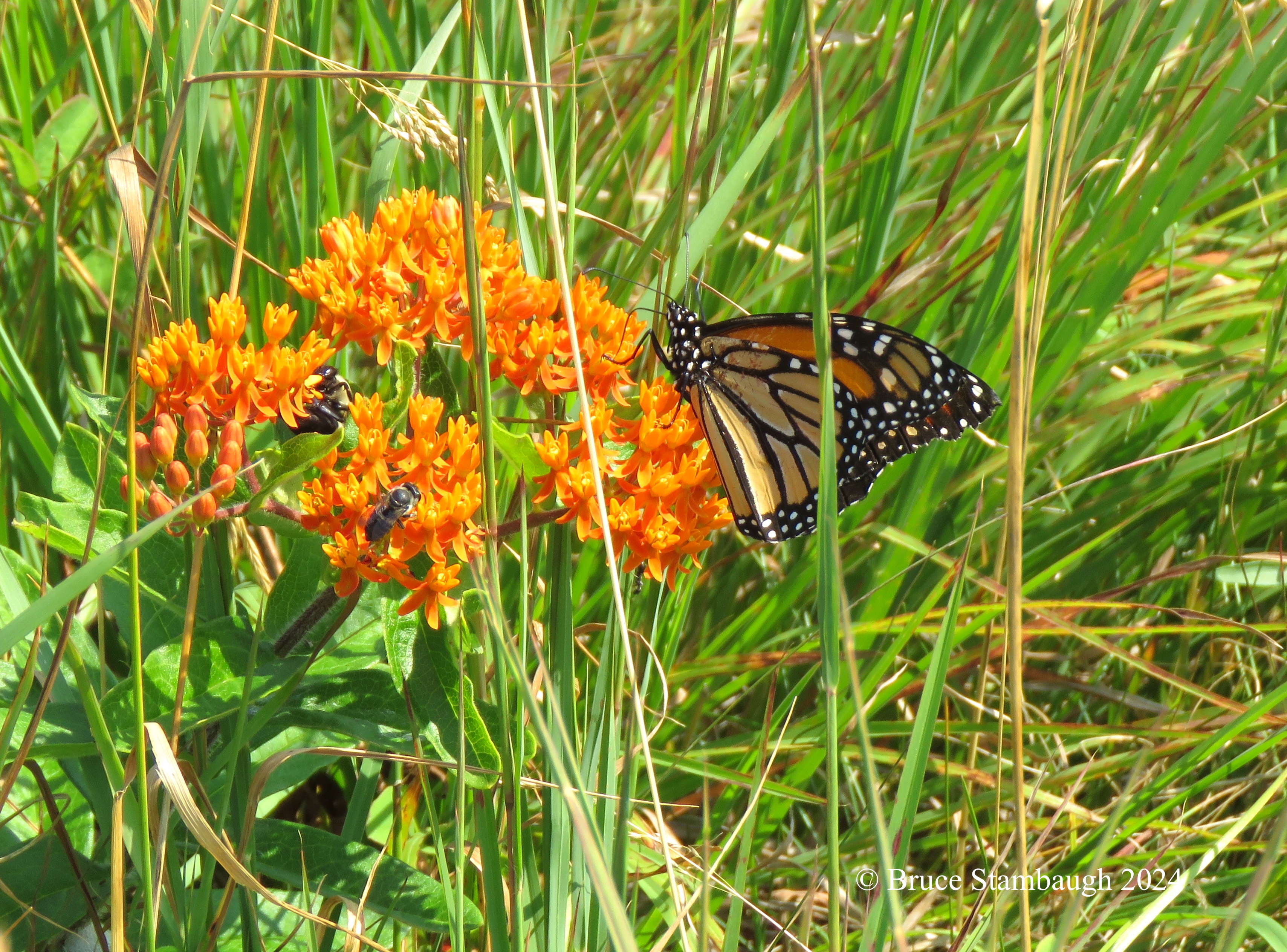
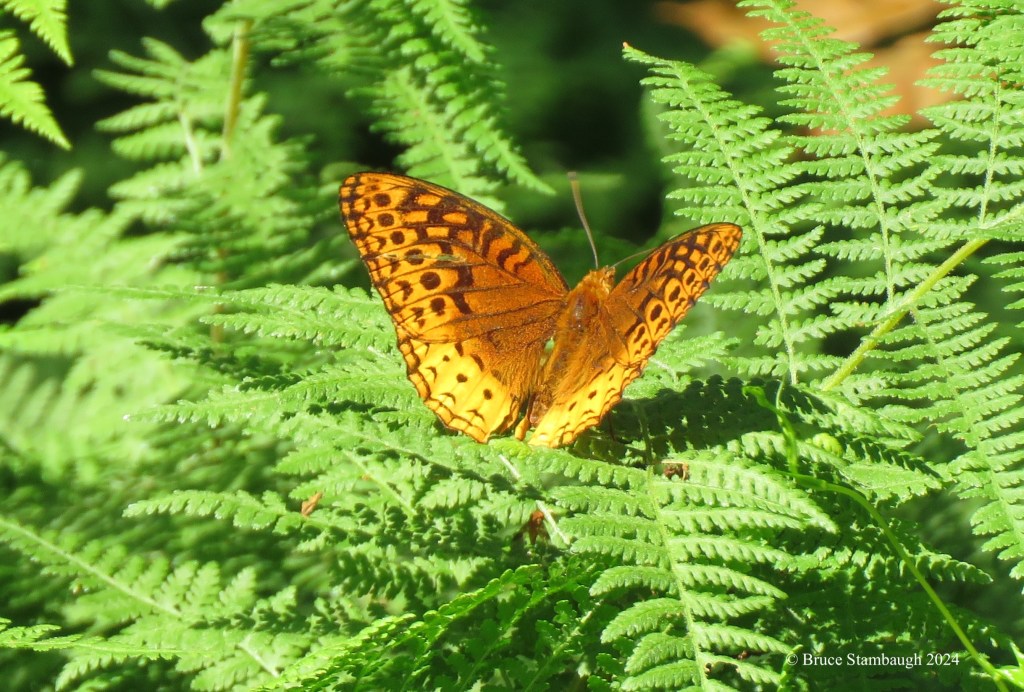
Wildflowers bring beauty to the park and attract other beauties, too. When I first visited Shenandoah National Park seven years ago, I was pleasantly surprised at the number and variety of butterflies I found in the park, even in the forests. The colorful blooms also drew bugs, bees, and, of course, Ruby-throated Hummingbirds.
So, when I visit any national park to bird, hike, and photograph birds and wildlife, the wildflowers also are on my agenda. The lovely lupines are the proof.
Little falls upstream form the main event. Photo by Bruce Stambaugh
This is the fourth in a series of posts celebrating National Park Week.
It is an understatement to say that people are drawn to waterfalls. Big or small, they are simply mesmerizing.
It’s one thing to see a photo or video of a waterfall, but it’s something else entirely to be standing next to one. The roar and the beauty transfix their observers. Even cascades of water over rock, then a crystal clear pool, then more white water entrances children and adults alike.
Shenandoah National Park officially has 36 named waterfalls. However, numerous others are in the park depending on the water flow. The photo above demonstrates that.
It’s one of many mini-falls above Lewis Falls, near the Big Meadows area. On a chilly November day, I hiked the Lewis Falls Trail in a group, and the many rapids and little falls upstream of the main event impressed us all.
It’s easy to be swayed by the impressive Yosemite Falls or Bridalveil Falls. I love them both. But romantic that I am, I am just as happy crisscrossing rapidly falling streams that form white water all the way to the cliff’s edge.
So, big or small, let’s praise the falling water in our national parks, which brings joy to everyone.
Teens learning about Big Meadows in Shenandoah National Park. Photo by Bruce Stambaugh
This is the third installment of a series celebrating National Park Week.
I often hike alone. But occasionally, I enjoy sharing my love of nature with others.
The church I attend has a mentor/mentee program for youth. A friend and I each serve as mentors for two teenage boys. Knowing we all enjoy the outdoors, we took them for a day trip to Shenandoah National Park last summer. We had a riot.
These energetic young men enjoyed every aspect of the trip. They loved the hikes and the enthralling views. They also identified birds, flowers, and rocks and occasionally pestered one another. A pair of fawns grazing at the edge of Big Meadows startled us as we walked along the union of the meadow and the forest.
We rested on a rock outcropping overlooking the always lovely Shenandoah Valley. The boys loved scrambling over the ancient rock formation and resting in the warm sunshine, basking in all nature’s glory. Given our generational spans between teens and septuagenarians, I marveled at our common contentment.
But that, in part, is what national parks are for. People of all ages, races, religions, backgrounds, and interests feel at home in our nation’s beautiful national parks.
Our excursion was a perfect example of how to celebrate National Park Week.
The opportunity I had hoped for. Photo by Bruce Stambaugh
This is the second in a series celebrating National Park Week.
On the afternoon of May 23, 2018, I decided to finish my day in Shenandoah National Park by hiking the Rock Spring Cabin trail. According to the park map, the trail wasn’t long, and I was curious to see the cabin.
So, off I went, binoculars around my neck and camera across my shoulder. I soon reached the point where the trail joined the Appalachian Trail (AT), and I hiked on. I could hear birds chirping and singing all around me, but the lushness of the forest prevented me from seeing or photographing most of the birds.
As the AT wound west and north around a hillside, the Rock Creek Cabin trail veered left and down a fairly steep slope. I passed the hiker’s shelter, saw the spring gurgling from beneath giant boulders, and hiked back up the incline to the cabin owned by a local hiking club.
My fascination satisfied, I returned to the skinny dirt incline toward the AT. Just before I arrived at the iconic trail, a pair of Common Ravens croaked and chattered noisily overhead. Their deep-throated gurgling echoed through the dense landscape as they bounced from tree branch to tree branch in my direction.
Thinking I was the intruder who initiated the ravens’ commotion, I started down the trail at a slow pace. I didn’t want to disturb the birds any more than I already had.
The strange thing was, though, that they didn’t really seem to pay me any heed. They swooped lower to another tree ahead of me but continued their conversation.
So, I swallowed my ego and began to pay better attention to what was bothering the birds. A short distance down the AT, I discovered their concern. A young but large black bear was foraging on the lush, green forest floor.
I readied my camera and saw my chance. The bear was approaching a small cluster of trees that separated us. So, I quickened my pace to try to photograph this beautiful creature as it emerged from behind the trees.
I stood quietly on the trail for the bear to appear. I didn’t have to wait long. I aimed and clicked the camera just as the bear spotted me. That one simple noise sent the bear racing headlong down the hill and quickly out of sight.
I got one shot and only one shot of the bear. I was as happy as the bear was scared. I had my first photo of a bear in the wild.
That day, I learned an important lesson: Pay attention and use your senses to see all that a national park offers.
Hiking the Appalachian Trail in Shenandoah National Park. Photo by Bruce Stambaugh
This is National Park Week in the United States. In celebration of our 63 beautiful national parks, this is the first of a series of photos I have taken in Shenandoah National Park.
Shenandoah National Park has a storied and somewhat troublesome history, given how farmers and their hired hands were removed from the park before it was developed starting in late 1935.
Though the land was rugged and steep in many places, over 2,000 folks lived, farmed, and worked on the 198,000 acres that became the first national park in the eastern part of the U.S. Landowners were paid an assessed rate for their property, which the federal government purchased via eminent domain.
Of course, many of the people were tenants who cared for the land, while the property owners lived in the Shenandoah Valley or elsewhere. The tenants received nothing for their inconvenience. Consequently, some of their descendants still have grudges against the government.
Nevertheless, Shenandoah National Park is a popular place to visit since millions of people live within a day’s drive. Plus, the Appalachian Trail (AT) stretches 101 miles through the park, drawing day and overnight hikers. The AT weaves along the crest of the Blue Ridge Mountains, crossing the Skyline Drive several times.
I enjoy day hikes in the park, which often involve hiking sections of the AT to spur trails that lead to waterfalls, rigorous climbs, and scenic overlooks. I especially appreciate the flora and fauna that I encounter.
This photo, taken in late May 2018, represents the lusciousness of the park’s greenery, from ground cover to towering trees. The photo was not altered to enhance the green.
Tomorrow, I’ll post what I saw to the left of where this photo was taken.
Spring’s colors brighten our days. Photo by Bruce Stambaugh
Just in time for Earth Day, spring’s vibrant colors are at their peak here in Virginia’s Shenandoah Valley. Ornamental shrubs, trees, and domestic and wildflowers are putting on a show for our pleasure and their propagation.
This annual phenomenon has a caveat. Conditions change quickly, and weather conditions play a significant role in these rapid transformations. A windstorm or hard frost can instantly paint the landscape much differently.
The tender and pastel leaf buds unfold quickly, exposing their infant beauty. The fresh foliage of red maples shows the reason for the tree’s name. So, too, do their fleshy seeds, which critters like squirrels devour.
Please click on the photos to enlarge them.
Soon, however, the leaves fully unfurl, sometimes overnight, and the russets transform into luscious greens. Through transpiration and photosynthesis, we all can breathe easier. One large tree can produce up to a day’s oxygen supply for four people.
Please click on the photos to enlarge them.
Redbuds can be fickle. Some years, the buds last weeks. This year, the emerging leaves of our backyard Rising Sun Redbud tree have already overtaken the beautiful buds. The young tree went from lavender to bright pink to lime green and pale pink in a few days. Pink polka dots already cover the ground below.
April 10.
April 13.
April 15.
April 16.
April 21.
Given this rapid transformation from bud to bloom, we need to be vigilant in the quest to enjoy nature’s springtime. Doing so has multiple benefits. Exploring the lovely blooms of trees, shrubs, and flowers renews our appreciation for life itself. Enjoying nature’s beauty and birdsong serenades invigorates our spirits. Walking or hiking through it all provides needed exercise.
Nature offers another bonus if we are observant. She has lessons for all of us to learn, no matter our age. Do you know redbud blossoms, viewed at the correct angle, resemble hummingbirds feeding?
Can you find the hummingbirds in the redbud blossoms?
Exploring local parks and roadsides offers vivid samples of spring’s changing color schemes. It’s a wonderful way to celebrate Earth Day.
My late mother was an accomplished artist. Her favorite medium was watercolor, and landscapes were her specialty. Occasionally, she dabbled in abstracts, using watercolors, acrylics, or oils.
I thought of my mother when I saw this scene along a local river. Of course, I had to snap a photo of it. I’ve given you a hint about the bottom third of the scene. Can you guess the rest?
If not, here’s the rest of the story. This photo was taken at the bend in the river. A quarter mile downstream, the water is still due to a low-head dam.
Do you still need help? You are looking at the sheer face of a partially wooded limestone cliff that rises 100 feet above the river. The lime-green globs are cedar trees, and the gray greens are lichens. I shot this from the river’s north shore in a park where I was birding.
I chuckled when this Carolina Chickadee landed on the rim of my window feeder and briefly struck this pose.
It looked like the little bird was trying to decide which black oil sunflower seed to choose. Of course, that’s a biased human observation. In reality, the bird likely was looking for a good seed amid the litter of spent seed shells left by other birds.
It soon found one and flew away to crack the shell open to get to the sunflower meat.
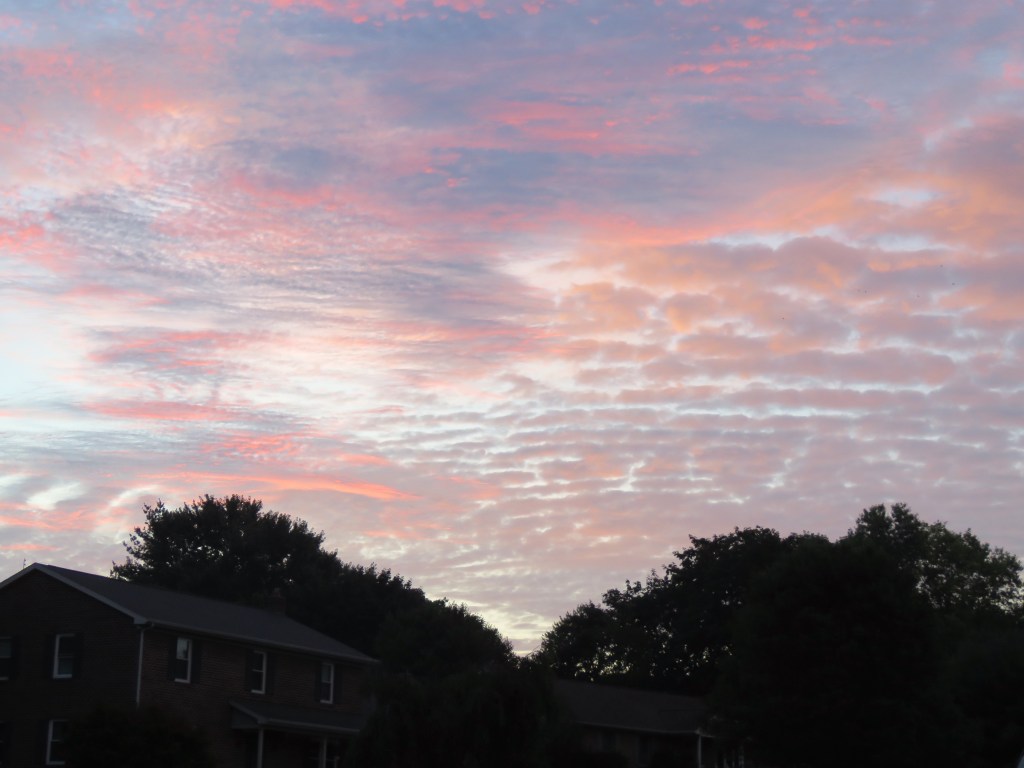
Our suburban home near Harrisonburg, Virginia, faces north. That requires me to constantly check east and west around dawn and dusk for any hint of a colorful sunrise or sunset.
My chances of catching a lovely sunrise have to be more intentional. The older I get, the easier it is for me to sleep past the sun’s morning appearance. Seniors seem to have a sleep cycle similar to that of newborns. I fall asleep fine, but staying asleep is another matter. Consequently, my awakenings in the middle of the night contribute to my sleeping pattern. I toss and turn and then sleep soundly until sun up.
So, I have many more Virginia sunset photos than sunrises. I walk in the neighborhood as often as I can, and I especially like doing so in the morning.
The morning sun highlighted a farmstead on Mole Hill. Photo by Bruce Stambaugh
The other day, my wife and I were about to begin our morning stroll when I noticed the sun shining on a farmstead on the eastern slope of Mole Hill, a local landmark. Mole Hill is the remnant of a volcanic core from millions of years ago. Over millennia, nature’s elements have weathered and withered the basalt down into a gently sloping geographic feature resembling a molehill, thus its name.
With my camera at the ready, I captured the sun highlighting this old homestead. I didn’t think much of it then, but that changed the following evening.
I wasn’t too hopeful for a glowing sunset, yet when I looked out, the sky radiated orange across the western sky. I knew my only chance for a photo was from the middle of the street in front of our home. So, I did that, standing at nearly the same spot as the morning photo of Mole Hill.
The farmstead stood out even with the setting sun behind it. Photo by Bruce Stambaugh
In one of the photos, the same farmstead stood out, even on the shaded side of the historic hill. I don’t tinker with my photos, so this eerie highlight simultaneously puzzled and intrigued me.
Call it what you will. I’m glad the sun shines on Mole Hill morning and evening.
You must be logged in to post a comment.