Making meaningful memories

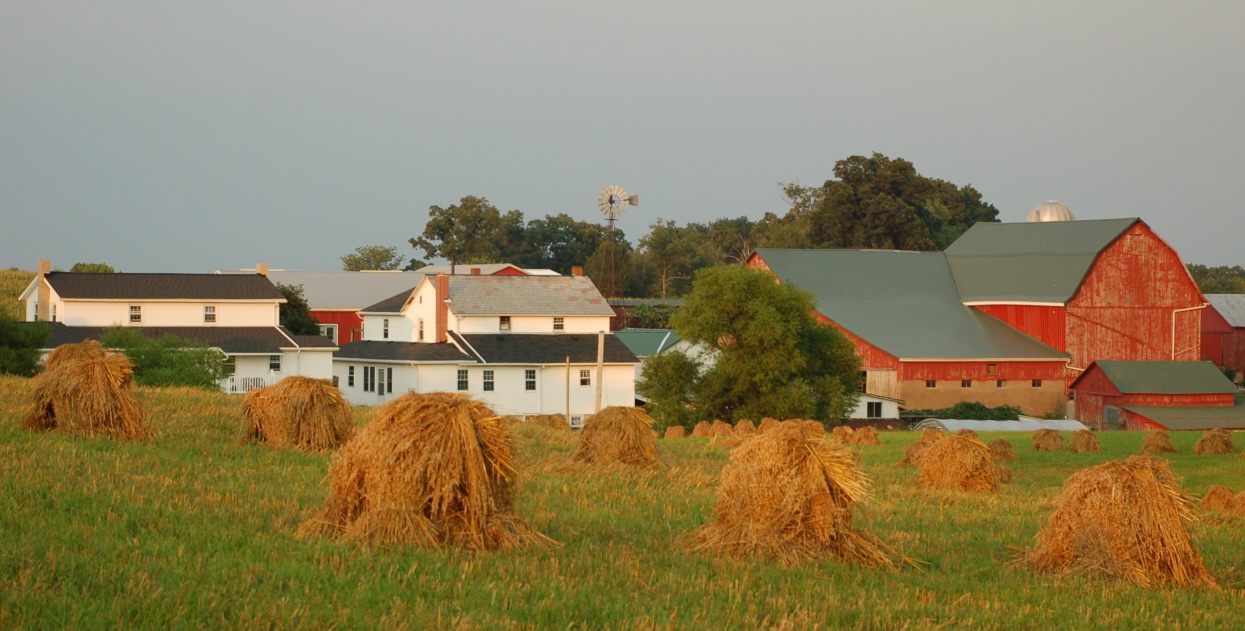
Amish farm
Tourists flock to Holmes Co., Ohio simply to rekindle memories of the way things used to be.

By Bruce Stambaugh

Whether we realize it or not, we make memories every day.

Memories don’t have to be from times long past. Often they are the moments at hand that we cherish the most. The older I get, the more emotive I am about the everyday happenings in my life.

Some memories come from yesterday. Others bubble up from the yesterdays of long, long ago. Some are innocent, innocuous ditties while others are serious, life-awakening treasures.

The odd thing about memories is how they so often just pop up at the strangest times and places. It’s why we need to be mindful of our constant memory making.
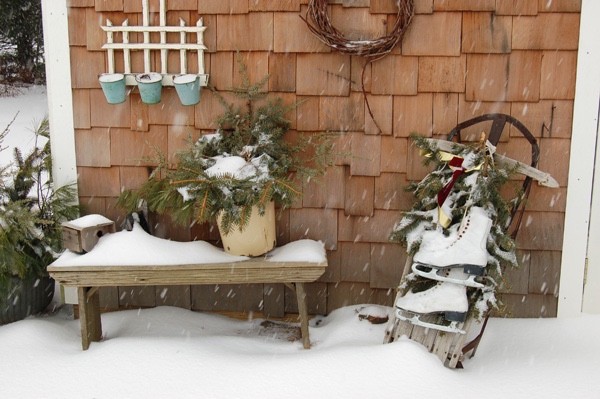
flexible flyer sled
The Flexible Flyer now serves a different snowy purpose.
A spark down deep spontaneously ignites and I’m hiking a switchback alpine trail inhaling thin, clear mountain air. Another moment I’m in the delivery room of the local hospital watching my lovely wife deliver our second child. Soon our family doctor holds our newborn in front of us, exclaiming, “She’s a boy!”

In another flash, I’m a child myself, belly flopping on my Flexible Flyer through heavy, wet snow, shouts of glee echoing off the blanketed hillsides. I still have that magic sled.

I remember our daughter, only two at the time, ordering a male guest who tried to leave to sit back down. Her little tea party wasn’t ready to end. The man laughed and complied.

I remember racing to beat the rapidly rising tide to the beach in a shallow bay on Cape Cod. I’ve checked the tidal charts ever since. Then there was the warm summer’s evening I climbed the 897 steps in the Washington Monument in the nation’s capital. The walk back down wasn’t nearly as exciting for this 16-year-old.

This slideshow requires JavaScript.

Other less joyful memories we wish we could erase of course. But they, too, are indelibly etched in our minds, resurrected at the strangest, most inappropriate times. We cope with thoughts and prayers and tears, always moving forward in our too short lives.

Many of the memories my wife and I have mutually maintained involve travel with family and friends. I hadn’t been to Hocking Hills State Park since I was a teenager. I enjoyed a recent trip with friends as much as I did the one 50 years ago with family.

We strolled trails, discovered waterfalls, explored caves, and enjoyed every color of green imaginable. We wandered forests of towering trees with unfolding canopies and floors of thousands of feathery ferns.

wedding cake
The wedding cake.
The best memories don’t have to come from exotic, far away places either. They can be pretty close to home. And, too, some settings are made to be memorable.

Ideally, wedding ceremonies and the ensuing reception are memory machines. This celebration was especially so. We witnessed the wedding of our Amish neighbor’s daughter. It’s always an honor to be guests at such occasions.

We loved the focus on family and personal commitment. It was a happy yet solemn occasion. The combination of the simplicity and the significance of the marriage sealed the moment into my mind. There was no flowing wedding gown, no tuxedos, no flowery bouquets, only serious contemplation.

At the reception in the barn, the buzz of the lively conversations further seasoned the already scrumptious food passed up and down long, pleasantly decorated tables. It truly was a life celebration worth remembering.

Memories are potent reminders of life’s sweeping landscapes. What endearing memories will we make today that will be worthy of future recollecting?

Ash Cave, Logan OH
Ash Cave, Hocking Hills State Park, Logan, OH.

© Bruce Stambaugh 2016
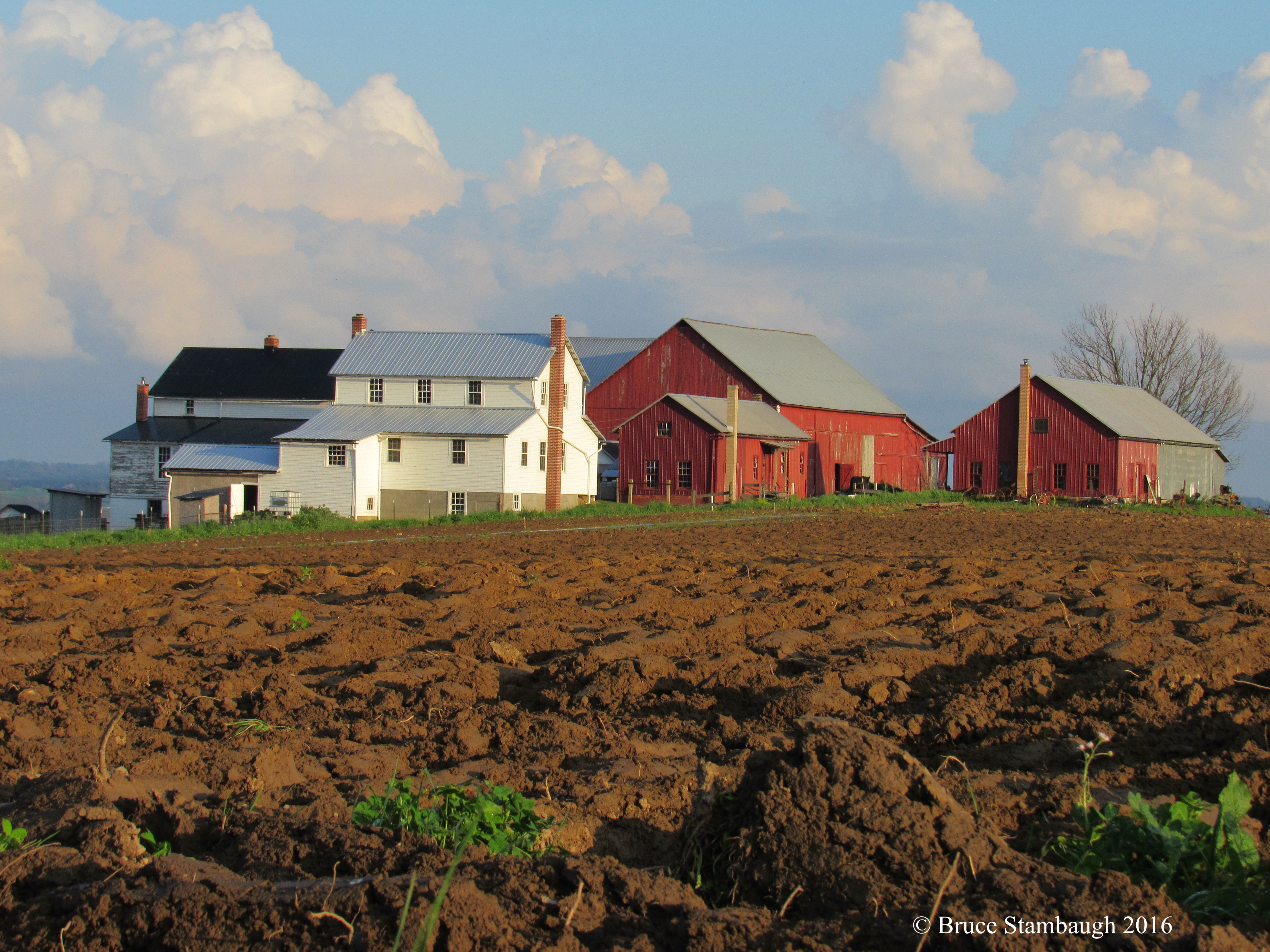
The Chimney Farm

Amish farmstead, furrowed field
The Chimney Farm.

I love to shoot this farm, especially when the setting sun brightens the buildings. On this spring evening, cumulus clouds billowed in the background, adding depth to the photo. I have pictures of this farm in all seasons. But this is the first with the field plowed. However, week-long rains softened the usually firm furrows.

As it turned out, the plowed field became the foreground for the unintended main subject. The family of chimneys on the various farmstead buildings carry the viewer’s eye left to right, a visual tour of this iconic Amish farm.

“The Chimney Farm” is my Photo of the Week.

© Bruce Stambaugh 2016
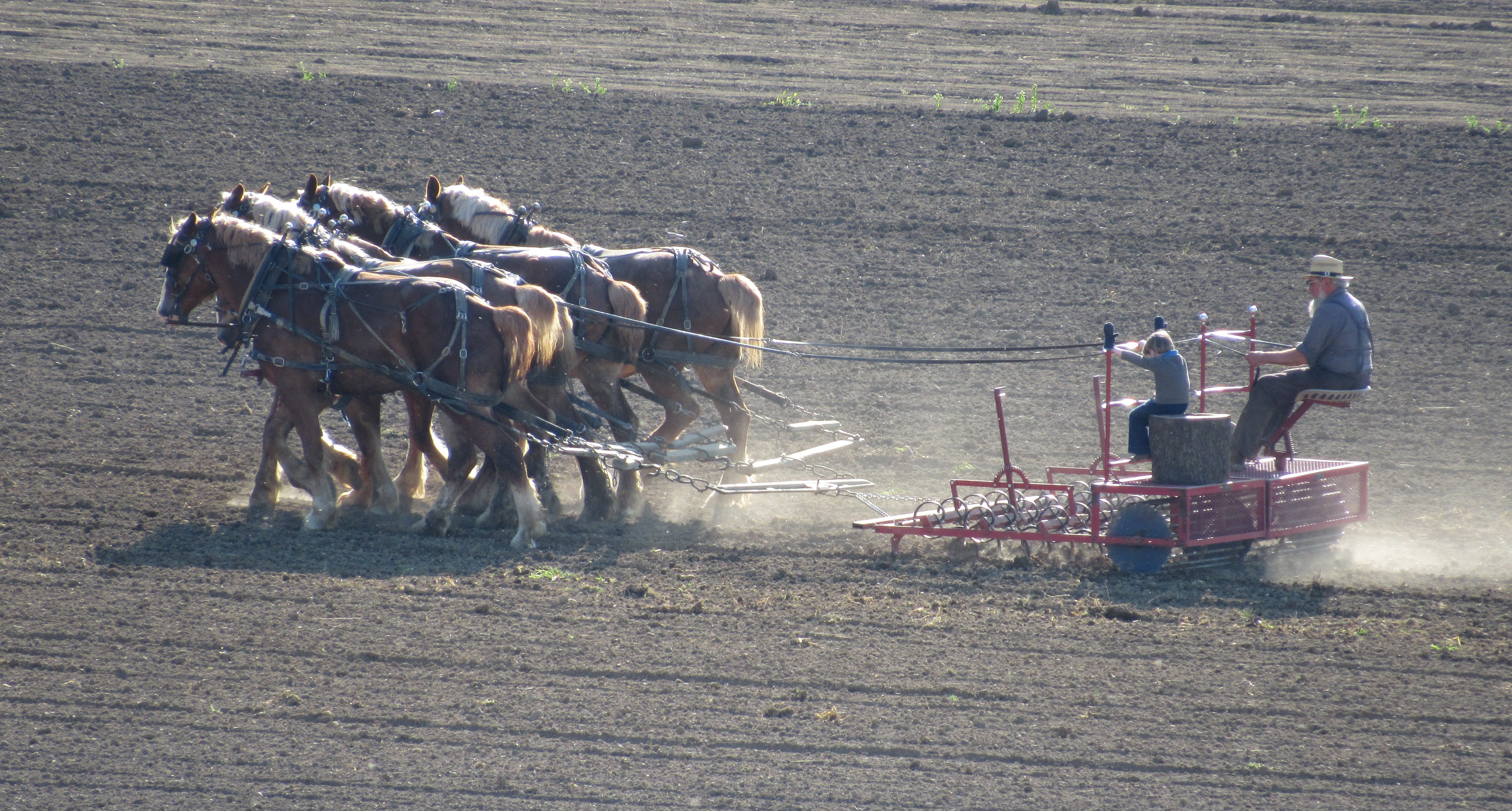
Helping Grandpa

Amish farmers
Helping Grandpa. © Bruce Stambaugh 2016
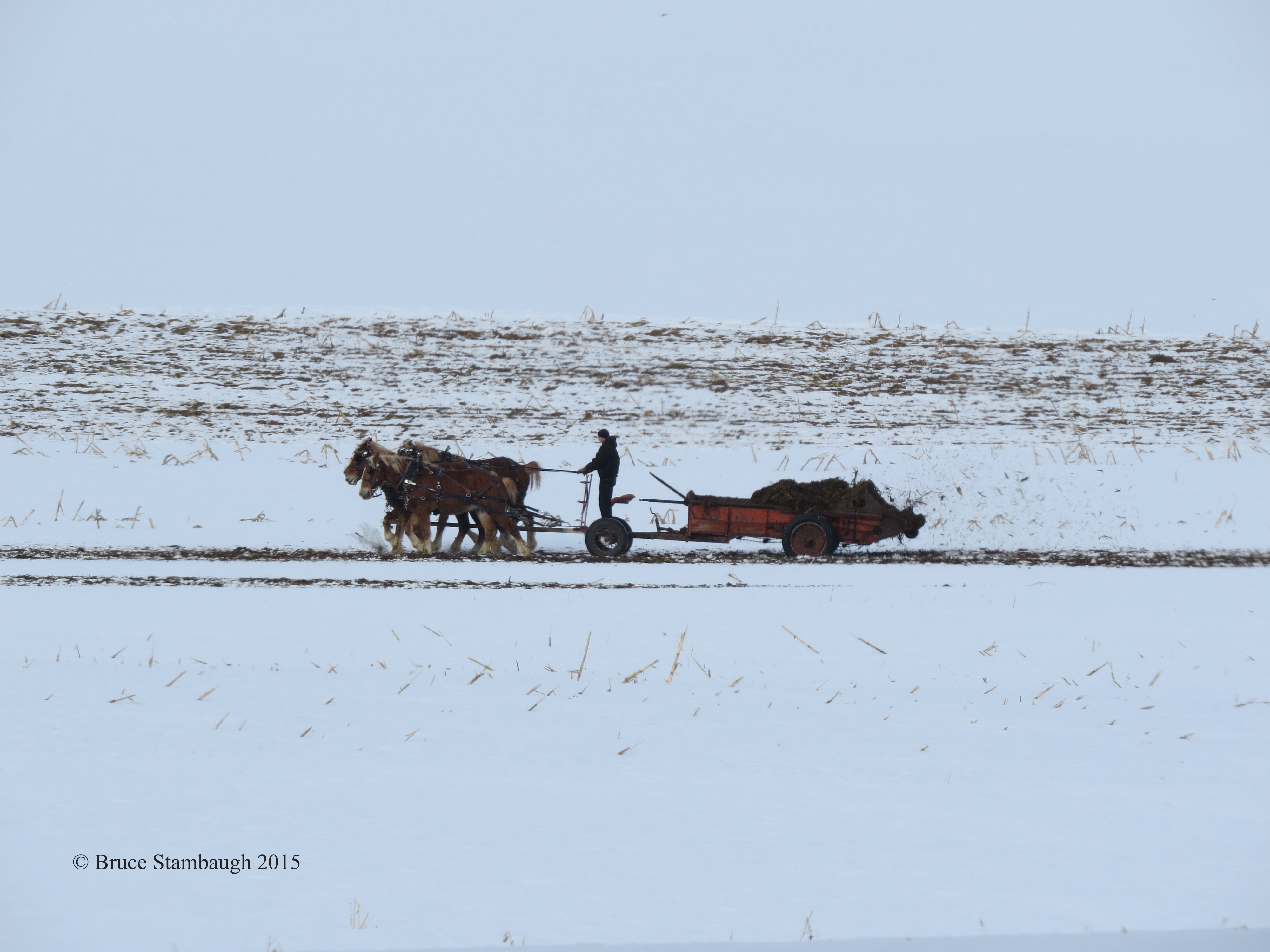
Cute as it looks, this photo shows much more than a grandson riding along as his grandfather encourages a team of workhorses across a farm field. This exemplifies the hands-on part of an Amish education. Children learn at a young age how the work gets done, whether on a farm or in a shop or the house. It is practical, productive learning at its finest.

“Helping Grandpa” is my Photo of the Week.

© Bruce Stambaugh 2016
United by purpose and priorities

sunny hillside
Sun and shadow.

By Bruce Stambaugh

At first, I was a bit taken aback when the Amish man asked me the question. Pointing to my business card, he wanted to know what the term “blogger” meant.

I tried to explain it verbally before a light went on in my head. I pulled out my iPhone and brought up my blog so Joe (not his real name) could see for himself. He was sincerely intrigued, and genuinely thankful for the first-hand explanation.

His world was dissimilar from mine. In the larger scope of things, however, we weren’t that different at all. In fact, we probably had more in common than we realized. I like to think that applies to most folks. We just need to set aside our biases, listen and look at what is before us.

With his question, we had connected. I had opened a curtain into my world that this inquisitive man would not have otherwise even known to pull back.

Then I realized the magic of the moment. He had just done the same for me.

I had driven a dozen miles south into the unglaciated hills and valleys of Holmes Co., Ohio to shoot some photos of one of the several products Joe makes.

Cameras and Amish usually don’t mix. However, I assured Joe that I respected his beliefs regarding not being personally photographed. I was there to capture the process of creating the shoulder yoke that he made for Lehman’s in Kidron, Ohio.

In today’s hyper-suspicious world, Lehman’s customers had requested proof that Amish indeed make specific items and were not imported from some third-world country. The wooden yoke was one of them.

This slideshow requires JavaScript.

I arrived early at Joe’s shop, a lesson I learned long ago from my prompt wife. Joe was ready for me and got right to work. He had all the production steps organized for me to photograph.

He trusted me to shoot only the materials, machines, and tools that he used. Out of respect for his beliefs, I was careful not to include his face in the photos. We moved smoothly from station to station.

In less than half an hour, Joe had taken raw wood and produced his useful yoke. I had to stay alert to keep up with him. Joe was that efficient and prepared.

I was mightily impressed with his skills. Only after we had finished the assignment did I realize the significance of his yoke product.

What he makes both eases a difficult job and provides more comfort for off-the-grid people everywhere. They sling the yoke onto their shoulders, which distributes the weight of the heavy items they have to carry.

If it’s two buckets of water, they balance on opposite ends of the yoke. It’s a simple method and old tradition. Joe’s skilled hands, which show the scars of his years of woodworking, help to make life a little easier for the yoke purchasers scattered across several states.

I couldn’t help but mentally compare the maker and the buyers of these yokes. Like Joe and his family, they probably don’t have electricity or any electronics like my smartphone to make life simpler for them.

Perhaps those who use the yoke ride a horse-drawn cart or raise livestock, too. Maybe they hang their laundry out to dry on a clothesline just like Joe’s wife.

Geography and cultures might separate us. Purpose and priorities unite us.

daffodils
Daffodils.

© Bruce Stambaugh 2016

April Sunset

sunset, Ohio's Amish country
April sunset.

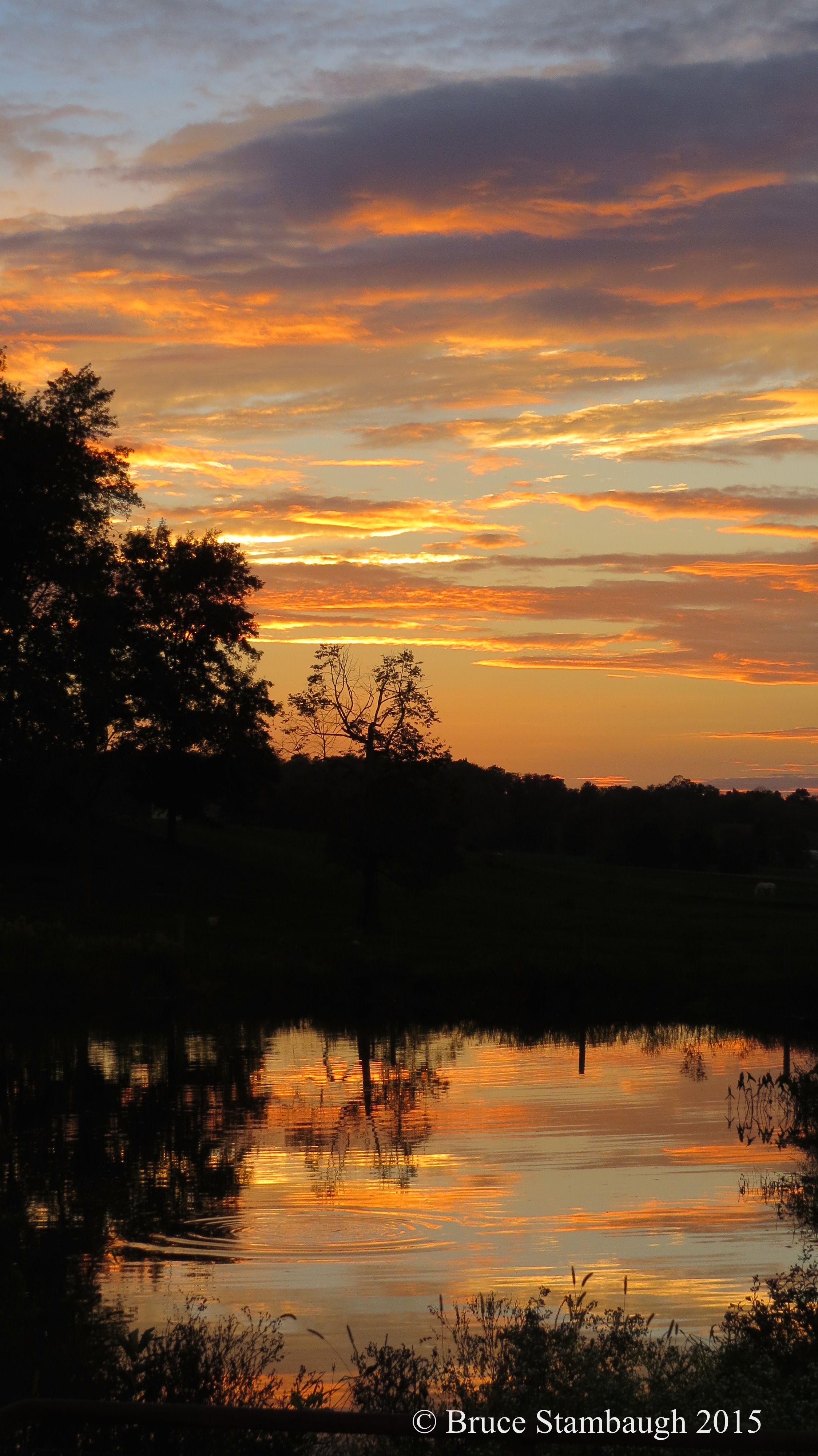
April’s weather in northeast Ohio can be fickle, to say the least. After a tease of springtime in late March, April brings us all back to reality in short order. In the space of a week, it’s not unusual to experience bitter cold and snow, torrential rains, damaging winds, and a beautiful, still, sunny day.

Regardless of the day’s weather, we can often count on an inspiring sunset. Indeed, this week we had our pick.

“April Sunset” is my Photo of the Week.

© Bruce Stambaugh 2016

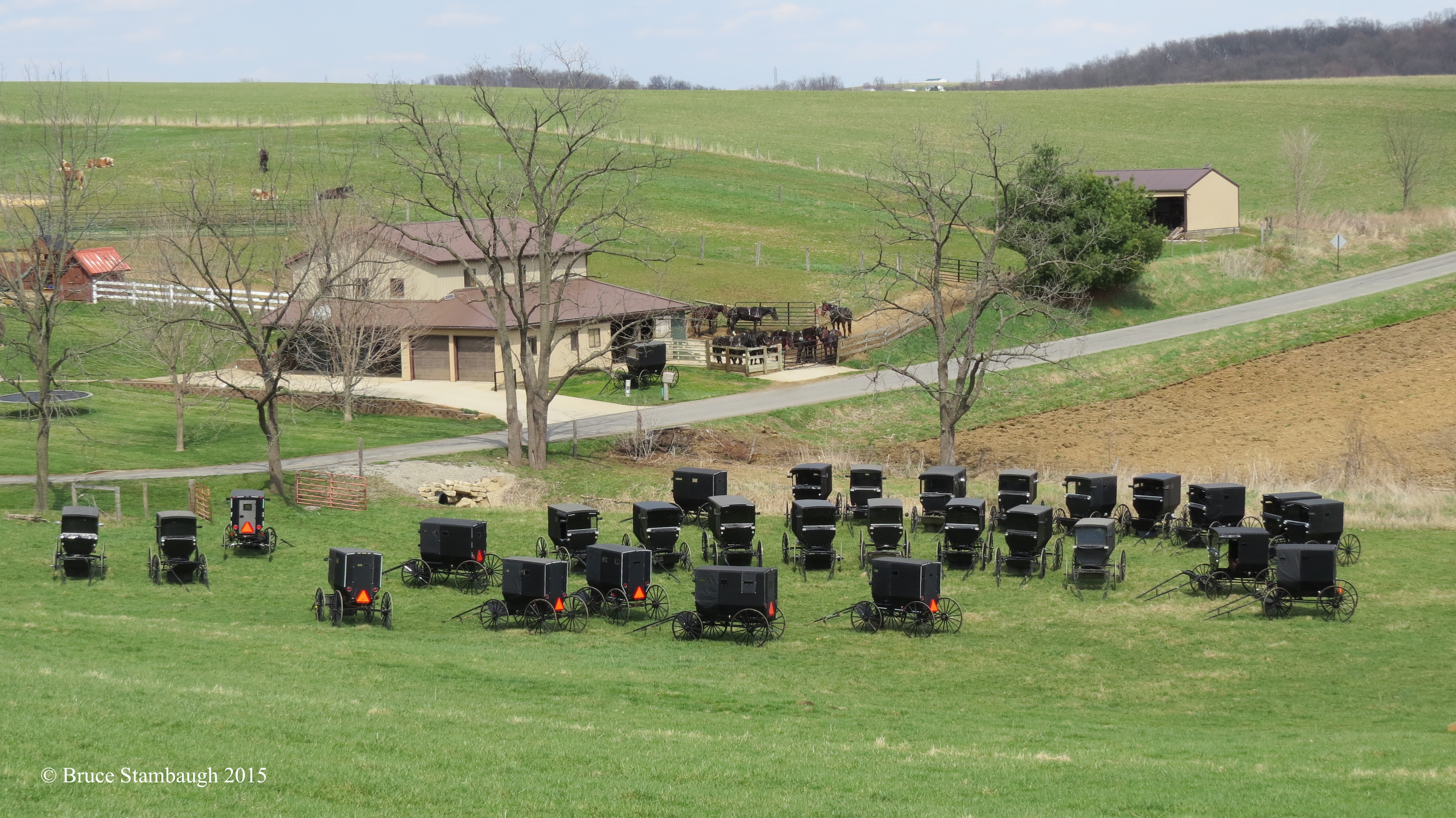
Good Friday gathering

Good Friday, Amish
Good Friday gathering.

Good Friday is a sacred day in the life of Amish. Most Amish church districts hold a long church service, usually for adults only. The focus is to remember Christ dying on the cross for humankind.

“Good Friday gathering” is my Photo of the Week.

© Bruce Stambaugh 2016

The idiosyncrasies of Daylight Saving Time

pink sunrise
Sunrise in pink.

By Bruce Stambaugh

As a kid, I loved when Daylight Saving Time (DST) arrived, mostly. At first, school days began in the dark. The upside was that we had more daylight time in the evening to play and do chores.

That seemed like a fair trade to me. Excuse the pun, but times have changed since the origin of DST. I’m not sure humanity has, however.

Believe it or not, DST originated in ancient times before clocks existed. Various civilizations adjusted their schedules, not their clocks, to the natural lengthening of warmer months.

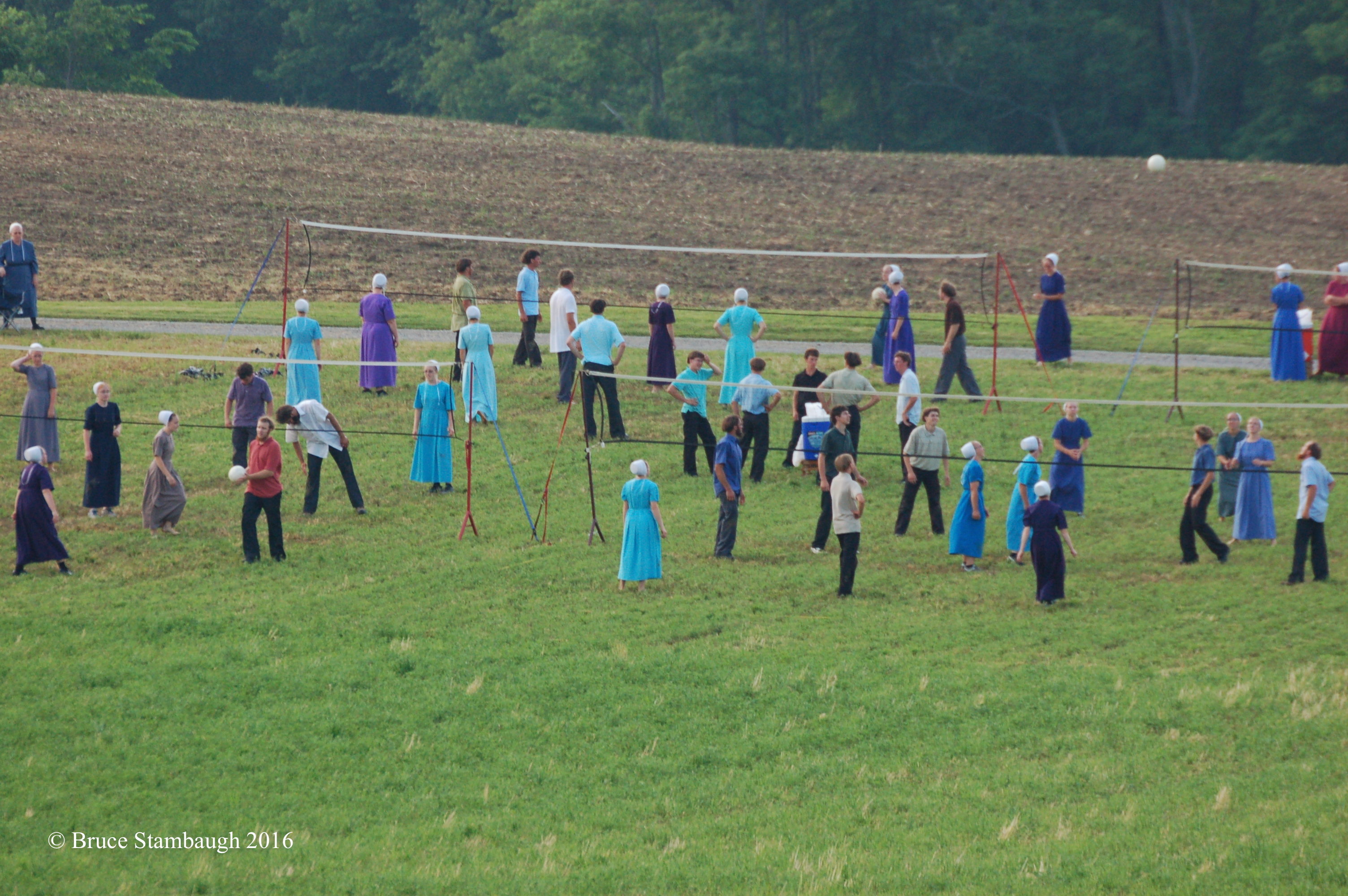
Amish volleyball
Evening recreation.
Ben Franklin’s humor accidentally credited him with the suggestion of DST. When awakened by the sun at 6 a.m. in France in 1784, Franklin jokingly suggested in an essay that the French could save a lot of money by getting up earlier in the morning. That would result in fewer candles burned in the evening.

Folks in Thunder Bay, Ontario, Canada were the first to use DST in 1908. The idea didn’t catch on until the onslaught of World War I when Germany resorted to using DST to save fuel for the war effort. Great Britain soon followed suit.

The same thing happened when the United States entered World War II. To save fuel, DST ran from April 30 to Oct. 31. In one form or another, DST has been around ever since.

Today’s use of DST in the U.S. dates to the 1973 oil crisis in the Middle East. DST now runs from the second Sunday in March and ends the first Sunday in November. Altogether, 70 countries use some form of DST.

Despite its semi-annual adjustments, folks still get confused by the change of time. A simple rule is spring forward an hour in March and fall back an hour in November. Note the cheeky references to “spring” and “fall.”

Farmers often get the blame for initiating DST. In fact, the farmers I talk to hate it, especially if they milk cows.

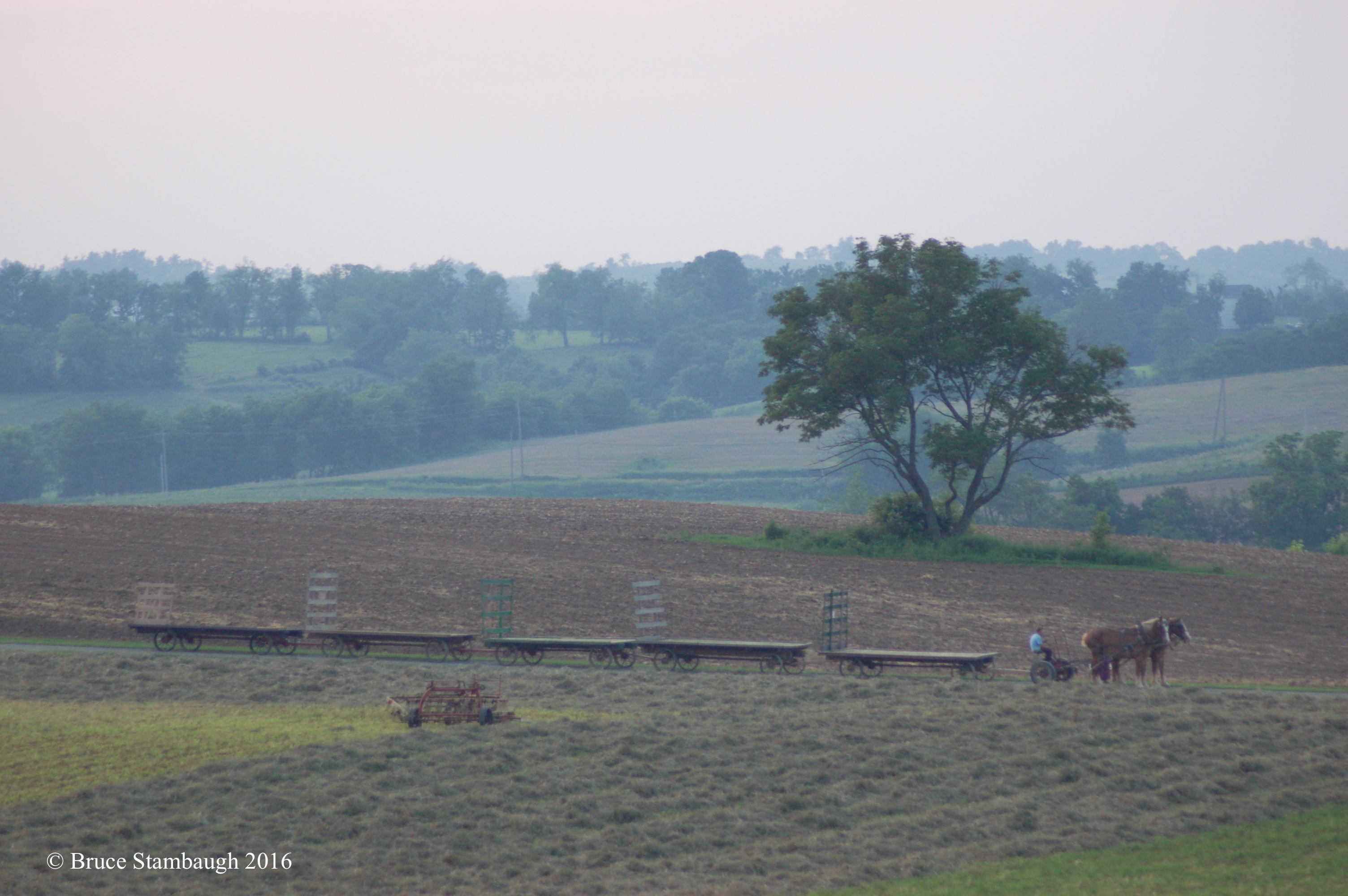
Amish farmer, hay wagons
Late evening wagon train.
When I was an elementary school principal, I often made home visits. In some Amish homes, I noticed that the household clocks remained on standard time.

Others apparently used the art of compromise. Clocks were set back a half an hour. Perhaps these methods were mild forms of protest. Whatever the reasons, people always seemed to know what time it was regardless of what the clocks said.

That’s more than others could say. This simple idea led to some chaotic timekeeping. In 1965, the state of Iowa had 23 different start and end dates for DST. Even the Twin Cities of Minneapolis and St. Paul, Min. didn’t change time equally.

To bring order to all of the chaotic clocks, Congress passed the Energy Policy Act of 2005 making DST uniform. Well, mostly. Arizona and Hawaii still don’t use DST, along with several U.S. territories.

For good or for ill, the intent of this checkered history of playing with time was to save energy. Research has shown that concept is flawed.

I can see both sides. Earlier risers would just as soon avoid manipulating the clocks twice a year. Those who desire extra playtime after work or school are happy for the extended daylight.

That remains the justification for DST. It doesn’t save time. The tactic merely adjusts the clock to accommodate more daylight for more citizens.

My less than nimble fingers protest resetting the many digital devices that don’t self-correct. The child in my heart, however, still enjoys the adjusted daylight.

kids swimming, summertime
Summertime fun.

© Bruce Stambaugh 2016

Here’s to the year of the quirky calendar

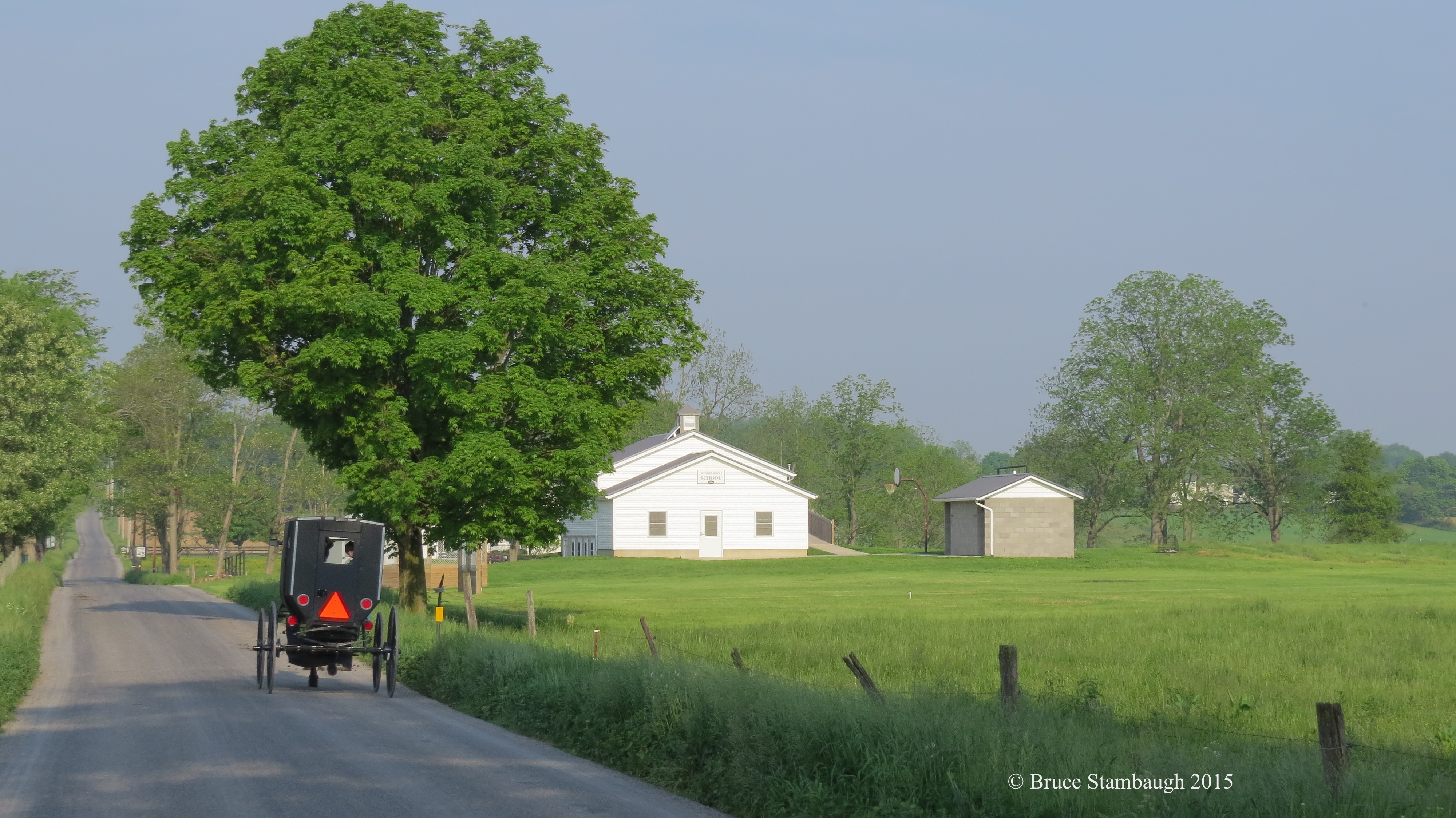
Amish country, spring, Amish buggy, Amish school
Spring in Amish country.

By Bruce Stambaugh

Being a weekly newspaper columnist, I pay attention to the calendar. I have to if I want my columns to appear in print. If I miss a deadline, well you know.

I only just recently noticed the quirkiness of the 2016 calendar. For instance, February, the shortest month, had five Mondays. If you are reading this on Feb. 29, it’s “Leap Day.” Within its 31 days, January only had four Mondays. Go figure.

That got me delving into the rest of the year. My research revealed several interesting tidbits of facts and silliness. Every month has at lease one cause, and many weeks have more than one reason to celebrate.

Digging further, I discovered a wide diversity of day designations that I never heard of. I guess I need to get out more.

January and February are history. Here’s a sampling of what’s in store for the rest of 2016. For the sake of space, I picked the most notable ones, minus the standard holidays.

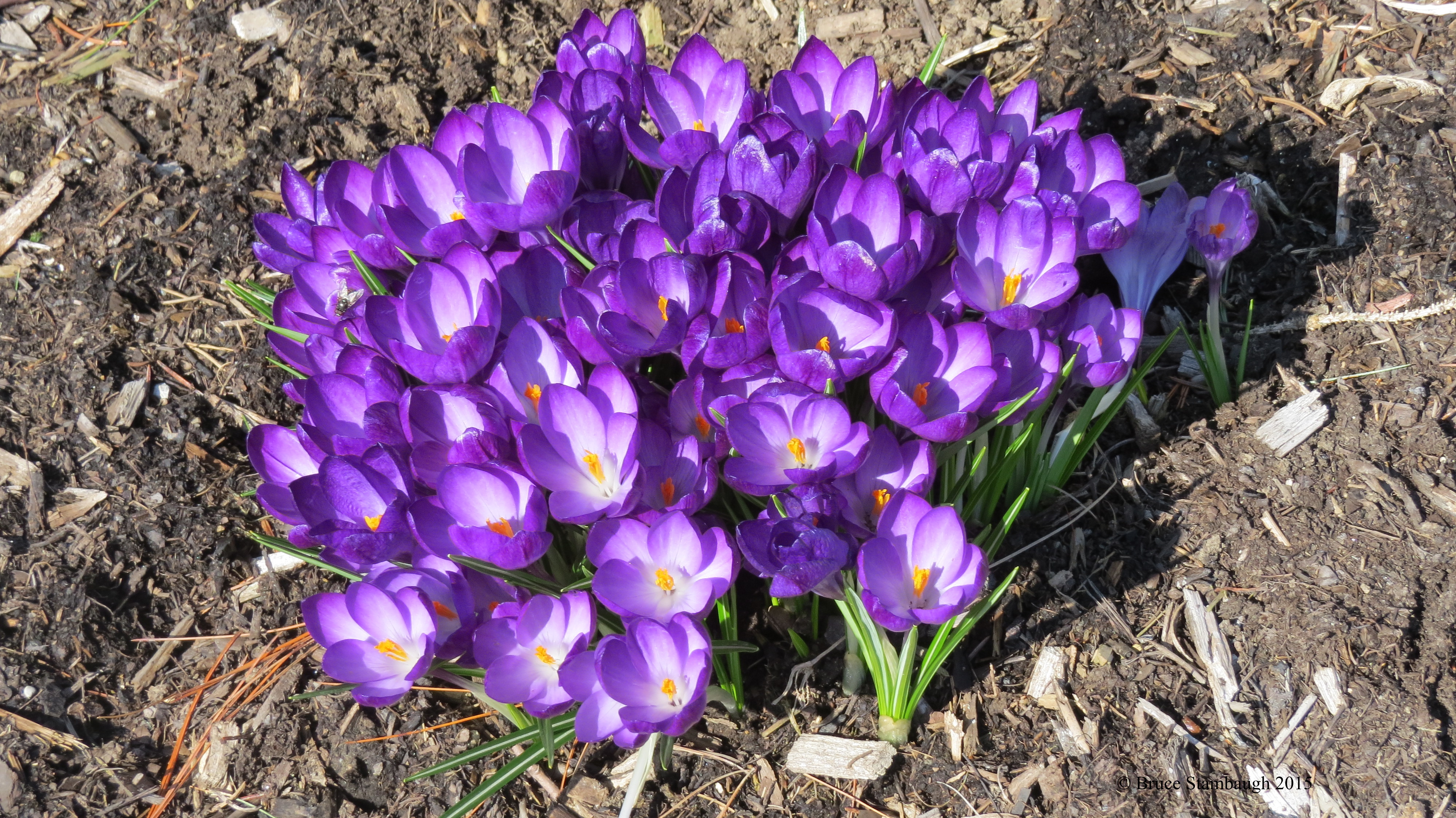
spring flowers, crocuses
Crocuses.
March brings its share of quirkiness. March 3 is “If Pets had Thumbs Day.” March 9 is “Panic Day.” Besides the “Ides of March,” March 15 is “Dumbstruck Day.” I couldn’t make this stuff up.

April is no better. By starting off with “April Fools Day,” it follows that April is “National Humor Month.” Appropriately, it’s also “Stress Awareness Month.” The first week of April is “Read a Road Map Week.” I wonder when “GPS Week” is? April 4 is “Tell a Lie Day,” followed by “Go for Broke Day” on April 5.

May is “National Bike Month” and “National Photograph Month.” Designated days include May 3, “Lumpy Rug Day;” May 11, “Eat What You Want Day,” and the only Friday the 13th of the year.
Though I love June, I’m a little confused about its designations. It is “Aquarium Month” and the first week is “Fishing Week.” Maybe I can figure that out on June 1, “Flip a Coin Day.”

keep calm sign
The sign says it all.
Surprisingly, July has only one week dedicated to a cause. Week two is “Nude Recreation Week,” which I am not advocating. I will, however, promote July as “Blueberry Month.” Besides being “Independence Day,” July 4 is “Sidewalk Egg Frying Day.”

I like August. It’s “Admit You’re Happy Month,” which goes nicely with the second week, “National Smile Week.” Appropriately, Aug. 16 is “National Tell a Joke Day.”

Just in time for football season, September is “Little League Month” as in baseball. The ninth month starts off with “Emma M. Nutt Day.” She was the very first telephone operator. You’re on your own until October.

With 18 endorsements, October is a highly regarded month. Did I mention October is “Sarcastic Month?” That must explain why Oct. 3 is “Virus Appreciation Day.”

Hold your ears in November when it’s “National Drum Month.” And is it ironic that Nov. 8 is both the “U.S. General Election” and “Dunce Day?”

That brings us to December. It seems like 2016 will end goofy, too. Take Dec. 21, the winter solstice. Besides being the year’s day with the least daylight, Dec. 21 is “Humbug Day,” “Look on the Bright Side Day,” and “National Flashlight Day.”

Say what you will, the calendar is used to promote a variety of legitimate to questionable causes and remembrances. I’m not endorsing this practice, just reporting it.

I’ll simply stick to writing my columns as the literary spirit moves, quirky days or no quirky days. Enjoy this “Leap Day.” Tomorrow is “National Pig Day.”

pileated woodpecker, shadow, winter solstice
Solstice shadow.

© Bruce Stambaugh 2016

The Blue Door

Amish private school
The blue door.

Even in a blowing snowstorm, this light blue door stood out from the blandness that surrounded it. Blue is one of the few colors permitted by the Swartzentruber Amish, the lowest order Amish. They are the plainest of The Plain People. If you didn’t know that, you might not think much about this ordinary blue door. But for the scholars and teacher of this Amish one-room school, it might be the only splash of color they see in their stark schoolyard.

“The Blue Door” is my Photo of the Week.

© Bruce Stambaugh 2016

Living the rural life and loving it

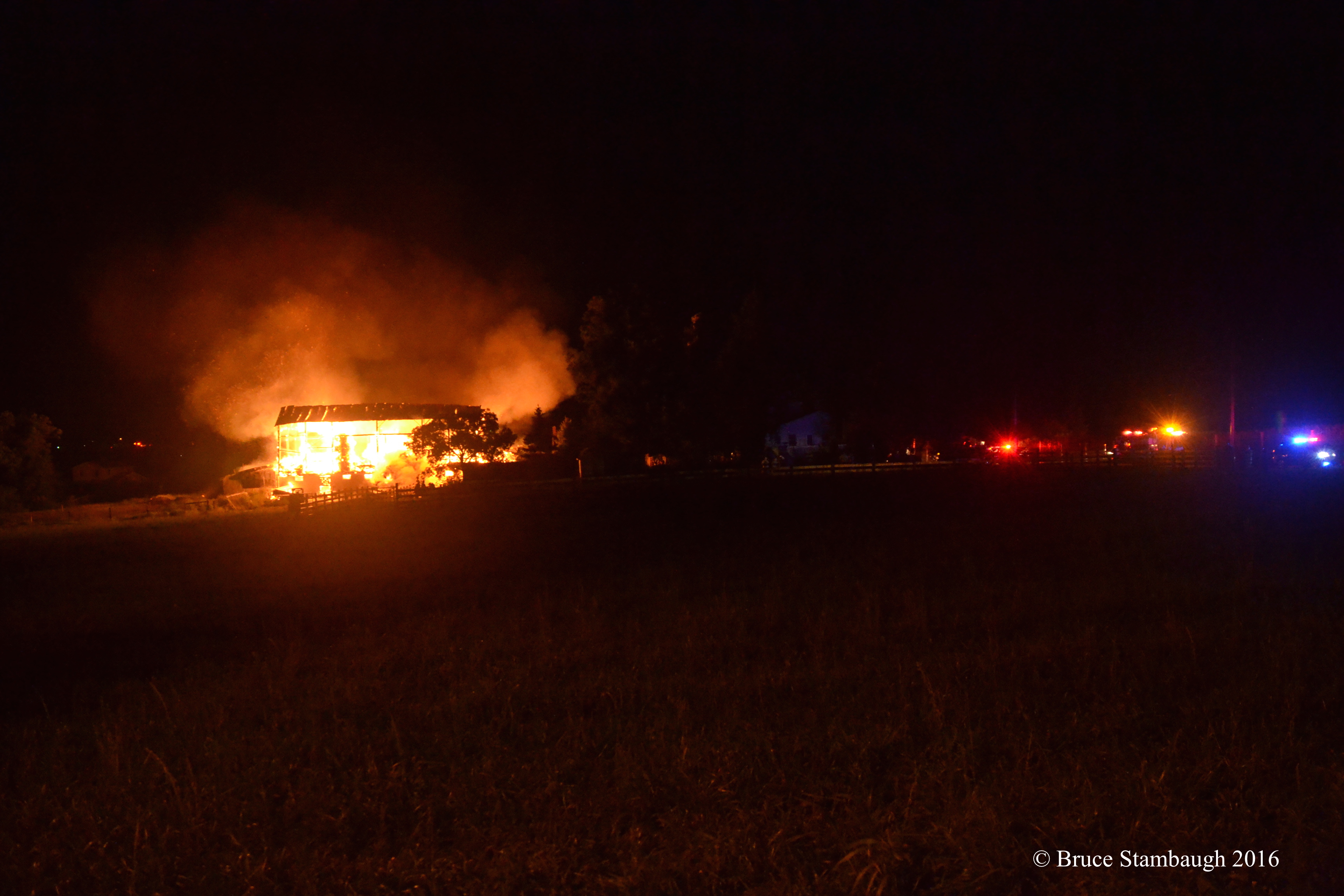
barn fire, Holmes Co. OH
Barn fire.

By Bruce Stambaugh

When fire destroyed my neighbor’s old bank barn a couple of years ago, all the firefighters could do was protect the outbuildings. The fully-involved structure burned to the ground.

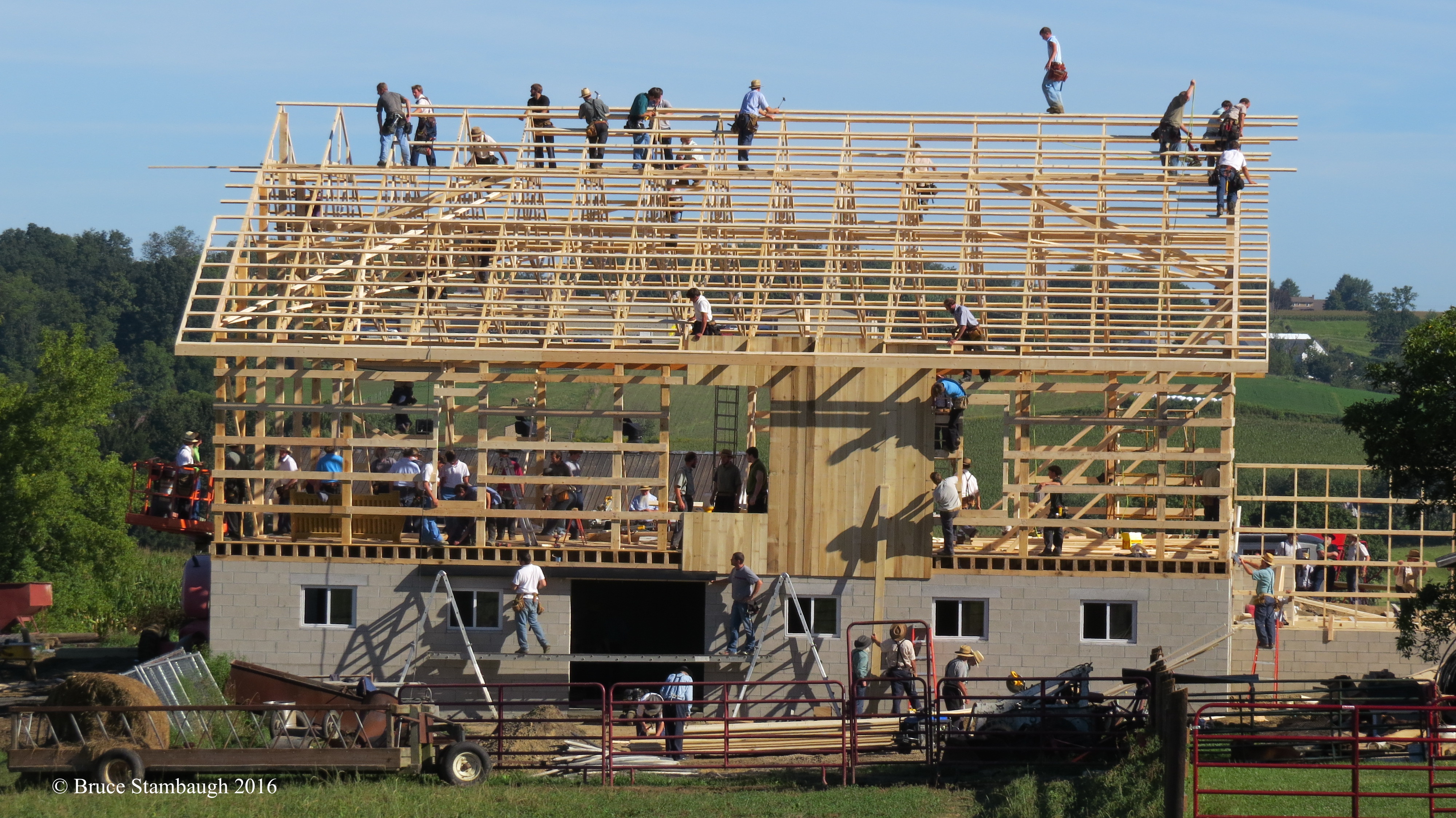
A month later, blessed insurance arrived in the form of neighbors, family, friends and church members who raised a new building in a day. They started at first light and had the barn roofed and sided by evening. It’s the way of rural life here.

Amish barn raising
Barn raising.
I’ve happily lived my adult life in one of the richest agricultural areas in Ohio. That’s a bit ironic for someone born in a city and raised in a suburb.

My parents influenced my appreciation for the agricultural lifestyle. Dad introduced his five children to farm life early on. Being an avid sportsman, Dad loved to hunt and fish.

Dad knew the importance of building trust with the farmers to be allowed to tromp around their property. Dad listened to their stories, and they returned the favor.

sunset, Holmes Co. OH
Rural sunset.
Mom influenced me positively on farming, too. An accomplished artist, she painted lovely landscapes of farmsteads and their surroundings. The scenes Mom created closely resemble the ones I see every day.

My wife and I built our first house on a bluff overlooking two tributaries of the mighty Killbuck. Manicured farm fields fanned out to the west from our front yard. Thick stands of mixed hardwoods that glowed in the fall filled the surrounding, steep hillsides.

When Farmer Bob came around on a hot summer’s day fixing barbed wire fence rows, I ran out with a cold, clear glass of water just for a chance to talk to him. When it was time to till the garden, Farmer Jim came up from his field to do the job. I offered to pay, but he just winked and smiled and advised using Triple 12 fertilizer.

When we moved northeast 16 miles 36 years ago, we hoped to experience the same interactions. We did that and more.

Amish manure spreader
Spreading sunshine.
When I asked Farmer Levi for some manure for the garden, he delivered it on a bitterly cold February morning. By the time I had dressed to go out to help him, a steaming pile of natural fertilizer already sat atop the snow.

I thanked Levi and asked him how much I owed him for his trouble.

“Nothing,” he said. “I don’t have anything in it.”

That earthy attitude is only one of the reasons I’m wedded to this charming, inviting agricultural community. There are many others.

produce auction, Holmes Co. OH
Produce auction.
No one would ever mistake me for a farmer. Yet, I feel right at home whether in milking parlors, bank barns, farmhouses or pastures.

For more than four decades I have admired families and circles of friends gathering crops, and sharing equipment and smiles. They work long and hard in all kinds of weather for narrow profit margins.

Farming is no longer the dominant occupation it once was here. Less than 10 percent of the Amish farm today. The recent uptick of local produce truck patches has helped continue the family agricultural tradition. I’m glad they have produce stands and auctions to turn all their efforts into cash.

As I photograph sunrises on early chilly mornings or sunsets on sweltering evenings, my mind wanders to my mother and father. I’m forever thankful they taught me to appreciate the land and the good folks who cultivate it.

Rural living has more than made its mark on me. It has wholly and wonderfully enriched my life.

sunset, Ohio's Amish country
September sunset.

© Bruce Stambaugh 2016

Bay Photos by Donna

Wildlife Photos From The Chesapeake Bay Region

ROAD TO NARA

Culture and Communities at the Heart Of India

K Hertzler Art

Artist and nature journalist in the Shenandoah Valley of Virginia.

Maria Vincent Robinson

Photographer Of Life and moments

Gabriele Romano

Personal Blog

Jennifer Murch

Art is the only way to run away without leaving home. -Twyla Tharp

Roadkill Crossing

Writing generated from the rural life

ANJOLI ROY

writer. teacher. podcast cohost.

Casa Alterna

El amor cruza fronteras / Love crosses borders