The unforeseen rewards of sleeping in

Amish homes
Pleasant morning.

By Bruce Stambaugh

I slept in. It was Saturday after all. It’s the way lots of folks begin their weekend.

For me, though, arising after 7 a.m. was abnormal even on weekends. I like to beat the sun to its dawn.

I needed the sleep after two consecutive late night outings. Now, the terms “late night” take on significant and liberal interpretation when you are a grandparent and not a teenager.

Thursday I attended another fun night in Cleveland with a good friend. I arrived extra early to avoid the guaranteed congestion since the Indians weren’t the only act in town. Sir Paul McCartney was playing next door to the Tribe, and the Browns lost another football game in front of their faithful mass of masochists.

In other words, the town was full of excited folks. Having lived and worked in the city many moons ago, I walked around the downtown area a bit to kill time and to view the remade public square. I was impressed with the space and the all-around cleanliness of the place.

Downtown Cleveland
Fun in Cleveland.
People sat at street side tables in front of restaurants enjoying the cuisine, drinks, and one another. I found the corner where three decades ago I had crossed the street with 30 first and second graders and their teacher. A religious street barker with hand-printed signs and tracts stopped his doomsday bellowing and moseyed up to me. He quietly asked me if the children were Pilgrims. I stoically replied that they were Amish, and followed the class across the intersection.

I spent a marvelous evening at the ballpark with my friend Rob. Happily, it was another last at-bat win for the Indians.

Elvis, Mark Lonsinger, Millersburg OH
Elvis.
Friday evening was just as much fun. My buddy Tim and I went to hear our friend Elvis perform his last gig for the summer in Millersburg. We weren’t disappointed and met lots of other friendly fans.

Both nights I was up way past my bedtime. So I wasn’t surprised that I had slept through sunrise on Saturday. I needed the rest.

Well behind my usual start time, I wanted to get my walk in before the late summer Saturday warmed too much. I discovered that being tardy had its enjoyable rewards.

I usually walk uninterrupted. Not this day.

morning walk
Where I walk.
Good neighbor Mary was already weeding her roadside flowerbeds. We chatted a while as Baltimore Orioles chased one another in the grove of trees at the south edge of my property. Their brilliant orange blazed neon in the sharp-slanting morning light.

An Eastern Phoebe called from a cluster of hardwoods just as I ran into Brian, another neighbor. We talked about his work, the warm weather, and the exhilaration of yet another fantastic Indians comeback victory.

I turned the corner and met my next-door neighbor, Trish, who was in the home stretch of her morning walk. I didn’t delay her long.

Girls in cerulean dresses pedaling bicycles and families in jet-black buggies silently greeted me with head nods and quick waves of hands. It felt good to be alive.

On the return trip to home, another young neighbor caught up with me on his four-wheeler. He was out scouting hunting spots with the season about to begin. A mourning dove sat atop a snag of a dying ash tree, perhaps eavesdropping on Tyler’s hunting secrets.
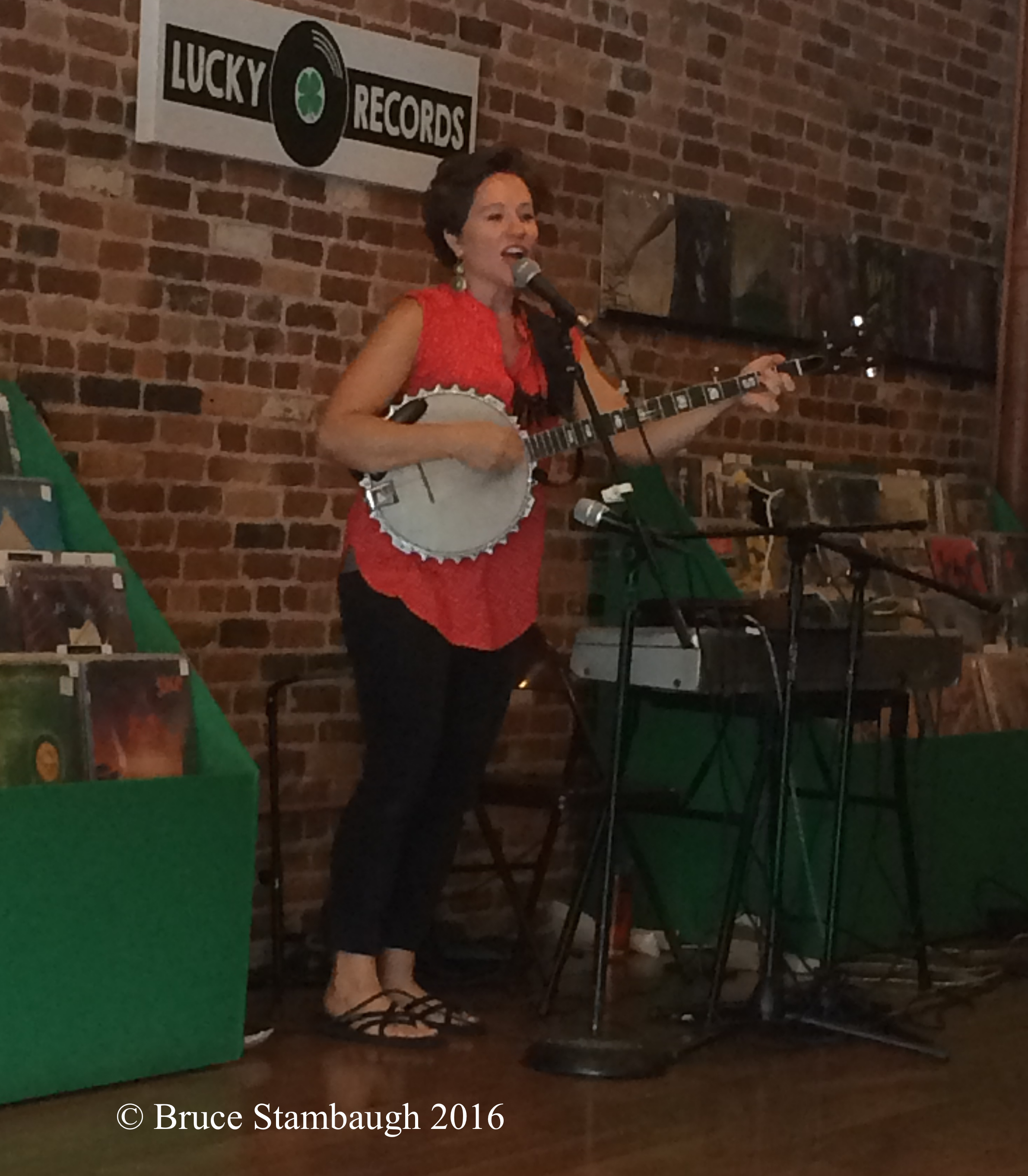
Annie Yoder
Annie.
I floated with elation the short distance remaining to my house. I was that invigorated by the gorgeous morning, the multitude of spontaneous interpersonal connections I had had, all after two enjoyable evenings with friends.

In the afternoon, I drove to Wooster to celebrate with my friend Annie on the release of her new album “Thousand.” True to form, she belted it out to the delight of all who attended.

Maybe I need to sleep in more often.

© Bruce Stambaugh 2016
Sights, sounds say August is waning

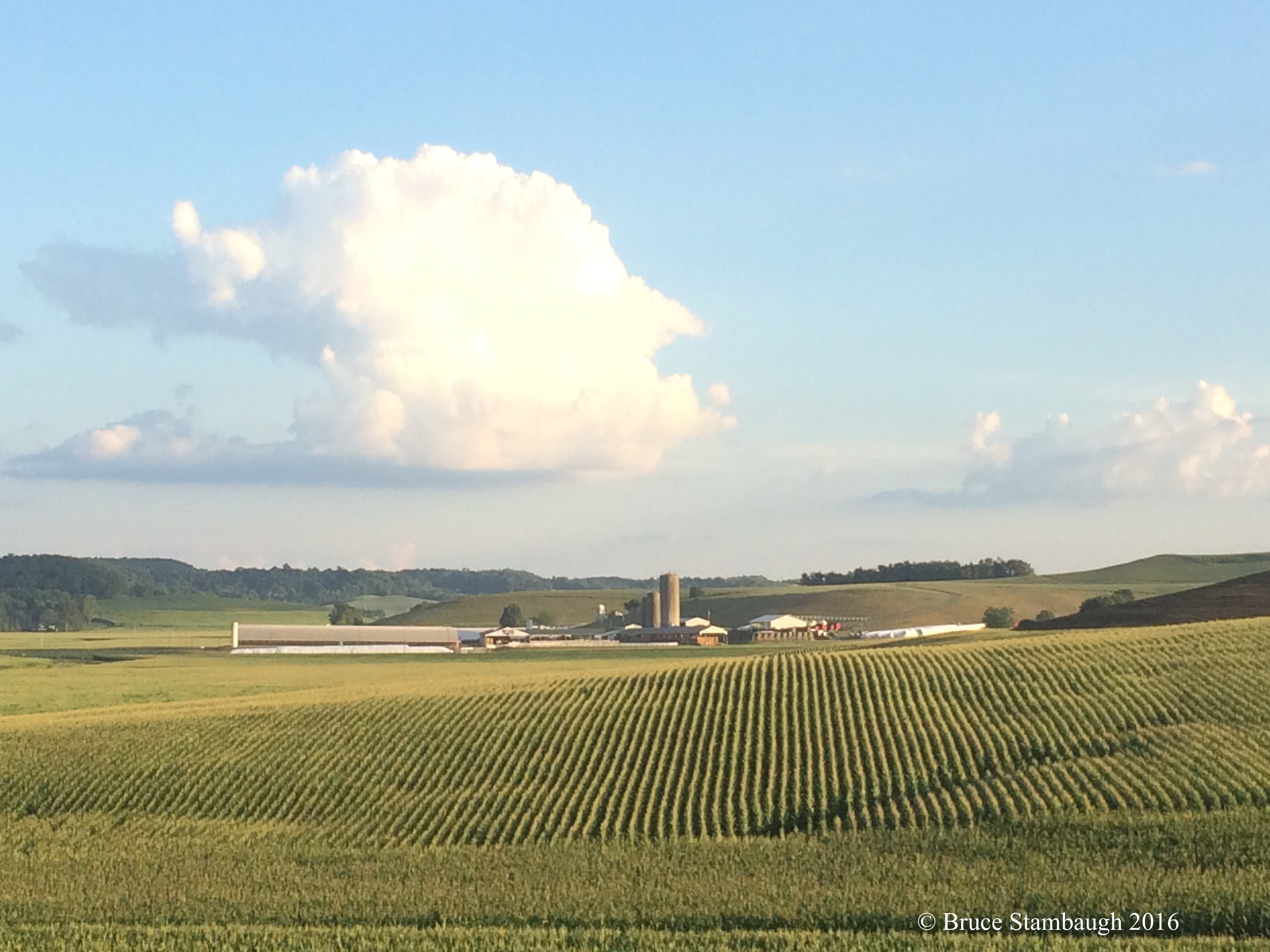
field corn
Rows and rows.

By Bruce Stambaugh

I don’t need a calendar to know we’ve past August’s midpoint. The sights and sounds, signs and symptoms abound.

Day by day, the sun rises brilliant and bold closer to the center of the horizon. Ghostly layers of morning fog drift above row after row of tan tasseled field corn, the stalks stunted by the parching summer heat and subpar precipitation.

Teachers’ cars already sit early and stay late in school parking lots while their masters slave away in the sweltering classrooms on their own time, already preparing for the year ahead. Mothers, brothers, cousins, nieces, and nephews accompany the fortunate ones, cutting out letters for holiday bulletin boards or hanging artwork to brighten the sterile schoolroom.

Workdays and evenings repeat the same preparations at Amish parochial schools. Schoolyards get mowed, windows washed, desks and books readied, backstops repaired, all to ensure everything is a go for the teachers and scholars on day one.

The busy buzz of back to school sales replaced the monotonous cicada chorus. Youngsters were glad for both.

The Holmes County Fair is over, this year celebrating not just another successful week, but its new digs. Farmers secretly wish the county commissioners would move up the start of the fair by a month just to get the rain when it’s needed the most. It poured right on schedule.

Multi-shades of brown paint the landscape. Flowers, well watered in the morning, wilt by afternoon.

Applesauce, sweet corn, and tomatoes are canned and frozen within days of one another. There is no rest for the gardeners, chefs, and lovers of all things natural, homegrown, and home-cooked. Succotash in January is the plan.

Orange barrels multiply overnight. Everyone’s pace quickens, except in construction zones. Time is fleeting, but we can neither increase nor decrease its speed.

At night, windows are thrown open even in homes with air conditioning. The concerts of the katydids and crickets are the reward.

The Perseid meteor showers, even more spectacular this year than most, are waning, along with the lightning bugs. Nature’s fireworks announce autumn’s awakening like an opened wedding invitation.

The boys of summer are sorting themselves out in some divisions, and bunching up in others. It’s marvelous to see the Cleveland Indians giving it ago, and those annoying Yankees not so much.

Footballers, pro, college, and high school, practice in the heat. Come playoffs, you can see the quarterback’s breath bark out the plays, we’re that close to the cold.

This year the Olympics caught the tail of summer’s dog days if one cared to watch. I chose to view the evening sky’s gold, silver, and bronze as the insects sang.

American Goldfinches, some of the last birds to incubate, escort their young to the feeders. Their thistledown nests will soon weather away in the forsythias.

August sunsets try hard to outdo the sunrises. Often the orange ball simply slinks out of sight, leaving only contrails glowing in the west.

From month’s beginning to end, nighttime quickens, too, and we wonder where both August and the summer went. They’re still here, just in shorter increments.

Despite the mini-drought, a rainbow of fruits and vegetables color local produce stands. Yellow, gold, crimson, and purple early blooming mums clash with the ubiquitous Bubblegum petunias. No one complains.

Wildfires burn out west, the result of global weirding and human intrusion on wildlife habitat. Like the drought, the fires will end though the intrusive expansions will not.

As August fades, life’s steady heartbeat thumbs its way into September. Are you ready?

Olympic sunset
Gold, silver, and bronze.

© Bruce Stambaugh 2016

Signs of change

Amish farmer
Signs of change.

There is no greater visible realization of change in the Amish culture than on the farm, at least for the mainline Old Order Amish. Mechanization is the most obvious.

The grain harvest, wheat, oats, and corn, required manpower. Community circles were formed to help with bringing in the crops. The men and boys went from one farm to another until everyone’s harvests were completed. This happened over a period of weeks.

Because agriculture is no longer the number one source of income for most Amish families, the rules have changed to make the harvest more efficient, requiring fewer sets of hands. The majority of Amish men now work in shops, either on their own property or away from home. Or they work on construction crews, and in local businesses. To make it easier for those still engaged in farming, which is less than 10% of the population, motorized equipment like this Bobcat are permitted to assist the harvesting process.

In this case, the farmer lifted the large round bales of straw onto the horse-drawn wagon guided by his younger brothers. Previously, several farmers lifted rectangular hay bales onto the wagon, and then unloaded them into the barn, also by hand. The workhorses are essential to keeping the Amish farm Amish. They are the tie that binds the Amish to the land.

It may seem hypocritical to some, but to the Amish, it’s simply a way to keep the agricultural lifestyle. Change happens, and I suppose this young Amish farmer is glad it does.

“Signs of change” is my Photo of the Week.

© Bruce Stambaugh 2016

The joys of a perfect midsummer day

oat shocks, Amish farm
Field soldiers.

By Bruce Stambaugh

The day began as another sleepy sonnet in a series of hot, muggy, midsummer dog days. It turned out to be an inspirational novella.

In keeping with my fair weather routine, I took my morning stroll. I typically immerse myself in the sights, sounds, and morning fragrances of field corn and fresh laundry.

Not this day. The air was thick, moist enough to ring it out and still be left holding a damp rag. Breathing even became a chore.

Already sweated, I dove into necessary yard work back home. I wanted to complete it before the elements became even more oppressive.

I donned my trusty work gloves. Out came the noxious poison ivy. Out went the volunteer walnut and oak seedlings sprouted from the nuts that the squirrels and blue jays had planted in the flowerbeds last fall. They conveniently abandoned them for my birdfeeders.

This slideshow requires JavaScript.

Even with little rain, the shrubs seemed to have grown a foot while we were away. I grabbed the trimmer and snipped the wiry branches.

After cleaning up, I took breakfast in the shade of the back porch. With the high humidity, the chances of rain looked promising.

I checked the progress of the road repair in our rural township, the prettiest in the state. No, I’m not up for reelection. As a trustee, I just enjoy inspecting the roads, conversing with folks, and breathing in the beauty of the picturesque landscape.

My camera is my faithful sidekick on my rounds. I’m mindful of respecting Amish ways when it comes to photography. I focus on the agricultural artistry. The golds and greens are at their peak of brilliance even in this mini-drought.

While away, the neighbor mowed the adjacent alfalfa much to the delight of the swooping swallows and the purple martins. They harvested insects in concentric circles around the sturdy workhorses and their mowing master.

To the east, thunderstorms built fast and furious, their anvil tops reaching 60,000 feet. Our meteorological ingredients fed the liquid fortunes of folks 100 miles away.

In the afternoon heat, I turned to writing in the comfortable air conditioning. I confess to guiltlessly adding my two cents worth to global warming.

Neva worked her magic with dinner. We enjoyed a summer feast of fresh veggies and fruit washed down with freshly brewed garden mint tea.

As the storms moved further east, the air here cleared and cooled, if only because the dew point and humidity took a temporary break. Feeling refreshed, we walked around the parched flower gardens and discovered the season’s first monarch caterpillars.

It was about that time that a friend rode by on his bicycle and waved hello. We returned the gesture and moseyed into the house. We weren’t in long when the doorbell rang. It was Mark. He had turned around, and come for a spontaneous visit, the best kind.

Mark was a former student of mine. With more tea poured, we began a marvelous time of reminiscing on the back porch. He filled us in on his family and former classmates. We happily learned that he is now a grandfather.

We cherished his presence and friendly update, despite the unintentional reminder of how old my wife and I are. It was one of the main perks of living and working in the same community over time.

Rank and location have their privileges. So does having a view to the west. A stunning sunset proved a fitting end to a perfect summer’s day.

sunset, Holmes County OH
Stunning sunset.

© Bruce Stambaugh 2016
Backlit Cloud

windmill, clouds at sunset
Backlit Cloud.

My wife and I are fortunate to have the view to the west that we do. Farm fields flow down and away from our home until they meet a steep hill that juts into the western horizon. A windmill that supplies water for our Amish neighbors serves as the centerpiece for the view.

We have lived here for 37 years, and each evening brings a new look west. I recently found this golden glowing backlit cloud hovering beyond the windmill.

“Backlit Cloud” is my Photo of the Week.

© Bruce Stambaugh 2016

Guarding the oats

wildflowers, oat shocks
Guarding the oats.

Oats shocks standing at attention in a field during the dog days of summer is a familiar scene in Holmes Co., Ohio. When the border between them and the road holds a row of summer’s wildflowers like chicory and Queen Anne’s Lace, the landscape is all the prettier.

“Guarding the oats” is my Photo of the Week.

© Bruce Stambaugh 2016

Just Married

Amish wedding, Amish buggy
Just Married.

Just like their “English” counterparts, newlywed Amish couples often have their getaway vehicles festooned with “Just Married” signs, streamers, and balloons. The obvious difference is, however, that it’s a horse-drawn buggy that is decorated instead of a car, limo, or pickup truck.

Most Old Order Amish weddings are held on Thursdays in the spring and summer after the planting is completed. Fall weddings usually occur after the harvest season. However, with so many young couples in the community wanting to marry, there just aren’t enough Thursdays to go around. Alternatives are Tuesdays, Wednesdays, Fridays, and even Saturdays, which is the day for most New Order weddings.

Weddings are considered worship services by the Amish. They usually last three hours, followed by a full course meal attended by hundreds of guests and family members. Some churches continue the tradition of also hosting an evening meal for those attending the wedding.

“Just Married” in my Photo of the Week.

© Bruce Stambaugh 2016

Sheep School

sheep, Amish school
Sheep School.

The Amish are as thrifty and efficient as they come. While school is out for the summer, the Amish often use livestock to graze in the school yard. Doing so saves time and effort in having to mow the unused grassy area around the school. Where children play at recess for eight months, sheep now keep the grass naturally trimmed.

“Sheep School” is my Photo of the Week.

© Bruce Stambaugh 2016

Wheat Shocks

wheat shocks, Amish farming
Wheat shocks

Fields of golden shocks of wheat create the iconic Amish country scene around this time of year. Like so many soldiers, they stand at attention air-drying in the sun. Soon armies of oat shocks will reinforce their numbers. If the weather cooperates, however, the wheat shocks are usually collected before the oats are cut and stacked to dry in the sun.

A machine cuts the stocks of grain into bundles. Men, women, boys and girls follow along and set up the shocks with the last sheaf placed on top to protect the heads of grain from the elements and birds.

“Wheat Shocks” is my Photo of the Week.

© Bruce Stambaugh 2016

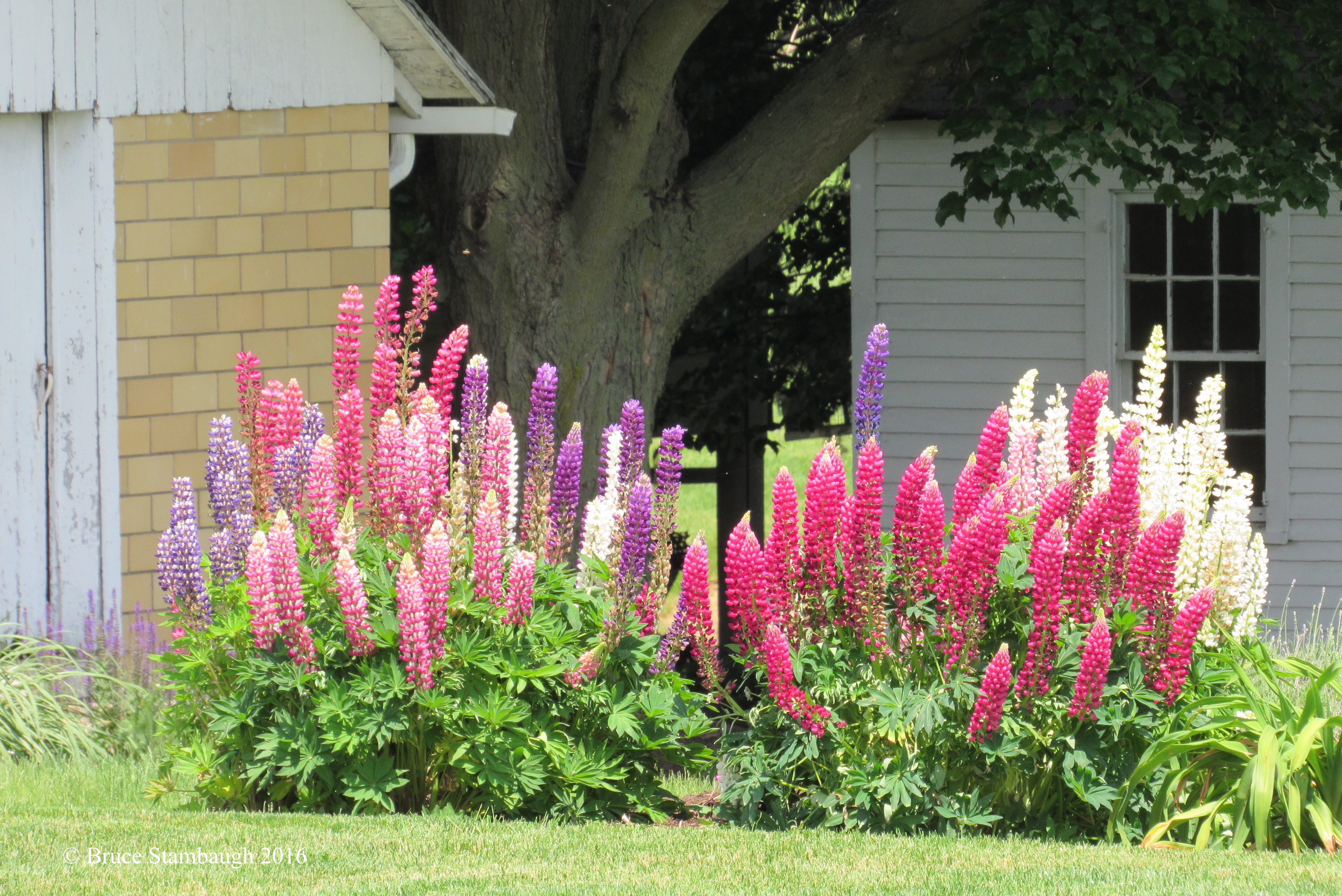
Floral Rainbow

lupines, Amish farm
Floral Rainbow.

Being surprised is just one of the benefits of photography. While on a field trip to photograph young barn owls, I spotted these beauties in one of the flowerbeds of the Amish farm where the owls were. The afternoon sun bathed these lupines, enriching an already colorful floral rainbow.

“Floral Rainbow ” is my photo of the week.

© Bruce Stambaugh 2016

Bay Photos by Donna

Wildlife Photos From The Chesapeake Bay Region

ROAD TO NARA

Culture and Communities at the Heart Of India

K Hertzler Art

Artist and nature journalist in the Shenandoah Valley of Virginia.

Maria Vincent Robinson

Photographer Of Life and moments

Gabriele Romano

Personal Blog

Jennifer Murch

Art is the only way to run away without leaving home. -Twyla Tharp

Roadkill Crossing

Writing generated from the rural life

ANJOLI ROY

writer. teacher. podcast cohost.

Casa Alterna

El amor cruza fronteras / Love crosses borders