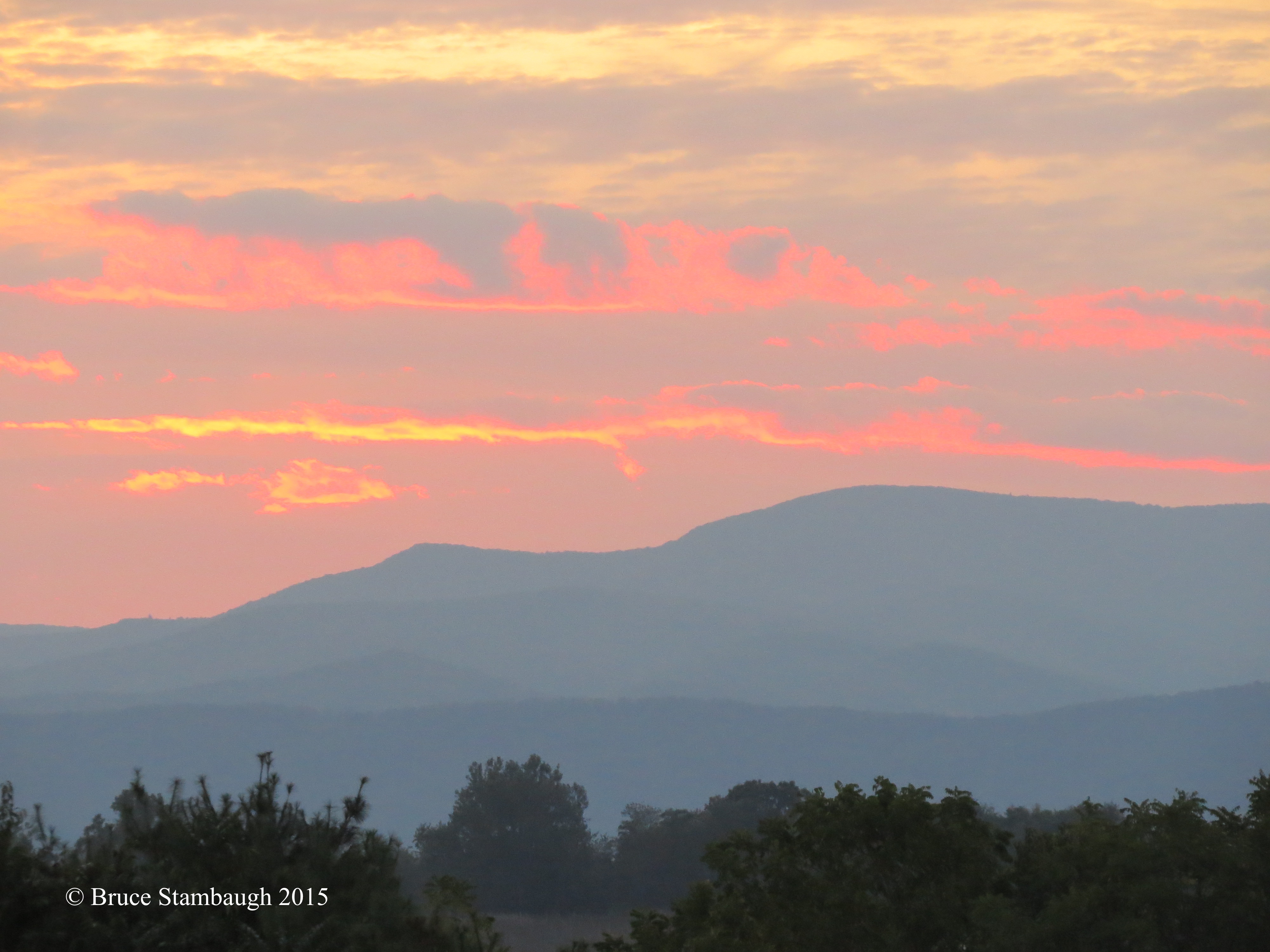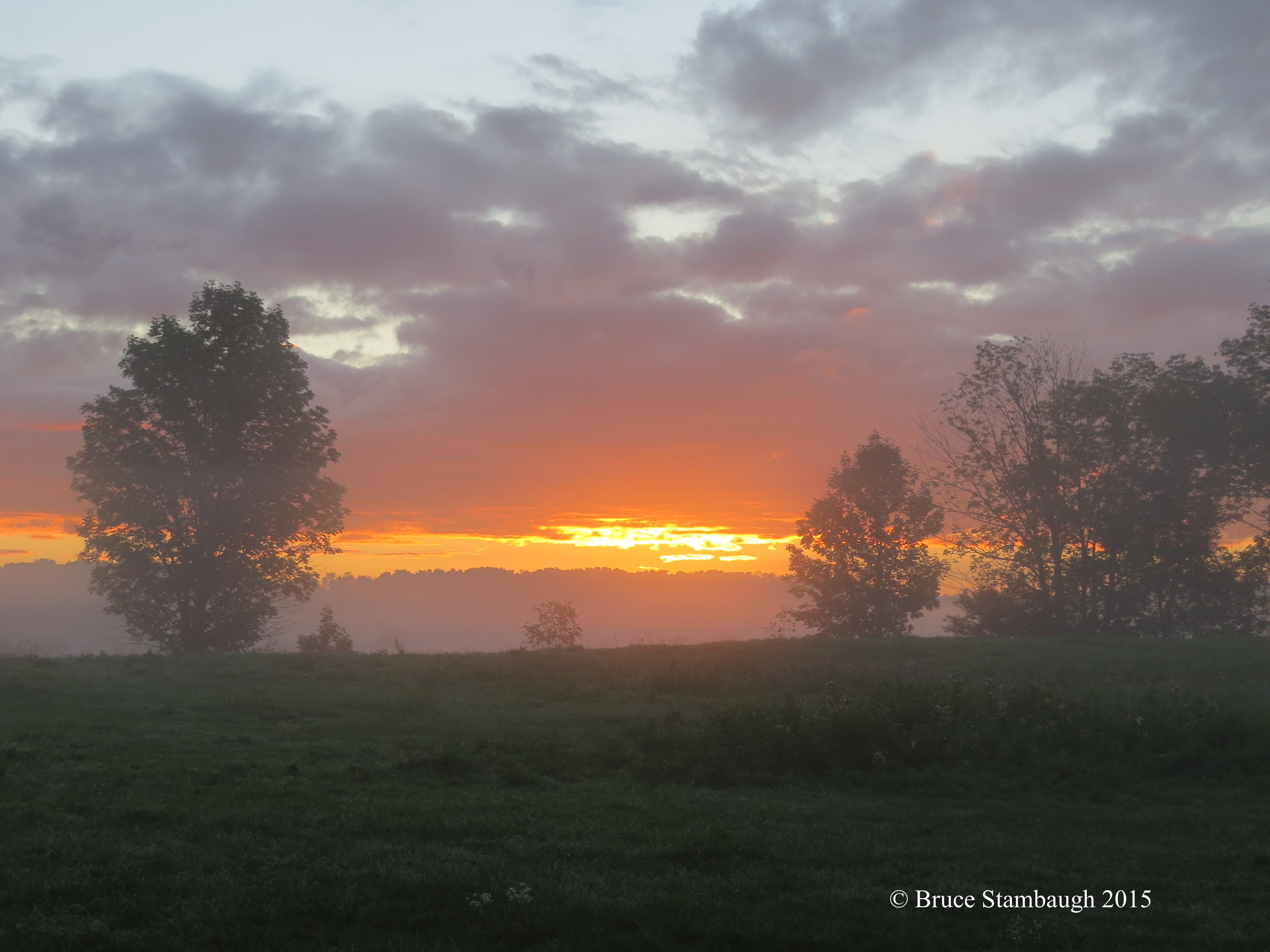
When I awoke just before dawn a few days ago, I thought there would be no chance whatsoever for a lovely sunrise. Fog surrounded us. Nevertheless, I kept my eye on the east as I prepared for the day. I wasn’t disappointed. In a matter of minutes, a breeze stirred, the atmosphere warmed, and the fog rapidly dissipated.
I could see the sun about to break through. I hustled across the road to the neighbors to catch a glimpse of another inspiring sunrise in Ohio’s Amish country.
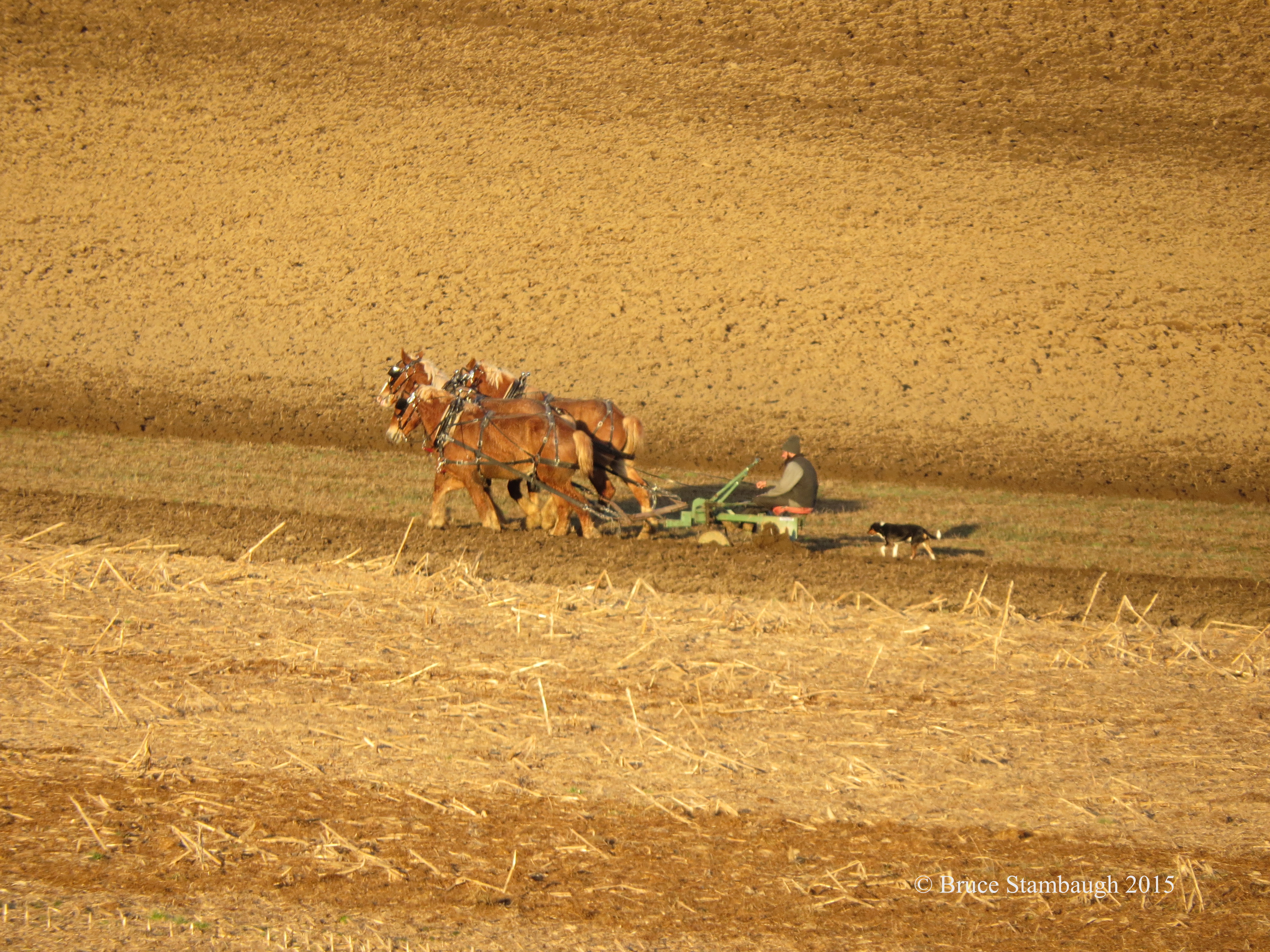
I stood and talked with the farmer as he rested his team of horses beneath a tree along the road. For the end of May, the morning was muggy. Both he and the horses needed a break from their bucolic labor.
The horses stamped and snorted and swished their tails to discourage any bothersome insects. The conversation with the Amish gentlemen turned toward appreciation and care for the environment.
Across the weedy fencerow, we lapsed into a philosophical discussion on how we all are rooted in the soil regardless of where we live. The setting was perfect for such a stirring chat.
The musky smell of the sweated horses, the pungent fragrance of fresh earth turned, the sprouting leaves of the black walnut tree that served as our shady shelter together fueled our ideas and ideals. We were of one mind.
We concurred that it was too easy to ignore such a simple concept as caring for the good earth. We wondered if society’s reliance on modern technology and our fast-paced global order have dulled us into forgetting our roots.
He pointed out all the construction in our local area, the continued depletion of farmland and wildlife habitat. Little by little, our pastoral landscape was transitioning.
He wondered if people today understood where their food originated. Did they know all of the effort or any of the processes needed to put food on their table? Was the younger generation becoming so fixated on electronic screens to even care?
We both shook our heads in wonderment of what lay ahead, not so much for us, but for future generations. Will they get to enjoy the beauty of the natural world the way we do?
And with that, my friend encouraged his workhorses to giddy up. Soon a squadron of winged insect eaters swooped overhead, exacting an instinctive aerial harvest.
As I continued my morning walk, I mulled over the conversation. A scene from 35 years ago popped into my head. My family and I were at Old Sturbridge Village, Massachusetts. The place is a living museum where folks can go to see how rural life used to be long before the industrial revolution. Another option would be to visit Holmes County, Ohio.
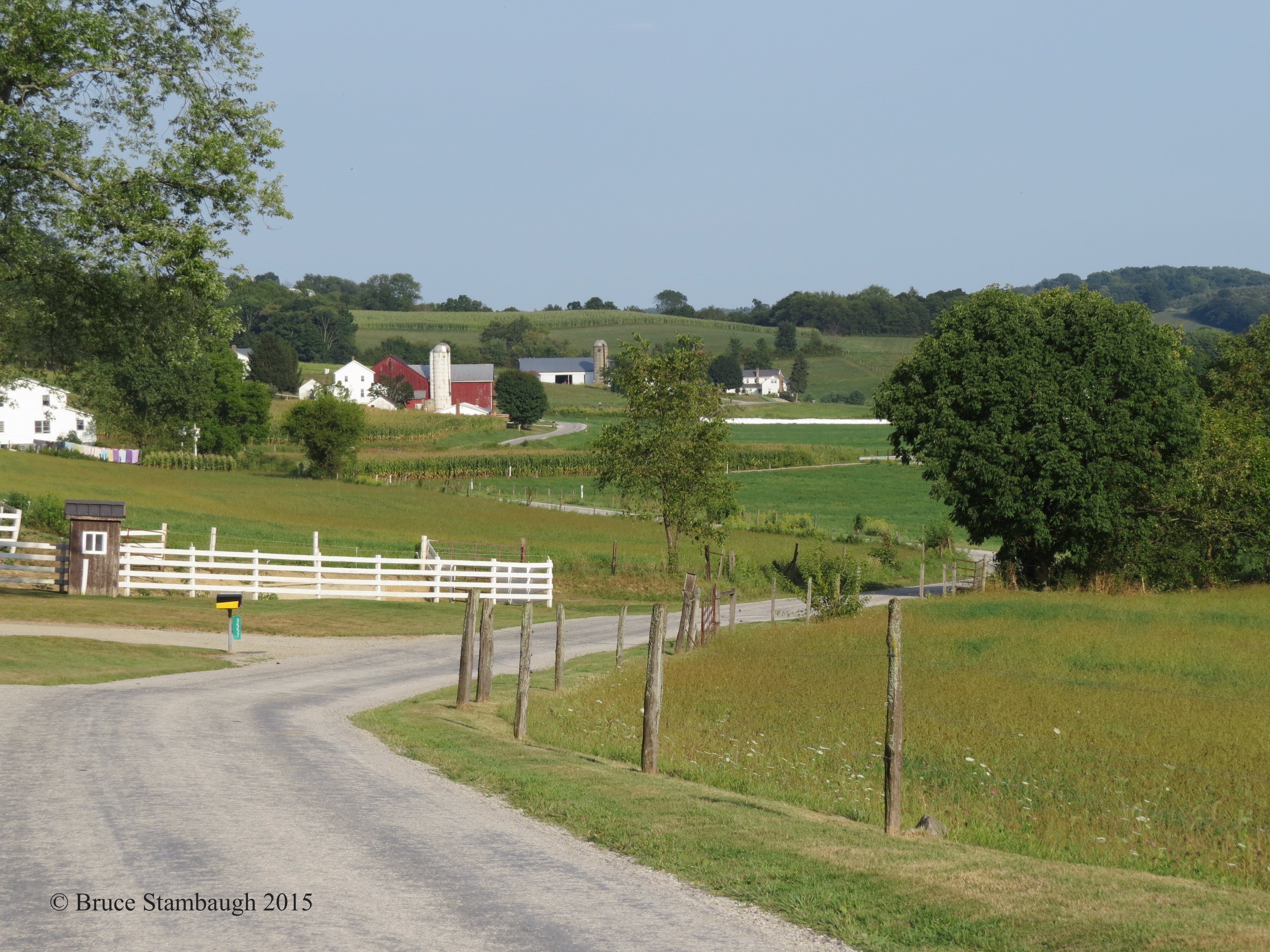
Amish farmstead.
We stood outside the dairy barn near a group of school children and their teacher, who pointed to the Holsteins.
“That’s where milk comes from,” he said.
His students were in disbelief. One even countered that milk came from the store. We walked away quietly.
The sweet-sour aroma of fermenting silage stirred my senses and brought me back to reality. That earthy smell represented the soil, the seeds, harvesting, the manpower and machinery needed to feed the cows to provide milk or meat.
That’s what being rooted to the earth does. It makes you take note and absorb and appreciate all that is around you.
The creeks and ponds, the marshes, and the mudflats are of equal import as much as the grain fields and pastures. Together they provide habitat and balance to earth’s fullness.
Rooting yourself to the soil is critical in caring for the earth no matter where we live or what our occupation. Yes, we need industry and growth to feed, clothe and house the planet’s population. We also need the earth to be healthy and respected to accomplish that goal.
If you want to feel rooted to the earth, you are welcome to walk by my neighbor’s barnyard. I’m sure neither he nor his herd will mind.
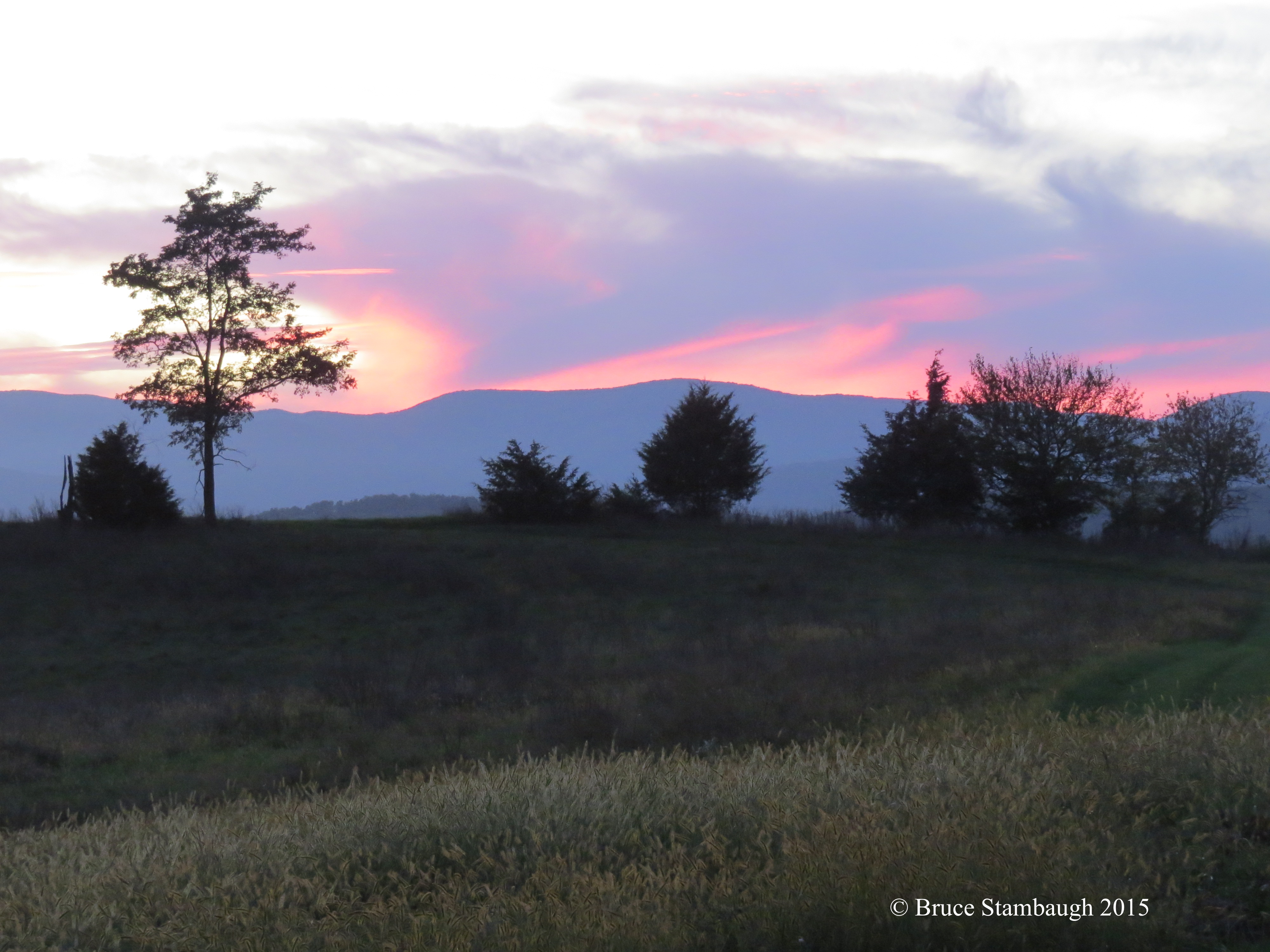
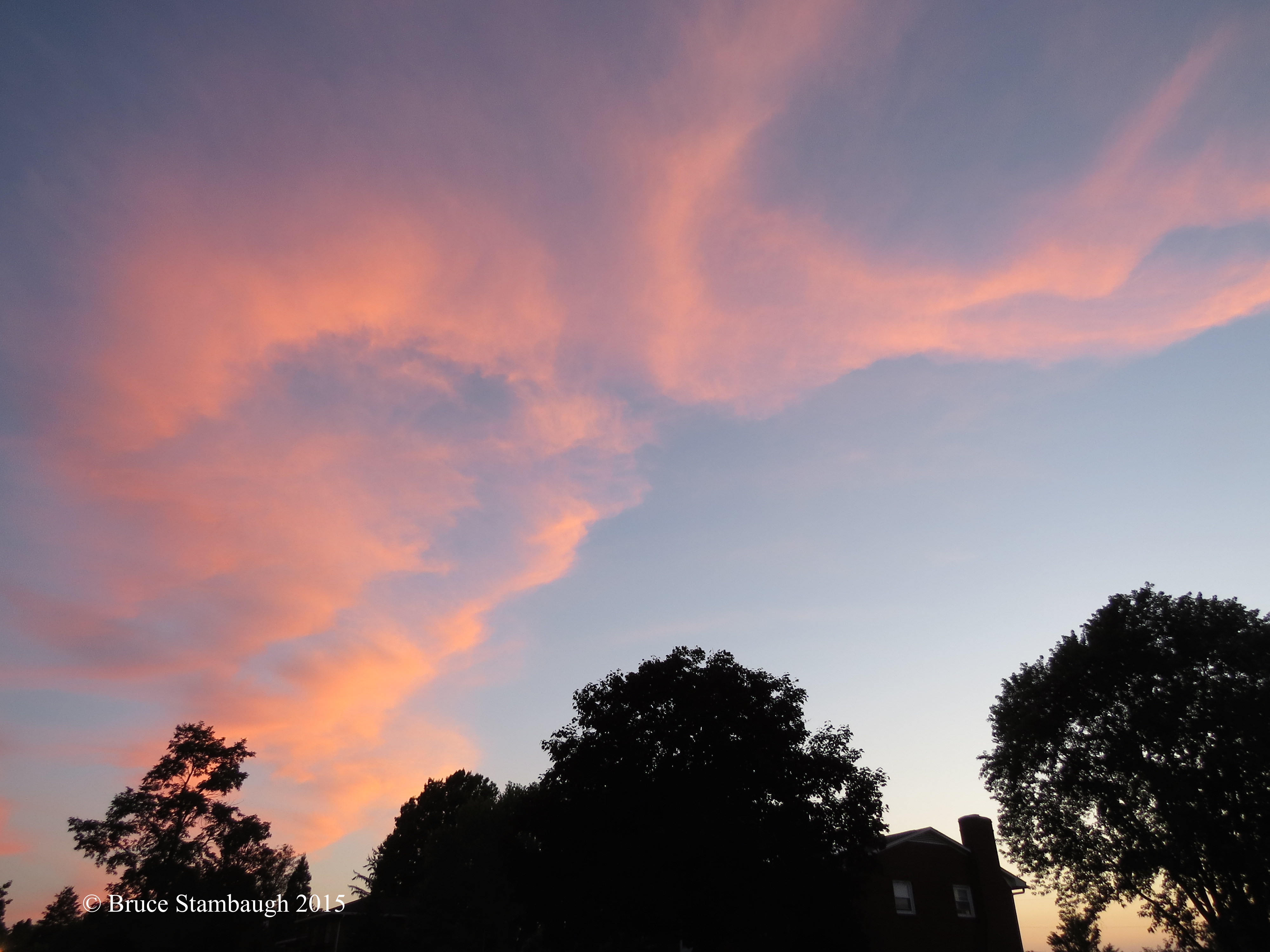
The sun always sets in the west. However, some of the best colors of a sunset occur in the other directions of the compass. This photo that I recently took in Harrisonburg, VA is an example of that. The golden glow behind the Allegheny Mountains to the west created magnificent colors elsewhere. The high, wispy clouds in the southern sky danced with brilliance. The trees and house in the foreground accentuated the variable pink and blue evening sky.
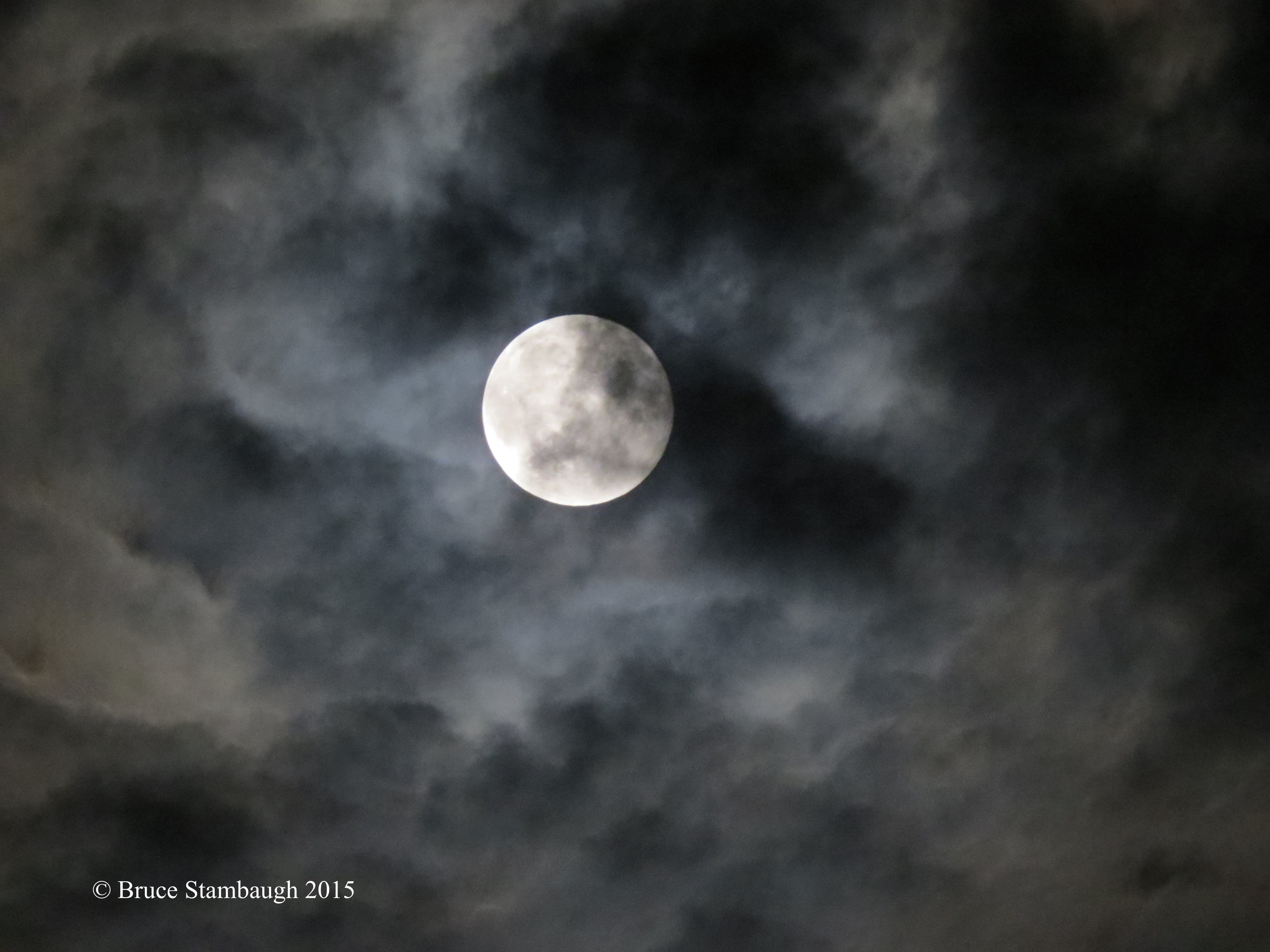
I hoped to get a shot of August’s blue moon rising on the horizon. That didn’t happen. I have Ohio’s fickle weather to thank for that. A thick blanket of clouds filled the evening sky making such a shot impossible.
Determined to get a photo, I kept checking the sky. A little after 9 p.m., I was surprised to see the moon shining behind broken clouds, which were quickly closing. I was able to capture this shot before the clouds closed in on my window of opportunity.
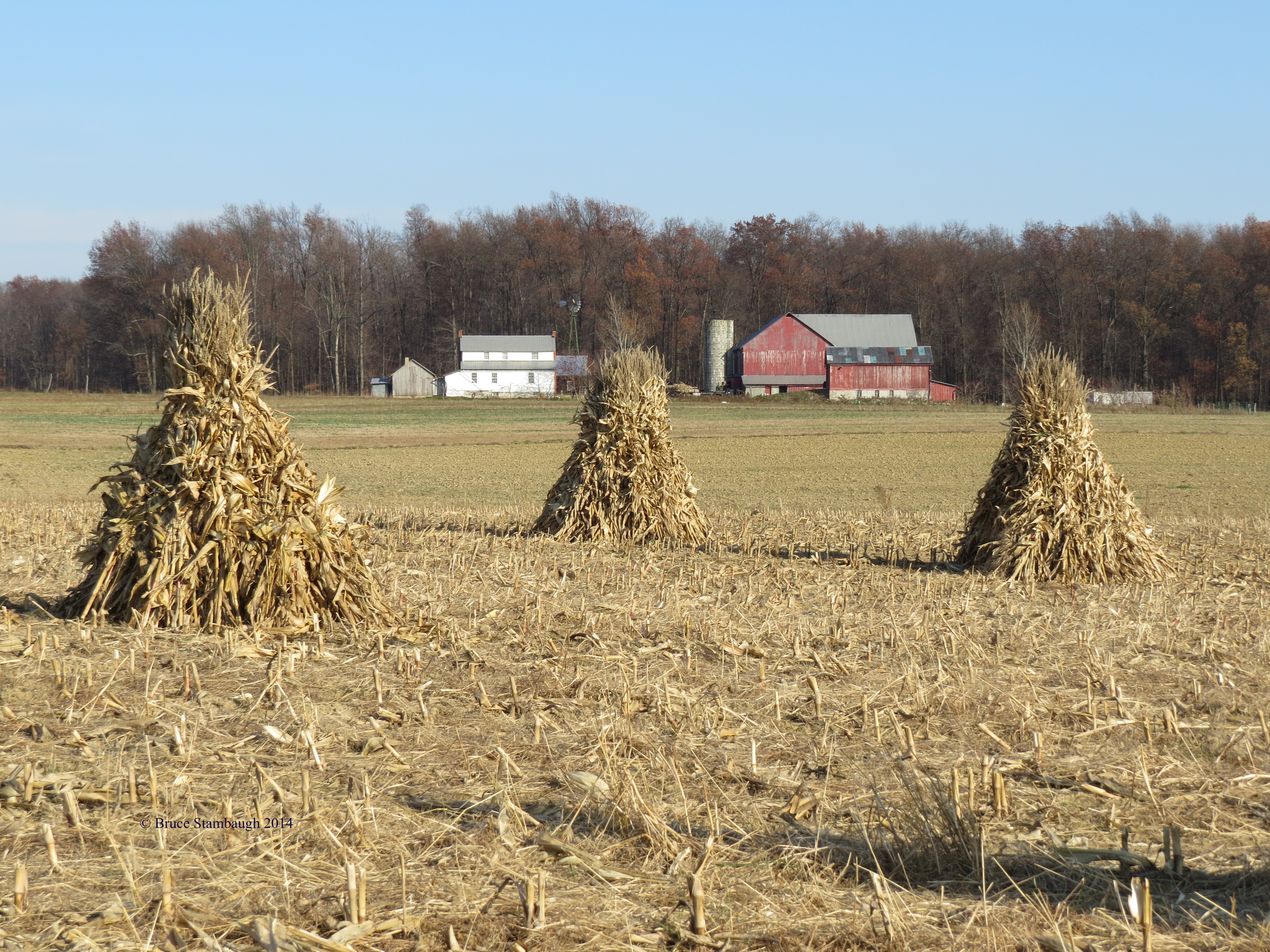
Scenes such as these make iconic Amish country photographs. However, fields of shocked grain like this are less and less frequent. Rules for the Amish farmers are changing, allowing them to make use of equipment like combines to harvest oats and wheat.
Only the lower order Amish still shock wheat and oats. This method permits the grain to dry in the warm, often hot, August sun. Once the moisture content is low enough, the shocks are pitchforked onto a wagon and hauled to the barn. There a thrasher separates the grain from the chaff.
I hope this process remains, if only for its marvelous beauty.
“August in Amish country” is my Photo of the Week.
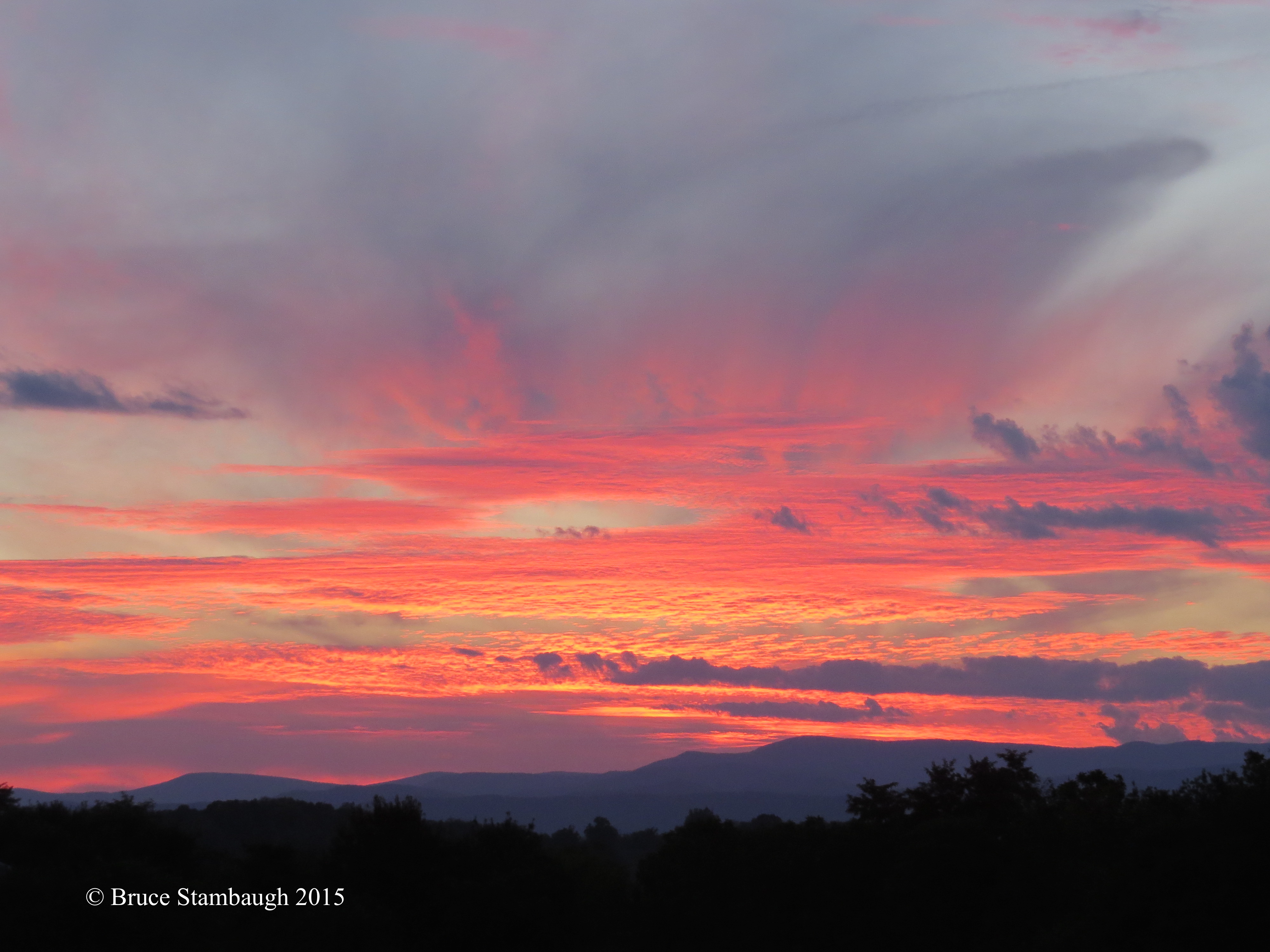
I never tire of taking shots of sunsets from my backyard. At first glance, one might think this photo was taken out west someplace, as in the western United States. It wasn’t. I shot this sunset recently in my backyard in Ohio’s Amish country. Windmills for pumping water on Amish farms are commonplace in Holmes Co., Ohio.
I realize that I am fortunate to live where I do. I never tire of the incredible sunsets that occur so frequently. Most of all, I enjoy sharing them with you.
I sat on the picnic table for nearly two hours admiring the scenery and serenity all around me. I hadn’t planned on staying that long. Life’s events have a way of altering your plans.
The previous day I had safely delivered our granddaughter back to her parents in Virginia’s Shenandoah Valley. On the way home, I wanted to hike up the enchanting Seneca Rocks, one of the best-known landmarks in West Virginia.
I had previously taken several photos of this fascinating rock formation that juts straight into the sky. But I never had time to climb it. I did this trip.
This slideshow requires JavaScript.
The switchback trail to the viewing platform at the north end of the ancient rock outcropping extends a mile and a half. In that short distance, the trail climbs 1,000 ft.
The cool morning was perfect for my adventure. An overnight cold front had cleared out the heat and humidity.
The trailhead began at the restored home of an early pioneer settler. A tour of the Sites homestead is informative and interesting. I could have been satisfied to watch the dozens of butterflies that flitted around the bee balm. But I had come to hike.
I only walked a few yards when I came to a pedestrian bridge that crossed a delightful river, the South Fork of the North Branch of the Potomac River to be exact. The stream’s lengthy name didn’t do justice to its placid beauty.
Once across the rock-laden river, the switchbacks began. I was more surprised about the excellent condition of the trail than its sudden steepness. A light breeze kept the insects away as I forged ahead beneath the leafy canopy high overhead.
It was comfortable walking in the shade of both the forest and the quartzite cliff, thrust upright from its original horizontal position millennia ago. I had the trail to myself until some early morning hikers passed me on their way down.
I made it to the viewing platform in 40 minutes. The sun’s strengthening light bathed the valley below and the mountains beyond. The businesses, houses and vehicles all looked like toys.
Sighting.
Climbing.
Soaring.
Just as I stepped onto the viewing area that protrudes away from the rock face, a southwest breeze picked up. Soon Turkey Vultures began to soar on the developing vortexes. I glanced back down to the river to discover an adult Bald Eagle had also started to circle in the quickly warming air. In just a few elongated loops, the magnificent bird was high above my head.
I think I smiled all the way back down to the car. I moved to a shaded picnic table to rest and eat the light lunch I had packed. As I ate, I scanned the still shaded western face of the Seneca Rocks with my binoculars.
On the summit.
The viewing platform.
Climbing.
Rock wall
Instead of birds, I found first one, then three, then 10 rock climbers scaling the huge, craggy outcropping. I was entranced.
I sat beneath a shade tree observing these men and women pick their way up this sacred place. One brave guy didn’t even use ropes.
I waited to leave until all had made it safely to the summit. I admired their courage, their determination, and their adept skills.
I was pleased to have walked to the top and back. It was even more satisfying seeing these remarkable folks reach their destination. They celebrated their perilous journey with fist pumps and shouts of joy that echoed far across the valley into my soul.
I love to look for patterns in photos. There are plenty on display here, even if you only look at the various textures of the roofs on the congregated buildings. Also note the details that enhance the plain red and white buildings. Did you see the brown horse against the barn wall? How about the Rock Doves, aka pigeons, on the roof of the outbuilding in the foreground? Or the smoke coming out of the chimney?
See how many other details you can find as you explore this photo.
Poor August. Like Rodney Dangerfield, our eighth month just doesn’t seem to get any respect.
August is the forgotten month. No holiday graces its 31 days. Still, we often get lost in all that August has to offer and forget the month itself.
August calls to us daily, appealing to our innate senses. The month tantalizes us with good things to eat, smell, see, touch and hear. August is an equal opportunity sensation.
The beauty is ever changing from month’s beginning to end. Cosmos, gladiolas, and hollyhock replace daylilies and daisies. Roadside royalties like asters and chicory are ubiquitous.
The colors of the floral circus attract fluttering visitors. A variety of gorgeous butterflies and exotically patterned insects help pollinate the blooms and entertain us humans.
Locally, the county fair is in full swing. That means fun and excitement for children both in years and in the heart. It also often means at least one good soaker.
In a properly configured growing season, gardens, orchards, and croplands are yielding an abundant harvest. Despite the late start, this year looks like a bumper crop of color and nutrition except for those poor peaches that were frozen out by two consecutive harsh winters.
All harvesting doesn’t always come from the garden. Picking wild raspberries, elderberries, and even blueberries provides a satisfaction all its own. On a recent jaunt through the West Virginia mountains, I witnessed a few folks staining their hands with those precious fruits.
Commercial and domestic kitchens are abuzz with activity. Jellies, jams, applesauce, salsas and many other seasonal delights are all being cranked out at their demand, not always our convenience.
When they’re ripe, they take priority or there’ll be no goodies to spread on warm bread on a cold January evening. Besides the tasty preserves, generations of families and friends gather for the food frolic.
Back to school shopping makes the August to do list, too. Teachers, students, parents, and grandparents crowd the aisles snapping up pencils, paper, glue, and clothing. If you look closely, you’ll likely find a year’s supply of antacids in the teachers’ carts.
When the calendar flips to August, all of this rushes into our lives. Before we know it, Labor Day weekend will be upon us, and August will be but a memory.
In the evening, choruses of crickets and katydids lull you to sleep. If you awake during the night, you can take in another of August’s wonders. The Perseid meteor showers can entertain you with magical streaks of pure awe.
Only the House Wren, attending its second or perhaps third brood, continues to sing regularly. Other bird species, having done their duties, have mostly grown quiet.
Many migrating birds have already begun their journey south. In the birding world, August is considered the beginning of fall.
Rain or shine, stormy or clear, I love to watch the weather. From foggy sunrises to golden sunsets and any and all weather conditions in between, I’m on it like a tornado to a trailer park.
Yep. I’m stuck on the weather. I’ve always been fascinated by the variety of weather northeast Ohio has to offer spring, summer, fall and winter. I’m cool, however, with never having lived in Lake Erie’s snow belt.
My captivation with the climatological elements goes way back. When I was a kid and a thunderstorm roared I ran to the window, not the closet. The lightning and hail fascinated me the most.
I got a reality check, however, when I thought a 10-year old could outrun a thunderstorm for home. I couldn’t.
From then on, I took better notice of the weather and gave her all the respect she required. I took college classes that taught me much about climate and the weather.
Later, when I became a volunteer firefighter, I trained to be a severe weather observer. I’ve kept my spotter certification current.
One of the first things I do each morning is review the weather forecast. If severe weather is a possibility, I check the radar frequently for rapidly growing storms. For me, safety is a priority.
I remember the first tornado I ever saw. I was a skinny preteen. My father was driving the family car, and I spotted this white, spinning funnel cloud. I warned Dad, but he ignored me and drove right under it. When he heard the whirling noise and saw it pass overhead, Dad sheepishly said, “I guess you were right.”
With that, my amateur weather-watching career was born. When it rains, I record how much. When it snows, I measure the inches that fell. When it hails, I report the size and amount to the weather officials. The same goes for any wind-related damage.
This slideshow requires JavaScript.
There’s a purpose to my weather mania. I want others to be alerted so they too can be safe.
I’m not alone. Thousands of severe weather spotter volunteers are on call across the country. When the weather turns nasty, our adrenaline gets pumping.
Take the other day for example. As a severe thunderstorm moved over the county, weather radar indicated rotation in the storm.
Just as the National Weather Service issued the tornado warning, the power went out at our house. I scampered to be sure everything was secure, gathered my rain gear and camera, and out into the storm I went.
I hadn’t ventured down the road very far until I encountered flash flooding in several locations. I reported the flooding and kept an eye on the sky as best I could as I drove.
I followed the storm through torrential, swirling rain for 15 miles. I finally reached the back of the storm just as it exited into the next county. I relayed that no funnel was seen to the weather service and headed toward home, only to encounter even more flash flooding.
With muddy, debris-laden, bumper high water running rapidly across roadways, drivers still chose to risk it. Even a horse and buggy slogged through the floodwaters. The horse’s high leg kicks indicated that the horse was none too happy.
I’ve always said that if I believed in reincarnation, which I don’t, I probably would come back as either a chiropractor or a meteorologist. Given my penchant for the weather, you can probably guess which one I’d pick.
You must be logged in to post a comment.