Spring’s colors brighten our days. Photo by Bruce Stambaugh
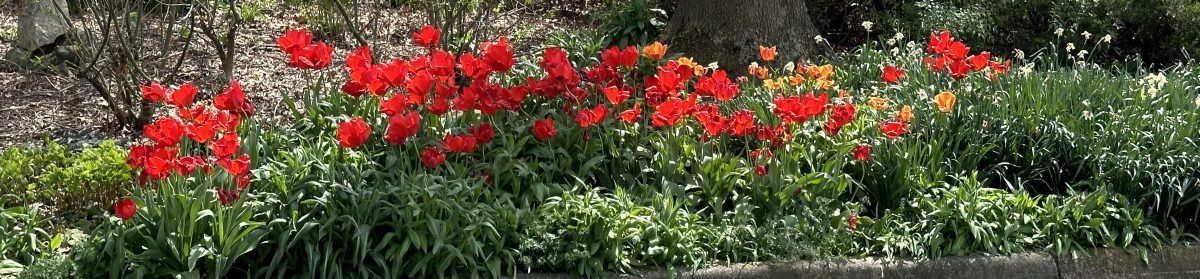
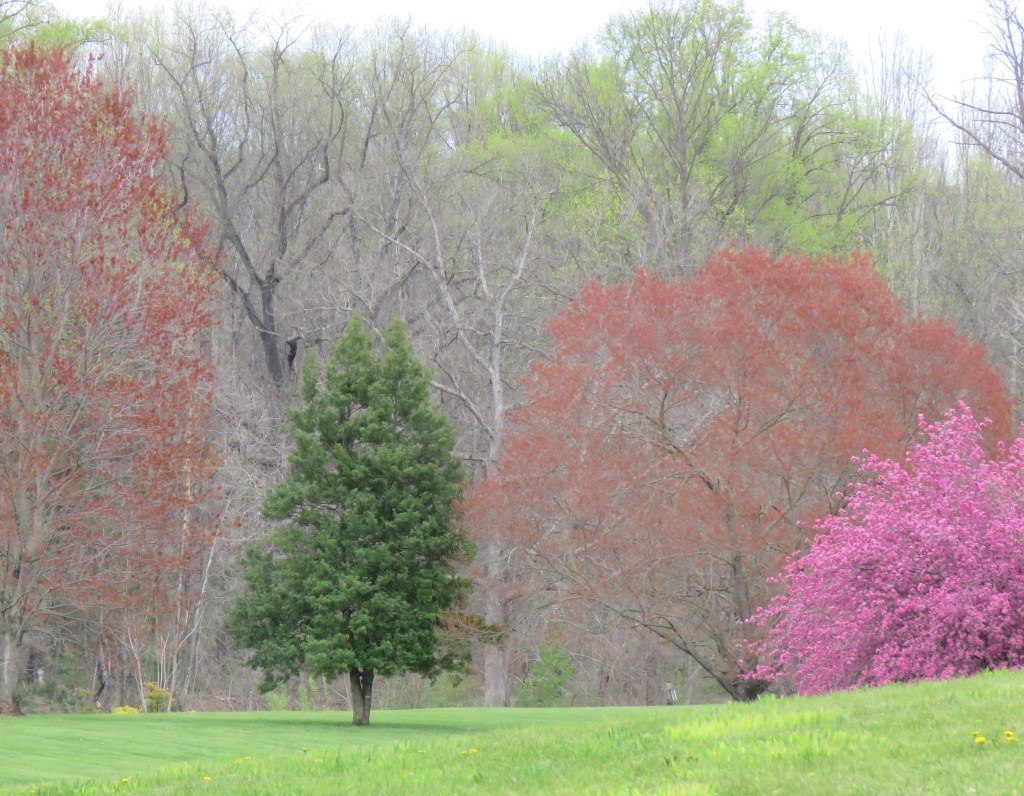
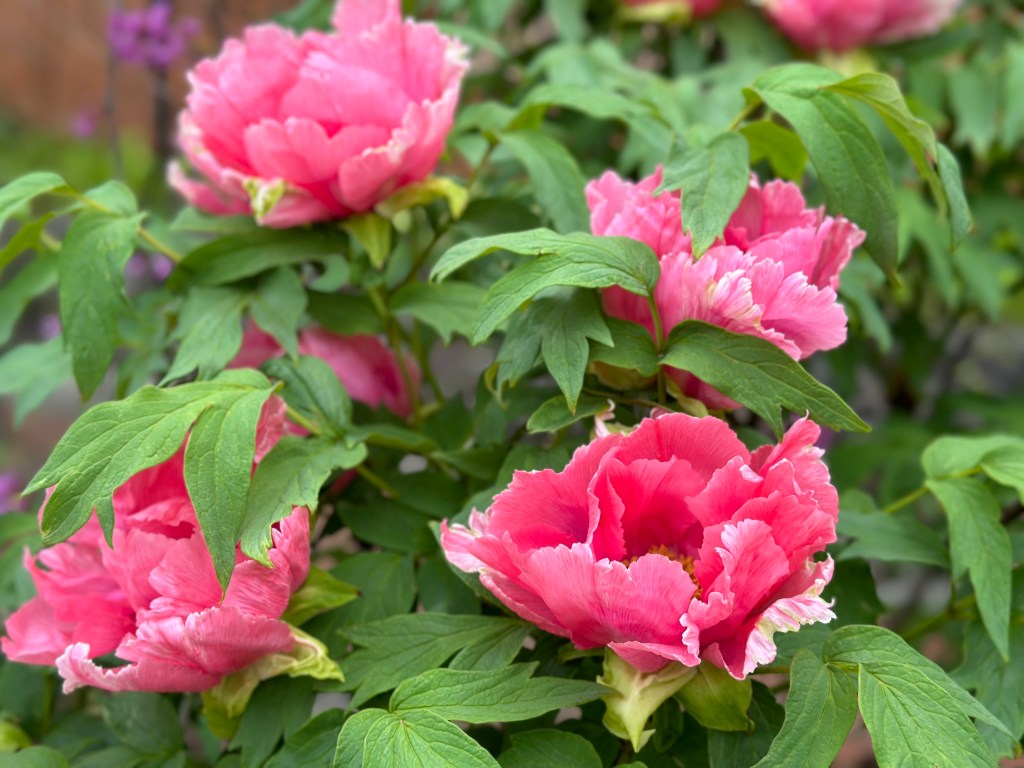
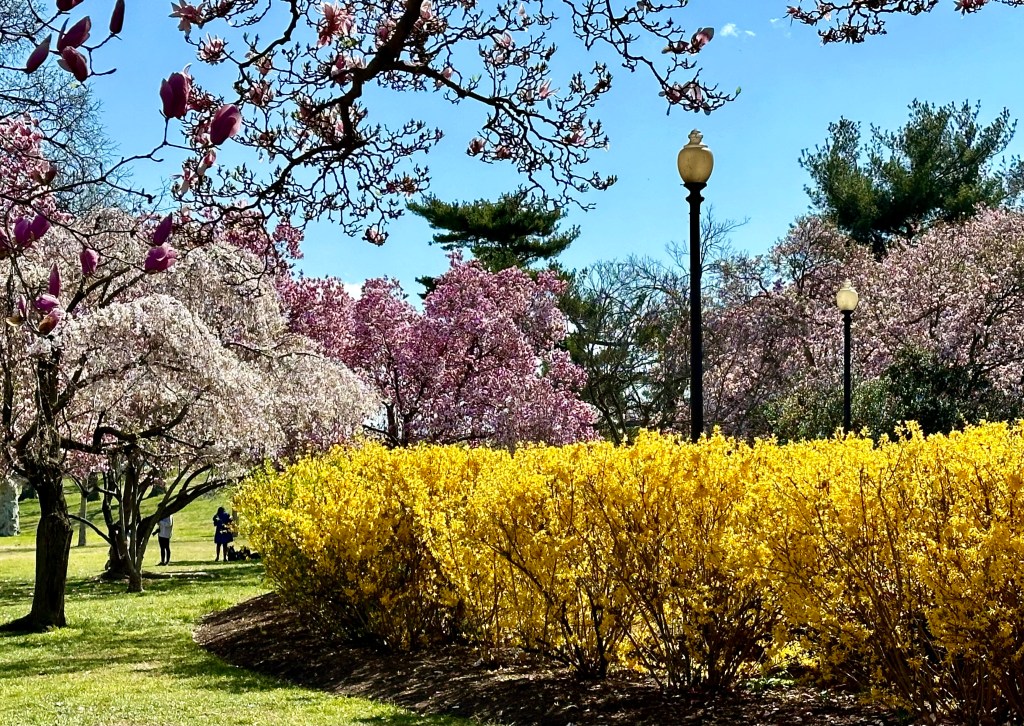
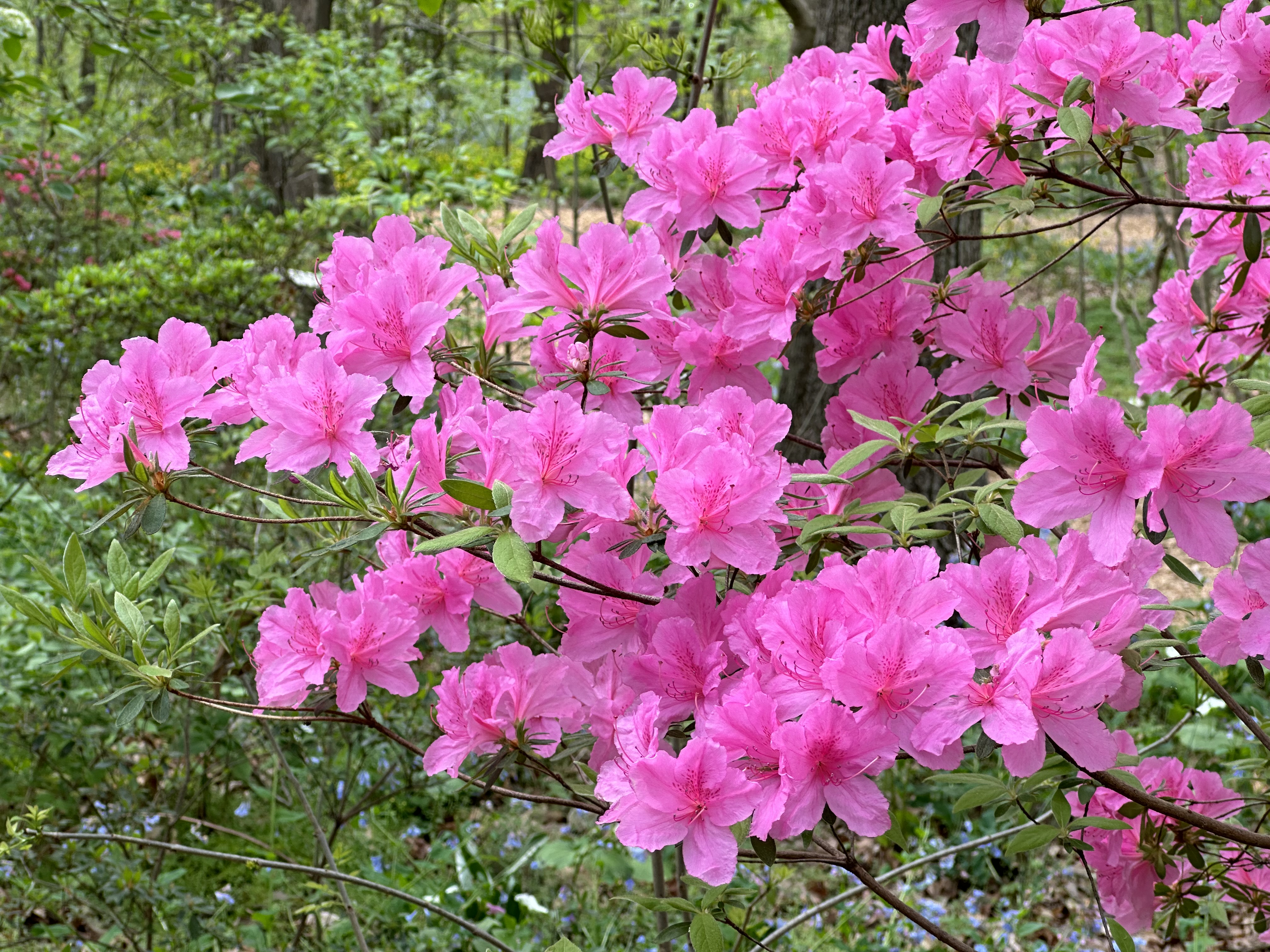
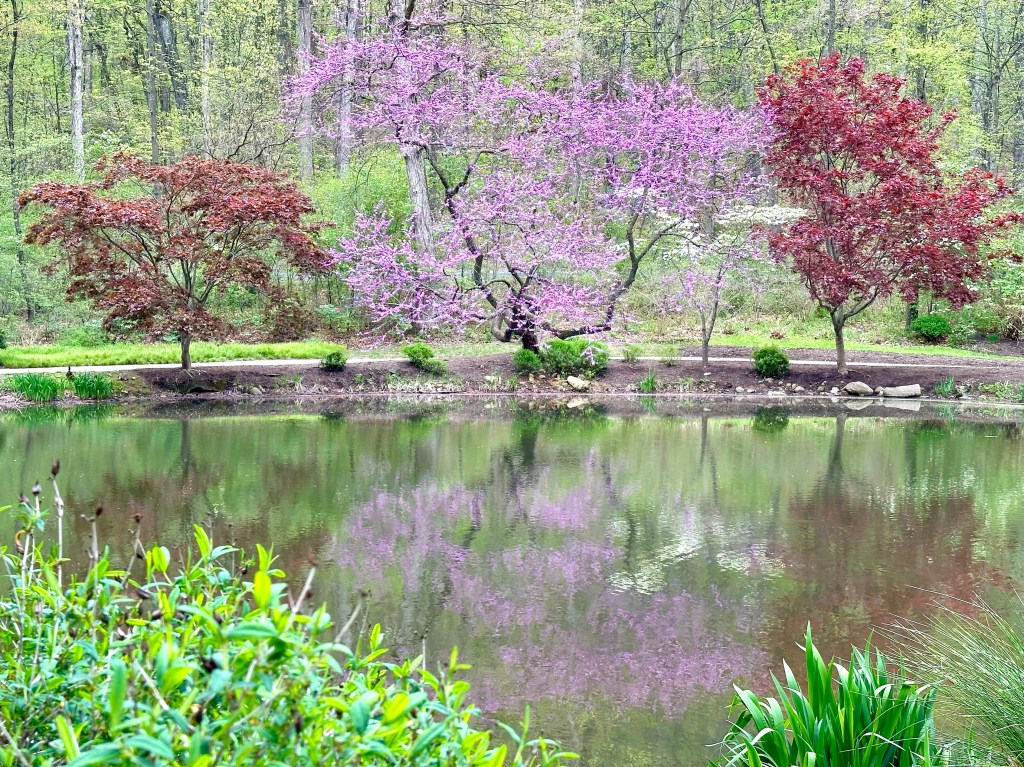
Just in time for Earth Day, spring’s vibrant colors are at their peak here in Virginia’s Shenandoah Valley. Ornamental shrubs, trees, and domestic and wildflowers are putting on a show for our pleasure and their propagation.
This annual phenomenon has a caveat. Conditions change quickly, and weather conditions play a significant role in these rapid transformations. A windstorm or hard frost can instantly paint the landscape much differently.
The tender and pastel leaf buds unfold quickly, exposing their infant beauty. The fresh foliage of red maples shows the reason for the tree’s name. So, too, do their fleshy seeds, which critters like squirrels devour.
Please click on the photos to enlarge them.
Soon, however, the leaves fully unfurl, sometimes overnight, and the russets transform into luscious greens. Through transpiration and photosynthesis, we all can breathe easier. One large tree can produce up to a day’s oxygen supply for four people.
Please click on the photos to enlarge them.
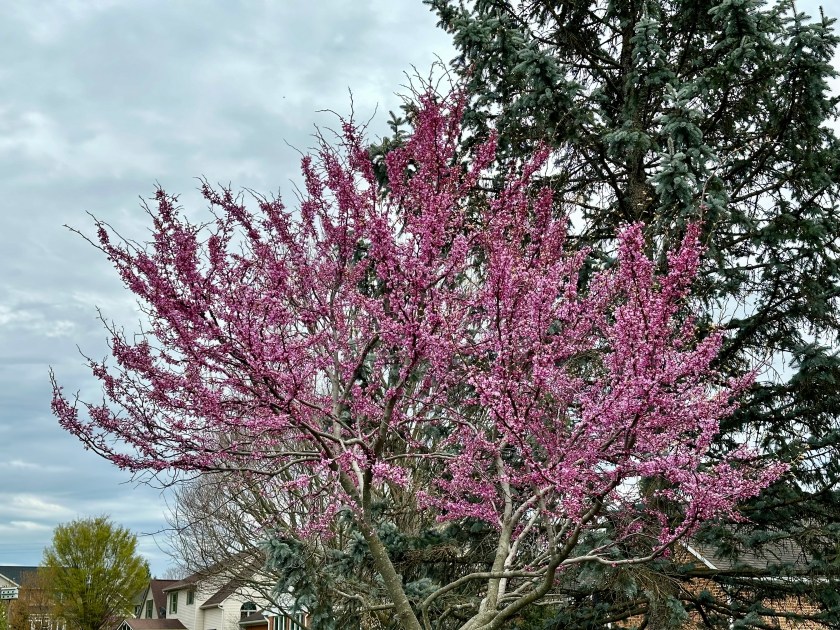
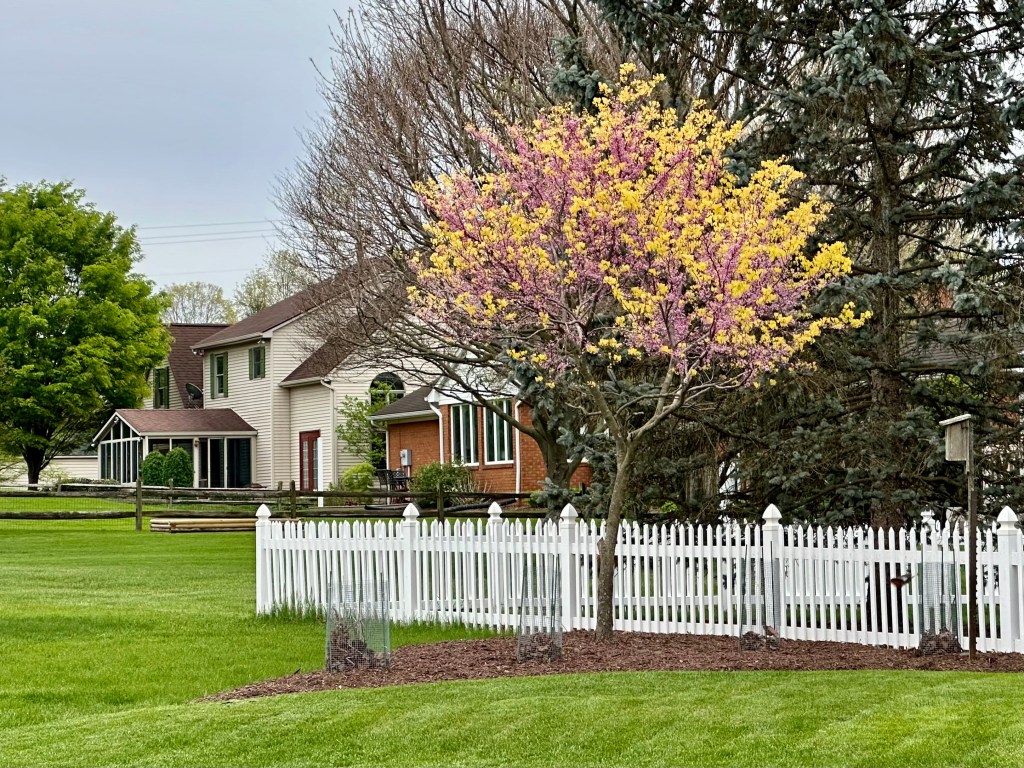
Redbuds can be fickle. Some years, the buds last weeks. This year, the emerging leaves of our backyard Rising Sun Redbud tree have already overtaken the beautiful buds. The young tree went from lavender to bright pink to lime green and pale pink in a few days. Pink polka dots already cover the ground below.
April 10.
April 13.
April 15.
April 16.
April 21.
Given this rapid transformation from bud to bloom, we need to be vigilant in the quest to enjoy nature’s springtime. Doing so has multiple benefits. Exploring the lovely blooms of trees, shrubs, and flowers renews our appreciation for life itself. Enjoying nature’s beauty and birdsong serenades invigorates our spirits. Walking or hiking through it all provides needed exercise.
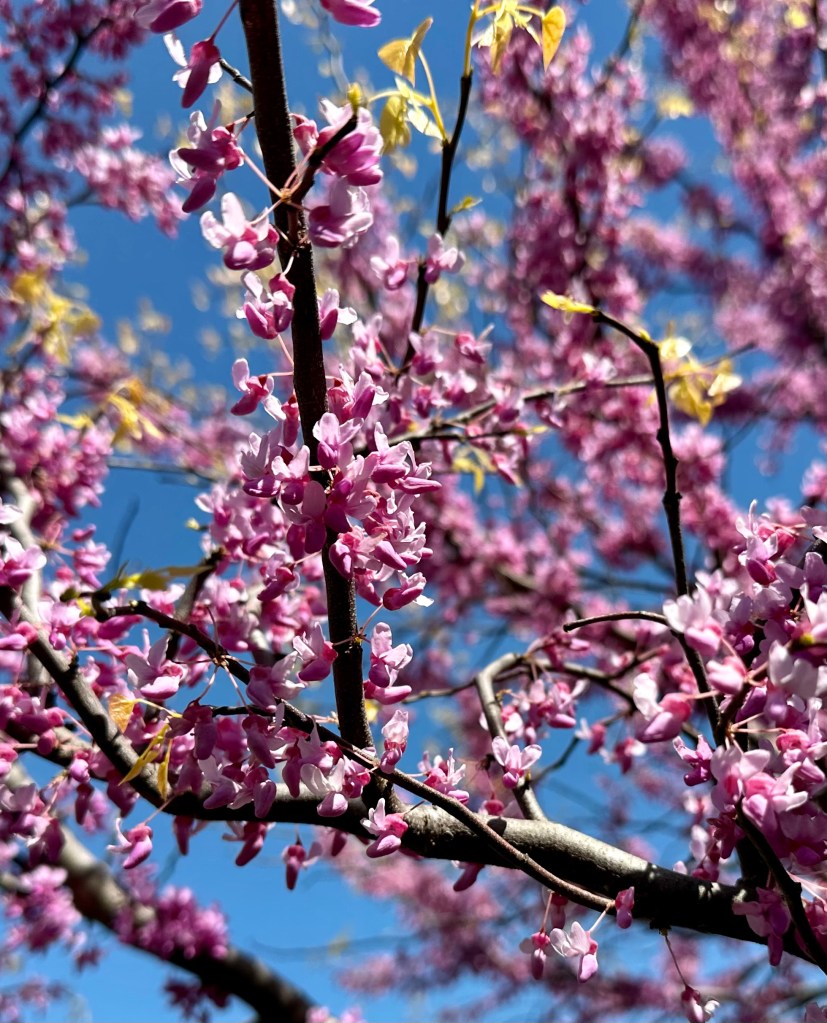
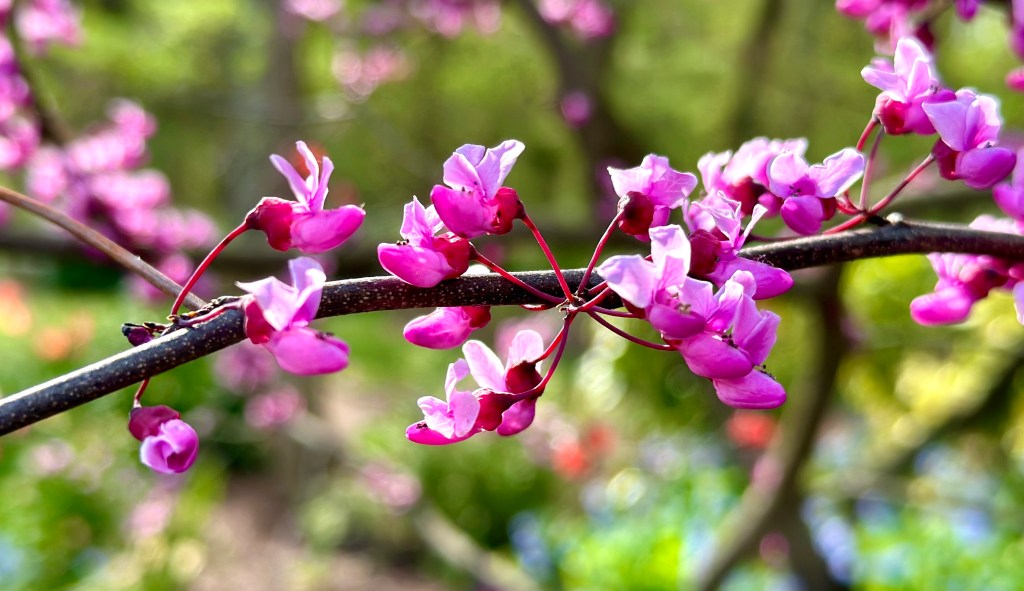
Nature offers another bonus if we are observant. She has lessons for all of us to learn, no matter our age. Do you know redbud blossoms, viewed at the correct angle, resemble hummingbirds feeding?
Can you find the hummingbirds in the redbud blossoms?
Exploring local parks and roadsides offers vivid samples of spring’s changing color schemes. It’s a wonderful way to celebrate Earth Day.
I love photography. It keeps me alert for the extraordinary while doing the ordinary. In this case, I was with my wife, her cousin, and her husband, all septuagenarians.
We get together every so often about halfway between our home in Virginia’s lovely Shenandoah Valley and their abode in central North Carolina. Lynchburg is a handy place to meet up, a two-hour drive for each of us.
We like many of the same activities, like playing cards, dominoes, antiques, and birding. We also enjoy casual strolls along city streets and well-marked biking and hiking paths. Lynchburg offers plenty of both.
Since we are not out to set any speed records on our walks, I can wander ahead and find the unusual among the usual rural or urban landscapes. Occasionally, I charge ahead too fast, and the others call me back to see what they have found. Together, we discover much to appreciate, ponder, and enjoy.
Take our most recent excursion, for example. Lynchburg is a city of hills and valleys, with a rich history, old buildings, waterways, sidewalks, cobblestone alleys, and lazy trails often following the winding creeks and the James River. One trail even had an old railroad tunnel, now lighted for bikers and hikers. The city is a paradise for photographers.
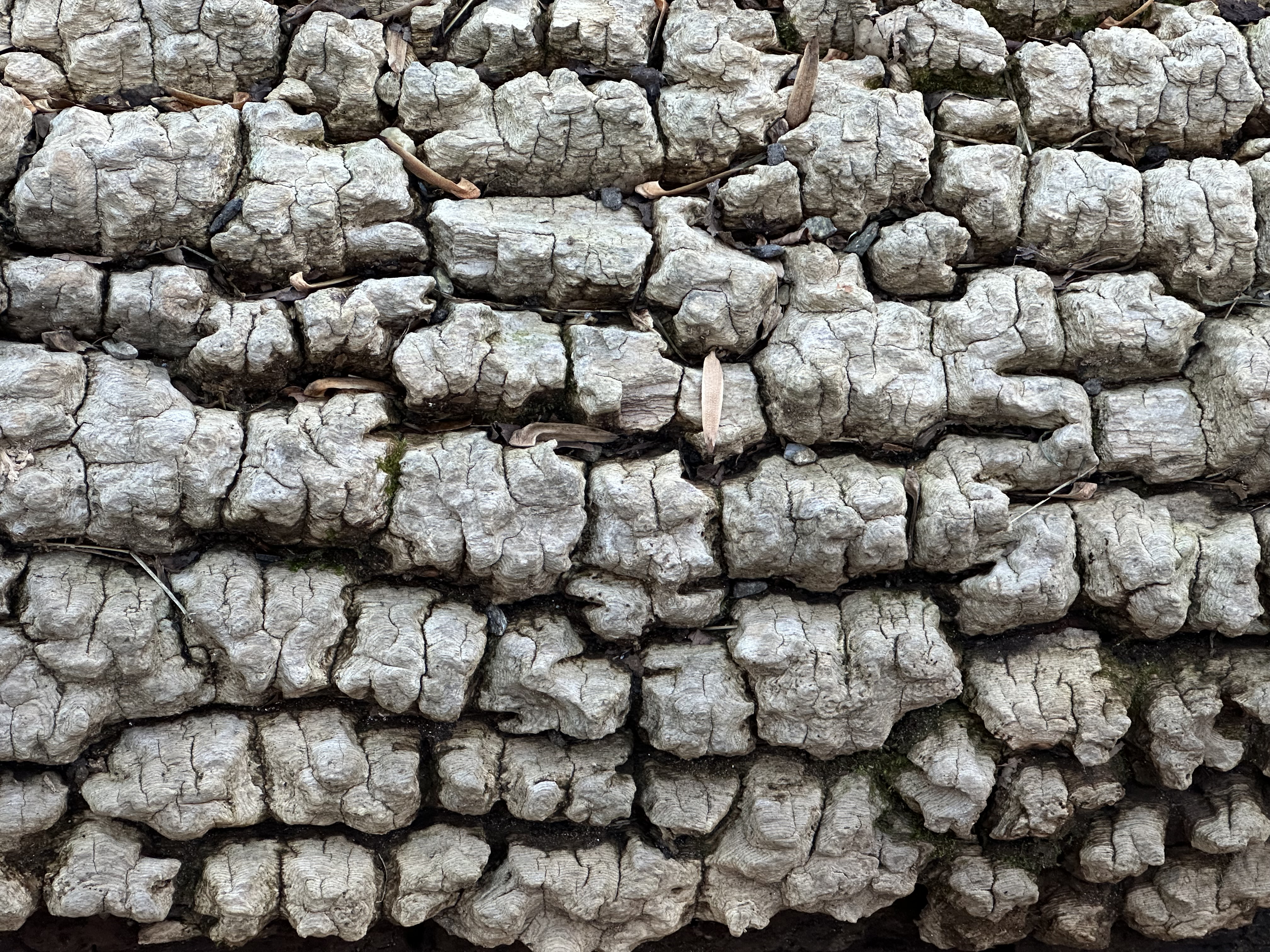
We came upon curious subjects to photograph every path we took. Along a creekside trail, we found this textured object. Any guesses? A tire? An alligator’s back? No to both. There’s a hint in the photo.
This is the closeup of an old fallen tree. The trunk was rotting away while its life-protective bark remained.
Not all photographic opportunities were so secretive. Still, using your imagination is critical. This old snag has stood the test of time, and the elements of four seasons have weathered into a once-living art object. Does anyone else conjure an owl flapping its right wing?
Speaking of living, this diminutive plant waved its once-green leaves red for the holiday season that is upon us. It is a volunteer burning bush, likely deposited by a seed-eating bird. There was no missing the bright color among all the trail-side leaf litter.
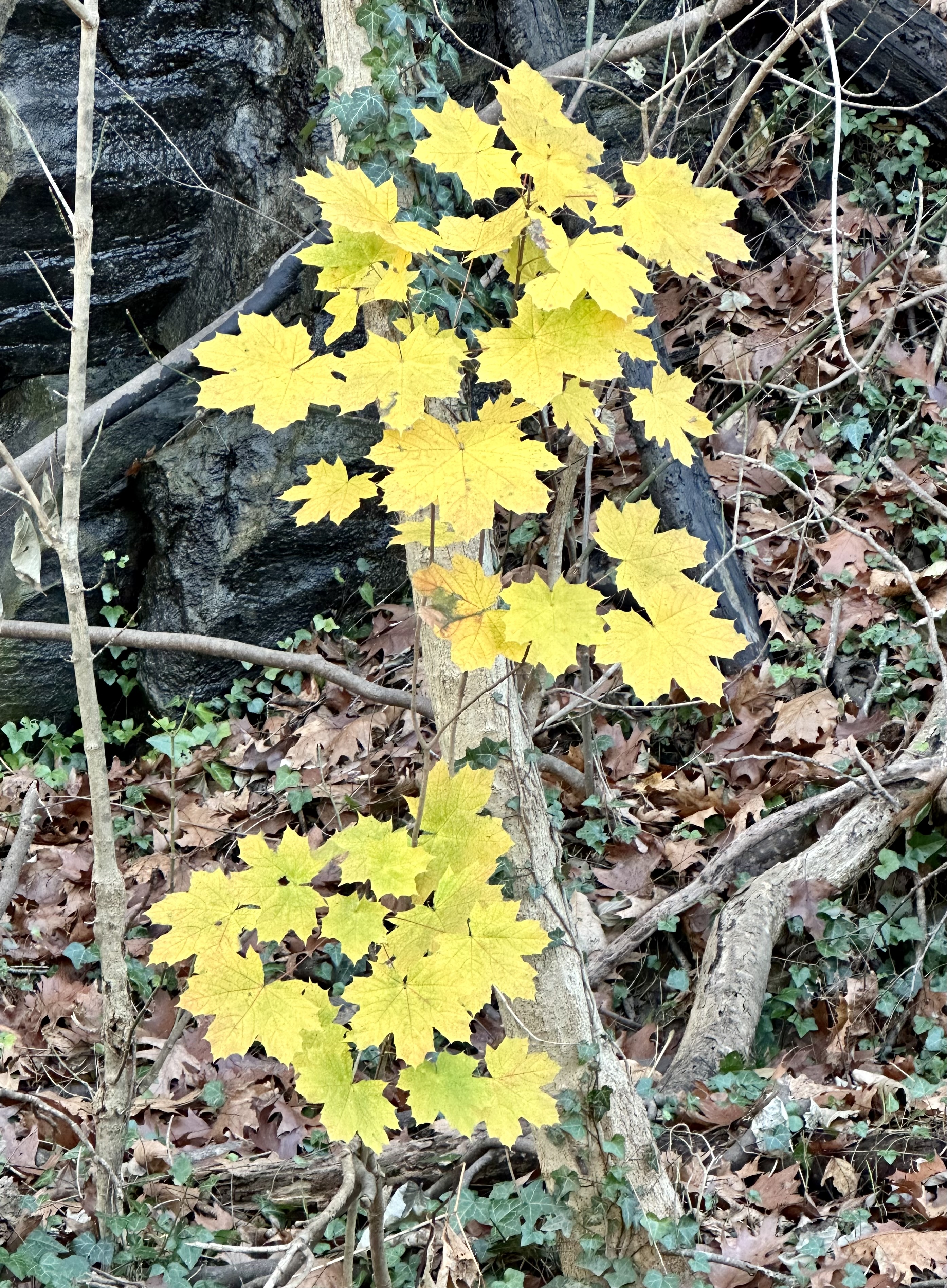
A short distance away, a competitor vied for attention. This sugar maple sapling shown like the sun on this dismal day. It made us all chuckle.
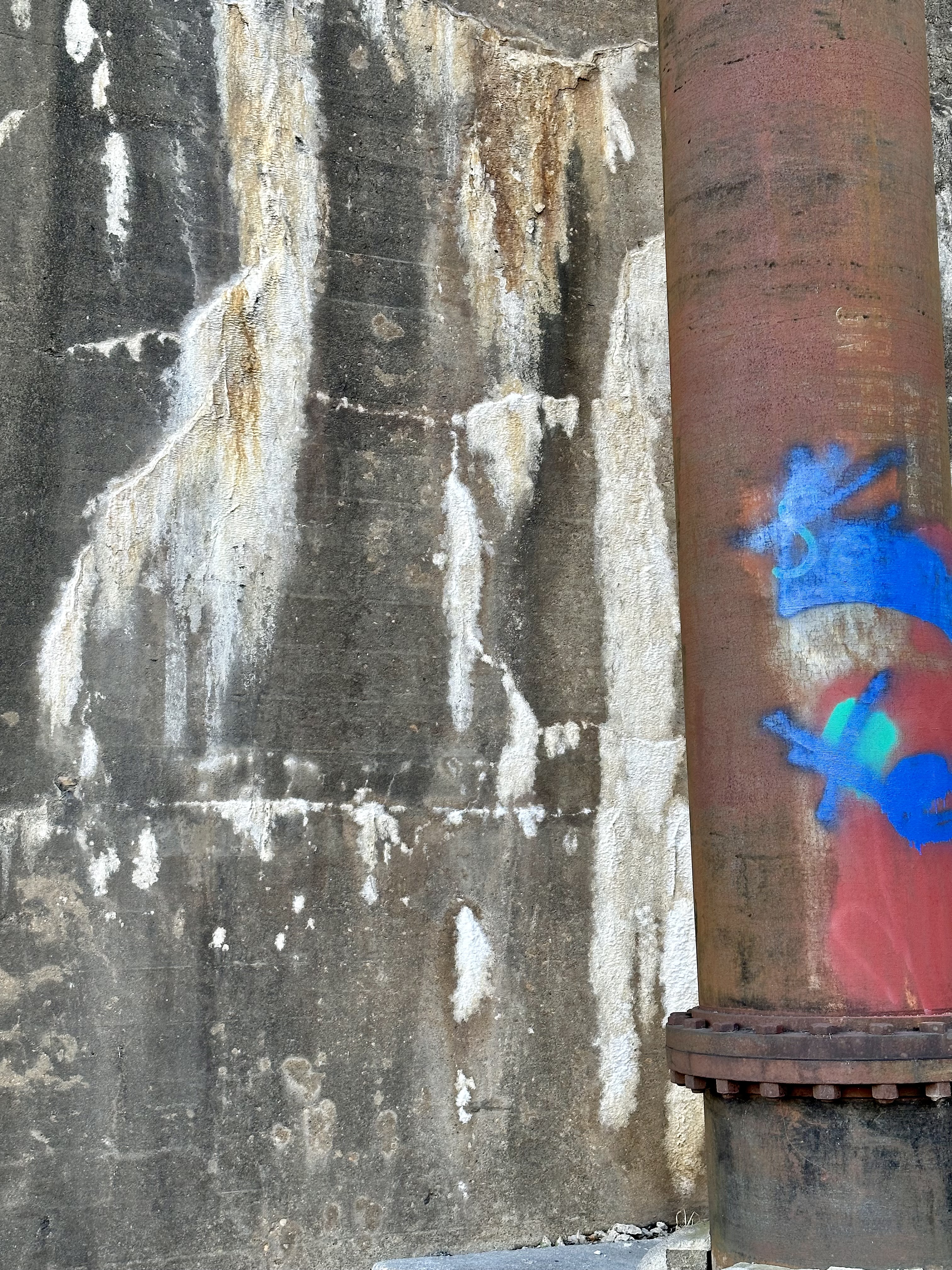
Not everything was so obvious, however. This photo has a complex combination of both natural and human-made actions.
Any idea what this abstract consists of? Look close. What’s on the left side? You are halfway home if you said a rock outcropping leached with calcium-laden groundwater. The right section is an old drainpipe. Some wannabe artists eliminated the plain rusty look by adding some pretty red and blue with a meaning. Those colors covered up some previous graffiti in faded white.
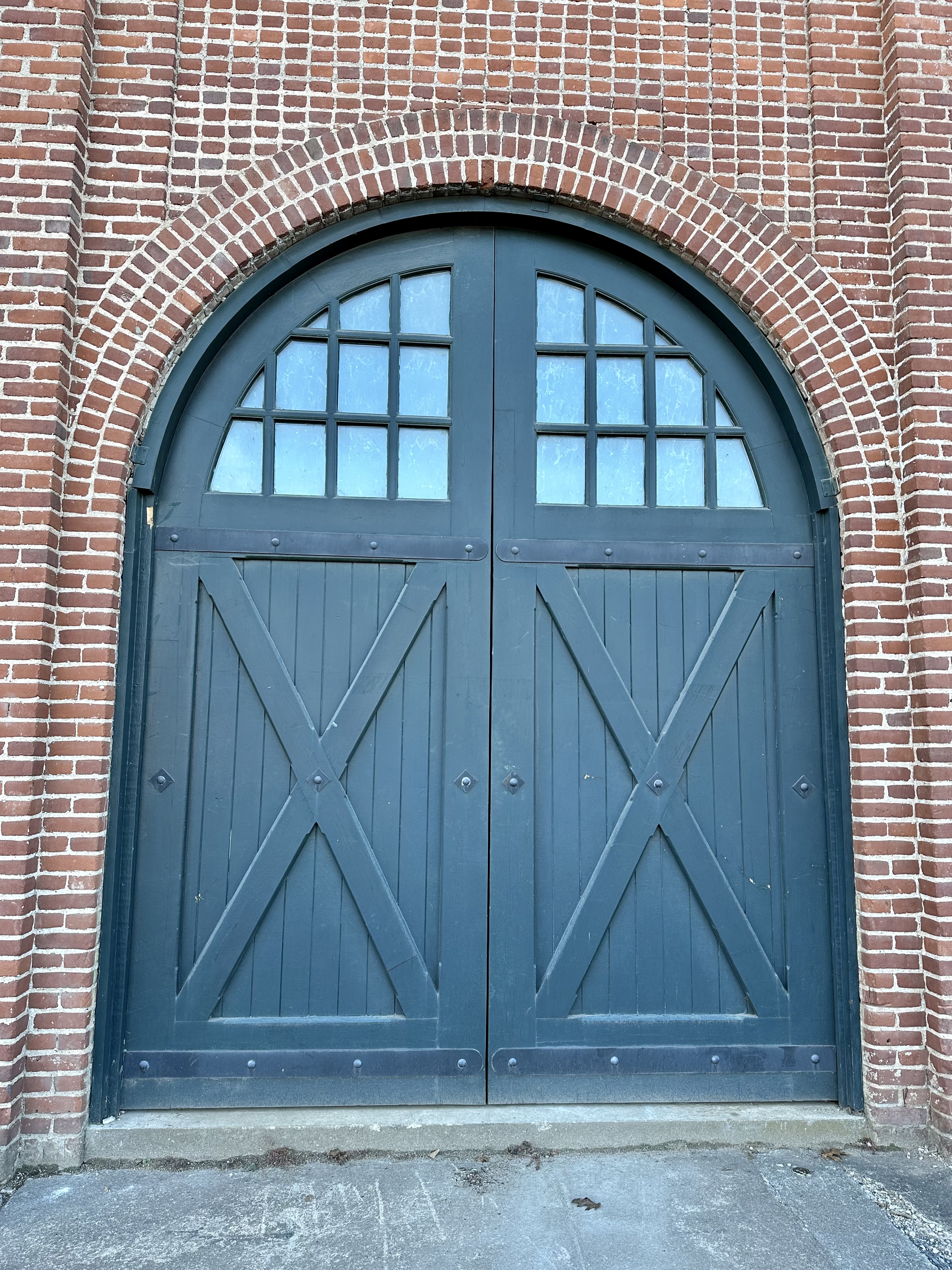
That pipe was a hint for us. The city lay just around the corner. We soon found this intriguing old set of double doors in a two-story brick building, likely once a warehouse during the railroad’s heyday. It faced the James River. The nearby trail was once a rail line.
A few steps away was a nearly block-long mosaic timeline of the history of Lynchburg. The blight of slavery was front and center. It’s an incredible piece of artwork often blocked by parked cars. This photo shows the intricate detail needed to tell the town’s story. I couldn’t imagine the time and effort it took to create this masterpiece.
We headed to the Amtrak train station away from Old Town. The building was magnificently reconstructed and expanded to hold city offices that had nothing to do with trains. We had a look around and came across some interesting finds.
An old luggage hand cart parked against the sturdy brick building caught my eye. No longer used, it can’t help but take train passengers and visitors back in time.
Across the street, an abandoned building seemed frozen in time. Dozens of solar bobbleheads danced behind a window in the late autumn sun. It was a curious collection that seemed abandoned, left to survive without human help.
This wasn’t our first rendezvous in Lynchburg with our friends. Given all there is to do, see, and photograph, it won’t be our last.
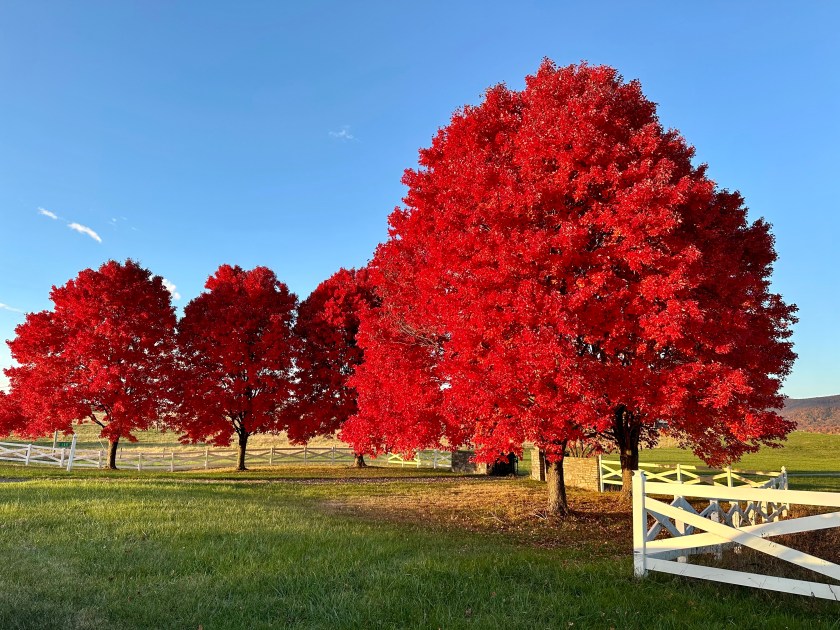
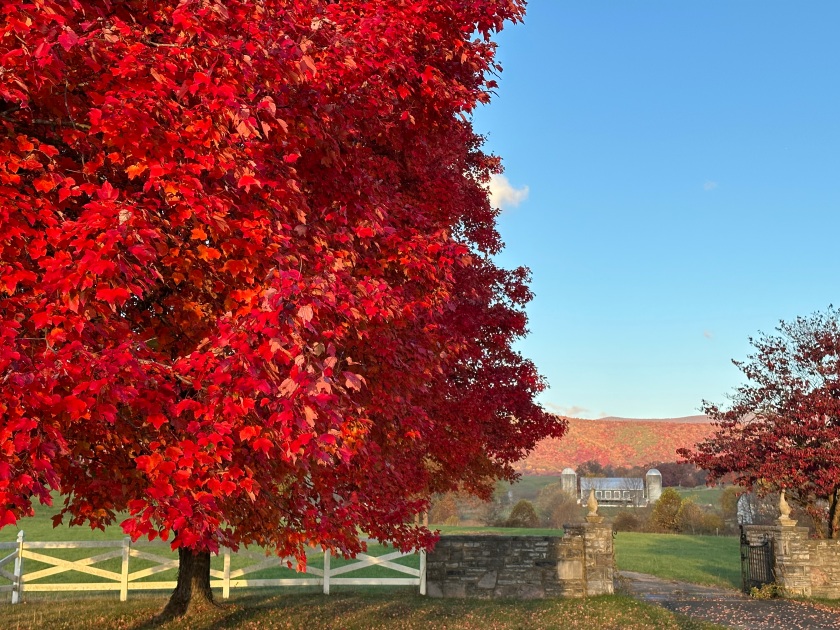
Brilliant Sugar Maples in the Park View neighborhood of Harrisonburg, Virginia.
Following my day in Shenandoah National Park, my wife and I headed south to Augusta County. We had more than colorful leaves on our agenda.
The “Queen of Steam,” Norfolk & Western Railroad’s Old 611 steam engine was running excursions twice a day from Goshen, Virginia, to Staunton, Virginia. Friends had pointed out a perfect place to observe the 611 heading east to Staunton.
So, Neva and I were up early to get a good spot at the bridge over the Buckingham Branch tracks at Swoope, Virginia. I wasn’t familiar with the area, so I wanted to scout different locations, too.
It was another beautiful day in the Shenandoah Valley. Cool temperatures in the morning, but a promised warming into the 60s by afternoon. The drive down to Swoope was nothing less than gorgeous.
Our spot on the bridge where we would have seen the 611 engine pulling the excursion train.
We arrived in Swoope at 8:30, and the train wasn’t scheduled to leave Goshen until 9:30. We didn’t know how long it would take the special train to arrive at our location. Besides a few walkers and joggers, we were the only people around.
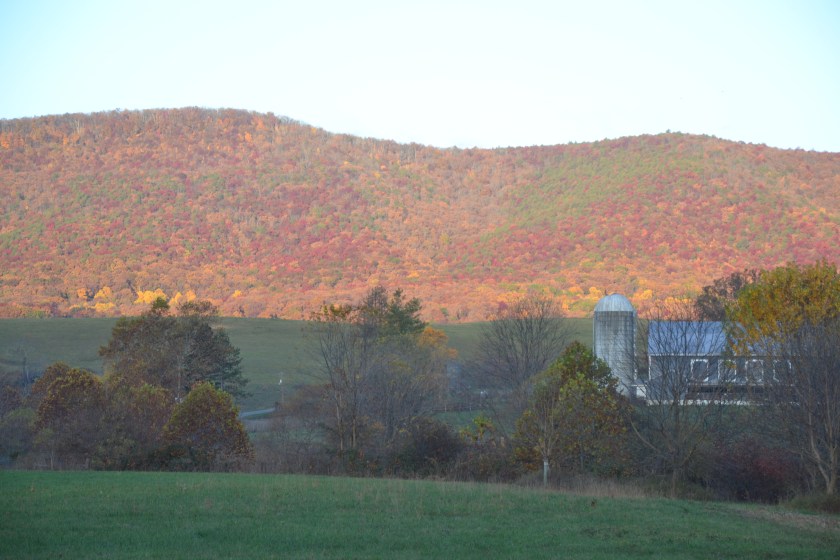
Confident that our spots on the bridge wouldn’t be taken, we drove around the lovely valley dotted with rolling hills, pristine cattle farms, and gorgeous trees. The mixed hardwoods on Little North Mountain and the North Mountain beyond it were at peak color.
I took several shots of trees and farms and returned to the bridge. Soon, other rail fans arrived, and the chatter began. We listened for the train whistle to echo through the valleys. All was still.
Finally, a guy arrived who had information about the 611. It was listed as “static” at Goshen, meaning the engine wasn’t moving. A mechanical problem prevented 611 from running that day. The excursion would be pulled by diesel engines.
Please click on the photos to enlarge them.
My wife and I decided to return home. The morning had already brought much beauty into our lives. We had enjoyed the colorful trees, the well-maintained farms, and the congeniality of strangers.
The next few days, I continued my quest to photograph the beauty around Harrisonburg before the weather changed and brought the leaves down. I am happy to share them with you.
Our backyard when we arrived home from Augusta Co.
The view from Grandview Point. Photo by Bruce Stambaugh.
Located east of Beckley, West Virginia, New River Gorge National Park and Preserve is a gem of a place. My wife and I recently visited there for two days. Our goal was to see the New River Gorge Bridge. We experienced much more than that. Also, I finally learned an important life lesson.
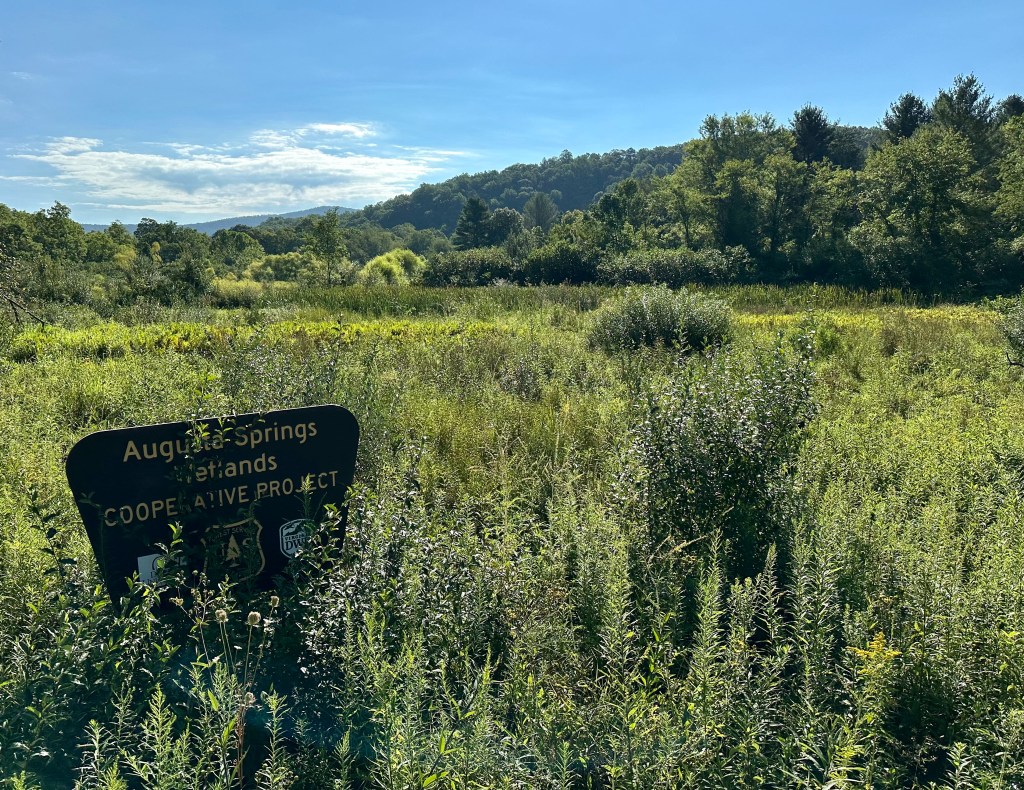
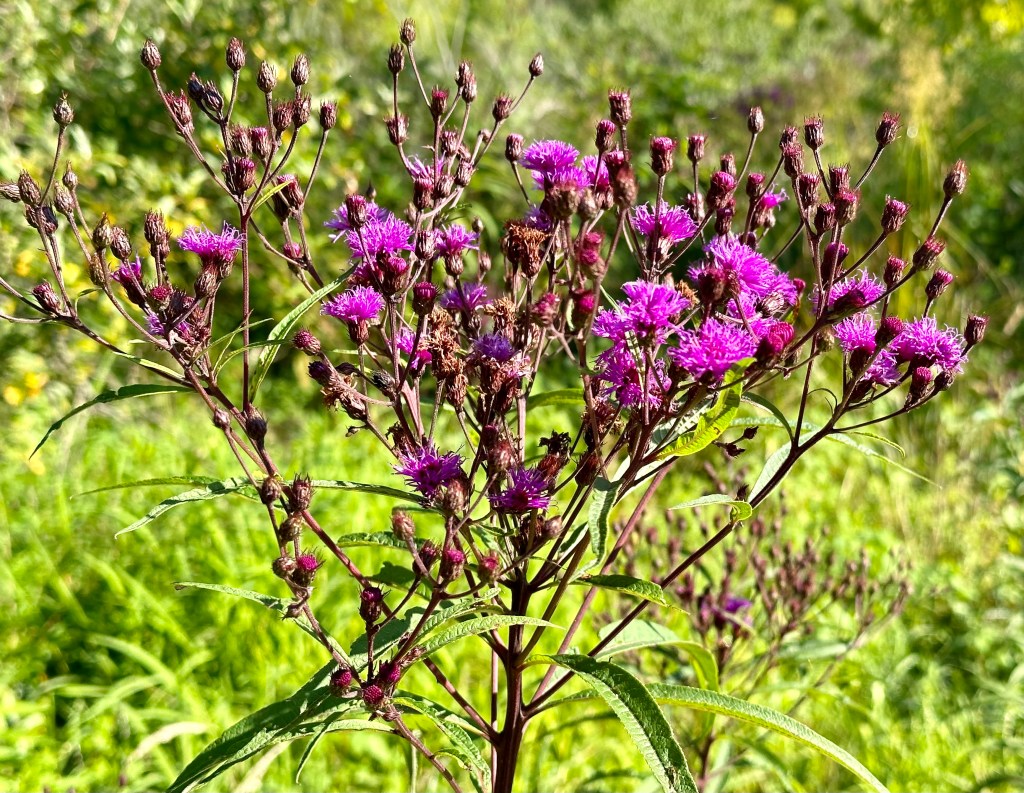
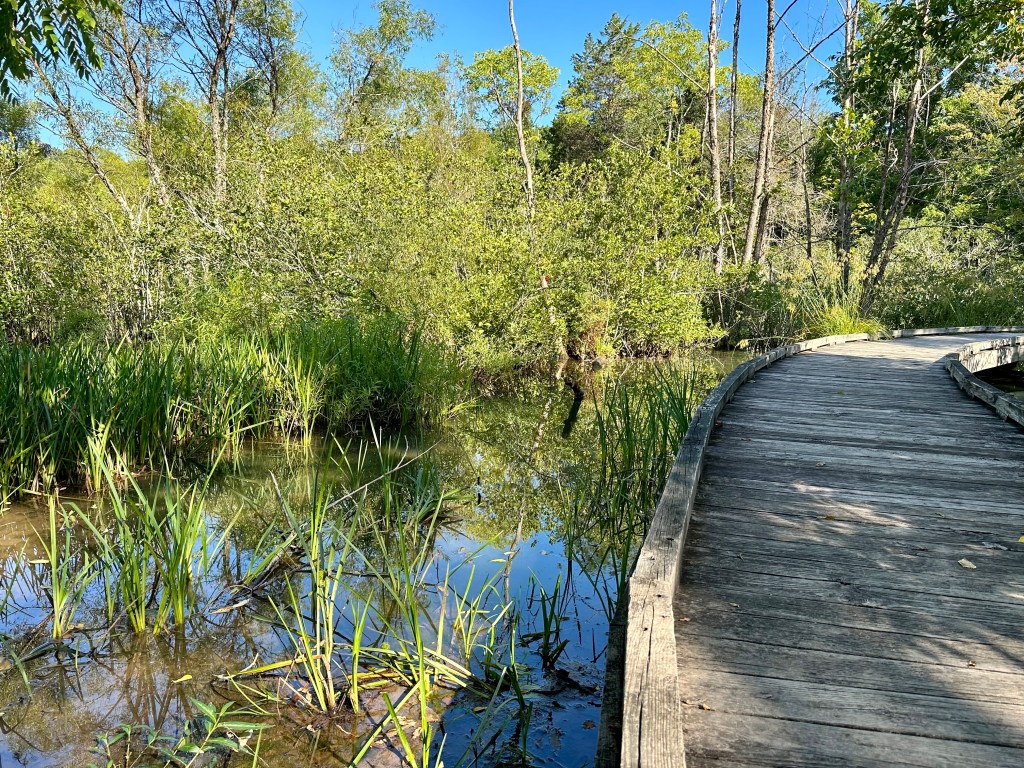
Because we usually avoid driving on I-81, we took Virginia 42 southwest through the Allegheny Highlands’ beautiful hills, valleys, small towns, and mountain gaps. We stopped at Augusta Springs Wetlands to bird along the boardwalk. We saw a number of lovely wildflowers and 21 species of birds. The next stop was the Humpback Covered Bridge west of Covington, Virginia.
Humpback Bridge.
Interior of the Humpback Bridge.
Humpback Bridge
But it was the national park we wanted to see most. The park has four visitor centers because of its mountainous terrain and steep gorge. Sandstone Visitor Center was our first stop just off I-64. The helpful ranger gave us excellent advice on the roads to travel and what to expect.
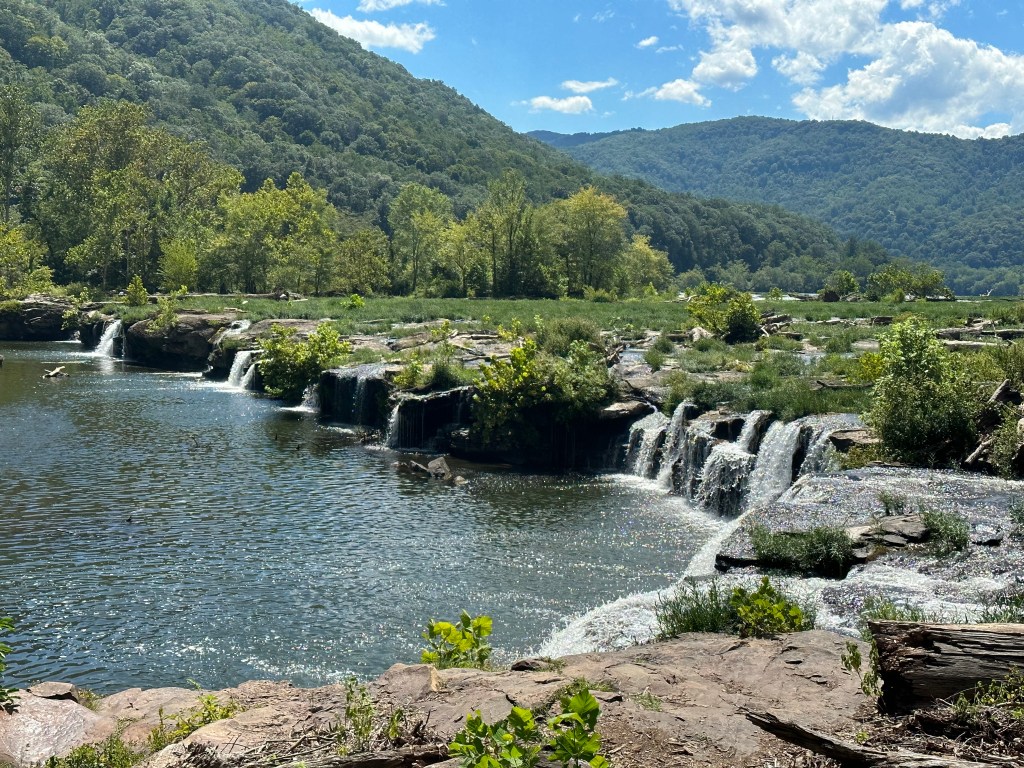
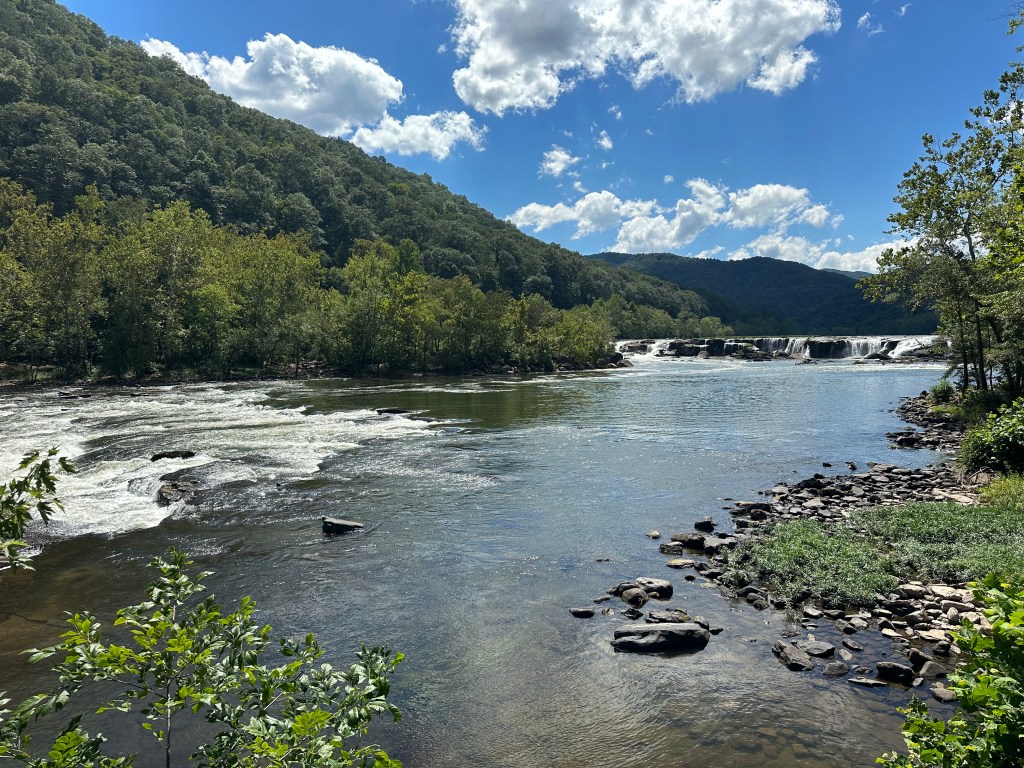
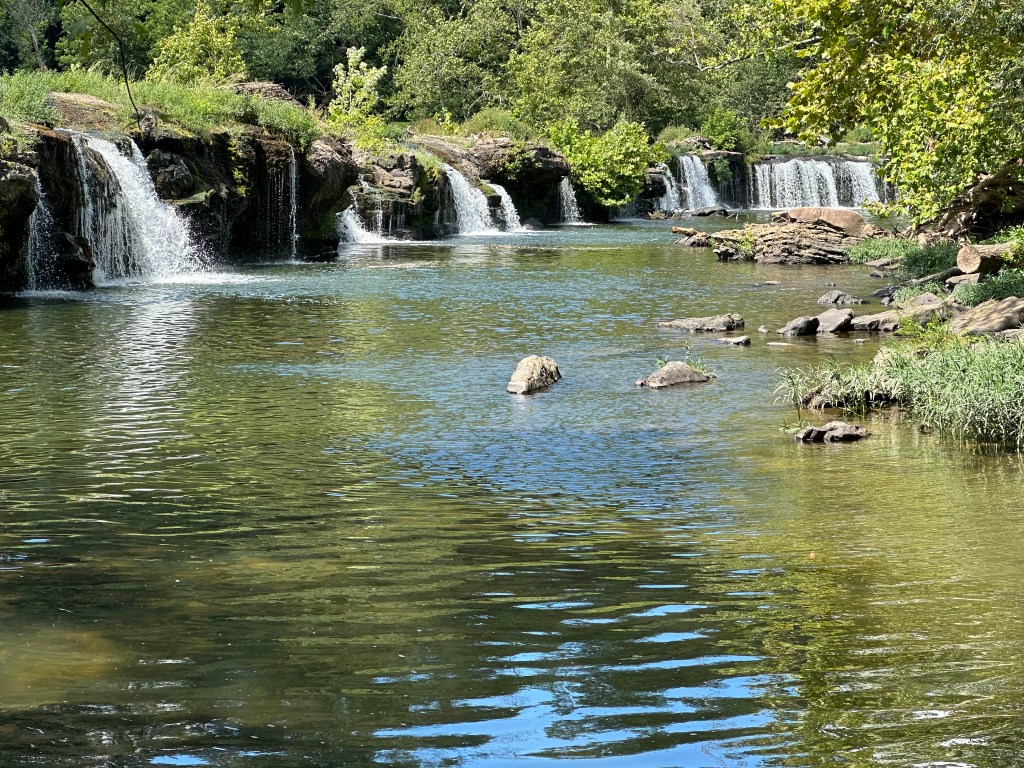
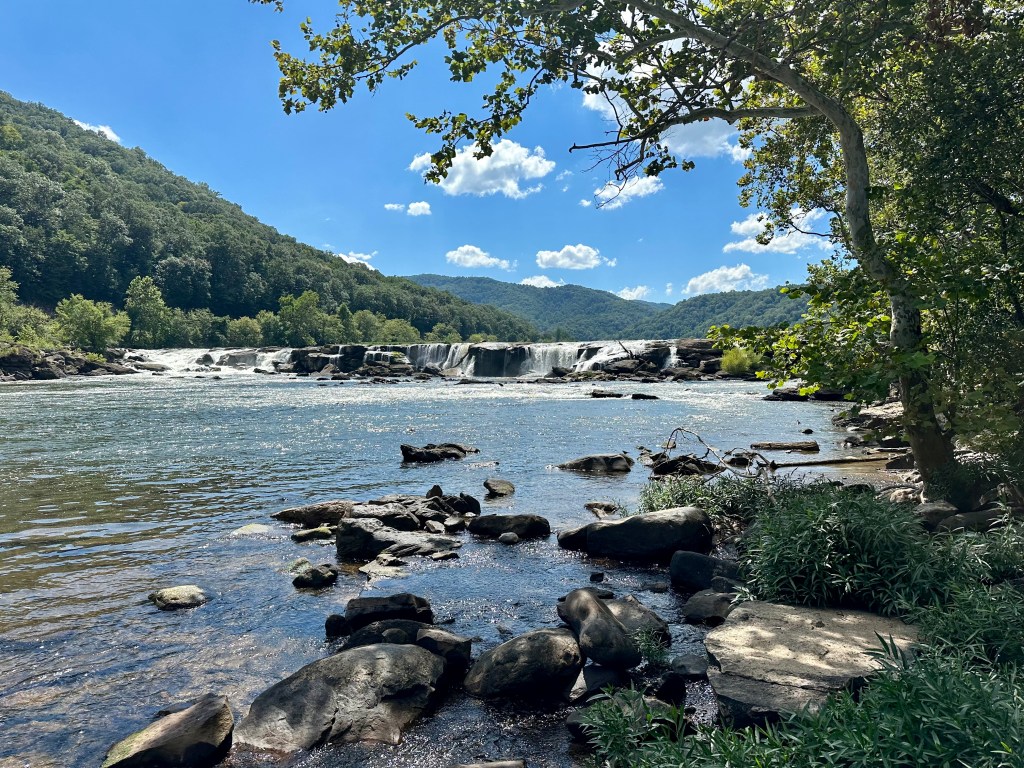
Our first stop was the observation area of Sandstone Falls. They were as beautiful as advertised, but the falls weren’t running at full force with so little rain this summer. We drove along the railroad tracks to the quaint town of Hinton, where we crossed to the west side of the New River. We drove north a few miles to reach the boardwalk that took us near the river’s main flow.
Eastern section of Sandstone Falls.
Rapids and Sandstone Falls.
Eastern side of Sandstone Falls.
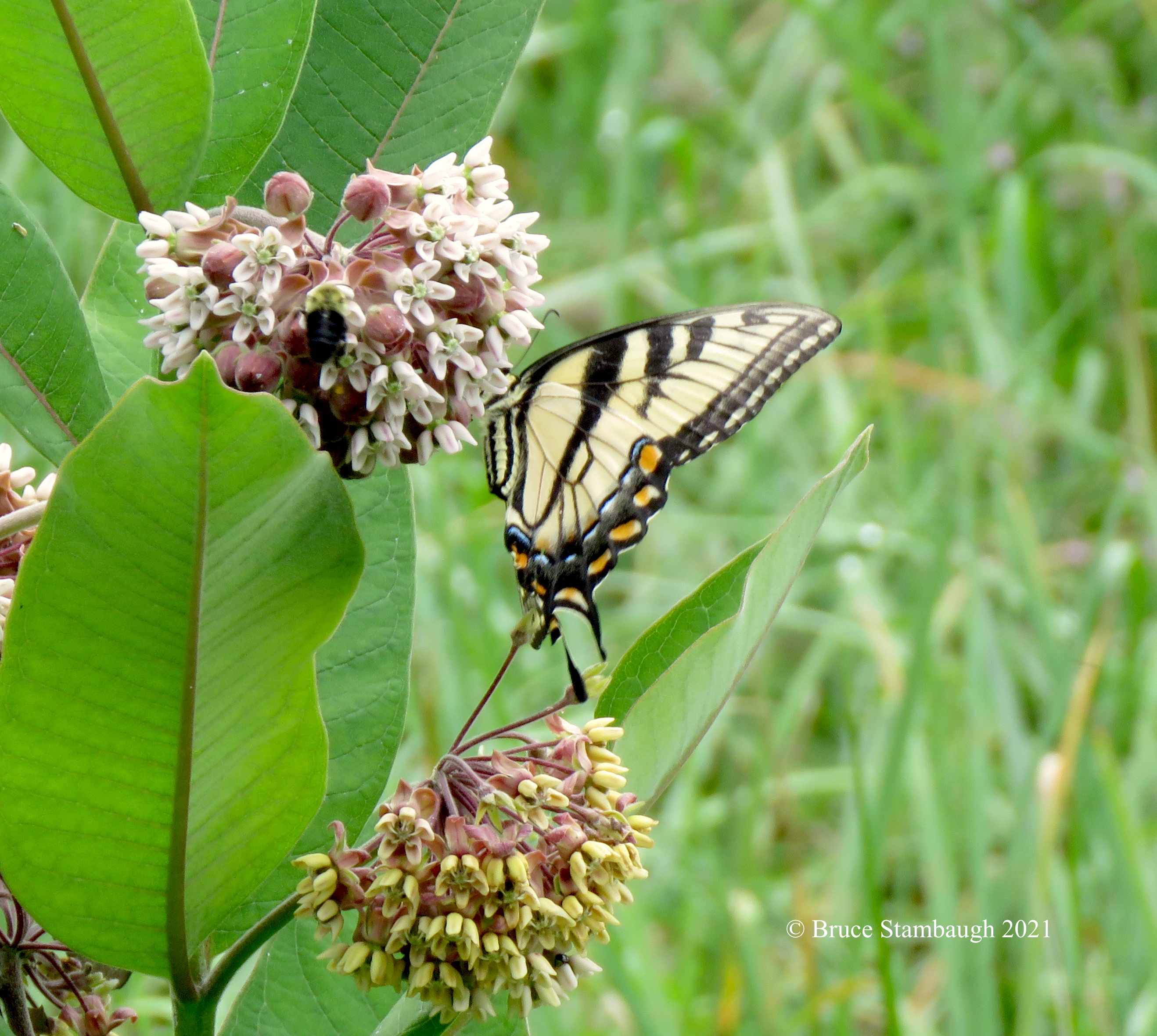
Spicebush Swallowtail on Cardinal Flower.
The western section of Sandstone Falls.
Western section of Sandstone Falls.
The fastest flow.
I wanted to get a closer shot, so I headed across an island of ancient debris of huge boulders smoothed by years of flowing water. Scattered among the rocks were large trunks of trees, their bark long scoured away. It finally hit me that I shouldn’t have attempted this trek. I eased my way over rocks and rivulets to the shore of the river’s main course. I got the shots I wanted and returned to the boardwalk via an easier route.
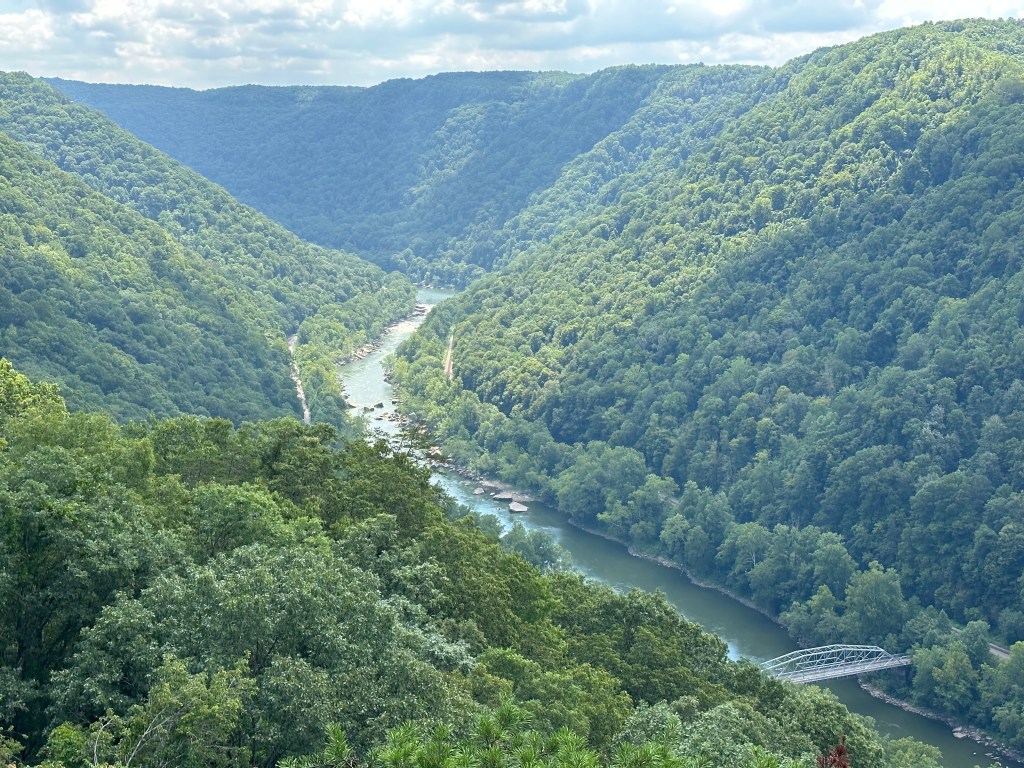
Our next stop was Grandview, and what a view it was. We looked down 1,000 feet to see one of the horseshoe bends of the New River. The sun bathed the hillside forests and illuminated the riverside train tracks.
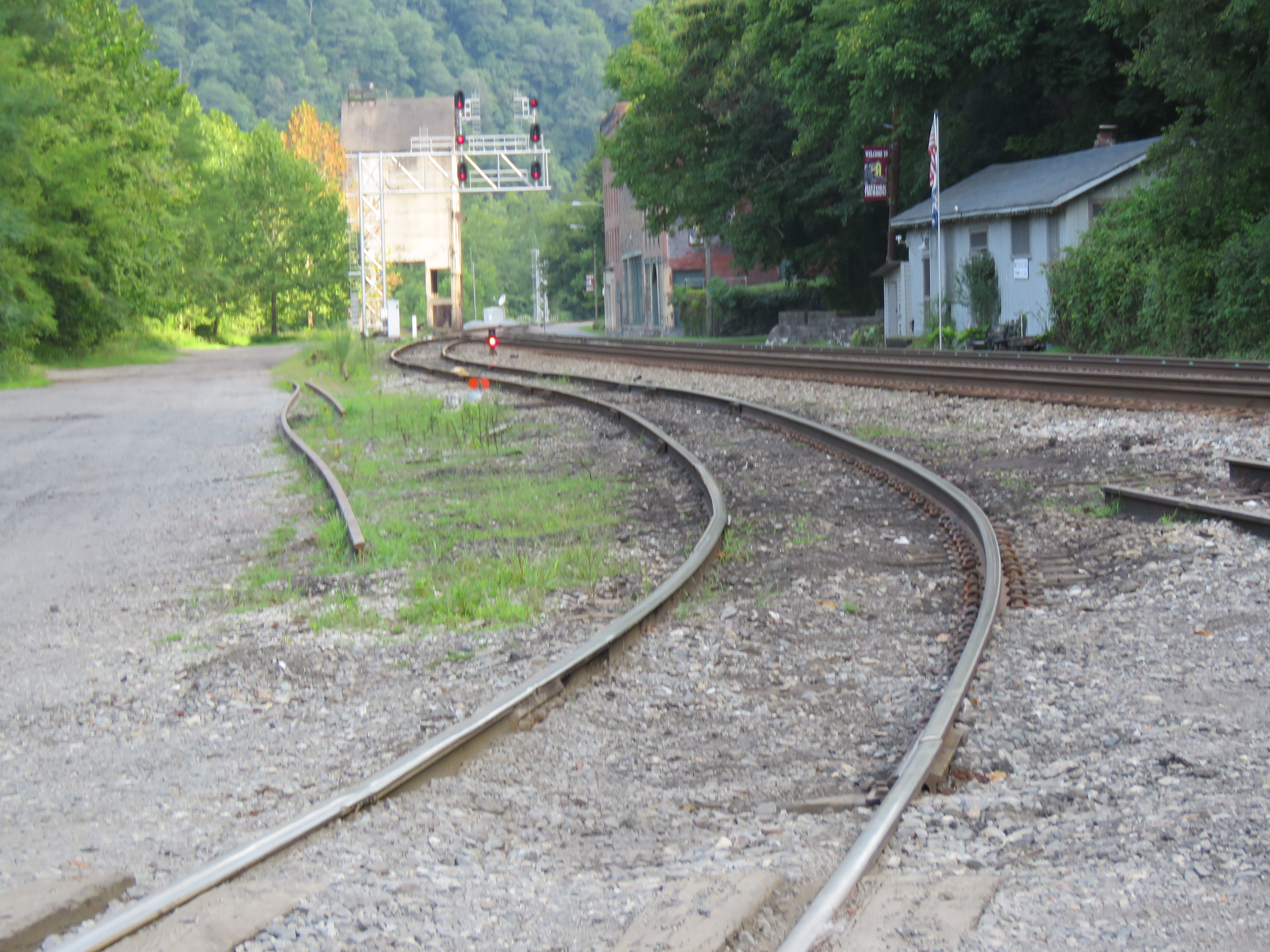
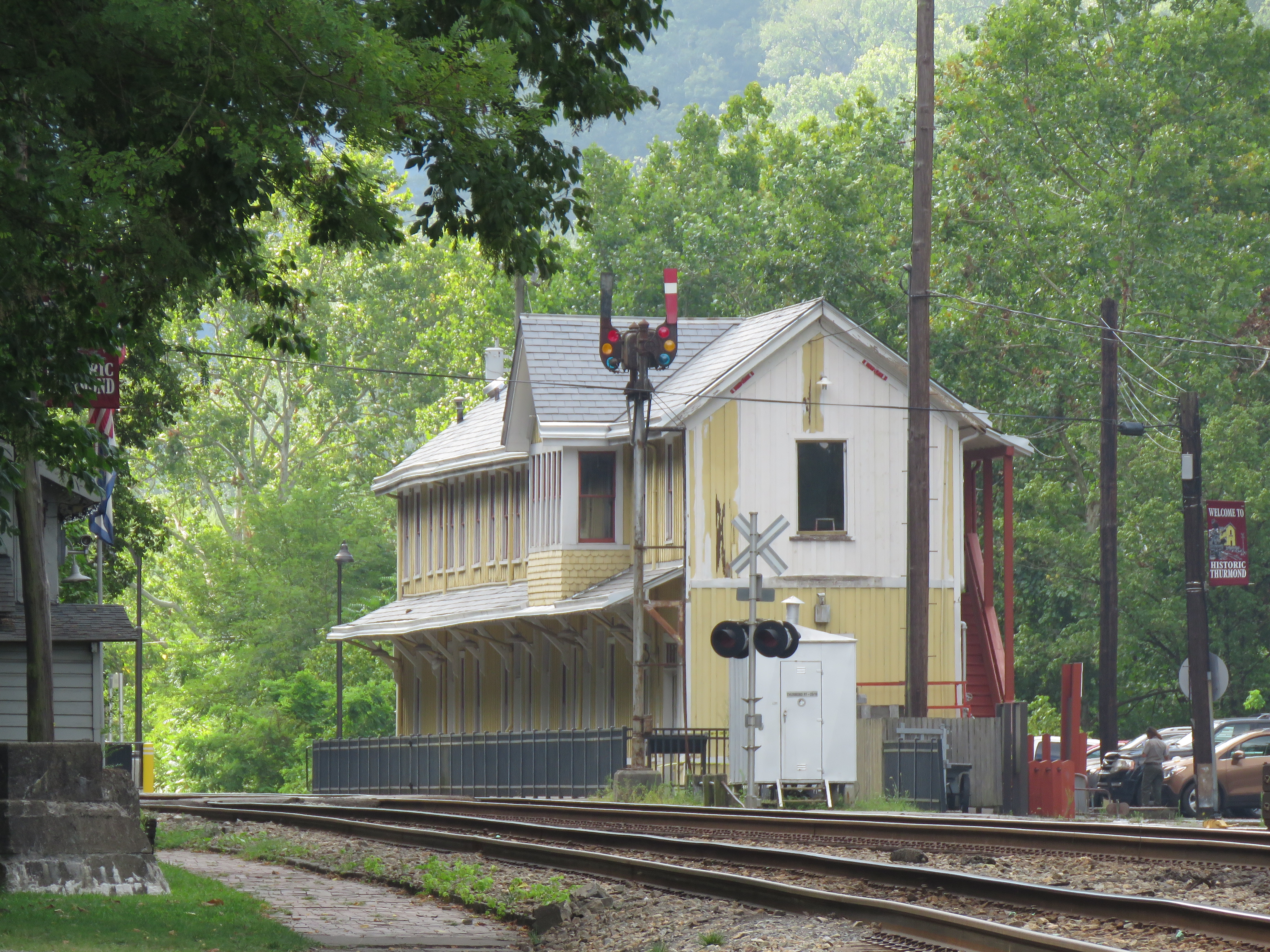
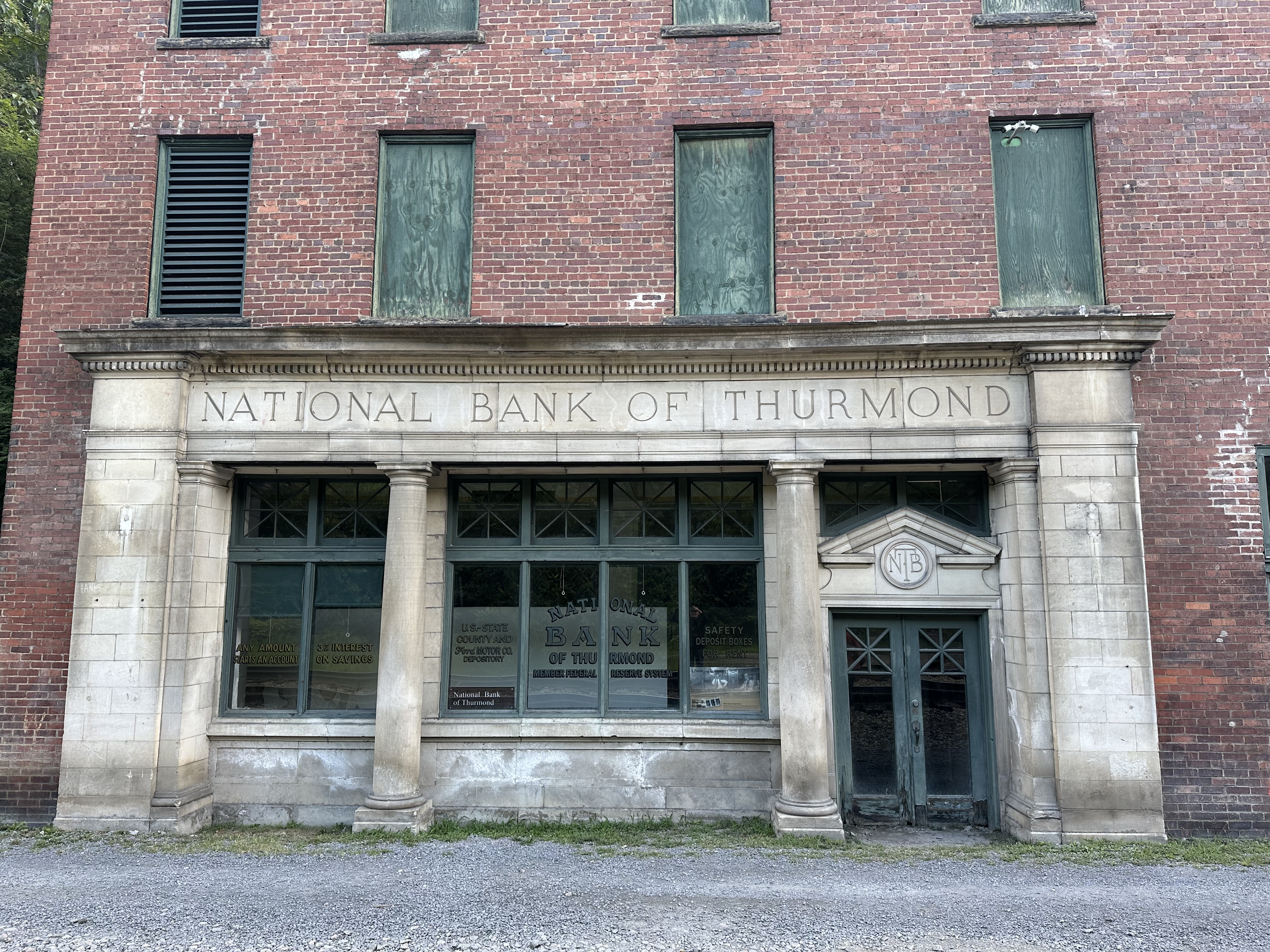
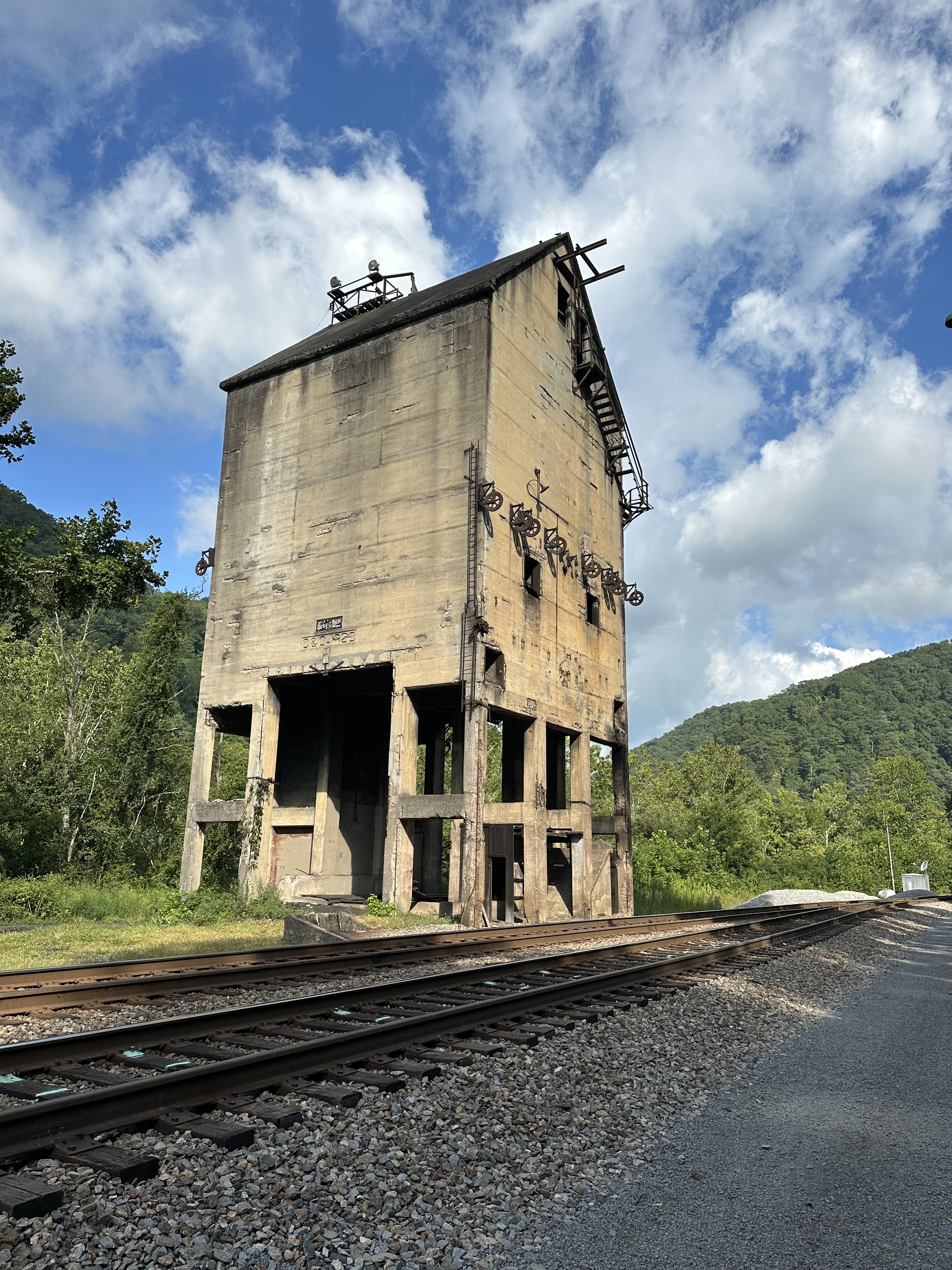
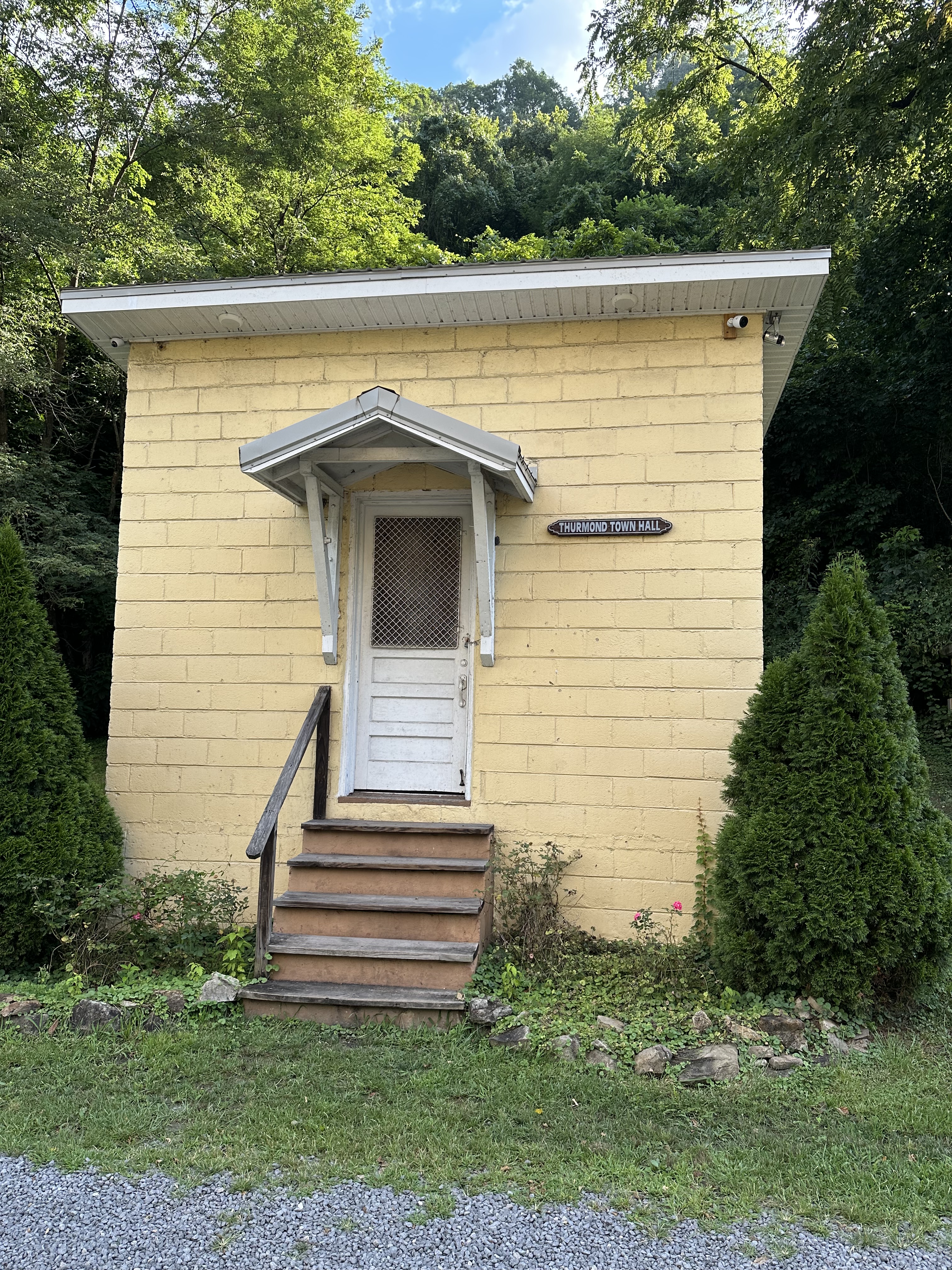
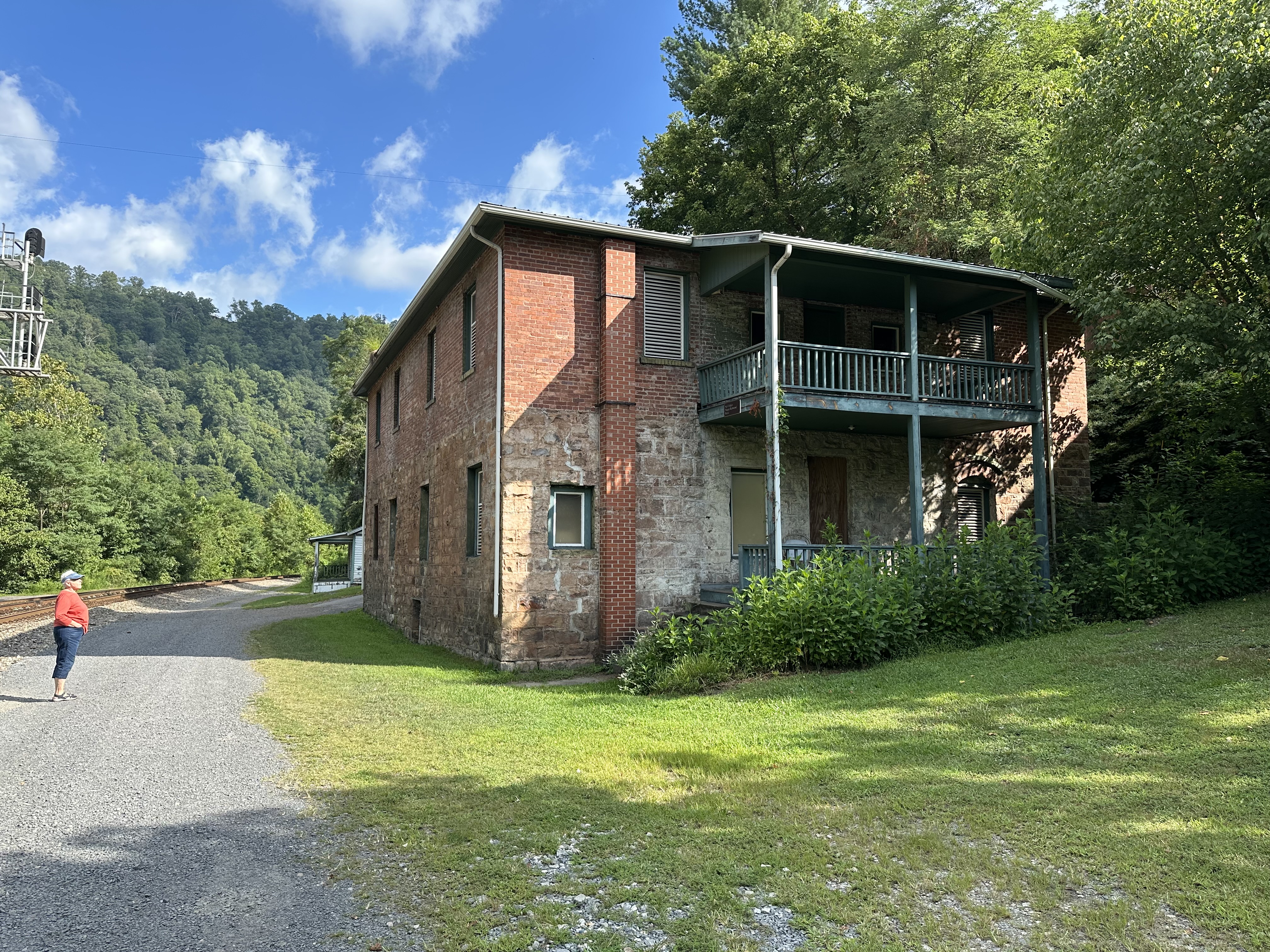
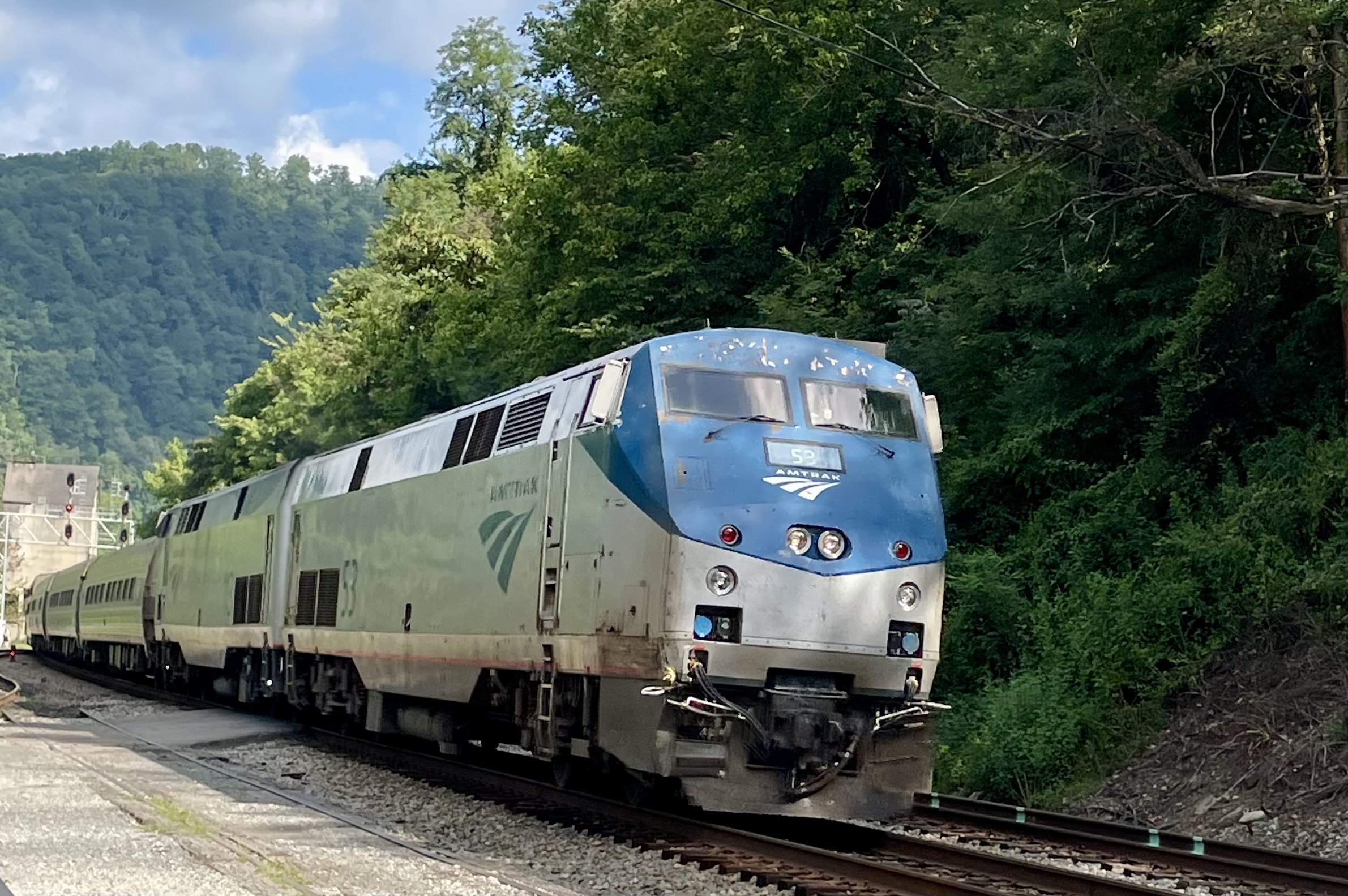
On the second day, we headed to the nearly abandoned town of Thurmond, a boomtown in the coal mining heydays. Today, only five folks live there. They all serve on the town council. One is the mayor, one is the secretary and the other three serve as council members. It was fascinating to walk the town of the once thriving businesses. Fortunately, the daily Amtrak train stopped to pick up a lone passenger while we were there. As the train pulled away, I realized a freight train had stopped on the mainline, allowing the Amtrak train to pass. It was a double treat for this train enthusiast.
On the way out of Thurmond, the road snaked along Dunlop Creek and a train track. Because of the steep descent of the topography, the creek had many rapids and small waterfalls. The sun broke through the thick tree canopy to highlight one of the falls.
Finally, we took in the magnificence of the historic New River Gorge Bridge. The bridge carries U.S. 19. Consequently, the visitor center and the observation boardwalks were much more crowded than the other locales.
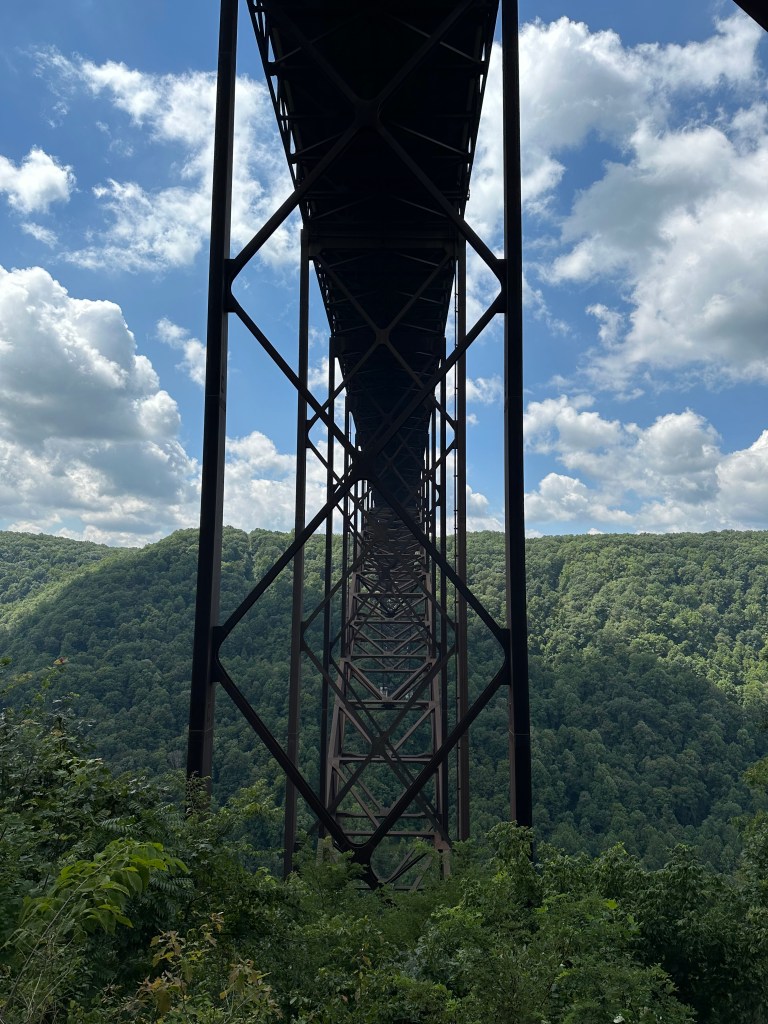
I wanted to get a photo of the bridge from the river view. The only way to do that was to wind our way down narrow roadways with several sharp switchbacks. There were a few places to stop along the way, including one right under the famous bridge.
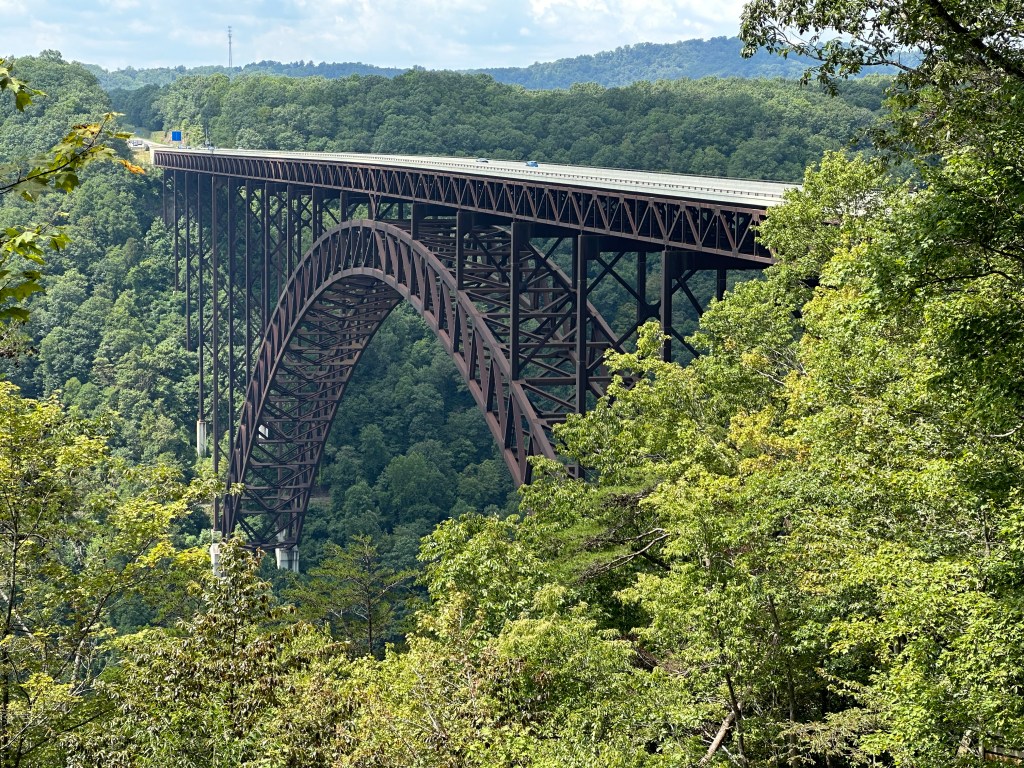
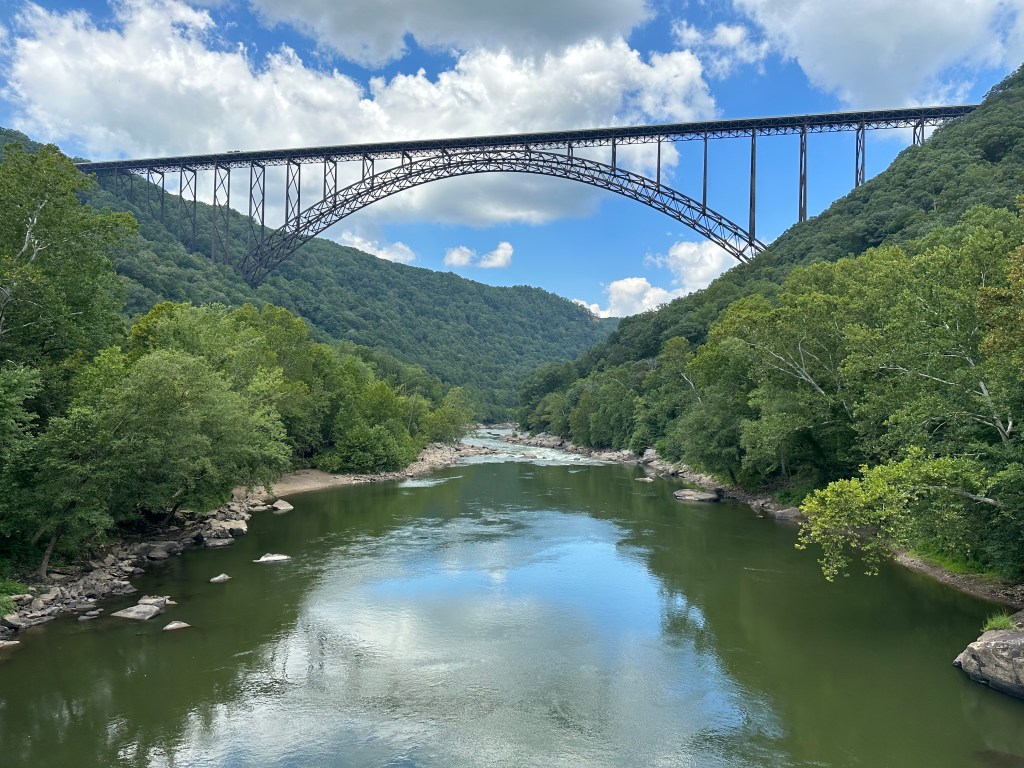
We continued down the twisting road, the river’s rapids on the right, bearing their white teeth. Soon we made a sharp, right-hand turn and drove across the old bridge to the designated parking lot. I told my wife I was heading to the bridge we had just crossed to photograph the New River Gorge Bridge, which spans 3,030 feet across the New River Gorge and is 876 feet above the river. The bridge is the longest single-span arch bridge in the world.
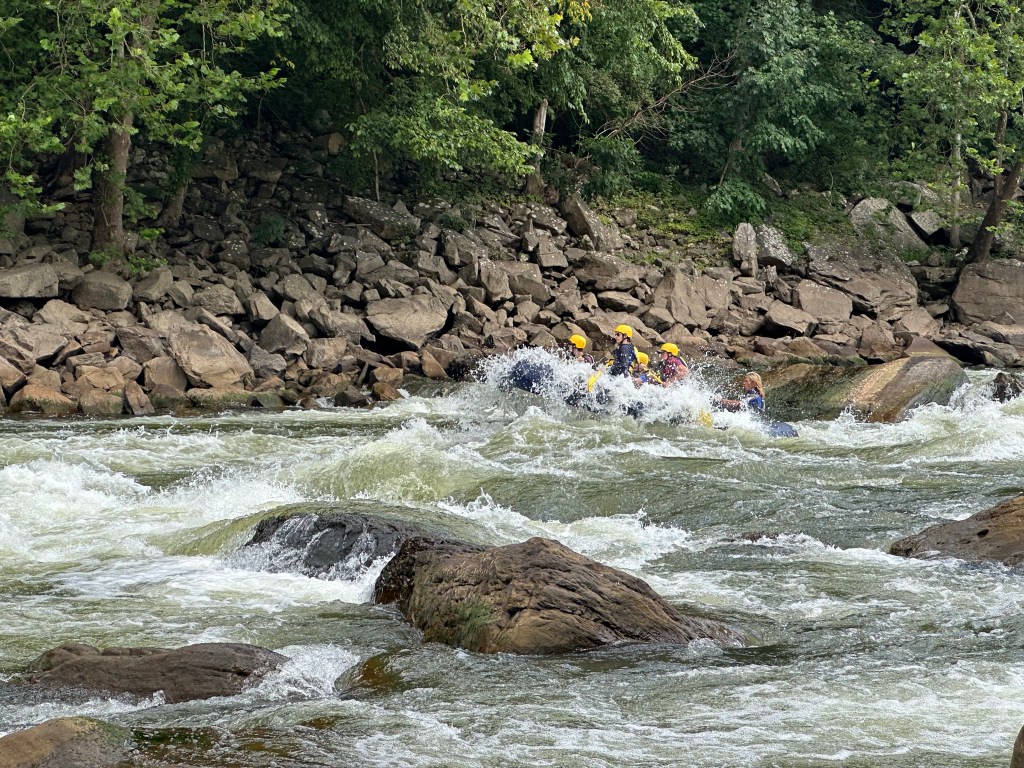
Rafters about to hit the rapids.
The New River Gorge Bridge.
The New River Gorge with the old bridge in the lower right.
Under the bridge.
Rafters and the old bridge.
The size of the boulders and the old bridge.
Running the rapids.
The New River Gorge Bridge taken from the old bridge.
However, I got distracted. I first heard and then saw whitewater rafters running the rapids with others waiting their turn. So, I hustled toward the water’s edge only to discover even bigger boulders than I had at Sandstone Falls. Wanting close-up shots, I scrambled across the rocks as carefully as I could. But the rafters were faster than this 75-year-old grandfather with a bad back and weak knees. Though only 50 feet from the water, I knew I should stop for safety’s sake. I got a few photos, including one lone kayaker who got turned around and bounced through the whitewater backward, just missing a giant rock. As soon as he hit calm water, he headed to the eastern shoreline to compose himself. I was doing the same in preparation for meeting my wife since I had been gone long enough to take the bridge photos and be back already.
After 52 years of marriage, I knew that look when I told her what I had done. I confessed that I should not have gone down there alone on those large slippery rocks. I hustled to get the coveted New River bridge photos. We drove back under the bridge on the switchback narrow roadway until we reached US 19.
The thrills I got from these two days easily could not block out my aches and pains. We learned a lot about the newest national park. And finally, after seven and a half decades, I realized I wasn’t 25 anymore.
On the last day of July, puffy white clouds floated lazily over Silver Lake in the tiny town of Dayton, Virginia. It was a fitting end to a crazy hot month with little rainfall here in Virginia’s Shenandoah Valley.
A gentle breeze ruffled the placid, shallow lake enough to seemingly digitalize the sky’s reflection. Its effect highlighted the heavenly scene above the old barn and farmhouse.
Today begins the dog days of August. It was pleasing to experience July’s cool exit, knowing the eighth month can often bring brutal temperatures and little precipitation in North America.
My wife and I had never been to Europe. When an opportunity arose for us to join a tour group to visit Austria, Germany, and Switzerland, we quickly signed up. That was in pre-pandemic times. Consequently, our initiation into all things European was delayed two years until this spring when it was deemed safe to travel again.
The most influential element in the trip going forward was the rescheduling of the Passion Play at Oberammergau, Germany. The play is held once every 10 years by citizens of the small Bavarian town set at the foothills of the Alps. Click this link to read the fascinating history of why and how the drama began in 1634 and continues today.
The focus of this tour was Anabaptist history. That aspect was added to an established 10-day tour offered by a New England tour company. By trip’s end, those of us on the tour, all senior citizens save one, realized it was a bit much. We had difficulty keeping up with the rapid pace to cram everything in. Consequently, we only skimmed the surface of exploring this beautiful and historic area of Europe. However, that did not detract from our enjoyment of the tour and learning to interact with our fellow tourists and people we met along the way.
Given that, I will share highlights of our trip through select photos, going in chronological order. Please feel free to ask questions in the comments.
I hope you enjoy the trip via the photos as much as my wife and I did in person.
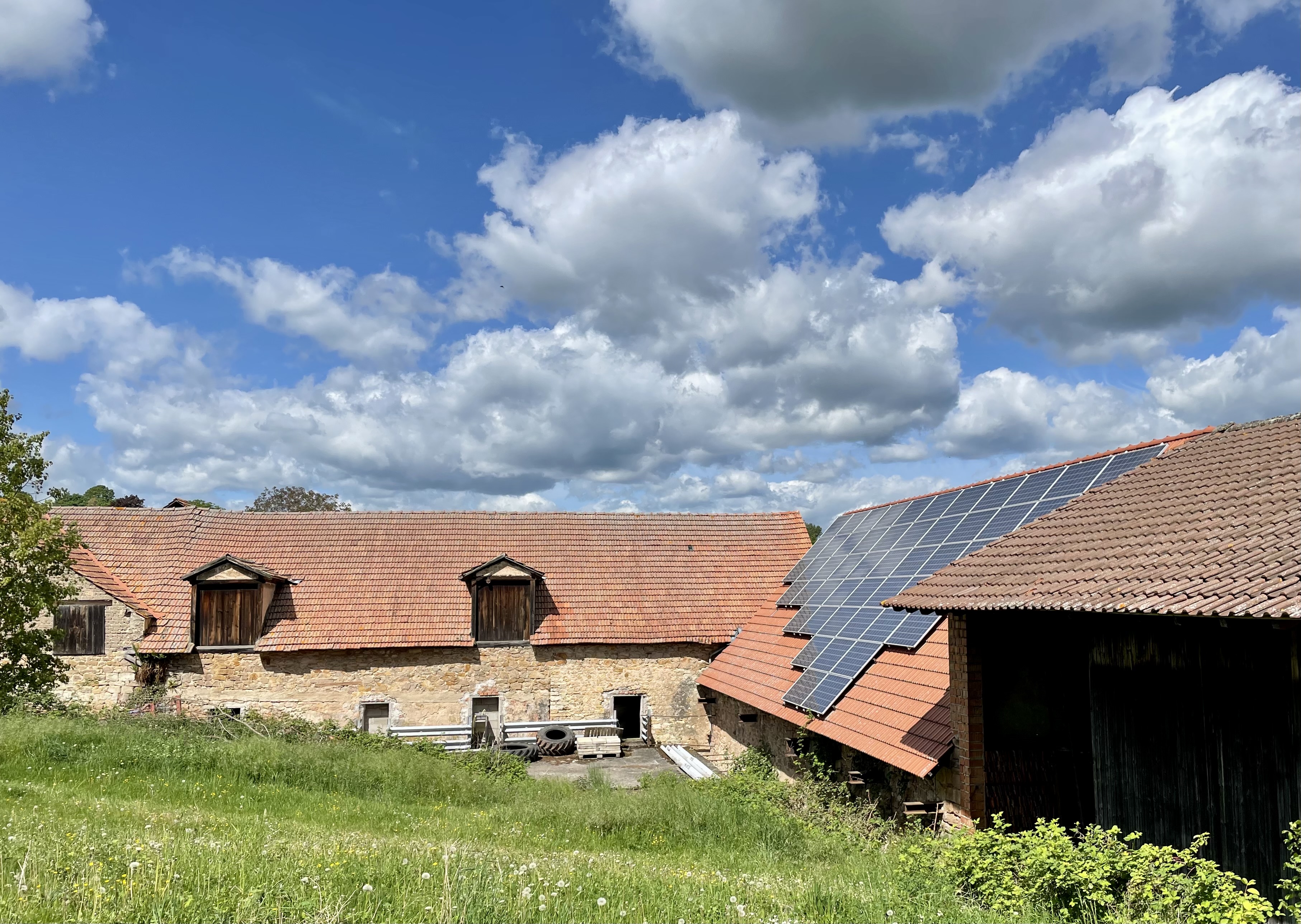
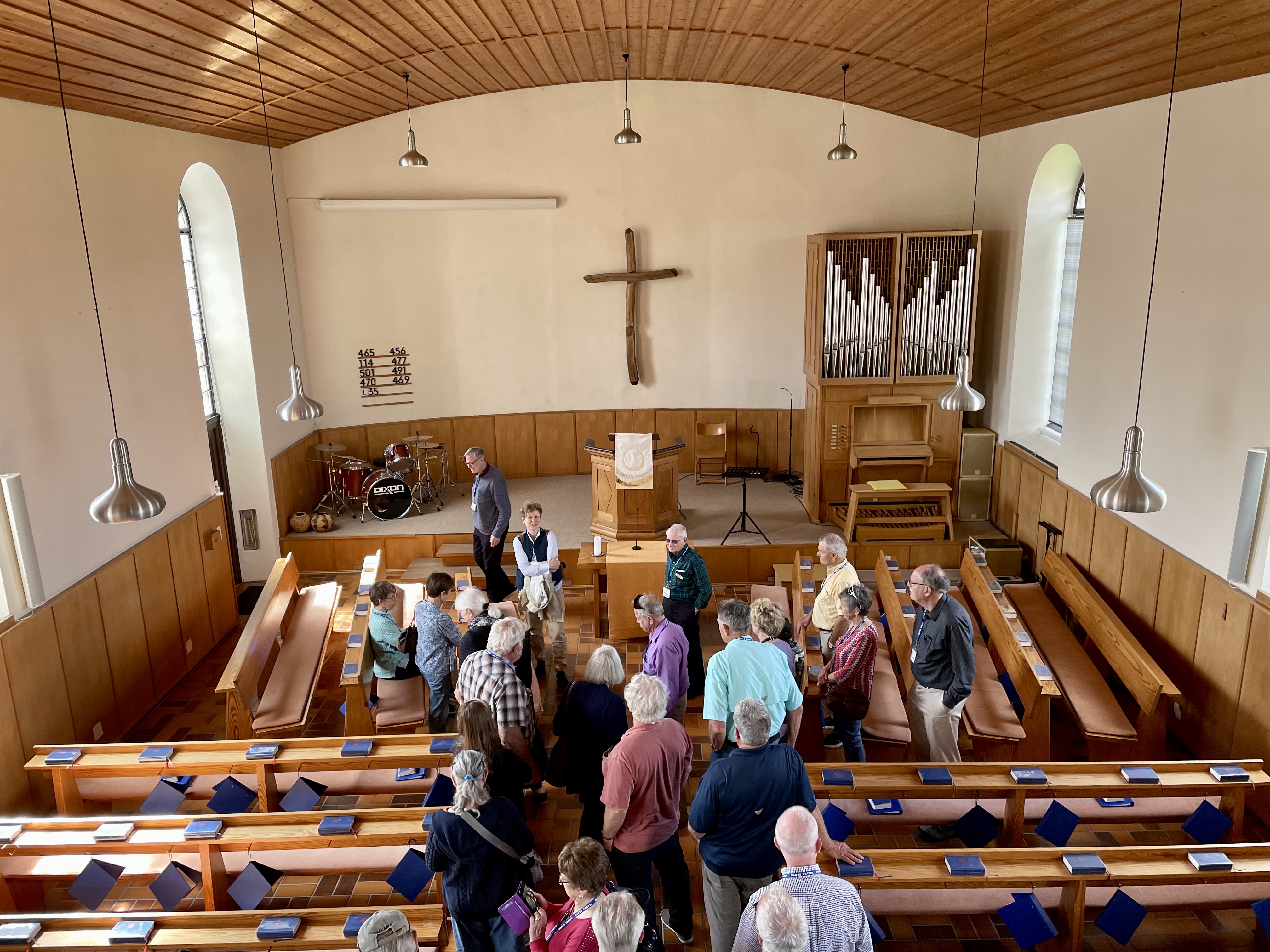
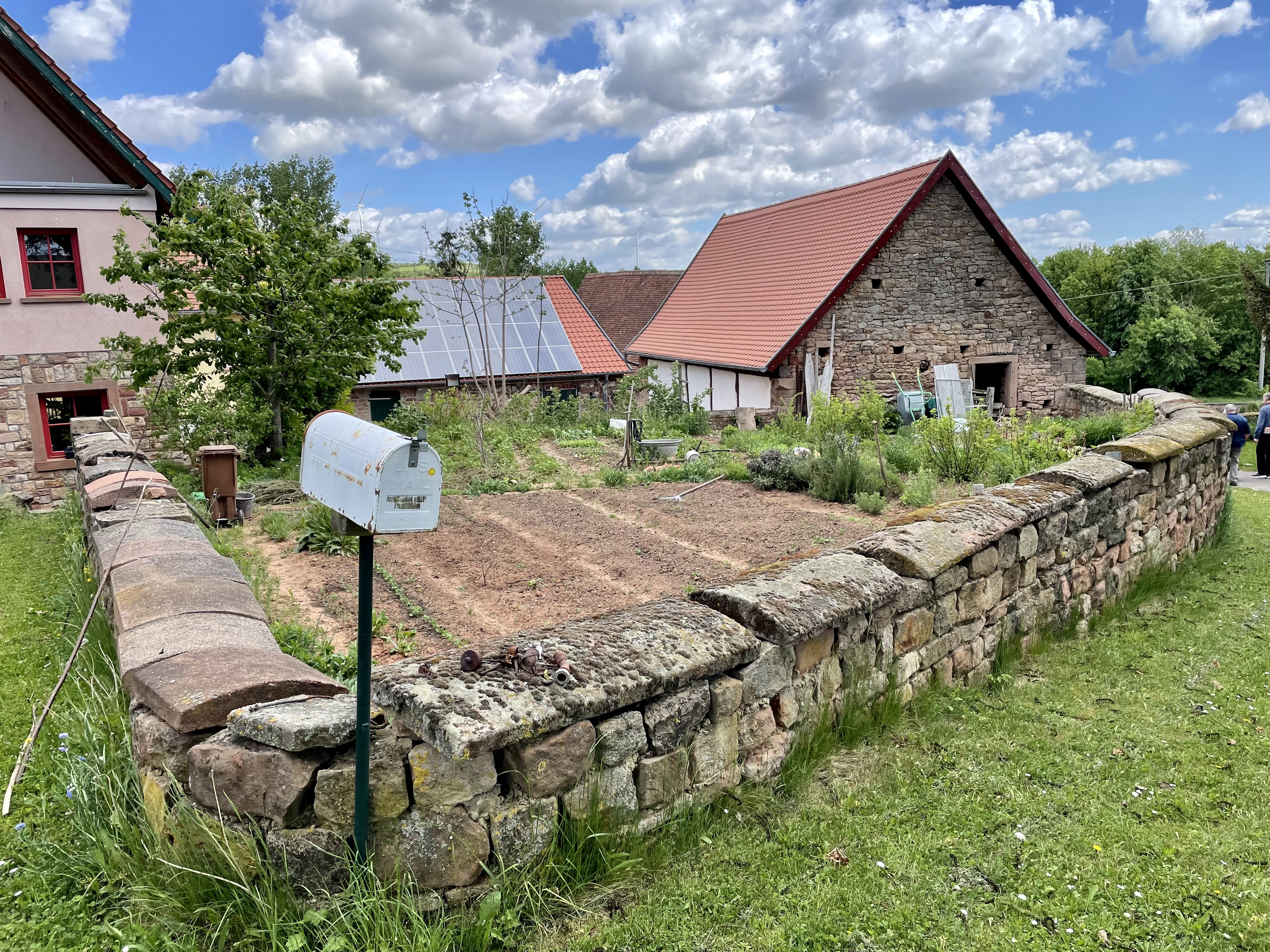
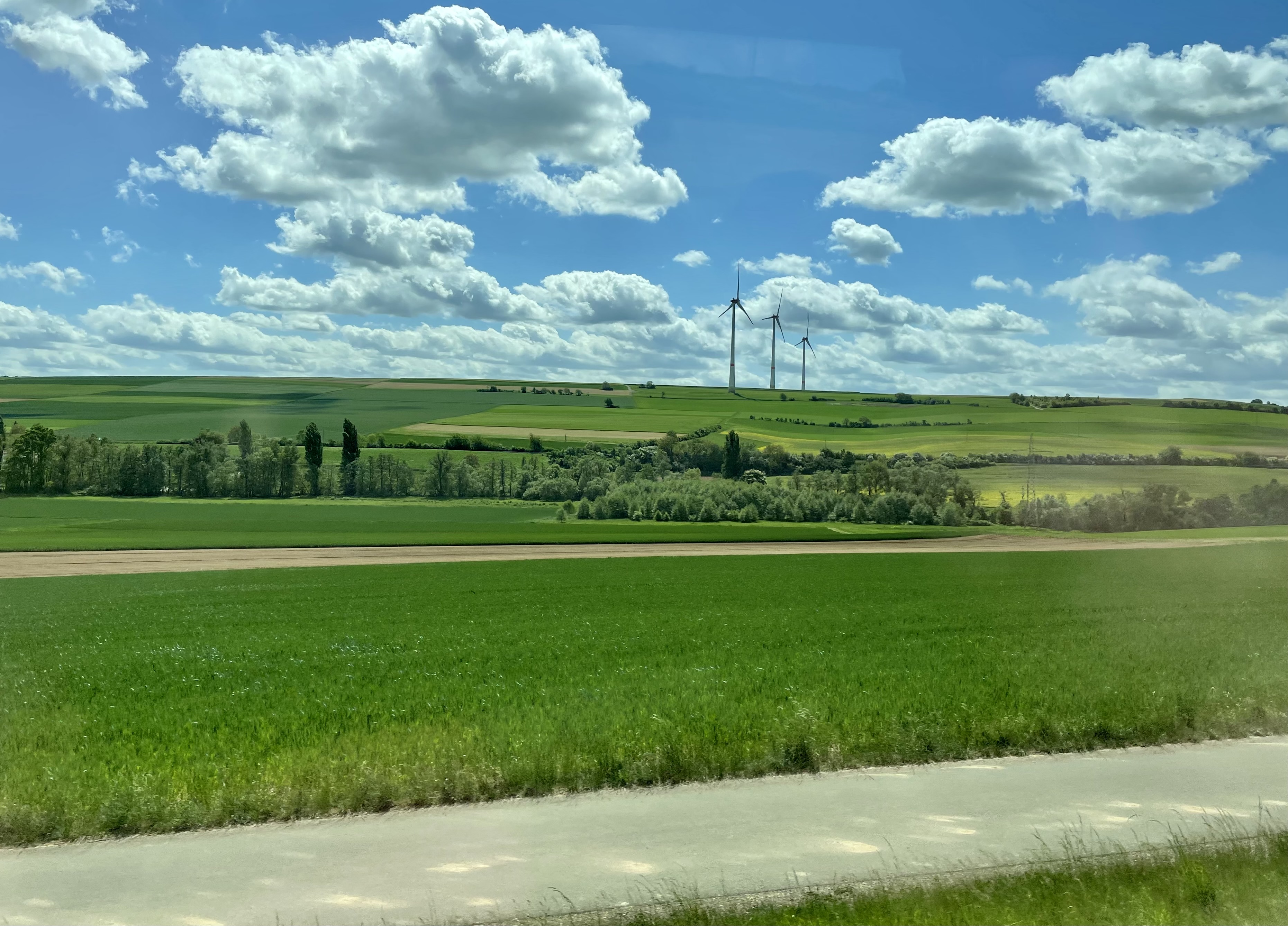
The photos above were all taken at our first stop, Weierhof, an early Anabaptist settlement. The images show a little free library; solar panels on an old farmstead; the Weierhof Mennonite Church; a walled garden, and the rolling German countryside with bike paths, farm fields, and windmills.
We traveled from the rural village to the city of Worms, Germany, where Martin Luther began his resistance to the ruling Catholic Church.
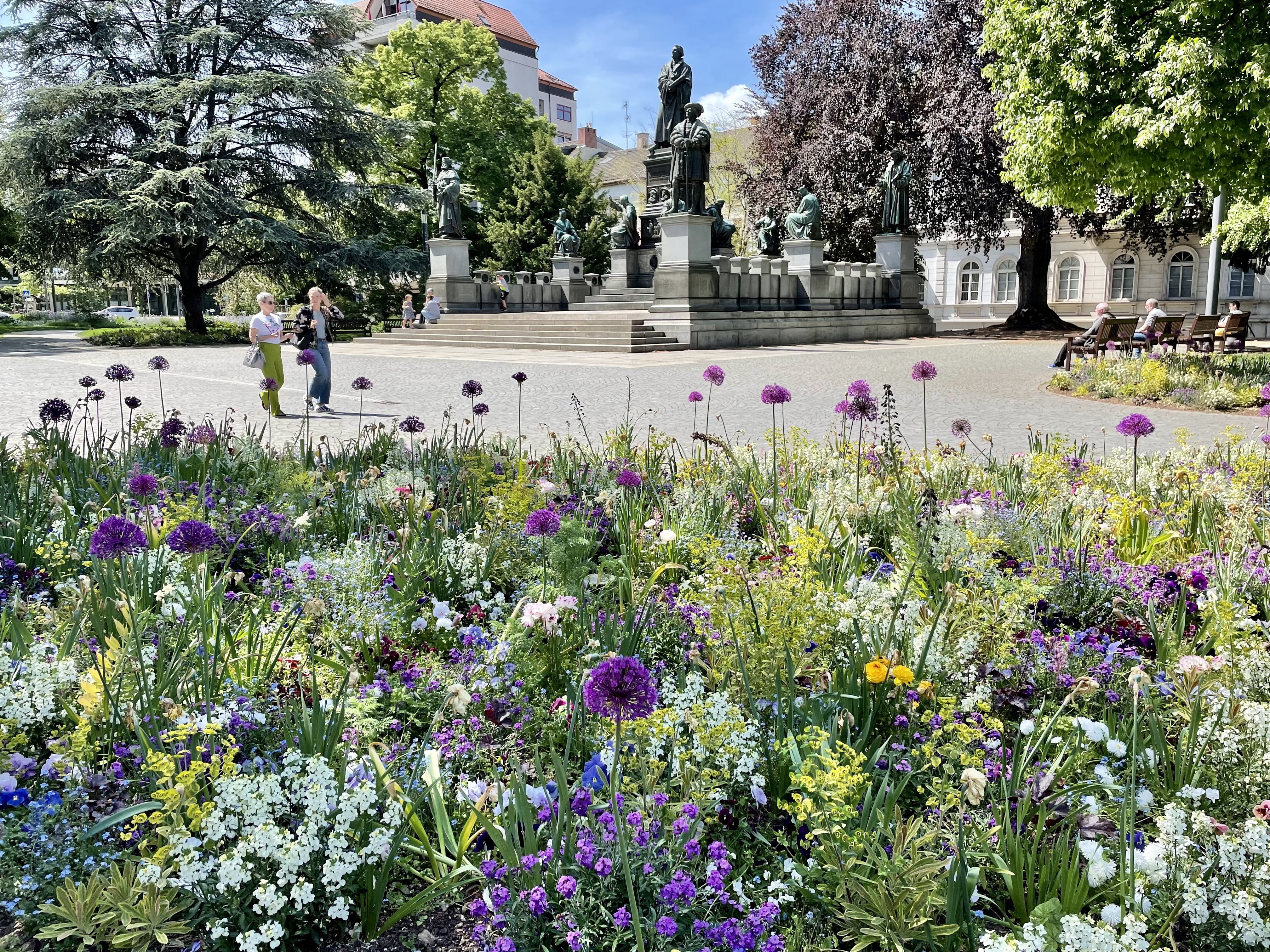
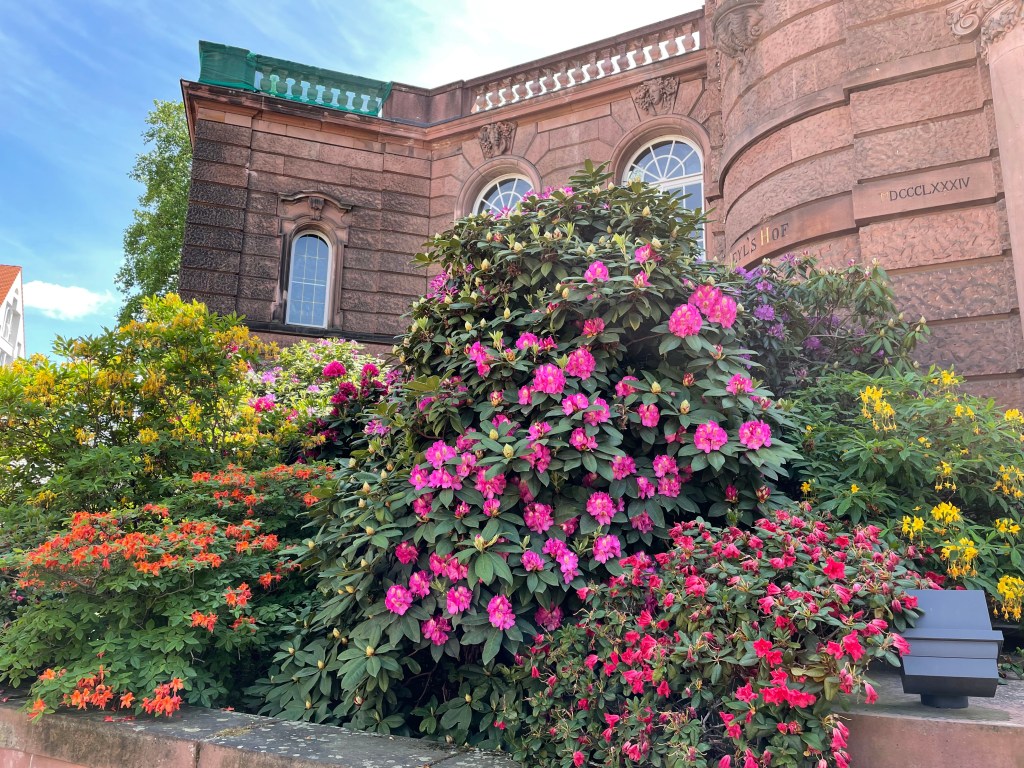
Our lunch stop in Worms, Germany, included touring significant sites where Martin Luther began his public resistance that eventually led to the beginning of the Reformation. Flowers and flowering shrubs were in full bloom. We visited the spot where Luther made a dramatic speech and the Reformation Monument at Luther Plaza. A plaque included the complete statement by Luther.
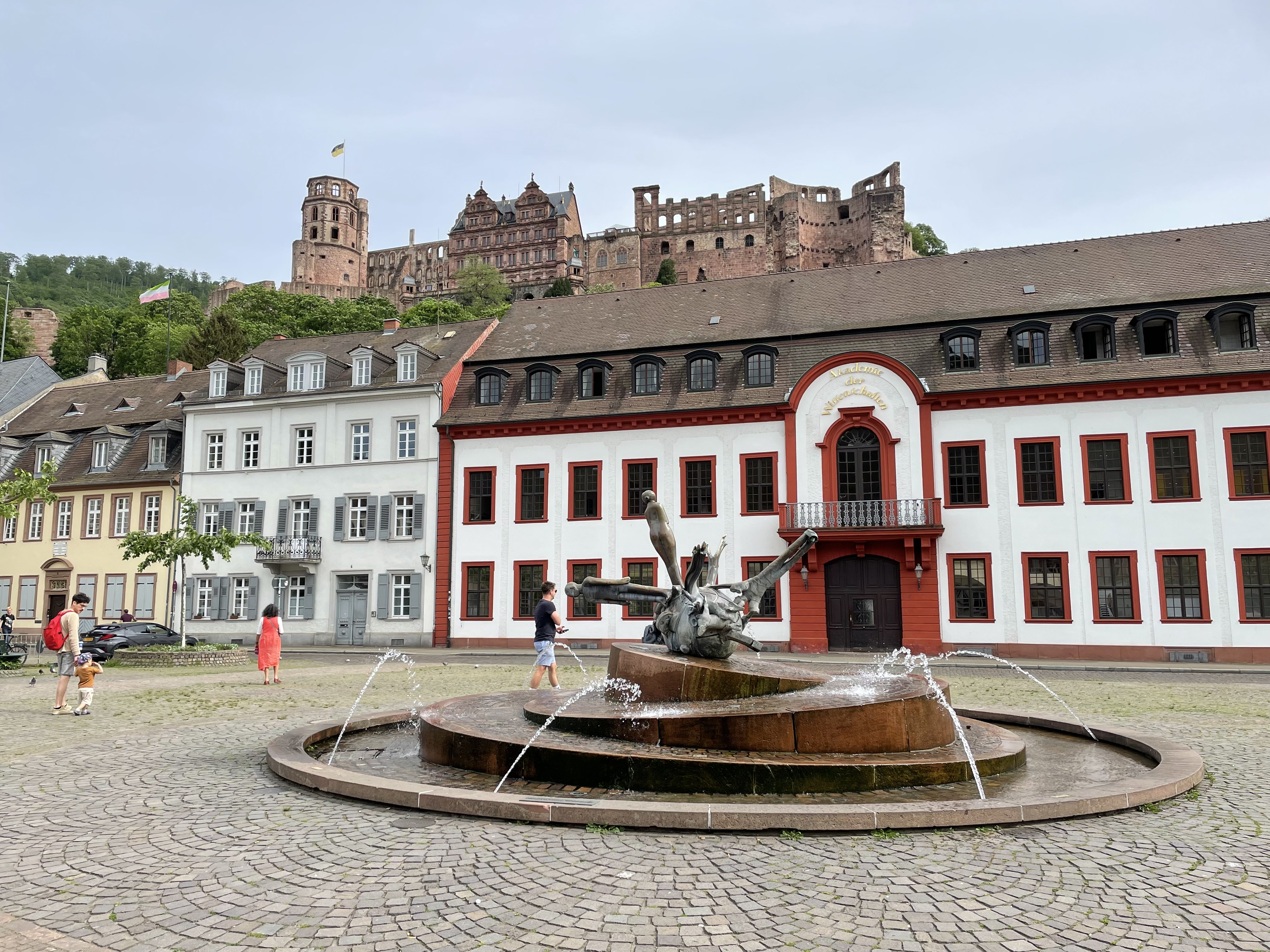
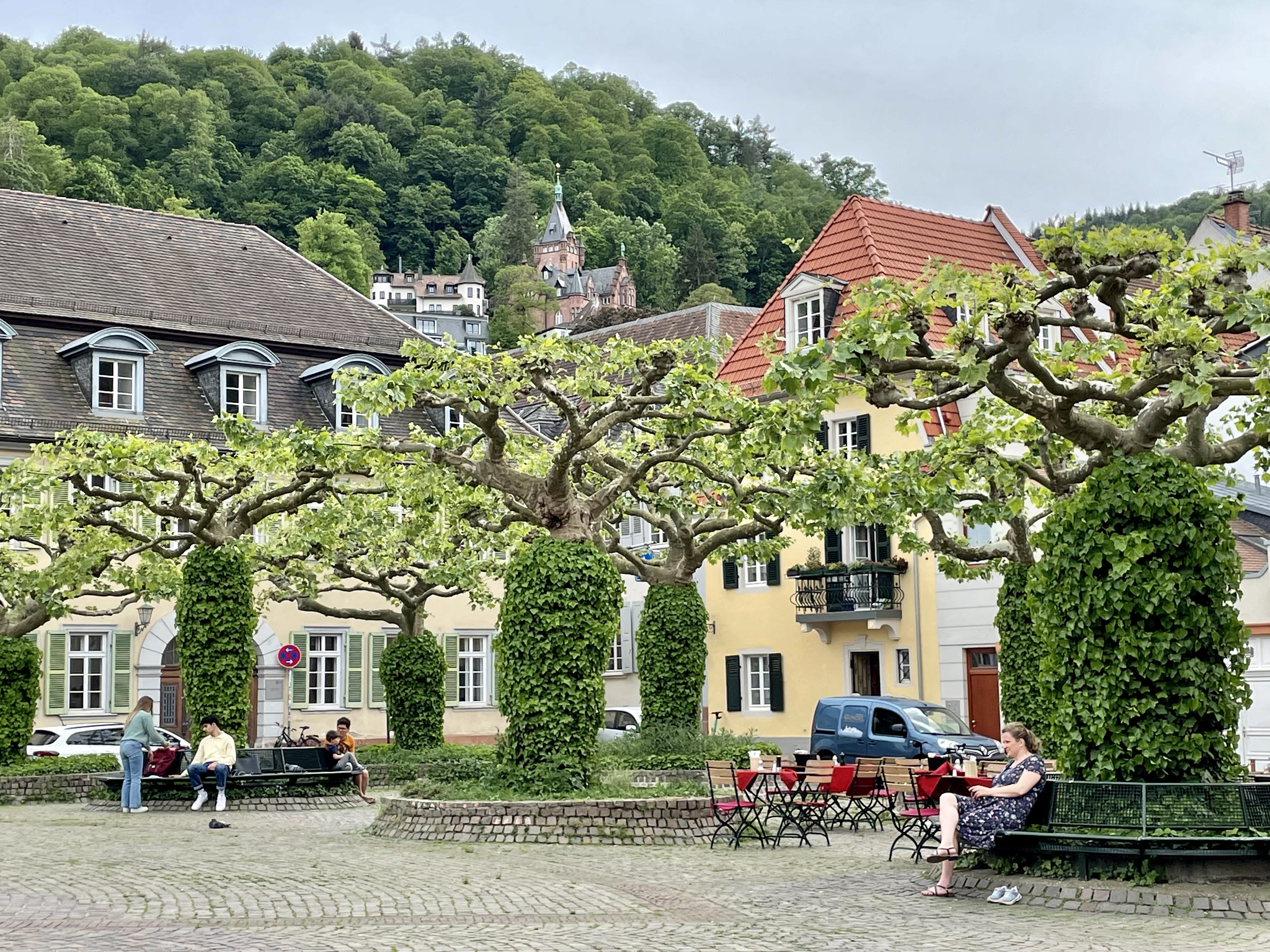
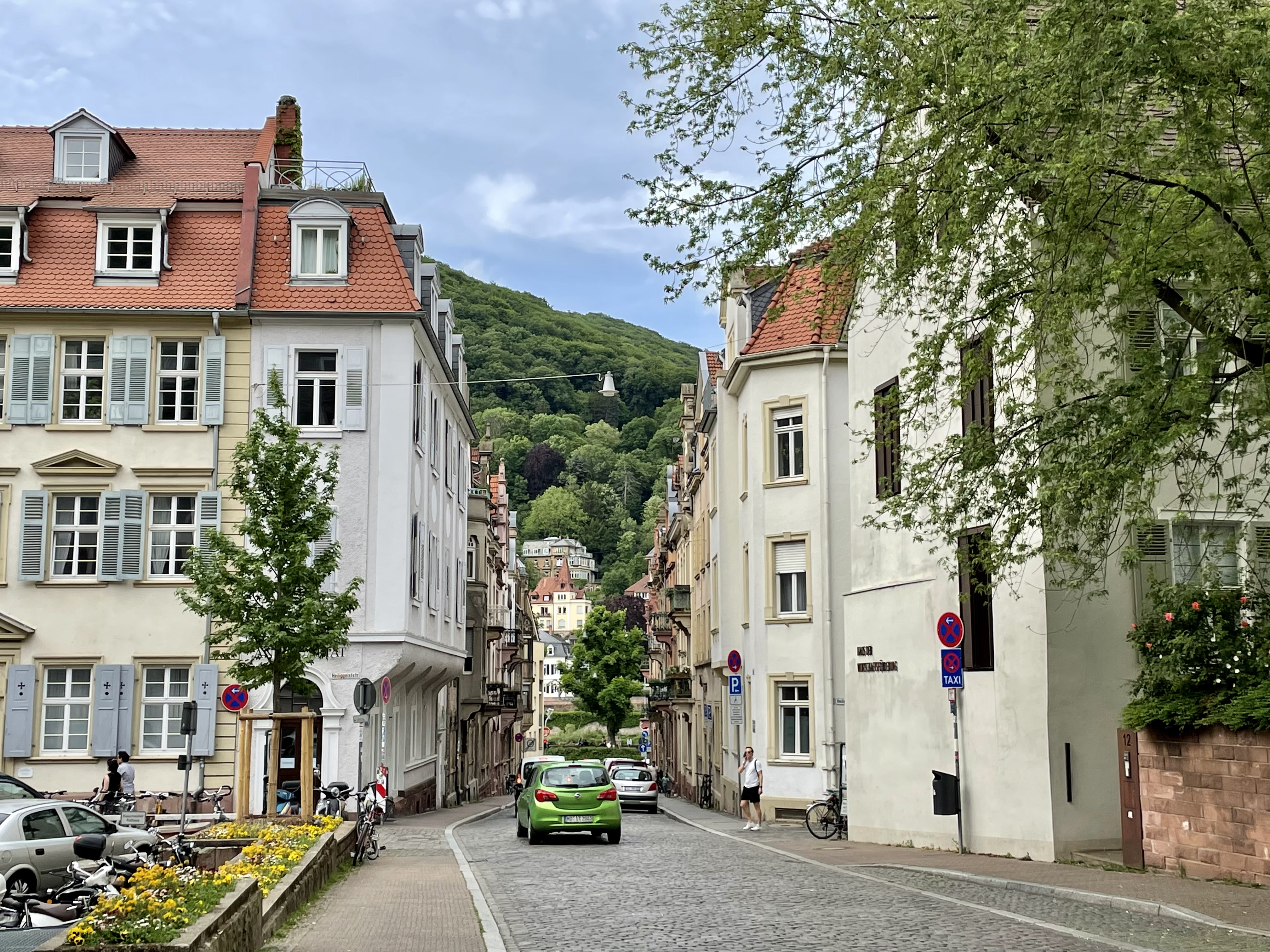
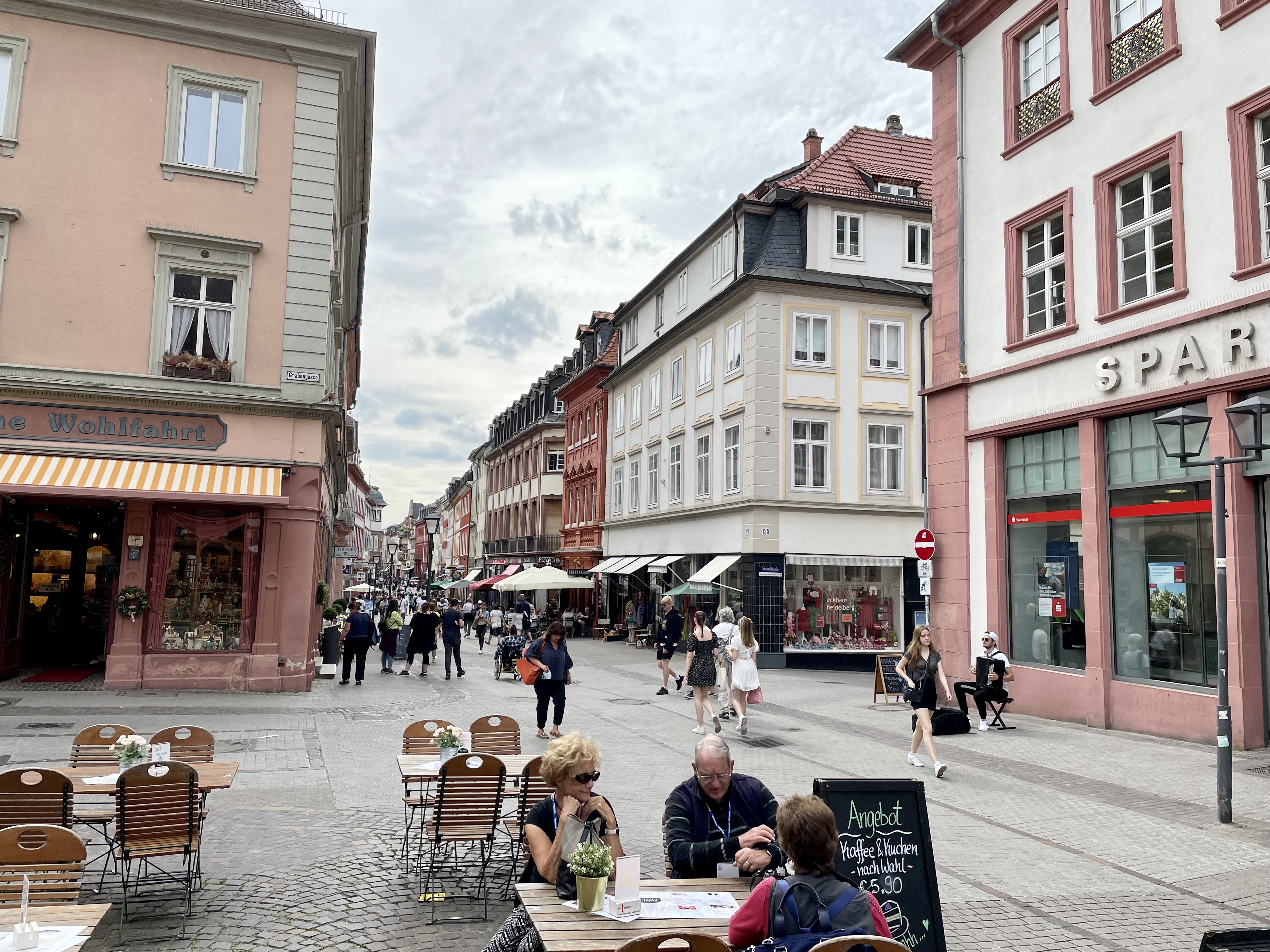
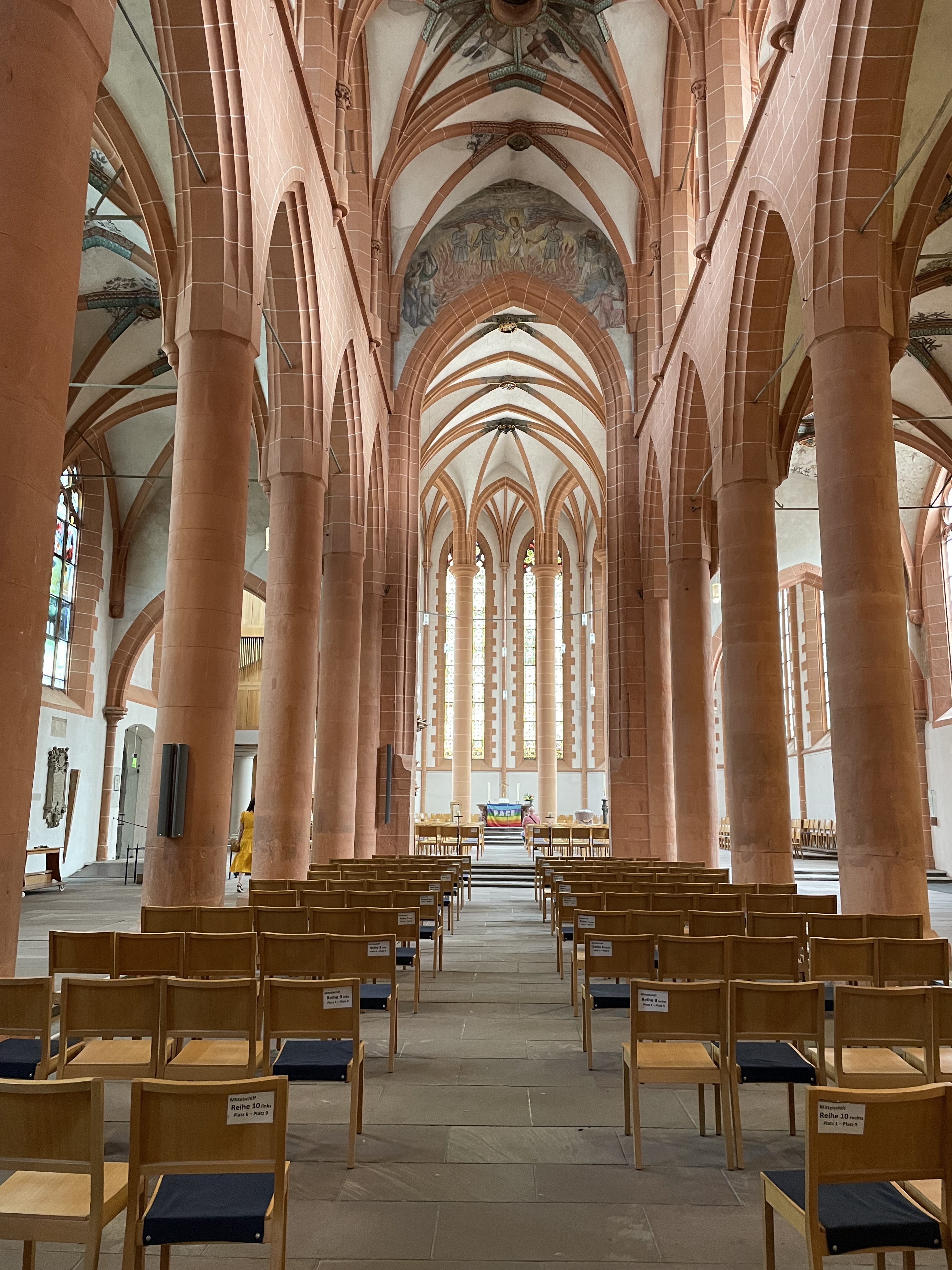
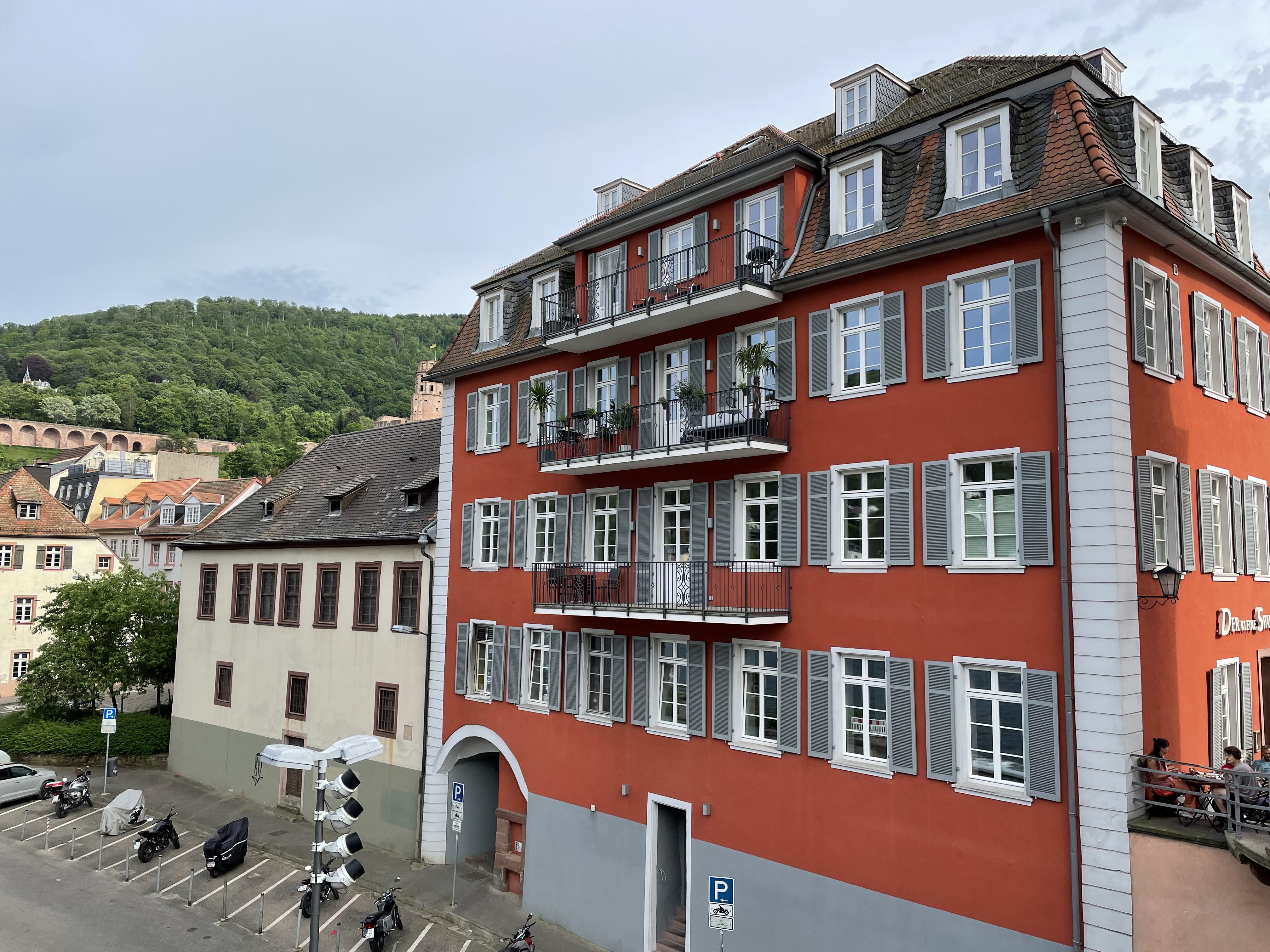
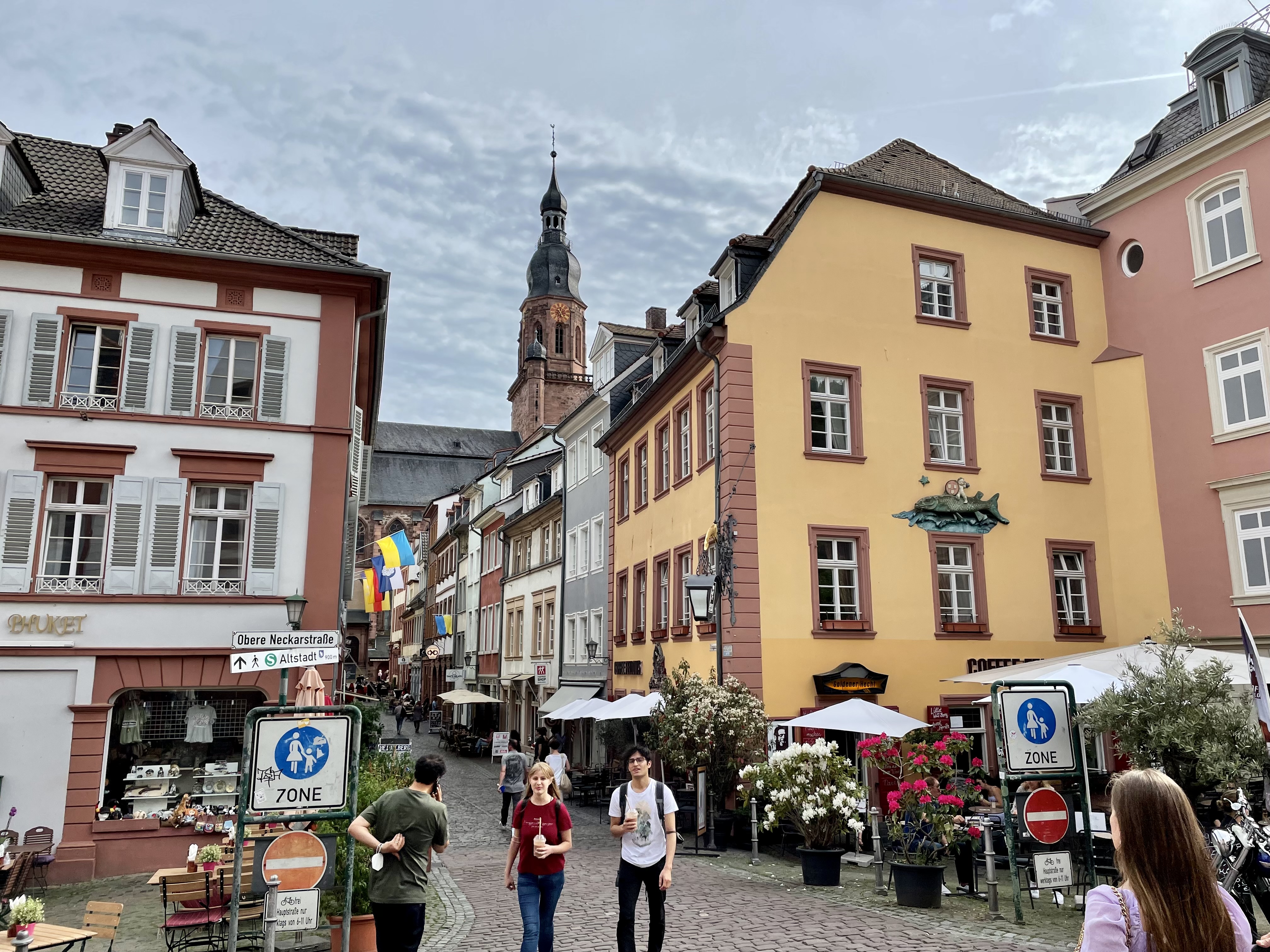
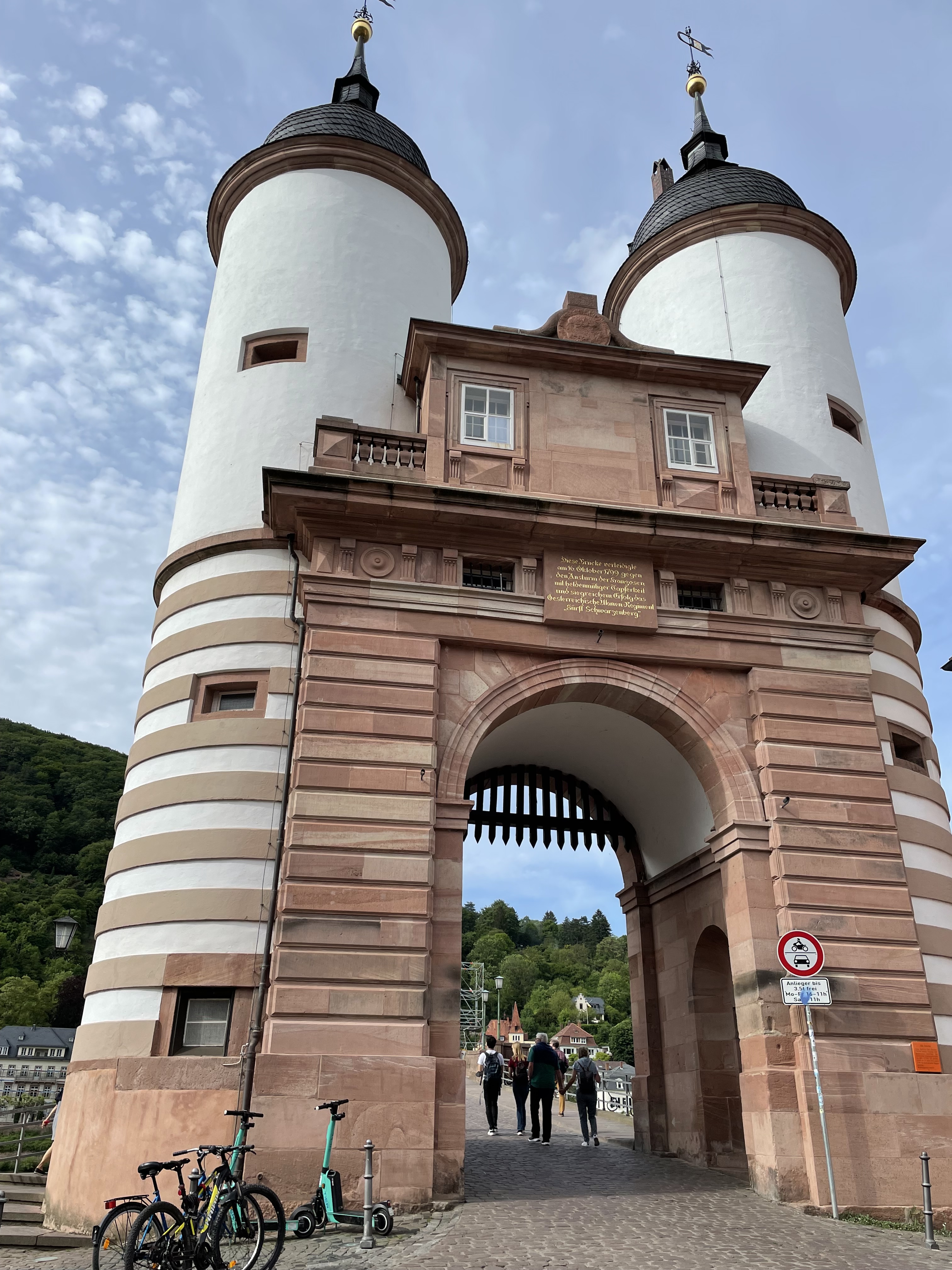
From Worms, we made an all-too-brief stop in the historic city of Heidelberg, Germany. Because of its rich history and preserved old buildings, the town was saved from the massive bombings of World War II.
An old fortress still stands above the old city.
Karls Plaza.
A typical street in Heidelberg.
Students head home after classes at Heidelberg University.
It was a pleasant evening for outdoor dining.
A lovely church.
A pedestrian-only street.
At the old bridge.
The beauty of Heidelberg.
One of the ancient city gates.
The Neckar River.
All too soon, we had to leave Heidelberg and head to our hotel in Viernheim. Our first day in Europe was filled with wonder, beauty, and history. But after an eight-hour flight and a full day of touring, we were ready for a good night’s sleep.
To look at this photo, you would never suspect that this is the top of a mountain. But it is.
This beautiful landscape is at Bear Rocks Preserve in the Dolly Sods Wilderness in West Virginia. Dolly Sods is managed by the U.S. Forest Service, and they describe this preserve as “a diverse and complex ecosystem of windswept heath barrens.” Heath barrens are vast areas of uncultivated land, and are consider by some as wasteland because they cannot be used for agricultural purposes.
High above the Canaan Valley, this amazing preserve is a mix of giant rocks, stunted red spruce, mountain laurel, bogs, and blueberry bushes with their brilliant crimson leaves. Such landscape is usually found much further north in Canada.
Bear Rocks is a much-photographed area because of it stunning vistas. “Heath Barren Beauty” is my Photo of the Week.
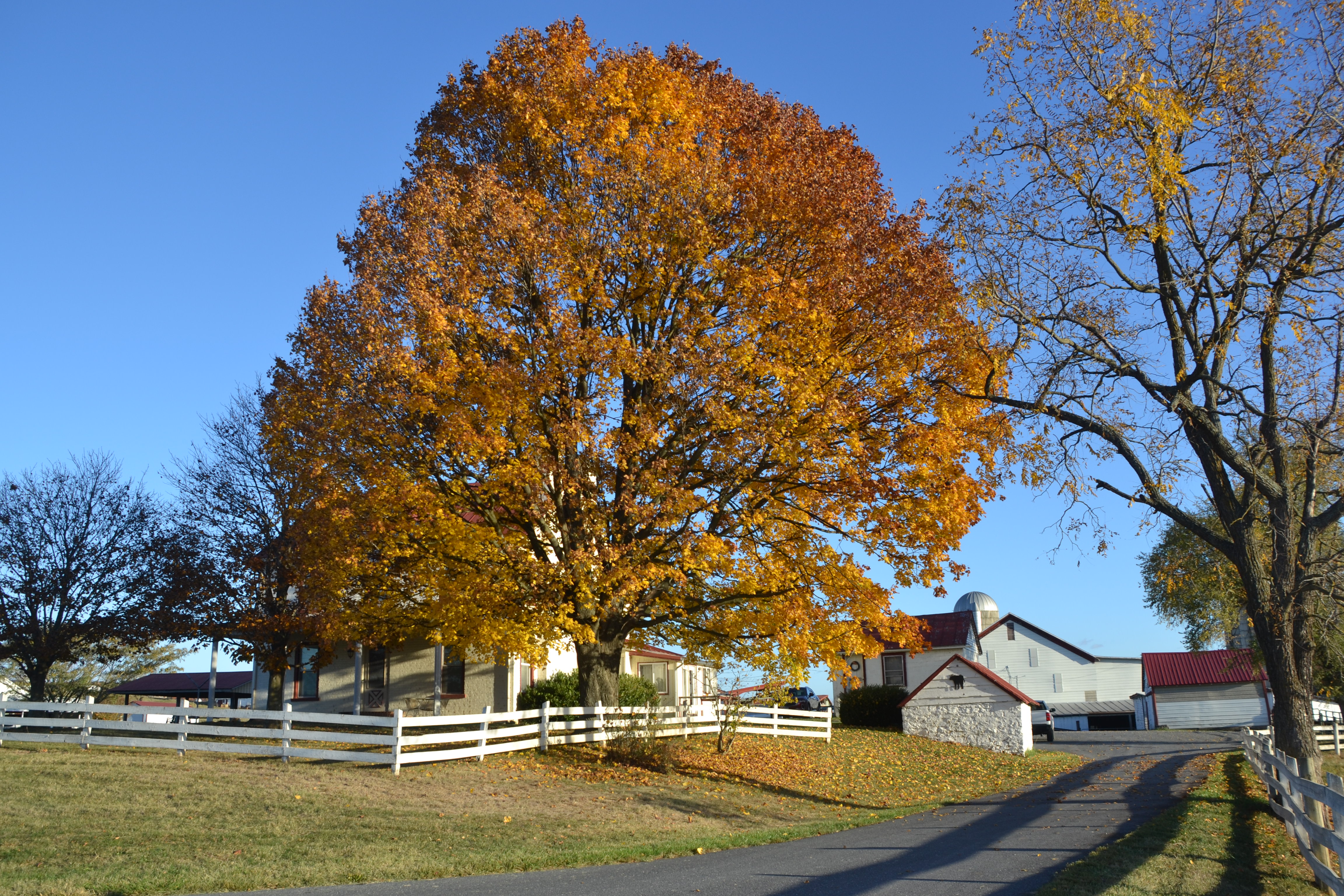
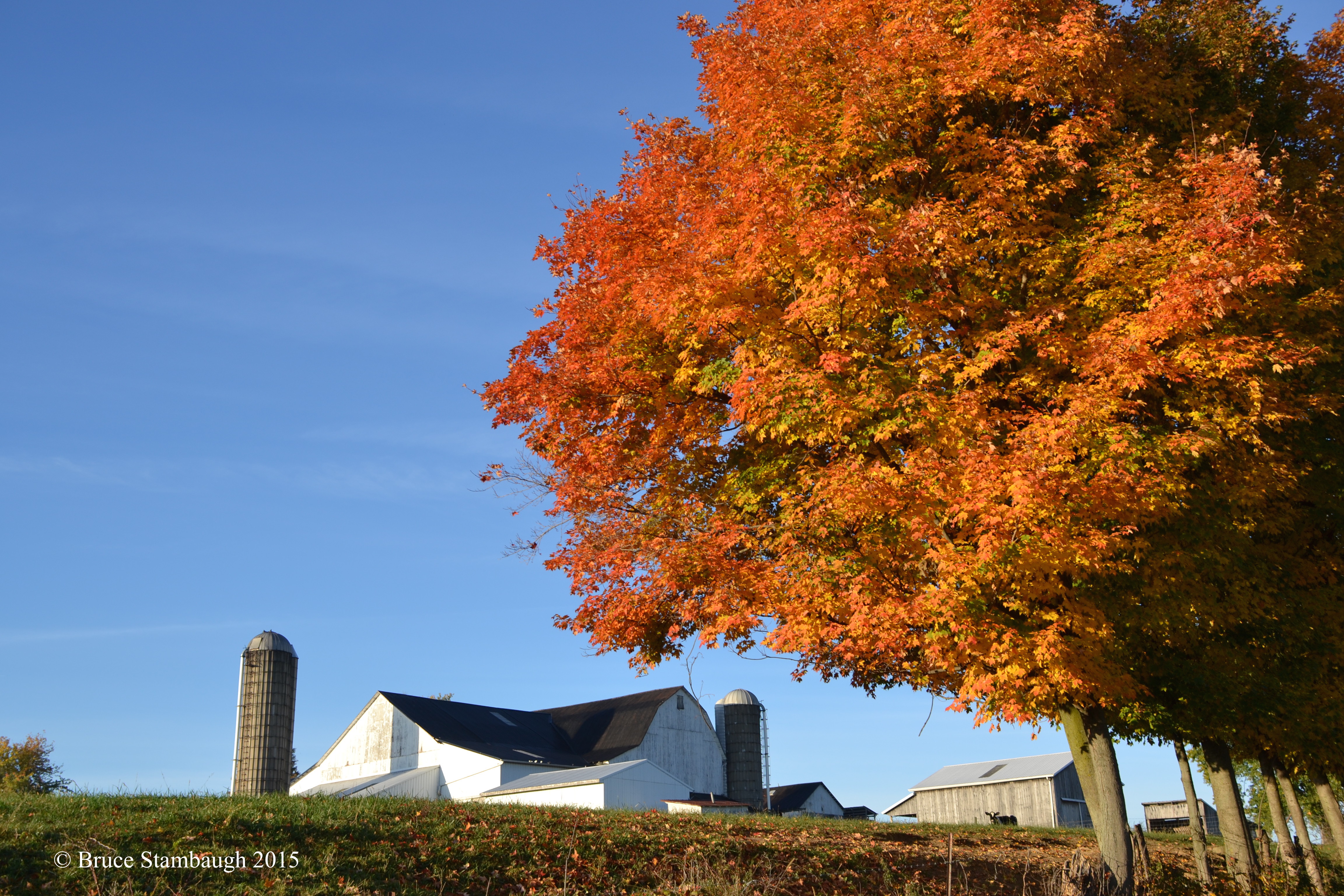
Fall comes to an Amish farmstead in Ohio’s Amish country.
By its very nature, October holds a storehouse of memories for people. It’s a month on nostalgia steroids.
Who doesn’t remember raking leaves into giant piles in the yard and then jumping into them? Guilty as charged.
I have fond memories of our father loading his brood into the family station wagon and heading southwest along the winding, hilly roads to Holmes County, Ohio. That was before the state eliminated the undulating curves between Berlin and Millersburg.
I distinctly remember stopping along the road on the east side of Millersburg at Briar Hill Golf Course to view the vibrant colors of the changing leaves. Dad especially loved a giant sugar maple’s warm oranges and reds.
Years later, when I found myself teaching in Holmes County, I ventured out after school to explore the backroads for scenic views myself. It was a two-fold way to enjoy the colorful landscape and learn my way around.
I always found the hills around Glenmont to be stunning when the leaves were exceptionally bright. I also found them difficult to scale as a volunteer firefighter when a passing train sparked a woods fire up a remote and steep pass.
I remember standing on schoolhouse hill overlooking Killbuck, where I taught. Billowing smoke from burning leaf piles filled the valley from one end of town to the other. My eyes watered from the fragrant stinging. Fortunately, outdoor burning like that is no longer permitted.
Once my wife and I moved to the county’s eastern end, I found the trees were just as beautiful as in the west. Rows upon rows of corn shocks enhanced the bucolic scenes all the more.
When my wife retired 15 years ago, we were freer to explore October’s natural wonders far beyond our limited Holmes County horizons. We discovered our beloved county wasn’t the only pretty place on earth.
Friends invited us to share a condominium with them in Arizona in early October. In locales like Sedona and the Grand Canyon, we discovered vibrant autumn colors in rocky ridges and spires instead of leafy trees. It was gorgeous, just the same.
Of course, October offers more than brilliant colors. I remember hayrides down Panther Hollow with our church youth groups on dark and chilly nights. Hot cider and fresh donuts at the outing’s conclusion sealed the spooky experience.
Not to let nostalgia carry us away, October often brought the first frost and the first snow. I recall embarking on a conservation field trip with a busload of underdressed fifth graders. By the end of our farm tour, we all were tromping through inches of snow.
October highlights come in so many flavors and textures. Various festivals abound celebrating harvest time, including cheese, wine, pumpkins, and apples. It’s all about socializing.
Produce stands and greenhouses hold customer appreciation days before they close for the season. Dodging the yellow jackets can be as challenging as bobbing for apples.
October is in the middle of fall migration for many birds species. Shorebirds and birds of prey use sunny day solar thermals to aid their southern journey. The last of the Monarch butterflies wing it to Mexico.
Halloween, though, seems to overshadow all of the beautiful interactions between humankind and our environment. Entire towns decorate for Halloween comparable to Christmas. I’m not against that, but I simply prefer the daily unfolding natural beauty.
October provides plenty of opportunities to get outside and enjoy the crisp air, golden sunsets, and changing foliage. Consequently, October stirs lots of emotions.
Perhaps the best October memories are the ones we make today.
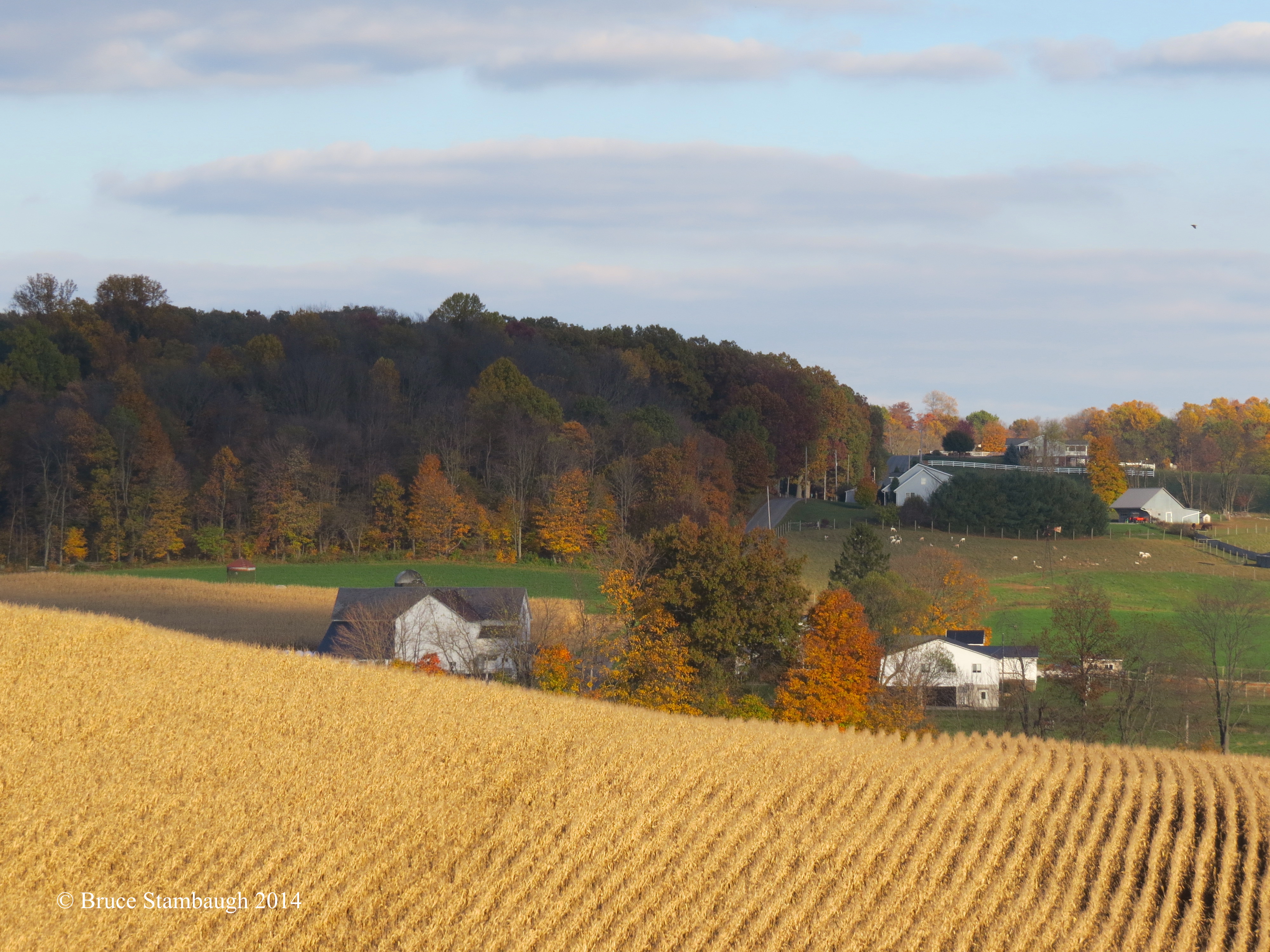
Signs of fall are everywhere in this photo of an Amish farmstead that I took five years ago while living in Ohio’s Amish country. The standing corn still waiting to be picked, either by hand or horse-drawn corn picker, is the most obvious. In the background, the tops of the deciduous trees had started to turn red and orange. In the center of the photo, the purple martin house has been lowered for the season, the birds long-parted for Central and South America.
The Milky Way and Perseid meteors. Photo by Michael Mancewicz on Unsplash.
When was the last time you went out and sat under the stars and just enjoyed the evening?
We used to do that as kids regularly. But as adults, not so much. Come 10 p.m. or sooner, it’s lights out for this baby boomer.
Of course, enjoying and appreciating life often occurs outside our comfort zones. When my wife and I received an invitation to view the Perseids meteor shower on its peak night, we couldn’t refuse.
Our friend Edgar asked us to accompany him to his mountaintop cabin to watch the meteoric show. We left early to take in all that nature had to offer on Shenandoah Mountain.
The 30-minute trip was worth the drive alone. We traveled U.S. 33 west through a forested tunnel of hardwoods and pines, crossing the Dry River multiple times as it winds its way down into the Shenandoah Valley.
With a moderate drought in full swing, the rocky riverbed indeed was dry. We passed parks and gated lanes into the George Washington National Forest and zigzagged our way up the mountain slope.
Before reaching the summit, we turned a hard right into the private road that led to Edgar’s cabin. He unlocked the gate, and we began our rock and roll ascent on the two-lane drive, one track for right tires and the other for the left.
Soon the incline smoothed to wave-like rolling. We stopped at Big Hill, Shenandoah Mountain’s summit. My GPS read precisely 3,800 feet in altitude.
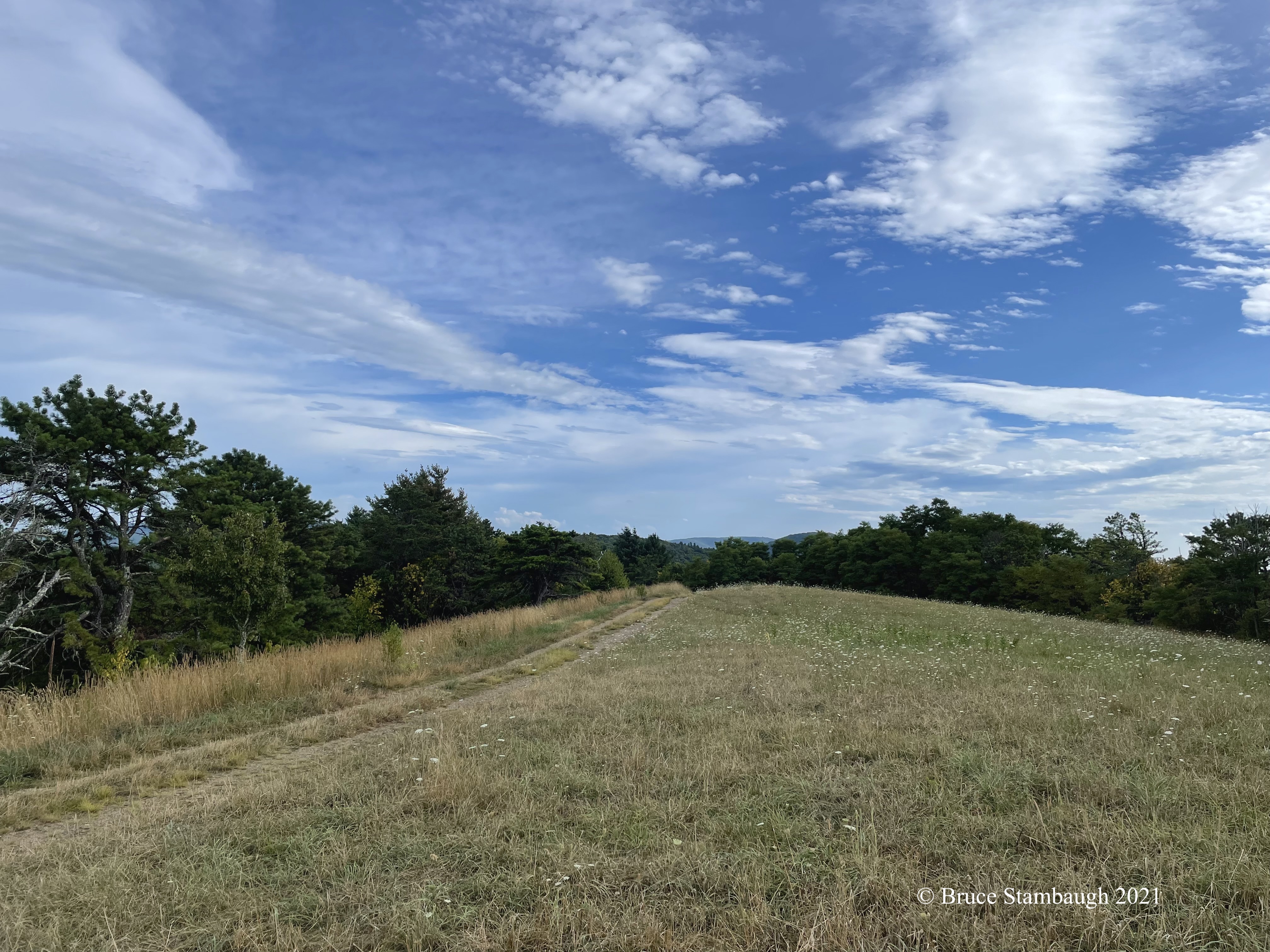
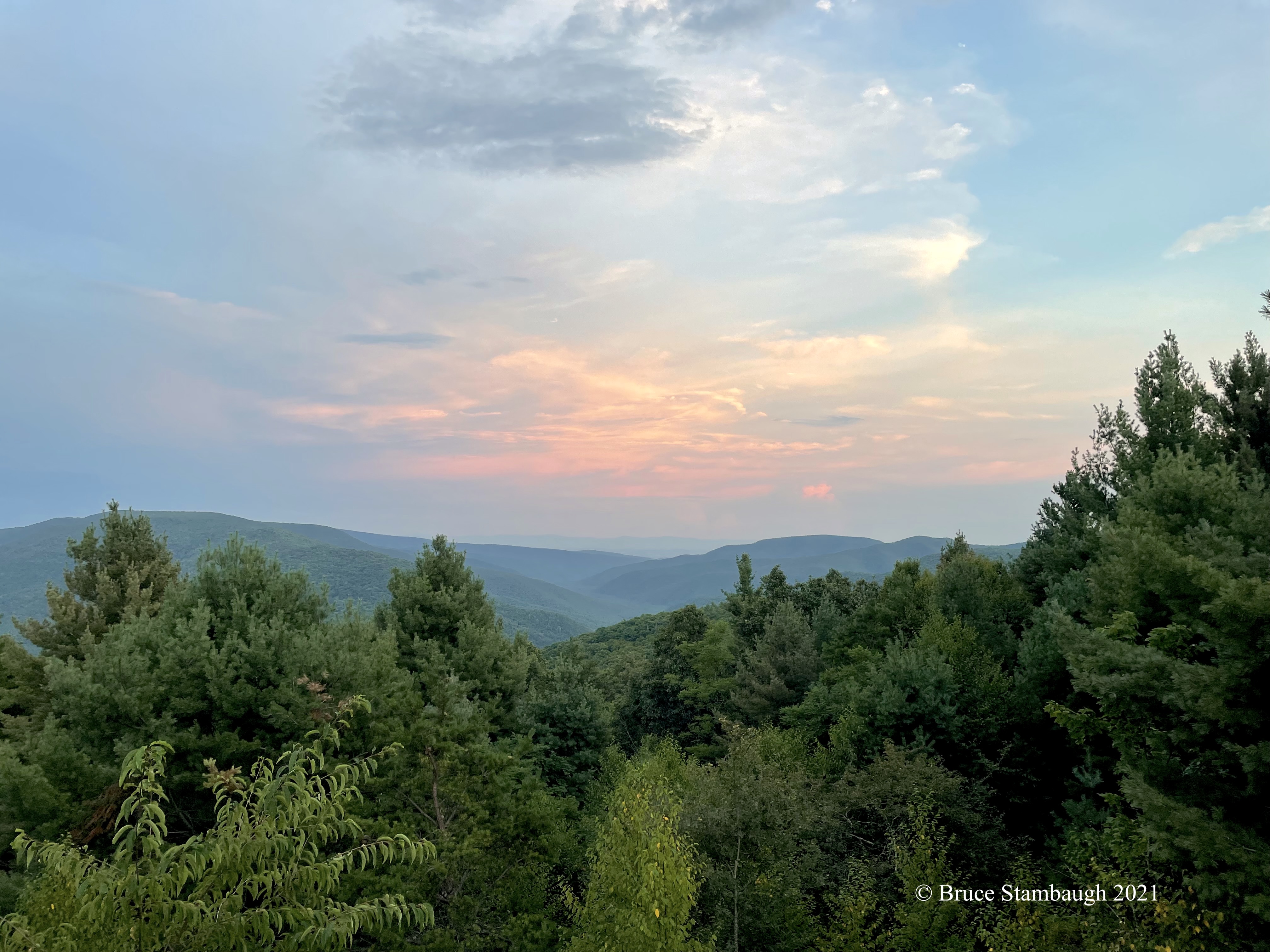
I was surprised to find that much of the rounded old mountain top was a meadowland full of wildflowers and butterflies despite the lack of rain. The verdant views in every direction were hazy but still impressive.
The best was yet to come. After a light dinner in Edgar’s cabin, we talked the evening away. When our daughter sent a text that she had seen a meteor from the city’s high school parking lot, we hightailed it outside.
We didn’t stay long. Residue clouds from afternoon thunderstorms lingered over the mountain ridges.
We retreated inside to continue our enlightening conversation. Edgar related the cabin’s history and how his wife’s family had acquired the property and built the place. Once they became owners, Edgar and his late wife remodeled it. The view from the deck was incredible.
At 10:30, we turned out the lights and headed outside. The three of us sat in the sloping yard and looked northeast. We knew the peak time of the meteor shower was yet to come.
We hoped for some early meteors, and we weren’t disappointed. Our lively conversation quickly filled in the gaps between the intermittent flashes in the night sky.
Crickets and katydids waged a surround-sound insect symphony. Soon an out-of-tune screech owl grated their nocturnal harmony.
A singular cry interrupted the concert from the tree line that marked the Virginia/West Virginia boundary 30 yards to our west. Several meteors later, the bobcat bid farewell from much farther down the ridge.
Even if there had been no meteors, the night sky’s sparkling diamonds captivated us. The clouds had dissipated, and stars, planets, constellations, and the Milky Way served as our canopy. Both the Big Dipper and the Little Dipper shone brightly as the mountain coolness enwrapped us.
The meteors put on a splendid show for this trio of grandparents. Some streaked long and brilliant, others short and dull. Grateful for one last bright burst from the heavens, we headed home, full of grace and in awe of nature’s wonders.
My wife and I felt honored to be under the spell of the starry universe and Edgar’s gracious hospitality.

























































 Roadkill Crossing
You must be logged in to post a comment.