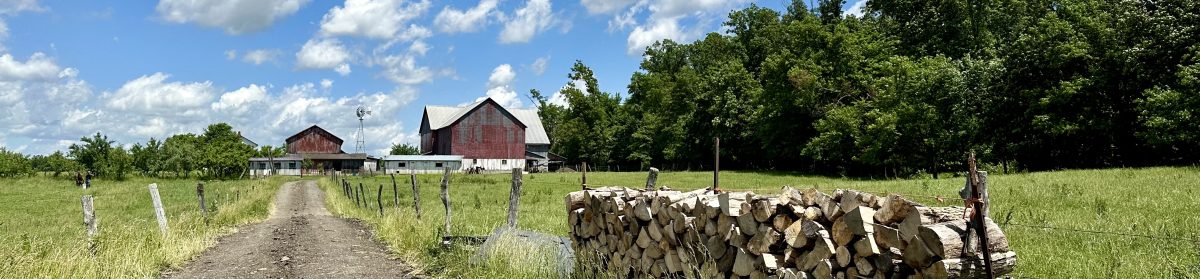
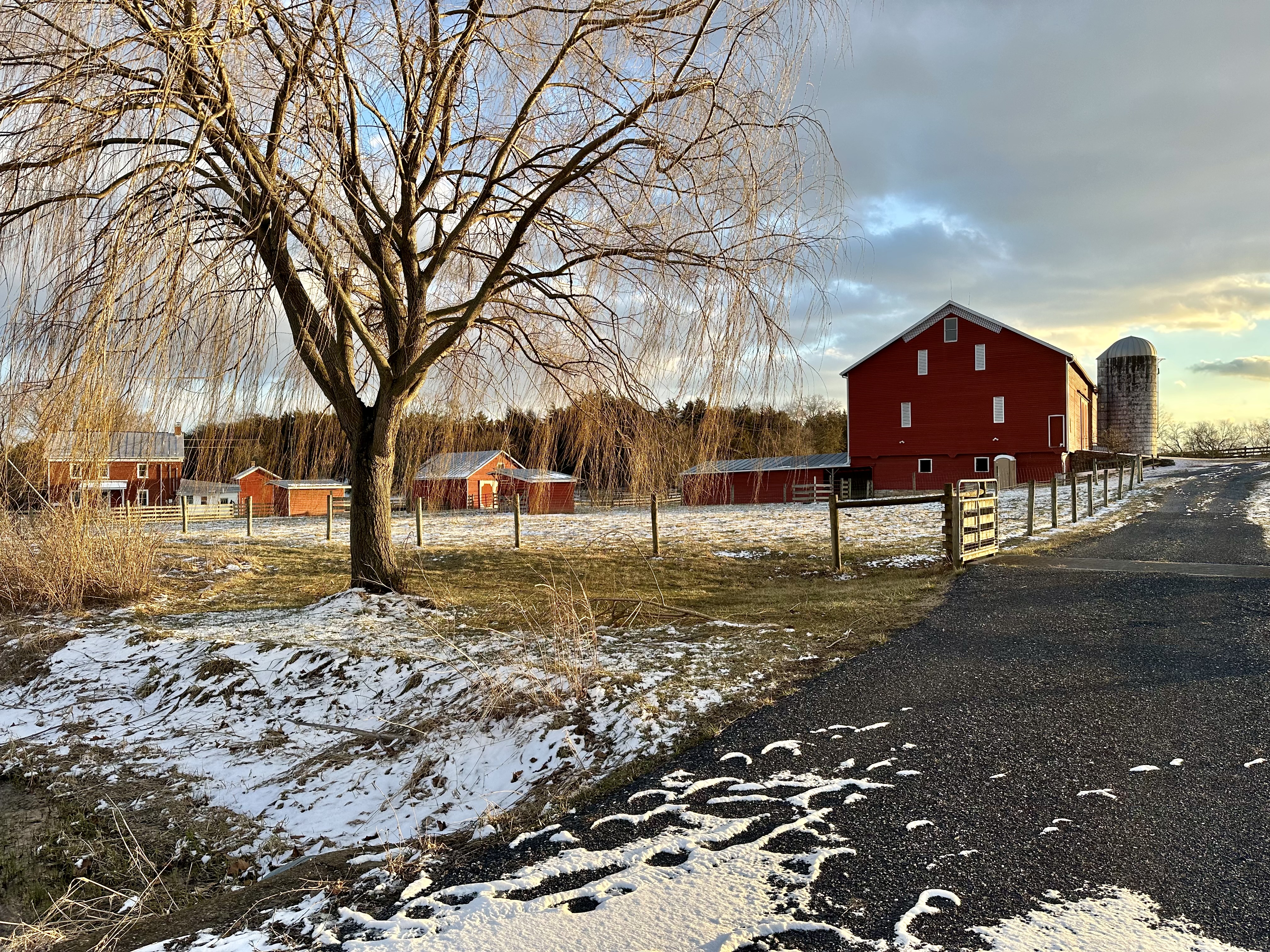
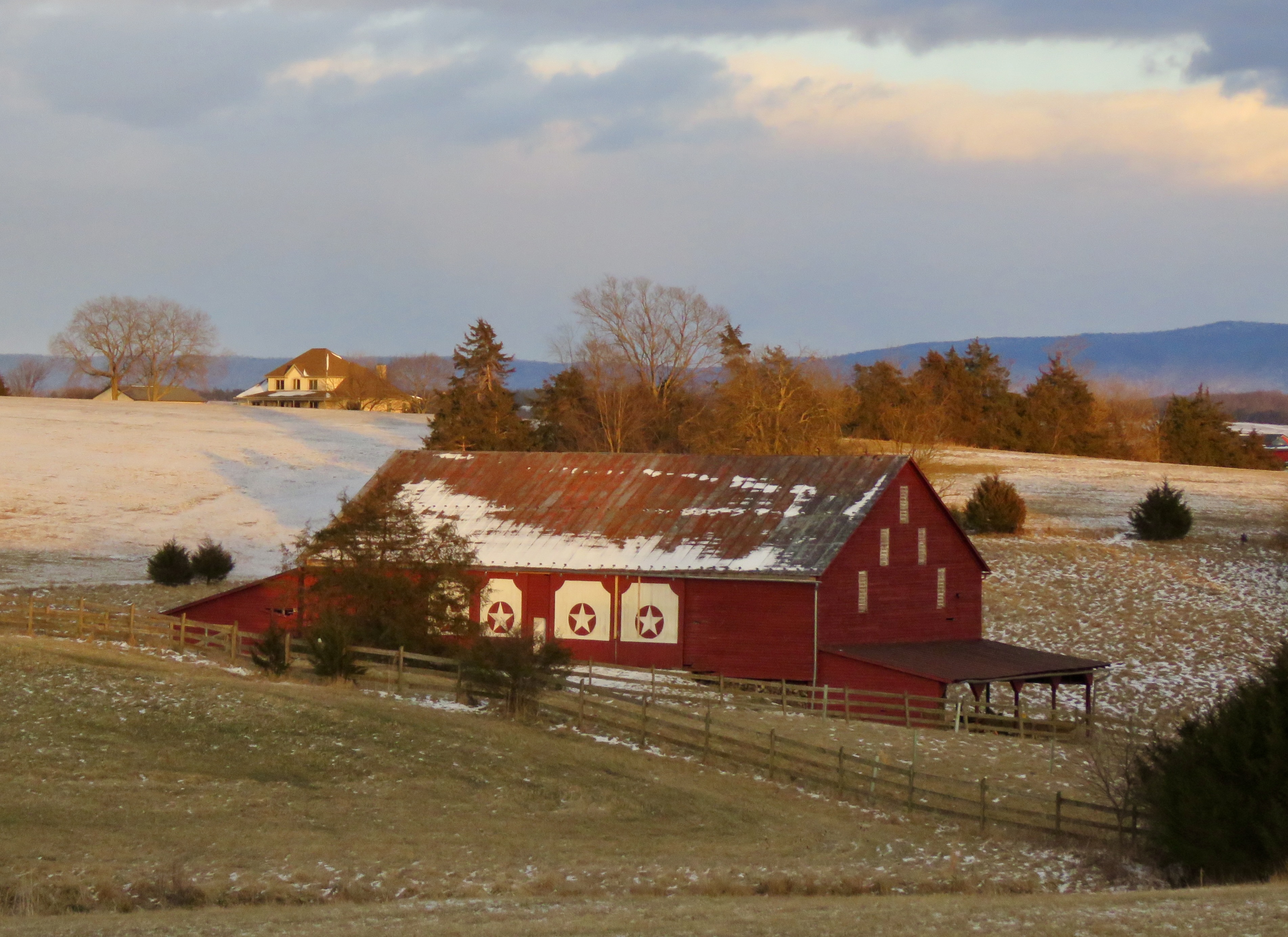
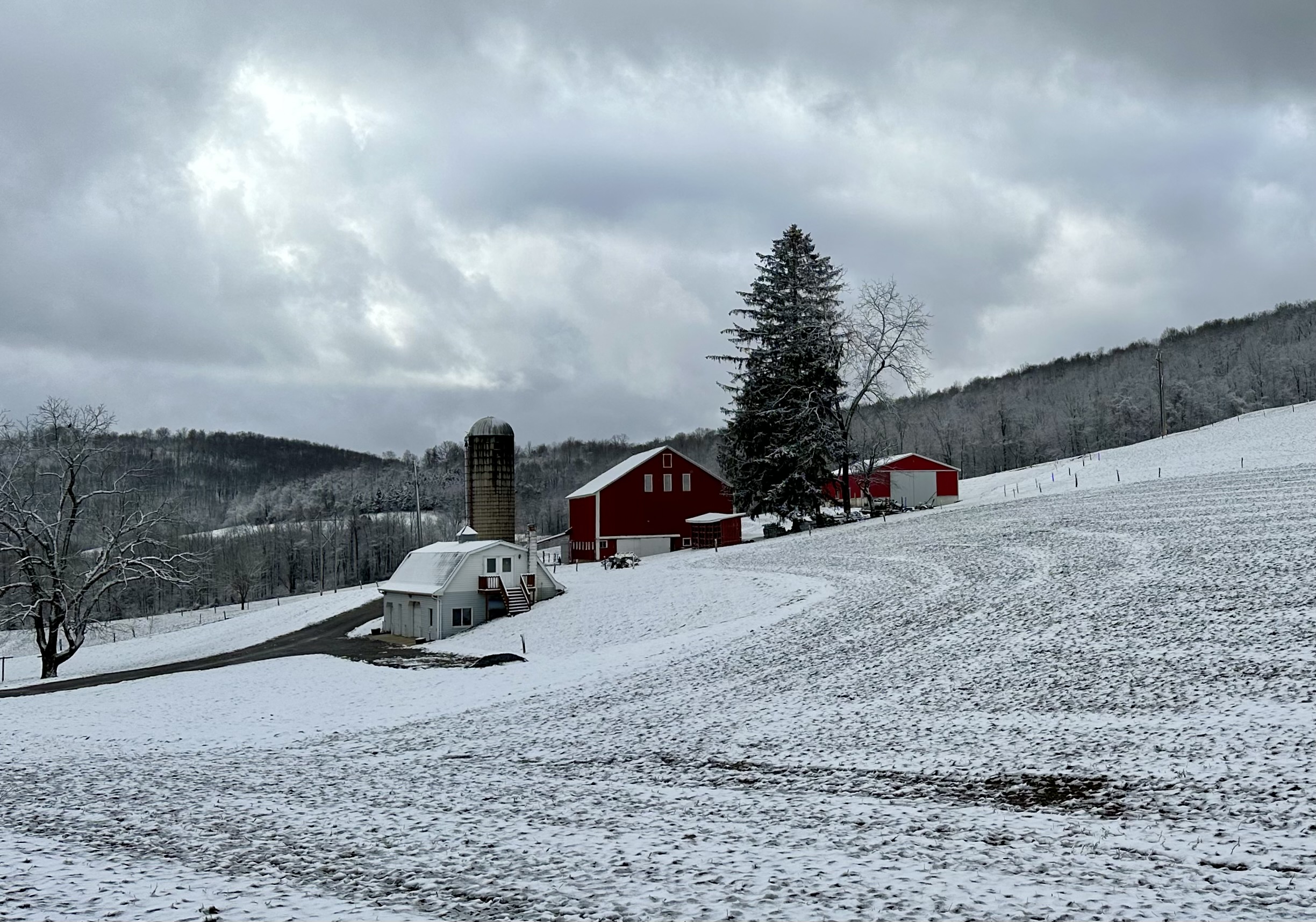
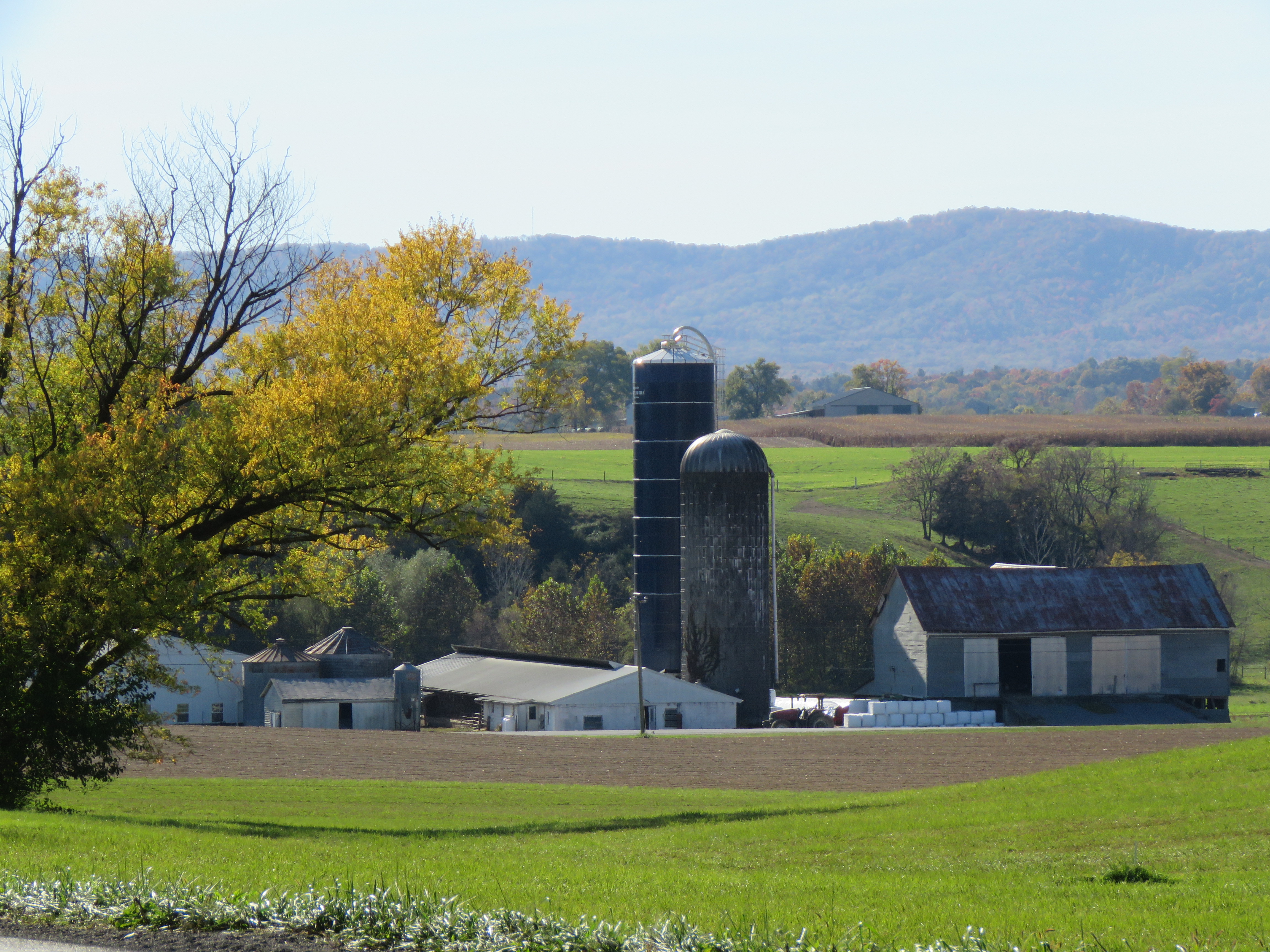
Barns have always intrigued me. The various sizes, shapes, colors, conditions, purposes, and settings combine to make photogenic captures. Wintertime is no exception.
My front yard birdfeeders are all on or under the red maple tree just outside my office window. That allows me to keep a keen eye on the comings and goings of the birds that frequent the feeders.
The birds really flock to the feeders before and during a snowstorm. The mix of birds includes the ground-feeding White-throated and White-crowned Sparrows and Dark-eyed Juncos. American Goldfinch, Purple Finch, and House Finch dominate the squirrel-proof hanging tube feeders. They also will feed on the ground, savaging for any seeds that drop from the feeders overhead.
If the army of European Starlings arrives, chaos ensues. The desired birds yield to the noisy and aggressive Starlings. That includes the dependable Northern Cardinals, which brighten the scene with their attractive colors. The female’s red-tinged olive feathers keep her camouflaged during nesting time, while her mate stands out in his all-red coat.
As brightly colored as the black-masked male Northern Cardinals are, they are fairly skittish and passive compared to other birds, like the Carolina Wrens and especially the Starlings.
The male Northern Cardinal in the photo waited on a branch above the feeding frenzy, awaiting an opportunity to fuel up undisturbed. That allowed me to capture the brilliant red in the falling snow.
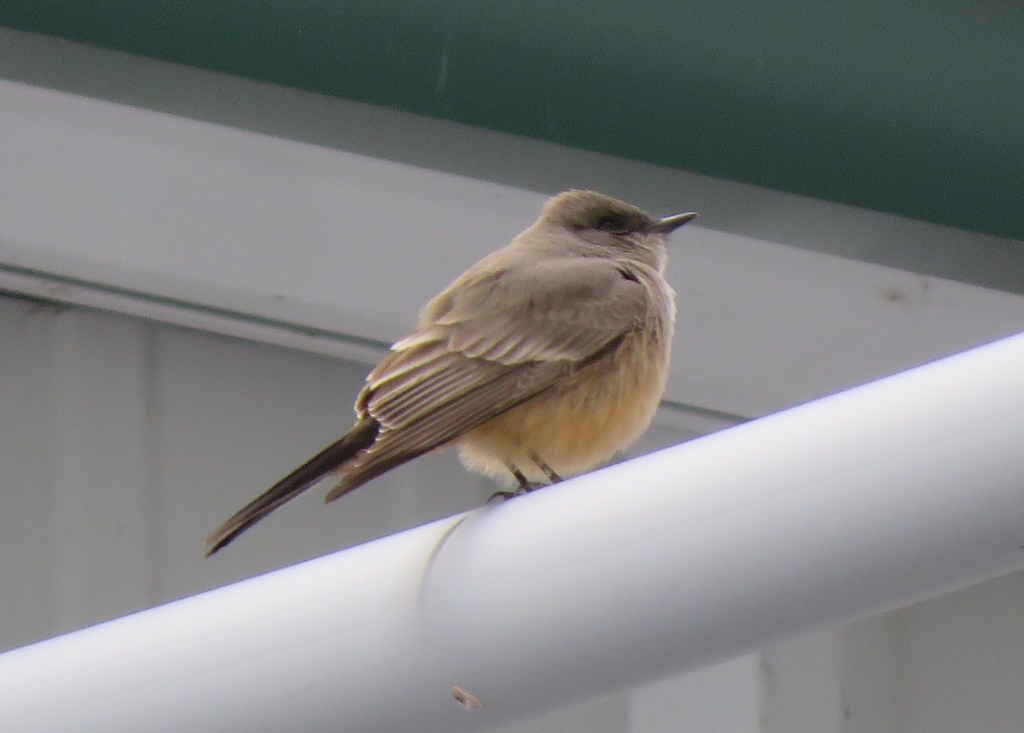
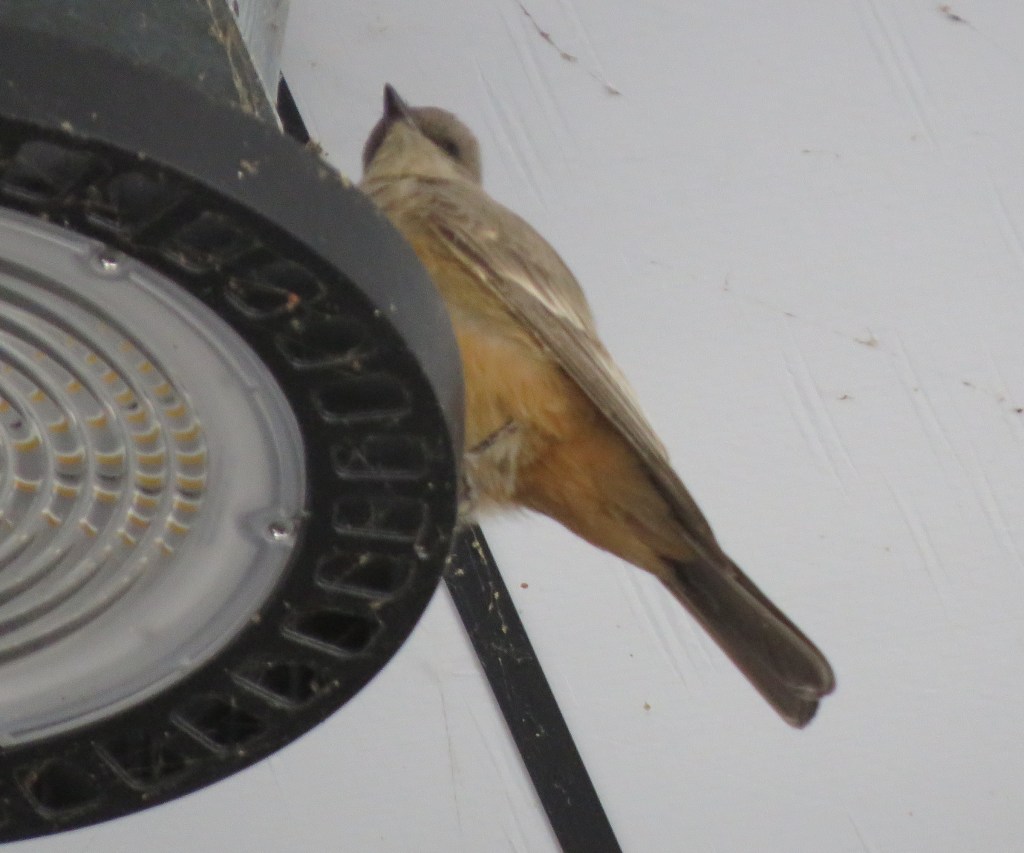
A Say’s Phoebe in Virginia’s Shenandoah Valley. Photo by Bruce Stambaugh
Finding rare birders is always a memorable experience, no matter one’s level of avian expertise. Since I consider myself an average birder, I always appreciate the opportunity to bird with those who are more knowledgeable than me.
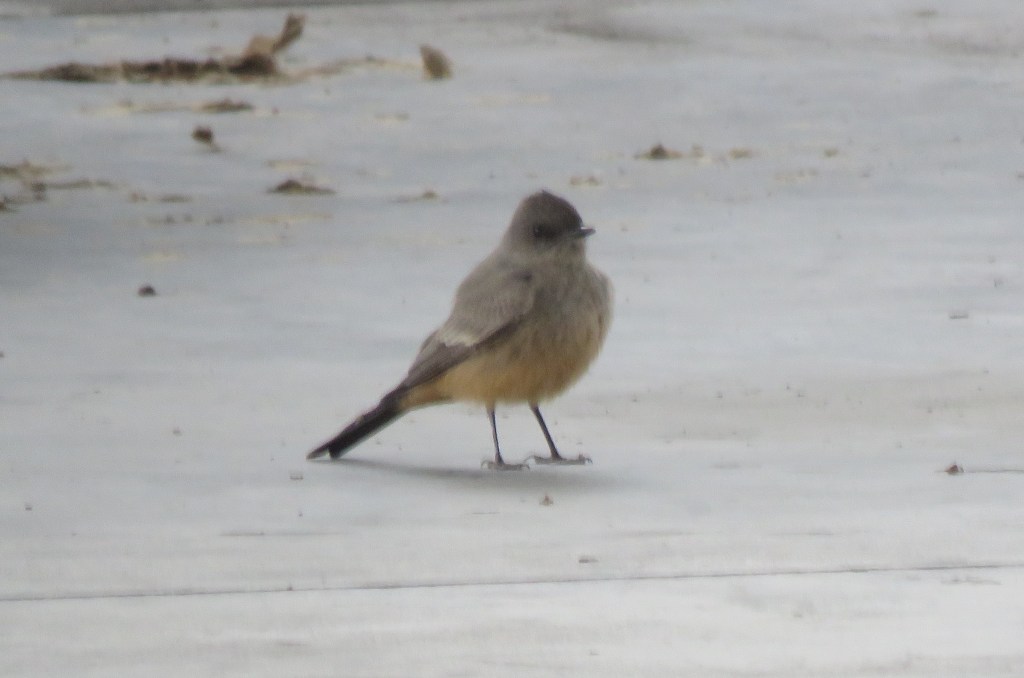
That was the case recently when someone discovered a Say’s Phoebe five miles west of my home near Harrisonburg, Virginia. Having a Say’s Phoebe in the Shenandoah Valley was a rare treat, but seeing it in person became my goal since it would be a life bird.
I first learned about the Say’s Phoebe via an email listserv that reports rare bird sightings. I bundled up and headed to the property where the bird was seen. Several birders were already there scouting the bird. Ironically, the phoebe, which should have been in the southwest U.S. or Mexico, was across the road from where I photographed a Snowy Owl a few weeks earlier.
I walked as quietly as possible on the crunching snow and heard words that diminished my enthusiasm. “There it goes,” one of the birders said. It was late afternoon, and the guess was the phoebe was headed for a warmer roast than the steel pole buildings with three open sides.
I got eyewitness reports of the bird and details of its favorite haunts around the produce auction buildings it frequented during the day. The recommendation was to try in the morning when the bird foraged for dead insects.
That is precisely what I did. Only two other birders were present when I arrived. They had not found it yet. Discouraged, one birder headed to her car but soon turned around, waving her arms furiously.
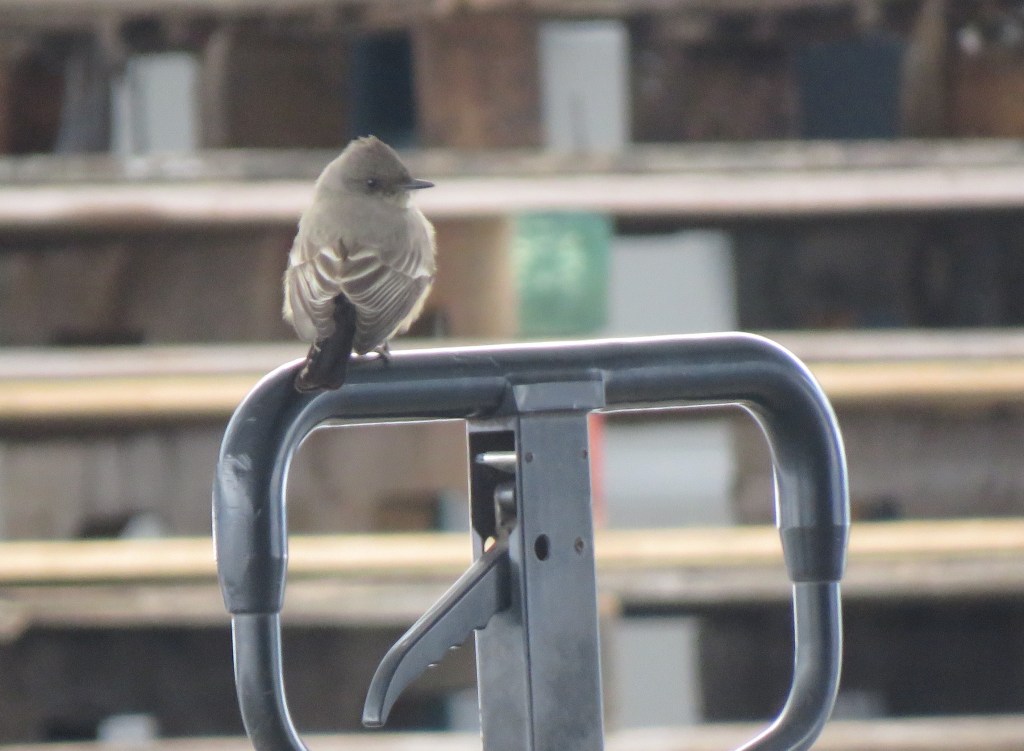
She had spotted the bird sitting on the handle of a hand pump, a favorite spot for the bird. Say’s Phoebes perch lower to the ground to feed than their cousins, Eastern Phoebes. But both species pump their tales and fly to intercept the insects, often returning to the same or near the same perch. Say’s Phoebes have a long, dark tail and a distinctive orange-to-pink buff belly.
The bird flew into one of the open-sided buildings and continued to snatch dead insects stuck in spiderwebs around the ceiling and security lights. The lovely bird posed enough for us to capture several decent photos.
Satisfied, the woman who spotted the bird departed for other birding hot spots. That left two of us to follow the bird around, which we did for an hour. Given the bird’s feeding behavior, we soon learned to stand in a central location and let the bird fly to us. That strategy paid dividends. My birding companion even recorded the phoebe calling.
The Say’s Phoebe searched high and low for food. Winter in Virginia isn’t insect season, and several inches of snow covered the ground, too. No one knew what brought the bird to the valley, but we were grateful for the opportunity to view it.
I had the photos I wanted in an hour, so I headed home to share the good news with other birders by posting it on several Facebook birding pages. I was happy to add another bird to my life list. This exhilarating encounter was another birding experience I won’t forget.
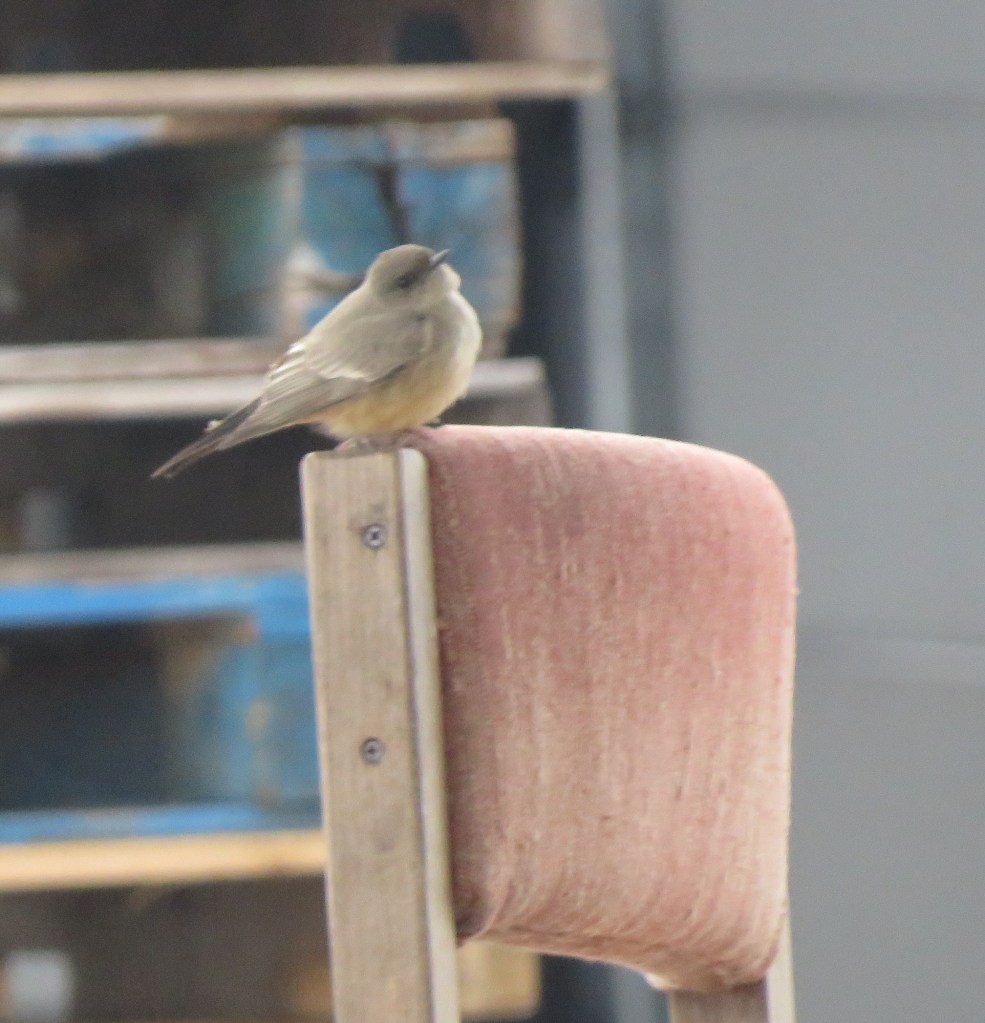
The Say’s Phoebe perched on a wall header. Photo by Bruce Stambaugh
I got so busy with the holidays that I forgot to post this photo of a Snowy Owl that showed up in mid-November in western Rockingham County, Virginia, five miles from where I live. So, I thought I would let this beautiful bird wish you a Happy New Year!
When I heard about the Snowy Owl, my wife and I headed out, hoping to see it. I wanted to document the rarity with photos, too. A few other birders were already there when we arrived. In a matter of minutes, we were joined by several others, including two different school groups from nearby private elementary schools.
The bird sat on a 55-gallon steel drum near a pasture. Another birder had set up his scope and allowed me to take this photo with my iPhone 14 Pro. Otherwise, I would have had to heavily crop the images I took with my camera. The next day, the bird was gone, not to be relocated.
So, on behalf of the Snowy Owl, I wish you the best in 2025.
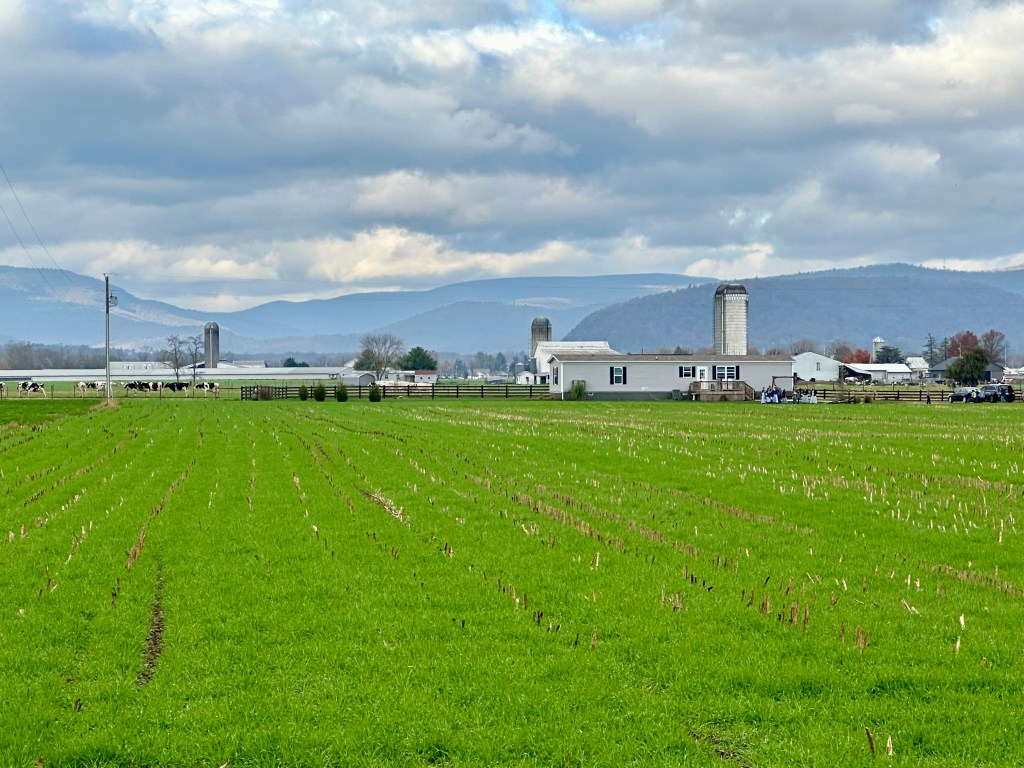
This is where the owl was found and what we saw with the naked eye. Can you find the Snowy Owl?
Flowering shrubs, coconut palm trees, and brilliant rainbows were ubiquitous in Hawaii.
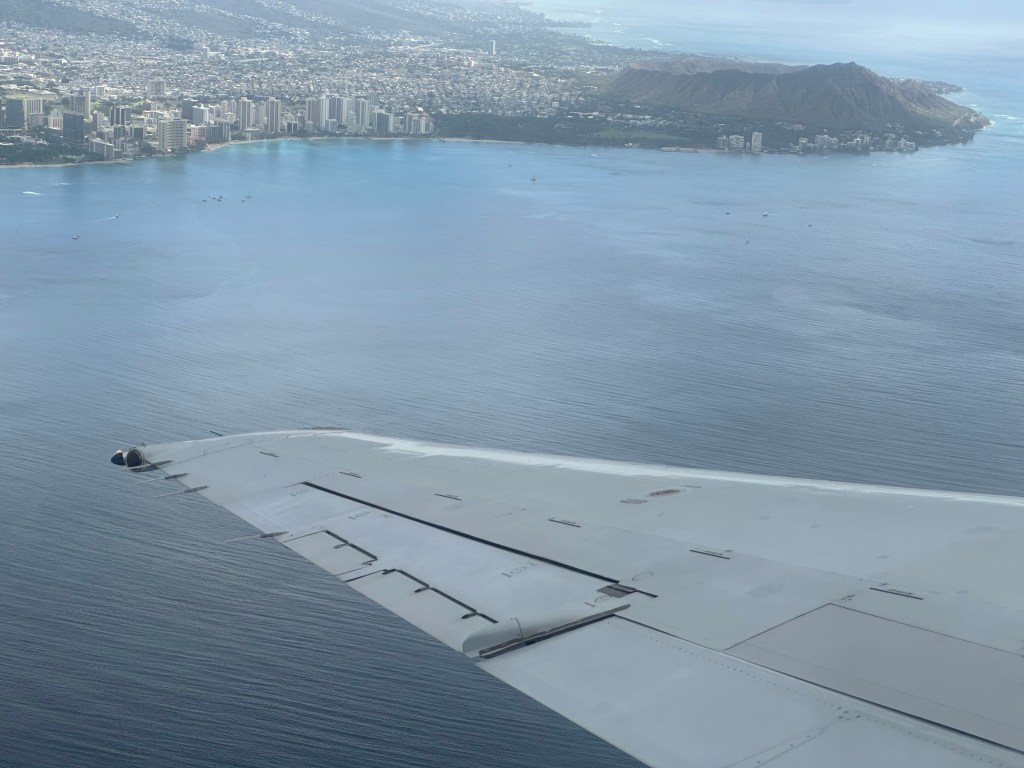
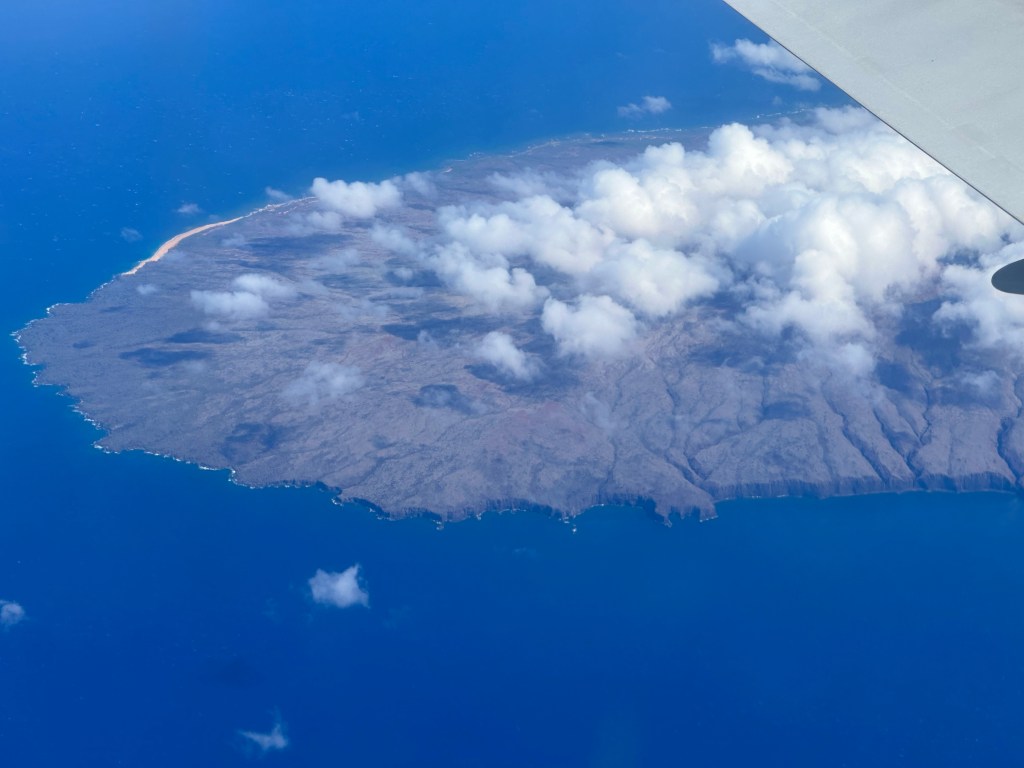
Our tour of Hawaii continued as we flew to the Big Island, which the locals call Kona. As our morning flight left Honolulu, I got a shot of Waikiki Beach and Diamond Head. Flying over other smaller islands, I was amazed at how deep blue the ocean was.
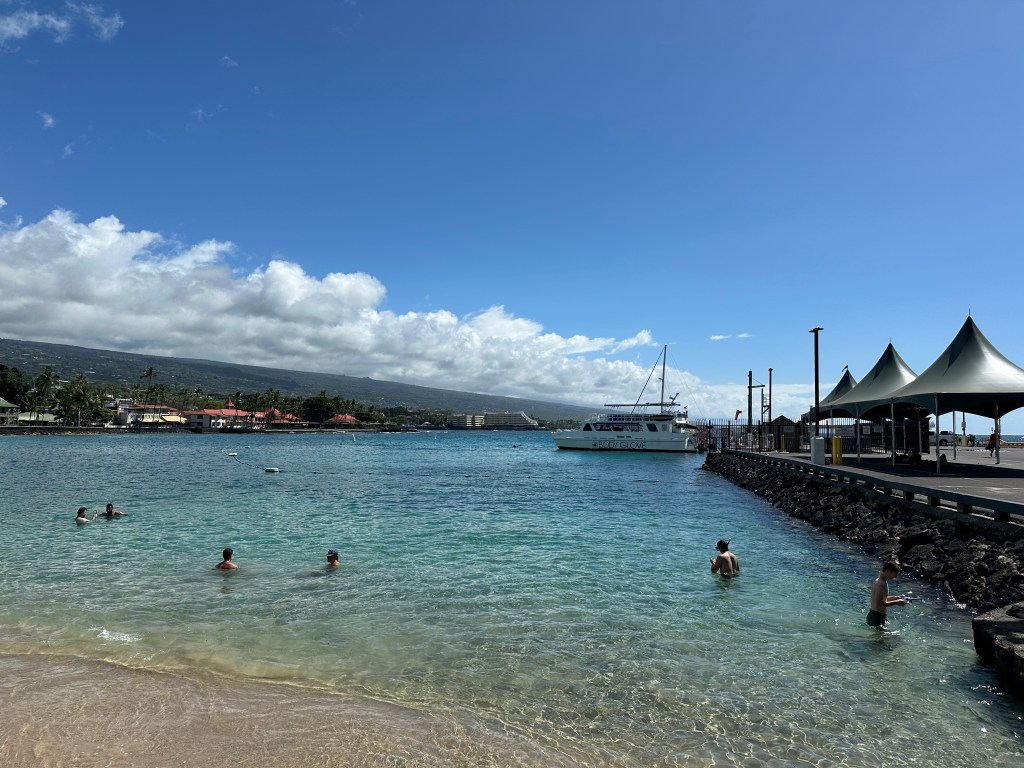
We landed at Kona’s small airport, where the luggage claim carousels are outside but covered with square thatch-like material to resemble native huts. Our small group boarded the bus for Kailu-Kona, where we had lunch. Our guide gave us a heads-up to sit at the bar where the prices were lower and the food just as good. We followed her wise advice and enjoyed our fish tacos.
Waikiki Beach (left) and Diamond Head (right).
One of the islands we overflew.
The fish tocos.
Where the locals swim.
A downtown city park.
We strolled around the oceanside town, window-shopping and enjoying the balmy breezes. Still, the sun was hot, so we refreshed ourselves with a cup of tasty shaved ice before boarding the bus again.
Since Kona has six volcanoes, traveling is either up, down, or around the island. We did all three on our ride to a historic coffee farm, now run by the Kona Historical Society, a non-profit organization. The farm is the only living history coffee farm in the country.
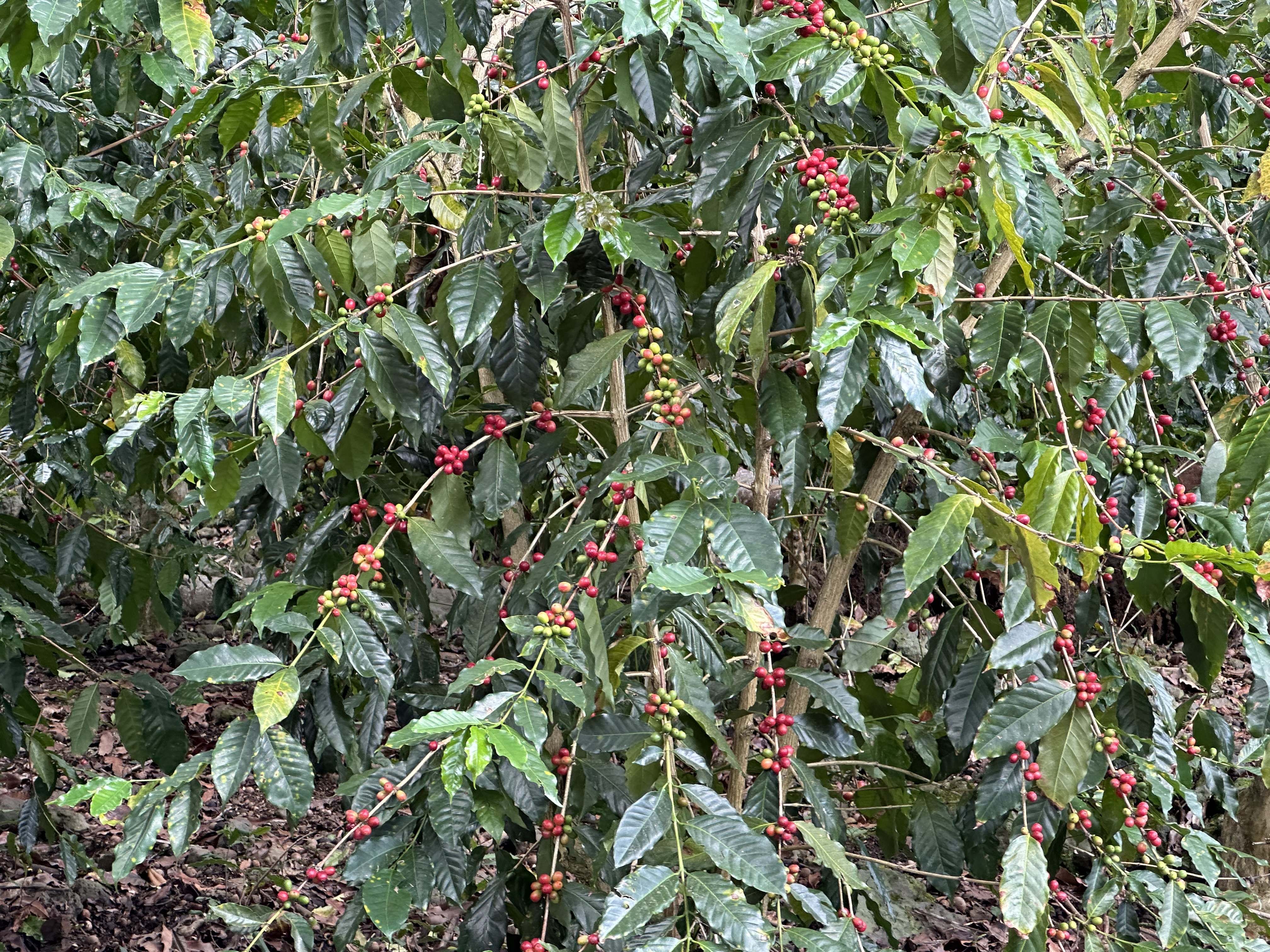
Along the path to the old farmhouse, bright red coffee cherries bent the bows of coffee bushes. Most were nearly ripe for picking. Tropical songbirds flitted from tree to tree, but there was no time to investigate them. A staff member from the historical society greeted us and gave us an overview of our visit.
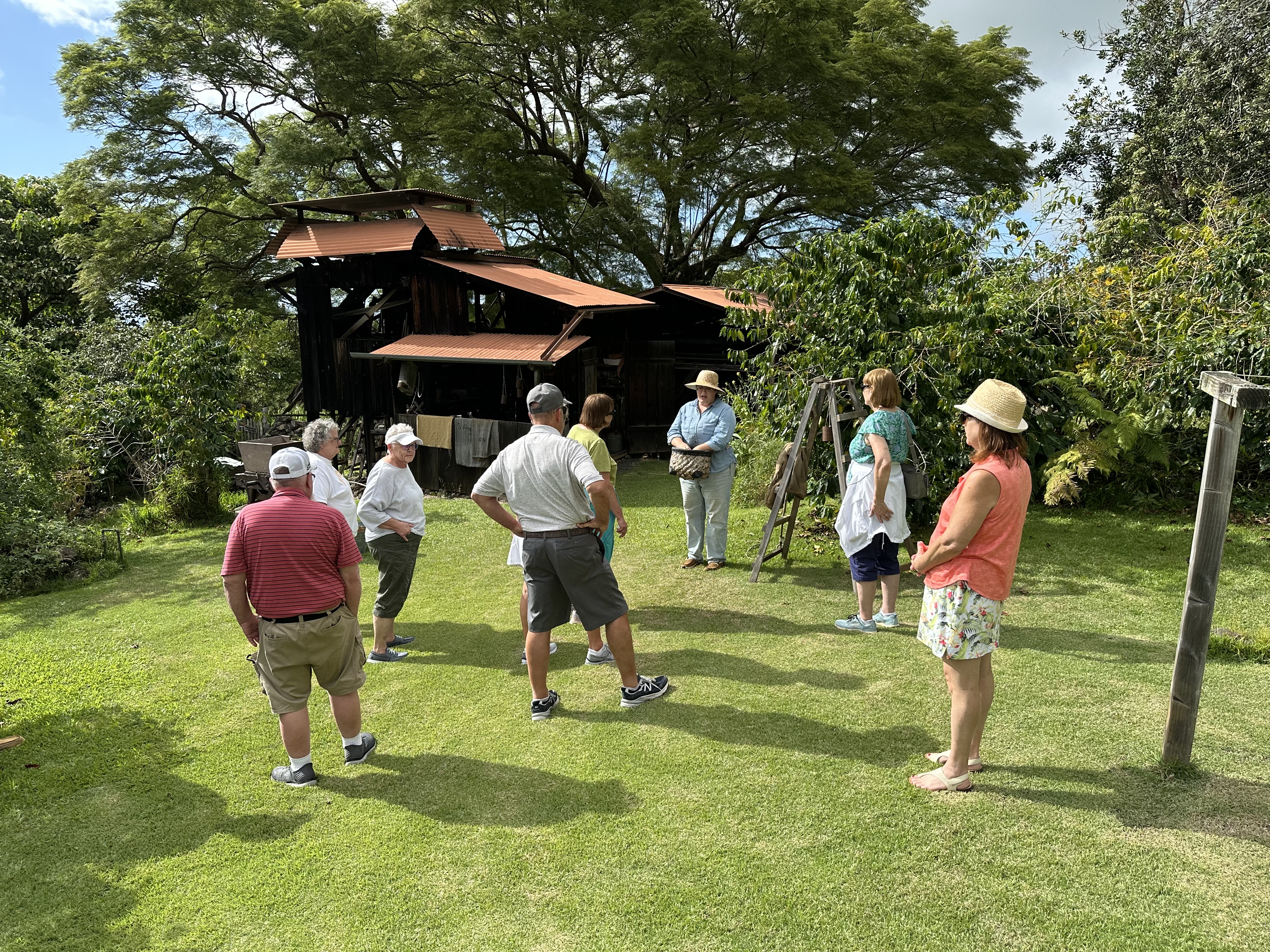
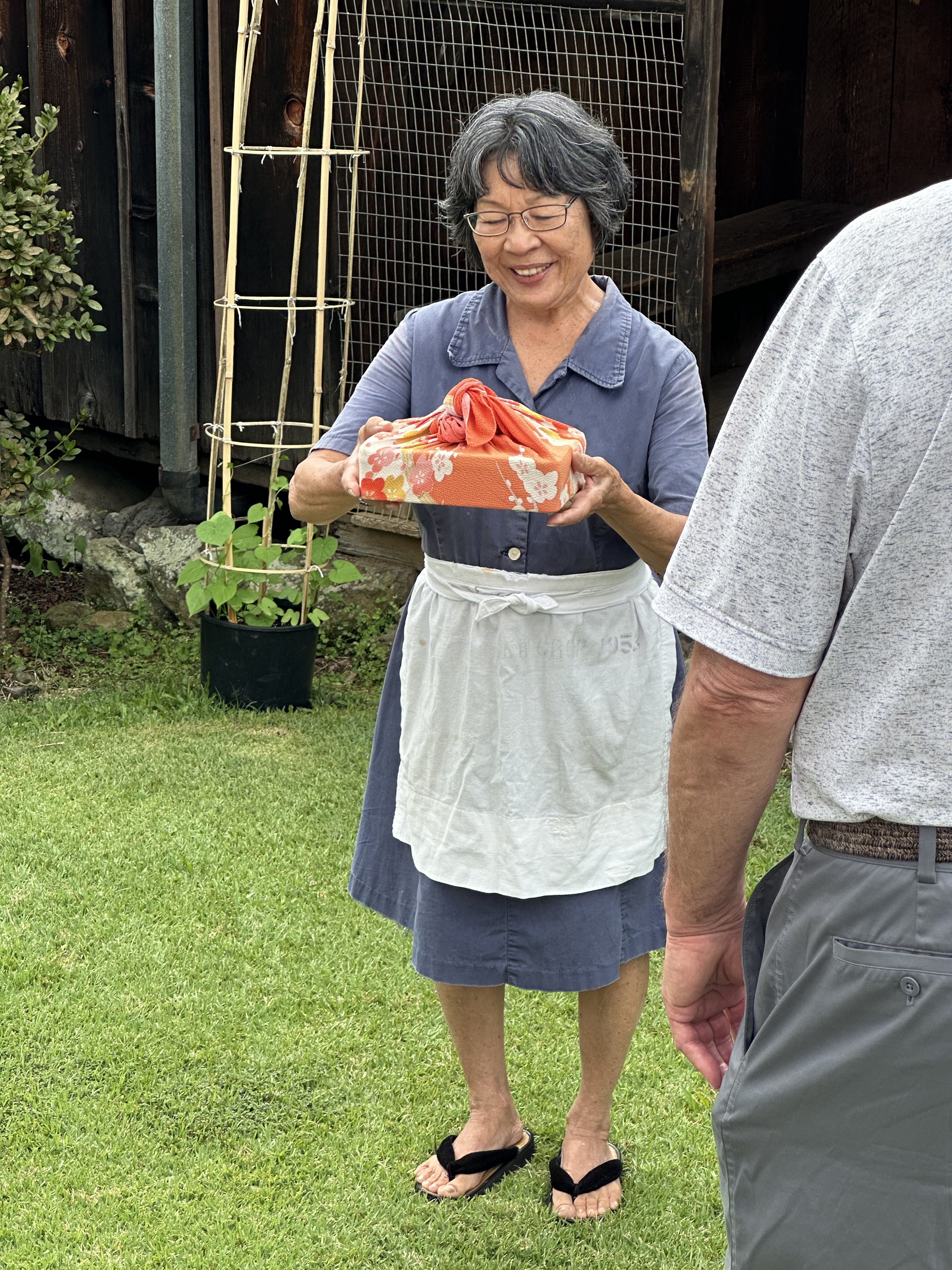
As we neared the old, original farmhouse, an elderly Japanese woman appeared. Tradition calls for visitors to present a gift to the head of the residence. The docent, of course, had one and presented it to our host, Paula, who graciously accepted it.
Paula had a precious and moving story about her life on the farm. When she was four, her parents apprenticed her to the farm, where she mainly assisted in homemaking activities and worked in the garden.
Paula explained the traditions and daily routines the family went through to keep the farm operating. Her personal stories of a child doing an adult’s work moved us all.
Japanese came to this part of Hawaii in the 1920s, when the farm was established. After the bombing of Pearl Harbor, the Japanese were rounded up and placed in detention camps. However, Japanese farmers were not. Consequently, the coffee farms were deemed essential and continued to operate.
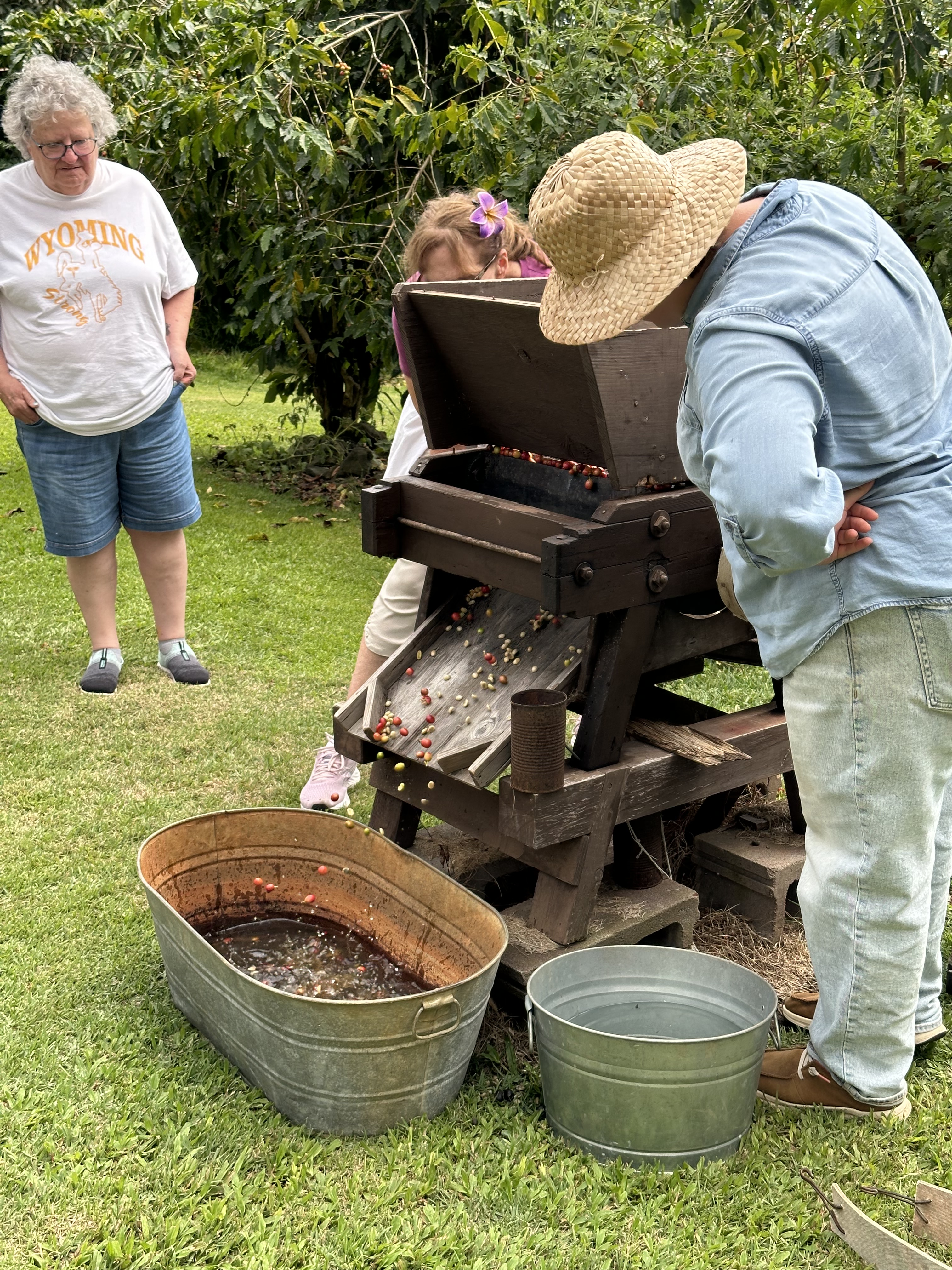
The farm was exquisitely maintained, just as when Paula helped on it. All the buildings were original to the farm, and each operation was explained. Having been to Honduras several times, I had seen the entire process of small coop coffee farms. I even helped pick the coffee cherries. The Japanese methods of growing, harvesting, and processing the cherries and the beans they contained were remarkably similar to what I had experienced.
We dressed up.Local lore in song.Local lore in dance.The worriers.The finale.
An exception was the way the beans were dried. In Honduras, beans are often placed on concrete pads or tarps and dried in the sun. The shed where the beans were dried at this historical farm had a slanting roof to prevent the tropical rains from spoiling the crop.
Our group was impressed with Paula and the simple but efficient way of producing the rich Kona coffee. It was a great introduction to the Big Island.
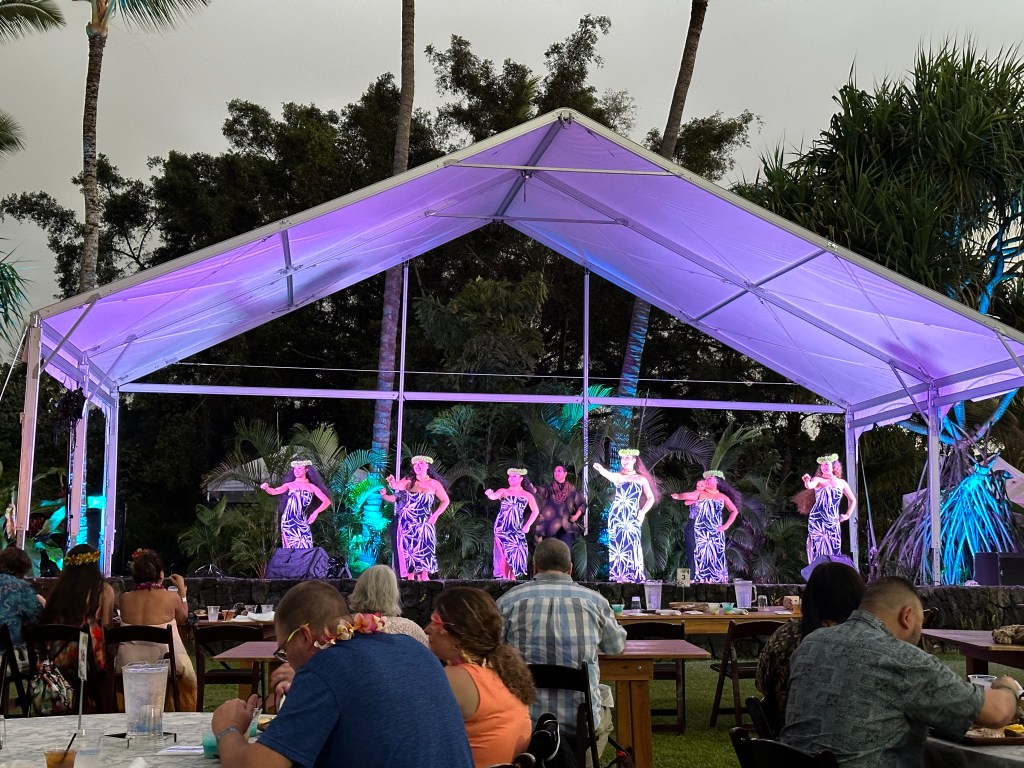
Our day ended with a traditional evening luau with roasted pig, poi, poke, rice, and fresh vegetables and fruits. Lots of singing and acting out historic events followed with dancers and native warriors. Of course, a light rain briefly drizzled us, which is customary and unavoidable.
A gentle rain began to fall, but in such a setting, it didn’t matter. Photo by Bruce Stambaugh
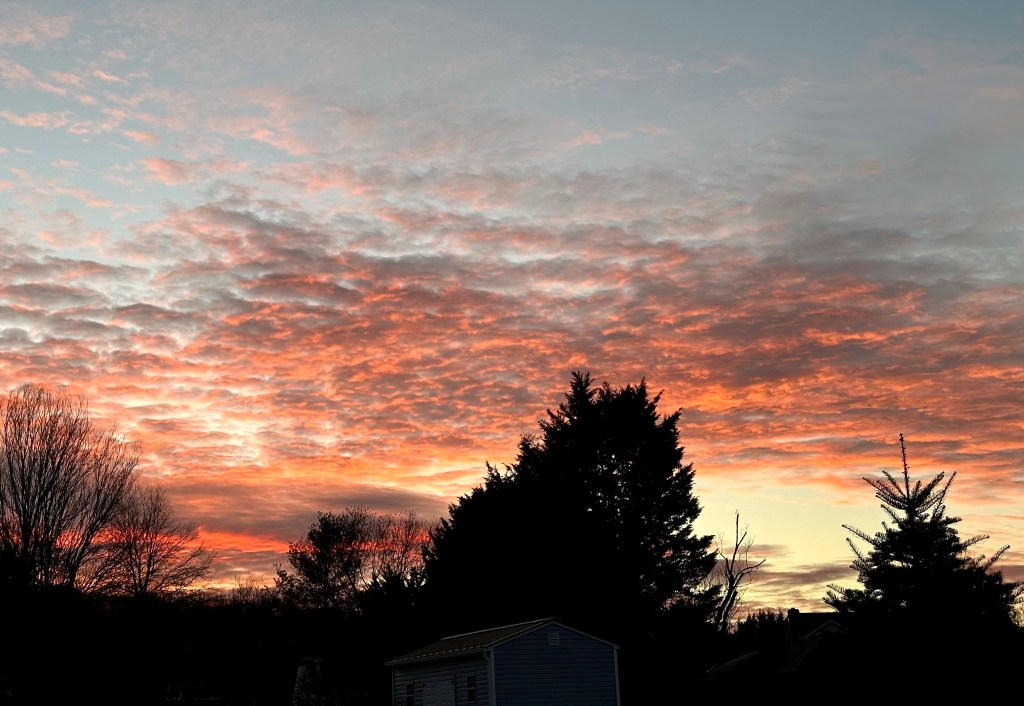
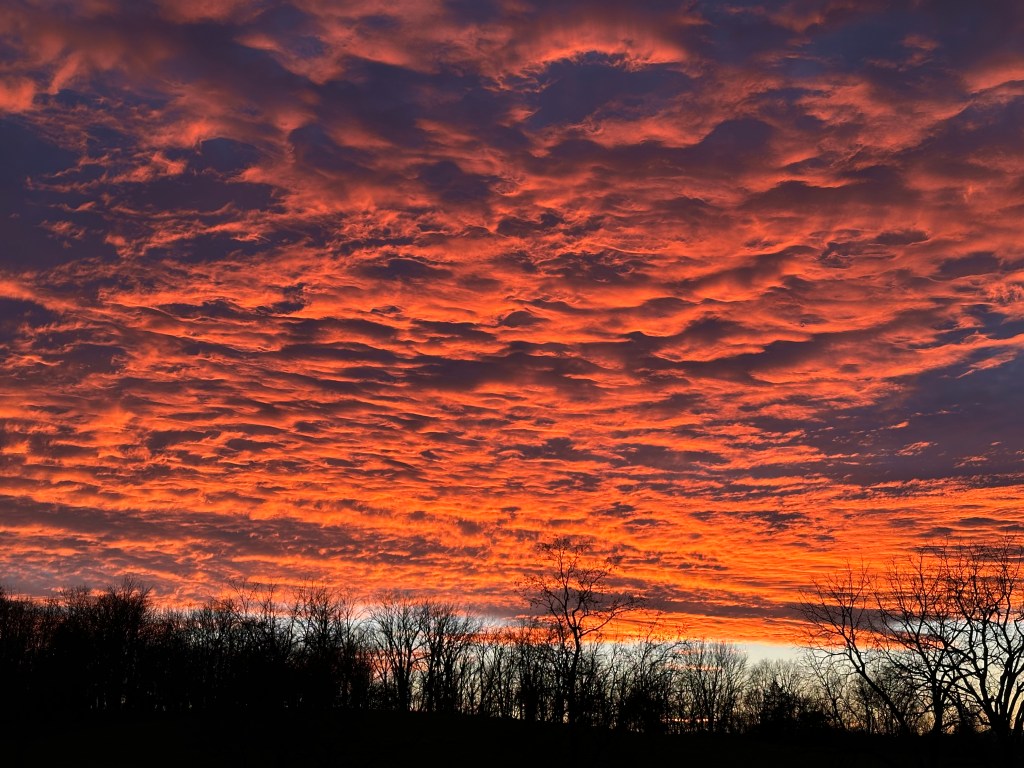
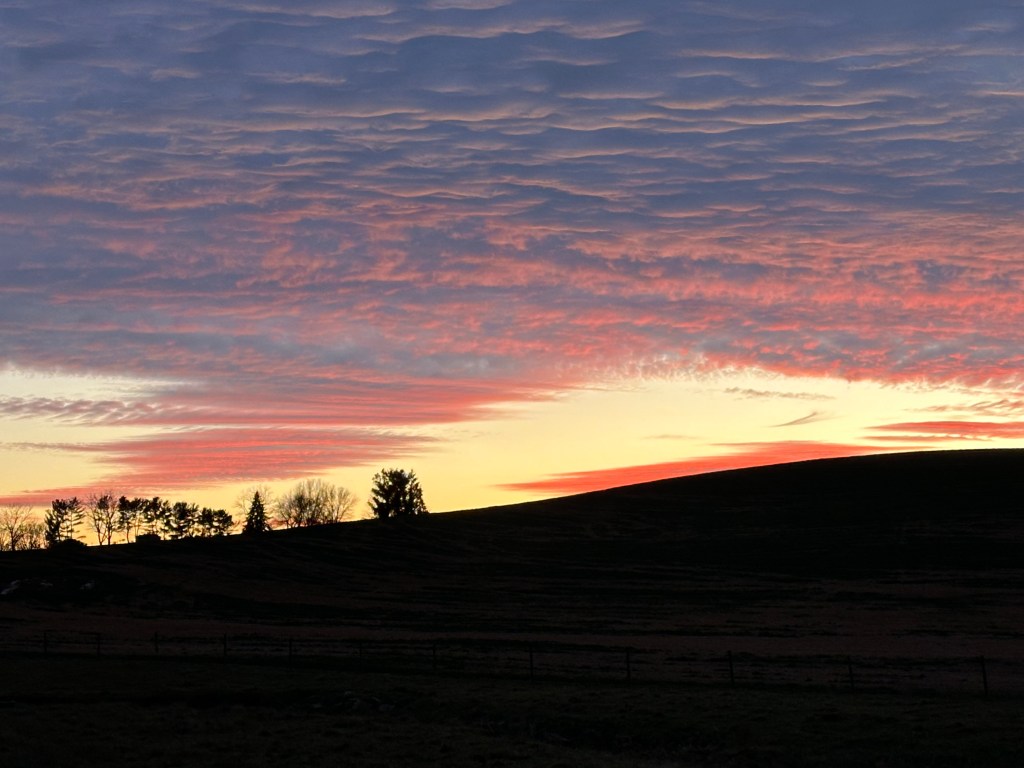
These recent Shenandoah Valley sunrises and sunsets were too beautiful not to share with you, especially on gray, chilly December days.
This glowing sunset on December 2 included a sun pillar. The setting sun’s rays backlit the virga that appeared around the sun pillar.
I rose early enough on my birthday to capture the tale end of a lovely sunrise from the backyard. Red in the morning, sailors take warning proved true. Low rain clouds moved in and blessed us with some much-needed precipitation.
We didn’t get much, but every little bit helps.
The soft pastel sunset on December 4 added to my happy birthday.
In contrast, the December 7 sunset was explosive. As sunsets want to do, the colors transformed minute-by-minute as I changed locations to photograph the gorgeous scenes. This photo was taken from a roadside near my home.
Only six minutes later, the sky had transitioned to bright orange and scalloped grays over a local landmark: Mole Hill, a long-dormant volcanic core.
As I drove farther west, the sun sank behind the old, folded Appalachian Mountains. Still, earth and sky combined to provide photographic offerings.
Finally, it was time to head home, basking in the satisfaction of a marvelous sunset.
The following day, I woke in time to catch the last of a glorious dawn. A high hill blocked our view to the east, so I had to rely on peeking out a window to see what the sky had to offer. A friend who lives on a hill facing east posted the full sunrise on social media, replicating the previous night’s sunset beauty. So, I had to be happy with my backyard shot.
That’s how we live each day. We embrace whatever we discover, capture its essence, and share the blessing with all we meet.
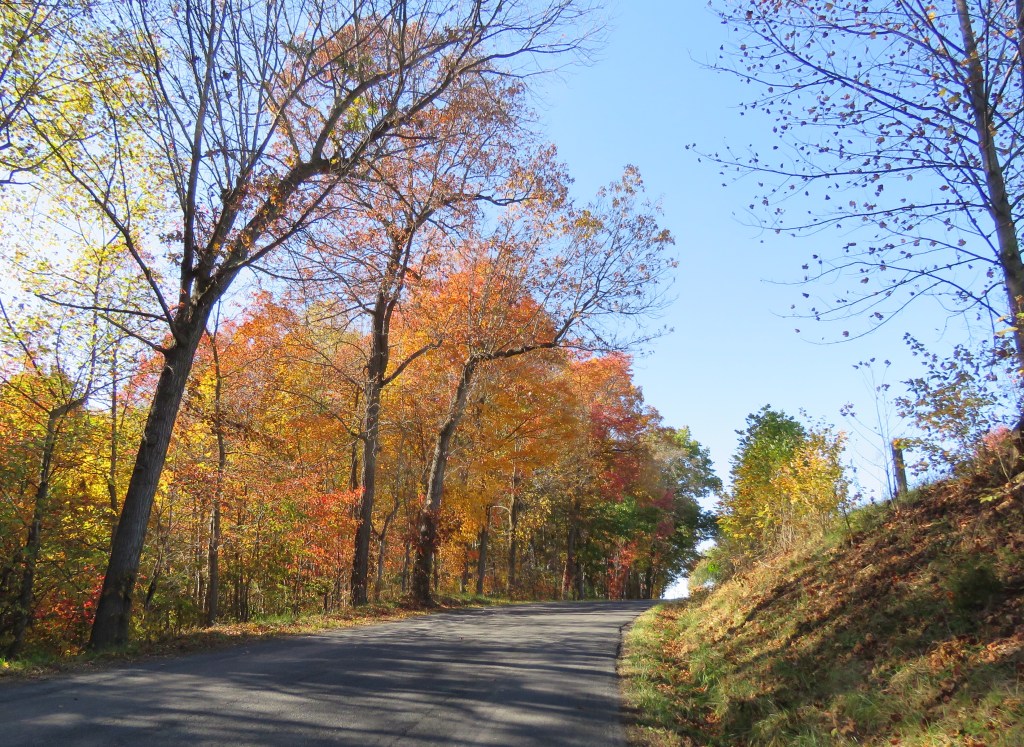
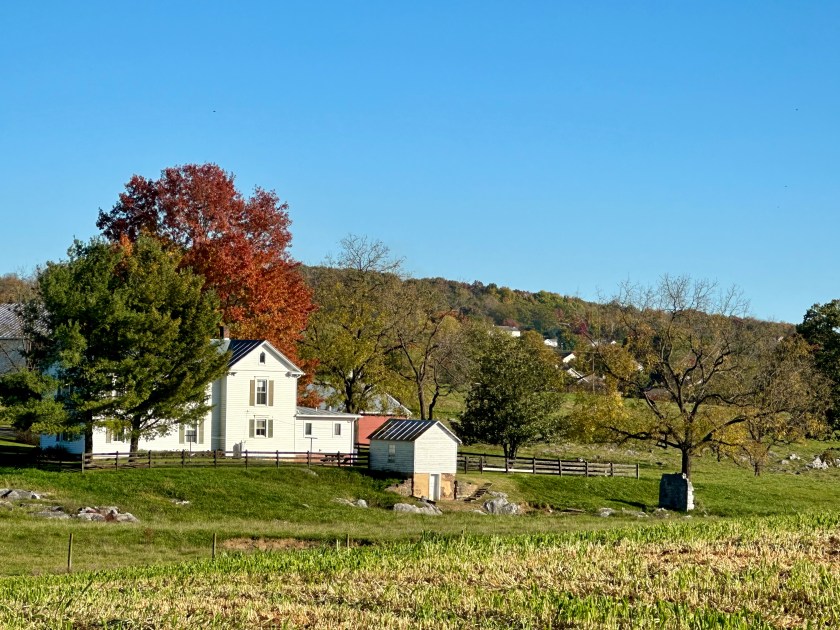
A typical scene in Rockingham Co., Virginia. Photo by Bruce Stambaugh
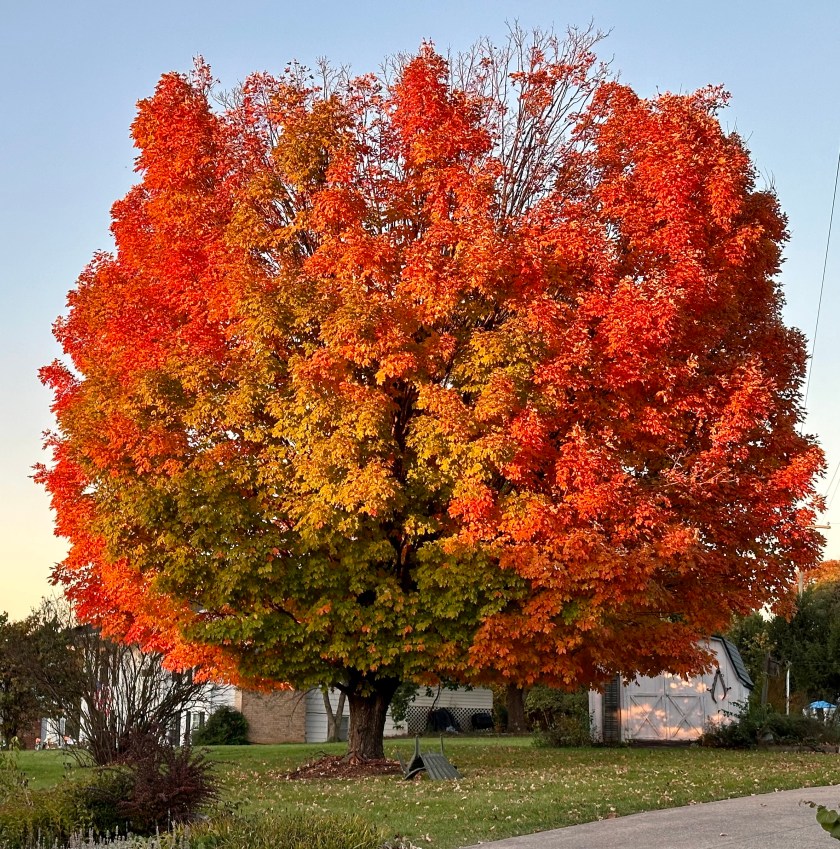
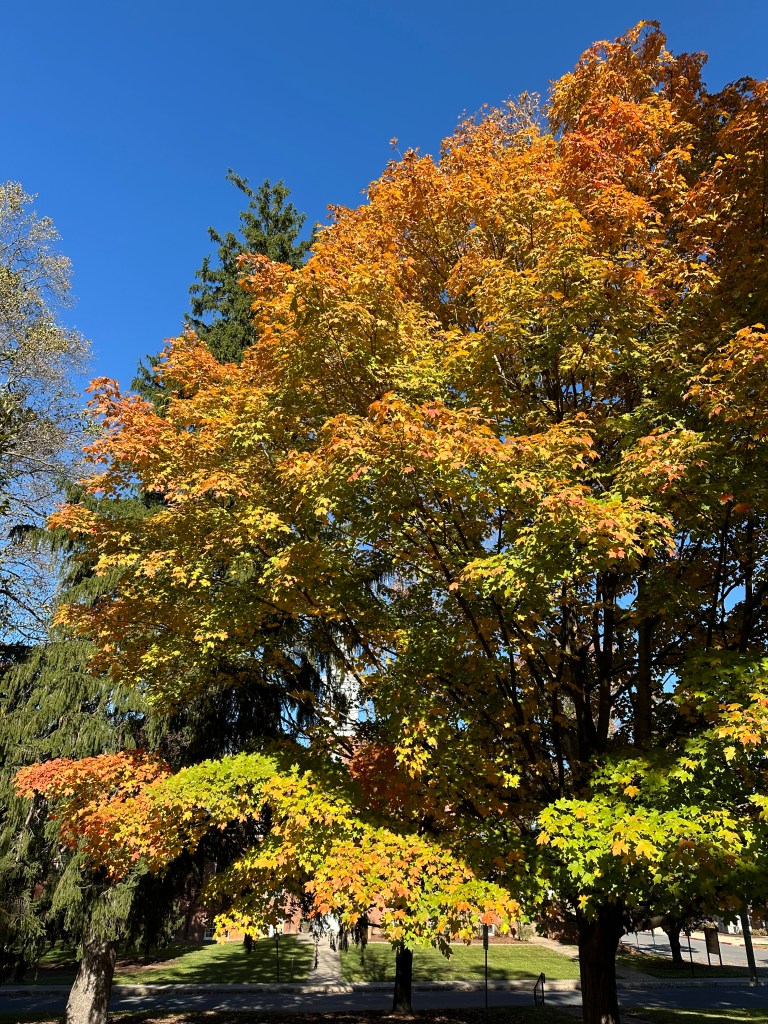
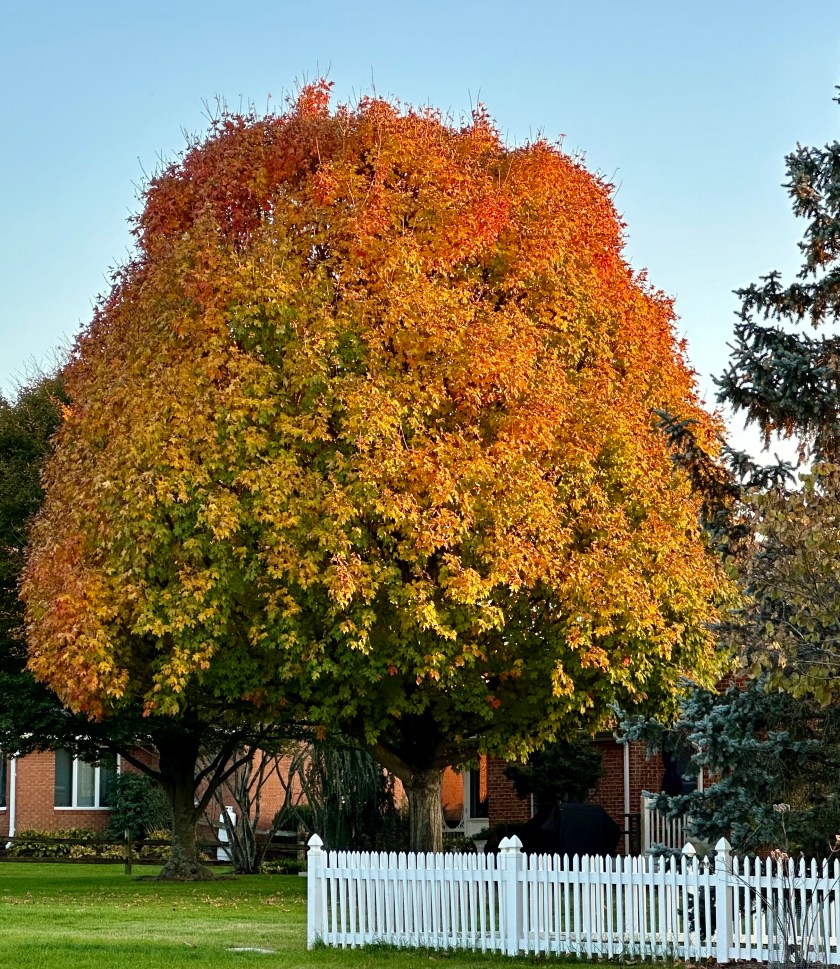
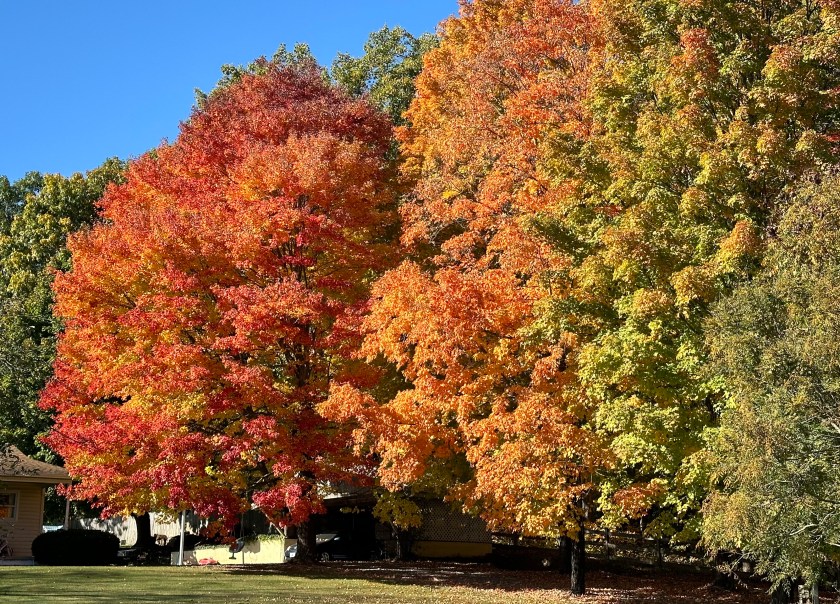
In the fall, traveling the rural roads in Rockingham County, Virginia, reveals Nature’s autumnal beauty. The trees along the highway’s edge bask in the sun’s more direct rays than if they grew more deeply in the forests.
Driving on Skyline Drive in Shenandoah National Park has the same effect. However, it is also much more crowded with global visitors in the fall. Traversing the local roadways usually means less traffic, which makes it safer to pull over, exit your vehicle, and snap away.
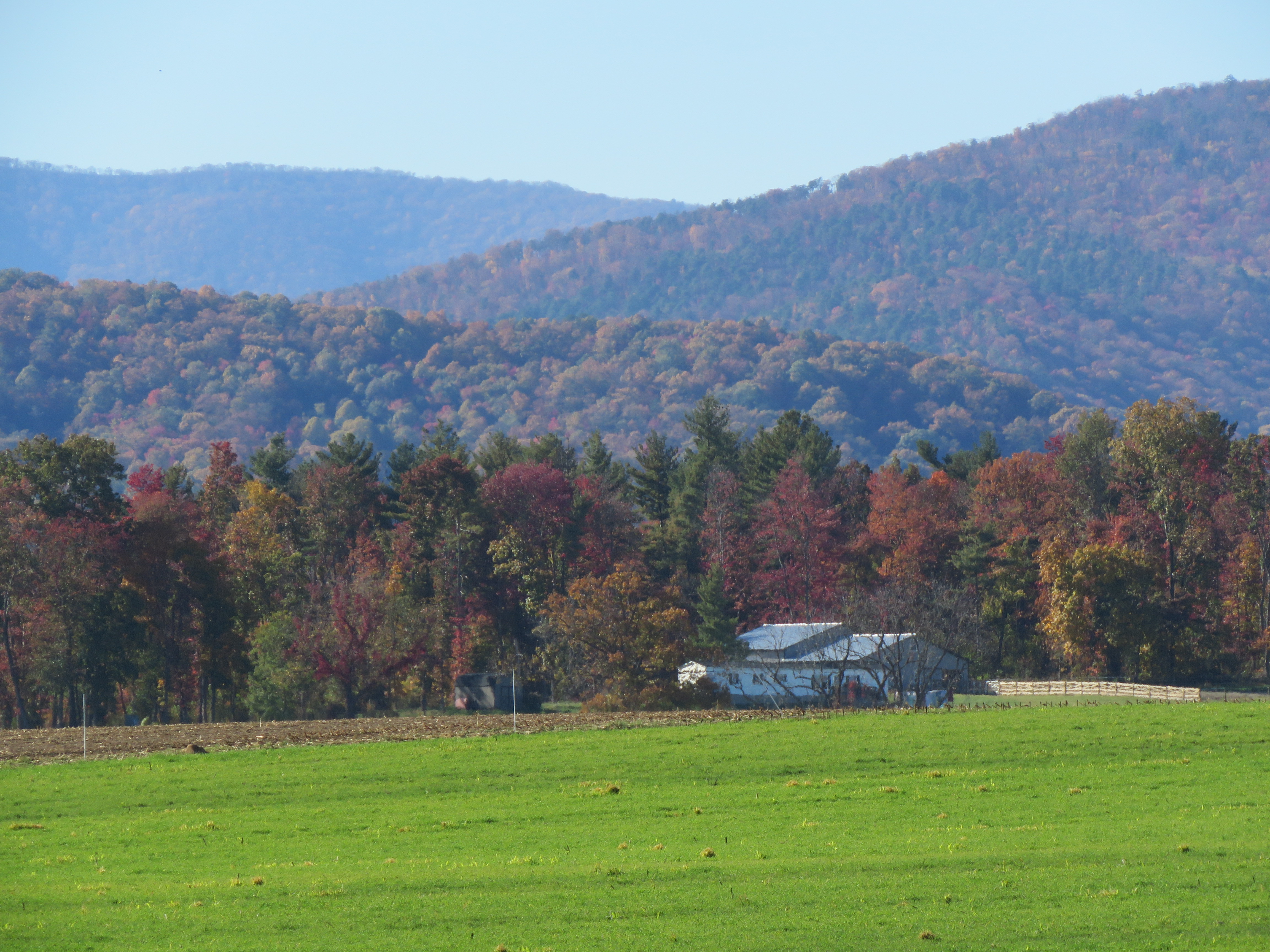
Skyline Drive in Shenandoah National Park earlier in October. Photo by Bruce Stambaugh
Doing so allows photographers to capture the fall’s breathtaking beauty. Occasionally, I encounter opportunities to spot some migrating birds and interact with local residents. Once I explained my purpose, I never had an issue. Of course, I choose my spots carefully.
The secondary roads of Rockingham County wind, climb, and descend through the rich agricultural lands that have been farmed for generations, sometimes by the same families and their descendants. I find that fact as rich and satisfying as the colorful leaves.
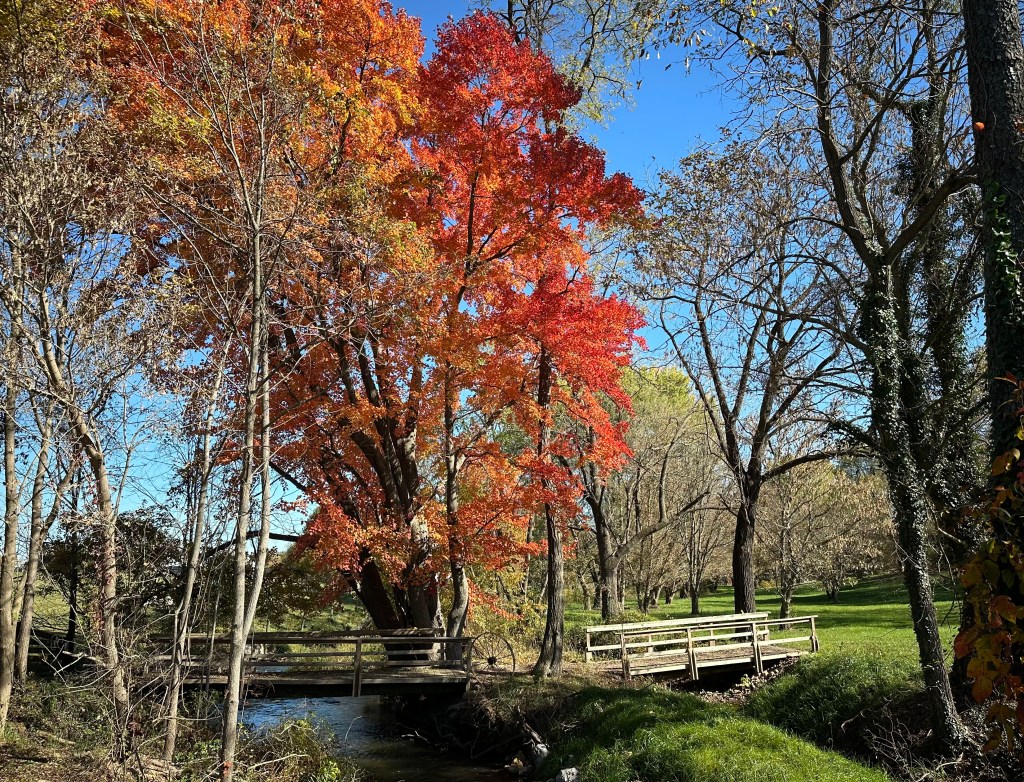
The joy of photographing the glorious fall colors is mainly in the sharing. I hope you enjoy this series of photos of birds, buildings, and leaves at their peak colors.
Please click on the photos to enlarge them.
I often find the brightest colors closer to home. The brilliant leaves show off houses, churches, cemeteries, and roadsides.
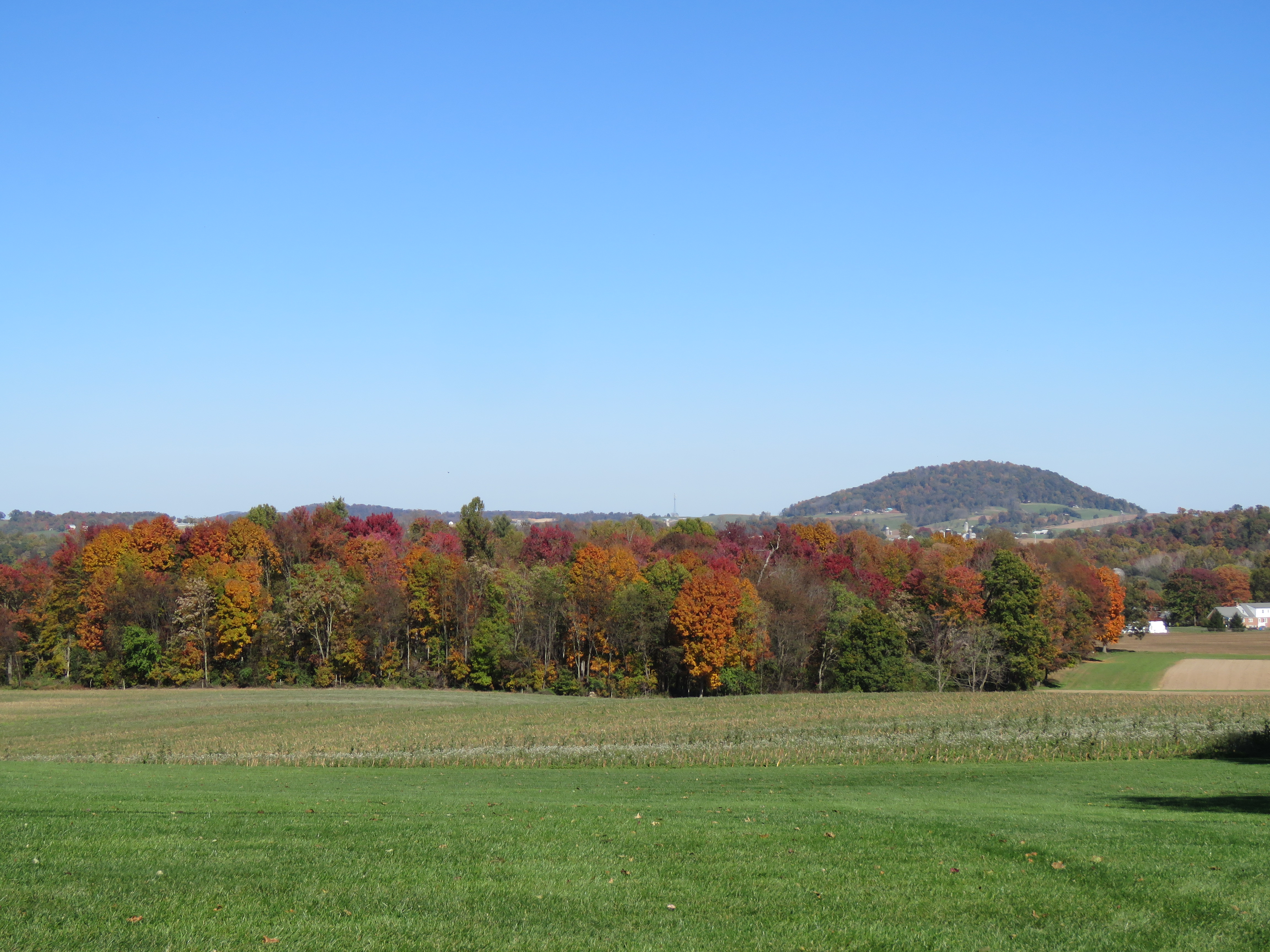
Of all the rural roads I traveled, this scene at the little hamlet of Spring Creek took the prize.
“Thinking is difficult. That’s why most people judge.” — Carl Jung
The morning sky was cerulean as I was on my way to deposit three bags of yard waste at the county landfill’s recycling center. When I turned onto Main St., traffic in both southbound lanes was stopped for some reason. I figured it might be a wreck at the next intersection.
Soon, vehicles in the right-hand lane began moving, so I merged into that lane. Then, I saw two Hispanic men walking from a fast-food restaurant to a dump truck five cars ahead. Had they really stopped their vehicle in the left lane to get something to eat? I zipped by the truck on the right and headed to my destination.
When I arrived at the landfill, I drove straight to where tree limbs, shrubs, leaves, and grass clippings were dumped, later to be ground into mulch. As I began unloading the three bags of sticks, leaves, and dead plants, the truck that blocked the road backed in beside me.
The two occupants quickly began to dump the truck’s load onto the huge pile. I kindly asked the driver what had happened where their vehicle had been stopped.
“You mean in front of McDonald’s?” the driver asked. I nodded in the affirmative.
“Oh, the transmission in the car beside us went out,” the man explained. “The lady was crying and didn’t know what to do, so we got out and pushed her car into the parking lot.”
I thanked them for their good deed of kindness and silently chastised myself for wrongly judging them. I was embarrassed by my egocentricity.
Why do we think so negatively when we don’t know all the facts? Why was I so self-centered simply because traffic was stalled? I wasn’t on a timed schedule.
Instead of being unnecessarily judgmental, why wasn’t I more curious about the situation? Jung’s relevant quote spoke to me. Jung was a Swiss psychologist and psychoanalyst in the 20th century.
I pondered all this on my way home. I thought more broadly about the current chaotic state our country is in. Is this the way bias and bigotry start, one little, insignificant episode at a time?
I didn’t consider myself biased toward others or a bigot—most people don’t—but this incident gave me pause. After a 30-year career in public education and a dozen more years in marketing, I always considered myself open-minded and fair toward others.
I wondered how many times in my lifetime I judged situations and other people without comprehending I was doing so. Probably a lot more than I care to recall. I suspect this septuagenarian is not alone in that regard.
So, how do we change our approach to life’s little hindrances? Professional contemplatives suggest starting with the breath: Breathe in, breathe out, breathe in, breathe out, they recommend.
I should have recognized this right away. Instead of long, deep breaths, I imagine my breathing was short and shallow, only adding to my unnecessary frustration and likely increasing my blood pressure.
From experience, I know that contemplative practices have many benefits. According to the Center for Contemplative Practices, they can improve health, mood, sleep, self-awareness, curiosity, and other personal gains.
Had I taken the time to remember and act upon these principles, my day would have started much differently. After all, how much effort does it take to pause, take a deep breath, and relax? The answer is not much.
However, I was bold enough to ask the men about the situation and received a straightforward answer that satisfied my inquisitiveness. Those good samaritans pulling in beside me at the landfill were a godsend. I imagine the women driver felt the same way.
So, the next time I tense up, I’ll try to remember to breathe in and out and not judge. How about you?




































 Roadkill Crossing
You must be logged in to post a comment.