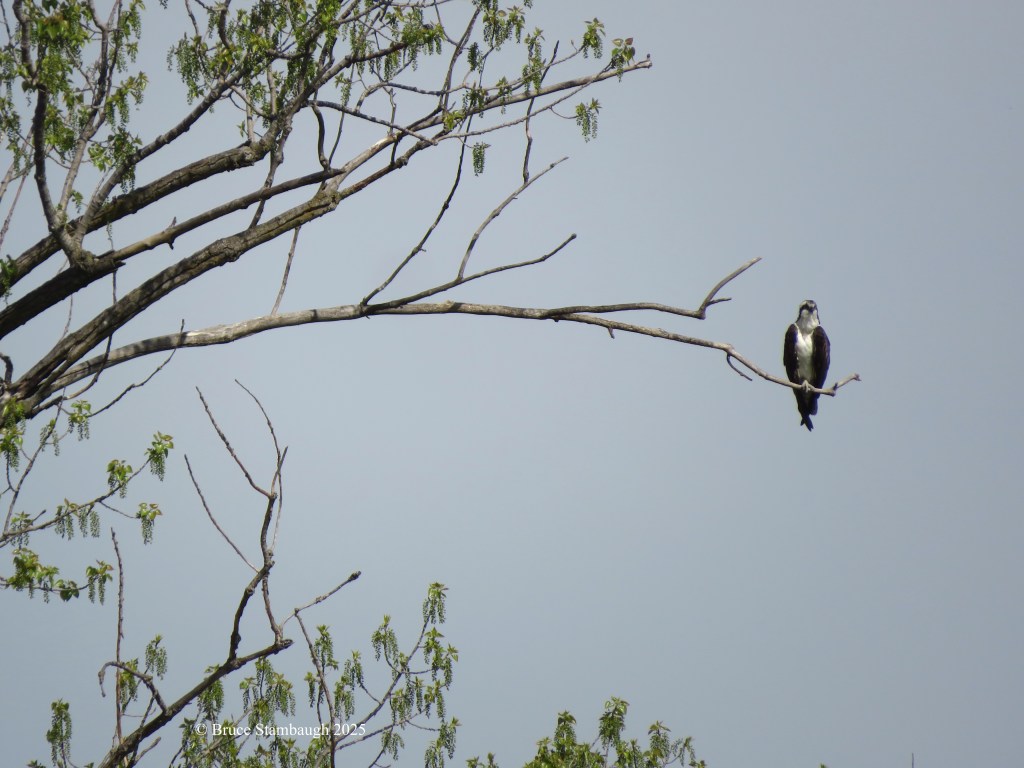
Osprey, Silver Lake, Dayton, Virginia. Photo by Bruce Stambaugh
While birding on Earth Day, this osprey provided several good poses for me to capture. It went from a towering tree snag to the limbs above to this precarious perch on a limb that hung over Silver Lake in Dayton, Virginia.
I heard this Eastern Meadowlark before I saw it. The attractive bird sang away on these old fence posts, blending in pretty well. Finding the bird took me a while since I spent most of the time looking in the pastures on either side of the woven wire fence.
The camouflaged bird was a long way off, but the telephoto lens produced the effect of squeezing the fence posts together. They were actually four to six feet apart. I was pleased that the Eastern Meadowlark remained on the fence long enough for me to capture this image.
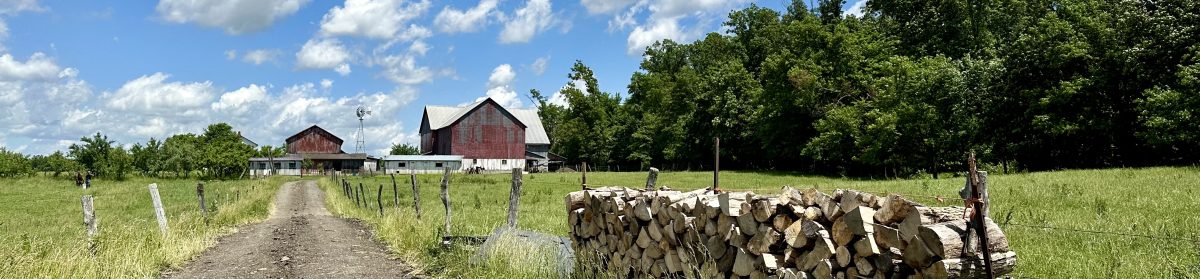
The pastoral landscape we enjoyed. Photo by Bruce Stambaugh
The weather was similar to the day we married 54 years ago, mostly sunny and warm. So, we decided to celebrate our anniversary by enjoying the scenic outdoors in Virginia’s Shenandoah Valley.
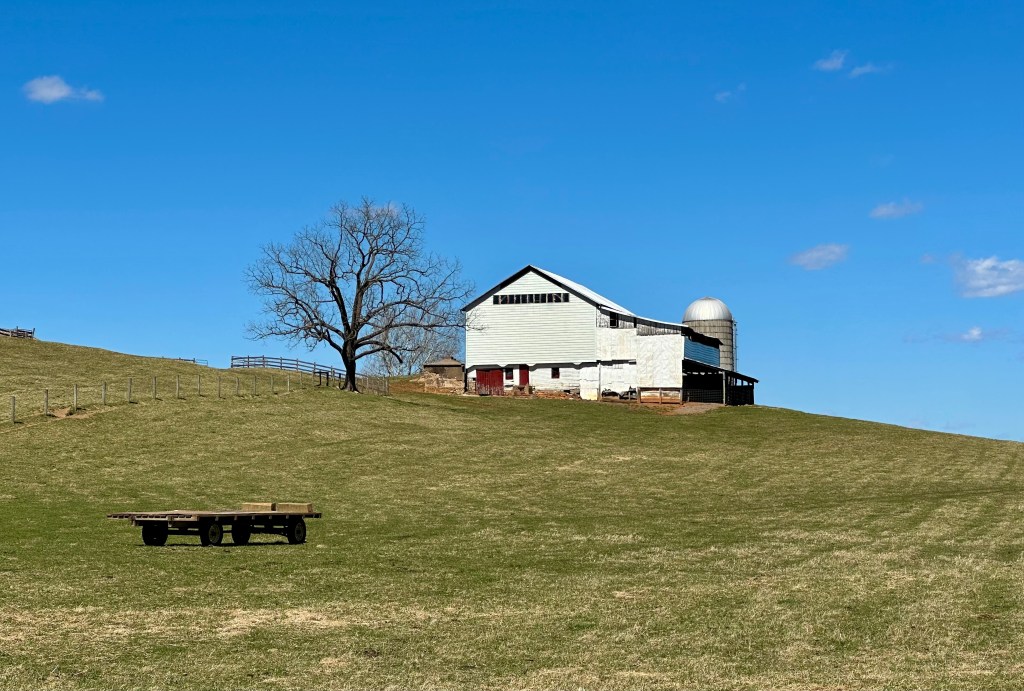
We drove the country roads in two Virginia counties, where Old Order Mennonite farms dominate rolling landscapes at the foot of the Allegheny Mountains. Those families have kept the farms intact for the most part. Generations have raised crops and livestock, including poultry, without selling off their prized road frontage for homes or small businesses. They must enjoy the scenery and quiet, too.
Despite the lack of rainfall, succulent green grasses for beef cattle, dairy cows, and plump sheep brimmed beneath tree-dotted pastures. Cottony clouds sailed overhead in the cerulean sky.
We visited a local birding hotspot across from a plain but pristine Old Order Mennonite church, where the men and women sit in benches on opposite sides after filing through separate doorways. Killdeer, Pectoral Sandpipers, and Canada Geese called and preened in the morning’s warmth, while pairs of Tree Swallows divebombed me for being too close to their birdbox.
Pectoral Sandpipers. Photo by Bruce Stambaugh
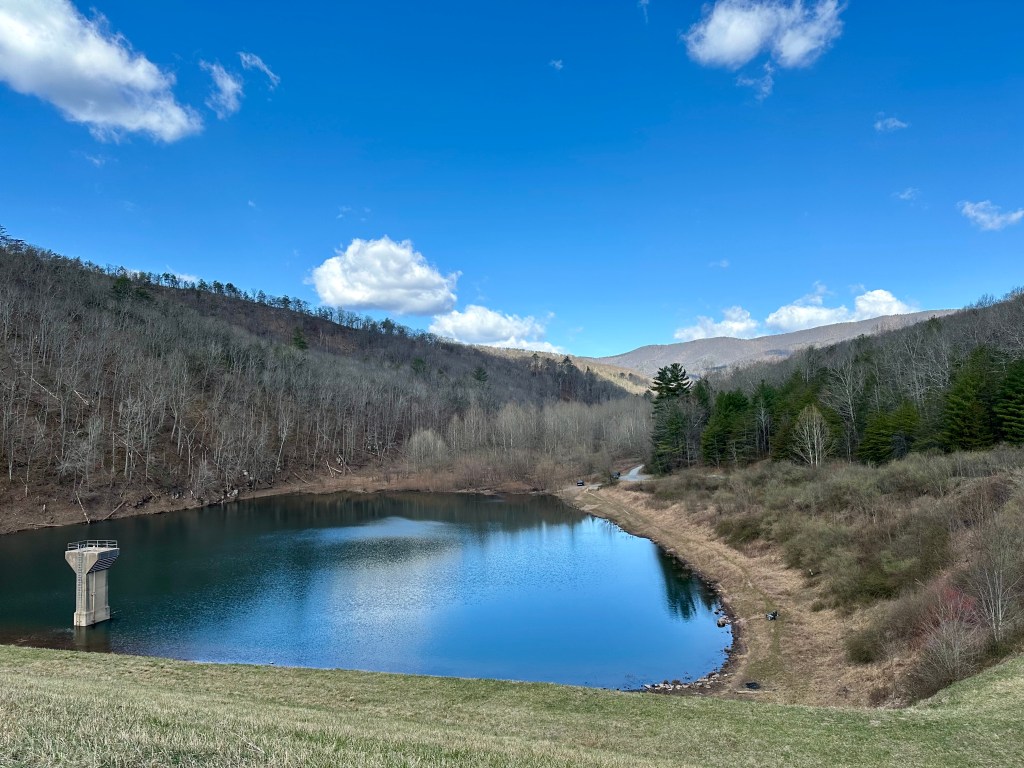
We turned onto a narrow, notoriously bumpy road that led to a mountain reservoir. A stream rushed between the mountains’ steep, forested foothills, marking the boundary between Virginia and West Virginia. Mint-colored leaves had only sprouted, allowing views of rock-filled talus slopes.
At the reservoir, the azure sky commanded the scene. Far below on its shores, fishermen plied the still water that mirrored the blue canopy overhead.
Though in no hurry, we kept driving south to our lunchtime destination. We wound up, down, and around onto primary roads and entered a historic, small southern city where artists and restaurants have replaced millineries, general stores, and saloons. We spied the old railroad station two city blocks away, where Amtrak and excursion trains still stop.
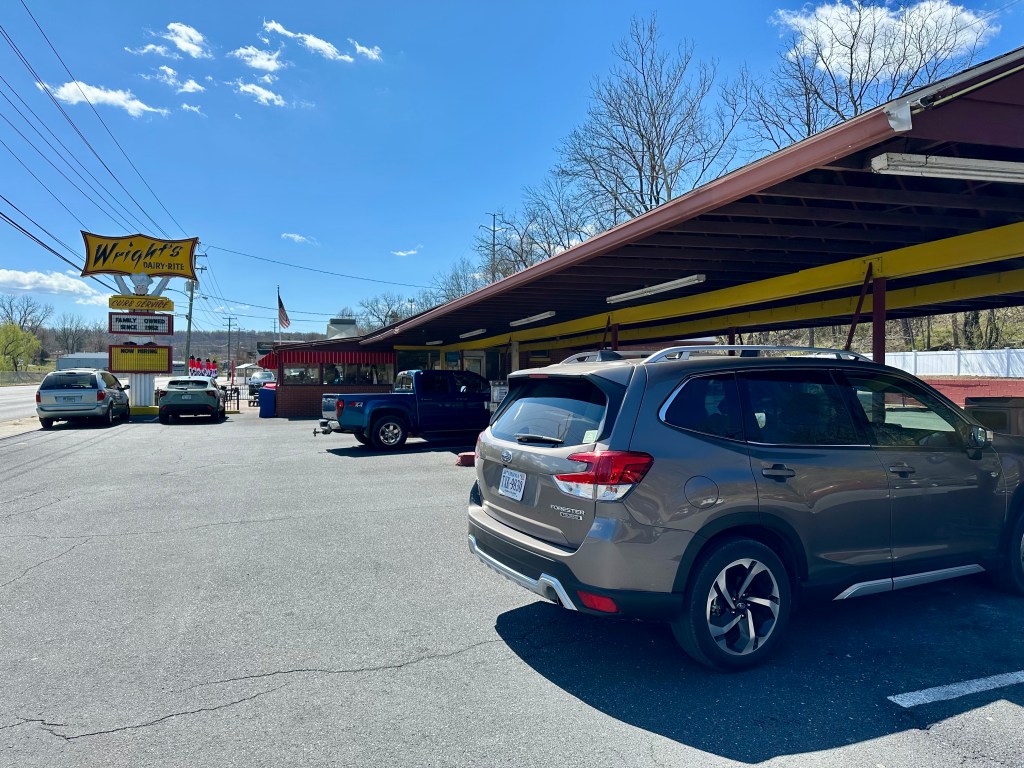
We were delighted to find a restaurant serving fresh seafood and luscious desserts. However, my wife diligently discovered an old-fashioned drive-in a mile away serving the best hot fudge sundaes.
It had been decades since I had to push a button to order food. The speakers looked like those we had at drive-in movie theaters in the 1960s. Our sundaes arrived just as we ordered, with chocolate ice cream.
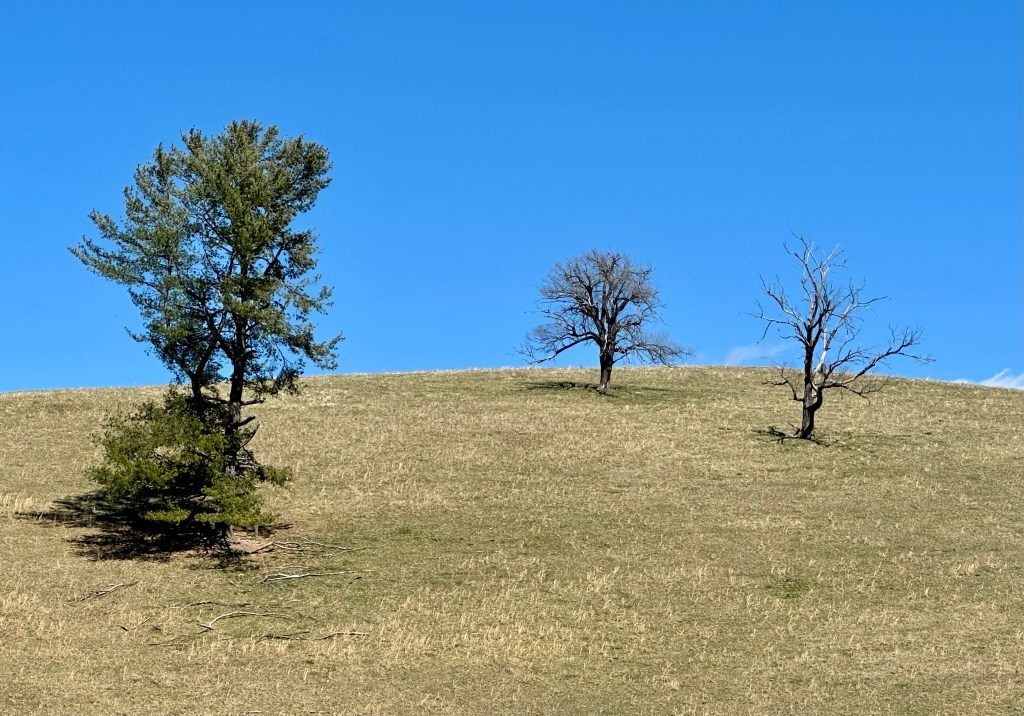
After the nostalgic pleasures, we headed west again toward the mountains before turning north. We passed ranches with lazy brooks snaking through green pastures occasionally speckled with grazing Black Angus cattle. Experienced farmers kept hilltop trees for cattle to gather on hot, humid Virginia days.
Drivers of the few vehicles that passed us waved the familiar index finger hello. If they know you, they point at you as a sign of recognition. We were fine with being admiring strangers.
Abandoned farmsteads stood on steep hillsides surrounded by trees planted ages ago. The houses were weathered and had broken windows, while many old outbuildings and barns had collapsed.
The long farm lanes that ended at white two-story houses and red bank barns reminded me of the happy, innocent Ohio days I drove down to pick up my fiancée. Like her lane, a small ridge of stubble grass divided the tire tracks.
The weather nearly matched the day we married all those years ago. Sunny skies and unseasonably warm temperatures dominated that precious day, too. However, the pungent smell of manure that the farmer had sprayed on the fields across from the country church was missing.
We made our way home happy, contented, and glad we had chosen to renew our vows so quietly, personally, amid welcome familiarity.
Steers graze on greening grass. Photo by Bruce Stambaugh
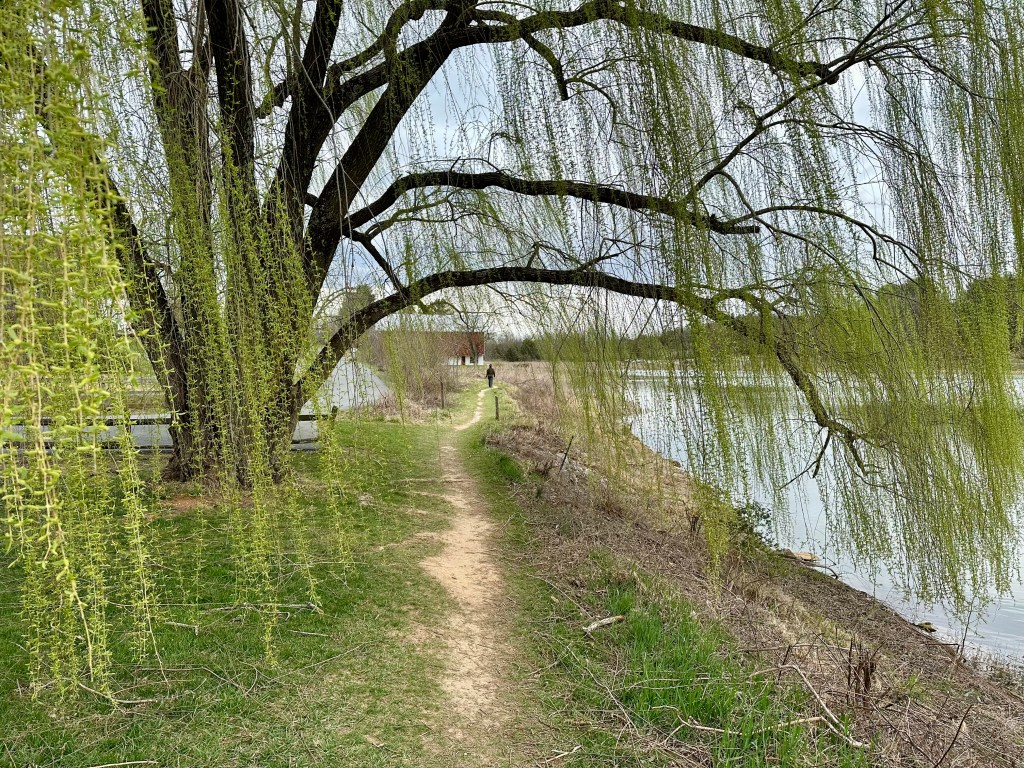
I found this inspiring scene on a recent hike and birding expedition around a local lake. The weeping willow tree’s tender leaves had recently emerged, which stopped me in my tracks.
I loved how the lowest limb arched over the dirt trail, beckoning hikers on no matter which direction they walked. If the young woman in the distance noticed the tree’s artful beauty, she didn’t say anything and kept walking.
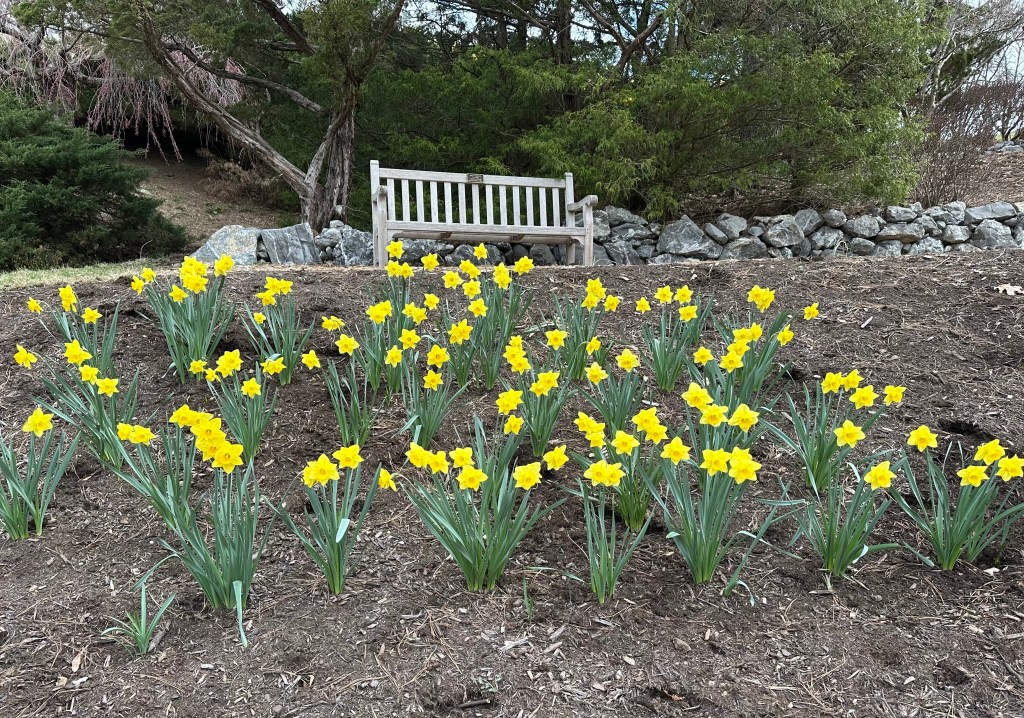
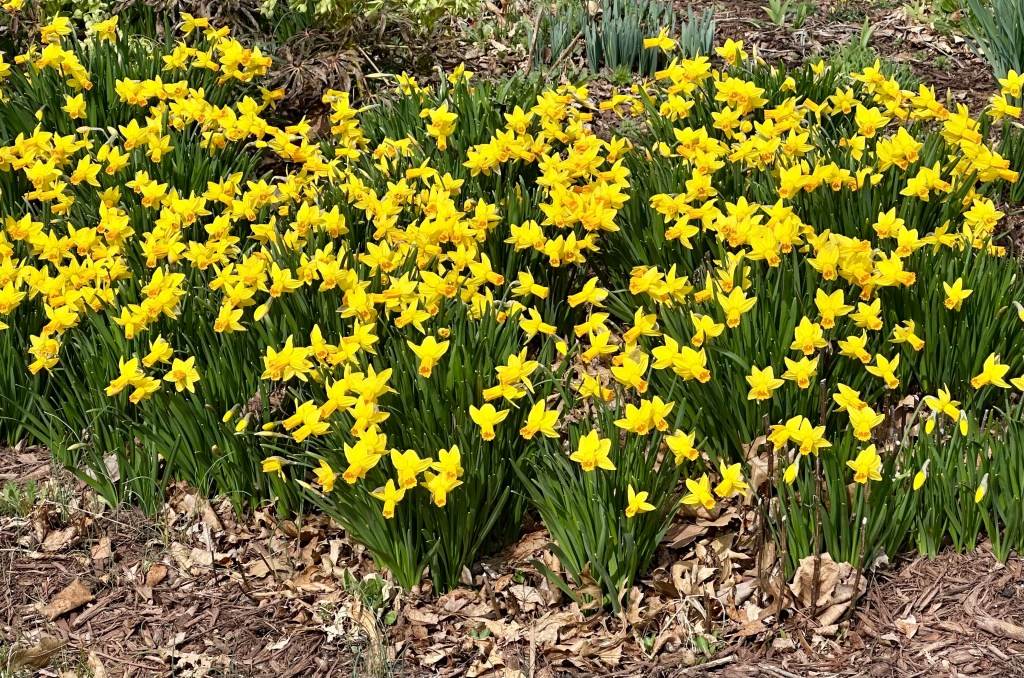
The Daffodil Choir sang an impressive concert at Edith J. Carrier Arboretum yesterday in Harrisonburg, Virginia. Their harmonic voices carried into the valley and reverberated throughout the surrounding woodlots.
Try as it might, no city or Interstate traffic noise could overpower these beautiful, angelic singers. I lost it when their four-part harmony sang “In the Blub There is a Flower.”
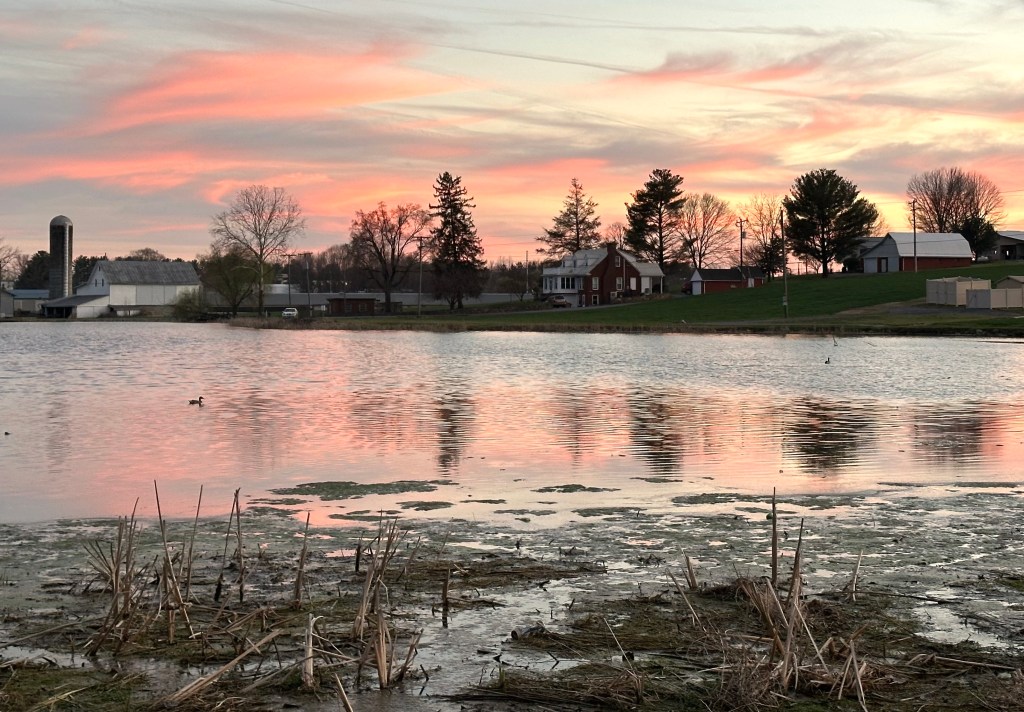
Silver Lake, Dayton, Virginia. Photo by Bruce Stambaugh
The broken cloud cover in the early evening looked promising for a decent sunset. It didn’t turn out that way.
When I reached Silver Lake in Dayton, Virginia, the puffy, cumulous clouds had dissipated, leaving only high, wispy cirrus clouds to reflect the sun’s rays. So, I looked east, north, and south instead of west.
The clouds in the southern sky particularly caught my attention. I hustled to the northern end of the popular fishing lake and was thrilled to find the evergreens reflected in the lea of the lake tinted by the mauve sky.
It wasn’t the photo I had expected, but I took what was given, which was all I could do.
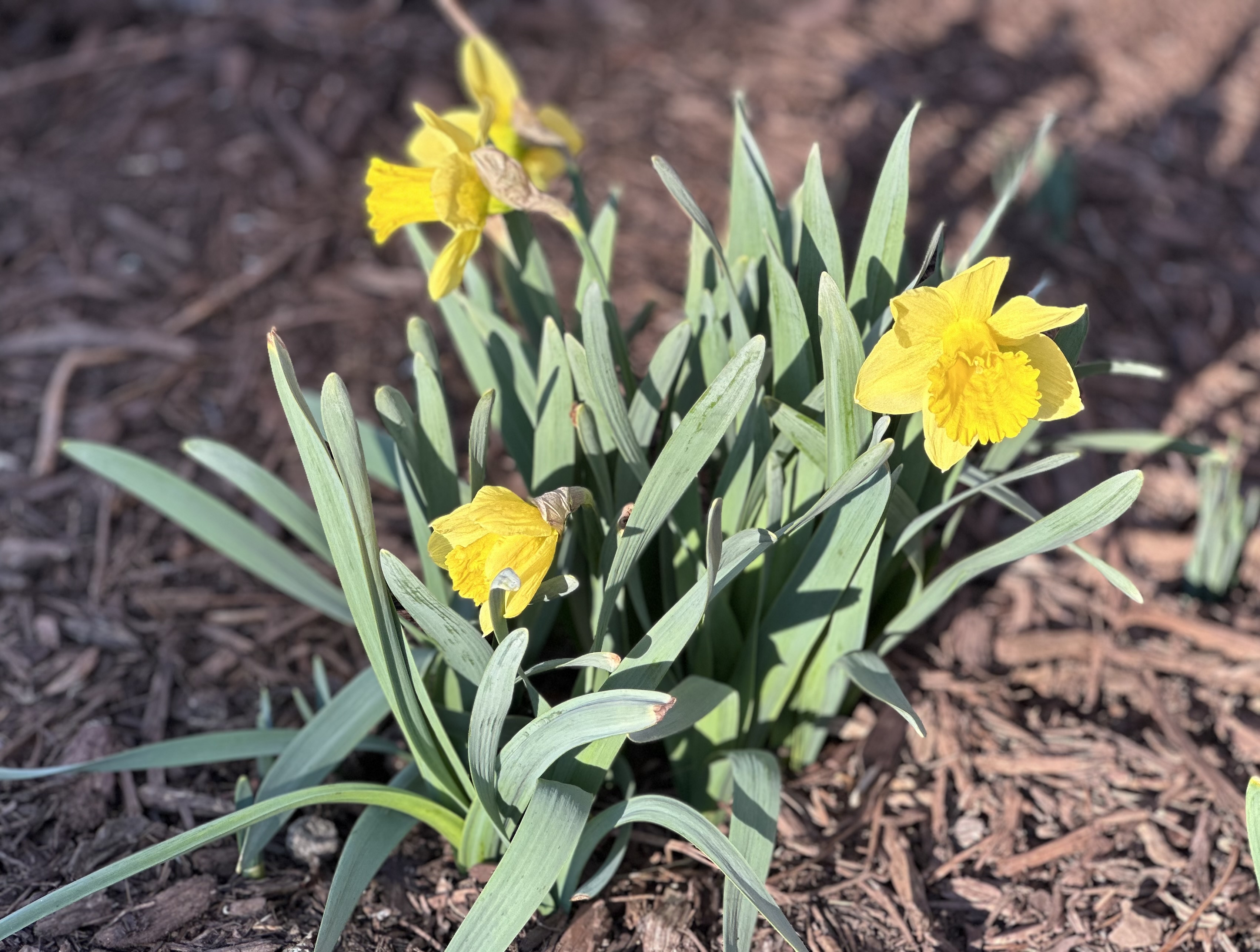
Cloudy or sunny, our neighbor’s daffodils brighten our day. Photo by Bruce Stambaugh
It’s spring! The vernal equinox arrived at 5:01 this morning.
Hopefully, that will put to rest winter’s worst weather. At this time of year, any snowfall won’t last long in Virginia’s Shenandoah Valley.
Of course, nature’s course doesn’t hold to mankind’s arbitrary seasonal demarkations. I have noticed from afar the hint of coloration of the once-dormant trees that populate Mole Hill, a local and revered landmark. The buds of its red maple trees are especially evident.
A walk around our yard and neighborhood reveals other signs of springtime. Deciduous tree buds are swelling, if not opening, ornamental trees bloom, and a lone Hyacinth blooms. Lenten Rose plants are also blooming right on time despite their winter-singed leaves. The grass is greening and growing. I’ll have to ready the lawnmower for action.
Tulip leaves have knifed through the chilly soil. Migratory birds are slowly arriving while the year-round residents begin to stake out their nesting territories.
It’s springtime, and I couldn’t be happier as long as my allergy medicines remain effective.
Yesterday, the western sky was hazy in the late afternoon. After supper, I kept watch and headed to my favorite spots for sunset photography in Rockingham County, Virginia.
Colorful sunsets aren’t always easy to come by here in the Shenandoah Valley. It may look promising early on, but clouds tend to hang over the Allegheny Mountains that mark the state line between Virginia and West Virginia.
Then, just when you want to give up, boom, the pinks and oranges glow, if only briefly. Other times, it’s a complete bust. Nevertheless, I’d rather be patient than miss a stunning sunset.
Last evening, I changed locations several times until the western sky popped with color. I wasn’t in the most desirable spot, but I am not complaining after capturing this muted beauty.
An Amish farmstead near Mt. Hope, Ohio. Photo by Bruce Stambaugh
I recently visited my old stomping grounds in Holmes County, Ohio, home to the world’s largest Amish population. Remnants of snow still covered part of the ground, contrasting with the barren, fallow fields.
I enjoyed finding a few Amish farms, like the one pictured, remaining amid the rapidly expanding tourist businesses scattered throughout the once pristine countryside.
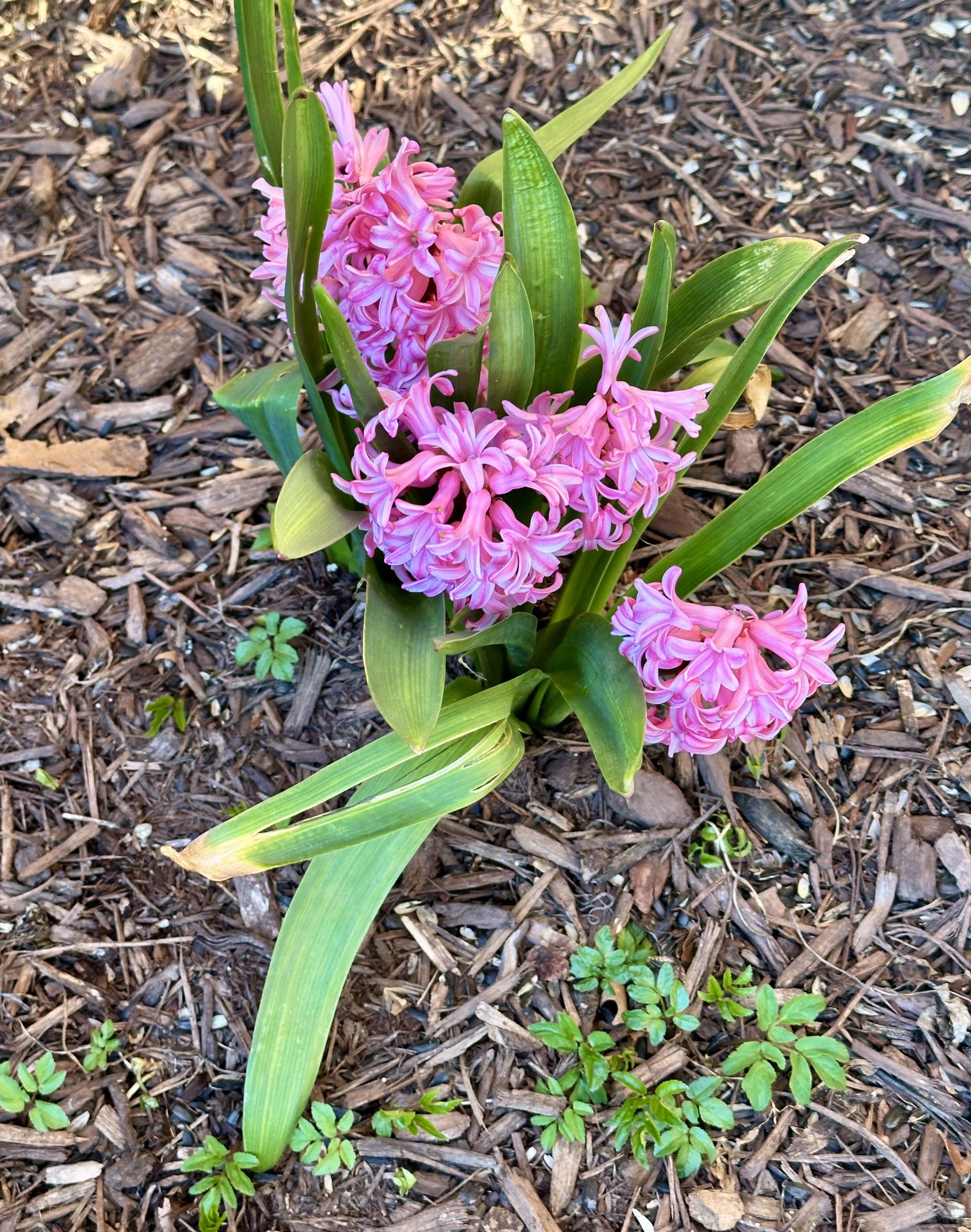
One of these is not the same as the others. Photo by Bruce Stambaugh
Our across-the-street neighbors have lovely flower gardens for all who pass by to enjoy. Since their house faces south, the winter sun, when it shines, warms the front yard.
This, in turn, encourages flowers to bloom when the days warm into the 50s and 60s, like they have for the last few days. I went over to photograph the Snow Drops and discovered that a lone Hyacinth had joined dainty white flowers in showing off its lavender beauty.











 Roadkill Crossing
You must be logged in to post a comment.