
© Bruce Stambaugh 2024
© Bruce Stambaugh 2024
Today is Memorial Day in the United States. It is a day designed to remember U.S. military personnel who have fought and died in wars.
The commemorative day originated as Decoration Day on May 30, 1868, in honor of Union soldiers who had died in the Civil War. It has since been renamed Memorial Day in memory of all loved ones who have died. Congress also set the day as the last Monday in May, making a three-day holiday.
Americans see the weekend as the start of summer. Many schools have already completed their academic year, making June vacations a real possibility for families who can afford them.
Memorial Day has evolved to include parades, 21-gun salutes at cemeteries, family gatherings, and picnics. Memorial Day falls on my wife’s birthday this year, so we will celebrate that with our family, too.
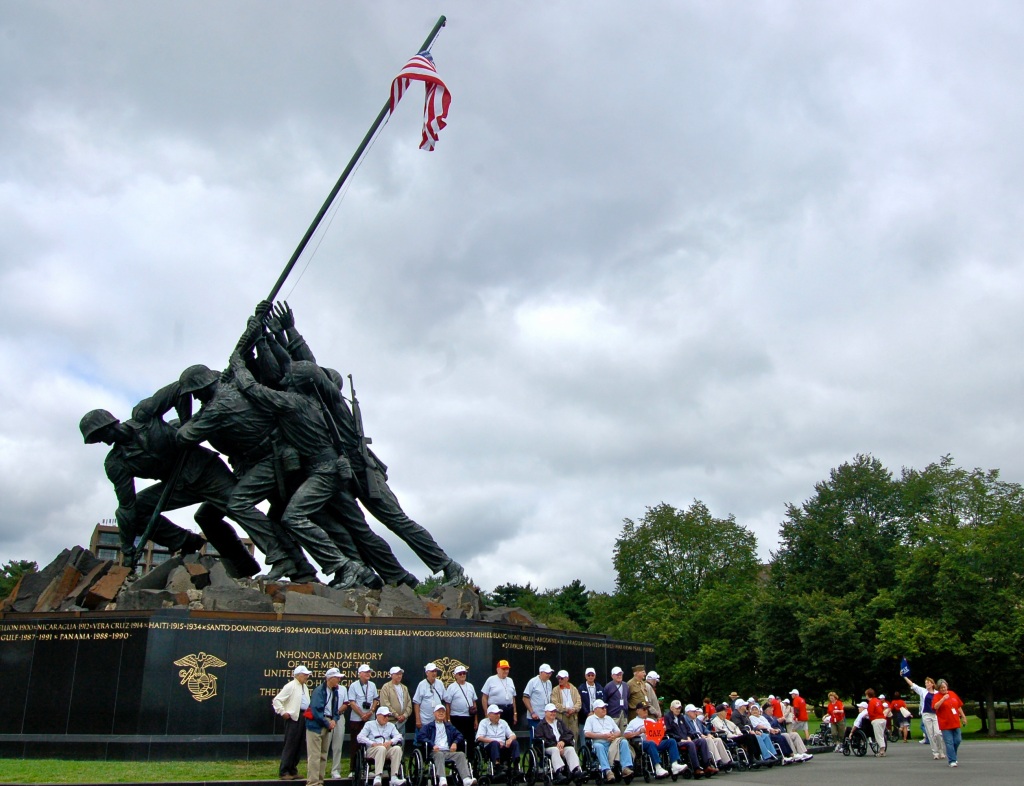
I took this photo on September 12, 2009, at the U.S. Marine Corps Memorial in Washington, D.C. The statue depicts the raising of the American flag on Iwo Jima during World War II.
My older brother and I had accompanied our late father on an Honor Flight out of the Akron-Canton Regional Airport in Ohio. The veterans on the flight gathered in front of the memorial for a group photo. Our father is third from the left in the front row.
© Bruce Stambaugh 2024
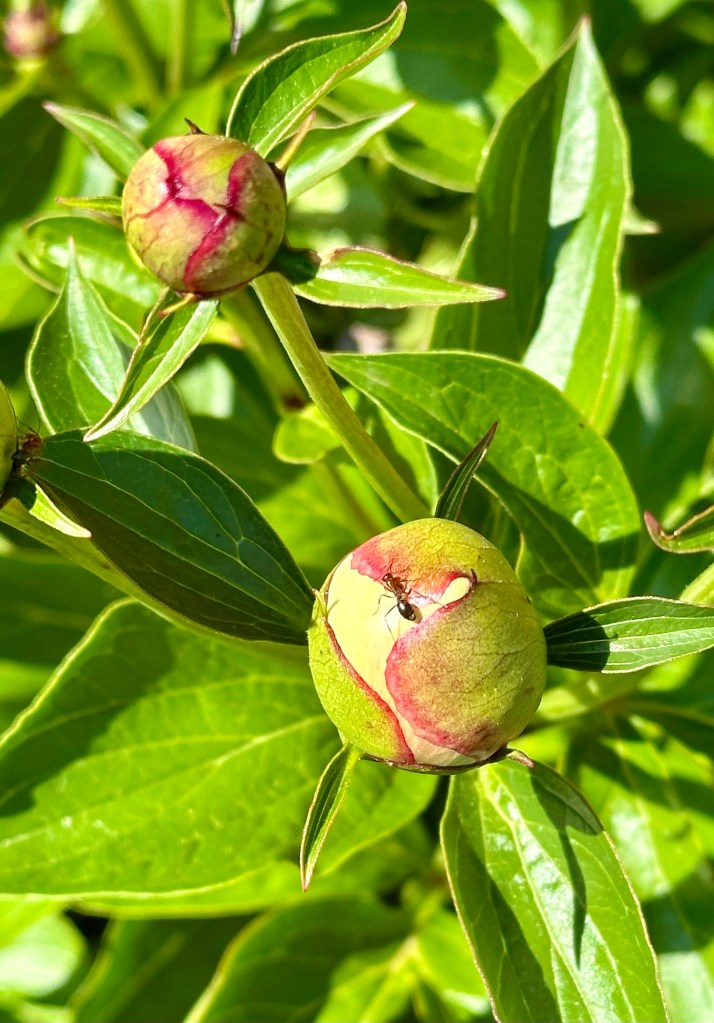
I was working in the backyard when I noticed an ant on a peony bud. Immediately, I thought of the old idea that peony buds need ants to transform from bud to flower.
I didn’t know exactly why or how that interaction worked. So, of course, I Googled it.
It turns out that it’s a myth. Michele Warmund of the Plant and Science Department of the University of Missouri says peonies can blossom all on their own. However, the biological mutualism between ants and peonies is true.
Peony flowers provide food for ants, who keep harmful floral-feeding insects away in return. According to Warmund, spraying the peonies with insecticides is unnecessary. The ants will protect the flowers as long as they can obtain food.
So, if you see ants on your peonies, celebrate!
© Bruce Stambaugh 2024

This is the last in a series celebrating National Park Week.
Autumn is often the best time to visit a national park. The annual coloring of the leaves attracts millions of people to many national parks, including Shenandoah National Park in Virginia.
The Park Service staff do an excellent job of keeping the public informed about the status of the changing of the leaves. From websites to social media to webcams, patrons of the parks can plan their trips accordingly.
Of course, everyone wants to hit the peak colors. The problem is that many factors play into trying to time the peak of coloration. Elevation, weather, temperature, tree species, longitude and latitude, and the sun’s angle all assist the color transformations. People’s schedules add to the leafy puzzle.
Living near a national park makes timing less risky. I closely monitor the weather, social media group photo posts that specialize in leaf watching in Shenandoah National Park, and the park’s weekly livestreaming. When it’s time to go, I head east and am seldom disappointed.
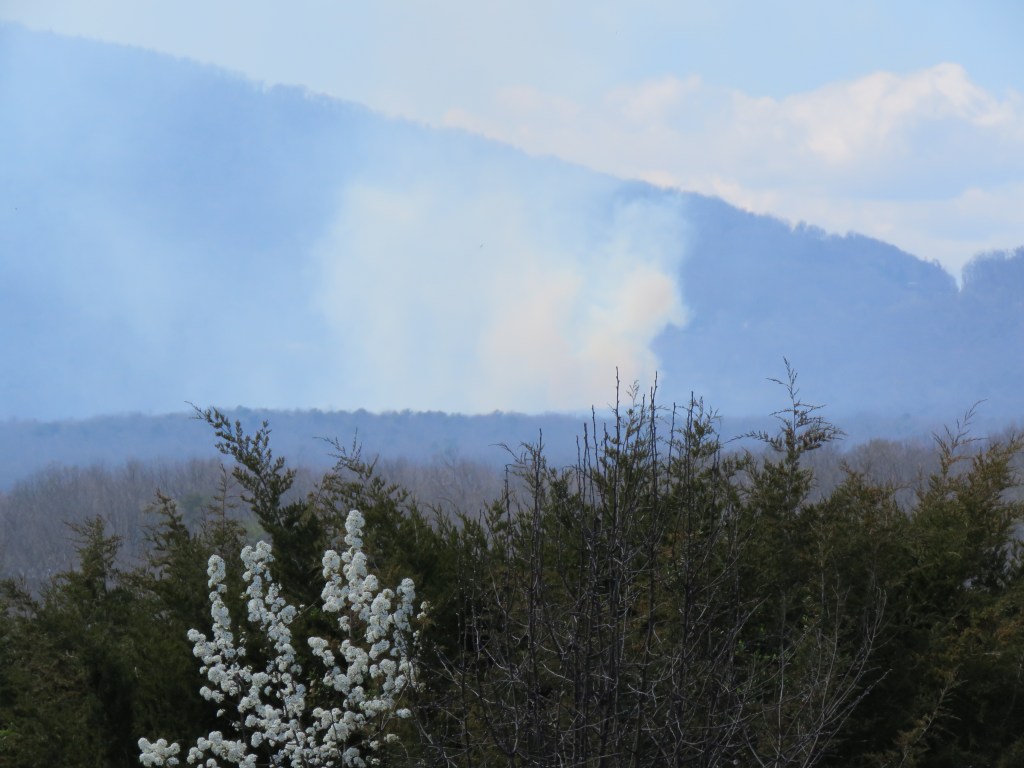
This past fall, much like this spring, was relatively dry. Fire conditions lasted several weeks, and fires did break out. The photo shows smoke from a fire near the Rappadan Camp that started outside park boundaries but quickly burned into the park’s forest.
The fire’s smoke starkly contrasted with the vibrant colors of the ashes, sassafras, hickory, oaks, and poplar trees. It subdued the usual exuberance for the park’s universal beauty.
Over nearly a week, firefighters finally got the upper hand as the leaves began to rain down. Eventually, fall storms helped quench the blazes and brought down the last leaves.
Despite the fire, park visitors still enjoyed the beauty of the changing leaves along Skyline Drive, from overlooks, and walking the trails that remained open.
Given nature’s multiple colors, it’s a good bet everyone left the park with lasting memories and photos to brag about.
© Bruce Stambaugh 2024
This is the fifth post in a series celebrating National Park Week.
When you are in a national park, don’t forget to look down. You don’t want to miss the many wildflowers prolific in all but the winter. Even Death Valley is currently having a superbloom. I would love to see that sometime.
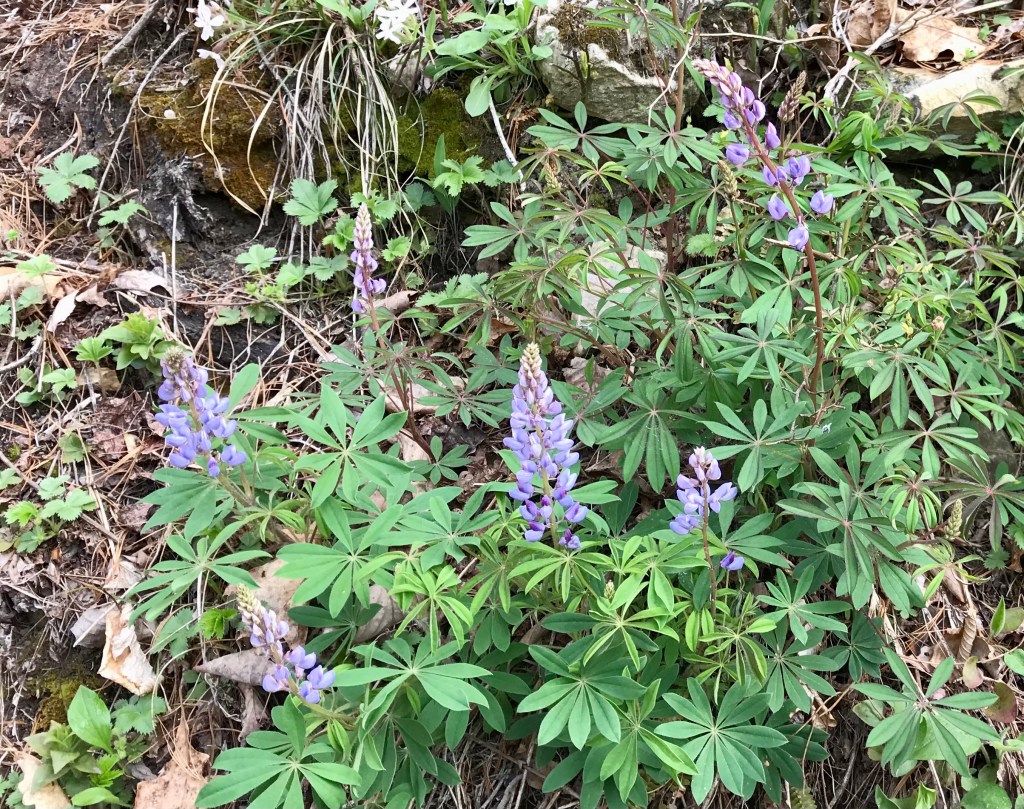
In the meantime, spring is the perfect time to look for wildflowers in national parks. I photographed the wild lupines along a fire road in Shenandoah National Park.
Wildflowers bring beauty to the park and attract other beauties, too. When I first visited Shenandoah National Park seven years ago, I was pleasantly surprised at the number and variety of butterflies I found in the park, even in the forests. The colorful blooms also drew bugs, bees, and, of course, Ruby-throated Hummingbirds.
So, when I visit any national park to bird, hike, and photograph birds and wildlife, the wildflowers also are on my agenda. The lovely lupines are the proof.
© Bruce Stambaugh 2024

This is the fourth in a series of posts celebrating National Park Week.
It is an understatement to say that people are drawn to waterfalls. Big or small, they are simply mesmerizing.
It’s one thing to see a photo or video of a waterfall, but it’s something else entirely to be standing next to one. The roar and the beauty transfix their observers. Even cascades of water over rock, then a crystal clear pool, then more white water entrances children and adults alike.
Shenandoah National Park officially has 36 named waterfalls. However, numerous others are in the park depending on the water flow. The photo above demonstrates that.
It’s one of many mini-falls above Lewis Falls, near the Big Meadows area. On a chilly November day, I hiked the Lewis Falls Trail in a group, and the many rapids and little falls upstream of the main event impressed us all.
It’s easy to be swayed by the impressive Yosemite Falls or Bridalveil Falls. I love them both. But romantic that I am, I am just as happy crisscrossing rapidly falling streams that form white water all the way to the cliff’s edge.
So, big or small, let’s praise the falling water in our national parks, which brings joy to everyone.
© Bruce Stambaugh 2024

This is the third installment of a series celebrating National Park Week.
I often hike alone. But occasionally, I enjoy sharing my love of nature with others.
The church I attend has a mentor/mentee program for youth. A friend and I each serve as mentors for two teenage boys. Knowing we all enjoy the outdoors, we took them for a day trip to Shenandoah National Park last summer. We had a riot.
These energetic young men enjoyed every aspect of the trip. They loved the hikes and the enthralling views. They also identified birds, flowers, and rocks and occasionally pestered one another. A pair of fawns grazing at the edge of Big Meadows startled us as we walked along the union of the meadow and the forest.
We rested on a rock outcropping overlooking the always lovely Shenandoah Valley. The boys loved scrambling over the ancient rock formation and resting in the warm sunshine, basking in all nature’s glory. Given our generational spans between teens and septuagenarians, I marveled at our common contentment.
But that, in part, is what national parks are for. People of all ages, races, religions, backgrounds, and interests feel at home in our nation’s beautiful national parks.
Our excursion was a perfect example of how to celebrate National Park Week.
© Bruce Stambaugh 2024
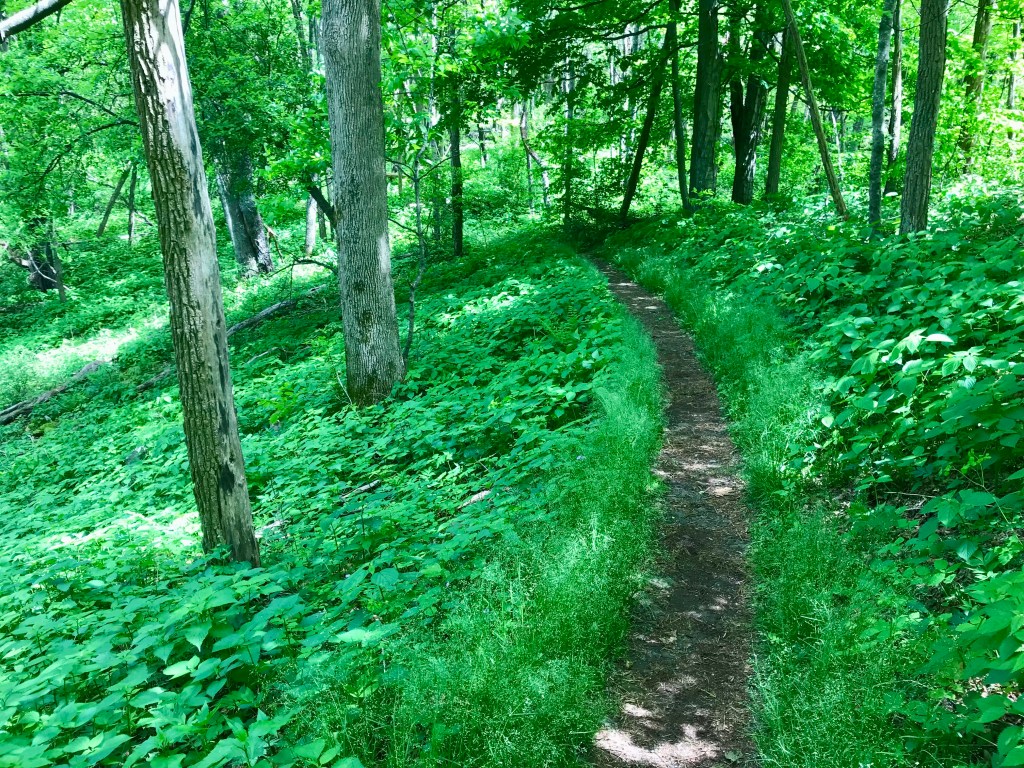
This is National Park Week in the United States. In celebration of our 63 beautiful national parks, this is the first of a series of photos I have taken in Shenandoah National Park.
Shenandoah National Park has a storied and somewhat troublesome history, given how farmers and their hired hands were removed from the park before it was developed starting in late 1935.
Though the land was rugged and steep in many places, over 2,000 folks lived, farmed, and worked on the 198,000 acres that became the first national park in the eastern part of the U.S. Landowners were paid an assessed rate for their property, which the federal government purchased via eminent domain.
Of course, many of the people were tenants who cared for the land, while the property owners lived in the Shenandoah Valley or elsewhere. The tenants received nothing for their inconvenience. Consequently, some of their descendants still have grudges against the government.
Nevertheless, Shenandoah National Park is a popular place to visit since millions of people live within a day’s drive. Plus, the Appalachian Trail (AT) stretches 101 miles through the park, drawing day and overnight hikers. The AT weaves along the crest of the Blue Ridge Mountains, crossing the Skyline Drive several times.
I enjoy day hikes in the park, which often involve hiking sections of the AT to spur trails that lead to waterfalls, rigorous climbs, and scenic overlooks. I especially appreciate the flora and fauna that I encounter.
This photo, taken in late May 2018, represents the lusciousness of the park’s greenery, from ground cover to towering trees. The photo was not altered to enhance the green.
Tomorrow, I’ll post what I saw to the left of where this photo was taken.
© Bruce Stambaugh 2024
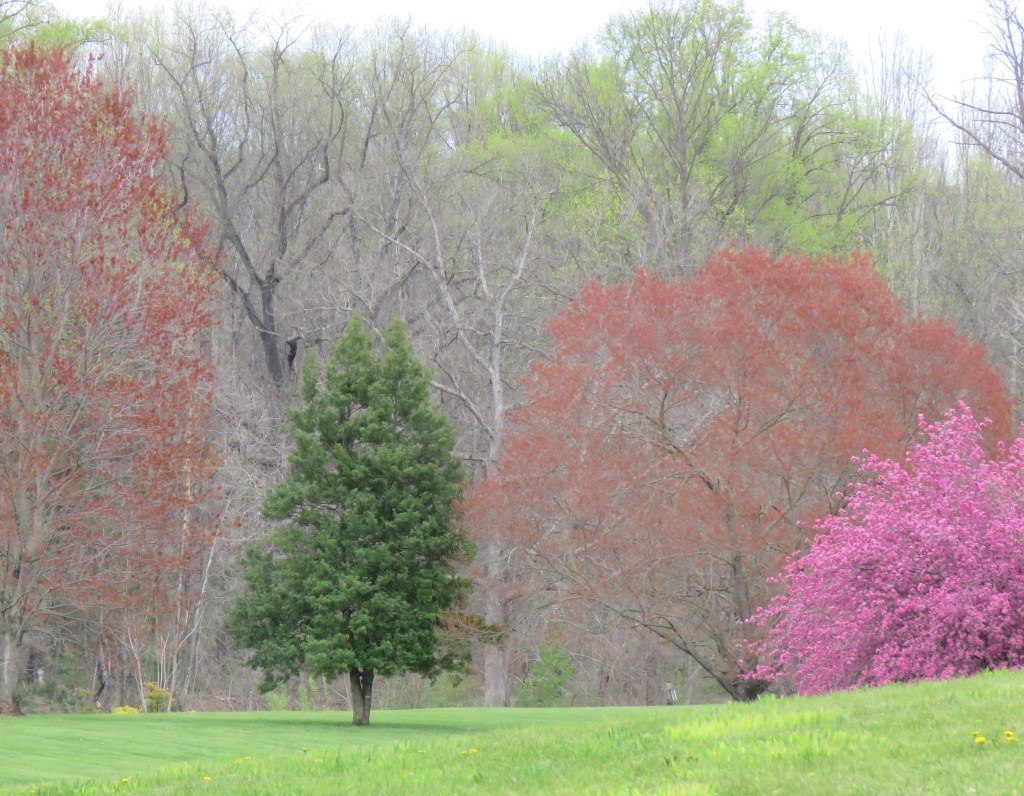
Just in time for Earth Day, spring’s vibrant colors are at their peak here in Virginia’s Shenandoah Valley. Ornamental shrubs, trees, and domestic and wildflowers are putting on a show for our pleasure and their propagation.
This annual phenomenon has a caveat. Conditions change quickly, and weather conditions play a significant role in these rapid transformations. A windstorm or hard frost can instantly paint the landscape much differently.
The tender and pastel leaf buds unfold quickly, exposing their infant beauty. The fresh foliage of red maples shows the reason for the tree’s name. So, too, do their fleshy seeds, which critters like squirrels devour.

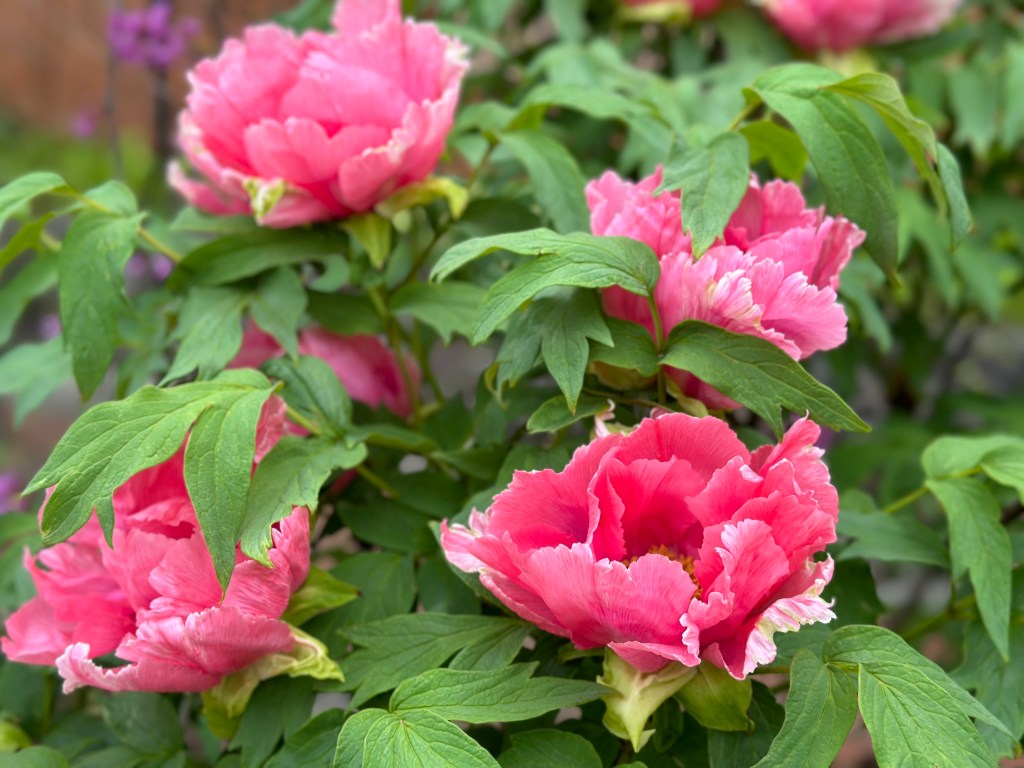
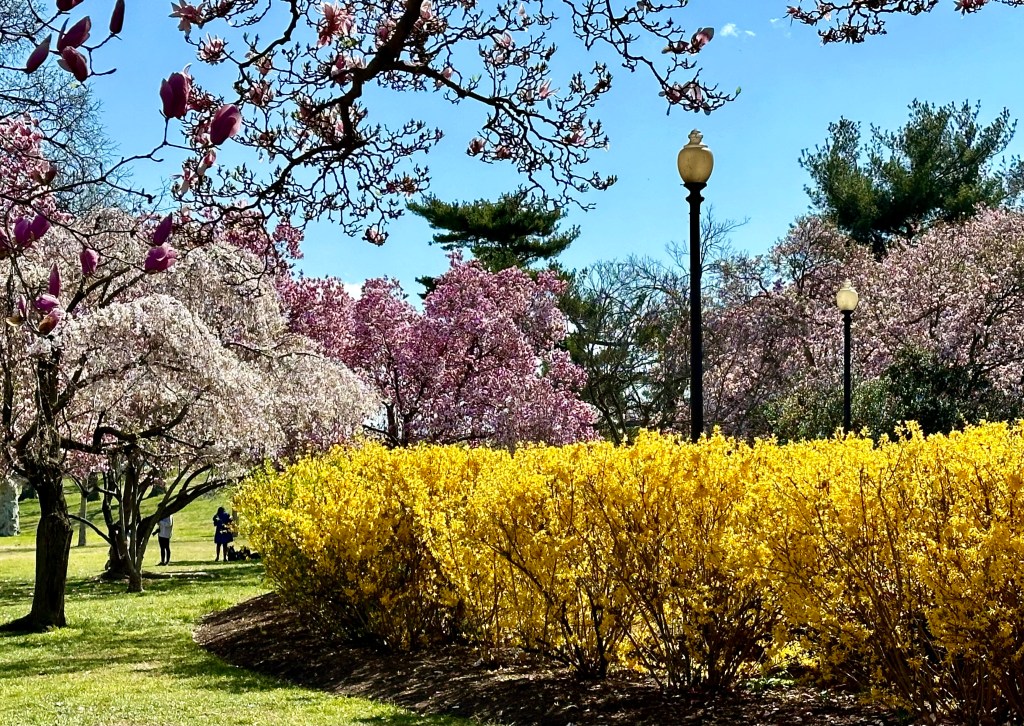


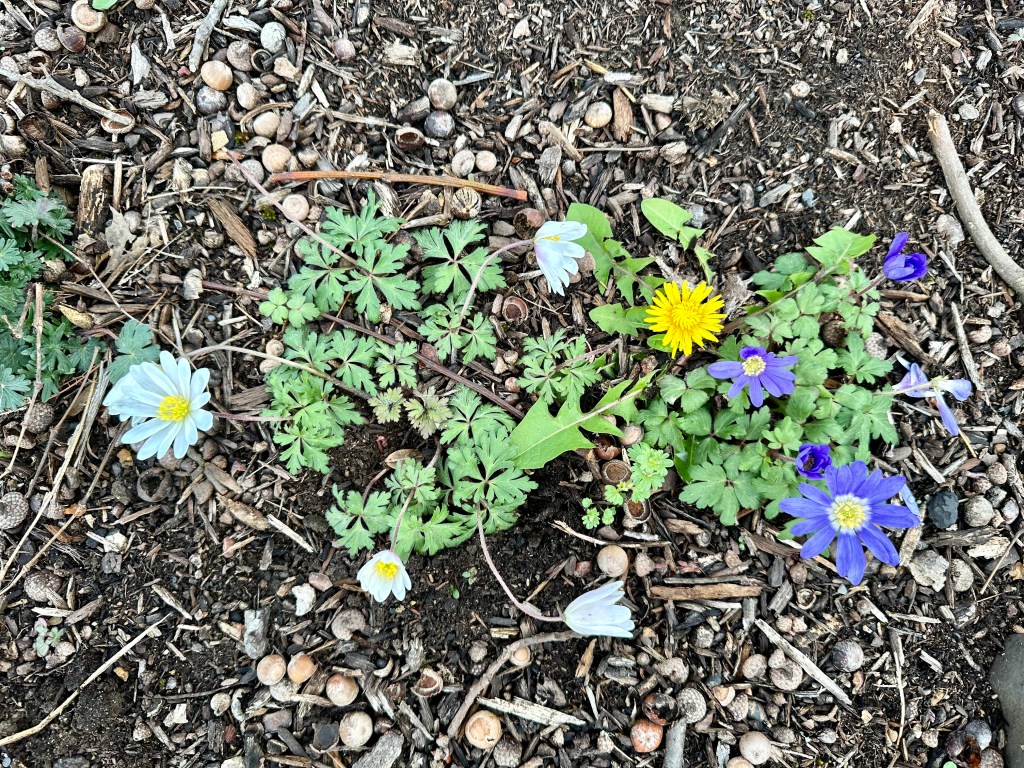

Please click on the photos to enlarge them.
Soon, however, the leaves fully unfurl, sometimes overnight, and the russets transform into luscious greens. Through transpiration and photosynthesis, we all can breathe easier. One large tree can produce up to a day’s oxygen supply for four people.

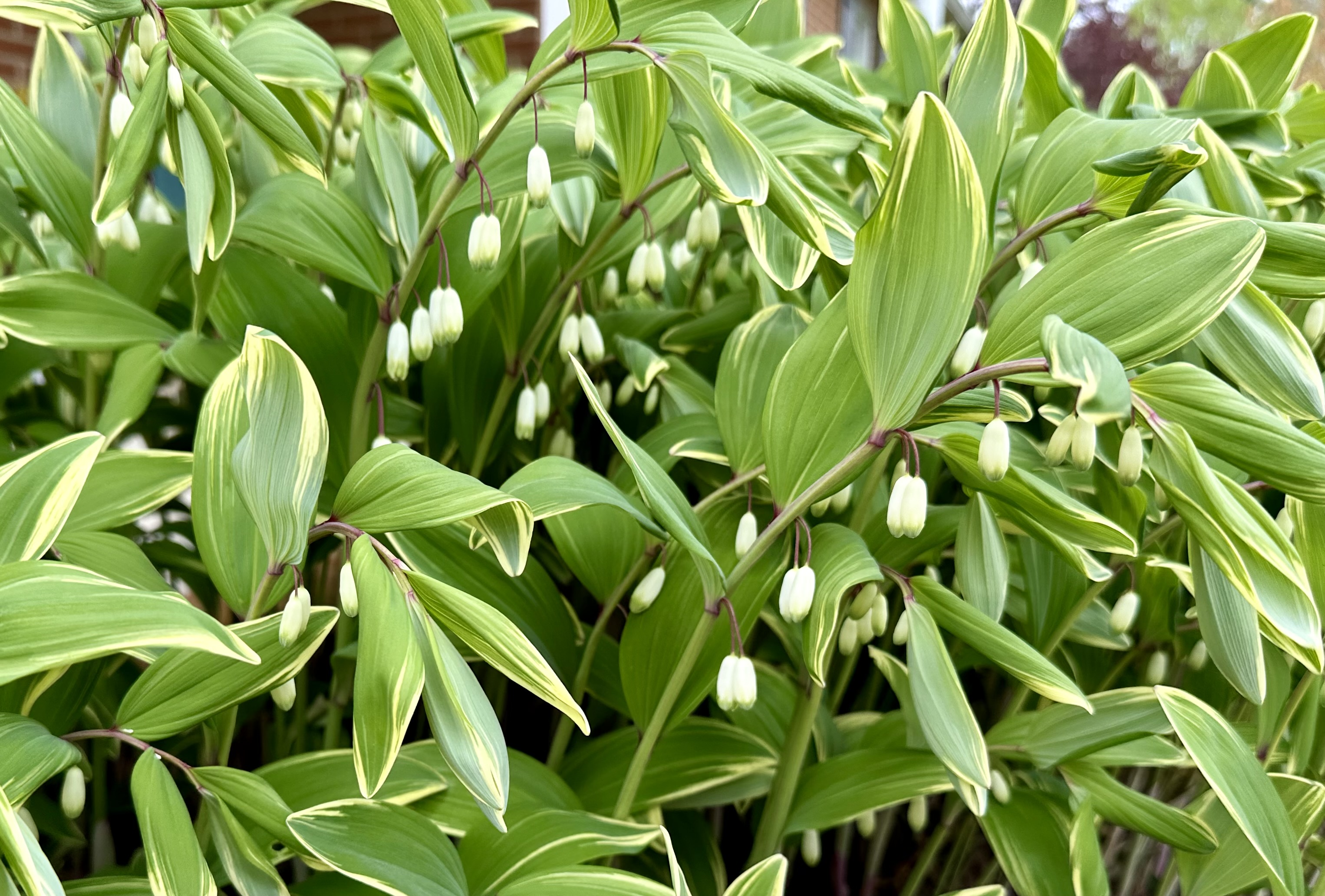

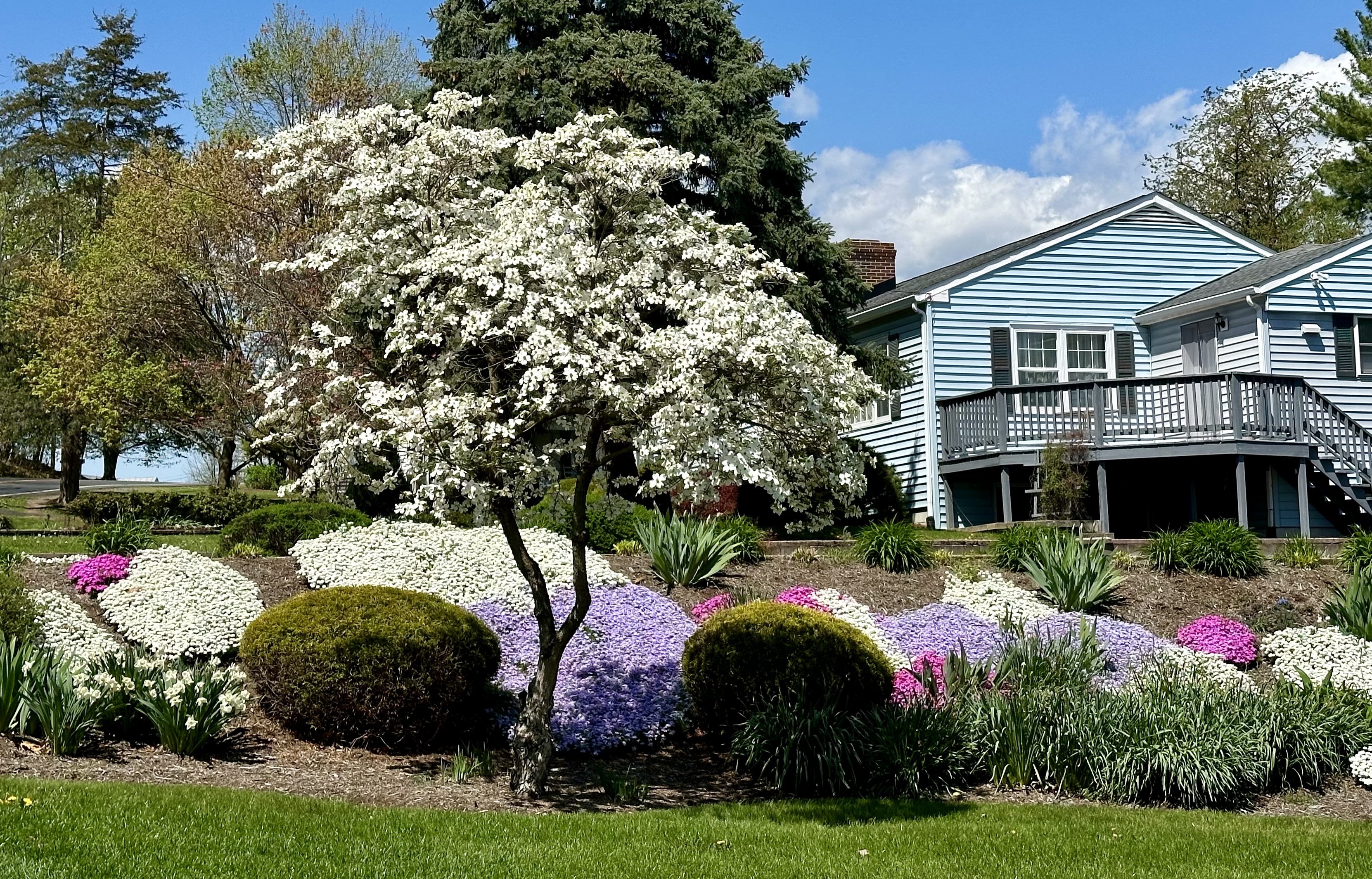


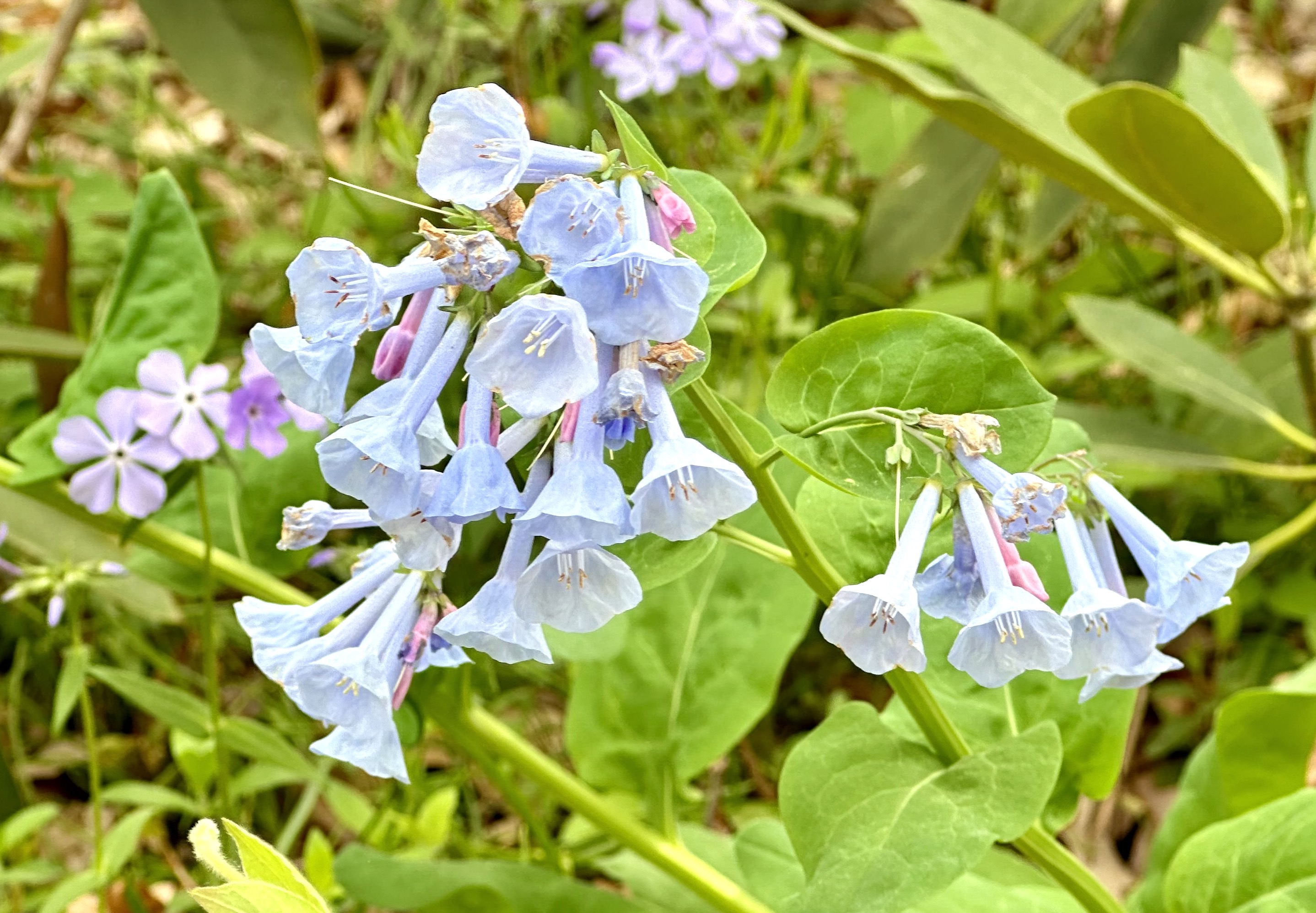

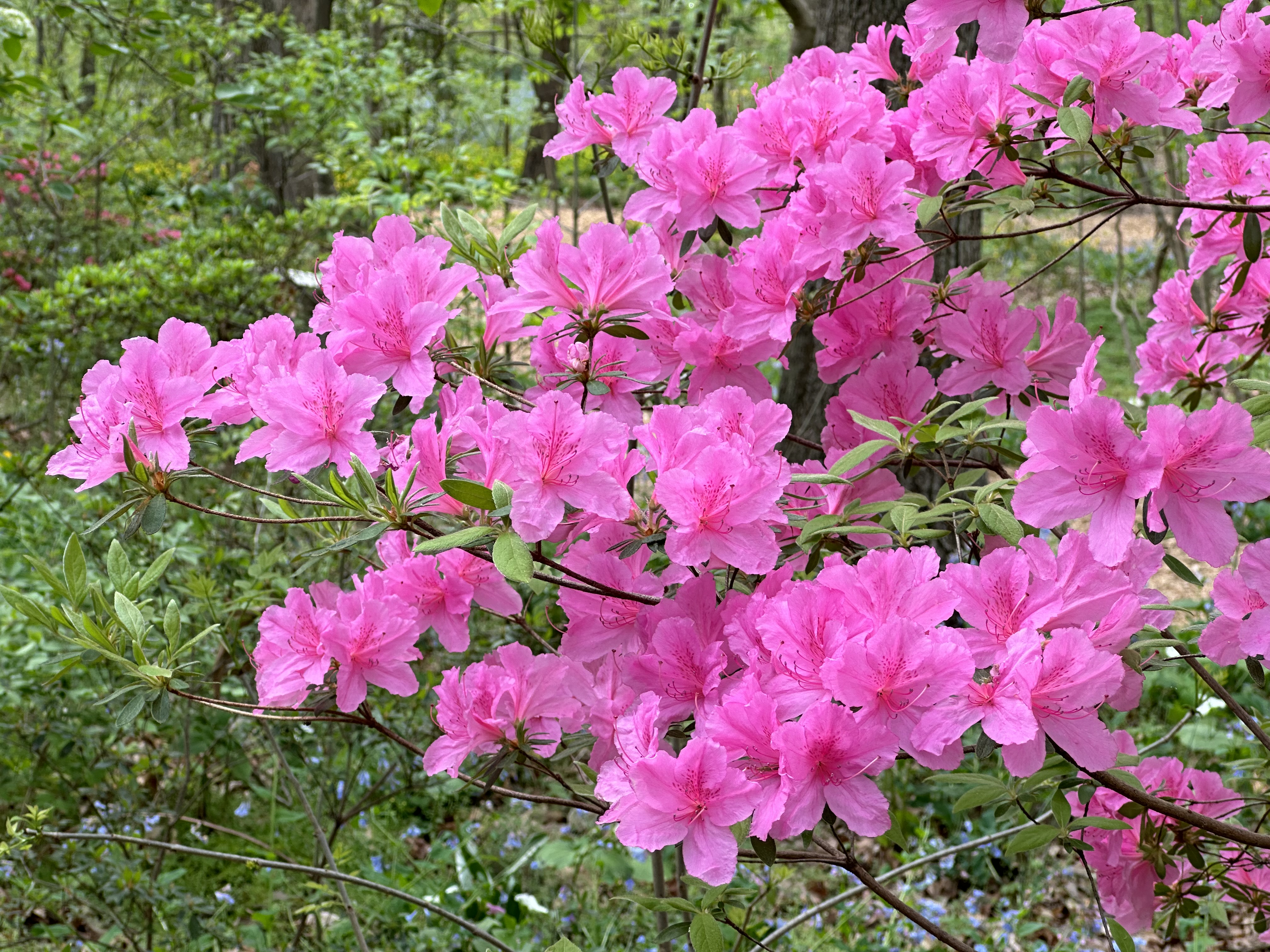

Please click on the photos to enlarge them.
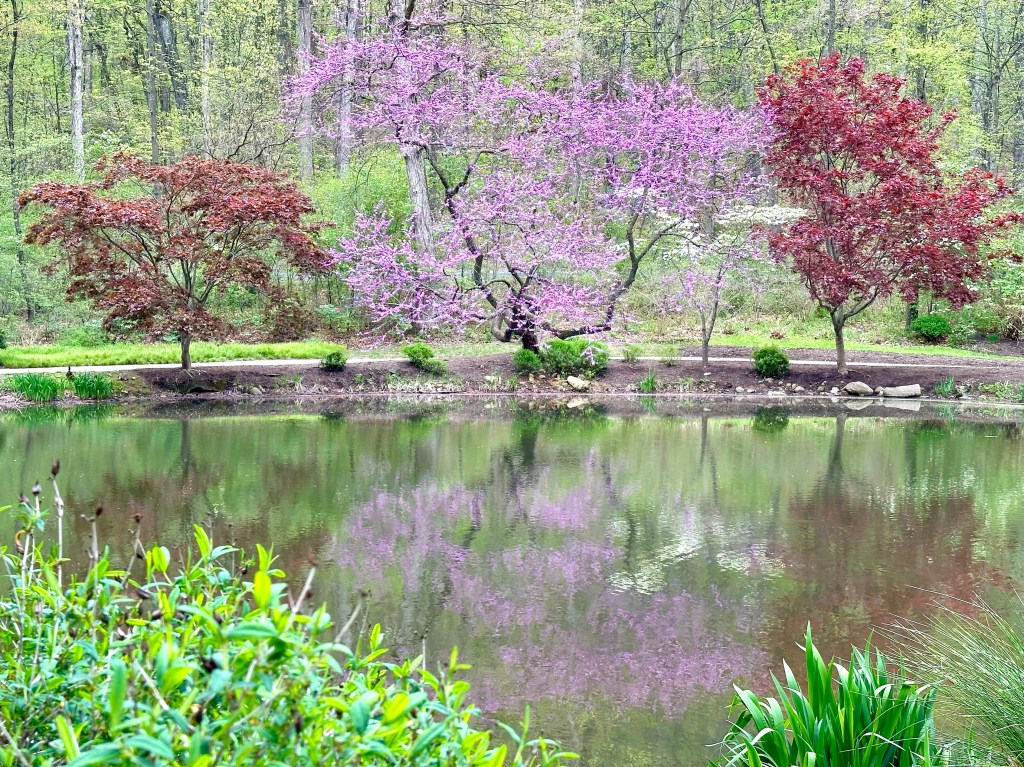
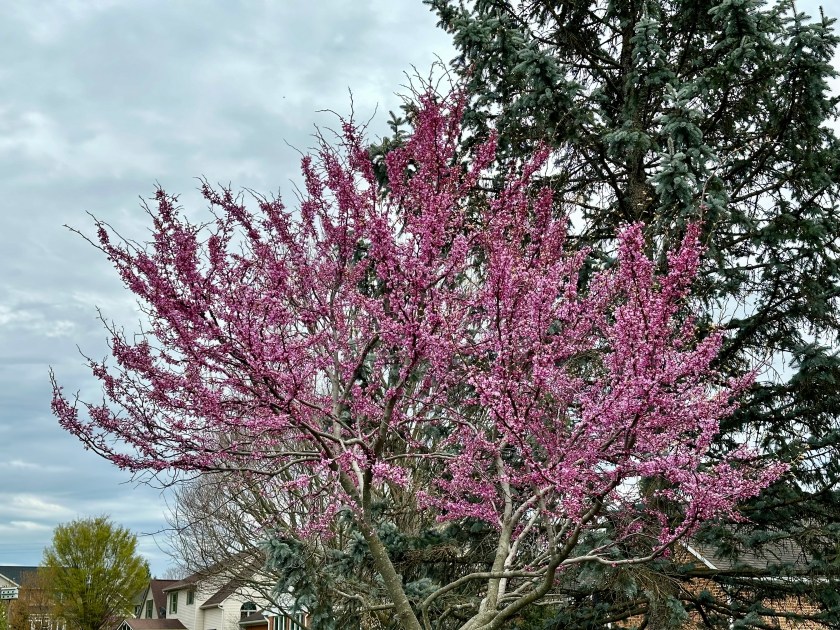
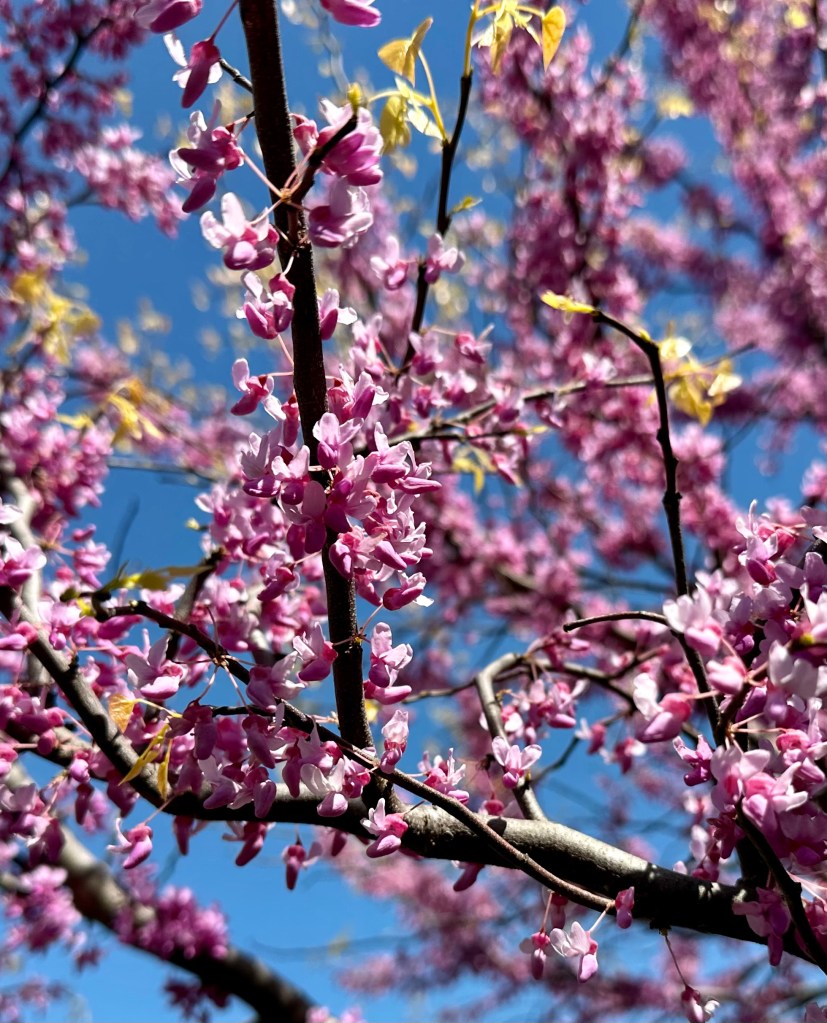
Redbuds can be fickle. Some years, the buds last weeks. This year, the emerging leaves of our backyard Rising Sun Redbud tree have already overtaken the beautiful buds. The young tree went from lavender to bright pink to lime green and pale pink in a few days. Pink polka dots already cover the ground below.
Given this rapid transformation from bud to bloom, we need to be vigilant in the quest to enjoy nature’s springtime. Doing so has multiple benefits. Exploring the lovely blooms of trees, shrubs, and flowers renews our appreciation for life itself. Enjoying nature’s beauty and birdsong serenades invigorates our spirits. Walking or hiking through it all provides needed exercise.
Nature offers another bonus if we are observant. She has lessons for all of us to learn, no matter our age. Do you know redbud blossoms, viewed at the correct angle, resemble hummingbirds feeding?
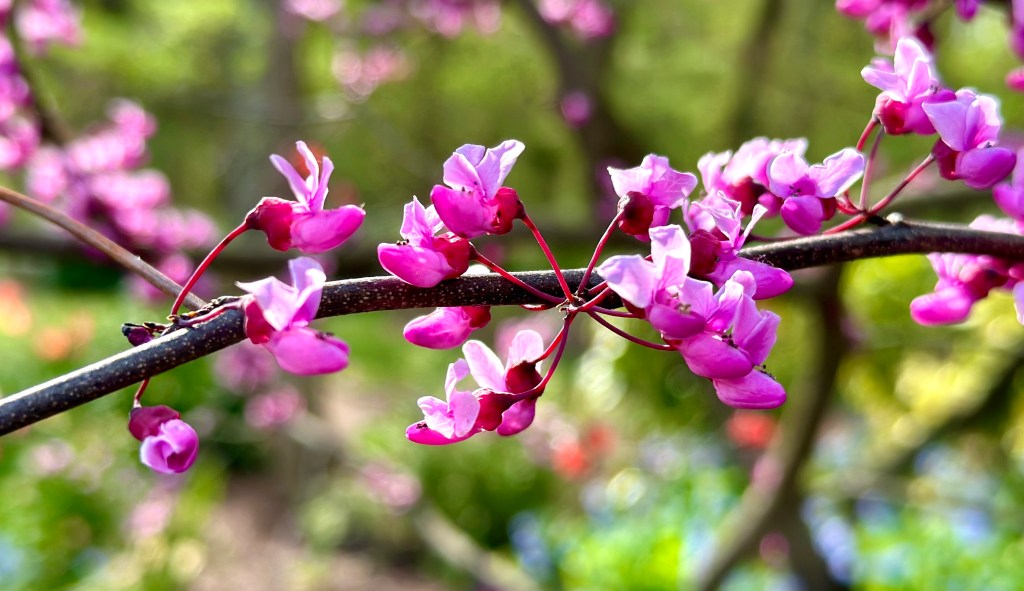
Exploring local parks and roadsides offers vivid samples of spring’s changing color schemes. It’s a wonderful way to celebrate Earth Day.
© Bruce Stambaugh 2024
On the first full day of spring, I experienced a couple of lifetime firsts. In the nation’s capital, nature’s beauty thrilled me. Hours later, on the way home, it dismayed me.
The morning could not have gone better despite the heavy rush hour traffic. I had arrived at the Tidal Basin later than planned. Still, the crowds admiring the cherry blooms in peak bloom were much smaller than anticipated.

I trekked the arch from the Jefferson Memorial to the Martin Luther King, Jr. Memorial for over two hours, shooting photos of the beautiful trees with monuments in the background. As I walked and captured the iconic scenes seen on calendars in my youth, everyone I met was friendly.
People attired formally for wedding and graduation portraits, while others dressed as they pleased. Middle-aged folks in casuals while walking their dogs, youth in shorts and funny hats, and joggers in flashy running outfits. Me? Blue jeans, a comfy hoodie, and hiking shoes proved sufficient.




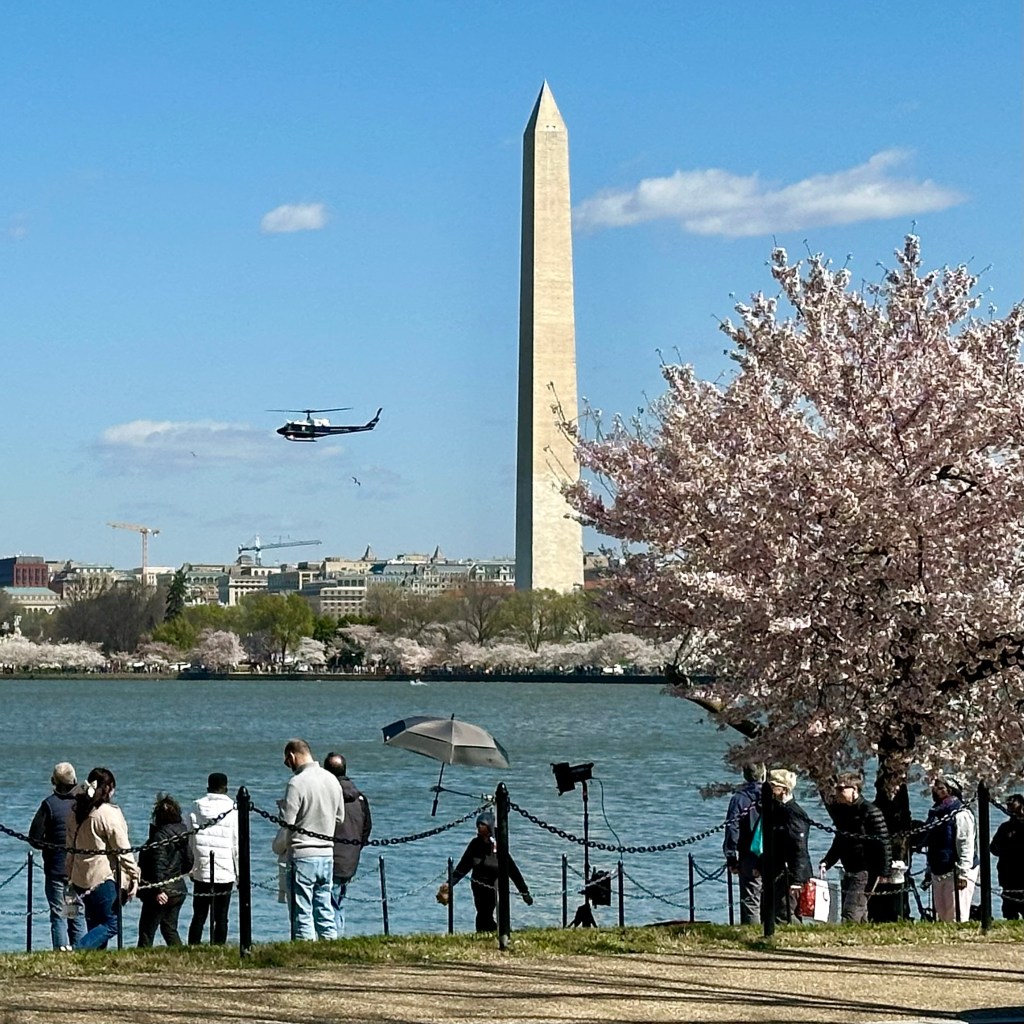
When clouds rolled in shortly before noon, I headed home. The farther west I drove on I-66, the windier it got. I knew the National Weather Service had posted a Red Flag Warning for extreme fire weather in northern Virginia, but I somehow missed the High Wind Warning in my excitement to capture my first blossom shots.
When I turned south off the interstate, I sensed trouble lay ahead. Strong winds scattered tree limbs, big and small, across the two-lane highway. I proceeded cautiously, primarily when trees lined both sides of the roadway.
I love the picturesque country route that parallels Shenandoah National Park to the east and the meandering South Fork of the Shenandoah River to the west. But with debris from the gusting winds on the roadway, I concentrated on driving.
I crested a hill north of the picturesque town of Luray, and my heart quickened. Though I was alone, I issued an audible “Uh-oh!” A haze of smoke blew toward the Blue Ridge Mountains.
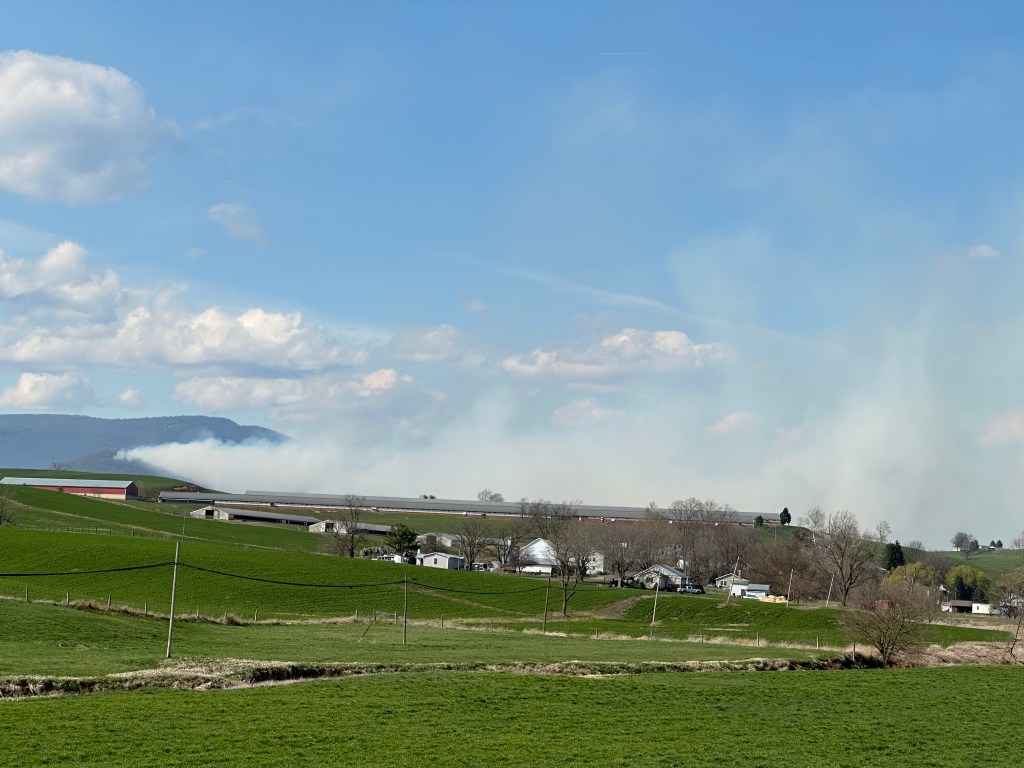
Having been a volunteer firefighter in Ohio for 27 years, I instinctively knew what that meant: wildfires. Smoke surrounded the touristy town. I stopped west of the village to get photos of the billowing smoke. Smokey pillars to my north, east, and west billowed from multiple wildfires. The Shenandoah Valley was on fire!
In my years of firefighting, we had woods and grass fires in Ohio, but nothing to this extent. Farm fields and pastures helped contain those brush fires even on windy days. Now, wind gusts of 60 miles per hour only worsened the situation.
When I shot the photo of the smoke in the west at the base of Massanutten Mountain, I had no idea I would drive right beside the fire. But that’s what happened.
Through the blankets of swirling smoke, an ambulance raced ahead of me. It soon stopped at the fire’s seat. A fire engine with a handful of volunteers stood within feet of the burning forest.
With no cell phone service, I stopped to report a developing fire I had spotted. A young firefighter glanced at a photo I had taken of the small fire at the top of the mountain northeast of their location. I wanted to ensure the fire had been reported since there was no cell phone service. The young man replied, “I think it has been reported.” His lackadaisical response told me the poor guy was already overwhelmed by the unfolding calamity.
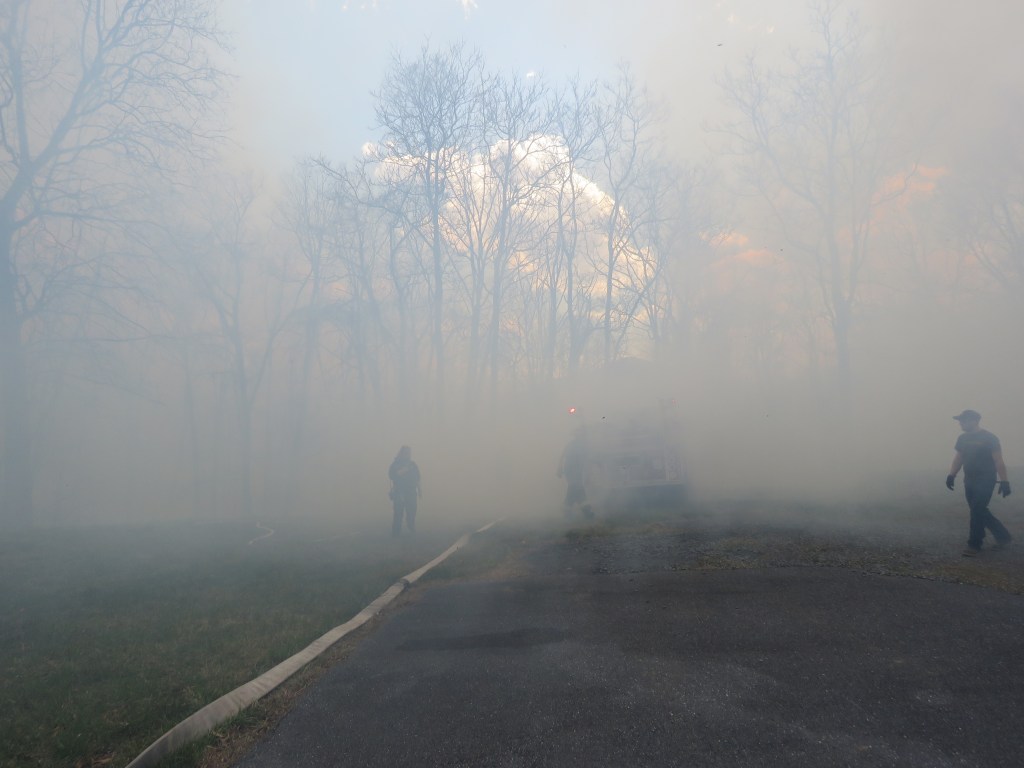
A sudden wind gust enveloped us with thick, acrid smoke. The fire truck, which was only 30 feet away, had vanished. Common sense told me to get out of their way.
I headed up the mountainside on the winding U.S. route. When I reached the New Market gap, I turned right onto a narrow mountain lane. I was familiar with this area, having walked Storybook Trail a mile north several times.
I hustled up the half-mile trail as best a 76-year-old could. When I reached the overlook, the scene below shocked me. The fire raged on, doubling in size in that short time. This was no storybook tale. Days later, officials pronounced the fire contained, with 6,200 acres burned.
I took a few photos and a brief video of the raging fire. When it jumped the highway, I hurried back to the car.


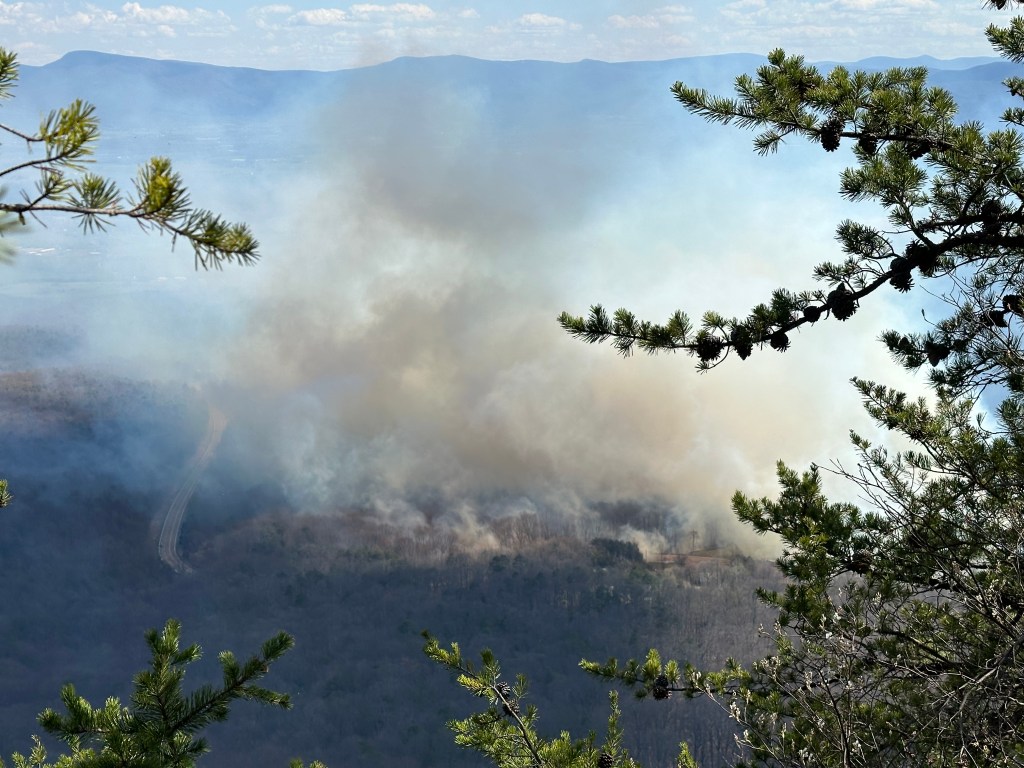


Please click on the photos to enlarge them.
A state trooper had closed the main road. He instructed vehicles to return west down the mountain, and I followed them. But once in the Valley, smoke from several more fires burning forests west of I-81 filled the air. No wonder no help was coming for the firefighters I had seen. All area departments were busy with their own difficult blazes.
As I crossed the county line, hazy smoke also filtered the afternoon sun in Rockingham County. Multiple fires burned. Fortunately, firefighters kept most of them to a few acres.
But two wildfires, both on the eastern slope of the Allegheny Mountains in the western sections of the county, burned relentlessly. In a remote section of the county, the biggest one forced several residents to evacuate their rural homes.
I detoured to one fire a few miles west of my home to take photos. Like the other fires, this one was also on a steep, forested mountainside. After a couple of shots, I turned the vehicle towards home.
In my adrenaline rush from seeing all these fires, I didn’t notice how smokey I smelled. When I exited my car at home, my wife was waiting at the door.
“You reek of smoke,” she exclaimed as I approached her. She was used to the smell from my past firefighting days.
I quickly summarized the paradoxical events of the strange day: the excitement at viewing the lovely cherry blossoms, the joy of interacting with the international mix of friendly folks at the Tidal Basin, and, of course, the fires.
My wife of 53 years kindly listened to my encounters, then said, “Once a firefighter, always a firefighter.”
© Bruce Stambaugh 2024
Wildlife Photos From The Chesapeake Bay Region
Culture and Communities at the Heart Of India
Artist and nature journalist in the Shenandoah Valley of Virginia.
Photographer Of Life and moments
Personal Blog
Art is the only way to run away without leaving home. -Twyla Tharp
Writing generated from the rural life
writer. teacher. podcast cohost.
El amor cruza fronteras / Love crosses borders





 Roadkill Crossing
You must be logged in to post a comment.