Just before Christmas, this amazing couple made a joint appearance at my peanut butter suet feeder in the backyard. I felt extremely fortunate. Pileated Woodpeckers, Ohio’s largest woodpecker species, usually don’t frequent close to buildings. Apparently, the grove of trees that line the western boundary of our property provide enough protection for this pair of Pileated Woodpeckers that frequent the suet feeder. Seldom, however, do they feed together. The female is on the left, the male on the right. Can you make the distinction?
Fortunately, the Pileateds usually announce their arrival with a loud call meant to discourage other birds away from the feeder. That also allows me to grab my camera and be ready for just the perfect picture.
More often than not, Carolina Wrens are heard rather than seen. One recent sunny morning, however, I found this Carolina Wren taking a dip in the backyard birdbath. After its morning bath, the wren flew to the feeder hanging on the back porch. It stayed there for several minutes, satisfied to let the sun dry its earth-tone feathers.
Clearly, this sunset was worth the wait. It exceeded all of my expectations. However, the reflections were what caught my eye. The line of trees and white fence reflected perfectly against the glorious sunset. This sunset shot required no filters and no editing.
Clouds intrigue me. I know I’m not alone in that sentiment. While driving some back roads in rural Wayne Co., Ohio, I spotted this unusually shaped and colored cloud formation. To use the scientific name, these are stratus undulatus clouds.
In addition to their ribbon-like shape, the wide range of soft colors particularly caught my attention. The trees, mailbox, and fence help add perspective to my Photo of the Week, “Ribbon Clouds.”
It seems like only yesterday that we were asking ourselves, “When will summer arrive?” I think that was in June when it was still cool and very wet.
Well, a lot has changed since then. It seemed like the summertime months turned on themselves. It was a Jekyll and Hyde summer to be sure.
The persistent rains of early summer suddenly ceased. After the deluge that created localized flash flooding in Holmes County on July 14, regular rains were scarce. We lapsed into a dry spell that lasted too long to help the corn kernels swell with sweetness.
Flash flooding.Initially, truck patches struggled with mildew, mold and rot in the chilly dampness of early summer. Later, though, as crops matured, their unquenched thirst did them in. They ripened ahead of schedule, withered on the vine or failed to produce the desired yield.
So here we are, the autumnal equinox upon us, and we’re wondering, “Where did summer go already?” As humans, we can be as fickle and contrary as Ohio’s crazy weather. It’s in our nature, and we have the grievance gene working overtime.
Therefore, now that September is waning, it seems only fair to wonder what happened to summer. My best answer is, “I don’t know.” I do know, however, that the signs of summer’s end have shown for some time.
School started weeks ago for many students, always a sure omen of summer’s demise. Summer flies other white flags, too.
Spurred on by the early rains, rows and rows of field corn sprouted lush and fertile, growing taller than tall. Without regular August rains, they have withered and turned brittle brown overnight. It’s been a long time since I remember seeing cornstalks standing like mustered soldiers this early in the harvest time.
(Click on the photos to enlarge them.)
August blushes.
Female Ruby-throated Hummingbird.
Fresh seeds.
Wild sunflowers.
Goldenrod.
Brittle corn.
Harvest time.
Fireflies faded, and crickets increased amid the dryness. Our feathered friends have dawned their duller wardrobe for safety sake. Their luxurious singing has muted with their habitat’s colors.
Migration is in full swing for birds and butterflies alike. Look quickly. They won’t stay. They have long, challenging journeys ahead.
Another obvious indication of summer’s passing is just how soon sunset seems to arrive each evening. And that’s after the sun was late in rising daily.
With the reduction in daylight hours, the air has cooled considerably overall. Of course we’ll still have some splendid days ahead. But day-by-day, week-by-week, the evening and morning coolness forces us to dress in layers to adjust to the daily variables.
Summer has gradually been waving goodbye in a very colorful fashion for weeks now. Deciduous leaves have been slowly changing from their summer greens into fall’s warmer fashionable trends of crimsons, yellows, and russets. Many leaves have just simply fallen off.
Healthy stands of goldenrod bend and recoil with the slightest breeze. Wild sunflowers separate highways from pastureland. The American Goldfinches couldn’t be happier, gorging on their fresh fruit.
Funny how we humans too often seem to want what we don’t have, and when it does arrive, we long for something else. I think that pretty much sums up summer and answers our rhetorical questions about summer’s arrival and departure.
We can’t control the weather or the seasons. We can only enjoy them whatever weather they bring. The key is to embrace the moment at hand, so we don’t have to look back and wonder where the time went.
Summer is about to depart. Let’s send her out with joy, as we usher in the harvest season with gladness and thanksgiving.
I stood and talked with the farmer as he rested his team of horses beneath a tree along the road. For the end of May, the morning was muggy. Both he and the horses needed a break from their bucolic labor.
The horses stamped and snorted and swished their tails to discourage any bothersome insects. The conversation with the Amish gentlemen turned toward appreciation and care for the environment.
Across the weedy fencerow, we lapsed into a philosophical discussion on how we all are rooted in the soil regardless of where we live. The setting was perfect for such a stirring chat.
The musky smell of the sweated horses, the pungent fragrance of fresh earth turned, the sprouting leaves of the black walnut tree that served as our shady shelter together fueled our ideas and ideals. We were of one mind.
We concurred that it was too easy to ignore such a simple concept as caring for the good earth. We wondered if society’s reliance on modern technology and our fast-paced global order have dulled us into forgetting our roots.
He pointed out all the construction in our local area, the continued depletion of farmland and wildlife habitat. Little by little, our pastoral landscape was transitioning.
He wondered if people today understood where their food originated. Did they know all of the effort or any of the processes needed to put food on their table? Was the younger generation becoming so fixated on electronic screens to even care?
We both shook our heads in wonderment of what lay ahead, not so much for us, but for future generations. Will they get to enjoy the beauty of the natural world the way we do?
And with that, my friend encouraged his workhorses to giddy up. Soon a squadron of winged insect eaters swooped overhead, exacting an instinctive aerial harvest.
As I continued my morning walk, I mulled over the conversation. A scene from 35 years ago popped into my head. My family and I were at Old Sturbridge Village, Massachusetts. The place is a living museum where folks can go to see how rural life used to be long before the industrial revolution. Another option would be to visit Holmes County, Ohio.
Amish farmstead.
We stood outside the dairy barn near a group of school children and their teacher, who pointed to the Holsteins.
“That’s where milk comes from,” he said.
His students were in disbelief. One even countered that milk came from the store. We walked away quietly.
The sweet-sour aroma of fermenting silage stirred my senses and brought me back to reality. That earthy smell represented the soil, the seeds, harvesting, the manpower and machinery needed to feed the cows to provide milk or meat.
That’s what being rooted to the earth does. It makes you take note and absorb and appreciate all that is around you.
The creeks and ponds, the marshes, and the mudflats are of equal import as much as the grain fields and pastures. Together they provide habitat and balance to earth’s fullness.
Rooting yourself to the soil is critical in caring for the earth no matter where we live or what our occupation. Yes, we need industry and growth to feed, clothe and house the planet’s population. We also need the earth to be healthy and respected to accomplish that goal.
If you want to feel rooted to the earth, you are welcome to walk by my neighbor’s barnyard. I’m sure neither he nor his herd will mind.
The sun always sets in the west. However, some of the best colors of a sunset occur in the other directions of the compass. This photo that I recently took in Harrisonburg, VA is an example of that. The golden glow behind the Allegheny Mountains to the west created magnificent colors elsewhere. The high, wispy clouds in the southern sky danced with brilliance. The trees and house in the foreground accentuated the variable pink and blue evening sky.
I’ve been working since I was eight years old. To earn a little spending money of my own, my first job I went door-to-door selling seed packets. I’ve been working ever since, and that’s a very good thing.
There is great satisfaction in earning money through hard work. That was especially true as a youngster who grew up in a family that had pittance left over for life’s extravagances. We weren’t poor, but we weren’t rich by earthly standards either.
Rather, our wealth came in the joy of working together as a family and learning to enjoy work’s energy and accomplishments, whether we earned money or not. If it benefited others, payment was received in ways that far exceeded any monetary gain.
If my siblings and I earned money helping others at businesses or homes, you could be sure we used the profits for wise choices. The candy store was just five minutes away. Of course, our folks taught us the advantages of saving and giving, too.
I have my parents and grandparents, and likely generations before them, to thank for instilling work as a personal core value. Dad worked 43 years for the same company as a tool engineer. Mom was a household engineer before the profession was so christened.
Living in Holmes County, Ohio, all of my adult life, I have come to appreciate the community’s emphasis on exercising a robust work ethic. I marvel at seeing it played out every day.
This slideshow requires JavaScript.
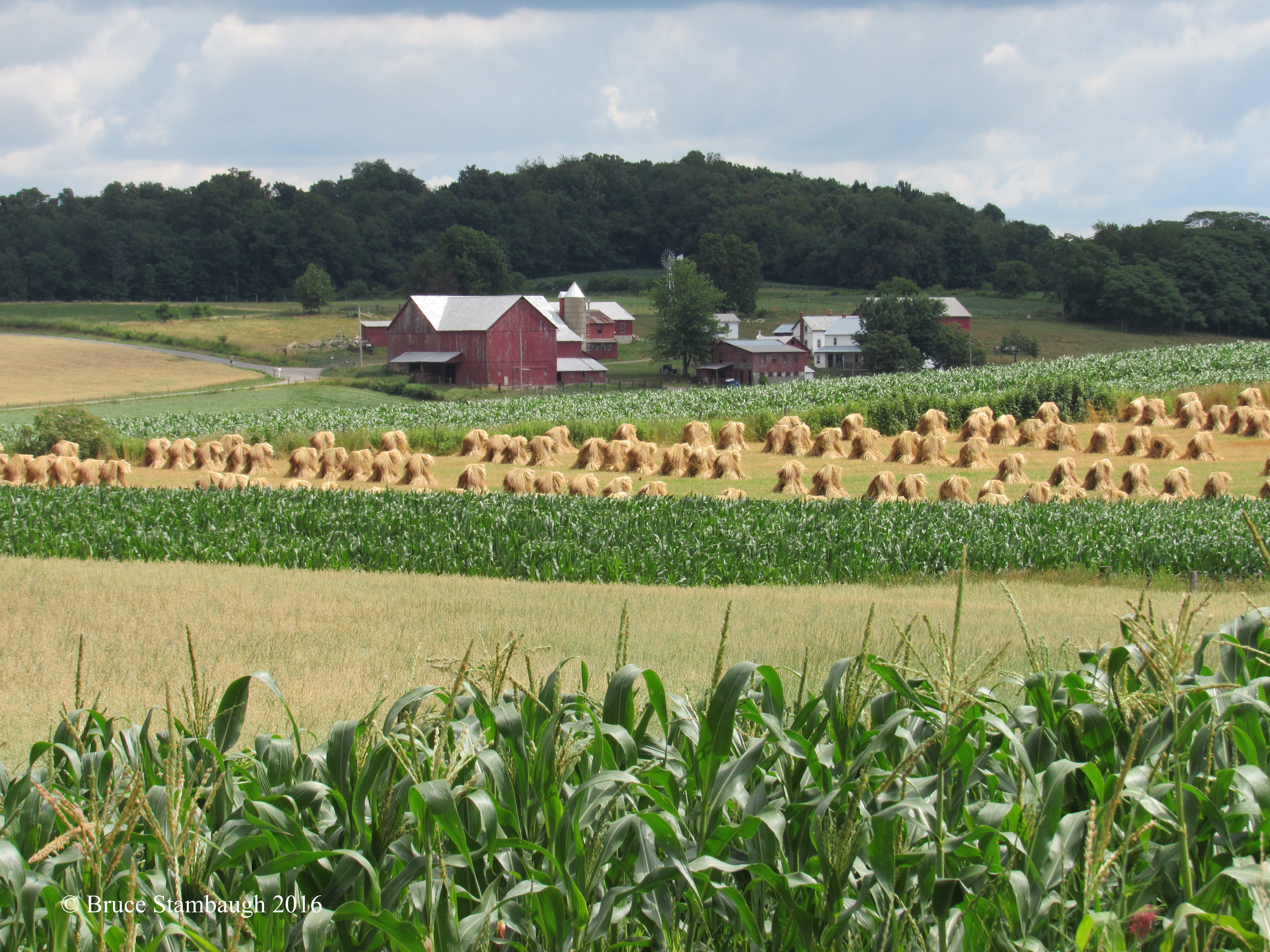
I only have to observe my neighbor’s family gathering crops. Three generations are often literally bringing in the sheaves.
That should be no surprise. Having a strong work ethic is common and a highly valued principle here. It’s one of the reasons our region consistently has one of the lowest monthly unemployment rates in Ohio.
County residents pride themselves on enthusiastically employing their work ethic. That’s ironic for a society that holds humility in equally high esteem. Folks manage to balance that apparent contradiction for self and others successfully.
The method to instilling the work ethic to the next generation is simple. Folks here both model and include younger generations in work. In other words, the adults give the youngsters responsibilities that result in projects completed.
Children on farms help with chores. Feeding the livestock, gathering eggs, walking the dog all count as productivity. Drive around and you’ll likely see children including work in their play.
I always get a chuckle when I see Amish children playing horse and buggy. A couple of toddlers sit in a wagon while an older sibling plays the horse. A short piece of rope serves as the reins.
At play.From time to time as a principal, I would get a note from home asking that Johnny be permitted to visit the local store to buy some grocery items needed for that evening’s supper. I usually approved the request by driving to the store and letting the sixth grader do his deed.
At the produce stand we frequent, the entire family chips in to make the business go. From time to time, a request is made for an item not available on the shelf. Junior will gladly fetch the requested item from the field to accommodate the customer.
It’s all in a day’s work. Of course, the work ethic extends far beyond our insulated world. Working and earning are universally esteemed characteristics.
I’m glad we have Labor Day to remind us of that fact.
A Belted Kingfisher flew furiously over the fresh mown hay towards a neighbor’s pond. Breakfast was likely on its mind.
My farmer neighbor hitched his workhorses and teddered the hay to help it dry. The Barn Swallows, Tree Swallows, and Cliff Swallows circled the productive locomotion and devoured every insect the man, the machine and his faithful team dispersed.
A refreshing north wind eased the day’s early humidity. No need for a calendar. All signs pointed to August’s end.
A few trees had already begun to transition from their chlorophyll green to their disguised shades. Even before the berries on the dogwoods blushed bright red, the trees’ leaves curled and revealed hints of crimson and lavender.
The hydrangea bush bloomed full and pure against the garden shed. It demanded daily watering in August’s heat and dryness.
Juvenile birds, Red-headed Woodpeckers, Song Sparrows and Blue Jays among them, found the feeders and the birdbaths on their own. Another aviary generation will forge into fall and winter without knowing what lies ahead as if any of us do.
The big yellow school buses began carting anxious and enthusiastic children alike to and from school. I waved to the drivers as they passed me on my walk.
People often ask me if I miss those days; if I don’t have some innate longing to return to my first career. The short answer is, “No, I don’t.”
I loved the children, whether teaching or being their principal. I greatly enjoyed the interactions of parents and staff members, even when we disagreed. I have no resentments or regrets. Neither do I have any wish to reenlist.
I would rather sit on my back porch, as I am now, taking in the world as each moment flashes by. I don’t want to miss anything. I want to rise each day to enjoy the sunrise and bid farewell to the evening light that dims all too soon.
August has come and gone, always too fast, always too hot and dry. August melds into September.
We can only embrace it, for there are marvelous days ahead. I’ll watch for them whether from my back porch or wherever I might be, knowing that too many in the world will not have the pastoral view or luxuriousness of trusting neighbors that like mine.
It’s my duty to share goodness and joy with others as my life, too, passes from August into September. Isn’t that the real responsibility of all of us at any age?
My lovely wife grows beautiful flowers. One of the side benefits of that is the flowers attract a variety of insects. I enjoy checking the flower gardens frequently, never knowing what I’ll find.
On one such foray, I spotted this incredible female Eastern Tiger Swallowtail butterfly flitting from coneflower to coneflower. Backlit by the morning sun, the colors radiated on this fresh, young butterfly.
You must be logged in to post a comment.