The bridges of Ashtabula County, Ohio

covered bridge
Benetka Road Bridge.

By Bruce Stambaugh

I’ve been curious about covered bridges for a long time. I wondered about their purpose other than the obvious one of crossing from one side of a stream to another.

My curiosity got the best of me recently. Accompanied by my wife and another couple, we went exploring all 18 of Ashtabula County’s covered bridges. We discovered that the unique architectural wonders were so much more than a conveyance from one bank to another.

If you’re not familiar with Ashtabula County, it’s Ohio’s northeastern most county. It bumps against both Lake Erie on the north and Pennsylvania to the east.

It’s a big county with varied topography and land usage. Its trail of covered bridges is one of its most distinctive features. Most of the bridges are still in use today.

Covered bridge hobbyists admire the intricate architectural details of the wooden tunnels. I focused my admiration on their individual aesthetic characteristics.

This slideshow requires JavaScript.

Covered bridges were once common across the United States. I wondered why 19th-century builders labored so to simply cover a bridge? I always had heard two main answers to that question.

The bridge had sides and roof so the horses pulling buggies and wagons wouldn’t spook from the sound of rushing water below the bridge or the sudden open space. The other was that the bridge was a respite from foul weather.

Never having driven a horse and buggy, I didn’t question the first reasoning. The second one seemed a bit questionable. I mean you could only get so many horse-drawn vehicles onto a covered bridge during a storm.

Like members of the same family, the bridges had many similar characteristics. Each bridge had its own history and personality.

Some were erected just after the Civil War, with others built more recently. I suspect county leaders recognized the economic value of having a covered bridge trail.

The bridges of Ashtabula County served as living monuments to a bygone era. Hand-hewn timbers joined by wooden pegs spoke of the intensive effort that went into building these nostalgic icons.

The bridges historically contributed to social, political, religious, and economic values of the county. In a way, history was repeating itself.
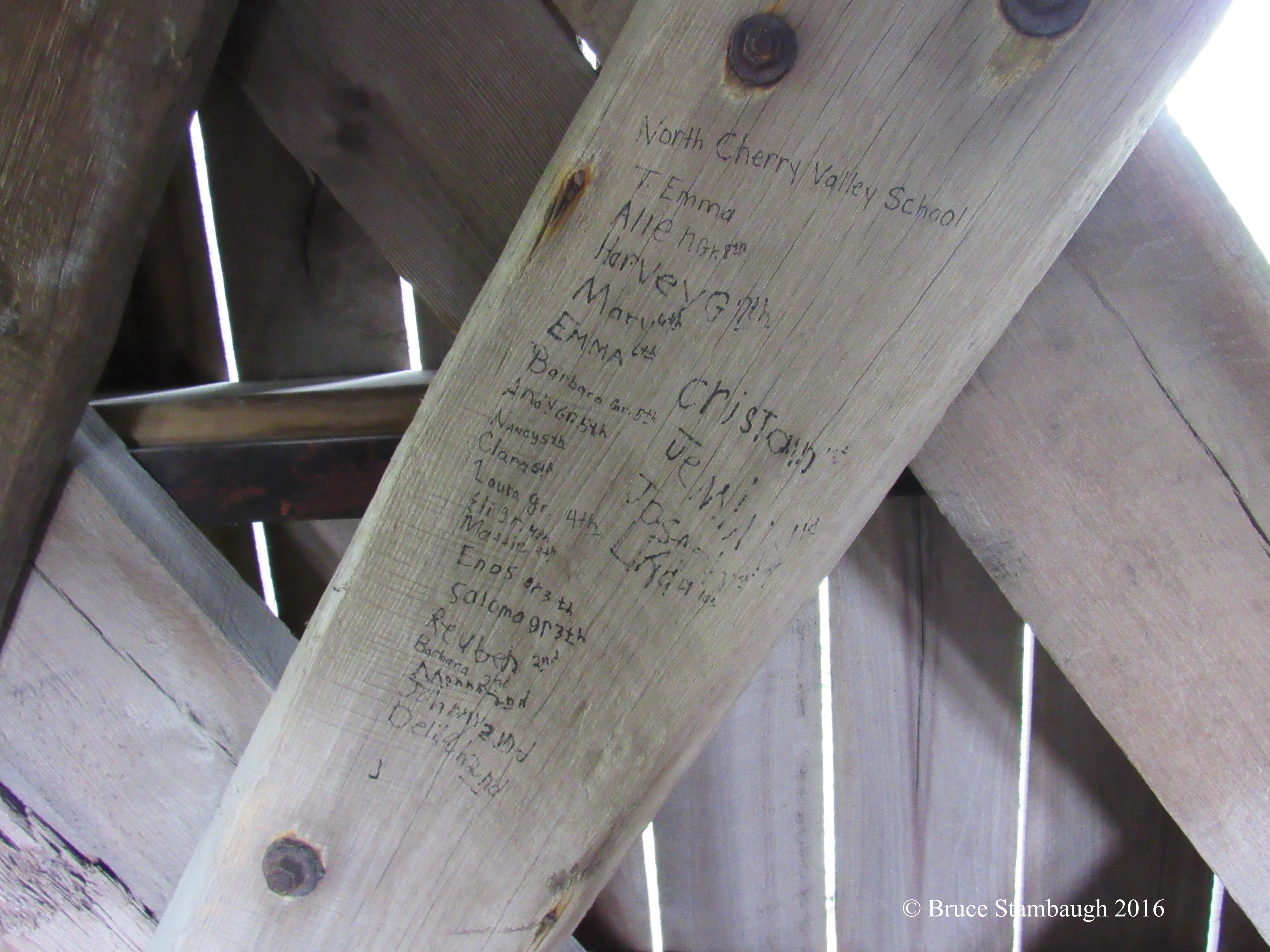
vandalism, graffiti
Calling card.
Besides the obvious purpose of crossing a stream, covered bridges were quite utilitarian. They indeed quieted horses and became a respite during a storm. Since the bridges were constructed entirely of wood, the covered sides and roof also protected the timbers and flooring from the elements and weathering. They minimized repairs.

The bridges had other callings as well. They served as gathering places for community meetings, political rallies, and religious services. Given the inspiring settings of some of the bridges, I could see why folks would like to linger there.

Unfortunately, other folks had little appreciation for either history or public property. Skid marks on the wood decking of some of the bridges evidenced raucous drivers thrilled with the sound of squealing tires. Others painted graffiti or left personal signatures, including an entire school class on an outing. Perhaps that’s why many of the bridges were outfitted with security lights and fire alarms.

After traversing fairly flat countryside for miles, the rural roads suddenly dipped and curved into steep, wooded ravines. The roads often rounded into and out of bridges, creating limited visibility. Passing motorists chased us to a bridge’s side more than once.

Most were courteous and slowed to a crawl. Likely we weren’t the first curious tourists they had encountered on their daily path across history.

root road covered bridge
Root Road.

© Bruce Stambaugh 2016

Rural Reflections

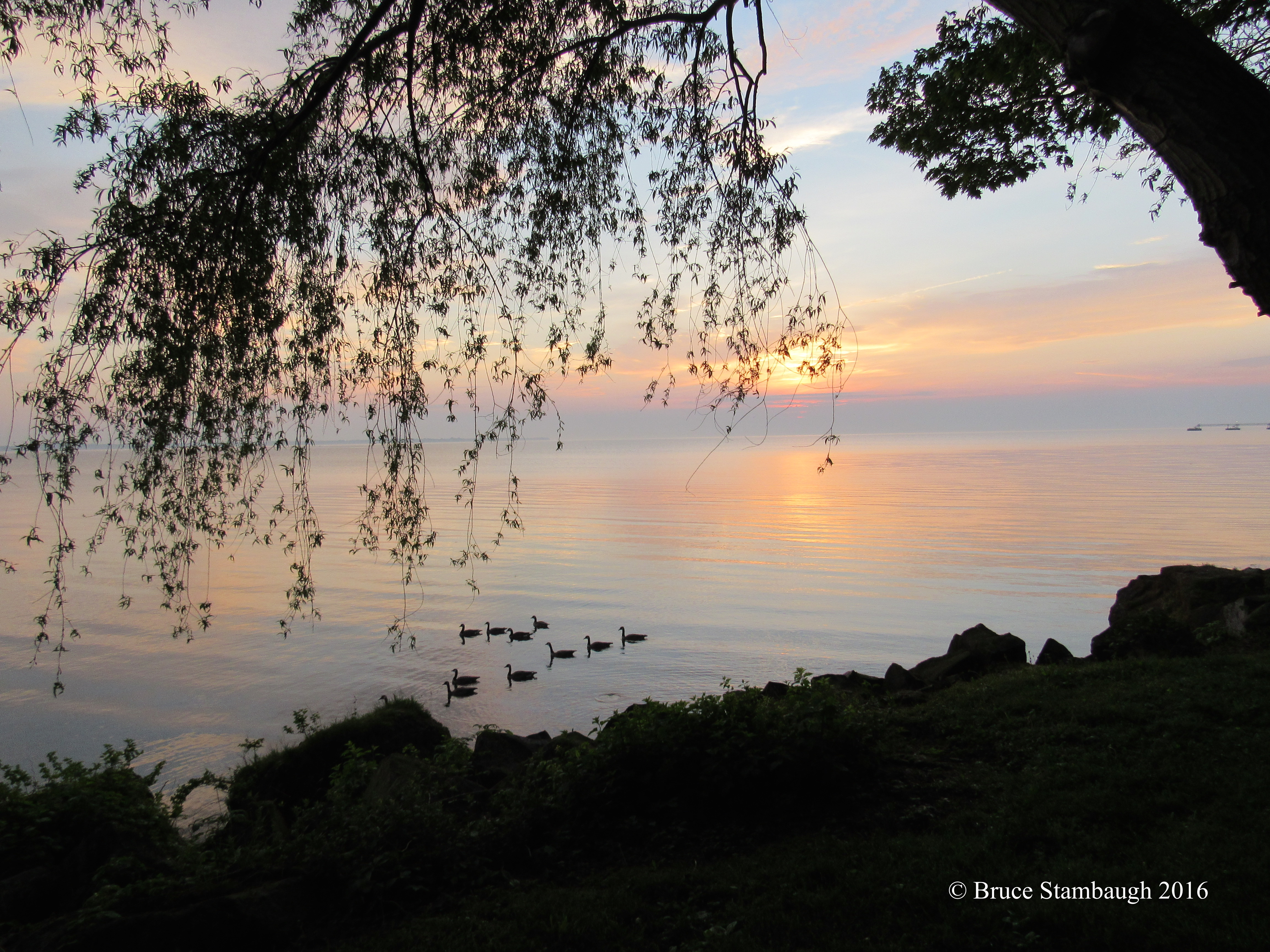
sunrise
Rural Reflections.

Though the silhouetted willow trees gave the photo a tropical look, I recently captured the photo in Ohio’s Amish country. The scene made it more than worthwhile to rise and shine at 5 a.m.

“Rural Reflections” is my Photo of the Week.

© Bruce Stambaugh 2016

Channeling Monet

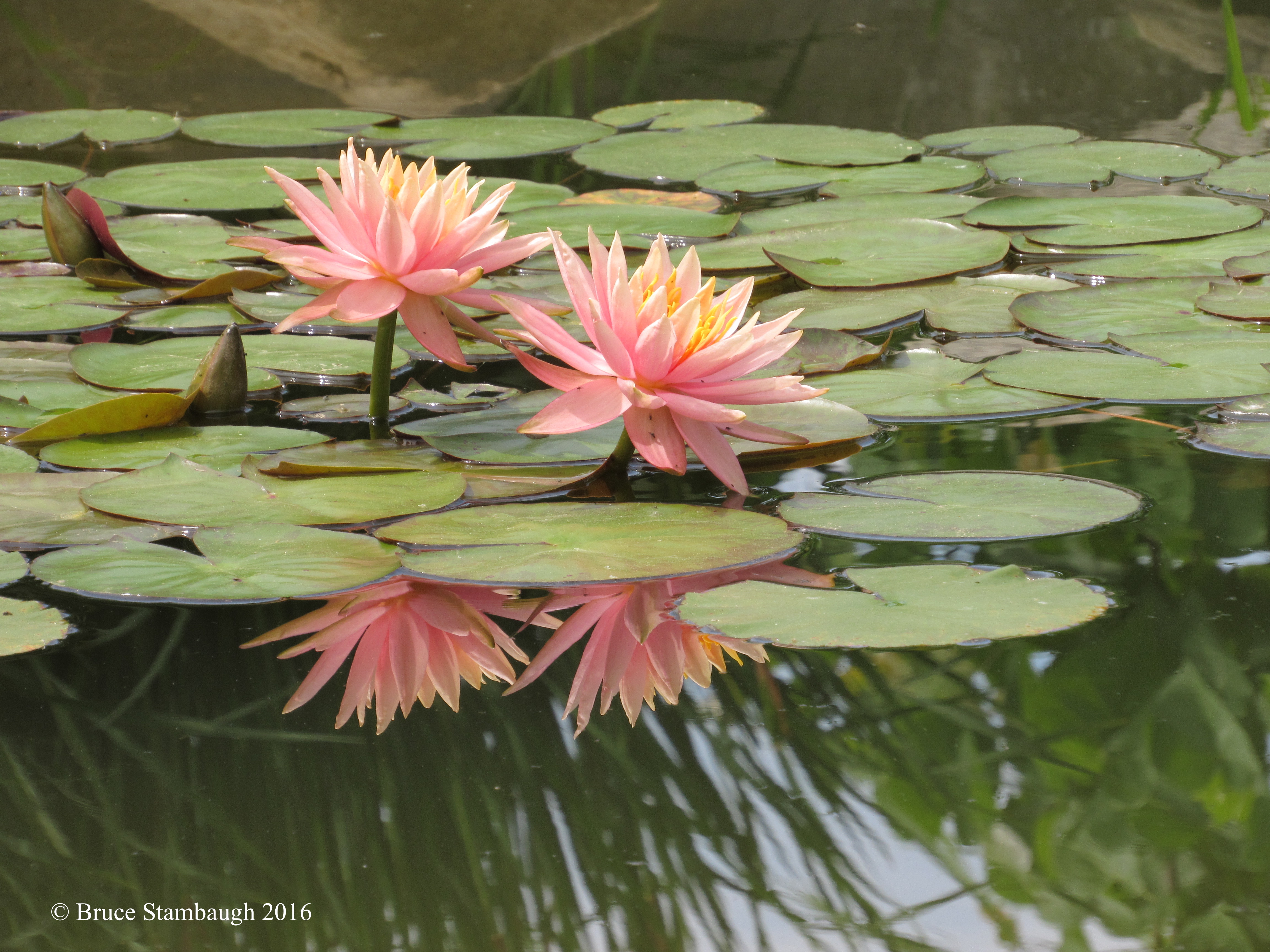
water lily flowers, Monet
Channeling Monet.

When I saw these beautiful blossoms, how could I not think of Claude Monet’s “Water Lilies” series?

“Channeling Monet” is my Photo of the Week.

© Bruce Stambaugh 2016

A season of transitions

lily pond, OARDC
The lily pond.

By Bruce Stambaugh

I sat alone on the park bench enjoying the beauty before me. I didn’t realize it then, but now I see that this little break from my regular routines served as a realization that summer had arrived.

I took in the action in this public garden of flowers, woodlots, shrubs, ponds, and meadows. Here life was abundant, evolving, vibrant, verdant, and fragrant.

Still, the hustle and bustle of urban life intruded. Trucks roared by on the nearby expressway. Sirens sounded in the small city below.

In this peaceful island sanctuary, I found relief, joy, introspection, and resolve. Children’s joyous voices that carried above and around the hedges and well-planned plantings of this lovely arboretum broke my spell.

Their mother asked for directions to the giant slide. I pointed them to the children’s forest where I thought it might be, and off they went. I wondered why they weren’t in school. Then it hit me. School’s out for the summer.

I silently laughed at my silliness. It was the time of year I had simultaneously loved and loathed. As a public school educator for three decades, my two favorite workdays were the first and last ones of each academic year.

Wonder, surprises, heartache, celebration and meaningful interactions filled the days in between. All that changed once school dismissed for the summer. In a matter of days, I missed the students.

That, too, changed with the transition into a second career in marketing and writing. Funny how it was so easy to forget the ebb and flow of the once all too familiar educational rhythm.

As the mother and her clutch left, I returned to my leisurely stroll among the various gardens graced with stone and steel artworks. The many transitions of life that this season brings arose all around.

I took another seat in the garden above a hillside amphitheater used for lectures, weddings, and meditation. An unsuspecting chipmunk scampered across my foot, then realizing its mistake, hightailed it for cover, chattering all the way.

Catbirds practiced their best imitations, competing with a distant mockingbird. Honeybees worked the fragrances. Black and tiger swallowtail butterflies fluttered from blossom to blossom, having only recently transitioned from pupa to fresh, crisp, winged beauties.

Like a herd of runaway soap bubbles, dozens of fluffy white puffball seeds floated by me. A gentle northwest breeze freed them from their mother cottonwood according to plan. This spontaneous event, too, symbolized an annual, natural transition from growth to evolutionary distribution.

This slideshow requires JavaScript.

Across the ravine, giant wooden statues carved by a tornado’s impact still stood as witnesses to nature’s contradictory might and resilience. In a matter of moments, the storm’s fury bent and broke the once massive trees like number two pencils.

Suddenly a yellow-green something flashed across my gaze. I chased the bird with my binoculars, uncertain about its species. I was thankful the bird lured me into the ravine.

A soaking wet blue jay sat high in an old snag for the longest time preening, uncharacteristically silent, drying baby blue feathers in the afternoon sun. Had it refreshed itself in the lily pond where I first sat?

A robin perched on a much lower branch also absorbed the golden warmth. Again the yellow-green flash appeared. An orchard oriole had revealed its concealed, woven nest near the top of a young horse chestnut tree.

Just then my ears caught multiple contented screeches. Without investigating, I knew the children had found the long, hillside slide.

Their summer of fun had begun, and so had mine.

hillside slide
Summer slide.

© Bruce Stambaugh 2016

I am my father’s son

Allegheny Mountains
I still have personal mountains to climb.

By Bruce Stambaugh

My daughter’s words cut right to the truth. In the brief silence that followed, I was once again reminded that I am my father’s son.

The situation embarrassed me. I don’t even remember what caused the unpleasant commotion. I do recall my daughter’s sternness vibrated to my core as soon as she invoked my father’s name.

I bit my tongue, preferring instead to analyze the situation mentally. Dad, God rest his soul, would have persisted in driving home his point.

It’s taken me a long time to confess my similar faults. What’s the line about teaching old dogs new tricks?

Internally confronting the reality of your negative personal behaviors, comments, and intentions isn’t easy. But it’s necessary if I want to be a better husband, father, grandfather, friend, and person. It’s just the way it is.

Being too quick to respond is only one way I am my father’s son. I had a marvelous mentor in Dad offering an opinion whether requested or not.

I’m an expert at translating an interesting short story into a novel with no climax. I might even mention the main point. That never bothered Dad’s storytelling.

photography
Shooting with my lens.
I can’t tell you the number of times my wife has chided me for wiggling my leg while sitting beside her. At church, at home, in a theater, at a concert, I’m used to a nudge, an elbow, or verbal reminder that I’m activating global seismographs with my leggy machinations, just like Dad.

Fortunately, all my fatherly similarities aren’t undesirable. I enjoy meeting new people. They have enriched my life. Dad never met a person he didn’t like until they proved otherwise.

Dad was a man with many interests. He loved hunting, fishing, archeology, family gatherings, dancing, baseball, football, basketball, grandchildren, and great-grandchildren. He was a lifetime community activist.

My likes are just as diverse. A lot overlap with Dad’s, like sports and serving community. However, I shoot wildlife with my camera and frame my trophies rather than eat them.

Ohio's Amish country
Where Dad liked to visit.

Dad liked to travel, too. With a house full of children and all of those outdoor interests, we didn’t often traverse beyond Ohio’s borders. We didn’t have to. The Buckeye state had plenty of day trips to offer families, including visiting Amish country.

I had the good fortune to marry someone who enjoys exploring new places near and far. It’s often fun revisiting the same locations my family did all those years ago.

It’s interesting to hear my two sisters-in-law confiding with my lovely wife about how my two brothers’ idiosyncrasies compare to Dad as well. At least I’m not alone.

super full moon
Dad was over the moon for Mom.
Dad had one admirable quality that glowed like a super full moon. He loved our mother to death. Dad showered Mom with flowers, candy, and cards every birthday, anniversary, and holiday.

He wasn’t exactly jealous. Dad just knew he had a beautiful wife, and wanted to keep that relationship as secure as possible. He thought the solution was to smother Mom, which came across as control.

Given the spunkiness of each of our wives, neither my brothers nor I need worry about that. We appreciate and encourage spousal individuality, and celebrate our special days accordingly. We know we are as fortunate in love as our father was.

I’m thankful for all that my gregarious, energetic, enthusiastic father modeled even if I unconsciously replicate some of those talents that occasionally land me in the proverbial doghouse.

Maybe that’s why we don’t have a dog.

family vacation
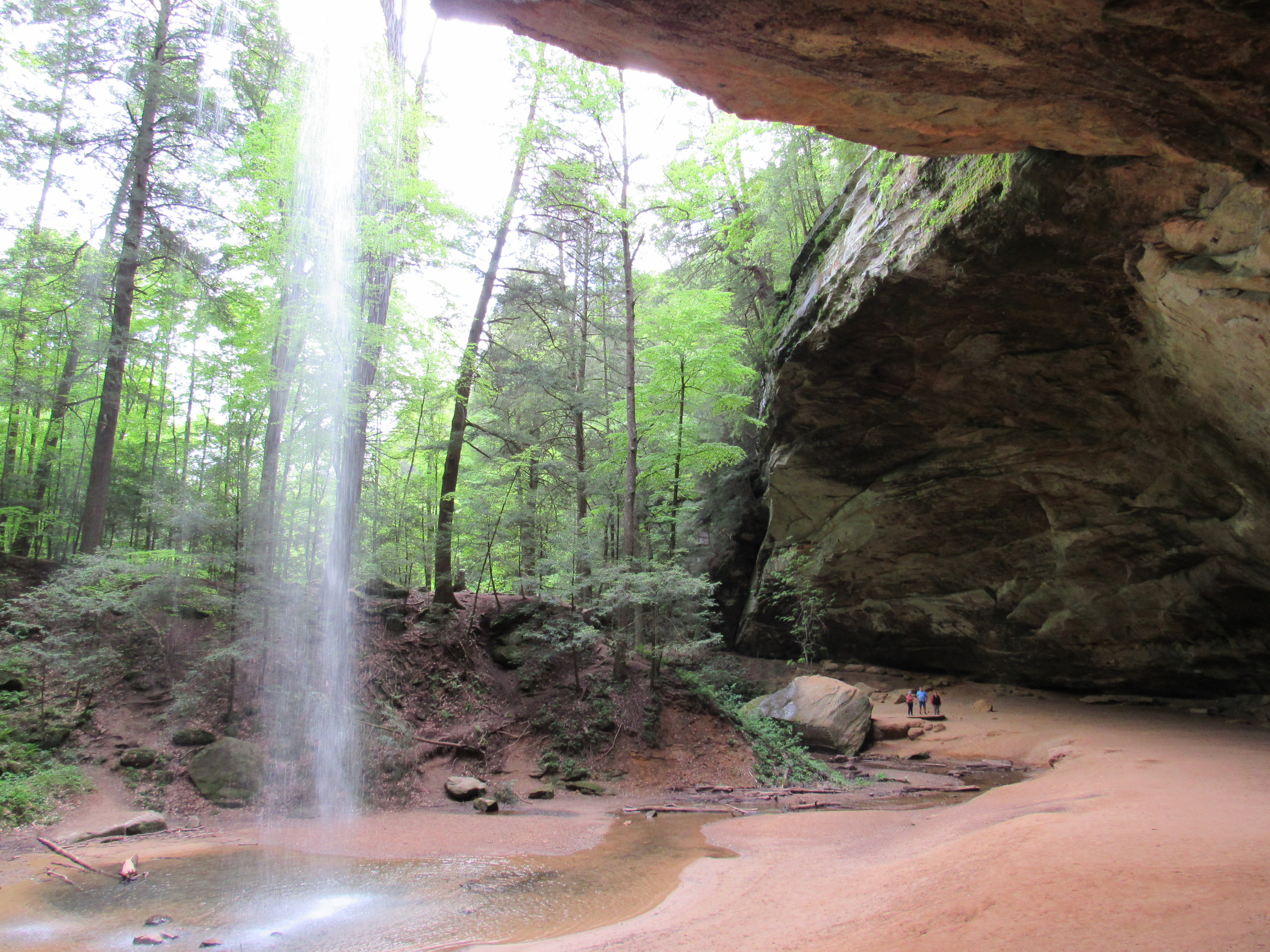
Ash Cave, Hocking Hills State Park, Logan, OH.

© Bruce Stambaugh 2016

When glory bursts through

sunrise, Lakeside OH
Glorious moment.

By Bruce Stambaugh

From our rented efficiency apartment in our favorite Ohio retreat, Lakeside Chautauqua, the day seemed gloomy, even overcast. Then I stepped outside into the predawn elements.

High, wispy cirrus clouds tickled the waning half moon. The previous evening’s rainstorms birthed refreshing morning coolness. At first, the stillness surprised me. It shouldn’t have.

The sleepy town was even sleepier on this Sunday morning. On the way to the lakefront, I broke through the waif of freshly made doughnuts at The Patio, the village’s popular eatery, without temptation.

When I reached the dock, I was stunned. Not a soul could be seen or heard. The day’s early morning dim light glowed along with the Victorian lampposts. Dimpled rivulets, like a sea of golf balls, pockmarked the calm Lake Erie.

Typically this alluring pier is packed with folks, even at sunrise. Walkers, joggers, fisherman share the space. Not today. I had the place to myself. I was both thrilled and awed in the silent twilight.

A pinkish halo hovered over Kelley’s Island five miles across the water. However, a peek to the east dampened my hopes for a sterling sunrise. Still I hoped.

I retreated to the pier’s entrance, mentally adjusting for a morning stroll around the resort town’s parameters. I glanced east again and found paradise. The sun’s bright beauty overrode the clouded horizon.

All glory was bursting through. I chose to exercise my senses rather than my legs. The Sunday morning service was about to begin, and I wanted to participate.

I walked along the rocky reinforced shore toward the call to worship. Using my eyes, ears, heart, soul, and camera, I recorded as much of the sacred ceremony as I could.

Baltimore Orioles picked up the chorus with the robins and purple martins. A lone common nighthawk buzzed overhead, skimming insects attempting to attack the unfolding beauty.

Fish played, jumped, and fed in the shallows near shore, rippling the calm waters that reflected the brightening sky. First pink and red, then orange and yellow added to the heavenly pallet.

Yellow, purple, and white irises dotted with last night’s raindrops joined the congregation. Stone upon stone sculptures added to the outdoor ambiance.

This slideshow requires JavaScript.

Surrounded by reflected brilliance, a family of Canada geese glided through the still waters without their usual commotion. Unaware of my presence, a pair of young raccoons cooed as they foraged in the oversized rocks for anything edible.

Lakeside daisies, held harmless by earlier cooler days, stood at attention during the offertory. As if rehearsed, the geese honked while the Nighthawk buzzed, forming an inexplicable choir. The sun just smiled its approval.

The shoreline trees expressed their worshipful appreciation, too. The willows gracefully bowed as the geese floated by, while the oaks and ash remained tall, strong and attentive.

Soon other humans were drawn to the splendor. A visiting woman ran past me and asked if lived here. I wish. Even if I did, I still couldn’t begin to own the natural grandeur.

Protect it, preserve it, embrace it, praise it. Yes. Claim it as my own. Never.

This may sound funny, but it’s true. Without a sound, the sky spoke reassuring words, words that calmed and healed and inspired.

The sermon’s message was clear. No earthly power or politician or calamity or chaos could overcome this evolving creation of the Creator.

In that, I was most confident and filled to overflowing. At the benediction, the sun wholly overtook the darkness, and indeed, it was good.

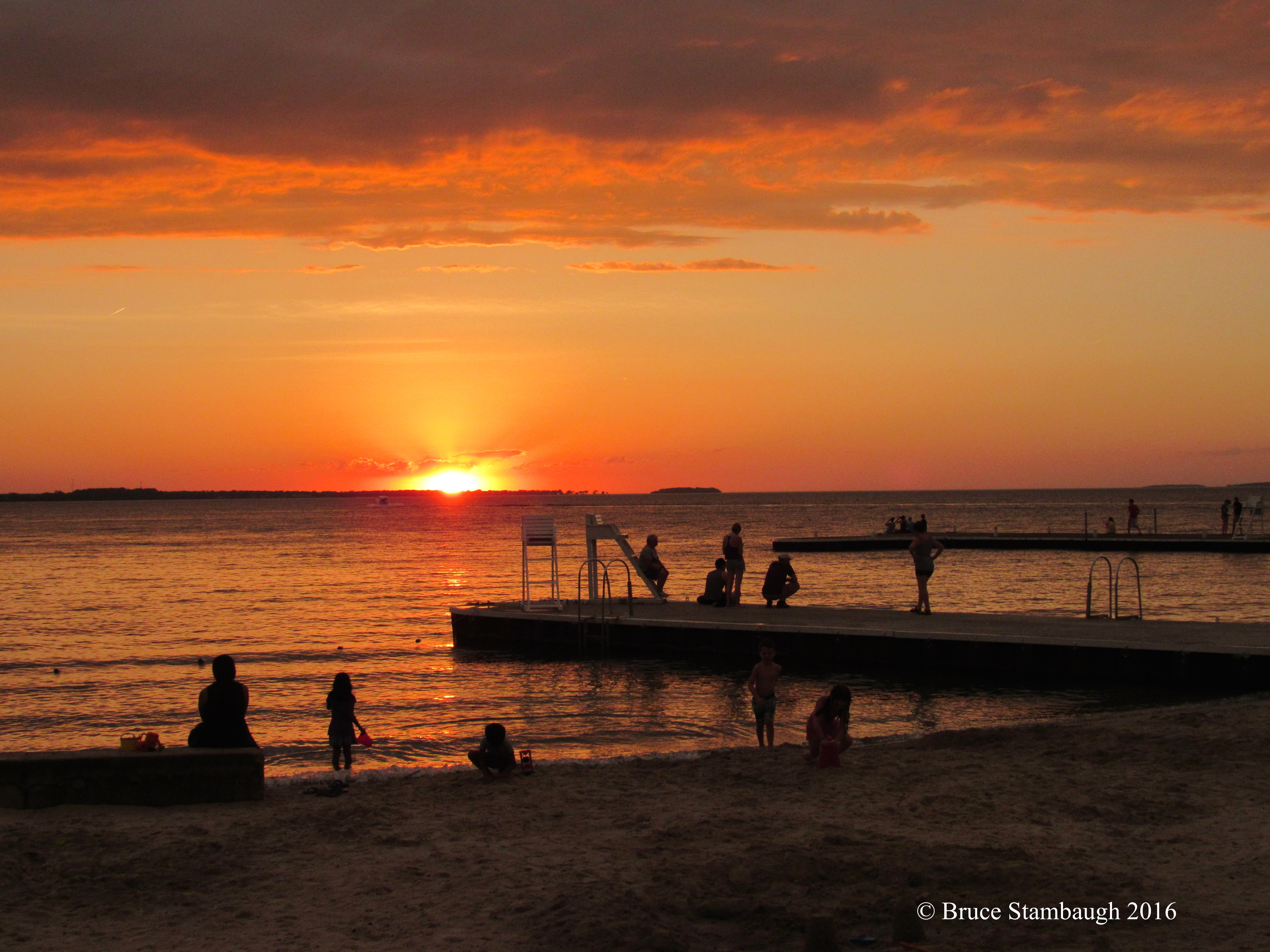
sunset, Lakeside OH
Perfect ending.

© Bruce Stambaugh 2016

Greens Galore

forest ferns
Greens Galore.

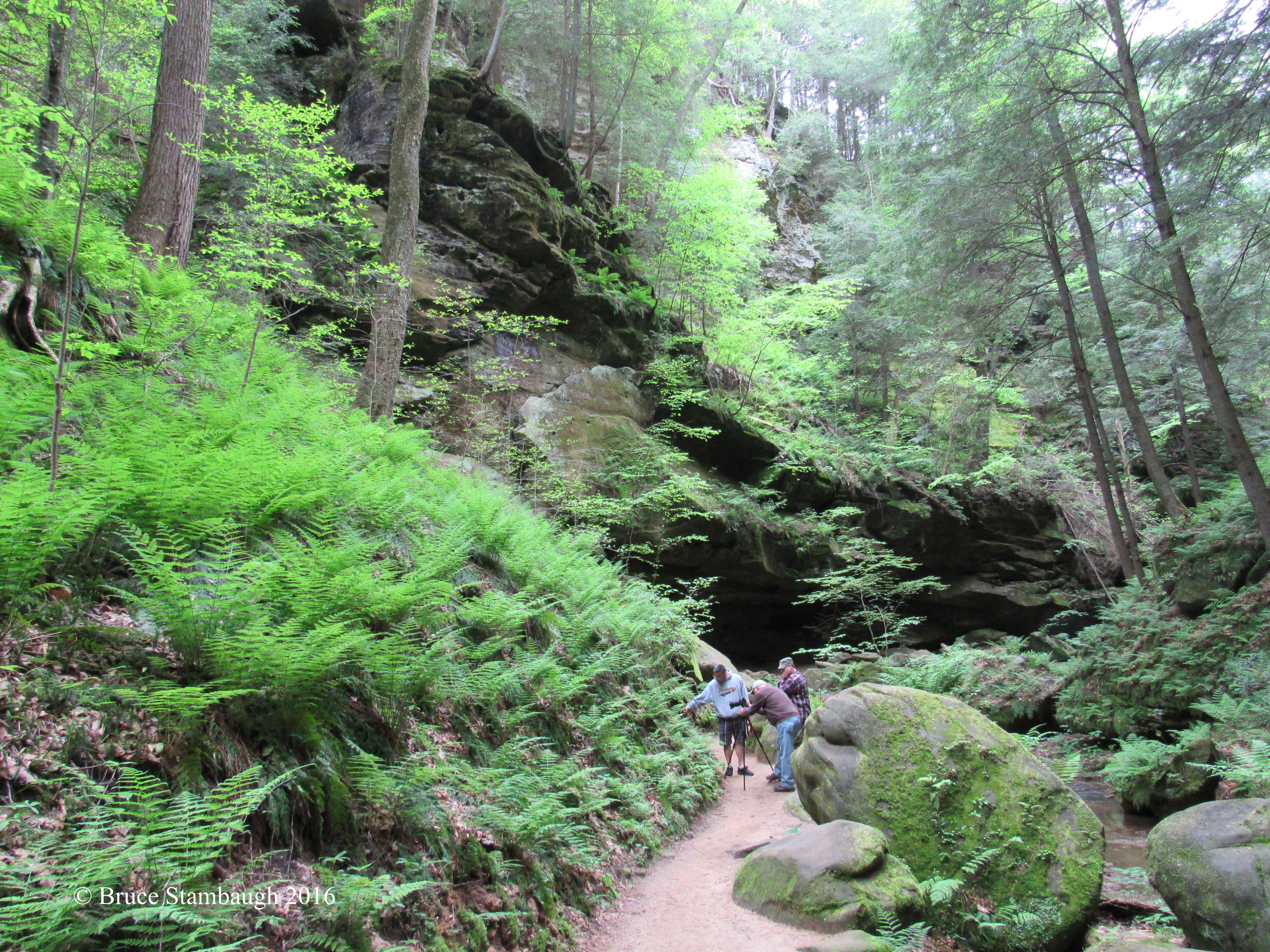
On a recent visit to Hocking Hills State Park, Logan, OH, the many shades of green we encountered astonished us. In this setting in Conkles Hollow, the feathery ferns filled the steep hill beneath massive rock outcroppings and towering cedars and deciduous trees with leaves unfurling. The mosses and lichens added to the natural green pallet as a trio of men did a photoshoot of their own.

“Greens Galore” is my Photo of the Week.

© Bruce Stambaugh 2016

Keep looking up

smartphones, beautiful sunrise
Checking the phone.

By Bruce Stambaugh

My friend innocently reminded me of something I had said to her that I had forgotten. Her timing couldn’t haven been better in repeating my words of advice.

She said I had told her always to keep looking up. That comment referenced finding birds and bird nests in her yard. When I heard my words played back to me, I realized their application ranged far beyond bird watching.

My mind flashed back to our snowbird weeks in northeastern Florida in the winter. We had rented a condo right on the Atlantic Ocean for a few weeks.

I often greeted the days from the balcony of our condo. One particular day stood out.

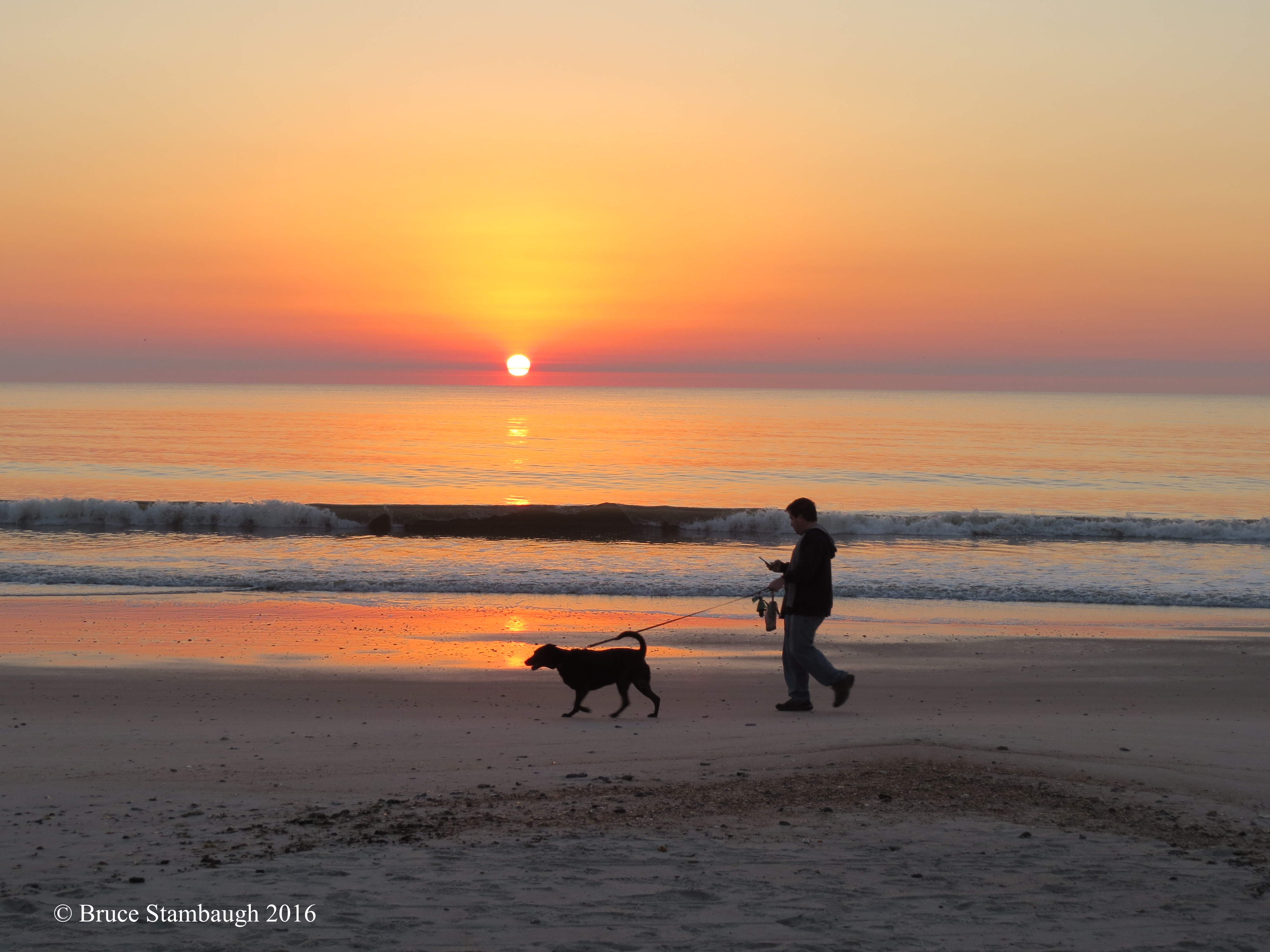
The sunrise was spectacular. The waves were gentle, peacefully hypnotic in their rhythmic rolling. Where the waves lapped at the gritty sand, shorebirds busily foraged for sustenance.

dolphins, Atlantic Ocean, Florida
Dolphins playing.
An orange sun danced on the ocean’s horizon, reflecting glorious beauty across the rolling waters and brilliantly painting the sky. Dolphins played and fed in the morning surf before it broke upon the beach.

A few folks were out and about, too. But many of them seemed disengaged from all the natural beauty around them. Their heads fixated down to their hand-held smartphones, unmindful of the golden sunrise, the unfolding nature, or the inspiring sea.

During our weeks-long stay, I saw this same scene repeated over and over again. You don’t have to be on the beach to see it either. In today’s technologically driven society, I’m sure you have encountered the same situations in your daily routines.

lighthouse, smartphone
Even a view of a lighthouse couldn’t keep this gentleman from checking his phone.
It’s easy to see this faulty waywardness in others. For me, it’s much harder to recognize my personal, self-absorbed participation in this 21st-century phenomenon.

If we’re honest with ourselves, all too often we fall into the same ill-mannered habit. We become so infatuated with our gizmos that we disregard all that’s happening around us, including those we love.

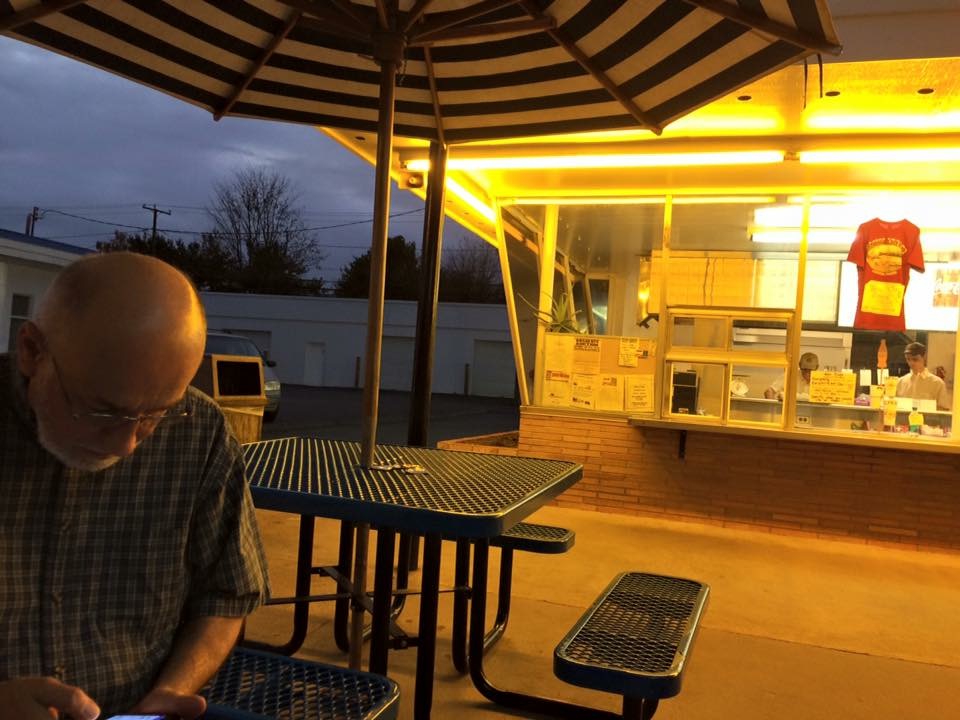
I know. My daughter took a photo of me with her phone, of course, sitting on a bench in front of an ice cream stand on a balmy summer evening. My baldness is prominent in the photo because I had my head down looking at the smartphone I held.

I felt guilty when I saw that photo. For the record, my daughter took it for the setting and color, not for my embarrassment. That was on my shoulders.

scrolling smartphone
Caught on camera.
It’s a bit ironic, isn’t it? Sophisticated electronics designed to help us communicate much better and faster actually keep us from real interaction, like a casual conversation.

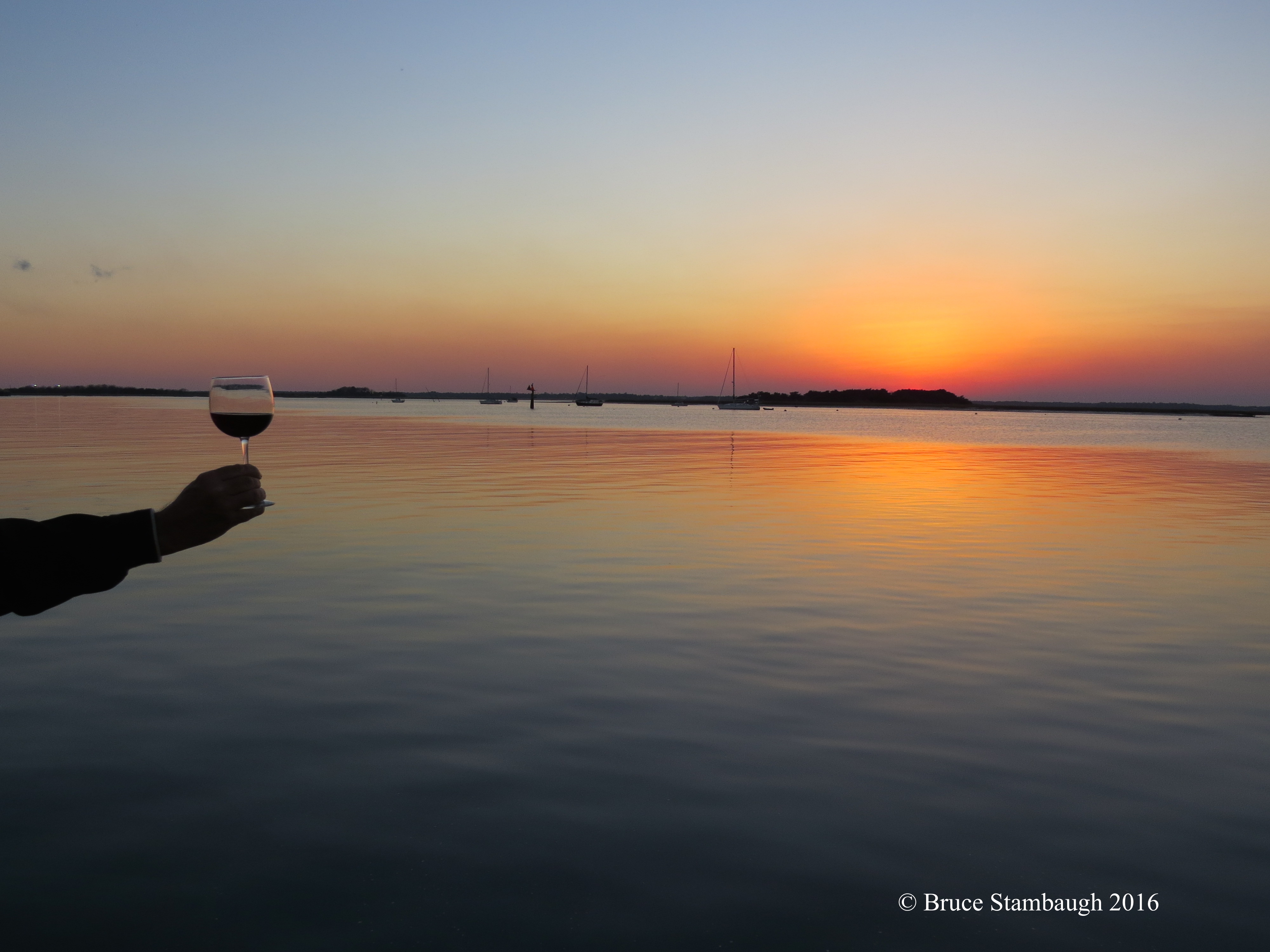
With constant, instantaneous access to information, much of it negative and harsh, it’s easy to become overwhelmed, disenchanted. We shouldn’t. No matter our individual situations, we each need to keep looking up, whether it’s for finding birds or keeping a positive attitude or noticing the events unfolding around us.

A restaurant’s entryway sign perfectly summed up the current social situation with a hand-printed message on their welcoming chalkboard. It read, “We do not have Wi-Fi. Talk to each other. Pretend it’s 1995.”

I immensely enjoyed that evening with my daughter visiting people in small towns where I had never been. We talked as we traveled, and I learned a lot, more than I did by scrolling my phone while we waited for our food.

I should have remembered to keep looking up.

sunset, cheers
Cheers to looking up.

© Bruce Stambaugh 2016

May is for the birds

May flowers
May flowers.

By Bruce Stambaugh

May is for the birds. That’s good news for those of us who live in northern Ohio.

Year in and year out, May tends to be a very pleasant month here. The days grow longer and warmer.

Garden flowers splash welcomed colors against neatly trimmed, emerald lawns. Rainbows of wildflowers carpet forest floors, hiding the decaying leaf litter for six months. Mushrooms and May apples join them.

But what broadens the smiles in many folks from ages four to 94 are the returning birds. Not that people have been disappointed with the aviary species that frequented their backyard feeders in the dormant months.

The colorful songbirds, all decked out in their mating wardrobes, radiate new life into their human audiences. I’m certain the birds are unaware.

Gulping grape jelly.
You don’t even have to be a serious birder to know that feeling. When the first Baltimore Oriole flashes its black and orange and whistles its distinctive call, it’s officially May.

Out come the store-bought and homemade feeders full of grape jelly. Stand back and let the gorging begin.

This year the birds seemed simply to fall out of the sky. Person after person reported the first of the year Baltimore Oriole, Orchard Oriole, and a Ruby-throated Hummingbird.

It’s amazing how those little hummers remember where the previous year’s feeders hung. If they beat you to the punch, they’re hovering outside your kitchen window waiting for lunch or supper, depending on when their flight landed in your yard.

This year I beat them to it. I had the feeder cleaned and filled with fresh sugar water long before April melded into May. But the birds got the last laugh. The first bird on the hummingbird feeder was a male Baltimore Oriole. Yes, they like a sweet sip now and then, too.

So, out went the oriole feeder. I hardly had stepped away when a male Baltimore Oriole swooped in for his feast. A male Orchard Oriole, a bird that I had never seen feed at the grape jelly station before, soon followed.

Friends near and far reported orioles galore. Their joy mimicked that of the infectious calls of the birds themselves.

male rose-breasted grosbeak
Male Rose-breasted Grosbeak.
Then came another wave of exuberance. Folks from all around called, emailed, and showed me photos of a bird they had seldom had at their feeders before. Rose-breasted Grosbeaks held their own fallout party. Some people reported eight or 10 at a time feeding. Not only are these handsome birds fun to watch, but their song also matches their beauty.

Of course, a few rare birds pass through on their way further north for the summer. American White Pelicans and stately Black-necked Stilts made appearances to the area.

But this time of year, it’s the colorful warblers that serious birders covet. Scores of birders from around the world converge on the Lake Erie shoreline to watch and listen for this annual splendor. They are seldom disappointed.

This slideshow requires JavaScript.

The Biggest Week in American Birding is held annually from early to mid-May in northwest Ohio’s Magee Marsh Wildlife Area. Scores of migrating birds, warblers, shorebirds, and birds of prey among them, rest and forage in the adjoining marshes, wetlands, and woodlots before heading over the lake.

Even if you can’t make it there, the birds may still come to you. The key is to be on the watch.

You never know what bright and cheery surprise may come your way in May. But look quick, because just like May, some of them might be gone in a vivid flash.

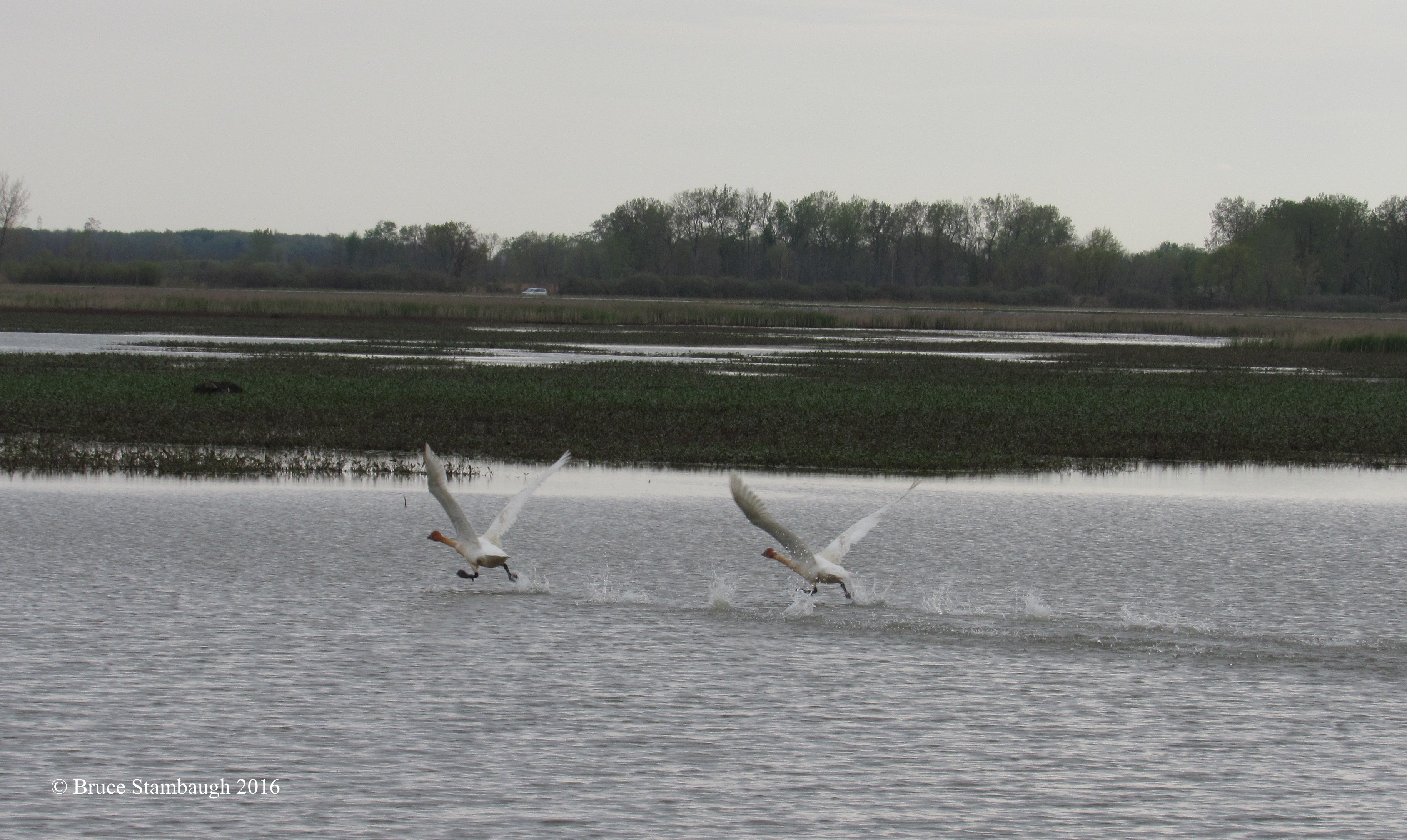
trumpeter swans
Lift off.

© Bruce Stambaugh 2016

Same walk, new results

Ohio's Amish country, Holmes Co. OH.
In my “hood.”

By Bruce Stambaugh

I love to walk outdoors. Treadmills don’t do it for me.

I guess I’m a multi-sensory walker. I need to exercise my listening, my observing, my sensing, my thinking as well as my muscles and my entire bony being.

Walking is an easy sport unless you’re a fair-weather walker. That’s me. I don’t do well in wet, windy, cold conditions.

My pickiness has its consequences, however. My body complains in multiple ways. My achy bones cry out in rebellion. My hamstrings tighten in protest. My soft tissue succumbs to gravity.

tulip
First tulip.
Other symptoms sneak up on you, tricking you into sullenness. Blood pressure is one of those conspirators.

All my life people would offer to buy my low blood pressure scores. I never fully appreciated the physicality of high blood pressure or the corrective medicinal ramifications. I do now.

Age apparently has caught up with me. At a routine check-up, my blood pressure was the highest it had ever been. Thinking it an anomaly, the nurse took it again. It went even higher.

I drove straight to the pharmacy and purchased a new digital wrist blood pressure cuff. My old manual one with the stethoscope had given up the ghost. I didn’t want to join it, so I began daily recordings of my blood pressure and pulse.

My good doctor tweaked my medication according to those results and my body’s physical reactions. I wasn’t ready for what followed. I hated the melancholy, lackadaisical feelings, the fuzziness and body fatigue, though I had done little physically.

I had a new appreciation for those with the same condition. I longed to return to my daily walks, but the weather was as uncooperative as my new pills. I brooded beneath the seemingly perpetual steel gray Ohio sky.

phlox in woods
Wild phlox.
Then, a week after the last snow, spring broke through. Daffodils sprang back. Spring beauties and phlox carpeted woodlots and pastures. The season’s first tulip brightened our yard. It was time to walk again.

The warmth alone drew me outside. I was in heaven again once I got past the roadside dead deer decaying in a woodlot south of our house. When I turned onto the little township road, I hit my stride.

I crested the first knob, and my favorite valley opened before me. The gently undulating and curving road reflected the morning sun. The road resembled a silver ribbon as it ran through the vale beyond the comely farms and up and over the eastern hill that separates one watershed from the other.

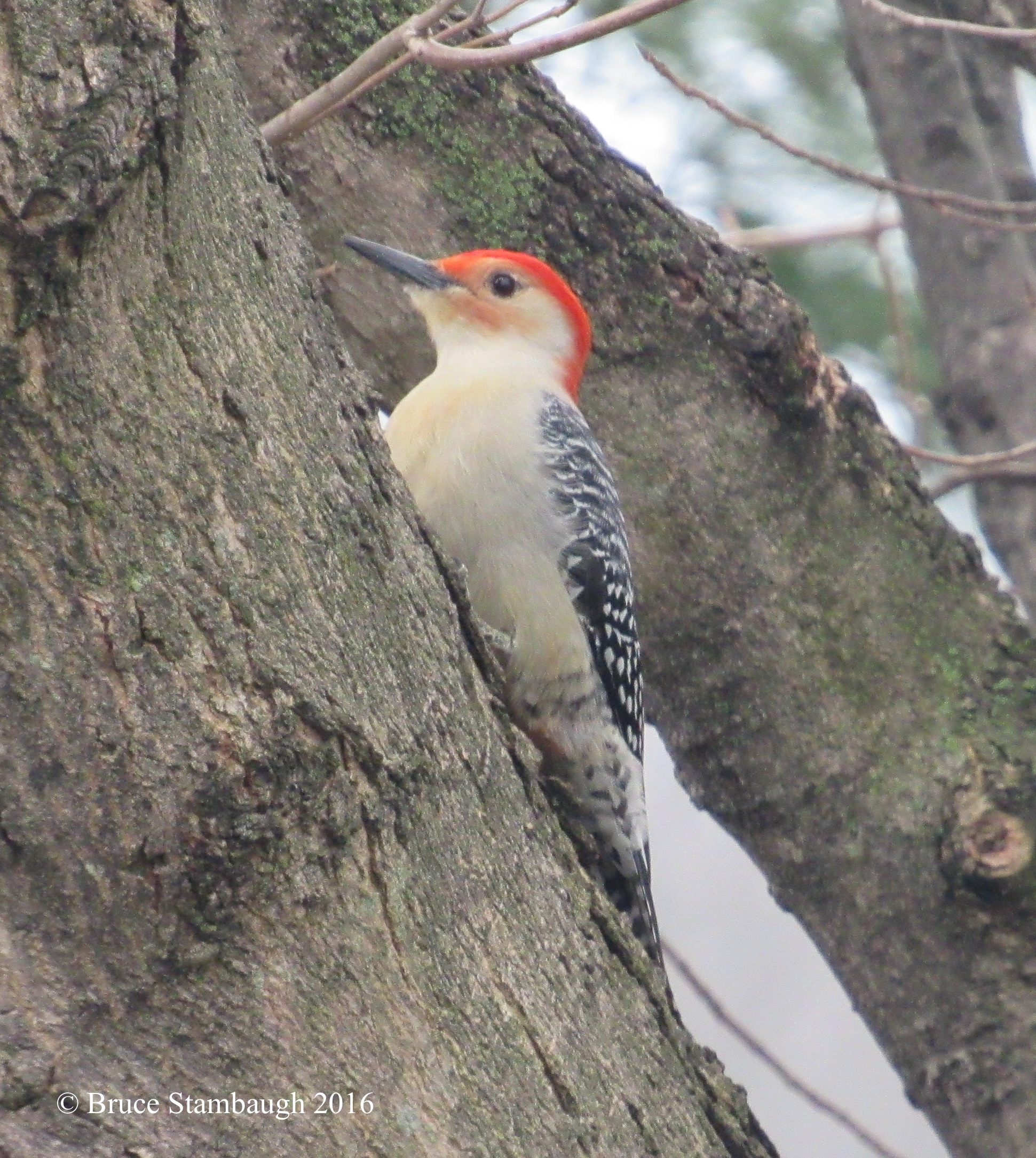
red-bellied woodpecker
Male Red-bellied Woodpecker.
The birds rejoiced with me. A dozen species regaled and entertained me with song and their territorial acrobatics. I rejoiced in the many varieties of the spring birds that had returned to mingle with the year-round residents.

At the halfway mark, the stream gurgled its own refreshing tune, too, though it hadn’t rained for days. The artesian well ran strong into the roadside trough. The willow tree teased yellow with its drooping canopy of leafy buds.

When I reached the little rise at the first farm, a familiar fragrance freshened the morning air. An invigorating mix of soap and cotton wafted all the way to the road from a recently hung line of laundry.

A few more steps and purple martins greeted me with salient salutations and arching flyovers. In contrast, the one-room Amish school stood silent, scholars already having completed another year of studies.

I felt incredible, transformed. My blood pressure was thankful, too.

valley, Ohio's Amish country
Evening in my favorite valley.

© Bruce Stambaugh 2016
Bay Photos by Donna

Wildlife Photos From The Chesapeake Bay Region

ROAD TO NARA

Culture and Communities at the Heart Of India

K Hertzler Art

Artist and nature journalist in the Shenandoah Valley of Virginia.

Maria Vincent Robinson

Photographer Of Life and moments

Gabriele Romano

Less Noise. More Meaning

Jennifer Murch

Art is the only way to run away without leaving home. -Twyla Tharp

Roadkill Crossing

Writing generated from the rural life

ANJOLI ROY

writer. teacher. podcast cohost.

Casa Alterna

El amor cruza fronteras / Love crosses borders