I’m a weather nut, geek, groupie, whatever you want to call me. The weather has fascinated me since I was a child. My wife will verify that I get antsy in severe weather. I’ve tried to channel that excitement and energy into practical action. I’ve been a severe weather spotter for the National Weather Service since 1975.
Imagine my surprise when the fog rolled in off of the Atlantic Ocean while walking a beach near Mayport, FL one afternoon. I was surprised and thrilled to see this rare fogbow appear. I was extremely fortunate to be at the right place at the right time because fogbows don’t last long and are seldom photographed.
Fogbows are cousins to rainbows. Fogbows form from the sun reflecting in millions of tiny water droplets that make up the fog. Since it takes one million cloud droplets to make a single rain droplet, the fog droplets are too small to adequately refract the colors that create rainbows. Consequently, the fogbows shine bright white but only for a brief time. Because of their color, fogbows are also called ghost rainbows, white rainbows, or cloud bows.
You can get a feel for the size of the fogbow by comparing the people below the far left end of the weather phenomenon. “Fogbow” is my Photo of the Week.”
Spring! It’s a word that rolls off our tongues with joy and passion. I give thanks for this vibrant, vernal season, especially after the long, cold winter too many of us had to endure.
This past winter surely tested our patience. But patient we must be. As much as we welcome springtime into our lives, she, too, can be fickle and bring mixed messages. Much like fall, springtime weather can embody all four seasons. Still, let’s give thanks for springtime.
Spring one day…
…and the next.
I realize that in our North American society, Thanksgiving is reserved for the fall. Canadians annually celebrate their Thanksgiving on the second Monday of October. U.S. citizens wait until the fourth Thursday in November.
The Thanksgiving holidays acknowledge all that we have. The reflective focus is on the harvest, glad to have reaped the benefits of all the hard labor used to produce the yield. But we also need to be thankful for the spring. There are no apples without the blossoms and the pollinators.
I’m grateful for springtime even though some years, like this year, she takes her good old time making her presence known. Still, I say, let’s all express our thanks for spring’s debut.
Spring’s arrival creates a variety of reasons to rejoice often based on where you live and what activities ensue. Much action has an agricultural bent. Suburbanites will gas up their lawn mowers for the first of many rounds around the yard. City dwellers will pot tomatoes, peppers, and petunias to baby on their balconies.
More ambitious gardeners with sufficient plots of land will plant their seeds and seedlings, always keeping a wary eye on any frosty forecast. Flowerbeds will be mulched, windows washed, and if time allows, neighborly visits will resume right where they left off last fall.
This slideshow requires JavaScript.
Songbirds fill the twilight with concertos. Dormant lawns, long browned from winter’s sting, green up from an overnight shower. Azaleas, daffodils, dogwoods, redbuds, and forsythia brighten the awakening landscape. Shouts of children riding bicycles or skateboards echo through neighborhoods regardless of setting.
For all of this, I am thankful. Why not? It is the season of renewal, and after the winter that wouldn’t end we all need a breath of fresh air, we all need to inhale those sweet fragrances, we all need to enjoy each moment as the bees, birds, and butterflies reappear.
No matter how long spring takes to settle in to fit our particular comfort level, we should be most thankful that the season of hope and renewal is upon us. In keeping with that regeneration, it’s good to express our thanks to others each and every opportunity we can. Share your joy with others the way a mother robin cares for its young. Spouse, plumber, daughter, son, grandkids, stranger, receptionist, parents, waitress, checkout person, or whomever you meet will do.
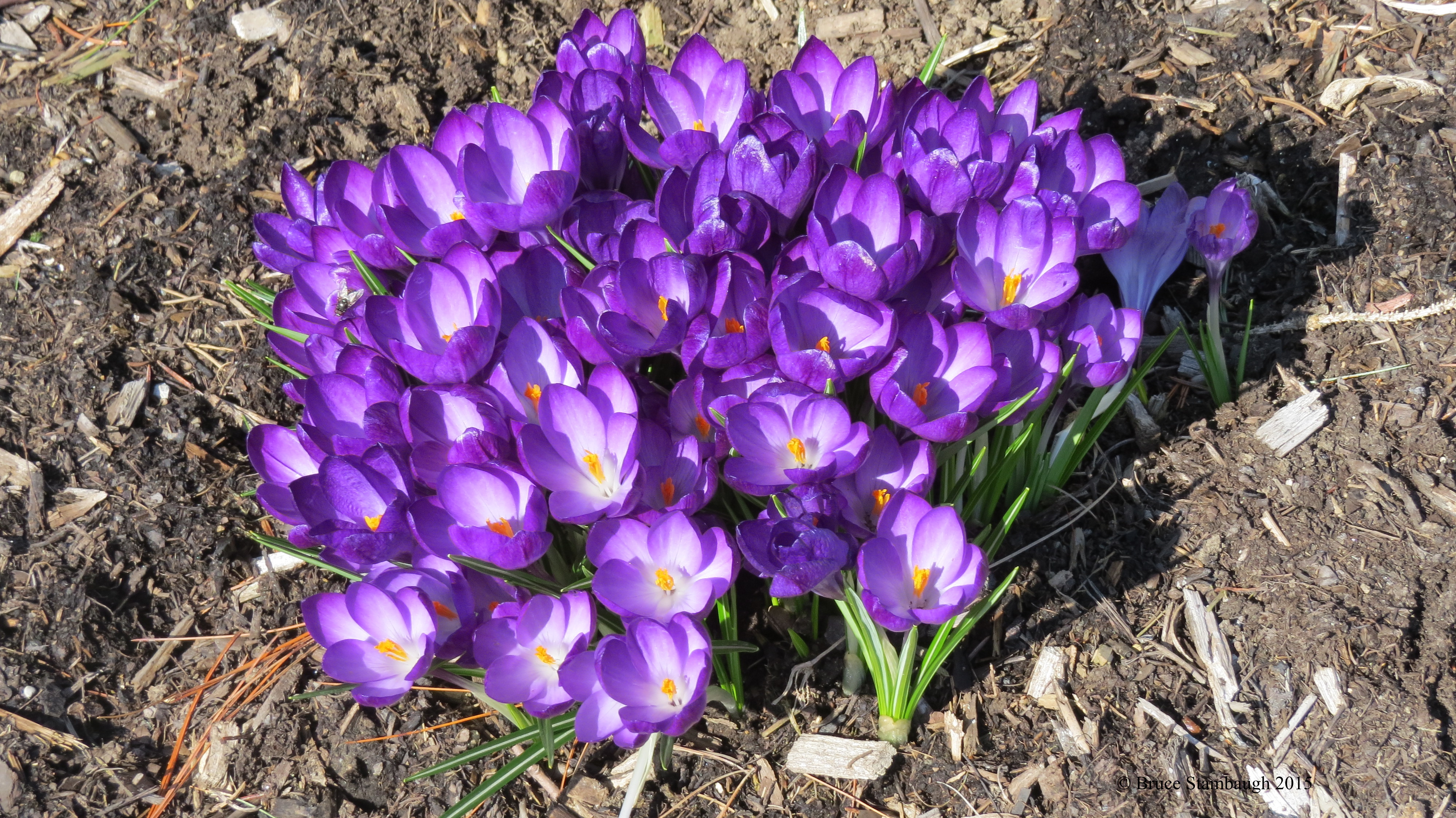
Life is in a constant state of change. Spring is that reminder to us to embrace not just the new season, but life itself. The message of the purple crocuses is to put away your fears. Spring is here. Life is good.
Without the season of renewal, there can be no harvest. At this sacred time of year, let our thankfulness replicate our gratitude for life itself, the life we have lived, are living, and the experiences yet to come.
I’m thankful for spring’s freshness, its vibrancy, virility, brightness, and renewed blessings. Life’s eternal cycle of renewal has returned once again. Let’s rejoice and be glad in it!
St. Augustine, FL is a favorite destination for us.
By Bruce Stambaugh
My wife and I like to travel. We’re not world travelers by any stretch of the imagination. Mostly we embark on both long and short ventures to visit friends, explore new places, and revisit old haunts.
Given today’s complexity and expense of flying, road trips are our favorite. That means Neva and I spend lots of time together in our vehicle.
Our peers, other retired couples, do the same of course. Most report that they use the road time to chat with one another, plan future activities, and discuss ongoing world events. Not us.
When we travel by motor vehicle, Neva and I have a solemn, implicit pact. We seldom talk. It’s been that way almost from day one of our marriage. I suppose it’s just a habit that we quickly fell into. But we have made it work for us.
From my experience, most folks seem uncomfortable with silence. Neva and I take it in stride, each using the quiet time in different ways. Neva reads, stitches, does word puzzles, or plays games on her iPad. Me? As I drive, I observe, think, and plan. I know that sounds a bit boring, but I find the quiet time refreshing.
We can be spontaneous, though. We don’t necessarily travel from point A to point B. We like to stop if we see something that catches our eye. That’s especially true for me. I’ve even been known to turn around just to photograph a lovely landscape scene or an attractive old building or an eagle snacking in an open field.
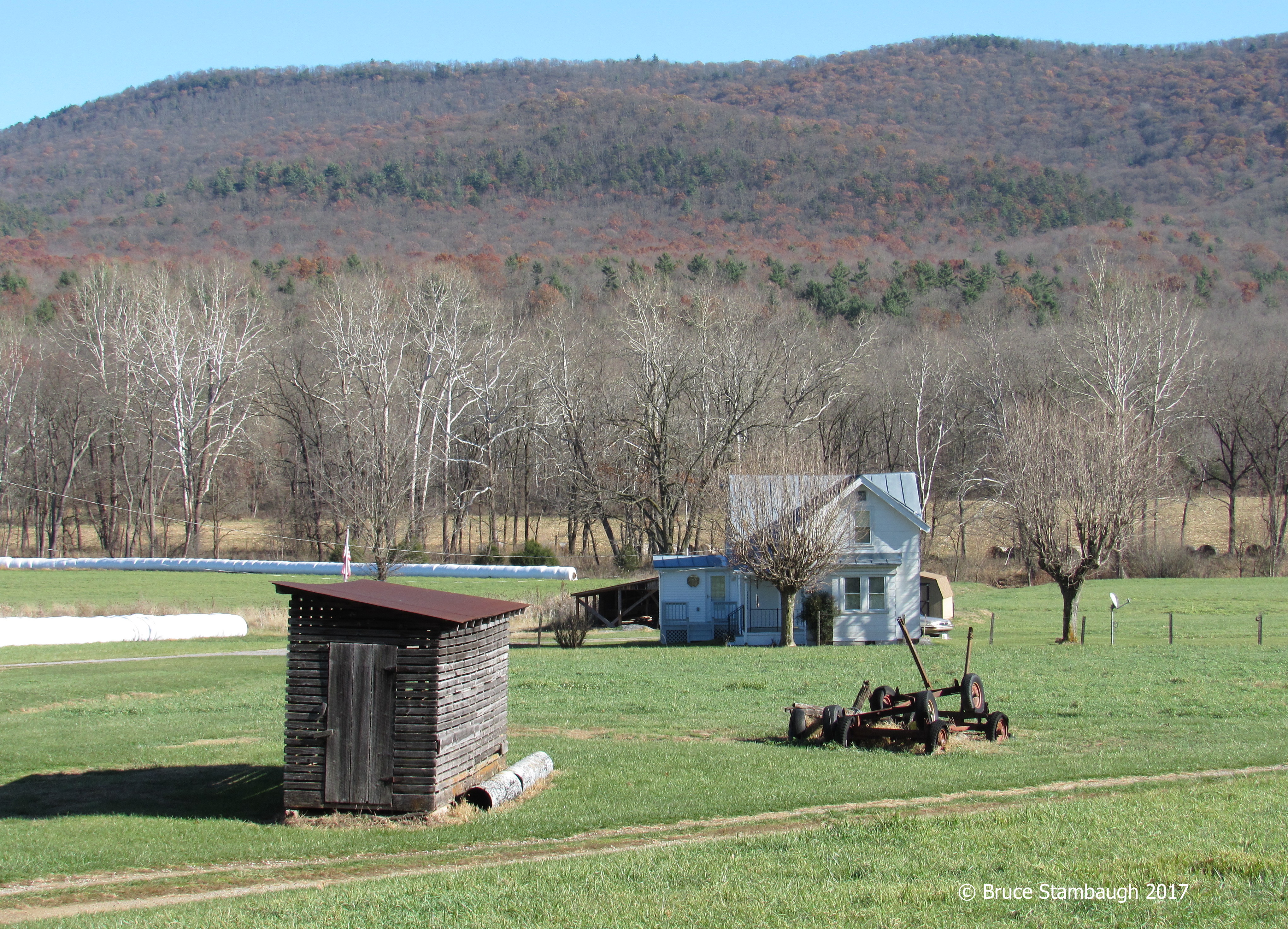
This farmstead in West Virginia is typical of the scenes I stop to photograph.
When we can, we drive the old surface routes, avoiding expressways and interstate highways, especially if we don’t have to be somewhere at a given time. Doing so makes life so much more interesting for us.
We also traveled with our son and daughter when they were young. That was before cell phones, iPads, iPods, and in-vehicle entertainment centers. We would have the typical family verbal interactions. But on long trips, Neva always had individual activities for the kids to fill the road time.
Those trips weren’t as peaceful as the ones we take now by ourselves. No one would have expected them to be, but our son and daughter weren’t rowdy either.
As we’re driving, every now and then I’ll think of something I meant to ask Neva but forgot. I seem to do that more and more these days. So I’ll ask on the go. She does the same with me. That question may lead to further discussion and a resolution to a dangling participle in our lives. Without long stretches of silence, that unresolved issue might not have even been discussed.
I also find sustained silence helpful in flushing out touchy topics I have avoided for fear of disagreement. After all these years together, we know that it’s better to lay all the cards on the table than secretly hold them to fester. Perhaps a moving vehicle keeps conversations progressing, too.
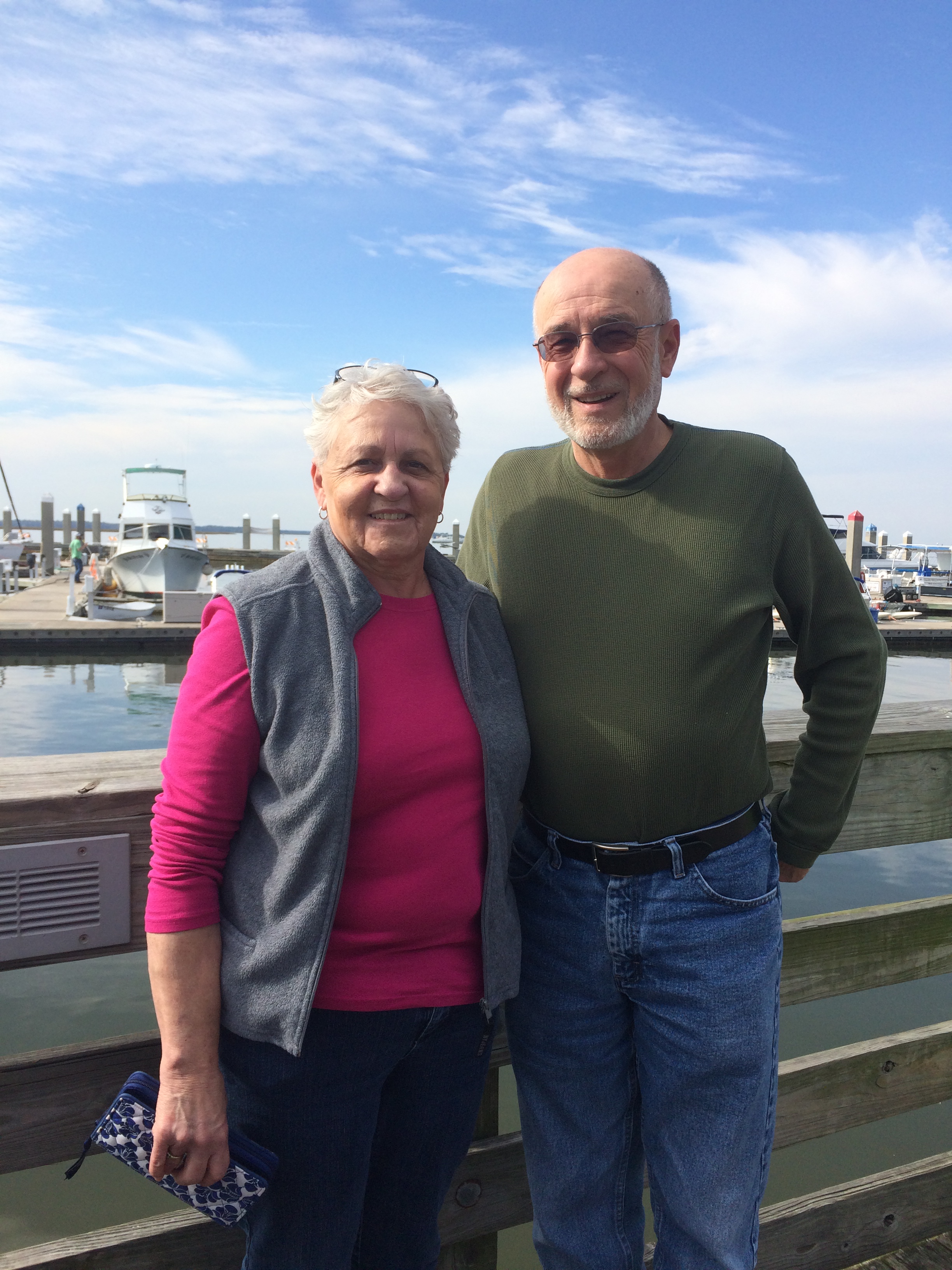
The happy coupleIn my younger years, I was a bit uncomfortable with silence when others were around. I tended to fill the space with words like I loved to hear myself talk. I didn’t. Experience has taught me that listening can be more valuable than speaking.
For Neva and me, sustained silence has strengthened our relationship. It’s a nonverbal equalizer where neither dominates, and we both can participate as we choose. In our specific case, it’s been an essential part of our wedding covenant for 47 years and counting.
Nature ushered in springtime with a significant snowstorm in the eastern part of the United States. We received at least seven inches of heavy, wet snow in Rockingham Co in Virginia’s Shenandoah Valley. Though I would have preferred a warmer welcome to spring, the storm beautifully blanketed the landscape far and wide.
In this photo, the tree-studded Allegheny Mountains of eastern West Virginia show the stunning results of a substantial March snowstorm.
My wife and I were returning from our winter hiatus on Amelia Island, Florida when I first spotted a glimpse of familiar mountains. We were still well south of Martinsville, Virginia in the folding foothills of North Carolina’s Piedmont region.
As much as we had enjoyed our time in the Sunshine State, we were glad to see those Blue Ridge Mountains that would guide us home. They earned that name long ago with the shadowy, bluish hue they cast from a distance. Their western cousins, the Allegheny Mountains, do the same.
We wound our way through south-central Virginia. We passed my maternal grandmother’s homestead and cruised through Roanoke, a city surrounded by those ancient, rounded ridges. From that point, the primary objective was to stay alive amid the bobbing and weaving strings of traffic on the always congested and dangerous I-81, which dissects the lovely Shenandoah Valley.
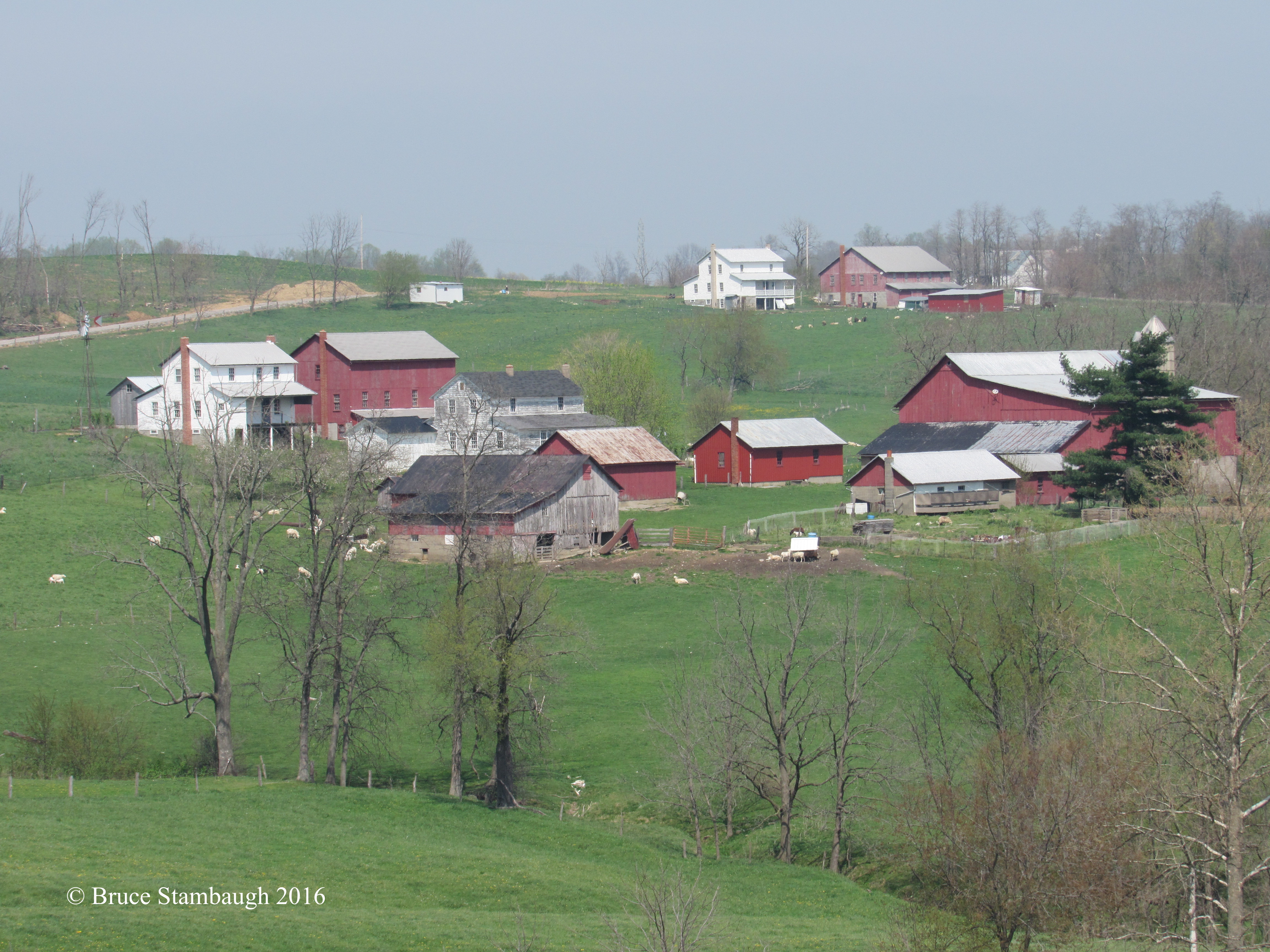
Holmes Co. farmstead.It was the last stretch that led us home. Less than a year ago, our home was among the lesser but equally charming hills of Holmes County, Ohio. Ironically, they are the westernmost foothills of the Appalachian range that includes both the Blue Ridge and Allegheny Mountains.
Neva and I had spent all of our adult lives living in Holmes County. We had resided in both the county’s western and eastern sections. In west Holmes, the valleys were broader and hills steeper than those in the more gently rolling landscapes of the east that were dotted with Amish farms and family-owned cottage industries. We loved our times in both the east and west.
After a lifetime of arriving home in Holmes County, my emotions felt conflicted, from incongruity to tranquility as we approached our newest county of residence near our grandchildren. Still, we shared the familiar feelings of comfort and security as we approached our Virginia home.
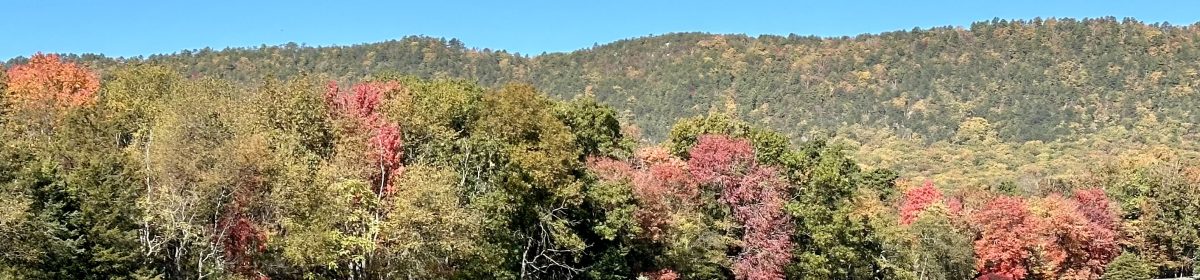
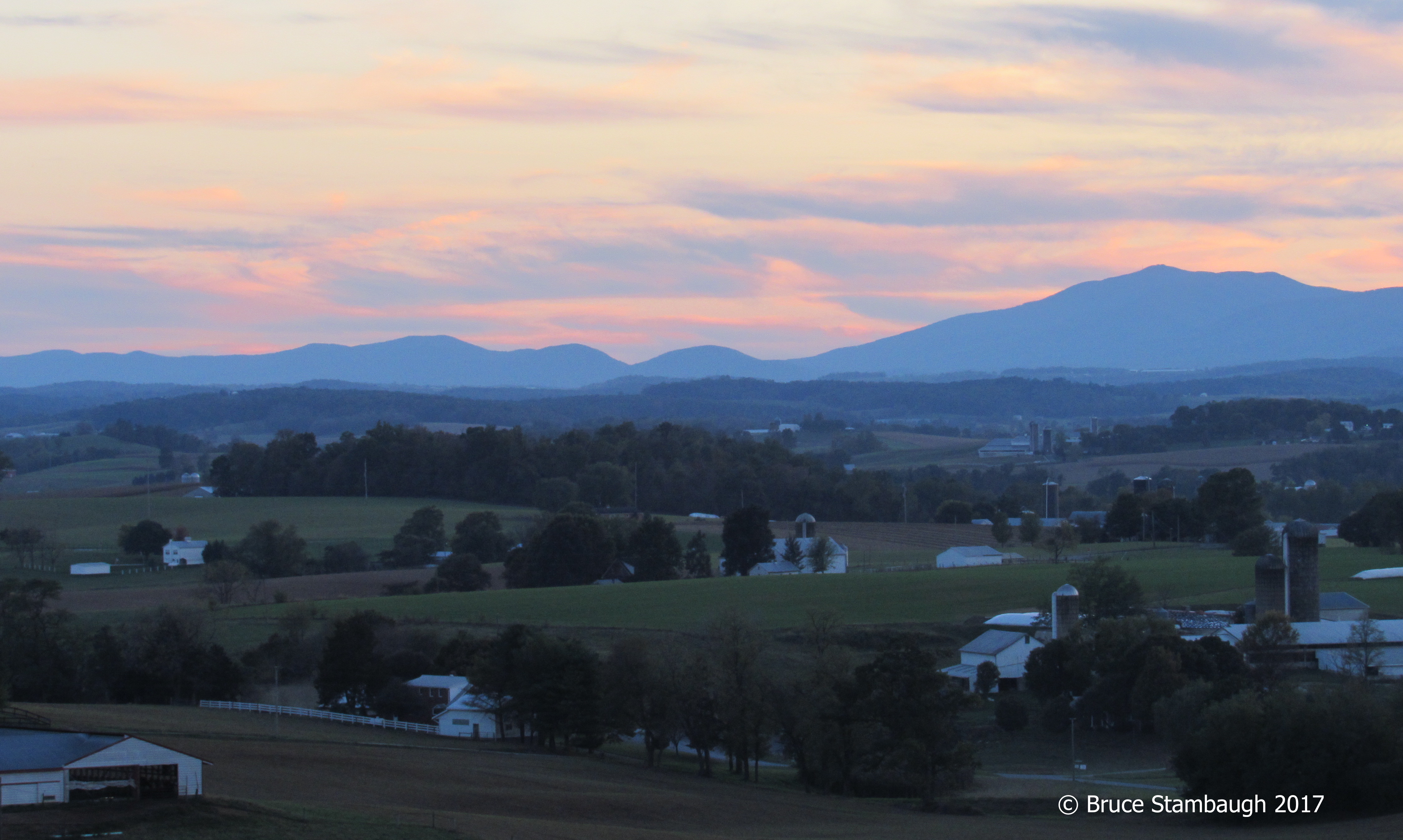
That amalgam of thoughts flooded my mind as Massanutten Mountain came into view. It’s the geographic landmark that juts through the center of Rockingham County and looms to the east of our new hometown, Harrisonburg.
Mole Hill.Exiting the interstate, I pointed the van west towards an even more iconic landmark, Mole Hill. It’s alleged to be a long-dormant volcano, now sprinkled with stands of mixed hardwoods, fertile farm fields, and homey farmsteads. Mole Hill appears to be at the end our street. In reality, it’s a couple of miles west the way the crow flies. Viewing that satisfying scene brought smiles to our faces.
Because we were so deeply rooted in the Holmes County community through schools, church, and local service organizations, it has taken us a while to indeed settle into being Virginians. This return trip from Florida personally sealed the deal.
Dusk at Mole Hill.
Mole Hill reflection.
Massanutten from Heritage Village.
Orange and blue.
Massanutten Mt.
Mole Hill from Dayton.
Farms on Mole Hill.
Even the folds are blue.
Please click the photos to enlarge.
I never thought I’d consider any place but Holmes County home. I was wrong. As much as we enjoyed our time in Florida, it was reassuring to be back in the Shenandoah Valley.
A few minor complications arose, however. I couldn’t remember where the cereal bowls were, the bathroom light switch was, and that the wastebasket was under the kitchen sink. The weather also forced us to wear winter coats again.
I have a friend Ava who was born and raised just a few miles from our suburban Virginia home. She now lives in Ohio, and always celebrates returning to these “blue, blue mountains,” as Ava refers to them.
Neva and I now know that same exhilarating feeling. With no disrespect to Holmes County, it was good to be home.
I’ve never been one to engage in the all-out celebration of St. Patrick’s Day. However, since March 17 is upon us, I thought I would dedicate my Photo of the Week to highlight that universal holiday.
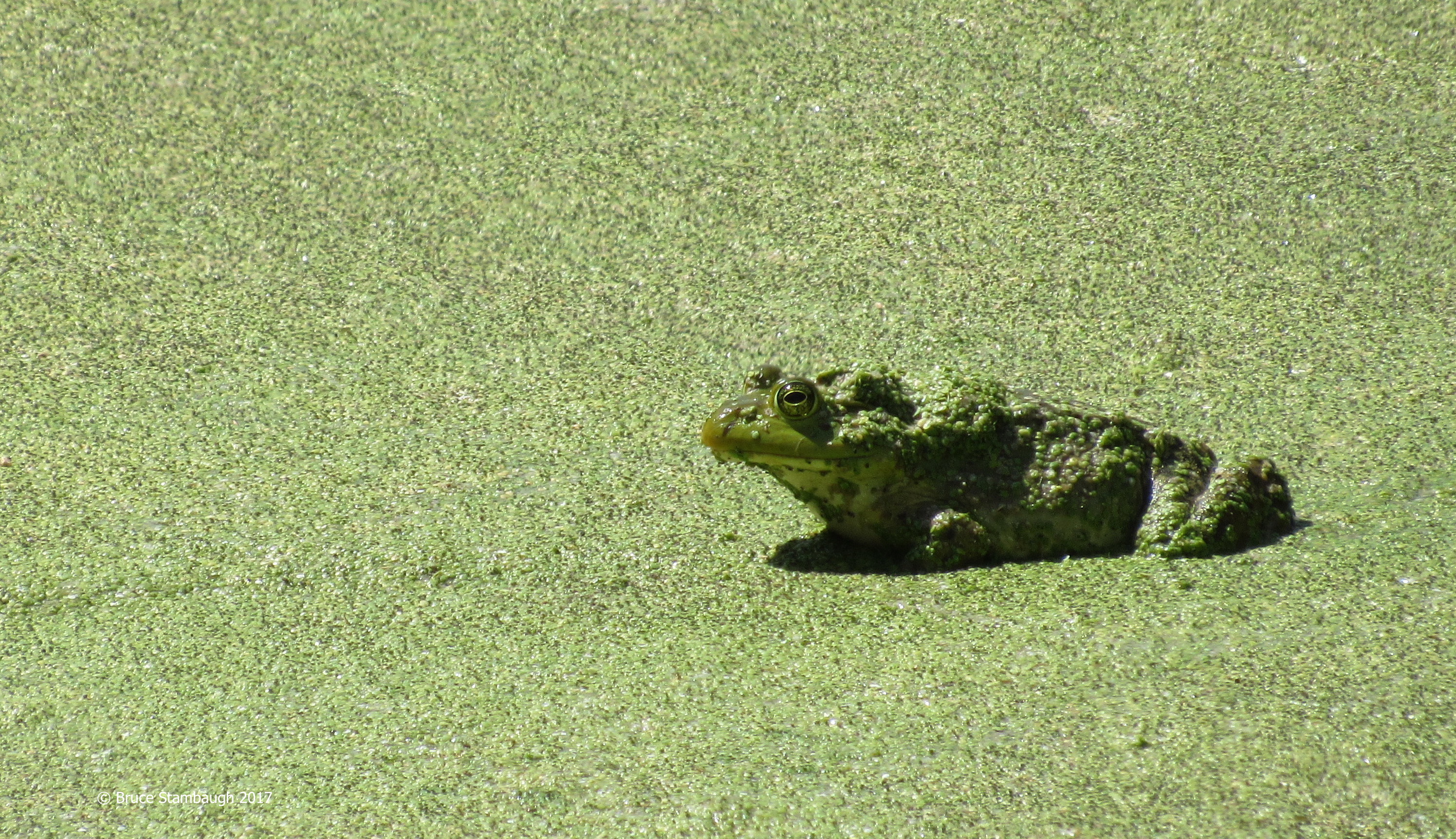
I took this shot of what I believe to be a bullfrog sunning itself in a wildlife reserve section of a park in Albany, Oregon last August. It was the photo with the most green in it that I could find in my files. In keeping with the tradition of the day, the frog was likely singing, “Kiss me. I’m green.”
“Happy St. Patrick’s Day!” is my Photo of the Week.
This tangle of young alligators wasn’t as menacing as it looked. After a long and cold winter in northern Florida, the pile of two-year-old babies was merely sunning themselves on the shore of a channel in Egans Creek Greenway in Fernandina Beach. Their watchful mother enjoyed the sun at the surface of the water not far away.
This group of youngsters was only a part of the dozen babies that I could find amid the thick underbrush that hid their nest. When they first emerged last winter, I counted 22 young. Clearly, several of the younger alligators fell prey to predators or perhaps were eaten by their mother, a fairly common trait.
As you can see, the alligators, each about two-feet long, appear to be more than capable of fending for themselves. As the weather warms, mom will chase them away so she can begin the reproductive cycle all over again.
Our lives are filled with bad news almost daily. Much of it is minor, insignificant. Too much, however, is horrific. News of flooding, earthquake, or another school shooting dominates the feeds on our electronic devices all too often.
Every now and then, however, a piece of good news manages to appear. It’s not always in the headlines of newspapers or featured on the trending social media of the day. Good news occurs nonetheless.
I believe that humans are still good by nature. A few prove me wrong, sometimes in a big way. However, adverse events can generate the best in people, often times spontaneously.
When two New York State Police officers working curbside at New York City’s LaGuardia Airport noticed a young woman sobbing after exiting her ride, they asked if she needed help. That’s when the good news story began to unfold.
Jordana Judson headed to the airport when she heard that a good family friend, Meadow Pollack, had been one of the 17 victims at the mass shooting at Marjory Stoneman Douglas High School in Parkland, Florida. Judson had graduated from that same school.
A mother hugs her son.Judson wanted to fly home to attend a vigil for her friend. Only she was so distraught that she could hardly talk when the two officers, Thomas Karasinski and Robert Troy, approached her. Together they directed Judson to the proper counter to purchase her airline ticket.
When Judson was told that the one-way ticket would cost $700, she broke down again, exclaiming that she didn’t have that much money. Still crying, she tried to call her mother. In the process, Karasinski and Troy, who had never worked together before, each reached for their credit cards.
Judson tried to wave them off from making the purchase but was too late. The officers handed her the ticket. Judson said she didn’t know what to say about the officers’ exceptional kindness, but gave them each a hug before boarding her plane. Their instinctive act of kindness enabled Judson to attend the service for her deceased friend.
A spark of hope amid all the despair flickered when I read this marvelous story of compassion by the two police officers towards the distraught Judson. The story was so much more than the purchase of a plane ticket. The officers modeled what it means to be the good in life.
We should follow their lead, and we need not wait for a major tragedy to show kindness. Plenty of opportunities to be the good await us every day. We just need to be alert and respond when they present themselves.
Volunteer at a food pantry. Give your neighbor some flowers. Bake cookies for a friend. Buy coffee for a stranger in line behind you. Hug your spouse, your children. Be kind to yourself.
I was in the midst of writing this when a photographer friend in Florida shared with much excitement how her new day had begun. An anonymous person left a note of appreciation on her car door. Every morning Lea makes a point of photographing the ocean and seashore at sunrise, even if it is cloudy. She posts the results on social media for all her friends to see. Lea was effusive about the unexpected note. She concluded, “The greatest joy is giving joy to others.”
Lea is right. If we want to ensure that virtue occurs in the world, the awareness and compassion have to begin with each one of us.
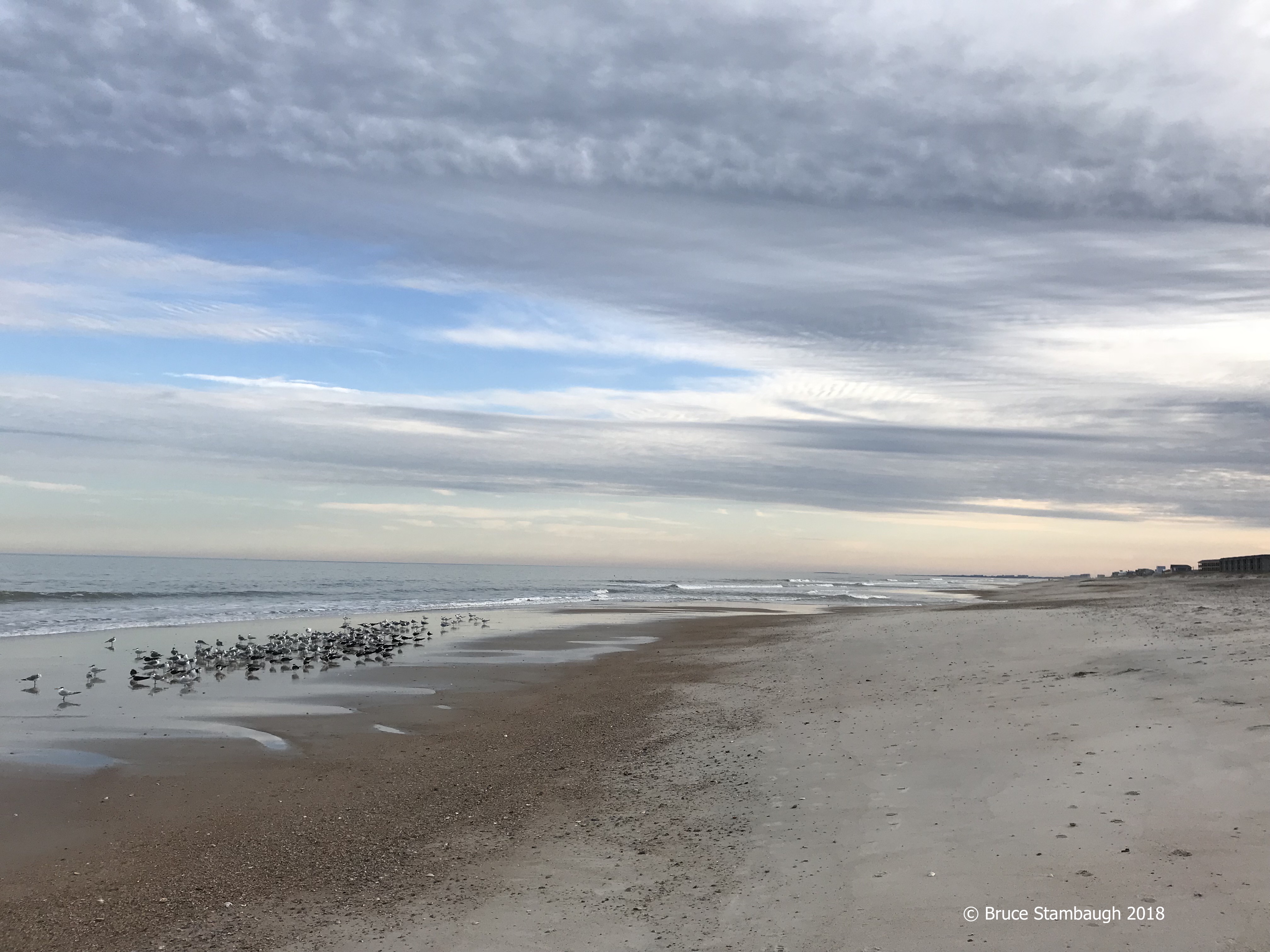
The time of the day is insignificant. I consider the stroll up or down the beach a blessed and rare privilege. The bottlenose dolphins don’t seem to mind at all. I doubt they are even aware of my presence. The closest ones surface and resurface just beyond the breakers.
If the relentless waves would soften their drumbeat upon the sand, I might even be able to hear the dolphins’ high-pitched squeaking and chatter as they undulate north or south, feeding, playing, the young ones occasionally showing off, jumping out of the water like flying fish. The rest of the pod continues with the business of foraging in the giving sea. The youngsters circle back, never far from mother’s side.
We watch for the dolphins from sunrise to sunset. With below average air and water temperatures this winter, the walks with the dolphins have been fewer than previous snowbird ventures. That only heightened my joy at each opportunity. Once I spot the dolphins, I hurry down the steps, across the wooden walkway to the gritty beach sand and begin my stroll.
This slideshow requires JavaScript.
I walk fast trying my best to stick to the wetted sand where footfalls are firm but pliable. I have learned that my natural striding equals that of the dolphins’ cruising pace unless they change course or have their routine interrupted for some reason. I assure you, if they do, it’s not because of me. I watch them more than where I am going. They, however, don’t know I exist, which is my preference.
When I pass other beachgoers, perhaps walking their dogs or also just out for a morning or afternoon stroll on the beach, I ask, “Did you see the dolphins?” There are only two possible answers, whether verbal or nonverbal. A nod or “Yes” and I smile and keep walking. A “No” often followed by “Where?” and I point and wait until they, too, see the rhythmical appearing and disappearing fins, thank me, and walk on.
Dolphins playing.Dolphins are smart. They most often appear when the weather and water agree on calmness rather than a calamity. The dolphins slip through the water silently, hardly making a ripple. We seldom see them during a nor’easter, where the waves and wind collectively and relentlessly crash the shore.
I especially enjoy the walks at low tide when the ocean and the sky join forces to show all their true colors. Even on cloudy days, blues, pinks, purples, tans, greens, and frothy whites chase one another through the never-ending cycles of ebbing and flowing.
Overhead, Forester’s terns and squawking gulls trail the pods like kites on strings. The Forester’s hover and dive to the water’s surface, grabbing breakfast or brunch that have eluded the playful dolphins.
I inhale the sea spray and salty freshness simultaneously, joyfully, though I know my glasses will need a good cleaning once I return to our winter’s nest beyond the seashore dunes.
I stop to investigate a shell or take a photo with my cell phone of some artistic designs the sea and sky have jointly sculpted. I look up, and the dolphins are gone.
I retrace my footsteps, occasionally checking beyond the folding waters for any gray fins or reflective glints of the sun off wetted backs. Seeing none, I walk on, my heart and soul both warmed by the encounter that strengthened not only my muscles but my spirit, too.
That’s why I cherish each chance I get to walk with the dolphins.
Sunny days or cloudy, high tide or low, the ever-changing elements of a walk on an oceanfront beach stir my senses and imagination. I try to keep a sharp eye out for the unusual. When I spotted these etchings in the sand, I saw a cross-section of roots reaching deep into fertile soil far below the floor of a magnificent forest.
In reality, these markings are nothing more than the tracings of pebbles and shells first being washed upon the shore and then just as quickly drawn back into the sea by its never-ending motion. They still looked like tree roots to me.











You must be logged in to post a comment.