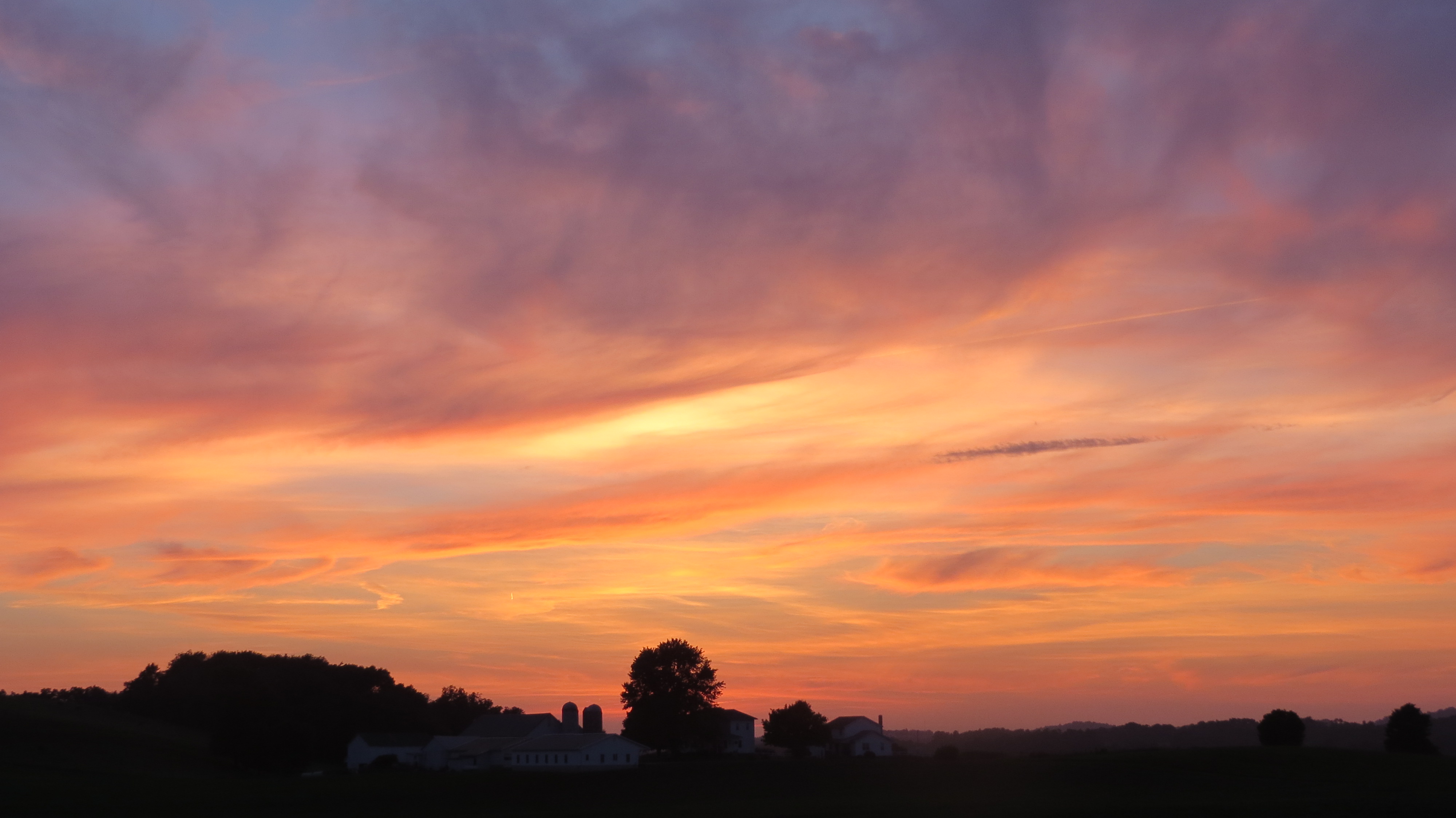
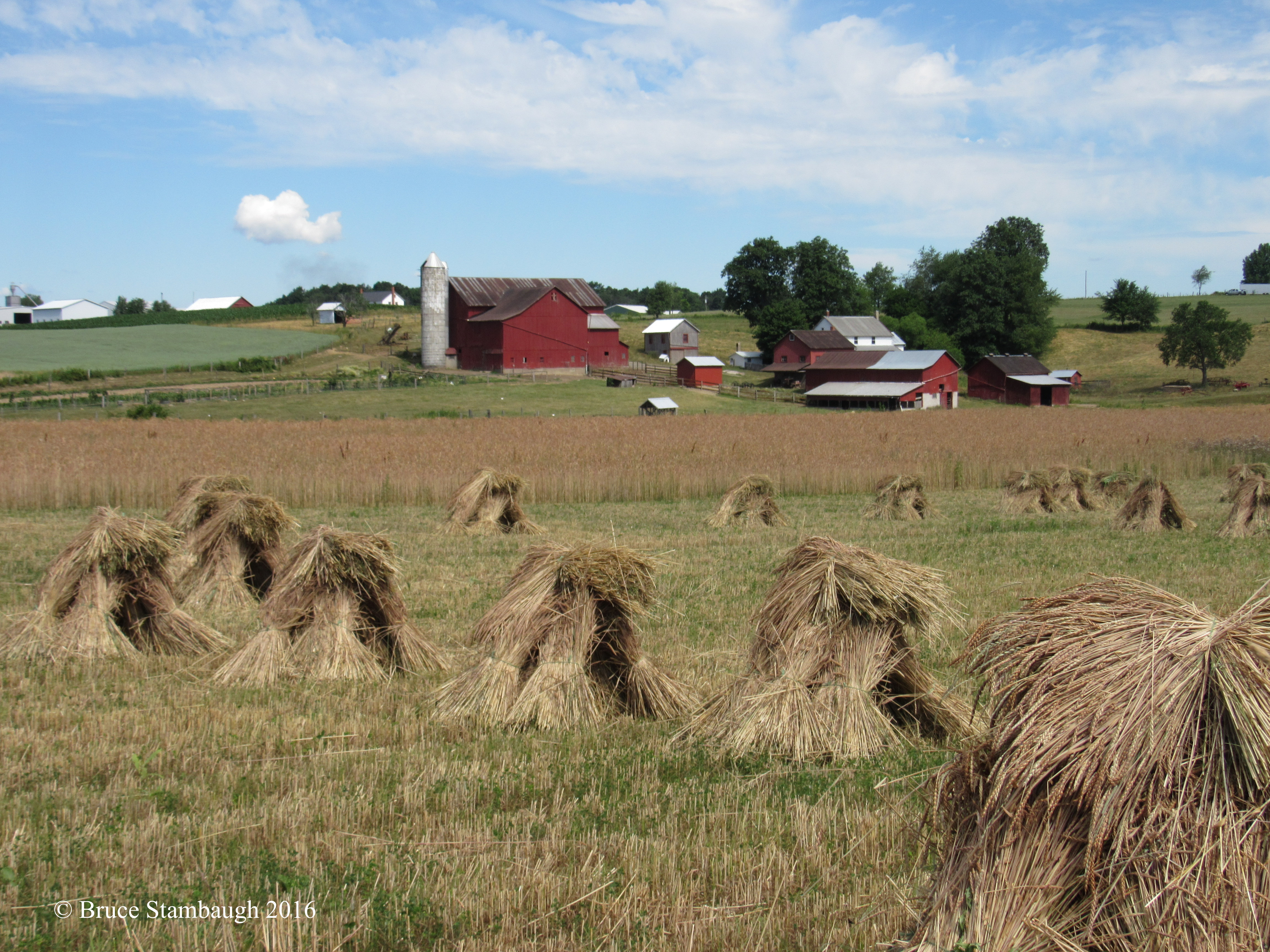
Maunday Thursday Sunset


Maunday Thursday is a solumn, sacred holy day in the Christian tradition. It is the Thursday before Easter, believed to be the day Christ shared His last Passover meal with the disciples.

The blood-orange tint of these clouds coupled with the dark, foreboding color of the foreground seemed an appropriate scene to set the stage for the historical trauma of Good Friday.

“Maunday Thursday Sunset” is my Photo of the Week.

© Bruce Stambaugh 2019

Spring’s colors brighten dreary days

Backlit daffodils brightened a forested hillside.

Yesterday was bright, warm, and sunny. Today it’s cooler, and a gentle rain soothes the parched landscape. Contrasting back-to-back days, yet my heart still sings.

We spent six weeks in Florida, but even felt the sting of this year’s too long winter there and in Virginia after we returned home. Spring arrived, and yet we still bundled up in layered clothing under warm coats and covered ourselves with blankets at our grandson’s high school baseball games. The north wind felt like it was straight off of Lake Erie. But this is Virginia’s Shenandoah Valley, not northeast Ohio.

For the longest time, the rural and suburban landscapes wore their dull winter coats of mixed gray woodlots and wind-burned grasses. The orangey-red clay fields even looked worn and tired in their weathered muted rusty browns. That stood to reason, given all that the earth had to weather enduring storm after storm. Usually full of sunshine, The Valley lingered in cloudy, foggy, gray day after day.

All of that is now history, thanks to real spring weather’s decision to stay in the Shenandoah Valley. Blossoms of all colors have brightened landscapes far and wide. For days, folks have been posting photos of wildflowers and cultivated garden flowers blooming brightly in points south of us. Now, finally, it’s our turn.

The passage of a strong cold front seemed to do the trick for the Old Dominion. Skies cleared, and the sun ruled for several consecutive days. Petals unfolded and poked through forest leaf litter. Honeybees, wasps, flies, and even a few butterflies celebrated in unison.

Crocuses, daffodils, maples, magnolias, wildflowers galore, all awakened the sleeping landscape. Fields of winter wheat and suburban lawns laid fresh green carpets at every turn and corner.

A single hyacinth flower was the first to emerge at our place. Sequestered in a corner where the house meets the screened in back porch, a single pale pink head trumpeted forth. As it matured, the flower blushed to heart’s passion pink.

Other pinks soon arrived. The redbud tree we planted last year popped tiny frilly buttons on every branch. Across the street, our neighbor’s magnolia took days to gracefully unfold her lacy pink blossoms. The wait was well worth it.

At a local arboretum, a naturalist escorted a group on a wildflower tour of early bloomers. The first had already dropped their petals, while many others were only now showing. More beauties were yet to come.

Various varieties of daffodils brightened the forest hillside floor. Dutchman’s britches were ready to wear. Pretty bloodroot flowers speckled the decaying browns with their white petals and yellow centers.

This slideshow requires JavaScript.

Ornamental weeping cherry trees fluffed their fragrant flowers to the delight of a host of pollinators. The bees also swarmed the crimson flowers of the red maples.

Rain or shine, the ubiquitous grey squirrels that came with the house romped amid the splashes of color. Were they celebrating or were the squirrels just being squirrels?

Song sparrows sat contentedly in the morning sunshine, singing their familiar, welcome melody. In our backyard, an American robin perched at a hanging seed feeder, a very unusual behavior. Below, a rusty red fox sparrow made a first-ever appearance as a yard bird.

All the color and warmth drew humans outdoors, too. Mowers hummed, mulchers mulched, pruners pruned, and gardeners gardened. It was a collaborative symphony and natural art show.

Yesterday was bright, warm, and sunny. Today it’s cooler, and a gentle rain soothes the parched landscape. Contrasting back-to-back days, yet my heart still sings.

A pair of American Robins roost in the twilight of a spring evening.

© Bruce Stambaugh 2019

Black on Yellow


I just happened to see this Black Swallowtail butterfly flying in our backyard. It was the first of the spring, and I raced for my camera. Fortunately, it was still there when I returned, flitting from one dandelion to the other. When it finally landed on this one, I started snapping away from the patio 15 ft. from the butterfly.

You can judge the diminutive size of this beauty by comparing it to the dandelion blossom on which it chose to roost.

“Black on Yellow” is my Photo of the Week.

© Bruce Stambaugh 2019

April’s inconsistent, variable weather

weather, April, Holmes Co. OH, Ohio's Amish Country
Just another snowy, grey day in April in Ohio’s Amish country.

Compared to other months of the year, April is erratic when it comes to weather.

It’s not that the rest of the months don’t produce variable atmospheric conditions. They do, just not as consistently as April’s predictably unpredictable weather.

Our latest 10-day forecast was proof of that: Sunny, blue skies and 70-degree temperatures one day, and low 20s and snow flurries by week’s end. I’ll keep my birdbath heater going for a while.

That conjecture accurately describes April’s extremes. April uses her versatile weather wand to divulge her bipolar meteorological attributes.

In 30 days, the fourth month throws everything it has at us. Snow, sleet, glorious sunshine, pelting rain, lightning, tornadoes, flooding streams all are April possibilities, though not certainties.

Often the host for both Easter and Passover, April’s assortment of weather takes no holidays. Recall the twin tornadoes of Palm Sunday in April 1965? Do you remember the 20 inches of snow in early April three decades ago?

Silver Lake Dayton VA, Silver Lake Mill, mild weather
A puffy, white-cloud day in mid-April in Virginia.
When April arrives, we all are more than ready for spring. That is especially true after this extended winter season that ranged far beyond its usual territory.

April’s weather plays games with us, teases us, infuriates us, and beguiles us to the point of hopelessness. Nearly at the breaking point, we relent and grudgingly accept whatever she has to offer. Do we have a choice?

A conciliatory attitude allows us to engage all of our senses into whatever the weather and activities are at hand. It enables us to pause long enough to enjoy the brilliance of forsythia’s yellows before the greening leaves override them.

I watched an American robin mightily tug at the remnants of last year’s plant residue, lying spent and browned in the flowerbed from winter’s bitter harshness. The robin pulled the lifeless strands taut.

I turned away for a second, looked back, and both the robin and the ideal nesting material were gone. Had I witnessed the natural lifecycle in action, the very hope of spring?

tulips, spring flowers
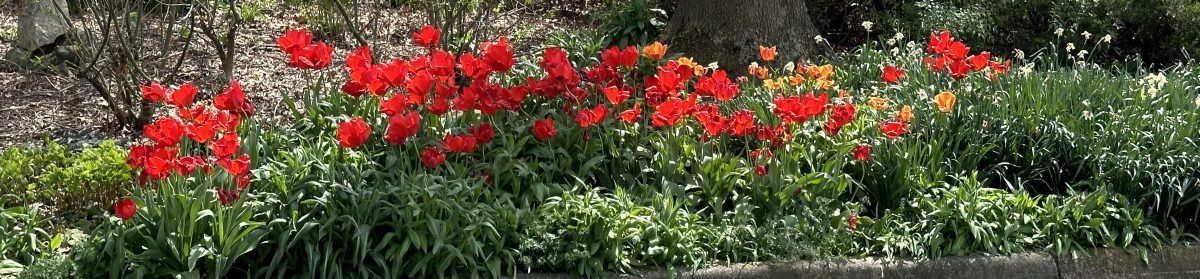
Red, yellow, and green.
The increasing daylight combines with the warming earth and nourishing moistures to create rapidly changing landscapes. Rembrandt meets Van Gogh.

Deadened lawns seemingly turn dull green to emerald overnight. A heavy frost or soaking rain kills the temptation to even out the irregular grassy clumps posing as a front yard. First, however, winter’s gales and unwelcomed snows require leaf and limb removal before any lawn trimming.

The first dandelions compete with trumpeting daffodils while the last of the crocuses yield to showy tulips. Honeybees celebrate wildly at the cherry blossoms’ coming out parties. They even gorged on the crimson buds of red maples. The little creatures are a welcome sight and the constant humming a glorious symphony, especially given their recent biological life struggles.

Avid birders actually embrace April’s changeable weather. They know strong cold fronts bring more than severe storms or blinding snow squalls. Shorebirds, songbirds, and birds of prey are all on their various lists of birds to check off. They’ll brave April’s worst weather to chase a rare bird.

The good news is that April’s cold, wet weather won’t last long. That’s in keeping with its role as a transition month from winter’s dormant dullness to spring’s brimming vibrancy.

I’m always glad when April rolls around. From month’s beginning to end, she offers up a sampling of weather that’s sure to both please and disappoint most everyone. The challenge is to make the most of whatever comes our way.

Ohio's Amish country scene, Amish farms
Hopefully by month’s end, pastures will have greened up, fruit trees will be in full bloom, and farmers can once again till the earth.

© Bruce Stambaugh 2019
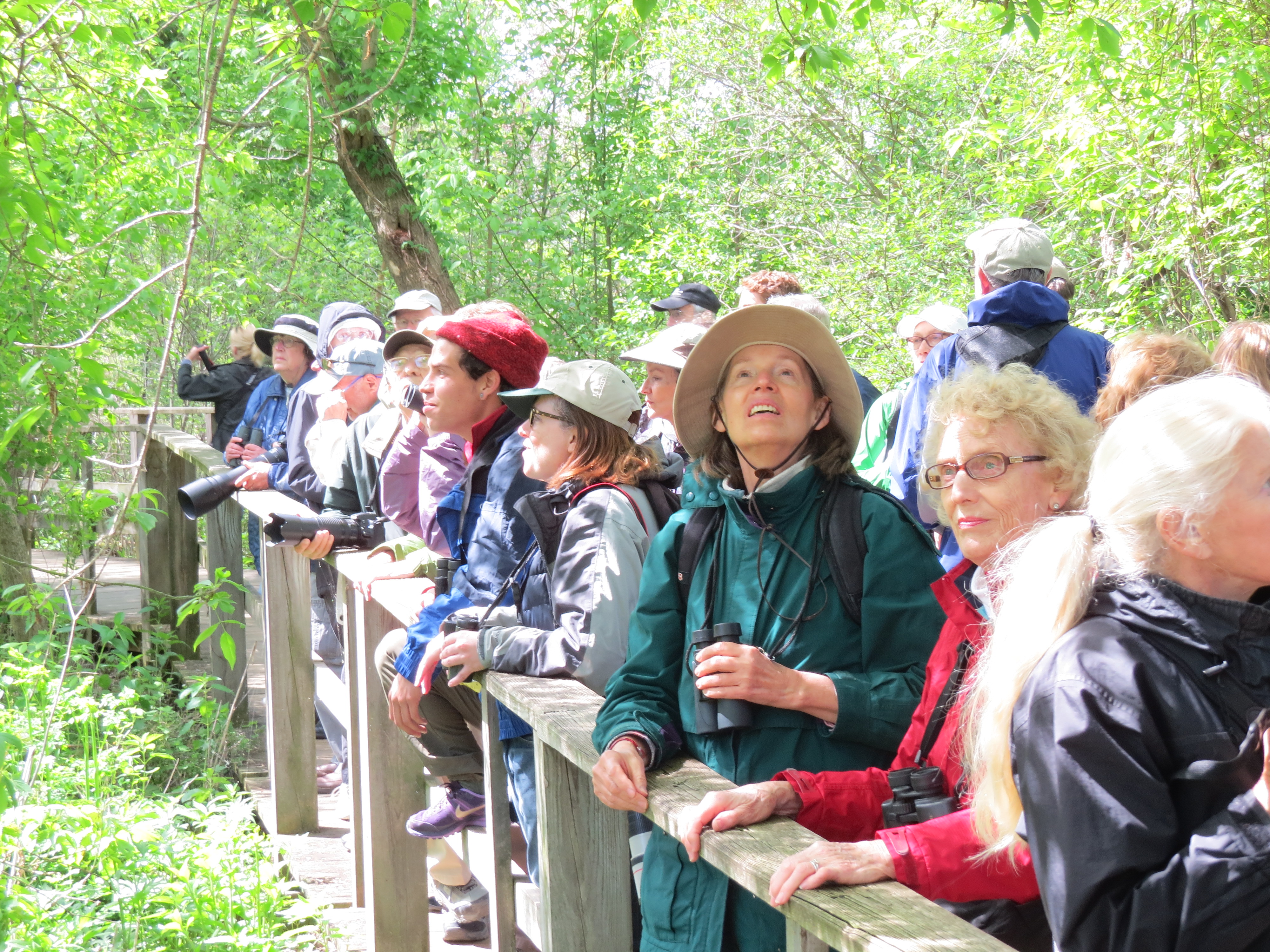
Signs of Spring

daffodils, sleeping on a park bench
What more evidence is needed that Spring is finally here? Daffodils blooming in a wooded hillside and a man sleeping on a park bench in the afternoon sunshine pretty much says it all. Spring has arrived indeed.

“Signs of Spring” is my Photo of the Week.

© Bruce Stambaugh 2019

Impressionistic sunset

impressionism, Allegheny Mountains, sunset
My goal was to capture the vernal equinox sunset. Instead, I came away with a shot that resembled a Claude Monet landscape.

I positioned myself on a hill in northwest Harrisonburg, Virginia in hopes of getting photos of the Super Full Worm Moon rising over the Massanutten Mountains that run north to south in the middle of the Shenandoah Valley. Unfortunately, a layer of rain clouds blocked that attempt. With that foiled, I turned my attention to the setting sun on the first day of spring.

Hazy clouds filled the western horizon as well, though the sun did its best to burn through. Residue smoke from controlled burns in the Jefferson National Forest during the day fuzzed up the view all the more. Sunsets around the equinoxes are the shortest of the year. This one merely melted away behind the blue, blue folds of the Allegheny Mountains.

“Impressionistic sunset” is my Photo of the Week.

© Bruce Stambaugh 2019

Beautiful view, horrific history

Shenandoah NP, New Hope VA
The one thing that constantly amazes me is how much I learn by taking photos. And often what I learn has more to do with the setting than photography itself. This photo is the perfect example.

Anyone would be happy to take this shot. I certainly was. The late afternoon light was perfect shining on the Blue Ridge Mountains, highlighting the ice-encrusted trees along the undulating summit. This is the southern section of Shenandoah National Park.

I noticed a historical plaque close to where I had stopped to get the shot. So I pulled up to read what the plate said. I was stunned. Here among all these rolling farm fields against the backdrop of the mesmerizing Blue Ridge Mountains a bloody, decisive Civil War battle had been fought. Known as the Battle of Piedmont, Union soldiers defeated Confederate troops. This led to the fall of Staunton and control of the railways in the Shenandoah Valley, known as the Breadbasket of Confederacy.

The combat was costly on both sides. The Union suffered 800 casualties and the South nearly twice as many with 1,500. I wondered if passersby knew of the blood spilled all those decades ago. What did the farmers think as they plowed those fields?

I took the photo with mixed emotions. The scenery was marvelous, the history humbling. Without the marker, this would be just another beautiful rural scene. In reality, it is so much more than that.

“Beautiful view, horrific history” is my Photo of the Week.

© Bruce Stambaugh 2019

Different state, same old weather

stream in winter, Holmes Co. OH
Winter weather creates beautiful scenes, but the extended cold gets tiring.

I don’t know about you, but I’m more than ready for spring. It’s been a severe winter all around, and it’s not over yet.

Just last week on three consecutive days the National Weather Service issued Winter Weather Advisories for Virginia’s Shenandoah Valley. Winter assaulted us with an assortment of ammunition from her arsenal. Rain, freezing rain, sleet, and accumulating snow pelted down upon the usually lovely Shenandoah Valley. And then yet another arctic blast settled in.

It was even worse in the Deep South. Massive tornadoes marched across a broad landscape reaping incredible destruction and death. That devastation put our whining about the blustery weather into proper perspective. Still, I’m ready for spring.

When people learned my wife and I planned to move from Holmes County, Ohio to Virginia, we heard a common theme, “At least the weather will be better there.” Well, not necessarily.

ice storm, Harrisonburg VA
Results of the latest freezing rain.
We’ve lived in the central Shenandoah Valley now for nearly two years. When it comes to weather, it’s a lot like Ohio. That only stands to reason. We live near Harrisonburg, which is no further south than Cincinnati.

Of course, longitude, latitude, and altitude jointly play leading roles in the weather everywhere. Millersburg, Ohio, our former home, sits at 899 feet above sea level while Harrisonburg’s elevation is 1,325 feet despite being in The Valley.

Thanks to the dangerous combination of an El Nino and a wildly fluctuating northern jet stream, most folks in the United States share my winter weather fatigue. The El Nino off of California’s coast has incubated storm after storm that pounded the Pacific coast. With a rerouted jet stream, those storms have dumped heavy snows in places not accustomed to such stuff. Just ask the good citizens of Seattle, Washington, and Tucson, Arizona.

The jet stream speeds the storms along its southeasterly flow. That results in areas already hit by too much snow getting pounded again and again. If warm air did manage to mingle into the mess, flooding ensued. Rivers all across the country have run high most of the winter. Flood warnings have lasted days on end.

The wild weather hasn’t always been wet, either. Windstorms have caused havoc with power outages and buildings being damaged by downed trees. In Shenandoah National Park, 100 trees per mile were reported down along one section of the Skyline Drive.

Purple Finches, Harrisonburg VA
Purple Finches stopped to refuel on their way back north.
Friends in the Buckeye state have teased me that Ohio’s wintry weather seemed to follow us to The Commonwealth. Friends in Virginia have kiddingly blamed me for the lousy Virginia winter weather. I just shrug my shoulders.

Despite the miserable weather, signs of spring have made themselves known. Birders are ecstatic that migrating birds are once again on the wing. Our neighbor’s forsythia is pushing its yellow buds in competition with trumpeting daffodils. Despite the ugly weather, photos of crocuses blooming flooded social media. Tree buds are ready to unfurl their hidden life.

We take for granted another sign of spring. Daylight hours are increasing daily, although we will “lose” an hour with the return of Daylight Savings Time.

Spring is officially just days away. March’s vernal equinox can’t come soon enough.

Our neighbor’s blooming forsythia covered by snow.
Still, there is no guarantee that winter’s harsh hand will let go of its hoary grasp on us. Our only hope is to hang on as best we can until spring’s warm kisses smother us with fragrant bouquets and songbird serenades.

Why has this winter seemed never-ending? Perhaps it is so we will joyously welcome spring’s gentile weather with a renewed appreciation for its refreshing rebirth.

© Bruce Stambaugh 2019

Meeting friendly folks wherever we go

painted buntings, Amelia Island FL
We got to see this beautiful couple at the invitation of friends we made in Florida.

Travel and people. That’s an intriguing combination of which my wife and I never tire.

People are as interesting, unique, and varied as the places we visit. The two are intrinsically intertwined, humanity and landscape, a finely woven rainbow tapestry incarnate.

Neva and I enjoy chance encounters with others as we explore and uncover new locales, cultures, and tradition. Most folks we meet are friendly, courteous, and respectful, transcending race, religion, sect, gender, or avocation.

Everglades NP, friendly couple
The couple who told me about the hawk.
That proved true again during our latest snowbird experiences this winter. From the time we left home at December’s end until we arrived back in the Shenandoah Valley, we visited fascinating places and met kind earthly citizens wherever we went.

I couldn’t begin to list all the memorable interactions. A sampling of the kindness and hospitality shown to us will have to suffice.

We connected with Rich and Pauline, friends from Holmes County, Ohio as they visited other acquaintances on Amelia Island, Florida. Neva and I reaped the benefits of hospitality from both couples. A beautiful pair of painted buntings visited the backyard feeders of Tim and June, who retired to Fernandina Beach a few years ago.

We found gregarious guides, helpful rangers, and friendly visitors on a junket to south Florida at the end of our stay on Amelia. People offered to take our photo at landmarks. They gave us suggestions on eateries preferred by locals.

The gregarious tour guide who knew his fish.
The guide on our Everglades boat tour rattled off scores of fish species that inhabit the waters in and around the national park he so adores. He did the same for the many types of beautiful birds we encountered, too.

Fellow tour-goers we met were equally congenial. We kept running into a recently retired couple from Muncie, Indiana. Their interests in exploring Biscayne and Everglades National Parks mirrored ours. We shared conversations and leisurely walks together.

A ranger at an Everglades visitors’ center was most helpful in highlighting the best birding spots for us. We weren’t disappointed at all as we followed his suggestions.

At one location, we ran into a former college basketball coach from Newark, Ohio who knew Hiland Hawks basketball well. He couldn’t believe it when we told him our son and daughter graduated from Hiland.

At another stop, a young couple on a boardwalk in the Everglades told me about a hawk they had seen. I watched it stalk, kill, and consume its marshy meal.

key lime pie, Key West FL
A tour guide at the Ernest Hemingway House steered us to a tasty piece of Key Lime pie at a local eatery.
In Key West, our tour guide of the Ernest Hemingway House and Museum steered us to the perfect nearby restaurant. We took a leisurely lunch outdoors, enjoying our food in the luxurious Florida sunshine.

The Sunshine State couldn’t claim dibs on friendliness, however. The guides at Hunting Island State Park in South Carolina made our visit there most pleasurable. Like us, they were retired educators.

A lady from Michigan who climbed the 167 steps of the Hunting Island Lighthouse chatted away like a long lost friend. Together we watched from atop the lighthouse as dolphins plied the ocean waters for breakfast.

Nor will I forget the affable shuttle bus driver who returned us to our van from the airport. She remembered us right away though she had met hundreds of other travelers in the six days between transporting us.

I learned a lot on our winter trip, and we met many nice people. After all, humans are designed to be relational.

That relationship involves responsible interaction through stewardship, mutual respect, and affirming connectivity. Neva and I were grateful to be in the graces of folks who not only believed that, but lived it, too.

Amelia Island FL, sunset photography
Sunsets, birds, and people were the ingredients that made for an enjoyable vacation.

© Bruce Stambaugh 2019
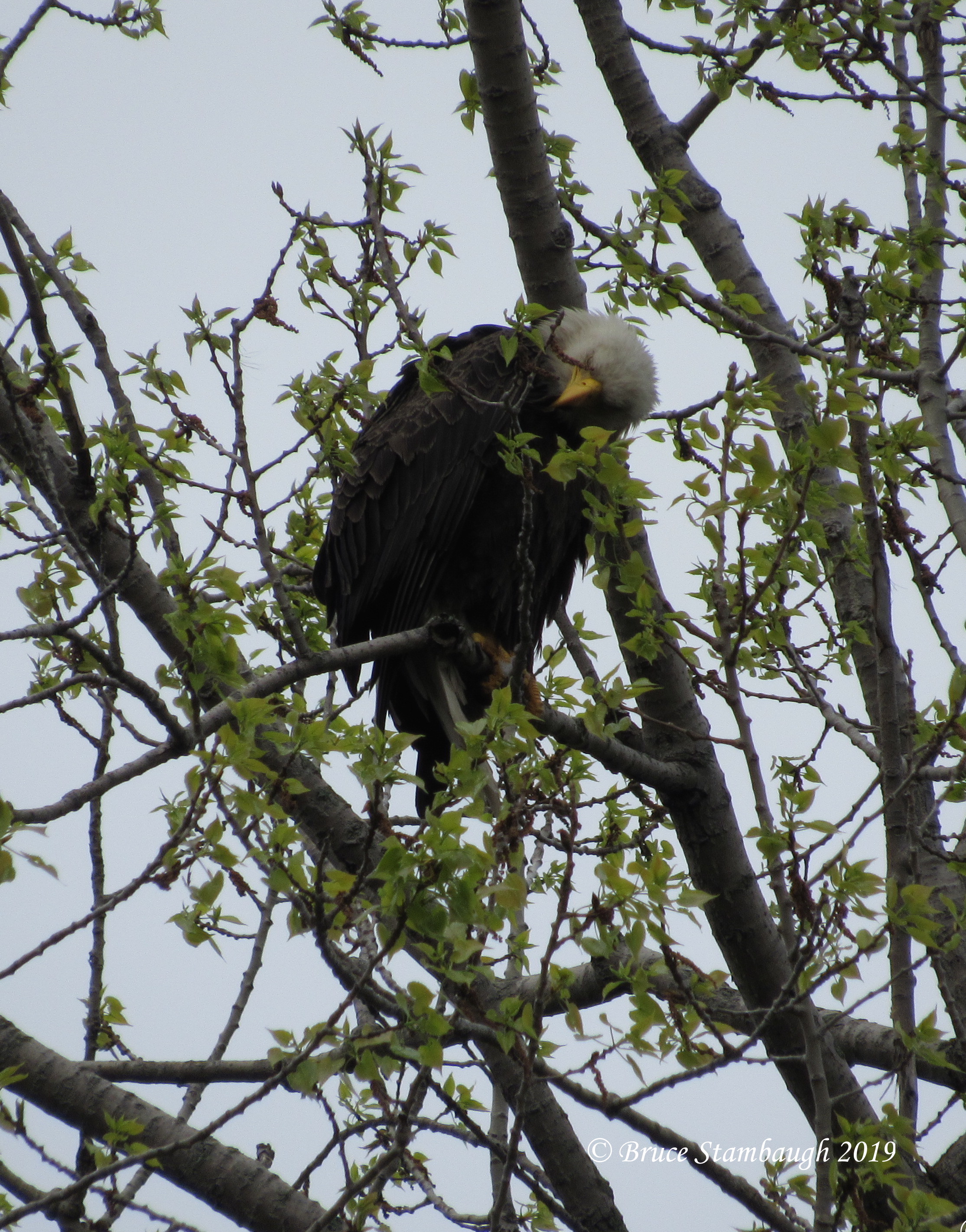
Why the shortest month seems so long

winter in Amish country, Holmes Co. OH
The harsh winter weather has made February seem like a long month.

Every year I get the same sensation. February, the calendar’s shortest month, seems like the longest. A wide range of reasons could account for this annual hunch.

Much of that perception may have to do with February’s unfortunate spot in the calendar birth order. As the year’s second son of 12 siblings, February is bound to have an inferiority complex. Even with an extra day in a leap year, February still can’t measure up.

It certainly doesn’t help to be sandwiched between January and March, each with the maximum 31 days every year. Nor does it help that February is the last full month of winter. By now, humans north of the equator have had it with winter, especially this year. They can’t wait for spring.

Is the shortest month merely clamoring for attention with its temper tantrums of weird and wild weather? To be sure, the weather all across the northern hemisphere has been wicked. A lot of complicated and interconnected reasons account for that. Still, February cannot solely be held responsible.

The polar vortex, which usually calls the Arctic region its winter base, ran away from home this year. It escaped in the waning days of January, and the frigid and frozen effects spilled into February, adding insult to injury.

weather warning map
The latest February weather warning map.
The vortex settled into the eastern U.S., forcing the ordinarily westerly jet stream to warp south around it. We all paid the consequences of that detour, including February.

Blustery winds sent wind chills into the danger zone for millions of citizens, making the environmental conditions all the more brutal. When people thought they couldn’t take it any longer, the vortex slunk away, and a warm front helped set the jet stream aright. Soon, vehicles were mired in muck from a rapid thaw.

About that time, weather officials confirmed an El Nino had developed in the Pacific off southern California. Wave after wave of rain and snowstorms blasted the entire west coast, incapacitating major metro areas.

Damaging floods, mudslides, and icy and snow-clogged roads inundated areas not used to extreme winter weather. Even Hawaii got snow.

More rain pelted down in California. Another snowstorm blasted the state of Washington. Additional freeze warnings plagued northern Florida. All this and February still isn’t over yet. How long does it take 28 days to pass?

It would indeed be unfair to lay all of the responsibility for the climatological miseries on poor February. It was merely an accessory to the crimes, guilty by association.

Ignore the weather, and February has a lot to offer for being the shortest month. It boasts about hosting more holidays per diem than any other month.

February’s progressive party includes Groundhog Day, Lincoln’s birthday, Valentines Day, Washington’s Birthday, and Presidents’ Day. Of course, all of those human conceived days have morphed into nothing more than flashy marketing ploys for a small town in Pennsylvania and retailers big and small nationwide.

I suppose, however, that much of our February malaise comes from nothing more than cabin fever. Never mind the occasional warm day when you could poke your head outside. As we all know, that was nothing but a February tease. It’s safest to stay inside until March.

Despite February’s chilly temperament, she does offer us at least one advantage besides being the briefest month. From beginning to end, we gain almost an hour of daylight in February.

Winter’s darkness is waning. In that, we find hope, rejoice, and offer February our heartfelt thanks.

A snowy ride.

© Bruce Stambaugh 2019
Bay Photos by Donna

Wildlife photos from the Chesapeake Bay region

ROAD TO NARA

Culture and Communities at the Heart Of India

K Hertzler Art

Artist and nature journalist in the Shenandoah Valley of Virginia.

Maria Vincent Robinson

Photographer Of Life and moments

Gabriele Romano

Personal Blog

Jennifer Murch

Art is the only way to run away without leaving home. -Twyla Tharp

Roadkill Crossing

Writing generated from the rural life

ANJOLI ROY

writer. teacher. podcast cohost.

Casa Alterna

El amor cruza fronteras / Love crosses borders