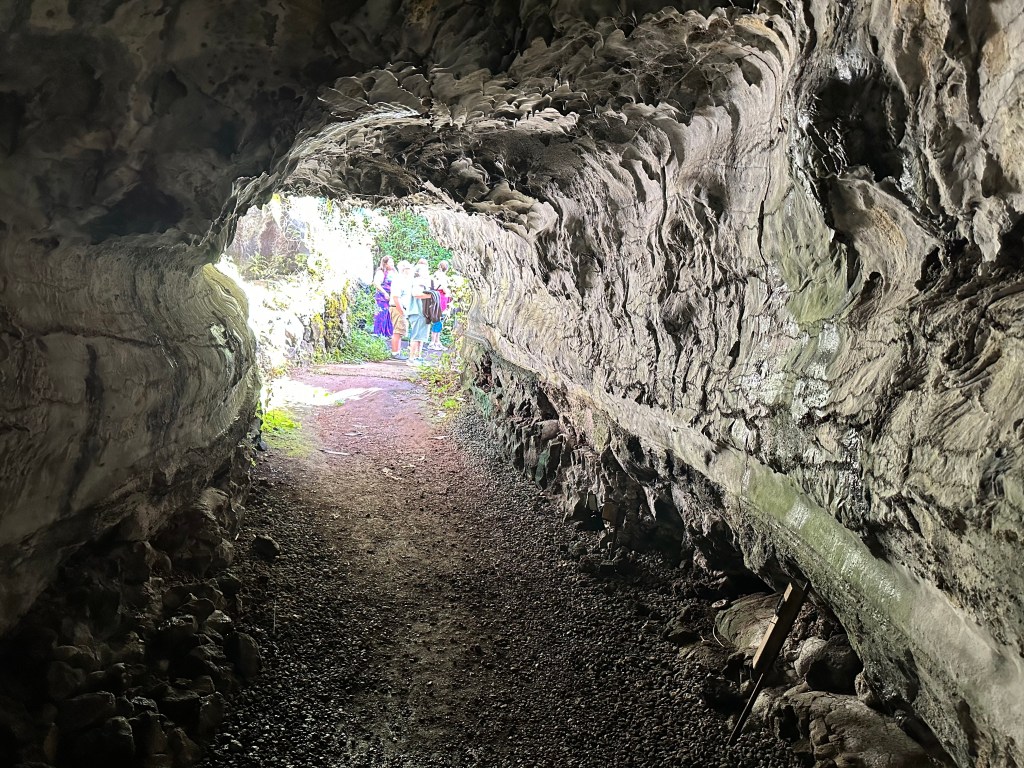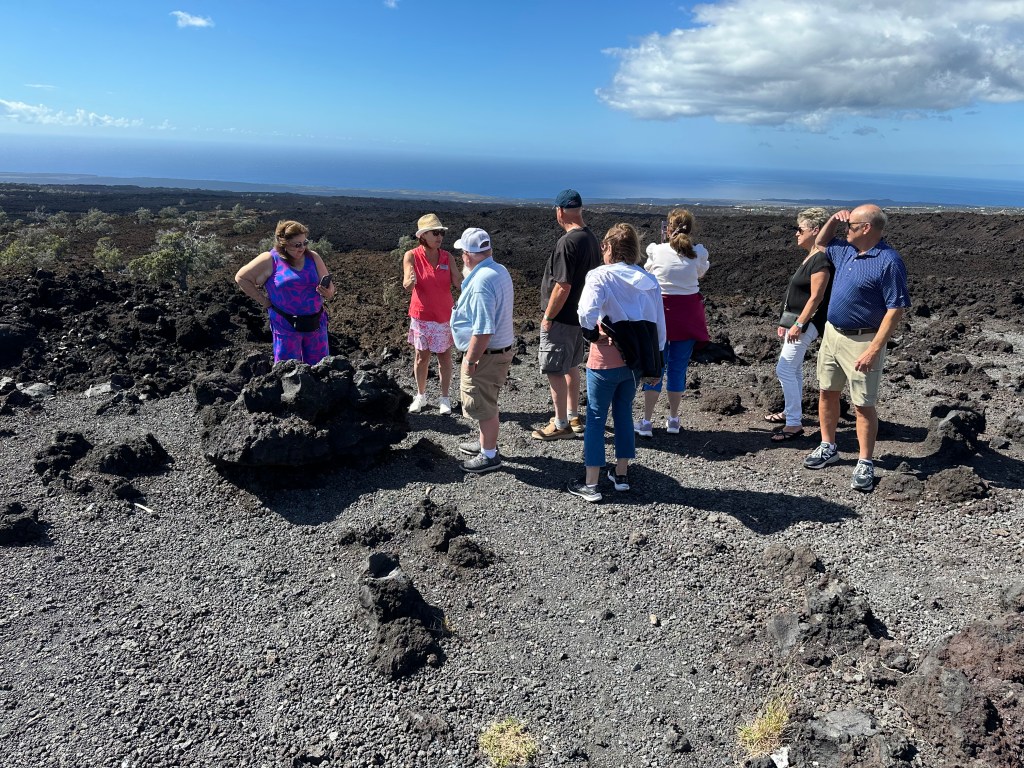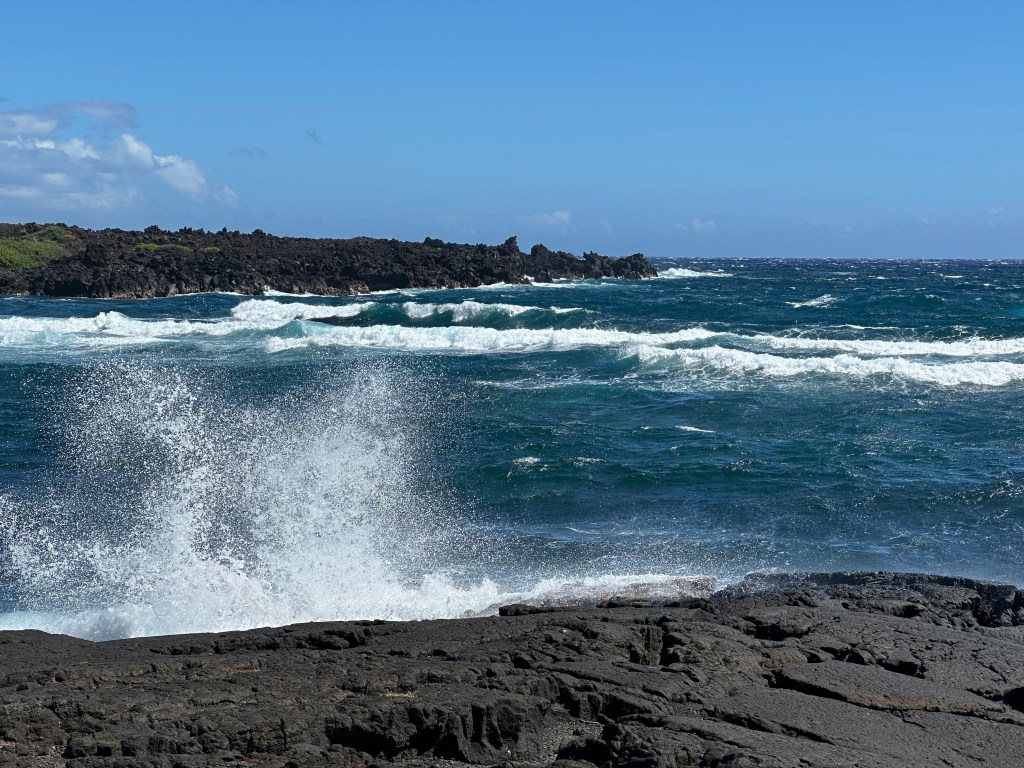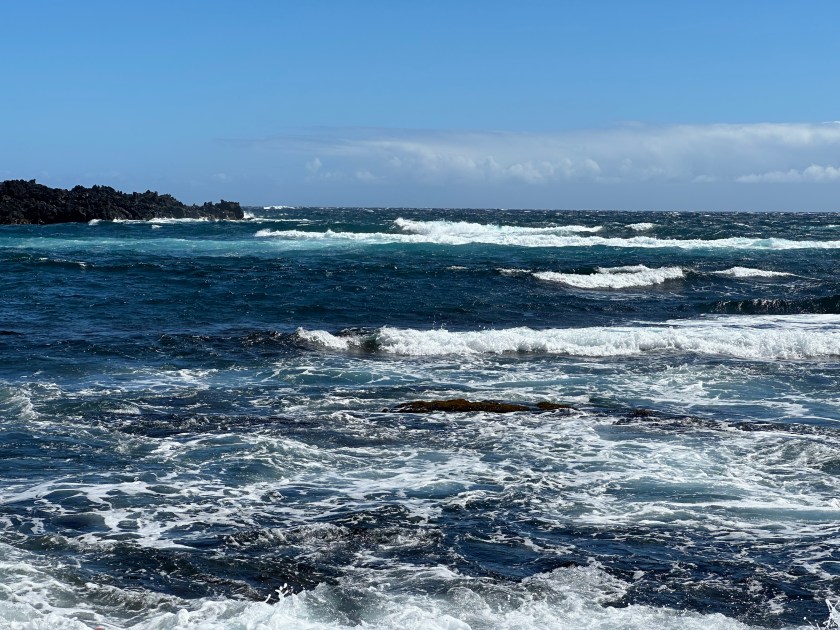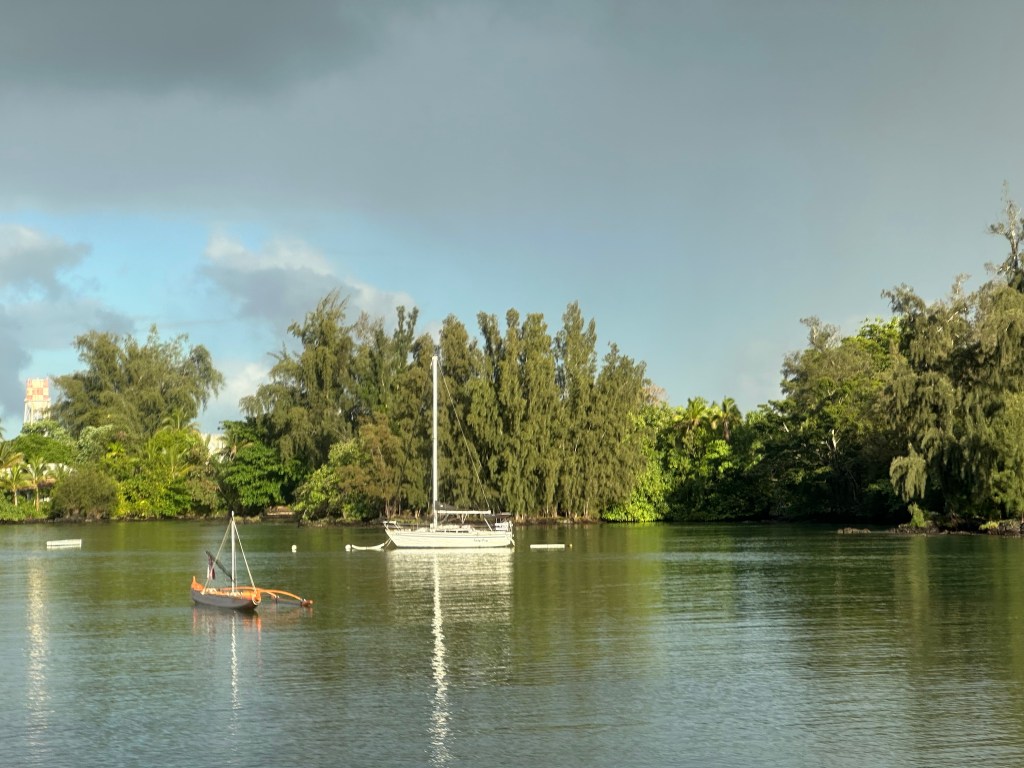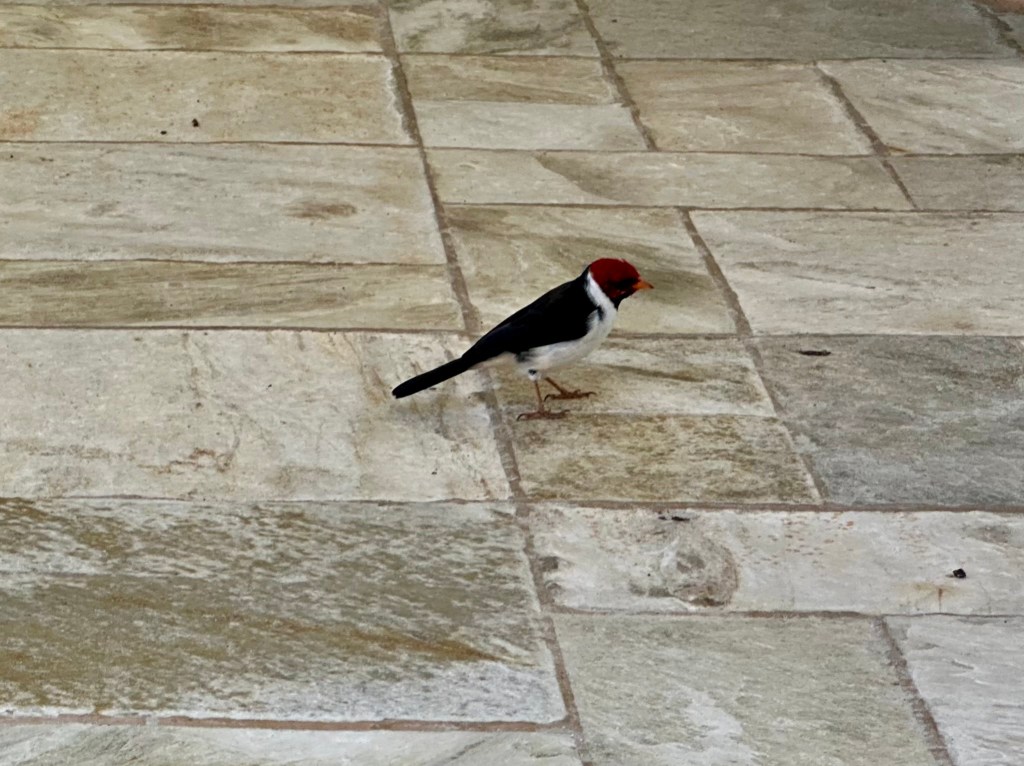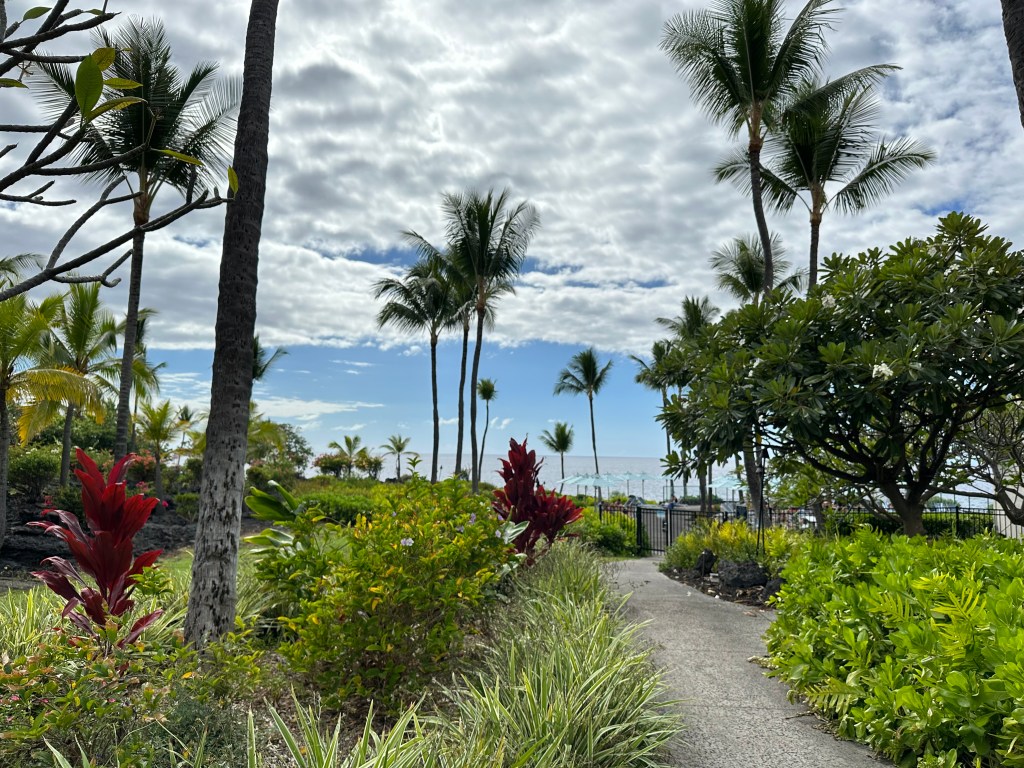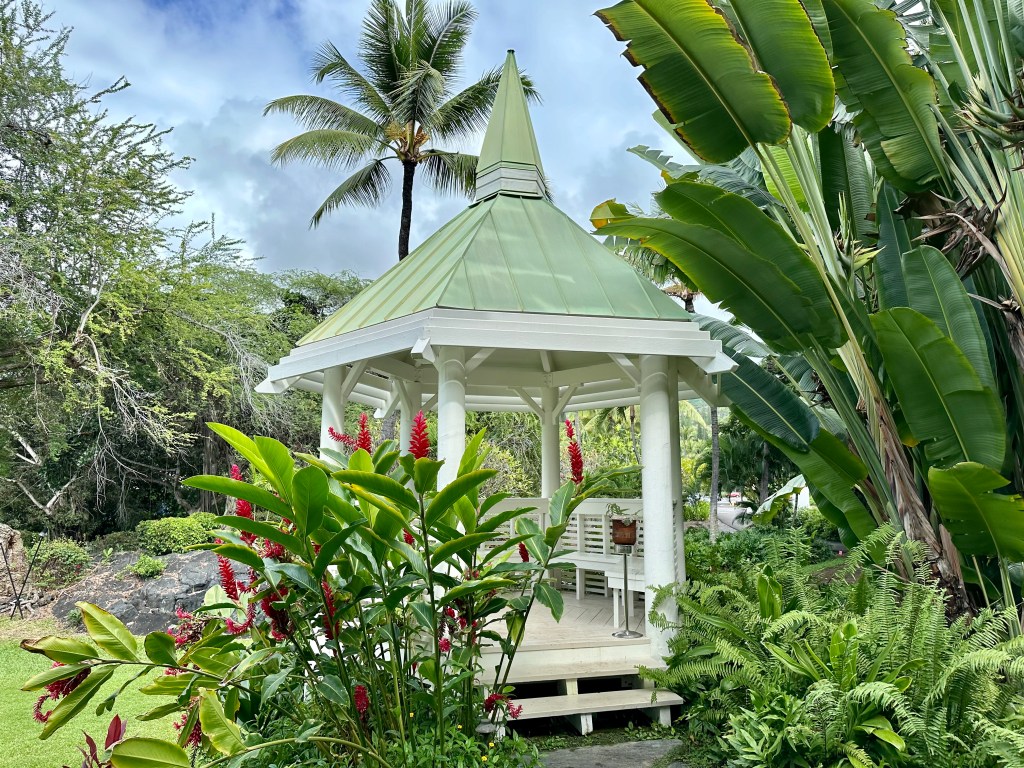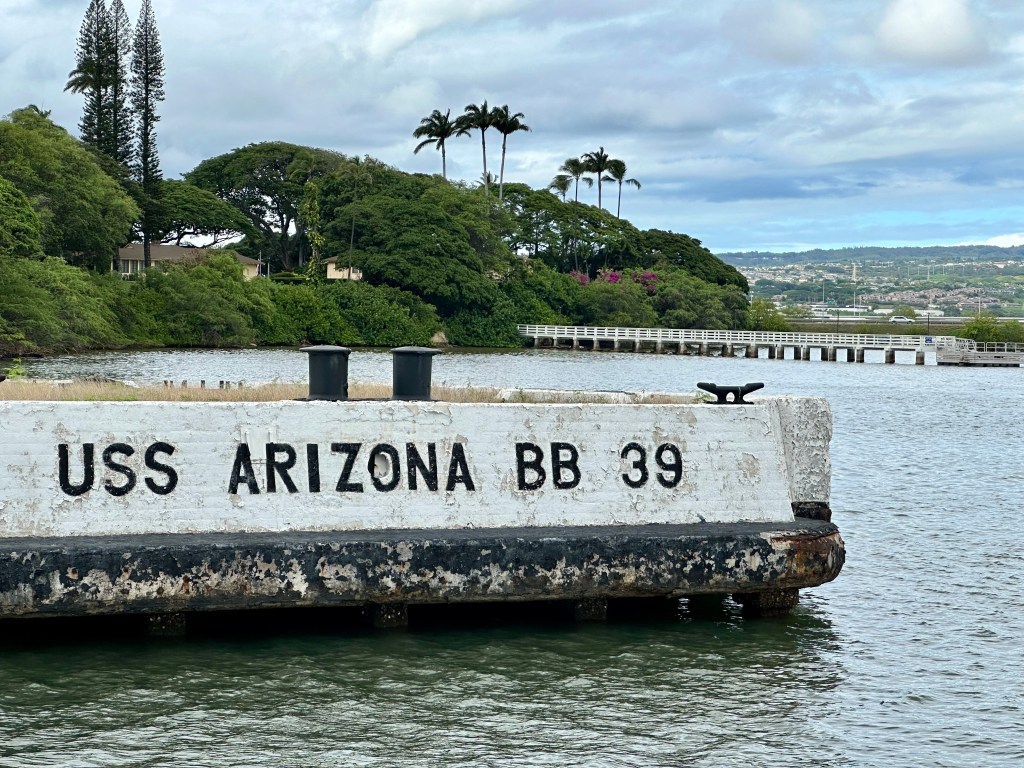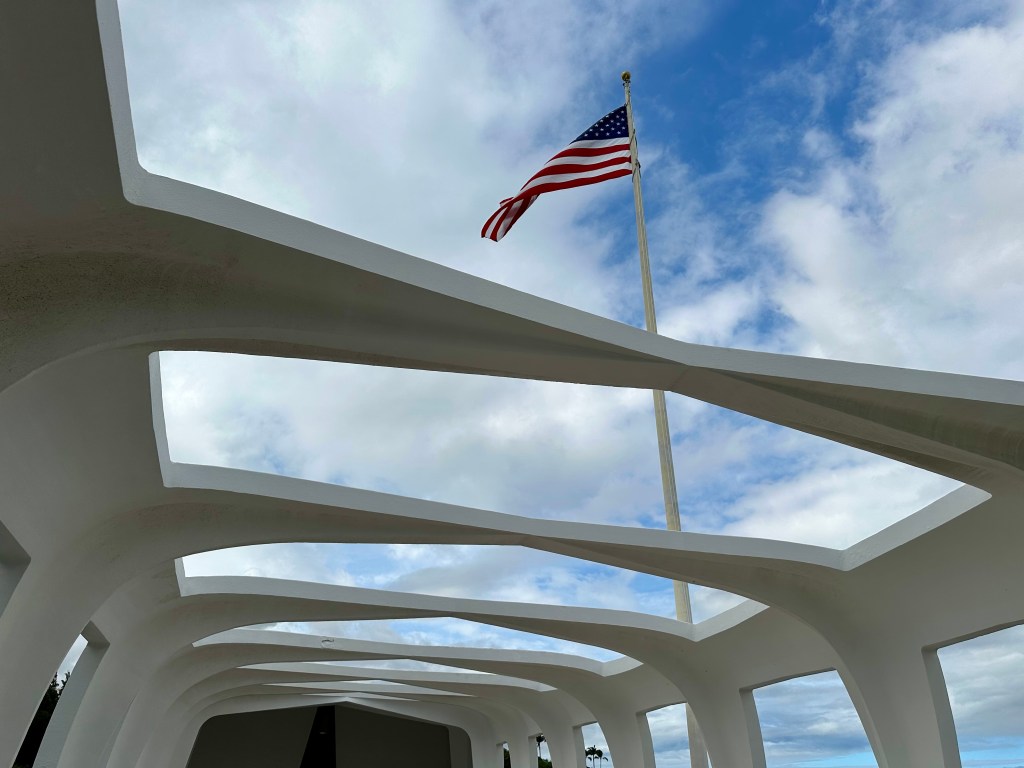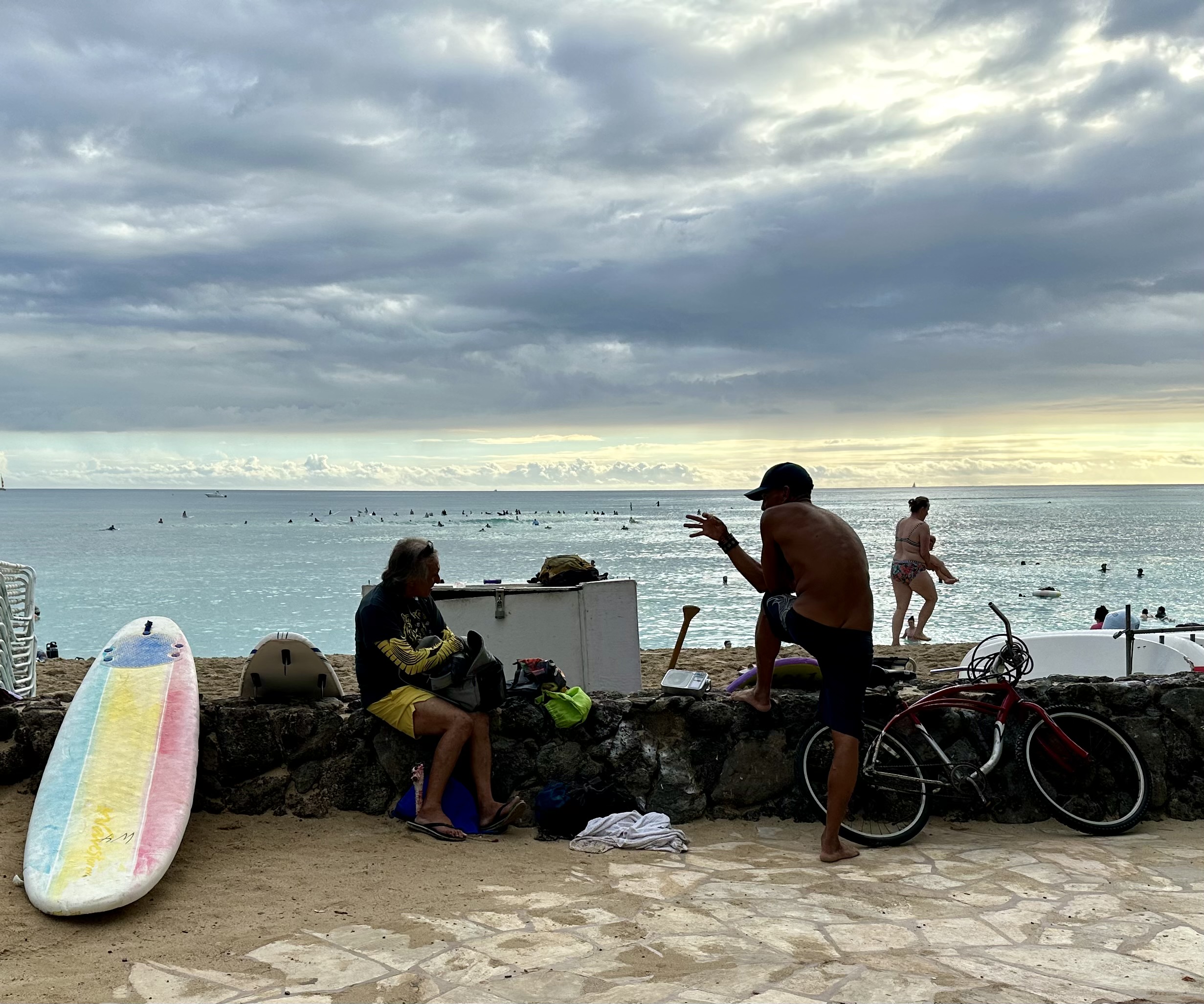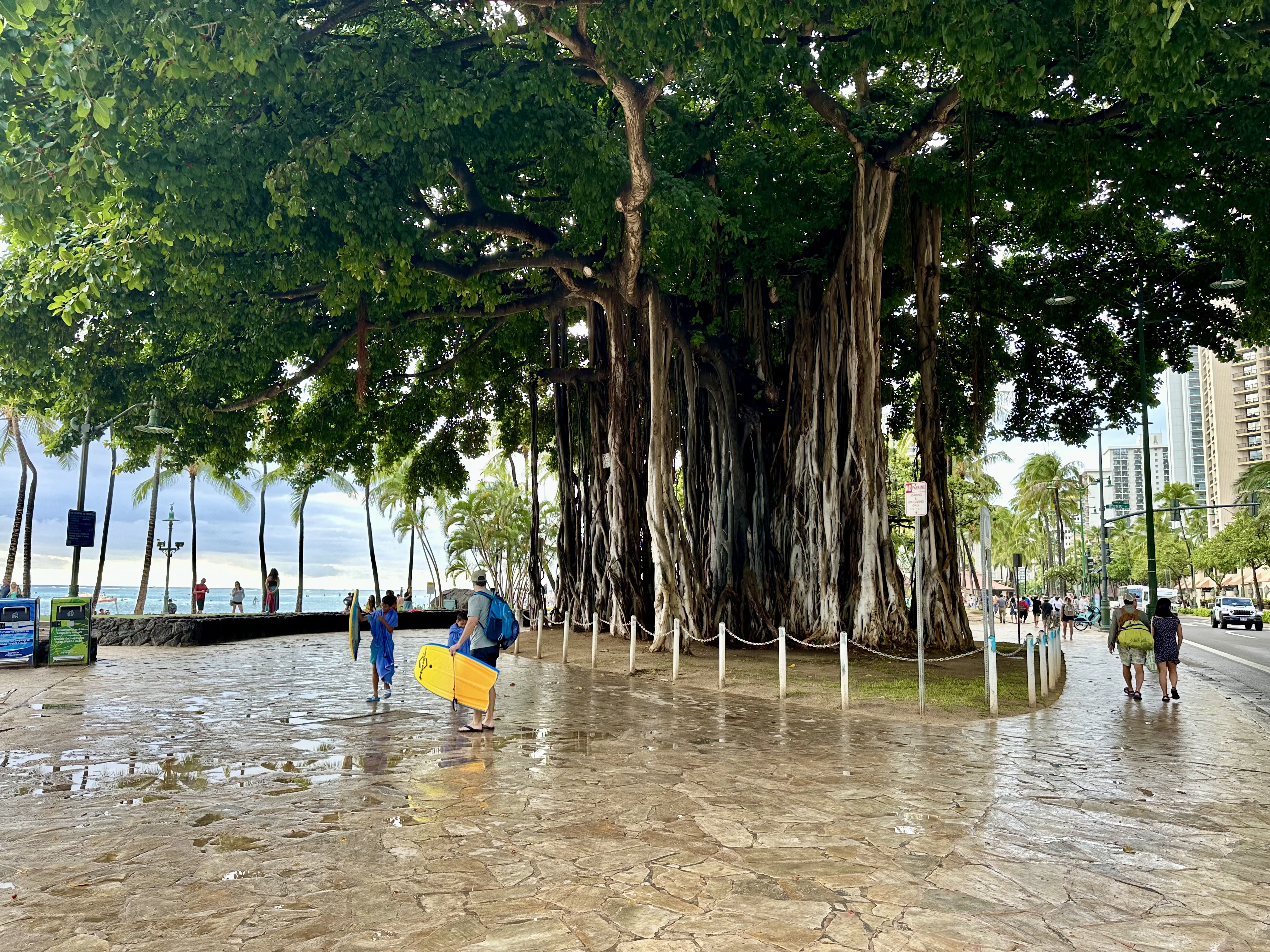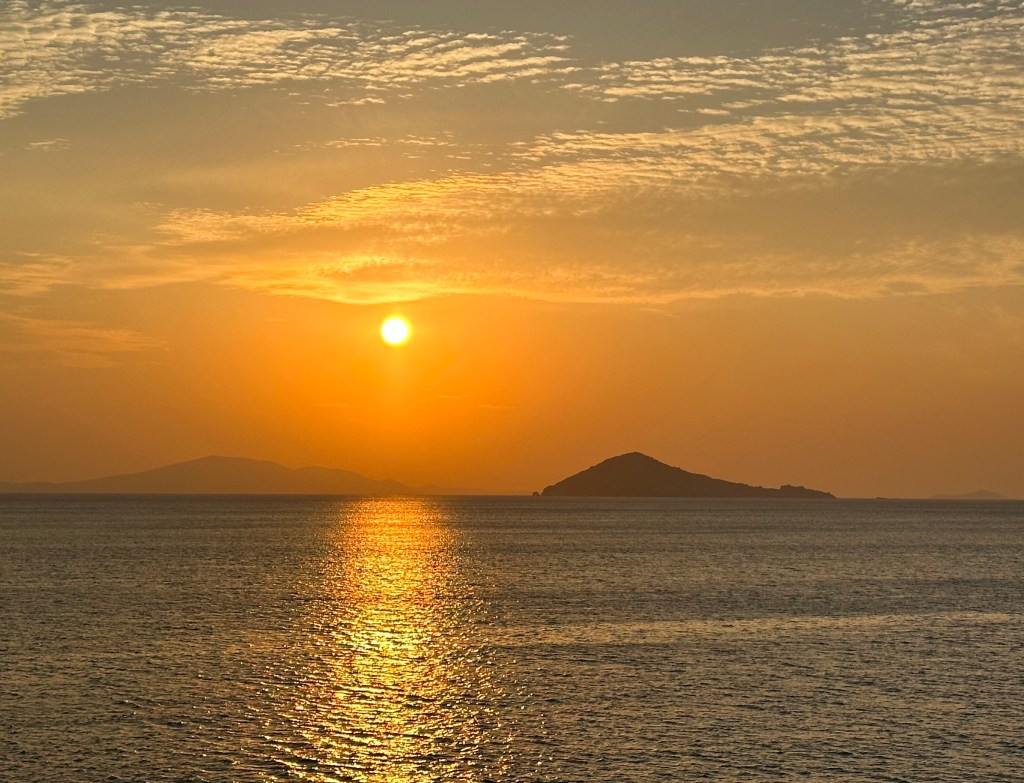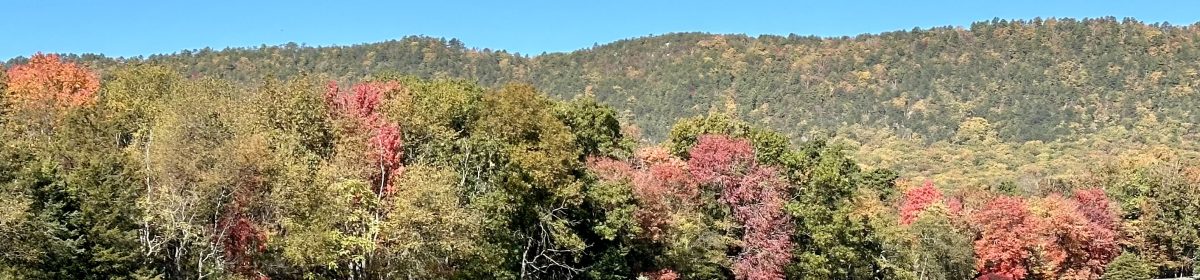
Behold Beautiful Hawaii!

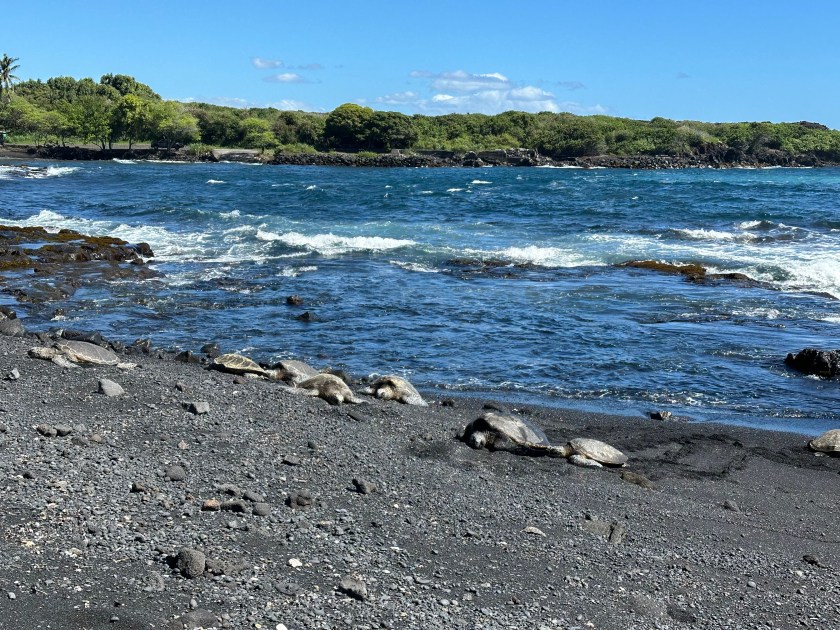
Black Sand Beach, Kona, Hawaii.

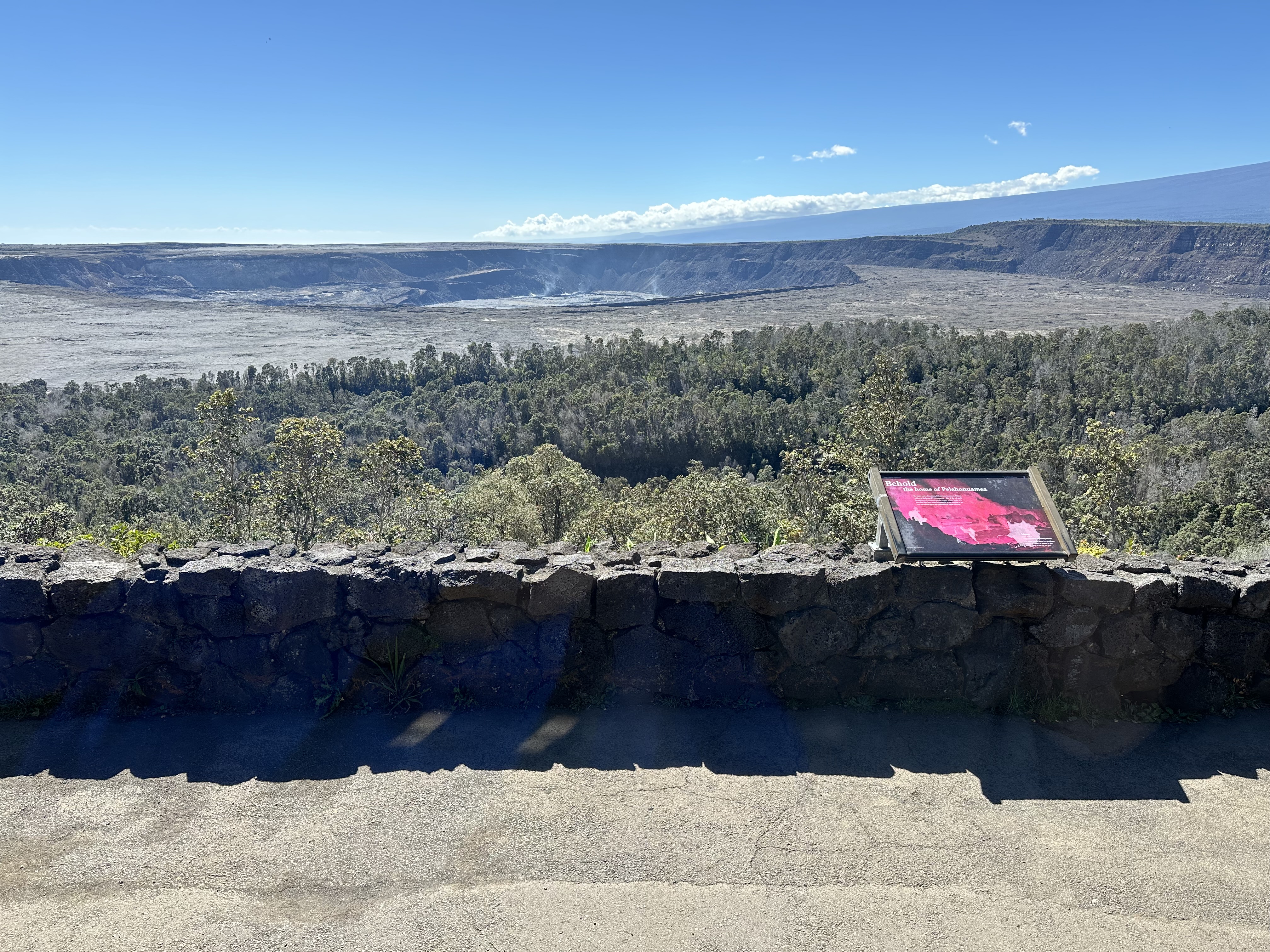
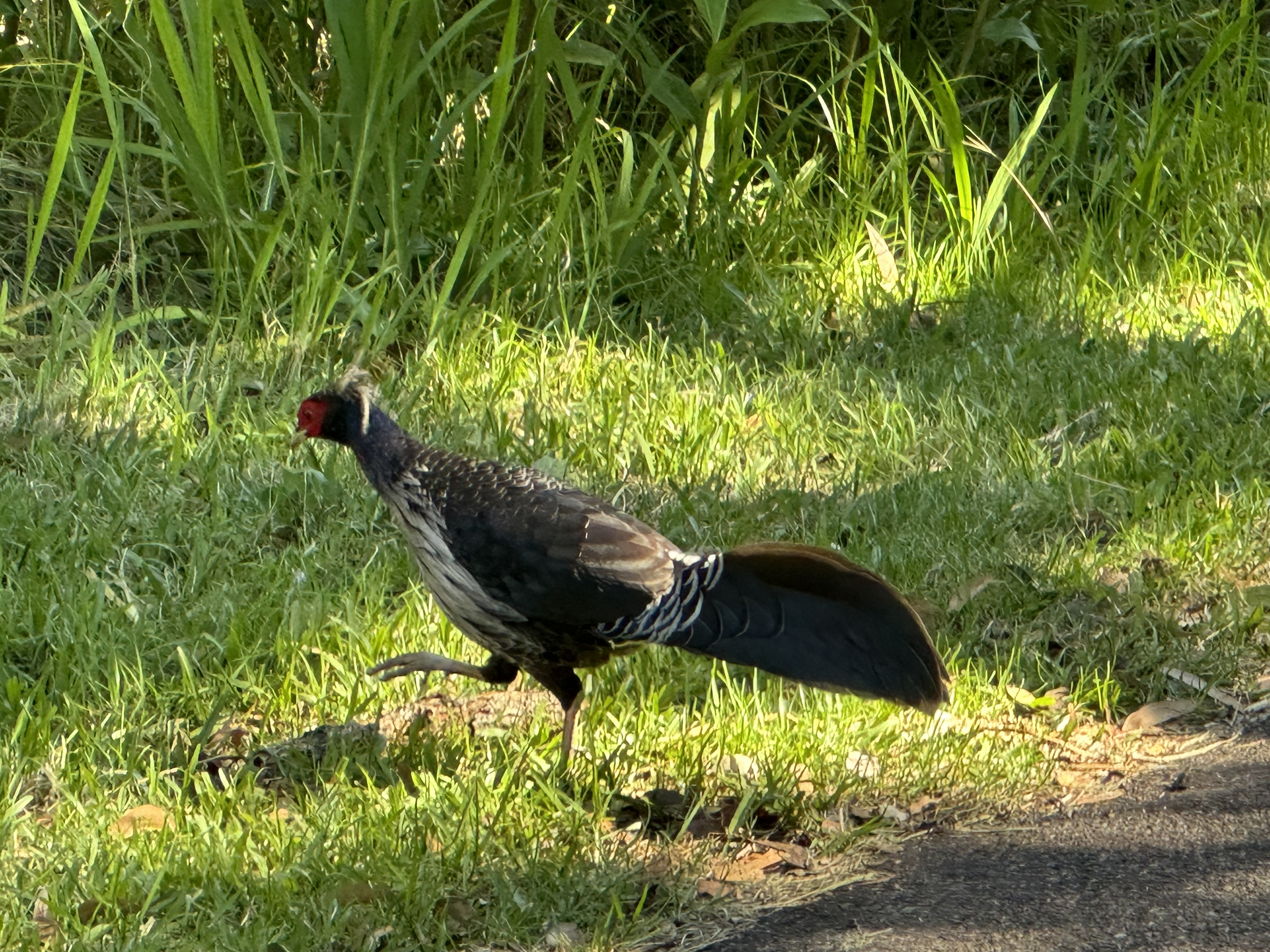
There’s a lot to like about Hawaii: the views, the surf, the coral-blue ocean, the wildlife, the food, the quietness, the history, and the cultures. Each is wondrous to behold.

On a recent vacation there, my wife and I learned that the people of Hawaii make all of those incredible features sparkle all the more. They are a gracious amalgamation of Polynesians, warm, welcoming, and immediately inclusive.

We were among a relatively small group of travelers. None of the 13 senior citizen travelers had met before, but that made no difference to the guides and bus drivers who showed us the beautiful Oahu, Kona, and Maui islands.

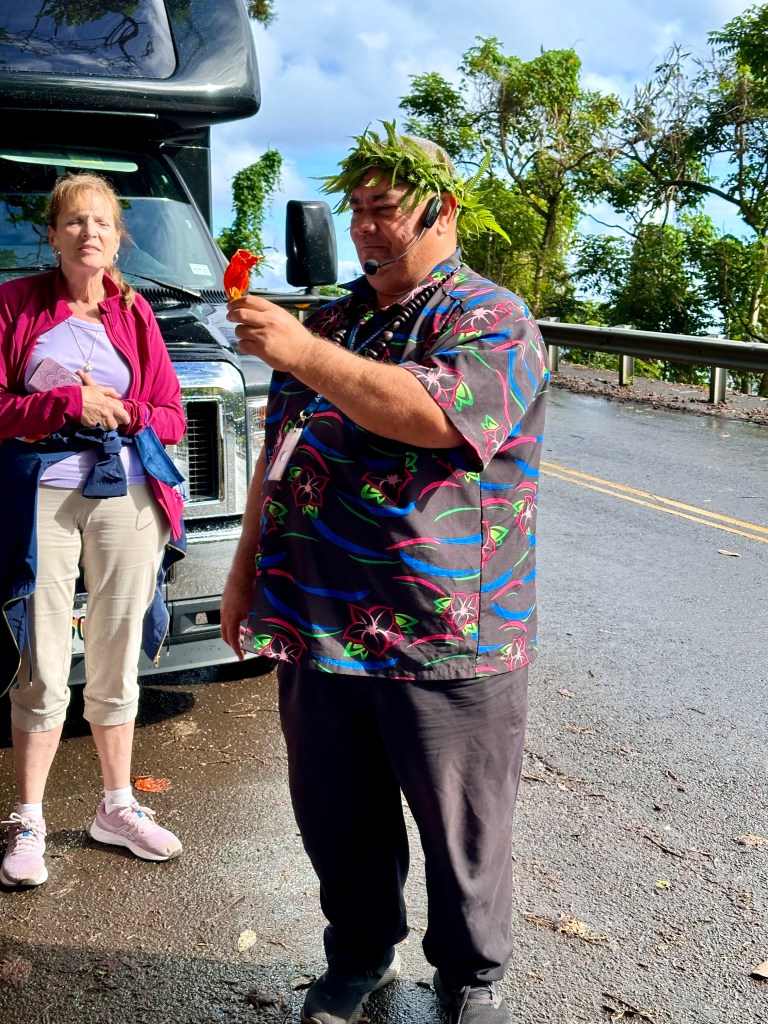
Three of our able and knowledgable bus drivers.

Each one, independent of the other, welcomed us as family. We weren’t tourists. We were cousins. That’s what they called us, and they treated us with the utmost respect, which quickly earned them ours. It set the tone for the entire 10-day trip.

Why would they do this? Native Hawaiians and those who embrace Hawaiian culture understand that we are all connected to each other and to the beautiful world around us.

They know the fragility of life and try to live each day to the full. Hawaiians realize they need one another and us to survive and thrive. It’s in their DNA to do so. Consequently, we felt welcome everywhere we went and by everyone we met.

Each guide and driver shared similar stories, not from a script but from their personal lives and hearts. The drivers took us through areas not on the scheduled itinerary, and in some cases, we passed through their neighborhoods.

They wanted us to experience what they experience daily. When we stopped in small towns, they told us their favorite places to eat and where the best ocean views were and gave us recommendations for shopping.

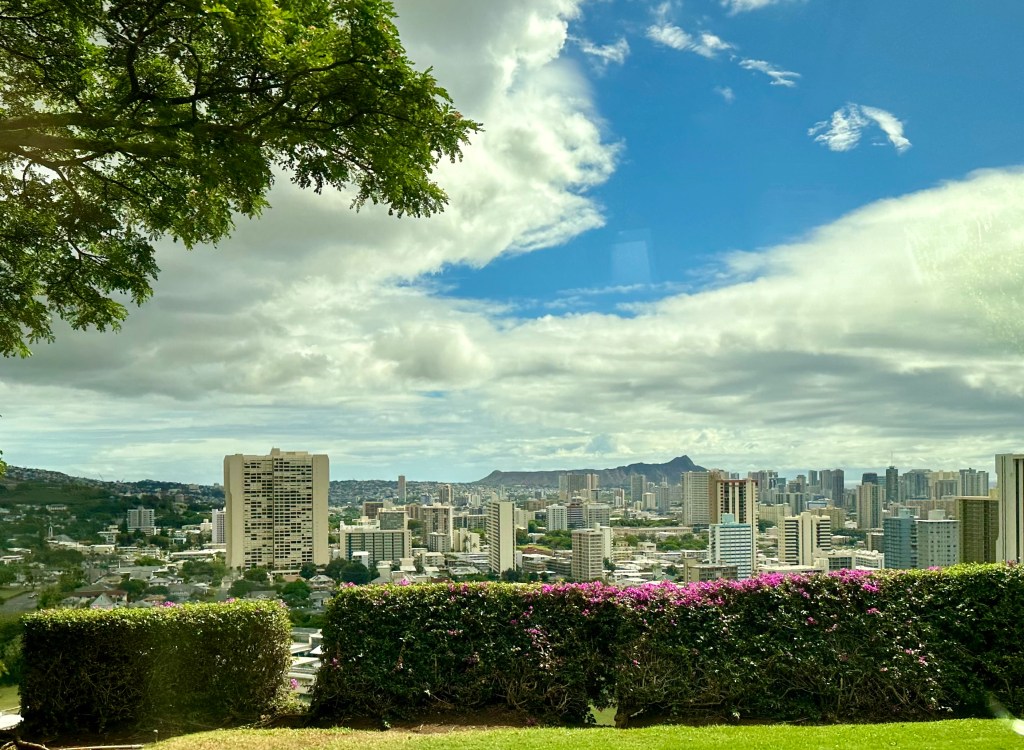
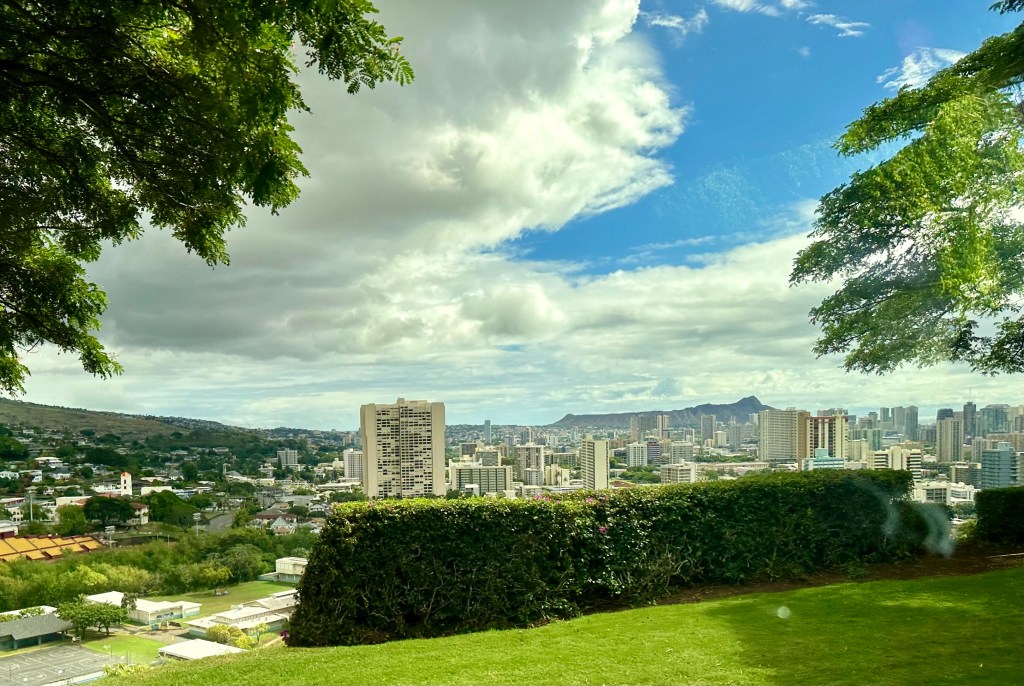
Honolulu from the Punch Bowl with Diamondhead in the background.

They made stops where they knew the owners and where we would experience authentic Hawaiian food, art, and history. Each guide and driver was proud of their history and culture of inclusion and respect for all, their ancestors, and Creation itself.

Polynesians arrived in waves to the Hawaiian Islands from all over the Pacific Ocean, searching for a better life. They didn’t find one but instead made a good life by respecting their differences and embracing their similarities. That tradition continues today.

All of our tour guides shared from their personal lives. They volunteered how they survived the high cost of living in such a paradise as Hawaii.

Individualism isn’t their thing. Community, centering on family, is. Many live communally in households of multiple generations to share the living costs. In one instance, our driver showed us a poorly maintained home on the exterior and asked us to guess the price of the old bungalow. The answer was $1.1 million. The house had two bathrooms and four bedrooms, one family per bedroom.

Hawaiians work hard to enhance their community, no matter which island you are on. They work two, three, or four jobs to make ends meet. They pool their earnings, their joys, their sorrows. Yet, they somehow still keep family central.

The crime rate in Hawaii is low compared to other states. Indeed, we seldom heard sirens blaring, even in congested Honolulu, our first stop. Little graffiti or trash was seen, reflecting their unified regard for nature and the lovely land on which they live.

The view from our Maui hotel room.

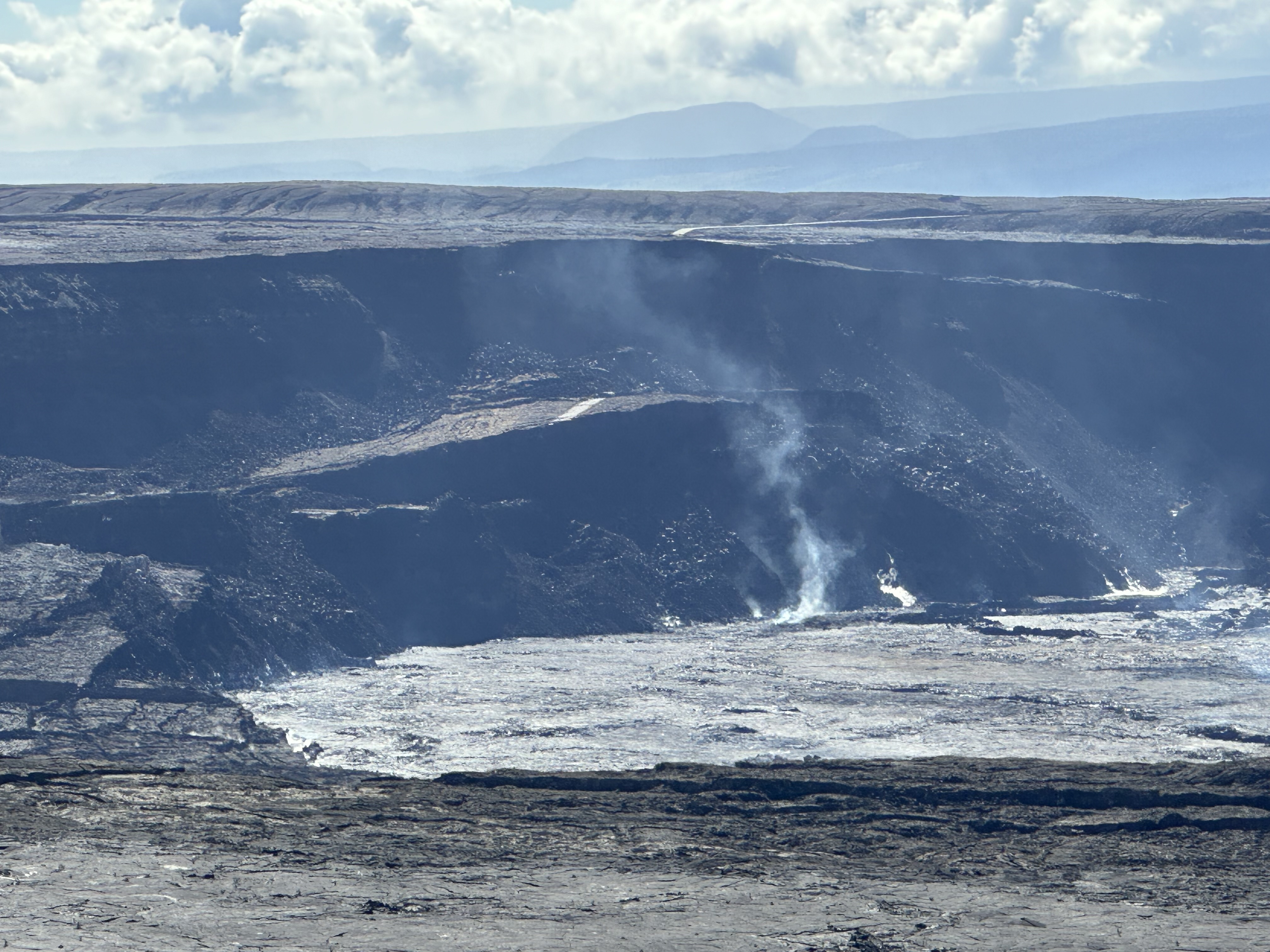
Hawaiians fully understand the natural course of evolution. With each volcanic erruption, their ancient islands continue to grow, sometimes at the peril of residents who inhabit this magical paradise as the roiling lava flows to the sea.

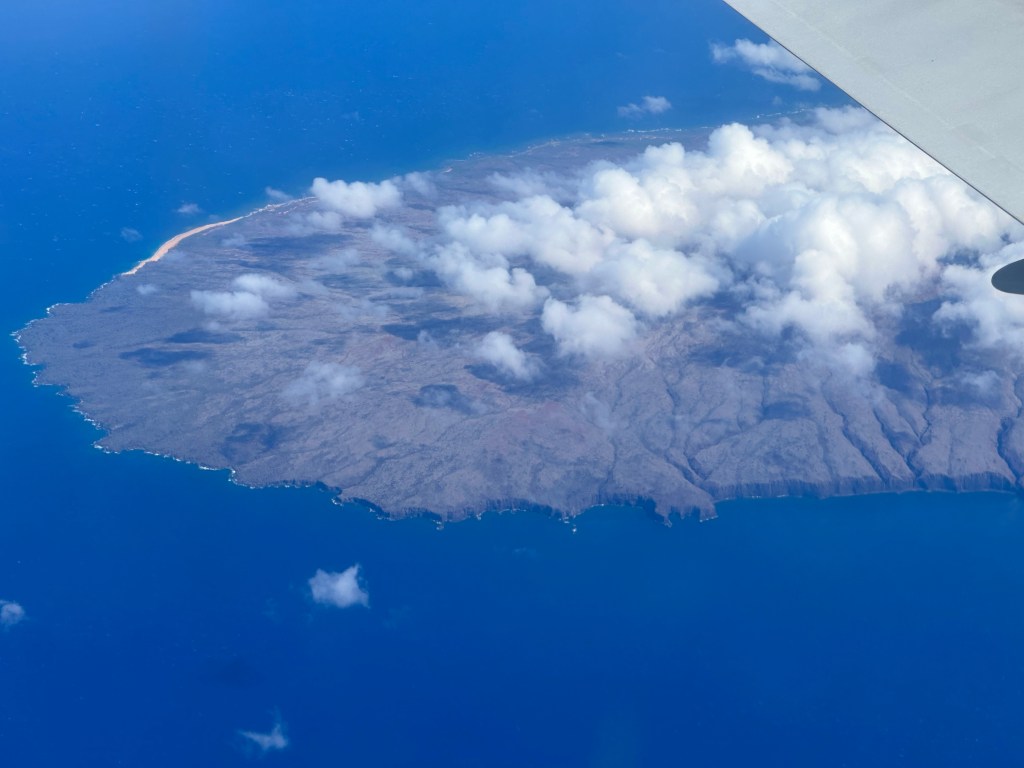
The state of Hawaii consists of 132 islands. Many smaller islands, and even some larger ones, are owned by wealthy individuals, a conglomerate of partners, or corporations. Most islands are uninhabited, mainly because they lack drinking water. That’s especially true if the island is situated where rain is scarce.

The windward and leeward portions of each island we visited were prominent. Where the tropical rains fell regularly, sometimes daily, life thrived. Green was ubiquitous in all shades and shapes. On the leeward sides, trees were fewer and shorter, and vegetation was more sparse.

I will attempt to share the beauty and spirit of our Hawaiian vacation in subsequent posts. I admired how the Hawaiian values reflected the Advent lessons of Hope, Peace, Joy, and Love as we experienced them.

My wife and I, both in our 70s, were most grateful to experience this tropical nirvana and its amazing, humble people. I hope you enjoy the upcoming series that shares more details about our trip.

Our congenial travel group.

© Bruce Stambaugh 2024

Light into Darkness

Morning light shines into a darkened kitchen on a historical farm. Photo by Bruce Stambaugh

When I walked into the old farmhouse, the tour guide went right. My head, however, looked left, drawn by the stark contrast of the bright morning light shining into the dark kitchen of this century-old farmhouse.

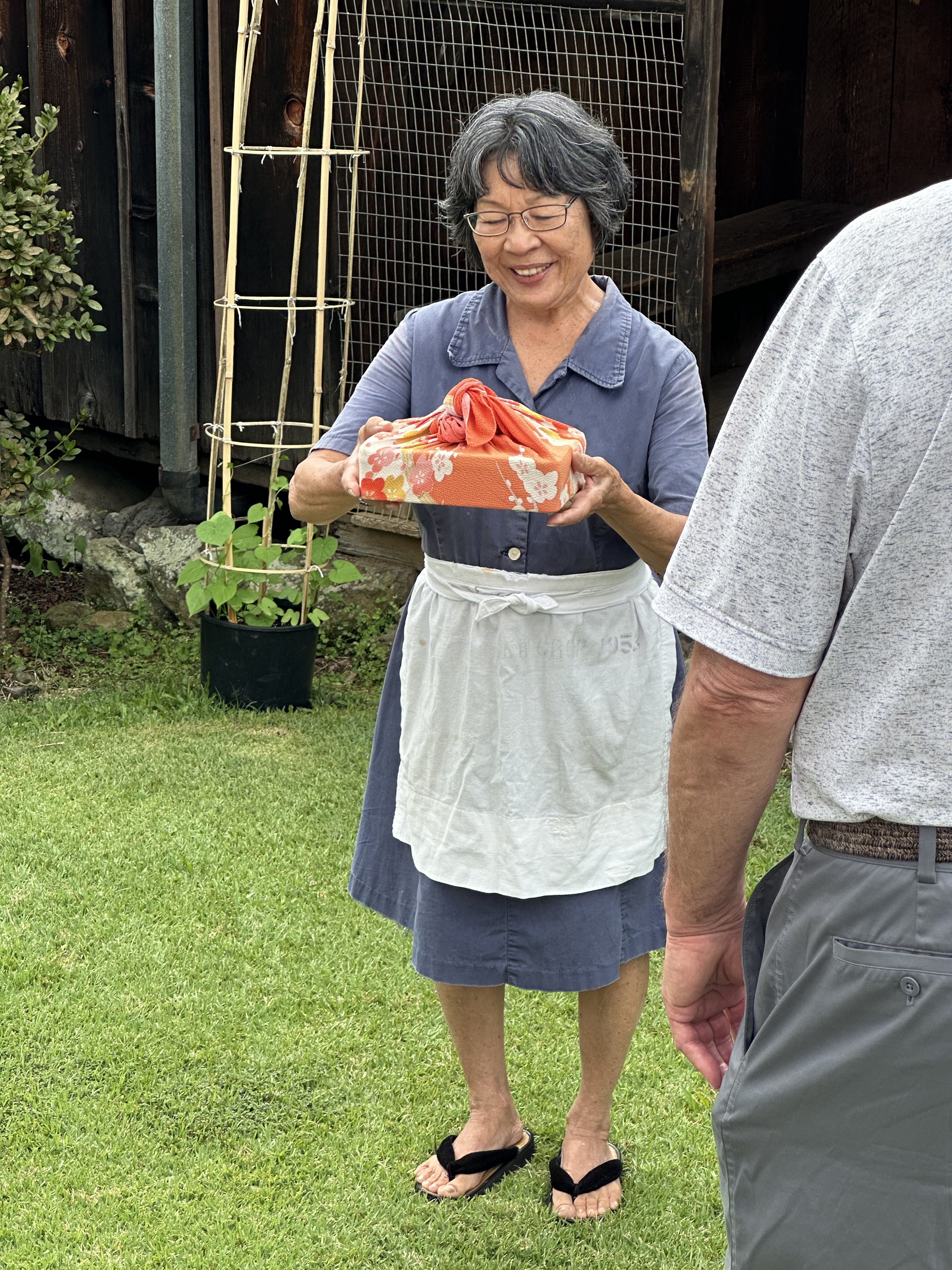
Paula, our 78-year-old guide, worked in the home and on the farm as a child.

Our guide lived and worked in this home, starting at age four. We couldn’t have had a more authentic authority on how this former family coffee farm operated.

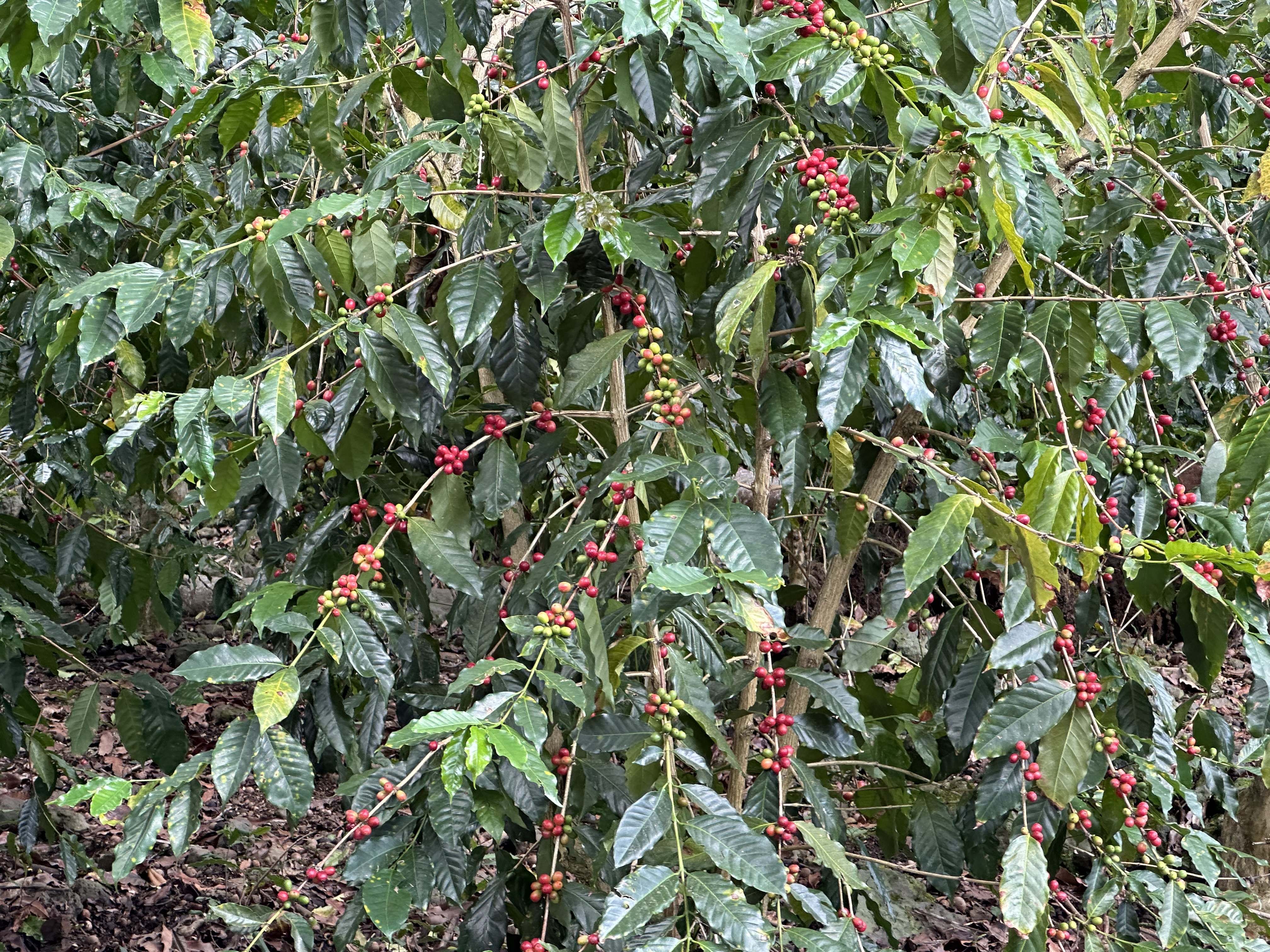
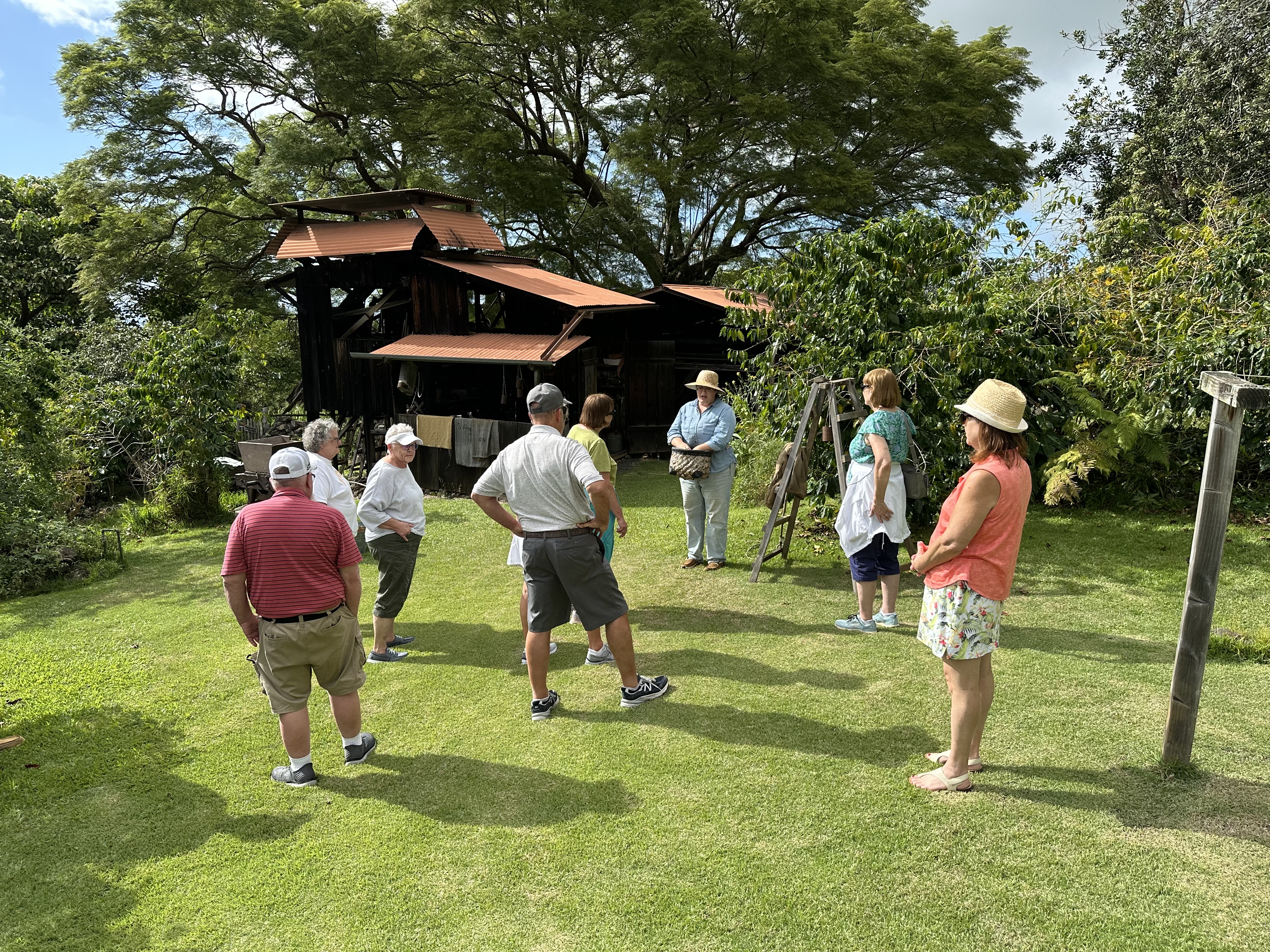
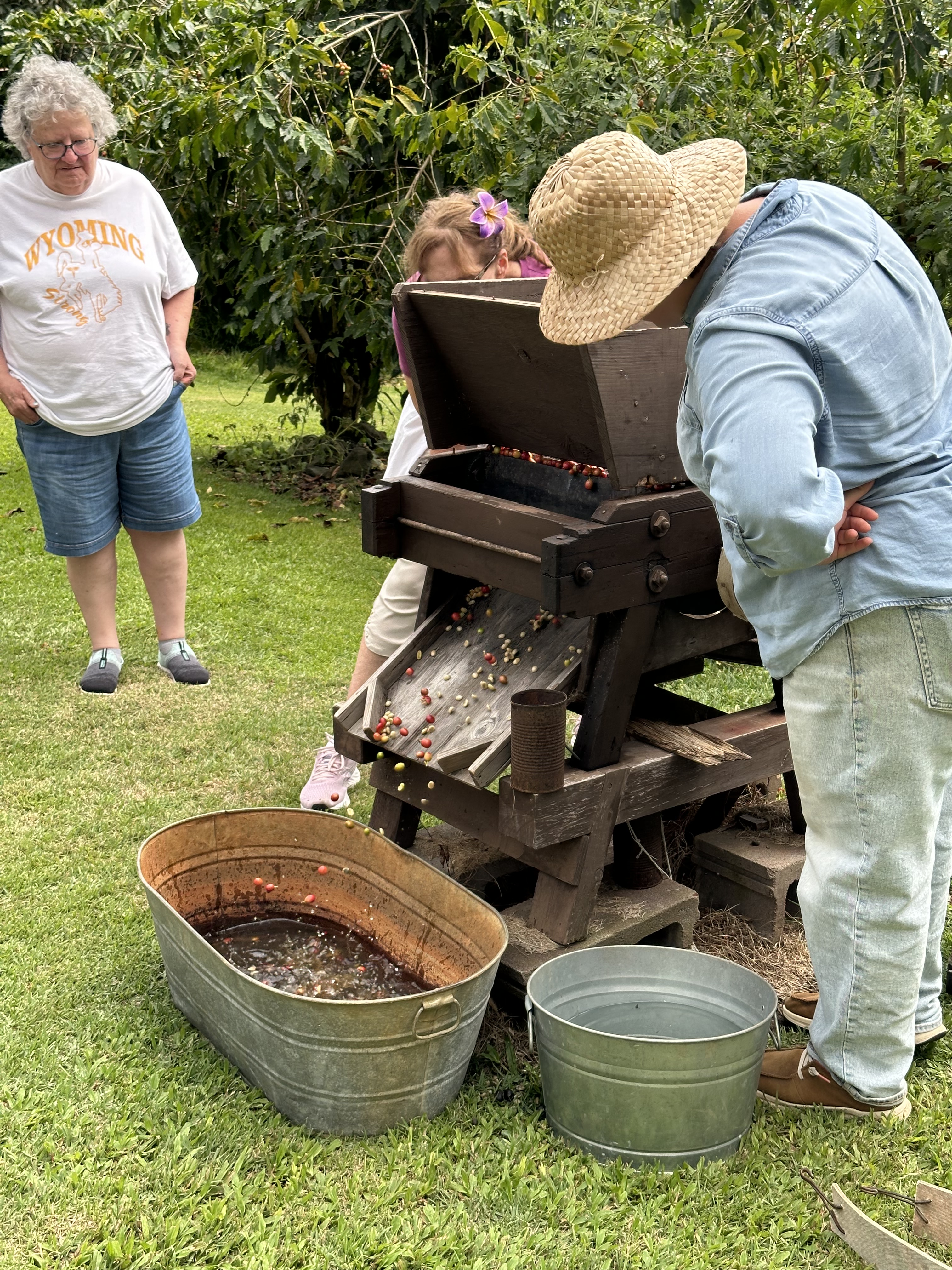
Today, Hawaii’s Kona Historical Society welcomes visitors via reservations to explore the Kona Coffee Living History Farm on Hawaii’s Big Island firsthand. Everything is as it was when Paula began helping around the house and on the farm.

I’ll share additional photos from the farm in a future post as I begin a series on a recent trip to Hawaii, our nation’s 50th state.

© Bruce Stambaugh 2024

Recalling a Rare Family Vacation

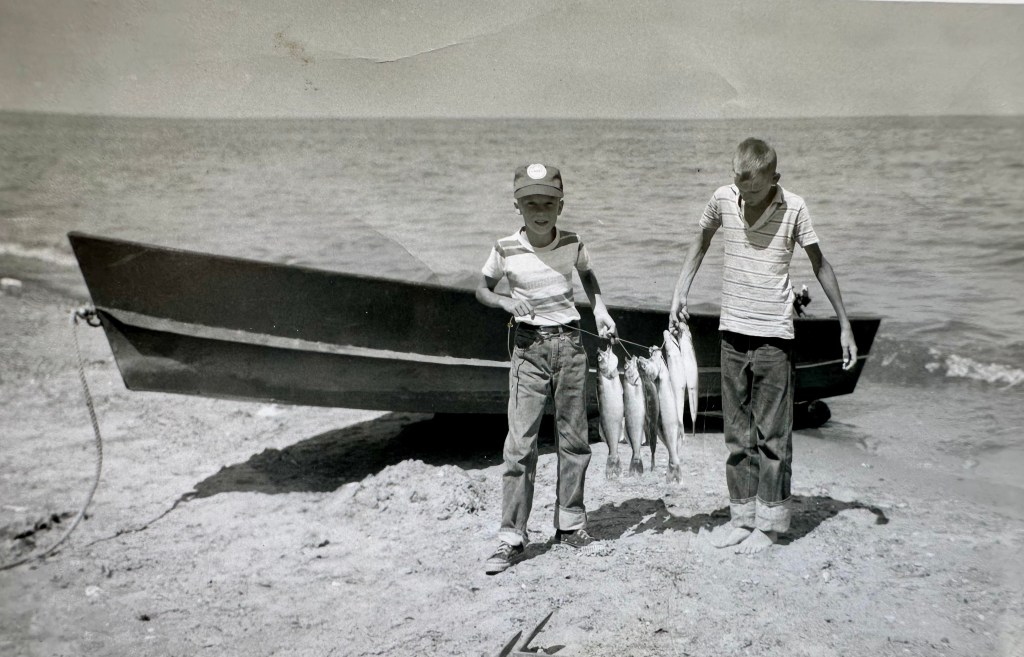
My older brother and I hauled in the walleye. Photo by Bruce Stambaugh

I fondly remember my family vacations in the 1950s and ’60s. I vividly recall them because we didn’t take many. We were a lower-middle-class family from a blue-collar city in northeast Ohio. My folks didn’t have the money to travel around the country too often, especially with five active and vocal children.

My most memorable trip as a youngster was a week on Pelee Island, Ontario, Canada, in Lake Erie. It was the middle of summer, sunny, hot, and humid.

As a 10-year-old, I was excited about our trip for multiple reasons. First, we had to take a ferry from Sandusky, Ohio, to the island. In those days, no passports or IDs were needed. You just paid the ferry fee and boarded the ship. I remember leaning over the side of the boat that foggy morning to watch crew members load cars and trucks onto the ferry.

Our dear mother couldn’t bear to watch because the drivers had to ease the vehicles from the dock to the ship over two unattached, thick wooden planks. I paid particular attention when our 1947 cream-colored, two-door Chevy coupe slipped across the void. Even as a kid, I saw that the car wasn’t centered on the planks. Still, it made it.

Our cousins and their parents accompanied us on the trip, along with our mother’s mother. Their three juveniles were nearly the same age as our three oldest. It was a guaranteed good time.

We enjoyed the voyage around other islands and through Lake Erie’s whitecaps. When we sighted Pelee, our excitement multiplied. From a distance, all I could make out were trees. A little cluster of attractive buildings appeared when the ferry drew closer to the dock. We disembarked and waited for our vehicles. I noted a general store with toys in its nine-pane front window during the downtime.

We piled in the car and headed south and then east on dirt roads, swirling dust clouds into the cerulean sky. As he drove, our outdoorsman father spotted pheasants in fields on the way to our little cottage without slowing down. How we all managed to fit into that two-bedroom, one-bath lake house, I don’t know. As a kid, it wasn’t my problem.

That week’s weather was sunny, hot, and humid, perfect for eight children ages four to 14 to play on the beach that served as our front yard. We enjoyed wading in the warm Lake Erie water when the tide went out. We built sand castles and took turns burying one another in the sand.

We spent hours scouring the beach for sea glass. My young mind couldn’t comprehend how the combination of water and sand could smooth sharp, jagged broken glass. I held the evidence in my hand, nevertheless.

A trio of fishermen rented the cottage south of ours. They used a beautiful wooden Lyman boat with an inboard motor to come and go. One afternoon, the fish must not have been biting because the boat came charging in at low tide.

Even as a kid, I could see by the men’s actions that they were drunk. One guy even fell overboard into the shallow water. Of course, the high-speed approach mired the boat into the wet sand. No matter how hard they tried, the boat wouldn’t budge until the tide came in.

Later, with the boat freed, I moseyed down the beach and found a silver cigarette lighter reflecting the afternoon sun in the clear, shallow water. A cigar lay nearby on the beach. Its paper wrapper with a bright red band still secured the stoggy. My uncle confiscated both when I revealed my treasures at the cottage.

Our father and uncle frequently went fishing for crappies and walleye. When the schools of fish moved a few hundred yards directly offshore of our cabin, my dad and uncle caught enough to feed the entire crew. The delicate white meat of the pan-fried fish filled our hungry bellies.

While our fathers fished, our mothers and grandmother watched us play hour after hour on the sandy beach. Those were the days before sunblock, and apparently, no one remembered to bring along suntan lotion. Before the week was over, the four oldest boys, including me, moaned and groaned in a darkened bedroom. The severe sunburns halted our lakeside romping. We were sore all over, unable to find a comfortable position to rest.

Still, it had been a memorable week. To top it off, our parents remembered the general store with toys. My eyes lit up when I saw the rotating stand displaying several kinds of English-made Matchbox toys. There was no plastic to be found in these miniatures of reality, and they were only a dollar each. I was ecstatic because our parents had given each of their five children a dollar before entering the store. So, I took my time and finally decided on an English-style fire truck as the ferry horn sounded for people to board.

We scurried to the dock across the road, and I carefully clutched my prize, not wanting to crush the colorful cardboard matchbox containing my precious purchase. I bid Pelee farewell as we walked up the ferry’s ramp for the return cruise to Ohio.

It had been a memorable week of fun in the sun, filled with ferry rides, fresh fish, and playing in the water with my siblings and cousins. Those pleasures successfully blocked the short-term memory of my painful sunburn.

These well-worn Matchbox toys are the only ones I have left. Photo by Bruce Stambaugh

© Bruce Stambaugh 2024

Memorial Day!

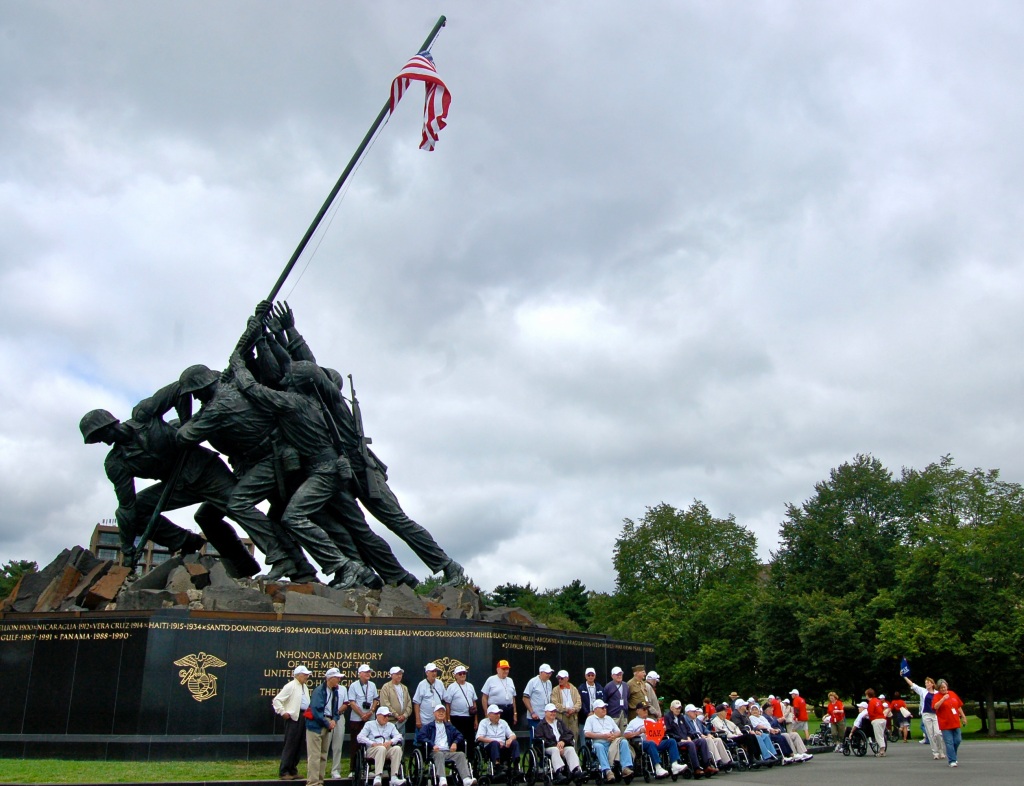
The U.S. Marine Corps Memorial, Washington, D.C. Photo by Bruce Stambaugh

Today is Memorial Day in the United States. It is a day designed to remember U.S. military personnel who have fought and died in wars.

The commemorative day originated as Decoration Day on May 30, 1868, in honor of Union soldiers who had died in the Civil War. It has since been renamed Memorial Day in memory of all loved ones who have died. Congress also set the day as the last Monday in May, making a three-day holiday.

Americans see the weekend as the start of summer. Many schools have already completed their academic year, making June vacations a real possibility for families who can afford them.

Memorial Day has evolved to include parades, 21-gun salutes at cemeteries, family gatherings, and picnics. Memorial Day falls on my wife’s birthday this year, so we will celebrate that with our family, too.

I took this photo on September 12, 2009, at the U.S. Marine Corps Memorial in Washington, D.C. The statue depicts the raising of the American flag on Iwo Jima during World War II.

My older brother and I had accompanied our late father on an Honor Flight out of the Akron-Canton Regional Airport in Ohio. The veterans on the flight gathered in front of the memorial for a group photo. Our father is third from the left in the front row.

© Bruce Stambaugh 2024

Ascension Day

The rises sun over Turkey as seen from a Greek island. Photo by Bruce Stambaugh

Today is Ascension Day, the 40th day after Christ’s resurrection. For many of the churches that follow the Anabaptist traditions, especially the Amish and Old Order Mennonites, Ascension Day is a holiday.

Families gather to reflect, visit, share, relax, and enjoy each other’s company. Youngsters may go fishing, hiking, biking, or playing games like volleyball and softball.

Of all the holidays that the Amish celebrate, Ascension Day is the most informal. There is no worship service or fasting. It simply honors and remembers the day that Christ ascended into heaven.

Couldn’t we all use a day like that to relax, refresh, and renew our body, mind, and spirit?

© Bruce Stambaugh 2024

There’s Great Joy in Decluttering

The cowboy hat. Photo by Bruce Stambaugh

My wife and I have been cleaning the house item by item for longer than I can remember. And we’ve been married for 53 years.

She has always been ahead of me in the disposing game. I’m finally beginning to understand the joy of discarding items I have clung to for far too long.

Gone is the brown felt stetson cowboy hat my daughter’s family gave me as a gift years ago when they lived in Texas. It was a striking hat, but I seldom wore it. So, why should I keep it?

To be considerate, I asked my daughter if she cared if I gave the hat away. She just smiled and said, “It’s your hat. You can do whatever you want with it.”

Of course, I knew that, but I wanted to be sensitive to her since she had purchased the thing. I could have donated it to a thrift store, but I didn’t.

Guess where the stetson ended up? Back in my daughter’s household. Her second son, 17, jumped at the chance to own it. He hopes to have a hatter stretch it so it fits him.

Knowing that the hat has a familial home has instilled as much pleasure in me as having received it in the first place. Isn’t that the point of decluttering your life, especially when you’re 76?

Our two-year-old grandson loves to dress up as a firefighter, among other wholesome job roles. I kept my old helmet from my volunteer firefighting days. The black fiberglass headgear, long lacking necessary safety standards, still has my uniform number, 828, emblazoned on it.

When I offered it to his parents for their son, they declined. I wasn’t either surprised or disappointed. The thing has too many places for tender little fingers to get pinched or cut.

So, the same grandson who confiscated the cowboy hat will also own my helmet. I don’t know what he will do with it, but when I hand it over, I’m sure he’ll ask questions about emergencies to which I responded. I have a storehouse of tales to tell him.

My old fire helmet. Photo by Bruce Stambaugh

Our teenage granddaughter didn’t hesitate when I offered her a t-shirt from a favorite burger place on the island where we wintered in Florida. Our daughter’s family joined us for a few days a couple of times, and the grandkids loved that restaurant, too. Many snowbird memories passed to her in that faded shirt.

When our son and daughter were young, I brought out my old model train set at Christmas and continued that through the toddler years of the grandchildren. Now, our son has it to entertain his son. I don’t have to be there to know and sense the joy of a child and his father connecting one track segment to another until the oval is complete. Just mentally picturing that scene is enough.

A teen I mentor enjoys birding but needed a bird guide. Over the years, I have collected many books on birds, so it was no sacrifice to give this enthusiastic youngster a field guide I cherished so that he could, too.

I have an old black-and-white photo of four of the 28 fourth-grade students from my first year of teaching. I will send it to the one Amish boy in the picture, knowing he would revere it more than me. He will remember and tell his grandchildren when his fourth-grade class created a radio station.

I discover new items daily that equally resurface loving and sad memories. If I don’t need the apparel, souvenirs, or keepsakes, I gladly pass them on to the younger generations for posterity. I’ve already had mine.

© Bruce Stambaugh 2024

Celebrating National Park Week

Hiking the Appalachian Trail in Shenandoah National Park. Photo by Bruce Stambaugh

This is National Park Week in the United States. In celebration of our 63 beautiful national parks, this is the first of a series of photos I have taken in Shenandoah National Park.

Shenandoah National Park has a storied and somewhat troublesome history, given how farmers and their hired hands were removed from the park before it was developed starting in late 1935.

Though the land was rugged and steep in many places, over 2,000 folks lived, farmed, and worked on the 198,000 acres that became the first national park in the eastern part of the U.S. Landowners were paid an assessed rate for their property, which the federal government purchased via eminent domain.

Of course, many of the people were tenants who cared for the land, while the property owners lived in the Shenandoah Valley or elsewhere. The tenants received nothing for their inconvenience. Consequently, some of their descendants still have grudges against the government.

Nevertheless, Shenandoah National Park is a popular place to visit since millions of people live within a day’s drive. Plus, the Appalachian Trail (AT) stretches 101 miles through the park, drawing day and overnight hikers. The AT weaves along the crest of the Blue Ridge Mountains, crossing the Skyline Drive several times.

I enjoy day hikes in the park, which often involve hiking sections of the AT to spur trails that lead to waterfalls, rigorous climbs, and scenic overlooks. I especially appreciate the flora and fauna that I encounter.

This photo, taken in late May 2018, represents the lusciousness of the park’s greenery, from ground cover to towering trees. The photo was not altered to enhance the green.

Tomorrow, I’ll post what I saw to the left of where this photo was taken.

© Bruce Stambaugh 2024

The Cherry Blossom Surprise

Cherry blossoms line the western Tidal Basin with Arlington, Virginia, in the background. Photo by Bruce Stambaugh

Since childhood, I have wanted to see the beautiful cherry blossoms around the Tidal Basin in Washington, D.C.. That was a long time ago for this grandfather.

I saw calendar photos displaying these historic trees’ beauty year after year. It wasn’t just the trees’ pleasing pink color. The symmetry of the blooming ornamentals, as they curved around the Tidal Basin, drew me into the photo. Add in the Washington Monument in the background, and I was hooked. I had to see that inspiring scene for myself.

As much as my wife and I like to travel over our 53 years of marriage, I’m not sure what took me so long to make the trip. Age and the process of life’s activities getting in the way of my pursuit dulled my desire.

Living in Ohio most of my life, the nation’s capital seemed so far away. Plus, I hesitated about traveling from our rural home to the city to view the trees. In retrospect, I realized how silly that was. But, other than television news reports, we only had a few opportunities to know the exact timing of the cherry trees’ blooming. The Internet changed that in a big way.

I discovered a blossom cam of the flowers. The National Park Service had predicted March 23 as the peak blooming time this year, but watching the bloom cam made it clear that the peak would occur much earlier.

I had no excuse this time, mainly since we now lived less than three hours away in Virginia’s Shenandoah Valley. We moved there seven years ago to be close to three of our four active grandchildren.

Along the walkway to the Jefferson Memorial. Photo by Bruce Stambaugh

The first full day of spring promised to be mostly sunny and warm, perfect for snapping photos. The morning sunshine would highlight the trees along the western rim.

I left home early, but it needed to be earlier. The drive in heavy traffic took me three and a half hours to arrive at a parking lot near the Jefferson Memorial.

Everything was perfect. The crowds were yet to appear, giving me and many other photographers plenty of space to capture our desired angles and subject matters.

Several people in various attire mingled at the Jefferson Memorial. Professional and amateur photographers clicked away at couples in frilly gowns and fancy suits and high school and college graduates in flowing robes. Teachers and adult chaperones of elementary, middle, and high school student groups herded their darlings into huddles for impromptu lessons.

Please click on the photos to enlarge them.

As I continued my stroll around the basin, the blossoms brought out the best in people. Strangers offered to take photos of couples trying to take the perfect selfie. A man dressed as Santa Claus strolled beneath the blossoms, bringing unexpected cheer to young and old alike.

The best time for photographs waned as the sun drew higher in the sky. People greeted me with smiles and verbal hellos as I walked beneath canopies of blossoms, returning to my car.

Such pleasantries sweetened the fragrance of the thousands upon thousands of pale pink blossoms. Witnessing humanity’s kindness stirred a joyous surprise that put photography into its proper perspective.

The iconic shot of the Washington Monument through the cherry blossoms. Photo by Bruce Stambaugh

© Bruce Stambaugh 2024

Sunrise, Sunset and Mole Hill

Our suburban home near Harrisonburg, Virginia, faces north. That requires me to constantly check east and west around dawn and dusk for any hint of a colorful sunrise or sunset.

My chances of catching a lovely sunrise have to be more intentional. The older I get, the easier it is for me to sleep past the sun’s morning appearance. Seniors seem to have a sleep cycle similar to that of newborns. I fall asleep fine, but staying asleep is another matter. Consequently, my awakenings in the middle of the night contribute to my sleeping pattern. I toss and turn and then sleep soundly until sun up.

So, I have many more Virginia sunset photos than sunrises. I walk in the neighborhood as often as I can, and I especially like doing so in the morning.

The morning sun highlighted a farmstead on Mole Hill. Photo by Bruce Stambaugh

The other day, my wife and I were about to begin our morning stroll when I noticed the sun shining on a farmstead on the eastern slope of Mole Hill, a local landmark. Mole Hill is the remnant of a volcanic core from millions of years ago. Over millennia, nature’s elements have weathered and withered the basalt down into a gently sloping geographic feature resembling a molehill, thus its name.

With my camera at the ready, I captured the sun highlighting this old homestead. I didn’t think much of it then, but that changed the following evening.

I wasn’t too hopeful for a glowing sunset, yet when I looked out, the sky radiated orange across the western sky. I knew my only chance for a photo was from the middle of the street in front of our home. So, I did that, standing at nearly the same spot as the morning photo of Mole Hill.

The farmstead stood out even with the setting sun behind it. Photo by Bruce Stambaugh

In one of the photos, the same farmstead stood out, even on the shaded side of the historic hill. I don’t tinker with my photos, so this eerie highlight simultaneously puzzled and intrigued me.

Call it what you will. I’m glad the sun shines on Mole Hill morning and evening.

© Bruce Stambaugh 2024

Evolution of a Sunset

A reflective sunset in the eastern sky in Rockingham Co., Virginia. Photo by Bruce Stambaugh

No two sunsets are alike. That should be no startling revelation. Each sunset has its unique evolution, however. Some last just seconds with only a hint of orange, while others splash the western sky with a painter’s palette’s worth of colors.

Sometimes, a sunset defies both stereotypes and logic. That’s when a photographer’s fun begins.

Our home in Virginia’s verdant Shenandoah Valley faces north. Consequently, I need to check the western sky well before dusk for the ingredients for a decent sunset. If I spot puffy clouds hovering over the Allegheny Mountains, I get ready to head west.

I often gather my camera gear and drive a few miles southwest to a ridge overlooking a fertile valley dotted with Old Order Mennonite farms. Only the Dry River splits the gently rolling farm fields. Its tree-lined banks make its southward path easy to spot.

A favorite photo location for a mountain view is the aptly named Pleasant View Old Order Mennonite Church. Look west from its grounds, and the aged, rolling ridgeline of the Allegheny Mountains endlessly fills the horizon. Look east, and Massanutten Mountain dominates the landscape, with the Blue Ridge Mountains 40 miles beyond.

Please click the photos from the church to enlarge them.

There are no guarantees with sunsets, of course. Atmospheric conditions play good cop bad cop with the sunsets’ outcomes. I’ve been fooled and disappointed too many times to have high expectations. I set out with the joy of simply being able to witness whatever develops.

As a septuagenarian, I have learned to be patient with sunsets. I have headed home long after sunset’s time had expired, only to see a blooming garden of pastels fill the western horizon in the rearview mirror. So, even if the initial stages of the evening glow are less than spectacular, I persevere. Too often, I leave disappointed. Still, my time wasn’t wasted. I enjoyed the fresh air and American Robins and Eastern Bluebirds singing as they settled into their nighttime roosting positions.

Such was the case recently when I spied a patchwork of clouds hovering over the Alleghenies. When I arrived at the old church, the sun was nearly hidden behind those old, weathered peaks. Still, I snapped a few shots and then moved lower into the valley to hopefully catch a colorful reflection in a roadside farm pond or the Dry River, which had plenty of running water from recent rains.

The western glow perfectly silhouetted the lines of trees along the river banks. I stopped my vehicle by the cemetery of a historic country church. As I exited my car, my eyes were drawn southeast. I was stunned. The beautiful blues and pinks of a prized sunset flooded the eastern sky. I snapped away from different angles as quickly as possible, knowing the colorful array before me wouldn’t last long.

My first view of the reflective sunset in the east. Photo by Bruce Stambaugh

I couldn’t believe my good fortune. Had I not stopped for a photo looking west, I would have missed the glorious beauty as far as I could see north to south. As a photographer, it always pays to look over your shoulder before putting away your camera. Satisfied with the many eastern-facing shots, I turned to the tree line and got my intended but less colorful photos.

Then, I remembered Slab Road, a quarter of a mile away. Rural road names in Virginia are about as practical as they come. Instead of a bridge over the Dry River, the highway department poured a narrow two-lane cement surface over the riverbed since the river was indeed dry more often than wet.

I stopped short of the river and quickly exited to catch the last light of the day reflecting on the water dammed up by the slab. The scene was breathtaking but not nearly as dramatic as the sunset reflected against the eastern clouds over Shenandoah National Park.

The Dry River flows over Slab Road. Photo by Bruce Stambaugh

A milk truck with a shiny, 3,000-gallon stainless steel tank forged through the running water over the slab. I followed, hoping to capture one more decent landscape shot. But my prime time was up, and I came away with a bland photo of a farmstead with powerlines running through the sky.

Nevertheless, the evolution of this sunset couldn’t have played out better. My heart overflowed with joy and gratitude for a beautiful ending to another precious day on earth.

The tree line that marks the Dry River. Photo by Bruce Stambaugh

© Bruce Stambaugh 2024

Bay Photos by Donna

Wildlife Photos From The Chesapeake Bay Region

ROAD TO NARA

Culture and Communities at the Heart Of India

K Hertzler Art

Artist and nature journalist in the Shenandoah Valley of Virginia.

Maria Vincent Robinson

Photographer Of Life and moments

Gabriele Romano

Less Noise. More Meaning

Jennifer Murch

Art is the only way to run away without leaving home. -Twyla Tharp

Roadkill Crossing

Writing generated from the rural life

ANJOLI ROY

writer. teacher. podcast cohost.

Casa Alterna

El amor cruza fronteras / Love crosses borders