The end of 2018 is in sight. Given the state of the world today, perhaps we all need a fresh start in life, no matter our age, our situation, our status. A new year brings new hope.
I reflected on all of that during a recent snowstorm that blanketed much of Virginia’s Shenandoah Valley. Shadows of the tree, its limbs, and the bird feeder they held played upon the newly fallen snow in our front yard. The contemplative scene gave pause to my birdwatching, to my reading, to my writing, to all that was happening near and far.
The long shadows cast by the late afternoon sun that had finally broken through gave hope that neither the winter’s frostiness nor the world’s cold calamities could keep us down long. For in the abrupt transition between the snowy brightness and shadowy darkness, light prevails.
Here’s hoping that light will shine warmly for the approaching New Year. “Year-end Shadows” is my Photo of the Week.
Last year at this time we were still settling into new surroundings, situations, and holiday opportunities as our relocation process to Virginia’s magical Shenandoah Valley continued. We had moved there to be close to our grandchildren. Celebrating the joyous season with them was paramount.
But this year was different. With Thanksgiving as early as it could be, we found an opening in our busy retirement schedules to return to our Ohio homeland.
An early winter snowstorm surprised us as we traversed roads in the higher elevations of West Virginia and Maryland. That couldn’t deter us, however. We arrived safely in the Buckeye State to celebrate personally with a few family members and friends, people we love and cherish. Some gatherings were planned while others were serendipitous.
Fun with friends.The frivolity began before we could even unpack our suitcases. That’s the kind of company we keep, and that is willing to host us. Our first evening meal and lively conversation with lots of laughter set the tone for our all too brief visit. We had so much fun we could have turned around and gone straight back to Virginia and been pleased with the trip. Of course, we didn’t.
The next morning we met old friends at a busy locally-owned bistro for breakfast. We discovered other friends there, too. We stayed so long it would have been more profitable if the proprietor had charged us per hour rather than per meal.
As we left for old haunts near Holmes County’s Mt. Hope, the van mysteriously pulled into the parking lot of a favorite chocolate shop. Affabile store owner Jason must sweeten his candy with his hospitality.
We made a beeline to the furniture store where I served as its chief marketer for 11 years in Mt. Hope to say hello to former fellow staff members. Fond hellos, fun memories, and new looks for the store inside and out greeted us. Their ability to create the latest styles in beautiful furniture boggles my mind.
After that enlightening encounter, we took a break at the charming Red Mug Coffee shop, an apt name if there ever was one. Of course, I drank my delicious brew from a red mug.
We hadn’t even ordered when a former student entered. Lonnie and our family go way back. He was born two hours before our daughter. Their cribs were side by side in the nursery at the hospital in Millersburg.
Then a high school friend of our son spied us and years of catching up ensued. Marlin proudly shared photos of his adopted children. Those kids couldn’t be in a more loving situation.
This slideshow requires JavaScript.
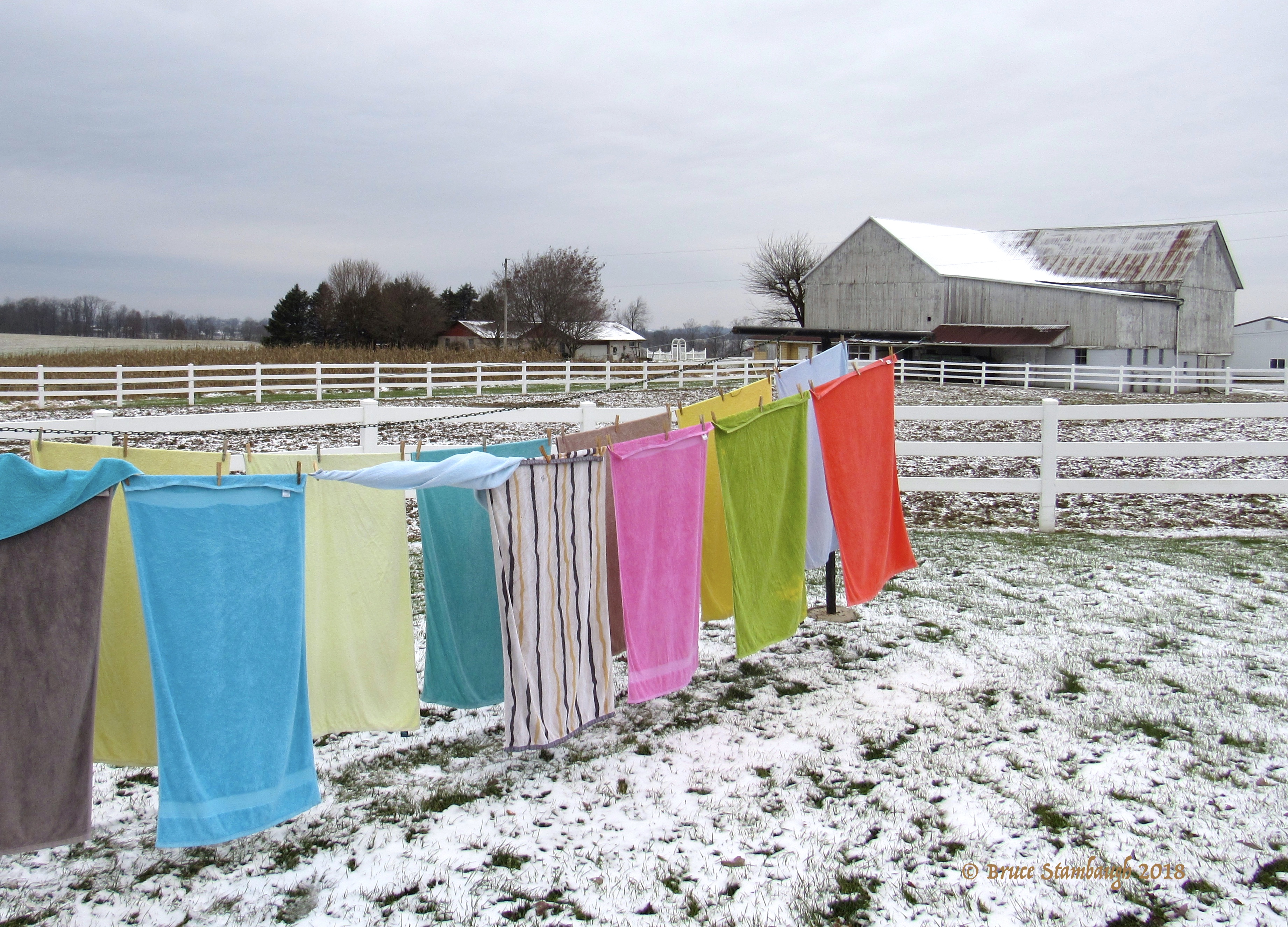
Laundry on the washline told us that Martha was home. After warm, welcoming hugs, we visited with her and her youngest child until we just had to leave. Our timing couldn’t have been better. I stopped to visit briefly with my friend Dan, who mows the roadsides in the township where I served as a trustee for 20 years.
We found our former across-the-road neighbors Paul and Mary as gracious and hospitable as ever. The time ticked away here much too quickly as well.
The visiting continued at Killbuck with the doctor who brought our daughter and son into this world. As always, his spry wife considered us family. We checked in with a couple of their children and spouses, too. Of course, “children” is a relative term since they all are grandparents.
The pace of our last day in Ohio was just the opposite. Neva went shopping with her sister, and sure enough, met even more friends. I ran some necessary errands before going birding. I was thankful for the exercise, the wildlife I encountered, and many photo opportunities. The sun finally burned through the haze by late afternoon. Still, the air’s temperature couldn’t come close to matching the warmth of fellowship we had experienced.
Holidays are for gathering, reminiscing, sharing. Through both our planned and spontaneous encounters, it was indeed a joy to be home for the holidays.
A young buck white-tailed deer bounded across the trail far ahead of me. Click the photo to enlarge it.
The annual migration of birds has been going on for some time now. Fall in the birding vernacular doesn’t equal calendar fall.
There is a logical reason for that. Different species of birds begin their migration at different times. Shorebirds and songbirds often lead the winged entourage to warmer climes. Others trail along alone or in giant flocks to the delight of avid birders. To account for these time travel variances in the birding world, fall is the most extended season, running from August through November.
At the suet feeder.
The same concept is valid for trees and deciduous plants. Some species begin their winter hibernation sooner than others. Their various changing colors can foretell this annual transition. Poison ivy leaves often turn bright red before September arrives, while the glossy leaves of shingle oaks fade from emerald to russet and hang on until early spring.
For me, I welcome these transitions, especially the birding varieties. As the leaves of the red maples in our yard began to fall, birds I had not seen before began to arrive.
Storms brought down many of the remaining leaves. They also blew in flocks of birds, some temporarily. Others seem here to stay.
Last fall, our first in the Shenandoah Valley, birds were scarce at the feeders. The numbers and variety of birds were well below my expectations. I longed for the many beautiful birds we had had in Ohio.
Optimist that I am, I hung the feeders again right after Labor Day and attracted a few regulars. I can always count on chatty house finches and boisterous blue jays. Once the weather cooled, the suet feeder went up in the backyard.
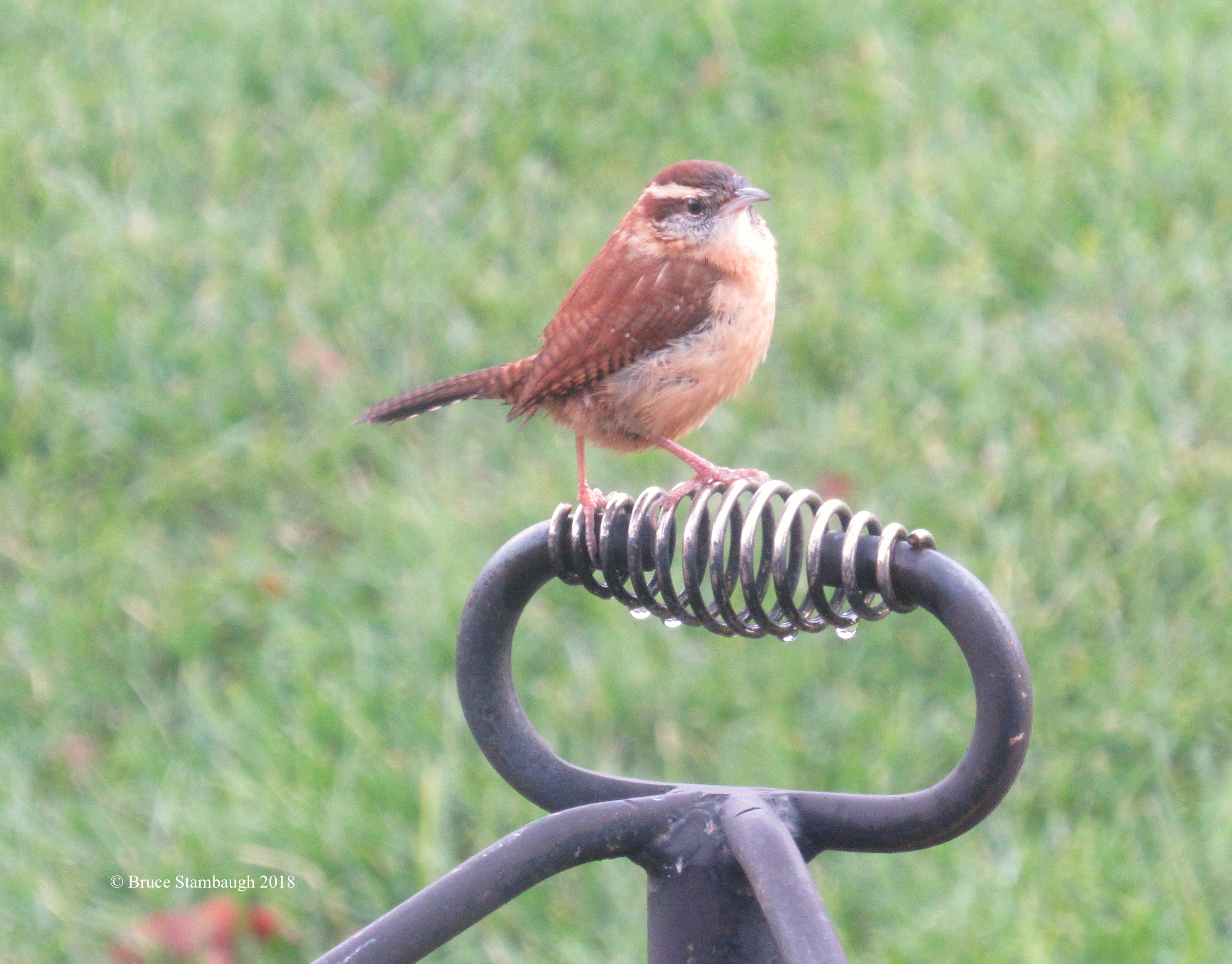
An inquisitive Carolina Wren.
I was contented with the usual suspects, happy that even the Carolina Wrens made regular appearances. But I could not have anticipated what happened next. About six weeks ago, I noticed some birds that resembled the numerous house finches that frequented our feeders. A closer inspection with the binoculars told me that we had a small flock of purple finches with a few pine siskins thrown in for good measure. I was ecstatic.
I had never had purple finches at the feeders and only had had passing pine siskins that took a break to refuel during migration. I hoped beyond hope that the birds would stay. So far they have.
These are gorgeous birds, each in their particular plumage. The reddish hues of the male purple finches appear iridescent, especially if the sun reflects off of their foreheads where the winter colors are the brightest. Though much duller and muted, the rich browns and creams of the females’ feathers are equally stunning.
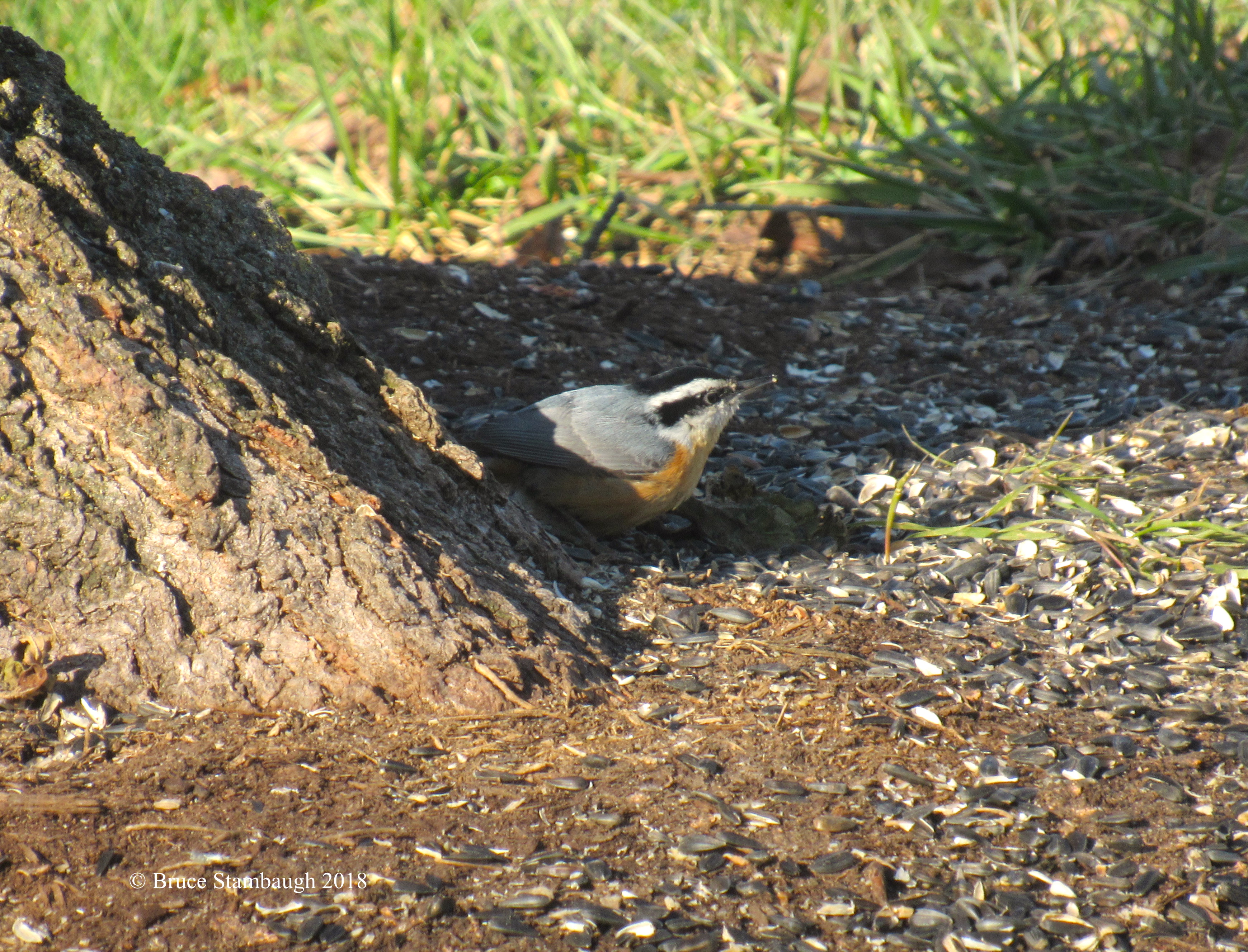
A rare visitor, a Red-breasted Nuthatch.
The more demur pine siskins tend to feed with the purple finches and the American goldfinches. Their brown stripes and flash of yellow at the wing tips make them striking birds as well.
The departure of the leaves and arrival of the birds mimic life. We can’t do anything about the past and try as we might, we can’t predict the future. Dull leaves and the arrival of purple finches are proof positive.
To be most productive, I strive to be present in each moment regardless of what change occurs. The mystery of it all sparks a spirit of gratitude.
I’m thankful the birds and trees keep reminding me that change is inevitable. If we pay attention, we can enrich our lives by embracing each subtle transformation, seasonal or otherwise.
For good or for ill, change happens. It is the way life is.
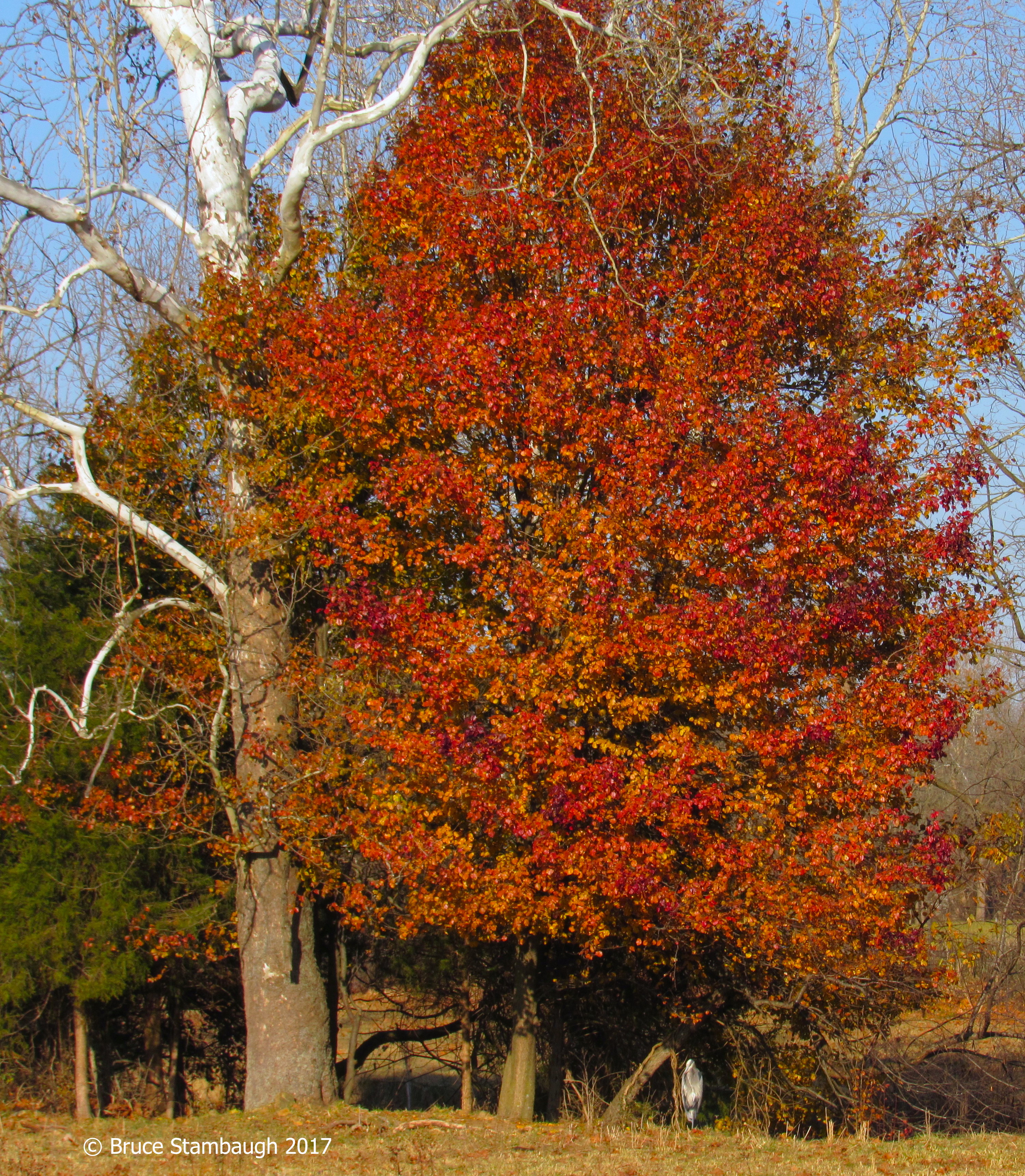
At first sight, I wasn’t sure what was under the blazing maple tree. From a quarter of a mile away, I couldn’t tell if the figure was a person or a bird.
Fortunately, I found a route that paralleled the scene and drove slowly down the narrow country road. I clicked a shot with my zoom lens fully extended. A quick review of the picture confirmed my suspicions. I had captured a Great Blue Heron basking in the warmth of the late afternoon sun. But why at this exact spot? Was there water nearby?
I pulled my vehicle forward and found the answers to my questions. A small stream, which I later learned was Cub Run, meandered behind and below the bird and alongside a set of railroad tracks. This gorgeous bird couldn’t have picked a more lovely spot to absorb the welcomed sunrays.
If I have learned one thing in my seven decades on this marvelous planet of ours, it is to go with the flow. When I left the house, pleasant temperatures and partly cloudy skies ruled the sky. I intended to drive 10 miles to Paul State Forest near the crossroads known locally as Ottobine. I planned on walking the trails of this 172-acre gem of a woods to look for birds.
I packed my binoculars, birding hat and vest, and of course my travel camera, a Canon PowerShot SX530 HS. The camera is light, easy to use, and takes excellent shots, as long as sufficient light is available. I also had my iPhone along for safety sake. You never know when an old guy like me will need to make an emergency call.
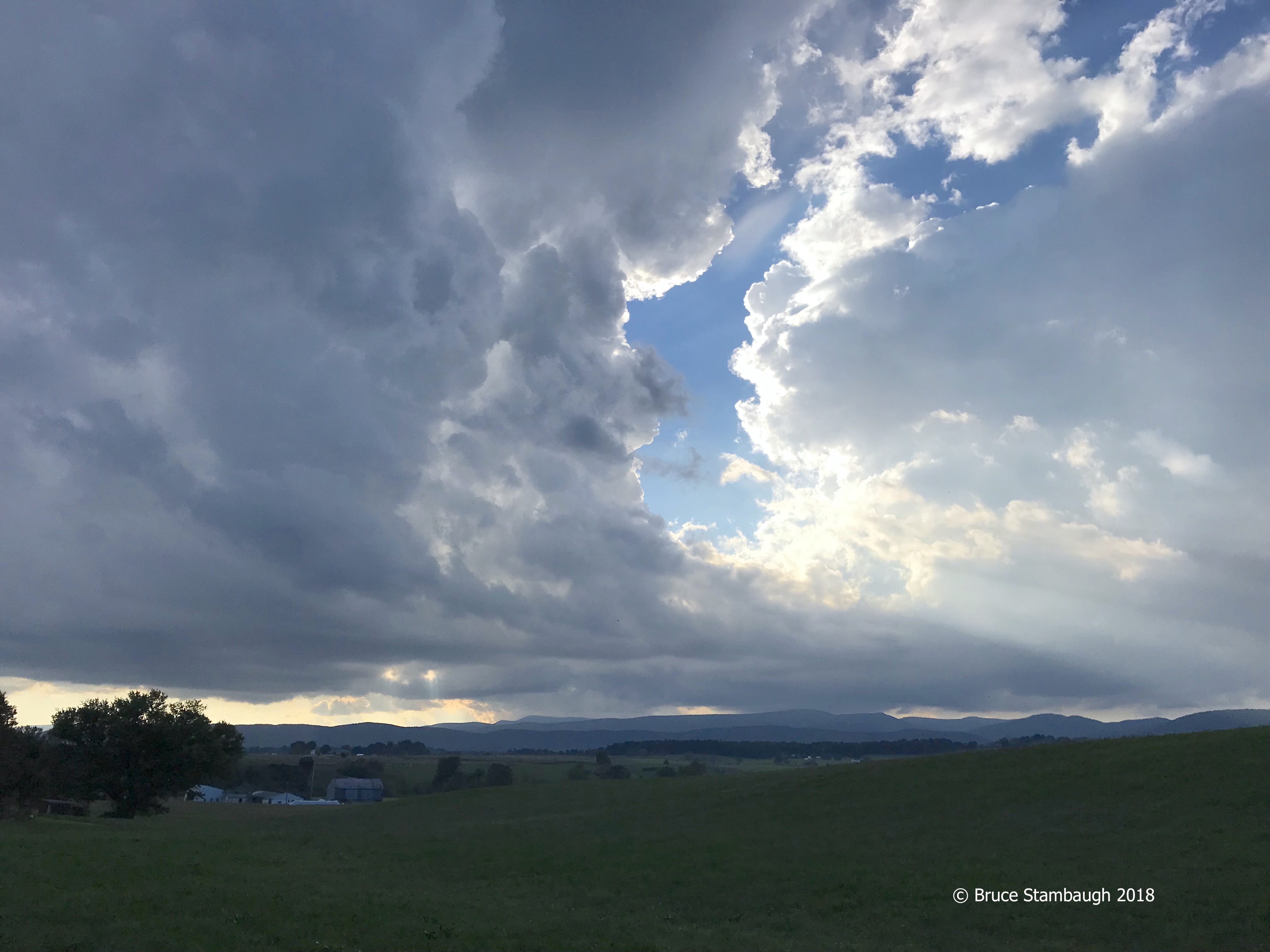
Not far from the forest, the roadway showed signs of recent rain. Indeed, the clouds that hung close to the Appalachian Mountains to the near west looked ominous. With the early evening sun occasionally peeping through, they also looked gorgeous. The billowing thunderheads showed every shade of gray. Sun rays streamed through breaks in the building cumulous clouds, creating a stunning rural scene.
When I reached the small parking lot of the forest, the bucolic view towards the mountains was surreal. I turned my attention to shooting the unfolding and rapidly changing scene. The valley played open to the west, giving me an excellent view. I snapped away with both my camera and phone. Satisfied with the shots, I returned to my original goal of walking the woods in search of any migrating birds settling in for the night.
I had only walked a short distance when the heavens opened up. I returned to my vehicle, contented with the pastoral scene of clouds, rain, and sun rays. The birds would have to wait for another day.
Heavy rains from the remnants of Hurricane Florence forced many bird species to lay low. This young female Ruby-throated Hummingbird hunkered down on the top rung of the tomato cage near our backyard hummingbird feeder.
I took a series of rapid-fire shots of the bird sitting in the rain. In one of those, the hummingbird shook the moisture off its feathers. I was fortunate to catch this awkward looking, twisting position.
My wife and I sat on our back porch enjoying a light lunch. A gentle breeze sifted through the backyard as monarch and skipper butterflies flitted about, buoyed by the day’s brightness and coaxed on by instincts humans have yet to understand fully.
The rhythmical hum of neighborhood lawnmowers joined in concert to drown out the hypnotic cadence of the cicadas and katydids. As if they were following instructions, the leaves of red maples and sugar maples were beginning to blush just a tinge of their real color hidden all spring and summer by the chlorophyll.
Try as it might, Daylight Savings Time can’t delay the inevitable. The sun and the moon, the stars and the planets, work their seasonal magic, triggering an unstoppable unfolding of goodness and allergies alike.
Even in the noontime heat and humidity, senior citizens and expectant mothers walk their dogs on the broad neighborhood streets. In some cases, it’s the other way around, leashes fully extended, human arms straining to keep control and still chat on their cell phones.
Dragonflies dart here and there, somehow avoiding being lunch for some hungry migrating birds. Black and turkey vultures circle overhead, letting the convection vortexes carry them higher and higher.
White and yellow Sulphur butterflies zigzag their way past my window as if imitating fallen leaves being blown through the yard. A few grasshoppers jump from one blade of grass to another in short flights like so many commuter planes.
This slideshow requires JavaScript.
Summer’s full corn moon has come and gone in one cool weekend, a pleasant relief from the storms and heat. But come Monday, the late summer swoon returned, ushering in more warm and muggy weather all across the eastern United States.
So intense was the dreaded combination of atmospheric siblings heat and humidity, some schools mercifully canceled or dismissed early. Without air conditioning, students and staff swelter, unable to conduct the proper learning processes.
That weather, however, eventually ends. Sooner or later, September’s customary, soothing elements do return. Blue-sky days precede comfortable evenings followed by starry nights. Unless infiltrated by tropical storm remnants, thunderstorms come and go without catastrophic consequences.
That’s what makes September the jewel in fall’s seasonal crown. It quietly but most assuredly melds August’s stubborn temperament into October’s Technicolor Dreamcoat landscape.
Until the first killing frost, September is the pollinators’ paradise. Squadrons of bees, flies, ants, butterflies, hummingbirds, and hummingbird moths follow the sweetness from fall bloom to fall bloom.
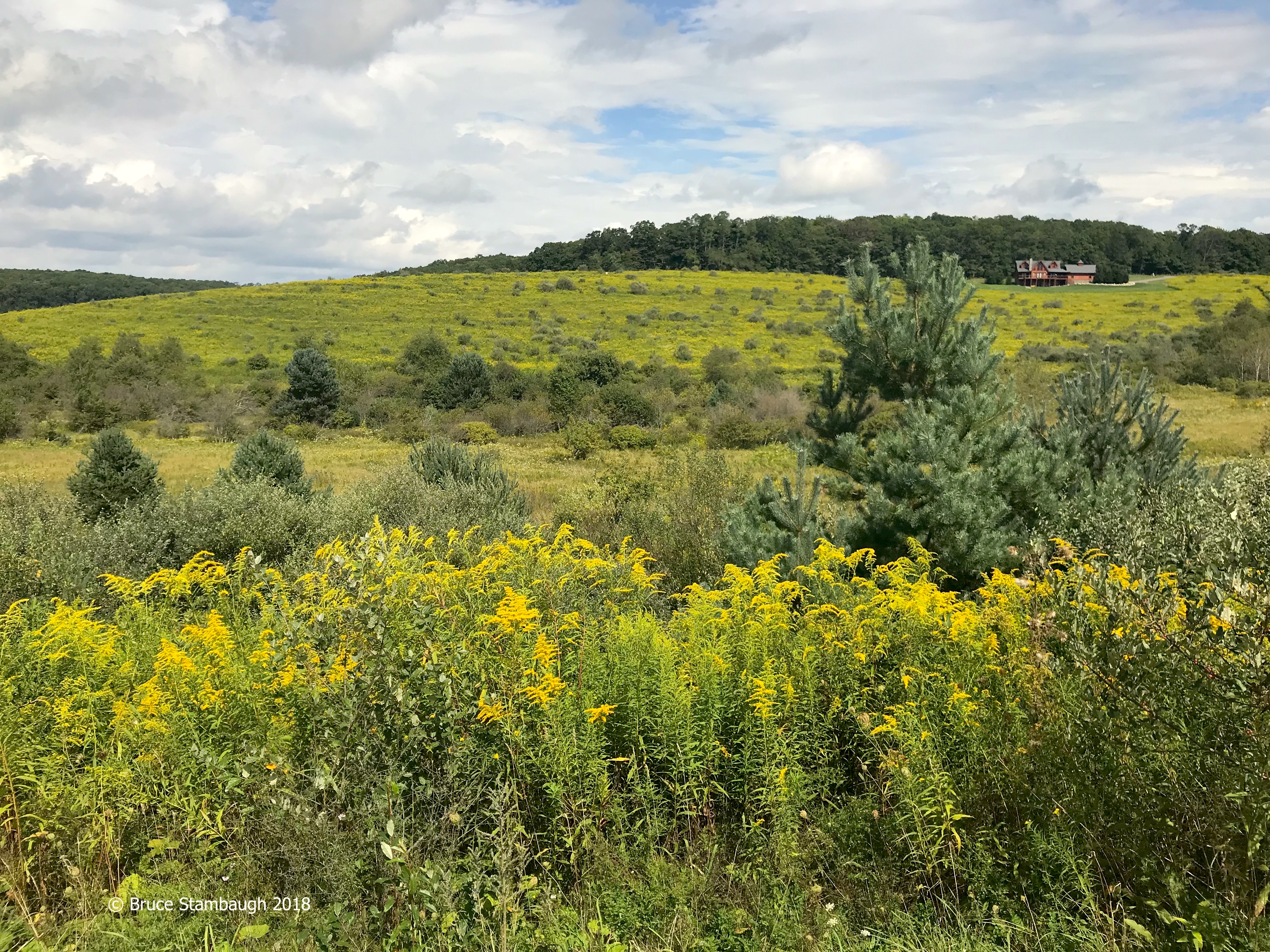
The mums’ warm colors have replaced the showy bubblegum petunias as the go-to domesticated floral display. Melons, gourds, pumpkins, and squash take center stage at produce stands. Thorny thistles and goldenrod populate the rural roadsides until they meet their sickled doom.
The furry critters must note the changes as well. The squirrels and chipmunks are bolder, more aggressive in their foraging, which is only appropriate. Their lives likely depend on the amount they stored if they can remember where they put their cache.
The morning and evening chatter at the backyard bird feeders is diminished to Song Sparrows and Northern Cardinals, with the Carolina wren making an occasional soliloquy. Now and then the northern mockingbird will chip in a few bars, too.
Once the winter migrants show up in a month or so, that scenario will change. Until then, we’ll enjoy the spontaneous choruses of the crickets, katydids, and cicadas. We’ll joyfully anticipate autumn’s arrival while summer’s pleasantries still linger.
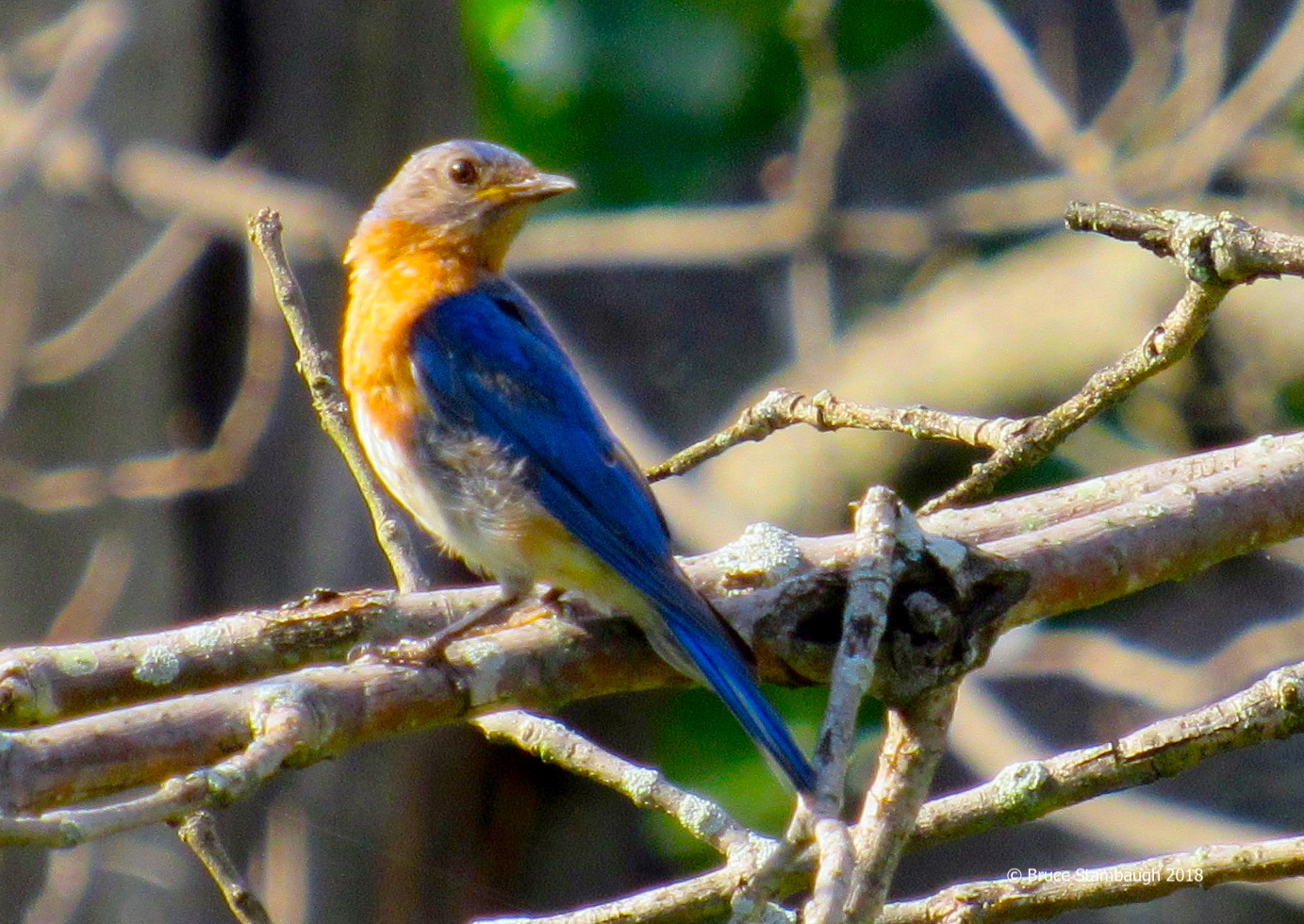
I was fortunate enough to catch this male Eastern Bluebird looking over its shoulder. Like a good father, this bluebird seemed concerned about the welfare of its mate. The female was nearby, having landed on a bluebird box where all indications were that the pair had young. Both had been carrying insects into the box.
I loved how the afternoon sun accentuated the bird’s colors. For those old enough to appreciate the title, I couldn’t help but think of the 1959 song by the Fleetwoods, “Mr. Blue.”
There we were, two couples sitting around a table at 10 o’clock on a beautiful but sultry Monday morning playing cards. Our only objective was to win the game.
Nana Neva and I had taken an extended weekend break from our part-time grand-parenting duties to explore a less-familiar area of Virginia with another retired couple.
We had worked all of our lives to reach this point. Playing cards followed by a round of dominoes seemed like the perfect way to begin a new week, especially on a hot and muggy morning.
We played until lunch and then walked down the slanting limestone driveway to a cozy eatery in a marina for some fabulous homemade ice cream. Choosing which flavor became the toughest decision we made all day.
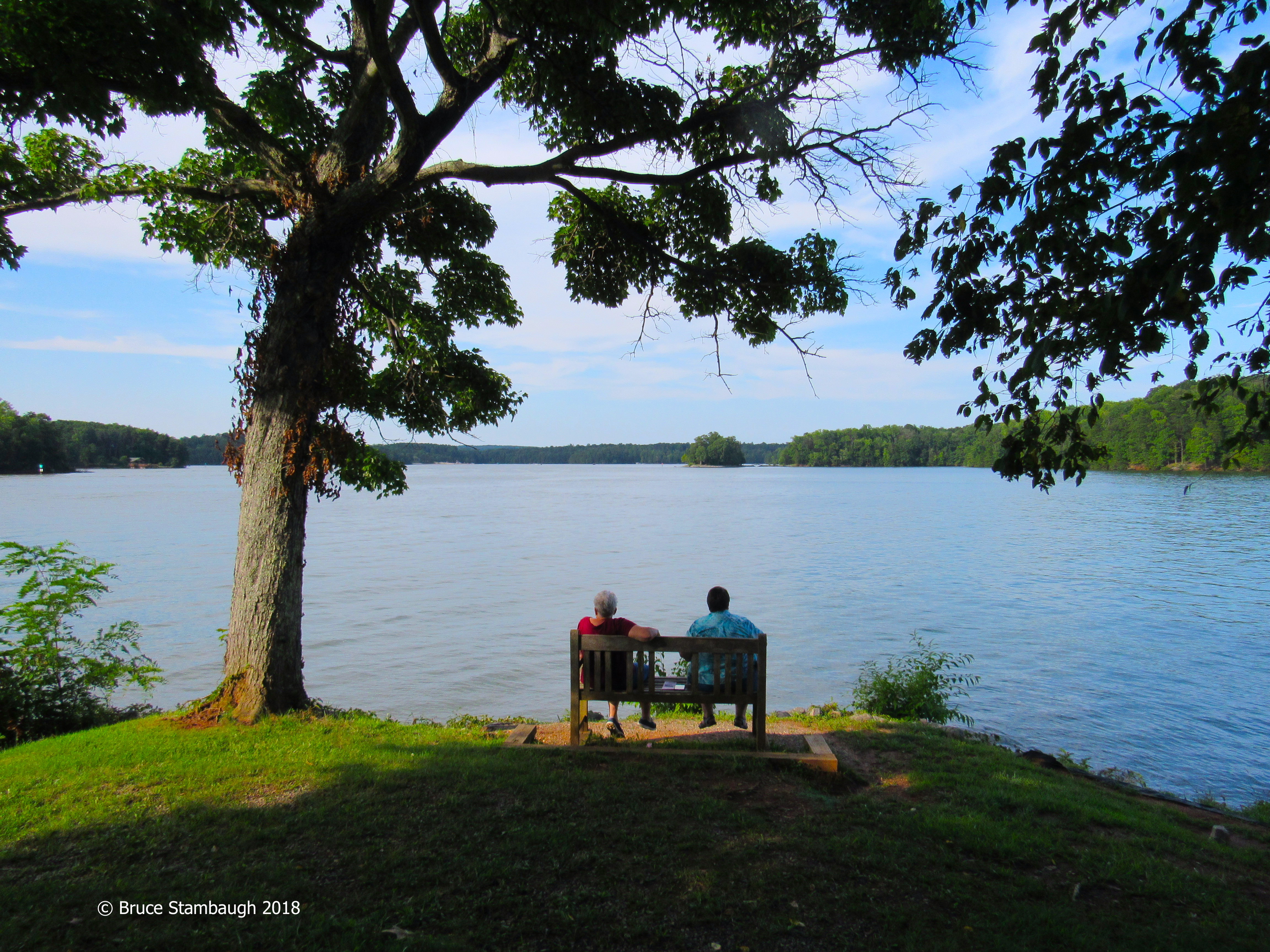
The location had much to do with our buoyant attitude. We had rented a cottage situated on a point overlooking a man-made lake where the dam generated hydroelectricity. The lake was long and narrow, the product of a few creeks damned up to fill steep valleys in southern Virginia.
Such a project brought more natural benefits than producing power. Wildlife thrived.
On its perch.
The eagle eye.
Each morning and evening a resident bald eagle perched on a favorite snag, often on the same limb a quarter of a mile across the bay from us. We had a perfect view from our deck that faced the water, made murky by a series of recent heavy rains.
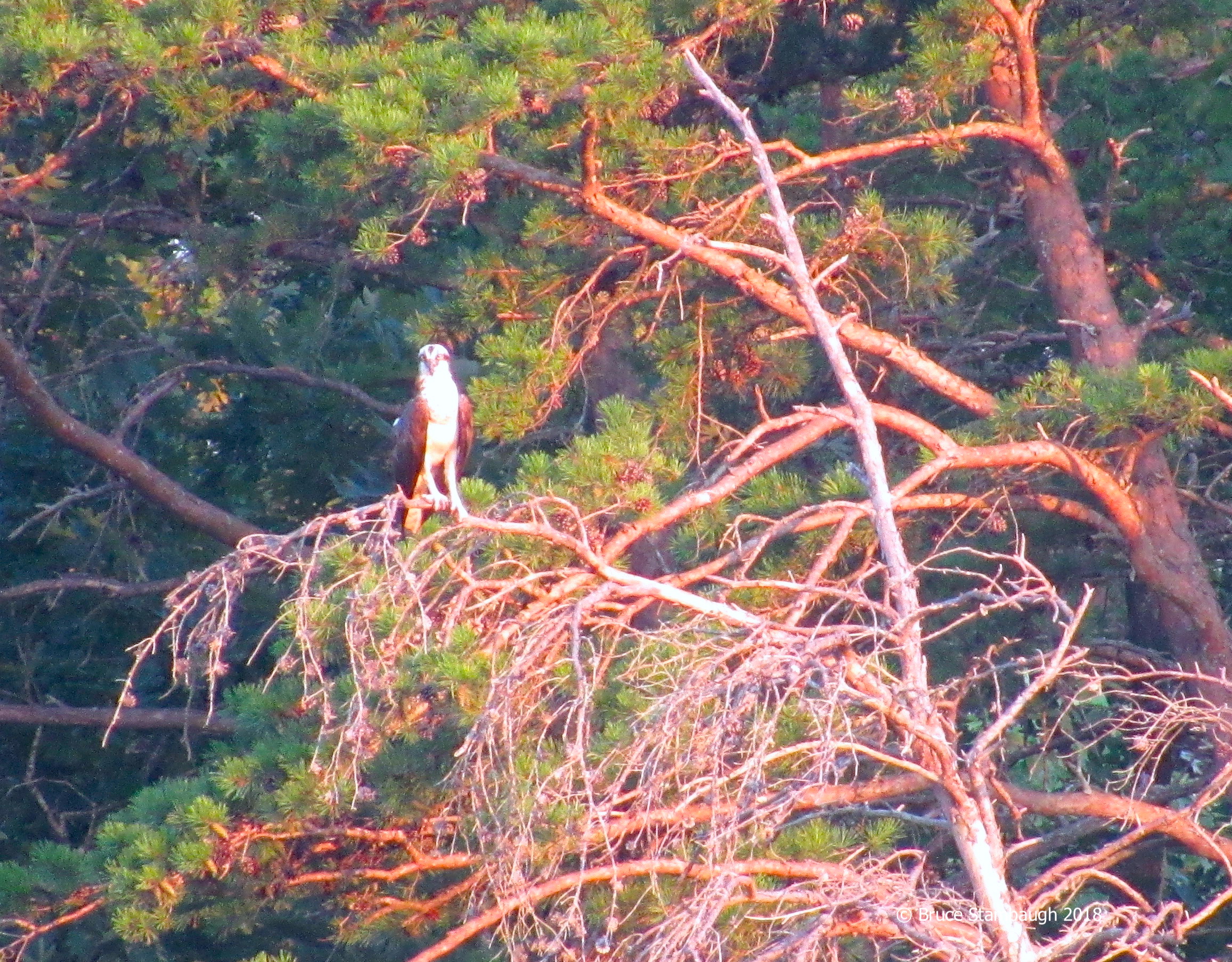
On the watch.Before breakfast, I spotted an osprey perched on a dead pine farther up the narrow bay. The “fish hawk” stood tall and stately in the morning mist.
Pileated woodpeckers called and flew back and forth across the water, too, landing if only briefly in the sizable wild cherry tree in our front yard along the shoreline. An eastern kingbird, a much smaller species, chased the much larger woodpecker upon every approach. Fierceness is the kingbird’s nature.
The ripe fruit of the lakeside tree drew songbirds, too. The kingbird didn’t seem to be as bothered by the Carolina chickadees, tufted titmice, red-bellied woodpeckers, and even young redheaded woodpeckers. I could have stayed there all day to watch that show.
This slideshow requires JavaScript.
The previous day we ventured to Rocky Mount, the county seat where my maternal grandparents were born. We researched family records in the historical society. The lilt and soft, southern accent of our hostess could have been my grandmother’s.
In the process, I was a boy again, standing in the hot Virginia sun inserting a nickel into a parking meter for my father. Dad had to finish the task because I wasn’t strong enough to turn the knob so the coin would activate the meter. The street meters have long disappeared, just like the department store where a relative had worked.
We visited the Booker T. Washington National Monument where the famous educator was born and freed as a slave. The sweltering heat and humidity made it easy to envision the slaves toiling in the parched fields.
Back at the cottage, boats rippled the reflected sunset as they headed in for the evening. Spiders devoured gnats trapped in the delicate webs on the deck just as a young eagle glided across the dusk’s burnished light.
This is what retirement was meant to be. We are grateful to be at this phase of our lives.
That said a palpable quietude subdued any thought of celebration. Too many others would not know the same joy and appreciation. Empathy should temper our golden years. Compassion must rule the way to ensure a purposeful retirement.
American White Pelicans wintering near Jacksonville, FL.
By Bruce Stambaugh
Fall is for the birds.
Now, I love autumn, and birding is one of my favorite hobbies. It’s just that bird seasons don’t quite match up with those designed by us humans.
When the calendar flips to August, fall bird migration season has officially begun. It ends come December.
Migration, of course, isn’t confined to only those months. Some shorebirds started their long journeys south in July. Many of them have a long ways to go. For example, pectoral sandpipers nest in the high Arctic tundra and winter throughout South America. Consequently, they need plenty of time to fly those thousands of miles north to south.
The start of migration varies significantly according to the numerous species. Besides shorebirds, different types of birds of prey, songbirds, and waterfowl all migrate.
Yellow-rumped warbler in its duller fall colors.Those four months are needed to allow all varieties of birds to complete their journeys. Winter in the bird world runs December through February. Spring is March, April, and May. That makes summer the shortest season with just June and July.
It’s not like the birds take notice or even care about months. They behave on natural instincts with recent research indicating that some birds can actually see the earth’s magnetic poles. Stars and the position of the sun in the sky also may motivate our avian friends to embark on their extended trips.
Some birds will migrate only short distances, say from mountainsides to the valleys below. Others migrate medium distances, moving just a few hundred miles south.
Not all birds migrate, however. Some, like American robins, often congregate in flocks once the nesting season is over. Sometimes extreme weather pushes them out of their normal range where they can find the necessary food supply to survive.
Male Eastern Bluebird.Other birds, like eastern bluebirds, will also group up for both warmth and safety. It’s not unusual in the throes of winter to find several bluebirds huddling for warmth in one bird box.
Fall and spring are the seasons most birders relish. They long for the opportunity to see birds that are only passing through the area. They may just get a glimpse of a rare and endangered bird like a Kirtland’s warbler, a bird that nests in the jack pines of northern Michigan and winters in the Bahamas.
In the spring, birds are in their brightest mating colors. The males are the most colorful. The females tend to be duller for practical reasons. They need to be subtler so as not to attract attention to their nests.
It’s just the opposite in the fall. With the breeding season over, the birds transform into less noticeable color schemes. They need to blend in with their surroundings as best they can to be less conspicuous to predators.
When it comes to living, birds need the same essential elements as the rest of us. Water, food, and habitat are crucial for birds to survive, whether nesting or on the move. Forests, fields, fencerows, dead trees, mudflats, marshes, ponds, and waterways all serve as vital habitat, depending on the bird species.
A barn swallow on its delicate nest in June.Food is a primary motivator for those that migrate. Swallows and purple martins thrive on insects. That’s why they arrive in the spring and leave when the insect supply diminishes. Of course, they require appropriate shelter, too.
More than half of the 650 species of birds in North America migrate. With migration already underway, it’s why birders everywhere have their binoculars, spotting scopes, and cameras ready for action.
On behalf of birdwatchers everywhere, welcome to fall.












You must be logged in to post a comment.