The Tea Party Museum, Boston, Massachusetts. Photo by Bruce Stambaugh
My wife and I recently did a land/sea tour of part of New England and eastern Canada. Our small group covered a lot of ground in two weeks.
Instead of inundating you with multiple photographs and detailed descriptions of the places we visited, I challenged myself to choose one photo from each day. That’s not an easy task when you see so many historical spots and scenic landscapes.
Nevertheless, I hope you enjoy this attempt at super-summarizing our two-week trip.
Boston, Massachusetts, was our first stop. Neither my wife nor I had ever been to this historic city that played such an essential part in the development of the United States of America. So, we flew in a day early to get settled.
Like much of the rest of the country, Boston was unusually hot for the end of June. Consequently, we opted for a trolley tour of the bustling, unfamiliar city to avoid excessive walking. That limited my usual way of photographing our trip’s highlights. Still, I was able to capture the combination of the deep history and fast pace of this 21st-century city.
I chose the photo of the replica sailing ships moored at the docks of the Boston Tea Party Ships and Museum because it best represented both the history and the current vibe of Boston.
The Sons of Liberty set in motion the American Revolution by dumping 342 chests of East India Company tea into the harbor. The War of Independence began two years later near Boston.
But look beyond the vessels to the green space along the waterfront to the modern office buildings. See the bridges that connect the many commercial and business areas on and near the waterfront. This scene is but a microcosm of the thriving port city of Boston as it was in the early colonial days and is today.
In our all too brief stay in Boston, we saw historic spots and locations, city parks, monuments, lovely rowhouses, government buildings like the state capitol, and modern skyscrapers. We also found the good people of Boston to be friendly, helpful, and hospitable.
Boston proved the perfect place to begin our trip into New England and on to eastern Canada.
Departing Halifax, Nova Scotia, Canada. Photo by Bruce Stambaugh
I love giving and receiving hugs, especially as I age. The fact that my four siblings and I received little physical affection growing up might play a significant role in my desire to be a hugger in my senior years.
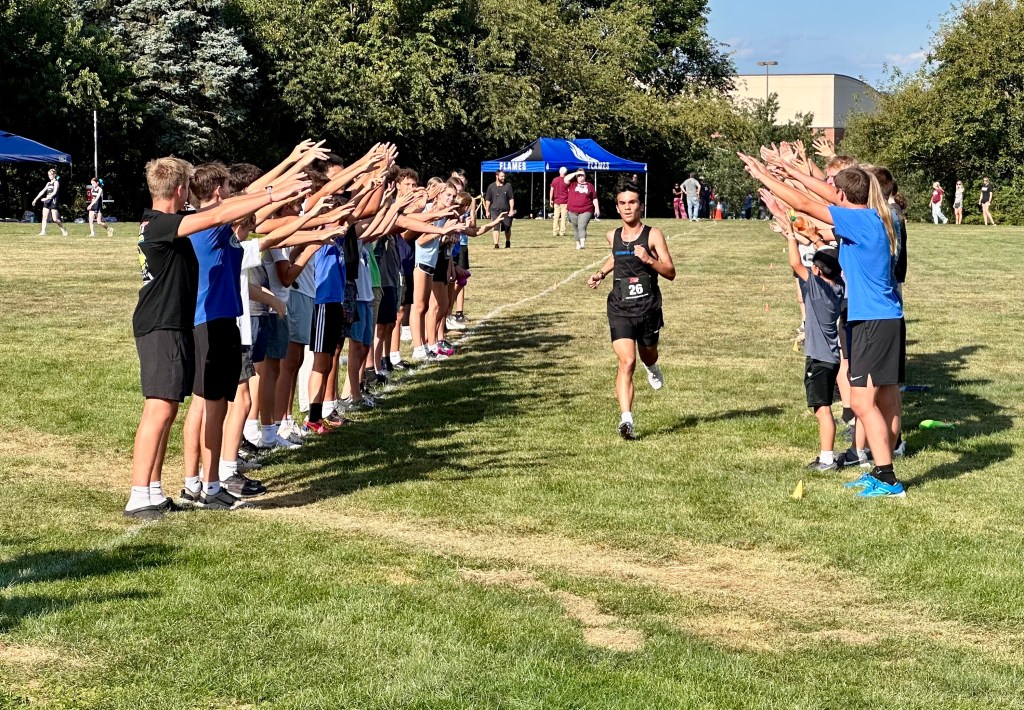
There’s nothing better than giving my grandchildren a hearty hug after an athletic event or concert in which they have participated. And too, I melt when they hug me for simply being their grandfather. That momentary embrace says more than any card or note of appreciation.
The same is true for close friends, especially as we endure the aging process with all its expected and unexpected ailments. When we gather in small groups, whether at church or in our homes, the first question often asked is, “How are you?”
My wife and I are in two different small groups of peers, most of whom have Ohio roots like us. We now live in Virginia’s Shenandoah Valley, close to three of our four grandchildren.
When with other seniors, we chat around a meal or a table of snacks and drinks about our health. Sharing and listening become equivalent hugs, emotional squeezes, if you will. As septuagenarians and octogenarians, we all need those affirmations as we deal with our latest ailments.
Our ship, the Zuiderdam, docked at Portland, Maine. Photo by Bruce Stambaugh
However, since we returned from a recent cruise, I’ve had to learn to be happy accepting verbal greetings instead. I cracked three ribs in a freak fall near the end of our trip.
All was going well until our ship approached Halifax, Nova Scotia. Before we left, friends cautioned us not to fall. I had every intention of complying.
As I stepped into the shower, and please don’t try to imagine that, my left foot hit the shower mat just as the ship pitched in the opposite direction. I flew through the air like Superman, only not as gracefully.
My arm stopped my flight by hitting the sink, and I crashed to the floor with a loud thud. Excruciating pain shot through my right side. My wife said I made noises she had never heard before from any creature.
After the initial shock, I composed myself and finished getting ready for the day. However, after breakfast, my ribs pained me greatly. We headed to guest services, and I was immediately wheeled to the ship’s medical center.
The friendly and competent medical staff quizzed me, took my vitals, and gave me medication to ease the pain. X-rays showed a cracked rib, but the doctor wanted me to go ashore to the hospital. Doing so would effectively end our vacation, and I didn’t want that to happen.
Painful as it was, a cracked rib wasn’t a life-or-death situation. We enjoyed Halifax as best we could from our veranda. I checked in the next two mornings for additional shots of pain medication, and we were able to fly home on schedule.
But because I had also hit my head in the crazy fall, we went to our local hospital’s emergency room after we arrived home. CT scans showed not issues with my head, though my wife questioned those results. I did, however, have three cracked ribs, not one.
We took it easy the next few days before I felt like venturing out. Friends who didn’t know about my accident greeted us with the usual hugs, but I politely waved them off and explained.
I have developed a new appreciation for the importance of the rib cage to the rest of the body. I measure my moves and watch my steps. I also recognize that three cracked ribs are insignificant when compared to more consequential diagnosis of cancer and other diseases of friends and family.
I’m still healing and greatly looking forward to when I can once again hug and be hugged without pain. Until then, a fist bump will do.
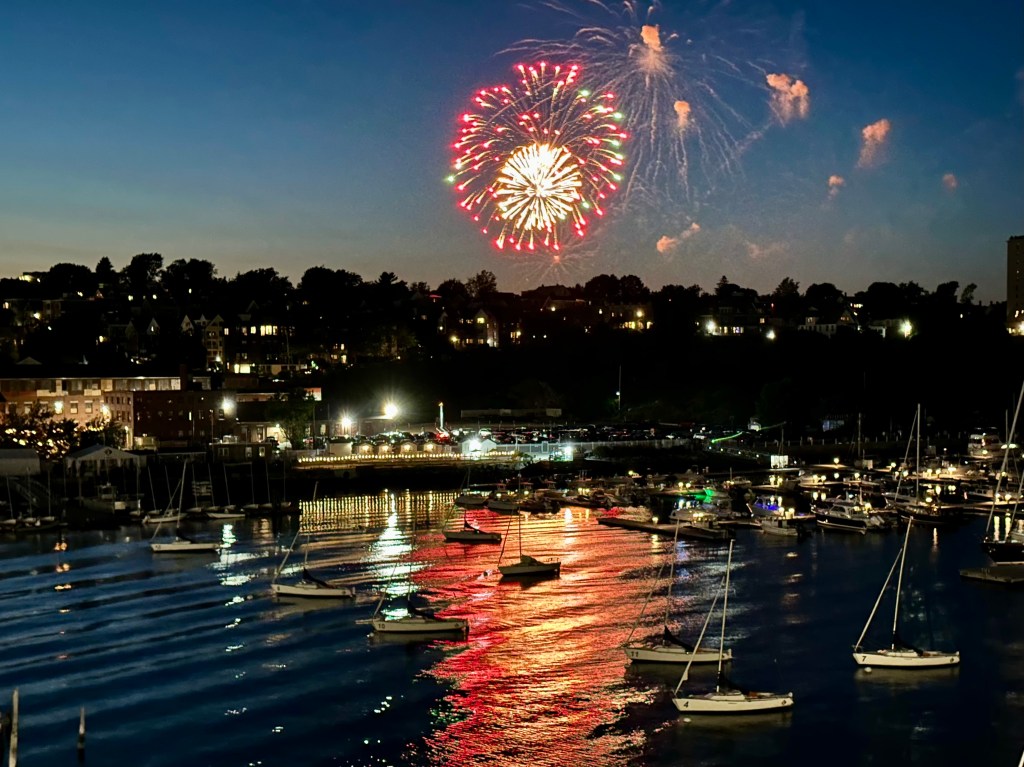
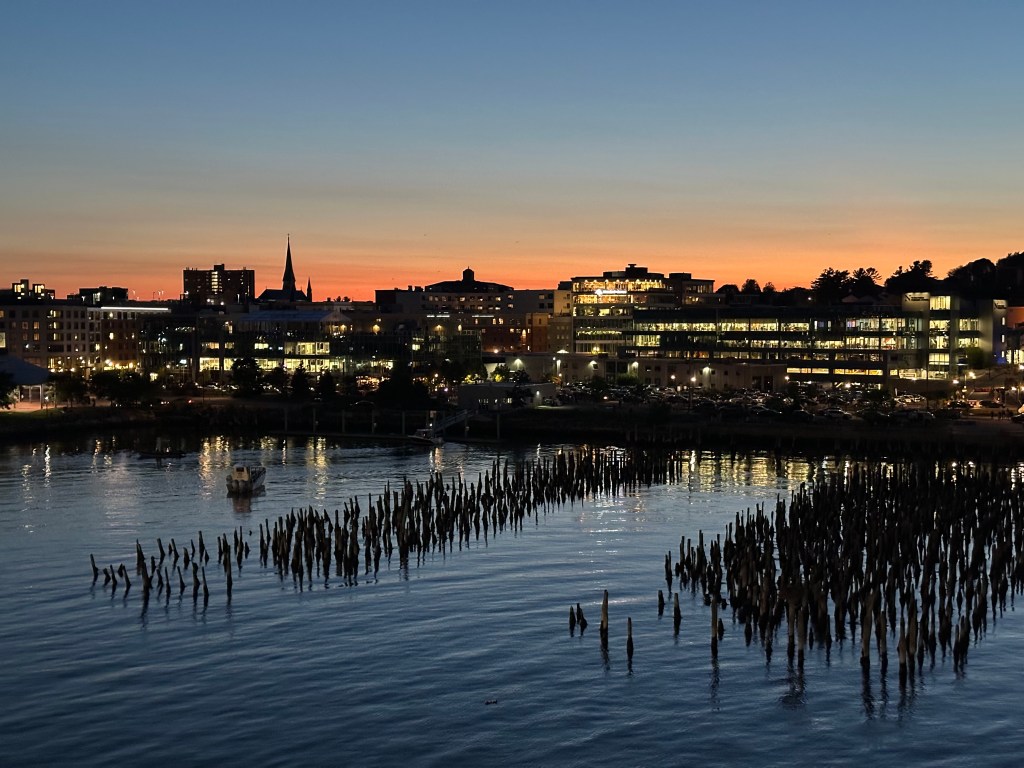
The Portland, Maine waterfront at dusk. Photo by Bruce Stambaugh
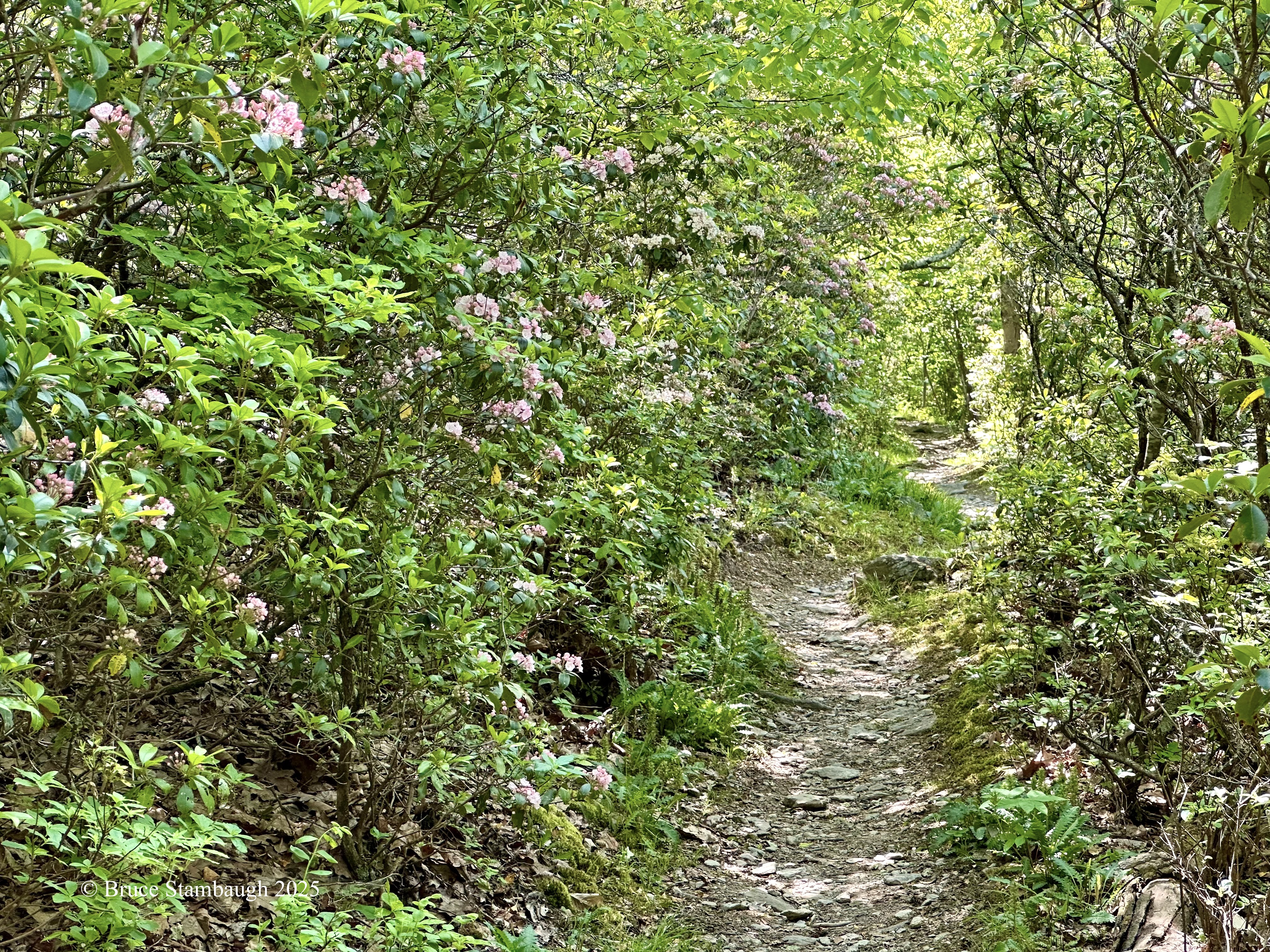
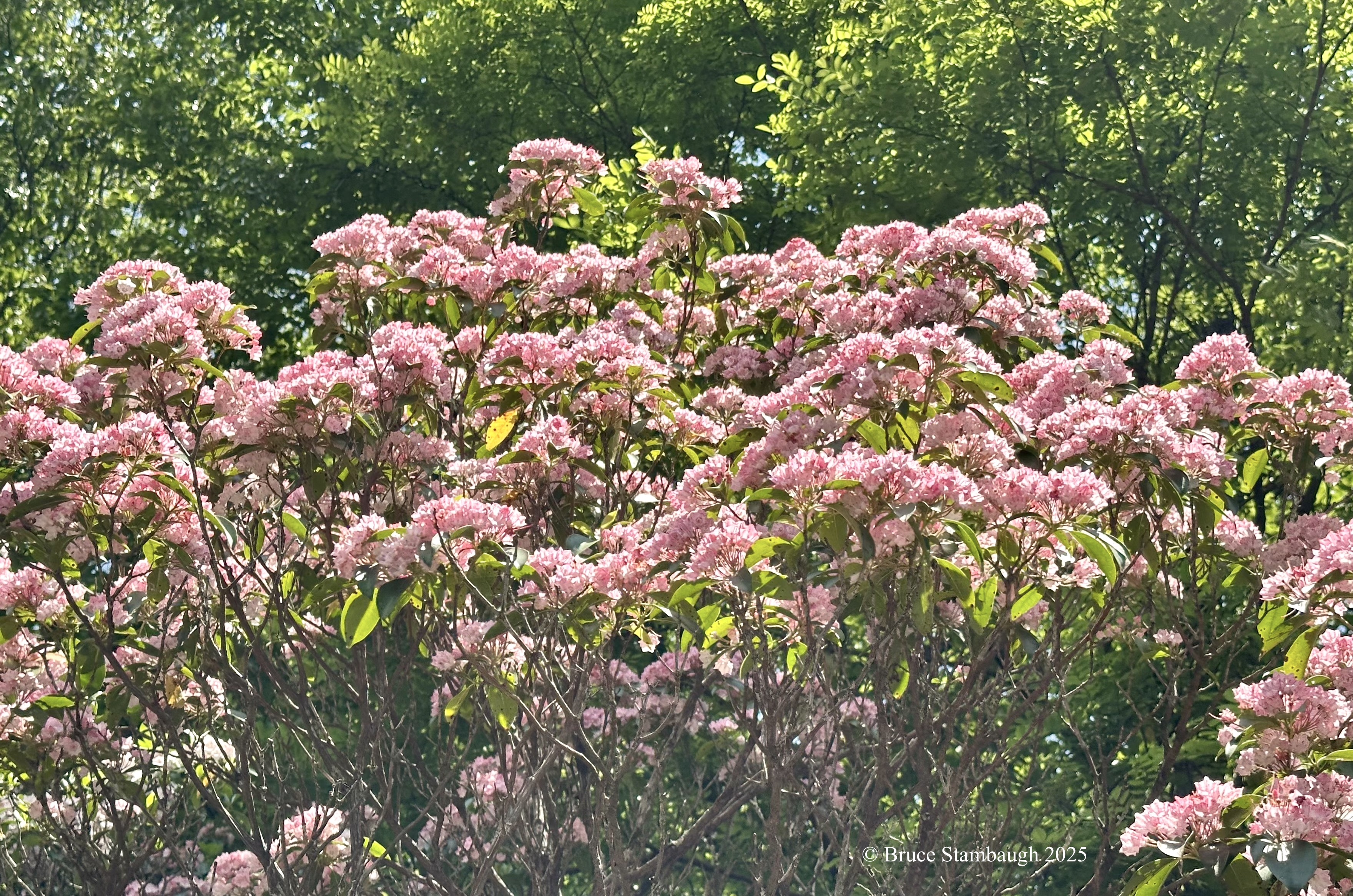
Mountain Laurel blossoms. Photo by Bruce Stambaugh
I went for the birds and the blossoms, but forgot about the bugs. They didn’t deter me, however.
My neighbor had told me that the Mountain Laurel bushes were blooming at various locations in Shenandoah National Park, just a short drive from my home. The laurel blooms from late May into mid-June, depending on elevation.
Of course, I had to see for myself. I fixed a hiker’s lunch, packed my binoculars, camera, and a couple of jackets, and headed out. It’s often 10 degrees or more cooler in the mountains than in the Shenandoah Valley, where I live.
I didn’t need to bother with the jackets. The temperature was 70 degrees when I arrived, and it was humid, with little to no breeze. It was 79 when I left.
A small black bear cub greeted me not long after I entered the park. Fortunately, it scampered back off the old stone wall away from the road and into the forest.
I soon reached my first destination. Just a short distance off Skyline Drive, I reached the Appalachian Trail, which crossed a fire road. I didn’t see any Mountain Laurel, but songbirds were plentiful. So were the knats and mosquitoes.
A male Eastern Towhee. Photo by Bruce Stambaugh
I strolled along the AT, swatting at the pesky bugs and trying to locate the many warblers I was hearing and recording on my smartphone’s birding app. Singing its unmistakable “drink your tea” melody, a male Eastern Towhee posed for a photo on a limb hanging right over the trail.
I met a lone through-hiker from South Carolina. She hoped to reach Mt. Kadadhin in Maine by mid-September. She told me she had passed many stands of Mountain Laurel on her hike so far, which began at the Appalachian Trail’s traditional starting point, Springer Mountain, in Georgia.
She headed north while I retraced my steps to my vehicle. The birdsong was terrific, but the forest’s full foliage made it challenging for this old guy to spot the warblers as they flitted from one branch to another, munching on their insect smorgasbord.
Besides, my main goal was to photograph the blooming Mountain Laurel. I followed my neighbor’s directions to another section of the AT, where the Mountain Laurel was so prolific that it formed a floral tunnel.
The laurels were in all stages of blooming, from tight pink buds to hexagonal flowers in full bloom. In places, the sun filtered through the forest canopy, highlighting the beauty before me.
The laurel blooms offered no fragrance, and I never saw an insect of any kind on any of the hundreds of blossoms. There was a good reason for that. As pretty as the prized flowers are, they are poisonous to any living creature. Every part of the plant is toxic.
So, if someone offers you Mountain Laurel honey, politely decline. Merely enjoy the flowers with their evergreen leaves. If you go, make sure you take your favorite bug spray.
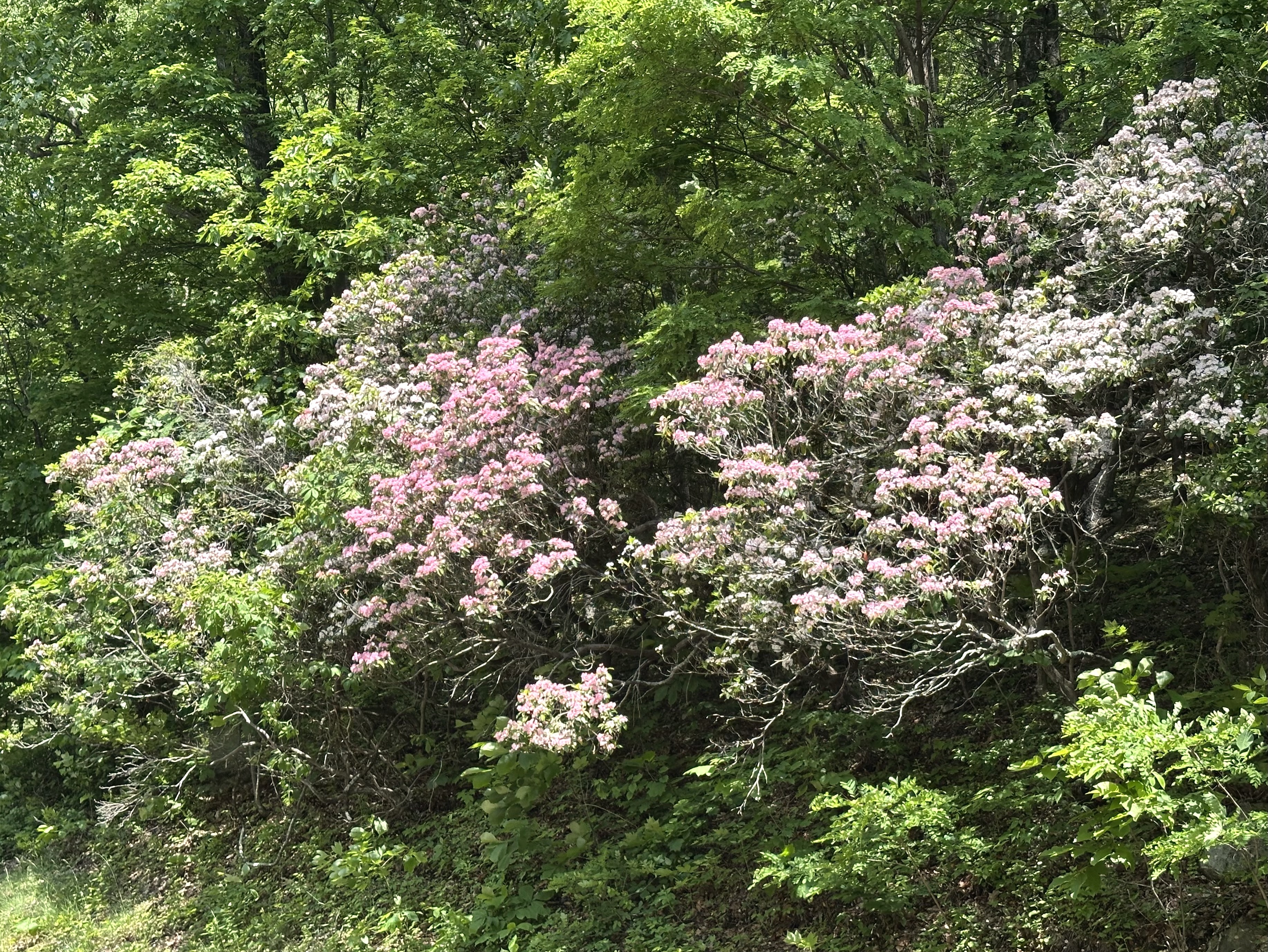
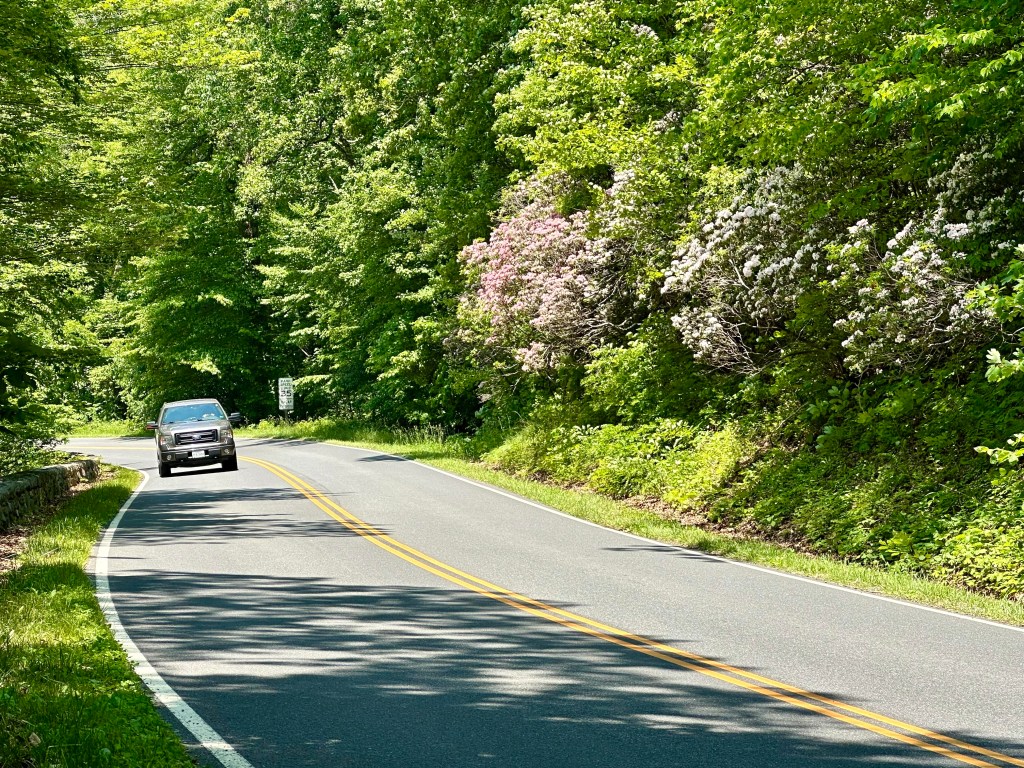
Mountain Laurel grows along the Skyline Drive in several locations. Photo by Bruce Stambaugh
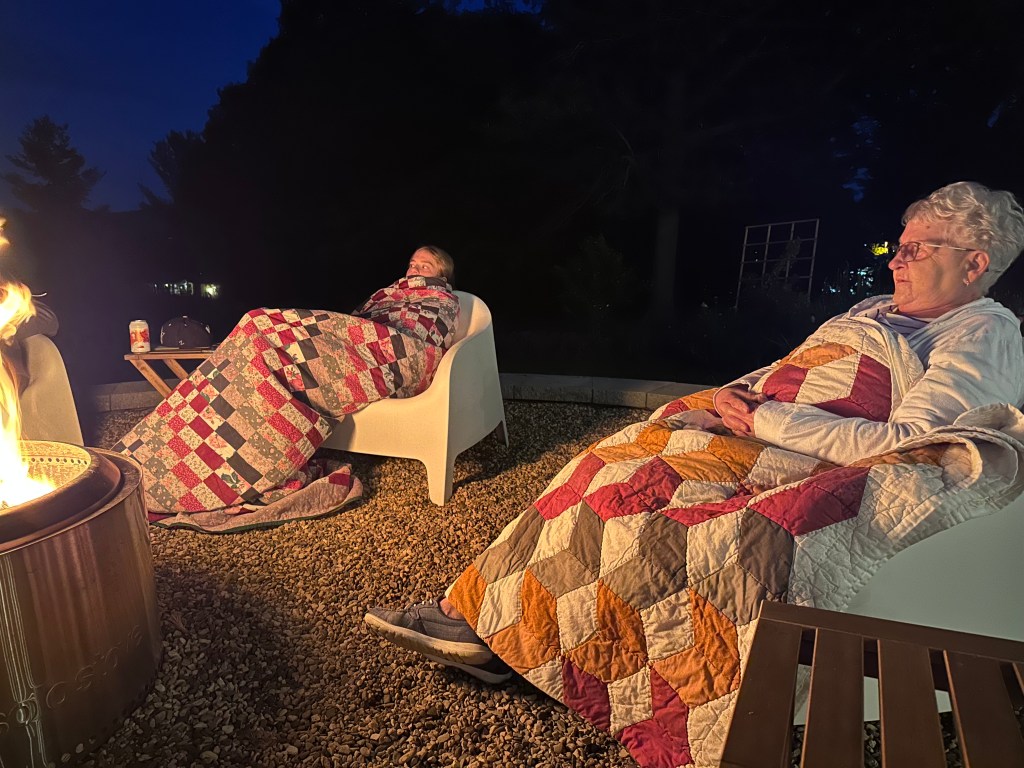
The quilt we gave our grandson for his high school graduation. Photo by Bruce Stambaugh
Today is my wife’s birthday. How is she celebrating? By doing what she does every day: helping others.
Whether it’s her birthday or not, she spends the better part of nearly every Tuesday volunteering at a local thrift store. She runs the cash register, sorts clothing and knick-knacks, and answers customers’ queries about the store, the city, and the Shenandoah Valley, where we live.
As we both approach 80, we strive to be proactive with our bodies, minds, and spirits. Assisting others helps us in all three areas. At the store, Neva engages with new folks, which she greatly enjoys. For the local elementary school, she helps pack nonperishable food for families in need.
She uses her skills to make comforters for people she will never meet. A church organization sends them around the world to those who have little to nothing.
Neva also demonstrates her altruistic talents for the family. Last night, she delivered a quilt that she had pieced and had quilted for our grandson’s high school graduation. She helped him pick the fabric and arrange the pattern. Neva even stitched in music notes on the quilt’s backside for our musically talented grandson.
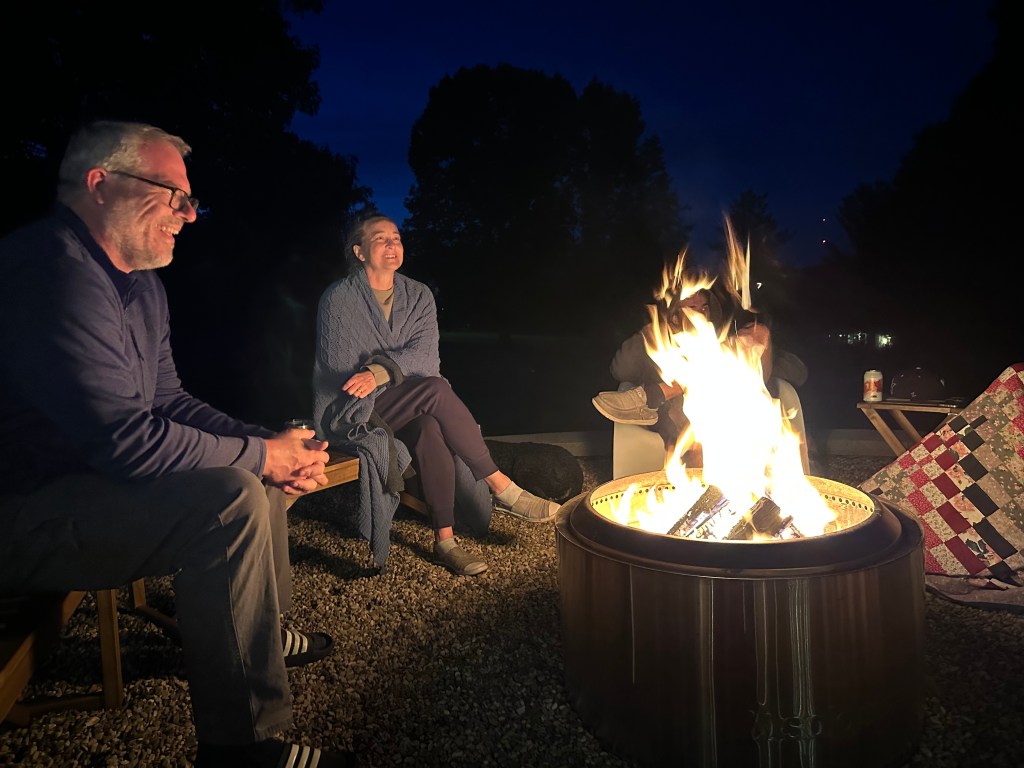
After that presentation, we sat around a campfire with our daughter’s family covered in quilts and blankets for no other reason than to enjoy one another’s company on an unusually chilly evening. Mere presence is another gift of giving.
Neva connects with a friend who has several children. With the ding of a text, Neva can be off providing rides from school to doctor’s offices and back. Now and then, she prepares a meal for them. Neva seems to run on opportunity, and when opportunity beckons, she responds more often than not.
Neva sends birthday, get-well, sympathy cards, and ‘thinking of you’ notes to those who need to be remembered. She often receives a return note or text of appreciation.
Yesterday, our freezer gave out. We hustled the thawing food over to our neighbor across the street, who graciously allowed us to temporarily store it in her freezer until our new one arrives.
In recognition of Neva’s birthday, that same neighbor brought a salad basket for Neva. She had picked the lettuce from her garden and included all the fixings for a delicious salad.
Neva’s salad birthday gift.
So, tonight, she and I will quietly celebrate her birthday with that salad and a few other food items that were too thawed to refreeze. It will be a satisfying end to another day of opportunities to serve.
No doubt, Neva is a trooper. She is determined not to let age deter her from doing what needs to be done to improve the lives of others, even on her birthday.
Earth Day in Virginia’s Shenandoah Valley dawned with a steely gray overcast sky. It remained that way for the entire day. Still, I ventured out to celebrate the day set to honor Mother Earth.
Recently diagnosed with some unsettling health issues, I spontaneously decided to join the celebration. I hoped doing so would calm my nerves and help me settle my emotions.
I usually plan my daytrips so I’m ready to go at the crack of dawn. Consequently, I lost valuable time in the morning packing my lunch, birding equipment, and attire for the mountains. My destination was Reddish Knob, a peak on the front range of the Allegheny Mountains on the border of Virginia and West Virginia.
With reports of migrating shorebirds and songbirds returning, I wanted to see what I could find. Even though I have been birding for most of my life, I consider myself an average birder. As I age, my hearing has diminished, so I can no longer hear the higher-toned decibels of many songbirds.
I’m grateful for the birding apps on my smartphone. I especially like the Merlin app for identifying bird calls. It’s not always accurate, but it gets the job done for me. Better birders than I, most of whom are younger, are proficient in naming birds upon hearing and seeing them. It’s reason enough to bird in a small group of experienced birders.
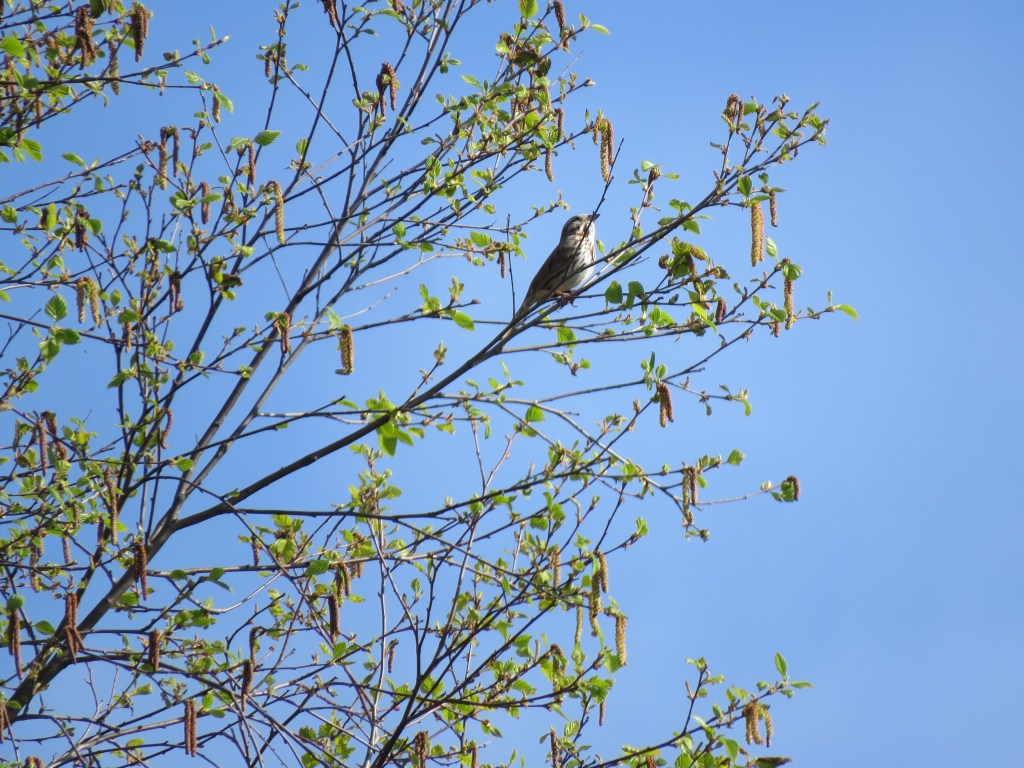
A Song Sparrow sang before I left home. Photo by Bruce Stambaugh
However, today, I chose to go it alone. I needed the solitude and the solace. I did so, knowing that other birders would likely be out searching in the same areas. But it wasn’t to be. I spent the day on my own.
Before I even left, a Song Sparrow sang from a tree across the street. My first stop was a nearby lake renowned for its bird-watching and fishing opportunities. Wind-felled trees provided cover and roosting areas for birds and reptiles.
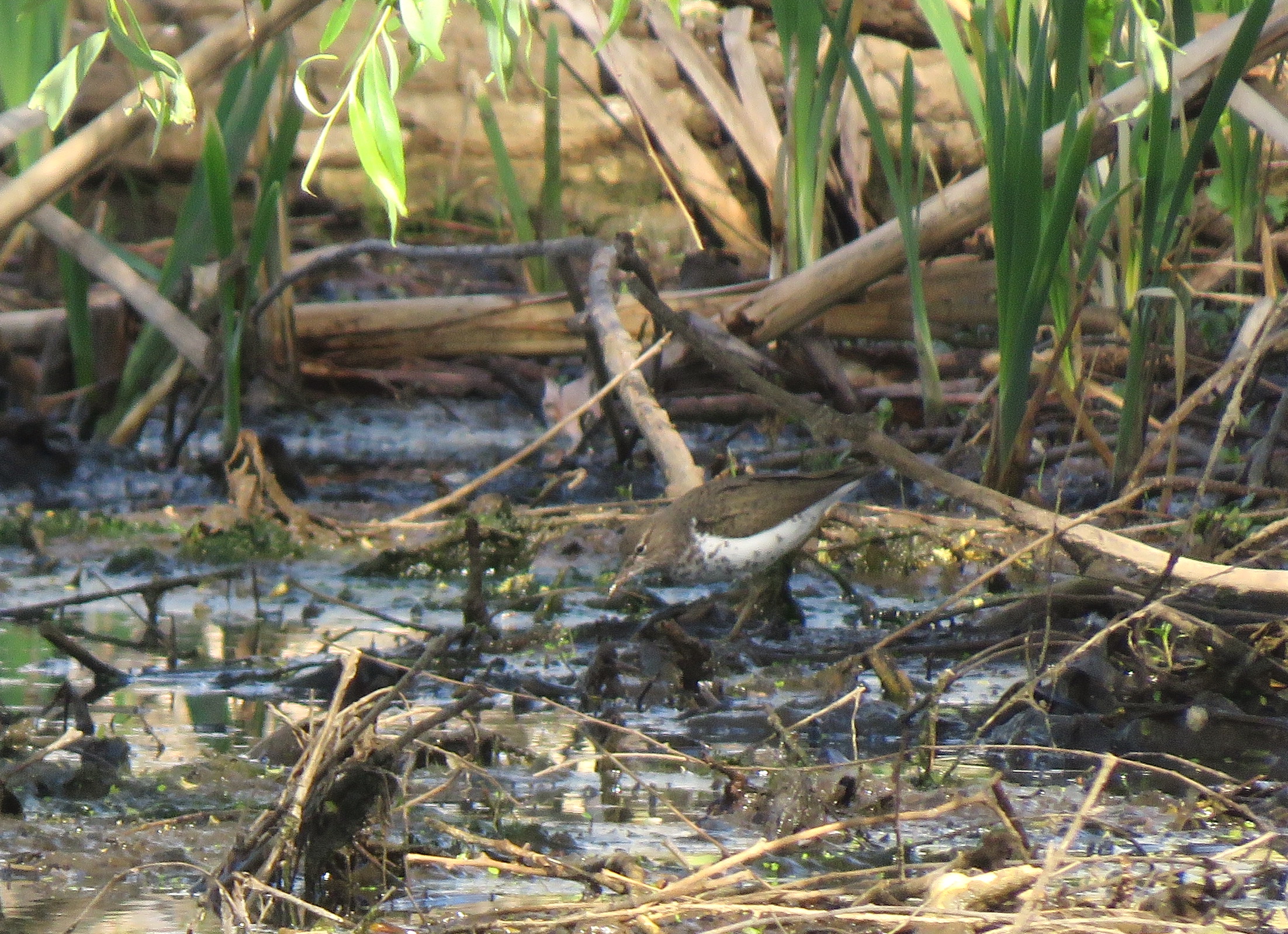
I spotted movement in the shadows along the shallow end of the lake’s shoreline. Beyond a downed tree where turtles rested, a Solitary Sandpiper stealthily stalked its prey. Closer to me, a pair of Spotted Sandpipers waded gingerly among the lily pads, reeds, and downed branches, searching for breakfast.
The lake is a hotspot for migrating ducks and other waterfowl, but there were none today. Above the spillway, however, a pair of Black-crowned Night Herons occupied separate branches on a giant sycamore tree. Soon, a stately-looking Osprey joined them. All eyes were on the lake.
A few miles away, I stopped at a marsh in a farmer’s pasture that allows visibility from the public highway. I heard the familiar calls of Killdeer, and a pair soon landed among the grasses sprouting from the marsh’s muck. Red-winged Blackbirds trilled while Black Vultures sailed silently overhead.
Killdeer at the marsh’s edge. Photo by Bruce Stambaugh
I passed through the rural burg of Briery Branch, and onto Reddish Knob Road. I drove at a snail’s pace with the windows and moonroof open. I turned on the Merlin birding app to listen for calls. When a Louisiana Waterthrush and Blue-headed Vireo popped up, I pulled off the narrow road, turned off the car, grabbed my binoculars, and scanned the tender, emerging leaves for birds. Though they continued to call, I couldn’t find them. The gray sky proved a harsh backdrop.
I continued the slow climb up the mountain. The valley gave way to steep forested hillsides, split by a rushing stream, as I drove higher and higher into the Allegheny Mountains. I stopped whenever a pull-off presented itself and scanned the trees and bushes for birds.
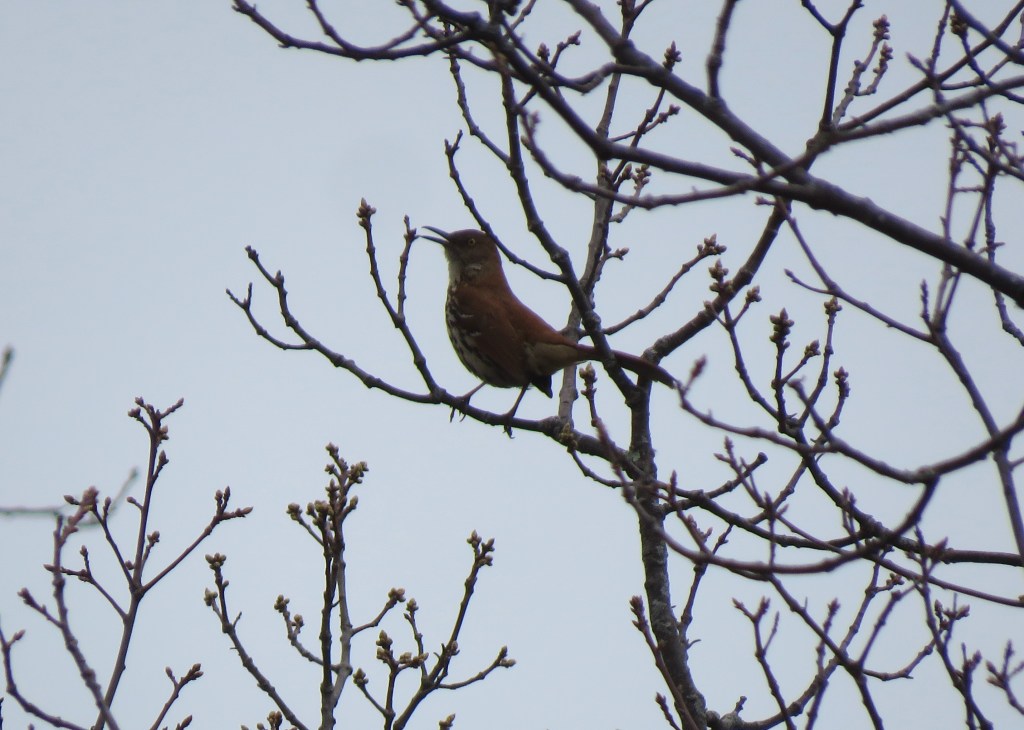
On the right, a recent controlled burn had left the landscape blackened. The underbrush was singed brown, and the needles of young pines hung yellow from the heat. The smell of the fire lingered in the air. Still, I found a Brown Thrasher perched in a tree singing its melodious song high above the scorched earth below.
Brown Thrasher singing. Photo by Bruce Stambaugh
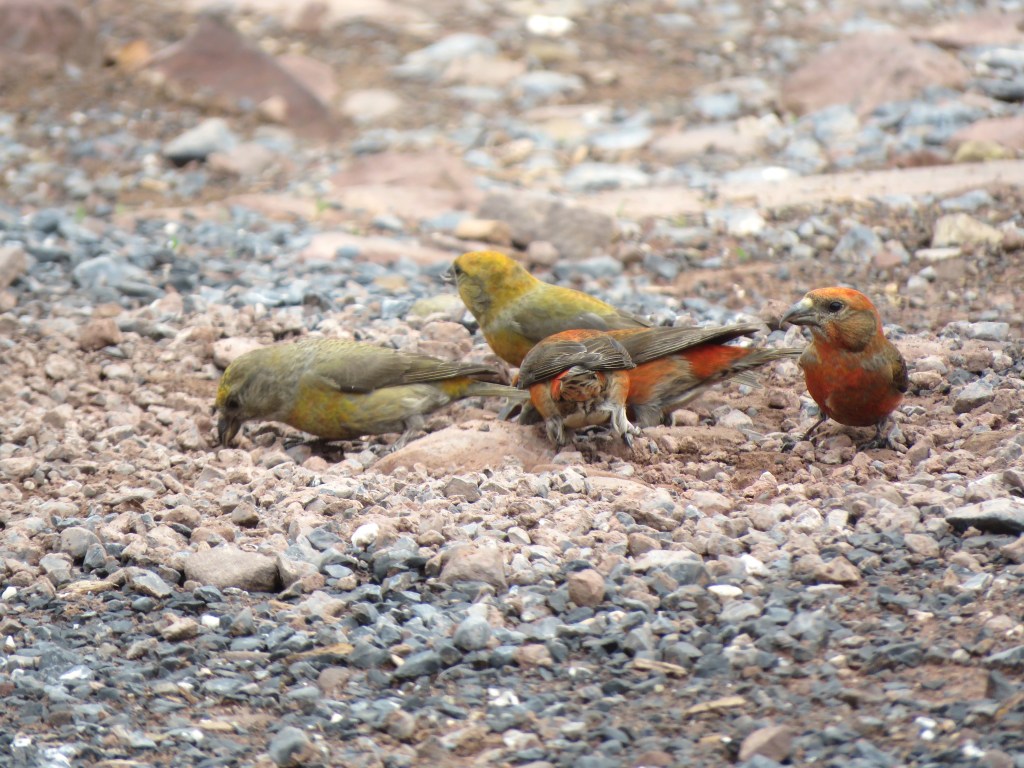
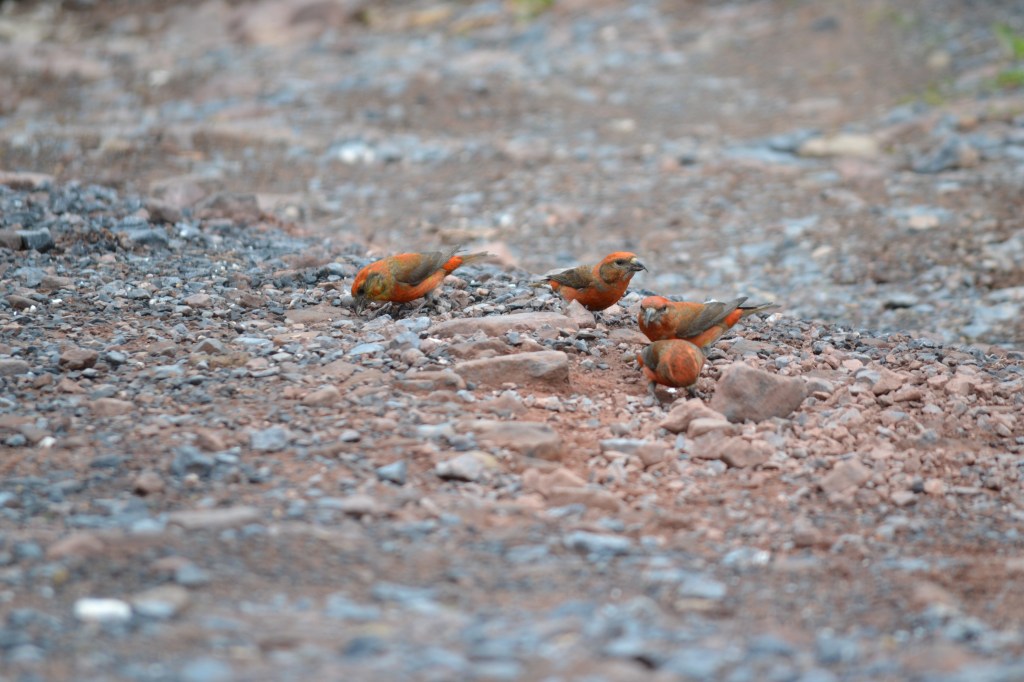
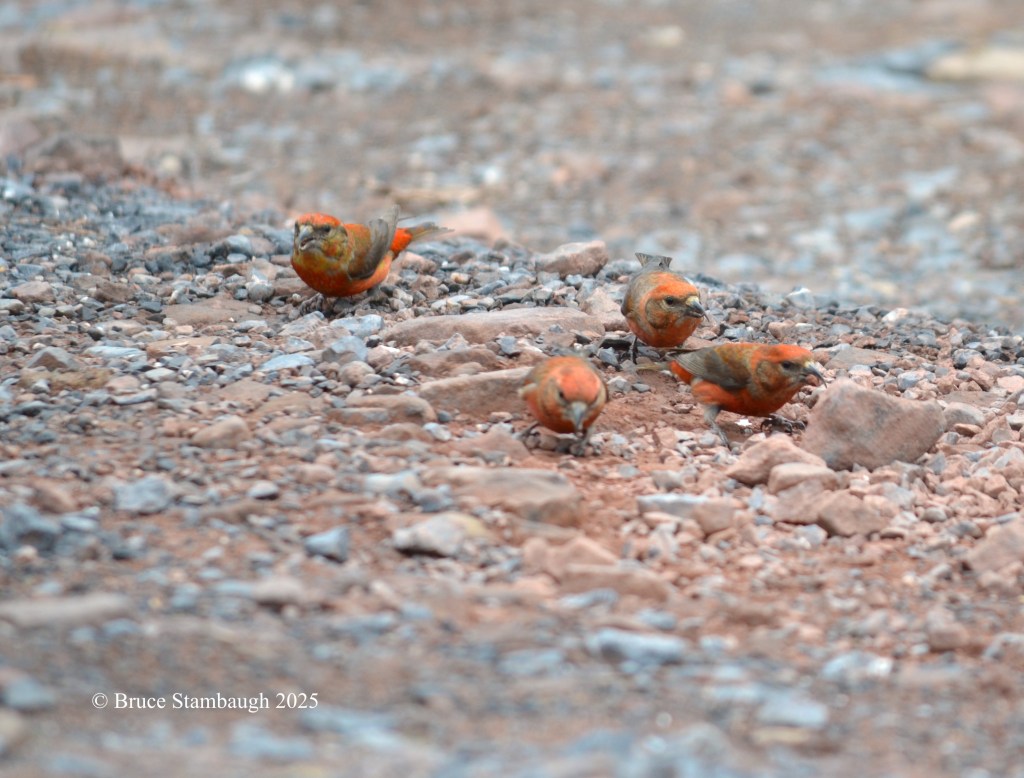
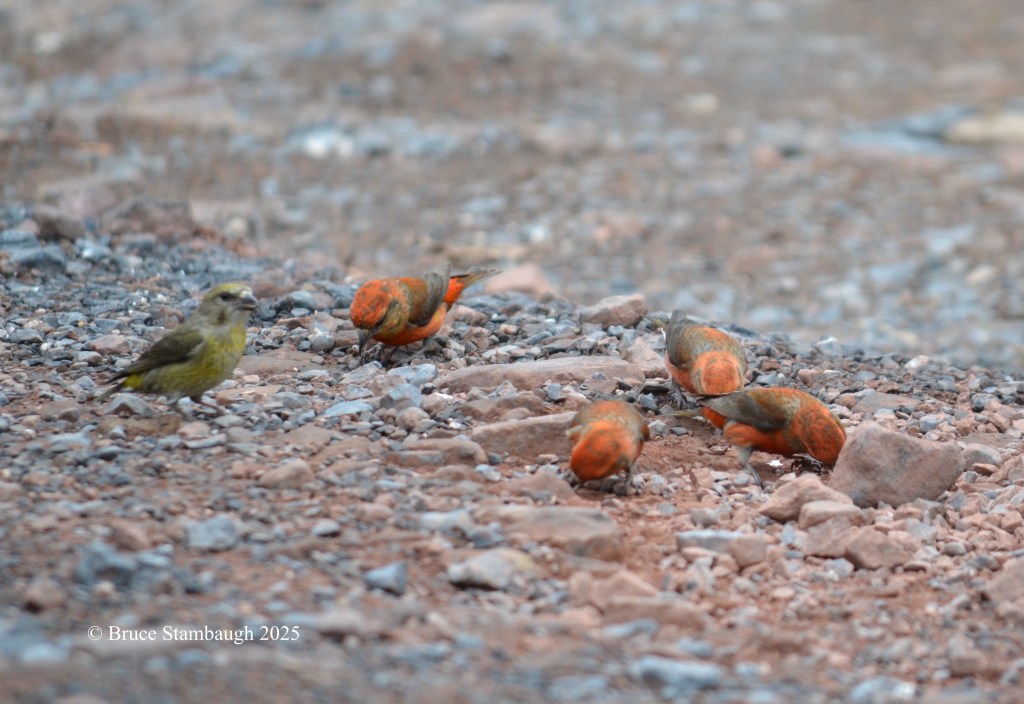
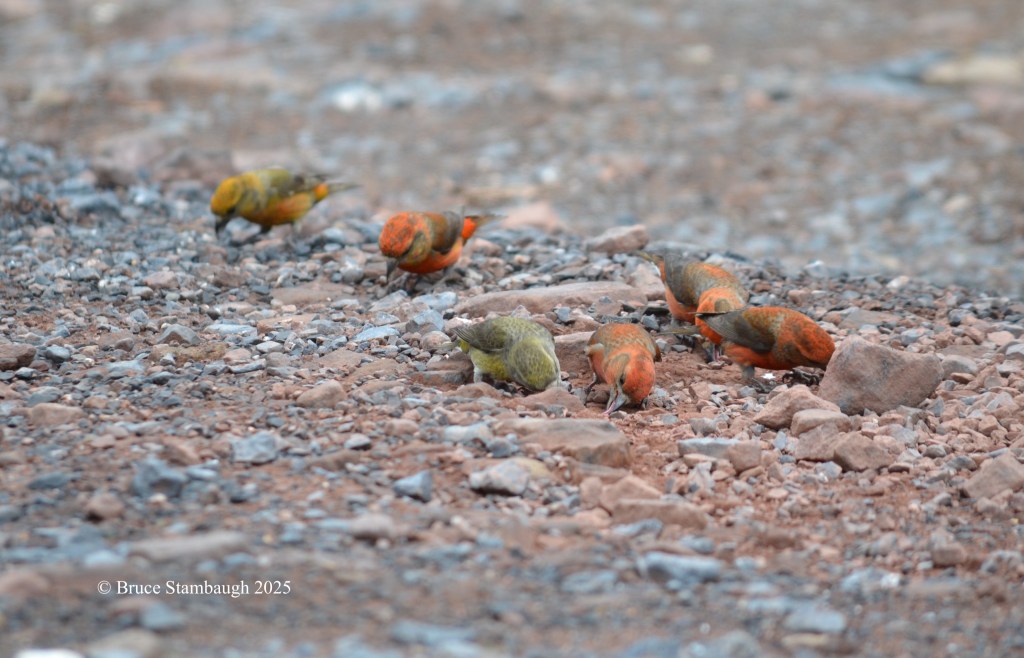
Just up the road, I reached my destination, the intersection of Reddish Knob Road and a US Forest Service fire road, which is a mix of dirt and gravel. As I pulled over to park, a small flock of Red Crossbills flew up in front of my vehicle. Those were the birds I had hoped to see and photograph.
I parked my vehicle a few feet away, excitedly exited with my camera, and the birds returned to the same spot on the side of the road. These beautiful birds were what I call “graveling.” Why do these lovely, social birds ingest grit and minerals along roadsides? The pebbles and dirt help them digest the pinecone seeds they eat.
The Red Crossbills gathering grit. Photos by Bruce Stambaugh
The birds settled in as I stayed as still as possible. I captured several photos of these magnificent birds gathering grit. The females are a yellowish-green, while the males are mostly a fire-engine red with dark wings. They can be found year-round in a small geographical area along the front range of the Alleghenies. They are scarce in most other regions of the US except the Rocky Mountains.
All the while, Common Ravens flew back and forth above the ridgeline. Blackburnian and Black-throated Green Warblers sang in the tree tops as they foraged for insects. Ovenbirds, Blue-headed Vireos, and Eastern Towhees joined the chorus.
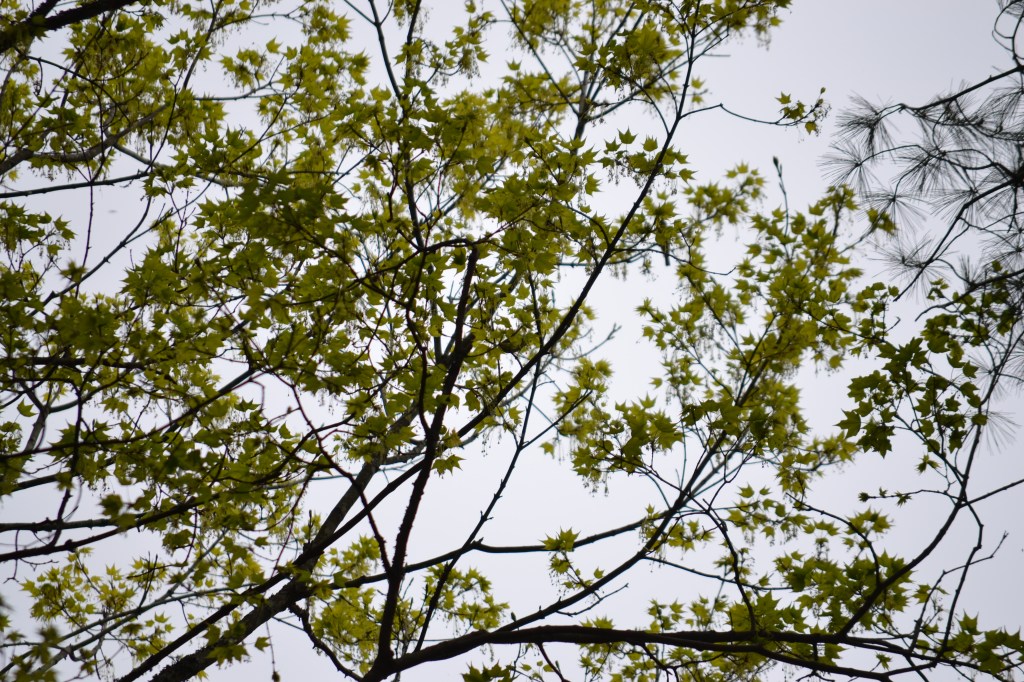
The budding pastels.High in the treetops.Help me find the bird.Can you find and ID the warbler?
Please click on the photos to view them in full size.
On my retreat down the mountain, I stopped at a camping area adjacent to a gurgling mountain stream. I heard many warblers, but saw only a few. I could have used other pairs of eyes to help spot the birds high in the emerging canopies.
Still, it was a fulfilling and satisfying Earth Day for this septuagenarian. I surrendered to my surroundings, the fresh air, the towering evergreens, and the budding deciduous trees. Bird calls replaced motor vehicle and lawnmower noises, and clear mountain streams rushed their way to the valley floor.
Thanks to the bird song choruses, inspiring mountain views, and the singing brooks, nature’s peace enveloped me. Isn’t that one of the goals of Earth Day?
The relaxing view from our lanai. Photo by Bruce Stambaugh
After a hardy breakfast of veggie omelets and fresh fruit, we left for the Maui Ocean Center. We drove through the burned-out section of Lahaina, and I didn’t realize it at first with all the rebuilding that had been done.
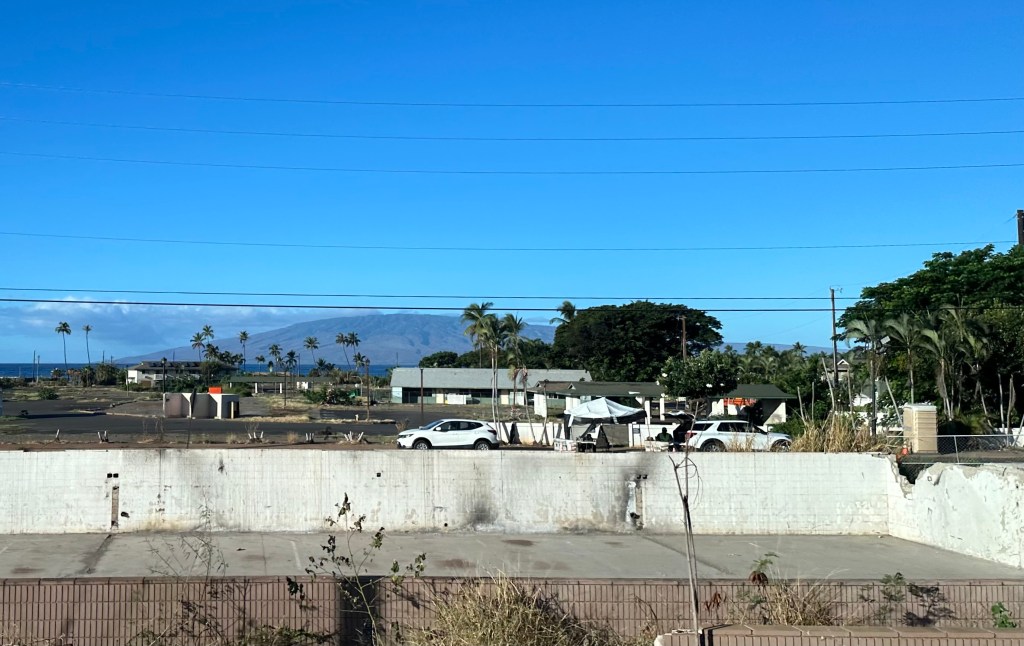
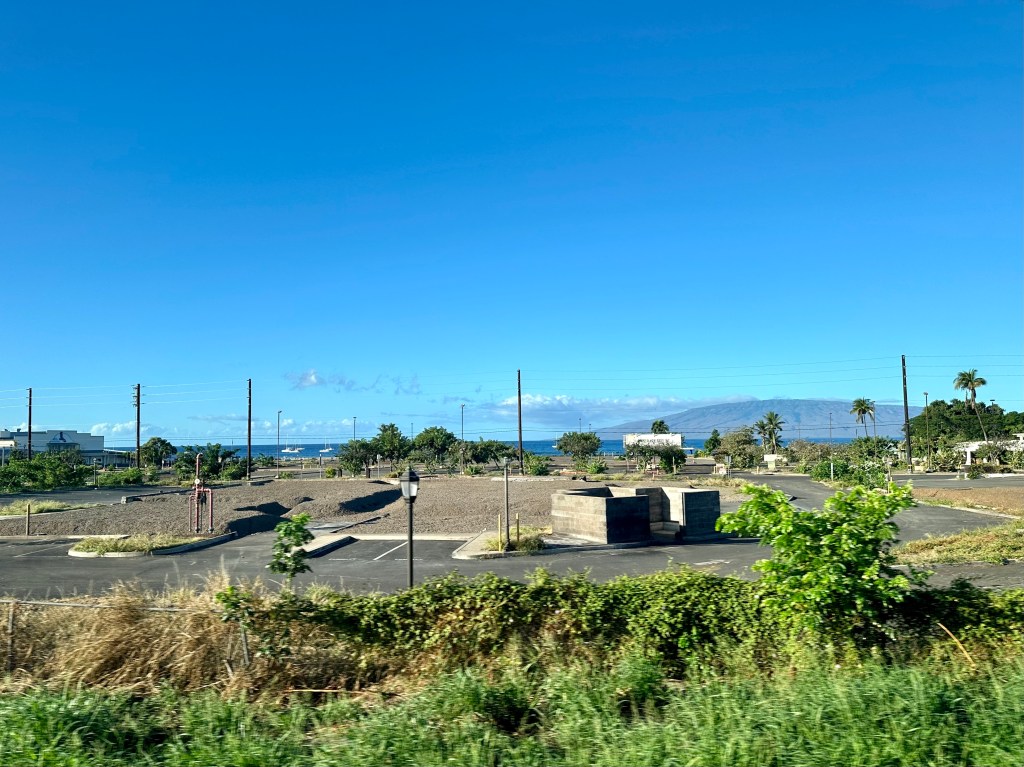
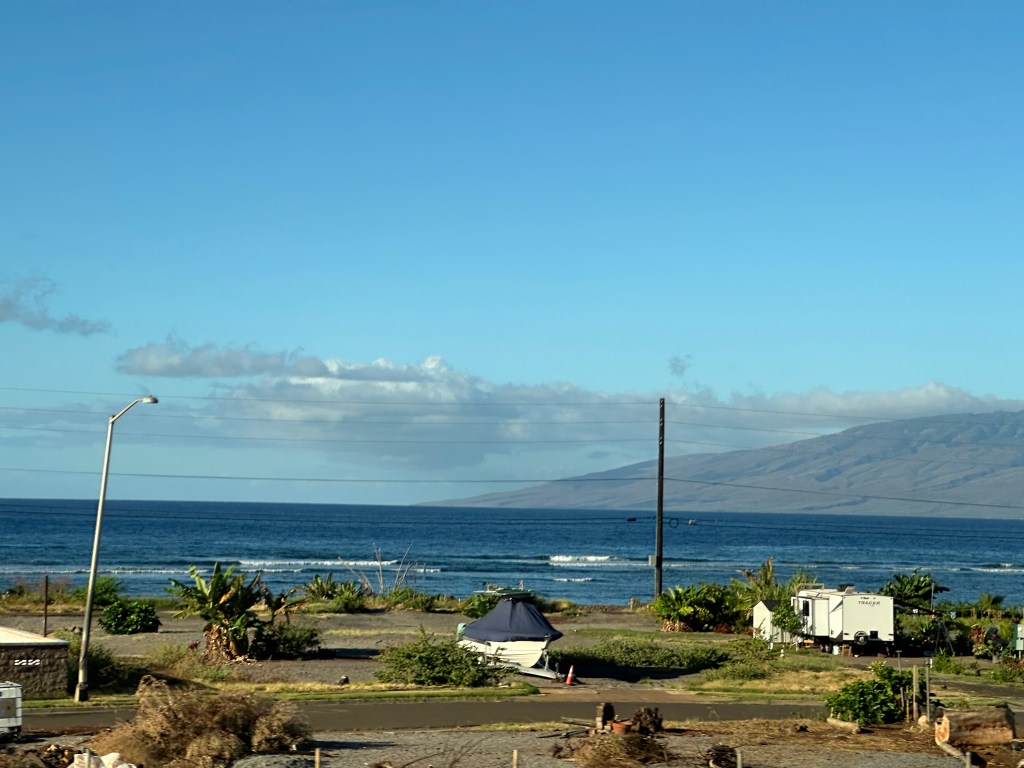
However, the many empty lots and scorched concrete block walls bore witness to the devastation. A respectful hush came over the bus. Everyone sensed the apparent dichotomy. As tourists, we embraced the beauty of the islands, its rhythmic language, the friendliness of its handsome people, and pride in their cultures. Yet, they had no homes, and still, they welcomed us. They needed the tourism jobs.
Sections of Lahaina still waiting to be rebuilt. Photos by Bruce Stambaugh
Though we left the hotel early, we arrived at the ocean center late. An accident caused a long traffic jam on the two-lane highway to the bay where the aquarium is located. The bus driver said accidents along this stretch of road are frequent.
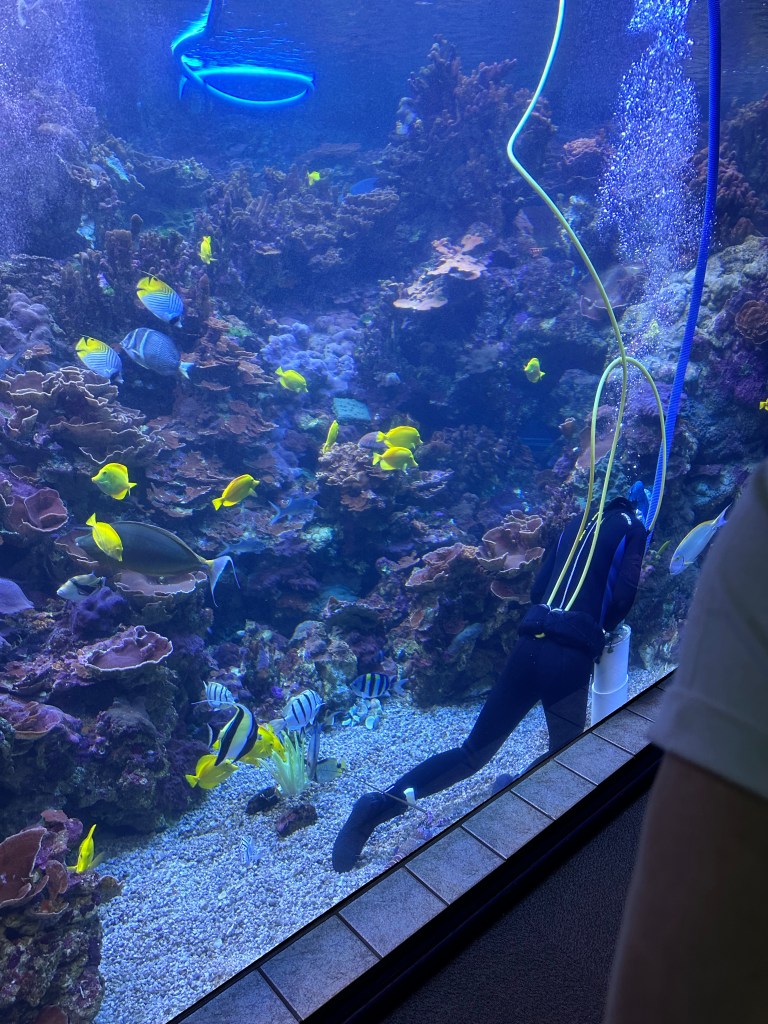
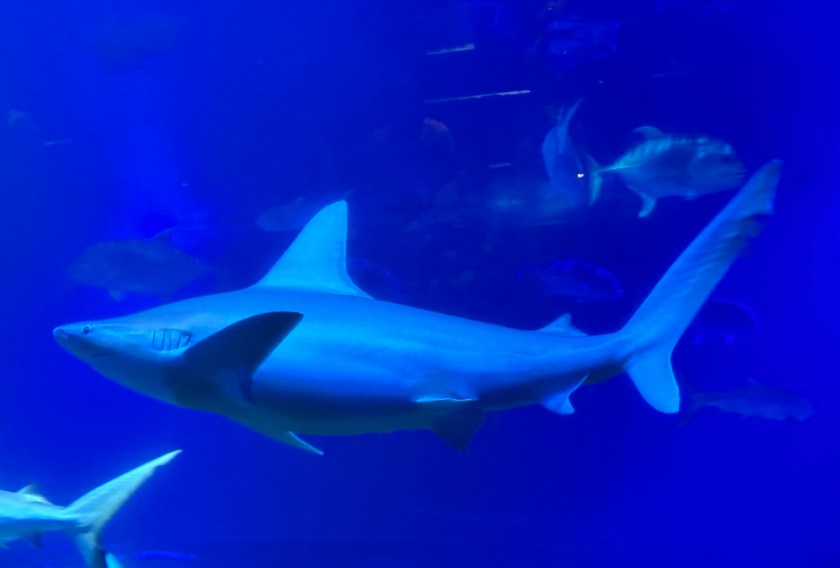
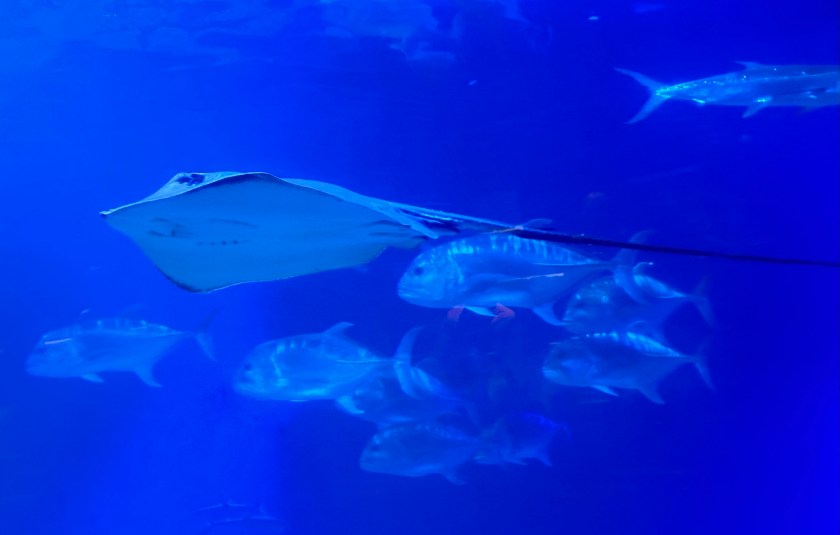
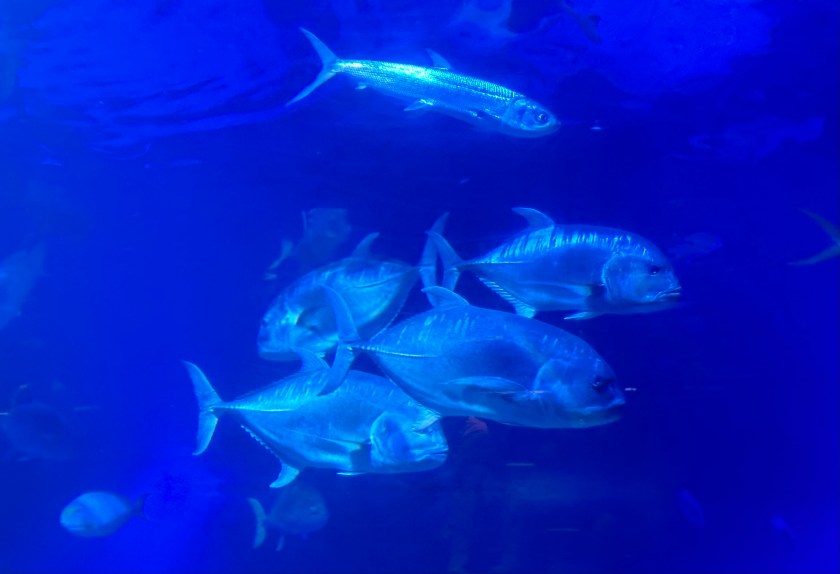
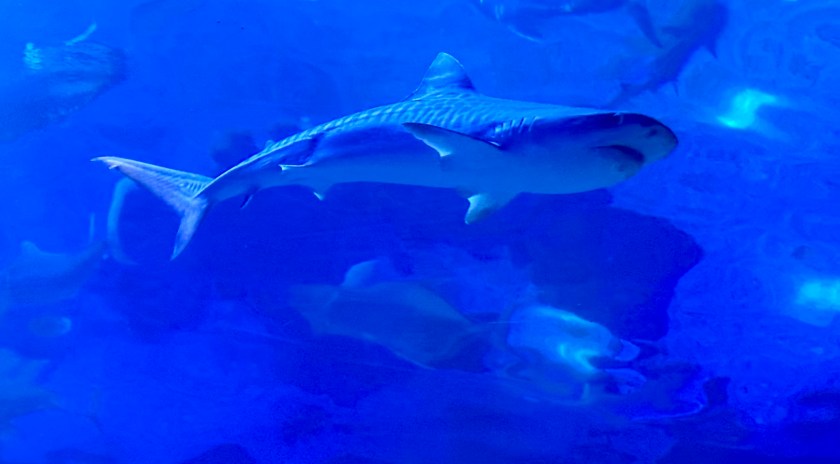
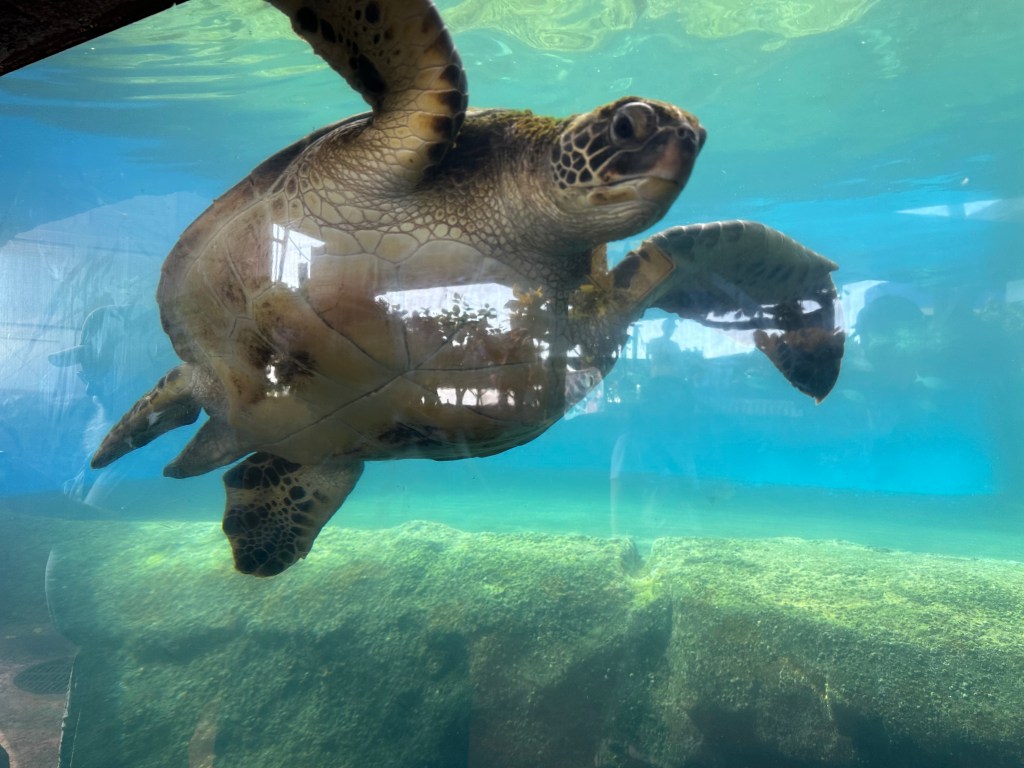
A guided tour of the Maui Ocean Center gave us a good understanding of the sealife around Hawaii. We watched various fish, sharks, and stingrays swim past the aquarium’s large underwater windows. Humpback Whales breed and give birth in the waters off Maui, but we were a little early to see any whales.
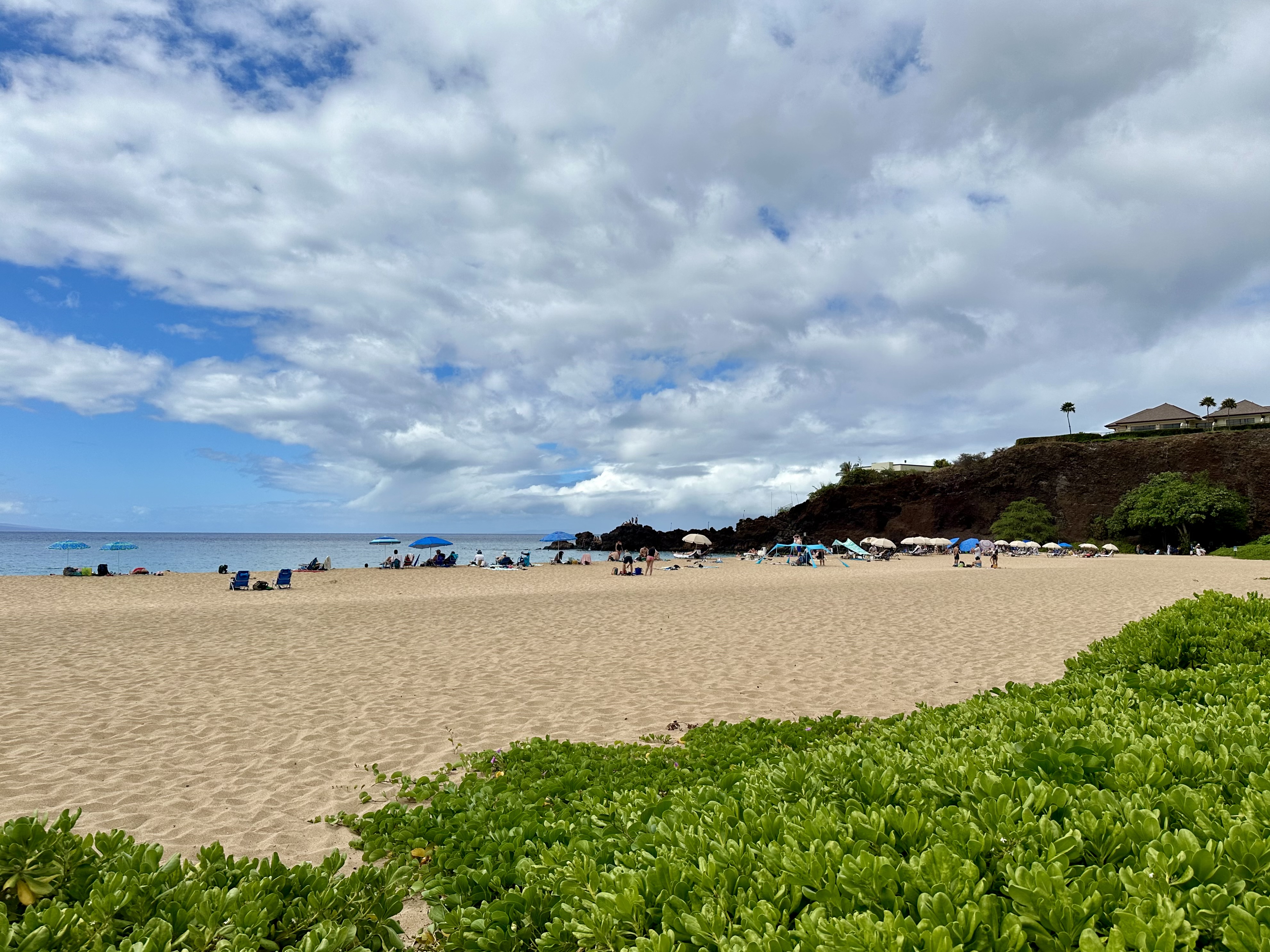
Back at the hotel, we strolled down Black Rock Beach to a seaside restaurant. The locals were getting a headstart on celebrating the holidays. A large Christmas tree stood fully decorated at the end of a walkway to the beach.
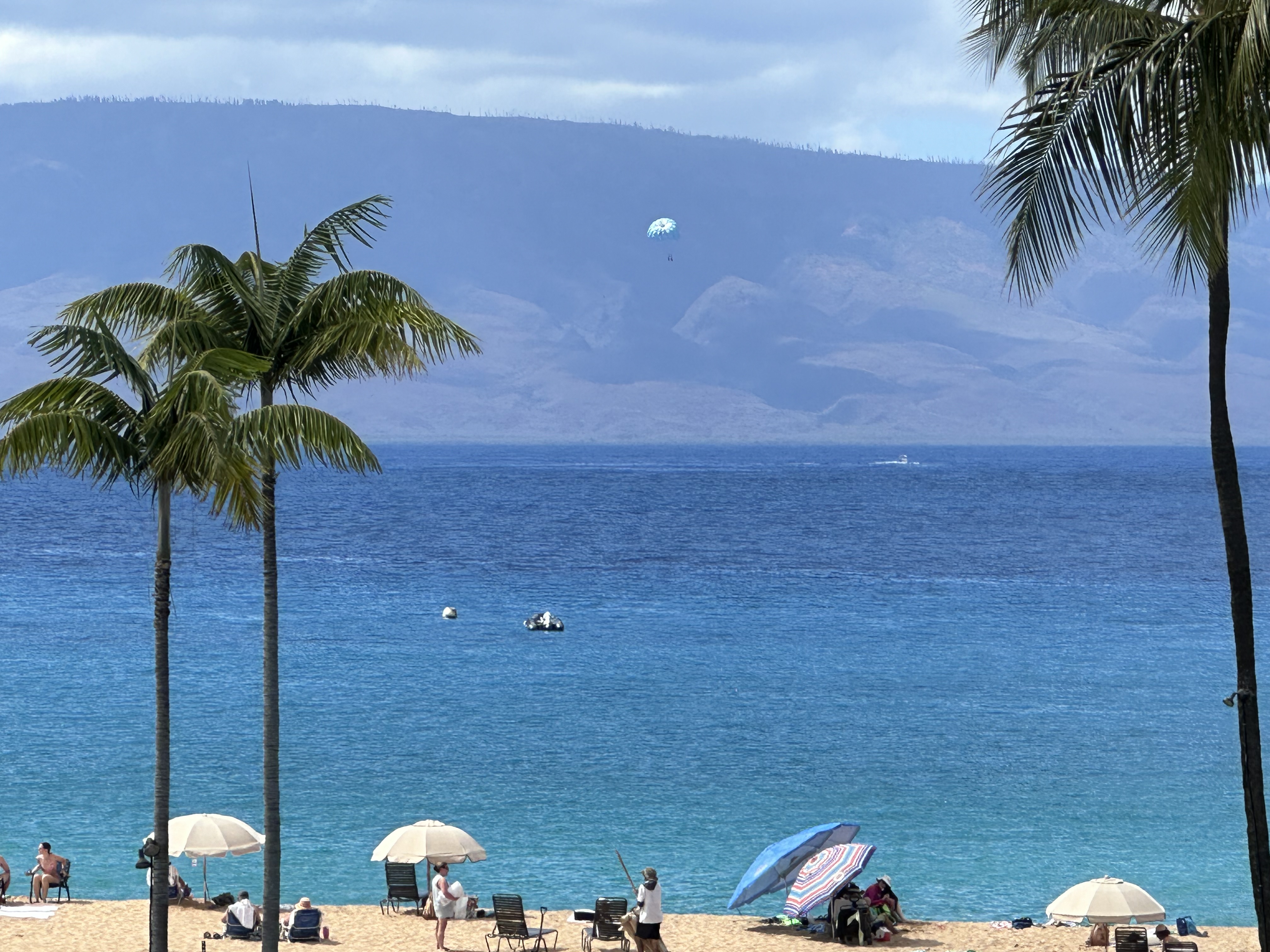
The setting, the views, the flowers—everything was gorgeous. Parasails caught the trade winds offshore and glided high above the intoxicating indigo ocean.
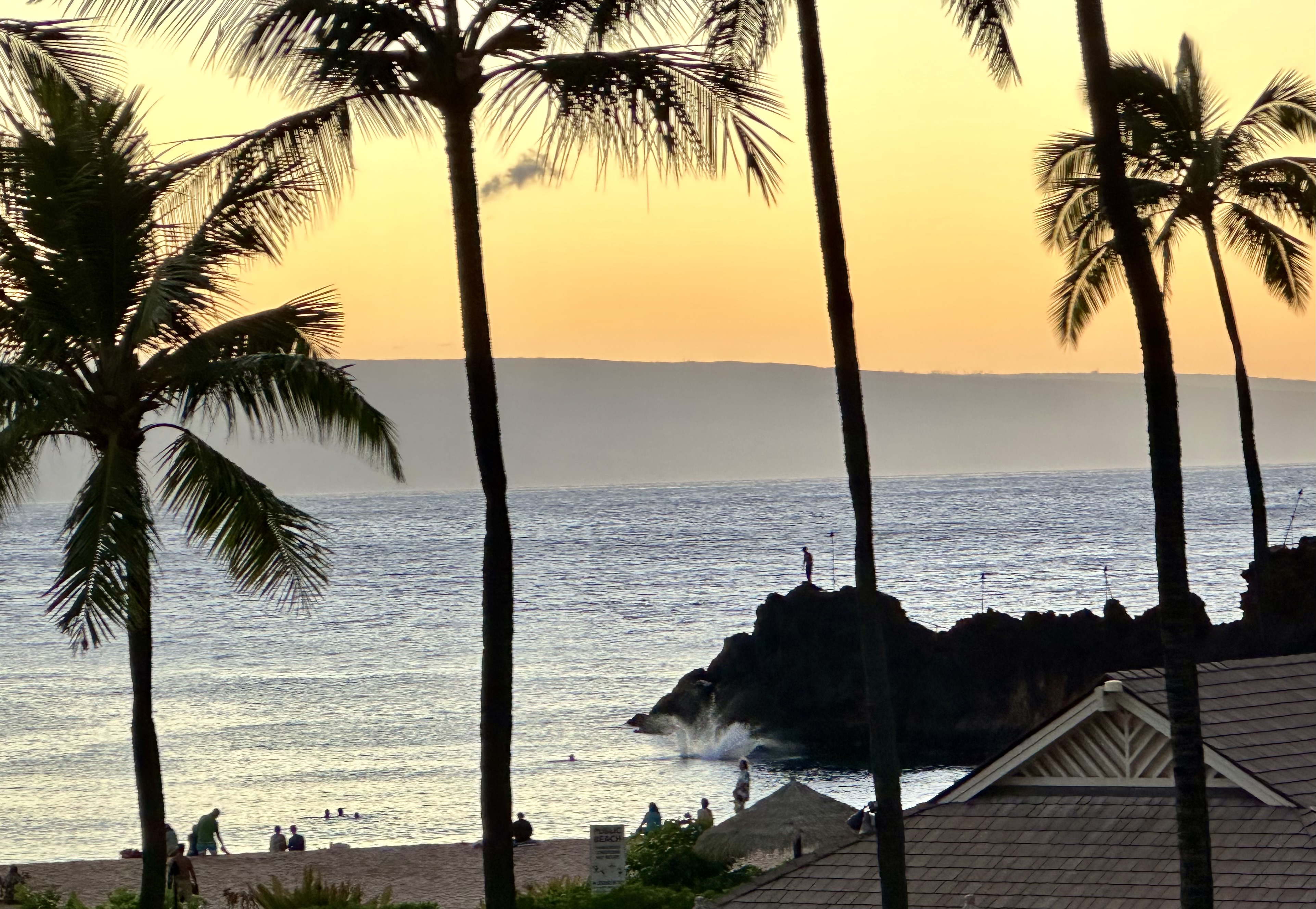
After a bit of shopping, we continued to take it all in. We rested on the balcony of our third-floor room, which gave us great views of the catamarans sailing by, teenage boys taking turns jumping off the black lava rocks, and the soothing tropical breeze. We had to pinch ourselves to ensure we weren’t dreaming.
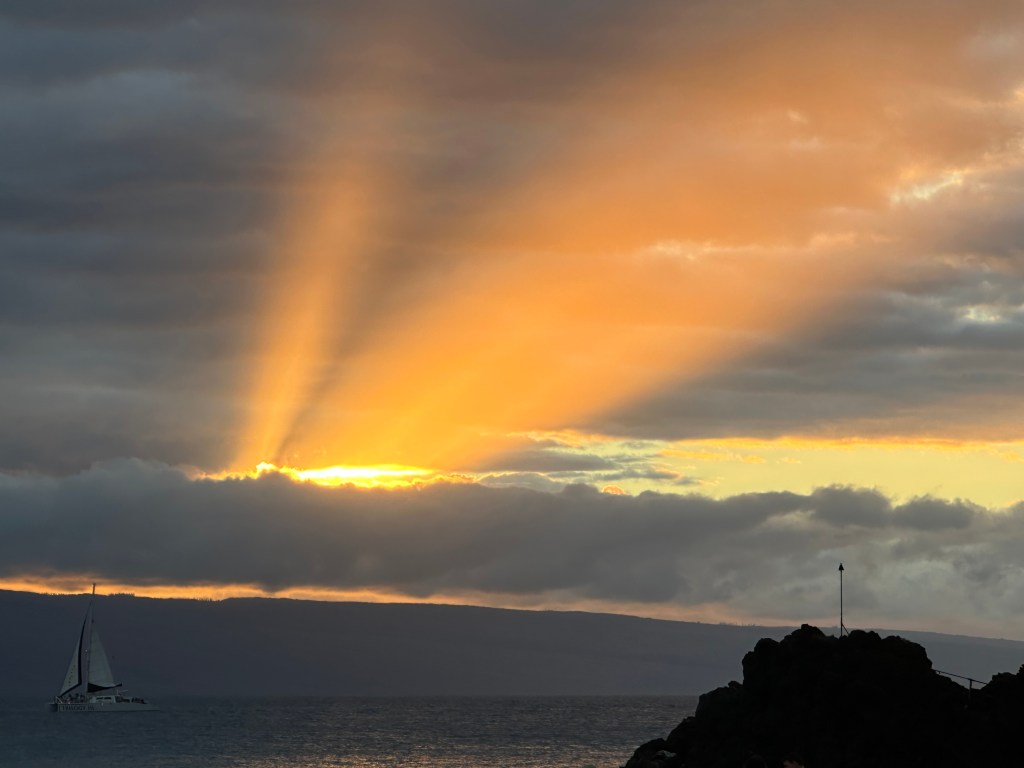
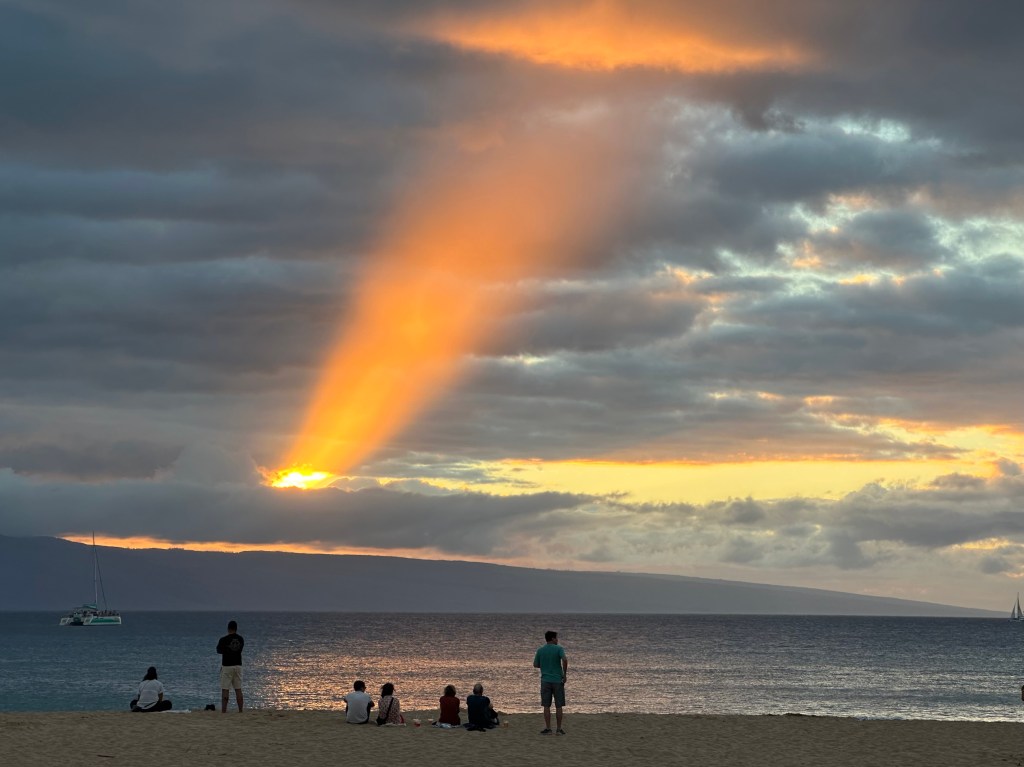
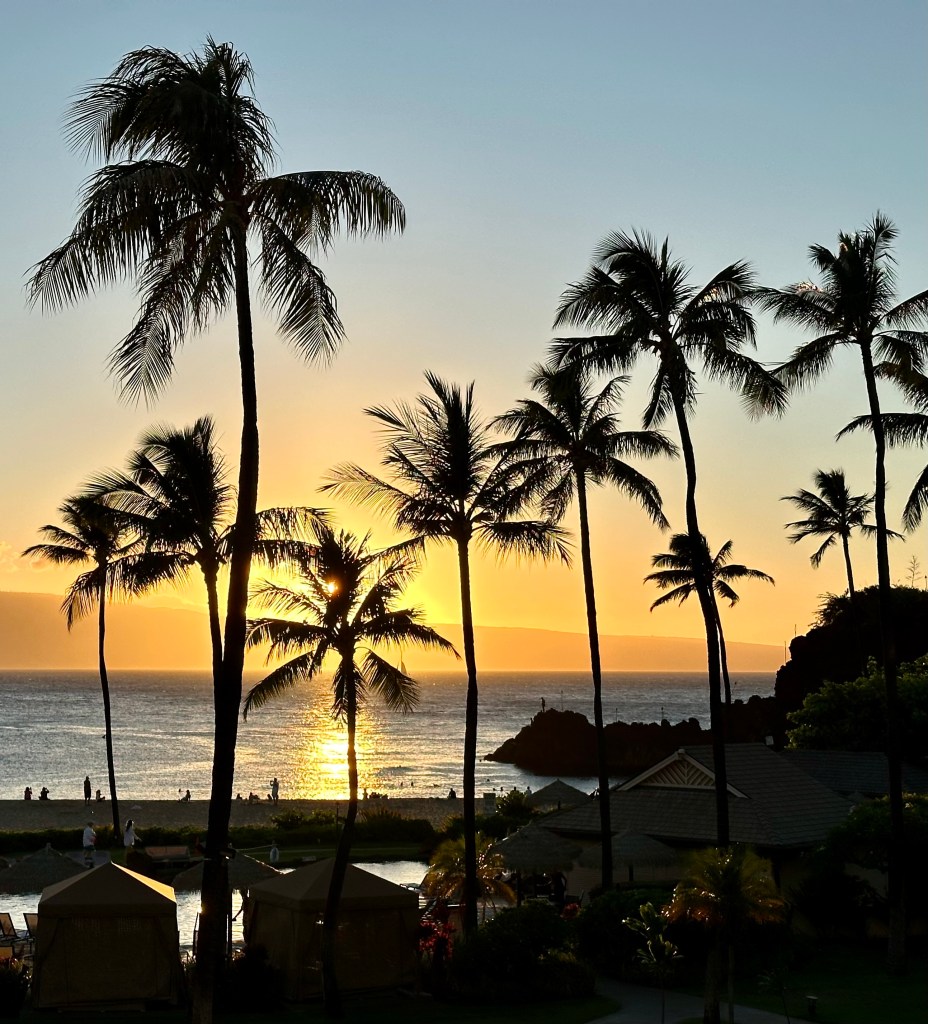
As evening approached, I wanted to get some sunset shots from the beach. I went down early, surprised to see how few people were out and about. Clouds began filling the sky, and I feared the sunset would be a bust. I need not have worried.
Over Pineapple Island, opposite the channel, warm, amber crepuscular rays began to filter through the clouds. They appeared like spotlights against the higher clouds, creating a surreal scene. I wondered what the natives long ago would have thought had they experienced this. Was this a sign from the gods? If so, what did it mean?
I snapped away at my good fortune. Could this vacation get any better? Yes, it did.
Water Lilies bloomed outside the hotel restaurant. Photo by Bruce Stambaugh
Our first sunset on Maui. Photo by Bruce Stambaugh
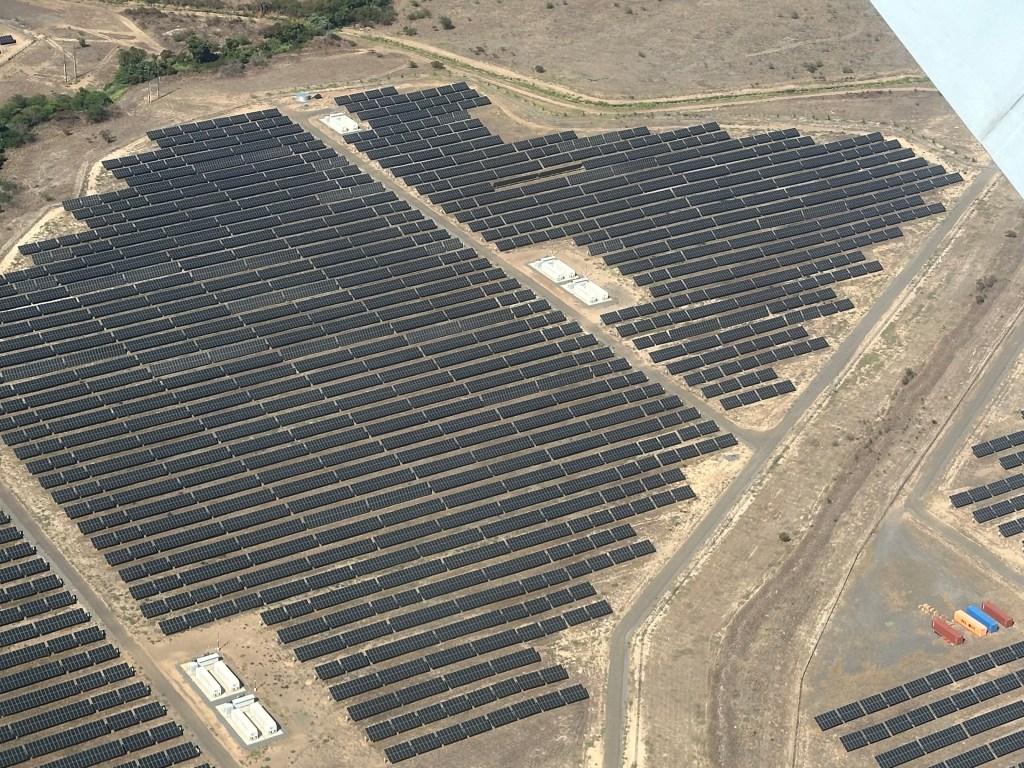
I knew I would like Maui. From the air, Hawaii’s commitment to green energy was evident. Giant white windmills stood out on the black lava mountainsides, and acres of solar panels and agricultural fields stood side by side.
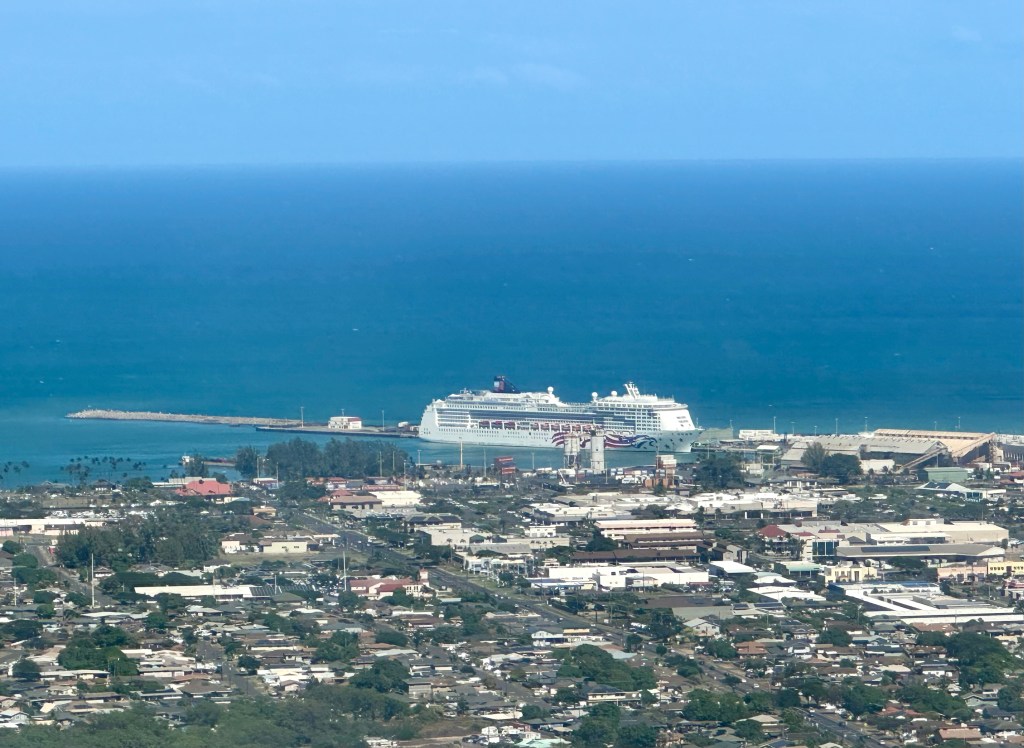
The bright morning sunshine highlighted two cruise ships docked at the small harbor. I was glad there weren’t more.
Windmills.Agriculture.Solar farm.Cruise ships.
Lunchtime called when we left the busy little airport that looked more like a Hollywood movie set. We boarded the bus and headed to Paia on Maui’s north coast. Paia’s fame hails back to 1870 when the first sugar cane crop was planted there.
The old town wasn’t built for tourist buses, so we had to exit expediently to avoid blocking traffic. With only 14 passengers, the bus emptied in record time, mainly because we were hungry.
Most of us walked to the Paia Fish Market for fresh seafood. Lunch was on our own, and our tab demonstrated the high cost of living in Paradise. However, given the quality of our seafood, we didn’t quibble.
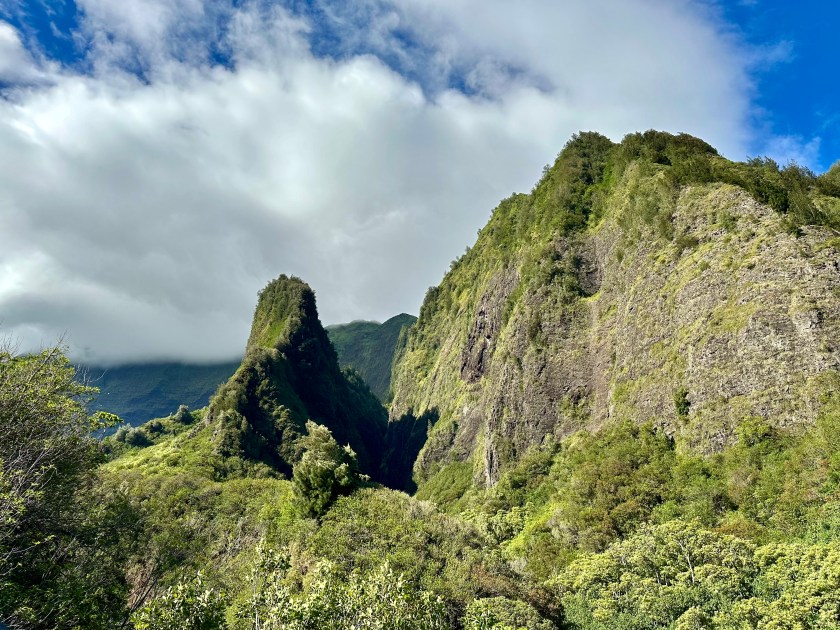
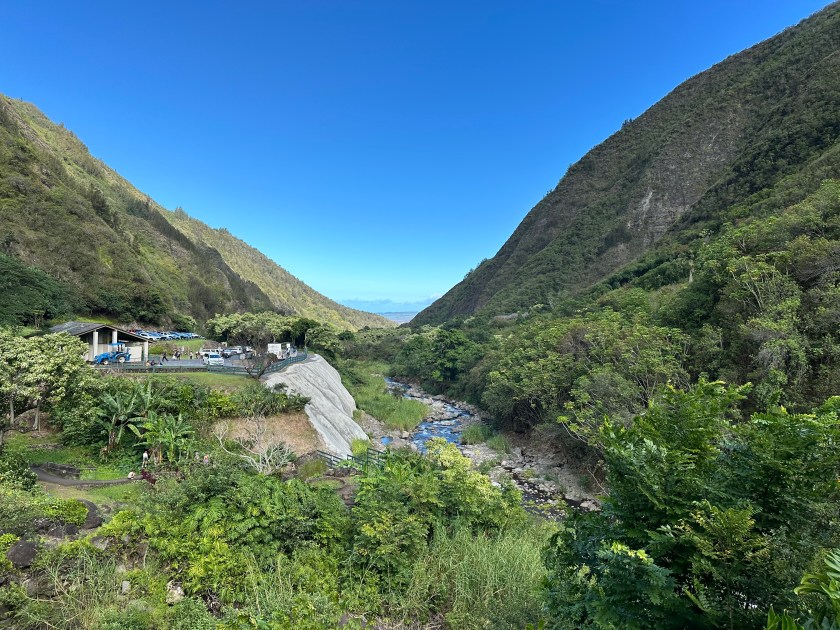
Soon, we headed to Iao Valley State Monument, which features a phallic rock nicknamed “the Needle,” which the ancients worshiped. I didn’t ask any questions. Once there, I enjoyed an easy hike to the viewing area, which provides a lovely view back down the valley we climbed to reach the monument.
Visitors and their pet dogs lounged in the refreshing, cool waters of a stream that carved the valley millennia ago. I enjoyed the pleasant views and the invigorating air. The adorned natural monument stands between two steep mountainsides.
From there, we drove to the Maui Tropical Plantation, a campus with a restaurant, a large gift shop, and an impressive pond that allowed me to see the Hawai’i state bird, the Hawaiian Goose, or Nene. I also spotted a Black-crowned Night Heron attempting to swallow a big, fat fish. It was still wrestling with the fish when it was time to head to our hotel to check-in.
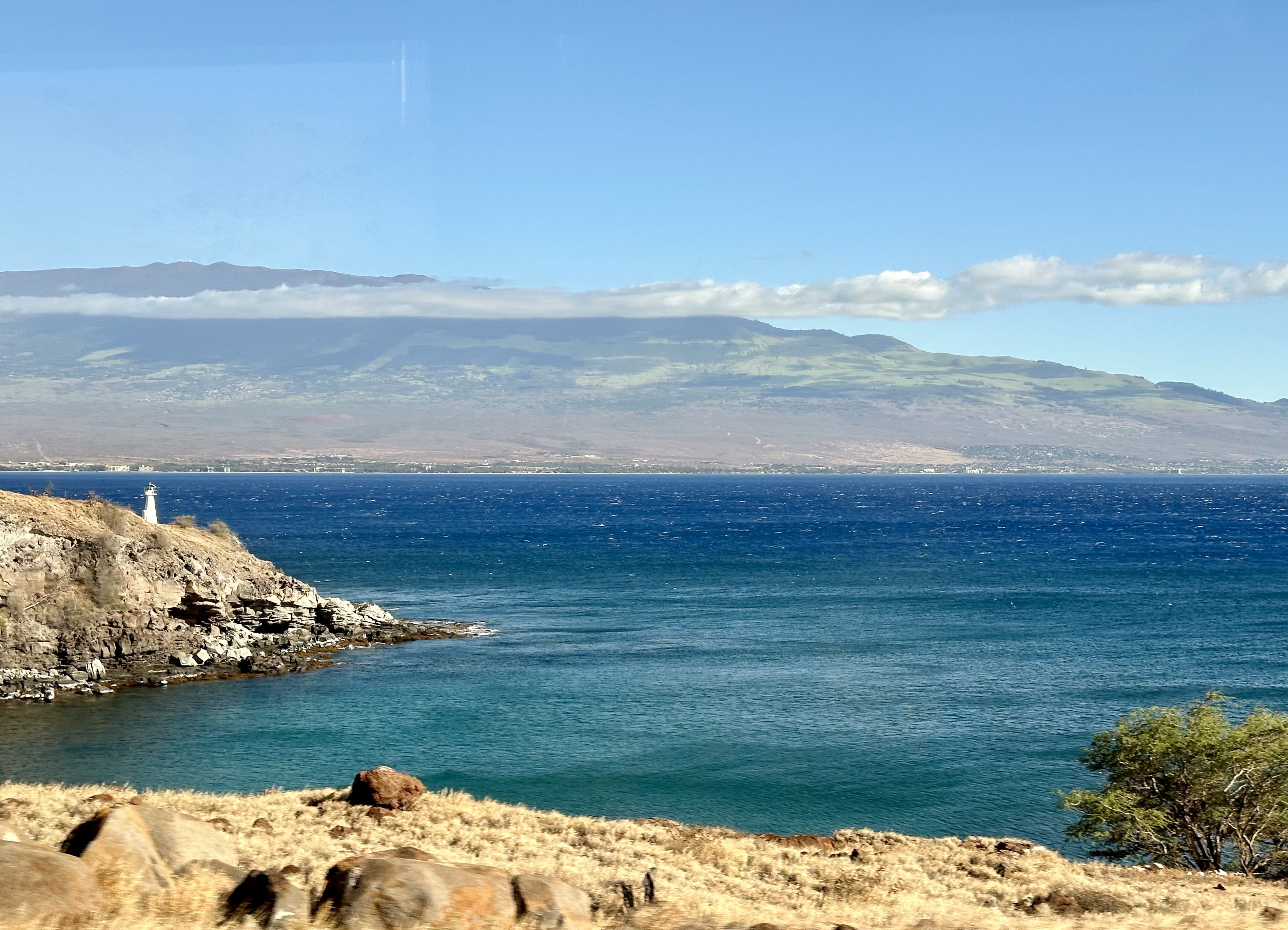
I secured a seat on the bus’s ocean side and enjoyed the views of the turquoise Pacific Ocean and the many parks and beaches along the way. The island of Lanai, or Pineapple Island, was just across the way.
The bus took the bypass around Lahaina, where the devastating fires broke out and burned much of the historic town. Still, we saw vacant lot after vacant lot. Only a small percentage of buildings and a few homes have been rebuilt. A few hardy people live in campers where their houses once stood.
Please click on the photos to enlarge them.
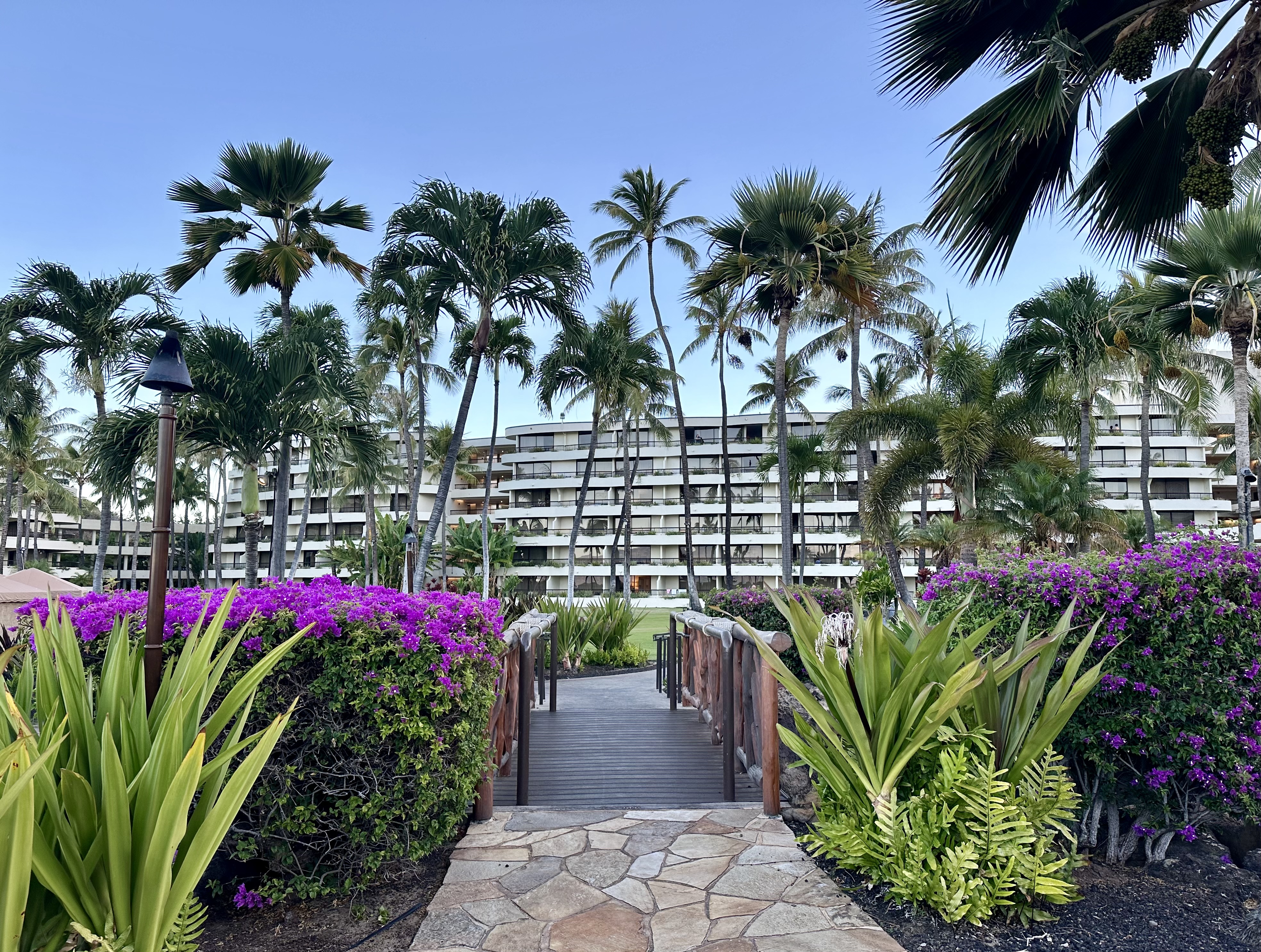
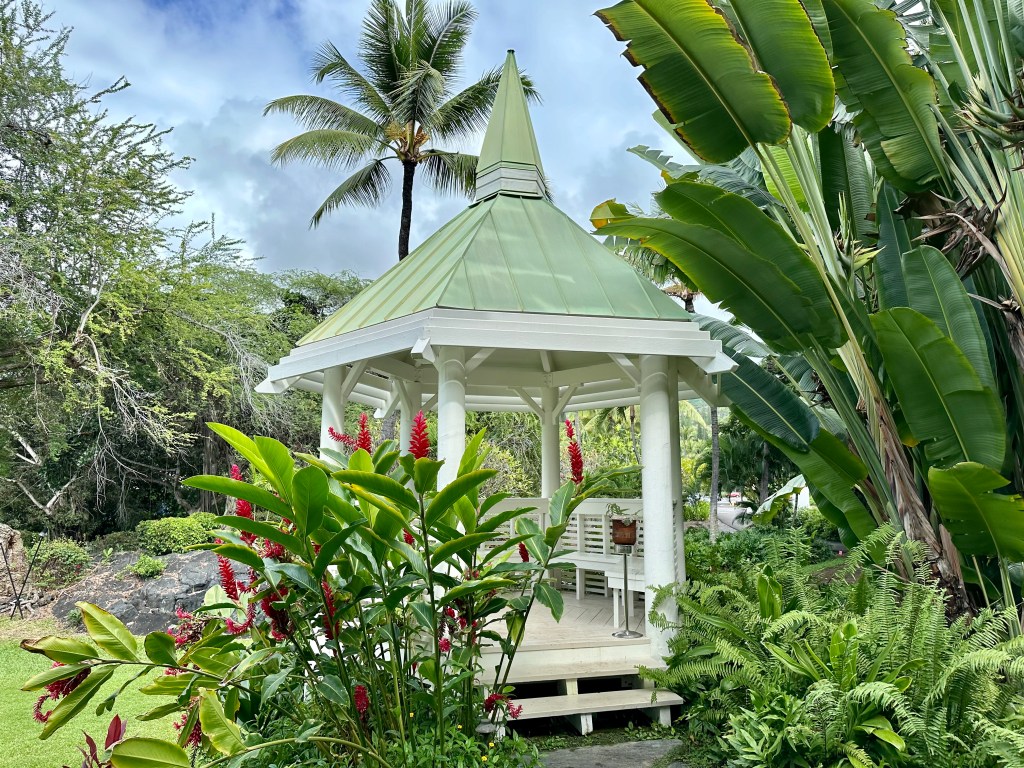
When we arrived at our hotel, we found our room had an ocean view in the middle of the resort. We walked around the charming property to orient ourselves and couldn’t believe our good fortune. With these arrangements and the balmy breezes, it was an absolute Paradise. But we were only beginning our incredible stay in Maui.
That evening, we experienced our first sunset and then watched the nightly reenactment of young men diving from the black rocks that jut into the ocean. A single young man with a lighted torch climbed the rocks, reached his arms high to the gods in appreciation of another day, and jumped into the sea. The tradition started from much higher cliffs, but the demonstration was still impressive.
A video of jumping from the rocks.
The experience was a marvelous way to finish our first day in Maui, especially with my wife feeling better. We happily wondered what was ahead.
Kehena Bland Sand Beach, Kona. Photo by Bruce Stambaugh
Our fifth day in Hawaii was filled with many wonders and one big downer. My wife woke up not feeling well. She encouraged me to go on the scheduled excursion to explore much of the Big Island. I did so, but reluctantly.
Our day trip had multiple stops, and the local bus driver added some of his favorites, making the exploration day a success. Our first stop wasn’t far from the hotel.
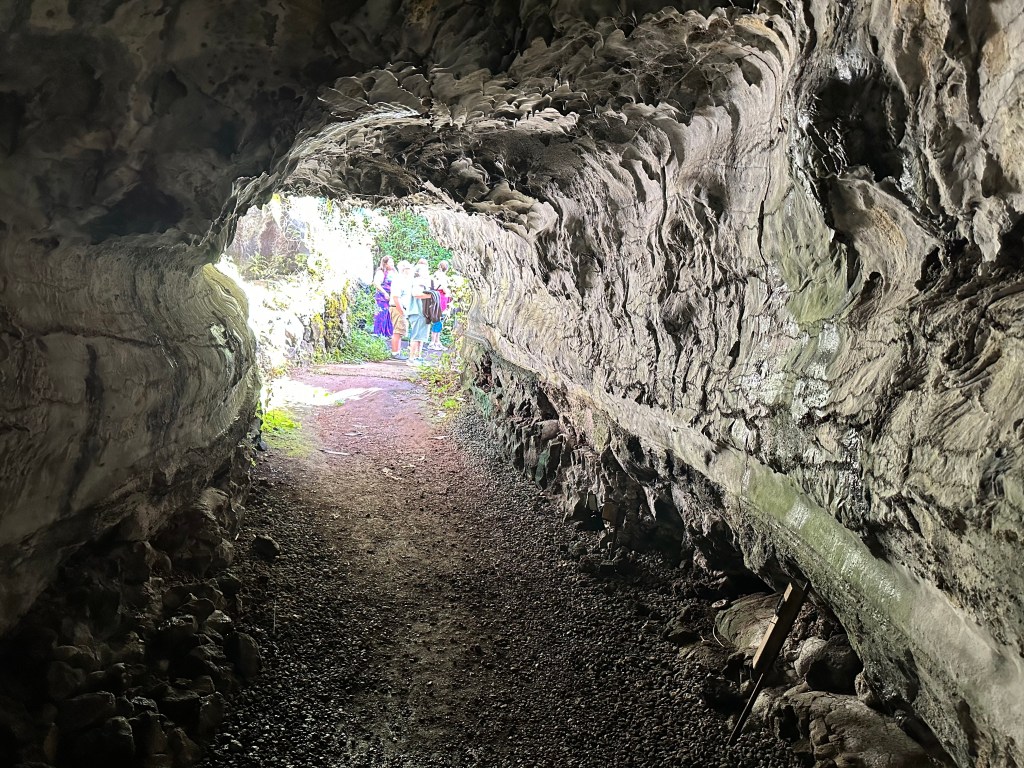
It was a tourist stop, but our guide wanted us to experience a geologic phenomenon. We explored a lava tube formed by molten lava flowing from a volcanic vent through existing lava rock that had solidified years before. Once the lava flowed out, only the outer shell of the flowing lava remained, leaving the tube-like feature. It was the first of several intriguing stops.
The lava tube. Photo by Bruce Stambaugh
We drove south high above the ocean to our west. Lucious vegetation captured our attention as the bus maneuvered the two-lane highway on it wound its way up, down, and around the parameters of the island.
The island’s official name is Hawaii, and it is located in the county of Hawaii in the state of Hawaii. Consequently, the locals prefer Kona to avoid confusion, and I concur.
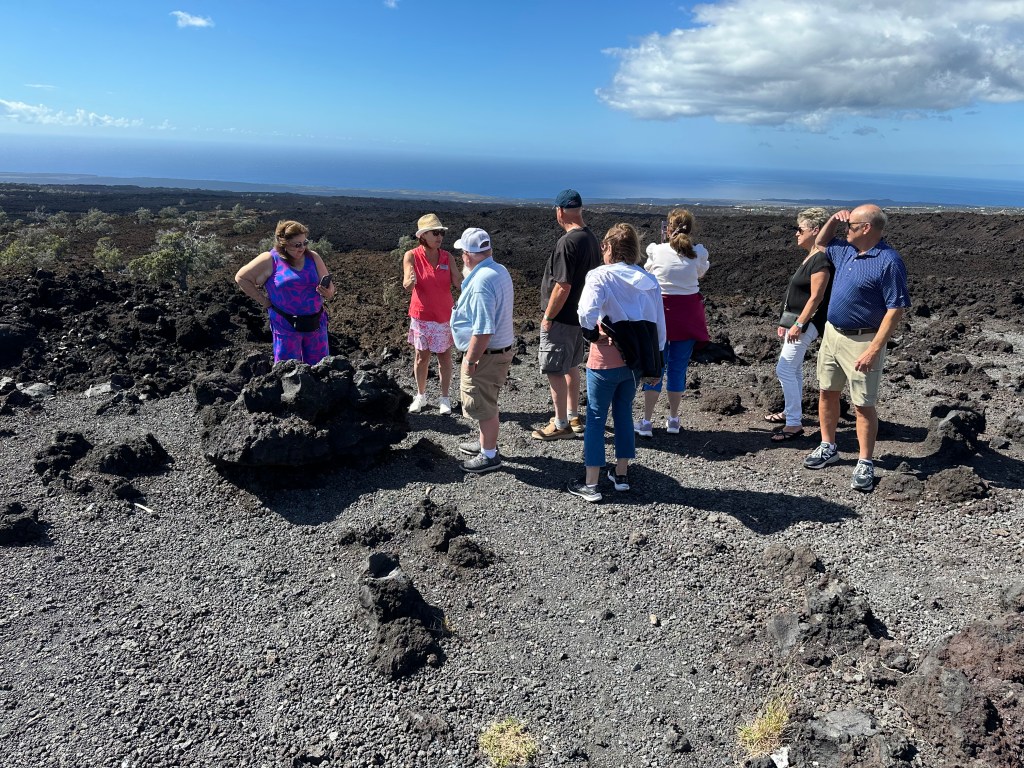
Near the island’s southern tip, an overlook affords splendid views of previous lava flows and the blue Pacific. Miles away, we could see the southernmost point of the US. Sorry, Key West. No haze, cell towers, or skyscrapers spoiled the view. Giant windmills turned in the tropical wind. From our vantage point, they looked like children’s pinwheels.
Please click on the photos to enlarge them.
I wished my wife could have seen this. I kept wondering how she was doing and hoped for a signal to check in with her. I would have to wait a while longer than I wanted.
The landscapes and foliage changed drastically as the bus driver adeptly navigated the undulating and winding curves. The land was either barren and chunked up black lava or many shades of green with pastures, shrubs, and trees of all shapes and sizes.
Every now and then, we saw another Hawaiian human-caused phenomenon. Because of the rural nature of the islands and the tricky terrain for motorized vehicles to maneuver, crashes are frequent. Instead of towing the wrecked cars, they are pushed off the roadway and over the hillside where they stay. This only applies to vehicles deemed not worth towing.
Many demolished cars, trucks, and vans were either stripped of their valuables, burned out, or both. They had been there long enough for young trees to grow through the tipped-over junkers. This practice seems to run counter to the nearly litter-free islands. Recycling is the norm in Hawaii, with old, crashed vehicles apparently exempted.
When we reached the tiny village of Naalehu, we stopped at the southernmost bakery in the US. The Portuguese donuts were scrumptious. I only ate one but took one back for my wife.
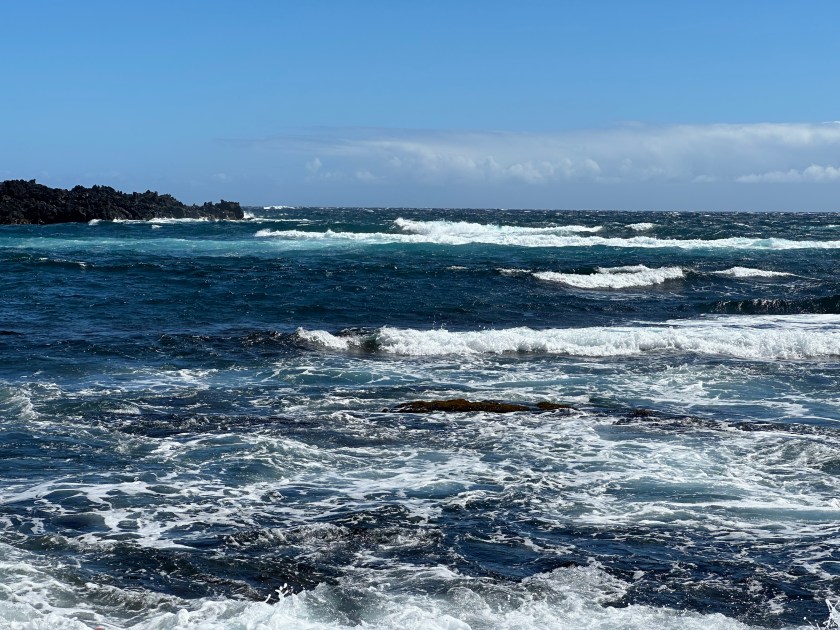
Too soon, we were back on the road, heading north. The ocean was on the right, and slush pastures dotted with windswept and stunted trees on the steep slope of a volcano on the left. This was the windward east side of Kona, where the prevailing winds bring ample rains compared to the western part of the island.
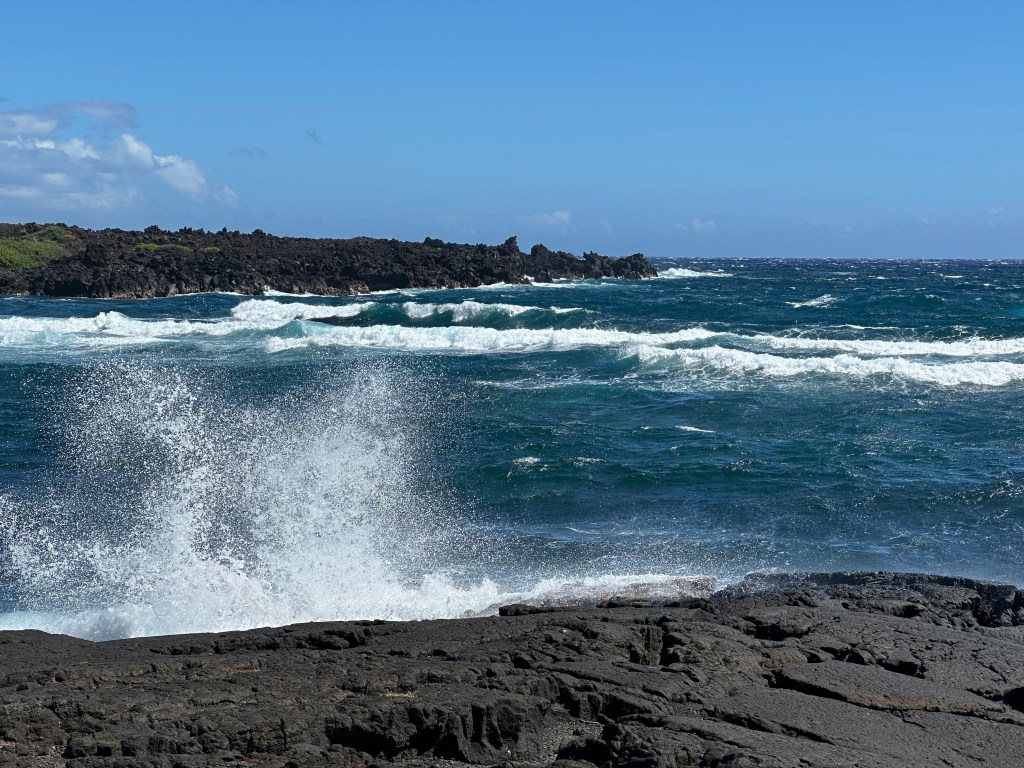
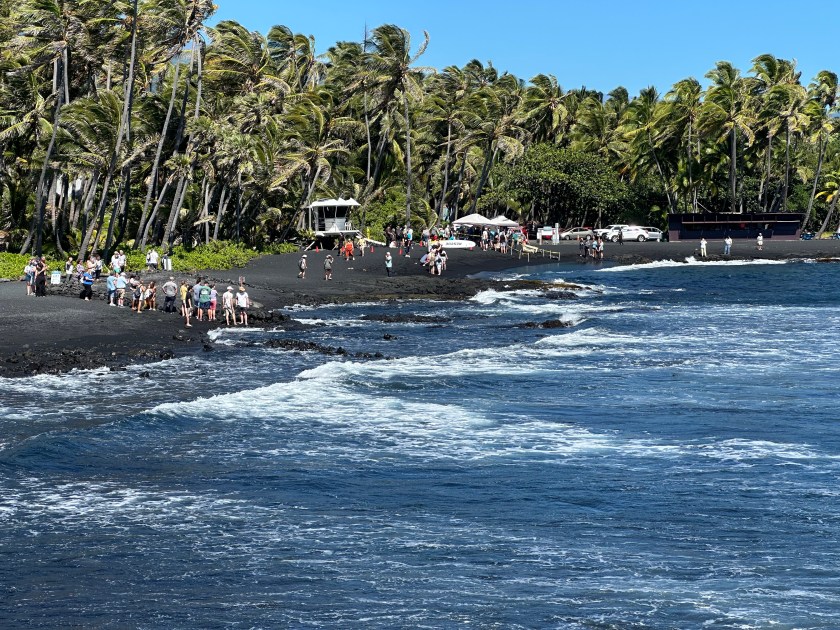
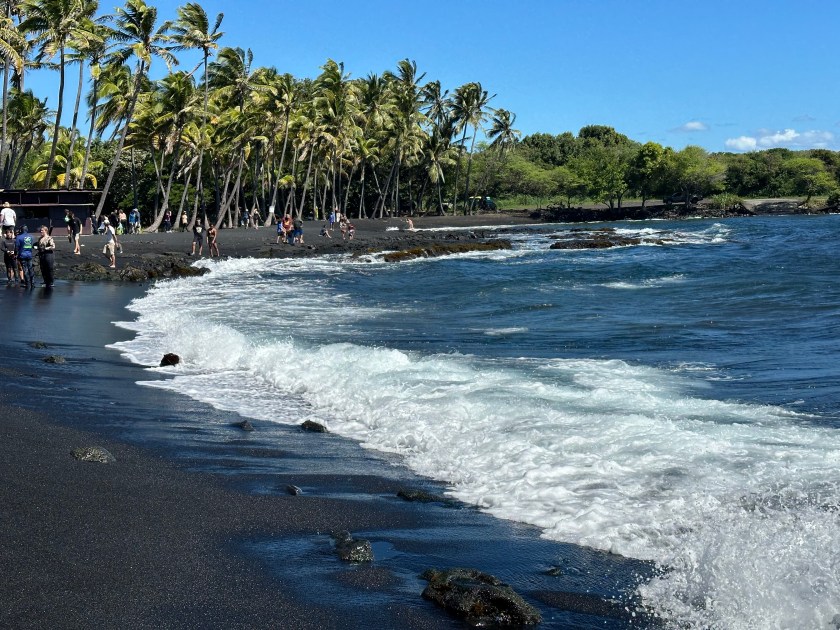
We arrived at Punalu’u Black Sand Beach Park and were pleasantly surprised. As we approached the beautiful beach, I noticed popup canopies, and many people stood around observing.
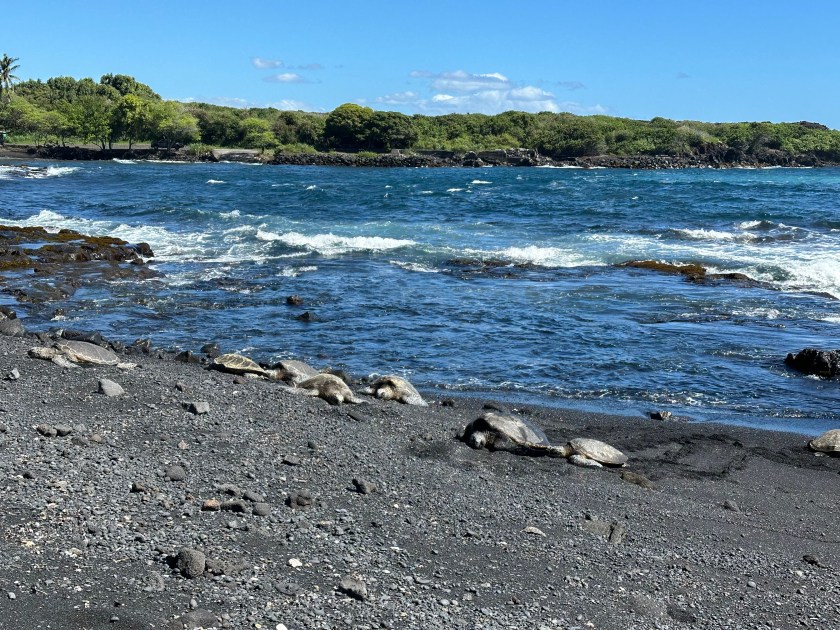
Our visit was well-timed. Scientists, professors, and marine biology students from the University of Hawaii were capturing, evaluating, and tagging Green Sea Turtles. In fact, a few large ones lay on the beach, absorbing the warmth of the noontime sun.
Since we had lunch reservations at our primary destination, our time on the beach was limited. The black sand is the product of lava being eroded and pulverized many times to form the beach.
The bus steadily climbed the gradual slope to the Hawaii Volcanos National Park’s visitors center, where a tasty lunch awaited us. After lunch, we joined our guide outside.
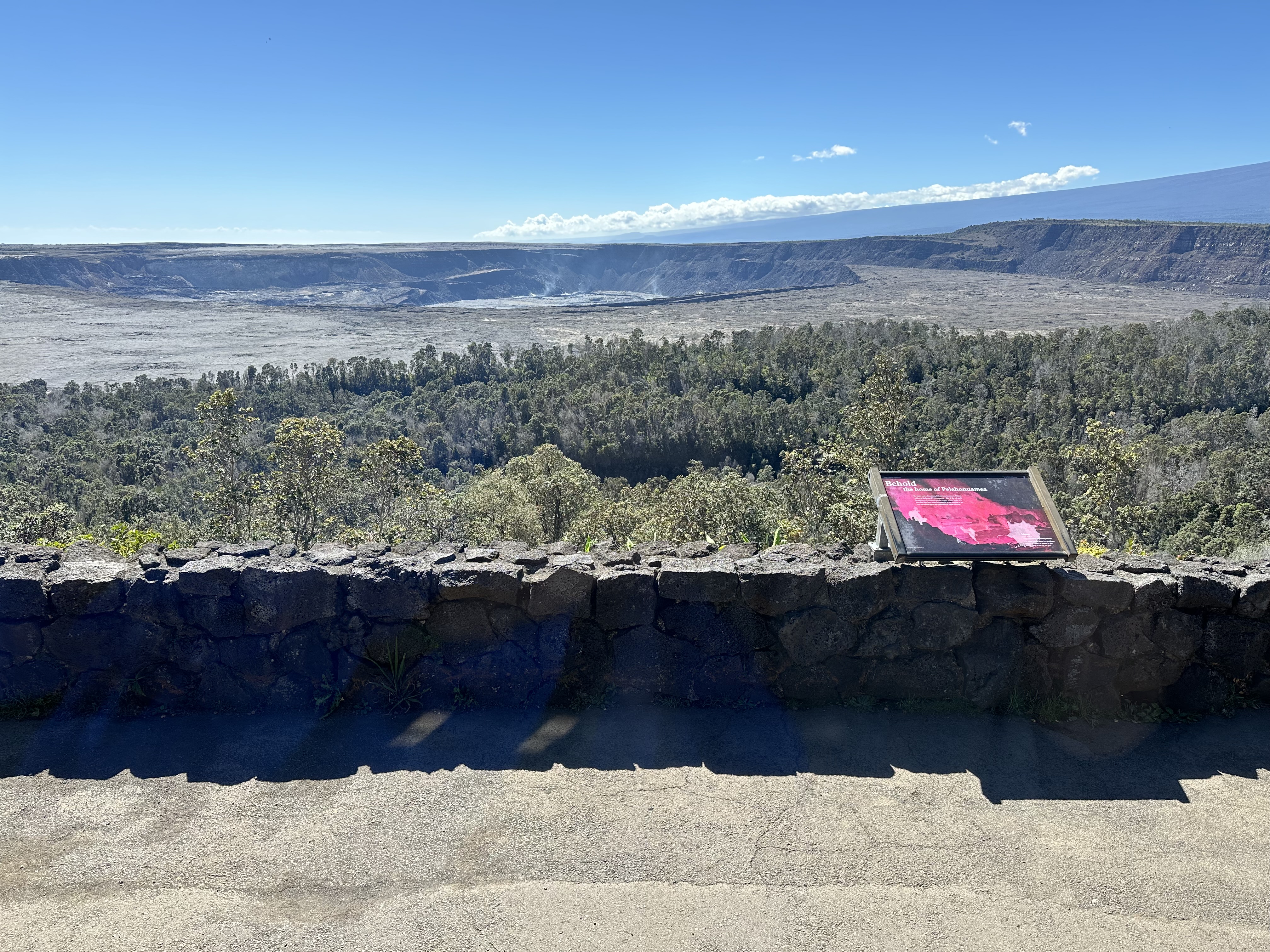
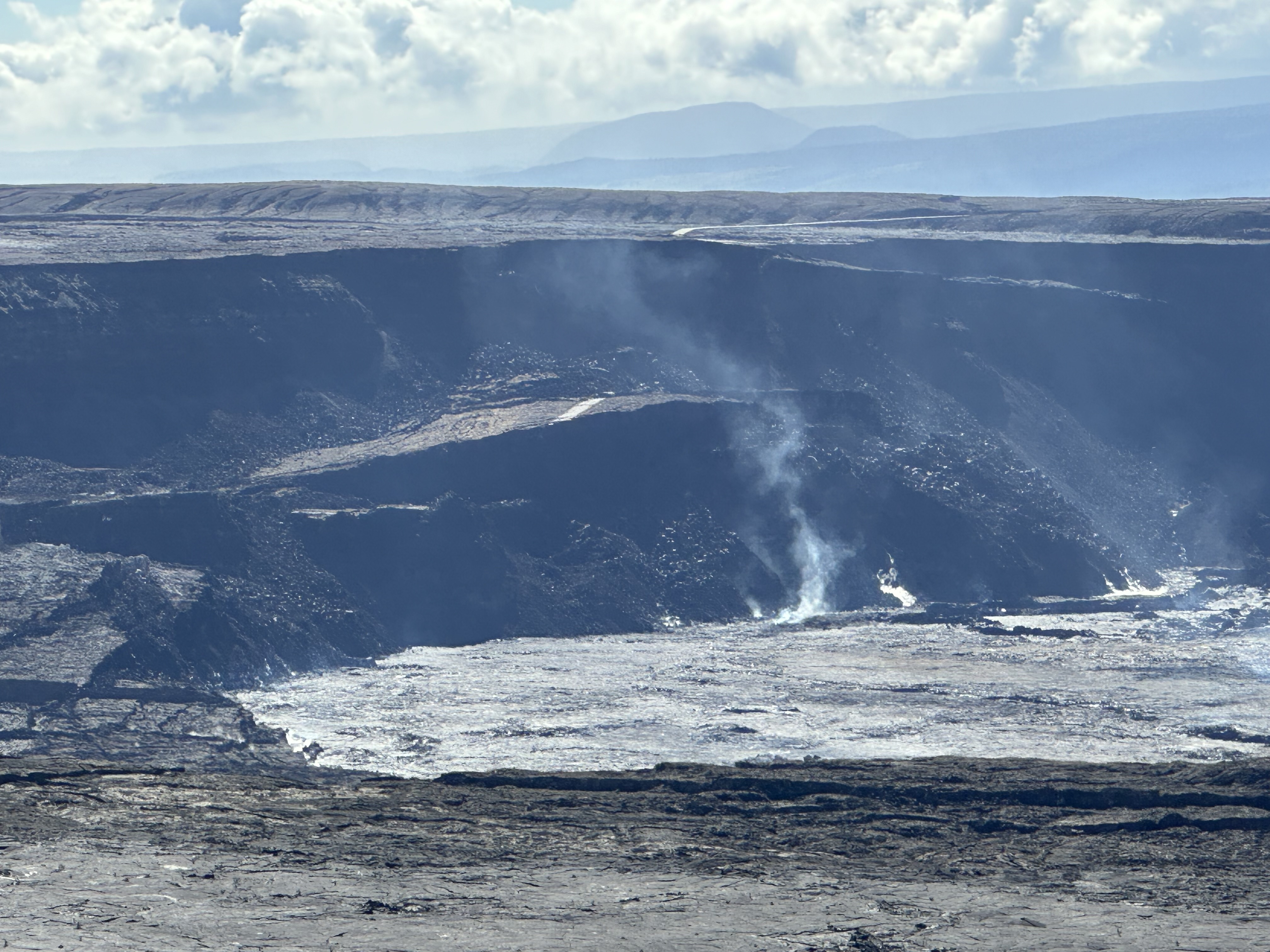
I was expecting a tall volcanic cone where we peered over the edge to look down into the crater. I underestimated the size and power of these massive domes. It was at least a half mile away. I think Manhattan could fit inside Kilauea’s gigantic crater.
Please click on the photos to enlarge them.
I also expected strong odors to emit from the caldera. Instead, it mainly was steam from vents along the volcano’s sides, although the fumes from Kilauea’s center would have been noxious.
To get a closer look, some of the group walked with our guide along an abandoned highway about half a mile. We could more closely see the steam rising from the crater’s center.
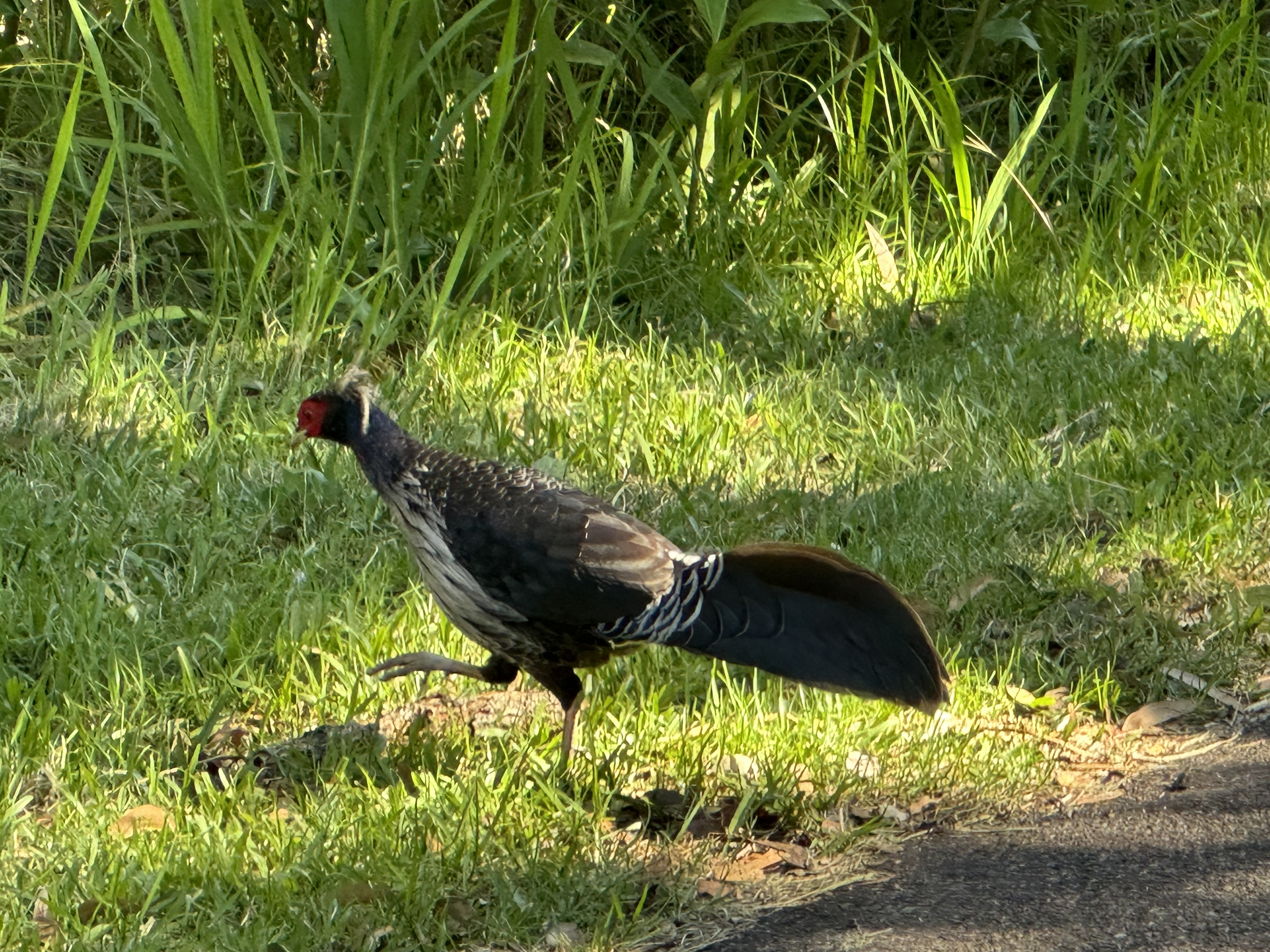
Several birds popped out before us on our way back to the bus. We headed back down the mountain, through the aptly named little burg of Volcano, and on to Hilo, the island’s largest town.
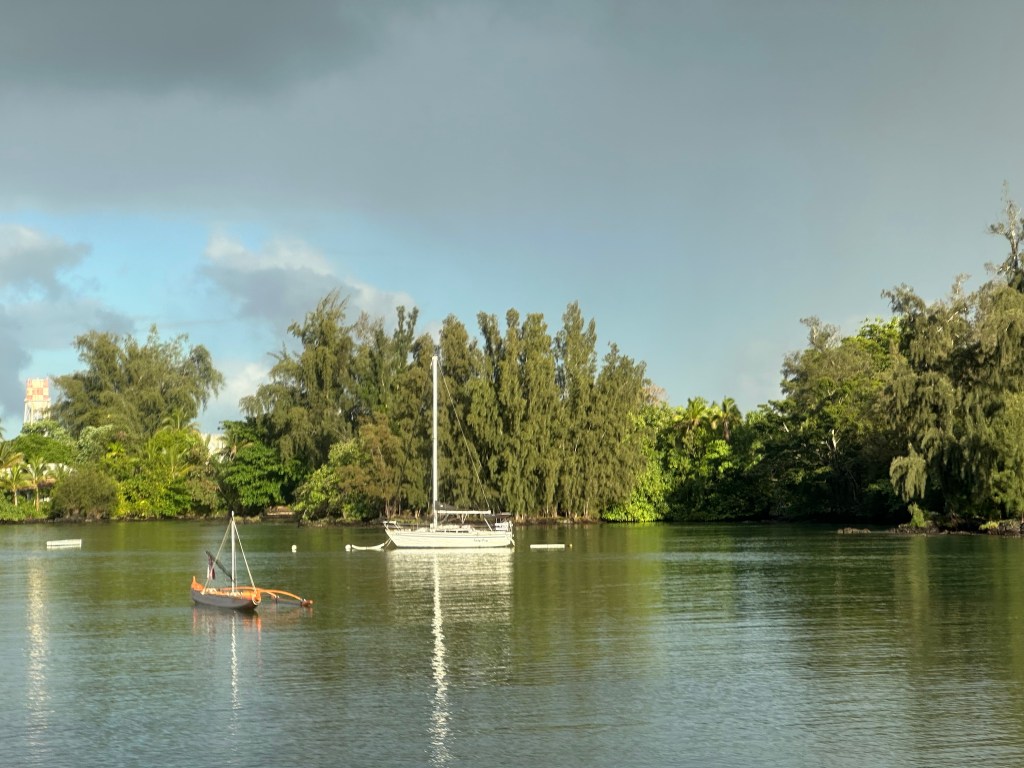
We stopped at Rainbow Falls in Wailuku River State Park, and I finally had a signal to contact my wife. She had Covid. Our guide jumped into action and tried to find an urgent care facility where Neva could be seen. However, all three were either closed or about to close, so my dear wife had to take a cab to the local hospital emergency room, where she spent four hours before being seen. All she wanted was a prescription for Paxlovid, which the ER doctor faxed to the local pharmacy.
Our guide assured us Neva and I could continue on the tour. She said the tour company treats COVID-19 like the flu. We would isolate on the bus and wear masks when around others. With only 14 people on the tour and riding a bus for 46 passengers, we could easily comply. I informed the other group members, and they were most understanding and concerned.
Darkness began to fall as we headed west up over a pass that took us past several volcano domes. The twilight gave them an eerie appearance. My poor wife didn’t arrive back at the hotel until 11 p.m.
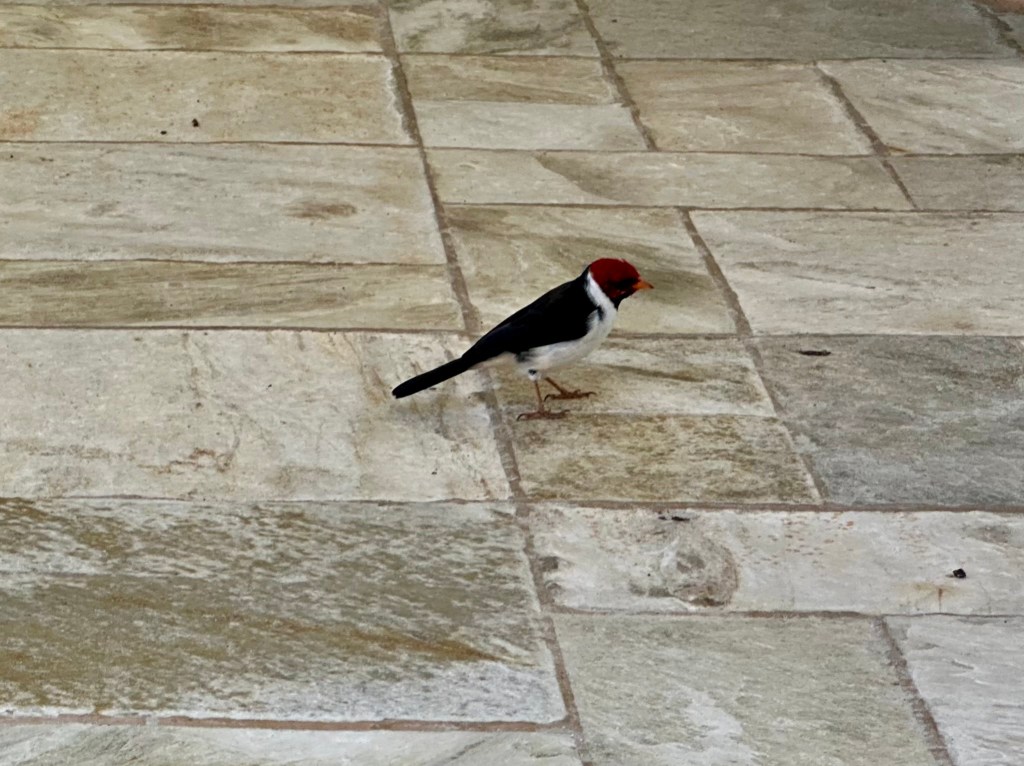
We spent the next day relaxing around the hotel after I retrieved Neva’s prescription. I did some birding and enjoyed exploring the nooks and crannies on the hotel property while my wife rested. We finished the day watching mantarays feed in the shallow waters along the lava rocks in front of the hotel.
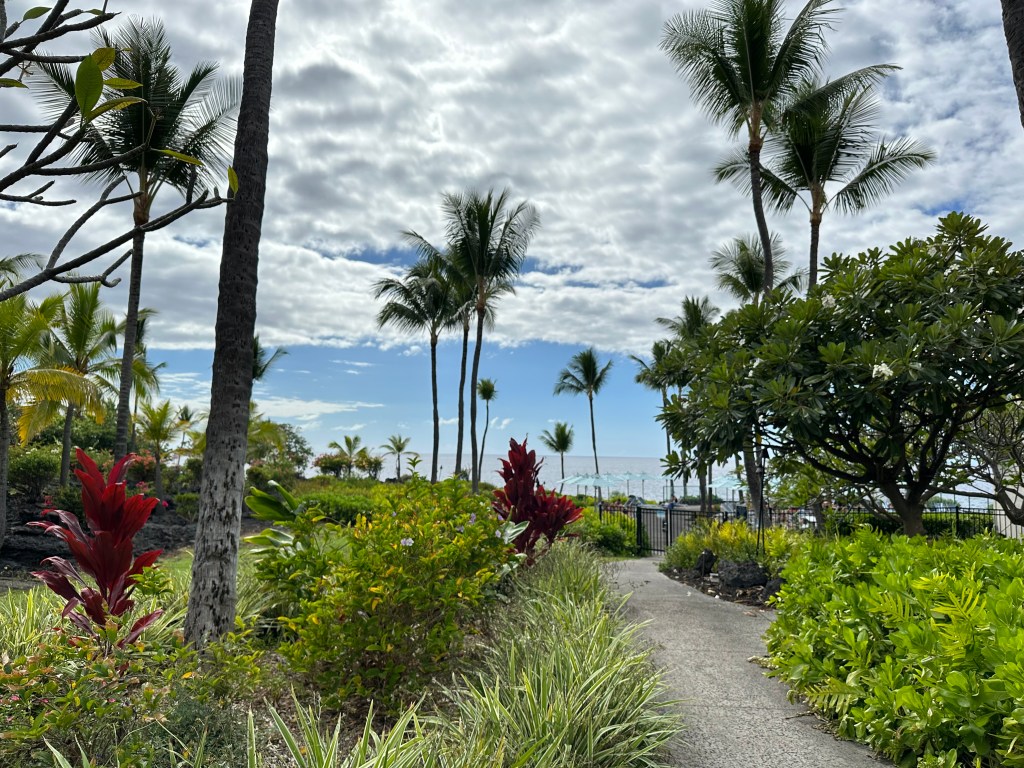
Flowering shrubs, coconut palm trees, and brilliant rainbows were ubiquitous in Hawaii.
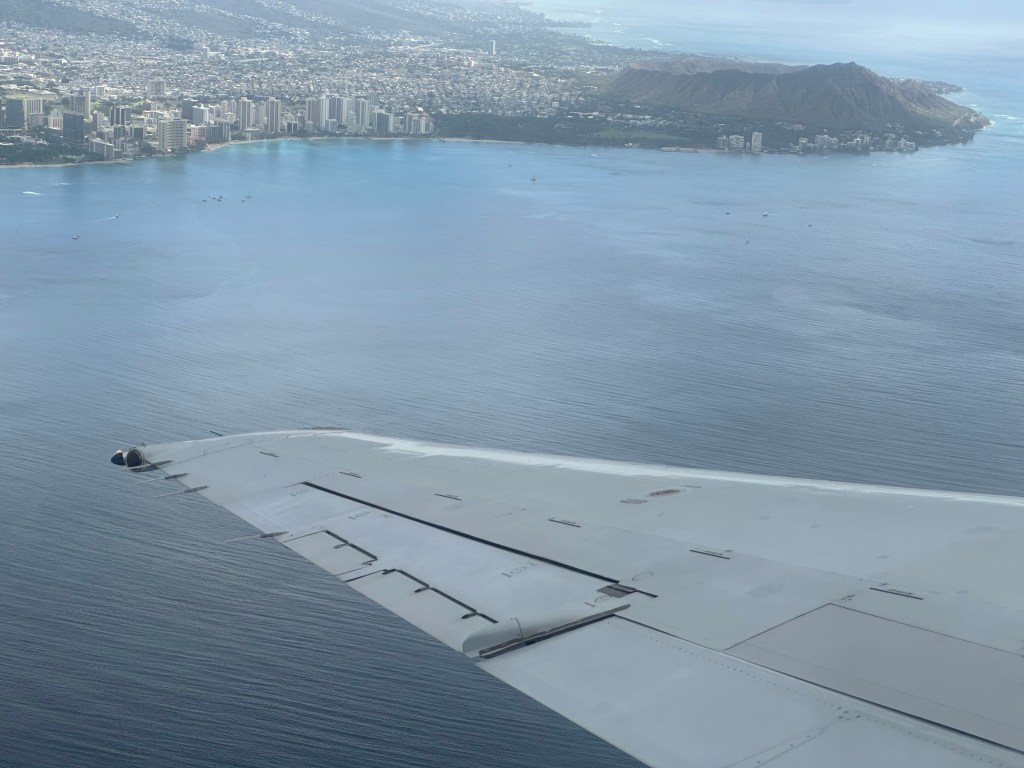
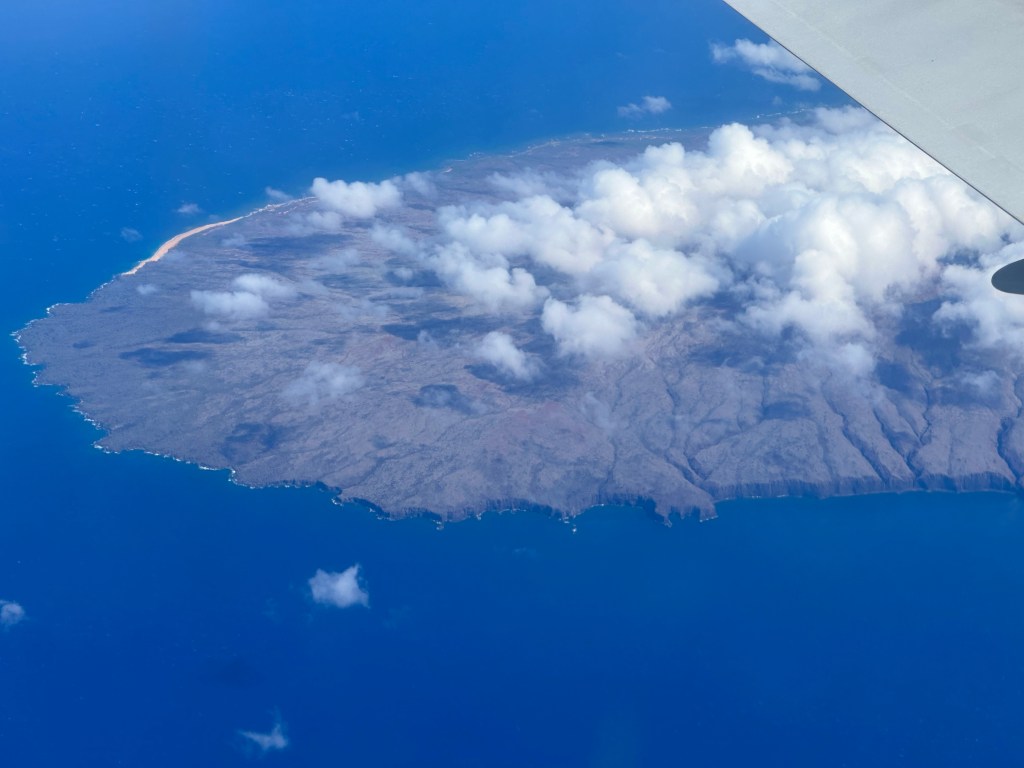
Our tour of Hawaii continued as we flew to the Big Island, which the locals call Kona. As our morning flight left Honolulu, I got a shot of Waikiki Beach and Diamond Head. Flying over other smaller islands, I was amazed at how deep blue the ocean was.
We landed at Kona’s small airport, where the luggage claim carousels are outside but covered with square thatch-like material to resemble native huts. Our small group boarded the bus for Kailu-Kona, where we had lunch. Our guide gave us a heads-up to sit at the bar where the prices were lower and the food just as good. We followed her wise advice and enjoyed our fish tacos.
Waikiki Beach (left) and Diamond Head (right).
One of the islands we overflew.
The fish tocos.
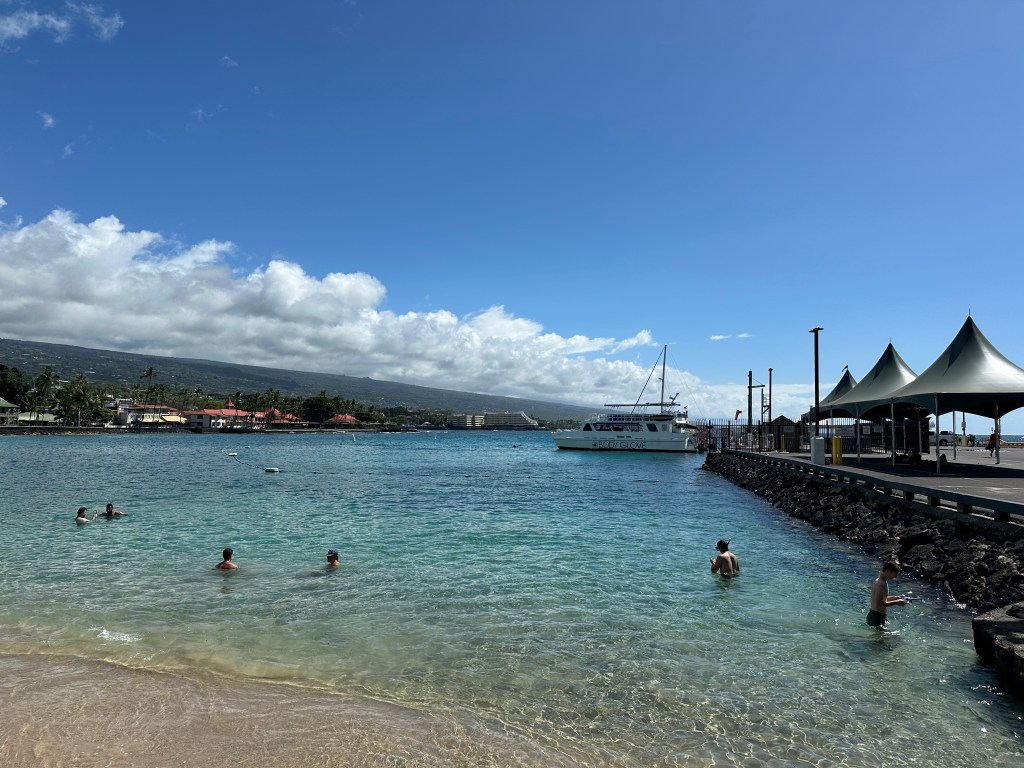
Where the locals swim.
A downtown city park.
We strolled around the oceanside town, window-shopping and enjoying the balmy breezes. Still, the sun was hot, so we refreshed ourselves with a cup of tasty shaved ice before boarding the bus again.
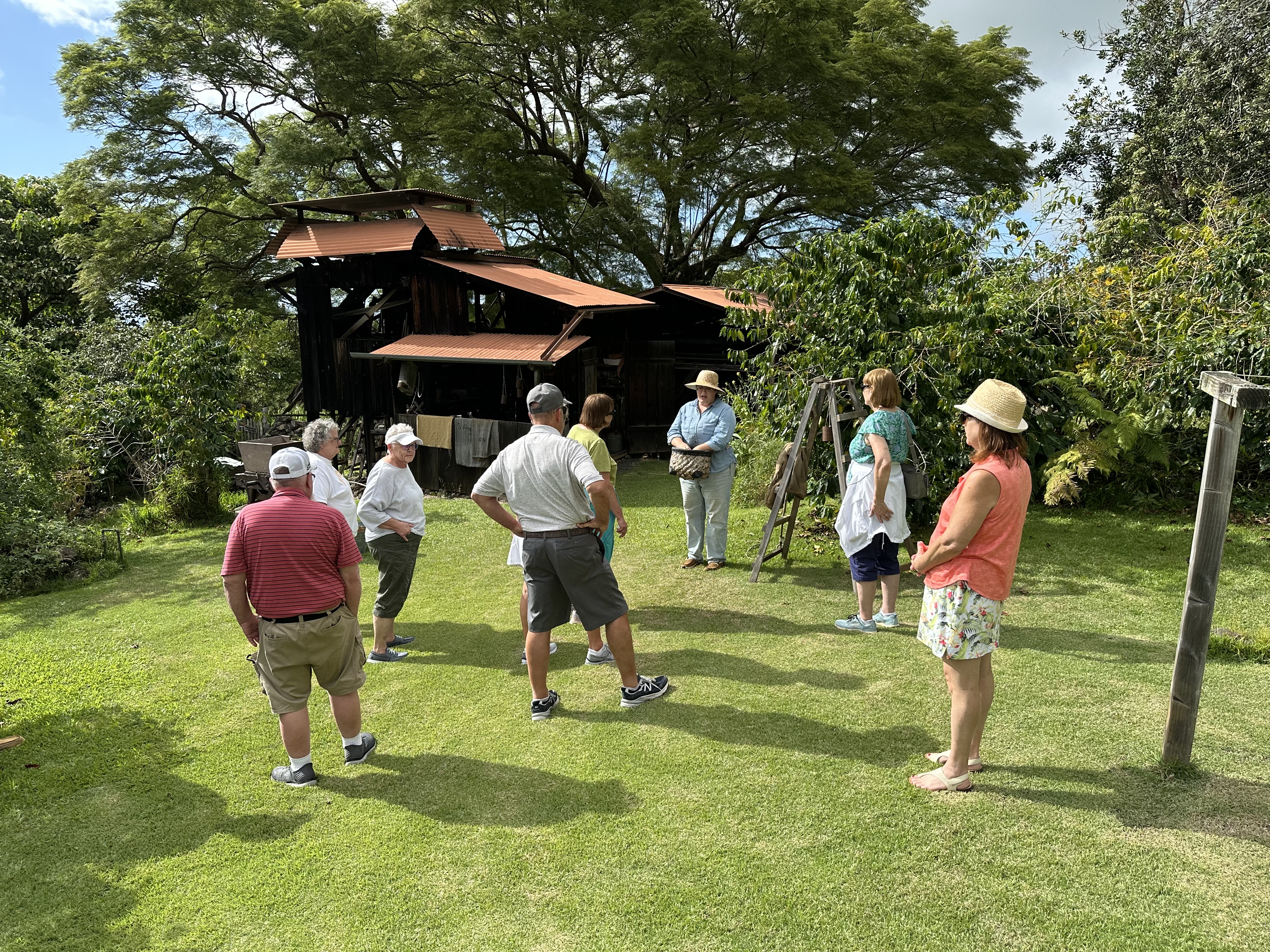
Since Kona has six volcanoes, traveling is either up, down, or around the island. We did all three on our ride to a historic coffee farm, now run by the Kona Historical Society, a non-profit organization. The farm is the only living history coffee farm in the country.
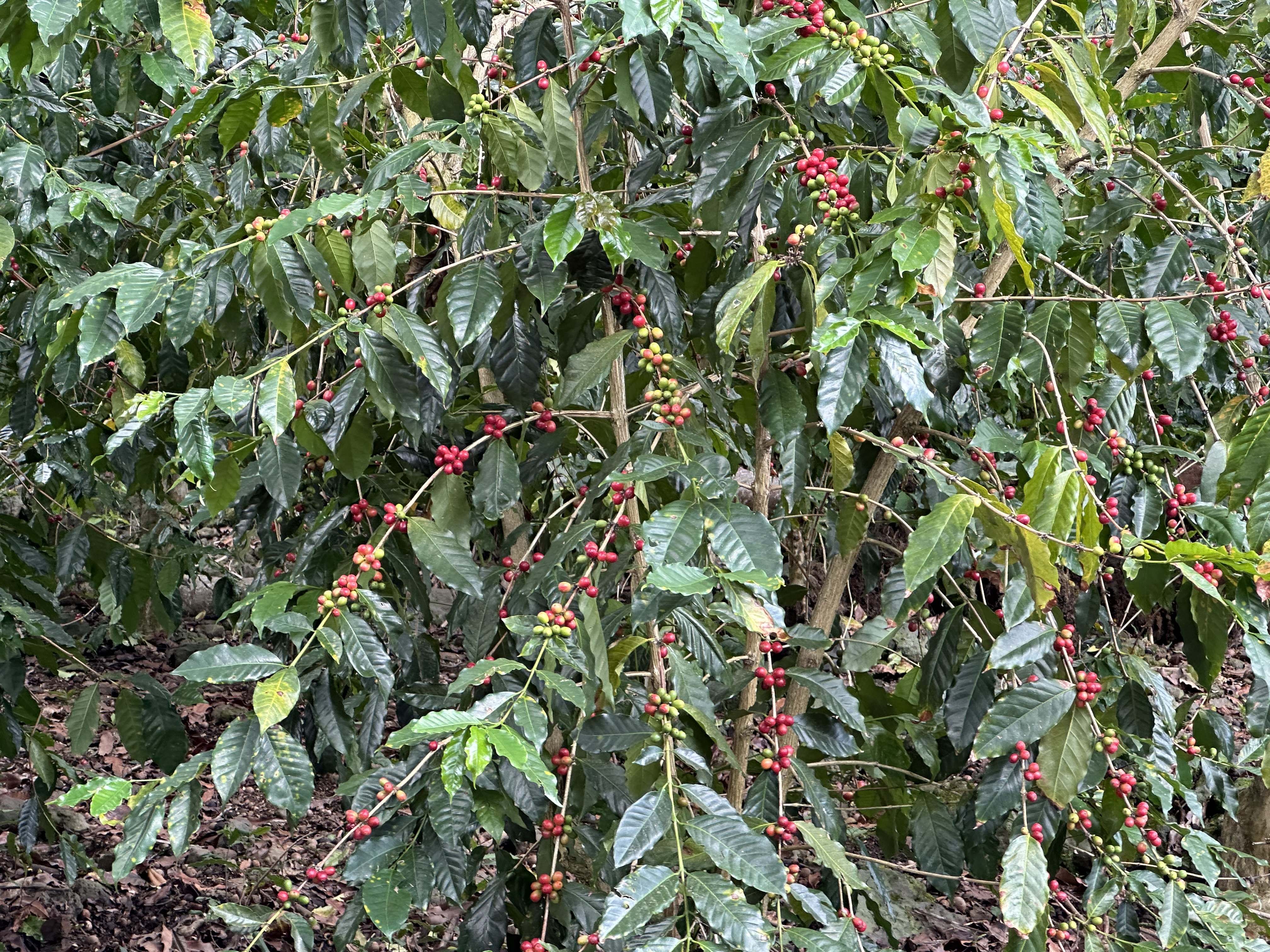
Along the path to the old farmhouse, bright red coffee cherries bent the bows of coffee bushes. Most were nearly ripe for picking. Tropical songbirds flitted from tree to tree, but there was no time to investigate them. A staff member from the historical society greeted us and gave us an overview of our visit.
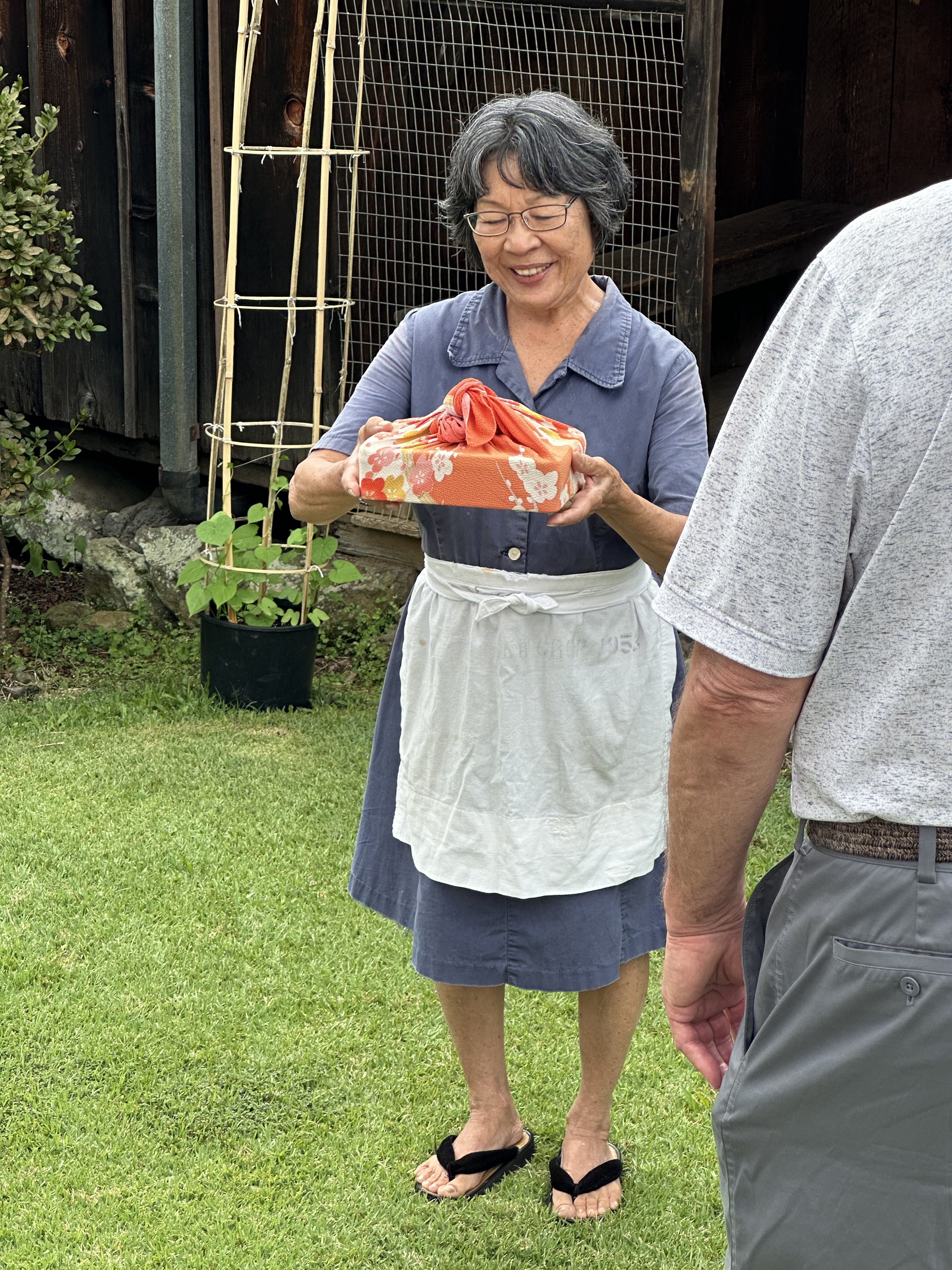
As we neared the old, original farmhouse, an elderly Japanese woman appeared. Tradition calls for visitors to present a gift to the head of the residence. The docent, of course, had one and presented it to our host, Paula, who graciously accepted it.
Paula had a precious and moving story about her life on the farm. When she was four, her parents apprenticed her to the farm, where she mainly assisted in homemaking activities and worked in the garden.
Paula explained the traditions and daily routines the family went through to keep the farm operating. Her personal stories of a child doing an adult’s work moved us all.
Japanese came to this part of Hawaii in the 1920s, when the farm was established. After the bombing of Pearl Harbor, the Japanese were rounded up and placed in detention camps. However, Japanese farmers were not. Consequently, the coffee farms were deemed essential and continued to operate.
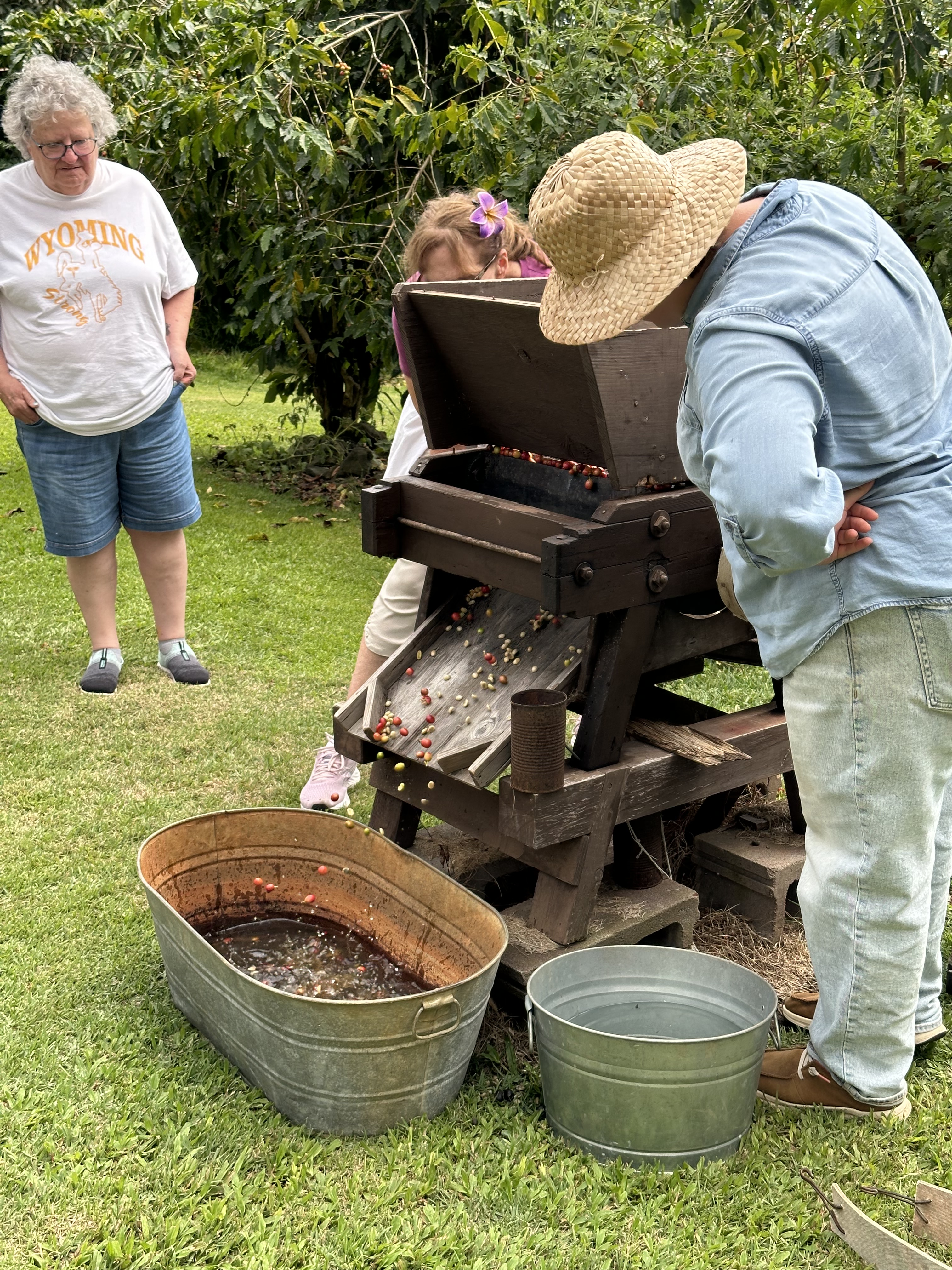
The farm was exquisitely maintained, just as when Paula helped on it. All the buildings were original to the farm, and each operation was explained. Having been to Honduras several times, I had seen the entire process of small coop coffee farms. I even helped pick the coffee cherries. The Japanese methods of growing, harvesting, and processing the cherries and the beans they contained were remarkably similar to what I had experienced.
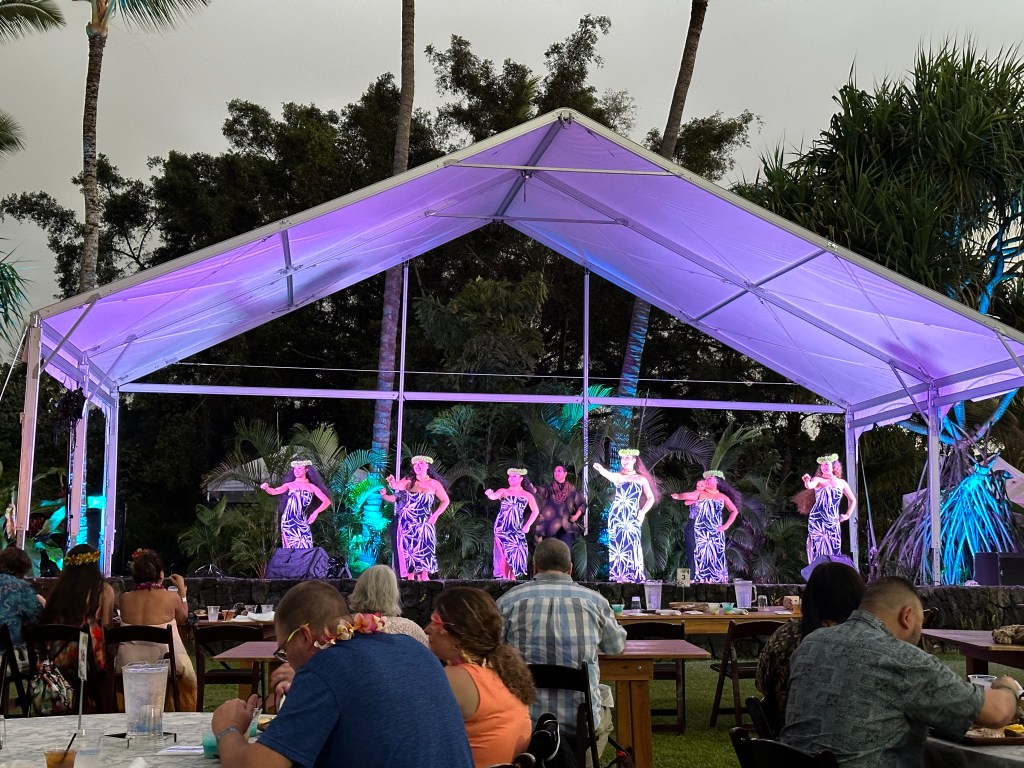
We dressed up.Local lore in song.Local lore in dance.The worriers.The finale.
An exception was the way the beans were dried. In Honduras, beans are often placed on concrete pads or tarps and dried in the sun. The shed where the beans were dried at this historical farm had a slanting roof to prevent the tropical rains from spoiling the crop.
Our group was impressed with Paula and the simple but efficient way of producing the rich Kona coffee. It was a great introduction to the Big Island.
Our day ended with a traditional evening luau with roasted pig, poi, poke, rice, and fresh vegetables and fruits. Lots of singing and acting out historic events followed with dancers and native warriors. Of course, a light rain briefly drizzled us, which is customary and unavoidable.
A gentle rain began to fall, but in such a setting, it didn’t matter. Photo by Bruce Stambaugh
Diamondhead at sunset from Waikiki Beach. Photo by Bruce Stambaugh
On our last day on Oahu, we signed up for a circle tour of the island. However, thanks to our skilled and knowledgeable bus driver, it was more of an immersion into the Hawaiian culture. We dove in.
A native of Oahu, Lani knew all the places to stop, including a few that weren’t on our official itinerary. She made a lovely tour luscious.
Before we ever boarded the bus, a bright rainbow arched across the early morning sky. It wouldn’t be the last we would see.
Another rainbow to start the day.
Our first stop was an overlook along the main highway, which offered spectacular views of the Pacific Ocean and a stretch of ancient lava coastline. Unfortunately, the waves weren’t big enough to give us a frothy show at the Halona Blowhole.
Please click on the photos to enlarge them.
However, in a small cove below, a few swimmers braved the steep and rocky descent to a secluded beach, where wave after wave lapped at the small sandy shore. I could have spent hours soaking in the view, the balmy breezes, and the warm sunshine, but Lani had other places to tantalize us.
We drove inland and entered the Valley of the Temples Memorial Gardens. Set against curtains of solid lava adorned with lush greenery, a bank of lacy clouds hovered over the temple grounds.
Located at the base of the Ko’olua Mountains, the non-denominational Buddhist temple was surrounded by abundant vegetation, large and small. A sprawling, immaculate cemetery covered the rolling terrain between the highway and the temple.
Recent heavy rains had muddied the Swan Temple Lake. Still, the setting drew me in, daring me not to take a photo. I happily succumbed. We also rang the giant gong for good luck. I’d say it worked.
The next stop was Ko’olauloa Waimea Falls. I walked up to the falls, where some high school students enjoyed the cascading water. On its way to the ocean, the stream split the ravine, guarded by heavily wooded steep flanks filled with brilliantly colorful flowers and various songbirds I couldn’t identify. It was as if the incredible environment effortlessly drew me up the slope and back down.
Please click on the photos to enlarge them.
Too soon, it was time to continue our drive along the Kamehameha Highway, which offers beautiful ocean views. We passed multiple local parks, a testament to Hawaii’s commitment to preserving public green spaces. However, due to rising sea levels, shore and beach erosion are ongoing battles.
Along the Kamehameha Highway.
Our next stop was the Dole Plantation retail store. There, people enjoyed the famous Dole Whip while others browsed or shopped. Soon after leaving there, we passed acres and acres of agricultural land, some planted with pineapples.
Agricultural fields near a military base. Photo by Bruce Stambaugh
Our knowledgeable bus driver wisely took the counterclockwise route on the circle tour of Oahu. While we were returning, most traffic was headed out of Honolulu. Before we hit the city, we stopped at a pass that overlooks the capital.
Overlooking Honolulu on a windy, rainy day.
We had a 180-degree view of Honolulu and the surrounding mountains. Rain pelted one side of the urban setting while the other was dry. We braved strong wind gusts to enjoy the view and feel the rain.
We snaked our way down through neighborhoods of pagodas, apartments, schools, skyscrapers, unkempt houses, and urban parks to reach sea level. The tour was over, but the best was yet to come.
After dinner, our orange dessert was a spectacular sunset on Waikiki Beach. The next day, we flew to the Big Island.
You must be logged in to post a comment.