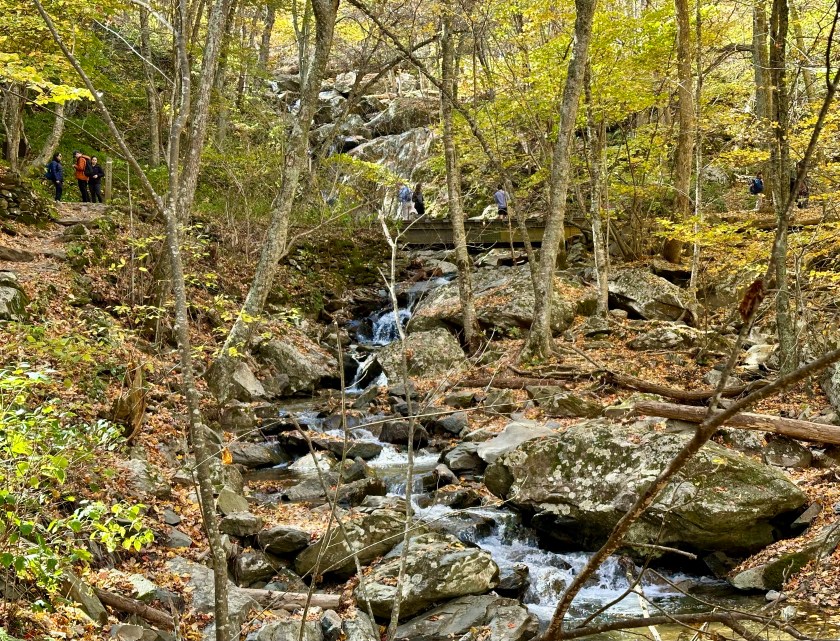
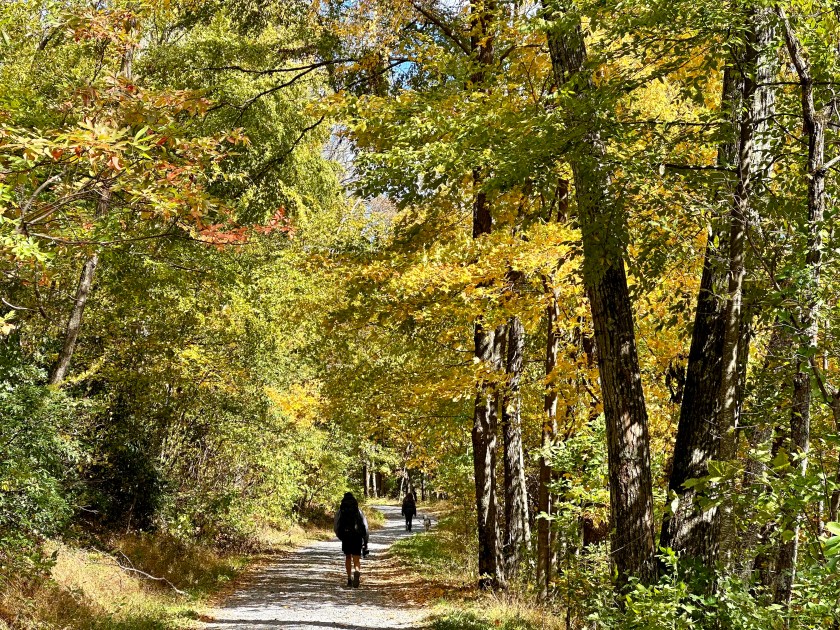
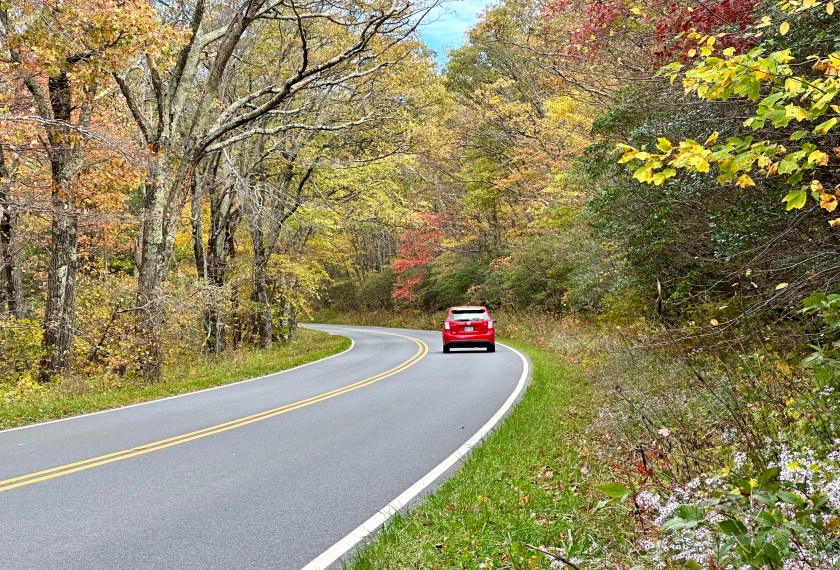
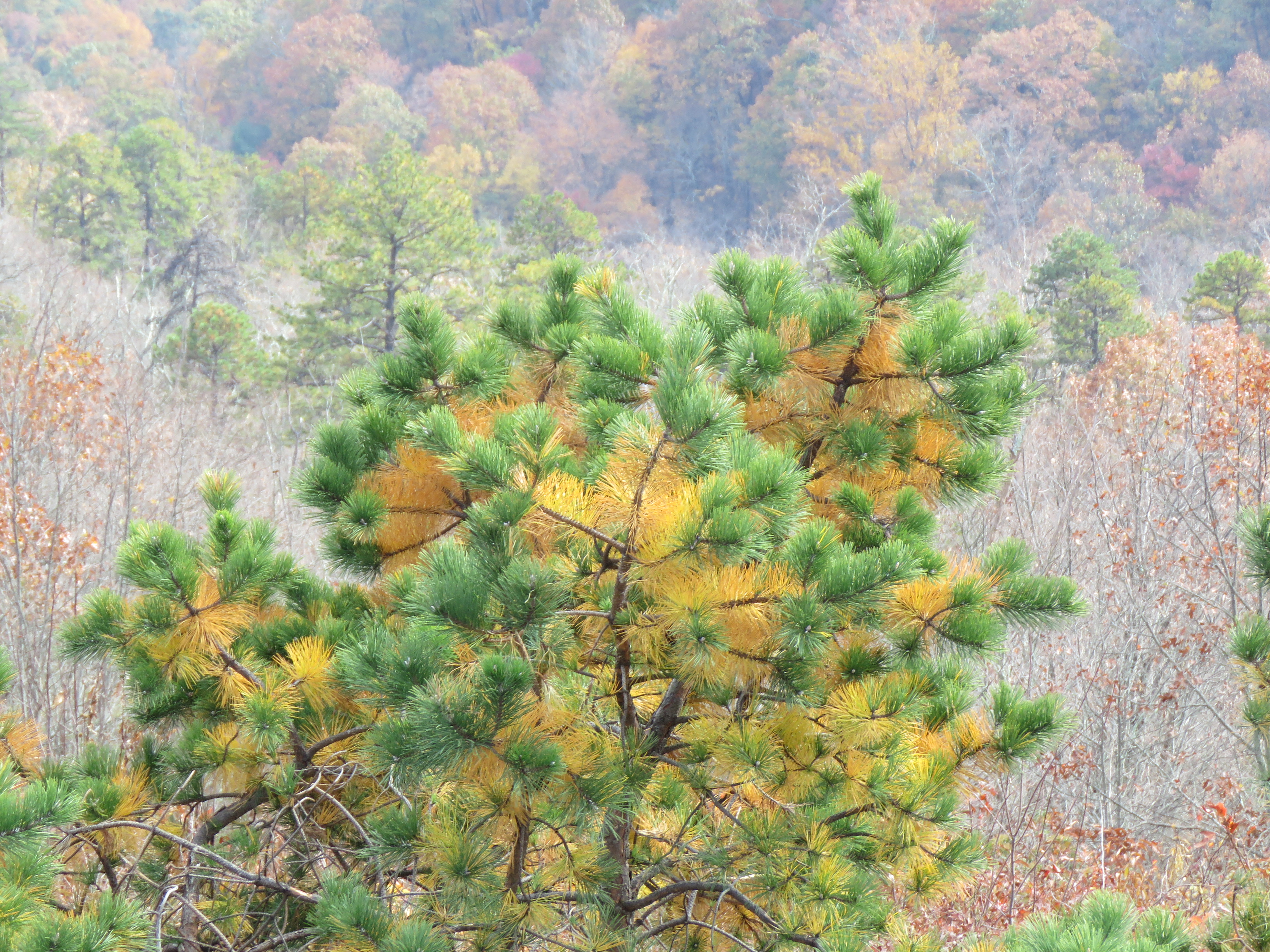
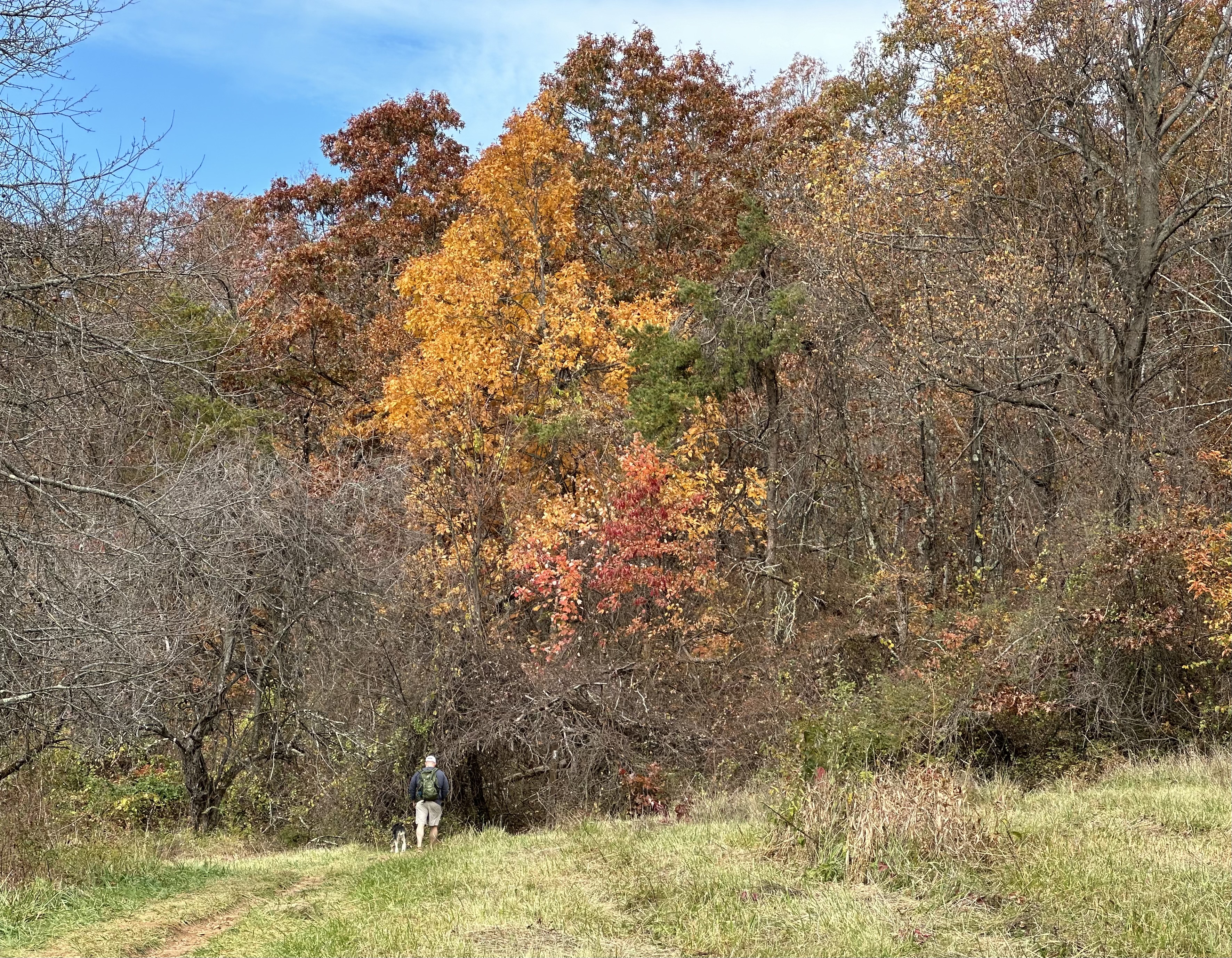
Nature’s beauty reigned even after the peak colors had faded. Photo by Bruce Stambaugh
Fall is a great time to hike, bird, and shoot photos. Shenandoah National Park is my go-to place to combine all three hobbies in one trip.
However, I have learned to avoid the peak color time due to crowds. People from around the world visit the park to admire its autumn glory, which means traffic is also at its peak on the iconic Skyline Drive.
By mid-morning, lines of vehicles form at entrance stations. Overlook parking spaces fill up quickly, forcing people to park along the busy roadway. The same is true for trailhead parking lots.
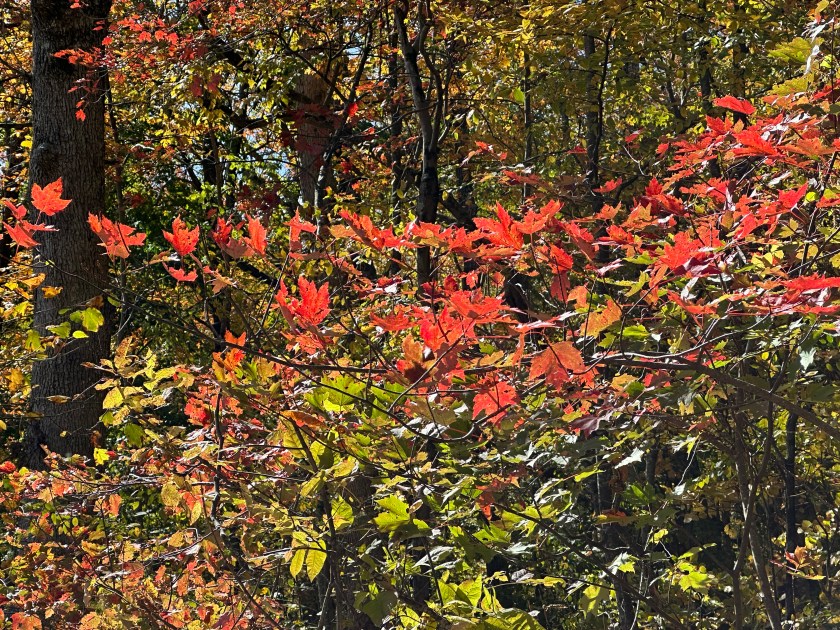
Before the peak of leaf colors.
So, I chose to catch the leaf colors before and after the peak. The park is still busy, but it is tolerable, and I am satisfied with a stirring hike filled with picturesque views, unexpected wildlife, and migrating birds.
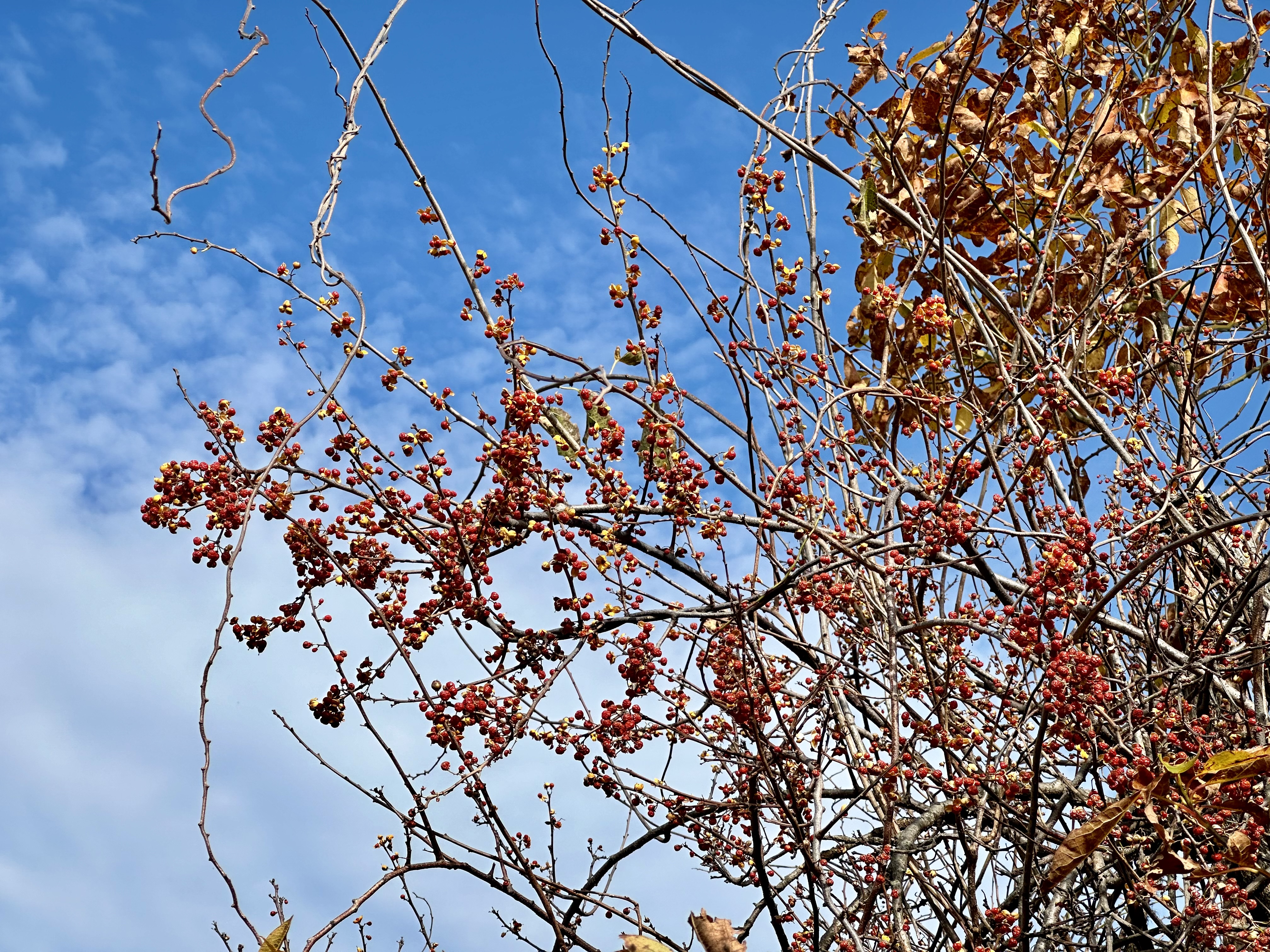
In the mountains, altitude affects the coloring as much as sunshine, cooler nighttime temperatures, and morning frosts. So, the trees might be dull or even bare at the hike’s beginning, and a half mile down the trail, a blaze of color brightens the way.
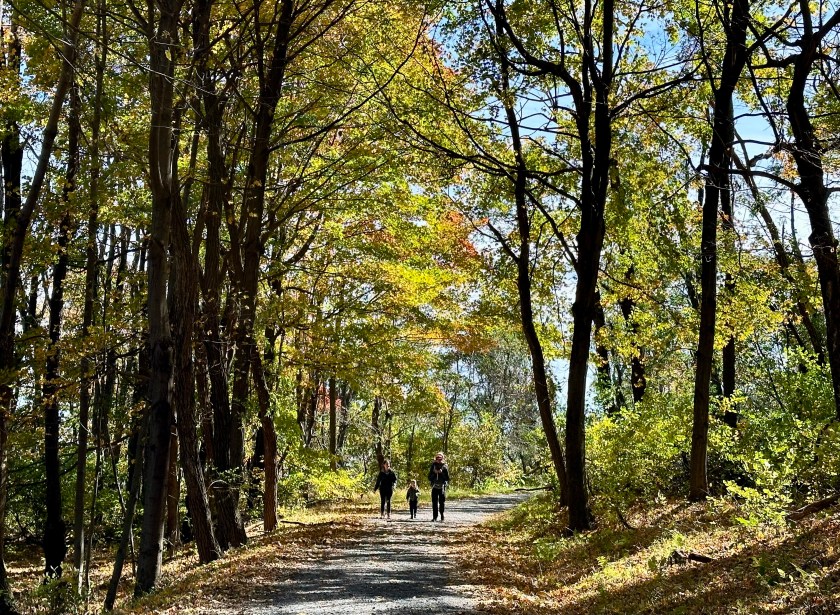
After the peak. Please click on the photos to enlarge them.
Though I have missed the height of the turning leaves, I enjoy the before-and-after with equal zeal. It’s fun to note the differences I discover and meet friendly folks along the way. The park’s beauty has energized them, too.
Besides, I admired nature’s colorful summit in other locales in Virginia’s lovely Shenandoah Valley. It is the perfect place to enjoy hiking, birding, and photography all in one joyous day trip.
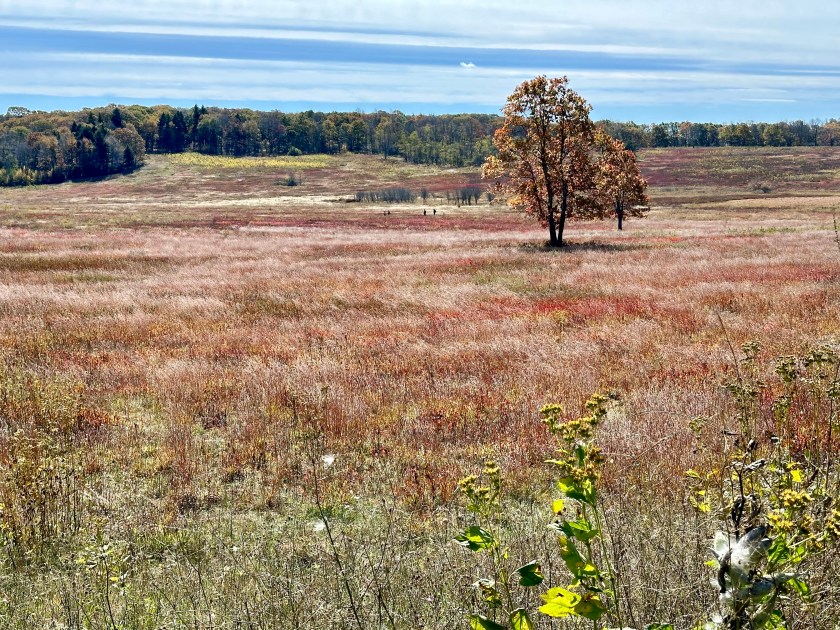
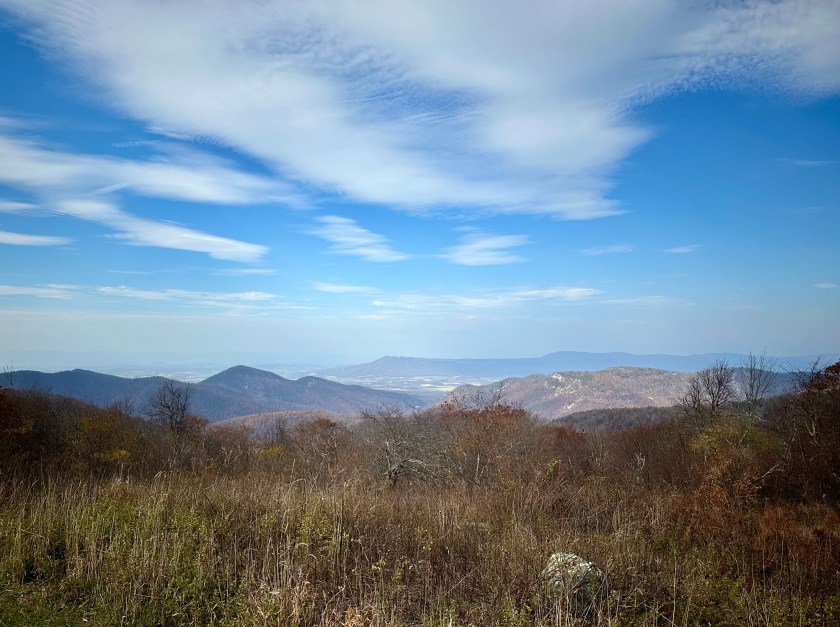
A view west into the Shenandoah Valley. Photo by Bruce Stambaugh
I nearly drove by the two deer. They blended in with the background that well. Fortunately, I spotted them as I passed the old apple tree.
I found the first place to turn around and hoped my hungry subjects would still be there. They were, and I quickly snapped a few shots before they disappeared into the forest.
These two buck deer were on the search for apples. Photo by Bruce Stambaugh
I was on Skyline Drive in Shenandoah National Park. The area between Milam Gap and Big Meadows is peppered with apple trees planted by farmers before the park was established in 1935. The trees still produce apples, and deer forage on them in the fall.
Unfortunately, this pair of bucks was late to the party. All the reachable apples and those on the ground had already been consumed.
Gravity and nature will eventually have their say, enabling the deer to satisfy their taste for bright red apples.
The two bucks before they scampered into the woods. Photo by Bruce Stambaugh
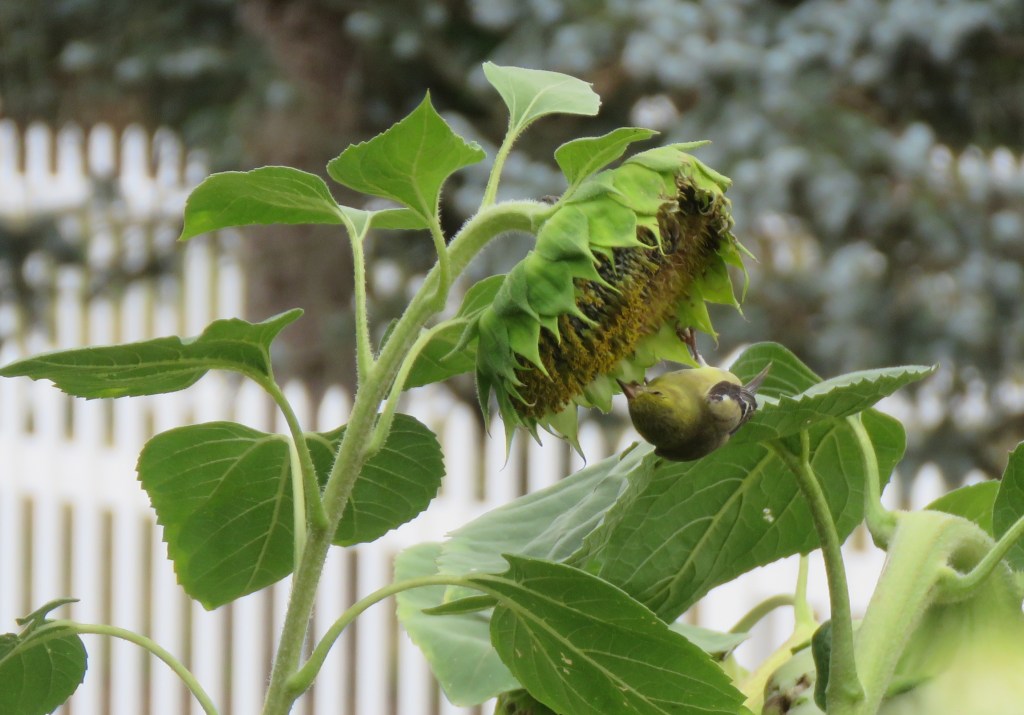
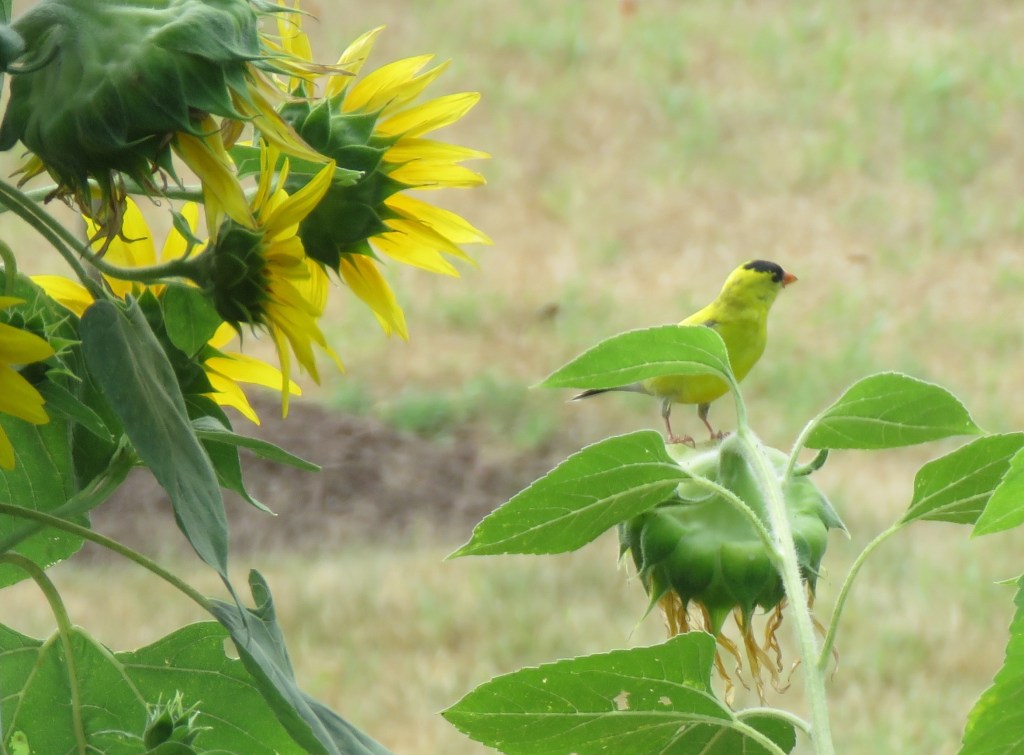
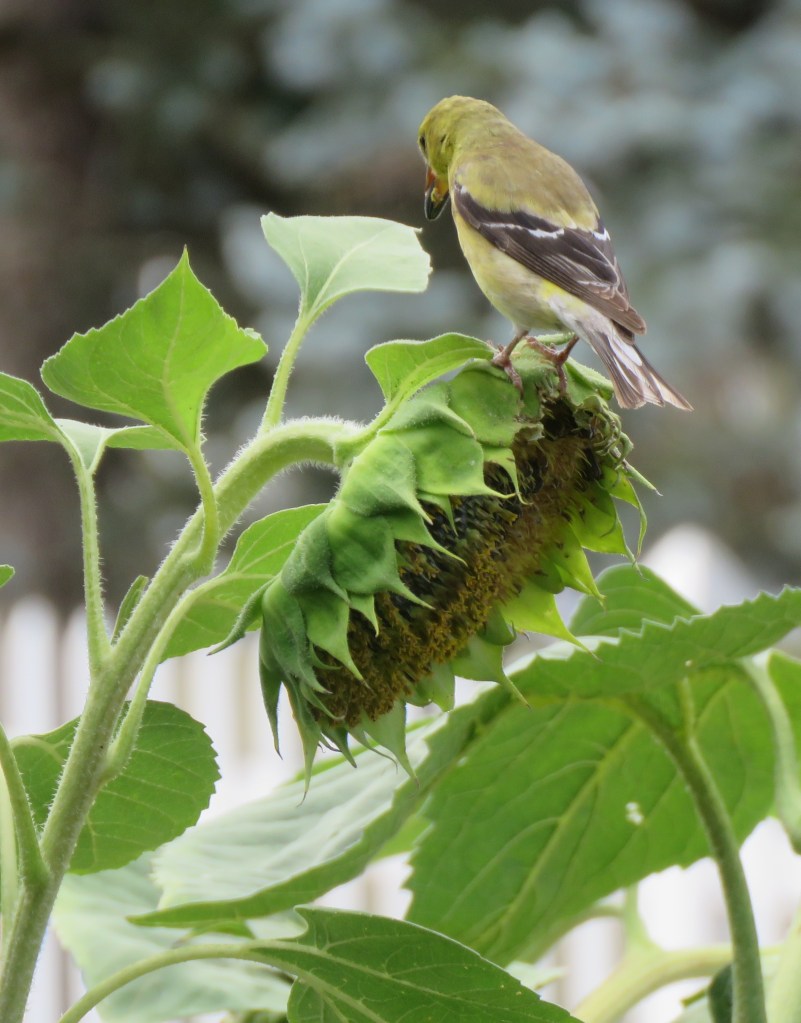
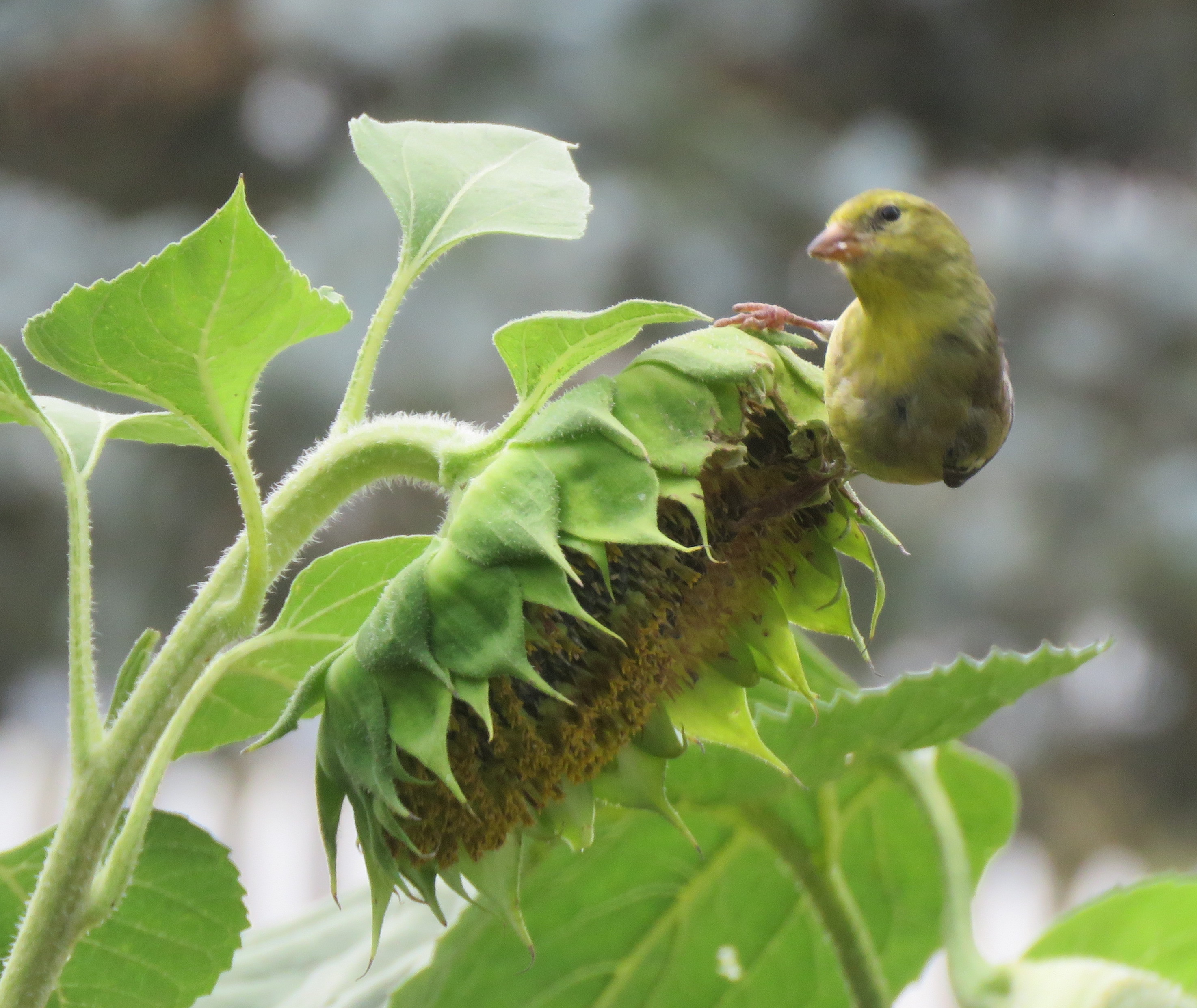
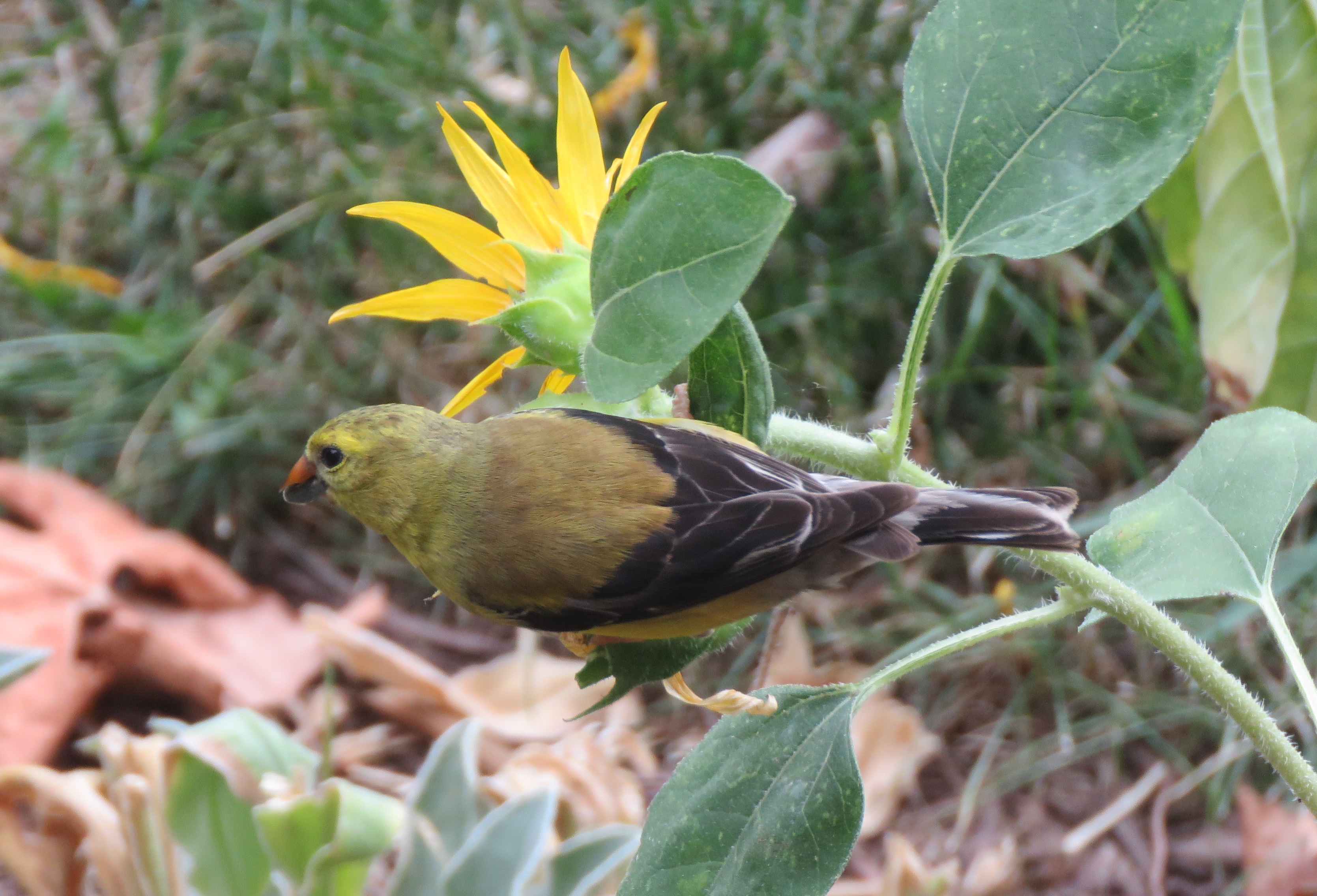
A female American Goldfinch plucks a seed from a sunflower head. Photo by Bruce Stambaugh
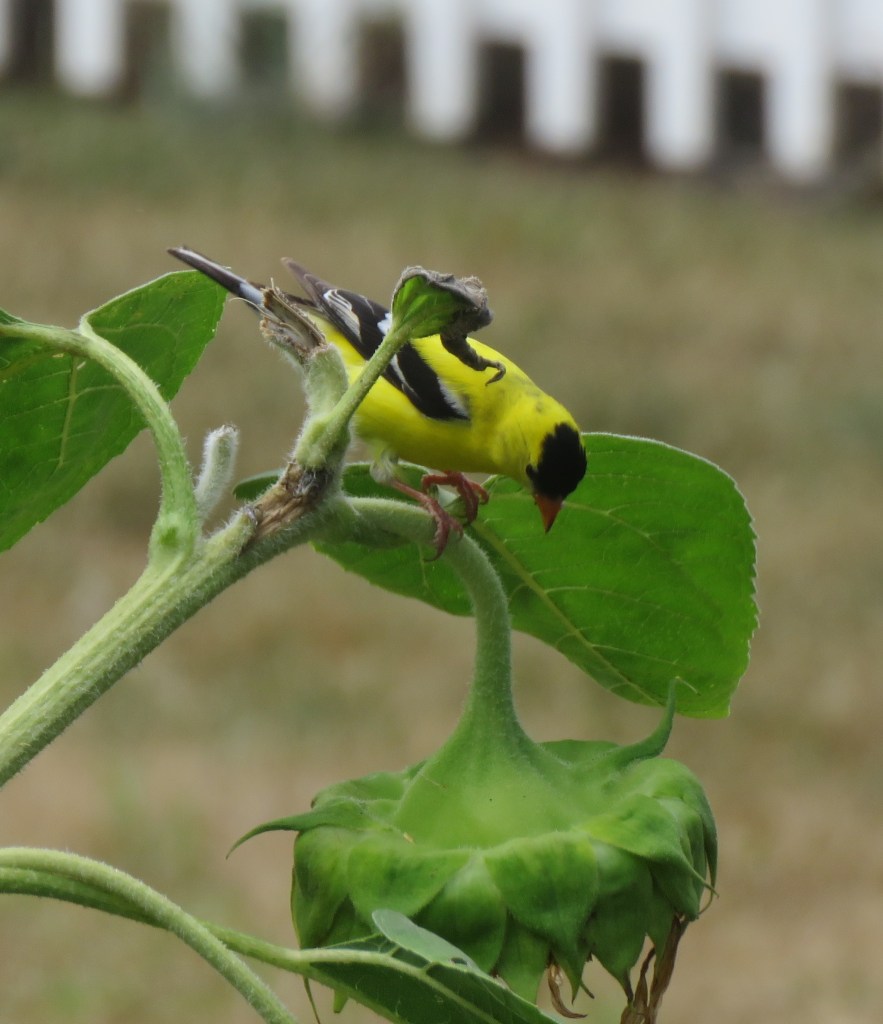
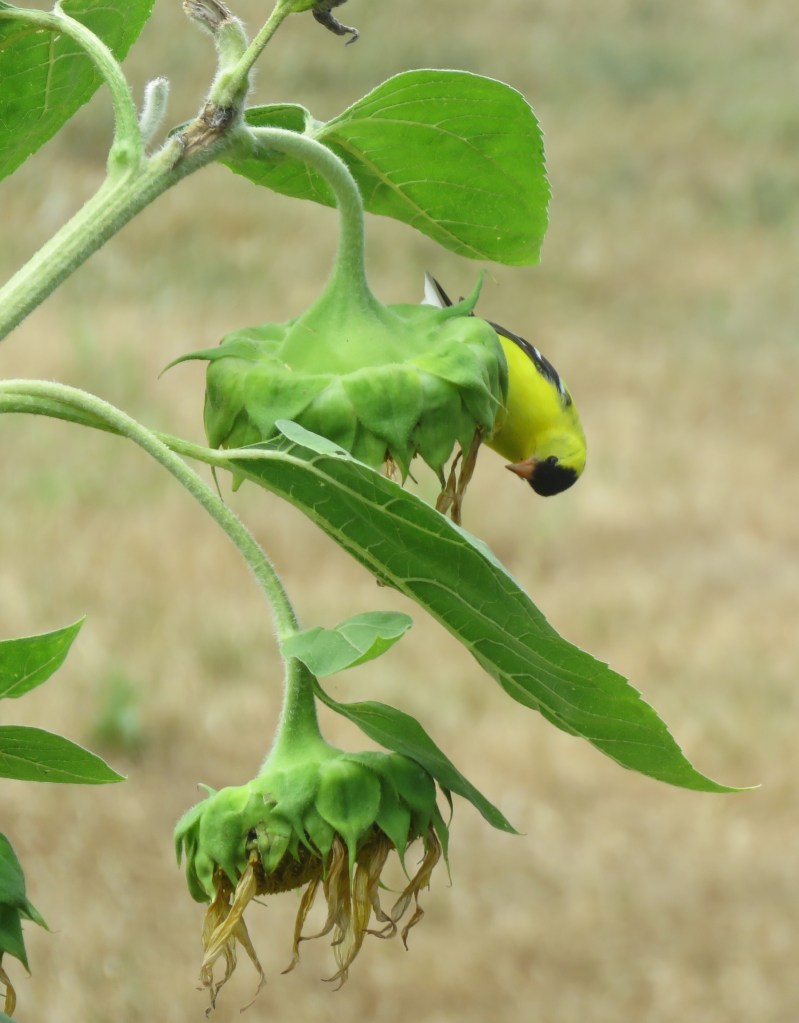
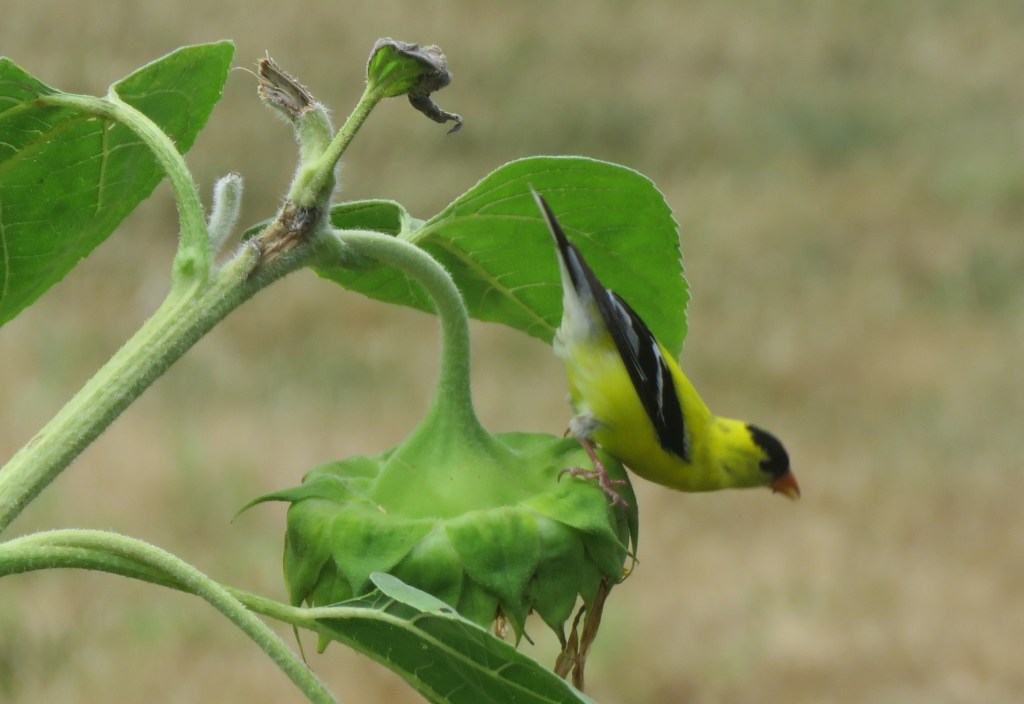
Can you eat upside down? American Goldfinches sure can!
In the summertime, the acrobatic little birds put on a show around sunflowers. Often, they hint at their arrival at a sunflower patch with a distinctive, cheery call. Soon, they land atop a flower and begin their feeding.
The lively and colorful birds use their short, sharp beaks to pry the juicy new seeds from the flower head. Their sturdy pinkish bill effortlessly cracks open the seed, and the birds devour their reward.
The American Goldfinches seem able to eat in any position: upside down, sideways, or at any angle. Since the laden flower heads bend toward the ground as their seeds mature, the birds have no choice but to attack their target in any way they can. The birds gain needed nutrition and moisture from the fresh seeds.
The male looks regal in its summer mating plumage of bright yellow with jet-black wings, tail, and forehead. A white wing-bar adorns each wing. The female is duller in color year-round. She is feathered more for camouflage than fashion. Her pale yellow-green is much duller to help blend in with the greenery she inhabits. The female’s coloration helps conceal the eggs during incubation and the young when they hatch.
In the winter, both sexes turn dull to protect themselves by blending in with their weedy surroundings. Black oil sunflower seeds draw them to feeders, though the pulp center has to be much drier than the fresh-off-the-flower summer offerings.
Of course, goldfinches aren’t the only species with this feeding trait. Nevertheless, it’s a joy to watch their antics in any season.
Birds aren’t the only animals that prefer fresh sunflower seeds. Photo by Bruce Stambaugh
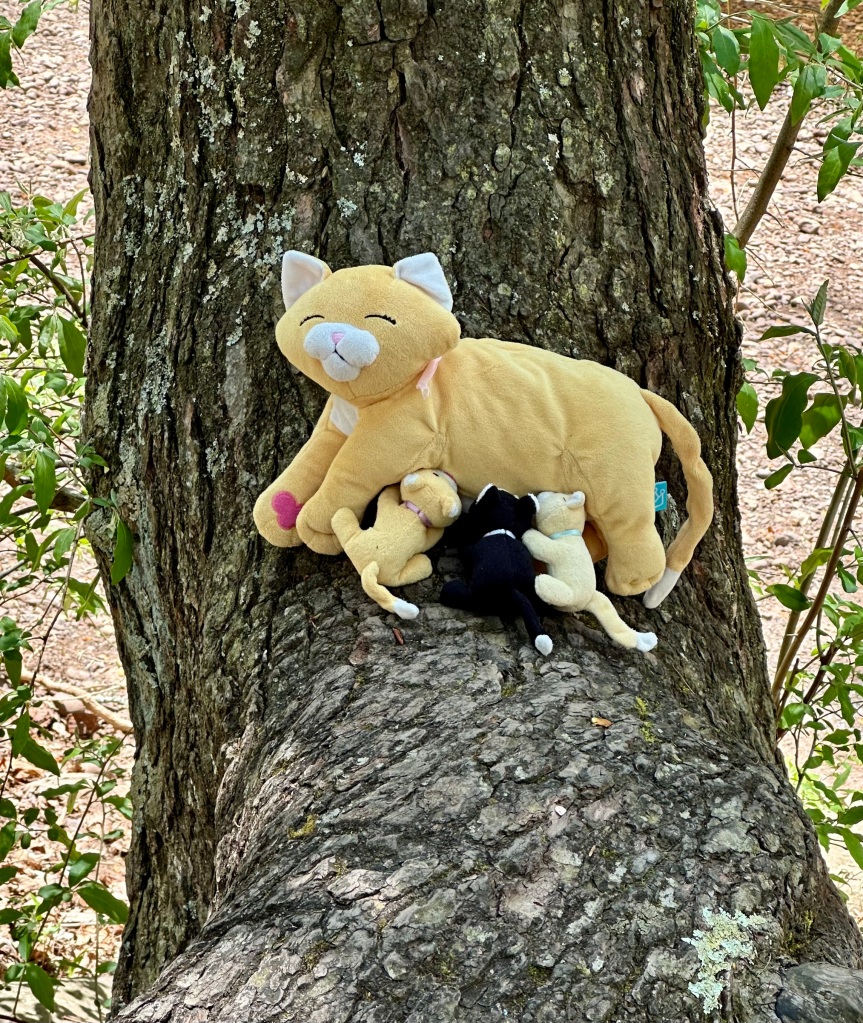
Sometimes, reality is stranger than fantasy. Photo by Bruce Stambaugh
When I happened upon this tender scene, I did a double-take.
My wife and I had joined an entourage from church for a Sunday afternoon of baptisms for three teens in the chilly mountain stream. After the dunkings and the celebratory congratulations shared, I wandered away from the rest of the revelers to see what I could find.
Scores of Pipevine Butterflies and Tiger Swallowtail Butterflies flitted through the woods. They danced carefree from rays of broken sunlight to dense shade, oblivious to the human invaders.
I certainly didn’t expect to find a cat casually nursing three young ones in the forest. And I especially didn’t expect to find a stuffed cat and her young stuffed kittens. But that is exactly what I discovered.
Some children not connected with our group were splashing in the nearby stream. Perhaps one of them thought this wild cherry tree along the banks of the Dry River at the base of Shenandoah Mountain was a lovely and safe haven while romping in the water.
I’ll never know for sure, but this composition of fantasy playthings among nature’s real and evolving habitat was too good not to share.
In one way, this is a typical one room Amish school. In another, it’s not.
The school is plain white, as is the custom among the Amish. This particular one was once a public school until the school consolidation wave hit Ohio in the late 1950s and early 1960s. When the local schools were closed, the Amish often bought them and started their own schools. That way their students weren’t far from home and could walk to school.
The atypical aspect of this school, at least structurally, is that it has a metal roof. Most Amish schools have shingled roofs. A metal roof would cost substantially more than a shingled one.
Another point of interest is that this school was closed yesterday, a Wednesday, when I took the photo. Why? It’s harvest time, and the school was closed for three days so the youngsters could help husk corn at home. Apparently most of the students who attend this school live on farms. Otherwise the school board, made up of five fathers of the students, wouldn’t have closed the school in the middle of the week.
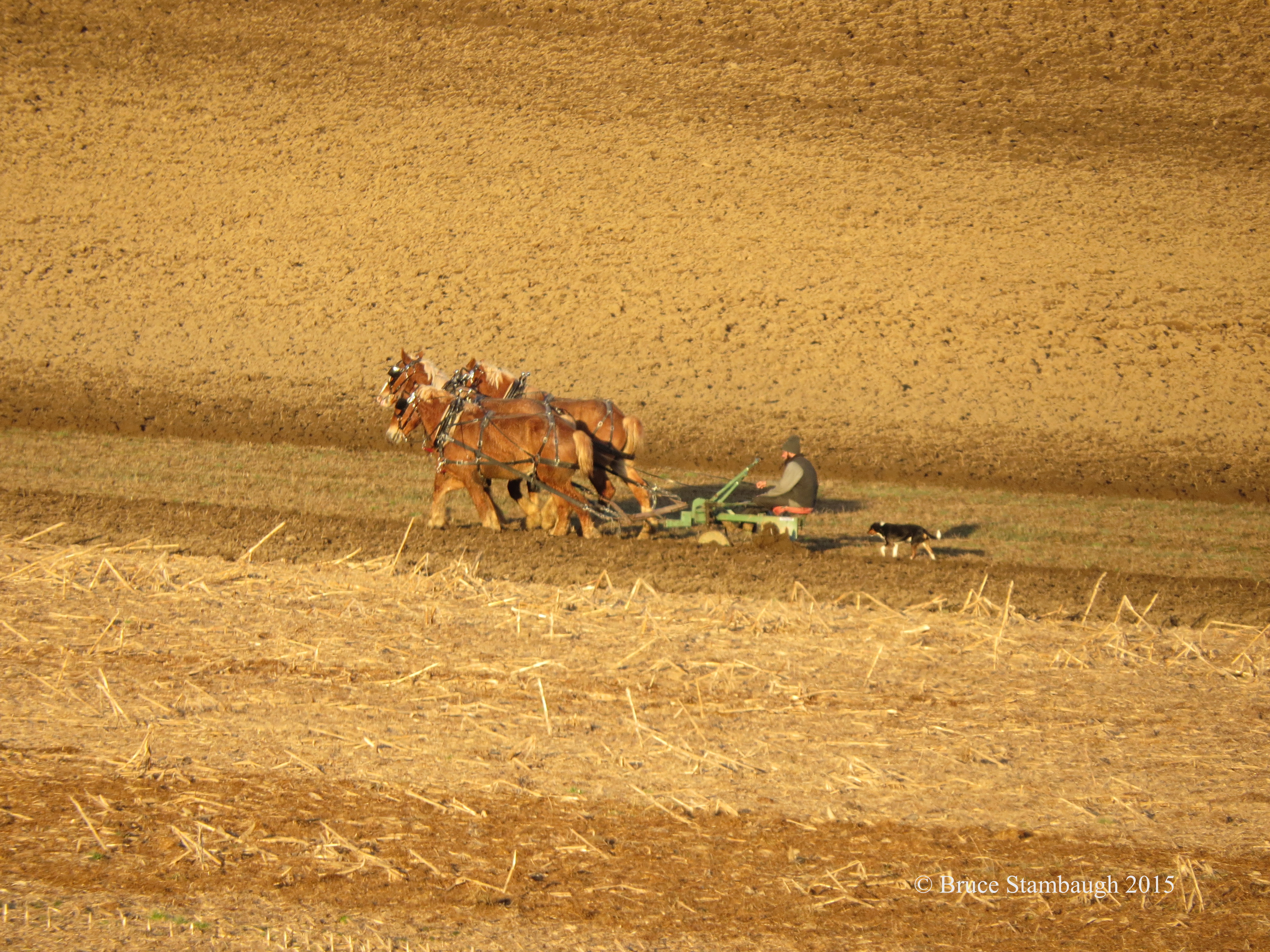
I stood and talked with the farmer as he rested his team of horses beneath a tree along the road. For the end of May, the morning was muggy. Both he and the horses needed a break from their bucolic labor.
The horses stamped and snorted and swished their tails to discourage any bothersome insects. The conversation with the Amish gentlemen turned toward appreciation and care for the environment.
Across the weedy fencerow, we lapsed into a philosophical discussion on how we all are rooted in the soil regardless of where we live. The setting was perfect for such a stirring chat.
The musky smell of the sweated horses, the pungent fragrance of fresh earth turned, the sprouting leaves of the black walnut tree that served as our shady shelter together fueled our ideas and ideals. We were of one mind.
We concurred that it was too easy to ignore such a simple concept as caring for the good earth. We wondered if society’s reliance on modern technology and our fast-paced global order have dulled us into forgetting our roots.
He pointed out all the construction in our local area, the continued depletion of farmland and wildlife habitat. Little by little, our pastoral landscape was transitioning.
He wondered if people today understood where their food originated. Did they know all of the effort or any of the processes needed to put food on their table? Was the younger generation becoming so fixated on electronic screens to even care?
We both shook our heads in wonderment of what lay ahead, not so much for us, but for future generations. Will they get to enjoy the beauty of the natural world the way we do?
And with that, my friend encouraged his workhorses to giddy up. Soon a squadron of winged insect eaters swooped overhead, exacting an instinctive aerial harvest.
As I continued my morning walk, I mulled over the conversation. A scene from 35 years ago popped into my head. My family and I were at Old Sturbridge Village, Massachusetts. The place is a living museum where folks can go to see how rural life used to be long before the industrial revolution. Another option would be to visit Holmes County, Ohio.
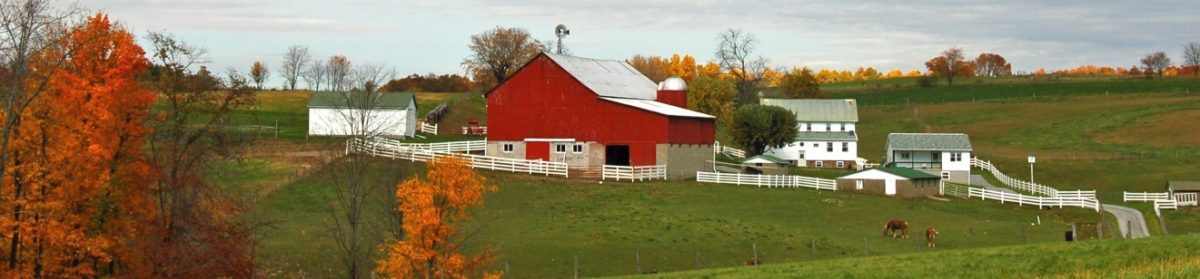
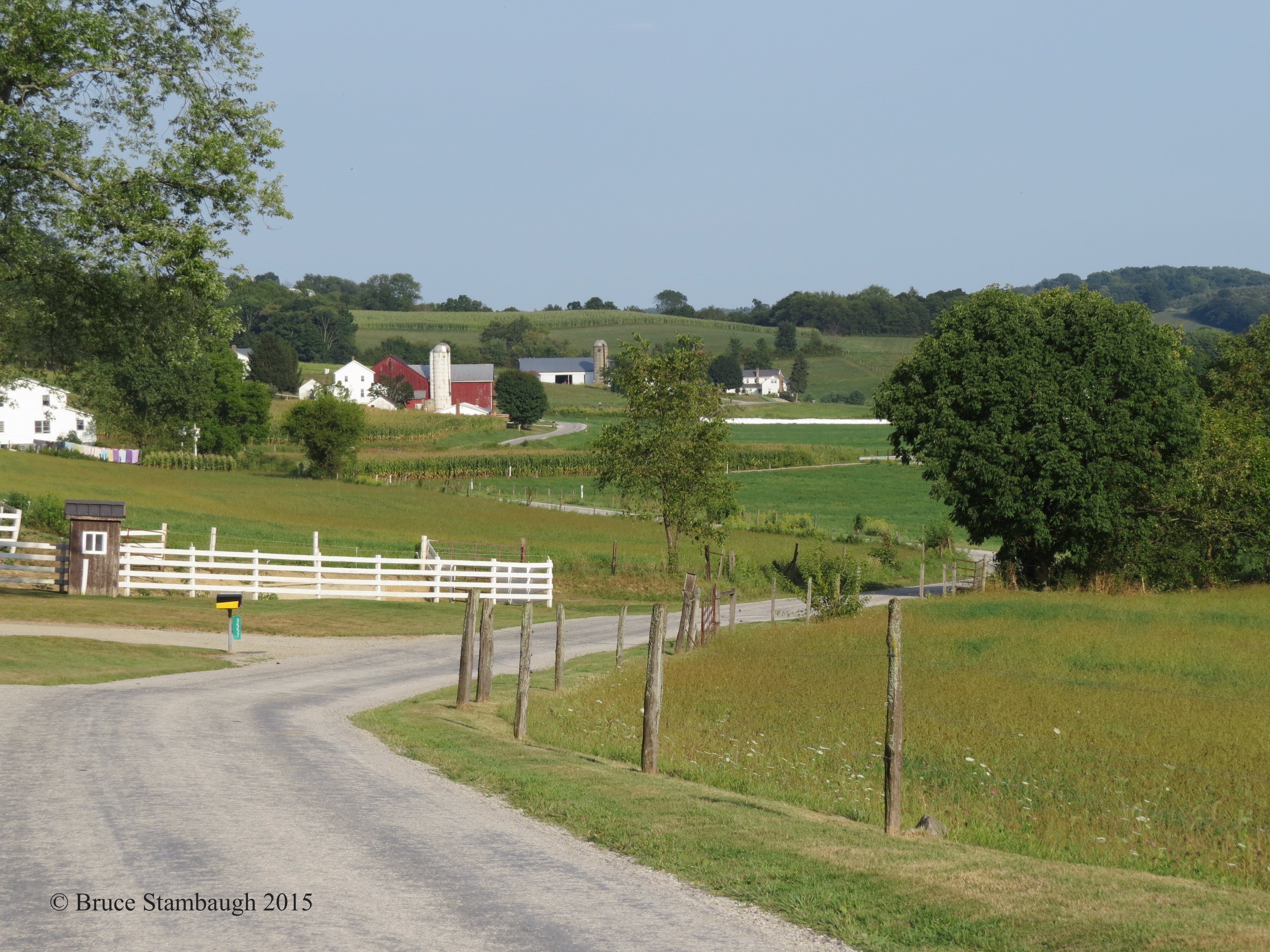
Amish farmstead.
We stood outside the dairy barn near a group of school children and their teacher, who pointed to the Holsteins.
“That’s where milk comes from,” he said.
His students were in disbelief. One even countered that milk came from the store. We walked away quietly.
The sweet-sour aroma of fermenting silage stirred my senses and brought me back to reality. That earthy smell represented the soil, the seeds, harvesting, the manpower and machinery needed to feed the cows to provide milk or meat.
That’s what being rooted to the earth does. It makes you take note and absorb and appreciate all that is around you.
The creeks and ponds, the marshes, and the mudflats are of equal import as much as the grain fields and pastures. Together they provide habitat and balance to earth’s fullness.
Rooting yourself to the soil is critical in caring for the earth no matter where we live or what our occupation. Yes, we need industry and growth to feed, clothe and house the planet’s population. We also need the earth to be healthy and respected to accomplish that goal.
If you want to feel rooted to the earth, you are welcome to walk by my neighbor’s barnyard. I’m sure neither he nor his herd will mind.
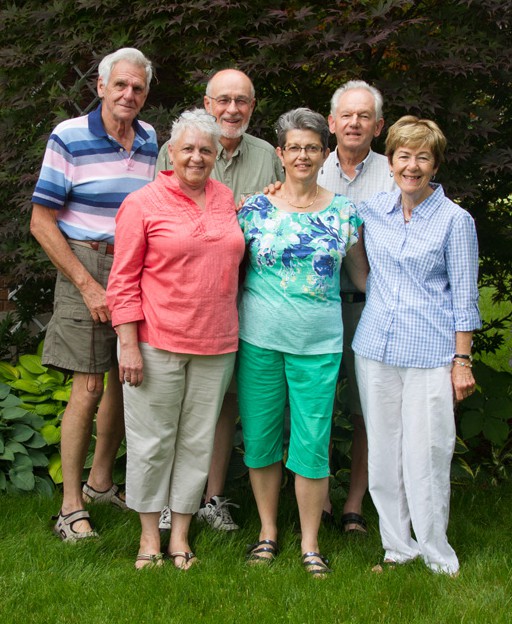
I contemplated the circuitous route of just how I happened to be sitting beneath a party canopy in this Ontario, Canada couple’s backyard. It’s a long but enjoyable story.
It all started when my wife was 14-years-old. Of course, Neva wasn’t my wife then. We married young, but not that young.
Neva accompanied her youth group to a church conference in Kitchener, Ontario, Canada in 1964. With hundreds of teenagers from around the U.S. and Canada attending, with the teens assigned to sleep in homes of local folks.
That’s where Neva met Ruth. Ruth’s family hosted Neva. Neva and Ruth connected right away, and they kept in touch. Seven years later, Ruth and her husband, Ken, attended our wedding in northeast Ohio.
They returned to Ontario. We set up shop here. We all began our careers and started families. We visited Ken and Ruth once when our daughter was just two. Now her youngest child is five. Time melts away, doesn’t it?
With the internet, texting, email, and online chatting science fiction, correspondence via regular mail diminished over time. Life got in the way of our long distance friendship.
About 20 years ago, that unexpectedly changed. Neva saw an advertisement for a tour. She called the toll-free number and guess who answered? Ruth.
When Ruth learned that Neva and I had become snowbirds to Florida’s Amelia Island, she mentioned that their across the street neighbors also wintered there. That’s where our life circle began to expand.
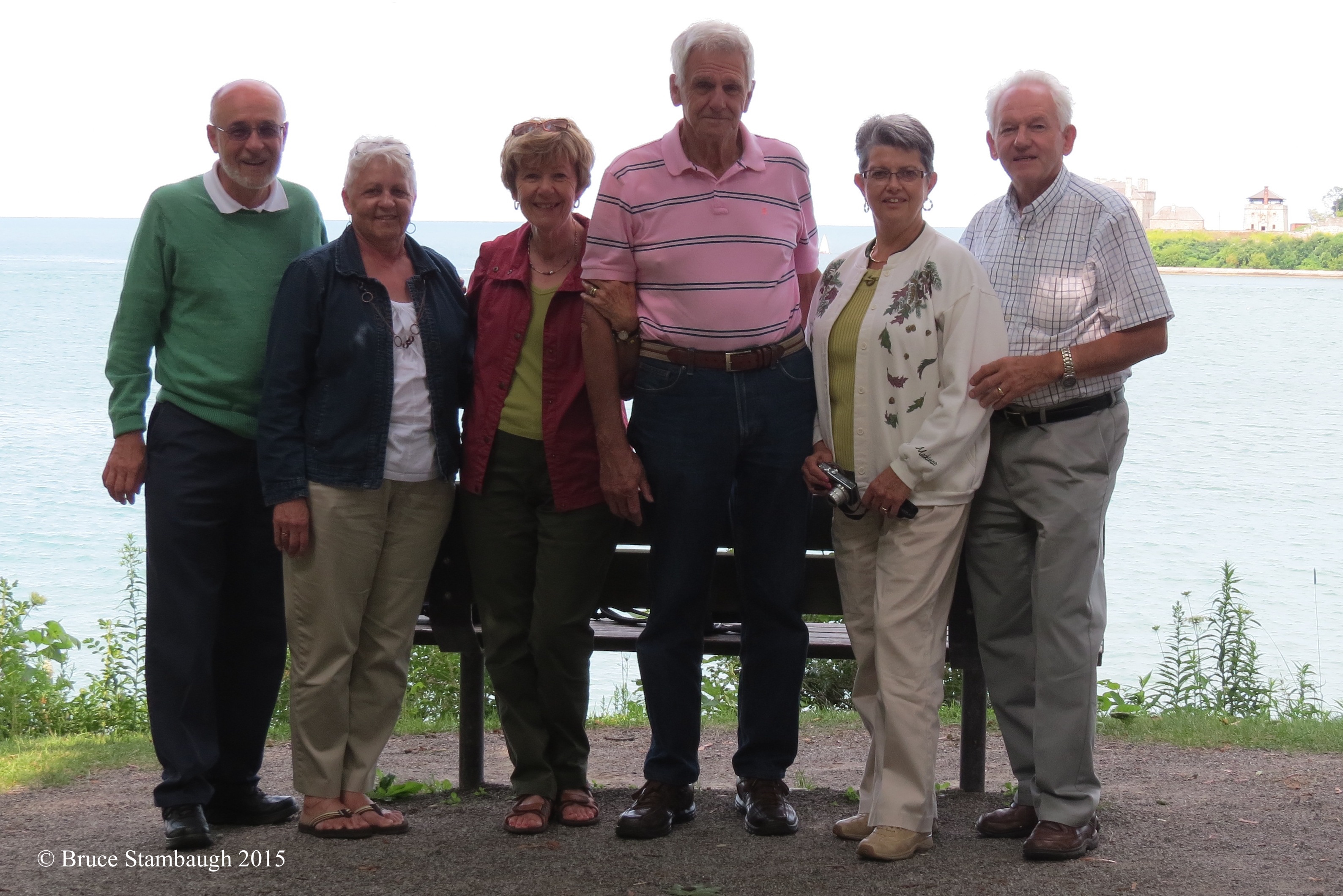
Ruth exchanged contact numbers with their neighbors and us, and the result was pure magic. In February 2014, we arranged to meet Don and Gail at a coffee shop in Fernandina Beach, the island’s only town.
Before the first sip of coffee, the four of us were yacking away as if we had been lifetime friends. Gail was born in England and still has that lovely disarming accent that is as genuine and gentle as she is. Don was from Bermuda and carries that notorious island swagger with him still, even though he’s been a Canadian now for years.
We chattered like teenagers at a soda shop. It didn’t take long to discover that both Don and I had been volunteer firefighters. As if that wasn’t enough to cement our friendship, photography and nature were also common hobbies.
Having been to Bermuda a couple of times ourselves, we knew many of the locales they mentioned. Don shared stories from his childhood until the present.
A carpenter by trade, Don was intrigued to learn that the wood industry was king in our county. Over the next month, we would take day trips together, go out to eat, or just play dominoes. That pattern repeated last winter.
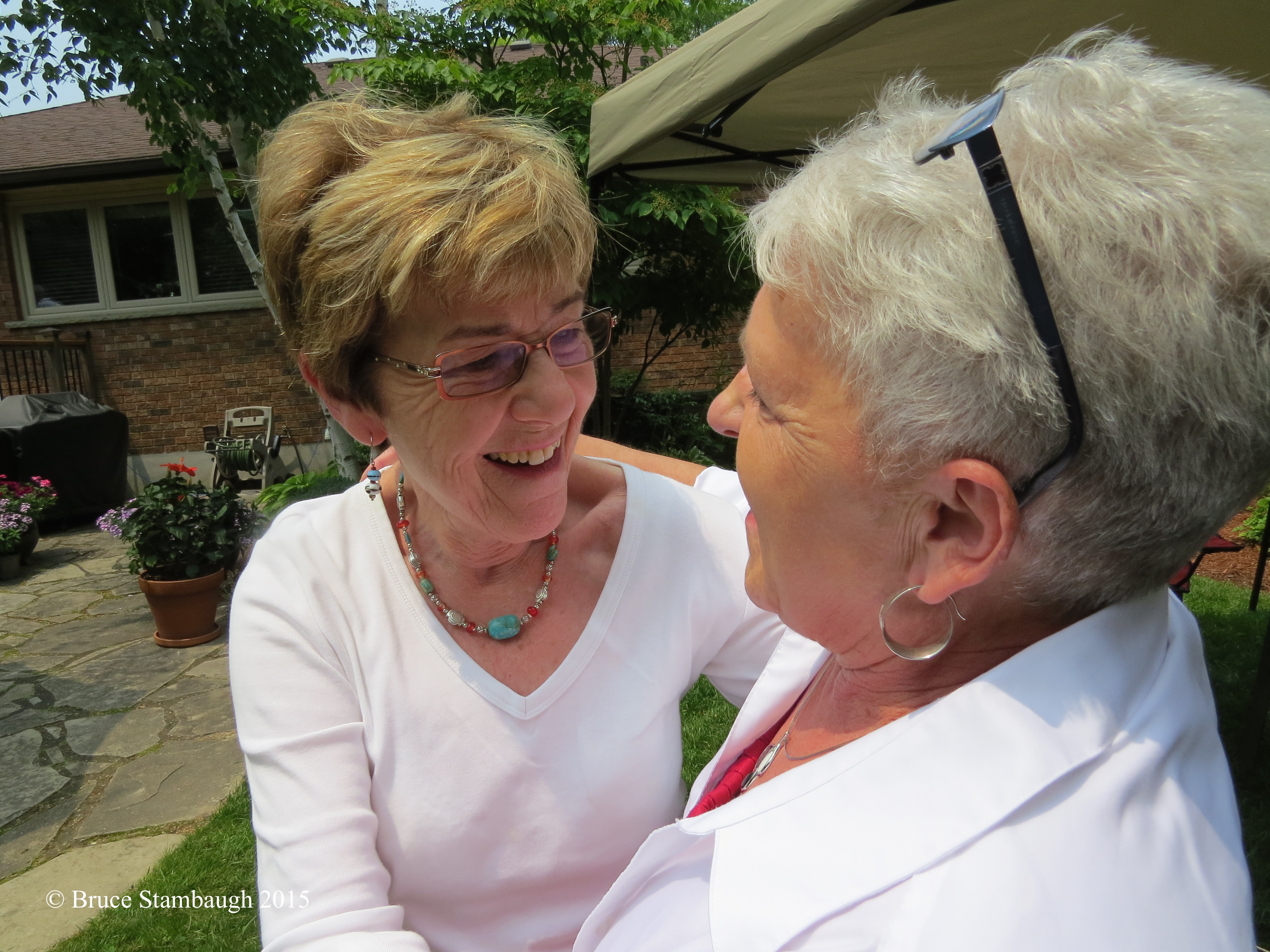
That brings me back to sitting under the canopy. We surprised both Don and Gail by crashing her surprise birthday party.
For that little coup, you can blame Ken and Ruth. That’s what lifelong friends do for one another. They help create other equally robust friendships.
That’s the thing about friendship circles. They enrich your life.
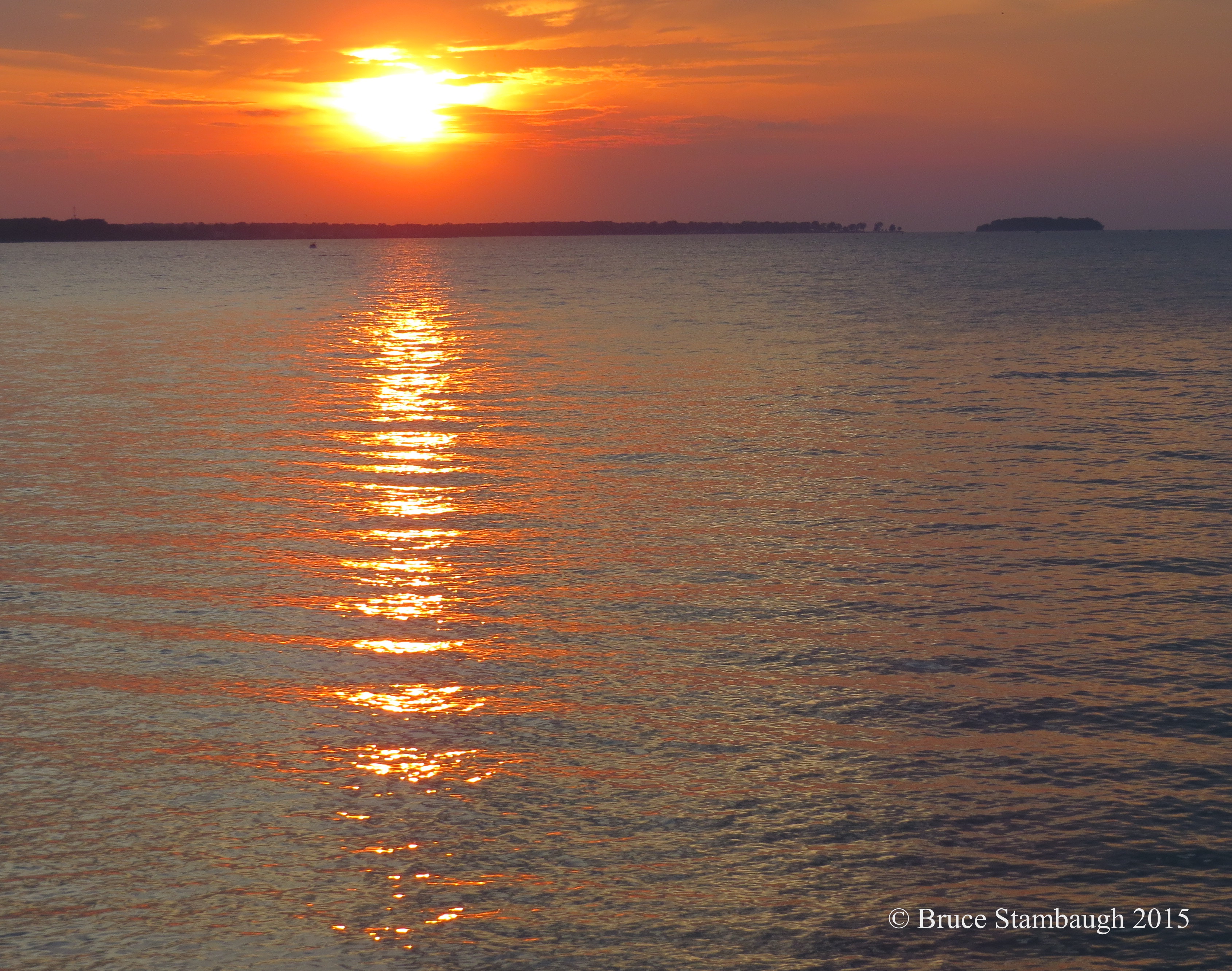
Whenever I visit Lakeside, OH, rightly dubbed the Chautauqua on Lake Erie, I head to the dock if there is at all a chance of a decent sunset. Recently, this sparkling scene greeted me. Though I couldn’t coax a boat to sail into view, the shimmering oranges that glistened off of the rippling water caught my eye.
The Marblehead Lighthouse, Marblehead, OH is one of my favorite places to linger. Winter, summer, spring or fall, it doesn’t matter. I love to linger on the lighthouse grounds, enjoying the view, the passing boats, the birds, and the folks I meet there. Most of all, however, I just like to sit on the hard limestone outcroppings and look at the lighthouse. Last evening, I visited my old friend after a day of birding along the Lake Erie shore in northwest OH.
I arrived at the lighthouse near sunset. As soon as I drove into the nearly empty parking lot, my face lit up. As the sun neared the western horizon, it broke through a layer of clouds. A soothing golden light magnificently illuminated the top of the lighthouse. I thought it rather poetic that the natural light bathed the source of the artificial beacon that the historic lighthouse would soon produce.
I had a chance to board and tour a tall ship docked at St. Marys, GA earlier this year. I enjoyed the tour and took several photos of interesting subjects and objects onboard the ship. However, I thought this photo, with its many shapes and angles, was the most interesting. The patterned sky of white and blue provided a distinctive background for the ship’s main mast.






















You must be logged in to post a comment.