Evolution of a beloved sugar maple

Under the tree by Bruce Stambaugh

By Bruce Stambaugh

The sugar maple in our backyard and I go way back.

When my wife and I purchased our current home 33 years ago, only three trees graced the acre and a half. That had to change for several reasons.

Trees provide so many benefits to any property, urban, suburban or rural. Trees add both an aesthetic and economic real estate value.

Close up by Bruce StambaughBesides their beauty, trees provide practical purposes, too. In summer, their shade serves as a natural air conditioner. They prove a reliable windbreak against harsh winter winds. As a bird enthusiast, I wanted a mixture of trees that would supply a nice habitat for a variety of birds year-round.

The sugar maple that now dominates the middle of our backyard was just one of several trees that I transplanted from our property near Killbuck, Ohio to our current residence near Mt. Hope. I did so in the fall, the optimal time to transplant since trees are dormant.

I dug the tree out of our hillside woods. The soil was so loose and gravely it all fell off. I wrapped the bare-rooted maple in burlap, and headed east. By the time I had reached our soon to be home, it was dark. I stabbed the ground with the pointy tree shovel, pulled the earth back, slipped the roots into the moist ground, stamped it closed and left.

Later in the light of day, I trimmed all of the limbs and the top third off the tree to let the roots take hold the first year. And did they ever. In three decades, the little sugar maple has grown into a full, mature, shapely tree. It is the jewel in the leafy crown of our modest domain.
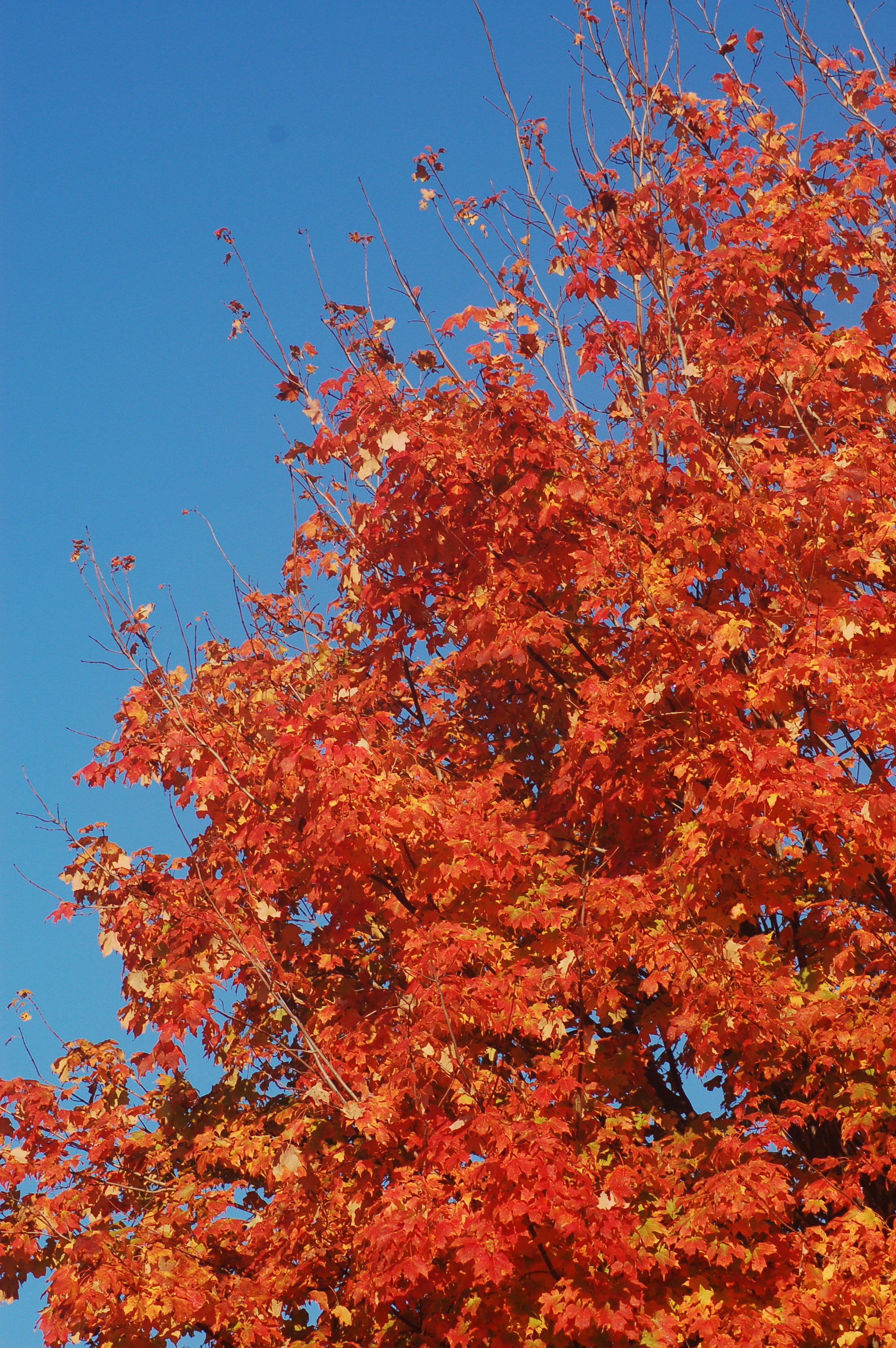
Blue and orange by Bruce Stambaugh
Over the many years it has endured a lot, including serious damage from the remnants of a hurricane, a severe thunderstorm gust and an ice storm. Each time I carefully patched the exposed flesh as if it were an injured child.

The sugar maple has hosted innumerable bird nests during its life, birthing many different songbird species. Other birds and animals big and small have sought sanctuary in its embracing arms and expansive, dense canopy. Most were wanted. Others, like the family of raccoons that raided the bird feeders, were not.

Backyard birds use the tree as a launching pad to the nearby feeders. Nuthatches and woodpeckers wedge sunflower seeds into the crackled, flaking bark to crack open the shells to get to the sunflower meat.

My verdant friend hosts free entertainment, too. Late spring to early fall Ruby-throated Hummingbirds take turns waiting in ambush on a favorite perch for other hummers coming to the sugar water feeder that hangs by our kitchen window. It’s pure joy to watch them chase and chatter after one another.
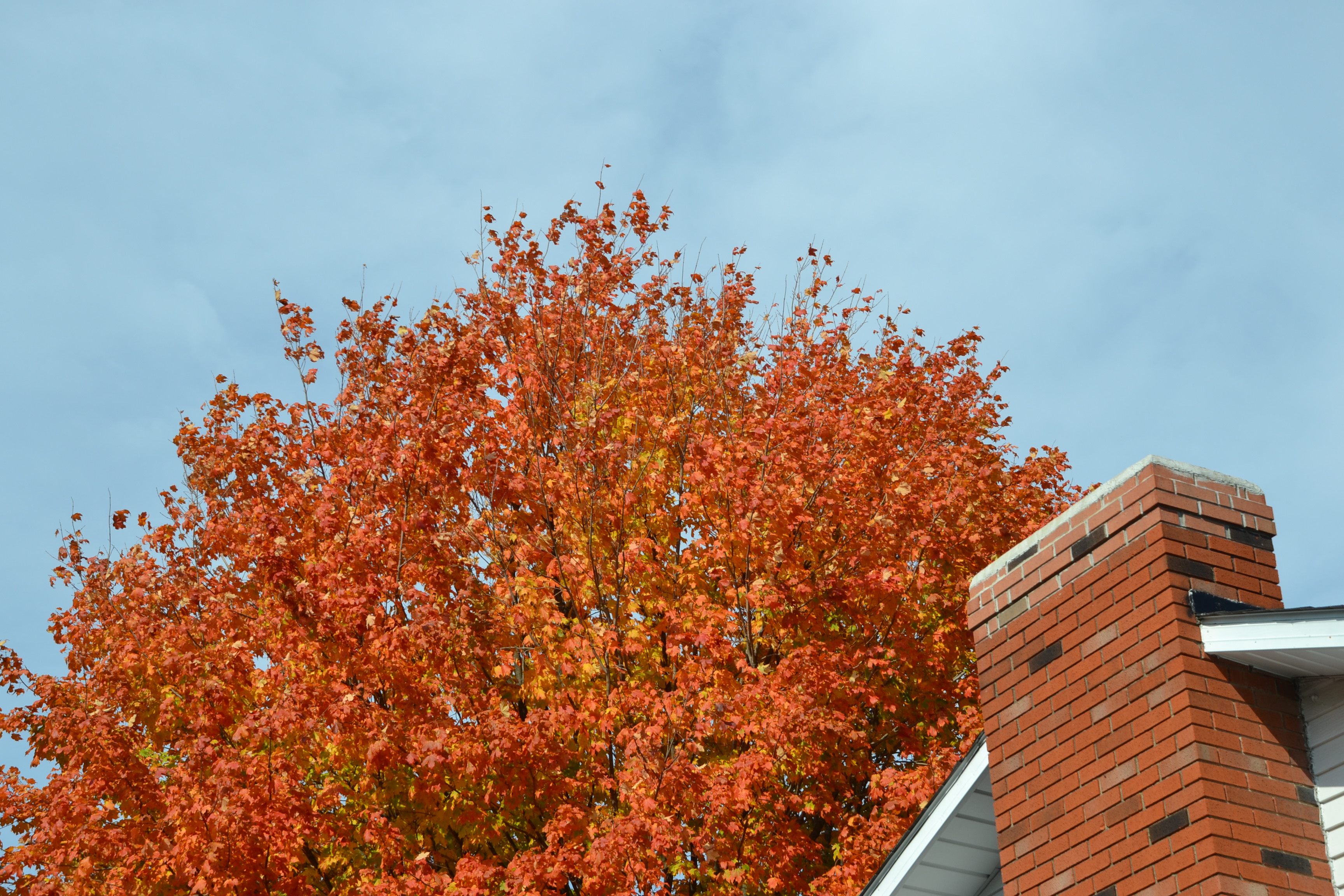
Over the top by Bruce Stambaugh

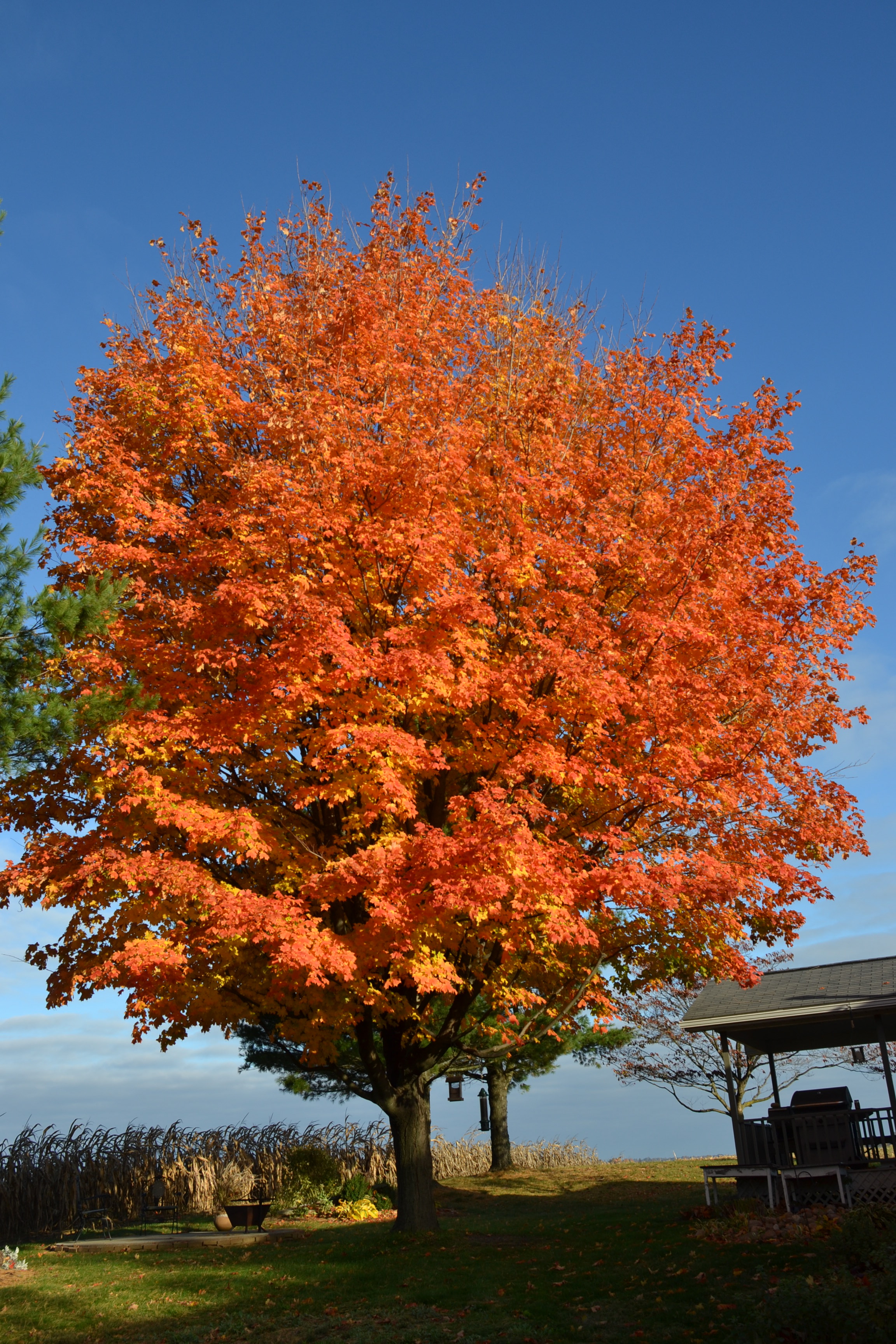
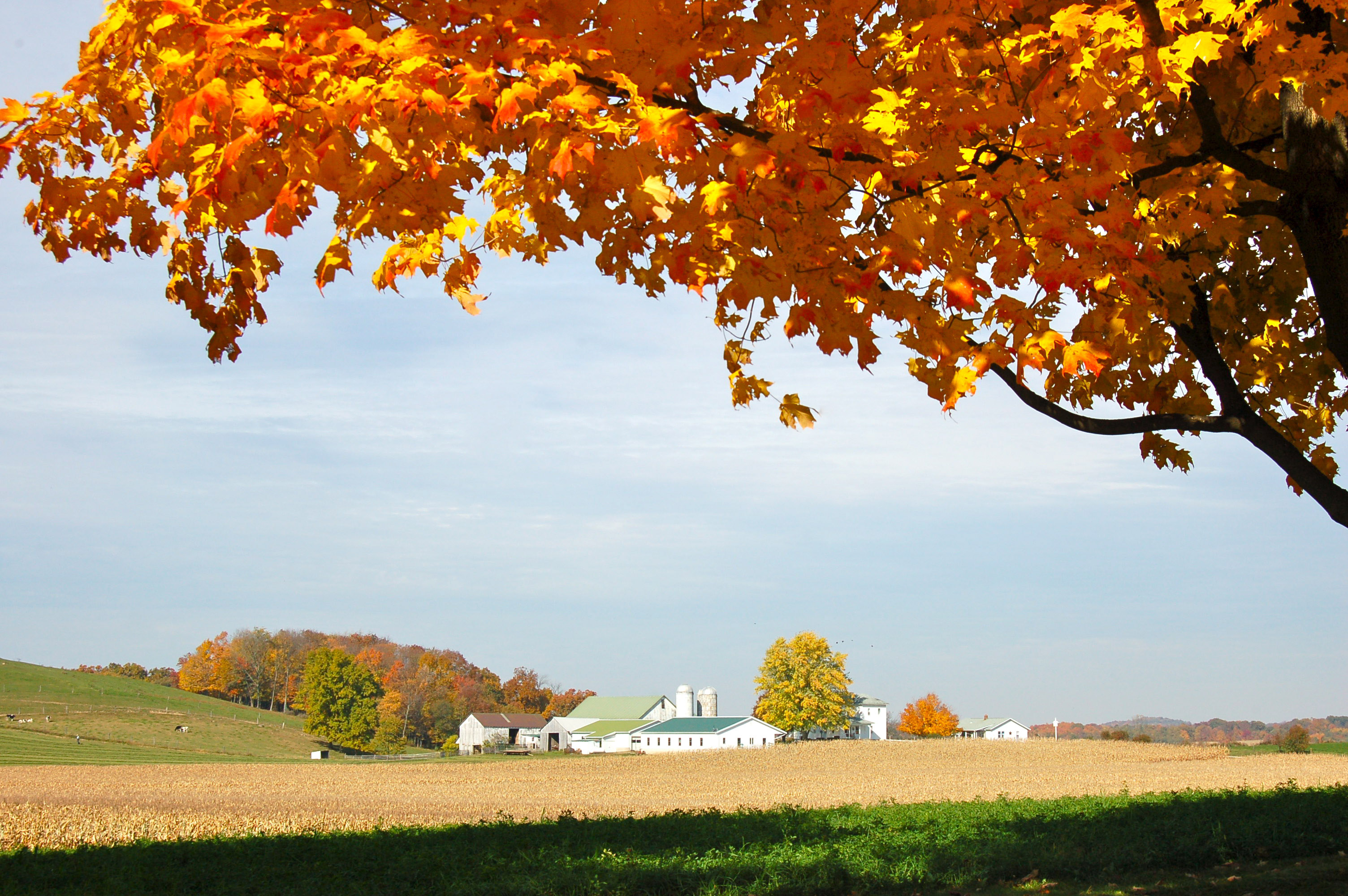
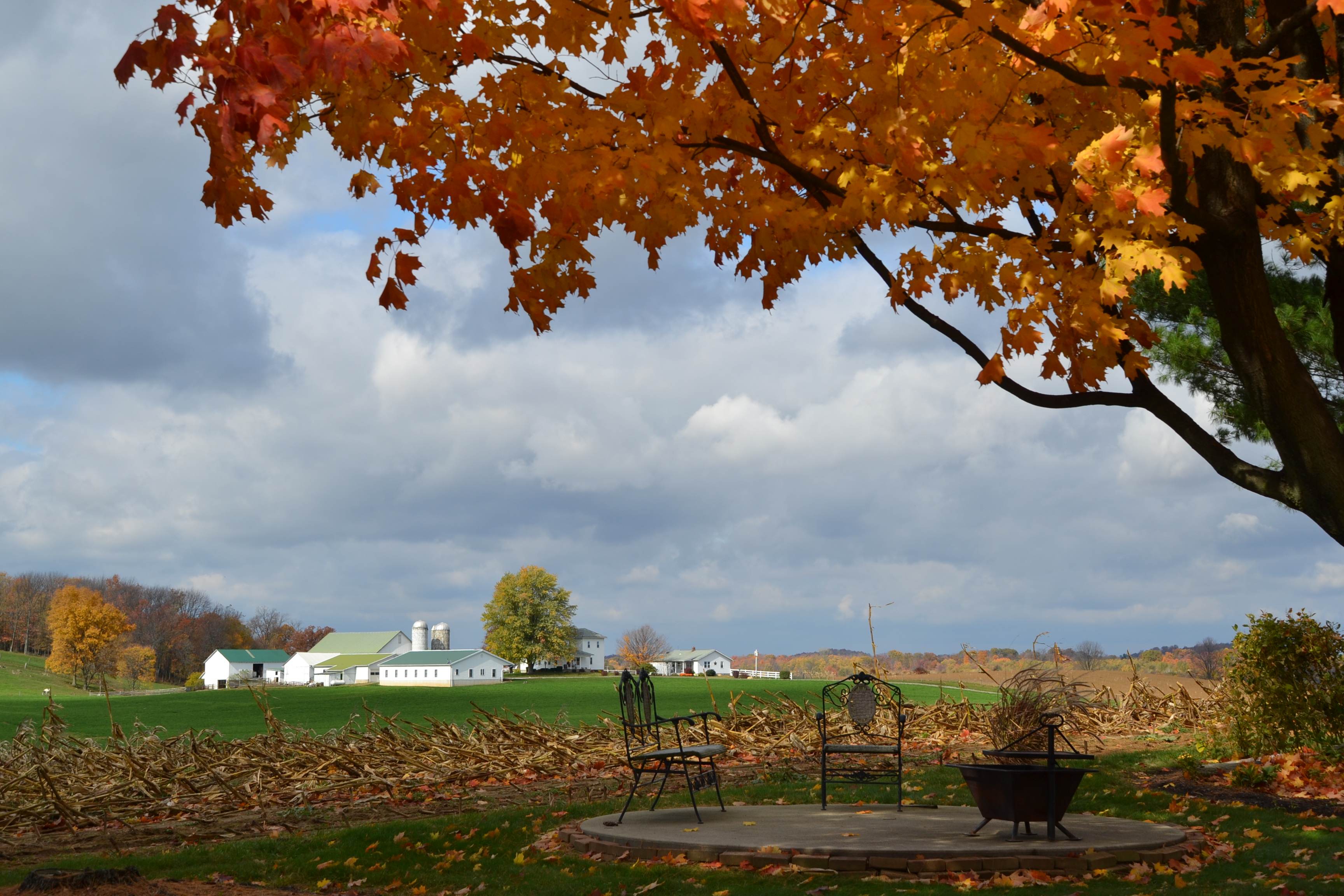
The sugar maple tree is a beauty in any season, but particularly in October. With each bright sunrise, a warm orange glow streams through the windows into the house. The tree’s crown blazes high above the rooftop, contrasting nicely with the backdrop of the evergreen of queued white pines against the stubbled cornfield.

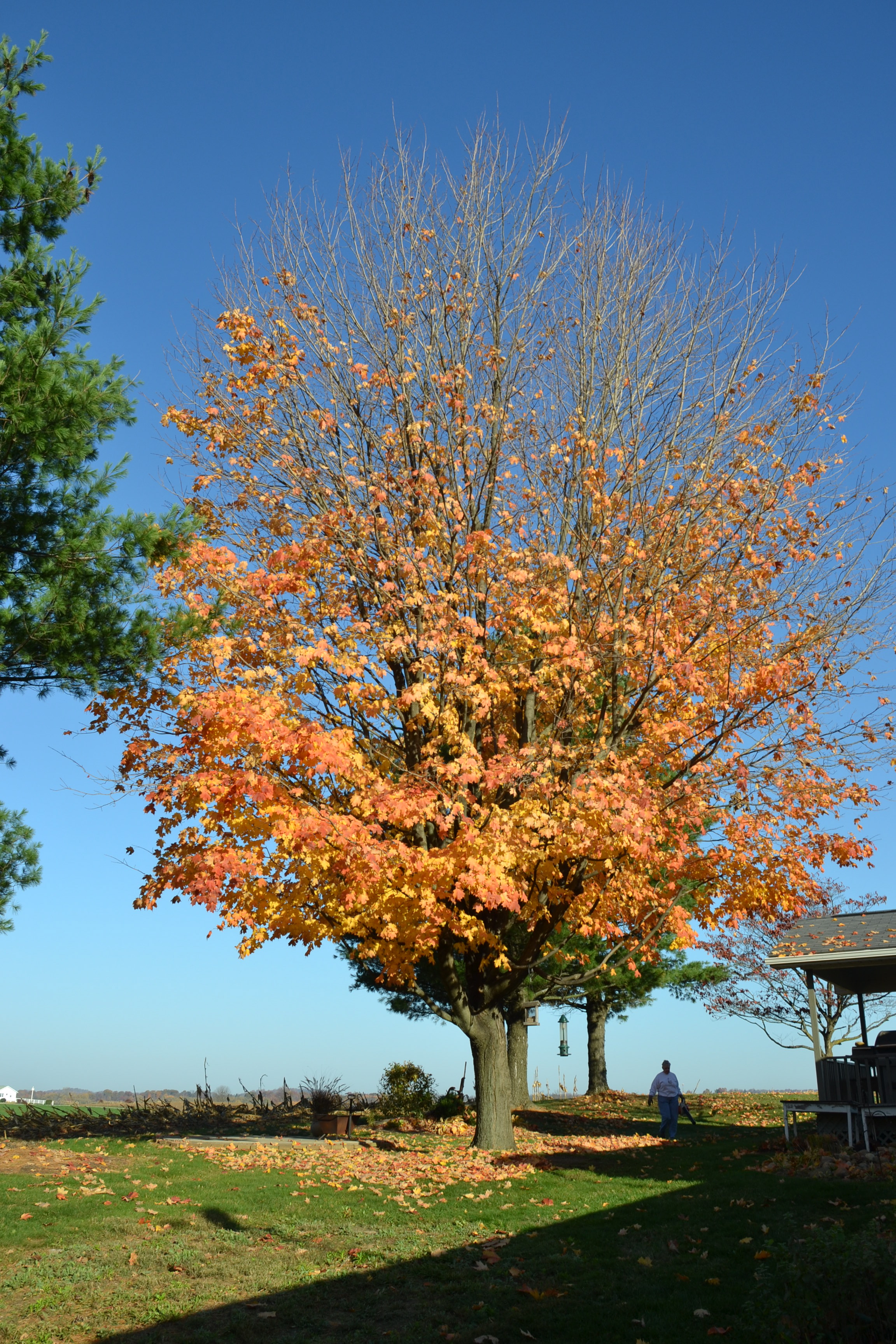
The sugar maple paints a new autumn scene each October day. In less than a month, the leaves of my stately arbor ally turn from rich emerald to glowing gold, and all too soon drop in feathery waves.

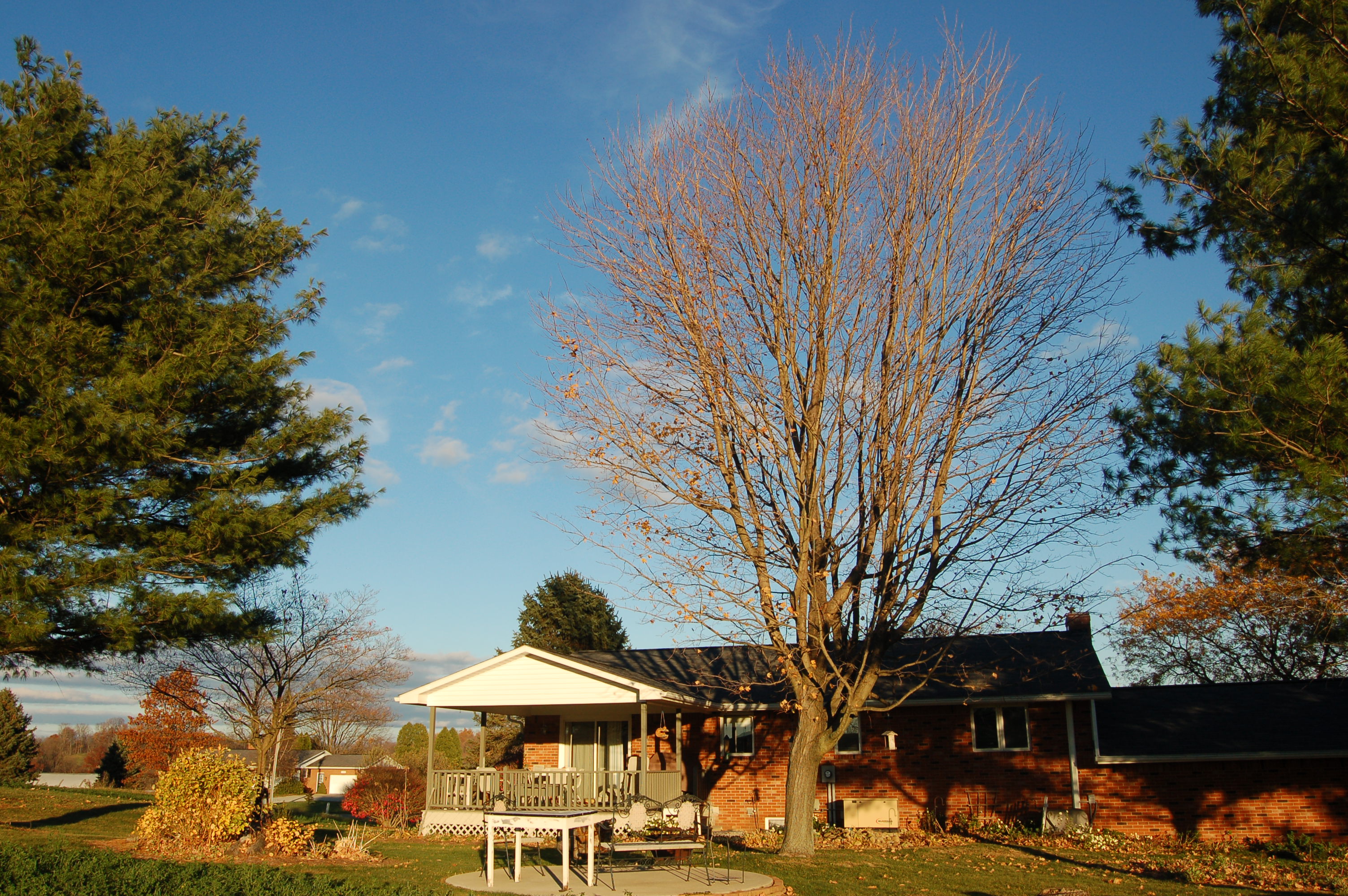
Even leafless, the sugar maple freely shares its generous hospitality, attracting birds, critters and humans. Spring, summer, fall or winter, my old friend says welcome home.

Welcome home by Bruce Stambaugh

A week by week pictorial record of the changing of the leaves on the sugar maple follows.
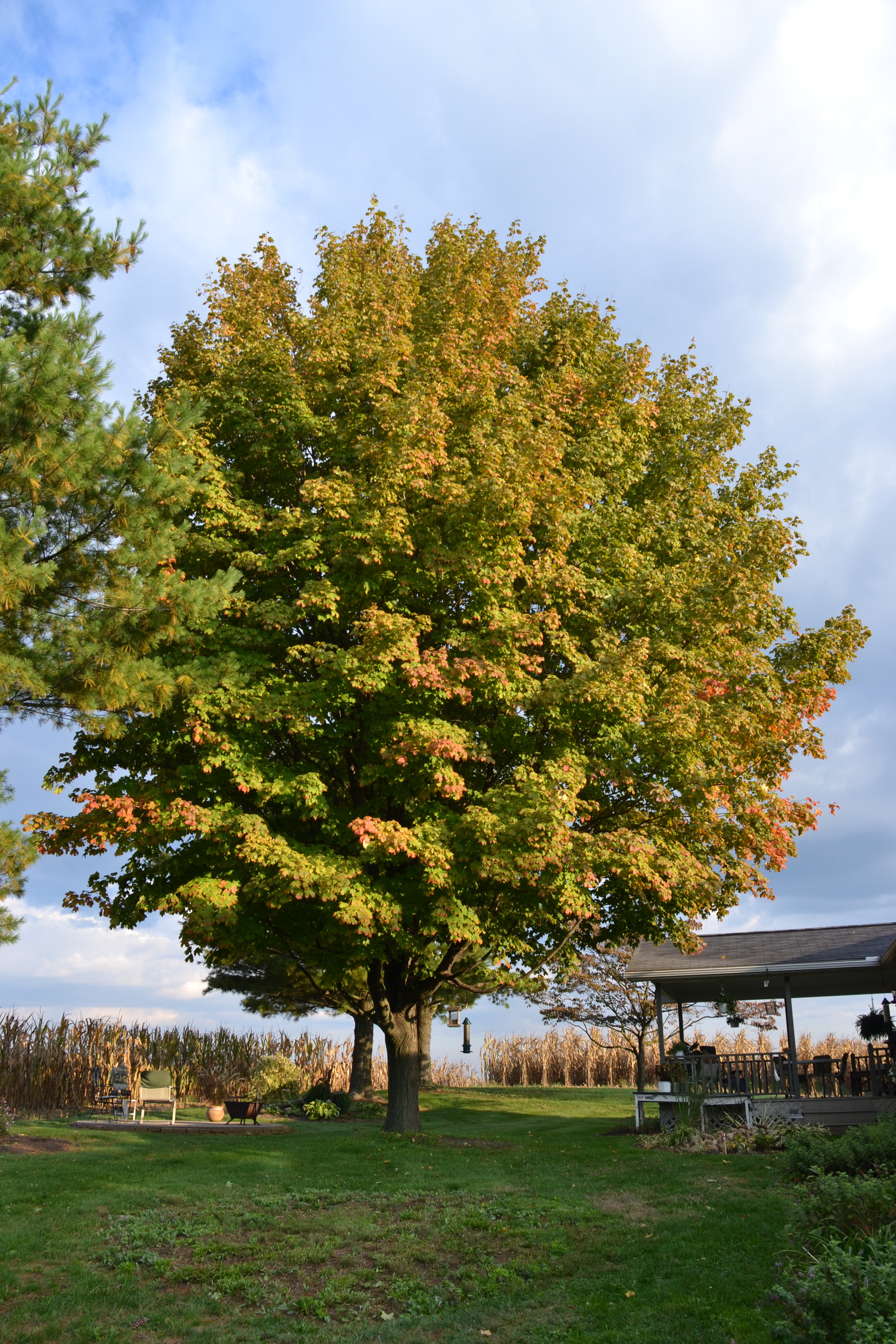
Sept. 30, 2012 by Bruce Stambaugh
Sept. 30, 2012
Oct. 9, 2012 by Bruce Stambaugh
Oct. 9, 2012
Oct. 16, 2012 by Bruce Stambaugh
Oct. 16, 2012.
Oct. 22, 2012 by Bruce Stambaugh
Oct. 22, 2012.
Month's end by Bruce Stambaugh
By October’s end, the sugar maple stood bare.

This column appeared in The Bargain Hunter, Millersburg, OH.

© Bruce Stambaugh 2012
The good, bad and ugly of Super Storm Sandy

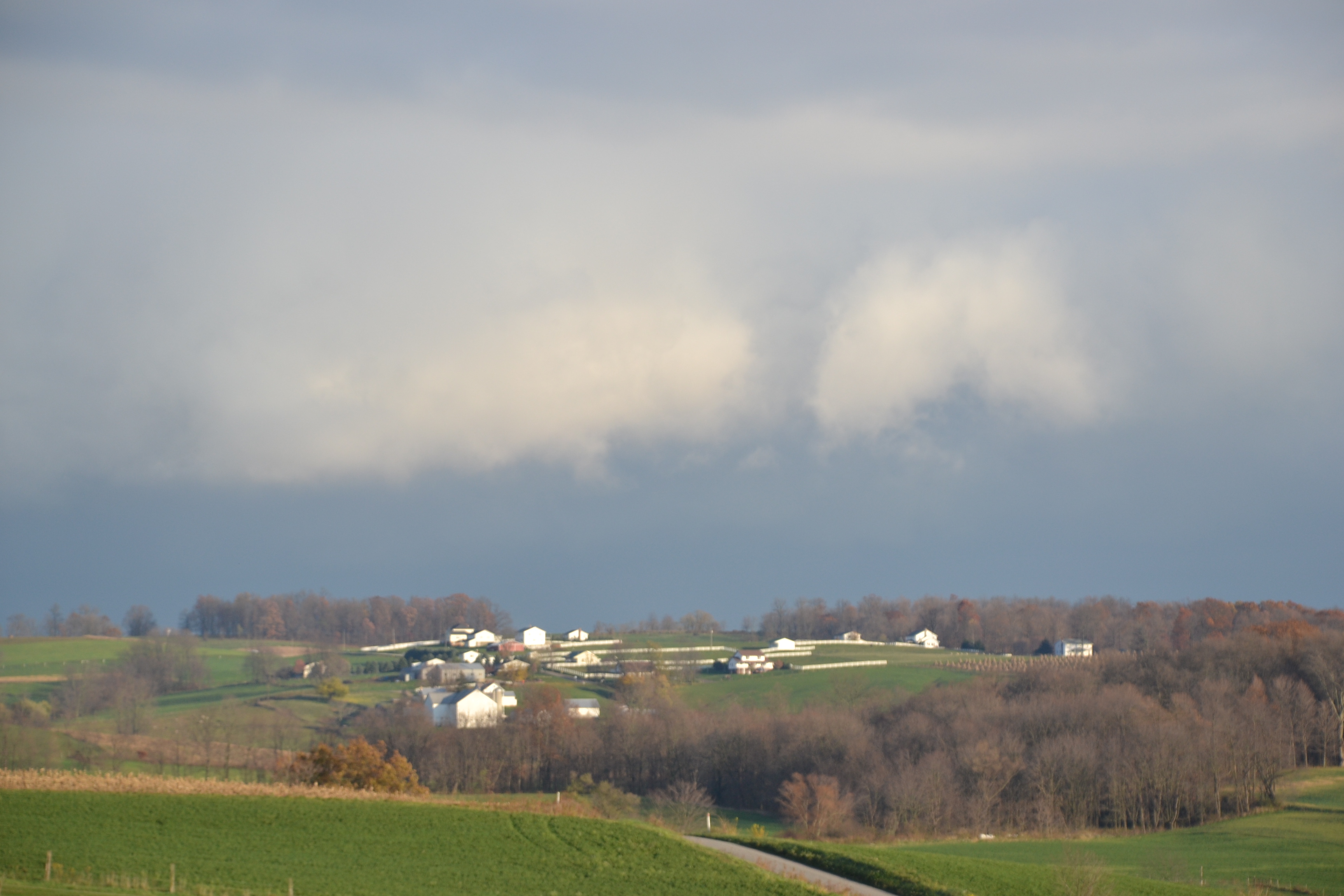
Sandy clouds by Bruce Stambaugh
The last clouds of the remnants of Super Storm Sandy left Holmes County, Ohio late afternoon on Nov. 1.

By Bruce Stambaugh

I’m both a news and weather junky. When the weather is the news, I’m fixated. So it was with Hurricane Sandy.

From the time the hurricane entered the Caribbean until it finally dissipated in Canada many days later, I focused on news of what came to be known as Super Storm Sandy. Between her alpha and omega, Sandy stormed up the east coast. Once she turned inland, the destruction intensified.

Initially the media focused on a breaking story of a severely damaged construction crane in New York City. I watched in awe as video showed hurricane force winds bending the towering, monster crane like it were a twig. The damaged section dangled precariously several stories above a busy street while police and firefighters evacuated the area. News cameras zoomed in on the scene for the entire world to see. Much more serious incidents were occurring unknowingly far out of the cameras’ lens.

Sandy was one massive storm, just as predicted by the professional severe storm forecasters. Perhaps that is one positive to take away from this major weather event. Knowing that weather scientists were able to project accurately the intensity and path of the storm may convince people to take better precautions when future storm warnings are issued.

A huge geographic swath impacting millions of people got hammered. Sandy merged with an interior cold front, creating a hybrid storm with fierce winds, torrential rains, flooding, storm surges and even heavy snow in the Appalachian Mountains.

Sandy’s aftermath told an ugly, unfortunate story. Major metropolitan areas, including New York City, were particularly hit hard. As Sandy moved inland, the consequential events unfolded, and the media coverage began to expand.

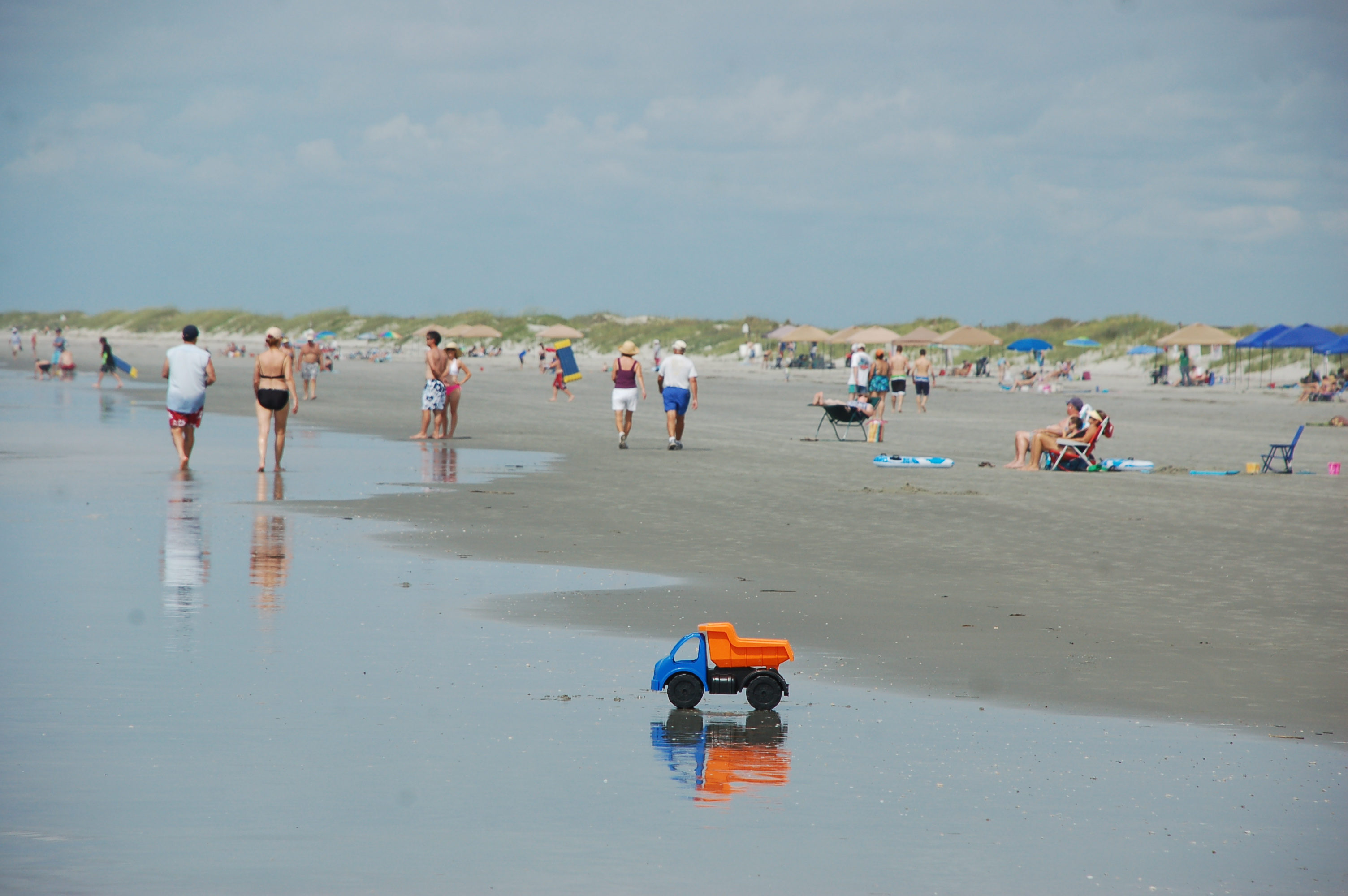
Beach by Bruce Stambaugh

Sandy’s winds, rains and high tide storm surges had obliterated once pristine places and popular vacation spots. Those who failed to heed the warnings either were stranded or rescued. Unfortunately others paid with their lives. Beaches where sun worshippers once lounged and children romped were simply gone. Beachfront homes and businesses disappeared.

Millions of people were without electricity, potable water, food, transportation and heat. Schools were closed. Businesses shut. Ruptured gas lines burst into flames, destroying entire blocks of homes. It was a mess to say the least.

The high winds and heavy rains we experienced here were minor compared to most affected communities. In fact, we were happy for the quenching rains.

Emotions and responses to the super storm became paradoxical. While snow resorts in West Virginia opened earlier than ever, several storm-related deaths occurred from auto crashes on slippery roads.

Birds seldom seen in Ohio were blown into the Buckeye State ahead of the intense storm. Birders here were ecstatic. All the while thousands upon thousands of people in northern Ohio were without power.

As the reality of the breadth and depth of the storm became known, the media ranged far and wide to cover the catastrophe. Both heart-warming and heart-wrenching stories of people helping people developed. The damaged crane seemed inconsequential compared to other ongoing calamities and heroic acts of goodwill.

Jessica by Bruce Stambaugh
Jessica Stambaugh
As massive and destructive as Sandy was, it seemed to affect each of us personally. That was certainly true for my family and me. A niece, Jessica, lives in Manhattan, and was among the throngs without power and heat for days.

I never did hear what happened to that dangling crane. I just know that Jessica was safe. Unfortunately, scores of others couldn’t say that about their loved ones.

This column appeared in The Bargain Hunter, Millersburg, OH.

© Bruce Stambaugh 2012
Frogs or birds? The choice was easy

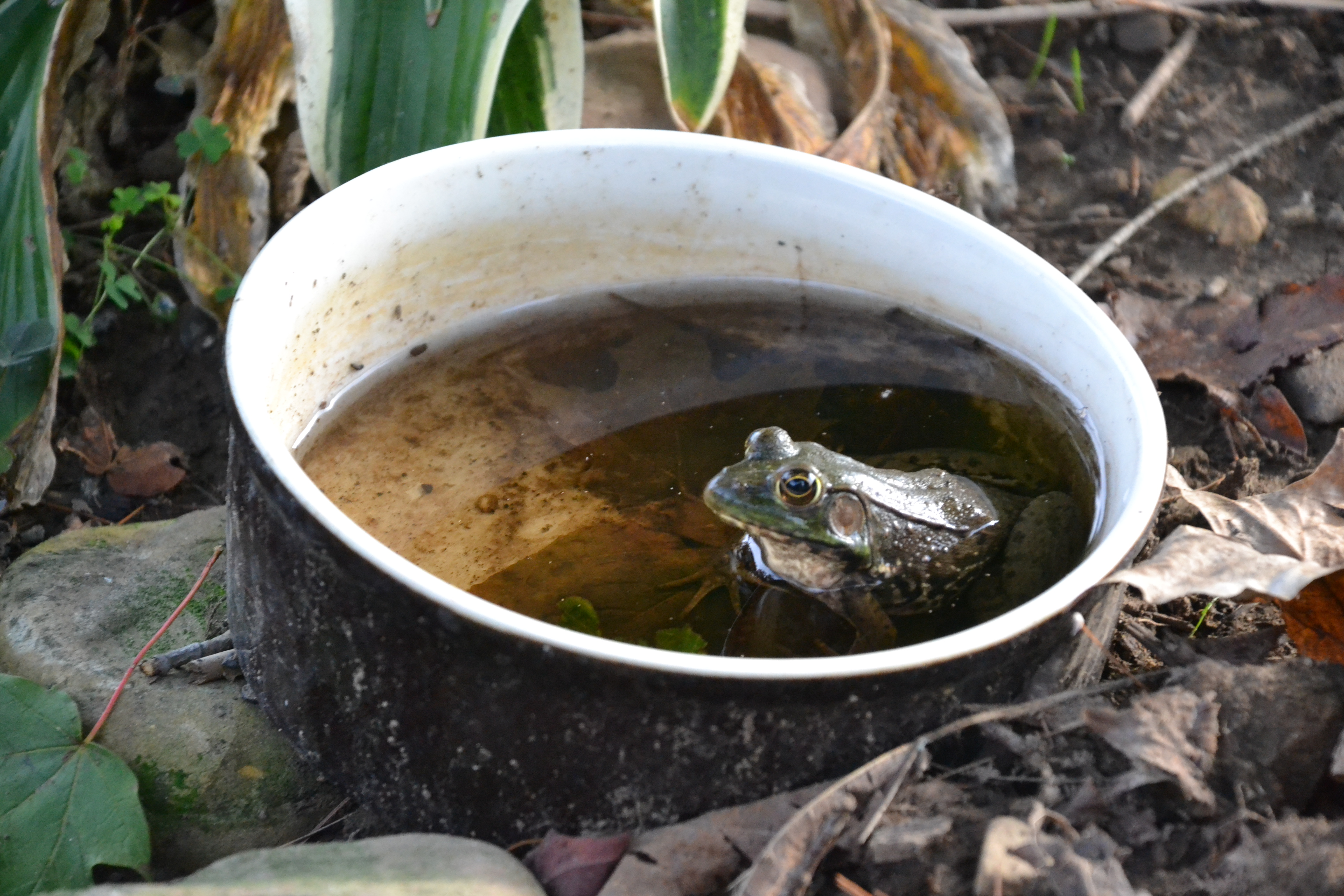
Garden pond by Bruce Stambaugh
By Bruce Stambaugh

Well it happened. I finally had to remove the giant green frogs from my little garden pond. The reason? I found another dead songbird by the pond. The perpetrator left the evidence in plain sight and never bothered to leave the scene.

After what had happened this summer, I had no choice in the matter.

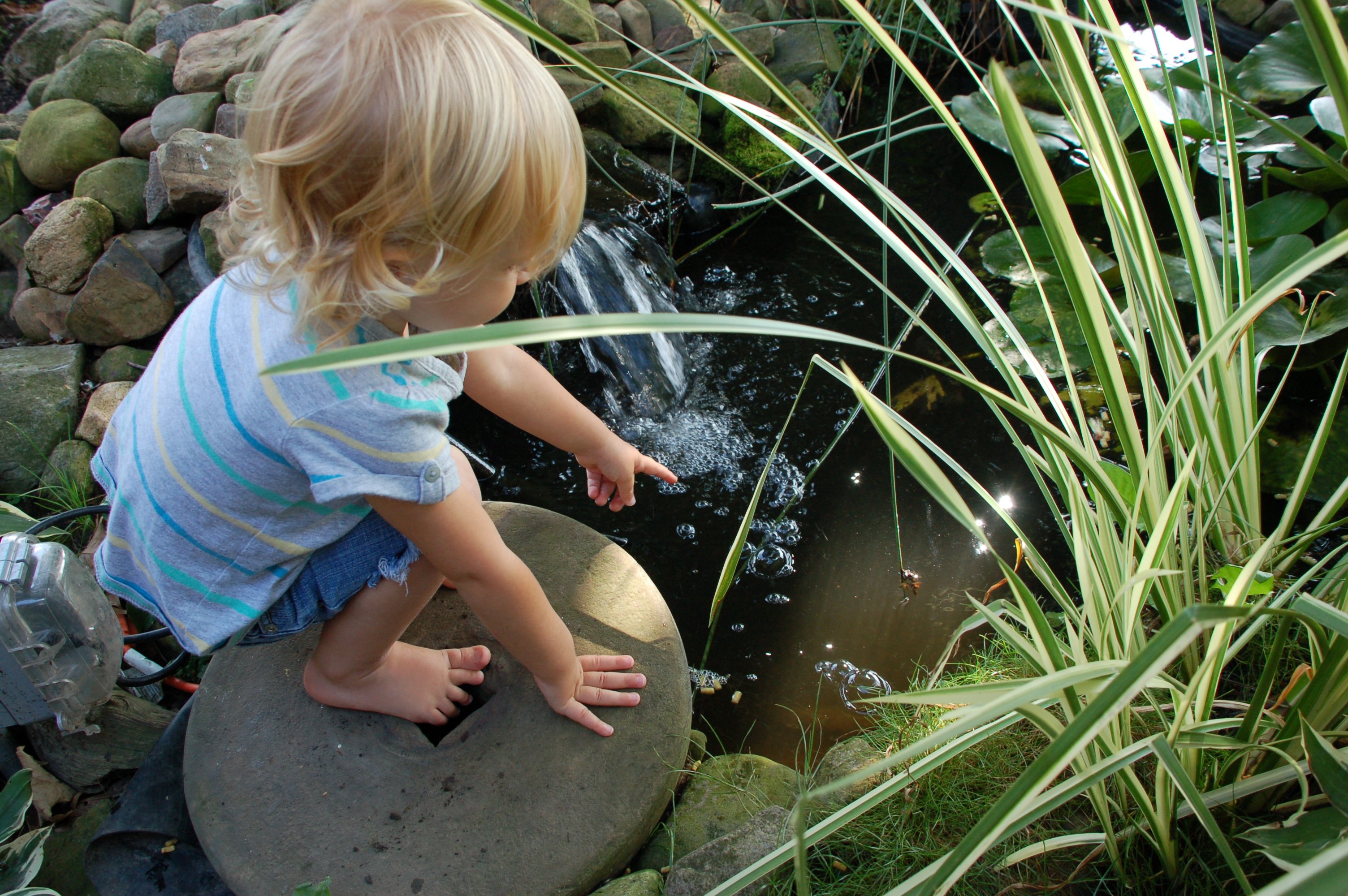
In July amid the hottest, driest weather of the summer, the grandchildren were here visiting from Virginia. They always ask to feed the goldfish in our garden pond.

Girl on grindstone by Bruce Stambaugh

As we approached the pond with fish food in hand, I spotted something rather suspicious. The largest of the green frogs that inhabit our pond was resting atop a balled up, wet and obviously dead House Finch on the rock pile near the little waterfalls.

The frog must have felt guilty because it jumped into the pond as soon as it spotted us. I let the kids feed the always-hungry fish while I investigated the crime scene. Of course, Davis, the inquisitive six-year old, wanted to see what I was looking at, too.

Cooling off by Bruce StambaughOnce I realized we had a killer frog on our hands, I diverted the kids’ attention by playing ball in the side yard. When I went to get the dead bird, it was gone. Had the frog come back for its dinner?

A few weeks later, I found a second House Finch floating in the pond. I contacted a naturalist friend about my discovery. She had heard of bullfrogs catching birds, but not green frogs. Either way, her conclusion was the same as mine. The big green frog was trouble.

Since the grandkids loved looking for the frogs as much as they did feeding the fish, I hated to transplant the amphibian. I decided to keep a close eye out for more evidence. I found it on September 25.

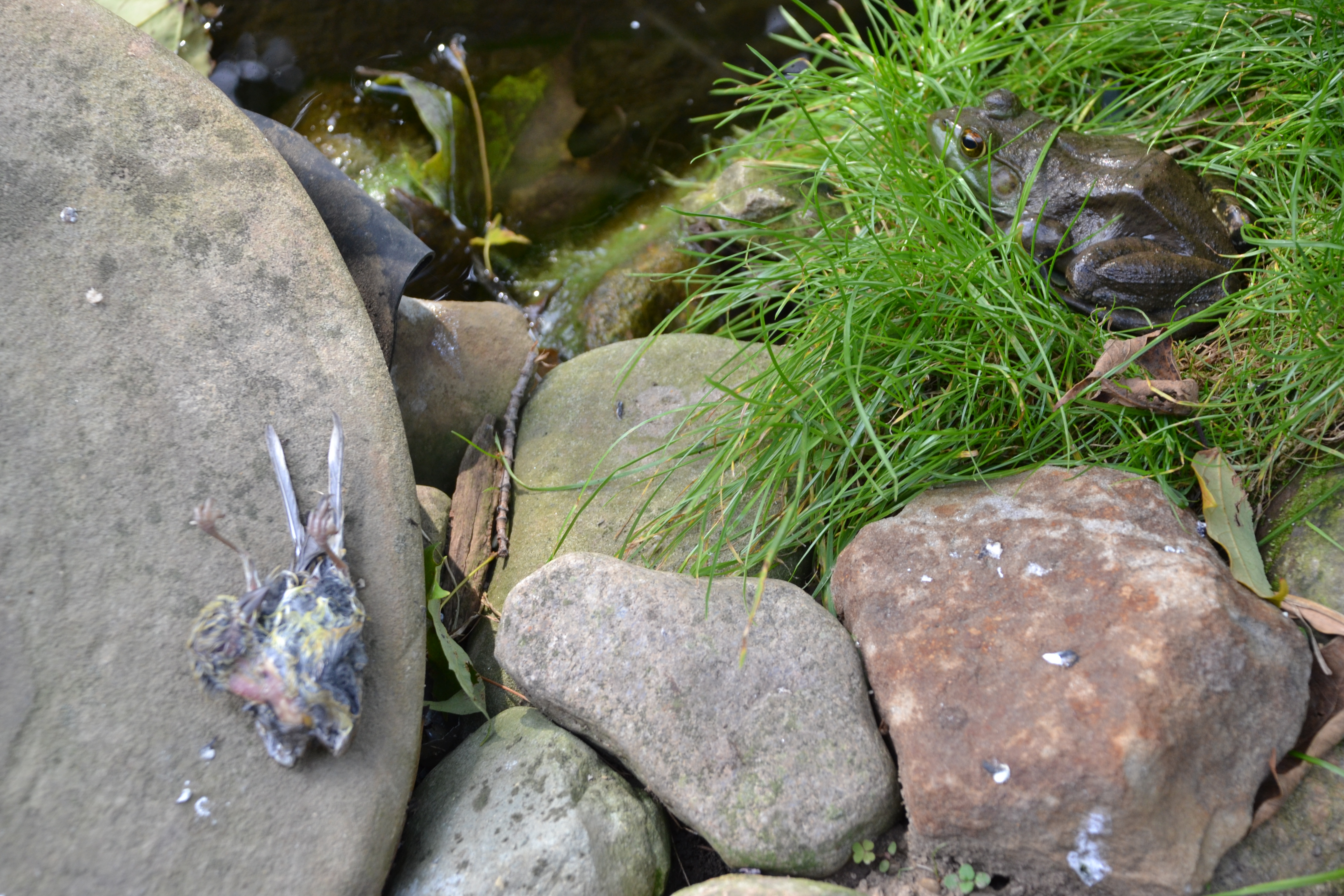
Bird and frog by Bruce Stambaugh
The dead American Goldfinch told me I needed to remove the largest frogs from the pond.

This time I discovered an American Goldfinch left on the sandstone grindstone where the grandkids stand to feed the fish. Just like the others, the Goldfinch had clearly been drowned with evidence of attempts to swallow it. Just inches away, minding its own business, the green frog sat unsympathetically on a soft patch of grass. At least I thought it was a green frog.

That was the last straw. I watched for an opportunity to catch the two largest green frogs and relocate them to a neighbor’s farm pond. I caught the docile female right away. The bigger male was a bit trickier. You know how men are.

Finally, I saw my opportunity. The wily frog was hiding beneath the floppy leaves of one of the hosta plants that border the pond. In a sneak attack, I captured the frog and quickly placed it in the minnow bucket with the other frog.

Mute Swan by Bruce Stambaugh

As I prepared to release the pair of frogs at my neighbor’s pond, a rather large Mute Swan swam straight for me, hissing all the way. The larger of the two frogs was more than happy to hide in shallow water. The female was content to enjoy the grassy shoreline.

I didn’t bother to say my farewells. I was patient catching the frogs. The agitated swan was another story. I didn’t want to painfully pay for my efforts with a nip by the aggressive and territorial waterfowl.

If this greedy green frog attempts to swallow one of these big birds, I think it will be in for an enormous surprise. And I think I’ll write a book.

Upon further investigation, others more knowledgable on frogs than me identified the culprit that I had photographed as a bullfrog, not a green frog. My mystery was solved, and my frog facts greatly improved. The book’s plot just took a turn.

This column appeared in The Bargain Hunter, Millersburg, OH.

© Bruce Stambaugh 2012

Leaves may change, but appreciation for them does not

Rural leaves by Bruce Stambaugh

By Bruce Stambaugh

When I was a youngster, each fall my father would pack the family into the old jalopy and head to Holmes County, Ohio from Canton to view the leaves.

The trees were gorgeous, the pastoral vistas delightful. It was like stepping back in time once we crossed the county line. I suppose some people still feel that way today.

Amish country by Bruce StambaughLike my father, I loved coming to Holmes County. The colorful leaves, the tangy Swiss cheese, the horse and buggies, and the images of a simpler life left a lasting impression on me, even as a juvenile.

The air was crisp and clean, the views splendid, the people quaint. With Mom a landscape artist, Dad kept pointing out scenes she could paint, as if Mom needed any help noticing.

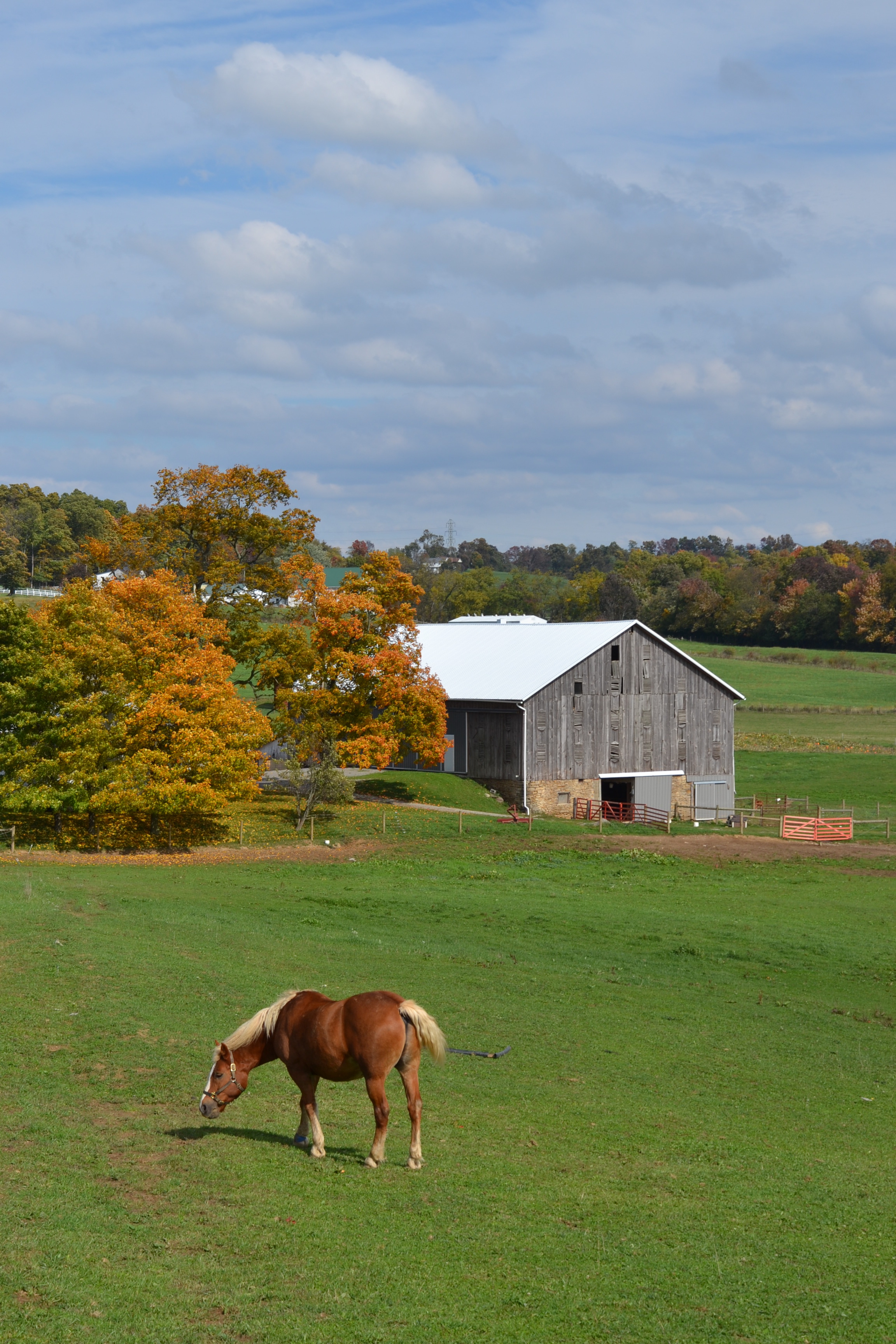
Before entering the county seat, Millersburg, we always stopped at the same place. Dad would pull off to the side of the road by the golf course so we could all admire the giant, vibrant sugar maple tree that stood on the course near the highway. It was a stately fixture to be sure, aglow with yellow, orange and red leaves. Against the manicured green fairways, it was a picture of beauty.
Bucolic by Bruce Stambaugh
Dad would pull out his pride and joy eight-millimeter movie camera and film away. He loved to show the home movies over and over again at family gatherings. I don’t need to view the old footage to recall the moment. The memories are as vivid as the leaves on that old maple.

Perhaps that’s because irony of irony I ended up spending my adult life here. I pass by the memorable spot frequently. The natural beauty is a nice reminder, especially in autumn.

I don’t have to pile in the car and drive 35 miles to see the living artistry. I just have to look out the window. With the leaves at their peak, the real life painting outside our door is ever changing.

Fall sky by Bruce Stambaugh

Of course, I do like to tour the hills and valleys of our county to take in the complete show. I have my favorite routes.

I especially enjoy traveling around taking digital photographs on partly cloudy days. One minute everything seems dull, then the sun breaks through, and I can’t snap the camera shutter fast enough. My father would probably tell me to get a camcorder.

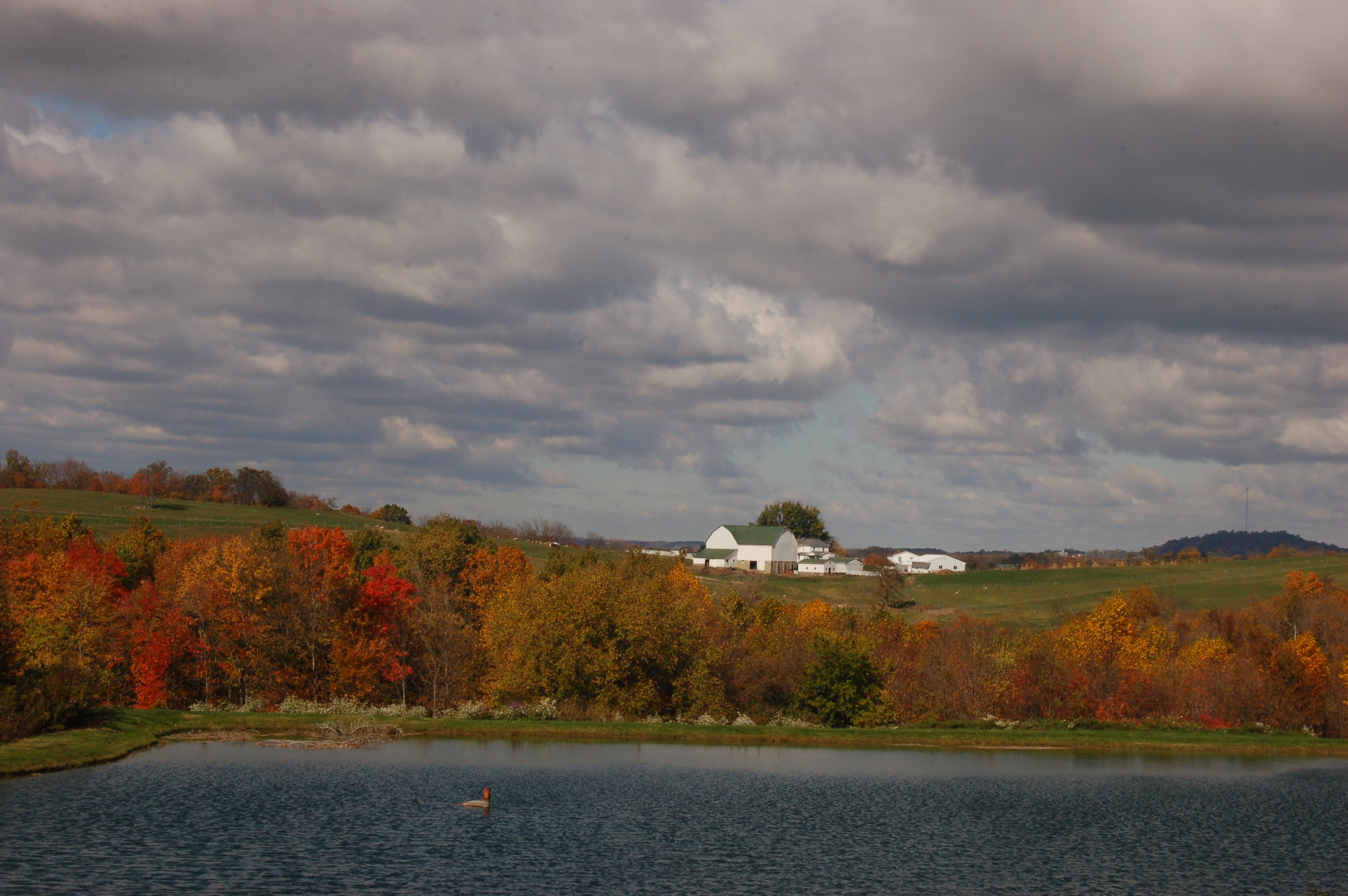
I love the brilliant fencerows dotted with burgundy ash, yellowy white oak, crimson red oak, sunny sassafras, and red, green, yellow and tangerine sugar maples. The hardwood rainbows highlight emerald hayfields and stands of brittle corn shocks.

White farm by Bruce Stambaugh

I also enjoy occasional drives through the heavily forested Killbuck and Black Creek valleys. The steep hillsides are loaded with the same mixed hardwoods as in the eastern end of the county.

White clapboard farmhouses and weathered barns, surrounded by lush green lawns, lay at the feet of the dappled hills. More often than not chocolate soybean fields fill in the narrow bottoms.

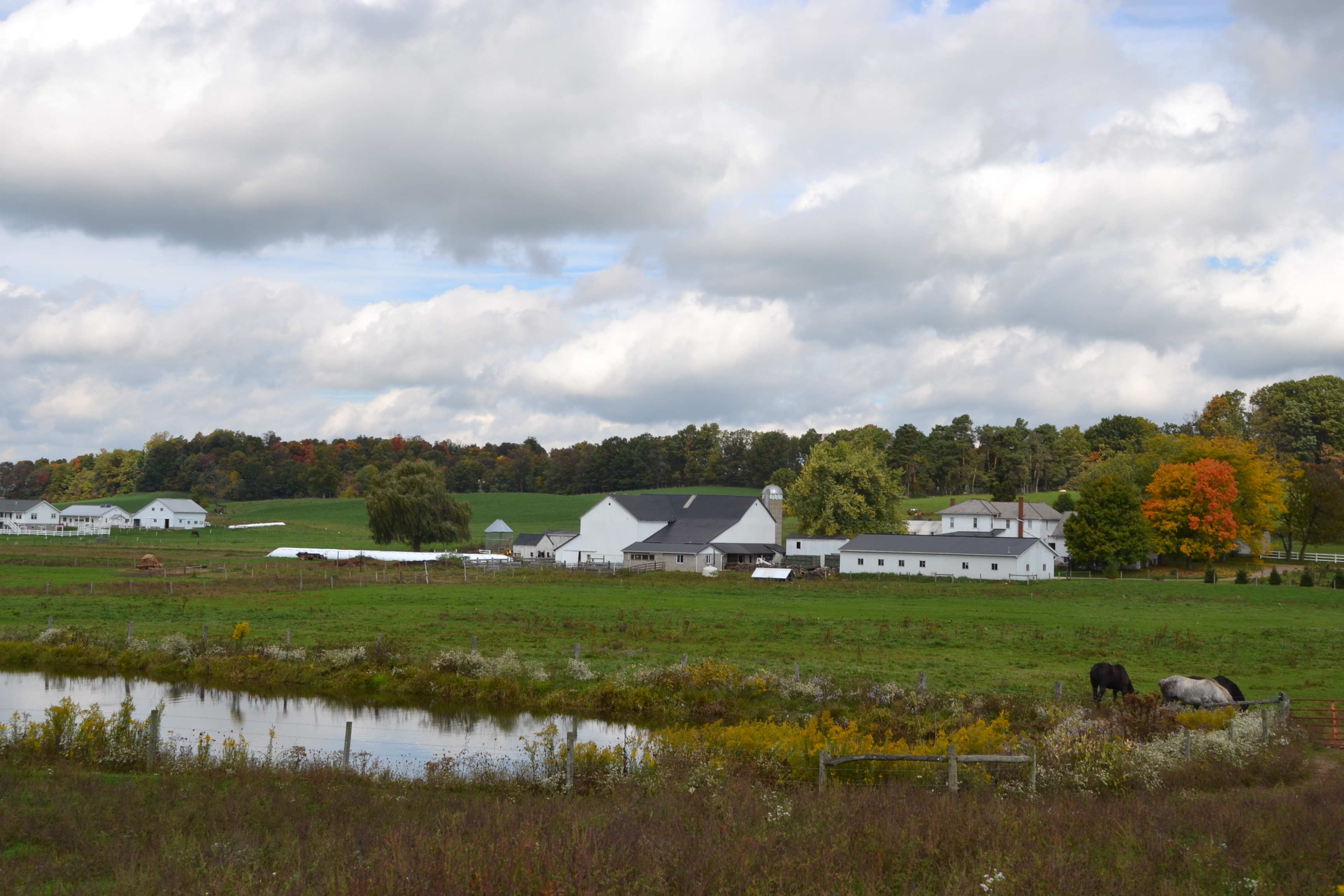
By Millersburg by Bruce StambaughEven with that much splendor, I still return to the side of the road by the golf course. Though the old tree my father loved is gone, time has matured others nearby.

Buoyed by the beauty and the memories, I snap a few shots of the delightful scenery. I am keenly aware of being in both the present and the past. Like the changing seasons, the ebbs and flows of life’s ironies have that everlasting effect.

The column appeared in The Bargain Hunter, Millersburg, OH.

© Bruce Stambaugh 2012

Viewing the leaves in Ohio’s Amish country

Fall from my backyard by Bruce Stambaugh

By Bruce Stambaugh

Ohio’s Amish Country, particularly Holmes County, is a great place to be when the autumn leaves are at their finest. With its many stands of mixed hardwoods throughout the area, the colors can be spectacular if all the conditions are right.

The leaves are usually at their colorful peak by mid-October. Though the summer’s drought may have caused some trees to already change, they seem to be on a normal timetable for coloration. Now through the next two weeks will provide marvelous viewing.

Several great routes can be driven to see the rainbow of leaves. Just consider the rolling hills, rows of corn shocks, grazing cows, romping horses, Amish buggies and silvery streams as backdrops to the main event.

Fall farm by Bruce Stambaugh

Simply traveling the main highways that lead into the Holmes County area and crisscross the county will guarantee beautiful scenery. That’s especially true in the fall.

Trees and shocks by Bruce StambaughState Route 39 cuts Holmes County in half east to west. In many places, the road roughly follows the terminal moraine of the Wisconsin Glacier. To the south, hillsides loaded with maple, oak, walnut, beech and hickory trees are steeper than their counterparts on the opposite side of the road. The glacier filled in the valleys on the north side 10,000 years ago, leaving a gently undulating geography, with rich soil that farmers pamper for excellent crops and lush pasturelands. Stands of woodlots and tree-studded fence lines create magnificent leaf viewing.

Yellow and red by Bruce StambaughState Route 83 bisects Holmes County in half north to south. You will be dazzled by the vistas that change seemingly at every curve. Both north and south of Millersburg, the county seat, the route hugs the eastern edge of the Killbuck Valley. Impressive slopes with ample forests east and west nestle golden marshlands teeming with wildlife in between.

U.S. 62 runs diagonally across the county. From the northeast, pastoral views are aplenty, meandering through Amish farmland on each side. Because the wood industry surpassed agriculture as the number one employer in Holmes County a few years ago, trees are treasured and properly cared for.

Fall scene by Bruce Stambaugh

Follow U.S. 62 from Millersburg southwest toward Killbuck and on to Danville in Knox County and you might think you are in the foothills of the Appalachian Mountains. In truth, you are. The road follows the area’s main waterway, Killbuck Creek, and then climbs the hills into the Mohican River watershed.

Woods and hills by Bruce Stambaugh

The lesser traveled state, county and township roads provide equal opportunity viewing when it comes to autumn leaves. State Route 520 from Killbuck through Glenmont’s seven hills and on to State Route 514 especially provides a pretty show if the timing is right.

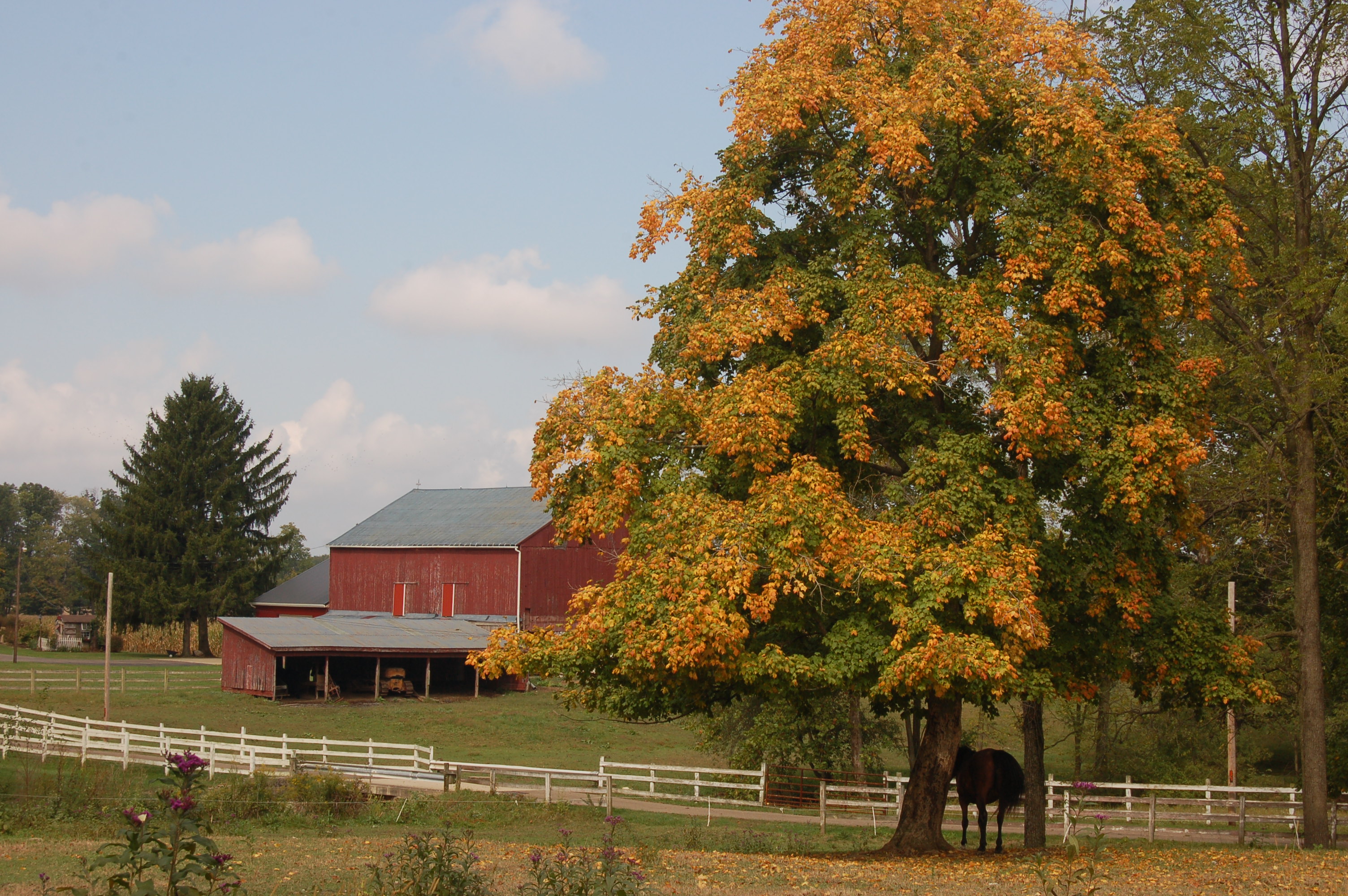
In the east, State Routes 241, 515, 557 and 643 all are winding, hilly and gorgeous in the fall. Farmsteads with white houses and coffin red barns are the norm in any direction on these roads.

Red barn red tree by Bruce Stamaugh

For those who desire more than just riding and looking, the area has plenty to offer. At the Wilderness Center off of U.S. 250 west of Wilmot, you can hike through prairie grass and virgin forests, and explore an education center, where there is fun for all ages.

Mohican State Park near Loudonville affords numerous trails with incredible overlooks to the steep Mohican River gorge. The greens of the thousands of white pines nicely compliment the colorful mixed hardwood forest.

For bicyclists, the Holmes County Trail offers 16 miles of lovely trials from Fredericksburg to Killbuck. Hikers are welcome, too. The trail runs along the Killbuck through the center of the county until it turns southwest toward Killbuck. The wildlife, birding and leaf viewing can all be consumed simultaneously. A note of caution, however. Horse and buggies also use the trail on one side while bikers and hikers are on the other.

Everyone has their favorite spot to view the changing leaves. You’ll enjoy finding yours.

Fall in Amish country by Bruce Stambaugh

This article appeared in Ohio’s Amish Country magazine.

© Bruce Stambaugh 2012

Fall is upon us in every way

Pumpkins and buggies by Bruce Stambaugh

By Bruce Stambaugh

Officially it’s still summer for a few more days. Reality says otherwise.

Fall is upon us. The signs are everywhere. They have been for sometime now.

Warm, pleasant days give way to cooler, quiet evenings. Only a few remaining crickets and an occasional Screech Owl break the night’s silence.

The morning wake up call suddenly switched from a chorus of American Robins to cheery Carolina Wrens. The effect is still the same.

Morning fog by Bruce Stambaugh

Dense fog quickly lifts from valleys, giving way to white cottony clouds highlighted pink, peach, gold and gray by the strengthening sun. Morning mists betray the garden spiders’ artsy trap. The miniature droplets soon yield to the day’s brightening warmth.

While most show a slight tinge, some entire trees have already had their leaves turn a dull orange or dirty yellow. No doubt the stress of this summer’s oppressive heat and extreme dryness forced this premature metamorphosis. Some leaves seemed to go green to brown overnight. The deepening blue sky offsets these anomalies, making them almost acceptable.

Tinted tree by Bruce Stambaugh

Fall is not a time to quibble. It’s a time to appreciate, to work and to reorient yourself and the world as we have come to know it.

Dewy web by Bruce StambaughScholars head to school, each in their own way. Young boys, red and white lunch buckets swaying by their sides, walk in groups, tan straw hats bobbing rhythmically. Smart girls wearing pastel dresses glide by on mute bicycles. They left home later than yet arrived simultaneously with the boys.

Bumblebee painted buses inch past the pedestrians until the next stop. Somewhere behind sheer curtains, home-schooled children take it all in.

The hum of school seems to settle society, put it back in sync. Family vacations end. The students, though not likely to admit it, enjoy the familiar routine, save for a handful of frequent flyers who already know the path to the principal’s office.

At the produce market, giant pumpkins now outnumber the red, plump tomatoes and the ubiquitous zucchini. Despite the protests of the regal morning glories, crimson and gilded mums are the flowers of choice and the season.

Field corn by Bruce Stambaugh

Despite the drought, farmers are smiling, assuming they indeed have crops to gather. They live for the harvest. It’s their bread and butter, their paycheck, their livelihood. They relish the work and consider comparing their bushels per acre numbers as an exercise in status. If their neighbor needs help, however, they’ll be the first to respond.

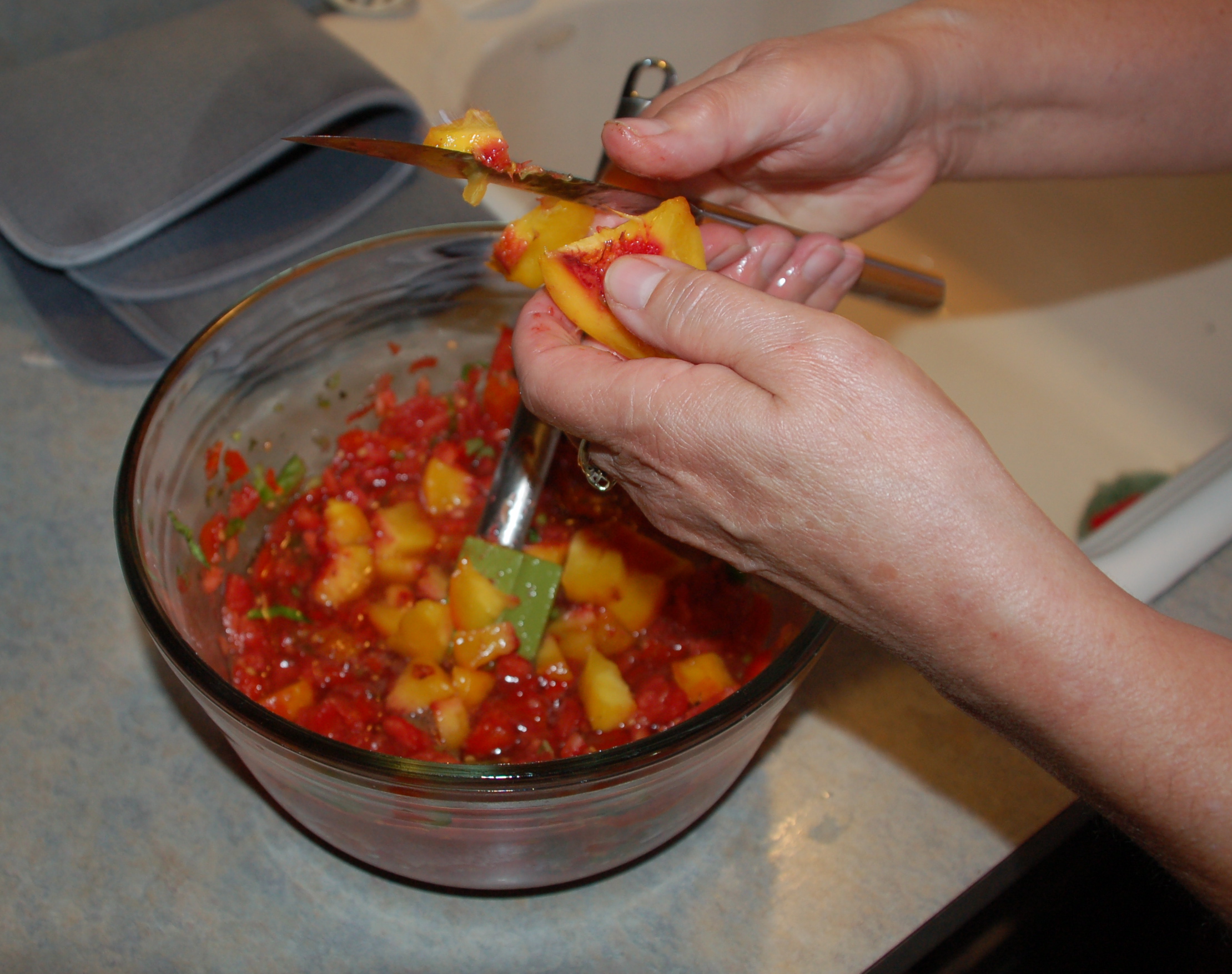
Kitchens fill with the aromas of snappy salsa, and pickles and vinegar. Canning shelves are replenished with jars of winking peaches and cherries, sandwiched by rows of golden corn and tart applesauce.
Peach salsa by Bruce Stambaugh
Life in the fall in the rural Midwest in mid-September is as fulfilling as it gets. Pride and gratitude are the human harvest for rural folks. No blue ribbons, even if bestowed, can provide the same satisfaction. Those ancillary awards politely confirm what we already believe.

Where coloring stands of hardwoods mingle with fencerows and cornrows, life is good. We acknowledge our connection to creation and to one another. We also sense the real and urgent necessity to care for mother earth as we prepare for whatever winter brings our way.

Fall is upon us. Stop, look, listen, inhale and enjoy. The rest of life will take care of itself. It is an equal opportunity seasonal transition we all need whether we know it or not. I humbly thank autumn for the abundant and timely cues.

Amish scholars by Bruce Stambaugh

This column appeared in The Bargain Hunter, Millersburg, OH.

© Bruce Stambaugh 2012
Trouble in a peaceable pond

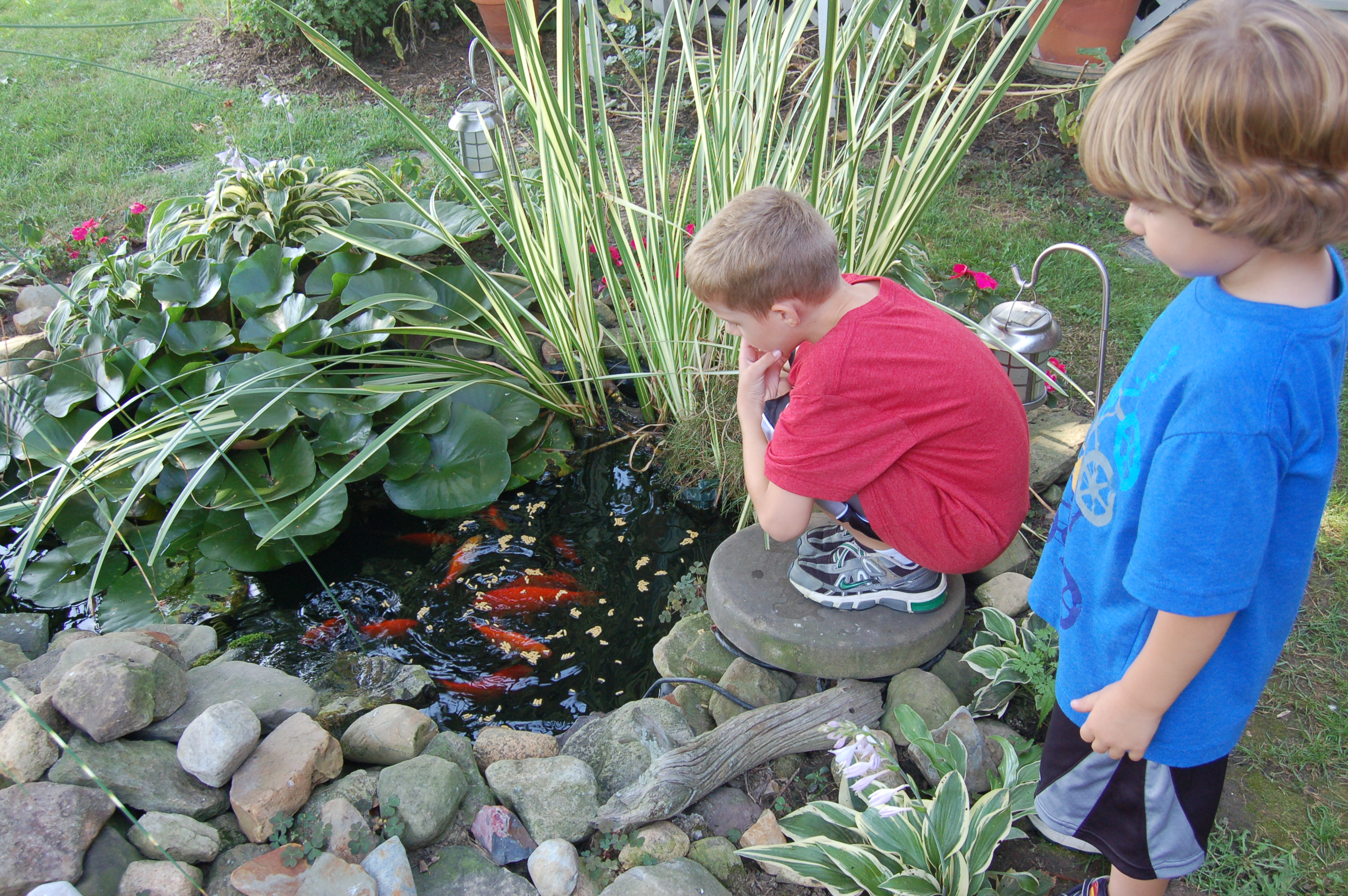
Feeding fish by Bruce Stambaugh
The grandchildren love to feed the goldfish in the little garden pond.

By Bruce Stambaugh

I have greatly enjoyed the little garden pond that students and staff gave me when I retired as their elementary principal 13 years ago. It was fun building the pond and the little waterfall that gurgles night and day.

The pond, visible from all rear windows and our open back porch, has multiple benefits. The mini falls’ mesmerizing tinkling of water on water lulls me to sleep on pleasant nights. An assortment of wildlife has ventured to the pond, including deer and a Great Blue Heron.

Goldfish, snails and aqua plants help keep the pond’s water in proper equilibrium. A family of green frogs just showed up on their own. They have been a welcome addition, until recently that is.

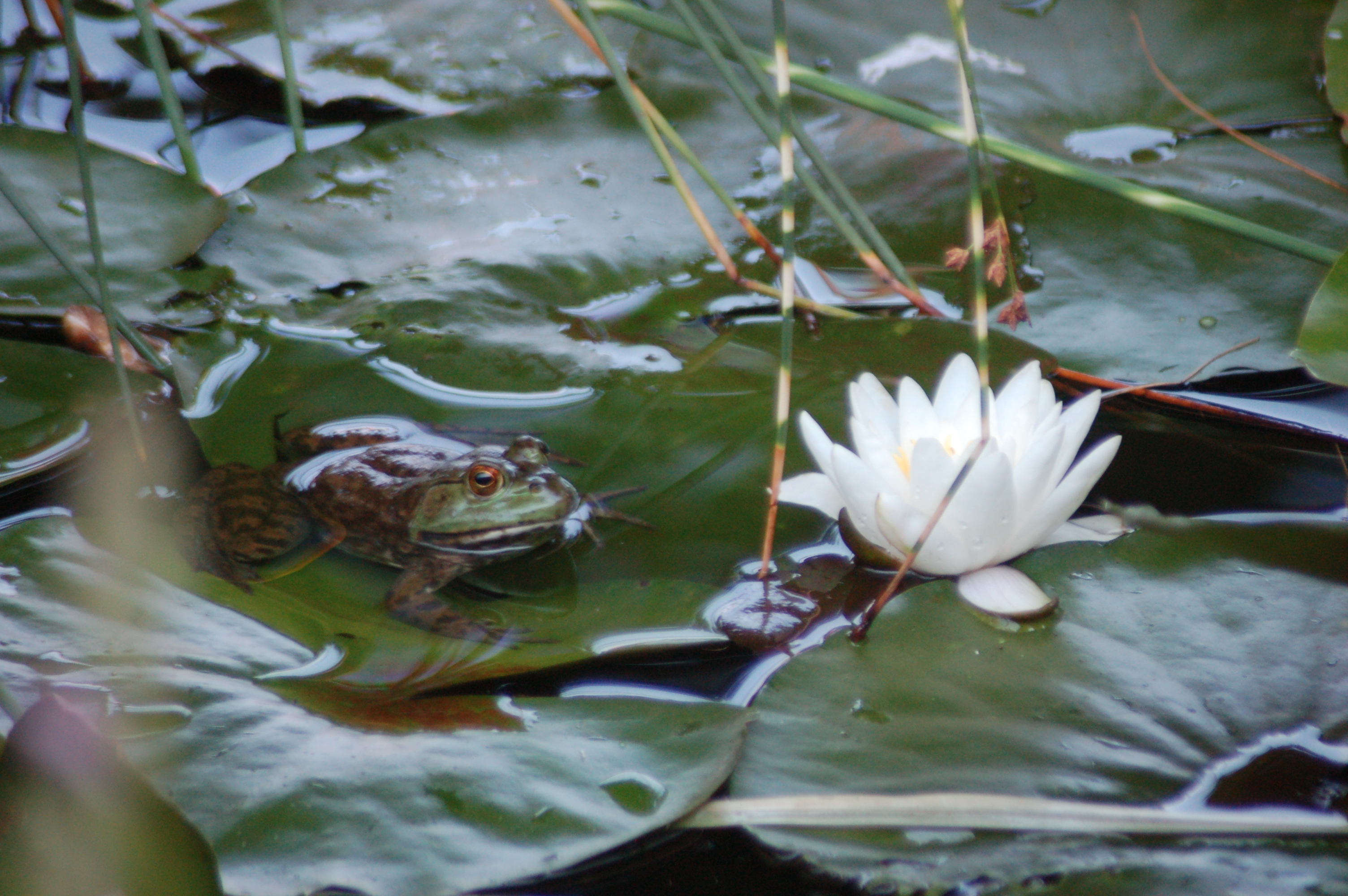
Frog and flower by Bruce StambaughSummer, of course, is when the pond is most popular. Songbirds drink the cool water and bathe in shallow pools. The green frogs station themselves at the pond’s perimeters waiting for insects. Blooming white lily blossoms enhance their chances.

The pond also attracts the grandkids when they visit. It’s one of the first places they explore. They particularly enjoy feeding the goldfish and hunting for the frogs.

Davis, the middle grandchild, is especially inquisitive. Last time here, he wanted to know where the frog nests were. Davis bent over visually surveying the pond, intently looking for the frogs.

Lucky frog by Bruce Stambaugh
Perhaps this green frog was hoping for a little Irish luck in finding lunch.
It was during his investigation that we discovered something very unusual. The largest of the green frogs was resting atop something dark, wet and balled up. I recognized the clump as a dead bird.

As I approached the crime scene, the murder suspect made a quick getaway with one giant plop into the water and hid under the lily pad leaves. From what I could discern, the poor bird was a female House Finch.

I could hardly believe it. I knew that bullfrogs ate birds. But green frogs? I wondered if it wasn’t just a coincidence that the frog came to rest upon the dead bird.

Still, the lifeless bird showed every indication that a frog had tried to swallow it. I distracted the grandkids by playing ball. When I went back later to retrieve the victim, it was gone.

A few days later, while cleaning the pond and feeding the fish, I discovered yet another dead bird. Curious, I contacted Julie Zickefoose, a noted author, artist, and lover of all things nature. She had never heard of a green frog snatching birds either. Julie suggested that I had a troublemaker in my peaceful pond, and that the perpetrator be removed to a farm pond if for no other reason than the safety and welfare of the birds that come to enjoy our pond’s refreshing water.

Fall pond by Bruce Stambaugh
The pond in the fall.
As long as those frogs had been there, I really hated to pin the fowl play on one of the green gang. I decided I needed conclusive rather than circumstantial evidence before I removed the big guy.

I decided to be vigilant, and watch and wait to see if the frog really did go after birds. On sunny days, it usually claims an easily visible grassy pad at water’s edge waiting for a free lunch.

Either the frog has had a change of heart, or perhaps diet, or I’m not a very good detective. So far, I haven’t found anymore carcasses.

I’ll keep watching, and if I catch the frog green-handed, I’ll let you know. In the meantime, let’s hope peace and tranquility reign in our little pond of paradise.

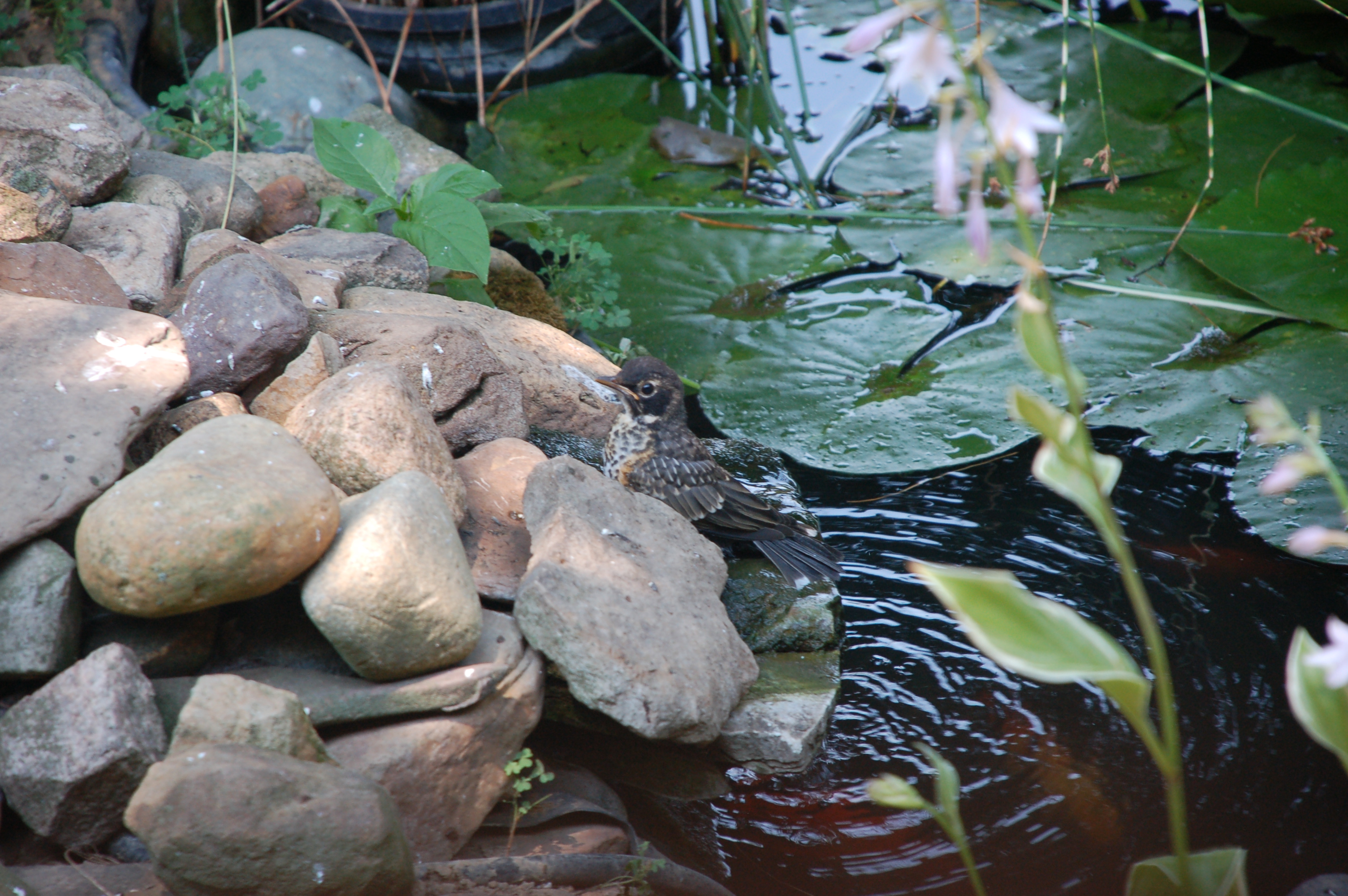
Bird bath by Bruce Stambaugh
A juvenile American Robin enjoyed a refreshing bath in the little waterfalls.

This column appeared in The Bargain Hunter, Millersburg, OH.

© Bruce Stambaugh 2012
After this June and July, do we really need August?

Ohio chaparral by Bruce Stambaugh
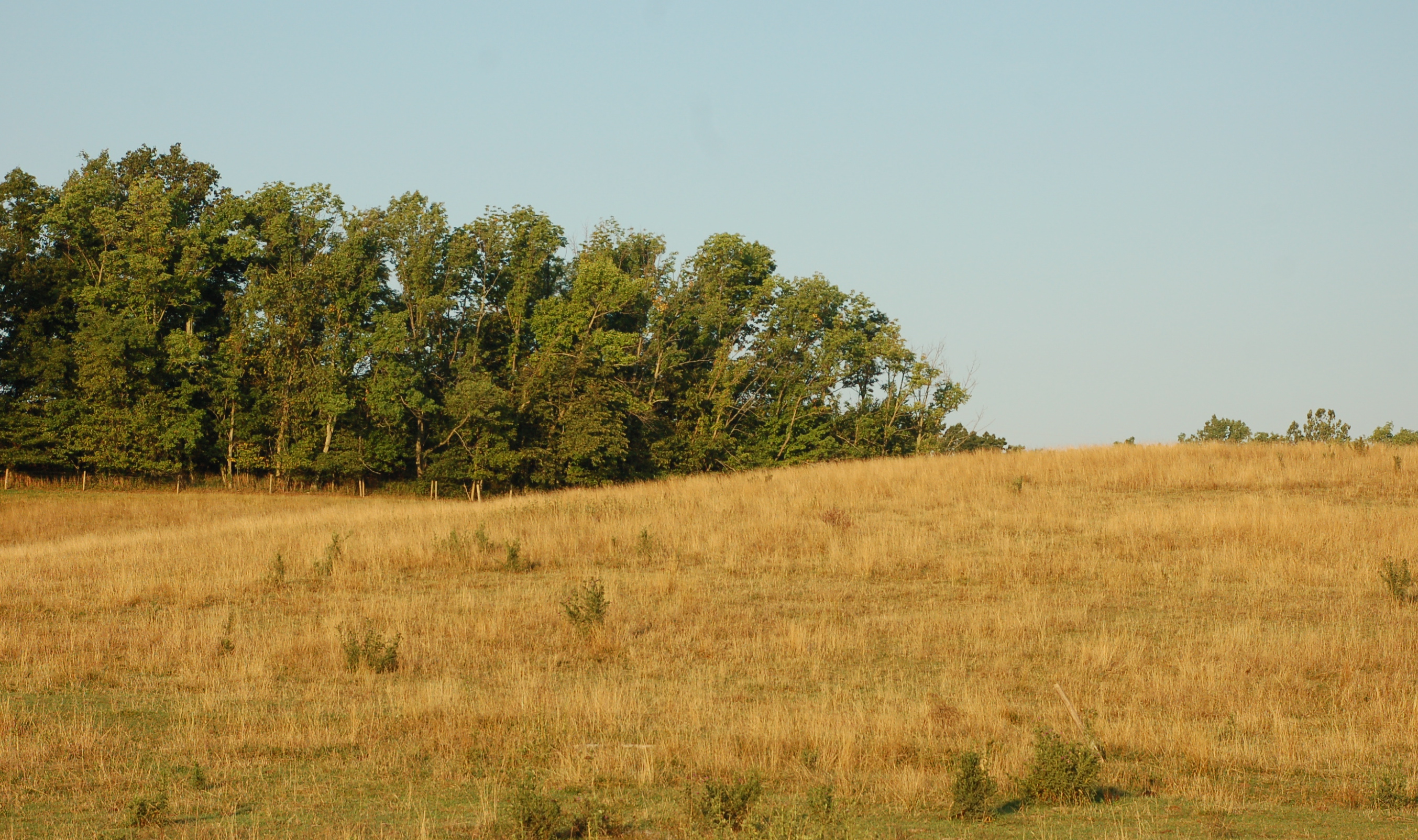
Parched pastures in Ohio more resembled California chaparral.

By Bruce Stambaugh

The dog days of August are upon us. The month is notorious for hot, humid and mostly dry weather. Haven’t we already experienced enough of that without adding to the enduring misery?

Once June arrived, the lovely spring weather we had enjoyed literally evaporated. The weather turned unusually warm and dry, not just in Ohio, but also across much of North America. Many record high temperatures were recorded. Geographic areas that had been moist quickly joined other regions that have had ongoing, long-term drought conditions.

Artesian well by Bruce Stambaugh
This artesian well normally runs steady year-round. It dried up by the end of July.
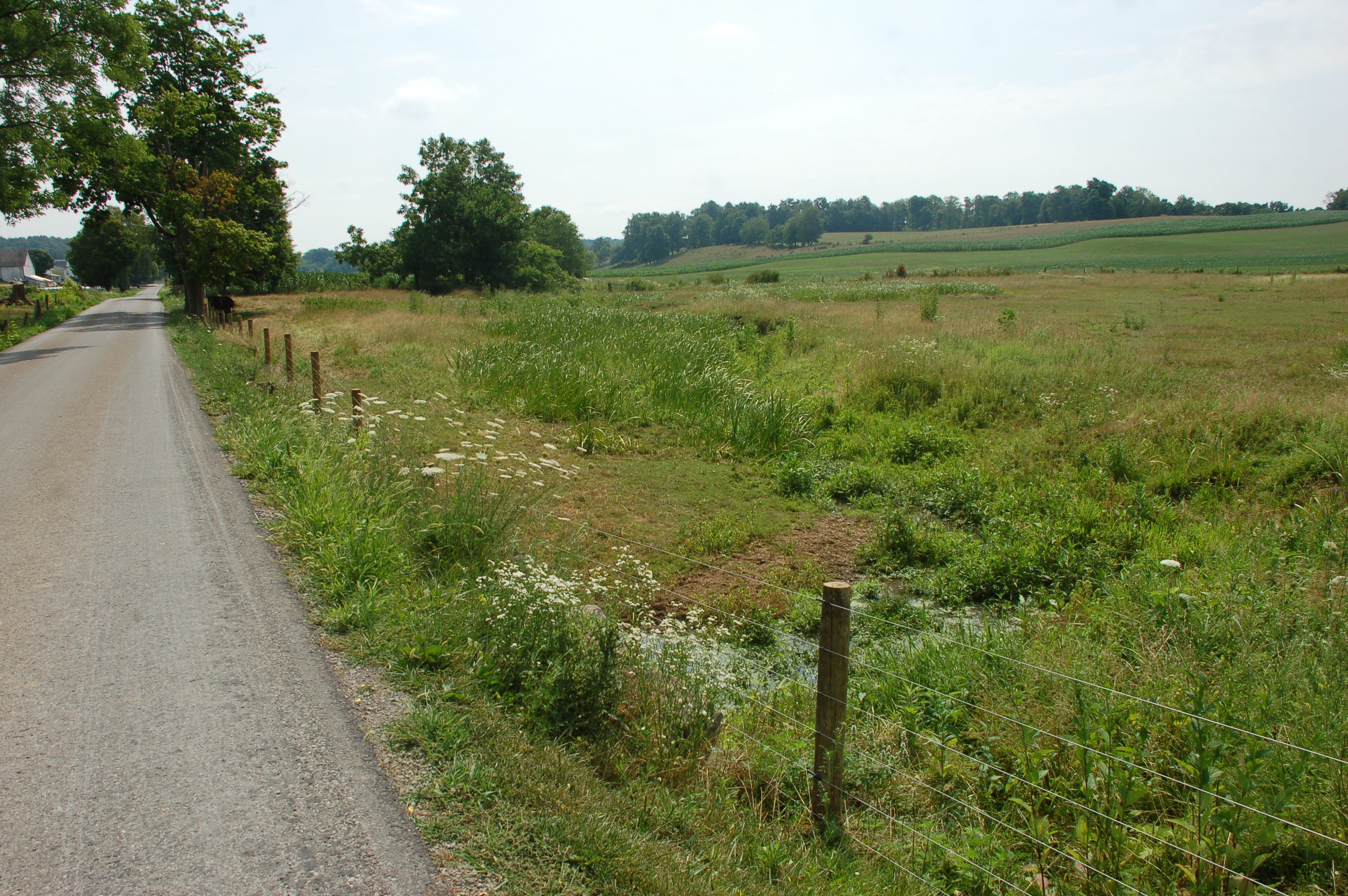
Water became a precious commodity. Wells were taxed. Perpetual springs slowed to a trickle. Local streams, normally gurgling with water from occasional rains, displayed more creek bed than flow.

I pitied those who had to work outside for a living. Many businesses had their employees arrive early to take advantage of the morning coolness, and then let them leave mid-afternoon at the height of the heat.

National Weather Service offices all across the country regularly posted heat advisories and excessive heat warnings. In the cities, where concrete and steel intensified the heat, people sweltered.

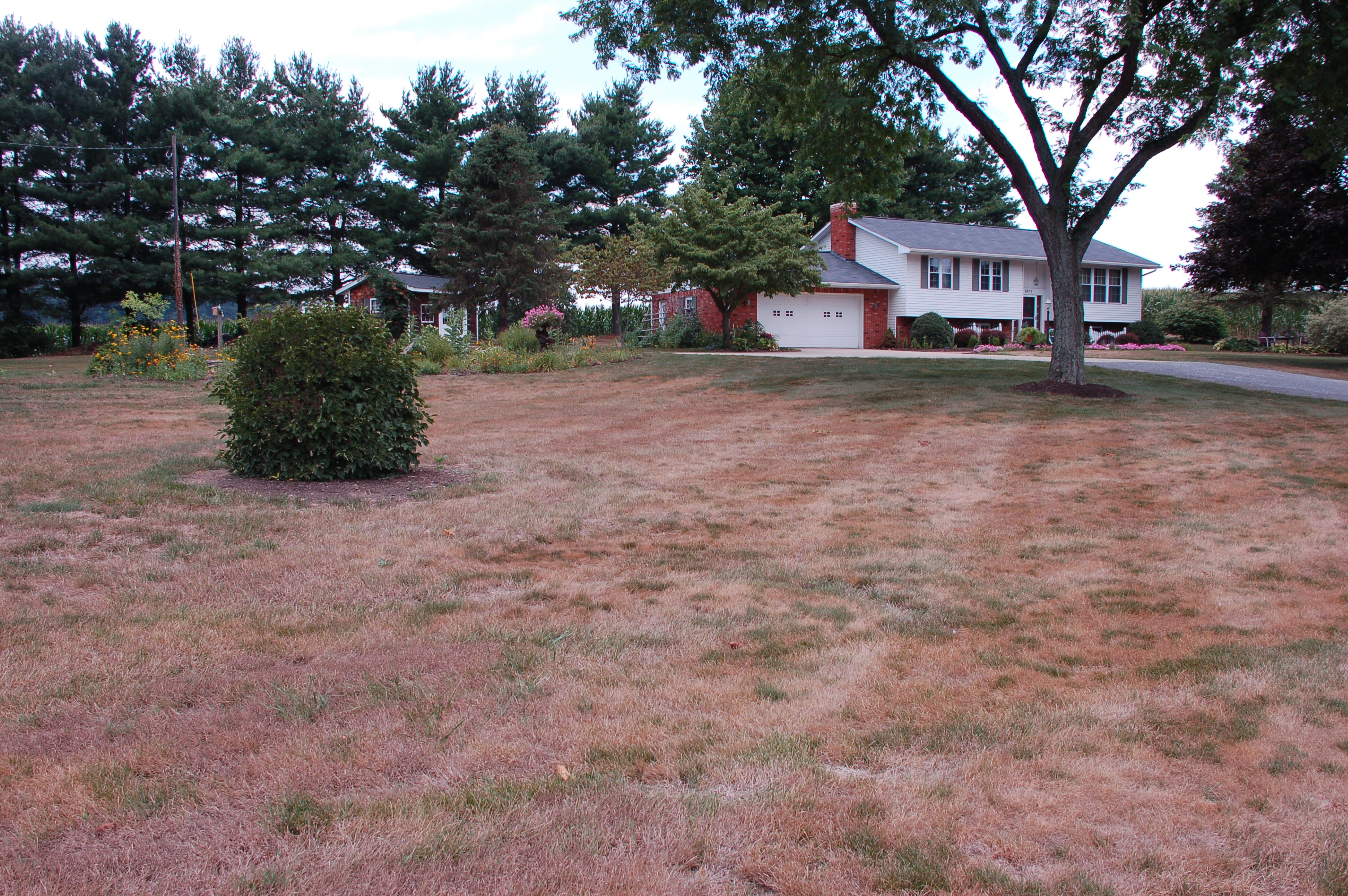
It was bad enough here in the country. Lawn care services, usually swamped for work or used to rushing to beat the rain to complete their jobs, simply lost business. They were used to mowing green, not brown. Indeed, there was no need to do so.

Brown lawn by Bruce Stambaugh
Lawns that were mowed short took a beating from the heat.

Farmers watched helplessly as their corn curled and parched pastures more resembled California chaparral. In America’s breadbasket, farm animals were sold off since feed and hay prices soared. By July’s end, two-thirds of the country was in some stage of drought.

Wild animals sought cooler climes, too. Groundhogs abandoned their normal burrows in hayfields and ranged outside their normal habitat for scarce food and water. A young one dug a hole under our back porch for protection from predators. It munched on our herbs and flowers, and boldly drank from our little garden pond in broad daylight.

Curled corn by Bruce Stambaugh
Field corn was so stressed from the heat and drought that it curled.

A pose of raccoons was more cautious. Being nocturnal, they regularly fished and splashed at night. The groundhog and seven of the masked bandits were captured in live traps baited with a gourmet meal of apple slices and marshmallows.

What really stood out though was how people seemed to adjust to the oppressive conditions. Sure complaints were lodged to nobody in particular. The only moisture to fall on some farmland was from farmers’ tears. Still I found people overall to be as congenial as ever. They seemed determined not to let the heat get the best of them.

One exception to that was on the highway. Drivers appeared more aggressive than usual, perhaps incited by the blazing sun and warm car interiors. In my various road trips, I noticed an unusually high number of vehicles, large and small, abandoned along highways or sitting with their hoods up. Their operators peered into the engines or talked on cell phones while waiting for help to arrive.

Brown grass by Bruce Stambaugh
Burned out lawns and parched flowerbeds like these were common all across the midwest part of the United States.

Trees and flowers, too, were stressed. Leaves turned yellow or brown. Some gave up the ghost altogether. When I walked to the mailbox to get the mail, the grass crunched beneath my feet like snow. Right now, I’d rather have the snow. Can’t we just skip the dog days of August and sashay right into a normal fall?

Given such a notion, maybe the heat has gotten to me after all.

This column appeared in The Bargain Hunter, Millersburg, OH.

© Bruce Stambaugh 2012
Walking by myself, but never alone

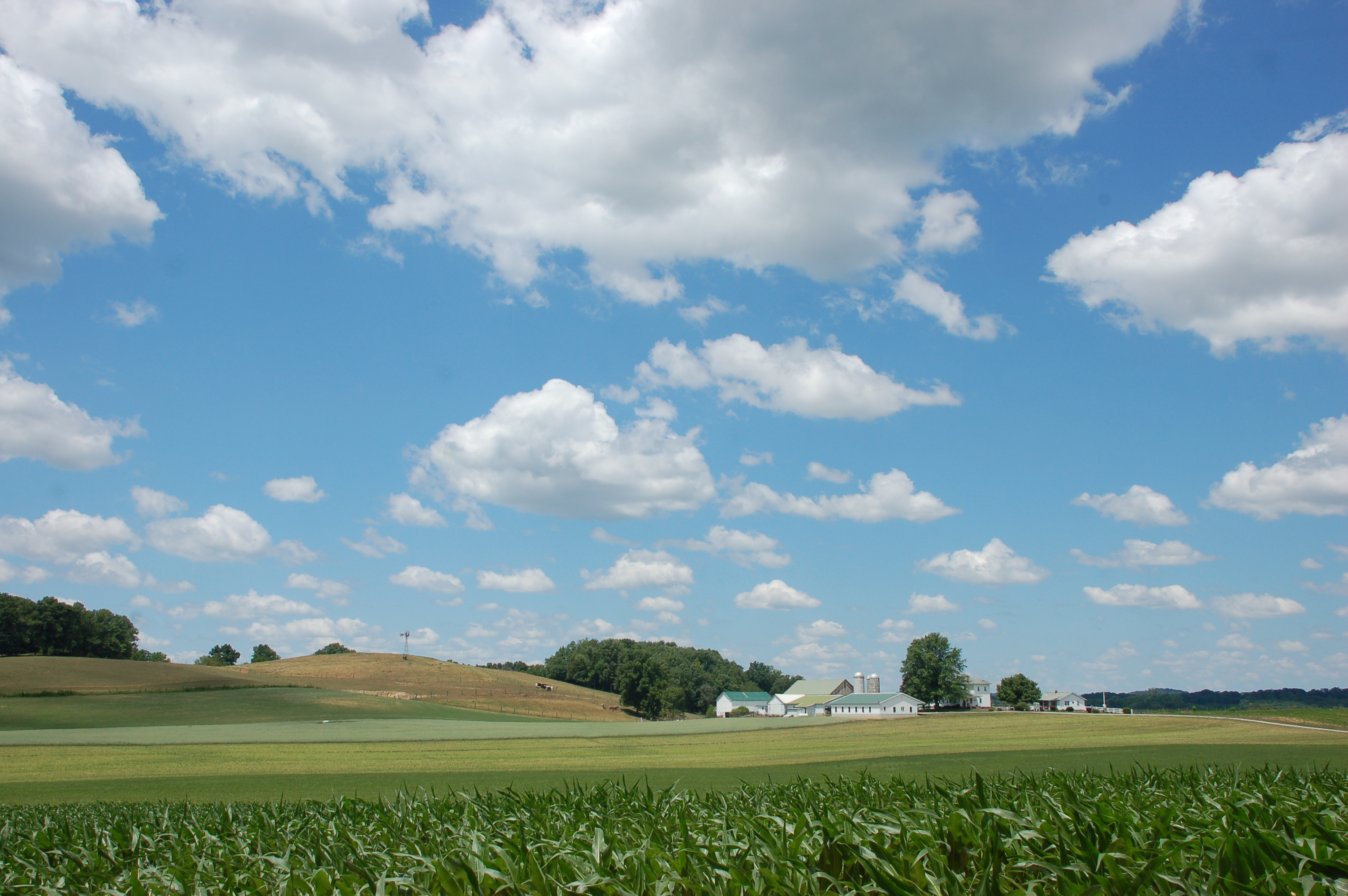
Countryside by Bruce Stambaugh

By Bruce Stambaugh

Even though I am usually alone, I always have plenty of company on my regular morning walk on the township road near our home.

I walk for the exercise of course, but the benefits far exceed staying physically fit. On these hot and humid summer days, I like to get an early start if my schedule permits.

If I can survive the tricky first tenth of a mile on our busy county highway to get to the road less traveled, I can relish the rest of the walk. Common sense tells me to stay alert for oncoming traffic and dodge the fleet of various vehicles by stepping to the side.

Sunny walk by Bruce Stambaugh

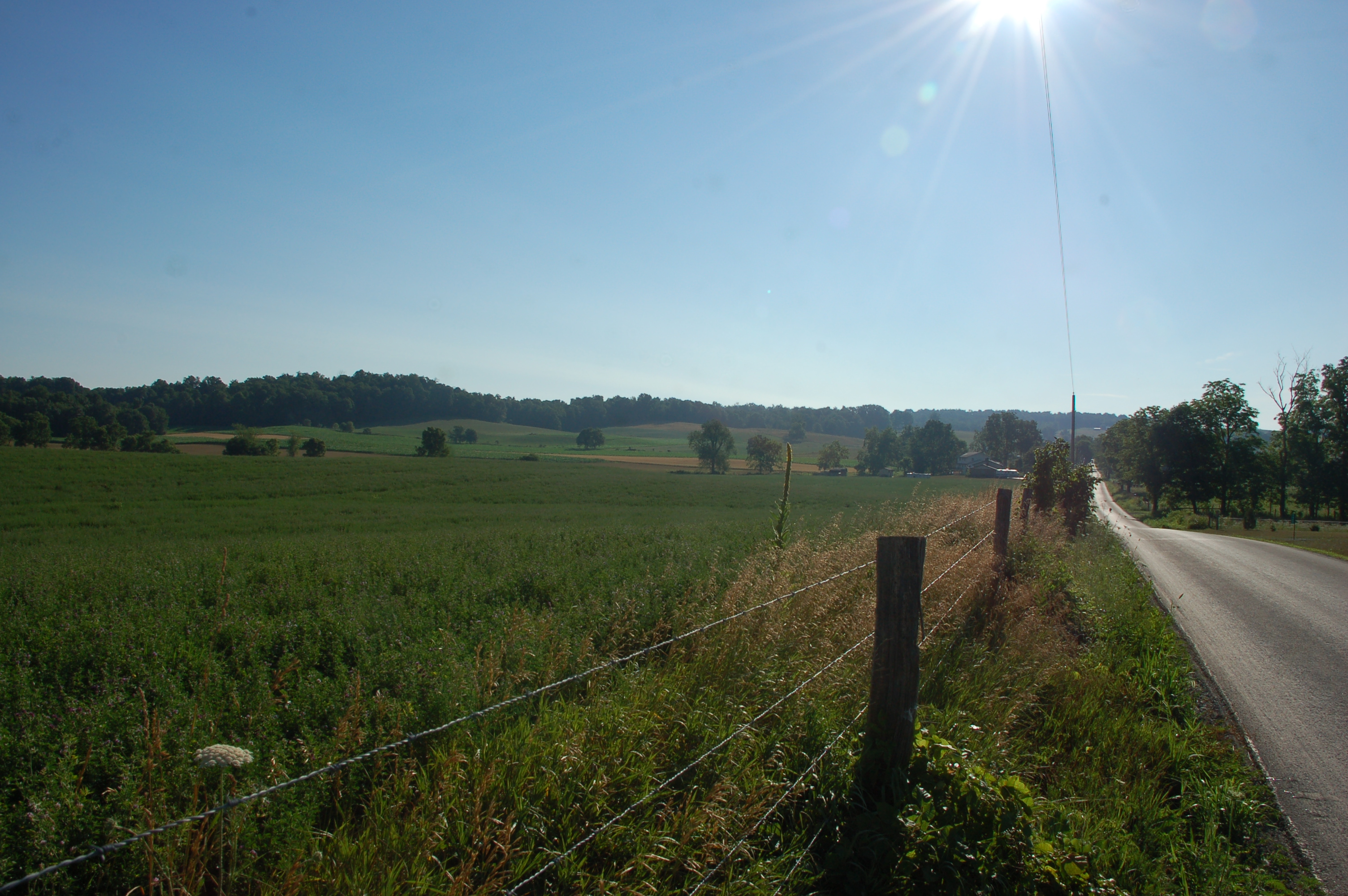
Once I’ve completed the macadam gauntlet to the safety of the township road, I turn east into the morning sun. After a few steps uphill, the road unfolds before me, rolling gradually down into a low, sweeping valley formed by the Wisconsin Glacier 10,000 years ago. Farm fences on both sides squeeze against the chip and seal roadway, making it seem even narrower than it already is.

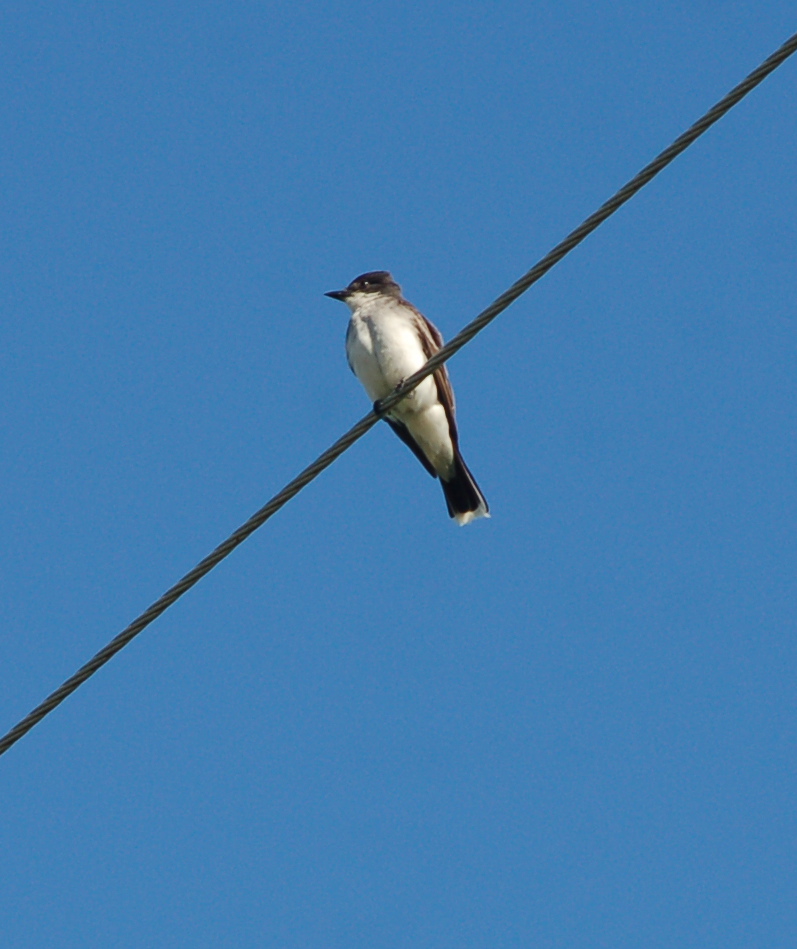
Eastern Kingbird by Bruce Stambaugh
This Eastern Kingbird and it’s mate often greet me as I walk along the township road.
I fondly anticipate these next moments. It’s the same road, but never the same walk. My audience waits, and every crowd is different. It’s not the Olympics by any means. In fact, it more closely resembles a circus.

I especially enjoy the high wire acts. The Eastern Bluebirds, including the juveniles still testing their wings, play their own version of leapfrog with me from the roadside power lines. Greeting me with melodious songs, the furtive birds wait until I nearly reach them before they flutter a few yards down the lines and land again.

I walk some more. They fly some more. The pattern is repeated a quarter-mile until the power lines run out. At that point, the beautiful birds make an arch over the hayfield and light upon the wires behind me to await my return trip.

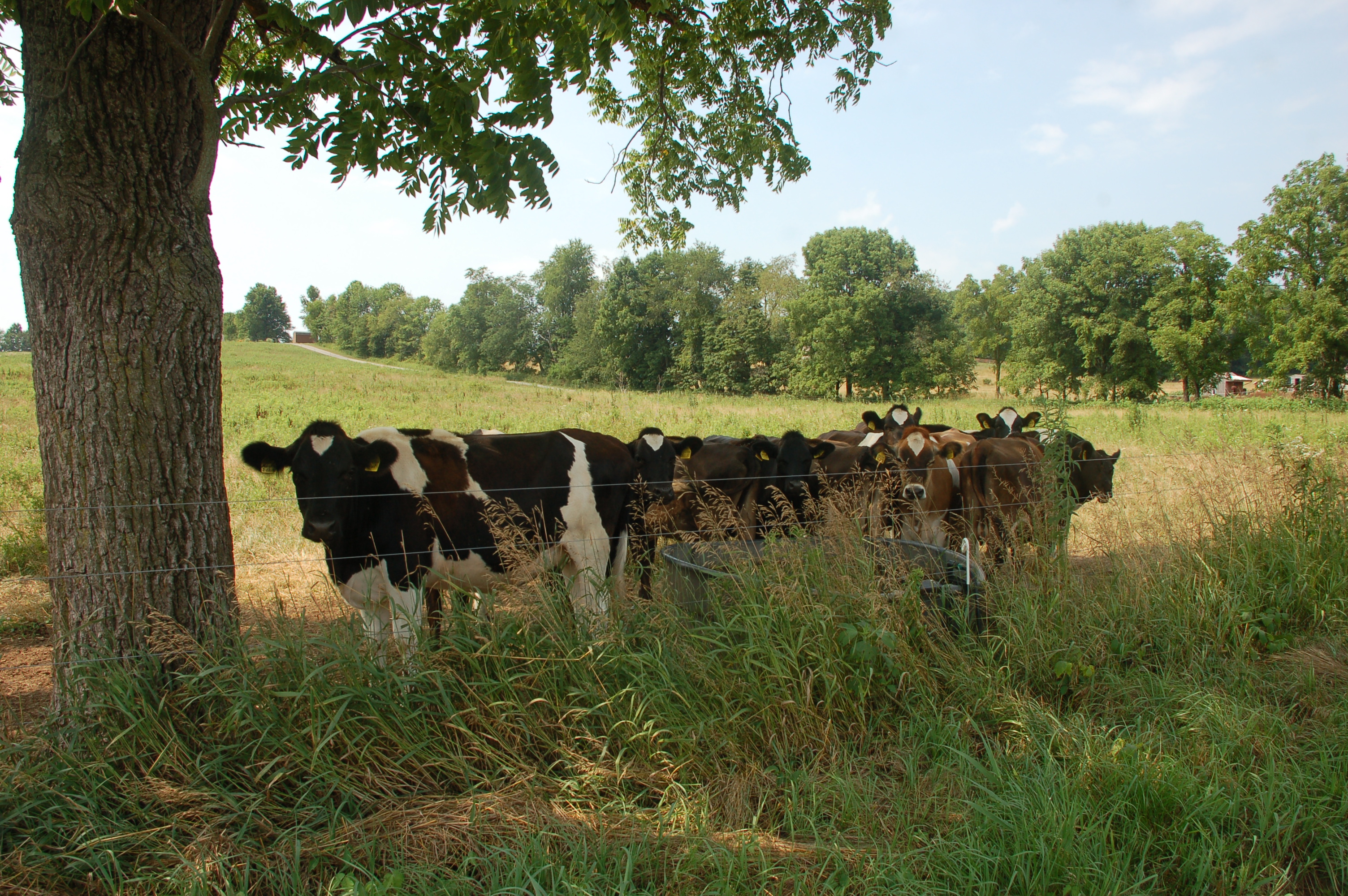
Heifers by Bruce Stambaugh

Once the road flattens out, a congregation of Holstein heifers crowded head to tail beneath a black walnut tree suspiciously eye me. As I stroll, their heads turn as one, ears twitching, tails swatting pesky flies. Sensing a potentially easier prey, a few of the flies follow me.

Thankfully, a flashy yellow ball cap saved my baldhead. Still, I flail away at the persistent insects. I’m glad no other humans are around to witness my comical machinations. By the time I reach the valley’s shallow brook, the flies relent.

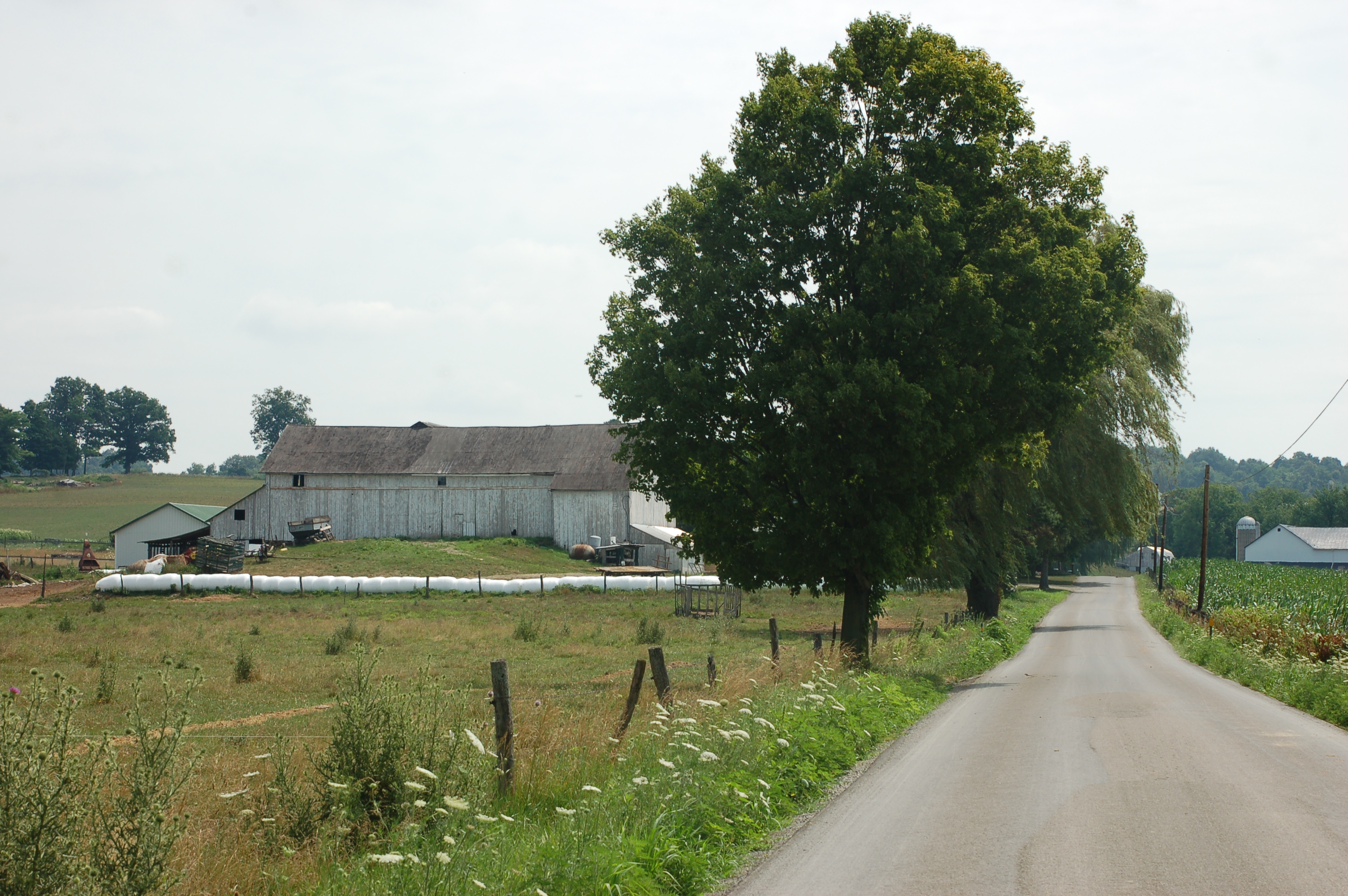
Jonas Yoder farm by Bruce Stambaugh
I usually turn around and head back home at the Jonas Yoder farm a mile east of my home.

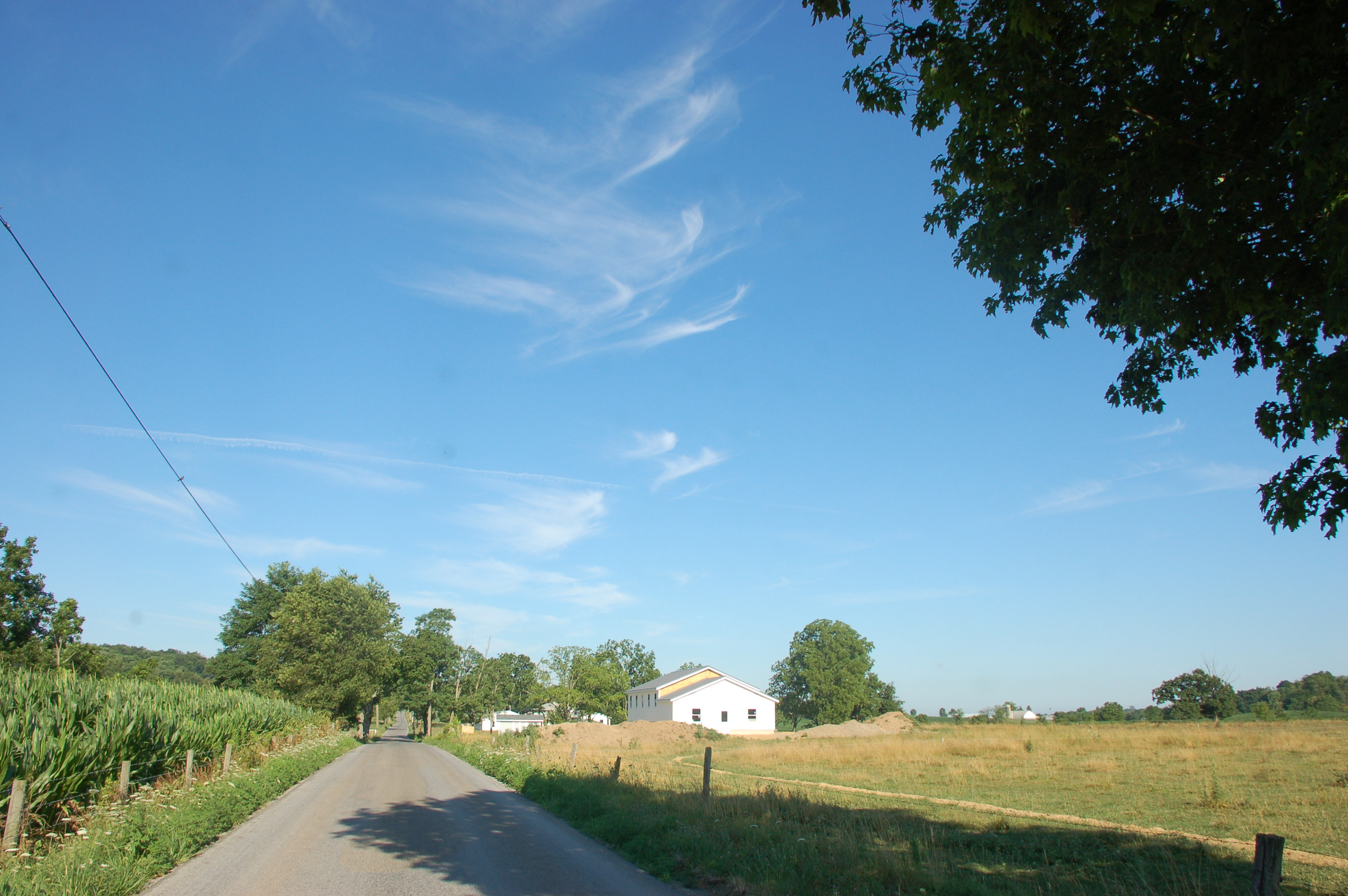
Continuing east past the newly built Amish schoolhouse, the Barn Swallows, Tree Swallows and Purple Martins all start chattering to me at once, circling overhead as if they were asking me to follow.

Buggy by Bruce Stambaugh

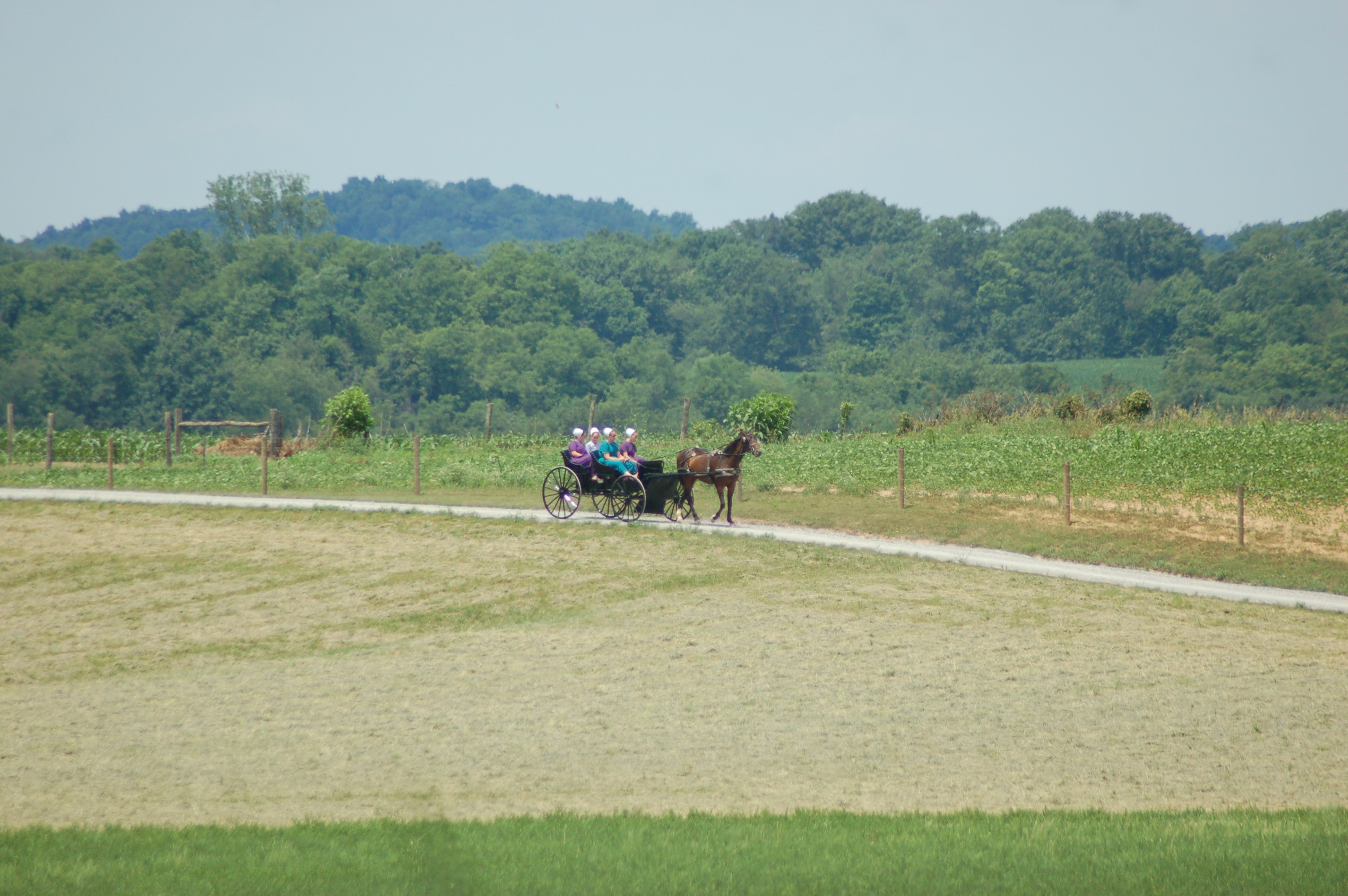
At Jonas Yoder’s farm, I break the law. A U-turn begins my return trip. I usually walk down the center of the road until I hear a vehicle or buggy. On average, only one or the other passes me on the township road.

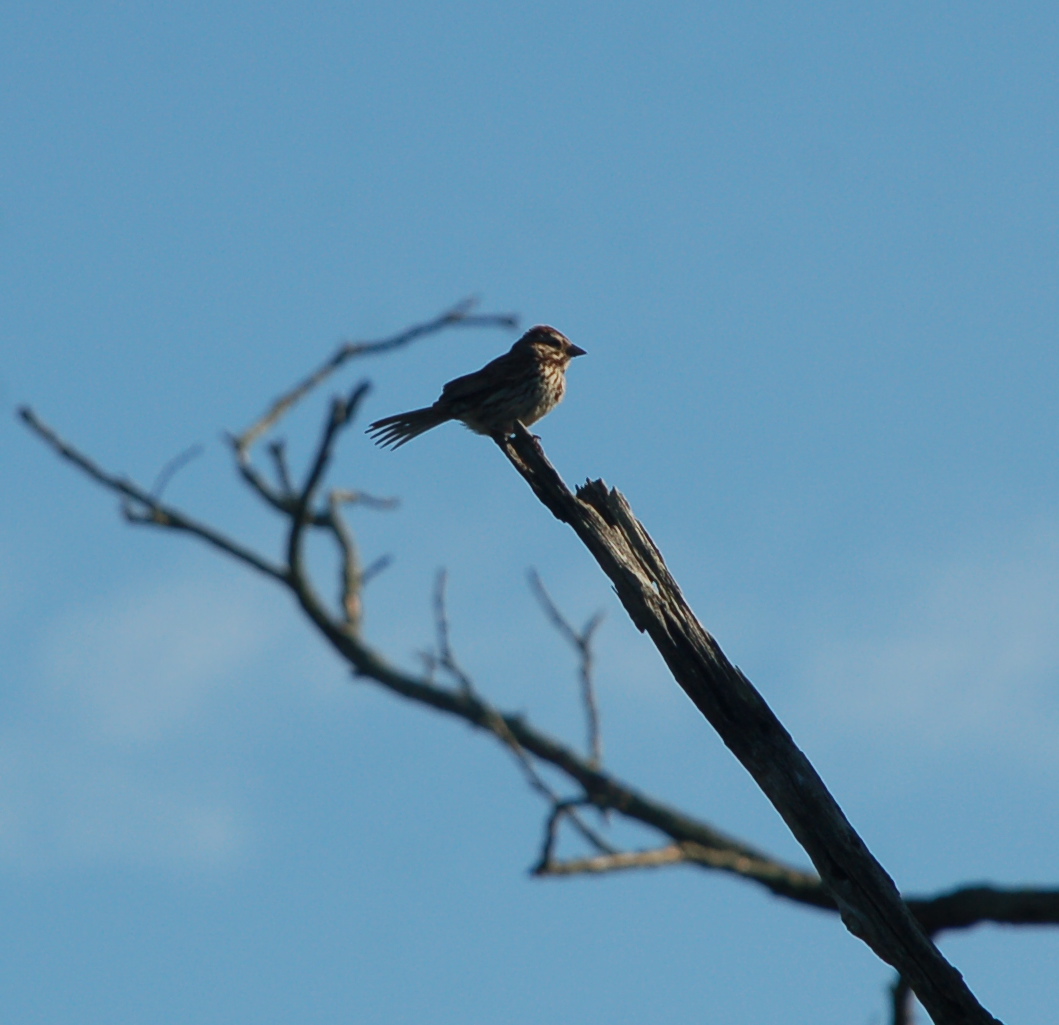
Song Sparrow by Bruce Stambaugh
One of several Song Sparrows that I see on my walk.
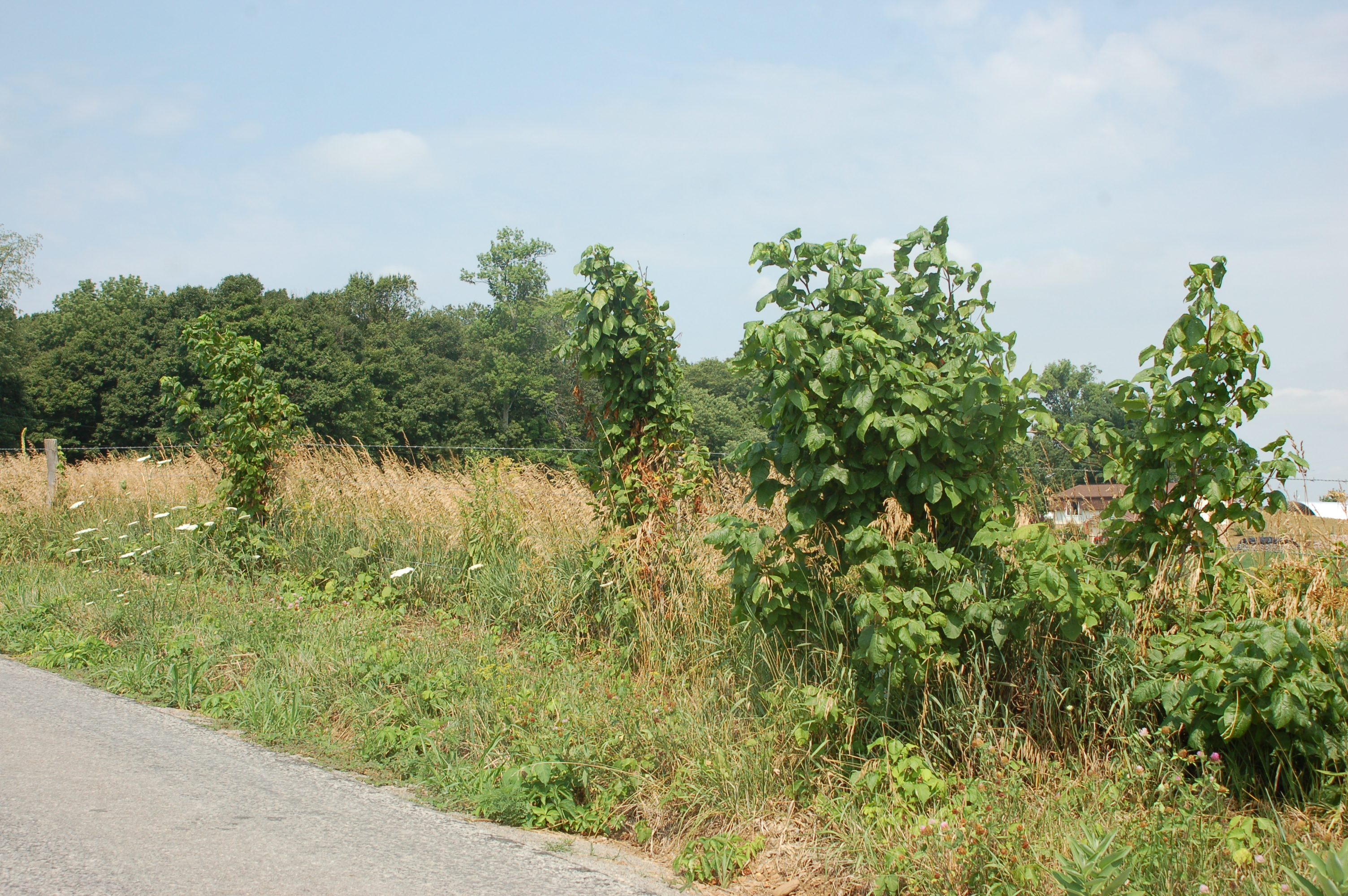
The American Robins and Song Sparrows are all used to me by now, and keep on singing in place. A young flicker, still with no brilliant red on the back of its head, flits from fence post to tree to utility pole. Poison ivy vines, leaves shiny as Christmas holly, have nearly over grown every locust post. A Green Heron escorts me back up the incline until it settles atop the tallest tree in a dense woodlot.

Down the arduous homestretch again, my next-door neighbor’s dogs unceremoniously announce my arrival. I hit the trifecta. I feel welcomed, renewed and refreshed.

Purple Martins by Bruce Stambaugh
Young Purple Martins wait patiently on a dead tree limb while being fed.
Poison ivy by Bruce Stambaugh
Poison ivy vines have over run many of the locust fence posts along the roadway.
Female Mallard by Bruce Stambaugh
This female Mallard, and sometimes its male mate, is often swimming in a pool of the small stream when I walk by.

Amish school by Bruce Stambaugh
An Amish school is being built in the pasture of Jonas Yoder’s farm.

This column appeared in The Bargain Hunter, Millersburg, OH.

© Bruce Stambaugh 2012

Lunch on the porch includes more than just good food

Porch view by Bruce Stambaugh

By Bruce Stambaugh

Everyone needs a sanctuary. For my wife and me, our back porch is our quick retreat from life’s demands. A few short steps and we are in a special place. Over the years our back porch has given us many marvelous memories.

We recognize that we are fortunate to live where we do. Our home, built three decades ago off an Amish farm, is situated between Benton, Berlin and Mt. Hope, all in Holmes County, Ohio. Our back porch provides panoramic, inspiring scenes.
Girls in buggy by Bruce Stambaugh
The open-air porch was added to our modest home several years ago. We wanted a quiet place to relax during Ohio’s warmer climes. When the weather does cooperate, we especially enjoy lunches together there. It helps to have a wife who is a great cook. I’m no chauvinist, but I’m no chef either. Neva rules the kitchen and I reap the rewards and help clean up.

Lunch by Bruce Stambaugh
A recent lunch that we enjoyed on the porch.
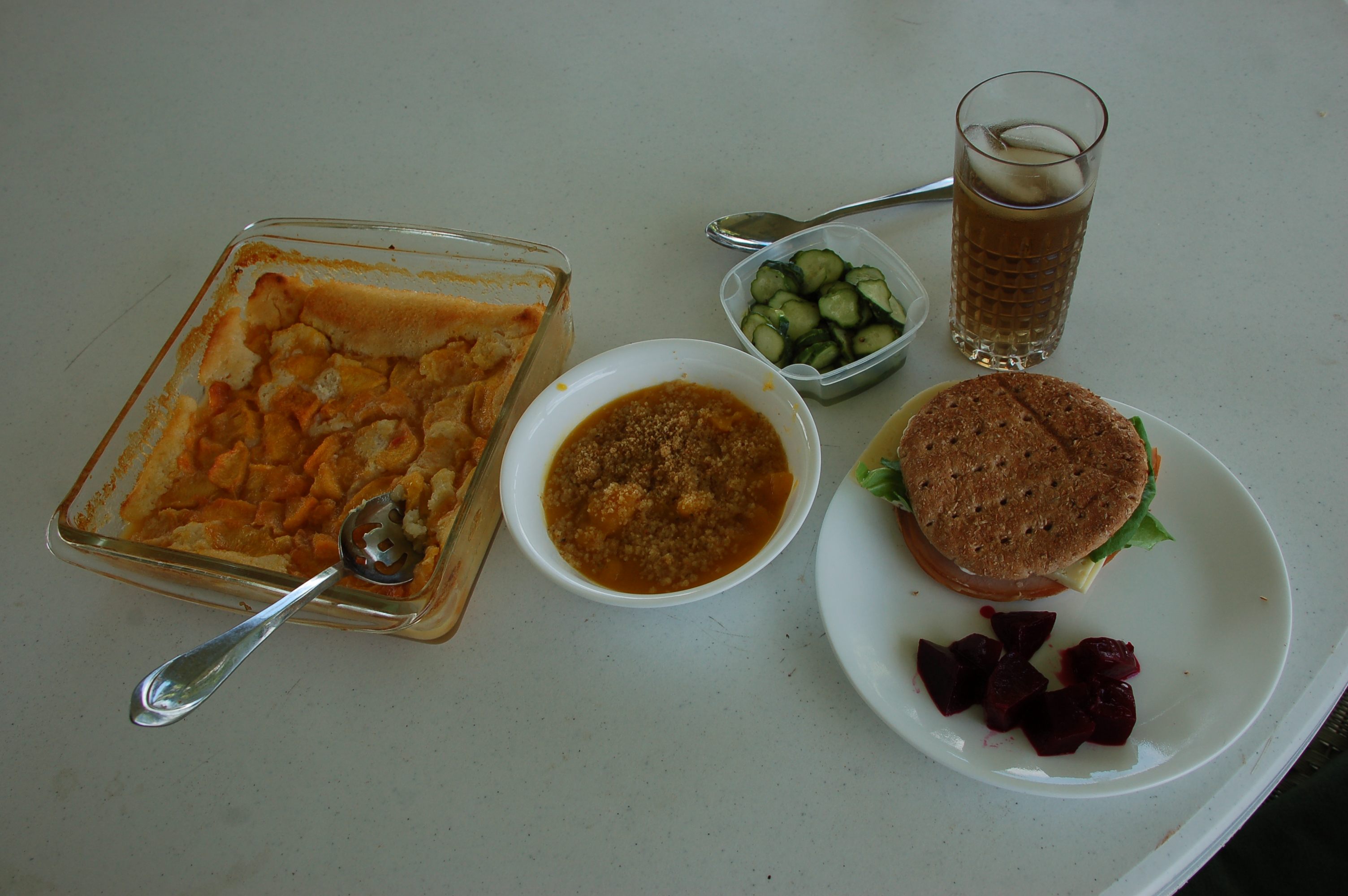
Somehow the food tastes even better on the porch. One recent lunch featured her homemade butternut squash soup, sprinkled lightly with toasted bread crumbs. A fresh spinach salad with crasins and vinaigrette nicely complemented the soup.

A simple dessert of sweet cherries was washed down with fresh sweet peppermint tea, spiked with basil, giving the tea a sweet-tart taste. The mint was picked just minutes before being doused in boiling water. Other than the tea, no seconds were needed. A single course of each was plenty.
Mowing hay by Bruce Stambaugh
The house serves as a buffer between our busy highway and the backyard, minimizing the traffic noise. We love the quiet.

Well, perhaps quiet isn’t the proper word. Abundant backyard activity breaks any hint of silence. While we dined, we heard the undulating hum of a mower and the rattle of horse harnesses as our Amish neighbor completed his second cutting of hay before taking his own lunch break.

Downy by Bruce StambaughIn the meantime, the birds and wildlife kept us entertained as they also dined. With the porch open on the sides, it’s not unusual for birds to zip over our heads to the feeders. That is especially true for the acrobatic hummingbirds. Their feeder hangs from the edge of the porch near the kitchen window. It is fun to watch the territorial hummers chatter and chase each other away from their own version of lunch. They wouldn’t have to do that. There are several places to perch.

If we stay immobile, even the woodpeckers light upon the peanut butter suet feeder that dangles next to a hanging basket of flowers. The little downys, however, are the only ones that aren’t spooked off by our presence. Still, they nervously but needlessly chip and jerk their heads warily as they jab at the rich mixture, making sure we keep our distance.

Wildflowers by Bruce StambaughA green frog, one of six that inhabit our little garden pond, waits patiently for lunch to fly by. The green frogs that patrol our little garden pond adjacent to the porch patiently wait in the sun for their own lunch to fly by. When I hear a plop, I know they are as satisfied as we are.

Beyond the pond, monarch, swallowtail and red admiral butterflies partake in their own flowery buffet on the patch of ever-changing wildflowers. Along with volunteer sunflowers, the coneflowers, Black-eyed Susan’s, daisies, gaillardia and bachelor buttons paint a colorful palette in the shade of the canopy of pines and giant sugar maple.

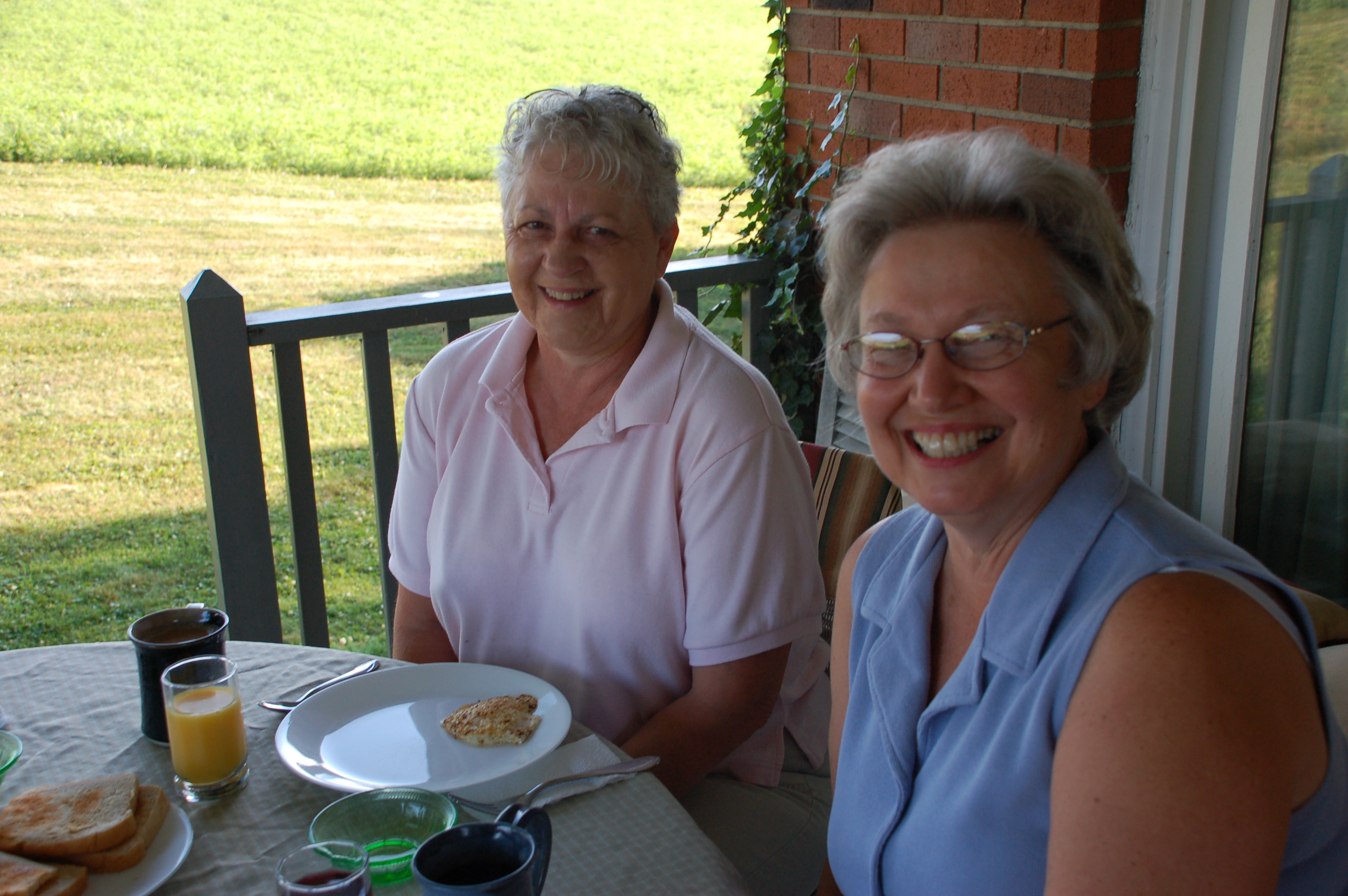
When human guests arrive, their smiles reveal their appreciation for our sanctuary. Added together these pure and pleasurable ingredients always make for enjoyable and hardy gatherings. I’m more than happy to share the recipe.

Guests by Bruce Stambaugh

© Bruce Stambaugh 2012

Bay Photos by Donna

Wildlife Photos From The Chesapeake Bay Region

ROAD TO NARA

Culture and Communities at the Heart Of India

K Hertzler Art

Artist and nature journalist in the Shenandoah Valley of Virginia.

Maria Vincent Robinson

Photographer Of Life and moments

Gabriele Romano

Personal Blog

Jennifer Murch

Art is the only way to run away without leaving home. -Twyla Tharp

Roadkill Crossing

Writing generated from the rural life

ANJOLI ROY

writer. teacher. podcast cohost.

Casa Alterna

El amor cruza fronteras / Love crosses borders