Living where you work

home, Amish country
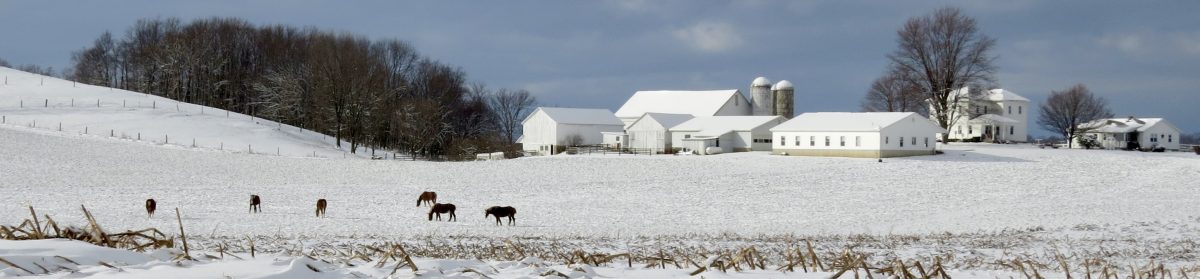
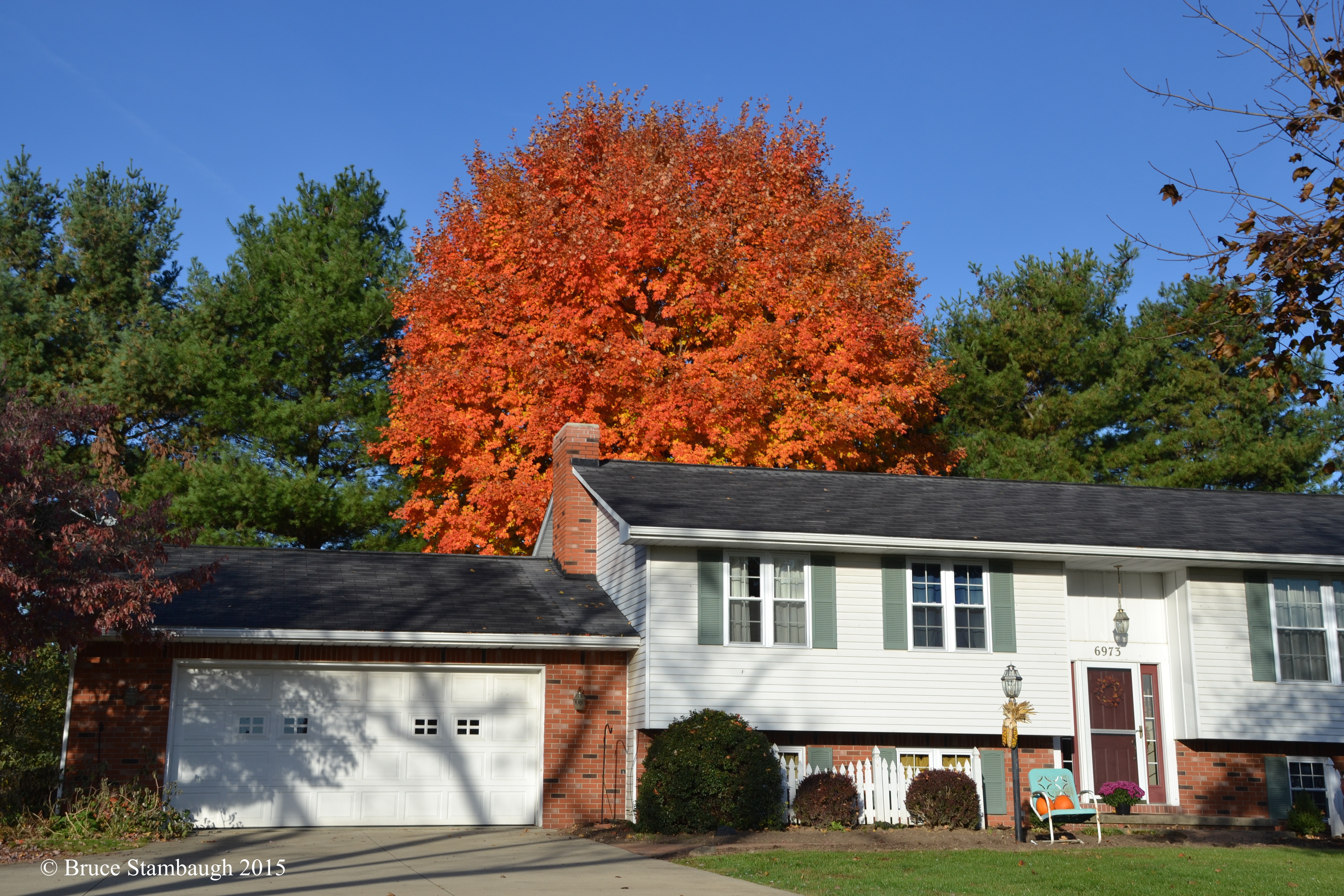
Our home for 37 years.

By Bruce Stambaugh

I’ve always liked living where I worked. For all of our adult lives, my wife and I have resided in the communities where we plied our skills as public school educators.

We did so intentionally, knowing there were distinct advantages. Experiencing the everyday life of those with whom we taught and guided served as a blessing far beyond anything we could have imagined.

To walk where our students and fellow school staff members walked gave us insight into the core values and principles that drove their lives. We wouldn’t have missed it for the world.

Amish buggy
Along the way.
After we had married in March 1971, Neva and I lived in Killbuck, Ohio where I taught at the elementary school for nine years. I got to see my students first-hand before, during, and after school. I found great reward in knowing their lifestyles, family circumstances, and living situations.

A year after I became a principal in the East Holmes Local School District, we moved to our present home built on an Amish farm. That was 37 years ago. What a joy it has been.

Families invited us into their homes for meals, hymn sings, weddings, and just to visit. We participated in the life circles of the mostly Amish and Mennonite communities. That enabled us to understand and appreciate their ways and values more fully.

When you live in the same location for nearly four decades, incredible benefits find you. Just the other day I visited with a former student from one of the many respectful families we got to know and interact with over the years.

Our conversation in his office thrilled me. Here was a young man who grew up with Amish linage, earned his graduate degree at an Ivy League school no less, and now is serving his home community in multiple leadership roles.

Over the years we have joyfully watched such students mature, finish eighth grade or high school or college, and all contribute in meaningful ways to our culture and society. It’s especially momentous when we encounter one another on life’s journey.

Amish farmstead
A typical Amish farmstead.
I regularly see many former students. They cash my checks at the bank. They serve me my dinner at a local restaurant. They build and sell me furniture that lasts a lifetime. Even my attorney is a former student of mine. The list is endless.

Others I only see or correspond with occasionally, even randomly. There’s no greater joy for a teacher than when a former student recognizes you in the aisle of a large grocery story and rushes up and unabashedly embraces you with a long, loving hug.

Then there are the times when I bump into the orneriest student ever, and he nearly shakes your hand right off of your arm in recognition that he made it. It’s like winning the lottery, only much, much better. After all, the kid knew the way to the principal’s office blindfolded. Now he has a dream job and a lovely wife.

The memories the students share in these encounters make me smile. I usually have no recollection of the incident or how positively it had impacted them. And yet, whatever was done or said then helped them in their young lives. Being told that warms my old heart.

East or West, I am so glad to have lived where I worked. My life wouldn’t be nearly as full without these precious relationships. All I can say is thank you to those of you who have filled my cup to overflowing.

I am grateful to have known you then and now.
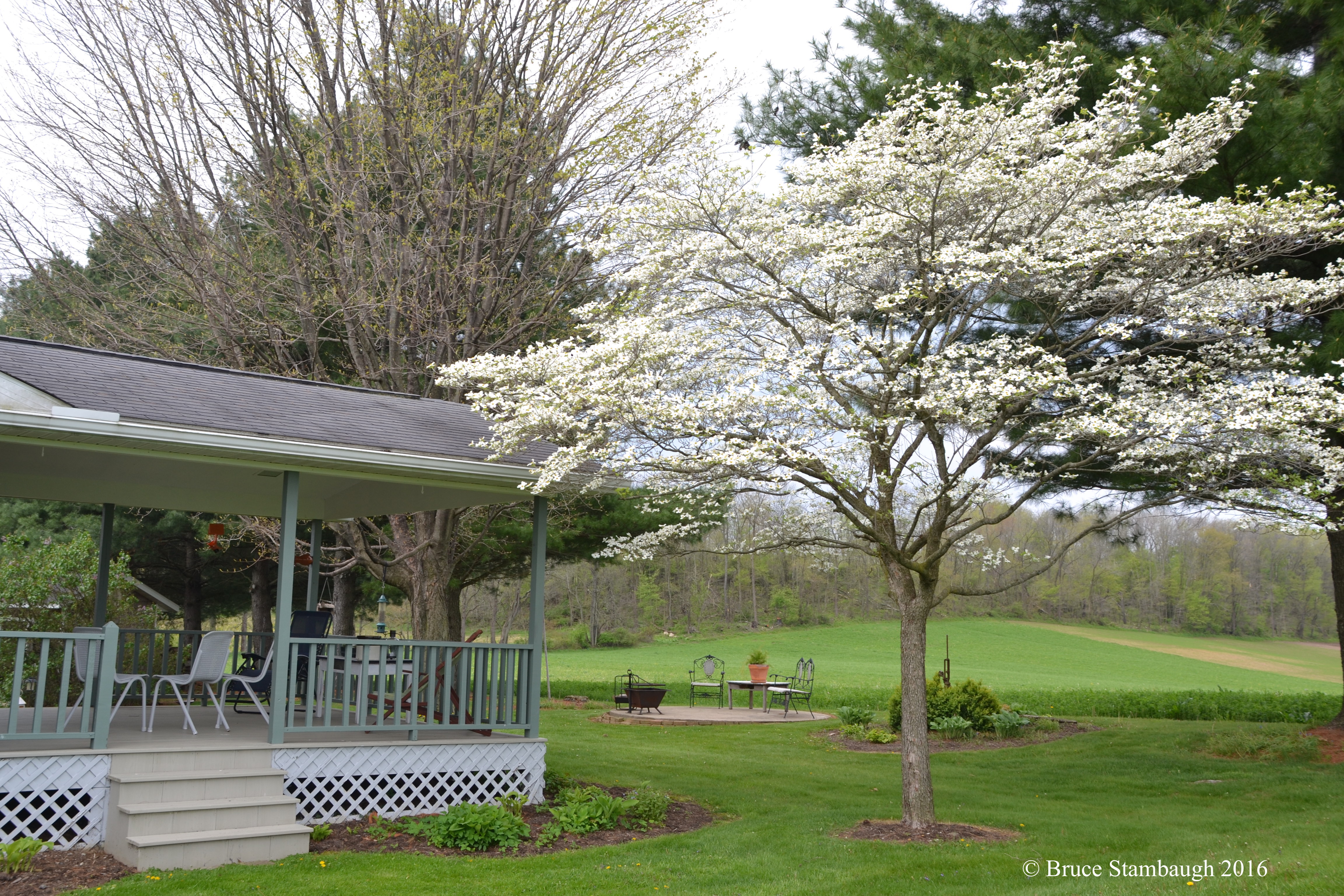
dogwood in bloom
Fond memories bloom eternal.

© Bruce Stambaugh 2016

Two state advantages

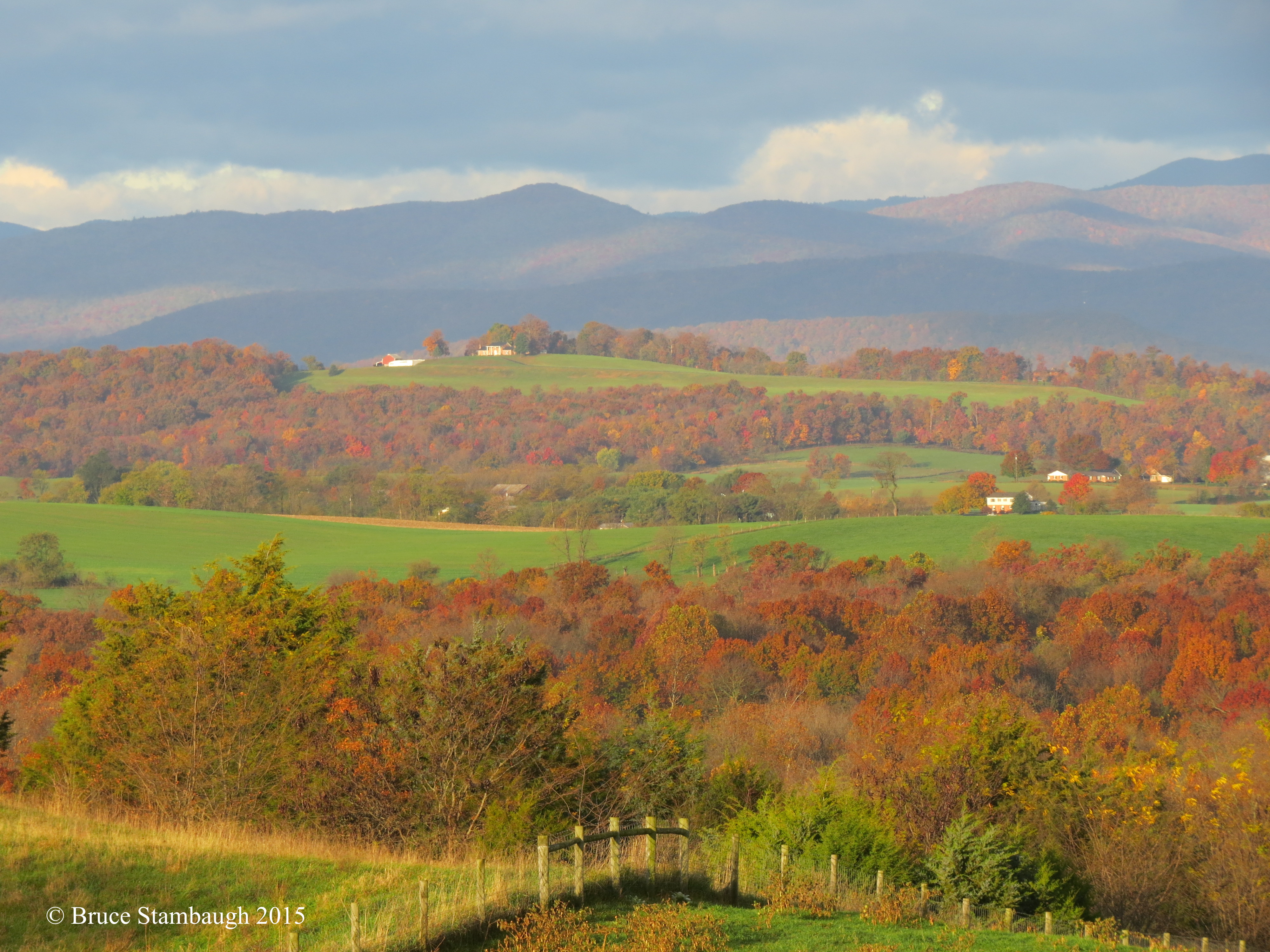
autumn in Virginia, landscape
Appalachian autumn.

By Bruce Stambaugh

I’m no magician, but I feel like it at times. While my energetic and talented wife has camped herself in Virginia’s Shenandoah Valley for the fall, I’ve had one foot in Ohio and the other in Virginia.

Because I still have work duties and responsibilities here at home, I’ve shuttled between Holmes Co. and Harrisonburg, Virginia, where our daughter and her family live. I get to enjoy the amenities of both places. There’s a lot to absorb here, there, and in between.

With the changing leaves, it’s a win-win proposition for me. I have the luxury of observing the colorful transitioning and beauty of each locale. On the drive to and fro, the vividness splashed across the forested mountain slopes is exceptionally enchanting.

My wife, Neva, is having the same experience in a much different role. From August into November, she has dedicated herself 24/7 to assisting our daughter, son-in-law, and the trio of grandkids. Our daughter’s volleyball coaching job is a time demanding, intense position.

volleyball, home-cooked meal
The ladies enjoying another Nana meal.
Neva has the role of assistant coach, assigned to domestic mentoring duties, and whatever else is in the fine print of her contract. From my perspective, she’s doing an ace of a job.

Meanwhile, I know the inspiring circuitous route between the two burgs, Millersburg and Harrisonburg, over hill and dale and mountains all too well. No GPS is needed. Out of necessity, it’s a back and forth life for me.

In a way, this approach is softening the shock of moving. By Neva living for three months in Virginia, and with my multiple round trips, we are phasing ourselves into our new community, and out of the one where we raised our children and honed our vocations. Cut and run was never our modus operandi.

Our goal was to gradually transition from being Buckeyes to Virginians. Neva and I have spent our entire adult lives in the public eye. We were both career educators for the local school districts. We each served in various capacities in several community organizations, plus the necessary involvement in our church.

We recognize that we are replaceable. That’s not the point. We wanted to say goodbye slowly, and help all, including ourselves, let go here and grasp our new surroundings there.

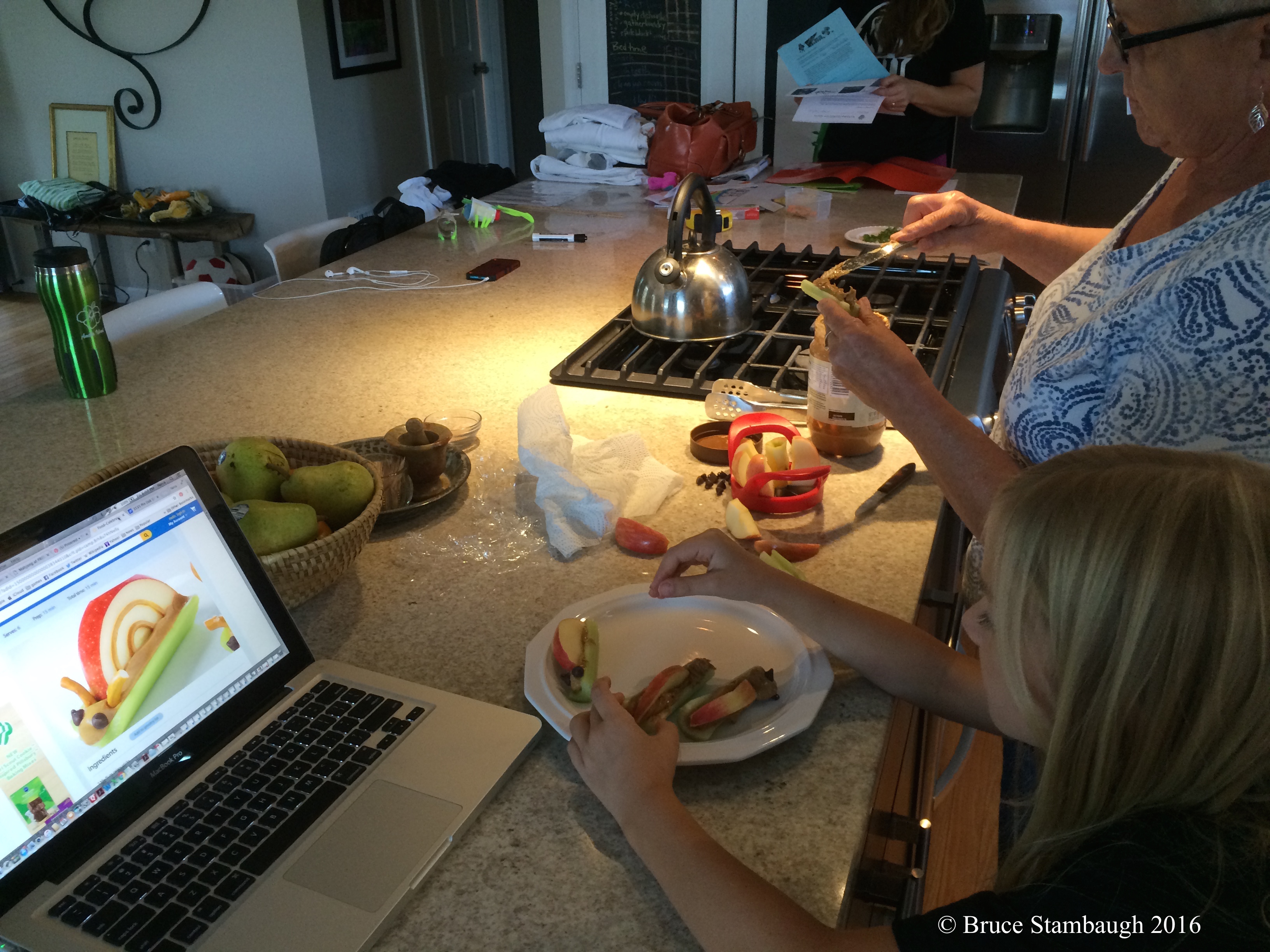
Snail snack, nana
Creating a creative snack.
That is just what is happening. You should see Neva. She is in her glory organizing meals for both our daughter’s family and her volleyball team. She picks up the grandkids at school and runs them to doctor appointments. She cleans, mows, does laundry, walks the dog. On and on it goes.

My official work responsibilities are harder to terminate than Neva’s. There are assignments to complete, and leadership still needed on the boards of trustees on which I serve, and the businesses I consult. The timing had to be just right before I could call it quits.

Since folks have learned of our departing, we have been overwhelmed with well wishes and blessings on our new adventure. Those gestures only cemented our love for the life we have lived here.

We are heartened by the affirming support so graciously expressed to us. Just as joyously, we are reconnecting with old friends and meeting new ones in Harrisonburg.

Having feet planted in two different states has been fun. But eventually, we’ll have to sink new roots into the lovely Shenandoah Valley.

I imagine that, too, will be magical.

changing leaves, Holmes Co. OH
Back home.

© Bruce Stambaugh 2016
Turning

changing leaves, colorful leaves
Turning.

This photo is proof that the leaves are indeed turning into their natural colors once again in Ohio’s Amish country. As I drove around the area yesterday afternoon, I was surprised to see such a wide range in coloration of the leaves. This photo shows it well. Some trees are already near their peak. Others are beginning a tinge of color while many are still mostly green.

“Turning” is my Photo of the Week.

© Bruce Stambaugh 2016

In praise of history and historians

Duke of Gloucester Street, Colonial Williamsburg VA
Living history, Colonial Williamsburg, VA.

By Bruce Stambaugh

History is important. I’m forever grateful for folks who emblazoned that maxim upon me way back when. Parents, teachers, professors all collaborated to ensure that I appreciated the value of knowing times past.

My father was instrumental in getting his children involved in amateur archeology. That was in part thanks to my younger brother, who found an arrowhead on the school playground.

As teens, my brother and I assisted Dad and others at various digs like Ohio’s only Revolutionary War site, Fort Laurens in Bolivar. Dad also helped retrace Colonel Bouquet’s Trail into Ohio, which included Holmes Co. Hands-on learning was Dad’s tool of choice when it came to our indigenous tribes and the pioneers who interacted with them in the settling of Ohio.

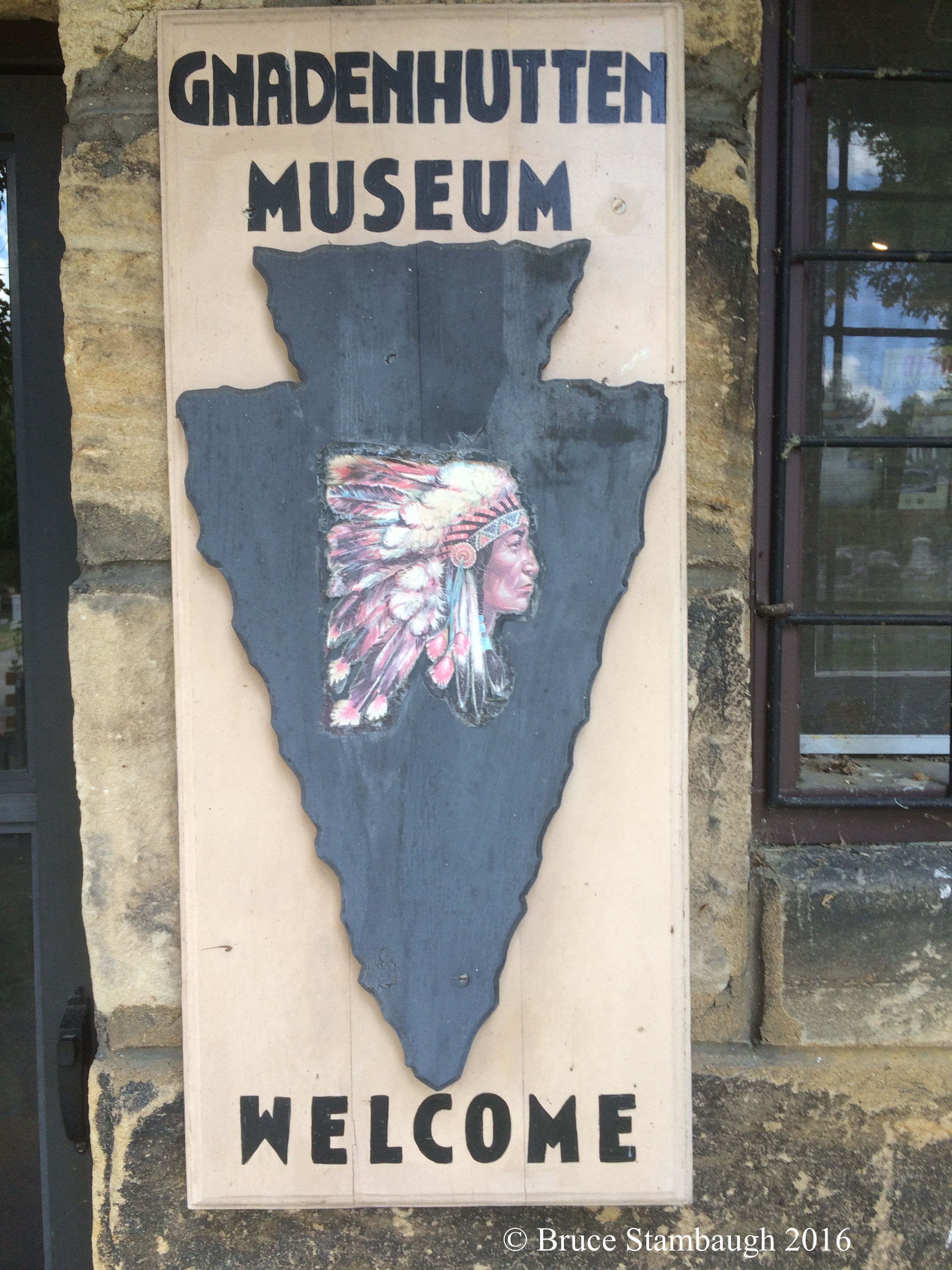
Gnadenhutten Museum
Worth the visit.
In college, passionate geography and geology instructors explained how various topographic features came to be. In a college Ohio History lecture hall with hundred of other students, I think I got a passing grade because I was the only one who could correctly pronounce Gnadenhutten in neighboring Tuscarawas Co. Again, I have Dad to thank for that as one. We often explored the areas around the tiny historical town.

It was also helpful to live my entire life in geographic regions that played important roles in the development of Ohio. From Flint Ridge to Schoenbrunn to Fort Fizzle, Native Americans, pioneers, soldiers, rebels all forged their presence upon the land on which I lived. That love of what once was still drives me today.

I’m also fortunate to have a wife who appreciates the place history plays in our life today and the future. In other words, Neva enjoys an excellent museum as much as me.

It’s even nicer when you can weave family, vacation, and history into one outing. It helps to have family members who happen to live in prime historical places. We get to visit and explore together.

Williamsburg, Virginia, where my older brother and his wife live, is such a place. We never tire of living history locales like Williamsburg, Yorktown, and Jamestown.

That’s the thing about history. As discoveries continue and new information compiled, history is always changing. I’m not talking about those who would deny the facts and try to twist them to suit their personal beliefs.

History becomes clearer, more defined, better understood the more we explore, the more we learn, the more we know, the more we want to know. Thanks to ongoing research and continued exploration we form new understandings based on new evidence.

At both Colonial Williamsburg and Monticello, for example, tour guides now state clearly the plight of slaves, something conspicuously omitted on previous visits. At Jamestown, archeologists have proved that the original settlement wasn’t washed away after all.

Given the history that is right around us, one doesn’t have to travel far to dig up the past. Novels have been written, movies made, history books published about the history that is all around us. Likely that applies to most anywhere you live. Only the facts, circumstances, and characters change.

Despite what many good books and movies have shown, we really can’t travel back in time. Scientists know that is physically impossible. There is only the present to study history and plan for the future.

We have valued alternatives, however. We can read, explore, study, and visit museums, parks, and historical monuments that help us understand our personal and collective history.

Now that is the way to time travel!

Monticello by Bruce Stambaugh
Pastel blooms accented Monticello’s architectural beauty.

© Bruce Stambaugh 2016

Evening Rush Hour

Shenandoah Valley, dusk
Evening Rush Hour.

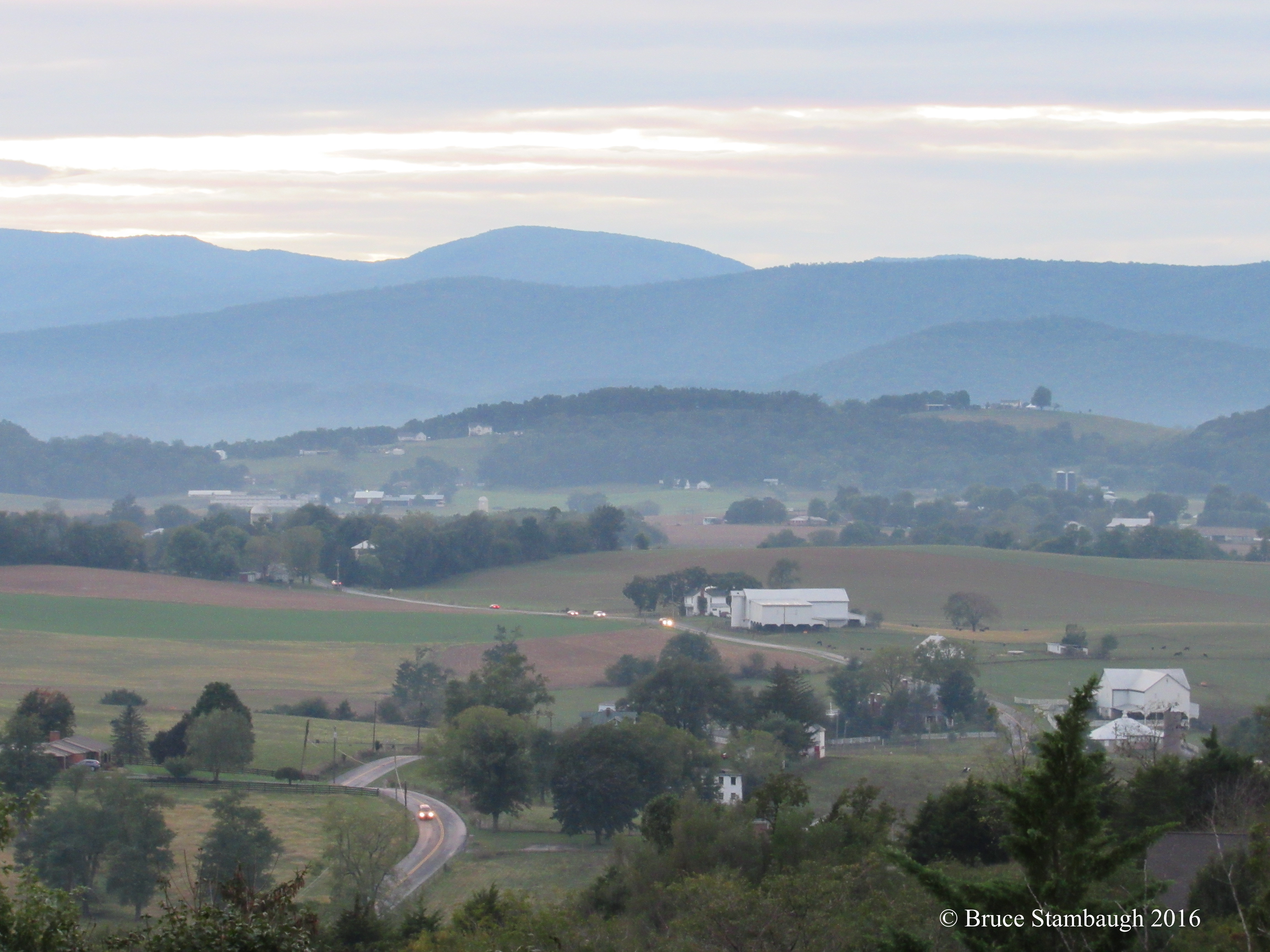
The traffic that ran on the narrow, winding country road in the agricultural valley intrigued me. The city lay behind me, the Allegheny Mountains before me. In between the cars and trucks buzzed along, often in little packs. Then for minutes the road was quiet, devoid of vehicles. Only the echoes of distant barking dogs and the steady hum of the Interstate two miles to the east were heard.

Why did the traffic bunch up like that, and then nothing, like blue jays at a bird feeder? It was all or nothing. Did they encounter a slow-moving poultry truck or log truck? Did they have to wait until the trucks turned off? They surely couldn’t pass on this skinny road, especially at dusk.

Whatever the answers, it was pure joy to watch this rural world busyness as the sun set behind the thick clouds.

“Evening Rush Hour” is my Photo of the Week.

© Bruce Stambaugh 2016

October surprises

giant pumpkins
Even giant pumpkins aren’t a surprise in October.

By Bruce Stambaugh

In case you’ve been too busy to notice, surprise! It’s October!

October is famous for its surprises, especially political ones like in the current presidential campaigns. Both natural and human-generated events are said to sway the election’s outcome. Given the tone of this election, nothing will shock me.

That aside, this year has seemed to have just melted away for me. That’s certainly been no surprise at all given the record-breaking heat and the significant changes that cropped up in my life.

Globally, we’ve had 11 straight months of record warmth. When it comes to climate change, misery loves company. No one was exempt.

The transition process of going from living in Ohio to moving to Virginia has been both exciting and fatiguing, especially mentally. After residing in the same house for nearly four decades, a lot of decisions have had to be made, sometimes rather quickly.

We can opine about those situations all we want. That still won’t change the fact that October is here. For me, that’s a good thing. October has always been one of my favorite months.

Our granddaughter would likely agree. Maren turns seven soon.

mums, Ohio's Amish country
Mums the word.
As we begin the year’s 10th month, we know in general what to anticipate. We won’t know the particular details, of course, until they unfold.

In the Northern Hemisphere, harvest season is peaking. Field corn is drying on the stalks or in shocks on some Amish farms. Apples, pears, pumpkins, squash, gourds, fall flowers and the last of the vegetable garden crops brighten kitchens and spirits alike.

In the Southern Hemisphere, the anticipation of spring is over. Our October is their April. That seems only fair. As life ends in one locale, it begins anew in another.

As their leaves unfurl, ours start to drop. The central question reoccurs from New England to the southern Appalachian Mountains and far to the west. What will the persistent dryness do to the leafy colors?

colorful gourds
Fall colors and textures.
Produce farmers earnestly watch the weather forecasts for any hint of first frosts. October is often the scene of that crime. Most folks relish the finer, more favorable weather. It should come as no surprise that I’d be leading that pack.

Start to finish October often is a handsome month. Golden leaves against cerulean skies dotted with patches of cottony clouds create a natural beauty that even the most sullen person can’t ignore. If they do, it’s surely their loss.

Sports enthusiasts are in their glory, too. Football is in full swing. Basketball is about to begin. Golfers revel in the perfect days but curse the cold in the next breath.

For me, October baseball still rules. The Cleveland Indians are playing once again in the playoffs. It’s the first time in three years, and even then that joy only lasted until the mighty Casey struck out in a one-and-done event.

That won’t happen this year. The Indians are Major League Baseball’s American League Central Division champions. I know for many, many folks, that was indeed an October surprise. Not to me, faithful, perpetual, loyal fan that I am. I’m ready for some post-season baseball.

Remember back in June when I sort of tongue in cheek suggested the Chicago Cubs would play the Cleveland Indians in the World Series? Well, wouldn’t that be a magnificent October surprise, the kind that any red-blooded American baseball fanatic could only dream of, except me?

I won’t be surprised at all. But if that does happen, it definitely will be an October for many to remember.

Cleveland Indians scoreboard
Celebration time?

© Bruce Stambaugh 2016

Dawn’s Beauties

Belt of Venus, earth's shadow, sunrise
Dawn’s Beauties.

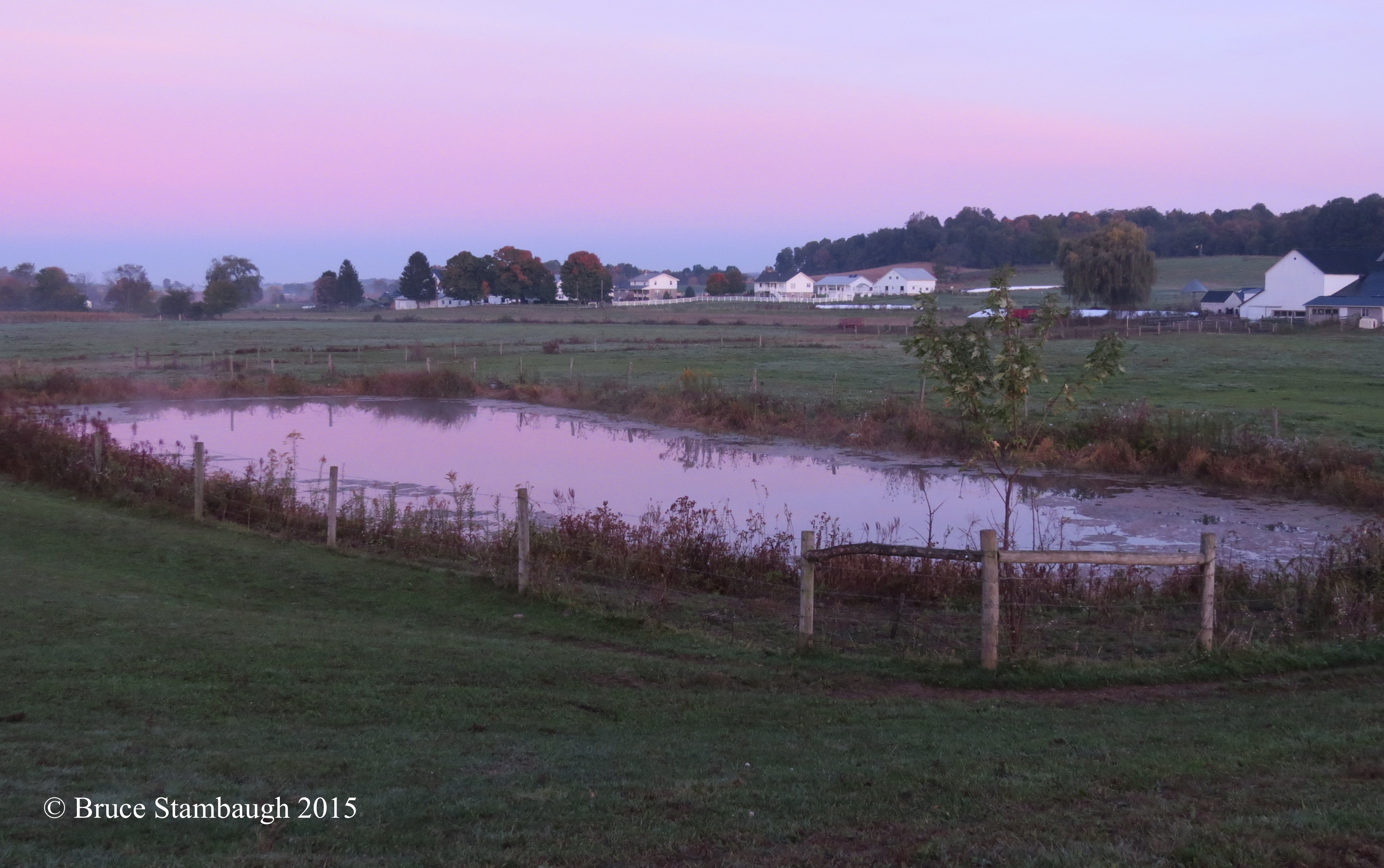
One of the pure joys of photography is capturing earth’s natural beauty. This photo of dawn’s early light reflecting on a farm pond shows that. However, viewing the scene in its entirety we discover even more natural beauty. Typical of an early fall morning at sunrise, the combination of refreshing, cool air meeting the warmer surface of the pastures and pond creates a fine mist and heavy dew.

Gazing deeper into the background finds even more loveliness. Looking west, the gray-blue of earth’s shadow contrasted by the rosy pink of the Belt of Venus perfect the setting. As the sun rises, however, the scene quickly changes, erasing the magical moment.

“Dawn’s Beauties” is my Photo of the Week.

© Bruce Stambaugh 2016
Embracing times of stillness helps combat a noisy world

foggy morning, Ohio's Amish country
Morning stillness.

By Bruce Stambaugh

I couldn’t help but notice the timing. In less than 24 hours, I received two separate emails about creating a time of stillness.

The first was a daily devotional that I receive from a noted seminary. The title was “A Call to Stillness.” The second notice came from my church’s worship coordinating group announcing the inclusion of a time of silence and reflection in our weekly church service.

I was glad for both. Over the years, I have learned to embrace stillness as a welcomed respite from the world’s noisiness.

autumn sunset
Quiet beauty.
Even in my semi-retirement, I find extended times of personal quiet elusive. Living in a house built on an Amish farm is no guarantee of escaping worldly sounds.

I especially need a basic semblance of silence when I write. Extraneous, everyday sounds distract me. Take a log truck rumbling down Number 10 Hill, the colloquial name of the flattop knoll south of our house, jake brake baffling its hideous reverberation that echoes across the countryside and rattles the dishes in our china cabinet.

Even the tick, tick, tick of a clock can break my concentration. And yet, my wife can’t seem to get my attention if I’m watching a baseball game on TV.

That said a time of silence, in general, is a good idea for everyone no matter the situation. Taking a periodic quiet break has its just rewards.

fox squirrel
Fox squirrel.
In fact, I’ve tried to use those raucous interruptions as a reminder to sit back, relax, take a deep breath, and just listen. Or I reposition myself to the shade of my back porch where I can see five miles to the north.

If I sit still and quiet, I’m often amazed at what transpires all around me. A white-breasted nuthatch and a Carolina chickadee will chase each other around a bird feeder a few feet away. A fox squirrel, its bushy tail as long as its body, sits on its haunches munching on sunflower seeds unaware of my presence.

At the summit of the hilltop pasture behind our home, buggy horses and workhorses gather around the neighbor’s windmill. The horses’ tales swish in a natural, spontaneous syncopation. The early fall clouds drift by in the azure sky as silently as this precious moment.

For a man who over the years has been accused of liking to hear himself talk, I have learned not to be afraid of silence. In fact, I embrace it.

This slideshow requires JavaScript.

I enjoy a leisurely walk in the woods, alone, binoculars and camera in tow, alert for whatever finds me next. If I’m noisy, I’ll likely miss a lot. Being quiet and reverent allows all of my senses to spark my imagination, fill my heart, stir my soul, warm my spirit, ignite my creativity, announce my gratitude for this incredible life and opportunities presented.

In this busy, busy world of ours, I need a time of stillness now and then. Such a time awakens me, invigorates me, enthralls me, heals me. Quietness opens me to new possibilities, new ideas, new knowledge, renewed life.

I read again that inspiring devotion written about Psalm 46, verse 10, “Be still and know that I am God.” With a blessed assurance, that reminder helps me to keep my focus on the essential tasks at hand.

I was glad for those back-to-back email reminders of the importance of stillness. Here’s hoping we all find the silence that we need in our all too busy and noisy lives.

countryside, Amish buggy
Peaceful surroundings.

© Bruce Stambaugh 2016
Welcome to Fall!

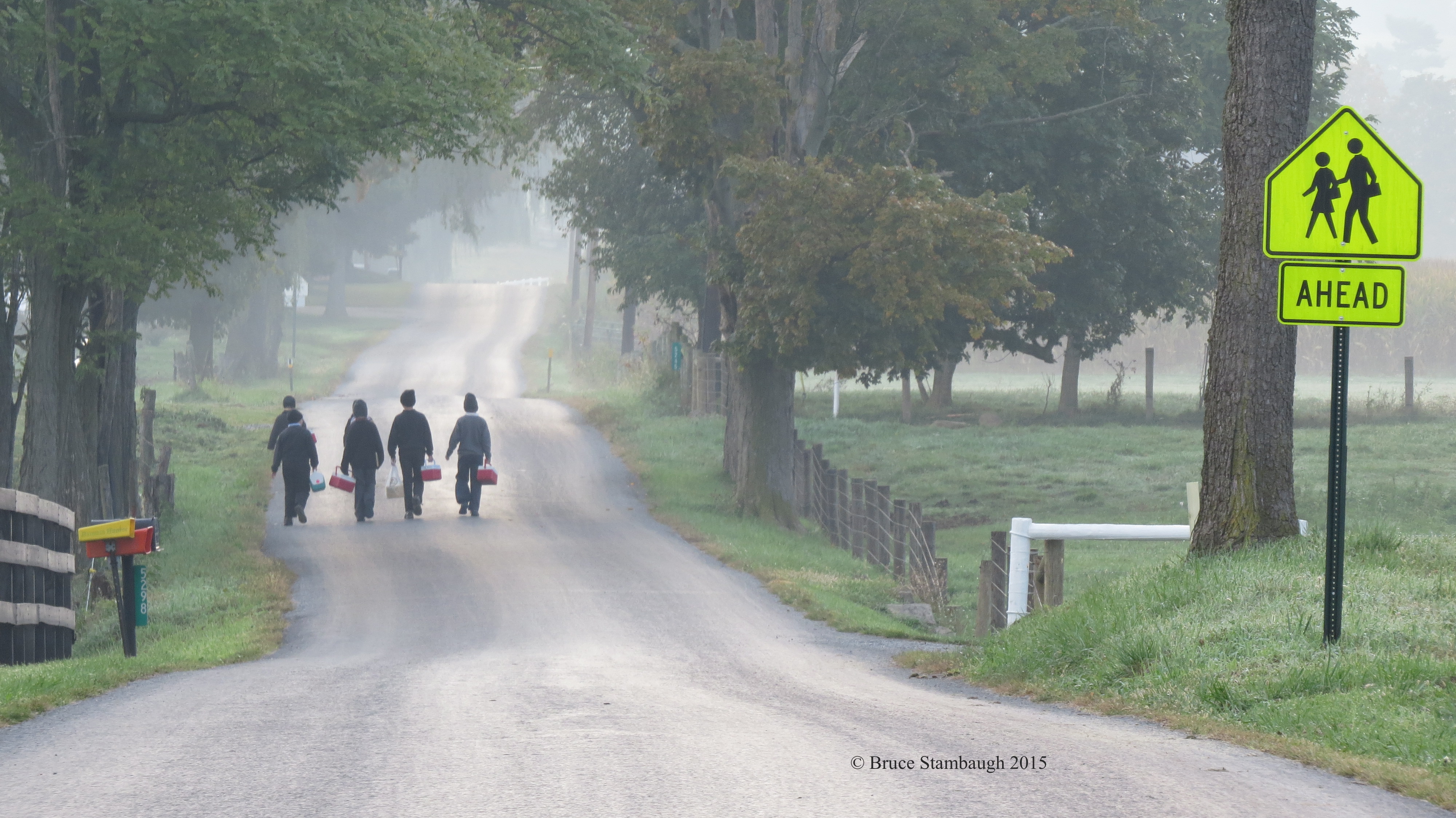
Amish boys, foggy walk
Welcome to fall.

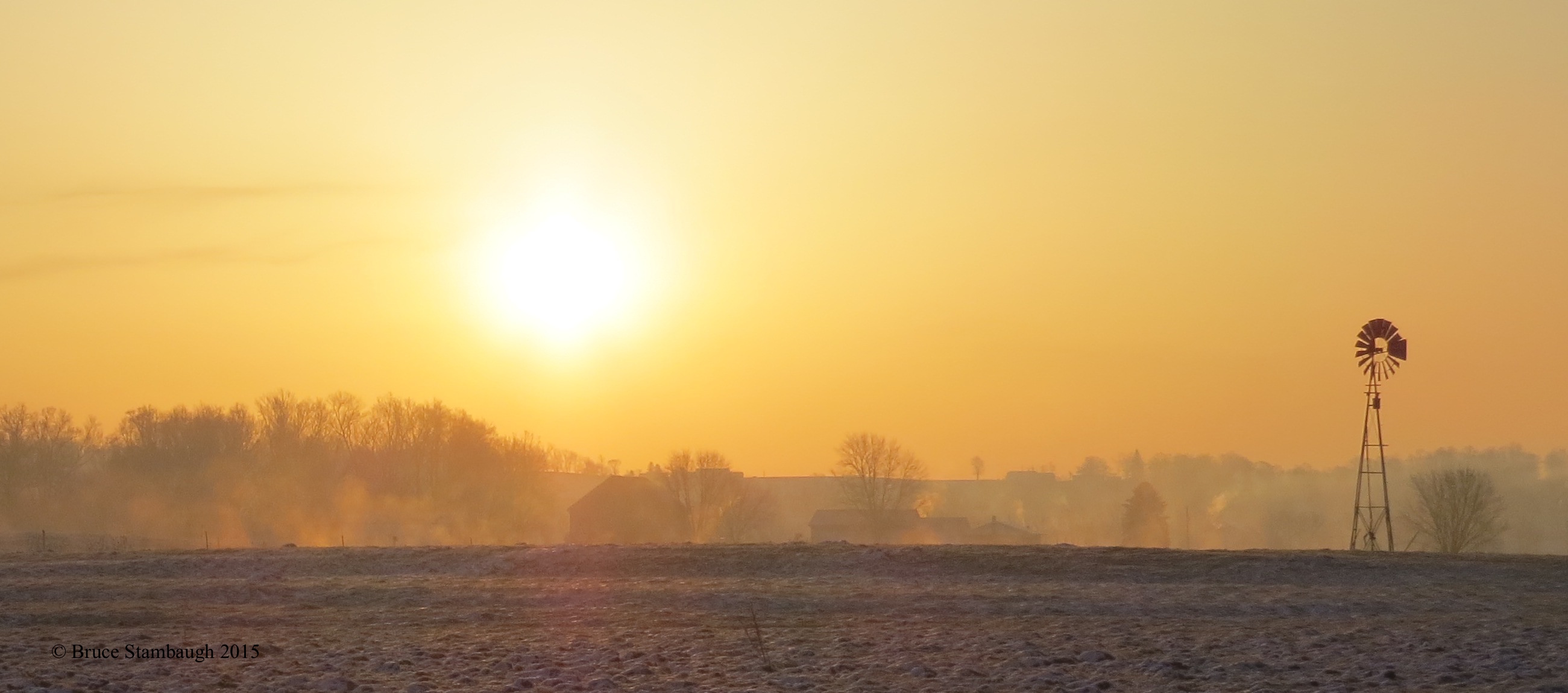
Autumn officially arrived at 10:21 EDT this morning. Scenes like these Amish boys walking to school in the morning mist are common in the fall. Cool, moist air condenses on the earth’s warmer surface. Most likely, however, these youngsters were conversing about who will get to bat first at the morning recess.

“Welcome to Fall!” is my Photo of the Week.

© Bruce Stambaugh 2016

Reflections on life and death

braided stream
Capon Run.

By Bruce Stambaugh

I have a lot of time to think as I drive between our Ohio home and Harrisonburg, Virginia where our daughter and her family live. This trip was no different.

Thanks to superhighways, the folded, old age mountain ridges and their accompanying deep gorges and valleys flipped by like shuffled decks of cards. The leaves of their mixed hardwoods already blushed tinges of autumn’s arrival.

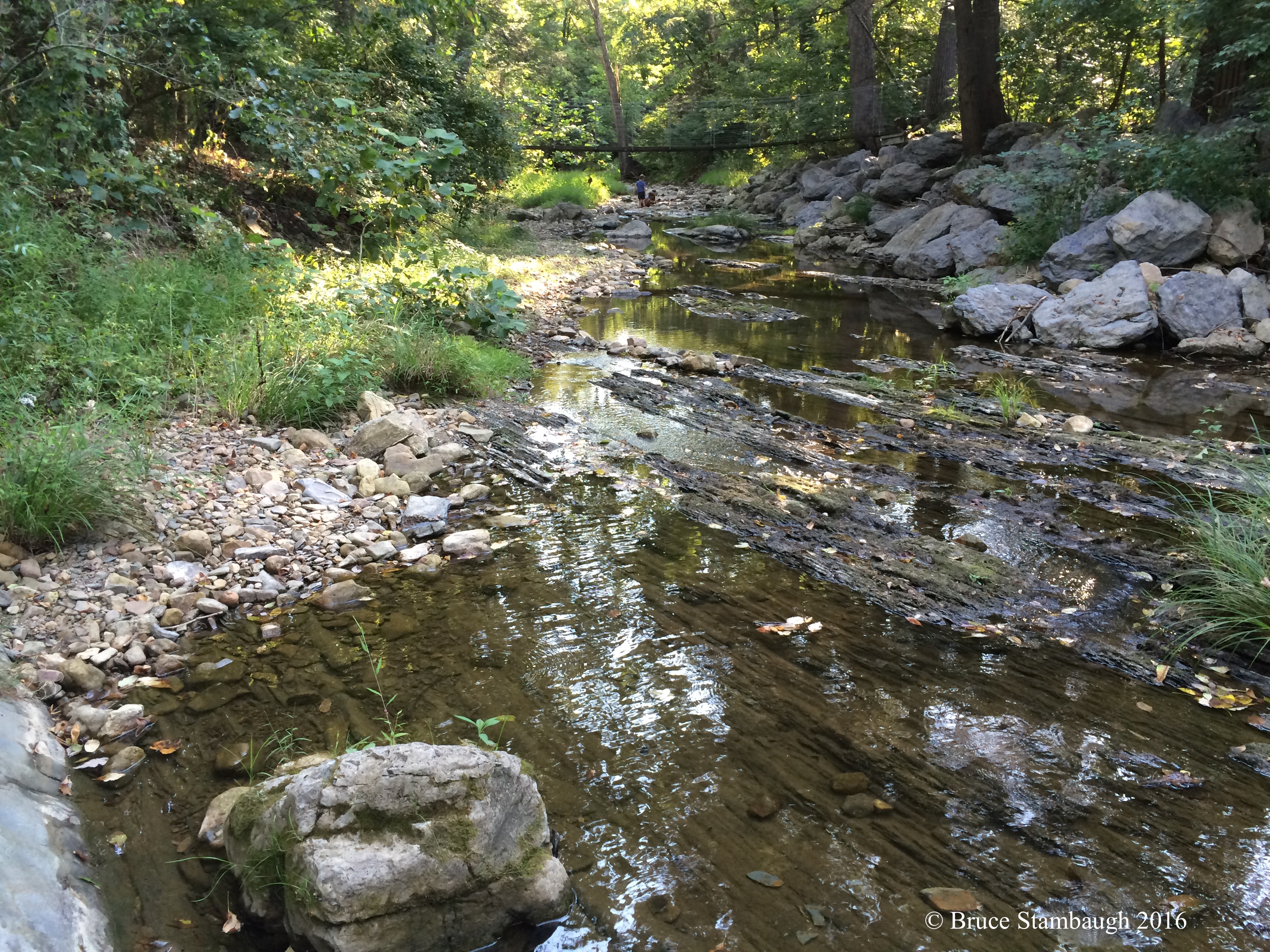
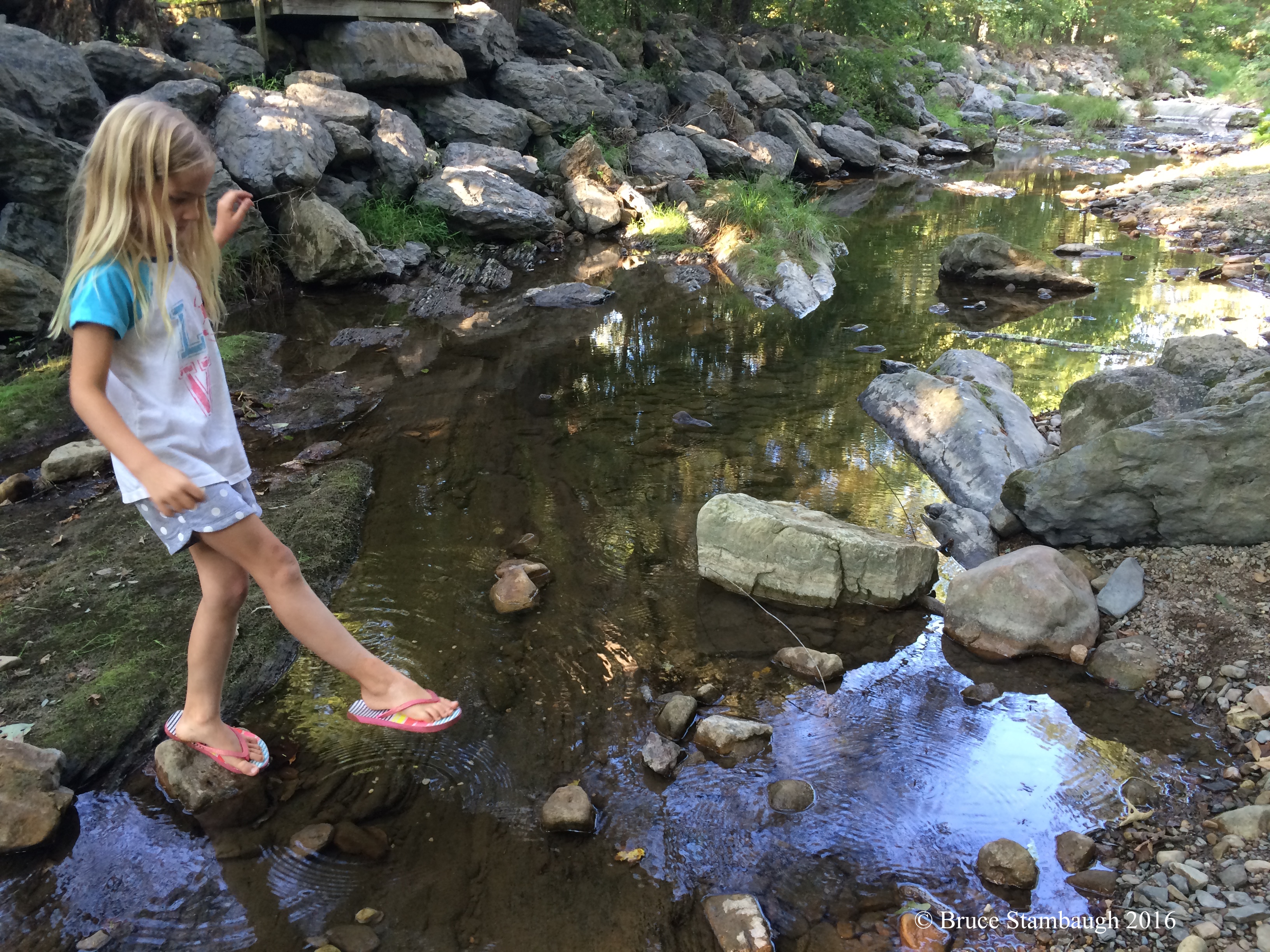
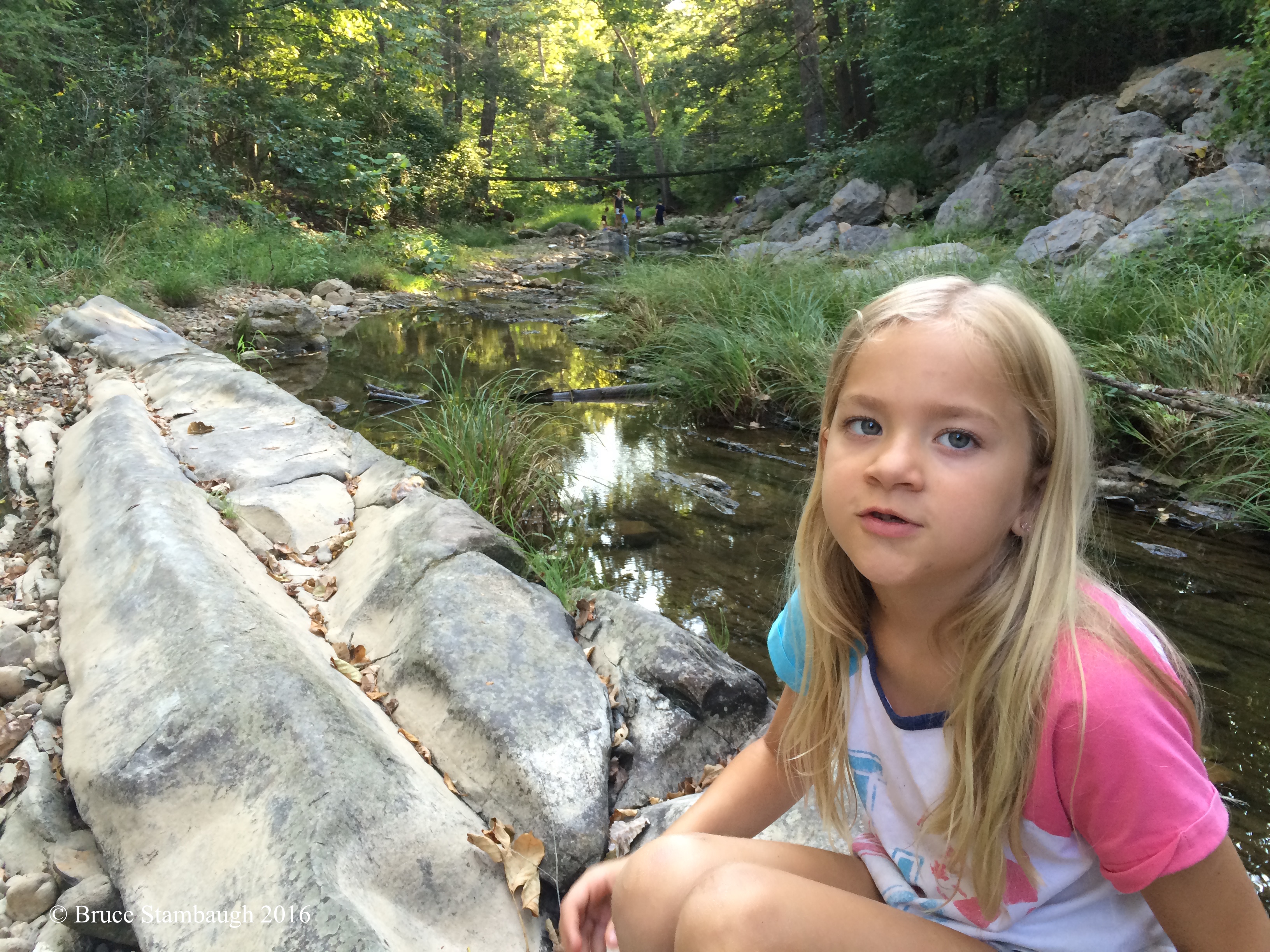
I thought about the lone, purple cottonwood leaf our six-year-old granddaughter plucked from a quiet mountain brook just a couple of days previous. She and I had spent an hour or more exploring, talking, questioning, and enjoying each other’s company in the shallow of a peaceful braided stream.

girl in stream
Pointing the way.
I found Maren’s inquisitiveness as inspiring as our rural, mystical surroundings. Our interactive discussion included but was not limited to geology, theology, erosion, evolution, earthquakes, gravity, rock formations, and bird migration.

I don’t know who was more perplexed, me with Maren’s significant, thoughtful questions or Maren with my confounding answers. Trooper that she is, Maren didn’t seem deterred. In fact, one response only led to another question, and another and another.

I had the time of my life, sitting on these ancient limestone outcroppings, their striations complementing their angular positioning. Maren graciously accepted my academic explanation of how they came to be standing on edge after having once been the bottom of oceans eons ago.

She’d continue her inquiry while simultaneously balancing along the exposed rock layers like a ballerina on a precipice. Patches of the early evening sky filtered through the broken canopy of the maples, oaks, sycamores, and cottonwoods that lined the rocky banks of Capon Run. Despite the string of scorching days, the stream’s clear, quiet waters were cold.

We watched water striders break the stillness of the mirrored surface as the spider-like insects foraged. Then came the leaf, a rich, royal burgundy that caught the quick girl’s eye.

Maren snatched it from its slow journey downstream, held it up, and asked what kind of leaf it was. I found its parent tree upstream and pointed it out to her. She nodded and released the leaf back to the placid water.

braided stream, West Virigina
Where we sat.
I remember remarking to Maren how different that lone leaf was in color compared to the thousands of green ones that still quaked on the massive branches in the afternoon’s warm breeze.

Maren liked that leaf, and so did I. I thought she’d keep it for its rarity. Instead, she let it go, enchanted with its slow twirling atop the crystal water, its impressive ability to avoid the creek bed’s rocks and sticks.

I thought about that leaf, those moments with Maren again as I joined a congregate of others to celebrate and mourn the death of my wife’s cousin. As loving words poured out for Pam, it hit me that she had a lot in common with that glorious leaf.

She, too, had lived a royal, purposeful life for her family, friends, and those whom she served as teacher, principal, and play director. For all who knew and loved her, Pam had fallen much too soon from the tree of life.

My wife and I are grateful for the creativity and joy our grandchildren bring to life. We are equally appreciative, like so many others, of Pam’s leadership and devotion to family, faith, and community.

Just like Maren’s mauve leaf, we had to let Pam go, too. Joyfully her journey ended more blissfully than that serene mountain stream setting.

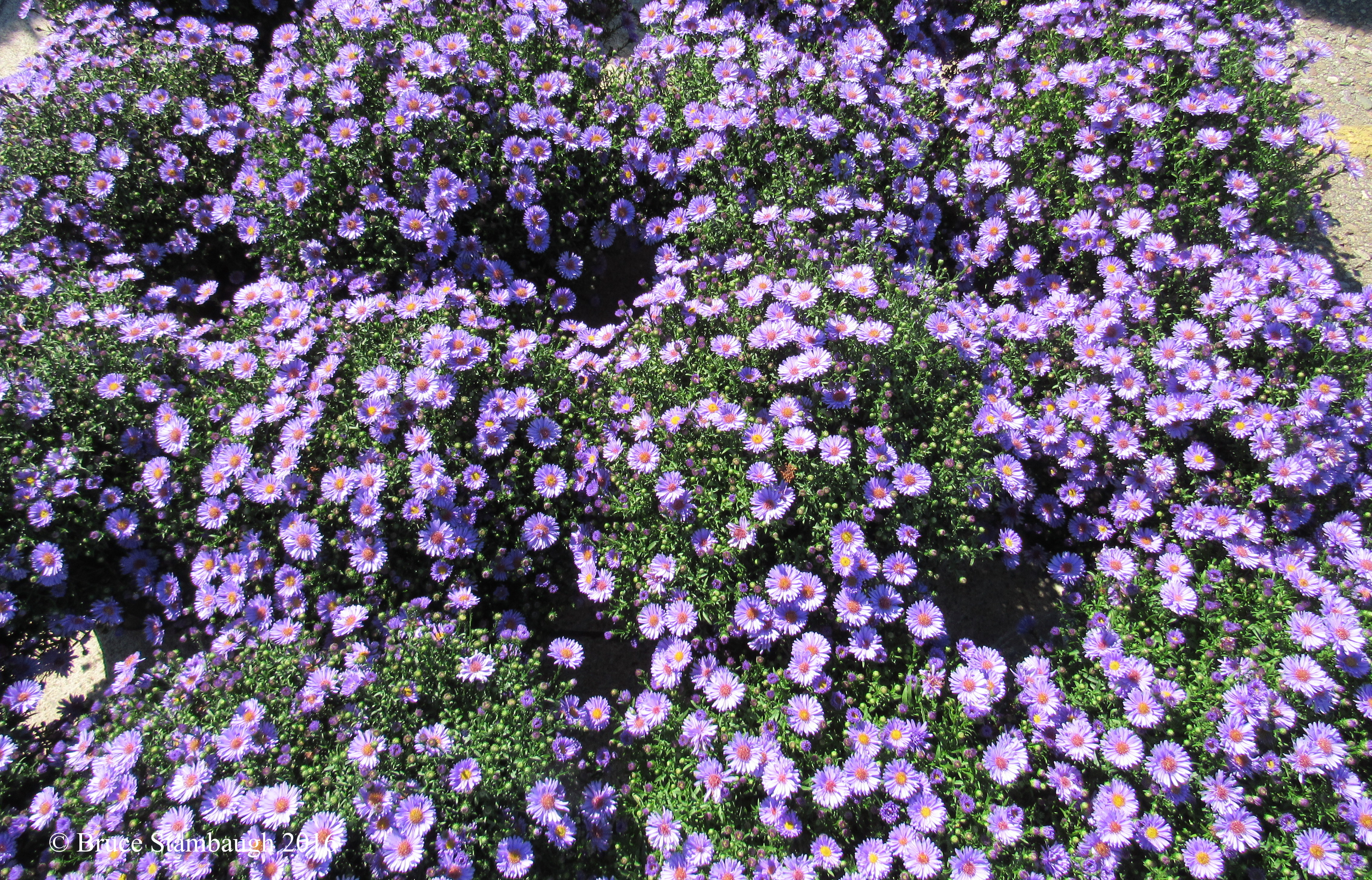
potted flowers
For Pam.

© Bruce Stambaugh 2016

Bay Photos by Donna

Wildlife Photos From The Chesapeake Bay Region

ROAD TO NARA

Culture and Communities at the Heart Of India

K Hertzler Art

Artist and nature journalist in the Shenandoah Valley of Virginia.

Maria Vincent Robinson

Photographer Of Life and moments

Gabriele Romano

Personal Blog

Jennifer Murch

Art is the only way to run away without leaving home. -Twyla Tharp

Roadkill Crossing

Writing generated from the rural life

ANJOLI ROY

writer. teacher. podcast cohost.

Casa Alterna

El amor cruza fronteras / Love crosses borders