Sensing a bit of home wherever we go

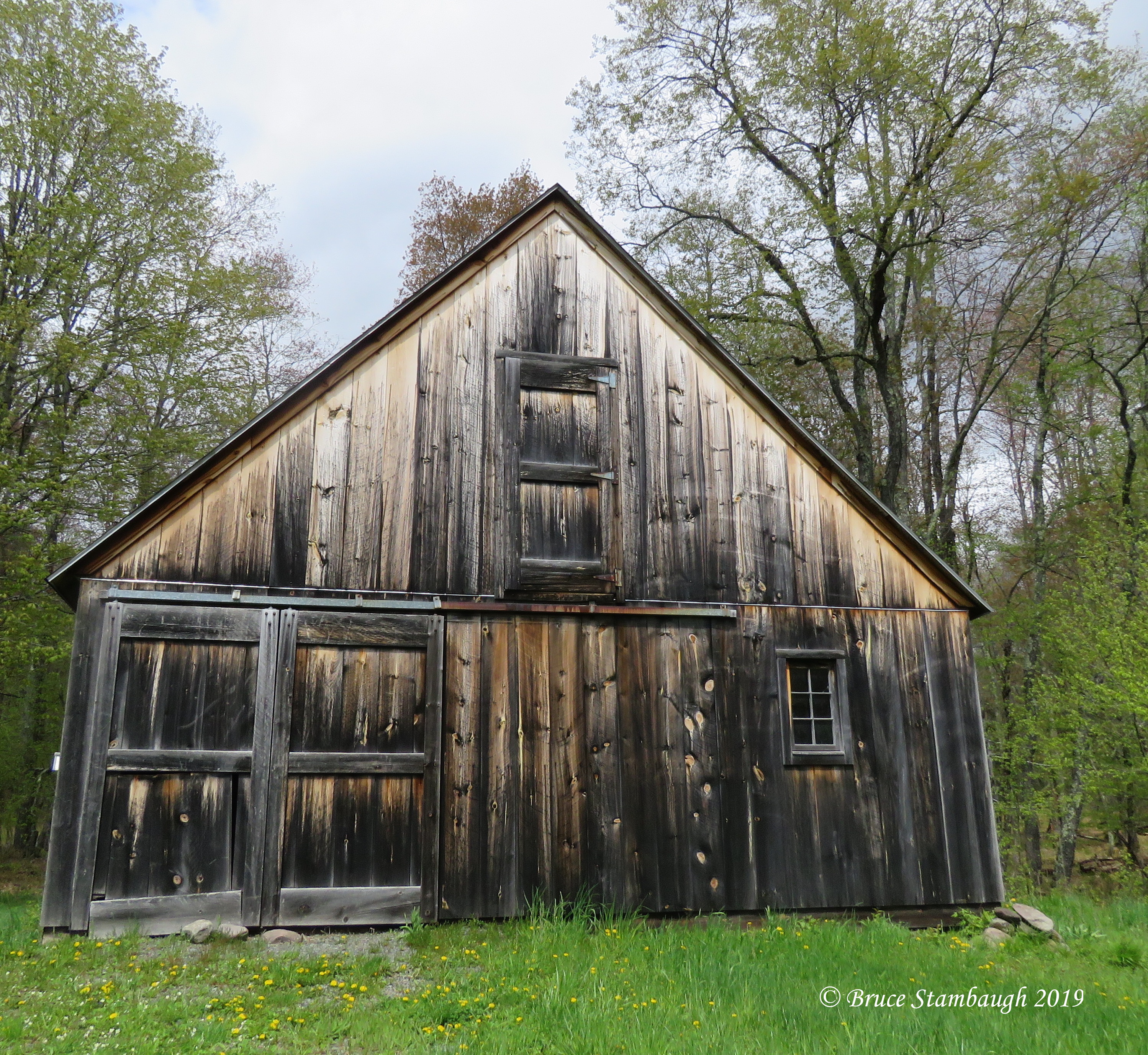
Catskill farmstead.

My wife and I enjoy traveling.

Planning for travel sometimes takes longer than the trips themselves. We prioritize the places we want to see, activities we want to do, and connect with any friends we can visit along the way.

We leave plenty of room for flexibility. Spontaneity spices up every trip. We also try to include some downtime, opportunity to recharge and reflect. As much as we travel, I never know when and how that time will arrive.

For me, travel is a multi-task opportunity. I bird, photograph, explore, meet the locals, and record the highlights. Occasionally, like on this trip, bad weather interferes with the plans we have made. We adjust accordingly.

Steady rain and low-hanging clouds obscured the mountains around us, which kept me inside. We were in New York’s Catskill Mountains, where we caught up to spring’s emergence. Coltsfoot and lady slippers bloomed.

I birded by window watching. Five deer emerged from the newly leafing trees to graze in the grassy meadow that served as a yard around the house that we had rented. A pair of common yellow-throated warblers fed and frolicked in the dampened branches of a nearby bush.

This was so much like home, both our former Ohio home and our newer home in Virginia’s Shenandoah Valley. Together the mountains, forests, rushing streams from too much spring rain, and the wildlife made it feel like home.

This slideshow requires JavaScript.

Yet, it wasn’t home, either Ohio or Virginia. We were transients, merely passing through, seeing the sights, and taking in the grandeur of the fabled Catskills.

That afternoon, my wife and I drove around the countryside despite the dreariness and the constant rain. No cell signal rendered our GPS useless. The perpetually winding roads hugged the bases of the mountains like a child clinging to his mother’s apron. Steep wooded hillsides on one side, roiling waters raced over boulders on the other. In the summer, these would be braided streams, more rocks than water.

With the low clouds, the mountains all scrunched in around us, a myriad of curves on the rural roads. Road signs, either numbered or named, were few and far between. Priding myself on knowing directions, I had lost my bearings.

We stopped at the local post office for directions to our desired destination. Just then, a customer arrived and told us to go to the stop sign and turn right. The way he pointed and his casualness about turning at the stop sign renewed my hope. Reality set in. The stop sign was five miles away. I made the right-hand turn, and I regained my orientation.

In Holmes County, Ohio, we had rolling hills, and expansive woodlots, abundant agriculture, valleys carved by old-aged streams, and helpful people. The same was valid for Virginia, only mountains east and west dwarfed the valley hills and farmlands. In the Catskills, farmland is confined to hillside and floodplain pastures. Gardeners erect six-foot high messed wire fences in small truck patches to abate the deer.

One particular quirk became obvious. Everywhere we went scores of roadside, no trespassing signs warned people to stay away. Apparently, property owners and hunting and fishing clubs control access not only to the land but also the water flowing through. Places for public access to the alluring trout streams were far and few between.

The legalistic signs unsettled me and softened my comparison to the mores of our former and current home. However, they in no way spoiled our appreciation for all the natural beauty and genuine human kindness we encountered along the way.

Despite the dreary, wet weather, we felt right at home with scenes like this.

© Bruce Stambaugh 2019

Weathered barn


Thanks to the elements, this weathered barn is a work of art.

“Weathered barn” is my Photo of the Week.

© Bruce Stambaugh 2019

April’s inconsistent, variable weather

weather, April, Holmes Co. OH, Ohio's Amish Country
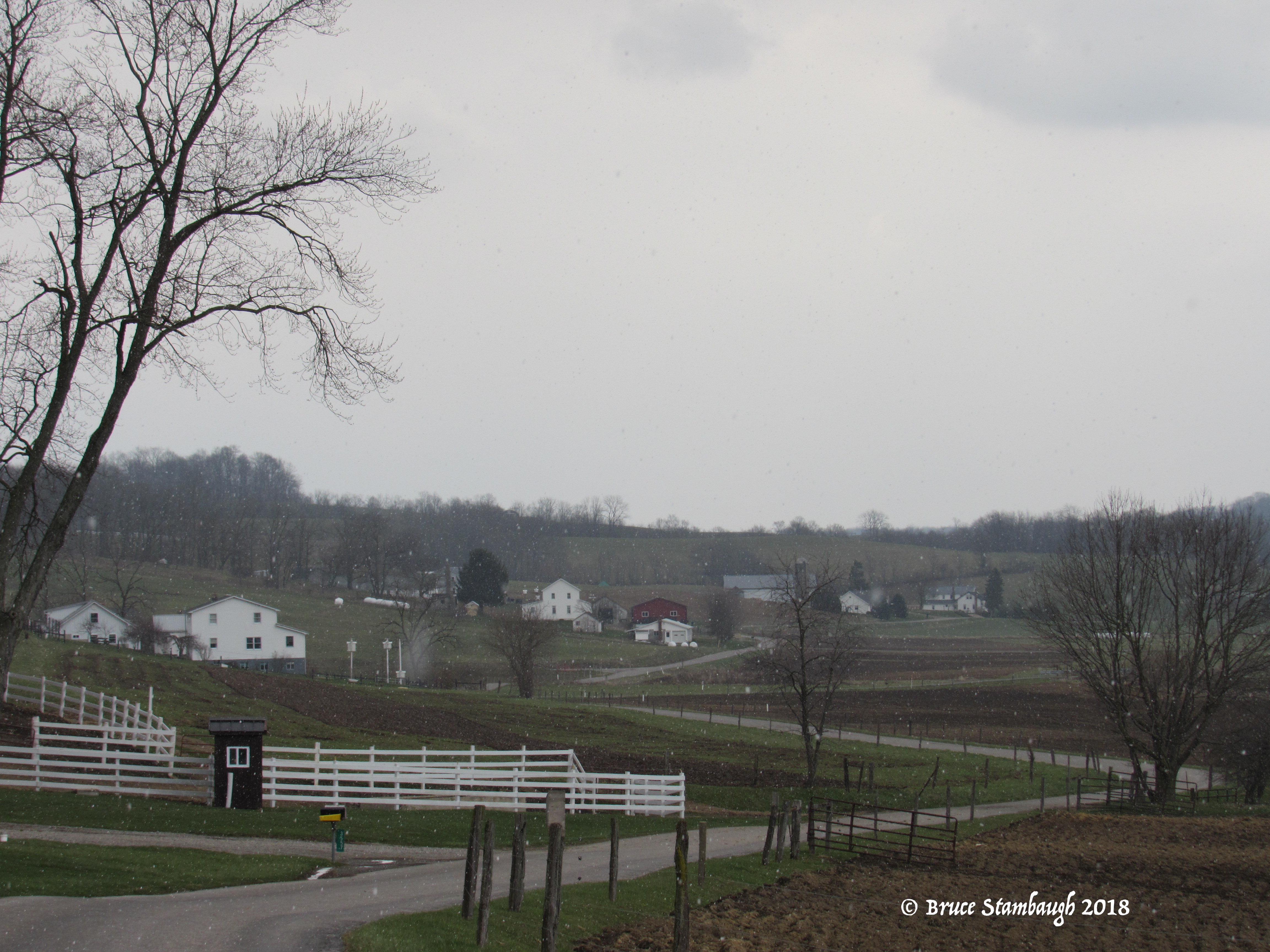
Just another snowy, grey day in April in Ohio’s Amish country.

Compared to other months of the year, April is erratic when it comes to weather.

It’s not that the rest of the months don’t produce variable atmospheric conditions. They do, just not as consistently as April’s predictably unpredictable weather.

Our latest 10-day forecast was proof of that: Sunny, blue skies and 70-degree temperatures one day, and low 20s and snow flurries by week’s end. I’ll keep my birdbath heater going for a while.

That conjecture accurately describes April’s extremes. April uses her versatile weather wand to divulge her bipolar meteorological attributes.

In 30 days, the fourth month throws everything it has at us. Snow, sleet, glorious sunshine, pelting rain, lightning, tornadoes, flooding streams all are April possibilities, though not certainties.

Often the host for both Easter and Passover, April’s assortment of weather takes no holidays. Recall the twin tornadoes of Palm Sunday in April 1965? Do you remember the 20 inches of snow in early April three decades ago?

Silver Lake Dayton VA, Silver Lake Mill, mild weather
A puffy, white-cloud day in mid-April in Virginia.
When April arrives, we all are more than ready for spring. That is especially true after this extended winter season that ranged far beyond its usual territory.

April’s weather plays games with us, teases us, infuriates us, and beguiles us to the point of hopelessness. Nearly at the breaking point, we relent and grudgingly accept whatever she has to offer. Do we have a choice?

A conciliatory attitude allows us to engage all of our senses into whatever the weather and activities are at hand. It enables us to pause long enough to enjoy the brilliance of forsythia’s yellows before the greening leaves override them.

I watched an American robin mightily tug at the remnants of last year’s plant residue, lying spent and browned in the flowerbed from winter’s bitter harshness. The robin pulled the lifeless strands taut.

I turned away for a second, looked back, and both the robin and the ideal nesting material were gone. Had I witnessed the natural lifecycle in action, the very hope of spring?

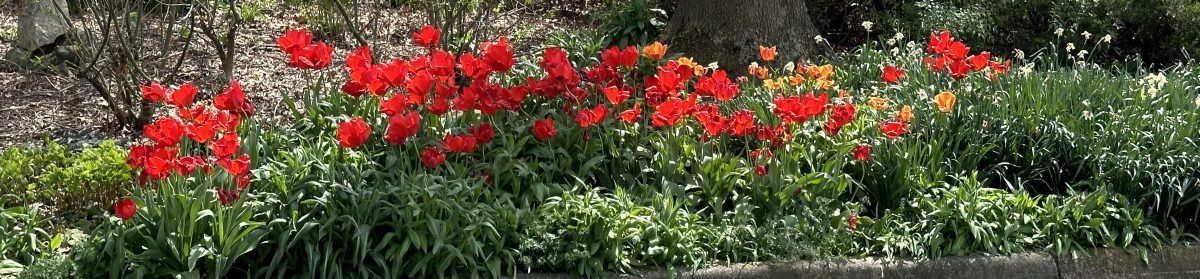
tulips, spring flowers
Red, yellow, and green.
The increasing daylight combines with the warming earth and nourishing moistures to create rapidly changing landscapes. Rembrandt meets Van Gogh.

Deadened lawns seemingly turn dull green to emerald overnight. A heavy frost or soaking rain kills the temptation to even out the irregular grassy clumps posing as a front yard. First, however, winter’s gales and unwelcomed snows require leaf and limb removal before any lawn trimming.

The first dandelions compete with trumpeting daffodils while the last of the crocuses yield to showy tulips. Honeybees celebrate wildly at the cherry blossoms’ coming out parties. They even gorged on the crimson buds of red maples. The little creatures are a welcome sight and the constant humming a glorious symphony, especially given their recent biological life struggles.

Avid birders actually embrace April’s changeable weather. They know strong cold fronts bring more than severe storms or blinding snow squalls. Shorebirds, songbirds, and birds of prey are all on their various lists of birds to check off. They’ll brave April’s worst weather to chase a rare bird.

The good news is that April’s cold, wet weather won’t last long. That’s in keeping with its role as a transition month from winter’s dormant dullness to spring’s brimming vibrancy.

I’m always glad when April rolls around. From month’s beginning to end, she offers up a sampling of weather that’s sure to both please and disappoint most everyone. The challenge is to make the most of whatever comes our way.

Ohio's Amish country scene, Amish farms
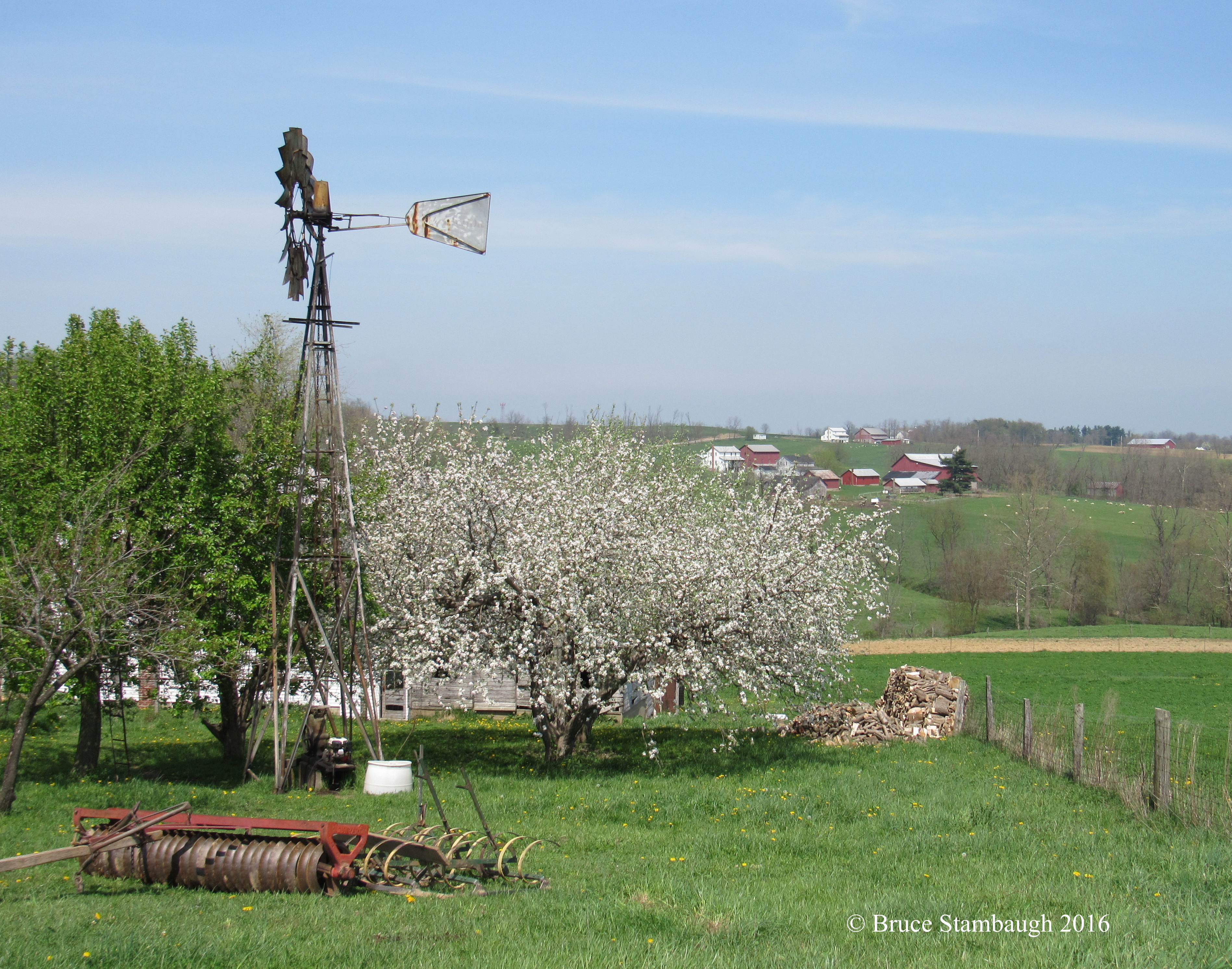
Hopefully by month’s end, pastures will have greened up, fruit trees will be in full bloom, and farmers can once again till the earth.

© Bruce Stambaugh 2019

In honor of a long life well-lived and served

Dr. Paul Roth, dedicated service
Paul Roth, his wife Caroll, and daughter Linda, knotting a comforter in 2010 at Millersburg (OH) Mennonite Church.

Paul Roth was the most powerful man I ever knew. He was also the most humble.

Paul Roth died recently after a long life well lived. He was 91.

Paul viewed and lived life through very different lenses than most other mortals. Humility, kindness, compassion, service, patience, hospitality, and generosity towards others bestowed that power that he never misused or even acknowledged. Control and manipulation were never goals to which he aspired.

Devoted Christian that he was, Paul forsook attention to himself. He forewent pleasures and luxuries he rightly earned through his hard work and position as an admired and gentle physician. Instead, he always focused equally on the needs of others, family, friends, and strangers alike.

It was that strange duo of power and humility that made Paul Roth most admired and appreciated. Through compassionate service to others, his community, and his church he became one of the most respected individuals I ever knew.

Paul understood both the purpose and value of life. Giving to others gave him joy, inspiration, courage, wisdom, and personal satisfaction. That was all the reward he needed. If anyone indeed denied himself, took up his cross, and followed where the spirit led, it surely was Paul Roth.

He ventured from farm to college to med school to serving in Puerto Rico, Killbuck, Ohio, Haiti, Honduras, and many other places helping generations of appreciative folks over decades. He found joy in doing the most menial of jobs, like cutting rags for hours on end at Save and Serve Thrift Shop in Millersburg, Ohio.

family doctor, birth of a son
When Dr. Paul Roth delivered our son, he held Nathan up by the legs and proclaimed, “She’s a boy!”

Because he did all of these things for others, Paul Roth was a highly revered man by those he served with compassion, dignity, self-worth, and genuine Christian love. He was a real peacemaker, always on the lookout for common ground, respect for all persons and living things great and small.

Paul understood that taking action was a life-giving, daily practice. He salvaged discarded wood and transformed it into works of art or toys for grandkids and gifts for friends. Paul listened to his patients when no one else would. He knotted comforters simply because someone needed to do it.

Paul would not want any of this attention or these accolades. Focusing on self ran counter to his servanthood culture. But when one who put his faith into action his entire life dies, there is no shame, no harm in honoring him and the good life he lived.

At his memorial service, a granddaughter shared how she loved to go down to the garden with Paul to plant, weed, and pick the fruits of their labor. Since the garden was near the highway that connected Killbuck and Millersburg, she was impressed with how many cars honked their horns as they passed. That’s the way friends and patients recognized their favorite doctor. She said Paul always tried to wave back.

Another attendee at the service privately noted that the waving wasn’t so much for the drivers as it was for his granddaughter. Even in that familiar gesture, he modeled the importance of gratitude. Indeed, Paul was also the most grateful person I knew.

The Roths, however, were not immune to life’s perils. Paul and his ever-devoted wife Caroll knew too much sadness in their lives. A fire destroyed their home at Christmas 1978. They lost their son Steve to cancer at age 25. Their daughter Jenny, adopted from Korea as a toddler, died of an aneurysm at age 47.

Yes, they knew heartache and grief, too, but Paul and Caroll persevered, continued serving, giving of their time, talents, and hospitality whenever, wherever, however they could. It was as if tragedy had made them even more loving.

The respect and admiration for Paul stretch across many cultures, languages, social standings, and ethnicities. He was an equal opportunity servant. Shoot. He even made house calls.

Paul was also a person to imitate in how to live a productive and peaceful life in service to others, all done out of the universal love for his God, his family, and his community.

That, praise be, is Paul Roth’s lasting, golden-rule legacy.

Dr. Paul Roth, Killbuck OH, Holmes Co. OH
This photo was taken when my wife and I visited Caroll and Paul Roth last July.

© Bruce Stambaugh 2019
Impressionistic sunset

impressionism, Allegheny Mountains, sunset
My goal was to capture the vernal equinox sunset. Instead, I came away with a shot that resembled a Claude Monet landscape.

I positioned myself on a hill in northwest Harrisonburg, Virginia in hopes of getting photos of the Super Full Worm Moon rising over the Massanutten Mountains that run north to south in the middle of the Shenandoah Valley. Unfortunately, a layer of rain clouds blocked that attempt. With that foiled, I turned my attention to the setting sun on the first day of spring.

Hazy clouds filled the western horizon as well, though the sun did its best to burn through. Residue smoke from controlled burns in the Jefferson National Forest during the day fuzzed up the view all the more. Sunsets around the equinoxes are the shortest of the year. This one merely melted away behind the blue, blue folds of the Allegheny Mountains.

“Impressionistic sunset” is my Photo of the Week.

© Bruce Stambaugh 2019

Beautiful view, horrific history

Shenandoah NP, New Hope VA
The one thing that constantly amazes me is how much I learn by taking photos. And often what I learn has more to do with the setting than photography itself. This photo is the perfect example.

Anyone would be happy to take this shot. I certainly was. The late afternoon light was perfect shining on the Blue Ridge Mountains, highlighting the ice-encrusted trees along the undulating summit. This is the southern section of Shenandoah National Park.

I noticed a historical plaque close to where I had stopped to get the shot. So I pulled up to read what the plate said. I was stunned. Here among all these rolling farm fields against the backdrop of the mesmerizing Blue Ridge Mountains a bloody, decisive Civil War battle had been fought. Known as the Battle of Piedmont, Union soldiers defeated Confederate troops. This led to the fall of Staunton and control of the railways in the Shenandoah Valley, known as the Breadbasket of Confederacy.

The combat was costly on both sides. The Union suffered 800 casualties and the South nearly twice as many with 1,500. I wondered if passersby knew of the blood spilled all those decades ago. What did the farmers think as they plowed those fields?

I took the photo with mixed emotions. The scenery was marvelous, the history humbling. Without the marker, this would be just another beautiful rural scene. In reality, it is so much more than that.

“Beautiful view, horrific history” is my Photo of the Week.

© Bruce Stambaugh 2019

Different state, same old weather

stream in winter, Holmes Co. OH
Winter weather creates beautiful scenes, but the extended cold gets tiring.

I don’t know about you, but I’m more than ready for spring. It’s been a severe winter all around, and it’s not over yet.

Just last week on three consecutive days the National Weather Service issued Winter Weather Advisories for Virginia’s Shenandoah Valley. Winter assaulted us with an assortment of ammunition from her arsenal. Rain, freezing rain, sleet, and accumulating snow pelted down upon the usually lovely Shenandoah Valley. And then yet another arctic blast settled in.

It was even worse in the Deep South. Massive tornadoes marched across a broad landscape reaping incredible destruction and death. That devastation put our whining about the blustery weather into proper perspective. Still, I’m ready for spring.

When people learned my wife and I planned to move from Holmes County, Ohio to Virginia, we heard a common theme, “At least the weather will be better there.” Well, not necessarily.

ice storm, Harrisonburg VA
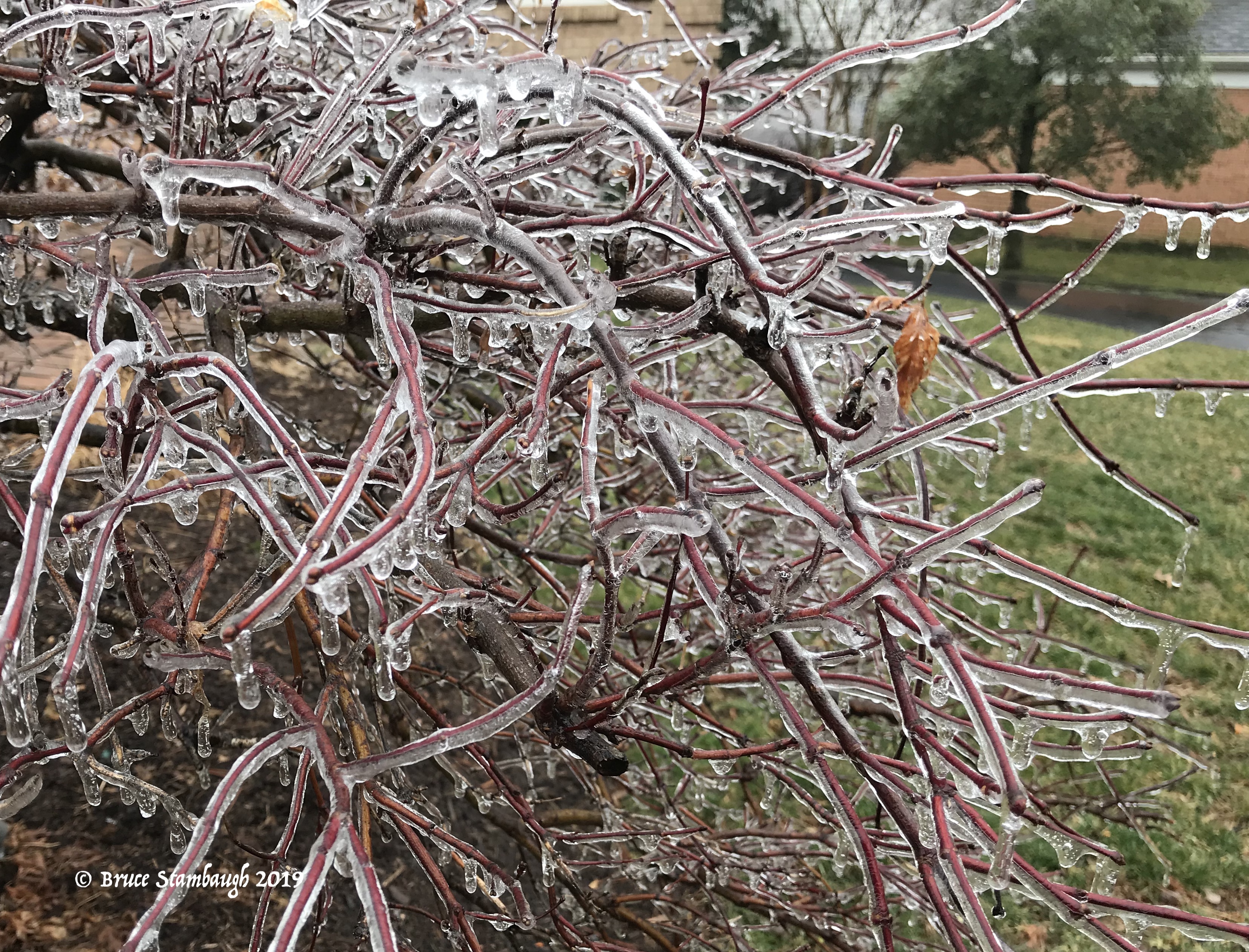
Results of the latest freezing rain.
We’ve lived in the central Shenandoah Valley now for nearly two years. When it comes to weather, it’s a lot like Ohio. That only stands to reason. We live near Harrisonburg, which is no further south than Cincinnati.

Of course, longitude, latitude, and altitude jointly play leading roles in the weather everywhere. Millersburg, Ohio, our former home, sits at 899 feet above sea level while Harrisonburg’s elevation is 1,325 feet despite being in The Valley.

Thanks to the dangerous combination of an El Nino and a wildly fluctuating northern jet stream, most folks in the United States share my winter weather fatigue. The El Nino off of California’s coast has incubated storm after storm that pounded the Pacific coast. With a rerouted jet stream, those storms have dumped heavy snows in places not accustomed to such stuff. Just ask the good citizens of Seattle, Washington, and Tucson, Arizona.

The jet stream speeds the storms along its southeasterly flow. That results in areas already hit by too much snow getting pounded again and again. If warm air did manage to mingle into the mess, flooding ensued. Rivers all across the country have run high most of the winter. Flood warnings have lasted days on end.

The wild weather hasn’t always been wet, either. Windstorms have caused havoc with power outages and buildings being damaged by downed trees. In Shenandoah National Park, 100 trees per mile were reported down along one section of the Skyline Drive.

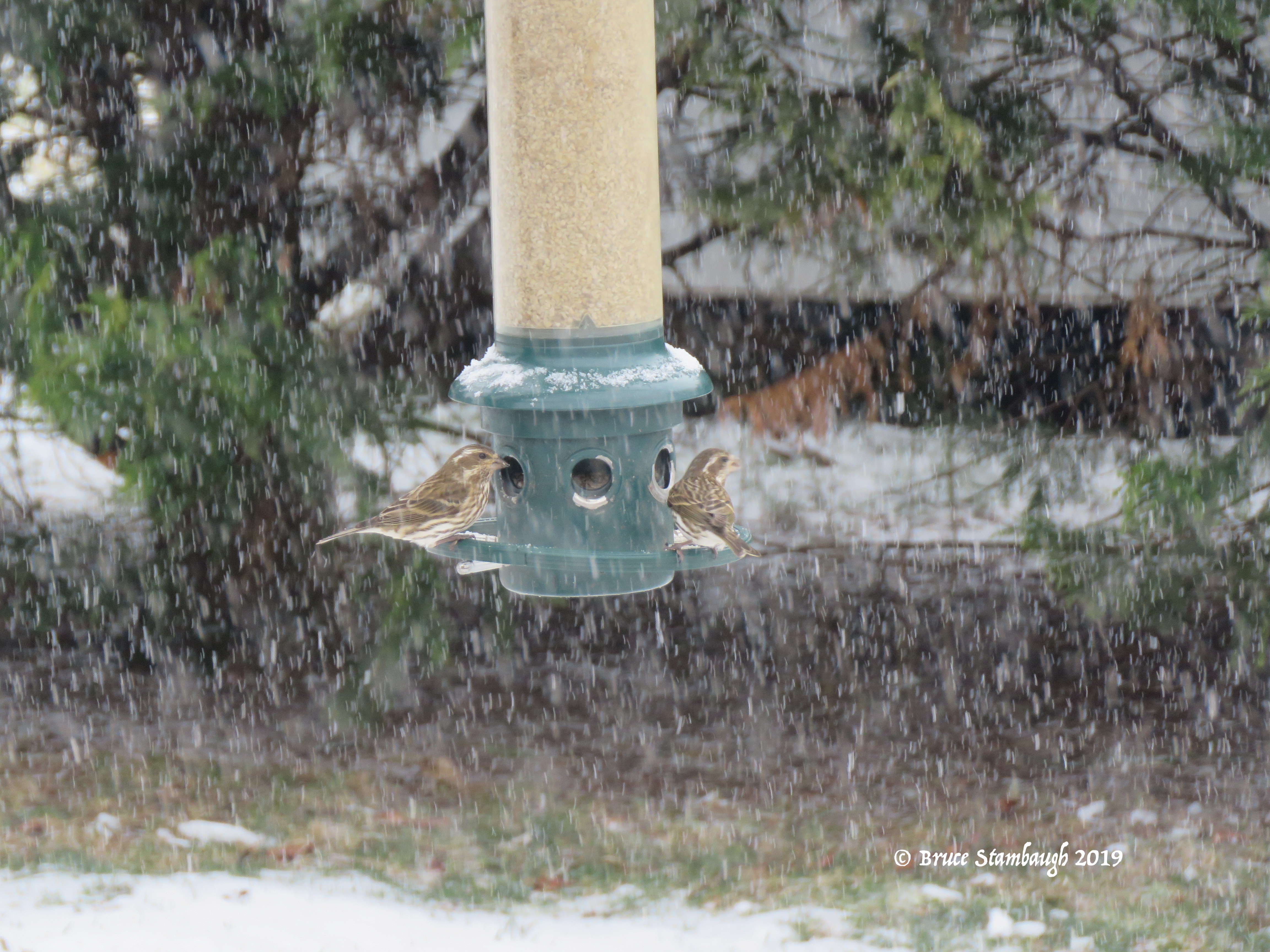
Purple Finches, Harrisonburg VA
Purple Finches stopped to refuel on their way back north.
Friends in the Buckeye state have teased me that Ohio’s wintry weather seemed to follow us to The Commonwealth. Friends in Virginia have kiddingly blamed me for the lousy Virginia winter weather. I just shrug my shoulders.

Despite the miserable weather, signs of spring have made themselves known. Birders are ecstatic that migrating birds are once again on the wing. Our neighbor’s forsythia is pushing its yellow buds in competition with trumpeting daffodils. Despite the ugly weather, photos of crocuses blooming flooded social media. Tree buds are ready to unfurl their hidden life.

We take for granted another sign of spring. Daylight hours are increasing daily, although we will “lose” an hour with the return of Daylight Savings Time.

Spring is officially just days away. March’s vernal equinox can’t come soon enough.

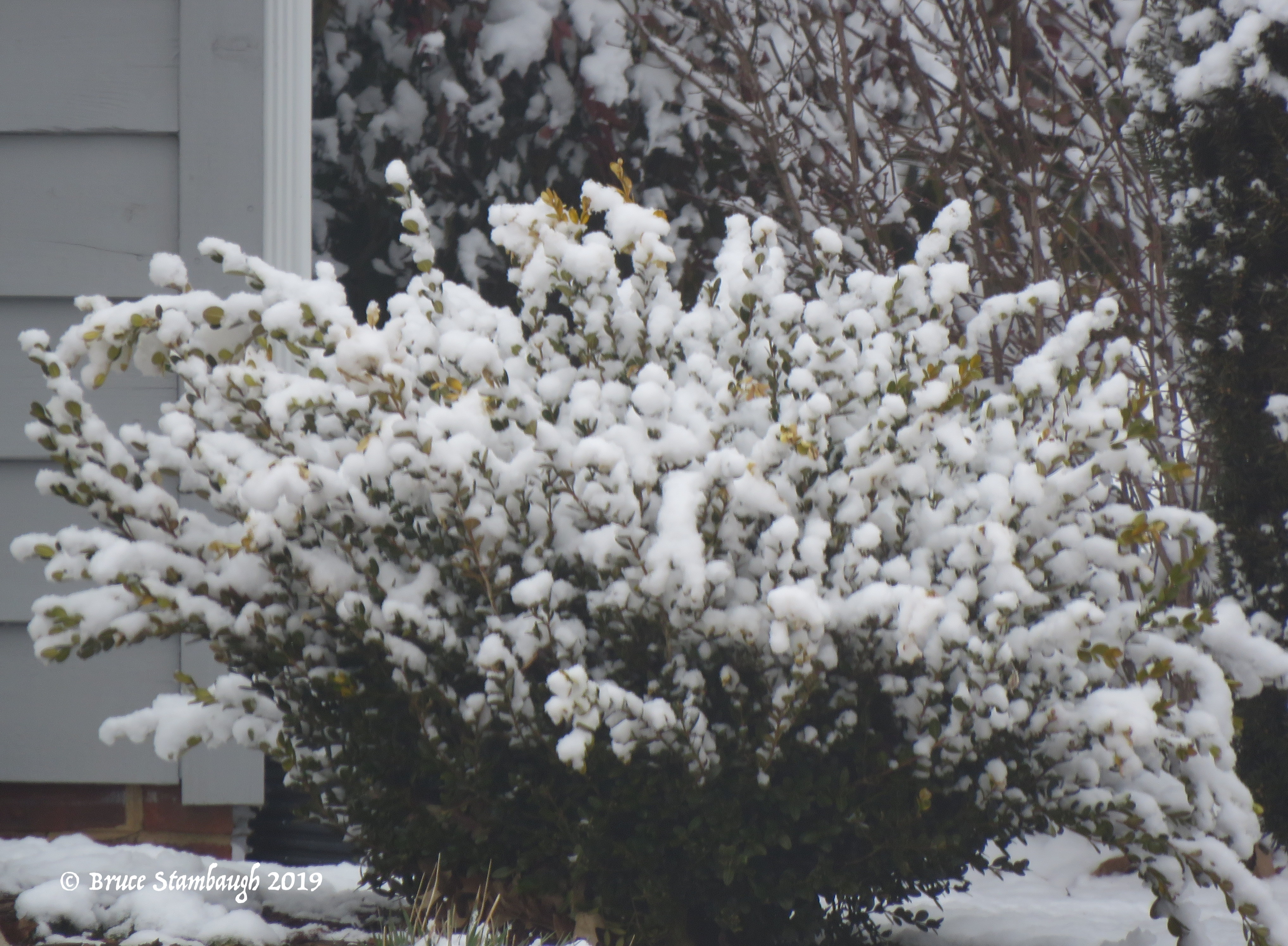
Our neighbor’s blooming forsythia covered by snow.
Still, there is no guarantee that winter’s harsh hand will let go of its hoary grasp on us. Our only hope is to hang on as best we can until spring’s warm kisses smother us with fragrant bouquets and songbird serenades.

Why has this winter seemed never-ending? Perhaps it is so we will joyously welcome spring’s gentile weather with a renewed appreciation for its refreshing rebirth.

© Bruce Stambaugh 2019

Spreading sunshine

Mole Hill, Shenandoah Valley
Spreading sunshine.

Though cold for early March, bright sunshine bathed the landscape in Virginia’s lovely Shenandoah Valley. This farmer took advantage of the situation and spread a different kind of sunshine.

For those of you not familiar with rural lingo, “spreading sunshine” equals spreading manure. It’s a necessary and important job on a family farm that includes horses, cows, and other livestock. Winter weather, especially this wet winter’s weather, doesn’t always allow farmers to regularly “clean out the barn.”

When the opportunity presents itself, farmers waste no time in getting the job done. When crop fields are frozen enough to support heavy farm equipment, the manure spreaders are loaded with the fertile livestock waste and spread onto the frost-firmed ground.

It can be a stinky job, but someone has to do it. In fact, it is the smell that satirically coined the phrase “spreading sunshine.” When the ground is frozen, its time to rid the barns of all the manure that can be hauled while the conditions are right.

“Spreading sunshine” is my Photo of the Week.

© Bruce Stambaugh 2019
From Switchboard Road

Harrisonburg VA, rural snow scene, street photography
It was Thursday, and I hadn’t decided on my Photo of the Week, which I normally do well ahead of time. The last few days have been hectic with family responsibilities, writing deadlines, and yet another winter storm that brought snow, sleet, freezing rain, and rain.

I was thinking about what photo to feature as I drove home from a meeting this morning. When I turned south onto Switchboard Road, this scene grabbed my attention. I looked in my rearview mirror and to the road ahead of me. The narrow, curvy road is a busy thoroughfare, but the coast was clear. Down went the window, and I quickly snapped the scene.

The morning’s sun filtered through the storm’s residual clouds and a streak of rising fog. The rays glinted off of the three inches of snow encrusted with a glaze of ice. It looks black and white with only a hint of light blue showing.

I knew right then and there that “From Switchboard Road” would be my Photo of the Week.

© Bruce Stambaugh 2019

When tragedy strikes, communities respond

Ohio's Amish country, Holmes Co. OH
Even a peaceful scene in Amish country can become tragic.

Tragedy. It’s bound to invade our lives, often when we least expect it. Too often, it happens more than once in our lifespan.

Unfortunately, we likely have all seen our fair share of tragedy. Calamity merely is part of life. That doesn’t make it any easier to accept.

I’ve seen and experienced a lot of tragic incidents in my life as a member of volunteer fire and rescue squads. Often I knew people involved in the emergency incidents. That’s not surprising when you live most of your life in a close-knit, rural community.

Sometimes tragic national news hits close to home, too. The recent fatal shooting of Dean Beachy and his son Steve is proof of that. Naturally, people were shocked and horrified at the senseless killings.

Their lives are a huge loss to the family and the many, many people they touched. My wife knew the family well, having taught Steve’s three older brothers.

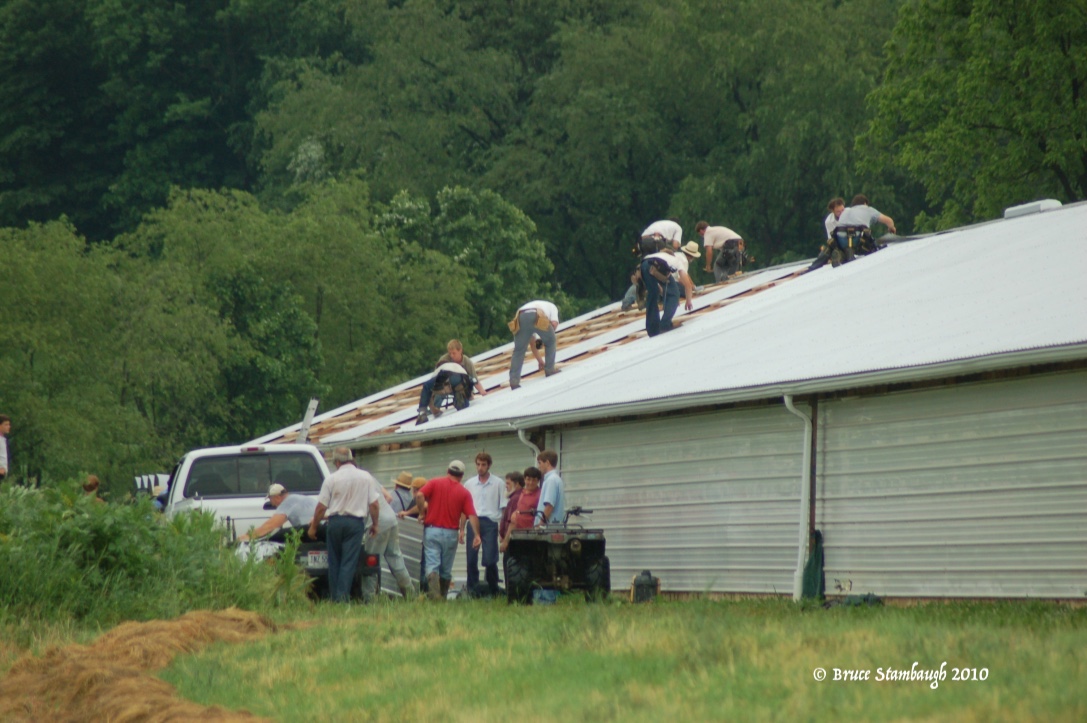
Ohio's Amish country, Holmes Co. OH
An hour after a tornado damaged this farm building, neighbors came to repair its roof.

Most likely, we each could create a long list of personal tragedies that have significantly impacted our lives. Mine would have to start even before I was born.

My great grandfather was killed in an auto accident involving a drunk driver. The crash critically injured my father and his only brother a block from their home. My uncle’s traumatic head injuries caused lifelong, family-wide ramifications.

My mother’s father was electrocuted six months before I was born. I am sure you have a comparable list of interpersonal human misfortune.

We learn life lessons from tragedies. One is when disaster strikes, people respond. That’s the way community works. What affects one family affects us all to varying degrees.

My wife and I experienced and witnessed positive responses many times over our four decades of living in Holmes County, Ohio. When bad things happen to good people, others want to help. So they do. They bring food, share tears, hugs, and sit quietly with the victims’ family.

Some tragedies happen suddenly, like the Beachy shootings, a traffic crash or a house fire. Others happen gradually and last over an extended time. Likely, we have all known someone diagnosed with a terminal illness.

In either situation, shock, denial, anger, fear, and blame all surface in the face of loss. Often those emotions occur at different times for different family members. Heartache knows no boundaries. To be there is what really matters to the hurting individuals.

Ohio's Amish country, Holmes Co. OH
Barn fire.

As an EMT, I once responded to a drowning call at an Amish farm. The toddler was dead by the time we arrived in the country setting. Still, all the first responders wanted to do something. We comforted the grieving family as best we could.

With the corner’s approval, I carried the youngster’s body to the ambulance where family, friends, and neighbors filed through saying their goodbyes. It was the Amish way, and the officials in charge wanted to respect that.

Regardless of the type of tragedy, whether sudden or lengthy, no one is immune. As human beings, we can choose to offer whatever we can or to ignore the situation.

Those who chose the former realize that in giving there is receiving. In caring, appreciation is returned. In listening, genuine sharing occurs. With your presence, acceptance and understanding slowly unfold.

Human beings have a responsibility to one another, to be kind, to be generous, to be available, to help, to be respectful. There is no better time to express those gifts than when tragedy strikes.

It’s not merely the way a community responds. It is the way a caring community thrives.

Ohio's Amish county, Holmes Co. OH
This Amish barn raising occurred less than a month after the farmer’s barn burned.

© Bruce Stambaugh 2019

Bay Photos by Donna

Wildlife Photos From The Chesapeake Bay Region

ROAD TO NARA

Culture and Communities at the Heart Of India

K Hertzler Art

Artist and nature journalist in the Shenandoah Valley of Virginia.

Maria Vincent Robinson

Photographer Of Life and moments

Gabriele Romano

Personal Blog

Jennifer Murch

Art is the only way to run away without leaving home. -Twyla Tharp

Roadkill Crossing

Writing generated from the rural life

ANJOLI ROY

writer. teacher. podcast cohost.

Casa Alterna

El amor cruza fronteras / Love crosses borders