Meditating while driving

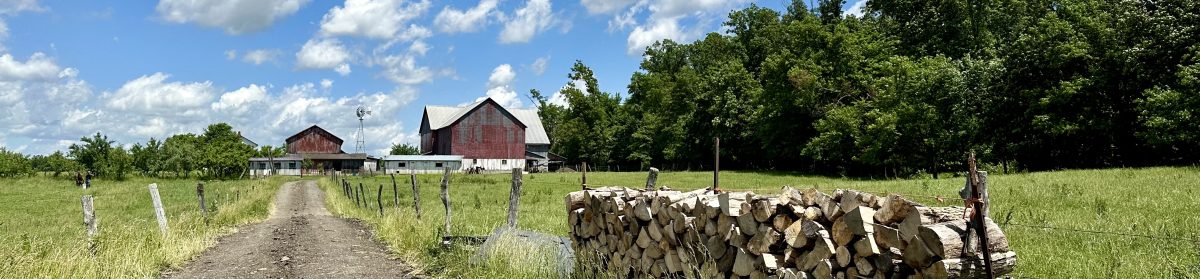
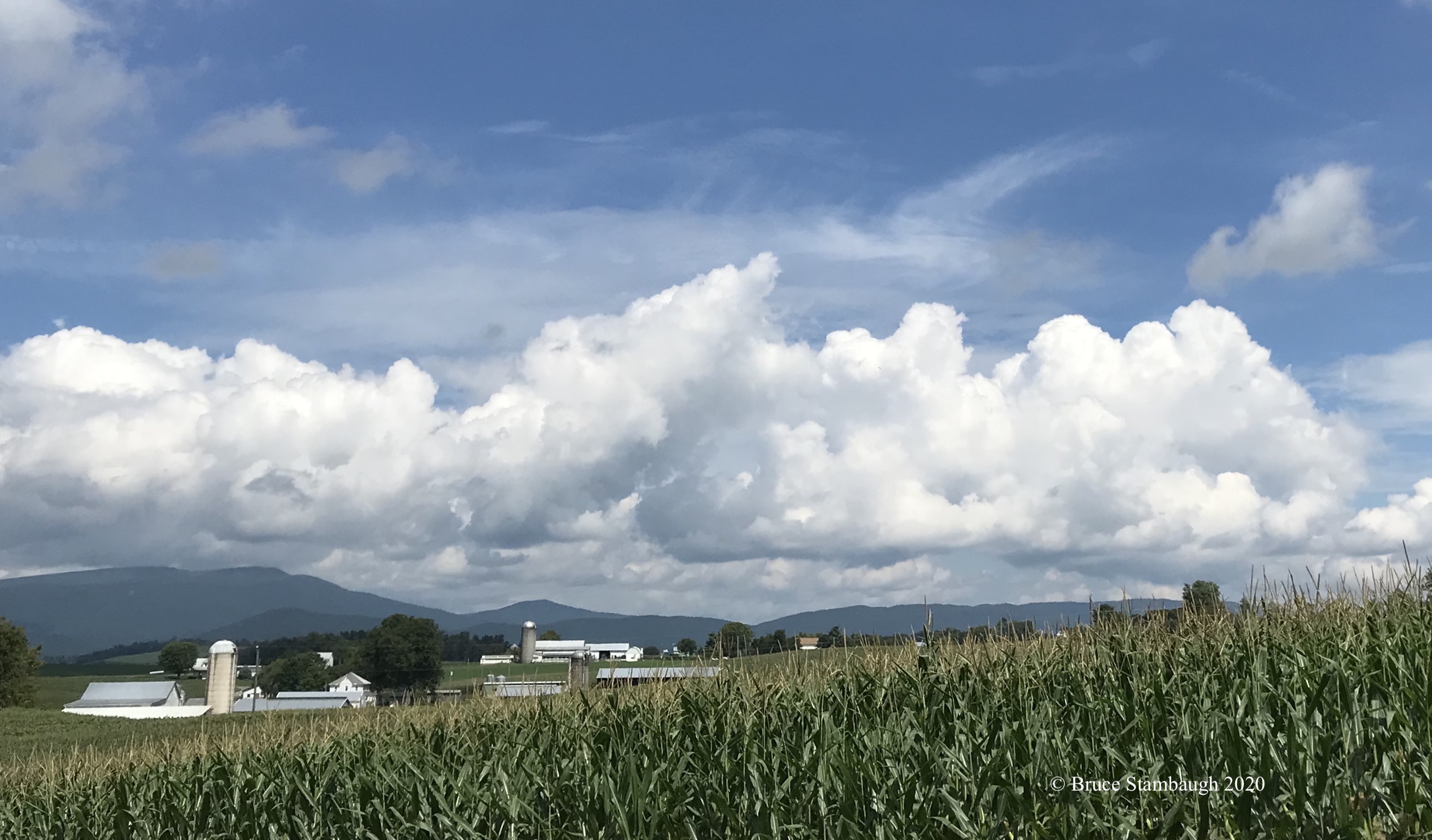
A balmy day in the Shenandoah Valley.

When I drive alone, I often meditate.

It’s not what you might think. I don’t close my eyes, of course. I just enjoy the peace and the time alone to think. I don’t forget about driving. It would be both foolish and dangerous to do so.

I try to allow extra time for a more leisurely drive. I avoid superhighways. Backroads are my preference because I never know when I might need to stop to take a few photos of the fantastic scenery that Virginia’s Shenandoah Valley affords.

Unlike my younger years, I drive silently. No radio, no CDs playing. I enjoy the quiet unless the road surface is too rough. Then I take in the music that my tires sing to the tune over the various macadam surface textures. The octaves change by the mile.

I’ll use the GPS when I have to. Once I know the way, however, I am on my own, like the other day when I had a doctor’s appointment 35 miles away.
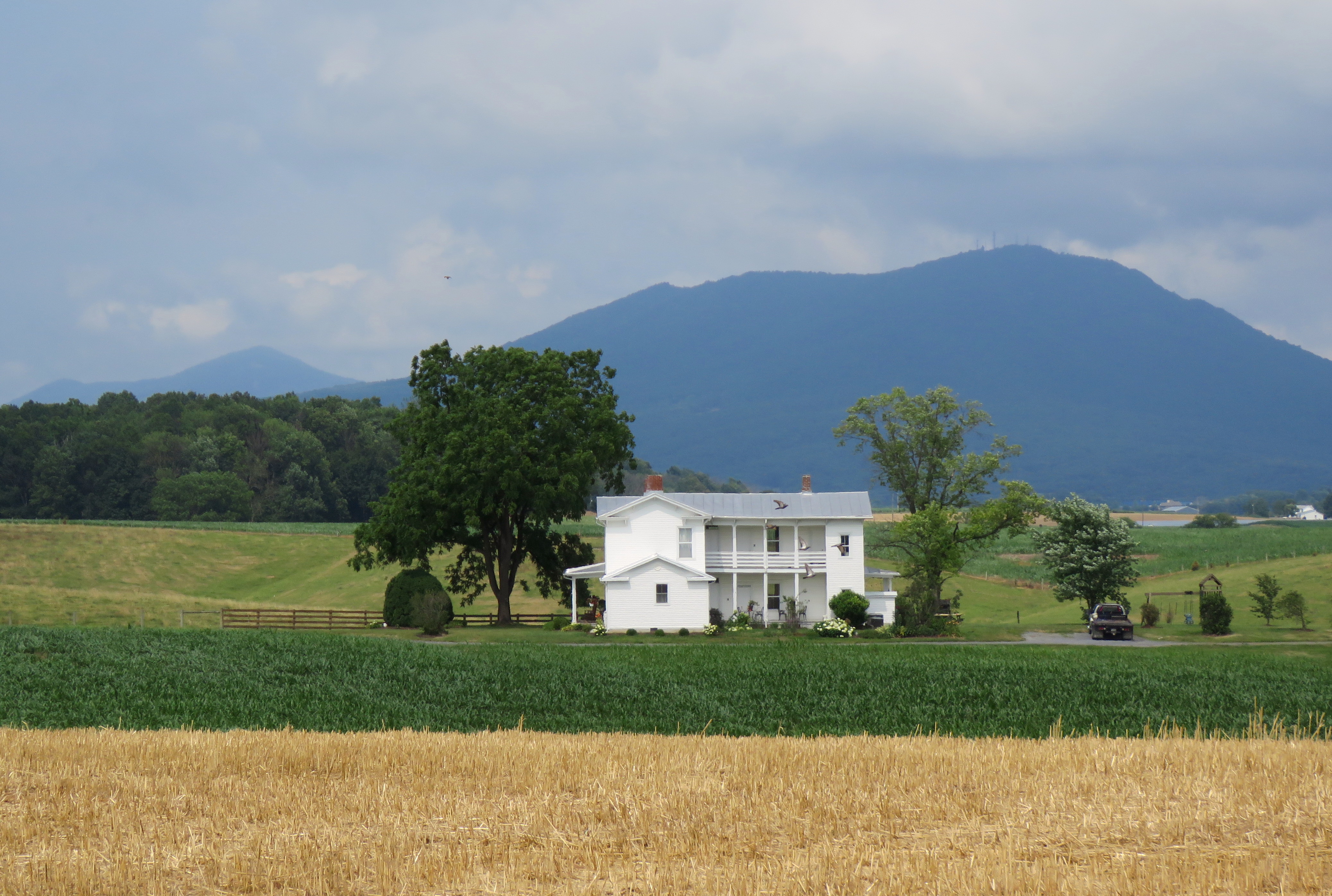
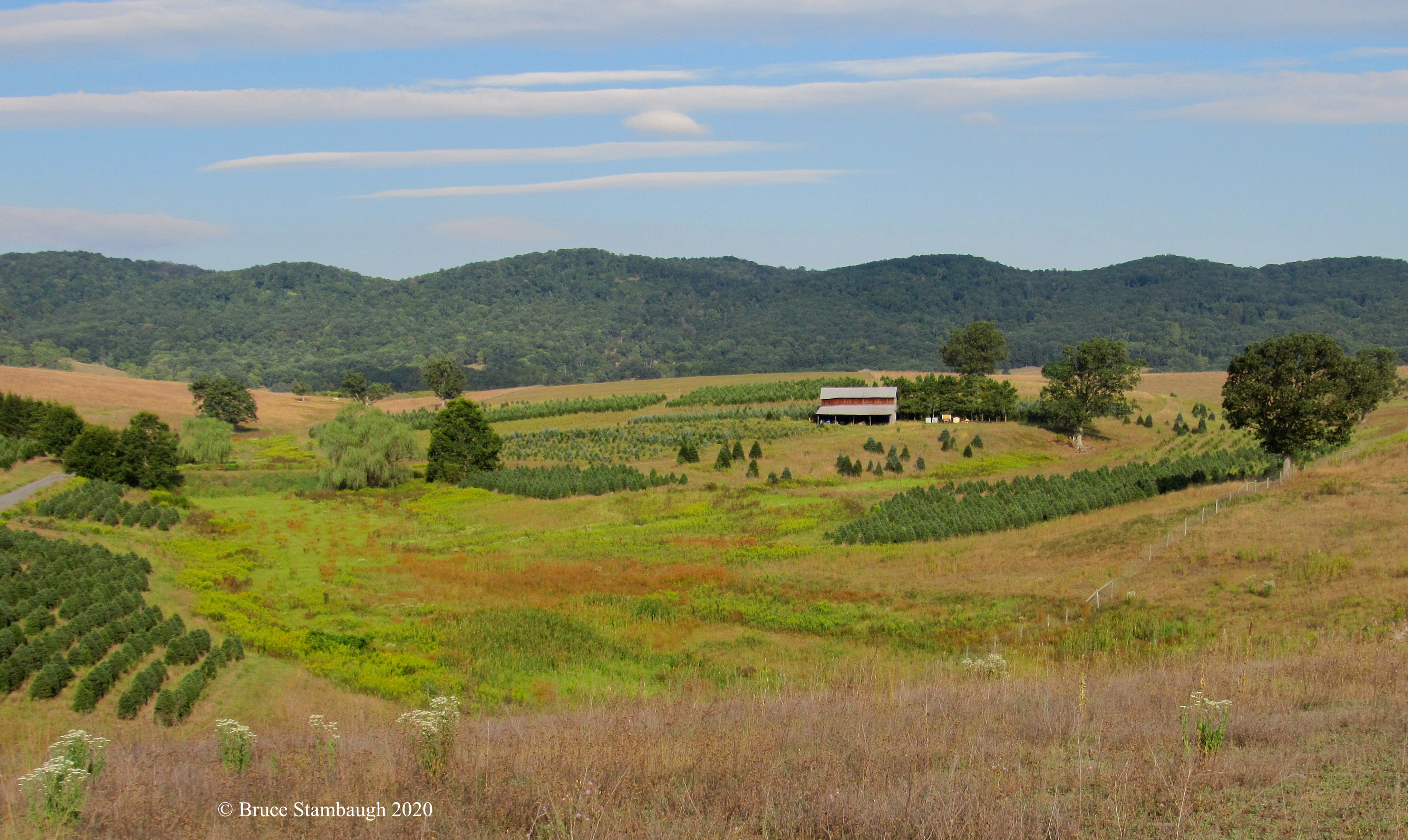
A typical farm in the Shenandoah Valley.

I left nearly two hours before my 2 p.m. appointment. Besides a couple of brief planned stops, I knew there would be photo opportunities along the way. I had been that route before.

Driving in that contemplative state helps to clear my mind from all of life’s noisiness. Plus, I get to enjoy the mountains to my left and mountains to my right. In between, there is nothing but gently rolling countryside dotted by farms, fields, forests, and more gigantic chicken houses than I care to count.

Weather permitting, I ride with the windows down and the sunroof open. I sometimes pay the price if I pass a freshly manured field.

This trip turned extra-special. Once I passed Sulphur Pump Road, I turned south on the narrowest windy way with no ditches and farmers’ fences hard against the blacktop.

The paved path twisted and turned, rolled up, down, and around until I made a slight right onto Battlefield Road. In less than a half a mile, I crossed a short narrow bridge in the curve of the road. Ahead, an old plantation sat high on a ridge behind a grove of mature pines.

The spot where young men died in the Civil War Battle of Bonnie Doon.

At this exact spot at the bottom of the hill, Americans fought Americans in a Civil War skirmish. Hand-to-hand combat ensued, with heavy casualties on both sides. Today, fruit trees and fence line trees waved in the wind.

No historical marker identified the bloody spot. I knew it from a Civil War class that I am taking remotely. It was this week’s lesson.


Farther south, a couple of miles, two different historical markers on opposite sides of the road defined the facts and sight of a deadlier clash, the Battle of Piedmont. Field corn and an impressive planting of soybeans nearly hid both plaques, while the Blue Ridge Mountains and Shenandoah National Park created an enchanting backdrop.

I wondered if people knew what had taken place here, the massive loss of life, the many casualties, and prisoners of war, the consequence of the Union victory. If they knew, did they still hold a grudge or even care?

Did they appear only as fields of corn and beans to them? Were people merely on their way from point A to point B in their daily lives as they passed?

I pondered all of this as I arrived at the impressive multi-storied medical office building. I donned my mask, had my temperature taken, responded in the negative to all of the required COVID-19 questions, and waited my turn for my 21st-century exam.

My nomadic meditation had ended.
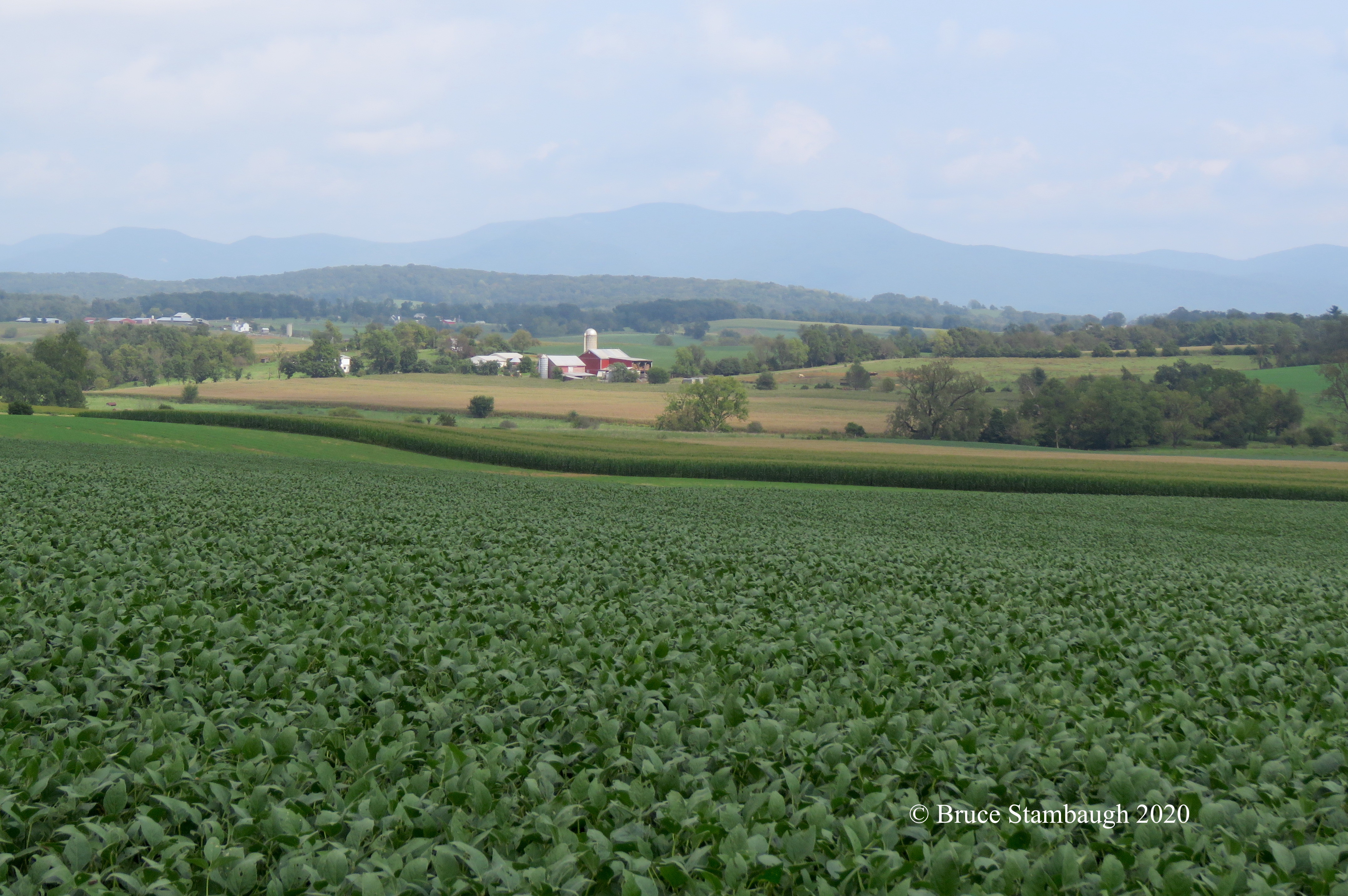
The Union army engaged Confederate soldiers on this ridge.

© Bruce Stambaugh 2020

Autumnal Equinox Sunrise


Fall in the Northern Hemisphere has officially arrived! I always welcome the fresher, cleaner air, less humidity, and cooler temperatures.

The first sunrise of autumn on September 23, 2013, brought all of that and more. As you can see, fall got off to a foggy start that day.

This photo was taken as the sun filtered through a typical September morning fog in Ohio’s Amish country, where I used to live. The wagon in the alfalfa field is a church bench wagon. It was parked there to provide seating for an Amish wedding.

“Autumnal Equinox Sunrise” is my Photo of the Week.

© Bruce Stambaugh 2020

Officially welcoming another autumn


Residents of the Northern Hemisphere are on the eve of yet another autumnal equinox. Autumn officially begins at 9:30 a.m. EDT on Tuesday, September 22.

Autumn has given us plenty of warnings even before her arrival. Instead of turning red, many of the leaves on our backyard maple have simply been falling off one-by-one for weeks. We can thank the leafcutters for much of that.

The crazy weather of this insane year has also played a role in the dying leaves, along with other climatological irregularities. Let’s count the ways.

In late spring, an extended spell of chilly, wet March-like days did their damage. The steady damp weather kept farmers out of fields over much of the U.S. east of the Rocky Mountains.

Some bird species even delayed nesting because the weather was so foul. If birds did nest, naturalists found hatchlings dead because their parents couldn’t find enough insects to feed them.

Then just like that, it got hot and dry. Here in western Virginia, the furnace was on one day, and the air conditioner the next. Vegetation flourished in such conditions, causing the humid, hot wind to carry various pollens far and wide. According to my allergist, I wasn’t the only one sneezing.

The day the rains started in mid-July.
About the time Major League Baseball finally began in July, the heavens opened up. The rains canceled games, and so did COVID-19 because too many players tested positive.

Record rains pelted the full length of the Shenandoah Valley. August usually is a hot and dry month here. Not this year. The weather was more like June should have been. We mowed our lush lawn twice a week for several consecutive weeks.

All the while, fall kept creeping upon us. Butterflies, relatively scarce during June and July, began to arrive. So did the ruby-throated hummingbirds. Now they are all filling up their tanks for their annual southern migration.


The yellow, green, and black Monarch caterpillars have morphed their way into magnificent orange and black butterflies. Predators have learned to avoid dining on them since the Monarch’s appetite for milkweed renders them bitter, according to lepidopterists.

That dreaded F word, F-R-O-S-T, has already made appearances across the northern reaches of the U.S. Can the rest of us be far behind?

If you listen to the jingles and jargon on TV, this is pumpkin spice everything season. Despite the marketing ploys, I’ll gladly stick to my decaf mocha lattes. They’ll taste just as robust when the first freeze hits.

Of course, hurricane season peaks in the first few weeks of fall. The National Hurricane Center has already increased its predictions for both the numbers and intensities of those tropical storms.

Out west, you can’t breathe the air. It’s so oppressively hot and thick with smoke from record-breaking fires that have caused death, destruction, and devastation to humans, wildlife, and entire towns. More than 10 percent of Oregon’s population has been evacuated as of this writing.

Unfortunately for those millions of west coast folks, the sky has glowed an apocalyptic orange for all the wrong reasons. A good frost or even a lovely blanket of snow would greatly help those tired firefighters slow the infernos.

Autumn, of course, abounds with fiery colors, orange included. In addition to the winged creatures, mums, maples, pumpkins, and gourds are but few of the things that warmly usher in fall.

Climate change has undoubtedly played a part in stirring up 2020’s weird and wild weather. It’s been a universally strange enough year already all the way around.

Let’s welcome fall with a blissful hope for more normal global weather patterns.

The right kind of orange.

© Bruce Stambaugh 2020

Teasel


I loved how the afternoon light highlighted the prickly details of this dense stand of spent teasel heads. Likely, several varieties of birds thrived on the seeds of these thorny remains.

I was happy that the farmer had let these beauties stand for all to enjoy. “Teasel” is my Photo of the Week.

© Bruce Stambaugh 2020
Enjoying September’s melodies

Singing September’s song.

We’re already pushing to the middle of September. Have you heard the many melodies she’s already played?

If not, please don’t fret. If September plays her usual gig, she will beautifully and joyously harmonize her way into October.

We have to pay attention morning, noon, and night to fully appreciate September’s numerous odes. It’s a perpetual concert out there.

September has many modes of singing to us. That’s good news for those of us with diminished hearing. The seasonal songs are ubiquitous and indiscriminate.

Crickets, katydids, and locusts lull us with their winged cacophonies. Nature’s stringed rhapsody signals the season’s end and celebrates each day’s closing.

This slideshow requires JavaScript.


A tiny screech owl’s raspy soliloquy provides a brief interlude to the insect symphony. The chilling tune means trouble for little four-legged rodents romping around in summer’s last evenings.

If you listen carefully, you might be fortunate to catch the call of migrating birds piping on the wing high overhead. If you can’t hear them, aim your binoculars at the moon and enjoy the sideshow.

September croons to us in color, too. Her many blooms of gold, crimson, yellow, red, and even blue paint a many-colored musical in flower gardens, along roadsides, and in unkempt fields.

The month’s repertoire includes occasional towering thunderstorms. Their lightning dances and their thunder booms, drumming fear into almost every canine within miles.

At the storm’s end, perhaps she will surprise us with a dangling rainbow. Look quick before that high note fades. Remember to breathe in the aftermath, refreshing, clean, pure.

September invites us to sing along with her eclectic playlist. The crisp snap of husking the golden ears of sweetcorn is the prelude to perhaps the year’s last fresh corn on the cob.

Of course, the hiss of canners still sings, bubbling with goodness and a kaleidoscope of colors. Besides corn, salsa, beans, tomatoes, pickles, peppers, peaches, grapes, and apples all play their fruitful parts.

I adore the choruses in the outdoors the most. Find a pleasant spot in the woods, and just sit, watch, and listen as the sounds of silence come floating in decorative displays.

Migrating butterflies flutter to their specific tunes. Groups of Monarchs congregate in the coolness and safety of trees until the morning sun dries and warms their wings.


Swallowtails, fritillaries, Buckeyes, and skippers flutter their notes in their particular and various flights. It’s always amazing how they can find the slightest blooming speck to nourish them on their way south.

Brilliant sunrises and sunsets add magical backdrops to September’s forte. The trick is to rise in time to catch the morning show or to stop what you are doing and embrace heaven’s evening song.

The deciduous trees, of course, join the colorful choir one leaf at a time. Their intensity increases as the month wanes. They usually wait until October for their triumphant exit.

Still, whatever voice they can bring to September’s musical is much appreciated. We humans inadvertently join the band with our out of tune rakes and mechanical blowers.

Nevertheless, September’s concert is a joy to grasp. That’s true even if the neighborhood skunk makes an unwelcomed visit.

We can still enjoy the many classical notes of the year’s ninth month. At day’s end, the stars and planets twinkle their universal choruses, glorifying the heavens above.

If we are attentive and diligent, we breathe in deeply this joyous song of creation with all of our innate senses. Consequently, September would love to have you sing along.

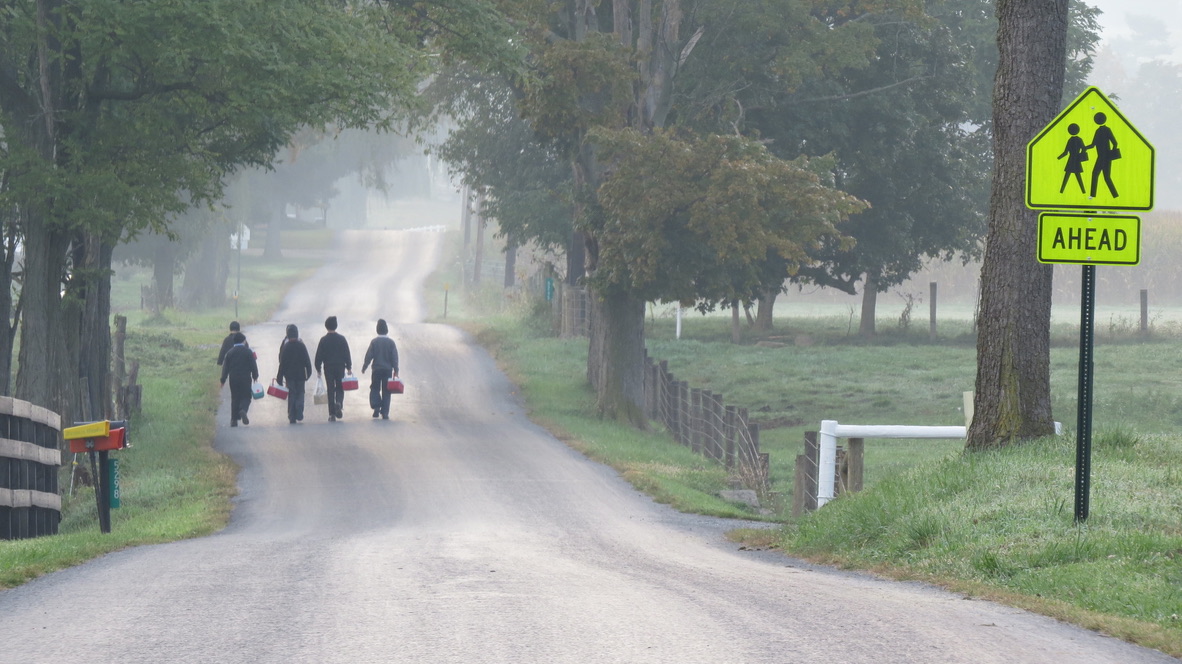
Amish scholars walk to their private school in a September morning haze.

© Bruce Stambaugh 2020

Sit a Spell


Touring around the Shenandoah Valley, we stopped at a local orchard and vineyard. Noted for both their apples and cider, both hard and regular, Showalter’s Orchard and Greenhouse has the perfect spot to while away a late summer afternoon.

“Sit a Spell” is my Photo of the Week.

© Bruce Stambaugh 2020
Making the colors of summer last year-round

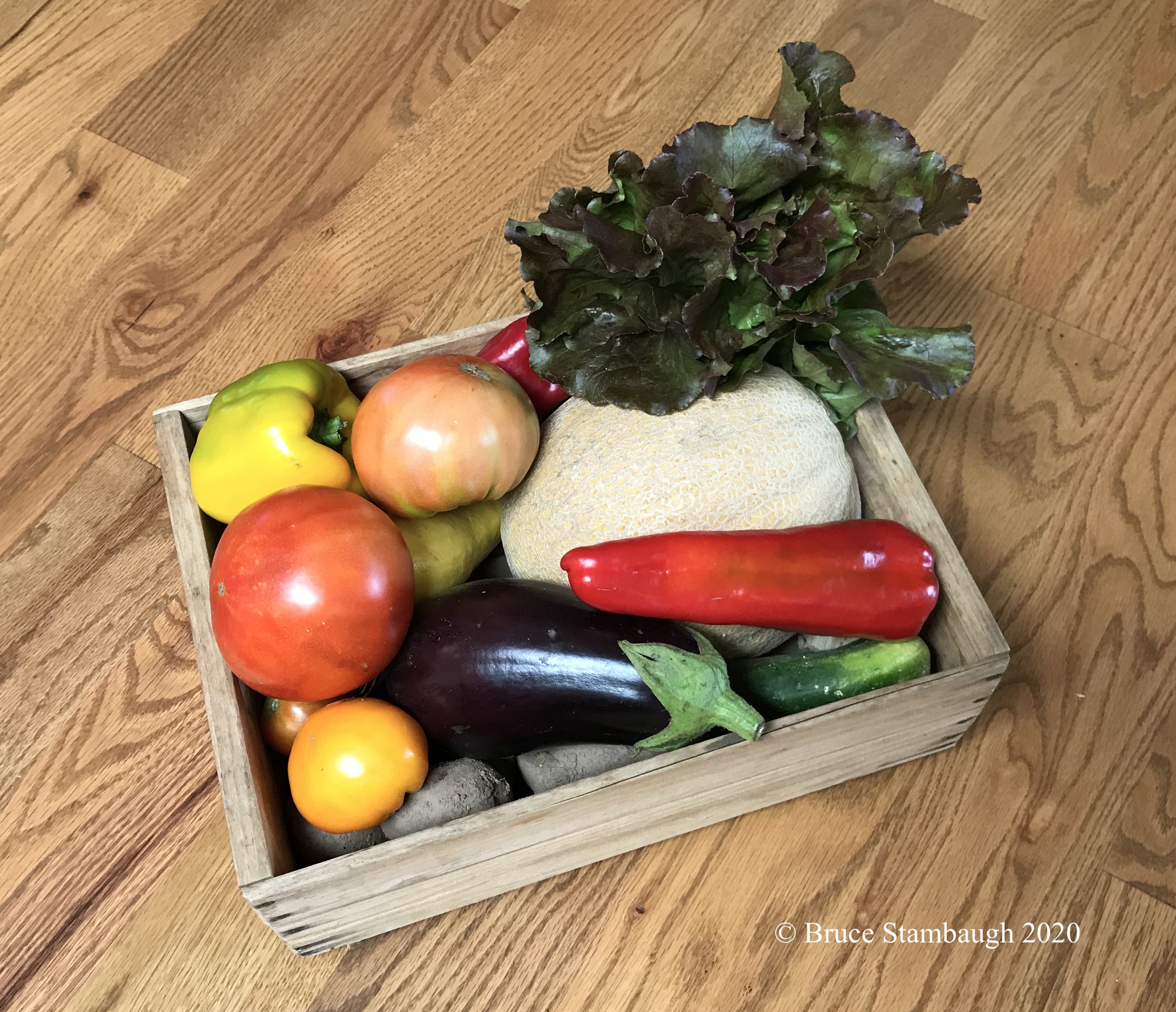
The colors of summer are as pretty as they are delicious and nutritious.

Just as I began to write about the colors of summer, a friend posted on social media about her visit to a local farmers market. In one digital photo, she succinctly summarized what I intended to say.

A cornucopia of vibrant colors from gardening harvests filled her photo. The variety of tomatoes alone captured nearly every hue of an artist’s paint pallet.

Ruby reds, luscious purples, warm yellows, and lime greens took center stage of their kitchen table. The light yellow of summer squash and the ribbed texture of a muskmelon represented the earthen tones.

A perfect emerald cucumber, the variegated rind of a watermelon, and a cluster of fresh basil leaves provided a generous sampling of the locally grown greens. The haul from your gardens, nearby produce stands, and farmers’ markets likely create similar still-life artistry.

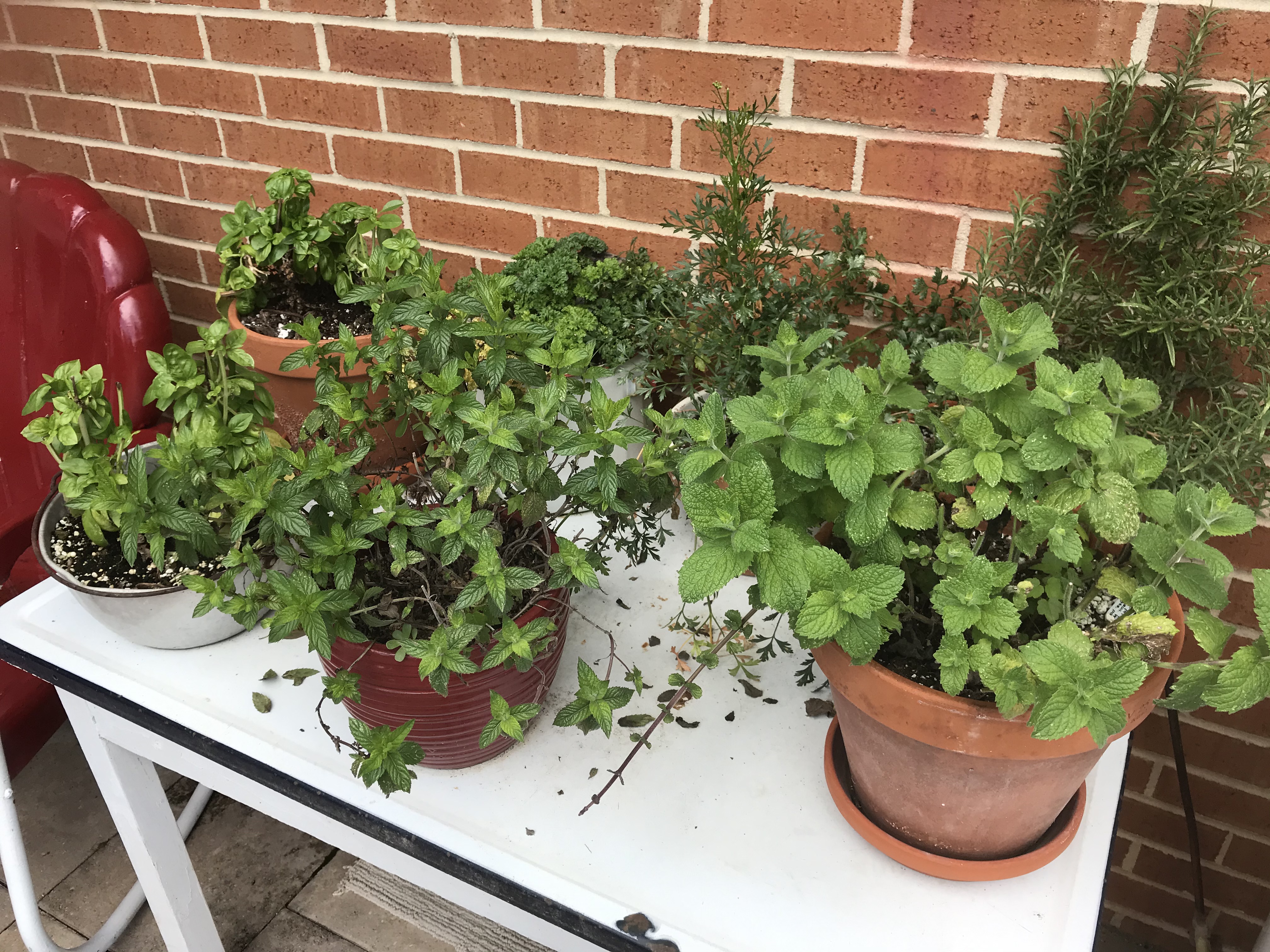
Our house is no different, despite not having a garden. My wife does pamper a half dozen potted herb plants sitting on the white enamel top of an inherited old table on our patio.

Our daughter supplies us with all the plump, juicy, and tasty tomatoes that we can use from her garden. Her blackberry plants have produced an abundance of delicious tartness, too.

The half-box of organic fruits and vegetables we get each Monday from our Community Supporting Agriculture program assures that we maintain a healthy, flavorful diet. We also frequent several local produce businesses, mostly operated by the Shenandoah Valley’s Old Order Mennonites.

It that regard, we are reminded of our Ohio home, where we knew many of the Amish and Mennonite vendors personally. Somehow that seemed to make their homegrown offerings all the tastier.

My energetic wife ensures that we celebrate the summer’s colorful bounty all year long. Canning and freezing are in her farmer genes.

When it comes to preserving the downhome goodness of food, we have noticed a difference between living in Ohio versus residing in Virginia. Instead of in spurts, everything seems to come ripe at once in the valley.

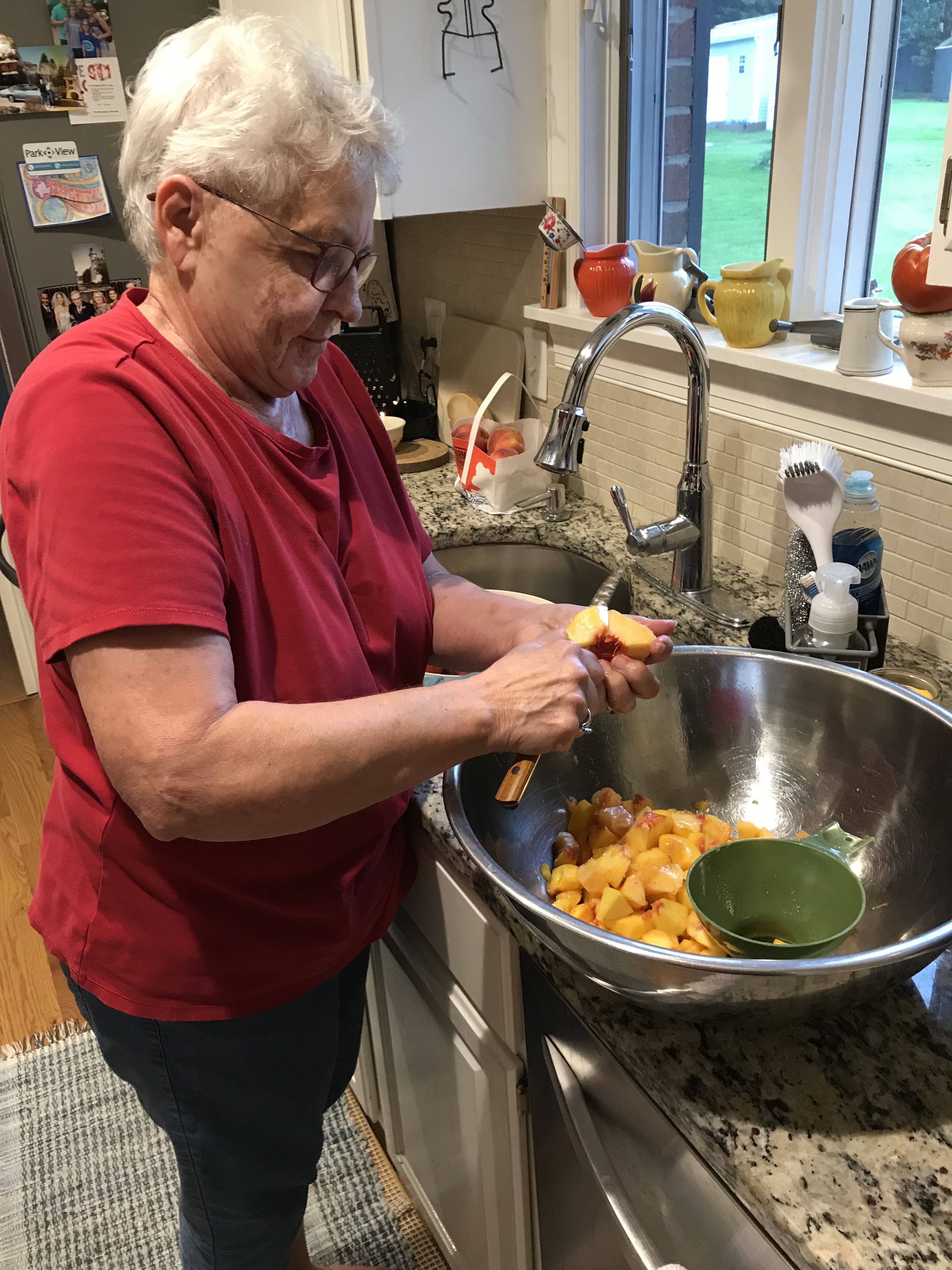
One day we are canning peaches and the next day tomatoes. Those jars have barely stopped popping their lids when the sweet corn comes ready, tender, tasty, and delicious. The varieties here are as delicious as our Ohio favorite, Incredible.

We’ve also learned a few new tricks living in a new culture in a new state. We husk the sweet corn, clean it, and cut the kernels straight from the cobs. Neva fills the plastic containers, and when we want fresh corn at Thanksgiving, that’s when it gets cooked and not before.

Apples are next on the list. The sweet tartness of the ginger golds more than satisfy our family’s taste buds. Neva freezes enough for the grandkids, who usually finish off their supply long before Nana can do another batch.

Of course, canning and freezing are a lot of hard work. Sterilizing the jars and lids, cleaning the fruit and veggies, and peeling when required, all take time and effort. Then there is enduring the sauna-like heat at the height of the canning process in our tiny galley kitchen.

The vent fan works overtime, expelling the heat and steam to help cool the temporary cannery. But in the long run, it’s all well-worth every drop of sweat.

Come the cold, dark, dull months of winter, and we will have summer at mealtimes in our household. Those yellows, reds, and greens of the harvest will brighten any dark day and table, and make all of the perspiring worth the effort.

© Bruce Stambaugh 2020
A once in a lifetime man

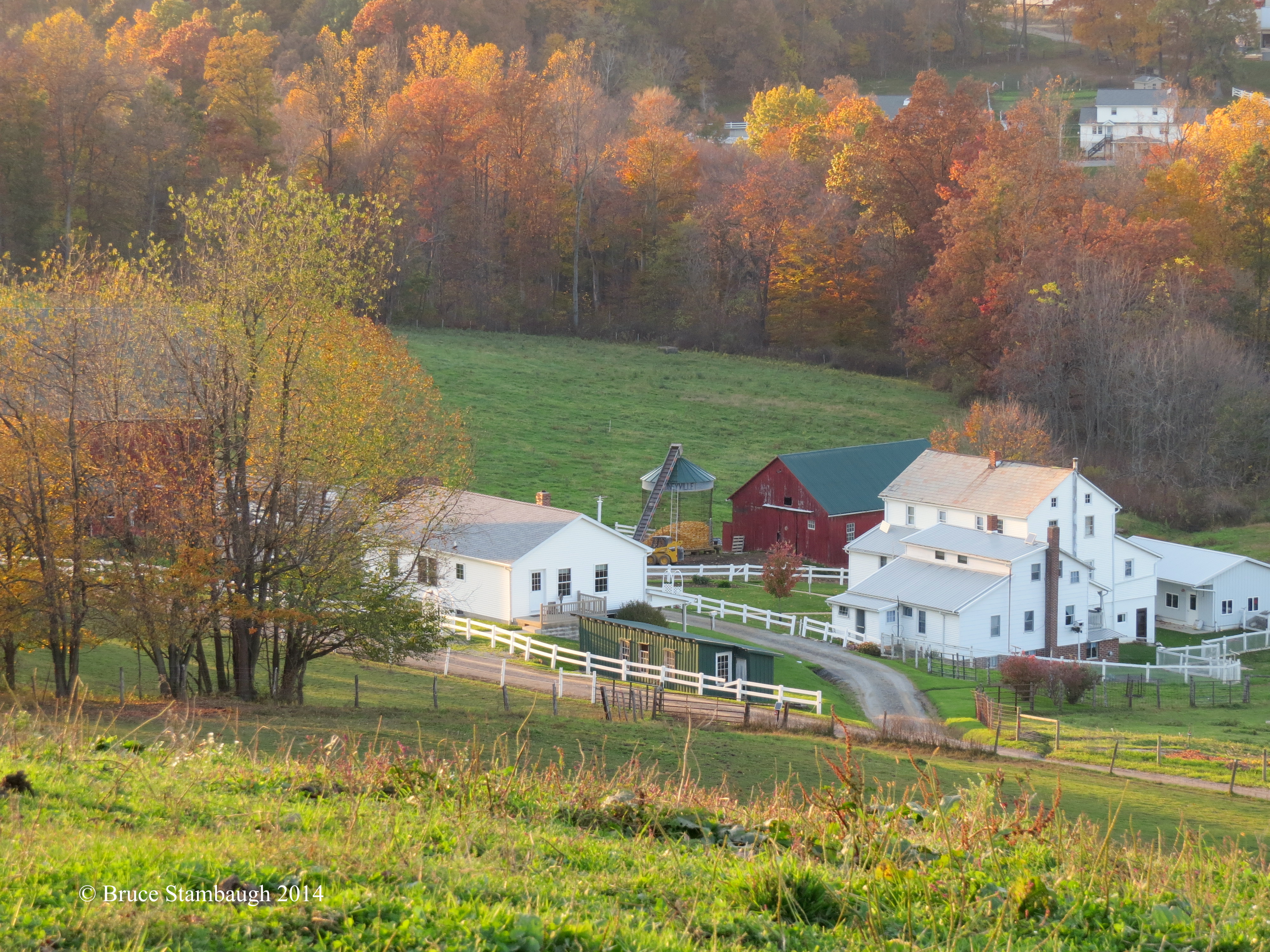
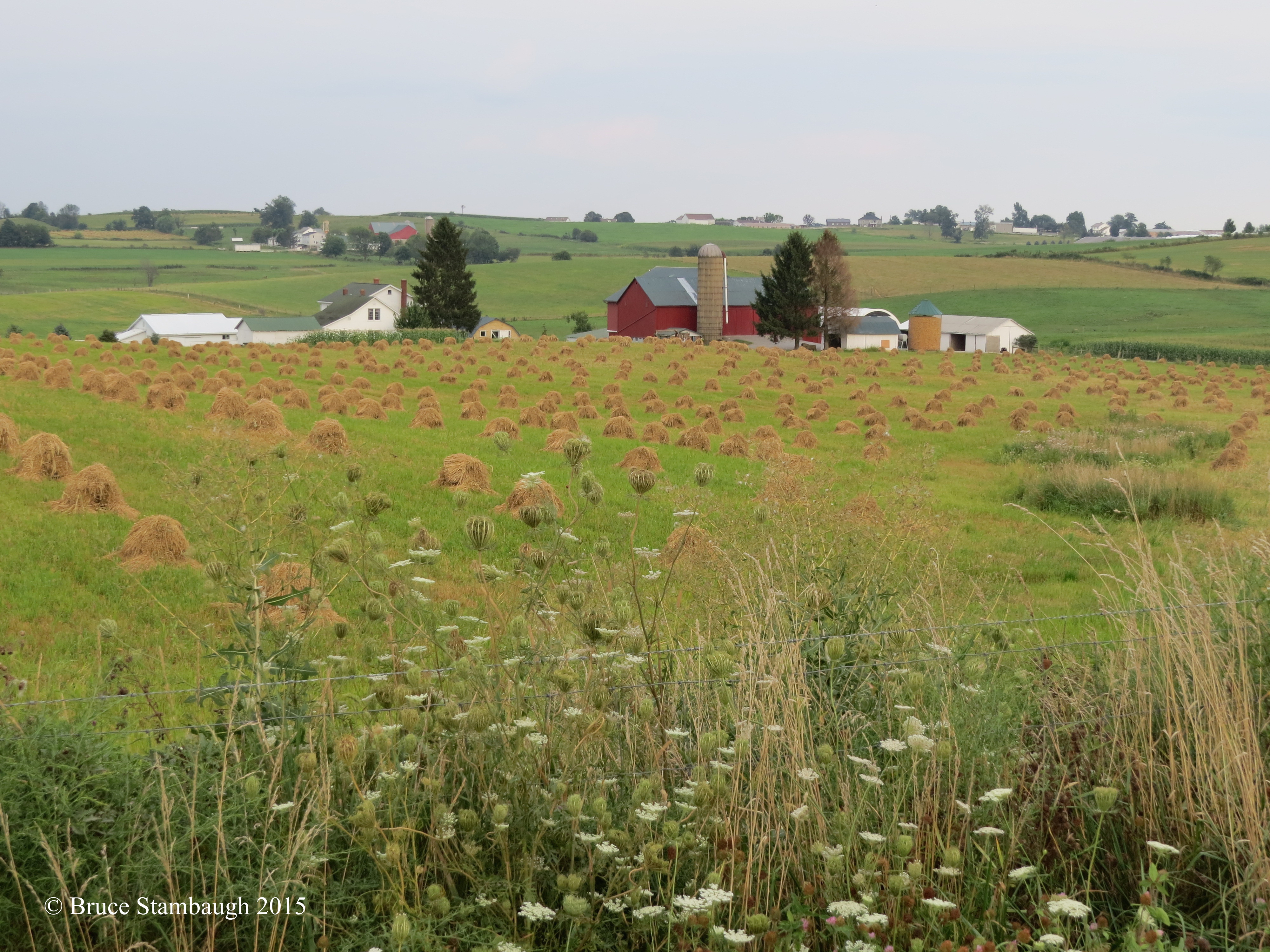
An Amish farmstead near Kidron, Ohio.

Jay Lehman was the kind of man that you might meet only once in a lifetime. He embodied the very values of the community in which he was born, lived, and worked.

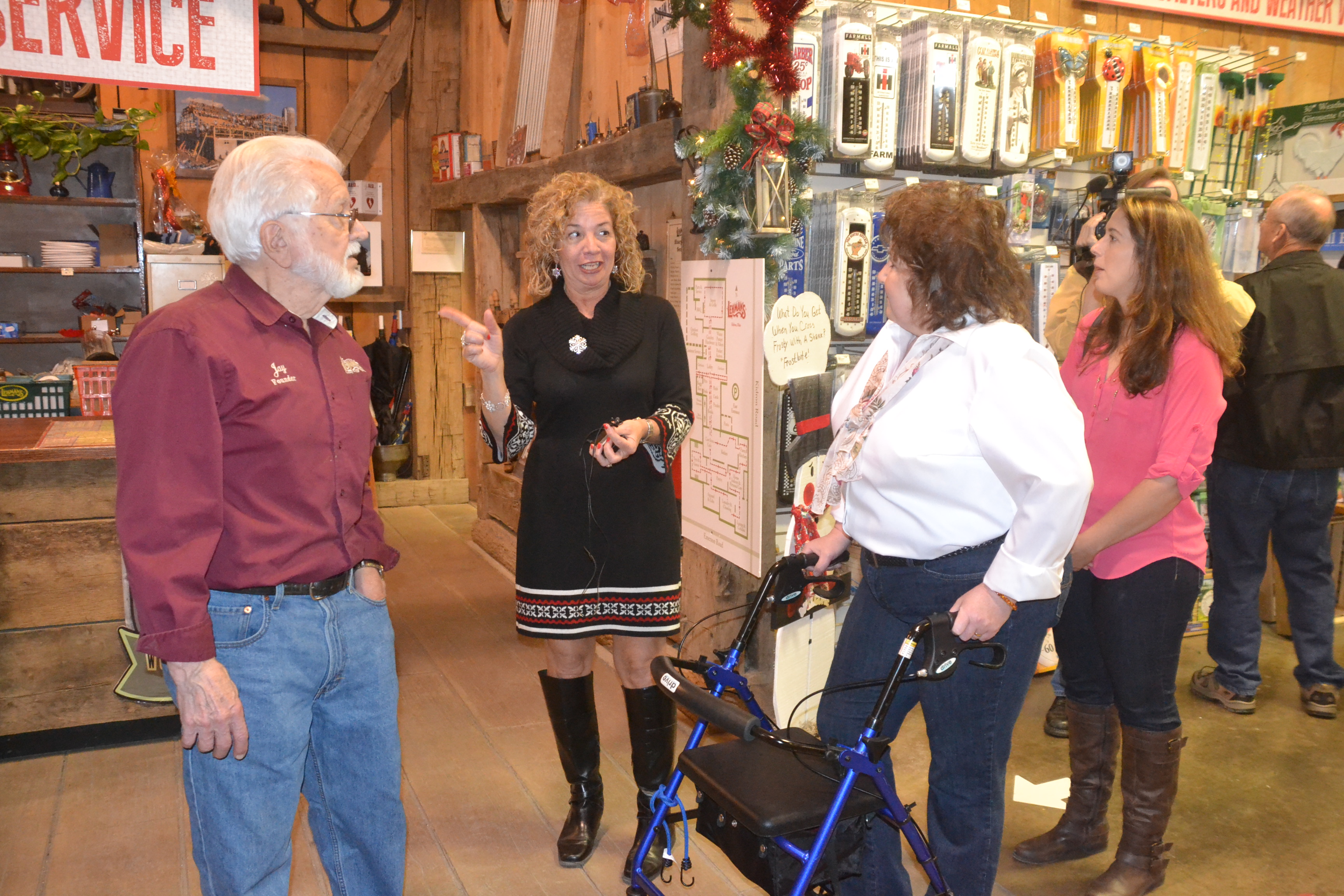
Jay died recently at age 91. He was the founder of the old-time general store Lehman’s in Kidron, Ohio. I was fortunate to have known him as both a friend and a business leader. Scores of others can say the same thing about Jay.

Jay Lehman.
That, however, is what impressed me so much about the man. We weren’t close as friends go, and we didn’t run in the same social circles. And, yet, whenever he saw me, he always went out of his way to call me by name, say hello, shake my hand firmly, and ask how I was doing. Jay was a good listener.

I got to know Jay the best through a cooperative marketing group that I facilitated. The original group included six Amish country, family-owned and operated businesses with a single location. Lehman’s was a founding member.

Jay pointing out one of the museum-quality pieces in the store he founded.
Jay started his little hardware and household goods business in 1955 at the crossroads of his rural hometown village. His original purpose provided necessary lifestyle items for the Amish community that surrounded Kidron.

Over time, the store’s purpose ironically flipped, becoming more of a tourist destination in Amish country. Jay embraced that change without losing sight or letting go of his and the community’s core values.

Faith, family, community, and a strong work ethic fulfilled humbly reflected not only the area’s priorities but Jay’s, too. Jay modeled those qualities in his personal and business life. That’s what made both Jay and his company tick.

In that success, Jay honored those values. He lived his faith by supporting the church and charities that he cherished. Even in a crowd of hundreds at statewide church conferences, Jay would acknowledge people by name and ask how they were doing. It might have been years since he had seen them. He understood the worth of healthy relationships.

That, in part, is what drew folks to Jay. He possessed a quiet, confident demeanor, and yet humility formed the mantle of his character. Even Lehman’s tagline reflects that concept: “For a simpler life.”

Jay Lehman at Lehmans in Kidron, Ohio.
Jay saw the future in the past. He preserved anything of locally historical value for posterity and education. A walk through the store reveals hundreds of antique relics that would have been lost were it not for Jay’s foresight. If you want, you can have lunch at Lehman’s while sitting in the old town jail.

Jay enjoyed the simple life, but he certainly was not a simple man. He loved a good “Rook” game with friends and family as much as he enjoyed traveling. Future generations were as vital to him as his Swiss ancestors, which he revered.

As the company grew and expanded, family members, friends from church and community joined in to help him run the store. When he reached retirement age, he passed the leadership on to the next generation. But he continued to be a dynamic presence at Lehman’s.

It was a joy to watch customers recognize Jay as he strolled around his much-expanded corner store. He was the living icon of Lehman’s, now an international business.

Jay’s legacy will live on through his successful entrepreneurship and his lifetime of kindness and generosity. Living those essential core values shaped that legacy.

His was a compassionate life. Jay lived not just for himself, but for all whom he so tenderly touched far beyond the little town of Kidron, Ohio.

Jay, shown with his daughter Glenda Lehman Ervin, often talked with visitors to the store.

© Bruce Stambaugh 2020

Ambivalent about August

August in Ohio’s Amish country.

I’ve always been a bit ambivalent about August. I’m especially so this year, given all the ramifications of the ongoing pandemic.

When my wife and I lived in Ohio, August kept us busy as career public school educators. We each geared up for the start of a new academic year. As a principal, I created schedules and rosters and attended too many meetings. The excellent teacher that she was, my wife spent many hours preparing each classroom to be an inviting learning haven.

Canned peaches.
August also ushered in the food preservation season. We froze dozens of containers of sweet corn and apple sauce. We waited for the canning lids to sound the seal of approval with satisfying “pops” for the tomatoes, grape juice, beets, and peaches. Rainbows of goodness adorned our shelves.

Of course, we weren’t alone in these endeavors. After I retired, I savored sale mornings at the local produce auction. I loved the hustle and bustle of men and women unloading their trucks and horse-drawn wagons. The rhythmical cadence of the auctioneers barking out their persuasive banter was sweet music to my ears.

The growing season here in the Shenandoah Valley where we live now is a couple of weeks ahead of Holmes County, Ohio. So, we don’t have to wait as long to enjoy our first taste of locally grown veggies.

Farmers Produce Auction, Mt. Hope OH
Auction in action.

August is more than agriculture, though. The three H’s rule the eighth month: hot, hazy, humid. That’s not the main reason for my ambivalence, however. With the coronavirus continuing to run rampant, uncertainty abounds in everyone’s life.

The city schools where our grandchildren attend here were set to open with a combination of in-person and online instruction. The latest surge in COVID-19 has altered that plan. They’ll start the year learning remotely.

Mask-wearing is the norm, especially when entering stores or buildings. Neva and I have continued to be extra cautious about keeping our physical distancing. We truly miss the close socialization of friends and family.

Some states are doing better than others at slowing the virus. States that reopened with too few restrictions or where few people followed the guidelines are unfortunately paying the price.

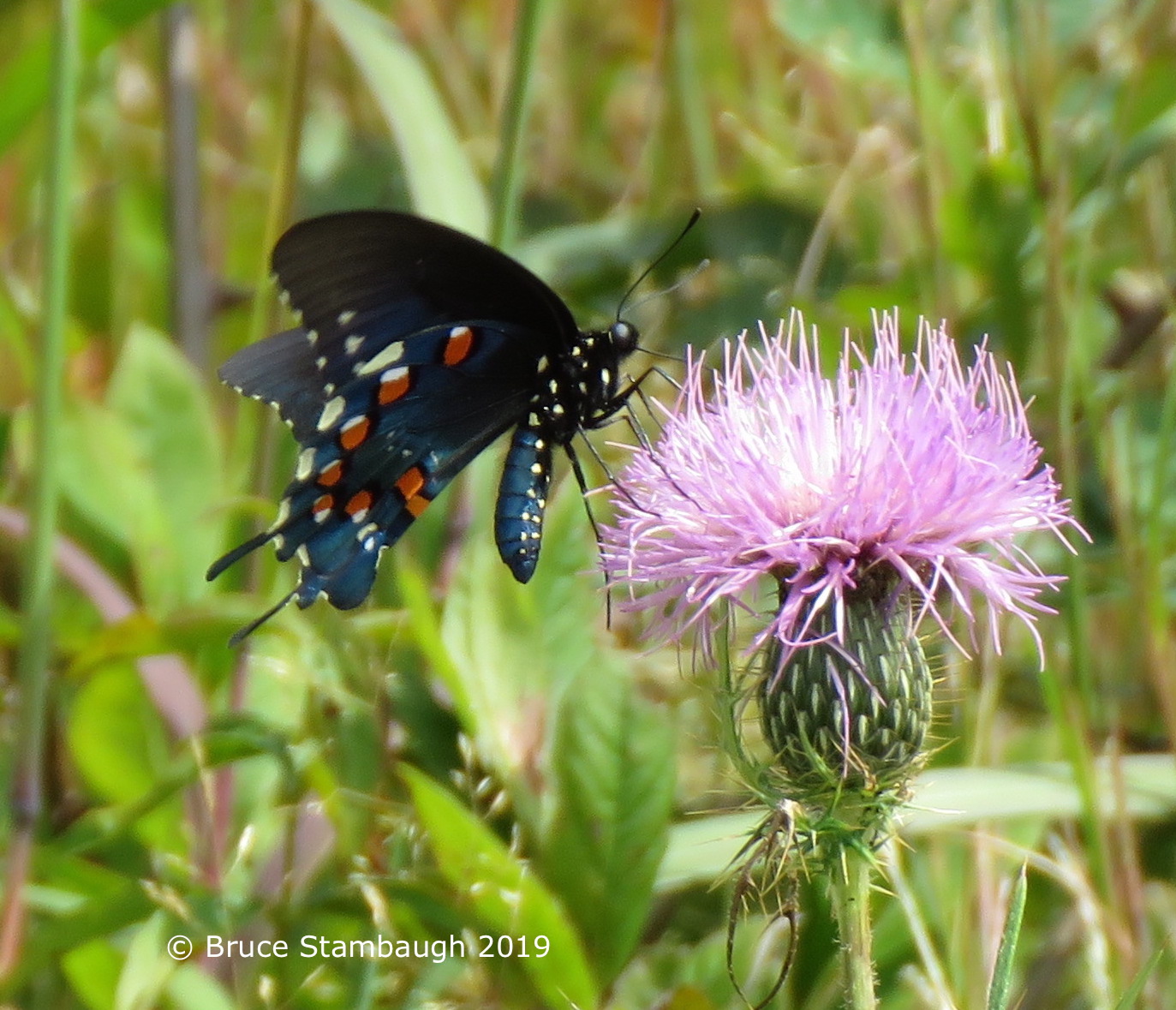
A migrating black tiger swallowtail butterfly.
Since the governors have had to take the lead in issuing orders and health guidelines, rules and suggestions vary significantly from state to state. In part, that’s what has fueled our consternation.

We haven’t seen in person our son and his wife, who live in New York State, in more than a year. We have friends and relatives who have tested positive, but fortunately, they have all recovered so far. Too many others weren’t as fortunate.

County and street fairs, high school football, band shows, concerts, vacations, have all been canceled. Major League Baseball is trying to play a shortened season with no fans in attendance.

Virus or no virus, August will be August no matter what. Golden sunsets will blaze away in the hazy evening skies. Migrating birds and butterflies will begin to wing their way south.
We’ll continue to meet with friends, relatives, and worship remotely through technology.

Under the current dire circumstances, it’s the best and safest we can do. We’ll continue to do our shopping curbside.

Even given all that, I know that my August ambivalence must yield to patience, and patience to resolve. We have to see this global health crisis through for however long it takes. I’ll continue to be cautious, careful, and diligent. I am not ambivalent about COVID-19.

My challenge is not to let my melancholy deter my joy for living, for sharing, for helping others, even if it is with an altered daily lifestyle.

An August sunset.

© Bruce Stambaugh 2020
Shining Through


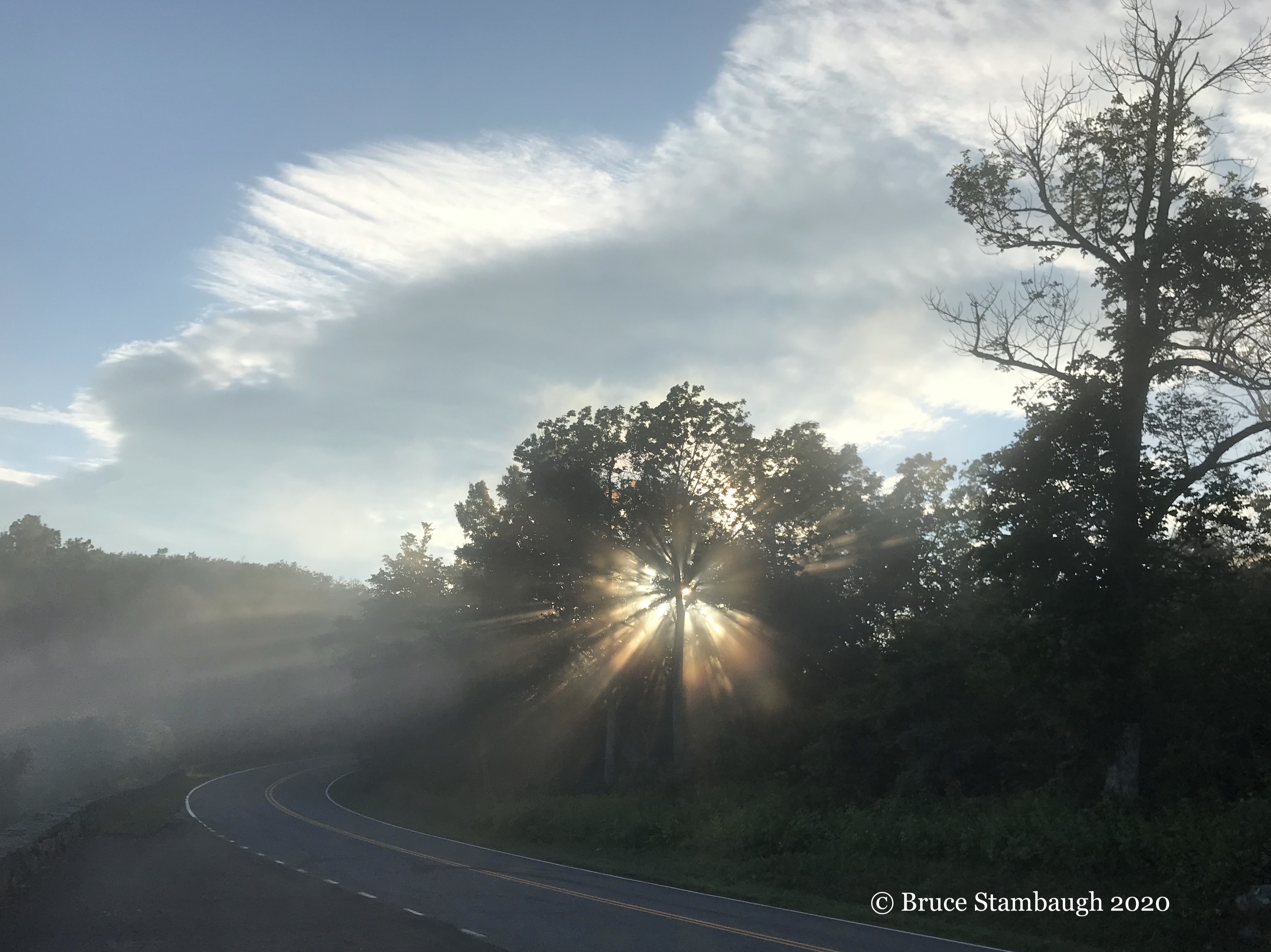
I was driving along the Skyline Drive in Shenandoah National Park early in the morning when I came upon this scene. Fortunately, the fog was rolling up the side of the Blue Ridge Mountains right at an overlook.

Watching the fog rise rapidly out of the Shenandoah Valley and up over the mountains was a treat. The sun was just peeking over the eastern ridge when I turned and caught this scene. The crown of the tree scattered the sun’s rays into the eerie fog, creating this spectacular scene. The high clouds perfectly framed my Photo of the Week, “Shining Through.”

© Bruce Stambaugh 2020

Bay Photos by Donna

Wildlife Photos From The Chesapeake Bay Region

ROAD TO NARA

Culture and Communities at the Heart Of India

K Hertzler Art

Artist and nature journalist in the Shenandoah Valley of Virginia.

Maria Vincent Robinson

Photographer Of Life and moments

Gabriele Romano

Less Noise. More Meaning

Jennifer Murch

Art is the only way to run away without leaving home. -Twyla Tharp

Roadkill Crossing

Writing generated from the rural life

ANJOLI ROY

writer. teacher. podcast cohost.

Casa Alterna

El amor cruza fronteras / Love crosses borders