Autumn’s Amazing Colors – Part 2

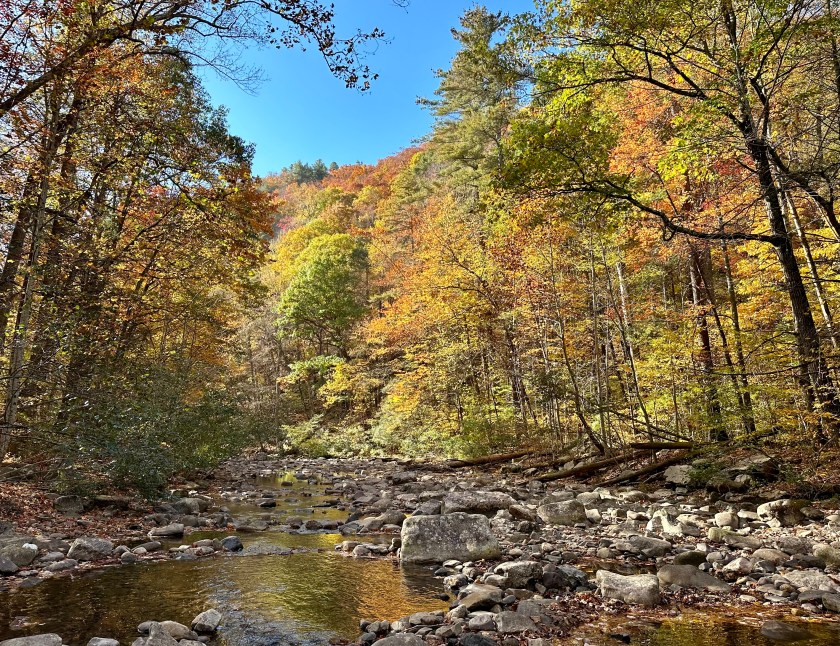
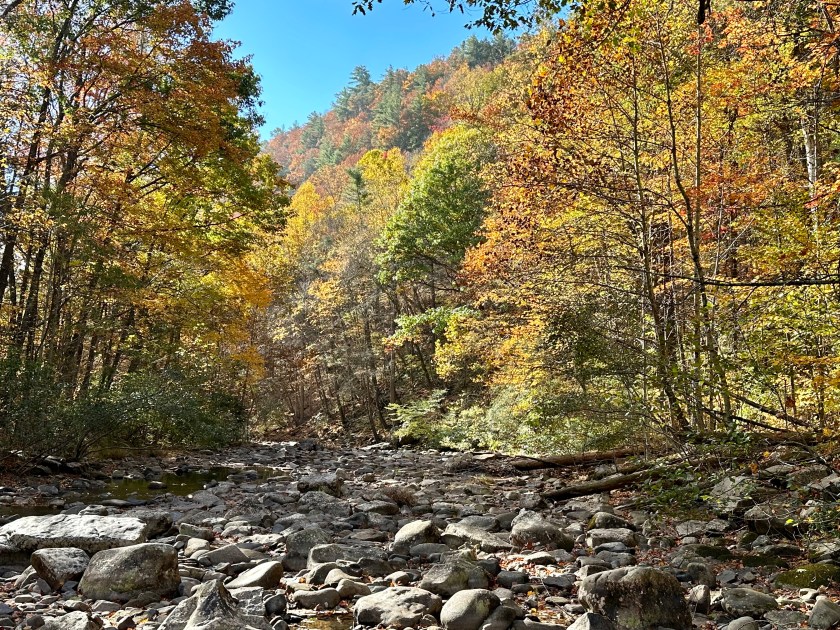
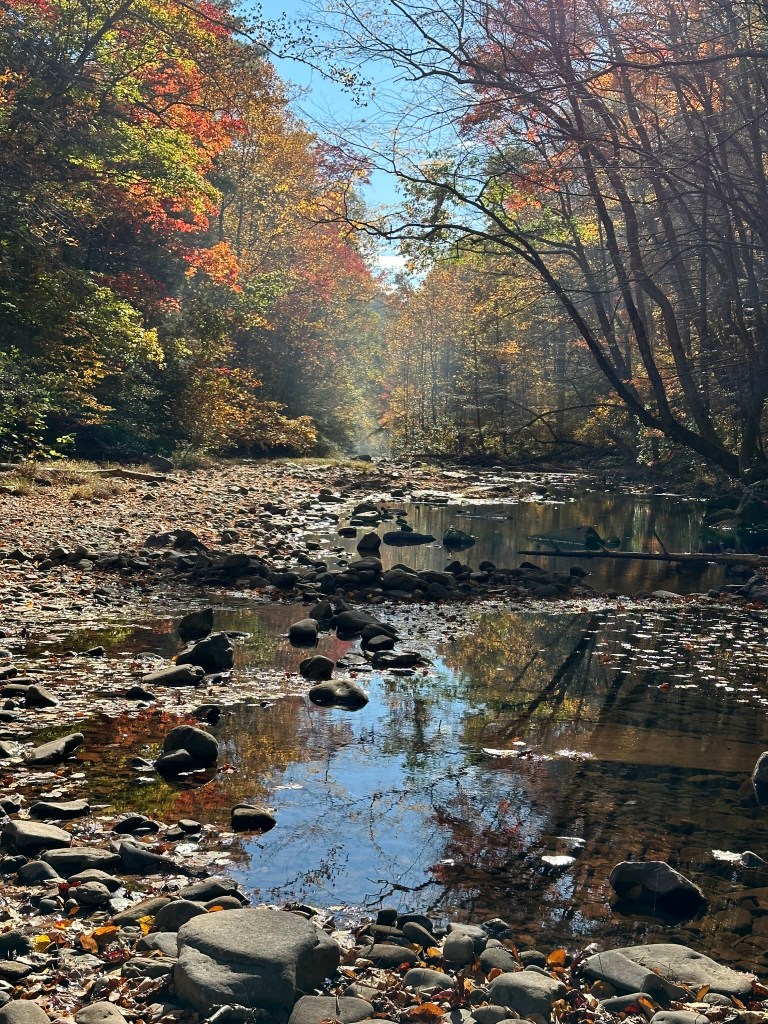
The Dry River in western Rockingham County, Virginia.

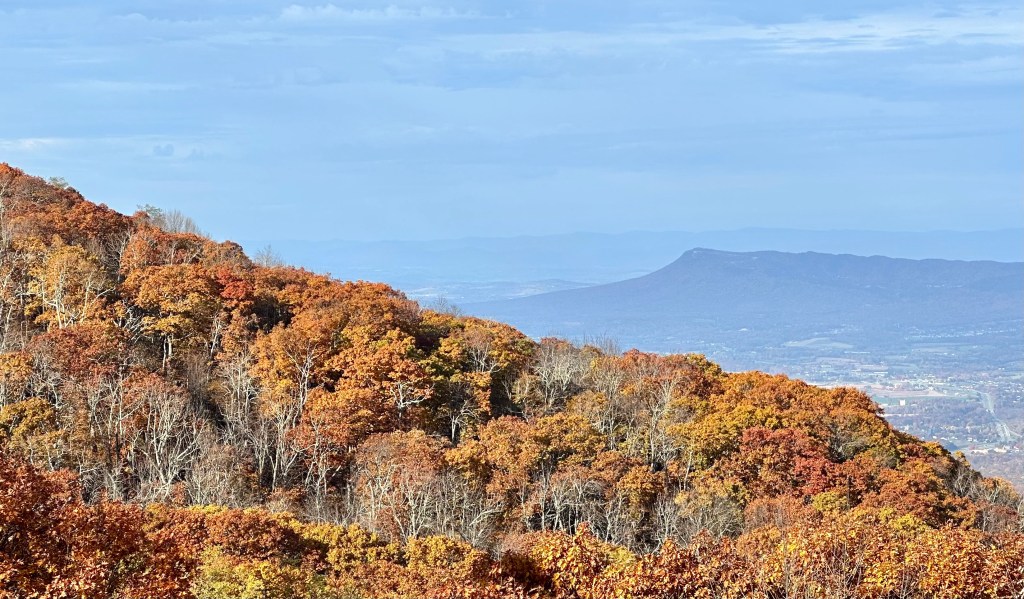
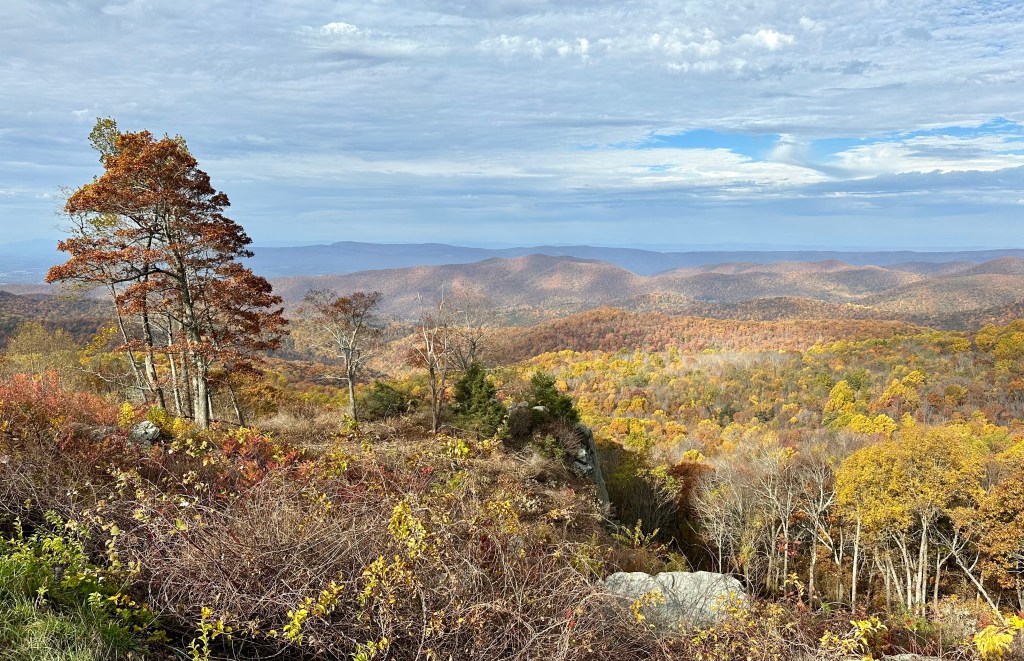
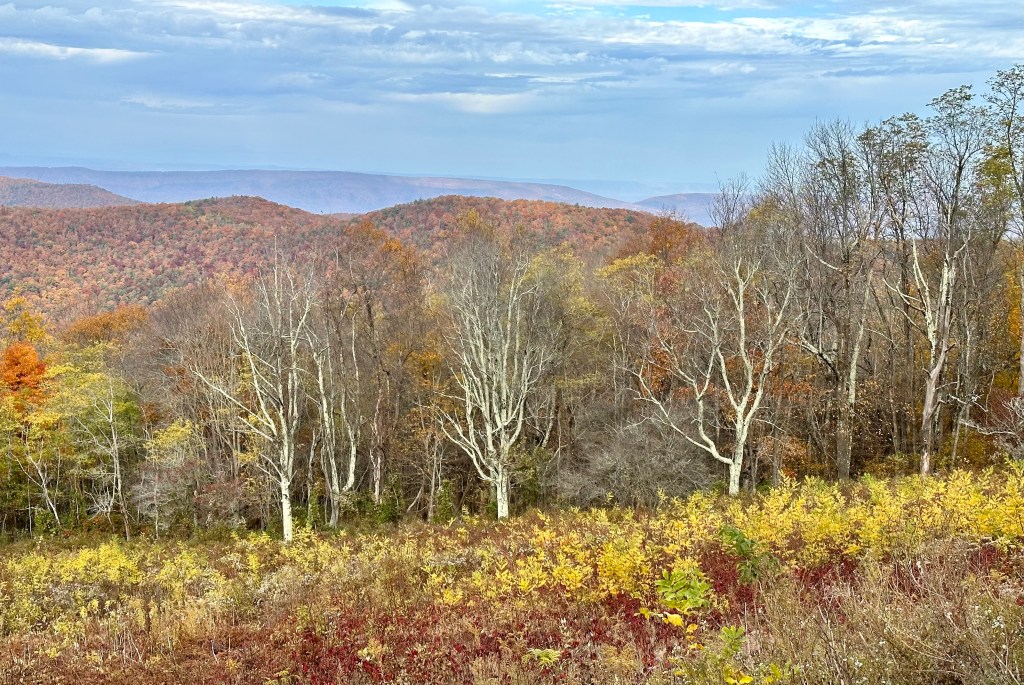
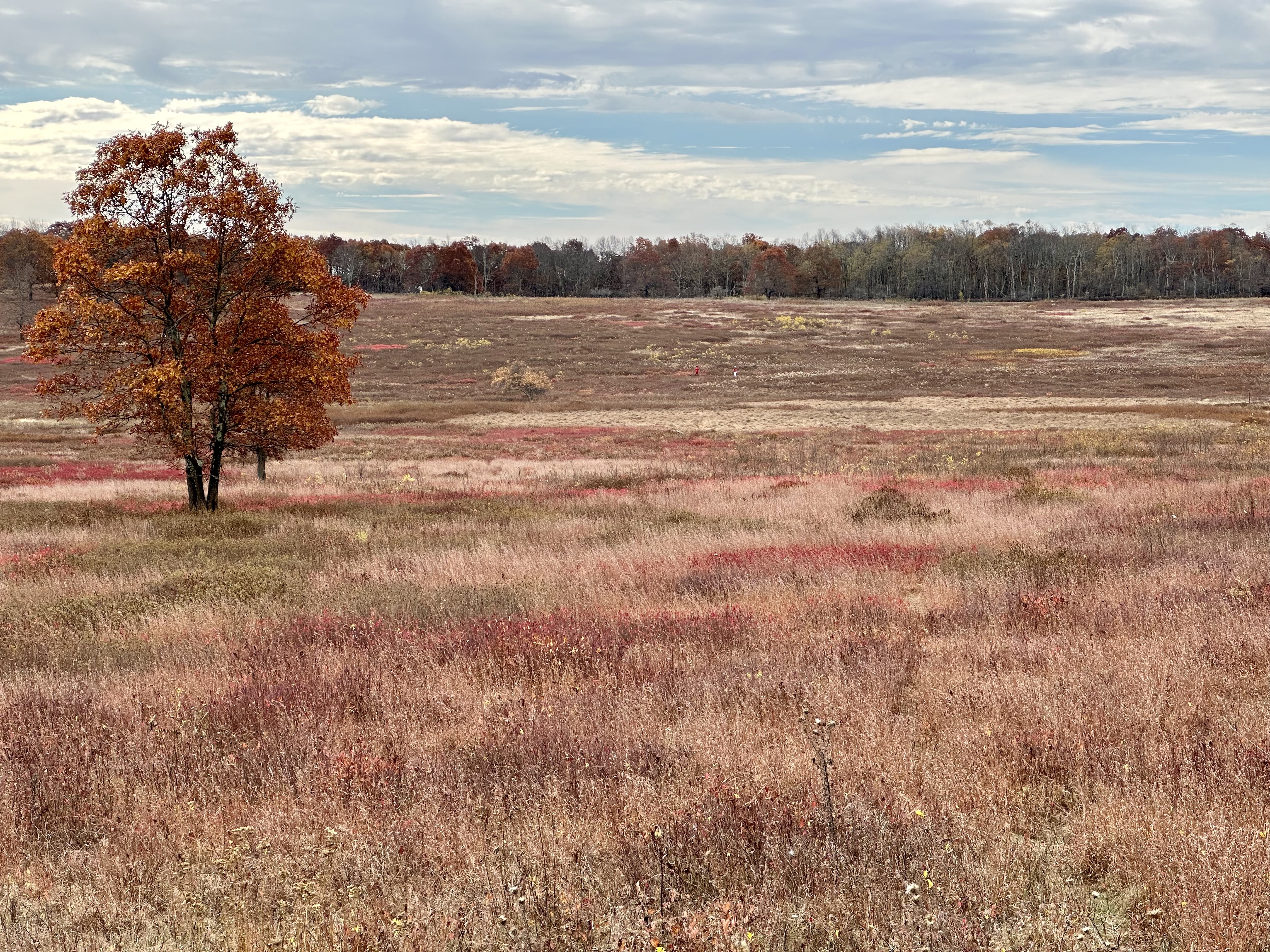
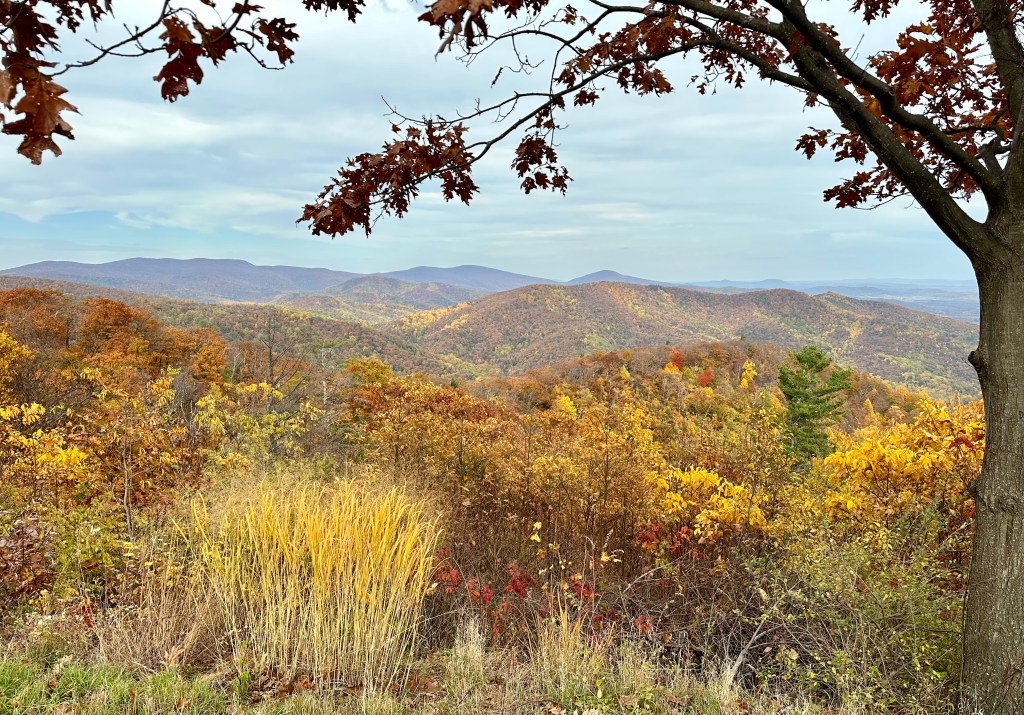
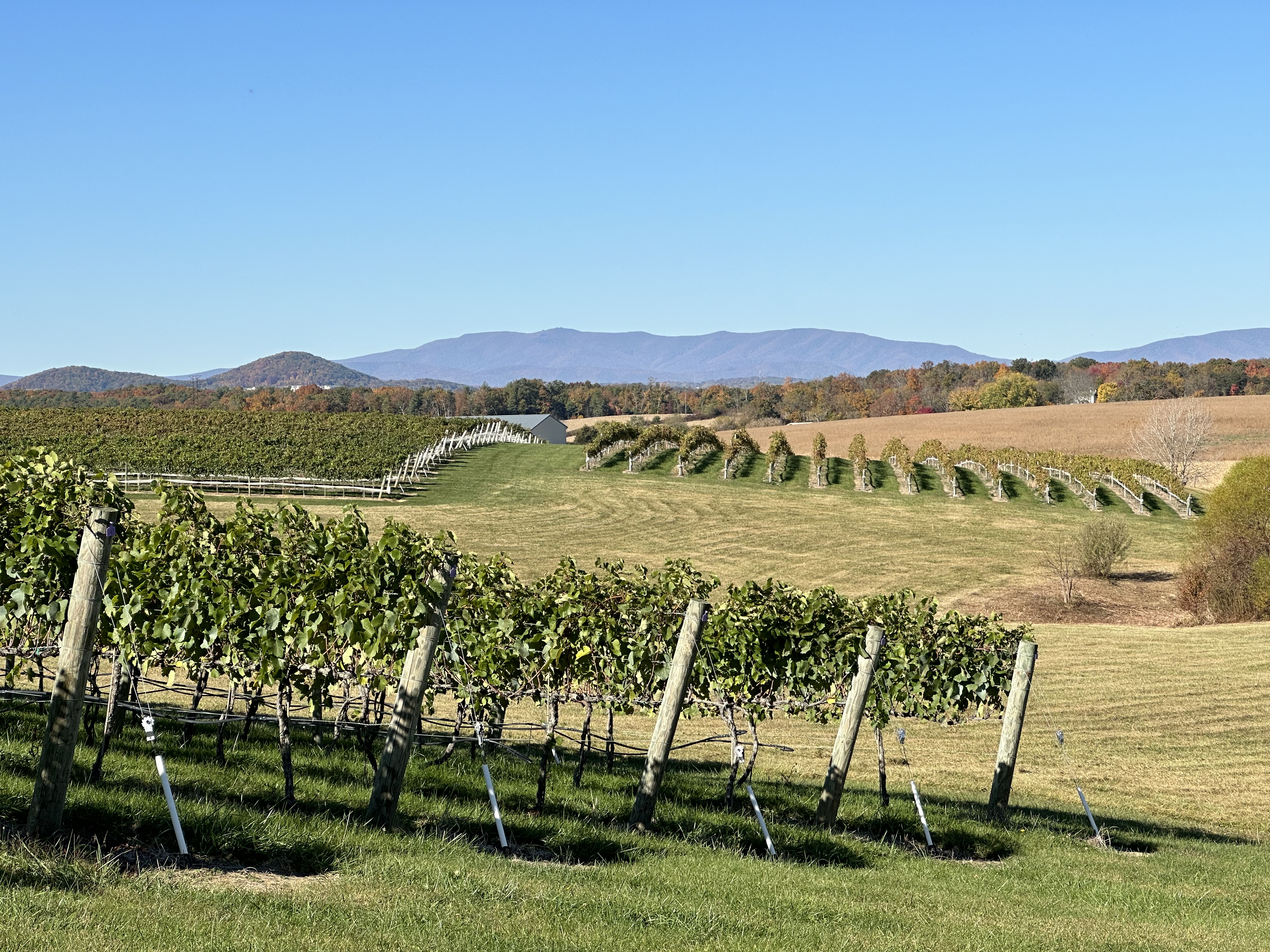
My quest to capture fall’s unique colors continued. The weather was incredible for taking photos. The blue skies, unseasonably warm temperatures, and the desire to get outside and enjoy creation spurred me on. Plus, my wife was more than happy for the time to spruce up the house with me out of the way.

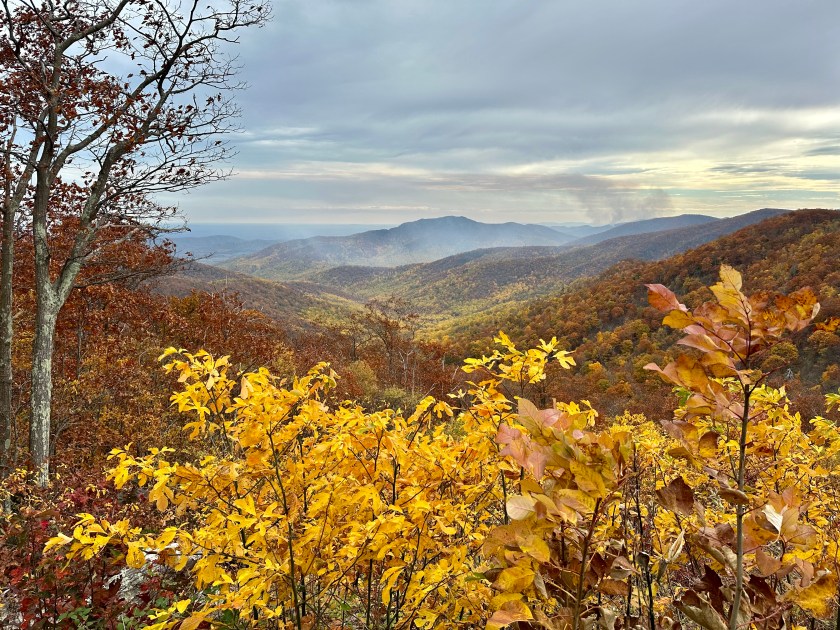
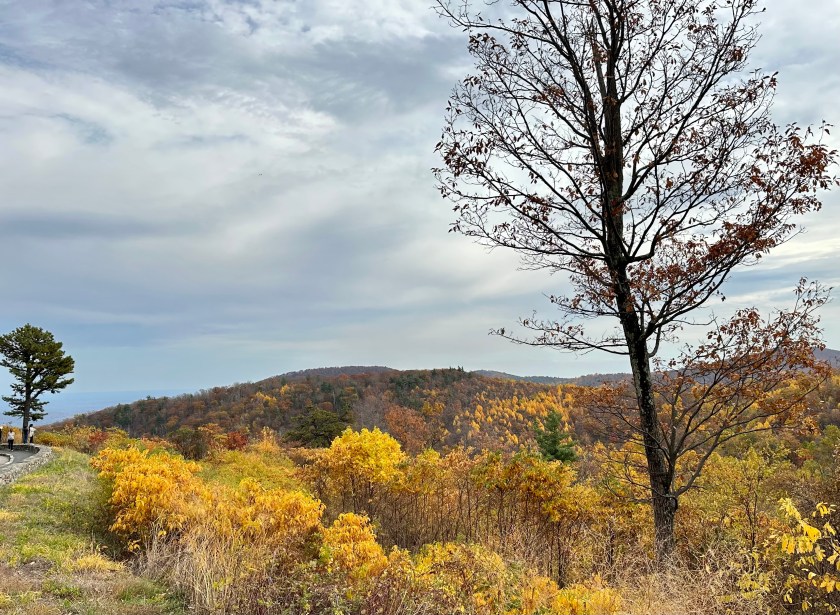
I originally had planned to go to Shenandoah National Park at the eastern end of Rockingham County, Virginia’s second largest in square miles. Instead, Shenandoah Mountain on the western edge of the county called my name.

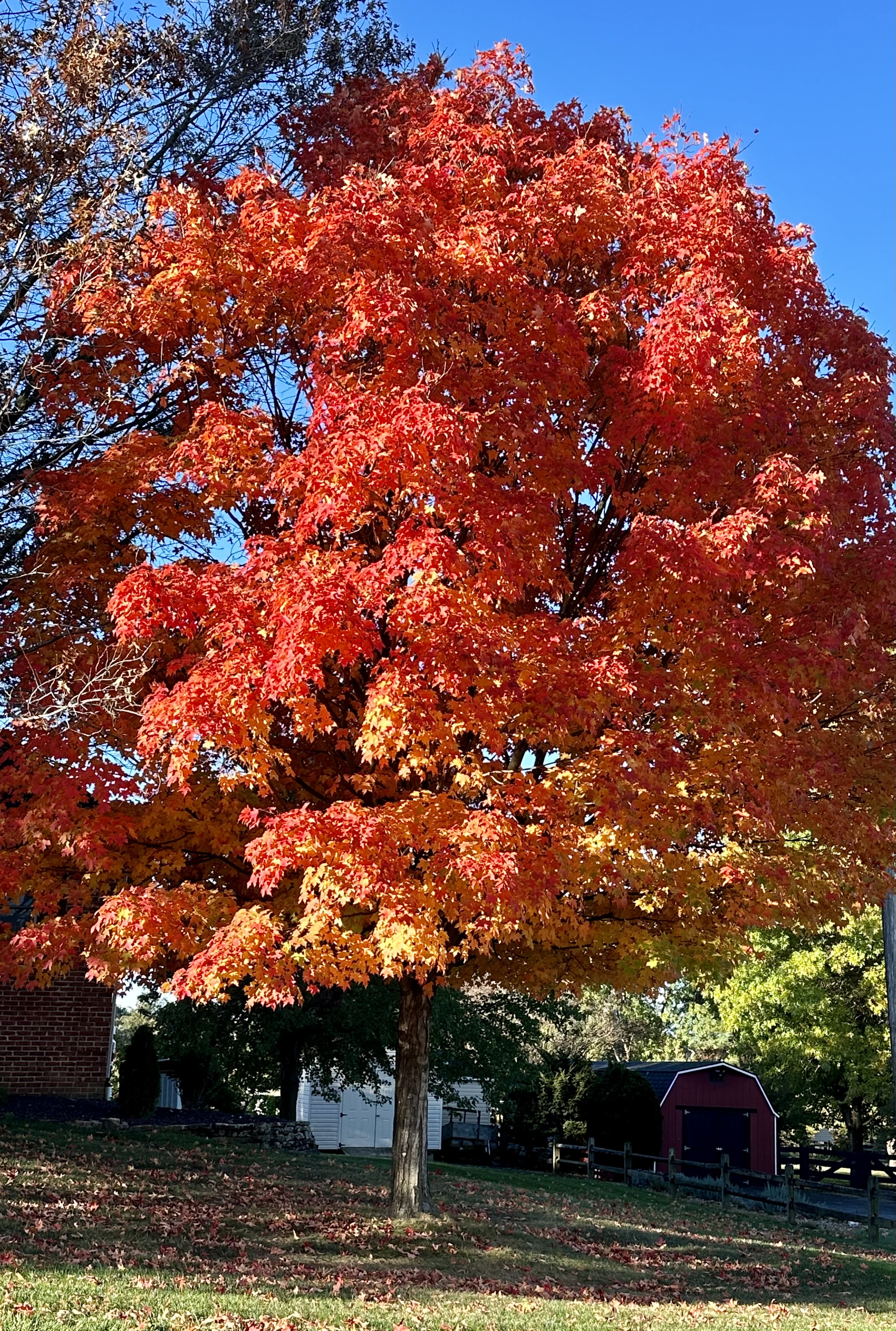
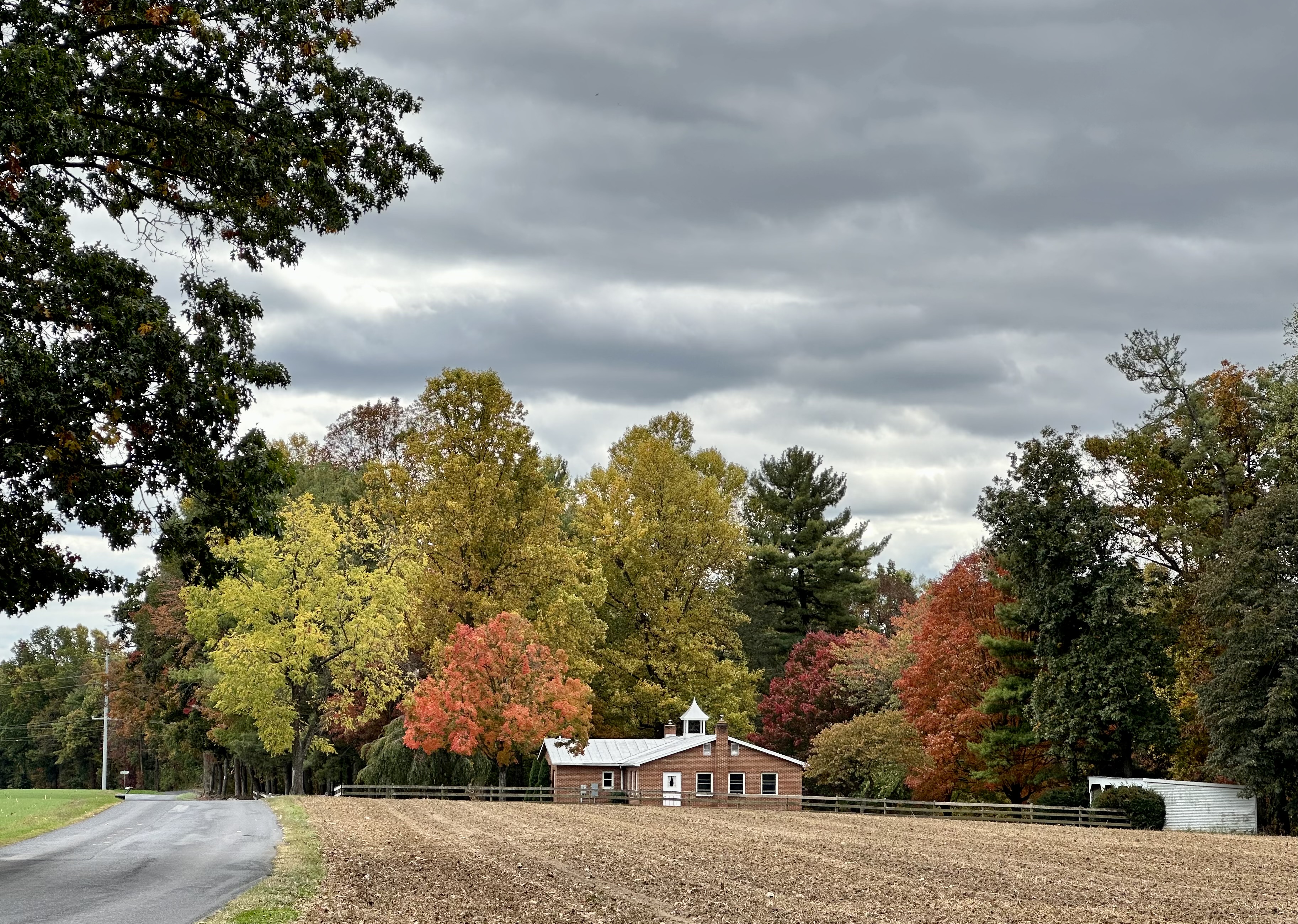
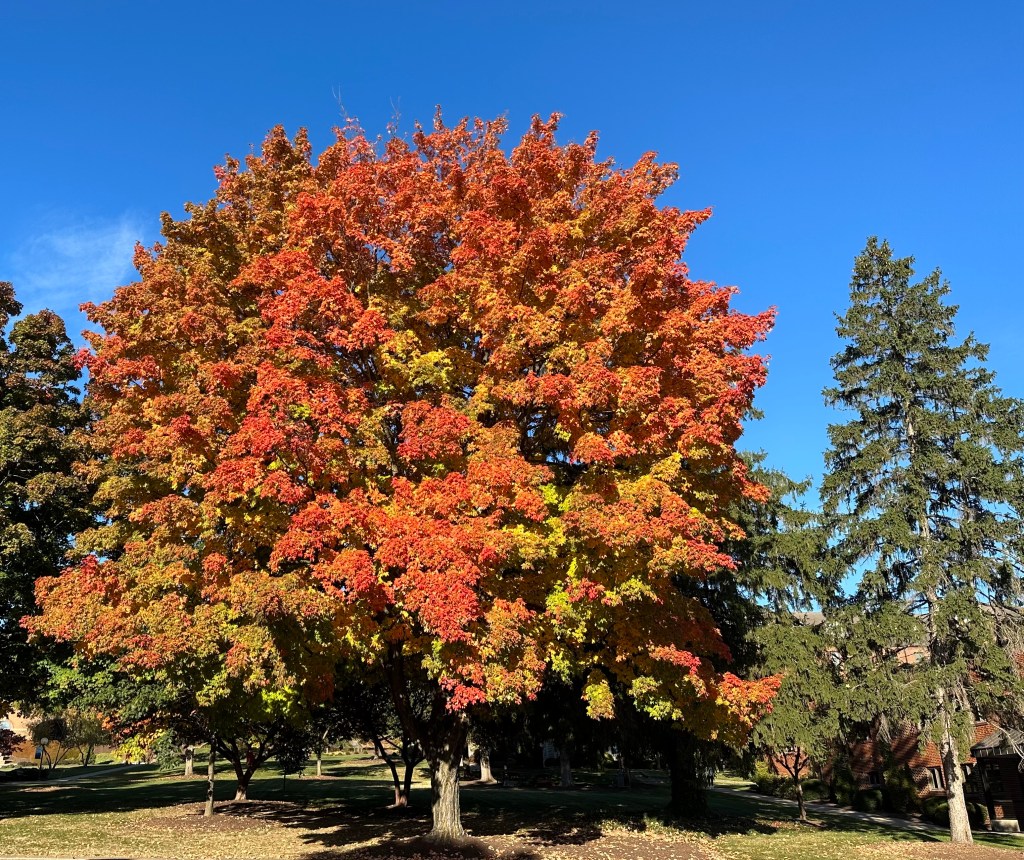
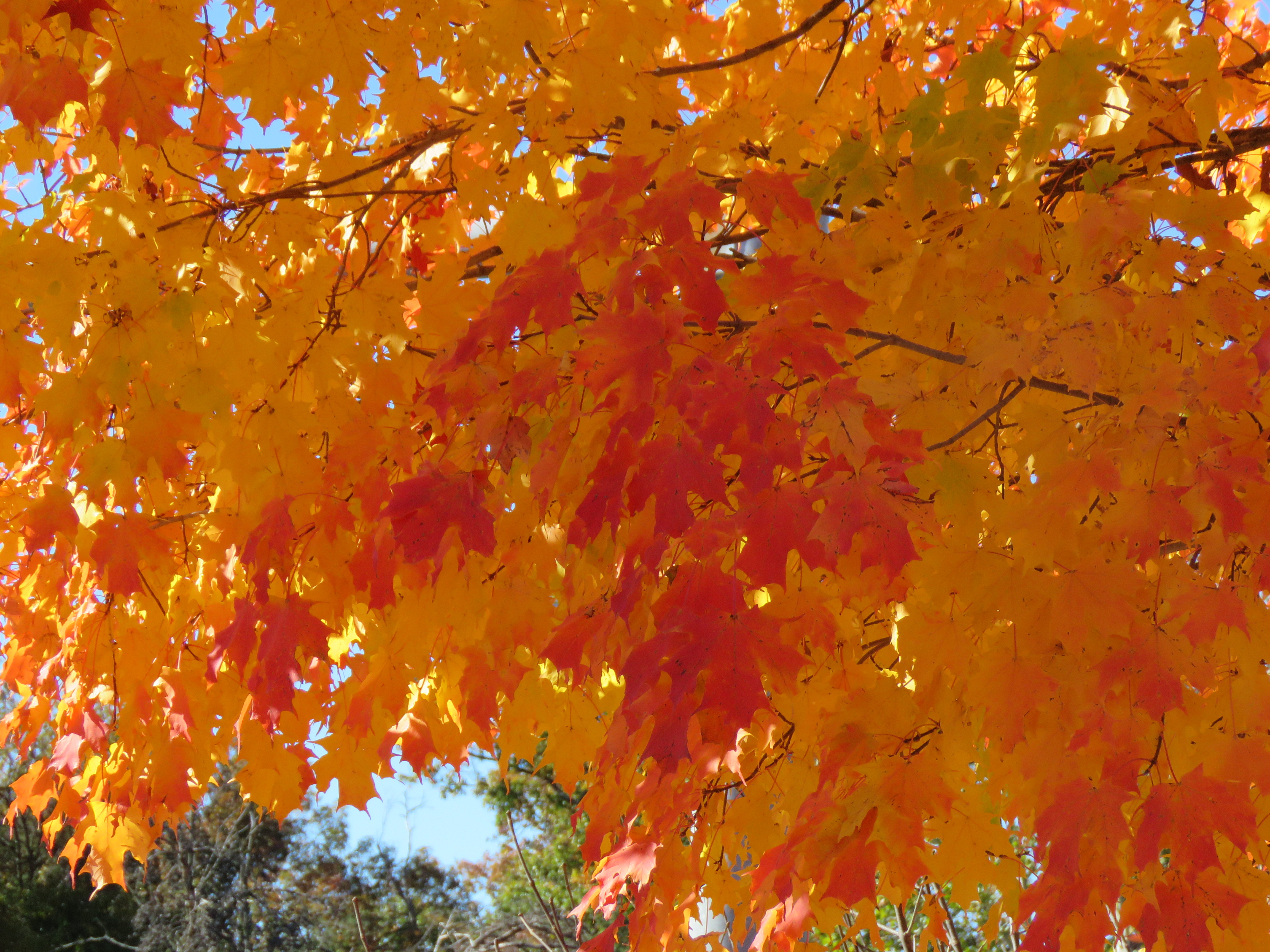
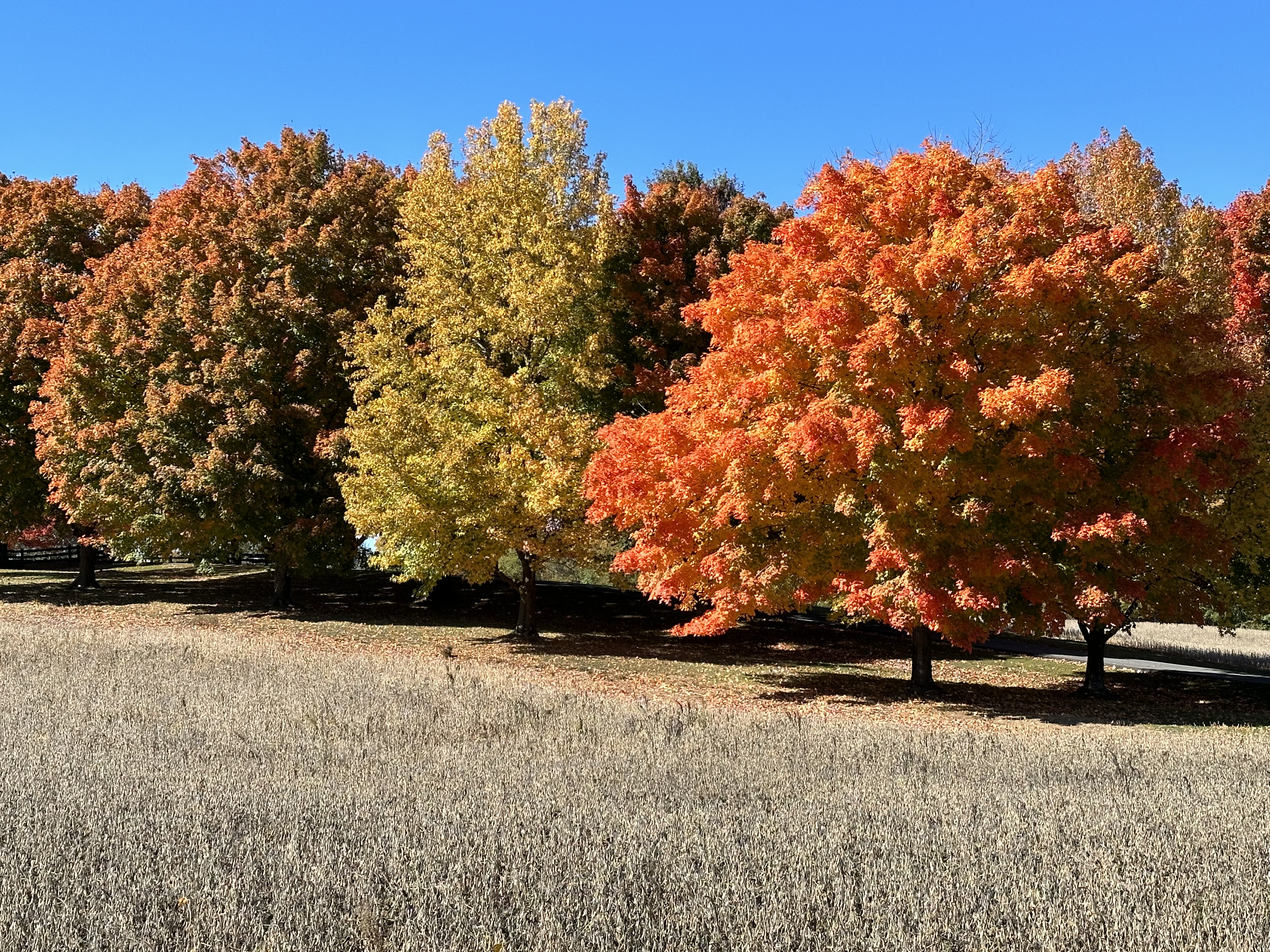
Sugar maples at Pleasant View Old Order Mennonite Church.

I first returned to the Old Order Mennonite Church to capture more photos of the radiant sugar maples in the morning light. They had a funeral the previous day, and out of respect, I didn’t want to interfere, so I only took a few photos.

I wound my way towards the Allegheny Mountains, first stopping at Riven Rock Park, maintained by Harrisonburg Parks and Recreation, even though it is 13 miles west of the Friendly City. Despite the buzzing insects, it was the right decision.

Because the area has been in a moderate to severe drought for weeks, the Dry River was indeed nearly dry. The rising sun sparkled what water was there and drew a light fog from the forest. A few lucky leaves bathed in the sun’s rays in the narrow gap between the steep foothills.

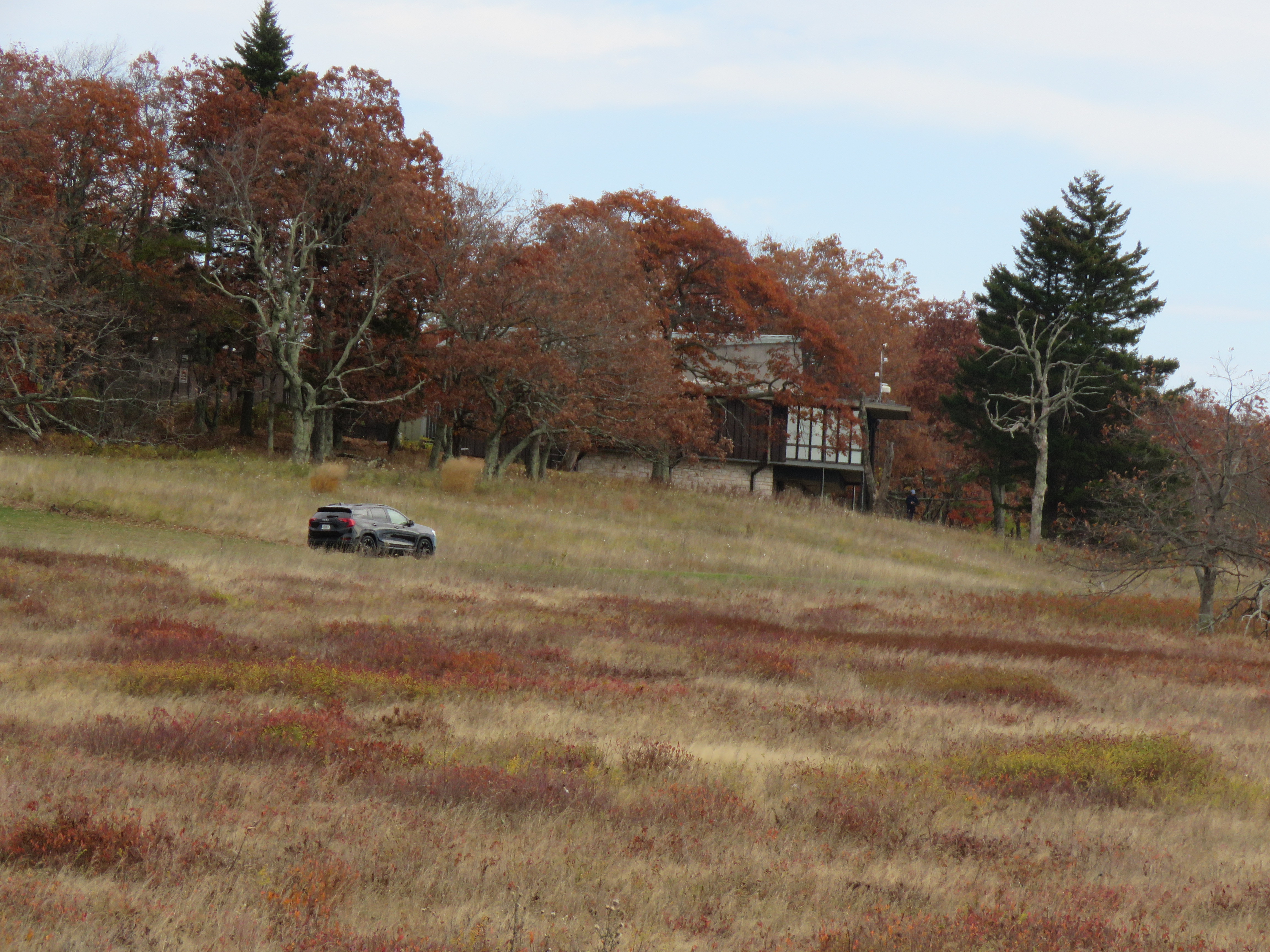
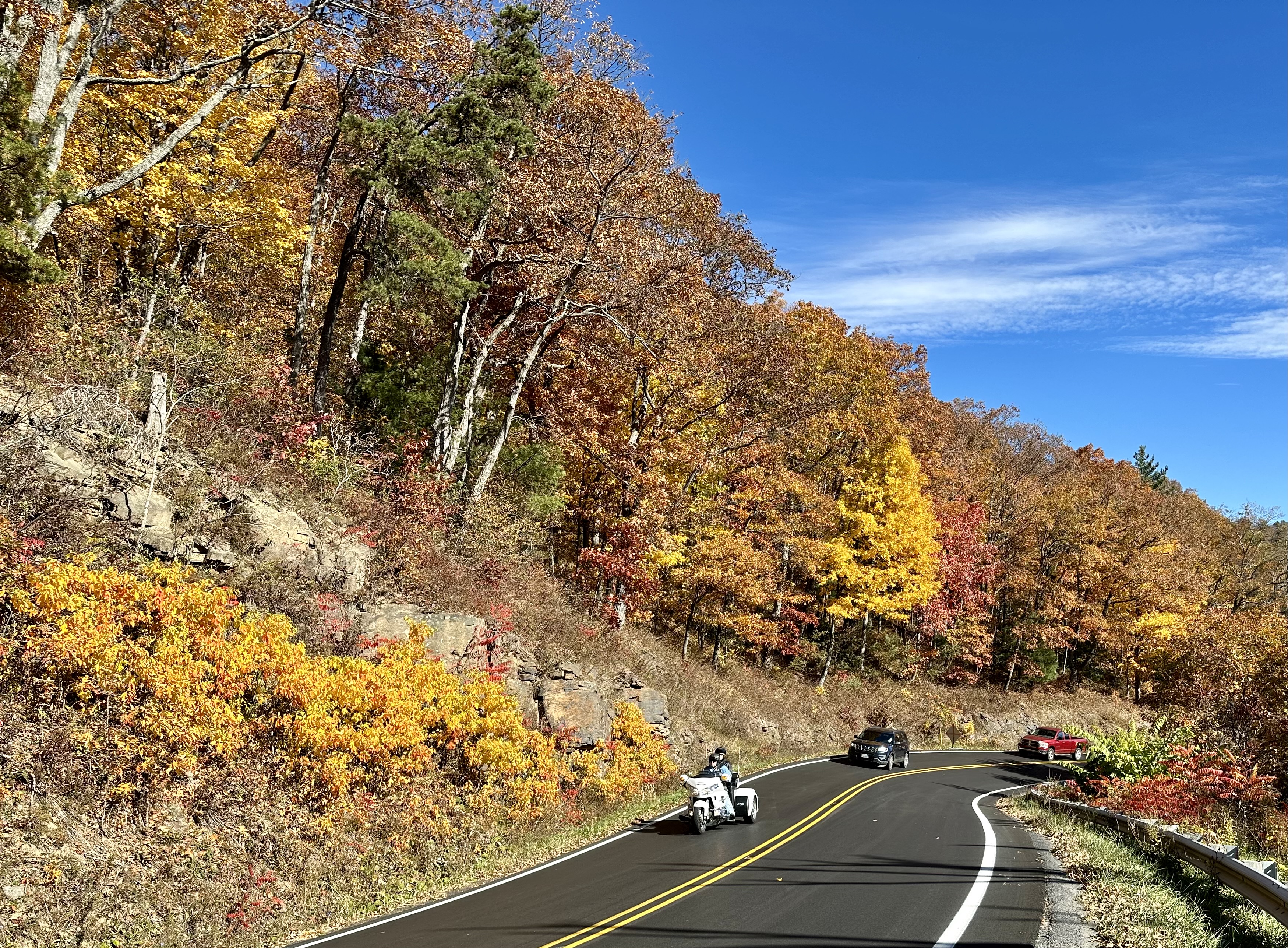
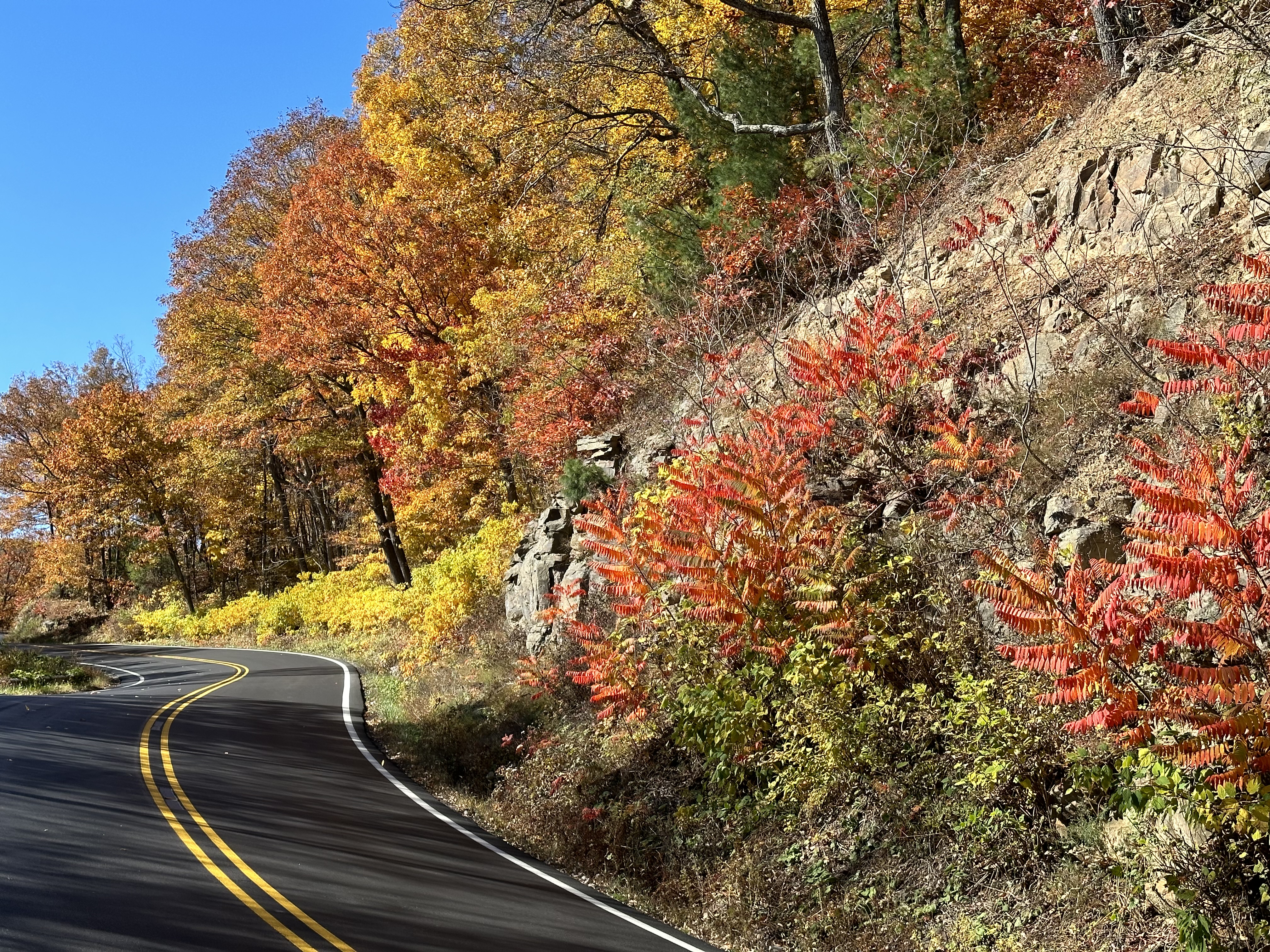
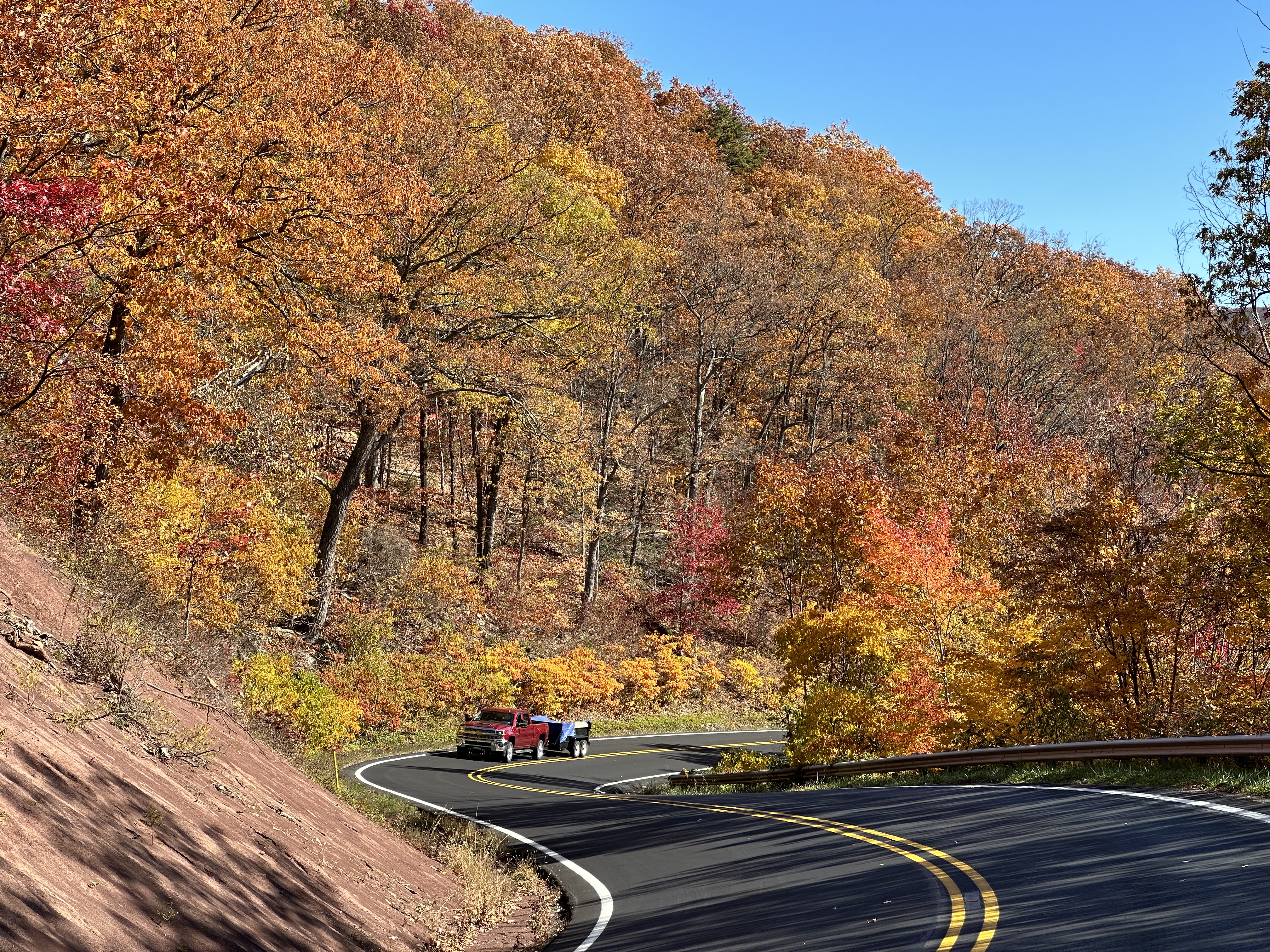
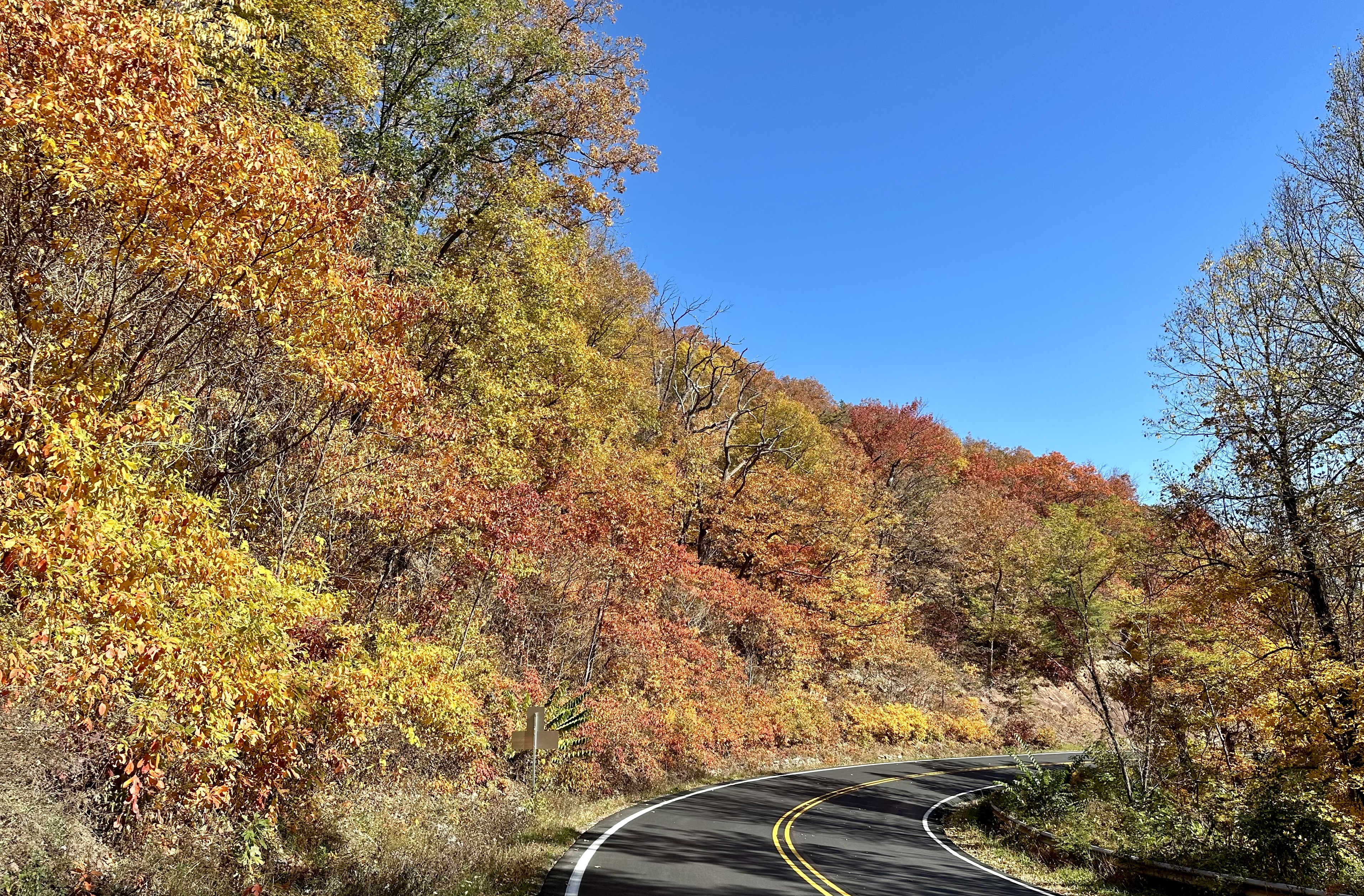
I snapped a few photos and continued through the tunnel of trees of the George Washington National Forest. In a couple of miles, U.S. Route 33 instantly transforms from an arrow-straight highway to a zigzagging assembly of switchbacks for four miles to the peak of Shenandoah Mountain.

I noted several photo opportunities on the way to the mountaintop, as the state line between Virginia and West Virginia. I watched for places to pull off the winding, narrow roadway, too.

Within a quarter mile of my turn-around destination, traffic stopped. West Virginia Department of Transportation was doing some roadwork. Experience told me that it would be a while sitting in the line of vehicles since WVDOT uses a “Follow Me” pilot vehicle in construction zones. That is especially true in the mountains. It’s all for safety’s sake.

Once the line began moving, I pulled into the parking lot for Hightop Mountain Trail, which runs south along the state line to an old fire tower. Once all the cars behind me were gone, I headed back down the mountain. The look on the flagger’s face said, “Where in the heck do you come from?” I just smiled and waved until I reached my first safe pull-out.

I stopped several times, all the while being mindful of traffic from both directions. I often take photos with vehicles in the roadway for perspective and depth.

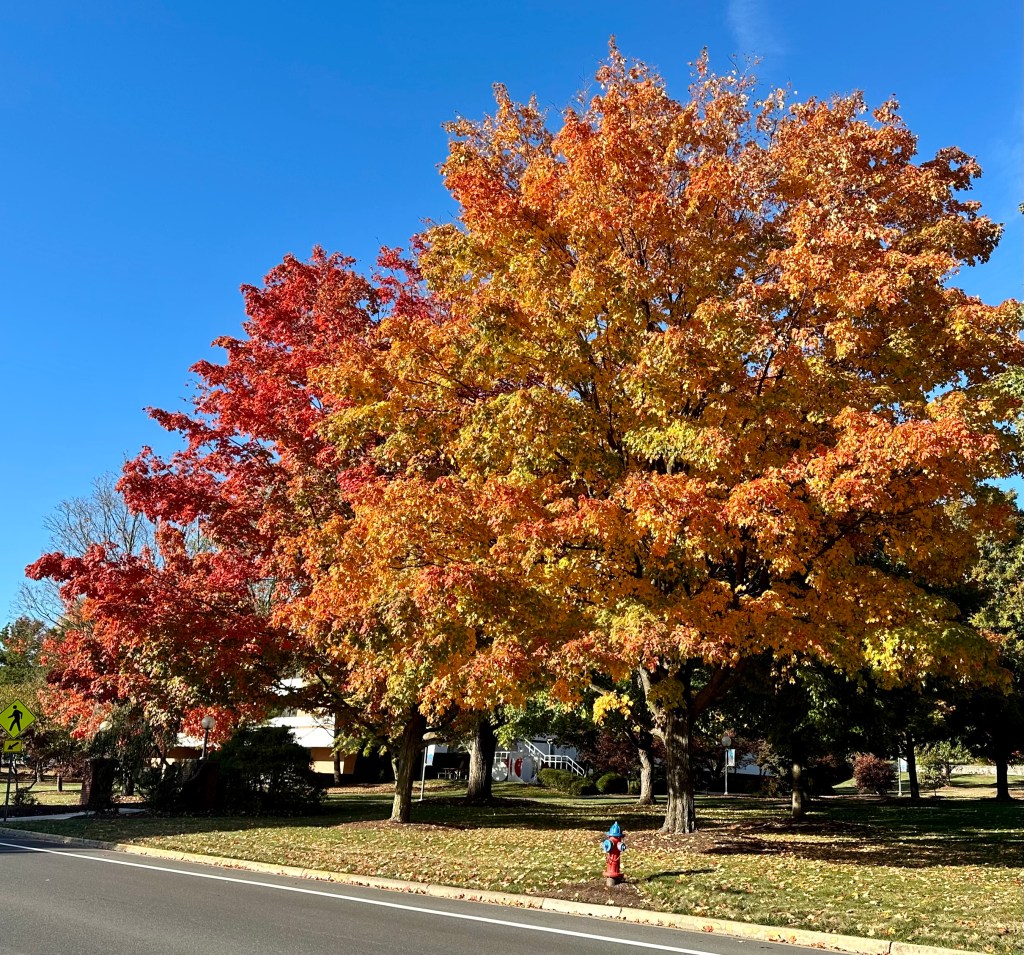
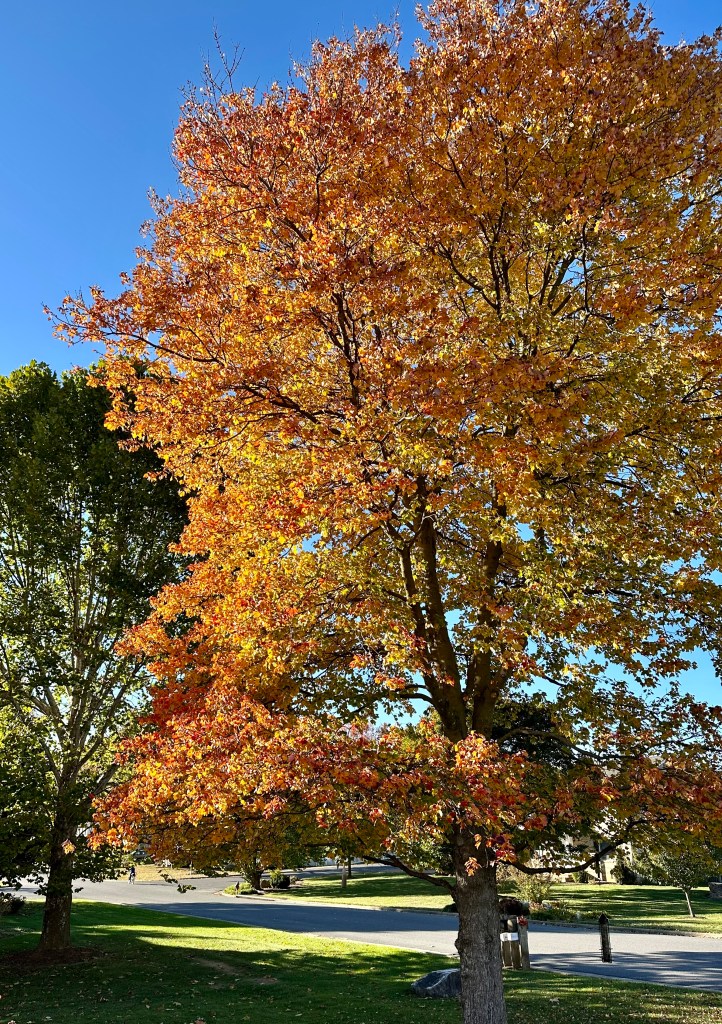
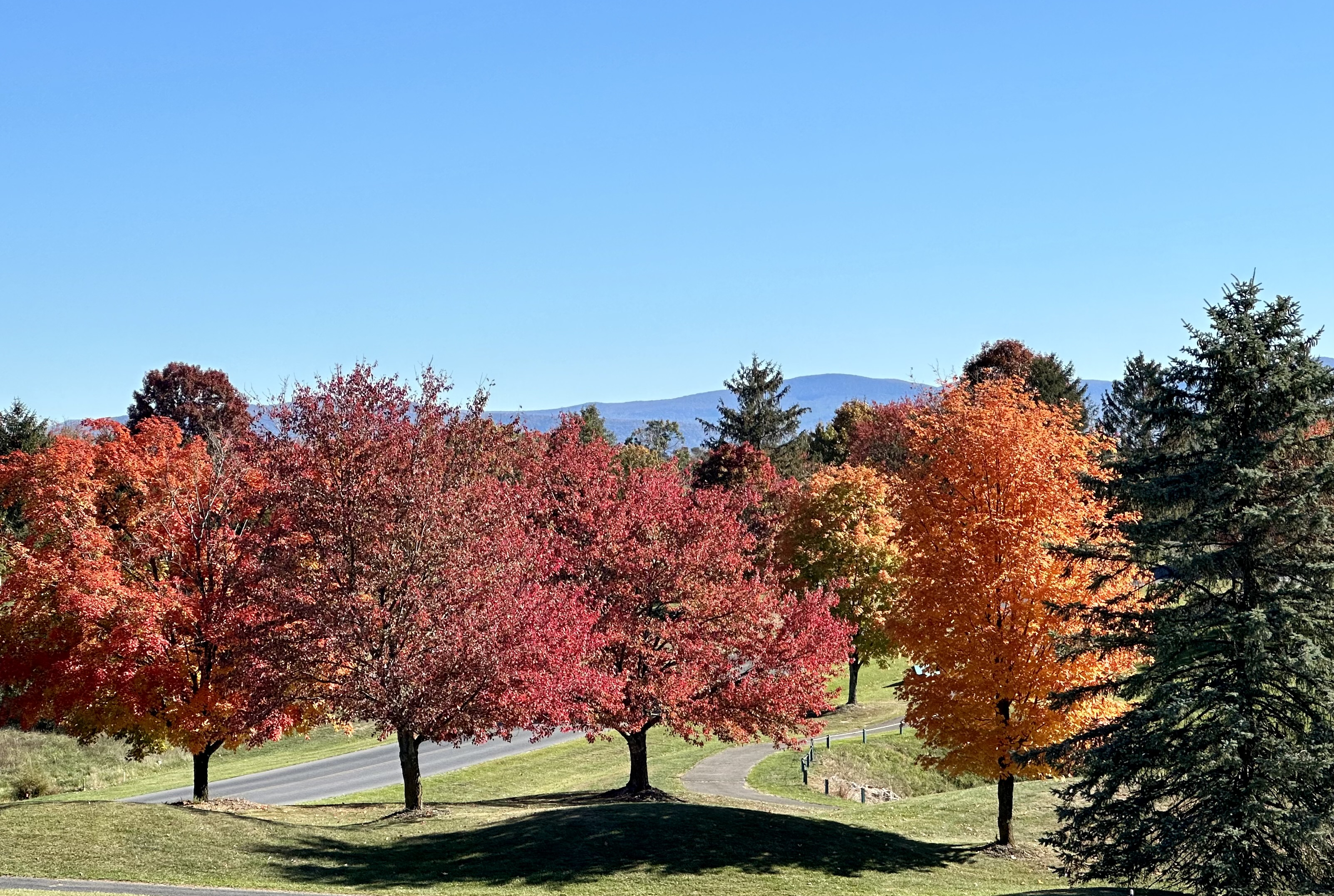
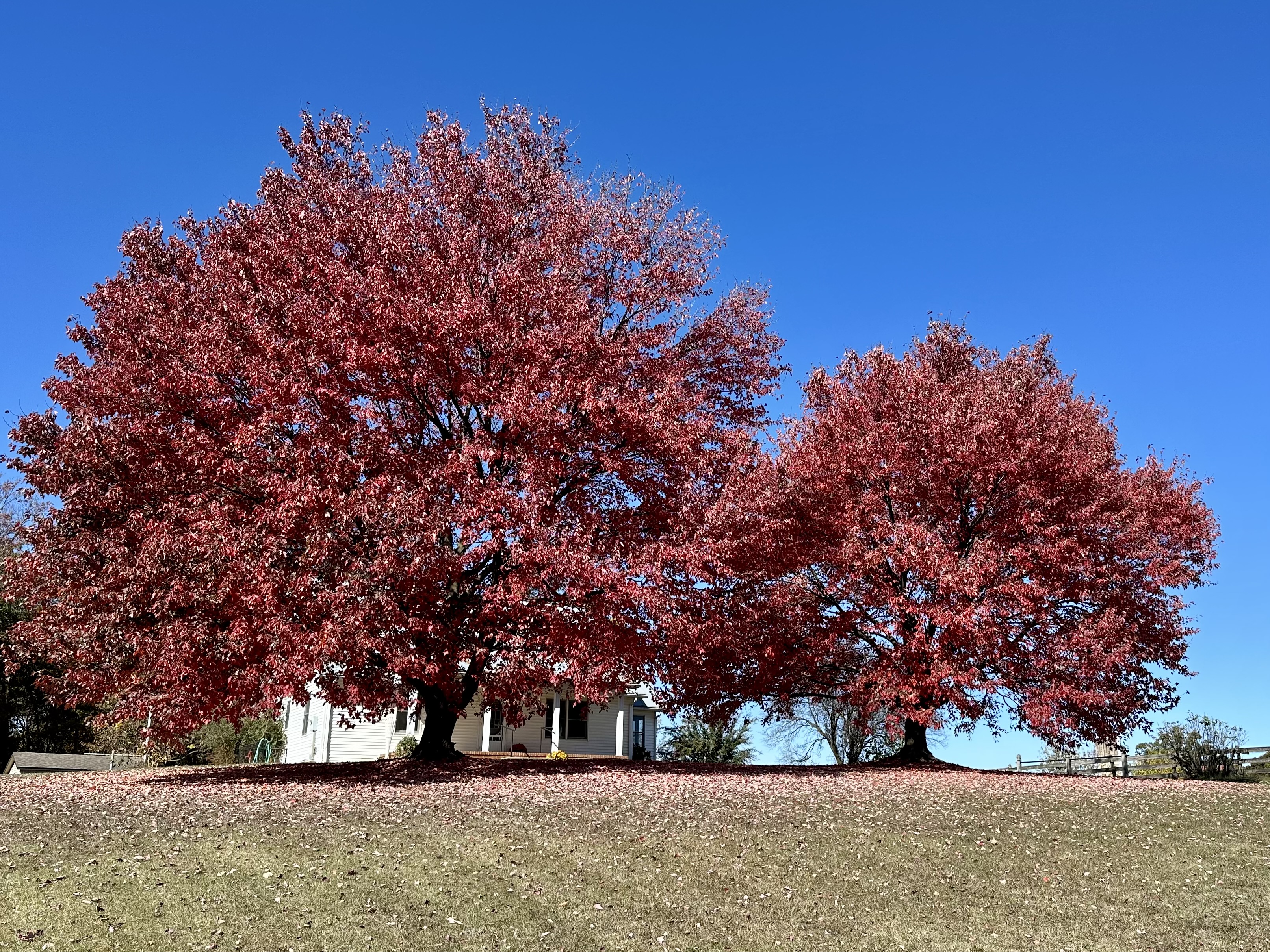
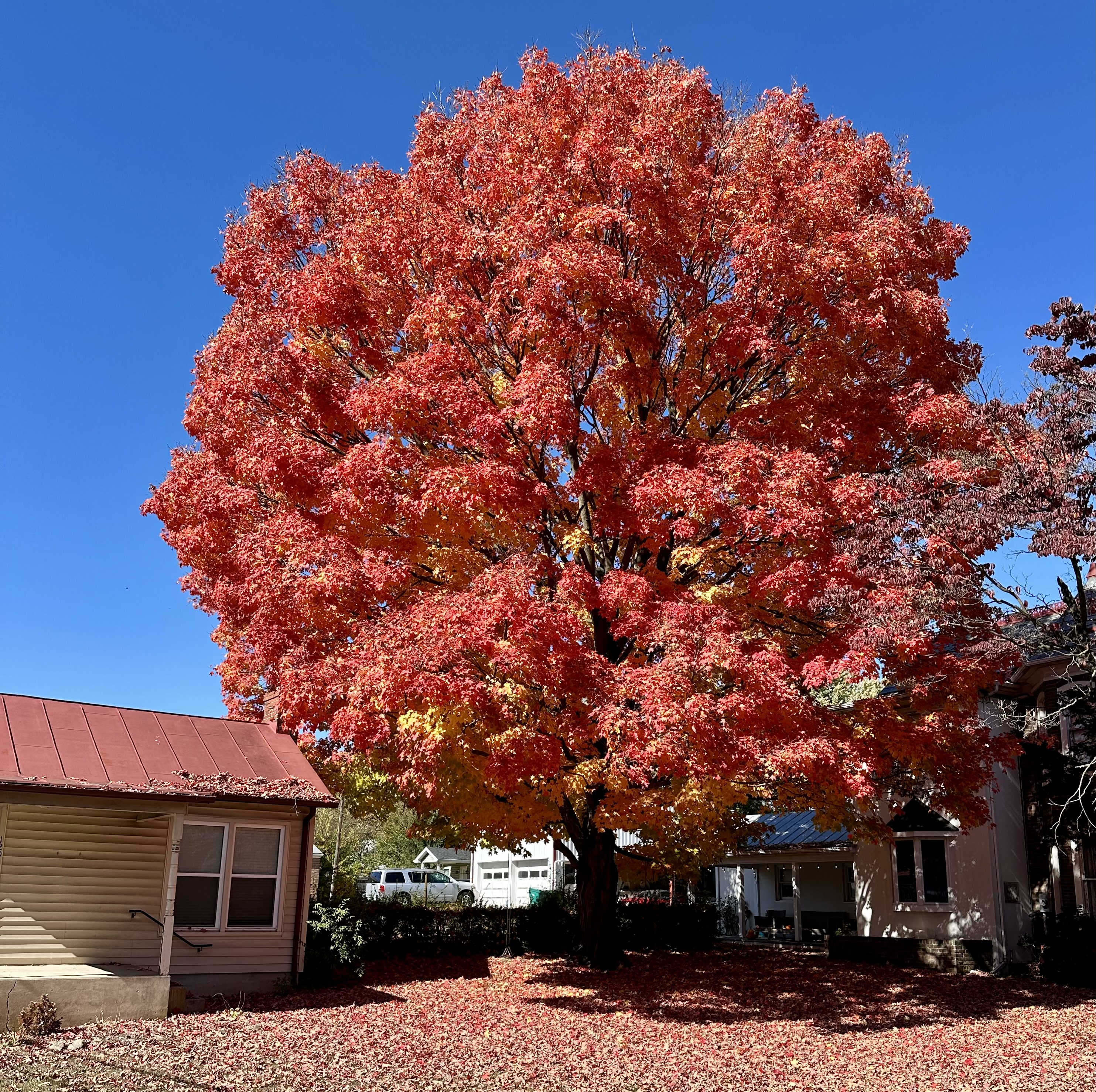
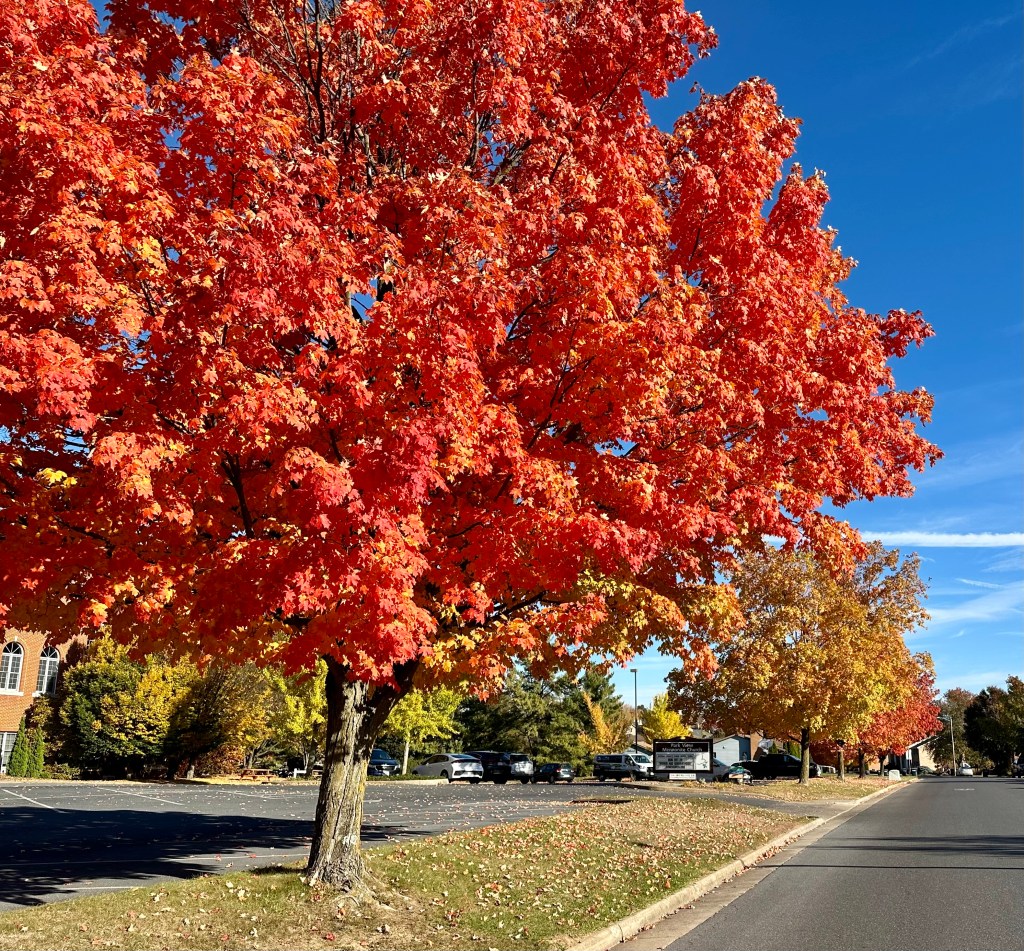
The next day, I chose to return to the Park View neighborhood of Harrisonburg and continue photographing the many beautiful trees there. I knew it would only be a matter of time before the trees would all be bare.

The sugar maples and the ginkgo trees complement one another.

© Bruce Stambaugh 2023

Autumn’s Amazing Colors

The colors of Massanutten Mountain, Massanutten, Virginia. Photo by Bruce Stambaugh.

With our travels to Greece and Rome during the first two weeks of October, I thought we might miss autumn’s peak colors. I need not have worried.

My wife and I could readily see on our drive home from Dulles International Airport to our home near Harrisonburg, Virginia, that most trees still held their leaves, which were only now turning their true colors. I was glad we hadn’t missed the peak.

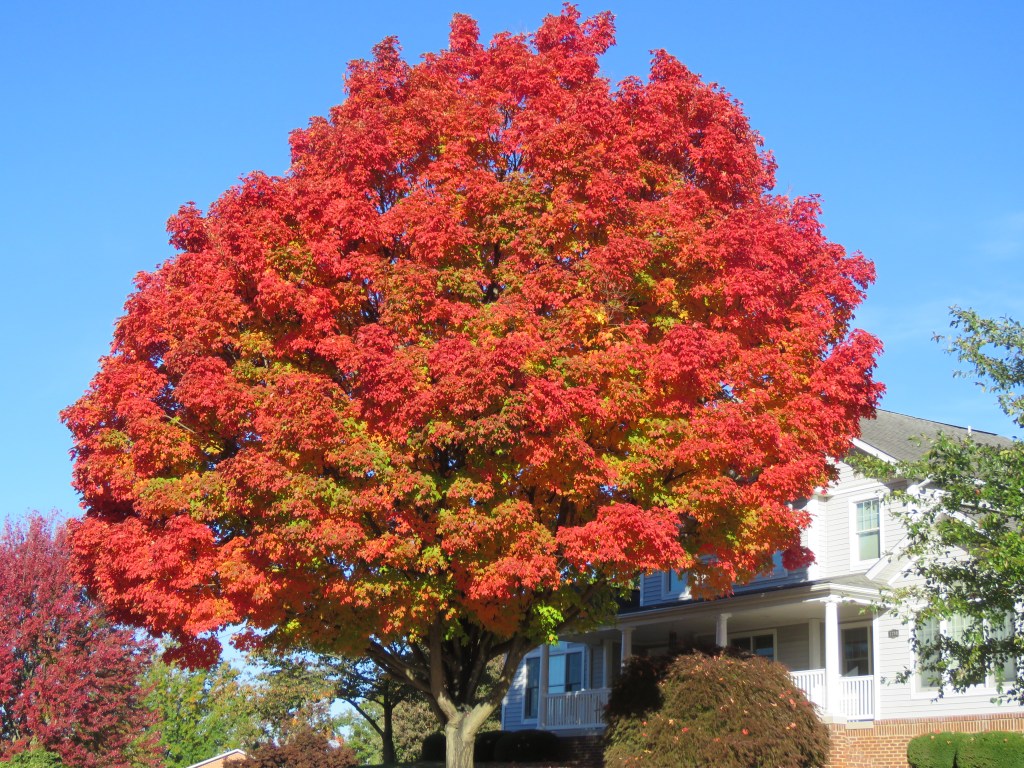
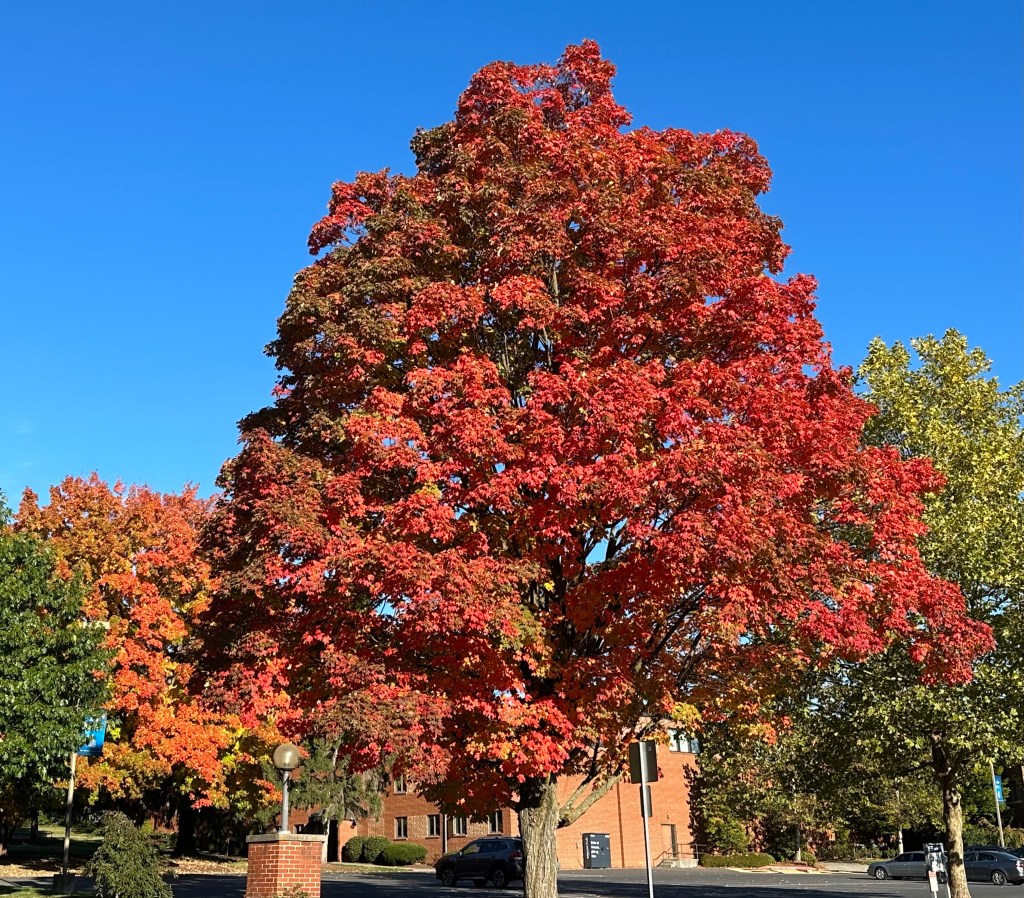
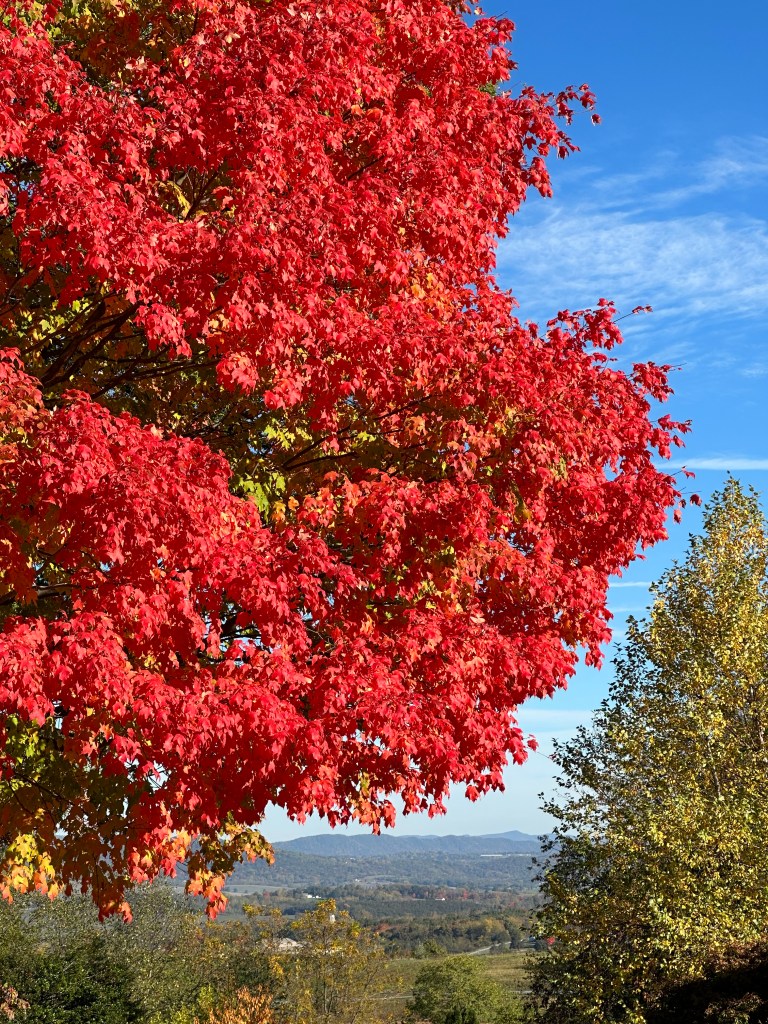
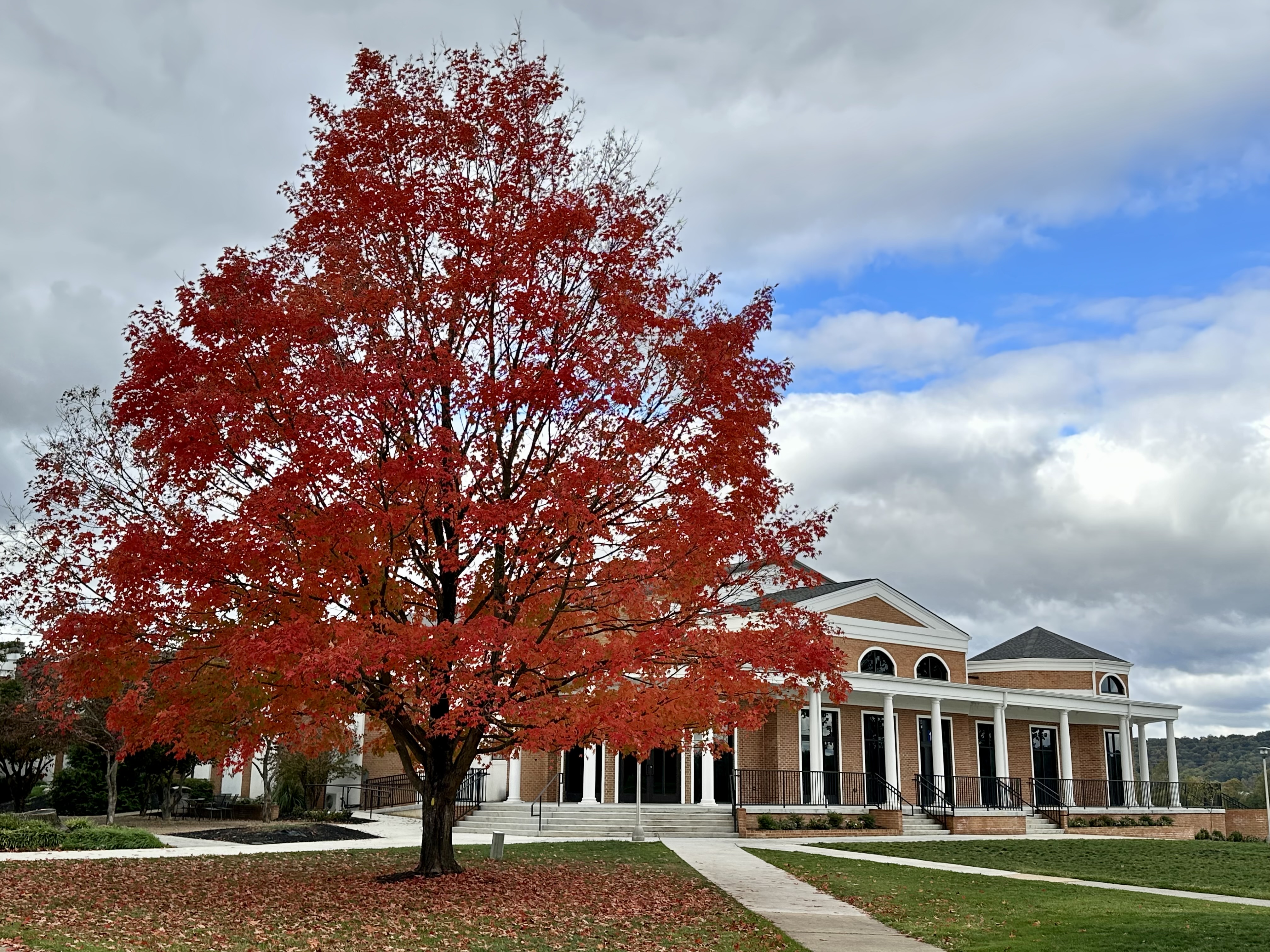
As we exited the Interstate highway at New Market, Virginia, a red maple caught my eye. I stopped to photograph the striking tree that stood center stage on a private school campus. It wouldn’t be my last photograph of the annual changing of the leaves.

A red maple in New Market, Virginia.

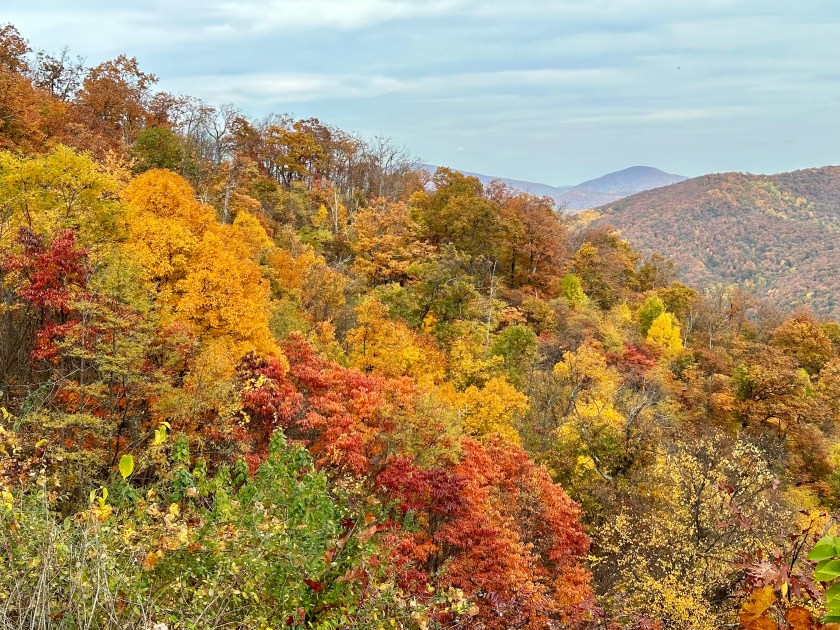
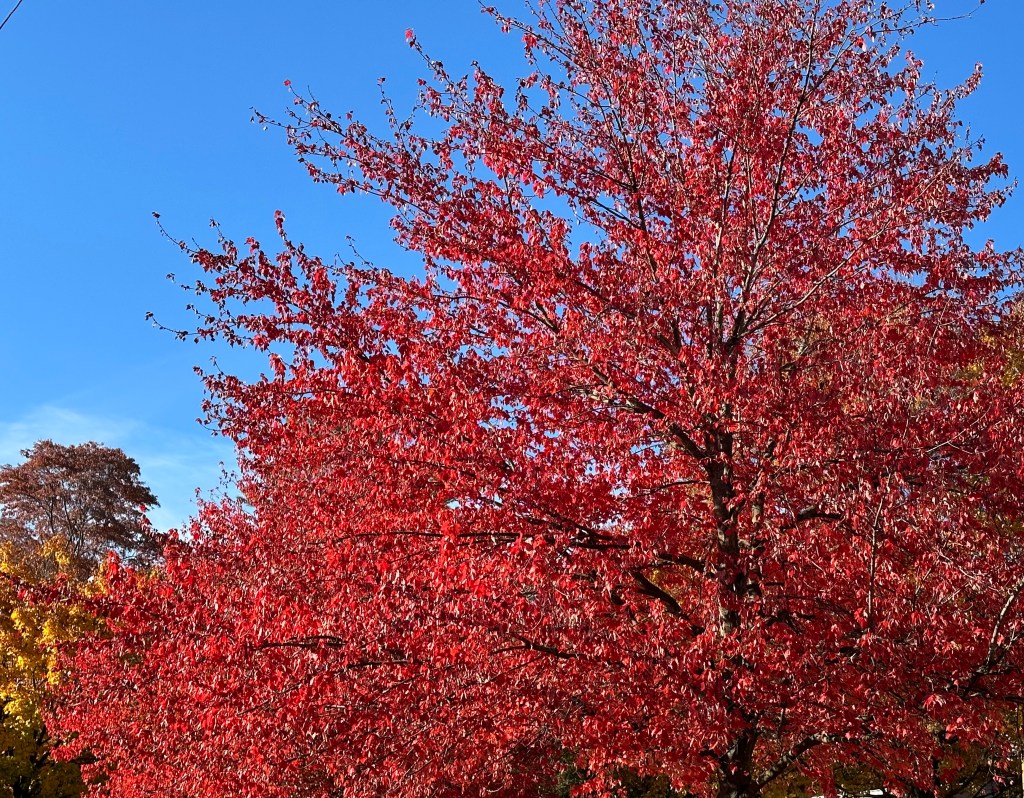
I feared that with the ongoing drought, the leaves would be dull and simply fall off out of sheer fatigue. Strangely enough, this has been the most colorful fall yet of the seven autumns we have resided in Virginia’s lovely Shenandoah Valley. In fact, several valley natives told me that this has been the most colorful fall in years.

I delved into why that was. I discovered that the weather indeed influences the intensity of leaf colors. The combination of sunny, warm days and cool (but not freezing) dark nights help create the brilliant colors we have experienced here in the valley. From photos posted by friends on social media, I know the fall colors have been equally vivid in other locales.

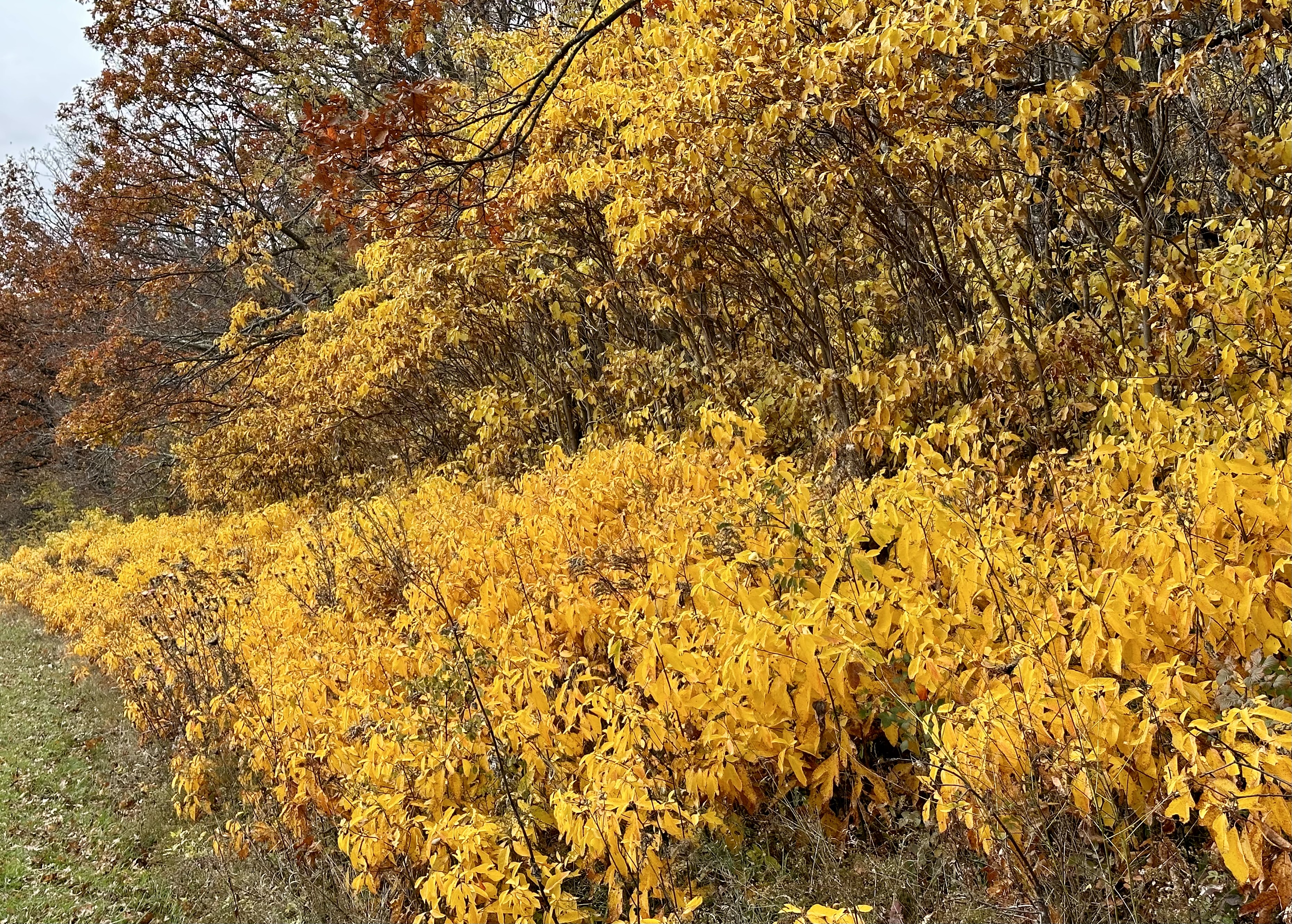
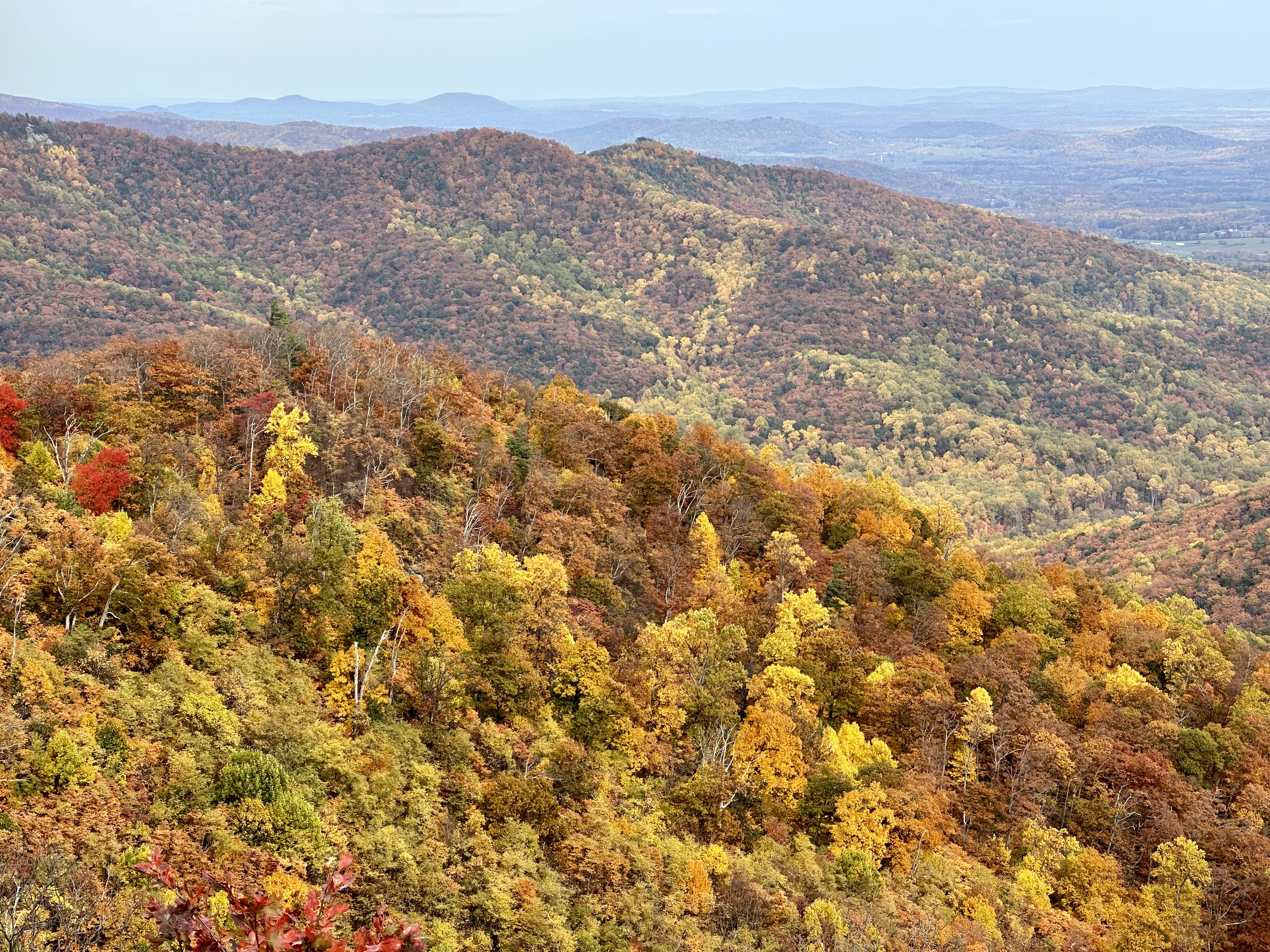
Ironically, I found many of the brightest and most colorful trees in and around the neighborhoods of Harrisonburg. The colors of the trees and shrubs of both the Allegheny and the Blue Ridge Mountains appeared more uniform and consistent in color. Perhaps the lower valley elevations had more extreme temperature differences between the days and nights.

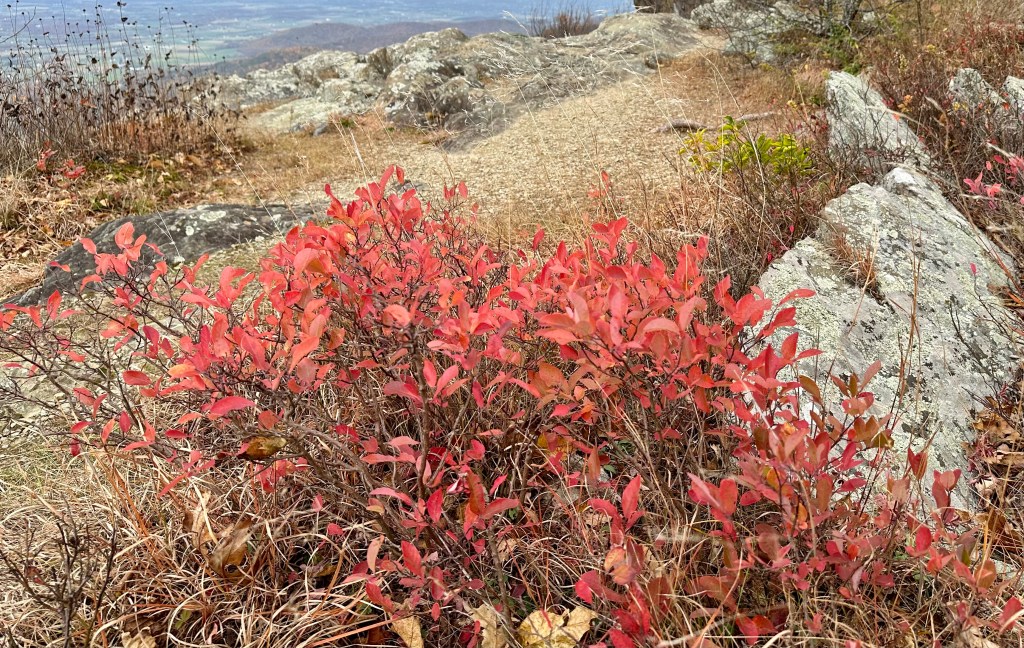
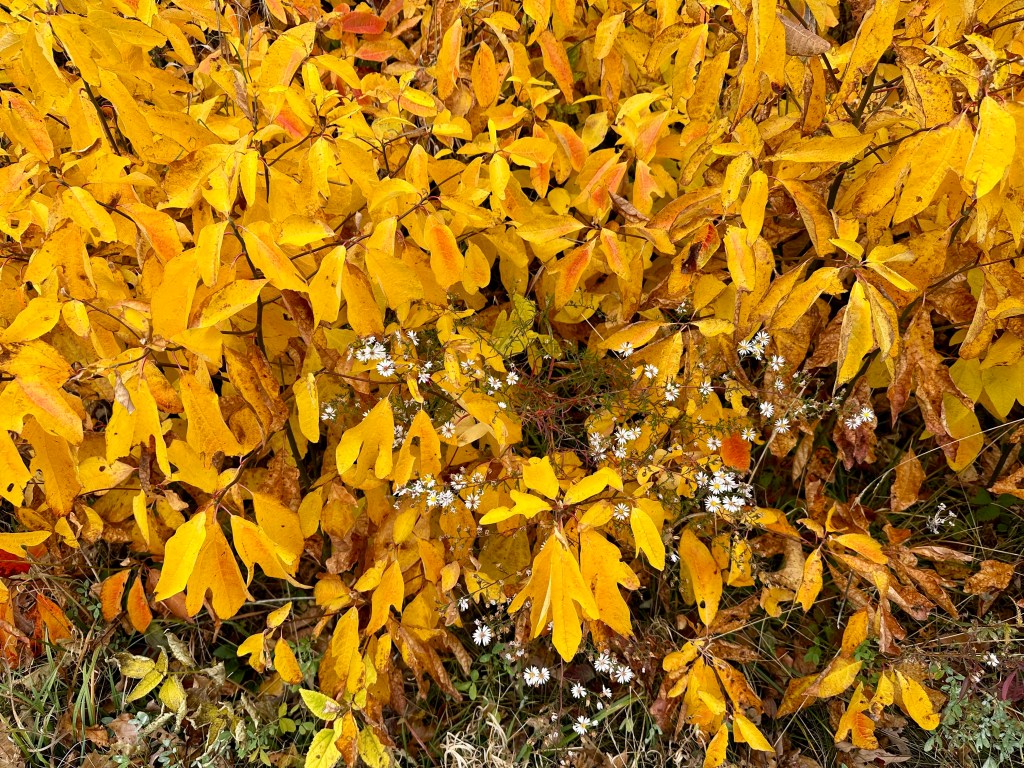
Here, then, are a few of my favorite tree photos I’ve taken between October 17 and October 24. Photos from Shenandoah National Park and Augusta County will follow in a subsequent post.

October 17

October 18 – 21

October 23

October 24

© Bruce Stambaugh 2023

Summer’s Last Sunset

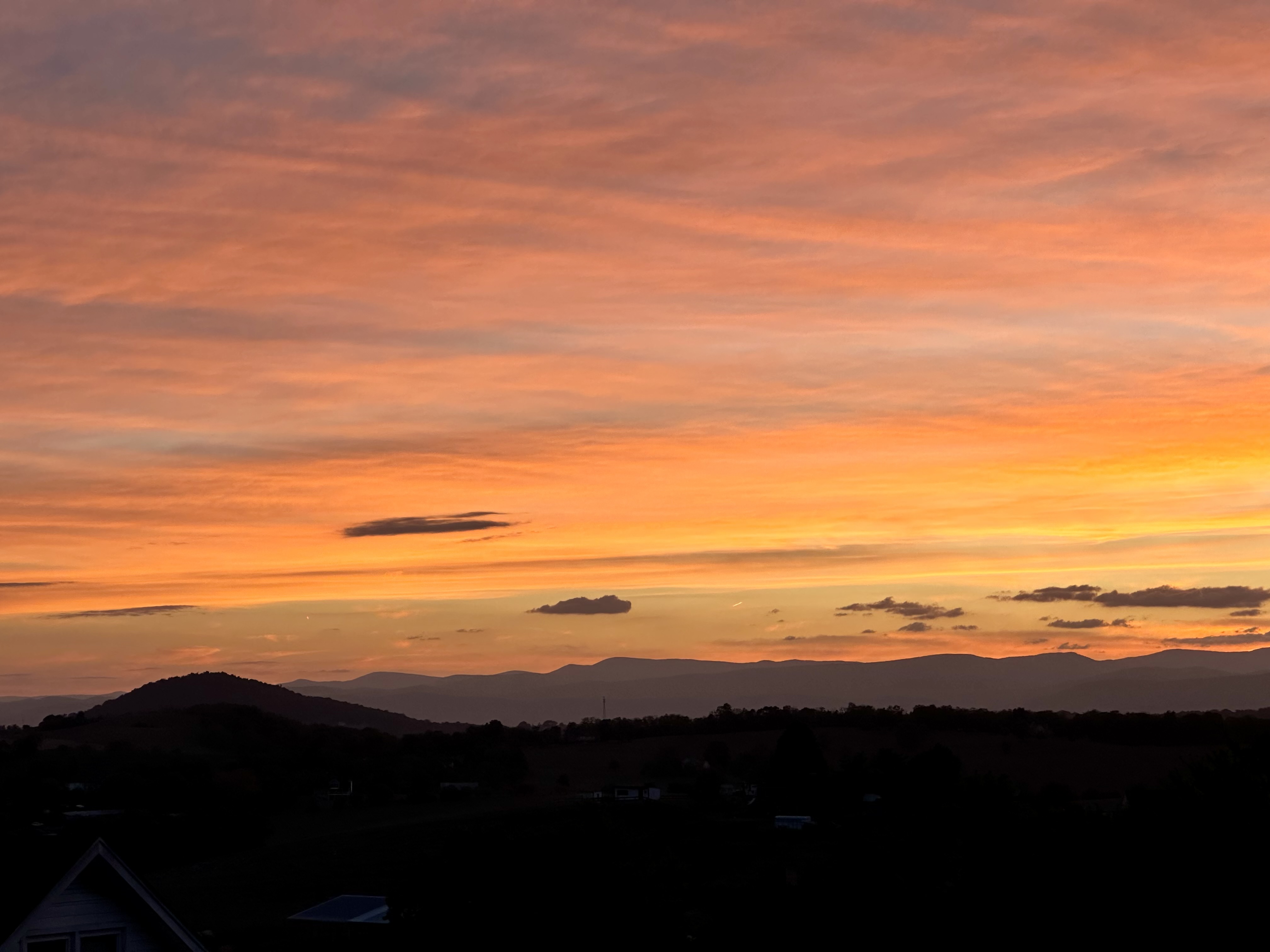
Silhouetted trees at sunset. Photo by Bruce Stambaugh

The Autumnal Equinox was a week ago for those living in the Northern Hemisphere. I was fortunate to catch the summer’s last sunset as I stepped out the front door of our daughter’s house in Harrisonburg, Virginia.

It had been cloudy all day, so the illuminated western sky was a pleasant surprise. I didn’t have my camera along, so all these photos were captured by my iPhone 14 mini.

When my wife and I reached an open spot on a hill behind Eastern Mennonite University, the sunset was reaching its peak. I snapped my way to the space that provided an unobstructed view of the Allegheny Mountains 30 miles away.

I was amazed at the various colors that summer’s final sunset produced. The blues and pinks hung high in the evening sky. Closer to the horizon, the warmer colors dominated.

It was a pretty punctuation mark on a summer that brought tornadoes, flooding, drought, wildfires, and days on end of gray skies here in the usually picturesque Shenandoah Valley.

Mole Hill is in the foreground left and the Allegheny Mountains are beyond.

© Bruce Stambaugh 2023

Hot Air Balloon Surprise

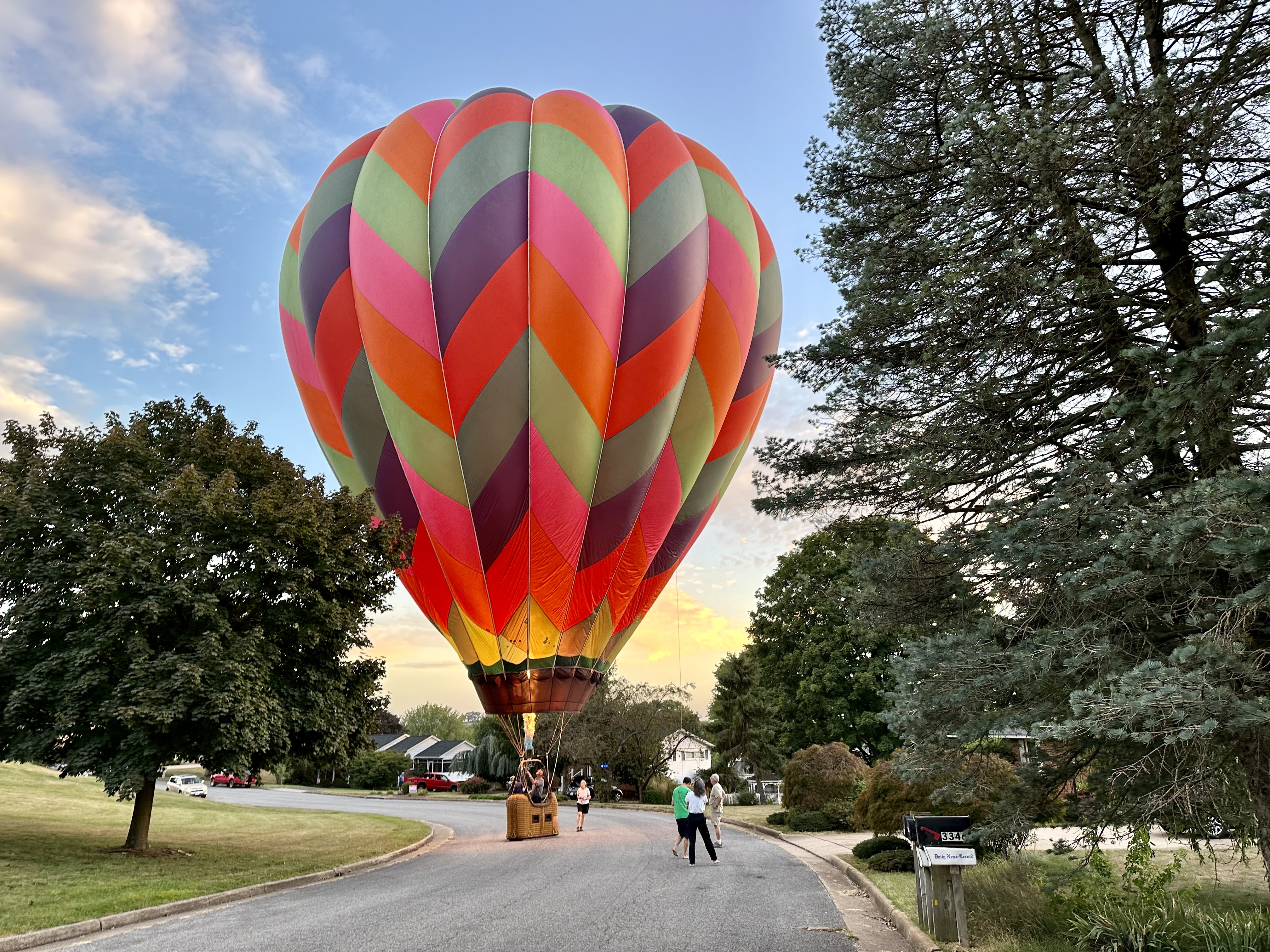
One of a pair of hot air balloons that landed in our neighborhood. Photo by Bruce Stambaugh.

My wife and I had just returned from an overnight trip to Lansdale, Pennsylvania, visiting friends. We were tired from driving and had settled in for the evening to watch our favorite baseball team, the Cleveland Guardians. Then, our neighbor Jonathan came over to tell us two hot air balloons were sailing south of our home.

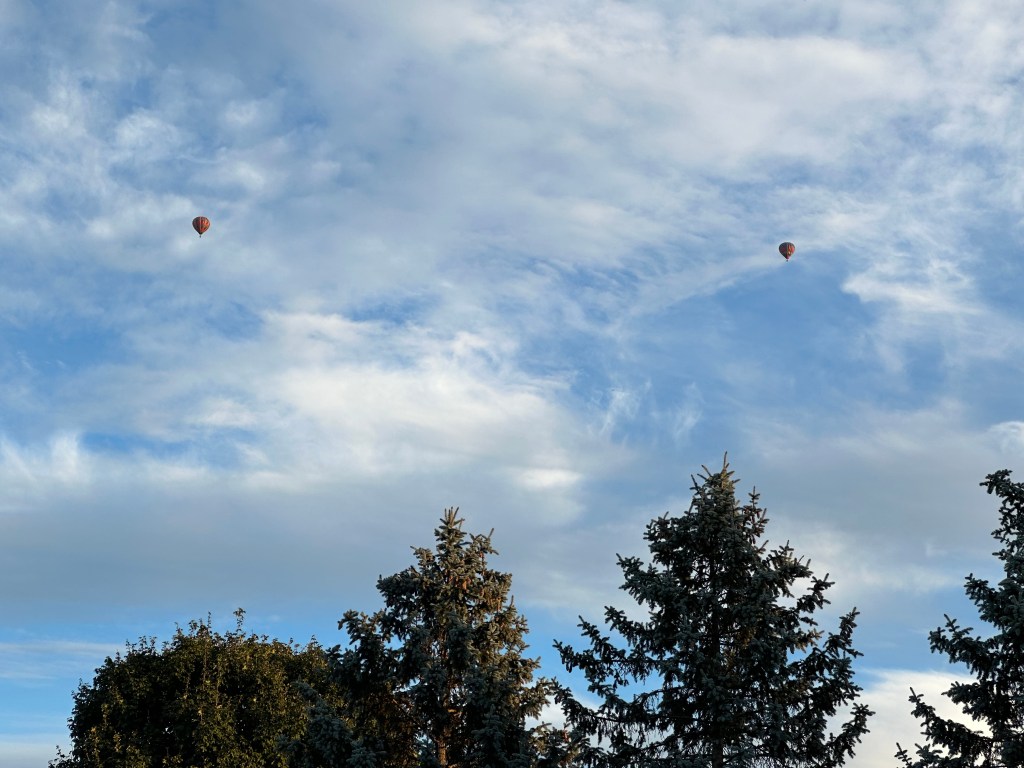
I went out the back door and photographed the balloons high in the sky. However, it didn’t take long to realize that the balloons were quickly descending. There wasn’t much wind, which isn’t unusual around sunset, so I wasn’t sure where they would land. We soon found out.

Please click on the photos to enlarge them.

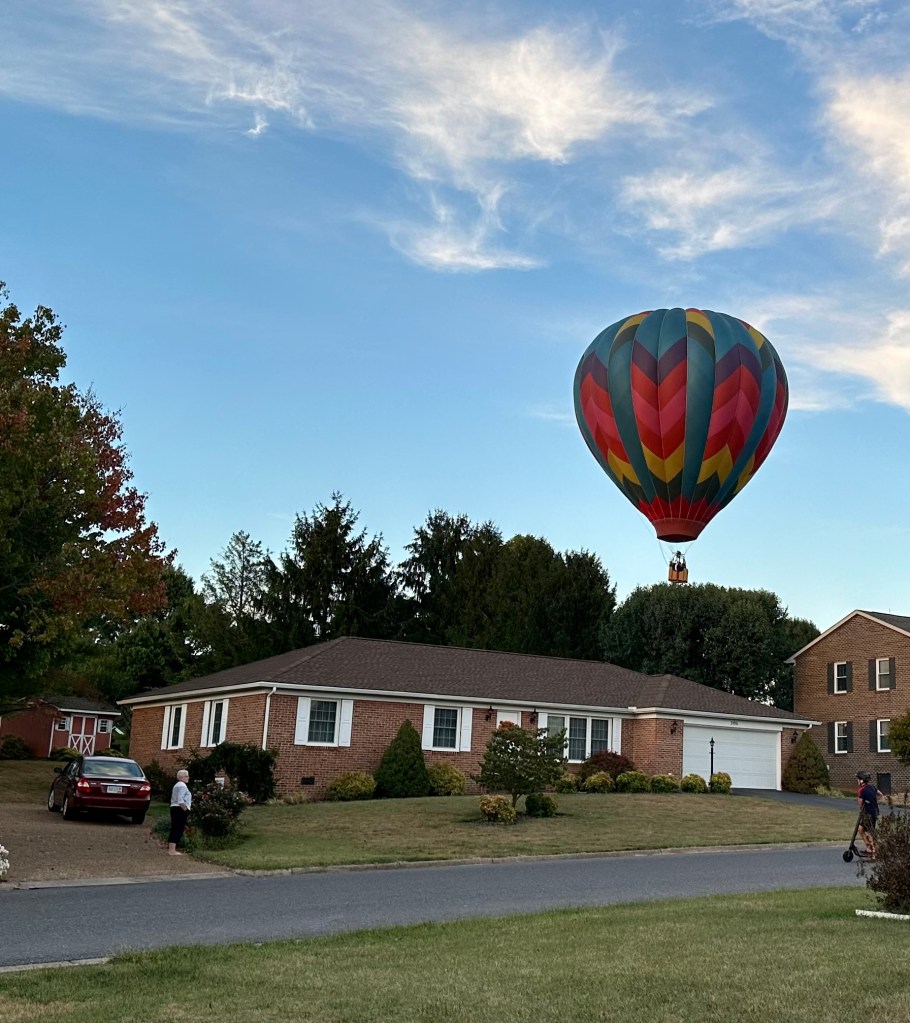
Both balloons began sinking toward our house. They briefly went out of sight but silently reappeared over other neighbors’ homes. Thinking they were aiming for our local park, Neva and I jumped in the car and headed there. I drove carefully as children raced on bicycles and people ran from their homes to watch the balloons land.

I initially drove into the park, but the first balloon was already on the ground, swarmed by curious folks, young and old. It was then I heard the second balloon fire its gas burner. I looked up, and it was between two houses, still heading north. It had overshot the park. We got in the car and drove to find where this balloon would set down.

When we found it, the skillful pilot had already gingerly landed it on a narrow street in our suburban housing development. With a tree on each side of the road, it had been a tight landing. The pilot kept opening the gas valve burner briefly to create more heat to keep the balloon’s envelope from collapsing into one of the trees. He kept firing the burner until the ground team arrived with the trailer to haul the balloons and their baskets back home.

As much as I enjoy baseball, I will take this unexpected and extraordinary entertainment any day. 

The first balloon landed safely in the community park at sunset. Photo by Bruce Stambaugh.

© Bruce Stambaugh 2023
American Flamingos in Pennsylvania

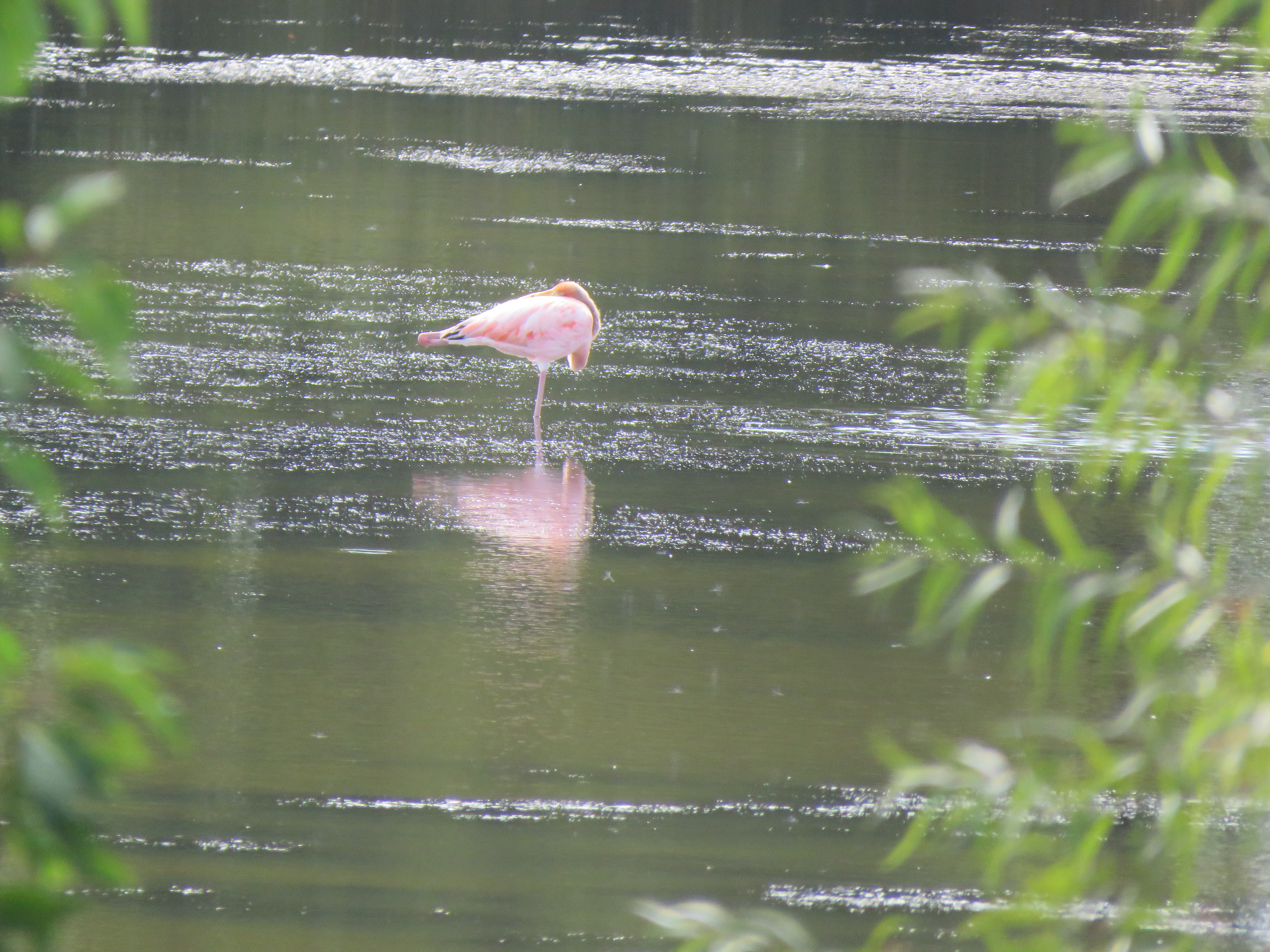
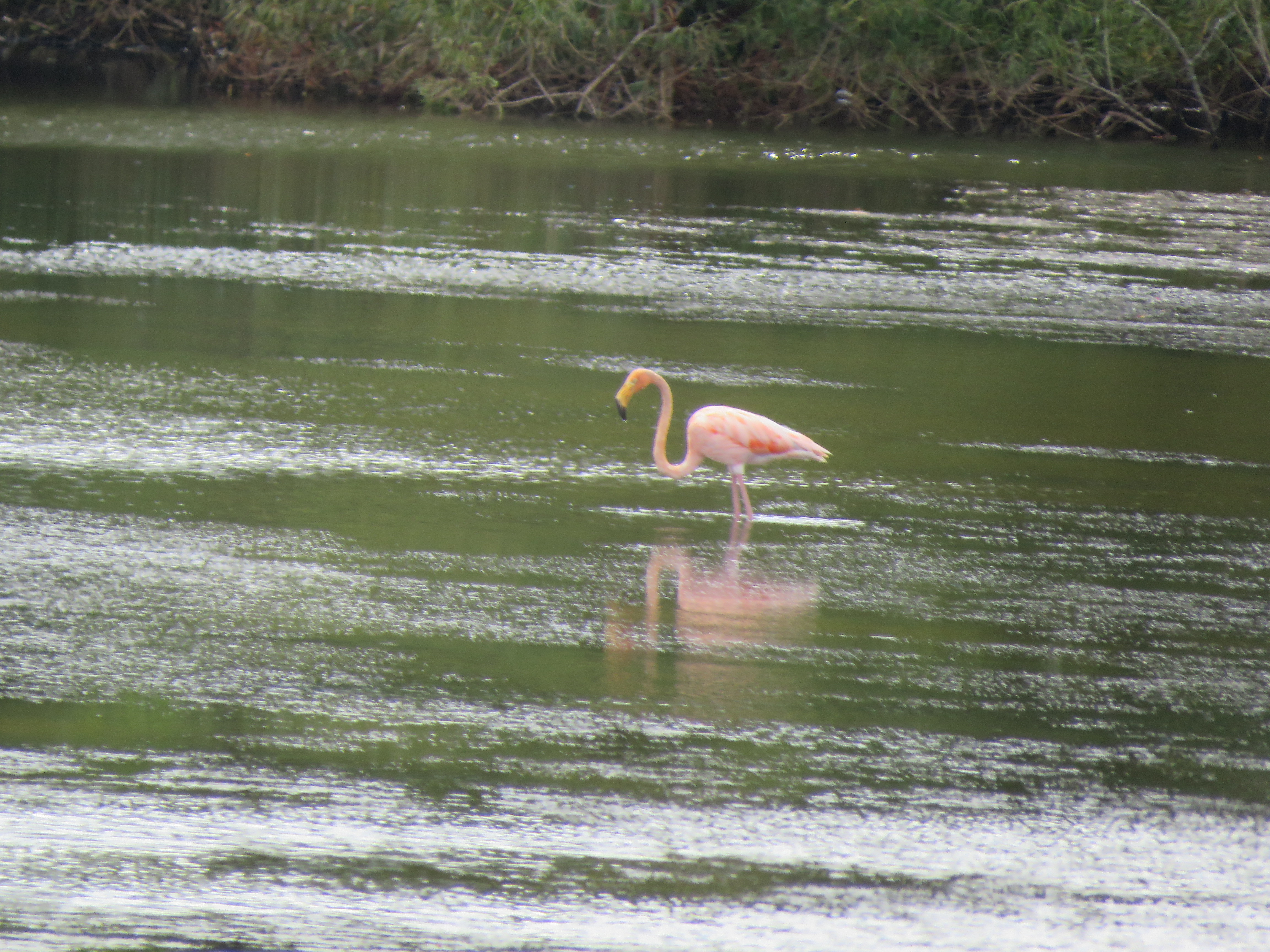
One of two American Flamingos near Chambersburg, Pennsylvania. Photo by Bruce Stambaugh.

This is how birding works. Just before my wife and I left to visit our 16-month-old grandson and his parents in Rochester, NY, a friend in Florida posted on social media about American Flamingos being spotted in a farm pond in south-central Pennsylvania.

I knew we couldn’t stop on the way up, but I hoped beyond hope that the birds would still be there when we left for our home in the Shenandoah Valley on Monday. I checked the American Birding Association’s rare bird alert daily as we enjoyed visiting with our son and his young family.

On Monday morning, the birds were still there and reportedly very easy to see. In all my years of birding, I’ve heard that before, only to arrive five minutes after the birds flew off into the sunset. In the birding world, that’s called “dipping.”

It was a six-hour drive from Rochester to St. Thomas Township, Franklin County, Pennsylvania. When we left Rochester, the day was partly sunny. By the time we reached the state line of the Keystone State, it started to rain. I kept my mind on my driving. I wanted to see those birds, but we had to get there first. So, I drove carefully.

The ABA rare bird alert included the GPS coordinates, so I figured we would drive right to the farm pond, which we almost did. We had Waze plugged into the car’s GPS system while I used my Google Maps for backup. I wasn’t taking any chances.

I am so glad I did because Waze said we had arrived when all we had were fields on the right and a line of houses on the left. My Google Maps saved the day, and we circled around and found Pond Lane.

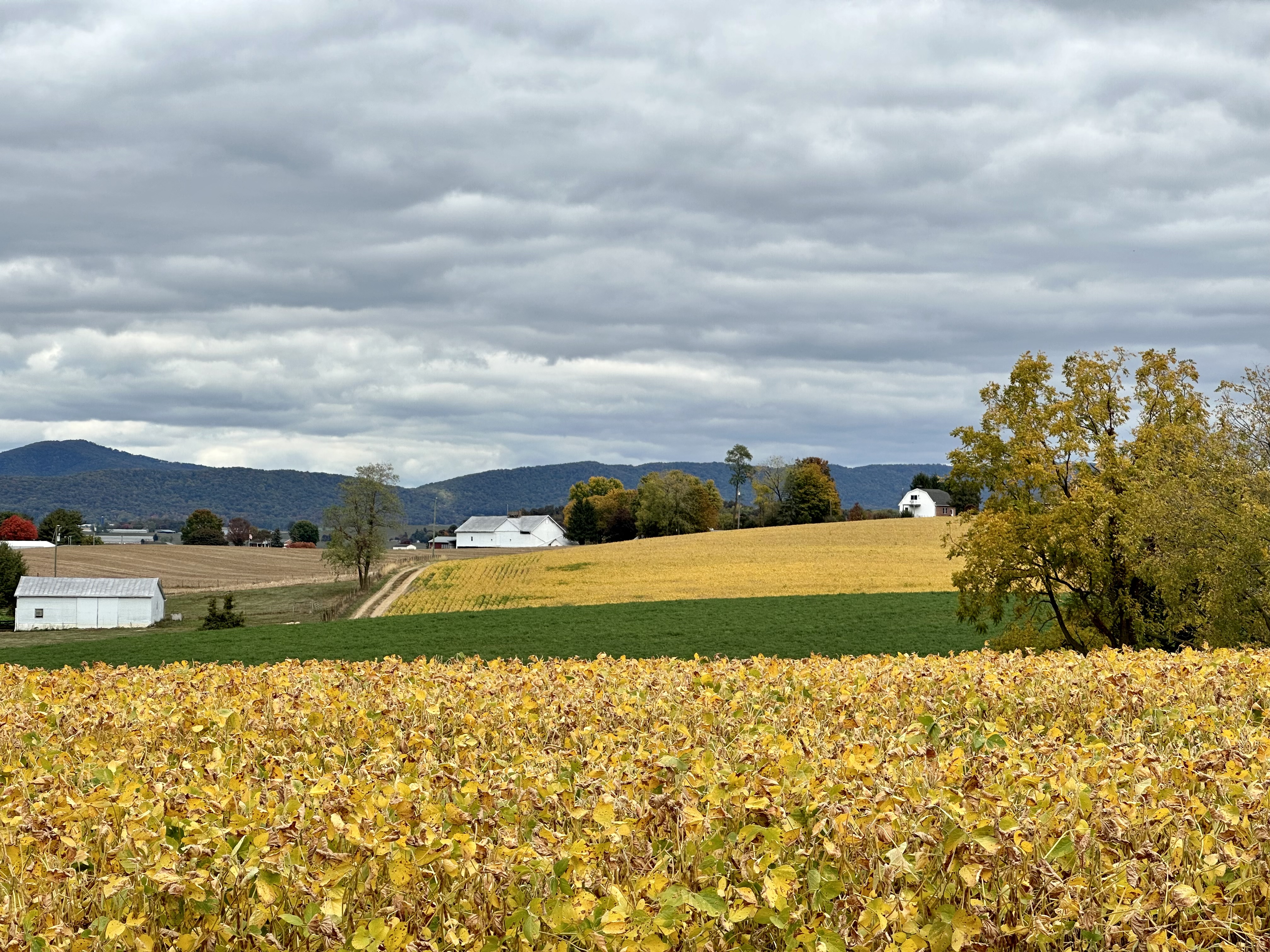
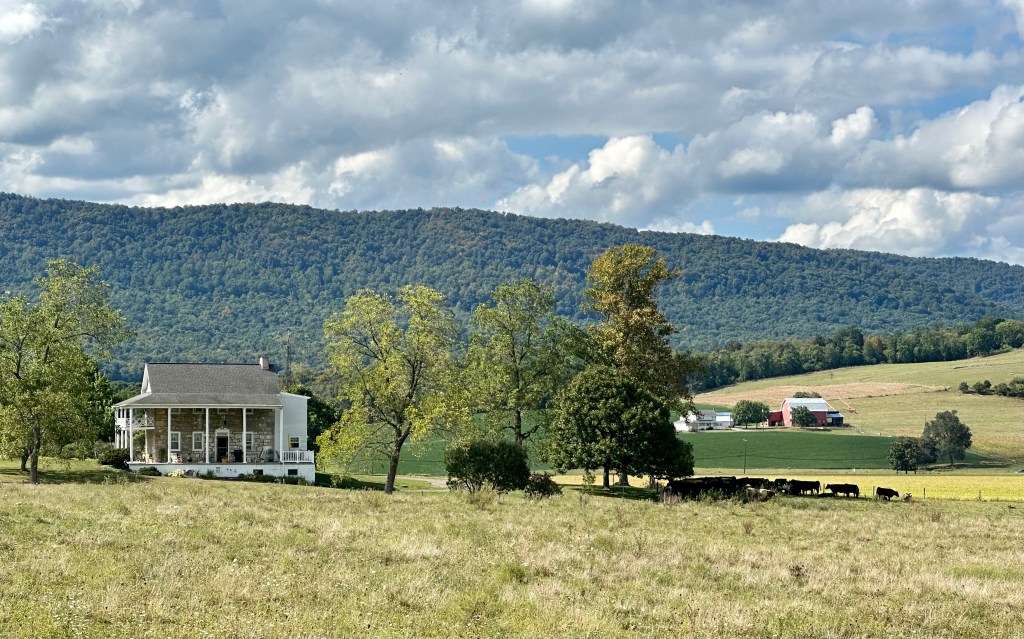
The countryside was gorgeous. Puffy white clouds floated by in a bright blue sky. The large, rolling fields of soybeans served as a two-tone yellow and green carpet below. Fieldstone farmhouses and red barns dotted the landscape.

As we approached from the west, I smiled because I could see a string of cars parked along the road and birders on the opposite side looking through spotting scopes and binoculars. As I slowly approached the scene, my wife shouted, “I see one!” I parked the car in the first space on the north side of the road and raced to the spot where my wife saw the flamingo.

Sure enough, there it was. The beautiful pink bird was standing on one leg in the middle of the shallow pond. It had its head tucked under its left wing, sleeping. I got a quick photo between two trees and then walked up to where most birders stood with an unobstructed view. It was a little farther away, but we could see it clearly through the binoculars and my camera’s viewfinder.

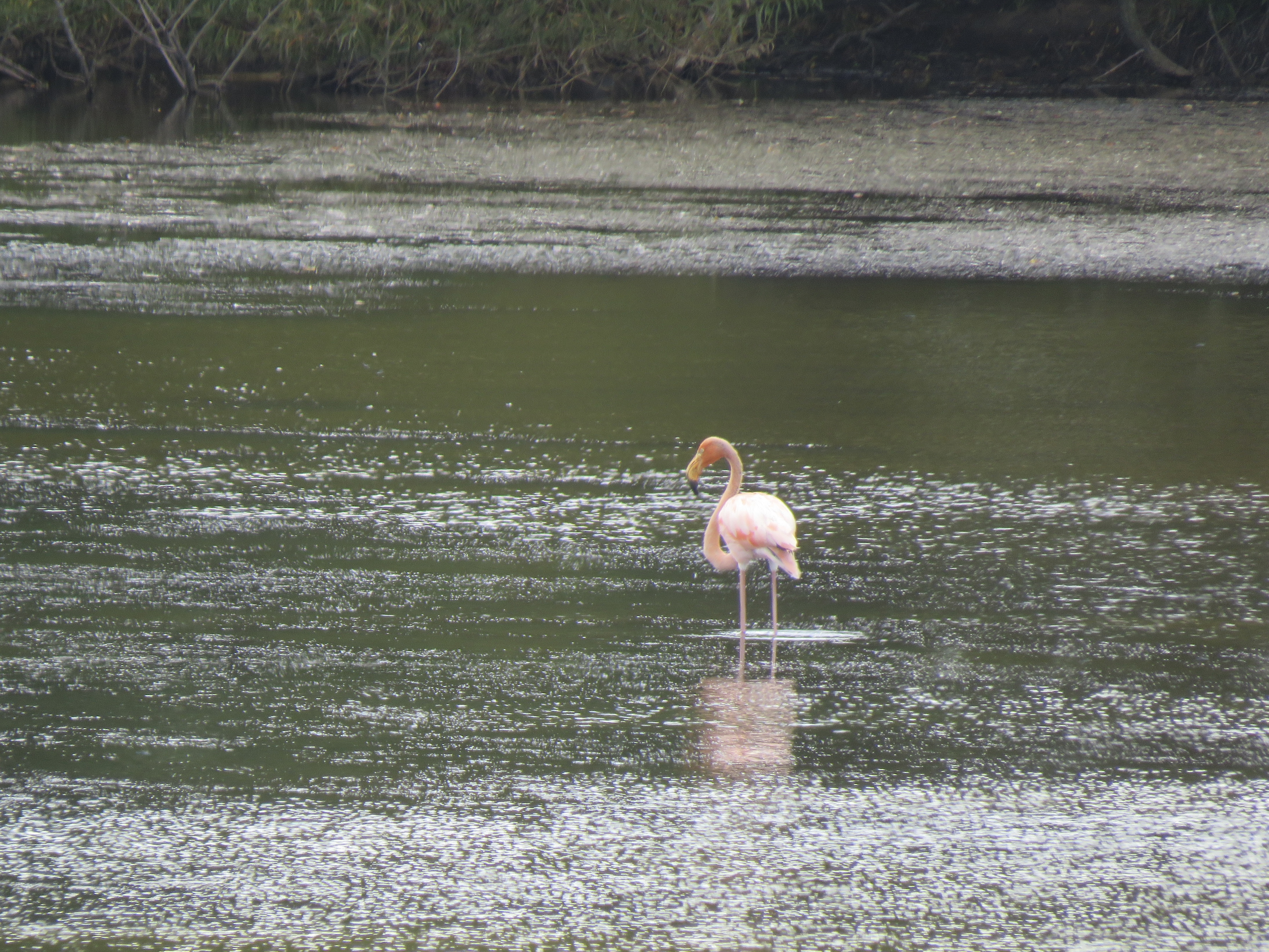
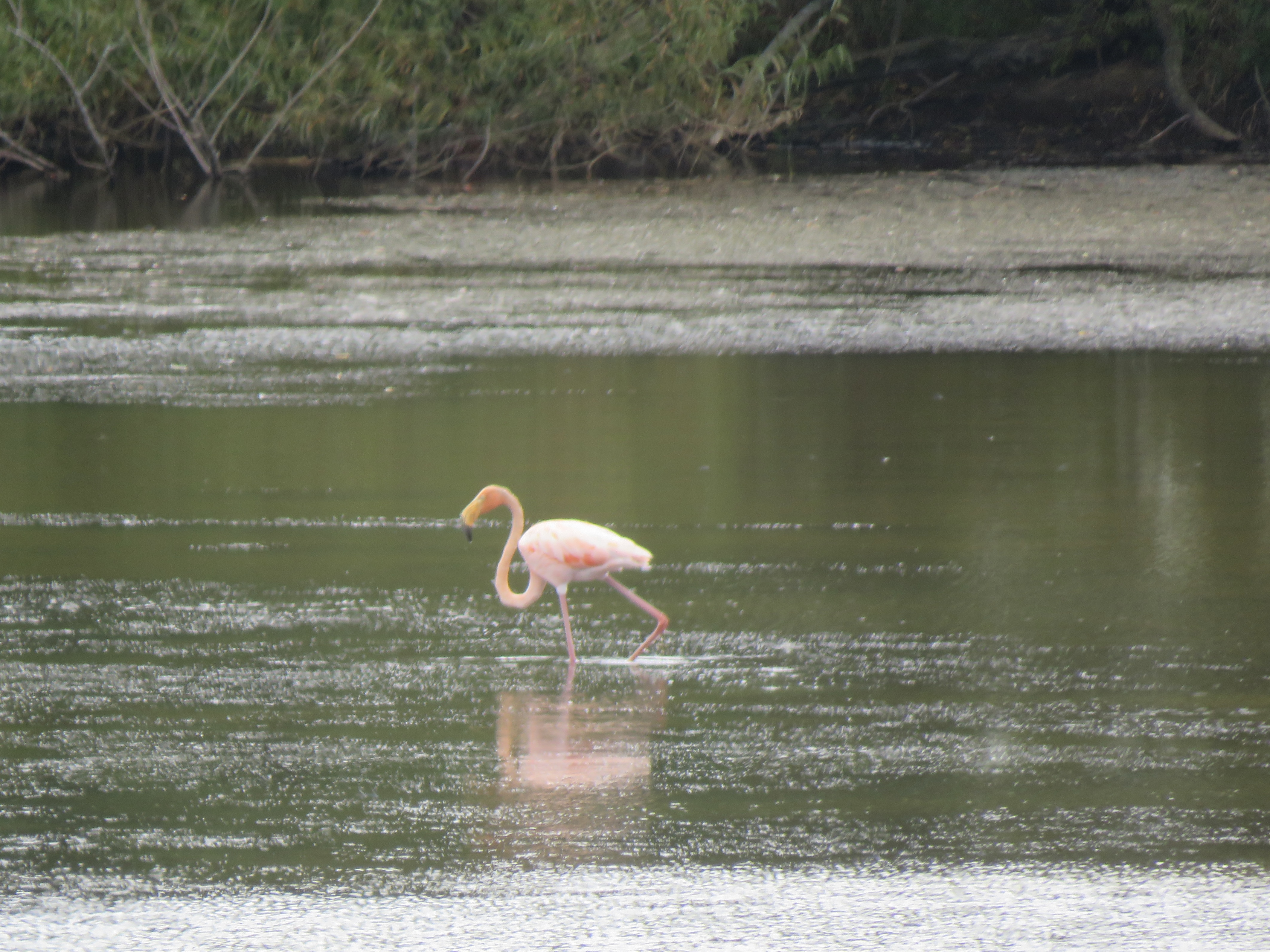
My wife helped steady me in the warm wind rushing over and down the nearby Appalachian Mountains to the west. Once the bird awoke, it waded, fed, and preened in the afternoon sun. I asked another birder where the second flamingo was. I didn’t like the answer.

Please click on the photos to enlarge them.

In the early morning hours after sunrise, a snapping turtle bit the other flamingo in the leg, injuring it. A wildlife rehab center was notified, and personnel arrived and captured the injured bird. Surgery was performed to fix the broken leg. It still remains in their care.

The other flamingo continued to thrill birders who arrived from near and far. How did birds that should be in the Bahama Islands and the Florida Keys get to Pennsylvania? The most plausible answer is that Hurricane Idalia blew them north.

That is the accepted answer because American Flamingos were located in 10 states, some well inland like these birds. Birders from other states were chiming in on the social media conversations, wishing for the flamingos to be found in their states, too.

Why such fuss over the flamingos? Well, in every state except Florida, the sighting of the flamingos was a record first for each of those states. Birders take their hobby seriously. Consequently, they keep many lists and records by recording the bird species, where it was seen, the date(s), and times. The Cornell Laboratory in Ithaca, New York, is the official state and national records compiler.

I had seen flamingos in Florida and Texas before, but seeing this beautiful bird so far inland was extra special. And it was all thanks to a hurricane.

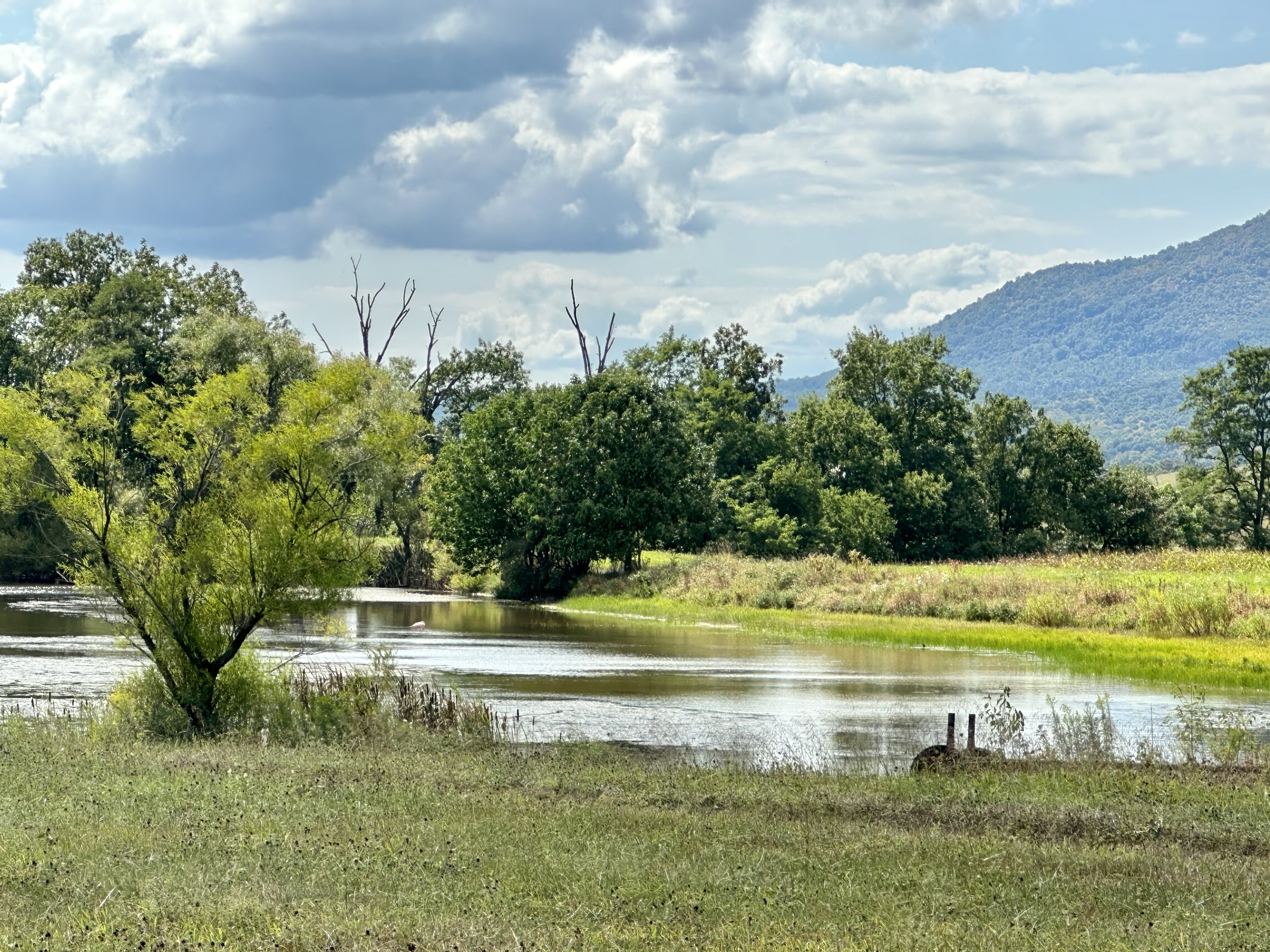
The farm pond in Pennsylvania where the American Flamingo was observed. The bird is just right of the willow tree in the foreground. Photo by Bruce Stambaugh.

© Bruce Stambaugh 2023
Exploring the Newest National Park

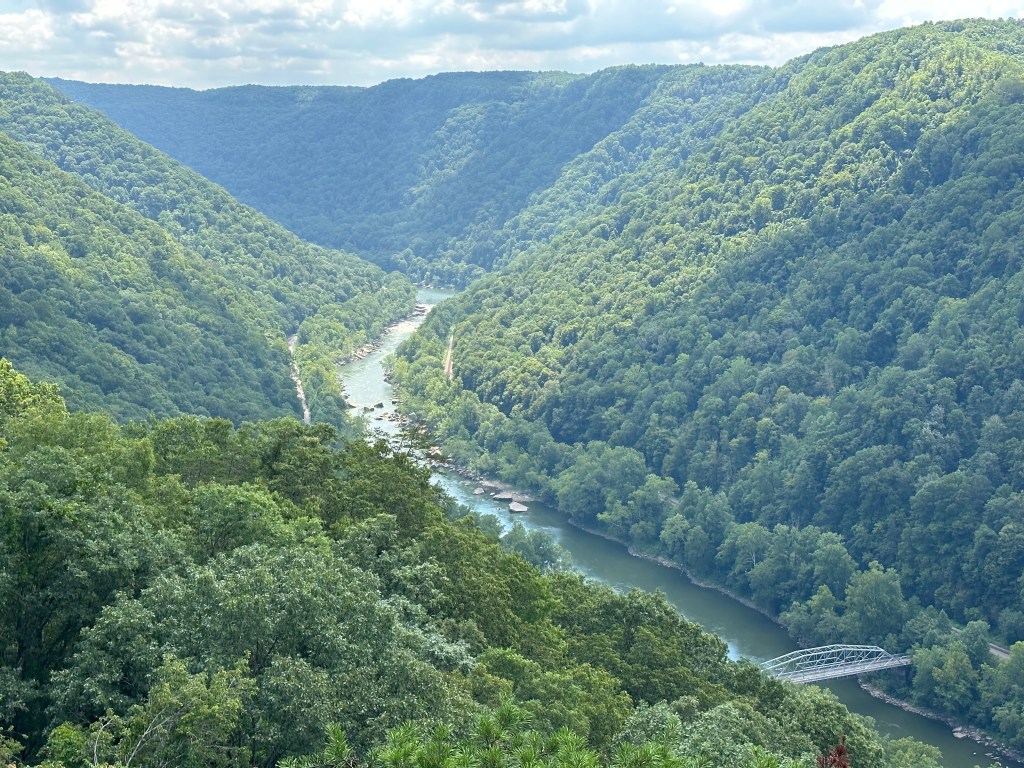
The view from Grandview Point. Photo by Bruce Stambaugh.

Located east of Beckley, West Virginia, New River Gorge National Park and Preserve is a gem of a place. My wife and I recently visited there for two days. Our goal was to see the New River Gorge Bridge. We experienced much more than that. Also, I finally learned an important life lesson.

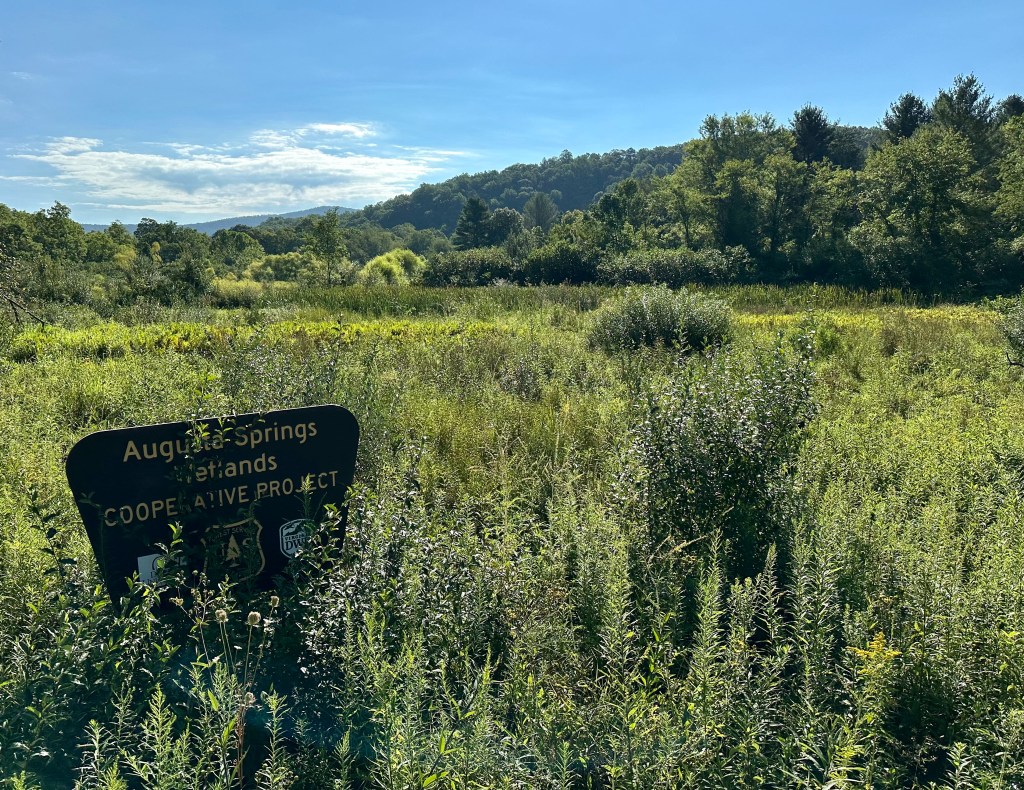
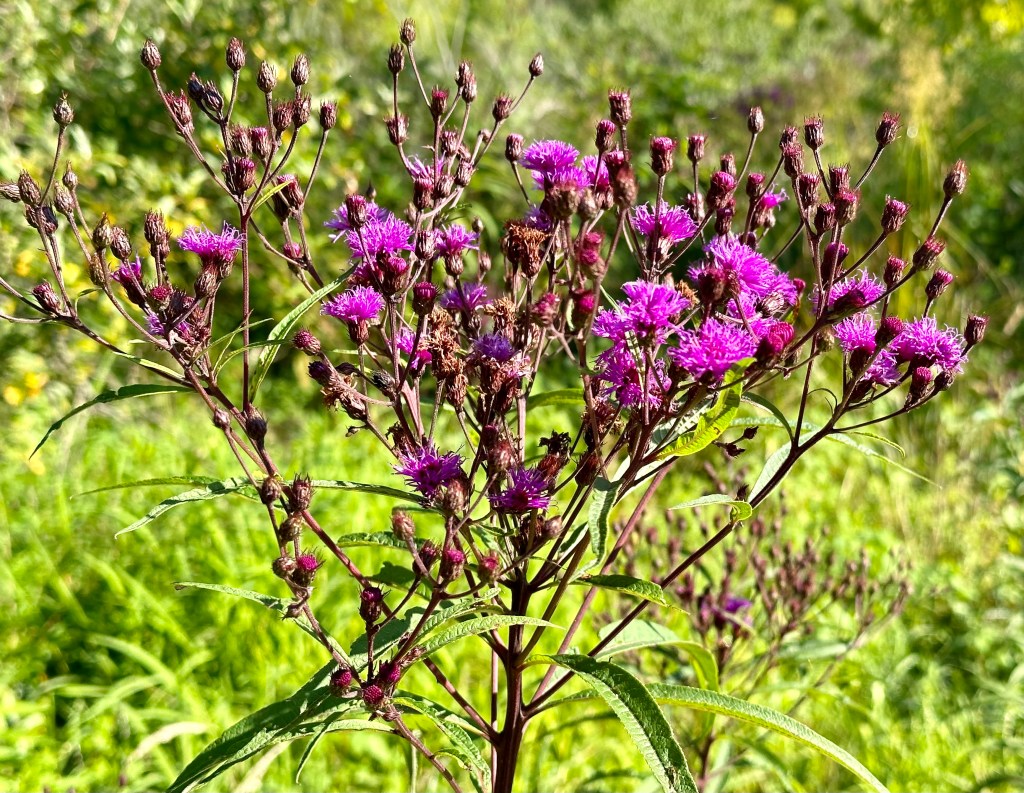
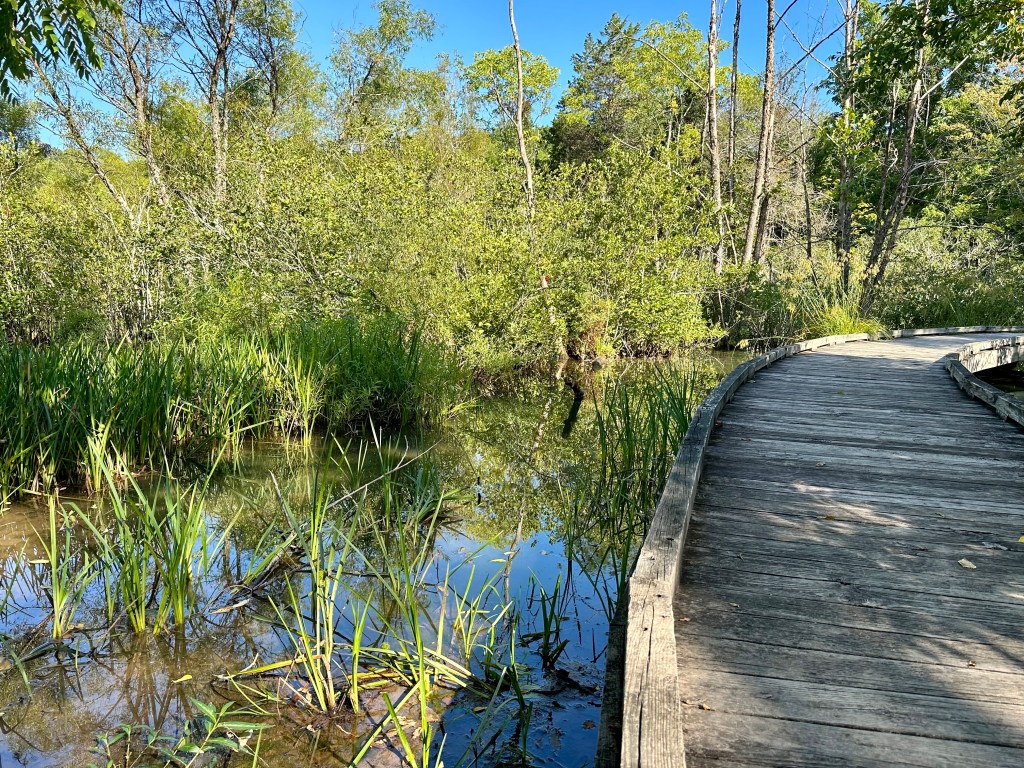
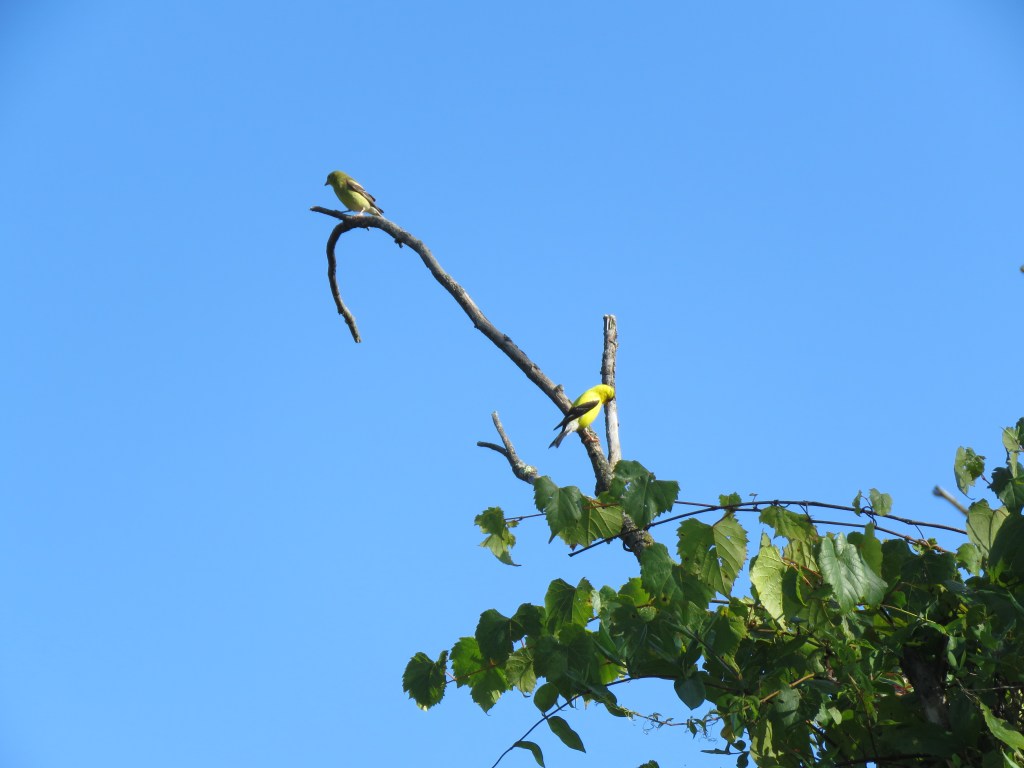
Because we usually avoid driving on I-81, we took Virginia 42 southwest through the Allegheny Highlands’ beautiful hills, valleys, small towns, and mountain gaps. We stopped at Augusta Springs Wetlands to bird along the boardwalk. We saw a number of lovely wildflowers and 21 species of birds. The next stop was the Humpback Covered Bridge west of Covington, Virginia.

Humpback Bridge.
Interior of the Humpback Bridge.
Humpback Bridge

But it was the national park we wanted to see most. The park has four visitor centers because of its mountainous terrain and steep gorge. Sandstone Visitor Center was our first stop just off I-64. The helpful ranger gave us excellent advice on the roads to travel and what to expect.

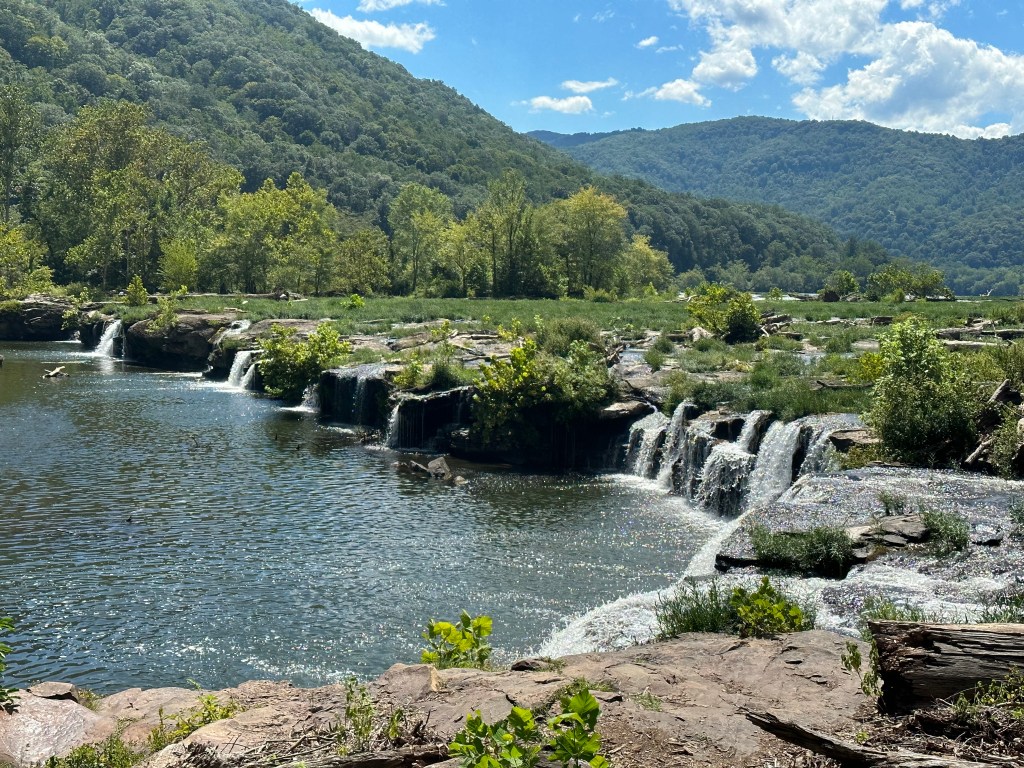
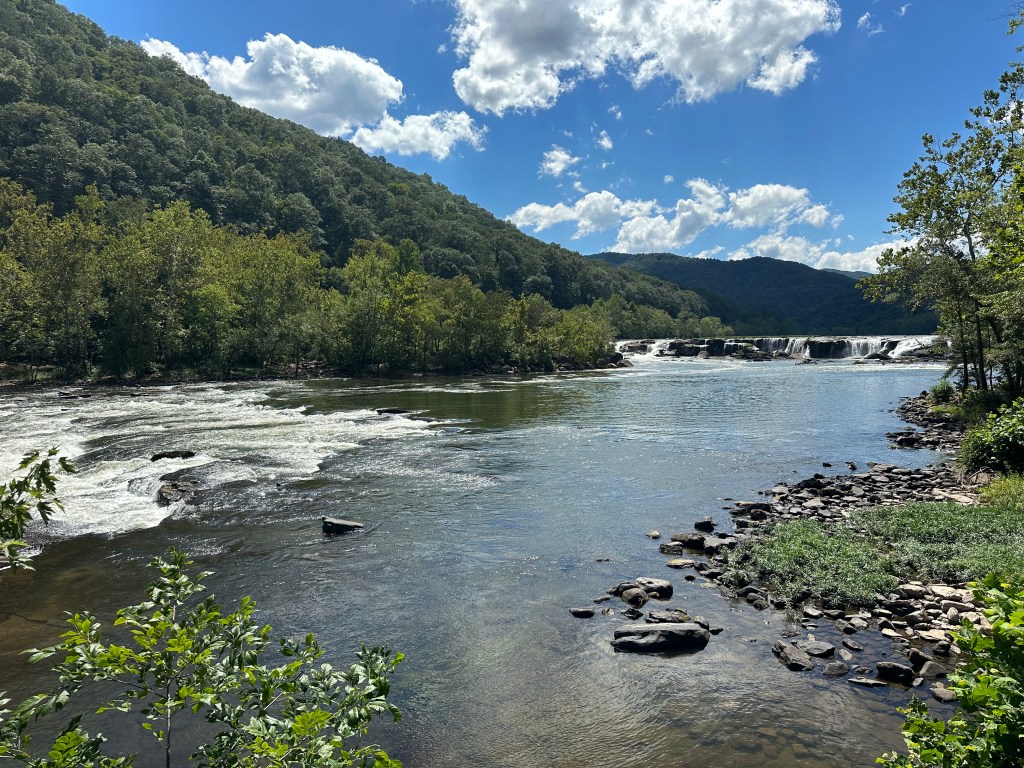
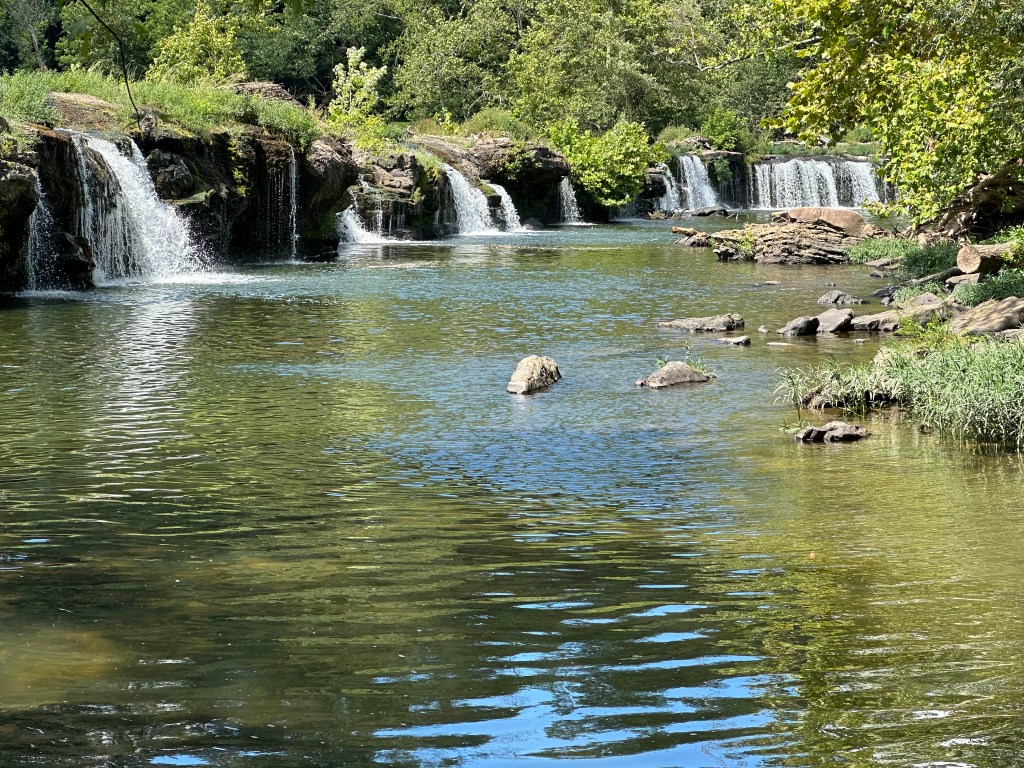
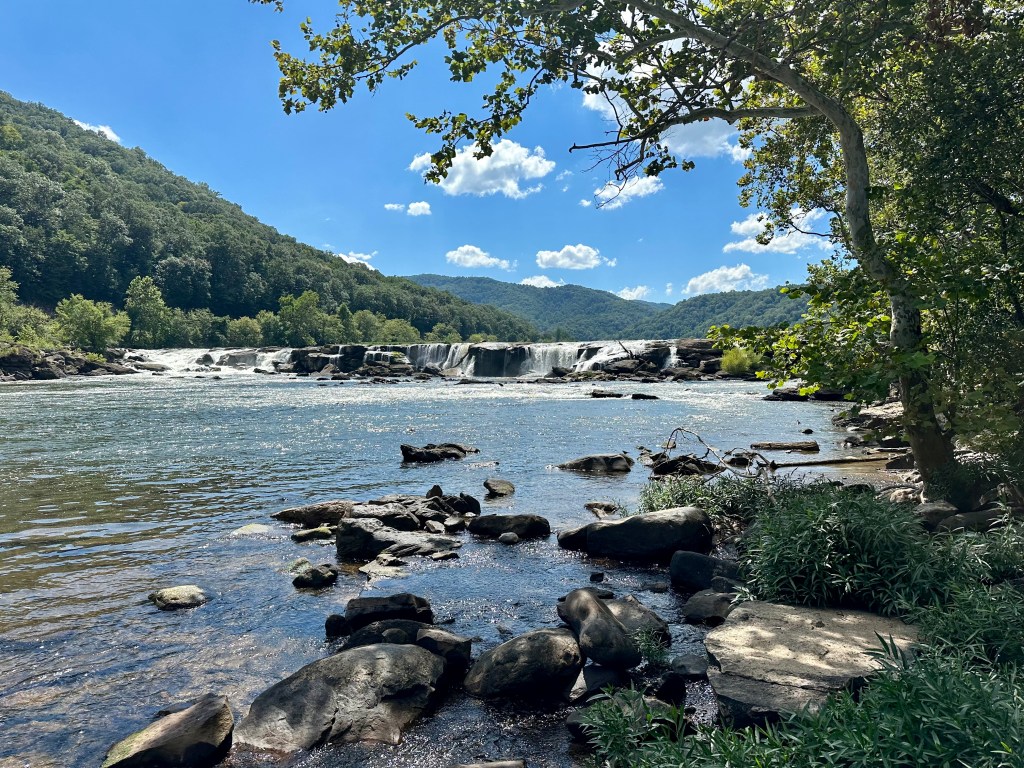
Our first stop was the observation area of Sandstone Falls. They were as beautiful as advertised, but the falls weren’t running at full force with so little rain this summer. We drove along the railroad tracks to the quaint town of Hinton, where we crossed to the west side of the New River. We drove north a few miles to reach the boardwalk that took us near the river’s main flow.

I wanted to get a closer shot, so I headed across an island of ancient debris of huge boulders smoothed by years of flowing water. Scattered among the rocks were large trunks of trees, their bark long scoured away. It finally hit me that I shouldn’t have attempted this trek. I eased my way over rocks and rivulets to the shore of the river’s main course. I got the shots I wanted and returned to the boardwalk via an easier route.

Our next stop was Grandview, and what a view it was. We looked down 1,000 feet to see one of the horseshoe bends of the New River. The sun bathed the hillside forests and illuminated the riverside train tracks.

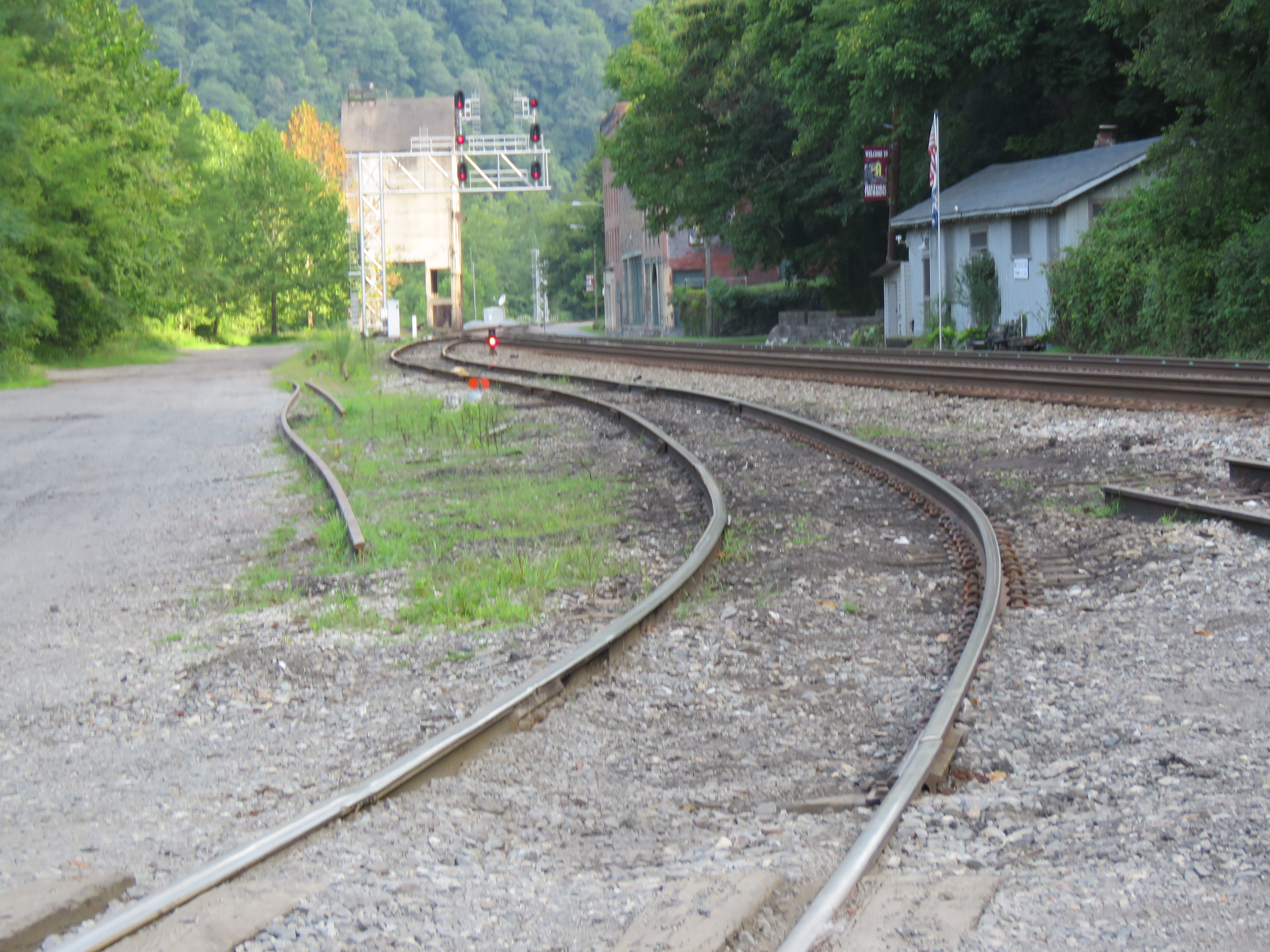
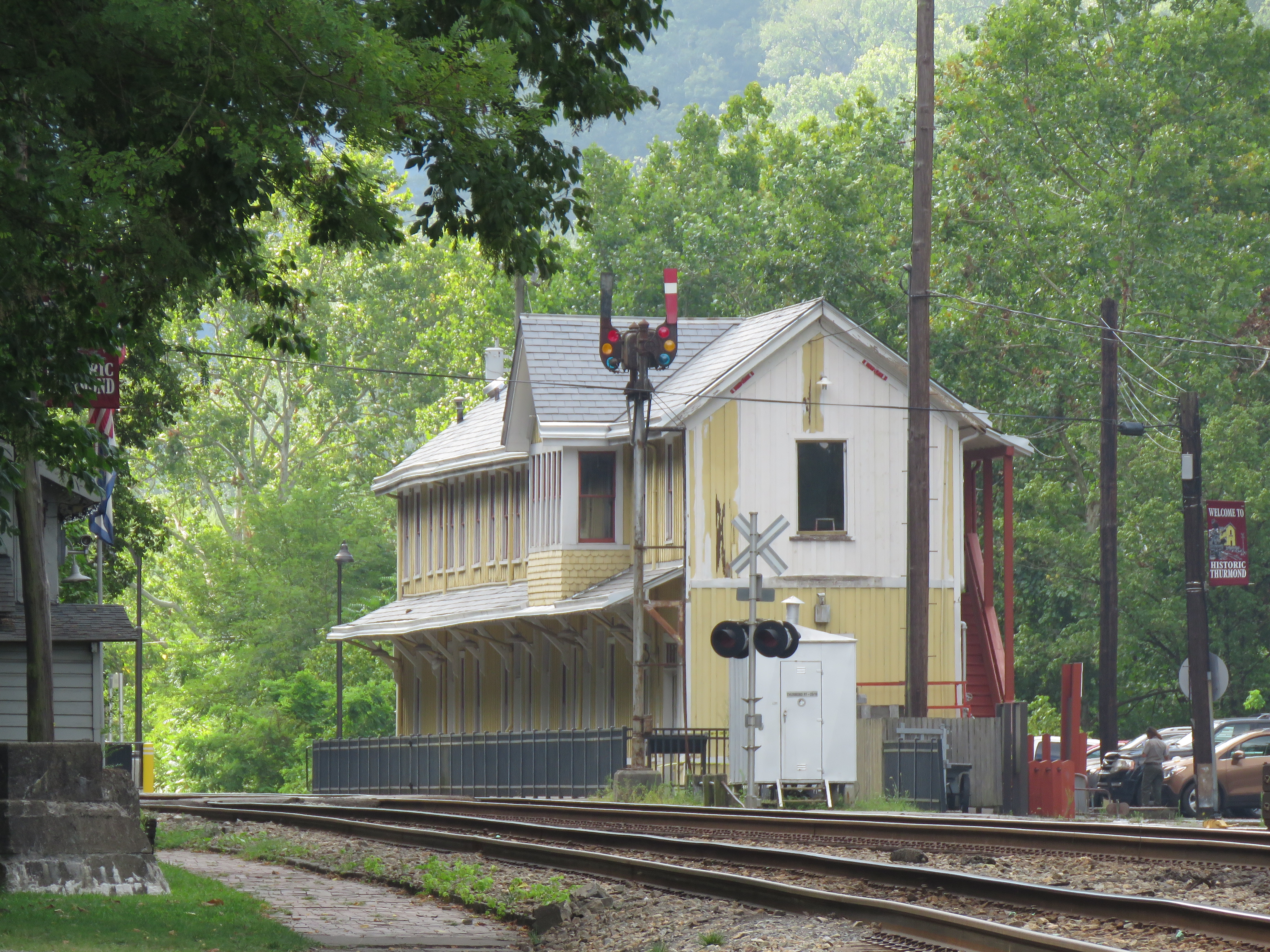
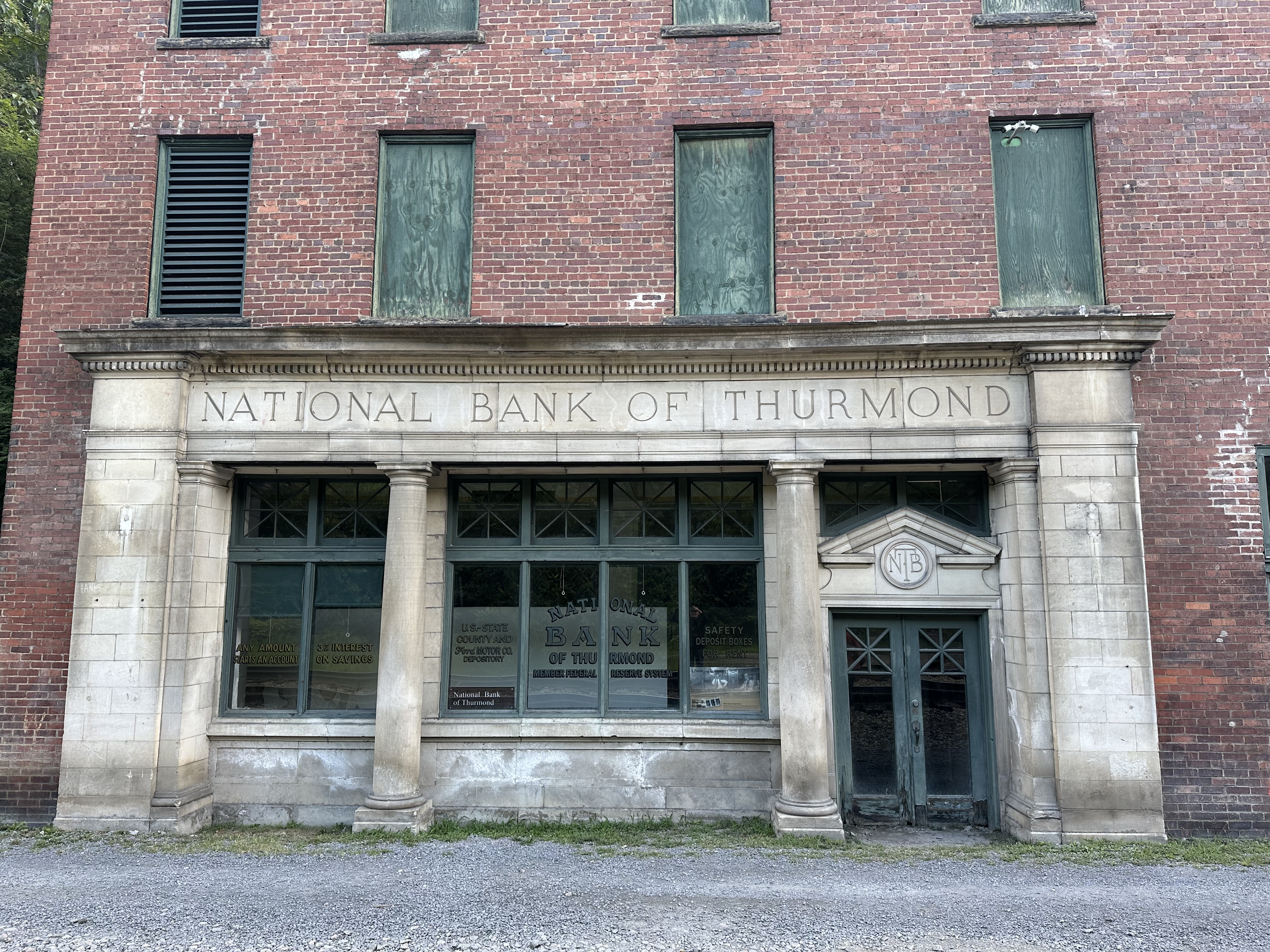
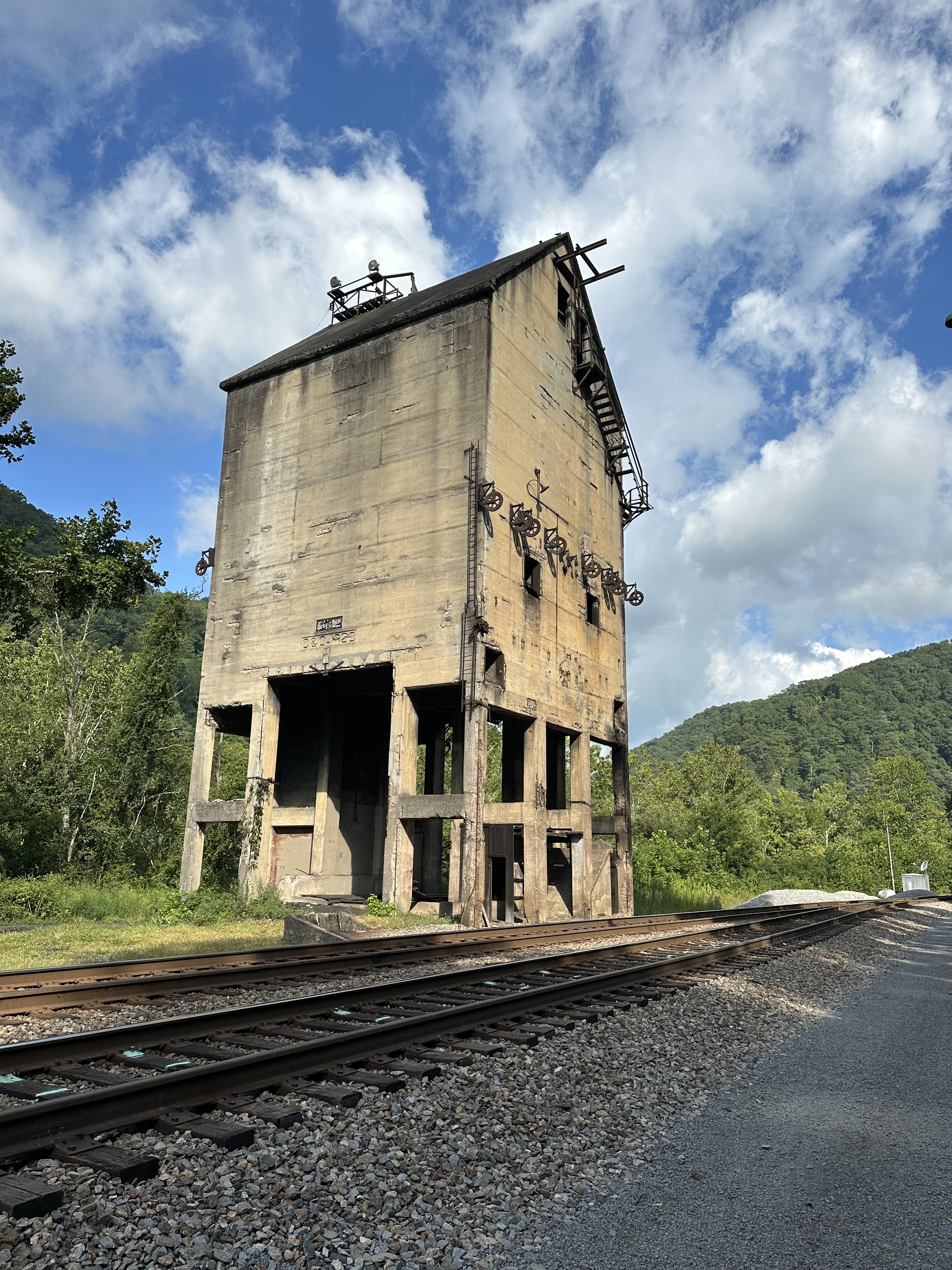
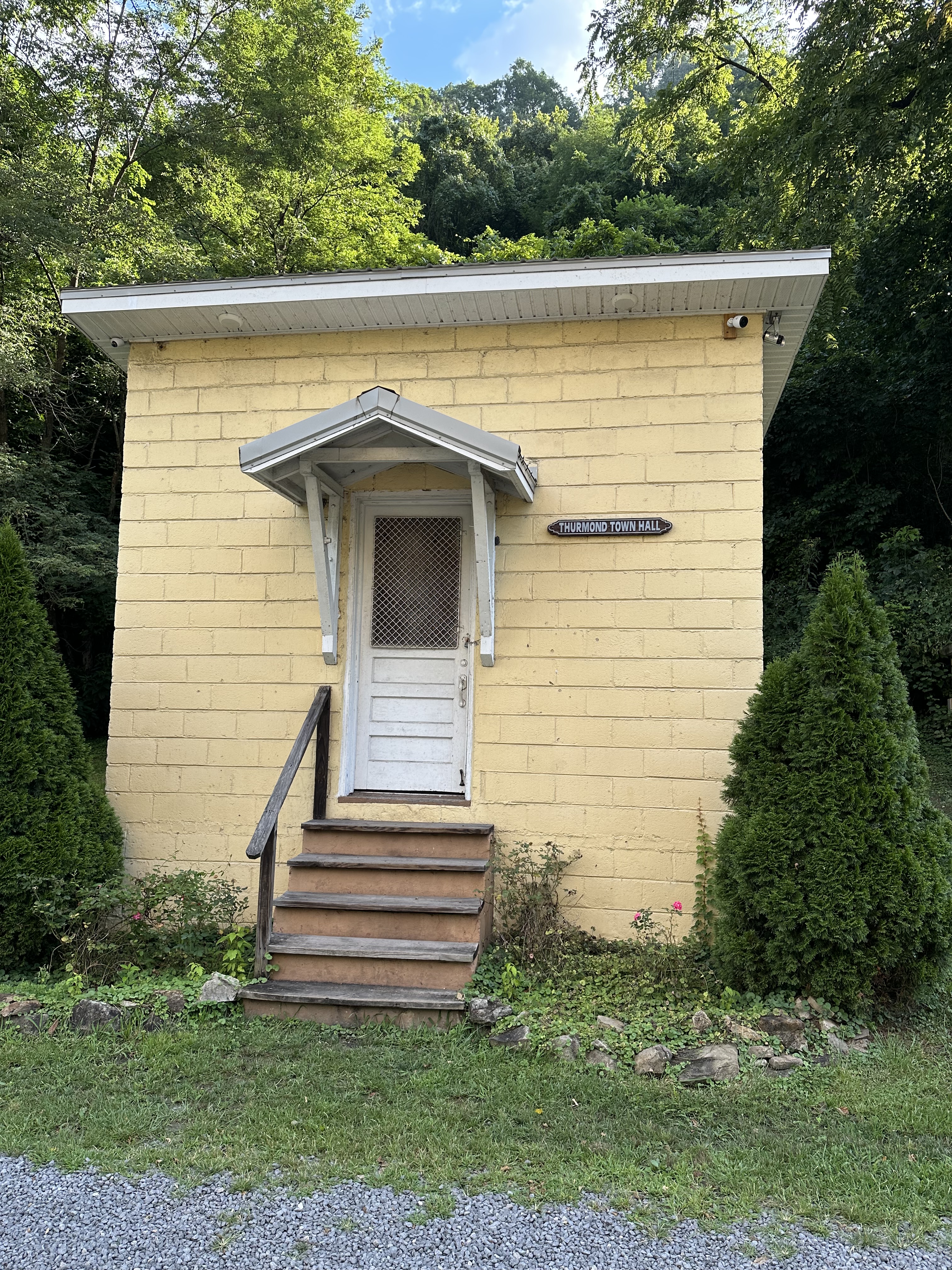
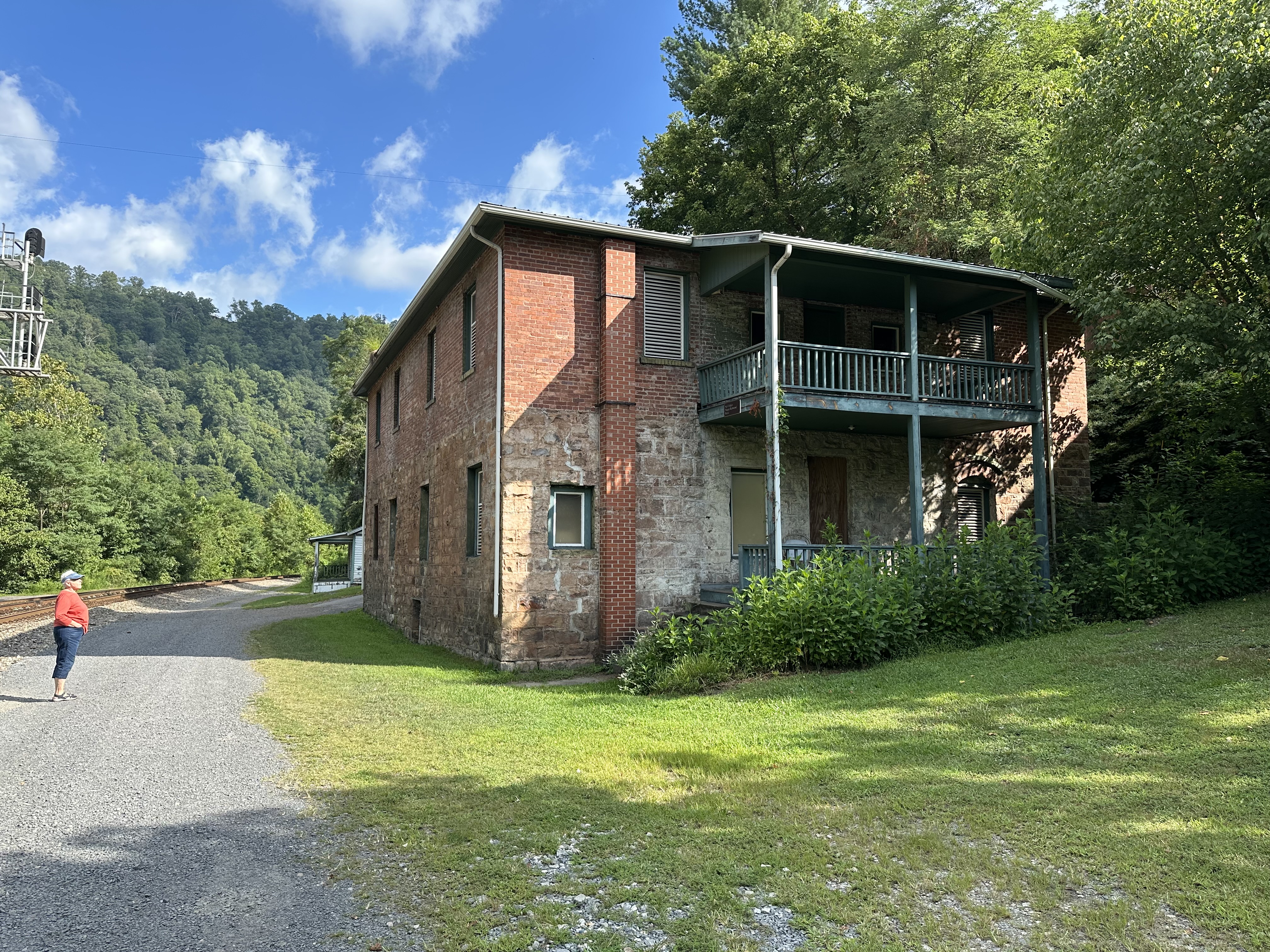
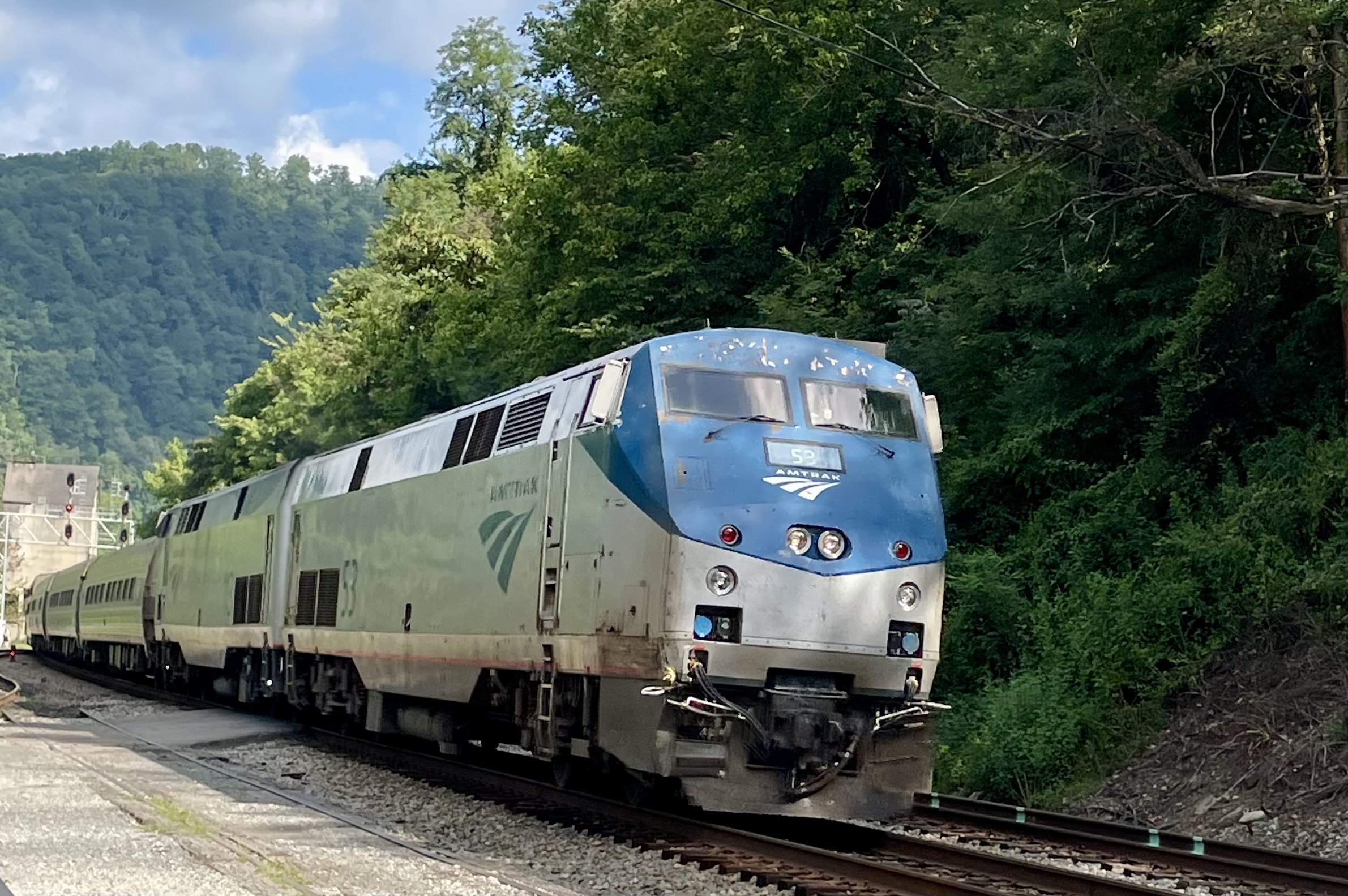
On the second day, we headed to the nearly abandoned town of Thurmond, a boomtown in the coal mining heydays. Today, only five folks live there. They all serve on the town council. One is the mayor, one is the secretary and the other three serve as council members. It was fascinating to walk the town of the once thriving businesses. Fortunately, the daily Amtrak train stopped to pick up a lone passenger while we were there. As the train pulled away, I realized a freight train had stopped on the mainline, allowing the Amtrak train to pass. It was a double treat for this train enthusiast.

On the way out of Thurmond, the road snaked along Dunlop Creek and a train track. Because of the steep descent of the topography, the creek had many rapids and small waterfalls. The sun broke through the thick tree canopy to highlight one of the falls.

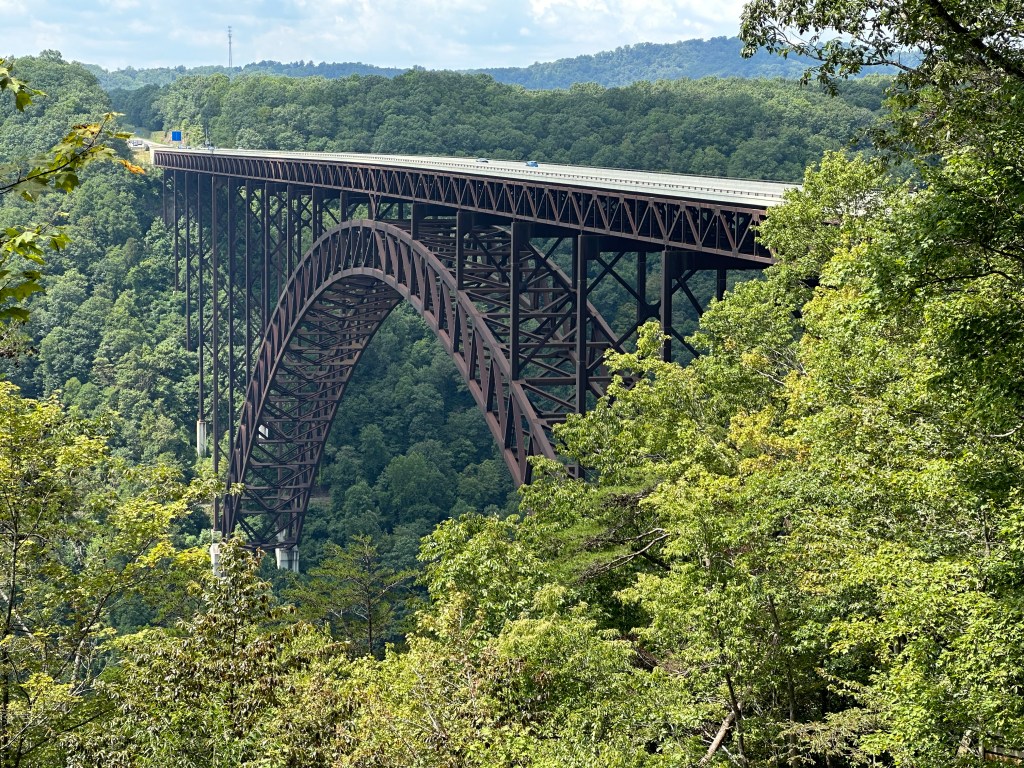
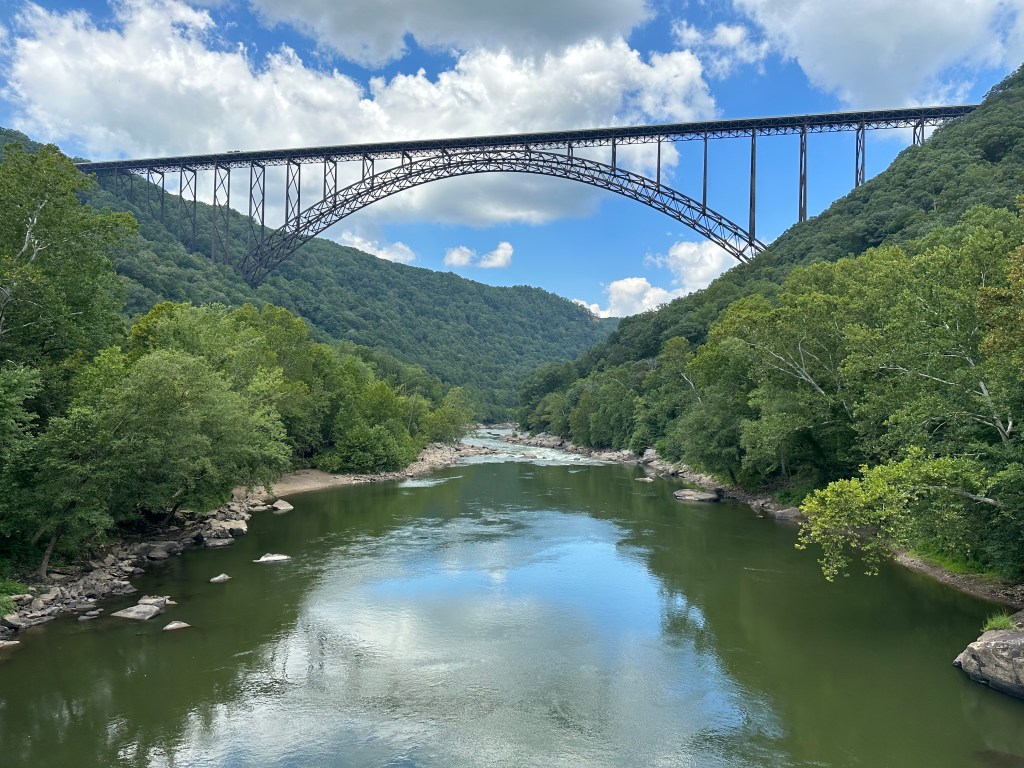
Finally, we took in the magnificence of the historic New River Gorge Bridge. The bridge carries U.S. 19. Consequently, the visitor center and the observation boardwalks were much more crowded than the other locales.

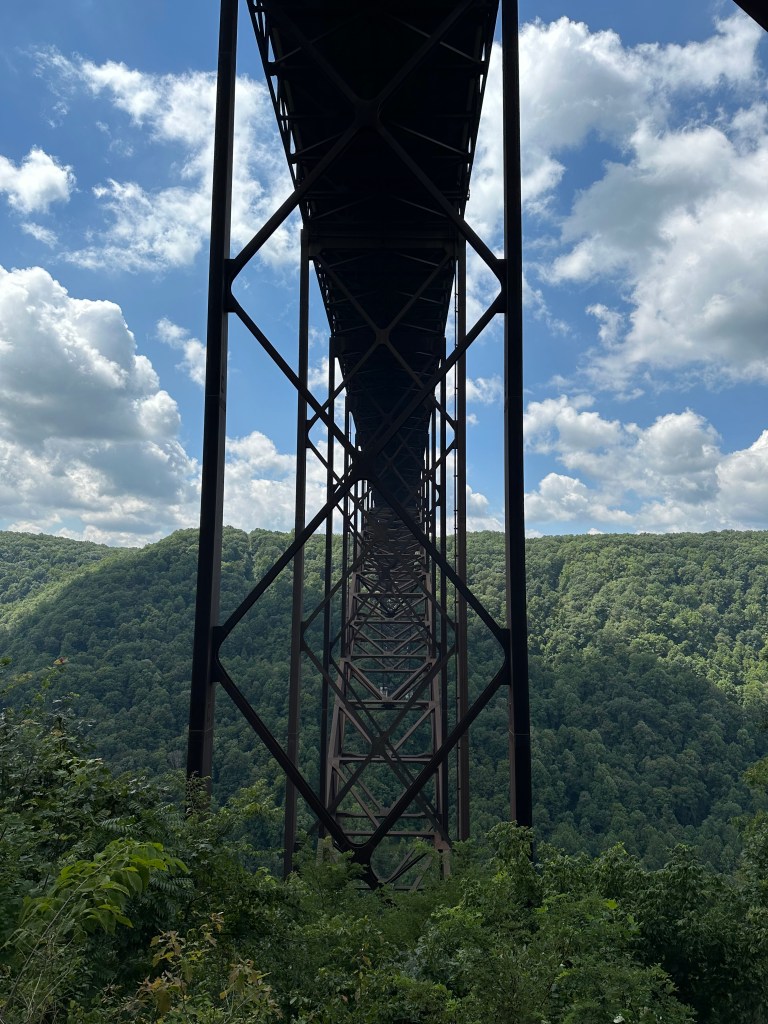
I wanted to get a photo of the bridge from the river view. The only way to do that was to wind our way down narrow roadways with several sharp switchbacks. There were a few places to stop along the way, including one right under the famous bridge.

We continued down the twisting road, the river’s rapids on the right, bearing their white teeth. Soon we made a sharp, right-hand turn and drove across the old bridge to the designated parking lot. I told my wife I was heading to the bridge we had just crossed to photograph the New River Gorge Bridge, which spans 3,030 feet across the New River Gorge and is 876 feet above the river. The bridge is the longest single-span arch bridge in the world.

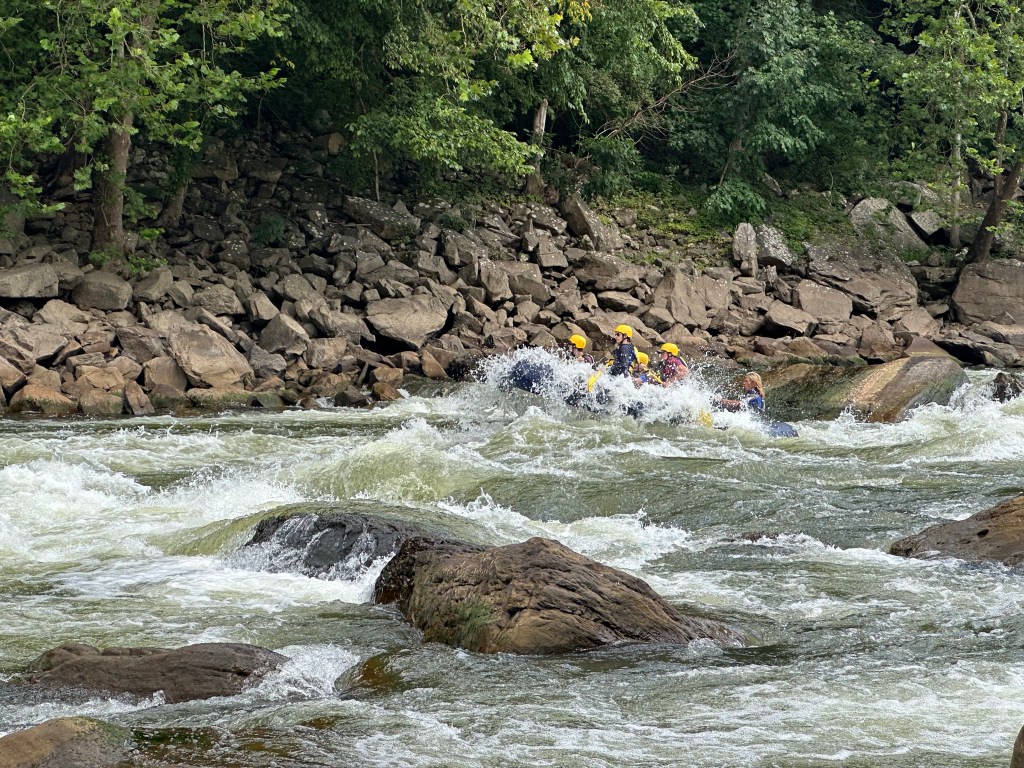
However, I got distracted. I first heard and then saw whitewater rafters running the rapids with others waiting their turn. So, I hustled toward the water’s edge only to discover even bigger boulders than I had at Sandstone Falls. Wanting close-up shots, I scrambled across the rocks as carefully as I could. But the rafters were faster than this 75-year-old grandfather with a bad back and weak knees. Though only 50 feet from the water, I knew I should stop for safety’s sake. I got a few photos, including one lone kayaker who got turned around and bounced through the whitewater backward, just missing a giant rock. As soon as he hit calm water, he headed to the eastern shoreline to compose himself. I was doing the same in preparation for meeting my wife since I had been gone long enough to take the bridge photos and be back already.

After 52 years of marriage, I knew that look when I told her what I had done. I confessed that I should not have gone down there alone on those large slippery rocks. I hustled to get the coveted New River bridge photos. We drove back under the bridge on the switchback narrow roadway until we reached US 19.

The thrills I got from these two days easily could not block out my aches and pains. We learned a lot about the newest national park. And finally, after seven and a half decades, I realized I wasn’t 25 anymore.

A small waterfall on Thurmond Road.

© Bruce Stambaugh 2023

Amish Farm Reflection

Rippled by a light breeze, this large pond proved the perfect foreground for this Amish farm near Walnut Creek in Holmes County, Ohio.

© Bruce Stambaugh 2023
To the Clouds

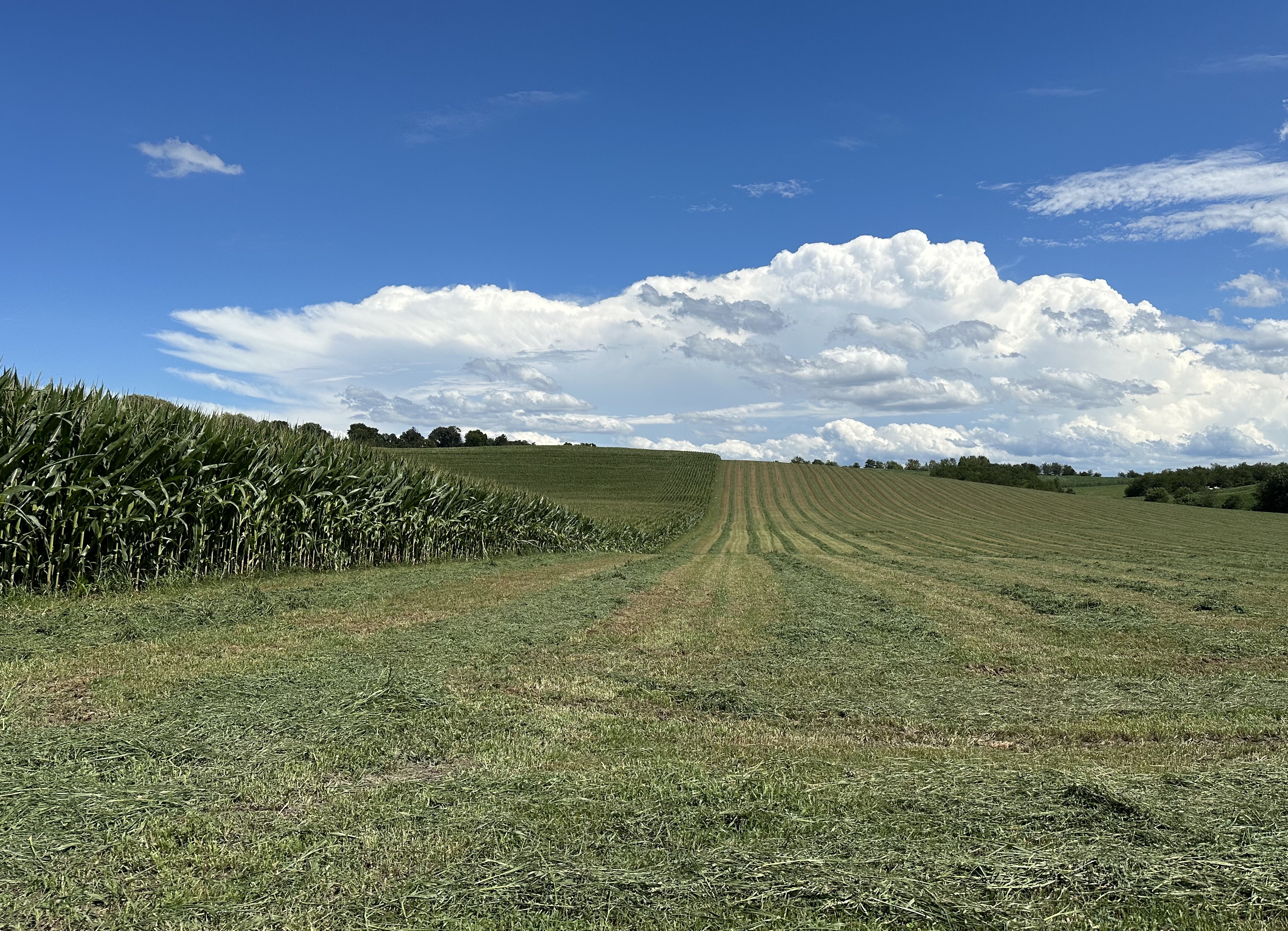
Please click on the photo to enlarge it.

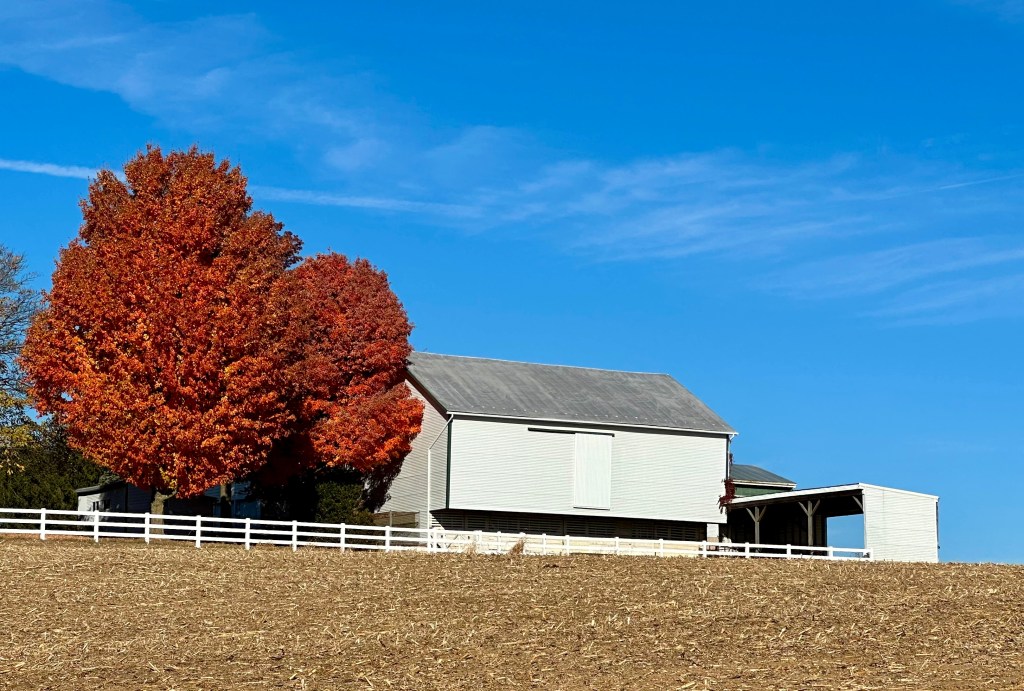
The windrows of the fresh-cut alfalfa and the dark green rows of cornstalks seem to reach to the sky, thanks to the rolling field’s topography. In actuality, the fluffy cumulous clouds rolled over the Blue Ridge Mountains 40 miles east of Harrisonburg, Virginia.

Those are the raw details. The scene’s stark beauty speaks for itself.

© Bruce Stambaugh 2023

Expect the Unexpected

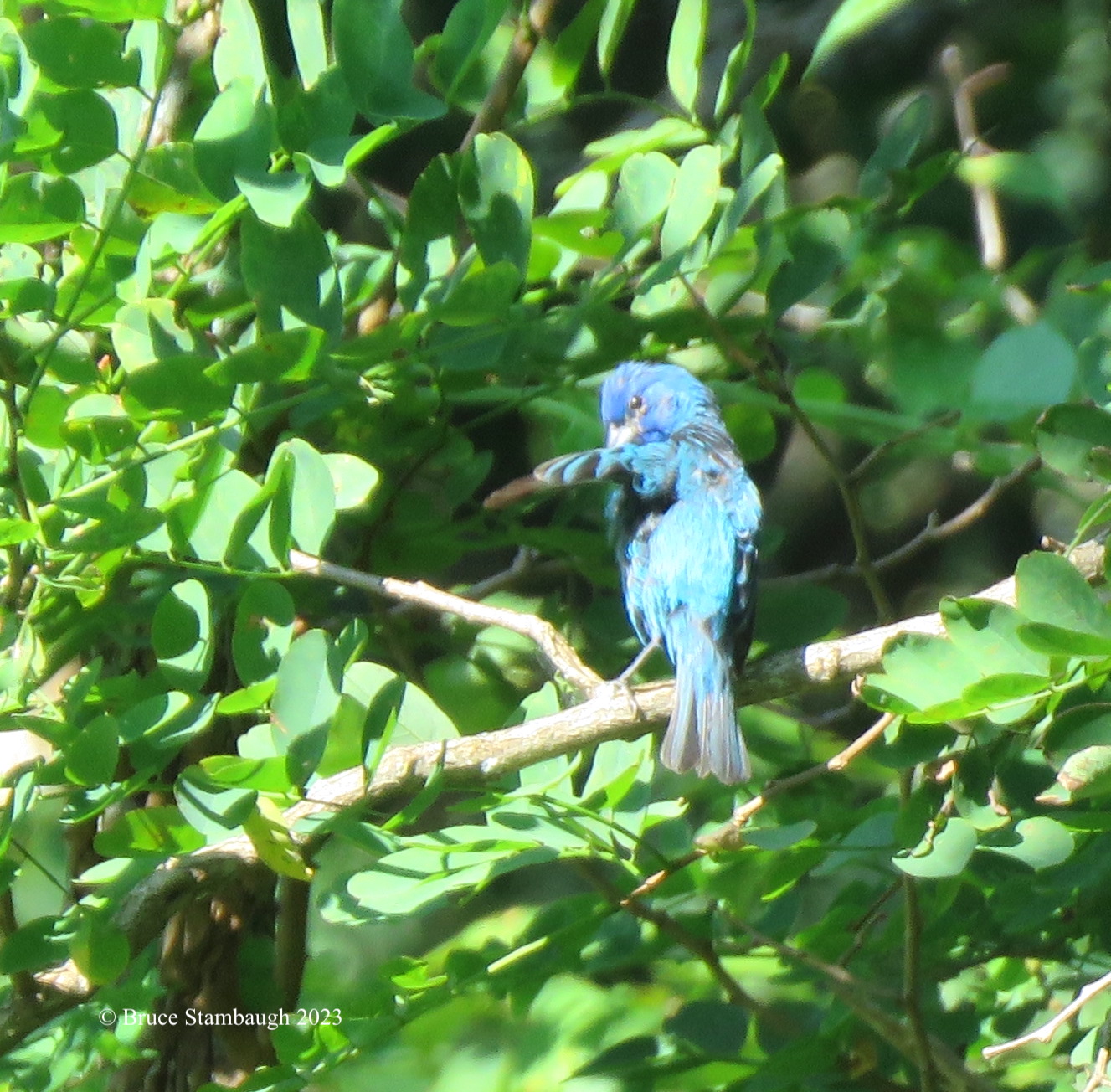
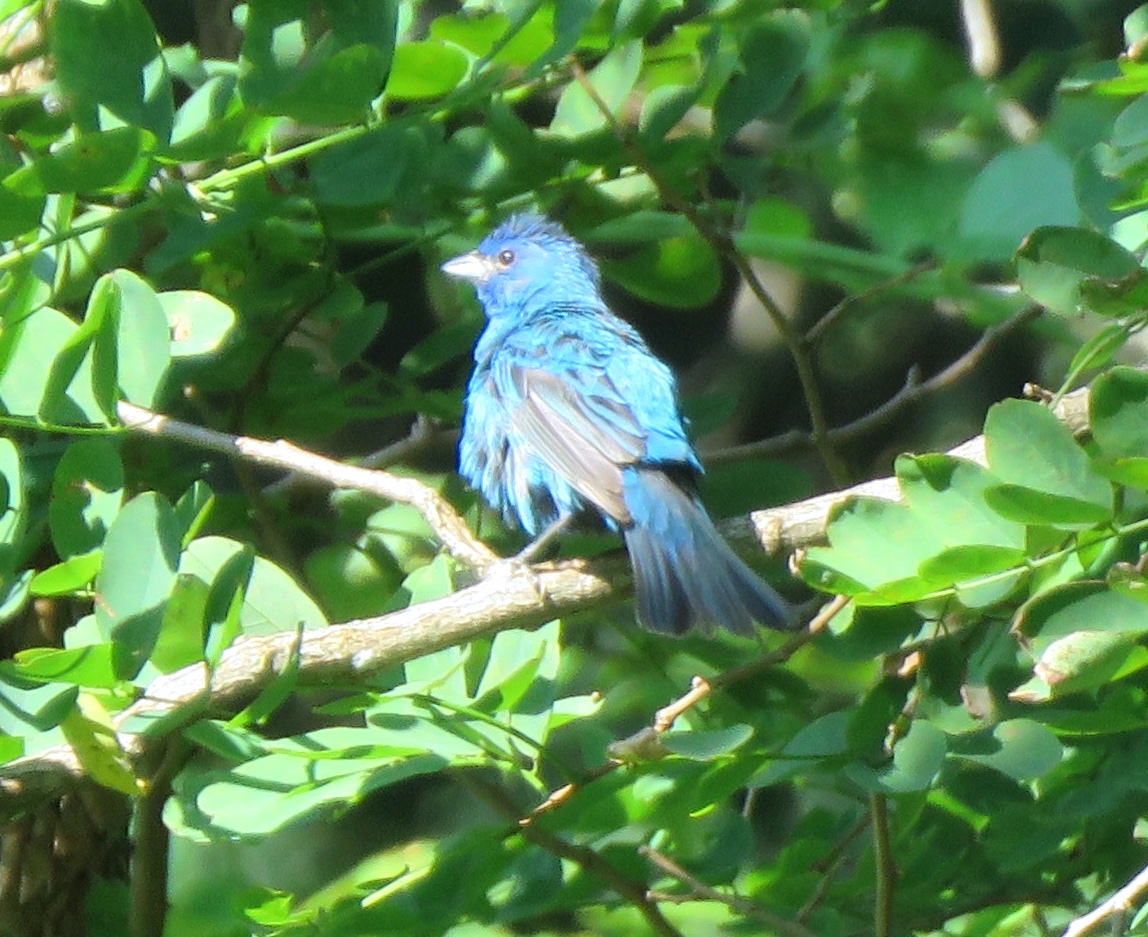
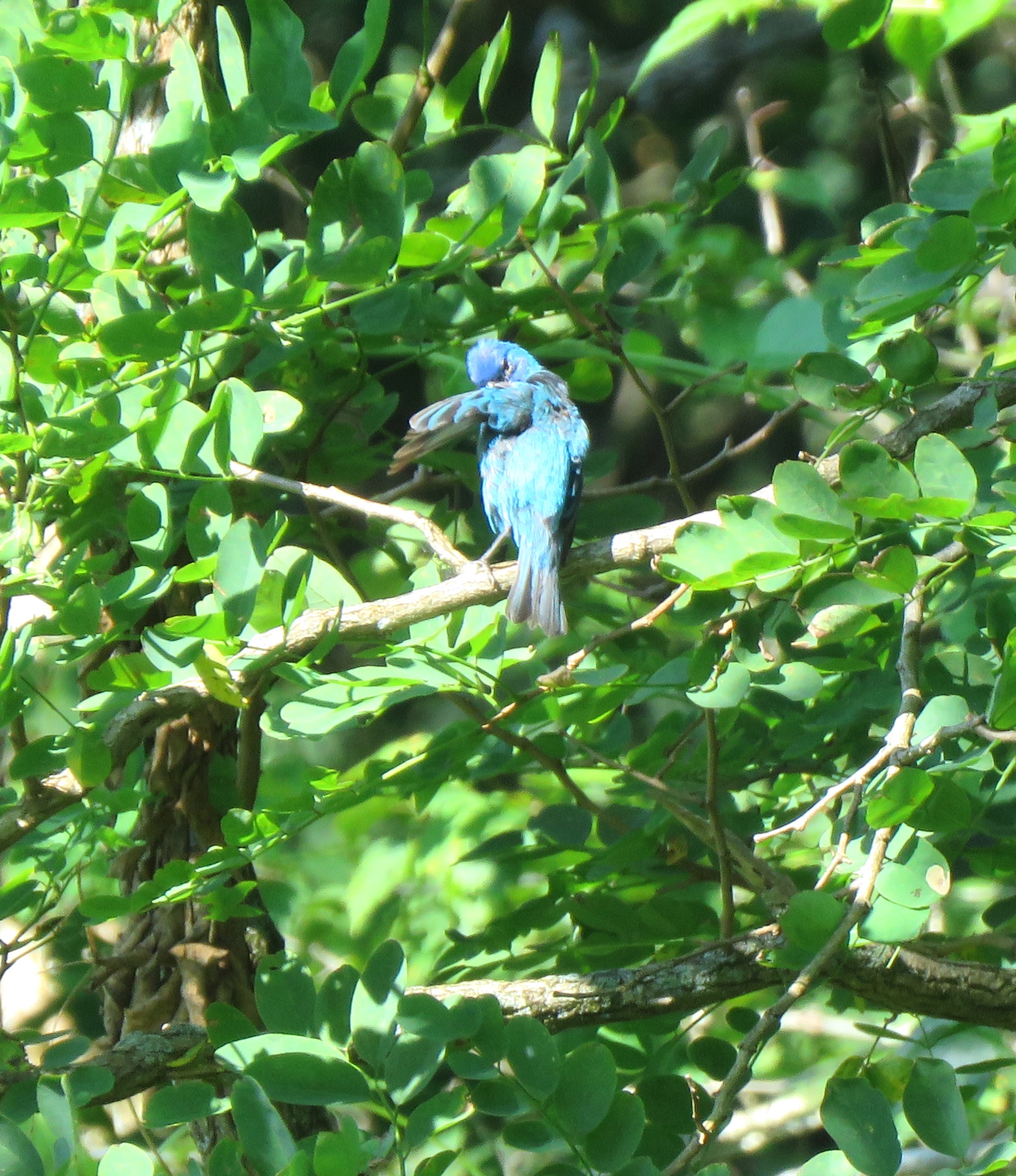
A male Indigo Bunting preening along the Appalachian Trail.

Whenever I go exploring, I can always expect the unexpected. It’s what drives me to get out of doors.

I headed to Shenandoah National Park to mainly photograph butterflies. I had seen photos from the park with Turks Cap Lilies blooming. Those lovely flowers are magnets for butterflies.

I knew a place in the park where I had previously seen butterflies flock to the beautiful lilies. It happened to be where the Appalachian Trail crosses Skyline Drive. The location also had a parking lot designed primarily for day hikers.

I pulled in and was immediately disappointed. No Turks Cap Lilies were to be found. Across the road, other wildflowers were blooming, so I started heading there.

When I go to the park, it should be no surprise that I multitask. My camera is strapped across my left shoulder for easy access, and my binoculars dangle around my neck for wildlife spotting, especially birds.

Just as I reached the crosswalk, a bird flushed out of the undergrowth to a dead tree limb at the forest’s edge. It was a male Indigo Bunting, always a beautiful bird to see.

I stopped, swung my camera around, aimed, focused, and clicked away. As I did so, this beautiful bird began to preen in the morning sunshine. The lighting was perfect, and the bird entertained me for several minutes before a passing car caused it to dive for cover.

Butterflies were few and far between as I checked in at different locations in the park. Nevertheless, watching this enchanting bird for those precious minutes made the trip worthwhile.

© Bruce Stambaugh 2023

A 360-degree Sunset

The zoomed view west. Photo by Bruce Stambaugh.

Since our home faces north, I always have to keep a sharp lookout for a lovely sunset. When I noticed the southern sky turned golden last evening, I grabbed my cameras and headed to a nearby farm pasture to get a good view to the west.

I couldn’t believe my eyes when I exited my car. The sky lit up in every direction with varying and rapidly changing intensities. I did my best to capture the unfolding beauty surrounding me.

The glow to the west was filled with a variety of warm colors. A large cloud curved and swirled overhead, reflecting the setting sun in many hues north and east. To the south, the sky was more pink than orange. Added altogether, I felt privileged to inhale the enveloping wonder.

The slideshow provides views from every direction.

© Bruce Stambaugh 2023
Bay Photos by Donna

Wildlife Photos From The Chesapeake Bay Region

ROAD TO NARA

Culture and Communities at the Heart Of India

K Hertzler Art

Artist and nature journalist in the Shenandoah Valley of Virginia.

Maria Vincent Robinson

Photographer Of Life and moments

Gabriele Romano

Personal Blog

Jennifer Murch

Art is the only way to run away without leaving home. -Twyla Tharp

Roadkill Crossing

Writing generated from the rural life

ANJOLI ROY

writer. teacher. podcast cohost.

Casa Alterna

El amor cruza fronteras / Love crosses borders