Spring bouqet.
My wife is quite the gardner. This spring bouquet in her main flower garden at our former Ohio home was proof of that.
Colorful peonies, irises, lilies, and daisies were only some of the flowers that comprised this large flower garden. It took a lot of work. But clearly, all of her efforts paid off. In fact, we often received compliments from passersby on our busy county highway. They appreciated Neva’s beautiful floral display. I hope you do as well.
May is for the birds. Thousands of bird lovers young and old clearly would understand what I mean.
Birders live for spring migration. Birds large and small that headed south for warmer winter climes return north to their annual breeding grounds. May is the peak month for such movement.
Where the boardwalk begins.
Birders clamor for any and every chance to find rare birds or to compile as many species as they can see or hear in a day or week or month. There is no better place in North America to do that than a small state-managed wildlife area in northwest Ohio called Magee Marsh. Birds and birders both flock to the estuaries, marshlands, and small woodlots that abut Lake Erie’s southwestern shore.
Even if you don’t count yourself among the aviary flock, it’s worth a trip just for the experience. Cruise through the expansive parking lot, and you’ll find vehicles of all shapes and sizes with license plates from across the country and Canada. Human participants even fly in from foreign countries for the spectacular migratory happening.
Part of the draw is an organized and orchestrated event tabbed “The Biggest Week in American Birding,” sponsored by a little non-profit known as the Black Swamp Birding Observatory.
The “week” is actually multiple days in early May. This year it’s May 3-12. Many species of birds, especially warblers, use Magee Marsh and surrounding protected wetlands as rest stops before winging it over Lake Erie into Canada. The first landing spot for many is Point Pele near Leamington, Ontario, just across the lake.
This slideshow requires JavaScript.
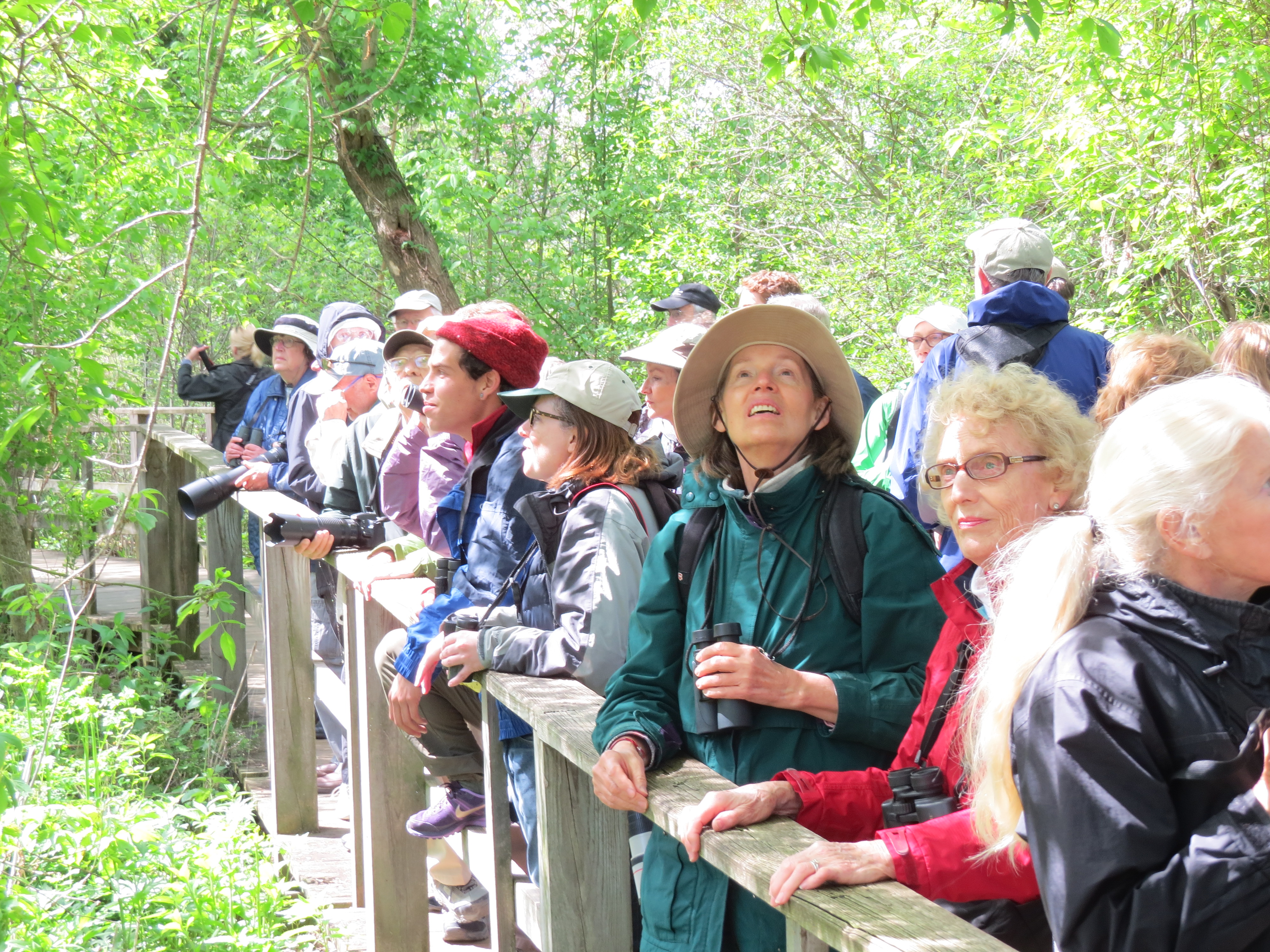
The colorful songbirds sometimes hang like Christmas tree ornaments from tree branches. Birders ogle from boardwalks that wind their way through the trees and along ponds and wetland habitats.
Workshops and lectures are also held to inform interested parties about the latest findings on bird populations, behaviors, and dwindling habitats. Guided field trips are also available. Of course, you can also buy birding supplies, books, and equipment.
But it’s the birds that matter. Youngsters and oldsters, groups and individuals ply their skills at searching for the latest arrived species. Word of a Canadian warbler, a secretive bird with a quiet call, spreads quickly among the birders. Just locate the crowd with spotting scopes and binoculars aimed in search of the prize.
If by chance a real rarity shows, like the endangered Kirtland’s warbler, the crowd suddenly shifts to add to their life list of seeing this worshiped species. Only a small number still summer in the jack pines of the Lower Michigan peninsula.
Cameras and bins.
Searching for a Kirtland’s Warbler.
Kirtland’s Warbler
Yes, that is a Kirtland’s Warbler, and another one was spotted there yesterday, May 3, 2019.
Of course, northwest Ohio is not the only migration hotspot on the continent. Cape May, New Jersey, southern Arizona, the coastlines of Florida and California to name a few also host migrating birds and curious birders. Coastal regions and contiguous topography with natural waterways, ponds, and habitat provide flyways for the returning birds.
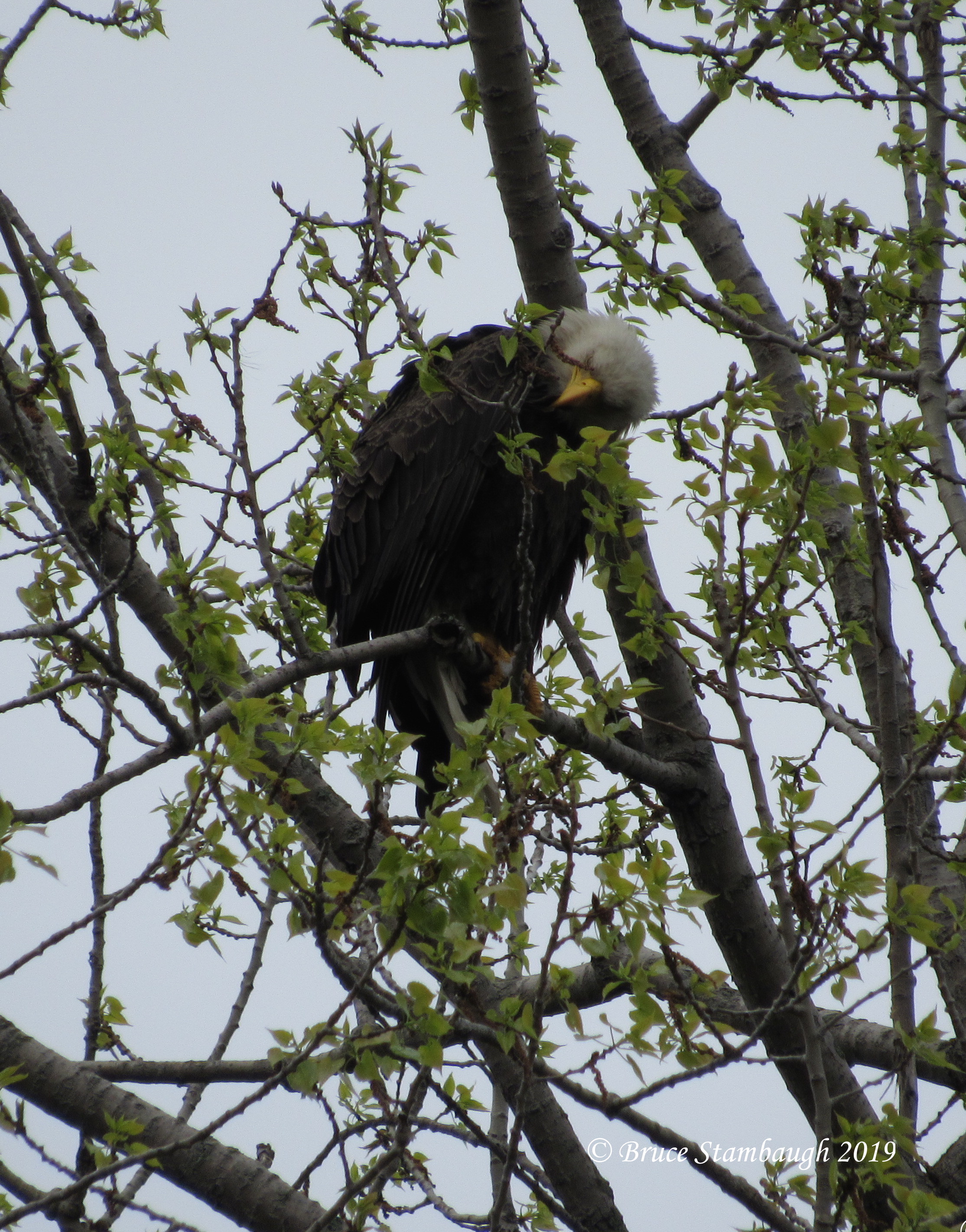
Sleepy.
Birds need cover, food, water, and safe spaces to rest and refuel to continue their journey and reach their destination. In the fall, they’ll repeat the process in reverse, only dressed in more camouflaged colors.
In many species, it’s the flashy colors that birders love to view, if only for a few precious seconds. Some of the species call northern Ohio home for the summer.
School groups, church groups, family groups, young birder groups, birding clubs, and just curious individuals celebrate these early spring days searching for any shorebirds, songbirds, waterfowl, and birds of prey that happen to be passing through.
It’s spring migration after all when May really is for the birds.
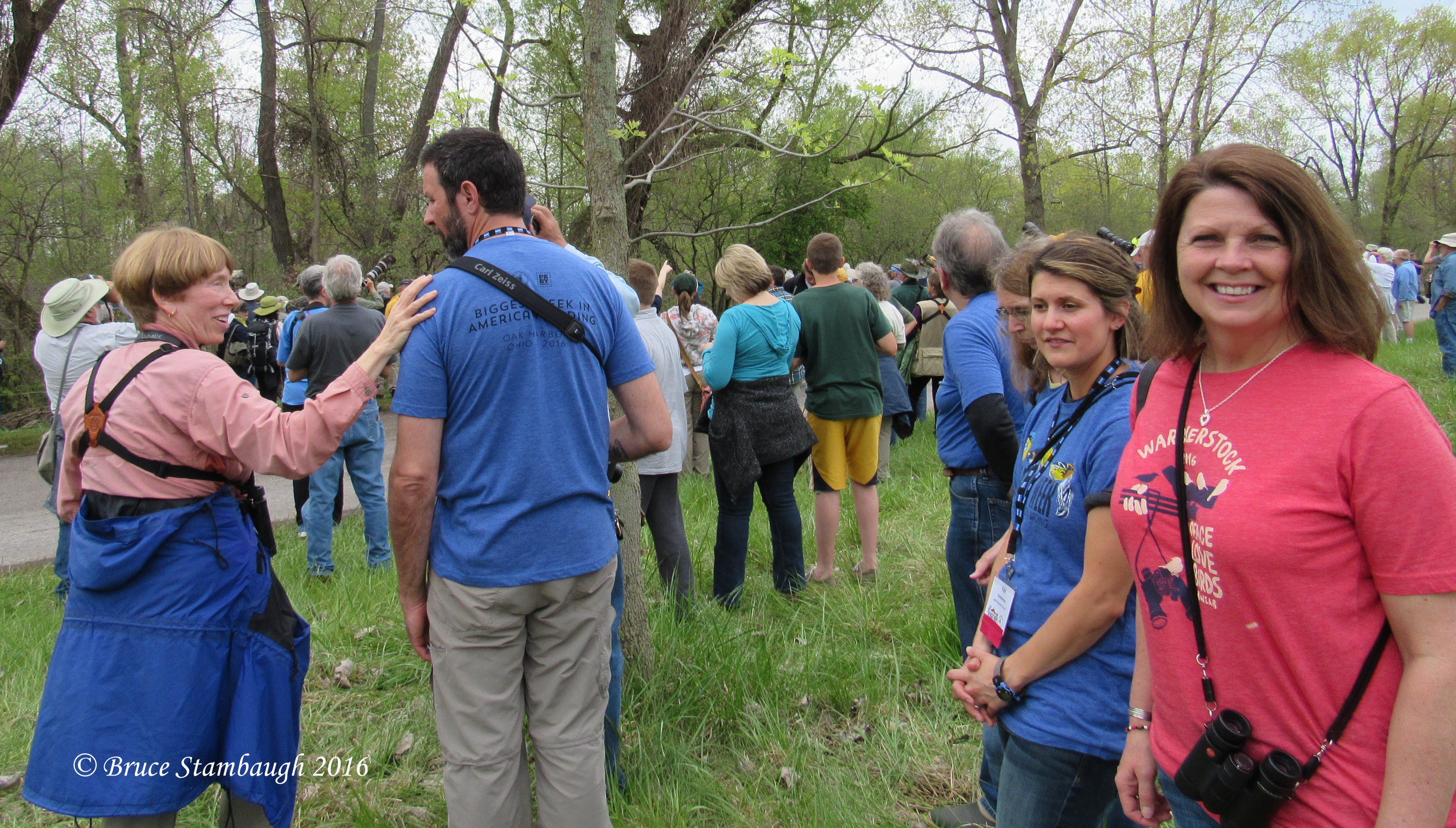
Kim Kaufman (right) and her dedicated staff make the Biggest Week in American Birding happen.
I spend a lot of time at my desk writing and working on photos. From that vantage point, I can look out a front window and watch the day unfold in our little corner of the world. That includes watching birds come and go at the front yard feeders that hang from the red maple tree 20 feet from the house.
Of course, my binoculars and cameras are at the ready when needed. When this male Northern Cardinal perched on a limb in the morning sunshine, I grabbed my camera and clicked away. This was the only shot where the bird was not partially concealed by the unfolding red maple seeds. I felt fortunate to capture the moment, especially shooting through a double-paned window.
Such encounters help brighten each day. “Red in the morning” is my Photo of the Week.
Though my quirky back was acting up again, I ventured out to hike on a lovely spring morning to enjoy all the out-of-doors had to offer. I soon learned that included a few unexpected showers. Partially sheltered by the unfolding forest canopy, I managed to survive the spritzing.
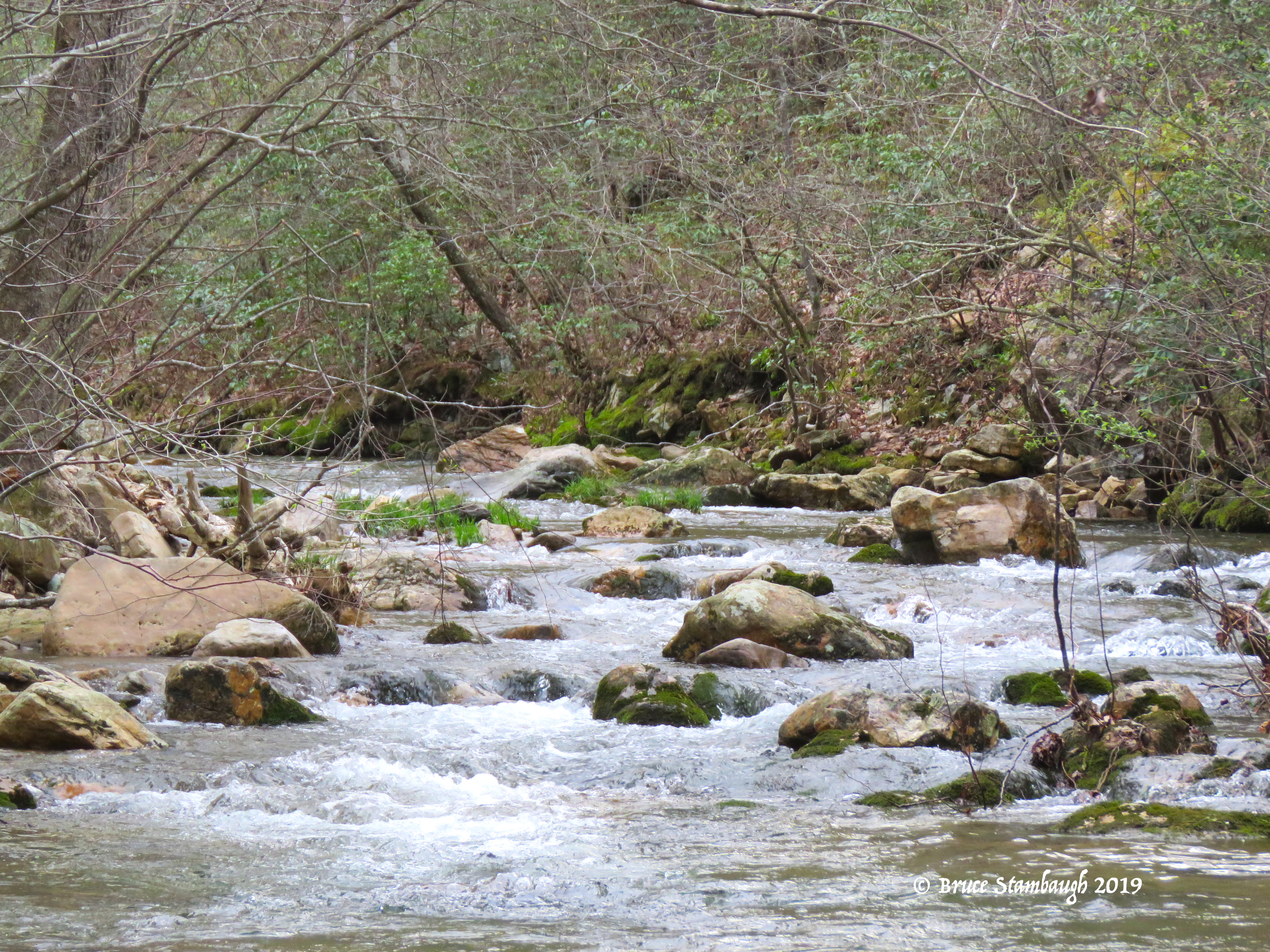
Wanting to literally catch the early birds, I arrived at the trailhead an hour after sunrise. As soon as I exited my vehicle, I knew I was in trouble when it came to hearing the alluring calls of the warblers and other songbirds I sought. The nearby stream was running full force, roaring off the Blue Ridge Mountains eager to make the confluence of the majestic Shenandoah River only a couple of miles away.
The “easy” path.
I had chosen the trail for its undemanding topography. It was actually a fire and service road for the National Park Service. I knew the path would be relatively easy on my aching back unless I chose to venture off on more rugged terrain.
You can guess what happened. Though the road afforded me plenty of opportunities to view many blooming wildflowers and see and hear various birds on the wing, Madison Run called my name.
With my diminished hearing, the noisy stream drowned out most bird sounds for me. I didn’t complain. The variety and beauty of the many wildflowers more than made up for the lack of bird activity or my ability to find them.
This slideshow requires JavaScript.
For eons, the stream has slowly eroded its winding path to the Shenandoah. Wearing down ancient limestone bedrock all those centuries, the watercourse relentlessly carves its way. Gravity is its master.
Madison Run has created its own flood plain, often wide, undulating lowlands laden with second growth oaks, wild cherry, maples, and tulip poplar. Mountain laurel, native hemlock, dogwoods, and redbuds predominate the undergrowth. In other spots, the rock-filled stream barely squeezes between the narrow mountain gaps it helped form long, long ago.
Blue, pink, & white.
Painting the forest.
VA Bluebells.
Lupines.
Spring beauties.
Pink, blue, and white phlox prettied the forest floor and outcroppings along the road. Blue and yellow violets dotted the roadside as well. The redbuds and dogwoods dabbed their lavender and white among the tender green shoots of the hardwoods below the broken gray cloud cover.
Tree swallows sailed overhead, dining on insects pollinating the incalculable blooms. Higher up, a lone raven glided silently above the treetops.
A particular birdsong again drew me off the trail towards the rushing water. Careful with my steps, I knew the bird was close, but I could not find it. The lilt of the Louisiana waterthrush more than compensated for my weak eyesight.
Further upstream, water rolled over a long-ago toppled ash, creating a mini-low-head dam. Here the generally shallow stream held pools of clear, deep water. Stones once part of the mountainside now served as river bottom and rocky shelves akin to sandbars.
I enjoyed whatever each moment brought me. In the few hours of my adventure, plenty of moments caught my attention. Therein was the secret of my success. The din of the world couldn’t reach me in this sacred place, this natural sanctuary.
Spring moments like these won’t last long. You can’t ask the spring beauties. They have already made their exit after their showy but all too brief appearance.
The great novelist P.D. James once penned: “We can experience nothing but the present moment, live in no other second of time, and to understand this is as close as we can get to eternal life.”
Standing in that forest surrounded by wildflowers, birdsong,
and the din of rushing waters, I graciously concurred.
Maunday Thursday is a solumn, sacred holy day in the Christian tradition. It is the Thursday before Easter, believed to be the day Christ shared His last Passover meal with the disciples.
The blood-orange tint of these clouds coupled with the dark, foreboding color of the foreground seemed an appropriate scene to set the stage for the historical trauma of Good Friday.
“Maunday Thursday Sunset” is my Photo of the Week.
I just happened to see this Black Swallowtail butterfly flying in our backyard. It was the first of the spring, and I raced for my camera. Fortunately, it was still there when I returned, flitting from one dandelion to the other. When it finally landed on this one, I started snapping away from the patio 15 ft. from the butterfly.
You can judge the diminutive size of this beauty by comparing it to the dandelion blossom on which it chose to roost.
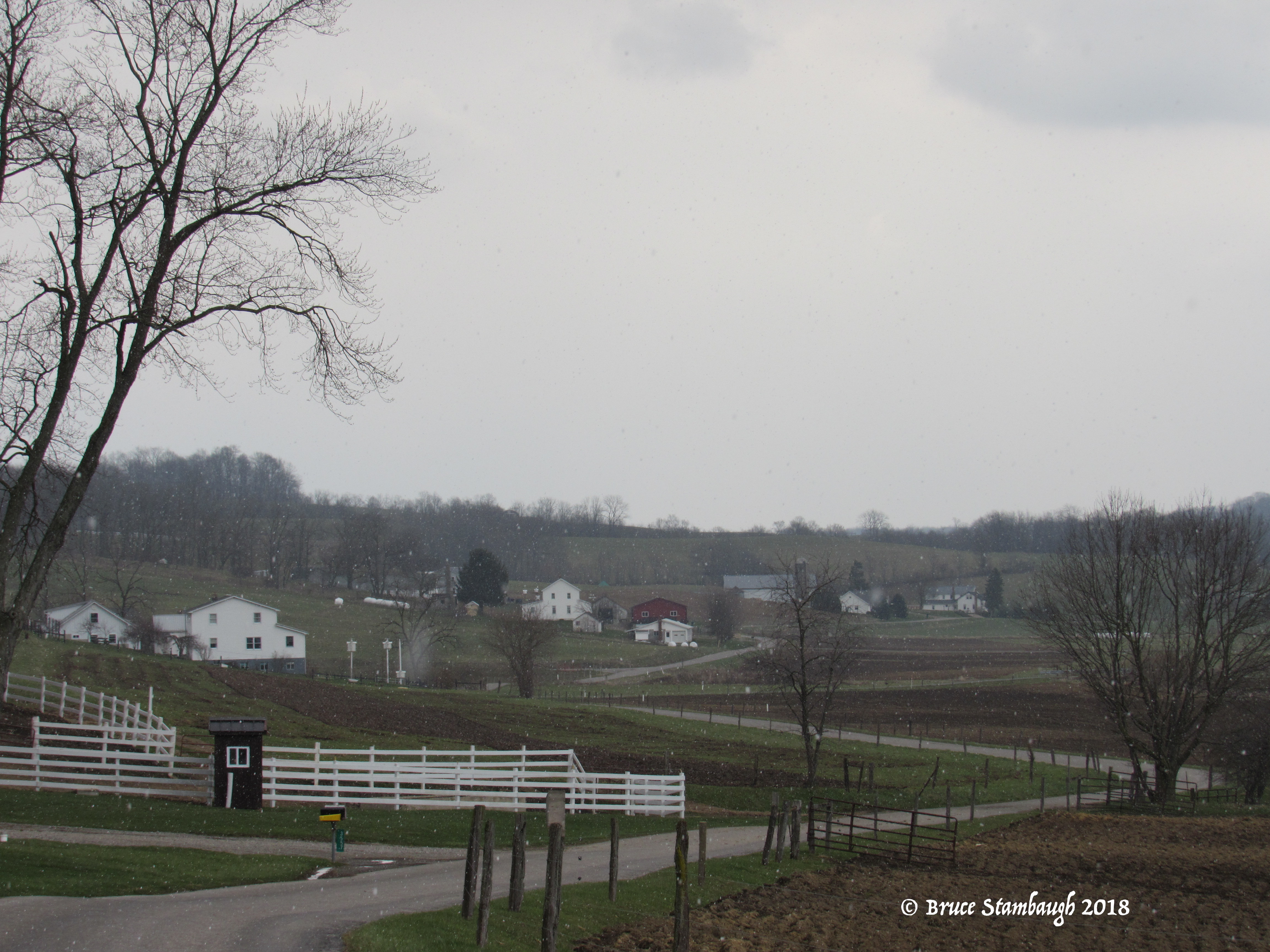
Just another snowy, grey day in April in Ohio’s Amish country.
Compared to other months of the year, April is erratic when it comes to weather.
It’s not that the rest of the months don’t produce variable atmospheric conditions. They do, just not as consistently as April’s predictably unpredictable weather.
Our latest 10-day forecast was proof of that: Sunny, blue skies and 70-degree temperatures one day, and low 20s and snow flurries by week’s end. I’ll keep my birdbath heater going for a while.
That conjecture accurately describes April’s extremes. April uses her versatile weather wand to divulge her bipolar meteorological attributes.
In 30 days, the fourth month throws everything it has at us. Snow, sleet, glorious sunshine, pelting rain, lightning, tornadoes, flooding streams all are April possibilities, though not certainties.
Often the host for both Easter and Passover, April’s assortment of weather takes no holidays. Recall the twin tornadoes of Palm Sunday in April 1965? Do you remember the 20 inches of snow in early April three decades ago?
A puffy, white-cloud day in mid-April in Virginia.When April arrives, we all are more than ready for spring. That is especially true after this extended winter season that ranged far beyond its usual territory.
April’s weather plays games with us, teases us, infuriates us, and beguiles us to the point of hopelessness. Nearly at the breaking point, we relent and grudgingly accept whatever she has to offer. Do we have a choice?
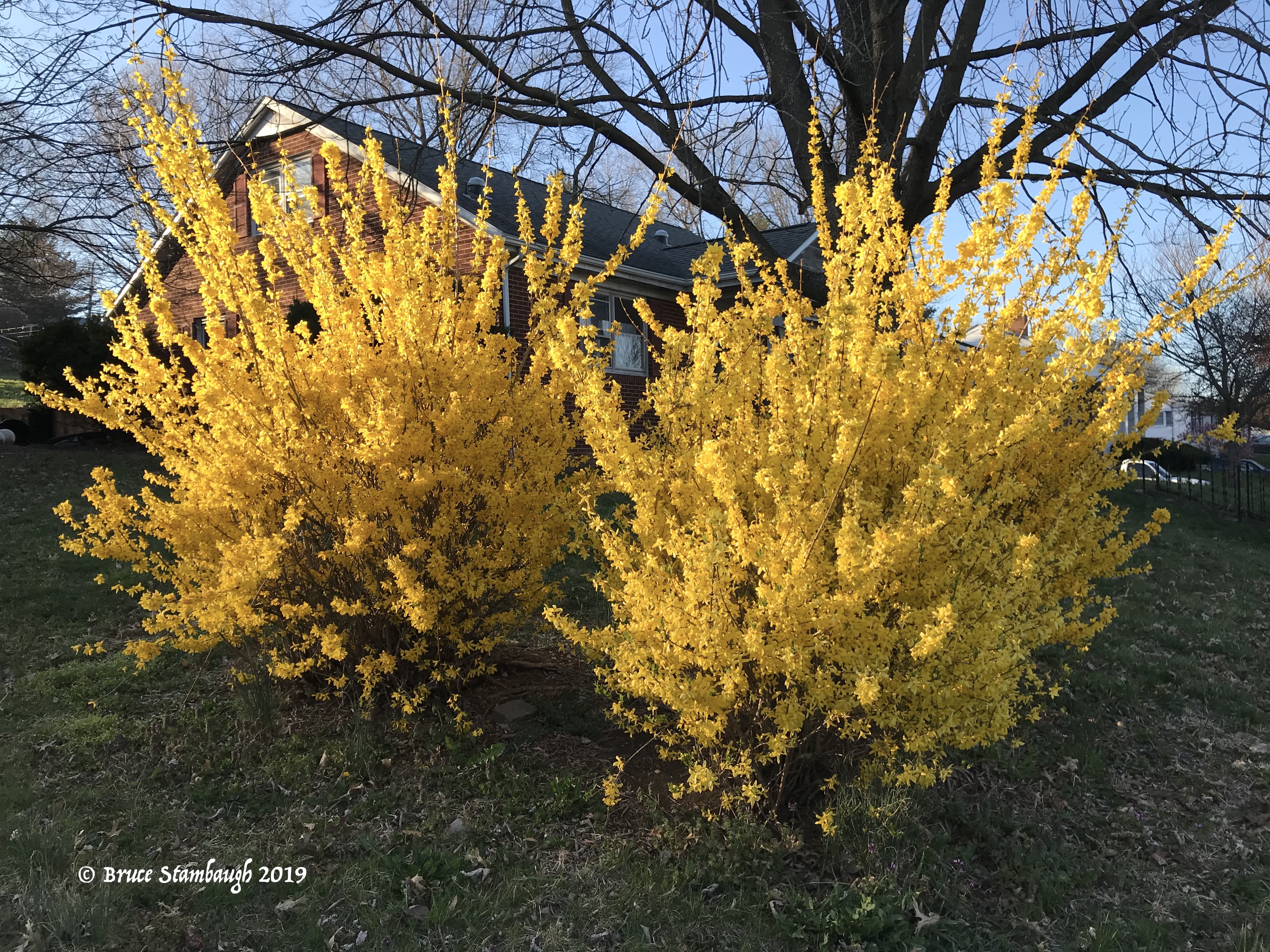
A conciliatory attitude allows us to engage all of our senses into whatever the weather and activities are at hand. It enables us to pause long enough to enjoy the brilliance of forsythia’s yellows before the greening leaves override them.
I watched an American robin mightily tug at the remnants of last year’s plant residue, lying spent and browned in the flowerbed from winter’s bitter harshness. The robin pulled the lifeless strands taut.
I turned away for a second, looked back, and both the robin and the ideal nesting material were gone. Had I witnessed the natural lifecycle in action, the very hope of spring?
Red, yellow, and green.The increasing daylight combines with the warming earth and nourishing moistures to create rapidly changing landscapes. Rembrandt meets Van Gogh.
Deadened lawns seemingly turn dull green to emerald overnight. A heavy frost or soaking rain kills the temptation to even out the irregular grassy clumps posing as a front yard. First, however, winter’s gales and unwelcomed snows require leaf and limb removal before any lawn trimming.
The first dandelions compete with trumpeting daffodils while the last of the crocuses yield to showy tulips. Honeybees celebrate wildly at the cherry blossoms’ coming out parties. They even gorged on the crimson buds of red maples. The little creatures are a welcome sight and the constant humming a glorious symphony, especially given their recent biological life struggles.
Avid birders actually embrace April’s changeable weather. They know strong cold fronts bring more than severe storms or blinding snow squalls. Shorebirds, songbirds, and birds of prey are all on their various lists of birds to check off. They’ll brave April’s worst weather to chase a rare bird.
The good news is that April’s cold, wet weather won’t last long. That’s in keeping with its role as a transition month from winter’s dormant dullness to spring’s brimming vibrancy.
I’m always glad when April rolls around. From month’s beginning to end, she offers up a sampling of weather that’s sure to both please and disappoint most everyone. The challenge is to make the most of whatever comes our way.
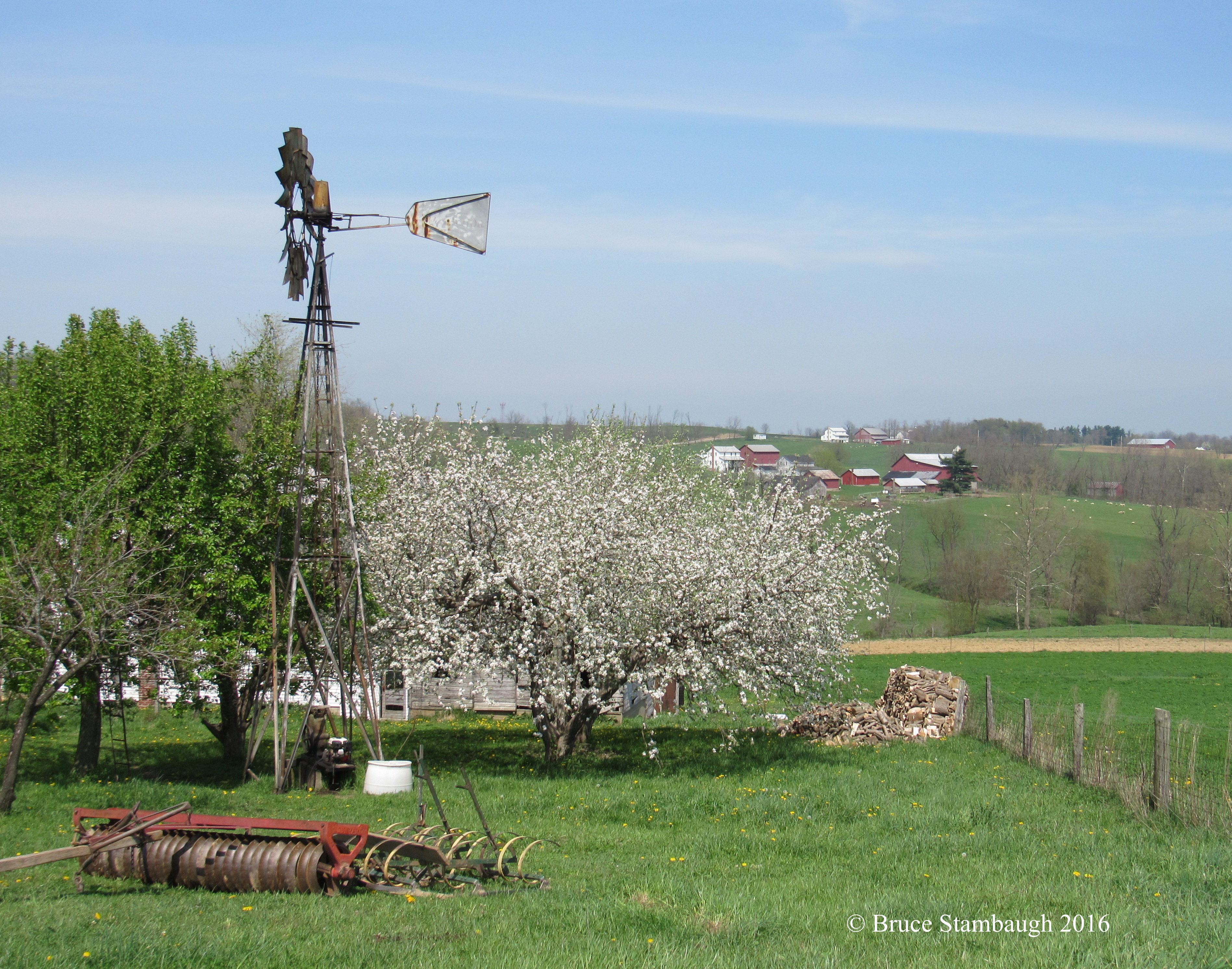
Hopefully by month’s end, pastures will have greened up, fruit trees will be in full bloom, and farmers can once again till the earth.
For whatever reason, the forsythia bushes in the Shenandoah Valley this spring are brilliant. Their blossoms are plump and full. With the early evening sun shining on these bushes, the yellows and golds just popped.
One of my favorite photos, a sunset in northern Florida.
My wife and I love to watch college basketball. It’s how we often spend many quiet winter evenings together at home.
We’ll watch a college hoops game at 7 p.m. and even switch back and forth to other collegiate games that are simultaneously broadcast on TV. At 9, we start the process all over again, usually until half time when it’s lights out for this tired and retired couple.
When its tournament time, more commonly known as March Madness, we are in basketball heaven. Neva claims the love seat while I relax in the recliner. Now, it’s not like all we do is watch talented athletes run up and down the court making incredible plays and acrobatic shots.
In our 48 years of marriage, Neva has taught me to multi-task. With the game going full blast on TV, she reads or works on her iPad while I often write or edit photos to post on my online blog or social media. Of course, the game gets our full attention if it is close, especially as the game clock ticks down.
The happy couple.
Basketball isn’t the only kind of madness happening in March for us. We just celebrated our wedding anniversary. How and where we met and when we married is the rest of the remarkable story.
It was one of those “meant to be” situations. In June 1970 before we ever knew one another, Neva and I separately agreed to supervise a group of 10 energetic youth from the church I attended. It was a weeklong work-study project deep into eastern Kentucky’s coalmine region. The first time I saw her was when the group assembled to leave.
Our work involved hoeing three acres of cucumbers in the morning’s coolness. We studied and visited local sites in the afternoon when the temperatures and humidity were both off the charts.
To further learn about the Appalachian culture, we visited local homes far up those infamous hollows. We also did home repairs. Short on tools, we used large rocks to pound roofing nails into tarpaper.
It was an inspiring experience. What impressed me most, however, was Neva. Love interfered with logic. We were married the following March at the height of both college and Ohio high school basketball tournaments.
Our fathers had to wonder about our timing. They both loved basketball. We thought for sure that Neva’s father would walk her down the aisle holding a transistor radio to one ear listening to a game.
Somehow we survived that day and all the days that have followed. We haven’t lived a charmed life together, and it certainly hasn’t been perfect. But we have thrived as both a couple and as individuals. Mutual forgiveness, love, and trust will do that.
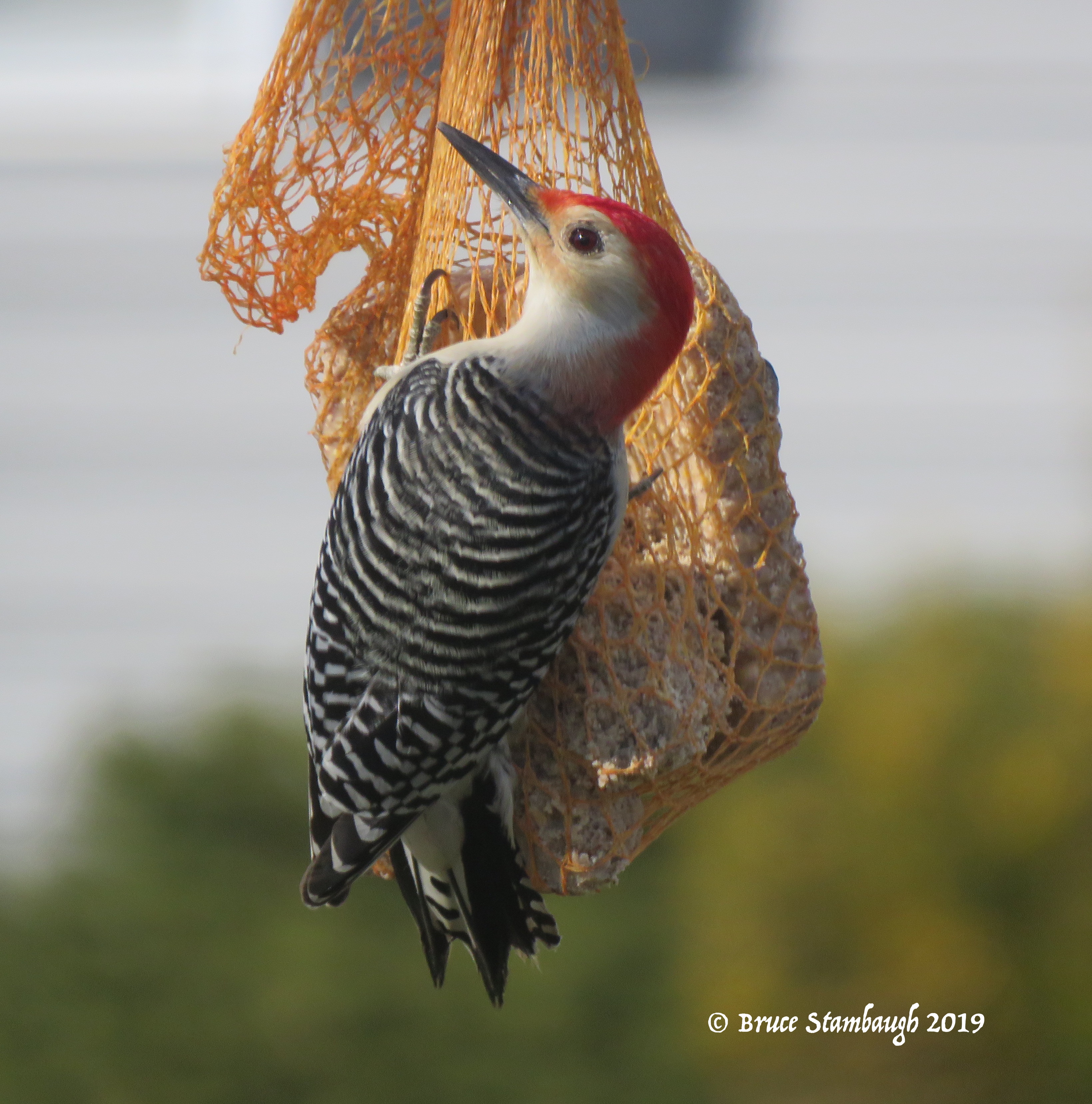
Male Red-bellied Woodpecker
Our skills and interests have nicely balanced our life together. Neva is a marvelous cook and I am a grateful, hungry husband. Neva prefers reading. I write. She sews. I bird. She quilts. I take photos. You get the picture, no pun intended.
As March plays out into April, Neva and I will be watching how the college basketball playoffs turn out. Of course we each fill out a bracket, making our best guesses as to which teams will be in the final four. The chances of our winning are low. Our marriage, however, has beaten the odds.
Meanwhile, we’ll keep holding hands, and doing what we can to make this world a better place. We have celebrated another personal March Madness milestone and look forward to many more together.












You must be logged in to post a comment.