Seeing horses was an everyday occurrence when my wife and I lived in Ohio’s Amish country in Holmes County, Ohio. We would see horses pass by our home on the busy county road daily pulling carts, buggies, and wagons.
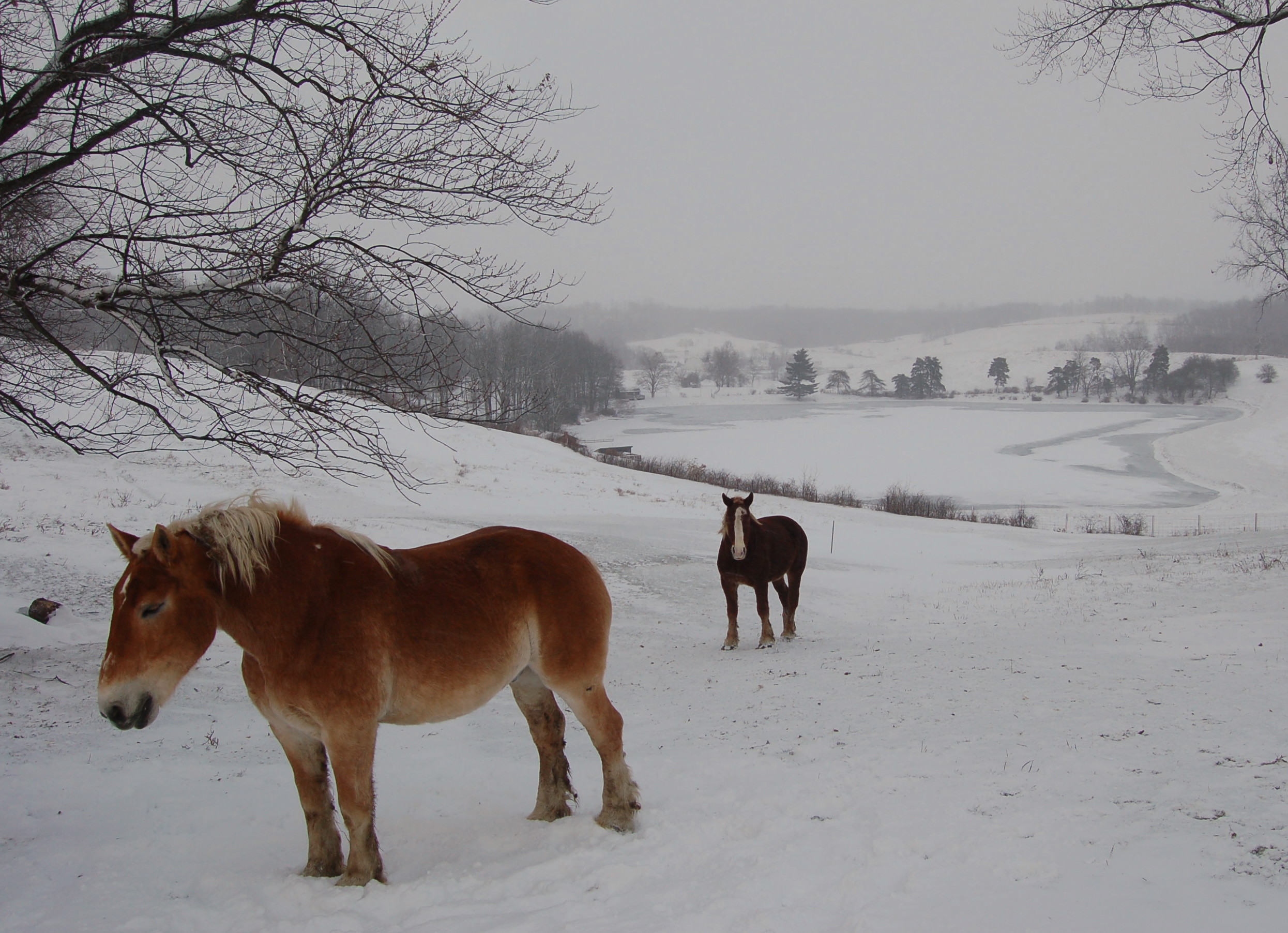
The Amish still use workhorses, like the ones shown here, for their field work. Mechanical power was shunned in order to literally ground and keep the Amish connected to their earthy roots.
This photo shows a pair of workhorses amidst a wicked snowstorm in bitterly cold conditions. Since they could not find grass on which to graze, their owners would bring hay and feed to sustain them. In the distance at the bottom of the hill, the fallen snow had already been started to be cleared so Amish youngsters could skate on the thick ice.
I’m not sure what Christmas will bring this year, let alone Santa. With the pandemic surging and health guidelines more stringent, it might just be my wife and me enjoying Christmas Day. And that’s okay.
Pandemic or no pandemic, Christmas is still Christmas, whether we are alone or with a gaggle of rowdy relatives. We can still celebrate the sacred day. This year, though, our celebrations will probably be very different since the pandemic is still raging.
Since we likely can’t gather in our traditional ways this Christmas, I have an idea. Let’s enjoy this holiday by joyfully reflecting on Christmases past.
I realize that isn’t always the easiest to do. The holidays bring sad and painful memories for many folks for diverse reasons. Many, like our family, have lost loved ones.
My father and my wife’s father both died just before Christmas. So have close friends, some of them much too young. It’s not hypocritical to miss and mourn as well as celebrate the season, however.
My father loved Christmas. When it came to Christmas, Dad was like a little kid. He couldn’t contain himself.
Dad would overspend on multiple gifts for his two daughters and three sons. I never could figure out how he and Mom afforded what they did for us. They set an example for us that we still follow, though perhaps with more restraint.
It was only appropriate that we celebrated our father’s life well-lived on a cold and snowy December 26. That was 11 years ago already, and it was a Christmastime I will always cherish. The family loved that so many folks took time out during the holidays to pay their respects.
Late one Christmas Eve, I fondly recall delivering the town’s daily newspaper. A fresh six-inches of snow brightened the colorful holiday lights all along my neighborhood route. People seemed extra friendly as I handed them the next day’s paper.
Christmas 1956.
As a youngster, I joined my siblings in excitingly awaiting the appointed early hour of 6 a.m. Christmas morning to bolt downstairs to see what Santa had brought. In minutes, we undid what had taken Mom and Dad hours to assemble and wrap.
Our stockings were always hung with care on the fireplace mantel. We could always count on Santa stuffing it with nuts, candy canes, and an orange at the very bottom. Neva and I continued the same tradition with our own children and grandchildren.
When I was principal at Winesburg Elementary in the real Winesburg, Ohio, the fifth and sixth graders would return to school one evening before Christmas to go caroling to the appreciative elders of quaint Winesburg. The youthful entourage would always end up at the late Mary Ann Hershberger’s house for hot chocolate and yummy cookies. As cold as those nights often were, the memories warm me still.
The weather will determine whether Neva and I can gather with our daughter and her family this year. If it’s fair, we will celebrate adequately distanced on the back porch. If not, connecting using technology will have to suffice.
Besides remembering Christmases past, let’s also reflect on how we can brighten someone else’s holiday today. Connect via letter, email, phone call, or card with someone that you know who finds the holidays especially hard for whatever reasons. It may brighten the season for you both. After all, that’s the true spirit of Christmas in action.
However you celebrate this holiday season, please do so safely and with others in mind. After all, we all want to be around to enjoy many more Christmases to come.
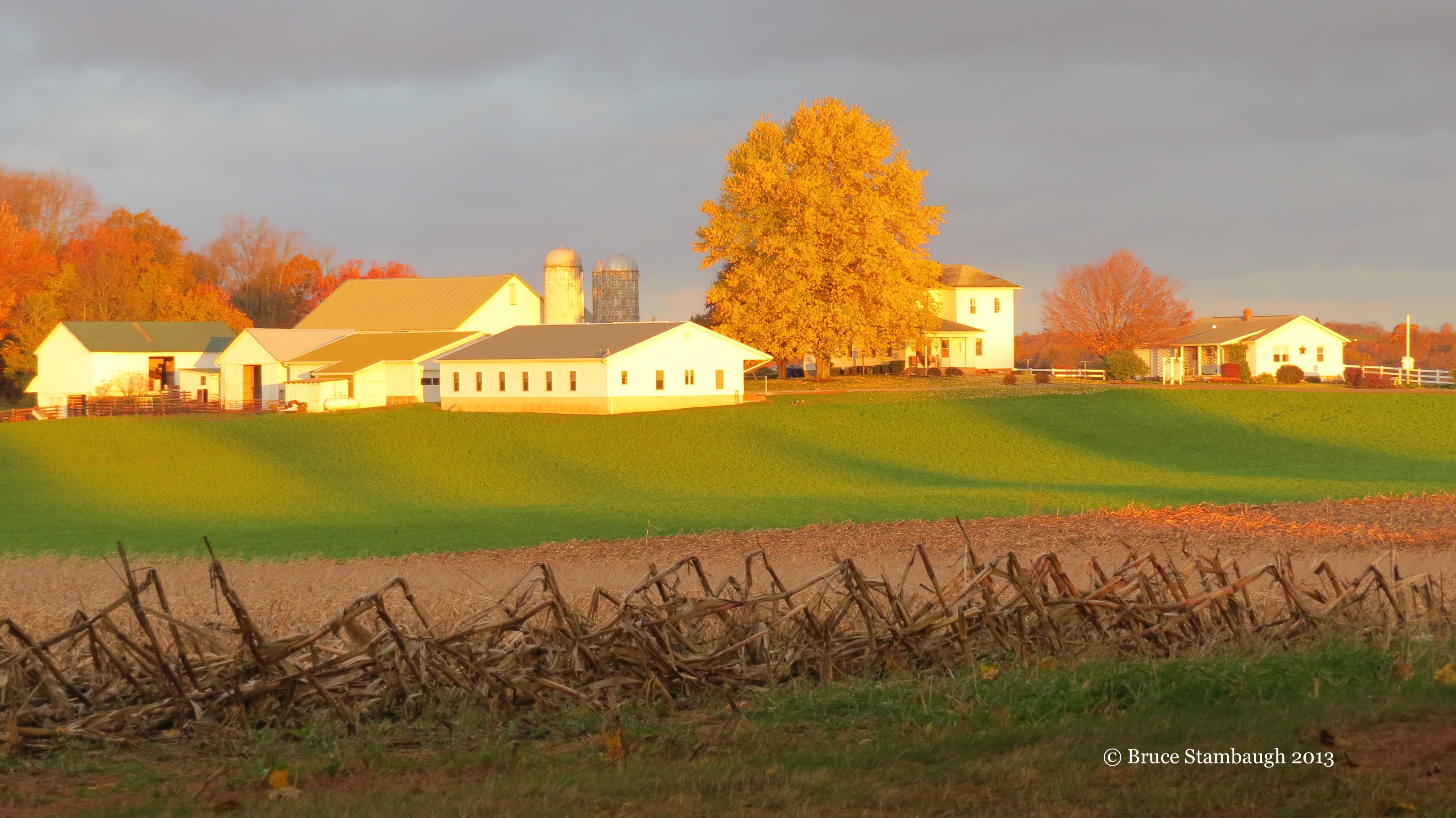
We just had our first winter snowstorm in Virginia, even though winter doesn’t officially arrive until next Tuesday. Other than refilling bird feeders, I stayed in the safety of our home. Instead of going out, I sorted through my photo files and found this beauty after a snowstorm in Ohio’s Amish country. The late afternoon sun was just sneaking through the thinning clouds, kissing the white barn and homestead.
Due to the ongoing coronavirus pandemic, it’s been a year since my wife and I last visited our former stomping grounds in Ohio’s Amish country. That’s when I took this shot at dawn of a distant ridge. December’s bare deciduous trees on the rolling hilltops provided a foreground silhouette for the glowing morning sky.
A bygone Thanksgiving morning in Ohio’s Amish country.
Thanksgiving season is upon us here in the U.S. The day won’t be the same as in years past, with the pandemic still raging. Nevertheless, we can, and we should celebrate.
I have always relished Thanksgiving. The food, the fellowship, the interplay of cross-generational conversation and gaming made the day special.
Growing up in blue-collar northeast Ohio, my four siblings and I had a boatload of first cousins with whom we communed on Thanksgiving Day. Our maternal grandmother graciously oversaw the gathering of her three daughters and their families.
A buffet of all the traditional Thanksgiving goodies filled the long dining room table at our Aunt Vivian and Uncle Kenny’s place, where we usually assembled. Other relatives occasionally joined us.
Besides gorging ourselves, we played football, hide and seek, and sang at the piano. By day’s end, both our stomachs and our souls were more than satisfied. Laughter and familial love will do that.
As the children matured to teens and then to adults, spouses joined in the festivities. Out of necessity, each family began meeting separately.
Thanksgiving Day resembled a progressive supper. It was one house for a noontime holiday spread and then dinner at the in-laws with an equivalent bounty.
Those traditions evolved even further when our children married or moved hours away. Thanksgiving became an extended holiday to accommodate as many attendees as possible. We would eat our way through Thursday to Sunday.
Regardless of the settings and meeting arrangements, fond memories always resulted. That was true even if the mashed potatoes were lumpy or the dressing was too dry.
This year, those memories will have to flavor Thanksgiving Day whatever, however, and wherever we celebrate. The coronavirus will likely alter any large gatherings, even if they include all family members.
As the contagious pandemic continues to spread and spike, we all have to do our part to thwart its invisible advance. It never was going to evaporate, no matter who won the presidential election.
This Thanksgiving, we have to let go of our traditions, our expectations, and our American pride and do what is best for the common good of all. The Center for Disease Control and Prevention advises against any large-group inside gatherings.
The professional advice is that people not be in an enclosed space with the same people for more than 15-minutes. I’ve been known to be a fast eater, but not that fast.
For my wife and me, that means we will be hoping for a warm Thanksgiving Day to meet outside with our daughter, her husband, and our three grandchildren. We’ll connect as we are able with our son and his wife in New York.
This pandemic has been the paradigm shift of a lifetime for all of us. It’s been hard for us, independent-minded citizens, to accept governmental and medical leaders’ guidelines and restrictions.
Trying to provide accurate safety information about a new and dangerous virus can’t be easy. It is incumbent on all of us to follow the advice to help slow this COVID-19 until an effective vaccine arrives.
Nevertheless, virus or no virus, Thanksgiving Day will arrive, and we should express our great gratitude. How that occurs is an individual choice, of course.
I am grateful for the many blessings received over all these many years. If we can’t meet in person with our family like my nostalgic recollections, I will be disappointed. However, we can still express our appreciation virtually.
The principle of being thankful is the very foundation for Thanksgiving. Let us all keep that tradition alive as joyously and safely as possible.
October’s Harvest Moon rises over Massanutten Mountain near Harrisonburg, VA.
Many moons ago, I remember clearly seeing the Milky Way for the first time in ages. I stood starstruck at the twinkling, gem-like brilliance overhead.
In the evening chill, I gazed transfixed, awestruck. Of course, the setting alone provided that opportunity. I had just stepped out of the historic El Tovar Hotel at the Grand Canyon’s edge in northern Arizona.
I felt like a child again, my mind racing back to forgotten summer nights when I would lay on my back in the coolness of the grass and watch the stars and planets. My family lived in a suburb of a blue-collar steel town in northeast Ohio. We could still see the heavens above.
Back then, light pollution was not an issue. Street lights were fewer, and their incandescent bulbs radiated soft light. I even remember being able to track satellites from our front yard.
Somehow, somewhere we North Americans became afraid of the dark. More and brighter street lights and security lights multiplied, all in the name of blotting out the darkness. Now, light pollution prevents 80 percent of the U.S. population from seeing the stars.
The evolution of lighting up streets, buildings, and entire cities has grown exponentially with urban sprawl. In today’s world, most people have to travel out into the country to see the stars.
Residents of cities like Jacksonville, FL, have little chance of seeing the night sky.
Seeing the night sky was one of the benefits of living in a rural area like Holmes County. The air was so clean that Amish buggies rode by at night with no lights on at all until they heard a vehicle coming. Though it wasn’t a safe thing to do, the point was that the horse and driver didn’t need lights to guide them.
We chose the house we now live in near Harrisonburg, Virginia, in the daytime. Being able to see the night sky on a clear night came as a bonus. Our expansive housing development has no street lights.
Light fills our modern night lives, too much of which is bright, blue illumination from all of our electronics. Cell phones, computers, and TV screens stimulate us rather than relax us before bedtime.
Humans need dark nights to get proper sleep. Some people have to use black nightshades to cover their windows to shut out external, artificial light to get some sleep. Sleep deprivation can lead to too many negatives for us humans.
Excessive night lighting disturbs wildlife, too. More than 60% of invertebrates and 30% of vertebrates are nocturnal. Each year, millions of migrating birds die by flying into urban windows illuminated at night long after employees have gone home.
Newly hatched sea turtles crawl to the brightest light, which used to be the stars and moon twinkling over the sea. Now, the turtles turn the wrong way and perish unless the artificial lighting is turned off.
Nighttime photos taken from space of urban areas may look pretty, but such massive lighting causes problems and is extremely expensive. Imagine the money and resources society would save by simply turning off all those unnecessary lights. Plus, too many of the lights point skyward instead of down.
We shouldn’t be afraid of the dark. Nighttime is good for our rest, our bodies, our souls, our ecosystem. As we enter the winter’s season of darkness, we should embrace it, not try to either eliminate or illuminate it.
Yes, darkness arrives early now and will continue to do so into the New Year. Until then, I’ll just steal an opening line from Simon and Garfunkel: “Hello darkness, my old friend…”
Halloween’s Blue Moon and Mars in the abstract, taken from my backyard.
This was our view every fall when we lived in Ohio’s Amish country. I took this shot from our backyard. The sun had just risen above the hills to our east, bathing everything, including the already colorful leaves, in pure gold.
Fall in the Northern Hemisphere has officially arrived! I always welcome the fresher, cleaner air, less humidity, and cooler temperatures.
The first sunrise of autumn on September 23, 2013, brought all of that and more. As you can see, fall got off to a foggy start that day.
This photo was taken as the sun filtered through a typical September morning fog in Ohio’s Amish country, where I used to live. The wagon in the alfalfa field is a church bench wagon. It was parked there to provide seating for an Amish wedding.
“Autumnal Equinox Sunrise” is my Photo of the Week.
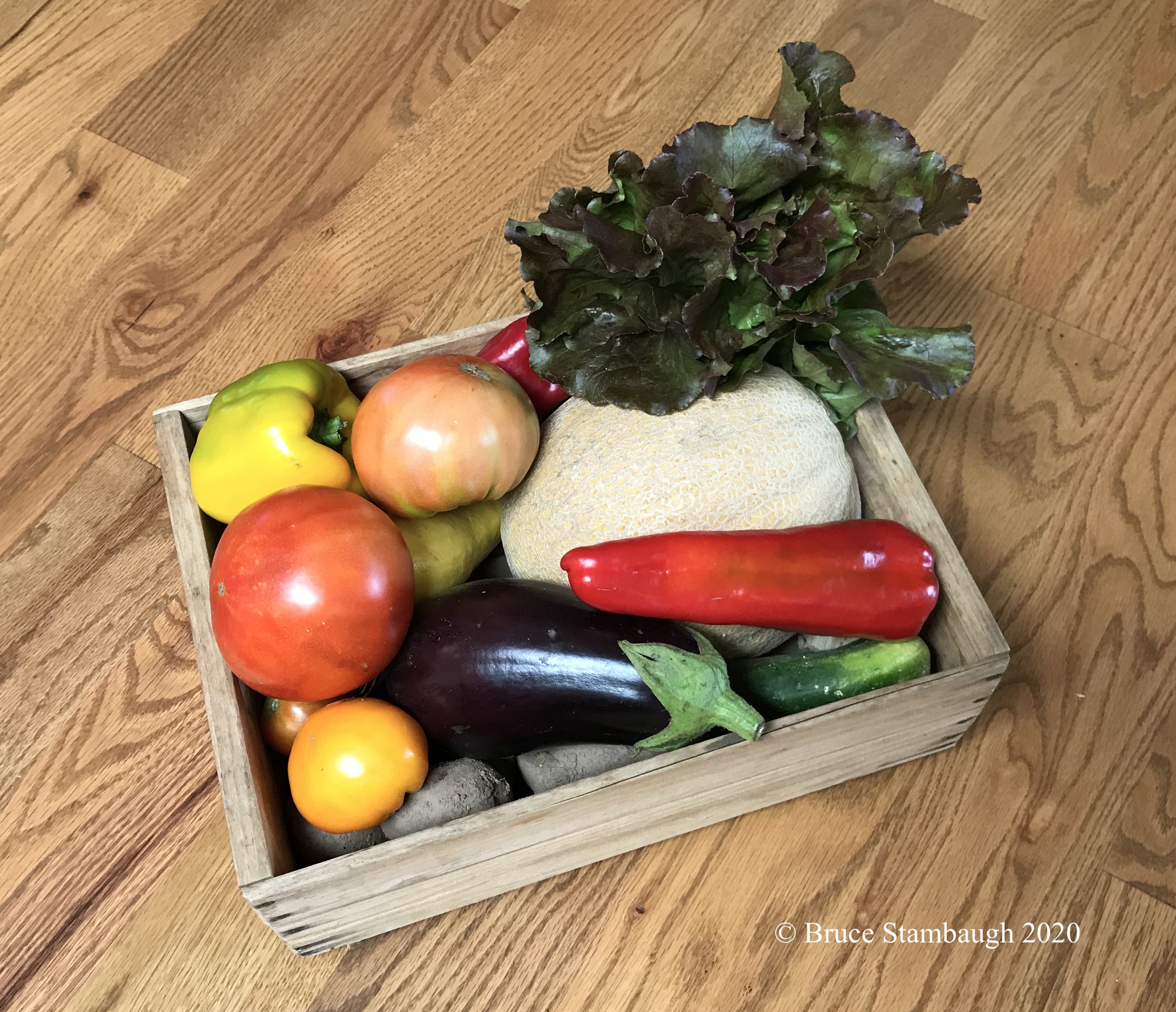
The colors of summer are as pretty as they are delicious and nutritious.
Just as I began to write about the colors of summer, a friend posted on social media about her visit to a local farmers market. In one digital photo, she succinctly summarized what I intended to say.
A cornucopia of vibrant colors from gardening harvests filled her photo. The variety of tomatoes alone captured nearly every hue of an artist’s paint pallet.
Ruby reds, luscious purples, warm yellows, and lime greens took center stage of their kitchen table. The light yellow of summer squash and the ribbed texture of a muskmelon represented the earthen tones.
A perfect emerald cucumber, the variegated rind of a watermelon, and a cluster of fresh basil leaves provided a generous sampling of the locally grown greens. The haul from your gardens, nearby produce stands, and farmers’ markets likely create similar still-life artistry.
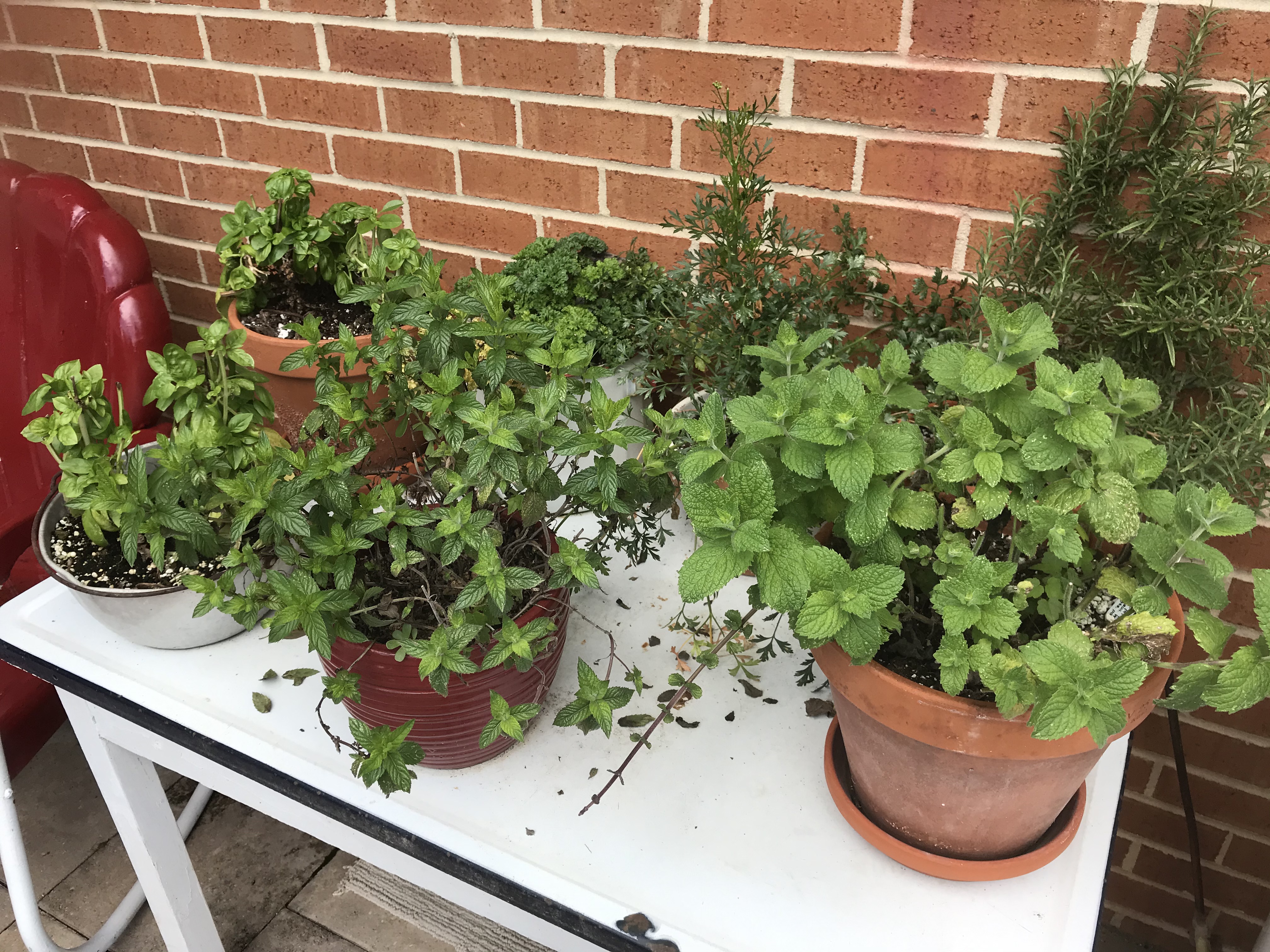
Our house is no different, despite not having a garden. My wife does pamper a half dozen potted herb plants sitting on the white enamel top of an inherited old table on our patio.
Our daughter supplies us with all the plump, juicy, and tasty tomatoes that we can use from her garden. Her blackberry plants have produced an abundance of delicious tartness, too.
The half-box of organic fruits and vegetables we get each Monday from our Community Supporting Agriculture program assures that we maintain a healthy, flavorful diet. We also frequent several local produce businesses, mostly operated by the Shenandoah Valley’s Old Order Mennonites.
It that regard, we are reminded of our Ohio home, where we knew many of the Amish and Mennonite vendors personally. Somehow that seemed to make their homegrown offerings all the tastier.
My energetic wife ensures that we celebrate the summer’s colorful bounty all year long. Canning and freezing are in her farmer genes.
When it comes to preserving the downhome goodness of food, we have noticed a difference between living in Ohio versus residing in Virginia. Instead of in spurts, everything seems to come ripe at once in the valley.
One day we are canning peaches and the next day tomatoes. Those jars have barely stopped popping their lids when the sweet corn comes ready, tender, tasty, and delicious. The varieties here are as delicious as our Ohio favorite, Incredible.
We’ve also learned a few new tricks living in a new culture in a new state. We husk the sweet corn, clean it, and cut the kernels straight from the cobs. Neva fills the plastic containers, and when we want fresh corn at Thanksgiving, that’s when it gets cooked and not before.
Apples are next on the list. The sweet tartness of the ginger golds more than satisfy our family’s taste buds. Neva freezes enough for the grandkids, who usually finish off their supply long before Nana can do another batch.
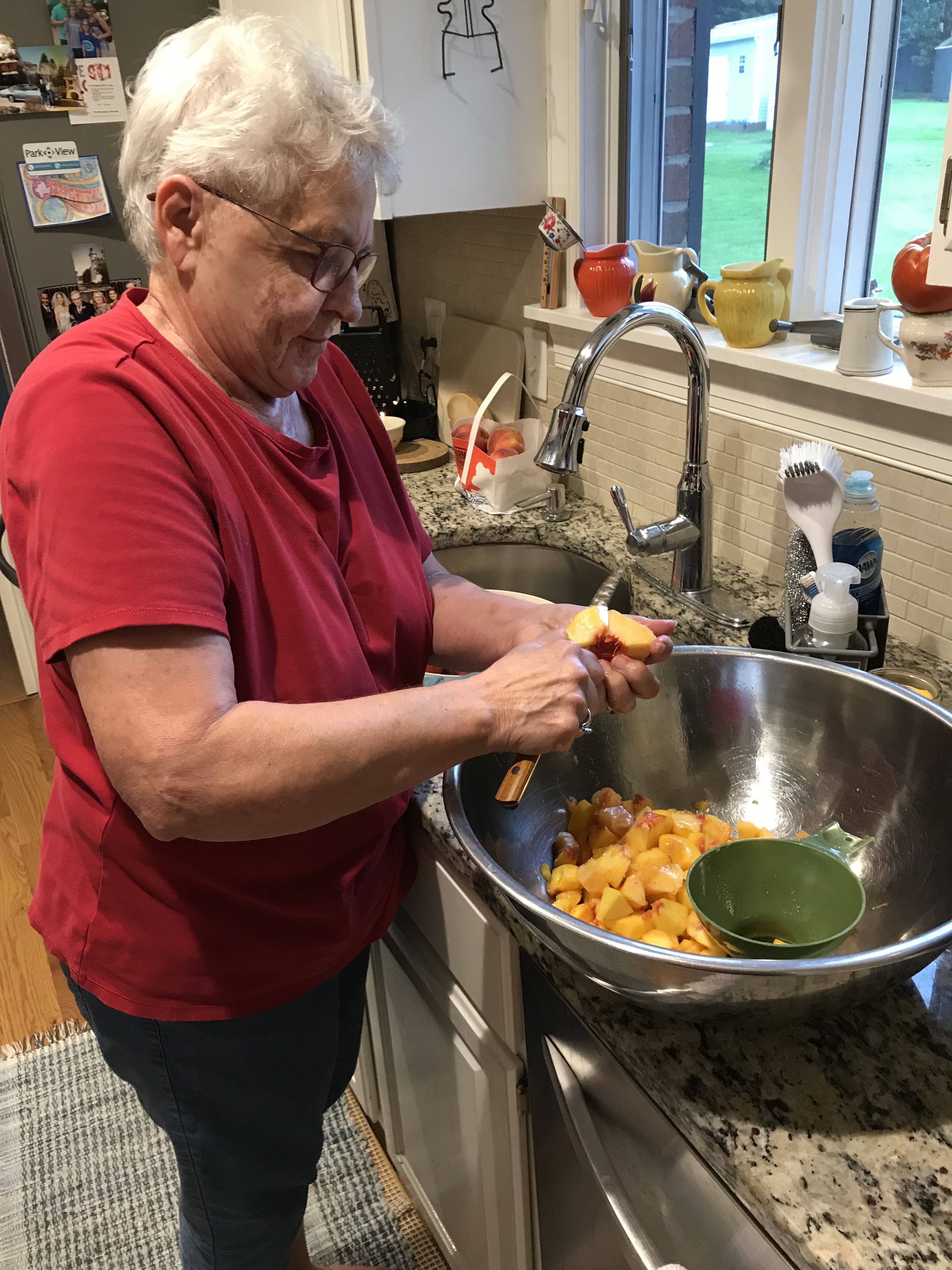
Of course, canning and freezing are a lot of hard work. Sterilizing the jars and lids, cleaning the fruit and veggies, and peeling when required, all take time and effort. Then there is enduring the sauna-like heat at the height of the canning process in our tiny galley kitchen.
The vent fan works overtime, expelling the heat and steam to help cool the temporary cannery. But in the long run, it’s all well-worth every drop of sweat.
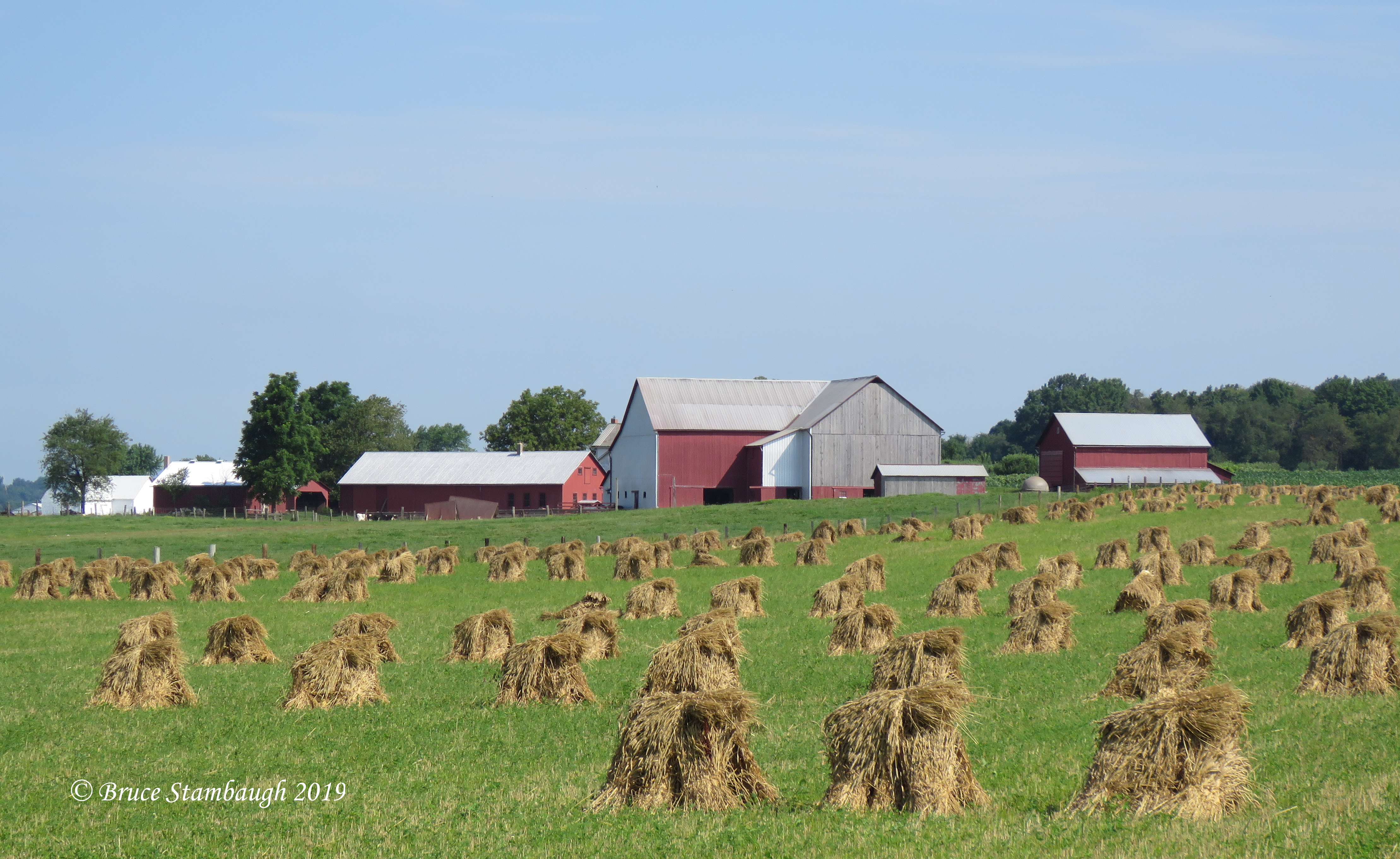
An Amish farmstead near Kidron, Ohio.
Jay Lehman was the kind of man that you might meet only once in a lifetime. He embodied the very values of the community in which he was born, lived, and worked.
Jay died recently at age 91. He was the founder of the old-time general store Lehman’s in Kidron, Ohio. I was fortunate to have known him as both a friend and a business leader. Scores of others can say the same thing about Jay.
Jay Lehman.That, however, is what impressed me so much about the man. We weren’t close as friends go, and we didn’t run in the same social circles. And, yet, whenever he saw me, he always went out of his way to call me by name, say hello, shake my hand firmly, and ask how I was doing. Jay was a good listener.
I got to know Jay the best through a cooperative marketing group that I facilitated. The original group included six Amish country, family-owned and operated businesses with a single location. Lehman’s was a founding member.
Jay pointing out one of the museum-quality pieces in the store he founded.Jay started his little hardware and household goods business in 1955 at the crossroads of his rural hometown village. His original purpose provided necessary lifestyle items for the Amish community that surrounded Kidron.
Over time, the store’s purpose ironically flipped, becoming more of a tourist destination in Amish country. Jay embraced that change without losing sight or letting go of his and the community’s core values.
Faith, family, community, and a strong work ethic fulfilled humbly reflected not only the area’s priorities but Jay’s, too. Jay modeled those qualities in his personal and business life. That’s what made both Jay and his company tick.
In that success, Jay honored those values. He lived his faith by supporting the church and charities that he cherished. Even in a crowd of hundreds at statewide church conferences, Jay would acknowledge people by name and ask how they were doing. It might have been years since he had seen them. He understood the worth of healthy relationships.
That, in part, is what drew folks to Jay. He possessed a quiet, confident demeanor, and yet humility formed the mantle of his character. Even Lehman’s tagline reflects that concept: “For a simpler life.”
Jay Lehman at Lehmans in Kidron, Ohio.Jay saw the future in the past. He preserved anything of locally historical value for posterity and education. A walk through the store reveals hundreds of antique relics that would have been lost were it not for Jay’s foresight. If you want, you can have lunch at Lehman’s while sitting in the old town jail.
Jay enjoyed the simple life, but he certainly was not a simple man. He loved a good “Rook” game with friends and family as much as he enjoyed traveling. Future generations were as vital to him as his Swiss ancestors, which he revered.
As the company grew and expanded, family members, friends from church and community joined in to help him run the store. When he reached retirement age, he passed the leadership on to the next generation. But he continued to be a dynamic presence at Lehman’s.
It was a joy to watch customers recognize Jay as he strolled around his much-expanded corner store. He was the living icon of Lehman’s, now an international business.
Jay’s legacy will live on through his successful entrepreneurship and his lifetime of kindness and generosity. Living those essential core values shaped that legacy.
His was a compassionate life. Jay lived not just for himself, but for all whom he so tenderly touched far beyond the little town of Kidron, Ohio.
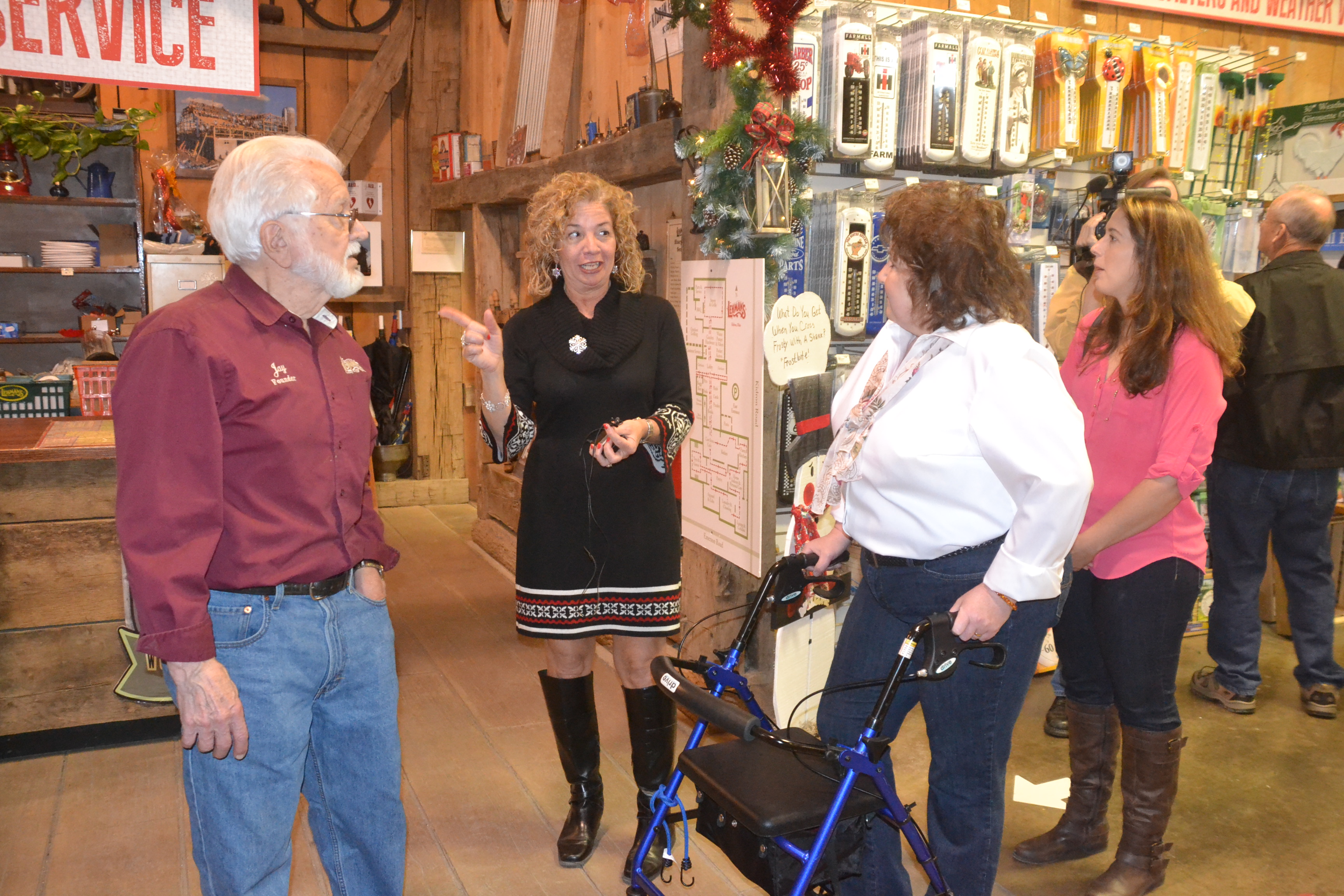
Jay, shown with his daughter Glenda Lehman Ervin, often talked with visitors to the store.












You must be logged in to post a comment.