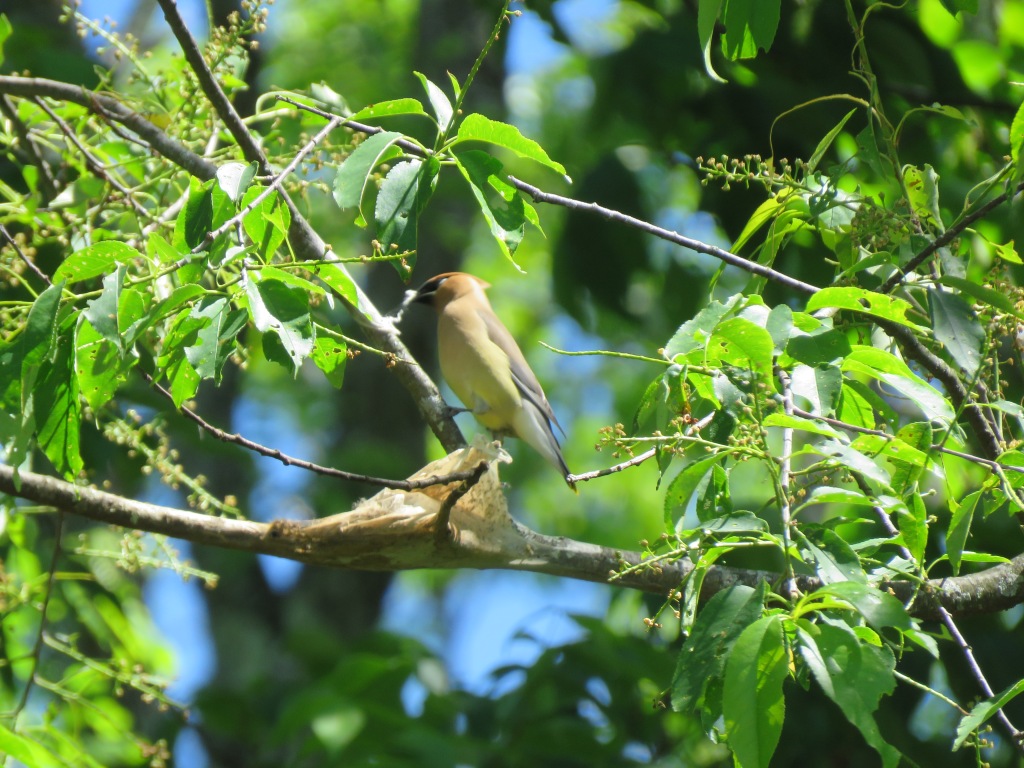
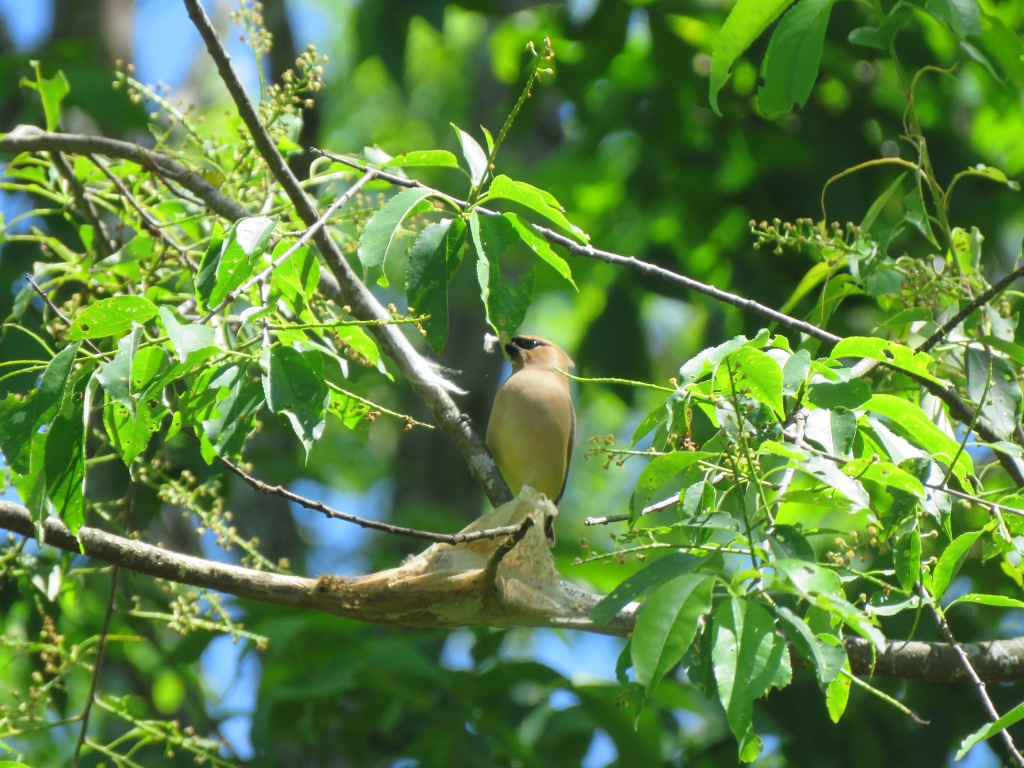
A Cedar Waxwing collects nesting material. Photo by Bruce Stambaugh
Birds always teach something new.
While mainly looking for warblers on Reddish Knob on the Virginia/West Virginia boundary, I spotted a Cedar Waxwing light into a wild cherry tree. I aimed my camera to capture a shot or two of the always lovely and entertaining waxwings.
At first, I thought the bird might be after the Eastern Tent Caterpillars in their silken nest. Waxwings supplement their spring and summer diets with insects when berries aren’t available.
Since the bird stayed in the same spot, I kept clicking away. It wasn’t until I loaded the photos onto my laptop that I realized that the Cedar Waxwing was after nesting material, not food. According to the Cornell Lab of Ornithology, the female Cedar Waxwing usually gathers the nesting material for the first brood.
In this case, the waxwing collected the tent’s silk support strands and ignored the rest. Perhaps those connecting threads are stronger than the silk that forms the tent.
The process took less than a minute, and she was off to add her precious cargo to construct her own nest. The female waxwing weaves grasses, twigs, cattails, and pine needles to form her cup-like nest. Now, tent caterpillar silk threads can be added to the list.
The sequence of the Cedar Waxwing gathering silk from the Eastern Tent Caterpillar tent. Please click on the photos to enlarge them.Photos by Bruce Stambaugh.
Not only did I see a beautiful bird at work, but I also learned about Cedar Waxwing nest building. And, yes, I heard and saw a few colorful warblers, too.
The lane to Sunny Slope Farm. Photo by Bruce Stambaugh
Sunny Slope Farm is a popular venue for weddings, banquets, fundraisers, and other gatherings in Harrisonburg, Virginia.
I go there to shoot sunset photos during all four seasons. They are friendly folks, for certain. It’s less than a mile from my home, which makes it handy for me if the western sky suddenly erupts with a stunning sunset.
Such was the case recently. I captured the above photo before the sunset peaked. The lane goes west and then turns sharply southwest, where this image was shot. Ironically, the southwestern sky was brighter than that of the west.
The combination of the fence and the farm lane leads the eye right to the old farm buildings. With all the clouds, the photo had to be taken in low-light conditions.
Crepuscular rays at sunset. Photo by Bruce Stambaugh
I was ready to give up on this sunset that had looked so promising. A layer of clouds hung above the Allegheny Mountains, creating a narrow break in the sky. I hoped for a brilliant sunset, but most of the color was in the southern sky.
I’ve learned to be patient, though. Long after the official sunset time, these crepuscular rays suddenly appeared. Crepuscular rays often occur at twilight and are created by sunlight shining through gaps in the clouds.
The rays created a sharp contrast between light and dark. In this case, the sun turned the rays terracotta and brightened the evening sky for a brief time. The local landmark of Mole Hill stood dark in the foreground.
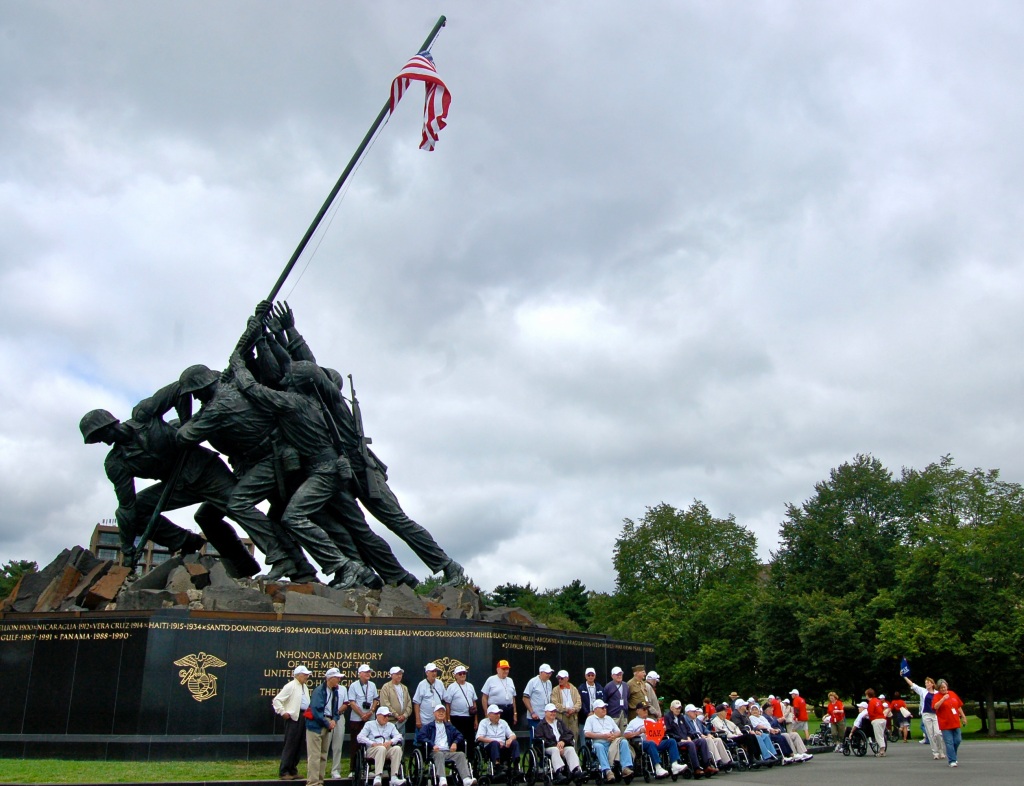
The U.S. Marine Corps Memorial, Washington, D.C. Photo by Bruce Stambaugh
Today is Memorial Day in the United States. It is a day designed to remember U.S. military personnel who have fought and died in wars.
The commemorative day originated as Decoration Day on May 30, 1868, in honor of Union soldiers who had died in the Civil War. It has since been renamed Memorial Day in memory of all loved ones who have died. Congress also set the day as the last Monday in May, making a three-day holiday.
Americans see the weekend as the start of summer. Many schools have already completed their academic year, making June vacations a real possibility for families who can afford them.
Memorial Day has evolved to include parades, 21-gun salutes at cemeteries, family gatherings, and picnics. Memorial Day falls on my wife’s birthday this year, so we will celebrate that with our family, too.
I took this photo on September 12, 2009, at the U.S. Marine Corps Memorial in Washington, D.C. The statue depicts the raising of the American flag on Iwo Jima during World War II.
My older brother and I had accompanied our late father on an Honor Flight out of the Akron-Canton Regional Airport in Ohio. The veterans on the flight gathered in front of the memorial for a group photo. Our father is third from the left in the front row.
My wife and I are still exploring Rockingham County, Virginia, where we have lived for seven years. That may sound hard to believe, but Rockingham is the third-largest county in Virginia. It covers 853 square miles, so there’s a lot of area to see.
We recently toured with friends an area of the mostly rural, agricultural county that we had never seen before. They were as curious as we were.
We chose the remote northwest section, where wildfires scorched thousands of acres of mountainous terrain in the George Washington National Forest during the first week of spring. We were pleasantly surprised with what we found.
Recent rains have greened up most of the area, with only a few burned spots visible from roadways. Thanks to firefighters’ efforts, an abandoned cabin was the only structure burned.
The areas of Bergton and Criders are set in a wide-open, fairly flat valley floor surrounded by mostly deciduous forests. It was a lovely scene.
The background of wooded hillsides and the building storm clouds behind this abandoned schoolhouse made an idyllic landscape portrait. It was one of many finds of the day.
A pair of squirrels on our Red Maple tree. Photo by Bruce Stambaugh
This pair of squirrels was just hanging out in our front yard on a warm spring day recently. While one chowed down on breakfast from a birdfeeder, the other basked in the morning sunshine.
The rises sun over Turkey as seen from a Greek island. Photo by Bruce Stambaugh
Today is Ascension Day, the 40th day after Christ’s resurrection. For many of the churches that follow the Anabaptist traditions, especially the Amish and Old Order Mennonites, Ascension Day is a holiday.
Families gather to reflect, visit, share, relax, and enjoy each other’s company. Youngsters may go fishing, hiking, biking, or playing games like volleyball and softball.
Of all the holidays that the Amish celebrate, Ascension Day is the most informal. There is no worship service or fasting. It simply honors and remembers the day that Christ ascended into heaven.
Couldn’t we all use a day like that to relax, refresh, and renew our body, mind, and spirit?
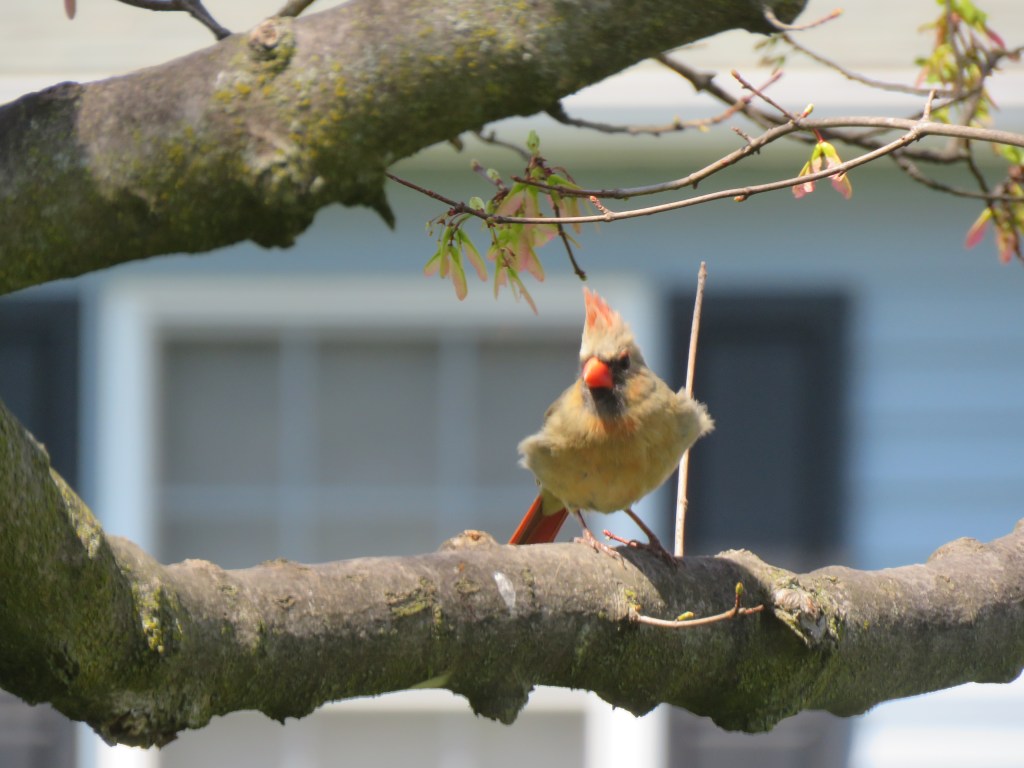
A wind-blown female Northern Cardinal perched in our red maple. Photo by Bruce Stambaugh
I took my lunch outside the other day. The temperatures were more summerlike for the first of May.
I enjoy sitting in the sun for short periods, absorbing the free vitamin D and the natural springtime circus performing around me. Nature sprinkles my light fare with seasonings no human can buy or sell.
I sat on the cultured stone patio in my late mother-in-law’s red and white painted metal rocking chair. A light wind played with my napkin until my cell phone secured it.
I enjoyed the Swiss cheese and crackers and the birds flitting back and forth, singing their luxurious songs until the bully common grackles chased them away.
That gave me an idea. I opened an app on my phone that records birdsong. Soon, I discovered more birds in the immediate area than I realized. My old ears, with their diminished hearing, could not detect them.
A Chimney Swift. Photo by Bruce Stambaugh
The “flying cigars” called Chimney Swifts chitter-chatter high overhead, zooming in wide arching loops, capturing as many insects as possible. The dark, stubby birds that flap their wings faster than the eye can see were hungrier than me.
A clutch of American Goldfinches landed on the thistle sock hung in the tulip poplar tree, its greenish flowers just now blooming. Unfortunately, the grackles heard their gregarious interaction and quickly chased them away.
My app told me a Yellow Warbler was nearby, but I neither heard nor saw it. It might have been a flyover going farther north than Virginia’s Shenandoah Valley.
A female Northern Cardinal. Photo by Bruce Stambaugh
The ubiquitous House Sparrows jabbered atop the bluebird house attached to an old metal fence stake my congenial father-in-law gave me years ago. I made a mental note to check the box to see if the sparrows had built a nest.
Mourning Doves cooed from the neighbor’s rooftop while I finished my potato salad. Though their song is monotonous, I found it pleasantly reassuring.
American Robins bobbed in the grass, searching for their own lunches. Soon, one chased another to the neighbor’s.
A Song Sparrow. Photo by Bruce Stambaugh
A pair of Northern Cardinals zipped from the Colorado blue spruce along our back property line to the fountain-fed birdbath by the screened-in back porch. Birds get thirsty, too.
For the first time since last fall, I detected a familiar chorus. The Gray Catbird’s liquid warbling gave it away. Its feline mimicking completed the hearty song. The variegated sound proved as joyous as the catbird’s return.
A Carolina Wren and a recently returned House Wren each called from opposite corners of the property. The Carolina adjusted its vocalization according to need while the house wren’s noisy melody beckoned a mate.
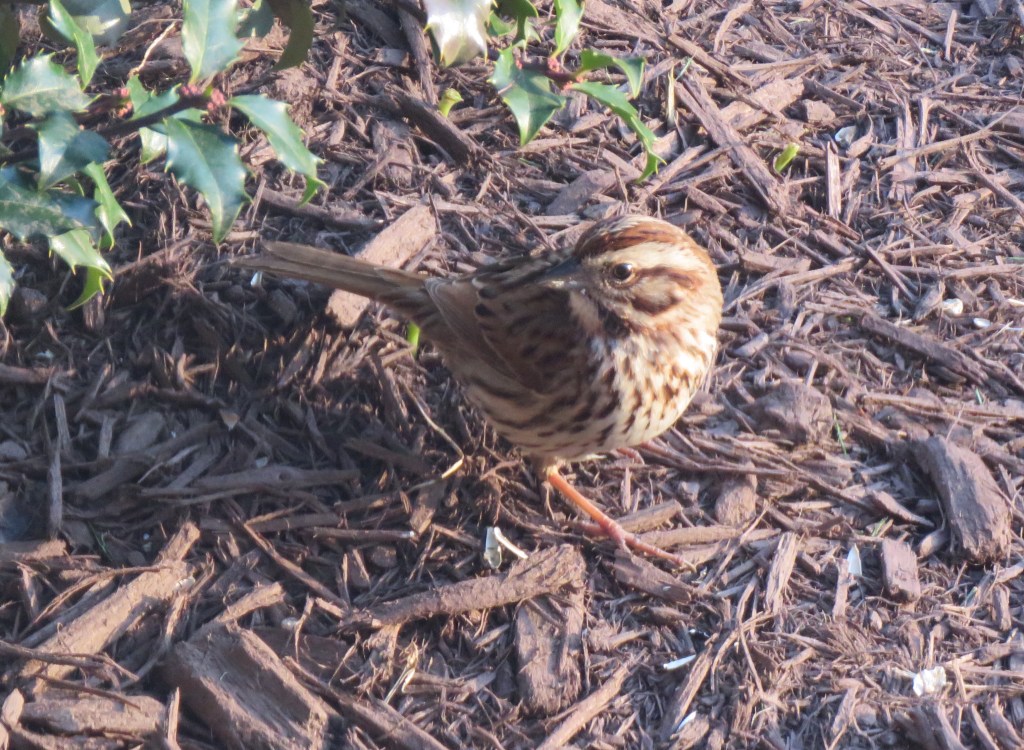
I washed down the last bit of ham salad and crackers with sweet tea, the only kind to drink in Virginia. As I reentered our home, the resident Song Sparrow skittered low along the ground and disappeared beneath my wife’s peonies.
That was all the dessert I needed.
A Gray Catbird preens after a dip in the birdbath. Photo by Bruce Stambaugh
My wife and I have been cleaning the house item by item for longer than I can remember. And we’ve been married for 53 years.
She has always been ahead of me in the disposing game. I’m finally beginning to understand the joy of discarding items I have clung to for far too long.
Gone is the brown felt stetson cowboy hat my daughter’s family gave me as a gift years ago when they lived in Texas. It was a striking hat, but I seldom wore it. So, why should I keep it?
To be considerate, I asked my daughter if she cared if I gave the hat away. She just smiled and said, “It’s your hat. You can do whatever you want with it.”
Of course, I knew that, but I wanted to be sensitive to her since she had purchased the thing. I could have donated it to a thrift store, but I didn’t.
Guess where the stetson ended up? Back in my daughter’s household. Her second son, 17, jumped at the chance to own it. He hopes to have a hatter stretch it so it fits him.
Knowing that the hat has a familial home has instilled as much pleasure in me as having received it in the first place. Isn’t that the point of decluttering your life, especially when you’re 76?
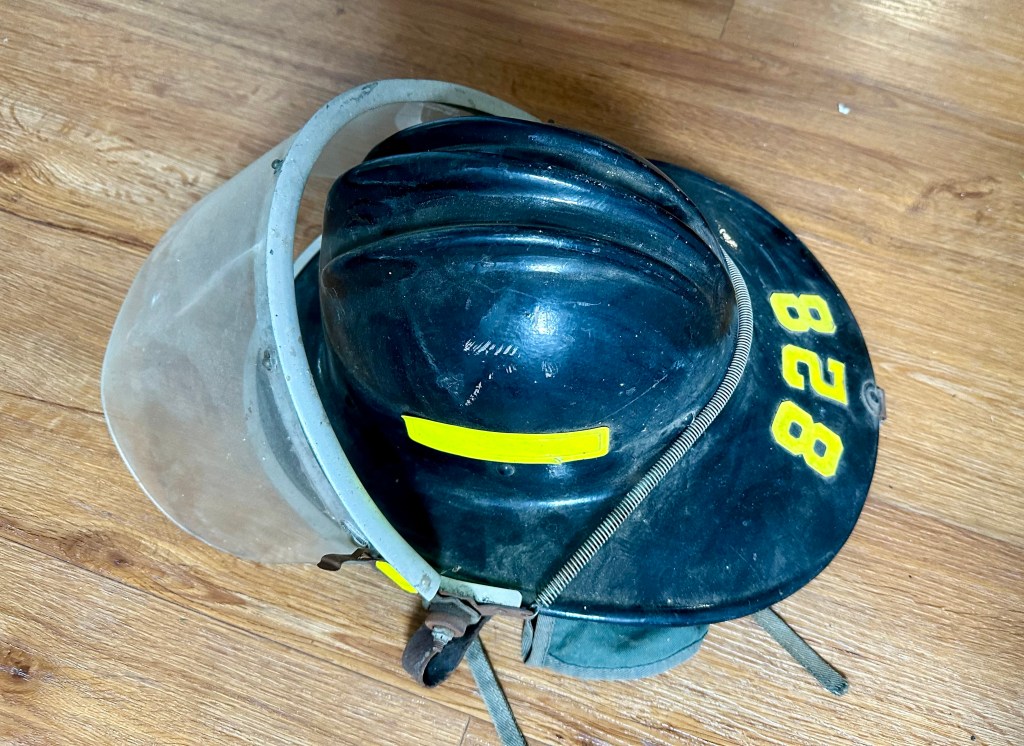
Our two-year-old grandson loves to dress up as a firefighter, among other wholesome job roles. I kept my old helmet from my volunteer firefighting days. The black fiberglass headgear, long lacking necessary safety standards, still has my uniform number, 828, emblazoned on it.
When I offered it to his parents for their son, they declined. I wasn’t either surprised or disappointed. The thing has too many places for tender little fingers to get pinched or cut.
So, the same grandson who confiscated the cowboy hat will also own my helmet. I don’t know what he will do with it, but when I hand it over, I’m sure he’ll ask questions about emergencies to which I responded. I have a storehouse of tales to tell him.
My old fire helmet. Photo by Bruce Stambaugh
Our teenage granddaughter didn’t hesitate when I offered her a t-shirt from a favorite burger place on the island where we wintered in Florida. Our daughter’s family joined us for a few days a couple of times, and the grandkids loved that restaurant, too. Many snowbird memories passed to her in that faded shirt.
When our son and daughter were young, I brought out my old model train set at Christmas and continued that through the toddler years of the grandchildren. Now, our son has it to entertain his son. I don’t have to be there to know and sense the joy of a child and his father connecting one track segment to another until the oval is complete. Just mentally picturing that scene is enough.
A teen I mentor enjoys birding but needed a bird guide. Over the years, I have collected many books on birds, so it was no sacrifice to give this enthusiastic youngster a field guide I cherished so that he could, too.
I have an old black-and-white photo of four of the 28 fourth-grade students from my first year of teaching. I will send it to the one Amish boy in the picture, knowing he would revere it more than me. He will remember and tell his grandchildren when his fourth-grade class created a radio station.
I discover new items daily that equally resurface loving and sad memories. If I don’t need the apparel, souvenirs, or keepsakes, I gladly pass them on to the younger generations for posterity. I’ve already had mine.
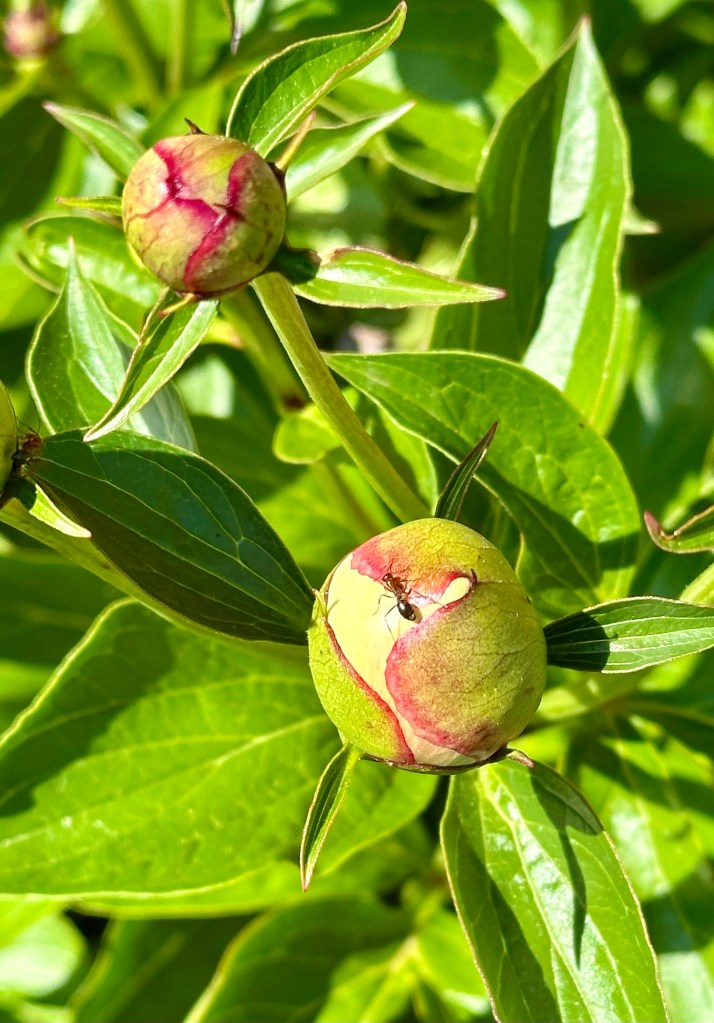
I was working in the backyard when I noticed an ant on a peony bud. Immediately, I thought of the old idea that peony buds need ants to transform from bud to flower.
I didn’t know exactly why or how that interaction worked. So, of course, I Googled it.
Peony flowers provide food for ants, who keep harmful floral-feeding insects away in return. According to Warmund, spraying the peonies with insecticides is unnecessary. The ants will protect the flowers as long as they can obtain food.













 Roadkill Crossing
You must be logged in to post a comment.