I was fortunate to catch this pair of Northern Cardinals making good use of the birdbath in our backyard. A heater keeps the water from freezing so the backyard birds have access to water year-rouncd.
If you are not familiar with Bobby Darin’s hit rock and roll song, “Splish Splash,” click the link.
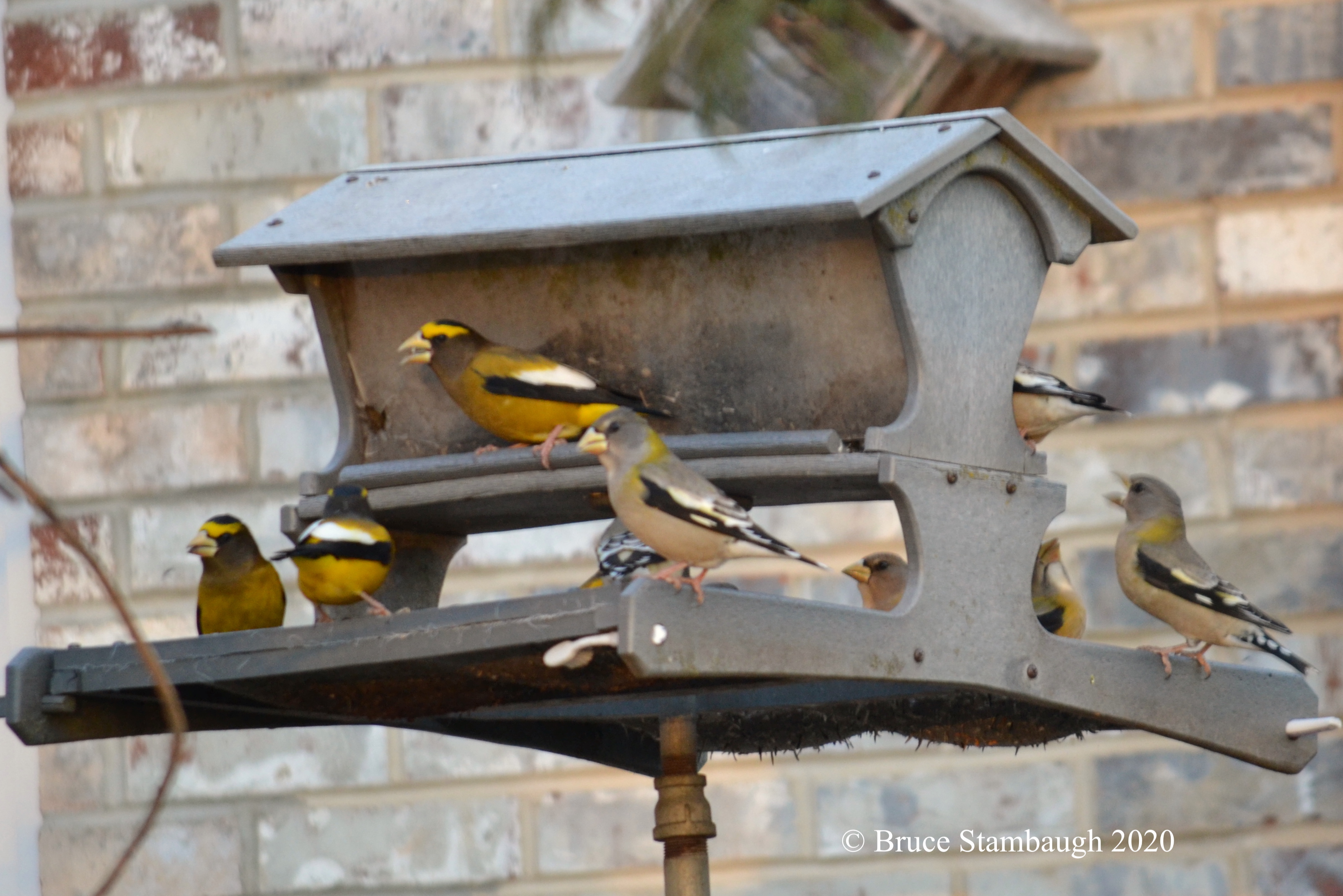
I had heard that flocks of Evening Grosbeaks were in the Rockingham Co., Virginia area. However, I could never discover where they were showing up on a regular basis. Then a friend from Ohio, where we used to live, sent me a text with a photo of Evening Grosbeaks that were regular visitors at her brother’s feeders. He lived a little more than 10 miles from our home.
I called and received persmission to photograph the birds. The home owner, also a birder, said the birds usually fed in the morning between 7 and 9. My wife and I arrived around 8 a.m., and I drove slowly up the farm’s long driveway. As soon as I reached the back of the house where the feeders were, about 30 Evening Grosbeaks flew to trees not far away. I lowered the van windows and waited for them to return.
And return they did! I had both of my cameras along, and I clicked away. I had seen Evening Grosbeaks before, but never this close or this many. Normally, Evening Grosbeaks don’t venture this far south in the winter. But during irruption years, they appear almost randomly at various locations in the east and midwest. It is thought that an irruption occurs when the hatch rate of birds is high, but their usual food supplies can’t match the demand. Other species, like Snow Owls, also appear in irruptions. The Evening Grosbeaks were feeding on black oil sunflower seeds.
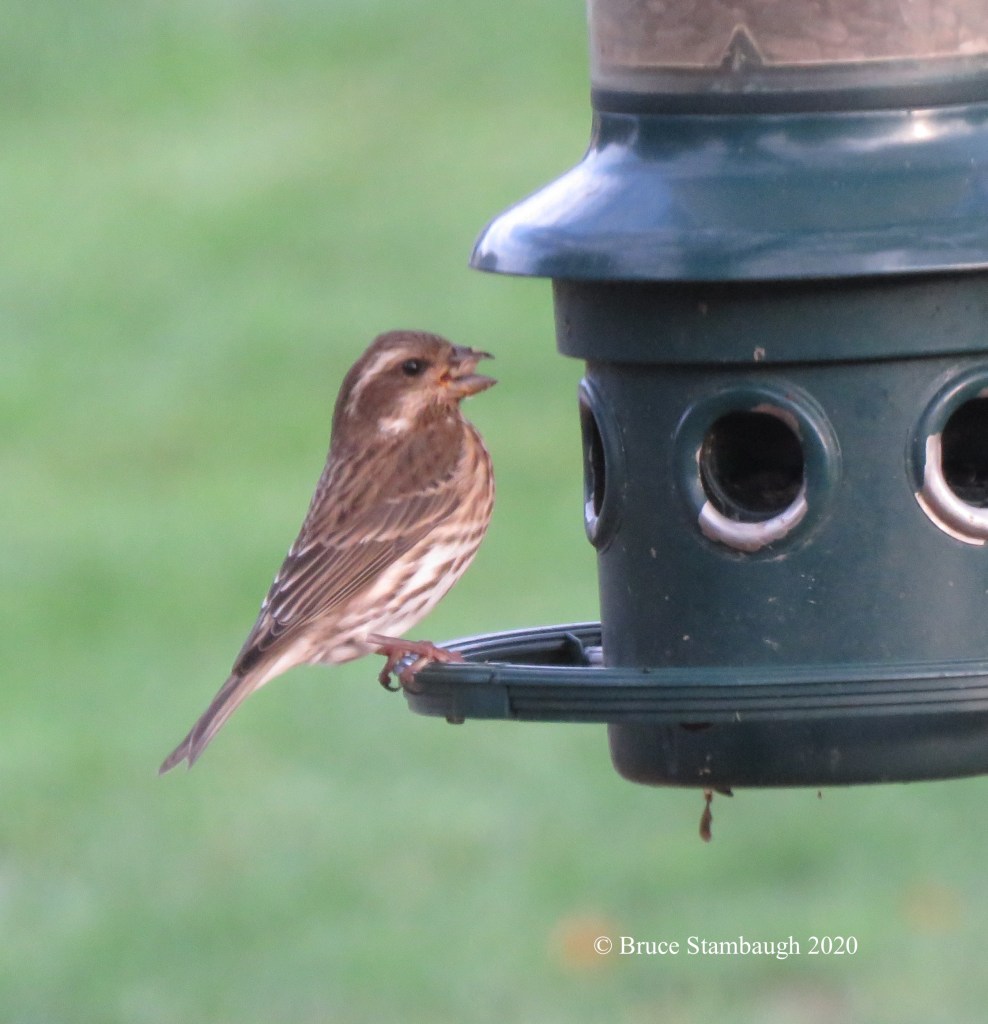
A male Purple Finch eyed the black oil sunflower feeder.
I’m sitting at my desk, looking out the window, enjoying my favorite pastime. Several winter birds have returned and are feeding on and under the feeders that I hang each fall.
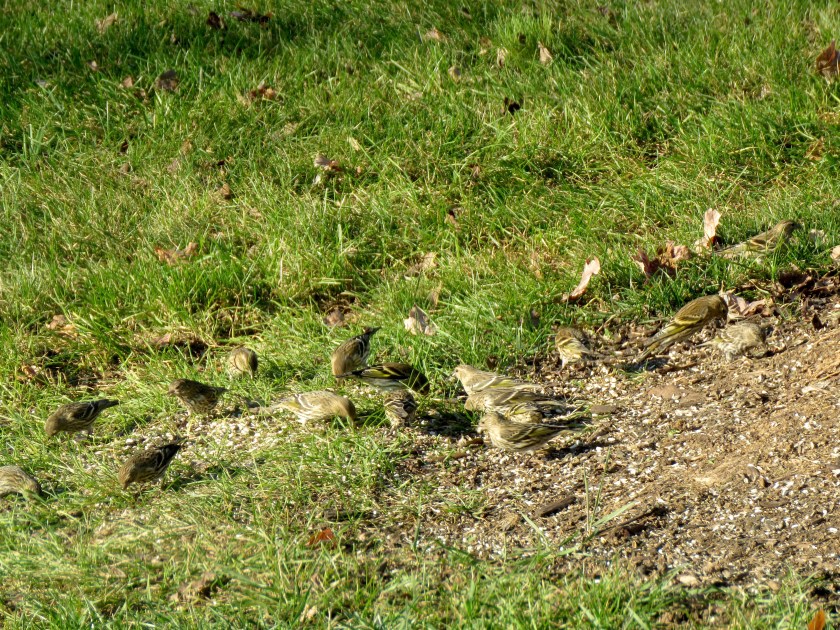
In this case, it’s a flock of chattering pine siskins partaking of black oil sunflower and safflower seeds. I mix the two varieties in a tube feeder that dangles from the lowest red maple branch in our front yard.
That’s what the sociable pine siskins were devouring. They are a dainty bird with a pointy little beak. Unlike other species, the siskins don’t seem to be too competitive. They dine cooperatively. The pesky house finches could learn a lesson from their smaller cousins.
I consider the siskins a real treat, an honor to have them partaking of my offerings. They tend to move around a lot in the colder months. They can be here one day and gone the next. So, I enjoy them and the other birds while they are here. I do hope they stick around.
Mourning Doves.
Male Northern Cardinal.
Female American Goldfinch.
A small flock of Pine Siskins foraged beneath the feeders.
Dark-eyed Juncos.
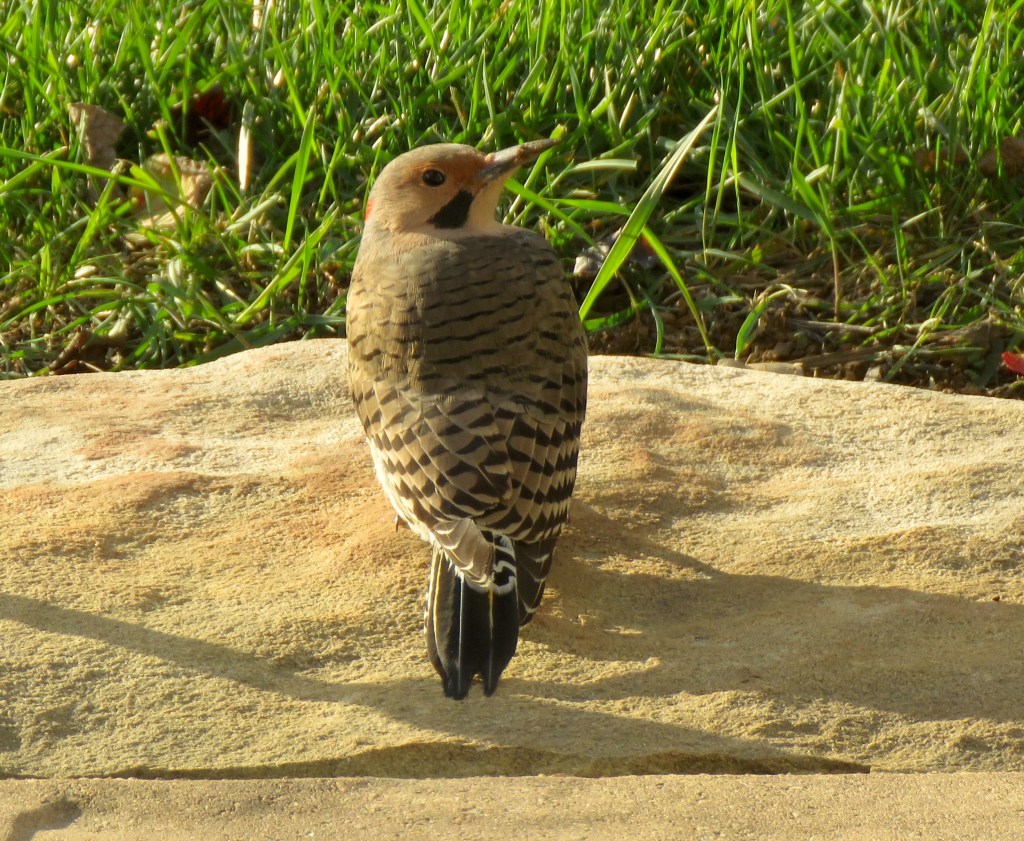
Northern Flicker.
The purple finches have returned, too. Like the siskins, I never know how long they will stay. I just keep filling the feeders and appreciate their beauty. Birders ogle over having purple finches, and the glorious but unpredictable evening grosbeaks even more so.
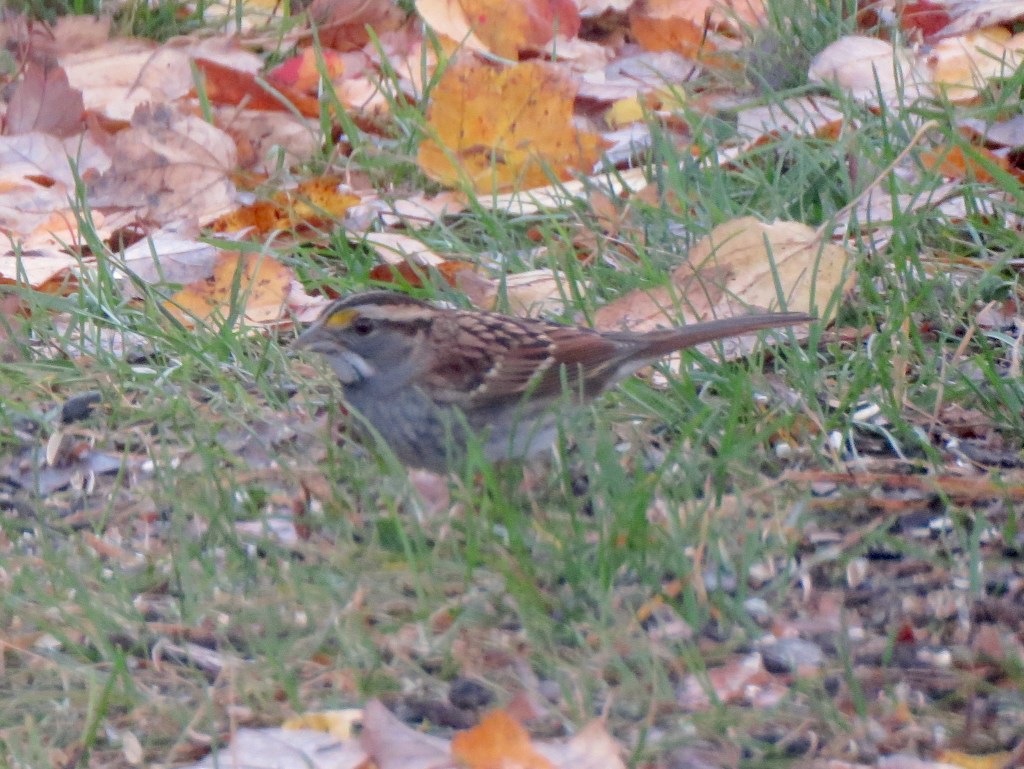
The white-throated sparrows have also arrived for their six-month hiatus from the Canadian provinces and the northeastern forests. They are marvelous birds to both watch and hear. I never tire of their hop and kick approach to feeding on the ground.
The song of the white-throated is the delight of winter. Neva and I hear their distinctive, lyrical whistle when we walk in the morning. Their cheery call quickens our step on chilly mornings.
The dark-eyed juncos and white-crowned sparrows have just begun to arrive. More will likely appear as the weather grows colder.
I enjoy the year-round birds, too. Is there anything more beautiful than a bright red northern cardinal perched on an evergreen branch? If it happened to have snowed, it creates a Christmas card moment for sure.
I can always tell when the neighborhood Cooper’s hawk is on the prowl. Stealth as it is, the songbirds can’t always fly for safety. So, they freeze in place by staying still and low or press tightly against a tree trunk, hoping not to be spotted.
I don’t mind if the sly hawk captures one. It has to eat, too. However, my preference would be to snag a few of the noisy, hoggish European starlings. They devour the suet cakes like they are candy.
Female Purple Finch.
Male Purple Finch.
White-throated Sparrow.
Carolina Chickadee.
Northern Flicker on alert for the Cooper’s Hawk.
I enjoy the various antics and interactions of my feathered friends. The Carolina wren’s repertoire of songs alerts me to be on the lookout. Sure enough, it bounces around our front porch, checking nooks and crannies for any dead insects.
The wren also partakes of the seeds and suet. Birds need their protein, too. That explains why American robins peck beneath the suet feeder while the starlings sloppily gorge themselves. The robins gobble up the dropped suet pieces from the unruly gang overhead.
I always am pleased when the northern mockingbird makes an appearance at the suet, too. Even the starlings yield to this aggressor.
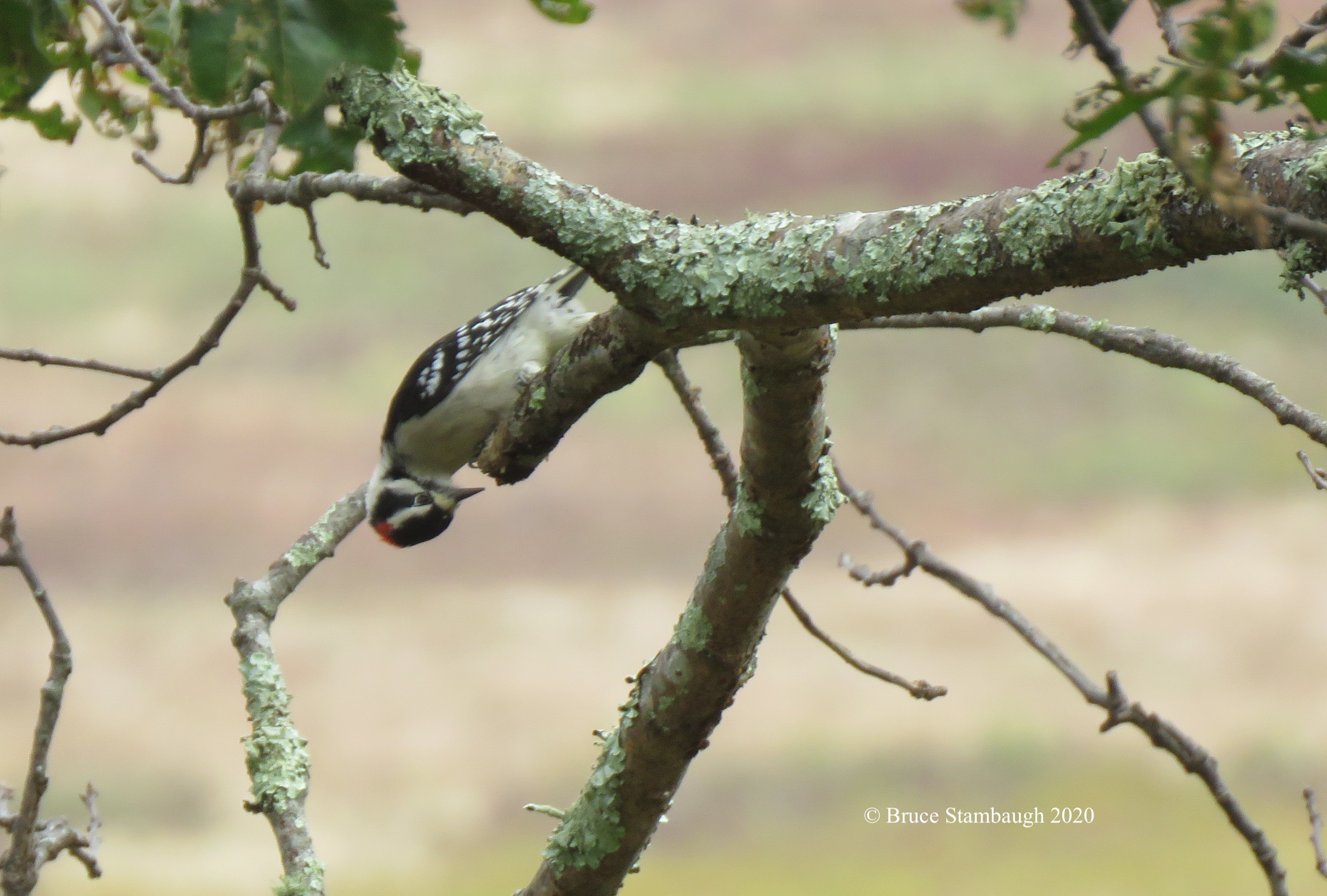
I marvel at the various woodpeckers that make infrequent stops. The downy is the most faithful, followed by the red-bellied and northern flickers. I’m still waiting on the pileated to make its initial appearance this year.
That’s half the enjoyment of being a birder. You never know what to expect next. You just have to keep watching and appreciate what arrives, starlings excepted.
This Pileated Woodpecker got the last of the peanut butter suet on March 24, 2020.
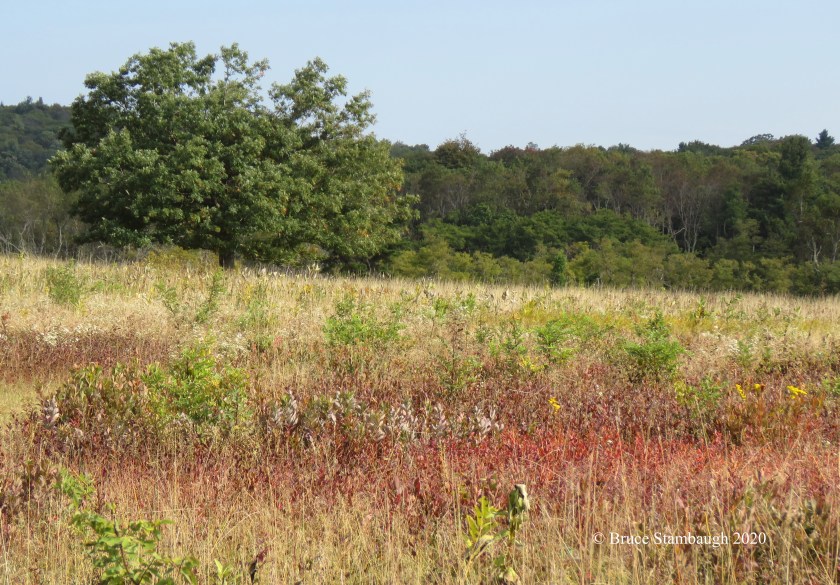
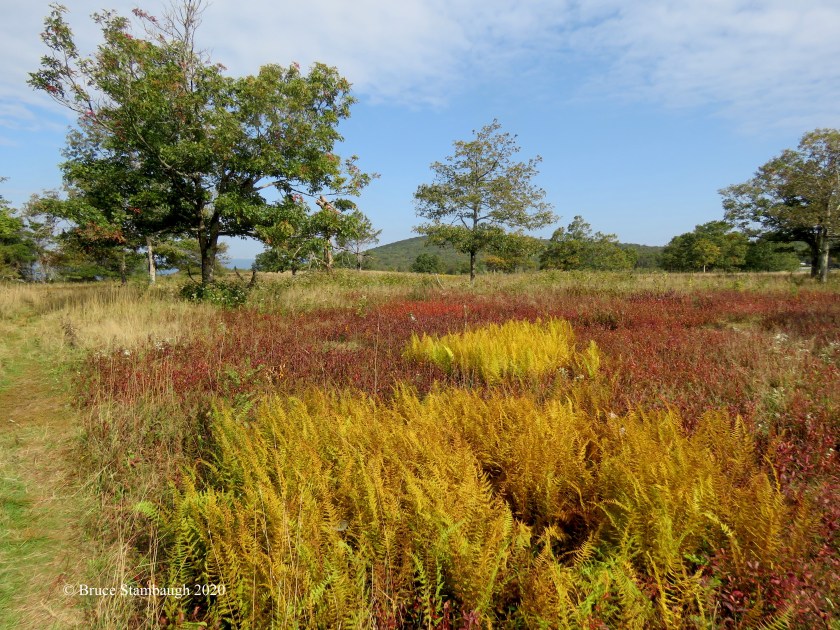
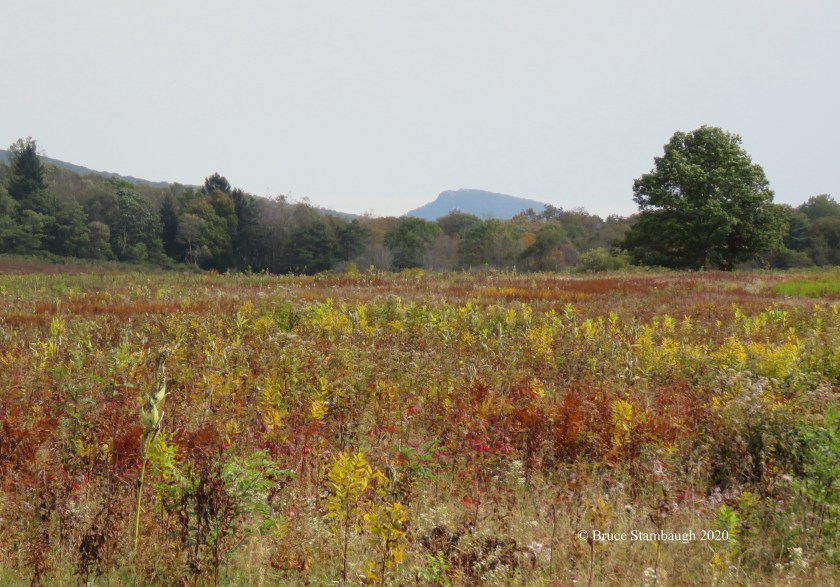
Looking west from a point in Big Meadows in Shenandoah National Park.
Even though the morning’s southeast breeze was gentle, the leaves rained down like ticker-tape parade confetti. I was in my favorite outdoor space, Shenandoah National Park’s Big Meadows.
Big Meadows is an anomaly. No logical or scientific reasons can explain why the expansive meadow sits in the middle of this popular national gem.
Scientists have determined that there is nothing unique about the soil’s geologic makeup or bedrocks below that would create a meadow in the middle of a forest. In a matter of yards, the foliage changes from plants of a kettle-like marsh to wooded hillsides. I imagined Big Meadows as God’s thumb stamp of approval on these ancient mountains.
In the short time we have lived in Virginia, I’ve found fall is my favorite time to visit this gorgeous spot. From our valley home, the weather appeared to be perfect. But when you visit the mountains, conditions can be changeable at any time of year. I packed for the unexpected, and that’s what I got. With every step, creation’s glory unfolded.
You could hardly call my creeping along as hiking. I followed the parameter of the southern part of Big Meadows. In three hours, I covered only a mile and a half. A wooly worm would have made more progress, but likely not shared my joy.
I wasn’t out to break any endurance records. I went to see whatever came to me as I strolled along and through the area’s various topography. In the mountains, just a change in altitude of a few feet makes a big difference in the kinds of vegetation that grow.
This gently sloping mead is home to flowers, grasses, reeds, trees, and assorted creatures great and small. As an invader of their varied habitat, I tried to remain obscure.
With fall’s migration, I knew plenty of bird species might be passing through on their way south. I expected year-round residents, too, along with a few lingering butterflies.
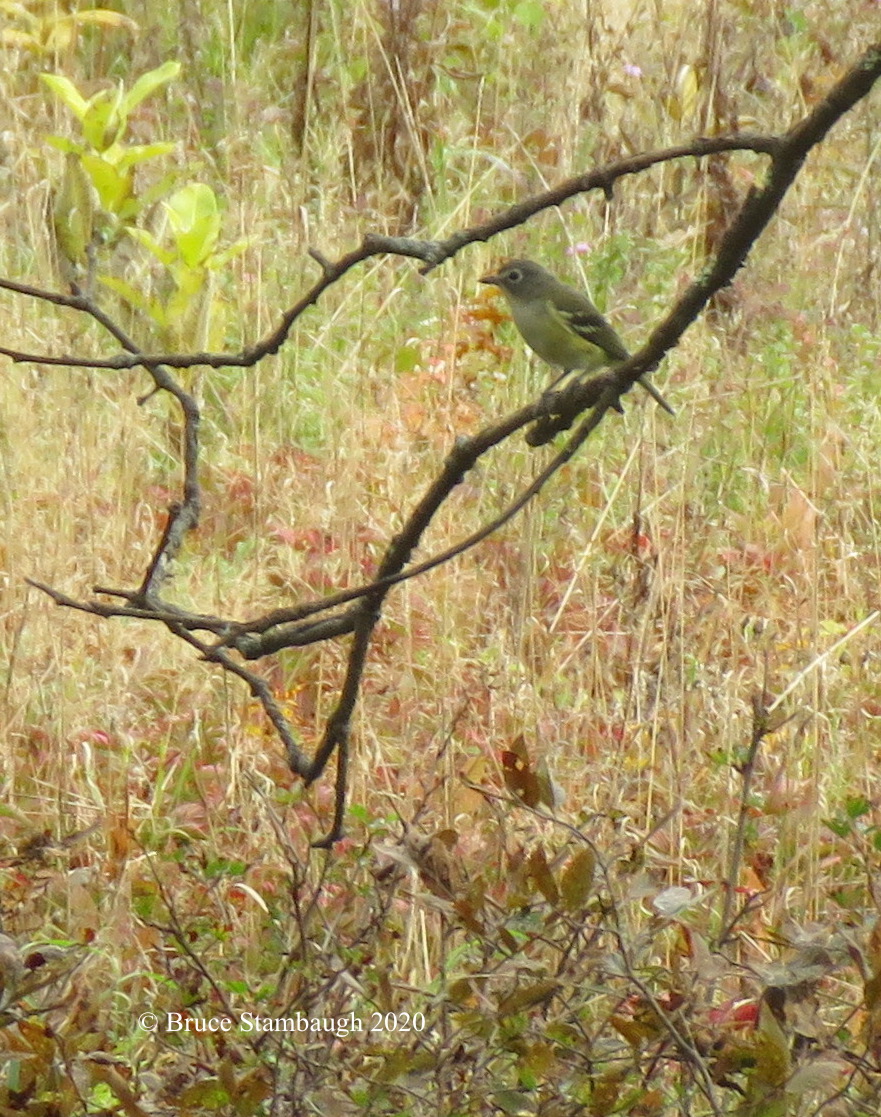
Resident eastern bluebirds and handsome field and song sparrows greeted me. Eastern phoebes, magnolia warblers, blue-headed vireos, Carolina chickadees, and dark-eyed juncos darted about, too.
Dressed in their duller non-breeding feathers, some birds, especially the warblers, went unidentified by this average birder. Chirps near and far came from other species that I couldn’t locate.
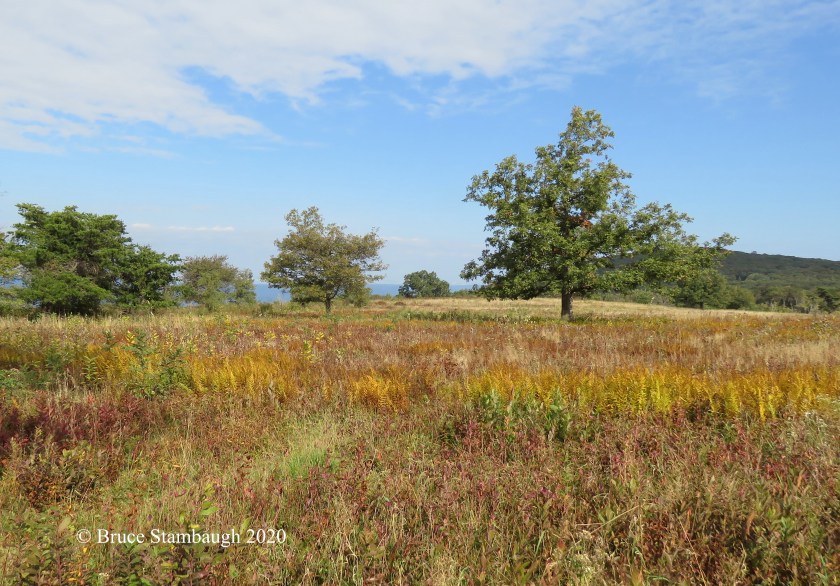
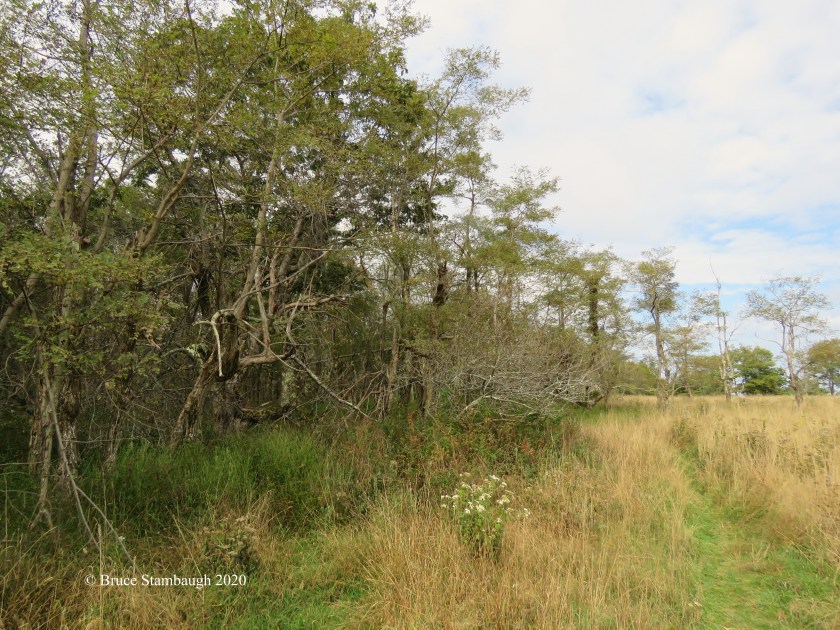
I crept along the raggedy edge that separated fields from woods, exhilarated. I lingered in a high place beneath a sweeping white oak at the meadow’s southernmost border, where I could see near and far.
Contentment filled me as I sensed all the life around me. Instead of hiker, birder, or photographer, I was an uninvited but appreciative guest. Every moment bore existential meaning.
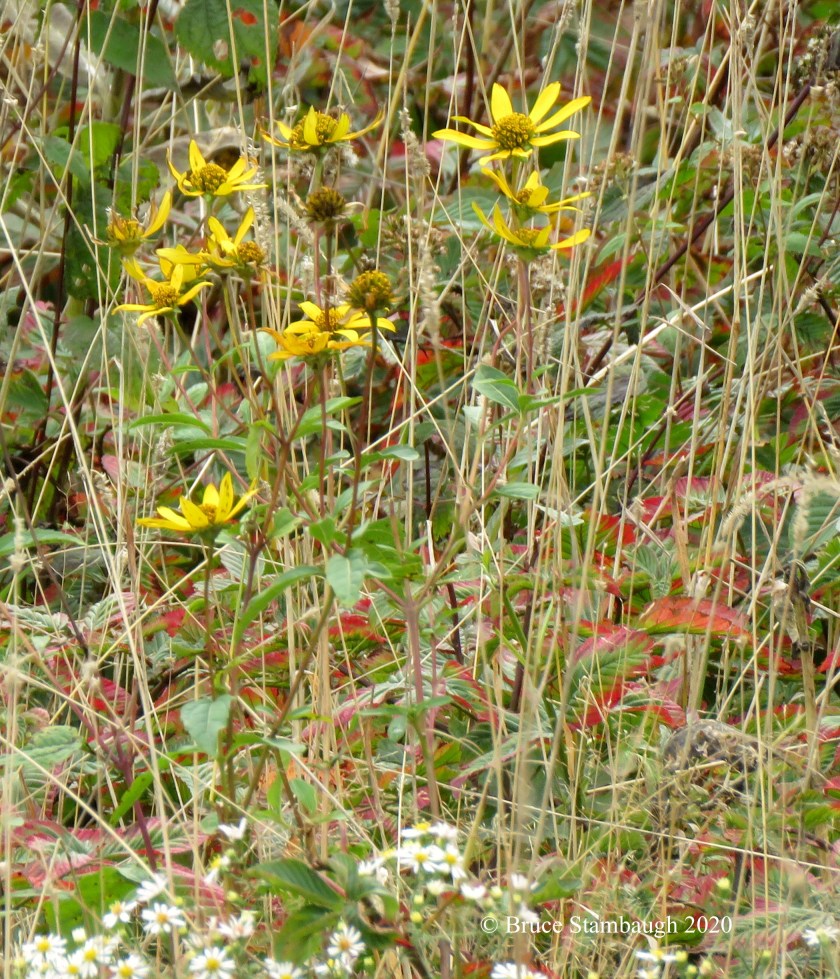
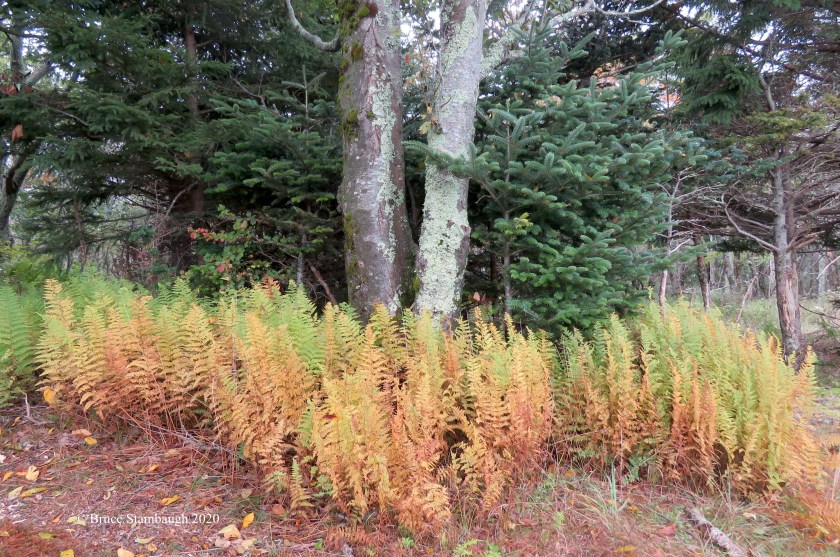
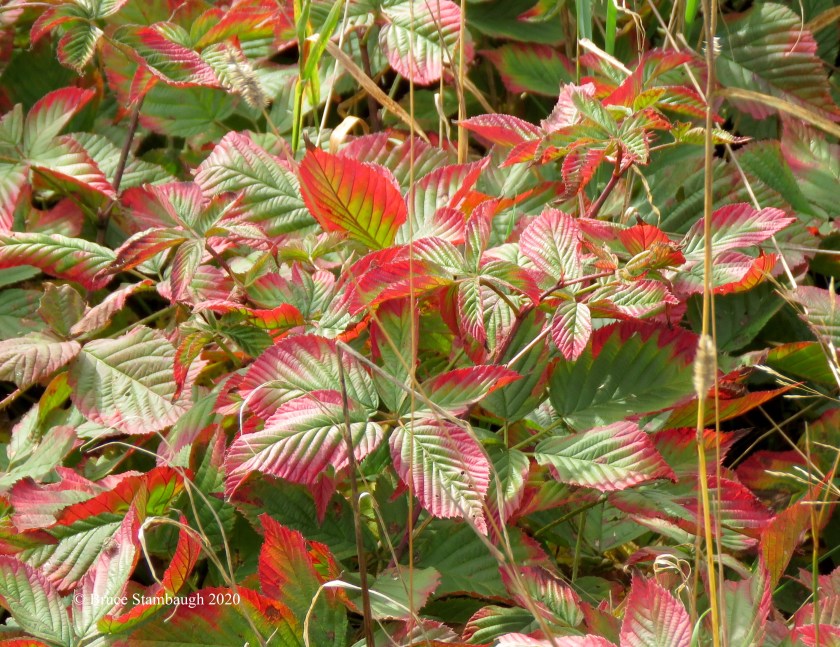
The first frosts of the season created a festive carpet of fall’s primary colors that spread across the landscape. The leafy trees and evergreens looked on in envy. Red-tinted green leaves, spent wildflowers, delicate ferns frosted golden, ruby-colored blueberry leaves, and russet grasses decorated the earth like it was Christmas.
Overhead, the sky also joined nature’s artistry. One minute, it was pure cerulean, the next white fluffy clouds.
Suddenly, a fog rolled in from the eastern piedmont. The steady breeze soon carried it to the western slope of the Blue Ridge Mountains.
I breathed an appreciative silent prayer of gratitude for all these sights and sounds. The old withered away, yet the promise of rebirth remained.
At every step that I took, I was delighted to have observed all that found me.
The fog that hung over Shenandoah National Park even after I left.
I’m a person that is usually on the go. However, I know first-hand the benefits of standing still.
I recently went to the Big Meadows area of Shenandoah National Park in Virginia to do some birding. I have learned that the open spaces along and near parking lots are favored by certain bird species. Wildflowers and dense brush grow there beneath mature deciduous trees. That combination provides both cover and food for my avian friends.
It didn’t take me long to be rewarded. Though it was windy, the birds were active. Due to the wind, however, most kept low and in the thicket, making it harder to photograph them or even find them with binoculars.
On this overcast morning, the sun suddenly peeked through, and just as suddenly, this lone Cedar Waxwing landed on a pokeweed bush right in front of me. I slowly raised my camera and clicked away.
I couldn’t believe my good fortune. Cedar Waxings are some of my favorite birds due to their posture, coloration, and behavior make them regal birds. I snapped off four quick shots of this beauty as it checked its surroundings, and then just as quickly as it had arrived, the bird flew off.
Other than the slow raising of my camera and the ear-to-ear smile, I hadn’t moved. I was graciously rewarded for standing still. For the record, cropping and adding my watermark were the only “alterations” done to the photo.
“The benefits of standing still” is my Photo of the Week.
Residents of the Northern Hemisphere are on the eve of yet another autumnal equinox. Autumn officially begins at 9:30 a.m. EDT on Tuesday, September 22.
Autumn has given us plenty of warnings even before her arrival. Instead of turning red, many of the leaves on our backyard maple have simply been falling off one-by-one for weeks. We can thank the leafcutters for much of that.
The crazy weather of this insane year has also played a role in the dying leaves, along with other climatological irregularities. Let’s count the ways.
In late spring, an extended spell of chilly, wet March-like days did their damage. The steady damp weather kept farmers out of fields over much of the U.S. east of the Rocky Mountains.
Some bird species even delayed nesting because the weather was so foul. If birds did nest, naturalists found hatchlings dead because their parents couldn’t find enough insects to feed them.
Then just like that, it got hot and dry. Here in western Virginia, the furnace was on one day, and the air conditioner the next. Vegetation flourished in such conditions, causing the humid, hot wind to carry various pollens far and wide. According to my allergist, I wasn’t the only one sneezing.
The day the rains started in mid-July.About the time Major League Baseball finally began in July, the heavens opened up. The rains canceled games, and so did COVID-19 because too many players tested positive.
Record rains pelted the full length of the Shenandoah Valley. August usually is a hot and dry month here. Not this year. The weather was more like June should have been. We mowed our lush lawn twice a week for several consecutive weeks.
All the while, fall kept creeping upon us. Butterflies, relatively scarce during June and July, began to arrive. So did the ruby-throated hummingbirds. Now they are all filling up their tanks for their annual southern migration.
Juvenile male Ruby-throated Hummingbird.
The yellow, green, and black Monarch caterpillars have morphed their way into magnificent orange and black butterflies. Predators have learned to avoid dining on them since the Monarch’s appetite for milkweed renders them bitter, according to lepidopterists.
That dreaded F word, F-R-O-S-T, has already made appearances across the northern reaches of the U.S. Can the rest of us be far behind?
If you listen to the jingles and jargon on TV, this is pumpkin spice everything season. Despite the marketing ploys, I’ll gladly stick to my decaf mocha lattes. They’ll taste just as robust when the first freeze hits.
Of course, hurricane season peaks in the first few weeks of fall. The National Hurricane Center has already increased its predictions for both the numbers and intensities of those tropical storms.
Out west, you can’t breathe the air. It’s so oppressively hot and thick with smoke from record-breaking fires that have caused death, destruction, and devastation to humans, wildlife, and entire towns. More than 10 percent of Oregon’s population has been evacuated as of this writing.
Unfortunately for those millions of west coast folks, the sky has glowed an apocalyptic orange for all the wrong reasons. A good frost or even a lovely blanket of snow would greatly help those tired firefighters slow the infernos.
Autumn, of course, abounds with fiery colors, orange included. In addition to the winged creatures, mums, maples, pumpkins, and gourds are but few of the things that warmly usher in fall.
Climate change has undoubtedly played a part in stirring up 2020’s weird and wild weather. It’s been a universally strange enough year already all the way around.
Let’s welcome fall with a blissful hope for more normal global weather patterns. The right kind of orange.
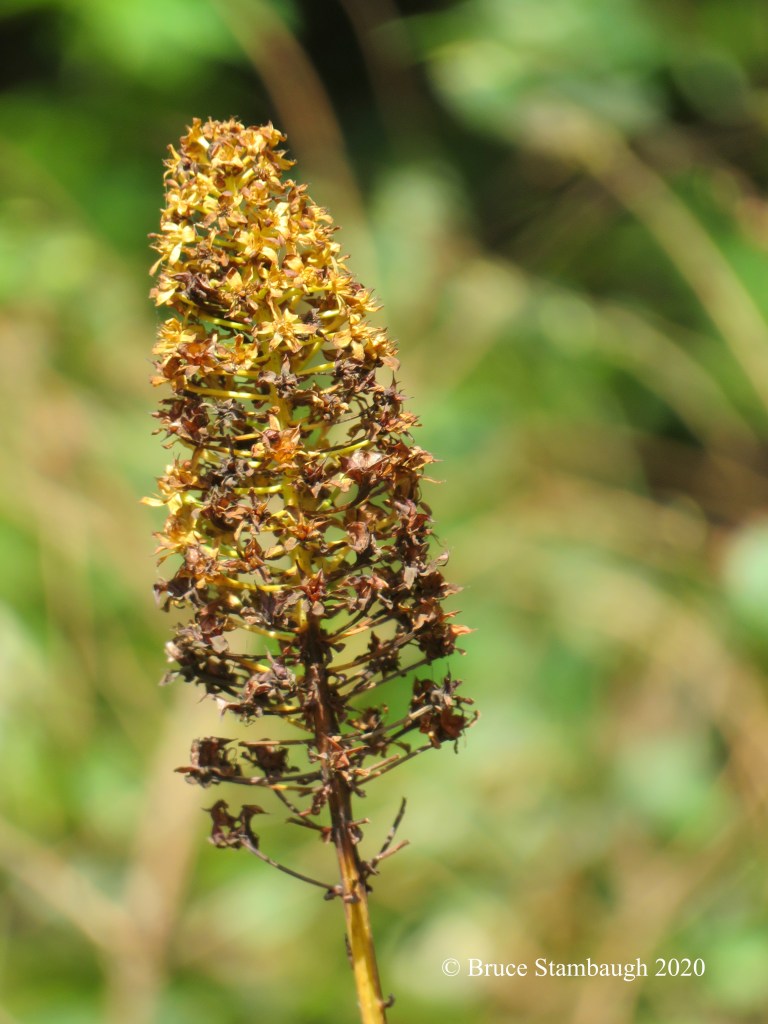
I loved how the afternoon light highlighted the prickly details of this dense stand of spent teasel heads. Likely, several varieties of birds thrived on the seeds of these thorny remains.
I was happy that the farmer had let these beauties stand for all to enjoy. “Teasel” is my Photo of the Week.
Singing September’s song.
We’re already pushing to the middle of September. Have you heard the many melodies she’s already played?
If not, please don’t fret. If September plays her usual gig, she will beautifully and joyously harmonize her way into October.
We have to pay attention morning, noon, and night to fully appreciate September’s numerous odes. It’s a perpetual concert out there.
September has many modes of singing to us. That’s good news for those of us with diminished hearing. The seasonal songs are ubiquitous and indiscriminate.
Crickets, katydids, and locusts lull us with their winged cacophonies. Nature’s stringed rhapsody signals the season’s end and celebrates each day’s closing.
This slideshow requires JavaScript.
A tiny screech owl’s raspy soliloquy provides a brief interlude to the insect symphony. The chilling tune means trouble for little four-legged rodents romping around in summer’s last evenings.
If you listen carefully, you might be fortunate to catch the call of migrating birds piping on the wing high overhead. If you can’t hear them, aim your binoculars at the moon and enjoy the sideshow.
September croons to us in color, too. Her many blooms of gold, crimson, yellow, red, and even blue paint a many-colored musical in flower gardens, along roadsides, and in unkempt fields.
The month’s repertoire includes occasional towering thunderstorms. Their lightning dances and their thunder booms, drumming fear into almost every canine within miles.
At the storm’s end, perhaps she will surprise us with a dangling rainbow. Look quick before that high note fades. Remember to breathe in the aftermath, refreshing, clean, pure.
September invites us to sing along with her eclectic playlist. The crisp snap of husking the golden ears of sweetcorn is the prelude to perhaps the year’s last fresh corn on the cob.
Of course, the hiss of canners still sings, bubbling with goodness and a kaleidoscope of colors. Besides corn, salsa, beans, tomatoes, pickles, peppers, peaches, grapes, and apples all play their fruitful parts.
I adore the choruses in the outdoors the most. Find a pleasant spot in the woods, and just sit, watch, and listen as the sounds of silence come floating in decorative displays.
Migrating butterflies flutter to their specific tunes. Groups of Monarchs congregate in the coolness and safety of trees until the morning sun dries and warms their wings.
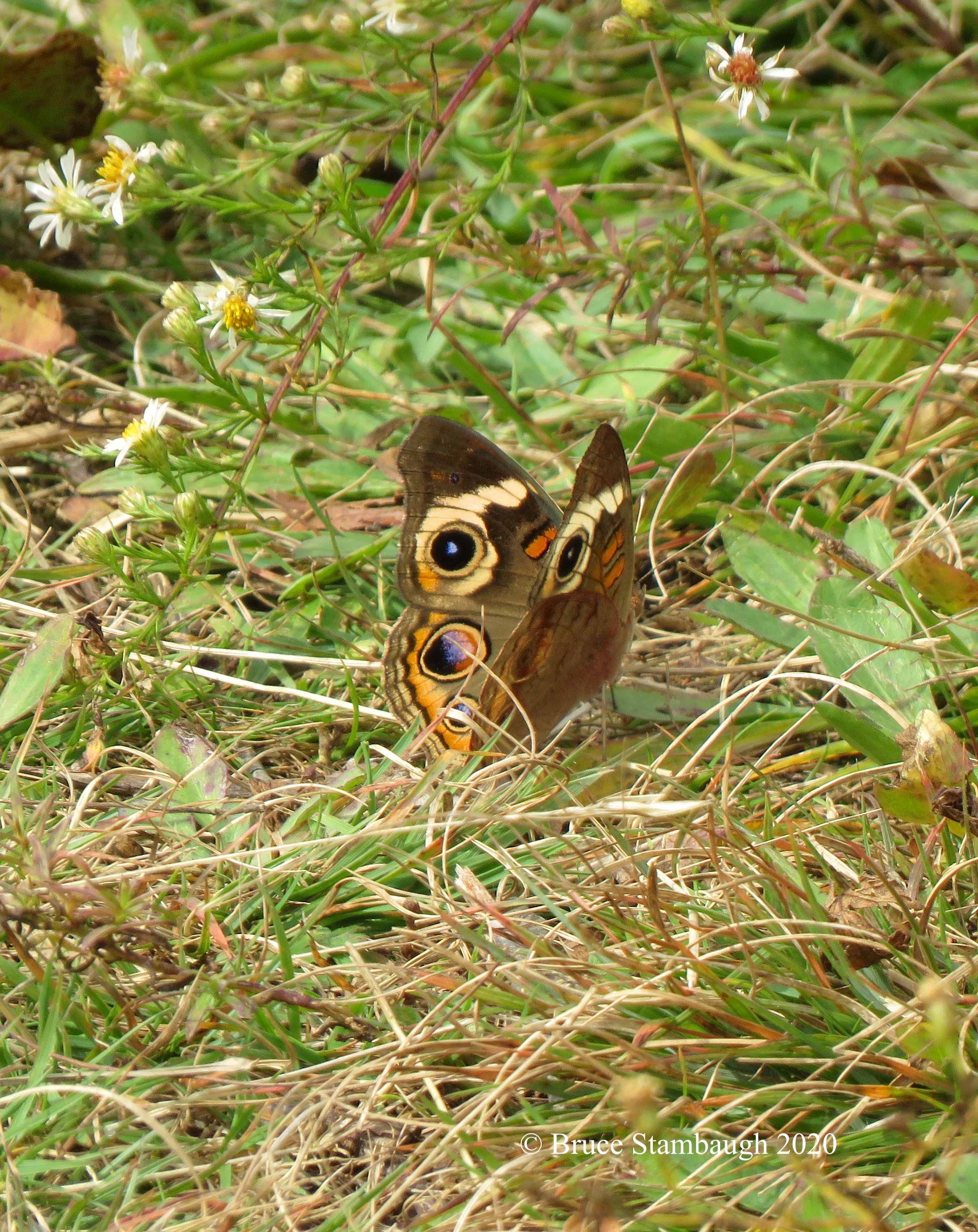
Swallowtails, fritillaries, Buckeyes, and skippers flutter their notes in their particular and various flights. It’s always amazing how they can find the slightest blooming speck to nourish them on their way south.
Brilliant sunrises and sunsets add magical backdrops to September’s forte. The trick is to rise in time to catch the morning show or to stop what you are doing and embrace heaven’s evening song.
The deciduous trees, of course, join the colorful choir one leaf at a time. Their intensity increases as the month wanes. They usually wait until October for their triumphant exit.
Still, whatever voice they can bring to September’s musical is much appreciated. We humans inadvertently join the band with our out of tune rakes and mechanical blowers.
Nevertheless, September’s concert is a joy to grasp. That’s true even if the neighborhood skunk makes an unwelcomed visit.
We can still enjoy the many classical notes of the year’s ninth month. At day’s end, the stars and planets twinkle their universal choruses, glorifying the heavens above.
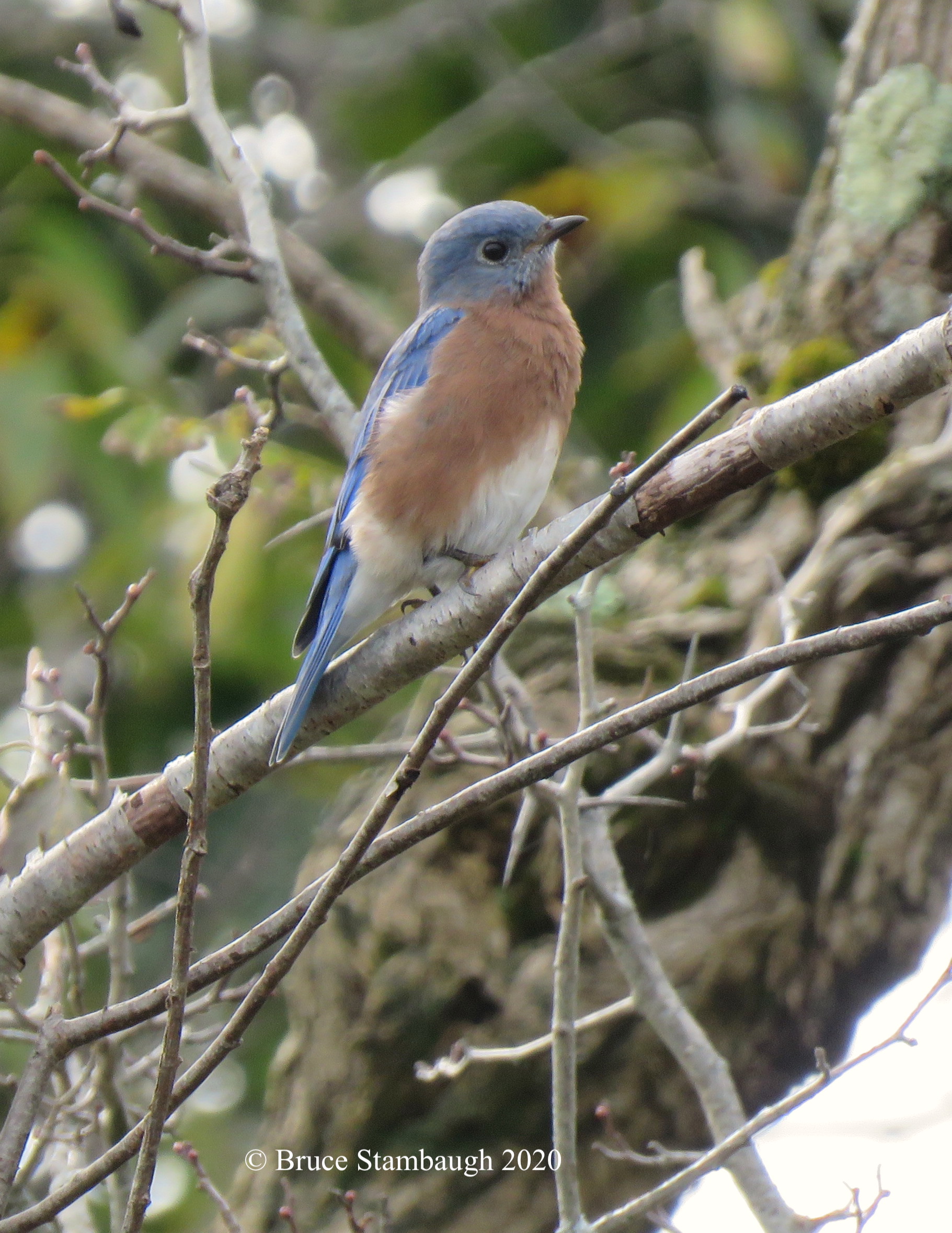
I spied this female Eastern Bluebird peering over the top of the leaves of this tree early one morning. I heard her plaintiff call, and then another from a slightly different location. A quick glance around revealed this juvenile basking in the morning sunshine.
Apparently, mom just wanted to make sure her baby was alright, or perhaps they were searching for breakfast in the wild cherry tree. “The Doting Mother” is my Photo of the Week.
The misty morning view from the Skyline Drive.
Awash with news and information about COVID-19, it’s easy to feel tense, confused, irritable, fearful, or even bored. Due to the global pandemic, millions of people of all colors, religions, cultures, and languages are experiencing similar trepidations.
A sense of hopelessness can be emotionally overwhelming. There’s a way to help overcome that despair. Head outside!
Studies have shown that connecting with nature calms fears, and uplifts spirits. I embrace those findings as often as I can. I recently headed to my favorite get-away place, Shenandoah National Park.
Mine was a twofold mission. Besides going into the wild, this was my first hiking experience since my knee replacement surgery last September.
I started early to beat the heat and humidity. The sun hadn’t yet risen over the Blue Ridge Mountains as I approached the park on U.S. 33. I exit that road into the park at Swift Run Gap.
This slideshow requires JavaScript.
Rounding a slight curve on a typically hazy summer morning, I noticed a large dark object in the opposite lanes of the divided highway. I slowed and rolled past a massive black bear standing beyond the grassy medium.
The magnificent creature looked both ways and then bolted across the roadway. It promptly disappeared into the steep, wooded hillside before I could even grab my camera.
Buoyed by that encounter, I arrived at the trailhead in high spirits. Surely, anything that I would experience the rest of the day would be anti-climactic, unless I saw another bear on the hike. I didn’t.
I walked a few yards on the Appalachian Trail to where it intersected with the trail I wanted, the Mill Prong. It was all downhill from there until the return trip.
The forest was amazingly still. No birds sang, and no vehicles hummed along the nearby Skyline Drive. I took in every moment, the wildflowers, the ferns, brightly colored fungus conspicuously growing on dead trees. The distant sound of water gurgling its way down the mountainside lured me onward.
I heard or saw no one else. A gray catbird burst from a bush beside the trail. A feisty squirrel angrily scurried away, flapping its tail in disgust of the human disruption.
I rested at the shallow stream. The morning sun filtered through the forest canopy, sparkling the gently rippling water. I felt exalted.
Farther downstream, I sat on a large rock and just enjoyed the sound of water trickling over ancient boulders. On my return trip, I passed a few other hikers. Each one donned face masks as we passed on the trail. More gratitude and thoughtfulness mutually expressed.
Mountain stream
Turk’s cap lily.
Wildflowers.
Common Wood Nymph.
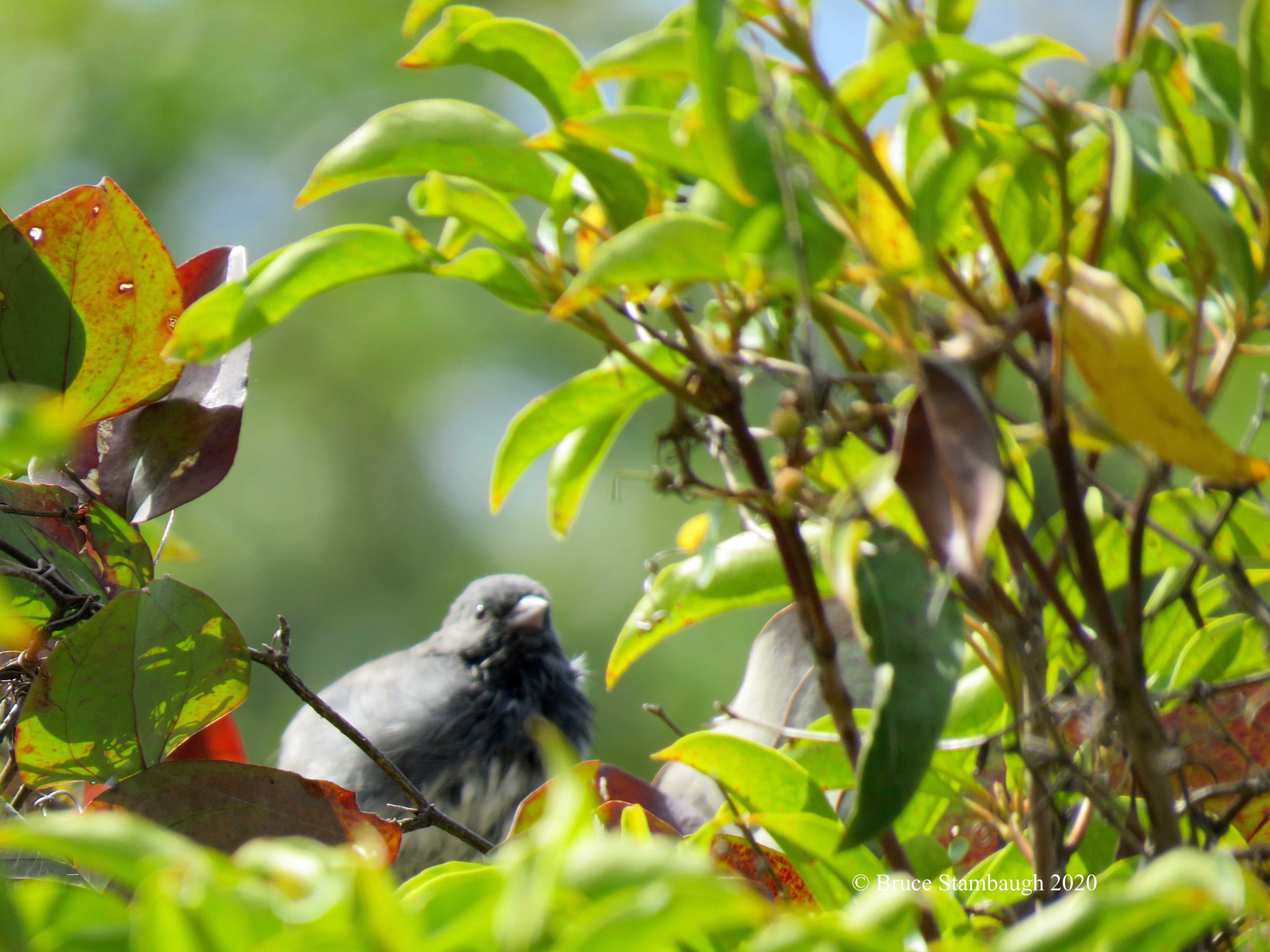
Young Dark-eyed Junco.
Thistle blossoms.
Covered in pollen.
Click on the photos to enlarge them.
When I reached the parking lot, the strengthening morning sun spotlighted some bright orange Turk’s cap lilies just off the trail. Their beauty drew me like a magnet. I snapped my camera’s shutter over and over, trying to preserve the glory I beheld perfectly.
Suddenly, a female tiger swallowtail butterfly alighted on the same flower that I was photographing. Again, delight and gratitude filled me to the full.
In the rest of the world, the pandemic raged. But in the wild, only the big black bear, the forest’s serenity, the kindness of other hikers, and this tango of floral and fauna mattered.
I was thankful for each magical moment, and for the skillful surgeon who had replaced my knee. Gratitude is appropriate anytime, but especially during this pandemic.
Connecting with nature does indeed do wonders for your soul. You can find peace and gratitude in a local park or even your backyard.


























You must be logged in to post a comment.