Please Don’t Hug Me Right Now

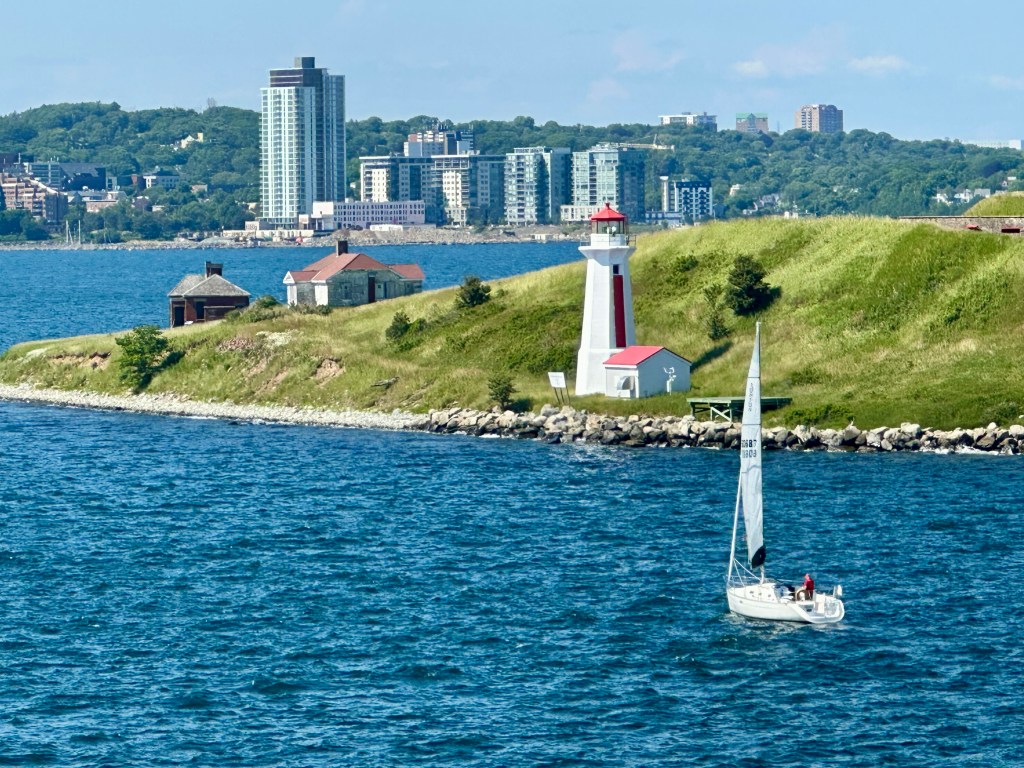
Departing Halifax, Nova Scotia, Canada. Photo by Bruce Stambaugh

I love giving and receiving hugs, especially as I age. The fact that my four siblings and I received little physical affection growing up might play a significant role in my desire to be a hugger in my senior years.

There’s nothing better than giving my grandchildren a hearty hug after an athletic event or concert in which they have participated. And too, I melt when they hug me for simply being their grandfather. That momentary embrace says more than any card or note of appreciation.

The same is true for close friends, especially as we endure the aging process with all its expected and unexpected ailments. When we gather in small groups, whether at church or in our homes, the first question often asked is, “How are you?”

My wife and I are in two different small groups of peers, most of whom have Ohio roots like us. We now live in Virginia’s Shenandoah Valley, close to three of our four grandchildren.

When with other seniors, we chat around a meal or a table of snacks and drinks about our health. Sharing and listening become equivalent hugs, emotional squeezes, if you will. As septuagenarians and octogenarians, we all need those affirmations as we deal with our latest ailments.

Our ship, the Zuiderdam, docked at Portland, Maine. Photo by Bruce Stambaugh

However, since we returned from a recent cruise, I’ve had to learn to be happy accepting verbal greetings instead. I cracked three ribs in a freak fall near the end of our trip.

All was going well until our ship approached Halifax, Nova Scotia. Before we left, friends cautioned us not to fall. I had every intention of complying.

As I stepped into the shower, and please don’t try to imagine that, my left foot hit the shower mat just as the ship pitched in the opposite direction. I flew through the air like Superman, only not as gracefully.

My arm stopped my flight by hitting the sink, and I crashed to the floor with a loud thud. Excruciating pain shot through my right side. My wife said I made noises she had never heard before from any creature.

After the initial shock, I composed myself and finished getting ready for the day. However, after breakfast, my ribs pained me greatly. We headed to guest services, and I was immediately wheeled to the ship’s medical center.

The friendly and competent medical staff quizzed me, took my vitals, and gave me medication to ease the pain. X-rays showed a cracked rib, but the doctor wanted me to go ashore to the hospital. Doing so would effectively end our vacation, and I didn’t want that to happen.

Painful as it was, a cracked rib wasn’t a life-or-death situation. We enjoyed Halifax as best we could from our veranda. I checked in the next two mornings for additional shots of pain medication, and we were able to fly home on schedule.

But because I had also hit my head in the crazy fall, we went to our local hospital’s emergency room after we arrived home. CT scans showed not issues with my head, though my wife questioned those results. I did, however, have three cracked ribs, not one.

We took it easy the next few days before I felt like venturing out. Friends who didn’t know about my accident greeted us with the usual hugs, but I politely waved them off and explained.

I have developed a new appreciation for the importance of the rib cage to the rest of the body. I measure my moves and watch my steps. I also recognize that three cracked ribs are insignificant when compared to more consequential diagnosis of cancer and other diseases of friends and family.

I’m still healing and greatly looking forward to when I can once again hug and be hugged without pain. Until then, a fist bump will do.

The Portland, Maine waterfront at dusk. Photo by Bruce Stambaugh

© Bruce Stambaugh 2025

Frustrated by the Medical System? Advocate for Yourself

Our local hospital. Photo by Bruce Stambaugh

I got the cruelest call on April Fool’s Day. My doctor’s office informed me that the MRIs I had the previous day indicated an aneurysm on my left carotid artery and some disturbing white spots on my brain.

My head spun with all sorts of possibilities, none of them good. My primary care physician (PCP) referred me to a hospital in another city. I anxiously waited for a call to schedule an appointment at the hospital. It never came.

Instead, my PCP notified me days later that the hospital declined to see me. I needed something they didn’t have: a neuro intervention team. That made me even more concerned.

My PCP then referred me to a teaching hospital in the same city, more than an hour away. She also told me not to do anything strenuous, and to begin to take a baby aspirin. 

I started the 81 mg aspirin right away. I also curtailed my nearly daily exercises for my lower back, which had bulged and degenerative discs. And I waited, and waited.

Days passed, and I didn’t hear anything. So, I called the hospital’s neurosurgeon department to ask about the referral. They couldn’t find it. 

Of course, I contacted my doctor via the patient portal to indicate that the hospital didn’t have my referral. She faxed another one, this time stamped urgent.

After two weeks had passed with still no communication from the hospital, I called them, but had to leave voicemails, which were not returned. I decided to check for other hospitals that specialized in my condition. I found three in the United States.

Fortunately, one hospital was only three hours away. So, I called the head neurosurgeon’s office, and the receptionist answered the phone on the second ring. She provided me with easy-to-understand instructions on how to send my records to them. I contacted my doctor to provide the hospital’s fax number to forward my records.

There was one catch. I had to deliver the MRI images myself, but not necessarily in person. The hospital had a link where I could upload the images and the written diagnoses.

I contacted our local hospital where I had the MRIs, and they said I could pick them up the next day, which I did.

I placed the disc in the external DVD player since my laptop, like most nowadays, doesn’t have a slot for CDs or DVDs. I tried uploading the images, but the webpage wouldn’t take them.

I called the hospital, and by some good fortune, I was connected with a very understanding and helpful technician who kindly guided me through the process. She said I wasn’t the first patient to have the same issue.

I immediately received emails confirming that the hospital had received my images and documents, which I found reassuring. Finally, I thought to myself, an institution that gets how frustrating technology can be for their senior patients.

However, I waited several more days. I called the neurosurgeon’s office again. The office manager told me the doctors were deciding which one would review my records.

Finally, more than a month later, I received a call from the hospital to set an appointment. The good news was that it would be a remote video session with the neurosurgeon. The bad news was that my wife and I would be traveling on the dates they offered.

However, I settled on one, which happened to be exactly six weeks since my MRIs. It was also our son’s birthday, and the 14th anniversary of my prostate cancer surgery. Taking that appointment meant we had to alter our travel plans slightly. It was a small sacrifice to make if I wanted to see the neurosurgeon.

When the late-afternoon appointment arrived, my wife and daughter-in-law joined me. I relied on them to keep notes and to ask questions, since at 77 years old, my memory wasn’t what it once was.

My wife was of great help to me as we navigated my cancer episode together. She attended every appointment with me and took excellent notes. She helped me at every step of the way from biopsy to surgery to rehab. So, she attended this appointment without hesitation.

The neurosurgeon was excellent. He said I had a pseudo-aneurysm, and the spots on my brain were not unusual for my age. He reassured me that the chance of the pseudo-aneurysm rupturing was near zero. And he listened to and answered all our questions.

However, he did refer me to a stroke neurologist due to the bulge in my carotid. He did so in case I had a blood clot, which would potentially block the carotid at the pseudo-aneurysm’s location. I have a scheduled appointment for that.

I recognize that my experience is anecdotal. I also know that many of my peers have had similar experiences with the medical system.

So, what did I learn through all of this?

I learned to be persistent if doctors’ offices or hospitals don’t follow up with patients as expected. I also learned to be patient. They are busy after all.

Through it all, I tried my best to be kind to everyone I spoke with. Medical personnel work with many patients and other staff members daily. Why add to their frustration by being rude or angry? That wouldn’t help my blood pressure, and probably not theirs either.

I also tried to be as gracious and courteous as possible, even if it was simply putting me on hold on the phone for a few minutes. Gratitude benefits everyone.

Don’t go it alone. Having a spouse, relative, or friend attend a medical appointment with you helps the patient better understand what is being said and what the patient should and should not do. In my case, it also helped catch any information I missed. When diagnoses cause consternation, one can only absorb so much. Designate a person to advocate on your behalf if you are unable to do so yourself.

In all of this, be communicative. That ensures everyone is on the same page and prevents you from getting lost in the system. Too often, medical digital systems don’t talk to one another, so you have to speak up for yourself. But the communications need to be considerate and respectful.

The bottom line is to be proactive for yourself and your health. A positive and respectful approach goes a long way with professionals who too often hear just the opposite.

Finally, I wanted to share my story in the hope that patients who have experienced similar challenges will understand that they are not alone. And for other retirees who may encounter the same roadblocks that I did, I hope they recognize the importance of persistence and self-advocacy in achieving their best medical outcomes.

A blood pressure cuff. Photo by Bruce Stambaugh

© Bruce Stambaugh 2025

Summer Solstice!

Welcome to summer! The summer solstice arrives this evening at 10:42 p.m.

I took this photo of the 2016 summer solstice sunset when we lived in Ohio. The silhouette is our neighbor’s farm.

A summer solstice sunset. Photo by Bruce Stambaugh

Enjoy your summer!

© Bruce Stambaugh 2025

A Man and His Dog

This scene stopped me in my tracks.

My wife and I enjoyed a walk around the Genesee Country Village and Museum on Mother’s Day with our son, his wife, and their three-year-old grandson. Jess’s family also joined us on the lovely Sunday.

With wide open spaces and many attractions to investigate, several of us scattered to do our own thing. That’s when I spotted this gentleman, dressed in 19th-century attire, basking in the late-morning sunshine. His obedient dog did the same. Along with the setting and their positioning, they made the perfect composition that fit the setting.

The Genesee Country Village and Museum is a living history museum near Mumford, New York.

© Bruce Stambaugh 2025

Petals on Medals

Spent pink petals on a manhole cover. Photo by Bruce Stambaugh

I was walking in downtown Harrisonburg, Virginia, when I came upon this improbable scene. Spent petals from pretty pink blossoms on an ornamental tree had fallen and stuck between the metal grids on manhole covers.

I marveled at the beauty of the pattern the contrasting elements had made. Natural pink on human-made rusty iron surrounded by the concrete of the sidewalk.

A few of the noontime sun’s rays added a dappled effect to this natural urban art.

© Bruce Stambaugh 2025

Stations of the Cross: A Good Friday Tradition

For the last 38 years, churches in Harrisonburg, Virginia, have joined together on Good Friday at noon to walk the Stations of the Cross. This is an ecumenical service of public prayer and witness on Christianity’s most solemn day.

It was the perfect afternoon to walk in downtown Harrisonburg. With a bright blue sky overhead and the temperatures in the 70s, more than 150 people chose to walk the 10 stations.

I was most impressed by the cross-generational gathering. Toddlers in strollers, teenagers in shorts, parents, and grandparents walked narrow sidewalks and across city streets to the various stations representing the final hours of Jesus’s life.

Luke 22:39-46. Jesus prays on the Mount of Olives.

Retired pastor Phil Kniss gave safety instructions to the crowd before the service began on the steps of Blessed Sacrament Catholic Church. Members of the Shenandoah Valley Biblical Storytellers dramatically shared appropriate scriptures at each stop. A prayer by local clergy was recited before proceeding to the next station.

Luke 22:47-53. Jesus is betrayed and arrested.

We didn’t have to go far for the second stop. The U.S. Federal Courthouse was just steps away. Note the court official peering out of the window on the right.

Luke 22:54-62. Peter denies Jesus.

The third stop was just a short distance away at the local television station. Besides places of worship, the walk included stops representing the media and local, state, and federal agencies.

Luke 22:63-71. Jesus is mocked and questioned.

The following two stops brought us to the First Presbyterian Church on Court Square. It is literally the city center. We bathed in the warm sunshine of the early afternoon, listening to the scripture presentation and the prayer.

Luke 23:1-5. Jesus stands before Pilate.

The procession moved across the street to the west side of the Rockingham County Courthouse. Doing so allowed the group to gather without blocking any doorways, as the only public entrance is located on the east side.

Luke 23:6-12. Jesus stands before Herod.

We moved from the courthouse to the jail and administrative building across the street. A few onlookers joined the troupe of walkers.

Luke 23:13-25. Jesus is sentenced to death.

From the jail, the group followed the cross to an open area near Blacks Run, a stream that meanders through the town’s center. While the scripture was shared and the prayer said, an American Goldfinch sang high from a nearby cottonwood tree, and a pair of Mallards swam upstream. The church steeple in the background was the next destination.

Luke 23:26-43. Jesus is nailed to the cross.

At the historic Asbury United Methodist Church, we heard the hard words of Jesus being nailed to the cross. The walk became more solemn than it had been when we had started a half hour earlier.

The path to the next station.

Following the prayer, the participants trekked along South Main St. to City Hall. Fortunately, the street is a one-way, northbound roadway, which allowed excellent visibility for oncoming traffic. The street is also U.S. 11, the old Valley Pike, where Confederate and Union soldiers marched and occasionally fought. The ancient history overshadowed that of the more recent.

The group crossed S. Main St. to the last stop, the lovely courtyard behind St. Stephen’s United Church of Christ.
Luke 23:50-56. Jesus is buried.

The inviting backyard garden of St. Patrick’s United Church of Christ hosted the last scripture and prayer of the afternoon’s commemoration. By now, people were tired from the heat and the walk, which totaled a mile round trip. Still, all were attentive to the cherished story. With the final benediction, the people scattered quietly, individually, pondering all that we had seen and heard.

© Bruce Stambaugh 2025

How We Celebrated Our Anniversary

The pastoral landscape we enjoyed. Photo by Bruce Stambaugh

The weather was similar to the day we married 54 years ago, mostly sunny and warm. So, we decided to celebrate our anniversary by enjoying the scenic outdoors in Virginia’s Shenandoah Valley.

We drove the country roads in two Virginia counties, where Old Order Mennonite farms dominate rolling landscapes at the foot of the Allegheny Mountains. Those families have kept the farms intact for the most part. Generations have raised crops and livestock, including poultry, without selling off their prized road frontage for homes or small businesses. They must enjoy the scenery and quiet, too.

Despite the lack of rainfall, succulent green grasses for beef cattle, dairy cows, and plump sheep brimmed beneath tree-dotted pastures. Cottony clouds sailed overhead in the cerulean sky.

We visited a local birding hotspot across from a plain but pristine Old Order Mennonite church, where the men and women sit in benches on opposite sides after filing through separate doorways. Killdeer, Pectoral Sandpipers, and Canada Geese called and preened in the morning’s warmth, while pairs of Tree Swallows divebombed me for being too close to their birdbox.

Pectoral Sandpipers. Photo by Bruce Stambaugh

We turned onto a narrow, notoriously bumpy road that led to a mountain reservoir. A stream rushed between the mountains’ steep, forested foothills, marking the boundary between Virginia and West Virginia. Mint-colored leaves had only sprouted, allowing views of rock-filled talus slopes.

At the reservoir, the azure sky commanded the scene. Far below on its shores, fishermen plied the still water that mirrored the blue canopy overhead.

Though in no hurry, we kept driving south to our lunchtime destination. We wound up, down, and around onto primary roads and entered a historic, small southern city where artists and restaurants have replaced millineries, general stores, and saloons. We spied the old railroad station two city blocks away, where Amtrak and excursion trains still stop.

We were delighted to find a restaurant serving fresh seafood and luscious desserts. However, my wife diligently discovered an old-fashioned drive-in a mile away serving the best hot fudge sundaes.

It had been decades since I had to push a button to order food. The speakers looked like those we had at drive-in movie theaters in the 1960s. Our sundaes arrived just as we ordered, with chocolate ice cream.

After the nostalgic pleasures, we headed west again toward the mountains before turning north. We passed ranches with lazy brooks snaking through green pastures occasionally speckled with grazing Black Angus cattle. Experienced farmers kept hilltop trees for cattle to gather on hot, humid Virginia days.

Drivers of the few vehicles that passed us waved the familiar index finger hello. If they know you, they point at you as a sign of recognition. We were fine with being admiring strangers.

Abandoned farmsteads stood on steep hillsides surrounded by trees planted ages ago. The houses were weathered and had broken windows, while many old outbuildings and barns had collapsed.

The long farm lanes that ended at white two-story houses and red bank barns reminded me of the happy, innocent Ohio days I drove down to pick up my fiancée. Like her lane, a small ridge of stubble grass divided the tire tracks.

The weather nearly matched the day we married all those years ago. Sunny skies and unseasonably warm temperatures dominated that precious day, too. However, the pungent smell of manure that the farmer had sprayed on the fields across from the country church was missing.

We made our way home happy, contented, and glad we had chosen to renew our vows so quietly, personally, amid welcome familiarity.

Steers graze on greening grass. Photo by Bruce Stambaugh

© Bruce Stambaugh 2025

Amish Farm in Late Winter

An Amish farmstead near Mt. Hope, Ohio. Photo by Bruce Stambaugh

I recently visited my old stomping grounds in Holmes County, Ohio, home to the world’s largest Amish population. Remnants of snow still covered part of the ground, contrasting with the barren, fallow fields.

I enjoyed finding a few Amish farms, like the one pictured, remaining amid the rapidly expanding tourist businesses scattered throughout the once pristine countryside.

© Bruce Stambaugh 2025

Winter Barns

Holstein Hillside. Photo by Bruce Stambaugh

Barns have always intrigued me. The various sizes, shapes, colors, conditions, purposes, and settings combine to make photogenic captures. Wintertime is no exception.

Here are a few I recently found.

Please click on the photos to enlarge them.

© Bruce Stambaugh 2025

The Winter That Won’t Quit

Our snow-covered patio. Photo by Bruce Stambaugh

My wife and I moved to Virginia’s lovely Shenandoah Valley seven and a half years ago. We wanted to be close to our three grandchildren, who were approaching their active teen years. We thought watching them play soccer, baseball, and volleyball and perform in concerts and recitals would be fun—and it has been.

But the weather has been irregular, to say the least. Now, our Virginia home is no farther south than Cincinnati, Ohio. So, we knew winters would be cold and snowy from time to time, but usually, the snow didn’t last long. The valley would get six inches of snow, and it would be gone in two days, thanks to the clear blue skies and warmer temperatures.

For the most part, that is what the winters have been like until this year. We might as well have stayed in Ohio, where we sometimes received lake effect snow from strong northerly winds blowing off Lake Erie even though we lived 75 miles south of Cleveland.

The winter here has produced multiple snowstorms that deposited snow ranging from one inch to seven inches. Some areas in the county had even more. We have also had two rounds of freezing rain that brought down large tree limbs and closed schools and businesses. And there’s still more winter weather to come.

Mind you, I am not complaining. I am just stating facts and perhaps a little frustration. Still, I greatly enjoy the beauty the blankets of snow create. I hope that joy is reflected in the photos.

Given this weather, though, we could have visited Upstate New York to play with our fourth grandchild, Teddy, a very curious two-and-a-half-year-old. I think we’ve had more snow than Teddy.

At least the birds have been faithful in visiting our birdfeeders and birdbaths.

© Bruce Stambaugh 2025

Bay Photos by Donna

Wildlife Photos From The Chesapeake Bay Region

ROAD TO NARA

Culture and Communities at the Heart Of India

K Hertzler Art

Artist and nature journalist in the Shenandoah Valley of Virginia.

Maria Vincent Robinson

Photographer Of Life and moments

Gabriele Romano

Personal Blog

Jennifer Murch

Art is the only way to run away without leaving home. -Twyla Tharp

Roadkill Crossing

Writing generated from the rural life

ANJOLI ROY

writer. teacher. podcast cohost.

Casa Alterna

El amor cruza fronteras / Love crosses borders