
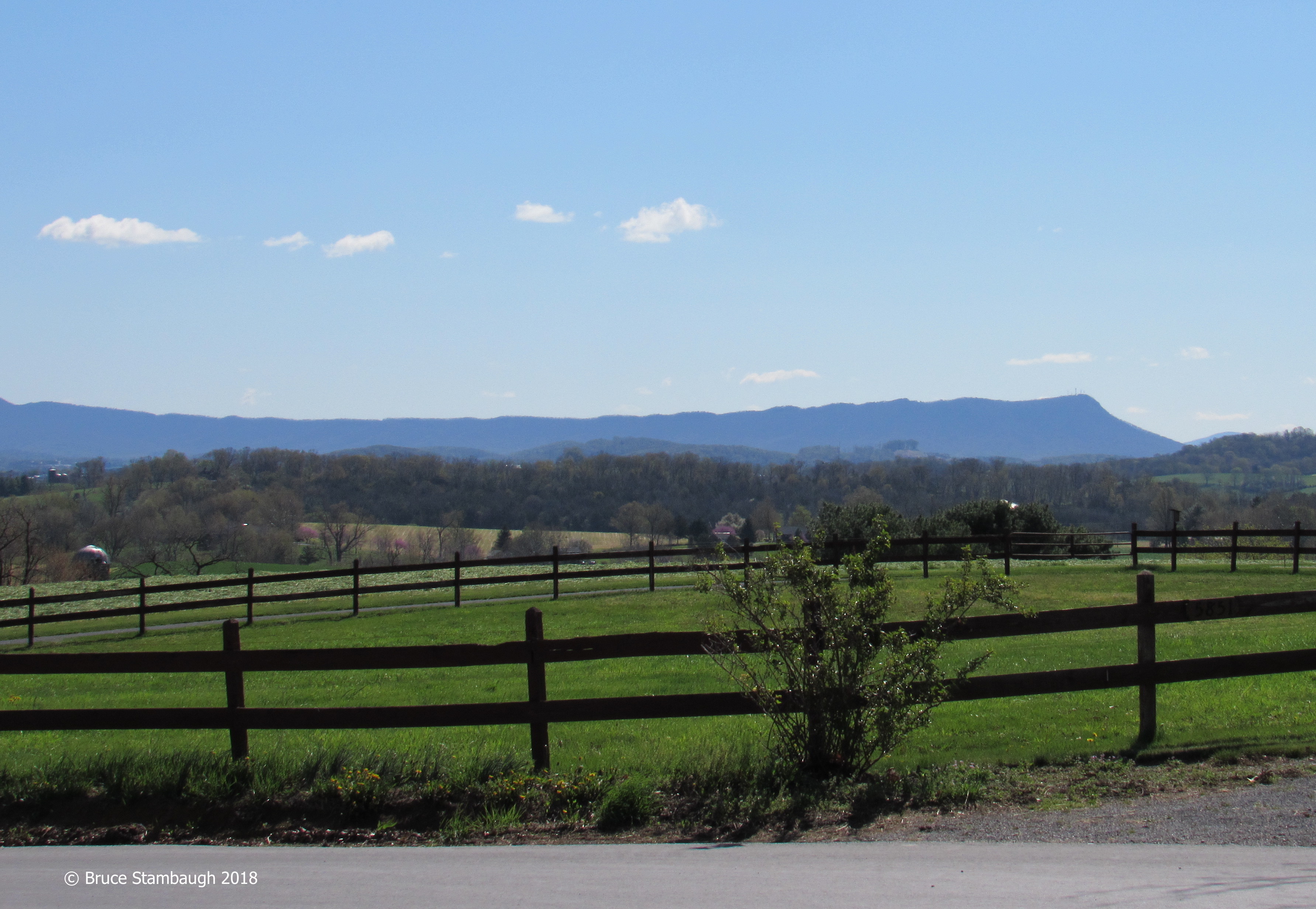
I’ll just let the title speak for itself on this photo. The old farmstead is located in Elkton, VA.
© Bruce Stambaugh 2018

I’ll just let the title speak for itself on this photo. The old farmstead is located in Elkton, VA.
© Bruce Stambaugh 2018

By Bruce Stambaugh
When is a chimney more than a chimney? I know that sounds like a strange question. The answer, however, might even be more so.
A chimney is more than a chimney when it no longer serves as a chimney. Now, I know you must be really confused. I can gladly explain.
When the Shenandoah National Park was first being conceived decades ago, hundreds of folks lived and farmed the land along the mountain ridges where the park was to be formed. They would have to move to make the park a reality. That became an issue.
In most cases, the government compensated landowners within the designated park boundaries for their property and buildings according to market value in the 1930s. Others received less than they thought they should. However, tenants operated many of the farms and received no reimbursement.
Some of the displaced were resettled in nearby towns. Most were on their own, leaving behind fond, treasured memories and subsistent livelihoods.
Adding insult to injury, many of the abandoned homes, having been condemned, were either burned or demolished in developing the new national park. For those displaced folks, more than walls went up in smoke.
Year after year, families returned to where they used to live if only to view the ruins and pay their respects at nearby family cemeteries. In many cases, only the chimney of their former dwelling remained.

Knowing that resentment still lingered in local families after all these years, grassroots efforts were begun to help quell that ire. Local non- profit organizations, community volunteers, college students, descendants of those who were displaced, city, and county officials worked collaboratively on a memorial project. They decided to establish monuments in honor of those removed from the parkland.
The chimney was chosen as the most logical symbol to memorialize those on the harsher side of the history of creating the park. To date, six memorials have been built. Two more are planned, which will complete the circuit of all eight counties that have land within the boundaries of Shenandoah National Park.


For its part, the National Park Service created an informative, inclusive and accurate exhibit of the history of Shenandoah National Park at the Byrd Visitors Center at Big Meadows. Chimneys play a prominent role in retelling that story.
The latest of the chimney memorials was just dedicated in Rockingham County’s town of Elkton at the foot of the Blue Ridge Mountains where the Skyline Drive snakes through the park. Volunteers built these chimney memorials using native limestone and granite rocks. I imagine a little blood, a lot of sweat, and tears of both sadness and joy flowed in the process.
With the remaining people who were displaced now in the 90s, the memorials were built to keep the story alive through education about the park’s history, including its dark side. In truth, these chimney memorials serve a more significant, more admirable purpose. These chimneys also help heal those long-held hurts of personal injustices.
When is a chimney more than a chimney? When it serves as both an emotional symbol of history’s good and evil that can’t be changed, only remembered and respected, and one that reconciles.

© Bruce Stambaugh 2018

By Bruce Stambaugh
Exploring has always been in my blood. Curiosity has coursed through my veins all of my life.
The move from Ohio to Virginia’s Shenandoah Valley merely whetted my appetite to become familiar with my new surroundings. A myriad of opportunities abound, either spontaneously or scheduled, to explore this beautiful, historic setting.
I joined scores of other retirees who were also eager to still learn a few things in life. James Madison University, located in Harrisonburg, offers a Lifelong Learning Institute to that end.
I just completed my second class, an overview of Mennonites in the valley.
Phil Kniss, the pastor of Park View Mennonite Church in Harrisonburg, taught the class. He is an astute student of Mennonite history, so I knew I’d learn a lot.
The first session served as a historical survey of Mennonites, tracing their beginnings to the 16th century Reformation. Because of their steadfast beliefs, many Mennonites endured persecution to the point of martyrdom.
Consequently, many moved from their European homelands to the New World, where they hoped for a new chance to live peaceably. Unfortunately, conflicts followed them right into the 18th century as they settled in Virginia’s Shenandoah Valley. They tried to live in peace farming the fertile soil, but war found them again.
Armed with that information, class field trips sent us into the lives and history of the many sects of Mennonites in the valley. A small choir enthralled us with their magnificent singing at the local Mennonite high school that is celebrating its 100th year.
At the Old Order Mennonite elementary school, I flashed back to former Ohio days of living among the Amish with their own private schools. The horse and buggy Old Order Mennonites are spiritual cousins to the Amish.
At the unassuming Old Order Mennonite church, a devoted preacher succinctly explained the scriptural basis for their simple way of living. Like all other Old Order men, he was clean-shaven but spoke Pennsylvania Dutch, an anomaly among his people.
At the buggy shop, we laughed and learned through the wisdom of the father-son combo that so efficiently ran the business so necessary to the Old Order way of life. The elder’s humor kept us on our toes.
In an Old Order Mennonite home, we gave thanks and feasted on a scrumptious home-cooked meal. The sparkle in our host’s eyes twinkled her delight in our contentment.
At Bank Mennonite Church, we learned of an orchestrated church split with genuine intent to agreeably disagree on specific theological applications while continuing a parallel spiritual path. Congregates dressed and lived like Conservative Mennonites in Holmes County, Ohio with a notable exception. Again, the men had no beards.
At the final class at Crossroads Heritage Center, we explored a type of living museum. Guides explained pioneer life as we wound through original, relocated old houses and various other buildings.
It was a fitting location for the last class. From high on a hill, the valley played out below us. The city bustled beneath the hot morning sunshine. Yet, the farmland’s still earthy springtime fragrances enveloped us.
From that vantage point, I imagined the struggles, the heartache, the determination and the desire to live their lives in community together through productivity, and finding peace and satisfaction in weaving their daily lives together.
Strangely and marvelously, I felt right at home.

© Bruce Stambaugh

It’s been nearly a year now that my wife and I moved from Holmes Co., Ohio to Virginia’s Rockingham Co. One way I’m learning about the area, its people, its topography, its history, its culture, is just by driving around. Of course, I usually have my camera with me to document what I see and find.
Before we moved from Ohio, we would pass through a small burg named Cootes Store on our way to visit our daughter and her family in Harrisonburg. It was hardly more than a crossroads in the northwestern part of the county. I found the name intriguing and just assumed that once upon a time a real “Cootes Store” must have existed there.
On one of my discovery runs, I found Cootes Store. Its personality jumped out at me through all of the old, eclectic merchandise visible inside and out. This likely isn’t the original building, but it is all that remains of what once must have been a thriving business to have a town named for it.
You can read more about the history of Cootes Store here. “Cootes Store” is my Photo of the Week.
© Bruce Stambaugh 2018
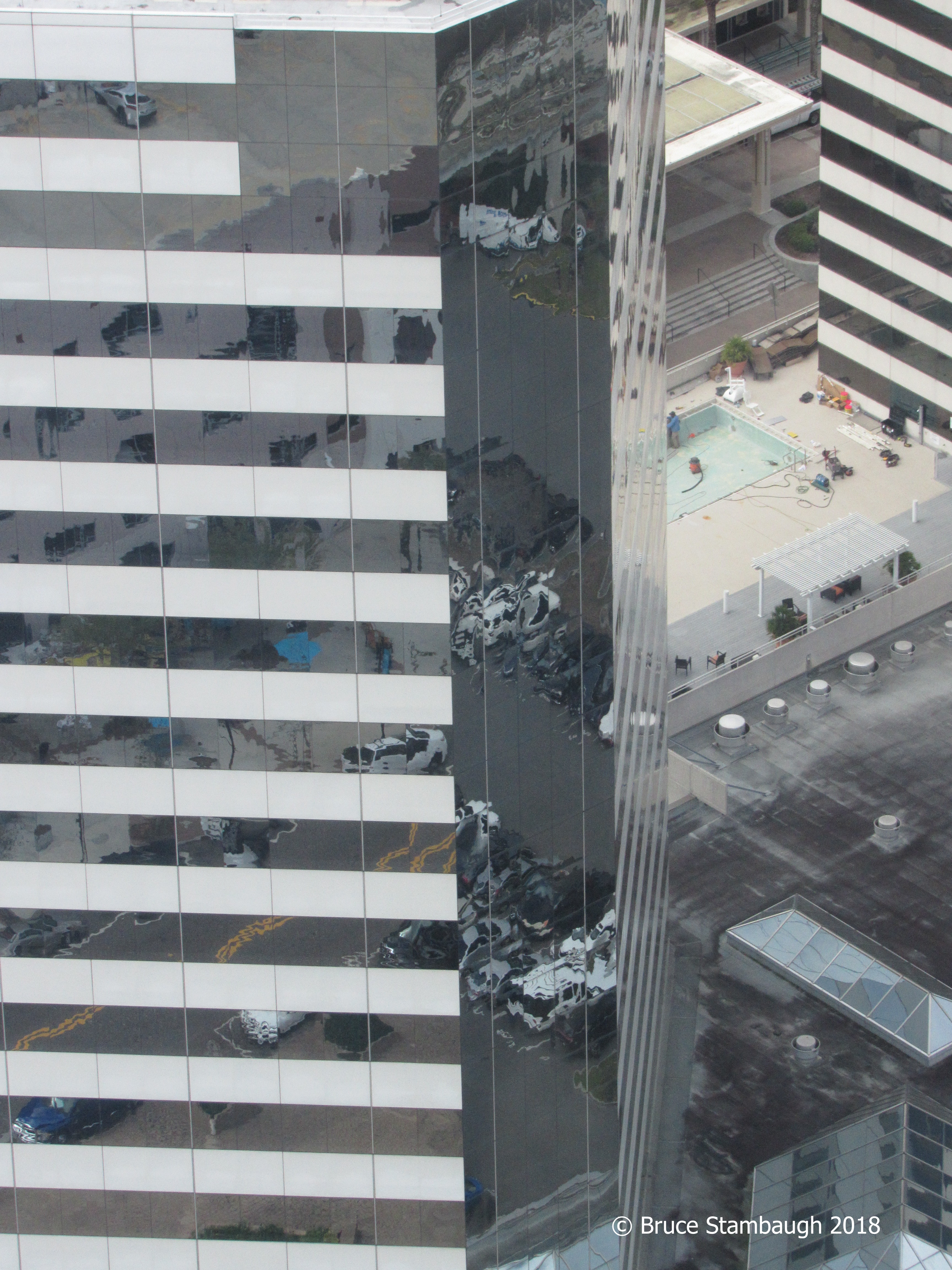
As much as I love to photograph nature, I enjoy capturing a cityscape just as well. On a walking tour of Jacksonville, FL, the reflections off of these shiny skyscrapers intrigued me. The photo was taken from the tallest building in the city. It wasn’t until I downloaded the picture that I saw all of the other lines and angles beside the more apparent rows of windows.
“Stripes” is my Photo of the Week.
© Bruce Stambaugh 2018
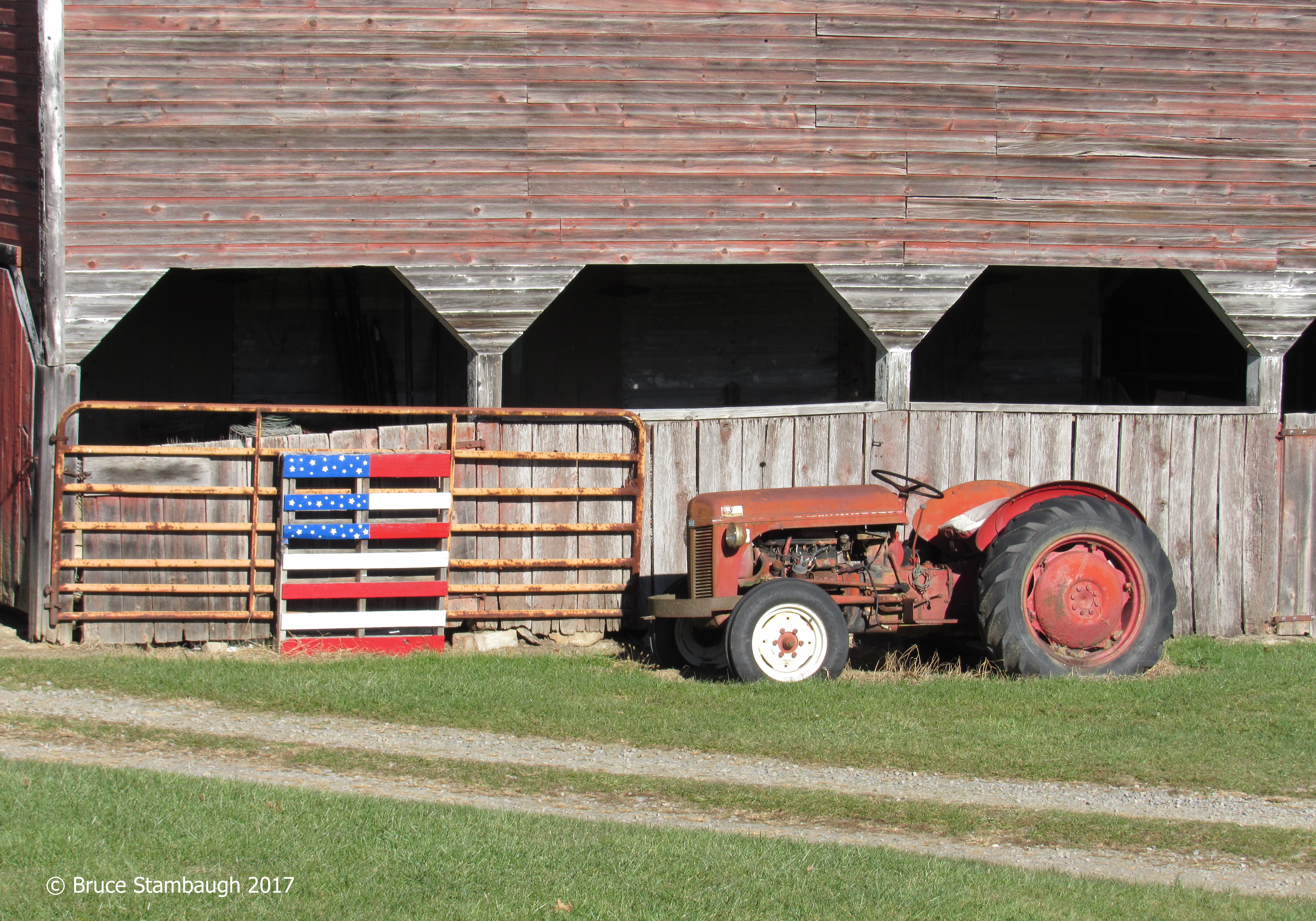
I spotted this scene while traveling along a West Virginia highway. I had to stop to get the photo. I loved all the textures, the various shades of red, and the lines in this shot. The farmer’s patriotism showed through by painting his version of the American flag on an old wooden pallet.
In honor of Presidents Day (Feb. 19), which combines Abraham Lincoln’s birthday (Feb. 12) and George Washington’s birthday (Feb. 22), “Patriotic Repurposing” is my Photo of the Week.
© Bruce Stambaugh 2018

By Bruce Stambaugh
I parked the van on the 21st Century side of the road and walked with my wife and our host couple across the two-lane highway back to 1766. The combination of the cold winter air and the smoke from several campfires immediately invigorated our senses and drew us in like kids to candy.
It was Christmas 18th Century style at the Old Stone House in the appropriately named village of Granite Quarry, North Carolina. The massive stones that formed the large, two-story house had been quarried a short distance away. A cast of volunteers decked out in period attire for their chosen character roles held me spellbound at every station.
The ladies at the beehive oven kept producing fresh-baked goodies for visitors to sample. The cornbread was pretty tasty. Members of the Mecklenburg Militia caroused around quietly spinning yarns that spanned generations. Still, they did their duty. To my knowledge, no one was arrested for pilfering sweet bread or inciting unrest.
The militia’s cotton tents appeared flimsy and insufficient to keep out the cold for their camp over. Indeed, a spy told me they all intended to sleep in the comfort of the little log cabin outbuilding that housed a book sale for the event. Given the bite in the late afternoon air, I couldn’t blame them.
The old granite house stood proud and impressive, having been restored 50 years earlier. Its 22-inch walls kept the interior warm in the winter and cool in the summer.
We stepped into the living room to time-appropriate music as our guide rattled off detail after detail of what life was like three centuries ago. Though this house was large and elegant even by today’s standards, life was demanding. The family and their indentured servants and slaves always had plenty to do merely to ensure day-to-day survival.


The children in our group weren’t too impressed with the straw ticking that served as the mattress on the old rope bed. “Sleep tight and don’t let the bedbugs bite” took on a practical meaning to them. The guide demonstrated the sizeable wooden key for tightening the ropes that served as slats to hold the mattress. The herb tansy was interspersed with the straw to keep most of the bugs away. We all laughed when a stinkbug crawled out onto the ticking.
Upstairs was plain and noticeably cooler since the only heat came from the first-floor fireplaces. A slave squeezed into a wall space behind the massive kitchen fireplace to keep the fire going overnight.
Since the builder of the house had migrated south from Lancaster, Pennsylvania, he modeled his home after the ones he knew. The spacious clapboard kitchen was attached to the main house, wherein that era the kitchen was a separate building at most southern homes.

In warmer weather, bathing took place in the stream that ran through the deciduous woods behind the house. Likely there was no lingering in that outdoor bathing arrangement.
I marvel at this kind of living history. It allows us to stand in the present, glimpse the past, and long for a better life for all future generations everywhere.
© Bruce Stambaugh 2018
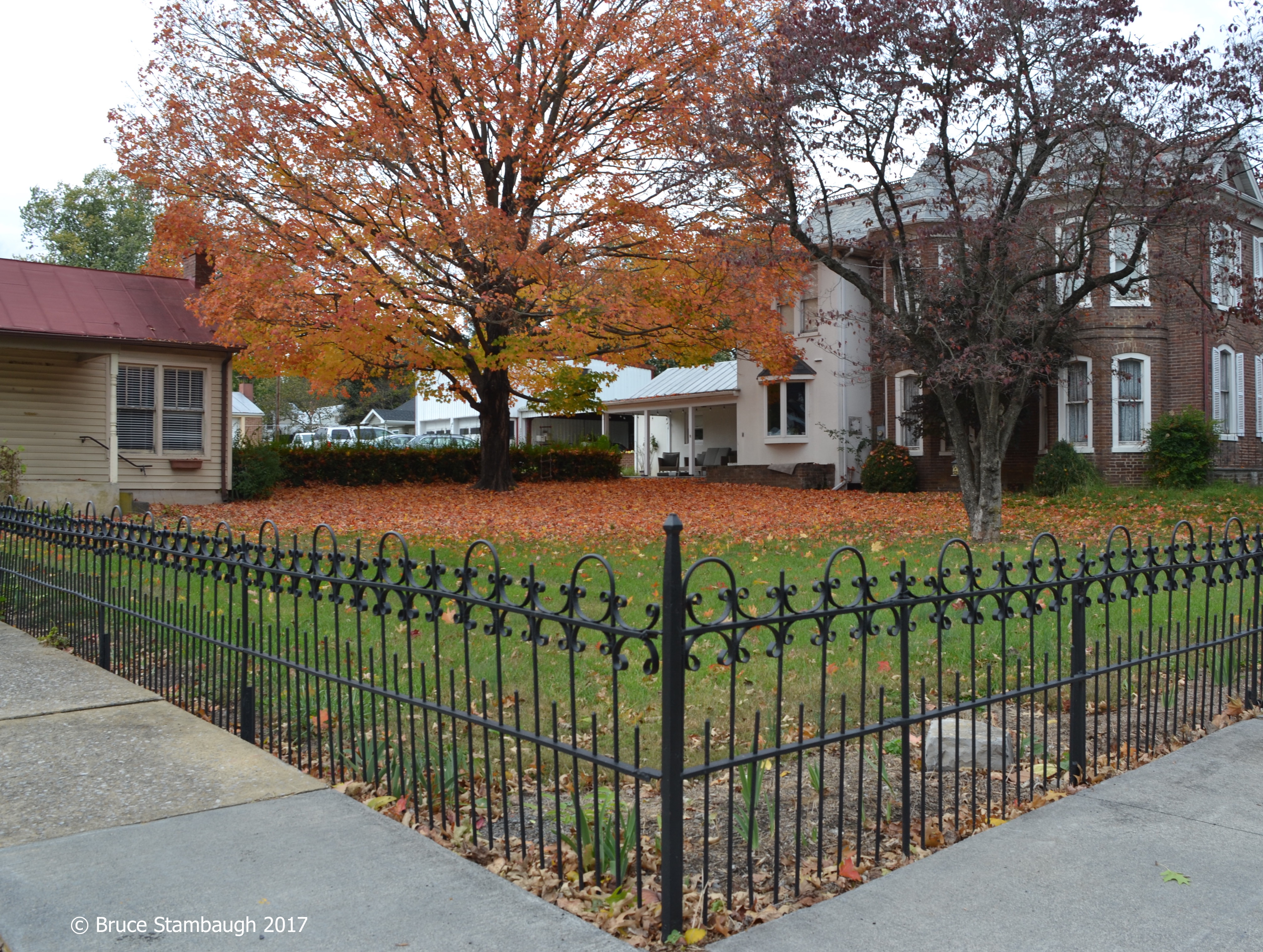
This has been an unusual fall across much of the country. Here in Virginia, we have received only recent rains, much too late to help the leaves reach their peak colors before they fell. This sugar maple in a yard in the quaint town of Dayton in Rockingham Co. defied the dry weather. Perhaps not as bright as usual, her broad leaves still turned rich gold in color.
Whether from fatigue or the extended dry spell or both, the shapely maple gave up most of her leafy crown all at once. With little wind, this year’s crop remained right where they fell. The old wrought iron fence seemed to help corral them, too.
“Right Where They Fell” is my Photo of the Week.
© Bruce Stambaugh 2017

By Bruce Stambaugh
I never met Ron Garitone, the late mayor of Wallace, Idaho. I’m sure I would have liked him if only based on one creative decision he made for his small mining and timber town located in Idaho’s panhandle.
Pushed on an environmental issue by the EPA in 2004, the mayor was told, “If a thing cannot be disproven, it is thereby proven.” The incredulous but affable mayor called the government’s bluff. He proclaimed his beloved Wallace the Center of the Universe because his claim could not be disproven, he said. His proclamation gained international attention. Wise town leaders seized on the idea and installed a fancy manhole cover that doubles as a marker in the middle of the main intersection declaring Wallace as the center of the universe. Blue and white tourist signs mark the spot.
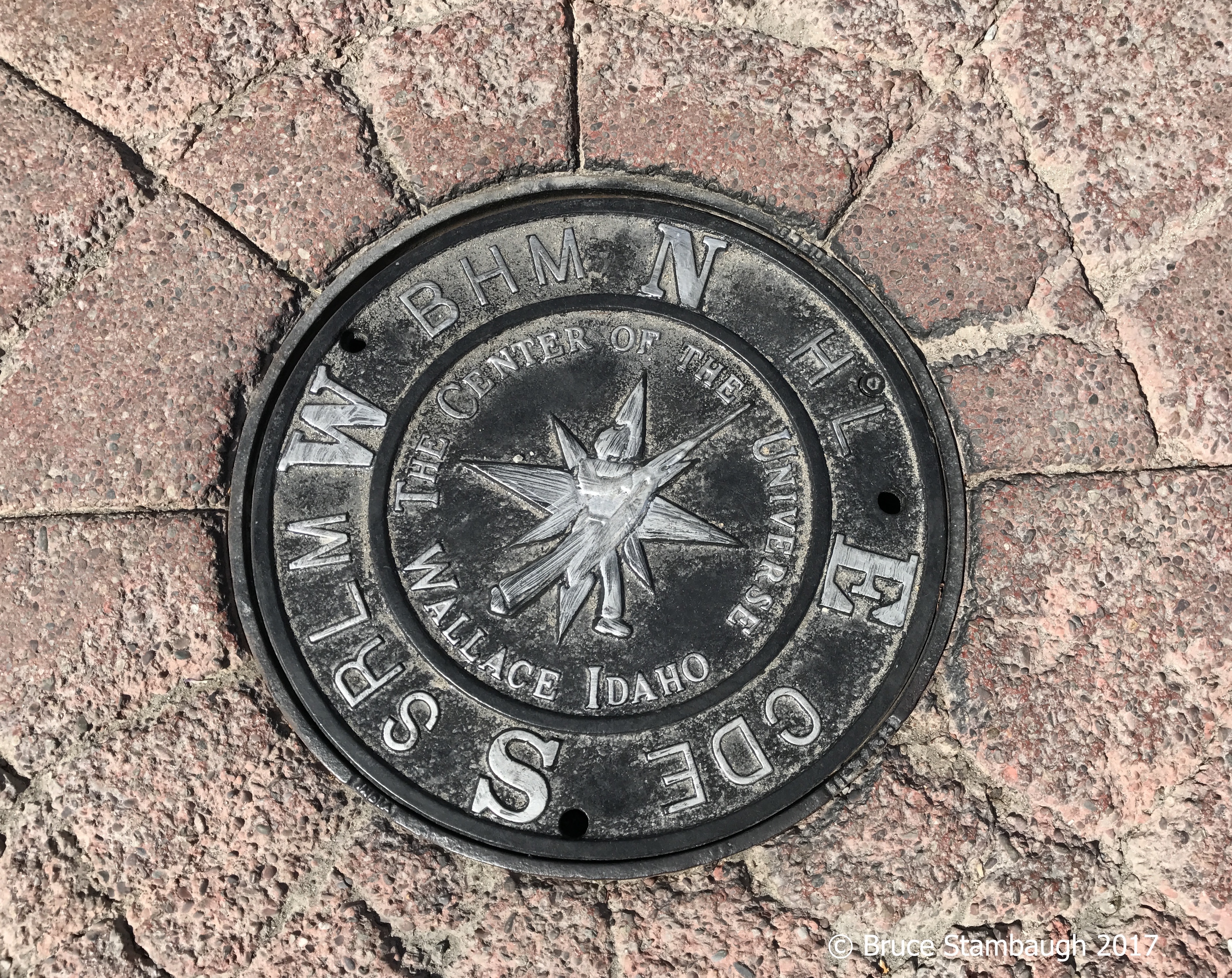
As I stood there admiring the designation with no fear of the typically light traffic, I flashed back to my early Holmes County, Ohio days. Impressed with its rural location and horse and buggy prominence, people who visited us, including several of my family members, asked me why we lived there. I had a ready answer for them.
“We live here because Holmes County is the center of the universe.” That usually brought puzzling, blank looks. So I’d clarify. “If I want to see anything else in the world, I have to leave here.”
I was joking of course, much like the good-humored mayor. However, there was a grain of truth to the statement. Rural counties universally can’t offer all that their citizens need. Folks travel to more urban areas for entertainment, sporting events, doctors, shopping, and fine dining to name just a few.
Sometimes everyday items can’t even be bought in the heart of Ohio’s Amish country. Specifically, it’s a fact that neither gasoline or alcohol can be purchased in either Saltcreek, Holmes County or Salt Creek, Wayne County. That point carries far beyond those two commodities.

Nevertheless, the faithful residences of the greater Holmes County area still love where they live. In my nearly seven decades of living, I’ve found that most folks feel the same way about where they reside no matter where they call home. Home is home. It’s all they need, sometimes all they know. As far as they are concerned, it is indeed the center of their universe.
If we all feel that way, we can’t all be right. The truth is we all have bragging rights to that claim. Each of us is entitled to make that statement. But that does not diminish the other towns or peoples.
I know that is true from having lived all of my adult life in Holmes County, Ohio, where I spent my most precious and productive years. To me, it was the center of the universe. It must have been. It attracted three to four million visitors a year.
Now my view has changed, right along with my life’s purpose and priorities. I have a new center of the universe from which to operate. I can see it every time I walk to the mailbox, every time I travel down Pin Oak Dr. Mole Hill greets me, calls me, as it does so many others.
Mole Hill is an ancient volcano now covered with dense woodlots, lovely homes, and fertile farm fields. Mole Hill is simply unmistakable and is the landmark by which all folks within its eyeshot navigate. In western Rockingham County, Virginia, Mole Hill is the center of the universe. I dare you to prove otherwise.

© Bruce Stambaugh 2017

I grew up a baby boomer suburbanite. I lived most of my life in the country. Yet, I love the city.
Cities offer so much to see and do, places to visit, museums and art galleries, zoos and concerts, professional sports and excellent restaurants, and a cross-section of the world’s cultures, races, and religions. Given all of that, I’m still contented when in a city to simply stop, look, and listen to all that is happening around me.
In this particular case, my wife and I and our tour-guide friends were waiting at a light rail stop in Seattle, Washington when I spotted these reflections in the windows of a hotel and office buildings across the way. The scene created its own living urban art.
“Unintentional Art” is my Photo of the Week.
© Bruce Stambaugh 2017
Wildlife Photos From The Chesapeake Bay Region
Culture and Communities at the Heart Of India
Artist and nature journalist in the Shenandoah Valley of Virginia.
Photographer Of Life and moments
Personal Blog
Art is the only way to run away without leaving home. -Twyla Tharp
Writing generated from the rural life
writer. teacher. podcast cohost.
El amor cruza fronteras / Love crosses borders
 Roadkill Crossing
You must be logged in to post a comment.