I grew up a baby boomer suburbanite. I lived most of my life in the country. Yet, I love the city.
Cities offer so much to see and do, places to visit, museums and art galleries, zoos and concerts, professional sports and excellent restaurants, and a cross-section of the world’s cultures, races, and religions. Given all of that, I’m still contented when in a city to simply stop, look, and listen to all that is happening around me.
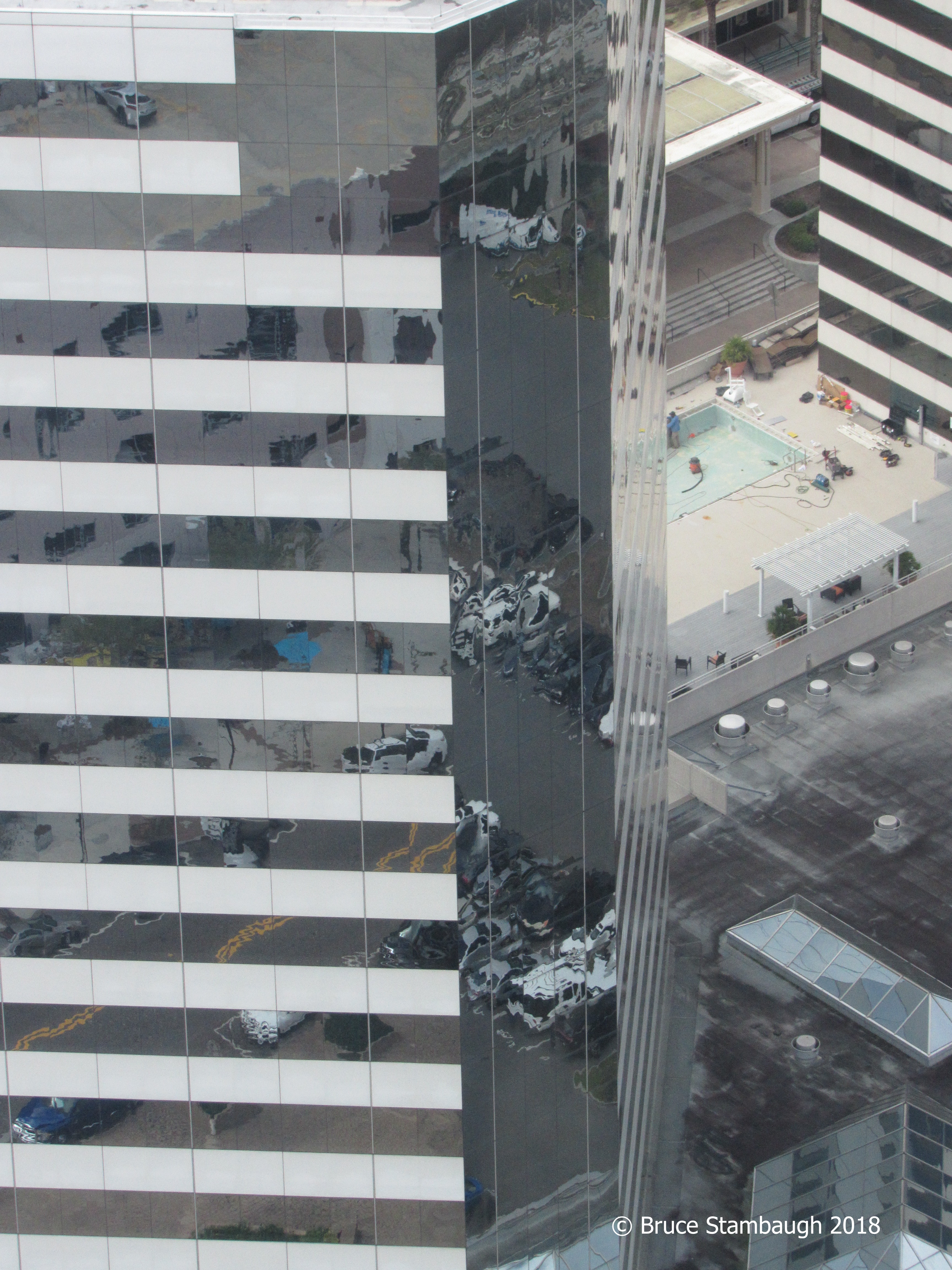
In this particular case, my wife and I and our tour-guide friends were waiting at a light rail stop in Seattle, Washington when I spotted these reflections in the windows of a hotel and office buildings across the way. The scene created its own living urban art.
During our brief tour of downtown Seattle, Washington, our friends guided us to Gum Alley. They just smiled and said we had to see it. I had no idea what to expect, but they were right. We had to see it for ourselves.
Officially named “Post Alley,” locals have dubbed the narrow street “Gum Alley” for a good reason. Apparently, it’s a Seattle “thing” to stick chewed gum onto the brick walls of the buildings that serve as the bounds of this public right of way. Its beauty is art deco personified.
Believe it or not, these walls had been cleaned of all of the gum postings less than a year ago. The young lady in the photo was actually posing to have her picture taken by a friend. As often is the case, I just happened to be at the right place at the right time to capture my Photo of the Week, “Stretching It.”
We committed to going to our friends’ wedding anniversary celebration long before we knew about the total solar eclipse. We merely had to tack on a day to our itinerary to view this exciting, much-anticipated event.
Neva and I saw this trip to the Pacific Northwest as an opportunity to finally see the State of Washington, one of seven in the U.S. I had yet to visit. Now the list is down to six.
If you know your geography, you’ll realize that Washington shares much of its southern border with Oregon. We had long wanted to visit other friends who lived in those two states.
Traveling is in our blood. Neva and I both like to visit new places. When renewing friendships is also involved, the trips are all the more pleasurable.
This slideshow requires JavaScript.
First on the agenda was an extended visit with one of my college roommates and his wife in Spokane, Washington. They had visited us a few times in Ohio, their native state as well. We quickly got to see Spokane up close and personal. We also made a day trip to some historical locations in Idaho’s beautiful panhandle. The scenery was stunning, the history engaging, and the local folks as friendly as could be.
As pretty as the tree-studded mountainsides and luscious valleys were, the renewed fellowship with Joe and Janis was so much sweeter. Conversations and stories tumbled out as if our separation had been 10 hours not 10 years.
From Spokane, we steered the rental car west through pleasant evergreen forests into the expansive dry plains of The Great Basin, passed sweeping irrigated fields that stretched for acres and acres. The state had kindly marked each crop with signs on the fence that separates the interstate from the fields. It also eliminated the necessity to stop along the roadway.
We crossed the mighty Columbia River much easier than Lewis and Clark ever did. Soon after we drove through parched grasslands still smoldering from recent wildfires.
Rose garden, Manito Park, Spokane, WA.
Coeur d’Alene River Valley, ID.
Columbia River along I – 90.
Edmonds, WA harbor.
City art, Seattle, WA.
Colorful Pike Place Market, Seattle.
The Seattle icon.
Drift Creek Camp.
Drift Creek.
On the beach.
We found the home of former Holmes County friends nestled among tall evergreens. Bob and Becky were equally gracious hosts, showing us their beautiful new hometown of Edmonds on the Puget Sound. We packed in more sightseeing in a day than I could have imagined. Seattle is also a beautiful, bustling city with excellent public transportation. A dollar can take you a long way there.
We attended the weekend anniversary celebration of the bride and groom of 60 years, Larry and Mary Jane, at the remote church camp they had run for a few years after moving to Oregon. It’s not often you get to spend a weekend on a coastal mountain reminiscing with friends and connecting with new friends surrounded by a lush rainforest and a gurgling mountain stream.
With the Great American Eclipse the next day, our hosts at the camp kindly made arrangements for us to stay with friends in Albany in the agriculturally rich Willamette Valley. The weather there tends to be clearer than days along the Pacific Coast where the camp was located.
It couldn’t have turned out better. Albany was in the path of totality, where the moon completely blocked out the sun. In our locale, the sun went dark for two minutes. We had incredible views of the eclipse, including the Diamond Ring, Bailey’s beads, and the corona.
The total solar eclipse, with all its dazzling attributes, was a celestial complement to our Pacific Northwest trip. The joyful renewing of personal relationships, however, eclipsed the eclipse.
Lakeside, Ohio. Those back-to-back names seem too ordinary, too mundane to be considered a desired vacation destination. For our family, though, like thousands of others, that’s exactly what Lakeside, Ohio means.
We have been traveling there every year at least once a year for three decades. To other Lakesiders, that’s chunk change. Families have been returning to the Chautauqua on Lake Erie for generations.
It’s no wonder. Founded in 1873 as a church retreat, Lakeside has become so much more than that. Indeed, its Methodist roots run deep into the thin soil atop the limestone bedrock of Marblehead Peninsula.
Given its founding, religion certainly is one of the four core tenants of the seasonal programming of this summertime magnet. Arts and entertainment, recreation, and education are the other pillars that have lured thousands back to Lakeside’s comforting grounds, cottages, eateries, and camaraderie year after year.
This slideshow requires JavaScript.
Our family is one of those. My parents took my brothers, sisters, and me to Lakeside only on occasion. We lived many miles away, and with no expressways, it was a time-consuming trip, to say the least. I never forgot the happy memories we shared there. We picnicked under giant shade trees only yards away from the alluring Lake Erie.
But as we grew, left home, formed our own families, Lakeside was forgotten. Then came the summer of 1987. It was the most heart-wrenching three months of my life. From Memorial Day through Labor Day, one tragedy after the other unfolded. While serving on the local rescue squad, I faced first-hand the hurt and hardship, the pain and anguish of too many folks and their kin that I knew.
After the son of a close friend and colleague had been killed in an auto accident, I’d had enough. I desperately needed a reprieve before school began in late August. The peaceful memories of Lakeside flooded my brain.
My wife, son, daughter, and I spent an extended, restful, spiritually rewarding weekend lounging in the quietness, enjoying the scenery, the relaxed pace of Lakeside, mini-golf under those even bigger shade trees, and sunsets on the dock.
Besides being renewed and refreshed, we were hooked. A summer vacation at Lakeside became a standing reservation. The kids could ride their bicycles freely and safely in the gated community. Activities for all ages abound, even if it was just sitting on a park bench watching the boats sail by. A different program finished off each evening unless we made an ice cream stop on the way back to our quarters.
As the kids grew, our vacations expanded into a full week. When we became empty nesters, Neva and I found a bed and breakfast that we called home for several consecutive summers. Besides relishing the amenities of Lakeside, we made lifetime friends with the other guests.
Click on the photos to enlarge them.
Unintended art.
Sunset at the intersection.
Cute cottage.
Stately cottage.
Farmers Market.
Plein air painting.
Enjoying the view.
Stately subject.
A popular spot to shop.
Ironically, our friendship circles expanded exponentially when that B and B closed. We found a new summer home just down the street. We’ve been enjoying the sweeping front porch of Maxwell Hospitality House on the corner of Walnut and Third for years now.
To help celebrate retirement, this year we expanded our loving Lakeside to two weeks. We enjoyed friends, dominoes, entertainment, lectures, presentations, strolling, sunsets, and, yes, exchanging greetings with strangers, an unwritten Lakeside requirement. The second week, we added shuffleboard and children’s activities since our grandchildren, and their parents joined us.
There’s only one Lakeside, Ohio. It’s gratifying to know its goodness and kindness will continue to be appreciated by family members for years to come.
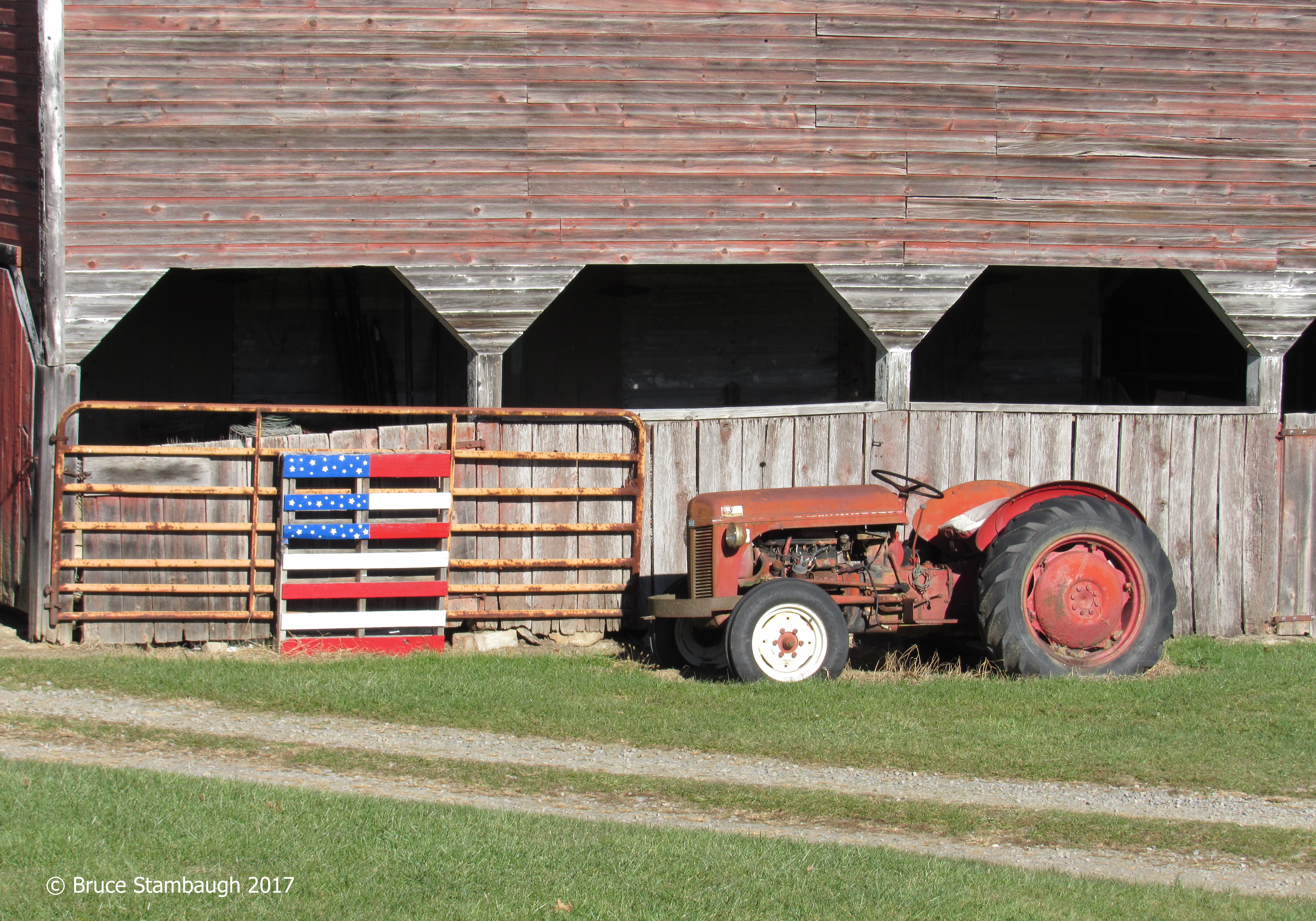
A late friend of mine gave me the perfect description for dilapidated old barns like this one. Paul would say, “Look! There’s an air-conditioned barn.” Having grown up on a farm during the Great Depression, my friend knew a lot about hard work and barns. Barns that had openings on more than one side drew air through them even if no breeze was blowing. The cooling breeze and shade provided those working inside the barn a little relief from the summer’s heat and humidity.
Every time I see a barn like this I think of my good friend Paul and his many old wise sayings.
I came upon this incredible building on a recent foray into the Virginia countryside exploring with my wife and another couple. I had seen it on Google Earth. It wasn’t until I stood in front of this historic hotel that I could fully appreciate its beauty and grandeur.
The Virginia House is the main building of the Orkney Springs Hotel complex. Built between 1873 and 1876, the Virginia House is on the National Registry of Historic Places. To say it is impressive would be an understatement.
The hotel was built around natural mineral springs that were first frequented by Native Americans. The resort is owned and operated by the Episcopal Dioceses of Virginia. The church uses it for retreats, but it is also open to the public.
Given its setting and beautiful architecture, the Virginia House would be a perfect place to relax and enjoy nature.
My wife and I were walking with friends in downtown Harrisonburg, VA one afternoon when we happened upon this scene. This old, rusty signpost still stood in front off a remodeled office building. We wondered why they didn’t either restore the pole as well or just take it down.
Then I looked up. This pair of display lights stared back at me. I wondered what sign they had once illuminated with their soft, incandescent bulbs blazing away in the night sky. This rusty light pole stood as both a testament to the past and as a work of urban art to the present. In a way, the pole with its twin lights, long dormant, stood in stark contrast to the ugly utility pole and wires that now overshadowed this relic from yesteryear.
A friend, an expert photographer, led a photo shoot to St. Augustine, FL for the last evening of the Night of Lights. Each year the city adorns itself with white lights for the holiday season through January.
Though the rest of the town was beautiful, I was particularly taken by the lighted Francis and Mary Usina Bridge over the Tolomato River that fronts the historic city. My friend loaned me his tripod, enabling me to shoot this photo. It was my first serious attempt at nighttime photography.
The blue hour is the time after sunset that the sky remains blue before it suddenly turns to all black. Even with a layer of clouds, the blue showed through.
When I saw this scene one morning a few days ago, I had to stop and take a photo. I loved how the sun backlit the burgundy leaves and highlighted the farm implements seemingly placed haphazardly around the farmyard.
By now, the winds and rains of late have stripped the color from the tree until next year.
I came across this abandoned building in Lost River, WV. I couldn’t help but note the irony. This once impressive structure now stood abandoned, indeed, even fenced in only a few feet from the banks of the Lost River. As I marveled at its weathered beauty, I wondered about its original purpose. Was it a store, a residence, or some combination?
A close look revealed that the clapboard framed building had most recently been used as a barn, noting the rotting straw in the missing siding. The former entrance was boarded up and fenced off by newly strung barbed wire. Both its history and utilitarian purpose seemed lost. And yet, its stark beauty was alluring, especially given the setting.
Perhaps I’m too sentimental. But I both admire and marvel at structures like this one. What stories does it hold? What social function did it fulfill? Will the answers forever be lost in the little crossroads burg of Lost River, WV?
You must be logged in to post a comment.