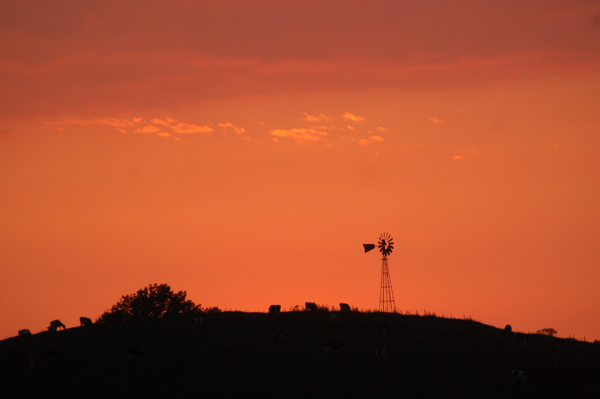
With the stubby brush and the windmill, this sunset scene looks like it could be “out west.” Not really. I shot this photo a few days ago here in Ohio’s Amish country.
In fact, I merely had to step into the backyard for the shot. I used my telephoto lens. The setting is the top of a hillside pasture about a quarter of a mile behind our home. The “brush” is simply the top of a tree that protrudes from the other side of the hill.
I drove away from the city to get a country view of a Shenandoah sunset. I came away with so much more than picturesque photos.
I had taken several sunset shots near our daughter’s home in the Virginia valley that is the result of ancient geologic folding. I wanted a different backdrop. I decided to head for a friend’s childhood home.
After I had dropped off my oldest grandson at baseball practice, I drove a few miles south and west of the city that is rapidly sprawling far beyond it’s historic downtown. My friend, Ava, had moved to Ohio last year. She said she remembered people stopping to take pictures of the views opposite her home.
On Ava’s family farm.Ava had given me perfect directions to her old place. I found it well before sundown, which gave me time to check out the area, and take a few photos first.
Ava was right. The panorama alone was stunning. This high spot on a gently rolling ridge opened up nicely to the west. The sun glowed above the Alleghenies miles away.
I sent her a text with a photo of the evening’s western landscape. Ava’s reply caught me by surprise.
Despite all the years she had lived there, Ava didn’t have a sunset photo from that perspective. Her family’s religion forbade owning a camera. I didn’t know that, however.
In her words, Ava said it was a precious vista that hemmed the western range of her formative years. It was the scene she saw as she walked to the school bus, gather the mail and drove the buggy to church. The foothills, valleys, and mountains served as a geographic security blanket for her.
Ava profusely thanked me for the photos that brought back so many poignant memories. Capturing and sharing that setting generated a heartwarming story that dearly warmed me far more than the fiery sunset.
Tractors whizzed in and out the long lane of the family farm. Wagonload after wagonload of chicken manure got spread on the sloping fields while the sun blazed away behind the distant foothills and aged mountains.
My senses were conflicted. What I saw thrilled me. What I smelled I just endured until dark.
Dancing rays.As I was about to leave, a young man on one of the tractors stopped on his return trip to the barn. A young boy and younger girl flanked the ruddy driver. The farmer wanted to know if I was taking the photos for my own use.
I nodded in the affirmative. He seemed startled when I asked him if this was the old Shank place. He confirmed what I already knew.
We chatted some more, and I told him that I knew Ava. Likely cautious of a stranger, he just smiled broadly and nodded in return without saying that Ava was his aunt. She told me that later. Ava was as thrilled that I had met one of her kin as she was with the photos I had sent.
I had gone in search of a friend’s homestead and a different view of the sunset. I succeeded on both counts. But that’s not what made the evening extraordinary.
Every sunset is different of course. By making these unexpected, long distant connections between an aunt and her nephew, this sundown dazzled me with more than shimmering red and orange rays.
This serendipitous interaction brought me a personal, soothing satisfaction. It was a moving encounter no camera could ever capture.
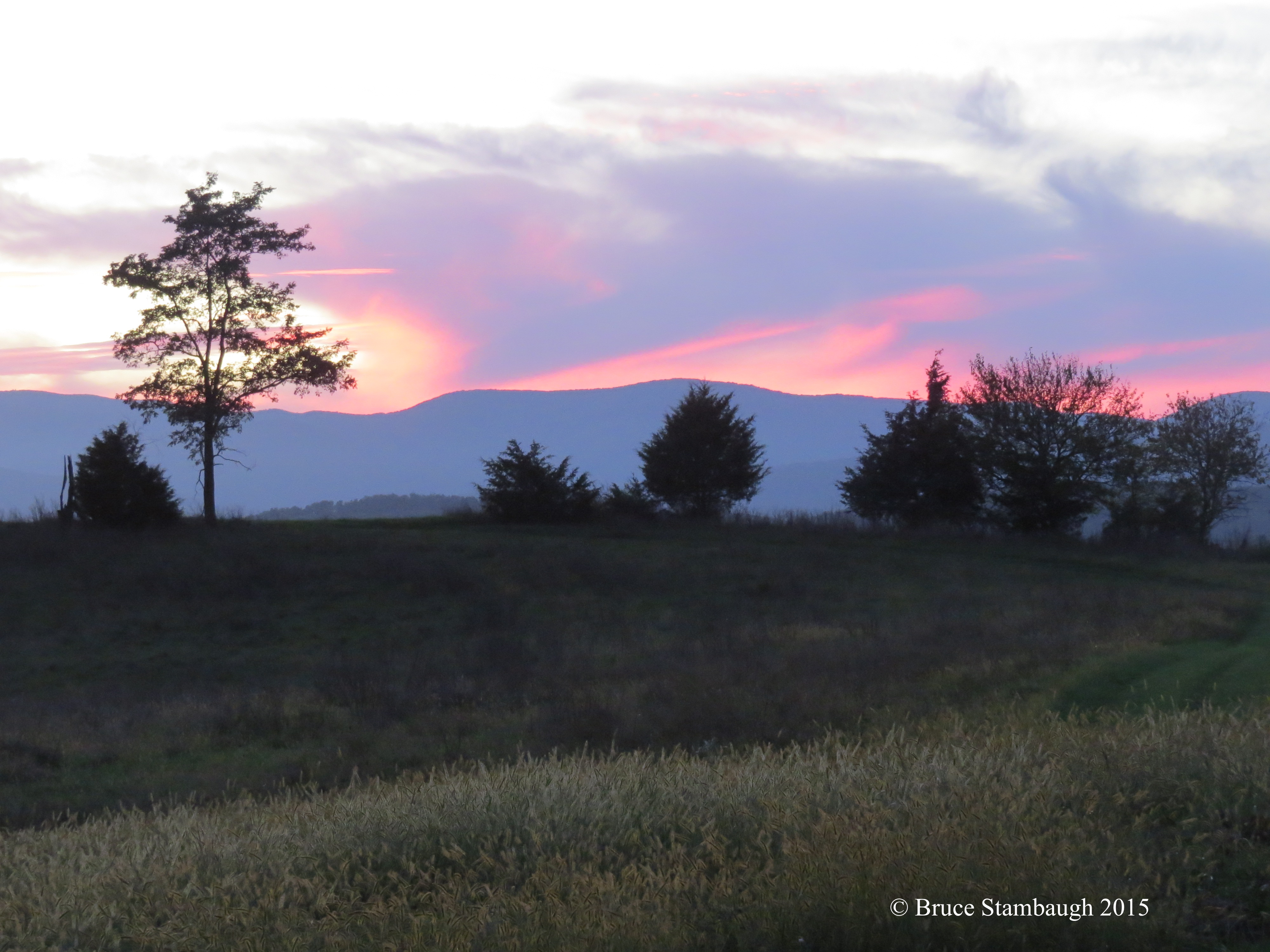
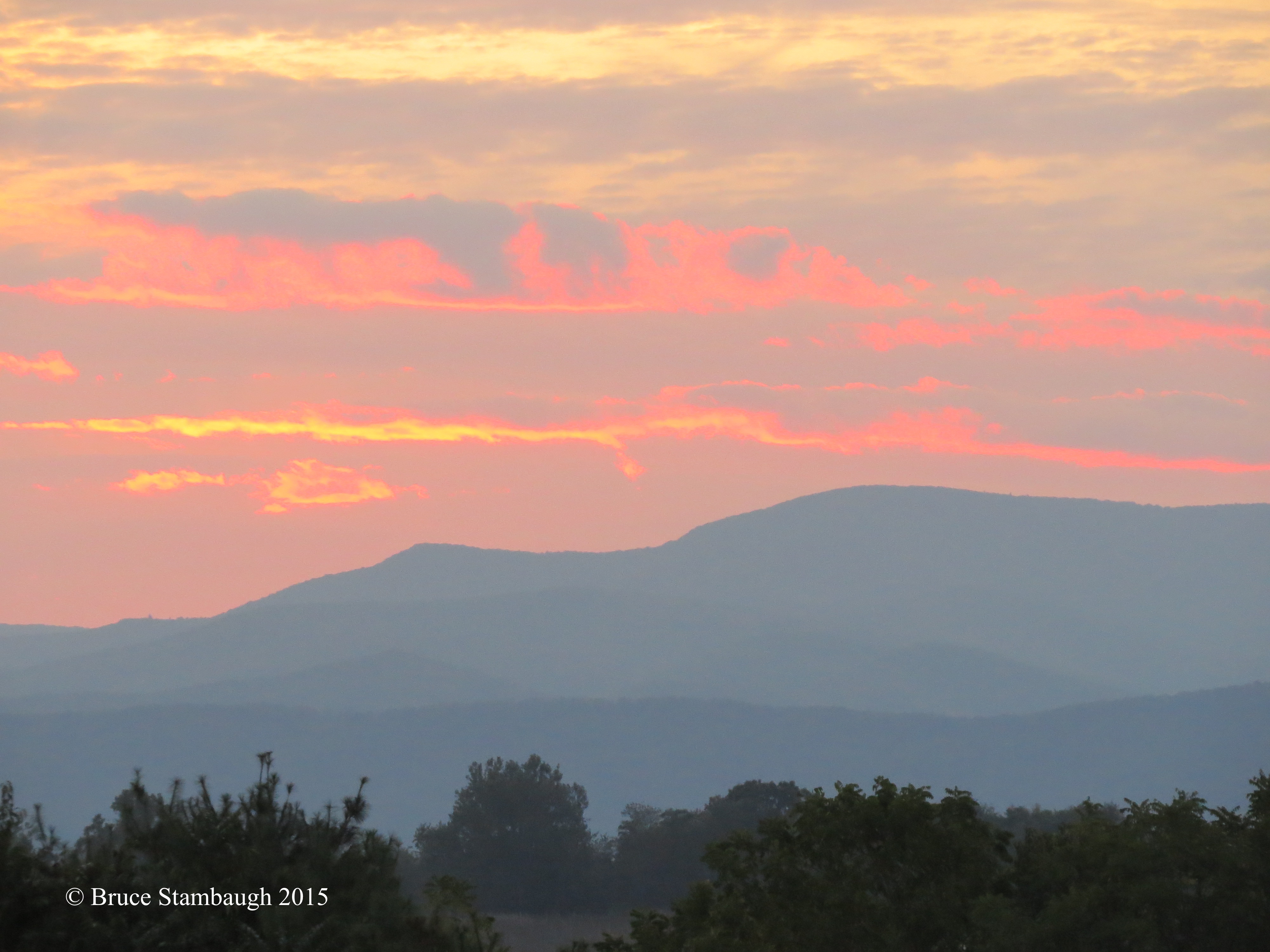
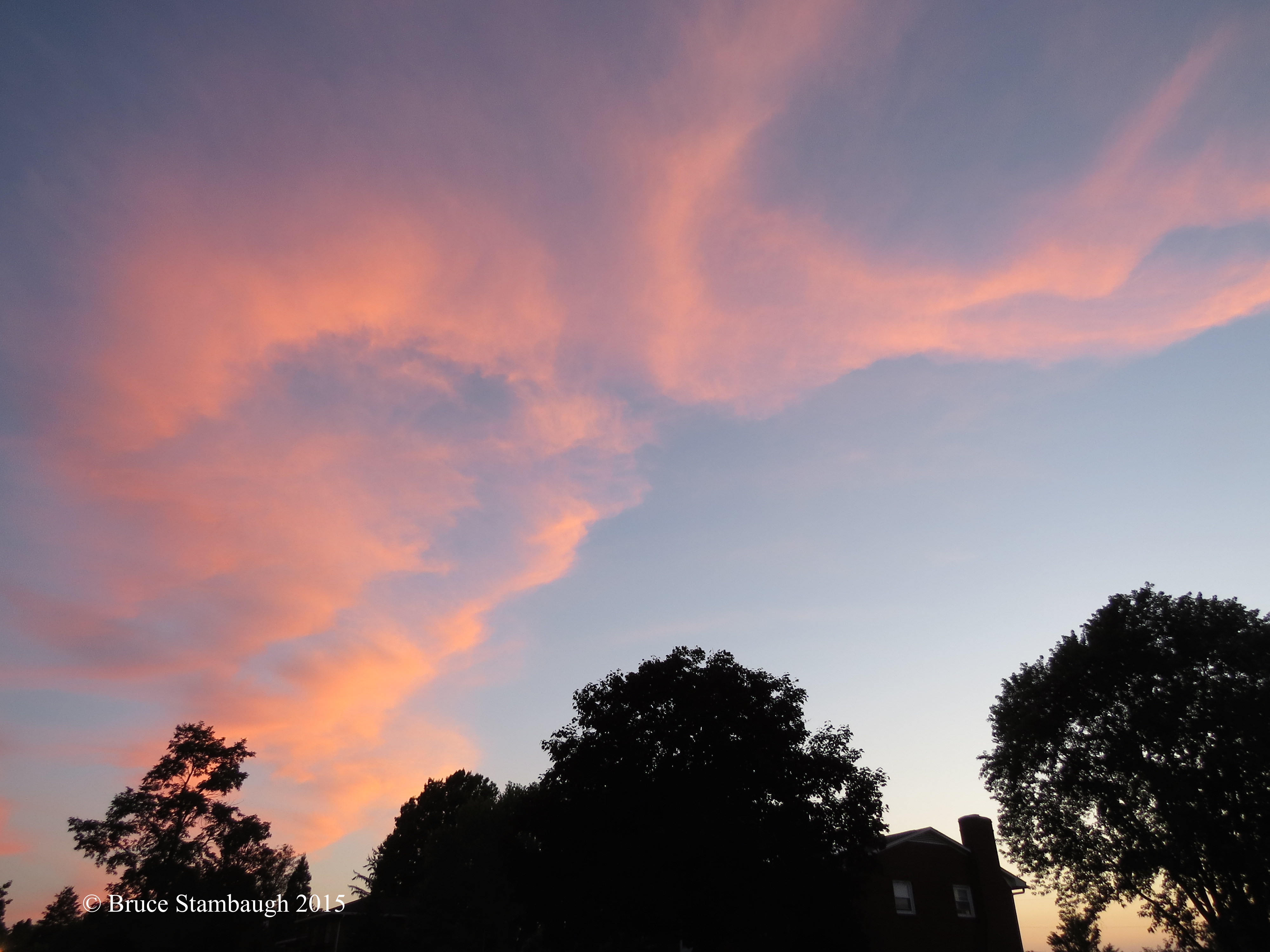
The sun always sets in the west. However, some of the best colors of a sunset occur in the other directions of the compass. This photo that I recently took in Harrisonburg, VA is an example of that. The golden glow behind the Allegheny Mountains to the west created magnificent colors elsewhere. The high, wispy clouds in the southern sky danced with brilliance. The trees and house in the foreground accentuated the variable pink and blue evening sky.
Having photographed yet another beautiful sunset over Lake Erie, I headed back to our vacation apartment in Lakeside, Ohio. well satisfied with the shots I had taken. Out of the corner of my eye, I caught the glow of another kind of light, not that dissimilar to the ever-changing hues in the evening sky.
The warm reds, yellows and oranges, accented by a few cool pastels mimicked the stunning sunset I had just witnessed. The white flowers on the steps invited passersby in past the posts and pillars to the festive porch.
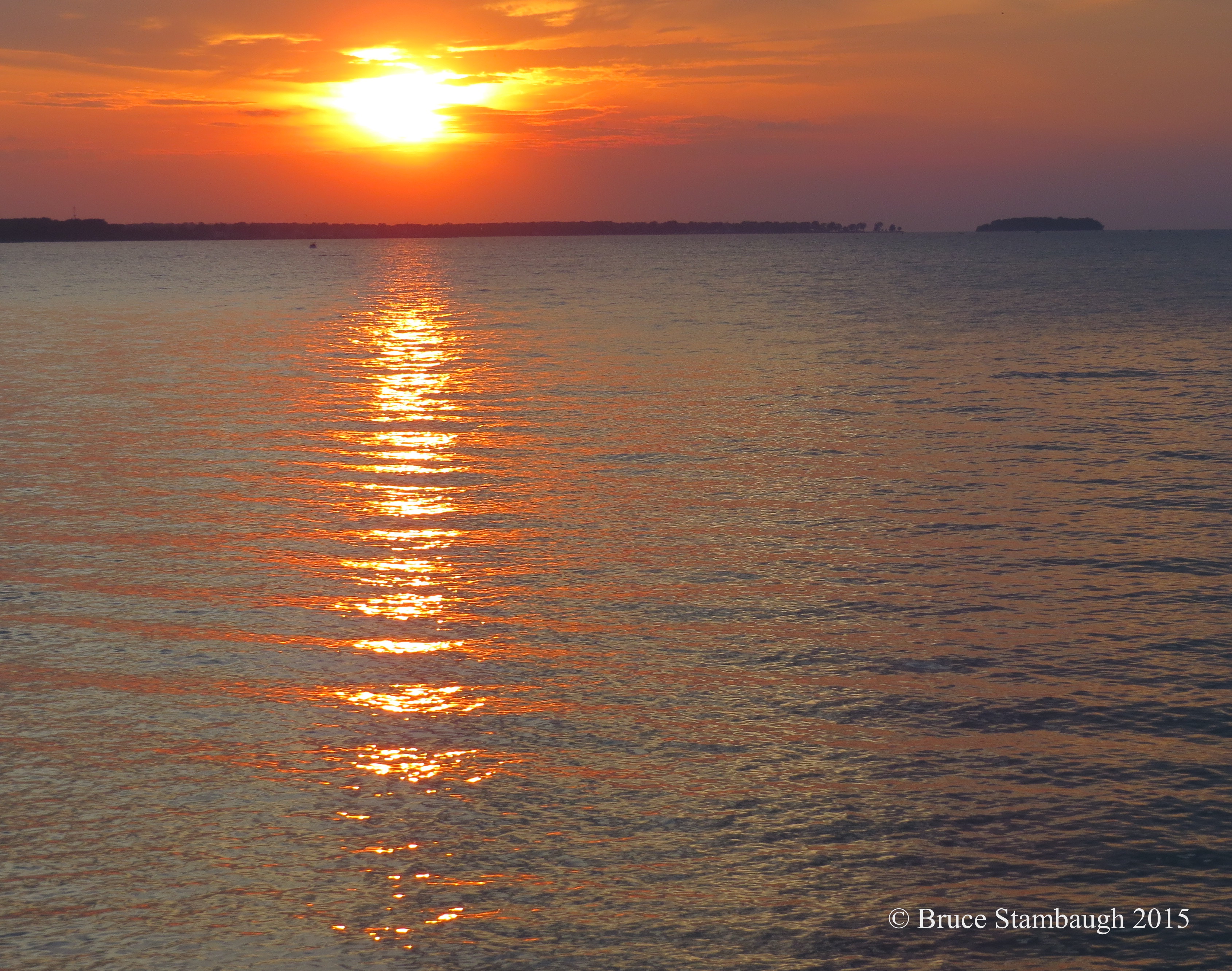
Whenever I visit Lakeside, OH, rightly dubbed the Chautauqua on Lake Erie, I head to the dock if there is at all a chance of a decent sunset. Recently, this sparkling scene greeted me. Though I couldn’t coax a boat to sail into view, the shimmering oranges that glistened off of the rippling water caught my eye.
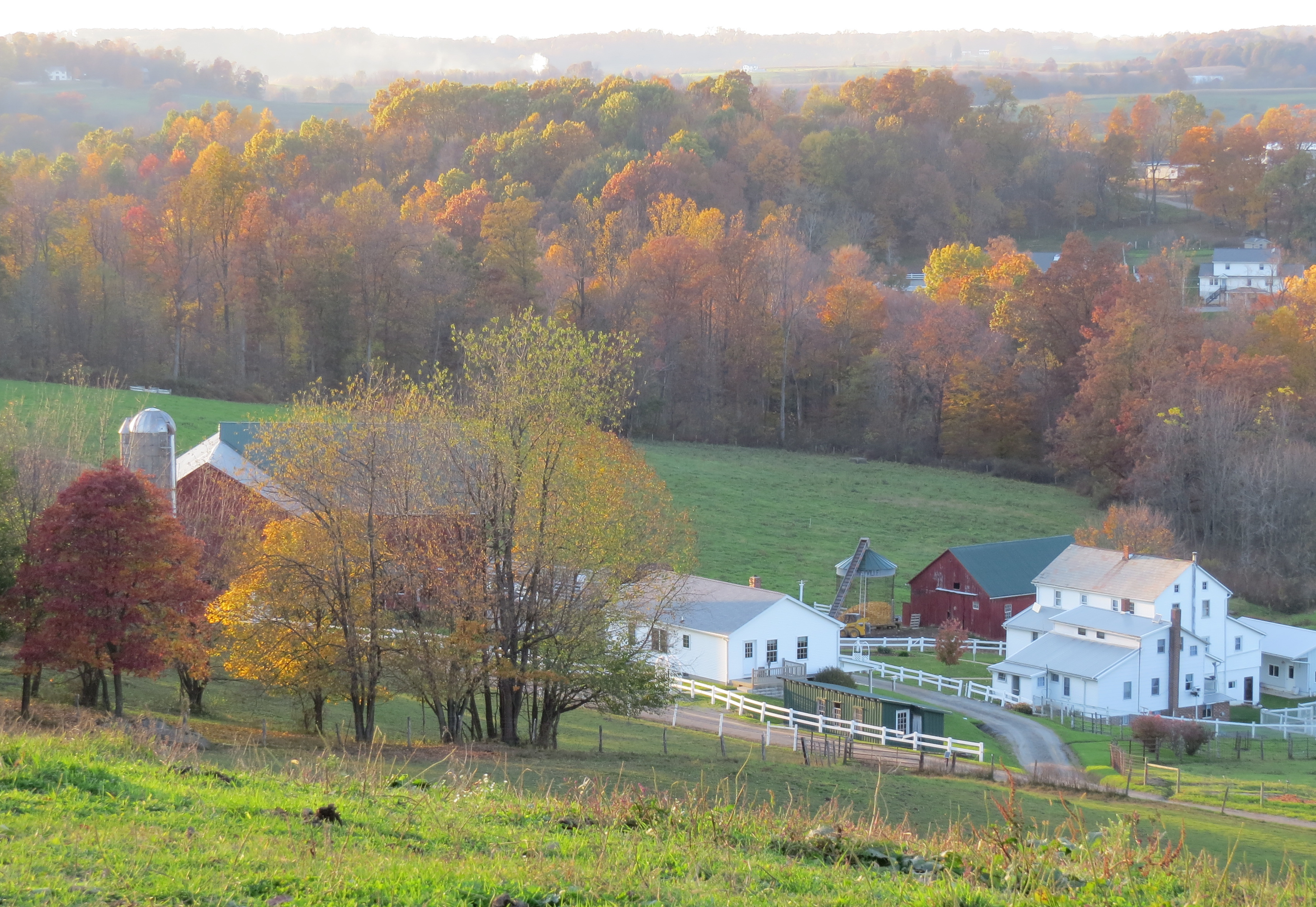
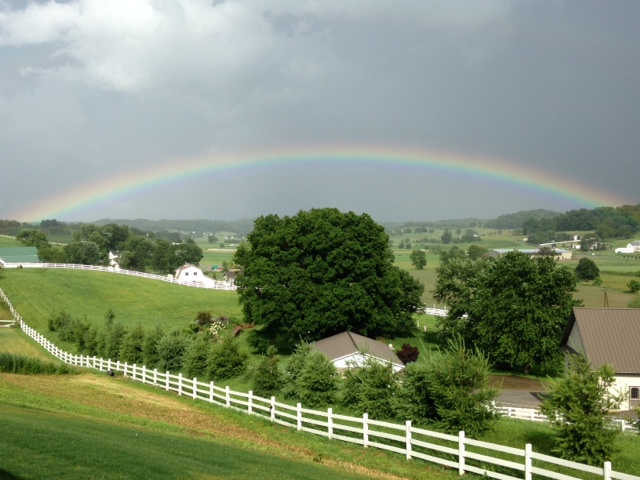
Though the leaves had already reached their peak when I shot this scene, the setting sun’s radiance illuminated those leaves that remained. I was also amazed at how the low angle of the fleeting light bathed this Amish farmstead set in one of the many valleys in Holmes County, Ohio.
If you’re like me, you’ve been enjoying this wonderful summer weather. It’s the weather we longed for last winter when the wind howled, snow slanted sideways, and the temperatures were ridiculous.
After the long winter came a cool, wet spring, and torrential rains in June. I’m glad the weather has changed for the better. We are grateful for the abundant rain. By the looks of it, so are the crops.
Most corn was well beyond “knee high by the Fourth of July.” Its deep green, leafy stalks are soaring in most places. A soft breeze enhances that vibrant corn aroma after a summer shower.
Where water from June’s heavy rains pooled in depressions, crops are struggling, or non-existent. Weather can be cruel after all. Weather can be magnanimous, too, like recent days.
That doesn’t mean it won’t be unusually warm again. But the chances for a long heat wave or extended dry period are pretty slim. It would be nice if the same could be said for the parched western states.
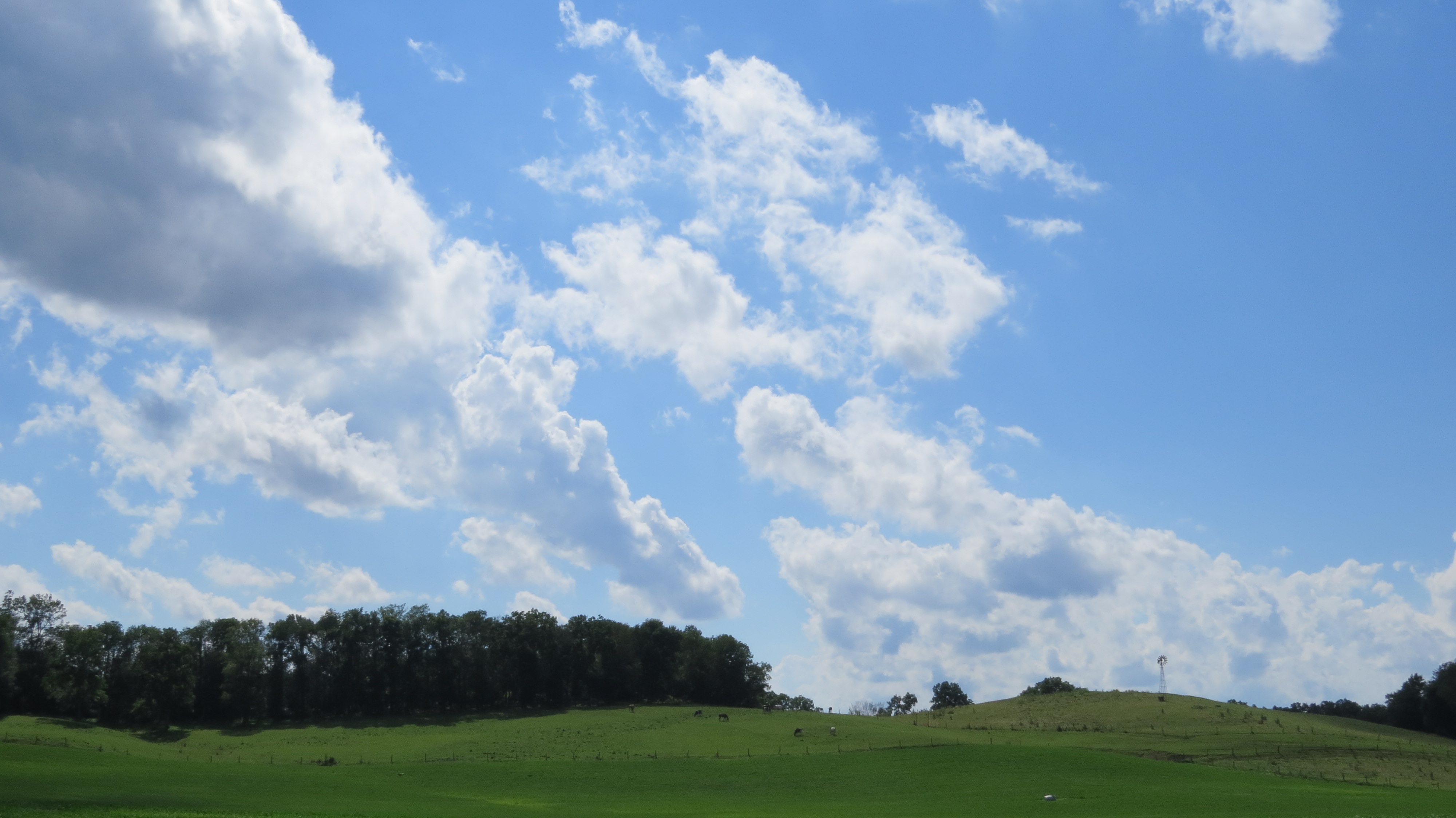
We rejoice here for the many white, puffy cloud days we have enjoyed with perfect temperatures day and night. After the persistent rains of spring and early summer, contractors, excavators, farmers, and any other outdoor workers dependent on fair weather have had their prayers answered.
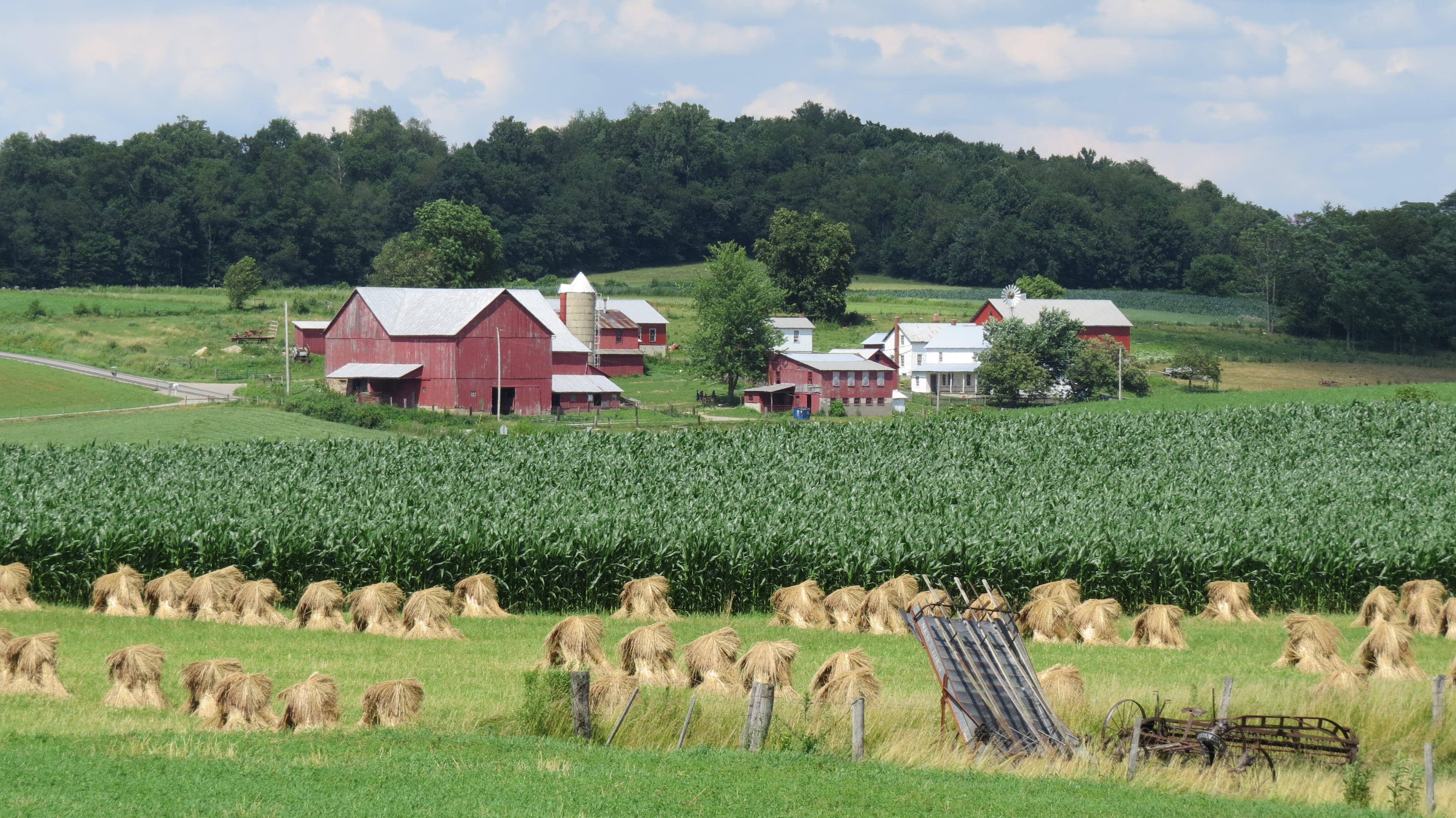
Fields of oats turned from lime to gray-green to golden right on cue. Now squadrons of shocks stand guard for the showy corn against any unwanted predators. In other fields, combined oat stubble serves as a russet reminder of where the wind recently played with amber waves of grain.
Foggy mornings wet the grass that has grown inches again overnight. The weather has been so nice that lawn care people can hardly keep up. Lush doesn’t even properly define our blessed verdant conditions.
The heirloom tomatoes flourished to the point of having to be trimmed back, least they topple their cages. The pleasant weather encourages them to counter attack by growing even bushier.
Evenings have been extraordinary. Friends ring campfires to rest, relax and celebrate nothing more than the fine company they are with. Families and friends picnic. Children and adults play ball, or just rock away the time on the front porch. That’s the way summer evenings should be shared.
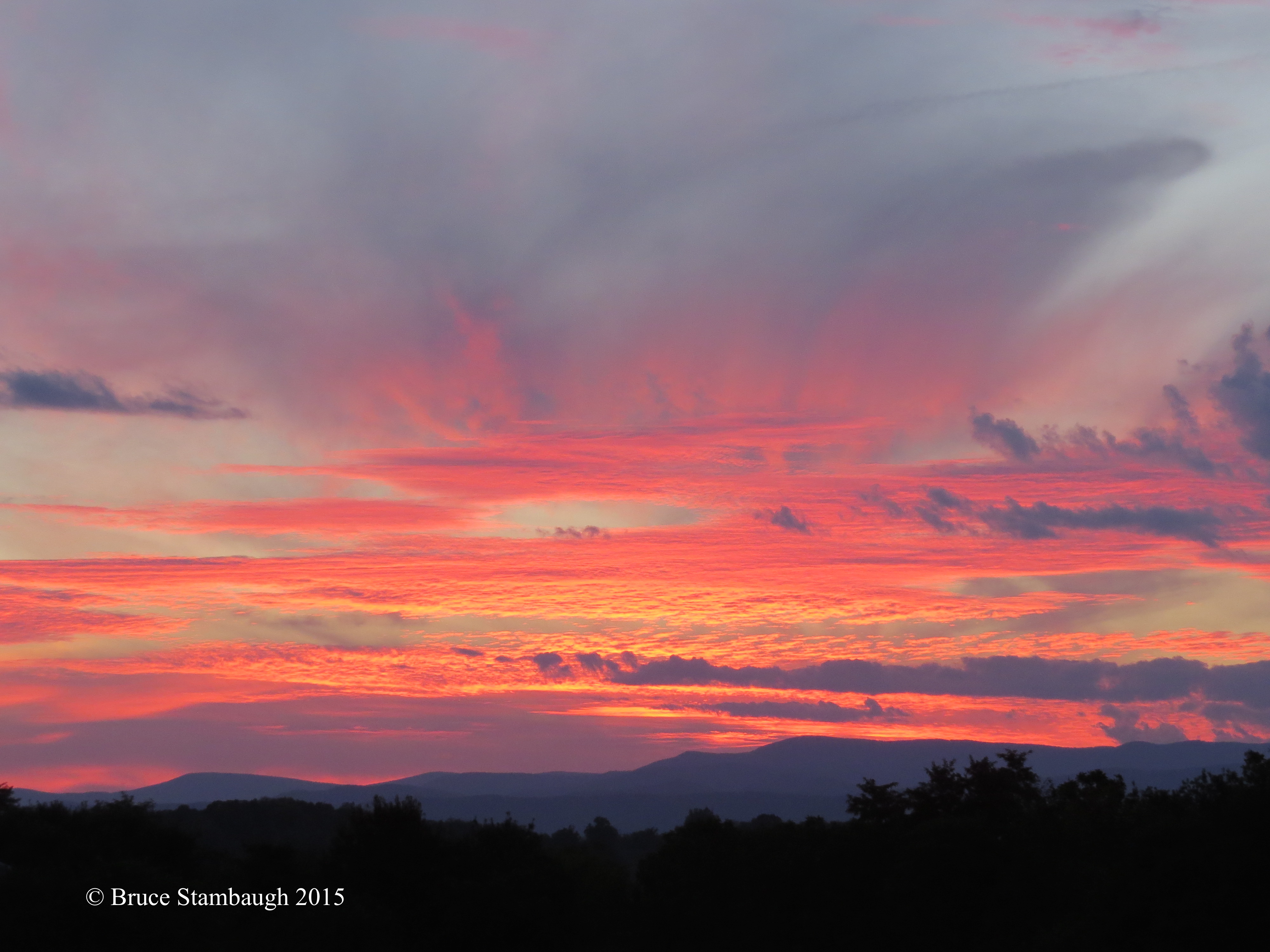
I can think of only one word to describe recent sunsets, spectacular. One evening’s fiery show outdoes the next. And when I think the rich, warm colors will cool, they blush all the more.
Whenever I venture outside on these blissful days, my mind wanders back when the neighborhood kids spent the entire day outside, save returning to home base for sustenance.
After supper, we were back at it. If we didn’t have a ball game, we’d play hide and seek or rode our bicycles until dark. Then we’d lie on our backs in the cool grass and watch the stars.
It’s glorious not to have to rely on dreamy memories this summer. The weather we have longed for is here. Let’s enjoy it to the max.
The sunsets in the fall are truly amazing. By Bruce Stambaugh
For those of us fortunate to live in North America’s temperate zone, this is the plum time of year. I mean that literally and figuratively.
The literal part is that locally grown plums are at the peak of their ripeness. I’m just plum crazy for plums.
I remember traveling with my grandfather, who knew as many people in the world as my gregarious father did. Grandpa Merle loved to stop at roadside produce stands, especially where he knew the proprietors. If they had ripe plums, he always bought a peck or two.
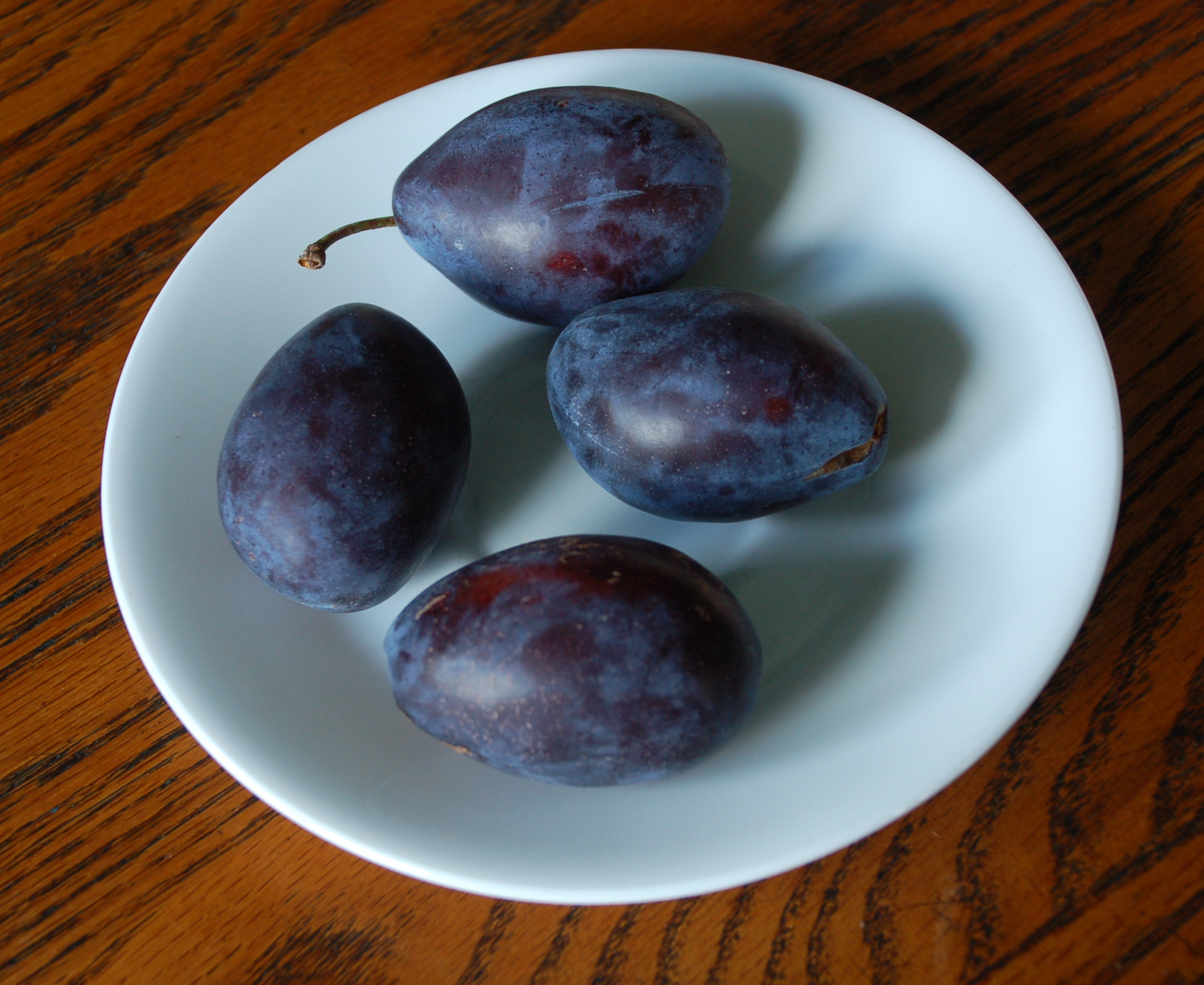
I loved everything about them, their simple size, their football shape, their blue violet sheen, their light greenish-yellow flesh, their sweet tart taste, and even the pit. The variety of plums locally referred to as sugar plums.
I liked the size because, especially for a kid, they weren’t too big, which meant we could usually eat more than one. I liked their oblong shape because it was easy to bite in to.
I found the plum’s color inviting. The moist sweetness with the tart aftertaste was both delicious and curious. I liked the texture of their meat and the fact that, unlike other fresh fruit, you could bite into them without having juice run down your arm and drip off your elbow.
Much to my mother’s chagrin, I often plopped a whole one in my mouth. My mother highly discouraged my poor manners to no avail. I often eat the lovely plums the same way today.
Once devoured, that left the seed. I didn’t eat it of course. For whatever reason, I tucked the pit, which mirrored the shape of its fruit, into my left cheek and sucked on it for hours. I could play an entire baseball game with a plum seed nestled between my cheek and gum. It seemed to help keep my mouth moist. Besides, it was better than the usual baseball alternative, snuff.
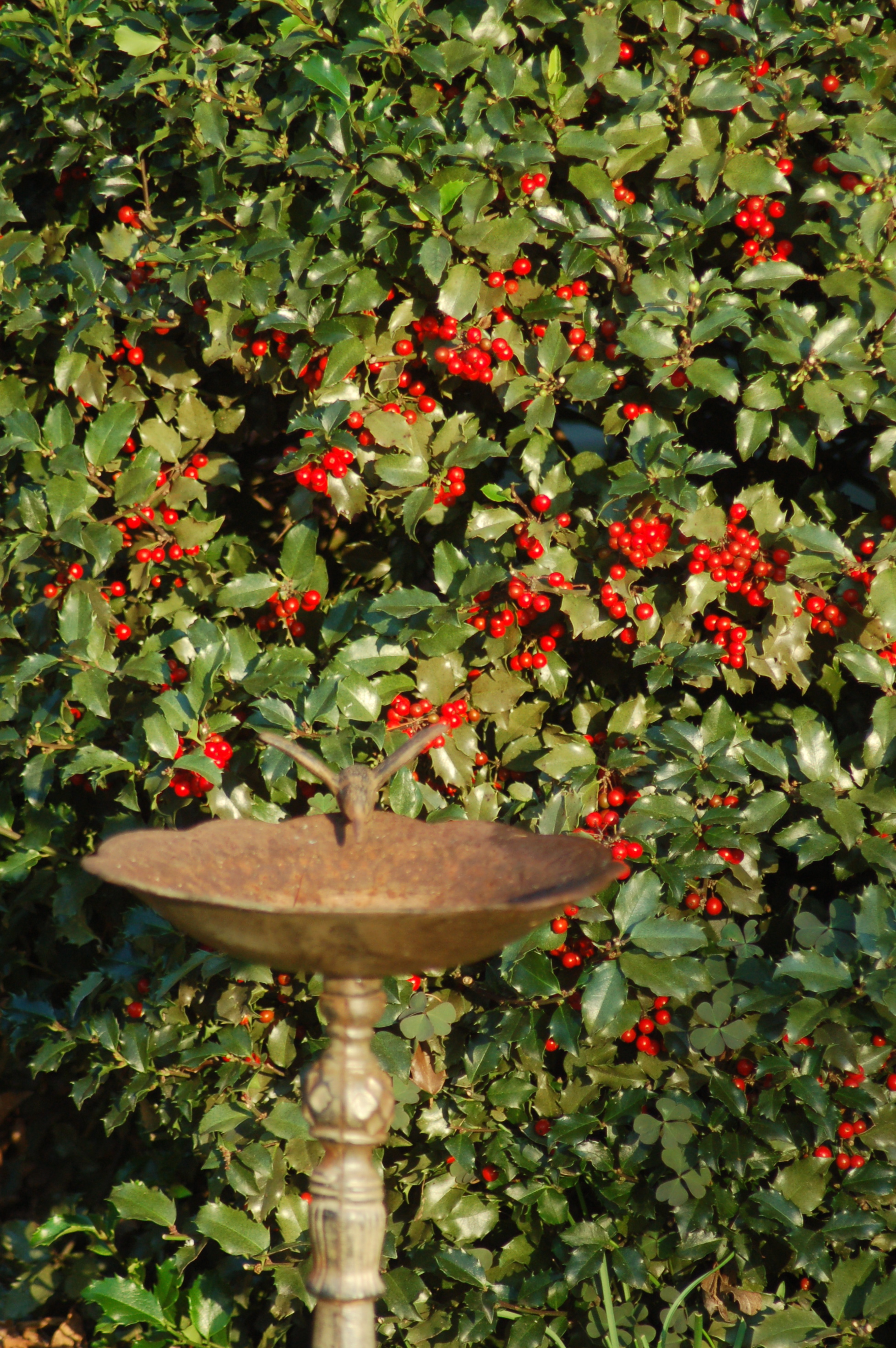
All those memories resurfaced for me when my wife brought home some plums from the local produce stand. They were accompanied by Bartlett pears, squash, zucchini and preserved sugar beets, too. The fall harvest was on, one of the primary symbols of the season. The holly berries have turned bright red, a nice contrast against the bush's prickly green leaves.
We are enjoying an abundance of tomatoes that have seemed to ripen in our modest patch all at once. There isn’t one heirloom I don’t enjoy, and they can be eaten in so many different ways, right off the vine, fresh salsa, in sandwiches, sauces, and with pasta.
Our neighbors added to the feast by insisting we help them out by accepting and consuming a sampling of the last of their bumper crop of sweet corn. It was amazingly sweet for this late in the growing season.
The days have grown shorter and cooler, both daytime and night. The leaves on the deciduous trees have begun to turn. They started falling shortly after Labor Day.
The webs of black and yellow garden spiders catch the frequent morning mist and then sparkle diamonds in the sun’s rays. The sunrises and sunsets are breathtaking, each one picture perfect. Though weed that it is, golden rod brightens even the haziest of mornings.
The dogwood and holly berries are bright red. Yellow jackets are everywhere. Unkempt fields, once purple with ironweed blooms, have morphed to mustard with thousands of goldenrod heads bending from their fullness. Wild tickseed sunflowers brighten the dustiest roadside.
Autumn has arrived. Either metaphorically or realistically, transitioning from summer to fall in northern Ohio is a plum time of year.
Fall had arrived along US 33 in the mountains of West Virginia.
By Bruce Stambaugh
Even before we left to visit our daughter’s family in Virginia’s lovely Shenandoah Valley, signs of fall were abundant.
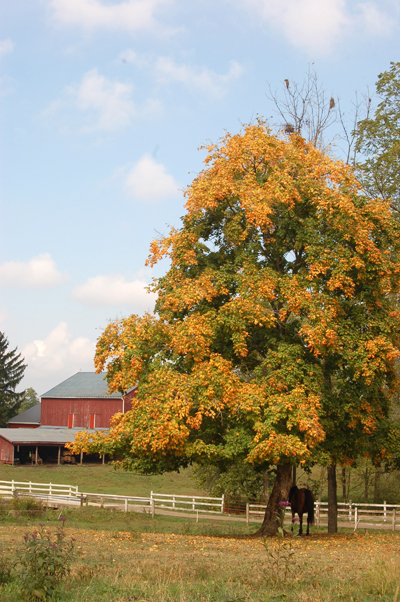
A lone horse sought shade beneath a changing sugar maple tree near Benton in Ohio's Amish country
A casual drive around the Holmes County countryside provided enough evidence to
convince even an inattentive jury. Autumn had no choice but to plead guilty as charged.
Fall’s natural arrival was indisputable. Leaves had begun their annual transformation from green to some color of the rainbow. Others, due to the late summer dryness, simply fell off the trees altogether.
The regular purr of leaf blowers had replaced the regular whine of lawnmowers, further proof that summer had succumbed to fall. Occasional columns of white smoke signaled smoldering leaf piles.
Fall weather arrived just before we left for our Virginia visit. A strong cold front pushed the warm, muggy air out, and replaced it with cloudy, rainy, cooler days and nights. The annual fall fogs had already begun making morning commutes temporarily treacherous.
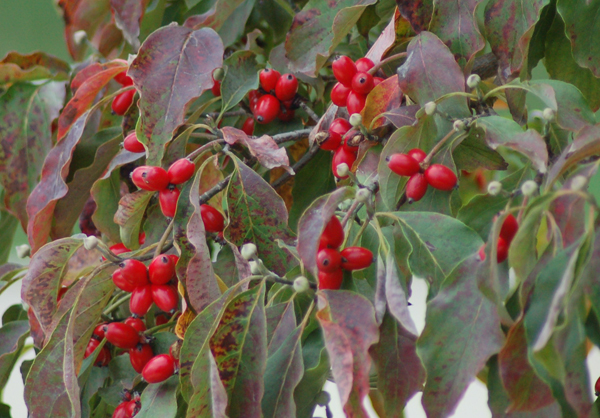
The subtle greens and purples of the dogwood leaves highlighted the tree's bright red berries.
In my own yard, silky green to purplish dogwood leaves accentuated the trees’ bold, bright red berries. The backyard birds weren’t too pleased with me for disturbing their feasting.
My neighbor was just beginning an early harvest of his field corn, and we had yet to have a frost. Elsewhere, other farmers still resorted to the old-fashioned and nostalgic way of picking corn. They filled their fields with row upon row of shocks, mimicking an encampment of teepees.
Horse-drawn corn pickers began an early harvest of the field corn.
A month ago already football had replaced baseball as the primary pastime, whether viewed from the bleachers or the couch. Back outside, squirrels scurried across the road. Some of them didn’t make it, casualty to road kill or a hunter’s sharp aim.
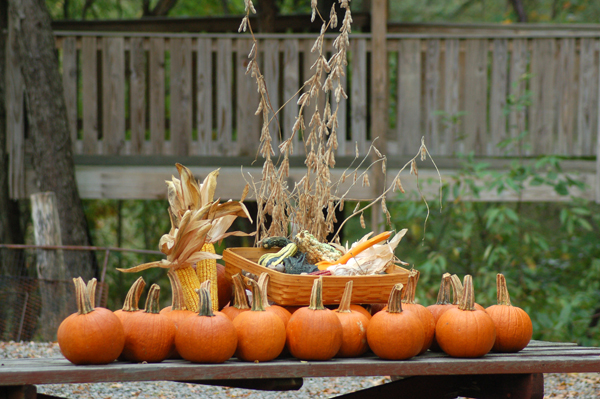
Long before the leaves began to change colors, autumn was being ushered in with human flare. Front porches once home to pots of impatiens, petunias and begonias were now decorated with all sizes of orange pumpkins, gold, white and crimson chrysanthemums and multi-colored and curiously shaped gourds.
A typical fall display found in Ohio's Amish country.
For those desiring more man-made symbols, giant ghouls and inflated spiders hanging on webs big enough to catch a bus popped up almost overnight. The business industry had also begun their annual capitalization of fall with seasonal displays and multi-media commercials.
Inventory at roadside produce stands had changed accordingly. Bound bundles of cornstalks and the aforementioned flowers and squash replaced zucchini and tomatoes.
One place banked on a narrow market share. The good folks only offered the scarce bittersweet. By the number of cars in their tiny lot, they seemed to have found their niche.
Fall festivals, often historically annual events, began to celebrate nearly every conceivable aspect of autumn. A town picked a theme, say pumpkins, apple butter, antiques, wooly worms, quilting, or just good old-fashioned fun, and the festival was on.
These endeavors were not unique to Amish country either. Large banners across the main drags of many a town on our drive from Ohio to Virginia announced their particular local event.
Fall even showed its face on menus with fresh pumpkin pie, locally grown apples sliced and dipped in yummy caramel, and of course the seasonal snack mix of candy corn and salted peanuts. A flock of Canada Geese cut across a fall sunset in Ohio's Amish country.
Given all these obvious signs of fall, there can be no doubt. From gardens to town squares, fall is in full force everywhere we look.
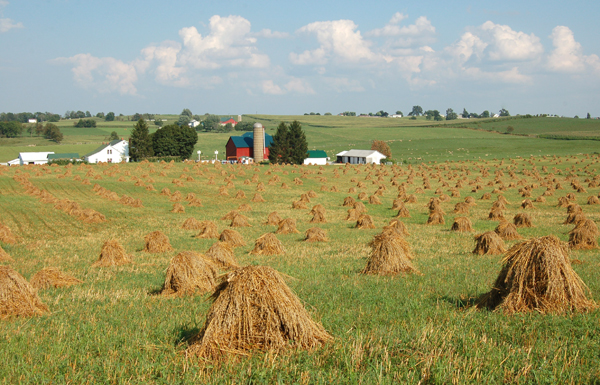
A field full of oats shocks before being gathered for the thrasher near Berlin, Ohio.
By Bruce Stambaugh
With Labor Day upon us, autumn will be right around the corner. In fact, if you look closely, signs of fall are already evident.
Some of the indicators are obvious, others more subtle. Some are predictable with still others seemingly a bit premature.
The days, often the nicest of the summer, have a sly, natural flaw. Day by day, minutes of daylight are silently subtracted from the previous day’s total. By month’s end, daily darkness will outnumber daylight once again.
The sun itself is moving more towards the center of the horizons at sunrise and sunset. Those driving true east and west running roads have already begun to frequently use their sun visors. The fall fogs, too, have clouded crisp mornings, the consequence of cool nights following warm days.
In the fields, the harvesting has begun. My Amish neighbors have long since gathered up the standing army of oats shocks and wheeled them off wagon load after wagon load to the thrasher.
Now it’s the corn’s turn. The field corn seems to have taken on drought status, drying up almost overnight. Brown has overtaken green as the predominant color in the standing sea. Smart farmers have already begun to cut their supply of silage to replenish the silos.
The homes of fall webworms shine in the sun.
In the woods and along highways, once glossy, emerald leaves have dulled and drooped. Some have already begun to drop without even changing color. Now and again a black walnut can be found standing stark naked, save for the cache of fall webworm nests it has involuntarily collected.
In the gardens, the picking of produce is a daily chore. Cucumbers, onions and tomatoes have hit their peek. Kitchens are cluttered with utensils for canning and freezing. The ripened fruits and vegetables that aren’t consumed at the dinner table find their way into jars and containers.
Even the sounds of the season have changed. Only a few American Robins continue to sing, and most likely they are sophomores practicing for next year’s prom. Instead of gathering nesting materials and snagging worms and insects, parent birds lead their fledglings to watering holes for liquid refreshment and necessary bathing.
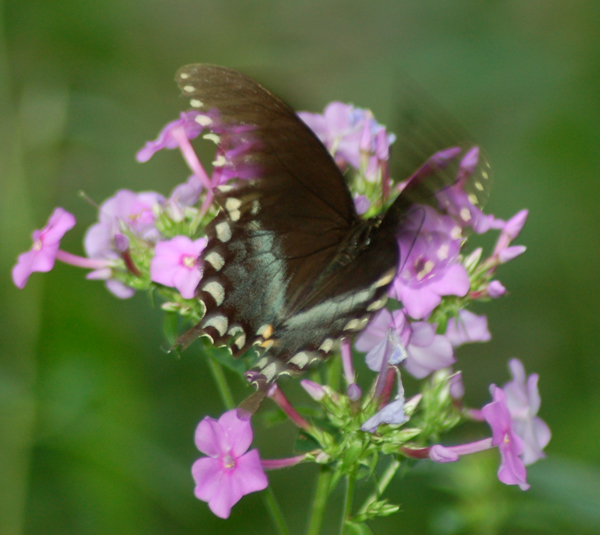
A well-worn tiger swallowtail butterfly took advantage of some wildflowers.
The volume and frequency of the cicada and katydid songs have lessoned considerably. Even the crickets have quieted down.
A butterfly enjoys late blooming phlox.
Butterflies of all sizes and colors squeeze whatever nutrients they can out of the fading cornflowers and black-eyed susans. The humming birds, too, seem to sense an urgency to store up extra energy for their upcoming southern vacation travel.
Squirrels are in their glory, cutting as many beechnuts, hickory nuts and walnuts as they can. Thrifty creatures that they are, they also bury future meals for harder times ahead. Only they can’t always remember where they put their stash.
Next spring, when the saplings begin to appear, we will learn just how forgetful the squirrels were. But between now and then, many pleasant days lay ahead, and probably some less than desirable ones, too.
There is yet one more indicator that fall is knocking on our door. Campaign signs have already begun to litter urban, suburban and rural roadsides. They are as prolific and unsightly as the ugly webbed homes of the worms.
The obnoxious yet gaudy campaign posters are a human-induced reminder of what nature is about to bring. Autumn will be here before we know it, and there is little we can do about it except to enjoy the ever-changing colorful show.










 Roadkill Crossing
You must be logged in to post a comment.