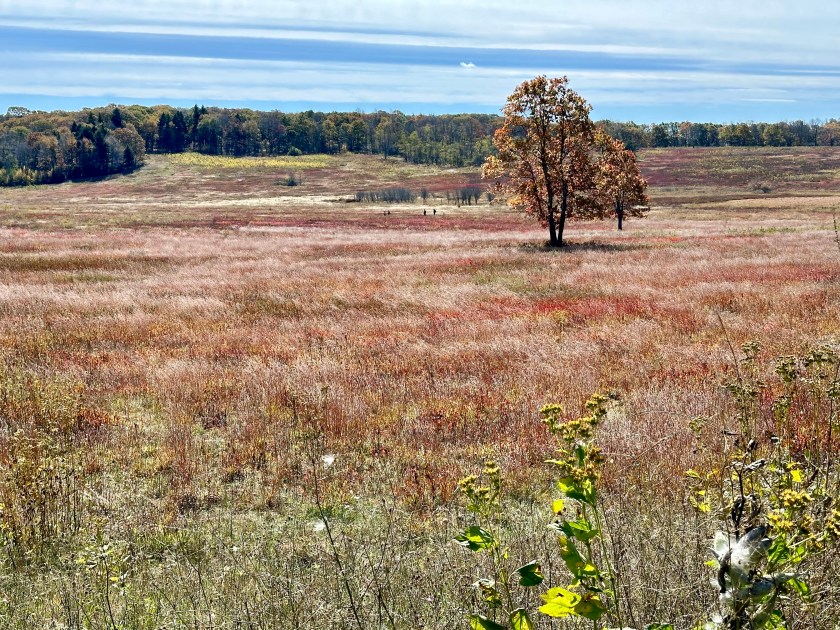
Imagine yourself standing on a ridge on a beautiful, temperate fall day. Scattered soft clouds float eastward in a pale blue sky. A gentle east wind mellows the strong afternoon sunshine.
The grass is lush after some long-overdue rain. And a lone, giant red oak, its leaves just now turning to their rusty color, looms over the landscape like it has for a century or more. Battered by winds and lightning strikes, the rugged oak stands as a centennial for all who care to notice.
Miles away, the southern slope of Massanutten Mountain glides to the floor of Virginia’s magnificent Shenandoah Valley. Miles farther southeast, the southern section of Shenandoah National Park marks the horizon.
Fortunately for me, imagination became reality a few days ago. I enhaled the entirety of the precious landscape, not wanting to leave. Of course, I had to. Still, even as I view this photo, nature’s glory fills my soul.
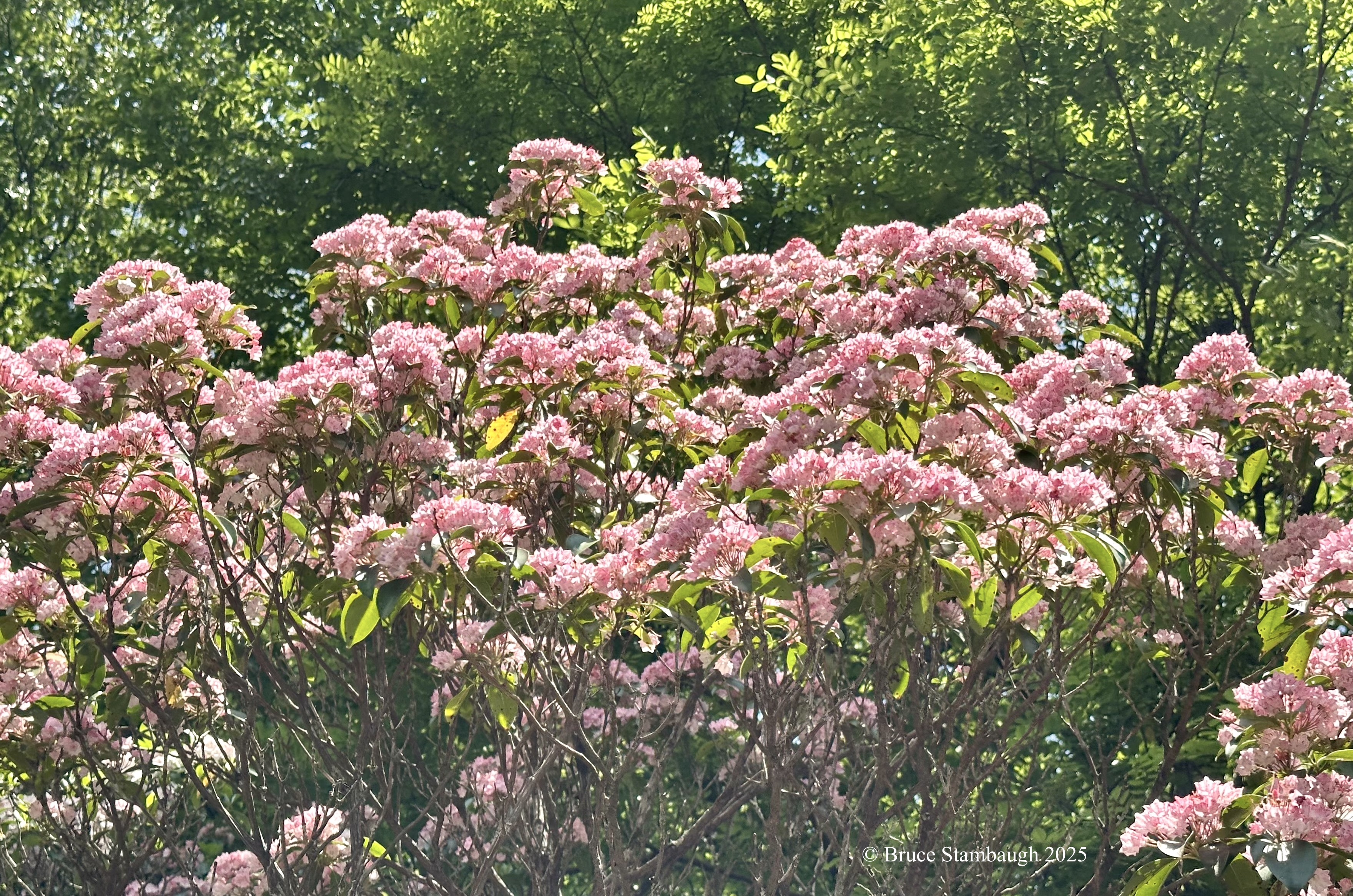
Mountain Laurel blossoms. Photo by Bruce Stambaugh
I went for the birds and the blossoms, but forgot about the bugs. They didn’t deter me, however.
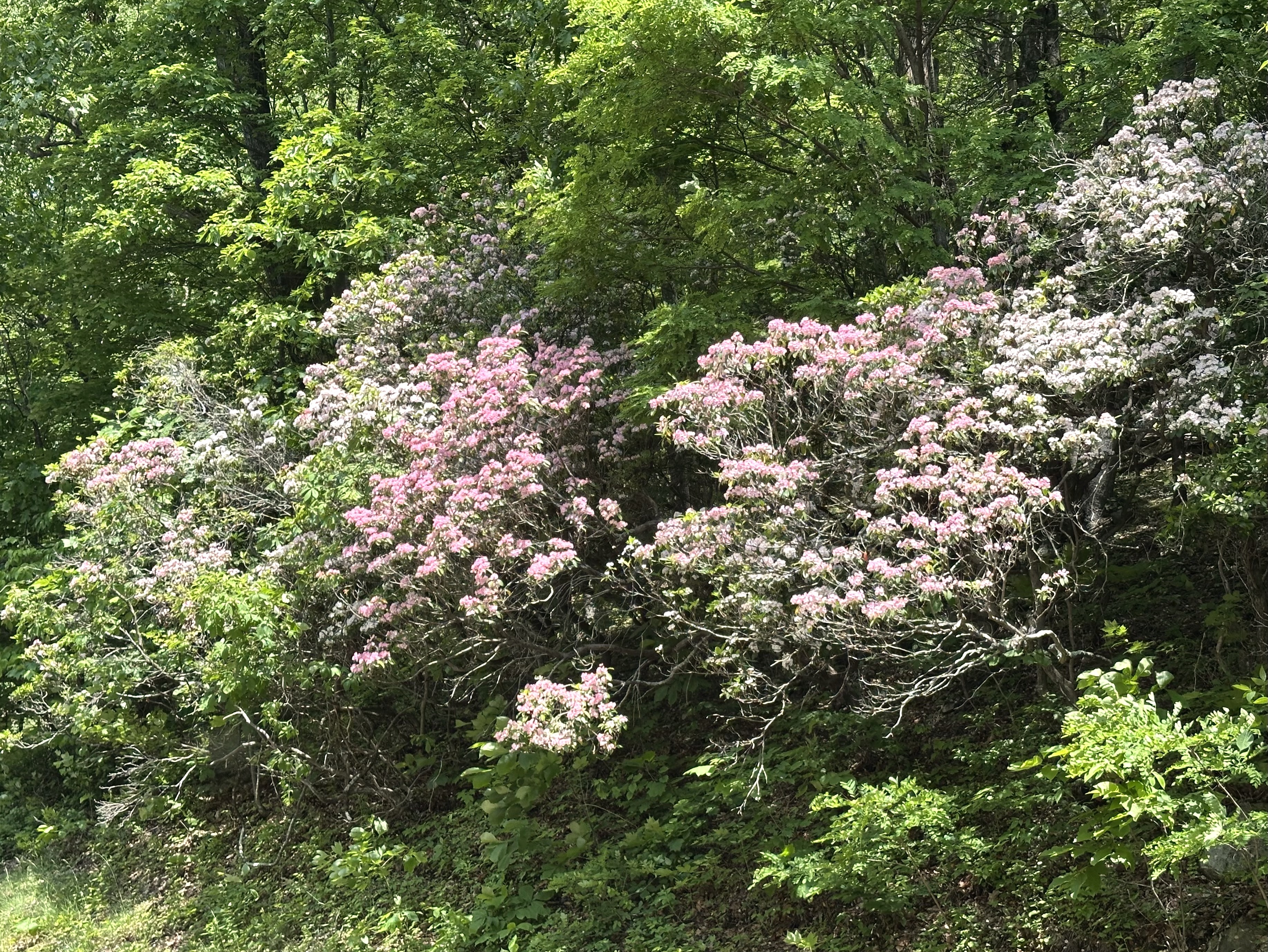
My neighbor had told me that the Mountain Laurel bushes were blooming at various locations in Shenandoah National Park, just a short drive from my home. The laurel blooms from late May into mid-June, depending on elevation.
Of course, I had to see for myself. I fixed a hiker’s lunch, packed my binoculars, camera, and a couple of jackets, and headed out. It’s often 10 degrees or more cooler in the mountains than in the Shenandoah Valley, where I live.
I didn’t need to bother with the jackets. The temperature was 70 degrees when I arrived, and it was humid, with little to no breeze. It was 79 when I left.
A small black bear cub greeted me not long after I entered the park. Fortunately, it scampered back off the old stone wall away from the road and into the forest.
I soon reached my first destination. Just a short distance off Skyline Drive, I reached the Appalachian Trail, which crossed a fire road. I didn’t see any Mountain Laurel, but songbirds were plentiful. So were the knats and mosquitoes.
A male Eastern Towhee. Photo by Bruce Stambaugh
I strolled along the AT, swatting at the pesky bugs and trying to locate the many warblers I was hearing and recording on my smartphone’s birding app. Singing its unmistakable “drink your tea” melody, a male Eastern Towhee posed for a photo on a limb hanging right over the trail.
I met a lone through-hiker from South Carolina. She hoped to reach Mt. Kadadhin in Maine by mid-September. She told me she had passed many stands of Mountain Laurel on her hike so far, which began at the Appalachian Trail’s traditional starting point, Springer Mountain, in Georgia.
She headed north while I retraced my steps to my vehicle. The birdsong was terrific, but the forest’s full foliage made it challenging for this old guy to spot the warblers as they flitted from one branch to another, munching on their insect smorgasbord.
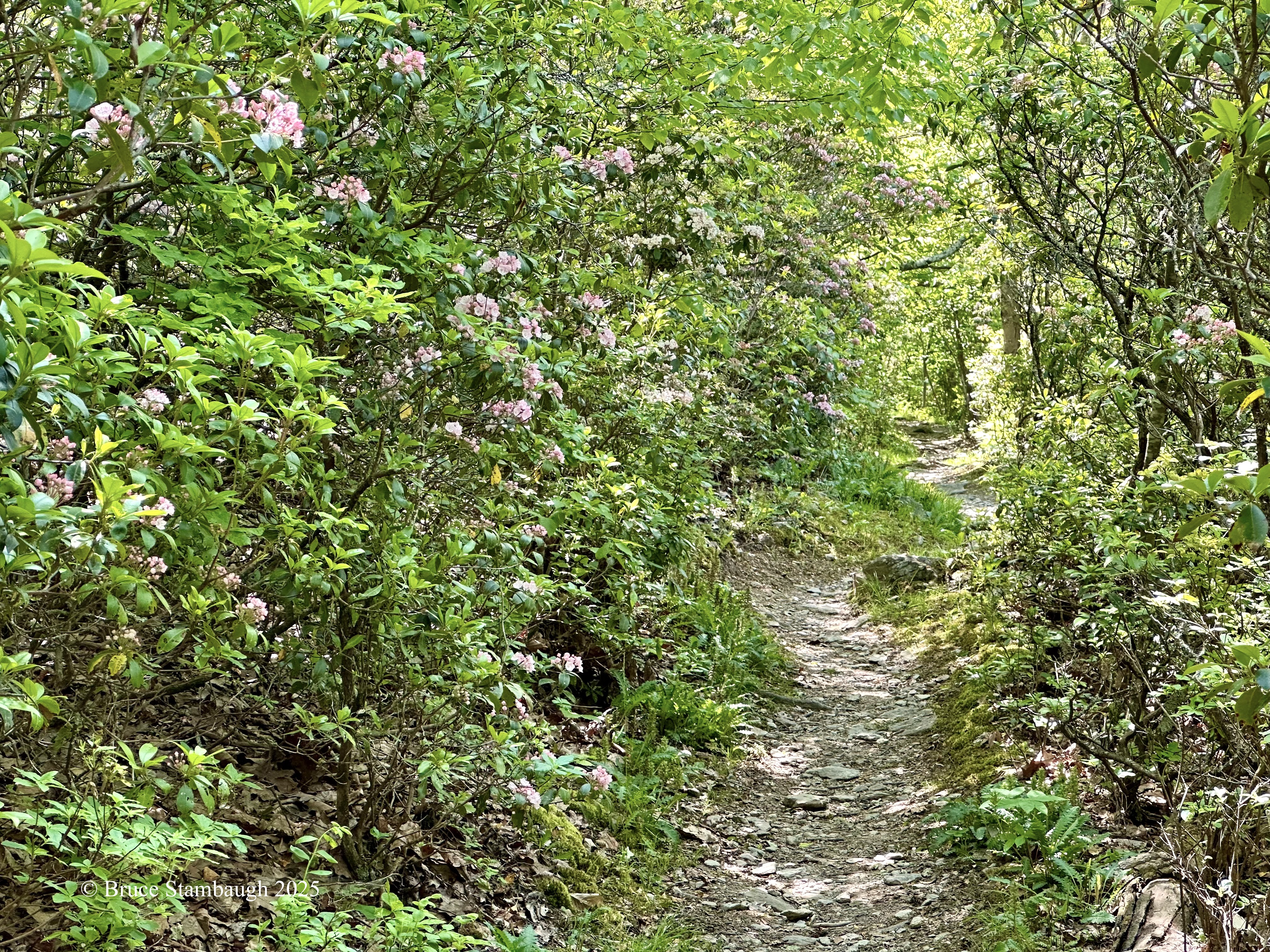
Besides, my main goal was to photograph the blooming Mountain Laurel. I followed my neighbor’s directions to another section of the AT, where the Mountain Laurel was so prolific that it formed a floral tunnel.
The laurels were in all stages of blooming, from tight pink buds to hexagonal flowers in full bloom. In places, the sun filtered through the forest canopy, highlighting the beauty before me.
The laurel blooms offered no fragrance, and I never saw an insect of any kind on any of the hundreds of blossoms. There was a good reason for that. As pretty as the prized flowers are, they are poisonous to any living creature. Every part of the plant is toxic.
So, if someone offers you Mountain Laurel honey, politely decline. Merely enjoy the flowers with their evergreen leaves. If you go, make sure you take your favorite bug spray.
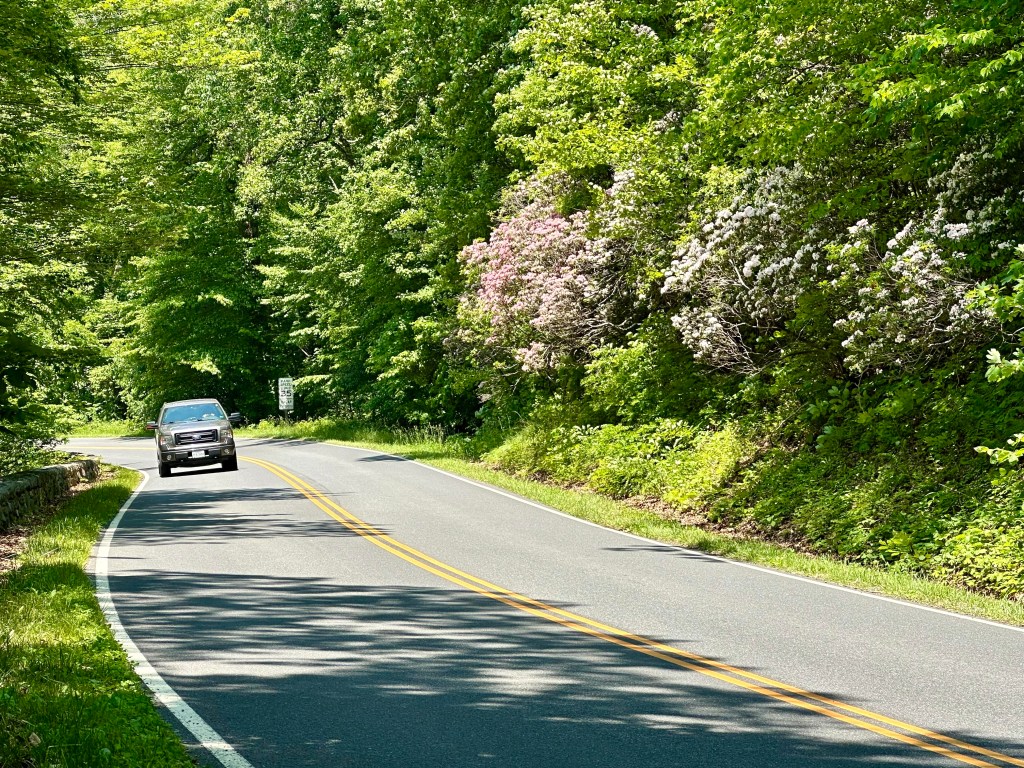
Mountain Laurel grows along the Skyline Drive in several locations. Photo by Bruce Stambaugh
This year is about to end. For my recap, I chose one photo per month to represent the daily subjects I encountered.
January
Sunset at Silver Lake. Photo by Bruce Stambaugh
Silver Lake is slightly more than three miles southwest of our home. I visit it often to photograph birds and sunsets. The sunset actually produced more color in the northwestern sky. So, naturally, that’s where I aimed to capture this photo.
February
Iridescence cloud. Photo by Bruce Stambaugh
Imagine my surprise when I stepped outside to refill my birdfeeders. This rare iridescence cloud caught my attention. Formed high in the much colder atmosphere, the pastel colors are created by the sun’s rays highlighting ice crystals in the cloud. This photo is even more unusual since the sun is also visible.
March
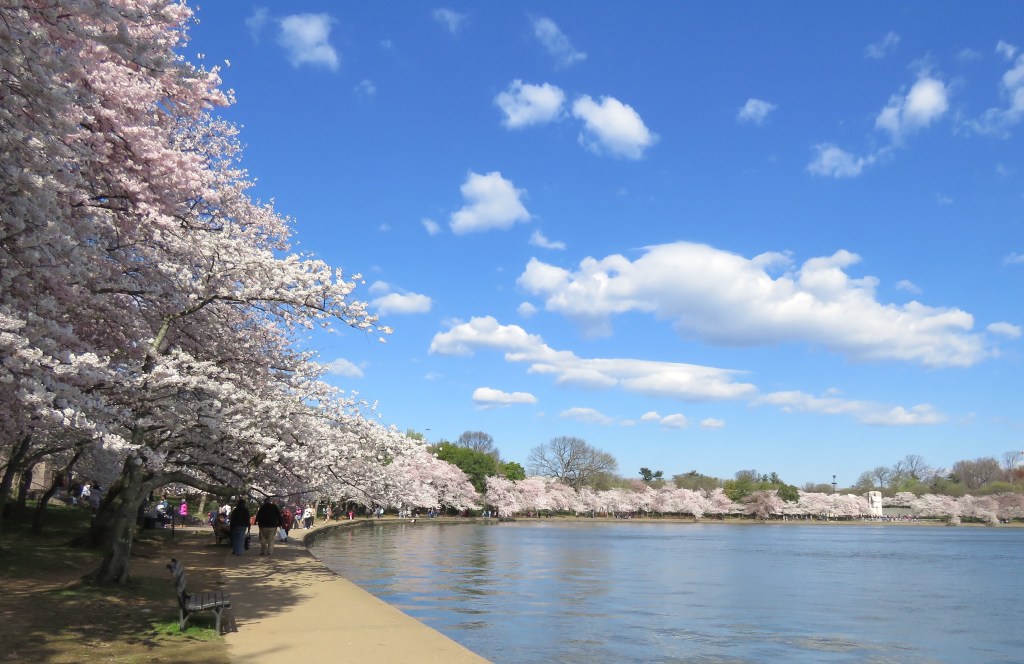
Cherry blossoms around the Tidal Basin, Washington, D.C. Photo by Bruce Stambaugh
I had always wanted to see the cherry blossoms in bloom in Washington, D.C. I never considered going when we lived in Ohio. But once we moved to Virginia’s Shenandoah Valley, I had it on my “to-do list.” When I learned the blooms were peaking earlier than expected, I visited our nation’s capital on a sunny but blustery Wednesday in late March. I was awestruck at their beauty. In this photo, the morning sun highlighted the pale pink petals on the trees planted around the Tidal Basin. The Martin Luther King, Jr. Memorial is on the right-hand side of the photo.
April
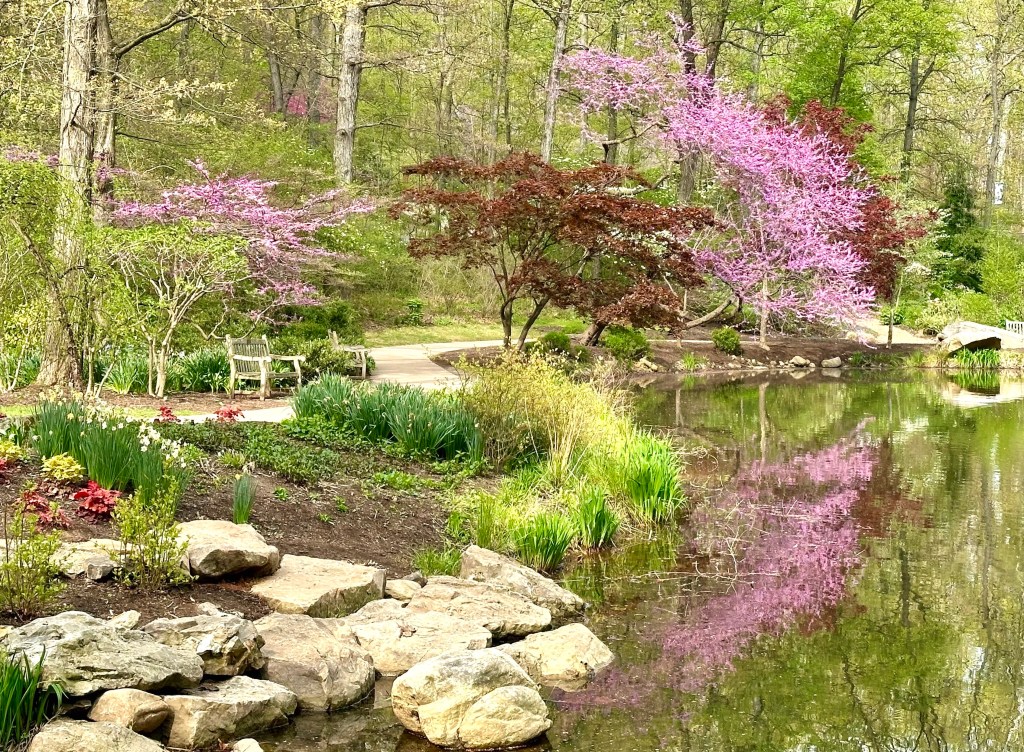
Edith J. Carrier Arboretum, James Madison University. Photo by Bruce Stambaugh
I love to visit the Edith J. Carrier Arboretum on the campus of James Madison University in Harrisonburg, Virginia. It’s a lovely place to seek serenity by connecting with nature’s variety of beauty in any season. Springtime is my favorite. Songbirds, including migrants, are singing and marking their territories. The arboretum’s staff and volunteers ready this remarkable gem for the onslaught of visitors, including many school children and their teachers. I had so many photos to choose from that I called upon my wife to help me decide which picture to share with you. We chose this one because it best represents all that is the arboretum. The blooming daffodils and other plants, plus the giant boulders that secure the pond bank, serve as an attractive, textured foreground for the native redbuds, showy ornamentals, and the dogwood tree, which the pond reflects. The hillside mixed woodlot is an appropriate backdrop for the photo’s main subjects.
May
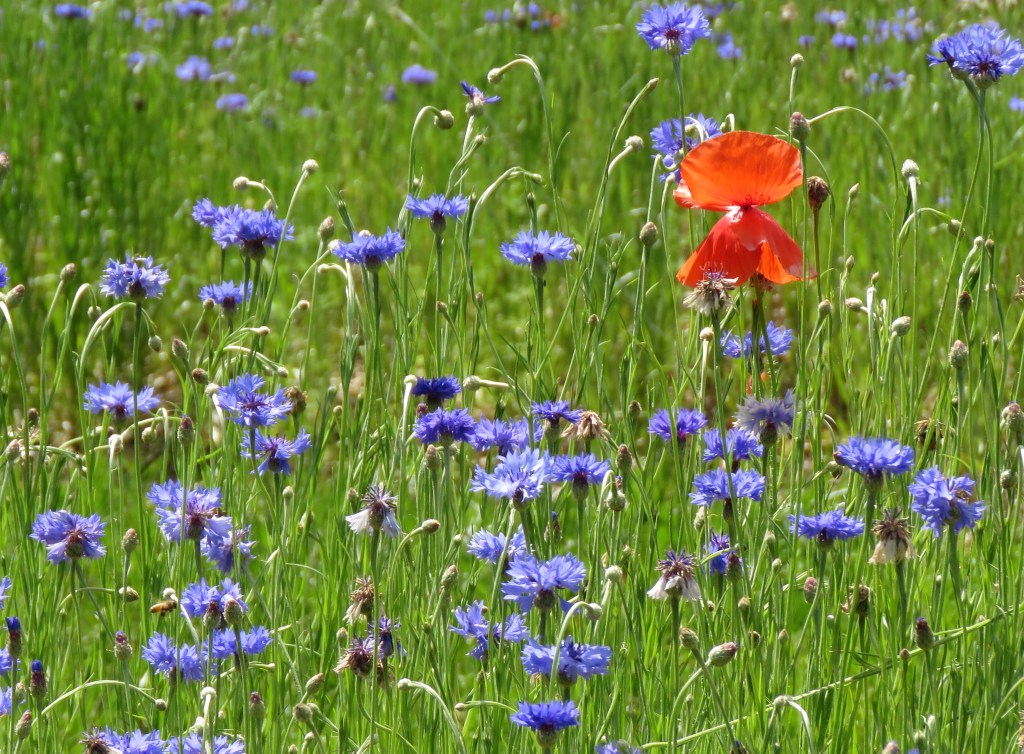
Blue Cornflowers and one orange Poppy. Photo by Bruce Stambaugh
Birding, hiking, and photography are three hobbies I can combine into one outing. I enjoy capturing the unusual, like this field of blue Cornflowers infiltrated by one orange Poppy.
June
Trout fisherman at Rapidan Camp, Shenandoah National Park. Photo by Bruce Stambaugh
Shenandoah National Park is my favorite place to hike. This photo was taken beside Rapiden Camp, President Herbert Hoover’s summer retreat. Hoover loved fishing at the camp to escape from the confines of noisy city life and the country’s politics. This young man caught rainbow trout, just as Hoover had. My friends and I accessed the camp by hiking more than a mile down the Millprong Trail from Skyline Drive. The other way is to book a ranger-guided tour when they are offered and ride the fire road down to the camp.
July
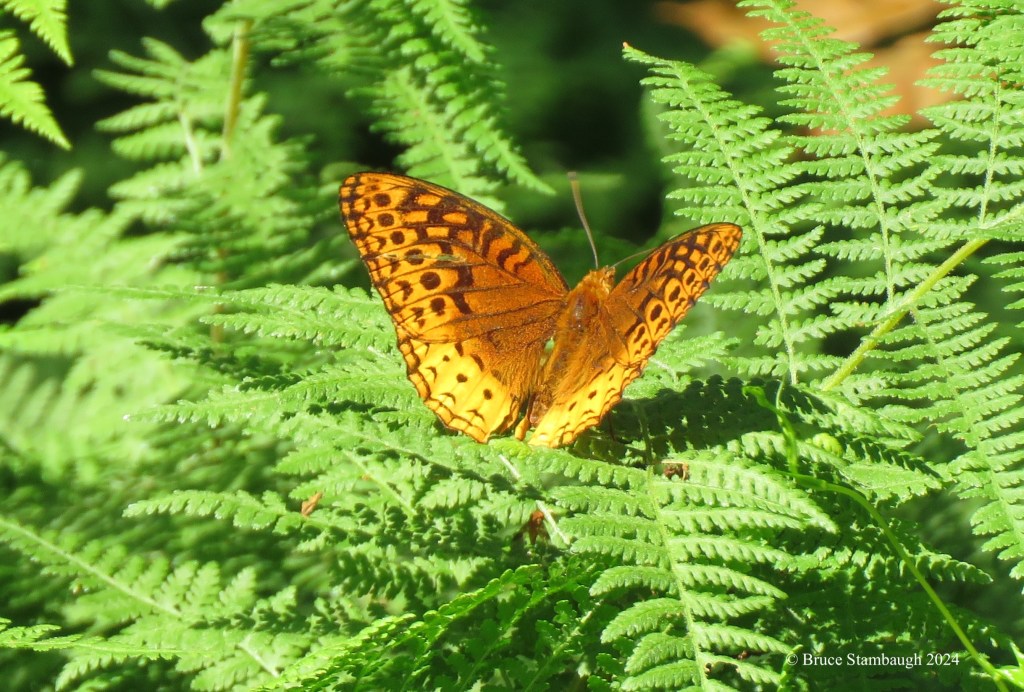
A Great Spangled Fritillary on Hayscented Fern. Photo by Bruce Stambaugh
I never tire of watching the many varieties of butterflies that frequent Shenandoah National Park in the summer. Unless we have a severe drought, wildflowers, dense forests, and the sparkling water of rapidly running streams provide the right habitat for them. I was photographing Turkscap Lilies when this beautiful butterfly flitted past me and landed on this Hayscented Fern plant to bask in the bright morning sunshine. Moments like this keep me returning to the park again and again.
August
Storm clouds brewing. Photo by Bruce Stambaugh
From little on up, clouds have fascinated me. However, I am long over imagining shapes in the clouds. I enjoy their beauty, their constant reconfiguration, and, in the case of severe storms, their power. I was astonished at how quickly these cumulus clouds grew into cumulonimbus clouds, and by the time they reached the Blue Ridge Mountains in the background, a severe thunderstorm warning had been issued. We were glad for the rain since the entire Shenandoah Valley had been in a summer drought.
September
Beauty after the storm. Photo by Bruce Stambaugh
September started off right with a much-needed rainstorm followed by a stunning sunset. Other than that, I’ll let the photo’ beauty draw you in.
October
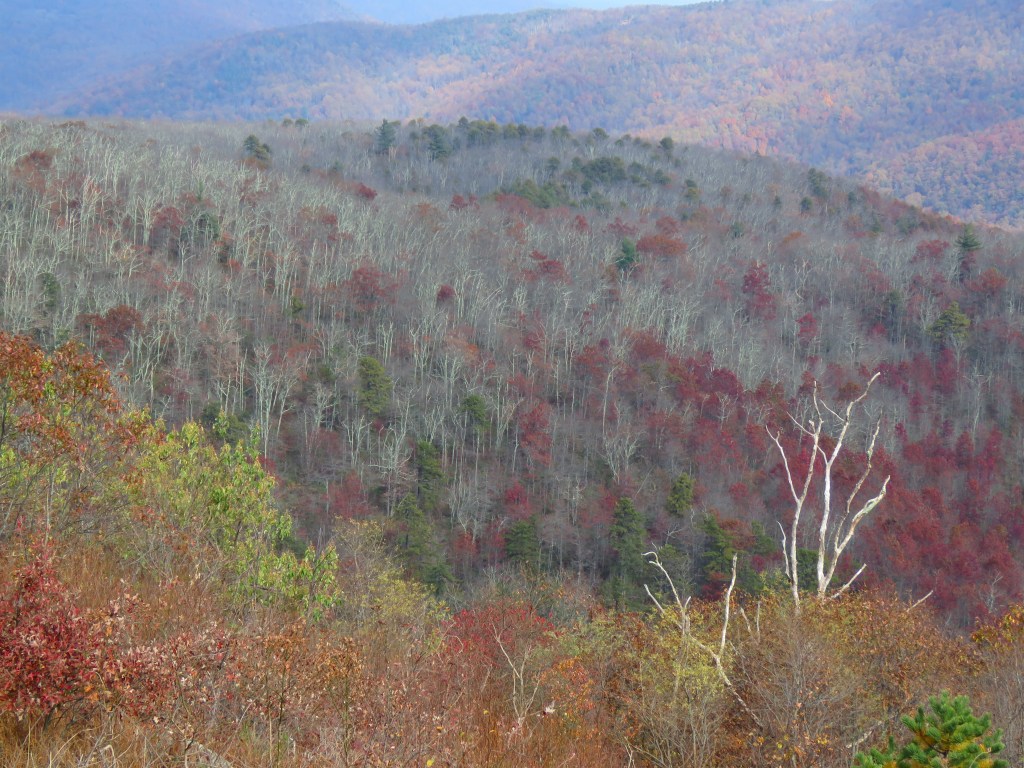
Post-peak splendor. Photo by Bruce Stambaugh
October’s photo was the toughest one to choose. Even with an extended drought, the colors didn’t disappoint this year. Still, we had two celestial stunners in October that could have been selected. I was fortunate to photograph the Aurora Borealis and Comet C-2023 A3, also known as Tsuchinshan-ATLS. Plus, I could have chosen golden maples at the height of their colors. But this photo stood out. The bare white branches of the gray birch trees adjacent to the stands of red oaks guarded by pines and cedars show the glory of Shenandoah National Park even after most of the leaves and tourists have left. Also, note that mountainside forests in the distance at lower altitudes are still holding fast to their lovely leaves. This year, October had it all.
November
Ho’okipa Beach, Maui, Hawaii. Photo by Bruce Stambaugh
November’s shot was nearly as hard to pick as October’s. I was torn between being a birder or a tourist. Obviously, I chose the latter. Ho’okipa Beach is one of Maui’s most famous and popular attractions, not just because of its beautiful blue waters. Surfers clamor for the rolling, long-lasting waves, especially when the tide is high. In the afternoon, people of all ages watch giant Green Sea Turtles come ashore to soak in the afternoon sun that warms the beach. My birding option was a photo of a Snowy Owl, which you will see in a later post.
December
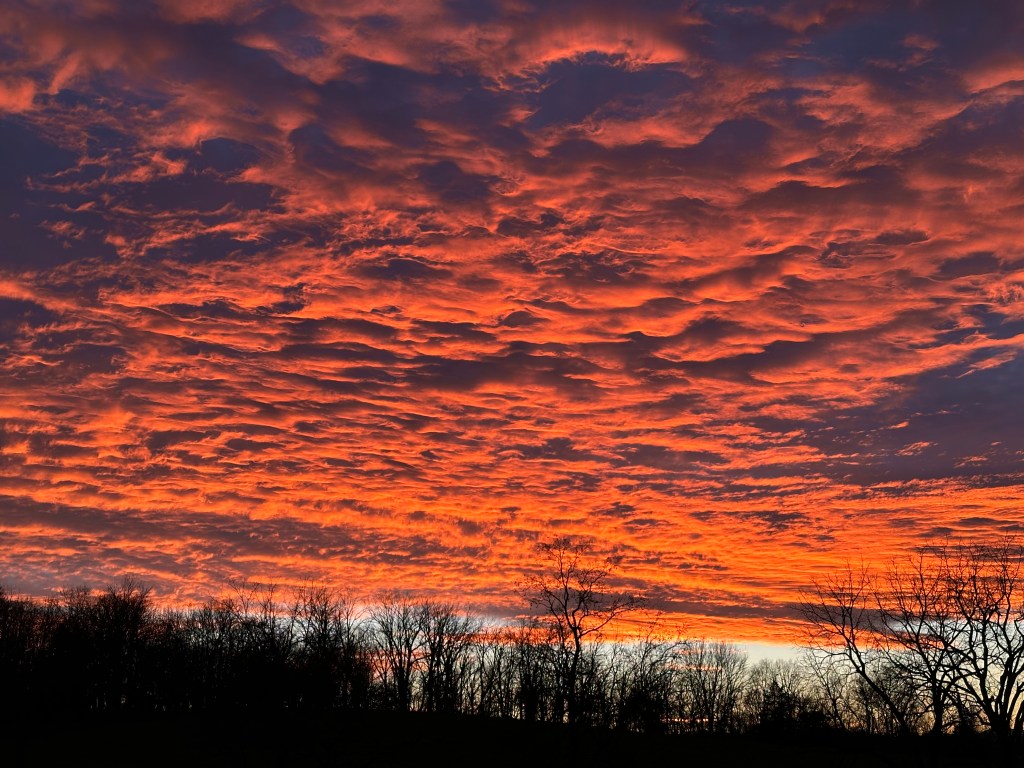
A glorious December sunset. Photo by Bruce Stambaugh
It is only appropriate to close out 2024 with a sunset, a beauty at that. With the low cloud deck, I was ready for this one, which didn’t disappoint.
I greatly appreciate you following this blog all these years. I wish you all the very best in 2025. Happy New Year everyone!
Nature’s beauty reigned even after the peak colors had faded. Photo by Bruce Stambaugh
Fall is a great time to hike, bird, and shoot photos. Shenandoah National Park is my go-to place to combine all three hobbies in one trip.
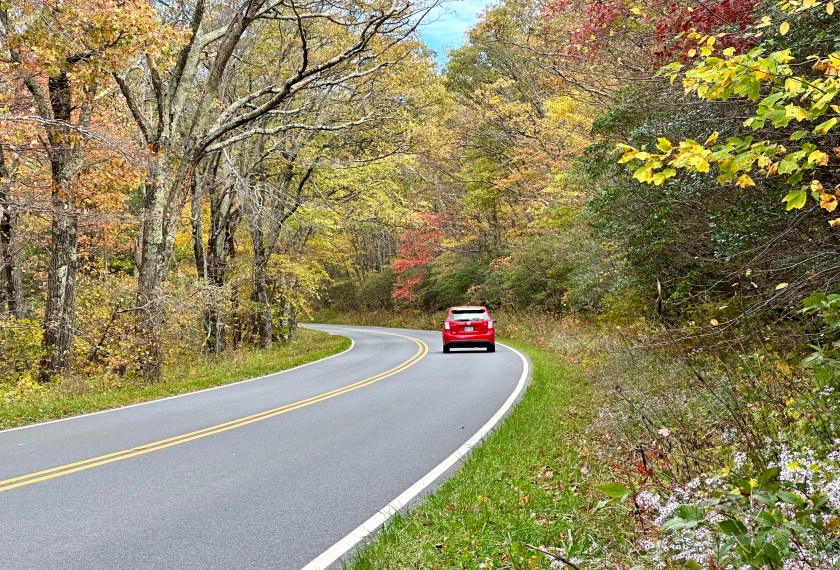
However, I have learned to avoid the peak color time due to crowds. People from around the world visit the park to admire its autumn glory, which means traffic is also at its peak on the iconic Skyline Drive.
By mid-morning, lines of vehicles form at entrance stations. Overlook parking spaces fill up quickly, forcing people to park along the busy roadway. The same is true for trailhead parking lots.
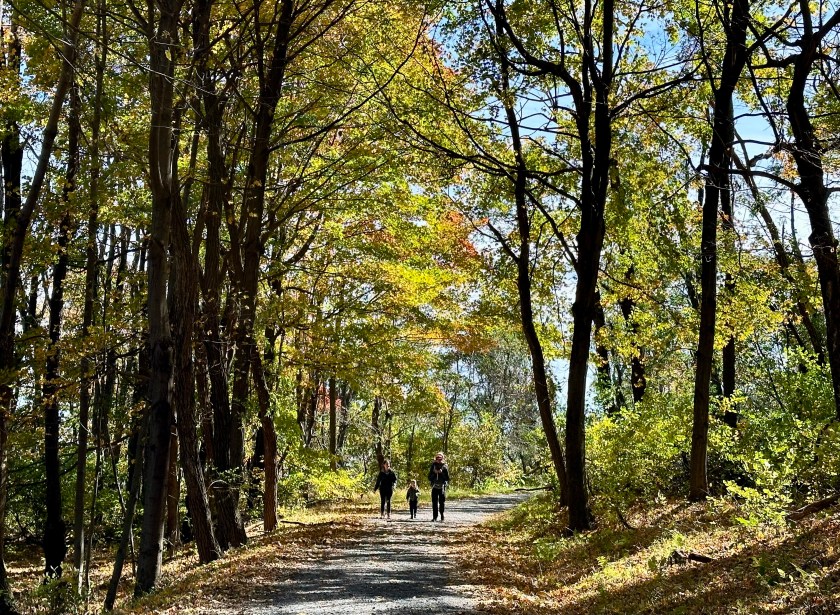
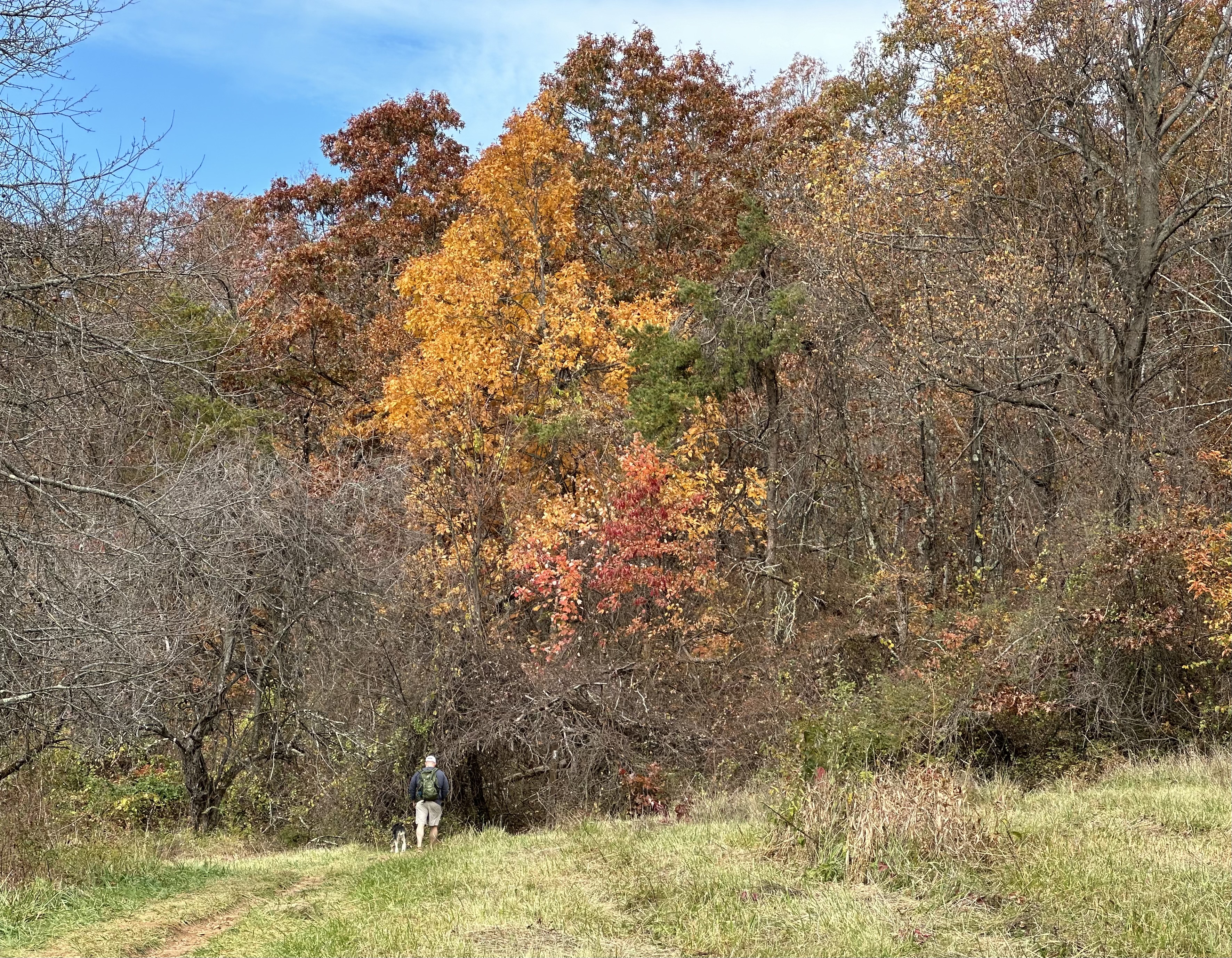
Before the peak of leaf colors.
So, I chose to catch the leaf colors before and after the peak. The park is still busy, but it is tolerable, and I am satisfied with a stirring hike filled with picturesque views, unexpected wildlife, and migrating birds.
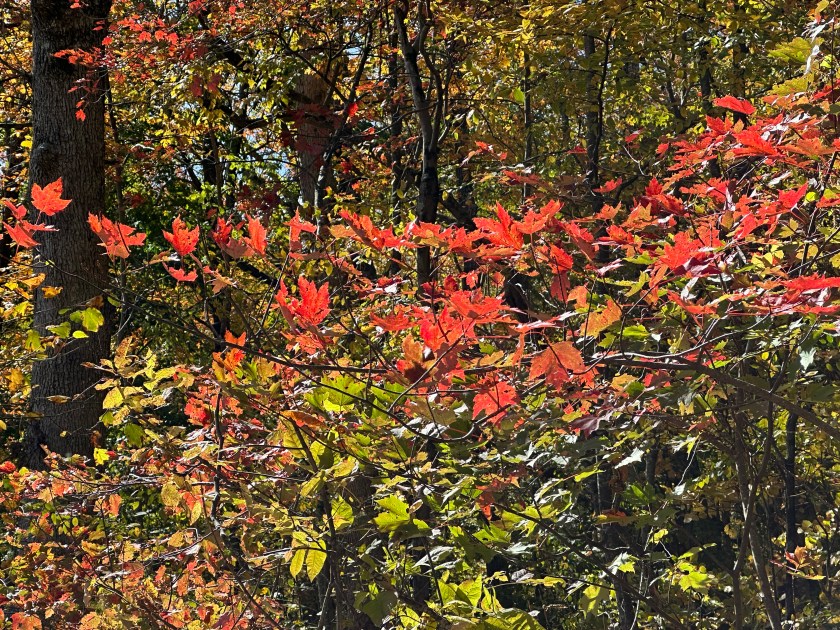
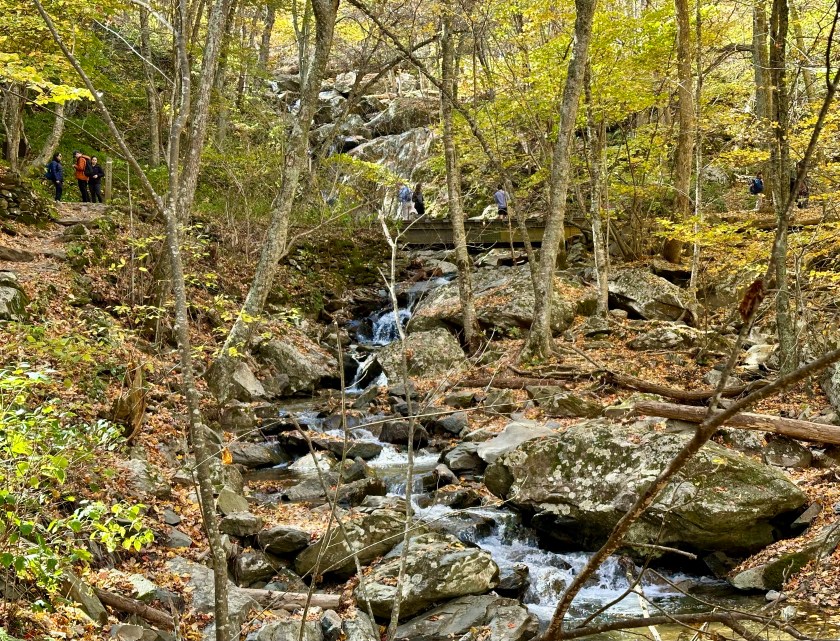
In the mountains, altitude affects the coloring as much as sunshine, cooler nighttime temperatures, and morning frosts. So, the trees might be dull or even bare at the hike’s beginning, and a half mile down the trail, a blaze of color brightens the way.
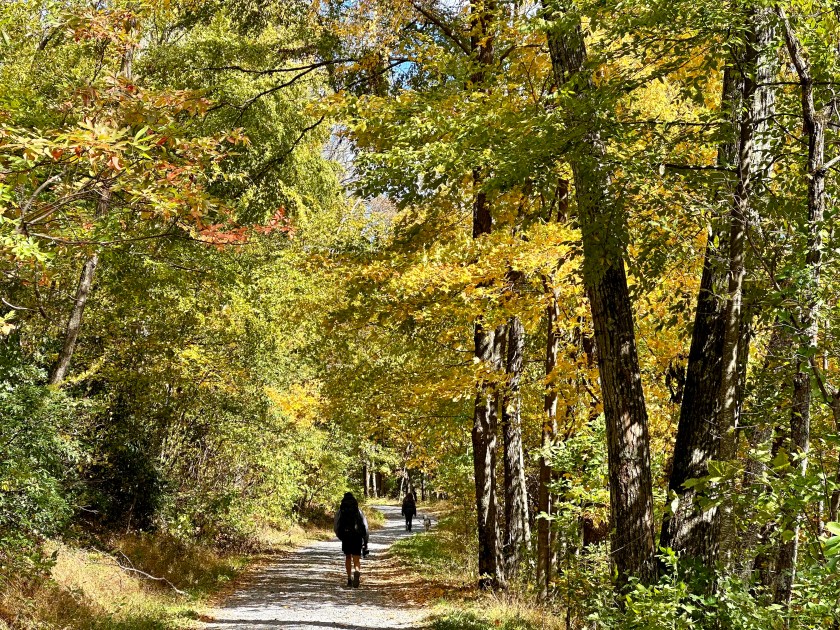
After the peak. Please click on the photos to enlarge them.
Though I have missed the height of the turning leaves, I enjoy the before-and-after with equal zeal. It’s fun to note the differences I discover and meet friendly folks along the way. The park’s beauty has energized them, too.
Besides, I admired nature’s colorful summit in other locales in Virginia’s lovely Shenandoah Valley. It is the perfect place to enjoy hiking, birding, and photography all in one joyous day trip.
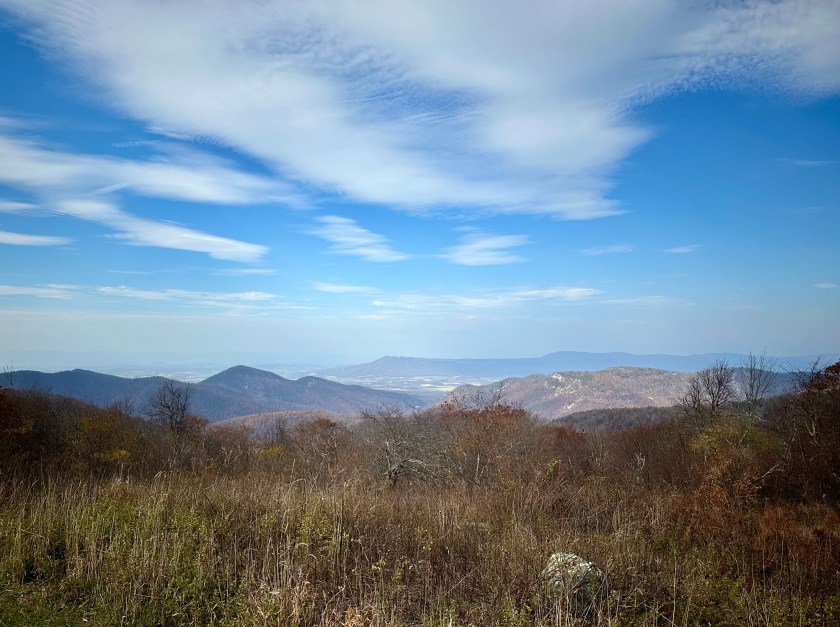
A view west into the Shenandoah Valley. Photo by Bruce Stambaugh
I nearly drove by the two deer. They blended in with the background that well. Fortunately, I spotted them as I passed the old apple tree.
I found the first place to turn around and hoped my hungry subjects would still be there. They were, and I quickly snapped a few shots before they disappeared into the forest.
These two buck deer were on the search for apples. Photo by Bruce Stambaugh
I was on Skyline Drive in Shenandoah National Park. The area between Milam Gap and Big Meadows is peppered with apple trees planted by farmers before the park was established in 1935. The trees still produce apples, and deer forage on them in the fall.
Unfortunately, this pair of bucks was late to the party. All the reachable apples and those on the ground had already been consumed.
Gravity and nature will eventually have their say, enabling the deer to satisfy their taste for bright red apples.
The two bucks before they scampered into the woods. Photo by Bruce Stambaugh
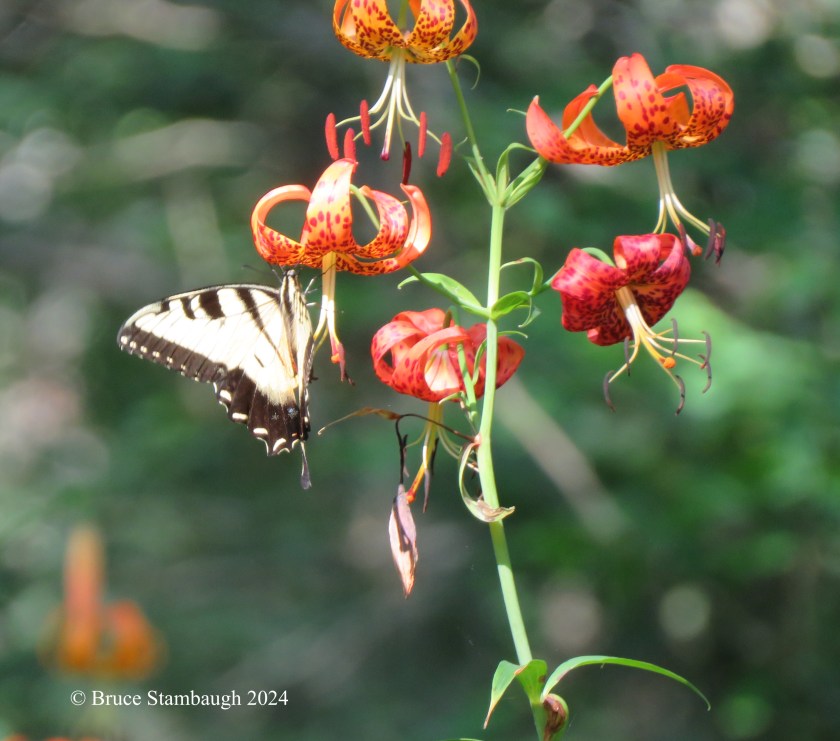
Like this Tiger Swallowtail, butterflies are drawn to Turk’s Cap lilies. Photo by Bruce Stambaugh
I visit Shenandoah National Park whenever I can. Being retired has its advantages. I usually go to the park with a purpose in mind.
Recently, I drove the 45 miles from my home in Virginia’s Shenandoah Valley to the Big Meadows area of the popular national park for several reasons. I like to capture butterflies on the impressive Turk’s Cap lilies. Secondly, the temperature in the Blue Ridge Mountains, where the park is located, is usually cooler than the oppressive heat the valley has experienced lately.
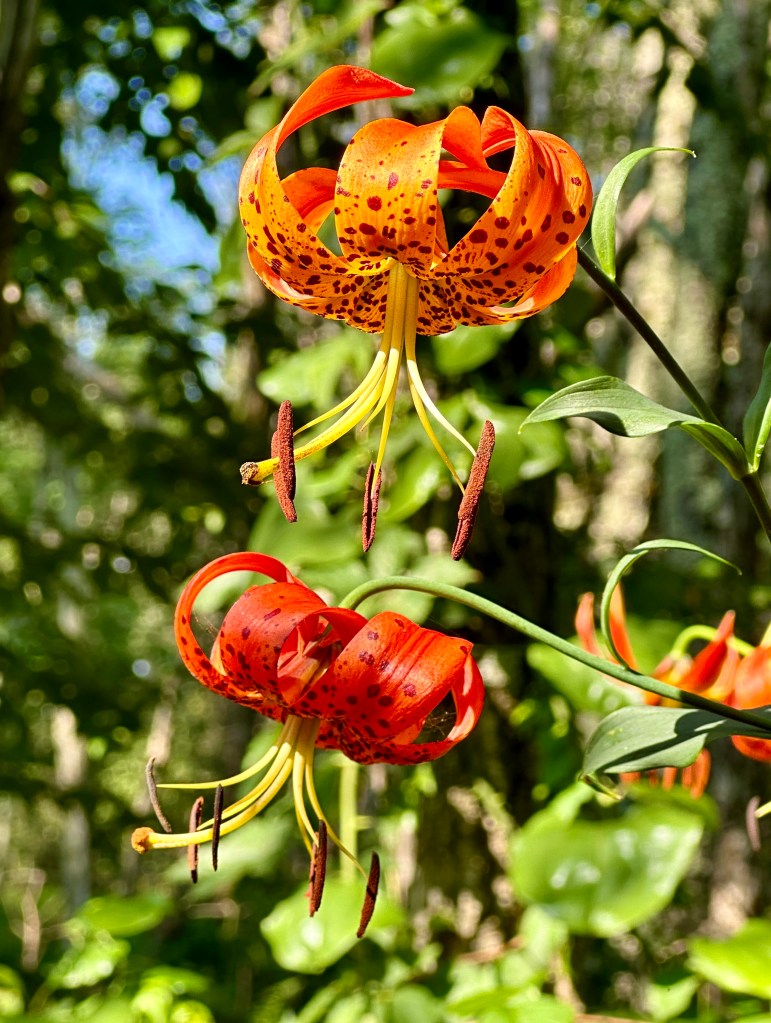
July is when the impressive summer flowers are in full bloom. Butterflies, bees, and other flying insects can’t resist their lure, and alert humans can’t miss the spotted, bright reddish-orange blossoms either.
These photos were all taken along Skyline Drive south of Big Meadows.
It didn’t take me long to spot a few butterflies flitting around. I usually find a group of flowers and wait for the butterflies to arrive. There was a problem with being a stationary human, however. I forgot to take my bug spray along, and between the gnats and the mosquitoes, I spent as much time swatting as I did taking photos. It was a minor sacrifice just to observe nature’s glorious beauty.
At Big Meadows, a ranger guided a small group of tourists on a nature walk. I moved around the sweeping, prairie-type basin. Due to the ongoing severe drought that Virginia is experiencing, the usual array of wildflowers is not as abundant as in previous years. However, as did the Monarchs and other butterflies, I found a few bright Orange Butterfly Weeds and the aromatic Common Milkweed blooming.
Please click on the photos to enlarge them.
I was also impressed with the thousands of honey bees and bumblebees that buzzed and hummed around the area. The Sweet White Clover got most of their attention.
Of course, I can’t go to Shenandoah National Park without taking my binoculars. Songbirds were everywhere, but the dense foliage of the trees made them hard to spot. Did I mention that mosquitoes and gnats were ubiquitous?
By noontime, the heat and humidity sent me back into the valley to the comfort of my air-conditioned home. Still, I felt mentally refreshed and renewed, ready for the rest of the day.
A Great Spangled Fritillary basked in the morning sunlight on a Rattlesnake Fern.
Colors galore as a wildfire burned in the valley below last fall. Photo by Bruce Stambaugh
This is the last in a series celebrating National Park Week.
Autumn is often the best time to visit a national park. The annual coloring of the leaves attracts millions of people to many national parks, including Shenandoah National Park in Virginia.
The Park Service staff do an excellent job of keeping the public informed about the status of the changing of the leaves. From websites to social media to webcams, patrons of the parks can plan their trips accordingly.
Of course, everyone wants to hit the peak colors. The problem is that many factors play into trying to time the peak of coloration. Elevation, weather, temperature, tree species, longitude and latitude, and the sun’s angle all assist the color transformations. People’s schedules add to the leafy puzzle.
Living near a national park makes timing less risky. I closely monitor the weather, social media group photo posts that specialize in leaf watching in Shenandoah National Park, and the park’s weekly livestreaming. When it’s time to go, I head east and am seldom disappointed.
This past fall, much like this spring, was relatively dry. Fire conditions lasted several weeks, and fires did break out. The photo shows smoke from a fire near the Rappadan Camp that started outside park boundaries but quickly burned into the park’s forest.
The fire’s smoke starkly contrasted with the vibrant colors of the ashes, sassafras, hickory, oaks, and poplar trees. It subdued the usual exuberance for the park’s universal beauty.
Over nearly a week, firefighters finally got the upper hand as the leaves began to rain down. Eventually, fall storms helped quench the blazes and brought down the last leaves.
Despite the fire, park visitors still enjoyed the beauty of the changing leaves along Skyline Drive, from overlooks, and walking the trails that remained open.
Given nature’s multiple colors, it’s a good bet everyone left the park with lasting memories and photos to brag about.
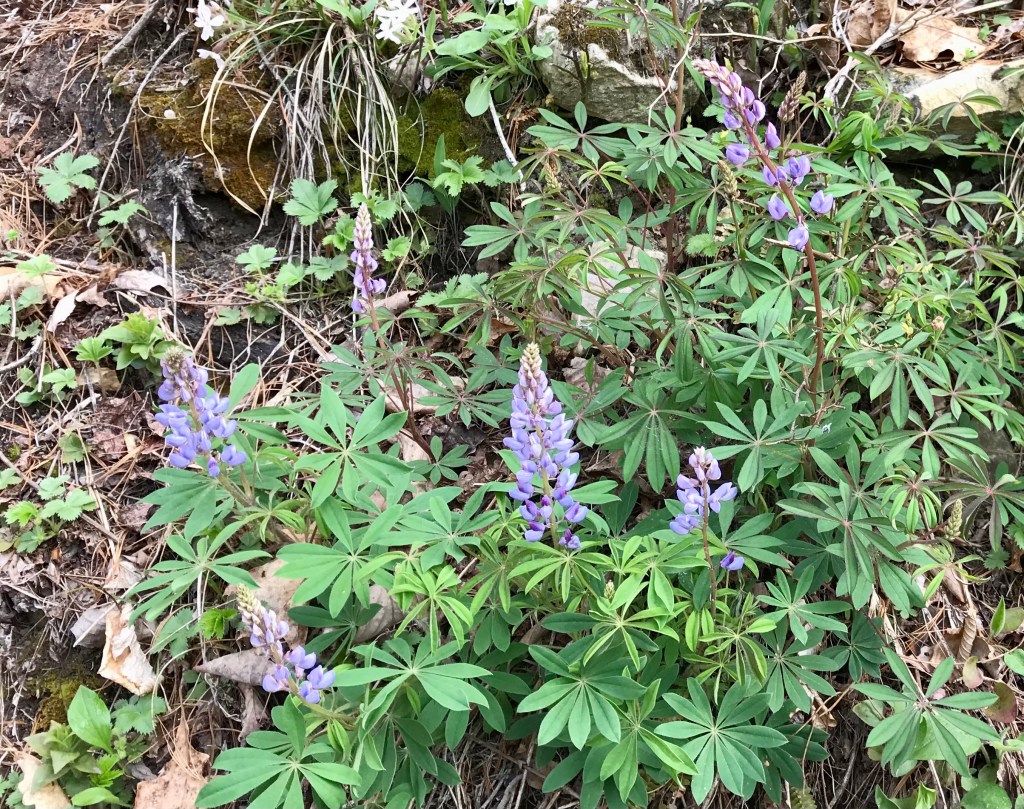
Wild Lupine growing along a fire road in Shenandoah National Park. Photo by Bruce Stambaugh
This is the fifth post in a series celebrating National Park Week.
When you are in a national park, don’t forget to look down. You don’t want to miss the many wildflowers prolific in all but the winter. Even Death Valley is currently having a superbloom. I would love to see that sometime.
In the meantime, spring is the perfect time to look for wildflowers in national parks. I photographed the wild lupines along a fire road in Shenandoah National Park.
Wildflowers bring beauty to the park and attract other beauties, too. When I first visited Shenandoah National Park seven years ago, I was pleasantly surprised at the number and variety of butterflies I found in the park, even in the forests. The colorful blooms also drew bugs, bees, and, of course, Ruby-throated Hummingbirds.
So, when I visit any national park to bird, hike, and photograph birds and wildlife, the wildflowers also are on my agenda. The lovely lupines are the proof.
Little falls upstream form the main event. Photo by Bruce Stambaugh
This is the fourth in a series of posts celebrating National Park Week.
It is an understatement to say that people are drawn to waterfalls. Big or small, they are simply mesmerizing.
It’s one thing to see a photo or video of a waterfall, but it’s something else entirely to be standing next to one. The roar and the beauty transfix their observers. Even cascades of water over rock, then a crystal clear pool, then more white water entrances children and adults alike.
Shenandoah National Park officially has 36 named waterfalls. However, numerous others are in the park depending on the water flow. The photo above demonstrates that.
It’s one of many mini-falls above Lewis Falls, near the Big Meadows area. On a chilly November day, I hiked the Lewis Falls Trail in a group, and the many rapids and little falls upstream of the main event impressed us all.
It’s easy to be swayed by the impressive Yosemite Falls or Bridalveil Falls. I love them both. But romantic that I am, I am just as happy crisscrossing rapidly falling streams that form white water all the way to the cliff’s edge.
So, big or small, let’s praise the falling water in our national parks, which brings joy to everyone.





























 Roadkill Crossing
You must be logged in to post a comment.