Crocuses are some of the very first flowers of spring. They are emerging all around our neighborhood here in the Shenandoah Valley. Of course, spring doesn’t officially arrive until March 20. But we are glad for the floral showy expressions after this long, cold, wet winter.
Patience is a virtue. The exact origin of that proverb is hard to determine but about as straightforward in its meaning as can be.
In “Piers Plowman,” William Langland wrote about a man searching for faith in the 14th century. This work marked one of the earliest references to patience. A line in the poem reads, “patience is a fair virtue.”
What does that mean exactly? To me, it says that instead of rushing ahead on our own, we should pay attention to what is actually happening, no matter how weird or repulsive it may seem. The coronavirus fits that description.
In this case, patience requires us to depend on those who deal with such anomalies daily. Scientists, doctors, and researchers all belong in that category.
Throughout the pandemic, vigilance remains required. We continue to need to wear masks when we go out or visit others. We also need to keep our social distance and wash our hands. Those were and continue to be simple instructions that I embraced because they benefited others besides me.
Still, practicing patience is hard to do. The ongoing pandemic is proof positive.
Impatient people bolted ahead, behaving as if everything was as it had been in the world, when in fact, it wasn’t. Refusing to wear a mask, physically distance, or alter daily routines has prolonged the virus’s life.
Consequently, the pandemic is also a teacher, and we all are in the same classroom. Some pupils listen and learn, while others misbehave or fall asleep.
The pandemic has taught us a lot about people and their willingness to accept scientific facts, the reality of a new disease and the unknown, and realize the consequences of an infection run rampant.
It’s important to note that being patient has its benefits. The pandemic forced me to slow down, relax, notice, care, and listen. Since we were together even more than usual, my wife and I gave each other expanded personal space and time than we had previously.
First pitch of the 2016 World Series, Cubs vs. Indians.
It’s not like I didn’t know patience before the pandemic. After all, the Cleveland Indians are my favorite sports team. It’s been 73 years since they last won the World Series. If following that team doesn’t require patience, I don’t know what does. I learned early on the mantra of “wait until next year.”
Well, it’s next year. A new baseball season is upon us. Perhaps this is Cleveland’s year. Only time will tell. Like enduring the pandemic, patience will be an essential virtue with this team and every aspect of life.
Patience requires us to stop, breathe, observe, sense, and move slowly. Patience is and will continue to be essential for mental, physical, and spiritual survival during the pandemic.
Ephesians 4:2 reads: “Be completely humble and gentle; be patient, bearing with one another in love.” I learned that it’s critical to apply that to myself, too. I realized that it was okay to feel down with all that the pandemic brought and about activities that we couldn’t do, especially with those we love.
Patience modeled.
We have waited patiently for an effective vaccine, and now it is here. People are receiving inoculations against this deadly virus. Still, we will continue to follow the crucial guidelines of wearing a mask, physical distancing, and washing our hands for 20 seconds or more. As Yogi Berra famously mumbled, “It ain’t over until it’s over.”
Patience became the watchword of the pandemic. It will continue to persevere until we all work together to conquer this unwanted virus. That will prove patience a valuable and vital virtue, indeed.
Bird migration is in full flight. To check for any waterfowl and shorebirds that might be passing through, I head to nearby Silver Lake in Dayton, Virginia. It’s also a favorite spot for sunrise and sunset photos.
On a recent afternoon, I found this flotilla of ducks in the sparkle of the afternoon sun at the south end of the lake. Among this group were Ring-necked and Redheaded Ducks and Greater Scaups.
In one way, it’s hard to believe that a year has passed since we had to alter our daily routines drastically. In another, the time between then and now seems a blank.
One Sunday last March, I greeted people at the church door, welcoming them as they arrived for worship. A week later, state after state began issuing orders banning all large group assemblies, including church services. Officials directed additional guidelines as well, all for society’s well-being.
The coronavirus had instantly changed our lives. Since then, more than half a million have died of the virus in the U.S., and 2.5 million globally. That is the very definition of a pandemic. It has been an unwelcome global intrusion that affected all of us in one fashion or the other.
A change of regular routines became the norm universally. It was difficult to adjust so quickly, especially for those stricken with the virus. Given the circumstances, adjusting was all we could do to stay safe.
With our usual routines interrupted, the obvious choice was to develop new ones. So, that’s what my wife and I did.
If we went out, we wore masks that my industrious wife made. Throughout the pandemic, she sewed 1,200 and donated them to individuals, churches, non-profit organizations, schools, and medical facilities. She also knotted five comforts for a charity.
Instead of going inside to buy groceries, we ordered our staples online and picked them up curbside. We continue that process, along with ordering takeout from local restaurants. We like to support the mom-and-pop establishments as much as we can.
We took advantage of decent Virginia weather days in 2020 as much as possible, taking hikes, going birding, and meeting with family and friends in well-ventilated places. Of course, we always masked up and kept our physical distance.
Day trips to local, state, and national parks and arboretums replaced planned vacations. For the first time since 1987, we missed our annual respite at our beloved Lakeside Chautauqua.
My exercise program changed when gyms closed. I biked in the neighborhood, and I walked with Neva when the weather cooperated. We joined a twice-weekly yoga group via Zoom.
My wife and I started a new routine that we both enjoy. Nearly every morning, around 9:30, we take a coffee break and play cards. We’ve played hundreds of games, and I am exceedingly pleased that Neva hasn’t kept a running tally of wins and losses.
We loved hosting friends and family. With the necessary physical distancing guidelines still applicable, Neva magically transformed her gift of hospitality into taking food and meals to others.
Despite the sluggish snail mail, we have redoubled sending note cards to friends. We’ve also added more texts and actual phone calls to our repertoire of communication.
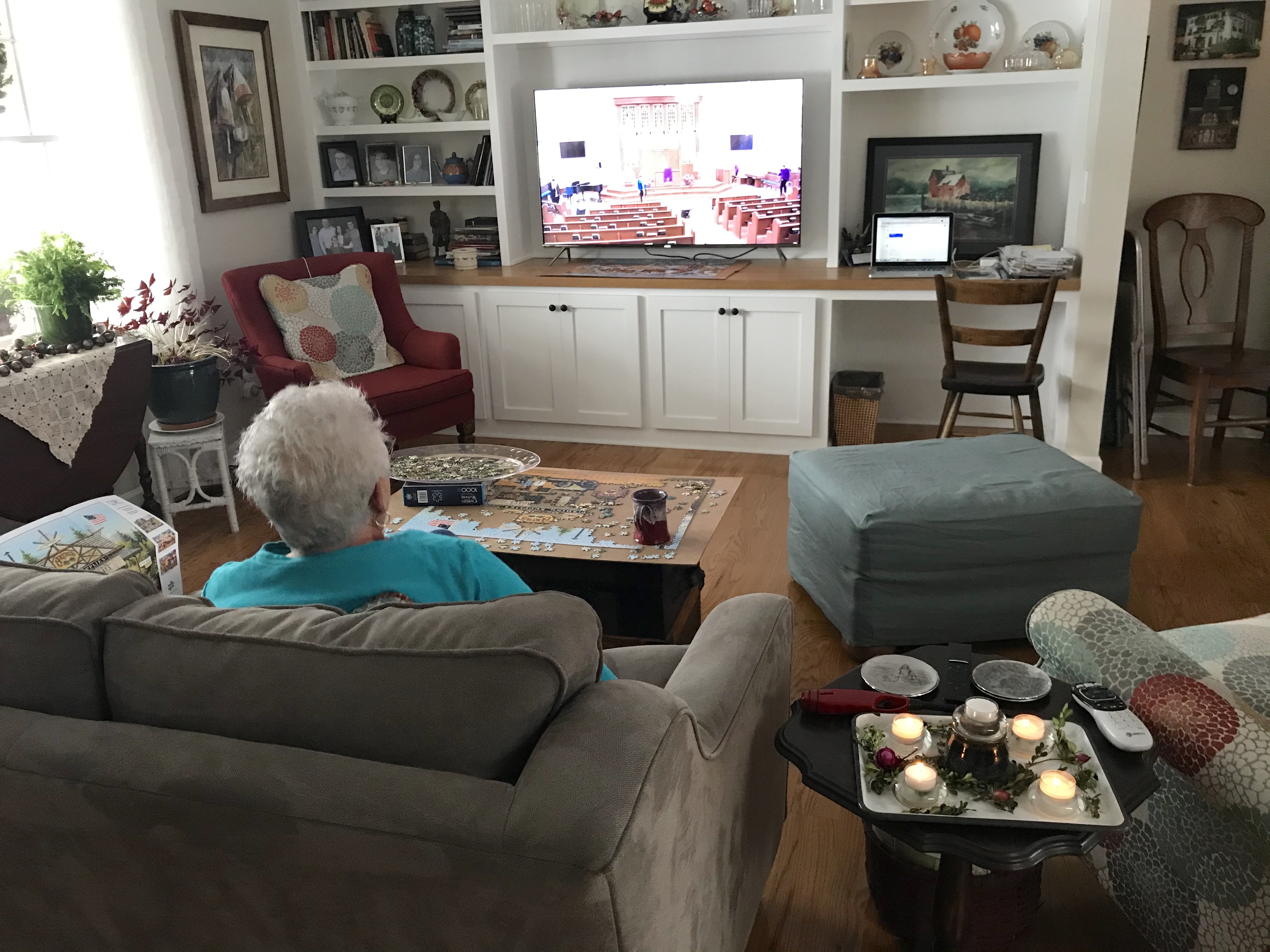
How we have attend church services for the last year.
Our church pastors and staff have done a yeoman’s job of keeping church services going via Zoom and YouTube. Thanks to them, we’ve only skipped that one Sunday.
We miss the joy of congregational singing. I have kept one custom, however. Despite worshiping remotely, I continue to dress for church. I felt compelled to continue that tradition if simply to confirm that it is Sunday.
When will we be able to return to our pre-pandemic routines? That question currently has no answer. Until then, we will continue to play it safe by maintaining our pandemic practices.
I do have a question about whenever we can return to worshiping safely in the church building again. Will I be allowed to take my recliner and drink my coffee during the service?
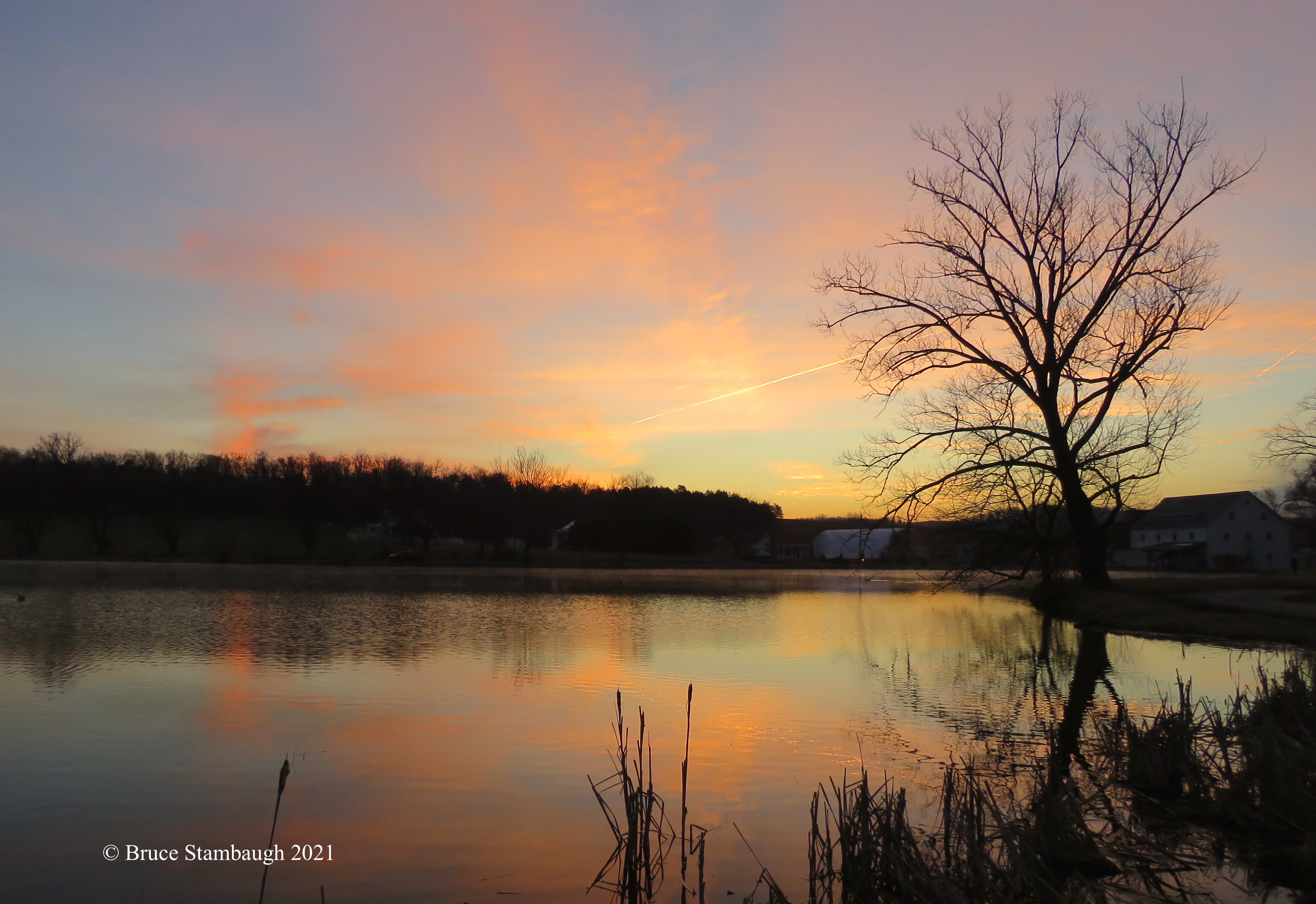
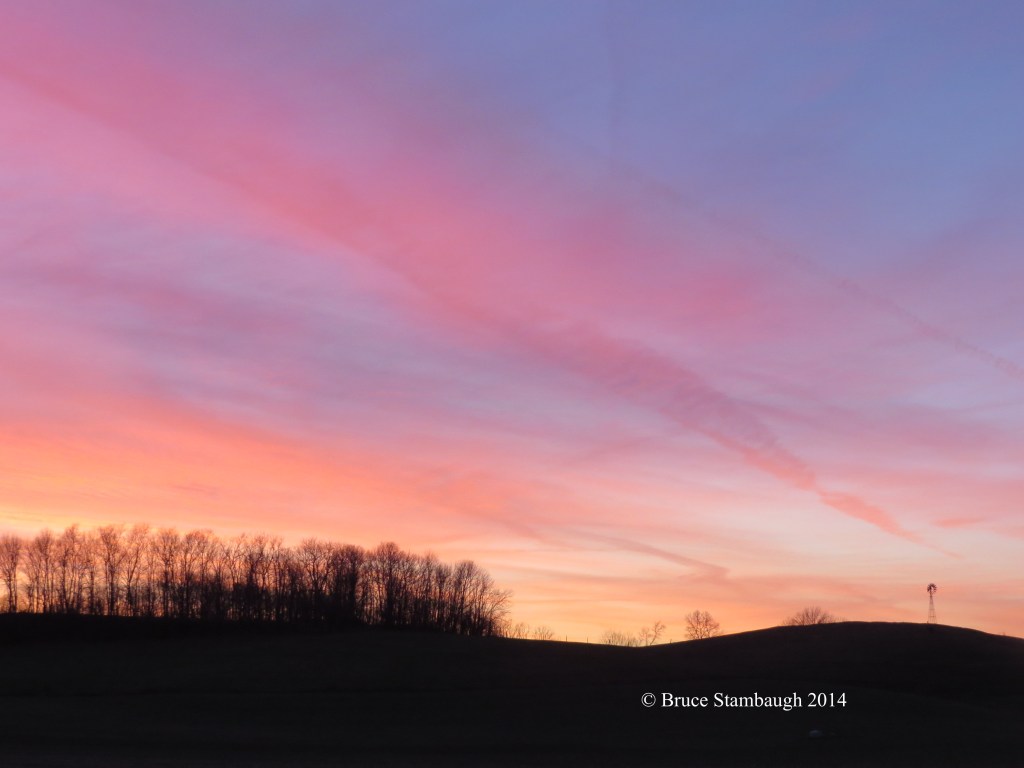
As lovely as this sunrise is, it wasn’t my objective for the morning. I had risen early to get a shot of February’s Snow Moon setting behind the Allegheny Mountains about 15 miles west of our home in Rockingham County, Virginia. The forecast said clear skies in the morning, so I headed out for the 6:47 moon-set.
A quick glance to the west and I realized that shooting the moon was out. Snow clouds had moved in over the mountains, obscuring the moon. I went for Plan B. I drove southwest to Silver Lake at the north edge of the town of Dayton. The sky to the east was clear, so I parked on the west side of the lake and waited. The sunrise wasn’t spectacular, but I loved the soft pastel colors that reflected in the small lake.
The epitome of how my wife watches college basketball. Photo by Bruce Stambaugh.
I married the right woman. There are many lofty reasons that I can cite. But during this long pandemic winter, there is one that stands out—college basketball.
I am truly fortunate that my wife enjoys sports as much as I do. In the winter, pandemic or no pandemic, basketball has always been our preferred entertainment.
I’m not sure what we thought when we picked the day for our wedding, however. It indeed wasn’t chosen around basketball. We were married on the night of Ohio’s annual state high school basketball tournament finals and the NCAA tournament’s regional games. Despite that, our fathers still attended the ceremony and not the games.
Over our 50 years of marriage, our basketball cravings evolved. When we were first married, we bounced from local high school games to college and even an occasional pro game.
When our daughter and son played in junior high and high school, those games became priority number one. We plowed our way through snowstorms to tiny crackerjacks box gyms in the middle of nowhere to holler our lungs out.
Before the pandemic, we watched our grandsons play basketball.
As empty-nesters, we settled in on snowy evenings and watched college basketball on TV. We’ve kept that habit to this day.
We were all geared up for another round of March Madness last year when officials abruptly canceled the tournament. We were a bit baffled then, but now we know it was the right decision.
We had no idea a year ago what the consequences of the coronavirus pandemic would be. We do now. Experience and knowledge tend to clear your vision and shake your doubts.
My wife and I have appreciated the NCAA and the college sports administrators’ approach to keeping this basketball season alive. It’s been a struggle at times, with teams canceling games and even halting practices for days on end due to the virus.
Limiting the number of fans in the stands ranging from zero to family members only to a few hundred has helped college basketball continue dribbling. That doesn’t count the multitude of cardboard cutouts of people and former players filling the seats. Even play-by-play announcers are often broadcasting remotely.
Nevertheless, college teams are playing basketball, and we couldn’t be happier. Watching the teams compete has helped shorten the long winter nights for us old folks.
After dinner, Neva and I plant ourselves in front of the television and watch our choice of games. She claims the love seat while I wear out the recliner. We’ll have an evening snack of tea and cookies or ice cream at halftime.
Neva multi-tasks, of course. She can assemble a jigsaw puzzle, read on her iPad, and watch the game simultaneously. However, my eyes are strictly glued to the TV, with the remote firmly in hand, ready to channel surf at commercial breaks.
Even after 50 years, I marvel at Neva’s knowledge of the game. She knows a charge from a block better than the referees.
Saturdays are even better than weeknights, with games often scheduled from noon to midnight. We pick and choose the ones we want to watch, of course. We’re basketball fans, not fanatics. I hope there is a difference.
We happily anticipate the start of March Madness this year. We’re hoping that the tourney will indeed go as scheduled. We’ll be cheering for our favorite teams. But if they don’t win, we’ll keep watching.
Following college basketball helps our evenings pass, and we don’t even have to leave the house or buy a ticket. Best of all, my wife is right there with me.
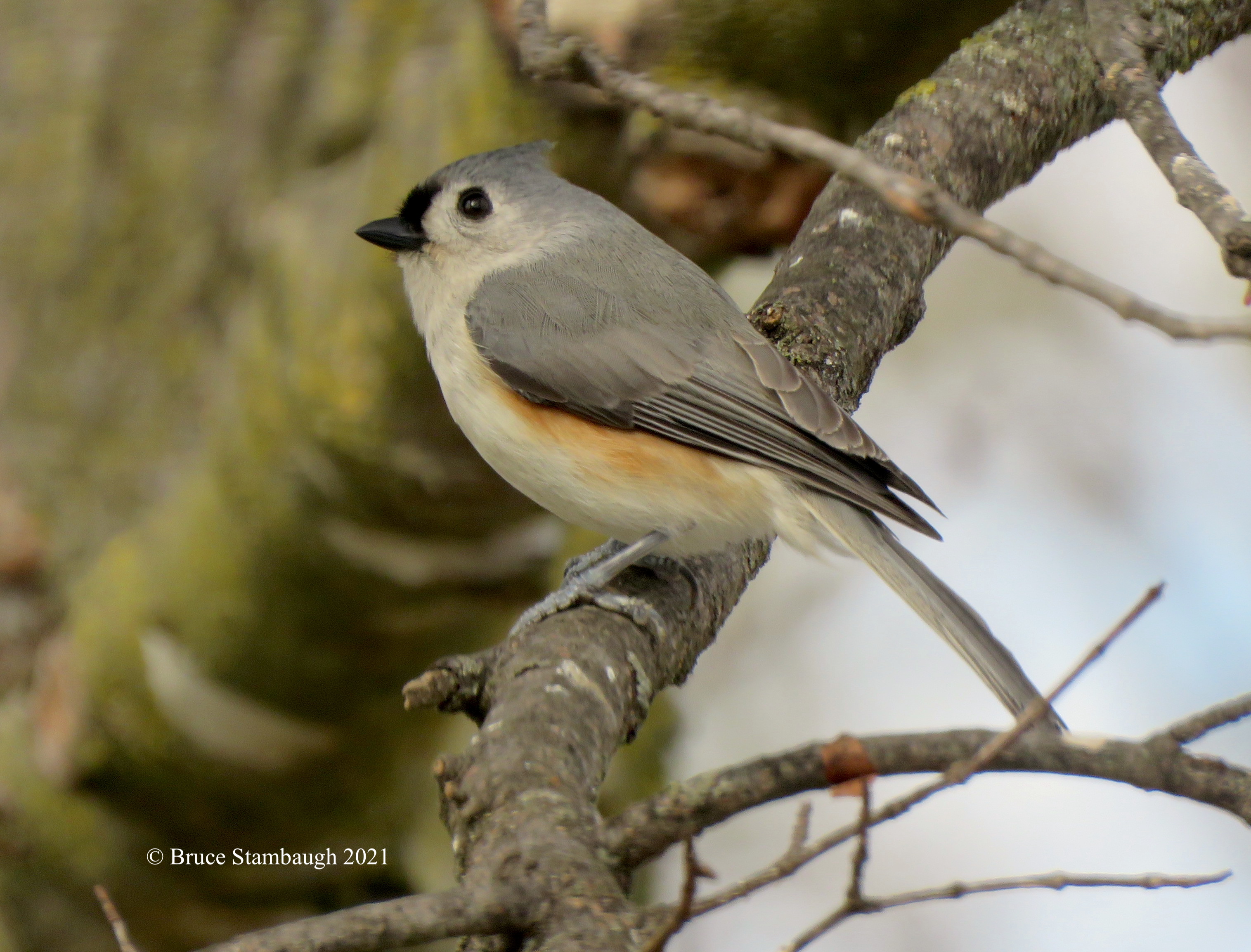
Tufted Titmice are some of the cutest, most personable birds around. Their fairly plain coloration belies their personalities. These acrobatic birds are welcome at any backyard bird feeder. You can often hear them coming before you see them. Their variety of clarion calls are music to my ears. They whistle and call in a variety of ways, sometimes sounding as if they are scolding. Tufted Titmice are often accompanied by the local Chickadee patch.
Seen across much of the eastern United States, these active birds devour black oil sunflower seeds, safflower seeds, and peanuts. They are fun to watch and seldom sit still. I felt fortunate to be able to snap this profile of this Tufted Titmouse. It enables you to see all the bird’s identifying features: its stubby black bill, black forehead, pointy crest, its dominant gray color with rusty sides. The bird’s beady black eyes against its pale face make it easy to see where it gets its name.
So far, this certainly has been an old-fashioned Ohio winter. The only problem with that statement is that we live in Virginia.
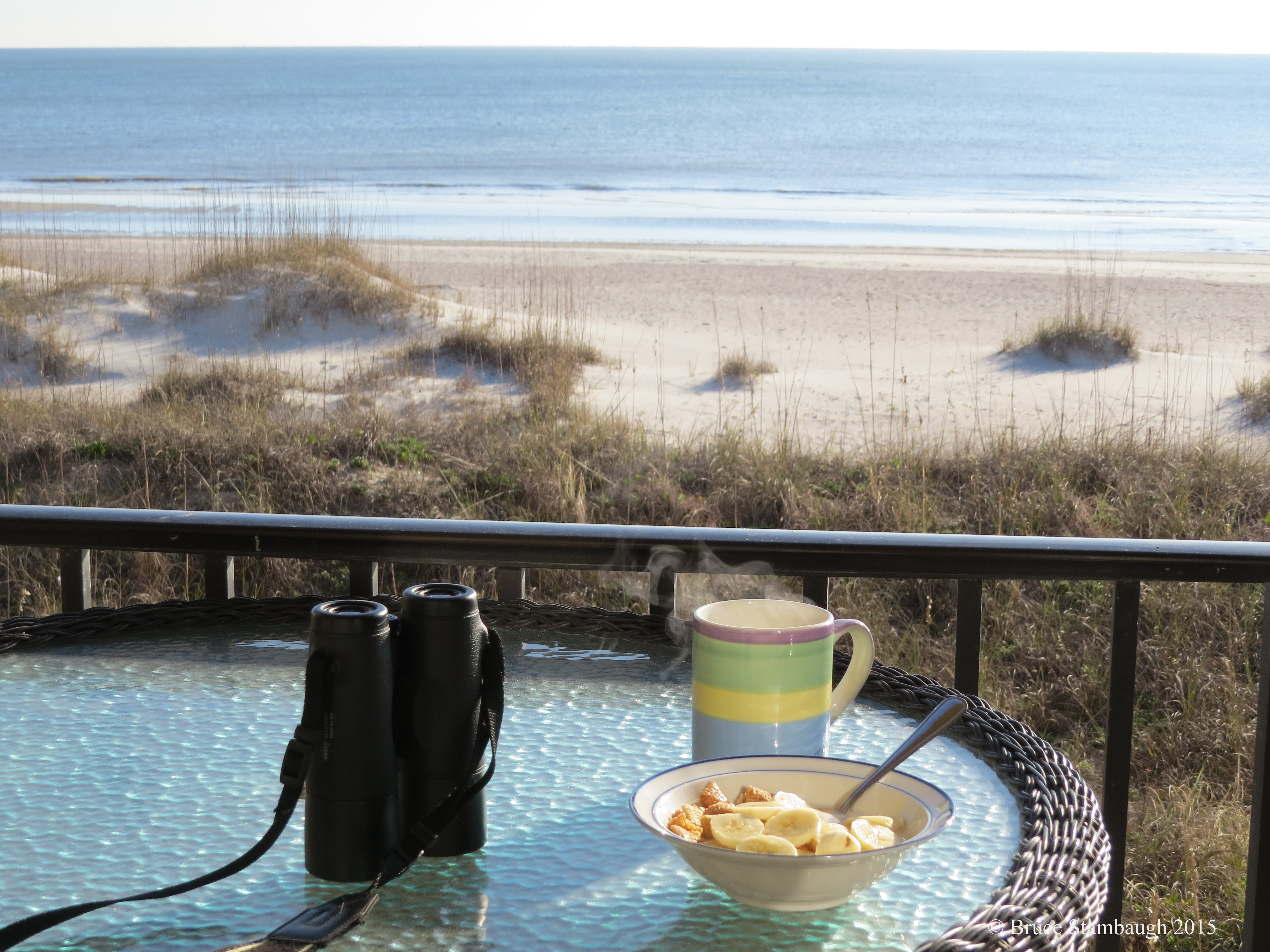
I was afraid this might happen since my wife and I decided to forgo our usual weeks-long hiatus to our beloved Amelia Island, Florida. It wasn’t always warm in our snowbird retreat there either, but at least it never snowed.
My preferred winter morning scene.
I don’t mind the snow so much. It’s the cold that gets to me. The older I get, the colder I get. My doctor blames that phenomenon on some of the medications that I take. Still, the results are the same.
My wife and I determined it best for us to stay close to home here in the Shenandoah Valley during the pandemic. We didn’t want to miss our chance at getting our virus vaccines since we were in a priority category to receive the shots.
We decided that it was better to endure the usually milder winters of Virginia than those of the Buckeye State we knew so well. This year there’s hardly been a difference.
Scenes from Ohio winters.
We have had cold, windy, wet, snowy, and often gray winter days. It hasn’t been as bad as living in the northeast Ohio Snowbelt. But we still feel those cold Arctic northwest winds nevertheless.
The Allegheny Mountains to our west help block some of the storms, and their western upslopes receive much more snow than we do here in the valley. However, if a storm tracks east of the mountains, we get our fair share of the white stuff, too. Snow and cold have been the rule, not the exception this winter for us.
So far this winter, we have had multiple measurable snowstorms. Some even lasted for a couple of days. We are used to seeing more sunny days here than we did in Ohio. Not this winter. I miss my frequent doses of vitamin D.
There is one good thing about snow in Virginia. It shuts everything down, significantly decreasing the number of drivers trying to test their macho mettle.
In Ohio, severe winter storms also closed schools, businesses, and highways. But that didn’t stop hardy souls from enjoying the snow. In extreme storms, snowmobiles ruled the roads until the snowplows ruined the fun.
Friends have teased us about all the winter storms we’ve had so far this year. “I thought you moved south,” they jest. My rational reply always is, “Yes, just not far enough south.” For the record, we are at the same latitude as Cincinnati.
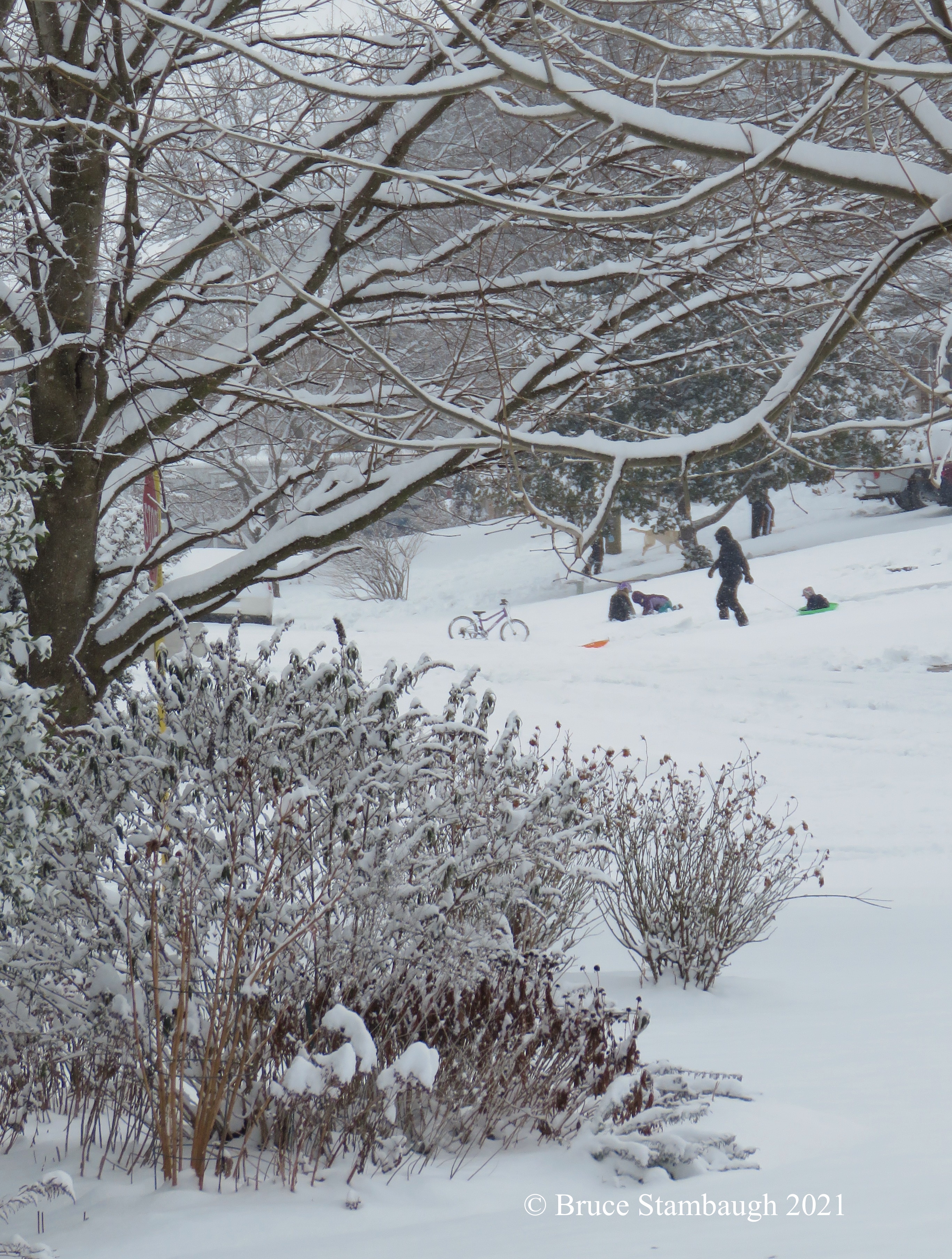
Of course, we moved here for the grandkids. I’m pleased that they also have sledding hills to conquer and snow forts to build, as we did as youngsters. I’m contented to hear about their fun rather than join in.
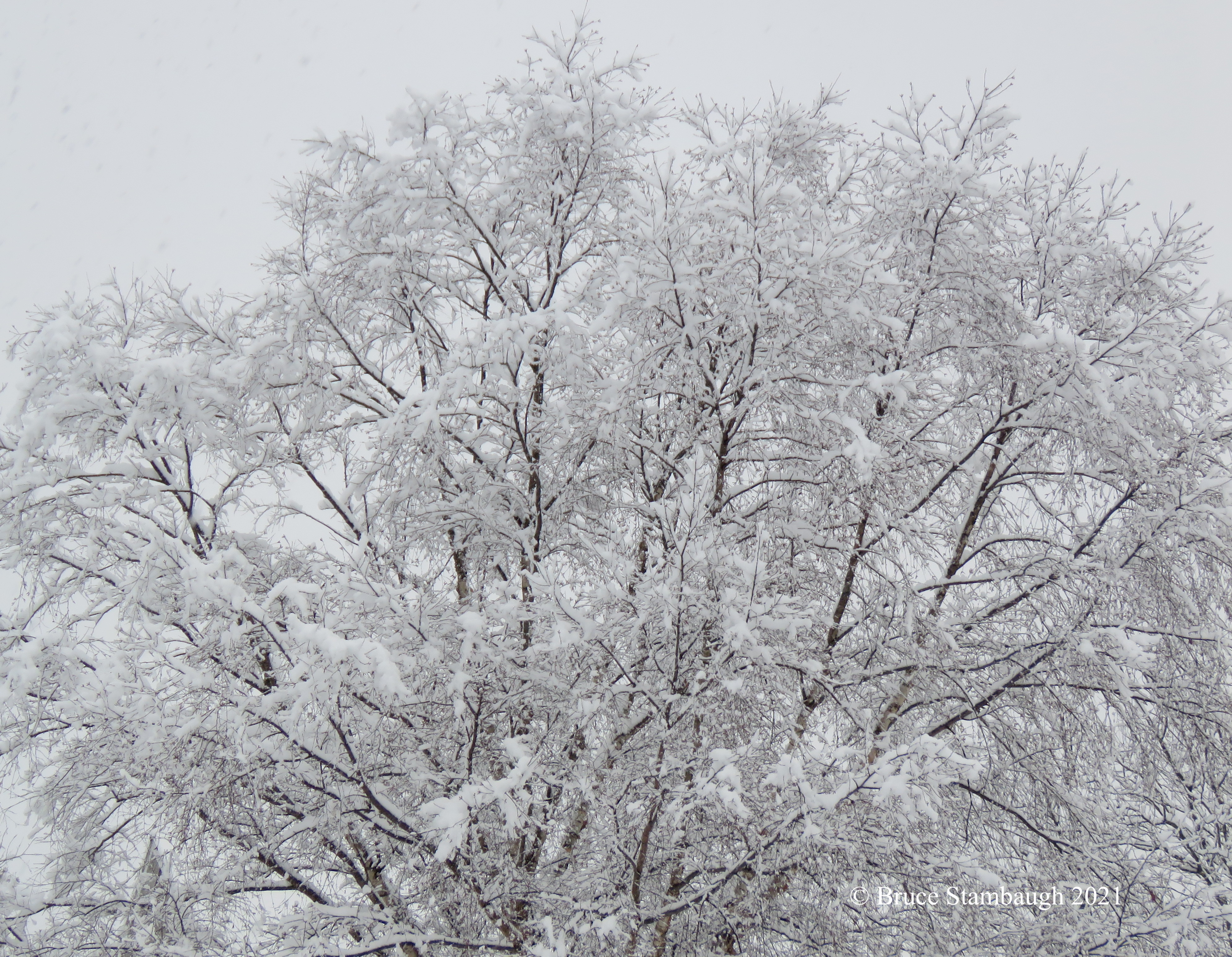
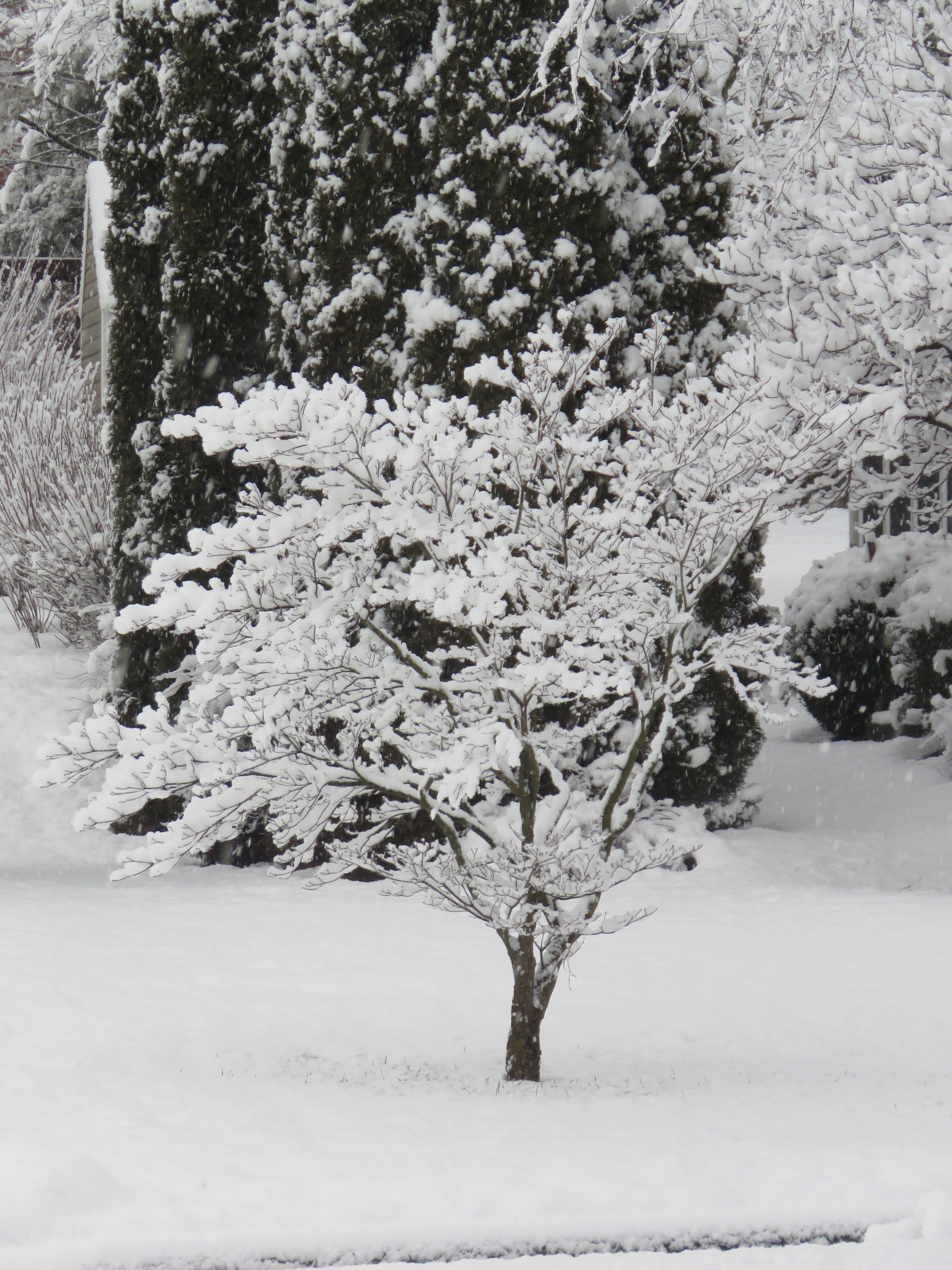
Scenes for Virginia winters.
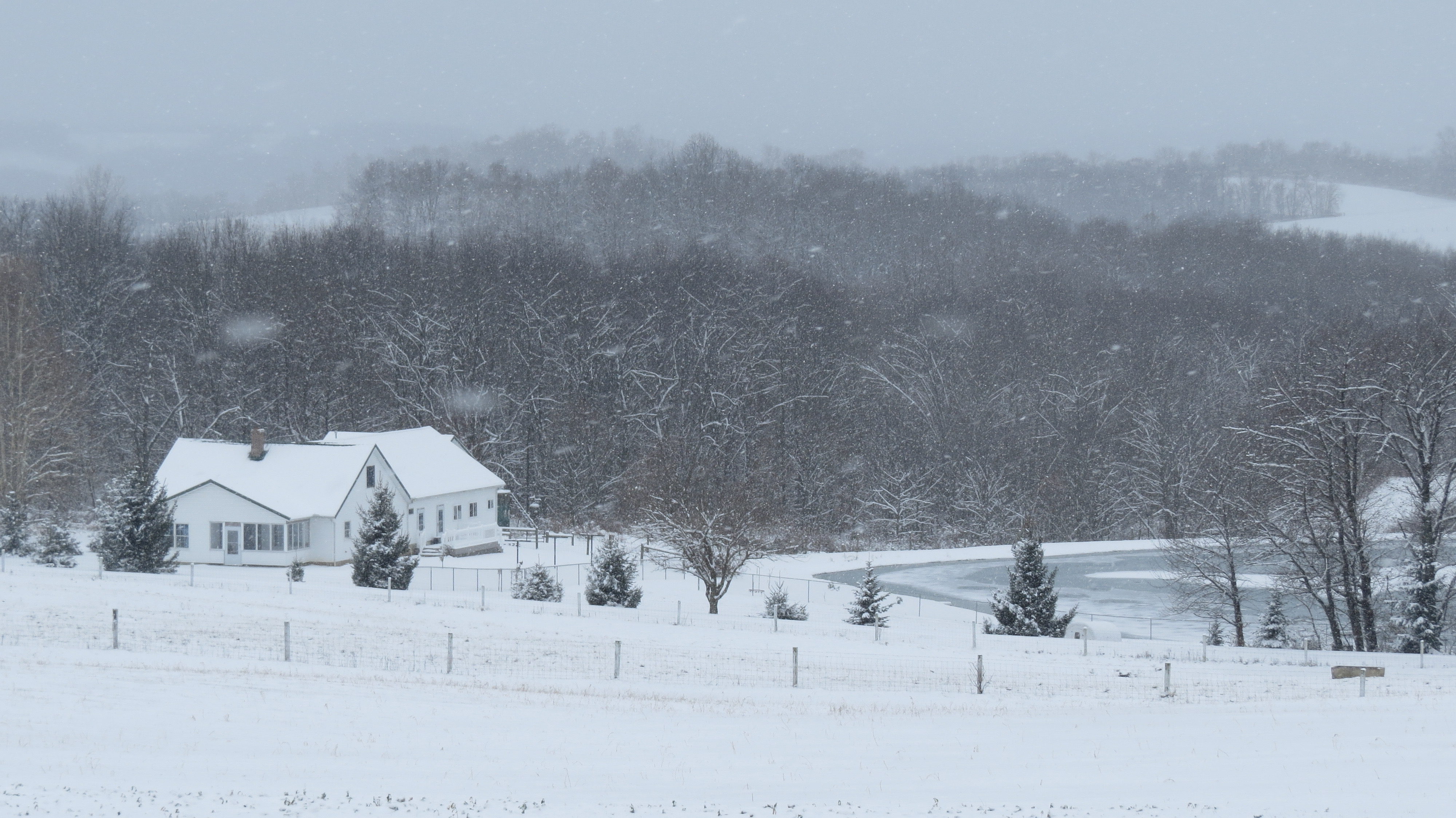
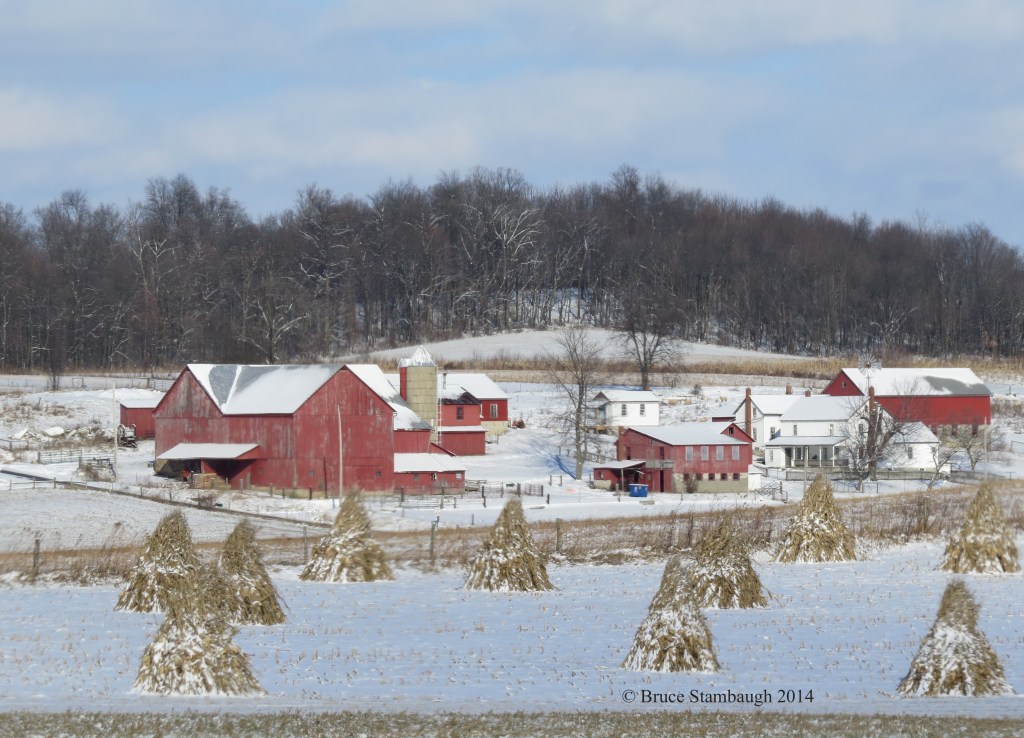
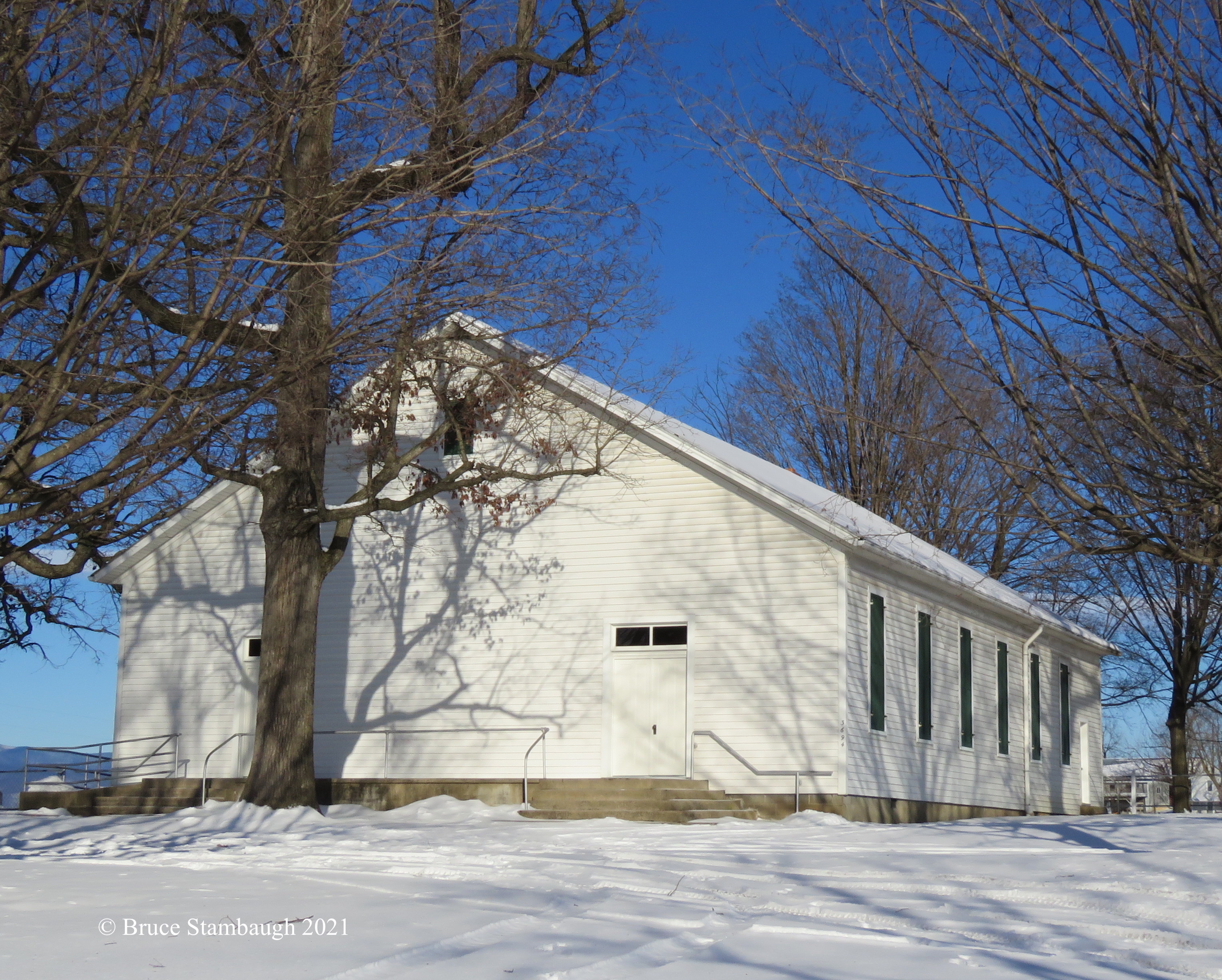
Snow brings more than recreation, though. The aesthetic results of valley snowstorms are a marvel. Like our former home, rolling farms dot the landscape of our expansive county. When blanketed with inches of snow, the already pastoral scenes turn majestic.
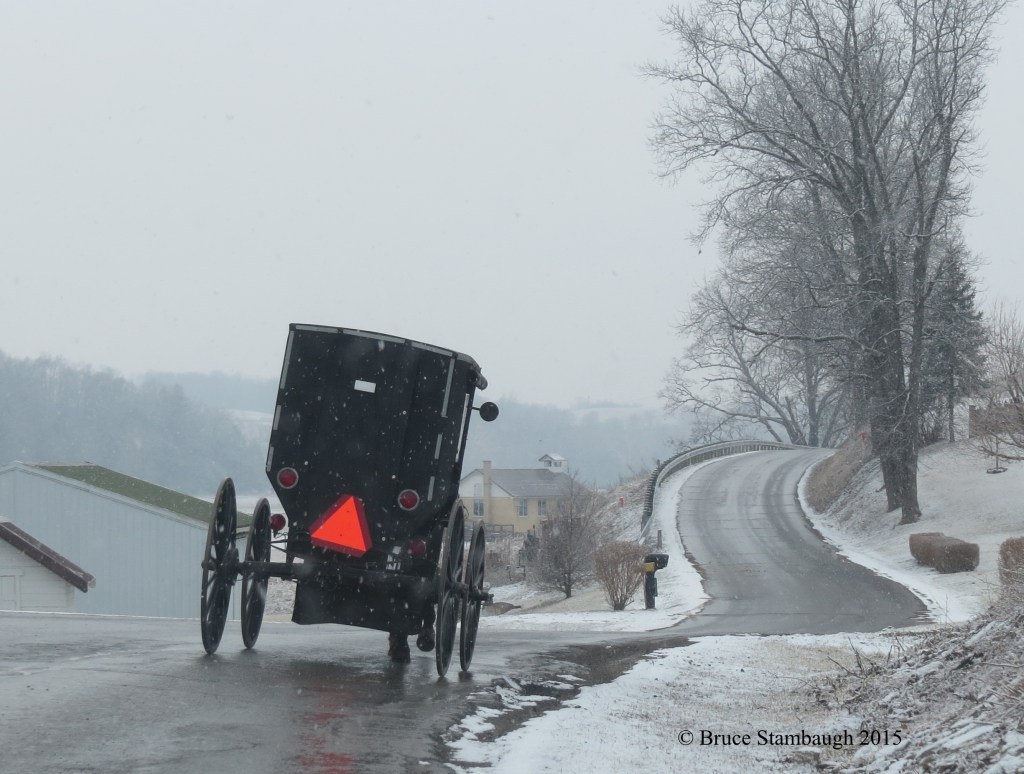
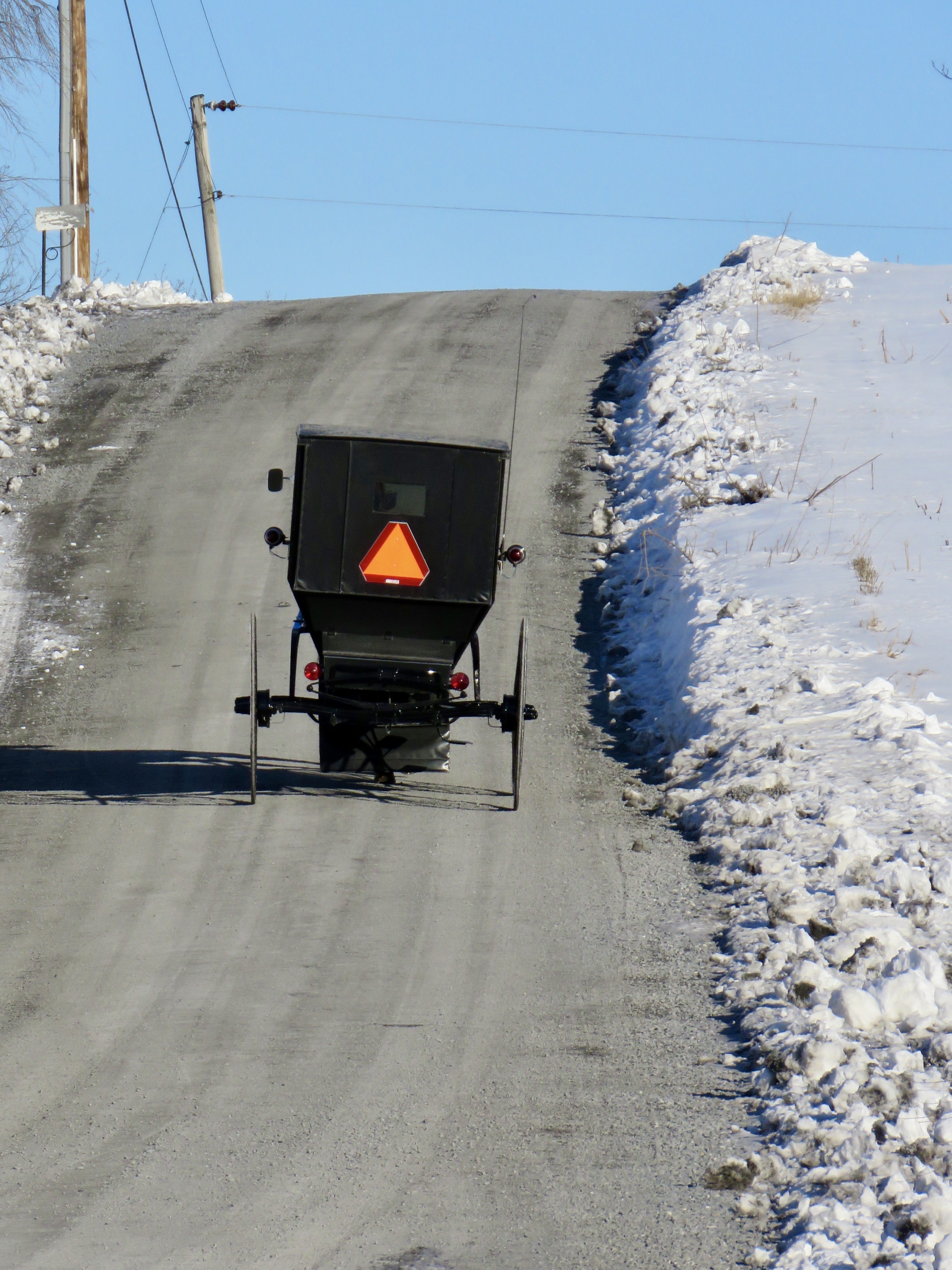
The mountainous landscapes become black and white panoramas of steeply sloped woods sprouting from white forest floors. Old Order Mennonites in buggies and on bikes don’t let the slippery stuff stop their endeavors. In that regard, it feels just like Holmes County, too.
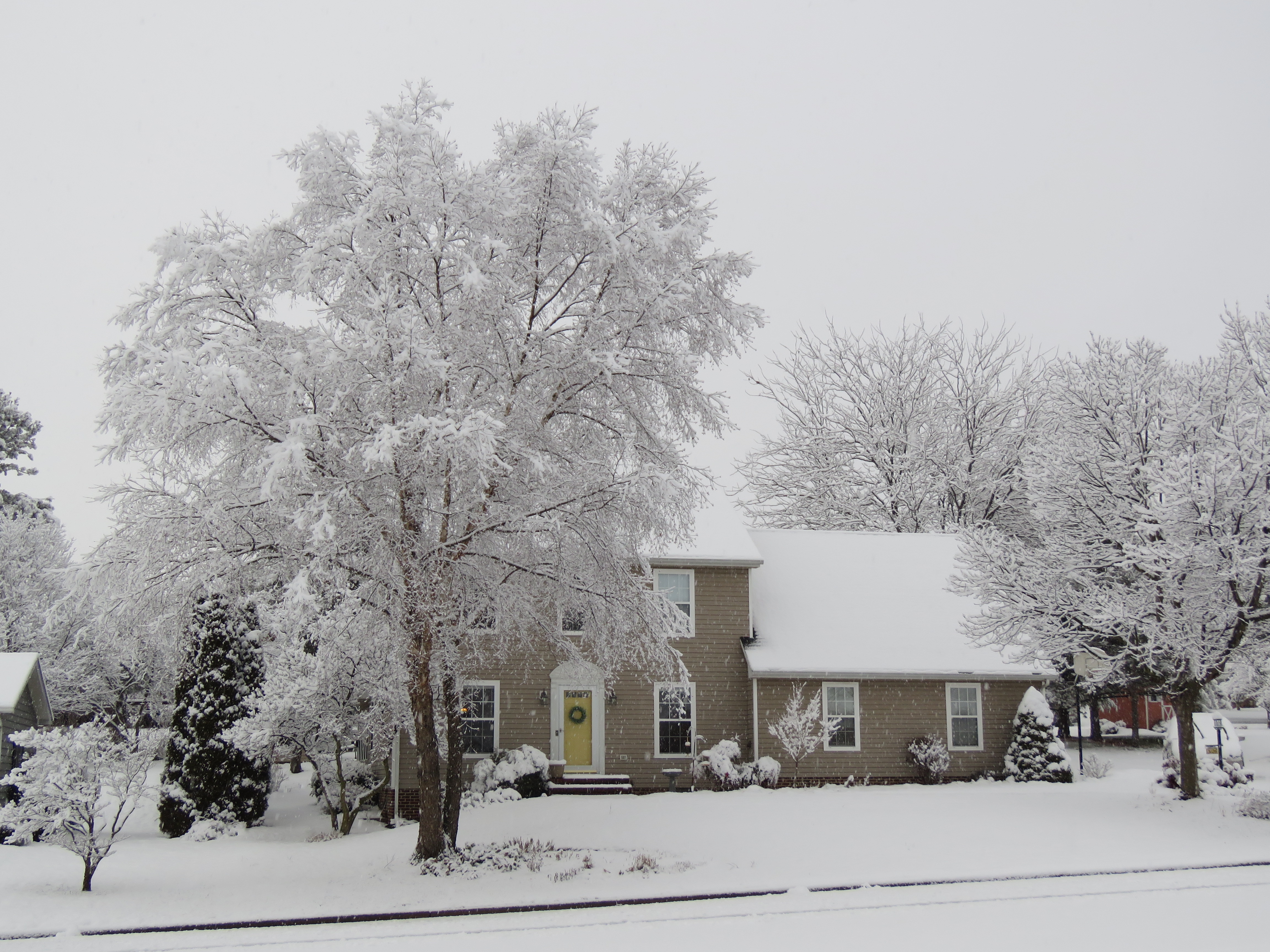
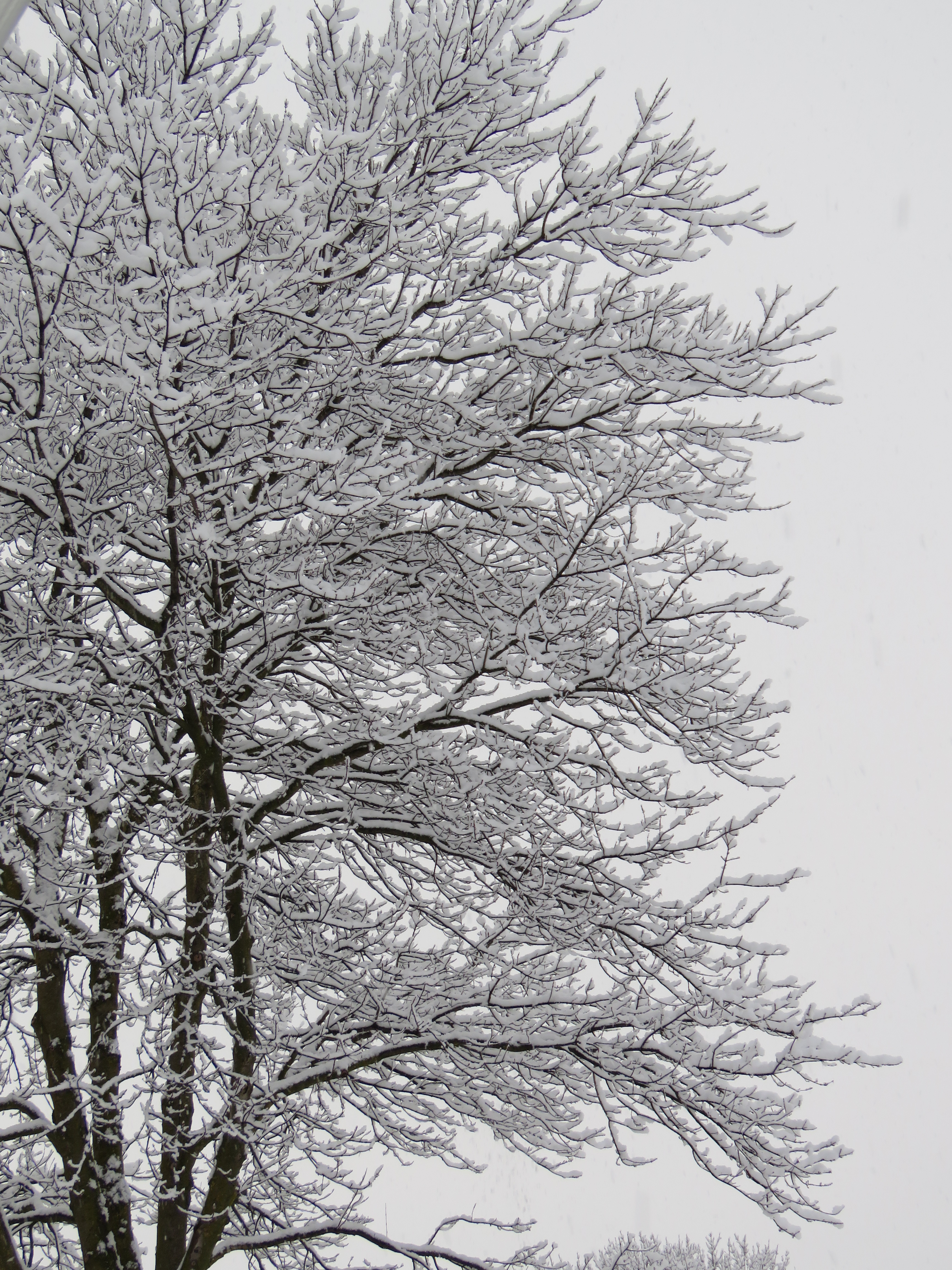
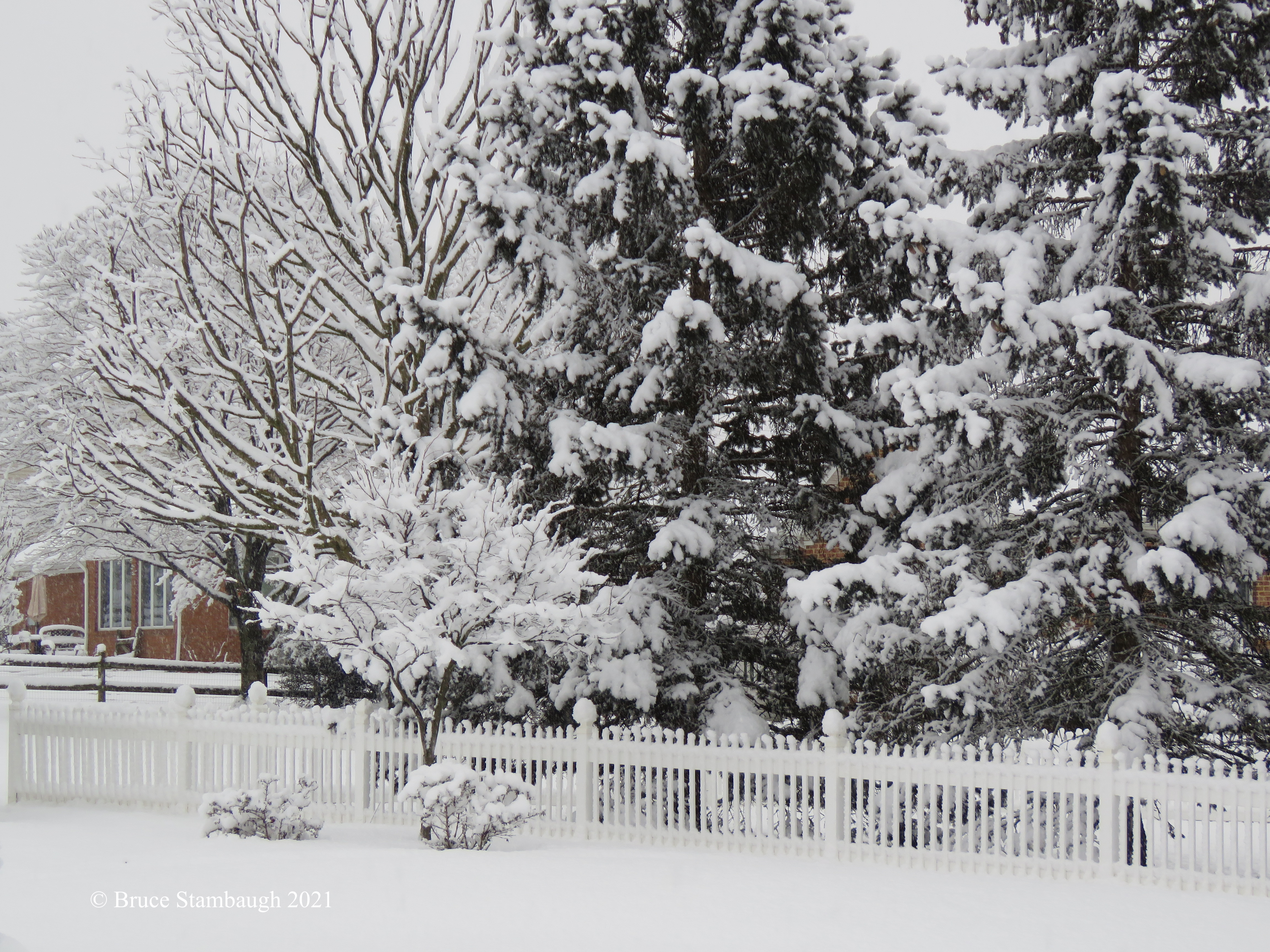
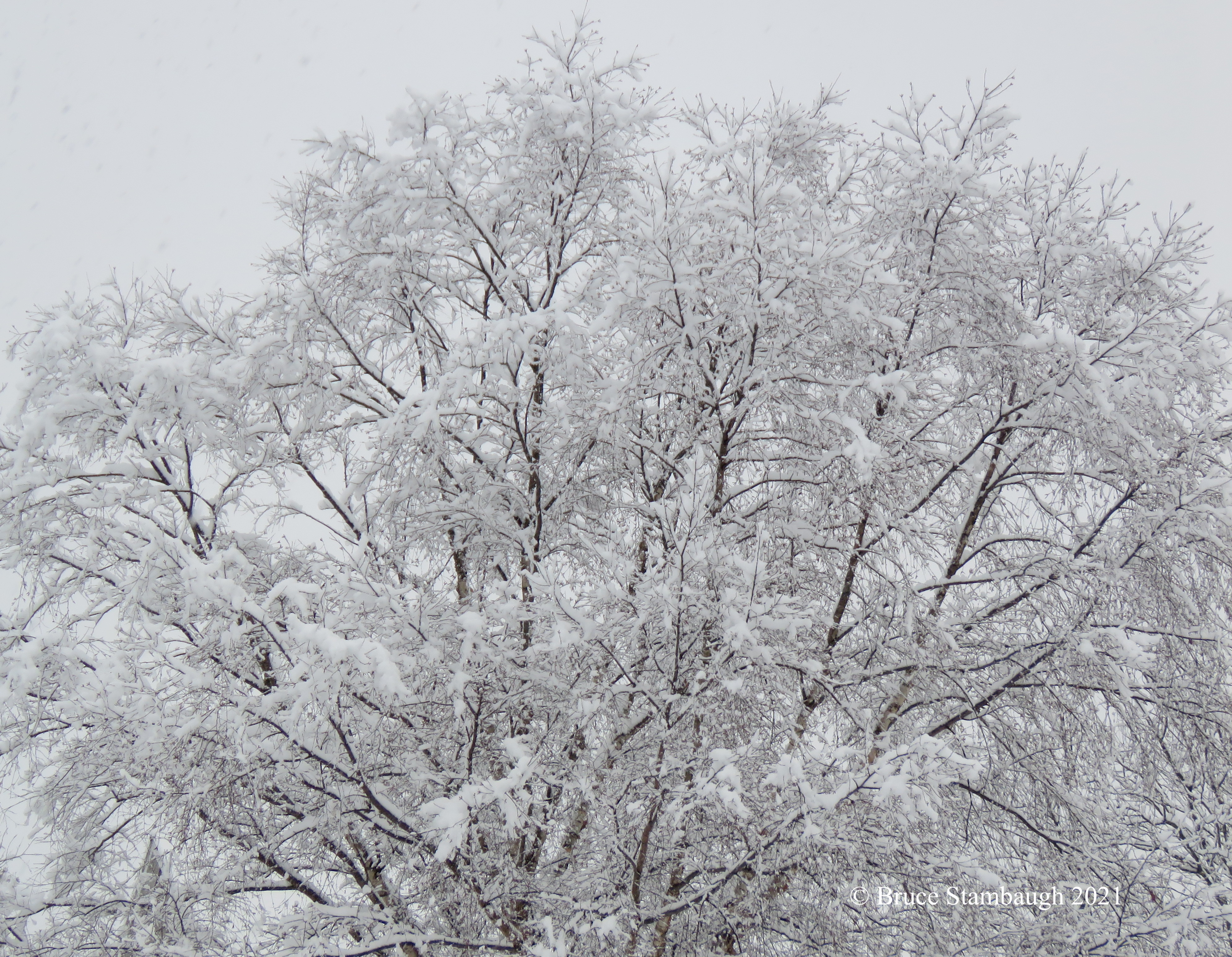
The nice thing is that we don’t have to leave our home to enjoy the snow-sculpted scenery. Frosted branches of the neighbors’ evergreens bend low from the wet, white weight. We miss the Florida sunshine, but Neva and I are enjoying the beauty of wintertime in Virginia just as much as we did in Ohio.
Snow-covered Old Order Mennonite farms at the base of the Allegheny Mountains.
Yesterday was Valentine’s Day. My wonderful wife served up a delicious noon meal. She saved the best for later. At halftime of a basketball game we were watching on TV, Neva brought out this amazing dessert: a gluten-free brownie sundae with vanilla ice cream, chocolate syrup, topped with fresh red raspberries. It tasted even better than it looks. The flavors perfectly blended together.
I knew I had to photograph this lovely dish. The fire engine red table cloth as the backdrop made the red raspberries pop. It was a great way to finish off our Valentine’s Day dinner.
What is it about a snowstorm that brings out the best in people? Is it the commonality of being snowed-in?
Is it the down-deep desire to be helpful in any way possible? Is it the freshness of the pure white landscape plastered with inches of snow? Or is it the clean, cold, wholesome air?
Or maybe it’s out of the genuine goodness of people’s hearts, the opportunity and ability to help where help is needed that stirs folks into action. Perhaps it is all of these things rolled into one.
Whatever the motivation, the results are the same. Neighbors come together for the common good of all simply because there is a job to do.
In this case, it was to clear driveways and sidewalks.
Our National Weather Service office did an excellent job of warning the good people of the Commonwealth that a winter storm was imminent. Just the mention of snow in the forecast in Virginia, and schools, factories, and offices close.
Even if you had missed the winter storm warning announcement, the crowds at every grocery store should have raised an internal alarm. Supermarkets become jammed the day before, with folks buying enough supplies to last for weeks. I figured for this storm that the only milk left in the county belonged to the dairy cows still in the milking parlor stanchions.
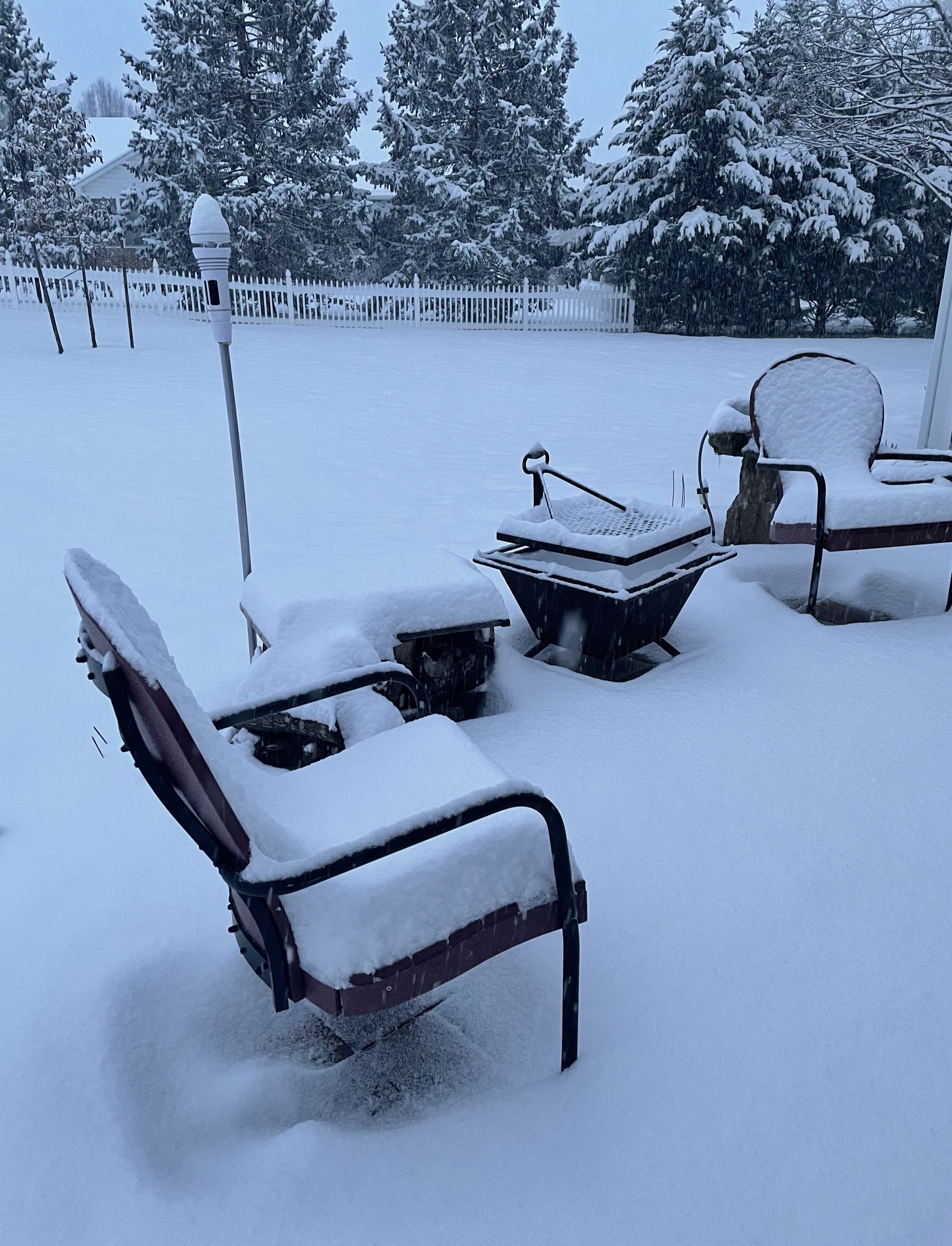
So, yes, we were ready for snow, and when we woke the next morning, we weren’t disappointed. A beautiful five-inches blanketed everything animate and inanimate all around our suburban neighborhood.
The forecast was for the quick burst of heavy snow followed by a lull with more snow once the low hit the east coast. The wrap-around snow later from the nor’easter provided another three inches over a much more extended period.
After I had measured the snow depth at 7 a.m., I shoveled our front sidewalk and a path out to the street. I came back in to send in my snow report via email to the National Weather Service and eat breakfast.
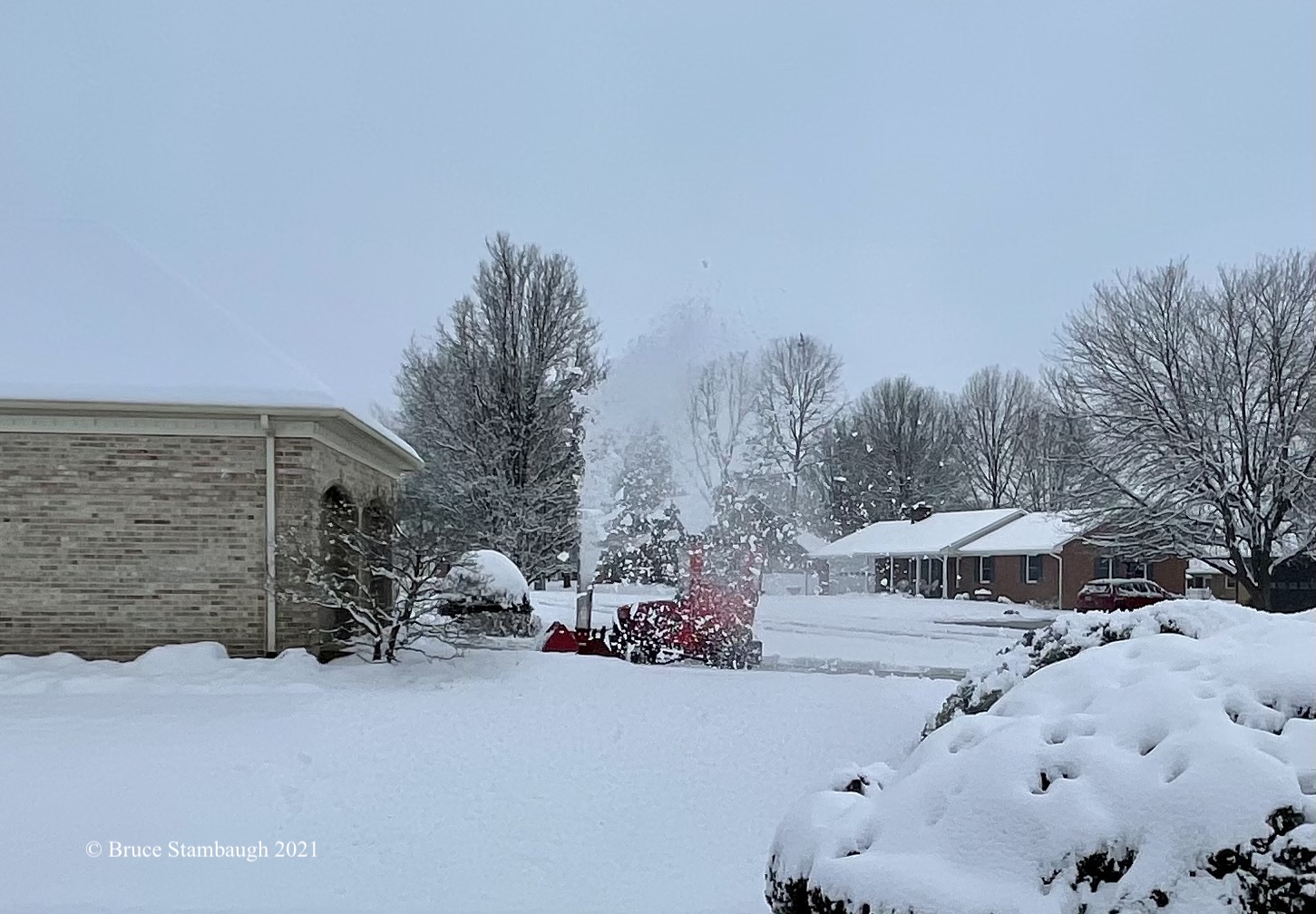
Before I could return to the shoveling, Neva hollered that our neighbor Frank was snow-blowing our driveway. I hurriedly dressed for the elements and headed back outside. I thanked Frank but told him that he didn’t need to be doing our driveway.
A beautiful early morning snow.
Frank chuckled and modestly said that his snowblower needed the dust blown out of it. Given how little snow we usually receive in the Shenandoah Valley, I understood his comment. However, this winter has been different, and this was Frank’s first opportunity to use his machine.
Frank had already cleaned his driveway and that of another neighbor before doing ours. When he finished at our place, he went to Janice’s across the street.
To our surprise, our good-neighbor assistance continued. Frank had no sooner left when our next-door neighbor Wayne showed up and started shoveling the remaining snow. I tried to wave him off, but he was determined.
Then out of nowhere popped Jonathan and his mother, Deb, our across-the-street friends. They joined Wayne in clearing all the leftover snow. Of course, Neva and I helped, too.
I could hear snowblowers on other streets in our nearly 500-home development. We weren’t the only recipients of neighbors helping neighbors.
Neva and I were both thankful and humbled by the spontaneous actions of generosity. It would have taken me much longer than the few minutes that Frank and his impromptu crew needed to clear our drive.
But where were we going to go? Virginia was closed for the day and, just for good measure, the next day, too.

































 Roadkill Crossing
You must be logged in to post a comment.